Posts Tagged ‘MEDICARE’
2003 IRAQ WAR, ABC NEWS, ALTERNET, ASIANS, BARACK OBAMA, BIRTH CONTROL, BLACKS, BUZZFEED, CBS NEWS, CNN, DAILY KOS, DISABLED, DONALD TRUMP, ED MARTIN, FACEBOOK, HILLARY CLINTON, HUMAYUN KHAN, KATRINA PIERSON, LATINOS, MARCO GUTIERREZ, MEDICAID, MEDICARE, MOTHER JONES, MOVEON, MSNBC, MUSLIMS, NBC NEWS, NEWSWEEK, NICCOLO MACHIAVELLI, NPR, OBAMACARE, POLITICO, PRISONERS OF WAR, RAW STORY, SALON, SLATE, SOCIAL SECURITY, TEA PARTY, THE CHICAGO SUN-TIMES, THE CHICAGO TRIBUNE, THE DAILY BEAST, THE DISCOURSES, THE HUFFINGTON POST, THE LOS ANGELES TIMES, THE NEW YORK TIMES, THE PRINCE, THE WALL STREET JOURNAL, THE WASHINGTON POST, TIME, TWITTER, U.S. NEWS & WORLD REPORT, USA TODAY, WAYNE ROOT, WOMEN
In Bureaucracy, History, Military, Politics, Social commentary on March 27, 2017 at 12:28 am
No shortage of pundits have sized up Donald Trump–first as a Presidential candidate, and now as the nation’s 45th President.
But how does Trump measure up in the estimate of Niccolo Machiavelli, the 16th-century Florentine statesman?
It is Machiavelli whose two great works on politics–The Prince and The Discourses–remain textbooks for successful politicians more than 500 years later.
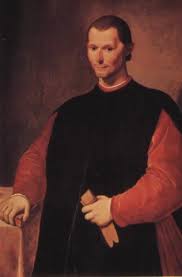

Niccolo Machiavelli
Let’s start with Trump’s notoriety for hurling insults at virtually everyone, including:
- Latinos
- Asians
- Muslims
- Blacks
- The Disabled
- Women
- Prisoners-of-War
These insults delight his white, under-educated followers. But they have alienated millions of other Americans who might have voted for him.
Now consider Machiavelli’s advice on gratuitously handing out insults and threats:
-
“I hold it to be a proof of great prudence for men to abstain from threats and insulting words towards any one.
-
“For neither the one nor the other in any way diminishes the strength of the enemy–but the one makes him more cautious, and the other increases his hatred of you, and makes him more persevering in his efforts to injure you.”
For those who expect Trump to shed his propensity for constantly picking fights, Machiavelli has a stern warning:
-
“…If it happens that time and circumstances are favorable to one who acts with caution and prudence he will be successful. But if time and circumstances change he will be ruined, because he does not change the mode of his procedure.
-
“No man can be found so prudent as to be able to adopt himself to this, either because he cannot deviate from that to which his nature disposes him, or else because, having always prospered by walking in one path, he cannot persuade himself that it is well to leave it…
-
“For if one could change one’s nature with time and circumstances, fortune would never change.”
Then there is Trump’s approach to consulting advisers:
Asked on MSNBC’s “Morning Joe” who he consults about foreign policy, Trump replied; “I’m speaking with myself, number one, because I have a very good brain and I’ve said a lot of things.”
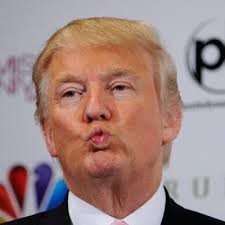
Donald Trump
This totally contrasts the advice given by Machiavelli:
-
“A prudent prince must [choose] for his counsel wise men, and [give] them alone full liberty to speak the truth to him, but only of those things that he asks and of nothing else.
-
“But he must be a great asker about everything and hear their opinions, and afterwards deliberate by himself in his own way, and in these counsels…comport himself so that every one may see that the more freely he speaks, the more he will be acceptable.”
And Machiavelli has potent advice on the selection of advisers:
- “The first impression that one gets of a ruler and his brains is from seeing the men that he has about him.
- “When they are competent and loyal one can always consider him wise, as he has been able to recognize their ability and keep them faithful.
- “But when they are the reverse, one can always form an unfavorable opinion of him, because the first mistake that he makes is in making this choice.”
Consider some of the advisers Trump has relied on in his campaign for President:
- Founder of Latinos for Trump Marco Gutierrez told MSNBC’s Joy Reid: “My culture is a very dominant culture. And it’s imposing, and it’s causing problems. If you don’t do something about it, you’re gonna have taco trucks every corner.”
- At a Tea Party for Trump rally at a Harley-Davidson dealership in Festus, Missouri, former Missouri Republican Party director Ed Martin reassured the crowd that they weren’t racist for hating Mexicans.
From the outset of his Presidential campaign, Trump polled extremely poorly among Hispanic voters. Comments like these didn’t increase his popularity.
- Wayne Root, opening speaker and master of ceremonies at many Trump campaign events, told Virginia radio host Rob Schilling: People on public assistance and women getting birth control through Obamacare should not be allowed to vote.
Comments like this are a big turn-off among the 70% of women who have an unfavorable opinion of him–and anyone who receives Medicaid, Medicare or Social Security.
- Trump’s spokeswoman, Katrina Pierson, claimed that Barack Obama and Hillary Clinton were responsible for the death of Captain Humayun Khan–who was killed by a truck-bomb in Iraq in 2004.
Obama became President in 2009–almost five years after Khan’s death. And Clinton became Secretary of State the same year.
When your spokeswoman becomes a nationwide laughingstock, your own credibility goes down the toilet as well.
Finally, Machiavelli offers a related warning that especially applies to Trump: Unwise princes cannot be wisely advised.
-
“It is an infallible rule that a prince who is not wise himself cannot be well advised, unless by chance he leaves himself entirely in the hands of one man who rules him in everything, and happens to be a very prudent man. In this case, he may doubtless be well governed, but it would not last long, for the governor would in a short time deprive him of the state.”
All of which would lead Niccolo Machiavelli to warn, if he could witness American politics today: “This bodes ill for your Republic.”
2016 PRESIDENTIAL CAMPAIGN, ABC NEWS, ALTERNET, BARACK OBAMA, BEN CARSON, BETSY DEVOS, BILL CLINTON, BIRTHERS, BREITBART, BUREAU OF LABOR STATISTICS, BUZZFEED, CBS NEWS, CIA, CNN, CONSERVATIVE POLITICAL ACTION CONFERENCE, DAILY KOS, DIRECTOR OF NATIONAL INTELLIGENCE, DONALD TRUMP, FACEBOOK, GATEWAY PUNDIT, GOLDMAN SACHS, HILLARY CLINTON, INFOWARS, INTELLIGENCE AGENCIES, JOINT CHIEFS OF STAFF, MEDICARE, MIKE PENCE, MOTHER JONES, MOVEON, NAVY SEALS, NBC NEWS, NEWSWEEK, NPR, POLITICO, RAW STORY, REX TILLERSON, ROBERT REICH, SALON, Secret Service, SECRETARY OF EDUCATION, SECRETARY OF STATE, SLATE, STEVE BANNON, TAXES, THE CHICAGO SUN-TIMES, THE CHICAGO TRIBUNE, THE DAILY BEAST, THE HUFFINGTON POST, THE LOS ANGELES TIMES, THE NEW YORK TIMES, THE PRESS, THE WALL STREET JOURNAL, THE WASHINGTON POST, TIME, TWITTER, U.S. NEWS & WORLD REPORT, USA TODAY, WIRETAPPING, YEMEN
In Bureaucracy, History, Military, Politics, Social commentary on March 17, 2017 at 12:16 am
Since taking office as the Nation’s 45th President, Donald Trump has attacked or undermined one public or private institution after another.
Among these:
- The Secret Service: Trump has kept his longtime private security force, and combined its members with those of the elite federal agency. By marginalizing the Secret Service, he has clearly sent the message: You’re not good enough, and I don’t trust you.
- The Bureau of Labor Statistics (BLS): As a Presidential candidate Trump slammed the agency’s employment numbers that showed the economy improving under the Obama administration. His response on March 12, 2016: “The numbers are phony. These are all phony numbers. Numbers given to politicians to look good. These are phony numbers.”
- In February, 2017, the BLS said that American businesses had added 235,000 workers to their payrolls.
- On March 10, a reporter asked Trump’s press secretary, Sean Spicer, whether, given his past statements, Trump thought this jobs report was “accurate.” Spicer replied: “I talked to the president prior to this, and he said to quote him very clearly: ‘They may have been phony in the past, but it’s very real now.’”
- The Environmental Protection Agency (EPA): Trump believes that climate change is a hoax. He didn’t offer any proof for this. Instead, he appointed an EPA director–Scott Pruitt–who claimed that climate change wasn’t caused by human activity.
- Pruitt ordered EPA staffers to remove pages from the agency’s website concerning climate change, threatened to review all of the agency’s data and publications, and cut the budgets of all scientific research in government.
- The Congressional Budget Office (CBO): Fearing the CBO’s verdict on the costs and coverage of his proposed Trumpcare replacement for the Affordable Care Act (ACA), Trump ordered a preemptive strike on the agency’s credibility. Said Sean Spicer to assembled reporters: “If you’re looking at the CBO for accuracy, you’re looking in the wrong place.”
- The director of the CBO is a Republican economist and former George W. Bush administration official who was chosen for his position by the Republican Congress in 2015.
- President Barack Obama: For five years, Trump, more than anyone else, popularized the slander that President Barack Obama was born in Kenya–and was therefore not an American citizen.
- On March 23, 2011, Trump said: “I want him to show his birth certificate. I want him to show his birth certificate. …There’s something on that birth certificate that he doesn’t like.”
- Even after Obama released the long-form version of his birth certificate–on April 27, 2011–Trump tweeted, on August 6, 2012: “An ‘extremely credible source’ has called my office and told me that @BarackObama‘s birth certificate is a fraud.”
- On November 23, 2014, he tweeted this: “@futureicon: @pinksugar61 Obama also fabricated his own birth certificate after being pressured to produce one by @realDonaldTrump“.
- Then, in June, 2015, Trump declared himself a candidate for President. By September, 2016, he found his popularity steadily dropping among black voters. Even the managers of Trump’s campaign urged him to put the “birther” issue behind him.
- On September 16, 2016–10 days before his scheduled first debate with Democratic Presidential nominee Hillary Clinton–Trump made his version of a reversal: “Hillary Clinton and her campaign of 2008 started the birther controversy. “I finished it. I finished it. You know what I mean. President Barack Obama was born in the United States, period.”
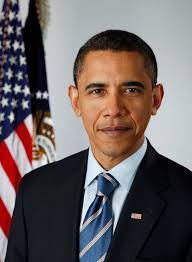
Barack Obama
- On March 4, 2017, in a series of unhinged tweets, Trump accused former President Obama of tapping his Trump Tower phones prior to the election: “Terrible! Just found out that Obama had my ‘wires tapped’ in Trump Tower just before the victory. Nothing found. This is McCarthyism!”
- “Is it legal for a sitting President to be ‘wire tapping’ a race for president prior to an election? Turned down by court earlier. A NEW LOW!”
- “I’d bet a good lawyer could make a great case out of the fact that President Obama was tapping my phones in October, just prior to Election!”
- “How low has President Obama gone to tapp my phones during the very sacred election process. This is Nixon/Watergate. Bad (or sick) guy!”
Thus, without offering a shred of evidence to back it up, Trump accused his predecessor of committing an impeachable offense.
* * * * *
Donald Trump isn’t crazy, as many of his critics charge. He knows what he’s doing. His strategy is two-fold–both immediate and long-term.
In the short-term, he’s attacking anyone who dares to disagree with him. Much of this is driven by his own natural aggression–he can’t tolerate criticism or dissent.
The long-term reason for his assaults on public and private institutions is far more sinister.
He intends to strip every potential challenger to his authority–or his version of reality–of any credibility with the public.
If he succeeds, there will be:
- No independent press to reveal his failures and crimes.
- No independent law enforcement agencies to investigate his abuses of office.
- No independent judiciary to hold him accountable.
- No independent military authorities to dissent as he recklessly hurtles toward potential nuclear showdowns.
- No candidate–Democrat or Republican–to challenge him for re-election in 2010.
- No candidate–Democrat or Republican–to challenge his remaining in office as “President-for-Life.”
2016 PRESIDENTIAL CAMPAIGN, ABC NEWS, ALTERNET, BARACK OBAMA, BEN CARSON, BETSY DEVOS, BILL CLINTON, BIRTHERS, BREITBART, BUZZFEED, CBS NEWS, CIA, CNN, CONSERVATIVE POLITICAL ACTION CONFERENCE, DAILY KOS, DIRECTOR OF NATIONAL INTELLIGENCE, DONALD TRUMP, FACEBOOK, GATEWAY PUNDIT, GOLDMAN SACHS, HILLARY CLINTON, INFOWARS, INTELLIGENCE AGENCIES, JOINT CHIEFS OF STAFF, MEDICARE, MIKE PENCE, MOTHER JONES, MOVEON, NAVY SEALS, NBC NEWS, NEWSWEEK, NPR, POLITICO, RAW STORY, REX TILLERSON, ROBERT REICH, SALON, Secret Service, SECRETARY OF EDUCATION, SECRETARY OF STATE, SLATE, STEVE BANNON, TAXES, THE CHICAGO SUN-TIMES, THE CHICAGO TRIBUNE, THE DAILY BEAST, THE HUFFINGTON POST, THE LOS ANGELES TIMES, THE NEW YORK TIMES, THE PRESS, THE WALL STREET JOURNAL, THE WASHINGTON POST, TIME, TWITTER, U.S. NEWS & WORLD REPORT, USA TODAY, WIRETAPPING, YEMEN
In Bureaucracy, History, Military, Politics, Social commentary on March 16, 2017 at 12:28 am
On February 19, Robert Reich, former Secretary of Labor under President Bill Clinton, posted a scathing–and accurate–attack on Donald Trump.
Writing on his Facebook page, Reich pointed out a series of statements Trump made during the 2016 Presidential campaign–and how each of them has proven to be a lie [italics in blue are added]:

Robert Reich
1. He called Hillary Clinton a crook.
You bought it.
Then he paid $25 million to settle a fraud lawsuit.
2. He said he’d release his tax returns, eventually.
You bought it.
He hasn’t, and says he never will.
3. He said he’d divest himself from his financial empire, to avoid any conflicts of interest.
You bought it.
He is still heavily involved in his businesses, manipulates the stock market on a daily basis, and has more conflicts of interest than can even be counted.
4. He said Clinton was in the pockets of Goldman Sachs, and would do whatever they said.
You bought it.
He then proceeded to put half a dozen Goldman Sachs executives in positions of power in his administration.
5. He said he’d surround himself with all the best and smartest people.
You bought it.
He nominated theocratic loon Mike Pence for Vice President. A white supremacist named Steve Bannon is his most trusted confidant. Dr. Ben Carson, the world’s greatest idiot savant brain surgeon, is in charge of HUD. Russian quisling Rex Tillerson is Secretary of State.
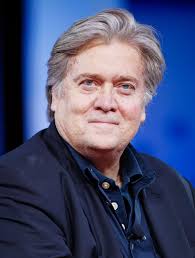
Steve Bannon
6. He said he’d be his own man, beholden to no one.
You bought it.
He then appointed Betsy DeVos as Secretary of Education, whose only “qualifications” were the massive amounts of cash she donated to his campaign.
7. He said he would “drain the swamp” of Washington insiders.
You bought it.
He then admitted that was just a corny slogan he said to fire up the rubes during the rallies, and that he didn’t mean it.
8. He said he knew more about strategy and terrorism than the Generals did.
You bought it.
He promptly gave the green light to a disastrous raid in Yemen- even though all his Generals said it would be a terrible idea. This raid resulted in the deaths of a Navy SEAL, an 8-year old American girl, and numerous civilians. The actual target of the raid escaped, and no useful intel was gained.
9. He said Hillary Clinton couldn’t be counted on in times of crisis.
You bought it.
He didn’t even bother overseeing that raid in Yemen; and instead spent the time hate-tweeting the New York Times, and sleeping.
10. He called CNN, the Washington Post and the New York Times “fake news” and said they were his enemy.
You bought it.
He now gets all his information from Breitbart, Gateway Pundit, and InfoWars.
Donald Trump
11. He called Barack Obama “the vacationer-in-Chief” and accused him of playing more rounds of golf than Tiger Woods. He promised to never be the kind of president who took cushy vacations on the taxpayer’s dime, not when there was so much important work to be done.
You bought it.
He took his first vacation after 11 days in office. On the taxpayer’s dime. And went golfing. And that’s just the first month.
* * * * *
Since taking office as the Nation’s 45th President, Trump has attacked or undermined one public or private institution after another.
Among these:
- American Intelligence and military agencies: A Trump executive order allows the Director of National Intelligence and chairman of the Joint Chiefs of Staff to attend the Principals’ Committee only when it pertains to their “responsibilities and expertise.”
- Senior Adviser and Chief Strategist Steve Bannon–an anti-Semitic white supremacist–will now wield influence over the National Security Council.
- In February, Trump approved and ordered a Special Forces raid in Yemen on an Al Qaeda stronghold. The assault resulted in the death of Navy SEAL Chief Petty Officer William “Ryan” Owens.
- Disavowing any responsibility for the failure, Trump said: ““This was a mission that was started before I got here. This was something they wanted to do. They came to me, they explained what they wanted to do–the generals–who are very respected, my generals are the most respected that we’ve had in many decades, I believe. And they lost Ryan.”
- Medicare: During the 2016 campaign, Trump said he would allow Medicare to negotiate down the price of prescription drugs. At his January 10 press conference he charged that pharmaceutical companies were “getting away with murder.”
- But after meeting with pharmaceutical lobbyists on January 31, Trump said: “I’ll oppose anything that makes it harder for smaller, younger companies to take the risk of bringing their product to a vibrantly competitive market. That includes price-fixing by the biggest dog in the market, Medicare.”
- The press: On February 17, Trump tweeted: “The FAKE NEWS media (failing @nytimes, @NBCNews,@ABC, @CBS, @CNN) is not my enemy, it is the enemy of the American People!”
- And, appearing before the Conservative Political Action Conference on February 24, Trump said: “I want you all to know that we are fighting the fake news. It’s fake, phony, fake….I’m against the people that make up stories and make up sources. They shouldn’t be allowed to use sources unless they use somebody’s name. Let their name be put out there.”
2003 IRAQ WAR, 2016 PRESIDENTIAL CAMPAIGN, ABC NEWS, ADOLF HITLER, AFFORDABLE CARE ACT, AL QAEDA, ALTERNET, ASIANS, BLACKS, BREITBART NEWS, BUZZFEED, CBS NEWS, CHILE, CIA, CLAUS VON STAFFENBERG, CNN, CUBAN MISSILE CRISIS, DAILY KOS, DAVID DUKE, DONALD TRUMP, EMPEROR TIBERIUS, FACEBOOK, FBI, GUATEMALA, HISPANICS, HOMOSEXUALS, INTELLIGENCE COMMUNITY, IRAN, JACABO ARBENZ, JAMES W. DOUGLAS, JFK AND THE UNSPEAKABLE, JOHN F. KENNEDY, JOHN KASICH, JOINT CHIEFS OF STAFF, KU KLUX KLAN, LATINOS, LESBIANS, MARTIN NIEMOELLER, MEDICARE, Military, MOHAMMED MOSADDEGH, MOTHER JONES, MOVEON, MUSLIMS, NATIONAL SECURITY AGENCY, NAVY SEALS, NAZI GERMANY, NBC NEWS, NEWSWEEK, NICCOLO MACHIAVELLI, NPR, POLITICO, PRISONERS OF WAR, RAW STORY, SALON, SALVADORE ALLENDE, SLATE, SS, STEVE BANNON, THE CHICAGO SUN-TIMES, THE CHICAGO TRIBUNE, THE DAILY BEAST, THE DISABLED, THE HUFFINGTON POST, THE LOS ANGELES TIMES, THE NEW YORK TIMES, THE WALL STREET JOURNAL, THE WASHINGTON POST, TIME, TWITTER, U.S. NEWS & WORLD REPORT, WEHRMACHT, WOMEN, WORLD WAR 11
In History, Military, Politics, Social commentary on February 6, 2017 at 12:01 am
On July 20, 1944, members of the Wehrmacht high command failed to assassinate Adolf Hitler with a bomb hidden in a briefcase.
But two setbacks prevented the conspirators from succeeding.
First, Hitler survived the bomb blast.
Second, the plotters failed to seize the key broadcast facilities of the Reich.
This allowed Hitler to make a late-night speech to the nation, revealing the failed plot and assuring Germans that he was alive. And he swore to flush out the “traitorous swine” who had tried to kill him.
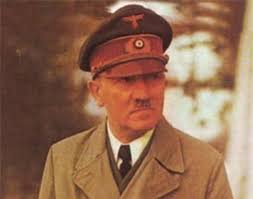
Adolf Hitler
Mass arrests quickly followed.
Among the first victims discovered and executed was the conspiracy’s leader, Colonel Claus von Stauffenberg. Standing before a makeshift firing squad at midnight, he cried: “Long live our sacred Germany!”
At least 7,000 persons were arrested by the Gestapo. According to records of the Fuehrer Conferences on Naval Affairs, 4,980 were executed.
Had the conspiracy succeeded, history would have turned out differently:
Thus, history can be altered by the appearance or disappearance of a single individual.
Which brings us back to Donald Trump.
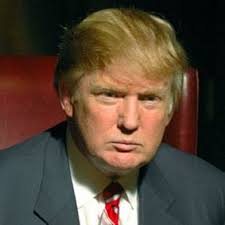
Donald Trump
Since becoming President on January 20, Trump has:
- Infuriated “Obamacare” patients: Trump authorized the directors of Federal agencies to waive requirements of the Affordable Care Act–which provides medical insurance to 22 million Americans–to the “maximum extent permitted by law.”
- Infuriated the CIA: Appearing at CIA headquarters on his first full day in office, Trump addressed about 400 case officers. Standing before the star-studded memorial wall honoring 117 CIA officers who had fallen in the line of duty. Trump ignored their sacrifice. Instead, he boasted of the size of his Inaugural crowd and how many times he had appeared on the cover of Time.
- Infuriated Muslims: Commenting on the 2003 Iraq war during his remarks at the CIA, Trump said: “So we should have kept the oil. But okay. Maybe you’ll have another chance….”
- Infuriated American Intelligence and military agencies: A Trump executive order allows the Director of National Intelligence and chairman of the Joint Chiefs of Staff to attend the Principals’ Committee only when it pertains to their “responsibilities and expertise.”
- Infuriated Jews and civil rights advocates: Senior Adviser and Chief Strategist Steve Bannon–an anti-Semitic white supremacist–will now wield influence over the National Security Council, Homeland Security Council and Principal’s Committee. When Bannon–previously executive chair of Breitbart News, a Right-wing website–was appointed senior adviser to Trump, former Ku Klux Klan leader David Duke called the selection “excellent.”
- Infuriated Medicare patients: During the 2016 campaign, Trump said he would allow Medicare to negotiate down the price of prescription drugs. At his January 10 press conference he charged that pharmaceutical companies were “getting away with murder.” But after meeting with pharmaceutical lobbyists on January 31, Trump said: “I’ll oppose anything that makes it harder for smaller, younger companies to take the risk of bringing their product to a vibrantly competitive market. That includes price-fixing by the biggest dog in the market, Medicare.”
During the 2016 Presidential campaign, Trump infuriated one group of voters after another, including: Hispanics, homosexuals, blacks, lesbians, Muslims, women, Asians, the disabled, prisoners-of-war.
As President, he has continued to anger highly influential groups. Some of these–such as “Obamacare” and Medicare patients–can retaliate only with their votes. And that won’t affect Trump until the 2020 Presidential election.
But other groups he has antagonized–such as the military and Intelligence communities–can do far more than vote against him.
Both have access to vast amounts of secret–and highly embarrassing–information. And both are expert in leaking choice bits of this to favored members of the media.
The Trump administration is only two weeks old and already this truth is on full display.
Anonymous military officials are blaming Trump for the death of a Navy SEAL during a January 29 raid on Al Qaeda in Yemen. According to Reuters, Trump approved the raid without sufficient intelligence, ground support or adequate backup preparations.
As for the CIA: This agency has been overthrowing heads of state for decades.
In 1953, its coup removed Mohammad Mosaddegh, the prime minister of Iran. In 1954, another coup did the same for Guatemalan president Jacobo Árbenz. In 1970, Chile’s president, Salvadore Allende, fell victim to a CIA-instigated plot.
Millions of Americans believe the CIA engineered the 1963 assassination of President John F. Kennedy. James W. Douglass’ 2008 book, JFK and the Unspeakable, charges that the CIA murdered Kennedy because he wanted to end the Cold War after the Cuban Missile Crisis.
Like the despised Roman emperor Tiberius, Donald Trump lives by the motto: “Let them hate me, so long as they fear me.”
Niccolo Machiavelli counseled better: “A prince should make himself feared in such a way that if he does not gain love, he at any rate avoids hatred: for fear and the absence of hatred may well go together.”
2003 IRAQ WAR, 2016 PRESIDENTIAL CAMPAIGN, ABC NEWS, ADOLF HITLER, AFFORDABLE CARE ACT, AL QAEDA, ALTERNET, ASIANS, BREITBART NEWS, BUZZFEED, CBS NEWS, CHILE, CIA, CLAUS VON STAFFENBERG, CNN, CUBAN MISSILE CRISIS, DAILY KOS, DAVID DUKE, DONALD TRUMP, EMPEROR TIBERIUS, FACEBOOK, FBI, GUATEMALA, HISPANICS, HOMOSEXUALS, INTELLIGENCE COMMUNITY, IRAN, JACABO ARBENZ, JAMES W. DOUGLAS, JFK AND THE UNSPEAKABLE, JOHN F. KENNEDY, JOHN KASICH, JOINT CHIEFS OF STAFF, KU KLUX KLAN, LESBIANS, MARTIN NIEMOELLER, MEDICARE, Military, MOHAMMED MOSADDEGH, MOTHER JONES, MOVEON, MUSLIMS, NATIONAL SECURITY AGENCY, NAVY SEALS, NAZI GERMANY, NBC NEWS, NEWSWEEK, NICCOLO MACHIAVELLI, NPR, POLITICO, PRISONERS OF WAR, RAW STORY, SALON, SALVADORE ALLENDE, SLATE, SS, STEVE BANNON, TERRORISTS, THE CHICAGO SUN-TIMES, THE CHICAGO TRIBUNE, THE DAILY BEAST, THE DISABLED, THE HOLOCAUST, THE HUFFINGTON POST, THE LOS ANGELES TIMES, THE NEW YORK TIMES, THE WALL STREET JOURNAL, THE WASHINGTON POST, TIME, TWITTER, U.S. NEWS & WORLD REPORT, WEHRMACHT, WOMEN, WORLD WAR 11
In History, Military, Politics, Social commentary on February 3, 2017 at 12:49 am
On July 20, 1944, a one-eyed, one-armed man tried to assassinate Adolf Hitler
Colonel Claus Schenk von Stuaffenberg had served with the Wehrmacht in Poland (1939), France (1940) and the Soviet Union (1941). And he had been seriously wounded in its service.
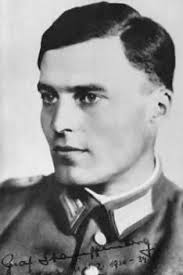
Colonel Claus Schenk von Stuaffenberg
Nevertheless, he now acted as the prime mover for the conspiracy among a growing number of German high command officers to arrest or assassinate Germany’s Fuehrer.
Most of the conspirators wanted to arrest Hitler and surrender to British and American forces–well before the much-feared Russians gained a foothold in Germany.
But Stauffenberg wanted him dead: A live Hitler might eventually be rescued by his Nazi colleagues.
But–how to do it?
Hitler was a closely-guarded target. He was surrounded by fanatical bodyguards who were expert marksmen. He often wore a bulletproof vest and a cap lined with three pounds of laminated steel.
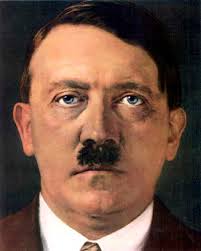
Adolf Hitler
But his single greatest protection–he claimed–was an instinct for danger. He would often suddenly change his schedule–to drop in where he was least expected. Or to suddenly depart an event where he was scheduled to stay a long time.
On November 9, 1939, this instinct saved his life. He had been set to give a long speech at a Munich beer hall before the “Old Fighters” of his storm troopers.
Sixteen years earlier on that day, in 1923, Hitler had led them in a disastrous attempt to overthrow the Bavarian government. Police had put down the effort, killing and wounding about a score of storm troopers in the process.
Hitler himself had later been arrested, tried and convicted for treason–and sentenced to a year’s imprisonment.
But instead of proving to be the end of Nazism, the “Beer Hall Putsch” turned Hitler into a national celebrity. And it launched his career as a legitimate, ultimately successful politician.
So Hitler was expected to speak to his longtime supporters for a long time that evening. Instead, he suddenly cut short his speech and left the beer hall.
Forty-five minutes later, a bomb exploded inside a pillar–before which Hitler had been speaking.
Since then, a series of other assassination attempts had been made against Hitler. All of them involved time-bombs. And all of the would-be assassins were members of the German General Staff.
In one case, a bomb secretly stashed aboard Hitler’s plane failed to explode. In another, an officer who had a bomb strapped to himself unexpectedly found his scheduled meeting with Hitler called off. He had to rush into a bathroom to defuse the bomb before it went off.
So now it was the turn of von Stauffenberg. He would carry his bomb–hidden in a briefcase–into a “Hitler conference” packed with military officers.
But Stauffenberg didn’t intend to be a suicide bomber. He meant to direct the government that would replace that of the Nazis.
His bomb–also rigged with a time-fuse–would be left in the conference room while he found an excuse to leave. After the explosion, he would phone one of his fellow conspirators with the news.
Then, the coup–“Operation Valkyrie”–would be on.
Anti-Nazi conspirators would seize control of key posts of the government. The British and Americans would then be informed of Germany’s willingness to surrender. Provided, of course, that the Russians did not have a say in its postwar future.
The Wehrmacht and Schutzstaffel (SS) had killed millions of Russians. Many had died in combat. Others had been murdered as captives. Still more had been allowed to die by starvation and exposure to the notorious Russian winter.
So the Germans–both Nazi and anti-Nazi–knew what they could expect if soldiers of the Soviet Union reached German soil.
On July 20, 1944, Stauffenberg appeared at Hitler’s well-guarded military headquarters in East Prussia. Like all his other outposts, Hitler had named it–appropriately enough–“Wolf’s Lair.”

“Wolf’s Lair”
Stauffenberg entered the large, concrete building while the conference was in session. He placed his yellow briefcase next to Hitler–who was standing with his generals at a heavy oaken table.
Then Stauffenberg excused himself to take an “urgent” phone call.
At 12:42 p.m. on July 20, 1944, Stauffenberg’s briefcase bomb erupted.
But the Third Reich didn’t come to an end–because, as if miraculously, Hitler had survived.

Hitler shows off the site of the explosion
What had happened?
First, the conference location had been changed–from a wooden building to a concrete one. The concrete absorbed much of the blast.
Second, owing to the summer’s heat, Hitler had ordered all the windows–about ten–opened to let in a breeze. This allowed much of the force of the blast to be dispersed.
Third, and perhaps most important: Stauffenberg had carefully placed his briefcase near Hitler, who was standing next to a heavy oaken support of the conference table.
But after Stauffenberg left the room, Colonel Heinz Brandt, who stood next to Hitler, found the briefcase blocking his legs. So he moved it–to the other side of the heavy oaken support.
When the bomb exploded, Hitler was partially shielded from its full blast. Brandt died, as did two other officers and a stenographer.
2003 IRAQ WAR, 2016 PRESIDENTIAL CAMPAIGN, ABC NEWS, ADOLF HITLER, AFFORDABLE CARE ACT, AL QAEDA, ALTERNET, ASIANS, BREITBART NEWS, BUZZFEED, CBS NEWS, CHILE, CIA, CLAUS VON STAFFENBERG, CNN, CUBAN MISSILE CRISIS, DAILY KOS, DAVID DUKE, DONALD TRUMP, EMPEROR TIBERIUS, FACEBOOK, FBI, GUATEMALA, HISPANICS, HOMOSEXUALS, INTELLIGENCE COMMUNITY, IRAN, JACABO ARBENZ, JAMES W. DOUGLAS, JFK AND THE UNSPEAKABLE, JOHN F. KENNEDY, JOHN KASICH, JOINT CHIEFS OF STAFF, KU KLUX KLAN, LESBIANS, MARTIN NIEMOELLER, MEDICARE, Military, MOHAMMED MOSADDEGH, MOTHER JONES, MOVEON, MUSLIMS, NATIONAL SECURITY AGENCY, NAVY SEALS, NAZI GERMANY, NBC NEWS, NEWSWEEK, NICCOLO MACHIAVELLI, NPR, POLITICO, PRISONERS OF WAR, RAW STORY, SALON, SALVADORE ALLENDE, SLATE, SS, STEVE BANNON, TERRORISTS, THE CHICAGO SUN-TIMES, THE CHICAGO TRIBUNE, THE DAILY BEAST, THE DISABLED, THE HUFFINGTON POST, THE LOS ANGELES TIMES, THE NEW YORK TIMES, THE WALL STREET JOURNAL, THE WASHINGTON POST, TIME, TWITTER, U.S. NEWS & WORLD REPORT, WEHRMACHT, WOMEN, WORLD WAR 11
In History, Military, Politics, Social commentary on February 2, 2017 at 12:12 am
The voice belonged to Tom Moe, a retired colonel in the U.S. Air Force–and a former Vietnam prisoner-of-war.
It was a video produced by the 2016 Presidential campaign for John Kasich. Kasich, the governor of Ohio, had been peddling a message of creating jobs, balancing the Federal budget and disdain for Washington, D.C.
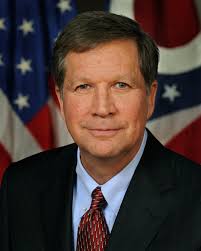
John Kasich
But he remained far behind in the polls, dropping 50% in support in just one month–from September to October. Meanwhile, Trump, the New York billionaire developer, was backed by 25% of Republican primary voters.
So, with nothing to lose, Kasich decided to take off the gloves. He invoked the “N” word for Republicans: Nazi. “You might not care if Donald Trump says Muslims must register with the government, because you’re not one,” continues Moe.
“And you might not care if Donald Trump says he’s going to round up all the Hispanic immigrants, because you’re not one.
Donald Trump
“And you might not care if Donald Trump says it’s OK to rough up black protesters, because you’re not one.
“And you might not care of Donald Trump wants to suppress journalists, because you’re not one.
“But think about this:
“If he keeps going, and he actually becomes President, he might just get around to you. And you’d better hope that there’s someone left to help you.”
Click here: Trump’s Dangerous Rhetoric – YouTube
The above is indeed a paraphrase of a famous quote by Martin Niemoeller (1892–1984), a prominent Protestant pastor. Although he had been a U-boat commander during World War 1, he became a bitter public foe of Adolf Hitler.
A staunch anti-Communist, he had initially supported the Nazis as Germany’s only hope of salvation against the Soviet Union. But when the Nazis made the church subordinate to State authority, Niemoeller created the Pastors’ Emergency League to defend religious freedom.
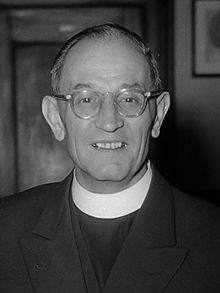
Martin Niemoeller
For his opposition to the Third Reich, Niemoeller spent seven years in concentration camps. With the collapse of the Reich in 1945, he was freed–and elected President of the Protestant church in Hesse and Nassau in 1947.
During the 1960s, he was a president of the World Council of Churches.
He is best remembered for his powerful condemnation of the failure of Germans to protest the increasing oppression of the Nazis:
First they came for the Communists, but I was not a Communist, so I did not speak out.
Then they came for the Socialists, but I was not a Socialist, so I did not speak out.
Then they came for the trade unionists, but I was not a trade unionist, so I did not speak out.
Then they came for the Jews, but I was not a Jew, so I did not speak out.
And when they came for me, there was no one left to speak out for me.
Neither “Adolf Hitler” nor “Nazi Party” was mentioned during the one-minute Kassich video. But Trump was furious.
“I will sue him [Kasich] just for fun,” said Trump, if he could find anything “not truthful” within the ad.
So said the man who called Mexican immigrants “rapists” and accused President Barack Obama of being a Muslim and born outside the United States.
The Kasich ad was by far the darkest attack made against Trump by any candidate–Republican or Democrat. And it raises a disturbing question:
If Donald Trump is America’s Adolf Hitler, who will be its Claus von Stauffenberg?
Colonel Claus Schenk von Stuaffenberg was the German army officer who, on July 20, 1944, tried to assassinate Adolf Hitler.
He had served with the Wehrmacht in Poland (1939), France (1940) and the Soviet Union (1941).
While serving in Tunisa, he was seriously wounded on April 7, 1943 when Allied fighters strafed his vehicle. He lost his left eye, right hand and two fingers of his left hand after surgery.
Colonel Claus Schenk von Stuaffenberg
Nevertheless, he now acted as the prime mover for the conspiracy among a growing number of German high command officers to arrest or assassinate Germany’s Fuehrer.
For most of these officers, the motive was craven: Germany was losing the war it had launched on the world–and they feared the worst. This was especially true now that the numerically superior forces of the Soviet Union had gone onto the offensive.
For Stauffenberg, there was another reason: His disgust at the horrors he had seen committed by his fellow Wehrmacht soldiers upon defenseless POW’s and civilians in Russia.
Thus, Stauffenberg–more than many German––knew firsthand the vengeance his country could expect if the “1,000 year Reich” fell.
Something must be done, he believed, to prove to the world that not all Germans–even members of the Wehrmacht–were criminals.
Most of the conspirators wanted to arrest Hitler and surrender to British and American forces–well before the much-feared Russians gained a toehold in Germany.
For Stauffenberg, arresting Hitler wasn’t enough.
Stauffenberg wanted him dead. A live Hitler might eventually be rescued by his Nazi colleagues.
But–how to do it?
2003 IRAQ WAR, ABC NEWS, ASIANS, BARACK OBAMA, BIRTH CONTROL, BLACKS, CBS NEWS, CNN, DISABLED, DONALD TRUMP, ED MARTIN, FACEBOOK, HILLARY CLINTON, HUMAYUN KHAN, KATRINA PIERSON, LATINOS, MARCO GUTIERREZ, MEDICAID, MEDICARE, MSNBC, MUSLIMS, NBC NEWS, NICCOLO MACHIAVELLI, OBAMACARE, PRISONERS OF WAR, SOCIAL SECURITY, TEA PARTY, THE CHICAGO SUN-TIMES, THE CHICAGO TRIBUNE, THE DISCOURSES, THE LOS ANGELES TIMES, THE NEW YORK TIMES, THE PRINCE, THE WASHINGTON POST, TWITTER, WAYNE ROOT, WOMEN
In Bureaucracy, History, Military, Politics, Social commentary on November 8, 2016 at 9:41 am
No shortage of pundits have sized up Donald Trump as a man and Presidential candidate.
But how does Trump measure up in the estimate of Niccolo Machiavelli, the 16th-century Florentine statesman?
It is Machiavelli whose two great works on politics–The Prince and The Discourses–remain textbooks for successful politicians more than 500 years later.
Niccolo Machiavelli
Let’s start with Trump’s notoriety for hurling insults at virtually everyone, including:
- Latinos
- Asians
- Muslims
- Blacks
- The Disabled
- Women
- Prisoners-of-War
These insults delight his white, under-educated followers. But they have alienated millions of other Americans who might have voted for him.
Now consider Machiavelli’s advice on gratuitously handing out insults and threats:
-
“I hold it to be a proof of great prudence for men to abstain from threats and insulting words towards any one.
-
“For neither the one nor the other in any way diminishes the strength of the enemy–but the one makes him more cautious, and the other increases his hatred of you, and makes him more persevering in his efforts to injure you.”
For those who expect Trump to shed his propensity for constantly picking fights, Machiavelli has a stern warning:
-
“…If it happens that time and circumstances are favorable to one who acts with caution and prudence he will be successful. But if time and circumstances change he will be ruined, because he does not change the mode of his procedure.
-
“No man can be found so prudent as to be able to adopt himself to this, either because he cannot deviate from that to which his nature disposes him, or else because, having always prospered by walking in one path, he cannot persuade himself that it is well to leave it…
-
“For if one could change one’s nature with time and circumstances, fortune would never change.”
Then there is Trump’s approach to consulting advisers:
Asked on MSNBC’s “Morning Joe” who he consults about foreign policy, Trump replied; “I’m speaking with myself, number one, because I have a very good brain and I’ve said a lot of things.”
Donald Trump
This totally contrasts the advice given by Machiavelli:
-
“A prudent prince must [choose] for his counsel wise men, and [give] them alone full liberty to speak the truth to him, but only of those things that he asks and of nothing else.
-
“But he must be a great asker about everything and hear their opinions, and afterwards deliberate by himself in his own way, and in these counsels…comport himself so that every one may see that the more freely he speaks, the more he will be acceptable.”
And Machiavelli has potent advice on the selection of advisers:
- “The first impression that one gets of a ruler and his brains is from seeing the men that he has about him.
- “When they are competent and loyal one can always consider him wise, as he has been able to recognize their ability and keep them faithful.
- “But when they are the reverse, one can always form an unfavorable opinion of him, because the first mistake that he makes is in making this choice.”
Consider some of the advisers Trump has relied on in his campaign for President:
- Founder of Latinos for Trump Marco Gutierrez told MSNBC’s Joy Reid: “My culture is a very dominant culture. And it’s imposing, and it’s causing problems. If you don’t do something about it, you’re gonna have taco trucks every corner.”
- At a Tea Party for Trump rally at a Harley-Davidson dealership in Festus, Missouri, former Missouri Republican Party director Ed Martin reassured the crowd that they’re not racist for hating Mexicans.
From the outset of his Presidential campaign, Trump has polled extremely poorly among Hispanic voters. Comments such as these guaranteed his poll figures wouldn’t improve.
- Wayne Root, opening speaker and master of ceremonies at many Trump events, told Virginia radio host Rob Schilling that people on public assistance and women who get their birth control through Obamacare should not be allowed to vote.
Comments like this didn’t increase Trump’s popularity with the the 70% of women who have an unfavorable opinion of him. Nor with anyone who receives Medicaid, Medicare or Social Security.
- Trump’s spokeswoman, Katrina Pierson, claimed that Barack Obama and Hillary Clinton were responsible for the death of Captain Humayun Khan–who was killed by a truck-bomb in Iraq in 2004.
Obama became President in 2009–almost five years after Khan’s death. And Clinton became Secretary of State the same year.
When your spokeswoman becomes a nationwide laughingstock, your own credibility goes down the toilet as well.
Finally, Machiavelli offers a related warning that especially applies to Trump: Unwise princes cannot be wisely advised.
-
“It is an infallible rule that a prince who is not wise himself cannot be well advised, unless by chance he leaves himself entirely in the hands of one man who rules him in everything, and happens to be a very prudent man. In this case, he may doubtless be well governed, but it would not last long, for the governor would in a short time deprive him of the state.”
All of which would lead Niccolo Machiavelli to warn, if he could witness American politics today: “This bodes ill for your Republic.”
ABC NEWS, ALTERNET, AMERICABLOG, AMERICAN NZAI PARTY, AP, BABY BOOMER RESISTANCE, BARACK OBAMA, BBC, BLOOMBERG NEWS, BUZZFEED, CBS NEWS, CHRIS MATHEWS, CIVIL WAR, CNN, CROOKS AND LIARS, DAILY KOZ, DONALD TRUMP, FACEBOOK, FIVETHIRTYEIGHT, FOOD STAMPS, HARPER’S MAGAZINE, HUFFINGTON POST, KU KLUX KLAN, MEDIA MATTERS, MEDICARE, MOTHER JONES, MOVEON, MSNBC, NBC NEWS, NEW REPUBLIC, NEWSDAY, NEWSWEEK, NPR, PBS NEWSHOUR, POLITICO, POLITICUSUSA, PROPAGANDA, RACISM, RAW STORY, REPUBLICAN PARTY, REPUBLICANS, REUTERS, Ronald Reagan, SALON, SEATTLE TIMES, SLATE, SOCIAL SECURITY, TALKING POINTS MEMO, THE ATLANTIC, THE CHICAGO SUN-TIMES, THE CHICAGO TRIBUNE, THE DAILY BEAST, THE DAILY BLOG, THE GUARDIAN, THE HILL, THE HUFFINGTON POST, THE INTERCEPT, THE LOS ANGELES TIMES, THE NATION, THE NEW REPUBLIC, THE NEW YORK TIMES, THE NEW YORKER, THE VILLAGE VOICE, THE WALL STREET JOURNAL, THE WASHINGTON POST, THINKPROGRESS, TIME, TIME MAGAZINE, TRUTHDIG, TRUTHOUT, TWITTER, TWO POLITICAL JUNKIES, U.S. NEWS & WORLD REPORT, UPI, USA TODAY, WILLIAM TECUMSEH SHERMAN
In Bureaucracy, History, Politics, Social commentary on September 26, 2016 at 12:10 am
Republicans have long tried to prevent or eliminate programs that aid the poor and middle-class, including:
- Social Security (since it began in 1935)
- Medicare
- National health insurance
- Food stamps
- WIC (Women, Infants, Children).
So why are so many poor Americans now flocking to this party’s banner?
Two reasons: Racism and greed. There are historical parallels for both.
First, race:
In 1999, historian Victor Davis Hanson noted the huge gap in wealth between the aristocratic, slave-owning minority of the pre-Civil War South and the vast majority of poor white Southerners.
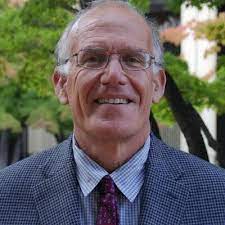
Victor Davis Hanson
“Before the war in the counties Sherman would later ruin, the top 10% of the landowners controlled 40% of the assessed wealth.”
In contrast, “more than half of those who were lucky enough to own any property at all still possessed less than 15% of the area’s valuation.”
So Hanson asked: “Why did the millions of poor whites of the Confederacy fight at all?”
He supplied the answer in his brilliant work on military history, The Soul of Battle: From Ancient Times to the Present Day, How Three Great Liberators Vanquished Tyranny.
One of those liberators was General William Tecumseh Sherman, who led 62,000 Union troops in a victorious “March to the Sea” through the Confederacy in 1864.
So why did so many poor Southern whites literally lay down their lives for the wealthy planter class, which despised them?
According to Hanson: “Behind the entire social fabric of the South lay slavery.
“If slavery eroded the economic position of the poor free citizens, if slavery encouraged a society of haves and have-nots…then it alone offered one promise to the free white man—poor, ignorant and dispirited—that he was at least not black and not a slave.”
And the planter class and its allies in government easily fobbed off their poor white countrymen with cheap flattery. Said Georgia Governor Joseph Brown:
“Among us the poor white laborer is respected as an equal. His family is treated with kindness, consideration, and respect. He does not belong to the menial class. The negro is in no sense his equal. He belongs to the only true aristocracy, the race of white men.”

Arlington House and plantation, former home of Robert E. Lee
Similarly, poor whites now flock to the Republican Party—which holds them in equal contempt—in large part to protest the 2008 election of the first black President of the United States.
According to a Pew Research Center study released on July 22, 2011: “Notably, the GOP gains have occurred only among white voters; a 2-point Republican edge among whites in 2008 (46% to 44%) has widened to a 13-point lead today (52% to 39%).”
Since the 1960s, Republicans have pursued a campaign policy of “divide and rule”—divide the nation along racial lines and reap the benefits at election time.
- Republicans opposed the Civil Rights Act of 1964.
- Republicans opposed the Voting Rights Act of 1965.
- Republicans, with Richard Nixon as their Presidential candidate in 1968 and 1972, pursued what they called a “Southern strategy”: Use “code language” to stoke fear and hatred of blacks among whites.
- Republicans have falsely identified welfare programs exclusively with non-whites. (Of the six million Americans receiving food stamps, about 42% are white, 32% are black, and 22% are Latino–with the growth fastest among whites during the recession.)
Thus, in voting Republican, many of these poor whites believe they are “striking a blow for the white race.”
And they can do so in a more socially acceptable way than joining a certified hate group such as the American Nazi Party or Ku Klux Klan.
Since 2015, openly racist groups such as the Klan and the American Nazi Party have flocked to the banner of Presidential candidate mogul Donald Trump. By enthusiastically courting their support, the real estate mogul has made it possible for Republican candidates to openly display their own racism.
Now greed:
In the hit play, 1776, on the creation and signing of the Declaration of Independence, there is a telling exchange between John Dickinson and John Hancock. It comes during the song, “Cool, Cool, Considerate Men.”
Dickinson, the delegate from Pennsylvania, urges Hancock, president of the Second Continental Congress, “to join us in our minuet.”
By “us” he means his fellow conservatives who fear losing their property and exalted status by supporting American independence from Great Britain.
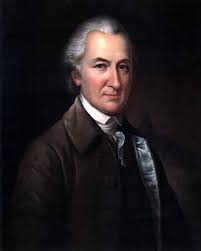
John Dickinson
Hancock declines, saying: “Fortunately, there are not enough men of property in America to dictate policy.”
To which Dickinson replies: “Perhaps not. But don’t forget that most men with nothing would rather protect the possibility of becoming rich than face the reality of being poor. And that is why they will follow us.”
Today, poor whites generally identify with the CEOs of powerful corporations. They believe the Republican gospel that they can attain such wealth—if only the government will “get out of my way.”
They forget—or ignore–the truth that government, for all its imperfections, is sometimes all that stands between them and a wide range of predators.
In return, the CEOs despise them as the privileged have always despised their social and economic “inferiors.”
Unless the Democratic Party can find ways to directly address these bitter, Politically Incorrect truths, it will continue its decline into insignificance.
ABC NEWS, ALTERNET, AMERICABLOG, AP, BABY BOOMER RESISTANCE, BARACK OBAMA, BBC, BLOOMBERG NEWS, BUZZFEED, CBS NEWS, CHRIS MATHEWS, CIVIL WAR, CNN, CROOKS AND LIARS, DAILY KOZ, FACEBOOK, FIVETHIRTYEIGHT, FOOD STAMPS, HARPER’S MAGAZINE, HUFFINGTON POST, MEDIA MATTERS, MEDICARE, MOTHER JONES, MOVEON, MSNBC, NBC NEWS, NEW REPUBLIC, NEWSDAY, NEWSWEEK, NPR, PBS NEWSHOUR, POLITICO, POLITICUSUSA, PROPAGANDA, RAW STORY, REPUBLICAN PARTY, REPUBLICANS, REUTERS, Ronald Reagan, SALON, SEATTLE TIMES, SLATE, SOCIAL SECURITY, TALKING POINTS MEMO, THE ATLANTIC, THE CHICAGO SUN-TIMES, THE CHICAGO TRIBUNE, THE DAILY BEAST, THE DAILY BLOG, THE GUARDIAN, THE HILL, THE HUFFINGTON POST, THE INTERCEPT, THE LOS ANGELES TIMES, THE NATION, THE NEW REPUBLIC, THE NEW YORK TIMES, THE NEW YORKER, THE VILLAGE VOICE, THE WALL STREET JOURNAL, THE WASHINGTON POST, THINKPROGRESS, TIME, TIME MAGAZINE, TRUTHDIG, TRUTHOUT, TWITTER, TWO POLITICAL JUNKIES, U.S. NEWS & WORLD REPORT, UPI, USA TODAY, WILLIAM TECUMSEH SHERMAN
In Bureaucracy, History, Politics, Social commentary on September 23, 2016 at 8:12 am
On July 22, 2011, ABC News carried the following story:
The Pew Foundation, analyzing voter identification, found “the electorate’s partisan affiliations have shifted significantly” since Barack Obama won office in 2008.
The GOP had gained strength among white voters, most specifically “the young and poor.”
A seven-point Democratic advantage among whites under age 30 three years ago had turned into an 11-point GOP advantage. And a 15-point Democratic advantage among whites earning less than $30,000 annually had swung to a slim four-point Republican edge by 2011.

In addition:
- The GOP gains had occurred only among white voters.
- Republicans had made sizable gains among white voters since 2008. Fifty-two percent of white voters called themselves Republicans or leaned to the GOP, compared with 39% who affiliated with the Democratic Party or leaned Democratic.
- Democrats had lost their edge among lower income white voters.
- In 2008, Democrats had a 15 point lead among white voters with family incomes less than $30,000. By 2011, Republicans had a four-point edge among this group.
- The GOP’s lead among middle income white voters had grown since 2008, and Republicans held a substantial advantage with higher income white voters.
- Republicans have made gains among whites with a high school education or less. The GOP’s advantage over Democrats had grown from one point in 2008 to 17 points in 2011 among less educated whites.
- Republicans had made smaller gains among whites voters who had college degrees.
What is fascinating about these findings is this: The Republicans have, since 1980, pursued a policy of gutting programs aimed at helping the poor—while repeatedly creating tax-breaks for the wealthiest 1% of the population.
For Republicans, the patron saint of this “love-the-rich-screw-the-poor” ideology remains Ronald Reagan–two-time governor of California and twice-elected President of the United States (1981-1989)
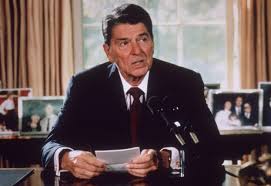
Ronald Reagan, who taught Americans to worship the wealthy
Among those charting Reagan’s legacy as President was former CBS Correspondent David Shoenbrum.
In his bestselling autobiography, America Inside Out: At Home and Abroad from Roosevelt to Reagan, he noted:

- On January 28, 1981, keeping a pledge to his financial backers in the oil industry, Reagan abolished Federal controls on the price of oil.
- Within a week, Exxon, Texaco and Shell raised gasoline prices and prices of home heating oil.
- Reagan saw it as his duty to put a floor under prices, not a ceiling above them.

- Reagan believed that when government helped business it wasn’t interfering. Loaning money to bail out a financially incompetent Chrysler was “supporting the free enterprise system.”
- But putting a high-profits tax on price-gouging corporations or filing anti-trust suits against them was “Communistic” and therefore intolerable.
- Tax-breaks for wealthy businesses meant helping America become stronger.
- But welfare for the poor or the victims of a predatory marketplace economy weakened America by sapping its morale.
“In short, welfare for the rich is good for America. But welfare for the poor is bad for America, even for the poor themselves, for it encourages them to be shiftless and lazy.
“Somehow, loans to the inefficient management of American corporations would not similarly encourage them in their inefficient methods,” wrote Shoenbrun.
Republicans have sought to dismantle Social Security ever since that program began in 1935. And Republicans have furiously opposed other programs aiding the poor and middle-class—such as Medicare, food stamps and WIC (Women, Infants, Children).
In short, this is not a political party with a history of rushing to the defense of those most in need.
So the question remains: Why are so many poor Americans flocking to its banner?
The answer lies in the history of the American South—and slavery.
9/11 ATTACKS, ABC NEWS, AFGHANISTAN, AMERICAN NAZI PARTY, ANTI-SEMITISM, ARCHER SCHOOL FOR GIRLS, BARACK OBAMA, BARRY GOLDWATER, BIRTH CONTROL, BLACK LIVES MATTER, CBS NEWS, CIVIL RIGHTS ACT OF 1964, CNN, DONALD TRUMP, ED MARTIN, FACEBOOK, FLORIDA, FOX BUSINESS, FOX NEWS, GEORGE W. BUSH, GRETCHEN CARLSON, HILLARY CLINTON, HUMAYUN KHAN, IRAQ WAR, JOHN MCCAIN, KATRINA PIERSON, KU KLUX KLAN, LATINOS, LYNDON B. JOHNSON, MARCO GUTIERREZ, MEDICAID, MEDICARE, MEXICO, MICHELE BACHMANN, MITT ROMNEY, MSNBC, NBC NEWS, NEW YORK, NICCOLO MACHIAVELLI, OBAMACARE, OMAROSA MANIGAULT, PAUL MANAFORT, PRINCESS DIANA, ROGER AILES, SOCIAL SECURITY, STEPHEN BANNON, TEA PARTY, THE APPRENTICE, THE CHICAGO SUN-TIMES, THE CHICAGO TRIBUNE, THE NEW NEW YORK TIMES, THE PRINCE, THE WASHINGTON POST, TWITTER, VLADIMIR PUTIN, VOTER ID LAWS, VOTING, WAYNE ROOT, WELFARE
In Bureaucracy, History, Law, Politics, Social commentary on September 8, 2016 at 1:21 am
In late July, Donald Trump’s new spokeswoman, Katrina Pierson, accepted an impossible mission that even Jim Phelps would have turned down:
Convince Americans that Barack Obama and Hillary Clinton were responsible for the death of Captain Humayun Khan, who was killed by a truck-bomb in Iraq in 2004.
Appearing on CNN’s The Situation Room with Wolf Blitzer on August 2, Pierson said: “It was under Barack Obama and Hillary Clinton that changed the rules of engagements that probably cost his life.”
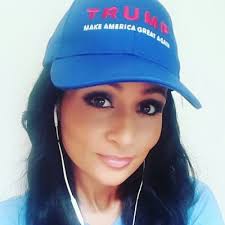
Katrina Pierson
Totally ignored in that scenario:
- President George W. Bush lied the nation into a needless war that cost the lives of 4,486 Americans and wounded another 33,226.
- The war began in 2003–and Khan was killed in 2004.
- Barack Obama became President in 2009–almost five years after Khan’s death.
- Hillary Clinton became Secretary of State the same year.
- Obama, elected Illinois U.S. Senator in 2004, vigorously opposed the Iraq war throughout his term.
Pierson’s attempt to rewrite history touched off a frenzy on Twitter, leading to the creation of the hashtag #KatrinaPiersonHistory. Its purpose: To mock Pierson’s revisionist take on history.
Among the tweets offered:
- Hillary Clinton slashed funding for security at the Ford Theater, leading to Lincoln’s assassination.
- Obama gave Amelia Earhart directions to Kenya.
- Remember the Alamo? Obama and Hillary let it happen.
- Obama and Clinton kidnapped the Lindbergh baby.
Not content with blaming President Obama for the death of a man he never sent into combat, Pierson claimed that Obama started the Afghanistan war.
Appearing again on CNN, Pierson said the Afghan war began “after 2007,” when Al Qaeda “was in ashes” following the American troop surge in Iraq.
“Remember, we weren’t even in Afghanistan by this time,” Pierson said. “Barack Obama went into Afghanistan, creating another problem.”
In fact, President George W. Bush ordered the invasion of Afghanistan following the terrorist attacks of September 11, 2001.
Millions of Americans who lived through 9/11 remember that.
When your spokeswoman becomes a nationwide laughingstock, your own credibility goes down the toilet as well.
In July an Associated Press/GfK poll found that half of Americans saw Donald Trump as “racist”–and only 7% of blacks viewed him favorably.
There are numerous reasons for this:
- His enthusiastic support by racist white supremacist organizations such as the Ku Klux Klan and the American Nazi Party.
- His “birther” attacks on President Obama as a non-citizen from Kenya–and thus ineligible to hold the Presidency.
- His attacks on the Black Lives Matter movement and calling on his supporters at rallies to rough up minority protesters.
Since 1964, blacks have overwhelmingly voted for Democratic Presidential candidates. President Lyndon B. Johnson’s won their loyalty with his support for and passage of the Civil Rights Act of 1964.
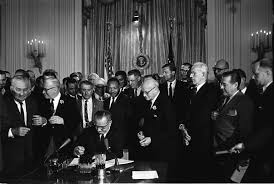
President Johnson signing the 1964 Civil Rights Act
Republican Presidential candidate Barry Goldwater opposed it–as did the majority of his party.
Since 1964, fewer than six percent of blacks have voted for Republican Presidential candidates. Whites have not only remained the majority of Republican voters but have become the single most important voting bloc among them.
John McCain received four percent of black votes in 2008 and Mitt Romney received six percent in 2012. When a Republican collapses into single digits among blacks and other minorities, it reduces the number of white votes a Democrat needs to win the presidency.
To counter this, Donald Trump has turned to his Director of African-American Outreach: Omarosa Manigault.
Trump made the appointment just hours before the first night of the Republican National Convention.
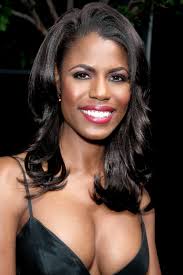
Omarosa Manigault
Manigault is best known as the villain of Trump’s reality-TV show, “The Apprentice”–where she was fired on three different seasons. Her credentials include a Ph.D. in communications, a preacher’s license, and topping TV Guide’s list of greatest reality TV villains in 2008.
During the Clinton administration she held four jobs in two years, and was thoroughly disliked in all of them.
“She was asked to leave [her last job] as quickly as possible, she was so disruptive,” said Cheryl Shavers, the former Under Secretary for Technology at the Commerce Department. “One woman wanted to slug her.”
In her role as Trump’s ambassador to blacks, Omarosa has inspired others to want to slug her. Appearing on Fox Business, she ignored Fox panelist Tamera Holder’s question on why blacks should support Trump,and then mocked her “big boobs.”
Manigault isn’t bothered that blacks regard Trump so poorly in polls: “My reality is that I’m surrounded by people who want to see Donald Trump as the next president of the United States who are African-American.”
Appointing as your public relations director a woman who gratuitously insults and infuriates people is not the move of a smart administrator. Nor the move of a smart Presidential candidate.
If Donald Trump becomes President, he will inherit the authority to appoint thousands of officials to domestic and foreign agencies. Voters have a right to judge him on the quality of the appointments he has already made to his own campaign.
A review of those named within this series gives serious cause for concern.


.jpg)


2003 IRAQ WAR, ABC NEWS, ALTERNET, ASIANS, BARACK OBAMA, BIRTH CONTROL, BLACKS, BUZZFEED, CBS NEWS, CNN, DAILY KOS, DISABLED, DONALD TRUMP, ED MARTIN, FACEBOOK, HILLARY CLINTON, HUMAYUN KHAN, KATRINA PIERSON, LATINOS, MARCO GUTIERREZ, MEDICAID, MEDICARE, MOTHER JONES, MOVEON, MSNBC, MUSLIMS, NBC NEWS, NEWSWEEK, NICCOLO MACHIAVELLI, NPR, OBAMACARE, POLITICO, PRISONERS OF WAR, RAW STORY, SALON, SLATE, SOCIAL SECURITY, TEA PARTY, THE CHICAGO SUN-TIMES, THE CHICAGO TRIBUNE, THE DAILY BEAST, THE DISCOURSES, THE HUFFINGTON POST, THE LOS ANGELES TIMES, THE NEW YORK TIMES, THE PRINCE, THE WALL STREET JOURNAL, THE WASHINGTON POST, TIME, TWITTER, U.S. NEWS & WORLD REPORT, USA TODAY, WAYNE ROOT, WOMEN
MACHIAVELLI’S VERDICT ON TRUMP: HE’S NO PRINCE
In Bureaucracy, History, Military, Politics, Social commentary on March 27, 2017 at 12:28 amNo shortage of pundits have sized up Donald Trump–first as a Presidential candidate, and now as the nation’s 45th President.
But how does Trump measure up in the estimate of Niccolo Machiavelli, the 16th-century Florentine statesman?
It is Machiavelli whose two great works on politics–The Prince and The Discourses–remain textbooks for successful politicians more than 500 years later.
Niccolo Machiavelli
Let’s start with Trump’s notoriety for hurling insults at virtually everyone, including:
These insults delight his white, under-educated followers. But they have alienated millions of other Americans who might have voted for him.
Now consider Machiavelli’s advice on gratuitously handing out insults and threats:
For those who expect Trump to shed his propensity for constantly picking fights, Machiavelli has a stern warning:
Then there is Trump’s approach to consulting advisers:
Asked on MSNBC’s “Morning Joe” who he consults about foreign policy, Trump replied; “I’m speaking with myself, number one, because I have a very good brain and I’ve said a lot of things.”
Donald Trump
This totally contrasts the advice given by Machiavelli:
And Machiavelli has potent advice on the selection of advisers:
Consider some of the advisers Trump has relied on in his campaign for President:
From the outset of his Presidential campaign, Trump polled extremely poorly among Hispanic voters. Comments like these didn’t increase his popularity.
Comments like this are a big turn-off among the 70% of women who have an unfavorable opinion of him–and anyone who receives Medicaid, Medicare or Social Security.
Obama became President in 2009–almost five years after Khan’s death. And Clinton became Secretary of State the same year.
When your spokeswoman becomes a nationwide laughingstock, your own credibility goes down the toilet as well.
Finally, Machiavelli offers a related warning that especially applies to Trump: Unwise princes cannot be wisely advised.
All of which would lead Niccolo Machiavelli to warn, if he could witness American politics today: “This bodes ill for your Republic.”
Share this: