Posts Tagged ‘MARCO RUBIO’
2016 PRESIDENTIAL CAMPAIGN, ABC NEWS, ADOLF HITLER, ALTERNET, AMERICABLOG, AP, BABY BOOMER RESISTANCE, BERNIE SANDERS, BUZZFEED, CARLY FIORINA, CBS NEWS, CNN, COVID-19, CROOKS AND LIARS, DAILY KOS, DAVID BROOKS, DEMOCRATIC PARTY, DENNIS HASTERT, DONALD TRUMP, ELIZABETH WARREN, FIVETHIRTYEIGHT, HILLARY CLINTON, JEB BUSH, JOHN KASICH, JOHNNY B. GOOD (SONG), JOSEPH MCCARTHY, JOSH DUGGAR, LIBERALS, MARCO RUBIO, MARJORIE TAYOR GREENE, MARK SHIELDS, MAXINE WATERS, MEGYN KELLY, MICHELLE OBAMA, MOTHER JONES, MOVEON, MSNBC, NANCY PELOSI, NBC NEWS, NEWSWEEK, NEWT GINGRICH, NPR, PBS NEWSHOUR, POLITICO, POLITICUSUSA, RAW STORY, REPUBLICAN PARTY, REPUBLICANS, REUTERS, RICK PERRY, RUSSIA, SALON, SEATTLE TIMES, SLANDER, SLATE, TALKING POINTS MEMO, THE ATLANTIC, THE CHICAGO SUN-TIMES, THE CHICAGO TRIBUNE, THE DAILY BEAST, THE DAILY BLOG, THE GUARDIAN, THE HILL, THE HUFFINGTON POST, THE LOS ANGELES TIMES, THE NATION, THE NEW YORK TIMES, THE RAINBOW CONNECTION (SONG), THE WASHINGTON POST, THINKPROGRESS, TIME, TRUTHDIG, TWITTER, U.S. NEWS & WORLD REPORT, UPI, USA TODAY, VLADIMIR PUTIN, YOUTUBE
In Bureaucracy, History, Humor, Politics, Social commentary on October 27, 2022 at 12:10 am
Words are weapons—or can be, if used properly.
Republicans learned this truth after World War II.
- Richard Nixon became a United States Senator in 1950 by attacking Helen Gahagen Douglas as “The Pink Lady.”
- from 1954 onward, Senator Joseph R. McCarthy and other Red-baiting Republicans essentially paralyzed the Democratic party through such slanderous terms as “Comsymps,” “fellow-travelers” and “Fifth Amendment Communists.”
Pulitzer-Prize winning author David Halberstam summed up the effectiveness of such tactics in his monumental study of the origins of the Vietnam War, The Best and the Brightest:
“But if they did not actually stick, and they did not, [Joseph McCarthy’s] charges had an equally damaging effect: They poisoned. Where there was smoke, there must be fire. He wouldn’t be saying these things [voters reasoned] unless there was something to it.”
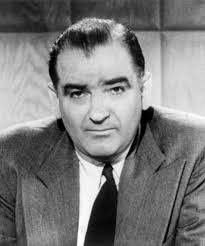
Joseph McCarthy
As a whole, Democrats have proven indifferent to or ignorant of the power of effective language.
President Donald Trump solicited Russian Communist aid to win the Presidency in 2016. He solicited aid from Chinese Communists to retain it in 2020.
He attacked countless Americans and world leaders—including those presiding over America’s NATO alliance. But he has never even criticized Russian dictator Vladimir Putin.
Yet even with such clear-cut evidence, Democrats refused to directly accuse him of treason, as in:
- “TrumPutin”
- “Commissar-in-Chief”
- “Putin’s Poodle”
- “Red Donald”
- “Putin’s Puppet”
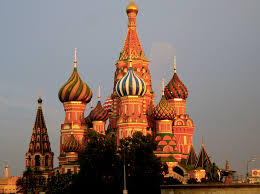
The Kremlin
Similarly, Trump has gotten a free pass on treason from the news media. None have dared suggest the obvious: That he moved boxes of classified documents to his Mar-a-Lago estate to sell them to America’s enemies in exchange for huge sums to pay his upcoming legal bills.
During the COVID-19 pandemic, Trump repeatedly lied about its lethality and opposed the use of masks and social distancing to combat it. As a result, 400,000 Americans had died by the time he left office.
Yet no Democrat has dared label him “Coronavirus-in-Chief.”
Nor has the news media directly held him accountable for those deaths.
Tyrants are conspicuously vulnerable to ridicule. Yet here, too, Democrats have proven unable or unwilling to make use of this powerful weapon.
In this YouTube-obsessed age, Democrats could effectively assail Trump with a series of ridiculing videos. For example, Trump’s well-established “bromance” with Putin could be turned into a parody of the famous song, “Johnny B. Good”:
Way back inside the Kremlin where the lights glow red
There ruled a man named Putin who would poison you dead.
He came up with a plan to make his Russia great
And all it took was bribes and Republican hate.
And Trumpy was a man who couldn’t read or spell
But he could sell out his land just like he’s ringing a bell.

Many of Trump’s fiercest defenders in the House and Senate have taken “campaign contributions” (i.e., bribes) from Russian oligarchs linked to Putin. They could be pointedly attacked by turning the Muppet song, “The Rainbow Connection,” into “The Russian Connection.”
Why are there so many tales about Russians
And Right-wingers taking bribes?
Russians are Commies and have lots of rubles
For traitors with something to hide.
So I’ve been told and some choose to believe it
It’s clear as the old KGB.
Someday we’ll find it
The Russian Connection—
The bribers, the traitors—you’ll see.
A continuing theme among Republican politicians is that they are paragons of religious virtue, while Democrats are champions of Satan.
Yet Democrats have done nothing to publicize such truths as:
- Former Speaker of the House Newt Gingrich is a serial adulterer.
- Former Speaker Dennis Hastert is a convicted sodomizer of teenage boys.
- Josh Duggar, a Right-wing star of the high-rated “reality” series, 19 Kids and Counting, has been sentenced to 12 years’ imprisonment for possessing child pornography.
- Georgia Representative Marjorie Taylor Greene, has boasted: “Marriage is a wonderful thing and I’m a firm believer in it.” Yet she engaged in open affairs with at least two members of her local gym—for which Perry Greene is now divorcing her.
Most Americans don’t follow political news closely—and know nothing of such revelations.
Moreover, Democrats need to repeatedly advertise such facts—to counter Republicans’ constant claims of being the moral arbiters of America. And this needs to be done through major advertising campaigns on TV—where most Americans get their news about politics.
Throughout 2016, liberals celebrated on Facebook and Twitter the “certain” Presidency of former First Lady Hillary Clinton. They were cheered on by First Lady Michelle Obama’s naive advice on political tactics: “When they go, we go high.”
Meanwhile, Donald Trump planned to subvert the 2016 election by Russian Intelligence agents and millions of Russian trolls flooding the Internet with legitimately fake news.
History has proven which tactics proved superior.
It’s long past time for Democrats to accept that they—and the country’s democratic traditions—are engaged in a death-match with their Republican opponents.
Only certain defeat is guaranteed by adhering to Marquis of Queensbury when your enemy is using brass knuckles.
For Democrats to win elective victories and preserve America’s democratic traditions, they must find their own George Pattons to confront the Waffen-SS generals among Republican ranks.
2016 PRESIDENTIAL CAMPAIGN, ABC NEWS, ADOLF HITLER, ALTERNET, AMERICABLOG, AP, BABY BOOMER RESISTANCE, BERNIE SANDERS, BUZZFEED, CARLY FIORINA, CBS NEWS, CNN, COMMUNISM, COVID-19, CROOKS AND LIARS, DAILY KOS, DAILY KOZ, DAVID BROOKS, DAVID HALBERSTAM, DEMOCRATIC PARTY, DEMOCRATS, DENNIS HASTERT, DONALD TRUMP, ELIZABETH WARREN, FACEBOOK, FIVETHIRTYEIGHT, HELEN GAHAGAN DOUGLAS, HILLARY CLINTON, JEB BUSH, JOHN KASICH, JOSEPH MCCARTHY, JOSEPH R. MCCARTHY, JOSH DUGGAR, LANGUAGE, LIBERALS, MARCO RUBIO, MARJORIE TAYOR GREENE, MARK SHIELDS, MAXINE WATERS, MEGYN KELLY, MICHELLE OBAMA, MOTHER JONES, MOVEON, MSNBC, NANCY PELOSI, NATO, NBC NEWS, NEWSWEEK, NEWT GINGRICH, NPR, PBS NEWSHOUR, POLITICO, POLITICUSUSA, RAW STORY, REPUBLICAN PARTY, REPUBLICANS, REUTERS, RICHARD NIXON, RICK PERRY, RUSSIA, SALON, SATIRE, SEATTLE TIMES, SLANDER, SLATE, TALKING POINTS MEMO, THE ATLANTIC, THE CHICAGO SUN-TIMES, THE CHICAGO TRIBUNE, THE DAILY BEAST, THE DAILY BLOG, THE GUARDIAN, THE HILL, THE HUFFINGTON POST, THE LOS ANGELES TIMES, THE NATION, THE NEW YORK TIMES, THE WASHINGTON POST, THINKPROGRESS, TIME, TRUTHDIG, TWITTER, U.S. NEWS & WORLD REPORT, UPI, USA TODAY, VLADIMIR PUTIN, YOUTUBE
In Bureaucracy, History, Politics, Social commentary on October 26, 2022 at 12:10 am
In 1996, Newt Gingrich, then Republican Speaker of the House of Representatives, wrote a memo that encouraged Republicans to “speak like Newt.”
Entitled “Language: A Key Mechanism of Control,” it urged Republicans to attack Democrats with such words as “corrupt,” “selfish,” “destructive,” “hypocrisy,” “liberal,” “sick,” and “traitors.”
Even worse, Gingrich encouraged the news media to disseminate such accusations. Among his suggestions:
- “Fights make news.”
- Create a “shield issue” to deflect criticism: “A shield issue is, just, you know, your opponent is going to attack you as lacking compassion. You better…show up in the local paper holding a baby in the neonatal center.”
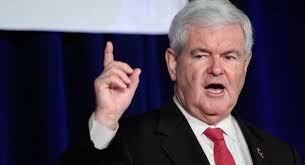
Newt Gingrich
In the memo, Gingrich advised:
“….In the video “We are a Majority,” Language is listed as a key mechanism of control used by a majority party, along with Agenda, Rules, Attitude and Learning.
“As the tapes have been used in training sessions across the country and mailed to candidates we have heard a plaintive plea: ‘I wish I could speak like Newt.’
“That takes years of practice. But, we believe that you could have a significant impact on your campaign and the way you communicate if we help a little. That is why we have created this list of words and phrases….
“This list is prepared so that you might have a directory of words to use in writing literature and mail, in preparing speeches, and in producing electronic media.
“The words and phrases are powerful. Read them. Memorize as many as possible. And remember that like any tool, these words will not help if they are not used.”
Here is the list of words Gingrich urged his followers to use in describing “the opponent, their record, proposals and their party”:
- abuse of power
- anti- (issue): flag, family, child, jobs
- betray
- bizarre
- bosses
- bureaucracy
- cheat
- coercion
- “compassion” is not enough
- collapse(ing)
- consequences
- corrupt
- corruption
- criminal rights
- crisis
- cynicism
- decay
- deeper
- destroy
- destructive
- devour
- disgrace
- endanger
- excuses
- failure (fail)
- greed
- hypocrisy
- ideological
- impose
- incompetent
- insecure
- insensitive
|
- intolerant
- liberal
- lie
- limit(s)
- machine
- mandate(s)
- obsolete
- pathetic
- patronage
- permissive attitude
- pessimistic
- punish (poor …)
- radical
- red tape
- self-serving
- selfish
- sensationalists
- shallow
- shame
- sick
- spend(ing)
- stagnation
- status quo
- steal
- taxes
- they/them
- threaten
- traitors
- unionized
- urgent (cy)
- waste
- welfare
|
Yes, speaking like Newt—or Adolf Hitler or Joseph R. McCarthy—“takes years of practice.”
And to the dismay of both Republicans and Democrats, Donald Trump has learned his lessons well.
On May 27, 2016, conservative New York Times columnist David Brooks analyzed the use of insults by Republican Presidential front-runner Donald Trump. He did so with his counterpart, liberal syndicated columnist, Mark Shields, on The PBS Newshour.
DAVID BROOKS: “Trump, for all his moral flaws, is a marketing genius. And you look at what he does. He just picks a word and he attaches it to a person. Little Marco [Rubio], Lyin’ Ted [Cruz], Crooked Hillary [Clinton].
“And that’s a word. And that’s how marketing works. It’s a simple, blunt message, but it gets under.
“It sticks, and it diminishes. And so it has been super effective for him, because he knows how to do that. And she [Hillary Clinton] just comes with, ‘Oh, he’s divisive.’
“These are words that are not exciting people. And her campaign style has gotten, if anything…a little more stagnant and more flat.”
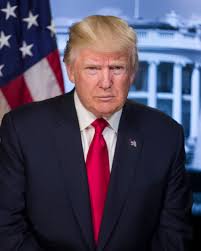
Donald Trump
MARK SHIELDS: “Donald Trump gratuitously slandered Ted Cruz’s wife. He libeled Ted Cruz’s father for being potentially part of Lee Harvey Oswald’s assassination of the president of the United States, suggesting that he was somehow a fellow traveler in that.
“This is a libel. You don’t get over it….”
Hillary Clinton wasn’t the only Presidential candidate who proved unable to cope with Trump’s gift for insult. His targets—and insults—included:
- Former Texas Governor Rick Perry: “Wears glasses to seem smart.”
- Former Florida Governor Jeb Bush: “Low Energy Jeb.”
- Vermont U.S. Senator Bernie Sanders: “Crazy Bernie.”
- Ohio Governor John Kasich: “Mathematically dead and totally desperate.”
Trump has reserved his most insulting words for women. For example:
- Carly Fiorina, his Republican primary competitor: “Look at that face. Would anyone vote for that?”
- Megyn Kelly, Fox News reporter: “You could see there was blood coming out of her eyes. Blood coming out of her wherever.”
- California Rep. Maxine Waters: “An extremely low IQ person.”
- Speaker of the House Nancy Pelosi: “MS-13 Lover Nancy Pelosi.”
Only one candidate has shown the ability to rattle Trump: Massachusetts Senator Elizabeth Warren.
As Mark Shields noted on The PBS Newshour.
“Elizabeth Warren gets under Donald Trunp’s skin. And I think she’s been the most effective adversary. I think she’s done more to unite the Democratic party than either Hillary Clinton or Bernie Sanders.
“I mean, she obviously—he can’t stay away from her. He is tweeting about her.”
And David Brooks offered: “And so the tactics…is either you do what Elizabeth Warren has done, like full-bore negativity, that kind of [get] under the skin, or try to ridicule him and use humor.”
A May 12, 2016 story on CNN—“Elizabeth Warren Gives Trump a Dose of His Own Medicine on Twitter”—noted: “Whenever Trump criticizes her, Warren fires right back at him, sometimes twice as hard.”
2016 PRESIDENTIAL CAMPAIGN, ABC NEWS, ALEXANDER SHUSTOROVICH, ALTERNET, ANDREW INTRATER, AP, BUZZFEED, CBS NEWS, CHUCK GRASSLEY, CIA, CITIZENS UNITED, CNN, CROOKS AND LIARS, DAILY KOZ, DEMOCRATIC PARTY, DEPARTMENT OF HOMELAND SECURITY, FACEBOOK, FBI, FEDERAL ELECTIONS COMMISSION, FOX NEWS, JAMES COMEY, JOHN KASICH, JOHN MCCAIN, LEN BLAVATNIK, LINDSEY GRAHAM, MARCO RUBIO, MITCH MCCONNELL, MOTHER JONES, MOVEON, NATIONAL SECURITY AGENCY, NBC NEWS, NEWSWEEK, NPR, OFFICE OF THE DIRECTOR OF NATIONAL INTELLIGENCE, OLIGARCHS, ORRIN HATCH, PAUL RYAN, POLITICAL ACTION COMMITTEES (PACS), POLITICO, RAW STORY, REPUBLICAN PARTY, REUTERS, ROBERT MUELLER, ROD ROSENSTEIN, RUSSIA, SALON, SCOTT WALKER, SEATTLE TIMES, SENATE LEADERSHIP FUND, SIMON KUKES, SLATE, SUPREME COURT, THE ATLANTIC, THE CHICAGO SUN-TIMES, THE CHICAGO TRIBUNE, THE DAILY BEAST, THE GUARDIAN, THE HILL, THE HUFFINGTON POST, THE LOS ANGELES TIMES, THE NATION, THE NEW YORK TIMES, THE WASHINGTON POST, TIME, TRUMP INAUGURAL COMMITTEE, TWITTER, U.S. NEWS & WORLD REPORT, UKRAINE, UPI, USA TODAY, USA TODAY DONALD TRUMP, VLADIMIR PUTIN
In Bureaucracy, History, Law, Politics, Social commentary on May 16, 2022 at 12:11 am
Anyone wondering where Vladimir Putin got the idea he could invade Ukraine with impunity need look no further than the United States Senate.
On April 16, 2018, the New York Times published an editorial taking direct aim at the vast majority of Congressional Republicans.
Specifically, it noted their unwillingness to speak out against threats by President Donald Trump to fire deputy Attorney General Rod Rosenstein and/or Special Counsel Robert Mueller.
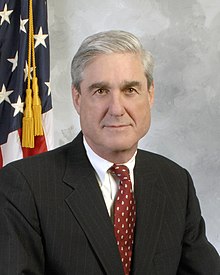
Robert Mueller
Its key paragraph:
“Make no mistake: If Mr. Trump takes such drastic action, he will be striking at the foundation of the American government, attempting to set a precedent that a president, alone among American citizens, is above the law. What can seem now like a political sideshow will instantly become a constitutional crisis, and history will come calling for Mr. [Orrin] Hatch and his colleagues.”
Orrin Hatch was the Republican United States Senator from Utah. He and Republican Senators Lindsey Graham (South Carolina) and Chuck Grassley (Iowa) had warned Trump not to fire Rosenstein or Mueller.
But most Republicans had held silent.
Why?
The Times editorial offers two reasons:
First, Republicans feared enraging an easily infuriated Trump—who might aim his Twitter account at them and cost them votes in the upcoming fall elections.
Second, Republicans feared enraging Trump’s fanatical base—which, in this instance, had two meanings:
- “Something (as a group of people) that reliably provides support (such as for a business or political candidate)”—Merriam Webster; and
- “Without moral principles; ignoble”—Oxford Living Dictionaries
On April 17, Republican Senate Majority Leader Mitch McConnell said he would not allow legislation to protect Mueller’s independent investigation to reach the Senate floor.

Mitch McConnell
“I’m the one who decides what we take to the floor. That’s my responsibility as majority leader. We’ll not be having this on the floor of the Senate,” the Kentucky Republican said in an interview on Fox News.
Earlier in the day, another Republican, Speaker of the House Paul Ryan, claimed that legislation to protect Mueller was “unnecessary.”
“It would not be in the President’s interest to [fire Mueller] and I think he knows that,” said the Wisconsin Congressman.
But there is an additional reason why so few Republicans dared to stand up against Trump.
Trump received help from Russian Intelligence agents during the 2016 Presidential campaign. And House and Senate Republicans have received Russian help of another kind: Bribe monies.
Of course, these are not officially classified as bribes. Officially, they are “campaign contributions.”
In recent years, a network of Russian oligarchs—all of them answerable to Russian dictator Vladimir Putin—has been increasingly contributing to top Republicans.
And, thanks to the Supreme Court’s Citizens United decision in 2010, the donations are entirely legal.
The following data comes from the Federal Election Commission.
One such major contributor is Len Blavatnik, who holds citizenship in both the United States and the United Kingdom. During the 2015-16 election cycle, he proved one of the largest donors to GOP Political Action Committees (PACs).
Blavatnik’s net worth is estimated at $20 billion. Before 2016, he donated to both Democrats and Republicans in meager amounts. But in 2016, he gave $6.35 million to GOP PACs.
Millions of dollars went to top Republican leaders—such as Senators Mitch McConnell, Marco Rubio (Florida) and Lindsey Graham (South Carolina). Specifically, he contributed
- A total of $1.5 million to PACs associated with Rubio.
- $1 million to Trump’s Inaugural Committee.
- $41,000 to both Republicans and Democrats in 2017.
- $1 million to McConnell’s Senate Leadership Fund.
- $3.5 million to a PAC associated with McConnell.
- $1.1 million to Unintimidated PAC, associated with Wisconsin Governor Scott Walker.
- $200,000 to the Arizona Grassroots Action PAC, associated with Arizona Senator John McCain.
- $250,000 to New Day for America PAC, associated with Ohio Governor John Kasich.
- $800,000 went to the Security is Strength PAC, associated with Senator Lindsey Graham.
Another Russian oligarch, Alexander Shustorovich, contributed $1 million to Trump’s Inaugural Committee.
Altogether, four Russian oligarchs—Blavatnik, Shustorovich, Andrew Intrater and Simon Kukes—–contributed $10.4 million from the start of the 2015-16 election cycle through September 2017. Of this, 99% went to Republicans.
As Senate Majority Leader, Mitch McConnell participated in high-level intelligence briefings in 2016. From agencies such as the FBI, CIA and the code-cracking National Security Agency, he learned that the Russians were trying to subvert the electoral process.

In October, 2016, the Department of Homeland Security (DHS) and the Office of the Director of National Intelligence (DNI) issued a joint statement: The Russian government had directed the effort to subvert the 2016 Presidential election.
Two weeks later, McConnell’s PAC accepted a $1 million donation from Blavatnik.
On March 30, 2017, McConnell’s PAC accepted another $1 million from Blavatnik. This was just 10 days after former FBI Director James Comey testified before the House Intelligence Committee about Russia’s efforts to subvert the 2016 election.
Millionaires and billionaires don’t give six- or seven-figure monetary contributions to politicians without expecting to get something in return. And this is especially true—and frightening—when the contributors are linked to a former KGB agent like Vladimir Putin, whose aggressive intentions are increasingly on display.
It’s clear that the Republican party has moved from “Better Dead than Red” to “My Wallet, First and Always.”
ABC NEWS, ABORTION, ADOLF HITLER, ALBERT SPEER, ALTERNET, AMERICABLOG, AP, ASSASSINATION, BABY BOOMER RESISTANCE, BBC, BLOOMBERG NEWS, BRETT KAVANAUGH, BUZZFEED, CBS NEWS, CENTER FOR REPRODUCTIVE RIGHTS, CLARENCE THOMAS, CNN, CROOKS AND LIARS, CZECHOSLOVAKIA, DAILY KOZ, DONALD TRUMP, DRUDGE REPORT, FACEBOOK, FINAL SOLUTION, FIVETHIRTYEIGHT, FOX NEWS, FRANKLIN GRAHAM, HARPER’S MAGAZINE, HEINRICH HIMMLER, HERMANN GOERING, HUFFINGTON POST, JOACHIM VON RIBBENTROP, LENI RIEFENSTAHL, LINDSEY GRAHAM, MARCO RUBIO, MEDIA MATTERS, MITCH MCCONNEL, MOTHER JONES, MOVEON, MSNBC, NATIONAL RIFLE ASSOCIATION, NAZI GERMANY, NBC NEWS, NEW REPUBLIC, NEWSDAY, NEWSWEEK, NPR, PBS NEWSHOUR, POLITICO, POLITICUSUSA, RAND PAUL, RAW STORY, REINHARD HEYDRICH, REUTERS, ROLAND FREISLER, RON DESANTIS, RUDOLF HESS, SALON, SAMUEL ALITO, SEATTLE TIMES, SLATE, SS, TALKING POINTS MEMO, TED CRUZ, THE ATLANTIC, THE CHICAGO SUN-TIMES, THE CHICAGO TRIBUNE, THE DAILY BEAST, THE DAILY BLOG, THE GUARDIAN, THE HILL, THE HUFFINGTON POST, THE LOS ANGELES TIMES, THE NATION, THE NEW REPUBLIC, THE NEW YORK TIMES, THE NEW YORKER, THE SUPREME COURT, THE VILLAGE VOICE, THE WASHINGTON POST, THINKPROGRESS, TIME, TRUTHDIG, TRUTHOUT, TUCKER CARLSON, TWITTER, TWO POLITICAL JUNKIES, U.S. NEWS & WORLD REPORT, UPI, USA TODAY, WANNSEE CONFERENCE
In Bureaucracy, Entertainment, History, Politics, Social commentary on May 9, 2022 at 12:10 am
In 1942, two British-trained Czech commandos assassinated SS Obergruppenführer (General) Reinhard Heydrich.
A tall, blond-haired former naval officer, he was both a champion fencer and talented violinist. Heydrich joined the Schutzstaffel, or Protective Squads, better known as the SS, in 1931, and quickly became head of its counterintelligence service.
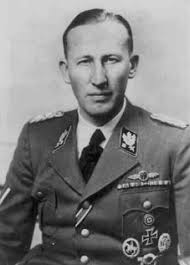
Reinhard Heycrich
In September, 1941, Heydrich was appointed “Reich Protector” of Czechoslovakia, which had fallen prey to Germany in 1938 but whose citizens were growing restless under Nazi rule.
Heydrich immediately ordered a purge, executing 92 people within the first three days of his arrival in Prague. By February, 1942, 4,000-5,000 people had been arrested.
In January, 1942, Heydrich convened a meeting of high-ranking political and military leaders to streamline “the Final Solution to the Jewish Question.”
At the now-infamous Wannsee conference, Heydrich decreed that, henceforth, all Jews in Reich-occupied territories would be shipped to extermination camps. No exceptions would be made for women, children or the infirm.
An estimated six million Jews were thus slaughtered.
Returning to Prague, Heydrich continued his policy of carrot-and-stick with the Czechs—improving the social security system and requisitioning luxury hotels for middle-class workers, alternating with arrests and executions.
The Czech government-in-exile, headquartered in London, feared that Heydrich’s incentives might lead the Czechs to passively accept domination. They decided to assassinate Heydrich.
Two British-trained Czech commandos—Jan Kubis and Joseph Gabcik—parachuted into Prague.
Unexpectedly, they got help from Heydrich himself. Supremely arrogant, he traveled the same route every day from home to his downtown office and refused to be escorted by armed guards, claiming no one would dare attack him.
On May 27, 1942, Kubis and Gabcik waited at a hairpin turn in the road always taken by Heydrich. When Heydrich’s Mercedes slowed down, Gabcik raised his machinegun–which jammed.
Rising in his seat, Heydrich aimed his revolver at Gabcik—as Kubis lobbed a hand grenade at the car. The explosion drove steel and leather fragments of the car’s upholstery into Heydrich’s diaphragm, spleen and lung.
Hitler dispatched doctors from Berlin to save the Reich Protector. But infection set in, and on June 4, Heydrich died at age 38.
The assassination sent shockwaves through the upper echelons of the Third Reich. No one had dared assault—much less assassinate—a high-ranking Nazi official.
Nazis had slaughtered tens of thousands without hesitation—or fear that the same might happen to them.
Suddenly they realized that the fury they had aroused could be turned against themselves.
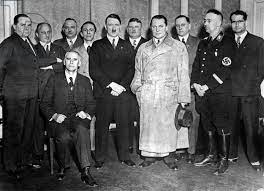
Members of the Nazi government
Which brings us to the leaders of America’s own Right-wing.
The names of infamous Nazis were widely known:
- Reichsmarshall Hermann Goering;
- Propaganda Minister Paul Joseph Goebbels;
- Deputy Fuhrer Rudolf Hess;
- Propaganda Film Director Leni Riefenstahl;
- SS-Reichsfuhrer Heinrich Himmler;
- “Hanging Judge” Roland Freisler;
- Architect Albert Speer;
- Foreign Minister Joachim von Ribbentrop;
- SS Obergruoppenfuhrer Reinhard Heydrich; and
- The most infamous Nazi of all: Adolf Hitler.
And so are the names of the infamous leaders of the American Right:
- Senate Minority Leader Mitch McConnell;
- Supreme Court Justice Amy Coney Barrett;
- Texas Senator Ted Cruz;
- Supreme Court Justice Clarence Thomas;
- Commentator Tucker Carlson;
- Supreme Court Justice Neil Gorsuch;
- Evangelist Franklin Graham;
- Supreme Court Justice Brett Kavanaugh;
- Florida Senator Marco Rubio;
- Supreme Court Justice Samuel Alito;
- Florida Governor Ron DeSantis; and
- The most infamous Right-winger of all: Former President Donald Trump.
The difference between these two infamous groups is this:
In Nazi Germany, ordinary Germans could not learn about the personal lives of their dictators—including their home addresses—and to conspire against them.
In the United States, ordinary citizens have an array of means to do this. They can turn to newspapers, TV and magazines. And if that isn’t enough, “people finder” websites, for a modest price, provide addresses and names of relatives of potential targets.
In Nazi Germany, firearms were tightly controlled. In the United States, the Right’s National Rifle Association has successfully lobbied to put lethal firepower into the hands of virtually anyone who wants it.
Which brings us to the firestorm now erupting over the publication of an initial draft majority opinion of the Supreme Court. Backed by the Court’s five Right-wing Justices, it overturns the 1973 Roe v. Wade decision legalizing abortion.
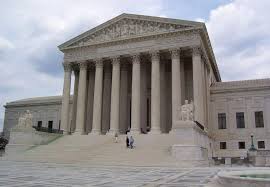
The Supreme Court
In one to two months, millions of women will likely become victims of Right-wing anti-abortion fanaticism.
According to the Center for Reproductive Rights, 23 states will institute bans, with trigger laws on the books in 13 of them. These are bans designed to take effect if Roe is overturned.
Republicans boast that they want to “get the government off the backs of the people.” Yet since 1973 they have furiously tried to re-insert it into the vagina of every American woman.
Interfering with the right to obtain medical care—especially when it applies to sexually-involved matters—is an act guaranteed to arouse fury in even the most pacifistic men and women.
This is especially true when a political party—such as that of the Nazis and Republicans—makes clear its intention to rule by force, rather than by public consent.
Reinhard Heydrich believed himself invulnerable from the hatred of the enemies he had made. That arrogance cost him his life.
The day may soon come when America’s own Right-wingers start learning the same lesson.
ABC NEWS, AIR-RAGE, ALTERNET, AMERICABLOG, AP, ASSOCIATION OF FLIGHT ATTENDANTS, “SOFT ON CRIME, ” 9/11, BABY BOOMER RESISTANCE, BBC, BLOOMBERG NEWS, BUZZFEED, CBS NEWS, CENTERS FOR DISEASE CONTROL AND PREVENTION (CDC), CNN, COVID-19, CROOKS AND LIARS, CYNTHIA M. LUMMIS, DAILY KOZ, DELTA AIRLINES, DENNIS TAJAR, DENNIS TAJER, DEPARTMENT OF JUSTICE, DONALD TRUMP, FACEBOOK, FEDERAL AVIATION ADMINISTRATION, FIVETHIRTYEIGHT, HARPER’S MAGAZINE, HUFFINGTON POST, JAMES LANKFORD, JOHN HOEVEN, KEVIN CRAMER, MARCO RUBIO, MASKS, MEDIA MATTERS, MERRICK GARLAND, MIKE LEE, MOTHER JONES, MOVEON, MSNBC, NBC NEWS, NEW REPUBLIC, NEWSDAY, NEWSWEEK, NO-FLY LIST, NPR, PBS NEWSHOUR, PETE BUTTIGIEG, POLITICO, POLITICUSUSA, RAFAEL EDUARDO "TED" CRUZ, RAW STORY, REUTERS, RICK SCOTT, SALON, SARA NELSON, SEATTLE TIMES, SLATE, SOUTHWEST AIRLINES, TALKING POINTS MEMO, THE ATLANTIC, THE CHICAGO SUN-TIMES, THE CHICAGO TRIBUNE, THE DAILY BEAST, THE DAILY BLOG, THE GUARDIAN, THE HILL, THE HUFFINGTON POST, THE INTERCEPT, THE LOS ANGELES TIMES, THE NATION, THE NEW REPUBLIC, THE NEW YORK TIMES, THE NEW YORKER, THE VILLAGE VOICE, THE WASHINGTON POST, THINKPROGRESS, TIME, TRANSPORTATION SAFETY ADMINISTRATION, TRUTHDIG, TRUTHOUT, TWITTER, TWO POLITICAL JUNKIES, U.S. NEWS & WORLD REPORT, UNITED STATES CONSTITUTION, UPI, USA TODAY, WONKETTE
In Bureaucracy, Business, History, Law, Law Enforcement, Politics, Social commentary on March 2, 2022 at 12:18 am
During the first six weeks of 2022, nearly 500 unruly passenger incidents were reported to the Federal Aviation Administration (FAA).
That makes for more than 6,400 since the start of 2021.
About two-thirds of the incidents in 2021 concerned violations of the federal mask mandate.
On February 16, the FAA said it had referred a total of 80 incidents to the Justice Department to consider criminal prosecution.
Airlines may ban an unruly passenger from their own flights, but competition rules mean that information is not shared with other carriers. Which means that a flier who was banned on Delta might board a flight on Southwest.
In September, 2021, the airline industry asked the Department of Justice (DOJ) to establish a Federal “no-fly” passenger list, whose information would be shared with all airlines.
In February, Delta Air Lines renewed the request in a letter to the DOJ.
Transportation Secretary Pete Buttigieg suggested to CNN’s Dana Bash last fall that a federal no-fly list for violent airplane passengers “should be on the table.”
American Airlines Pilot Captain Dennis Tajer explained the dangers facing everyone on board when an “air rage” incident erupts: “The moment something happens in the back of the aircraft, as a captain, my attention goes off of my primary duty and onto the back of the airplane.”
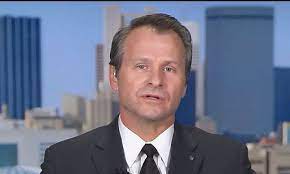
Dennis Tajer
Tajer, who represents the Allied Pilots Association, wants stricter punishments for air rage.
So who isn’t in favor of a “no-fly” ban?
At least eight “law-and-order” Republican United States Senators.
Their names:
- Rafael Eduardo “Ted” Cruz (Texas)
- Mike Lee (Utah)
- Cynthia M. Lummis (Wyoming)
- James Lankford (Oklahoma)
- Marco Rubio (Florida)
- Kevin Cramer (North Dakota)
- John Hoeven (North Dakota)
- Rick Scott (Florida)
All eight are virulent supporters of Donald Trump, who, as President, refused to wear a mask and incited violent action against governors who declared mask mandates.
The reason for their unexpected clemency: It would be unfair to people who break mask mandates.
In a jointly-signed letter to Attorney General Merrick Garland, dated February 14, they stated:
“Your office received a letter from Delta Airlines on February 3, 2022. In that letter, Delta indicated their desire for the U.S, Department of Justice (DOJ) to create a comprehensive “nofly” list.
“This list would would presumably include any airline passenger who has been convicted of any on-board disruption. As a result, those passengers would subsequently be banned from using any commercial air service provider moving forward. We write today to express our strong opposition to the creation of such a list.
“While airlines are currently free to deny service to any individual over past transgressions on their flights, the federal government’s role in denying access to the commercial aviation network has been limited to ensuring that suspected terrorists remain off of domestic flights.
“According to data from the Federal Aviation Administration, the majority of recent infractions on airplanes has been in relation to the mask mandates from the Transportation Security Administration (TSA).
“While we strongly condemn any violence toward airline workers, there is significant uncertainty toward the efficacy of this mandate as highlighted by the CEO of Southwest Airlines during a recent Senate Conference, Science and Transportation Committee hearing.”
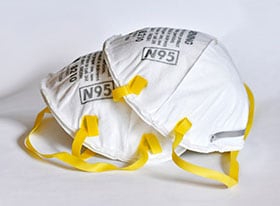
N95 mask
There is no uncertainty about the “efficacy” of the ability of masks to protect people from COVID-19. Since the virus appeared in 2020, the Federal Centers for Disease Control and Prevention (CDC) has repeatedly urged Americans to mask up to protect themselves and others.
“Creating a federal ‘no-fly’ list for unruly passengers who are skeptical of this mandate would seemingly equate them to terrorists who seek to actively take the lives of Americans and perpetrate attacks on the homeland.”
Being “skeptical” of the need for mask mandates poses no threat to anyone. But refusing to mask up to protect yourself and others from a deadly virus presents a danger to both. And attacking airline employees who are trying to enforce that law presents a clear and present danger to them and passengers.
“The TSA was created in the wake of 9/11 to protect Americans from future horrific attacks, not to regulate human behavior aboard flights.”
In short: It’s OK to protect American airline passengers from Islamic lawbreakers who endanger their lives aboard aircraft. But it’s unfair to protect American airline passengers from American lawbreakers who endanger their lives aboard aircraft.
“The creation of this list by DOJ would result in a severe restriction on the ability of citizens to fully exercise their constitutional right to engage in interstate transportation.”
At the time the Constitution was ratified in 1788, airline travel didn’t exist. In addition, it’s customary to place “severe restrictions” on citizens who break the law. And while Americans have the right to travel between states, they do not have the right to threaten the safety of others while doing so.
Sara Nelson, the president of the Association of Flight Attendants, minced no words about the senators’ request: It’s “irresponsible and political brinkmanship that puts our economic security at risk right along with our lives.
“We’ve been punched, kicked, spit on, and sexually assaulted. We urge the FAA, TSA, and DOJ to come together to implement a plan with due process to keep dangerous flyers on the ground.”
"1984, 9/11, ABC NEWS, ALTERNET, AMERICABLOG, AP, BABY BOOMER RESISTANCE, BBC, BILL CLINTON, BLOOMBERG NEWS, BUZZFEED, CBS NEWS, CNN, CONDOLEEZA RICE, CROOKS AND LIARS, DAILY KOZ, DICK CHENEY, DONALD RUMSFELD, DONALD TRUMP, FACEBOOK, FIVETHIRTYEIGHT, GEORGE ORWELL, GEORGE W. BUSH, HARPER’S MAGAZINE, HISTORY, HUFFINGTON POST, JEB BUSH, JOSEPH STALIN, LAVRENTI BERIA, MARCO RUBIO, MEDIA MATTERS, MOTHER JONES, MOVEON, MSNBC, NAZI-SOVIET NONAGGRESSION PACT, NBC NEWS, NEW REPUBLIC, NEWSDAY, NEWSWEEK, NKVD, NPR, PAUL WOLFOWITZ, PBS NEWSHOUR, POLITICO, POLITICUSUSA, RAW STORY, REPUBLICAN PARTY, REUTERS, RICHARD CLARKE, SALON, SEATTLE TIMES, SLATE, SOVIET UNION, TALKING POINTS MEMO, THE ATLANTIC, THE CHICAGO SUN-TIMES, THE CHICAGO TRIBUNE, THE DAILY BEAST, THE DAILY BLOG, THE GUARDIAN, THE HILL, THE HUFFINGTON POST, THE LOS ANGELES TIMES, THE NATION, THE NEW REPUBLIC, THE NEW YORK TIMES, THE NEW YORKER, THE VILLAGE VOICE, THE WASHINGTON POST, THE WASHINGTONPOST, THINKPROGRESS, TIME, TRUTHDIG, TRUTHOUT, TWITTER, TWO POLITICAL JUNKIES, U.S. NEWS & WORLD REPORT, UPI, USA TODAY
In Bureaucracy, History, Military, Politics on January 21, 2022 at 12:10 am
At one time, Americans believed that the wholesale rewriting of history happened only in the Soviet Union.
“The problem with writing about history in the Soviet Union,” went the joke, “is that you never know what’s going to happen yesterday.”
A classic example of this occurred in the Great Soviet Encyclopedia.
Lavrenti Beria had been head of the NKVD, the dreaded secret police, from 1938 to 1953. In 1953, following the death of Soviet dictator Joseph Stalin, Beria was arrested and executed on orders of his fellow Communist Party leaders, who feared they were targets of a coming purge.
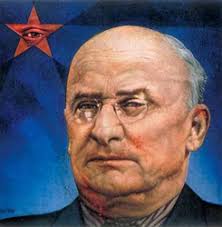
Lavrenti Beria
But the Great Soviet Encyclopedia had just gone to press with a long article singing Beria’s praises.
What to do?
The editors of the Encyclopedia wrote an equally long article about “the Bering Straits,” which was to be pasted over the article about Beria, and sent this off to its subscribers. An unknown number of them decided it was safer to paste accordingly.
During the 2016 Presidential election, the Republican party furiously rewrote history in a desperate attempt to win the White House.
Specifically, its members tried to convince Americans that:
- President George W. Bush “kept us safe” (excluding, of course, the terror attacks of September 11, 2001, which snuffed out the lives of 3,000 Americans); and/or
- President Bush isn’t to blame for 9/11—it’s his predecessor, Bill Clinton (who left office more than a year and a half before 9/11).

Joseph Stalin was depicted in Soviet “history” texts as the architect of Russia’s victory over Nazi Germany during World War II.
No “historian” dared mention that Stalin’s wholesale purges of the Red Army in the 1930s had made the country vulnerable to the German attack in 1941. As had Stalin’s “nonaggression” pact with Germany in 1939, where he and Hitler aggressively divided Poland between them.
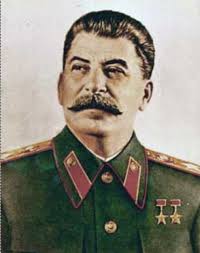
Joseph Stalin
But Russians no longer have a monopoly on rewriting history.
In 2015, Jeb Bush entered the “Rewriting History for Americans” sweepstakes.
On October 16, 2015, during an interview on Bloomberg TV, Donald Trump, the leading Republican candidate for President in 2016, dared speak (for Republicans) the unspeakable:
“When you talk about George Bush, I mean, say what you want, the World Trade Center came down during his time. He was President, OK? Blame him, or don’t blame him, but he was President. The World Trade Center came down during his reign.”
Bush was quick to respond on Twitter: “How pathetic for @realdonaldtrump criticize the president for 9/11. We were attacked & my brother kept us safe.”

Jeb Bush
Trump replied:
“At the debate you said your brother kept us safe–I wanted to be nice & did not mention the WTC came down during his watch, 9/11.”
And: “No @JebBush, you’re pathetic for saying nothing happened during your brother’s term when the World Trade Center was attacked and came down.”
Suddenly, on February 13, another Republican Presidential candidate rushed to rewrite 9/11: Florida United States Senator Marco Rubio.
According to Rubio: “The World Trade Center came down because Bill Clinton didn’t kill Osama bin Laden when he had the chance to kill him.”
And on the following day, on NBC’s “Meet the Press,” he again made the charge: “If you’re going to ascribe blame, don’t blame George W. Bush, blame a decision that was made years earlier, not to take out bin Laden when the opportunity presented itself.”
All of which ignores such embarrassing truths as:
- During the first eight months of the Bush Presidency, Richard Clarke, the counter-terrorism adviser on the National Security Council, was not permitted to brief President Bush, despite mounting evidence of plans for a new Al-Qaeda outrage.
- From January 20 to September 11, 2001, Bush was on vacation, according to the Washington Post, 42% of the time.
- National Security Adviser Condoleeza Rice initially refused to hold a cabinet-level meeting on the subject of terrorism. Then she insisted that the matter be handled only by a more junior Deputy Principals meeting.
- Paul Wolfowitz, the number-two man at the Department of Defense, said: “I don’t understand why we are beginning by talking about this one man, bin Laden.”
- Even after Clarke outlined the threat posed by Al-Qaeda, Wolfowitz—whose real target was Saddam Hussein—said: “You give bin Laden too much credit.”
- Finally, at a meeting with Rice on September 4, 2001, Clarke challenged her to “picture yourself at a moment when in the very near future Al-Qaeda has killed hundreds of Americans, and imagine asking yourself what you wish then that you had already done.”
- Seven days later, Al-Qaeda struck, and 3,000 Americans died horrifically—and needlessly.
- Neither Bush, Vice President Dick Cheney, Rice, Secretary of Defense Donald Rumsfeld nor Wolowitz ever admitted their negligence. Nor has any of them been brought to account.
People who say the Republicans are “batshit crazy” for denying responsibility for 9/11 clearly haven’t read—or understood—George Orwell’s novel, 1984.
The unnamed Party’s slogan is: “He who controls the past controls the future. He who controls the present controls the past.”
The same holds true for Republicans: They hope to rewrite the past, as Joseph Stalin did, to wash away their crimes and errors–and pin these on their self-declared enemies.
And thus gain—and retain—absolute power over 300 million Americans.
ABC NEWS, ALTERNET, AMERICABLOG, AMERICAN TABLOID (BOOK), ANTI-CASTRO CUBANS, AP, ASSASSINATION, BABY BOOMER RESISTANCE, BBC, BLOOMBERG NEWS, BUZZFEED, CBS NEWS, CIA, CNN, COMMUNISM, CROOKS AND LIARS, CUBA, CUBAN MISSILE CRISIS, DAILY KOZ, DONALD TRUMP, DWIGHT D. EISENHOWER, FACEBOOK, FBI, FIDEL CASTRO, FIVETHIRTYEIGHT, FLORIDA, FULGENCIO BATISTA, GUS RUSSO, HARPER’S MAGAZINE, HUFFINGTON POST, JACK RUBY, JAMES ELLROY, JOHN F. KENNEDY, JOHNNY ROSELLI, LEE HARVEY OSWALD, LIVE BY THE SWORD (BOOK), LYNDON B. JOHNSON, MAFIA, MARCO RUBIO, MARINA OSWALD, MARTIN SHEEN, MEDIA MATTERS, MIAMI, MOTHER JONES, MOVEON, MSNBC, NBC NEWS, NEW REPUBLIC, NEWSDAY, NEWSWEEK, NIKITA KHRUSHCHEV, NPR, PBS NEWSHOUR, POLITICO, POLITICUSUSA, RAW STORY, REUTERS, RICHARD NIXON, ROBERT F. KENNEDY, ROBERT MCNAMARA, SALON, SAM GIANCANA, SEATTLE TIMES, SLATE, TALKING POINTS MEMO, THE ATLANTIC, THE CHICAGO SUN-TIMES, THE CHICAGO TRIBUNE, THE DAILY BEAST, THE DAILY BLOG, THE GUARDIAN, THE HILL, THE HUFFINGTON POST, THE LOS ANGELES TIMES, THE MISSILES OF OCTOBER (MOVIE), THE NATION, THE NEW REPUBLIC, THE NEW YORK TIMES, THE NEW YORKER, THE VILLAGE VOICE, THE WASHINGTON POST, THINKPROGRESS, THIRTEEN DAYS (BOOK), TIME, TRUTHDIG, TRUTHOUT, TWITTER, TWO POLITICAL JUNKIES, U.S. NEWS & WORLD REPORT, UPI, USA TODAY, WARREN COMMISSION, WILLIAM DEVANE, WONKETTE
In Bureaucracy, History, Military, Politics, Social commentary on August 20, 2021 at 12:12 am
“John and Robert Kennedy knew what they were doing. They waged a vicious war against Fidel Castro—a war someone had to lose.”
And the loser turned out to be John F. Kennedy.
So writes investigative reporter Gus Russo in Live By the Sword: The Secret War Against Castro and the Death of JFK, published in 1998.
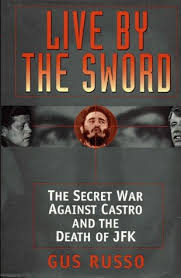
In what is almost certainly the definitive account of the assassination of President John F. Kennedy, Russo reaches some startling—but highly documented—conclusions:
- Lee Harvey Oswald assassinated Kennedy.
- He did it alone.
- Oswald, a former Marine, was a committed Marxist—whose hero was Castro.
- The CIA’s ongoing campaign to overthrow and/or assassinate Castro was an open secret throughout the Gulf.
- Oswald visited New Orleans in the spring of 1963.
- There he learned that Castro was in the crosshairs of the CIA.
- For this, he blamed John F. Kennedy.
- Oswald told his Russian-born wife, Marina: “Fidel Castro needs defenders. I’m going to join his army of volunteers.”
- Jack Ruby, a Dallas nightclub owner, murdered Oswald because he was distraught over Kennedy’s death.
- Ruby was not part of a Mafia conspiracy to silence Oswald.
- Skeptics of the Warren Commission—which concluded that Oswald had acted alone—asked the wrong question: “Who killed Kennedy?”
- They should have asked: “Why was he killed?”
- The answer—according to Russo: “The Kennedys’ relentless pursuit of Castro and Cuba backfired in tragedy on that terrible day in November, 1963.”
Another book well worth reading about America’s Cuban obsession during the early 1960s is American Tabloid, by James Ellroy.
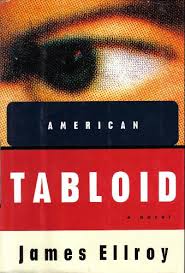
Although a novel, it vividly captures the atmosphere of intrigue, danger and sleaziness that permeated that era in a way that dry, historical documents never can.
“The 50’s are finished,” reads its paperback dust jacket. “Zealous young lawyer Robert Kennedy has a red-hot jones to nail Jimmy Hoffa. JFK has his eyes on the Oval Office.
“J. Edgar Hoover is swooping down on the Red Menace. Howard Hughes is dodging subpoenas and digging up Kennedy dirt. And Castro is mopping up the bloody aftermath of his new Communist nation….
“Mob bosses, politicos, snitches, psychos, fall guys and femmes fatale. They’re mixing up a Molotov cocktail guaranteed to end the country’s innocence with a bang.”
Among the legacies of America’s twisted romance with anti-Castro Cubans:
- The Cuban Missile Crisis remains the single most dangerous moment of the 50-year Cold War, when the world stood only minutes away from nuclear Armageddon.
- That crisis stemmed from the American Right’s twisted obsession with Cuba, an obsession that continues today.
- Following the JFK assassination, there was a cover-up.
- Its purpose: To protect the reputation of the United States Government—and that of its newly-martyred President.
- The CIA and FBI concealed the CIA-Mafia assassination plots from the Warren Commission assigned to investigate Kennedy’s murder.
- Other government officials participating in the cover-up included Attorney General Robert F. Kennedy and President Lyndon B. Johnson.
- Ironically, this secrecy ignited the widespread—and false—belief that the President had died at the hands of a government conspiracy.
- Robert Kennedy feared that his relentless pursuit of Castro might have led Castro to “take out” JFK first.
- Fearing his own assassination if he continued Kennedy’s efforts to murder Castro, President Johnson ordered the CIA to halt its campaign to overthrow and/or assassinate the Cuban leader.
- The huge Cuban community throughout Florida—and especially Miami—continues to exert a blackmailing influence on American politics.
- Right-wing politicians from Richard Nixon to Donald Trump have reaped electoral rewards by catering to the demands of this hate-obsessed voting block.
- These Cuban ex-patriots hope that the United States will launch a full-scale military invasion of the island to remove Castro.
- Having grown rich and soft in the United States, they fear to risk their own lives by returning to Cuba to overthrow the Castro regime—Castro he had overthrown Fulgencio Batista.
- Only President Barack Obama had the political courage to re-establish diplomatic relations with Cuba—in 2015.
- This occurred long after the United States had done so with such former enemies as the Soviet Union, China and Vietnam.
- President Donald Trump. hoping to please anti-Castro voters in Florida, abandoned engagement and increased sanctions against Cuba.
So what are the lessons to be learned from America’s twisted obsession with Cuba?
- Americans should initiate major changes in its foreign policy toward Cuba.
- America should end the half-century contamination of American politics by those Cubans who live only for their hatred of Castro—and those political candidates who live to exploit it.
- (For example: Marco Rubio got elected U.S. Senator from Florida in 2010 by claiming that his parents had been forced to leave Cuba in 1959, after Fidel Castro took power. In fact, they had left Cuba in 1956—during the Batista dictatorship.)
- America needs to end this wag-the-dog relationship. A population of about 1.53 million Cuban exiles living in Florida should not be allowed to shape the domestic and foreign policy of a nation of 333 million.
- Those who continue to hate—or love—Fidel Castro should be left to their own private feud. But that is a feud they should settle on their own island, and not from the shores of the United States.
ABC NEWS, ALTERNET, AMERICABLOG, AMERICAN TABLOID (BOOK), ANTI-CASTRO CUBANS, AP, ASSASSINATION, BABY BOOMER RESISTANCE, BBC, BLOOMBERG NEWS, BUZZFEED, CBS NEWS, CIA, CNN, COMMUNISM, CROOKS AND LIARS, CUBA, CUBAN MISSILE CRISIS, DAILY KOZ, DONALD TRUMP, DWIGHT D. EISENHOWER, FACEBOOK, FBI, FIDEL CASTRO, FIVETHIRTYEIGHT, FLORIDA, FULGENCIO BATISTA, GUS RUSSO, HARPER’S MAGAZINE, HUFFINGTON POST, JACK RUBY, JAMES ELLROY, JOHN F. KENNEDY, JOHNNY ROSELLI, LEE HARVEY OSWALD, LIVE BY THE SWORD (BOOK), LYNDON B. JOHNSON, MAFIA, MARCO RUBIO, MARINA OSWALD, MARTIN SHEEN, MEDIA MATTERS, MIAMI, MOTHER JONES, MOVEON, MSNBC, NBC NEWS, NEW REPUBLIC, NEWSDAY, NEWSWEEK, NIKITA KHRUSHCHEV, NPR, PBS NEWSHOUR, POLITICO, POLITICUSUSA, RAW STORY, REUTERS, RICHARD NIXON, ROBERT F. KENNEDY, ROBERT MCNAMARA, SALON, SAM GIANCANA, SEATTLE TIMES, SLATE, TALKING POINTS MEMO, THE ATLANTIC, THE CHICAGO SUN-TIMES, THE CHICAGO TRIBUNE, THE DAILY BEAST, THE DAILY BLOG, THE GUARDIAN, THE HILL, THE HUFFINGTON POST, THE LOS ANGELES TIMES, THE MISSILES OF OCTOBER (MOVIE), THE NATION, THE NEW REPUBLIC, THE NEW YORK TIMES, THE NEW YORKER, THE VILLAGE VOICE, THE WASHINGTON POST, THINKPROGRESS, THIRTEEN DAYS (BOOK), TIME, TRUTHDIG, TRUTHOUT, TWITTER, TWO POLITICAL JUNKIES, U.S. NEWS & WORLD REPORT, UPI, USA TODAY, WARREN COMMISSION, WILLIAM DEVANE, WONKETTE
In Bureaucracy, History, Military, Politics, Social commentary on August 19, 2021 at 12:15 am
On October 22, 1962, President John F. Kennedy went on nationwide TV to announce the discovery of the missiles and his blockade of Cuba.
He warned that any nuclear missile launched from Cuba against any nation would be regarded as an attack on the United States by the Soviet Union—and would trigger “a full retaliatory response” upon the U.S.S.R.
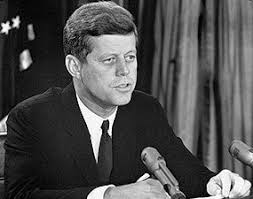
President John F. Kennedy addresses the nation
And he demanded that the Soviets remove all of their offensive weapons from Cuba:
“The path we have chosen for the present is full of hazards, as all paths are, but it is the one most consistent with our character and courage as a nation and our commitments around the world.
“The cost of freedom is always high, but Americans have always paid it. And one path we shall never choose, and that is the path of surrender or submission.”
On October 26, the United States raised the readiness level of SAC forces to DEFCON 2—the step just short of war. For the only time in U.S. history, B-52 bombers were dispersed to various locations and made ready to take off, fully equipped, on 15 minutes’ notice.
Other measures taken included:
- One-eighth of America’s 1,436 bombers were on airborne alert.
- About 145 intercontinental ballistic missiles stood on ready alert.
- Air Defense Command redeployed 161 nuclear-armed interceptors to 16 dispersal fields within nine hours with one-third maintaining 15-minute alert status.
- Twenty-three nuclear-armed B-52 were sent to orbit points within striking distance of the Soviet Union.
An invasion date was set for October 29. But the Kennedy Administration–and the American military—didn’t know that the Russian soldiers guarding the missiles had been armed with tactical nuclear weapons.
Had the Marines gone in, those mini-nukes would have been used. And a full-scale nuclear exchange between the United States and the Soviet Union would have almost certainly followed.
At the height of the crisis, Attorney General Robert F. Kennedy offered a solution.
Khrushchev had sent two teletypes to Kennedy. The first had agreed to remove the missiles, but the second had demanded that the United States remove its own missiles from Turkey, which bordered the Soviet Union.
Robert Kennedy’s solution: The administration should ignore the second message—and announce that it had accepted Khrushchev’s offer to remove the missiles.
After this announcement was made, President Kennedy said to his advisers: “It can go either way now.”
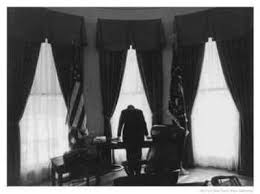
John F. Kennedy in the Oval Office
The crisis ended on October 28. Under enormous pressure, Khrushchev agreed to remove the missiles from Cuba.
Behind his decision lay a secret promise by the Kennedy administration to remove its obsolete nuclear missiles from Turkey, which bordered the Soviet Union. And a public pledge to not invade Cuba.
On the night the crisis ended, there occurred a prophetic exchange between the two Kennedy brothers.
JFK: “Maybe this is the night I should go to the theater”—a reference to Abraham Lincoln’s fatal attendance of Ford’s Theater at the end of the Civil War.
RFK: “If you go, I want to go with you.”
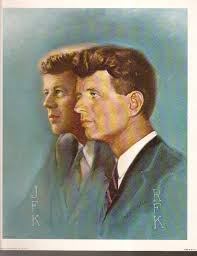
John F. and Robert F. Kennedy
But President Kennedy was not finished with Castro. While continuing the campaign of sabotage throughout Cuba, the Kennedys were preparing something far bigger: A full-scale American invasion of the island.
On October 4, 1963, the Joint Chiefs of Staff submitted its latest version of the invasion plan, known as OPLAN 380-63. Its timetable went:
- January, 1964: Infiltration into Cuba by Cuban exiles.
- July 15, 1964: U.S. conventional forces join the fray.
- August 3, 1964: All-out U.S. air strikes on Cuba.
- October 1, 1964: Full-scale invasion to install “a government friendly to the U.S.”
During the Cuban Missile Crisis, Robert Kennedy–r-eferring to the 1941 Japanese attack on Pearl Harbor—had resisted demands for a “sneak attack” on Cuba by saying: “I don’t want my brother to be the Tojo of the 1960s.”
Now the Kennedys planned such an attack on Cuba just one month before the November, 1964 Presidential election.
Then fate—in the unlikely figure of Lee Harvey Oswald—intervened.
On November 22, 1963, while the President rode through Dallas in an open-air automobile, a rifle-wielding assassin opened fire. He scored two hits on Kennedy—in the back of the neck and head. The second wound proved instantly fatal.
The nation and the world were shocked—and plunged into deep mourning.
But for some of those who had waged a secret, lethal war against Fidel Castro for the previous two years, Kennedy’s death—at least in retrospect—didn’t come as a surprise.
Robert Kennedy, in particular, spent the remaining years of his life agonizing over the possibility that his highly personal war against Castro had backfired.
That Castro, fed up with the CIA’s assassination plots against him, had retaliated with one of his own.
Robert Kennedy’s fears and guilt were compounded by the fact that, while waging war on Castro, he had waged an equally ruthless crusade against organized crime.
He knew that some of the mobsters he had tried to send to prison had played a major role in the CIA’s efforts to “hit” Castro. Had the Mafia—believing itself the victim of a double-cross—put out a “contract” on JFK instead?
It was a question that haunted him until the day he died.
ABC NEWS, ALTERNET, AMERICABLOG, AMERICAN TABLOID (BOOK), ANTI-CASTRO CUBANS, AP, ASSASSINATION, BABY BOOMER RESISTANCE, BBC, BLOOMBERG NEWS, BUZZFEED, CBS NEWS, CIA, CNN, COMMUNISM, CROOKS AND LIARS, CUBA, CUBAN MISSILE CRISIS, DAILY KOZ, DONALD TRUMP, DWIGHT D. EISENHOWER, FACEBOOK, FBI, FIDEL CASTRO, FIVETHIRTYEIGHT, FLORIDA, FULGENCIO BATISTA, GUS RUSSO, HARPER’S MAGAZINE, HUFFINGTON POST, JACK RUBY, JAMES ELLROY, JOHN F. KENNEDY, JOHNNY ROSELLI, LEE HARVEY OSWALD, LIVE BY THE SWORD (BOOK), LYNDON B. JOHNSON, MAFIA, MARCO RUBIO, MARINA OSWALD, MARTIN SHEEN, MEDIA MATTERS, MIAMI, MOTHER JONES, MOVEON, MSNBC, NBC NEWS, NEW REPUBLIC, NEWSDAY, NEWSWEEK, NIKITA KHRUSHCHEV, NPR, PBS NEWSHOUR, POLITICO, POLITICUSUSA, RAW STORY, REUTERS, RICHARD NIXON, ROBERT F. KENNEDY, ROBERT MCNAMARA, SALON, SAM GIANCANA, SEATTLE TIMES, SLATE, TALKING POINTS MEMO, THE ATLANTIC, THE CHICAGO SUN-TIMES, THE CHICAGO TRIBUNE, THE DAILY BEAST, THE DAILY BLOG, THE GUARDIAN, THE HILL, THE HUFFINGTON POST, THE LOS ANGELES TIMES, THE MISSILES OF OCTOBER (MOVIE), THE NATION, THE NEW REPUBLIC, THE NEW YORK TIMES, THE NEW YORKER, THE VILLAGE VOICE, THE WASHINGTON POST, THINKPROGRESS, THIRTEEN DAYS (BOOK), TIME, TRUTHDIG, TRUTHOUT, TWITTER, TWO POLITICAL JUNKIES, U.S. NEWS & WORLD REPORT, UPI, USA TODAY, WARREN COMMISSION, WILLIAM DEVANE, WONKETTE
In Bureaucracy, History, Military, Politics, Social commentary on August 18, 2021 at 12:11 am
In April, 1961, the CIA tried to overthrow the Communist regime of Cuba’s “Maximum Leader,” Fidel Castro, at the Bay of Pigs.
When that failed, President John F. Kennedy ordered Castro’s removal through a campaign of sabotage and assassination.
These covert operatives became known within the CIA as the Special Group, and were ultimately supervised by Robert F. Kennedy, the President’s brother and Attorney General.
The war against Castro became known within the CIA as Operation Mongoose.
But not everyone in the CIA was enthusiastic about the “get Castro” effort.
“Everyone at CIA was surprised at Kennedy’s obsession with Fidel,” recalled Sam Halpern, who was assigned to the Cuba Project. “They thought it was a waste of time. We all knew [Fidel] couldn’t hurt us. Most of us at CIA initially liked Kennedy, but why go after this little guy?
“One thing is for sure: Kennedy wasn’t doing it out of national security concerns. It was a personal thing. The Kennedy family felt personally burnt by the Bay of Pigs and sought revenge.”
It was all-out war. Among the tactics used:
- Hiring Cuban gangsters to murder Cuban police officials and Soviet technicians.
- Sabotaging mines.
- Paying up to $100,000 per “hit” for the murder or kidnapping of Cuban officials.
- Using biological and chemical warfare against the Cuban sugar industry.
“Bobby (Kennedy) wanted boom and bang all over the island,” recalled Halpern. “It was stupid. The pressure from the White House was very great.”
Among that “boom and bang” were a series of assassination plots against Castro, in which the Mafia was to be a key player.
Chicago Mobster Johnny Roselli proposed a simple plan: through its underworld connections in Cuba, the Mafia would recruit a Cuban in Castro’s entourage, such as a waiter or bodyguard, who would poison him.
The CIA’s Technical Services division produced a botulinus toxin which was then injected into Castro’s favorite brand of cigars. The CIA also produced simpler botulinus toxin pills that could be dissolved in his food or drink.
But the deputized Mafia contacts failed to deliver any of the poisons to Castro.
Roselli told the CIA that the first poisoner had been discharged from Castro’s employ before he could kill him, and the back-up agent got “cold feet.”
Other proposals or attempts included:
- Planting colorful seashells rigged to explode at a site where Castro liked to go skindiving.
- Trying to arrange for his being presented with a wetsuit impregnated with noxious bacteria and mold spores, or with lethal chemical agents.
- Attempting to infect Castro’s scuba regulator with tuberculous bacilli.
- Trying to douse his handkerchiefs, tea and coffee with other lethal bacteria.
Former members of the Kennedy Administration later insisted that neither John nor Robert Kennedy knew or approved of these assassination plots. But the sheer weight of available evidence indicates otherwise.
Bobby, in particular, was constantly pressing the CIA to “do something” about Castro. In the world of covert action, words like “Kill Castro” aren’t committed to paper. Or even spoken.
Castro, rightly seeing his life and regime threatened, appealed to Nikita Khrushchev, leader of the Soviet Union, for assistance.

1960s poster of Fidel Castro and Nikita Khrushchev
Keizers [CC BY-SA 3.0 (https://creativecommons.org/licenses/by-sa/3.0)%5D
Khrushchev quickly complied: “We must not allow the communist infant to be strangled in its crib,” he told members of his inner circle.
By October, 1962, the Soviet Union had sent more than
- 40,000 soldiers,
- 1,300 field pieces,
- 700 anti-aircraft guns,
- 350 tanks and
- 150 jets
to Cuba to deter another invasion.
Most importantly, Khrushchev began supplying Castro with nuclear-tipped ballistic missiles.
Their discovery, on October 15, 1962, ignited the single most dangerous confrontation of the 50-year Cold War.
Suddenly, the United States and the Soviet Union—bristling with nuclear weapons—found themselves on the brink of nuclear war.
At the time, Kennedy officials claimed they couldn’t understand why Khrushchev had placed nuclear missiles in Cuba. “Maybe Khrushchev’s gone mad” was a typical public musing.
This remained the official American view for years afterward—as depicted in Robert Kennedy’s memoir, Thirteen Days: A Memoir of the Cuban Missile Crisis, published in 1969, the year after his death.
No admission was made that JFK had been waging a no-holds-barred campaign to overthrow the Cuban government and assassinate its leader.
The same proved true for the 1974 doc-u-drama, The Missiles of October, starring William Devane as John F. Kennedy and Martin Sheen as Robert Kennedy.
On October 16, President Kennedy was informed of the missile installations. He immediately convened a group of his 12 most important advisers, which became known as Ex-Comm, for Executive Committee.
Then followed seven days of guarded and intense debate by Kennedy and his advisers. Some of the participants—such as Air Force General Curtis LeMay—urged an all-out air strike against the missile sites.
Others—such as Adlai Stevenson, the United States delegate to the United Nations—urged a reliance on quiet diplomacy.
It was Secretary of Defense Robert S. McNamara who suggested a middle course: A naval blockade—a “quarantine” in Kennedy’s softened term—around Cuba. This would hopefully prevent the arrival of more Soviet offensive weapons on the island.
Finally, the President decided to to impose a naval blockade.
On October 22, Kennedy went on nationwide TV to announce the discovery of the missiles and his blockade of Cuba.
ABC NEWS, ALTERNET, AMERICABLOG, AMERICAN TABLOID (BOOK), ANTI-CASTRO CUBANS, AP, ASSASSINATION, BABY BOOMER RESISTANCE, BBC, BLOOMBERG NEWS, BUZZFEED, CBS NEWS, CIA, CNN, COMMUNISM, CROOKS AND LIARS, CUBA, CUBAN MISSILE CRISIS, DAILY KOZ, DONALD TRUMP, DWIGHT D. EISENHOWER, FACEBOOK, FBI, FIDEL CASTRO, FIVETHIRTYEIGHT, FLORIDA, FULGENCIO BATISTA, GUS RUSSO, HARPER’S MAGAZINE, HUFFINGTON POST, JACK RUBY, JAMES ELLROY, JOHN F. KENNEDY, JOHNNY ROSELLI, LEE HARVEY OSWALD, LIVE BY THE SWORD (BOOK), LYNDON B. JOHNSON, MAFIA, MARCO RUBIO, MARINA OSWALD, MARTIN SHEEN, MEDIA MATTERS, MIAMI, MOTHER JONES, MOVEON, MSNBC, NBC NEWS, NEW REPUBLIC, NEWSDAY, NEWSWEEK, NIKITA KHRUSHCHEV, NPR, PBS NEWSHOUR, POLITICO, POLITICUSUSA, RAW STORY, REUTERS, RICHARD NIXON, ROBERT F. KENNEDY, ROBERT MCNAMARA, SALON, SAM GIANCANA, SEATTLE TIMES, SLATE, TALKING POINTS MEMO, THE ATLANTIC, THE CHICAGO SUN-TIMES, THE CHICAGO TRIBUNE, THE DAILY BEAST, THE DAILY BLOG, THE GUARDIAN, THE HILL, THE HUFFINGTON POST, THE LOS ANGELES TIMES, THE MISSILES OF OCTOBER (MOVIE), THE NATION, THE NEW REPUBLIC, THE NEW YORK TIMES, THE NEW YORKER, THE VILLAGE VOICE, THE WASHINGTON POST, THINKPROGRESS, THIRTEEN DAYS (BOOK), TIME, TRUTHDIG, TRUTHOUT, TWITTER, TWO POLITICAL JUNKIES, U.S. NEWS & WORLD REPORT, UPI, USA TODAY, WARREN COMMISSION, WILLIAM DEVANE, WONKETTE
In Bureaucracy, History, Military, Politics, Social commentary on August 17, 2021 at 12:12 am
On November 25, 2016, Fidel Castro, Cuba’s longtime “Maximum Leader,” died at the age of 90.
Old age and disease had finally achieved what years of CIA plotting and Mafia assassins could not.
To his supporters he was a tireless champion of the poor and a foe of American imperialism. To his enemies he was a ruthless dictator who drove his country to economic ruin in the name of a failed ideology—communism.
His reign began on January 1, 1959, when he swept triumphantly into Havana after a two-year guerrilla campaign against Cuban dictator Fulgencio Batista.
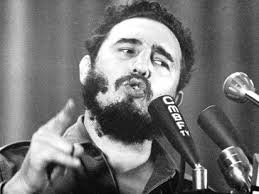
Fidel Castro
Almost immediately, hundreds of thousands of Cubans began fleeing to America. The first émigrés were more than 215,000 Batista followers. The exodus increased, peaking at approximately 78,000 in 1962.
In October, 1962, Castro stopped regularly scheduled travel between the two countries, and asylum seekers began sailing from Cuba to Florida.
Between 1962 and 1979, hundreds of thousands of Cubans entered the United States under the Attorney General’s parole authority.
By 2017, more than 1.53 million Cubans were living in Florida, where the population of Miami was about one-third Cuban. Their sheer numbers transformed the state’s political, economic and cultural life. And not entirely for the better.
Many of these Cubans viewed themselves as political exiles, rather than immigrants, hoping to eventually return to Cuba after its Communist regime fell from power.
With so many discontented immigrants concentrated in Florida, they became a potential force for politicians to court.
And the issue guaranteed to sway their votes was unrelenting hostility to Castro. Unsurprisingly, most of their votes went to Right-wing Republicans.
John F. Kennedy was the first President to face this dilemma.
During the closing months of the administration of President Dwight D. Eisenhower, the CIA had begun training Cuban exiles for an invasion of their former homeland.
The exiles’ goal: To do what Castro had done–seek refuge in the mountains and launch a successful anti-Castro revolution.
But word of the coming invasion quickly leaked: The exiles were terrible secret-keepers. (A joke at the CIA went: “A Cuban thinks a secret is something you tell to only 300 people.”)
Kennedy insisted the invasion must appear to be an entirely Cuban enterprise. He refused to commit U.S. Marines and Air Force bombers.
More than 1,400 invaders landed on April 17, 1961 at the Bay of Pigs—and were quickly overwhelmed, with hundreds of the men taken prisoner.
Kennedy publicly took the blame for its failure: “Victory has a hundred fathers but defeat is an orphan.” But privately he seethed, and ordered the CIA to redouble its efforts to remove Castro at all costs.
To make certain his order was carried out, he appointed his brother, Robert—then Attorney General—to oversee the CIA’s “Castro removal” program.
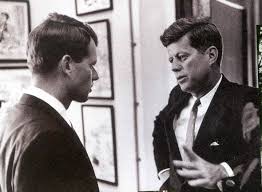
Robert F. Kennedy and John F. Kennedy
It’s here that America’s obsession with Cuba entered its darkest and most disgraceful period.
The CIA and the Mafia entered into an unholy alliance to assassinate Castro—each for its own benefit:
- The CIA wanted to please Kennedy;
- The mobsters wanted to regain their casino and brothel holdings that had made Cuba their private playground in pre-Castro times; and
- They also hoped to use their pose as patriots to win immunity from future prosecution.
The CIA supplied poisons and explosives to various members of the Mafia. It was then up to the mobsters to assassinate Castro.
The CIA asked Johnny Roselli, a mobster linked to the Chicago syndicate, to go to Florida in 1961 and 1962 to organize assassination teams of Cuban exiles. They were to infiltrate their homeland and assassinate Castro.
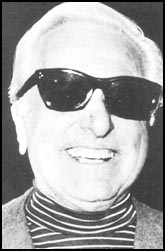
Johnny Roselli
Roselli called upon two other crime figures: Chicago Mafia boss Sam Giancana and Santos Trafficante, the Cosa Nostra chieftain for Tampa, for assistance.
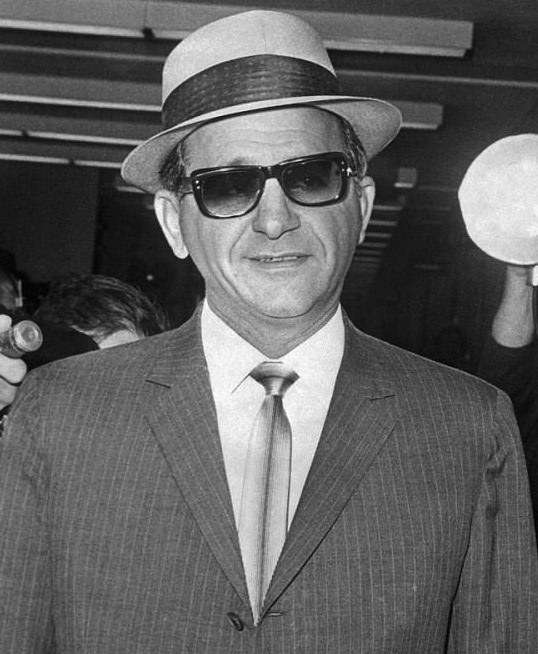
Sam Giancana
Giancana, using the name “Sam Gold” in his dealings with the CIA, was meanwhile being hounded by the FBI on direct orders of Attorney General Robert Kennedy.
The mobsters were authorized to offer $150,000 to anyone who would kill Castro and were promised any support the Agency could yield.
Giancana was to locate someone who was close enough to Castro to be able to drop pills into his food. Trafficante would serve as courier to Cuba, helping to make arrangements for the murder on the island.
Roselli was to be the main link between all of the participants in the plot.
The available sources disagree on what actually happened. Some believe that the Mob made a genuine effort to “whack” Fidel.
Others are convinced the mobsters simply ran a scam on the government. They pretended to carry out their “patriotic duty” while in fact making no effort at all to penetrate Castro’s security.
The CIA’s war against Castro was known as Operation Mongoose—the mongoose being a traditional enemy of the cobra. And those entrusted with this assignment were known as the Special Group.
“We were hysterical about Castro at about the time of the Bay of Pigs and thereafter,” Secretary of Defense Robert S. McNamara later testified before Congress about these efforts. “And there was pressure from JFK and RFK to do something about Castro.”


2016 PRESIDENTIAL CAMPAIGN, ABC NEWS, ADOLF HITLER, ALTERNET, AMERICABLOG, AP, BABY BOOMER RESISTANCE, BERNIE SANDERS, BUZZFEED, CARLY FIORINA, CBS NEWS, CNN, COVID-19, CROOKS AND LIARS, DAILY KOS, DAVID BROOKS, DEMOCRATIC PARTY, DENNIS HASTERT, DONALD TRUMP, ELIZABETH WARREN, FIVETHIRTYEIGHT, HILLARY CLINTON, JEB BUSH, JOHN KASICH, JOHNNY B. GOOD (SONG), JOSEPH MCCARTHY, JOSH DUGGAR, LIBERALS, MARCO RUBIO, MARJORIE TAYOR GREENE, MARK SHIELDS, MAXINE WATERS, MEGYN KELLY, MICHELLE OBAMA, MOTHER JONES, MOVEON, MSNBC, NANCY PELOSI, NBC NEWS, NEWSWEEK, NEWT GINGRICH, NPR, PBS NEWSHOUR, POLITICO, POLITICUSUSA, RAW STORY, REPUBLICAN PARTY, REPUBLICANS, REUTERS, RICK PERRY, RUSSIA, SALON, SEATTLE TIMES, SLANDER, SLATE, TALKING POINTS MEMO, THE ATLANTIC, THE CHICAGO SUN-TIMES, THE CHICAGO TRIBUNE, THE DAILY BEAST, THE DAILY BLOG, THE GUARDIAN, THE HILL, THE HUFFINGTON POST, THE LOS ANGELES TIMES, THE NATION, THE NEW YORK TIMES, THE RAINBOW CONNECTION (SONG), THE WASHINGTON POST, THINKPROGRESS, TIME, TRUTHDIG, TWITTER, U.S. NEWS & WORLD REPORT, UPI, USA TODAY, VLADIMIR PUTIN, YOUTUBE
A LESSON FOR DEMOCRATS: WORDS ARE WEAPONS: PART TWO (END)
In Bureaucracy, History, Humor, Politics, Social commentary on October 27, 2022 at 12:10 amWords are weapons—or can be, if used properly.
Republicans learned this truth after World War II.
Pulitzer-Prize winning author David Halberstam summed up the effectiveness of such tactics in his monumental study of the origins of the Vietnam War, The Best and the Brightest:
“But if they did not actually stick, and they did not, [Joseph McCarthy’s] charges had an equally damaging effect: They poisoned. Where there was smoke, there must be fire. He wouldn’t be saying these things [voters reasoned] unless there was something to it.”
Joseph McCarthy
As a whole, Democrats have proven indifferent to or ignorant of the power of effective language.
President Donald Trump solicited Russian Communist aid to win the Presidency in 2016. He solicited aid from Chinese Communists to retain it in 2020.
He attacked countless Americans and world leaders—including those presiding over America’s NATO alliance. But he has never even criticized Russian dictator Vladimir Putin.
Yet even with such clear-cut evidence, Democrats refused to directly accuse him of treason, as in:
The Kremlin
Similarly, Trump has gotten a free pass on treason from the news media. None have dared suggest the obvious: That he moved boxes of classified documents to his Mar-a-Lago estate to sell them to America’s enemies in exchange for huge sums to pay his upcoming legal bills.
During the COVID-19 pandemic, Trump repeatedly lied about its lethality and opposed the use of masks and social distancing to combat it. As a result, 400,000 Americans had died by the time he left office.
Yet no Democrat has dared label him “Coronavirus-in-Chief.”
Nor has the news media directly held him accountable for those deaths.
Tyrants are conspicuously vulnerable to ridicule. Yet here, too, Democrats have proven unable or unwilling to make use of this powerful weapon.
In this YouTube-obsessed age, Democrats could effectively assail Trump with a series of ridiculing videos. For example, Trump’s well-established “bromance” with Putin could be turned into a parody of the famous song, “Johnny B. Good”:
Way back inside the Kremlin where the lights glow red
There ruled a man named Putin who would poison you dead.
He came up with a plan to make his Russia great
And all it took was bribes and Republican hate.
And Trumpy was a man who couldn’t read or spell
But he could sell out his land just like he’s ringing a bell.
Many of Trump’s fiercest defenders in the House and Senate have taken “campaign contributions” (i.e., bribes) from Russian oligarchs linked to Putin. They could be pointedly attacked by turning the Muppet song, “The Rainbow Connection,” into “The Russian Connection.”
Why are there so many tales about Russians
And Right-wingers taking bribes?
Russians are Commies and have lots of rubles
For traitors with something to hide.
So I’ve been told and some choose to believe it
It’s clear as the old KGB.
Someday we’ll find it
The Russian Connection—
The bribers, the traitors—you’ll see.
A continuing theme among Republican politicians is that they are paragons of religious virtue, while Democrats are champions of Satan.
Yet Democrats have done nothing to publicize such truths as:
Most Americans don’t follow political news closely—and know nothing of such revelations.
Moreover, Democrats need to repeatedly advertise such facts—to counter Republicans’ constant claims of being the moral arbiters of America. And this needs to be done through major advertising campaigns on TV—where most Americans get their news about politics.
Throughout 2016, liberals celebrated on Facebook and Twitter the “certain” Presidency of former First Lady Hillary Clinton. They were cheered on by First Lady Michelle Obama’s naive advice on political tactics: “When they go, we go high.”
Meanwhile, Donald Trump planned to subvert the 2016 election by Russian Intelligence agents and millions of Russian trolls flooding the Internet with legitimately fake news.
History has proven which tactics proved superior.
It’s long past time for Democrats to accept that they—and the country’s democratic traditions—are engaged in a death-match with their Republican opponents.
Only certain defeat is guaranteed by adhering to Marquis of Queensbury when your enemy is using brass knuckles.
For Democrats to win elective victories and preserve America’s democratic traditions, they must find their own George Pattons to confront the Waffen-SS generals among Republican ranks.
Share this: