Posts Tagged ‘MAR-A-LAGO’
2016 PRESIDENTIAL ELECTION, 2020 PRESIDENTIAL ELECTION, 2024 PRESIDENTIAL ELECTION, ABC NEWS, ABUSE OF POWER, ADOLF HITLER, AILEEN CANNON, AIR TRAFFIC CONTROLLERS, ALTERNET, AMERICABLOG, AP, ARTIFICIAL INTELLIGENCE, ASSASSINATION, AXIOS, BABY BOOMER RESISTANCE, BBC, BIRD FLU, BLACKS, BLOOMBERG, BLUESKY, BUZZFEED, CBS NEWS, CHINA, CLASSIFIED DOCUMENTS, CLIMATE CHANGE, CNN, COVID-19, CROOKS AND LIARS, DAILY KOS, DANIEL CASSINO, DEMOCRACY, DEMOCRATIC PARTY, DEMOCRATS, DIVERSITY EQUITY AND INCLUSION (DEI) PROGRAMS, DONALD TRUMP, ELECTORAL COLLEGE, FBI, FEDERAL AVIATION ADMINISTRATION (FAA), FEDERAL EMERGENCY MANAGEMENT AGENCY, FEDERAL GOVERNMENT SHUTDOWN, FIVETHIRTYEIGHT, FUEL PRICES, GALLUP POLL, GAZA, GLOBAL CONFLICT, GROCERY PRICES, HARPER’S MAGAZINE, HILLARY CLINTON, HISPANICS, HUFFINGTON POST, HUNTER BIDEN, illegal immigration, IMPEACHMENT, INFLATION, INSPECTORS GENERAL, INTERNATIONAL BROTHERHOOD OF TEAMSTERS, ISRAEL, JACK SMITH, JAMAL KHASHOOGI, JAMES COMEY, JANUARY 6 COUP ATTEMPT, JARED KUSHNER, JIMMY HOFFA, JOHN ADAMS, JOHN F. KENNEDY CENTER FOR THE PERFORMING ARTS, JOSEPH BIDEN, JOSEPH STALIN, Kamala Harris, KEVIN MCCARTHY, KIM JONG-UN, LATINOS, LETITIA JAMES, LOW INFORMATION VOTERS, MAR-A-LAGO, MARJORIE TAYLOR GREENE, MASCULINITY, MEDIA MATTERS, MERRICK GARLAND, MOHAMMED BIN SALMAN, MOTHER JONES, MOVEON, MSNBC, MUSLIMS, NAVAJO COLDE TALKERS, NBC NEWS, NEW REPUBLIC, NEWSDAY, NEWSWEEK, NORTH KORREA, NPR, OBSTRUCTION OF CONGRESS, PARDONS, PBS NEWSHOUR, POLITICO, POLITICUSUSA, RAW STORY, REPUBLICAN PARTY, REPUBLICANS, REUTERS, ROBERT F. KENNEDY, RUSSIA, SALON, SEATTLE TIMES, SLATE, SUPERMAN, SUPPLEMENTAL NUTRITION ASSISTANCE PROGRAM (SNAP), TALKING POINTS MEMO, TERRORISM, THE ATLANTIC, THE CHICAGO SUN-TIMES, THE CHICAGO TRIBUNE, THE DAILY BEAST, THE DAILY BLOG, THE GUARDIAN, THE HILL, THE HUFFINGTON POST, THE INTERCEPT, THE LOS ANGELES TIMES, THE NATION, THE NEW REPUBLIC, THE NEW YORK TIMES, THE NEW YORKER, THE VILLAGE VOICE, THE WASHINGTON POST, THINKPROGRESS, THOMAS MATTHEW CROOKS, TIME, TRANSPORTATION COSTS, TRUTHDIG, TRUTHOUT, TUSKEGEE AIRMEN, TWO POLITICAL JUNKIES, U.S. BORDER PATROL, U.S. NEWS & WORLD REPORT, UKRAINE, UNITED STATES DEPARTMENT OF DEFENSE (DOD), UNITED STATES DEPARTMENT OF JUSTICE, UNITED STATES HOUSE OF REPRESENTATIVES, UNITED STATES SECRET SERVICE, UNITED STATES SENATE, UPI, USA TODAY, VLADIMIR PUTIN, VOLODMYR ZELENSKY, VOX, X, XI JINPING
In Bureaucracy, History, Law, Law Enforcement, Military, Politics, Social commentary on November 11, 2025 at 12:10 am
On January 20, for the second time, Donald J. Trump took the oath of office as the 47th President of the United States.
Since then, he has aggressively committed a series of outrages against the country he claims to love, including:
- Granting clemency to more than 1,500 people convicted of offenses related to the January 6, 2021 United States Capitol attack.
- Signing 26 executive orders reversing climate change initiatives, eliminating DEI programs, changing the federal designation for the Gulf of Mexico to the “Gulf of America” and initiating a federal hiring freeze.
- Revoking an executive order on Artificial Intelligence safety signed by former President Joseph Biden, to establish safeguards for the rapidly advancing AI technology.
- Firing the inspectors general—who are charged with protecting the government from waste and corruption—from more than a dozen federal agencies.
- Purging about a half-dozen executive assistant directors at the FBI. These were some of the bureau’s top managers overseeing criminal, national security and cyber investigations. Their “crime”: Investigating Trump’s inciting the January 6, 2021 coup attempt and illegally holding highly sensitive national security documents after leaving office.
- Following Trump’s anti-DEI executive order, the Department of Defense deletes content that included the achievements of nonwhites—such as Navajo code talkers, black Tuskegee Airmen, Medal of Honor winners and women veterans.
- Firing the board members at the John F. Kennedy Center for the Performing Arts and appointing himself as chairman—just as Joseph Stalin made himself arbiter of what was permissible for artists in the Soviet Union.
- Ordering the Justice Department to indict his critics such as New York Attorney General Letitia James and former FBI Director James Comey.
- James had convicted him on 34 felony counts of falsifying business records. Comey had sought to investigate Russia’s subversion of the 2016 Presidential campaign to ensure Trump’s election.
- Shutting down the Federal Government on October 1, when Democrats refused to agree to his gutting Medicaid, Medicare and the Affordable Care Act (ACA), causing 10-15 million Americans to lose health insurance coverage.
- Among those not getting paid: Air traffic controllers for the Federal Aviation Administration. Owing to many controllers refusing to work, the FAA reduced air traffic by 10% at many airports.
- Shutting off the Supplemental Nutrition Assistance Program (SNAP) for the poor to pressure Democrats to support his gutting of healthcare programs.
There were numerous instances where intervention by Federal legislators or law enforcement authorities could have utterly changed the outcome of the 2024 election—and prevented these outrages.
Case #1: On December 18, 2019, the Democratic-controlled House of Representatives adopted two articles of impeachment against Trump: abuse of power and obstruction of Congress. On February 5, 2020, the Republican-dominated Senate voted to acquit Trump on both articles of impeachment.
Their motive: Fear that if they didn’t, they would be “primaried” by even more extreme, Trump-supported Right-wing candidates—and lose their positions and the accompanying power and perks.
Had Republicans agreed to convict him, he could not have run again for President.
Case #2: On January 13, 2021, Trump was impeached for the second time for “incitement of insurrection”—inciting the January 6, 2021 attack on the United States Capitol.
The reason: To stop the counting of Electoral College votes, which he knew would prove that former Vice President Joseph Biden had won the 2020 Presidential election.
The evidence against him was overwhelming—including video of his inciting a mob of his followers to storm the Capitol Building.
But Republican Senators again acquitted Trump on February 13, 2021—choosing ambition over patriotism.
Had they done so, he could not have again been a candidate for President.
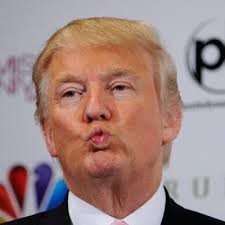
Donald Trump
Case #3: Only on November 18, 2022—a year and a half after becoming Attorney General—did Merrick Garland appoint Jack Smith Independent Counsel to investigate Donald Trump’s role for:
- Inciting the January 6 attack on Congress; and
- Illegally seizing and storing highly classified government documents at his Mar-a-Lago estate in Palm Beach Florida.
This gave Trump time to play his “deny and delay” game. Had he been prosecuted and convicted before the November 5 Presidential election, the results might well have been different.
Even hardcore supporters might have proved unwilling to vote for someone found guilty of inciting a riot or stealing highly classified documents.
Case #4: In June, 2023, Trump was indicted for illegally seizing and storing hundreds of highly classified government documents at his Mar-a-Lago estate.
Aileen Cannon, a Trump appointee as Federal Judge of the United States District Court for the Southern District of Florida, presided over the case.
She repeatedly ruled in his favor and finally dismissed the case in July, 2024. claiming that Special Counsel Jack Smith’s appointment was unconstitutional.

Aileen Cannon
Southern District of Florida, CC BY-SA 4.0 <https://creativecommons.org/licenses/by-sa/4.0>, via Wikimedia Commons
Many legal experts, citing her handling of the civil case against Trump, called for her recusal from the case. Jack Smith could have requested her removal from the case but did not ask a Federal appeals court to do so.
MSNBC analyst Barbara McQuade told Newsweek that Smith likely refused to do so to “return public trust” to the Justice Department, which had been challenged in recent years.
Cannon’s kid-gloves treatment of Trump echoed that of the Right-wing judge who presided over Adolf Hitler’s trial in 1923 for trying to overthrow the government of Bavaria.
2016 PRESIDENTIAL ELECTION, 2020 PRESIDENTIAL ELECTION, 2024 PRESIDENTIAL ELECTION, ABC NEWS, ABUSE OF POWER, ADOLF HITLER, AILEEN CANNON, ALTERNET, AMERICABLOG, AP, ASSASSINATION, AXIOS, BABY BOOMER RESISTANCE, BBC, BIRD FLU, BLACKS, BLOOMBERG, BUZZFEED, CBS NEWS, CHINA, CLASSIFIED DOCUMENTS, CLAUS VON STAUFFENBERG, CNN, COVID-19, CROOKS AND LIARS, DAILY KOS, DANIEL CASSINO, DEMOCRACY, DEMOCRATIC PARTY, DEMOCRATS, DONALD TRUMP, ELECTORAL COLLEGE, FBI, FEDERAL EMERGENCY MANAGEMENT AGENCY, FIVETHIRTYEIGHT, FUEL PRICES, GALLUP POLL, GAZA, GLOBAL CONFLICT, GROCERY PRICES, HARPER’S MAGAZINE, HILLARY CLINTON, HISPANICS, HITLER: ASCENT (BOOK), HUFFINGTON POST, HUNTER BIDEN, illegal immigration, IMPEACHMENT, INFLATION, INTERNATIONAL BROTHERHOOD OF TEAMSTERS, ISRAEL, JACK SMITH, JAMAL KHASHOOGI, JAMES COMER, JANUARY 6 COUP ATTEMPT, JARED KUSHNER, JIMMY HOFFA, JOHN ADAMS, JOSEPH BIDEN, Kamala Harris, KEVIN MCCARTHY, KIM JONG-UN, LATINOS, LOW INFORMATION VOTERS, MAR-A-LAGO, MARJORIE TAYLOR GREENE, MASCULINITY, MEDIA MATTERS, MEIN KAMPF, MERRICK GARLAND, MOHAMMED BIN SALMAN, MOTHER JONES, MOVEON, MSNBC, MUSLIMS, NAZI GERMANY, NAZIS, NBC NEWS, NEW REPUBLIC, NEWSDAY, NEWSWEEK, NORTH KORREA, NPR, OBSTRUCTION OF CONGRESS, PBS NEWSHOUR, POLITICO, POLITICUSUSA, RAW STORY, REPUBLICAN PARTY, REPUBLICANS, REUTERS, ROBERT F. KENNEDY, RUSSIA, SALON, SEATTLE TIMES, SLATE, SUPERMAN, TALKING POINTS MEMO, TERRORISM, THE ATLANTIC, THE CHICAGO SUN-TIMES, THE CHICAGO TRIBUNE, THE DAILY BEAST, THE DAILY BLOG, THE GUARDIAN, THE HILL, THE HUFFINGTON POST, THE INTERCEPT, THE LOS ANGELES TIMES, THE NATION, THE NEW REPUBLIC, THE NEW YORK TIMES, THE NEW YORKER, THE VILLAGE VOICE, THE WASHINGTON POST, THINKPROGRESS, THOMAS MATTHEW CROOKS, TIME, TRANSPORTATION COSTS, TRUTHDIG, TRUTHOUT, TWO POLITICAL JUNKIES, U.S. BORDER PATROL, U.S. NEWS & WORLD REPORT, UKRAINE, UNITED STATES DEPARTMENT OF JUSTICE, UNITED STATES HOUSE OF REPRESENTATIVES, UNITED STATES SECRET SERVICE, UNITED STATES SENATE, UPI, USA TODAY, VLADIMIR PUTIN, VOLKER ULLRICH, VOLODMYR ZELENSKY, VOX, WEIMAR REPUBLIC, WORLD WAR 11, X, XI JINPING
In Bureaucracy, History, Law, Law Enforcement, Politics, Social commentary on March 20, 2025 at 12:14 am
There were numerous instances where intervention by Federal legislators or law enforcement authorities could have utterly changed the outcome of the 2024 Presidential election.
Case #12: Democrats expected to receive support from their traditional allies—such as blacks and Hispanics. But that didn’t happen.
Despite Donald Trump’s overt racism, blacks deserted Vice President Kamala Harris in droves. About three in 10 back men under age 45 went for Trump, roughly double the share he got in 2020.
A clear majority of young black voters described the economy as “not so good” or “poor,” compared with about half of older black voters.
Similarly, in 2024, Trump made “mass deportations” the signature issue of his campaign. The vast majority of those slated for such removal were Hispanics.
But numerous Hispanics, when interviewed, said they didn’t feel threatened. They felt certain that Trump would deport “only the bad people.”
Young Latinos, particularly young Latino men, were more supportive to Trump than in 2020. Roughly half of young Latino men voted for Harris, compared with about six in 10 who went for Trump.
Majorities of Latino voters, regardless of age, said the economy was in bad shape. They wanted a bigger paycheck. And they were willing to re-elect a man who despised them in hopes of getting it.
Case #13: Muslims—especially those living in Dearborn, Michigan—played a losing blackmail game with the Biden administration
On October 7, 2023, under the cover of thousands of rockets fired from Gaza, Hamas terrorists slaughtered an estimated 1,139 men, women and children in Israeli streets, houses, kibbutz communities and at a rave music festival.
About 250 others were kidnapped and taken into Gaza.
Israel responded by declaring a state of war—pounding Gaza with bombs, missiles. tanks and soldiers. Palestinian health authorities claim that Israel’s ground and air campaign has killed more than 46,600 people,

Palestinians celebrating the attack on Israel
Terrorism-sympathizing Islamics—especially in Michigan—demanded that the Biden administration stop sending military equipment to Israel—and force Israelis to stop their military campaign to free the hostages. They threatened: “If you don’t do what we want, we won’t vote for Kamala Harris.”
Biden and Harris rejected their demands—and Islamics voted for Trump or didn’t vote at all.
The end result: Harris lost—and was replaced with a Right-wing administration so pro-Israel that it made the Biden one seem pro-Palestinian by comparison.
Case 14: Ignorance of and/or contempt for history.
“Low information voters” is a euphemism for people dangerously ignorant of the issues affecting their lives.
After World War II ended in 1945, the United States proved a force for worldwide stability. Its “nuclear umbrella” prevented a Russian takeover of Europe and a Chinese takeover of Asia.
But voters ignored Trump’s “bromance” with Communist dictators Vladimir Putin (Russia), Xi Jinping (China) and Kim Jong-Un (North Korea). They also ignored his proven disdain for the leaders of democratic nations—such as Canada and Great Britain.
As a result, Canada and Mexico, America’s biggest trading partners, are now treated—by Trump—as enemies. Meanwhile, he cozies up to Putin against Ukraine’s legally-elected President, Vododmyr Zelensky.
* * * * *
Countless historians have tried to answer the question: “Was the rise of Adolf Hitler—and the catastrophe he unleashed—inevitable?”
Future historians will ask the same question about Donald Trump—and the almost certain disaster of a second Trump Presidency.
Competent historians will conclude that no one factor was responsible, but a combination of otherwise unrelated ones. Among these:
- Republicans: Who feared that Trump’s Fascistic supporters would deprive them of political office if they didn’t abase themselves to a lifelong criminal and would-be dictator.
- Republican judges: Who bent and/or broke the law to enable Trump to escape justice.
- Justice Department prosecutors: Whose awe of the Presidency allowed Trump to slander and threaten federal prosecutors and judges.
- Attorney General Merrick Garland: Whose cowardice prevented him from appointing Jack Smith Special Counsel until November 18, 2022—giving Trump time to delay justice and again win the Presidency.
- Democrats: Whose cowardice toward Trump encouraged Republicans to ever more extreme measures.
- Hispanics: Like the Jews in Hitler’s Germany, who couldn’t believe that Trump would carry out his threats to imprison and/or deport them.
- The Biden administration: Which refused to stem the tide of illegal aliens invading America—and thus enraged millions of law-abiding Americans into supporting Trump.
- American voters: Whose misogynistic attitudes toward women led them to reject a former local and state prosecutor for a 34-times convicted felon.
- American voters: Whose hatred of Hispanic illegal aliens and inflationary grocery prices led them to ignore overwhelming evidence of Trump’s intent to overturn the democratic process and make himself absolute dictator.
As John Adams, second President of the United States, observed:
Remember, democracy never lasts long. It soon wastes, exhausts and murders itself. There never was a democracy yet that did not commit suicide. It is in vain to say that democracy is less vain, less proud, less selfish, less ambitious, or less avaricious than aristocracy or monarchy. It is not true, and nowhere appears in history. Those passions are the same in all men, under all forms of simple government, and when unchecked, produce the same effects of fraud, violence and cruelty.
2016 PRESIDENTIAL ELECTION, 2020 PRESIDENTIAL ELECTION, 2024 PRESIDENTIAL ELECTION, ABC NEWS, ABUSE OF POWER, ADOLF HITLER, AILEEN CANNON, ALTERNET, AMERICABLOG, AP, ASSASSINATION, AXIOS, BABY BOOMER RESISTANCE, BBC, BIRD FLU, BLACKS, BLOOMBERG, BUZZFEED, CBS NEWS, CHINA, CLASSIFIED DOCUMENTS, CLAUS VON STAUFFENBERG, CNN, COVID-19, CROOKS AND LIARS, DAILY KOS, DANIEL CASSINO, DEMOCRACY, DEMOCRATIC PARTY, DEMOCRATS, DONALD TRUMP, ELECTORAL COLLEGE, FBI, FEDERAL EMERGENCY MANAGEMENT AGENCY, FIVETHIRTYEIGHT, FUEL PRICES, GALLUP POLL, GAZA, GLOBAL CONFLICT, GROCERY PRICES, HARPER’S MAGAZINE, HILLARY CLINTON, HISPANICS, HITLER: ASCENT (BOOK), HUFFINGTON POST, HUNTER BIDEN, illegal immigration, IMPEACHMENT, INFLATION, INTERNATIONAL BROTHERHOOD OF TEAMSTERS, ISRAEL, JACK SMITH, JAMAL KHASHOOGI, JAMES COMER, JANUARY 6 COUP ATTEMPT, JARED KUSHNER, JIMMY HOFFA, JOHN ADAMS, JOSEPH BIDEN, Kamala Harris, KEVIN MCCARTHY, KIM JONG-UN, LATINOS, LOW INFORMATION VOTERS, MAR-A-LAGO, MARJORIE TAYLOR GREENE, MASCULINITY, MEDIA MATTERS, MEIN KAMPF, MERRICK GARLAND, MOHAMMED BIN SALMAN, MOTHER JONES, MOVEON, MSNBC, MUSLIMS, NAZI GERMANY, NAZIS, NBC NEWS, NEW REPUBLIC, NEWSDAY, NEWSWEEK, NORTH KORREA, NPR, OBSTRUCTION OF CONGRESS, PBS NEWSHOUR, POLITICO, POLITICUSUSA, RAW STORY, REPUBLICAN PARTY, REPUBLICANS, REUTERS, ROBERT F. KENNEDY, RUSSIA, SALON, SEATTLE TIMES, SLATE, SUPERMAN, TALKING POINTS MEMO, TERRORISM, THE ATLANTIC, THE CHICAGO SUN-TIMES, THE CHICAGO TRIBUNE, THE DAILY BEAST, THE DAILY BLOG, THE GUARDIAN, THE HILL, THE HUFFINGTON POST, THE INTERCEPT, THE LOS ANGELES TIMES, THE NATION, THE NEW REPUBLIC, THE NEW YORK TIMES, THE NEW YORKER, THE VILLAGE VOICE, THE WASHINGTON POST, THINKPROGRESS, THOMAS MATTHEW CROOKS, TIME, TRANSPORTATION COSTS, TRUTHDIG, TRUTHOUT, TWO POLITICAL JUNKIES, U.S. BORDER PATROL, U.S. NEWS & WORLD REPORT, UKRAINE, UNITED STATES DEPARTMENT OF JUSTICE, UNITED STATES HOUSE OF REPRESENTATIVES, UNITED STATES SECRET SERVICE, UNITED STATES SENATE, UPI, USA TODAY, VLADIMIR PUTIN, VOLKER ULLRICH, VOLODMYR ZELENSKY, VOX, WEIMAR REPUBLIC, WORLD WAR 11, X, XI JINPING
In Bureaucracy, History, Law, Law Enforcement, Medical, Social commentary on March 19, 2025 at 12:08 am
There were numerous instances where intervention by Federal legislators or law enforcement authorities could have utterly changed the outcome of the 2024 Presidential election.
Case #9: Americans had become increasingly worried and angry about surging numbers of illegal aliens pouring into the country. But the Biden administration refused—until its closing months—to dramatically address this issue.
A Vox story, dated July 12, 2024, warned: “According to Gallup, 2024 is the first time since 2005 that most of the public have wanted less immigration, and this year marks the largest share of Americans feeling resistant to immigration since 58 percent said so in 2001….”

Illegal alien climbing over the border fence in Brownsville, Texas
Six months later, on January 17, 2025, another Vox story offered: “What Democrats must learn from Biden’s disastrous immigration record.”
It opened: “One of the main reasons Vice President Kamala Harris lost the election is the Biden administration’s record on immigration and the border — polls show it ranks up close with inflation among the top issues that drove swing voters to Trump….
“During Biden’s first three years in office, the number of arriving migrants skyrocketed, leading to a backlash as even blue states and cities complained they were overwhelmed. The peak came in December 2023, a month when officials reported about 250,000 encounters with migrants at the border, a record.”
Then, starting early in 2024, and continuing throughout the year, border arrivals plummeted—by more than 80%.
The reasons:
- The Biden administration got the Mexican government to launch an extensive crackdown on migrants passing through its territory to the United States.
- Biden decreed that new unauthorized migrants would be ineligible for asylum if too many people were coming to the border. Essentially, this meant shutting down the asylum process.
Unfortunately for Harris, the downturn in illegal immigration came too late.
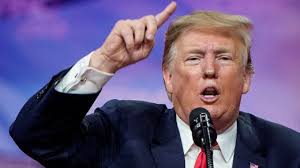
Donald Trump
In times of economic uncertainty, hostility rises toward immigrants—especially those who are alien to a host country’s language and culture. This has proven true in Europe as well as the United States.
Case #10: Americans blamed President Biden for inflationary price increases—especially for groceries such as eggs.
According to a December 20, 2024 article—“Why are groceries so expensive? What you need to know”—by the Center for Science in the Public Interest:
“Since January 2019, food prices have risen nearly 30 percent in the US, leaving many households struggling to afford groceries.”
Among the issues responsible for this:
- COVID-19: Caused worldwide disruptions in supply chains.
- Transportation costs and fuel prices: Fuel costs are directly tied to how much retailers charge for groceries and other goods.
- Animal diseases, weather events, crop failures: When bird flu (H5N1) first struck the U.S. in 2022, eggs were priced at around $2 per dozen. They peaked at $4.82/dozen in January 2023, and in December 2024—following the infection of over 123 million chickens—prices fell to about $4.15/dozen.
- Global conflict: In February, 2022, Russia invaded Ukraine, which exports wheat, corn and agricultural fertilizer, among other products. Russia has tried to strangle Ukraine’s exports by attacking the nation’s agricultural centers.
No President—including Biden and Trump—can control such events. Unfortunately, every Presidential candidate virtually promises to be Superman. And voters repeatedly fall victim to this absurdity.

So when elected Presidents fail to perform miracles, those voters turn on them—and turn them out of office.
Case #11: Americans don’t want a woman President.
American voters proved that in 2016 when former Secretary of State Hillary Clinton ran for President—and lost to Trump in the Electoral College by a count of 227 to 304.
And Hillary had an advantage that Vice President Kamala Harris lacked: Hillary was white.
England has elected a female Prime Minister: Margaret Thatcher. And Mexico—notorious for the machismo of its men—has elected a woman President: Claudia Sheinbaum Pardo. But in the United States, electing a woman chief executive is unthinkable to most American men.
According to Daniel Cassino, Professor of Government and Politics at Fairleigh Dickinson University, men who support Trump hold to a traditionally masculine identity.
“So, among that group, Trump is up over Harris by about 35 points. Huge gap, Among other men, the half of men who don’t put themselves at the extremes of masculinity, Harris is up by 20. In fact, Harris is also up by 20 among most groups of women. So, really the gap is not between men and women, it’s between this one group of traditional masculine men and everybody else.”
Machismo played a major role in Trump’s popularity among Hispanics. Roughly six in 10 men described Trump as a strong leader, compared with 43% who said that in 2020. About half of Hispanic women said Trump was a strong leader, up from 37%.
Case #12: Democrats expected to receive support from their traditional allies—such as blacks and Hispanics. But that didn’t happen.
During the eight-year tenure of America’s first black President, Donald Trump attacked Barack Obama as a foreign-born citizen who was thus ineligible for that office. He also had a history of supporting—and being supported by—racist white groups like the Proud Boys and the Oath Keepers.
Nevertheless, blacks deserted Vice President Kamala Harris in droves. About three in 10 back men under age 45 went for Trump, roughly double the share he got in 2020.
2016 PRESIDENTIAL ELECTION, 2020 PRESIDENTIAL ELECTION, 2024 PRESIDENTIAL ELECTION, ABC NEWS, ABUSE OF POWER, ADOLF HITLER, AILEEN CANNON, ALTERNET, AMERICABLOG, AP, ASSASSINATION, AXIOS, BABY BOOMER RESISTANCE, BBC, BIRD FLU, BLACKS, BLOOMBERG, BUZZFEED, CBS NEWS, CHINA, CLASSIFIED DOCUMENTS, CLAUS VON STAUFFENBERG, CNN, COVID-19, CROOKS AND LIARS, DAILY KOS, DANIEL CASSINO, DEMOCRACY, DEMOCRATIC PARTY, DEMOCRATS, DONALD TRUMP, ELECTORAL COLLEGE, FBI, FEDERAL EMERGENCY MANAGEMENT AGENCY, FIVETHIRTYEIGHT, FUEL PRICES, GALLUP POLL, GAZA, GLOBAL CONFLICT, GROCERY PRICES, HARPER’S MAGAZINE, HILLARY CLINTON, HISPANICS, HITLER: ASCENT (BOOK), HUFFINGTON POST, HUNTER BIDEN, illegal immigration, IMPEACHMENT, INFLATION, INTERNATIONAL BROTHERHOOD OF TEAMSTERS, ISRAEL, JACK SMITH, JAMAL KHASHOOGI, JAMES COMER, JANUARY 6 COUP ATTEMPT, JARED KUSHNER, JIMMY HOFFA, JOHN ADAMS, JOSEPH BIDEN, Kamala Harris, KEVIN MCCARTHY, KIM JONG-UN, LATINOS, LOW INFORMATION VOTERS, MAR-A-LAGO, MARJORIE TAYLOR GREENE, MASCULINITY, MEDIA MATTERS, MEIN KAMPF, MERRICK GARLAND, MOHAMMED BIN SALMAN, MOTHER JONES, MOVEON, MSNBC, MUSLIMS, NAZI GERMANY, NAZIS, NBC NEWS, NEW REPUBLIC, NEWSDAY, NEWSWEEK, NORTH KORREA, NPR, OBSTRUCTION OF CONGRESS, PBS NEWSHOUR, POLITICO, POLITICUSUSA, RAW STORY, REPUBLICAN PARTY, REPUBLICANS, REUTERS, ROBERT F. KENNEDY, RUSSIA, SALON, SEATTLE TIMES, SLATE, SUPERMAN, TALKING POINTS MEMO, TERRORISM, THE ATLANTIC, THE CHICAGO SUN-TIMES, THE CHICAGO TRIBUNE, THE DAILY BEAST, THE DAILY BLOG, THE GUARDIAN, THE HILL, THE HUFFINGTON POST, THE INTERCEPT, THE LOS ANGELES TIMES, THE NATION, THE NEW REPUBLIC, THE NEW YORK TIMES, THE NEW YORKER, THE VILLAGE VOICE, THE WASHINGTON POST, THINKPROGRESS, THOMAS MATTHEW CROOKS, TIME, TRANSPORTATION COSTS, TRUTHDIG, TRUTHOUT, TWO POLITICAL JUNKIES, U.S. BORDER PATROL, U.S. NEWS & WORLD REPORT, UKRAINE, UNITED STATES DEPARTMENT OF JUSTICE, UNITED STATES HOUSE OF REPRESENTATIVES, UNITED STATES SECRET SERVICE, UNITED STATES SENATE, UPI, USA TODAY, VLADIMIR PUTIN, VOLKER ULLRICH, VOLODMYR ZELENSKY, VOX, WEIMAR REPUBLIC, WORLD WAR 11, X, XI JINPING
In Bureaucracy, History, Law, Law Enforcement, Medical, Politics, Social commentary on March 18, 2025 at 12:05 am
There were numerous instances where intervention by Federal legislators or law enforcement authorities could have utterly changed the outcome of the 2024 Presidential election.
Case #5: Even after Donald Trump left office, the Justice Department treated him with a deference not shown any other criminal defendant.
He was allowed, for example, to hurl insults and threats at Special Counsel Jack Smith and even Smith’s family.
One such post, published on Trump’s website, Truth Social, went: “Deranged Jack Smith, who is a sick puppet for A.G. Garland & Crooked Joe Biden, should be DEFUNDED & put out to rest. Republicans must get tough or the Dems will steal another Election. MAGA!”
By “A.G. Garland” Trump meant Attorney General Merrick Garland. By “put out to rest,” he meant that his followers should assassinate Smith.
Not even Mafia bosses like Charles “Lucky” Luciano and Albert “The Executioner” Anastasia dared issue such a threat.
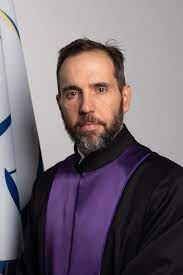
Jack Smith
By contrast: Jimmy Hoffa was president of the International Brotherhood of Teamsters. But that didn’t prevent Robert F. Kennedy’s Justice Department from indicting him for jury tampering—and convicting him on March 4, 1964. He was sentenced to eight years in prison and a $10,000 fine.
No one in the Kennedy Justice Department said: “He’s the elected president of the Teamsters Union—so we can’t touch him.” Yet that is precisely how the Biden Justice Department repeatedly acted—simply because, in 2016, he won a Presidential election.
Case #6: Throughout his struggles to stay out of prison, Trump was aided by the unrelenting support of the Republican party.
Republicans loudly and repeatedly claimed that Donald Trump was the legitimate winner of the 2020 Presidential election—despite overwhelming evidence that he wasn’t.
They also claimed that, by appointing Special Counsel Jack Smith to investigate Trump, the Democrats had weaponized Federal law enforcement.
They also fully supported Trump’s demand for the release of those who attacked the Capitol Building on January 6, 2021.

For example: Rep. Marjorie Taylor Greene (R-GA) has depicted these coup supporters as persecuted martyrs.
On March 24, 2022, members of the Republicans’ House Oversight Committee toured a Washington, D.C. jail where some of these defendants were held. “Their due process rights are being violated. And they have been mistreated and treated as political prisoners,” Greene told reporters after the tour.
Adolf Hitler similarly portrayed as martyrs the Nazis who tried to violently overthrow the government of Bavaria on November 9, 1923.
A March 2, 2020 Washington Monthly story concluded ominously: “U.S. democracy wasn’t set up to deal with a president openly behaving like a James Bond villain while being protected by a political party behaving more like a mafia than a civic institution.”
Case #7: While Congressional Republicans have relentlessly investigated President Joe Biden and his family, Democrats have refused to similarly investigate Trump’s family.
The United States House Oversight Committee opened its investigation into the Biden family on January 11, 2023. The investigation included the foreign business activities of Biden’s son, Hunter, and brother, James.
By November 2023, the investigation had not found any evidence of wrongdoing by President Biden.
Democrats, by contrast, have not probed why Jared Kushner, Donald Trump’s son-in-law and former White House adviser, received $2 billion from Saudi Arabia’s Crown Prince Mohammed bin Salman. The money came to Kushner’s private equity firm after Kushner left the White House in 2021.

Jared Kushner
Salman has been implicated by U.S. Intelligence reports in the 2018 torture and dismemberment of Washington Post columnist Jamal Khashoggi. When asked if he believed the reports, Kushner said: “Are we really still doing this?”
Democrats have also refused to investigate the Trump administration’s illegally seizing vitally-needed medical supplies in at least seven states during the COVID-19 pandemic.
The Federal Emergency Management Agency (FEMA) did not publicly report the thefts, despite the outlay of millions of dollars of taxpayer money. Nor did the administration explain how it decided which supplies to seize and where to reroute them.
The Federal Government did not inform states whose supplies it seized if they would receive the materials they ordered and paid for.
Case #8: On July 13, 2024, Trump was allegedly wounded in his right ear by a gunman while speaking at an open-air Presidential campaign rally near Butler, Pennsylvania.
The would-be assassin, Thomas Matthew Crooks, fired eight rounds from an AR-15 style rifle from the roof of a nearby building. Trump dived for cover behind his lectern, as the shooter killed one audience member and critically injured two others.
Crooks was shot and killed seconds later by the Secret Service’s Counter Sniper Team.
Had Trump not slightly turned his head at the moment Crooks fired, Republicans would have been forced to choose another nominee.
In addition, Trump would not have been alive to win the 2024 Presidential election and openly threaten to imprison the Justice Department prosecutors who sought to hold him accountable for his litany of crimes.
The assassination attempt calls to mind that by Colonel Claus Schenk von Stauffenberg on July 20, 1944, to kill Adolf Hitler with a briefcase bomb. Had he succeeded, the war in Europe would no doubt have ended far earlier, with countless lives being saved.
2016 PRESIDENTIAL ELECTION, 2020 PRESIDENTIAL ELECTION, 2024 PRESIDENTIAL ELECTION, ABC NEWS, ABUSE OF POWER, ADOLF HITLER, AILEEN CANNON, ALTERNET, AMERICABLOG, AP, ASSASSINATION, AXIOS, BABY BOOMER RESISTANCE, BBC, BIRD FLU, BLACKS, BLOOMBERG, BUZZFEED, CBS NEWS, CHINA, CLASSIFIED DOCUMENTS, CLAUS VON STAUFFENBERG, CNN, COVID-19, CROOKS AND LIARS, DAILY KOS, DANIEL CASSINO, DEMOCRACY, DEMOCRATIC PARTY, DEMOCRATS, DONALD TRUMP, ELECTORAL COLLEGE, FBI, FEDERAL EMERGENCY MANAGEMENT AGENCY, FIVETHIRTYEIGHT, FUEL PRICES, GALLUP POLL, GAZA, GLOBAL CONFLICT, GROCERY PRICES, HARPER’S MAGAZINE, HILLARY CLINTON, HISPANICS, HITLER: ASCENT (BOOK), HUFFINGTON POST, HUNTER BIDEN, illegal immigration, IMPEACHMENT, INFLATION, INTERNATIONAL BROTHERHOOD OF TEAMSTERS, ISRAEL, JACK SMITH, JAMAL KHASHOOGI, JAMES COMER, JANUARY 6 COUP ATTEMPT, JARED KUSHNER, JIMMY HOFFA, JOHN ADAMS, JOSEPH BIDEN, Kamala Harris, KEVIN MCCARTHY, KIM JONG-UN, LATINOS, LOW INFORMATION VOTERS, MAR-A-LAGO, MARJORIE TAYLOR GREENE, MASCULINITY, MEDIA MATTERS, MEIN KAMPF, MERRICK GARLAND, MOHAMMED BIN SALMAN, MOTHER JONES, MOVEON, MSNBC, MUSLIMS, NAZI GERMANY, NAZIS, NBC NEWS, NEW REPUBLIC, NEWSDAY, NEWSWEEK, NORTH KORREA, NPR, OBSTRUCTION OF CONGRESS, PBS NEWSHOUR, POLITICO, POLITICUSUSA, RAW STORY, REPUBLICAN PARTY, REPUBLICANS, REUTERS, ROBERT F. KENNEDY, RUSSIA, SALON, SEATTLE TIMES, SLATE, SUPERMAN, TALKING POINTS MEMO, TERRORISM, THE ATLANTIC, THE CHICAGO SUN-TIMES, THE CHICAGO TRIBUNE, THE DAILY BEAST, THE DAILY BLOG, THE GUARDIAN, THE HILL, THE HUFFINGTON POST, THE INTERCEPT, THE LOS ANGELES TIMES, THE NATION, THE NEW REPUBLIC, THE NEW YORK TIMES, THE NEW YORKER, THE VILLAGE VOICE, THE WASHINGTON POST, THINKPROGRESS, THOMAS MATTHEW CROOKS, TIME, TRANSPORTATION COSTS, TRUTHDIG, TRUTHOUT, TWO POLITICAL JUNKIES, U.S. BORDER PATROL, U.S. NEWS & WORLD REPORT, UKRAINE, UNITED STATES DEPARTMENT OF JUSTICE, UNITED STATES HOUSE OF REPRESENTATIVES, UNITED STATES SECRET SERVICE, UNITED STATES SENATE, UPI, USA TODAY, VLADIMIR PUTIN, VOLKER ULLRICH, VOLODMYR ZELENSKY, VOX, WEIMAR REPUBLIC, WORLD WAR 11, X, XI JINPING
In Bureaucracy, History, Law, Law Enforcement, Military, Politics, Social commentary on March 17, 2025 at 2:37 am
On November 9, 1923, Nazi Party Fuhrer Adolf Hitler tried to overthrow the government in Munich, Bavaria.
About 2,000 Nazis marched to the center of Munich, where they confronted heavily-armed police. A shootout erupted, killing 16 Nazis and four policemen.
Hitler was injured during the clash, but managed to escape. Two days later, he was arrested and charged with treason.
Put on trial, he found himself treated as a celebrity by a judge sympathetic to Right-wing groups. He was allowed to brutally cross-examine witnesses and even make inflammatory speeches.
At the end of the trial, he was convicted of treason and sentenced to five years’ imprisonment.
Serving time in Landsberg Prison, in Bavaria. he was given a huge cell, allowed to receive unlimited visitors and gifts, and treated with deference by guards and inmates.
Hitler used his time in prison to write his infamous book, Mein Kampf-–“My Struggle.” Part autobiography, part political treatise, it laid out his future plans—including the extermination of the Jews and the conquest of the Soviet Union.

Adolf Hitler leaving Landsberg Prison, December, 20, 1924
Nine months later, he was released on parole—by authorities loyal to the authoritarian Right instead of the newly-created Weimar Republic.
Hitler immediately began rebuilding the shattered Nazi party—and deciding on a new strategy to gain power. Never again would he resort to armed force. He would win office by election—or intrigue.
Writes historian Volker Ullrich, in his monumental biography, Hitler: Ascent 1889 – 1939: “Historians have perennially tried to answer the question of whether Hitler’s rise to power could have been halted….
“There were repeated opportunities to end Hitler’s run of triumphs. The most obvious one was after the failed Putsch of November 1923. Had the Munich rabble-rouser been forced to serve his full five-year term of imprisonment in Landsberg, it is extremely unlikely that he would have been able to restart his political career.”

Thus, it isn’t just what happens that can influence the course of history. Often, it’s what doesn’t happen that has at least as great a result.
Future historians—if there are any—may one day write that it’s what didn’t happen that played at least as great a role in re-electing Donald Trump President as what actually did.
There were numerous instances where intervention by Federal legislators or law enforcement authorities could have utterly changed the outcome of the 2024 election.
Case #1: On December 18, 2019, the Democratic-controlled House of Representatives adopted two articles of impeachment against Trump: abuse of power and obstruction of Congress. On February 5, 2020, the Republican-dominated Senate voted to acquit Trump on both articles of impeachment.
Their motive: Fear that if they didn’t, they would be “primaried” by even more extreme, Trump-supported Right-wing candidates—and lose their positions and the accompanying power and perks.
Had Republicans agreed to convict him, he could not have run again for President.
Case #2: On January 13, 2021, Trump was impeached for the second time for “incitement of insurrection”—inciting the January 6, 2021 attack on the United States Capitol.
The reason: To stop the counting of Electoral College votes, which he knew would prove that former Vice President Joseph Biden had won the 2020 Presidential election.
The evidence against him was overwhelming—including video of his inciting a mob of his followers to storm the Capitol Building.
But Republican Senators again acquitted Trump on February 13, 2021—choosing ambition over patriotism.
Had they done so, he could not have again been a candidate for President.
Donald Trump
Case #3: Only on November 18, 2022—a year and a half after becoming Attorney General—did Merrick Garland appoint Jack Smith Independent Counsel to investigate Donald Trump’s role for:
- Inciting the January 6 attack on Congress; and
- Illegally seizing and storing highly classified government documents at his Mar-a-Lago estate in Palm Beach Florida.
This gave Trump time to play his “deny and delay” game. Had he been prosecuted and convicted before the November 5 Presidential election, the results might well have been different.
Even hardcore supporters might have proved unwilling to vote for someone found guilty of inciting a riot or stealing highly classified documents.
Case #4: In June, 2023, Trump was indicted for illegally seizing and storing hundreds of highly classified government documents at his Mar-a-Lago estate.
Aileen Cannon, a Trump appointee as Federal Judge of the United States District Court for the Southern District of Florida, presided over the case.
She repeatedly ruled in his favor and finally dismissed the case in July, 2024. claiming that Special Counsel Jack Smith’s appointment was unconstitutional.
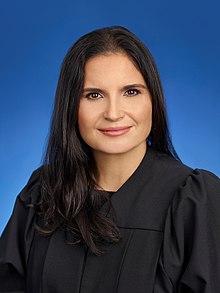
Aileen Cannon
Southern District of Florida, CC BY-SA 4.0 <https://creativecommons.org/licenses/by-sa/4.0>, via Wikimedia Commons
Many legal experts, citing her handling of the civil case against Trump, called for her recusal from the case. Jack Smith could have requested her removal from the case but did not ask a Federal appeals court to do so.
MSNBC analyst Barbara McQuade told Newsweek that Smith likely refused to do so to “return public trust” to the Justice Department, which had been challenged in recent years.
Cannon’s kid-gloves treatment of Trump echoed that of the Right-wing judge who presided over Adolf Hitler’s trial in 1923 for trying to overthrow the government of Bavaria.
ABC NEWS, ADOLF HITLER, ALTERNET, AMERICABLOG, AP, ASSASSINATION, BABY BOOMER RESISTANCE, BUZZFEED, CBS NEWS, CNN, CONSPIRACIES, CROOKS AND LIARS, DAILY KOS, DAILY KOZ, DAY OF THE JACKAL, DEPARTMENT OF DEFENSE, DEPARTMENT OF HOMELAND SECURITY, DEPARTMENT OF VETERANS AFFAIRS, DONALD TRUMP, DRUDGE RETORT, ENVIRONMENTAL PROTECTION AGENCY, FACEBOOK, FBI, FIVETHIRTYEIGHT, FREDERICK FORSYTHE, GAIUS CASSIUS, HARPER’S MAGAZINE, INTERNAL REVENUE SERVICE, JULIUS CAESAR, LINCOLN MEMORIAL, MAR-A-LAGO, MARCUS BRUTUS, MARK ANTHONY, MEDIA MATTERS, MOTHER JONES, MOVEON, MSNBC, NBC NEWS, NEWSWEEK, NICCOLO MACHIAVELLI, NPR, PBS NEWSHOUR, PLOTS, POLITICO, POLITICUSUSA, RAW STORY, REUTERS, RICHARD M. NIXON, SALON, SEATTLE TIMES, Secret Service, SLATE, TALKING POINTS MEMO, THE ATLANTIC, THE CHICAGO SUN-TIMES, THE CHICAGO TRIBUNE, THE DAILY BEAST, THE DAILY BLOG, THE DISCOURSES, THE GUARDIAN, THE HILL, THE HUFFINGTON POST, THE LOS ANGELES TIMES, THE NATION, THE NEW REPUBLIC, THE NEW YORK TIMES, THE VILLAGE VOICE, THE WALL STREET JOURNAL, THE WASHINGTON POST, THINKPROGRESS, TIME, TRUTHDIG, TRUTHOUT, TWO POLITICAL JUNKIES, U.S. NEWS & WORLD REPORT, UPI, USA TODAY, VIETNAM WAR, WHITE HOUSE STAFFER, WONKETTE, X
In Bureaucracy, History, Law Enforcement, Military, Politics, Social commentary on March 4, 2025 at 12:06 am
More than 500 years ago, Niccolo Machiavelli, the Florentine statesman, authored The Discourses on Livy, a work of political history and philosophy. In it, he outlined how citizens of a republic can maintain their freedoms.
For conspirators, there are three ways their efforts can be foiled.
- Discovery through denunciation;
- Discovery through incautiousness;
- Discovery through writings.
The first has already been covered. Now for the second and third.
Discovery through Writings: “You may talk freely with anyone man about everything, for unless you have committed yourself in writing, the “Yes” of one man is worth as much as the ‘No’ of another.
Thus, you should guard most carefully against writing, as against a dangerous rock, for nothing will convict you quicker than your own handwriting.
If you are denounced, there are means of escaping punishment:
- By denying the accusation and claiming that the person making it hates you; or
- Claiming that your accuser was tortured or coerced into giving false testimony against you.
“But the most prudent course is to not tell your intentions to anyone, and to carry out the attempt yourself.”
Even if you’re not discovered before you carry out your attack, there are still two dangers facing a conspirator:
Dangers in Execution: These result from:
- An unexpected change in the routine of the intended target;
- The lack of courage among the conspirators; or
- An error on their part, such as leaving some of those alive whom the conspirators intended to kill.
Adolf Hitler, who claimed to have a sixth-sense for danger, was famous for changing his routine at the last minute.
On November 9, 1939, this instinct saved his life. He had been scheduled to give a long speech at a Munich beer hall before the “Old Fighters” of his storm troopers.
But that evening he cut short his speech and left the beer hall. Forty-five minutes later, a bomb exploded inside a pillar—before which Hitler had been speaking.
Conspirators can also be doomed by their good intentions.
In 44 B.C., Gaius Cassius, Marcus Brutus and other Roman senators decided to assassinate Julius Caesar, whose dictatorial ambitions they feared.
Cassius also intended to murder Mark Anthony, Caesar’s strongest ally. But Brutus objected, fearing the plotters would look like butchers, not saviors. Even worse, he allowed Anthony to deliver a eulogy at Caesar’s funeral.
This proved so inflammatory that the mourners rioted, driving the conspirators out of Rome. Soon afterward, they were defeated in a battle with the legions of Anthony and Octavian Caesar—and forced to commit suicide to avoid capture and execution.
Machiavelli closes his chapter “Of Conspiracies” with advice to rulers on how they should act when they find a conspiracy has been formed against them.
“If they discover that a conspiracy exists against them, they must, before punishing its authors, strive to learn its nature and extent. And they must measure the danger posed by the conspirators against their own strength.
And if they find it powerful and alarming, they must not expose it until they have amassed sufficient force to crush it. Otherwise, they will only speed their own destruction. They should try to pretend ignorance of it. If the conspirators find themselves discovered, they will be forced by necessity to act without consideration.”
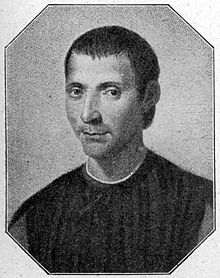
Niccolo Machiavelli
But Machiavelli also notes how important it is for rulers to make themselves loved—or at least respected—by their fellow citizens:
“Note how much more praise those Emperors merited who, after Rome became an empire, conformed to her laws like good princes, than those who took the opposite course.
Titus, Nerva, Trajan, Hadrian, Antoninus and Marcus Auelius did not require the Praetorians nor the multitudinous legions to defend them, because they were protected by their own good conduct, the good will of the people, and by the love of the Senate.
On the other hand, neither the Eastern nor the Western armies saved Caligula, Nero, Vitellius and so many other wicked Emperors from the enemies which their bad conduct and evil lives had raised up against them.”
In his better-known work, The Prince, he warns rulers who—like Donald Trump–are inclined to rule by fear:
“A prince should make himself feared in such a way that if he does not gain love, he at any rate avoids hatred: for fear and the absence of hatred may well go together.”
Donald Trump
By Machiavelli’s standards, Trump has made himself the perfect target for a conspiracy.
Since being inaugurated President a second time, he—and his billionaire enforcer, Elon Musk—have fired about 30,000 federal civil service workers. Another 75,000 have accepted buyouts under threat of being fired.
Among the purged agencies:
- Homeland Security
- Defense
- FBI
- Internal Revenue Service
- Veterans Affairs
- Environmental Protection Agency.
Many of these ex-employees have backgrounds in security. Combine this with the anger fired employees feel at the injustices to themselves and their families, and the result is a recipe for conspiratorial hatred.
“When a prince becomes universally hated, it is likely that he’s harmed some individuals—who thus seek revenge. This desire is increased by seeing that the prince is widely loathed.”
ABC NEWS, ADOLF HITLER, ALTERNET, AMERICABLOG, AP, ASSASSINATION, BABY BOOMER RESISTANCE, BUZZFEED, CBS NEWS, CNN, CONSPIRACIES, CROOKS AND LIARS, DAILY KOS, DAILY KOZ, DAY OF THE JACKAL, DEPARTMENT OF DEFENSE, DEPARTMENT OF HOMELAND SECURITY, DEPARTMENT OF VETERANS AFFAIRS, DONALD TRUMP, DRUDGE RETORT, ENVIRONMENTAL PROTECTION AGENCY, FACEBOOK, FBI, FIVETHIRTYEIGHT, FREDERICK FORSYTHE, GAIUS CASSIUS, HARPER’S MAGAZINE, INTERNAL REVENUE SERVICE, JULIUS CAESAR, LINCOLN MEMORIAL, MAR-A-LAGO, MARCUS BRUTUS, MARK ANTHONY, MEDIA MATTERS, MOTHER JONES, MOVEON, MSNBC, NBC NEWS, NEWSWEEK, NICCOLO MACHIAVELLI, NPR, PBS NEWSHOUR, PLOTS, POLITICO, POLITICUSUSA, RAW STORY, REUTERS, RICHARD M. NIXON, SALON, SEATTLE TIMES, Secret Service, SLATE, TALKING POINTS MEMO, THE ATLANTIC, THE CHICAGO SUN-TIMES, THE CHICAGO TRIBUNE, THE DAILY BEAST, THE DAILY BLOG, THE DISCOURSES, THE GUARDIAN, THE HILL, THE HUFFINGTON POST, THE LOS ANGELES TIMES, THE NATION, THE NEW REPUBLIC, THE NEW YORK TIMES, THE VILLAGE VOICE, THE WALL STREET JOURNAL, THE WASHINGTON POST, THINKPROGRESS, TIME, TRUTHDIG, TRUTHOUT, TWO POLITICAL JUNKIES, U.S. NEWS & WORLD REPORT, UPI, USA TODAY, VIETNAM WAR, WHITE HOUSE STAFFER, WONKETTE, X
In Bureaucracy, History, Law Enforcement, Military, Politics, Social commentary on March 3, 2025 at 12:05 am
More than 500 years ago, Niccolo Machiavelli, the father of modern political science, offered sound advice for would-be conspirators—and for rulers seeking to thwart conspiracies.
He did so in The Discourses on Livy, a work of political history and philosophy. In it, he outlined how citizens of a republic can maintain their freedoms.
One of the longest chapters—Book Three, Chapter Six—covers “Of Conspiracies.” In it, those who wish to conspire against a ruler will find highly useful advice. And so will those who might well become the targets of conspiracies—such as President Donald J. Trump.
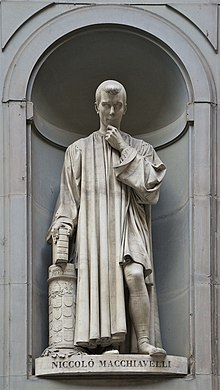
Niccolo Machiavellil
The most dangerous time for a ruler comes when he is universally hated.
Niccolo Machiavelli: “When a prince becomes universally hated, it is likely that he’s harmed some individuals—who thus seek revenge. This desire is increased by seeing the prince is widely loathed.
A prince, then, should avoid incurring such universal hatred….
By doing this, he protects himself from such vengeance-seekers. There are two reasons for this:
(1) Men rarely risk danger to avenge a wrong; and
(2) Even if they want to avenge a wrong, they know they will face almost universal condemnation because the prince is held in such high esteem.”
Machiavelli draws a distinction between plots and conspiracies.
“A plot may be formed by a single individual or by many. The first isn’t a conspiracy, since that would involve at least two participants.”
A single plotter avoids the danger faced by two or more conspirators:
“Since no one knows his intention, he can’t be betrayed by an accomplice.
Anyone may form a plot, whether he is prominent or insignificant, because everyone is at some time allowed to speak to the prince. And he can use this opportunity to satisfy his desire for revenge.”
On the other hand, says Machiavelli, the dangers of assassination by a trusted intimate are slight.
“Few people dare to assault a prince. Of those who do, few or none escapes being killed in the attempt, or immediately afterward. As a result, only a small number of people are willing to incur such certain death.”
Those who take part in a conspiracy against a ruler are “the great men of the state, or those on terms of familiar intercourse with the prince.”
These are men who have access to him. Julius Caesar, for example, was stabbed to death by members of the Roman Senate, who feared his assuming dictatorial powers.
And Adolf Hitler was conspired against by colonels and generals of the German Army. He was in fact holding a war conference when a briefcase bomb exploded, killing three officers and a stenographer, but leaving Hitler only slightly injured.
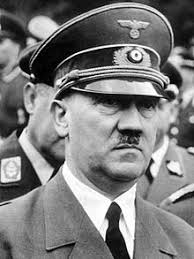

Adolf Hitler
There are three ways a conspiracy can be foiled:
- Discovery through denunciation;
- Discovery through incautiousness;
- Discovery through writings.
Discovery through Denunciation: This occurs through treachery or lack of prudence among one or more conspirators.
“Treachery is so common that you can safely tell your plans to only your most trusted friends who are willing to risk their lives for your sake. You may find that you have only one or two of these.
But as you are bring more people into the conspiracy, the chances of discovery greatly increase. It’s impossible to find many who can be completely trusted: For their devotion to you must be greater than their sense of danger and fear of punishment.”
Discovery through Carelessness: “This happens when one of the conspirators speaks incautiously, so that a third person overhears it Or it may occur from thoughtlessness, when a conspirator tells the secret to his wife or child, or to some other indiscreet person.
When a conspiracy has more than three or four members, its discovery is almost certain, either through treason, imprudence or carelessness.
If more than one conspirator is arrested, the whole plot is discovered, for it will be impossible for any two to agree perfectly as to all their statements.
If only one is arrested, he may—through courage and stubbornness—be able to conceal the names of his accomplices. But then the others, to remain safe, must not panic and flee, since this is certain to be discovered.
If one of them becomes fearful—whether it’s the one who was arrested or is still at liberty—discovery of the conspiracy is certain.
The best way to avoid such detection is to confide your project to your intended fellow conspirators at the moment of execution—and not sooner.”
A classic example of this occurred in ancient Persia. According to the Greek historian Herodotus: A group of nobles assembled to discuss overthrowing a usurper to the throne. The last one to arrive was Darius.
When one of the conspirators asked, “When should we strike?” Darius replied: “We must either go now at this very moment and carry it into execution, or I shall go and denounce you all. For I will not give any of you time to denounce me.”
At that, they went directly to the palace, assassinated the usurper and proclaimed Darius their new king.
2020 PRESIDENTIAL ELECTION, 2024 PRESIDENTIAL ELECTION, ABC NEWS, ABUSE OF POWER, ADOLF HITLER, AILEEN CANNON, ALTERNET, AMERICABLOG, AP, ASSASSINATION, BABY BOOMER RESISTANCE, BBC, BLOOMBERG, BUZZFEED, CBS NEWS, CLASSIFIED DOCUMENTS, CLAUS VON STAUFFENBERG, CNN, COVID-19, CROOKS AND LIARS, DAILY KOS, DEMOCRATIC PARTY, DONALD TRUMP, ELECTORAL COLLEGE, FBI, FEDERAL EMERGENCY MANAGEMENT AGENCY, FIVETHIRTYEIGHT, HARPER’S MAGAZINE, HITLER: ASCENT (BOOK), HUFFINGTON POST, HUNTER BIDEN, IMPEACHMENT, INTERNATIONAL BROTHERHOOD OF TEAMSTERS, JACK SMITH, JAMAL KHASHOOGI, JAMES COMER, JANUARY 6 COUP ATTEMPT, JARED KUSHNER, JIMMY HOFFA, JOSEPH BIDEN, KEVIN MCCARTHY, MAR-A-LAGO, MARJORIE TAYLOR GREENE, MEDIA MATTERS, MEIN KAMPF, MERRICK GARLAND, MOHAMMED BIN SALMAN, MOTHER JONES, MOVEON, MSNBC, NAZI GERMANY, NAZIS, NBC NEWS, NEW REPUBLIC, NEWSDAY, NEWSWEEK, NPR, OBSTRUCTION OF CONGRESS, PBS NEWSHOUR, POLITICO, POLITICUSUSA, RAW STORY, REPUBLICAN PARTY, REUTERS, ROBERT F. KENNEDY, SALON, SEATTLE TIMES, SLATE, TALKING POINTS MEMO, THE ATLANTIC, THE CHICAGO SUN-TIMES, THE CHICAGO TRIBUNE, THE DAILY BEAST, THE DAILY BLOG, THE GUARDIAN, THE HILL, THE HUFFINGTON POST, THE INTERCEPT, THE LOS ANGELES TIMES, THE NATION, THE NEW REPUBLIC, THE NEW YORK TIMES, THE NEW YORKER, THE VILLAGE VOICE, THE WASHINGTON POST, THINKPROGRESS, THOMAS MATTHEW CROOKS, TIME, TRUTHDIG, TRUTHOUT, TWO POLITICAL JUNKIES, U.S. NEWS & WORLD REPORT, UNITED STATES DEPARTMENT OF JUSTICE, UNITED STATES HOUSE OF REPRESENTATIVES, UNITED STATES SECRET SERVICE, UNITED STATES SENATE, UPI, USA TODAY, VOLKER ULLRICH, WEIMAR REPUBLIC, X
In Bureaucracy, History, Law, Law Enforcement, Medical, Politics, Social commentary on December 18, 2024 at 12:47 am
There were numerous instances where intervention by Federal legislators or law enforcement authorities could have utterly changed the outcome of the 2024 Presidential election.
Case #5: Even after Donald Trump left office, the Justice Department treated him with a deference not shown any other criminal defendant.
He was allowed, for example, to hurl insults and threats at Special Counsel Jack Smith and even Smith’s family.
One such post, published on Trump’s website, Truth Social, went: “Deranged Jack Smith, who is a sick puppet for A.G. Garland & Crooked Joe Biden, should be DEFUNDED & put out to rest. Republicans must get tough or the Dems will steal another Election. MAGA!”
By “A.G. Garland” Trump meant Attorney General Merrick Garland. By “put out to rest,” he meant that his followers should assassinate Smith.
Not even Mafia bosses like Charles “Lucky” Luciano and Albert “The Executioner” Anastasia dared issue such a threat.
Jack Smith
By contrast: From 1957 to 1971, Jimmy Hoffa was president of the International Brotherhood of Teamsters. But that didn’t prevent Robert F. Kennedy’s Justice Department from indicting him on May 18, 1962, for accepting $1 million from a trucking company in exchange for labor peace.
After beating the case through jury tampering, he was again indicted—for jury tampering—and convicted on March 4, 1964. He was sentenced to eight years in prison and a $10,000 fine.
No one in the Kennedy Justice Department said: “He’s the elected president of the Teamsters Union—so we can’t touch him.” Yet that is precisely how the Biden Justice Department repeatedly acted—simply because, in 2016, he won a Presidential election.
Case 6: Throughout his struggles to stay out of prison, Trump was aided by the unrelenting support of the Republican party.
Republicans loudly and repeatedly claimed that, by appointing a Special Counsel to investigate Trump, the Democrats had weaponized Federal law enforcement.
Republicans refuse to acknowledge the criminal charges which led to the Justice Department appointing former DOJ official Jack Smith to that position. They also fully support Trump’s demand for the release of those who attacked the Capitol Building on January 6, 2021.
For example: Rep. Marjorie Taylor Greene (R-GA) has depicted these coup supporters as persecuted martyrs.
On March 24, 2022, members of the Republicans’ House Oversight Committee toured a Washington, D.C. jail where some of these defendants were held. “Their due process rights are being violated. And they have been mistreated and treated as political prisoners,” Greene told reporters after the tour.
Adolf Hitler similarly portrayed as martyrs the Nazis who tried to violently overthrow the government of Bavaria on November 9, 1923.
Case 7: While Congressional Republicans have relentlessly investigated President Joe Biden and his family, Democrats have refused to similarly investigate Trump’s family.
The United States House Oversight Committee opened its investigation into the Biden family on January 11, 2023. The investigation included the foreign business activities of Biden’s son, Hunter, and brother, James.
By November 2023, the investigation had not found any evidence of wrongdoing by President Biden.
Democrats, by contrast, have not probed why Jared Kushner, Donald Trump’s son-in-law and former White House adviser, received $2 billion from Saudi Arabia’s Crown Prince Mohammed bin Salman. The money came to Kushner’s private equity firm after Kushner left the White House in 2021.
Jared Kushner
Salman has been implicated by U.S. Intelligence reports in the 2018 torture and dismemberment of Washington Post columnist Jamal Khashoggi. When asked if he believed the reports, Kushner said: “Are we really still doing this?”
Democrats have also refused to investigate the Trump administration’s illegally seizing vitally-needed medical supplies in at least seven states during the COVID-19 pandemic.
The Federal Emergency Management Agency (FEMA) did not publicly report the thefts, despite the outlay of millions of dollars of taxpayer money. Nor did the administration explain how it decided which supplies to seize and where to reroute them.
The Federal Government did not inform states whose supplies it seized if they would receive the materials they ordered and paid for.
Case 8: On July 13, 2024, Trump was shot and slightly wounded in his right ear while speaking at an open-air Presidential campaign rally near Butler, Pennsylvania.
The would-be assassin, Thomas Matthew Crooks, fired eight rounds from an AR-15 style rifle from the roof of a nearby building. Trump dived for cover behind his lectern, as the shooter killed one audience member and critically injured two others.
Crooks was shot and killed seconds later by the Secret Service’s Counter Sniper Team.
Had Trump not slightly turned his head at the moment Crooks fired, Republicans would have been forced to choose another nominee.
In addition, Trump would not have been alive to win the 2024 Presidential election and openly threaten to imprison the Justice Department prosecutors who sought to hold him accountable for his litany of crimes.
The assassination attempt calls to mind that by Colonel Claus Schenk von Stauffenberg on July 20, 1944, to kill Adolf Hitler with a briefcase bomb. Had he succeeded, the war in Europe would no doubt have ended far earlier, with countless lives being saved.
Case 9: On November 5, Americans faced a choice between a former prosecutor and a convicted felon for President.
They chose the felon—partly out of hatred for illegal aliens and partly out of anger at high grocery prices.
2020 PRESIDENTIAL ELECTION, 2024 PRESIDENTIAL ELECTION, ABC NEWS, ABUSE OF POWER, ADOLF HITLER, AILEEN CANNON, ALTERNET, AMERICABLOG, AP, ASSASSINATION, BABY BOOMER RESISTANCE, BBC, BLOOMBERG, BUZZFEED, CBS NEWS, CLASSIFIED DOCUMENTS, CLAUS VON STAUFFENBERG, CNN, COVID-19, CROOKS AND LIARS, DAILY KOS, DEMOCRATIC PARTY, DONALD TRUMP, ELECTORAL COLLEGE, FBI, FEDERAL EMERGENCY MANAGEMENT AGENCY, FIVETHIRTYEIGHT, HARPER’S MAGAZINE, HITLER: ASCENT (BOOK), HUFFINGTON POST, HUNTER BIDEN, IMPEACHMENT, INTERNATIONAL BROTHERHOOD OF TEAMSTERS, JACK SMITH, JAMAL KHASHOOGI, JAMES COMER, JANUARY 6 COUP ATTEMPT, JARED KUSHNER, JIMMY HOFFA, JOSEPH BIDEN, KEVIN MCCARTHY, MAR-A-LAGO, MARJORIE TAYLOR GREENE, MEDIA MATTERS, MEIN KAMPF, MERRICK GARLAND, MOHAMMED BIN SALMAN, MOTHER JONES, MOVEON, MSNBC, NAZI GERMANY, NAZIS, NBC NEWS, NEW REPUBLIC, NEWSDAY, NEWSWEEK, NPR, OBSTRUCTION OF CONGRESS, PBS NEWSHOUR, POLITICO, POLITICUSUSA, RAW STORY, REPUBLICAN PARTY, REUTERS, ROBERT F. KENNEDY, SALON, SEATTLE TIMES, SLATE, TALKING POINTS MEMO, THE ATLANTIC, THE CHICAGO SUN-TIMES, THE CHICAGO TRIBUNE, THE DAILY BEAST, THE DAILY BLOG, THE GUARDIAN, THE HILL, THE HUFFINGTON POST, THE INTERCEPT, THE LOS ANGELES TIMES, THE NATION, THE NEW REPUBLIC, THE NEW YORK TIMES, THE NEW YORKER, THE VILLAGE VOICE, THE WASHINGTON POST, THINKPROGRESS, THOMAS MATTHEW CROOKS, TIME, TRUTHDIG, TRUTHOUT, TWO POLITICAL JUNKIES, U.S. NEWS & WORLD REPORT, UNITED STATES DEPARTMENT OF JUSTICE, UNITED STATES HOUSE OF REPRESENTATIVES, UNITED STATES SECRET SERVICE, UNITED STATES SENATE, UPI, USA TODAY, VOLKER ULLRICH, WEIMAR REPUBLIC, X
In Bureaucracy, History, Law, Law Enforcement, Military, Politics, Social commentary on December 17, 2024 at 12:18 am
On November 9, 1923, Nazi Party Fuhrer Adolf Hitler tried to overthrow the government in Munich, Bavaria.
About 2,000 Nazis marched to the center of Munich, where they confronted heavily-armed police. A shootout erupted, killing 16 Nazis and four policemen.
Hitler was injured during the clash, but managed to escape. Two days later, he was arrested and charged with treason.
Put on trial, he found himself treated as a celebrity by a judge sympathetic to Right-wing groups. He was allowed to brutally cross-examine witnesses and even make inflammatory speeches.
At the end of the trial, he was convicted of treason and sentenced to five years’ imprisonment.
Serving time in Landsberg Prison, in Bavaria. he was given a huge cell, allowed to receive unlimited visitors and gifts, and treated with deference by guards and inmates.
Hitler used his time in prison to write his infamous book, Mein Kampf-–“My Struggle.” Part autobiography, part political treatise, it laid out his future plans—including the extermination of the Jews and the conquest of the Soviet Union.
Adolf Hitler leaving Landsberg Prison, December, 20, 1924
Nine months later, he was released on parole—by authorities loyal to the authoritarian Right instead of the newly-created Weimar Republic.
Hitler immediately began rebuilding the shattered Nazi party—and deciding on a new strategy to gain power. Never again would he resort to armed force. He would win office by election—or intrigue.
Writes historian Volker Ullrich, in his monumental biography, Hitler: Ascent 1889 – 1939: “Historians have perennially tried to answer the question of whether Hitler’s rise to power could have been halted….
“There were repeated opportunities to end Hitler’s run of triumphs. The most obvious one was after the failed Putsch of November 1923. Had the Munich rabble-rouser been forced to serve his full five-year term of imprisonment in Landsberg, it is extremely unlikely that he would have been able to restart his political career.”
Thus, it isn’t just what happens that can influence the course of history. Often, it’s what doesn’t happen that has at least as great a result.
Future historians—if there are any—may one day write that it’s what didn’t happen that played at least as great a role in re-electing Donald Trump President as what actually did.
There were numerous instances where intervention by Federal legislators or law enforcement authorities could have utterly changed the outcome of the 2024 election.
Case #1: On December 18, 2019, the Democratic-controlled House of Representatives adopted two articles of impeachment against Trump: abuse of power and obstruction of Congress. On February 5, 2020, the Republican-dominated Senate voted to acquit Trump on both articles of impeachment.
Their motive: Fear that if they didn’t, they would be “primaried” by even more extreme, Trump-supported Right-wing candidates—and lose their positions and the accompanying power and perks.
Had Republicans agreed to convict him, he could not have run again for President.
Case #2: On January 13, 2021, Trump was impeached for the second time for “incitement of insurrection”—inciting the January 6, 2021 attack on the United States Capitol.
The reason: To stop the counting of Electoral College votes, which he knew would prove that former Vice President Joseph Biden had won the 2020 Presidential election.
The evidence against him was overwhelming—including video of his inciting a mob of his followers to storm the Capitol Building.
But Republican Senators again acquitted Trump on February 13, 2021—choosing ambition over patriotism.
Had they done so, he could not have again been a candidate for President.
Donald Trump
Case #3: Only on November 18, 2022—a year and a half after becoming Attorney General—did Merrick Garland appoint Jack Smith Independent Counsel to investigate Donald Trump’s role for:
- Inciting the January 6 attack on Congress; and
- Illegally seizing and storing highly classified government documents at his Mar-a-Lago estate in Palm Beach Florida.
This gave Trump time to play his “deny and delay” game. Had he been prosecuted and convicted before the November 5 Presidential election, the results might well have been different.
Even hardcore supporters might have proved unwilling to vote for someone found guilty of inciting a riot or stealing highly classified documents.
Case #4: In June, 2023, Trump was indicted for illegally seizing and storing hundreds of highly classified government documents at his Mar-a-Lago estate.
Aileen Cannon, a Trump appointee as Federal Judge of the United States District Court for the Southern District of Florida, presided over the case.
She repeatedly ruled in his favor and finally dismissed the case in July, 2024. claiming that Special Counsel Jack Smith’s appointment was unconstitutional.
Aileen Cannon
Southern District of Florida, CC BY-SA 4.0 <https://creativecommons.org/licenses/by-sa/4.0>, via Wikimedia Commons
Many legal experts, citing her handling of the civil case against Trump, called for her recusal from the case. Jack Smith could have requested her removal from the case but did not ask a Federal appeals court to do so.
MSNBC analyst Barbara McQuade told Newsweek that Smith likely refused to do so to “return public trust” to the Justice Department, which had been challenged in recent years.
Cannon’s kid-gloves treatment of Trump echoed that of the Right-wing judge who presided over Adolf Hitler’s trial in 1923 for trying to overthrow the government of Bavaria.
2020 PRESIDENTIAL ELECTION, ABC NEWS, ALTERNET, ALVIN BRAGG, AMERICABLOG, AP, BABY BOOMER RESISTANCE, BBC, BLOOMBERG NEWS, BUZZFEED, CANADA, CBS NEWS, CHINA, CLASSIFIED DOCUMENTS, CNN, COMMUNISTS, CONFEDERATES, CONSPIRING TO OBSTRUCT JUSTICE, COVID-19, CROOKS AND LIARS, DAILY KOS, DEMOCRATS, DONALD TRUMP, DONALD TRUMP JR., E. JEAN CARROLL, EMOLUMENTS CLAUSE, ERIC TRUMP, FASCISTS, FBI, FIVETHIRTYEIGHT, GREAT BRITAIN, HARPER’S MAGAZINE, HILLARY CLINTON, HUFFINGTON POST, IVANKA TRUMP, JACK SMITH, JAMES COMEY, JANUARY 6 COUP ATTEMPT, JOSEPH BIDEN, JUAN MERCHAN, Kamala Harris, KEN PAXTON, KIM JONG-UN, KU KLUX KLAN, MANHATTAN DISTRICT ATTORNEY'S OFFICE, MAR-A-LAGO, MARXISTS, MARY TRUMP, MEDIA MATTERS, MERRICK GARLAND, MICHAEL COHEN, MOTHER JONES, MOVEON, MSNBC, NATO, NAZIS, NBC NEWS, NEW REPUBLIC, NEW YORK ATTORNEY GENERAL'S OFFICE, NEWSDAY, NEWSWEEK, NICCOLO MACHIAVELLI, NORTH KOREA, NPR, NUCLEAR WEAPONS, PAM BONDI, PBS NEWSHOUR, POLITICO, POLITICUSUSA, RAW STORY, REPUBLICANS, REUTERS, RUSSIA, SALON, SEATTLE TIMES, Secret Service, SLATE, STORMY DANIELS, TALKING POINTS MEMO, THE ATLANTIC, THE CHICAGO SUN-TIMES, THE CHICAGO TRIBUNE, THE DAILY BEAST, THE DAILY BLOG, THE GUARDIAN, THE HILL, THE HUFFINGTON POST, THE INTERCEPT, THE LOS ANGELES TIMES, THE NATION, THE NEW REPUBLIC, THE NEW YORK TIMES, THE NEW YORKER, THE VILLAGE VOICE, THE WASHINGTON POST, THINKPROGRESS, TIME, TREASON, TRUMP TOWER, TRUTHDIG, TRUTHOUT, TWITTER, U.S. NEWS & WORLD REPORT, UNITED STATES AIR FORCE, UNITED STATES ARMY, UNITED STATES CONSTITUTION, UNITED STATES DEPARTMENT OF JUSTICE, UNITED STATES HOUSE OF REPRESENTATVES, UNITED STATES MARINES, UNITED STATES NAVY, UPI, USA TODAY, VLADIMIR PUTIN, XI JINPING
In Bureaucracy, History, Law, Law Enforcement, Politics, Social commentary on June 5, 2024 at 12:16 am
Commentators have long speculated on why millions of Americans remain fanatically committed to Donald Trump.
There has been far less speculation on why so many law enforcers have turned a blind eye to Trump’s decades of criminality, if not treason.
Among those guilty:
- The Justice Department did not indict Trump for the series of threats he made—directly and indirectly—against Republicans and Democrats throughout the 2016 Presidential campaign.
- The United States Secret Service did not charge him with threatening the life of Presidential candidate Hillary Clinton: “Hillary [Clinton] wants to abolish, essentially abolish, the Second Amendment. If she gets to pick her [Supreme Court] judges, nothing you can do folks. Although the Second Amendment people, maybe there is, I don’t know.”
- The Justice Department did not prosecute Trump for treason, even though he solicited aid from Russia, a nation hostile to the United States. On July 27, 2016. Trump publicly invited “Russia”—i.e., Vladimir Putin—to hack Hillary Clinton’s emails: “I will tell you this, Russia: If you’re listening, I hope you’re able to find the 30,000 emails that are missing. I think you will probably be rewarded mightily by our press.”
There are at least two reasons why Trump has been allowed to insult and even threaten prosecutors and judges without facing the punishment an ordinary citizen would:
Cowardice: They fear Trump will slander them by claiming he’s the victim of a “witch hunt” to remove him from the 2024 Presidential race.
And/or they fear physical attack from his legions of fanatical followers.
Awe of the Presidency: They fear their careers will be tainted by prosecuting or judging a man who won the votes of 70 million Americans.
There are, however, remedies for both cowardice and awe:
Cowardice: Prosecutors and judges should expect threats and slanders from Trump. This is how he has traditionally responded to attempts to hold him legally accountable.
If judges and prosecutors fear violence from Trump’s fanatical followers, they can easily obtain round-the-clock protection by local and/or federal law enforcement agencies.
Awe: Trump is no longer President. He no longer commands Presidential immunity nor the powers of that office—such as being able to cite “executive privilege” to prevent the release of documents or testimony.
His refusals to accept this reality should be bluntly ignored.
More importantly, as President, he:
- Took no action to protect Americans from the deadly COVID-19 virus;
- Constantly sided with Russian dictator Vladimir Putin against the United States;
- Attacked the independent judiciary and free press;
- Praised Nazis and Ku Klux Klansmen;
- Fired FBI Director James Comey for refusing to pledge his personal loyalty to Trump and turn the agency into Trump’s private police force;
- Used his position as President to further enrich himself in violation of the Emoluments Clause of the Constitution;
- Attacked and alienated America’s oldest democratic allies, such as Canada and Great Britain;
- Refused to accept the results of a legitimate Presidential election; and
- Incited a deadly attack on Congress so he could illegally remain in office.
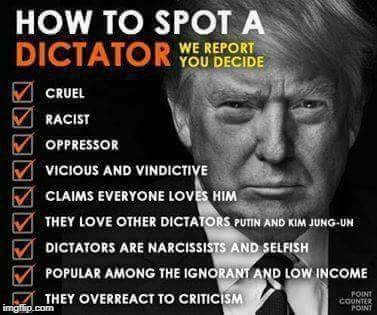
Those are only some of the despicable actions he took while in office.
The Presidency has long held most Americans in awe. This is largely because the man (and it’s always been a man) who holds it is elected by all Americans, and not just those of a particular city or state.
And he alone has control of America’s enormous military—the Army, Navy, Marines and Air Force—as well as a nuclear arsenal that can literally destroy all life on Earth.
Americans have long assumed that a victorious Presidential candidate has been blessed by God, and thus automatically commands a respect—if not reverence—denied to ordinary mortals.
But respect must be earned. And anyone guilty of even a small number of the crimes committed by Donald Trump long ago forfeited any right to such regard.
Once a President leaves office, he should be treated as any other American citizen—and held to the same standards as an ordinary citizen.
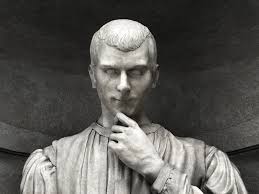
Niccolo Machiavelli
Niccolo Machiavelli, the Florentine statesman and father of modern political science, has eloquently warned of the dangers of ignoring this truth:
…No well-ordered republic should ever cancel the crimes of its citizens by their merits. But having established rewards for good actions and penalties for evil ones, and having rewarded a citizen for conduct who afterwards commits a wrong, he should be chastised for that without regard to his previous merits. And a state that properly observes this principle will long enjoy its liberty, but if otherwise, it will speedily come to ruin.
For if a citizen who has rendered some eminent service to the state should add to the reputation and influence which he has thereby acquired the confident audacity of being able to commit any wrong without fear of punishment, he will in a little while become so insolent and overbearing as to put an end to all power of the law.
Putting an end to “all power of the law” and setting himself up as “The Law” is precisely what Donald Trump tried to do after losing the 2020 Presidential election—and is still trying to do.


 Bureaucracybuster's Blog
2016 PRESIDENTIAL ELECTION, 2020 PRESIDENTIAL ELECTION, 2024 PRESIDENTIAL ELECTION, ABC NEWS, ABUSE OF POWER, ADOLF HITLER, AILEEN CANNON, AIR TRAFFIC CONTROLLERS, ALTERNET, AMERICABLOG, AP, ARTIFICIAL INTELLIGENCE, ASSASSINATION, AXIOS, BABY BOOMER RESISTANCE, BBC, BIRD FLU, BLACKS, BLOOMBERG, BLUESKY, BUZZFEED, CBS NEWS, CHINA, CLASSIFIED DOCUMENTS, CLIMATE CHANGE, CNN, COVID-19, CROOKS AND LIARS, DAILY KOS, DANIEL CASSINO, DEMOCRACY, DEMOCRATIC PARTY, DEMOCRATS, DIVERSITY EQUITY AND INCLUSION (DEI) PROGRAMS, DONALD TRUMP, ELECTORAL COLLEGE, FBI, FEDERAL AVIATION ADMINISTRATION (FAA), FEDERAL EMERGENCY MANAGEMENT AGENCY, FEDERAL GOVERNMENT SHUTDOWN, FIVETHIRTYEIGHT, FUEL PRICES, GALLUP POLL, GAZA, GLOBAL CONFLICT, GROCERY PRICES, HARPER’S MAGAZINE, HILLARY CLINTON, HISPANICS, HUFFINGTON POST, HUNTER BIDEN, illegal immigration, IMPEACHMENT, INFLATION, INSPECTORS GENERAL, INTERNATIONAL BROTHERHOOD OF TEAMSTERS, ISRAEL, JACK SMITH, JAMAL KHASHOOGI, JAMES COMEY, JANUARY 6 COUP ATTEMPT, JARED KUSHNER, JIMMY HOFFA, JOHN ADAMS, JOHN F. KENNEDY CENTER FOR THE PERFORMING ARTS, JOSEPH BIDEN, JOSEPH STALIN, Kamala Harris, KEVIN MCCARTHY, KIM JONG-UN, LATINOS, LETITIA JAMES, LOW INFORMATION VOTERS, MAR-A-LAGO, MARJORIE TAYLOR GREENE, MASCULINITY, MEDIA MATTERS, MERRICK GARLAND, MOHAMMED BIN SALMAN, MOTHER JONES, MOVEON, MSNBC, MUSLIMS, NAVAJO COLDE TALKERS, NBC NEWS, NEW REPUBLIC, NEWSDAY, NEWSWEEK, NORTH KORREA, NPR, OBSTRUCTION OF CONGRESS, PARDONS, PBS NEWSHOUR, POLITICO, POLITICUSUSA, RAW STORY, REPUBLICAN PARTY, REPUBLICANS, REUTERS, ROBERT F. KENNEDY, RUSSIA, SALON, SEATTLE TIMES, SLATE, SUPERMAN, SUPPLEMENTAL NUTRITION ASSISTANCE PROGRAM (SNAP), TALKING POINTS MEMO, TERRORISM, THE ATLANTIC, THE CHICAGO SUN-TIMES, THE CHICAGO TRIBUNE, THE DAILY BEAST, THE DAILY BLOG, THE GUARDIAN, THE HILL, THE HUFFINGTON POST, THE INTERCEPT, THE LOS ANGELES TIMES, THE NATION, THE NEW REPUBLIC, THE NEW YORK TIMES, THE NEW YORKER, THE VILLAGE VOICE, THE WASHINGTON POST, THINKPROGRESS, THOMAS MATTHEW CROOKS, TIME, TRANSPORTATION COSTS, TRUTHDIG, TRUTHOUT, TUSKEGEE AIRMEN, TWO POLITICAL JUNKIES, U.S. BORDER PATROL, U.S. NEWS & WORLD REPORT, UKRAINE, UNITED STATES DEPARTMENT OF DEFENSE (DOD), UNITED STATES DEPARTMENT OF JUSTICE, UNITED STATES HOUSE OF REPRESENTATIVES, UNITED STATES SECRET SERVICE, UNITED STATES SENATE, UPI, USA TODAY, VLADIMIR PUTIN, VOLODMYR ZELENSKY, VOX, X, XI JINPING
THE REAL VILLAINS RESPONSIBLE FOR TRUMP’S EVIL—-PART ONE (OF FOUR)
In Bureaucracy, History, Law, Law Enforcement, Military, Politics, Social commentary on November 11, 2025 at 12:10 amOn January 20, for the second time, Donald J. Trump took the oath of office as the 47th President of the United States.
Since then, he has aggressively committed a series of outrages against the country he claims to love, including:
There were numerous instances where intervention by Federal legislators or law enforcement authorities could have utterly changed the outcome of the 2024 election—and prevented these outrages.
Case #1: On December 18, 2019, the Democratic-controlled House of Representatives adopted two articles of impeachment against Trump: abuse of power and obstruction of Congress. On February 5, 2020, the Republican-dominated Senate voted to acquit Trump on both articles of impeachment.
Their motive: Fear that if they didn’t, they would be “primaried” by even more extreme, Trump-supported Right-wing candidates—and lose their positions and the accompanying power and perks.
Had Republicans agreed to convict him, he could not have run again for President.
Case #2: On January 13, 2021, Trump was impeached for the second time for “incitement of insurrection”—inciting the January 6, 2021 attack on the United States Capitol.
The reason: To stop the counting of Electoral College votes, which he knew would prove that former Vice President Joseph Biden had won the 2020 Presidential election.
The evidence against him was overwhelming—including video of his inciting a mob of his followers to storm the Capitol Building.
But Republican Senators again acquitted Trump on February 13, 2021—choosing ambition over patriotism.
Had they done so, he could not have again been a candidate for President.
Donald Trump
Case #3: Only on November 18, 2022—a year and a half after becoming Attorney General—did Merrick Garland appoint Jack Smith Independent Counsel to investigate Donald Trump’s role for:
This gave Trump time to play his “deny and delay” game. Had he been prosecuted and convicted before the November 5 Presidential election, the results might well have been different.
Even hardcore supporters might have proved unwilling to vote for someone found guilty of inciting a riot or stealing highly classified documents.
Case #4: In June, 2023, Trump was indicted for illegally seizing and storing hundreds of highly classified government documents at his Mar-a-Lago estate.
Aileen Cannon, a Trump appointee as Federal Judge of the United States District Court for the Southern District of Florida, presided over the case.
She repeatedly ruled in his favor and finally dismissed the case in July, 2024. claiming that Special Counsel Jack Smith’s appointment was unconstitutional.
Aileen Cannon
Southern District of Florida, CC BY-SA 4.0 <https://creativecommons.org/licenses/by-sa/4.0>, via Wikimedia Commons
Many legal experts, citing her handling of the civil case against Trump, called for her recusal from the case. Jack Smith could have requested her removal from the case but did not ask a Federal appeals court to do so.
MSNBC analyst Barbara McQuade told Newsweek that Smith likely refused to do so to “return public trust” to the Justice Department, which had been challenged in recent years.
Cannon’s kid-gloves treatment of Trump echoed that of the Right-wing judge who presided over Adolf Hitler’s trial in 1923 for trying to overthrow the government of Bavaria.
Share this: