Posts Tagged ‘LYNDON B. JOHNSON’
1984 NOVEL, 9/11, ABC NEWS, ADOLF HITLER, BARACK OBAMA, BILL CLINTON, BIRTH CONTROL, BLACKS, CBS NEWS, CNN, COMMUNISM, DENNIS HASTERT, DISABLED, DISCRIMINATION, DWIGHT D. EISENHOWER, EDWARD R. MURROW, ENVIRONMENTALISTS, FACEBOOK, FAMILY RESEARCH COUNCIL, FRANKLIN D. ROOSEVELT, GAYS, GEORGE C. MARSHALL, GEORGE H.W. BUSH, GEORGE ORWELL, GOP, GREAT SOCIETY, HARRY S. TRUMAN, HISPANICS, HIV MEDICATION, HOUSE OF REPRESENTATIVES, J. ROBERT OPPENHEIMER, JOHN BIRCH SOCIETY, JOHN F. KENNEDY, JOHN STEINBECK, JOSEPH R. MCCARTHY, JOSEPH STALIN, JOSH DUGGAR, KGB, LEE ATWATER, LEON TROTSKY, LESBIANS, LIBERALS, LUCILLE BALL, LYNDON B. JOHNSON, MEDICAL CARE, MEIN KAMPF, MICHAEL DUKAKIS, MICHELLE BACHMANN, MITT ROMNEY, MUSLIMS, NBC NEWS, PETE SEEGER, PROPAGANDA, RELIGION, REPUBLICANS, RICHARD NIXON, RICK SANTORUM, ROBERT WELCH, RODNEY KING RIOTS, SCAPEGOATING, SHARIA LAW, SOCIALISTS, SOVIET UNION, THE LOS ANGELES TIMES, THE NEW YORK TIMES, THE RELIGIOUS FREEDOM RESTORATION ACT, THE WASHINGTON POST, TRANSGENDERS, TWITTER, WILLIAM L. SHIRER, WOMEN, WORLD WAR ii
In Bureaucracy, History, Law, Politics, Social commentary on May 20, 2016 at 12:01 am
In 1953, Red-baiting Wisconsin United States Senator Joseph R. McCarthy finally overstepped himself.
He attacked the leadership of the United States Army as “a hotbed of traitors” and convened an inquiry through the Senate Permanent Subcommittee on Investigations.
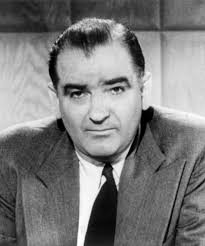
Joseph McCarthy
But the hearings backfired, exposing McCarthy as the bullying demagogue he was. A Senate committee voted to condemn his behavior, charging that he had “acted contrary to senatorial ethics and tended to bring the Senate into dishonor and disrepute.”
Although McCarthy remained in the Senate another two and a half years, his political influence had ended.
Yet even without McCarthy, Republicans rode the issue of anti-Communism to victory from 1948 to 1992.
After holding the White House for eight years under Dwight D. Eisenhower, they lost it in 1960 to John F. Kennedy and again in 1964 to Lyndon B. Johnson.
By 1968, with the nation mired in Vietnam and convulsed by antiwar demonstrations and race riots, Americans turned once more to those who preyed upon their fears and hates.
They elected Richard Nixon, who promised to end the Vietnam war and crack down on “uppity” blacks and antiwar demonstrators.
The same strategy re-elected him in 1972.
After Jimmy Carter won the Presidency in 1976 and lost it in 1980 to Ronald Reagan, Republicans held the White House until 1992.
During the 1970s and 1980s, they continued to accuse their opponents of being devious agents–or at least unwitting pawns–of “the Communist conspiracy.”
Even as late as 1992, President George H.W. Bush and the Republican establishment charged that Arkansas Governor Bill Clinton might be a KGB plant.
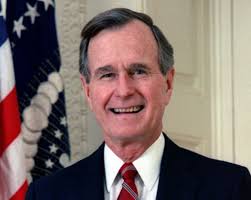
George H.W. Bush
Their evidence: During his tenure at Oxford University in 1969-70, Clinton had briefly visited Moscow.
Thus, the Republican charged that he might have been “programmed” as a real-life “Manchurian candidate” to become, first, Governor of Arkansas–one of America’s poorest states–and then President.
What made this charge all the more absurd: The Soviet Union had officially dissolved in December, 1991.
Republicans continued to accuse their opponents of being “Communists” and “traitors.” But these charges no longer carried the weight they had while the Soviet Union existed.
Right-wingers had to settle for attacking their opponents as “liberals” and “soft on crime.”
When riots flared in 1992 after the acquittal of LAPD officers who had savagely beaten Rodney King, President George H.W. Bush blamed the carnage on the “Great Society” programs of the 1960s.
Then, on September 11, 2001, Republicans–and their right-wing supporters–at last found a suitable replacement for the Red Menace.
Two highjacked jetliners slammed into the World Trade Center in New York and one struck the Pentagon in Washington, D.C.
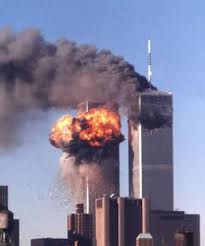
World Trade Center on September 11, 2001
Exit The Red Bogeyman. Enter The Maniacal Muslim.
Consider:
- Rep. Michelle Bachman (R-Minn.): On July 13, 2012, she sent letters to the Inspectors General of the Departments of Defense; State; Justice; and Homeland Security, demanding a “a multi-department investigation into potential Muslim Brotherhood infiltration into the United States Government.”
- Rick Santorum: On supporting the racial profiling of Muslims: “Obviously, Muslims would be someone you look at, absolutely.”
- Mitt Romney: “Based on the numbers of American Muslims in our population, I cannot see that a Cabinet position [for a Muslim] would be justified.
The 2008 election of Barack Obama pushed the Republican “treason chorus” to new heights of infamy.
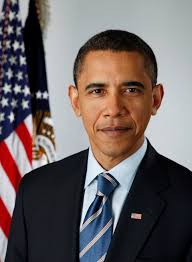
Barack Obama
Almost immediately after Obama took office, he came under attack by an industry of right-wing book authors such as Sean Hannity, Ann Coulter and Rush Limbaugh.
The following titles vividly reveal the hates, fears and ambitions of their authors–and audience:
- Conservative Victory: Defeating Obama’s Radical Agenda by Sean Hannity
- Obama Zombies: How the Liberal Machine Brainwashed My Generation by Jason Mattera
- How Barack Obama is Bankrupting the U.S. Economy by Stephen Moore
- The Manchurian President: Barack Obama’s Ties to Communists, Socialists and Other Anti-American Extremists by Aaron Klein
- The Blueprint: Obama’s Plan to Subvert the Constitution and Build an Imperial Presidency by Ken Blackwell
- Culture of Corruption: Obama and His Team of Tax Cheats, Crooks, and Cronies by Michelle Malkin
- Why Obama’s Government Takeover of Health Care Will Be a Disaster by David Gratzer
- To Save America: Stopping Obama’s Secular-Socialist Machine by Newt Gingrich
- Obama’s Radical Transformation of America: Year One by Joshua Muravchik
- Power Grab: How Obama’s Green Policicies Will Steal Your Freedom and Bankrupt America by Christopher C. Horner
- America’s March to Socialism: Why We’re One Step Closer to Giant Missile Parades by Glenn Beck
- The Obama Nation: Leftist Politics and the Cult of Personality by Jerome R. Corsi
- Censorship: The Threat to Silence Talk Radio by Brian Jennings
- The War On Success: How the Obama Agenda Is Shattering the American Dream by Tommy Newberry
- Green Hell: How Environmentalists Plan to Control Your Life and What You Can Do to Stop Them by Steven Milloy
- Liberalism is a Mental Disorder: Savage Solutions by Michael Savage
- Treason: Liberal Treachery from the Cold War to the War on Terrorism by Ann Coulter
- Slander: Liberal Lies About the American Right by Ann Coulter
- Catastrophe: How Obama, Congress and the Special Interests Are Transforming…a Slump into a Crash, Freedom Into Socialism and a Disaster into a Catastrophe….And How to Fight Back by Dick Morris
1984 NOVEL, 9/11, ABC NEWS, ADOLF HITLER, BARACK OBAMA, BILL CLINTON, BIRTH CONTROL, BLACKS, CBS NEWS, CNN, COMMUNISM, DENNIS HASTERT, DISABLED, DISCRIMINATION, DWIGHT D. EISENHOWER, EDWARD R. MURROW, ENVIRONMENTALISTS, FACEBOOK, FAMILY RESEARCH COUNCIL, FRANKLIN D. ROOSEVELT, GAYS, GEORGE C. MARSHALL, GEORGE H.W. BUSH, GEORGE ORWELL, GOP, GREAT SOCIETY, HARRY S. TRUMAN, HISPANICS, HIV MEDICATION, HOUSE OF REPRESENTATIVES, J. ROBERT OPPENHEIMER, JOHN BIRCH SOCIETY, JOHN F. KENNEDY, JOHN STEINBECK, JOSEPH R. MCCARTHY, JOSEPH STALIN, JOSH DUGGAR, KGB, LEE ATWATER, LEON TROTSKY, LESBIANS, LIBERALS, LUCILLE BALL, LYNDON B. JOHNSON, MEDICAL CARE, MEIN KAMPF, MICHAEL DUKAKIS, MICHELLE BACHMANN, MITT ROMNEY, MUSLIMS, NBC NEWS, PETE SEEGER, PROPAGANDA, RELIGION, REPUBLICANS, RICHARD NIXON, RICK SANTORUM, ROBERT WELCH, RODNEY KING RIOTS, SCAPEGOATING, SHARIA LAW, SOCIALISTS, SOVIET UNION, THE LOS ANGELES TIMES, THE NEW YORK TIMES, THE RELIGIOUS FREEDOM RESTORATION ACT, THE WASHINGTON POST, TRANSGENDERS, TWITTER, WILLIAM L. SHIRER, WOMEN, WORLD WAR ii
In Bureaucracy, History, Politics, Social commentary on May 19, 2016 at 12:01 am
The Right’s fixation on transgender “dangers” is only the latest in a long string of “enemies” painted by the Republican party.
During the 1960s and 1970s, the “enemy” was blacks. The key to winning votes of racist whites without appearing racist lay in what Republicans called “the Southern Strategy.”
It was this that won Richard Nixon the Presidency in 1968 and 1972 and the White House for George H.W. Bush in 1988.
In a now-infamous 1981 interview, Right-wing political consultant Lee Atwater explained how this worked:
“You start out in 1954 by saying, ‘Nigger, nigger, nigger.’ By 1968 you can’t say ‘nigger’—that hurts you, backfires.
“So you say stuff like, uh, forced busing, states’ rights, and all that stuff, and you’re getting so abstract.
“Now, you’re talking about cutting taxes, and all these things you’re talking about are totally economic things and a byproduct of them is, blacks get hurt worse than whites.…
“’We want to cut this,’ is much more abstract than even the busing thing, uh, and a hell of a lot more abstract than ‘Nigger, nigger.’
“So anyway you look at it, race is coming on the back burner.”

Lee Atwater
At the end of his life, Atwater recognized the monster he had helped unleash.
Like Reinhard Heydrich–the designer of the “Final Solution” who, on his deathbed, begged forgiveness for his crimes–Atwater, in a 1991 article for Life, apologized to former Democratic Presidential nominee Michael Dukakis for the “naked cruelty” of the 1988 campaign.
But blacks have by no means been the only targets–and victims–of Republican hate campaigns. A partial list of these would include:
- Liberals
- Women
- Socialists
- Secularists
- Disabled
- Environmentalists
- Hispanics
- Gays
- Lesbians
And now transgenders.
George Orwell’s classic 1949 novel, 1984, serves as a better guide to Republican electioneering than any official statement of the GOP.

1984 is set in a futuristic dictatorship called Oceania, whose constantly alternating mortal enemies are Eurasia and Eastasia.
A daily fixture of life in Oceania is the “Two Minutes Hate.” During this, Party members must watch a film depicting the Party’s enemies and express their hatred for them in exactly two minutes.
Chief among these is Emmanuel Goldstein, who is obviously based on Leon Trotsky, the longtime antagonist of Joseph Stalin, dictator of the Soviet Union for almost 30 years.
The “Two Minutes Hate” serves as a form of brainwashing, whose purpose is to whip ordinary citizens into a frenzy of hatred and loathing for whoever the Party designates as its–and their–mortal enemies.
Since the end of World War II, Republicans have regularly hurled the charge of “treason” against anyone who dared to run against them for office or think other than Republican-approved thoughts.
Republicans had been locked out of the White House from 1933 to 1952, during the administrations of Franklin D. Roosevelt and Harry S. Truman.
Determined to regain the Presidency by any means, they found that attacking the integrity of their fellow Americans a highly effective tactic.
During the 1950s, Wisconsin Senator Joseph R. McCarthy rode a wave of paranoia to national prominence–by attacking the patriotism of anyone who disagreed with him.
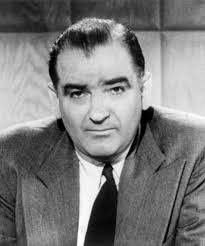
Joseph McCarthy
Elected to the Senate in 1946, he rose to national prominence on February 9, 1950, after giving a fiery speech in Wheeling, West Virginia:
“The State Department is infested with communists. I have here in my hand a list of 205—a list of names that were made known to the Secretary of State as being members of the Communist Party and who nevertheless are still working and shaping policy in the State Department.”
Americans were already growing increasingly fearful of Communism:
- Soviet dictator Joseph Stalin had not withdrawn the Red Army from the countries it had occupied in Eastern Europe during World War II.
- In 1948, the Soviet Union developed–and demonstrated–its own atomic bomb, an achievement U.S. scientists had claimed would not happen for at least a decade.
- In 1949, China fell to the triumphant armies of Mao Tse Tung.
But anti-communism as a lever to political advancement sharply accelerated following McCarthy’s speech. Republicans–resentful at being denied the White House since 1932–seized upon anti-communism as their passport to power.
No American–no matter how prominent–was safe from the accusation of being a Communist or a Communist sympathizer–”a Comsymp” or “fellow traveler” in the style of the era.
Among those accused:
- Secretary of State George C. Marshall, who had overseen America’s strategy for defeating Nazi Germany and Imperial Japan
- President Harry S. Truman
- Playwrights Lillian Hellman and Arthur Miller
- Actors Charlie Chaplin, Zero Mostel, Lloyd Bridges, Howard Da Silva, Edward G. Robinson and John Garfield
- Composers Arron Copland and Elmer Bernstein
- Physicist J. Robert Oppenheimer, who presided over the creation of America’s atomic bomb
- Actresses Lee Grant, Delores del Rio, Ruth Gordon and Lucille Ball
- Journalists Edward R. Murrow and William L. Shirer, who had chronicled the rise of Nazi Germany
- Folksinger Pete Seeger
- Writers Irwin Shaw, Howard Fast, John Steinbeck and Dashiell Hammett
Even “untouchable” Republicans became targets for such slander.
The most prominent of these was President Dwight D. Eisenhower–labeled ”a conscious, dedicated agent of the Communist Conspiracy” by Robert Welch, who founded the John Birch Society in 1958.
2016 PRESIDENTIAL RACE, ABC NEWS, ABRAHAM LINCOLN, ALTERNET, AMERICABLOG, AP, BABY BOOMER RESISTANCE, BARACK OBAMA, BBC, BLOOMBERG NEWS, BUZZFEED, CBS NEWS, CIVIL RIGHTS ACT OF 1964, CIVIL WAR, CNN, CROOKS AND LIARS, DAILY KOS, DANIEL DAY-LEWIS, DONALD TRUMP, EMANCIPATION PROCLAMATION, FACEBOOK, FIVETHIRTYEIGHT, HARPER’S MAGAZINE, HUFFINGTON POST, LYNDON B. JOHNSON, MEDIA MATTERS, MITT ROMNEY, MOTHER JONES, MOVEON, MOVIES, MSNBC, NBC NEWS, NEW REPUBLIC, NEWSDAY, NEWSWEEK, NPR, PBS NEWSHOUR, POLITICO, POLITICUSUSA, RAW STORY, REUTERS, SALON, SEATTLE TIMES, SLATE, SLAVERY, STEVEN SPIELBERG, TALKING POINTS MEMO, THE ATLANTIC, THE CHICAGO SUN-TIMES, THE CHICAGO TRIBUNE, THE DAILY BEAST, THE DAILY BLOG, THE GUARDIAN, THE HILL, THE HUFFINGTON POST, THE INTERCEPT, THE LOS ANGELES TIMES, THE NATION, THE NEW REPUBLIC, THE NEW YORK TIMES, THE NEW YORKER, THE VILLAGE VOICE, THE WASHINGTON POST, THINKPROGRESS, THIRTEENTH AMENDMENT, TIME, TRUTHDIG, TRUTHOUT, TWITTER, U.S. NEWS & WORLD REPORT, UPI, VOTER ID LAWS, VOTING RIGHTS ACT OF 1965
In Bureaucracy, Entertainment, History, Law, Military, Politics, Social commentary on March 17, 2016 at 12:36 pm
Steven Spielberg’s Lincoln is more than a mesmerizing history lesson.
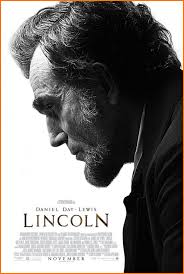
It’s a timely reminder that racism and repression are not confined to any one period or political party.
At the heart of the film: Abraham Lincoln (Daniel Day-Lewis) wants to win ratification of what will be the Thirteenth Amendment to the United States Constitution. An amendment that will forever ban slavery.
True, Lincoln, in 1862, had issued the Emancipation Proclamation. This—in theory—freed slaves held in the Confederate states that had seceded from the Union in 1861.
But Lincoln regards this as a temporary wartime measure. He fears that once the war ends, the Supreme Court may rule the Proclamation unconstitutional. This might allow Southerners to continue practicing slavery, even after losing the war.
To prevent this, Congress must pass an anti-slavery amendment.
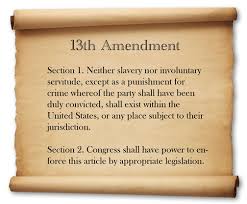
But winning Congressional passage of such an amendment won’t be easy.
The Senate had ratified its passage in 1864. But the amendment must secure approval from the House of Representatives to become law.
And the House is filled with men–there are no women menmbers during the 19th century–who seethe with hostility.
Some are hostile to Lincoln personally. One of them dubs him a dictator–Abraham Africanus.” Another accuses him of shifting his positions for the sake of expediency.
Other members–white men all–are hostile to the idea of “equality between the races.” To them, ending slavery means opening the door to interracial marriage–especially marriage between black men and white women.
Perhaps even worse, it means possibly giving blacks–or women–the the right to vote.
In fact, the possibility that blacks might win voting rights arises early in the movie. Lincoln is speaking to a couple of black Union soldiers, and one of them is unafraid to voice his discontent. He’s upset that black soldiers are paid less than white ones–and that they’re led only by white officers.
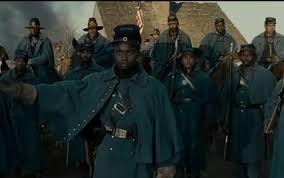
He says that, in time, maybe this will change. Maybe, in 100 years, he guesses, blacks will get the right to vote.
(To the shame of all Americans, that’s how long it will eventually take. Not until the passage of the Voting Rights Act of 1965 will blacks be guaranteed legal protection against discriminatory voting practices.)
To understand the Congressional debate over the Thirteenth Amendment, it’s necessary to remember this: In Lincoln’s time, the Republicans were the party of progressives.
The party was founded on an anti-slavery platform. Its members were thus reviled as “Black Republicans.” And until the 1960s, the South was solidly Democratic.
Democrats were the ones defending the status quo–slavery–and opposing freed blacks in the South of Reconstruction and long afterward.
In short, in the 18th century, Democrats in the South acted as Republicans do now. The South went Republican only after a Democratic President–Lyndon B. Johnson–rammed the Civil Rights Act of 1964 through Congress.
Watching this re-enactment of the 1865 debate in Lincoln is like watching the current Presidential campaign. The same mentalities are at work:
-
Those (in this case, slave-owners) who already have a great deal want to gain even more at the expense of others.
-
Those (slaves and freed blacks) who have little strive to gain more or at least hang onto what they have.
-
Those who defend the privileged wealthy refuse to allow their “social inferiors” to enjoy similar privileges (such as the right to vote).
During the 2012 Presidential race, Republicans tried to bar those likely to vote for President Barack Obama from getting into the voting booth. But their bogus “voter ID” restrictions were struck down in courts across the nation.
Listening to those opposing the amendment, one is reminded of Mitt Romney’s infamous comments about the “47%”:
“Well, there are 47% of the people who will vote for the president no matter what….
“Who are dependent upon government, who believe that–that they are victims, who believe that government has a responsibility to care for them, who believe that they’re entitled to healthcare, to food, to housing, to you name it. But that’s–it’s an entitlement. And the government should give it to them.”
Put another way: “Who says people have a right to obtain medical care, food and housing? If they can’t inherit unearned wealth the way I did, screw them.”
In the end, it’s Abraham Lincoln who has the final word–and leaves his nation the better for it. Through diplomacy and backroom dealings (trading political offices for votes) he wins passage of the anti-slavery amendment.
The ownership of human chattel is finally an ugly memory of the American past.
The movie closes with a historically-correct tribute to Lincoln’s generosity toward those who opposed him–in Congress and on the battlefield. It occurs during Lincoln’s Second Inaugural Address:
“With malice toward none, with charity for all….To bind up the nation’s wounds. To care for him who shall have bourne the battle, and for his widow and his orphan….”
This ending presents a vivid philosophical contrast with the increasingly mean-spirited rhetoric and policies of 2016’s Republican candidates for President–especially those of Donald Trump.
Watching Lincoln, you realize how incredibly lucky America was as a nation to have had such leadership when it was most urgently needed.
.
ABC NEWS, AMERICAN EMPIRE, BILL CLINTON, BUREAUCRACY, CBS NEWS, CHRIS MATHEWS, CNN, DONALD TRUMP, DWIGHT EISENHOWER, FACEBOOK, FBI, FRANKLIN D. ROOSEVELT, GEORGE H.W. BUSH, GEORGE W. BUSH, GERALD R. FORD, HARRY S. TRUMAN, JEB BUSH, JIMMY CARTER, JOHN F. KENNEDY, LYNDON B. JOHNSON, MSNBC, NBC NEWS, NIGEL HAMILTON, REPUBLICAN PARTY, SUETONIUS, SYRIAN CIVIL WAR, SYRIAN REFUGEES, TERRORISM, THE HUFFINGTON POST, THE LOS ANGELES TIMES, THE NEW YORK TIMES, THE TWELVE CAESARS, THE WASHINGTON POST, TWITTER
In Bureaucracy, History, Politics, Social commentary on October 20, 2015 at 12:01 am
September 11, 2015, marked the 14th anniversary of the worst terrorist attack on United States soil.
Inevitably, this was a time to remember those 3,000 Americans whose lives were so cruelly snuffed out.
But it also marked a time to remember those who made this atrocity inevitable–by refusing to acknowledge and address the impending threat from Al-Qaeda.
For Republicans, it’s taboo to hold President George W. Bush accountable for this atrocity. That’s why Donald Trump’s daring to note that it happened on Bush’s watch was greeted with a Right-wing outcry.
And Democrats have been too cowardly to state this truth–a major reason for their losing the 2004 Presidential election.
But British historian Nigel Hamilton has chronicled the arrogance and indifference of those officials in his 2010 biography: American Caesars: Lives of the Presidents from Franklin D. Roosevelt to George W. Bush.
Hamilton noted that during the first eight months of the Bush Presidency, Richard Clarke, the national security advisor on terrorism, was forbidden to brief President Bush, despite the mounting evidence that al-Qaeda was planning to strike.
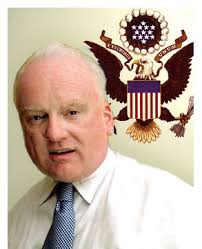
Richard Clarke
Even more vexing for Clarke: During his first eight months as President before September 11, Bush was on vacation 42% of the time, according to the Washington Post.
Clarke was certain that Osama bin Laden had arranged the USS Cole bombing in Aden on October 12, 2000.
For months, Clarke tried to convince others in the Bush Administration that Bin Laden was plotting another attack against the United States–either abroad or at home.
But Clarke could not prevail against the know-it-all arrogance of such higher-ranking Bush officials as Vice President Dick Cheney; Secretary of Defense Donald Rumsfeld; Rumsfeld’s deputy, Paul Wolfowitz; and National Security Advisor Condoleeza Rice.
Rice initially refused to hold a cabinet-level meeting on the subject. Then she insisted the matter be handled only by a more junior Deputy Principals meeting in April, 2001, writes Hamilton.
Wolfowitz, the number-two man at the Department of Defense, said: “I don’t understand why we are beginning by talking about this one man, bin Laden.”
Even after Clarke outlined the threat posed by Al-Qaeda, Wolfowitz–whose real target was Saddam Hussein–said: “You give bin Laden too much credit.”
Wolfowitz insisted that bin Laden couldn’t carry out his terrorist acts without the aid of a state sponsor–namely, Iraq.
Wolfowitz, in fact, blamed Iraq for the 1993 bombing of the World Trade Center. Clarke was stunned, since there was absolutely no evidence of Iraqi involvement in this.
“Al-Qaeda plans major acts of terrorism against the United States,” Clarke warned his colleagues. He pointed out that, like Adolf Hitler, bin Laden had actually published his plans for future destruction.
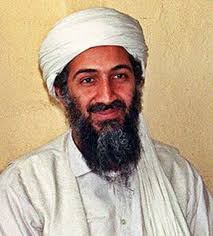
Osama bin Laden
And he added: “Sometimes, as with Hitler in Mein Kampf, you have to believe that these people will actually do what they say they will do.”
Wolfowitz heatedly traded on his Jewish heritage to bring Clarke’s unwelcome arguments to a halt: “I resent any comparison between the Holocaust and this little terrorist in Afghanistan.”
Writing in outraged fury, Hamilton sums up Clarke’s agonizing frustrations:
- Bush’s senior advisors treated their colleagues who had served in the Clinton administration with contempt.
- President Bush, Vice President Dick Cheney, National Security Advisor Condoleeza Rice, Secretary of Defense Donald Rumsfeld and Deputy Defense Secretary Paul Wolfowitz seemed content to ignore the danger signals of an impending al-Qaeda attack.
- This left only Secretary of State Colin Powell, his deputy Richard Armitage, Richard Clarke and a skeptical Treasury Secretary, Paul O’Neill, to wage “a lonely battle to waken a seemingly deranged new administration.”
Clarke alerted Federal Intelligence agencies that “Al-Qaeda is planning a major attack on us.” He asked the FBI and CIA to report to his office all they could learn about suspicious persons or activities at home and abroad.
Finally, at a meeting with Condoleeza Rice on September 4, 2001, Clarke challenged her to “picture yourself at a moment when in the very near future Al-Qaeda has killed hundreds of Americans, and imagine asking yourself what you wish then that you had already done.”
Apparently Rice couldn’t imagine such a scenario, because she took no action to prevent it. Nor did she urge anyone else to do so.
Seven days later, Al-Qaeda struck, and 3,000 Americans died horrifically–and needlessly.
Neither Bush, Cheney, Rice, Rumsfeld nor Wolowitz ever admitted their negligence. Nor would any of them be brought to account.
Disgustingly, these were the same officials who, afterward, posed as the Nation’s saviors–and branded anyone who disagreed with them as a traitor, practices the Right continues to exploit to this day.
Only Richard Clarke–who had vainly argued for stepped-up security precautions and taking the fight to Al-Qaeda–gave that apology.
On March 24, 2004, Clarke testified at the public 9/11 Commission hearings. Addressing relatives of victims in the audience, he said: “Your government failed you, those entrusted with protecting you failed you, and I failed you.”
It’s an admission that no other Republican has been willing to make.
And it remains an indictment that no Democrat has the courage to assert.
ABC NEWS, AMERICAN EMPIRE, BILL CLINTON, BUREAUCRACY, CBS NEWS, CHRIS MATHEWS, CNN, DONALD TRUMP, DWIGHT EISENHOWER, FACEBOOK, FBI, FRANKLIN D. ROOSEVELT, GEORGE H.W. BUSH, GEORGE W. BUSH, GERALD R. FORD, HARRY S. TRUMAN, JEB BUSH, JIMMY CARTER, JOHN F. KENNEDY, LYNDON B. JOHNSON, MSNBC, NBC NEWS, NIGEL HAMILTON, REPUBLICAN PARTY, SUETONIUS, SYRIAN CIVIL WAR, SYRIAN REFUGEES, TERRORISM, THE HUFFINGTON POST, THE LOS ANGELES TIMES, THE NEW YORK TIMES, THE TWELVE CAESARS, THE WASHINGTON POST, TWITTER
In Bureaucracy, History, Politics, Social commentary on October 19, 2015 at 12:55 am
You don’t ever have to frame anybody, because the truth is always sufficient.
–Willie Stark, in All the King’s Men, by Robert Penn Warren
When one politician wants to truly hurt another, the weapon of choice is not lies. It’s the truth.
And on October 16, Republican Presidential candidate Donald Trump used that weapon to take down his opponent, Jeb Bush.
Trump was being interviewed by Bloomberg TV’s Stephanie Ruhle when she asked: Would you be able to comfort the nation in the event of a mass tragedy like 9/11 or the 2012 shooting in Newtown, Connecticut?
And Trump, who always claims to be smarter, tougher and richer than anyone else, had a ready response: “I think I have a bigger heart than all of them. I think I’m much more competent then all of them.”
So far, so ordinarily Trump. Then: “I mean, say what you want, the World Trade Center came down during his time.”
“Hold on,” said Ruhle, “you can’t blame George Bush for that.”
“He was President, okay? Blame him or don’t blame him, but he was President,” Trump said. “The World Trade Center came down during his reign.”
Three thousand Americans died during the September 11, 2001 terror attacks on the Pentagon and World Trade Center.
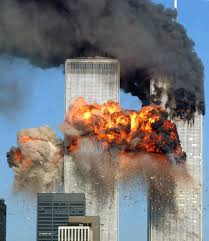
World Trade Center on 9/11/01
Holding Bush accountable for 9/11 has been taboo for Republicans–and has generally been avoided by cowardly Democrats.
Whereas Republicans have spent the last three years blaming President Barack Obama for the deaths of four Americans killed in the Libyan consulate attack.
Immediately after Trump’s remarks, the Right exploded.
Representative Peter King, Republican of New York, said that no one saw the 9/11 attacks coming and that blaming the former president was a cheap shot.
Speaking on Right-wing Fox Radio, King added: “I think Donald Trump is totally wrong there. That sounds like a Michael Moore talking point.”
And Jeb Bush rushed to his brother’s defense on Twitter: “How pathetic for @realdonaldtrump to criticize the president for 9/11. We were attacked & my brother kept us safe.”
Of course, Jeb didn’t account for those 3,000 Americans who died on 9/11.
Nor did he mention that, during his first eight months in office before September 11, George W. Bush was on vacation 42% of the time.
Fortunately, British historian Nigel Hamilton has dared to lay bare the facts of this disgrace. Hamilton is the author of several acclaimed political biographies, including JFK: Reckless Youth and Bill Clinton: Mastering the Presidency.
In 2007, he began research on his latest book: American Caesars: The Lives of the Presidents from Franklin D. Roosevelt to George W. Bush.

The inspiration for this came from a classic work of ancient biography: The Twelve Caesars, by Gaius Suetonius Tranquillus–known as Suetonius.
Suetonius, a Roman citizen and historian, had chronicled the lives of the first twelve Caesars of imperial Rome: Julius Caesar, Augustus, Tiberius, Caligula, Claudius, Nero, Galba, Otho, Vitellius, Vespasian, Titus and Domitian.
Hamilton wanted to examine post-World War II United States history as Suetonius had examined that of ancient Rome: Through the lives of the 12 “emperors” who had held the power of life and death over their fellow citizens–and those of other nations.
For Hamilton, the “greatest of American emperors, the Caesar Augustus of his time,” was Franklin D. Roosevelt, who led his country through the Great Depression and World War II.
His “”great successors” were Harry S. Truman, Dwight D. Eisenhower and John F. Kennedy–who, in turn, contained the Soviet Union abroad and presided over sustained economic prosperity at home.
By contrast, “arguably the worst of all the American Caesars” was “George W. Bush, and his deputy, Dick Cheney, who willfully and recklessly destroyed so much of the moral basis of American leadership in the modern world.”
Among the most lethal of Bush’s offenses: The appointing of officials who refused to take seriously the threat posed by Al-Qaeda.
And this arrogance and indifference continued–right up to September 11, 2001, when the World Trade Center and Pentagon became targets for destruction.
Among the few administration officials who did take Al-Qaeda seriously was Richard Clarke, the chief counter-terrorism adviser on the National Security Council.
Clarke had been thus appointed in 1998 by President Bill Clinton. He continued in the same role under President Bush–but the position was no longer given cabinet-level access.
This put him at a severe disadvantage when dealing with other, higher-ranking Bush officials–such as Vice President Dick Cheney, Secretary of Defense Donald Rumsfeld, Rumsfeld’s deputy, Paul Wolfowitz and National Security Advisor Condoleeza Rice.
These turned out to be the very officials who refused to believe that Al-Qaeda posed a lethal threat to the United States.
“Indeed,” writes Hamilton, “in the entire first eight months of the Bush Presidency, Clarke was not permitted to brief President Bush a single time, despite mounting evidence of plans for a new al-Qaeda outrage.” [Italics added]
9/11, ABC NEWS, AL QAEDA, AMERICAN EMPIRE, BILL CLINTON, BUREAUCRACY, CBS NEWS, CHRIS MATHEWS, CNN, DWIGHT EISENHOWER, FACEBOOK, FBI, FRANKLIN D. ROOSEVELT, GEORGE H.W. BUSH, GEORGE W. BUSH, GERALD R. FORD, HARRY S. TRUMAN, JIMMY CARTER, JOHN F. KENNEDY, LYNDON B. JOHNSON, MSNBC, NBC NEWS, NIGEL HAMILTON, OSAMA BIN LADEN, REPUBLICAN PARTY, RIAHCRD M. NIXON, ROMAN EMPIRE, SEPTEMBER 11, SUETONIUS, SYRIAN CIVIL WAR, SYRIAN REFUGEES, TERRORISM, THE HUFFINGTON POST, THE LOS ANGELES TIMES, THE NEW YORK TIMES, THE TWELVE CAESARS, TWITTER
In Bureaucracy, History, Military, Politics, Social commentary on September 14, 2015 at 12:06 am
Colonel Brandt: “I wonder what we’ll do after we lose the war.”
Captain Kiesel: “Prepare for the next one.”
–-“The Cross of Iron,” film by Sam Peckinpah
On September 12, 2001, President George W. Bush attended a meeting of the National Security Council.
“Why shouldn’t we go against Iraq, not just Al-Qaeda?” demanded Donald Rumsfeld, the Secretary of Defense.
Vice President Dick Cheney enthusiastically agreed.
Secretary of State Colin Powell then pointed out there was absolutely no evidence that Iraq had had anything to do with 9/11 or Al-Qaeda. And he added: “The American people want us to do something about Al-Qaeda”–-not Iraq.
On November 21, 2001, only 10 weeks after 9/11, Bush told Rumsfeld: It’s time to turn to Iraq.

Liars Club: Condoleeza Rice, Dick Cheney, George Bush, Donald Rumsfeld
Bush and his war-hungry Cabinet officials knew that Americans demanded vengeance on Al-Qaeda’s mastermind, Osama bin Laden, and not Iraqi dictator Saddam Hussein,. So they repeatedly fabricated “links” between the two:
- Saddam had worked hand-in-glove with Bin Laden to plan 9/11.
- Saddam was harboring and supporting Al-Qaeda throughout Iraq.
- Saddam, with help from Al-Qaeda, was scheming to build a nuclear bomb.
Yet as early as September 22, 2001, Bush had received a classified President’s Daily Brief intelligence report, which stated that there was no evidence linking Saddam Hussein to 9/11.
The report added that there was scant credible evidence that Iraq had any significant collaborative ties with Al-Qaeda.
Even more important: Saddam had tried to monitor Al Qaeda through his intelligence service-–because he saw Al-Qaeda and other theocratic radical Islamist organizations as a potential threat to his secular regime.
Bush administration officials repeatedly claimed that Iraq possessed huge quantities of chemical and biological weapons, in violation of UN resolutions. And they further claimed that US intelligence agencies had determined:
- the precise locations where these weapons were stored;
- the identities of those involved in their production; and
- the military orders issued by Saddam Hussein for their use in the event of war.
Among other lies stated as fact by members of the Bush administration:
- Iraq had sought uranium from Niger, in west Africa;
- Thousands of aluminum tubes imported by Iraq could be used in centrifuges to create enriched uranium;
- Iraq had up to 20 long-range Scud missiles, prohibited under UN sanctions;
- Iraq had massive stockpiles of chemical and biological agents, including nerve gas, anthrax and botulinum toxin;
- Saddam Hussein had issued chemical weapons to front-line troops who would use them when US forces crossed into Iraq.
Consider the following:
August 26, 2002: Cheney told the Veterans of Foreign Wars, “There is no doubt that Saddam Hussein now has weapons of mass destruction. There is no doubt he is amassing them to use against our friends, against our allies and against us.”
September 8, 2002: National Security Advisor Condoleeza Rice said on CNN: ”There is certainly evidence that Al-Qaeda people have been in Iraq. There is certainly evidence that Saddam Hussein cavorts with terrorists.”
September 18, 2002: Rumsfeld told the House Armed Services Committee, “We do know that the Iraqi regime has chemical and biological weapons. His regime has amassed large, clandestine stockpiles of chemical weapons—including VX, sarin, cyclosarin and mustard gas.”
October 7, 2002: Bush declared in a nationally televised speech in Cincinnati that Iraq “possesses and produces chemical and biological weapons. It is seeking nuclear weapons.”
March 16, 2003: Cheney declared on NBC’s “Meet the Press”: “We believe [Saddam Hussein] has, in fact, reconstituted nuclear weapons.”
March 30, 2003: On ABC’s “This Week” program, 10 days into the war, Rumsfeld said: “We know where they [weapons of mass destruction] are.”
Bush never regretted his decision to invade Iraq, which occurred on March 29, 2003.
Even as American occupying forces repeatedly failed to turn up any evidence of “weapons of mass destruction” (WMDs), Bush and his minions claimed the invasion a good thing.
In fact, Bush-–who hid out the Vietnam war in the Texas Air National Guard-–even joked publicly about the absence of WMDs.
He did so at a White House Correspondents dinner on March 24, 2004-–one year after he had started the war.
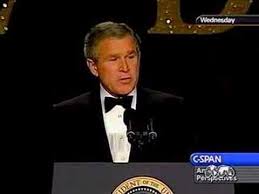
George W. Bush at the 2004 White House Correspondents’ dinner
To Bush, the non-existent WMDs were nothing more than the butt of a joke that night. While an overhead projector displayed photos of a puzzled-looking Bush searching around the Oval Office, Bush recited a comedy routine.
Click here: Bush laughs at no WMD in Iraq – YouTube
“Those weapons of mass destruction have gotta be somewhere,” Bush laughed, while a photo showed him poking around the corners in the Oval Office.
“Nope-–no weapons over there! Maybe they’re under here,” he said, as a photo showed him looking under a desk.
Meanwhile, an assembly of wealthy, pampered men and women–-the elite of America’s media and political classes–-laughed heartily during Bush’s performance.
Ultimately, the war that Bush had deliberately provoked
- Took the lives of 4,484 Americans;
- Cost the United States Treasury at least $2 trillion;
- Created a Middle East power vacumn;
- Allowed Iran–Iraq’s arch enemy–to eagerly fill it; and
- Kill at least 655,000 Iraqis.
9/11, ABC NEWS, AL QAEDA, AMERICAN EMPIRE, BILL CLINTON, BUREAUCRACY, CBS NEWS, CHRIS MATHEWS, CNN, DWIGHT EISENHOWER, FACEBOOK, FBI, FRANKLIN D. ROOSEVELT, GEORGE H.W. BUSH, GEORGE W. BUSH, GERALD R. FORD, HARRY S. TRUMAN, JIMMY CARTER, JOHN F. KENNEDY, LYNDON B. JOHNSON, MSNBC, NBC NEWS, NIGEL HAMILTON, OSAMA BIN LADEN, REPUBLICAN PARTY, SEPTEMBER 11, SUETONIUS, SYRIAN CIVIL WAR, SYRIAN REFUGEES, TERRORISM, THE HUFFINGTON POST, THE LOS ANGELES TIMES, THE NEW YORK TIMES, THE TWELVE CAESARS, TWITTER
In Bureaucracy, History, Military, Politics, Social commentary on September 11, 2015 at 12:01 am
September 11, 2015, marks the 14th anniversary of the worst terrorist attack on United States soil. Inevitably, this is a time to remember all those whose lives were so cruelly snuffed out.
But it should also be a time to remember those who made this atrocity inevitable–by refusing to acknowledge and address the impending threat from Al-Qaeda.
British historian Nigel Hamilton has chronicled their arrogance and indifference in his 2010 biography: American Caesars: Lives of the Presidents from Franklin D. Roosevelt to George W. Bush.
Hamilton noted that Richard Clarke, the national security advisor on terrorism, was certain that Osama bin Laden had arranged the [USS.] Cole bombing in Aden on October 12, 2000.
Richard Clarke
For months, Clarke tried to convince others in the Bush Administration that Bin Laden was plotting another attack against the United States–either abroad or at home.
But Clarke could not prevail against the know-it-all arrogance of such higher-ranking Bush officials as Vice President Dick Cheney; Secretary of Defense Donald Rumsfeld; Rumsfeld’s deputy, Paul Wolfowitz; and National Security Advisor Condoleeza Rice.
Rice initially refused to hold a cabinet-level meeting on the subject. Then she “insisted the matter be handled only by a more junior Deputy Principals meeting” in April, 2001, writes Hamilton.
Wolfowitz, the number-two man at the Department of Defense, said: “I don’t understand why we are beginning by talking about this one man, bin Laden.”
Even after Clarke outlined the threat posed by Al-Qaeda, Wolfowitz–whose real target was Saddam Hussein–said: “You give bin Laden too much credit.”
Wolfowitz insisted that bin Laden couldn’t carry out his terrorist acts without the aid of a state sponsor–namely, Iraq.
Wolfowitz, in fact, blamed Iraq for the 1993 bombing of the World Trade Center. Clarke was stunned, since there was absolutely no evidence of Iraqi involvement in this.
“Al-Qaeda plans major acts of terrorism against the United States,” Clarke warned his colleagues. He pointed out that, like Adolf Hitler, bin Laden had actually published his plans for future destruction.
Osama bin Laden
And he added: “Sometimes, as with Hitler in Mein Kampf, you have to believe that these people will actually do what they say they will do.”
Wolfowitz heatedly traded on his Jewish heritage to bring Clarke’s unwelcome arguments to a halt: “I resent any comparison between the Holocaust and this little terrorist in Afghanistan.”
Writing in outraged fury, Hamilton sums up Clarke’s agonizing frustrations:
- Bush’s senior advisors treated their colleagues who had served in the Clinton administration with contempt.
- President Bush, Vice President Dick Cheney, National Security Advisor Condoleeza Rice, Secretary of Defense Donald Rumsfeld and Deputy Defense Secretary Paul Wolfowitz seemed content to ignore the danger signals of an impending al-Qaeda attack.
- This left only Secretary of State Colin Powell, his deputy Richard Armitage, Richard Clarke and a skeptical Treasury Secretary, Paul O’Neill, to wage “a lonely battle to waken a seemingly deranged new administration.”
Clarke alerted Federal Intelligence agencies that “Al-Qaeda is planning a major attack on us.” He asked the FBI and CIA to report to his office all they could learn about suspicious persons or activities at home and abroad.
Finally, at a meeting with Rice on September 4, 2001, Clarke challenged her to “picture yourself at a moment when in the very near future Al-Qaeda has killed hundreds of Americans, and imagine asking yourself what you wish then that you had already done.”
Seven days later, Al-Qaeda struck, and 3,000 Americans died horrifically–and needlessly.
Neither Bush, Cheney, Rice, Rumsfeld nor Wolowitz ever admitted their negligence. Nor would any of them be brought to account.
Disgustingly, these were the same officials who, afterward, posed as the Nation’s saviors–and branded anyone who disagreed with them as a traitor, practices the Right continues to exploit to this day.
Only Richard Clarke–who had vainly argued for stepped-up security precautions and taking the fight to Al-Qaeda–gave that apology.
On March 24, 2004, Clarke testified at the public 9/11 Commission hearings. Addressing relatives of victims in the audience, he said: “Your government failed you, those entrusted with protecting you failed you, and I failed you.”
Yet even worse was to come.
On the evening after the September 11 attacks, Bush took Clarke aside during a meeting in the White House Situation Room:
“I want you, as soon as you can, to go back over everything, everything. See if Saddam [Hussein, the dictator of Iraq] did this. See if he’s linked in any way.”
Clarke was stunned: “But, Mr. President, Al-Qaeda did this.”
“I know, I know,” said Bush. “But see if Saddam was involved. I want to know.”
Hussein had not plotted the attack–and there was no evidence proving that he did. But the attack gave “W” the excuse he wanted to remove the man he blamed for the 1992 defeat of his father, President George H.W. Bush.
Bush believed that his father would have been re-elected if he had “gone all the way” into Baghdad. He would finish the job that his father had started but failed to compete.
On September 12, 2001, Bush attended a meeting of the National Security Council.
“Why shouldn’t we go against Iraq, not just Al-Qaeda?” demanded Donald Rumsfeld, the Secretary of Defense.
Vice President Dick Cheney enthusiastically agreed.
ABC NEWS, AMERICAN EMPIRE, BILL CLINTON, BUREAUCRACY, CBS NEWS, CHRIS MATHEWS, CNN, DWIGHT EISENHOWER, FACEBOOK, FBI, FRANKLIN D. ROOSEVELT, GEORGE H.W. BUSH, GEORGE W. BUSH, GERALD R. FORD, HARRY S. TRUMAN, JIMMY CARTER, JOHN F. KENNEDY, LYNDON B. JOHNSON, MSNBC, NBC NEWS, NIGEL HAMILTON, REPUBLICAN PARTY, SUETONIUS, SYRIAN CIVIL WAR, SYRIAN REFUGEES, TERRORISM, THE HUFFINGTON POST, THE LOS ANGELES TIMES, THE NEW YORK TIMES, THE TWELVE CAESARS, THE WASHINGTON POST, TWITTER
In Bureaucracy, History, Military, Politics, Social commentary on September 10, 2015 at 12:04 am
September 11, 2015, will mark the 14th anniversary of the greatest act of terrorism on American soil.
As that tragedy recedes ever further into the past, its impact on Americans continues to wane.
Today, tens of thousands of unscreened Islamics, fleeing the carnage of their fellow Islamics in the Syrian civil war, are pouring into Europe.
America has already taken in 1,500. And 14 Democratic Senators are demanding that President Barack Obama admit at least 70,000 more.
Forgotten–or ignored–in all this hand-wringing is a brutal truth:
It took only 19 Saudi highjackers to snuff out the lives of 3,000 Americans–at the World Trade Center, the Pentagon and aboard the four airliners that had been turned into fuel-bombs.
World Trade Center on 9/11/01
“Our FBI doesn’t even have the resources to get a handle on all of the ISIS/jihadist threat in the Muslim community,” warned author and investigative reporter Paul Sperry.
“Now we’re going to lay on top of that all of these new immigrants who are even potentially more radical on top of that threat matrix.”
It is appropriate to remember the innocents who died on that day–and the heroism of the police and firefighters who died trying to save them.
But it’s equally important to remember those who made 9/11 not simply possible but inevitable.
And that does not mean only the 19 highjackers who turned those planes into fuel-bombs. It means the officials at the highest levels of the administration of President George W. Bush.
Officials who, to this day, have never been held accountable in any way for the resulting death and destruction.
Obviously, such an indictment is not going to be handed down by the U.S. Department of Justice.
Nor will it be presented by TV commentators–on such liberal networks as CNN and MSNBC or the Right-wing Fox network.
Fortunately, British historian Nigel Hamilton has dared to lay bare the facts of this disgrace. Hamilton is the author of several acclaimed political biographies, includingJFK: Reckless Youth and Bill Clinton: Mastering the Presidency.
In 2007, he began research on his latest book: American Caesars: The Lives of the Presidents from Franklin D. Roosevelt to George W. Bush.
The inspiration for this came from a classic work of ancient biography: The Twelve Caesars, by Gaius Suetonius Tranquillus–known as Suetonius.
Suetonius, a Roman citizen and historian, had chronicled the lives of the first twelve Caesars of imperial Rome: Julius Caesar, Augustus, Tiberius, Caligula, Claudius, Nero, Galba, Otho, Vitellius, Vespasian, Titus and Domitian.
Hamilton wanted to examine post-World War II United States history as Suetonius had examined that of ancient Rome: Through the lives of the 12 “emperors” who had held the power of life and death over their fellow citizens–and those of other nations.
For Hamilton, the “greatest of American emperors, the Caesar Augustus of his time,” was Franklin D. Roosevelt, who led his country through the Great Depression and World War II.
His “”great successors” were Harry S. Truman, Dwight D. Eisenhower and John F. Kennedy–who, in turn, contained the Soviet Union abroad and presided over sustained economic prosperity at home.
By contrast, “arguably the worst of all the American Caesars” was “George W. Bush, and his deputy, Dick Cheney, who willfully and recklessly destroyed so much of the moral basis of American leadership in the modern world.”
Among the most lethal of Bush’s offenses: The appointing of officials who refused to take seriously the threat posed by Al-Qaeda.
And this arrogance and indifference continued–right up to September 11, 2001, when the World Trade Center and Pentagon became targets for destruction.
Among the few administration officials who did take Al-Qaeda seriously was Richard Clarke, the chief counter-terrorism adviser on the National Security Council.
Clarke had been thus appointed in 1998 by President Bill Clinton. He continued in the same role under President Bush–but the position was no longer given cabinet-level access.
This put him at a severe disadvantage when dealing with other, higher-ranking Bush officials–such as Vice President Dick Cheney, Secretary of Defense Donald Rumsfeld, Rumsfeld’s deputy, Paul Wolfowitz and National Security Advisor Condoleeza Rice.
These turned out to be the very officials who refused to believe that Al-Qaeda posed a lethal threat to the United States.
“Indeed,” writes Hamilton, “in the entire first eight months of the Bush Presidency, Clarke was not permitted to brief President Bush a single time, despite mounting evidence of plans for a new al-Qaeda outrage.” [Italics added]
Nor did it help that, during his first eight months in office before September 11, Bush was on vacation, according to the Washington Post, 42% of the time.
1968 PRESIDENTIAL RACE, ADOLF HITLER, BERNARD LAW MONTGOMERY, D-DAY, DWIGHT D. EISENHOWER, ERWIN ROMMEL, EUGENE MCCARTHY, FACEBOOK, GENERAL NORMAN COTA, HUBERT HUMPHERY, JOHN F. KENNEDY, LYNDON B. JOHNSON, NAZI GERMANY, ROBERT F. KENNEDY, THIRD REICH, TWITTER, U.S. ARMY RANGERS, VIETNAM WAR, WORLD WAR ii
In History, Military, Politics, Social commentary on June 5, 2015 at 12:38 am
“For it is the doom of men that they forget.”
–Merlin, in “Excalibur”
June 6–a day of glory and tragedy.
The glory came 71 years ago–-on Tuesday, June 6, 1944.
On that morning, Americans awoke to learn–-from radio and newspapers–-that their soldiers had landed on the French coast of Normandy.

In Supreme Command of the Allied Expeditionary Force was American General Dwight D. Eisenhower. Overall command of ground forces was given to British General Bernard Montgomery.
Operation Overlord, the Allied invasion to liberate France from Nazi Germany, proved one of the pivotal actions of World War II.
It opened shortly after midnight, with an airborne assault of 24,000 American, British, Canadian and Free French troops.
This was followed at 6:30 a.m. by an amphibious landing of Allied infantry and armored divisions on the French coast.
Field Marshal Erwin Rommel–-the legendary “Desert Fox”–-commanded the German forces. For him, the first 24 hours of the battle would be decisive.
“For the Allies as well as the Germans,” he warned his staff, “it will be the longest day.”
The operation was the largest amphibious invasion in history. More than 160,000 troops landed–-73,000 Americans, 61,715 British and 21,400 Canadians.

Initially, the Allied assault seemed likely to be stopped at the water’s edge–-where Rommel had always insisted it must be.
He had warned that if the Allies established a beachhead, their overwhelming advantages in numbers and airpower would eventually prove irresistible.
German machine-gunners and mortarmen wreaked a fearful toll on Allied soldiers. But commanders like U.S. General Norman Cota led their men to victory through a storm of bullets and shells.
Coming upon a group of U.S. Army Rangers taking cover behind sand dunes, Cota demanded: “What outfit is this?”
“Rangers!” yelled one of the soldiers.
“Well, Goddamnit, then, Rangers, lead the way!” shouted Cota, inspiring the soldiers to rise and charge into the enemy.
The command also gave the Rangers the motto they carry to this day.
The allied casualty figures for D-Day have been estimated at 10,000, including 4,414 dead. By nationality, the D-Day casualty figures are about 2,700 British, 946 Canadians and 6,603 Americans.
The total number of German casualties on D-Day isn’t known, but is estimated at 4,000 to 9,000.
Allied and German armies continued to clash throughout France, Belgium and Germany until May 7, 1945, when Germany finally surrendered.
But those Americans who had taken part in D-Day could be proud of having dealt a fatal blow to the evil ambitions of Adolf Hitler’s Third Reich.
So much for the glory of June 6. Now for the tragedy–-which occurred 47 years ago, on Thursday, June 6, 1968.
Twenty-four years after D-Day, Americans awoke to learn–-mostly from TV–-that New York Senator Robert F. Kennedy had died at 1:44 a.m. of an assassin’s bullet.
He had been campaigning for the Democratic Presidential nomination, and had just won the California primary on June 4.
This had been a make-or-break event for Kennedy, a fierce critic of the seemingly endless Vietnam war.
He had won the Democratic primaries in Indiana and Nebraska, but had lost the Oregon primary to Minnesota Senator Eugene McCarthy.
If he could defeat McCarthy in California, Kennedy could force his rival to quit the race. That would lead to a showdown between him and Vice President Hubert Humphery for the nomination.
(President Lyndon B. Johnson had withdrawn from the race on March 31–-just 15 days after Kennedy announced his candidacy on March 16.)
After winning the California and South Dakota primaries, Kennedy gave a magnaminous victory speech in the ballroom of the Ambassador Hotel in Los Angeles:

“I think we can end the divisions within the United States….We are a great country, an unselfish country, and a compassionate country.
“And I intend to make that my basis for running over the period of the next few months.”
Then he entered the hotel kitchen–-where Sirhan Sirhan, a 24-year-old Palestinian from Jordan, opened fire with a .22 revolver.
Kennedy was hit three times–once fatally in the back of the head. Five other people were also wounded.
Kennedy’s last-known words were: “Is everybody all right?” and “Jack, Jack”–-the latter clearly a reference to his beloved older brother, John Fitzgerald Kennedy.
Almost five years earlier, that brother–-then President of the United States–-had been assassinated in Dalas on November 22, 1963.
Then Robert Kennedy lost consciousness–-forever, dying in a hospital bed 24 hours later.
Kennedy had been a U.S. Attorney General (1961-1964) and Senator (1964-1968). But it was his connection to President Kennedy for which he was best-known.
His assassination–-coming so soon after that of JFK–-convinced many Americans there was something “sick” about the nation’s culture.
One of the best summaries of Robert Kennedy’s legacy was given in Coming Apart: An Informal History of America in the 1960′s, by historian William L. O’Neil:

“…He aimed so high that he must be judged for what he meant to do, and, through error and tragic accident, failed at….
“He will also be remembered as an extraordinary human being who, though hated by some, was perhaps more deeply loved by his countrymen than any man of his time.
“That too must be entered into the final account, and it is no small thing. With his death something precious disappeared from public life.”
9/11, ABC NEWS, ADOLF HITLER, AMERICANS FOR TAX REFORM, ANDERSON COOPER, ANTI-COMMUNISM, ARTHUR MILLER, BILL CLINTON, CBS NEWS, CENTER FOR SECURITY POLICY, CHINA, CHRIS MATTHEWS, CNN, DICK CHENEY, DWIGHT D. EISENHOWER, EDWARD R. MURROW, FACEBOOK, GEORGE H.W. BUSH, HARRY S. TRUMAN, HEINRICH HIMMLER, HERMAN CAIN, HERMAN GORING, HILLARY CLINTON, HUMA ABEDIN, JEWS, JIMMY CARTER, JOHN BIRCH SOCIETY, JOHN F. KENNEDY, JOHN STEINBECK, JOSEPH GOEBBELS, JOSEPH MCCARTHY, JOSEPH STALIN, KGB, LIZ CHENEY, LUCILLE BALL, LYNDON B. JOHNSON, MARY CHENEY, MICHELLE BACHMANN, MIKE HUCKABEE, MITT ROMNEY, MSNBC, MUSLIM BROTHERHOOD, MUSLIMS, NAZI GERMANY, NAZI PARTY, NBC NEWS, NEWT GINGRICH, PETE SEEGER, RED SCARE, REINHARD HEYDRICH, REPUBLICAN PARTY, RICHARD NIXON, RICK SANTORUM, Ronald Reagan, SAME-SEX MARRIAGE, SENATOR MIKE ENZI, SOVIET UNION, SS, THE AMERICAN CENTER FOR SECURITY POLICY, THE CHICAGO SUN-TIMES, THE CHICAGO TRIBUNE, THE HUFFINGTON POST, THE LOS ANGELES TIMES, THE NEW YORK TIMES, THE WALL STREET JOURNAL, THE WASHINGTON POST, TWITTER, USA TODAY, WYOMING
In Bureaucracy, History, Law, Politics, Social commentary on February 6, 2015 at 12:15 am
With the Soviet Union collapsed in 1991, the Republican Party went into a tailspin of dismay.
For almost 50 years, Republicans had conjured up The Red Bogeyman to scare voters into sending them to Congress and the White House.
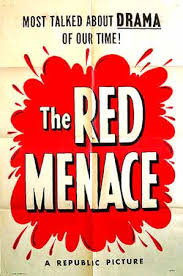
But now that the “workers’ paradise” had disappeared, Americans seemed to lose interest in the Communist Menace.
True, the People’s Republic of China remained, and its increasing economic clout would challenge the United States well into the 21st century. But Americans didn’t seem to fear the Red Chinese as they had the Red Russians.
What was the Republican Party to do to lure voters?
On September 11, 2001, the answer arrived–in two highjacked jetliners that crashed into the World Trade Center in New York and one that struck the Pentagon in Washington, D.C.
Exit The Red Bogeyman. Enter The Maniacal Muslim.
Consider:
- Mike Huckabee – “If the purpose of a church is to push forward the gospel of Jesus Christ, and then you have a Muslim group that says that Jesus Christ and all the people that follow him are a bunch of infidels who should be essentially obliterated, I have a hard time understanding that.”
- Herman Cain – ”I would not” appoint a Muslim in his administration.
- Newt Gingrich – “I am convinced that if we do not decisively win the struggle over the nature of America, by the time they [his grandchildren] are my age they will be in a secular atheist country, potentially one dominated by radical Islamists. …”
- Rick Santorum – On supporting the racial profiling of Muslims: “Obviously, Muslims would be someone you look at, absolutely.”
- Mitt Romney – “Based on the numbers of American Muslims in our population, I cannot see that a Cabinet position [for a Muslim] would be justified.”
And on July 13, Rep. Michelle Bachmann (R-Minn.) sent letters to the Inspectors General of the Departments of
- Defense;
- State;
- Justice; and
- Homeland Security.
“The purpose of these letters,” wrote Bachmann, was to “request a multi-department investigation into potential Muslim Brotherhood infiltration into the United States Government.”

Michelle Bachmann
Bachmann further asserted in her letter to the State Department that Huma Abedin, deputy chief of staff to Secretary of State Hillary Clinton, had ties to the Muslim Brotherhood.
And the evidence for this?
The Center for Security Policy’s claim that Abedin’s father (who died when she was a teenager), mother and brother are “connected” to the organization.
And what is the Center of Security Policy? A private organization subsidized by donors to neo-conservative causes.
In a separate letter, Bachmann demanded to know how Abedin received her security clearance.
Among the co-signers of Bachmann’s letter to the Inspectors General were:
- Rep. Trent Franks of Arizona, who has said abortion has done more harm to blacks than slavery;
- Rep. Lynn Westmoreland of Georgia, who called presidential candidate Barack Obama and his wife, Michelle, ”uppity”; and
- Rep. Louie Gohmert of Texas, who claims that terrorist organizations send pregnant women into the U.S. so that their children will be American citizens–who can enter and leave the country at will as they are trained to be terrorists abroad.
When pressed for their evidence of “a vast Muslim conspiracy,” right-wing accusers usually refuse to provide any.
An example of this occurred during an August 13, 2010 interview between Gohmert and CNN’s Anderson Cooper:
COOPER: What research? Can you tell us about the research?
GOHMERT: You are attacking the messenger, Anderson, you are better than this. You used to be good. You used to find that there was a problem and you would go after it.
COOPER: Sir, I am asking you for evidence of something that you said on the floor of the House.
GOHMERT: I did, and you listen, this is a problem. If you would spend as much time looking into the problem as you would have been trying to come after me and belittle me this week –
COOPER: Sir, do you want to offer any evidence? I’m giving you an opportunity to say what research and evidence you have. You’ve offered none, other than yelling.
Nor did Gohmert offer any evidence that evening.
Of course, the ultimate Republican Muslim slander is that President Barack Obama–a longtime Christian–is himself a Muslim.
No doubt Republicans feel totally safe in making these attacks, since Muslims comprise only 1% of the American population.
This has long been a hallmark of right-wing attacks–to go after a minority that cannot effectively defend itself.
Thus, Adolf Hitler attacked the Jews of Germany.
And Republicans have successively attacked blacks, Hispanics and gays–until each group became politically influential enough to defeat Republican candidates.
Today, most right-wing politicians at least grudgingly court all of these groups.
When Muslims become a significant political force in their own right, the Right will court them, too. And then move on to yet another helpless scapegoat to blame for America’s troubles.


1984 NOVEL, 9/11, ABC NEWS, ADOLF HITLER, BARACK OBAMA, BILL CLINTON, BIRTH CONTROL, BLACKS, CBS NEWS, CNN, COMMUNISM, DENNIS HASTERT, DISABLED, DISCRIMINATION, DWIGHT D. EISENHOWER, EDWARD R. MURROW, ENVIRONMENTALISTS, FACEBOOK, FAMILY RESEARCH COUNCIL, FRANKLIN D. ROOSEVELT, GAYS, GEORGE C. MARSHALL, GEORGE H.W. BUSH, GEORGE ORWELL, GOP, GREAT SOCIETY, HARRY S. TRUMAN, HISPANICS, HIV MEDICATION, HOUSE OF REPRESENTATIVES, J. ROBERT OPPENHEIMER, JOHN BIRCH SOCIETY, JOHN F. KENNEDY, JOHN STEINBECK, JOSEPH R. MCCARTHY, JOSEPH STALIN, JOSH DUGGAR, KGB, LEE ATWATER, LEON TROTSKY, LESBIANS, LIBERALS, LUCILLE BALL, LYNDON B. JOHNSON, MEDICAL CARE, MEIN KAMPF, MICHAEL DUKAKIS, MICHELLE BACHMANN, MITT ROMNEY, MUSLIMS, NBC NEWS, PETE SEEGER, PROPAGANDA, RELIGION, REPUBLICANS, RICHARD NIXON, RICK SANTORUM, ROBERT WELCH, RODNEY KING RIOTS, SCAPEGOATING, SHARIA LAW, SOCIALISTS, SOVIET UNION, THE LOS ANGELES TIMES, THE NEW YORK TIMES, THE RELIGIOUS FREEDOM RESTORATION ACT, THE WASHINGTON POST, TRANSGENDERS, TWITTER, WILLIAM L. SHIRER, WOMEN, WORLD WAR ii
THE “TWO MINUTES HATE”–A GOP GIFT: PART TWO (OF THREE)
In Bureaucracy, History, Law, Politics, Social commentary on May 20, 2016 at 12:01 amIn 1953, Red-baiting Wisconsin United States Senator Joseph R. McCarthy finally overstepped himself.
He attacked the leadership of the United States Army as “a hotbed of traitors” and convened an inquiry through the Senate Permanent Subcommittee on Investigations.
Joseph McCarthy
But the hearings backfired, exposing McCarthy as the bullying demagogue he was. A Senate committee voted to condemn his behavior, charging that he had “acted contrary to senatorial ethics and tended to bring the Senate into dishonor and disrepute.”
Although McCarthy remained in the Senate another two and a half years, his political influence had ended.
Yet even without McCarthy, Republicans rode the issue of anti-Communism to victory from 1948 to 1992.
After holding the White House for eight years under Dwight D. Eisenhower, they lost it in 1960 to John F. Kennedy and again in 1964 to Lyndon B. Johnson.
By 1968, with the nation mired in Vietnam and convulsed by antiwar demonstrations and race riots, Americans turned once more to those who preyed upon their fears and hates.
They elected Richard Nixon, who promised to end the Vietnam war and crack down on “uppity” blacks and antiwar demonstrators.
The same strategy re-elected him in 1972.
After Jimmy Carter won the Presidency in 1976 and lost it in 1980 to Ronald Reagan, Republicans held the White House until 1992.
During the 1970s and 1980s, they continued to accuse their opponents of being devious agents–or at least unwitting pawns–of “the Communist conspiracy.”
Even as late as 1992, President George H.W. Bush and the Republican establishment charged that Arkansas Governor Bill Clinton might be a KGB plant.
George H.W. Bush
Their evidence: During his tenure at Oxford University in 1969-70, Clinton had briefly visited Moscow.
Thus, the Republican charged that he might have been “programmed” as a real-life “Manchurian candidate” to become, first, Governor of Arkansas–one of America’s poorest states–and then President.
What made this charge all the more absurd: The Soviet Union had officially dissolved in December, 1991.
Republicans continued to accuse their opponents of being “Communists” and “traitors.” But these charges no longer carried the weight they had while the Soviet Union existed.
Right-wingers had to settle for attacking their opponents as “liberals” and “soft on crime.”
When riots flared in 1992 after the acquittal of LAPD officers who had savagely beaten Rodney King, President George H.W. Bush blamed the carnage on the “Great Society” programs of the 1960s.
Then, on September 11, 2001, Republicans–and their right-wing supporters–at last found a suitable replacement for the Red Menace.
Two highjacked jetliners slammed into the World Trade Center in New York and one struck the Pentagon in Washington, D.C.
World Trade Center on September 11, 2001
Exit The Red Bogeyman. Enter The Maniacal Muslim.
Consider:
The 2008 election of Barack Obama pushed the Republican “treason chorus” to new heights of infamy.
Barack Obama
Almost immediately after Obama took office, he came under attack by an industry of right-wing book authors such as Sean Hannity, Ann Coulter and Rush Limbaugh.
The following titles vividly reveal the hates, fears and ambitions of their authors–and audience:
Share this: