bureaucracybusters

Posts Tagged ‘JOAQUIN “EL CHAPO” GUZMAN’

SCREEN CRIMINALS AND REAL ONES: PART TWO (OF THREE)

In Bureaucracy, Entertainment, History, Law Enforcement on January 20, 2016 at 12:02 am

Actor Sean Penn believes the Mexican Government wants to put him at risk by convincing Joaquin “El Chapo” (“Shorty”) Guzman that Penn played a role—deliberately or negligently—in his capture.

“We know the Mexican government, they clearly were humiliated by the notion that someone found him before they did,” Penn told interviewer Charlie Rose.

“Nobody found him before they did.  We are not smarter than the DEA, or Mexican Intelligence.  We had a contact upon which we were able to facilitate an invitation.”

By “we” Penn meant himself and Mexican actress Kate del Castillo, who had actually arranged the meeting.

Kate del Castillo at the 2012 Imagen Awards.jpg

 Actress Kate del Castillo

“They wanted to encourage the cartel to put you in their crosshairs?” Rose asked.

“Yes,” Penn answered.

This is entirely possible.  Guzman’s escape from a “maximum security” prison in July, 2015, had proved internationally embarrassing for the Mexican Government

Even more embarrassing: He escaped through a mile-long tunnel that literally led to his cell.  Almost certainly this happened with the collusion of some prison guards.

Penn–and del Castillo–could face dangers from at least three groups.

Danger #1: El Chapo

Already there is evidence that “El Chapo” regrets having given an interview to Penn and del Castillo in the Mexican jungle on October 2, 2015.

Related image

Sean Penn

Published in Rolling Stone on January 9, the article contained such Guzman boasts as:

“I supply more heroin, methamphetamine, cocaine and marijuana than anyone else in the world.  I have a fleet of submarines, airplanes, trucks and boats.”

Juan Pablo Badillo, one of Guzman’s attorneys, has since claimed that the article contains falsehoods:

“It’s a lie, absurd speculation from Mr. Penn. Mr. Penn should be called to testify to respond about the stupidities he has said.

“He [Guzman] could not have made these claims. Mr. Guzman is a very serious man, very intelligent.”

This could spell danger for Penn and del Castillo. Guzman is responsible for the deaths of thousands of rivals, journalists and police.

Related image

Among the witnesses to the drug cartels’ savagery is Michael Levine, a 25-year veteran of the Drug Enforcement Administration and the author of Deep Cover: Mexican Government Drug Corruption From the Inside.

“Depending on what the cartels and/or the many corrupt Mexican cops and Mexican government officials believe El Chapo divulged during the interview, Penn, and whomever else was present, may be in more physical danger than he could ever imagine,” said Levine.

An anonymous law enforcement official said that not only could Penn be in danger, but so could his entire family.

“It won’t happen now.  They [the cartels] wait.  Him or people close to him are in danger.  They don’t single out the one person.  They go for the person’s family.

“He poked his head into a nest of vipers with an amazing global reach. He was a fool.  As public as Penn is, he will be a sitting duck.”

Danger #2: Guzman’s Competitors in the Drug Trade

“The problem with dealing with someone like Guzman on this personal basis, where one is perceived as a ‘friend’ or an aide or a business partner of sorts to Chapo, is that you have to be prepared to inherit all his enemies, and there are many,” warned Michael Levine.

“These are some very kill-crazy people. The notoriety gained by killing someone like Penn or even del Castillo will actually turn these bastards on.

“It’s a step into the dark world of the kill crazies.  Believe me it is there, and unwittingly these two may have stepped into a world where there is an actual competition to kill them,” said Levine, who has dealt face-to-face with Latin American drug lords.

Danger #3: Wannabe Cartel Members

Countless men–in Mexico and the United States–would love to “do El Chapo a favor” by gunning down Penn and/or del Castillo.

This could happen even if Guzman harbors no ill will toward either.  It would be enough for someone to simply believe that he did.

An additional motive: The fame–or infamy–that the assassin of a “big celebrity” like Penn would receive.  John Lennon died at the hands of such a fame-obsessed, psychotic gunman.

This means that literally anyone could be a potential assassin–making it that much harder to defend against.

When clients enter the Justice Department’s Witness Security Program, they are quickly asked: “Who do you think poses the biggest threat to you?”

Deputy U.S. marshals, who operate the program, assume that a witness is the best judge of who poses the greatest danger to him.

Related image

Witness Security Program protection detail

This works well when a witness is unknown and testifying against someone who is equally unknown to the public.

But when a witness is notorious–such as Sammy “The Bull” Gravano–and the defendant is equally infamous–such as John Gotti–all bets are off.

Of course, Federally-protected witnesses have two advantages going for them that Penn and del Castillo do not:

First, they are protected by the U.S. Marshals Service, which has an excellent track record in protecting its charges; and

Second, they are expected to assume a low profile, which serves as their best protection.

Sean Penn and Kate del Castillo aren’t Federally-protected witnesses. And they’re unlikely to assume a low profile by going into hiding.

SCREEN CRIMINALS AND REAL ONES: PART ONE (OF THREE)

In Bureaucracy, Entertainment, History, Law Enforcement on January 19, 2016 at 1:25 am

Actor Sean Penn is used to being a tough guy–onscreen.  

In 2006, he played real-life mobster Mickey Cohen (1913 – 1976) in Gangster Squad.  And in 2013, he played Willie Stark, a corrupt, Huey Long-type Southern governor in a remake of All the King’s Men.

As Cohen, Penn put out contracts on his enemies and even went mano-o-mano in a long-running (and fictional) fistfight with an LAPD detective.

And as Stark, he clawed his way to power and bullied both his enemies and his supporters.

Perhaps Penn should have paid more attention to the way those movies ended.

Sean Penn by Sachyn Mital (cropped).jpg

Sean Penn

Mickey Cohen goes to prison, where he is brutally waylaid by other inmates.

And Willie Stark, at the height of his power, is shot by a longtime enemy.

Had he thought about it, he might have decided it could be a mistake to meet with Joaquin “El Chapo” (“Shorty”) Guzman, the notorious Mexican drug lord.

On October 2, 2015, Penn met with Guzman in an undisclosed location in the Mexican jungle.  He was there to interview him on behalf of Rolling Stone magazine. 

Guzman wanted a movie made about him.  So he had reached out to Mexican actress Kate del Castillo, asking her to meet with him to discuss such a project.  She, in turn, referred him to Penn, whom Guzman said could come along for the meeting.

Penn had his own agenda: To write an article for Rolling Stone whose “purpose [would] contribute to this conversation on the war on drugs.”

Three months later, on January 8, 2016, Mexican Marines and Federal Police launched an early-morning raid on a house in Los Mochis, in northern Sinaloa, where Guzman’s drug cartel operated.

The Marines expected to find Guzman there, and they did–ending his almost six-month flight after escaping from prison in July.  

One day after Guzman’s capture, Rolling Stone published Penn’s 10,000-word article.  

Penn had not been allowed to bring a tape recorder or even take notes with pen and paper.  So he had been forced to memorize as much of Guzman’s tale as he could.

Penn seemed to be enraptured by Guzman:

“There is no doubt this is the real deal. He’s wearing a casual patterned silk shirt, pressed black pants, and he appears remarkably well-groomed and healthy for a man on the run.  

“He opens [actress Kate del Castillo’s] [car} doorand greets her like a daughter returning from college.  

“It seems important to him to express the warm affection in person that, until now, he’d only had occasion to communicate from afar.”  

Even so, Penn quoted Guzman as bragging: “I supply more heroin, methamphetamine, cocaine and marijuana than anybody else in the world.  I have a fleet of submarines, airplanes, trucks and boats.”

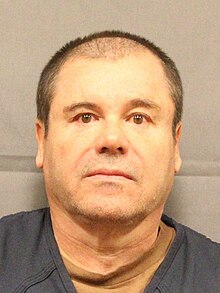
Booking photo of Joaquin “El Chapo“ Guzman (front).jpg

 Joaquin “El Chapo” Guzman

After the interview’s publication, Penn came under fire for having allowed Guzman to approve the article.  He claimed that, despite this, Guzman had not asked for any changes.  

He also drew sharp criticism for having used his status as a movie star to play the part of a reporter.  

But worse was to come.  

Shortly after the capture of “El Chapo,” Mexico’s Attorney General Arely Gomez “credited” Penn with having played a vital role in the capture of the drug kingpin.  

The meeting between Penn, Castillo and Guzman “was an essential element, because we were following [Guzman’s] lawyer, and the lawyer took us to these people and to this meeting.”  

Suddenly, American experts on Mexican organized crime cartels began seeing Sean Penn in a new light–that of a movie star with a big target on his chest and back.

Suppose Guzman began suspecting that Penn had deliberately led Mexican authorities to him?  Or that he had done so even accidentally, through negligence in how he had traveled?

“These cartels are very violent, they do not forgive any transgression and they will respond in a most violent manner,” said Mike Vigil, a former chief of international operations with the U.S. Drug Enforcement Administration.

“These are people who have been dismembered, who have decapitated individuals.  So killing Sean Penn and del Castillo means absolutely nothing to them.”

Vigil believed it was careless for the Mexican Government to publicize any ties between the Penn meeting and Guzman’s arrest:

“If Chapo Guzman perceives that they cooperated with authorities in his capture, [the cartel] will go after them.”

He argued that the risk is likely likely for del Castillo because she was the one in contact with Guzman.

She was the one whom Guzman’s associates supplied with a Blackberry–the phone they believed most secure.  And it was her and Guzman’s flirtatious exchanges that led to the meeting in the jungle with Sean Pean.

“Apart from that, [del Castillo] is originally from Mexico, she has all of her family in Mexico.  One of the traditional violent methods [the cartels] use is if they can’t get to the target, they’ll go after their family members.

“If I were Kate del Castillo, I would run like the wind.”

IF TRUMP IS OUR HITLER, WHO WILL BE OUR STAUFFENBERG?: PART THREE (END)

In Bureaucracy, History, Military, Politics, Social commentary on December 2, 2015 at 12:17 am

On July 20, 1944, members of the Wehrmacht high command failed to assassinate Adolf Hitler with a bomb hidden in a briefcase.

But two setbacks prevented the conspirators from succeeding.

First, Hitler survived the bomb blast.

Second, the plotters failed to seize the key broadcast facilities of the Reich.

This allowed Hitler to make a late-night speech to the nation, revealing the failed plot and assuring Germans that he was alive. And he swore to flush out the “traitorous swine” who had tried to kill him.

Adolf Hitler

Mass arrests quickly followed.  Among the first victims discovered and executed was the conspiracy’s leader, Colonel Claus von Stauffenberg.  Standing before a makeshift firing squad at midnight, he cried: “Long live our sacred Germany!”

At least 7,000 persons were arrested by the Gestapo. According to records of the Fuehrer Conferences on Naval Affairs, 4,980 were executed.

Had the conspiracy succeeded, history would have turned out differently:

  • If Germany had surrendered in July or August, 1944, World War II would have ended eight to nine months earlier.
  • The Russians–who didn’t reach Germany until April, 1945–could not have occupied the Eastern part of the country.
  • This would have prevented many of the future conflicts between the United States and the Soviet Union over access to West Berlin and/or West Germany.
  • Untold numbers of Holocaust victims would have survived because the extermination camps would have been shut down.

Thus, history can be altered by the appearance or disappearance of a single individual.

Which brings us back to Donald Trump.

Donald Trump

Since declaring his candidacy for the Presidency on June 16, Trump has been the first choice among the Republican base.

At first, he was dismissed as a bad joke–by Republican Presidential candidates as well as Democrats.

Surely voters would reject a bombastic, thrice-married “reality show” host who had filed for corporate bankruptcy four times.

Yet from the outset Trump dominated the field–and a series of Republican debates. The other Republican candidates watched him with envy–and desperately tried to steal some of his limelight.

Making made one inflammatory statement after another, he offended one group of potential voters after another.  Among those groups:

  • Latinos
  • Asians
  • Muslims
  • Blacks
  • The disabled
  • Women
  • Prisoners-of-War

These insults delighted his white, under-educated followers. But they alienated millions of other Americans who might have voted for him.

While some of those offended are unlikely to respond with violence, others have powerful motives–and means–for doing so. Among those groups–and the insults Trump has leveled at them:

  • Mexicans: “They’re bringing drugs.  They’re bringing crime. They’re rapists.” He’s also promised to “build a great, great wall on our southern border and I will have Mexico pay for that wall.”
  • Illegal aliens: Trump has threatened to forcibly deport millions of mostly Mexican and Central American residents.
  • Blacks: At a Trump rally in Birmingham, Alabama, he was interrupted by black activist Mercutio Southall, who repeatedly shouted: “Black lives matter!” Trump ordered his removal, and several of his supporters beat and kicked Southall. Later, Trump said: “Maybe he should have been roughed up, because it was absolutely disgusting what he was doing.”
  • Trump retweeted an image of a masked, dark-skinned man with a handgun and a series of alleged crime statistics, including: “Blacks killed by whites – 2%”; “Whites killed by blacks – 81%.”  The image cites the “Crime Statistics Bureau – San Francisco”–an agency that doesn’t exist.
  • Muslims: Trump has boasted he would revive waterboarding of terrorist suspects. He would require Muslims to register with the Federal Government. And he would close “some mosques” if he felt they were being used by Islamic terrorists.
  • Islamic terrorists: Trump has bragged that he would “bomb the hell” out of oilfields controlled by the Islamic State of Iraq and Syria (ISIS): “I would absolutely cut off their source of wealth, which is the oil.”
  • Joaquin “El Chapo” Guzman:  Referring to the Mexican drug lord in a tweet, Trump wrote: “Trump…would kick his ass!” Trump hurriedly called the FBI after he received a death threat from a Twitter account associated with Guzman.

Niccolo Machiavelli, the father of modern politics, warned against hurling threats and insults: “For neither the one nor the other…diminishes the strength of the enemy.

Niccolo Machiavelli

“[Threats make] him more cautious, and [insults increase] his hatred of you, and [make] him more persevering in his efforts to injure you.”

But Trump revels in insulting anyone who dares to challenge him.

In 1935, Louisiana U.S. Senator Huey Long intended to occupy the White House in 1936 and unseat then-President Franklin D. Roosevelt.  His “Share Our Wealth” program was hugely popular among millions in Depression-era America.

On September 8, 1935, he was shot and fatally wounded by Carl Austin Weiss, an idealistic young doctor.

His motive: Long had gerrymandered Weiss’ father-in-law, a district judge, out of his district and spread vicious rumors about his ancestry.

Writing about Long’s assassination, historian William Manchester noted: “Huey Long was one of the very few men of whom it can be said that, had he lived, American history would have been dramatically different.”

If the same fate removes Donald Trump from the 2016 Presidential race, future historians may write the same about him.

IF TRUMP IS OUR HITLER, WHO WILL BE OUR STAUFFENBERG?: PART TWO (OF THREE)

In Bureaucracy, History, Military, Politics, Social commentary on December 1, 2015 at 12:01 am

On July 20, 1944, a one-eyed, one-armed man tried to assassinate Adolf Hitler

Colonel Claus Schenk von Stuaffenberg had served with the Wehrmacht in Poland (1939), France (1940) and the Soviet Union (1941).  And he had been seriously wounded in its service.

Colonel Claus Schenk von Stuaffenberg

Nevertheless, he now acted as the prime mover for the conspiracy among a growing number of German high command officers to arrest or assassinate Germany’s Fuehrer.

Most of the conspirators wanted to arrest Hitler and surrender to British and American forces–well before the much-feared Russians gained a foothold in Germany.

But Stauffenberg wanted him dead: A live Hitler might eventually be rescued by his Nazi colleagues.

But–how to do it?

Hitler was a closely-guarded target. He was surrounded by fanatical bodyguards who were expert marksmen. He often wore a bulletproof vest and a cap lined with three pounds of laminated steel.

Adolf Hitler

Bundesarchiv, Bild 146-1990-048-29A / CC-BY-SA 3.0 [CC BY-SA 3.0 de (https://creativecommons.org/licenses/by-sa/3.0/de/deed.en)%5D, via Wikimedia Commons

But his single greatest protection–he claimed–was an instinct for danger.  He would often suddenly change his schedule–to drop in  where he was least expected.  Or to suddenly depart an event where he was scheduled to stay a long time.

On November 9, 1939, this instinct saved his life.  He had been set to give a long speech at a Munich beer hall before the “Old Fighters” of his storm troopers.

Sixteen years earlier on that day, in 1923, Hitler had led them in a disastrous attempt to overthrow the Bavarian government.  Police had put down the effort, killing and wounding about a score of storm troopers in the process.

Hitler himself had later been arrested, tried and convicted for treason–and sentenced to a year’s imprisonment.

But instead of proving to be the end of Nazism, the “Beer Hall Putsch” turned Hitler into a national celebrity.  And it launched his career as a legitimate, ultimately successful politician.

So Hitler was expected to speak to his longtime supporters for a long time that evening. Instead, he suddenly cut short his speech and left the beer hall.

Forty-five minutes later, a bomb exploded inside a pillar–before which Hitler had been speaking.

Since then, a series of other assassination attempts had been made against Hitler.  All of them involved time-bombs. And all of the would-be assassins were members of the German General Staff.

In one case, a bomb secretly stashed aboard Hitler’s plane failed to explode.  In another, an officer who had a bomb strapped to himself unexpectedly found his scheduled meeting with Hitler called off.  He had to rush into a bathroom to defuse the bomb before it went off.

So now it was the turn of von Stauffenberg.  He would carry his bomb–hidden in a briefcase–into a “Hitler conference” packed with military officers.

But Stauffenberg didn’t intend to be a suicide bomber. He meant to direct the government that would replace that of the Nazis.

His bomb–also rigged with a time-fuse–would be left in the conference room while he found an excuse to leave. After the explosion, he would phone one of his fellow conspirators with the news.

Then, the coup–“Operation Valkyrie”–would be on.

Anti-Nazi conspirators would seize control of key posts of the government. The British and Americans would then be informed of Germany’s willingness to surrender. Provided, of course, that the Russians did not have a say in its postwar future.

The Wehrmacht and Schutzstaffel (SS) had killed millions of Russians. Many had died in combat. Others had been murdered as captives. Still more had been allowed to die by starvation and exposure to the notorious Russian winter.

So the Germans–both Nazi and anti-Nazi–knew what they could expect if soldiers of the Soviet Union reached German soil.

On July 20, 1944, Stauffenberg appeared at Hitler’s well-guarded military headquarters in East Prussia.  Like all his other outposts, Hitler had named it–appropriately enough–“Wolf’s Lair.”

“Wolf’s Lair”

Stauffenberg entered the large, concrete building while the conference was in session.  He placed his yellow briefcase next to Hitler–who was standing with his generals at a heavy oaken table.

Then Stauffenberg excused himself to take an “urgent” phone call.

At 12:42 p.m. on July 20, 1944, Stauffenberg’s briefcase bomb erupted.

But the Third Reich didn’t come to an end–because, as if miraculously, Hitler had survived.

Hitler shows off the site of the explosion

What had happened?

First, the conference location had been changed–from a wooden building to a concrete one.  The concrete absorbed much of the blast.

Second, owing to the summer’s heat, Hitler had ordered all the windows–about ten–opened to let in a breeze.  This allowed much of the force of the blast to be dispersed.

Third, and perhaps most important: Stauffenberg had carefully placed his briefcase near Hitler, who was standing next to a heavy oaken support of the conference table.

But after Stauffenberg left the room, Colonel Heinz Brandt, who stood next to Hitler, found the briefcase blocking his legs.  So he moved it–to the other side of the heavy oaken support.

When the bomb exploded, Hitler was partially shielded from its full blast.  Brandt died, as did two other officers and a stenographer.

IF TRUMP IS OUR HITLER, WHO WILL BE OUR STAUFFENBERG?: PART ONE (OF THREE)

In Bureaucracy, History, Military, Politics, Social commentary on November 30, 2015 at 12:03 am

The ad opens with ominous music–and the face of a snarling Donald Trump.

“I would like anyone who is listening to consider some thoughts that I’ve paraphrased from the words of German pastor Martin Niemoeller.”

The voice belongs to Tom Moe, a retired colonel in the U.S. Air Force–and a former Vietnam prisoner-of-war.

It’s a video produced by the 2016 Presidential campaign for John Kasich. Kasich, the governor of Ohio, has been peddling a message of creating jobs, balancing the Federal budget and disdain for Washington, D.C.

Related image

John Kasich

But he remains far behind in the polls, dropping 50% in support in just one month–from September to October. Meanwhile, Trump, the New York billionaire developer, is backed by 25% of Republican primary voters.

So, with nothing to lose, Kasich has decided to take off the gloves.  He’s invoked the “N” word for Republicans: Nazi.

“You might not care if Donald Trump says Muslims must register with the government, because you’re not one,” continues Moe.

“And you might not care if Donald Trump says he’s going to round up all the Hispanic immigrants, because you’re not one.

Related image

Donald Trump

“And you might not care if Donald Trump says it’s OK to rough up black protesters, because you’re not one.

“And you might not care of Donald Trump wants to suppress journalists, because you’re not one.

“But think about this:

“If he keeps going, and he actually becomes President, he might just get around to you.  And you’d better hope that there’s someone left to help you.”

Click here: Trump’s Dangerous Rhetoric – YouTube

The above is indeed a paraphrase of a famous quote by Martin Niemoeller (1892–1984), a prominent Protestant pastor. Although he had been a U-boat commander during World War 1, he became a bitter public foe of Adolf Hitler.

A staunch anti-Communist, he had initially supported the Nazis as Germany’s only hope of salvation against the Soviet Union. But when the Nazis made the church subordinate to State authority, Niemoeller created the Pastors’ Emergency League to defend religious freedom.

Martin Niemöller (1952).jpg

Martin Niemoeller

For his opposition to the Third Reich, Niemoeller spent seven years in concentration camps. With the collapse of the Reich in 1945, he was freed–and elected President of the Protestant church in Hesse and Nassau in 1947.

During the 1960s, he was a president of the World Council of Churches.

He is best remembered for his powerful condemnation of the failure of Germans to protest the increasing oppression of the Nazis:

First they came for the Communists, but I was not a Communist, so I did not speak out.

Then they came for the Socialists, but I was not a Socialist, so I did not speak out.

Then they came for the trade unionists, but I was not a trade unionist, so I did not speak out.

Then they came for the Jews, but I was not a Jew, so I did not speak out.

And when they came for me, there was no one left to speak out for me.

Neither “Adolf Hitler” nor “Nazi Party” was mentioned during the one-minute Kassich video. But Trump is furious.

“I will sue him [Kasich] just for fun,” said Trump, if he can find anything “not truthful” within the ad.

So says the man who has called Mexican immigrants “rapists” and accused President Barack Obama of being a Muslim and born outside the United States.

The Kasich ad is by far the darkest attack so far made against Trump by any candidate–Republican or Democrat.  And it raises a disturbing question:

If Donald Trump is America’s Adolf Hitler, who will be its Claus von Stauffenberg?

Colonel Claus Schenk von Stuaffenberg was the German army officer who, on July 20, 1944, tried to assassinate Adolf Hitler.

He had served with the Wehrmacht in Poland (1939), France (1940) and the Soviet Union (1941).

While serving in Tunisa, he was seriously wounded on April 7, 1943 when Allied fighters strafed his vehicle. He lost his left eye, right hand and two fingers of his left hand after surgery.

Colonel Claus Schenk von Stuaffenberg

Nevertheless, he now acted as the prime mover for the conspiracy among a growing number of German high command officers to arrest or assassinate Germany’s Fuehrer.

For most of these officers, the motive was craven: Germany was losing the war it had launched on the world–and they feared the worst.  This was especially true now that the numerically superior forces of the Soviet Union had gone onto the offensive.

For Stauffenberg, there was another reason: His disgust at the horrors he had seen committed by his fellow Wehrmacht soldiers upon defenseless POW’s and civilians in Russia.

Thus, Stauffenberg–more than many Germans–knew firsthand the vengeance his country could expect if the “1,000 year Reich” fell.

Something must be done, he believed, to prove to the world that not all Germans–even members of the Wehrmacht–were criminals.

Most of the conspirators wanted to arrest Hitler and surrender to British and American forces–well before the much-feared Russians gained a toehold in Germany.

For Stauffenberg, arresting Hitler wasn’t enough.

Stauffenberg wanted him dead. A live Hitler might eventually be rescued by his Nazi colleagues.

But–how to do it?

MEXICO: WHERE CORRUPTION IS KING

In Bureaucracy, History, Law Enforcement, Politics, Social commentary on March 5, 2014 at 12:00 am

The photo says it all.

Taken on February 22, it shows Joaquin Guzman, the widely-feared kingpin of the notorious Sinaloa Cartel, in the custody of Mexican Marines.

The Marines had launched a surprise, early-morning raid on the condominium where he was staying in Mazatlan, Sinaloa.

Taken without a shot being fired, Guzman was paraded before photographers.  Yet, even with his hands cuffed behind his back, the fear generated by his name was such that all the Marines in the photo wore black masks over their faces.

His nickname might be “El Chapo”, or “Shorty,” owing to his 5’6″ height.  But there is nothing aborted about the extent of his power.

Guzman became Mexico’s top drug kingpin in 2003 after the arrest of his rival, Osiel Cardenas, head of the Gulf Cartel.  Since then, he has been considered the “most powerful drug trafficker in the world” by the U.S. Department of the Treasury.

High-ranking officials in the U.S. Department of Justice hailed the arrest and announced they would seek Guzman’s extradition to the United States for trial.

There were two solid reasons for doing this:

  1. Guzman’s Sinaloa Cartel smuggles multi-ton cocaine shipments from Columbia through Mexico to the United States–the world’s top consumer.
  2. Arrested in 1993 and sentenced to 20 years’ imprisonment, Guzman lived like a king in prison–until he bribed his guards to smuggle him out in a laundry cart.  In Mexico, such treatment for drug kingpins is typical.

But even if Guzman spends the rest of his life in prison, his drug empire will go profitably rolling on.

Anyone who doubts this need only read Murder City: Ciudad Juarez and the Global Economy’s New Killing Fields.

Written by Investigative Reporter Charles Bowden and published in 2010, Murder City offers a terrifying, and almost lethally depressing, portrait of what happens when a city–and a country–disintegrates.

Ciudad Juárez lies just across the Rio Grande from El Paso, Texas. A once-thriving border town, it now resembles a failed state. Notorious as the place where women disappear, its murder rate exceeds that of Baghdad or Mogadishu.

It’s so overwhelmed with the violence of drug trafficking that its leading citizens—police, politicians, even the drug lords—find it safer to live in El Paso.

Hundreds of millions of narco-dollars flow into Juárez each week, and the violence and corruption that follow yield 200 to 300 murders each year.

Among the casualties of that violence:

  • A reporter–who has dared to expose cartel-corrupted members of the Mexican Army–is forced to flee to the United States with his young son.
  • A beautiful woman who became the mistress of one drug cartel leader is gang-raped by members of a rival cartel.
  • A teenage killer for the cartels is now being hunted for having run afoul of his murderous bosses.

This is a city–and a country–where virtually no one is safe.

  • Mexican police pay big bribes to be assigned to narcotics enforcement squads.  The reason: Not to suppress the rampant drug trafficking but to enrich themselves by seizing and selling those narcotics.
  • Residents awaken at dawn to find bodies of the drug cartels’ latest victims dumped on streets–their hands, feet and mouths bound with silver and gray duct tape.
  • Mexican policewomen are often snatched off the streets and raped–by members of the Mexican Army.
  • Honest policemen–and even police chiefs–are routinely gunned down by cartel members.

If there is any one story in Murder City that symbolizes the total corruption of a society awash with drugs and the profits they produce, it is this:

A Mexican priest serves as confessor to drug lords.  They, in turn, believe their confessions to be safe, as they are supposed to be heard only by the priest and God.

But one of the drug lords wears a large gold crucifix, which the priest secretly covets.

So he turns from drug lord confessor to police informer–and the Mexican police raid the next drug lord gathering and confiscate a large quantity of narcotics.

The police don’t intend to turn in the seized narcotics.  Instead, they will sell these for their own profit.

And as a reward for his cooperation, the priest is given the large gold crucifix–which he blesses and consecrates to his God.

Who, exactly, is behind all these killings?

And why?

And who, if anyone, is in charge of Juárez–or Mexico?

Bowden states it is difficult to answer such questions because the Mexican press has been thoroughly corrupted by drug cartel monies or terrorized by drug cartel hit squads.  Reporters have been murdered–by the cartels and the army–for writing anything about killings, the army or the cartels.

The world of Murder City is a nightmarish one:

  • Members of drug cartels live like kings.
  • Their bribes and violence have corrupted all branches of the Mexican government, military and police forces.
  • Ordinary Mexicans live in grinding poverty, thanks to American factories paying starvation wages

When you leave its pages, you are grateful that you can safely put its evil behind you–unlike the residents of Juarez who remain trapped in its web.

For residents of this failed nation-state called Mexico, it’s too late.  Such endemic corruption can never be fought successfully.