Posts Tagged ‘JAMES COMEY’
ABC NEWS, ALTERNET, AP, BUZZFEED, CBS NEWS, CNN, COLLUSION, COMMUNISM, CROOKS AND LIARS, DAILY KOZ, DEMOCRATIC PARTY, DONALD TRUMP JUNIOR, FACEBOOK, FBI, FOX NEWS, G.O.P., INTELLIGENCE, JAMES COMEY, JARED KUSHNER, KGB, MIKE FLYNN, MOTHER JONES, MOVEON, NBC NEWS, NEWSWEEK, NPR, PAUL MANAFORT, POLITICO, POLLUTION, RAW STORY, REPUBLICAN PARTY, REUTERS, ROBERT MUELLER, RUSSIA, SALON, SATIRE, SEATTLE TIMES, SERGEY KISLYAK, SERGEY LAVROV, SLATE, STATE OF THE UNION, STRANGERS IN THE NIGHT, THE ATLANTIC, THE CHICAGO SUN-TIMES, THE CHICAGO TRIBUNE, THE DAILY BEAST, THE GUARDIAN, THE HILL, THE HUFFINGTON POST, THE LOS ANGELES TIMES, THE NATION, THE NEW YORK TIMES, THE WASHINGTON POST, TIME, TREASON, TRUMP TOWER MEETING, TWITTER, U.S. CONSTITUTION, U.S. NEWS & WORLD REPORT, UPI, USA TODAY, USA TODAY DONALD TRUMP, VLADIMIR PUTIN, WIT A LITTLE HELP FROM MY FRIENDS
In Bureaucracy, History, Humor, Law Enforcement, Military, Politics, Social commentary on February 9, 2018 at 12:28 am
President Donald Trump has accused Democrats of treason. Their crime? Not applauding him during his State of the Union message.
But Article Three of the United States Constitution defines treason as:
“Treason against the United States, shall consist only in levying War against them, or in adhering to their Enemies, giving them Aid and Comfort. No Person shall be convicted of Treason unless on the Testimony of two Witnesses to the same overt Act, or on Confession in open Court.”
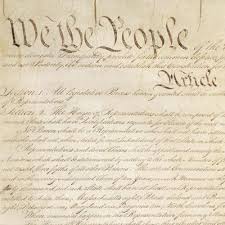
United States Constitution
In short, actions such as colluding with a foreign power hostile to the United States (such as Russia) to subvert America’s democratic election process.
Example #1: The infamous June, 2016 meeting at Trump Tower starring Donald Trump’s son, Donald, Jr.; Trump’s son-in-law, Jared Kushner; and Trump’s then-campaign manager, Paul Manafort. Its purpose: To obtain from Russian Intelligence agents “dirt” on Trump’s opponent, Hillary Clinton.
Example #2: On May 9, Trump fired FBI Director James Comey for investigating Russia’s subversion of the 2016 Presidential race.
The next day, he met with Russian Foreign Minister Sergey Lavrov and Russian Ambassador Sergey Kislyak in the Oval Office. During that meeting, Trump shared highly classified Israeli Intelligence about an Islamic State plot to turn laptops into bombs.
TRAITORS ON THE RIGHT
(To be sung to the tune of “Strangers in the Night”)
Traitors on the Right
Exchanging glances
Plotting in the night.
What were the chances
They’d love the KGB
And strangle liberty?
Treason for the Right
Was so inviting.
Treason for the Right
Was so exciting.
Something in their hearts
Said, “We’re the G.O.P.”
Traitors on the Right—such evil people.
They were traitors on the Right
Up to the moment when the KGB stepped in
To start their reign of sin.
Bribes from Russia paved their way
To usher in a tyrant’s day.
And….
Ever since that year
They’ve been in power
Filling us with fear.
In love with Commies–
It offers such delight
For traitors on the Right.
* * * * *
WITH A LITTLE HELP FROM MY VLAD
(To be sung to the tune, “With a Little Help From My Friends”)
What would you think if I ripped off some kids?
Would you walk out and not vote for me?
Lend me your ears and I’ll feed you a line
And I’ll try not to laugh cynically.
Oh, I get by with a little help from my Vlad.
Mm, I can lie with a little help from my Vlad.
Mm, you’re gonna fry with a little help from my Vlad.
What do I do when the bank calls me in?
(Does it worry you to be in debt?)
How do I feel when I need rubles fast?
(Do you worry Vlad might say “Nyet”?)
No, I get by with a little help from my Vlad.
Mm, I can lie with a little help from my Vlad.
Mm, you’re gonna fry with a little help from my Vlad.
(Do you need anybody?)
I just need someone named me.
(Could it be anybody?)
As long as it’s me–me–me–me!
(Would you believe in a love at first sight?)
Yes; it happens with a mirror all the time.
(What do you see when you turn out the light?)
It stays on so that my face can shine.
Oh, I get by with a little help from my Vlad.
Mm, I can lie with a little help from my Vlad.
Mm, you’re gonna die with a little help from my Vlad.
(Do you need anybody?)
I need a Gestapo that kills.
(Could it be anybody?)
As long as it kills I get thrills.
Oh, I get by with a little help from my Vlad.
With a little help from my Vlad.
* * * * *
COLLUSION
(To be sung to the tune of “Pollution”)
If you visit Washington D.C.
You will find it very pretty.
But two things will really make you jump:
One is the Russians and the other is Trump!
Collusion, collusion!
Red Donald’s passing out secrets with glee.
Pick up a rug
And out fall his pals KGB!
See the FBI busting Trump’s friends
As he worries where it all ends.
He says, “Mike Flynn was really quite a guy.
Till he sold me out to the FBI.”
Collusion, collusion!
There are traitors at work day and night.
Just watch them lie
As they sell us out left and right.
Robert Mueller cannot be bought
That’s why traitors are getting caught.
Fox News keeps churning out lie on lie—
While America waits for traitors to die.
Collusion, collusion!
It’s a “Sell Out America” sale.
But you can cheer
When Donald’s ass lands in jail!
* * * * *
THE TRUMPY SKUNKY
(To be sung to the tune of “The Hokey Pokey”)
Trump lets the Russians in.
He kicks the press corps out.
He slips Vlad secret stuff
And he gives a “Treason!” shout.
He does the Trumpy Skunky
As he sells the U.S. out.
That’s what he’s all about.
Trump loves the KGB.
He hates the FBI.
He dares not tell the truth
‘Cause his whole life’s just a lie.
He does the Trumpy Skunky
As he sells the U.S. out.
That’s what he’s all about.
2016 PRESIDENTIAL RACE, ABC NEWS, ALL THE KING’S MEN, ALTERNET, AP, BLUE BLOODS, BUZZFEED, CBS, CBS NEWS, CNN, CROOKS AND LIARS, DAILY KOZ, ERIC SCHNEIDERMAN, FACEBOOK, FBI, FRANK REAGAN, INDEPENDENT COUNSEL, J. EDGAR HOOVER, JAMES COMEY, JEFF SESSIONS, JUSTICE DEPARTMENT, MOTHER JONES, MOVEON, NBC NEWS, NEW YORK POLICE DEPARTMENT, NEWSWEEK, NPR, POLITICO, RAW STORY, REUTERS, ROBERT MUELLER, ROBERT PENN WARREN, RUSSIA, SALON, SEATTLE TIMES, SERGEI KISLYAK, SEXUAL ASSAULT, SLANDER, SLATE, THE ATLANTIC, THE CHICAGO SUN-TIMES, THE CHICAGO TRIBUNE, THE DAILY BEAST, THE GUARDIAN, THE HILL, THE HUFFINGTON POST, THE LOS ANGELES TIMES, THE NATION, THE NEW YORK TIMES, THE WASHINGTON POST, TIME, TOM SELLECK, TRUMP UNIVERSITY, TWITTER, U.S. NEWS & WORLD REPORT, UPI, USA TODAY, USA TODAY DONALD TRUMP, WILLIAM C. SULLIVAN
In Bureaucracy, History, Law, Law Enforcement, Politics, Social commentary on February 8, 2018 at 12:19 am
Since taking office as President, Donald Trump has openly waged war on his own Justice Department—and especially its chief investigative agency, the FBI.
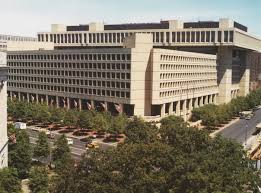
FBI headquarters
As a result, he has:
- Fired James Comey, the FBI director pursuing an investigation into Russia’s meddling in the 2016 Presidential race to ensure Trump’s election.
- Threatened to fire Independent Counsel Robert Mueller, who continued that investigation after Trump fired Comey.
- Repeatedly attacked—verbally and on Twitter—his Attorney General, Jeff Sessions, for recusing himself from overseeing the Russia investigation.
- (Sessions did so after the press revealed that, during the 2016 race, he twice met secretly with Russian Ambassador Sergei Kislyak.)
- Repeatedly attacked the integrity of the FBI, raising the possibility of his firing more of its senior leadership for pursuing the Russia investigation.
- Pressured House Republicans to release a highly partisan memo falsely accusing the FBI of pursuing a vendetta against him.
But the FBI need not meekly accept such assaults.
A February 2 episode of the popular CBS police drama, “Blue Bloods,” offers a vivid lesson on bureaucratic self-defense against tyrants.
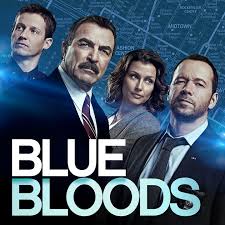
A shootout erupts in a crowded pub between a gunman and NYPD officers. Results: One dead gunman and one wounded bystander.
Problem: The bystander is an aide to New York Governor Martin Mendez.
Mendez visits One Police Plaze, NYPD headquarters, for a private chat with Commissioner Frank Reagan (Tom Selleck). From the outset, he’s aggressive, rude and threatening.
MENDEZ: I know you guys like to whitewash officer-involved shootings.
REAGAN: I do not.
MENDEZ: That’s not going to happen here. I want the cop who shot my guy fired and charged.
REAGAN: If the grand jury indicts, my officer could be terminated.
MENDEZ: We all want to protect our people, but mine come first.
Governor Mendez leaves Commissioner Reagan’s office. Later, he returns:
MENDEZ: We’ve got a serious problem.
REAGAN: Why? The grand jury declined to indict my officer.
MENDEZ: Your cop fired into a crowded room.
REAGAN: She returned fire, took out the shooter and likely saved lives.
MENDEZ: What are you going to do?
REAGAN: Our Internal Affairs investigation supports the grand jury’s finding, so the case is closed.
MENDEZ: Either you fire this cop, or I’ll order the Attorney General to investigate every questionable police shooting in the past 10 years and hold public hearings out loud and lights up.
REAGAN: Everybody loves a circus.
MENDEZ: Except the guy who’s got to shovel up afterwards.
At the end of the episode, a third—and final—meeting occurs in a restaurant between Reagan and Mendez.
MENDEZ: Have you dumped the cop who shot my guy?
REAGAN: No.
MENDEZ: Bad news.
REAGAN: Depends on what you compare it to. It turns out that your aide wasn’t drinking alone the night he was shot.
MENDEZ: So what? He’s single.
REAGAN: He was with a married woman.
MENDEZ: That’s on her, not on him.
REAGAN: Except she is married to his boss, your Chief of Staff.
MENDEZ: Sheesh!
REAGAN: Turns out this has been going on for over a year.
MENDEZ: So what are we doing?
REAGAN: If this gets out, the circus comes to Albany [where the governor has his office].
MENDEZ: Who else knows?
REAGAN: Right now it’s safe in the notebook of my lead detective. Whether or not it finds its way into an arrest report that’s subject to a Freedom of Information Act request—that’s a judgment call.
MENDEZ: Your judgment?
REAGAN: Yes.
MENDEZ: And if my investigation goes away?
REAGAN: Neither of us is shoveling up after the circus.
MENDEZ: I have your word on that?
REAGAN: Yes.
MENDEZ: You have a good evening, Commissioner.
J. Edgar Hoover, the legendary FBI director, used Realpolitik to ensure his reign for 48 years.
As William C. Sullivan, the onetime director of the FBI’s Domestic Intelligence Division, revealed after Hoover’s death in 1972:
“The moment [Hoover] would get something on a senator, he’d send one of the errand boys up and advise the senator that ‘we’re in the course of an investigation, and we by chance happened to come up with this data on your daughter.
“‘But we wanted you to know this. We realize you’d want to know it.’ Well, Jesus, what does that tell the senator? From that time on, the senator’s right in his pocket.”
Donald Trump has long pursued a strategy of intimidation. But when people have refused to be cowed by his threats, he’s backed off.
During the 2016 Presidential campaign, more than a dozen women accused Trump of sexual misconduct, ranging from inappropriate comments to assault.
Trump responded: “The events never happened. Never. All of these liars will be sued after the election is over.”
Yet he hasn’t filed a single slander suit.
Similarly, when New York’s Attorney General Eric Schneiderman sued Trump for running a fraudulent university, Trump initially said he would fight the charge.
Instead, he settled the case by paying $25 million to compensate the 3,700 students Trump University had defrauded.
“You never have to frame anyone,” says Governor Willie Stark in Robert Penn Warren’s Pulitzer Prize-winning 1946 novel, All the King’s Men. “Because the truth is always sufficient.”
It’s time the FBI learned—and applied—that same lesson.
2016 PRESIDENTIAL ELECTION, ABC NEWS, ADOLF HITLER, ALTERNET, AP, ARTICLE 48, BARACK OBAMA, BUZZFEED, CBS NEWS, CNN, CROOKS AND LIARS, DAILY KOZ, DAVID BROOKS, DONALD TRUMP, ENABLING ACT, FACEBOOK, FBI, FRANCE, FRANZ HALDER, FRANZ VON PAPEN, GUNTER MEISNER, HERMAN GORING, HERMAN WOUK, JAMES COMEY, MARK SHIELDS, MICHAEL FLYNN, MOTHER JONES, MOVEON, NAZI GERMANY, NBC NEWS, NEWSWEEK, NPR, PAUL VON HINDENBURG, PBS NEWSHOUR, POLITICO, PRUSSIA, RAW STORY, REICHSTAG, REUTERS, ROBERT MUELLER, RUSSIA, SALLY YATES, SALON, SEATTLE TIMES, SHIELDS AND BROOKS, SLATE, THE ATLANTIC, THE CHICAGO SUN-TIMES, THE CHICAGO TRIBUNE, THE DAILY BEAST, THE GUARDIAN, THE HILL, THE HUFFINGTON POST, THE LOS ANGELES TIMES, THE NATION, THE NEW YORK TIMES, THE WASHINGTON POST, THE WINDS OF WAR, TIME, TWITTER, U.S. NEWS & WORLD REPORT, UPI, USA TODAY, USA TODAY ADOLF HITLERR, VLADIMIR PUTIN, WALTER VON BRAUCHITSCH, WOLFGANG PREISS, WORLD WAR 11
In Bureaucracy, History, Law, Law Enforcement, Politics, Social commentary on February 1, 2018 at 12:03 am
When German President Paul von Hindenburg appointed Adolf Hitler Chancellor of Germany on January 30, 1933, not all Germans rejoiced.
Millions of them, in fact, hoped that the radical Fascist would be “boxed in” by “the establishment.”
President Hindenburg was known to despise Hitler. And a Hindenburg ally, Franz von Papen, was Vice Chancellor.
Yet it was Von Papen who was largely responsible for Hitler’s coming to power.
He believed that the longtime agitator could be controlled once he was in the government. The cabinet, after all, was not under Nazi domination. And so he convinced Hindenburg to appoint Hitler as Chancellor.
Almost immediately, Hitler began to outmaneuver those who sought to restrain him.
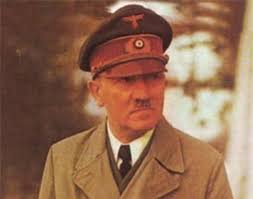
Adolf Hitler
As part of his deal with Papan, Hitler appointed his longtime supporter, Herman Goring, interior minister of Prussia—thus arming the Nazis with the largest police force in Germany.
On February 1, 1933, Hitler presented Article 48 to the cabinet. This allowed the police to take people into “protective custody” without charges. Hindenburg signed it into law on February 4 as the “Decree for the Protection of the German People.”
In March, the Reichstag (parliament) passed the Enabling Act, which allowed Hitler to rule by decree without interference from legislators. Germany, it was claimed, needed “an iron hand” because it was supposedly threatened by a Communist revolution.
The Enabling Act was authorized to last only four years. But it was renewed in 1937 and, in 1941, extended for the rest of Hitler’s lifetime.
On August 2, the aged Hindenburg died. Hitler immediately consolidated the positions of President and Chancellor—and ordered the German Armed Forces to swear an oath of personal loyalty to him.
Hitler’s mastery of Germany was now complete.
Fast forward 84 years from Adolf Hitler’s gaining total power in Germany to January 30, 2018.
President Donald Trump can say—as truthfully as Adolf Hitler: I am the destiny of America.
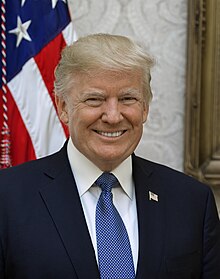
Donald Trump
Among his tumultuous actions during his first year as President, Trump:
- Fired Acting Attorney General Sally Yates after she notified him that National-Security Adviser Michael Flynn had misled the FBI.
- Fired FBI Director James Comey for investigating the Trump Presidential campaign’s links to the Kremlin.
- Attacked the integrity of the American Intelligence community—while praising Russian President Vladimir Putin.
- Falsely claimed that former President Barack Obama had illegally wiretapped him during the 2016 Presidential campaign.
- Tried to fire Independent Counsel Robert Mueller, but was talked out of it.
Syndicated columnist Mark Shields and New York Times columnist David Brooks appear every Friday on the PBS Newshour to review the week’s major political events.
On January 26, Brooks—a conservative, and Shields, a liberal—reached similar conclusions about the recent news that President Trump had tried to fire Independent Counsel Robert Mueller during the summer of 2017.
After Comey’s firing, Mueller had been assigned to oversee the previously-confirmed FBI investigation of Russian government efforts to influence the 2016 presidential election.
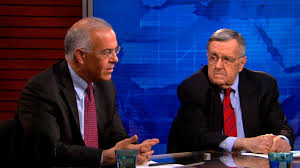
David Brooks and Mark Shields
DAVID BROOKS: “First, it should be pointed out that White House staff has repeatedly said there was no effort to fire Mueller, when they clearly have been lying for months about that….
“I was in Dayton, Ohio, this morning. And a friend said, in this presidency, I’m just stunned every day. I’m stunned every hour. And at some point, you get out of stunned. There’s no more stun.
“And I found this when I saw our story. If I had seen that story seven or eight months ago, I would have been, ‘Oh, I can’t believe this is happening.’ Now I’m inured. I’m used to it. I have been numbed.
“And I came to think, even if he fired Mueller, maybe we’re all just—we’re like, we have been numbed to the things that happen and nobody gets upset anymore. I think people would get upset if he actually did try to fire Mueller, but we have defined deviancy down and gotten used to a set of behavior that would have been shocking to us a year ago.”
MARK SHIELDS: “I think there would be a firestorm at this point [if Trump fired Mueller]….
“How long and how intense, I don’t know, because I remain just perplexed at the limit of the finite limits of our outrage, or our sense of outrage….
“But I think it really comes down to, who’s going to stand with [Mueller]? And I look at the Republicans on the Hill and, you know, the lack, the tower of Jell-O that is the speaker of the House….”
JUDY WOODRUFF: “…Could this campaign…by some Republicans in the House and with support from the White House to undermine the FBI…have a long-lasting effect on the Justice Department in the end?”
DAVID BROOKS: “Yes, I think so.
“And the FBI is filled with honest brokers….There are a lot of agencies that are filled with honest brokers, and the idea that everybody in this city is a politician is just not true.
“It’s always amazing to me that a lot of people in government, they are not actually that political. They believe in the public service and they try to do their jobs, but they’re not sort of super political people.”
2016 PRESIDENTIAL ELECTION, ABC NEWS, ADOLF HITLER, ALTERNET, AP, ARTICLE 48, BARACK OBAMA, BUZZFEED, CBS NEWS, CNN, CROOKS AND LIARS, DAILY KOZ, DAVID BROOKS, DONALD TRUMP, ENABLING ACT, FACEBOOK, FBI, FRANCE, FRANZ HALDER, FRANZ VON PAPEN, GUNTER MEISNER, HERMAN GORING, HERMAN WOUK, JAMES COMEY, MARK SHIELDS, MICHAEL FLYNN, MOTHER JONES, MOVEON, NAZI GERMANY, NBC NEWS, NEWSWEEK, NPR, PAUL VON HINDENBURG, PBS NEWSHOUR, POLITICO, PRUSSIA, RAW STORY, REICHSTAG, REUTERS, ROBERT MUELLER, RUSSIA, SALLY YATES, SALON, SEATTLE TIMES, SHIELDS AND BROOKS, SLATE, THE ATLANTIC, THE CHICAGO SUN-TIMES, THE CHICAGO TRIBUNE, THE DAILY BEAST, THE GUARDIAN, THE HILL, THE HUFFINGTON POST, THE LOS ANGELES TIMES, THE NATION, THE NEW YORK TIMES, THE WASHINGTON POST, THE WINDS OF WAR, TIME, TWITTER, U.S. NEWS & WORLD REPORT, UPI, USA TODAY, USA TODAY ADOLF HITLERR, VLADIMIR PUTIN, WALTER VON BRAUCHITSCH, WOLFGANG PREISS, WORLD WAR 11, WORLD WAR ii
In Bureaucracy, History, Law, Law Enforcement, Military, Politics, Social commentary on January 31, 2018 at 12:06 am
After Donald Trump won the 2016 election, many people feared he would embark on a radical Right-wing agenda. But others hoped that the Washington bureaucracy would “box him in.”
The same sentiments echoed throughout Germany after Adolf Hitler was appointed Chancellor of Germany on January 30, 1933.
The 1983 TV mini-series, The Winds of War, offered a dramatic example of how honorable men can be overwhelmed by a ruthless dictator.
Based on the bestselling 1971 historical novel by Herman Wouk, the mini-series factually re-created the major historical events of World War II.
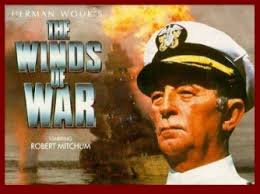
One of those events took place on November 5, 1939.
General Walther von Brauchitsch is summoned to the Chancellery in Berlin to meet with Adolf Hitler. He carries a memorandum signed by all the leaders of the German Wehrmacht asserting that Case Yellow—Hitler’s planned attack against France—is impossible.
Meanwhile, at the German army headquarters at Zossen, in Berlin, the Wehrmacht’s top command wait for word from von Brauchitsch.
CHANCELLERY:
Von Brauchitsch hands the memorandum to Hitler, who reads it.
ZOSSEN:
Brigadier General Armin von Roon: I must confide in you on a very serious matter. I have been approached by certain army personages of the loftiest rank and prestige with a frightening proposal.
Chief of the General Staff Franz Halder: What did you reply?
Von Roon: That they were talking high treason.
CHANCELLERY:
Adolf Hitler (slamming down the memorandum): So—what is new in all this?
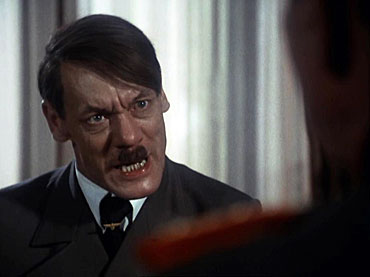
Gunter Meisner as Adolf Hitler in “The Winds of War”
Walther Von Brauchitsch: Fuhrer, it is the army’s final position that Case Yellow cannot proceed.
Hitler: Why not?
Von Brauchitsch: Because of the military fundamentals as stated.
Hitler: Such as?
Von Brauchitsch: The meteorologists predict continuous soaking rains for weeks.
Hitler: It rains on the enemy, too.
ZOSSEN:
Von Roon: The conspiracy has been going on that long—since Czechoslovakia [1938)?
Halder: If the British had not caved in at Munich [where France and Britain sold out their ally, Czechoslovakia]—perhaps. But they did. And ever then, ever since his big triumph, it has been hopeless. Hopeless.
Von Roon: Empty talk, talk, talk. I am staggered.
Halder: A hundred times I myself could have shot the man. I can still at any time. But what would be the result? Chaos. The people are for him. He has unified the country. We must stick to our posts and save him from making military mistakes.
Halder: But we really cannot proceed with Case Yellow.
Von Roon: Brauchitsch will get a postponement.
Halder: And if he does not?
CHANCELLERY:
Von Brauchitsch: Fuhrer, even the supply of artillery shells is totally inadequate.
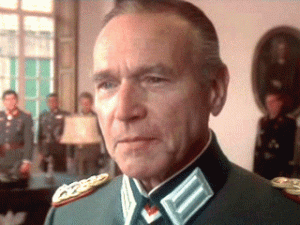
Wolfgang Preiss as Walter von Brauchitsch in “The Winds of War”
Hitler: Who says so?
Von Brauchitsch: General Thomas, my chief of economics and armament.
Hitler: Do you know how many artillery shells of all calibers we have in the staging areas—right this minute?
Von Brauchitsch: No.
Hitler: How many we have in the reserve dumps in the West?
Von Brauchitsch: No, it’s up to my staff—
Hitler: What the monthly annual production of shells is? What the projected rise in production of the next six months is, month by month?
Von Brauchitsch: Who keeps such figures in his head?
Hitler: I do! The supply is adequate. I tell you so. And I’m a field soldier who depended on artillery for four years to protect his life. [He hands von Brauchitsch a sheaf of armaments figures.] Check with your staff. if one of those figures is wrong, you can postpone Case Yellow. Otherwise—you march! And next time you come to see me, know what you’re talking about!
Von Brauchitsch: If we march unprepared as we are, defeatism will run rampant. It will destroy the Wehrmacht and the Fatherland. The morale of the army was low, even in the Polish campaign.
Hitler: You question to me—to me—the courage of the German soldier?
Von Brauchitsch: I’m talking facts!
Hitler: What facts? Back up this monstrous assertion! In what units was morale low? What action was taken? How many death sentences were handed out for cowardice? Speak up! I’ll fly to the front and pass the death sentences myself. One specific instance.
Von Brauchitsch: It was common knowledge—
Hitler: Common knowledge? What is common knowledge is that army headquarters at Zossen crawls with cowards. You opposed me in rearming the Rhineland. You opposed me on the [union] with Austria. You opposed me on Czechoslovakia, until the British came crawling to me. You dirtied in your trousers, you heroes at Zossen, at the idea of marching into Poland. Well, have I once been wrong? Have you once been right? Answer me!
Von Brauchitsch: Mein Fuhrer—
Hitler: Tell everyone who signed this insubordinate Zossen rubbish to beware! I will ruthlessly crush everybody up to the rank of a Field Marshal who dares to oppose me. You don’t have to understand. You only have to obey. The German people understand me. I am Germany.
Fast forward 79 years from Adolf Hitler’s stormy confrontation with Walter von Brauchitsch to January 26, 2018.
President Donald Trump—having fired FBI Director James Comey, attacked the integrity of the American Intelligence community and tried to fire Independent Counsel Robert Mueller—can equally say: I am the destiny of America.
"HAMILTON", ABC NEWS, ALTERNET, AMERICABLOG, AP, ARNOLD SCHWARZENEGGER, BABY BOOMER RESISTANCE, BARACK OBAMA, BBC, BLOOMBERG, BLOOMBERG NEWS, BLUESKY, BUZZFEED, CBS NEWS, CNN, CROOKS AND LIARS, DAILY KOS, DAILY KOZ, DONALD TRUMP, FACEBOOK, FBI, FIVETHIRTYEIGHT, HARPER’S MAGAZINE, HILLARY CLINTON, HUFFINGTON POST, JAMES COMEY, JOHN OLIVER, MEDIA MATTERS, MERYL STREEP, MIKE PENCE, MOTHER JONES, MOVEON, MSNBC, NBC NEWS, NEIL YOUNG, NEW REPUBLIC, NEWSDAY, NEWSWEEK, NPR, PBS NEWSHOUR, POLITICO, POLITICUSUSA, RAW STORY, REUTERS, SALON, SEATTLE TIMES, SLATE, TALKING POINTS MEMO, THE ATLANTIC, THE CHICAGO SUN-TIMES, THE CHICAGO TRIBUNE, THE DAILY BEAST, THE DAILY BLOG, THE GUARDIAN, THE HILL, THE HUFFINGTON POST, THE INTERCEPT, THE LOS ANGELES TIMES, THE NATION, THE NEW REPUBLIC, THE NEW YORK TIMES, THE NEW YORKER, THE VILLAGE VOICE, THE WASHINGTON POST, THINKPROGRESS, TIME, TRUTHDIG, TRUTHOUT, TWITTER RULES, TWO POLITICAL JUNKIES, U.S. NEWS & WORLD REPORT, UPI, USA TODAY, X
In Bureaucracy, Business, History, Politics, Social commentary on January 24, 2018 at 12:07 am
On May 9, 2017, President Donald Trump abruptly fired FBI Director James Comey.
Reports soon surfaced that his reason for doing so was that Comey had refused to pledge his personal loyalty to Trump.
Just 72 hours after firing Comey, Trump issued a threat to him via Twitter: “James Comey better hope that there are no ‘tapes’ of our conversations before he starts leaking to the press!”
And Twitter’s reaction to such a blatant threat?
Silence.
James B. Comey
From the start of his Presidency, Trump has put his ambitions, excuses and rants on social media. And this has unnerved foreign leaders as well as Trump’s fellow Americans.
As CNN Political Analyst Julian Zelizer outlined in a July 3 article:
“Putting aside the specific content of the recent blasts from the Oval smart phone, the President’s ongoing Twitter storms make all leaders uneasy. The heads of government in most nations prefer a certain amount of predictability and decorum from other heads of state.
“To have one of the most powerful people in the room being someone who is willing to send out explosive and controversial statements through social media, including nasty personal attacks or an edited video of him physically assaulting the media, does not make others….feel very confident about how he will handle deliberations with them.”
On December 12, 2017, Trump used Twitter to attack New York United States Senator Kirsten Gillibrand.
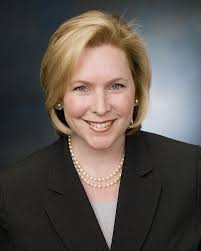
Kirsten Gillibrand
Gillibrand was among six Democratic senators who called for Trump’s resignation after sexual harassment allegations forced three Republican and Democratic members of Congress to resign.
Trump tweeted: “Lightweight Senator Kirsten Gillibrand, a total flunky for Chuck Schumer and someone who would come to my office ‘begging’ for campaign contributions not so long ago (and would do anything for them), is now in the ring fighting against Trump. Very disloyal to Bill & Crooked-USED!”
“I see it as a sexist smear. I mean that’s what it is,” Gillibrand replied in a press conference. “It’s part of the President’s efforts of name calling and it’s not going to silence me, it’s not going to silence me. It’s intended to silence me.”
So how does this behavior apply to “The Twitter Rules”?
Abuse: You may not engage in the targeted harassment of someone, or incite other people to do so. We consider abusive behavior an attempt to harass, intimidate, or silence someone else’s voice. [Italics added.]
On February 17, 2017, Trump tweeted: “The FAKE NEWS media (failing @nytimes, @NBCNews, @ABC, @CBS, @CNN) is not my enemy, it is the enemy of the American People!”
On July 2, 2017, Trump tweeted a video showing him punching a man with the CNN logo superimposed on his head during a WWE wrestling match.
And on August 15, the President retweeted a cartoon photo of a “Trump Train” running over a CNN reporter.
Yet Twitter’s Terms of Service state:
Hateful imagery and display names: You may not use hateful images or symbols in your profile image or profile header. You also may not use your username, display name, or profile bio to engage in abusive behavior, such as targeted harassment or expressing hate towards a person, group, or protected category. We will begin enforcing this rule on December 18, 2017. [Italics added.]
So how do Twitter’s top executives justify allowing these repeated violations of “Twitter Rules”? On September 25, the company tweeted:
“We hold all accounts to the same Rules, and consider a number of factors when assessing whether Tweets violate our Rules.
“Among the considerations is ‘newsworthiness’ and whether a Tweet is of public interest. This has long been internal policy and we’ll soon update our public-facing rules to reflect it. We need to do better on this, and will.”
Twitter has never acknowledged publicly that Trump has violated any of its guidelines. It rarely even acknowledges Trump’s tweets.
So what gives?
Money.
Trump’s apologists have fiercely defended his tweetstorms, claiming they allow him to bypass the media and “communicate directly with the American people.”
One of those apologists is former Twitter CEO Jack Dorsey, who said: “I believe it’s really important to have these conversations out in the open, rather than have them behind closed doors.”

Jack Dorsey
In April, 2017, Twitter announced that it had added 9,000,000 new users, its largest quarter-over-quarter jump in two years.
“We believe Twitter is the best at showing you what’s happening in the world and what’s being talked about,” said Anthony Noto, Twitter’s chief financial officer.
“Having political leaders of the world as well as news agencies participating and driving that is an important element to reinforcing what we’re the best at.”
In short: Trump is good at attracting more Twitter users. and if the company needs to overlook his blatant and repeated violations of its “Twitter Rules,” so be it.
Twitter has been so plagued by trolling that potential investors like the Walt Disney Company refused to taint their own reputations by partnering with it.
But that hasn’t led high-ranking Twitter executives to end their Faustian pact with the biggest Twitter troll of all.
And, as all devotees of the Faust legend know, there comes a time when the Devil wins the bargain.
"HAMILTON", ABC NEWS, ALTERNET, AMERICABLOG, AP, ARNOLD SCHWARZENEGGER, BABY BOOMER RESISTANCE, BARACK OBAMA, BBC, BLOOMBERG, BLOOMBERG NEWS, BLUESKY, BUZZFEED, CBS NEWS, CNN, CROOKS AND LIARS, DAILY KOS, DAILY KOZ, DONALD TRUMP, FACEBOOK, FBI, FIVETHIRTYEIGHT, HARPER’S MAGAZINE, HILLARY CLINTON, HUFFINGTON POST, JAMES COMEY, JOHN OLIVER, MEDIA MATTERS, MERYL STREEP, MIKE PENCE, MOTHER JONES, MOVEON, MSNBC, NBC NEWS, NEIL YOUNG, NEW REPUBLIC, NEWSDAY, NEWSWEEK, NPR, PBS NEWSHOUR, POLITICO, POLITICUSUSA, RAW STORY, REUTERS, SALON, SEATTLE TIMES, SLATE, TALKING POINTS MEMO, THE ATLANTIC, THE CHICAGO SUN-TIMES, THE CHICAGO TRIBUNE, THE DAILY BEAST, THE DAILY BLOG, THE GUARDIAN, THE HILL, THE HUFFINGTON POST, THE INTERCEPT, THE LOS ANGELES TIMES, THE NATION, THE NEW REPUBLIC, THE NEW YORK TIMES, THE NEW YORKER, THE VILLAGE VOICE, THE WASHINGTON POST, THINKPROGRESS, TIME, TRUTHDIG, TRUTHOUT, TWITTER RULES, TWO POLITICAL JUNKIES, U.S. NEWS & WORLD REPORT, UPI, USA TODAY, X
In Bureaucracy, Business, History, Politics, Social commentary on January 23, 2018 at 12:04 am
According to “The Twitter Rules,” posted on the Twitter website:
We believe in freedom of expression and open dialogue, but that means little as an underlying philosophy if voices are silenced because people are afraid to speak up.
In order to ensure that people feel safe expressing diverse opinions and beliefs, we prohibit behavior that crosses the line into abuse, including behavior that harasses, intimidates, or uses fear to silence another user’s voice.
Context matters when evaluating for abusive behavior and determining appropriate enforcement actions. Factors we may take into consideration include, but are not limited to whether:
- the behavior is targeted at an individual or group of people;
- the report has been filed by the target of the abuse or a bystander;
- the behavior is newsworthy and in the legitimate public interest.
Abuse: You may not engage in the targeted harassment of someone, or incite other people to do so. We consider abusive behavior an attempt to harass, intimidate, or silence someone else’s voice.
Unwanted sexual advances: You may not direct abuse at someone by sending unwanted sexual content, objectifying them in a sexually explicit manner, or otherwise engaging in sexual misconduct.
Hateful conduct: You may not promote violence against, threaten, or harass other people on the basis of race, ethnicity, national origin, sexual orientation, gender, gender identity, religious affiliation, age, disability, or serious disease. Read more about our hateful conduct policy.
Hateful imagery and display names: You may not use hateful images or symbols in your profile image or profile header. You also may not use your username, display name, or profile bio to engage in abusive behavior, such as targeted harassment or expressing hate towards a person, group, or protected category. We will begin enforcing this rule on December 18, 2017.
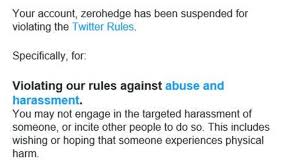
So much for the official version of what Twitter users—and non-Twitter users—can expect from those charged with policing Twitter.
Which leads to the question: Why hasn’t Twitter policed—and purged—the single greatest abuser of its “Twitter Rules”: Donald Trump?
Consider:
Donald Trump’s tweet-first-and-never-mind-the-consequences approach to life has been thoroughly documented.
From June 15, 2015, when he launched his Presidential campaign, until October 24, 2016, he fired nearly 4,000 angry, insulting tweets at 281 people and institutions. The New York Times needed two full pages of its print edition to showcase them.
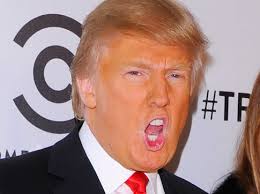
Donald Trump
Among these targets were:
- His Democratic rival, Hillary Clinton
- His fellow Republican Presidential candidates
- Actress Meryl Streep
- News organizations
- President Barack Obama
- Comedian John Oliver
- Obamacare
- Singer Neil Young
- The state of New Jersey
- Actor Arnold Schwarzenegger.
His Twitter assaults have often dominated entire news cycles for days on end.
As President-elect, he continued these assaults—such as the one on November 18, 2016.
On that evening, Vice President-elect Mike Pence attended a Broadway performance of the hit musical “Hamilton.”
After the curtain call, the actor Brandon Victor Dixon—who plays Aaron Burr—respectfully addressed Pence:
“We are the diverse America who are alarmed and anxious that your new administration will not protect us, our friends, our children, our parents, or defend us and uphold our inalienable rights. But we truly hope that this show has inspired you to uphold our American values and to work on behalf of all of us.”

Brandon Victor Dixon
The Official Tony Awards Youtube Channel, CC BY 4.0 <https://creativecommons.org/licenses/by/4.0>, via Wikimedia Commons
Dixon—who is black—was rightly alarmed.
Trump had received the open and enthusiastic support of the Ku Klux Klan, American Nazi Party and other white supremacist groups. Since his election, white thugs had assaulted blacks and other non-whites across the country.
Trump’s reaction to Dixon’s plea came in two Twitter rants:
“Our wonderful future V.P. Mike Pence was harassed last night at the theater by the cast of Hamilton, cameras blazing. This should not happen!”
And: “The Theater must always be a safe and special place. The cast of Hamilton was very rude last night to a very good man, Mike Pence. Apologize!”
And during his first two weeks as President, Trump attacked 22 people, places and things on his @realDonaldTrump account.
Then, on March 4, 2017, in a series of unhinged tweets, Trump accused former President Barack Obama of tapping his Trump Tower phones prior to the election:
“Terrible! Just found out that Obama had my ‘wires tapped’ in Trump Tower just before the victory. Nothing found. This is McCarthyism!”
“Is it legal for a sitting President to be ‘wire tapping’ a race for president prior to an election? Turned down by court earlier. A NEW LOW!”
“I’d bet a good lawyer could make a great case out of the fact that President Obama was tapping my phones in October, just prior to Election!”
“How low has President Obama gone to tapp my phones during the very sacred election process. This is Nixon/Watergate. Bad (or sick) guy!”
Thus, without offering a shred of evidence to back it up, Trump accused his predecessor—on Twitter—of committing an impeachable offense.
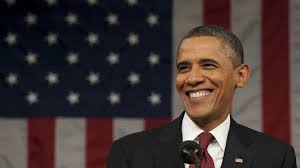
President Barack Obama
On May 9, 2017, Trump abruptly fired FBI Director James Comey.
Reports soon surfaced that his reason for doing so was that Comey had refused to pledge his personal loyalty to Trump.
Trump had made this “request” during a private dinner at the White House in January.
Another unpunished violation of Twitter’s Terms-of-Service was about to occur.
ABC NEWS, ADOLF HITLER, ALTERNET, ASSASSINATION, BARACK OBAMA, BUZZFEED, CBS NEWS, CIA, CNN, CONSPIRACIES, DAILY KOS, DAY OF THE JACKAL, DONALD TRUMP, FACEBOOK, FBI, FREDERICK FORSYTHE, GAIUS CASSIUS, JAMES COMEY, JULIUS CAESAR, MAR-A-LAGO, MARCUS BRUTUS, MARK ANTHONY, MOTHER JONES, MOVEON, NBC NEWS, NEWSWEEK, NICCOLO MACHIAVELLI, NPR, PLOTS, POLITICO, RAW STORY, RICHARD NIXON, SALON, Secret Service, SLATE, THE CHICAGO SUN-TIMES, THE CHICAGO TRIBUNE, THE DAILY BEAST, THE DISCOURSES, THE HUFFINGTON POST, THE LOS ANGELES TIMES, THE NEW YORK TIMES, THE WALL STREET JOURNAL, THE WASHINGTON POST, TIME, TWITTER, U.S. NEWS & WORLD REPORT, USA TODAY
In Bureaucracy, History, Law Enforcement, Military, Politics, Social commentary on January 22, 2018 at 12:02 am
Niccolo Machiavelli, the father of modern political science, wrote that there are three periods of danger in a conspiracy:
- Dangers in organizing the plot
- Dangers in executing the conspiracy
- Dangers following the execution of the plot.
The first two dangers were covered in Part One of this series. Now, as to the third danger.
Dangers following the Execution of the Conspiracy: There is really but one—someone is left who will avenge the murdered prince. These can be brothers, sons or other relatives, who have been spared by negligence or for other reasons.
But of all the perils that follow the execution of a conspiracy, the most certain and fearful is the attachment of the people to the murdered prince. There is no remedy against this, for the conspirators can never secure themselves against a whole people.
An example of this occurred in the case of Julius Caesar, who, being beloved by the people, was avenged by them.
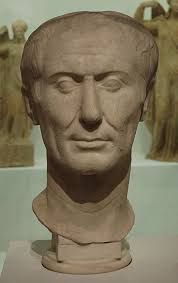
Julius Caesar
Machiavelli closes his chapter “Of Conspiracies” with advice to rulers on how they should act when they find a conspiracy has been formed against them.
If they discover that a conspiracy exists against them, they must, before punishing its authors, strive to learn its nature and extent. And they must measure the danger posed by the conspirators against their own strength.
And if they find it powerful and alarming, they must not expose it until they have amassed sufficient force to crush it. Otherwise, they will only speed their own destruction. They should try to pretend ignorance of it. If the conspirators find themselves discovered, they will be forced by necessity to act without consideration.
The foregoing was taken from Book Three, Chapter Six, of Machiavelli’s masterwork, The Discourses on Livy, which was published posthumously in 1531. But elsewhere in this volume, he notes how important it is for rulers to make themselves loved—or at least respected—by their fellow citizens:

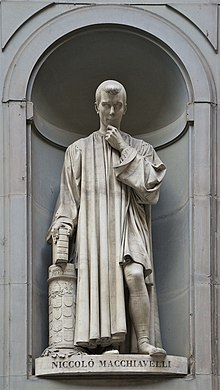
Niccolo Machiavelli
Note how much more praise those Emperors merited who, after Rome became an empire, conformed to her laws like good princes, than those who took the opposite course.
Titus, Nerva, Trajan, Hadrian, Antoninus and Marcus Auelius did not require the Praetorians nor the multitudinous legions to defend them, because they were protected by their own good conduct, the good will of the people, and by the love of the Senate.
On the other hand, neither the Eastern nor the Western armies saved Caligula, Nero, Vitellius and so many other wicked Emperors from the enemies which their bad conduct and evil lives had raised up against them.
In his better-known work, The Prince, he warns rulers who—like Donald Trump—are inclined to rule by fear:
A prince should make himself feared in such a way that if he does not gain love, he at any rate avoids hatred: for fear and the absence of hatred may well go together.

Donald Trump
If Trump is aware of Machiavelli’s warnings, he has shown no signs of it.
Presidents have universally tried to seem friendly and caring toward their fellow Americans.
This held true even for Richard M. Nixon, when he made an impromptu visit to the Lincoln Memorial and engaged in a rambling dialogue with Vietnam war protesters.
The encounter happened around 4 a.m. on May 9, 1970, shortly after the invasion of Cambodia. Nationwide outrage had exploded on college campuses, climaxing in the killing of four students at Kent State University on May 4.
So young Vietnam antiwar protesters who had descended on Washington, D.C. were startled when Nixon suddenly appeared in their midst.
Nixon, in his awkward way of trying to establish rapport, asked some of the students where they were from. When they said they attended Syracuse University, Nixon replied that it had a great football team.
But Nixon and the protesters were separated by too many differences—in their views on sexuality, civil rights, dissent and war—to find common cause.
Still, Nixon at least made an effort to understand and reach an accommodation with his critics.
Since taking office on January 20, 2017, Donald Trump has made none.
Instead, he has:
- Defended white supremacists who sparked violence in Charlottesville, Virginia.
- Fired James Comey, the director of the FBI, for investigating ties between his 2016 Presidential campaign and Russian Intelligence agents.
- Attacked the integrity of Federal judges who struck down his travel ban on Muslims.
- Called the nation’s most prestigious news media “the enemy of the American people.”
- Rammed through Congress a massive tax cut for the wealthy, at the expense of ordinary Americans.
- Attacked the integrity of American Intelligence agencies, such as the FBI and CIA.
- Falsely accused his predecessor, President Barack Obama, of wiretapping him.
These and other infamous actions have led to only 36% of Americans approving of his performance—while 58% disapprove.
Trump’s approval rating is now lower than that of any other President at this point in modern polling at this point.
By Machiavelli’s standards, Trump has made himself the perfect target for a conspiracy: “When a prince becomes universally hated, it is likely that he’s harmed some individuals—who thus seek revenge. This desire is increased by seeing that the prince is widely loathed.”
ABC NEWS, ADOLF HITLER, ALTERNET, AP, BBC, BUZZFEED, CBS NEWS, CNN, DAILY KOS, DAVID BROOKS, DONALD TRUMP, FACEBOOK, FBI, GEORGE C. SCOTT, GEORGE S. PATTON, GESTAPO, HOGAN’S HEROES, JAMES COMEY, JIMMY CARTER, MEL BROOKS, MIKE FLYNN, MOTHER JONES, MOVEON, NAZI GERMANY, NBC NEWS, NEWSWEEK, NPR, PAUL RYAN, PBS NEWSHOUR, POLITICO, RAW STORY, REPUBLICAN PARTY, REUTERS, RICHARD GRUNBERGER, RICHARD NIXON, ROBERT MEULLER, Ronald Reagan, SALON, SEATTLE TIMES, SLATE, SOVIET UNION, THE 12-YEAR REICH, THE ATLANTIC, THE CHICAGO SUN-TIMES, THE CHICAGO TRIBUNE, THE DAILY BEAST, THE GUARDIAN, THE HILL, THE HUFFINGTON POST, THE LOS ANGELES TIMES, THE NEW YORK TIMES, THE WALL STREET JOURNAL, THE WASHINGTON POST, TIME, TWITTER, U.S. NEWS & WORLD REPORT, UPI, USA TODAY, WAFFEN-SS, WEHRMACHT
In Bureaucracy, History, Law, Law Enforcement, Politics, Social commentary on December 27, 2017 at 2:10 am
While the Nazi Party ruled Germany from 1933 to 1945, its influence over all aspects of Germans’ lives was suffocating.
“The persuasive influence of the Nazi regime reached into every corner of everyday life in Germany,” reads the back cover of Richard Grunberger’s classic 1971 book, The 12-Year Reich.
“Censorship prevailed, education was undermined, family life was idealized, but children were encouraged to turn in disloyal parents.
“‘Volk’ festivals, party rallies, awards, uniforms, pageantry all played a part in the massive effort to shape the mind of a nation.”
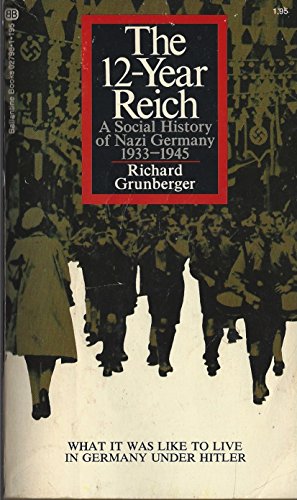
And yet, after the Reich surrendered unconditionally to the Allies on May 8, 1945, a strange thing happened: Virtually no one in Germany admitted to having been a Nazi—or having even known one.
American and British soldiers couldn’t find any German veterans willing to admit they had ever fought against Western, democratic nations. All the once-proud legionaries of the Wehrmacht and Waffen-SS swore they had been fighting “the real enemy”—the Russians—on the Eastern front.
And then there were all the stories of Germans who, at great risk to themselves, had hidden Jews in their attics. Which left unanswered the question: If so many “good Germans” had saved so many Jews, how had six million Jews died horrifically before the Reich fell?
In short: Adolf Hitler had lost the war he started—making him a loser nobody wanted to be identified with.
In the decades since, the “loser” tag has continued to stick with those who once served the Third Reich. Mel Brooks has repeatedly turned German soldiers—once the pride of the battlefield—into idiotic comic foils.
Even the fearsome Gestapo was spoofed for laughs on the long-running TV comedy, “Hogan’s Heroes.”

“Hogan’s Heroes”
“Americans love a winner,” George C. Scott as George S. Patton says at the outset of the classic 1970 movie. “And will not tolerate a loser.”
And that is why Republicans have stuck so closely with President Donald J. Trump.
A typical example of this occurred on June 8 after former FBI director James Comey testified before the United States Senate Select Committee on Intelligence.
Comey revealed that, on February 14, Trump had ordered everyone but Comey to leave a crowded meeting in the Oval Office.
“I want to talk about Mike Flynn,” said Trump.
Flynn had resigned the previous day from his position as National Security Adviser. The FBI was investigating him for his previously undisclosed ties to Russia.
“I hope you can see your way clear to letting this go, to letting Flynn go,” said Trump. “He is a good guy. I hope you can let this go.”
This was clearly an attempt by Trump to obstruct the FBI’s investigation.
Yet Republican House Speaker Paul Ryan rushed to excuse his clearly illegal behavior: “He’s new at government, so therefore I think he’s learning as he goes.”
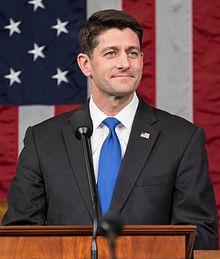
Paul Ryan
David Brooks, the conservative New York Times columnist, offered a more accurate explanation of Trump’s motives. Speaking on The PBS Newshour, Brooks said:
“We are a nation of laws. Donald Trump lives in an entirely different cultural universe. He is more clannist, believing in clan, believing in family, believing in loyalty, not recognizing objective law, not recognizing the procedures that is really how modern government operates….
“It’s not only that he doesn’t know the rules, but at all along and throughout his presidency, he has sort of trampled on the rules almost as a matter of policy, as a matter of character, because he doesn’t believe in that kind of relationships. It’s all personal loyalty, not about laws and norms and standards.”
Republicans don’t fear that Trump will trash the institutions that Americans have cherished for more than 200 years. Institutions like an independent judiciary, a free press, and an incorruptible Justice Department.
He has already attacked all of these—and Republicans have either said nothing or rushed to his defense.
What Republicans truly fear about Donald Trump is that he will finally cross one line too many—like firing Special Counsel Robert Meuller. And that the national outrage following this will force them to launch impeachment proceedings against him.
But it isn’t even Trump they fear will be destroyed.
What they most fear losing is their own hold on nearly absolute power in Congress and the White House.
If Trump is impeached and possibly indicted, he will become a man no one any longer fears. He will be a figure held up to ridicule and condemnation.
Like Adolf Hitler. Like Richard Nixon.
And his Congressional supporters will be branded as losers along with him.
Republicans vividly remember what happened after Nixon was forced to resign on August 9, 1974: Democrats, riding a wave of reform fever, swept Republicans out of the House and Senate—and Jimmy Carter into the White House.
What Ronald Reagan once said about the leadership of the Soviet Union now literally applies to that of the Republican Party:
“They…have openly and publicly declared that the only morality they recognize is what will further their cause, meaning they reserve unto themselves the right to commit any crime, to lie, to cheat, in order to attain that.”
ABC NEWS, ALEX ACOSTA, ALTERNET, ANASTAS MIKOYAN, AP, BBC, BUZZFEED, CBS NEWS, CNN, DAILY KOS, DEPARTMENT OF AGRICULTURE, DEPARTMENT OF HEALTH AND HUMAN SERVICES, DEPARTMENT OF JUSTICE, DEPARTMENT OF LABOR, DEPARTMENT OF TRANSPORTATION, DONALD TRUMP, ELAINE CHAO, FACEBOOK, FBI, GEORGI MALENKOV, JAMES COMEY, JEFF SESSIONS, JOSEPH STALIN, KIM JONG ON, KLIMENT VOROSHILOV, LAVRENTI P. BERIA, MICK MULVANEY, MIKE PENCE, MOTHER JONES, MOVEON, NBC NEWS, NEWSWEEK, NIKKI HALEY, NPR, OFFICE OF MANAGEMENT AND BUDGET, POLITICO, RAW STORY, REINCE PRIEBUS, REUTERS, ROBERT PAYNE, SALON, SEATTLE TIMES, SLATE, SONNY PERDUE, SOVIET UNION, THE ATLANTIC, THE CHICAGO SUN-TIMES, THE CHICAGO TRIBUNE, THE DAILY BEAST, THE GUARDIAN, THE HILL, THE HUFFINGTON POST, THE LOS ANGELES TIMES, THE NEW YORK TIMES, THE RISE AND FALL OF STALIN, THE WALL STREET JOURNAL, THE WASHINGTON POST, TIME, TOM PRICE, TWITTER, U.S. NEWS & WORLD REPORT, UNITED NATIONS, UNITED STATES ATTORNEY GENERAL, UPI, USA TODAY, VYACHESLAV MOLOTOV
In Bureaucracy, History, Politics, Social commentary on December 22, 2017 at 12:02 am
On December 21, 1949, Joseph Vissarionovich Djugashvili turned 70. And millions of Russians feverishly competed to out-do one another in singing his praises.
These celebrations weren’t prompted by love—but fear.
For the man being so honored was internationally known by a far different name: Stalin, which in Russian means: “Man of Steel.”
He had lived up to it: For almost 30 years, through purges and starvation caused by enforced collections of farmers’ crops, he had slaughtered 20 to 60 million people.
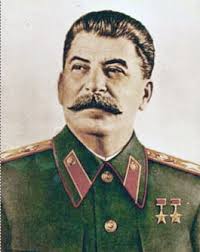
Joseph Stalin
The British historian, Robert Payne, described these rapturous events in his classic 1965 biography, The Rise and Fall of Stalin:
“The guns blazed in salute, the processions marched across the Red Square, and huge balloons bearing the features of a younger Stalin climbed into the wintry sky.
“The official buildings were draped in red, the color of happiness. From all over the country came gifts of embroidered cloth, tapestries and carpets bearing his name or his features.
“Ornamental swords, cutlasses, tankards, cups, everything that might conceivably please him, were sent to the Kremlin, and then displayed in the State Museum of the Revolution….Poets extolled him in verses, He was the sun, the splendor, the lord of creation.
“The novelist Leonid Lenov…foretold the day when all the peoples of the earth would celebrate his birthday; the new calendar would begin with the birth of Stalin rather than with the birth of Christ.”
Lavrenti P. Beria, Stalin’s sinister and feared secret police chief, oozed: “Millions of fighters for peace and democracy in all countries of the world are closing their ranks still firmer around Comrade Stalin.”
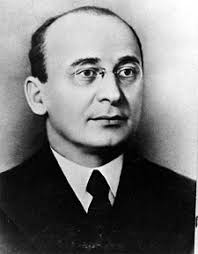
Lavrenti P. Beria
“With a feeling of great gratitude, turning their eyes to Stalin,” gushed Central Committee Secretary Georgi Malenkov, “the peoples of the Soviet Union, and hundreds of millions of peoples in all countries of the world, and all progressive mankind, see in Comrade Stalin their beloved leader and teacher….”
“The mighty voice of the Great Stalin, defending the peace of the world, has penetrated into all corners of the globe,” enthused Defense Commissar Kliment Voroshilov.
“Without Comrade Stalin’s special care,” extolled Trade and Supply Minister Anastas Mikoyan, “we would have never have had a network of meat combines equipped with the latest machinery, canneries and sugar refineries, a fishing industry….”
Foreign Minister Vyacheslav Molotov: “The gigantic Soviet army created during [World War II] was under the direct leadership of Comrade Stalin and built on the basis of the principles of Stalinist military science.”
So those Americans with a sense of history were alarmed and disgusted upon watching President Donald J. Trump—also 70—convene his first full Cabinet meeting since taking office on January 20.
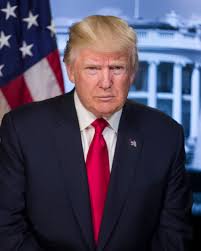
Donald Trump
On June 12, polls showed that only 36% of Americans approved of his conduct. But from his Cabinet members, Trump got praise traditionally lavished on dictators like Stalin and North Korea’s Kim Jong On.
While the Cabinet members sat around a mahogany table in the West Wing of the White House, Trump instructed each one to say a few words about the good work his administration was doing.
“Start with Mike,” ordered Trump, referring to Vice President Mike Pence.
“It is the greatest privilege of my life to serve as the vice president to a president who is keeping his word to the American people,” Pence dutifully said.
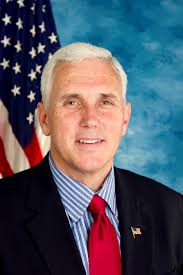
Mike Pence
Then Attorney General Jeff Sessions gushed: “It’s an honor to be able to serve you.”
“My hat’s off to you,” oozed Energy Secretary Rick Perry, referring to Trump’s decision to withdraw from the Paris climate agreement.
Secretary of Agriculture Sonny Perdue flattered: “I just got back from Mississippi. They love you there.”
“What an incredible honor it is to lead the Department of Health and Human Services at this pivotal time under your leadership,” fawned Tom Price. “I can’t thank you enough for the privilege that you’ve given me, and the leadership you’ve shown.”
Secretary of Labor Alex Acosta raved: “I’m deeply honored and I want to thank you for keeping your commitment to the American workers.”
“Thank you for coming over to the Department of Transportation,” eulogized Elaine Chao, its secretary. “I want to thank you for getting this country moving again, and also working again.”
“On behalf of the entire senior staff around you, Mr. President,” brown-nosed Reince Prebus, Trump’s chief of staff, “we thank you for the opportunity and the blessing you’ve given us to serve your agenda and the American people, and we’re continuing to work very hard every day to accomplish those goals.”
Mick Mulvaney, director of the Office of Management and Budget, groveled: “At your direction, we were able to also focus on the forgotten men and women who are paying taxes, so I appreciate your support on pulling that budget together.”
On June 8, former FBI Director James Comey had testified before the Senate Select Committee on Intelligence.
Among the charges he aimed at Trump: The President had demanded a pledge of personal loyalty in return for Comey’s keeping his job.
This would have made Comey his secret police chief.
Comey had refused to give this. And Trump had fired him.
Trump publicly denied this.
Then came the June 12 Cabinet meeting—and all the proof anyone needed.
ABC NEWS, ALTERNET, AP, BLACKMAIL, BUZZFEED, CBS NEWS, CNN, CROOKS AND LIARS, DAILY KOZ, DAVID WISE, DONALD TRUMP, FACEBOOK, FBI, GEORGE W. BUSH, HOUSE JUDICIARY COMMITTEE, J. EDGAR HOOVER, JACKIE SPIER, JAMES COMEY, JOHN DEAN, JOHN F. KENNEDY, JUDITH CAMPBELL, LYNDON B. JOHNSON, MAFIA, MOTHER JONES, MOVEON, NBC NEWS, NEWSWEEK, NPR, POLITICO, RAW STORY, REUTERS, RICHARD NIXON, ROBERT F. KENNEDY, ROBERT MUELLER, SALON, SAM GIANCANA, SEATTLE TIMES, SENATE JUDICIARY COMMITTEE, SLATE, THE AMERICAN POLICE STATE, THE ATLANTIC, THE CHICAGO SUN-TIMES, THE CHICAGO TRIBUNE, THE DAILY BEAST, THE GUARDIAN, THE HILL, THE HUFFINGTON POST, THE LOS ANGELES TIMES, THE NATION, THE NEW YORK TIMES, THE WASHINGTON POST, TIME, TWITTER, U.S. NEWS & WORLD REPORT, UPI, USA TODAY, WILLIAM SULLIVAN
In Bureaucracy, History, Politics, Social commentary on December 18, 2017 at 2:41 am
J. Edgar Hoover was appointed director of the Federal Bureau of Investigation in 1924. His 48-year reign ended only with his death on May 2, 1972.
Niccolo Machiavelli advised would-be princes to be both loved and feared. Hoover took this to heart—and ensured that he was both.
To gain love, he shamelessly advertised himself as the Nation’s foremost guardian against crime and espionage–especially the Communist variety.
He did so through
- A relentless series of interviews with favored journalists and book authors;
- “Authoring” several ghostwritten books; and
- Sponsoring comic books, radio programs and even a high-rated TV series to tout the glories of the FBI.
Millions of Americans believed that only Hoover and his ace G-men stood between them and the threat of crime and/or Communist subversion.
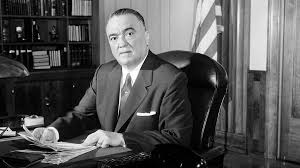
J. Edgar Hoover
Members of the House and Senate Judiciary Committees supposedly oversee the operations of the Justice Department—of which the FBI is the biggest part. Yet they competed with one another to fawn over Hoover and his agency and to give him even greater appropriations than he asked for.
But it wasn’t just popularity that kept Hoover in power for almost a half-century. While he reveled in feeling loved by the public, he did not rely entirely on this as a guarantee of longevity.
“In large measure, Hoover’s power rested on the information he had squirreled away in his secret files,” wrote investigative journalist David Wise in his 1976 bestseller, The American Police State.
“Put simply, the famous Director of the FBI, the cereal boxtop, G-man hero of generations of American youth, was a blackmailer. Hoover collected and filed away facts, tidbits, gossip, scandal and dark secrets that gave him leverage over members of Congress, the Cabinet, even Presidents.”
“He has a file on everybody,” a terrified President Richard Nixon told White House Counsel John Dean.
It was the major reason why Nixon—and Presidents John F. Kennedy and Lyndon B. Johnson—never dared fire him.
Hoover learned, for example, of the sexual relationship between JFK and “party girl” Judith Campbell. Aside from the politically explosive matter of Kennedy’s adultery, Campbell was also bedding Sam Giancana, the most notorious Mafia boss in Chicago.
Fearing that his superior, Attorney General Robert Kennedy, meant to fire him, Hoover, in 1962, let President Kennedy know that he was in on the secret. Hoover quit worrying about involuntary retirement after that.

John F. Kennedy, J. Edgar Hoover and Robert F. Kennedy
Similarly, LBJ told aides he would never fire Hoover: “It’s better to have him inside the tent pissing out, than outside the tent pissing in.”
Now, fast forward to Special Prosecutor Robert Mueller’s assignment to investigate well-documented links between Russian Intelligence agents and members of Donald Trump’s 2016 Presidential campaign.
On May 9, President Trump fired FBI Director James Comey for doing the same thing. When Mueller was appointed to continue that investigation, Trump made clear his anger at the decision.
Since May, Trump, his shills in Congress and Right-wing Fox News have relentlessly attacked Mueller’s integrity and investigative methods.
This despite the fact that Mueller was appointed by Republican President George W. Bush and served with an impeccable reputation for 12 years as FBI director (2001-2013).
From the outset of Mueller’s investigation, there have been widespread fears that Trump would fire him, just as he did Comey.
On December 15, Rep. Jackie Spier (D-Calif.) said: “The rumor on the Hill when I left yesterday was that the President was going to make a significant speech at the end of next week. And on December 22, when we are out of D.C., he was going to fire Robert Mueller.”
A member of the House Intelligence Committee, Spier said that Trump was trying to shut down Congress’ own investigation of Russian interference in the 2016 election.
So: How should Robert Mueller respond?
Two methods are open to him.
The first is to follow the straight-arrow path he has always traveled: Keep pressing on with his investigation and wait to see what happens. And if Trump fires him, hope that, somehow, the probe goes on.
The second is to summon up the ghost of J. Edgar Hoover.
As described by William C. Sullivan, Hoover’s one-time number-three man and the director of his Intelligence Division:

William C. Sullivan
“The moment he would get something on a Senator, he would send one of his errand boys up and advise the Senator that we’re in the course of an investigation and by chance happened to come up with this data on your daughter.
“But we wanted you to know know—we realize you would want to know it. But don’t have any concern—no one will ever learn about it. Well, Jesus, what does that tell the Senator? From that time on, the Senator’s right in his pocket.”
Reports have circulated that many of those Congress members now demanding Mueller’s firing are recipients of financial (and possibly intelligence) support from the Kremlin.
Perhaps it’s time for Mueller to send one of his own “errand boys” up to Capitol Hill for a quiet exchange with such leaders.
Once they realize how much they stand to lose by backing a Kremlin-owned President, they may well change their tunes.

.jpg&imgrefurl=https%3A%2F%2Fen.wikipedia.org%2Fwiki%2FJulius_Caesar&docid=i5zp8D4W-fCkiM&tbnid=pa1aoGEpET-OGM%3A&vet=1&w=1117&h=1769&bih=414&biw=745&ved=0ahUKEwjsvNnh8-rSAhULe7wKHWZBDxoQMwhQKBUwFQ&iact=c&ictx=1)

.jpg)


 Bureaucracybuster's Blog
ABC NEWS, ALTERNET, AP, BUZZFEED, CBS NEWS, CNN, COLLUSION, COMMUNISM, CROOKS AND LIARS, DAILY KOZ, DEMOCRATIC PARTY, DONALD TRUMP JUNIOR, FACEBOOK, FBI, FOX NEWS, G.O.P., INTELLIGENCE, JAMES COMEY, JARED KUSHNER, KGB, MIKE FLYNN, MOTHER JONES, MOVEON, NBC NEWS, NEWSWEEK, NPR, PAUL MANAFORT, POLITICO, POLLUTION, RAW STORY, REPUBLICAN PARTY, REUTERS, ROBERT MUELLER, RUSSIA, SALON, SATIRE, SEATTLE TIMES, SERGEY KISLYAK, SERGEY LAVROV, SLATE, STATE OF THE UNION, STRANGERS IN THE NIGHT, THE ATLANTIC, THE CHICAGO SUN-TIMES, THE CHICAGO TRIBUNE, THE DAILY BEAST, THE GUARDIAN, THE HILL, THE HUFFINGTON POST, THE LOS ANGELES TIMES, THE NATION, THE NEW YORK TIMES, THE WASHINGTON POST, TIME, TREASON, TRUMP TOWER MEETING, TWITTER, U.S. CONSTITUTION, U.S. NEWS & WORLD REPORT, UPI, USA TODAY, USA TODAY DONALD TRUMP, VLADIMIR PUTIN, WIT A LITTLE HELP FROM MY FRIENDS
MORE SONGS IN THE KEY OF TREASON
In Bureaucracy, History, Humor, Law Enforcement, Military, Politics, Social commentary on February 9, 2018 at 12:28 amPresident Donald Trump has accused Democrats of treason. Their crime? Not applauding him during his State of the Union message.
But Article Three of the United States Constitution defines treason as:
“Treason against the United States, shall consist only in levying War against them, or in adhering to their Enemies, giving them Aid and Comfort. No Person shall be convicted of Treason unless on the Testimony of two Witnesses to the same overt Act, or on Confession in open Court.”
United States Constitution
In short, actions such as colluding with a foreign power hostile to the United States (such as Russia) to subvert America’s democratic election process.
Example #1: The infamous June, 2016 meeting at Trump Tower starring Donald Trump’s son, Donald, Jr.; Trump’s son-in-law, Jared Kushner; and Trump’s then-campaign manager, Paul Manafort. Its purpose: To obtain from Russian Intelligence agents “dirt” on Trump’s opponent, Hillary Clinton.
Example #2: On May 9, Trump fired FBI Director James Comey for investigating Russia’s subversion of the 2016 Presidential race.
The next day, he met with Russian Foreign Minister Sergey Lavrov and Russian Ambassador Sergey Kislyak in the Oval Office. During that meeting, Trump shared highly classified Israeli Intelligence about an Islamic State plot to turn laptops into bombs.
TRAITORS ON THE RIGHT
(To be sung to the tune of “Strangers in the Night”)
Traitors on the Right
Exchanging glances
Plotting in the night.
What were the chances
They’d love the KGB
And strangle liberty?
Treason for the Right
Was so inviting.
Treason for the Right
Was so exciting.
Something in their hearts
Said, “We’re the G.O.P.”
Traitors on the Right—such evil people.
They were traitors on the Right
Up to the moment when the KGB stepped in
To start their reign of sin.
Bribes from Russia paved their way
To usher in a tyrant’s day.
And….
Ever since that year
They’ve been in power
Filling us with fear.
In love with Commies–
It offers such delight
For traitors on the Right.
* * * * *
WITH A LITTLE HELP FROM MY VLAD
(To be sung to the tune, “With a Little Help From My Friends”)
What would you think if I ripped off some kids?
Would you walk out and not vote for me?
Lend me your ears and I’ll feed you a line
And I’ll try not to laugh cynically.
Oh, I get by with a little help from my Vlad.
Mm, I can lie with a little help from my Vlad.
Mm, you’re gonna fry with a little help from my Vlad.
What do I do when the bank calls me in?
(Does it worry you to be in debt?)
How do I feel when I need rubles fast?
(Do you worry Vlad might say “Nyet”?)
No, I get by with a little help from my Vlad.
Mm, I can lie with a little help from my Vlad.
Mm, you’re gonna fry with a little help from my Vlad.
(Do you need anybody?)
I just need someone named me.
(Could it be anybody?)
As long as it’s me–me–me–me!
(Would you believe in a love at first sight?)
Yes; it happens with a mirror all the time.
(What do you see when you turn out the light?)
It stays on so that my face can shine.
Oh, I get by with a little help from my Vlad.
Mm, I can lie with a little help from my Vlad.
Mm, you’re gonna die with a little help from my Vlad.
(Do you need anybody?)
I need a Gestapo that kills.
(Could it be anybody?)
As long as it kills I get thrills.
Oh, I get by with a little help from my Vlad.
With a little help from my Vlad.
* * * * *
COLLUSION
(To be sung to the tune of “Pollution”)
If you visit Washington D.C.
You will find it very pretty.
But two things will really make you jump:
One is the Russians and the other is Trump!
Collusion, collusion!
Red Donald’s passing out secrets with glee.
Pick up a rug
And out fall his pals KGB!
See the FBI busting Trump’s friends
As he worries where it all ends.
He says, “Mike Flynn was really quite a guy.
Till he sold me out to the FBI.”
Collusion, collusion!
There are traitors at work day and night.
Just watch them lie
As they sell us out left and right.
Robert Mueller cannot be bought
That’s why traitors are getting caught.
Fox News keeps churning out lie on lie—
While America waits for traitors to die.
Collusion, collusion!
It’s a “Sell Out America” sale.
But you can cheer
When Donald’s ass lands in jail!
* * * * *
(To be sung to the tune of “The Hokey Pokey”)
He slips Vlad secret stuff
And he gives a “Treason!” shout.
As he sells the U.S. out.
That’s what he’s all about.
He hates the FBI.
He dares not tell the truth
‘Cause his whole life’s just a lie.
As he sells the U.S. out.
That’s what he’s all about.
Share this: