Posts Tagged ‘FBI’
2016 PRESIDENTIAL ELECTION, 2020 PRESIDENTIAL ELECTION, ABC NEWS, ADAM SCHIFF, ADOLF HITLER, AFGHANISTAN, ALBERT SPEER, ALTERNET, AMERICABLOG, ANTIFA, AP, BABY BOOMER RESISTANCE, BARACK OBAMA, BLOOMBERG, BUZZFEED, CBS NEWS, CHRIS CILLIZZA, CHRIS KREBS, CHRISTOPHER WRAY, CIA, CNN, CORONAVIRUS, COVID-19, CROOKS AND LIARS, CYBERSECURITY AND INFRASTRUCTURE SECURITY AGENCY, DAILY KOS, DAILY KOZ, DENMARK, DEPARTMENT OF HOMELAND SECURITY, DISOBEYING HITLER: GERMAN RESISTANCE AFTER VALKYRIE (BOOK), DONALD TRUMP, DONALDL TRUMP JR., DRUDGE REPORT, FASCISM, FBI, FIVETHIRTYEIGHT, FRANCE, HARPER’S MAGAZINE, HERMANN GORING, HILLARY CLINTON, HUFFINGTON POST, IMPEACHMENT, IRAQ, JAKE TAPPER, JAMES B. COMEY, JARED KUSHNER, JOE BIDEN, MAIL-IN BALLOTS, MARK ESPER, MEDIA MATTERS, MIKE PENCE, MITCH MCCONNELL, MOTHER JONES, MOVEON, MSNBC, NAZI GERMANY, NBC NEWS, NEWSWEEK, NORWAY, NPR, PAUL MANAFORT, PBS NEWSHOUR, PLANNED PARENTHOOD, POLAND, POLITICO, POLITICUSUSA, RANDALL HANSEN, RAW STORY, REPUBLICAN PARTY, REPUBLICANS, REUTERS, RUSSIA, SALON, SEATTLE TIMES, SLATE, SOVIET UNION, SS, STALINGRAD, TALKING POINTS MEMO, THE ATLANTIC, THE CHICAGO SUN-TIMES, THE CHICAGO TRIBUNE, THE DAILY BEAST, THE DAILY BLOG, THE GUARDIAN, THE HILL, THE HUFFINGTON POST, THE LOS ANGELES TIMES, THE NATION, THE NEW REPUBLIC, THE NEW YORK TIMES, THE PENTAGON, THE VILLAGE VOICE, THE WALL STREET JOURNAL, THE WASHINGTON POST, THINKPROGRESS, TIME, TRUMP TOWER MEETING, TRUTHDIG, TRUTHOUT, TWITTER, TWO POLITICAL JUNKIES, U.S. NEWS & WORLD REPORT, UPI, USA TODAY, VLADIMIR PUTIN, VOTER FRAUD, WEHRMACHT, WERNER VON BLOMBERG, WERNER VON FRITCH, WONKETTE, WORLD WAR 11
In Bureaucracy, History, Law, Law Enforcement, Military, Politics, Social commentary on June 2, 2023 at 12:12 am
On March 19, 1945, facing certain defeat, Nazi Fuhrer Adolf Hitler ordered a massive “scorched-earth” campaign throughout Germany:
“Destroy all German agriculture, industry, ships, communications, roads, food stuffs, mines, bridges, stores and utility plants!”
If implemented, it would deprive surviving Germans of even the barest necessities after the war.
Opposing him was Albert Speer, his favorite architect and Minister of Armaments.
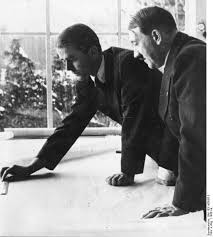
Albert Speer and Adolf Hitler pouring over architectural plans
But Hitler refused to back down. He gave Speer 24 hours to reconsider his opposition to the order.
The next day, Speer told Hitler: “My Fuhrer, I stand unconditionally behind you!”
“Then all is well,” said Hitler, suddenly with tears in his eyes.
“If I stand unreservedly behind you,” said Speer, “then you must entrust me rather than the Gauleiters [district Party leaders serving as provincial governors] with the implementation of your decree.”
Filled with gratitude, Hitler signed the decree Speer had thoughtfully prepared before their fateful meeting.
By doing so, Hitler unintentionally gave Speer the power to thwart his “scorched earth” order.
Trained as an architect, Speer had joined the Nazi Party in 1931. He met Hitler in 1933, when he presented the Fuhrer with architectural designs for the Nuremberg Rally scheduled for that year.
From then on, Speer became Hitler’s “genius architect” assigned to create buildings meant to last for a thousand years. “If Hitler had been capable of friendship,” Speer said after the war, “I would have been that friend.”
In 1943, Hitler appointed him Minister of Armaments, charged with revitalizing the German war effort.
Nevertheless, Speer now crisscrossed Germany, persuading military leaders and district governors to not destroy the vital facilities that would be needed after the war.
“No other senior National Socialist could have done the job,” writes Randall Hanson, author of Disobeying Hitler: German Resistance After Valkyrie.
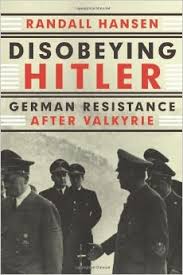
“Speer was one of the very few people in the Reich—-perhaps even the only one—with such power to influence actors’ willingness/unwillingness to destroy.”
Despite his later conviction for war crimes at Nuremberg, Speer never regretted his efforts to save Germany from total destruction at the hands of Adolf Hitler.
* * * * *
As the Third Reich came to its fiery end, Adolf Hitler blamed the German people for being “unworthy” of his “genius” and losing the war he had started.
His attitude was: “If I can’t rule Germany, then there won’t be a Germany.”
Fortunately for Germany, one man—Albert Speer—finally broke ranks with his Fuhrer.

Albert Speer
Risking death, he refused to carry out Hitler’s “scorched earth” order. Even more important, he successfully blocked such destruction and persuaded influential military and civilian leaders to disobey the order as well.
As a result, those targets slated for destruction were spared.
* * * * *
Fast forward 75 years: Facing the end of his Presidency, Donald Trump desperately sought to remain in power. Having “joked” about being “President-for-Life,” he now fought to make that a reality.
Unlike his 44 predecessors, he rejected the will of the voters and for almost three weeks denied his successor access to the resources he needed to launch a smooth transition.
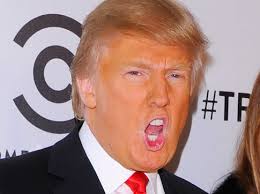
Donald Trump
Even worse: Instead of showing concern for the country he claimed to love, Trump sought to relentlessly destroy those institutions that guarantee American freedom and safety:
- The Pentagon
- The CIA
- The FBI
- The Cybersecurity and Infrastructure Security Agency
His attitude clearly was: “If I can’t rule America, there won’t be an America.”
Meanwhile, House and Senate Republicans embraced his most outrageous lies—or refused to openly refute them—as the COVID-19 pandemic slaughtered about 1,000 Americans a day.
Even Republicans who privately admitted the Trump era was ending realized that 70 million hate-filled Americans voted for him in 2020. And eagerly awaited the coming of the next would-be Fuhrer.
They would also eagerly vote out of office any Republican who dared break with the man they worshiped like a cult leader.
For Congressional Republicans, staying in office—and keeping their power and perks—was their top priority.
On November 25, 2019, CNN political correspondent Jake Tapper interviewed Representative Adam Schiff on Donald Trump’s upcoming impeachment trial for abuse of power and obstruction of Congress.
What would it mean if Republicans uniformly oppose any articles of impeachment against Trump? asked Tapper.
“It will have very long-term consequences, if that’s where we end up,” replied Schiff.
“And if not today, I think Republican members in the future, to their children and their grandchildren, will have to explain why they did nothing in the face of this deeply unethical man who did such damage to the country.”
In the end, only one of 53 Republican Senators—Mitt Romney—dared to vote for impeachment. And he became an instant pariah for it.
On March 18, 1945, Albert Speer, opposing Hitler’s plans to destroy Germany’s infrastructure, addressed a memo to his Fuhrer, in which he wrote: “No one has the right to take the viewpoint that the fate of the German people is tied to his personal fate.”
The country is still waiting for a Republican Albert Speer to step forward and save America from the self-destructive intentions of its own would-be Fuhrer.
2016 PRESIDENTIAL ELECTION, 2020 PRESIDENTIAL ELECTION, ABC NEWS, ADAM SCHIFF, ADOLF HITLER, AFGHANISTAN, ALBERT SPEER, ALTERNET, AMERICABLOG, ANTIFA, AP, BABY BOOMER RESISTANCE, BARACK OBAMA, BLOOMBERG, BUZZFEED, CBS NEWS, CHRIS CILLIZZA, CHRIS KREBS, CHRISTOPHER WRAY, CIA, CNN, CORONAVIRUS, COVID-19, CROOKS AND LIARS, CYBERSECURITY AND INFRASTRUCTURE SECURITY AGENCY, DAILY KOS, DAILY KOZ, DENMARK, DEPARTMENT OF HOMELAND SECURITY, DISOBEYING HITLER: GERMAN RESISTANCE AFTER VALKYRIE (BOOK), DONALD TRUMP, DONALDL TRUMP JR., DRUDGE REPORT, FASCISM, FBI, FIVETHIRTYEIGHT, FRANCE, HARPER’S MAGAZINE, HERMANN GORING, HILLARY CLINTON, HUFFINGTON POST, IMPEACHMENT, IRAQ, JAKE TAPPER, JAMES B. COMEY, JARED KUSHNER, JOE BIDEN, MAIL-IN BALLOTS, MARK ESPER, MEDIA MATTERS, MIKE PENCE, MITCH MCCONNELL, MOTHER JONES, MOVEON, MSNBC, NAZI GERMANY, NBC NEWS, NEWSWEEK, NORWAY, NPR, PAUL MANAFORT, PBS NEWSHOUR, PLANNED PARENTHOOD, POLAND, POLITICO, POLITICUSUSA, RANDALL HANSEN, RAW STORY, REPUBLICAN PARTY, REPUBLICANS, REUTERS, RUSSIA, SALON, SEATTLE TIMES, SLATE, SOVIET UNION, SS, STALINGRAD, TALKING POINTS MEMO, THE ATLANTIC, THE CHICAGO SUN-TIMES, THE CHICAGO TRIBUNE, THE DAILY BEAST, THE DAILY BLOG, THE GUARDIAN, THE HILL, THE HUFFINGTON POST, THE LOS ANGELES TIMES, THE NATION, THE NEW REPUBLIC, THE NEW YORK TIMES, THE PENTAGON, THE VILLAGE VOICE, THE WALL STREET JOURNAL, THE WASHINGTON POST, THINKPROGRESS, TIME, TRUMP TOWER MEETING, TRUTHDIG, TRUTHOUT, TWITTER, TWO POLITICAL JUNKIES, U.S. NEWS & WORLD REPORT, UPI, USA TODAY, VLADIMIR PUTIN, VOTER FRAUD, WEHRMACHT, WERNER VON BLOMBERG, WERNER VON FRITCH, WONKETTE, WORLD WAR 11
In Bureaucracy, History, Law, Law Enforcement, Military, Politics, Social commentary on June 1, 2023 at 12:32 am
President Donald Trump seemed poised to fire his handpicked CIA director.
He believed that Gina Haspel had stonewalled the release of documents supposedly exposing “deep state” plots against his 2016 campaign during the Obama administration.
[In fact, the Obama administration had acted entirely within the law during the 2016 Presidential campaign. The FBI has a legal mandate to keep track of subversive activities—especially when they involve members of a Presidential candidate’s campaign.
[On July 9, 2016, high-ranking representatives of the Trump campaign met at Trump Tower with at least two lobbyists with ties to Russian dictator Vladimir Putin.

Gina Haspel
[The participants included:
- Trump’s son, Donald Trump Jr.;
- His son-in-law, Jared Kushner;
- His then-campaign manager, Paul Manafort;
- Natalia Veselnitskaya, a Russian lawyer with ties to Putin; and
- Rinat Akhmetshin, a former Soviet counterintelligence officer suspected of “having ongoing ties to Russian Intelligence.”
[The reason for the meeting: To dig up “dirt” the Russians might have on Hillary Clinton, Trump’s opponent for the White House.]
Trump was also angry at FBI Director Christopher Wray—who replaced James B. Comey in May, 2017. Trump had fired Comey for daring to investigate ties between his 2016 campaign and Russian Intelligence agents.

Christopher Wray
The reason for his anger at Wray: Wray had dared to contradict Trump’s false claims that
- “Rampant voter fraud” was a widespread problem; and
- Antifa posed a greater terrorism danger than white supremacist groups.
During the 2016 Presidential race, Russian propaganda played a major role in convincing millions of Americans to vote for Donald Trump. Social media platforms—especially Facebook and Twitter—were flooded with genuinely fake news to sow discord among Americans and create a pathway for Trump’s election.
Russian President Vladimir Putin, a former KGB officer, had quickly assessed Trump as an egotistical narcissist. By appealing to Trump’s vanity, Putin expected to sharply reduce the military and political threat the United States represented to a resurgent Russia.
So notorious was the role played by Russian Intelligence in misleading American voters in 2016 that the Department of Homeland Security (DHS) was determined to prevent a repetition in 2020.
The man ultimately tasked with this mission was Chris Krebs, the director of the Cybersecurity and Infrastructure Security Agency run by DHS.
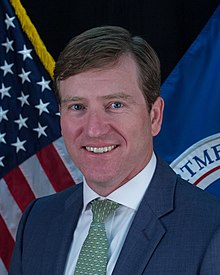
Chris Krebs
Krebs launched a massive effort to counter lies spread by Russians—and Americans—on social media platforms. Among his duties:
- Sharing Intelligence from agencies such as the CIA and National Security Agency with local officials about foreign efforts at election interference.
- Ensuring that domestic voting equipment was secure.
- Attacking domestic misinformation head-on.
As a result, Krebs was widely praised for revamping the department’s cybersecurity efforts and increasing coordination with state and local governments.
By all accounts—except Trump’s—the 2020 election went very smoothly.
On November 17, 2020, Trump fired Chris Krebs.
The reason: Krebs had not only countered Russian propaganda lies—he had dared to counter Trump’s as well. For example: He rejected Trump’s claims of widespread voter fraud: There “is no evidence that any voting system deleted or lost votes, changed votes, or was in any way compromised.”
Trump fired Krebs by tweet—and accompanied the outrage with yet another lie:
“The recent statement by Chris Krebs on the security of the 2020 election was highly inaccurate, in that there were massive improprieties and fraud, including dead people voting, poll watchers not allowed into polling locations, glitches in the voting machines which changed votes from Trump to Biden, late voting, and many more. Therefore, effective immediately, Chris Krebs has been terminated as director of the Cybersecurity and Infrastructure Security Agency.”
In a November 17 story on the CNN website, CNN reporters Kaitlan Collins and Paul LeBlanc bluntly concluded:
“[Krebs’] dismissal underscores the lengths Trump is willing to go to punish those who don’t adopt his conspiratorial view of the election.
“Since CNN and other outlets called the race for President-elect Joe Biden, Trump has refused to accept the results, instead pushing baseless conspiracies that his second term is being stolen.
“This includes falsely claiming during an election night address that he had already won reelection, that he had won states that were actually still up in the air at the time and that his opponents were perpetrating a fraud.”
* * * * *
Seventy-five years earlier, on March 19, 1945, facing certain defeat, Adolf Hitler ordered a massive “scorched-earth” campaign throughout Germany.
All German agriculture, industry, ships, communications, roads, food stuffs, mines, bridges, stores and utility plants were to be destroyed.
If implemented, it would deprive the entire German population of even the barest necessities after the war.
Opposing him—at first openly, and later secretly—was Albert Speer, his former architect and now Minister of Armaments.
Speer argued that there must be a future for the German people: “If our enemies wish to destroy us, why help them? We must leave the people something.”
But Hitler refused to back down: “I don’t want to hear any more.”
He gave Speer 24 hours to reconsider his opposition to the order.
Speer could not directly promise to carry out Hitler’s “scorched earth” order. So he gave Hitler a vague answer that essentially committed him to nothing: “My Fuhrer, I stand unconditionally behind you!”
2016 PRESIDENTIAL ELECTION, 2020 PRESIDENTIAL ELECTION, ABC NEWS, ADAM SCHIFF, ADOLF HITLER, AFGHANISTAN, ALBERT SPEER, ALTERNET, AMERICABLOG, ANTIFA, AP, BABY BOOMER RESISTANCE, BARACK OBAMA, BLOOMBERG, BUZZFEED, CBS NEWS, CHRIS CILLIZZA, CHRIS KREBS, CHRISTOPHER WRAY, CIA, CNN, CORONAVIRUS, COVID-19, CROOKS AND LIARS, CYBERSECURITY AND INFRASTRUCTURE SECURITY AGENCY, DAILY KOS, DAILY KOZ, DENMARK, DEPARTMENT OF HOMELAND SECURITY, DISOBEYING HITLER: GERMAN RESISTANCE AFTER VALKYRIE (BOOK), DONALD TRUMP, DONALDL TRUMP JR., DRUDGE REPORT, FASCISM, FBI, FIVETHIRTYEIGHT, FRANCE, HARPER’S MAGAZINE, HERMANN GORING, HILLARY CLINTON, HUFFINGTON POST, IMPEACHMENT, IRAQ, JAKE TAPPER, JAMES B. COMEY, JARED KUSHNER, JOE BIDEN, MAIL-IN BALLOTS, MARK ESPER, MEDIA MATTERS, MIKE PENCE, MITCH MCCONNELL, MOTHER JONES, MOVEON, MSNBC, NAZI GERMANY, NBC NEWS, NEWSWEEK, NORWAY, NPR, PAUL MANAFORT, PBS NEWSHOUR, PLANNED PARENTHOOD, POLAND, POLITICO, POLITICUSUSA, RANDALL HANSEN, RAW STORY, REPUBLICAN PARTY, REPUBLICANS, REUTERS, RUSSIA, SALON, SEATTLE TIMES, SLATE, SOVIET UNION, SS, STALINGRAD, TALKING POINTS MEMO, THE ATLANTIC, THE CHICAGO SUN-TIMES, THE CHICAGO TRIBUNE, THE DAILY BEAST, THE DAILY BLOG, THE GUARDIAN, THE HILL, THE HUFFINGTON POST, THE LOS ANGELES TIMES, THE NATION, THE NEW REPUBLIC, THE NEW YORK TIMES, THE PENTAGON, THE VILLAGE VOICE, THE WALL STREET JOURNAL, THE WASHINGTON POST, THINKPROGRESS, TIME, TRUMP TOWER MEETING, TRUTHDIG, TRUTHOUT, TWITTER, TWO POLITICAL JUNKIES, U.S. NEWS & WORLD REPORT, UPI, USA TODAY, VLADIMIR PUTIN, VOTER FRAUD, WEHRMACHT, WERNER VON BLOMBERG, WERNER VON FRITCH, WONKETTE, WORLD WAR 11
In Bureaucracy, History, Law, Law Enforcement, Military, Politics, Social commentary on May 31, 2023 at 12:25 am
On November 3, 2020, Joe Biden became President-elect of the United States by winning 79,658,000 votes, or 51% of the vote, compared to 73,886,400 votes, or 47.2% of the vote cast for President Donald Trump.
In the Electoral College—which actually determines the winner—the results were even more stunning: 306 votes for Biden, compared with 232 for Trump. It takes 270 votes to be declared the victor.
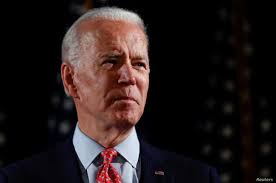
Joe Biden
Despite this, Trump steadfastly refused to concede. He made a series of baseless claims that he was cheated of victory by
- Illegal aliens being allowed to vote.
- A sinister computer program that turned Trump votes into Biden ones.
He repeatedly filed legal challenges to the vote, claiming himself the victim of massive fraud. This despite the utter lack of evidence of it.
On November 13, nine cases meant to attack President-elect Joe Biden’s win in key states were denied or dropped. A law firm challenging the vote count in Pennsylvania withdrew from the effort.
In Michigan, Trump’s attorneys dropped their federal suit to block the certification of Detroit-area ballots.
By November 21, Trump had lost in 30 cases dismissed by judges or withdrawn by his own attorneys.
Meanwhile, top Republicans—such as Vice President Mike Pence and Senate Majority Leader Mitch McConnell—refused to congratulate Biden as the winner.

Mitch McConnell
In a November 17, 2020 analysis, entitled “Donald Trump Doesn’t Seem to Want to Do His Job Anymore,” CNN Editor-at-Large Chris Cillizza wrote:
While Trump relentlessly asserted that he won the 2020 election, “he’s done next to nothing—at least publicly—to suggest he plans to continue doing the job in any serious manner through January 20.”
According to Cillizza, since losing the election, Trump had filled his days with:
- Golfing
- Tweeting
- Making controversial military decisions
- Firing people
Specifically:
Golfing: He played golf at his club in Virginia twice on the weekend of November 14-15. He was golfing the previous weekend, when Joe Biden was declared the winner of the 2020 race by CNN and other media outlets.
Tweeting: He tweeted numerous lies and conspiracy theories, claiming he won a second term but was cheated by the counting of fraudulent votes. This led Twitter to flag a large number of his tweets as “inaccurate.”
Making controversial military decisions: The Pentagon signaled it was planning—on Trump’s orders—to withdraw troops from Afghanistan and Iraq. [American forces had been warring with the Taliban in Afghanistan since 2001; they had been warring against Iraqi insurgents since 2003.]
And in a move that was truly frightening: The New York Times reported that Trump asked his top advisers for options to strike at Iran’s nuclear capabilities before he left office. This would embroil the United States in a war that could easily turn nuclear.
Firing people: On November 9, Trump fired Secretary of Defense Mark Esper. Four senior civilian officials were subsequently fired or resigned—Esper’s chief of staff and the top officials overseeing policy and intelligence.
They were replaced with flunkies loyal to Trump personally.
[This was in fact how Adolf Hitler took control of the Wehrmacht.
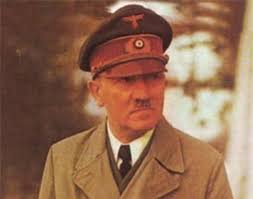
Adolf Hitler
[Since taking command of Germany in the summer of 1934, Hitler wanted to replace two high-ranking military officials: General Werner von Fritsch and Colonel General Werner von Blomberg. Both were convinced that Hitler’s increasingly aggressive foreign policy was putting Germany on a collision course with war—a war the Fatherland could not win.
[Hitler, in fact, meant to go to war—and despised Fritsch’s and Blomberg’s hesitation to do so. He decided to rid himself of both men.
[On January 12, 1938, Blomberg married Erna Gruhn, with Hitler and Reichsmarshall Hermann Goring attending as witnesses. Soon afterward, Berlin police discovered that Gruhn had a criminal record as a prostitute and had posed for pornographic photographs.
[Marrying a woman with such a background violated the standard of conduct expected of German officers. Hitler saw the scandal as an opportunity to dispose of Blomberg—who was forced to resign.
[Shortly after Blomberg was forced out in disgrace, the SS—Hitler’s private police force—presented Hitler with a file that falsely accused Werner von Fritsch of homosexuality. Fritsch angrily denied the accusation but resigned on February 4, 1938.
[From that point on, Hitler was in de facto command of the German Armed Services.]
Eighty-two years later, on November 3, 2020, President Donald Trump lost the 2020 Presidential election to former Vice President Joe Biden.
But Trump seemed determine to inflict as much damage as possible on the agencies responsible for protecting the security of the nation.
Besides wreaking havoc on the Pentagon, Trump was reportedly preparing to fire CIA Director Gina Haspel and FBI Director Christopher Wray.
Trump had accused Haspel of stonewalling the release of documents that would supposedly expose “deep state” plots against Trump’s campaign and transition during the Obama administration.
In fact, the Obama administration had acted entirely within the law during the 2016 Presidential campaign. The FBI has a legal mandate to keep track of subversive activities—especially when they involve members of a Presidential campaign such as Trumps.
And he was furious that Wray had dared to contradict Trump’s false claims that:
- “Rampant voter fraud” was a widespread problem; and
- Antifa posed a greater terrorism danger than white supremacist groups.
For Trump, contradiction was the same as treason.
2016 PRESIDENTIAL ELECTION, 2020 PRESIDENTIAL ELECTION, ABC NEWS, ADAM SCHIFF, ADOLF HITLER, AFGHANISTAN, ALBERT SPEER, ALTERNET, AMERICABLOG, ANTIFA, AP, BABY BOOMER RESISTANCE, BARACK OBAMA, BLOOMBERG, BUZZFEED, CBS NEWS, CHRIS CILLIZZA, CHRIS KREBS, CHRISTOPHER WRAY, CIA, CNN, CORONAVIRUS, COVID-19, CROOKS AND LIARS, CYBERSECURITY AND INFRASTRUCTURE SECURITY AGENCY, DAILY KOS, DAILY KOZ, DENMARK, DEPARTMENT OF HOMELAND SECURITY, DISOBEYING HITLER: GERMAN RESISTANCE AFTER VALKYRIE (BOOK), DONALD TRUMP, DONALDL TRUMP JR., DRUDGE REPORT, FASCISM, FBI, FIVETHIRTYEIGHT, FRANCE, HARPER’S MAGAZINE, HERMANN GORING, HILLARY CLINTON, HUFFINGTON POST, IMPEACHMENT, IRAQ, JAKE TAPPER, JAMES B. COMEY, JARED KUSHNER, JOE BIDEN, MAIL-IN BALLOTS, MARK ESPER, MEDIA MATTERS, MIKE PENCE, MITCH MCCONNELL, MOTHER JONES, MOVEON, MSNBC, NAZI GERMANY, NBC NEWS, NEWSWEEK, NORWAY, NPR, PAUL MANAFORT, PBS NEWSHOUR, PLANNED PARENTHOOD, POLAND, POLITICO, POLITICUSUSA, RANDALL HANSEN, RAW STORY, REPUBLICAN PARTY, REPUBLICANS, REUTERS, RUSSIA, SALON, SEATTLE TIMES, SLATE, SOVIET UNION, SS, STALINGRAD, TALKING POINTS MEMO, THE ATLANTIC, THE CHICAGO SUN-TIMES, THE CHICAGO TRIBUNE, THE DAILY BEAST, THE DAILY BLOG, THE GUARDIAN, THE HILL, THE HUFFINGTON POST, THE LOS ANGELES TIMES, THE NATION, THE NEW REPUBLIC, THE NEW YORK TIMES, THE PENTAGON, THE VILLAGE VOICE, THE WALL STREET JOURNAL, THE WASHINGTON POST, THINKPROGRESS, TIME, TRUMP TOWER MEETING, TRUTHDIG, TRUTHOUT, TWITTER, TWO POLITICAL JUNKIES, U.S. NEWS & WORLD REPORT, UPI, USA TODAY, VLADIMIR PUTIN, VOTER FRAUD, WEHRMACHT, WERNER VON BLOMBERG, WERNER VON FRITCH, WONKETTE, WORLD WAR 11
In Bureaucracy, History, Law, Law Enforcement, Military, Politics, Social commentary on May 30, 2023 at 12:10 am
Albert Speer, Minister of Armaments for the Third Reich, was appalled.
His Fuhrer, Adolf Hitler—the man he had idolized for 14 years—had just passed a death sentence on Germany, the nation he claimed to love above all others.
On September 1, 1939, Hitler had triggered World War II with the invasion of Poland. This led to a series of quick, spectacular victories—over Poland, Norway, Denmark and France.
Then, on June 22, 1941, Hitler turned on his ally, the Soviet Union, with which he had signed a non-aggression pact in August, 1939.
It had taken the Wehrmacht six weeks to conquer France. Hitler believed that was how long it would take to defeat the Soviet Union.

German soldiers invading the Soviet Union
Again, a series of spectacular battlefield victories followed—before the Wehrmacht was halted at the gates of Moscow. A year later, still enmeshed in Russia, the turning point came at Stalingrad, with the loss of the elite Sixth Army and 800,000 soldiers.
Starting in 1943, the Red Army slowly but steadily regained ground it had lost—the western half of Russia—and began pushing back the Germans. By March, 1945, it was fighting inside Germany—and heading straight for its capital: Berlin.
On March 19, 1945, facing certain defeat, Hitler ordered a massive “scorched-earth” campaign throughout Germany.
All German agriculture, industry, ships, communications, roads, food stuffs, mines, bridges, stores and utility plants were to be destroyed.
If implemented, it would deprive the entire German population of even the barest necessities after the war. And he entrusted the campaign to Albert Speer, his favorite architect-turned-Minister-of-Armaments.
Click here: Hitler’s “Scorched Earth” Decree and Albert Speer’s Response
Now living in a bunker 50 feet below bomb-shattered Berlin, Hitler gave full vent to his most destructive impulses.
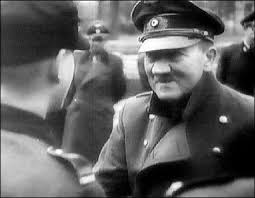
Adolf Hitler addressing boy soldiers as the Third Reich crumbles
“If the war is lost,” Hitler told Speer, “the nation will also perish. This fate is inevitable. There is no necessity to take into consideration the basis which the people will need to continue even a most primitive existence.
“On the contrary, it will be better to destroy these things ourselves, because this nation will have proved to be the weaker one and the future will belong solely to the stronger eastern nation.
“Besides, those who will remain after the battle are only the inferior ones, for the good ones have all been killed.”
Seventy-five years after Adolf Hitler planned the destruction of Germany, Donald Trump planned the same fate for the United States.
On November 3, 2020, Trump lost his bid to win another four years as President of the United States. In the early hours of November 4, 2020, he poured out his fury and self-pity in a televised address from the White House:
“Millions and millions of people voted for us tonight, and a very sad group of people is trying to disenfranchise that group of people and we won’t stand for it, we will not stand for it.”
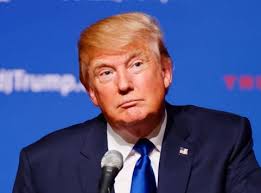
Donald Trump
For a man who had tried—often successfully—to deprive millions of their right to vote, Trump made it clear that he didn’t know what disenfranchisement means.
Sounding like a petulant child whose party has been called off, Trump continued:
“We were getting ready for a big celebration, we were winning everything and all of a sudden it was just called off. The results tonight have been phenomenal…I mean literally we were just all set to get outside and just celebrate something that was so beautiful, so good, such a vote, such a success.”
It was Trump—not his challenger, former Vice President Joe Biden—who was demanding that the electoral process be halted. And that those votes that had not yet been counted be, in effect, flushed down the toilet.
“The citizens of this country have come out in record numbers, this a record, there’s never been anything like it to support our incredible movement….Most importantly, we’re winning Pennsylvania by a tremendous amount of votes. We’re up 690,000 votes.”
Owing to the Coronavirus pandemic—which Trump had refused to aggressively address from its outset in January—millions of Americans had voted by mail. This was especially true of Democrats, who didn’t want to stand in Coronavirus-infected lines.
But Trump had convinced millions of Republican voters that voting by mail was subversive. So they showed up at the polls or stayed away out of a secret fear of COVID-19.
Meanwhile, at the White House on Election Night, Trump continued to rant:
“These aren’t even close, this is not like, Oh, it’s close. With 64% of the vote in, it’s going to be almost impossible and we’re coming into good Pennsylvania areas where they happen to like your president. We’re winning Michigan…I said ‘Wow, that’s a lot’…
“And we’re winning Wisconsin…so when you take those three states in particular and you take all of the others…and all of a sudden it’s not like we’re up 12 votes and we have 60% left, we won states and all of a sudden, I said, ‘What happened to the election? It’s off.’ And we have all these announcers saying, ‘What’s happened’ and then they said, ‘Ohhh.’”
But this did not alter the reality that Joe Biden became President-elect of the United States by winning 79,106,010 votes, or 51% of the vote.
2016 PRESIDENTIAL CAMPAIGN, ABC NEWS, ALTERNET, AMERICABLOG, AP, ASHLEY STROHMIER, ATTORNEYS, BABY BOOMER RESISTANCE, BBC, BLOOMBERG NEWS, BUZZFEED, CBS NEWS, CLASSIFIED DOCUMENTS, CNN, CROOKS AND LIARS, CROSS-EXAMINATION, DAILY KOS, DONALD TRUMP, FBI, FIVETHIRTYEIGHT, FOX AND FRIENDS, FOX NEWS, HARPER’S MAGAZINE, HILLARY CLINTON, HOUSE OF REPRESENTATIVES, HOUSE OVERSIGHT COMMITTEE, HUFFINGTON POST, HUNTER BIDEN, JAMES COMER, JAMES COMEY, JAMIE RASKIN, JIM JORDAN, JOSEPH BIDEN, JOSEPH R. MCCARTHY, KEVIN MCCARTHY, LETITIA JAMES, MAR-A-LAGO, MEDIA MATTERS, MOTHER JONES, MOVEON, MSNBC, NBC NEWS, NEW REPUBLIC, NEWSDAY, NEWSWEEK, NPR, PBS NEWSHOUR, POLITICO, POLITICUSUSA, RACHEL MADDOW, RAW STORY, REPUBLICAN PARTY, REUTERS, Ronald Reagan, SALON, SEAN HANNITY, SEATTLE TIMES, SLATE, SOVIET UNION, SPEAKER OF THE HOUSE, TALKING POINTS MEMO, THE ATLANTIC, THE CHICAGO SUN-TIMES, THE CHICAGO TRIBUNE, THE DAILY BEAST, THE DAILY BLOG, THE GUARDIAN, THE HILL, THE HUFFINGTON POST, THE INTERCEPT, THE LOS ANGELES TIMES, THE NATION, THE NEW REPUBLIC, THE NEW YORK TIMES, THE NEW YORKER, THE VILLAGE VOICE, THE WASHINGTON POST, THINKPROGRESS, TIME, TRUTHDIG, TRUTHOUT, TWITTER, U.S. DEPARTMENT OF JUSTICE, U.S. NEWS & WORLD REPORT, UPI, USA TODAY
In Bureaucracy, History, Politics, Social commentary on May 26, 2023 at 12:10 am
Two suggestions for interviewees with a dark secret to hide:
First: Don’t give interviews to journalists you like. (Or, in the case of Fox News, pseudo-journalists.)
Second: Don’t give interviews at 4 A.M.
Why?
Because you’re less likely to be on guard with a friendly journalist—and thus reveal truths you will later regret spilling.
And because at 4 A.M. you’re likely so tired or keyed up you make the same mistake.
Part One of this series spotlighted such a slip-up by Kevin McCarthy (R-Bakersfield, CA) on September 30, 2015.
In just 51 words, McCarthy revealed that the House Select Committee on Benghazi was not a legitimate investigative body. Its real purpose was to sabotage the expected Presidential candidacy of Hillary Clinton.
In doing so, McCarthy unintentionally sabotaged his own chances of becoming Speaker of the House when the then-Speaker, John Boehner, retired
Part Two of this series showed how Donald Trump made a similar mistake on September 21, 2022.
Appearing on the Right’s favorite television network, Fox News, Trump thoroughly embarrassed himself.
He was facing investigation for illegally removing classified government documents when he left the White House on January 20, 2021, and storing them at his private club, Mar-a-Lago, in Palm Beach, Florida.
Once again, Trump asserted he had done nothing wrong: “If you’re the President of the United States, you can declassify just by saying, ‘It’s declassified.’ Even by thinking about it, because you’re sending it to Mar-a-Lago or to wherever you’re sending it.”
Not only was this blatantly untrue, it was so outlandish that late-night talk show hosts had a comedic field day with it.
And still Republican politicians refuse to learn.
Latest case in point: House Oversight Committee Chairman James Comer (R-KY).

James Comer
Comer made the same mistake as McCarthy and Trump—letting the public in on an embarrassing secret—with an added twist. He did so at 4 A.M. on May 22.
Speaking—you guessed it—on Fox News, Comer unintentionally admitted weaponizing his investigative committee to aid Donald Trump’s Presidential ambitions.
Fox News host Ashley Strohmier threw out a comforting softball question: “We have talked to you about this on the show, about how the media can just not ignore this any longer. In an op-ed in The Washington Post, it says, ‘Millions Flowed to Biden Family Members. Don’t Pretend It Doesn’t Matter.’

Ashley Strohmier
“So do you think that because of your investigation, that is what’s moved this needle with the media?”
Comer, whose committee has been relentlessly investigating Hunter Biden, the son of President Joseph Biden, leaped to answer:
“Absolutely. There’s no question. You look at the polling, and right now Donald Trump is seven points ahead of Joe Biden and trending upward, Joe Biden’s trending downward.
“And I believe that the media is looking around, scratching their head, and they’re realizing that the American people are keeping up with our investigation.”
His claim that Trump has a seven-point edge over Biden stems from an ABC News/Washington Post survey in early May. But other surveys show Biden leading, and polling generally indicates a tight race between Biden and Trump.
In fact, there is little evidence that House GOP investigations of Biden’s family are having a negative effect on Biden’s political standing. Biden’s approval rating remains low, but surveys show little indication that the Comer-led investigations have had a major effect one way or another.
On May 10, Republicans claimed that President Biden’s family members received millions in suspicious money transfers before Biden became president.
But despite promises of a bombshell revelation, the new evidence Republicans displayed did not directly implicate Biden.
Comer said that bank records obtained through subpoenas showed that the President’s son Hunter Biden, his brother James Biden and his son Beau’s widow, Hallie Biden, received payments totaling more than $10 million from foreign sources, including from individuals aligned with the Chinese Communist Party.

Hunter Biden
Comer didn’t say that the President himself received any payments or that he performed an official act in exchange for his family members receiving the money.
Rep. Jamie Raskin (D-MD.), the committee’s top Democrat, said Comer had failed to provide evidence substantiating his claims of wrongdoing by Biden.
“He continues to bombard the public with innuendo, misrepresentations, and outright lies, recycling baseless claims from stories that were debunked years ago,” said Raskin.
Even before Republicans won control of the House on November 8, 2022, they openly admitted their upcoming investigations would target political opponents and influence public opinion for the 2024 elections
On August 10, 2022, Rep. Jim Jordan (R-OH): “So, all these things need to be investigated just so you have the truth, plus that will help frame up the 2024 race, when I hope and I think President Trump is going to run again and we need to make sure that he wins.”
And on October 26, James Comer said: “There are a lot of factors that are going to prevent Joe Biden from running. His age, the results of the midterm elections in two weeks. But also his son. Look, this Biden family investigation’s only going to ramp up in a Republican majority.”
Not since the notorious reign of Wisconsin Senator Joseph R. McCarthy have Congressional Republicans been so open about their all-consuming drive for all-encompassing power.
2016 PRESIDENTIAL CAMPAIGN, ABC NEWS, ALTERNET, AMERICABLOG, AP, ASHLEY STROHMIER, ATTORNEYS, BABY BOOMER RESISTANCE, BBC, BLOOMBERG NEWS, BUZZFEED, CBS NEWS, CLASSIFIED DOCUMENTS, CNN, CROOKS AND LIARS, CROSS-EXAMINATION, DAILY KOS, DONALD TRUMP, FBI, FIVETHIRTYEIGHT, FOX AND FRIENDS, FOX NEWS, HARPER’S MAGAZINE, HILLARY CLINTON, HOUSE OF REPRESENTATIVES, HOUSE OVERSIGHT COMMITTEE, HUFFINGTON POST, HUNTER BIDEN, JAMES COMER, JAMES COMEY, JAMIE RASKIN, JIM JORDAN, JOSEPH BIDEN, JOSEPH R. MCCARTHY, KEVIN MCCARTHY, LETITIA JAMES, MAR-A-LAGO, MEDIA MATTERS, MOTHER JONES, MOVEON, MSNBC, NBC NEWS, NEW REPUBLIC, NEWSDAY, NEWSWEEK, NPR, PAUL RYAN, PBS NEWSHOUR, POLITICO, POLITICUSUSA, RACHEL MADDOW, RAW STORY, REPUBLICAN PARTY, REUTERS, Ronald Reagan, SALON, SEAN HANNITY, SEATTLE TIMES, SLATE, SOVIET UNION, SPEAKER OF THE HOUSE, TALKING POINTS MEMO, THE ATLANTIC, THE CHICAGO SUN-TIMES, THE CHICAGO TRIBUNE, THE DAILY BEAST, THE DAILY BLOG, THE GUARDIAN, THE HILL, THE HUFFINGTON POST, THE INTERCEPT, THE LOS ANGELES TIMES, THE NATION, THE NEW REPUBLIC, THE NEW YORK TIMES, THE NEW YORKER, THE VILLAGE VOICE, THE WASHINGTON POST, THINKPROGRESS, TIME, TRUTHDIG, TRUTHOUT, TWITTER, U.S. DEPARTMENT OF JUSTICE, U.S. NEWS & WORLD REPORT, UPI, USA TODAY
In Bureaucracy, History, Politics, Social commentary on May 25, 2023 at 12:10 am
Donald Trump—before, during and after his Presidency—has always preferred “journalists” who toss him softball questions and repeatedly pay homage to him.
Such a “journalist” is Sean Hannity, host of the Fox Network’s Sean Hannity Show.
On September 21, 2022, Hannity—who had “interviewed” Trump on many other occasions—did so again.
From the outset, he made his intentions clear: To exonerate Trump—who is now facing multiple civil and criminal investigations—from all accusations.
Hannity opened by attacking Trump’s longtime foe, New York Attorney General Letitia James:
“Take a look at New York Attorney General Letitia James. Now, today she filed a lawsuit against Donald Trump and three of his children and other entities, claiming that they inflated the value of the Trump Organization. It is nothing short of a very obvious political stunt. It is not a criminal case. It is a civil case….

Sean Hannity
“Now, the attorney general isn’t even trying to hide her efforts to weaponize justice in New York State. Her conduct is deeply unethical at best.”
Then Hannity moved on to other “Trump haters”:
“But she’s not alone, you know, from the Trump haters on Capitol Hill, high-ranking deep state bureaucrats in the DOJ, the FBI. Now we have witnessed, going on many years, the 45th President has been the subject of what is non-stop, never-ending legal scrutiny focused not on a specific crime but on the man himself.”
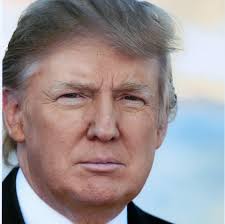
Donald Trump
Then he moved on—inevitably—to attacking former Secretary of State and 2016 Presidential candidate Hillary Clinton:
“And, by the way, the President can declassify any of these documents—unlike, for example, Secretary of State Hillary Clinton, she cannot.
“Still, she stored 110 classified documents on unsecured private servers. Hillary Clinton was never forced to endure a federal raid. She was never charged with any crime.”
Hannity then ran a clip of former FBI Director James Comey saying of Clinton: “Although there is evidence of potential violations of the statutes regarding the handling of classified information, our judgment is that no reasonable prosecutor would bring such a case.”
But Hannity did not say that Trump, on becoming President, fired Comey for investigating the proven ties between Trump’s Presidential campaign and operatives for Russian president Vladimir Putin.
All of this undoubtedly made Trump feel vindicated and comfortable. Too comfortable, as matters turned out.
When Trump left the White House on January 20, 2021, he illegally took highly-classified government documents to his private club, Mar-a-Lago, in Palm Beach, Florida.
On August 8, 2022, FBI agents searched Mar-a-Lago to recover those documents. Among those retrieved: Eleven sets of classified documents, four of them tagged as “Top Secret” and one as “Top Secret/SCI,” the highest level of classification.
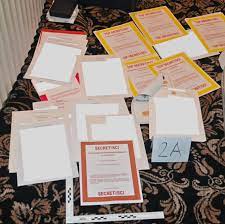
Documents found at Trump’s residence
Continuing to exonerate Trump, no matter what the offense, Hannity said: “OK. You have said on Truth Social a number of times you did declassify—”
TRUMP: “I did declassify.”
HANNITY: “OK. Is there a process—what was your process to declassify?”
TRUMP: “There doesn’t have to be a process, as I understand it. You know, there’s—different people say different things, but as I understand there doesn’t have to be.
“If you’re the President of the United States, you can declassify just by saying, ‘It’s declassified.’ Even by thinking about it, because you’re sending it to Mar-a-Lago or to wherever you’re sending it.”
Not even Trump’s attorneys have dared to make such an argument. Not when they demanded a “Special Master” to comb through the seized documents—allegedly so those that belonged to Trump could be returned to him.
Nor did they make such an assertion when, before Special Master Judge Raymond Dearie, they refused to state the process by which Trump had allegedly declassified the documents.
The media—and Trump’s many enemies—quickly seized upon this mind-blowing claim. Late-night TV hosts in particular milked it for laughs.
The Daily Show host Trevor Noah: How could Trump “declassify documents with his brain” when he couldn’t even “read documents with his brain?”
“If Trump actually had the power to change things just by thinking about them,” joked Jimmy Kimmel, “Don Jr. would have turned into a Big Mac 30 years ago.”
Nor did Kimmel pass up the opportunity to stick a barb into Hannity: “His approach was basically, ‘Show me on the doll where the FBI investigated you.’ I mean you have to hand it to Sean. When life gives him felons, he makes felon-ade!”
On a serious level, Trump’s outlandish assertion is liable to hurt his—or his attorneys’—appearances before various state and federal judges.
More than 500 years ago, Niccolo Machiavelli, the father of modern politics, warned that a prince must guard against being taken lightly—and, worse, expose himself to ridicule.
In his book, The Prince, Machiavelli writes: “…He ought….to pay attention to [guilds and classes], mingle with them from time to time, and give them an example of his humanity and munificence, always upholding, however, the majesty of his dignity, which must never be allowed to fail in anything whatever.”
It’s hard to be taken seriously when you claim supernatural powers denied to other, mere mortals.
2016 PRESIDENTIAL CAMPAIGN, ABC NEWS, ALTERNET, AMERICABLOG, AP, ASHLEY STROHMIER, ATTORNEYS, BABY BOOMER RESISTANCE, BBC, BLOOMBERG NEWS, BUZZFEED, CBS NEWS, CLASSIFIED DOCUMENTS, CNN, CROOKS AND LIARS, CROSS-EXAMINATION, DAILY KOS, DONALD TRUMP, FBI, FIVETHIRTYEIGHT, FOX AND FRIENDS, FOX NEWS, HARPER’S MAGAZINE, HILLARY CLINTON, HOUSE OF REPRESENTATIVES, HOUSE OVERSIGHT COMMITTEE, HUFFINGTON POST, HUNTER BIDEN, JAMES COMER, JAMES COMEY, JAMIE RASKIN, JIM JORDAN, JOSEPH BIDEN, JOSEPH R. MCCARTHY, KEVIN MCCARTHY, LETITIA JAMES, MAR-A-LAGO, MEDIA MATTERS, MOTHER JONES, MOVEON, MSNBC, NBC NEWS, NEW REPUBLIC, NEWSDAY, NEWSWEEK, NPR, PAUL RYAN, PBS NEWSHOUR, POLITICO, POLITICUSUSA, RACHEL MADDOW, RAW STORY, REPUBLICAN PARTY, REUTERS, Ronald Reagan, SALON, SEAN HANNITY, SEATTLE TIMES, SLATE, SOVIET UNION, SPEAKER OF THE HOUSE, TALKING POINTS MEMO, THE ATLANTIC, THE CHICAGO SUN-TIMES, THE CHICAGO TRIBUNE, THE DAILY BEAST, THE DAILY BLOG, THE GUARDIAN, THE HILL, THE HUFFINGTON POST, THE INTERCEPT, THE LOS ANGELES TIMES, THE NATION, THE NEW REPUBLIC, THE NEW YORK TIMES, THE NEW YORKER, THE VILLAGE VOICE, THE WASHINGTON POST, THINKPROGRESS, TIME, TRUTHDIG, TRUTHOUT, TWITTER, U.S. DEPARTMENT OF JUSTICE, U.S. NEWS & WORLD REPORT, UPI, USA TODAY
In Bureaucracy, History, Politics, Social commentary on May 24, 2023 at 12:25 am
It’s a truth well-known to cross-examining attorneys: The best way to obtain the truth is often to “kill your opponents with kindness.”
Witnesses always expect the opposing counsel to immediately start SCREAMING at them. But that only causes the witness to stay alert and say as little as possible.
So the smart attorney comes on as courteous, friendly, even sympathetic.
A classic example of this: A laborer claimed to have permanently injured his shoulder in a railway accident, leaving him unable to work. He claimed he could no longer raise his arm above a point parallel with his shoulder.
The railway’s attorney asked him a few sympathetic questions about his injuries. And the witness quickly volunteered that he was in constant pain and a near-invalid.
“And, as a result of the accident, how high can you raise your arm?” asked the attorney.
The witness slowly raised his arm parallel with his shoulder.
“Oh, that’s terrible,” said the attorney.
Then: “How high could you get it up before the accident?”
Unthinkingly, the witness extended his arm to its full height above his head—to the laughter of the judge, jury and spectators.
Case dismissed.
In politics, sometimes your best friends turn out to be your worst enemies.
Kevin McCarthy proved this during his September 30, 2015 appearance on Fox News.
McCarthy, the Republican member of the House of Representatives from Bakersfield, California, was undoubtedly feeling relaxed.
After all, he wasn’t being interviewed by such “enemies” of the Right as The New York Times or MSNBC political commentator Rachel Maddow.
He was being interviewed by Sean Hannity, a Right-wing political commentator whose books included Conservative Victory: Defeating Obama’s Radical Agenda and Deliver Us From Evil: Defeating Terrorism, Despotism, and Liberalism.

The topic under discussion: Who would be the next Republican Speaker of the House, now that John Boehner had announced his decision to leave not only the Speakership but the House itself in November?
Now Hannity wanted to know what would happen when the next Republican Speaker took office. And McCarthy—who was in the running for the position—was eager to tell him.
“What you’re going to see is a conservative Speaker, that takes a conservative Congress, that puts a strategy to fight and win.
“And let me give you one example. Everybody thought Hillary Clinton was unbeatable, right?
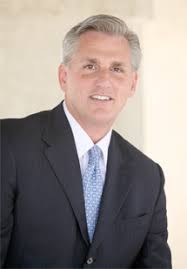
Kevin McCarthy
“But we put together a Benghazi special committee. A select committee. What are her [poll] numbers today? Her numbers are dropping. Why? Because she’s untrustable. But no one would have known that any of that had happened had we not fought to make that happen.”
In 51 words, McCarthy revealed that:
- The House Select Committee on Benghazi was not a legitimate investigative body.
- Its purpose was not to investigate the 2012 deaths of four American diplomats during a terrorist attack in Benghazi, Libya.
- Its real purpose was to destroy the Presidential candidacy of Hillary Clinton.
- To accomplish this, its members spent 17 months and wasted more than $4.5 million of American taxpayers’ funds.
On October 8, 2015, Republicans were expected to choose their nominee for Speaker. On that same date, McCarthy announced that he was withdrawing his name from consideration:
“Over the last week it has become clear to me that our Conference is deeply divided and needs to unite behind one leader. I have always put this Conference ahead of myself. Therefore I am withdrawing my candidacy for Speaker of the House.”
When reporters asked McCarthy if his revelation was the reason he withdrew, he replied, “Well, that wasn’t helpful.”
But then he quickly replayed the official Republican version: “But this Benghazi committee was only created for one purpose: to find the truth on behalf of the families for the four dead Americans.”
On October 29, 2015, Republicans—holding the majority of House members–elected Paul Ryan, (Wisconsin) the 54th speaker of the United States House of Representatives.
Democrats and Republicans were united in their anger that the real reason for the Benghazi “investigation” had been revealed.
Democrats were furious that McCarthy, in an unguarded moment, had revealed that their major Presidential candidate had been the victim of a Republican smear campaign disguised as a legitimate inquiry.
And Republicans were furious that McCarthy, in an unguarded moment, had revealed that the “legitimate inquiry” had been nothing more than a Republican smear campaign.
For McCarthy, the Benghazi Committee had legitimately served the nation—not by uncovering relevant details about a terrorist act but by causing Hillary Clinton’s poll numbers to drop.
In 1981, President Ronald Reagan had attacked the leaders of the Soviet Union thusly: “They reserve unto themselves the right to commit any crime, to lie, to cheat.”
McCarthy’s comments demonstrated that the Republican Party had adopted the same mindset and tactics as the dictators of the former Soviet Union.
Almost seven years after Kevin McCarthy revealed himself and his party as ruthless hypocrites, Republicans suffered a similar outbreak of truth.
But this time, the stakes were higher—involving Donald J. Trump, the former President of the United States.
2012 PRESIDENTIAL ELECTION, A HIGHER LOYALTY, ABC NEWS, ALTERNET, AMERICABLOG, AMERICAN CROSSROADS, ANN COULTER, AP, BABY BOOMER RESISTANCE, BARACK OBAMA, BBC, BLOOMBERG NEWS, BUZZFEED, CBS NEWS, CHRIS MATTHEWS, CNN, CROOKS AND LIARS, DAILY KOS, DONALD TRUMP, FASCISM, FBI, FIVETHIRTYEIGHT, HARDBALL, HARPER’S MAGAZINE, HILLARY CLINTON, HOWIE CARR, HUFFINGTON POST, IN TRUMP WE TRUST, JAMES COMEY, KARL ROVE, MEDIA MATTERS, MITT ROMNEY, MOTHER JONES, MOVEON, MSNBC, NBC NEWS, NEW REPUBLIC, NEWSDAY, NEWSWEEK, NPR, PBS NEWSHOUR, POLITICO, POLITICUSUSA, RAW STORY, REUTERS, SALON, SEATTLE TIMES, SLATE, TALKING POINTS MEMO, THE ATLANTIC, THE CHICAGO SUN-TIMES, THE CHICAGO TRIBUNE, THE DAILY BEAST, THE DAILY BLOG, THE GUARDIAN, THE HILL, THE HUFFINGTON POST, THE INTERCEPT, THE LOS ANGELES TIMES, THE NATION, THE NEW REPUBLIC, THE NEW YORK TIMES, THE NEW YORKER, THE VILLAGE VOICE, THE WALL STREET JOURNAL, THE WASHINGTON POST, THINKPROGRESS, TIME, TRUTHDIG, TRUTHOUT, TWITTER, U.S. NEWS & WORLD REPORT, UPI, USA TODAY
In Bureaucracy, History, Law Enforcement, Politics, Social commentary on May 19, 2023 at 12:16 am
On November 6, 2012, Ann Coulter, the Right-wing activist and propagandist, was devastated by the re-election of President Barack Obama.
“People are suffering. The country is in disarray,” she whined during an interview. “If Mitt Romney [the Republican Presidential nominee] cannot win in this economy, then the tipping point has been reached. We have more takers than makers and it’s over. There is no hope.”
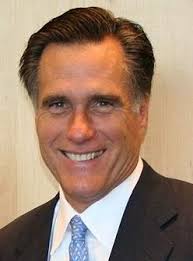
Mitt Romney
So, naturally, Coulter and her fellow Rightists felt dejected.
But by 2016, Coulter no longer felt dismayed. She felt rejuvenated—for she had found her perfect Presidential candidate: Donald Trump.
Appearing on the Right-wing radio program, “The Eric Metaxes Show,” she said: “It is like the fall of Rome but, thank God, and I am not using the Lord’s name in vain, I mean that absolutely literally, thank God for raising up Donald Trump and giving us a chance to save the country.
“What is the point of talking about abortion or anything else unless you get Donald Trump in to build the wall, deport illegals, end this ‘anchor baby’ nonsense, stop importing 100,000 Muslims a year, in addition to two million Third Worlders per year. It’s madness what this country has been doing.”
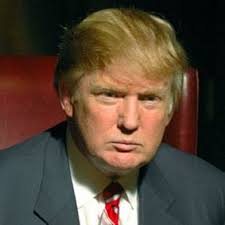
Donald Trump
Coulter not only spoke on Trump’s behalf—she sang his praises in a 2016 book: In Trump We Trust: E Pluribus Awesome!
According to its dust jacket: “[Ann Coulter] argues that a bull in the china shop is exactly what we need to make America great again.
“In this powerful book, Coulter explains why conservatives, moderates, and even disgruntled Democrats should set aside their doubts and embrace Trump:
“He’s putting America first in our trade deals and alliances, rather than pandering to our allies and enemies.
“He’s abandoned the GOP’s decades-long commitment to a bellicose foreign policy, at a time when the entire country is sick of unnecessary wars.”

To Coulter’s delight, Trump defeated Democratic Presidential nominee Hillary Clinton on November 9, 2016.
But by May, 2017, four months after Trump had taken office as President, Ann Coulter was ready to abandon him. Her chief complaint: He hadn’t built the wall along the United States-Mexican border he had promised to erect.
“We want the ruthless businessman we were promised,” she told the Right-wing website, The Daily Caller.
“I guess we have to try to push him to keep his promises. But this isn’t North Korea, and if he doesn’t keep his promises I’m out.
“This is why we voted for him. I think everyone who voted for him knew his personality was grotesque, it was the issues.”
And, on March 28, 2018, she had more choice words for him: “I knew he was a shallow, lazy ignoramus, and I didn’t care.
“I’d been waiting 30 years for someone to say all these things,” she added, referring to his promise to build a wall along the U.S.-Mexico border.
On April, 1, she—by her own account—had a shouting match with Trump in the Oval Office.

Ann Coulter (Gage Skidmore photo)
On the Right-wing “Howie Carr Show,” she claimed to have told him: “You’re not doing what you promised to do. Where’s the end of NAFTA? Where’s the wall? Where are the deportations? What are you doing talking about the DREAMers?”
Coulter (doing a Trump impersonation) claimed that Trump said: “I appointed Gorsuch.”
“And I said that doesn’t count. Jeb, exclamation point, would have done that. Rubio would have done that. How is your Presidency different than from Rubio would have done?”
“He’s failing right now,” Coulter told Carr. “The presidency isn’t over yet, he can still come back and do it. But people who voted for him shouldn’t be cheering for him every time he betrays them and this is a total betrayal for him to sign that [government appropriations] bill. It’s a total betrayal for him not to build the wall. And to pretend like it isn’t—yeah he can come back.
“And as I told The New York Times, if he does I’ll start a committee to put him on Mount Rushmore, if he builds that wall. But, right now, if you want to make a bet I don’t think we’re getting the wall.”
But Trump didn’t build that wall. And Coulter is still furious with him.
In an April 4, 2023 column, she wrote: “The left’s sole objective is to make Trump the Republicans’ 2024 presidential nominee. He’s already lost three election cycles for the GOP—why not make it four?”
Polls show Trump’s popularity surged following a series of lawsuits—both civil and criminal—that were filed against him.
Coulter is backing Florida Governor Ron DeSantis—who has polled significantly better than Trump among crucial independent voters—for President in 2024.
“Against DeSantis’ smarts and energy, the Democrats would be running President Senile Dementia [Joe Biden] and a vice president whose sole credentials are that she is black and a woman,” Coulter wrote.
“They [Democrats] had only one hope: Get Trump the nomination.”
In short: She backed a monster to wreak destruction on those she hated. And now she’s upset with him because he didn’t act monstrously enough.
She’s hoping her next pick will live up to her monstrous fantasies.
2018 GOVERNMENT SHUTDOWN, ABC NEWS, ABRAHAM LINCOLN, ALFRED P. MURRAH FEDERAL BUILDING, ALTERNET, AMERICABLOG, ANDY BIGGS, AP, BABY BOOMER RESISTANCE, BARACK OBAMA, BBC, BLOOMBERG NEWS, BRIAN WILLIAMS, BROWN VS. BOARD OF EDUCATION, BUZZFEED, CAPITOL ATTACK, CBS NEWS, CIVIL RIGHTS, CIVIL WAR, CLARENCE THOMAS, CNN, COUPS, CROOKS AND LIARS, DAILY KOZ, DEMOCRATS, DONALD TRUMP, DONALD TRUMP JR., ELECTORAL COLLEGE, FACEBOOK, FBI, FIVETHIRTYEIGHT, FORT SUMTER, FOX NEWS, GAIUS CALIGULA, GEORGE C. WALLACE, GEORGE FLOYD, GINNI THOMAS, GOVERNMENT ACCOUNTABILITY OFFICE, HARPER’S MAGAZINE, HOME TOP 12 BUSTING RULES ABOUT STEFFEN WHITE 2018 GOVERNMENT SHUTDOWN, HUFFINGTON POST, IRAN, JOSEPH BIDEN, jOSH HAWLEY, KU KLUX KLAN, LAUREN BOEBERT, MARJORIE TAYLOR GREENE, MEDIA MATTERS, MIKE PENCE, MILITIA GROUPS, MO BROOKS, MOTHER JONES, MOVEON, MSNBC, NANCY PELOSI, NATIONAL GUARD, NBC NEWS, NEW REPUBLIC, NEWSDAY, NEWSWEEK, NPR, OBSTRUCTING CONGRESSIONAL PROCEEDINGS, PBS NEWSHOUR, POLITICO, POLITICUSUSA, RAW STORY, REPUBLICANS, REUTERS, RIGHT-WING TERRORISM, RONALD REAGAIN, RUDY GIULIANI, SALON, SANDY HOOK ELEMENTARY SCHOOL MASSACRE, SEATTLE TIMES, SLATE, SLAVERY, SOVIET UNION, SWAT TEAMS, TALKING POINTS MEMO, TED CRUZ, TERRORISM, TERRORIST FINANCE TRACKING PROJECT, THE ATLANTIC, THE CHICAGO SUN-TIMES, THE CHICAGO TRIBUNE, THE DAILY BEAST, THE DAILY BLOG, THE GUARDIAN, THE HILL, THE HUFFINGTON POST, THE LOS ANGELES TIMES, THE NATION, THE NEW REPUBLIC, THE NEW YORK TIMES, THE NEW YORKER, THE VILLAGE VOICE, THE WASHINGTON POST, THINKPROGRESS, TIME, TREASON, TRUTHDIG, TRUTHOUT, TWITTER, TWO POLITICAL JUNKIES, U.S. NEWS & WORLD REPORT, UNITED STATES DEPARTMENT OF JUSTICE, UNITED STATES DEPARTMENT OF THE TREASURY, UNITED STATES HOUSE OF REPRESENTATIVES, UNITED STATES PARK POLICE, UNITED STATES SECRET SERVICE, UNITED STATES SENATE, UNITED STATES SUPREME COURT, UPI, USA PATRIOT ACT, USA TODAY, WONKETTE
In Bureaucracy, History, Law, Law Enforcement, Medical, Military, Politics, Social commentary on May 11, 2023 at 12:24 am
On January 6, 2021, thousands of Right-wing Donald Trump supporters—many of them armed—stormed the Capitol Building in Washington, D.C.
Numerous commentators have noted the contrast between the tepid police response to the Capitol attack by white Right-wingers and the brutal crackdown on peaceful liberal blacks protesting the murder of George Floyd in Washington D.C. on June 1, 2020.
The reason for the difference: The George Floyd protesters were liberal blacks. The Capitol attackers were Right-wing whites.
Although their January 6 coup attempt failed, Republicans and their Right-wing allies at local, state and federal levels continue to plot at establishing an absolute dictatorship.
Can future Right-wing attacks on democracy be prevented?
Yes—provided those in the administration of President Joseph Biden are willing to use the same methods America has applied against foreign enemies. One option has already been discussed:
The Justice Department could wage all-out war on state and Federal Republican politicians plotting to subvert American democracy.
Here is the second:
The Justice Department could begin waging all-out war on Right-wing militia groups planning to unleash violence in 2024.
After 9/11, American law enforcement and Intelligence agencies initiated major reforms to focus on Islamic terrorism.
A similar reform effort, focusing on Right-wing terrorism, could include the following:
- The FBI’s designating Right-wing political and terrorist groups as the Nation’s #1 enemy.
- Reviving the FBI’s legendary COINTELPRO (“Counterintelligence Program”) that destroyed the Ku Klux Klan in the late 1960s. Among the methods that can be used:
- Turning the Bureau’s powerful arsenal—bugs, wiretaps, informants, SWAT teams—on them.
- Buying the cooperation of informants within Right-wing organizations.
- Conducting “black bag jobs” to steal membership lists of of Right-wing organizations.
- Breaking up the marriages of prominent Right-wingers by circulating rumors of their infidelity among their wives.
- Informing the employers of known Right-wing terrorists of their employees’ criminal activity, resulting in the firing of untold numbers of them.
- Contacting the news media to publicize the arrests of prominent Right-wing leaders.
- When Right-wing terrorists target Federal law enforcement agents and/or their families for harassment or worse, they can be targeted for similar intimidation or removal.


FBI SWAT team in action
A revised COINTELPRO could be supplemented by the following:
- Creating tip hotlines for reporting illegal Right-wing activities—and offering rewards for information that leads to arrests.
- Prosecuting militia groups for violating Federal firearms laws.
- Treating calls for the murder of members of Congress—as Georgia Representative Marjorie Taylor Greene has done—as felonies punishable by lengthy imprisonment.
- Prosecuting Right-wing leaders involved in the treasonous assault on the United States Capitol Building.
- Prosecuting as “accessories to treason” all those Republican members of Congress who stoked Right-wing anger by lying that the 2020 Presidential election had been stolen from Donald Trump, although every objective news source proved he had lost.
- Directing the Treasury Department’s Terrorist Finance Tracking Program (TFTP) at fundamentalist Christian churches that finance Right-wing terrorism-–just as it halts the financing of Islamic terrorist groups by Islamic organizations.

- Using drones, planes and/or helicopters to provide security against similar Right-wing terror demonstrations—especially in Washington, D.C.
- Using the Federal Communications Commission to ban Fox News—the Nation’s #1 Right-wing propaganda network—from representing itself as a legitimate news network, and requiring that its stories carry labels warning viewers: “This is Right-wing propaganda, NOT news.”
- Encouraging victims of Right-wing hate-speech to file libel/slander lawsuits against their abusers—such as the parents of murdered children at Sandy Hook Elementary School successfully did against Alex Jones.
- Using Federal anti-terrorist laws to arrest, prosecute and imprison Right-wingers who openly carry firearms and threaten violence, even if states allow such display of firearms.
- Seizing the assets of individuals and organizations found guilty of Right-wing terrorism offenses.
Option 3: The “Caligula Solution.”
Like Donald Trump, the Roman emperor Gaius Caligula delighted in humiliating others. His fatal mistake was taunting Cassius Chaerea, a member of his own bodyguard.
On January 22 41 A.D. Chaerea and several other bodyguards hacked Caligula to death with swords before other guards could save him.
Trump has similarly behaved arrogantly toward his Secret Service guards.
- He forced them to work without pay during his 35-day government shutdown in 2018.
- He also forced them to accompany him to COVID-infected states—both during the Presidential campaign and afterward.
- Many of them have been stricken with this often lethal disease as a result.
Even as an ex-President, Trump continues to insult anyone who challenges him. This includes not only Democrats but Republicans he feels don’t pay him sufficient homage—or, worse, dare to oppose him for the party’s 2024 Presidential nomination.
At the same time, he publicly exposes himself to a potential assassin virtually every day. And the mere presence of bodyguards is no guarantee against assassination.
Presidential candidate George C. Wallace was shot and paralyzed by a gunman while mingling with supporters in a Maryland shopping center in 1972. And President Ronald Reagan was shot and almost killed in 1981 while walking to his bulletproof limousine in Washington, D.C.
Both men were under protection by the U.S. Secret Service at the time.
2018 GOVERNMENT SHUTDOWN, ABC NEWS, ABRAHAM LINCOLN, ALFRED P. MURRAH FEDERAL BUILDING, ALTERNET, AMERICABLOG, ANDY BIGGS, AP, BABY BOOMER RESISTANCE, BARACK OBAMA, BBC, BLOOMBERG NEWS, BRIAN WILLIAMS, BROWN VS. BOARD OF EDUCATION, BUZZFEED, CAPITOL ATTACK, CBS NEWS, CIVIL RIGHTS, CIVIL WAR, CLARENCE THOMAS, CNN, COUPS, CROOKS AND LIARS, DAILY KOZ, DEMOCRATS, DONALD TRUMP, DONALD TRUMP JR., ELECTORAL COLLEGE, FBI, FIVETHIRTYEIGHT, FORT SUMTER, FOX NEWS, GAIUS CALIGULA, GEORGE C. WALLACE, GEORGE FLOYD, GINNI THOMAS, GOVERNMENT ACCOUNTABILITY OFFICE, HARPER’S MAGAZINE, HOME TOP 12 BUSTING RULES ABOUT STEFFEN WHITE 2018 GOVERNMENT SHUTDOWN, HUFFINGTON POST, IRAN, JOSEPH BIDEN, jOSH HAWLEY, KU KLUX KLAN, LAUREN BOEBERT, MARJORIE TAYLOR GREENE, MEDIA MATTERS, MIKE PENCE, MILITIA GROUPS, MO BROOKS, MOTHER JONES, MOVEON, MSNBC, NANCY PELOSI, NATIONAL GUARD, NBC NEWS, NEW REPUBLIC, NEWSDAY, NEWSWEEK, NPR, OBSTRUCTING CONGRESSIONAL PROCEEDINGS, PBS NEWSHOUR, POLITICO, POLITICUSUSA, RAW STORY, REPUBLICANS, REUTERS, RIGHT-WING TERRORISM, RONALD REAGAIN, RUDY GIULIANI, SALON, SANDY HOOK ELEMENTARY SCHOOL MASSACRE, SEATTLE TIMES, SLATE, SLAVERY, SOVIET UNION, SWAT TEAMS, TALKING POINTS MEMO, TED CRUZ, TERRORISM, TERRORIST FINANCE TRACKING PROJECT, THE ATLANTIC, THE CHICAGO SUN-TIMES, THE CHICAGO TRIBUNE, THE DAILY BEAST, THE DAILY BLOG, THE GUARDIAN, THE HILL, THE HUFFINGTON POST, THE LOS ANGELES TIMES, THE NATION, THE NEW REPUBLIC, THE NEW YORK TIMES, THE NEW YORKER, THE VILLAGE VOICE, THE WASHINGTON POST, THINKPROGRESS, TIME, TREASON, TRUTHDIG, TRUTHOUT, TWITTER, TWO POLITICAL JUNKIES, U.S. NEWS & WORLD REPORT, UNITED STATES DEPARTMENT OF JUSTICE, UNITED STATES DEPARTMENT OF THE TREASURY, UNITED STATES HOUSE OF REPRESENTATIVES, UNITED STATES PARK POLICE, UNITED STATES SECRET SERVICE, UNITED STATES SENATE, UNITED STATES SUPREME COURT, UPI, USA PATRIOT ACT, USA TODAY, WONKETTE
In Bureaucracy, Law, Law Enforcement, Medical, Military, Social commentary on May 10, 2023 at 12:11 am
Can a Republican coup—or a Republican-inspired civil war—be prevented?
In theory, yes—if the administration of President Joseph Biden is willing to use the same methods America has applied against foreign enemies.
The Justice Department could wage all-out war on state and Federal Republican politicians plotting to subvert American democracy.
By May 5, 2023, more than two years after the January 6 attack on the United States Capitol—more than 600 Stormtrumper rioters have been convicted.
Yet no major Donald Trump supporter has been arrested, let alone criminally indicted.
- NOT Ginni Thomas, wife of Supreme Court Justice Clarence Thomas, who pressed lawmakers to overturn Joe Biden’s 2020 victory in Arizona and Wisconsin.
- NOT Senators Ted Cruz (TX) and Josh Hawley (MO), who voted to reject the Electoral College votes from Arizona and Pennsylvania.
- NOT Representatives Andy Biggs (AZ), Marjorie Taylor Greene (GA) and Lauren Boebert (CO) who voted to reject the Electoral College votes from Arizona and Pennsylvania.
- And, above all, NOT Donald Trump. He not only incited his followers to attack the Capitol, he has spent the last year spreading poisonous lies that the 2020 election was “stolen” from him through “massive” voter fraud. As a result, he continues to undermine the democratic process as he terrorizes the Republican party to stand behind him.
Had anyone but a President orchestrated such an attack on Congress, the Justice Department would have come down on him with a vengeance.
Obstructing Congressional or administrative proceedings is a Federal offense. According to 18 U.S.C 1505: It’s a felony, punishable by imprisonment of five to eight years if domestic or international terrorism is involved.
Before a prosecution can be initiated, three essential conditions must be met:
- There must be a proceeding pending before a department or agency of the United States.
- The defendant must know that a proceeding was occurring.
- S/he must have intentionally tried to “corruptly” influence, obstruct or impede the pending proceeding.
Every one of the men and women who stormed the Capitol Building stands guilty of violating U.S.C. 1505.
And so do those who egged them on—such as Missouri Rep. Mo Brooks and Missouri Senator Josh Hawley.
Still other Republican Congressional members played a coup-supporting role in trying to overturn the results of a legitimate Presidential election.
Hours after the Capitol attack, 147 Republicans who hid during the attempted coup returned to the House and Senate floors and voted just as Trump wanted them to: To overturn the election results in his favor, based on lies about widespread voter fraud.
The Justice Department could charge every one of these Congressional members as an accessory to terrorism under the USA Patriot Act for “activities that…appear to be intended…to influence the policy of a government by intimidation or coercion [and]…occur primarily within the territorial jurisdiction of the United States.”

United States Department of Justice
Had this happened early in 2021—by March or April at the latest—this would have sent a message that even the most ardent Trump supporters would have understood.
In addition, this would have deprived Republicans of the numerical power to obstruct the legislative agenda of the Joseph Biden administration.
Those members indicted would have been forced to spend most of their time strategizing with their attorneys to stay out of prison. They would have been forced to pony up huge legal fees—which would have had to come from funds intended for re-election campaigns.
(Contrary to popular belief, indictment—or even a felony conviction—of a member of Congress does not force him to vacate his seat.)
The Justice Department could begin waging all-out war on Right-wing militia groups planning to unleash violence in 2024.
According to American political scientist George Michael: “Right-wing terrorism and violence has a long history in America.”
The Supreme Court’s decision, in Brown v. Board of Education (1954), striking down segregated facilities, unleashed a wave of Ku Klux Klan violence against blacks, civil rights activists and Jews. Between 1956 and 1963, an estimated 130 bombings ravaged the South.

Ku Klux Klan flag
During the 1980s, more than 75 Right-wing extremists were prosecuted in the United States for acts of terrorism, carrying out six attacks.
The April 19, 1995 attack on the Alfred P. Murrah Federal Building in Oklahoma City by Timothy McVeigh and Terry Nichols killed 168 people. It was the deadliest act of domestic terrorism in the history of the United States until 9/11.
By 2020, Right-wing terrorism accounted for the majority of terrorist attacks and plots in the United States. A 2017 Government Accountability Office report stated that Right-wing extremist groups were responsible for 73% of violent extremist incidents resulting in deaths since September 12, 2001.
Right-wing violence rose sharply during the Barack Obama administration and especially during the Presidency of Donald Trump. His remark after the 2017 Unite the Right rally in Charlottesville, Virginia, that there were “some very fine people on both sides” convinced white supremacists that he favored their goals, if not their methods.
On January 6, 2021, thousands of Right-wing Donald Trump supporters—many of them armed—stormed the Capitol Building in Washington, D.C.
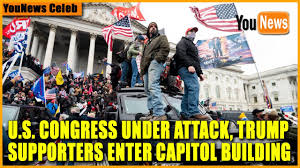
Their goal: To stop members of Congress from counting Electoral Votes cast in the 2020 Presidential election, from which former Vice President Joseph R. Biden was expected to emerge the winner.


2016 PRESIDENTIAL ELECTION, 2020 PRESIDENTIAL ELECTION, ABC NEWS, ADAM SCHIFF, ADOLF HITLER, AFGHANISTAN, ALBERT SPEER, ALTERNET, AMERICABLOG, ANTIFA, AP, BABY BOOMER RESISTANCE, BARACK OBAMA, BLOOMBERG, BUZZFEED, CBS NEWS, CHRIS CILLIZZA, CHRIS KREBS, CHRISTOPHER WRAY, CIA, CNN, CORONAVIRUS, COVID-19, CROOKS AND LIARS, CYBERSECURITY AND INFRASTRUCTURE SECURITY AGENCY, DAILY KOS, DAILY KOZ, DENMARK, DEPARTMENT OF HOMELAND SECURITY, DISOBEYING HITLER: GERMAN RESISTANCE AFTER VALKYRIE (BOOK), DONALD TRUMP, DONALDL TRUMP JR., DRUDGE REPORT, FASCISM, FBI, FIVETHIRTYEIGHT, FRANCE, HARPER’S MAGAZINE, HERMANN GORING, HILLARY CLINTON, HUFFINGTON POST, IMPEACHMENT, IRAQ, JAKE TAPPER, JAMES B. COMEY, JARED KUSHNER, JOE BIDEN, MAIL-IN BALLOTS, MARK ESPER, MEDIA MATTERS, MIKE PENCE, MITCH MCCONNELL, MOTHER JONES, MOVEON, MSNBC, NAZI GERMANY, NBC NEWS, NEWSWEEK, NORWAY, NPR, PAUL MANAFORT, PBS NEWSHOUR, PLANNED PARENTHOOD, POLAND, POLITICO, POLITICUSUSA, RANDALL HANSEN, RAW STORY, REPUBLICAN PARTY, REPUBLICANS, REUTERS, RUSSIA, SALON, SEATTLE TIMES, SLATE, SOVIET UNION, SS, STALINGRAD, TALKING POINTS MEMO, THE ATLANTIC, THE CHICAGO SUN-TIMES, THE CHICAGO TRIBUNE, THE DAILY BEAST, THE DAILY BLOG, THE GUARDIAN, THE HILL, THE HUFFINGTON POST, THE LOS ANGELES TIMES, THE NATION, THE NEW REPUBLIC, THE NEW YORK TIMES, THE PENTAGON, THE VILLAGE VOICE, THE WALL STREET JOURNAL, THE WASHINGTON POST, THINKPROGRESS, TIME, TRUMP TOWER MEETING, TRUTHDIG, TRUTHOUT, TWITTER, TWO POLITICAL JUNKIES, U.S. NEWS & WORLD REPORT, UPI, USA TODAY, VLADIMIR PUTIN, VOTER FRAUD, WEHRMACHT, WERNER VON BLOMBERG, WERNER VON FRITCH, WONKETTE, WORLD WAR 11
HITLER, TRUMP AND “SCORCHED EARTH”—PART FOUR (END)
In Bureaucracy, History, Law, Law Enforcement, Military, Politics, Social commentary on June 2, 2023 at 12:12 amOn March 19, 1945, facing certain defeat, Nazi Fuhrer Adolf Hitler ordered a massive “scorched-earth” campaign throughout Germany:
“Destroy all German agriculture, industry, ships, communications, roads, food stuffs, mines, bridges, stores and utility plants!”
If implemented, it would deprive surviving Germans of even the barest necessities after the war.
Opposing him was Albert Speer, his favorite architect and Minister of Armaments.
Albert Speer and Adolf Hitler pouring over architectural plans
But Hitler refused to back down. He gave Speer 24 hours to reconsider his opposition to the order.
The next day, Speer told Hitler: “My Fuhrer, I stand unconditionally behind you!”
“Then all is well,” said Hitler, suddenly with tears in his eyes.
“If I stand unreservedly behind you,” said Speer, “then you must entrust me rather than the Gauleiters [district Party leaders serving as provincial governors] with the implementation of your decree.”
Filled with gratitude, Hitler signed the decree Speer had thoughtfully prepared before their fateful meeting.
By doing so, Hitler unintentionally gave Speer the power to thwart his “scorched earth” order.
Trained as an architect, Speer had joined the Nazi Party in 1931. He met Hitler in 1933, when he presented the Fuhrer with architectural designs for the Nuremberg Rally scheduled for that year.
From then on, Speer became Hitler’s “genius architect” assigned to create buildings meant to last for a thousand years. “If Hitler had been capable of friendship,” Speer said after the war, “I would have been that friend.”
In 1943, Hitler appointed him Minister of Armaments, charged with revitalizing the German war effort.
Nevertheless, Speer now crisscrossed Germany, persuading military leaders and district governors to not destroy the vital facilities that would be needed after the war.
“No other senior National Socialist could have done the job,” writes Randall Hanson, author of Disobeying Hitler: German Resistance After Valkyrie.
“Speer was one of the very few people in the Reich—-perhaps even the only one—with such power to influence actors’ willingness/unwillingness to destroy.”
Despite his later conviction for war crimes at Nuremberg, Speer never regretted his efforts to save Germany from total destruction at the hands of Adolf Hitler.
* * * * *
As the Third Reich came to its fiery end, Adolf Hitler blamed the German people for being “unworthy” of his “genius” and losing the war he had started.
His attitude was: “If I can’t rule Germany, then there won’t be a Germany.”
Fortunately for Germany, one man—Albert Speer—finally broke ranks with his Fuhrer.
Albert Speer
Risking death, he refused to carry out Hitler’s “scorched earth” order. Even more important, he successfully blocked such destruction and persuaded influential military and civilian leaders to disobey the order as well.
As a result, those targets slated for destruction were spared.
* * * * *
Fast forward 75 years: Facing the end of his Presidency, Donald Trump desperately sought to remain in power. Having “joked” about being “President-for-Life,” he now fought to make that a reality.
Unlike his 44 predecessors, he rejected the will of the voters and for almost three weeks denied his successor access to the resources he needed to launch a smooth transition.
Donald Trump
Even worse: Instead of showing concern for the country he claimed to love, Trump sought to relentlessly destroy those institutions that guarantee American freedom and safety:
His attitude clearly was: “If I can’t rule America, there won’t be an America.”
Meanwhile, House and Senate Republicans embraced his most outrageous lies—or refused to openly refute them—as the COVID-19 pandemic slaughtered about 1,000 Americans a day.
Even Republicans who privately admitted the Trump era was ending realized that 70 million hate-filled Americans voted for him in 2020. And eagerly awaited the coming of the next would-be Fuhrer.
They would also eagerly vote out of office any Republican who dared break with the man they worshiped like a cult leader.
For Congressional Republicans, staying in office—and keeping their power and perks—was their top priority.
On November 25, 2019, CNN political correspondent Jake Tapper interviewed Representative Adam Schiff on Donald Trump’s upcoming impeachment trial for abuse of power and obstruction of Congress.
What would it mean if Republicans uniformly oppose any articles of impeachment against Trump? asked Tapper.
“It will have very long-term consequences, if that’s where we end up,” replied Schiff.
“And if not today, I think Republican members in the future, to their children and their grandchildren, will have to explain why they did nothing in the face of this deeply unethical man who did such damage to the country.”
In the end, only one of 53 Republican Senators—Mitt Romney—dared to vote for impeachment. And he became an instant pariah for it.
On March 18, 1945, Albert Speer, opposing Hitler’s plans to destroy Germany’s infrastructure, addressed a memo to his Fuhrer, in which he wrote: “No one has the right to take the viewpoint that the fate of the German people is tied to his personal fate.”
The country is still waiting for a Republican Albert Speer to step forward and save America from the self-destructive intentions of its own would-be Fuhrer.
Share this: