Posts Tagged ‘FBI’
2020 PRESIDENTIAL ELECTION, 2024 PRESIDENTIAL ELECTION, ABC NEWS, ABORTION, ADAM SCHIFF, ALTERNET, AMERICABLOG, ANNE APPLEBAUM, AP, ASSASSINATION, AUTOCRACY INC. (BOOK), “PRESIDENT-FOR-LIFE”, BABY BOOMER RESISTANCE, BARACK OBAMA, BBC, BILL O'REILLY, BIRTH CONTROL, BLOOMBERG, BUZZFEED, CAPITOL PUNISHMENT, CBS NEWS, CHINA, CHRISTIANITY, CHRISTIANS, CIA, CNN, CONSERVATIVE POLITICAL ACTION CONFERENCE (C-PAC), CROOKS AND LIARS, DAILY KOS, DEPARTMENT OF HOMELAND SECURITY, DICTATORSHIP, DONALD TRUMP, ENVIRONMENTAL PROTECTION AGENCY, FBI, FEDERAL COMMUNICATIONS COMMISSION (FCC), FEDERAL TRADE COMMISSION (FTC), FIVETHIRTYEIGHT, FOX NEWS SUNDAY, FRANKLIN D. ROOSEVELT, HARPER’S MAGAZINE, HERITAGE FOUNDATION, HUFFINGTON POST, INTELLIGENCE AGENCIES, JACK SMITH, JAMES MATTIS, JANUARY 6 COUP ATTEMPT, JEFF SESSIONS, JOE BIDEN, JUDICIARY, Kamala Harris, KIM JONG-UN, MARK MILLEY, MEDIA MATTERS, MILITARY AGENCIES, MORNING JOE (SHOW), MOTHER JONES, MOVEON, MSNBC, NATIONAL ASSOCIATION OF BLACK JOURNALISTS, NATIONAL OCEANIC AND ATMOSPHERIC ASSOCIATION (NOAA), NATIONAL RIFLE ASSOCIATION, NATIONAL SECURITY AGENCY, NBC NEWS, NEW REPUBLIC, NEWSDAY, NEWSWEEK, NORTH KOREA, NPR, PBS NEWSHOUR, POLITICO, POLITICUSUSA, PRESIDENTIAL TRANSITION PROJECT, PROJECT 2025, PUBLIC TRANSIT SYSTEMS, RAW STORY, REUTERS, ROBERT MUELLER, ROD J. ROSENSTEIN, RUSSIA, SALON, SCARFACE (MOVIE), SEATTLE TIMES, SLATE, TALKING POINTS MEMO, TAX CUTS, THE ATLANTIC, THE CHICAGO SUN-TIMES, THE CHICAGO TRIBUNE, THE DAILY BEAST, THE DAILY BLOG, THE GUARDIAN, THE HILL, THE HUFFINGTON POST, THE INTERCEPT, THE LOS ANGELES TIMES, THE NATION, THE NEW REPUBLIC, THE NEW YORK TIMES, THE NEW YORKER, THE PRESS, THE VILLAGE VOICE, THE WASHINGTON POST, THINKPROGRESS, THOMAS MATTHEW CROOKS, TIME, TRUTHDIG, TRUTHOUT, TURNING POINT BELIEVERS’ SUMMIT, TWO POLITICAL JUNKIES, U.S. NEWS & WORLD REPORT, UNITED STATES DEPARTMENT OF JUSTICE, UPI, USA TODAY, VLADIMIR PUTIN, VOTER FRAUD, X, XI JINPING
In Bureaucracy, History, Law, Law Enforcement, Military, Politics, Social commentary on August 20, 2024 at 12:10 am
“I always tell the truth. Even when I lie.”
—Tony Montana, “Scarface”
“Four more years, it’ll be fixed, it’ll be fine, you won’t have to vote anymore.”
On July 26, former President Donald Trump confirmed—intentionally or unintentionally—that the fears of his enemies were correct. If he won office for a second time, he would act as the all-powerful dictator he has long lusted to be.
And which he nearly became in 2020, after refusing to accept the outcome of a legitimate Presidential election where former Vice President Joe Biden got more votes than he did.
The site of his confession was the Turning Point Believers’ Summit in West Palm Beach, Florida. To his audience of evangelical Christians, Trump announced:

“You gotta get out and vote. Just this time. In four years you don’t have to vote, OK? In four years don’t vote, I don’t care. But we’ll have it all straightened out, so it’ll be much different.
“Christians, get out and vote! Just this time. You won’t have to do it anymore, you know what? Four more years. You know what? It’ll be fixed! It’ll be fine! You won’t have to vote anymore, my beautiful Christians. I love you, Christians! I’m a Christian.
“I love you, you got to get out and vote. In four years, you don’t have to vote again. We’ll have it fixed so good, you’re not going to have to vote.”
Why would they not have to vote again? Because there won’t be any more elections for President because Trump would be President until he died.
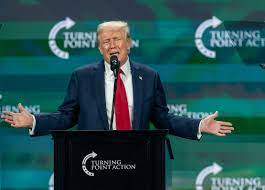
Donald Trump at Turning Point Believers’ Summit
From the moment Trump declared his candidacy for the Presidency on June 15, 2015, throughout his four years in office and the almost eight months the Presidential campaign of 2024, much of the mainstream media has repeatedly ignored the threats he poses.
But Trump’s comments at the Turning Point Believers’ Summit have grabbed attention from the nation’s most important news media. Among these:
- MSN Metro
- Reuters
- CBS News
- The New York Times
- Mother Jones
- News Nation
- USA Today
- Newsweek
- The Hill
- CNN
- National Public Radio
- The Washington Post
Democrats pounced on Trump’s statements. Vice President Kamala Harris released a statement of her own: “When Vice President Harris says this election is about freedom she means it.”
Rep. Adam Schiff (D-Calif.) who had presided over Trump’s first impeachment trial, wrote: “This year democracy is on the ballot, and if we are to save it, we must vote against authoritarianism.”
Naturally Trump’s campaign disagreed: “President Trump was talking about the importance of faith, uniting this country and bringing prosperity to every American, as opposed to the divisive political environment that has sowed so much division and even resulted in an assassination attempt.”
In fact, it has been Donald Trump who created “the divisive political environment.” On July 31 he appeared at the National Association of Black Journalists—to falsely accuse Kamala Harris of misleading voters about her race:
“I didn’t know she was Black until a number of years ago when she happened to turn Black and now she wants to be known as Black. So, I don’t know, is she Indian or is she Black?”
As for the motives for Thomas Matthew Crooks’ July 13 assassination attempt on Trump: A vigorous FBI investigation has revealed him as an intelligent loner with few friends, a thin social media presence and no strong political beliefs offering a motive for his action.
If Trump wins a second term in the White House, he can—by law—serve only four years. But Trump has spent his entire life defying the law—including when he was President.
His most egregious offense came after he lost the 2020 Presidential election: He refused to accept his defeat, refused to leave office, tried to pressure states to “find” non-existent Electoral College votes for him, and finally incited a violent riot against Congress to stop the Electoral Vote count.
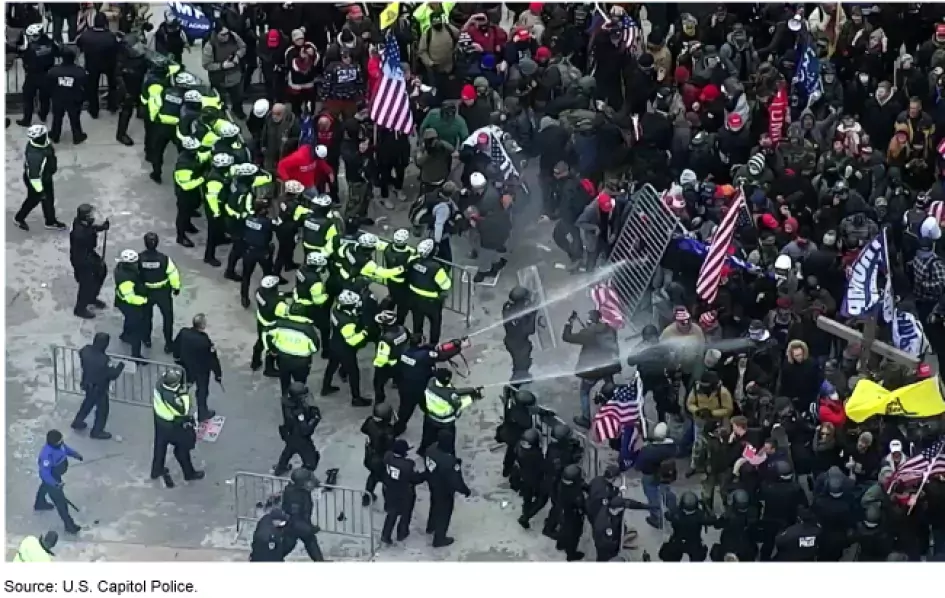 attacking the Capitol Building
In May, 2024, speaking at a National Rifle Association gathering, Trump “joked” about serving more than two terms as president.
He referred to the four-term, 12-year Presidency of Democratic Franklin D. Roosevelt. Roosevelt was the only president to serve more than two terms. The two-term limit was added after Roosevelt’s death.
“You know, FDR, 16 years—almost 16 years—he was four terms. I don’t know, are we going to be considered three-term? Or two-term?”
By raising the question of “three terms,” Trump was resurrecting The Big Lie: That he won the 2020 Presidential campaign but was cheated of victory by massive voter fraud.
In fact, Trump’s ambition to become absolute dictator fits brilliantly into the goals of Project 2025, also known as the Presidential Transition Project.
This is a collection of policy proposals to fundamentally reshape the U.S. federal government in the event of a Republican victory in the 2024 Presidential election.
Established in 2022 by the Right-wing Heritage Foundation, the project aims to recruit tens of thousands of radical Right-wingers to the District of Columbia to replace existing federal civil servants.
2016 PRESIDENTIAL ELECTION, 2020 PRESIDENTIAL ELECTION, ABC NEWS, AFGHANISTAN, ALTERNET, AMERICABLOG, AP, BABY BOOMER RESISTANCE, BEATRICE STRAIGHT, BILL KRISTOL, BORDER WALL, BUZZFEED, CBS NEWS, CIA, CNN, CONSUMER PROTECTION, CORRUPTION, CROOKS AND LIARS, DAILY KOZ, DEMOCRATS, DONALD TRUMP, ENVIRONMENTAL PROTECTION, FAYE DUNAWAY, FBI, FEDERAL GOVERNMENT SHUTDOWN, FIVETHIRTYEIGHT, FOREIGN POLICY, FOX NEWS NETWORK, FREEDOM OF THE PRESS, GUNS, HEALTH CARE, HUNTER BIDEN, immigration, INTERNATIONAL TRADE, JANUARY 6 COUP ATTEMPT, JOSEPH BIDEN, JUSTICE DEPARTMENT, Kamala Harris, KEVIN MCCARTHY, MOTHER JONES, MOVEON, MSNBC, NATIONAL SECURITY, NATIONAL SECURITY AGENCY, NBC NEWS, NETWORK (MOVIE), NEWSWEEK, NIKKI HALEY, NPR, PADDY CHAYEFSKY, PBS NEWSHOUR, PETER FINCH, POLITICO, POLITICUSUSA, RAW STORY, REPUBLICANS, REUTERS, ROBERT DUVALL, RUSSIA, SALON, SEATTLE TIMES, SIDNEY LUMET, SLATE, TALKING POINTS MEMO, THE ATLANTIC, THE CHICAGO SUN-TIMES, THE CHICAGO TRIBUNE, THE DAILY BEAST, THE DAILY BLOG, THE GUARDIAN, THE HILL, THE HUFFINGTON POST, THE LOS ANGELES TIMES, THE NATION, THE NEW YORK TIMES, THE WASHINGTON POST, THINKPROGRESS, TIME, TRUTHDIG, U.S. NEWS & WORLD REPORT, UKRAINE, UNITED STATES HOUSE OF REPRESENTATIVES, UNITED STATES SENATE, UPI, USA TODAY, WILLIAM HOLDEN, X
In Bureaucracy, Entertainment, History, Politics, Social commentary on August 15, 2024 at 12:19 am
Donald Trump has been compared to Adolf Hitler, Joseph Stalin and Gaius Caligula. But perhaps his counterpart lies not in history but in fiction.
Specifically, the fictional news anchor Howard Beale in Network, the 1976 satire written by Paddy Chayefsky and directed by Sidney Lumet. It starred Faye Dunaway, William Holden, Robert Duvall, Peter Finch and Beatrice Straight.

Howard Beale (Finch) the longtime anchor of the UBS Evening News, is about to be fired because of declining ratings.
So he announces on live television that he will commit suicide on next Tuesday’s broadcast.
UBS fires him, but then agrees to let Beale appear one more time to leave with dignity.
But once Beale is back on the air, he launches into a rant that contains the most famous—and most often-quoted—line in the film:
“I don’t have to tell you things are bad. Everybody knows things are bad. It’s a depression. Everybody’s out of work or scared of losing their job. The dollar buys a nickel’s worth, banks are going bust, shopkeepers keep a gun under the counter….
“We know the air is unfit to breathe and our food is unfit to eat….
“So I want you to get up now. I want all of you to get up out of your chairs. I want you to get up right now and go to the window. Open it, and stick your head out, and yell, ‘I’M AS MAD AS HELL, AND I’M NOT GOING TO TAKE THIS ANYMORE!'”

Peter Finch as Howard Beale in Network
Beale is clearly losing it. But his outburst causes the newscast’s ratings to spike. Instead of pulling him off the air, the top brass of UBS decide to exploit Beale’s antics.
Soon he’s hosting a new program called The Howard Beale Show, where he’s billed as “the mad prophet of the airwaves.” Ultimately, the show becomes the most highly rated program on television.
But then Beale’s ratings slide as audiences find his sermons on the dehumanization of society depressing.
To rid themselves of Beale and boost their season-opener ratings, the network’s top executives hire a band of terrorists called the Ecumenical Liberation Army to assassinate Beale—on the air!
Forty years after Network, Right-wing voters sent “reality show” host and real estate mogul Donald Trump to the White House.
Donald Trump
Republicans have reveled in his antics and enthusiastically supported his most heinous acts, which have included:
- Repeatedly and viciously attacking the nation’s free press for daring to report his growing list of crimes and disasters, calling it “the enemy of the American people.”
- Repeatedly “hinting” that he wants to be “President-for-Life.”
- Allowing predatory corporations to subvert Federal regulatory protections for consumers and the environment.
- Repeatedly and viciously attacking American Intelligence agencies—such as the FBI, CIA and National Security Agency—for unanimously agreeing that Russia interfered with the 2016 Presidential election.
- Shutting down the Federal Government for more than a month on December 22, 2018, because Democrats refused to fund his “border wall” between the United States and Mexico.
- Pressuring Ukrainian President Volodymyr Zelensky to provide “dirt” on Hunter Biden, the son of Democratic Presidential candidate Joseph Biden—and threatening to withhold military aid if Zelensky refused.
- Inciting a deadly riot against Congress where Senators and Representatives were meeting to count the Electoral College votes won by himself and Joe Biden in 2020. His objective: Stop the count, which he knew would prove him the loser.
The greed-obsessed honchos of the fictional UBS Network believed they could parley Howard Beale’s madness into greater profits.
Similarly, power-obsessed Republicans in the House and Senate believe they can parley Donald Trump’s tyrannical and unstable nature into lifetime tenure for themselves.
Yet, like the executives at UBS, Congressional Republicans may soon be forced to turn on their most poisonous creation.
Right-wing Fox News Network gave its enthusiastic support to Trump during the 2016 Presidential race. And it continues to do so throughout his 2024 campaign.
But now, in 2024, Trump seems unable to come to grips with Vice President Kamala Harris. He still yearns to run against President Joe Biden—whose unexpected exit on July 21 caught him totally by surprise.
So he attacks her race, her intelligence, her crowd size, her integrity (“Crooked Kamala”)—the last despite her having been a prosecutor and his being a convicted felon.
Fellow Republicans—such as commentator Bill Kristol and former House Speaker Kevin McCarthy—keep pressing him to focus on policy, not character assassination.
Former U.N. Ambassador and defeated GOP primary rival Nikki Haley said on Fox News: “Quit whining about her. We knew it was going to be her….Republicans need to be fighting for suburban women, for college-educated, for independents, for moderate Republicans and conservative Democrats.”
But Trump, seeing his polls dwarfed by those of Harris, sticks to what he knows best: Lies and smears.
They don’t seem to be working as well for him as they did in 2016.
Republicans may soon face the following dilemma:
- Can I hold onto my power—and privileges—by supporting Trump? Or:
- Can I hold onto my power—and privileges—by deserting him?
This is how Republicans define morality today.
2016 PRESIDENTIAL CAMPAIGN, ABC NEWS, ALTERNET, AMERICABLOG, AP, BABY BOOMER RESISTANCE, BBC, BLOOMBERG, BUZZFEED, CBS NEWS, CIA, CNN, CROOKS AND LIARS, DAILY KOS, DONALD TRUMP, FBI, FIVETHIRTYEIGHT, FOX NEWS, HARPER’S MAGAZINE, HOUSE INTELLIGENCE COMMITTEE, HOUSE JUDICIARY COMMITTEE, HUFFINGTON POST, MEDIA MATTERS, MICHAEL FLYNN, MOTHER JONES, MOVEON, MSNBC, NBC NEWS, NEW REPUBLIC, NEWSDAY, NEWSWEEK, NPR, PBS NEWSHOUR, POLITICO, POLITICUSUSA, PRINCETON UNIVERSITY, RAW STORY, REPUBLICAN PARTY, REPUBLICANS, REUTERS, ROBERT MUELLER III, ROD ROSENSTEIN, RUSSIA, SALON, SEATTLE TIMES, SENATE INTELLIGENCE COMMITTEE, SERGEY KISLYAK, SERGEY LAVROV, SLATE, TALKING POINTS MEMO, THE ATLANTIC, THE CHICAGO SUN-TIMES, THE CHICAGO TRIBUNE, THE DAILY BEAST, THE DAILY BLOG, THE GUARDIAN, THE HILL, THE HUFFINGTON POST, THE INTERCEPT, THE LOS ANGELES TIMES, THE NATION, THE NEW REPUBLIC, THE NEW YORK TIMES, THE NEW YORKER, THE VILLAGE VOICE, THE WASHINGTON POST, THINKPROGRESS, TIME, TRUTHDIG, TRUTHOUT, TWO POLITICAL JUNKIES, U.S. NEWS & WORLD REPORT, UNITED STATES DEPARTMENT OF JUSTICE, UNITED STATES HOUSE OF REPRESENTATIVES, UNITED STATES MARINE CORPS, UNITED STATES SENATE, UNIVERSITY OF VIRGINIA LAW SCHOOL, UPI, USA TODAY, VIETNAM WAR, VLADIMIR PUTIN, WILLIAM BARR, WONKETTE, X
In Bureaucracy, History, Law, Law Enforcement, Military, Politics, Social commentary on August 8, 2024 at 12:10 am
In May 17, 2017, Former FBI director Robert Mueller III, was appointed Special Counsel of the Department of Justice.
As such, he was charged with investigating Russia’s subversion of the 2016 Presidential election. On March 22, 2019, he submitted his findings to Attorney General William Barr.
By that date, Mueller had:
- Indicted 34 people—including four former Trump campaign advisers.
- Indicted three Russian companies.
- Obtained eight guilty pleas to felonies or convictions—including five Trump associates and campaign officials.
- Unveiled Russians’ determination to elect Trump over Hillary Clinton.
- Revealed that former National Security Adviser Michael Flynn discussed removing sanctions against Russia with then-Russian ambassador, Sergey Kislyak, during the transition period.
- Discovered that Trump associates knew about Russian outreach efforts during the campaign.
Donald Trump
On July 24, 2019, Mueller testified before the House Judiciary Committee. There he revealed that Donald Trump, the President of the United States, had:
- Sought Russian interference during the 2016 Presidential campaign.
- Benefited from that intervention.
- Concealed his close personal economic ties to Vladimir Putin by lying to the public about his hidden attempts to secure a construction project in Moscow.
- Lied to the special prosecutor.
- Directed subordinates to falsify records.
- Tried to exert “undue influence” on law enforcement in order to protect himself and his allies.
While appearing before Congress, Mueller was forced to:
- Testify for seven hours before the House Judiciary Committee and the House Intelligence Committee.
- Endure powerful, hot klieg lights needed by television cameras.
- Patiently take questions that were at times self-serving
- Respectfully answer questions meant to attack his personal and professional integrity.
- Simplify complex legal scenarios for men and women who have the attention span of a gnat.
Although Mueller was joined by former deputy special counsel Aaron Zebley, Zebley was forbidden to give testimony. He could only serve as Mueller’s counsel, giving quiet advice.
So the entire seven hours of public testimony fell on the shoulders of a 74-year-old man. No wonder he appeared tired by the end of the day.
And what was his reward?
A July 26, 2019 article in The Atlantic—entitled “The Press Has Adopted Trump’s Reality-Show Standards”—sums up the general reaction of the nation’s press to these bombshell revelations:
“In any other administration, in any other time, a special prosecutor, former FBI director, and decorated Marine testifying that the president of the United States was an unprosecuted felon who encouraged and then benefited from an attack on American democracy in pursuit of personal and political gain would bring the country to a grinding halt.
“But the American political press found Mueller insufficiently dazzling.”
Among those media:
- The New York Times: “Mueller’s Performance Was a Departure From His Much-Fabled Stamina.”
- The Washington Post: “On Mueller’s Final Day on the National Stage, a Halting, Faltering Performance.” And another reporter dubbed him a “weary old man.”
- The Hill: “Muller’s ‘Blockbuster’ Appearance Turned into ‘Bomb’ of Performance.”
- Politico: “Bob Mueller Is Struggling.”
- Right-wing media openly questioned Mueller’s health. These same media never mentioned that Trump is grotesquely overweight, never walks when he can ride, and eats a diet high in fats and calories.
In short: The nation’s most influential news media—on which citizens depend for their understanding of national and international personalities and events—has adopted the standards of teenagers.

* * * * *
Americans like their heroes young and powerful—preferably invincible. They want their heroes to be handsome and their villains to be ugly. They want to see lots of explosions and collapsing buildings.
And if a superhero can deliver a zinger of a line while throwing a KO punch, so much the better.
Lacking a sense of history—or concern for it—most Americans remain ignorant of the men, women and events that have shaped the era in which they live.
Most of those who watched Robert Mueller testify before Congress knew nothing of the sacrifices he had made for his country:
- As a Marine Vietnam veteran decorated for heroism (1968-1971);
- As a United States Attorney (1986-1987 and 1998-2001);
- As a United States Assistant Attorney General (1990-1993 and 2001); and
- As director of the FBI (2001-2013).
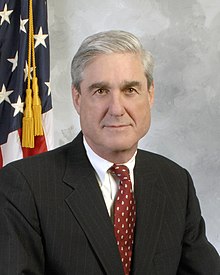
Robert Mueller
A news media that prizes glitz over substance has abdicated the role intended for it by the Founding Fathers: To act as a watchdog over the nation’s leaders.
That does not, however, diminish the legacy of Robert Mueller’s achievements—as Special Counsel and every other position he has held.
Revered within the law enforcement community, he will forever rank among the giants who personify courage and integrity
As a soldier, prosecutor, FBI director and Special Counsel, Robert Mueller took an oath to “support and defend the Constitution of the United States against all enemies, foreign and domestic.”
So did Donald Trump when he was inaugurated the nation’s 45th President. And so did every Republican member of the House of Representatives and the Senate.
The difference between Robert Mueller and Trump—and the overwhelming majority of Republican Congressional members—is this: Mueller, like a compass pointing True North, has always stayed faithful to that oath.
In doing so, he carried on his shoulders the burdens created when millions of racist, hate-filled Americans deliberately sent a corrupt, Russian-backed egomaniac and would-be dictator to the White House.
2016 PRESIDENTIAL CAMPAIGN, ABC NEWS, AFFORDABLE CARE ACT, ALTERNET, AMERICABLOG, AP, ARNOLD SCHWARTNEGGER, BABY BOOMER RESISTANCE, BANDY X. LEE, BARACK OBAMA, BLOOMBERG, BUZZFEED, CBS NEWS, CIA, CNN, CONSERVATIVE POLITICLA ACTION CONFERENCE (CPAC), CRAIG MALKIN, CROOKS AND LIARS, DAILY KOZ, DEMOCRATS, DONALD TRUMP, FBI, FIRST AMENDMENT, FIVETHIRTYEIGHT, FLETCHER KNEBEL, GAVIN NEWSOM, HARPER’S MAGAZINE, HARVARD MEDICAL SCHOOL, HILLARY CLINTON, HOUSE OF REPRESENTATIVES, IMMIGRATION AND CUSTOMS ENFORCEMENT (ICE), IVANKA TRUMP, JOHN T. GARNER, JOSEPH STALIN, KIM JONG-UN, LANCE DODES, LIBEL, MEDIA MATTERS, MERYL STREEP, MICHAEL COHEN, MOTHER JONES, MOVEON, MSNBC, NARCISSISM, NBC NEWS, NEIL YOUNG, NEWSWEEK, NIGHT AT CAMP DAVID (BOOK), NPR, NUCLEAR WEAPONS, OBAMACARE, PARANOIA, PBS NEWSHOUR, POLITICO, POLITICUSUSA, PSYCHOSIS, RAW STORY, REPUBLICANS, REUTERS, ROBERT S. MUELLER, ROD ROSENSTEIN, RUSSIA, SALON, SEATTLE TIMES, SLATE, SOCIOPATHY, TALKING POINTS MEMO, THE ATLANTIC, THE CHICAGO SUN-TIMES, THE CHICAGO TRIBUNE, THE DAILY BEAST, THE DAILY BLOG, THE DANGEROUS CASE OF DONALD TRUMP (BOOK), THE GUARDIAN, THE HILL, THE HUFFINGTON POST, THE LOS ANGELES TIMES, THE MEDIA, THE NATION, THE NEW REPUBLIC, THE NEW YORK TIMES, THE VILLAGE VOICE, THE WASHINGTON POST, THINKPROGRESS, TIME, TRUTHDIG, TRUTHOUT, TWO POLITICAL JUNKIES, U.S. NEWS & WORLD REPORT, UPI, USA TODAY, VIETNAM, VLADIMIR PUTIN, WIRETAPPING, WONKETTE, X
In Bureaucracy, History, Medical, Politics, Social commentary on August 7, 2024 at 12:14 am
Donald Trump’s appearance at the Conservative Political Action Conference on March 2, 2019 was an occasion for rejoicing among his supporters.
But for those who prize rationality and decency in a President, it was a dismaying and frightening experience.
For two hours, Trump gave free reign to his anger and egomania.
Among his unhinged commentaries:
“We have people in Congress that hate our country.”
If you don’t agree 100% with Trump on everything, you’re a traitor.
“He called me up. He said, ‘You’re a great President. You’re doing a great job.’ He said, ‘I just want to tell you you’re a great President and you’re one of the smartest people I’ve ever met.'”
Trump attributed these remarks to California’s liberal governor, Gavin Newsom. On February 11, 2019, Newsom had announced he was withdrawing several hundred National Guardsmen from the state’s southern border with Mexico—defying Trump’s request for support from border states.
Donald Trump at CPAC
“You know if you remember my first major speech—you know the dishonest media they’ll say, ‘He didn’t get a standing ovation.’ You know why? Because everybody stood and nobody sat. They are the worst. They leave that out.”
Once again, he’s the persecuted victim of an unfair and totally unappreciative news media.
“And I love the First Amendment; nobody loves it better than me. Nobody. I mean, who use its more than I do? But the First Amendment gives all of us—it gives it to me, it gives it to you, it gives it to all Americans, the right to speak our minds freely. It gives you the right and me the right to criticize fake news and criticize it strongly.”
Trump has repeatedly called the nation’s free press “the enemy of the people”—a slander popularized by Soviet dictator Joseph Stalin. And while Trump brags about his usage of the First Amendment, he’s used Non-Disclosure agreements and threats of lawsuits to deny that right to others.

“For too long, we’ve traded away our jobs to other countries. So terrible.”
While this remark got rousing applause, he failed to mention that his own products are made overseas:
- Ties: Made in China
- Suits: Made in Indonesia
- Trump Vodka: Made in the Netherlands, and later in Germany
- Crystal glasses, decanters: Made in Slovenia
- And the clothing and accessories line of his daughter, Ivanka, is produced entirely in factories in Bangladesh, Indonesia and China.
“By the way, you folks are in here—this place is packed, there are lines that go back six blocks and I tell you that because you won’t read about it, OK.”
He’s obsessed with fear that the media won’t make him look popular.
“So we’re all part of this very historic movement, a movement the likes of which, actually, the world has never seen before. There’s never been anything like this. There’s been some movements, but there’s never been anything like this.”
Trump sees himself as the single greatest figure in history. So anything he’s involved with must be unprecedented.
“But I always say, Obamacare doesn’t work. And these same people two years ago and a year ago were complaining about Obamacare.”
In 2010, 48 million Americans lacked health insurance. By 2016, that number had been reduced to 28.6 million. So 20 million Americans now have access to medical care they previously couldn’t get.
“But we’re taking a firm, bold and decisive measure, we have to, to turn things around [with North Korea]. The era of empty talk is over, it’s over.”
- Trump has boasted that he and North Korean dictator Kim Jong-Un “fell in love.” Then he met with Kim in Vietnam—and got stiffed on a deal for North Korea to give up its nuclear weapons.
- On July 16, 2018, Trump attended a press conference in Helsinki, Finland, with Russian President Vladimir Putin. There he blamed American Intelligence agencies—such as the FBI, CIA—instead of Putin for Russia’s subversion of the 2016 Presidential election.

“I’ll tell you what they [agents of Immigration and Customs Enforcement] do, they came and endorsed me, ICE came and endorsed me. They never endorsed a presidential candidate before, they might not even be allowed to.”
Trump can’t stop boasting about how popular he is.
“These are hard-working, great, great Americans. These are unbelievable people who have not been treated fairly. Hillary called them deplorable. They’re not deplorable.”
On the contrary: “Deplorable” is exactly the word for those who vote their racism, ignorance, superstition and hatred of their fellow citizens.
A FINAL NOTE: Trump held himself up for adoration just three days after Michael Cohen, his longtime fixer:
- Damned him as a racist, a conman and a cheat.
- Revealed that Trump had cheated on his taxes and bought the silence of a porn “star” to prevent her revealing a 2006 tryst before the 2016 election.
- Estimated he had stiffed, on Trump’s behalf, hundreds of workers Trump owed money to.
And, only two days earlier, Trump had returned from a much-ballyhooed meeting in Vietnam with North Korean dictator Kim Jong-Un. Trump hoped to get a Nobel Peace Prize by persuading Kim to give up his nuclear arsenal.
Instead, Trump got stiffed—and returned empty-handed.
2016 PRESIDENTIAL CAMPAIGN, ABC NEWS, AFFORDABLE CARE ACT, ALTERNET, AMERICABLOG, AP, ARNOLD SCHWARTNEGGER, BABY BOOMER RESISTANCE, BANDY X. LEE, BARACK OBAMA, BLOOMBERG, BUZZFEED, CBS NEWS, CIA, CNN, CONSERVATIVE POLITICLA ACTION CONFERENCE (CPAC), CRAIG MALKIN, CROOKS AND LIARS, DAILY KOZ, DEMOCRATS, DONALD TRUMP, FBI, FIRST AMENDMENT, FIVETHIRTYEIGHT, FLETCHER KNEBEL, GAVIN NEWSOM, HARPER’S MAGAZINE, HARVARD MEDICAL SCHOOL, HILLARY CLINTON, HOUSE OF REPRESENTATIVES, IMMIGRATION AND CUSTOMS ENFORCEMENT (ICE), IVANKA TRUMP, JOHN T. GARNER, JOSEPH STALIN, KIM JONG-UN, LANCE DODES, LIBEL, MEDIA MATTERS, MERYL STREEP, MICHAEL COHEN, MOTHER JONES, MOVEON, MSNBC, NARCISSISM, NBC NEWS, NEIL YOUNG, NEWSWEEK, NIGHT AT CAMP DAVID (BOOK), NPR, NUCLEAR WEAPONS, OBAMACARE, PARANOIA, PBS NEWSHOUR, POLITICO, POLITICUSUSA, PSYCHOSIS, RAW STORY, REPUBLICANS, REUTERS, ROBERT S. MUELLER, ROD ROSENSTEIN, RUSSIA, SALON, SEATTLE TIMES, SLATE, SOCIOPATHY, TALKING POINTS MEMO, THE ATLANTIC, THE CHICAGO SUN-TIMES, THE CHICAGO TRIBUNE, THE DAILY BEAST, THE DAILY BLOG, THE DANGEROUS CASE OF DONALD TRUMP (BOOK), THE GUARDIAN, THE HILL, THE HUFFINGTON POST, THE LOS ANGELES TIMES, THE MEDIA, THE NATION, THE NEW REPUBLIC, THE NEW YORK TIMES, THE VILLAGE VOICE, THE WASHINGTON POST, THINKPROGRESS, TIME, TRUTHDIG, TRUTHOUT, TWO POLITICAL JUNKIES, U.S. NEWS & WORLD REPORT, UPI, USA TODAY, VIETNAM, VLADIMIR PUTIN, WIRETAPPING, WONKETTE, X
In Bureaucracy, History, Medical, Politics, Social commentary on August 6, 2024 at 12:12 am
“Is this man simply crazy, or is he crazy like a fox?”
That was the question that Bandy X. Lee, an assistant clinical psychiatry professor at the Yale School of Medicine, wanted to answer.
And she tried to do so as the editor of The Dangerous Case of Donald Trump: 27 Psychiatrists and Mental Health Experts Assess a President.
“It doesn’t take a psychiatrist to notice that our president is mentally compromised,” she and colleague Judith Lewis Herman asserted in the book’s prologue.
According to Dr. Craig Malkin, a Lecturer in Psychology for Harvard Medical School and a licensed psychologist, Trump is a pathological narcissist:
“Pathological narcissism begins,” Malkin writes, “when people become so addicted to feeling special that, just like with any drug, they’ll do anything to get their ‘high,’ including lie, steal, cheat, betray and even hurt those closest to them.
“When they can’t let go of their need to be admired or recognized, they have to bend or invent a reality in which they remain special despite all messages to the contrary. In point of fact, they become dangerously psychotic. It’s just not always obvious until it’s too late.”
Lance Dodes, a retired psychiatry professor at Harvard Medical School, believes that Trump is a sociopath: “The failure of normal empathy is central to sociopathy, which is marked by an absence of guilt, intentional manipulation and controlling or even sadistically harming others for personal power or gratification.”
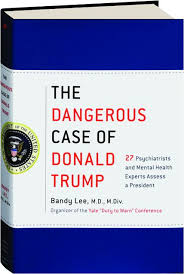
But an observer didn’t need to be a psychiatrist to feel frightened by Trump’s behavior at the Conservative Political Action Conference (CPAC) on March 2, 2019.
For two hours, in National Harbor, Maryland, Trump delivered the longest address (so far) of his Presidency—and of any American President.
“You know, I’m totally off script right now,” Trump said early on. “This is how I got elected, by being off script.”
And from the moment he embraced an American flag as though he wanted to hump it, it was clear: He was “totally off script.”
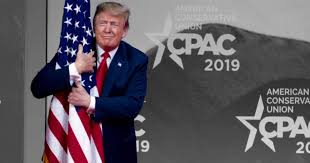
“How many times did you hear, for months and months, ‘There is no way to 270?’ You know what that means, right? ‘There is no way to 270.'”
Once again, Trump reveals his obsession with his win in 2016—as if no one else had ever been elected President.
“If you tell a joke, if you’re sarcastic, if you’re having fun with the audience, if you’re on live television with millions of people and 25,000 people in an arena, and if you say something like, ‘Russia, please, if you can, get us Hillary Clinton’s emails. Please, Russia, please.'”
Here he’s trying to “spin” his infamous invitation to hackers in Vladimir Putin’s Russia to intervene in an American Presidential election by obtaining the emails of his campaign rival. Which they did that same day.
“So now we’re waiting for a report, and we’ll find out whether or not, and who we’re dealing with. We’re waiting for a report by people that weren’t elected.”
It doesn’t matter to Trump that America’s foremost enemy—Russia—tried to influence a Presidential election. What matters to him is that the report might end his Presidency.
“Those red hats—and white ones. The key is in the color. The key is what it says. ‘Make America Great Again’ is what it says. Right? Right?”
Color matters. Words, ideas don’t.
“Now, Robert Mueller never received a vote, and neither did the person that appointed him. And as you know, the attorney general says, ‘I’m going to recuse myself.'”
Special Counsel Robert S. Mueller and Assistant Attorney General Rod Rosenstein were career Justice Department officials. They weren’t voted into office.
“Number one, I’m in love, and you’re in love. We’re all in love together. There’s so much love in this room, it’s easy to talk. You can talk your heart out. You really could. There’s love in this room. You can talk your heart out. It’s easy. It’s easy. It’s easy.”
Trump apparently finds it easy to fall in love—with Right-wing audiences and Communist dictators such as Kim Jong-Un.
“And from the day we came down the escalator, I really don’t believe we’ve had an empty seat at any arena, at any stadium. They did the same thing at our big inauguration speech. You take a look at those crowds.”
Once again, he must brag about how popular he is and how many people want to listen to him.
“A few days ago I called the fake news the enemy of the people. And they are. They are the enemy of the people. Because they have no sources, they just make ’em up when there are none.”
By January 20, 2020, The Washington Post found that Trump had made “16,241 ‘false or misleading claims” in his first three years in office. He is in no position to talk about integrity.
“But we’re going to have regulation. It’s going to be really strong and really good and we’re going to protect our environment and we’re going to protect the safety of our people and our workers, OK?”
To “protect our environment,” Trump appointed Andrew R. Wheeler, a former coal company lobbyist, to head the Environmental Protection Agency.
2016 PRESIDENTIAL CAMPAIGN, ABC NEWS, AFFORDABLE CARE ACT, ALTERNET, AMERICABLOG, AP, ARNOLD SCHWARTNEGGER, BABY BOOMER RESISTANCE, BANDY X. LEE, BARACK OBAMA, BLOOMBERG, BUZZFEED, CBS NEWS, CIA, CNN, CONSERVATIVE POLITICLA ACTION CONFERENCE (CPAC), CRAIG MALKIN, CROOKS AND LIARS, DAILY KOZ, DEMOCRATS, DONALD TRUMP, FBI, FIRST AMENDMENT, FIVETHIRTYEIGHT, FLETCHER KNEBEL, GAVIN NEWSOM, HARPER’S MAGAZINE, HARVARD MEDICAL SCHOOL, HILLARY CLINTON, HOUSE OF REPRESENTATIVES, IMMIGRATION AND CUSTOMS ENFORCEMENT (ICE), IVANKA TRUMP, JOHN T. GARNER, JOSEPH STALIN, KIM JONG-UN, LANCE DODES, LIBEL, MEDIA MATTERS, MERYL STREEP, MICHAEL COHEN, MOTHER JONES, MOVEON, MSNBC, NARCISSISM, NBC NEWS, NEIL YOUNG, NEWSWEEK, NIGHT AT CAMP DAVID (BOOK), NPR, NUCLEAR WEAPONS, OBAMACARE, PARANOIA, PBS NEWSHOUR, POLITICO, POLITICUSUSA, PSYCHOSIS, RAW STORY, REPUBLICANS, REUTERS, ROBERT S. MUELLER, ROD ROSENSTEIN, RUSSIA, SALON, SEATTLE TIMES, SLATE, SOCIOPATHY, TALKING POINTS MEMO, THE ATLANTIC, THE CHICAGO SUN-TIMES, THE CHICAGO TRIBUNE, THE DAILY BEAST, THE DAILY BLOG, THE DANGEROUS CASE OF DONALD TRUMP (BOOK), THE GUARDIAN, THE HILL, THE HUFFINGTON POST, THE LOS ANGELES TIMES, THE MEDIA, THE NATION, THE NEW REPUBLIC, THE NEW YORK TIMES, THE VILLAGE VOICE, THE WASHINGTON POST, THINKPROGRESS, TIME, TRUTHDIG, TRUTHOUT, TWO POLITICAL JUNKIES, U.S. NEWS & WORLD REPORT, UPI, USA TODAY, VIETNAM, VLADIMIR PUTIN, WIRETAPPING, WONKETTE, X
In Bureaucracy, History, Medical, Politics, Social commentary on August 5, 2024 at 12:10 am
“One man in the free world has the power to launch a nuclear war that might destroy civilization: the President of the United States. What if that man were mentally unbalanced?”
That is the premise of the 1965 novel, Night at Camp David, by Fletcher Knebel.
At the time of its release, its plot was considered so over-the-top as to be worthy of science fiction:
Iowa Democratic Senator Jim MacVeagh is summoned to Camp David, the Presidential retreat, by President Mark Hollenbach. MacVeagh is expected to become Hollenbach’s next Vice President. But he becomes alarmed that Hollenbach is clearly suffering from intense paranoia.
He wants to develop a closer relationship between the United States and Russia—while cutting ties with American allies in Europe. Moreover, Hollenbach believes the American news media are conspiring against him with his political enemies.
Only one person possesses evidence that Hollenbach is losing his grip on sanity—his mistress, Rita. Desperate to retain his power, Hollenbach orders the FBI to investigate both MacVeagh and Rita.
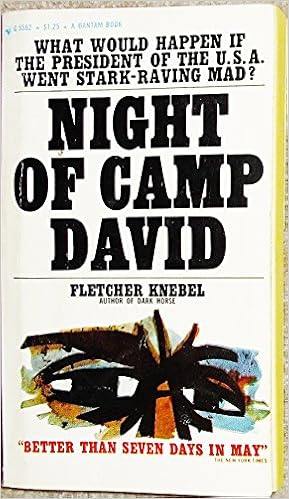
So why was a 53-year-old novel rereleased in 2018? The answer lay in two words: Donald Trump.
In a November 30, 2018 review of Night at Camp David, Tom McCarthy, national affairs correspondent for the British newspaper, The Guardian, wrote:
“The current president [Donald Trump] has seen crowds where none exist, deployed troops to answer no threat, attacked national institutions – the military, the justice department, the judiciary, the vote, the rule of law, the press – tried to prosecute his political enemies, elevated bigots, oppressed minorities, praised despots while insulting global allies and wreaked diplomatic havoc from North Korea to Canada.
“He stays up half the night watching TV and tweeting about it, then wakes up early to tweet some more, in what must be the most remarkable public diary of insecurity, petty vindictiveness, duplicity and scattershot focus by a major head of state in history.”
From the beginning of his Presidency, Trump aroused fear—based not only of what he might do, but that he might be mentally unbalanced. Consider:
On March 4, 2017, in a series of unhinged tweets, he accused former President Barack Obama of tapping his Trump Tower phones prior to the election:
“Terrible! Just found out that Obama had my ‘wires tapped’ in Trump Tower just before the victory. Nothing found. This is McCarthyism!”
“Is it legal for a sitting President to be ‘wire tapping’ a race for president prior to an election? Turned down by court earlier. A NEW LOW!”
“I’d bet a good lawyer could make a great case out of the fact that President Obama was tapping my phones in October, just prior to Election!”
“How low has President Obama gone to tapp my phones during the very sacred election process. This is Nixon/Watergate. Bad (or sick) guy!”
A subsequent investigation by the Justice Department turned up no evidence to substantiate Trump’s foray into Presidential libel.
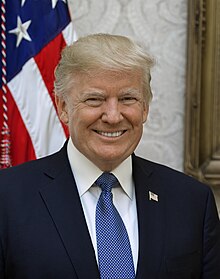
Donald Trump
Trump’s shoot-first-and-never-mind-the-consequences approach to life has been thoroughly documented.
From June 15, 2015, when he launched his Presidential campaign, until October 24, 2016, he fired nearly 4,000 angry, insulting tweets at 281 people and institutions. The New York Times needed two full pages of its print edition to showcase them.
Among these targets were:
- His Democratic rival, Hillary Clinton
- His fellow Republican Presidential candidates
- Actress Meryl Streep
- News organizations
- President Barack Obama
- Comedian John Oliver
- The Affordable Care Act (Obamacare)
- Singer Neil Young
- The state of New Jersey
- Actor Arnold Schwarzenegger.
And during his first two weeks as President, Trump attacked 22 people, places and things on his @realDonaldTrump Twitter account.
Trump’s vindictiveness, his narcissism, his compulsive aggression, his complaints that his “enemies” in government and the press are trying to destroy him, caused many to ask: Could the President of the United States be suffering from mental illness?
One who dared to answer this question was John D. Gartner, a practicing psychotherapist.
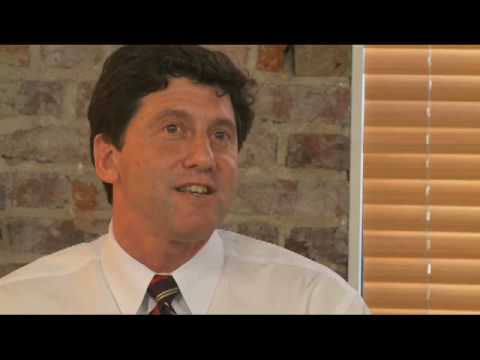
John D. Gartner
Gartner graduated magna cum laude from Princeton University, received his Ph.D in clinical psychology from the University of Massachusetts, and served as a part-time assistant professor of psychiatry at Johns Hopkins University Medical School for 28 years.
During an interview by U.S. News & World Report (published on January 27, 2017), Gartner said: “Donald Trump is dangerously mentally ill and temperamentally incapable of being president.”
Gartner said that Trump suffers from “malignant narcissism,” whose symptoms include:
- anti-social behavior
- sadism
- aggressiveness
- paranoia
- and grandiosity.
“We’ve seen enough public behavior by Donald Trump now that we can make this diagnosis indisputably,” says Gartner, who admits he has not personally examined Trump.
More of that behavior was on full display on March 2, 2019 at the annual Conservative Political Action Conference (CPAC), held at the Gaylord National Resort & Convention Center, National Harbor, Maryland.
For more than two hours, Trump delivered the longest speech (so far) of his Presidency to his fanatically Right-wing audience.
Facing a hostile Democratic House of Representatives and a potentially explosive report by Special Counsel Robert Mueller, Trump threw down the gauntlet.
2016 PRESIDENTIAL CAMPAIGN, ABC NEWS, ALTERNET, AMERICABLOG, AP, BABY BOOMER RESISTANCE, BILL MAULDIN, BUZZFEED, CBS NEWS, CHINA, CIA, CNN, CROOKS AND LIARS, DAILY KOZ, DONALD TRUMP, EXTORTION, FBI, FIVETHIRTYEIGHT, HILLARY CLINTON, JOE BIDEN, LUCIAN K. TRUSCOTT JR., MOTHER JONES, MOVEON, MSNBC, NAZI GERMANY, NBC NEWS, NEWSWEEK, NPR, PBS NEWSHOUR, POLITICO, POLITICUSUSA, RAW STORY, REUTERS, RUSSIA, SALON, SAVING PRIVATE RYAN, SEATTLE TIMES, SLATE, STEVEN SPIELBERG, TALKING POINTS MEMO, THE ATLANTIC, THE CHICAGO SUN-TIMES, THE CHICAGO TRIBUNE, THE DAILY BEAST, THE DAILY BLOG, THE GUARDIAN, THE HILL, THE HUFFINGTON POST, THE LOS ANGELES TIMES, THE NATION, THE NEW YORK TIMES, THE WASHINGTON POST, THINKPROGRESS, TIME, TRUMP FOUNDATION, TRUTHDIG, U.S. NEWS & WORLD REPORT, UKRAINE, UPI, USA TODAY, VETERANS’ DAY, VIETNAM WAR, VLADIMIR PUTIN, WORLD WAR 11, X
In Bureaucracy, History, Military, Politics, Social commentary on August 2, 2024 at 12:05 am
If President Donald Trump expected a warm welcome when he attended the 100th Veterans Day Parade in Manhattan, he was rudely disappointed.
“Lock him up!” yelled many protesters, echoing chants at his own rallies against Hillary Clinton, his 2016 rival for President.
Other New Yorkers plastered their windows with large anti-Trump signs: “DUMP TRUMP!” “IMPEACH!” “CONVICT!”
One demonstrator held up a sign: “Draft Dodger,” a reference to Trump’s avoiding military service in Vietnam through five draft deferments, including one for bone spurs.
“My grandfather fought in World War II, he was a colonel and an immigrant from Russia,” said a 52-year-old woman who only identified herself as Liz.
“He would be horrified at the corruption and hate in the White House right now. He was a Republican, but he was not a racist. He was completely committed to this country.”
Another woman, Janet Gonzelez, 85, attacked Trump’s “upside down” foreign policy in the Middle East. Asked what she would tell Trump if she met him, she replied: “Fuck you.”
Speaking behind bulletproof plexiglass, Trump tried to drown out a throng of protesters shouting and blowing whistles outside the west entrance of Madison Square Park.
Donald Trump
“Our veterans risked everything for us. Now it is our duty to serve and protect them every single day of our lives,” Trump said, as a chorus of boos echoed in the distance.
What Trump did not mention was that, only four days earlier, a New York judge had ordered him to pay $2 million in damages owing to misuse of funds by the Trump Foundation.
In January, 2016, Trump had held a televised fundraiser for veterans. He claimed that the funds would be distributed to charities serving the needs of veterans.
But the Trump Foundation improperly used $2.82 million it received from that fundraiser to fuel his campaign for President.
Thus, the man who had ripped off American veterans was now presiding over a day created to honor them.
There is no better way to trace the decline of the United States than to compare the 2019 Manhattan Veterans’ Day celebration with the 1946 one at the Sicily-Rome American Cemetery, near the town of Nettuno.
The cemetery held about 20,000 American graves, mostly of soldiers who had died in Sicily or at Anzio, fighting Nazi Germany.
Presiding over that event was Lt. General Lucian K. Truscott, Jr., the U.S. Fifth Army Commander.
Unlike many other generals, Truscott had shared in the dangers of combat, pouring over maps on the hood of his jeep with company commanders as bullets or shells whizzed about him.
When it came his turn to speak, Truscott moved to the podium. Then he turned his back on the assembled visitors—which included several Congressmen.
The audience he now faced were the graves of his fellow soldiers.
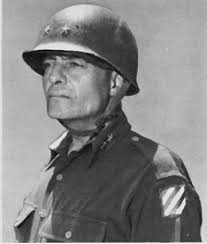
Lt. General Lucian K. Truscott, Jr.
Among those who heard Truscott’s speech was Bill Mauldin, the famous cartoonist for the Army newspaper, Stars and Stripes. Mauldin had created Willie and Joe, the unshaved, slovenly-looking “dogfaces” who came to symbolize the GI.
It’s from Mauldin that we have the fullest account of Truscott’s speech that day.
“He apologized to the dead men for their presence there. He said that everybody tells leaders that it is not their fault that men get killed in war, but that every leader knows in his heart that this is not altogether true.
“He said he hoped anybody here through any mistake of his would forgive him, but he realized that he was asking a hell of a lot under the circumstances….
“Truscott said he would not speak of the ‘glorious’ dead because he didn’t see much glory in getting killed in your teens or early twenties.
“He promised that if in the future he ran into anybody, especially old men, who thought death in battle was glorious, he would straighten them out. He said he thought it was the least he could do.”
Then Truscott walked away, without acknowledging his audience of celebrities.
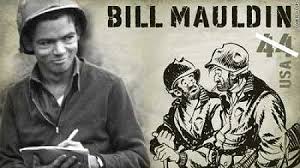
Bill Mauldin and “Willie and Joe,” the characters he made famous
Contrast the character of Lucian Truscott with that of the man who held the office of President of the United States.
Donald Trump has:
- Equated his reckless sex life during the 1970s with the risks American soldiers faced in Vietnam.
- Relentlessly defended Russian dictator Vladimir Putin against all criticism, even as he’s slandered literally hundreds of his fellow citizens on Twitter.
- Attacked the FBI and CIA for concluding that Russia intervened in the 2016 election to help him win the White House.
- Tried to extort the president of Ukraine to slander former Vice President Joe Biden, his possible rival for the White House in 2020.
- “Joked” that it would be “great” if the United States had a “President-for-Life”—like China.
Saving Private Ryan, Steven Spielberg’s 1998 World War II epic, opens with a scene of an American flag snapping in the wind.
Except that the brilliant colors of Old Glory have been washed out, leaving only black-and-white stripes and black stars.
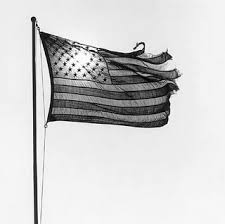
Small wonder that, for many Americans, Old Glory has taken on a darker, washed-out appearance—in real-life as in film.
2016 PRESIDENTIAL ELECTION, 2020 PRESIDENTIAL ELECTION, ABC NEWS, ABUSE OF POWER, ADOLF HITLER, ALTERNET, AMERICABLOG, AP, BABY BOOMER RESISTANCE, BORDER WALL, BUZZFEED, CBS NEWS, CIA, CNN, COVID-19, CROOKS AND LIARS, DAILY KOS, DEMOCRATS, DONALD TRUMP, E. JEAN CARROLL, EMOLUMENTS CLAUSE OF THE UNITED STATES CONSTITUTION, FBI, FEDERAL GOVERNMENT SHUTDOWN, FIVETHIRTYEIGHT, HARPER’S MAGAZINE, HEINRICH HIMMLER, J.D. VANCE, JAMES COMEY, JANUARY 6 COUP ATTEMPT, JEWS, KEVIN MCCARTHY, KIM JONG-UN, MEDIA MATTERS, MITCH MCCONNELL, MOTHER JONES, MOVEON, MSNBC, NATIONAL SECURITY AGENCY, NBC NEWS, NEWSWEEK, NPR, PBS NEWSHOUR, POLITICO, POLITICUSUSA, RAW STORY, REPUBLICAN NATIONAL CONVENTION, REPUBLICANS, REUTERS, SALON, SCHUTZSTAFFEL, SEATTLE TIMES, SLATE, SS, TALKING POINTS MEMO, THE ATLANTIC, THE CHICAGO SUN-TIMES, THE CHICAGO TRIBUNE, THE DAILY BEAST, THE DAILY BLOG, THE GUARDIAN, THE HILL, THE HOLOCAUST, THE HUFFINGTON POST, THE LOS ANGELES TIMES, THE NATION, THE NEW REPUBLIC, THE NEW YORK TIMES, THE VILLAGE VOICE, THE WASHINGTON POST, THINKPROGRESS, TIME, TRUTHDIG, TRUTHOUT, TWO POLITICAL JUNKIES, U.S. NEWS & WORLD REPORT, UPI, USA TODAY, VLADIMIR PUTIN, WHERMACHT, WONKETTE, XI JINPING
In Bureaucracy, History, Law, Law Enforcement, Politics, Social commentary on July 25, 2024 at 12:11 am
On October 4, 1943, SS-Reichsfuhrer Heinrich Himmler addressed SS officers stationed in Posen, Poland, about the ongoing campaign to exterminate the Jews of Europe.
He gave a similar speech two days later to an audience of Reichsleiters (national leaders) and Gauleiters (governors), as well as other government representatives.
Himmler intended to alert Reich officials of the extermination campaign the Schutzstaffel (“Protective Squads”)-–otherwise known as the SS—and Wehrmacht (German army) had been waging since June, 1941.
The purpose: To make his listeners accessories to his monumental crimes—and to warn them there was no turning back.

Heinrich Himmler
Either Nazi Germany won the war that its Fuhrer, Adolf Hitler, had unintentionally unleashed on September 1, 1939—or its topmost officials would themselves face extinction as war criminals.
Said Himmler:
“I want to also mention a very difficult subject before you, with complete candor. It should be discussed amongst us, yet nevertheless, we will never speak about it in public. I am talking about the evacuation of the Jews, the extermination of the Jewish people.
“It is one of those things that is easily said: ‘The Jewish people is being exterminated.’…Most of you will know what it means when 100 bodies lie together, when 500 are there or when there are 1000. And to have seen this through and—with the exception of human weakness—to have remained decent, has made us hard and is a page of glory never mentioned and never to be mentioned….
“But altogether we can say: We have carried out this most difficult task for the love of our people. And we have suffered no defect within us, in our soul, in our character.”
Fast forward 81 years—to July, 2024.
On July 15, 2024, the Republican National Convention met in Milwaukee, Wisconsin to nominate former President Donald Trump for President of the United States and Ohio Senator J.D. Vance for Vice President.
Most of the attendees of Himmler’s speech at Posen hadn’t known the full details of the systematic extermination of the Jews. But everyone at the Republican convention knew Trump’s history:
- Publicly siding with Russian dictator Vladimir Putin against American Intelligence agencies—such as the FBI, CIA and National Security Agency—which unanimously agreed that Russia had interfered with the 2016 Presidential election.
- Using his position as President to further enrich himself, in violation of the Emoluments Clause of the Constitution.
- Praising brutal Communist dictators Putin, Xi Jinping and Kim Jong-Un.
- Firing FBI Director James Comey for refusing to pledge his personal loyalty to Trump—and continuing to investigate Russian subversion of the 2016 election.
- Openly lusting for his daughter, Ivanka.
- Shutting down the Federal Government on December 22, 2018, because Democrats refused to fund his useless “border wall” between the United States and Mexico. About 380,000 government employees were furloughed and another 420,000 were forced to work without pay for 35 days.
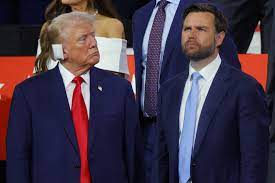
Donald Trump and J.D. Vance
- Allowing the deadly COVID-19 virus to ravage the country, killing 400,000 Americans by the time he left office.
- Attacking medical experts and governors who urged Americans to wear masks and socially distance to protect themselves against the deadly COVID-19 virus.
- Repeatedly lying—while still in office and afterward—that the 2020 election had been “stolen” from him by massive voter fraud.
- Illegally trying to pressure state legislatures and governors to stop the certification of the vote that had made Joe Biden the President-elect.
- Inciting his followers on January 6, 2021, to attack the Capitol Building where Senators and Representatives were counting the Electoral Votes won by himself and Joe Biden. His objective: Stop the count, which he knew would prove him the loser.

At the time of the January 6, 2021 coup attempt, even Republicans admitted Trump’s responsibility for it.
House Minority Leader Kevin McCarthy frantically phoned Trump, insisting that the rioters—who were breaking into his office through the windows—were the President’s supporters. He begged Trump to call them off.
“Well, Kevin, I guess these people are more upset about the election than you are,” Trump said.
But on January 28, “My Kevin” groveled before Trump at his Mar-a-Lago estate in Palm Beach, Florida, while they discussed how to win a House majority in the 2022 midterm elections
And Senate Majority Leader Mitch McConnell said on January 12: “The mob was fed lies. They were provoked by the president and other powerful people.”
But when the Senate met to try Trump for inciting an insurrection, McConnell voted to acquit him—and successfully urged his fellow Republicans to do the same.
At the 2024 Republican convention, House Speaker Mike Johnson declared: “We in the Republican Party are the law and order team.”
But he ignored Trump’s past conviction for raping advice columnist E. Jean Carroll and his 34 felony convictions for scheming to illegally influence the 2016 election by paying hush money to a porn “star” after the two had sex.
Heinrich Himmler diabolically entangled his fellow Nazis in his own crimes.
Attendees at the Republican convention cannot plead ignorance of Trump’s crimes. They are knowingly, enthusiastically championing a proven criminal for the highest office in the nation.
History has brutally condemned those Germans who, knowing the full extent of Adolf Hitler’s crimes, nevertheless signed on to perpetuate them.
History will render the same damning verdict against those Republicans who have provided similar support for Donald Trump.
1984 NOVEL, 2020 PRESIDENTIAL ELECTION, ABC NEWS, ADOLF HITLER, AFFORDABLE HEALTHCARE ACT, ALTERNET, ALVIN BRAGG, AMERICABLOG, ANDREW CLYDE, ANN COULTER, AP, ARIZONA, ARIZONA SHOOTINGS, ASHLI BABBITT, ASSASSINATION, BABY BOOMER RESISTANCE, BARACK OBAMA, BARRON TRUMP, BBC, BILL CLINTON, BIRTHERS, BLACKS, BLOOMBERG NEWS, BUZZFEED, CBS NEWS, CHILD MOLESTERS, CHRISTINA-TAYLOR GREEN, CLASSIFIED DOCUMENTS, CNN, CONFEDERATE FLAG, CROOKS AND LIARS, CVS, DAILY KOS, DEMOCRATIC PARTY, DEMOCRATS, DENNIS HASTERT, DEVIN NUNES, DICK ARMEY, DICK MORRIS, DONALD TRUMP, FAMILY RESEARCH COUNCIL, FANNI WILLIS, FBI, FIVETHIRTYEIGHT, FRANKLIN D. ROOSEVELT, GABRIELLE GIFFORDS, GAYS, GEORGE H.W. BUSH, GEORGE ORWELL, GEORGE W. BUSH, GLENN BECK, HARPER’S MAGAZINE, HARRY S. TRUMAN, HATE CRIMES, HEALTHCARE, HISPANICS, HOUSE OVERSIGHT COMMITTEE, HUFFINGTON POST, JACK SMITH, JAN BREWER, JANUARY 6 COUP ATTEMPT, JGB BUSH, JIM JORDAN, JOSEPH MCCARTHY, JOSEPH R. BIDEN, JOSEPH STALIN, JOSH DUGGAR, KANSAS, LAUREN BOEBERT, LESBIANS, MARJORIE TAYLOR GREEN, MATT GAETZ, MEDIA MATTERS, MEIN KAMPF, MELANIA TRUMP, MICHAEL COHEN, MICHAEL SAVAGE, MICHELE BACHMANN, MIKE HUCKABEE, MIKE PENCE, MOTHER JONES, MOVEON, MSNBC, MUSLIMS, NBC NEWS, NEW REPUBLIC, NEWSDAY, NEWSWEEK, NEWT GINGRICH, NPR, ORACLE, PBS NEWSHOUR, PHIL GRAMM, POLITICO, POLITICUSUSA, PROPAGANDA, RAFAEL "TED" CRUZ, RAW STORY, RELIGIOUS FREEDOM RESTORATION ACT, REP. GABRIELLE GIFFORDS, REPUBLICAN PARTY, REPUBLICANS, REUTERS, RICHARD NIXON, RICK PERRY, RODNEY KING RIOTS, ROLLING STONE MAGAZINE, RUSH LIMBAUGH, SALON, Sarah Palin, SEAN HANNITY, SEATTLE TIMES, SHARIA LAW, SLATE, SOUTH DAKOTA, SOVIET UNION, SPIRO AGNEW, STEVE BANNON, STORMY DANIELS, TALKING POINTS MEMO, TEA PARTY, TERRORISM, THE ATLANTIC, THE CHICAGO SUN-TIMES, THE CHICAGO TRIBUNE, THE DAILY BEAST, THE DAILY BLOG, THE GUARDIAN, THE HILL, THE HUFFINGTON POST, THE INTERCEPT, THE LOS ANGELES TIMES, THE NATION, THE NEW REPUBLIC, THE NEW YORK TIMES, THE NEW YORKER, THE VILLAGE VOICE, THE WASHINGTON POST, THINKPROGRESS, TIME, TRUTHDIG, TRUTHOUT, U.S. DISTRICT JUDGE JOHN ROLL, U.S. MARSHALS SERVICE, U.S. NEWS & WORLD REPORT, UNITED STATES HOUSE OF REPRESENTATIVES, UNITED STATES SENATE, UPI, USA TODAY, WOMEN, WORLD WAR 11, X
In Bureaucracy, History, Law, Law Enforcement, Medical, Politics, Social commentary on July 19, 2024 at 12:05 am
To understand Republicans’ behavior, you need to understand the word “projection.”
As defined by psychologists, “projection” means unconsciously taking unwanted emotions or traits you don’t like about yourself and attributing them to someone else.
Except that, with Republicans, there is nothing unconscious about attributing their own evil intentions and/or actions to those they hate.
To cite a current example: “Weaponizing” is a word now in vogue among Republicans. As in: “By appointing a Special Counsel to investigate former President Donald Trump, the Department of Justice (DOJ) proves that Democrats have weaponized Federal law enforcement.”
Republicans conveniently refuse to say why the Justice Department appointed former DOJ official Jack Smith to that position: Because, before leaving the White House, Trump shipped more than 300 highly classified documents in 15 boxes to his estate in Mar-a-Lago.
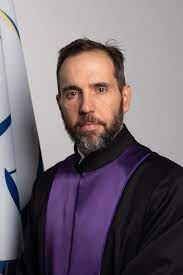
Jack Smith
As an ex-President, he had no right to possess any of these documents.
Moreover, he not only illegally took these documents, he lied to government investigators that he had not done so. It took an August 8, 2022 FBI raid on Mar-a-Lago to retrieve them.
Then there’s the matter of the January 6, 2021 defendants.
They are so named because, on that date, Trump incited his followers to violently attack the United States Capitol Building. Their goal: To prevent Republicans and Democrats from counting the Electoral Votes cast in the 2020 Presidential election.
Trump fully understood that an accurate count of those votes would reveal his loss to former Vice President Joe Biden: 306 votes for Biden, compared with 232 for Trump.
The Stormtrumpers marched to the United States Capitol—and quickly brushed aside Capitol Police, who made little effort to arrest or shoot them.
Capitol Police facing off with Stormtrumpers
- Approximately 140 police officers were assaulted.
- A gallows was erected in front of the Capitol.
- Members of the mob attacked police with chemical agents or lead pipes.
- Improvised explosive devices were found in several locations in Washington, D.C.
- A Capitol Hill police officer was knocked off his feet, dragged into the mob surging toward the building, and beaten with the pole of an American flag.
- Several rioters carried plastic handcuffs, possibly intending to take hostages.
- Others carried treasonous Confederate flags.
- Blue-and-white TRUMP flags floated above the crowd.
- Shouts of “Hang [Vice President] Mike Pence!” often rang out.
- Many of the lawmakers’ office buildings were occupied and vandalized—including that of House Speaker Nancy Pelosi, a favorite Right-wing target.
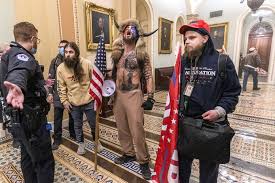
Stormtrumpers inside the Capitol Building
More than three hours passed before police—using riot gear, shields and batons—retook control of the Capitol.
By December, 2023, 728 participants in the coup attempt had pleaded guilty. Another 166 defendants had been convicted at trial; a total of 749 defendants have been sentenced; 467 have been sentenced to prison.
Yet Republicans—most notably Rep. Marjorie Taylor Greene (R-GA)—have depicted these coup supporters as persecuted martyrs.
On March 24, 2022, members of the Republicans’ House Oversight Committee toured a Washington, D.C. jail where some of these defendants were held.
“Their due process rights are being violated. And they have been mistreated and treated as political prisoners,” Greene told reporters after the tour.

Marjorie Taylor Greene
Rep. Lauren Boebert (R-CO), another member of the tour, exchanged hugs with with Micki Witthoeft, the mother of Ashli Babbitt. Babbitt had been shot by police as she forced her way into the House Chamber where members of Congress were sheltering in place.
Republicans‘ fixation on “weaponization” centers on Trump’s facing 91 criminal offenses in four criminal cases.
These relate to Trump’s
- Attempts to overturn the results of the 2020 election;
- Election interference in Georgia;
- Falsifying business records in New York; and
- Mishandling classified records after leaving the presidency.
Donald Trump is the first former president in American history to be criminally indicted.
For Republicans, prosecutors’ daring to hold Trump accountable for his litany of crimes amounts to “election interference.” As if winning office through the efforts of Russian dictator Vladimir Putin has conferred “untouchable” status upon him.
As a result, Republicans have made unprecedented efforts to undermine these prosecutions.
Rep. Andrew Clyde, R-Ga., a Trump ally who sits on the Appropriations Committee, introduced two amendments to eliminate federal funding for all three of Trump’s prosecutors—Special Counsel Jack Smith, Fulton County District Attorney Fani Willis and Manhattan District Attorney Alvin Bragg.
Rep. Matt Gaetz, R-Fla., is also trying to cut off funding for Smith’s office.
Republicans have in the past championed “states’ rights” against “federal overreach.” But now that their former President finds himself facing the consequences of his own criminality, they are eager to abort state-level prosecutions.
At the same time, they slander President Joseph Biden as “weaponizing” the Justice Department against his political rival.
In George Orwell’s classic novel, 1984, the dictatorship ruling Oceania offers the following slogan for its citizens:
WAR IS PEACE
FREEDOM IS SLAVERY
IGNORANCE IS STRENGTH
Republicans would have Americans believe
- The attempted overturning of a legitimate Presidential election was an act of patriotism;
- An ex-President taking classified materials to which he had no right was entirely justified; and
- Donald Trump has an absolute right to commit any crime he desires.
1984 NOVEL, 2020 PRESIDENTIAL ELECTION, ABC NEWS, ADOLF HITLER, AFFORDABLE HEALTHCARE ACT, ALTERNET, ALVIN BRAGG, AMERICABLOG, ANDREW CLYDE, ANN COULTER, AP, ARIZONA, ARIZONA SHOOTINGS, ASHLI BABBITT, ASSASSINATION, BABY BOOMER RESISTANCE, BARACK OBAMA, BARRON TRUMP, BBC, BILL CLINTON, BIRTHERS, BLACKS, BLOOMBERG NEWS, BUZZFEED, CBS NEWS, CHILD MOLESTERS, CHRISTINA-TAYLOR GREEN, CLASSIFIED DOCUMENTS, CNN, CONFEDERATE FLAG, CROOKS AND LIARS, CVS, DAILY KOS, DEMOCRATIC PARTY, DEMOCRATS, DENNIS HASTERT, DEVIN NUNES, DICK ARMEY, DICK MORRIS, DONALD TRUMP, FAMILY RESEARCH COUNCIL, FANNI WILLIS, FBI, FIVETHIRTYEIGHT, FRANKLIN D. ROOSEVELT, GABRIELLE GIFFORDS, GAYS, GEORGE H.W. BUSH, GEORGE ORWELL, GEORGE W. BUSH, GLENN BECK, HARPER’S MAGAZINE, HARRY S. TRUMAN, HATE CRIMES, HEALTHCARE, HISPANICS, HOUSE OVERSIGHT COMMITTEE, HUFFINGTON POST, JACK SMITH, JAN BREWER, JANUARY 6 COUP ATTEMPT, JGB BUSH, JIM JORDAN, JOSEPH MCCARTHY, JOSEPH R. BIDEN, JOSEPH STALIN, JOSH DUGGAR, KANSAS, LAUREN BOEBERT, LESBIANS, MARJORIE TAYLOR GREEN, MATT GAETZ, MEDIA MATTERS, MEIN KAMPF, MELANIA TRUMP, MICHAEL COHEN, MICHAEL SAVAGE, MICHELE BACHMANN, MIKE HUCKABEE, MIKE PENCE, MOTHER JONES, MOVEON, MSNBC, MUSLIMS, NBC NEWS, NEW REPUBLIC, NEWSDAY, NEWSWEEK, NEWT GINGRICH, NPR, ORACLE, PBS NEWSHOUR, PHIL GRAMM, POLITICO, POLITICUSUSA, PROPAGANDA, RAFAEL "TED" CRUZ, RAW STORY, RELIGIOUS FREEDOM RESTORATION ACT, REP. GABRIELLE GIFFORDS, REPUBLICAN PARTY, REPUBLICANS, REUTERS, RICHARD NIXON, RICK PERRY, RODNEY KING RIOTS, ROLLING STONE MAGAZINE, RUSH LIMBAUGH, SALON, Sarah Palin, SEAN HANNITY, SEATTLE TIMES, SHARIA LAW, SLATE, SOUTH DAKOTA, SOVIET UNION, SPIRO AGNEW, STEVE BANNON, STORMY DANIELS, TALKING POINTS MEMO, TEA PARTY, TERRORISM, THE ATLANTIC, THE CHICAGO SUN-TIMES, THE CHICAGO TRIBUNE, THE DAILY BEAST, THE DAILY BLOG, THE GUARDIAN, THE HILL, THE HUFFINGTON POST, THE INTERCEPT, THE LOS ANGELES TIMES, THE NATION, THE NEW REPUBLIC, THE NEW YORK TIMES, THE NEW YORKER, THE VILLAGE VOICE, THE WASHINGTON POST, THINKPROGRESS, TIME, TRUTHDIG, TRUTHOUT, U.S. DISTRICT JUDGE JOHN ROLL, U.S. MARSHALS SERVICE, U.S. NEWS & WORLD REPORT, UNITED STATES HOUSE OF REPRESENTATIVES, UNITED STATES SENATE, UPI, USA TODAY, WOMEN, WORLD WAR 11, X
In Bureaucracy, History, Law, Law Enforcement, Politics, Social commentary on July 18, 2024 at 12:09 am
Republicans and their Rightist allies have repeatedly compared President Barack Obama and other Democrats to Adolf Hitler. But their propaganda campaign draws heavily on the Nazi leader’s own advice.
In Mein Kampf, Hitler laid out his formula for successful propaganda: “All effective propaganda must be confined to a few bare essentials.
“Those must be expressed as far as possible in stereotypical formulas. These slogans should be persistently repeated until the very last individual has come to grasp the idea that has been put forward.”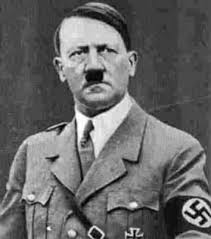
Adolf Hitler
Among the slanders Right-wingers hurl at Democrats:
“Liberals,” “radicals, “bankrupting,” “treason,” subversion,” “slander,” “terrorism,” “betrayal,” “catastrophe,” “shattering the American dream,” “leftists,” “Communists,” “government takeover,” “socialism,” “power grab,” “secularism,” “environmentalism.”
In recent years, the GOP has targeted gays and lesbians as America’s subversive enemies.
These attacks have come as thinly disguised as efforts to “restore religious freedom.”.
On March 26, 2015, Indiana Governor Mike Pence signed into law the Religious Freedom Restoration Act.
This allows any individual or corporation to cite its religious beliefs as a defense when sued by a private party.
Thus, a bakery that doesn’t want to make a cake to be used at a gay wedding or a restaurant that doesn’t want to serve lesbian patrons can legally refuse to do so.
The bill seems modeled on a proposed law that the Republican House and Senate in Arizona sent to Governor Jan Brewer in 2014.
Under threat of a nationwide boycott of Arizona if the bill became law, Brewer vetoed it.
Republicans have introduced similar “right-to-discriminate” legislation in other states as well:
- In Kansas, Republican lawmakers voted to exempt individuals from providing any service that was “contrary to their sincerely held religious beliefs.”
- That bill passed the state’s House chamber on February 11, 2014, triggering national backlash. It stalled in the Senate and didn’t advance beyond that body.
- In January, 2014, South Dakota Republicans introduced a bill to let businesses refuse to serve same-sex couples on the grounds that “businesses are private and that their views on sexual orientation are protected to the same extent as the views of private citizens.”
- The South Dakota bill—which was killed in February, 2014—would have made it illegal for a gay person to file a lawsuit charging discrimination.
Republicans claim they want to “get the government off the backs of the people.” But their fixation on regulating the sexual lives of Americans ensures government intrusions of the most intimate kind.
Since 9/11, Republicans have warned that Muslims are trying to impose Sharia (Islamic law) on America.
Ironically, Right-wing legislators, in elevating religion above the secular law, may have laid the legal foundations for making that possible.
What will happen when some Muslims claim their right—guaranteed in Islamic religious law—to have as many as four wives?
And when they claim that the “religious freedom” laws protect that right?
Republicans have defended such legislation by equating gays with child predators.
In fact, the Child Molestation Research & Prevention Institute states that 90% of child molesters target children in their network of family and friends, and the majority are heterosexual men married to women.
Yet Republicans and their Rightist allies have refused to condemn such heterosexual—and Right-wing—child molesters as Dennis Hastert and Josh Duggar.
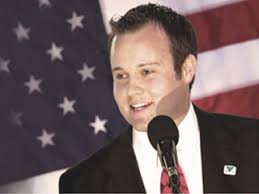
Josh Duggar, the “all-American” child molester
On May 21, 2015, responding to press leaks, Duggar resigned as director of the Family Research Council, a Right-wing organization dedicated to fighting sexually-oriented issues such as same-sex marriage, abortion and pornography.
In 2002-3, as a 14-15 year-old, Duggar had fondled the breasts and vaginas of five underage girls—four of whom were his own sisters.
Before Duggar was forced to admit his scandalous depravities, he had hobnobbed with many influential Right-wingers, including:
- Senator Rafael “Ted” Cruz;
- Former Florida Governor Jeb Bush;
- Former Arkansas Governor Mike Huckabee;
- Texas Governor Rick Perry.
On December 8, 2021, a federal jury found Duggar guilty of receipt of child pornography and possession of child pornography. He drew a sentence of more than 12 years of imprisonment and was ordered to pay fines and special assessments of $50,100.
And on October 28, 2015, Hastert—Speaker of the House of Representatives from 1999 to 2007—pleaded guilty to structuring money transactions in a way to avoid requirements to report where the money was going.

Dennis Hastert
The reason: To conceal the truth about his past as a child molester. Hastert had abused four young boys when he was their high school wrestling coach. One was only 14 years old.
Despite such setbacks, the politics of “smear and fear” have been good to Republicans—and their Right-wing allies.
The Republican “base” refuses to learn that those who portray themselves as morally superior are:
- Hypocrites, who are in effect saying: “Do as I say, not as I do,” or
- Fanatics, who intend to force their version of morality on others.
So long as millions of hate-filled Right-wingers support the endless succession of “two minute hates,” Republicans will continue to target an endless series of victims.
The good news: As blacks, Hispanics, women, gays and others become a significant political force, Republicans will stop attacking them and court them for votes.
The bad news: Republicans will move on to find other still-helpless scapegoats for America’s troubles.


2020 PRESIDENTIAL ELECTION, 2024 PRESIDENTIAL ELECTION, ABC NEWS, ABORTION, ADAM SCHIFF, ALTERNET, AMERICABLOG, ANNE APPLEBAUM, AP, ASSASSINATION, AUTOCRACY INC. (BOOK), “PRESIDENT-FOR-LIFE”, BABY BOOMER RESISTANCE, BARACK OBAMA, BBC, BILL O'REILLY, BIRTH CONTROL, BLOOMBERG, BUZZFEED, CAPITOL PUNISHMENT, CBS NEWS, CHINA, CHRISTIANITY, CHRISTIANS, CIA, CNN, CONSERVATIVE POLITICAL ACTION CONFERENCE (C-PAC), CROOKS AND LIARS, DAILY KOS, DEPARTMENT OF HOMELAND SECURITY, DICTATORSHIP, DONALD TRUMP, ENVIRONMENTAL PROTECTION AGENCY, FBI, FEDERAL COMMUNICATIONS COMMISSION (FCC), FEDERAL TRADE COMMISSION (FTC), FIVETHIRTYEIGHT, FOX NEWS SUNDAY, FRANKLIN D. ROOSEVELT, HARPER’S MAGAZINE, HERITAGE FOUNDATION, HUFFINGTON POST, INTELLIGENCE AGENCIES, JACK SMITH, JAMES MATTIS, JANUARY 6 COUP ATTEMPT, JEFF SESSIONS, JOE BIDEN, JUDICIARY, Kamala Harris, KIM JONG-UN, MARK MILLEY, MEDIA MATTERS, MILITARY AGENCIES, MORNING JOE (SHOW), MOTHER JONES, MOVEON, MSNBC, NATIONAL ASSOCIATION OF BLACK JOURNALISTS, NATIONAL OCEANIC AND ATMOSPHERIC ASSOCIATION (NOAA), NATIONAL RIFLE ASSOCIATION, NATIONAL SECURITY AGENCY, NBC NEWS, NEW REPUBLIC, NEWSDAY, NEWSWEEK, NORTH KOREA, NPR, PBS NEWSHOUR, POLITICO, POLITICUSUSA, PRESIDENTIAL TRANSITION PROJECT, PROJECT 2025, PUBLIC TRANSIT SYSTEMS, RAW STORY, REUTERS, ROBERT MUELLER, ROD J. ROSENSTEIN, RUSSIA, SALON, SCARFACE (MOVIE), SEATTLE TIMES, SLATE, TALKING POINTS MEMO, TAX CUTS, THE ATLANTIC, THE CHICAGO SUN-TIMES, THE CHICAGO TRIBUNE, THE DAILY BEAST, THE DAILY BLOG, THE GUARDIAN, THE HILL, THE HUFFINGTON POST, THE INTERCEPT, THE LOS ANGELES TIMES, THE NATION, THE NEW REPUBLIC, THE NEW YORK TIMES, THE NEW YORKER, THE PRESS, THE VILLAGE VOICE, THE WASHINGTON POST, THINKPROGRESS, THOMAS MATTHEW CROOKS, TIME, TRUTHDIG, TRUTHOUT, TURNING POINT BELIEVERS’ SUMMIT, TWO POLITICAL JUNKIES, U.S. NEWS & WORLD REPORT, UNITED STATES DEPARTMENT OF JUSTICE, UPI, USA TODAY, VLADIMIR PUTIN, VOTER FRAUD, X, XI JINPING
LOVE THY DICTATOR: PART ONE (OF THREE)
In Bureaucracy, History, Law, Law Enforcement, Military, Politics, Social commentary on August 20, 2024 at 12:10 am“I always tell the truth. Even when I lie.”
—Tony Montana, “Scarface”
“Four more years, it’ll be fixed, it’ll be fine, you won’t have to vote anymore.”
On July 26, former President Donald Trump confirmed—intentionally or unintentionally—that the fears of his enemies were correct. If he won office for a second time, he would act as the all-powerful dictator he has long lusted to be.
And which he nearly became in 2020, after refusing to accept the outcome of a legitimate Presidential election where former Vice President Joe Biden got more votes than he did.
The site of his confession was the Turning Point Believers’ Summit in West Palm Beach, Florida. To his audience of evangelical Christians, Trump announced:
“You gotta get out and vote. Just this time. In four years you don’t have to vote, OK? In four years don’t vote, I don’t care. But we’ll have it all straightened out, so it’ll be much different.
“Christians, get out and vote! Just this time. You won’t have to do it anymore, you know what? Four more years. You know what? It’ll be fixed! It’ll be fine! You won’t have to vote anymore, my beautiful Christians. I love you, Christians! I’m a Christian.
“I love you, you got to get out and vote. In four years, you don’t have to vote again. We’ll have it fixed so good, you’re not going to have to vote.”
Why would they not have to vote again? Because there won’t be any more elections for President because Trump would be President until he died.
Donald Trump at Turning Point Believers’ Summit
From the moment Trump declared his candidacy for the Presidency on June 15, 2015, throughout his four years in office and the almost eight months the Presidential campaign of 2024, much of the mainstream media has repeatedly ignored the threats he poses.
But Trump’s comments at the Turning Point Believers’ Summit have grabbed attention from the nation’s most important news media. Among these:
Democrats pounced on Trump’s statements. Vice President Kamala Harris released a statement of her own: “When Vice President Harris says this election is about freedom she means it.”
Rep. Adam Schiff (D-Calif.) who had presided over Trump’s first impeachment trial, wrote: “This year democracy is on the ballot, and if we are to save it, we must vote against authoritarianism.”
Naturally Trump’s campaign disagreed: “President Trump was talking about the importance of faith, uniting this country and bringing prosperity to every American, as opposed to the divisive political environment that has sowed so much division and even resulted in an assassination attempt.”
In fact, it has been Donald Trump who created “the divisive political environment.” On July 31 he appeared at the National Association of Black Journalists—to falsely accuse Kamala Harris of misleading voters about her race:
“I didn’t know she was Black until a number of years ago when she happened to turn Black and now she wants to be known as Black. So, I don’t know, is she Indian or is she Black?”
As for the motives for Thomas Matthew Crooks’ July 13 assassination attempt on Trump: A vigorous FBI investigation has revealed him as an intelligent loner with few friends, a thin social media presence and no strong political beliefs offering a motive for his action.
If Trump wins a second term in the White House, he can—by law—serve only four years. But Trump has spent his entire life defying the law—including when he was President.
His most egregious offense came after he lost the 2020 Presidential election: He refused to accept his defeat, refused to leave office, tried to pressure states to “find” non-existent Electoral College votes for him, and finally incited a violent riot against Congress to stop the Electoral Vote count.
In May, 2024, speaking at a National Rifle Association gathering, Trump “joked” about serving more than two terms as president.
He referred to the four-term, 12-year Presidency of Democratic Franklin D. Roosevelt. Roosevelt was the only president to serve more than two terms. The two-term limit was added after Roosevelt’s death.
“You know, FDR, 16 years—almost 16 years—he was four terms. I don’t know, are we going to be considered three-term? Or two-term?”
By raising the question of “three terms,” Trump was resurrecting The Big Lie: That he won the 2020 Presidential campaign but was cheated of victory by massive voter fraud.
In fact, Trump’s ambition to become absolute dictator fits brilliantly into the goals of Project 2025, also known as the Presidential Transition Project.
This is a collection of policy proposals to fundamentally reshape the U.S. federal government in the event of a Republican victory in the 2024 Presidential election.
Established in 2022 by the Right-wing Heritage Foundation, the project aims to recruit tens of thousands of radical Right-wingers to the District of Columbia to replace existing federal civil servants.
Share this: