On October 22, Megan Lorraine Utz, 36, of Courtland, Alabama, was charged by the Justice Department with making threats against President Donald Trump. She was also charged with interstate transmission of threatening communication.
According to the indictment and complaint, on October 5, 2026, Utz posted a threat on Facebook regarding Trump’s attendance at the upcoming football game between Alabama and Georgia in Tuscaloosa, Alabama,on October 10.
Utz’s post stated: “He’s not allowed in my stadium! I’ll put a bullet through him if he dares.”
Trump ultimately canceled his planned visit to the game because of Hurricane Isaias.
On October 6, 2026, FBI agents, Secret Service agents, and the Florence Police Department located Utz in Florence, Alabama.
The Florence Police Department arrested Utz pursuant to an active misdemeanor warrant for Harassing Communications issued by the Guin Police Department.
“Threats of violence are taken seriously, and we are committed to protecting the safety of our nation’s leaders,” said U.S. Attorney Phillip W. Williams Jr.
Given the layers of security surrounding Trump, the chances of Utz’ succeeding in assassinating him were microscopically small. But she made them non-existent when she violated a prime instruction by Niccolo Machiavelli.
Specifically:
I hold it to be a proof of great prudence for men to abstain from threats and insulting words towards any one, for neither the one nor the other in any way diminishes the strength of the enemy—but the one makes him more cautious, and the other increases his hatred of you, and makes him more persevering in his efforts to injure you.
In this case, Trump never even heard the insult and threat. But those charged with protecting him did—and that was enough to guarantee Utz’ arrest and almost certain conviction for threatening the life of the President.
More than 500 years ago, Niccolo Machiavelli, the father of modern political science, offered sound advice for would-be conspirators—and for rulers seeking to thwart conspiracies.
He did so in The Discourses on Livy, a work of political history and philosophy. In it, he outlined how citizens of a republic can maintain their freedoms.
One of the longest chapters—Book Three, Chapter Six—covers “Of Conspiracies.” In it, those who wish to conspire against a ruler will find highly useful advice. And so will those who might well become the targets of conspiracies—such as President Donald J. Trump.

Niccolo Machiavelli
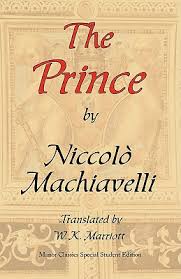
The most dangerous time for a ruler comes when he is universally hated. Thus, in his better-known work, The Prince, published in 1532, Machiavelli advises:
A prince must take great care that nothing goes out of his mouth which is not full of the above-named five qualities, and he should seem to be all mercy, faith, integrity, humanity and religion.
…A prince must show himself a lover of merit, give preferment to the able, and honor those who excel in every art.
Besides this, he ought, at convenient seasons of the year, to keep the people occupied with festivals and shows….mingle with them from time to time, and give them an example of his humanity and munificence, always upholding, however, the majesty of his dignity, which must never be allowed to fail in anything whatever.
Rulers who disregard this advice do so at their peril:
A prince need trouble little about conspiracies when the people are well disposed. But when they are hostile and hold him in hatred, then he must fear everything and everybody….
…[The Roman Emperor Commodus], being of a cruel and bestial disposition, in order to…exercise his rapacity on the people, he sought to favor the soldiers and render them licentious.
On the other hand, by not maintaining his dignity, by often descending into the theater to fight with gladiators and committing other contemptible actions…he became despicable in the eyes of the soldiers. And being hated on the one hand and despised on the other, he was conspired against and killed.
When a ruler becomes universally hated, it is likely that he’s harmed some individuals—who thus seek revenge. This desire is increased by seeing he is widely loathed.
So his first priority must be to make himself beloved—or at least avoid hatred.
By doing this, he protects himself from such vengeance-seekers. There are two reasons for this:
- Men rarely risk danger to avenge a wrong; and
- Even if they want to avenge a wrong, they know they will face almost universal condemnation because the prince is held in such high esteem.
Machiavelli draws a distinction between plots and conspiracies.
A plot may be formed by a single individual or by many. The first isn’t a conspiracy, since that would involve at least two participants.
A single plotter avoids the danger faced by two or more conspirators:
Since no one knows his intention, he can’t be betrayed by an accomplice.
Anyone may form a plot, whether he is prominent or insignificant, because everyone is at some time allowed to speak to the prince. And he can use this opportunity to satisfy his desire for revenge.
Joseph Stalin, undisputed dictator of the Soviet Union for almost 30 years, may well have died at the hands of a single conspirator: His own secret police chief.
ABC NEWS, ABRAHAM LINCOLN, ADOLF HITLER, ALTERNET, AMERICABLOG, ANDREW JOHNSON, AP, ASSASSINATION, BABY BOOMER RESISTANCE, BUZZFEED, CANADA, CBS NEWS, CNN, CONSPIRACIES, CROOKS AND LIARS, DAILY KOS, DONALD TRUMP, EAST WING OF THE WHITE HOUSE, EMPEROR COMMODUS, FBI, FIVETHIRTYEIGHT, GAIUS CASSIUS, GEORGE ALZERODT, HARPER’S MAGAZINE, immigration, IMMIGRATION AND CUSTOMS ENFORRCEMENT (ICE), JAMES COMEY, JANUARY 6 COUP ATTEMPT, JOHN F. KENNEDY CENTER FOR THE PERFORMING ARTS, JOHN WILKES BOOTH, JOSEPH STALIN, JULIUS CAESAR, JUSTICE DEPARTMENT, LAVRENTI BERIA, LETITIA JAMES, LEWIS POWELL, MARCUS BRUTUS, MARK ANTHONY, MEDIA MATTERS, MEGAN LORRAINE UTZ, MOTHER JONES, MOVEON, MSNBC, NBC NEWS, NEWSWEEK, NICCOLO MACHIAVELLI, NPR, PBS NEWSHOUR, PLOTS, POLITICO, POLITICUSUSA, RAW STORY, REUTERS, SALON, SEATTLE TIMES, Secret Service, SLATE, SOVIET UNION, TALKING POINTS MEMO, THE ATLANTIC, THE CHICAGO SUN-TIMES, THE CHICAGO TRIBUNE, THE DAILY BEAST, THE DAILY BLOG, THE DISCOURSES, THE DISCOURSES (BOOK), THE GUARDIAN, THE HILL, THE HUFFINGTON POST, THE LOS ANGELES TIMES, THE NATION, THE NEW REPUBLIC, THE NEW YORK TIMES, THE PRESS, THE PRINCE (BOOK), THE VILLAGE VOICE, THE WALL STREET JOURNAL, THE WASHINGTON POST, THINKPROGRESS, TIME, TRUTHDIG, TRUTHOUT, TWO POLITICAL JUNKIES, U.S. NEWS & WORLD REPORT, UKRAINE, UPI, USA TODAY, VLADIMIR PUTIN, WHITE HOUSE BALLROOM, WILLIAM H. SEWARD, WONKETTE, X
MACHIAVELLI: A FEW MODEST PROPOSALS FOR CONSPIRATORS–PART ONE (OF FOUR)
In Bureaucracy, History, Politics, Social commentary on October 26, 2026 at 3:51 amOn October 22, Megan Lorraine Utz, 36, of Courtland, Alabama, was charged by the Justice Department with making threats against President Donald Trump. She was also charged with interstate transmission of threatening communication.
According to the indictment and complaint, on October 5, 2026, Utz posted a threat on Facebook regarding Trump’s attendance at the upcoming football game between Alabama and Georgia in Tuscaloosa, Alabama,on October 10.
Utz’s post stated: “He’s not allowed in my stadium! I’ll put a bullet through him if he dares.”
Trump ultimately canceled his planned visit to the game because of Hurricane Isaias.
On October 6, 2026, FBI agents, Secret Service agents, and the Florence Police Department located Utz in Florence, Alabama.
The Florence Police Department arrested Utz pursuant to an active misdemeanor warrant for Harassing Communications issued by the Guin Police Department.
“Threats of violence are taken seriously, and we are committed to protecting the safety of our nation’s leaders,” said U.S. Attorney Phillip W. Williams Jr.
Given the layers of security surrounding Trump, the chances of Utz’ succeeding in assassinating him were microscopically small. But she made them non-existent when she violated a prime instruction by Niccolo Machiavelli.
Specifically:
I hold it to be a proof of great prudence for men to abstain from threats and insulting words towards any one, for neither the one nor the other in any way diminishes the strength of the enemy—but the one makes him more cautious, and the other increases his hatred of you, and makes him more persevering in his efforts to injure you.
In this case, Trump never even heard the insult and threat. But those charged with protecting him did—and that was enough to guarantee Utz’ arrest and almost certain conviction for threatening the life of the President.
More than 500 years ago, Niccolo Machiavelli, the father of modern political science, offered sound advice for would-be conspirators—and for rulers seeking to thwart conspiracies.
He did so in The Discourses on Livy, a work of political history and philosophy. In it, he outlined how citizens of a republic can maintain their freedoms.
One of the longest chapters—Book Three, Chapter Six—covers “Of Conspiracies.” In it, those who wish to conspire against a ruler will find highly useful advice. And so will those who might well become the targets of conspiracies—such as President Donald J. Trump.
Niccolo Machiavelli
The most dangerous time for a ruler comes when he is universally hated. Thus, in his better-known work, The Prince, published in 1532, Machiavelli advises:
A prince must take great care that nothing goes out of his mouth which is not full of the above-named five qualities, and he should seem to be all mercy, faith, integrity, humanity and religion.
…A prince must show himself a lover of merit, give preferment to the able, and honor those who excel in every art.
Besides this, he ought, at convenient seasons of the year, to keep the people occupied with festivals and shows….mingle with them from time to time, and give them an example of his humanity and munificence, always upholding, however, the majesty of his dignity, which must never be allowed to fail in anything whatever.
Rulers who disregard this advice do so at their peril:
A prince need trouble little about conspiracies when the people are well disposed. But when they are hostile and hold him in hatred, then he must fear everything and everybody….
…[The Roman Emperor Commodus], being of a cruel and bestial disposition, in order to…exercise his rapacity on the people, he sought to favor the soldiers and render them licentious.
On the other hand, by not maintaining his dignity, by often descending into the theater to fight with gladiators and committing other contemptible actions…he became despicable in the eyes of the soldiers. And being hated on the one hand and despised on the other, he was conspired against and killed.
When a ruler becomes universally hated, it is likely that he’s harmed some individuals—who thus seek revenge. This desire is increased by seeing he is widely loathed.
So his first priority must be to make himself beloved—or at least avoid hatred.
By doing this, he protects himself from such vengeance-seekers. There are two reasons for this:
Machiavelli draws a distinction between plots and conspiracies.
A plot may be formed by a single individual or by many. The first isn’t a conspiracy, since that would involve at least two participants.
A single plotter avoids the danger faced by two or more conspirators:
Since no one knows his intention, he can’t be betrayed by an accomplice.
Anyone may form a plot, whether he is prominent or insignificant, because everyone is at some time allowed to speak to the prince. And he can use this opportunity to satisfy his desire for revenge.
Joseph Stalin, undisputed dictator of the Soviet Union for almost 30 years, may well have died at the hands of a single conspirator: His own secret police chief.
Share this:
Like this: