Posts Tagged ‘DRUG TRAFFICKING’
ABC NEWS, ALTERNET, AMERICABLOG, AP, BABY BOOMER RESISTANCE, BBC, BLOOMBERG, BLOOMBERG NEWS, BLUESKY, BUZZFEED, CBS NEWS, CNN, CROOKS AND LIARS, DAILY KOS, DAILY KOZ, DRUG TRAFFICKING, FACEBOOK, FIVETHIRTYEIGHT, HARPER’S MAGAZINE, HUFFINGTON POST, INFORMANTS, MAFIA, MEDIA MATTERS, MOTHER JONES, MOVEON, MSNBC, NARCOTICS TRAFFICKING, NBC NEWS, NEW REPUBLIC, NEW YORK POLICE DEPARTMENT, NEWSDAY, NEWSWEEK, NPR, ORGANIZED CRIME, PBS NEWSHOUR, POLICE CORRUPTION, POLITICO, POLITICUSUSA, PRINCE OF THE CITY, RAW STORY, REUTERS, ROBERT LEUCI, RUDOLPH GUILIANI, SALON, SEATTLE TIMES, SIDNEY LUMET, SLATE, TALKING POINTS MEMO, THE ATLANTIC, THE CHICAGO SUN-TIMES, THE CHICAGO TRIBUNE, THE DAILY BEAST, THE DAILY BLOG, THE GUARDIAN, THE HILL, THE HUFFINGTON POST, THE INTERCEPT, THE LOS ANGELES TIMES, THE NATION, THE NEW REPUBLIC, THE NEW YORK TIMES, THE NEW YORKER, THE VILLAGE VOICE, THE WASHINGTON POST, THINKPROGRESS, TIME, TREAT WILLIAMS, TRUTHDIG, TRUTHOUT, TWO POLITICAL JUNKIES, U.S. DEPARTMENT OF JUSTICE, U.S. NEWS & WORLD REPORT, UPI, USA TODAY, WONKETTE, X
In Bureaucracy, History, Law, Law Enforcement, Social commentary on February 20, 2026 at 12:16 am
It’s a movie that appeared in 1981—making it, for those born in 2000, an oldie.
And it wasn’t a blockbuster, being yanked out of theaters almost as soon as it arrived.
Yet Prince of the City remains that rarity—a movie about big-city police that:
- Tells a dramatic (and true) story; and
- Offers serious truths about how police and prosecutors really operate.
It’s based on the real-life case of NYPD Detective Robert Leuci (“Danny Ciello” in the film).


Robert Leuci (“Danny Ciello” in “Prince of the City”)
A member of the elite Special Investigating Unit (SIU) Ciello (played by Treat Williams) volunteers to work undercover against rampant corruption among narcotics agents, attorneys and bail bondsmen.
His motive appears simple: To redeem himself and the NYPD from the corruption he sees everywhere: “These people we take from own us.”
His only condition: “I will never betray cops who’ve been my partners.”
And Assistant US Attorney Rick Cappalino assures Ciello: “We’ll never make you do something you can’t live with.”
As the almost three-hour movie unfolds, Ciello finds—to his growing dismay—that there are a great many things he will have to live with.


Treat Williams as “Danny Ciello”
Although he doesn’t have a hand in it, he’s appalled to learn that Gino Moscone, a former buddy, is going to be arrested for taking bribes from drug dealers.
Confronted by a high-ranking agent for the Federal Drug Enforcement Agency, Moscone refuses to “rat out” his buddies. Instead, he puts his service revolver to his head and blows out his brains.
Ciello is devastated, but the investigation—and film—must go on.
Along the way, he’s suspected by a corrupt cop and bail bondsman of being a “rat” and threatened with death.
He’s about to be wasted in a back alley when his cousin—a Mafia member—suddenly intervenes. The Mafioso tells Ciello’s would-be killers: “You’d better be sure he’s a rat, because people like him.”
At which point, the grotesquely fat bail bondsman—who has been demanding Ciello’s execution—pats Danny on the arm and says, “No hard feelings.”
It’s director Sidney Lumet’s way of graphically saying: “Sometimes the bad guys can be good guys—and the good guys can be bad guys.”

Lumet makes it clear that police don’t always operate with the Godlike perfection of cops in TV and films. It’s precisely because his Federal backup agents lost him that Ciello almost became a casualty.
In the end, Ciello becomes a victim of the prosecutorial forces he has unleashed. Although he’s vowed to never testify against his former partners, Ciello finds this is a promise he can’t keep.
Too many of the cops he’s responsible for indicting have implicated him of similar—if not worse—behavior. He’s even suspected of being involved in the theft of 450 pounds of heroin (“the French Connection”) from the police property room.
A sympathetic prosecutor—Mario Vincente in the movie, Rudolph Giuliani in real-life—convinces Ciello that he must finally reveal everything he knows.
Ciello’s had originally claimed to have done “three things” as a corrupt narcotics agent. By the time his true confessions are over, he’s admitted to scores of felonies.
Ciello then tries to convince his longtime SIU partners to do the same. One of them commits suicide. Another tells Ciello to screw himself: “I’m not going to shoot myself and I’m not going to become a rat.”
To his surprise, Ciello finds himself admiring his corrupt former partner for being willing to stand up to the Federal case-agents and prosecutors demanding his head.
The movie ends with a double dose of irony.
First: Armed with Ciello’s confessions, an attorney whom Ciello had successfully testified against appeals his conviction. But the judge rules Ciello’s admitted misdeeds to be “collateral,” apart from the main evidence in the case, and affirms the conviction.
Second: Ciello is himself placed on trial—of a sort. A large group of assistant U.S. attorneys gathers to debate whether their prize “canary” should be indicted. If he is, his confessions will ensure his conviction.
Some prosecutors argue forcefully that Ciello is a corrupt law enforcement officer who has admitted to more than 40 cases of perjury—among other crimes. How can the government use him to convict others and not address the criminality in his own past?
Other prosecutors argue that Ciello voluntarily risked his life—physically and professionally—to expose rampant police corruption. He deserves a better deal than to be cast aside by those who have made so many cases through his testimony.
Eventually, the U.S. Attorney for the Southern District of New York makes his decision: “The government declines to prosecute Detective Daniel Ciello.”
It is Lumet’s way of showing that the decision to prosecute is not always an easy or objective one.
The movie ends with Ciello now teaching surveillance classes at the NYPD Academy.
A student asks: “Are you the Detective Ciello?”
“I’m Detective Ciello.”
“I don’t think I have anything to learn from you.” And he walks out.
Is Danny Ciello a hero, a villain, or some combination of the two?
On this ambiguous note that the film ends—an ambiguity that each viewer must resolve for himself.
ABC NEWS, ADOLF HITLER, ALTERNET, AMERICABLOG, AP, BABY BOOMER RESISTANCE, BARACK OBAMA, BBC, BILL CLINTON, BLOOMBERG NEWS, BUZZFEED, CANADA, CBS NEWS, CHINA, CHRIS MATTHEWS, CNN, CNN'S "STARTING POINT", CROOKS AND LIARS, CZECHOSLAVAKIA, DAILY KOS, DARRELL ISSA, DAVID BROOKS, DEBT CEILING, DENMARK, DONALD TRUMP, DRUG TRAFFICKING, EXECUTIVE ORDERS, EXTORTION, FIVETHIRTYEIGHT, GEORGE W. BUSH, GREENLAND, HARPER’S MAGAZINE, HOUSE SPEAKER JOHN BOEHNER, HUFFINGTON POST, ILLEGAL ALIENS, immigration reform, INSIDER, IRAN, JANET YELLEN, JIMMY CARTER, JOSEPH BIDEN, JUSTIN TRUDEAU, MEDIA MATTERS, MEXICO, MITCH MCCONNELL, MOTHER JONES, MOVEON, MSNBC, MSNBC'S "HARDBALL", NANCY PELOSI, NAZI GERMANY, NBC NEWS, NEGOTIATING, NEVILLE CHAMBERLAIN, NEW REPUBLIC, NEWSDAY, NEWSWEEK, NEWT GINGRICH, NICCOLO MACHIAVELLI, NORTH KOREA, NPR, PANAMA CANAL, PAP SMEARS, PBS NEWSHOUR, PITUFFIK SPACE BASE, PLANNED PARENTHOOD, POLAND, POLITICO, POLITICUSUSA, R.I.CO. ACT, RAW STORY, REPUBLICAN PARTY, REPUBLICANS, REUTERS, Ronald Reagan, RUSSIA, SALON, SEATTLE TIMES, SLATE, TALKING POINTS MEMO, TARIFFS, THE ATLANTIC, THE CHICAGO SUN-TIMES, THE CHICAGO TRIBUNE, THE DAILY BEAST, THE DAILY BLOG, THE GUARDIAN, THE HAMILTON PROJECT, THE HILL, THE HUFFINGTON POST, THE LOS ANGELES TIMES, THE NATION, THE NEW REPUBLIC, THE NEW YORK TIMES, THE NEW YORKER, THE PRINCE, THE VILLAGE VOICE, THE WASHINGTON POST, THINKPROGRESS, TIME, TITLE X, TRUTHDIG, TRUTHOUT, TWITTER, TWO POLITICAL JUNKIES, U.S. NEWS & WORLD REPORT, UPI, USA TODAY, WARREN BUFFET, WENDY EDELBERG, WINSTON CHURCHILL, WONKETTE, WORLD WAR 11, X
In Bureaucracy, Business, History, Law, Law Enforcement, Military, Politics, Social commentary on January 8, 2025 at 12:10 am
By studying the “negotiating” methods used by Adolf Hitler, Americans generally—and Democrats in particular—can learn much about the mindset and “negotiating” style of today’s Republican party.
Consider President-Elect Donald Trump’s recent threats against not only Canada but Panama—specifically, to retake control of the Panama Canal.
On December 25, Trump told a conservative conference in Arizona that Panama was charging US ships “ridiculous, highly unfair” fees to use its namesake canal.
The United States built the canal during the administration of President Theodore Roosevelt and opened it in 1914. It remained controlled by the United States until President Jimmy Carter signed a a 1977 agreement for its eventual handover to Panama in 1999.

Panama Canal (in white)
But this week, Trump threatened that if shipping rates were not lowered, “we will demand that the Panama Canal be returned to us, in full, quickly and without question.”
He accused China of operating the canal and lamented that the United States “puts in Billions of Dollars in ‘repair’ money, but will have absolutely nothing to say about ‘anything.’”
On December 25, Trump posted on his website, Truth Social: “Merry Christmas to all, including to the wonderful soldiers of China, who are lovingly, but illegally, operating the Panama Canal.”
“There is not a single Chinese soldier in the canal,” the president of Panama, José Raúl Mulino, told reporters the next day, adding that there is “absolutely no Chinese interference.”
Trump’s threats against Panama may be connected with the outstanding tax evasion case he faces in the country.
In 2019, the owners of a Panama City hotel tower that was previously managed and operated under the Trump brand accused the Trump Organization of pocketing money meant to pay taxes. According to a lawsuit, Trump’s companies simply kept the money, “intentionally evading taxes” and leaving the new owner liable for millions.
Yet the blunt truth remains: Unless Trump goes to war with Panama, his threat to take over the canal is effectively meaningless.
During the 2024 Presidential campaign, Trump denied reading Adolf Hitler’s notorious book, Mein Kampf (“My Struggle.”)
In the past, however, he has acknowledged owning a copy of it. And he has adopted the same “negotiating” style as the late Fuhrer: Do-as-I-say-or-I’ll-destroy-you.
A classic example of Hitler’s “bargaining style” came in 1938, when he invited Austrian Chancellor Kurt von Schuschnigg to his mountaintop retreat in Obersalzberg, Germany.

Kurt von Schuschnigg
Hitler, an Austrian by birth, intended to annex his native land to Germany. Schuschnigg was aware of Hitler’s desire, but nevertheless felt secure in accepting the invitation. He had been assured that the question of Austrian sovereignty would not arise.
The meeting occurred on February 12, 1938.
Shuschnigg opened the discussion with a friendly compliment. Walking over to a large window, he admired the breathtaking view of the mountains.
HITLER: We haven’t come here to talk about the lovely view or the weather!
Austria has anyway never done anything which was of help to the German Reich….I am resolutely determined to make an end to all this business. The German Reich is a great power. Nobody can and nobody will interfere if it restores order on its frontiers.
SCHUSCHNIGG: We simply have to go on living alongside one another, the little state next to the big one. We have no other choice.
And that is why I ask you to tell me what your concrete complaints are. We will do all in our power to sort things out and establish a friendly relationship, as far as it is possible to do so.
HITLER: That’s what you say, Herr Schuschnigg. And I am telling you that I intend to clear up the whole of the so-called Austrian question—one way or another. Do you think I don’t know that you are fortifying Austria’s border with the Reich?
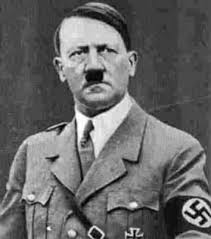
Adolf Hitler
SCHUSCHNIGG: There can be no suggestion at all of that—
HITLER: Ridiculous explosive chambers are being built under bridges and roads—
This was a lie, and Hitler knew it was a lie. But no matter. It gave him an excuse to threaten to destroy Austria—as he was to destroy so many other nations during the next seven years.
HITLER: I have only to give one command and all this comic stuff on the border will be blown to pieces overnight. You don’t seriously think you could hold me up, even for half an hour, do you?
Who knows—perhaps you will find me one morning in Vienna like a spring storm. Then you will go through something! I’d like to spare the Austrians that.
The S.A. [Hitler’s private army of Stormtroopers] and the [Condor] lLegion [which had bombed much of Spain into rubble during the three-year Spanish Civil War] would come in after the troops and nobody—not even I—could stop them from wreaking vengeance.
Schnuschigg made a cardinal mistake in dealing with Hitler: He showed fear. And this was precisely what the Nazi dictator looked for in an opponent.
Contrary to popular belief, Hitler did not constantly rage at everyone. On the contrary: he could, when he desired, be charming, especially to women. He used rage as a weapon, knowing that most people feel intimidated by it.
ABC NEWS, ADOLF HITLER, ALTERNET, AMERICABLOG, AP, BABY BOOMER RESISTANCE, BARACK OBAMA, BBC, BILL CLINTON, BLOOMBERG NEWS, BUZZFEED, CANADA, CBS NEWS, CHINA, CHRIS MATTHEWS, CNN, CNN'S "STARTING POINT", CROOKS AND LIARS, CZECHOSLAVAKIA, DAILY KOS, DARRELL ISSA, DAVID BROOKS, DEBT CEILING, DENMARK, DONALD TRUMP, DRUG TRAFFICKING, EXECUTIVE ORDERS, EXTORTION, FIVETHIRTYEIGHT, GEORGE W. BUSH, GREENLAND, HARPER’S MAGAZINE, HOUSE SPEAKER JOHN BOEHNER, HUFFINGTON POST, ILLEGAL ALIENS, immigration reform, INSIDER, IRAN, JANET YELLEN, JIMMY CARTER, JOSEPH BIDEN, JUSTIN TRUDEAU, MEDIA MATTERS, MEXICO, MITCH MCCONNELL, MOTHER JONES, MOVEON, MSNBC, MSNBC'S "HARDBALL", NANCY PELOSI, NAZI GERMANY, NBC NEWS, NEGOTIATING, NEVILLE CHAMBERLAIN, NEW REPUBLIC, NEWSDAY, NEWSWEEK, NEWT GINGRICH, NICCOLO MACHIAVELLI, NORTH KOREA, NPR, PAP SMEARS, PBS NEWSHOUR, PITUFFIK SPACE BASE, PLANNED PARENTHOOD, POLAND, POLITICO, POLITICUSUSA, R.I.CO. ACT, RAW STORY, REPUBLICAN PARTY, REPUBLICANS, REUTERS, Ronald Reagan, RUSSIA, SALON, SEATTLE TIMES, SLATE, TALKING POINTS MEMO, TARIFFS, THE ATLANTIC, THE CHICAGO SUN-TIMES, THE CHICAGO TRIBUNE, THE DAILY BEAST, THE DAILY BLOG, THE GUARDIAN, THE HAMILTON PROJECT, THE HILL, THE HUFFINGTON POST, THE LOS ANGELES TIMES, THE NATION, THE NEW REPUBLIC, THE NEW YORK TIMES, THE NEW YORKER, THE PRINCE, THE VILLAGE VOICE, THE WASHINGTON POST, THINKPROGRESS, TIME, TITLE X, TRUTHDIG, TRUTHOUT, TWITTER, TWO POLITICAL JUNKIES, U.S. NEWS & WORLD REPORT, UPI, USA TODAY, WARREN BUFFET, WENDY EDELBERG, WINSTON CHURCHILL, WONKETTE, WORLD WAR 11, X
In Bureaucracy, Business, History, Law, Law Enforcement, Military, Politics, Social commentary on January 7, 2025 at 12:10 am
Once again, Republicans are ruthlessly playing “chicken” with the nation’s financial and military security.
Even before taking the oath of office as President on January 20, 2025, Donald Trump has rushed to make an enemy of America’s longtime ally—Canada.
At a November 30 dinner at Mar-a-Lago, Trump’s estate in Palm Beach, Florida, he told Canadian Prime Minister Justin Trudeau that Canada could become the 51st state of the United States.
Canada’s Public Safety Minister Dominic LeBlanc, who attended the dinner, insisted that Trump was joking.
But on December 2, Trump threatened to impose a 25% tax on all products entering the United States from Canada and Mexico unless they stopped the flow of drugs and illegal aliens.
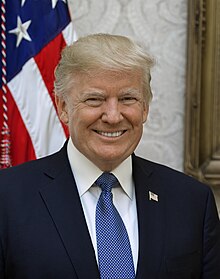
Donald Trump
And on December 3, Trump posted on his Truth Social platform an AI-generated image of himself standing on a mountain with a Canadian flag beside him. Its caption: “Oh Canada!”
Trudeau had requested the Mar-a-Lago meeting to convince Trump that the northern border is completely different from the southern one with Mexico.
“Less than one percent of migrants coming into the United States irregularly come from Canada and 0.2 percent of the fentanyl coming into the United States comes from Canada,” Trudeau said in Parliament.
During the last fiscal year, American customs agents seized 43 pounds of fentanyl at the Canadian border, compared with 21,100 pounds at the Mexican border.
Most of the fentanyl reaching the U.S. is made by Mexican drug cartels using precursor chemicals smuggled from Asia.
Utterly unmentioned in Trump’s demand: It’s America’s insatiable demand for illicit drugs that is the root cause of the drug trade.

Justin Trudeau
CC BY 3.0 <https://creativecommons.org/licenses/by/3.0>, via Wikimedia Commons
On immigration, the U.S. Border Patrol reported 1.53 million encounters with would-be illegal aliens at the Mexican border between October 2023 and September 2024. At the Canadian border, there were 23,721 such encounters.
Also unmentioned—if not deliberately ignored by Trump: Canada plays a substantial role as a U.S. trading partner. About 60% of U.S. crude oil imports are from Canada, and 85% of U.S. electricity imports as well.
Canada is also the largest foreign supplier of steel, aluminum and uranium to the U.S. and has 34 critical minerals and metals that the Pentagon eagerly desires. About 77% of Canada’s exports go to the U.S.
Trudeau pleaded with Trump not to impose the tariff because because it would “kill” Canada’s economy.
Trump responded: “So your country can’t survive unless it’s ripping off the US to the tune of $100 billion?”
His comments referred to the US trade deficit with Canada.
The U.S. had a $75 billion trade deficit with Canada last year but a third of what Canada sells into the U.S. is energy exports and prices have been high.
Trudeau left the meeting without reassurance that Trump would not impose a 25% tariff on products from Canada.
Republicans, in short, are one again utilizing the same “negotiating” strategy as Nazi Germany’s Fuhrer, Adolf Hitler.
And Democrats—out of cowardice or an ignorance of history—are once again refusing to publicly make this comparison.
By studying Adolf Hitler’s mindset and “negotiating” methods, we can learn much about the mindset and “negotiating” style of today’s Republican party.
Robert Payne, author of the bestselling biography, The Life and Death of Adolf Hitler (1973), described Hitler’s “negotiating” style thus:
“Although Hitler prized his own talents as a negotiator, a man always capable of striking a good bargain, he was totally lacking in finesse.
“He was incapable of bargaining. He was like a man who goes up to a fruit peddler and threatens to blow his brains out if he does not sell his applies at the lowest possible price.”
A classic example of Hitler’s “bargaining style” came in 1938, when he invited Austrian Chancellor Kurt von Schuschnigg to his mountaintop retreat in Obersalzberg, Germany.
Hitler, an Austrian by birth, intended to annex his native land to Germany. Schuschnigg was aware of Hitler’s desire, but nevertheless felt secure in accepting the invitation. He had been assured that the question of Austrian sovereignty would not arise.
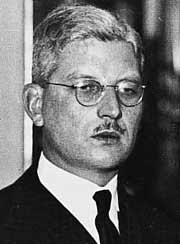
Kurt von Schuschnigg
The meeting occurred on February 12, 1938.
Shuschnigg opened the discussion with a friendly compliment. Walking over to a large window, he admired the breathtaking view of the mountains.
HITLER: We haven’t come here to talk about the lovely view or the weather!
Austria has anyway never done anything which was of help to the German Reich….I am resolutely determined to make an end to all this business. The German Reich is a great power. Nobody can and nobody will interfere if it restores order on its frontiers.
SCHUSCHNIGG: I am aware of your attitude toward the Austrian question and toward Austrian history….As we Austrians see it, the whole of our history is a very essential and valuable part of German history….And Austria’s contribution is a considerable one.
HITLER: It is absolutely zero—that I can assure you! Every national impulse has been trampled underfoot by Austria….
I could call myself an Austrian with just the same right—indeed with even more right—than you, Herr Schuschnigg. Why don’t you once try a plebiscite in Austria in which you and I run against each other? Then you would see!
2008 PRESIDENTIAL CAMPAIGN, 2016 PRESIDENTIAL CAMPAIGN, ABC NEWS, AFFORDABLE CARE ACT, ALTERNET, AMERICABLOG, ANDREW SHAFFER, AP, BABY BOOMER RESISTANCE, BARACK OBAMA, BLOOMBERG, BORDER WALL, BUZZFEED, CBS NEWS, CNN, CROOKS AND LIARS, DAILY KOZ, DON WINSLOW, DONALD TRUMP, DRUDGE REPORT, DRUG ENFORCEMENT ADMINISTRATION, DRUG TRAFFICKING, FIVETHIRTYEIGHT, GOODREADS, HARPER’S MAGAZINE, HEROIN, HOPE NEVER DIES (BOOK), HUFFINGTON POST, JOE BIDEN, JOHN F. KENNEDY, LOS ANGELES TIMES, MEDIA MATTERS, MEXICO, MOTHER JONES, MOVEON, MSNBC, NBC NEWS, NEWSWEEK, NPR, PBS NEWSHOUR, POLITICO, POLITICUSUSA, RAW STORY, REUTERS, RICHARD M. NIXON, ROLLING STONE, SALON, SEATTLE TIMES, SINALOA CARTEL, SLATE, TALKING POINTS MEMO, THE ATLANTIC, THE BORDER (BOOK), THE CHICAGO SUN-TIMES, THE CHICAGO TRIBUNE, THE DAILY BEAST, THE DAILY BLOG, THE GUARDIAN, THE HILL, THE HUFFINGTON POST, THE LOS ANGELES TIMES, THE NATION, THE NEW REPUBLIC, THE NEW YORK TIMES, THE VILLAGE VOICE, THE WASHINGTON POST, THINKPROGRESS, TIME, TRUTHDIG, TRUTHOUT, TWO POLITICAL JUNKIES, U.S. NEWS & WORLD REPORT, UPI, USA TODAY, WAR ON DRUGS, WONKETTE, X
In Bureaucracy, Entertainment, History, Politics, Social commentary on July 8, 2024 at 12:10 am
Joe Biden defeated Donald Trump to become the 46th President of the United States on January 20, 2021.
But before scoring that victory, he racked up a series of incredible adventures as a private investigator—in fiction.
In Hope Never Dies: An Obama-Biden Mystery, author Andrew Shaffer has fashioned a novel that is half-mystery, half-bromance.
Vice President Joe Biden has just left the Obama White House and doesn’t know what to do with the rest of his life. Then Finn Donnelly, his favorite railroad conductor, dies in a suspicious accident, leaving behind an ailing wife and a trail of clues.
To unravel the mystery, “Amtrak Joe” calls on the skills of his former boss: Barack Obama, the 44th President of the United States. Together they scour biker bars, cheap motels and other memorable haunts throughout Delaware.![]()
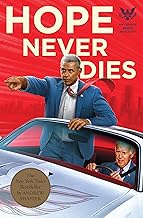
Then Biden unearths a disturbing truth about his longtime—and now dead—friend. This, in turn, leads Biden and Obama to uncover the sinister forces behind America’s opioid epidemic.
The book is pure fantasy fun, as evidenced from this review by Alexandra Alter in The New York Times:
“[Hope Never Dies is] a roughly 300-page work of political fanfiction, an escapist fantasy that will likely appeal to liberals pining for the previous administration, longing for the Obama-Biden team to emerge from political retirement as action heroes. But it’s also at times a surprisingly earnest story about estranged friends who are reunited under strange circumstances.”
A reader named Casey, reviewing the novel for Goodreads, writes: “While Shaffer could have leaned into nostalgia alone, he’s written a solid mystery with the characters fleshed out as more than just clichés.
“The reader really feels Biden’s longing to be helpful and his anguish over seeing 44’s legacy undone so quickly by an individual who shall remain nameless. (The presidential zings in this book are incredible, truly.)
“The tension between the two rings as true as it did when they were in office….By all means, this book shouldn’t work as well as it does. For a few hours, I got to enjoy the company of politicians who behaved like adults (mostly). It sure was nice.”
Contrasting with the relatively lighthearted fictional images of Joe Biden and Barack Obama is the immensely darker one of Donald Trump.
Don Winslow offers Trump an extended cameo appearance in The Border, his massive, 736-page novel about America’s war on drugs—and the horrific violence it has spawned in Mexico. It’s the third of a trilogy of novels vividly portraying the violent costs of an unwinnable conflict.
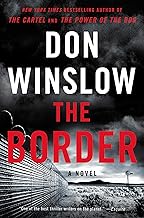
Art Keller is a dedicated agent of the Federal Drug Enforcement Administration (DEA). For over 40 years, he has waged all-out war on Adán Barrera, the godfather of the powerful Sinaloa Cartel.
Appointed director of the DEA, Keller now faces a series of deadly enemies:
- A heroin epidemic surging across America;
- Hitmen who want to kill him;
- Politicians who want to sabotage his agenda; and
- An incoming administration that’s allied with the very drug traffickers he’s trying to destroy.
And heading this administration is John Dennison—Donald Trump in all but name—who:
- Gratuitously insults people on Twitter;
- Fires a Special Counsel;
- Gets blackmailed by a woman he once bedded; and
- Colludes with drug traffickers for a multi-million dollar loan to finance his Presidential campaign.
Whereas the reviews for Hope Never Dies were as upbeat as the book itself, those of The Border reflect the novel’s mercilessly grim take on a war that can’t be won.
Los Angeles Times: “The Border is intricate, mean and swift, a sprawling canvass of characters including narco kingpins, a Guatemalan stowaway, a Staten Island heroin addict, a kinky hit woman, a barely veiled Donald Trump and DEA agent Art Keller, who….has been noble and merciless, a conflicted wanderer who makes America face the transgressions committed in its name.”
Rolling Stone: “Clocking in at over 700 pages, it is his most overtly political installment yet. He takes on the Trump administration directly, creating a fictional candidate, then president, who stokes racist fears of Mexicans, campaigns on ‘building the wall’ and, along with his venal son-in-law, gets caught up in a shady real estate deal involving Cartel money.”
NPR: “The Border becomes a book for our times. Like Shakespeare, it makes a three-act drama of our modern moment. Like Shakespeare’s plays, it shows us a world that is our own, a history that is our own, a burden that is our own, rendered out into the rhythm of scenes and arcs, chapters and parts.”
Obama concentrated the full force of his attention on reforming American healthcare—by making it available to millions whose insurance refused to provide coverage.
Trump’s top priority was to separate the United States from Mexico with an impenetrable wall—and he even diverted $3.6 billion from Pentagon funding to pay for it.
Like John F. Kennedy, Barack Obama will likely be positively remembered as much for what he tried to do as what he succeeded at doing.
Like Richard M. Nixon, Donald Trump will likely be remembered as a menacing stain on American history.
ABC NEWS, ALTERNET, AMERICABLOG, AP, BABY BOOMER RESISTANCE, BBC, BLOOMBERG NEWS, BUZZFEED, CBS NEWS, CNN, CROOKS AND LIARS, DAILY KOZ, DRUG TRAFFICKING, FACEBOOK, FIVETHIRTYEIGHT, HARPER’S MAGAZINE, HUFFINGTON POST, INFORMANTS, MAFIA, MEDIA MATTERS, MOTHER JONES, MOVEON, MSNBC, NARCOTICS TRAFFICKING, NBC NEWS, NEW REPUBLIC, NEW YORK POLICE DEPARTMENT, NEWSDAY, NEWSWEEK, NPR, ORGANIZED CRIME, PBS NEWSHOUR, POLICE CORRUPTION, POLITICO, POLITICUSUSA, PRINCE OF THE CITY, RAW STORY, REUTERS, ROBERT LEUCI, RUDOLPH GUILIANI, SALON, SEATTLE TIMES, SIDNEY LUMET, SLATE, TALKING POINTS MEMO, THE ATLANTIC, THE CHICAGO SUN-TIMES, THE CHICAGO TRIBUNE, THE DAILY BEAST, THE DAILY BLOG, THE GUARDIAN, THE HILL, THE HUFFINGTON POST, THE INTERCEPT, THE LOS ANGELES TIMES, THE NATION, THE NEW REPUBLIC, THE NEW YORK TIMES, THE NEW YORKER, THE VILLAGE VOICE, THE WASHINGTON POST, THINKPROGRESS, TIME, TREAT WILLIAMS, TRUTHDIG, TRUTHOUT, TWITTER, TWO POLITICAL JUNKIES, U.S. DEPARTMENT OF JUSTICE, U.S. NEWS & WORLD REPORT, UPI, USA TODAY, WONKETTE
In Bureaucracy, History, Law, Law Enforcement, Social commentary on August 3, 2022 at 12:16 am
It’s a movie that appeared in 1981—making it, for those born in 2000, an oldie.
And it wasn’t a blockbuster, being yanked out of theaters almost as soon as it arrived.
Yet Prince of the City remains that rarity—a movie about big-city police that:
- Tells a dramatic (and true) story; and
- Offers serious truths about how police and prosecutors really operate.
It’s based on the real-life case of NYPD Detective Robert Leuci (“Danny Ciello” in the film).
Robert Leuci (“Danny Ciello” in “Prince of the City”)
A member of the elite Special Investigating Unit (SIU) Ciello (played by Treat Williams) volunteers to work undercover against rampant corruption among narcotics agents, attorneys and bail bondsmen.
His motive appears simple: To redeem himself and the NYPD from the corruption he sees everywhere: “These people we take from own us.”
His only condition: “I will never betray cops who’ve been my partners.”
And Assistant US Attorney Rick Cappalino assures Ciello: “We’ll never make you do something you can’t live with.”
As the almost three-hour movie unfolds, Ciello finds—to his growing dismay—that there are a great many things he will have to live with.
Treat Williams as “Danny Ciello”
Although he doesn’t have a hand in it, he’s appalled to learn that Gino Moscone, a former buddy, is going to be arrested for taking bribes from drug dealers.
Confronted by a high-ranking agent for the Federal Drug Enforcement Agency, Moscone refuses to “rat out” his buddies. Instead, he puts his service revolver to his head and blows out his brains.
Ciello is devastated, but the investigation—and film—must go on.
Along the way, he’s suspected by a corrupt cop and bail bondsman of being a “rat” and threatened with death.
He’s about to be wasted in a back alley when his cousin—a Mafia member—suddenly intervenes. The Mafioso tells Ciello’s would-be killers: “You’d better be sure he’s a rat, because people like him.”
At which point, the grotesquely fat bail bondsman—who has been demanding Ciello’s execution—pats Danny on the arm and says, “No hard feelings.”
It’s director Sidney Lumet’s way of graphically saying: “Sometimes the bad guys can be good guys—and the good guys can be bad guys.”
Lumet makes it clear that police don’t always operate with the Godlike perfection of cops in TV and films. It’s precisely because his Federal backup agents lost him that Ciello almost became a casualty.
In the end, Ciello becomes a victim of the prosecutorial forces he has unleashed. Although he’s vowed to never testify against his former partners, Ciello finds this is a promise he can’t keep.
Too many of the cops he’s responsible for indicting have implicated him of similar—if not worse—behavior. He’s even suspected of being involved in the theft of 450 pounds of heroin (“the French Connection”) from the police property room.
A sympathetic prosecutor—Mario Vincente in the movie, Rudolph Giuliani in real-life—convinces Ciello that he must finally reveal everything he knows.
Ciello’s had originally claimed to have done “three things” as a corrupt narcotics agent. By the time his true confessions are over, he’s admitted to scores of felonies.
Ciello then tries to convince his longtime SIU partners to do the same. One of them commits suicide. Another tells Ciello to screw himself: “I’m not going to shoot myself and I’m not going to become a rat.”
To his surprise, Ciello finds himself admiring his corrupt former partner for being willing to stand up to the Federal case-agents and prosecutors demanding his head.
The movie ends with a double dose of irony.
First: Armed with Ciello’s confessions, an attorney whom Ciello had successfully testified against appeals his conviction. But the judge rules Ciello’s admitted misdeeds to be “collateral,” apart from the main evidence in the case, and affirms the conviction.
Second: Ciello is himself placed on trial—of a sort. A large group of assistant U.S. attorneys gathers to debate whether their prize “canary” should be indicted. If he is, his confessions will ensure his conviction.
Some prosecutors argue forcefully that Ciello is a corrupt law enforcement officer who has admitted to more than 40 cases of perjury—among other crimes. How can the government use him to convict others and not address the criminality in his own past?
Other prosecutors argue that Ciello voluntarily risked his life—physically and professionally—to expose rampant police corruption. He deserves a better deal than to be cast aside by those who have made so many cases through his testimony.
Eventually, the U.S. Attorney for the Southern District of New York makes his decision: “The government declines to prosecute Detective Daniel Ciello.”
It is Lumet’s way of showing that the decision to prosecute is not always an easy or objective one.
The movie ends with Ciello now teaching surveillance classes at the NYPD Academy.
A student asks: “Are you the Detective Ciello?”
“I’m Detective Ciello.”
“I don’t think I have anything to learn from you.” And he walks out.
Is Danny Ciello a hero, a villain, or some combination of the two?
On this ambiguous note that the film ends—an ambiguity that each viewer must resolve for himself.
2008 PRESIDENTIAL CAMPAIGN, 2016 PRESIDENTIAL CAMPAIGN, ABC NEWS, AFFORDABLE CARE ACT, ALTERNET, AMERICABLOG, ANDREW SHAFFER, AP, BABY BOOMER RESISTANCE, BARACK OBAMA, BLOOMBERG, BORDER WALL, BUZZFEED, CBS NEWS, CNN, CROOKS AND LIARS, DAILY KOZ, DON WINSLOW, DONALD TRUMP, DRUDGE REPORT, DRUG ENFORCEMENT ADMINISTRATION, DRUG TRAFFICKING, FACEBOOK, FIVETHIRTYEIGHT, GOODREADS, HARPER’S MAGAZINE, HEROIN, HOPE NEVER DIES (BOOK), HUFFINGTON POST, JOE BIDEN, JOHN F. KENNEDY, LOS ANGELES TIMES, MEDIA MATTERS, MEXICO, MOTHER JONES, MOVEON, MSNBC, NBC NEWS, NEWSWEEK, NPR, PBS NEWSHOUR, POLITICO, POLITICUSUSA, RAW STORY, REUTERS, RICHARD M. NIXON, ROLLING STONE, SALON, SEATTLE TIMES, SINALOA CARTEL, SLATE, TALKING POINTS MEMO, THE ATLANTIC, THE BORDER (BOOK), THE CHICAGO SUN-TIMES, THE CHICAGO TRIBUNE, THE DAILY BEAST, THE DAILY BLOG, THE GUARDIAN, THE HILL, THE HUFFINGTON POST, THE LOS ANGELES TIMES, THE NATION, THE NEW REPUBLIC, THE NEW YORK TIMES, THE VILLAGE VOICE, THE WASHINGTON POST, THINKPROGRESS, TIME, TRUTHDIG, TRUTHOUT, TWITTER, TWO POLITICAL JUNKIES, U.S. NEWS & WORLD REPORT, UPI, USA TODAY, WAR ON DRUGS, WONKETTE
In Bureaucracy, Entertainment, History, Politics, Social commentary on February 19, 2021 at 12:10 am
Joe Biden defeated Donald Trump to become the 46th President of the United States on January 20, 2021.
But before scoring that victory, he racked up a series of incredible adventures as a private investigator—in fiction.
In Hope Never Dies: An Obama-Biden Mystery, author Andrew Shaffer has fashioned a novel that is half-mystery, half-bromance.
Vice President Joe Biden has just left the Obama White House and doesn’t know what to do with the rest of his life. Then Finn Donnelly, his favorite railroad conductor, dies in a suspicious accident, leaving behind an ailing wife and a trail of clues.
To unravel the mystery, “Amtrak Joe” calls on the skills of his former boss: Barack Obama, the 44th President of the United States. Together they scour biker bars, cheap motels and other memorable haunts throughout Delaware.![]()
Then Biden unearths a disturbing truth about his longtime—and now dead—friend. This, in turn, leads Biden and Obama to uncover the sinister forces behind America’s opioid epidemic.
The book is pure fantasy fun, as evidenced from this review by Alexandra Alter in The New York Times:
“[Hope Never Dies is] a roughly 300-page work of political fanfiction, an escapist fantasy that will likely appeal to liberals pining for the previous administration, longing for the Obama-Biden team to emerge from political retirement as action heroes. But it’s also at times a surprisingly earnest story about estranged friends who are reunited under strange circumstances.”
A reader named Casey, reviewing the novel for Goodreads, writes: “While Shaffer could have leaned into nostalgia alone, he’s written a solid mystery with the characters fleshed out as more than just clichés.
“The reader really feels Biden’s longing to be helpful and his anguish over seeing 44’s legacy undone so quickly by an individual who shall remain nameless. (The presidential zings in this book are incredible, truly.)
“The tension between the two rings as true as it did when they were in office….By all means, this book shouldn’t work as well as it does. For a few hours, I got to enjoy the company of politicians who behaved like adults (mostly). It sure was nice.”
Contrasting with the relatively lighthearted fictional images of Joe Biden and Barack Obama is the immensely darker one of Donald Trump.
Don Winslow offers Trump an extended cameo appearance in The Border, his massive, 736-page novel about America’s war on drugs—and the horrific violence it has spawned in Mexico. It’s the third of a trilogy of novels vividly portraying the violent costs of an unwinnable conflict.
Art Keller is a dedicated agent of the Federal Drug Enforcement Administration (DEA). For over 40 years, he has waged all-out war on Adán Barrera, the godfather of the powerful Sinaloa Cartel.
Appointed director of the DEA, Keller now faces a series of deadly enemies:
- A heroin epidemic surging across America;
- Hitmen who want to kill him;
- Politicians who want to sabotage his agenda; and
- An incoming administration that’s allied with the very drug traffickers he’s trying to destroy.
And heading this administration is John Dennison—Donald Trump in all but name—who:
- Gratuitously insults people on Twitter;
- Fires a Special Counsel;
- Gets blackmailed by a woman he once bedded; and
- Colludes with drug traffickers for a multi-million dollar loan to finance his Presidential campaign.
Whereas the reviews for Hope Never Dies were as upbeat as the book itself, those of The Border reflect the novel’s mercilessly grim take on a war that can’t be won.
Los Angeles Times: “The Border is intricate, mean and swift, a sprawling canvass of characters including narco kingpins, a Guatemalan stowaway, a Staten Island heroin addict, a kinky hit woman, a barely veiled Donald Trump and DEA agent Art Keller, who….has been noble and merciless, a conflicted wanderer who makes America face the transgressions committed in its name.”
Rolling Stone: “Clocking in at over 700 pages, it is his most overtly political installment yet. He takes on the Trump administration directly, creating a fictional candidate, then president, who stokes racist fears of Mexicans, campaigns on ‘building the wall’ and, along with his venal son-in-law, gets caught up in a shady real estate deal involving Cartel money.”
NPR: “The Border becomes a book for our times. Like Shakespeare, it makes a three-act drama of our modern moment. Like Shakespeare’s plays, it shows us a world that is our own, a history that is our own, a burden that is our own, rendered out into the rhythm of scenes and arcs, chapters and parts.”
Obama concentrated the full force of his attention on reforming American healthcare—by making it available to millions whose insurance refused to provide coverage.
Trump’s top priority was to separate the United States from Mexico with an impenetrable wall—and he even diverted $3.6 billion from Pentagon funding to pay for it.
Like John F. Kennedy, Barack Obama will likely be positively remembered as much for what he tried to do as what he succeeded at doing.
Like Richard M. Nixon, Donald Trump will likely be remembered as a menacing stain on American history.
2008 PRESIDENTIAL CAMPAIGN, 2016 PRESIDENTIAL CAMPAIGN, ABC NEWS, AFFORDABLE CARE ACT, ALTERNET, AMERICABLOG, ANDREW SHAFFER, AP, BABY BOOMER RESISTANCE, BARACK OBAMA, BLOOMBERG, BORDER WALL, BUZZFEED, CBS NEWS, CNN, CROOKS AND LIARS, DAILY KOZ, DON WINSLOW, DONALD TRUMP, DRUDGE REPORT, DRUG ENFORCEMENT ADMINISTRATION, DRUG TRAFFICKING, FACEBOOK, FIVETHIRTYEIGHT, GOODREADS, HARPER’S MAGAZINE, HEROIN, HOPE NEVER DIES (BOOK), HUFFINGTON POST, JOE BIDEN, JOHN F. KENNEDY, LOS ANGELES TIMES, MEDIA MATTERS, MEXICO, MOTHER JONES, MOVEON, MSNBC, NBC NEWS, NEWSWEEK, NPR, PBS NEWSHOUR, POLITICO, POLITICUSUSA, RAW STORY, REUTERS, RICHARD M. NIXON, ROLLING STONE, SALON, SEATTLE TIMES, SINALOA CARTEL, SLATE, TALKING POINTS MEMO, THE ATLANTIC, THE BORDER (BOOK), THE CHICAGO SUN-TIMES, THE CHICAGO TRIBUNE, THE DAILY BEAST, THE DAILY BLOG, THE GUARDIAN, THE HILL, THE HUFFINGTON POST, THE LOS ANGELES TIMES, THE NATION, THE NEW REPUBLIC, THE NEW YORK TIMES, THE VILLAGE VOICE, THE WASHINGTON POST, THINKPROGRESS, TIME, TRUTHDIG, TRUTHOUT, TWITTER, TWO POLITICAL JUNKIES, U.S. NEWS & WORLD REPORT, UPI, USA TODAY, WAR ON DRUGS, WONKETTE
In Bureaucracy, History, Law Enforcement, Politics, Social commentary on November 27, 2020 at 12:06 am
Joe Biden defeated Donald Trump to become the 46th President of the United States on January 20, 2021.
But before scoring that victory, he racked up a series of incredible adventures as a private investigator—in fiction.
In Hope Never Dies: An Obama-Biden Mystery, author Andrew Shaffer has fashioned a novel that is half-mystery, half-bromance.
Vice President Joe Biden has just left the Obama White House and doesn’t know what to do with the rest of his life. Then Finn Donnelly, his favorite railroad conductor, dies in a suspicious accident, leaving behind an ailing wife and a trail of clues.
To unravel the mystery, “Amtrak Joe” calls on the skills of his former boss: Barack Obama, the 44th President of the United States. Together they scour biker bars, cheap motels and other memorable haunts throughout Delaware.![]()
Then Biden unearths a disturbing truth about his longtime—and now dead—friend. This, in turn, leads Biden and Obama to uncover the sinister forces behind America’s opioid epidemic.
The book is pure fantasy fun, as evidenced from this review by Alexandra Alter in The New York Times:
“[Hope Never Dies is] a roughly 300-page work of political fanfiction, an escapist fantasy that will likely appeal to liberals pining for the previous administration, longing for the Obama-Biden team to emerge from political retirement as action heroes. But it’s also at times a surprisingly earnest story about estranged friends who are reunited under strange circumstances.”
A reader named Casey, reviewing the novel for Goodreads, writes: “While Shaffer could have leaned into nostalgia alone, he’s written a solid mystery with the characters fleshed out as more than just clichés.
“The reader really feels Biden’s longing to be helpful and his anguish over seeing 44’s legacy undone so quickly by an individual who shall remain nameless. (The presidential zings in this book are incredible, truly.)
“The tension between the two rings as true as it did when they were in office….By all means, this book shouldn’t work as well as it does. For a few hours, I got to enjoy the company of politicians who behaved like adults (mostly). It sure was nice.”
Contrasting with the relatively lighthearted fictional images of Joe Biden and Barack Obama is the immensely darker one of Donald Trump.
Don Winslow offers Trump an extended cameo appearance in The Border, his massive, 736-page novel about America’s war on drugs—and the horrific violence it has spawned in Mexico. It’s the third of a trilogy of novels vividly portraying the violent costs of an unwinnable conflict.
Art Keller is a dedicated agent of the Federal Drug Enforcement Administration (DEA). For over 40 years, he has waged all-out war on Adán Barrera, the godfather of the powerful Sinaloa Cartel.
Appointed director of the DEA, Keller now faces a series of deadly enemies:
- A heroin epidemic surging across America;
- Hitmen who want to kill him;
- Politicians who want to sabotage his agenda; and
- An incoming administration that’s allied with the very drug traffickers he’s trying to destroy.
And heading this administration is John Dennison—Donald Trump in all but name—who:
- Gratuitously insults people on Twitter;
- Fires a Special Counsel;
- Gets blackmailed by a woman he once bedded; and
- Colludes with drug traffickers for a multi-million dollar loan to finance his Presidential campaign.
Whereas the reviews for Hope Never Dies were as upbeat as the book itself, those of The Border reflect the novel’s mercilessly grim take on a war that can’t be won.
Los Angeles Times: “The Border is intricate, mean and swift, a sprawling canvass of characters including narco kingpins, a Guatemalan stowaway, a Staten Island heroin addict, a kinky hit woman, a barely veiled Donald Trump and DEA agent Art Keller, who….has been noble and merciless, a conflicted wanderer who makes America face the transgressions committed in its name.”
Rolling Stone: “Clocking in at over 700 pages, it is his most overtly political installment yet. He takes on the Trump administration directly, creating a fictional candidate, then president, who stokes racist fears of Mexicans, campaigns on ‘building the wall’ and, along with his venal son-in-law, gets caught up in a shady real estate deal involving Cartel money.”
NPR: “The Border becomes a book for our times. Like Shakespeare, it makes a three-act drama of our modern moment. Like Shakespeare’s plays, it shows us a world that is our own, a history that is our own, a burden that is our own, rendered out into the rhythm of scenes and arcs, chapters and parts.”
The signature slogan of Obama’s 2008 Presidential campaign was: “Yes, We Can!” The slogan of Trump’s 2016 effort could have been: “No, You Can’t.”
Obama concentrated the full force of his attention on reforming American healthcare—by making it available to millions whose insurance refused to provide coverage.
Trump’s top priority is to separate the United States from Mexico with an impenetrable wall—and he has even diverted $3.6 billion from Pentagon funding to pay for it.
Like John F. Kennedy, Barack Obama will likely be positively remembered as much for what he tried to do as what he succeeded at doing.
Like Richard M. Nixon, Donald Trump will likely be remembered as a menacing stain on American history.
2008 PRESIDENTIAL CAMPAIGN, 2016 PRESIDENTIAL CAMPAIGN, ABC NEWS, AFFORDABLE CARE ACT, ALTERNET, AMERICABLOG, ANDREW SHAFFER, AP, BABY BOOMER RESISTANCE, BARACK OBAMA, BLOOMBERG, BORDER WALL, BUZZFEED, CBS NEWS, CNN, CROOKS AND LIARS, DAILY KOZ, DON WINSLOW, DONALD TRUMP, DRUDGE REPORT, DRUG ENFORCEMENT ADMINISTRATION, DRUG TRAFFICKING, FACEBOOK, FIVETHIRTYEIGHT, GOODREADS, HARPER’S MAGAZINE, HEROIN, HOPE NEVER DIES (BOOK), JOE BIDEN, JOHN F. KENNEDY, LOS ANGELES TIMES, MEDIA MATTERS, MEXICO, MOTHER JONES, MOVEON, MSNBC, NBC NEWS, NEWSWEEK, NPR, PBS NEWSHOUR, POLITICO, POLITICUSUSA, RAW STORY, REUTERS, RICHARD M. NIXON, ROLLING STONE, SALON, SEATTLE TIMES, SINALOA CARTEL, SLATE, TALKING POINTS MEMO, THE ATLANTIC, THE BORDER (BOOK), THE CHICAGO SUN-TIMES, THE CHICAGO TRIBUNE, THE DAILY BEAST, THE DAILY BLOG, THE GUARDIAN, THE HILL, THE HUFFINGTON POST, THE LOS ANGELES TIMES, THE NATION, THE NEW REPUBLIC, THE NEW YORK TIMES, THE VILLAGE VOICE, THE WASHINGTON POST, THINKPROGRESS, TIME, TRUTHDIG, TRUTHOUT, TWITTER, TWO POLITICAL JUNKIES, U.S. NEWS & WORLD REPORT, UPI, USA TODAY, WAR ON DRUGS, WONKETTE
In Bureaucracy, History, Law Enforcement, Politics, Social commentary on August 21, 2020 at 12:21 am
Presidential legacies live on in unexpected ways.
Right now, the legacies of Barack Obama and Donald Trump are vying for the attention of—fiction readers.
In Hope Never Dies: An Obama-Biden Mystery, author Andrew Shaffer has fashioned a novel that is half-mystery, half-bromance.
Vice President Joe Biden has just left the Obama White House and doesn’t know what he wants to do with the rest of his life. Then Finn Donnelly, his favorite railroad conductor, dies in a suspicious accident, leaving behind an ailing wife and a trail of clues.
To unravel the mystery, “Amtrak Joe” calls on the skills of his former boss: The 44th President of the United States. Together they scour biker bars, cheap motels and other memorable haunts throughout Delaware.![]()
Then Biden unearths a disturbing truth about his longtime—and now dead—friend. This, in turn, leads Biden and Obama to uncover the sinister forces behind America’s opioid epidemic.
The book is pure fantasy fun, as evidenced from this review by Alexandra Alter in The New York Times:
“[Hope Never Dies is] a roughly 300-page work of political fanfiction, an escapist fantasy that will likely appeal to liberals pining for the previous administration, longing for the Obama-Biden team to emerge from political retirement as action heroes. But it’s also at times a surprisingly earnest story about estranged friends who are reunited under strange circumstances.”
A reader named Casey, reviewing the novel for Goodreads, writes: “While Shaffer could have leaned into nostalgia alone, he’s written a solid mystery with the characters fleshed out as more than just cliches.
“The reader really feels Biden’s longing to be helpful and his anguish over seeing 44’s legacy undone so quickly by an individual who shall remain nameless. (The presidential zings in this book are incredible, truly.)
“The tension between the two rings as true as it did when they were in office….By all means, this book shouldn’t work as well as it does. For a few hours, I got to enjoy the company of politicians who behaved like adults (mostly). It sure was nice.”
Contrasting with the relatively lighthearted fictional image of Barack Obama is the immensely darker one of Donald Trump.
Don Winslow offers Trump an extended cameo appearance in The Border, his massive, 736-page novel about America’s war on drugs—and the horrific violence it has spawned in Mexico. It’s the third of a trilogy of novels vividly portraying the violent costs of an unwinnable conflict.
Art Keller is a dedicated agent of the Federal Drug Enforcement Administration (DEA). For over 40 years, he has waged all-out war on Adán Barrera, the godfather of the powerful Sinaloa Cartel.
Appointed director of the DEA, Keller now faces a series of deadly enemies:
- A heroin epidemic surging across America;
- Hitmen who want to kill him;
- Politicians who want to sabotage his agenda; and
- An incoming administration that’s allied with the very drug traffickers he’s trying to destroy.
And heading this administration is John Dennison—Donald Trump in all but name—who:
- Gratuitously insults people on Twitter;
- Fires a Special Counsel;
- Gets blackmailed by a woman he once bedded; and
- Colludes with drug traffickers for a multi-million dollar loan to finance his Presidential campaign.
Whereas the reviews for Hope Never Dies were as upbeat as the book itself, those of The Border reflect the novel’s mercilessly grim take on a war that can’t be won.
Los Angeles Times: “The Border is intricate, mean and swift, a sprawling canvass of characters including narco kingpins, a Guatemalan stowaway, a Staten Island heroin addict, a kinky hit woman, a barely veiled Donald Trump and DEA agent Art Keller, who….has been noble and merciless, a conflicted wanderer who makes America face the transgressions committed in its name.”
Rolling Stone: “Clocking in at over 700 pages, it is his most overtly political installment yet. He takes on the Trump administration directly, creating a fictional candidate, then president, who stokes racist fears of Mexicans, campaigns on ‘building the wall’ and, along with his venal son-in-law, gets caught up in a shady real estate deal involving Cartel money.”
NPR: “The Border becomes a book for our times. Like Shakespeare, it makes a three-act drama of our modern moment. Like Shakespeare’s plays, it shows us a world that is our own, a history that is our own, a burden that is our own, rendered out into the rhythm of scenes and arcs, chapters and parts.”
The signature slogan of Obama’s 2008 Presidential campaign was: “Yes, We Can!” The slogan of Trump’s 2016 effort could have been: “No, You Can’t.”
Obama concentrated the full force of his attention on reforming American healthcare—by making it available to millions whose insurance refused to provide coverage.
Trump’s top priority is to separate the United States from Mexico with an impenetrable wall—and he has even diverted $3.6 billion from Pentagon funding to pay for it.
Like John F. Kennedy, Barack Obama will likely be positively remembered as much for what he tried to do as what he succeeded at doing.
Like Richard M. Nixon, Donald Trump will likely be remembered as a menacing stain on American history.
ABC NEWS, ALTERNET, AMERICABLOG, AP, BABY BOOMER RESISTANCE, BLOOMBERG, BUZZFEED, CBS NEWS, CNN, CROOKS AND LIARS, DAILY KOZ, DRUDGE RETORT, DRUG TRAFFICKING, FACEBOOK, FIVETHIRTYEIGHT, HARPER’S MAGAZINE, INFORMANTS, MAFIA, MEDIA MATTERS, MOTHER JONES, MOVEON, MSNBC, NARCOTICS TRAFFICKING, NBC NEWS, NEW YORK POLICE DEPARTMENT, NEWSWEEK, NPR, ORGANIZED CRIME, PBS NEWSHOUR, POLICE CORRUPTION, POLITICO, POLITICUSUSA, PRINCE OF THE CITY, RAW STORY, REUTERS, ROBERT LEUCI, RUDOLPH GUILIANI, SALON, SEATTLE TIMES, SIDNEY LUMET, SLATE, SPECIAL INVESTIGATING UNIT, TALKING POINTS MEMO, THE ATLANTIC, THE CHICAGO SUN-TIMES, THE CHICAGO TRIBUNE, THE DAILY BEAST, THE DAILY BLOG, THE GUARDIAN, THE HILL, THE HUFFINGTON POST, THE LOS ANGELES TIMES, THE NATION, THE NEW REPUBLIC, THE NEW YORK TIMES, THE VILLAGE VOICE, THE WASHINGTON POST, THINKPROGRESS, TIME, TREAT WILLIAMS, TRUTHDIG, TRUTHOUT, TWITTER, TWO POLITICAL JUNKIES, U.S. DEPARTMENT OF JUSTICE, U.S. NEWS & WORLD REPORT, UPI, USA TODAY, WONKETTE
In Bureaucracy, History, Law, Law Enforcement, Politics, Social commentary on July 29, 2020 at 1:19 pm
Almost 40 years later, “Prince of the City” remains that rarity—a movie about big-city police that:
- Tells a dramatic (and true) story; and
- Offers serious truths about how police and prosecutors really operate.
Released in 1981, it’s based on the real-life case of NYPD Detective Robert Leuci (“Danny Ciello” in the film).
Robert Leuci (“Danny Ciello” in “Prince of the City”)
A member of the elite Special Investigating Unit (SIU) targeting high-level narcotics dealers, Ciello (played by Treat Williams) volunteers to work undercover against rampant corruption among narcotics agents, attorneys and bail bondsmen.
His motive appears simple: To redeem himself and the NYPD from the corruption he sees everywhere: “These people we take from own us.”
His only condition: “I will never betray cops who’ve been my partners.”
And Assistant U.S. Attorney Rick Cappalino assures Ciello: “We’ll never make you do something you can’t live with.”
As the almost three-hour movie unfolds, Ciello finds—to his growing dismay—that there are a great many things he will have to learn to live with.
Treat Williams as “Danny Ciello”
Although he doesn’t have a hand in it, he’s appalled to learn that Gino Moscone, a former buddy, is going to be arrested for taking bribes from drug dealers.
Confronted by a high-ranking agent for the Federal Drug Enforcement Agency, Moscone refuses to “rat out” his buddies. Instead, he puts his service revolver to his head and blows out his brains.
Ciello is devastated, but the investigation—and film—must go on.
Along the way, he’s suspected by a corrupt cop and bail bondsman of being a “rat” and threatened with death.
He’s about to be wasted in a back alley when his cousin—a Mafia member—suddenly intervenes. The Mafioso tells Ciello’s would-be killers: “You’d better be sure he’s a rat, because people like him.”
At which point, the grotesquely fat bail bondsman—who has been demanding Ciello’s execution—pats Danny on the arm and says, “No hard feelings.”
It is director Sidney Lumet’s way of graphically saying: “Sometimes the bad guys can be good guys—and the good guys can be bad guys.”
Lumet makes it clear that police don’t always operate with the Godlike efficiency of cops in TV and films. It’s precisely because his Federal backup agents lost him that Ciello almost became a casualty.
In the end, Ciello becomes a victim of the prosecutorial forces he has unleashed. Although he’s vowed to never testify against his former partners, Ciello finds this is a promise he can’t keep.
Too many of the cops he’s responsible for indicting have implicated him of similar—if not worse—behavior. He’s even suspected of being involved in the theft of 450 pounds of heroin (“the French Connection”) from the police property room.
A sympathetic prosecutor—Mario Vincente in the movie, Rudolph Giuliani in real-life—convinces Ciello that he must finally reveal everything he’s done.
Ciello had originally claimed to have done “three things” as a corrupt narcotics agent. By the time his true confessions are over, he’s admitted to scores of felonies.
Ciello then tries to convince his longtime SIU partners to do the same. One of them commits suicide. Another tells Ciello to screw himself: “I’m not going to shoot myself and I’m not going to rat out my friends.”
To his surprise, Ciello finds himself admiring his corrupt former partner for being willing to stand up to the Federal case-agents and prosecutors demanding his head.
The movie ends with a double dose of irony.
First: Armed with Ciello’s confessions, an attorney whom Ciello had successfully testified against appeals his conviction. But the judge rules Ciello’s admitted misdeeds to be “collateral”—apart from the main evidence in the case—and affirms the conviction.
Second: Ciello is himself placed on trial—-of a sort. A large group of assistant U.S. attorneys gathers to debate whether their prize “canary” should be indicted. If he is, his confessions will ensure his conviction.
Some prosecutors argue forcefully that Ciello is a corrupt law enforcement officer who has admitted to more than 40 cases of perjury—among other crimes. How can the government use him to convict others and not address the criminality in his own past?
Other prosecutors argue that Ciello voluntarily risked his life—physically and professionally—to expose rampant police corruption. He deserves a better deal than to be cast aside by those who have made so many cases through his testimony.
Eventually, the U.S. Attorney for the Southern District of New York makes his decision: “The government declines to prosecute Detective Daniel Ciello.”
It is Lumet’s way of showing that the decision to prosecute is not always an easy or objective one.
The movie ends with Ciello now teaching surveillance classes at the NYPD Academy.
A student asks: “Are you the Detective Ciello?”
“I’m Detective Ciello.”
“I don’t think I have anything to learn from you.” And he walks out.
Is Danny Ciello a hero, a villain, or some combination of the two? It’s with this ambiguity that the film ends—an ambiguity that infuses America’s clearly hopeless “war on drugs.”
ABC NEWS, AL PACINO, ALLSTATE INSURANCE, ALTERNET, AMERICABLOG, AP, BABY BOOMER RESISTANCE, BANK OF AMERICA, BANKS, BLOOMBERG, BUZZFEED, CBS NEWS, CHARLES SCHWAB, CNN, CROOKS AND LIARS, DAILY KOS, DAILY KOZ, DRUDGE RETORT, DRUG CARTELS, DRUG TRAFFICKING, FACEBOOK, FINANCIAL INDUSTRY REGULATORY AUTHORITY, FIVETHIRTYEIGHT, GREED, HARPER’S MAGAZINE, MAFIA, MEDIA MATTERS, MERRILL LY NCH, MERRILL LYNCH, MONEY-LAUNDERING, MOTHER JONES, MOVEON, MSNBC, NBC NEWS, NEWSWEEK, NICCOLO MACHIAVELLI, NPR, ORGANIZED CRIME, PBS NEWSHOUR, POLITICO, POLITICUSUSA, RAW STORY, REUTERS, SALON, SCARFACE (MOVIE), SEATTLE TIMES, SECURITIES AND EXCHANGE COMMISSION, SLATE, TALKING POINTS MEMO, THE ATLANTIC, THE CHICAGO SUH-TIMES, THE CHICAGO SUN-TIMES, THE CHICAGO TRIBUNE, THE DAILY BEAST, THE DAILY BLOG, THE GUARDIAN, THE HILL, THE HUFFINGTON POST, THE LOS ANGELES TIMES, THE NATION, THE NEW REPUBLIC, THE NEW YORK TIMES, THE VILLAGE VOICE, THE WALL STREET JOURNAL, THE WASHINGTON POST, THINKPROGRESS, TIME, TRUTHDIG, TRUTHOUT, TWITTER, TWO POLITICAL JUNKIES, U.S. NEWS & WORLD REPORT, UPI, USA TODAY, USA TODAY CNN, WONKETTE
In Bureaucracy, History, Law, Law Enforcement, Politics, Social commentary on April 16, 2020 at 3:50 am
It’s a scene familiar to anyone who’s seen Scarface, the 1983 classic starring Al Pacino as a Cuban drug dealer who makes it big in the cocaine business.

Tony Montana (Pacino) is holding court in his Florida estate. His visitor is a WASPish banker.
Bankers as a rule don’t make house calls. But Tony is no ordinary customer—his men literally haul bags full of bills into the bank when making deposits.
Except that now the banker has some unpleasant news for Tony: “We’re not a wholesale operation. We’re a legitimate bank. The more cash you give me……the harder it is for me to rinse. The fact is I can’t take any more of your money unless I raise the rates on you.”
Then follows this exchange:
TONY: You gonna raise…
BANKER: I gotta do it.
BANKER: The IRS is coming….
TONY: Don’t give me that shit! Let’s talk. I’m talking. I go low, you go high. I know the game. This is business talk.
BANKER: Let me explain something. The IRS is coming down heavy on South Florida. There was a Time magazine story that didn’t help. There’s a recession. I got stockholders I got to be responsible for. I got to do it, Tony.
TONY: We’ll go somewhere else. That’s it.
BANKER: There’s no place else to go.
TONY: Fuck you, man! Fuck you! I’ll fly the cash myself to the Bahamas.
BANKER: Once maybe. Then what? You’ll trust some monkey in a Bahamian bank with millions of your hard-earned dollars? Come on, Tony. Don’t be a schmuck. Who else can you trust? That’s why you pay us what you do. You trust us.
Stay with us. You’re a well-liked customer. You’re in good hands with us.
(At this point, movie audiences burst into laughter. The line, “You’re in good hands with us” seemed directly lifted from the slogan used by Allstate Insurance: “You’re in good hands with Allstate.”)
Now, fast forward to 2014.
A Reuters news story dated May 21, 2014 noted that investigators from the Federal Securities and Exchange Commission (SEC) were probing Charles Schwab and Bank of America Corporations Merrill Lynch brokerage.
The SEC wants to determine if these brokerages violated anti-money laundering rules that require financial institutions to know their customers.
Broker-dealers are required to establish, document and identify customers and verify their identities in compliance with the Bank Secrecy Act.
In 2012, David Cohen, the U.S. Treasury Undersecretary for Terrorism and Financial Intelligence David Cohen, ordered regulators to guarantee that financial institutions are identifying the true beneficial owners of their accounts.
The reason: Drug cartels and terrorist groups have become highly creative in hiding and transferring their illegal funds.
According to sources close to the investigation, Charles Schwab and Merrill accepted shell companies and persons with phony addresses as clients.
In both cases, some of the accounts were eventually linked to drug cartels. Some of those accounts held hundreds of thousands of dollars; others held millions.
A Texas rancher and Charles Schwab client transferred money to a holding company that was actually a shell company.
Most of the Schwab clients being investigated lived near the Mexican border. Some were linked to Mexican drug cartels.
Click here: Exclusive: SEC probes Schwab, Merrill, for anti-money laundering violations – sources | Reuters
In December, 2017, the the Financial Industry Regulatory Authority fined Merrill Lynch $26 million for failing to identify suspicious money-transfer activities in customer accounts for years.
In fact, the government should have assumed long ago that brokerage companies were engaging in such behavior.
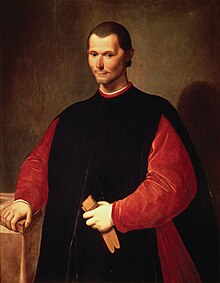
As Niccolo Machiavelli warned in The Discourses, his landmark book on how to preserve freedom within a republic:
All those who have written upon civil institutions demonstrate…that whoever desires to found a state and give it laws, must start with assuming that all men are bad and ever ready to display their vicious nature, whenever they may find occasion for it.
Niccolo Machiavelli
If their evil disposition remains concealed for a time, it must be attributed to some unknown reason; and we must assume that it lacked occasion to show itself.
But time, which has been said to be the father of all truth, does not fail to bring it to light.
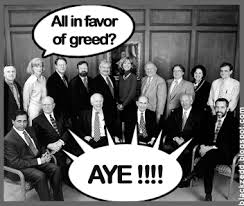
Whenever the creating of wealth becomes an end in itself, all other ends are sacrificed to this.
Greed begins in the neurochemistry of the brain. A neurotransmitter called dopamine fuels our greed. The higher the dopamine levels in the brain, the greater the pleasure we experience.
Harvard researcher Hans Breiter has found, via magnetic resonance imaging studies, that the craving for money activates the same regions of the brain as the lust for sex, cocaine or any other pleasure-inducer.
But snorting the same amount of cocaine, or earning the same sum of money, does not cause dopamine levels to increase. So the pleasure-seeker must increase the amount of stimuli to keep enjoying the euphoria.
Federal investigators need to view large concentrations of wealth as sources for at least potential corruption.
And they should ruthlessly—and routinely—investigate those sources, whether in the vaults of the Mafia or of major financial institutions.


 Bureaucracybuster's Blog
ABC NEWS, ALTERNET, AMERICABLOG, AP, BABY BOOMER RESISTANCE, BBC, BLOOMBERG, BLOOMBERG NEWS, BLUESKY, BUZZFEED, CBS NEWS, CNN, CROOKS AND LIARS, DAILY KOS, DAILY KOZ, DRUG TRAFFICKING, FACEBOOK, FIVETHIRTYEIGHT, HARPER’S MAGAZINE, HUFFINGTON POST, INFORMANTS, MAFIA, MEDIA MATTERS, MOTHER JONES, MOVEON, MSNBC, NARCOTICS TRAFFICKING, NBC NEWS, NEW REPUBLIC, NEW YORK POLICE DEPARTMENT, NEWSDAY, NEWSWEEK, NPR, ORGANIZED CRIME, PBS NEWSHOUR, POLICE CORRUPTION, POLITICO, POLITICUSUSA, PRINCE OF THE CITY, RAW STORY, REUTERS, ROBERT LEUCI, RUDOLPH GUILIANI, SALON, SEATTLE TIMES, SIDNEY LUMET, SLATE, TALKING POINTS MEMO, THE ATLANTIC, THE CHICAGO SUN-TIMES, THE CHICAGO TRIBUNE, THE DAILY BEAST, THE DAILY BLOG, THE GUARDIAN, THE HILL, THE HUFFINGTON POST, THE INTERCEPT, THE LOS ANGELES TIMES, THE NATION, THE NEW REPUBLIC, THE NEW YORK TIMES, THE NEW YORKER, THE VILLAGE VOICE, THE WASHINGTON POST, THINKPROGRESS, TIME, TREAT WILLIAMS, TRUTHDIG, TRUTHOUT, TWO POLITICAL JUNKIES, U.S. DEPARTMENT OF JUSTICE, U.S. NEWS & WORLD REPORT, UPI, USA TODAY, WONKETTE, X
TELLING THE TRUTH ABOUT COPS AND DRUGS
In Bureaucracy, History, Law, Law Enforcement, Social commentary on February 20, 2026 at 12:16 amIt’s a movie that appeared in 1981—making it, for those born in 2000, an oldie.
And it wasn’t a blockbuster, being yanked out of theaters almost as soon as it arrived.
Yet Prince of the City remains that rarity—a movie about big-city police that:
It’s based on the real-life case of NYPD Detective Robert Leuci (“Danny Ciello” in the film).
Robert Leuci (“Danny Ciello” in “Prince of the City”)
A member of the elite Special Investigating Unit (SIU) Ciello (played by Treat Williams) volunteers to work undercover against rampant corruption among narcotics agents, attorneys and bail bondsmen.
His motive appears simple: To redeem himself and the NYPD from the corruption he sees everywhere: “These people we take from own us.”
His only condition: “I will never betray cops who’ve been my partners.”
And Assistant US Attorney Rick Cappalino assures Ciello: “We’ll never make you do something you can’t live with.”
As the almost three-hour movie unfolds, Ciello finds—to his growing dismay—that there are a great many things he will have to live with.
Treat Williams as “Danny Ciello”
Although he doesn’t have a hand in it, he’s appalled to learn that Gino Moscone, a former buddy, is going to be arrested for taking bribes from drug dealers.
Confronted by a high-ranking agent for the Federal Drug Enforcement Agency, Moscone refuses to “rat out” his buddies. Instead, he puts his service revolver to his head and blows out his brains.
Ciello is devastated, but the investigation—and film—must go on.
Along the way, he’s suspected by a corrupt cop and bail bondsman of being a “rat” and threatened with death.
He’s about to be wasted in a back alley when his cousin—a Mafia member—suddenly intervenes. The Mafioso tells Ciello’s would-be killers: “You’d better be sure he’s a rat, because people like him.”
At which point, the grotesquely fat bail bondsman—who has been demanding Ciello’s execution—pats Danny on the arm and says, “No hard feelings.”
It’s director Sidney Lumet’s way of graphically saying: “Sometimes the bad guys can be good guys—and the good guys can be bad guys.”
Lumet makes it clear that police don’t always operate with the Godlike perfection of cops in TV and films. It’s precisely because his Federal backup agents lost him that Ciello almost became a casualty.
In the end, Ciello becomes a victim of the prosecutorial forces he has unleashed. Although he’s vowed to never testify against his former partners, Ciello finds this is a promise he can’t keep.
Too many of the cops he’s responsible for indicting have implicated him of similar—if not worse—behavior. He’s even suspected of being involved in the theft of 450 pounds of heroin (“the French Connection”) from the police property room.
A sympathetic prosecutor—Mario Vincente in the movie, Rudolph Giuliani in real-life—convinces Ciello that he must finally reveal everything he knows.
Ciello’s had originally claimed to have done “three things” as a corrupt narcotics agent. By the time his true confessions are over, he’s admitted to scores of felonies.
Ciello then tries to convince his longtime SIU partners to do the same. One of them commits suicide. Another tells Ciello to screw himself: “I’m not going to shoot myself and I’m not going to become a rat.”
To his surprise, Ciello finds himself admiring his corrupt former partner for being willing to stand up to the Federal case-agents and prosecutors demanding his head.
The movie ends with a double dose of irony.
First: Armed with Ciello’s confessions, an attorney whom Ciello had successfully testified against appeals his conviction. But the judge rules Ciello’s admitted misdeeds to be “collateral,” apart from the main evidence in the case, and affirms the conviction.
Second: Ciello is himself placed on trial—of a sort. A large group of assistant U.S. attorneys gathers to debate whether their prize “canary” should be indicted. If he is, his confessions will ensure his conviction.
Some prosecutors argue forcefully that Ciello is a corrupt law enforcement officer who has admitted to more than 40 cases of perjury—among other crimes. How can the government use him to convict others and not address the criminality in his own past?
Other prosecutors argue that Ciello voluntarily risked his life—physically and professionally—to expose rampant police corruption. He deserves a better deal than to be cast aside by those who have made so many cases through his testimony.
Eventually, the U.S. Attorney for the Southern District of New York makes his decision: “The government declines to prosecute Detective Daniel Ciello.”
It is Lumet’s way of showing that the decision to prosecute is not always an easy or objective one.
The movie ends with Ciello now teaching surveillance classes at the NYPD Academy.
A student asks: “Are you the Detective Ciello?”
“I’m Detective Ciello.”
“I don’t think I have anything to learn from you.” And he walks out.
Is Danny Ciello a hero, a villain, or some combination of the two?
On this ambiguous note that the film ends—an ambiguity that each viewer must resolve for himself.
Share this: