Posts Tagged ‘DAILY KOS’
ABC NEWS, ABORTION, ADOLF HITLER, ALBERT SPEER, ALTERNET, AMERICABLOG, AMERICAN TALIBAN (BOOK), AP, BABY BOOMER RESISTANCE, BBC, BLOOMBERG NEWS, BUZZFEED, CBS NEWS, CNN, CROOKS AND LIARS, DAILY KOS, DINESH D'SOUZA, FBI, FIVETHIRTYEIGHT, HARPER’S MAGAZINE, HOMELAND SECURITY, HOMOSEXUALITY, HUFFINGTON POST, ISLAM, JIHADISTS, MARKOS MOULITSAS, MEDIA MATTERS, MOTHER JONES, MOVEON, MSNBC, MUSLIMS, NAZI GERMANY, NBC NEWS, NEW REPUBLIC, NEWSDAY, NEWSWEEK, NPR, PBS NEWSHOUR, POLITICO, POLITICUSUSA, RAW STORY, REPUBLICANS, REUTERS, RIGHT-WING EXTREMISTS, SALON, SEATTLE TIMES, SLATE, TALIBAN, TALKING POINTS MEMO, TERRORISM, THE ATLANTIC, THE CHICAGO SUN-TIMES, THE CHICAGO TRIBUNE, THE DAILY BEAST, THE DAILY BLOG, THE ENEMY AT HOME (BOOK), THE GUARDIAN, THE HILL, THE HUFFINGTON POST, THE LOS ANGELES TIMES, THE NATION, THE NEW REPUBLIC, THE NEW YORK TIMES, THE NEW YORKER, THE VILLAGE VOICE, THE WASHINGTON POST, THINKPROGRESS, TIME, TRUTHDIG, TRUTHOUT, TWO POLITICAL JUNKIES, U.S. NEWS & WORLD REPORT, UPI, USA TODAY, WONKETTE, X
In Bureaucracy, History, Politics, Social commentary on September 10, 2021 at 12:10 am
On April 15, 2015, CBS News broke a truly sensational and disturbing story:
Agents from the FBI and Department of Homeland Security (DHS) were investigating the online leak of home addresses of senior and former officials of the FBI, DHS and other Federal law enforcement agencies.
Even worse: Rather than Islamic terrorists being the culprits, the suspects were believed to be members of an American Right-wing extremist group.
The message was entitled: DHS-CIA-FBI TRAITORS HOME ADDRESSES.
It read: “LET THESE EVIL NWO SATANISTS KNOW THAT THERE WILL BE HELL TO PAY FOR THEIR 911 TREASON, AND THEIR FUTURE FEMA CAMP PLANNED PUBLIC CRACKDOWN TREASON ALSO
“JESUS IS LORD, AND THE PUBLIC IS IN CHARGE, NOT THESE SATANIC NWO STOOGES”
“NWO” could be an acronym for “New World Order,” a term used by conspiracy theorists to refer to a totalitarian world government.
In a statement, DHS said:
“The safety of our workforce is always a primary concern. DHS has notified employees who were identified in the posting and encouraged them to be vigilant. DHS will adjust security measures, as appropriate, to protect our employees.”
CBS did not say where the information was posted.
Click here: Right-Wing Group Blamed In Leak Of U.S. Officials’ Home Addresses: Report
Six years later, a check of Google stories about this crime shows no updates released by the government.
Americans shouldn’t be shocked to find that a Right-wing group betrayed the safety of its fellow Americans.

The goals of both the American Right and Islamic terrorist groups such as the Taliban actually share much in common:
- Women should have fewer rights than men.
- Abortion should be illegal.
- There should be no separation between church and state.
- Religion should be taught in school.
- Religious doctrine trumps science.
- Government should be based on religious doctrine.
- Homosexuality should be outlawed.
A 2010 book, American Taliban: How War, Sex, Sin, and Power Bind Jihadists and the Radical Right, vividly documents the similarities between these two groups.
Its author is Markos Moulitsas, founder of Daily Kos, an American political blog that publishes news and opinions from a liberal viewpoint.


American Taliban opens with this provocative statement:
“Yes, the Republican party, and the entire modern conservative movement is, in fact, very much like the Taliban.
“In their tactics and on the issues, our homegrown American Taliban are almost indistinguishable from the Afghan Taliban.
“The American Taliban—whether in their militaristic zeal, their brute faith in masculinity, their disdain for women’s rights, their outright hatred of gays, their aversion to science and modernity or their staunch anti-intellectualism—share a litany of mores, values, and tactics with Islamic extremists….
“Let’s be honest, the freedoms that jihadists hate are the very same freedoms that our own homegrown repressive ideologues hate: freedom of thought, of inquiry, of lifestyle.”
Its subsequent chapters document the all-consuming rage of the American Right to brutally control the lives of their fellow citizens.
Ironically, Moulitsas’ thesis is—unintentionally—supported by no less an authority than Right-wing author Dinesh D’Souza.

Dinesh D’Souza
Gage Skidmore, CC BY-SA 3.0 <https://creativecommons.org/licenses/by-sa/3.0>, via Wikimedia Commons
Among the bestsellers D’Souza has written: Ronald Reagan: How an Ordinary Man Became an Extraordinary Leader, and Obama’s America: Unmaking the American Dream.
The title of his 2008 bestseller sums up D’Souza’s take on liberalism: The Enemy At Home: The Cultural Left and Its Responsibility for 9/11.
From the book’s dust jacket:
“Muslims and other traditional people around the world allege that secular American values are being imposed on their societies and that these values undermine religious belief, weaken the traditional family, and corrupt the innocence of children.
“But it is not ‘America’ that is doing this to them, it is the American cultural left. What traditional societies consider repulsive and immoral, the cultural left considers progressive and liberating….
“D’Souza argues that the war on terror is really a war for the hearts and minds of traditional Muslims—and traditional peoples everywhere. The only way to win the struggle with radical Islam is to convince traditional Muslims that America is on their side.”
In short: America needs to adopt the values of the Taliban.
* * * * *
On March 19, 1945, facing certain defeat, Adolf Hitler ordered a massive “scorched-earth” campaign throughout Germany.
All German agriculture, industry, ships, communications, roads, food stuffs, mines, bridges, stores and utility plants were to be destroyed.
If implemented, it would deprive the entire German population of even the barest necessities after the war.
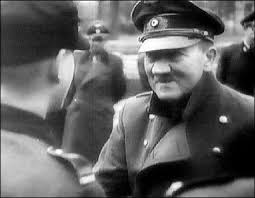
Adolf Hitler addressing boy soldiers as the Third Reich crumbles
“If the war is lost,” Hitler told Albert Speer, his former architect and now Minister of Armaments, “the nation will also perish.
“This fate is inevitable. There is no necessity to take into consideration the basis which the people will need to continue even a most primitive existence.
“On the contrary, it will be better to destroy these things ourselves, because this nation will have proved to be the weaker one and the future will belong solely to the stronger eastern nation.
“Besides, those who will remain after the battle are only the inferior ones, for the good ones have all been killed.”
Hitler’s view was: “If I can’t rule Germany, there won’t be a Germany.”
Apparently, some members of the American Right have reached the same decision about the United States.
9/11, ABC NEWS, AFGHANISTAN, AL-QUAEDA, ALTERNET, AMERICABLOG, ANDREW M. CUOMO, AP, BABY BOOMER RESISTANCE, BARACK OBAMA, BBC, BLOOMBERG NEWS, BUZZFEED, CBS NEWS, CNN, CROOKS AND LIARS, DAILY KOS, DAILY KOZ, FACEBOOK, FIVETHIRTYEIGHT, GEORGE W. BUSH, HAMID KARZAI, HARPER’S MAGAZINE, HUFFINGTON POST, JOSEPH BIDEN, JOSEPH LEMM, MEDIA MATTERS, MOTHER JONES, MOVEON, MSNBC, NBC NEWS, NEW REPUBLIC, NEW YORK AIR NATIONAL GUARD, NEW YORK POLICE DEPARTMENT, NEWSDAY, NEWSWEEK, NORTH VIETNAMESE ARMY, NPR, OSAMA BIN LADEN, PBS NEWSHOUR, POLITICO, POLITICUSUSA, RAW STORY, REUTERS, ROLLING STONE MAGAZINE, SALON, SEATTLE TIMES, SLATE, TALKING POINTS MEMO, THE ATLANTIC, THE CHICAGO SUN-TIMES, THE CHICAGO TRIBUNE, THE DAILY BEAST, THE DAILY BLOG, THE GUARDIAN, THE HILL, THE HUFFINGTON POST, THE LOS ANGELES TIMES, THE NATION, THE NEW REPUBLIC, THE NEW YORK TIMES, THE NEW YORKER, THE PENTAGON, THE VILLAGE VOICE, THE WALL STREET JOURNAL, THE WASHINGTON POST, THINKPROGRESS, TIME, TRUTHDIG, TRUTHOUT, TWITTER, TWO POLITICAL JUNKIES, U.S. NEWS & WORLD REPORT, UPI, USA TODAY, VIETCONG, VIETNAM, VIETNAM WAR, WONKETTE, WORLD TRADE CENTER
In Bureaucracy, History, Military, Politics, Social commentary on August 16, 2021 at 12:07 am
On July 8, President Joseph Biden said that America would withdraw its armed forces from Afghanistan by August 31, thus ending the nearly 20-year war.
“How many more, how many more thousands of American daughters and sons are you willing to risk?” Biden said to those calling for the United States to extend the military operation.
To put the consequences of this effort into human terms:
On December 21, 2015, a suicide-bomber rammed an explosives-laden motorcycle into a joint NATO-Afghan patrol. Six American troops and an Afghan were killed.
One of the dead was Joseph Lemm, 45, a detective and 15-year veteran of the New York Police Department. A technical sergeant in the New York Air National Guard, he had been deployed three times—once to Iraq and twice to Afghanistan.
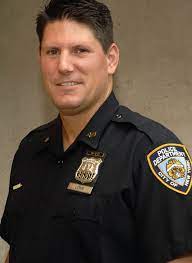
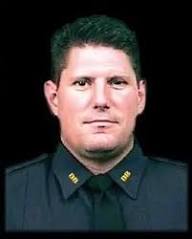
Joseph Lemm
Lemm left behind a daughter, Brook, 16, a son, Ryan, four, and his wife, Christine.
New York Governor Andrew M. Cuomo ordered that flags on all state government buildings be flown at half-staff on December 23 in Lemm’s honor.
“Staff Sergeant Joe Lemm served this nation with the selflessness and bravery that embodies the U.S. Armed Forces and the NYPD,” Cuomo said in a statement.
Lemm’s death was a double tragedy—that of a dedicated man who should not have died so needlessly.
A total of 2,312 US military personnel in Afghanistan have died and 20,066 have been wounded since 2001. The cost of military operations is put at $824 billion.
The history of American conflict in Afghanistan began on September 11, 2001.
On that date, 19 Islamic hijackers slammed two jetliners into the World Trade Center in New York and one into the Pentagon in Washington, D.C.
A fourth plane, headed for the White House or Capitol Building, failed to reach its target when its passengers rioted—and the hijackers dove it into a Pennsylvania field.
The mastermind of the attacks was Osama bin Laden, a Saudi millionaire then living in Afghanistan, under protection by its ruling thugocracy, the Taliban.
The administration of President George W. Bush demanded his immediate surrender to American justice.
The Taliban refused.
So, on October 7, 2011—less than one month from the 9/11 attacks—American bombers began pounding Taliban positions.
The whole point of the campaign was to pressure the Taliban to surrender Bin Laden.
But the Taliban refused. Bin Laden holed up in the mountains of Tora Bora, and then ultimately escaped into Pakistan.
After December, 2001, American Intelligence completely lost track of Bin Laden. CIA officials repeatedly said he was likely living in the “no-man’s-land” between Afghanistan and Pakistan.
Thus, there was no longer any point in pressuring the Taliban to surrender Bin Laden.
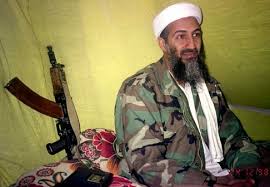
Osama bin Laden
Still, the United States continued to commit forces to Afghanistan—to turn a primitive, warlord-ruled country into a modern-day democracy.
There was, admittedly, a great deal to detest about the Taliban:
- When the Taliban ruled Afghanistan, they turned soccer stadiums into execution plazas for mass beheadings or shootings.
- Taliban “fighters” have proven their “courage” by throwing acid into the faces of women who dared to attend school.

Taliban religious police beating a woman
- On August 8, 1989, the Taliban attacked Mazar-i-Sharif. Talibanists began shooting people in the street, then moved on to mass rapes of women. Thousands of people were locked in containers and left to suffocate.
- The Taliban forbade women to leave their homes unless accompanied by a male relative and wearing the burqa—a traditional dress covering the entire body. Those who disobeyed were publicly beaten.
Yet, as horrific as such atrocities were, these did not obligate the United States to spend eternity trying to bring civilization to this barbaric country.
And, in pursuing that goal, both the Bush and Obama administrations repeatedly overlooked the following realities:
- Hamid Karzai, the “president” of Afghanistan (2001-2014) didn’t believe in democracy—despite American claims to support his efforts to bring this to Afghanistan.
- His authority didn’t extend beyond Kabul, and he was viewed by most Afghans as an illegitimate ruler, imposed by America.
- The same can be said for his successor, Mohammad Ashraf Ghani.
- American soldiers in Afghanistan felt surrounded by enemies and hamstrung by unrealistic orders to win “hearts and minds” at the risk of their own lives.
- The Taliban poses no threat to the security of the United States.
- Afghan “insurgents” are fighting American forces because (1) they are in a civil war; and (2) they believe their country has once again been occupied by foreigners.
- Counterinsurgency was preached as the key to defeating the Taliban in Afghanistan—where it hasn’t worked.
- Americans entered Afghanistan without an exit strategy.
All these truths applied just as firmly to America’s failed misadventure in Vietnam.
Almost 50 years ago, American “grunts” felt about their so-called South Vietnamese allies as American troops now feel about their Afghan “allies.”
Dr. Dennis Greenbaum, a former army medic, summed up how Americans had really felt about their supposed South Vietnamese allies.
“The highest [priority for medical treatment] was any U.S. person. The second highest was a U.S. dog from the canine corps. The third was NVA [North Vietnamese Army].
“The fourth was VC [Viet Cong]. And the fifth was ARVIN [Army of the Republic of South Vietnam], because they had no particular value. The only thing below them was the civilians,” said Greenbaum.
When you despise the “ally” you’re spending lives and treasure to defend, it’s time to pack up.
ABC NEWS, ALTERNET, AMERICABLOG, AP, BABY BOOMER RESISTANCE, BBC, BLOOMBERG NEWS, BUSINESS, BUZZFEED, CBS NEWS, CNN, CROOKS AND LIARS, DAILY KOS, DAILY KOZ, DONALD TRUMP, FACEBOOK, FBI, FIVETHIRTYEIGHT, HARPER’S MAGAZINE, HUFFINGTON POST, INCOME INEQUALITY, MAFIA, MEDIA MATTERS, MOTHER JONES, MOVEON, MSNBC, NBC NEWS, NEW REPUBLIC, NEWSDAY, NEWSWEEK, NICCOLO MACHIAVELLI, NPR, PBS NEWSHOUR, POLITICO, POLITICS, POLITICUSUSA, RAW STORY, REUTERS, SALON, SEATTLE TIMES, SLATE, TALKING POINTS MEMO, TAX HAVENS, TAX JUSTICE NETWORK, THE ATLANTIC, THE CHICAGO SUN-TIMES, THE CHICAGO TRIBUNE, THE DAILY BEAST, THE DAILY BLOG, THE GUARDIAN, THE HILL, THE HUFFINGTON POST, THE LOS ANGELES TIMES, THE NATION, THE NEW REPUBLIC, THE NEW YORK TIMES, THE NEW YORKER, THE PRINCE, THE VILLAGE VOICE, THE WALL STREET JOURNAL, THE WASHINGTON POST, THINKPROGRESS, TIME, TRUTHDIG, TRUTHOUT, TWITTER, TWO POLITICAL JUNKIES, U.S. NEWS & WORLD REPORT, UPI, USA TODAY, WEALTH, WONKETTE
In Bureaucracy, Business, History, Law, Law Enforcement, Politics, Social commentary on May 14, 2021 at 12:55 am
In November, 2017, President Donald Trump and a Republican-dominated House and Senate rammed the Tax Cuts and Jobs Act of 2017 through Congress. It became law on December 22, 2017.
The law:
- Ignored the stagnation of working-class wages and exacerbated inequality;
- Weakened revenues when the nation needed to raise more;
- Encouraged rampant tax avoidance and gaming that will undermine the integrity of the tax code;
- Left behind low- and moderate-income Americans—and in many ways hurt them.
For American corporations, however, the law was a godsend:
- Cutting the corporate tax rate from 35 to 21 percent;
- Shifting toward a territorial tax system, where multinational corporations’ foreign profits go largely untaxed;
- Benefitting overwhelmingly wealthy shareholders and highly paid executives.
In 1513, Niccolo Machiavelli, the Florentine statesman who has been called the father of modern political science, published his best-known work: The Prince.
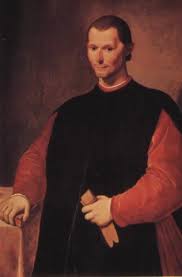

Niccolo Machiavelli
Among the issues he confronted was how to preserve liberty within a republic. And key to this was mediating the eternal struggle between the wealthy and the poor and middle class.
Machiavelli deeply distrusted the nobility because they stood above the law. He saw them as a major source of corruption because they could buy influence through patronage, favors or nepotism.
Successful political leaders must attain the support of the nobility or general populace. But since these groups have conflicting interests, the safest course is to choose the latter.
Writes Machiavelli:
….He who becomes prince by help of the [wealthy] has greater difficulty in maintaining his power than he who is raised by the populace. He is surrounded by those who think themselves his equals, and is thus unable to direct or command as he pleases.
But one who is raised to leadership by popular favor finds himself alone, and has no one, or very ew, who are not ready to obey him. [And] it is impossible to satisfy the [wealthy] by fair dealing and without inflicting injury upon others, whereas it is very easy to satisfy the mass of the people in this way.

Machiavelli warns that the general populace is more honest than the nobility–i-.e., wealthy. The wealthy seek to oppress, while the populace wants to simply avoid oppression.
A political leader cannot protect himself against a hostile population, owing to their numbers, but he can against the hostility of the great, as they are but few.
The worst that a prince has to expect from a hostile people is to be abandoned, but from hostile nobles he has to fear not only desertion but their active opposition. And as they are more far seeing and more cunning, they are always in time to save themselves and take sides with the one who they expect will conquer.
One…who becomes prince by favor of the populace, must maintain its friendship, which he will find easy, the people asking nothing but not to be oppressed.
But one who against the people’s wishes becomes prince by favor of the nobles, should above all endeavor to gain the favor of the people. This will be easy for him if he protects them.
In 2020, Tax Justice Network, which campaigns to abolish tax havens, commissioned a study of their effect on the world’s economy.
The study was entitled, “The State of Tax Justice 2020.”

The research was carried out by James Henry, former chief economist at consultants McKinsey & Co. Among its findings:
- Countries lose over $427 billion in tax each year to international corporate tax abuse and private tax evasion.
- More tax is lost to tax havens ever year due to corporate tax abuse by multinational corporations than by individuals.
- Multinational corporations short-change countries out of $245 billion in tax every year.
- People who move their wealth offshore short-change their governments out of $182 billion in taxes every year.
- Almost all responsibility for global tax losses falls on higher income countries.
- Higher income countries were responsible for 98 per cent of all the tax loss countries around the world lost.
The report recommended:
- Governments should introduce an excess profit tax on large multinational corporations which have profited during the pandemic while local businesses were forced into lockdown.
- Digital tech giants claim to have our best interests at heart but have been short-changing us out of billions in tax for years.
- Governments should introduce a wealth tax to reign in the billions in tax lost to tax havens every year.
- Establish a UN tax convention that makes sure robust international tax standards are set in a transparent and democratic way.
Fortunately, Machiavelli has supplied timeless remedies to this increasingly dangerous situation:
- Assume evil among men—and most especially among those who possess the greatest concentration of wealth and power.
- Carefully monitor their activities—the way the FBI now regularly monitors those of the Mafia and major terrorist groups.
- This means using bugs, wiretaps and informants—and, above all, assuming that powerful men dedicated to their own greed will inevitably become criminals.
- Ruthlessly prosecute the treasonous crimes of the rich and powerful—and, upon their conviction, impose severe punishment.
ABC NEWS, ALTERNET, AP, BARACK OBAMA, BBC, BREITBART, BUZZFEED, CBS NEWS, CNN, CROOKS AND LIARS, DAILY KOS, DEPARTMENT OF AGRICULTURE, DEPARTMENT OF HEALTH AND HUMAN SERVICES, DEPARTMENT OF TRANSPORTATION, DONALD TRUMP, EGOMANIA, ELAINE CHAO, FACEBOOK, FLATTERY, GEORGI MALENKOV, HUNTER BIDEN, JOE BIDEN, JOSEPH STALIN, KIM JONG ON, KLIMENT VOROSHILOV, LAVRENTI P. BERIA, MEDIA, MIKE PENCE, MOTHER JONES, MOVEON, NBC NEWS, NEWSWEEK, NICCOLO MACHIAVELLI, NIKITA KHRUSHCHEV, NPR, OSAMA BIN LADEN, POLITICO, RAW STORY, REINCE PRIEBUS, REUTERS, ROBERT PAYNE, SALON, SEATTLE TIMES, SLATE, SONNY PERDUE, SOVIET UNION, THE ATLANTIC, THE CHICAGO SUN-TIMES, THE CHICAGO TRIBUNE, THE DAILY BEAST, THE GUARDIAN, THE HILL, THE HUFFINGTON POST, THE LOS ANGELES TIMES, THE NATION, THE NEW YORK TIMES, THE RISE AND FALL OF STALIN (BOOK), THE WALL STREET JOURNAL, THE WASHINGTON POST, TIME, TOM PRICE, TWITTER, U.S. NAVY SEALS, U.S. NEWS & WORLD REPORT, UPI, USA TODAY, VYACHESLAV MOLOTOV
In Bureaucracy, History, Politics, Social commentary, Uncategorized on May 13, 2021 at 12:10 am
I must not omit an important subject….And this is with regard to flatterers, of which courts are full, because men take such pleasure in their own things and deceive themselves about them that they can with difficulty guard against this plague….Because there is no other way of guarding oneself against flattery than by letting men understand that they will not offend you by speaking the truth.
—Niccolo Machiavelli, The Discourses
On October 10, 2019, President Donald Trump took aim at Joe Biden, his potential Democratic rival for the White House in 2020.
Speaking at a campaign rally in Minneapolis, Minnesota, Trump spoke as if Biden’s son, Hunter, was present: “Your father was never considered smart. He was never considered a good senator. He was only a good vice president because he understood how to kiss Barack Obama’s ass.”
Trump no doubt believed he had scored a two-in-one insult—at both former President Barack Obama and his then-Vice President.
But Obama, as depicted in the memoirs of those who worked closely with him, did not demand sickeningly worshipful praise. He was, in fact, wary of sycophants, insisting on being well and honestly briefed.
It was this quality that led him to authorize—and oversee—the successful takedown of 9/11 mastermind Osama Bin Laden on May 1, 2011 by U.S. Navy SEALs.
It is actually Trump who demands not simply loyalty but constant flattery.
In this—as in his vindictiveness and coarseness—he closely resembles Joseph Stalin, the infamous dictator of the Soviet Union from 1924 to 1953.
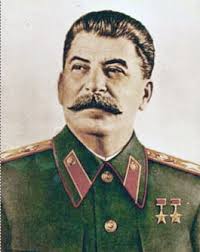
Joseph Stalin
On December 21, 1949, Stalin turned 70. And millions of Russians feverishly competed to out-do one another in singing his praises.
These celebrations weren’t prompted by love—but fear.
He had lived up to his pseudonym: “Man of Steel.” For almost 30 years, through purges and starvation caused by enforced collections of farmers’ crops, he had slaughtered 20 to 60 million of his fellow citizens.
The British historian, Robert Payne, described these rapturous events in his classic 1965 biography, The Rise and Fall of Stalin:
“From all over the country came gifts of embroidered cloth, tapestries and carpets bearing his name or his features….Poets extolled him in verses, He was the sun, the splendor, the lord of creation.
“The novelist Leonid Lenov…foretold the day when all the peoples of the earth would celebrate his birthday; the new calendar would begin with the birth of Stalin rather than with the birth of Christ.”
Lavrenti P. Beria, Stalin’s sinister and feared secret police chief: “Millions of fighters for peace and democracy in all countries of the world are closing their ranks still firmer around Comrade Stalin.”
Foreign Minister Vyacheslav Molotov: “The gigantic Soviet army created during [World War II] was under the direct leadership of Comrade Stalin and built on the basis of the principles of Stalinist military science.”
Defense Commissar Kliment Voroshilov: “The mighty voice of the Great Stalin, defending the peace of the world, has penetrated into all corners of the globe.”
Central Committee Secretary Georgi Malenkov: “With a feeling of great gratitude, turning their eyes to Stalin, the peoples of the Soviet Union, and hundreds of millions of peoples in all countries of the world, and all progressive mankind see in Comrade Stalin their beloved leader and teacher….”
Now, fast forward to June 12, 2017.
That was when President Donald J. Trump—also 70—convened his first full Cabinet meeting since taking office on January 20.
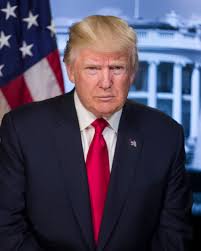
Donald Trump
On June 12, polls showed that only 36% of Americans approved of his conduct. But from his Cabinet members, Trump got praise traditionally lavished on dictators like Stalin and North Korea’s Kim Jong On.
While the Cabinet members sat around a mahogany table in the West Wing of the White House, Trump instructed each one to say a few words about the good work his administration was doing.
Vice President Mike Pence: “It is the greatest privilege of my life to serve as the vice president to a president who is keeping his word to the American people.”
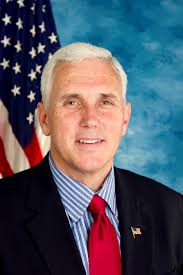
Mike Pence
Secretary of Agriculture Sonny Perdue: “I just got back from Mississippi. They love you there.”
Secretary of Health and Human Services Tom Price: “What an incredible honor it is to lead the Department of Health and Human Services at this pivotal time under your leadership. I can’t thank you enough for the privilege that you’ve given me, and the leadership you’ve shown.”
Chief of Staff Reince Priebus: “On behalf of the entire senior staff around you, Mr. President, we thank you for the opportunity and the blessing you’ve given us to serve your agenda and the American people.”
Secretary of Transportation Elaine Chao: “Thank you for coming over to the Department of Transportation. I want to thank you for getting this country moving again, and also working again.”
Politicians—both domestic and foreign—quickly learned that the quickest way to get on Trump’s “good side” was to shamelessly and constantly praise him.
Some historians believe that Stalin was poisoned by one of his fawning yes-men—most likely Lavrenti Beria.
The time may come when Trump learns that outrageous flattery can hide murderous hatred.
2003 IRAQ WAR, ABC NEWS, ALTERNET, AMERICABLOG, AP, ASIANS, BABY BOOMER RESISTANCE, BARACK OBAMA, BBC, BIRTH CONTROL, BLACKS, BLOOMBERG NEWS, BUZZFEED, CBS NEWS, CNN, CROOKS AND LIARS, DAILY KOS, DAILY KOZ, DISABLED, DONALD TRUMP, ED MARTIN, FACEBOOK, FIVETHIRTYEIGHT, GEORGE W. BUSH, HARPER’S MAGAZINE, HILLARY CLINTON, HUFFINGTON POST, HUMAYUN KHAN, HYMAYUN KHAN, JOE SCARBOROUGH, JOY REID, KATRINA PIERSON, LATINOS, LATINOS FOR TRUMP, MARCO GUTIERREZ, MEDIA MATTERS, MEDICAID, MEDICARE, MEXICANS, MORNING JOE, MOTHER JONES, MOVEON, MSNBC, MUSLIMS, NBC NEWS, NEW REPUBLIC, NEWSDAY, NEWSWEEK, NICCOLO MACHIAVELLI, NPR, OBAMACARE, PBS NEWSHOUR, POLITICO, POLITICUSUSA, PRISONERS OF WAR, PUBLIC ASSISTANCE, RAW STORY, REUTERS, SALON, SEATTLE TIMES, SLATE, SOCIAL SECURITY, TALKING POINTS MEMO, TEA PARTY, THE ATLANTIC, THE CHICAGO SUN-TIMES, THE CHICAGO TRIBUNE, THE DAILY BEAST, THE DAILY BLOG, THE DISCOURSES, THE GUARDIAN, THE HILL, THE HUFFINGTON POST, THE LOS ANGELES TIMES, THE NATION, THE NEW REPUBLIC, THE NEW YORK TIMES, THE NEW YORKER, THE PRINCE, THE VILLAGE VOICE, THE WALL STREET JOURNAL, THE WASHINGTON POST, THINKPROGRESS, TIME, TRUTHDIG, TRUTHOUT, TWITTER, TWO POLITICAL JUNKIES, U.S. NEWS & WORLD REPORT, UPI, USA TODAY, VOTING, WAYNE ROOT, WOMEN, WONKETTE
In Bureaucracy, History, Politics, Social commentary on May 10, 2021 at 12:20 am
No shortage of pundits have sized up Donald Trump—first as a Presidential candidate, and now as the nation’s 45th President.
But how does Trump measure up in the estimate of Niccolo Machiavelli, the 16th-century Florentine statesman?
It is Machiavelli whose two great works on politics—The Prince and The Discourses—remain textbooks for successful politicians more than 500 years later.

Niccolo Machiavelli
Let’s start with Trump’s notoriety for hurling insults at virtually everyone, including:
- Latinos
- Asians
- Muslims
- Blacks
- The Disabled
- Women
- Prisoners-of-War
These insults delight his white, under-educated followers. But they have alienated millions of other Americans who might have voted for him.
Now consider Machiavelli’s advice on gratuitously handing out insults and threats:
-
“I hold it to be a proof of great prudence for men to abstain from threats and insulting words towards any one.
-
“For neither the one nor the other in any way diminishes the strength of the enemy—but the one makes him more cautious, and the other increases his hatred of you, and makes him more persevering in his efforts to injure you.”
For those who expected Trump to shed his propensity for constantly picking fights, Machiavelli had a stern warning:
-
“…If it happens that time and circumstances are favorable to one who acts with caution and prudence he will be successful. But if time and circumstances change he will be ruined, because he does not change the mode of his procedure.
-
“No man can be found so prudent as to be able to adopt himself to this, either because he cannot deviate from that to which his nature disposes him, or else because, having always prospered by walking in one path, he cannot persuade himself that it is well to leave it…
-
“For if one could change one’s nature with time and circumstances, fortune would never change.”
Then there is Trump’s approach to consulting advisers:
Asked by Joe Scarborough on MSNBC’s “Morning Joe” who he consults about foreign policy, Trump replied; “I’m speaking with myself, number one, because I have a very good brain and I’ve said a lot of things.”

Donald Trump
This totally contrasts with the advice given by Machiavelli:
-
“A prudent prince must [choose] for his counsel wise men, and [give] them alone full liberty to speak the truth to him, but only of those things that he asks and of nothing else.
-
“But he must be a great asker about everything and hear their opinions, and afterwards deliberate by himself in his own way, and in these counsels…comport himself so that every one may see that the more freely he speaks, the more he will be acceptable.”
And Machiavelli has potent advice on the selection of advisers:
- “The first impression that one gets of a ruler and his brains is from seeing the men that he has about him.
- “When they are competent and loyal one can always consider him wise, as he has been able to recognize their ability and keep them faithful.
- “But when they are the reverse, one can always form an unfavorable opinion of him, because the first mistake that he makes is in making this choice.”
Consider some of the advisers Trump relied on in his campaign for President:
- Founder of Latinos for Trump Marco Gutierrez told MSNBC’s Joy Reid: “My culture is a very dominant culture. And it’s imposing, and it’s causing problems. If you don’t do something about it, you’re gonna have taco trucks every corner.”
- At a Tea Party for Trump rally at a Harley-Davidson dealership in Festus, Missouri, former Missouri Republican Party director Ed Martin reassured the crowd that they weren’t racist for hating Mexicans.
Comments like these didn’t increase Trump’s popularity among Hispanics.
- Wayne Root, opening speaker and master of ceremonies at many Trump campaign events, told Virginia radio host Rob Schilling: People on public assistance and women getting birth control through Obamacare should not be allowed to vote.
Comments like this outraged the 70% of women who had an unfavorable opinion of him—and anyone who received Medicaid, Medicare or Social Security.
- Trump’s spokeswoman, Katrina Pierson, claimed that Barack Obama and Hillary Clinton were responsible for the death of Captain Humayun Khan—who was killed by a truck-bomb in Iraq in 2004.
Obama became President in 2009—-almost five years after Khan’s death. And Clinton became Secretary of State the same year.
When your spokeswoman becomes a nationwide laughingstock, your own credibility goes down the toilet as well.
Finally, Machiavelli offers a related warning that especially applies to Trump: Unwise princes cannot be wisely advised.
-
“It is an infallible rule that a prince who is not wise himself cannot be well advised, unless by chance he leaves himself entirely in the hands of one man who rules him in everything, and happens to be a very prudent man. In this case, he may doubtless be well governed, but it would not last long, for the governor would in a short time deprive him of the state.”
All of which would lead Niccolo Machiavelli to warn, if he could witness American politics today: “This bodes ill for your Republic.”
9/11, ABC NEWS, ABORTION, ADOLF HITLER, ALTERNET, AMERICABLOG, ANTISEMITISM, AP, ARIZONA, BABY BOOMER RESISTANCE, BBC, BLOOMBERG NEWS, BUZZFEED, CBS NEWS, CNN, CROOKS AND LIARS, DAILY KOS, DAILY KOZ, DAVID HOGG, DISCRIMINATION, DRUDGE REPORT, FACEBOOK, FASCISM, FBI, FIRST RESPONDERS, FIVETHIRTYEIGHT, GAYS, HARPER’S MAGAZINE, HUFFINGTON POST, INDIANA, JEWS, KAREN HANDEL, LAURA INGRAHAM, MARJORY STONEMAN DOUGLAS HIGH SCHOOL, MEDIA MATTERS, MOTHER JONES, MOVEON, MSNBC, NAZI GERMANY, NBC NEWS, NEW REPUBLIC, NEWSDAY, NEWSWEEK, NPR, NRA, PBS NEWSHOUR, PLANNED PARENTHOOD, POLITICO, POLITICUSUSA, RAW STORY, RELIGIOUS F THE CHICAGO TRIBUNE, RELIGIOUS FREEDOM RESTORATION ACT, REPUBLICAN PARTY, REUTERS, SALON, SEATTLE TIMES, SLATE, STALINGRAD, SUSAN G. KOMEN FOUNDATION, TALKING POINTS MEMO, THE ATLANTIC, THE CHICAGO SUN-TIMES, THE CHICAGO TRIBUNE, THE DAILY BEAST, THE DAILY BLOG, THE GUARDIAN, THE HILL, THE HUFFINGTON POST, THE LOS ANGELES TIMES, THE NATION, THE NEW REPUBLIC, THE NEW YORK TIMES, THE NEW YORKER, THE VILLAGE VOICE, THE WALL STREET JOURNAL, THE WASHINGTON POST, THINKPROGRESS, THIRD REICH, TIME, TRUTHDIG, TRUTHOUT, TWITTER, TWO POLITICAL JUNKIES, U.S. NEWS & WORLD REPORT, UPI, USA TODAY, WONKETTE
In Bureaucracy, Business, History, Law, Law Enforcement, Politics, Social commentary on April 1, 2021 at 12:10 am
Here’s Story #2 on how to stand up to Right-wing bullies.
In 2014, the Arizona Republican legislature passed Senate Bill 1062.
This allowed business owners to legally discriminate against gay and lesbian customers—including the right to refuse medical care to them.
Its intent: To appease the hatred of gays and lesbians by the religious Right, a key constituency of the Republican party.
Gays and their supporters reacted by threatening a legal business and tourism boycott of Arizona. And the business community and its supporters, alarmed, took notice.
- Large businesses—such as Apple, American Airlines, AT&T, Delta Airlines, Verizon and Intel—publicly opposed the measure.
- With Super Bowl XL1X scheduled to be played in 2015 at the University of Phoenix Stadium in Glendale, Arizona, the Arizona Super Bowl Host Committee expressed concern.
- Arizona’s United States Senators John McCain and Jeff Flake publicly urged Governor Jan Brewer to veto the measure, citing worries about the economic impact on the state’s businesses.
Faced with a choice between monetary greed and ideological fanaticism, Brewer chose to veto the legislation on February 26, 2014.
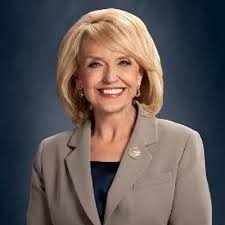
Governor Jan Brewer
Suddenly, Right-wingers who had anticipated becoming persecutors now claimed themselves to be victims. Among their rants on Twitter:
- “CNN led full court media press to take away rights of Christians. Just the beginning. Using tolerance as weapon against us. Wake up.” –John Nolte (@NolteNC)
- “Not sure what the GOP stands for when it stands against religious freedom out of pure fear of political correctness.” –Ben Shapiro (@benshapiro)
- “Arizona Gov. Jan Brewer makes Christians in her state second class citizens.” –toddstarnes (@toddstarnes)
- “A sad day for Arizonans who cherish and understand religious liberty.” –The Center for Arizona Policy
American Rightists believed they had a right to withhold their business services from those they hated.
But they considered it unfair and even demonic for gays and their supporters to withhold monies from discriminatory Arizona businesses.
Story #3:
On February 14, 2018, 19-year-old Nikolas Cruz slaughtered two faculty members and 15 students at Marjory Stoneman Douglas High School in Parkland, Florida. His weapon of choice: An AR-15 assault rifle, often favored by gun massacre killers.
Among the students who survived the carnage: 17-year-old David Hogg. He quickly joined the student-led gun control advocacy group Never Again, becoming one of its best-known spokesmen.
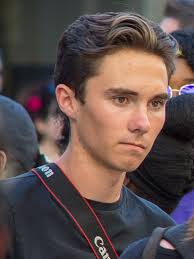
David Hogg
He and his fellow student activists were immediately targeted for vicious insults and even death threats by the National Rifle Association and its shills—especially those in Congress and the Fox News Network.
One of these shills was Fox News host Laura Ingraham. On March 28, not content with attacking Hogg’s efforts to ban assault weaponry, she attacked him personally, tweeting:
“David Hogg Rejected By Four Colleges To Which He Applied and whines about it. (Dinged by UCLA with a 4.1 GPA…totally predictable given acceptance rates.)”
Hogg hadn’t been able to get into UC Los Angeles, UC San Diego, UC Santa Barbara, or UC Irvine, despite having a 4.2 grade point average.
For many Twitter users, this was beyond the pale, and they made their anger known:
“Laura, you’re a parent. This is pretty deplorable.”
“Can’t imagine why any adult would make fun of a kid over college rejections, let alone a kid who’s been through what the Parkland kids have.”
“What is the purpose of this tweet? What is wrong with you? Are you actually proud of this? Regardless of your political beliefs and motivations, THIS is how you choose to present yourself? You must be so sad, angry and scared.”
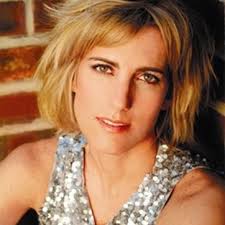
Laura Ingraham
But it fell to David Hogg to strike back in a way guaranteed to frighten even the most fanatical Rightists.
“I’m not going to stoop to her level and go after her on a personal level,” he said. “I’m going to go after her advertisers.”
He posted the following tweet to his 600,000 Twitter followers:
“Pick a number 1-12 contact the company next to that #
“Top Laura Ingraham Advertisers
1. @sleepnumber
2. @ATT
3. Nutrish
4. @Allstate & @esurance
5. @Bayer
6. @RocketMortgage Mortgage
7. @LibertyMutual
8. @Arbys
9. @TripAdvisor
10. @Nestle
11. @hulu
12. @Wayfair
Nutrish was the first advertiser to drop its sponsorship of Ingraham’s program. Other brands followed.
Suddenly alarmed, Ingraham tweeted the next day: “Any student should be proud of a 4.2 GPA —incl. @DavidHogg111. On reflection, in the spirit of Holy Week, I apologize for any upset or hurt my tweet caused him or any of the brave victims of Parkland. For the record, I believe my show was the first to feature David…”
Hogg dismissed her statement: “She only apologized after we went after her advertisers.” He said that he would accept her apology only if she denounced “the way your network has treated my friends and I in this fight.”
Ingraham made no such effort She stayed silent after her tweet. Meanwhile, her advertisers continued to fall off:
- The Atlantis
- Bayer
- Paradise Island Resort
- Office Depot
- Jenny Craig Miracle
- Ear
- Honda
- Progressive
- Hulu
- TripAdvisor
- Expedia
- Wayfair
- StitchFix
- Jos A. Bank
- Nestle and
- Johnson & Johnson.
Although only 17 at the time, David Hogg knew it’s better to stand up to tyrants than submit to them.
He sent a message that even the most hard-core Fascists could understand: Attack me and you’ll get it right back in your ugly faces.
9/11, ABC NEWS, ABORTION, ADOLF HITLER, ALTERNET, AMERICABLOG, ANTISEMITISM, AP, ARIZONA, BABY BOOMER RESISTANCE, BBC, BLOOMBERG NEWS, BUZZFEED, CBS NEWS, CNN, CROOKS AND LIARS, DAILY KOS, DAILY KOZ, DAVID HOGG, DISCRIMINATION, DRUDGE REPORT, FACEBOOK, FASCISM, FBI, FIRST RESPONDERS, FIVETHIRTYEIGHT, GAYS, HARPER’S MAGAZINE, HUFFINGTON POST, INDIANA, JEWS, KAREN HANDEL, LAURA INGRAHAM, MARJORY STONEMAN DOUGLAS HIGH SCHOOL, MEDIA MATTERS, MOTHER JONES, MOVEON, MSNBC, NAZI GERMANY, NBC NEWS, NEW REPUBLIC, NEWSDAY, NEWSWEEK, NPR, NRA, PBS NEWSHOUR, PLANNED PARENTHOOD, POLITICO, POLITICUSUSA, RAW STORY, RELIGIOUS F THE CHICAGO TRIBUNE, RELIGIOUS FREEDOM RESTORATION ACT, REPUBLICAN PARTY, REUTERS, SALON, SEATTLE TIMES, SLATE, STALINGRAD, SUSAN G. KOMEN FOUNDATION, TALKING POINTS MEMO, THE ATLANTIC, THE CHICAGO SUN-TIMES, THE CHICAGO TRIBUNE, THE DAILY BEAST, THE DAILY BLOG, THE GUARDIAN, THE HILL, THE HUFFINGTON POST, THE LOS ANGELES TIMES, THE NATION, THE NEW REPUBLIC, THE NEW YORK TIMES, THE NEW YORKER, THE VILLAGE VOICE, THE WALL STREET JOURNAL, THE WASHINGTON POST, THINKPROGRESS, THIRD REICH, TIME, TRUTHDIG, TRUTHOUT, TWITTER, TWO POLITICAL JUNKIES, U.S. NEWS & WORLD REPORT, UPI, USA TODAY, WONKETTE
In Bureaucracy, Business, History, Law, Law Enforcement, Politics, Social commentary on March 31, 2021 at 1:16 am
There are two ways to deal with bullies: Submit to them—or stand up to them.
Here are three stories of what happened when intended victims counterattacked their would-be predators.
Story #1:
Karen Handel, vice president of public affairs for Susan G. Komen for the Cure, had it all worked out.
She had fashioned what she believed was a politically viable plan for Komen to pull its grant monies from Planned Parenthood (PP).
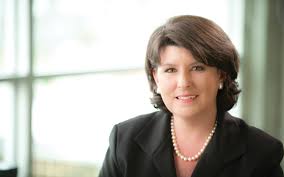
Karen Handel
She didn’t care that this money went entirely for breast cancer screenings for poor women. What she did care about was that about 3% of all PP revenues went toward providing abortion services.
Since being hired by Komen as vice president of public affairs, in April, 2011, Handel had pushed to drop PP from grants. She had promised to de-fund PP during her failed 2010 campaign for governor of Georgia.
So, in 2012, she made her move.
The official version, as put out by Handel and the top brass of Komen, went: “We’ve halted grants to Planned Parenthood because it’s under investigation by Congress for misuse of funds.”
Unfortunately for Komen, the public instantly saw through the lie. And the results for Komen were as devastating as those that threatened to engulf Arizona two years later.
Any crank in Congress can start an “investigation” into anything.
And PP was “under investigation” by a crank: Rep. Cliff Stearns (R-Fla.), chairman of the Energy and Commerce Subcommittee on Oversight and Investigations.
Stearns, a fanatical anti-abortionist, claimed he wanted to determine whether PP had spent public money on abortions over the last decade.
But Stearns didn’t hesitate to slander the patriotism of thousands of 9/11 “first responders”–the police, firefighters, construction workers and others who risked their lives to save their fellow Americans.
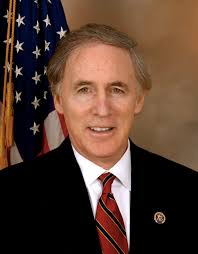
Rep. Cliff Stearns
He did so by demanding that they submit their names, birthplaces, addresses, government ID numbers and other personal data to the FBI to prove they were not terrorists.
Only then could they receive federally-subsidized medical care for injuries caused by exposure to toxic dust and debris at the site.
Not one terrorist was discovered in the resulting investigations.
Public outrage at Komen was immediate and overwhelming:
- More than 50 members of Congress signed letters asking Komen to reverse course.
- New York City Mayor Michael Bloomberg publicly rebuked Komen and pledged $250,000 to PP.
- Approximately 37,000 people from all over the country signed a petition demanding Handel’s resignation.
- PP raised nearly $3 million in contributions.
Reeling before this onslaught of criticism, Komen issued a statement: “We will continue to fund existing grants, including those of Planned Parenthood, and preserve their eligibility to apply for future grants.”
Having failed in their latest assault on women’s rights, the Right’s would-be predators now portrayed themselves as victims:
- “The last time I checked,” Handel told Right-wing Fox News, “private non-profit organizations have a right and a responsibility to be able to set the highest standards and criteria on their own without interference, let alone the level of vicious attacks and coercion that has occurred by Planned Parenthood. It’s simply outrageous.”
- “Planned Parenthood campaigns to destroy anyone who questions them,” charged Marjorie Dannenfelser, president of the anti-abortion Susan B. Anthony List.
- “Their attitude is that of an immature teenager with an enormous sense of entitlement. This is just more proof that Planned Parenthood will pulverize anyone who dares to question them,” Dannenfelser said.
- “What Planned Parenthood did to that venerable and honorable organization [Komen Foundation] is nothing less than a Mafia-style shakedown,” said Steven H. Aden, senior counsel for the Alliance Defense Fund. The Fund bitterly opposes abortion, gay marriage, birth control and the separation of church and state.
Many conservatives correctly defended Komen’s right, as a private charitable organization, to give—or withhold—its money as it saw fit.
But these same conservatives refused to grant PP’s outraged supporters the same right: To withhold their own monies from Komen.
National Review’s Daniel Foster called the backlash to Komen “disgusting,” attacking PP and “the Left” for their “gangsterism.”
Story #2:
Two years later, in 2014, the Right made another move to strip Americans it didn’t like of their most basic rights. Their weapon of choice: Arizona Senate Bill 1062.
The legislation had been passed by the Republican-controlled State House of Representatives and Senate. Its intent:
- Allow business owners to turn away gay and lesbian customers.
- Allow employers to deny equal pay to women.
- Allow individuals to renege on contract obligations.
- Allow hospitals to refuse to provide medical care to a gay or lesbian patient.
And all of these actions would have been legally protected—so long as “sincere religious belief” was cited as the reason.
The legislation was written by the Right-wing advocacy group Center for Arizona Policy and the Christian legal organization, Alliance Defending Freedom.
Officially, its intent was to prevent the government from forcing business owners to act in ways contrary to strongly held religious beliefs.
Unofficially, its intent was to appease the hatred of gays and lesbians by the religious Right, a key constituency of the Republican party.
Gays and their supporters reacted by threatening a legal business and tourism boycott of Arizona. And the business community and its supporters, alarmed, took notice.
2016 PRESIDENTIAL RACE, ABC NEWS, ADOLF HITLER, ALTERNET, AMERICABLOG, AP, BABY BOOMER RESISTANCE, BBC, BLOOMBERG NEWS, BUZZFEED, CBS NEWS, CNN, CROOKS AND LIARS, DAILY KOS, DAILY KOZ, DAVID BROOKS, DONALD TRUMP, DRUDGE REPORT, EDUARDO "TED" CRUZ, FACEBOOK, FIVETHIRTYEIGHT, FOX NEWS, HARPER’S MAGAZINE, HEINZ GUDERIAN, HUFFINGTON POST, MARK SHIELDS, MEDIA MATTERS, MEGYN KELLY, MOTHER JONES, MOVEON, MSNBC, NBC NEWS, NEW REPUBLIC, NEWSDAY, NEWSWEEK, NPR, PBS NEWSHOUR, POLITICO, POLITICUSUSA, RAW STORY, REPUBLICANS, REUTERS, ROBERT PAYNE, SALON, SEATTLE TIMES, SLATE, TALKING POINTS MEMO, THE ATLANTIC, THE CHICAGO SUN-TIMES, THE CHICAGO TRIBUNE, THE DAILY BEAST, THE DAILY BLOG, THE GUARDIAN, THE HILL, THE HUFFINGTON POST, THE LIFE AND DEATH OF ADOLF HITLER, THE LOS ANGELES TIMES, THE NATION, THE NEW REPUBLIC, THE NEW YORK TIMES, THE NEW YORKER, THE VILLAGE VOICE, THE WASHINGTON POST, THINKPROGRESS, TIME, TRUTHDIG, TRUTHOUT, TWITTER, TWO POLITICAL JUNKIES, U.S. NEWS & WORLD REPORT, UPI, USA TODAY, WOMEN, WONKETTE
In Bureaucracy, History, Politics, Social commentary, Uncategorized on March 30, 2021 at 12:06 am
Syndicated columnist Mark Shields and New York Times columnist David Brooks appeared every Friday on the PBS Newshour to review the week’s major political events.
On March 25, 2016, Shields—a liberal, and Brooks, a conservative—came to some disturbingly similar conclusions about Donald Trump.
Eerily, their conclusions echoed those reached by former Panzer General Heinz Guderian about German dictator Adolf Hitler.
Guderian created the concept of motorized blitzkrieg warfare, whereby masses of tanks and planes moved in coordination to strike at the vital nerve centers of an enemy.

Heinz Guderian
Guderian thus enabled Hitler to conquer France in only six weeks in 1940, and to come to the brink of crushing the Soviet Union in 1941. He recounted his career as the foremost tank commander of the Third Reich in his 1950 autobiography, Panzer Leader.
On the PBS Newshour, moderator Judy Woodruff noted that “polls show Trump’s standing with women voters had worsened in recent months.”
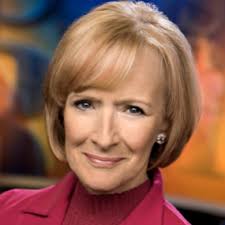
Judy Woodruff
Mark Shields noted that Trump clearly had an obsession with Fox News Correspondent Megyn Kelly.
MARK SHIELDS: “But there is something really creepy about this that’s beyond locker room. It’s almost like a stalker….It actually did the impossible. It made Ted Cruz look like an honorable, tough guy on the right side of an issue.”
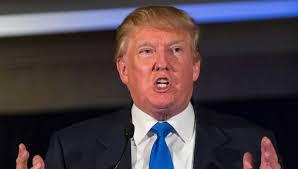
Donald Trump
HEINZ GUDERIAN: Once in power, Hitler quickly—and violently—eliminated his opposition. He make no attempt to disguise this aspect of his character, because the opposition was weak and divided and soon collapsed after the first violent attack. This allowed Hitler to pass laws which destroyed the safeguards enacted by the Weimar Republic against the dangers of dictatorship.
MARK SHIELDS: “And I don’t know at what point it becomes…politically, he’s still leading. And I would have to say he’s the overwhelming favorite for the Republican nomination.”
HEINZ GUDERIAN: Hitler promised to “make Germany great again” both domestically and internationally. And this won him many followers. In time he controlled the largest party in the land and this allowed him, by democratic procedure, to assume power.
DAVID BROOKS: “The odd thing about [Trump’s] whole career and his whole language, his whole world view is there is no room for love in it. You get a sense of a man who received no love, can give no love, so his relationship with women, it has no love in it. It’s trophy.”
HEINZ GUDERIAN: [Hitler] was isolated as a human being. He had no real friend. There was nobody who was really close to him.
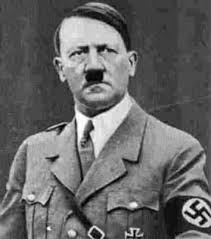
Adolf Hitler
There was nobody he could talk to freely and openly. And just as he never found a true friend, he was denied the ability to deeply love a woman.
DAVID BROOKS: “And [Trump’s] relationship toward the world is one of competition and beating, and as if he’s going to win by competition what other people get by love.”
HEINZ GUDERIAN: Everything on this earth that casts a glow of warmth over our life as mortals–friendship with fine men, the pure love for a wife, affection for one’s own children–all this was and forever remained unknown to him.
DAVID BROOKS: “And so you really are seeing someone who just has an odd psychology unleavened by kindness and charity, but where it’s all winners and losers, beating and being beat. And that’s part of the authoritarian personality, but it comes out in his attitude towards women.”
HEINZ GUDERIAN: He lived alone, cherishing his loneliness, with only his gigantic plans for company. His relationship with Eva Braun may seem to contradict what I have written. But it is obvious that she could not have had any influence over him. And this is unfortunate, for it could only have been a softening one.
* * * * *
In his bestselling 1973 biography, The Life and Death of Adolf Hitler, British historian Robert Payne harshly condemned the German people for the rise of the Nazi dictator:
“[They] allowed themselves to be seduced by him and came to enjoy the experience….[They] followed him with joy and enthusiasm because he gave them license to pillage and murder to their hearts’ content. They were his servile accomplices, his willing victims.”
On November 8, almost 63 million ignorant, hate-filled, Fascistic Americans catapulted Donald Trump—a man with an “odd psychology unleavened by kindness and charity”—into the Presidency.
On November 3, 2020, 75 million equally ignorant, hate-filled, Fascistic Americans voted to give Trump another four years in office. This despite his ignoring the ravages of the COVID-19 pandemic and alienating America’s longtime allies like England and Canada while clearly showing preference for its mortal enemies like Russia and North Korea.
Future historians will similarly and harshly condemn those Americans who, like “good Germans,” joyfully embraced a regime dedicated to
- Lies
- Censorship
- Celebrating Trump’s egomania,
- Depriving America’s poor of their only source of healthcare
- Further enriching the ultra-wealthy and
- Threatening the use of force against those who desired to live as citizens in a republic, instead of a dictatorship..
Fortunately, 80 million Americans braved the COVID-19 pandemic and efforts by Republicans to overturn their voting rights—and elected Joseph Biden President of the United States.
2016 PRESIDENTIAL RACE, ABC NEWS, ADOLF HITLER, ALTERNET, AMERICABLOG, AP, BABY BOOMER RESISTANCE, BBC, BLOOMBERG NEWS, BUZZFEED, CBS NEWS, CNN, CROOKS AND LIARS, DAILY KOS, DAILY KOZ, DAVID BROOKS, DONALD TRUMP, DRUDGE REPORT, EDUARDO "TED" CRUZ, FACEBOOK, FIVETHIRTYEIGHT, FOX NEWS, HARPER’S MAGAZINE, HEINZ GUDERIAN, HUFFINGTON POST, MARK SHIELDS, MEDIA MATTERS, MEGYN KELLY, MOTHER JONES, MOVEON, MSNBC, NBC NEWS, NEW REPUBLIC, NEWSDAY, NEWSWEEK, NPR, PBS NEWSHOUR, POLITICO, POLITICUSUSA, RAW STORY, REPUBLICANS, REUTERS, ROBERT PAYNE, SALON, SEATTLE TIMES, SLATE, TALKING POINTS MEMO, THE ATLANTIC, THE CHICAGO SUN-TIMES, THE CHICAGO TRIBUNE, THE DAILY BEAST, THE DAILY BLOG, THE GUARDIAN, THE HILL, THE HUFFINGTON POST, THE LIFE AND DEATH OF ADOLF HITLER, THE LOS ANGELES TIMES, THE NATION, THE NEW REPUBLIC, THE NEW YORK TIMES, THE NEW YORKER, THE VILLAGE VOICE, THE WASHINGTON POST, THINKPROGRESS, TIME, TRUTHDIG, TRUTHOUT, TWITTER, TWO POLITICAL JUNKIES, U.S. NEWS & WORLD REPORT, UPI, USA TODAY, WOMEN, WONKETTE
In Bureaucracy, History, Military, Politics, Social commentary, Uncategorized on March 29, 2021 at 12:14 am
Less than one week after Donald Trump became President of the United States, many of those who voted for him came to regret their decision.
A new Twitter account emerged to voice their rage and disappointment: Trump_Regrets. By March 20, 2021, it had acquired more than 284,000 followers.
Yet many of Trump’s behaviors–his egomania and vindictiveness, his plans to gut the Affordable Care Act and give tax breaks to the wealthy—were known long before the 2016 election.
Among those who discussed them: Syndicated columnist Mark Shields and New York Times columnist David Brooks, who appeared every Friday on the PBS Newshour to review the week’s major political events.
On March 25, 2016, Shields—a liberal, and Brooks, a conservative—came to some disturbingly similar conclusions about the character of Trump, then the Republican Presidential front-runner.

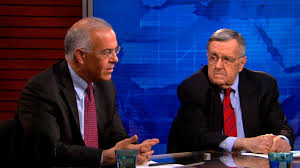
David Brooks and Mark Shields
Eerily, their conclusions echoed those reached by former Panzer General Heinz Guderian about the character of German dictator Adolf Hitler.
Guderian created the concept of motorized blitzkrieg warfare, whereby masses of tanks and planes moved in coordination to strike at the vital nerve centers of an enemy.
As a result, Guderian enabled Hitler to conquer France in only six weeks in 1940, and to come to the brink of crushing the Soviet Union in 1941. He recounted his career as the foremost tank commander of the Third Reich in his 1950 autobiography, Panzer Leader.

Heinz Guderian
Bundesarchiv, Bild 101I-139-1112-17 / Knobloch, Ludwig / CC-BY-SA [CC BY-SA 3.0 de (https://creativecommons.org/licenses/by-sa/3.0/de/deed.en)%5D, via Wikimedia Commons
Moderator Judy Woodruff opened the discussion by alluding to the blood feud then raging between Trump and his fellow Republican, Texas United States Senator Rafael Eduardo “Ted” Cruz.
Both were ruthlessly seeking their party’s Presidential nomination.
Cruz accused Trump of being behind a recent National Enquirer story charging him with having a series of extramarital affairs.
An anti-Trump Super PAC posted on Facebook a photo of a scantily-clad Melania Trump–his wife. The photo had been taken 16 years ago when, as a model, she posed for British GQ.
Its publication came just ahead of the primary caucuses in sexually conservative Utah, which Cruz won.
Trump quickly responded on Twitter, accusing the Cruz campaign of leaking the photo, warning Cruz: “Be careful or I will spill the beans on your wife.”
Cruz struck back, defending his wife, Heidi, and calling Trump a coward. The next day, Trump retweeted an unflattering image of Mrs. Cruz.

Rafael Eduardo “Ted” Cruz.
This “war of the wives” had cost Trump dearly in his standing with American women. In March, 2016, a Washington Post/ABC News poll showed that 64% of women felt highly unfavorably disposed toward him.
DAVID BROOKS: “The Trump comparison of the looks of the wives, he does have, over the course of his life, a consistent misogynistic view of women as arm candy, as pieces of meat.
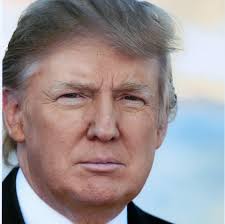
Donald Trump
“It’s a consistent attitude toward women which is the stuff of a diseased adolescent. And so we have seen a bit of that show up again.
“But if you go back over his past, calling into radio shows bragging about his affairs, talking about his sex life in public, he is childish in his immaturity. And his—even his misogyny is a childish misogyny….
“He’s of a different order than your normal candidate. And this whole week is just another reminder of that.”
HEINZ GUDERIAN: As Hitler’s self-confidence grew, and as his power became more firmly established both inside and outside Germany, he became overbearing and arrogant. Everyone appeared to him unimportant compared to himself.
Previously, Hitler had been open to practical considerations, and willing to discuss matters with others. But now he became increasingly autocratic.
Judy Woodruff asked Mark Shields if the uproar over Donald Trump’s disdain for women could really hurt his candidacy.
MARK SHIELDS: The ad featuring a scantily-clad Melania Trump “elicited from Donald Trump the worst of his personality, the bullying, the misogyny, as David has said, brought it out.
“But I think it’s more than childish and juvenile and adolescent. There is something creepy about this, his attitude toward women.
“Take Megyn Kelly of FOX News, who he just has an absolute obsession about, and he’s constantly writing about, you know, how awful she is and no talent and this and that.
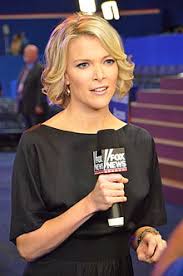
Megyn Kelly
“And I don’t know if he’s just never had women—strong, independent women in his life who have spoken to him. It doesn’t seem that way….
“She just asked him tough questions and was totally fair, by everybody else’s standards.”
HEINZ GUDERIAN: Hitler’s most outstanding quality was his will power. It was by this that he compelled men to follow him. When Hitler spoke to a small group he closely observed each person to determine how his words were affecting each man present.
If he noticed that some member of the group was not being swayed by his speech, he spoke directly to that person until he believed he had won him over. But if the target of his persuasive effort still remained obstinate, Hitler would exclaim: “I haven’t convinced that man!”
His immediate reaction was to get rid of such people. As he grew increasingly successful, he grew increasingly intolerant.
ABC NEWS, ALTERNET, ALVARO OBREGON, AMERICABLOG, ANCHOR BABIES, AP, BABY BOOMER RESISTANCE, BBC, BLOOMBERG NEWS, BUZZFEED, CBS NEWS, CNN, CORRUPTION, CROOKS AND LIARS, DAILY KOS, DAILY KOZ, DONALD TRUMP, DRUDGE REPORT, EMILIANO ZAPATA, FACEBOOK, FELIPE CALDERON, FIVETHIRTYEIGHT, HARPER’S MAGAZINE, HUFFINGTON POST, ILLEGAL ALIENS, illegal immigration, MEDIA MATTERS, MEXICAN REVOLUTION, MEXICO, MIGRANT CARRAVAN, MOTHER JONES, MOVEON, MSNBC, NBC NEWS, NEW REPUBLIC, NEWSDAY, NEWSWEEK, NPR, PANCHO VILLA, PBS NEWSHOUR, POLITICO, POLITICUSUSA, RACIAL PROFILING, RAW STORY, REUTERS, SALON, SEATTLE TIMES, SLATE, TALKING POINTS MEMO, THE ATLANTIC, THE CHICAGO SUN-TIMES, THE CHICAGO TRIBUNE, THE DAILY BEAST, THE DAILY BLOG, THE GUARDIAN, THE HILL, THE HUFFINGTON POST, THE LOS ANGELES TIMES, THE NATION, THE NEW REPUBLIC, THE NEW YORK TIMES, THE NEW YORKER, THE VILLAGE VOICE, THE WALL STREET JOURNAL, THE WASHINGTON POST, THINKPROGRESS, TIJUANA, TIME, TRUTHDIG, TRUTHOUT, TWITTER, TWO POLITICAL JUNKIES, U.S. NEWS & WORLD REPORT, UPI, USA TODAY, VENUSTIANO CARRANZA, WONKETTE
In Bureaucracy, History, Law, Law Enforcement, Politics, Social commentary on March 23, 2021 at 12:21 am
On May 20, 2010, Mexico’s then-President Felipe Calderon addressed a joint session of the United States Congress—and attacked a recently-enacted Arizona law that allowed law enforcement officials to detain anyone suspected of being in the country illegally.
According to Calderon, the law “introduces a terrible idea: using racial profiling as a basis for law enforcement.
“I have said that Mexico does not stop at its border, that wherever there is a Mexican, there is Mexico.”
The hypocrisy of Calderon’s words was staggering. He was condemning the United States for doing what Mexico itself has long done: Strictly enforcing control of its own borders.

Felipe Calderon
World Economic ForumCopyright by World Economic Forum / Photo by Remy Steinegger
Mexico has a single, streamlined law that ensures that foreign visitors and immigrants are:
- In the country legally;
- Have the means to sustain themselves economically;
- Not destined to be burdens on society;
- Of economic and social benefit to society;
- Of good character and have no criminal records; and
- Contribute to the general well-being of the nation.
The law also ensures that:
- Immigration authorities have a record of each foreign visitor;
- Foreign visitors do not violate their visa status;
- Foreign visitors are banned from interfering in the country’s internal politics;
- Foreign visitors who enter under false pretenses are imprisoned or deported;
- Foreign visitors violating the terms of their entry are imprisoned or deported;
- Those who aid in illegal immigration are sent to prison.
Only eight years after Calderon demanded that Americans repeal their immigration laws, Mexicans suddenly discovered that “illegal alien” was no longer a dirty phrase.
On October 13, 2018, a caravan of at least 5,000 men, women and children from El Salvador, Guatemala and Honduras set out for the United States.
On October 18, President Donald Trump closed the U.S.-Mexico border to keep the caravan from entering the country.
By November 19, migrants had begun piling up in Tijuana, which borders San Diego.
And that’s when Tijuana residents began carrying signs reading “No illegals,” “No to the invasion” and “Mexico First.” And marching in the streets wearing Mexico’s red, white and green national soccer jersey and vigorously waving Mexican flags.
“We want the caravan to go; they are invading us,” said Patricia Reyes, a 62-year-old protester. “They should have come into Mexico correctly, legally, but they came in like animals.”
The El Paso Times noted the resentment of many Mexicans toward the increasing numbers of Cuban illegal aliens in Juarez, which lies across from El Paso.
“They don’t get along with Mexican people,” said a burrito seller. “They get in a little group by themselves. A lot of people don’t like them here.”
And a business consultant complained, “There are people who are coming looking for a handout, who want us to help them, when they could also look for work.”
Over the weekend of October 12-13, 2019, a National Guard commander addressed his platoon before confronting the latest caravan: “No one will come to trample our country, our land!”
In the past, Mexicans comprised the largest group of illegal aliens entering the United States. But the Mexican economy has grown and developed to the point where fewer people see the need to emigrate.
So most illegals are mostly from Guatemala, Honduras, and El Salvador. And there are growing numbers from Haiti, Cuba, various African countries, and even the Middle East.
During the first eight months of 2019, the number of asylum applications submitted to Mexico’s refugee agency (COMAR) more than tripled, compared to the same period in 2018. As a result, the refugee agency has removed the how-to-apply video it once hosted on its website.
In the past, the Mexican Government refused to halt illegal immigration to the United States.
It remembered the bloody upheaval known as the Mexican Revolution. This lasted 10 years (1910-1920) and wiped out an estimated one to two million men, women and children.
Massacres were common on all sides, with men shot by the hundreds in bullrings or hung by the dozen on trees.
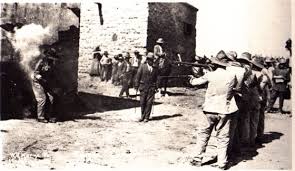
A Mexican Revolution firing squad
All of the major leaders of the Revolution—Francisco Madero, Emiliano Zapata, Venustiano Carranza, Francisco “Pancho” Villa, Alvaro Obregon—died in a hail of bullets.

Francisco “Pancho” Villa
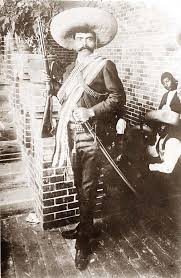
Emiliano Zapata
As a result, every successive Mexican Government lived in the shadow of another such wholesale bloodletting. These officials quietly decided to turn the United States border into a safety valve.
* * * * *
Who says that everyone who wants to live in the United States has the right to do so?
No other nation has ever allowed itself to become a dumping ground for the world’s unwanteds. And no law—religious or secular—obligates the United States to do so.
An “open door” policy proved essential 200 years ago, when most of America was unsettled and largely unpopulated.
But the United States is no longer a largely unpopulated, agricultural country. Most of its population lives in coastal cities–which is where most illegal aliens tend to settle as well.
Space is limited in schools, hospitals and housing, and the more people who cram into limited spaces, the more frictions they inevitably create.
As native-born Mexicans are angrily finding out.


ABC NEWS, ABORTION, ADOLF HITLER, ALBERT SPEER, ALTERNET, AMERICABLOG, AMERICAN TALIBAN (BOOK), AP, BABY BOOMER RESISTANCE, BBC, BLOOMBERG NEWS, BUZZFEED, CBS NEWS, CNN, CROOKS AND LIARS, DAILY KOS, DINESH D'SOUZA, FBI, FIVETHIRTYEIGHT, HARPER’S MAGAZINE, HOMELAND SECURITY, HOMOSEXUALITY, HUFFINGTON POST, ISLAM, JIHADISTS, MARKOS MOULITSAS, MEDIA MATTERS, MOTHER JONES, MOVEON, MSNBC, MUSLIMS, NAZI GERMANY, NBC NEWS, NEW REPUBLIC, NEWSDAY, NEWSWEEK, NPR, PBS NEWSHOUR, POLITICO, POLITICUSUSA, RAW STORY, REPUBLICANS, REUTERS, RIGHT-WING EXTREMISTS, SALON, SEATTLE TIMES, SLATE, TALIBAN, TALKING POINTS MEMO, TERRORISM, THE ATLANTIC, THE CHICAGO SUN-TIMES, THE CHICAGO TRIBUNE, THE DAILY BEAST, THE DAILY BLOG, THE ENEMY AT HOME (BOOK), THE GUARDIAN, THE HILL, THE HUFFINGTON POST, THE LOS ANGELES TIMES, THE NATION, THE NEW REPUBLIC, THE NEW YORK TIMES, THE NEW YORKER, THE VILLAGE VOICE, THE WASHINGTON POST, THINKPROGRESS, TIME, TRUTHDIG, TRUTHOUT, TWO POLITICAL JUNKIES, U.S. NEWS & WORLD REPORT, UPI, USA TODAY, WONKETTE, X
AMERICA–LIKE AFGHANISTAN–HAS ITS OWN TALIBAN: PART FOUR (END)
In Bureaucracy, History, Politics, Social commentary on September 10, 2021 at 12:10 amOn April 15, 2015, CBS News broke a truly sensational and disturbing story:
Agents from the FBI and Department of Homeland Security (DHS) were investigating the online leak of home addresses of senior and former officials of the FBI, DHS and other Federal law enforcement agencies.
Even worse: Rather than Islamic terrorists being the culprits, the suspects were believed to be members of an American Right-wing extremist group.
The message was entitled: DHS-CIA-FBI TRAITORS HOME ADDRESSES.
It read: “LET THESE EVIL NWO SATANISTS KNOW THAT THERE WILL BE HELL TO PAY FOR THEIR 911 TREASON, AND THEIR FUTURE FEMA CAMP PLANNED PUBLIC CRACKDOWN TREASON ALSO
“JESUS IS LORD, AND THE PUBLIC IS IN CHARGE, NOT THESE SATANIC NWO STOOGES”
“NWO” could be an acronym for “New World Order,” a term used by conspiracy theorists to refer to a totalitarian world government.
In a statement, DHS said:
“The safety of our workforce is always a primary concern. DHS has notified employees who were identified in the posting and encouraged them to be vigilant. DHS will adjust security measures, as appropriate, to protect our employees.”
CBS did not say where the information was posted.
Click here: Right-Wing Group Blamed In Leak Of U.S. Officials’ Home Addresses: Report
Six years later, a check of Google stories about this crime shows no updates released by the government.
Americans shouldn’t be shocked to find that a Right-wing group betrayed the safety of its fellow Americans.
The goals of both the American Right and Islamic terrorist groups such as the Taliban actually share much in common:
A 2010 book, American Taliban: How War, Sex, Sin, and Power Bind Jihadists and the Radical Right, vividly documents the similarities between these two groups.
Its author is Markos Moulitsas, founder of Daily Kos, an American political blog that publishes news and opinions from a liberal viewpoint.
American Taliban opens with this provocative statement:
“Yes, the Republican party, and the entire modern conservative movement is, in fact, very much like the Taliban.
“In their tactics and on the issues, our homegrown American Taliban are almost indistinguishable from the Afghan Taliban.
“The American Taliban—whether in their militaristic zeal, their brute faith in masculinity, their disdain for women’s rights, their outright hatred of gays, their aversion to science and modernity or their staunch anti-intellectualism—share a litany of mores, values, and tactics with Islamic extremists….
“Let’s be honest, the freedoms that jihadists hate are the very same freedoms that our own homegrown repressive ideologues hate: freedom of thought, of inquiry, of lifestyle.”
Its subsequent chapters document the all-consuming rage of the American Right to brutally control the lives of their fellow citizens.
Ironically, Moulitsas’ thesis is—unintentionally—supported by no less an authority than Right-wing author Dinesh D’Souza.
Dinesh D’Souza
Gage Skidmore, CC BY-SA 3.0 <https://creativecommons.org/licenses/by-sa/3.0>, via Wikimedia Commons
Among the bestsellers D’Souza has written: Ronald Reagan: How an Ordinary Man Became an Extraordinary Leader, and Obama’s America: Unmaking the American Dream.
The title of his 2008 bestseller sums up D’Souza’s take on liberalism: The Enemy At Home: The Cultural Left and Its Responsibility for 9/11.
From the book’s dust jacket:
“Muslims and other traditional people around the world allege that secular American values are being imposed on their societies and that these values undermine religious belief, weaken the traditional family, and corrupt the innocence of children.
“But it is not ‘America’ that is doing this to them, it is the American cultural left. What traditional societies consider repulsive and immoral, the cultural left considers progressive and liberating….
“D’Souza argues that the war on terror is really a war for the hearts and minds of traditional Muslims—and traditional peoples everywhere. The only way to win the struggle with radical Islam is to convince traditional Muslims that America is on their side.”
In short: America needs to adopt the values of the Taliban.
* * * * *
On March 19, 1945, facing certain defeat, Adolf Hitler ordered a massive “scorched-earth” campaign throughout Germany.
All German agriculture, industry, ships, communications, roads, food stuffs, mines, bridges, stores and utility plants were to be destroyed.
If implemented, it would deprive the entire German population of even the barest necessities after the war.
Adolf Hitler addressing boy soldiers as the Third Reich crumbles
“If the war is lost,” Hitler told Albert Speer, his former architect and now Minister of Armaments, “the nation will also perish.
“This fate is inevitable. There is no necessity to take into consideration the basis which the people will need to continue even a most primitive existence.
“On the contrary, it will be better to destroy these things ourselves, because this nation will have proved to be the weaker one and the future will belong solely to the stronger eastern nation.
“Besides, those who will remain after the battle are only the inferior ones, for the good ones have all been killed.”
Hitler’s view was: “If I can’t rule Germany, there won’t be a Germany.”
Apparently, some members of the American Right have reached the same decision about the United States.
Share this: