Posts Tagged ‘BLOOMBERG’
2020 PRESIDENTIAL ELECTION, ABC NEWS, ABRAHAM LINCOLN, ADAM SCHIFF, ALEXANDER VINDMAN, ALTERNET, AMERICABLOG, AP, BABY BOOMER RESISTANCE, BLOOMBERG, BUZZFEED, CBS NEWS, CNN, CROOKS AND LIARS, DAILY KOZ, DAVID BROOKS, DEMOCRATS, DONALD TRUMP, DRUDGE RETORT, FACEBOOK, FIVETHIRTYEIGHT, FOX NEWS NETWORK, GERRYMANDERING, HARPER’S MAGAZINE, HOUSE INTELLIGENCE COMMITTEE, HOWARD BAKER, HUNTER BIDEN, JOE BIDEN, JOEL MATHIS, LYNDON JOHNSON, MARIA YOVANOVICH, MARK SHIELDS, MEDIA MATTERS, MEDICAID, MICK MULVANEY, MOTHER JONES, MOVEON, MSNBC, NATIONAL SECURITY COUNCIL, NBC NEWS, NEWSWEEK, NPR, PBS NEWSHOUR, POLITICO, POLITICUSUSA, RAW STORY, REPUBLICANS, REUTERS, RICHARD NIXON, RUDI GIULIANI, RUSSIA, SALON, SEATTLE TIMES, SLATE, TALKING POINTS MEMO, THE ATLANTIC, THE CHICAGO SUN-TIMES, THE CHICAGO TRIBUNE, THE DAILY BEAST, THE DAILY BLOG, THE GUARDIAN, THE HILL, THE HUFFINGTON POST, THE LOS ANGELES TIMES, THE NATION, THE NEW REPUBLIC, THE NEW YORK TIMES, THE VILLAGE VOICE, THE WASHINGTON POST, THINKPROGRESS, TIME, TRUTHDIG, TRUTHOUT, TWITTER, TWO POLITICAL JUNKIES, U.S. NEWS & WORLD REPORT, UKRAINE, UPI, USA TODAY, VOLODYMYR ZELENSKY, VOTER ID LAWS, WATERGATE, WONKETTE
In Bureaucracy, History, Law, Law Enforcement, Military, Politics, Social commentary on March 21, 2022 at 12:13 am
On November 14, 2019, the CNN website showcased an opinion piece by Jane Carr and Laura Juncadella entitled: “Fractured States of America.”
And it opened:
“Some worry that it’s already too late, that we’ve crossed a threshold of polarization from which there is no return. Others look toward a future where more moderate voices are heeded and heard, and Americans can find better ways to relate to each other. Still others look back to history for a guide—perhaps for what not to do, or at the very least for proof that while it’s been bad before, progress is still possible.”
A series of sub-headlines summed up many of the comments reported.
- “I was starting to hate people that I have loved for years.”
- “Voting for Trump cost me my friends.”
- “I feel like I’m living in hostile territory.”
- “Our children are watching this bloodsport.”
- “A student’s Nazi-style salute reflects the mate.”
- “Our leaders reflect the worst of us.”
- “I truly believe I will be assaulted over a bumper sticker.”
- “It already feels like a cold war.”
It’s natural to regret that the United States has become so self-destructively polarized. And to wish that its citizens could somehow reach across the chasm that divides them and find common cause with one another.
But that is to ignore the brutal truth that America now faces a choice:
- To submit to the tyrannical aggression of a ruthless political party convinced that they are entitled to power to manipulate and undermine the country’s democratic processes; or
- To fiercely resist that aggression and the destruction of those democratic processes.
Consider the face-off between President Donald J. Trump and Army Lt. Colonel Alexander Vindman.
Vindman is a retired United States Army officer who served as the Director for European Affairs for the United States National Security Council. He was also a witness to Trump’s efforts to extort “a favor” from the president of Ukraine.
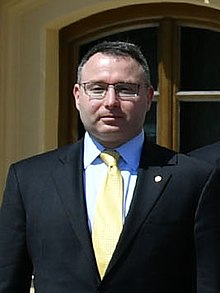
Lt. Colonel Alexander Vindman
Адміністрація Президента України [CC BY 4.0 (https://creativecommons.org/licenses/by/4.0)%5D
In July, 2019, Trump told his acting chief of staff, Mick Mulvaney, to withhold almost $400 million in promised military aid for Ukraine, which faced increasing aggression from Russia.
On July 25, Trump telephoned Ukrainian President Volodymyr Zelensky to “request” a “favor”: Investigate 2020 Democratic Presidential Candidate Joe Biden and his son, Hunter, who has had business dealings in Ukraine.
The reason for such an investigation: To find embarrassing “dirt” on Biden.
It was clear that unless Zelensky found “dirt” on Biden, the promised aid would not be forthcoming.
“I was concerned by the call,” Vindman, who had heard Trump’s phone call, testified before the House Intelligence Committee. “I did not think it was proper to demand that a foreign government investigate a U.S. citizen, and I was worried about the implications for the U.S. Government’s support of Ukraine.
“I realized that if Ukraine pursued an investigation into the Bidens and Burisma, it would likely be interpreted as a partisan play which would undoubtedly result in Ukraine losing the bipartisan support it has thus far maintained. This would all undermine U.S. national security.”
Trump denounced Vindman as a “Never Trumper”—as if opposing his extortion attempt constituted a blasphemy. Republicans and their shills on the Fox News Network attacked him as well. As a result, he sought physical protection by the Army for himself and his family.
(On February 7, 2020, he was reassigned from the National Security Council at Trump’s order.)
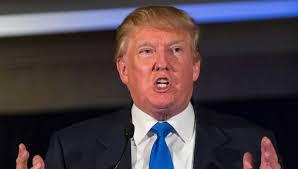
Donald Trump
On November 15, 2019, conservative New York Times columnist David Brooks and liberal syndicated columnist Mark Shields appeared on The PBS Newshour to offer their reactions by Republicans and Democrats to Trump’s extortion attempt.
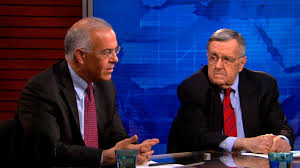
David Brooks and Mark Shields on “The PBS Newshour”
DAVID BROOKS: “The case is very solid and airtight that there was the quid pro quo. All the testimony points to that. And, mostly, you see a contrast. The first two gentlemen that testified on the first day, they were just upstanding, solid public servants.
“I felt like I was looking back in time, because I was looking at two people who are not self-centered. They cared about the country. They were serving. They had no partisan ax to grind. They were just honest men of integrity.
“And I thought we saw that again today with [former Ambassador to Ukraine] Marie Yovanovitch. And in her case, the day was more emotional, because you got to see a case of bullying against a strong, upstanding woman.
“And so I thought she expressed—like, the heavy moments of today where when she expressed her reaction to how badly she was treated. And so that introduces an element of emotion and pathos into what shouldn’t be just a legal proceeding. It should be something where people see the contrast between good people and bad people.”
MARK SHIELDS: “This is a story of corruption, corruption not in Ukraine, corruption in the United States.
“I mean, why? Why did they go to such lengths to denigrate, to attack, to try and destroy and sabotage the career of a dedicated public servant [United States Ambassador to Ukraine Marie Yovanovich], a person who had put her life on the line? Why did they do it? What was it, money? Was it power?”
ABC NEWS, ALTERNET, AMERICABLOG, AP, “EL CID” (MOVIE, BABY BOOMER RESISTANCE, BBC, BLOOMBERG, BLOOMBERG NEWS, BUZZFEED, CAMILLUS, CBS NEWS, CHARLTON HESTON, CHRISTOPHER SWANSON, CNN, CROOKS AND LIARS, DAILY KOZ, DEREK CHAUVIN, DONALD TRUMP, DRUDGE RETORT, FACEBOOK, FIVETHIRTYEIGHT, FLINT TOWNSHIP, GEORGE FLOYD, HARPER’S MAGAZINE, HUFFINGTON POST, LOS ANGELES, MARCUS FURIUS, MEDIA MATTERS, MOORS, MOTHER JONES, MOVEON, MSNBC, NBC NEWS, NEW REPUBLIC, NEW YORK CITY, NEWSDAY, NEWSWEEK, NICCOLO MACHIAVELLI, NPR, PBS NEWSHOUR, POLITICO, POLITICUSUSA, RAW STORY, REUTERS, RODRIGO DIAZ DE VIVAR, SALON, SAN FRANCISCO, SEATTLE TIMES, SLATE, SPAIN, ST. JOHN’S CHURCH, TALKING POINTS MEMO, THE ATLANTIC, THE CHICAGO SUN-TIMES, THE CHICAGO TRIBUNE, THE DAILY BEAST, THE DAILY BLOG, THE DISCOURSES, THE GUARDIAN, THE HILL, THE HUFFINGTON POST, THE INTERCEPT, THE LOS ANGELES TIMES, THE NATION, THE NEW REPUBLIC, THE NEW YORK TIMES, THE NEW YORKER, THE VILLAGE VOICE, THE WASHINGTON POST, THINKPROGRESS, TIME, TRUTHDIG, TRUTHOUT, TWITTER, TWO POLITICAL JUNKIES, U.S. NEWS & WORLD REPORT, UPI, USA TODAY, VALENCIA, WONKETTE
In Bureaucracy, History, Law, Law Enforcement, Politics, Social commentary on March 17, 2022 at 12:17 am
Two stories—one fictitious, the other historical.
Story #1: In the 1961 historical epic, “El Cid,” Rodrigo Diaz de Vivar, known as “The Lord,” besieges the Spanish city of Valencia, which has been captured by the Moors.
Months have passed. The city’s population is starving and without hope.
Then, one day, El Cid (Charlton Heston) calls out over the city’s walls: “Soldiers and citizens of Valencia! We are not your enemy! Ben Yusof [the powerful emir who plans to conquer Spain with an invading army] is your enemy!
“Join us! We bring you peace! We bring you freedom! We bring you bread!”

Suddenly El Cid’s Spanish catapults spring into action—loaded not with stones but loaves of bread. The loaves land in the city’s streets, where starving citizens and soldiers greedily devour them.
Then those citizens attack the bodyguards of the emir ruling Valencia—and throw the emir himself from a high wall.
The army of El Cid marches peacefully into the city.
Story #2: In Book Three, Chapter 22 of his classic masterwork, The Discourses, Niccolo Machiavelli offers the following: “An Act of Humanity Prevailed More With the Falacians Than All the Power of Rome.”
Marcus Furius Camillus, a Roman general, was besieging the city of the Faliscians, and had surrounded it. A teacher charged with the education of the children of some of the noblest families of that city decided to ingratiate himself with Camillus by leading those children into the Roman camp.
Presenting them to Camillus the teacher said to him, “By means of these children as hostages, you will be able to compel the city to surrender.”
Camillus not only declined the offer but went one step further. He ordered the teacher stripped and his hands tied behind his back. Then Camillus had a rod put into the hands of each of the children and directed them to whip the teacher all the way back to the city.
Upon learning this, the citizens of Faliscia were so much touched by the humanity and integrity of Camillus, that they surrendered the place to him without any further defense.
Summing up the meaning of this, Machiavelli writes: “This example shows that an act of humanity and benevolence will at all times have more influence over the minds of men than violence and ferocity. It also proves that provinces and cities which no armies…could conquer, have yielded to an act of humanity, benevolence, chastity or generosity.
“…History also shows us how much the people desire to find such virtues in great men, and how much they are extolled by historians and biographers of princes….Amongst these, Xenophon takes great pains to show how many victories, how much honor and fame, Cyrus gained by his humanity and affability, and by his not having exhibited a single instance of pride, cruelty or luxuriousness, nor of any of the other vices that are apt to stain the lives of men.”

Niccolo Machiavelli
These stories—the first the product of a movie screenwriter’s imagination, the second recorded by a master political scientist and historian—remain highly relevant today.
On May 25, 2020, George Floyd, a black unemployed restaurant security guard, was murdered by Derek Chauvin, a white Minneapolis police officer. While Floyd was handcuffed and lying face down on a city street during an arrest, Chauvin kept his knee on the right side of Floyd’s neck for eight minutes and 46 seconds.
Cities across the United States erupted in mass protests over Floyd’s death—and police killings of black victims generally. Most of these demonstrations proved peaceful.
But cities such as Los Angeles, San Francisco and New York City saw stores looted, vandalized and/or burned. In response, President Donald Trump called for harsh policing, telling governors in a nationwide conference call that they must “dominate” protesters or be seen as “weak.”
To drive home his point, Trump ordered police and National Guard troops to violently remove peaceful protesters from Lafayette Square, which borders St. John’s Church near the White House.
The purpose of the removal: To allow Trump to have a photo opportunity outside the church.
“I imposed a curfew at 7pm,” tweeted Washington, D.C. Mayor Muriel Bowser. “A full 25 minutes before the curfew & w/o provocation, federal police used munitions on peaceful protestors in front of the White House, an act that will make the job of @DCPoliceDept officers more difficult. Shameful!”
Contrast that with the example of Sheriff Christopher Swanson of Genesee County, Michigan.

Sheriff Christopher Swanson
Confronting a mass of aroused demonstrators in Flint Township on May 30, Swanson responded: “We want to be with you all for real.”
So Swanson took his helmet off. His deputies laid their batons down.
“I want to make this a parade, not a protest. So, you tell us what you need to do.”
“Walk with us!” the protesters shouted.
“Let’s walk, let’s walk,” said Swanson.
Cheering and applause resounded.
“Let’s go, let’s go,” Swanson said as he and the cheering crowd proceeded. “Where do you want to walk? We’ll walk all night.”
And Swanson and his fellow officers walked in sympathy with the protesters.
No rioting followed.
2016 PRESIDENTIAL CAMPAIGN, ABC NEWS, ALTERNET, AMERICABLOG, AMERICAN CAESAR, AP, ARNOLD SCHWARZENEGGER, ASIANS, BABY BOOMER RESISTANCE, BARACK OBAMA, BBC, BLACKS, BLOOMBERG, BLOOMBERG NEWS, BUZZFEED, CBS NEWS, CNN, COLIN KAEPERNICK, CROOKS AND LIARS, DAILY KOZ, DEMOCRATS, DONALD TRUMP, DRUDGE REPORT, FACEBOOK, FBI, FIVETHIRTYEIGHT, FOX NEWS, HARPER’S MAGAZINE, HILLARY CLINTON, HISPANICS, HUFFINGTON POST, INDIANAPOLIS COLTS, JAMES COMEY, JAMES ROBART, JEFF SESSIONS, JOHN H. "DOC" HOLLIDAY, JOHN OLIVER, JOHNNY RINGO, JOSEPH R. BIDEN, KIM JONG-UN, MEDIA MATTERS, MERYL STREEP, MIKE PENCE, MOBY DICK (BOOK), MOTHER JONES, MOVEON, MSNBC, MUSLIMS, NBC NEWS, NEIL YOUNG, NEW REPUBLIC, NEWSDAY, NEWSWEEK, NFL, NPR, PBS NEWSHOUR, POLITICO, POLITICUSUSA, PRISONERS-OF-WAR, RAW STORY, REINCE PRIEBUS, REUTERS, RUSSIA, SALON, SAN FRANCISCO FORTY-NINERS, SEAN SPICER, SEATTLE TIMES, SLATE, TALKING POINTS MEMO, TAXPAYERS, THE ARIZONA REPUBLIC, THE ATLANTIC, THE CHICAGO SUN-TIMES, THE CHICAGO TRIBUNE, THE DAILY BEAST, THE DAILY BLOG, THE DISABLED, THE GUARDIAN, THE HILL, THE HUFFINGTON POST, THE LOS ANGELES TIMES, THE NATION, THE NEW REPUBLIC, THE NEW YORK TIMES, THE NEW YORKER, THE O'REILLY FACTOR, THE VILLAGE VOICE, THE WALL STREET JOURNAL, THE WASHINGTON POST, THINKPROGRESS, TIME, TOMBSTONE (MOVIE), TRUTHDIG, TRUTHOUT, TWITTER, TWO POLITICAL JUNKIES, U.S. NEWS & WORLD REPORT, UPI, USA TODAY, WOMEN, WONKETTE, WYATT EARP
In Bureaucracy, History, Law, Law Enforcement, Politics, Social commentary on February 11, 2022 at 12:10 am
During his 1992 Presidential campaign, Bill Clinton had “It’s the Economy, Stupid,” as his mantra for staying focused on the issue that recession-suffering Americans most cared about.
For Donald Trump in 2016, the issue he—and his base—held dearest could be summed up as: “It’s the Hatred, Stupid.”
As a Presidential candidate, Trump repeatedly used Twitter to attack hundreds of real and imagined enemies in politics, journalism, TV and films.
From June 15, 2015, when he launched his Presidential campaign, until October 24, 2016, Trump fired almost 4,000 angry, insulting tweets at 281 people and institutions that had somehow offended him.
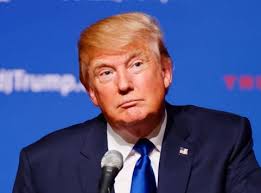
Donald Trump
The New York Times needed two full pages of its print edition to showcase them.
Among his targets:
- Hillary Clinton
- President Barack Obama
- Actress Meryl Streep
- Actor Arnold Schwarzenegger
- Comedian John Oliver
- News organizations
- New Jersey
- Beauty pageant contestants
Others he clearly delighted in insulting during the campaign included:
- Women
- Democrats
- Republicans
- Blacks
- Hispanics
- Asians
- Muslims
- The disabled
- Prisoners-of-war
As President, he continued to insult virtually everyone, verbally and on Twitter.
He even attacked members of his own administration. Among these:
- His press secretary, Sean Spicer, quit on July 21, 2017. The reason: He believed—correctly—hat his loyalty to Trump had become a one-way street. Trump kept him in the dark about events Spicer needed to know—such as an interview that Trump arranged with the New York Times—and which ended disastrously.
- Trump repeatedly attacked his own Attorney General, Jeff Sessions, for not “protecting” him from agents pursuing the Russia investigation. On November 7, 2018, the day after Democrats won a majority of House seats, Trump fired Sessions.
- Trump fired FBI Director James Comey without warning on May 9, 2017. Comey had refused to pledge his personal loyalty to Trump and turn the FBI into Trump’s secret police. He had also refused to drop the Bureau’s investigation into Russia’s efforts during the 2016 election to elect Trump.
- Trump repeatedly humiliated his then-chief of staff, Reince Priebus—at one point ordering him to kill a fly that was buzzing about. On July 28, 2017, Priebus resigned.
- In October, 2016, as a Presidential candidate, Trump attacked Colin Kaepernick, then quarterback for the San Francisco 49ers, who had gained notoriety by kneeling during the national anthem to protest racial injustice.
- On October 8, 2017, at Trump’s instigation, Vice President Mike Pence staged a walk-out during a match between the San Francisco 49ers and the Indianapolis Colts.
- The Trump/Pence stunt cost taxpayers about $242,500 in air fare for Air Force Two, advance personnel and Secret Service protection.
- On March 4, 2017, in a series of unhinged tweets, Trump falsely accused former President Barack Obama of illegally tapping his Trump Tower phones during the 2016 campaign: “Terrible! Just found out that Obama had my ‘wires tapped’ in Trump Tower just before the victory. Nothing found. This is McCarthyism!”
As Americans have watched Trump’s behavior with morbid fascination, many of them have asked: “Why is he so consumed with hatred?”
There are two reasons to this:
First, his base is equally motivated by hatred—of the same persons and organizations Trump regularly attacks. Every attack endears him anew to these voters.
During the 2016 campaign, countless such voters told interviewers: “He says what I’ve long been thinking!”
Trump didn’t implant hatred in them—he simply gave it legitimacy. And they love him for it.
Second, the 1993 Western, Tombstone unintentionally illuminated Trump’s character while delving into that of the notorious gunman Johnny Ringo.
Tombstone recounts the legendary blood feud between the Ike Clanton outlaw gang and the Earp brothers—Wyatt, Morgan and Virgil—in the famous gold-mining town of 1881 Arizona.
Wyatt Earp has been challenged to a gunfight by quick-trigger gunman Johnny Ringo. Although he impulsively accepted the challenge, Wyatt now realizes he’s certain to be killed. Thus follows this exchange with his longtime friend, the pistol-packing dentist, John H. “Doc” Holliday:
WYATT EARP: What makes a man like Ringo, Doc? What makes him do the things he does?
JOHN H. “DOC” HOLLIDAY: A man like Ringo….got a great empty hole right through the middle of him. He can never kill enough or steal enough….or inflict enough pain to ever fill it.
EARP: What does he need?
HOLLIDAY: Revenge.
EARP: For what?
HOLLIDAY: Bein’ born.
Donald Trump was born into a world of wealth and privilege. He has claimed to be worth a billion dollars.
He has been linked to some of the most beautiful women in the world. He has literally stamped his name on hundreds of buildings. And for four years he held the Presidency of the United States, the most powerful office in the Western world.
Yet he remains filled with a poisonous hatred that encompasses almost everyone.
After taking office, he offered nothing positive in his agenda.
Instead, he focused on what rights he could take from others. At the top of his list: The Affordable Care Act, providing access to medical care for millions who previously could not obtain it.
He ended his term by staging an attempted coup to overturn his defeat in the 2020 Presidential election by Joseph R. Biden.
As first-mate Starbuck says of Captain Ahab in Herman Melville’s classic novel, Moby Dick: “He is a champion of darkness.”
ABC NEWS, ABORTION, AIR RAGE INCIDENTS, ALTERNET, AMERICABLOG, ANTHONY FAUCI, ANTI-SCIENCE, AP, BABY BOOMER RESISTANCE, BLOOMBERG, BRIGHAM AND WOMEN’S HOUSPITAL, BUZZFEED, CBS NEWS, CENTERS FOR DISEASE CONTROL AND PREVENTION, CNN, COLUMBIA UNIVERSITY MEDICAL CENTER, CORONAVIRUS, COSTCO, COVID-19, CRAIG SPENCER, CROOKS AND LIARS, DAILY KOZ, DAVID ABRAMS, DEMOCRATS, DONALD TRUMP, DRUDGE RETORT, EDUCATION, FACEBOOK, FASCISM, FIVETHIRTYEIGHT, FLORIDA ATLANTIC UNIVERSITY, HARPER’S MAGAZINE, HYPOCRISY, JENNY FAUST, JOE BIDEN, KRISTI NOEM, MASKS, MEDIA MATTERS, MIKE PENCE, MOTHER JONES, MOUNT RUSHMORE, MOVEON, MSNBC, NANCY PELOSI, NAZI GERMANY, NBC NEWS, NEWSWEEK, NICCOLO MACHIAVELLI, NPR, NYU SCHOOL OF GLOBAL PUBLIC HEALTH, PBS NEWSHOUR, PETER GLICK, POLITICO, POLITICUSUSA, RAW STORY, RELIGIOUS FANATICISM, REPUBLICANS, REUTERS, RUSH LIMBAUGH, SALON, SCIENCE, SCIENTIFIC AMERICAN, SEATTLE TIMES, SLATE, SOCIAL DISTANCING, STUDENTS FOR TRUMP RALLY, SUPREME COURT, TALKING POINTS MEMO, TARGET, THE ATLANTIC, THE CHICAGO SUN-TIMES, THE CHICAGO TRIBUNE, THE DAILY BEAST, THE DAILY BLOG, THE DISCOURSES, THE GUARDIAN, THE HILL, THE HUFFINGTON POST, THE LOS ANGELES TIMES, THE NATION, THE NEW REPUBLIC, THE NEW YORK TIMES, THE VILLAGE VOICE, THE WASHINGTON POST, THINKPROGRESS, TIME, TRANSPORTATION SAFETY ADMINISTRATION (TSA), TRUTHDIG, TRUTHOUT, TULSA RALLY, TWITTER, TWO POLITICAL JUNKIES, TYPHOID MARY MALLON, U.S. NEWS & WORLD REPORT, UPI, USA TODAY, WONKETTE, WORLD HEALTH ORGANIZATION
In Bureaucracy, History, Law, Law Enforcement, Medical, Politics, Social commentary on January 27, 2022 at 12:47 am
There are five reasons why millions of Americans refuse to wear masks during a deadly pandemic:
- A feeling of solidarity against authority.
- “If liberals do it, it’s fascistic.”
- Rejection of the death-toll caused by COVID-19.
- Disdain for education in general—and science in particular.
- Religious fanaticism.
To these must be added:
Sixth: Hypocrisy. Since the Supreme Court legalized abortion in 1973, the Right has demanded that even women who are pregnant due to rape or incest carry the fetus to term.
Yet now that Right-wingers are being asked to wear masks in public—to protect themselves and others from a deadly plague—they’ve suddenly discovered the mantra: “It’s my body!”
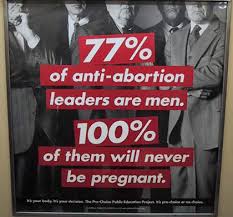
Seventh: Identifying with Donald Trump. Trump has made it clear that his followers don’t wear masks. And they have fallen into line, refusing to mask up even in crowded, indoor arenas where infection is most likely.
The following states require their citizens to wear masks when in public: California, Delaware, Hawaii, Illinois, Nevada, New Mexico, New York, Oregon, Rhode Island, Washington.
The following states still refuse to order their citizens to wear masks when in public: Alabama, Alaska, Arizona, Arkansas, Colorado, Florida, Georgia, Idaho, Indiana, Iowa, Kansas, Kentucky, Louisiana, Maine, Maryland, Massachusetts, Michigan, Minnesota, Mississippi, Missouri, Montana, North Dakota, Ohio, Oklahoma, Pennsylvania, South Carolina, South Dakota, Tennessee, Texas, Utah, Vermont, Virginia, West Virginia, Wisconsin, Wyoming.
Yet even in states where wearing a mask is mandatory when venturing out in public, many people refuse to do so. Fights have erupted before mask-less and mask-wearing customers—and sometimes store employees—who asked them to put on a mask before entering.
- Two men were arrested for felony battery after starting a fight with employees at a Los Angeles Target store over wearing masks inside the store.
- A woman entered Curbside Eatery in La Mesa, California, without a mask, pulling her T-shirt over her face. When the owner told her to mask up or leave, the woman yelled: “This is ridiculous! You’re discriminating against me!’ and threatened a lawsuit.
- In a Costco in Fort Myers, Florida, a masked man asked an unmasked customer to wear a mask. The unmasked man screamed that he was being harassed: “I feel threatened!”
On February 2, 2021, the Transportation Safety Administration (TSA) required all airline travelers to wear masks. By December, the TSA had logged more than 4,100 mask-related air-rage incidents.

So: How should those who refuse to wear a mask—and thus present a clear and present danger to others—be dealt with?
Ideally, President Joe Biden could issue a mandatory emergency order requiring everyone to wear a mask when in public. But the President lacks the legal authority to do so.
Governors, mayors and business owners should issue emergency orders mandating the wearing of masks in public. And these orders should be forcibly backed up by the following:
- Stop stressing that a mask will protect others from “you.” Most people don’t care about strangers. Emphasize that wearing a mask will protect “you and your family” from others.
- Don’t give tickets to mask-evaders. They will simply ignore them—or consider them a cheap price for going without a mask.
- Major retailers should hire professional guards to arrest mask-evaders—and turn them over to police.
- Police should arrest everyone not wearing a mask in public and jail them—without bond—until the plague is over.
- Create tip hotlines for reporting mask-evaders.
- Offer rewards for tips that lead to arrests.
- Police and prosecutors should publicize these arrests and jailings—to warn other potential mask-evaders.
- Arrest, prosecute and imprison Right-wingers who openly display and/or threaten unarmed civilians with firearms.
- Above all: Stop admitting the unmasked and unvaccinated to hospitals. Forcing them to pay the price for their irresponsible behavior will end hospital overcrowding.
It was the failure of German police and courts to abort Right-wing violence during the Weimar Republic that led to even greater violence through the rise of Adolf Hitler and his Nazi party.
This is how United States authorities dealt with “Typhoid Mary” Mallon (September 23, 1869 – November 11, 1938).

Mary Mallon
An Irish-born cook, she was an asymptomatic carrier of typhoid fever and is believed to have infected 53 people, three of whom died. Because she persisted in working as a cook, she exposed others to the disease.
As a result, she was twice forcibly quarantined by authorities, and died after a total of nearly 30 years in isolation at Riverside Hospital on North Brother Island, in New York City.
Laws are useless if citizens believe they are unfairly or unpredictably enforced. As Niccolo Machiavelli warns in his classic work, The Discourses:
All those who have written upon civil institutions demonstrate…that whoever desires to found a state and give it laws, must start with assuming that all men are bad and ever ready to display their vicious nature, whenever they may find occasion for it.
If their evil disposition remains concealed for a time, it must be attributed to some unknown reason; and we must assume that it lacked occasion to show itself. But time, which has been said to be the father of all truth, does not fail to bring it to light.
ABC NEWS, ABORTION, AIR RAGE INCIDENTS, ALTERNET, AMERICABLOG, ANTHONY FAUCI, ANTI-SCIENCE, AP, BABY BOOMER RESISTANCE, BLOOMBERG, BRIGHAM AND WOMEN’S HOUSPITAL, BUZZFEED, CBS NEWS, CENTERS FOR DISEASE CONTROL AND PREVENTION, CNN, COLUMBIA UNIVERSITY MEDICAL CENTER, CORONAVIRUS, COSTCO, COVID-19, CRAIG SPENCER, CROOKS AND LIARS, DAILY KOZ, DAVID ABRAMS, DEMOCRATS, DONALD TRUMP, DRUDGE RETORT, EDUCATION, FACEBOOK, FASCISM, FIVETHIRTYEIGHT, FLORIDA ATLANTIC UNIVERSITY, HARPER’S MAGAZINE, HYPOCRISY, JENNY FAUST, JOE BIDEN, KRISTI NOEM, MASKS, MEDIA MATTERS, MIKE PENCE, MOTHER JONES, MOUNT RUSHMORE, MOVEON, MSNBC, NANCY PELOSI, NAZI GERMANY, NBC NEWS, NEWSWEEK, NICCOLO MACHIAVELLI, NPR, NYU SCHOOL OF GLOBAL PUBLIC HEALTH, PBS NEWSHOUR, PETER GLICK, POLITICO, POLITICUSUSA, RAW STORY, RELIGIOUS FANATICISM, REPUBLICANS, REUTERS, RUSH LIMBAUGH, SALON, SCIENCE, SCIENTIFIC AMERICAN, SEATTLE TIMES, SLATE, SOCIAL DISTANCING, STUDENTS FOR TRUMP RALLY, SUPREME COURT, TALKING POINTS MEMO, TARGET, THE ATLANTIC, THE CHICAGO SUN-TIMES, THE CHICAGO TRIBUNE, THE DAILY BEAST, THE DAILY BLOG, THE DISCOURSES, THE GUARDIAN, THE HILL, THE HUFFINGTON POST, THE LOS ANGELES TIMES, THE NATION, THE NEW REPUBLIC, THE NEW YORK TIMES, THE VILLAGE VOICE, THE WASHINGTON POST, THINKPROGRESS, TIME, TRANSPORTATION SAFETY ADMINISTRATION (TSA), TRUTHDIG, TRUTHOUT, TULSA RALLY, TWITTER, TWO POLITICAL JUNKIES, TYPHOID MARY MALLON, U.S. NEWS & WORLD REPORT, UPI, USA TODAY, WONKETTE, WORLD HEALTH ORGANIZATION More stats
In Bureaucracy, History, Law, Law Enforcement, Medical, Politics, Social commentary on January 26, 2022 at 12:11 am
Not only did President Donald Trump refuse to wear a mask, but he suspected the loyalty of his staffers and Republican allies who didn’t follow his mask-less example.
On April 28, 2020, Vice President Mike Pence toured the Mayo Clinic in Rochester, Minnesota. Pence, who led the White House task force on the virus, refused to wear a mask, even though all the officials and medical personnel clustered around him did.
Pence even visited with a patient who had survived the Coronavirus and was going to give blood.
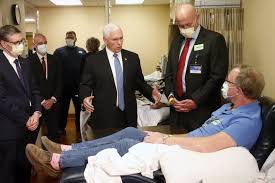
Mike Pence at the Mayo Clinic
Few White House aides wore masks, although they claimed that Trump hadn’t told them not to wear them. Some Republican allies asked Trump’s campaign how they would be seen by Trump if he saw them wearing a mask.
“It’s a vanity thing, I guess, with him,” Nancy Pelosi, speaker of the House of Representatives, said. “You’d think, as the President of the United States, you would have the confidence to honor the guidance he’s giving the country.”
By refusing to wear a mask, Trump convinced untold numbers of Americans—mostly Right-wing males—that ignoring the dangers of Coronavirus was the manly thing to do.
(On July 20, 2020, he tweeted an image of himself wearing a mask and called it “patriotic” to wear one. Hours later, however, he appeared without a mask at a fundraiser at the Trump International Hotel in Washington.)
Meanwhile, former Vice President Joe Biden, the Democratic nominee for President, often appeared in public wearing a mask. During a June 26 television interview he said that, if he were elected President, he would require wearing face masks in public to prevent the spread of the Coronavirus.
“The one thing we do know—these masks make a gigantic difference,” Biden said. “I would insist that everybody out in public be wearing that mask.”
Yet even in states such as California and New York, where this is required, many people still refuse to do so.
From May 5 to May 12, 2020, the Centers for Disease Control and Prevention (CDC) surveyed 4,042 adults throughout the country on wearing masks. The agency found that 60.3% of respondents said they always wore a mask when out in public. Another 13.8% said they often wore a mask in public.
But 17.1% said they either rarely or never wore a mask in public.
The CDC found that women were more likely than men to say they always wore a mask in public.

CDC headquarters in Atlanta
There are several reasons why people refuse to wear masks.
First: A feeling of solidarity. According to David Abrams, a professor of social and behavioral sciences at NYU School of Global Public Health: People who don’t wear masks may see it as a sign of solidarity, as if they are taking a stand against authority.
Second: “If liberals do it, it’s fascistic.” Many mask protesters accuse those who wear masks of being fascists. This is a hallmark of Right-wing politics—accusing their opponents of being what they are themselves.
Third: They have utterly rejected the rising death-toll caused by the virus. They claim stories of such deaths are mere “fake news”—the term Trump uses to dismiss any news stories that highlight his mistakes and criminality.
Fourth: Republicans disdain education in general—and science in particular. In March, 2020, an NBC News poll found that only 30% of Republicans said that they would actually listen to the advice of doctors to stay away from large, crowded areas to avoid Coronavirus.
These are the same people who get their version of reality from Right-wing sources like Fox News Network and radio broadcaster Rush Limbaugh.
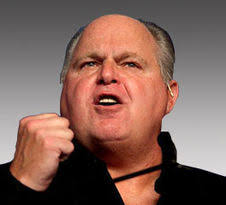
Rush Limbaugh
On his March 27, 2020 show, Limbaugh dismissed Coronavirus as “the common cold,” then added: “We didn’t elect a president to defer to a bunch of health experts that we don’t know.
“And how do we know they’re even health experts? Well, they wear white lab coats, and they’ve been in the job for a while, and they’re at the CDC [Centers for Disease Control and Prevention] and they’re at the NIH [National Institutes of Health] and they’re up, well—yeah, they’ve been there, and they are there.
“But has there been any job assessment for them? They’re just assumed to be the best because they’re in government. But, these are all kinds of things that I’ve been questioning.”
In 2015, Limbaugh said: “Firsthand smoke takes 50 years to kill people, if it does. Not everybody that smokes gets cancer. Now, it’s true that everybody who smokes dies, but so does everyone who eats carrots.”
Six years later, on February 17, 2021, Limbaugh—a longtime and heavy cigar smoker—died from Stage Four lung cancer.
Fifth: Religious Fanaticism. Many fundamentalist Christians believe that their faith in Jesus will protect them against COVID-19. They continue to attend services indoors in defiance of CDC warnings by meeting in large numbers indoors.
A female member of the Solid Red Rock Church in Monroe, Ohio, told CNN: “I wouldn’t be anywhere else. I’m covered in Jesus’ blood. I’m covered in Jesus’ blood.”
ABC NEWS, ABORTION, AIR RAGE INCIDENTS, ALTERNET, AMERICABLOG, ANTHONY FAUCI, ANTI-SCIENCE, AP, BABY BOOMER RESISTANCE, BLOOMBERG, BRIGHAM AND WOMEN’S HOUSPITAL, BUZZFEED, CBS NEWS, CENTERS FOR DISEASE CONTROL AND PREVENTION, CNN, COLUMBIA UNIVERSITY MEDICAL CENTER, CORONAVIRUS, COSTCO, COVID-19, CRAIG SPENCER, CROOKS AND LIARS, DAILY KOZ, DAVID ABRAMS, DEMOCRATS, DONALD TRUMP, DRUDGE RETORT, EDUCATION, FACEBOOK, FASCISM, FIVETHIRTYEIGHT, FLORIDA ATLANTIC UNIVERSITY, HARPER’S MAGAZINE, HYPOCRISY, JENNY FAUST, JOE BIDEN, KRISTI NOEM, MASKS, MEDIA MATTERS, MIKE PENCE, MOTHER JONES, MOUNT RUSHMORE, MOVEON, MSNBC, NANCY PELOSI, NAZI GERMANY, NBC NEWS, NEWSWEEK, NICCOLO MACHIAVELLI, NPR, NYU SCHOOL OF GLOBAL PUBLIC HEALTH, PBS NEWSHOUR, PETER GLICK, POLITICO, POLITICUSUSA, RAW STORY, RELIGIOUS FANATICISM, REPUBLICANS, REUTERS, RUSH LIMBAUGH, SALON, SCIENCE, SCIENTIFIC AMERICAN, SEATTLE TIMES, SLATE, SOCIAL DISTANCING, STUDENTS FOR TRUMP RALLY, SUPREME COURT, TALKING POINTS MEMO, TARGET, THE ATLANTIC, THE CHICAGO SUN-TIMES, THE CHICAGO TRIBUNE, THE DAILY BEAST, THE DAILY BLOG, THE DISCOURSES, THE GUARDIAN, THE HILL, THE HUFFINGTON POST, THE LOS ANGELES TIMES, THE NATION, THE NEW REPUBLIC, THE NEW YORK TIMES, THE VILLAGE VOICE, THE WASHINGTON POST, THINKPROGRESS, TIME, TRANSPORTATION SAFETY ADMINISTRATION (TSA), TRUTHDIG, TRUTHOUT, TULSA RALLY, TWITTER, TWO POLITICAL JUNKIES, TYPHOID MARY MALLON, U.S. NEWS & WORLD REPORT, UPI, USA TODAY, WONKETTE, WORLD HEALTH ORGANIZATION
In Bureaucracy, History, Law, Law Enforcement, Medical, Politics, Social commentary on January 25, 2022 at 12:24 am
The United States is now two years into a deadly plague. More than 71.7 million Americans have become infected with COVID-19 and at least 868,000 have died.
Wearing a mask and “social distancing”—keeping at least six feet between yourself and others while in public—have been the Golden Rules urged by public health officials from the pandemic’s start.
And yet vast numbers of Americans still refuse to do either. Just as they refuse to get vaccinated, despite three vaccines now widely available.


Surgical mask
In the early weeks and months of the pandemic, cloth face masks weren’t universally endorsed, even by public health experts.
“One, we didn’t know whether they were actually helpful, and two, there was a lot of concern that if people were using medical masks then people like myself, were not going to have access to them,” said Dr. Craig Spencer, director of global health in emergency medicine at Columbia University Medical Center.
No less an authority than Dr. Anthony Fauci, the country’s leading infectious disease expert, said in March, 2020, that “people should not be walking around with masks.”
Only in early June, 2020, did the World Health Organization (WHO) urge non-healthcare workers to mask up. The WHO advised people to don masks when social distancing was not possible, such as when visiting stores and using public transportation.

According to Dr. Jeremy Faust, the change in attitudes toward masks should be seen as the nature of science, and not as a flaw.
“That is what experts, in fact, do. They don’t just have an opinion and stick to it,” said Faust, an emergency physician at Brigham and Women’s Hospital, in Boston, Massachusetts. “They actually let their opinions develop and evolve as better information becomes available.”
Only in January, 2022, did the Centers for Disease Control and Prevention (CDC) urge Americans to wear N95 masks—the most effective ones available.
In 2020, the CDC had urged Americans to not use N95s. The reason: They feared this would create a shortage of these masks for doctors, nurses and paramedics working closely with COVID patients.

N95 mask
Scientists have learned, for example, that COVID-19 can be spread by those who show no symptom of the disease. And mounting evidence has proven that masks are essential for protecting people from the virus.
Coronavirus is spread by respiratory droplets when an infected person coughs, sneezes or talks—especially if large numbers of people are packed indoors. The danger goes up if the talker is shouting or singing loudly.
If not blocked by a face covering, the droplets can travel six to 13 feet, and can remain airborne for hours in some cases.
Researchers at Florida Atlantic University found that some masks were more effective than others. One study showed that well-fitted homemade masks with multiple layers of fabric, as well as off-the-shelf cone style masks, were the most effective in reducing droplet dispersal.
Bandannas turned out to be the least effective in reducing transmission.

Coronavirus
So why do so many Americans refuse to wear a mask?
Start at the top: With Donald Trump, 45th President of the United States.
From the outset, Trump refused to wear a mask in public.
A colossal egotist, Trump is orange-skinned, morbidly obese and lacking a neck. Yet he still thinks of himself as dangerously handsome. And he fears that covering his face would diminish his power and appeal.
“Appearing to play it safe contradicts a core principle of masculinity: show no weakness,” wrote social sciences professor Peter Glick at Scientific American magazine. “Defying experts’ warnings about personal danger signals ‘I’m a tough guy, bring it on.’”
On May 21, 2020, Trump refused to wear a face mask as he toured a Ford facility in Michigan that was manufacturing ventilators and personal protective equipment. This violated the policies of the facility, the governor’s executive order and warnings from the state’s attorney general.
After a three-month nationwide “lockdown,” states began “reopening.” So Trump scheduled his first 2020 re-election rally in Tulsa, Oklahoma.
It was held on June 20 at the BOK Center. Scientists had learned that Coronavirus is more likely to be transmitted indoors than outdoors, when masses of people are packed together, and when people are loudly talking—or, worse, shouting.
Masks were available for those who wanted them. But Trump made it clear that his supporters shouldn’t wear masks, as a sign of support for him. Photos of the rally show men and women densely packed together, with none of them wearing masks.
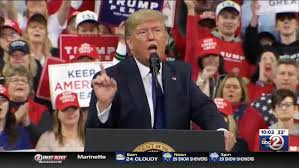
A Trump rally
The Tulsa event was followed by another indoor rally in Phoenix on June 23. “Students for Trump” featured a packed crowd, with almost no one wearing masks.
After staging COVID-spreading rallies at Tulsa, Oklahoma, and Phoenix, Arizona, Trump scheduled another one for July 3 at Mount Rushmore, in Keystone, South Dakota.
Such rallies had been put on hold since March, due to the issuing of stay-at-home orders across the country by states’ mayors and governors.
Health experts expressed fears about a large gathering during the Coronavirus pandemic. But South Dakota Governor Kristi Noem said people would “not be social distancing” during the celebration—nor required to wear masks.
2020 PRESIDENTIAL ELECTION, 2020 PRESIDENTIAL RACE, ABC NEWS, ADOLF HITLER, ALTERNET, AMERICABLOG, AP, ARIZONA, BABY BOOMER RESISTANCE, BBC, BLOOMBERG, BLOOMBERG NEWS, BRIBERY, BUZZFEED, CBS NEWS, CHUCK SHUMER, CIVIL WAR, CNN, COURIER, CROOKS AND LIARS, DAILY KOZ, DALLAS MORNING NEWS, DEMOCRATS, DONALD TRUMP, DRUDGE REPORT, FACEBOOK, FIVETHIRTYEIGHT, FLORIDA, FOR THE PEOPLE ACT, GEORGIA, HARPER’S MAGAZINE, HUFFINGTON POST, JOE BIDEN, JOE MANCHIN, KEVIN MCCARTHY, LEN BLAVATNIK, LYNDON B. JOHNSON, MEDIA MATTERS, MICHIGAN, MITCH MCCONNELL, MOTHER JONES, MOVEON, MSNBC, NBC NEWS, NEVILLE CHAMBERLAIN, NEW REPUBLIC, NEWSDAY, NEWSWEEK, NICCOLO MACHIAVELLI, NPR, PBS NEWSHOUR, PHARMACEUTICAL INDUSTRY, POLITICO, POLITICUSUSA, RAW STORY, REPUBLICANS, REUTERS, ROY BLUNT, SALON, SEATTLE TIMES, SLATE, SOVIET UNION, TALKING POINTS MEMO, THE ATLANTIC, THE CHICAGO SUN-TIMES, THE CHICAGO TRIBUNE, THE DAILY BEAST, THE DAILY BLOG, THE GUARDIAN, THE HILL, THE HUFFINGTON POST, THE LOS ANGELES TIMES, THE NATION, THE NEW REPUBLIC, THE NEW YORK TIMES, THE NEW YORKER, THE PBS NEWSHOUR, THE PRINCE, THE VILLAGE VOICE, THE WASHINGTON POST, THINKPROGRESS, THIS WEEK, TIME, TRUTHDIG, TRUTHOUT, TWITTER, TWO POLITICAL JUNKIES, U.S. NEWS & WORLD REPORT, UNITED STATES JUSTICE DEPARTMENT, UPI, USA TODAY, VLADIMIR PUTIN, VOTER SUPPRESSION, WEST VIRGINIA, WONKETTE
In Bureaucracy, History, Law, Law Enforcement, Medical, Politics, Social commentary on January 18, 2022 at 12:08 am
President Joe Biden faces opposition not only from Republicans but Right-wing Democrats as well.
One of these is West Virginia United States Senator Joe Manchin.
On June 7, 2021, The PBS Newshour examined perhaps the foremost issue of our democracy: The For the People Act.
Since November 3, 2020, when former President Donald Trump lost the Presidential election, he has spread The Big Lie: That the election was “stolen” from him.
On the basis of that lie, Republicans in 47 states have introduced 361 bills to make it harder to vote.
As of June 21, 2021, 17 states enacted 28 new laws that restrict access to the vote.
Among those states affected: Georgia, Iowa, Arkansas and Utah.
Georgia:
- Bans giving food and water to voters in line;
- Severely restricts mail ballot drop boxes;
- Allows Right-wing groups to challenge the eligibility of an unlimited number of voters; and
- Gives the GOP-controlled legislature sweeping powers over election administration.
Arizona:
- Wants to add new requirements for casting a mail-in ballot and make it harder to receive one.
Florida:
- Intends to ban mail ballot drop boxes.
Michigan:
- Republicans introduced eight bills adding new voter ID requirements for mail voting and forbidding election officials to send out absentee ballot request forms to voters.
Congressional Democrats have countered with the For the People Act. Among its provisions:
- Expand early voting and registration across the country in federal elections;
- Block states from purging their rolls of voters;
- End partisan gerrymandering;
- Force large donors to disclose themselves publicly.
“It is something that is obviously very critical right now,” said PBS Newshour Correspondent Lisa Desjardins. “We see rising in this country both sides talking about democracy and voting rights and what’s happening at this moment.
“[West Virginia United States Senator] Joe Manchin…would be the 50th vote that Democrats would have for this in the Senate. They have 49.
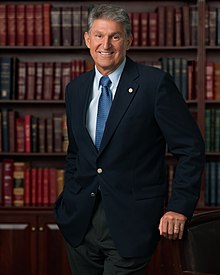
Joe Manchin
“And here’s what he said [on] why he opposed it: ‘I believe that partisan voting legislation will destroy the already weakening binds of our democracy. And for that reason, I will vote against the For the People Act.’
“Notable, he did not have any substantive problems with the bill that he raised. Instead, he said, the issue is there are no Republicans on board.”
Manchin thus ignores the reality that Republicans will never be on board.
“This Manchin decision is a body blow to this legislation. It is not dead yet, but it is in real trouble. It’s unclear if, when [New York Senator] Chuck Schumer, the Democratic leader [in the Senate] will bring it back up,” said Desjardins.
Many Democrats and political correspondents have speculated about Manchin’s motives for opposing this legislation.
Some believe he’s a Right-winger in Democrats’ clothing. Others think he wants to increase his clout on behalf of his state, West Virginia.
Manchin’s motives, however, are not important. Eliminating his opposition is.
And the man who has the power to do this is President Joe Biden.
All that he needs to do is invite Manchin into the Oval Office for an off-the-record talk, which could open like this:
“Your state has two Coast Guard military bases. By this time next week, it will have only one—because I’m going to close down the other. You can also forget about those highway-repair projects you’re expecting to start. And I’ve been informed we have far too many post offices in West Virginia, considering its small population….”
Suddenly, Manchin would get the clear message: “Biden is the big dog on this block, not me.”
He would also grasp that his constituents would blame him, not Biden, for the resulting chaos and hardships they face from the upcoming closures.
This is precisely how President Lyndon B. Johnson dealt with Congressional members who dared oppose his prized legislation. And it worked.
Joe Biden has spent 44 years in Washington, D.C.—as a United States Senator from Delaware from 1973 to 2009; and then as Vice President from 2009 to 2017.
But he seems to have never read Niccolo Machiavelli’s famous warning in The Prince:
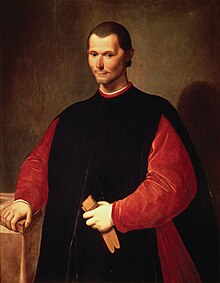
Niccolo Machiavelli
For how we live is so far removed from how we ought to live, that he who abandons what is done for what ought to be done, will rather learn to bring about his own ruin rather than his preservation. A man who wishes to make a profession of goodness in everything must inevitably come to grief among so many who are not good.
And therefore it is necessary for a prince, who wishes to maintain himself, to learn how not to be good, and to use this knowledge and not use it, according to the necessity of the case.
Whatever his motives, Manchin is clearly willing to allow Republicans to suppress the voting rights of millions of non-Fascist Americans.
President Joe Biden now faces a moment of crisis: He can fight his enemies with the same ruthless tactics they routinely use–or face disaster.
Republicans are working to corrupt the democratic process to reinstall a proven criminal and traitor in the Oval Office.
This is no time to “fight” a party of Adolf Hitlers with the appeasement tactics of a Neville Chamberlain.
2020 PRESIDENTIAL ELECTION, 2020 PRESIDENTIAL RACE, ABC NEWS, ADOLF HITLER, ALTERNET, AMERICABLOG, ANTI-VAXXERS, AP, ARIZONA, BABY BOOMER RESISTANCE, BBC, BLOOMBERG, BLOOMBERG NEWS, BRIBERY, BUZZFEED, CBS NEWS, CHUCK SHUMER, CIVIL WAR, CNN, COURIER, COVID-19, CROOKS AND LIARS, DAILY KOZ, DALLAS MORNING NEWS, DEMOCRATS, DONALD TRUMP, DRUDGE REPORT, FACEBOOK, FIVETHIRTYEIGHT, FLORIDA, FOR THE PEOPLE ACT, GEORGIA, HARPER’S MAGAZINE, HUFFINGTON POST, JOE BIDEN, JOE MANCHIN, KEVIN MCCARTHY, LEN BLAVATNIK, LYNDON B. JOHNSON, MEDIA MATTERS, MICHIGAN, MITCH MCCONNELL, MOTHER JONES, MOVEON, MSNBC, NBC NEWS, NEVILLE CHAMBERLAIN, NEW REPUBLIC, NEWSDAY, NEWSWEEK, NICCOLO MACHIAVELLI, NPR, PBS NEWSHOUR, PHARMACEUTICAL INDUSTRY, POLITICO, POLITICUSUSA, RAW STORY, REPUBLICANS, REUTERS, ROY BLUNT, SALON, SEATTLE TIMES, SLATE, SOVIET UNION, TALKING POINTS MEMO, THE ATLANTIC, THE CHICAGO SUN-TIMES, THE CHICAGO TRIBUNE, THE DAILY BEAST, THE DAILY BLOG, THE GUARDIAN, THE HILL, THE HUFFINGTON POST, THE LOS ANGELES TIMES, THE NATION, THE NEW REPUBLIC, THE NEW YORK TIMES, THE NEW YORKER, THE PBS NEWSHOUR, THE PRINCE, THE VILLAGE VOICE, THE WASHINGTON POST, THINKPROGRESS, THIS WEEK, TIME, TRUTHDIG, TRUTHOUT, TWITTER, TWO POLITICAL JUNKIES, U.S. NEWS & WORLD REPORT, UNITED STATES JUSTICE DEPARTMENT, UPI, USA TODAY, VLADIMIR PUTIN, VOTER SUPPRESSION, WEST VIRGINIA, WONKETTE
In Bureaucracy, History, Law, Law Enforcement, Medical, Politics, Social commentary on January 17, 2022 at 12:12 am
Joseph Robinette Biden is fast approaching the one-year anniversary of his Inauguration as the 46th President of the United States.
At 79, he has spent virtually his entire adult life in politics: As a United States Senator from Delaware (1973 – 2009); as Vice President of the United States (2009 – 2017); and now as President.
Yet for all of his decades of political experience, he seems to have never read the works of the man who has been called “the father of modern politics”—Niccolo Machiavelli.
Or, if he has, he has clearly learned nothing from them.
Consider Machiavelli’s advice for well-intentioned people like Biden in his classic work: The Prince:
“A man who wishes to make a profession of goodness in everything must inevitably come to grief among so many who are not good. And therefore it is necessary for a prince, who wishes to maintain himself, to learn how not to be good, and to use this knowledge and not use it, according to the necessity of the case.”
Niccolo Machiavelli
On November 3, 2020, Biden became President-elect of the United States by winning 81,283,495 votes, or 51.4% of the vote, compared to 74,223,755 votes, or 46.9% of the vote cast for President Donald Trump.
In the Electoral College—which actually determines the winner—the results were even more stunning: 306 votes for Biden, compared with 232 for Trump. It takes 270 votes to be declared the victor.
Yet, on December 8, Republican Senate Majority Leader Mitch McConnell and Missouri United States Senator Roy Blunt joined House Republican Leader Kevin McCarthy in blocking a resolution asserting that Joe Biden was the President-elect of the United States.

Mitch McConnell
And for more than a year since the 2020 Presidential election, the vast majority of Republicans have continued to charge that Biden gained office by massive voter fraud—and thus is an illegitimate President.
Yet Biden continues to refer to his sworn enemies as “my Republican friends.”
As Achilles scornfully tells the soon-to-be-doomed Hector in the 2004 movie, “Troy”: “There can be no pacts between wolves and men.”
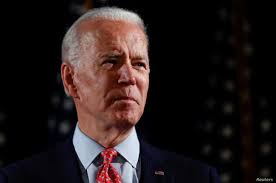
Joe Biden
Machiavelli’s advice:
From this arises the question whether it is better to be loved than feared, or feared more than loved. The reply is, that one ought to be both feared and loved, but as it is difficult for the two to go together, it is much safer to be feared than loved.
For it may be said of men in general that they are ungrateful, voluble, dissemblers, anxious to avoid danger and covetous of gain; as long as you benefit them, they are entirely yours: they offer you their blood, their goods, their life and their children, when the necessity is remote, but when it approaches, they revolt.
And the prince who has relied solely on their words, without making other preparations, is ruined; for the friendship which is gained by purchase and not through grandeur and nobility of spirit is bought but not secured, and at a pinch is not to be expended in your service.
And men have less scruple in offending one who makes himself loved than one who makes himself feared; for love is held by a chain of obligations which, men being selfish, is broken whenever it serves their purpose; but fear is maintained by a dread of punishment which never fails.
With that in mind, Biden should go directly after McConnell himself.
Option #1: A May 8, 2018 story in The Dallas Morning News spotlights “How Putin’s Oligarchs Funneled Millions into GOP Campaigns.” In 2016, Len Blavatnik gave $1 million to McConnell’s Senate Leadership Fund.
In 2017, Blavatnik gave another $1 million to the fund, and then another $3.5 million to a Political Action Committee associated with McConnell.
A serious investigation by the Justice Department could lead to McConnell’s indictment—for bribery or other campaign finance violations.
Option #2: According to an April 15, 2020 story in Courier: “Here’s How Much McConnell Got From Big Pharma After Nixing a Bill to Lower Drug Prices”:
“Senate Majority Leader Mitch McConnell announced in September that he would block any consideration of a bill to lower prescription drug costs. By the end of December, he had raked in more than $50,000 in contributions from political action committees and individuals tied to the pharmaceutical industry.”
McConnell could be investigated—and possibly indicted—for bribery.
Even if McConnell escaped prison, such a prosecution would dramatically inform Republicans that a new era of accountability had arrived.
Option #3: As President, Biden could divert Federal projects from McConnell’s Kentucky—and other Republican states.
President Lyndon Johnson successfully employed this tactic to keep Republican—and Democratic—troublemakers in line. Once they saw projects for roads, post offices and other Federal amenities disappearing from their districts, they quickly got the message as to who was in charge.
Option 4: McConnell has blamed Biden for the slowing COVID-19 vaccination rate among Americans.
Biden could attack Republicans for promoting lies about the safety of COVID vaccines—and for opposing mask and vaccine mandates. He could blame the worsening Omicrom epidemic—and its resulting deaths—on anti-vaxxers, thus putting them and their Republican supporters on the defensive.
Above all, Biden should constantly remember: For Republicans, the mathematics of power come down to this: Who/Whom.
Or: Who can do What to Whom?
1999 (YEAR), 2000 (YEAR), 2020, 2020 PRESIDENTIAL ELECTION, ABC NEWS, ABRAHAM LINCOLN, ALTERNET, AMERICABLOG, AP, APOCALYPSE, ARMAGEDDON, BABY BOOMER RESISTANCE, BLOOMBERG, BUZZFEED, CBS NEWS, CHINA, CNN, COLD WAR, COMPUTERS, COVID-19, CROOKS AND LIARS, DAILY KOZ, DONALD TRUMP, DRUDGE REPORT, FACEBOOK, FIVETHIRTYEIGHT, GAIUS CASSIUS, GERMANY, HARPER’S MAGAZINE, HUFFINGTON POST, JAPAN, JESUS CHRIST, JOSEPH BIDEN, JULIUS CAESAR (PLAY), MEDIA MATTERS, MILLENNIUM, MOTHER JONES, MOVEON, MSNBC, NBC NEWS, NEW YEAR'S DAY, NEW YEAR'S EVE, NEW YORK, NEWSWEEK, NPR, PBS NEWSHOUR, POLITICO, POLITICUSUSA, RAW STORY, REUTERS, RIOTS, SALON, SAN FRANCISCO, SEATTLE TIMES, SLATE, SOREN KIERKEGAARD, SOVIET UNION, TALKING POINTS MEMO, THE ATLANTIC, THE CHICAGO SUN-TIMES, THE CHICAGO TRIBUNE, THE DAILY BEAST, THE DAILY BLOG, THE GUARDIAN, THE HILL, THE HUFFINGTON POST, THE LOS ANGELES TIMES, THE MILLENNIUM, THE NATION, THE NEW REPUBLIC, THE NEW YORK TIMES, THE VILLAGE VOICE, THE WASHINGTON POST, THINKPROGRESS, TIME, TIMES SQUARE, TRUTHDIG, TRUTHOUT, TWITTER, TWO POLITICAL JUNKIES, U.S. NEWS & WORLD REPORT, UPI, USA TODAY, WILLIAM SHAESPEARE, WONKETTE, Y2K
In Entertainment, History, Medical, Social commentary on December 31, 2021 at 12:23 am
New Year’s Eve, 2021, will soon lie behind us.
And for most people, saying “Goodbye” to 2021 can’t happen soon enough.
New Year’s Eve is traditionally a time for people to reflect on the major events of the previous 12 months. Some of these are highly personal. Others have been shared by the entire country.
Some of these remembrances inevitably bring pleasure. Others bring pain.
And 2021 has been a year of pain for millions.
Starting on January 6, then-President Donald Trump incited thousands of his fanatical disciples to attack the United States Capitol Building.
The reason: To halt the counting of Electoral College votes to certify the legitimate Presidential victory of Joe Biden in 2020—thus leaving Trump in office as “President-for-Life.”
Donald Trump
Fortunately, democracy was saved—for the moment.
Meanwhile, COVID-19 continued to sweep across the globe. To date, it’s infected 285 million worldwide—and killed 5.42 million. In the United States, it’s infected 153.8 million and killed 822,000.
But by March, three new vaccines were being rolled out—and thus saving the lives of untold numbers of potential COVID victims.
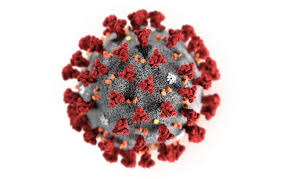
COVID-19
At the heart of every New Year’s Eve celebration is the fantasy that you get to start fresh in a matter of hours. And with that fantasy comes hope—that, this time, you can put your sorrows and failures behind you.
And for millions in 2022, life will look brighter—because Donald Trump, whose Presidency was marked by unprecedented criminality and treason, no longer holds office.
True, Trump has refused to admit that he was defeated in a legitimate election. And his lust to become America’s Dictator-in-chief remains as lethal as ever.
But democracies are always threatened by would-be tyrants. And Americans can take heart in the knowledge that, in 1945, they helped defeat two of the worst—in Germany and Japan.
And, for 50 years during the Cold War, they stood firm against dictators in China and the Soviet Union.
The last New Year’s Eve to be marked by worldwide fears was that of 1999:
- Fear of Y2K—that our highly computerized, globally-interconnected world would crash when the “19″ at the start of every year was replaced with a “20″.
- Fear of Armageddon—that Jesus, after dying 2,000 years ago, would magically return to destroy mankind (except for those 144,000 righteous souls He deemed worthy of salvation).
- Fear of the Millennium itself—of ending not simply another decade and century but an entire thousand-year period of history, and thus losing our historical ties to the familiar highlights of our own (and America’s) past.
And, especially where Y2K was concerned, news commentators were quick to stoke our anxieties.
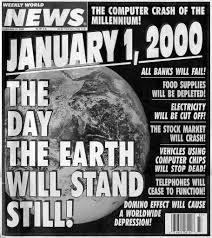
Long before New Year’s Eve, TV newscasters repeatedly warned that, when midnight struck on January 1, 2000, the three places you did not want to be were:
- In an airplane.
- In an elevator.
- In a hospital.
Countless numbers of people in America and around the world stocked up on food, water, batteries and other essentials for surviving an emergency.
Merchants and police feared widespread rioting and violence. If Y2K didn’t set it off, then fears of a heaven-sent Apocalypse might.
In San Francisco, along Powell Street—a major center of tourism and commerce—store owners boarded up their doors and windows as New Year’s Eve approached. Many closed earlier than usual that day.
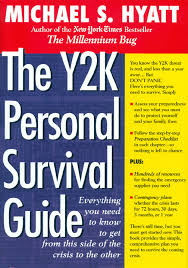
Fortunately, when midnight struck on January 1, 2000, the predictors of the coming Apocalypse were proven wrong.
- Computers kept working—and civilization didn’t crash along with them.
- Jesus didn’t miraculously return from the dead—just as he hadn’t during any previous year.
- And those who feared that the Millennium would usher in a strange and frightening new world soon found that 2000 was not all that different from previous years.
New Year’s Eve 1999 is now 22 years distant. But some lessons may still be learned from it:
Each year is a journey unto itself—filled with countless joys and sorrows. Many of these joys can’t be predicted. And many of these tragedies can’t be prevented.
Learn to tell real dangers from imaginary ones. Computers are real—and sometimes they crash. Men who died 2,000 years ago do not leap out of graveyards, no matter what their disciples predict.
Don’t expect any particular year to usher in the Apocalypse. In any given year there will be wars, famines, earthquakes, riots, floods and a host of other disasters. These have always been with us—and always will be. As Abraham Lincoln once said: “The best thing about the future is that it comes one day at a time.”

BumFluff2009, CC BY-SA 2.0 <https://creativecommons.org/licenses/by-sa/2.0>, via Wikimedia Commons
Don’t expect some Great Leader to lead you to success. As Gaius Cassius says in William Shakespeare’s “Julius Caesar”: “Men at some time are masters of their fate. The fault, dear Brutus, is not in our stars but in ourselves that we are underlings.”
Don’t expect any particular year or event to usher in your happiness. To again quote Lincoln: “Most people are about as happy as they make up their minds to be.”
If your life seems to make no sense to you, consider this: The philosopher Soren Kierkegaard once noted: “Life can only be understood backwards, but it must be lived forwards.”
ABC NEWS, ADAM SCHIFF, ALTERNET, AMERICABLOG, ANDREW JOHNSON, AP, BABY BOOMER RESISTANCE, BILL CLINTON, BLOOMBERG, BUZZFEED, CBS NEWS, CNN, COMMUNISM, CROOKS AND LIARS, DAILY KOZ, DEMOCRATS, DONALD TRUMP, DONALD TRUMP JUNIOR, DRUDGE REPORT, ERNEST HEMINGWAY, FACEBOOK, FASCISM, FIVETHIRTYEIGHT, FORBES, FOX NEWS, GAVIN NEWSOM, GEORGE FLOYD, GOODYEAR TIRES, HARPER’S MAGAZINE, HUFFINGTON POST, illegal immigration, IMPEACHMENT, JAMES COMEY, JOE BIDEN, Kamala Harris, KIMBERLY GUILFOYLE, LAFAYETTE PARK PROTESTS, LEGAL IMMIGRATION, MEDIA MATTERS, MOTHER JONES, MOVEON, MSNBC, NBC NEWS, NEWSWEEK, NPR, PBS NEWSHOUR, POLITICO, POLITICUSUSA, RAW STORY, REPUBLICAN NATIONAL CONVENTION, REPUBLICANS, REUTERS, SALON, SAN FRANCISCO, SEATTLE TIMES, SEXUAL HARASSMENT, SLATE, SOCIALISM, ST. JOHN’S CHURCH, TALKING POINTS MEMO, THE ATLANTIC, THE CHICAGO SUN-TIMES, THE CHICAGO TRIBUNE, THE DAILY BEAST, THE DAILY BLOG, THE GUARDIAN, THE HILL, THE HUFFINGTON POST, THE LOS ANGELES TIMES, THE NATION, THE NEW REPUBLIC, THE NEW YORK TIMES, THE VILLAGE VOICE, THE WASHINGTON POST, THINKPROGRESS, TIME, TRUTHDIG, TRUTHOUT, TWITTER, TWO POLITICAL JUNKIES, U.S. NEWS & WORLD REPORT, UPI, USA TODAY, VLADIMIR PUTIN, WONKETTE
In Bureaucracy, History, Law, Politics, Social commentary on December 30, 2021 at 12:10 am
On August 24, 2020, Kimberly Guilfoyle delivered a speech at the Republican National Convention (RNC) that met the psychological meaning of “projection”: Unconsciously taking unwanted emotions or traits you don’t like about yourself and attributing them to someone else.
Guilfoyle, 53, is a former attorney, prosecutor and television news personality who currently works as an advisor for President Donald Trump.
In 2001, Guilfoyle married San Francisco supervisor Gavin Newsom. Two years later, Newsom was elected mayor of San Francisco. In January 2004, Guilfoyle moved to New York to host the program Both Sides on Court TV and work as a legal analyst on CNN’s Anderson Cooper 360.
In 2006, citing the strain of a bi-coastal marriage, Guilfoyle and Newsom divorced.
She joined Fox News in February 2006, as host of the weekend show The Lineup. When this was canceled, she remained a regular contributor to the network.
But in 2018, she abruptly left Fox News. According to the Huffington Post:
“Six sources said Guilfoyle’s behavior included showing personal photographs of male genitalia to colleagues (and identifying whose genitals they were), regularly discussing sexual matters at work and engaging in emotionally abusive behavior toward hair and makeup artists and support staff.”

Kimberly Guilfoyle
Photographer: Jill Lotenberg, Jill PhotographyPublisher: Chase Backer, 25A Magazine / CC BY-SA (https://creativecommons.org/licenses/by-sa/4.0)
In May 2018, Guilfoyle and Donald Trump, Jr.—the son of the President—attended an event together. News subsequently leaked that the two were dating—while he was separated from but still married to his wife, Vanessa. Guilfoyle had been friends with the Trump family for years
The Trumps divorced at the end of 2018.
Since 2018, Trump Jr. has been openly dating Guilfoyle. According to The New York Times Magazine, they “have become fund-raising powerhouses,” helping the President amass a huge war chest.

Donald Trump Junior
Gage Skidmore from Peoria, AZ, United States of America / CC BY-SA (https://creativecommons.org/licenses/by-sa/2.0)
Among the statements Guilfoyle made at the RNC:
“President Trump is the law and order President.”
[Trump fired FBI Director James Comey, attacked Federal judges who found his policies unconstitutional, and fired Inspectors General for investigating his corrupt officials. He is only the third President—after Andrew Johnson and Bill Clinton—to be impeached.]
“Biden, Harris, and the rest of the Socialists will fundamentally change this nation.”
[Russian Communist dictator Vladimir Putin is the only major world leader whom Trump has never attacked nor even criticized. He has rejected the findings of the FBI, CIA and National Security Agency that Putin intervened in the 2016 Presidential campaign to ensure Trump’s election.]
“[Democrats] will selfishly send your jobs back to China while they get rich.”
[The President has more than 100 trademarks in China, including 35 granted pre-approval since he took office.]
Donald Trump
“They will defund, dismantle, and destroy America’s law enforcement.”
[Trump has urged his followers to disobey state laws requiring them to wear masks and maintain social distancing. Many of them have marched on state capitols brandishing automatic weapons.]
“My mother, Mercedes, was a special education teacher from Aguadilla, Puerto Rico. My father, also an immigrant, came to this nation in pursuit of the American Dream.”
[Trump has tried to stop both legal and illegal immigration. And since July, 2017, U.S. immigration authorities have separated more than 5,400 children from their parents at the Mexico border.]
“Human sex drug traffickers should not be allowed to cross our border.”
[Trump partied heartily with sex trafficker Jeffrey Epstein. When Epstein’s widow, Ghislaine Maxwell, was charged with the enticing of minors and sex trafficking of underage girls, Trump wished her well.]
“In President Trump’s America, we light things up. We don’t dim them down.”
[Trump “lit up” Washington, D.C.’s Lafayette Park with tear gas against peaceful protesters so he could pose for a photo op at St. John’s Church following the death of George Floyd.]
“This election is a battle for the soul of America. Your choice is clear. Do you support the cancel culture?”
[When protesters object to honoring treasonous Confederate generals with monuments, Trump calls that “cancel culture.” But when a tire-making company bans MAGA caps from its workplace, Trump calls for a boycott of Goodyear Tires.]
“[Democrats] want to control what you see and think and believe so that they can control how you live.”
[When Twitter dared to fact-check Trump’s false tweets about mail-in ballots, he signed an executive order targeting liability protection for social media companies.]
“…President Trump cut middle class taxes, putting tens of thousands of dollars back in the pockets of working class Americans….”.
[Forbes magazine, which calls itself “the capitalist tool,” stated that “Trump tax cuts helped billionaires pay less taxes than the working class in 2018.” Reported Forbes: “For the first time in American history, the 400 wealthiest people paid a lower tax rate than any other group.”]
“Don’t let the Democrats take you for granted. Don’t let them step on you. Don’t let them destroy your families, your lives, and your future.”
[Furious that Rep. Adam Schiff (D-CA) mocked him during a session of the House Intelligence Committee, Trump tweeted: “I want Schiff questioned at the highest level for Fraud & Treason…..”]
* * * * *
Ernest Hemingway warned: “Fascism is a lie told by bullies.”
On the first night of the Republican National Convention, Kimberly Guilfoyle proved that Hemingway’s warning still holds true.

_(cropped).jpg)


2020 PRESIDENTIAL ELECTION, ABC NEWS, ABRAHAM LINCOLN, ADAM SCHIFF, ALEXANDER VINDMAN, ALTERNET, AMERICABLOG, AP, BABY BOOMER RESISTANCE, BLOOMBERG, BUZZFEED, CBS NEWS, CNN, CROOKS AND LIARS, DAILY KOZ, DAVID BROOKS, DEMOCRATS, DONALD TRUMP, DRUDGE RETORT, FACEBOOK, FIVETHIRTYEIGHT, FOX NEWS NETWORK, GERRYMANDERING, HARPER’S MAGAZINE, HOUSE INTELLIGENCE COMMITTEE, HOWARD BAKER, HUNTER BIDEN, JOE BIDEN, JOEL MATHIS, LYNDON JOHNSON, MARIA YOVANOVICH, MARK SHIELDS, MEDIA MATTERS, MEDICAID, MICK MULVANEY, MOTHER JONES, MOVEON, MSNBC, NATIONAL SECURITY COUNCIL, NBC NEWS, NEWSWEEK, NPR, PBS NEWSHOUR, POLITICO, POLITICUSUSA, RAW STORY, REPUBLICANS, REUTERS, RICHARD NIXON, RUDI GIULIANI, RUSSIA, SALON, SEATTLE TIMES, SLATE, TALKING POINTS MEMO, THE ATLANTIC, THE CHICAGO SUN-TIMES, THE CHICAGO TRIBUNE, THE DAILY BEAST, THE DAILY BLOG, THE GUARDIAN, THE HILL, THE HUFFINGTON POST, THE LOS ANGELES TIMES, THE NATION, THE NEW REPUBLIC, THE NEW YORK TIMES, THE VILLAGE VOICE, THE WASHINGTON POST, THINKPROGRESS, TIME, TRUTHDIG, TRUTHOUT, TWITTER, TWO POLITICAL JUNKIES, U.S. NEWS & WORLD REPORT, UKRAINE, UPI, USA TODAY, VOLODYMYR ZELENSKY, VOTER ID LAWS, WATERGATE, WONKETTE
AMERICA’S CHOICE: FREEDOM–OR FASCISM: PART ONE (OF TWO)
In Bureaucracy, History, Law, Law Enforcement, Military, Politics, Social commentary on March 21, 2022 at 12:13 amOn November 14, 2019, the CNN website showcased an opinion piece by Jane Carr and Laura Juncadella entitled: “Fractured States of America.”
And it opened:
“Some worry that it’s already too late, that we’ve crossed a threshold of polarization from which there is no return. Others look toward a future where more moderate voices are heeded and heard, and Americans can find better ways to relate to each other. Still others look back to history for a guide—perhaps for what not to do, or at the very least for proof that while it’s been bad before, progress is still possible.”
A series of sub-headlines summed up many of the comments reported.
It’s natural to regret that the United States has become so self-destructively polarized. And to wish that its citizens could somehow reach across the chasm that divides them and find common cause with one another.
But that is to ignore the brutal truth that America now faces a choice:
Consider the face-off between President Donald J. Trump and Army Lt. Colonel Alexander Vindman.
Vindman is a retired United States Army officer who served as the Director for European Affairs for the United States National Security Council. He was also a witness to Trump’s efforts to extort “a favor” from the president of Ukraine.
Lt. Colonel Alexander Vindman
Адміністрація Президента України [CC BY 4.0 (https://creativecommons.org/licenses/by/4.0)%5D
In July, 2019, Trump told his acting chief of staff, Mick Mulvaney, to withhold almost $400 million in promised military aid for Ukraine, which faced increasing aggression from Russia.
On July 25, Trump telephoned Ukrainian President Volodymyr Zelensky to “request” a “favor”: Investigate 2020 Democratic Presidential Candidate Joe Biden and his son, Hunter, who has had business dealings in Ukraine.
The reason for such an investigation: To find embarrassing “dirt” on Biden.
It was clear that unless Zelensky found “dirt” on Biden, the promised aid would not be forthcoming.
“I was concerned by the call,” Vindman, who had heard Trump’s phone call, testified before the House Intelligence Committee. “I did not think it was proper to demand that a foreign government investigate a U.S. citizen, and I was worried about the implications for the U.S. Government’s support of Ukraine.
“I realized that if Ukraine pursued an investigation into the Bidens and Burisma, it would likely be interpreted as a partisan play which would undoubtedly result in Ukraine losing the bipartisan support it has thus far maintained. This would all undermine U.S. national security.”
Trump denounced Vindman as a “Never Trumper”—as if opposing his extortion attempt constituted a blasphemy. Republicans and their shills on the Fox News Network attacked him as well. As a result, he sought physical protection by the Army for himself and his family.
(On February 7, 2020, he was reassigned from the National Security Council at Trump’s order.)
Donald Trump
On November 15, 2019, conservative New York Times columnist David Brooks and liberal syndicated columnist Mark Shields appeared on The PBS Newshour to offer their reactions by Republicans and Democrats to Trump’s extortion attempt.
David Brooks and Mark Shields on “The PBS Newshour”
DAVID BROOKS: “The case is very solid and airtight that there was the quid pro quo. All the testimony points to that. And, mostly, you see a contrast. The first two gentlemen that testified on the first day, they were just upstanding, solid public servants.
“I felt like I was looking back in time, because I was looking at two people who are not self-centered. They cared about the country. They were serving. They had no partisan ax to grind. They were just honest men of integrity.
“And I thought we saw that again today with [former Ambassador to Ukraine] Marie Yovanovitch. And in her case, the day was more emotional, because you got to see a case of bullying against a strong, upstanding woman.
“And so I thought she expressed—like, the heavy moments of today where when she expressed her reaction to how badly she was treated. And so that introduces an element of emotion and pathos into what shouldn’t be just a legal proceeding. It should be something where people see the contrast between good people and bad people.”
MARK SHIELDS: “This is a story of corruption, corruption not in Ukraine, corruption in the United States.
“I mean, why? Why did they go to such lengths to denigrate, to attack, to try and destroy and sabotage the career of a dedicated public servant [United States Ambassador to Ukraine Marie Yovanovich], a person who had put her life on the line? Why did they do it? What was it, money? Was it power?”
Share this: