Posts Tagged ‘BILL CLINTON’
2016 PRESIDENTIAL CAMPAIGN, 2020 PRESIDENTIAL CAMPAIGN, 2024 PRESIDENTIAL ELECTION, ABC NEWS, ADOLF HITLER, ALTERNET, ANCIENT GREECE, ANCIENT ROME, AP, BERNIE SANDERS, BILL CLINTON, BRIAN THOMPSON, BUZZFEED, CATASTROPHE, CBS NEWS, CHIEF EXECUTIVE OFFICERS (CEOs)), CHINA, CNN, CONSUMER PROTECTION, CORPORATE TAXES, CORRUPTION, CROOKS AND LIARS, DAILY KOZ, DELAY DENY DEFEND (BOOK), DEMOCRATIC PARTY, DONALD TRUMP, ECONOMIC POLICY INSTITUTE, EXECUTIVE PAYWATCH, FORBES, FUNDRAISING, HILLARY CLINTON, INCOME INEQUALITY, IVAN THE TERRIBLE, JAY M. FEINMAN, JOE BIDEN, JOSEPH STALIN, LEON TROTSKY, MEDICAL INSURANCE, MOTHER JONES, MOVEON, MSNBC, NATIONAL PUBLIC RADIO, NAZI GERMANY, NBC NEWS, NEWSWEEK, NICCOLO MACHIAVELLI, NPR, PBS NEWSHOUR, POLITICO, RAW STORY, REUTERS, ROBERT PAYNE, SALON, SEATTLE TIMES, SLATE, SPARTACUS, THE ATLANTIC, THE CHICAGO SUN-TIMES, THE CHICAGO TRIBUNE, THE CORRUPT SOCIETY (BOOK), THE DAILY BEAST, THE DISCOURSES, THE FRENCH REVOLUTION, THE GREAT LEVELER, THE GREAT LEVELER (BOOK), THE GUARDIAN, THE HILL, THE HUFFINGTON POST, THE LOS ANGELES TIMES, THE NATION, THE NEW YORK TIMES, THE RUSSIAN REVOLUTION, THE WASHINGTON POST, TIME, U.S. NEWS & WORLD REPORT, UNITEDHEALTHCARE, UPI, USA TODAY, VIOLENCE, Vladimir Lenin, WALL STREET, WALTER SCHEIDEL, WATERGATE, WEALTH GAP, WILLIAM SHAKESPEARE, WINSTON CHURCHILL, X
In Bureaucracy, Business, History, Law, Politics, Social commentary on December 11, 2024 at 12:19 am
The gap between rich and poor in the United States has never been greater.
The Economic Policy Institute is a nonprofit, nonpartisan think tank working for the last 30 years to counter rising inequality. Its September 21, 2023 report stated:
- In 2022, CEOs were paid 344 times as much as a typical worker.
- In 1965 they were paid 21 times as much. In 2021, CEOs made nearly eight times as much as the top 0.1% of wage earners in the U.S.
This would not have been news to Niccolo Machiavelli, the father of modern political science. In his masterwork, The Discourses, he observed the human condition as that of constant struggle:
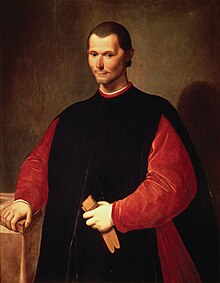
Niccolo Machiavelli
“It was a saying of ancient writers, that men afflict themselves in evil, and become weary of the good, and that both these dispositions produce the same effects.
“For when men are no longer obliged to fight from necessity, they fight from ambition, which passion is so powerful in the hearts of men that it never leaves them, no matter to what height they may rise.
“The reason for this is that nature has created men so that they desire everything, but are unable to attain it. Desire being thus always greater than the faculty of acquiring, discontent with what they have and dissatisfaction with themselves result from it.
“This causes the changes in their fortunes—for as some men desire to have more, while others fear to lose what they have, enmities and war are the consequences. And this brings about the ruin of one province and the elevation of another.”
Author Walter Scheidel, Dickason Professor in the Humanities, Professor of Classics and History at Stanford University, has also given this subject a great deal of thought. And, like Machiavelli, he has reached some highly disturbing conclusions.

Walter Scheidel
World Economic Forum [CC BY-SA 2.0 (https://creativecommons.org/licenses/by-sa/2.0)%5D
He gave voice to these in his 2017 book, The Great Leveler: Violence and the History of Inequality from the Stone Age to the Twenty-First Century. His thesis: Only violence and catastrophes have consistently reduced inequality throughout history.
According to the book’s jacket blurb: “Are mass violence and catastrophes the only forces that can seriously decrease economic inequality? To judge by thousands of years of history, the answer is yes.
“Tracing the global history of inequality from the Stone Age to today, Walter Scheidel shows that inequality never dies peacefully. Inequality declines when carnage and disaster strike and increases when peace and stability return.
“The Great Leveler is the first book to chart the crucial role of violent shocks in reducing inequality over the full sweep of human history around the world.
“Ever since humans began to farm, herd livestock, and pass on their assets to future generations, economic inequality has been a defining feature of civilization. Over thousands of years, only violent events have significantly lessened inequality.
“The ‘Four Horsemen’ of leveling—-mass-mobilization warfare, transformative revolutions, state collapse, and catastrophic plagues—have repeatedly destroyed the fortunes of the rich.
“Scheidel identifies and examines these processes, from the crises of the earliest civilizations to the cataclysmic world wars and communist revolutions of the twentieth century.
“Today, the violence that reduced inequality in the past seems to have diminished, and that is a good thing. But it casts serious doubt on the prospects for a more equal future.”
Revolutionaries have known the truth of Scheidel’s findings from the gladiators’ revolt of Spartacus (73-71 B.C.) to the French Revolution (1789-1799) to the overthrow of the Czarist Romanov dynasty (1917).
But American politicians serenely ignore that truth. They depend on the mega-rich for millions of dollars in “campaign contributions”—which pay for self-glorifying ads on TV.
Thus, in 2016, American voters had a “choice” between two “love-the-rich” Presidential candidates: Donald Trump and Hillary Clinton.
Trump owed his wealth to a $200 million gift from his real estate tycoon father. Clinton owed hers mostly through her husband, Bill, by his writing books, giving speeches, consulting private companies and advising billionaire Ron Burkle.
After leaving the Senate (2001-09) and President Obama’s cabinet (2009-13), she earned $9 million in speaking fees in both 2013 and 2014.
The result was that millions stayed home or voted in protest for third-party candidates who had no chance of winning.
In 2020, American voters got to “choose” between another two “love-the-rich” candidates: Donald Trump and Joseph Biden.
In his 1975 book, The Corrupt Society: From Ancient Greece to Modern-day America, British historian Robert Payne warned that the predatory rich would not change their behavior: “Nor is there any likelihood that the rich will plow back their money into services to ensure the general good.
“They have rarely demonstrated social responsibility, and they are much more likely to hold on to their wealth at all costs than to renounce any part of it.
“Like the tyrant who lives in a world wholly remote from the world of the people, shielded and protected from all possible influences, the rich are usually the last to observe the social pressures rising from below, and when these social pressures reach flashpoint, it is too late to call in the police or the army.”
2016 PRESIDENTIAL CAMPAIGN, 2020 PRESIDENTIAL CAMPAIGN, 2024 PRESIDENTIAL ELECTION, ABC NEWS, ADOLF HITLER, ALTERNET, ANCIENT GREECE, ANCIENT ROME, AP, BERNIE SANDERS, BILL CLINTON, BRIAN THOMPSON, BUZZFEED, CATASTROPHE, CBS NEWS, CHIEF EXECUTIVE OFFICERS (CEOs)), CHINA, CNN, CONSUMER PROTECTION, CORPORATE TAXES, CORRUPTION, CROOKS AND LIARS, DAILY KOZ, DELAY DENY DEFEND (BOOK), DEMOCRATIC PARTY, DONALD TRUMP, ECONOMIC POLICY INSTITUTE, EXECUTIVE PAYWATCH, FORBES, FUNDRAISING, HILLARY CLINTON, INCOME INEQUALITY, IVAN THE TERRIBLE, JAY M. FEINMAN, JOE BIDEN, JOSEPH STALIN, LEON TROTSKY, MEDICAL INSURANCE, MOTHER JONES, MOVEON, MSNBC, NATIONAL PUBLIC RADIO, NAZI GERMANY, NBC NEWS, NEWSWEEK, NICCOLO MACHIAVELLI, NPR, PBS NEWSHOUR, POLITICO, RAW STORY, REUTERS, ROBERT PAYNE, SALON, SEATTLE TIMES, SLATE, SPARTACUS, THE ATLANTIC, THE CHICAGO SUN-TIMES, THE CHICAGO TRIBUNE, THE CORRUPT SOCIETY (BOOK), THE DAILY BEAST, THE DISCOURSES, THE FRENCH REVOLUTION, THE GREAT LEVELER, THE GREAT LEVELER (BOOK), THE GUARDIAN, THE HILL, THE HUFFINGTON POST, THE LOS ANGELES TIMES, THE NATION, THE NEW YORK TIMES, THE RUSSIAN REVOLUTION, THE WASHINGTON POST, TIME, U.S. NEWS & WORLD REPORT, UNITEDHEALTHCARE, UPI, USA TODAY, VIOLENCE, Vladimir Lenin, WALL STREET, WALTER SCHEIDEL, WATERGATE, WEALTH GAP, WILLIAM SHAKESPEARE, WINSTON CHURCHILL, X
In Bureaucracy, Business, History, Law, Politics, Social commentary on December 10, 2024 at 12:21 am
Americans are used to Presidential candidates telling lies (euphemistically known as “campaign promises”) to get elected.
But when a candidate actually (and usually accidentally) tells the truth, the results can be electrifying.
A pointed example:
On June 18, 2019, Democratic Presidential candidate and front-runner Joe Biden addressed a roomful of donors in New York. Money is, after all, the lifeblood of all political campaigns, and Biden wanted to guarantee he got more of it than any of his 23 Democratic rivals.
So the former vice president had a message he felt sure would appeal to his well-heeled audience of billionaires: Don’t worry, if I’m elected, your standard of living won’t change.

Joe Biden
Addressing the 100 or so guests at a fundraiser at the Carlyle Hotel in New York City, Biden said that he had taken heat from “some of the people on my team, on the Democratic side” because he had said that rich people were “just as patriotic as poor people.
“The truth of the matter is, you all, you all know, you all know in your gut what has to be done. We can disagree in the margins but the truth of the matter is it’s all within our wheelhouse and nobody has to be punished. No one’s standard of living will change, nothing would fundamentally change,” he said.
And he added: “I mean, we may not want to demonize anybody who has made money.
“When we have income inequality as large as we have in the United States today, it brews and ferments political discord and basic revolution. Not a joke. Not a joke. It allows demagogues to step in and say the reason where we are is because of the ‘other’….
“You’re not the other. I need you very badly. I hope if I win this nomination, I won’t let you down. I promise you. I have a bad reputation, I always say what I mean. The problem is I sometimes say all that I mean.”
Biden talked about decreasing income inequality and promoting workers’ rights. But he took a moderate stance when it came to taxation.
Vermont United States Senator Bernie Sanders, on the other hand, has attacked the ultra-rich as responsible for the ever-widening gap between themselves and the poor.
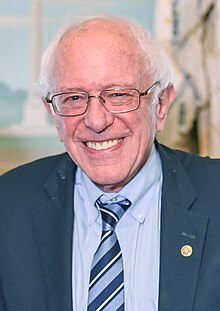
Bernie Sanders
Palácio do Planalto from Brasilia, Brasil, CC BY 2.0 <https://creativecommons.org/licenses/by/2.0>, via Wikimedia Commons
“I love Bernie, but I’m not Bernie Sanders. I don’t think 500 billionaires are the reason why we’re in trouble,” Biden said in March, 2019.
Instead, he proposed expanding tax credits for the poor and middle class, and making the tax code less friendly to rich investors.
Robert Payne, the distinguished British historian, had a different—and darker—view of the rich.
Payne authored more than 110 books. Among his subjects were Adolf Hitler, Ivan the Terrible, Winston Churchill, Joseph Stalin, Vladimir Lenin, William Shakespeare and Leon Trotsky.
In 1975, he published The Corrupt Society: From Ancient Greece to Present-Day America. It proved a summary of many of his previous works.
Among the epochs it covered were the civilizations of ancient Greece, Rome and China; Nazi Germany; the Soviet Union; and Watergate-era America. And the massive corruption each of those epochs had spawned.

In his chapter, “A View of the Uncorrupted Society,” Payne warned: Power and wealth are the main sources of corruption.
“The rich, simply by being rich, are infected with corruption. Their overwhelming desire is to grow richer, but they can do this only at the expense of those who are poorer than themselves.
”Their interests conflict with those of the overall society. They live sheltered from the constant anxieties of the poor, and thus cannot understand them. Nor do they try to.
“They see the poor as alien from themselves, and thus come to fear and despise them. And their wealth and influence enables them to buy politicians—who, in turn, write legislation that protects the rich from the poor.”
But Payne foresaw an even greater danger from the rich and powerful than their mere isolation from the rest of society: “The mere presence of the rich is corrupting. Their habits, their moral codes, their delight in conspicuous consumption are permanent affronts to the rest of humanity. Vast inequalities of wealth are intolerable in any decent society.”
Writing in 1975, Payne noted that a third of the private wealth was possessed by less than five percent of the population—while about a fifth of the populace lived at the poverty level. By 2000, he predicted, about five percent of the population would possess two-thirds of America’s wealth. And more than half the population would be near or below the starvation level.
Payne has proven to be an uncanny prophet.
On October 8, 2024, Fortune magazine noted that “over the past 30 years, the U.S.’s top 1% got richer, and now hold nearly a third of the nation’s wealth.“
Oxfam is a British-founded confederation of 21 independent non-governmental organizations, focusing on the alleviation of global poverty, founded in 1942. On January 16, 2023, it noted:
“The richest 1 percent grabbed nearly two-thirds of all new wealth worth $42 trillion created since 2020, almost twice as much money as the bottom 99 percent of the world’s population.”
But this situation need not remain permanent.
1968 PRESIDENTIAL CAMPAIGN, 2024 PRESIDENTIAL ELECTIONS, ABC NEWS, ABORTION, ADOLF HITLER, AILEEN CANNON, ALTERNET, AMERICABLOG, AP, ARI FLEISCHER, ” 9/11, BABY BOOMER RESISTANCE, BBC, BILL CLINTON, BLOOMBERG NEWS, BUZZFEED, CBS NEWS, CNN, COMMUNISTS, CROOKS AND LIARS, DAILY KOZ, DAVID BROOKS, DEMOCRATS, DONALD TRUMP, ECONOMY, FBI, FEAR, FIVETHIRTYEIGHT, GEORGE H.W. BUSH, GEORGE W. BUSH, GREED, HARPER’S MAGAZINE, HATRED, HERITAGE FOUNDATION, HUFFINGTON POST, HUMAN NATURE, ILLEGAL ALIENS, JACK SIMITH, JANUARY 6 COUP ATTEMPT, JOHN GOTTI, JONATHAN CAPEHART, JOSEPH BIDEN, JOSEPH MCCARTHY, LEE ATWATER, MEDIA MATTERS, MERRICK GARLAND, MICHELLE OBAMA, MOTHER JONES, MOVEON, MSNBC, NBC NEWS, NEW REPUBLIC, NEWSDAY, NEWSWEEK, NPR, PAUL VON HINDENBURG, PBS NEWSHOUR, POLITICO, POLITICUSUSA, PROJECT 2025, RAW STORY, REPUBLICANS, REUTERS, RICHARD NIXON, SALON, SARAH HUCKABEE SANDERS, SEATTLE TIMES, SLATE, SOUTHERN STRATEGY, SOVIET UNION, TALKING POINTS MEMO, THE ATLANTIC, THE CHICAGO SUN-TIMES, THE CHICAGO TRIBUNE, THE DAILY BEAST, THE DAILY BLOG, THE GUARDIAN, THE HILL, THE HUFFINGTON POST, THE INTERCEPT, THE LOS ANGELES TIMES, THE NATION, THE NEW REPUBLIC, THE NEW YORK TIMES, THE NEW YORKER, THE VILLAGE VOICE, THE WASHINGTON POST, THINKPROGRESS, TIME, TREASON, TRUTHDIG, TRUTHOUT, TWO POLITICAL JUNKIES, U.S. NEWS & WORLD REPORT, UNITED STATES DEPARTMENT OF JUSTICE, UPI, USA TODAY, WEIMAR REPUBLIC, WILLIAM BRANGHAM, WONKETTE, WORLD WAR 11, X
In Bureaucracy, History, Law, Law Enforcement, Medical, Politics, Social commentary on November 13, 2024 at 12:17 am
There are many reasons why Democrats lose elections. Seven have already been offered. Here are two more.
Reason #7: Republicans learned long ago that most voters aren’t moved by appeals to their rationality. Instead, what counts with them is emotions—such as fear.
From the end of World War II in 1945 to the collapse of the Soviet Union in 1991, the Enemy of Choice for Republicans was the Communists.
Millions of Americans were so pathologically frightened by “The Red Menace” that any Democratic politician libeled as a “Communist,” “Comsymp,” “fellow traveler” was considered as at least a potential traitor, if not an actual one.
Among the Republican politicians who rode to victory on a wave of Red hysteria: Richard Nixon and Joseph McCarthy
Even as late as 1992, President George H.W. Bush and the Republican establishment charged that Arkansas Governor Bill Clinton might be a KGB plant. Their evidence: During his tenure at Oxford University in 1969-70, Clinton had briefly visited Moscow—and thus might have been turned into a “Manchurian Candidate.”
After the collapse of the Soviet Union, Right-wingers had to settle for attacking their opponents as “liberals” and “soft on crime.” But these charges didn’t carry the same weight as “Communists” and “traitors.”
Then, on September 11, 2001, Republicans—and their Right-wing supporters—at last found a suitable replacement for the Red Menace: The Maniacal Muslim.
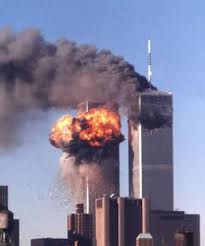
The World Trade Center on September 11, 2001
Led by President George W. Bush, Republicans used fear of Muslims to con and bully the nation into a needless, bloody, budget-busting war on Iraq.
Democratic are generally unwilling to fight fire with fire. Thus, Michelle Obama in 2016: “When they go low, we go high.”
Reason #8: Republicans consistently bring brass knuckles to a prizefight.
Example 1: Republicans organized a nationwide effort to suppress voter turnout among blacks and liberals.
Yet Democrats didn’t make a similar effort to suppress Right-wing turnout. Nor did the Biden Justice Department indict those Republicans responsible for their anti-democratic efforts.
Example 2: On January 6, 2021, President Donald Trump—supported by at least 147 Republicans in the House and Senate—incited a treasonous coup to remain in office. This despite the overwhelming evidence that he had lost the 2020 election to Joseph Biden.
With the end of the Biden administration little more than two months away, not one Republican House or Senate member supporting such treason had been indicted for that infamy. Let alone tried, convicted and imprisoned.
Had this occurred, the Biden administration’s agenda would have been far more advanced than it is. Republicans who were raising funds for re-election campaigns would have been forced to raise them to pay huge legal bills.
They would have had far less time to plot to overthrow democracy. Instead, their attention would have been increasingly focused on their upcoming trials for treason.
Reason #9: Since 2021, the Biden administration tolerated Donald Trump’s campaign of lies.
Trump continues to spread The Big Lie that he was robbed by a vast conspiracy—although not one of the more than 60 cases his lawyers brought before Federal judges proved this true.
Moreover, he has openly and repeatedly threatened to seek “vengeance” on Democrats who have opposed him—starting with President Biden and his family.
A major goal of “Project 2025,” designed by the Right-wing Heritage Foundation, is to make the director of the FBI personally accountable to a Right-wing President—just as the head of the KGB is personally accountable to Vladimir Putin.
There can be no doubt that after Trump’s win in 2024, American democracy as it has existed for 248 years will vanish.
Trump should have been indicted for treason by no later than mid-2021. Even then, the evidence was overwhelming that he had instigated the coup attempt.

Yet it wasn’t until November 18, 2022, that Jack Smith was appointed Special Counsel to oversee the criminal investigations into Trump’s role in the January 6 Capitol attack and his illegal storage of classified documents at his Mar-a-Lago estate.
And Smith allowed Trump-appointed Florida Judge Aileen Cannon to indefinitely postpone the stolen documents trial.
Meanwhile, Trump won repeated delays in his trial for inciting a violent attack on the Capitol. His victory on November 5 guarantees he will not be prosecuted for any of his crimes.

To bring down Mafia “boss of all bosses” John Gotti, the FBI waged a seven-year, $75 million campaign—which included the use of electronic bugs and recruitment of informants.
To date, there is no evidence that the Bureau applied such an effort against Trump—although he, unlike Gotti, threatens the very foundations of American democracy.
For this, blame must fall squarely on Attorney General Merrick Garland, who has been notably derelict in pursuing Right-wing treason.
America now stands at the point where the German Weimar Republic stood in 1932: With an aged President (Paul von Hindenburg) unable—or unwilling—to cope with a surging Fascistic movement (led by Adolf Hitler).
The results of that collective failure destroyed Germany and left 60 million dead around the world.
The United States—and especially Democrats—has allowed itself to make that same fatal mistake.
1968 PRESIDENTIAL CAMPAIGN, 2024 PRESIDENTIAL ELECTIONS, ABC NEWS, ABORTION, ADOLF HITLER, AILEEN CANNON, ALTERNET, AMERICABLOG, AP, ARI FLEISCHER, ” 9/11, BABY BOOMER RESISTANCE, BBC, BILL CLINTON, BLOOMBERG NEWS, BUZZFEED, CBS NEWS, CNN, COMMUNISTS, CROOKS AND LIARS, DAILY KOZ, DAVID BROOKS, DEMOCRATS, DONALD TRUMP, ECONOMY, FBI, FEAR, FIVETHIRTYEIGHT, GEORGE H.W. BUSH, GEORGE W. BUSH, GREED, HARPER’S MAGAZINE, HATRED, HERITAGE FOUNDATION, HUFFINGTON POST, HUMAN NATURE, ILLEGAL ALIENS, JACK SMITH, JANUARY 6 COUP ATTEMPT, JONATHAN CAPEHART, JOSEPH BIDEN, JOSEPH MCCARTHY, JUOHN GOTTI, LEE ATWATER, MEDIA MATTERS, MERRICK GARLAND, MICHELLE OBAMA, MOTHER JONES, MOVEON, MSNBC, NBC NEWS, NEW REPUBLIC, NEWSDAY, NEWSWEEK, NPR, PAUL VON HINDENBURG, PBS NEWSHOUR, POLITICO, POLITICUSUSA, PROJECT 2025, RAW STORY, REPUBLICANS, REUTERS, RICHARD NIXON, SALON, SARAH HUCKABEE SANDERS, SEATTLE TIMES, SLATE, SOUTHERN STRATEGY, SOVIET UNION, TALKING POINTS MEMO, THE ATLANTIC, THE CHICAGO SUN-TIMES, THE CHICAGO TRIBUNE, THE DAILY BEAST, THE DAILY BLOG, THE GUARDIAN, THE HILL, THE HUFFINGTON POST, THE INTERCEPT, THE LOS ANGELES TIMES, THE NATION, THE NEW REPUBLIC, THE NEW YORK TIMES, THE NEW YORKER, THE VILLAGE VOICE, THE WASHINGTON POST, THINKPROGRESS, TIME, TREASON, TRUTHDIG, TRUTHOUT, TWO POLITICAL JUNKIES, U.S. NEWS & WORLD REPORT, UNITED STATES DEPARTMENT OF JUSTICE, UPI, USA TODAY, WEIMAR REPUBLIC, WILLIAM BRANGHAM, WONKETTE, WORLD WAR 11, X
In Bureaucracy, History, Law, Law Enforcement, Medical, Politics, Social commentary on November 12, 2024 at 12:05 am
There are many reasons why Democrats consistently lose elections.
Democrats expect people to rise above their worst selves and embrace a higher, altruistic cause—civil rights, abortion rights, healthcare for all.
Reason #3: Republicans look for those who are comfortable in their racism, their greed, their hatred for women. They don’t try to reform them—they encourage them in their racism, greed and misogyny.
This began long before Donald Trump became a Presidential candidate in 2016.
When Richard Nixon announced his candidacy for President in 1968, he pursued what was euphemistically termed “a Southern strategy.”
In reality, this was aimed to exploit whites’ fear and hatred of blacks.
In a now-infamous 1981 interview, Right-wing political consultant Lee Atwater explained how this worked.
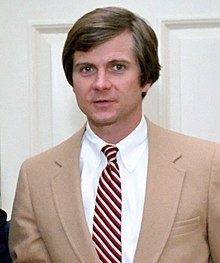
Lee Atwater
“You start out in 1954 by saying, ‘Nigger, nigger, nigger.’ By 1968 you can’t say ‘nigger’—that hurts you, backfires.
“So you say stuff like, uh, forced busing, states’ rights, and all that stuff, and you’re getting so abstract.
“Now, you’re talking about cutting taxes, and all these things you’re talking about are totally economic things and a byproduct of them is, blacks get hurt worse than whites….
“‘We want to cut this,’ is much more abstract than even the busing thing, uh, and a hell of a lot more abstract than ‘Nigger, nigger.’
“So anyway you look at it, race is coming on the back burner.”
But blacks have by no means been the only targets—and victims—of Republican hate campaigns. A partial list of these would include:
- Liberals
- Women
- Socialists
- Secularists
- Disabled
- Environmentalists
- Hispanics
- Gays
- Lesbians
And now transgenders.
Reason #4: Republicans are experts at inciting hatred—and reaping huge gains in power as a result.
There can be no better example of a politician who has played successfully on the hatred of American voters than Donald Trump. If Barack Obama was the 2008 candidate of “Hope and Change,” then Trump was the 2016 candidate of “Hate and Fear.”
From June 15, 2015, when he launched his Presidential campaign, until October 24, 2016, Trump fired almost 4,000 angry, insulting tweets at 281 people and institutions that had somehow offended him.
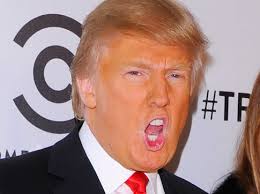
Donald Trump
The New York Times needed two full pages of its print edition to showcase them.
Among his targets:
- Hillary Clinton
- The New York Times
- President Barack Obama
- CNN
- Actress Meryl Streep
- The Washington Post
- Singer Neil Young
- Democrats
- Actor Arnold Schwarzenegger
- Republicans
- Comedian John Oliver
- The State of New Jersey
- Beauty pageant contestants
Others he clearly delighted in insulting during the campaign included:
- Women
- Blacks
- Hispanics
- Asians
- Muslims
- The disabled
- Prisoners-of-war
Democrats want to believe a day will come when all races, colors and creeds will live together in harmony. Their policies aim at creating that sort of society.
Reason #5: Republicans know that most people instinctively feel comfortable with those who most resemble themselves. And they don’t seek out those who differ from themselves.
That’s why—in schools and prisons—whites sit mostly with whites, blacks sit mostly with blacks, and Hispanics sit mostly with Hispanics.
Reason #6: Republicans know that if most Americans feel uncomfortable with fellow Americans who don’t resemble themselves, they feel even less comfortable with foreigners who don’t.
This is especially true when inflation is high, jobs and housing are scarce, and local schools and hospitals are crammed with illegal aliens—who, by law, shouldn’t even be in the country.
For these Americans, the Democrats’ “Kumbaya” message of love and tolerance is wasted. By contrast, Republicans’ cries of “Get rid of the illegal aliens!” ring loud and clear.

Illegal aliens crossing into the United States
Moreover, the “illegal alien” tagline often allows Republicans to sidestep criticism on even the most outrageous of their actions.
Example: The case of a 10-year-old Ohio girl who was raped—and had to travel to Indiana to obtain an abortion after the Supreme Court overturned Roe. v. Wade.
Ohio has a “heartbeat” law making abortion a crime after a fetal heartbeat is determined—usually within the first six weeks.

For Ohio’s Republican legislators and governor, the “rights” of a fetus far outweigh those of an actual human being—even if she is a child.
Ari Fleischer, former press secretary for President George W. Bush, said on Fox News that the girl’s illegal alien rapist from Guatemala was the villain, not the fetal heartbeat law.
“The agenda is to allow people to come into America without having to come here legally. If you start pointing things out like this, it makes it a moral question. And that’s why the press doesn’t want to face up to the fact it’s a moral issue that people should not be allowed in America unless they come here legally.”
Democrats believe that voters are creatures of rationality.
Reason #7: Republicans learned long ago that what counts with most voters is emotions—such as fear.
From the end of World War II in 1945 to the collapse of the Soviet Union in 1991, the Enemy of Choice for Republicans was the Communists.
Millions of Americans were so pathologically frightened by “The Red Menace” that any Democratic politician libeled as a “Communist,” “Comsymp,” “fellow traveler” was considered at least a potential traitor, if not an actual one.
1968 PRESIDENTIAL CAMPAIGN, 2024 PRESIDENTIAL ELECTIONS, ABC NEWS, ABORTION, ADOLF HITLER, AILEEN CANNON, ALTERNET, AMERICABLOG, AP, ARI FLEISCHER, ” 9/11, BABY BOOMER RESISTANCE, BBC, BILL CLINTON, BLOOMBERG NEWS, BUZZFEED, CBS NEWS, CNN, COMMUNISTS, CROOKS AND LIARS, DAILY KOZ, DAVID BROOKS, DEMOCRATS, DONALD TRUMP, ECONOMY, FBI, FEAR, FIVETHIRTYEIGHT, GEORGE H.W. BUSH, GEORGE W. BUSH, GREED, HARPER’S MAGAZINE, HATRED, HERITAGE FOUNDATION, HUFFINGTON POST, HUMAN NATURE, ILLEGAL ALIENS, JACK SMITH, JANUARY 6 COUP ATTEMPT, JONATHAN CAPEHART, JOSEPH BIDEN, JOSEPH MCCARTHY, JUOHN GOTTI, LEE ATWATER, MEDIA MATTERS, MERRICK GARLAND, MICHELLE OBAMA, MOTHER JONES, MOVEON, MSNBC, NBC NEWS, NEW REPUBLIC, NEWSDAY, NEWSWEEK, NPR, PAUL VON HINDENBURG, PBS NEWSHOUR, POLITICO, POLITICUSUSA, PROJECT 2025, RAW STORY, REPUBLICANS, REUTERS, RICHARD NIXON, SALON, SARAH HUCKABEE SANDERS, SEATTLE TIMES, SLATE, SOUTHERN STRATEGY, SOVIET UNION, SUSAN PAGE, TALKING POINTS MEMO, THE ATLANTIC, THE CHICAGO SUN-TIMES, THE CHICAGO TRIBUNE, THE DAILY BEAST, THE DAILY BLOG, THE GUARDIAN, THE HILL, THE HUFFINGTON POST, THE INTERCEPT, THE LOS ANGELES TIMES, THE NATION, THE NEW REPUBLIC, THE NEW YORK TIMES, THE NEW YORKER, THE VILLAGE VOICE, THE WASHINGTON POST, THINKPROGRESS, TIME, TREASON, TRUTHDIG, TRUTHOUT, TWO POLITICAL JUNKIES, U.S. NEWS & WORLD REPORT, UNITED STATES DEPARTMENT OF JUSTICE, UPI, USA TODAY, WEIMAR REPUBLIC, WILLIAM BRANGHAM, WONKETTE, WORLD WAR 11, X
In Bureaucracy, History, Law, Law Enforcement, Medical, Politics, Social commentary on November 11, 2024 at 12:16 am
If you’re wondering why Donald J. Trump once again won the election of 2024—you can stop wondering.
The Democrats lost the Senate while Republicans closed in on the House on November 5. The Democrats also lost the White House.
Why?
Reason #1: Because Republicans understand the darker sides of human nature far better than Democrats—and don’t hesitate to take full advantage of them.
Democrats believe that people want to become altruistically better than they are. They don’t.
Reason #2: Republicans realize that most people like themselves as they are—and don’t want to change. At least, not in the altruistic ways Democrats envision.
If they want to change anything about themselves, it’s strictly at the materialistic level: More money, lower prices, more big-ticket toys.
They may claim concern for others, but if given a choice between their pocketbook and a higher goal, most will vote for their pocketbook.
A first-rate example of this appeared on The PBS Newshour on July 15, 2022, during an exchange between conservative New York Times columnist David Brooks and Jonathan Capehart, associate editor for the Washington Post.
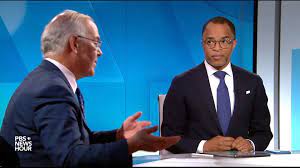
David Brooks (left) and Jonathan Capehart (right) on the PBS Newshour
Host William Brangham led off the exchange:
“I want to switch, Jonathan, to this issue of the continued fallout of the Supreme Court overturning Roe v. Wade. And Democrats seem to believe that this could be one of the things that might give them at least some trace of a fighting chance in the midterms.
“And we saw we this week this sort of horrendous case of a young 10-year-old girl who had been raped. She got pregnant. She then had to leave her state [Ohio] and go to another state [Indiana] where abortion would still be allowed.
“And GOP officials tried to make hay of it. They doubted that that story really existed. The local [Attorney General] said, we’re going to go after the doctor that performed this.
“Do you think that—that issue and the extremity of the way that this is being handled will actually benefit Democrats?”
Capehart: “It should. The idea that we’re talking about violence against a child, and then being forced by the state to give birth to this child, going to another state so she can terminate that pregnancy, and then being persecuted and prosecuted by the state for doing that….

“We are in “Handmaid’s Tale” territory here. We are turning into Gilead. And if there are people out there who are upset by the Supreme Court decision, by what Republican legislators around the country in states and localities are doing to further restrictions and bans on abortion.
“I don’t know what else could push people to the polls more than not just being stripped of a constitutional right, but having your right to — right to freedom, right to privacy, right to liberty not just taken away, but local officials doing everything they can to ensure that you don’t have autonomy over your own body.
“If that doesn’t get people out to the polls, I don’t know what will.”
It didn’t.
Brangham then turned to Brooks:
“I mean, David, this was an incredibly extreme case, in some ways crystallized the sharpness and the horribleness of this division in this country.
“Do you think it will redound to the Democrats’ benefit?”
Brooks: “A little, but, frankly, not much.
“Now, abortion rights defenders, they should pursue their cause with the passion that they’re bringing to it….
“But there’s just a giant gap between what a lot of Democrats want to talk about and what the whole rest of the country wants to talk about. And if you ask people, what’s the most important issues, progressives want to talk about abortion and guns.
“The entire rest of the country, independents, conservatives, unaffiliated people, they want to talk about the economy. And, for them, the economy is way up here. Jobs are number one. Inflation is number two.
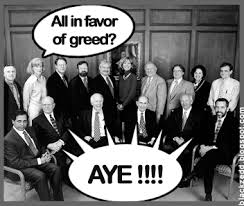
“And so why is Joe Biden at 33 percent approval in the latest Times poll? It’s the economy. Why in the same poll do half of Hispanics support the Republicans now? The economy. These are earthquake numbers for Democrats…..
“But if Democrats, if they’re not talking about economic policy every day, then they’re just not talking about the policy that is clearly ranking number one with a vast majority of voters.”
No Republican has appealed more directly to greed as a motivator than Donald Trump.
On August 23, 2018, Trump, as President, offered additional evidence that he’s “not like other people.” He did so by giving an unprecedented reason why he shouldn’t be impeached: “I tell you what, if I ever got impeached, I think the market would crash, I think everybody would be very poor.”
White House Press Secretary Sarah Huckabee Sanders doubtless spoke for millions of Trump supporters when she said, on June 4, 2018:
“Since taking office, the President has strengthened American leadership, security, prosperity, and accountability. And as we saw from Friday’s jobs report, our economy is stronger, Americans are optimistic, and business is booming.”
ABC NEWS, ADAM SCHIFF, ADOLF HITLER, ALEX PHILLIPS, ALTERNET, AMERICA’S VOICE, AMERICABLOG, AMERICAN PRIORITY CONFERENCE, AP, AUSTRIA, BABY BOOMER RESISTANCE, BARACK OBAMA, BBC, BERNIE SANDERS, BILL CLINTON, BLACK LIVES MATTER, BLOOMBERG, BUZZFEED, CBS NEWS, CHINA, CINDY MCCAIN, CIVIL WAR, CNN, COLIN FIRTH, COREY LEWANDOWSKI, CROOKS AND LIARS, CZECHOSLOVAKIA, DAILY KOS, DANA LOESCH, DEMOCRATS, DONALD TRUMP, DONALD TRUMP JUNIOR, EUGENE SCOTT, FBI, FINAL SOLUTION, FIVETHIRTYEIGHT, FRANCISCO FRANCO, GEORGE SOROS, HARPER’S MAGAZINE, HILLARY CLINTON, HUFFINGTON POST, HUNTER BIDEN, JOE BIDEN, JOHN MCCAIN, MATT GAETZ, MEDIA MATTERS, MEIN KAMPF, MITT ROMNEY, MOTHER JONES, MOVEON, MSNBC, NANCY PELOSI, NATIONAL RIFLE ASSOCIATION, NAZI GERMANY, NBC NEWS, NEVILLE CHAMBERLAIN, NEW REPUBLIC, NEWSDAY, NEWSWEEK, NINA BURLEIGH, NPR, PBS, PBS NEWSHOUR, PLUTARCH, POLAND, POLITICO, POLITICUSUSA, RACHEL MADDOW, RAW STORY, REPUBLICANS, REUTERS, ROGER STONE, ROSIE O’DONNELL, SALON, SARAH HUCKABEE SANDERS, SEATTLE TIMES, SLATE, SOVIET UNION, SPAIN, TALKING POINTS MEMO, THE ATLANTIC, THE CHICAGO SUN-TIMES, THE CHICAGO TRIBUNE, THE DAILY BEAST, THE DAILY BLOG, THE GEEKZTEAM, THE GUARDIAN, THE HILL, THE HUFFINGTON POST, THE INTERCEPT, THE KINGSMAN (MOVIE), THE LOS ANGELES TIMES, THE NATION, THE NEW REPUBLIC, THE NEW YORK TIMES, THE NEW YORKER, THE TRUMPSMAN (VIDEO), THE VILLAGE VOICE, THE WASHINGTON POST, THINKPROGRESS, TIME, TREASON, TRUTHDIG, TRUTHOUT, TWO POLITICAL JUNKIES, U.S. NEWS & WORLD REPORT, UKRAINE, UNITED STATES, UPI, USA TODAY, VERSALLIES TREATY, VOLODYMR ZELENSKI, WEIMAR REPUBLIC, WHITE HOUSE CORRESPONDENTS ASSOCIATION, WORLD WAR 11, X
In Bureaucracy, History, Military, Politics, Social commentary on November 1, 2024 at 12:09 am
After taking office as President on January 20, 2017, Donald Trump continued to hurl threats of violence against those he hates.
“Trump’s language of violence started with immigrants when he launched his presidential campaign in 2015,” wrote Washington Post Reporter Eugene Scott. “There is a direct line from his language to real violence against immigrants and other innocent Americans caught in the maniacal mass shootings of the past year.
“And this cancer is spreading: to Congress, to the media, to the intelligence community, to foreign allies. There is no end in sight as Trump becomes increasingly unhinged and the GOP remains frozen in abject silence.”
On October 2, 2019, Journalist Nina Burleigh wrote: “Since 2015, TV-watching Americans have been subject to the deimatic spectacle of more than 400 rallies (at least 80 since his election) in which Trump sometimes openly and more often coyly urged supporters to violence. These spectacles have conditioned many Americans to fear him and his more enthusiastic supporters.”

Supporters giving the “Seig Heil” salute to Donald Trump
“Over the last few days, the President’s rhetoric of violence and hate has spread,” stated an October 3, 2019 press release by America’s Voice, a liberal immigration group.
“As Jamelle Bouie noted yesterday, ‘Over the weekend, in a rage over impeachment, President Trump accused Representative Adam Schiff of ‘treason,’ promised ‘Big Consequences’ for the whistle-blower who sounded the alarm about his phone call with President Volodymyr Zelensky of Ukraine and shared a warning — from a Baptist pastor in Dallas — that impeachment ‘will cause a Civil War like fracture in this Nation from which our Country will never heal.’”
Trump’s opponents have good reason to fear. And not simply the public demonstrations by the President’s fanatical base. They should fear the secret fantasies of the Right.
Those secret fantasies have been revealed in a series of Right-wing videos featuring graphic acts of violence against those whom the Right—and Trump—hate.
From October 10 to 12, 2019, attendees of the American Priority Conference at the Trump National Doral Miami resort enjoyed many of those videos.
One of these, “The Trumpsman,” featured a digitized Trump shooting, stabbing and setting fire to such liberals—and even conservatives—as:
- Former President Bill Clinton
- Former Vice President Joe Biden
- Former Democratic Presidential candidate Hillary Clinton
- Democratic Speaker of the House Nancy Pelosi
- Former President Barack Obama
- Vermont United States Senator Bernie Sanders
- Utah Senator Mitt Romney
- The late Arizona Senator John McCain
And legitimate news media—such as CBS, BBC, ABC, CNN, The New York Times and The Washington Post—were also depicted as among Trump’s victims.
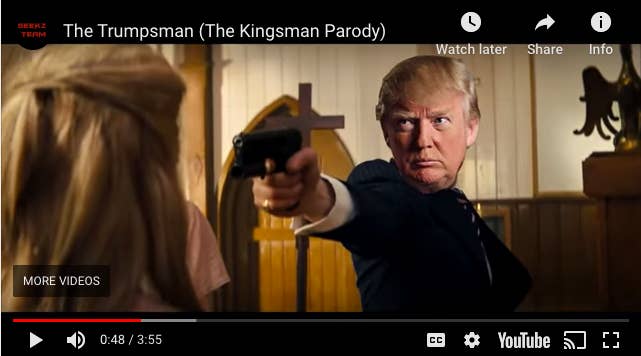
The video was produced by Rightists who believed it reflected what Donald Trump would do to his enemies if only he could get away with it. And given his near-constant calls for violence against his critics, they were absolutely correct.
But the video’s critics were wrong to call for its suppression.
On the contrary—it should have bene widely seen for what it was: The Mein Kampf of Donald Trump and his fanatical followers, in and outside the Republican party.
Like Adolf Hitler’s autobiography, it depicted the future America can expect if the Right gains the power to live out its murderous fantasies. And the fantasy Right-wingers prize most: The brutal extermination of everyone who refuses to submit to their Fascistic tyranny.
“The Trumpsman” is part of a growing genre of pro-Trump memes that routinely earn thousands of views on sites like YouTube and Twitter. Many superimpose the faces of Trump and his chief supporters slaughtering Democrats, liberal celebrities and/or members of the media.
The event’s organizer, Alex Phillips, hurriedly claimed that the “unauthorized video” was shown “in a side room” at the American Priority Conference.
But there was an upside to this exercise in Right-wing porn. Democrats could have run TV ads showing limited clips from “The Trumpsman” video.
Unfortunately, the majority of Democrats lack the courage to attack their Right-wing enemies with the same ruthlessness used against them. That’s why they lost most Presidential elections of the 20th century.
Americans should be constantly warned: These videos were not made by liberals to parody the values and goals of the Republican party and its Right-wing supporters.
These videos were made by Right-wingers—and reflect the true values and intentions of the Republican party and its Right-wing supporters.
The boiler-plate rhetoric that gushes out of Republican conventions—about love of family, God and flag—is the public mask of the Right.
The videos that depict Right-wingers ruthlessly slaughtering anyone who dares to disagree with them reflect the real face of the Right.
Of course, most Americans never imagined that a President would:
- Refuse to accept the results of a legitimate Presidential election;
- Spend four years lying that he had lost through massive voter fraud;
- Incite a mob to attack Congress while it counted Electoral College votes—which he knew proved he had lost in 2020.
Trump’s opponents should stop deluding themselves that: “Surely he’ll never do that.”
Whatever they fear he will do, he will do.
Like all predators, he will stop only when he meets a stronger opponent.
Germans—and the rest of the world—learned that about Adolf Hitler. But only when it was too late.
ABC NEWS, ADAM SCHIFF, ADOLF HITLER, ALEX PHILLIPS, ALTERNET, AMERICA’S VOICE, AMERICABLOG, AMERICAN PRIORITY CONFERENCE, AP, AUSTRIA, BABY BOOMER RESISTANCE, BARACK OBAMA, BBC, BERNIE SANDERS, BILL CLINTON, BLACK LIVES MATTER, BLOOMBERG, BUZZFEED, CBS NEWS, CHINA, CINDY MCCAIN, CIVIL WAR, CNN, COLIN FIRTH, COREY LEWANDOWSKI, CROOKS AND LIARS, CZECHOSLOVAKIA, DAILY KOS, DANA LOESCH, DEMOCRATS, DONALD TRUMP, DONALD TRUMP JUNIOR, EUGENE SCOTT, FBI, FINAL SOLUTION, FIVETHIRTYEIGHT, FRANCISCO FRANCO, GEORGE SOROS, HARPER’S MAGAZINE, HILLARY CLINTON, HUFFINGTON POST, HUNTER BIDEN, JOE BIDEN, JOHN MCCAIN, MATT GAETZ, MEDIA MATTERS, MEIN KAMPF, MITT ROMNEY, MOTHER JONES, MOVEON, MSNBC, NANCY PELOSI, NATIONAL RIFLE ASSOCIATION, NAZI GERMANY, NBC NEWS, NEVILLE CHAMBERLAIN, NEW REPUBLIC, NEWSDAY, NEWSWEEK, NINA BURLEIGH, NPR, PBS, PBS NEWSHOUR, PLUTARCH, POLAND, POLITICO, POLITICUSUSA, RACHEL MADDOW, RAW STORY, REPUBLICANS, REUTERS, ROGER STONE, ROSIE O’DONNELL, SALON, SARAH HUCKABEE SANDERS, SEATTLE TIMES, SLATE, SOVIET UNION, SPAIN, TALKING POINTS MEMO, THE ATLANTIC, THE CHICAGO SUN-TIMES, THE CHICAGO TRIBUNE, THE DAILY BEAST, THE DAILY BLOG, THE GEEKZTEAM, THE GUARDIAN, THE HILL, THE HUFFINGTON POST, THE INTERCEPT, THE KINGSMAN (MOVIE), THE LOS ANGELES TIMES, THE NATION, THE NEW REPUBLIC, THE NEW YORK TIMES, THE NEW YORKER, THE TRUMPSMAN (VIDEO), THE VILLAGE VOICE, THE WASHINGTON POST, THINKPROGRESS, TIME, TREASON, TRUTHDIG, TRUTHOUT, TWO POLITICAL JUNKIES, U.S. NEWS & WORLD REPORT, UKRAINE, UNITED STATES, UPI, USA TODAY, VERSALLIES TREATY, VOLODYMR ZELENSKI, WEIMAR REPUBLIC, WHITE HOUSE CORRESPONDENTS ASSOCIATION, WORLD WAR 11, X
In Bureaucracy, History, Military, Politics, Social commentary on October 31, 2024 at 12:14 am
On November 9, 1923, Nazi Party Fuhrer Adolf Hitler tried to overthrow the government in Munich, Bavaria.
About 2,000 Nazis marched to the center of Munich, where they confronted heavily-armed police. A shootout erupted, killing 16 Nazis and four policemen.
Hitler was injured during the clash, but managed to escape. Two days later, he was arrested and charged with treason.
Put on trial, he found himself treated as a celebrity by a judge sympathetic to Right-wing groups. He was allowed to brutally cross-examine witnesses and even make inflammatory speeches.
At the end of the trial, he was convicted of treason and sentenced to five years’ imprisonment. Of this he served only nine months before being released.
Hitler used his time in Landsberg Prison, in Bavaria, to write his infamous book, Mein Kampf–—“My Struggle.” Part autobiography, part political treatise, it laid out his future plans—for a revitalized Germany and the conquest of other nations.

Adolf Hitler leaving Landsberg Prison, December, 20, 1924
Published in 1925, it was long ignored by all but the most fanatical Nazis. But as Hitler gained increasing numbers of votes in a series of elections, many people—inside and outside Germany—began paying attention to its contents.
By 1939 it had sold 5,200,000 copies and had been translated into 11 languages.
Most of those who bought the book never read it. Its style was bombastic, repetitious and illogical. The first edition contained grammatical errors, reflecting a self-educated man.
Few who read it took Hitler’s intentions seriously. Comedians portrayed him as a wildly gesturing crank who screamed constantly.
Hitler made no effort to hide his program for Germany under his rule. His candor led many people to believe he was a lunatic who could be safely ignored.
He was especially insistent on the need for eliminating world Jewry and conquering the Soviet Union.
On the former topic he wrote: “The nationalization of our masses will succeed only when, aside from all the positive struggle for the soul of our people, their international poisoners are exterminated.
“If at the beginning of the war and during the war twelve or fifteen thousand of these Hebrew corrupters of the nation had been subjected to poison gas, such as had to be endured in the field by hundreds of thousands of our very best German workers of all classes and professions, then the sacrifice of millions at the front would not have been in vain.”
A mere 17 years later, Hitler’s “Thousand-Year Reich” would translate those words into horrific action in a series of extermination camps equipped with gas chambers.

Hitler was equally insistent that Germany needed to find Lebensraum—“Living space”-–in the east. And by “east” he meant “Russia.”
Specifically: “And so we National Socialists consciously draw a line beneath the foreign policy tendency of our pre-War period. We take up where we broke off six hundred years ago.
“We stop the endless German movement to the south and west, and turn our gaze toward the land in the east. At long last we break off the colonial and commercial policy of the pre-War period and shift to the soil policy of the future.
“If we speak of soil in Europe today, we can primarily have in mind only Russia and her vassal border states.”
Hitler finally attained power on January 30, 1933. He realized that Germany was not yet strong enough to impose its will on other nations. So he set out on a secret crash program to make Germany the strongest military power in Europe.
In 1936, he set out on his “mission of Providence”:
- March, 1936: Ordering German troops to reoccupy the demilitarised zone between France and Germany (the Rhineland), in violation of the Versailles Treaty, which ended World War 1.
- July, 1936: Sending troops to Spain to support the Fascist army of General Francisco Franco.
- March 12, 1938: Occupying Austria and “unifying” it with Germany (the “Anschluss“).
- September 29, 1938: Bullying British Prime Minister Neville Chamberlain into surrendering Czechoslovakia’s Sudetenland districts to Germany.
- September 1, 1939: Ordering the invasion of Poland, which unintentionally launched World War II.
- June 22, 1941: Ordering the invasion of the Soviet Union.
- 1941: Secretly ordering “the Final Solution of the Jewish Question,” resulting in the extermination of at least six million Jews.
Only after Hitler set out to conquer, first Europe, then the Soviet Union, did his victims and intended victims realize that Mein Kampf had given them a deadly warning. A warning too many of them had refused to heed.
By the time World War II ended:
- Fifty million men, women and children were died—most of them dying in agony.
- The Soviet Union, having crushed Nazi Germany, become a world power.
- Poland and eastern Europe—once captives of Nazi Germany—now found themselves captives of the Soviet Union.
- The United States, untouched by the war, emerged as the world’s superpower—and the only country strong enough to contain the Soviet Union.
But Adolf Hitler isn’t the only would-be dictator to give ample warning of his murderous intentions.
And, like most Germans in the Weimar Republic, which preceded Nazi Germany, most Americans refuse to take that warning seriously.
1984 (BOOK), 2016 PRESIDENTIAL ELECTION, 2020 PRESIDENTIAL ELECTION, ABC NEWS, ALTERNET, AMERICABLOG, AP, ” 9/11, BABY BOOMER RESISTANCE, BBC, BILL CLINTON, BLOOMBERG NEWS, BUZZFEED, CBS NEWS, CHRIS STIREWALT, CNN, CONDOLEEZA RICE, COVID-19, CROOKS AND LIARS, DAILY KOS, DICK CHENEY, DOMINION VOTING SYSTEMS, DONALD RUMSFELD, DONALD TRUMP, FIVETHIRTYEIGHT, FOX NEWS NETWORK, GEORGE ORWELL, GEORGE W. BUSH, HARPER’S MAGAZINE, HISTORY, HUFFINGTON POST, JANUARY 6 COUP ATTEMPT, JEB BUSH, JOE BIDEN, JOSEPH STALIN, LAURA INGRAHAM, LAVRENTI BERIA, LIBEL, MARCO RUBIO, MEDIA MATTERS, MIKE LINDELL, MOTHER JONES, MOVEON, MSNBC, NAZI-SOVIET NONAGGRESSION PACT, NBC NEWS, NEW REPUBLIC, NEW YORK TIMES V. SULLIVAN, NEWSDAY, NEWSMAX, NEWSWEEK, NKVD, NPR, PAUL WOLFOWITZ, POLITICO, POLITICUSUSA, RAW STORY, REPUBLICAN PARTY, REPUBLICANS, REUTERS, RICHARD CLARKE, RUDOLPH GIULIANI, SALON, SEAN HANNITY, SEATTLE TIMES, SIDNEY POWELL, SLANDER, SLATE, SOVIET UNION, STEVE BANNON, TALKING POINTS MEMO, THE ATLANTIC, THE CHICAGO SUN-TIMES, THE CHICAGO TRIBUNE, THE DAILY BEAST, THE DAILY BLOG, THE GUARDIAN, THE HILL, THE HUFFINGTON POST, THE INTERCEPT, THE LOS ANGELES TIMES, THE NATION, THE NEW REPUBLIC, THE NEW YORK TIMES, THE NEW YORKER, THE VILLAGE VOICE, THE WASHINGTON POST, THE WASHINGTONPOST, THINKPROGRESS, TIME, TRUTHDIG, TRUTHOUT, TUCKER CARLSON, TWO POLITICAL JUNKIES, U.S. NEWS & WORLD REPORT, UPI, USA TODAY, X
In Bureaucracy, Business, History, Military, Politics on October 24, 2024 at 12:05 am
At one time, Americans believed that the wholesale rewriting of history happened only in the Soviet Union.
“The problem with writing about history in the Soviet Union,” went a popular joke inside the Soviet Union, “is that you never know what’s going to happen yesterday.”
A classic example of this occurred in the Great Soviet Encyclopedia.
Lavrentiy Beria had been head of the NKVD, the dreaded predecessor to the KGB, from 1938 to 1953. On June 26, 1953, three months after the death of Soviet dictator Joseph Stalin, Beria was arrested on orders of his fellow Communist Party leaders, who feared he intended to purge them.
Beria was executed on December 23.
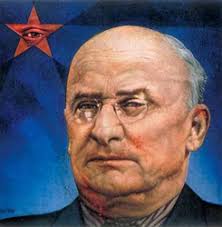
Lavrentiy Beria
But the Great Soviet Encyclopedia had just gone to press with a long article singing Beria’s praises.
What to do?
The editors of the Encyclopedia wrote an equally long article about “the Bering Straits,” which was to be pasted over the article about Beria, and sent this off to its subscribers. An unknown number of them decided it was safer to paste accordingly.
Similarly, Joseph Stalin was depicted in Soviet “history” texts as the architect of Russia’s victory over Nazi Germany during World War II.
No “historian” dared mention that Stalin’s wholesale purges of the Red Army in the 1930s had made the country vulnerable to the German attack in 1941. As had Stalin’s “nonaggression” pact with Germany in 1939, where he and Adolf Hitler secretly divided Poland between them.
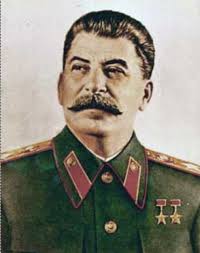
Joseph Stalin
But Russians no longer have a monopoly on rewriting history.
During the 2016 Presidential election, the Republican party furiously rewrote history in a desperate attempt to win the White House.
Specifically, its members tried to convince Americans that:
- President George W. Bush “kept us safe” (excluding, of course, the terror attacks of September 11, 2001, which slaughtered 3,000 Americans); and/or
- President Bush wasn’t to blame for 9/11—it was his predecessor, Bill Clinton (who left office more than a year and a half before 9/11).

World Trade Center – September 11, 2001
In 2015, Jeb Bush entered the “Rewriting History for Americans” sweepstakes.
On October 16, 2015, during an interview on Bloomberg TV, Donald Trump, the leading Republican candidate for President in 2016, dared speak (for Republicans) the unspeakable:
“When you talk about George Bush, I mean, say what you want, the World Trade Center came down during his time. He was President, OK? Blame him, or don’t blame him, but he was President. The World Trade Center came down during his reign.”
Bush was quick to respond on Twitter: “How pathetic for @realdonaldtrump to criticize the president for 9/11. We were attacked & my brother kept us safe.”

Jeb Bush
Trump replied:
“At the debate you said your brother kept us safe–I wanted to be nice & did not mention the WTC came down during his watch, 9/11.”
And: “No @JebBush, you’re pathetic for saying nothing happened during your brother’s term when the World Trade Center was attacked and came down.”
Suddenly, on February 13, another Republican Presidential candidate rushed to rewrite 9/11: Florida United States Senator Marco Rubio.
According to Rubio: “The World Trade Center came down because Bill Clinton didn’t kill Osama bin Laden when he had the chance to kill him.”
And on the following day, on NBC’s “Meet the Press,” he again made the charge: “If you’re going to ascribe blame, don’t blame George W. Bush, blame a decision that was made years earlier, not to take out bin Laden when the opportunity presented itself.”
All of which ignored such embarrassing truths as:
- During the first eight months of the Bush Presidency, Richard Clarke, the counter-terrorism adviser on the National Security Council, was not permitted to brief President Bush, despite mounting evidence of plans for a new Al-Qaeda outrage.
- From January 20 to September 11, 2001, Bush was on vacation, according to the Washington Post, 42% of the time.
- National Security Adviser Condoleeza Rice initially refused to hold a cabinet-level meeting on the subject of terrorism. Then she insisted that the matter be handled only by a more junior Deputy Principals meeting.
- Paul Wolfowitz, the number-two man at the Department of Defense, said: “I don’t understand why we are beginning by talking about this one man, bin Laden.”
- Even after Clarke outlined the threat posed by Al-Qaeda, Wolfowitz—whose real target was Saddam Hussein—said: “You give bin Laden too much credit.”
- Finally, at a meeting with Rice on September 4, 2001, Clarke challenged her to “picture yourself at a moment when in the very near future Al-Qaeda has killed hundreds of Americans, and imagine asking yourself what you wish then that you had already done.”
- Seven days later, Al-Qaeda struck, and 3,000 Americans died horrifically—and needlessly.
- Neither Bush, Vice President Dick Cheney, Rice, Secretary of Defense Donald Rumsfeld nor Wolowitz ever admitted their negligence. Nor has any of them been brought to account.
People who say the Republicans are “batshit crazy” for denying responsibility for 9/11 clearly haven’t read—or understood—George Orwell’s novel, 1984.
The unnamed Party’s slogan is: “He who controls the past controls the future. He who controls the present controls the past.”
The same holds true for Republicans: They hope to rewrite the past, as Joseph Stalin did, to wash away their crimes and errors–and pin these on their self-declared enemies.
And thus gain—and retain—absolute power over 300 million Americans.
ABC NEWS, AL QAEDA, ALTERNET, AMERICABLOG, AMERICAN CAESARS: THE LIVES OF THE PRESIDENTS FROM FRANKLIN D. ROOSEVELT TO GEORGE W. BUSH, AMERICAN EMPIRE, AP, ” 9/11, BABY BOOMER RESISTANCE, BASHAR AL-ASSAD, BILL CLINTON, BLOOMBERG, BUREAUCRACY, BUZZFEED, CBS NEWS, CHRIS MATHEWS, CNN, CONDOLEEZA RICE, CROOKS AND LIARS, DAILY KOZ, DONALD TRUMP, DRUDGE REPORT, DWIGHT EISENHOWER, FACEBOOK, FBI, FIVETHIRTYEIGHT, FRANKLIN D. ROOSEVELT, GEORGE H.W. BUSH, GEORGE W. BUSH, GERALD R. FORD, HARPER’S MAGAZINE, HARRY S. TRUMAN, HUFFINGTON POST, JD VANCE, JIMMY CARTER, JOHN F. KENNEDY, JOSEPH BIDEN, Kamala Harris, LYNDON B. JOHNSON, MEDIA MATTERS, MOTHER JONES, MOVEON, MSNBC, NBC NEWS, NEWSWEEK, NIGEL HAMILTON, NPR, OSAMA BIN LADEN, PBS NEWSHOUR, POLITICO, POLITICUSUSA, RAW STORY, REPUBLICAN PARTY, REUTERS, RICHARD CLARKE, RICHARD NIXON, ROMAN EMPIRE, SALON, SEATTLE TIMES, SEPTEMBER 11, SLATE, SUETONIUS, SYRIA, TALKING POINTS MEMO, TERRORISM, THE ATLANTIC, THE CHICAGO SUN-TIMES, THE CHICAGO TRIBUNE, THE DAILY BEAST, THE DAILY BLOG, THE GUARDIAN, THE HILL, THE HUFFINGTON POST, THE LOS ANGELES TIMES, THE NATION, THE NEW REPUBLIC, THE NEW YORK TIMES, THE TWELVE CAESARS, THE VILLAGE VOICE, THE WASHINGTON POST, THINKPROGRESS, TIME, TRUTHDIG, TRUTHOUT, TWITTER, TWO POLITICAL JUNKIES, U.S. NEWS & WORLD REPORT, UPI, USA TODAY
In Bureaucracy, History, Military, Politics, Social commentary on September 16, 2024 at 12:11 am
Colonel Brandt: “I wonder what we’ll do after we lose the war.”
Captain Kiesel: “Prepare for the next one.”
–-“The Cross of Iron,” film by Sam Peckinpah
On September 12, 2001, President George W. Bush attended a meeting of the National Security Council.
“Why shouldn’t we go against Iraq, not just Al-Qaeda?” demanded Donald Rumsfeld, the Secretary of Defense.
Vice President Dick Cheney enthusiastically agreed.
Secretary of State Colin Powell then pointed out there was absolutely no evidence that Iraq had had anything to do with 9/11 or Al-Qaeda. And he added: “The American people want us to do something about Al-Qaeda”—not Iraq.
On November 21, 2001, only 10 weeks after 9/11, Bush told Rumsfeld: It’s time to turn to Iraq.
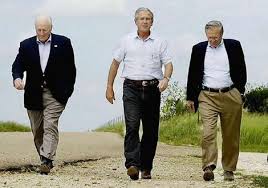
Liars Club: Dick Cheney, George Bush, Donald Rumsfeld
Bush and his war-hungry Cabinet officials knew that Americans demanded vengeance on Al-Qaeda’s mastermind, Osama bin Laden, and not Iraqi dictator Saddam Hussein. So they repeatedly fabricated “links” between the two:
- Saddam had worked hand-in-glove with Bin Laden to plan 9/11.
- Saddam was harboring and supporting Al-Qaeda throughout Iraq.
- Saddam, with help from Al-Qaeda, was scheming to build a nuclear bomb.
Yet as early as September 22, 2001, Bush had received a classified President’s Daily Brief intelligence report, which stated that there was no evidence linking Saddam Hussein to 9/11.
The report added that there was scant credible evidence that Iraq had any significant collaborative ties with Al-Qaeda.
Even more important: Saddam had tried to monitor Al Qaeda through his intelligence service—because he saw Al-Qaeda and other theocratic radical Islamist organizations as a potential threat to his secular regime.
Bush administration officials repeatedly claimed that Iraq possessed huge quantities of chemical and biological weapons, in violation of UN resolutions. And they further claimed that US intelligence agencies had determined:
- the precise locations where these weapons were stored;
- the identities of those involved in their production; and
- the military orders issued by Saddam Hussein for their use in the event of war.
Among other lies stated as fact by members of the Bush administration:
- Iraq had sought uranium from Niger, in west Africa.
- Thousands of aluminum tubes imported by Iraq could be used in centrifuges to create enriched uranium.
- Iraq had up to 20 long-range Scud missiles, prohibited under UN sanctions.
- Iraq had massive stockpiles of chemical and biological agents, including nerve gas, anthrax and botulinum toxin.
- Saddam Hussein had issued chemical weapons to front-line troops who would use them when US forces crossed into Iraq.
Consider the following:
August 26, 2002: Cheney told the Veterans of Foreign Wars, “There is no doubt that Saddam Hussein now has weapons of mass destruction. There is no doubt he is amassing them to use against our friends, against our allies and against us.”
September 8, 2002: National Security Advisor Condoleeza Rice said on CNN: ”There is certainly evidence that Al-Qaeda people have been in Iraq. There is certainly evidence that Saddam Hussein cavorts with terrorists.”
September 18, 2002: Rumsfeld told the House Armed Services Committee, “We do know that the Iraqi regime has chemical and biological weapons. His regime has amassed large, clandestine stockpiles of chemical weapons—including VX, sarin, cyclosarin and mustard gas.”
October 7, 2002: Bush declared in a nationally televised speech in Cincinnati that Iraq “possesses and produces chemical and biological weapons. It is seeking nuclear weapons.”
March 16, 2003: Cheney declared on NBC’s “Meet the Press”: “We believe [Saddam Hussein] has, in fact, reconstituted nuclear weapons.”
March 30, 2003: On ABC’s “This Week” program, 10 days into the war, Rumsfeld said: “We know where they [weapons of mass destruction] are.”
Bush never regretted his decision to invade Iraq, which occurred on March 20, 2003.
Even as American occupying forces repeatedly failed to turn up any evidence of “weapons of mass destruction” (WMDs), Bush and his minions claimed the invasion a good thing.
In fact, Bush—who hid out the Vietnam war in the Texas Air National Guard—even joked publicly about the absence of WMDs.
He did so at a White House Correspondents dinner on March 24, 2004—one year after he had started the war.
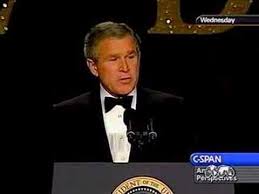
George W. Bush at the 2004 White House Correspondents’ dinner
To Bush, the non-existent WMDs were nothing more than the butt of a joke that night. While an overhead projector displayed photos of a puzzled-looking Bush searching around the Oval Office, Bush recited a comedy routine.
Click here: Bush laughs at no WMD in Iraq – YouTube
“Those weapons of mass destruction have gotta be somewhere,” Bush laughed, while a photo showed him poking around the corners in the Oval Office.
“Nope–no weapons over there! Maybe they’re under here,” he said, as a photo showed him looking under a desk.
Meanwhile, an assembly of wealthy, pampered men and women—the elite of America’s media and political classes—laughed heartily during Bush’s performance. It was a scene worthy of the court of the ancient Caesars, complete with royal flunkies.
Ultimately, the war that Bush had deliberately provoked
- Took the lives of 4,484 Americans.
- Cost the United States Treasury at least $2 trillion.
- Created a Middle East power vacumn.
- Allowed Iran–Iraq’s arch enemy–to eagerly fill it.
- Killed at least 655,000 Iraqis.
- Bush retired from office with a lavish pension and full Secret Service protection.
- He wrote his memoirs and was paid $7 for the first 1.5 million copies.
- Cheney, Rumsfeld, Rice retired to private business, wrote their own memoirs, and lived in comfort as respected elder statesmen.
ABC NEWS, AL QAEDA, ALTERNET, AMERICABLOG, AMERICAN CAESARS: THE LIVES OF THE PRESIDENTS FROM FRANKLIN D. ROOSEVELT TO GEORGE W. BUSH, AMERICAN EMPIRE, AP, ” 9/11, BABY BOOMER RESISTANCE, BASHAR AL-ASSAD, BILL CLINTON, BLOOMBERG, BUREAUCRACY, BUZZFEED, CBS NEWS, CHRIS MATHEWS, CNN, CONDOLEEZA RICE, CROOKS AND LIARS, DAILY KOZ, DONALD TRUMP, DRUDGE REPORT, DWIGHT EISENHOWER, FBI, FIVETHIRTYEIGHT, FRANKLIN D. ROOSEVELT, GEORGE H.W. BUSH, GEORGE W. BUSH, GERALD R. FORD, HARPER’S MAGAZINE, HARRY S. TRUMAN, HUFFINGTON POST, JD VANCE, JIMMY CARTER, JOHN F. KENNEDY, JOSEPH BIDEN, Kamala Harris, LYNDON B. JOHNSON, MEDIA MATTERS, MOTHER JONES, MOVEON, MSNBC, NBC NEWS, NEWSWEEK, NIGEL HAMILTON, NPR, OSAMA BIN LADEN, PBS NEWSHOUR, POLITICO, POLITICUSUSA, RAW STORY, REPUBLICAN PARTY, REUTERS, RICHARD CLARKE, RICHARD NIXON, ROMAN EMPIRE, SALON, SEATTLE TIMES, SEPTEMBER 11, SLATE, SUETONIUS, SYRIA, TALKING POINTS MEMO, TERRORISM, THE ATLANTIC, THE CHICAGO SUN-TIMES, THE CHICAGO TRIBUNE, THE DAILY BEAST, THE DAILY BLOG, THE GUARDIAN, THE HILL, THE HUFFINGTON POST, THE LOS ANGELES TIMES, THE NATION, THE NEW REPUBLIC, THE NEW YORK TIMES, THE TWELVE CAESARS, THE VILLAGE VOICE, THE WASHINGTON POST, THINKPROGRESS, TIME, TRUTHDIG, TRUTHOUT, TWITTER, TWO POLITICAL JUNKIES, U.S. NEWS & WORLD REPORT, UPI, USA TODAY, X
In Bureaucracy, History, Military, Politics, Social commentary on September 13, 2024 at 12:17 am
September 11, 2024, marked the 23rd anniversary of the worst terrorist attack on United States soil. Inevitably, this is a time to remember all those whose lives were so cruelly snuffed out.
But it should also be a time to remember those who made this atrocity inevitable—by refusing to acknowledge and address the impending threat from Al-Qaeda.
British historian Nigel Hamilton has chronicled their arrogance and indifference in his 2010 biography: American Caesars: Lives of the Presidents from Franklin D. Roosevelt to George W. Bush.
Hamilton noted that Richard Clarke, the national security advisor on terrorism, was certain that Osama bin Laden had arranged the [USS.] Cole bombing in Aden on October 12, 2000.
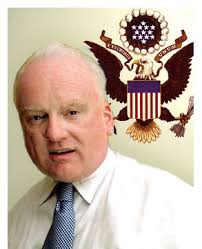
Richard Clarke
For months, Clarke tried to convince others in the Bush Administration that Bin Laden was plotting another attack against the United States—either abroad or at home.
But Clarke could not prevail against the know-it-all arrogance of such higher-ranking Bush officials as Vice President Dick Cheney; Secretary of Defense Donald Rumsfeld; Rumsfeld’s deputy, Paul Wolfowitz; and National Security Advisor Condoleeza Rice.
Rice initially refused to hold a cabinet-level meeting on the subject. Then she “insisted the matter be handled only by a more junior Deputy Principals meeting” in April, 2001, writes Hamilton.
Wolfowitz, the number-two man at the Department of Defense, said: “I don’t understand why we are beginning by talking about this one man, bin Laden.”
Even after Clarke outlined the threat posed by Al-Qaeda, Wolfowitz—whose real target was Saddam Hussein—said: “You give bin Laden too much credit.”
Wolfowitz insisted that bin Laden couldn’t carry out his terrorist acts without the aid of a state sponsor—namely, Iraq.
Wolfowitz, in fact, blamed Iraq for the 1993 bombing of the World Trade Center. Clarke was stunned, since there was absolutely no evidence of Iraqi involvement in this.
“Al-Qaeda plans major acts of terrorism against the United States,” Clarke warned his colleagues. He pointed out that, like Adolf Hitler, bin Laden had actually published his plans for future destruction.
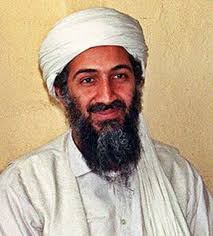
Osama bin Laden
And he added: “Sometimes, as with Hitler in Mein Kampf, you have to believe that these people will actually do what they say they will do.”
Wolfowitz heatedly traded on his Jewish heritage to bring Clarke’s unwelcome arguments to a halt: “I resent any comparison between the Holocaust and this little terrorist in Afghanistan.”
Writing in outraged fury, Hamilton sums up Clarke’s agonizing frustrations:
- Bush’s senior advisors treated their colleagues who had served in the Clinton administration with contempt.
- President Bush, Vice President Dick Cheney, National Security Advisor Condoleeza Rice, Secretary of Defense Donald Rumsfeld and Deputy Defense Secretary Paul Wolfowitz seemed content to ignore the danger signals of an impending Al-Qaeda attack.
- This left only Secretary of State Colin Powell, his deputy Richard Armitage, Richard Clarke and a skeptical Treasury Secretary, Paul O’Neill, to wage “a lonely battle to waken a seemingly deranged new administration.”
Clarke alerted Federal Intelligence agencies that “Al-Qaeda is planning a major attack on us.” He asked the FBI and CIA to report to his office all they could learn about suspicious persons or activities at home and abroad.
Finally, at a meeting with Rice on September 4, 2001, Clarke challenged her to “picture yourself at a moment when in the very near future Al-Qaeda has killed hundreds of Americans, and imagine asking yourself what you wish then that you had already done.”
Seven days later, Al-Qaeda struck, and 3,000 Americans died horrifically—and needlessly.
Neither Bush, Cheney, Rice, Rumsfeld nor Wolfowitz ever admitted their negligence. Nor would any of them be brought to account.
Disgustingly, these were the same officials who, afterward, posed as the Nation’s saviors–and branded anyone who disagreed with them as a traitor, practices the Right continues to exploit to this day.
Only Richard Clarke—who had vainly argued for stepped-up security precautions and taking the fight to Al-Qaeda—gave that apology.
On March 24, 2004, Clarke testified at the public 9/11 Commission hearings. Addressing relatives of victims in the audience, he said: “Your government failed you, those entrusted with protecting you failed you, and I failed you.”
Yet even worse was to come.
On the evening after the September 11 attacks, Bush took Clarke aside during a meeting in the White House Situation Room:
“I want you, as soon as you can, to go back over everything, everything. See if Saddam [Hussein, the dictator of Iraq] did this. See if he’s linked in any way.”
Clarke was stunned: “But, Mr. President, Al-Qaeda did this.”
“I know, I know,” said Bush. “But see if Saddam was involved. I want to know.”
Hussein had not plotted the attack—and there was no evidence proving that he did. But the attack gave “W” the excuse he wanted to remove the man he blamed for the 1992 defeat of his father, President George H.W. Bush.
Bush believed that his father would have been re-elected if he had “gone all the way” into Baghdad during the 1991 Gulf War.
He would finish the job that his father had started but failed to compete.
On September 12, 2001, Bush attended a meeting of the National Security Council.
“Why shouldn’t we go against Iraq, not just Al-Qaeda?” demanded Donald Rumsfeld, the Secretary of Defense.
Vice President Dick Cheney enthusiastically agreed.


 Bureaucracybuster's Blog
2016 PRESIDENTIAL CAMPAIGN, 2020 PRESIDENTIAL CAMPAIGN, 2024 PRESIDENTIAL ELECTION, ABC NEWS, ADOLF HITLER, ALTERNET, ANCIENT GREECE, ANCIENT ROME, AP, BERNIE SANDERS, BILL CLINTON, BRIAN THOMPSON, BUZZFEED, CATASTROPHE, CBS NEWS, CHIEF EXECUTIVE OFFICERS (CEOs)), CHINA, CNN, CONSUMER PROTECTION, CORPORATE TAXES, CORRUPTION, CROOKS AND LIARS, DAILY KOZ, DELAY DENY DEFEND (BOOK), DEMOCRATIC PARTY, DONALD TRUMP, ECONOMIC POLICY INSTITUTE, EXECUTIVE PAYWATCH, FORBES, FUNDRAISING, HILLARY CLINTON, INCOME INEQUALITY, IVAN THE TERRIBLE, JAY M. FEINMAN, JOE BIDEN, JOSEPH STALIN, LEON TROTSKY, MEDICAL INSURANCE, MOTHER JONES, MOVEON, MSNBC, NATIONAL PUBLIC RADIO, NAZI GERMANY, NBC NEWS, NEWSWEEK, NICCOLO MACHIAVELLI, NPR, PBS NEWSHOUR, POLITICO, RAW STORY, REUTERS, ROBERT PAYNE, SALON, SEATTLE TIMES, SLATE, SPARTACUS, THE ATLANTIC, THE CHICAGO SUN-TIMES, THE CHICAGO TRIBUNE, THE CORRUPT SOCIETY (BOOK), THE DAILY BEAST, THE DISCOURSES, THE FRENCH REVOLUTION, THE GREAT LEVELER, THE GREAT LEVELER (BOOK), THE GUARDIAN, THE HILL, THE HUFFINGTON POST, THE LOS ANGELES TIMES, THE NATION, THE NEW YORK TIMES, THE RUSSIAN REVOLUTION, THE WASHINGTON POST, TIME, U.S. NEWS & WORLD REPORT, UNITEDHEALTHCARE, UPI, USA TODAY, VIOLENCE, Vladimir Lenin, WALL STREET, WALTER SCHEIDEL, WATERGATE, WEALTH GAP, WILLIAM SHAKESPEARE, WINSTON CHURCHILL, X
THE CORRUPTIONS OF THE RICH ARE STILL WITH YOU ALWAYS: PART TWO (OF THREE)
In Bureaucracy, Business, History, Law, Politics, Social commentary on December 11, 2024 at 12:19 amThe gap between rich and poor in the United States has never been greater.
The Economic Policy Institute is a nonprofit, nonpartisan think tank working for the last 30 years to counter rising inequality. Its September 21, 2023 report stated:
This would not have been news to Niccolo Machiavelli, the father of modern political science. In his masterwork, The Discourses, he observed the human condition as that of constant struggle:
Niccolo Machiavelli
“It was a saying of ancient writers, that men afflict themselves in evil, and become weary of the good, and that both these dispositions produce the same effects.
“For when men are no longer obliged to fight from necessity, they fight from ambition, which passion is so powerful in the hearts of men that it never leaves them, no matter to what height they may rise.
“The reason for this is that nature has created men so that they desire everything, but are unable to attain it. Desire being thus always greater than the faculty of acquiring, discontent with what they have and dissatisfaction with themselves result from it.
“This causes the changes in their fortunes—for as some men desire to have more, while others fear to lose what they have, enmities and war are the consequences. And this brings about the ruin of one province and the elevation of another.”
Author Walter Scheidel, Dickason Professor in the Humanities, Professor of Classics and History at Stanford University, has also given this subject a great deal of thought. And, like Machiavelli, he has reached some highly disturbing conclusions.
Walter Scheidel
World Economic Forum [CC BY-SA 2.0 (https://creativecommons.org/licenses/by-sa/2.0)%5D
He gave voice to these in his 2017 book, The Great Leveler: Violence and the History of Inequality from the Stone Age to the Twenty-First Century. His thesis: Only violence and catastrophes have consistently reduced inequality throughout history.
According to the book’s jacket blurb: “Are mass violence and catastrophes the only forces that can seriously decrease economic inequality? To judge by thousands of years of history, the answer is yes.
“Tracing the global history of inequality from the Stone Age to today, Walter Scheidel shows that inequality never dies peacefully. Inequality declines when carnage and disaster strike and increases when peace and stability return.
“The Great Leveler is the first book to chart the crucial role of violent shocks in reducing inequality over the full sweep of human history around the world.
“Ever since humans began to farm, herd livestock, and pass on their assets to future generations, economic inequality has been a defining feature of civilization. Over thousands of years, only violent events have significantly lessened inequality.
“The ‘Four Horsemen’ of leveling—-mass-mobilization warfare, transformative revolutions, state collapse, and catastrophic plagues—have repeatedly destroyed the fortunes of the rich.
“Scheidel identifies and examines these processes, from the crises of the earliest civilizations to the cataclysmic world wars and communist revolutions of the twentieth century.
“Today, the violence that reduced inequality in the past seems to have diminished, and that is a good thing. But it casts serious doubt on the prospects for a more equal future.”
Revolutionaries have known the truth of Scheidel’s findings from the gladiators’ revolt of Spartacus (73-71 B.C.) to the French Revolution (1789-1799) to the overthrow of the Czarist Romanov dynasty (1917).
But American politicians serenely ignore that truth. They depend on the mega-rich for millions of dollars in “campaign contributions”—which pay for self-glorifying ads on TV.
Thus, in 2016, American voters had a “choice” between two “love-the-rich” Presidential candidates: Donald Trump and Hillary Clinton.
Trump owed his wealth to a $200 million gift from his real estate tycoon father. Clinton owed hers mostly through her husband, Bill, by his writing books, giving speeches, consulting private companies and advising billionaire Ron Burkle.
After leaving the Senate (2001-09) and President Obama’s cabinet (2009-13), she earned $9 million in speaking fees in both 2013 and 2014.
The result was that millions stayed home or voted in protest for third-party candidates who had no chance of winning.
In 2020, American voters got to “choose” between another two “love-the-rich” candidates: Donald Trump and Joseph Biden.
In his 1975 book, The Corrupt Society: From Ancient Greece to Modern-day America, British historian Robert Payne warned that the predatory rich would not change their behavior: “Nor is there any likelihood that the rich will plow back their money into services to ensure the general good.
“They have rarely demonstrated social responsibility, and they are much more likely to hold on to their wealth at all costs than to renounce any part of it.
“Like the tyrant who lives in a world wholly remote from the world of the people, shielded and protected from all possible influences, the rich are usually the last to observe the social pressures rising from below, and when these social pressures reach flashpoint, it is too late to call in the police or the army.”
Share this: