Posts Tagged ‘ADOLF HITLER’
2016 PRESIDENTIAL CAMPAIGN, 9/11 ATTACKS, ABC NEWS, ADOLF HITLER, AFGHANISTAH, ALTERNET, AMERICABLOG, ANDREW CUOMO, AP, ARMY CORPS OF ENGINEERS, BABY BOOMER RESISTANCE, BARACK OBAMA, BILL CLINTON, BLOOMBERG, BUSES, BUZZFEED, CBS NEWS, CENTERS FOR DISEASE CONTROL AND PREVENTION (CDC), CNN, CORONAVIRUS, COVID-19, CROOKS AND LIARS, DAILY KOZ, DAVID BROOKS, DELTA FORCE, DOCTORS, DONALD RUMSFELD, DONALD TRUMP, DRUDGE RETORT, EBOLA, ELDERLY, FACEBOOK, FEAR, FEDERAL EMERGENCY MANAGEMENT AGENCY, FEEDING AMERICA, FIREFIGHTERS, FIVETHIRTYEIGHT, FOOD BANKS, FOX NEWS NETWORK, FRANKLIN D. ROOSEVELT, GARBAGE MEN, GEORGE H.W. BUSH, GEORGE W. BUSH, GREEN BERETS, GRETCHEN WHITMER, GROCERY SHOPPING, HARPER’S MAGAZINE, IRAQ, JAY INSLEE, LAUREN SAUER, MASKS, MEDIA MATTERS, MIKE PENCE, MOTHER JONES, MOVEON, MSNBC, MUSLIMS, NATIONAL SECURITY COUNCIL, NBC NEWS, NEWSWEEK, NPR, NURSES, NURSING HOMES, OSBMA BIN LADEN, PANIC SHOPPING, PBS NEWSHOUR, PERSONAL PROTECTIVE EQUIPMENT (PPES), POLICE, POLITICO, POLITICUSUSA, RAW STORY, REUTERS, RUDY GIULIANI, SADDAM HUSSEIN, SALON, SAN ANTONIO FOOD BANK, SCHOOLS, SEAN HANNITY, SEAN HANNITY SHOW, SEATTLE TIMES, SLATE, SOCIAL DISTANCING, SPANISH INFLUENZA, STEVEN PRESSFIELD, TALKING POINTS MEMO, TAXIS, THE ATLANTIC, THE CHICAGO SUN-TIMES, THE CHICAGO TRIBUNE, THE DAILY BEAST, THE DAILY BLOG, THE GUARDIAN, THE HILL, THE HUFFINGTON POST, THE LOS ANGELES TIMES, THE NATION, THE NEW REPUBLIC, THE NEW YORK TIMES, THE PENTAGON, THE VILLAGE VOICE, THE WASHINGTON POST, THINKPROGRESS, TIM ZIEMER, TIME, TRUTHDIG, TRUTHOUT, TWITTER, TWO POLITICAL JUNKIES, U.S. NAVY SEALS, U.S. NEWS & WORLD REPORT, UPI, USA TODAY, WASHINGTON MONTHLY, WHITE HOUSE PANDEMIC OFFICE, WILHELM 1, WONKETTE, WORLD TRADE CENTER, YAMICHE ALCINDOR
In Bureaucracy, History, Medical, Military, Politics, Social commentary on April 21, 2020 at 12:11 am
One of the biggest differences between the September 11, 2001 terrorist attacks and the COVID-19 pandemic is this:
After 9/11, Americans drew strength from each other. During Coronavirus, Americans remain isolated and forced to rely on their own resources.
This has its origins at the top—with President Donald Trump.
Like Adolf Hitler, Trump likes to pit individuals and organizations against each other. Hitler, for example, would assign several agencies to tackle the same problem: “That way, the stronger one gets the job done,” he told his architect, Albert Speer.
This creates needless duplication of efforts and wasted resources. But it ensures that Trump—like Hitler—remains the final voice of authority, since so many others are competing for his favor and direction.
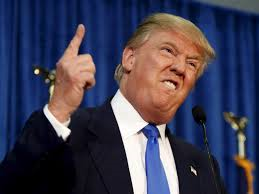
Donald Trump
This has not, however, worked out well for the 50 states that make up the United States of America.
During the Great Depression, President Franklin D. Roosevelt intervened powerfully to ensure that all Americans received the help they needed.
Trump has made it clear that each state is responsible for securing its needed supply of Personal Protective Equipment (PPEs) for its doctors and nurses aiding Coronavirus patients. This has resulted in a dog-eat-dog atmosphere of cutthroat competition and scarcity, with Americans not only fighting the virus but each other.
Even worse: Trump and Republicans are using a deadly plague as a weapon against those Americans they hate.
On March 26, during an interview on Fox News, Trump blamed the failures of his administration’s response to Coronavirus on Democratic state governors like Andrew Cuomo (NY), Jay Inslee (WA), and Gretchen Whitmer (MI).
On March 27, during his press briefing, Trump said he told Vice President Mike Pence—who’s officially in charge of the White House’s response effort—to not call Inslee and Whitmer because they weren’t “appreciative” enough of his efforts.
Trump said this even as hospitals in each of their states were being overwhelmed with Coronavirus patients.
“I tell him—I mean I’m a different type of person— I say, ‘Mike, don’t call the governor in Washington, you’re wasting your time with him. Don’t call the woman in Michigan,’” Trump said. “If they don’t treat you right, I don’t call.”
Trump said that when people criticized him, they were criticizing the federal government: “When they’re not appreciative to me, they’re not appreciative to the Army Corps, they’re not appreciative to FEMA [Federal Emergency Management Agency]. It’s not right.”
Trump also attacked Whitmer on Right-wing Fox News’ “Sean Hannity Show”: “I don’t know if she knows what’s going on, but all she does is sit there and blame the federal government.”
That same day—March 27—Whitmer told a Michigan radio station: “What I’ve gotten back is that vendors with whom we’ve procured contracts—they’re being told not to send stuff to Michigan. It’s really concerning. I reached out to the White House last night and asked for a phone call with the president, ironically at the time this stuff was going on.”
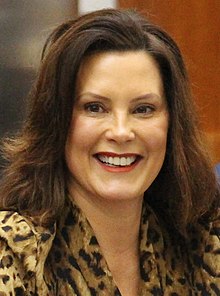
Gretchen Whitmer
A March 29 story in the Washington Monthly sheds light on what lay behind Whitmer’s inability to secure desperately-needed ventilators from her longtime vendors. Its headline ran: “What If Trump Decides to Save Republicans But Not Democrats?”
A sub-headline read: “He’s providing vital resources to red states and ignoring blue states.”

The Black Hand
Florida submitted a request to FEMA on March 11 for 430,000 surgical masks, 180,000 N95 respirators, 82,000 face shields and 238,000 gloves—and received a shipment with everything three days later.
On Fox News, Rudy Giuliani, Trump’s personal lawyer, bluntly told governors: “Take the blame when you have to. When you play with your boss, sometimes it’s better when you don’t win the golf game. He’s the boss, he’s got all the resources.”
The mentality of the Black Hand has come to the Oval Office.
The Washington Monthly story concludes ominously: “What if the White House simply gives all the masks and ventilators to red states and counties, leaving blue ones to struggle? What mechanisms of accountability are left?
“U.S. democracy wasn’t set up to deal with a president openly behaving like a James Bond villain while being protected by a political party behaving more like a mafia than a civic institution.”
But while corpses pile up and Trump wages repeated feuds with state governors, ordinary citizens daily face never-before-imagined fears and dangers.
Coronavirus has forced people to be apart, with each one forced to face his / her own fears of something that can’t be seen and can strike anywhere, anytime, at anyone.
Smart Americans no longer venture outdoors without wearing a mask—a medically-approved N95 one if possible, but at least a homemade one. It’s not unusual to see people wearing blue rubber gloves as well. 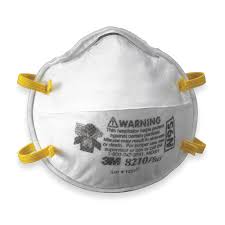
N95 mask
Before COVID-19, a masked man entering a bank meant: “This is a robbery!” Today, tellers aren’t surprised when they see a customer wearing a surgical mask.
Going to the supermarket used to be a routine matter: You would assume—usually correctly—that those items you wanted would be in stock. Then you would find and load them into your car.
No longer.
2016 PRESIDENTIAL CAMPAIGN, 9/11 ATTACKS, ABC NEWS, ADOLF HITLER, AFGHANISTAH, ALTERNET, AMERICABLOG, ANDREW CUOMO, AP, ARMY CORPS OF ENGINEERS, BABY BOOMER RESISTANCE, BARACK OBAMA, BILL CLINTON, BLOOMBERG, BUSES, BUZZFEED, CBS NEWS, CENTERS FOR DISEASE CONTROL AND PREVENTION (CDC), CNN, CORONAVIRUS, COVID-19, CROOKS AND LIARS, DAILY KOZ, DAVID BROOKS, DELTA FORCE, DOCTORS, DONALD RUMSFELD, DONALD TRUMP, DRUDGE RETORT, EBOLA, ELDERLY, FACEBOOK, FEAR, FEDERAL EMERGENCY MANAGEMENT AGENCY, FEEDING AMERICA, FIREFIGHTERS, FIVETHIRTYEIGHT, FOOD BANKS, FOX NEWS NETWORK, FRANKLIN D. ROOSEVELT, GARBAGE MEN, GEORGE H.W. BUSH, GEORGE W. BUSH, GREEN BERETS, GRETCHEN WHITMER, GROCERY SHOPPING, HARPER’S MAGAZINE, IRAQ, JAY INSLEE, LAUREN SAUER, MASKS, MEDIA MATTERS, MIKE PENCE, MOTHER JONES, MOVEON, MSNBC, MUSLIMS, NATIONAL SECURITY COUNCIL, NBC NEWS, NEWSWEEK, NPR, NURSES, NURSING HOMES, OSBMA BIN LADEN, PANIC SHOPPING, PBS NEWSHOUR, PERSONAL PROTECTIVE EQUIPMENT (PPES), POLICE, POLITICO, POLITICUSUSA, RAW STORY, REUTERS, RUDY GIULIANI, SADDAM HUSSEIN, SALON, SAN ANTONIO FOOD BANK, SCHOOLS, SEAN HANNITY, SEAN HANNITY SHOW, SEATTLE TIMES, SLATE, SOCIAL DISTANCING, SPANISH INFLUENZA, STEVEN PRESSFIELD, TALKING POINTS MEMO, TAXIS, THE ATLANTIC, THE CHICAGO SUN-TIMES, THE CHICAGO TRIBUNE, THE DAILY BEAST, THE DAILY BLOG, THE GUARDIAN, THE HILL, THE HUFFINGTON POST, THE LOS ANGELES TIMES, THE NATION, THE NEW REPUBLIC, THE NEW YORK TIMES, THE PENTAGON, THE VILLAGE VOICE, THE WASHINGTON POST, THINKPROGRESS, TIM ZIEMER, TIME, TRUTHDIG, TRUTHOUT, TWITTER, TWO POLITICAL JUNKIES, U.S. NAVY SEALS, U.S. NEWS & WORLD REPORT, UPI, USA TODAY, WASHINGTON MONTHLY, WHITE HOUSE PANDEMIC OFFICE, WILHELM 1, WONKETTE, WORLD TRADE CENTER, YAMICHE ALCINDOR
In Bureaucracy, History, Medical, Military, Politics, Social commentary on April 20, 2020 at 1:01 am
COVID-19 may well change our lives more fundamentally than even 9/11.
Yes, the terrorist attacks on the Twin Towers and the Pentagon were horrific—and costly in lives. Almost 3,000 Americans died that day.
After decades of ignoring Islamic terrorist attacks on American lives and property throughout the Middle East and the rest of the world, America shook off its complacency.
First came a much-anticipated invasion of Afghanistan–the “nation” which had given shelter to 9/11 mastermind Osama bin Laden. Starting on October 7, 2001, by December American planes and ground forces swept bin Laden’s hosts, the Taliban, from power.
Bin Laden disappeared into Pakistan, but was shot to death by United States Navy SEALs on May 1, 2011.
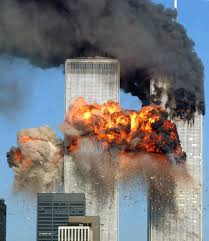
World Trade Center – September 11, 2001
The 9/11 attacks also resulted in unforeseen events. President George W. bush used them as an excuse to invade Iraq in 2003 and topple its dictator, Saddam Hussein, from power.
Bush had long blamed Hussein for not folding after the President’s father, George H.W. Bush, attacked Iraq in 1991 after its invasion of Kuwait. Hussein’s failure to fall from power, believed Bush Junior, had resulted in his father’s losing a second White House term in 1992 to Bill Clinton.
But once the United States invaded Afghanistan and Iraq, it got stuck there—and remains so to this day. What started as a purely military mission became a “nation-building” one.
Yet another result of the 9/11 attacks was a complete restructuring of the United States military. In the past, Americans had excelled in set-piece battles and wars.
Americans have never forgotten their overwhelming victories over the Germany of Kaiser Wilhelm II in 1918 and Fuhrer Adolf Hitler in 1945. But when it came to fighting enemies where guerrilla warfare negated overwhelming military power, the United States had done poorly—first in Korea (1950-1953) and then in Vietnam (1960-1975).
As a result, Secretary of Defense Donald Rumsfield reorganized the Pentagon’s bureaucracy, assigning highest priority to building unconventional military units such as the Army’s Green Berets and Delta Force, and the Navy’s SEALs.
These were all major changes resulting from the 9/11 attacks. They cost billions of dollars and got huge publicity. But they didn’t affect the lives of everyday Americans as intimately as has the advent of COVID-19, also known as Coronavirus.
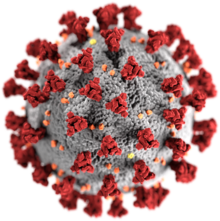
Coronavirus
First, COVID-19 has killed far more Americans than 9/11. As before mentioned, 9/11 snuffed out the lives of almost 3,000 Americans. But as of April 20, more than 41,114 Americans have died of COVID-19. And the plague has not finished its murderous work.
Second, while 9/11 affected two American cities—New York and Washington, D.C.—COVID-19 has spread throughout the country. As epicenters like New York City, Los Angeles and Chicago gain national attention, the virus continues to seep into rural centers—especially in the South and Midwest.
Third, the combination of evil and incompetence of the Trump administration has shaken Americans’ faith in the ability—and even the willingness—of the Federal Government to protect them.
Conservative New York Times columnist David Brooks attacked President Donald Trump in terms usually reserved for serial killers. On the March 13 edition of The PBS Newshour, he said:
“This is what happens when you elect a sociopath as president, who doesn’t care, who has treated this whole thing for the past month as if it’s about him. ‘How do people like me?’ Minimizing the risks. ‘Does the stock market reflect well on me?’ And he hasn’t done the things a normal human being would do, which was to, let’s take precautions….
“And he’s incapable of that. And he’s even created an information distortion field around him.”
In 2014, following the Ebola outbreak in West Africa, President Barack Obama created the White House Pandemic Office, run by the White House’s National Security Council (NSC).

Barack Obama
Heading it was Rear Admiral Tim Ziemer. Under President George W. Bush, he had successfully fought malaria overseas. His topflight team of infectious disease and public health experts was creating a national bio-defense strategy. Their goal: Coordinate agencies to make the United States more resilient to the threat of epidemics and biological warfare.
In May, 2018, Trump ordered the NSC’s global health security unit shut down. The reason: Trump’s pathological jealousy of and hatred for Obama.
Compounding that outrage: From January to early March, 2020, Trump and his allies within the Republican party and Fox News Network repeatedly assured Americans they had nothing to fear.
Barnstorming the country in a series of hate-filled political rallies, Trump told his supporters:
- January 22: “We have it totally under control. It’s one person coming in from China.”
- February 24: “The Coronavirus is very much under control in the USA.”
- February 26: “The 15 cases within a couple of days is going to be down to close to zero.”
- February 27: “One day it’s like a miracle, it will disappear.”
- February 28: “Now the Democrats are politicizing the Coronavirus….We did one of the great jobs….One of my people came up to me and said, ‘Mr. President, they tried to beat you on Russia, Russia, Russia’….They couldn’t do it. They tried the impeachment hoax….It’s all turning, they lost….And this is their new hoax.”
- March 6: “I think we’re doing a really good job in this country of keeping it down. A tremendous job of keeping it down.”
9/11 TERRORIST ATTACKS, ABC NEWS, ADOLF HITLER, ALTERNET, AMERICABLOG, ANTIBOTICS, AP, BABY BOOMER RESISTANCE, BENGHAZI EMBASSY ATTACK, BLOOMBERG, BUZZFEED, CBS NEWS, CHINA, CNN, CORONAVIRUS, CROOKS AND LIARS, DAILY KOZ, DEMOCRATS, DONALD TRUMP, DRUDGE RETORT, EBOLA, FACEBOOK, FINAL SOLUTION, FIVETHIRTYEIGHT, FOX NEWS NETWORK, HARPER’S MAGAZINE, HURRICANE KATRINA, HURRICANE MARIA, JOACHIM VON RIBBONTROP, JULIUS STREICHER, LINDSEY GRAHAM, MEDIA MATTERS, MEIN KAMPF, MOTHER JONES, MOVEON, MSNBC, NBC NEWS, NEWSWEEK, NPR, NUREMBERG WAR CRIMES TRIALS, PBS NEWSHOUR, POLITICO, POLITICUSUSA, RAW STORY, REPUBLICANS, REUTERS, RICHARD 111, ROBERT H. JACKSON, SALON, SEAN HANNITY, SEATTLE TIMES, SLATE, TALKING POINTS MEMO, THE ATLANTIC, THE CHICAGO SUN-TIMES, THE CHICAGO TRIBUNE, THE DAILY BEAST, THE DAILY BLOG, THE GUARDIAN, THE HILL, THE HUFFINGTON POST, THE LOS ANGELES TIMES, THE NATION, THE NEW REPUBLIC, THE NEW YORK TIMES, THE VILLAGE VOICE, THE WASHINGTON POST, THINKPROGRESS, TIME, TRUTHDIG, TRUTHOUT, TWITTER, TWO POLITICAL JUNKIES, U.S. NEWS & WORLD REPORT, UPI, USA TODAY, WILLIAM SHAKESPEARE, WONKETTE
In Bureaucracy, Business, History, Medical, Politics, Social commentary on April 14, 2020 at 12:30 am
President Donald Trump frittered away two vital months—January and February—by refusing to take Coronavirus seriously. Even worse, he repeatedly downplayed the virus in a series of public appearances.
Consider:
- January 22: “We have it totally under control. It’s one person coming in from China.”
- February 24: “The Coronavirus is very much under control in the USA.”
- February 26: “The 15 cases within a couple of days is going to be down to close to zero.”
- February 27: “One day it’s like a miracle, it will disappear.”
- February 28: “Now the Democrats are politicizing the Coronavirus….We did one of the great jobs….One of my people came up to me and said, ‘Mr. President, they tried to beat you on Russia, Russia, Russia’….They couldn’t do it. They tried the impeachment hoax….It’s all turning, they lost….And this is their new hoax.”
- March 6: “I think we’re doing a really good job in this country of keeping it down. A tremendous job of keeping it down.”
Now, with more than 23,000 Americans dead—10,000 of them alone in New York—Trump’s fanatical defenders are desperate to rewrite history.
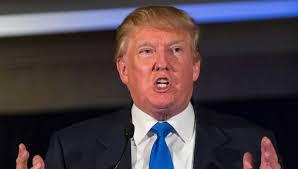
Donald Trump
The outbreak of Coronavirus, first detected in Wuhan, China, in late December, 2019, has taken more American lives in the 21st century than any other disaster—natural or man-made.
Consider:
- 9/11: 2,977 deaths
- Hurricane Katrina: 1,836 deaths
- Benghazi Embassy attack: 4
- Ebola: 2
- Hurricane Maria: 2,982,
- Coronavirus: 23,604 (by April 14, 2020)
One of these defenders is Republican South Carolina Senator Lindsey Graham.
On April 9, appearing on the Fox News network’s “Sean Hannity” show, Graham said: “The first thing I want to do is get the United States Senate on the record where we don’t blame Trump. We blame China.
“The Chinese government is responsible for 16,000 American deaths and 17 million Americans being unemployed. It’s the Chinese government and the way they behave that led to this pandemic. This is the third one to come out of China.
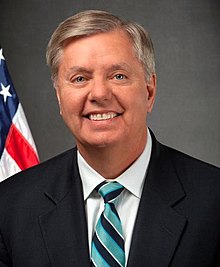
Lindsey Graham
“I want to make our response to this so overwhelming that China will change its behavior. I want to get the medical supply chain back into the United States, and I want to stop cancelling some debt that we owe to China because they should be paying us, not us paying China.”
Graham said that the “wet markets” in China should be shut down, because they have been the source of three pandemics that originated in China.
“So, I think you’re going to see a bipartisan push back against China to punish them so severely to deter them in the future.”
[As for “getting the medical supply chain back into the United States”: In 2018, China accounted for 95% of American imports of ibuprofen, 91% off hydrocortisone, 70% of acetaminophen, 40% to 45% of penicillin and 40% of heparin, according to Commerce Department data. Eighty percent of the American supply of antibiotics are made in China.]
* * * * * * * * * *
Seventy-three years earlier, Chief United States Counsel Robert H. Jackson had been assigned to prosecute the major Nazi defendants for war crimes at Nuremberg.
On July 26, 1946, Jackson delivered his closing remarks to the court. He might as well have been speaking about Donald Trump and his cheerleading—and misleading—chorus on Coronavirus:
“Lying has always been a highly approved Nazi technique. [Adolf] Hitler, in Mein Kampf, advocated mendacity as a policy. {Foreign Minister Joachim] Von Ribbentrop admits the use of the ‘diplomatic lie.’
“….Nor is the lie direct the only means of falsehood. They all speak with a Nazi double talk with which to deceive the unwary….’Final solution’ of the Jewish problem was a phrase which meant extermination. ‘Special treatment’ of prisoners of war meant killing. ‘Protective custody’ meant concentration camp.

Robert H. Jackson
“Besides outright false statements and double talk, there are also other circumventions of truth in the nature of fantastic explanations and absurd professions.
“[Rabid anti-Semite Julius] Streicher has solemnly maintained that…his reason for destroying synagogues…was only because they were architecturally offensive….
“This was the philosophy of the National Socialists. When for years they have deceived the world, and masked falsehood with plausibilities, can anyone be surprised that they continue their habits of a lifetime in this dock?
“It is against such a background that these defendants now ask this Tribunal to say that they are not guilty of planning, executing, or conspiring to commit this long list of crimes and wrongs.”
Citing William Shakespeare’s play about the murderous Richard III, Jackson concluded:
“They stand before the record of this trial as bloodstained Gloucester stood by the body of his slain king. He begged of the widow, as they beg of you: ‘Say I slew them not.’ And the Queen replied, ‘Then say they were not slain. But dead they are…’
“If you were to say of these men that they are not guilty, it would be as true to say that there has been no war, there are no slain, there has been no crime.”
If Americans find Donald Trump blameless for refusing to take decisive action against the Coronavirus threat, it will be as true to say there has been no plague, there are no thousands of dead Americans, there has been no dereliction of Presidential responsibility.
2016 PRESIDENTIAL ELECTION, 2020 PRESIDENTIAL ELECTION, ABC NEWS, ADAM SCHIFF, ADOLF HITLER, ALTERNET, AMERICABLOG, AP, ARMENIA, BABY BOOMER RESISTANCE, BBC, BUZZFEED, CBS NEWS, CHARLES PIERCE, CNN, CONVERSATION WITH AN AMERICAN WRITER (POEM), CORY GARDNER, CORY GRADINER, CROOKS AND LIARS, DAILY KOS, DAILY KOZ, DIMITRI SHOSTAKOVICH, DONALD TRUMP, ESQUIRE MAGAZINE, FACEBOOK, FBI, FIVETHIRTYEIGHT, FOREIGN SERVICE, GREAT TERROR, HOUSE INTELLIGENCE COMMITTEE, HOUSE OF REPRESENTATIVES, HUNTER BIDEN, JAMES COMEY, JEFF SESSIONS, JOE BIDEN, JONI ERNST, JOSEPH STALIN, KEITH SCHILLER, KYRGYZSTAN, MARIA YOVANOVITCH, MARIE YOVANOVICH, MARTHA MCSALLY, MICHAEL ATKINSON, MIKE FLYNN, MIKHAIL TUKHACHEVESKY, MOTHER JONES, MOVEON, MSNBC, NAZI GERMANY, NBC NEWS, NEWSWEEK, NICCOLO MACHIAVELLI, NIKITA KHRUSHCHEV, NIKOLAI ZHILAYEV, NPR, PBS NEWSHOUR, POLITICO, POLITICUSUSA, RAW STORY, REUTERS, ROBERT MUELLER III, ROD ROSENSTEIN, RUDOLPH GIULIANI, RUDY GIULIANI, RUSSIAN ESPIONAGEky, SALON, SEATTLE TIMES, SENATE INTELLIGENCE COMMITTEE, SERGEY KISLYAK, SERGEY LAVOV, SLATE, SOVIET UNION, STATE DEPARTMENT, TALKING POINTS MEMO, THE ATLANTIC, THE CHICAGO SUN-TIMES, THE CHICAGO TRIBUNE, THE DAILY BEAST, THE DAILY BLOG, THE DISCOURSES, THE GUARDIAN, THE HILL, THE HUFFINGTON POST, THE LOS ANGELES TIMES, THE NATION, THE NEW YORK TIMES, THE WALL STREET JOURNAL, THE WASHINGTON POST, THINKPROGRESS, THOM TILLIS, TIME, TRUTHDIG, TWITTER, U.S. NEWS & WORLD REPORT, UKRAINE, UPI, USA TODAY, WEHRMACHT, WORLD WAR 11, YEVGENEY YEVTUSHENKO
In Bureaucracy, History, Medical, Military, Politics, Social commentary on April 10, 2020 at 12:04 am
On March 30, Captain Brett Crozier, commanding the nuclear aircraft carrier USS Theodore Roosevelt, sent a four-page internal letter to multiple Naval officials, pleading to have the majority of the crew evacuated and quarantined on shore in Guam.
The reason: Dozens of his crew members had been stricken with the deadly Coronavirus. And the ship’s cramped compartments and narrow passageways made “social distancing” impossible.
On March 31, someone leaked the letter to the San Francisco Chronicle, which published it.
On April 1, the Navy ordered the aircraft carrier evacuated.
On April 2, Crozier was relieved of command by acting United States Secretary of the Navy Thomas Modly.
Not content to fire Crozier, Modly visited the ship and stated over its public address system: “If he didn’t think, in my opinion, that this information wasn’t going to get out to the public, in this day and information age that we live in, then he was either (a) too naïve or too stupid to be a commanding officer of a ship like this. The alternative is that he did this on purpose.
“It was a betrayal of trust with me, with his chain of command, with you.”
Thus, for Modly, Crozier’s “crime” was making public what everyone on the ship and countless Navy officials knew.
President Donald Trump echoed Modly’s attitude: “The letter was a five-page letter from a captain, and the letter was all over the place. That’s not appropriate.
“I thought it was terrible, what he did, to write a letter. I mean, this isn’t a class on literature. This is a captain of a massive ship that’s nuclear powered. And he shouldn’t be talking that way in a letter.”
But Crozier wasn’t the only victim of Trump’s “integrity-is-treason” mindset that week.
On April 3, Trump informed Congress that he was removing Michael Atkinson, the inspector general who alerted Congress to his extortion attempt against Volodymyr Zelensky, the president of Ukraine, on July 25, 2019.
Trump told Zelensky: Find embarrassing “dirt” on former Vice President Joseph Biden and his son, Hunter.
Hunter had had business dealings in Ukraine. And Joe Biden might be Trump’s Democratic opponent for the White House in 2020.
To underline the seriousness of his “request,” Trump had withheld $400 million in promised military aid to Ukraine, which is facing an increasingly aggressive Russia.
Reporters asked Congressional Republicans: “Is it appropriate for President Donald Trump to ask a foreign government to investigate his political opponent?”
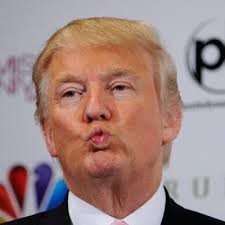
Donald Trump
And those Republicans refusing to answer or condemn such behavior:
Iowa Senator Joni Ernst: “We don’t have all the facts, we don’t know what is accurate. We have a picture painted by the media and we don’t know if that picture is accurate.”
Arizona Senator Martha McSally: “I think what we’ve seen out of [Speaker of the House Nancy] Pelosi and [House Intelligence Committee Chairman Adam] Schiff and others in the House is quite partisan and I think people want us to take a serious look at this and not have it be just partisan bickering going on.”
North Carolina Senator Thom Tillis: “I’m going to leave it to the President to make that decision” on whether his actions were appropriate.
The reason for Republicans’ deafening silence: They didn’t want to anger Trump or his fanatical supporters. And they feared losing their Congressional seats and the perks that go with them.
Michael Atkinson, the Inspector General of the Intelligence Community, showed no such fear.
After the September 11, 2001 attacks on New York and Washington, Atkinson left private law practice and worked for the United States Department of Justice for 15 years.
In 2017, President Trump nominated him as Inspector General of the Intelligence Community. The Senate confirmed him in 2018.
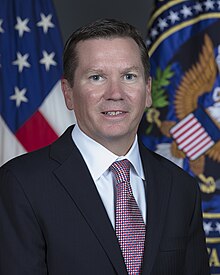
Michael Atkinson
Atkinson, informed by an Intelligence whistleblower of Trump’s extortion attempt, was appalled. He believed that he was obligated by law to report it to the House and Senate Intelligence Committees.
Trump was ultimately impeached by the Democratic-controlled House of Representatives for abusing his office for personal political gain and obstruction of Congress.
But a Republican-controlled Senate—which refused to hear witnesses or act on the overwhelming evidence—quickly exonerated him.
In his April 3 letter to the leaders of the House and Senate Intelligence Committees, Trump wrote: “This is to advise that I am exercising my power as President to remove from office the Inspector General of the Intelligence Community.
“it is vital that I have the fullest confidence in the appointees serving as Inspectors General. That is no longer the case with regard to this Inspector General.”
Clearly, there is a reason why Trump no longer has “the fullest confidence” in Atkinson: He can’t depend on “this Inspector General” to conceal and support any future crimes he might commit.
In his 1960 poem, “Conversation With an American Writer,” the Russian poet, Yevgeney Yevtushenko spoke for those Russians who had maintained their integrity in the face of Stalinist terror:
“You have courage,” they tell me.
It’s not true. I was never courageous.
I simply felt it unbecoming
to stoop to the cowardice of my colleagues.
Unfortunately, the same cannot be said of Republicans in the United States Senate and House of Representatives in the face of Trump terror.
2020 PRESIDENTIAL CAMPAIGN, ABC NEWS, ADOLF HITLER, ALTERNET, AMERICABLOG, AP, BABY BOOMER RESISTANCE, BBC, BRETT CROZIER, BUZZFEED, CBS NEWS, CNN, CONVERSATION WITH AN AMERICAN WRITER (POEM), COVID-19, CROOKS AND LIARS, DAILY KOS, DAILY KOZ, DIMITRI SHOSTAKOVICH, DONALD TRUMP, ESQUIRE MAGAZINE, FACEBOOK, FBI, FIVETHIRTYEIGHT, GREAT TERROR, HOUSE INTELLIGENCE COMMITTEE, HOUSE OF REPRESENTATIVES, HUNTER BIDEN, JOE BIDEN, JONI ERNST, JOSEPH STALIN, MARTHA MCSALLY, MICHAEL ATKINSON, MIKE FLYNN, MIKHAIL TUKHACHEVESKY, MOTHER JONES, MOVEON, MSNBC, NAZI GERMANY, NBC NEWS, NEWSWEEK, NICCOLO MACHIAVELLI, NIKITA KHRUSHCHEV, NIKOLAI ZHILAYEV, NPR, PBS NEWSHOUR, POLITICO, POLITICUSUSA, RAW STORY, REUTERS, ROD ROSENSTEIN, SALON, SEATTLE TIMES, SENATE INTELLIGENCE COMMITTEE, SERGEY KISLYAK, SERGEY LAVOV, SLATE, SOVIET UNION, TALKING POINTS MEMO, THE ATLANTIC, THE CHICAGO SUN-TIMES, THE CHICAGO TRIBUNE, THE DAILY BEAST, THE DAILY BLOG, THE GUARDIAN, THE HILL, THE HUFFINGTON POST, THE LOS ANGELES TIMES, THE NATION, THE NEW YORK TIMES, THE WALL STREET JOURNAL, THE WASHINGTON POST, THINKPROGRESS, THOM TILLIS, THOMAS MODLY, TIME, TRUTHDIG, TWITTER, U.S. NEWS & WORLD REPORT, UKRAINE, UNITED STATES NAVY, UPI, USA TODAY, USS THEODORE ROOSEVELT, VOLODMYR ZELENSKY, WEHRMACHT, WORLD WAR 11, YEVGENEY YEVTUSHENKO
In Bureaucracy, History, Military, Politics, Social commentary on April 9, 2020 at 12:09 am
Nikolai Sergeyvich Zhilayev (pronounced Zill-lay-ev) was a Russian musicologist and the teacher of several 20th-century Russian composers.
Among these: Dimitri Shostakovich (September 25, 1906 – August 9, 1975)
Among his friends—to his ultimate misfortune—was Mikhail Nikolayevich Tukhachevsky, the former military hero now falsely condemned and executed as a traitor by Soviet dictator Joseph Stalin.
In 1938, Zhilayev (November 18, 1881 – January 20, 1938) also became a casualty of what has become known as The Great Terror.
In his posthumously-published memoirs, Testimony, Shostakovich, his pupil and friend, described how Zhilayev faced his end with a calmness that awed even the NKVD (the predecessor to the KGB) secret police sent to arrest him.

Dimitri Shostakovich
“He had a large picture of Tukhachevsky in his room, and after the announcement that Tukhachevsky had been shot as a traitor to the homeland, Zhilayev did not take the picture down.
“I don’t know if I can explain how heroic a deed that was….As soon as the next poor soul was declared an enemy of the people, everyone destroyed in a panic everything connected with that person….
“And naturally, photographs flew into the fire first, because if someone informed on you, reported that you had a picture of an enemy of the people, it meant certain death.
“Zhilayev wasn’t afraid. When they came for him, Tukhachevsky’s prominently hung portrait amazed even the executioners.”
“What, it’s still up?” one of the secret police asked.
“The time will come,” Zhilayev replied, “when they’ll erect a monument to him.”
As, in fact, has happened.
Meanwhile, Stalin has been universally condemned as one of history’s greatest tyrants.
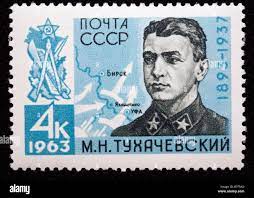
Mikhail Tukhachevsky appears on a 1963 Soviet Union postage stamp
Third hero—Brett Crozier, the former commanding officer of the aircraft carrier USS Theodore Roosevelt.
Graduating from the United States Naval Academy at Annapolis in 1992, he received his Master’s Degree in National Security and Strategic Studies from the Naval War College in 2007.
From 2017 to 2018 he commanded the USS Blue Ridge. In November, 2019, he was given command of the nuclear aircraft carrier USS Theodore Roosevelt.
On March 24, 2020, reports circulated that three members of the crew had tested positive for COVID-19. The next day the number of stricken sailors increased to eight. A few days later, it was “dozens.” The sailors reportedly became ill at sea, two weeks after a port call at Danang, Vietnam.
The initial cases were airlifted to a military hospital. The Roosevelt was ordered to Guam. After the ship docked on March 27, 2020, all 5,000 aboard were ordered to be tested for the virus. But only about 100 stricken sailors were allowed to leave the ship. The rest remained on board.
On March 30, Crozier emailed a four-page internal letter to multiple Naval officials, pleading to have the majority of the crew evacuated and quarantined on shore. Given the crowded sleeping quarters and narrow passageways of the vessel, Crozier wrote that it was impossible to follow social distancing and quarantine procedures:
“This will require a political solution but it is the right thing to do. We are not at war. Sailors do not need to die. If we do not act now, we are failing to properly take care of our most trusted asset—our Sailors….
“This is a necessary risk. Keeping over 4,000 young men and women on board the TR is an unnecessary risk and breaks faith with those Sailors entrusted to our care.”
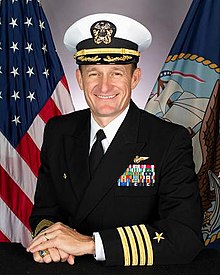
Brett Crozier
Crozier sent his letter via a non-secure, unclassified email to 20 to 30 recipients, as well as the captain’s immediate chain of command. He reportedly believed that his immediate supervisor would not allow him to send it.
And his superior later confirmed that he would not have allowed Crozier to send it.
On March 31, someone leaked the letter to the San Francisco Chronicle, which published it.
On April 1, the Navy ordered the aircraft carrier evacuated. A a skeleton crew of 400 remained aboard to maintain the nuclear reactor, the fire-fighting equipment, and the ship’s galley.
On April 2, Crozier was relieved of command by acting United States Secretary of the Navy Thomas Modly.
By that time, about 114 crew members—out of a total of around 4,000—reportedly tested positive for COVID-19.
As Crozier disembarked, sailors loudly saluted him with a standing ovation: “Cap-tain Cro-zier!”
Modly claimed that Crozier’s letter “raised alarm bells unnecessarily. It undermines our efforts and the chain of command’s efforts to address this problem, and creates a panic and this perception that the Navy’s not on the job, that the government’s not on the job, and it’s just not true.”
Actually, the Trump administration had frittered away January and February, with President Donald Trump giving multiple—and misleading—press conferences. In these, he played down the dangers of COVID-19, saying that “we’re on top of it”—even as the virus spread across the country.
“It was a betrayal. And I can tell you one other thing: because he did that he put it in the public’s forum and it is now a big controversy in Washington, DC,” continued Modly. [Italics added]
This was the United States Navy under President Donald Trump—who throws “betrayal” and “treason” at anyone who dares reveal the truth about institutional crimes and failures.
2020 PRESIDENTIAL CAMPAIGN, ABC NEWS, ADAM SCHIFF, ADOLF HITLER, ALTERNET, AMERICABLOG, AP, BABY BOOMER RESISTANCE, BBC, BRETT CROZIER, BUZZFEED, CBS NEWS, CHARLES PIERCE, CNN, CONVERSATION WITH AN AMERICAN WRITER (POEM), COVID-19, CROOKS AND LIARS, DAILY KOS, DAILY KOZ, DIMITRI SHOSTAKOVICH, DONALD TRUMP, ESQUIRE MAGAZINE, FACEBOOK, FBI, FIVETHIRTYEIGHT, FOREIGN SERVICE, GREAT TERROR, HOUSE INTELLIGENCE COMMITTEE, HOUSE OF REPRESENTATIVES, HUNTER BIDEN, JOE BIDEN, JONI ERNST, JOSEPH STALIN, MARTHA MCSALLY, MICHAEL ATKINSON, MIKHAIL TUKHACHEVESKY, MOTHER JONES, MOVEON, MSNBC, NAZI GERMANY, NBC NEWS, NEWSWEEK, NICCOLO MACHIAVELLI, NIKITA KHRUSHCHEV, NIKOLAI ZHILAYEV, NPR, PBS NEWSHOUR, POLITICO, POLITICUSUSA, RAW STORY, REUTERS, SALON, SEATTLE TIMES, SENATE INTELLIGENCE COMMITTEE, SLATE, SOVIET UNION, TALKING POINTS MEMO, THE ATLANTIC, THE CHICAGO SUN-TIMES, THE CHICAGO TRIBUNE, THE DAILY BEAST, THE DAILY BLOG, THE DISCOURSES, THE GUARDIAN, THE HILL, THE HUFFINGTON POST, THE LOS ANGELES TIMES, THE NATION, THE NEW YORK TIMES, THE WALL STREET JOURNAL, THE WASHINGTON POST, THINKPROGRESS, THOM TILLIS, THOMAS MODLY, TIME, TRUTHDIG, TWITTER, U.S. NEWS & WORLD REPORT, UKRAINE, UNITED STATES NAVY, UPI, USA TODAY, USS THEODORE ROOSEVELT, VOLODMYR ZELENSKY, WEHRMACHT, WORLD WAR 11, YEVGENEY YEVTUSHENKO
In Bureaucracy, History, Military, Politics, Social commentary on April 8, 2020 at 12:08 am
…A truly great man is ever the same under all circumstances. And if his fortune varies, exalting him at one moment and oppressing him at another, he himself never varies, but always preserves a firm courage, which is so closely interwoven with his character that everyone can readily see that the fickleness of fortune has no power over him.
The conduct of weak men is very different. Made vain and intoxicated by good fortune, they attribute their success to merits which they do not possess. And this makes them odious and insupportable to all around them. And when they have afterwards to meet a reverse of fortune, they quickly fall into the other extreme, and become abject and vile.
—Niccolo Machiavelli, The Discourses
Four heroes, three villains.
Two of the heroes are Russians; two are Americans.
The villains: One Russian (actually, Georgian); two American.
First up—in order of disappearance: Mikhail Nikolayevich Tukhachevsky (pronounced too-ka-chev-sky)
Tukhachevsky (February 4, 1893 – June 12, 1937) was a leading Soviet military leader and theoretician from 1918 to 1937.
He commanded the Soviet Western Front during the Russian-Polish War (1920-21) and served as Chief of Staff of the Red Army (1925-1928).
He fought to modernize Soviet armament, as well as develop airborne, aviation and mechanized forces. Almost singlehandedly, he created the theory of deep operations for Soviet forces.

Mikhail Tukhachevsky
All of these innovations would reap huge dividends when the Soviet Union faced the lethal fury of Adolf Hitler’s Wehrmacht.
In 1936, Tukhachevsky warned Soviet dictator Joseph Stalin that Nazi Germany might attack without warning—and ignite a long and murderous war.
Stalin—the son of a Georgian cobbler—resented Tukhachevsky’s coming from a noble family. A monumental egomaniac, he also hated that Tukhachevesky’s fame rivaled his own.
Warned of the approaching German danger, Stalin shouted: “What are you trying to do—frighten Soviet authority?”
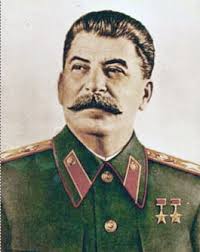
Joseph Stalin
The attack that Tukhachevsky warned against came five years later—on June 22, 1941, leaving at least 26 million Russians dead.
But Tukhachevsky wasn’t alive to command a defense.
The 1930s were a frightening and dangerous time to be alive in the Soviet Union. In 1934, Stalin, seeing imaginary enemies everywhere, ordered a series of purges that lasted right up to the German invasion.
An example of Stalin’s paranoia occurred one day while the dictator walked through the Kremlin corridors with Admiral Ivan Isakov. Officers of the NKVD (the predecessor to the KGB) stood guard at every corner.
“Every time I walk down the corridors,” said Stalin, “I think: Which one of them is it? If it’s this one, he will shoot me in the back. But if I turn the corner, the next one can shoot me in the face.”
In 1937-38, the Red Army fell prey to Stalin’s paranoia.
Its victims included:
- Three of five marshals (five-star generals);
- Thirteen of 15 army commanders (three- and four-star generals);
- Fifty of 57 army corps commanders; and
- One hundred fifty-four out of 186 division commanders.
And heading the list of those marked for death was Marshal Mikhail Tukhachevsky.
Arrested on May 22, 1937, he was interrogated and tortured. As a result, he “confessed” to being a German agent plotting to overthrow Stalin and seize power.
On his confession, which survives in the archives, his bloodstains can clearly be seen.
On June 11, 1937, the Soviet Supreme Court convened a special military tribunal to try Tukhachevsky and eight generals for treason.
It was a sham: The accused were denied defense attorneys, and could not appeal the verdict—-which was foregone: Death.
In a Russian version of poetic justice, five of the eight generals who served as Tukhachevsky’s judges were themselves later condemned and executed as traitors.
Within hours of the verdict, Tukhachevsky was summoned from his cell and shot once in the back of the head.
From 1937 until 1956, Tukhachevsky was officially declared a traitor and fifth-columnist.
Then, on February 25, 1957, Soviet Premier Nikita Khrushchev delivered his bombshell “Secret Speech” to the 20th Congress of the Communist Party of the Soviet Union.
In this, he denounced Stalin (who had died in 1953) as a ruthless tyrant responsible for the slaughter of millions of innocent men, women and children. He condemned Stalin for creating a “personality cult” around himself, and for so weakening the Red Army that Nazi Germany was able to easily overrun half of the Soviet Union from 1941 to 1943.
On January 31, 1957, Tukhachevsky and his co-defendants were declared innocent of all charges and were “rehabilitated.”
Today, he is once again—rightly—considered a Russian hero and military genius. And Stalin is universally—and rightly—seen as a blood-stained tyrant.
Next hero: Nikolai Sergeyvich Zhilayev (pronounced Zill-lay-ev)
Zhilayev (November 18, 1881 – January 20, 1938) was a Russian musicologist and the teacher of several 20th-century Russian composers. Among these: Dimitri Shostakovich.
Zhilayev, a member of the Russian Academy of Art-Sciences, taught at the Moscow Conservatory. Among his friends—to his ultimate misfortune—was Mikhail Tukhachevsky.
In 1938, he, too, became a casualty of what has become known as The Great Terror.
In his posthumously-published memoirs, Testimony, Shostakovich, his pupil and friend, described how Zhilayev faced his end with a calmness that awed even the NKVD secret police sent to arrest him.
2003 IRAQ WAR, ABC NEWS, ADOLF HITLER, AFFORDABLE CARE ACT, ALTERNET, AMERICABLOG, ANDREW CUOMO, AP, BABY BOOMER RESISTANCE, BARACK OBAMA, BLOOMBERG, BUZZFEED, CBS NEWS, CNN, CORONAVIRUS, CROOKS AND LIARS, DAILY KOZ, DEMOCRATS, DONALD TRUMP, DRUDGE RETORT, FACE SHIELDS, FACEBOOK, FEDERAL EMERGENCY MANAGEMENT AGENCY, FIVETHIRTYEIGHT, FOX NEWS, FRANKLIN D. ROOSEVELT, GEORGE W. BUSH, GRETCHEN WHITMER, HARPER’S MAGAZINE, JAY INSLEE, JOE BIDEN, LYNDON B. JOHNSON, MEDIA MATTERS, MEDICARE, MIKE PENCE, MOTHER JONES, MOVEON, MSNBC, N95 RESPIRATORS, NBC NEWS, NEWSWEEK, NPR, PBS NEWSHOUR, POLITICO, POLITICUSUSA, PRISONERS-OF-WAR, RAW STORY, REPUBLICANS, REUTERS, RUDY GIULIANI, SALON, SEAN HANNITY SHOW, SEATTLE TIMES, SLATE, SOCIAL SECURITY, SOVIET UNION, SURGICAL MASKS, TALKING POINTS MEMO, THE ATLANTIC, THE CHICAGO SUN-TIMES, THE CHICAGO TRIBUNE, THE DAILY BEAST, THE DAILY BLOG, THE GUARDIAN, THE HILL, THE HUFFINGTON POST, THE LOS ANGELES TIMES, THE NATION, THE NEW REPUBLIC, THE NEW YORK TIMES, THE VILLAGE VOICE, THE WASHINGTON POST, THINKPROGRESS, TIME, TRUTHDIG, TRUTHOUT, TWITTER, TWO POLITICAL JUNKIES, U.S. NEWS & WORLD REPORT, UKRAINE, UPI, USA TODAY, VENDORS, VENTILATORS, VOLODYMIR ZELENSKY, WASHINGTON MONTHLY, WONKETTE
In Bureaucracy, History, Law, Law Enforcement, Medical, Politics, Social commentary on April 1, 2020 at 12:21 am
On June 22, 1941, German Fuhrer Adolf Hitler sent three million soldiers smashing into the Soviet Union. During the first six months—June to December, 1941—German armies lured huge Soviet forces into gigantic “cauldron battles,” surrounding and exterminating them.
An estimated 5.7 million prisoners of war (POWs) fell into German hands. The Germans found themselves surprised and overwhelmed by the sheer numbers of them. But their mandate demanded that they keep marching forward—ever forward.
So they simply imprisoned their captives behind barbed wire and wasted no food or medical care on them. Between starvation, illness and the brutal Russian cold, at least 3.5 million POWs died in custody.
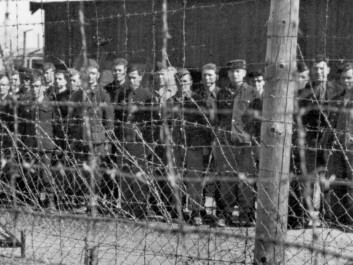
Soviet POW’s
Republicans have learned a serious lesson from this. If you simply deprive those you detest of food, clothing and shelter, you don’t need gas chambers or firing squads.
That has been their chief reason for opposing Social Security since President Franklin D. Roosevelt signed it into law in 1935.
That is why they opposed President Lyndon B. Johnson when he pushed Medicare through Congress in 1965.
And that is why they have fervently tried to overturn the Affordable Care Act—better known as Obamacare—since it went into effect in 2010.
Of course, Republicans will never admit this. Their mantra has always been they fear such programs will bankrupt the country.
That claim might have credibility—if they didn’t recklessly plunge into budget-busting wars like the 2003 Iraq war started by President George W. Bush. Not a single Republican opposed this needless, bloody conflict—which has cost the United States more than $1.1 trillion.
But the best evidence of Republicans’ desire to use illness as a weapon against those Americans they hate comes from President Donald J. Trump.
Donald Trump
On March 26, during an interview on Fox News, Trump blamed the failures of his administration’s response to Coronavirus on Democratic state governors like Andrew Cuomo (NY), Jay Inslee (WA), and Gretchen Whitmer (MI).
On March 27, during his press briefing, Trump said he told Vice President Mike Pence—who’s officially in charge of the White House’s response effort—to not call Inslee and Whitmer because they weren’t “appreciative” enough of his efforts.
Trump said this even as hospitals in each of their states were being overwhelmed with Coronavirus patients.
“I tell him—I mean I’m a different type of person— I say, ‘Mike, don’t call the governor in Washington, you’re wasting your time with him. Don’t call the woman in Michigan,’” Trump said. “If they don’t treat you right, I don’t call.”
Trump said that when people criticized him, they were criticizing the federal government: “When they’re not appreciative to me, they’re not appreciative to the Army Corps, they’re not appreciative to FEMA. It’s not right.”
Trump also attacked Whitmer on Right-wing Fox News’ “Sean Hannity Show”: “I don’t know if she knows what’s going on, but all she does is sit there and blame the federal government.”
That same day—March 27—Whitmer told a Michigan radio station: “What I’ve gotten back is that vendors with whom we’ve procured contracts—they’re being told not to send stuff to Michigan. It’s really concerning. I reached out to the White House last night and asked for a phone call with the president, ironically at the time this stuff was going on.”
Gretchen Whitmer
Julia Pickett / CC BY-SA (https://creativecommons.org/licenses/by-sa/4.0)
A March 29 story in the Washington Monthly sheds light on what lay behind Whitmer’s inability to secure desperately-needed ventilators from her longtime vendors. Its headline ran: “What If Trump Decides to Save Republicans But Not Democrats?”
And it was followed by a sub-headline: “He’s providing vital resources to red states and ignoring blue states.”
Florida submitted a request to the Federal Emergency Management Agency on March 11 for 430,000 surgical masks, 180,000 N95 respirators, 82,000 face shields and 238,000 gloves—and received a shipment with everything three days later.
It received an identical shipment on March 23, and is awaiting a third.
In 2019, Trump demanded a “favor” from the embattled Ukrainian President Volodymyr Zelensky—“dirt” on Democratic Presidential candidate Joe Biden—in return for releasing military aid Ukraine needed to combat an increasingly aggressive Russia.
Now he is apparently demanding Democratic governors praise him and blame themselves if they want their citizens to receive desperately-needed medical supplies.
On Fox News, Rudy Giuliani, Trump’s personal lawyer, bluntly told governors: “Take the blame when you have to. When you play with your boss, sometimes it’s better when you don’t win the golf game. He’s the boss, he’s got all the resources.”
This is precisely the dictatorial arrogance of which Republicans falsely accused President Barack Obama.
The Washington Monthly story concludes on an ominous note: “What if the White House simply gives all the masks and ventilators to red states and counties, leaving blue ones to struggle? What mechanisms of accountability are left?
“U.S. democracy wasn’t set up to deal with a president openly behaving like a James Bond villain while being protected by a political party behaving more like a mafia than a civic institution.”
ABC NEWS, ADOLF HITLER, ALTERNET, AMERICABLOG, ANTHONY FAUCI, AP, BABY BOOMER RESISTANCE, BARACK OBAMA, BERLIN, BUZZFEED, CBS NEWS, CENTERS FOR DISEASE CONTROL, CNN, COMMISSARS, CORONAVIRUS, CROOKS AND LIARS, DAILY KOZ, DEPARTMENT OF HEALTH AND HUMAN SERVICES, DEPARTMENT OF HOMELAND SECURITY, DONALD TRUMP, DRUDGE RETORT, FACEBOOK, FIVETHIRTYEIGHT, FRIEDRICH VON PAULUS, GERMAN-SOVIET NON-AGGRESSION PACT, GREAT BRITAIN, HARPER’S MAGAZINE, JOHN BOLTON, JOSEPH STALIN, MALARIA, MEDIA MATTERS, MICK MULVANEY, MOSCOW, MOTHER JONES, MOVEON, MSNBC, NATIONAL INSTITUTE OF ALLERGY AND INFECTIOUS DISEASES, NAZI GERMANY, NBC NEWS, NEWSWEEK, NIKITA KHRUSHCHEV, NPR, PBS NEWSHOUR, POLAND, POLITICO, POLITICUSUSA, PRISONERS-OF-WAR, RAW STORY, REUTERS, ROLLING STONE MAGAZINE, SALON, SEATTLE TIMES, SLATE, SOVIET UNION, STALINGRAD, TALKING POINTS MEMO, THE ATLANTIC, THE CHICAGO SUN-TIMES, THE CHICAGO TRIBUNE, THE DAILY BEAST, THE DAILY BLOG, THE GUARDIAN, THE HILL, THE HUFFINGTON POST, THE LOS ANGELES TIMES, THE NATION, THE NATIONAL SECURITY COUNCIL, THE NEW REPUBLIC, THE NEW YORK TIMES, THE VILLAGE VOICE, THE WASHINGTON POST, THE WHITE HOUSE PANDEMIC OFFICE, THINKPROGRESS, THIRD REICH, TIME, TOM BOSSERT, TRUTHDIG, TRUTHOUT, TWITTER, TWO POLITICAL JUNKIES, U.S. NEWS & WORLD REPORT, UNITED STATES, UPI, USA TODAY, Vladimir Lenin, WEHRMACHT, WEIMAR REPUBLIC, WONKETTE
In Bureaucracy, History, Medical, Military, Politics, Social commentary on March 26, 2020 at 12:27 am
Two dictators. Two crises.
Next up: Donald Trump.
Soviet dictator Joseph Stalin received multiple warnings that his supposed ally, Nazi Germany, would soon invade Russia. He ignored all of them. And when the invasion came—on June 22, 1941—the result was the loss of 26 million men, women and children and four years of devastation.
President Donald Trump similarly received warnings that Coronavirus was now a major world threat—and would likely hit the United States. Like Stalin, he ignored those warnings—with similarly disastrous consequences for the United States.
The virus first appeared in Wuhan, China, in December, 2019. Its first reported victim became ill on December 1.
By December 31, the outbreak was traced to a novel strain of Coronavirus.
Coronaviruses are a group of viruses that affect birds and mammals. In humans, Coronaviruses can cause pneumonia and may cause bronchitis.
Coronavirus
According to the March 21 edition of Rolling Stone magazine: “The United States intelligence community has been warning the president since January and February about the dire consequences that would occur when coronavirus reached America, but the president seemed determined to play down the threat, leaving the country largely unaware and unprepared.”
An anonymous Intelligence official cited by the Washington Post said: “Donald Trump may not have been expecting this, but a lot of other people in the government were—they just couldn’t get him to do anything about it. The system was blinking red.”
Trump first learned of the virus on January 3, 2020. This did not prevent him from playing golf on January 4, 5, 18 and 19.
On January 19, the first Coronavirus case appeared in the United States.
On January 27, then-acting chief of staff Mick Mulvaney tried to get the President to act. But, according to officials who spoke with the Post, Trump was “dismissive” of early briefings “because he did not believe that the virus had spread widely throughout the United States.”
Trump fired Mulvaney one month later.
Then, for Trump, it was back to the golf course—on February 1, 2, 15.

Refusing to take action against the emerging Coronavirus threat, Trump repeatedly made statements that minimized it.
January 22: “We have it totally under control. It’s one person coming in from China. We have it under control. It’s going to be just fine.”
January 30: “We think we have it very well under control. We have very little problem in this country at this moment –five—and those people are all recuperating successfully. But we’re working very closely with China and other countries, and we think it’s going to have a very good ending for us .…that I can assure you.”
February 10: “Now, the virus that we’re talking about having to do—you know, a lot of people think that goes away in April with the heat—as the heat comes in. Typically, that will go away in April. We’re in great shape though. We have 12 cases—11 cases, and many of them are in good shape now.”
February 28: “[Democrats] tried the impeachment hoax…They lost…. And this is their new hoax.”
A major reason for the spectacular early victories of the German army in Russia was that, from 1936 to 1938, Stalin had gutted his own military by a series of systematic purges. Thus, there were few experienced, competent officers—from army corps commanders to four-star generals—to mount a strategic defense.
Similarly, upon taking office, Trump had gutted the permanent epidemic monitoring and command groups set up inside the White House: The National Security Council (NSC) and the Department of Homeland Security (DHS).
Pathologically jealous of President Barack Obama, Trump has tried to destroy every vestige of Obama’s legacy as the first black President of the United States. And these disease-monitoring groups were set up by Obama following the Ebola outbreak in West Africa in 2014.
In the spring of 2018, Trump pushed Congress to cut $15 billion from national health spending—and cutting the global disease-fighting budgets of the Centers for Disease Control, National Security Council, Department of Homeland Security (DHS) and the Department of Health and Human Services.
In April, 2018, then-National Security Adviser John Bolton forced Tom Bossert, director of the infectious disease unit at DHS, to resign—along with his entire team.
On February 29, the first American died of Coronavirus.
Trump continued to be unconcerned about the growing threat.
On March 7, reporters asked him if he was concerned that Coronavirus had arrived in Washington, D.C. He replied: “No, I’m not concerned at all. No, we’ve done a great job with it.”
And in a March 9 tweet, Trump wrote: “So last year 37,000 Americans died from the common Flu. It averages between 27,000 and 70,000 per year. Nothing is shut down, life & the economy go on. At this moment there are 546 confirmed cases of CoronaVirus, with 22 deaths. Think about that!”
Perhaps most dangerously of all, Trump has from the outset blatantly contradicted health officials—even when standing next to them at press conferences.
On March 21, Trump insisted he had a “very good” feeling about using a malaria drug to combat the virus. It fell to Dr. Anthony Fauci, head of the National Institute of Allergy and Infectious Diseases, to set the record straight: “No.”
As of March 26, the United States had 68,489 Coronavirus cases—with 1,032 deaths.
ABC NEWS, ADOLF HITLER, ALTERNET, AMERICABLOG, ANTHONY FAUCI, AP, BABY BOOMER RESISTANCE, BARACK OBAMA, BERLIN, BUZZFEED, CBS NEWS, CENTERS FOR DISEASE CONTROL, CNN, COMMISSARS, CORONAVIRUS, CROOKS AND LIARS, DAILY KOZ, DEPARTMENT OF HEALTH AND HUMAN SERVICES, DEPARTMENT OF HOMELAND SECURITY, DONALD TRUMP, DRUDGE RETORT, FACEBOOK, FIVETHIRTYEIGHT, FRIEDRICH VON PAULUS, GERMAN-SOVIET NON-AGGRESSION PACT, GREAT BRITAIN, HARPER’S MAGAZINE, JOHN BOLTON, JOSEPH STALIN, MALARIA, MEDIA MATTERS, MICK MULVANEY, MOSCOW, MOTHER JONES, MOVEON, MSNBC, NATIONAL INSTITUTE OF ALLERGY AND INFECTIOUS DISEASES, NAZI GERMANY, NBC NEWS, NEWSWEEK, NIKITA KHRUSHCHEV, NPR, PBS NEWSHOUR, POLAND, POLITICO, POLITICUSUSA, PRISONERS OF WAR, RAW STORY, REUTERS, ROLLING STONE MAGAZINE, SALON, SEATTLE TIMES, SLATE, SOVIET UNION, STALINGRAD, TALKING POINTS MEMO, THE ATLANTIC, THE CHICAGO SUN-TIMES, THE CHICAGO TRIBUNE, THE DAILY BEAST, THE DAILY BLOG, THE GUARDIAN, THE HILL, THE HUFFINGTON POST, THE LOS ANGELES TIMES, THE NATION, THE NATIONAL SECURITY COUNCIL, THE NEW REPUBLIC, THE NEW YORK TIMES, THE VILLAGE VOICE, THE WASHINGTON POST, THE WHITE HOUSE PANDEMIC OFFICE, THINKPROGRESS, THIRD REICH, TIME, TOM BOSSERT, TRUTHDIG, TRUTHOUT, TWITTER, TWO POLITICAL JUNKIES, U.S. NEWS & WORLD REPORT, UNITED STATES, UPI, USA TODAY, Vladimir Lenin, WEHRMACHT, WEIMAR REPUBLIC, WONKETTE
In Bureaucracy, History, Medical, Military, Politics, Social commentary on March 25, 2020 at 12:25 am
Two dictators. Two crises.
First up: Joseph Stalin.
“I know what Hitler’s up to. He thinks he’s outsmarted me. But in actuality, it is I who have outsmarted him.”
So spoke Joseph Stalin, absolute dictator of the Soviet Union, to his future successor, Nikita Khrushchev, in 1939.
Less than two years later, on June 22, 1941, three million German soldiers poured across the western border of the Soviet Union.
On August 23, 1939, Stalin had signed the German-Soviet Nonaggression Pact with German Fuhrer Adolf Hitler. The reason: Each dictator got what he wanted—for the moment. Hitler was planning to invade Poland in a matter of days—and he wanted to avoid a war with the Soviet Union. And Stalin got what he wanted: The eastern half of Poland.
Joseph Stalin
The agreement stunned the world. Since 1919, Nazis and Communists had fought bitter battles against each other in the streets of Germany during the Weimar Republic.
When this was replaced in 1933 by the Third Reich, German Communists were rounded up and imprisoned, if not murdered, by Hitler’s ruthless secret police, the Schutzstaffel (“Protective Squads”).
For the moment, however, all of that was conveniently forgotten.
But Hitler hadn’t forgotten his life’s ambition to conquer the Soviet Union and utterly destroy “the scourge of Jewish-Marxism.”
Stalin received numerous warnings from the United States and Great Britain about the coming invasion. But he dismissed them as efforts by the West to trick him into violating the pact and turning Nazi Germany into his mortal enemy.
When informed of the attack, Stalin at first believed it was being made by rogue German forces. He refused to order an immediate counterattack. Upon being convinced that the Wehrmacht intended to wage all-out war, he went into a funk in his dacha and shut himself off from everyone. To his closest associates he wailed: “Lenin left us a great inheritance and we, his heirs, have fucked it all up!”
Meanwhile, the Red Air Force was destroyed on the ground by the awesome Luftwaffe. And the Wehrmacht was advancing at a rate of 25 miles a day.
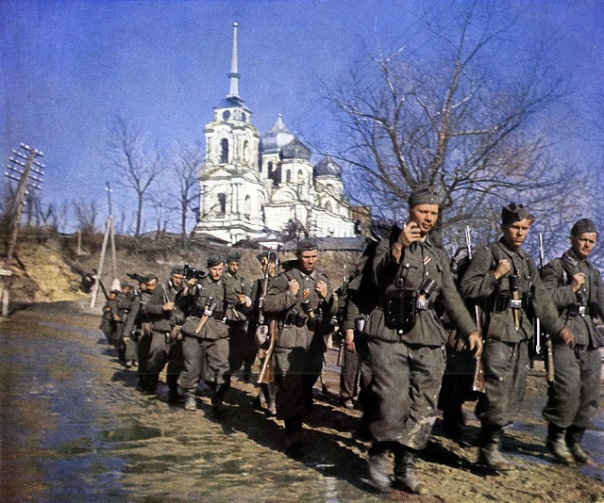
German soldiers marching through Russia
On July 3, after 10 days of brooding (and probably drinking heavily) in his dacha, Stalin finally took to the airways. He didn’t speak live; Radio Moscow played a recording of his voice across the Soviet Union.
Never a spellbinding orator, Stalin spoke in slow and faltering tones. Nevertheless, his opening words were startling: “Comrades! Citizens! Brothers and sisters! Men of our army and navy! I am addressing you, my friends!”
Stalin had never addressed an audience this way, and he never would again. Born Joseph Vissarionovich Djugashvili, he had given himself the name of “Stalin”—“Man of Steel.” And he had lived up to it, sending tens of thousands to the Soviet penal system known as the Gulag while ordering the executions of tens of thousands of others.
He said the “peace loving” Soviet Union had been attacked by “fiends and cannibals.” He claimed the non-aggression pact with Germany had given the army much-needed time to rearm and reorganize its forces. He claimed the Germans wanted to restore the rule of the landlords and re-establish Tsarism.
He repeatedly spoke of the treachery of the enemy—and of the need for constant vigilance against traitors: “We must wage a ruthless fight against all disorganizers of the rear, deserters, panic-mongers and rumor-mongers.”
This was accompanied by orders unprecedented in any other army: Those taken prisoner by the Germans were to be considered traitors—and shot or imprisoned. Those suspected of wounding themselves to avoid combat were also subject to summary execution. So were soldiers who had been legitimately wounded in battle but were suspected of inflicting those injuries.
The first two years of the war—1941 to 1943—proved disastrous for the Soviet Union.
During the first six months—June to December, 1941—German armies lured huge Soviet forces into gigantic “cauldron battles,” surrounding and exterminating them. An estimated 5.7 million prisoners of war (POWs) fell into German hands. Of these, at least 3.5 million died in custody.
But then the infamous Russian cold and snows of winter halted the Wehrmacht before Moscow. In the summer of 1942 German forces once again mounted a ferocious offensive, driving all the way to the Volga—and Stalingrad.
But they became bogged down in bitter house-to-house fighting. With the arrival of winter, Soviet forces surrounded the Wehrmacht’s powerful Sixth Army. The besiegers became the besieged. On February 2, 1943, Field Marshal Friedrich von Paulus surrendered what remained of his army. The battle cost Germany 500,000 men, including 91,000 taken prisoner.
As the Red Army finally began to go over on the offensive, Stalin relaxed the iron controls that had long stifled creativity on the part of his commandeers.
The infamous political commissars were removed from control over Russian generals. Gold braid and fancy uniforms were manufactured and rushed to the front as morale boosters.
At last, Stalin realized there was no way to win a life-and-death struggle than to give his soldiers the flexibility they needed.
The war would last another two years—costing the Soviet Union at least 26 million citizens—before it ended with the Red flag flying over Berlin.
ABC NEWS, ADOLF HITLER, AFGHANISTAN, AFRIKA KORPS, ALTERNET, AMERICABLOG, AP, BABY BOOMER RESISTANCE, BARACK OBAMA, BUZZFEED, CBS NEWS, CNN, CROOKS AND LIARS, DAILY KOZ, DONALD TRUMP, DRUDGE RETORT, EL ELAMEIN, ERWIN ROMMEL, FACEBOOK, FIVETHIRTYEIGHT, FRIEDRICH VON PAULUS, GEORGE W. BUSH, GREAT BRITAIN, HARPER’S MAGAZINE, IRAQ, JAPAN, JOSEPH GOEBBELS, MEDIA MATTERS, MOSCOW, MOTHER JONES, MOVEON, MSNBC, NAZI GERMANY, NBC NEWS, NEWSWEEK, NPR, PBS NEWSHOUR, PEARL HARBOR, POLITICO, POLITICUSUSA, RAW STORY, REUTERS, SALON, SEATTLE TIMES, SLATE, SOVIET UNION, STALINGRAD, TALKING POINTS MEMO, THANKSGIVING MESSAGE TO U.S. TROOPS, THE ATLANTIC, THE CHICAGO SUN-TIMES, THE CHICAGO TRIBUNE, THE DAILY BEAST, THE DAILY BLOG, THE GUARDIAN, THE HILL, THE HUFFINGTON POST, THE LOS ANGELES TIMES, THE NATION, THE NEW REPUBLIC, THE NEW YORK TIMES, THE VILLAGE VOICE, THE WASHINGTON POST, THINKPROGRESS, TIME, TOTAL WAR SPEECH, TRUTHDIG, TRUTHOUT, TWITTER, TWO POLITICAL JUNKIES, U.S. NEWS & WORLD REPORT, UNITED STATES, UPI, USA TODAY, WEHRMACHT, WINSTON CHURCHILL, WONKETTE, WORLD WAR ii
In Bureaucracy, History, Military, Politics, Social commentary on March 20, 2020 at 12:08 am
By February, 1943, the tide of war had turned irrevocably for Nazi Germany.
The string of quick and easy victories that had started on September 1, 1939 was over:
- Poland
- Norway
- Denmark
- Holland
- Belgium
- Luxembourg
- Greece
- France.
All had fallen under the heel of the Nazi jackboot. The swastika flag still flew triumphantly over the capitols of these once-free nations.
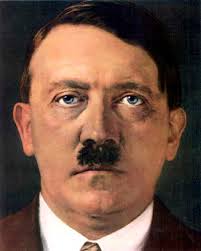
Adolf Hitler
And the word—and whim—of Germany’s Fuhrer, Adolf Hitler remained law for their populations.
But by March, 1943, all except the most fanatical Nazis could see that Germany was on a collision course with disaster.
- Under the unshakable leadership of Prime Minister Winston Churchill, Great Britain still remained a sworn enemy of the Third Reich.
- After six months of spectacular victories against the Soviet Union, the Wehrmacht had become hopelessly bogged down in the snow before Moscow.
- On December 11, 1941, following the attack on Pearl Harbor by his ally, Japan, Hitler declared war on the United States—thus pitting the Reich against the world’s two most powerful nations: America and Russia.
- In November, 1942, at El Alamein, the British Army halted the advance of General Erwin Rommel and his famed Afrika Korps across North Africa.
- On February 2, 1943, General Friedrich von Paulus surrendered the remains of the once-powerful Sixth Army at Stalingrad. The Reich suffered 730,000 total casualties, including nearly 91,000 German prisoners taken prisoner.
- On June 6, 1944, American, British and Canadian armies overwhelmed German’s “impregnable wall of death” on the Normandy beaches.
- In February, 1945, following the Vistula-Oder Offensive, the Red Army temporarily halted 37 miles east of Berlin.
So, by March, 1943, Germany desperately needed to hear some good news. And Propaganda Minister Joseph Goebbels was eager to supply it.
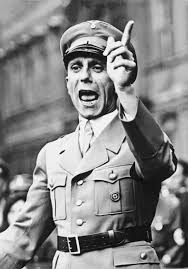
Joseph Goebbels
He did so in one of his last public addresses, delivered to a large but carefully selected audience in Gorlitz.
For Goebbels, the greatest challenge to the Reich lay in “the Bolshevist danger in the East.” And, for him, the solution was clear: “Total war is the demand of the hour.”
“Our soldiers, as soon as the great push on the Eastern Front gets under way, will ask no mercy and give no mercy.
“Already, our forces have begun softening up operations, and in the next weeks and months the big offensive will begin. They will go into battle with devotion like congregations going to a religious service.
“So, as the Fuhrer has overcome crises in the past, so will he triumph now.
“The other day he told me ‘I firmly believe that we shall overcome this crisis. I firmly believe that our army of millions will beat back our enemy and annihilate him. And some day our banners will be victorious. This is my life’s unshakable belief.'”
Thunderous applause repeatedly interrupted Goebbels’ address. Yet this could not replace the enormous losses Germany had suffered since 1939. Nor could it reverse the march of the Allied armies as they closed in on the Reich from East and West.
Now, fast-forward 74 years to November 23, 2017—Thanksgiving Day.
Donald Trump, President of the United States, speaks by video teleconference to American forces stationed in Iraq and Afghanistan.
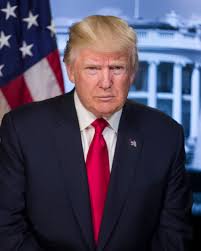
Donald Trump
President George W. Bush had risked his life to fly into Baghdad in 2003 to spend Thanksgiving with American forces. He flew into Iraq once again to visit troops in June, 2006.
And President Barack Obama took a similar risk when he visited American soldiers in Iraq in 2009, in Afghanistan in 2010, 2012 and 2014.
For Trump—who had five times dodged the draft during the Vietnam war—visiting an actual combat zone was apparently out of the question.
So he addressed American troops from the safety and comfort of his Mar-a-Lago Club and Resort in Palm Beach, Florida.
The address started off predictably enough: “It’s an honor to speak with you all and to give God thanks for the blessings of freedom and for the heroes who really have this tremendous courage that you do to defend us and to defend freedom.”
But, being Trump, he could not resist paying homage to himself: “We’re being talked about again as an armed forces. We’re really winning. We know how to win, but we have to let you win. They weren’t letting you win before; they we’re letting you play even. We’re letting you win….”
In short: You’re doing the grunt work, but the glory belongs to me.
“They say we’ve made more progress against ISIS than they did in years of the previous administration, and that’s because I’m letting you do your job….”
Translation: All those sacrifices you made under Presidents Bush and Obama went for nothing.
“A lot of things have happened with our country over the last very short period of time, and they’re really good — they’re really good. I especially like saying that companies are starting to come back.
“Now we’re working on tax cuts—big, fat, beautiful tax cuts. And hopefully we’ll get that and then you’re going to really see things happen.”
Or, put another way: Be grateful they elected me—because you’re about to see the 1% richest get even richer. Too bad you won’t be so lucky.


2016 PRESIDENTIAL CAMPAIGN, 9/11 ATTACKS, ABC NEWS, ADOLF HITLER, AFGHANISTAH, ALTERNET, AMERICABLOG, ANDREW CUOMO, AP, ARMY CORPS OF ENGINEERS, BABY BOOMER RESISTANCE, BARACK OBAMA, BILL CLINTON, BLOOMBERG, BUSES, BUZZFEED, CBS NEWS, CENTERS FOR DISEASE CONTROL AND PREVENTION (CDC), CNN, CORONAVIRUS, COVID-19, CROOKS AND LIARS, DAILY KOZ, DAVID BROOKS, DELTA FORCE, DOCTORS, DONALD RUMSFELD, DONALD TRUMP, DRUDGE RETORT, EBOLA, ELDERLY, FACEBOOK, FEAR, FEDERAL EMERGENCY MANAGEMENT AGENCY, FEEDING AMERICA, FIREFIGHTERS, FIVETHIRTYEIGHT, FOOD BANKS, FOX NEWS NETWORK, FRANKLIN D. ROOSEVELT, GARBAGE MEN, GEORGE H.W. BUSH, GEORGE W. BUSH, GREEN BERETS, GRETCHEN WHITMER, GROCERY SHOPPING, HARPER’S MAGAZINE, IRAQ, JAY INSLEE, LAUREN SAUER, MASKS, MEDIA MATTERS, MIKE PENCE, MOTHER JONES, MOVEON, MSNBC, MUSLIMS, NATIONAL SECURITY COUNCIL, NBC NEWS, NEWSWEEK, NPR, NURSES, NURSING HOMES, OSBMA BIN LADEN, PANIC SHOPPING, PBS NEWSHOUR, PERSONAL PROTECTIVE EQUIPMENT (PPES), POLICE, POLITICO, POLITICUSUSA, RAW STORY, REUTERS, RUDY GIULIANI, SADDAM HUSSEIN, SALON, SAN ANTONIO FOOD BANK, SCHOOLS, SEAN HANNITY, SEAN HANNITY SHOW, SEATTLE TIMES, SLATE, SOCIAL DISTANCING, SPANISH INFLUENZA, STEVEN PRESSFIELD, TALKING POINTS MEMO, TAXIS, THE ATLANTIC, THE CHICAGO SUN-TIMES, THE CHICAGO TRIBUNE, THE DAILY BEAST, THE DAILY BLOG, THE GUARDIAN, THE HILL, THE HUFFINGTON POST, THE LOS ANGELES TIMES, THE NATION, THE NEW REPUBLIC, THE NEW YORK TIMES, THE PENTAGON, THE VILLAGE VOICE, THE WASHINGTON POST, THINKPROGRESS, TIM ZIEMER, TIME, TRUTHDIG, TRUTHOUT, TWITTER, TWO POLITICAL JUNKIES, U.S. NAVY SEALS, U.S. NEWS & WORLD REPORT, UPI, USA TODAY, WASHINGTON MONTHLY, WHITE HOUSE PANDEMIC OFFICE, WILHELM 1, WONKETTE, WORLD TRADE CENTER, YAMICHE ALCINDOR
TWO FACES OF TERROR: 9/11 AND COVID-19: PART TWO (OF FOUR)
In Bureaucracy, History, Medical, Military, Politics, Social commentary on April 21, 2020 at 12:11 amOne of the biggest differences between the September 11, 2001 terrorist attacks and the COVID-19 pandemic is this:
After 9/11, Americans drew strength from each other. During Coronavirus, Americans remain isolated and forced to rely on their own resources.
This has its origins at the top—with President Donald Trump.
Like Adolf Hitler, Trump likes to pit individuals and organizations against each other. Hitler, for example, would assign several agencies to tackle the same problem: “That way, the stronger one gets the job done,” he told his architect, Albert Speer.
This creates needless duplication of efforts and wasted resources. But it ensures that Trump—like Hitler—remains the final voice of authority, since so many others are competing for his favor and direction.
Donald Trump
This has not, however, worked out well for the 50 states that make up the United States of America.
During the Great Depression, President Franklin D. Roosevelt intervened powerfully to ensure that all Americans received the help they needed.
Trump has made it clear that each state is responsible for securing its needed supply of Personal Protective Equipment (PPEs) for its doctors and nurses aiding Coronavirus patients. This has resulted in a dog-eat-dog atmosphere of cutthroat competition and scarcity, with Americans not only fighting the virus but each other.
Even worse: Trump and Republicans are using a deadly plague as a weapon against those Americans they hate.
On March 26, during an interview on Fox News, Trump blamed the failures of his administration’s response to Coronavirus on Democratic state governors like Andrew Cuomo (NY), Jay Inslee (WA), and Gretchen Whitmer (MI).
On March 27, during his press briefing, Trump said he told Vice President Mike Pence—who’s officially in charge of the White House’s response effort—to not call Inslee and Whitmer because they weren’t “appreciative” enough of his efforts.
Trump said this even as hospitals in each of their states were being overwhelmed with Coronavirus patients.
“I tell him—I mean I’m a different type of person— I say, ‘Mike, don’t call the governor in Washington, you’re wasting your time with him. Don’t call the woman in Michigan,’” Trump said. “If they don’t treat you right, I don’t call.”
Trump said that when people criticized him, they were criticizing the federal government: “When they’re not appreciative to me, they’re not appreciative to the Army Corps, they’re not appreciative to FEMA [Federal Emergency Management Agency]. It’s not right.”
Trump also attacked Whitmer on Right-wing Fox News’ “Sean Hannity Show”: “I don’t know if she knows what’s going on, but all she does is sit there and blame the federal government.”
That same day—March 27—Whitmer told a Michigan radio station: “What I’ve gotten back is that vendors with whom we’ve procured contracts—they’re being told not to send stuff to Michigan. It’s really concerning. I reached out to the White House last night and asked for a phone call with the president, ironically at the time this stuff was going on.”
Gretchen Whitmer
A March 29 story in the Washington Monthly sheds light on what lay behind Whitmer’s inability to secure desperately-needed ventilators from her longtime vendors. Its headline ran: “What If Trump Decides to Save Republicans But Not Democrats?”
A sub-headline read: “He’s providing vital resources to red states and ignoring blue states.”
The Black Hand
Florida submitted a request to FEMA on March 11 for 430,000 surgical masks, 180,000 N95 respirators, 82,000 face shields and 238,000 gloves—and received a shipment with everything three days later.
On Fox News, Rudy Giuliani, Trump’s personal lawyer, bluntly told governors: “Take the blame when you have to. When you play with your boss, sometimes it’s better when you don’t win the golf game. He’s the boss, he’s got all the resources.”
The mentality of the Black Hand has come to the Oval Office.
The Washington Monthly story concludes ominously: “What if the White House simply gives all the masks and ventilators to red states and counties, leaving blue ones to struggle? What mechanisms of accountability are left?
“U.S. democracy wasn’t set up to deal with a president openly behaving like a James Bond villain while being protected by a political party behaving more like a mafia than a civic institution.”
But while corpses pile up and Trump wages repeated feuds with state governors, ordinary citizens daily face never-before-imagined fears and dangers.
Coronavirus has forced people to be apart, with each one forced to face his / her own fears of something that can’t be seen and can strike anywhere, anytime, at anyone.
Smart Americans no longer venture outdoors without wearing a mask—a medically-approved N95 one if possible, but at least a homemade one. It’s not unusual to see people wearing blue rubber gloves as well.
N95 mask
Before COVID-19, a masked man entering a bank meant: “This is a robbery!” Today, tellers aren’t surprised when they see a customer wearing a surgical mask.
Going to the supermarket used to be a routine matter: You would assume—usually correctly—that those items you wanted would be in stock. Then you would find and load them into your car.
No longer.
Share this: