Posts Tagged ‘ADOLF HITLER’
ABC NEWS, ADOLF HITLER, ALBERT SPEER, ALTERNET, ANTHONY SCARAMUCCI, AP, BARACK OBAMA, BUZZFEED, CBS NEWS, CNN, CROOKS AND LIARS, DAILY KOZ, DAVID AXELROD, DONALD TRUMP, FACEBOOK, FOX AND FRIENDS, FOX NEWS, GERMANY, KARL OTTO SAUR, LOU DOBBS, MOTHER JONES, MOVEON, MSNBC, NBC NEWS, NERO ORDER, NEWSWEEK, NPR, POLITICO, POLITICUSUSA, RAW STORY, REINCE PRIEBUS, REPUBLICAN NATIONAL COMMITTEE, REUTERS, SALON, SCORCHED EARTH, SEAN HANNITY, SEAN SPICER, SEATTLE TIMES, SLATE, THE ATLANTIC, THE CHICAGO SUN-TIMES, THE CHICAGO TRIBUNE, THE DAILY BEAST, THE GUARDIAN, THE HILL, THE HUFFINGTON POST, THE LOS ANGELES TIMES, THE NATION, THE NEW YORK TIMES, THE WASHINGTON POST, TIME, TWITTER, U.S. NEWS & WORLD REPORT, UPI, USA TODAY, WHITE HOUSE COMMUNICATIONS OFFICE, WORLD WAR 11
In Bureaucracy, History, Military, Politics, Social commentary on April 26, 2019 at 12:02 am
THE WHITE HOUSE IS PROPPING UP A DEPRESSED TRUMP WITH TWO FOLDERS OF PROPAGANDA A DAY
So read an August 8, 2017 headline on the PoliticusUSA website.
The story to which it was attached opened:
“Donald Trump receives two folders of screen grabs, transcripts, and pictures of himself looking strong each day as the White House using the communications office to compile propaganda that makes Trump feel better.”
It then quoted Vice News as stating:
“Twice a day since the beginning of the Trump administration, a special folder is prepared for the president. The first document is prepared around 9:30 a.m. and the follow-up, around 4:30 p.m.
“Former Chief of Staff Reince Priebus and former Press Secretary Sean Spicer both wanted the privilege of delivering the 20-to-25-page packet to President Trump personally, White House sources say.
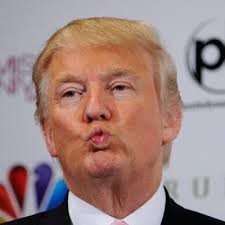
Donald Trump
“These sensitive papers, described to VICE News by three current and former White House officials, don’t contain top-secret intelligence or updates on legislative initiatives.
“Instead, the folders are filled with screenshots of positive cable news chyrons (those lower-third headlines and crawls), admiring tweets, transcripts of fawning TV interviews, praise-filled news stories, and sometimes just pictures of Trump on TV looking powerful.”
Sources told Vice that Priebus and Spicer created this “happy news” smorgasbord to boost their own standings.
“Priebus and Spicer weren’t in a good position, and they wanted to show they could provide positive coverage,” an anonymous official said. “It was self-preservation.”
In the end, it did nothing for Priebus and Spicer. On July 28, 2017, Priebus resigned—after suffering repeated humiliations by Trump—such as being ordered to kill a fly that was buzzing about.
And, on July 21, 2017, Spicer similarly resigned in anger after Trump chose Anthony Scaramucci as White House Communications Director. Trump kept Spicer in the dark about events that he needed to know.
At 6 a.m. every weekday, three staffers arrive at the Republican National Committee’s “war room.” Their mission: Scour newspapers and the Internet and monitor MSNBC, Fox News and CNN. About every 30 minutes, they send the White House Communications Office an email with tweets, screenshots, interview transcripts and news stories.
“Maybe it’s good for the country that the President is in a good mood in the morning,” one former RNC official said.
Creating folders of “happy news” to prop up the President’s fragile ego is a practice unique to the Trump administration.
“If we had prepared such a digest for Obama, he would have roared with laughter,” said David Axelrod, the senior adviser to Barack Obama during his first two years in the White House. “His was a reality-based presidency.”
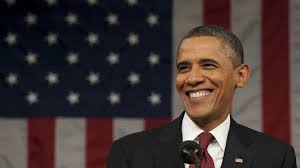
Barack Obama
Trump eats up praise like a sugar addict consumes candy. He frequently tweets his thanks to cable television hosts like Sean Hannity, Lou Dobbs, and the hosts of “Fox & Friends” who lavishly praise his administration.
But Trump is hardly unique among world leaders to listen only to “happy news.”
During World War II, as his armies were forced to retreat on all fronts, Adolf Hitler increasingly demanded that his ministers refrain from “defeatist talk.”
Hoping for victory—and stating that it was inevitable—became the key to saving one’s job—if not life—in the steadily-declining Third Reich. Countless Germans who refused to embrace Hitler’s fantasies were executed.
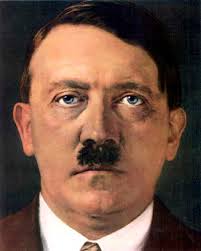
Adolf Hitler
This was best illustrated by the case of Albert Speer. Hitler had often proclaimed him “my genius architect” before appointing him Minister of Armaments in 1942. As Speer revved up the production of military hardware, Hitler continued to hail his “genius.”
But as Allied bombing raids increasingly devastated Germany’s industrial plants, armaments production began to fall. This forced Speer to tell his Fuhrer the unpalatable truth: Germany was losing its capacity to wage war.
Hitler didn’t want to hear it, turning instead to those who fed him a diet of “happy news.” When Speer’s deputy, Karl Otto Saur, told Hitler, “By Christmas, we’ll have air superiority!” Hitler was ecstatic.
At a meeting with his generals, the Fuhrer announced: “We have the good fortune to have a genius in our armaments ministry. I mean Saur.”
The promised air superiority never materialized.
As even Hitler came to realize that the end was near, he turned his anger on the Germany he had so often claimed to love.
“If the war is lost,” Hitler told Speer, “the nation will also perish….This nation will have proved to be the weaker one and the future will belong solely to the stronger eastern nation.”
He ordered a massive “scorched-earth” campaign throughout Germany.
All German agriculture, industry, ships, communications, roads, food stuffs, mines, bridges, stores and utility plants were to be destroyed.
If implemented, it would deprive the entire German population of even the barest necessities after the war.
Fortunately for Germany, Speer dared to sabotage the “Nero Order,” thus ensuring a future for those who survived the war.
Hitler’s demands for only “happy news” did not save him—or his regime.
Feeding himself a diet of “happy news” detached from reality will not save Donald Trump. Nor will it save those Americans who insist on believing it.
2016 PRESIDENTIAL CAMPAIGN, ABC NEWS, ADOLF HITLER, ALTERNET, AP, BARACK OBAMA, BULLYING, BURT LANCASTER, BUZZFEED, CBS NEWS, CIA, CNN, CROOKS AND LIARS, DAILY KOZ, DONALD TRUMP, FACEBOOK, FASCISM, FBI, HELSINKI PRESS CONFERENCE, HILLARY CLINTON, HUMAN RIGHTS CAMPAIGN (HRC), IMMIGRATION AND CUSTOMS ENFORCEMENT (ICE), JAMES COMEY, JEFF SESSIONS, JOHN F. KENNEDY, JUDGMENT AT NUREMBERG, LYING, MAIN INTELLIGENCE DIRECTORATE, MOTHER JONES, MOVEON, MSNBC, NAZI GERMANY, NBC NEWS, NEWSWEEK, NPR, PBS NEWSHOUR, POLITICO, RACISM, RAFAEL "TED" CRUZ, RAW STORY, REPUBLICANS, REUTERS, ROBERT S. MUELLER, RUSSIA, SALON, SEATTLE TIMES, SERGEY KISLYAK, SLATE, SPENCER TRACY, THE ATLANTIC, THE CHICAGO SUN-TIMES, THE CHICAGO TRIBUNE, THE DAILY BEAST, THE GUARDIAN, THE HILL, THE HUFFINGTON POST, THE LOS ANGELES TIMES, THE NATION, THE NEW YORK TIMES, THE WASHINGTON POST, TIME, TWITTER, U.S. NEWS & WORLD REPORT, UNITE THE RIGHT RALLY, UPI, USA TODAY, VLADIMIR PUTIN, WIRETAPPING
In Bureaucracy, History, Law, Law Enforcement, Politics, Social commentary on April 18, 2019 at 12:12 am
Those who have seen the classic 1960 movie, “Judgment at Nuremberg,” will remember its pivotal moment.
That’s when Burt Lancaster, as Ernst Janning, the once distinguished German judge, confesses his guilt and that of Nazi Germany in a controlled, yet emotional, outburst.
Addressing the court—presided over by Chief Judge Dan Haywood (Spencer Tracy)—Janning explains the forces that led to the triumph of evil.
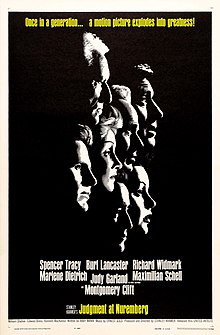
English: “Copyright © 1961 by United Artists Corporation.”, Public domain, via Wikimedia Commons
It’s not hard to imagine, in the future, an equally conscience-stricken member of the Donald Trump administration, standing before the bar of justice, making a similar statement:
“My counsel would have you believe we were not aware of the ICE concentration camps. Not aware. Where were we?
“Where were we when Trump began shrieking his hate across the country? When Trump called our free press ‘the enemy of the people’?
“Where were we when Trump openly praised Vladimir Putin and attacked those in the FBI, CIA and other Intelligence agencies sworn to protect us?
“Where were we when the victims of Trump’s hatred cried out in the night to us? Were we deaf? Dumb? Blind?
“My counsel says we were not aware of Trump’s treasonous collusion with Vladimir Putin—and his intention to betray American freedoms in exchange for the Presidency. He would give you the excuse we were misled by the lying rhetoric coming out of the White House.
“Does that make us any the less guilty? Maybe we didn’t know the details, but if we didn’t know, it was because we didn’t want to know.”
Consider Trump’s effect on:
Race relations:
- Since Trump’s election, attacks on non-whites by Right-wing—and white—Trump supporters have increased. According to The Human Rights Campaign (HRC), there has been a rapid increase in youth bullying during and since the 2016 campaign:
- “The bullying effects of the Trump presidency—dubbed the Trump effect—are devastating, particularly when it comes to bullying of minority groups, especially those who are easily identifiable and/or who are singled out by the president’s statements or actions.”
- On August 11-12, 2017, white supremacists from across the country gathered in Charlottesville, Virginia, for a “Unite the Right” rally. On August 13, a Nazi sympathizer rammed his car into a group of counter-protesters, killing a woman and injuring 19 other demonstrators.
- Refusing to condemn the Fascistic demonstrators, Trump said: “We condemn in the strongest possible terms this egregious display of hatred, bigotry and violence on many sides, on many sides.”
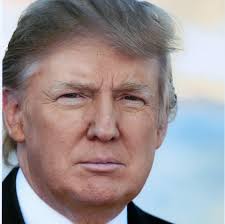
Donald Trump
The rule of law:
- On May 9, 2017, Trump fired FBI Director James Comey, who was conducting an FBI investigation into well-documented contacts between Trump’s 2016 Presidential campaign and Russian Intelligence agents.
- Trump repeatedly attacked—and ultimately fired—his own Attorney General, Jeff Sessions, for recusing himself from the above-mentioned investigation. (Sessions did so because of his own documented ties with Russian Ambassador Sergey Kislyak.)
- Trump repeatedly attacked the integrity of Special Counsel Robert S. Mueller, who probed the ties between Russian Intelligence agents and Trump’s 2016 Presidential campaign.
- Trump ordered Sessions to investigate “all of the corruption” of Trump’s critics and those investigating him, including Hillary Clinton, James Comey, and Special Counsel Robert Mueller.
- In short: He wants to use the FBI as his private secret police against anyone who has ever criticized, investigated or run against him.
Trump as liar:
- From 2011 to 2016, Trump falsely accused Barack Obama as being born in Kenya, not—as evidence proves—Hawaii. This was an effort to de-legitimize Obama as President of the United States.
- During the 2016 Presidential campaign, Trump falsely accused the father of his political rival, Texas United States Senator Rafael “Ted” Cruz, of being a party to the assassination of President John F. Kennedy.
- After taking office Trump falsely accused former President Obama of illegally wiretapping him at Trump Tower.
- By January 21, 2019, the Washington Post reported that Trump—since taking office—had made 7,645 false or misleading claims.
Trump as traitor:
- Trump has repeatedly praised Russian President Vladimir Putin, both during his Presidential candidacy and since taking office. In fact, Putin remains the only major public figure that Trump has never criticized.
- On July 22, 2016, Trump said at a press conference in Doral, Florida: “Russia, if you are listening, I hope you are able to find the 33,000 emails that are missing [from Democratic Presidential candidate Hillary Clinton’s computer]. I think you will probably be rewarded mightily by our press.”
- Hours later, the Main Intelligence Directorate in Moscow targeted Clinton’s personal office and hit more than 70 other Clinton campaign accounts.
- On July 16, 2018, President Trump attended a press conference in Helsinki, Finland, with Russian President Vladimir Putin. There he sided with Putin against American Intelligence agencies—such as the FBI, CIA and National Security Agency—for Russia’s subversion of the 2016 Presidential election:
- “I have President Putin. He just said it’s not Russia. I will say this: I don’t see any reason why it would be, but I really do want to see the server.”
Since 1945, historians have brutally condemned the vicious and destructive reign of Adolf Hitler and those who supported him.
Future historians will condemn just as harshly the equally vicious and destructive reign of Donald Trump—and those who now support him.
ABC NEWS, ADMIRAL IVAN ISAKOV, ADOLF HITLER, ALBERT SPEER, ALTERNET, ANDREW MCCABE, AP, BOB WOODWARD, BUZZFEED, CBS NEWS, CHEKA, CIA, CNN, COUNTER-SURVEILLANCE, CROOKS AND LIARS, DAILY KOZ, DEMOCRATIC PARTY, DONALD TRUMP, FACEBOOK, FBI, FSB, GENRIKH YAGODA, HEINRICH HIMMLER, HERMANN GOERING, HOUSE OF REPRESENTATIVES, JAMES COMEY, JEFF SESSIONS, JOSEPH STALIN, KGB, KRISJEN NIELSEN, LAVRENTY BERIA, MOTHER JONES, MOVEON, MSNBC, NBC NEWS, NEWSWEEK, NICCOLO MACHIAVELLI, NIKOLAI YEZHOV, NKVD, NPR, PBS NEWSHOUR, POLITICO, RACHEL BRAND, RANDOLPF “TEX” ALLES, RAW STORY, REPUBLICAN PARTY, REUTERS, SALLY YATES, SALON, SEAN SPICER, SEATTLE TIMES, SLATE, SOVIET UNION, SS, STORMY DANIELS, SURVEILLANCE, THE APPRENTICE, THE ATLANTIC, THE CHICAGO SUN-TIMES, THE CHICAGO TRIBUNE, THE DAILY BEAST, THE GUARDIAN, THE HILL, THE HUFFINGTON POST, THE LOS ANGELES TIMES, THE NATION, THE NEW YORK TIMES, THE PRINCE, THE WASHINGTON POST, TIME, TWITTER, U.S. NEWS & WORLD REPORT, UPI, USA TODAY
In Bureaucracy, History, Law, Law Enforcement, Military, Politics, Social commentary on April 12, 2019 at 12:11 am
In January, 2018, the White House banned the use of personal cell phones in the West Wing. The official reason: National security.
The real reason: To stop staffers from leaking to reporters.
More ominously, well-suited men roam the halls of the West Wing, carrying devices that pick up signals from phones that aren’t government-issued.
“Did someone forget to put their phone away?” one of the men will ask if such a device is detected. If no one says they have a phone, the detection team start searching the room.
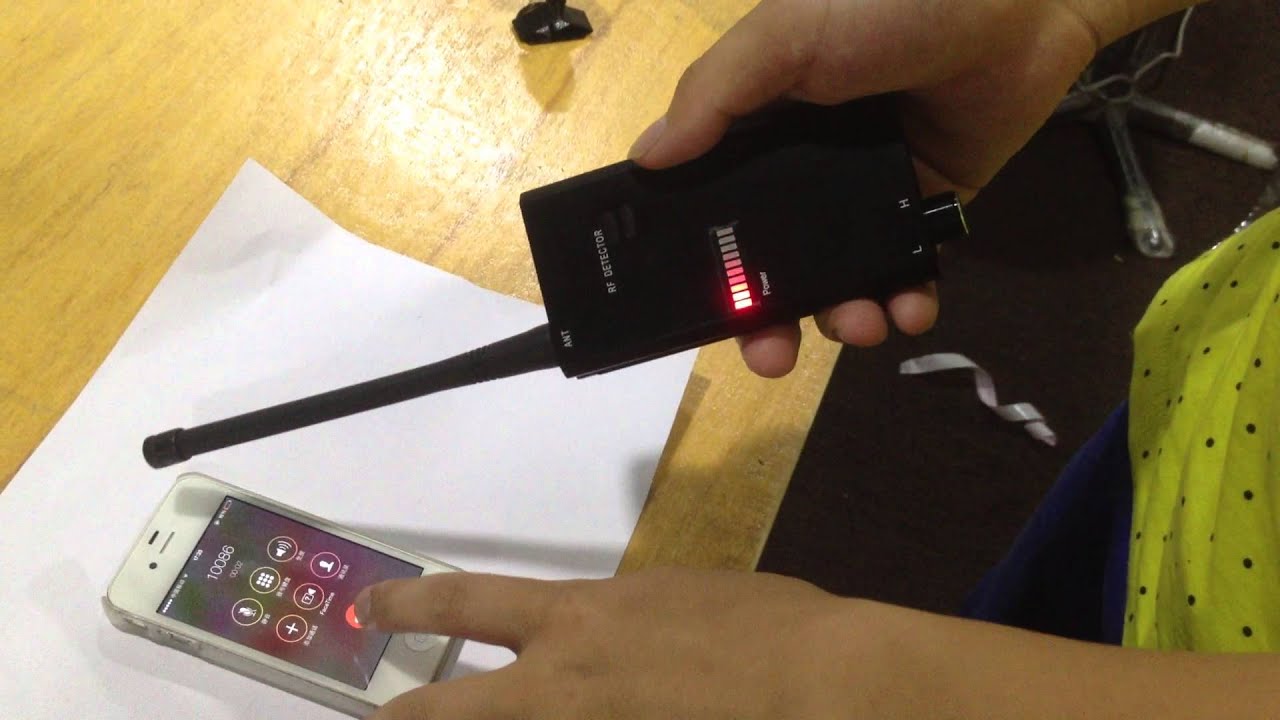
Phone detector
The devices can tell which type of phone is in the room.
This is the sort of behavior Americans have traditionally—and correctly—associated with dictatorships
In his memo outlining the policy, then-Chief of Staff John Kelly warned that anyone who violated the phone ban could be punished, including “being indefinitely prohibited from entering the White House complex.”
Yet even these draconian methods may not end White House leaks.
White House officials still speak with reporters throughout the day and often air their grievances, whether about annoying colleagues or competing policy priorities.
Aides with private offices sometimes call reporters on their desk phones. Others get their cell phones and call or text reporters during lunch breaks.
According to an anonymous White House source: “The cellphone ban is for when people are inside the West Wing, so it really doesn’t do all that much to prevent leaks. If they banned all personal cellphones from the entire [White House] grounds, all that would do is make reporters stay up later because they couldn’t talk to their sources until after 6:30 pm.”
Other sources believe that leaks won’t end unless Trump starts firing staffers. But there is always the risk of firing the wrong people. Thus, to protect themselves, those who leak might well accuse tight-lipped co-workers.
Within the Soviet Union (especially during the reign of Joseph Stalin) fear of secret police surveillance was widespread—and absolutely justified.
Among the methods used to keep conversations secret:
- Turning on the TV or radio to full volume.
- Turning on a water faucet at full blast.
- Turning the dial of a rotary phone to the end—and sticking a pencil in one of the small holes for numbers.
- Standing six to nine feet away from the hung-up receiver.
- Going for “a walk in the woods.”
- Saying nothing sensitive on the phone.
The secret police (known as the Cheka, the NKVD, the MGB, the KGB, and now the FSB) operated on seven working principles:
- Your enemy is hiding.
- Start from the usual suspects.
- Study the young.
- Stop the laughing.
- Rebellion spreads like wildfire.
- Stamp out every spark.
- Order is created by appearance.
Trump has always ruled through bribery and fear. He’s bought off (or tried to) those who might cause him trouble—like porn actress Stormy Daniels. And he’s threatened or filed lawsuits against those he couldn’t or didn’t want to bribe—such as contractors who have worked on various Trump properties.
But Trump can’t buy the loyalty of employees working in an atmosphere of hostility—which breeds resentment and fear. And some of them are taking revenge by sharing with reporters the latest crimes and follies of the Trump administration.
The more Trump wages war on the “cowards and traitors” who work most closely with him, the more some of them will find opportunities to strike back. This will inflame Trump even more—and lead him to seek even more repressive methods against his own staffers.
This is a no-win situation for Trump.
The results will be twofold:
- Constant turnovers of staffers—with their replacements having to undergo lengthy background checks before coming on; and
- Continued leaking of embarrassing secrets by resentful employees who stay.
**********
As host of NBC’s “The Apprentice,” Trump became famous for booting off contestants with the phrase: “You’re fired.” In fact, he so delighted in using this that, in 2004, he tried to gain trademark ownership of it.
But the U.S. Patent and Trademark Office rejected his application. American copyright law explicitly prohibits copyright protections for short phrases or sayings.
Since taking office as President, Trump has bullied and insulted even White House officials and his own handpicked Cabinet officers. This has resulted in an avalanche of firings and resignations.
The first two years of Trump’s White House have seen more firings, resignations, and reassignments of top staffers than any other first-term administration in modern history. His Cabinet turnover exceeds that of any other administration in the last 100 years.
In 1934, Soviet dictator Joseph Stalin, seeing imaginary enemies everywhere, ordered a series of purges that lasted right up to the German invasion in 1941.
No one was safe from execution—not even the men who slaughtered as many as 20 to 60 million.
Fittingly, for all the fear he inspired, Stalin was plagued by paranoia. He lived in constant fear of assassination. Although surrounded by bodyguards, he distrusted even them.
Thus Stalin, who had turned the Soviet Union into a vast prison, became its leading prisoner.
Similarly, Donald Trump daily proves the truth of the age-old warning: “You can build a throne of bayonets, but you can’t sit on it.”
ABC NEWS, ADMIRAL IVAN ISAKOV, ADOLF HITLER, ALBERT SPEER, ALTERNET, ANDREW MCCABE, AP, BOB WOODWARD, BUZZFEED, CBS NEWS, CHEKA, CIA, CNN, COUNTER-SURVEILLANCE, CROOKS AND LIARS, DAILY KOZ, DEMOCRATIC PARTY, DONALD TRUMP, FACEBOOK, FBI, FSB, GENRIKH YAGODA, HEINRICH HIMMLER, HERMANN GOERING, HOUSE OF REPRESENTATIVES, JAMES COMEY, JEFF SESSIONS, JOSEPH STALIN, KGB, KRISJEN NIELSEN, LAVRENTY BERIA, MOTHER JONES, MOVEON, MSNBC, NBC NEWS, NEWSWEEK, NICCOLO MACHIAVELLI, NIKOLAI YEZHOV, NKVD, NPR, PBS NEWSHOUR, POLITICO, RACHEL BRAND, RANDOLPF “TEX” ALLES, RAW STORY, REPUBLICAN PARTY, REUTERS, SALLY YATES, SALON, SEATTLE TIMES, SLATE, SOVIET UNION, SS, STORMY DANIELS, SURVEILLANCE, THE APPRENTICE, THE ATLANTIC, THE CHICAGO SUN-TIMES, THE CHICAGO TRIBUNE, THE DAILY BEAST, THE GUARDIAN, THE HILL, THE HUFFINGTON POST, THE LOS ANGELES TIMES, THE NATION, THE NEW YORK TIMES, THE PRINCE, THE WASHINGTON POST, TIME, TWITTER, U.S. NEWS & WORLD REPORT, UPI, USA TODAY
In Bureaucracy, History, Law, Law Enforcement, Military, Politics, Social commentary on April 11, 2019 at 12:17 am
Donald Trump has often been compared to Adolf Hitler. But his reign bears far more resemblance to that of Joseph Stalin.
Germany’s Fuhrer, for all his brutality, maintained a relatively stable government by keeping the same men in office—from the day he took power on January 30, 1933, to the day he blew out his brains on April 30, 1945.
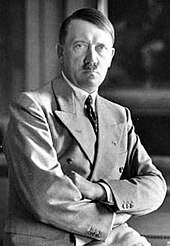
Adolf Hitler
Bundesarchiv, Bild 146-1990-048-29A / CC-BY-SA 3.0 [CC BY-SA 3.0 de (https://creativecommons.org/licenses/by-sa/3.0/de/deed.en)%5D
Heinrich Himmler, a former chicken farmer, remained head of the dreaded, black-uniformed Schutzstaffel, or Protection Squads, known as the SS, from 1929 until his suicide in 1945.
In April, 1934, Himmler was appointed assistant chief of the Gestapo (Secret State Police) in Prussia, and from that position he extended his control over the police forces of the whole Reich.
Hermann Goering, an ace fighter pilot in World War 1, served as Reich commissioner for aviation and head of the newly developed Luftwaffe, the German air force, from 1935 to 1945.
And Albert Speer, Hitler’s favorite architect, held that position from 1933 until 1942, when Hitler appointed him Reich Minister of Armaments and War Production. He held that position until the Third Reich collapsed in April, 1945.
Soviet Premier Joseph Stalin, by contrast, purged his ministers constantly. For example: From 1934 to 1953, Stalin had no fewer than three chiefs of his secret police, then named the NKVD:
- Genrikh Yagoda – (July 10, 1934 – September 26, 1936)
- Nikolai Yezhov (September 26, 1936 – November 25, 1938) and
- Lavrenty Beria (November, 1938 – March, 1953).
Stalin purged Yagoda and Yezhov, with both men executed after their arrest.
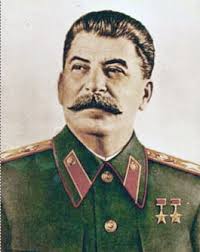
Joseph Stalin
He reportedly wanted to purge Beria, too, but the latter may have acted first. There has been speculation that Beria slipped warfarin, a blood-thinner often used to kill rats, into Stalin’s drink, causing him to die of a cerebral hemorrhage.
Stalin’s record for slaughter far eclipses that of Hitler.
For almost 30 years, through purges and starvation caused by enforced collections of farmers’ crops, Stalin slaughtered 20 to 60 million people.
The 1930s were a frightening and dangerous time to be alive in the Soviet Union. In 1934, Stalin, seeing imaginary enemies everywhere, ordered a series of purges that lasted right up to the German invasion in 1941.
An example of Stalin’s paranoia occurred one day while the dictator walked through the Kremlin corridors with Admiral Ivan Isakov. Officers of the NKVD (the predecessor to the KGB) stood guard at every corner.
“Every time I walk down the corridors,” said Stalin, “I think: Which one of them is it? If it’s this one, he will shoot me in the back. But if I turn the corner, the next one can shoot me in the face.”
Another Russian-installed tyrant who has sought to rule by fear: President Donald J. Trump.
In fact, he admitted as much to journalist Bob Woodward during the 2016 Presidential race: “Real power is—I don’t even want to use the word—fear.”
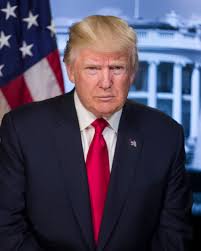
Donald Trump
As a Presidential candidate, Trump repeatedly used Twitter to attack hundreds of real and imagined enemies in politics, journalism, TV and films.
As President, he continues to insult virtually everyone, verbally and on Twitter. His targets include Democrats, Republicans, the media, foreign leaders and even members of his Cabinet.
In Russian, the word for “purge” is “chistka,” for “cleansing.” Among the victims of Trump’s recurring chistkas:
- Sally Yates – Assistant United States Attorney General
- James Comey – FBI Director
- Andrew McCabe – FBI Deputy Director
- Jeff Sessions – United States Attorney General
- Rachel Brand – Associate United States Attorney General
- Randolph “Tex” Alles – Director of the United States Secret Service
- Krisjen Nielsen – Secretary of the Department of Homeland Security
In his infamous political treatise, The Prince, Niccolo Machiavelli, the Florentine statesman, asked: “Is it is better to be loved or feared?”
And he answered it thus:
“The reply is, that one ought to be both feared and loved, but as it is difficult for the two to go together, it is much safer to be feared than loved.
“For it may be said of men in general that they are ungrateful, voluble, dissemblers, anxious to avoid danger and covetous of gain; as long as you benefit them, they are entirely yours….
“And the prince who has relied solely on their words, without making other preparations, is ruined….
“And men have less scruple in offending one who makes himself loved than one who makes himself feared; for love is held by a chain of obligations which, men being selfish, is broken whenever it serves their purpose; but fear is maintained by a dread of punishment which never fails.”
But Machiavelli warned about relying primarily on fear: “Still, a prince should make himself feared in such a way that if he does not gain love, he at any rate avoids hatred, for fear and the absence of hatred may well go together.”
**********
Donald Trump has violated that counsel throughout his life. He not only makes enemies, he revels in doing so—and in the fury he has aroused.
Filled with a poisonous hatred that encompasses almost everyone, Trump, since taking office, has repeatedly played to the hatreds of his Right-wing base.
As first-mate Starbuck says of Captain Ahab in Herman Melville’s classic novel, Moby Dick: “He is a champion of darkness.”
2016 PRESIDENTIAL ELECTION, ABC NEWS, ADOLF HITLER, BAVARIA, BEER HALL PUTSCH, CBS NEWS, CNN, DEMOCRATIC NATIONAL COMMITTEE, DEMOCRATIC PARTY, DONALD TRUMP, DONALD TRUMP JR., FEDERAL JUDGES, HACKING, HILLARY CLINTON, HITLER: ASCENT, IRS, JARED KUSHNER, JUSTICE DEPARTMENT, KAISER WILHELM II, MEIN KAMPF, MUNICH, NAZI PARTY, NBC NEWS, NEWSWEEK, NPR, PAUL MANAFORT, POLITICO, REPUBLICAN NATIONAL COMMITTEE, REPUBLICAN NATIONAL CONVENTION, REPUBLICAN PARTY, ROBERT S. MUELLER, SALON, T.S. ELLIS, THE CHICAGO SUN-TIMES, THE CHICAGO TRIBUNE, THE HOLOCAUST, THE HUFFINGTON POST, THE LOS ANGELES TIMES, THE NEW YORK TIMES, THE SOVIET UNION, THE WASHINGTON EXAMINER, THE WASHINGTON POST TIME, TREASON, TREATY OF VERSALLIES, TRUMP TOWER MEETING, TWITTER, U.S. NEWS & WORLD REPORT, U.S. SUPREME COURT, UNITED STATES SENATE, USA TODAY, VLADIMIR PUTIN, VOLKER ULLRICH, WALTER RATHENAU, WEIMAR REPUBLIC, WIKILEAKS, WORLD WAR 1
In Bureaucracy, History, Law, Law Enforcement, Military, Politics, Social commentary on March 12, 2019 at 12:13 am
On November 9, 1923, Nazi Party Fuhrer Adolf Hitler tried to overthrow the government in Munich, Bavaria.
About 2,000 Nazis marched to the center of Munich, where they confronted heavily-armed police. A shootout erupted, killing 16 Nazis and four policemen.
Hitler was injured during the clash, but managed to escape. Two days later, he was arrested and charged with treason.
Put on trial, he found himself treated as a celebrity by a judge sympathetic to Right-wing groups. He was allowed to brutally cross-examine witnesses and even make inflammatory speeches.
At the end of the trial, he was convicted of treason and sentenced to five years’ imprisonment.
Serving time in Landsberg Prison, in Bavaria. he was given a huge cell, allowed to receive unlimited visitors and gifts, and treated with deference by guards and inmates.
Hitler used his time in prison to write his infamous book, Mein Kampf-–“My Struggle.” Part autobiography, part political treatise, it laid out his future plans—including the extermination of the Jews and the conquest of the Soviet Union.

Adolf Hitler leaving Landsberg Prison, December, 20, 1924
Nine months later, he was released on parole—by authorities loyal to the authoritarian Right instead of the newly-created Weimar Republic.
Hitler immediately began rebuilding the shattered Nazi party—and deciding on a new strategy to gain power. Never again would he resort to armed force. He would win office by election—or intrigue.
Writes historian Volker Ullrich, in his monumental new biography, Hitler: Ascent 1889 – 1939: “Historians have perennially tried to answer the question of whether Hitler’s rise to power could have been halted….
“There were repeated opportunities to end Hitler’s run of triumphs. The most obvious one was after the failed Putsch of November 1923. Had the Munich rabble-rouser been forced to serve his full five-year term of imprisonment in Landsberg, it is extremely unlikely that he would have been able to restart his political career.”

Thus, it isn’t just what happens that can influence the course of history. Often, it’s what doesn’t happen that has at least as great a result.
Consider the case of Paul Manafort.
Manafort faced 18 counts brought by Special Counsel Robert Mueller’s team investigating Russian subversion of the 2016 election.
These included:
- Filing false income tax statements.
- Failing to file foreign bank account reports to disclose his control over his overseas accounts.
- Bank fraud and bank fraud conspiracy—by lying about Manafort’s income, debt and the nature of his real estate properties.
Mueller believed that Manafort could provide an insider’s account of the infamous June, 2016 Trump Tower meeting. Among the attendees: Manafort, Trump’s son, Donald Trump Jr., and Trump’s son-in-law Jared Kushner—along with Russian nationals offering dirt on Hillary Clinton.
While Manafort managed Trump’s Presidential campaign—from March to September, 2016:
- In July, the GOP gutted an amendment to its platform that advocated sending arms to Ukraine to defend against Russian aggression.
- Later that month, WikiLeaks began dumping emails that Russia had stolen from the Democratic National Committee.
- Manafort also received emails from Trump campaign aide George Papadopoulos, offering to set up a meeting between Trump and Russian President Vladimir Putin.
Manafort refused to cooperate with Mueller, then said he would. Then he lied to the FBI. Then Mueller dumped him as a witness.
Mueller asked Federal Judge T.S. Ellis to sentence Manafort from 20 to 24 years in prison and pay a fine between $50,000 and $24 million.
Instead, the Alexandria, Virginia-based judge sentenced Manafort to only 47 months in prison—one month less than four years.
Throughout the trial, Ellis had made no secret of his sympathy for Manafort:
- Berating prosecutors for moving too slowly through their case.
- Attacking one prosecutor for not looking at Ellis while the judge was talking.
- Limiting the evidence the prosecutors could present.
- Accusing one government lawyer of crying.
During the preliminary hearing, Ellis gave away the game: “You don’t really care about Mr. Manafort You really care about what information Mr. Manafort can give you to lead you to Mr. Trump and an impeachment, or whatever.”
Thus, a former key supporter of a Right-wing President found himself saved by an equally Right-wing supporter of the same President.
The Weimar Republic in Germany faced a similar danger.
Defeat in World War I in 1918 led to the Kaiser’s abdication, a republic and a new constitution.
Many Germans hated the Weimar Republic for signing the armistice in November, 1918. They resented the government for signing the Versallies Treaty, which imposed harsh conditions on Germany, although the Republic had been forced to by the Allies.
Right-wing terrorists assassinated 356 government politicians in the early years of the Republic. Among these were Walter Rathenau, the Jewish foreign minister, and Matthias Erzberger who had been finance minister.
Right-wing judges in their trials, many of whom preferred the Kaiser’s government, consistently gave these terrorists light sentences, or let them go free.
Adolf Hitler drew such a judge at his trial.
By March 7, 2019, the United States Senate had confirmed 89 Right-wing, Trump-nominated judges, including two Associate Justices of the Supreme Court, 34 judges for the United States Courts of Appeals and 53 judges for the United States District Courts.
What boded ill for the Weimar Republic bodes ill for the American Republic.
ABC NEWS, ADOLF HITLER, ALTERNET, AP, BUZZFEED, CBS NEWS, CNN, CROOKS AND LIARS, DAILY KOZ, DAVID BROOKS, DEMOCRATS, DONALD TRUMP, FACEBOOK, HOUSE OF REPRESENTATIVES, HOUSE OVERSIGHT COMMITTEE, JACKIE SPEIER, JIM JORDAN, JIMMY CARTER, MARK SHIELDS, MICHAEL COHEN, MOTHER JONES, MOVEON, MSNBC, NBC NEWS, NEWSWEEK, NPR, PBS NEWSHOUR, POLITICO, RAW STORY, REPUBLICANS, REUTERS, RICHARD NIXON, ROBERT MUELLER, SALON, SEATTLE TIMES, SLATE, STORMY DANIELS, THE ATLANTIC, THE CHICAGO SUN-TIMES, THE CHICAGO TRIBUNE, THE DAILY BEAST, THE GUARDIAN, THE HILL, THE HUFFINGTON POST, THE LOS ANGELES TIMES, THE NATION, THE NEW YORK TIMES, THE PBS NEWSHOUR, THE WASHINGTON POST, TIME, TWITTER, U.S. NEWS & WORLD REPORT, UNITED STATES SENATE, UPI, USA TODAY
In Bureaucracy, Business, History, Politics, Social commentary on March 5, 2019 at 12:16 am
“Just another week in Caligula’s Rome.”
That was how conservative New York Times columnist David Brooks summed up President Donald Trump’s Washington, D.C. for the week of February 24 to March 1, 2019.
Every Friday Books faces off with liberal syndicated columnist Mark Shields on The PBS Newshour. And on the program for March 1, the two men found common cause in sizing up the appearance of Michael Cohen before the House Oversight Committee two days earlier.
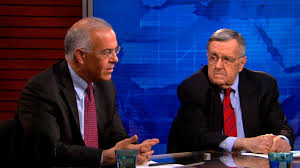
David Brooks and Mark Shields on “The PBS Newshour”
During that hearing, Cohen, Trump’s longtime attorney and fixer:
- Condemned his former boss as “a racist, a conman [and] a cheat.”
- Confirmed that Trump had instructed him to pay $130,000 in hush money to porn “star” Stormy Daniels, to buy her silence during the 2016 Presidential campaign.
- Provided the committee with a copy of a check Trump wrote from his personal bank account—after he became President—“to reimburse me for the hush money payments I made.”
- Produced “copies of letters I wrote at Mr. Trump’s direction that threatened his high school, colleges, and the College Board not to release his grades or SAT scores.”
But for Brooks, far more was at stake than the individual accusations:
“To me, it was more of a moral occasion, more than anything else. What it illustrates is a President and, frankly, Michael Cohen who long ago decided that celebrity and wealth is more important than being a good person. And they have dragged us all down there with us.
“And the people they have dragged most effectively are the House Republicans, a lot of them on that committee, who decided that they were completely incurious about whether Donald Trump was a good guy or a bad guy or a really awful guy, that—their own leader, they didn’t seem to care about that, but they were going to rip the skin off Michael Cohen.
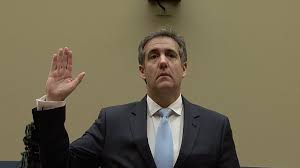
Michael Cohen testifying before Congress
“And so they attacked him. And what struck me is how moral corrosion happens, that you decide you’re going to defend or ignore Trump. And then to do that, you have to morally distance yourself from him. And then you have to morally distance yourself from him every day.
“And, eventually, you just get numb to everything. And so [Ohio Republican Representative] Jim Jordan and other people on the committee were saying, oh, we all knew this, like, it’s all unremarkable. And so that’s—that’s how moral corrosion happens.”
During the hearing, California Representative Jackie Speier asked Cohen: How many times did Trump ask you to intimidate creditors?
Cohen estimated the number at 500.
For Shields, this counted as especially despicable behavior: “And—but the thing about it is, when he stiffed those small business—the plumbers and the electricians who did the work in the Trump projects, and he came back, and Donald Trump loved to hear about it, I mean, reveled in it.
“Now, I mean, at what point do you say that there’s no honor here? I mean, there’s nothing to admire.”
Shields was equally appalled by the refusal of Trump’s Republican committee defenders to condemn his moral depravity—as a businessman or President.
“If you can’t deal with the message, you shoot the messenger. And that’s what their whole strategy was.
“The very fact that not a single member of the Republican committee defended Donald Trump or what he was charged or alleged to have done, to me, was revealing. They just decided to go after Michael Cohen.”
So why have Republicans aligned themselves with such a man?
Republicans don’t fear that Trump will trash the institutions that Americans have cherished for more than 200 years. Institutions like an independent judiciary, a free press, and an incorruptible Justice Department.
He has already attacked all of these—and Republicans have either said nothing or rushed to his defense.
What Republicans truly fear about Donald Trump is that he will finally cross one line too many—like firing Special Counsel Robert Mueller. And that the national outrage following this will force them to launch impeachment proceedings against him.
But it isn’t even Trump they fear will be destroyed.
What they most fear losing is their own hold on nearly absolute power in Congress and the White House. And the riches that go with it.
If Trump is impeached and possibly indicted, he will become a man no one any longer fears. He will be a figure held up to ridicule and condemnation.
Like Adolf Hitler.
Like Richard Nixon.
And his supporters will be branded as losers along with him.
Republicans vividly remember what happened after Nixon was forced to resign on August 9, 1974: Democrats, riding a wave of reform fever, swept Republicans out of the House and Senate—and Jimmy Carter into the White House.
House and Senate Republicans can imagine a future without Trump—but not one where they disappear.
If they are conflicted—whether to continue supporting Trump or desert him—the reason is the same: How can I hold onto my power and all the privileges that go with it?
ABC NEWS, ADOLF HITLER, ALEC BALDWIN, ALTERNET, AP, BARACK OBAMA, BILL O'REILLY, BUZZFEED, CBS NEWS, CNN, CONCENTRATION CAMPS, CROOKS AND LIARS, DAILY KOZ, EXECUTIONS, FACEBOOK, FOX NEWS, FRED TRUMP, FREEDOM OF THE PRESS, HILLARY CLINTON, JOE SCARBOROUGH, JOHN F. KENNEDY, JOHN MCCAIN, JOSEPH STALIN, KELLY SADLER, KIM JONG-II, KIM JONG-UN, MORNING JOE, MOTHER JONES, MOVEON, MSNBC, NAZI GERMANY, NBC NEWS, NEWSWEEK, NORTH KOREA, NPR, POLITICO, RAW STORY, REUTERS, RICHARD NIXON, RUSSIA, SALON, SARAH HUCKABEE SANDERS, SATURDAY NIGHT LIVE, SEATTLE TIMES, SLATE, SOVIET UNION, STORMY DANIELS, THE ATLANTIC, THE CHICAGO SUN-TIMES, THE CHICAGO TRIBUNE, THE DAILY BEAST, THE GUARDIAN, THE HILL, THE HUFFINGTON POST, THE LOS ANGELES TIMES, THE NATION, THE NEW YORK TIMES, THE WASHINGTON POST, TIME, TWITTER, U.S. NEWS & WORLD REPORT, UPI, USA TODAY, VLADIMIR PUTIN
In Bureaucracy, History, Law, Military, Politics, Social commentary on February 21, 2019 at 12:15 am
In January, 2018, the White House banned the use of personal cell phones in the West Wing.
The official reason: National security.
The real reason: To stop staffers from leaking to reporters.
According to an anonymous White House source: “The cellphone ban is for when people are inside the West Wing, so it really doesn’t do all that much to prevent leaks. If they banned all personal cellphones from the entire [White House] grounds, all that would do is make reporters stay up later because they couldn’t talk to their sources until after 6:30 pm.”
Other sources believe that leaks won’t end unless President Donald Trump starts firing staffers. But this could lead to his firing the wrong people. To protect themselves, those who leak might well accuse tight-lipped co-workers.
Within the Soviet Union (especially during the reign of Joseph Stalin) fear of secret police surveillance was widespread—and absolutely justified.
Among the methods used to keep conversations secret:
- Turning on the TV or radio to full volume.
- Turning on a water faucet at full blast.
- Turning the dial of a rotary phone to the end—and sticking a pencil in one of the small holes for numbers.
- Standing six to nine feet away from the hung-up receiver.
- Going for “a walk in the woods.”
- Saying nothing sensitive on the phone.
The secret police (known as the Cheka, the NKVD, the MGB, the KGB, and now the FSB) operated on seven working principles:
- Your enemy is hiding.
- Start from the usual suspects.
- Study the young.
- Stop the laughing.
- Rebellion spreads like wildfire.
- Stamp out every spark.
- Order is created by appearance.
Trump has always ruled through bribery and fear. He’s bought off (or tried to) those who might cause him trouble—like porn actress Stormy Daniels.
He’s never been able to poke fun at himself—and he grows livid when anybody else does.
At Christmastime, “Saturday Night Live” aired a parody of the classic movie, “It’s a Wonderful Life.” Its title: “It’s a Wonderful Trump.” In it, Trump (portrayed by actor Alec Baldwin) discovers what the United States would be like if he had never become President: A great deal better-off.
As usual, Trump expressed his resentment through Twitter: The Justice Department should stop investigating his administration and go after the real enemy: “SNL.”
“A REAL scandal is the one sided coverage, hour by hour, of networks like NBC & Democrat spin machines like Saturday Night Live. It is all nothing less than unfair news coverage and Dem commercials. Should be tested in courts, can’t be legal? Only defame & belittle! Collusion?”
By saying that “SNL’s” right to parody him “should be tested in courts, can’t be legal?” Trump has chosen to ignore the role of the First Amendment in American history.
Cartoonists portrayed President Andrew Jackson wearing a king’s robes and crown, and holding a scepter. This thoroughly enraged Jackson—who had repulsed a British invasion in 1815 at the Battle of New Orleans. To call a man a monarchist in 1800s America was the same as calling him a Communist in the 1950s.
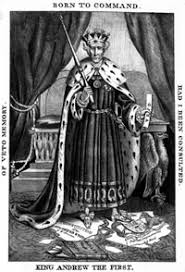
During the Civil War, President Abraham Lincoln was lampooned as an ape and a blood-stained tyrant. And Theodore Roosevelt proved a cartoonist’s delight, with attention given to his bushy mustache and thick-lensed glasses.
Thus, the odds are slight that an American court would even hear a case brought by Trump against “SNL.”
Such a case made its way through the courts in the late 1980s when the Reverend Jerry Falwell sued pornographer Larry Flyint over a satirical interview in Hustler magazine. In this, “Falwell” admitted that his first sexual encounter had been with his own mother.
In 1988, the United States Supreme Court, voting 8-0, ruled in Flynt’s favor, saying that the media had a First Amendment right to parody a celebrity.
“Despite their sometimes caustic nature, from the early cartoon portraying George Washington as an ass down to the present day, graphic depictions and satirical cartoons have played a prominent role in public and political debate,” Chief Justice William Rehnquist—an appointee of President Richard Nixon—wrote in his majority decision in the case.
Moreover, there is absolutely no doubt that Trump would be forced to take the stand in such a case. The powers-that-be at NBC and “SNL” would insist on it.
And recent history has shown that while Trump loves to sue those he hates, he does not relish being put on the stand himself.
On October 12, The Palm Beach Post, The New York Times and People all published stories of women claiming to have been sexually assaulted by Trump.
He accused the Times of inventing accusations to hurt his Presidential candidacy. And he threatened to sue for libel if the Times reported the women’s stories. He also threatened to sue the women making the accusations.
He never sued the Times or the women.
ABC NEWS, ADOLF HITLER, ALEC BALDWIN, ALTERNET, AP, BARACK OBAMA, BILL O'REILLY, BUZZFEED, CBS NEWS, CNN, CONCENTRATION CAMPS, CROOKS AND LIARS, DAILY KOZ, EXECUTIONS, FACEBOOK, FOX NEWS, FRED TRUMP, FREEDOM OF THE PRESS, HILLARY CLINTON, JOE SCARBOROUGH, JOHN F. KENNEDY, JOHN MCCAIN, JOSEPH STALIN, KELLY SADLER, KIM JONG-II, KIM JONG-UN, MORNING JOE, MOTHER JONES, MOVEON, MSNBC, NAZI GERMANY, NBC NEWS, NEWSWEEK, NORTH KOREA, NPR, POLITICO, RAW STORY, REUTERS, RICHARD NIXON, RUSSIA, SALON, SARAH HUCKABEE SANDERS, SATURDAY NIGHT LIVE, SEATTLE TIMES, SLATE, SOVIET UNION, STORMY DANIELS, THE ATLANTIC, THE CHICAGO SUN-TIMES, THE CHICAGO TRIBUNE, THE DAILY BEAST, THE GUARDIAN, THE HILL, THE HUFFINGTON POST, THE LOS ANGELES TIMES, THE NATION, THE NEW YORK TIMES, THE WASHINGTON POST, TIME, TWITTER, U.S. NEWS & WORLD REPORT, UPI, USA TODAY, VLADIMIR PUTIN
In Bureaucracy, History, Law, Military, Politics, Social commentary, Uncategorized on February 20, 2019 at 12:11 am
On May 10, 2018, The Hill reported that White House Special Assistant Kelly Sadler had joked derisively about dying Arizona United States Senator John McCain.
McCain, a Navy pilot during the Vietnam war, was shot down over Hanoi on October 26, 1967, and captured. He spent five and a half years as a POW in North Vietnam—and was often brutally tortured. He wasn’t released until March 14, 1973.
Recently, he had opposed the nomination of Gina Haspel as director of the CIA.
The reason: In 2002, Haspel had operated a “black” CIA site in Thailand where Islamic terrorists were often waterboarded to make them talk.
For John McCain, waterboarding was torture, even if it didn’t leave its victims permanently scarred and disabled.
Aware that the 81-year-old McCain was dying of brain cancer, Sadler joked to intimates about the Senator’s opposition to Haspel: “It doesn’t matter. He’s dying anyway.”
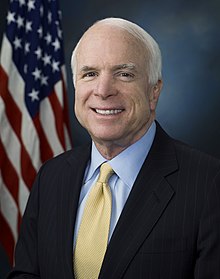
John McCain
Leaked to CNN by an anonymous White House official, Sadler’s remark sparked fierce criticism—and demands for her firing.
South Carolina Republican Senator Lindsey Graham, a close friend of McCain, said: “Ms. Sadler, may I remind you that John McCain has a lot of friends in the United States Senate on both sides of the aisle. Nobody is laughing in the Senate.”
“People have wondered when decency would hit rock bottom with this administration. It happened yesterday,” said former Vice President Joe Biden.
“John McCain makes America great. Father, grandfather, Navy pilot, POW hero bound by honor, an incomparable and irrepressible statesman. Those who mock such greatness only humiliate themselves and their silent accomplices,” tweeted former Massachusetts governor and 2012 Republican Presidential candidate Mitt Romney.
Officially, White House Press Secretary Sarah Huckabee Sanders refused to confirm or deny Sadler’s joke: “I’m not going to get into a back and forth because people want to create issues of leaked staff meetings.”
Unofficially, Sanders was furious—not at the joke about a dying man, but that someone had leaked it. After assailing the White House communications team, she pouted: “I am sure this conversation is going to leak, too. And that’s just disgusting.”

Sarah Huckabee Sanders
No apology has been offered by any official at the White House—including President Donald Trump.
In fact, Senior White House communications adviser Mercedes Schlapp reportedly expressed her support for Sadler: “I stand with Kelly Sadler.”
On May 11—the day after Sadler’s comment was reported—reporters asked Sanders if the tone set by Trump had caused Sadler to feel comfortable in telling such a joke.
“Certainly not!” predictably replied Sanders, adding: “We have a respect for all Americans, and that is what we try to put forward in everything we do, but in word and in action, focusing on doing things that help every American in this country every single day.”
On May 14 Trump revealed his “respect” for “all Americans”—especially those working in the White House.
“The so-called leaks coming out of the White House are a massive over exaggeration put out by the Fake News Media in order to make us look as bad as possible,” Trump tweeted.
“With that being said, leakers are traitors and cowards, and we will find out who they are!”
This from the man who, during the 2016 Presidential campaign, shouted: “WikiLeaks, I love WikiLeaks!”
Of course, that was when Russian Intelligence agents were exposing the secrets of Hillary Clinton, his Presidential opponent.
And, in a move that Joseph Stalin would have admired, Trump ordered an all-out investigation to find the joke-leaker.
In January, 2018, the White House had banned the use of personal cell phones in the West Wing.
The official reason: National security.
The real reason: To stop staffers from leaking to reporters.
Officials now have two choices:
- Leave their cell phones in their cars, or,
- When they arrive for work, deposit them in lockers installed at West Wing entrances. They can reclaim their phones when they leave.
Several staffers huddle around the lockers throughout the day, checking messages they have missed. The lockers buzz and chirp constantly from 6 a.m. to 8 p.m. Monday through Friday.
More ominously, well-suited men roam the halls of the West Wing, carrying devices that pick up signals from phones that aren’t government-issued. “Did someone forget to put their phone away?” one of the men will ask if such a device is detected. If no one says they have a phone, the detection team start searching the room.
Phone detector
The devices can tell which type of phone is in the room.
This is the sort of behavior Americans have traditionally—and correctly—associated with dictatorships
In his memo outlining the policy, former Chief of Staff John Kelly warned that anyone who violated the phone ban could be punished, including “being indefinitely prohibited from entering the White House complex.”
Yet even these draconian methods may not end White House leaks.
White House officials still speak with reporters throughout the day and often air their grievances, whether about annoying colleagues or competing policy priorities.
Aides with private offices sometimes call reporters on their desk phones. Others get their cell phones and call or text reporters during lunch breaks.
2016 PRESIDENTIAL CAMPAIGN, ABC NEWS, ABRAHAM LINCOLN, ADOLF HITLER, ALEC BALDWIN, ALTERNET, ANDREW JACKSON, AP, BARACK OBAMA, BILL O'REILLY, BUZZFEED, CBS NEWS, CHEKA, CNN, CONCENTRATION CAMPS, CROOKS AND LIARS, DAILY KOZ, ELECTRONIC SURVEILLANCE, EXECUTIONS, FACEBOOK, FIRST AMENDMENT, FOX NEWS, FRED TRUMP, FREEDOM OF SPEECH, FREEDOM OF THE PRESS, FSB, HILLARY CLINTON, HUMOR, HUSTLER MAGAZINE, IT'S A WONDERFUL LIFE, JERRY FALWELL, JOE SCARBOROUGH, JOHN F. KENNEDY, JOHN MCCAIN, JOSEPH STALIN, KELLY SADLER, KGB, KIM JONG-II, KIM JONG-UN, LARRY FLYNT, MGB, MORNING JOE, MOTHER JONES, MOVEON, MSNBC, NAZI GERMANY, NBC NEWS, NEWSWEEK, NKVD, NORTH KOREA, NPR, PARODY, POLITICO, RAW STORY, REUTERS, RICHARD NIXON, RUSSIA, SALON, SARAH HUCKABEE SANDERS, SATURDAY NIGHT LIVE, SEATTLE TIMES, SLATE, SOVIET UNION, STORMY DANIELS, THE ATLANTIC, THE CHICAGO SUN-TIMES, THE CHICAGO TRIBUNE, THE DAILY BEAST, THE GUARDIAN, THE HILL, THE HUFFINGTON POST, THE LOS ANGELES TIMES, THE NATION, THE NEW YORK TIMES, THE WASHINGTON POST, THEODORE ROOSEVELT, TIME, TWITTER, U.S. NEWS & WORLD REPORT, UNITED STATES SUPREME COURT, UPI, USA TODAY, VLADIMIR PUTIN, WILLIAM REHNQUIST
In Bureaucracy, History, Law, Military, Politics, Social commentary on February 19, 2019 at 12:43 am
“Nothing funny about tired Saturday Night Live on Fake news NBC! Question is, how do the Networks get away with these total Republican hit jobs without retribution? Likewise for many other shows? Very unfair and should be looked into. This is the real Collusion!
So tweeted President Donald J. Trump on February 17.
Less than nine hours earlier, “SNL” had once again opened with actor Alec Baldwin mocking the 45th President. In this skit, Baldwin/Trump gave a rambling press conference declaring: “We need wall. We have a tremendous amount of drugs flowing into this country from the southern border—or The Brown Line, as many people have asked me not to call it.”
Right-wingers denounce their critics as “snowflakes”—that is, emotional, easily offended and unable to tolerate opposing views.
Yet here was Donald Trump, who prides himself on his toughness, whining like a child bully who has just been told that other people have rights, too.
The answer is simple: Trump is a tyrant—and a longtime admirer of tyrants.
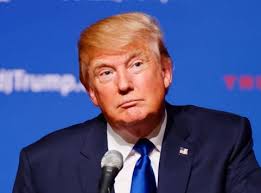
Donald Trump
He has lavishly praised Russian dictator Vladimir Putin, such as during his appearance on the December 18, 2015 edition of MSNBC’s “Morning Joe”:
“He’s running his country, and at least he’s a leader, unlike what we have in this country”—a reference to then-President Barack Obama.
During a February, 2017 interview with Fox News host Bill O’Reilly, Trump defended Putin’s killing of political opponents.
O’Reilly: “But he’s a killer.”
Trump: “There are a lot of killers. You think our country’s so innocent?”
Asked by a Fox News reporter why he praised murderous North Korean dictator Kim Jong-Un, he replied: “He’s a tough guy. Hey, when you take over a country, tough country, tough people, and you take it over from your father …If you could do that at 27 years old, I mean, that’s one in 10,000 that could do that.”
In short: Kim must be doing something right because he’s in power. And it doesn’t matter how he came to power—or the price his country is paying for it.
Actually, for all their differences in appearance and nationality, Trump shares at least two similarities with Kim.
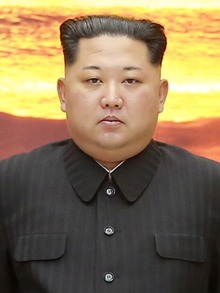
Kim Jong-Un
Blue House (Republic of Korea) [KOGL (http://www.kogl.or.kr/open/info/license_info/by.do)%5D, via Wikimedia Commons
First, both of them got a big boost into wealth and power from their fathers.
- Trump’s father, Fred Trump, a real estate mogul, reportedly gave Donald $200 million to enter the real estate business. It was this sum that formed the basis for Trump’s eventual rise to wealth and fame—and the Presidency.
- Kim’s father was Kim Jong-Il, who ruled North Korea as dictator from 1994 to 2011. When his father died in 2011, Kim Jong-Un immediately succeeded him, having been groomed for years to do so.
Second, both Trump and Kim have brutally tried to stamp out any voices that contradict their own.
- Trump has constantly attacked freedom of the press, even labeling it “the enemy of the American people.” He has also slandered his critics on Twitter—which has refused to enforce its “Terms of Service” and revoke his account.
- Kim has attacked his critics with firing squads and prison camps. Amnesty International estimates that more than 200,000 North Koreans are now suffering in labor camps throughout the country.
Thus, Trump—-elected to lead the “free world”—believes, like all dictators:
- People are evil everywhere—so who am I to judge who’s better or worse? All that counts is gaining and holding onto power.
- And if you can do that, it doesn’t matter how you do so.
Actually, it’s not uncommon for dictators to admire one another—as the case of Joseph Stalin and Adolf Hitler nicely illustrates.
Joseph Stalin
After Hitler launched a blood-purge of his own private Stormtroopers army on June 30, 1934, Stalin exclaimed: “Hitler, what a great man! That is the way to deal with your political opponents!”
And Hitler was equally admiring of Stalin’s notorious ruthlessness: “After the victory over Russia,” he told his intimates, “it would be a good idea to get Stalin to run the country, with German oversight, of course. He knows better than anyone how to handle the Russians.”
Adolf Hitler
Bundesarchiv, Bild 146-1990-048-29A / CC-BY-SA 3.0 [CC BY-SA 3.0 de (https://creativecommons.org/licenses/by-sa/3.0/de/deed.en)%5D
One characteristic shared by all dictators is intolerance toward those whose opinions differ with their own. Especially those who dare to actually criticize or make fun of them.
All Presidents have thin skins. John F. Kennedy often phoned reporters and called them “sonofbitches” when he didn’t like stories they had written on him.
Richard Nixon went further, waging all-out war against the Washington Post for its stories about his criminality.
But Donald Trump has taken his hatred of dissidents to an entirely new—and dangerous—level.
On May 10, 2018, The Hill reported that White House Special Assistant Kelly Sadler had joked derisively about dying Arizona United States Senator John McCain.
Trump was outraged—not that one of his aides had joked about a man stricken with brain cancer, but that someone in the White House had leaked it.
2016 PRESIDENTIAL CAMPAIGN, ABC NEWS, ADOLF HITLER, ALTERNET, AP, BARACK OBAMA, BORDER WALL, BUZZFEED, CBS NEWS, CIA, CNN, CROOKS AND LIARS, CZECHOSLOVAKIA, DAILY KOZ, DEMOCRATS, DEPARTMENT OF HOMELAND SECURITY, DONALD TRUMP, ENGLAND, FACEBOOK, FBI, FEDERAL AVIATION ADMINISTRATION (FAA), FRANCE, GAIUS CALIGULA, GOVERNMENT SHUTDOWN, HOUSE OF REPRESENTATIVES, JAMES COMEY, JAMES ROBART, JEFF SESSIONS, MARIE ANTOINETTE, MOTHER JONES, MOVEON, MSNBC, MUNICH CONFERENCE, NANCY PELOSI, NATIONAL SECURITY AGENCY, NAZI GERMANY, NBC NEWS, NEWSWEEK, NICCOLO MACHIAVELLI, NPR, POLITICO, RAW STORY, REPUBLICANS, REUTERS, ROME, RUSSIA, SALON, SEATTLE TIMES, Secret Service, SLATE, SOUP KITCHENS, THE ATLANTIC, THE CHICAGO SUN-TIMES, THE CHICAGO TRIBUNE, THE DAILY BEAST, THE DISCOURSES, THE GUARDIAN, THE HILL, THE HUFFINGTON POST, THE LOS ANGELES TIMES, THE NATION, THE NEW YORK TIMES, THE PRESS, THE WALL STREET JOURNAL, THE WASHINGTON POST, TIME, TRANSPORTATION SAFETY ADMINISTRATION (TSA), TWENTY-FIFTH AMENDMENT, TWITTER, U.S. NEWS & WORLD REPORT, UBER, UNITED STATES HOUSE OF REPRESENTATIVES, UNITED STATES SENATE, UPI, USA TODAY, VLADIMIR PUTIN
In Bureaucracy, History, Law, Law Enforcement, Military, Politics, Social commentary on February 13, 2019 at 12:10 am
On December 22, 2018, President Donald Trump shut down the Federal Government. The reason: Democrats refused to fund his “border wall” between Mexico and the United States.
Like Adolf Hitler, who ordered the complete destruction of Germany when he realized his dreams of conquest were over, Trump’s attitude was: “If I can’t rule America, there won’t be an America.”
An estimated 380,000 government employees were furloughed and another 420,000 were ordered to work without pay. Trump told Congressional leaders the shutdown could last months or even years.
Thirty-five days passed, with each one bringing increasing stress and fear to the lives of those 800,000 Federal employees.
Meanwhile, House and Senate Democrats held firm. House Speaker Nancy Pelosi even cancelled Trump’s scheduled State of the Union address at the House of Representatives until the shutdown ended.
Finally, on January 25, 2019, Trump walked into the White House Rose Garden and said he would sign a bill to re-open the government for three weeks:
- Lawmakers would have until February 15 to negotiate a compromise on border security.
- Otherwise, the government would shut down again.
As the February deadline loomed ever closer, on February 11, 2019, CNN published a story under the headline: “Washington on the brink as new shutdown looms”:
The story bluntly laid out the stakes involved: “If no deal is reached and no stop-gap spending measure emerges, a new government shutdown could be triggered, again subjecting 800,000 federal workers who could be furloughed or asked to work without pay.”
Just as Germans did nothing to stop Adolf Hitler’s inexorable march toward war—and the destruction of millions of lives and Germany itself—so, too, do Americans seem paralyzed to put an end to the equally self-destructive reign of the man often dubbed “Carrot Caligula.”

Gaius Caligula was “the mad emperor” of ancient Rome. Like Trump, he lived by a philosophy of “Let them hate me, so long as they fear me.”
He ruled as the most powerful man of his time—three years, ten months and eight days. And all but the first six months of his reign were drenched in slaughter and debauchery.
The nickname “Carrot Caligula” was stuck on Trump owing to his strange orange skin color.
So how can America’s continued slide into tyranny and destruction be stopped?
There are basically three ways:
First, Congressional Republicans could revolt against Trump’s authority and/or agenda. They could, for example, make clear they will not accept another disastrous government shutdown.
In December, the Republican-dominated Senate unanimously passed bills to keep the government open and temporarily provide funding without Trump’s wall money.
Then Trump said he would not sign the bills.
Republican Senate Majority Leader Mitch McConnell could have reopened the government by re-introducing the same funding bill that the Senate had already passed. He refused.
The odds of Republicans revolting against Trump are nearly impossible. They fear that if he is removed or rendered impotent, voters will turn on them in 2020—and end their comfortable reign of power and privileges.
Second, invoking the Twenty-Fifth Amendment to the United States Constitution. This allows the Vice President and a majority of the Cabinet to recommend the removal of the President in cases where he is “unable to discharge the powers and duties of his office.” It also allows the House and Senate to confirm the recommendation over the President’s objection by two-thirds vote.
The Vice President then takes over as President.
There are ample grounds for this—such as the continuing revelations that Trump has decades-long secret ties to Russian oligarchs linked to Russian dictator Vladimir Putin.
This solution is also extremely unlikely. Most of Trump’s cabinet rightly fears him. He fired FBI Director James Comey in 2017 and publicly humiliated his Attorney General, Jeff Sessions, for more than a year until firing him in 2018.
Third, the “Caligula solution.” Like Trump, Caligula delighted in humiliating others. His fatal mistake was taunting Cassius Chaerea, a member of his own bodyguard. Caligula considered Chaerea effeminate because of a weak voice and mocked him with names like “Priapus” and “Venus.”
On January 22 41 A.D. Chaerea and several other bodyguards hacked Caligula to death with swords before other guards could save him.

Gaius Caligula
Among the potential enemies Trump has enraged are members of the United States Secret Service.
Among the agencies directly affected by the Trump-ordered government shutdown: The Department of Homeland Security (DHS). Its employees include the Secret Service agents who protect Trump.
In short: The men and women guarding Trump—along with their families—faced economic ruin because Trump didn’t get his way on “The Wall.”
And now they may face those dangers once again—for the same reason.
Besides the Secret Service, a great many Federal employees—such as FBI agents and members of the military—are armed and in close proximity of the President.
Even more ominous for Trump: By the end of the shutdown, his popularity had fallen to a historic low of 37%.
As Niccolo Machiavelli warns in The Discourses: “When a prince becomes universally hated, it is likely that he’s harmed some individuals—who thus seek revenge. This desire is increased by seeing that the prince is widely loathed.”


 Bureaucracybuster's Blog
ABC NEWS, ADOLF HITLER, ALBERT SPEER, ALTERNET, ANTHONY SCARAMUCCI, AP, BARACK OBAMA, BUZZFEED, CBS NEWS, CNN, CROOKS AND LIARS, DAILY KOZ, DAVID AXELROD, DONALD TRUMP, FACEBOOK, FOX AND FRIENDS, FOX NEWS, GERMANY, KARL OTTO SAUR, LOU DOBBS, MOTHER JONES, MOVEON, MSNBC, NBC NEWS, NERO ORDER, NEWSWEEK, NPR, POLITICO, POLITICUSUSA, RAW STORY, REINCE PRIEBUS, REPUBLICAN NATIONAL COMMITTEE, REUTERS, SALON, SCORCHED EARTH, SEAN HANNITY, SEAN SPICER, SEATTLE TIMES, SLATE, THE ATLANTIC, THE CHICAGO SUN-TIMES, THE CHICAGO TRIBUNE, THE DAILY BEAST, THE GUARDIAN, THE HILL, THE HUFFINGTON POST, THE LOS ANGELES TIMES, THE NATION, THE NEW YORK TIMES, THE WASHINGTON POST, TIME, TWITTER, U.S. NEWS & WORLD REPORT, UPI, USA TODAY, WHITE HOUSE COMMUNICATIONS OFFICE, WORLD WAR 11
“HAPPY NEWS” DOESN’T GUARANTEE A HAPPY OUTCOME
In Bureaucracy, History, Military, Politics, Social commentary on April 26, 2019 at 12:02 amTHE WHITE HOUSE IS PROPPING UP A DEPRESSED TRUMP WITH TWO FOLDERS OF PROPAGANDA A DAY
So read an August 8, 2017 headline on the PoliticusUSA website.
The story to which it was attached opened:
“Donald Trump receives two folders of screen grabs, transcripts, and pictures of himself looking strong each day as the White House using the communications office to compile propaganda that makes Trump feel better.”
It then quoted Vice News as stating:
“Twice a day since the beginning of the Trump administration, a special folder is prepared for the president. The first document is prepared around 9:30 a.m. and the follow-up, around 4:30 p.m.
“Former Chief of Staff Reince Priebus and former Press Secretary Sean Spicer both wanted the privilege of delivering the 20-to-25-page packet to President Trump personally, White House sources say.
Donald Trump
“These sensitive papers, described to VICE News by three current and former White House officials, don’t contain top-secret intelligence or updates on legislative initiatives.
“Instead, the folders are filled with screenshots of positive cable news chyrons (those lower-third headlines and crawls), admiring tweets, transcripts of fawning TV interviews, praise-filled news stories, and sometimes just pictures of Trump on TV looking powerful.”
Sources told Vice that Priebus and Spicer created this “happy news” smorgasbord to boost their own standings.
“Priebus and Spicer weren’t in a good position, and they wanted to show they could provide positive coverage,” an anonymous official said. “It was self-preservation.”
In the end, it did nothing for Priebus and Spicer. On July 28, 2017, Priebus resigned—after suffering repeated humiliations by Trump—such as being ordered to kill a fly that was buzzing about.
And, on July 21, 2017, Spicer similarly resigned in anger after Trump chose Anthony Scaramucci as White House Communications Director. Trump kept Spicer in the dark about events that he needed to know.
At 6 a.m. every weekday, three staffers arrive at the Republican National Committee’s “war room.” Their mission: Scour newspapers and the Internet and monitor MSNBC, Fox News and CNN. About every 30 minutes, they send the White House Communications Office an email with tweets, screenshots, interview transcripts and news stories.
“Maybe it’s good for the country that the President is in a good mood in the morning,” one former RNC official said.
Creating folders of “happy news” to prop up the President’s fragile ego is a practice unique to the Trump administration.
“If we had prepared such a digest for Obama, he would have roared with laughter,” said David Axelrod, the senior adviser to Barack Obama during his first two years in the White House. “His was a reality-based presidency.”
Barack Obama
Trump eats up praise like a sugar addict consumes candy. He frequently tweets his thanks to cable television hosts like Sean Hannity, Lou Dobbs, and the hosts of “Fox & Friends” who lavishly praise his administration.
But Trump is hardly unique among world leaders to listen only to “happy news.”
During World War II, as his armies were forced to retreat on all fronts, Adolf Hitler increasingly demanded that his ministers refrain from “defeatist talk.”
Hoping for victory—and stating that it was inevitable—became the key to saving one’s job—if not life—in the steadily-declining Third Reich. Countless Germans who refused to embrace Hitler’s fantasies were executed.
Adolf Hitler
This was best illustrated by the case of Albert Speer. Hitler had often proclaimed him “my genius architect” before appointing him Minister of Armaments in 1942. As Speer revved up the production of military hardware, Hitler continued to hail his “genius.”
But as Allied bombing raids increasingly devastated Germany’s industrial plants, armaments production began to fall. This forced Speer to tell his Fuhrer the unpalatable truth: Germany was losing its capacity to wage war.
Hitler didn’t want to hear it, turning instead to those who fed him a diet of “happy news.” When Speer’s deputy, Karl Otto Saur, told Hitler, “By Christmas, we’ll have air superiority!” Hitler was ecstatic.
At a meeting with his generals, the Fuhrer announced: “We have the good fortune to have a genius in our armaments ministry. I mean Saur.”
The promised air superiority never materialized.
As even Hitler came to realize that the end was near, he turned his anger on the Germany he had so often claimed to love.
“If the war is lost,” Hitler told Speer, “the nation will also perish….This nation will have proved to be the weaker one and the future will belong solely to the stronger eastern nation.”
He ordered a massive “scorched-earth” campaign throughout Germany.
All German agriculture, industry, ships, communications, roads, food stuffs, mines, bridges, stores and utility plants were to be destroyed.
If implemented, it would deprive the entire German population of even the barest necessities after the war.
Fortunately for Germany, Speer dared to sabotage the “Nero Order,” thus ensuring a future for those who survived the war.
Hitler’s demands for only “happy news” did not save him—or his regime.
Feeding himself a diet of “happy news” detached from reality will not save Donald Trump. Nor will it save those Americans who insist on believing it.
Share this: