Posts Tagged ‘2016 PRESIDENTIAL ELECTION’
2016 PRESIDENTIAL ELECTION, 2020 PRESIDENTIAL ELECTION, ABC NEWS, ALTERNET, AMERICABLOG, AP, BABY BOOMER RESISTANCE, BBC, BLOOMBERG NEWS, BUZZFEED, CBS NEWS, CHRIS STIREWALT, CNN, COVID-19, CROOKS AND LIARS, DAILY KOS, DAVID BROOKS, DOMINION VOTING SYSTEMS, DONALD TRUMP, FIVETHIRTYEIGHT, FOX NEWS NETWORK, HARPER’S MAGAZINE, HUFFINGTON POST, IZVESTIA, JACQUI HEINRICH, JOE BIDEN, JONATHAN CAPEHART, LAURA INGRAHAM, LIBEL, MEDIA MATTERS, MIKE LINDELL, MOTHER JONES, MOVEON, MSNBC, NBC NEWS, NEW REPUBLIC, NEW YORK TIMES V. SULLIVAN, NEWSDAY, NEWSMAX, NEWSWEEK, NPR, PBS NEWSHOUR, POLITICO, POLITICUSUSA, PRAVDA, RAW STORY, REPUBLICANS, REUTERS, RUDOLPH GIULIANI, RUPERT MURDOCH, SALON, SEAN HANNITY, SEATTLE TIMES, SIDNEY POWELL, SLANDER, SLATE, SOVIET UNION, TALKING POINTS MEMO, THE ATLANTIC, THE CHICAGO SUN-TIMES, THE CHICAGO TRIBUNE, THE DAILY BEAST, THE DAILY BLOG, THE GUARDIAN, THE HILL, THE HUFFINGTON POST, THE INTERCEPT, THE LOS ANGELES TIMES, THE NATION, THE NEW REPUBLIC, THE NEW YORK TIMES, THE NEW YORKER, THE VILLAGE VOICE, THE WASHINGTON POST, THINKPROGRESS, TIME, TRUTHDIG, TRUTHOUT, TUCKER CARLSON, TWITTER, U.S. NEWS & WORLD REPORT, UPI, USA TODAY
In Bureaucracy, Business, History, Law, Politics, Social commentary on February 22, 2024 at 12:09 am
Fox News began peddling “The Big Lie”—that President Donald J. Trump was cheated of electoral victory in 2020—on Election Night.
But then the truth came to light.
On March 26, 2021, Dominion Voting Systems sued Fox News in Delaware Superior Court.
Dominion charged that Fox’s program hosts and guests had deliberately lied that Dominion’s voting machines had been rigged to steal the 2020 United States presidential election from then-president Donald Trump.
Fox News claimed that it was reporting news of what individuals were saying and was thus protected by the First Amendment to the Constitution.
But during pre-trial discovery, Dominion accessed a treasury of Fox News memos and emails proving that its prominent hosts and top executives knew they were lying about Dominion but continued doing so anyway.
With several prominent Fox senior executives and personalities slated to testify, the trial opened on April 18, 2023. Then Fox caved—and settled the case the same day for $787.5 million.
One month earlier, on the March 3, 2023 edition of The PBS Newshour, political commentators David Brooks (The New York Times) and Jonathan Capehart (The Washington Post) had explained the significance of the upcoming lawsuit.
David Brooks: Rupert Murdoch started a paper called The Australian a long time ago. He was a journalist, an actual journalist. And now he’s gotten to the point where you can lie on camera—as long as your ratings are OK.
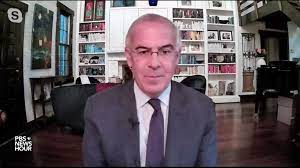
David Brooks
Those people who lied didn’t lie over little things. They lied about the election results of a presidential election, kind of a major deal. And we now know—as we all suspected—they all knew what was happening.
And Murdoch is sitting there atop this organization sort of blithely pretending it’s not really his problem. And so he can say it, and he has power over the corporation today. He owns it. He could fire Tucker [Carlson]. He could fire all the people—all the people who were in on this and whose journalistic integrity has been exposed as zero.
And yet he’s still trying to blithely rise above it. And so it’s amazing that we have a major news organization that is inaccurate about a presidential election.
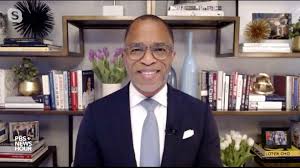
Jonathan Capehart
Jonathan Capehart: And what that says to me is, Rupert Murdoch and his anchors, those people who are peddling in lies, they are insulated from the effect of the lies that they tell. When you see someone saying, “Oh, our ratings are going down, and that’s going to affect the stock price.” So there’s no concern….

Rupert Murdoch
Hudson Institute, CC BY 2.0 <https://creativecommons.org/licenses/by/2.0>, via Wikimedia Commons
So that means you’re more concerned about your bottom line than the corrosive impact on our democracy and political discourse in this country. That, to me, was what’s really disturbing.
And what’s even more disturbing is that Fox News isn’t even really covering this lawsuit, which means that their audience, who should know about what’s being said about them and about the programming for them, they will never—they might not ever know….that what they’re being told is just a big bunch of lies.
Well, that’s the point I was trying to make. We don’t even know if they will even know about this case, as a result. And even if they do find out, either they might not trust it, or maybe they just don’t care. I don’t know.
* * * * *
If Fox’s viewers didn’t learn about the lawsuit, it was because they watched Fox exclusively.
On the night of the Fox settlement, the Fox affiliate in San Francisco—KTVU—didn’t carry any mention of it. Those wanting to discover the latest twist in the case had to get their news from channels that believed in reporting facts, not Right-wing propaganda.
In the Soviet Union, the all-powerful Kremlin dictatorship made it extremely hard—and dangerous—to learn the truth about domestic and international events.
No correspondent for the official Soviet newspapers “Pravda” (“Truth”) and “Izvestia” (“News”) dared report what he actually knew about the failings and crimes of the regime.
Citizens who wanted to learn the truth risked imprisonment or worse if the authorities learned of their investigative efforts. As a result, the vast majority of Russians—and those enslaved by them—lived in a world of lies and half-truths.
There is no excuse for that among American citizens who have access to a wide array of news sources.
An X user recently asked: “Are critical thinkers being vastly outnumbered in the USA because secondary education is just so damn expensive? It’s no wonder Republican states are among the most poorly educated.”
The answer is: No.
You don’t have to accept Right-wing propaganda.
You can question the official version of any story.
You can seek out multiple sources.
You don’t have to seek out only those sources that confirm your long-held prejudices.
And you don’t need a college education to do so.
If Right-wingers—who make up the audience for Fox News—are ignorant, it’s because they want to be ignorant.
And they will stay ignorant—because living in a world of Right-wing lies and hatred is more important to them than accepting reality for what it is.
2016 PRESIDENTIAL ELECTION, 2020 PRESIDENTIAL ELECTION, ABC NEWS, ALTERNET, AMERICABLOG, AP, BABY BOOMER RESISTANCE, BBC, BLOOMBERG NEWS, BUZZFEED, CBS NEWS, CHRIS STIREWALT, CNN, COVID-19, CROOKS AND LIARS, DAILY KOS, DAVID BROOKS, DOMINION VOTING SYSTEMS, DONALD TRUMP, FIVETHIRTYEIGHT, FOX NEWS NETWORK, HARPER’S MAGAZINE, HUFFINGTON POST, IZVESTIA, JACQUI HEINRICH, JOE BIDEN, JONATHAN CAPEHART, LAURA INGRAHAM, LIBEL, MEDIA MATTERS, MIKE LINDELL, MOTHER JONES, MOVEON, MSNBC, NBC NEWS, NEW REPUBLIC, NEW YORK TIMES V. SULLIVAN, NEWSDAY, NEWSMAX, NEWSWEEK, NPR, PBS NEWSHOUR, POLITICO, POLITICUSUSA, PRAVDA, RAW STORY, REPUBLICANS, REUTERS, RUDOLPH GIULIANI, RUPERT MURDOCH, SALON, SEAN HANNITY, SEATTLE TIMES, SIDNEY POWELL, SLANDER, SLATE, SOVIET UNION, TALKING POINTS MEMO, THE ATLANTIC, THE CHICAGO SUN-TIMES, THE CHICAGO TRIBUNE, THE DAILY BEAST, THE DAILY BLOG, THE GUARDIAN, THE HILL, THE HUFFINGTON POST, THE INTERCEPT, THE LOS ANGELES TIMES, THE NATION, THE NEW REPUBLIC, THE NEW YORK TIMES, THE NEW YORKER, THE VILLAGE VOICE, THE WASHINGTON POST, THINKPROGRESS, TIME, TRUTHDIG, TRUTHOUT, TUCKER CARLSON, TWITTER, U.S. NEWS & WORLD REPORT, UPI, USA TODAY
In Bureaucracy, Business, History, Law, Politics, Social commentary on February 21, 2024 at 1:44 am
Reputable news organizations believe they’re hurt when a reporter gets his facts wrong—or, worse, invents a story for sensationalistic attention.
For Fox News Network, getting hurt means that some of its own reporters have told the truth. And, as a result, many of its viewers are turning to other Right-wing propaganda outlets.
In a series of email exchanges, Fox Network executives revealed they were not simply loyal to President Donald Trump but mortally afraid of him.
Star Host Tucker Carlson said that Trump was good at “destroying things. He’s the undisputed world champion of that. He could easily destroy us if we play it wrong.”
Nor was Carlson the only one. The fear started at the very top—with Fox CEO Rupert Murdoch: “Nobody wants Trump as an enemy. We all know that Trump has a big following. If he says, ‘Don’t watch Fox News, maybe some don’t.”
Up to January 26, 2021, Murdoch allowed Fox advertiser Mike “My Pillow” Lindell to appear on the Tucker Carlson Tonight Show to lie that Trump had been cheated of victory by massive voter fraud.
Questioned as to why he allowed it, Murdoch agreed with the statement, “It is not red or blue, it is green.”

Rupert Murdoch
Eva Rinaldi, CC BY-SA 2.0 <https://creativecommons.org/licenses/by-sa/2.0>, via Wikimedia Commons
In short: Lust for money, not ideology, motivated Fox’s slant on politics.
And, as with all Fox News commentary, truth played no role in the decision to air it.
With unapologetic hypocrisy, Fox stars Tucker Carlson, Sean Hannity and Laura Ingraham brutally mocked the lies being peddled by Trump—and their own network.
In a text to Ingraham, Carlson said that Sidney Powell, an attorney who was representing the Trump campaign, was “lying” and that he had “caught her” doing so.
Ingraham: “Sidney is a complete nut. No one will work with her. Ditto with Rudy [Giuliani].”
Hannity said Giuliani was “acting like an insane person” and Ingraham described him as “an idiot.”
And Hannity said: “That whole narrative that Sidney was pushing, I did not believe it for one second.”

Sean Hannity
How do we know all this? Certainly not because some outraged Fox whistleblower made these exchanges public.
It’s because Fox’s chief victim, Dominion Voting Systems, decided to strike back.
The Denver-based company produces and sells electronic voting hardware and software, including voting machines and tabulators, in Canada and the United States.
Dominion, claimed Fox, had criminally enabled Democrats to steal the election for Joe Biden by programming its machines to throw out votes meant for Trump.
Its reputation unfairly tarnished, its employees threatened with violence by Trump’s Fascistic supporters, Dominion filed a $1.6 billion defamation lawsuit against Fox News in March, 2021.
Dominion charged Fox News with pushing false conspiracy theories about the company to win back dissatisfied viewers upset with its coverage of Trump’s defeat.
Libel lawsuits are typically centered around one falsehood. But Dominion cites a lengthy list of Fox hosts making false claims even though they were known to be untrue.
According to an almost 200-page document Dominion filed in the lawsuit:
“From the top down, Fox knew ‘the Dominion stuff’ was ‘total BS.’ Yet despite knowing the truth—or at minimum, recklessly disregarding that truth—Fox spread and endorsed these ‘outlandish voter fraud claims’ about Dominion even as it internally recognized the lies as ‘crazy,’ ‘absurd,’ and ‘shockingly reckless.’
“As a result of the false accusations broadcast by Fox into millions of American homes, Dominion has suffered unprecedented harm and its employees’ lives have been put in danger,” Dominion’s attorneys wrote in the lawsuit.

Backing up its assertions: A treasury of emails, texts, testimony, and other private communications from Fox News personnel contradicting the network’s claims that Dominion’s voting machines had rigged the presidential election in Joe Biden’s favor.
These had all been obtained through the discovery process.
While Fox was echoing Trump’s claims of “massive voter fraud,” its executives and commentators knew that he—and they themselves—were lying.
In mid-November 2020, Carlson texted one of his producers that “there wasn’t enough fraud to change the outcome” of the election.
Later, Carlson said that Sidney Powell, one of Trump’s attorneys and a prominent accuser of election fraud, “is lying.”
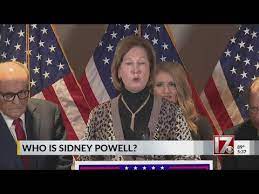
Sidney Powell
Dana Perino, an anchor, called allegations of voter fraud against Dominion “total bs,” “insane,” and “nonsense.”
Murdoch told an executive on November 6, 2020 that “if Trump becomes a sore loser we should watch Sean [Hannity] especially and others don’t sound the same.”
And on January 5, 2021, Murdoch wrote to Fox News CEO Suzanne Scott:
“It’s been suggested our prime time three [Tucker Carlson, Sean Hannity, Laura Ingraham] should independently or together say something like, ‘the election is over and Joe Biden won.’ It would “go a long way to stop the Trump myth that the election [was] stolen.”
But Fox never aired such a statement.
Fox repeatedly tried to get the case dismissed, but Superior Court Judge Eric Davis refused to do so. A trial was slated to begin on April 17.
There is a difference between journalism and Fascistic propaganda. And Fox News Network routinely provides examples of the latter.
2016 PRESIDENTIAL ELECTION, 2020 PRESIDENTIAL ELECTION, ABC NEWS, ALTERNET, AMERICABLOG, AP, BABY BOOMER RESISTANCE, BBC, BLOOMBERG NEWS, BUZZFEED, CBS NEWS, CHRIS STIREWALT, CNN, COVID-19, CROOKS AND LIARS, DAILY KOS, DAVID BROOKS, DOMINION VOTING SYSTEMS, DONALD TRUMP, FIVETHIRTYEIGHT, FOX NEWS NETWORK, HARPER’S MAGAZINE, HUFFINGTON POST, IZVESTIA, JACQUI HEINRICH, JOE BIDEN, JONATHAN CAPEHART, LAURA INGRAHAM, LIBEL, MEDIA MATTERS, MIKE LINDELL, MOTHER JONES, MOVEON, MSNBC, NBC NEWS, NEW REPUBLIC, NEW YORK TIMES V. SULLIVAN, NEWSDAY, NEWSMAX, NEWSWEEK, NPR, PBS NEWSHOUR, POLITICO, POLITICUSUSA, PRAVDA, RAW STORY, REPUBLICANS, REUTERS, RUDOLPH GIULIANI, RUPERT MURDOCH, SALON, SEAN HANNITY, SEATTLE TIMES, SIDNEY POWELL, SLANDER, SLATE, SOVIET UNION, TALKING POINTS MEMO, THE ATLANTIC, THE CHICAGO SUN-TIMES, THE CHICAGO TRIBUNE, THE DAILY BEAST, THE DAILY BLOG, THE GUARDIAN, THE HILL, THE HUFFINGTON POST, THE INTERCEPT, THE LOS ANGELES TIMES, THE NATION, THE NEW REPUBLIC, THE NEW YORK TIMES, THE NEW YORKER, THE VILLAGE VOICE, THE WASHINGTON POST, THINKPROGRESS, TIME, TRUTHDIG, TRUTHOUT, TUCKER CARLSON, TWITTER, U.S. NEWS & WORLD REPORT, UPI, USA TODAY
In Business, History, Law, Politics, Social commentary on February 20, 2024 at 12:11 am
In the beginning was the audience. And the audience was filled with Fascistic hate and prejudice, and sought always to have its beliefs confirmed.
And then came Fox News Network, which sought to capture that audience—and, with it, huge ratings and profits.
At the center of both Fox and its audience stood Donald Trump—first as a Presidential candidate, then as President.
In him, Right-wingers found their ideal representative: He promised to destroy all those groups they hated.
Among these: Blacks, Asians, “uppity” women, Muslims, liberals, Hispanics, Democrats.
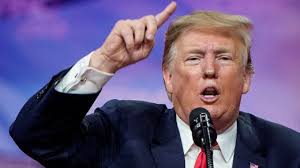
Donald Trump
So when Trump lost the 2020 Presidential election—by 81,284,666 votes for former Vice President Joe Biden versus 74,224,319 for Trump-–the Right was devastated. And furious.
Unlike its defeats in past Presidential elections, this time the Right refused to accept the will of the electorate.
Trump had often “joked” about how wonderful it would be for the United States to have a “President-for-Life”—as was the case in China.
This time the Right intended to make that a reality.
Central to making that happen was the Fox News Network.
In 2022, for its seventh consecutive year, Fox News stood as the top-rated cable news network in the United States. Fox averaged 1.4 million total day viewers.
By contrast, 733,000 watched MSNBC and 568,000 watched CNN.
In prime time, Fox came in first with an average of 2.3 million viewers in 2022.
MSNBC came in second with 1.2 million and CNN ranked third with an average of 730,000.
As for profits: Fox’s net income for the twelve months ending December 31, 2022 was $1.507B, a 4.94% increase year-over-year.

In 2015, Trump launched his campaign for President. His chances for success seemed impossible at the time—even to many mainstream Republicans.
But as he won victory after victory in Republican primaries, Fox News stuck with him. And stayed with him through the four years of his Presidency.
Fox was Trump’s favorite network. It gave him unstinting praise and sought to put a favorable spin on everything he did. As a result, Trump rarely gave interviews to CBS, NBC or ABC News.
In turn, Fox profited hugely as its audience—and advertisers—eagerly tuned in.
So when Trump lost the 2020 Presidential election, he and Fox decided they must get him back into the Oval Office.
Trump did his best—or worst—by filing about 60 lawsuits to overturn the results of the election. But none of his attorneys could prove their claims that widespread fraud had robbed him of victory. The suits were dismissed by judges or withdrawn by Trump’s own attorneys.
Fox News couldn’t file fraudulent cases on Trump’s behalf. But it could poison the public mind by claiming—endlessly and falsely—that Trump had been cheated by massive voter fraud.
Fox didn’t even wait for the final results of the 2020 election to be called before it intervened on the side of what would soon be dubbed “The Big Lie.”
On Election Night, Chris Stirewalt, the political editor of Fox News Channel, was the first to project Biden’s victory in Arizona. This turned out to be right—and brought a furious attack upon Stirewalt.
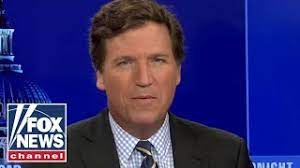
Tucker Carlson
“We worked really hard to build what we have,” Fox host Tucker Carlson texted his producer, Alex Pfeiffer. “Those fuckers are destroying our credibility. It enrages me.”
For Carlson, credibility didn’t mean ensuring integrity in news reporting. It meant telling Fox’s Right-wing audience what it wanted to hear—whether the “news” was true or not.
Carlson added that he had spoken with fellow primetime commentators Laura Ingraham and Sean Hannity minutes earlier and that they were “highly upset.”
In a January 26, 2021 Op-Ed for the Los Angeles Times, Stirewalt wrote: “Having been cosseted by self-validating coverage for so long, many Americans now consider any news that might suggest that they are in error or that their side has been defeated as an attack on them personally.
“The lie that Trump won the 2020 election wasn’t nearly as much aimed at the opposing party as it was at the news outlets that stated the obvious, incontrovertible fact.”
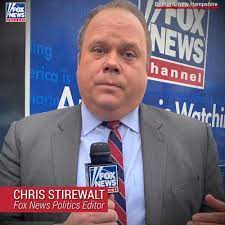
Chris Stirewalt
Stirewalt was fired from Fox News in January, 2021.
Trump was furious about the Arizona call. After the election, he attacked Fox News and encouraged his followers to switch to Newsmax.
Which many of them did, costing Fox a big chunk of its audience.
For Fox, this was the ultimate catastrophe. The company began cracking down on its employees who had dared tell the truth on Election Night.
One case involved White House correspondent Jacqui Heinrich. Her sin was fact-checking a Trump tweet accusing Dominion Voting Systems of election fraud.
Heinrich wrote that top election officials had determined “there is no evidence that any voting system deleted or lost votes, changed votes, or was in any way compromised.”
“Please get her fired,” Star host Tucker Carlson texted his fellow host Sean Hannity: “Seriously….what the fuck? I’m actually shocked….It needs to stop immediately, like tonight. It’s measurably hurting the company. The stock price is down. Not a joke.”
Hannity replied that he had already spoken to Suzanne Scott, the network’s chief executive. The next morning, Heinrich’s tweet had been deleted.
2016 PRESIDENTIAL ELECTION, ABC NEWS, AFFORDABLE CARE ACT, ALAN LADD, ALTERNET, AMERICABLOG, AP, BABY BOOMER RESISTANCE, BBC, BLOOMBERG NEWS, BORDER WALL, BUZZFEED, CALVERA (CHARACTER), CANADA, CAPITOL INSURRECTION, CBS NEWS, CHARLES GEORGE GORDON, CHRIS (CHARACTER), CHYE-CHING HUANG, CIA, CNN, COVID-19, CROOKS AND LIARS, DAILY KOZ, DONALD TRUMP, DONALD TRUMP: TRAGIC HERO (ARTICLE), ELECTORAL COLLEGE, ELI WALLACH, FBI, FEDERAL FISCAL POLICY, FEDERAL GOVERNMENT SHUTDOWN, FIVETHIRTYEIGHT, HAMLET, HARPER’S MAGAZINE, HOOVER INSTITUTE, HUFFINGTON POST, ISLAMIC STATE, JACK PALANCE, JAMES COMEY, JEFF SESSONS, JOHN FORD, JOHN WAYNE, JOSEPH BIDEN, KHARTOUM, KIM JONG ON, LEE MARVIN, MEDIA MATTERS, MOTHER JONES, MOVEON, MSNBC, NATIONAL SECURITY AGENCY, NBC NEWS, NEW REPUBLIC, NEWSDAY, NEWSWEEK, NORTH KOREA, NPR, PBS NEWSHOUR, POLITICO, POLITICUSUSA, RAW STORY, REUTERS, ROBERT S. MUELLER III, RUFUS RYKER (CHARACTER), RUSSIA, SALON, SEATTLE TIMES, SERGEY KISLYAK, SERGEY LAVROV, SHANE (MOVIE), SLATE, STEVE MCQUEEN, TALKING POINTS MEMO, TAX CUTS AND JOBS ACT OF 2017, THE ATLANTIC, THE CASE FOR TRUMP (BOOK), THE CHICAGO SUN-TIMES, THE CHICAGO TRIBUNE, THE DAILY BEAST, THE DAILY BLOG, THE GUARDIAN, THE HILL, THE HUFFINGTON POST, THE LOS ANGELES TIMES, THE MAGNIFICENT SEVEN (MOVIE), THE MAN WHO SHOT LIBERTY VALANCE (MOVIE), THE NATION, THE NEW REPUBLIC, THE NEW YORK TIMES, THE NEW YORKER, THE PRESS, THE VILLAGE VOICE, THE WASHINGTON POST, THINKPROGRESS, TIME, TRAGEDY, TRUMP FOUNDATION, TRUMP UNIVERSITY, TRUTHDIG, TRUTHOUT, TWITTER, TWO POLITICAL JUNKIES, U.S. NEWS & WORLD REPORT, UKRAINE, UPI, USA TODAY, VICTOR DAVIS HANSON, VLADIMIR PUTIN, VOLODYMYR ZELENSKY, WILLIAM SHAKESPEARE, WILSON (CHARACTER), WONKETTE, YUL BRYNNER
In Bureaucracy, Entertainment, History, Law, Law Enforcement, Medical, Politics, Social commentary on February 2, 2024 at 12:10 am
For historian and classicist Victor Davis Hanson, Donald Trump possesses an unappreciated self-awareness and sense of what it means to be a tragic hero.
Trump was into the first year of his Presidency when Hanson penned his article, “Donald Trump, Tragic Hero,” published on April 12, 2018.
To make his case, Hanson cites a series of popular Western movies featuring lethal men who risk—and sometimes sacrifice—their lives on behalf of others too weak to vanquish evil on their own.
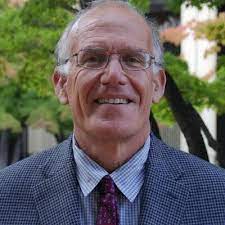
Victor Davis Hanson
Thus in the classic 1960 film, The Magnificent Seven, the Seven slaughter the outlaw Calvera and his banditos—and then ride into the sunset. As they do, Chris (Yul Brynner) tells Vin (Steve McQueen): “The old man was right. Only the farmers won. We lost. We always lose.”
Writes Hanson: “He knows that few appreciate that the tragic heroes in their midst are either tragic or heroic — until they are safely gone and what they have done in time can be attributed to someone else. Worse, he knows that the tragic hero’s existence is solitary and without the nourishing networks and affirmation of the peasant’s agrarian life.”
Chris may know this, but there is absolutely no evidence that Trump does. He has never shown even an awareness of sensitivity and self-knowledge, let alone the possession of either. Trump is at best semi-literate. The concept of tragedy—as expressed in the Greek tragedies to which Hanson refers throughout his article—means nothing to Trump.
Moreover, the Seven have risked their lives—and four of them have died doing so—on behalf of villagers who can pay them almost nothing.
It is inconceivable that Trump would risk anything—especially his life—for people he regarded as poor and thus unworthy of his concern.

Copyright © 1960 – United Artists Corporation.”, Public domain, via Wikimedia Commons
In their first encounter with Calvera (Eli Wallach) the bandit chief offers to make the Seven partners in his ravaging of the village. Of his intended victims, Calvera sneers: “If God had not wanted them sheared, he would not have made them sheep.”
If Trump had heard Calvera’s offer, he would have instantly accepted it.
In June 2016, USA Today published an analysis of litigation involving Trump. Over the previous 30 years, Trump and his businesses had been involved in 3,500 legal cases in U.S. Federal and state courts.
Of the 3,500 suits, Trump or one of his companies were plaintiffs in 1,900; defendants in 1,450; and bankruptcy, third party, or other in 150. Trump was named in at least 169 suits in federal court.
Many of those cases centered around his refusal to pay contractors for their finished work on his properties. Most of the contractors didn’t have the financial resources—as Trump had—to spend years in court trying to obtain the monies they were owed. As a result, they never received payment—or, at best, only a small portion of what they were owed.
When he ran for President in 2015-16, Trump repeatedly promised poor and middle-class Americans a far better plan for medical care than the Affordable Care Act.
He spent the next four years thuggishly trying to dismantle “Obanacare,” the signature achievement of Barack Obama, America’s first black President. But never did he offer even a general outline of his own alleged plan to “replace” it.
Hanson tries to draw a further parallel between Trump and the fictional Tom Doniphon, the unsung hero of John Ford’s 1962 movie, The Man Who Shot Liberty Valance.

Copyright © 1962 Paramount Pictures Corporation and John Ford Productions, Inc.”, Public domain, via Wikimedia Commons
Hanson sums up the movie thus:
“Tom Doniphon (John Wayne)…unheroically kills the thuggish Liberty Valance [Lee Marvin], births the [political] career of Ranse Stoddard [James Stewart] and his marriage to Doniphon’s girlfriend [Vera Miles] and thereby ensures civilization is Shinbone’s frontier future. His service done, he burns down his house and degenerates from feared rancher to alcoholic outcast.”
It is inconceivable that Trump would take the risk of committing a crime on behalf of someone else—or being able to resist bragging about it if he did. It is equally inconceivable that he would give up a woman he wanted for the happiness of another man.
Most unbelievable of all is the suggestion that Trump would imitate Doniphon by quietly riding off into the sunset.
Trump has often “joked” about becoming “President-for-Life.” After losing the November 3, 2020 Presidential election to former Vice President Joe Biden, he filed 60 lawsuits to overturn the will of 80 million voters. Those failing, he tried some old-fashioned but unsuccessful arm-twisting of several state lawmakers to “find” non-existent votes for him.
Finally, on January 6, 2021, he incited a mob of his fanatical followers to attack the United States Capitol Building. Their mission: Stop the counting of Electoral College ballots certain to give Biden the victory.
Victor Davis Hanson is a brilliant scholar and colorful writer. But his effort on Trump’s behalf is embarrassing and appalling.
In a series of bestselling books, he has eloquently chronicled the heroism of the ancient Greeks in defending their budding democracy.
It is depressing—and frightening—to discover that this same man can blatantly ignore the criminalities and even treason of the greatest and most destructive tyrant to ever attain the Presidency.
2016 PRESIDENTIAL ELECTION, ABC NEWS, AFFORDABLE CARE ACT, ALAN LADD, ALTERNET, AMERICABLOG, AP, BABY BOOMER RESISTANCE, BBC, BLOOMBERG NEWS, BORDER WALL, BRANDON DE WILDE, BUZZFEED, CALVERA (CHARACTER), CANADA, CAPITOL INSURRECTION, CBS NEWS, CHARLES GEORGE GORDON, CHRIS (CHARACTER), CHYE-CHING HUANG, CIA, CNN, COVID-19, CROOKS AND LIARS, DAILY KOZ, DONALD TRUMP, DONALD TRUMP: TRAGIC HERO (ARTICLE), ELECTORAL COLLEGE, FBI, FEDERAL FISCAL POLICY, FEDERAL GOVERNMENT SHUTDOWN, FIVETHIRTYEIGHT, HAMLET, HARPER’S MAGAZINE, HOOVER INSTITUTE, HUFFINGTON POST, ISLAMIC STATE, JACK PALANCE, JAMES COMEY, JEFF SESSONS, JOHN FORD, JOHN WAYNE, JOSEPH BIDEN, KHARTOUM, KIM JONG ON, LEE MARVIN, MEDIA MATTERS, MOTHER JONES, MOVEON, MSNBC, NATIONAL SECURITY AGENCY, NBC NEWS, NEW REPUBLIC, NEWSDAY, NEWSWEEK, NORTH KOREA, NPR, PBS NEWSHOUR, POLITICO, POLITICUSUSA, RAW STORY, REUTERS, ROBERT S. MUELLER III, RUFUS RYKER (CHARACTER), RUSSIA, SALON, SEATTLE TIMES, SERGEY KISLYAK, SERGEY LAVROV, SHANE (MOVIE), SLATE, STEVE MCQUEEN, TALKING POINTS MEMO, TAX CUTS AND JOBS ACT OF 2017, THE ATLANTIC, THE CASE FOR TRUMP (BOOK), THE CHICAGO SUN-TIMES, THE CHICAGO TRIBUNE, THE DAILY BEAST, THE DAILY BLOG, THE GUARDIAN, THE HILL, THE HUFFINGTON POST, THE LOS ANGELES TIMES, THE MAGNIFICENT SEVEN (MOVIE), THE MAN WHO SHOT LIBERTY VALANCE (MOVIE), THE NATION, THE NEW REPUBLIC, THE NEW YORK TIMES, THE NEW YORKER, THE PRESS, THE VILLAGE VOICE, THE WASHINGTON POST, THINKPROGRESS, TIME, TRAGEDY, TRUMP FOUNDATION, TRUMP UNIVERSITY, TRUTHDIG, TRUTHOUT, TWITTER, TWO POLITICAL JUNKIES, U.S. NEWS & WORLD REPORT, UKRAINE, UPI, USA TODAY, VICTOR DAVIS HANSON, VLADIMIR PUTIN, VOLODYMYR ZELENSKY, WILLIAM SHAKESPEARE, WILSON (CHARACTER), WONKETTE, YUL BRYNNER
In Bureaucracy, Entertainment, History, Law, Law Enforcement, Medical, Politics, Social commentary on February 1, 2024 at 12:13 am
Victor Davis Hanson has long been a distinguished historian and classicist at the Hoover Institution at Stanford University in Palo Alto, California.
On April 12, 2018, the year before the publication of The Case for Trump, Hanson offered a preview of its upcoming contents in an article published in the well-known conservative magazine, National Review.
Its title: “Donald Trump, Tragic Hero.”
“The very idea that Donald Trump could, even in a perverse way, be heroic may appall half the country,” begins his first paragraph.
“Nonetheless, one way of understanding both Trump’s personal excesses and his accomplishments is that his not being traditionally presidential may have been valuable in bringing long-overdue changes in foreign and domestic policy.”
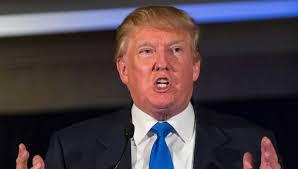
Donald Trump
Having laid out his thesis, Hanson writes: “Tragic heroes, as they have been portrayed from Sophocles’ plays (e.g., Ajax, Antigone, Oedipus Rex, Philoctetes) to the modern western film, are not intrinsically noble.”
On the contrary: A true tragic figure is a noble character with a fatal flaw, which ultimately destroys him.
To cite one from literature: Shakespeare’s Hamlet. Hamlet believes that his father, the king of Denmark, has been murdered. He believes the murderer may be his uncle, Claudius, who has seized the throne. Hamlet is brilliant, athletic, supremely eloquent and conscientious. But he’s not completely certain that Claudius is guilty, and in his hesitation to strike he lays the seeds for his own destruction.
To cite one from history: British General Charles George Gordon, sent by the British government in 1884 to evacuate the Sudanese city of Khartoum. But instead of evacuating its citizens, he chose to stay and fight the oncoming army of Mohammed Achmed, an Islamic religious fanatic who called himself The Madhi (“The Expected One”).
Although Gordon’s dynamic leadership enabled the city to hold out for almost a year, the British relief force arrived too late. The city was overwhelmed and Gordon himself killed.
Various theories have emerged to explain his motive: He was a religious fanatic; he had a death wish; he was arrogant to believe he could hold off an entire army. Any one or more of these theories could be correct.
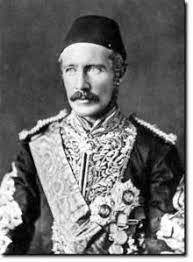
Charles George Gordon
But the fact remains that for almost an entire year he kept alive about 30,000 men, women and children. It was only the failure of the British to send a relief army in time that allowed the city—and Gordon—to perish.
Tragic heroes always have a cause that is bigger than life—something that makes giving up life worthwhile. They always recognize this, and they have the ability to put into perspective the ultimate sacrifice—giving up life—for the good of something bigger.
Which brings us back to Trump. Apart from being a five-times draft-dodger during the Vietnam war, he has never made an act of professional or personal sacrifice for anyone.
On the contrary: he has been forced to shut down both his Trump Foundation and unaccredited Trump University.
Trump was forced to pay more than $2 million in court-ordered damages to eight different charities for illegally misusing charitable funds at the Foundation for political purposes.
And his university scammed its students, promising to teach them “the secrets of success” in the real estate industry—then delivering nothing. In 2016, a federal court approved a $25 million settlement with many of those students.
This is hardly the stuff of which tragic heroes are made.

Hanson cites several examples from famous Western movies to make his case that Trump deserves the status of a tragic hero.
One of these is the classic 1953 “Shane,” starring Alan Ladd as the soft-spoken gunfighter who intervenes decisively in a range war.
Writes Hanson:
“He alone possesses the violent skills necessary to free the homesteaders from the insidious threats of hired guns and murderous cattle barons. Yet by the time of his final resort to lethal violence, Shane has sacrificed all prior chances of reform and claims on reentering the civilized world of the stable ‘sodbuster’ community.”
Comparing Trump to Shane is unbelievably ludicrous. Shane doesn’t boast about his past—in fact, this remains a mystery throughout the movie. Trump constantly brags—about the money he’s made, the buildings he’s put up, the women he’s bedded, the enemies he’s crushed (or plans to).
Moreover, Shane takes the side of poor homesteaders at the mercy of a rich cattle baron, Rufus Ryker. Ryker tries to bully the homesteaders into leaving. When that fails, he hires a ruthless gunman named Jack Wilson (Jack Palance).
In the film’s climax, Shane kills Wilson, and then Ryker, in a barroom showdown. Then he rides off—much to the sadness of Joey (Brandon de Wilde), the homesteaders’ son he has befriended.
“There’s no living with a killing,” says Shane. “There’s no going back from one. Right or wrong, it’s a brand. And a brand sticks.”
And so he rides on, knowing that his gunfighter’s skills make him an outcast among those very homesteaders whose lives he’s saved.
If Trump appeared in the movie, it would be as Ryker, not Shane.
Shane empathizes with the plight of others. Ryker–like Trump–hires others to do his dirty work.
2016 PRESIDENTIAL ELECTION, ABC NEWS, AFFORDABLE CARE ACT, ALAN LADD, ALTERNET, AMERICABLOG, AP, BABY BOOMER RESISTANCE, BBC, BLOOMBERG NEWS, BORDER WALL, BRANDON DE WILDE, BUZZFEED, CALVERA (CHARACTER), CANADA, CAPITOL INSURRECTION, CBS NEWS, CHARLES GEORGE GORDON, CHRIS (CHARACTER), CHYE-CHING HUANG, CIA, CNN, COVID-19, CROOKS AND LIARS, DAILY KOZ, DONALD TRUMP, DONALD TRUMP: TRAGIC HERO (ARTICLE), ELECTORAL COLLEGE, ELI WALLACH, FBI, FEDERAL FISCAL POLICY, FEDERAL GOVERNMENT SHUTDOWN, FIVETHIRTYEIGHT, HAMLET, HARPER’S MAGAZINE, HOOVER INSTITUTION, HUFFINGTON POST, ISLAMIC STATE, JACK PALANCE, JAMES COMEY, JEFF SESSONS, JOHN FORD, JOHN WAYNE, JOSEPH BIDEN, KHARTOUM, KIM JONG ON, LEE MARVIN, MEDIA MATTERS, MOTHER JONES, MOVEON, MSNBC, NATIONAL SECURITY AGENCY, NBC NEWS, NEW REPUBLIC, NEWSDAY, NEWSWEEK, NORTH KOREA, NPR, PBS NEWSHOUR, POLITICO, POLITICUSUSA, RAW STORY, REUTERS, ROBERT S. MUELLER III, RUFUS RYKER (CHARACTER), RUSSIA, SALON, SEATTLE TIMES, SERGEY KISLYAK, SERGEY LAVROV, SHANE (MOVIE), SLATE, STEVE MCQUEEN, TALKING POINTS MEMO, TAX CUTS AND JOBS ACT OF 2017, THE ATLANTIC, THE CASE FOR TRUMP (BOOK), THE CHICAGO SUN-TIMES, THE CHICAGO TRIBUNE, THE DAILY BEAST, THE DAILY BLOG, THE GUARDIAN, THE HILL, THE HUFFINGTON POST, THE LOS ANGELES TIMES, THE MAGNIFICENT SEVEN (MOVIE), THE MAN WHO SHOT LIBERTY VALANCE (MOVIE), THE NATION, THE NEW REPUBLIC, THE NEW YORK TIMES, THE NEW YORKER, THE PRESS, THE VILLAGE VOICE, THE WASHINGTON POST, THINKPROGRESS, TIME, TRAGEDY, TRUMP FOUNDATION, TRUMP UNIVERSITY, TRUTHDIG, TRUTHOUT, TWITTER, TWO POLITICAL JUNKIES, U.S. NEWS & WORLD REPORT, UKRAINE, UPI, USA TODAY, VICTOR DAVIS HANSON, VLADIMIR PUTIN, VOLODYMYR ZELENSKY, WILLIAM SHAKESPEARE, WILSON (CHARACTER), WONKETTE, YUL BRYNNER
In Bureaucracy, Business, Entertainment, History, Law, Law Enforcement, Medical, Military, Politics, Social commentary on January 31, 2024 at 12:10 am
“America needs the outsider Trump to do what normal politicians would not and could not do.”
That was the assertion made by Victor Davis Hanson, a classicist and historian at the Hoover Institution, Stanford University, in Palo Alto, California.
Among his bestsellers on military history:
- The Second World Wars
- Carnage and Culture
- Wars of the Ancient Greeks
- The Western Way of War
- The Soul of Battle: How Three Great Liberators Vanquished Tyranny

Victor Davis Hanson
In 2019, Hanson turned his attention to politics—specifically, The Case for Trump.
Its dust-jacket provides a useful summary of its contents:
“This New York Times bestselling Trump biography from a major American intellectual explains how a renegade businessman became one of the most successful—and necessary—presidents of all time.
“In The Case for Trump, award-winning historian and political commentator Victor Davis Hanson explains how a celebrity businessman with no political or military experience triumphed over sixteen well-qualified Republican rivals, a Democrat with a quarter-billion-dollar war chest, and a hostile media and Washington establishment to become president of the United States — and an extremely successful president.
“Trump alone saw a political opportunity in defending the working people of America’s interior whom the coastal elite of both parties had come to scorn, Hanson argues. And Trump alone had the instincts and energy to pursue this opening to victory, dismantle a corrupt old order, and bring long-overdue policy changes at home and abroad.”
Hanson’s book appeared before Trump:
- Tried to coerce Ukrainian President Volodymyr Zelensky to smear former Vice President Joseph Biden, who was likely to be his Democratic opponent in the 2020 Presidential election.
- Allowed the deadly COVID-19 virus to ravage the country, killing more than 400,000 Americans by the time he left office.
- Attacked medical experts and governors who urged Americans to wear masks and socially distance to protect themselves from COVID-19.
- Ordered his Right-wing followers to defy states’ orders to citizens to stay-at-home and wear masks in public to halt surging COVID-19 rates.
- Became the first President in American history to refuse to accept the results of a Presidential election.
- Tried to overturn the November 3, 2020 election of Joe Biden through 60 lawsuits and the arm-twisting of several state lawmakers.
- Sent a mob of his fanatical followers to attack the United States Capitol Building. Their mission: Stop the counting of Electoral College ballots certain to give Biden the victory.
- Was twice impeached during his four years in office—the only President to be impeached twice (and acquitted by a Republican Senate which ignored his litany of crimes).
But his book appeared after Trump had:
- Fired FBI Director James Comey for pursuing ties between Trump’s 2016 Presidential campaign and Russian Intelligence agents.
- Tried to fire Independent Counsel Robert S. Mueller III, who was assigned to investigate those ties after Trump fired Comey.
- Attacked Attorney General Jeff Sessions for refusing to fire Mueller.
- Attacked the integrity of Federal judges whose rulings he disagreed with.
- Given Russian Foreign Minister Sergey Lavrov and Russian Ambassador Sergey Kislyak highly classified CIA Intelligence about an Islamic State plot to turn laptops into concealable bombs.
- Amassed an infamous record as a serial liar, in both personal and Presidential matters.
- Attacked the integrity of the American Intelligence community.
- Sided with Russian dictator Vladimir Putin against the FBI, CIA and National Security Agency which unanimously agreed that Russia had subverted the 2016 Presidential election.
- Repeatedly attacked the nation’s free press for daring to report his growing list of crimes and disasters, calling it “the enemy of the American people.”
- Branded America’s longtime ally, Canada, as “a national security threat.”
- Praised brutal Communist dictators Putin and North Korea’s Kim Jong Un.
- Shut down the Federal Government for 35 days because Democrats refused to fund his ineffective “border wall” between the United States and Mexico. An estimated 380,000 government employees were furloughed and another 420,000 were ordered to work without pay. The shutdown ended due to public outrage—without Trump getting the funding amount he had demanded.
So much for Hanson’s claims that Trump had been “one of the most successful—and necessary—presidents of all time.”
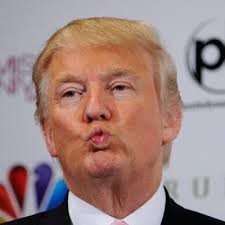
Donald Trump
Then there’s Hanson’s claim that “Trump alone saw a political opportunity in defending the working people of America’s interior whom the coastal elite of both parties had come to scorn.”
In November, 2017, Trump and a Republican-dominated House and Senate rammed the Tax Cuts and Jobs Act of 2017 through Congress. It became law on December 22, 2017.
According to Chye-Ching Huang, Director of Federal Fiscal Policy, the law did nothing to help ordinary Americans.
Testifying before the House Budget Committee on February 27, 2019, Huang stated that the law:
- Ignored the stagnation of working-class wages and exacerbated inequality;
- Weakened revenues when the nation needed to raise more;
- Encouraged rampant tax avoidance and gaming that will undermine the integrity of the tax code;
- Left behind low- and moderate-income Americans—and in many ways hurt them.
For American corporations, however, the law was a godsend:
- Cutting the corporate tax rate from 35 to 21 percent;
- Shifting toward a territorial tax system, where multinational corporations’ foreign profits go largely untaxed;
- Benefitting overwhelmingly wealthy shareholders and highly paid executives.
This was hardly an attempt at “defending the working people of America’s interior.”
Trump never made another attempt to “reform” the tax laws.
2016 PRESIDENTIAL ELECTION, 2020 PRESIDENTIAL ELECTION, ABC NEWS, ADAM SCHIFF, ADOLF HITLER, AFGHANISTAN, ALBERT SPEER, ALTERNET, AMERICABLOG, ANTIFA, AP, BABY BOOMER RESISTANCE, BARACK OBAMA, BLOOMBERG, BUZZFEED, CBS NEWS, CHRIS CILLIZZA, CHRIS KREBS, CHRISTOPHER WRAY, CIA, CNN, CORONAVIRUS, COVID-19, CROOKS AND LIARS, CYBERSECURITY AND INFRASTRUCTURE SECURITY AGENCY, DAILY KOS, DAILY KOZ, DENMARK, DEPARTMENT OF HOMELAND SECURITY, DISOBEYING HITLER: GERMAN RESISTANCE AFTER VALKYRIE (BOOK), DONALD TRUMP, DONALDL TRUMP JR., DRUDGE REPORT, FASCISM, FBI, FIVETHIRTYEIGHT, FRANCE, HARPER’S MAGAZINE, HERMANN GORING, HILLARY CLINTON, HUFFINGTON POST, IMPEACHMENT, IRAQ, JAKE TAPPER, JAMES B. COMEY, JARED KUSHNER, JOE BIDEN, MAIL-IN BALLOTS, MARK ESPER, MEDIA MATTERS, MIKE PENCE, MITCH MCCONNELL, MOTHER JONES, MOVEON, MSNBC, NAZI GERMANY, NBC NEWS, NEWSWEEK, NORWAY, NPR, PAUL MANAFORT, PBS NEWSHOUR, PLANNED PARENTHOOD, POLAND, POLITICO, POLITICUSUSA, RANDALL HANSEN, RAW STORY, REPUBLICAN PARTY, REPUBLICANS, REUTERS, RUSSIA, SALON, SEATTLE TIMES, SLATE, SOVIET UNION, SS, STALINGRAD, TALKING POINTS MEMO, THE ATLANTIC, THE CHICAGO SUN-TIMES, THE CHICAGO TRIBUNE, THE DAILY BEAST, THE DAILY BLOG, THE GUARDIAN, THE HILL, THE HUFFINGTON POST, THE LOS ANGELES TIMES, THE NATION, THE NEW REPUBLIC, THE NEW YORK TIMES, THE PENTAGON, THE VILLAGE VOICE, THE WALL STREET JOURNAL, THE WASHINGTON POST, THINKPROGRESS, TIME, TRUMP TOWER MEETING, TRUTHDIG, TRUTHOUT, TWITTER, TWO POLITICAL JUNKIES, U.S. NEWS & WORLD REPORT, UPI, USA TODAY, VLADIMIR PUTIN, VOTER FRAUD, WEHRMACHT, WERNER VON BLOMBERG, WERNER VON FRITCH, WONKETTE, WORLD WAR 11
In Bureaucracy, History, Law, Law Enforcement, Military, Politics, Social commentary on January 26, 2024 at 12:15 am
On March 19, 1945, facing certain defeat, Nazi Fuhrer Adolf Hitler ordered a massive “scorched-earth” campaign throughout Germany:
“Destroy all German agriculture, industry, ships, communications, roads, food stuffs, mines, bridges, stores and utility plants!”
If implemented, it would deprive surviving Germans of even the barest necessities after the war.
Opposing him was Albert Speer, his favorite architect and Minister of Armaments.
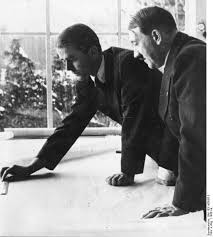
Albert Speer and Adolf Hitler pouring over architectural plans
But Hitler refused to back down. He gave Speer 24 hours to reconsider his opposition to the order.
The next day, Speer told Hitler: “My Fuhrer, I stand unconditionally behind you!”
“Then all is well,” said Hitler, suddenly with tears in his eyes.
“If I stand unreservedly behind you,” said Speer, “then you must entrust me rather than the Gauleiters [district Party leaders serving as provincial governors] with the implementation of your decree.”
Filled with gratitude, Hitler signed the decree Speer had thoughtfully prepared before their fateful meeting.
By doing so, Hitler unintentionally gave Speer the power to thwart his “scorched earth” order.
Trained as an architect, Speer had joined the Nazi Party in 1931. He met Hitler in 1933, when he presented the Fuhrer with architectural designs for the Nuremberg Rally scheduled for that year.
From then on, Speer became Hitler’s “genius architect” assigned to create buildings meant to last for a thousand years. “If Hitler had been capable of friendship,” Speer said after the war, “I would have been that friend.”
In 1943, Hitler appointed him Minister of Armaments, charged with revitalizing the German war effort.
Nevertheless, Speer now crisscrossed Germany, persuading military leaders and district governors to not destroy the vital facilities that would be needed after the war.
“No other senior National Socialist could have done the job,” writes Randall Hanson, author of Disobeying Hitler: German Resistance After Valkyrie.
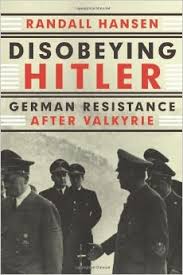
“Speer was one of the very few people in the Reich—-perhaps even the only one—with such power to influence actors’ willingness/unwillingness to destroy.”
Despite his later conviction for war crimes at Nuremberg, Speer never regretted his efforts to save Germany from total destruction at the hands of Adolf Hitler.
* * * * *
As the Third Reich came to its fiery end, Adolf Hitler blamed the German people for being “unworthy” of his “genius” and losing the war he had started.
His attitude was: “If I can’t rule Germany, then there won’t be a Germany.”
Fortunately for Germany, one man—Albert Speer—finally broke ranks with his Fuhrer.

Albert Speer
Risking death, he refused to carry out Hitler’s “scorched earth” order. Even more important, he successfully blocked such destruction and persuaded influential military and civilian leaders to disobey the order as well.
As a result, those targets slated for destruction were spared.
Fast forward 75 years: Facing the end of his Presidency, Donald Trump desperately sought to remain in power. Having “joked” about being “President-for-Life,” he now fought to make that a reality.
Unlike his 44 predecessors, he rejected the will of the voters and for almost three weeks denied his successor access to the resources he needed to launch a smooth transition.
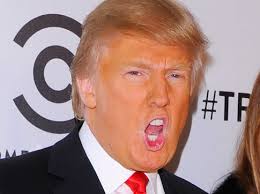
Donald Trump
Even worse: Instead of showing concern for the country he claimed to love, Trump sought to relentlessly destroy those institutions that guarantee American freedom and safety:
- The Pentagon
- The CIA
- The FBI
- The Cybersecurity and Infrastructure Security Agency
His attitude clearly was: “If I can’t rule America, there won’t be an America.”
Meanwhile, House and Senate Republicans embraced his most outrageous lies—or refused to openly refute them—as the COVID-19 pandemic slaughtered about 1,000 Americans a day.
Even Republicans who privately admitted the Trump era was ending realized that 70 million hate-filled Americans voted for him in 2020. And eagerly awaited the coming of the next would-be Fuhrer.
They would also eagerly vote out of office any Republican who dared break with the man they worshiped like a cult leader.
For Congressional Republicans, staying in office—and keeping their power and perks—was their top priority.
On November 25, 2019, CNN political correspondent Jake Tapper interviewed Representative Adam Schiff on Donald Trump’s upcoming impeachment trial for abuse of power and obstruction of Congress.
What would it mean if Republicans uniformly oppose any articles of impeachment against Trump? asked Tapper.
“It will have very long-term consequences, if that’s where we end up,” replied Schiff.
“And if not today, I think Republican members in the future, to their children and their grandchildren, will have to explain why they did nothing in the face of this deeply unethical man who did such damage to the country.”
In the end, only one of 53 Republican Senators—Mitt Romney—dared to vote for impeachment. And he became an instant pariah for it.
On March 18, 1945, Albert Speer, opposing Hitler’s plans to destroy Germany’s infrastructure, addressed a memo to his Fuhrer, in which he wrote: “No one has the right to take the viewpoint that the fate of the German people is tied to his personal fate.”
The country is still waiting for a Republican Albert Speer to step forward and save America from the self-destructive intentions of its own would-be Fuhrer.
2016 PRESIDENTIAL ELECTION, 2020 PRESIDENTIAL ELECTION, ABC NEWS, ADAM SCHIFF, ADOLF HITLER, AFGHANISTAN, ALBERT SPEER, ALTERNET, AMERICABLOG, ANTIFA, AP, BABY BOOMER RESISTANCE, BARACK OBAMA, BLOOMBERG, BUZZFEED, CBS NEWS, CHRIS CILLIZZA, CHRIS KREBS, CHRISTOPHER WRAY, CIA, CNN, CORONAVIRUS, COVID-19, CROOKS AND LIARS, CYBERSECURITY AND INFRASTRUCTURE SECURITY AGENCY, DAILY KOS, DAILY KOZ, DENMARK, DEPARTMENT OF HOMELAND SECURITY, DISOBEYING HITLER: GERMAN RESISTANCE AFTER VALKYRIE (BOOK), DONALD TRUMP, DONALDL TRUMP JR., DRUDGE REPORT, FASCISM, FBI, FIVETHIRTYEIGHT, FRANCE, HARPER’S MAGAZINE, HERMANN GORING, HILLARY CLINTON, HUFFINGTON POST, IMPEACHMENT, IRAQ, JAKE TAPPER, JAMES B. COMEY, JARED KUSHNER, JOE BIDEN, MAIL-IN BALLOTS, MARK ESPER, MEDIA MATTERS, MIKE PENCE, MITCH MCCONNELL, MOTHER JONES, MOVEON, MSNBC, NAZI GERMANY, NBC NEWS, NEWSWEEK, NORWAY, NPR, PAUL MANAFORT, PBS NEWSHOUR, PLANNED PARENTHOOD, POLAND, POLITICO, POLITICUSUSA, RANDALL HANSEN, RAW STORY, REPUBLICAN PARTY, REPUBLICANS, REUTERS, RUSSIA, SALON, SEATTLE TIMES, SLATE, SOVIET UNION, SS, STALINGRAD, TALKING POINTS MEMO, THE ATLANTIC, THE CHICAGO SUN-TIMES, THE CHICAGO TRIBUNE, THE DAILY BEAST, THE DAILY BLOG, THE GUARDIAN, THE HILL, THE HUFFINGTON POST, THE LOS ANGELES TIMES, THE NATION, THE NEW REPUBLIC, THE NEW YORK TIMES, THE PENTAGON, THE VILLAGE VOICE, THE WALL STREET JOURNAL, THE WASHINGTON POST, THINKPROGRESS, TIME, TRUMP TOWER MEETING, TRUTHDIG, TRUTHOUT, TWITTER, TWO POLITICAL JUNKIES, U.S. NEWS & WORLD REPORT, UPI, USA TODAY, VLADIMIR PUTIN, VOTER FRAUD, WEHRMACHT, WERNER VON BLOMBERG, WERNER VON FRITCH, WONKETTE, WORLD WAR 11
In Bureaucracy, History, Law, Law Enforcement, Military, Politics, Social commentary on January 25, 2024 at 12:05 am
President Donald Trump seemed poised to fire his handpicked CIA director.
He believed that Gina Haspel had stonewalled the release of documents supposedly exposing “deep state” plots against his 2016 campaign during the Obama administration.
[In fact, the Obama administration had acted entirely within the law during the 2016 Presidential campaign. The FBI has a legal mandate to keep track of subversive activities—especially when they involve members of a Presidential candidate’s campaign.
[On July 9, 2016, high-ranking representatives of the Trump campaign met at Trump Tower with at least two lobbyists with ties to Russian dictator Vladimir Putin.

Gina Haspel
[The participants included:
- Trump’s son, Donald Trump Jr.;
- His son-in-law, Jared Kushner;
- His then-campaign manager, Paul Manafort;
- Natalia Veselnitskaya, a Russian lawyer with ties to Putin; and
- Rinat Akhmetshin, a former Soviet counterintelligence officer suspected of “having ongoing ties to Russian Intelligence.”
[The reason for the meeting: To dig up “dirt” the Russians might have on Hillary Clinton, Trump’s opponent for the White House.]
Trump was also angry at FBI Director Christopher Wray—who replaced James B. Comey in May, 2017. Trump had fired Comey for daring to investigate ties between his 2016 campaign and Russian Intelligence agents.

Christopher Wray
The reason for his anger at Wray: Wray had dared to contradict Trump’s false claims that
- “Rampant voter fraud” was a widespread problem; and
- Antifa posed a greater terrorism danger than white supremacist groups.
During the 2016 Presidential race, Russian propaganda played a major role in convincing millions of Americans to vote for Donald Trump. Social media platforms—especially Facebook and Twitter—were flooded with genuinely fake news to sow discord among Americans and create a pathway for Trump’s election.
Russian President Vladimir Putin, a former KGB officer, had quickly assessed Trump as an egotistical narcissist. By appealing to Trump’s vanity, Putin expected to sharply reduce the military and political threat the United States represented to a resurgent Russia.
So notorious was the role played by Russian Intelligence in misleading American voters in 2016 that the Department of Homeland Security (DHS) was determined to prevent a repetition in 2020.
The man ultimately tasked with this mission was Chris Krebs, the director of the Cybersecurity and Infrastructure Security Agency run by DHS.
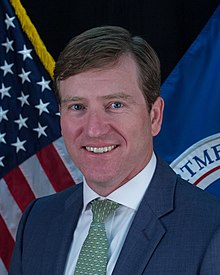
Chris Krebs
Krebs launched a massive effort to counter lies spread by Russians—and Americans—on social media platforms. Among his duties:
- Sharing Intelligence from agencies such as the CIA and National Security Agency with local officials about foreign efforts at election interference.
- Ensuring that domestic voting equipment was secure.
- Attacking domestic misinformation head-on.
As a result, Krebs was widely praised for revamping the department’s cybersecurity efforts and increasing coordination with state and local governments.
By all accounts—except Trump’s—the 2020 election went very smoothly.
On November 17, 2020, Trump fired Chris Krebs.
The reason: Krebs had not only countered Russian propaganda lies—he had dared to counter Trump’s as well. For example: He rejected Trump’s claims of widespread voter fraud: There “is no evidence that any voting system deleted or lost votes, changed votes, or was in any way compromised.”
Trump fired Krebs by tweet—and accompanied the outrage with yet another lie:
“The recent statement by Chris Krebs on the security of the 2020 election was highly inaccurate, in that there were massive improprieties and fraud, including dead people voting, poll watchers not allowed into polling locations, glitches in the voting machines which changed votes from Trump to Biden, late voting, and many more. Therefore, effective immediately, Chris Krebs has been terminated as director of the Cybersecurity and Infrastructure Security Agency.”
In a November 17 story on the CNN website, CNN reporters Kaitlan Collins and Paul LeBlanc bluntly concluded:
“[Krebs’] dismissal underscores the lengths Trump is willing to go to punish those who don’t adopt his conspiratorial view of the election.
“Since CNN and other outlets called the race for President-elect Joe Biden, Trump has refused to accept the results, instead pushing baseless conspiracies that his second term is being stolen.
“This includes falsely claiming during an election night address that he had already won reelection, that he had won states that were actually still up in the air at the time and that his opponents were perpetrating a fraud.”
* * * * *
Seventy-five years earlier, on March 19, 1945, facing certain defeat, Adolf Hitler ordered a massive “scorched-earth” campaign throughout Germany.
All German agriculture, industry, ships, communications, roads, food stuffs, mines, bridges, stores and utility plants were to be destroyed.
If implemented, it would deprive the entire German population of even the barest necessities after the war.
Opposing him—at first openly, and later secretly—was Albert Speer, his former architect and now Minister of Armaments.
Speer argued that there must be a future for the German people: “If our enemies wish to destroy us, why help them? We must leave the people something.”
But Hitler refused to back down: “I don’t want to hear any more.”
He gave Speer 24 hours to reconsider his opposition to the order.
Speer could not directly promise to carry out Hitler’s “scorched earth” order. So he gave Hitler a vague answer that essentially committed him to nothing: “My Fuhrer, I stand unconditionally behind you!”
2016 PRESIDENTIAL ELECTION, 2020 PRESIDENTIAL ELECTION, ABC NEWS, ADAM SCHIFF, ADOLF HITLER, AFGHANISTAN, ALBERT SPEER, ALTERNET, AMERICABLOG, ANTIFA, AP, BABY BOOMER RESISTANCE, BARACK OBAMA, BLOOMBERG, BUZZFEED, CBS NEWS, CHRIS CILLIZZA, CHRIS KREBS, CHRISTOPHER WRAY, CIA, CNN, CORONAVIRUS, COVID-19, CROOKS AND LIARS, CYBERSECURITY AND INFRASTRUCTURE SECURITY AGENCY, DAILY KOS, DAILY KOZ, DENMARK, DEPARTMENT OF HOMELAND SECURITY, DISOBEYING HITLER: GERMAN RESISTANCE AFTER VALKYRIE (BOOK), DONALD TRUMP, DONALDL TRUMP JR., DRUDGE REPORT, FASCISM, FBI, FIVETHIRTYEIGHT, FRANCE, HARPER’S MAGAZINE, HERMANN GORING, HILLARY CLINTON, HUFFINGTON POST, IMPEACHMENT, IRAQ, JAKE TAPPER, JAMES B. COMEY, JARED KUSHNER, JOE BIDEN, MAIL-IN BALLOTS, MARK ESPER, MEDIA MATTERS, MIKE PENCE, MITCH MCCONNELL, MOTHER JONES, MOVEON, MSNBC, NAZI GERMANY, NBC NEWS, NEWSWEEK, NORWAY, NPR, PAUL MANAFORT, PBS NEWSHOUR, PLANNED PARENTHOOD, POLAND, POLITICO, POLITICUSUSA, RANDALL HANSEN, RAW STORY, REPUBLICAN PARTY, REPUBLICANS, REUTERS, RUSSIA, SALON, SEATTLE TIMES, SLATE, SOVIET UNION, SS, STALINGRAD, TALKING POINTS MEMO, THE ATLANTIC, THE CHICAGO SUN-TIMES, THE CHICAGO TRIBUNE, THE DAILY BEAST, THE DAILY BLOG, THE GUARDIAN, THE HILL, THE HUFFINGTON POST, THE LOS ANGELES TIMES, THE NATION, THE NEW REPUBLIC, THE NEW YORK TIMES, THE PENTAGON, THE VILLAGE VOICE, THE WALL STREET JOURNAL, THE WASHINGTON POST, THINKPROGRESS, TIME, TRUMP TOWER MEETING, TRUTHDIG, TRUTHOUT, TWITTER, TWO POLITICAL JUNKIES, U.S. NEWS & WORLD REPORT, UPI, USA TODAY, VLADIMIR PUTIN, VOTER FRAUD, WEHRMACHT, WERNER VON BLOMBERG, WERNER VON FRITCH, WONKETTE, WORLD WAR 11
In Bureaucracy, History, Law, Law Enforcement, Military, Politics, Social commentary on January 24, 2024 at 12:12 am
On November 3, 2020, Joe Biden became President-elect of the United States by winning 79,658,000 votes, or 51% of the vote, compared to 73,886,400 votes, or 47.2% of the vote cast for President Donald Trump.
In the Electoral College—which actually determines the winner—the results were even more stunning: 306 votes for Biden, compared with 232 for Trump. It takes 270 votes to be declared the victor.
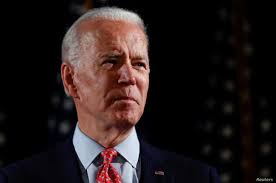
Joe Biden
Despite this, Trump steadfastly refused to concede. He made a series of baseless claims that he was cheated of victory by
- Illegal aliens being allowed to vote.
- A sinister computer program that turned Trump votes into Biden ones.
He repeatedly filed legal challenges to the vote, claiming himself the victim of massive fraud. This despite the utter lack of evidence of it.
On November 13, nine cases meant to attack President-elect Joe Biden’s win in key states were denied or dropped. A law firm challenging the vote count in Pennsylvania withdrew from the effort.
In Michigan, Trump’s attorneys dropped their federal suit to block the certification of Detroit-area ballots.
By November 21, Trump had lost in 30 cases dismissed by judges or withdrawn by his own attorneys.
Meanwhile, top Republicans—such as Vice President Mike Pence and Senate Majority Leader Mitch McConnell—refused to congratulate Biden as the winner.

Mitch McConnell
In a November 17, 2020 analysis, entitled “Donald Trump Doesn’t Seem to Want to Do His Job Anymore,” CNN Editor-at-Large Chris Cillizza wrote:
While Trump relentlessly asserted that he won the 2020 election, “he’s done next to nothing—at least publicly—to suggest he plans to continue doing the job in any serious manner through January 20.”
According to Cillizza, since losing the election, Trump had filled his days with:
- Golfing
- Tweeting
- Making controversial military decisions
- Firing people
Specifically:
Golfing: He played golf at his club in Virginia twice on the weekend of November 14-15. He was golfing the previous weekend, when Joe Biden was declared the winner of the 2020 race by CNN and other media outlets.
Tweeting: He tweeted numerous lies and conspiracy theories, claiming he won a second term but was cheated by the counting of fraudulent votes. This led Twitter to flag a large number of his tweets as “inaccurate.”
Making controversial military decisions: The Pentagon signaled it was planning—on Trump’s orders—to withdraw troops from Afghanistan and Iraq. [American forces had been warring with the Taliban in Afghanistan since 2001; they had been warring against Iraqi insurgents since 2003.]
And in a move that was truly frightening: The New York Times reported that Trump asked his top advisers for options to strike at Iran’s nuclear capabilities before he left office. This would embroil the United States in a war that could easily turn nuclear.
Firing people: On November 9, Trump fired Secretary of Defense Mark Esper. Four senior civilian officials were subsequently fired or resigned—Esper’s chief of staff and the top officials overseeing policy and intelligence.
They were replaced with flunkies loyal to Trump personally.
[This was in fact how Adolf Hitler took control of the Wehrmacht.
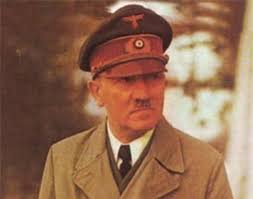
Adolf Hitler
[Since taking command of Germany in the summer of 1934, Hitler wanted to replace two high-ranking military officials: General Werner von Fritsch and Colonel General Werner von Blomberg. Both were convinced that Hitler’s increasingly aggressive foreign policy was putting Germany on a collision course with war—a war the Fatherland could not win.
[Hitler, in fact, meant to go to war—and despised Fritsch’s and Blomberg’s hesitation to do so. He decided to rid himself of both men.
[On January 12, 1938, Blomberg married Erna Gruhn, with Hitler and Reichsmarshall Hermann Goring attending as witnesses. Soon afterward, Berlin police discovered that Gruhn had a criminal record as a prostitute and had posed for pornographic photographs.
[Marrying a woman with such a background violated the standard of conduct expected of German officers. Hitler saw the scandal as an opportunity to dispose of Blomberg—who was forced to resign.
[Shortly after Blomberg was forced out in disgrace, the SS—Hitler’s private police force—presented Hitler with a file that falsely accused Werner von Fritsch of homosexuality. Fritsch angrily denied the accusation but resigned on February 4, 1938.
[From that point on, Hitler was in de facto command of the German Armed Services.]
Eighty-two years later, on November 3, 2020, President Donald Trump lost the 2020 Presidential election to former Vice President Joe Biden.
But Trump seemed determine to inflict as much damage as possible on the agencies responsible for protecting the security of the nation.
Besides wreaking havoc on the Pentagon, Trump was reportedly preparing to fire CIA Director Gina Haspel and FBI Director Christopher Wray.
Trump had accused Haspel of stonewalling the release of documents that would supposedly expose “deep state” plots against Trump’s campaign and transition during the Obama administration.
In fact, the Obama administration had acted entirely within the law during the 2016 Presidential campaign. The FBI has a legal mandate to keep track of subversive activities—especially when they involve members of a Presidential campaign such as Trumps.
And he was furious that Wray had dared to contradict Trump’s false claims that:
- “Rampant voter fraud” was a widespread problem; and
- Antifa posed a greater terrorism danger than white supremacist groups.
For Trump, contradiction was the same as treason.
2016 PRESIDENTIAL ELECTION, 2020 PRESIDENTIAL ELECTION, ABC NEWS, ADAM SCHIFF, ADOLF HITLER, AFGHANISTAN, ALBERT SPEER, ALTERNET, AMERICABLOG, ANTIFA, AP, BABY BOOMER RESISTANCE, BARACK OBAMA, BLOOMBERG, BUZZFEED, CBS NEWS, CHRIS CILLIZZA, CHRIS KREBS, CHRISTOPHER WRAY, CIA, CNN, CORONAVIRUS, COVID-19, CROOKS AND LIARS, CYBERSECURITY AND INFRASTRUCTURE SECURITY AGENCY, DAILY KOS, DAILY KOZ, DENMARK, DEPARTMENT OF HOMELAND SECURITY, DISOBEYING HITLER: GERMAN RESISTANCE AFTER VALKYRIE (BOOK), DONALD TRUMP, DONALDL TRUMP JR., DRUDGE REPORT, FASCISM, FBI, FIVETHIRTYEIGHT, FRANCE, HARPER’S MAGAZINE, HERMANN GORING, HILLARY CLINTON, HUFFINGTON POST, IMPEACHMENT, IRAQ, JAKE TAPPER, JAMES B. COMEY, JARED KUSHNER, JOE BIDEN, MAIL-IN BALLOTS, MARK ESPER, MEDIA MATTERS, MIKE PENCE, MITCH MCCONNELL, MOTHER JONES, MOVEON, MSNBC, NAZI GERMANY, NBC NEWS, NEWSWEEK, NORWAY, NPR, PAUL MANAFORT, PBS NEWSHOUR, PLANNED PARENTHOOD, POLAND, POLITICO, POLITICUSUSA, RANDALL HANSEN, RAW STORY, REPUBLICAN PARTY, REPUBLICANS, REUTERS, RUSSIA, SALON, SEATTLE TIMES, SLATE, SOVIET UNION, SS, STALINGRAD, TALKING POINTS MEMO, THE ATLANTIC, THE CHICAGO SUN-TIMES, THE CHICAGO TRIBUNE, THE DAILY BEAST, THE DAILY BLOG, THE GUARDIAN, THE HILL, THE HUFFINGTON POST, THE LOS ANGELES TIMES, THE NATION, THE NEW REPUBLIC, THE NEW YORK TIMES, THE PENTAGON, THE VILLAGE VOICE, THE WALL STREET JOURNAL, THE WASHINGTON POST, THINKPROGRESS, TIME, TRUMP TOWER MEETING, TRUTHDIG, TRUTHOUT, TWITTER, TWO POLITICAL JUNKIES, U.S. NEWS & WORLD REPORT, UPI, USA TODAY, VLADIMIR PUTIN, VOTER FRAUD, WEHRMACHT, WERNER VON BLOMBERG, WERNER VON FRITCH, WONKETTE, WORLD WAR 11
In Bureaucracy, History, Law, Law Enforcement, Military, Politics, Social commentary on January 23, 2024 at 12:13 am
Albert Speer, Minister of Armaments for the Third Reich, was appalled.
His Fuhrer, Adolf Hitler—the man he had idolized for 14 years—had just passed a death sentence on Germany, the nation he claimed to love above all others.
On September 1, 1939, Hitler had triggered World War II with the invasion of Poland. This led to a series of quick, spectacular victories—over Poland, Norway, Denmark and France.
Then, on June 22, 1941, Hitler turned on his ally, the Soviet Union, with which he had signed a non-aggression pact in August, 1939.
It had taken the Wehrmacht six weeks to conquer France. Hitler believed that was how long it would take to defeat the Soviet Union.
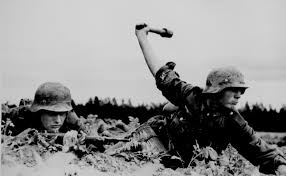
German soldiers invading the Soviet Union
Again, a series of spectacular battlefield victories followed—before the Wehrmacht was halted at the gates of Moscow. A year later, still enmeshed in Russia, the turning point came at Stalingrad, with the loss of the elite Sixth Army and 800,000 soldiers.
Starting in 1943, the Red Army slowly but steadily regained ground it had lost—the western half of Russia—and began pushing back the Germans. By March, 1945, it was fighting inside Germany—and heading straight for its capital: Berlin.
And by March, 1945, so were American and British forces. After landing in Normandy on June 6, 1944, they had steadily pushed their way across Europe and into Germany.
On March 19, 1945, facing certain defeat, Hitler ordered a massive “scorched-earth” campaign throughout Germany.
All German agriculture, industry, ships, communications, roads, food stuffs, mines, bridges, stores and utility plants were to be destroyed.
If implemented, it would deprive the entire German population of even the barest necessities after the war. And he entrusted the campaign to Albert Speer, his favorite architect-turned-Minister-of-Armaments.
Click here: Hitler’s “Scorched Earth” Decree and Albert Speer’s Response
Now living in a bunker 50 feet below bomb-shattered Berlin, Hitler gave full vent to his most destructive impulses.
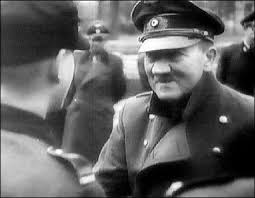
Adolf Hitler addressing boy soldiers as the Third Reich crumbles
“If the war is lost,” Hitler told Speer, “the nation will also perish. This fate is inevitable. There is no necessity to take into consideration the basis which the people will need to continue even a most primitive existence.
“On the contrary, it will be better to destroy these things ourselves, because this nation will have proved to be the weaker one and the future will belong solely to the stronger eastern nation.
“Besides, those who will remain after the battle are only the inferior ones, for the good ones have all been killed.”
* * * * *
Seventy-five years after Adolf Hitler planned the destruction of Germany, Donald Trump planned the same fate for the United States.
On November 3, 2020, Trump lost his bid to win another four years as President of the United States. In the early hours of November 4, 2020, he poured out his fury and self-pity in a televised address from the White House:
“Millions and millions of people voted for us tonight, and a very sad group of people is trying to disenfranchise that group of people and we won’t stand for it, we will not stand for it.”
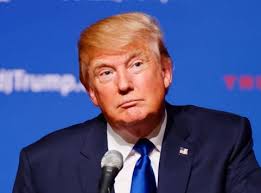
Donald Trump
Sounding like a petulant child whose party has been called off, Trump continued:
“We were getting ready for a big celebration, we were winning everything and all of a sudden it was just called off. The results tonight have been phenomenal…I mean literally we were just all set to get outside and just celebrate something that was so beautiful, so good, such a vote, such a success.”
It was Trump—not his challenger, former Vice President Joe Biden—who was demanding that the electoral process be halted. And that those votes that had not yet been counted be, in effect, flushed down the toilet.
“The citizens of this country have come out in record numbers, this a record, there’s never been anything like it to support our incredible movement….Most importantly, we’re winning Pennsylvania by a tremendous amount of votes. We’re up 690,000 votes.”
Owing to the Coronavirus pandemic—which Trump had refused to aggressively address from its outset in January—millions of Americans had voted by mail. This was especially true of Democrats, who didn’t want to stand in Coronavirus-infected lines.
But Trump had convinced millions of Republican voters that voting by mail was subversive. So they showed up at the polls or stayed away out of a secret fear of COVID-19.
Meanwhile, at the White House on Election Night, Trump continued to rant:
“These aren’t even close, this is not like, Oh, it’s close. With 64% of the vote in, it’s going to be almost impossible and we’re coming into good Pennsylvania areas where they happen to like your president. We’re winning Michigan…I said ‘Wow, that’s a lot’…
“And we’re winning Wisconsin…so when you take those three states in particular and you take all of the others…and all of a sudden it’s not like we’re up 12 votes and we have 60% left, we won states and all of a sudden, I said, ‘What happened to the election? It’s off.’ And we have all these announcers saying, ‘What’s happened’ and then they said, ‘Ohhh.’”
But this did not alter the reality that Joe Biden had become President-elect of the United States by winning 79,106,010 votes, or 51% of the vote.


 Bureaucracybuster's Blog
2016 PRESIDENTIAL ELECTION, 2020 PRESIDENTIAL ELECTION, ABC NEWS, ALTERNET, AMERICABLOG, AP, BABY BOOMER RESISTANCE, BBC, BLOOMBERG NEWS, BUZZFEED, CBS NEWS, CHRIS STIREWALT, CNN, COVID-19, CROOKS AND LIARS, DAILY KOS, DAVID BROOKS, DOMINION VOTING SYSTEMS, DONALD TRUMP, FIVETHIRTYEIGHT, FOX NEWS NETWORK, HARPER’S MAGAZINE, HUFFINGTON POST, IZVESTIA, JACQUI HEINRICH, JOE BIDEN, JONATHAN CAPEHART, LAURA INGRAHAM, LIBEL, MEDIA MATTERS, MIKE LINDELL, MOTHER JONES, MOVEON, MSNBC, NBC NEWS, NEW REPUBLIC, NEW YORK TIMES V. SULLIVAN, NEWSDAY, NEWSMAX, NEWSWEEK, NPR, PBS NEWSHOUR, POLITICO, POLITICUSUSA, PRAVDA, RAW STORY, REPUBLICANS, REUTERS, RUDOLPH GIULIANI, RUPERT MURDOCH, SALON, SEAN HANNITY, SEATTLE TIMES, SIDNEY POWELL, SLANDER, SLATE, SOVIET UNION, TALKING POINTS MEMO, THE ATLANTIC, THE CHICAGO SUN-TIMES, THE CHICAGO TRIBUNE, THE DAILY BEAST, THE DAILY BLOG, THE GUARDIAN, THE HILL, THE HUFFINGTON POST, THE INTERCEPT, THE LOS ANGELES TIMES, THE NATION, THE NEW REPUBLIC, THE NEW YORK TIMES, THE NEW YORKER, THE VILLAGE VOICE, THE WASHINGTON POST, THINKPROGRESS, TIME, TRUTHDIG, TRUTHOUT, TUCKER CARLSON, TWITTER, U.S. NEWS & WORLD REPORT, UPI, USA TODAY
NAZI GERMANY HAD JOSEPH GOEBBELS; AMERICA HAS RUPERT MURDOCH: PART THREE (END)
In Bureaucracy, Business, History, Law, Politics, Social commentary on February 22, 2024 at 12:09 amFox News began peddling “The Big Lie”—that President Donald J. Trump was cheated of electoral victory in 2020—on Election Night.
But then the truth came to light.
On March 26, 2021, Dominion Voting Systems sued Fox News in Delaware Superior Court.
Dominion charged that Fox’s program hosts and guests had deliberately lied that Dominion’s voting machines had been rigged to steal the 2020 United States presidential election from then-president Donald Trump.
Fox News claimed that it was reporting news of what individuals were saying and was thus protected by the First Amendment to the Constitution.
But during pre-trial discovery, Dominion accessed a treasury of Fox News memos and emails proving that its prominent hosts and top executives knew they were lying about Dominion but continued doing so anyway.
With several prominent Fox senior executives and personalities slated to testify, the trial opened on April 18, 2023. Then Fox caved—and settled the case the same day for $787.5 million.
One month earlier, on the March 3, 2023 edition of The PBS Newshour, political commentators David Brooks (The New York Times) and Jonathan Capehart (The Washington Post) had explained the significance of the upcoming lawsuit.
David Brooks: Rupert Murdoch started a paper called The Australian a long time ago. He was a journalist, an actual journalist. And now he’s gotten to the point where you can lie on camera—as long as your ratings are OK.
David Brooks
Those people who lied didn’t lie over little things. They lied about the election results of a presidential election, kind of a major deal. And we now know—as we all suspected—they all knew what was happening.
And Murdoch is sitting there atop this organization sort of blithely pretending it’s not really his problem. And so he can say it, and he has power over the corporation today. He owns it. He could fire Tucker [Carlson]. He could fire all the people—all the people who were in on this and whose journalistic integrity has been exposed as zero.
And yet he’s still trying to blithely rise above it. And so it’s amazing that we have a major news organization that is inaccurate about a presidential election.
Jonathan Capehart
Jonathan Capehart: And what that says to me is, Rupert Murdoch and his anchors, those people who are peddling in lies, they are insulated from the effect of the lies that they tell. When you see someone saying, “Oh, our ratings are going down, and that’s going to affect the stock price.” So there’s no concern….
Rupert Murdoch
Hudson Institute, CC BY 2.0 <https://creativecommons.org/licenses/by/2.0>, via Wikimedia Commons
So that means you’re more concerned about your bottom line than the corrosive impact on our democracy and political discourse in this country. That, to me, was what’s really disturbing.
And what’s even more disturbing is that Fox News isn’t even really covering this lawsuit, which means that their audience, who should know about what’s being said about them and about the programming for them, they will never—they might not ever know….that what they’re being told is just a big bunch of lies.
Well, that’s the point I was trying to make. We don’t even know if they will even know about this case, as a result. And even if they do find out, either they might not trust it, or maybe they just don’t care. I don’t know.
* * * * *
If Fox’s viewers didn’t learn about the lawsuit, it was because they watched Fox exclusively.
On the night of the Fox settlement, the Fox affiliate in San Francisco—KTVU—didn’t carry any mention of it. Those wanting to discover the latest twist in the case had to get their news from channels that believed in reporting facts, not Right-wing propaganda.
In the Soviet Union, the all-powerful Kremlin dictatorship made it extremely hard—and dangerous—to learn the truth about domestic and international events.
No correspondent for the official Soviet newspapers “Pravda” (“Truth”) and “Izvestia” (“News”) dared report what he actually knew about the failings and crimes of the regime.
Citizens who wanted to learn the truth risked imprisonment or worse if the authorities learned of their investigative efforts. As a result, the vast majority of Russians—and those enslaved by them—lived in a world of lies and half-truths.
There is no excuse for that among American citizens who have access to a wide array of news sources.
An X user recently asked: “Are critical thinkers being vastly outnumbered in the USA because secondary education is just so damn expensive? It’s no wonder Republican states are among the most poorly educated.”
The answer is: No.
You don’t have to accept Right-wing propaganda.
You can question the official version of any story.
You can seek out multiple sources.
You don’t have to seek out only those sources that confirm your long-held prejudices.
And you don’t need a college education to do so.
If Right-wingers—who make up the audience for Fox News—are ignorant, it’s because they want to be ignorant.
And they will stay ignorant—because living in a world of Right-wing lies and hatred is more important to them than accepting reality for what it is.
Share this: