Posts Tagged ‘2016 PRESIDENTIAL CAMPAIGN’
2016 PRESIDENTIAL CAMPAIGN, ABC NEWS, ALTERNET, AP, ARCHIBALD COX, BARACK OBAMA, BUZZFEED, CBS NEWS, CIA, CNN, CRAIG UNGER, CROOKS AND LIARS, DAILY KOZ, DEPARTMENT OF HOMELAND SECURITY, DEVIN NUNES, DIANNE FEINSTEIN, DONALD TRUMP, DONALD TRUMP JR., DOUG COLLINS, FACEBOOK, FBI, FOX NEWS, GREG MILLER, HILLARY CLINTON, HOUSE INTELLIGENCE COMMITTEE, HOUSE OF TRUMP HOUSE OF PUTIN (BOOK), ISLAMIC STATE OF IRAQ AND SYRIA (ISIS), ISRAELI INTELLIGENCE, JAMES COMEY, JARED KUSHNER, JEFF SESSIONS, JERROLD NADLER, JOE SCARBOROUGH, LESTER HOLT, LINDSEY GRAHAM, MALCOM NANCE, MALCOM W. NANCE, MICHAEL FLYNN, MICHAEL ISIKOFF, MIKE PENCE, MOTHER JONES, MOVEON, MSNBC, NATALIA VESELNITSKAYA, NATIONAL SECURITY AGENCY, NBC NEWS, NEWSWEEK, NPR, OFFICE OF THE DIRECTOR OF NATIONAL INTELLIGENCE, PAUL MANAFORT, POLITICO, PRINCETON UNIVERSITY, RAW STORY, REPUBLICAN PARTY, REPUBLICANS, REUTERS, REX TILLERSON, RICHARD M. NIXON, ROBERT S. MUELLER 111, ROD ROSENSTEIN, RUSSIA, RUSSIAN ROULETTE (BOOK), SALON, SEATTLE TIMES, SENATE INTELLIGENCE COMMITTEE, SERGEY KISLYAK, SERGEY LAVROV, SLATE, SUPREME COURT, THE APPRENTICE (BOOK), THE ATLANTIC, THE CHICAGO SUN-TIMES, THE CHICAGO TRIBUNE, THE DAILY BEAST, THE GUARDIAN, THE HILL, THE HUFFINGTON POST, THE LOS ANGELES TIMES, THE NATION, THE NEW YORK TIMES, THE PLOT TO DESTROY DEMOCRACY (BOOK), THE WASHINGTON POST, TIME, TREASON, TRUMP TOWER MEETING, TWITTER, U.S. NEWS & WORLD REPORT, UNITED STATES DEPARTMENT OF JUSTICE, UNITED STATES DEPARTMENT OF STATE, UPI, USA TODAY, VLADIMIR PUTIN, WILLIAM BARR
In Bureaucracy, History, Law, Law Enforcement, Military, Politics, Social commentary on July 3, 2019 at 1:06 am
The appointment of Robert S. Mueller as Special Counsel aroused unprecedented hopes and fears.
Foes of President Donald Trump hoped that Mueller would unearth evidence of criminality—if not treason—blatant enough to guarantee his impeachment.
Supporters of Trump—starting with the President—feared that this would be the case. When Attorney General Jeff Sessions told Trump that a Special Counsel had been appointed, the President exclaimed, “Oh my God. This is terrible. This is the end of my Presidency. I’m fucked.”
Yet even before the release of the long-awaited Mueller report, several deeply-researched and well-written books outlined Russia’s efforts to subvert the 2016 Presidential race. And they cast devastating light on Trump’s loyalty to the United States.
Among these:
- The Apprentice: Trump, Russia and the Subversion of Democracy, by Greg Miller
- House of Trump, House of Putin: The Untold Story of Donald Trump and the Russian Mafia, by Craig Unger
- Russian Roulette: The Inside Story of Putin’s War on America and the Election of Donald Trump, by Michael Isikoff
- The Plot to Destroy Democracy: How Putin and His Spies Are Undermining America and Dismantling the West, by Malcom W. Nance
According to its blurb on Amazon.com, The Apprentice is “based on interviews with hundreds of people in Trump’s inner circle, current and former government officials, individuals with close ties to the White House, members of the law enforcement and intelligence communities, foreign officials, and confidential documents.”
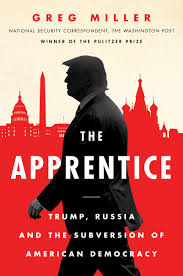
Among the subjects it covers:
- The Trump Tower meeting, where the Trump campaign sought “dirt” on Hillary Clinton from Russian Intelligence agents.
- The penetration by Russian Intelligence of computer systems used by Democrats.
- How Jared Kushner, Trump’s son-in-law, tried to set up a secret back channel to Moscow via Russian diplomatic facilities.
- Trump’s giving Russian officials highly classified secrets supplied by Israeli Intelligence;
- Trump’s clashes with the FBI and CIA.
Miller is a veteran investigative journalist and twice winner of the Pulitzer Prize. Among his stories: National security adviser Michael Flynn’s discussing U.S. sanctions with Russian officials prior to Trump’s inauguration. The story contributed to Flynn’s ouster.
Then there’s House of Trump, House of Putin, whose jacket blurb describes Trump’s inauguration as “the culmination of Vladimir Putin’s long mission to undermine Western democracy, a mission that he and his hand-selected group of oligarchs and Mafia kingpins had ensnared Trump in, starting more than twenty years ago with the massive bailout of a string of sensational Trump hotel and casino failures in Atlantic City.

“…Craig Unger methodically traces the deep-rooted alliance between the highest echelons of American political operatives and the biggest players in the frightening underworld of the Russian Mafia. He traces Donald Trump’s sordid ascent from foundering real estate tycoon to leader of the free world….
“Without Trump, Russia would have lacked a key component in its attempts to return to imperial greatness. Without Russia, Trump would not be president.”
As an appendix to the book, Unger writes: “Donald Trump has repeatedly said he has nothing to do with Russia. Below are fifty-nine Trump connections to Russia.”
Russian Roulette, according to its dust jacket, “is a story of political skullduggery unprecedented in American history. It weaves together tales of international intrigue, cyber espionage, and superpower rivalry.
“After U.S.-Russia relations soured, as Vladimir Putin moved to reassert Russian strength on the global stage, Moscow trained its best hackers and trolls on U.S. political targets and exploited WikiLeaks to disseminate information that could affect the 2016 election.
“The Russians were wildly successful and the great break-in of 2016 was no ‘third-rate burglary.’ It was far more sophisticated and sinister—a brazen act of political espionage designed to interfere with American democracy. At the end of the day, Trump, the candidate who pursued business deals in Russia, won….
“This story of high-tech spying and multiple political feuds is told against the backdrop of Trump’s strange relationship with Putin and the curious ties between members of his inner circle—including Paul Manafort and Michael Flynn—and Russia.”
Malcom Nance, the author of The Plot to Destroy Democracy, is an Intelligence and foreign policy analyst and media commentator on terrorism, intelligence, insurgency and torture.
In his book, he outlines how “Donald Trump was made President of the United States with the assistance of a foreign power.
“[It is] the dramatic story of how blackmail, espionage, assassination, and psychological warfare were used by Vladimir Putin and his spy agencies to steal the 2016 U.S. election—and attempted to bring about the fall of NATO, the European Union, and western democracy….
“Nance has utilized top secret Russian-sourced political and hybrid warfare strategy documents to demonstrate the master plan to undermine American institutions that has been in effect from the Cold War to the present day.
“Based on original research and countless interviews with espionage experts, Nance examines how Putin’s recent hacking accomplished a crucial first step for destabilizing the West for Russia, and why Putin is just the man to do it.”
These books—combined with the recently released Mueller report—clearly establish the damning conclusion: The man now sitting in the Oval Office is an illegitimate usurper, installed by an unholy alliance of American Fascists and Russian Communists.
2016 PRESIDENTIAL CAMPAIGN, ABC NEWS, ALTERNET, AP, ARCHIBALD COX, BARACK OBAMA, BUZZFEED, CBS NEWS, CIA, CNN, CRAIG UNGER, CROOKS AND LIARS, DAILY KOZ, DEPARTMENT OF HOMELAND SECURITY, DEVIN NUNES, DIANNE FEINSTEIN, DONALD TRUMP, DONALD TRUMP JR., DOUG COLLINS, FACEBOOK, FBI, FOX NEWS, GREG MILLER, HILLARY CLINTON, HOUSE INTELLIGENCE COMMITTEE, HOUSE OF TRUMP HOUSE OF PUTIN (BOOK), ISLAMIC STATE OF IRAQ AND SYRIA (ISIS), ISRAELI INTELLIGENCE, JAMES COMEY, JARED KUSHNER, JEFF SESSIONS, JERROLD NADLER, JOE SCARBOROUGH, LESTER HOLT, LINDSEY GRAHAM, MALCOM NANCE, MALCOM W. NANCE, MICHAEL FLYNN, MICHAEL ISIKOFF, MIKE PENCE, MOTHER JONES, MOVEON, MSNBC, NATALIA VESELNITSKAYA, NATIONAL SECURITY AGENCY, NBC NEWS, NEWSWEEK, NPR, OFFICE OF THE DIRECTOR OF NATIONAL INTELLIGENCE, PAUL MANAFORT, POLITICO, PRINCETON UNIVERSITY, RAW STORY, REPUBLICAN PARTY, REPUBLICANS, REUTERS, REX TILLERSON, RICHARD M. NIXON, ROBERT S. MUELLER 111, ROD ROSENSTEIN, RUSSIA, RUSSIAN ROULETTE (BOOK), SALON, SEATTLE TIMES, SENATE INTELLIGENCE COMMITTEE, SERGEY KISLYAK, SERGEY LAVROV, SLATE, SUPREME COURT, THE APPRENTICE (BOOK), THE ATLANTIC, THE CHICAGO SUN-TIMES, THE CHICAGO TRIBUNE, THE DAILY BEAST, THE GUARDIAN, THE HILL, THE HUFFINGTON POST, THE LOS ANGELES TIMES, THE NATION, THE NEW YORK TIMES, THE PLOT TO DESTROY DEMOCRACY (BOOK), THE WASHINGTON POST, TIME, TREASON, TRUMP TOWER MEETING, TWITTER, U.S. NEWS & WORLD REPORT, UNITED STATES DEPARTMENT OF JUSTICE, UNITED STATES DEPARTMENT OF STATE, UPI, USA TODAY, VLADIMIR PUTIN, WILLIAM BARR
In Bureaucracy, History, Law, Law Enforcement, Military, Politics, Social commentary on July 2, 2019 at 12:09 am
In the first installment of this series, four examples were listed of Donald Trump’s treason against the United States. Here are four more:
EXAMPLE #5: On January 20, 2017—the day Donald J. Trump became the 45th President of the United States—Michael Flynn took office as the nation’s 25th National Security Adviser.
Flynn, a former United States Army lieutenant general and director of the Defense Intelligence Agency, seemed the perfect choice for safeguarding the country’s security.
Two days later, The Wall Street Journal reported that Flynn was under investigation by U.S. counterintelligence agents for his secret communications with Russian officials.
On February 8, Flynn denied having spoken to Russian ambassador Sergey Kislyak in December, 2016, about removing the sanctions placed on Russia by the outgoing Obama administration.
The sanctions had been placed in retaliation for Russia’s efforts to manipulate the 2016 Presidential election.
On February 13, The Washington Post reported that Acting Attorney General Sally Yates had warned Trump in late January that Flynn had lied about his contacts with Kislyak—and that he could be blackmailed by Russian Intelligence.
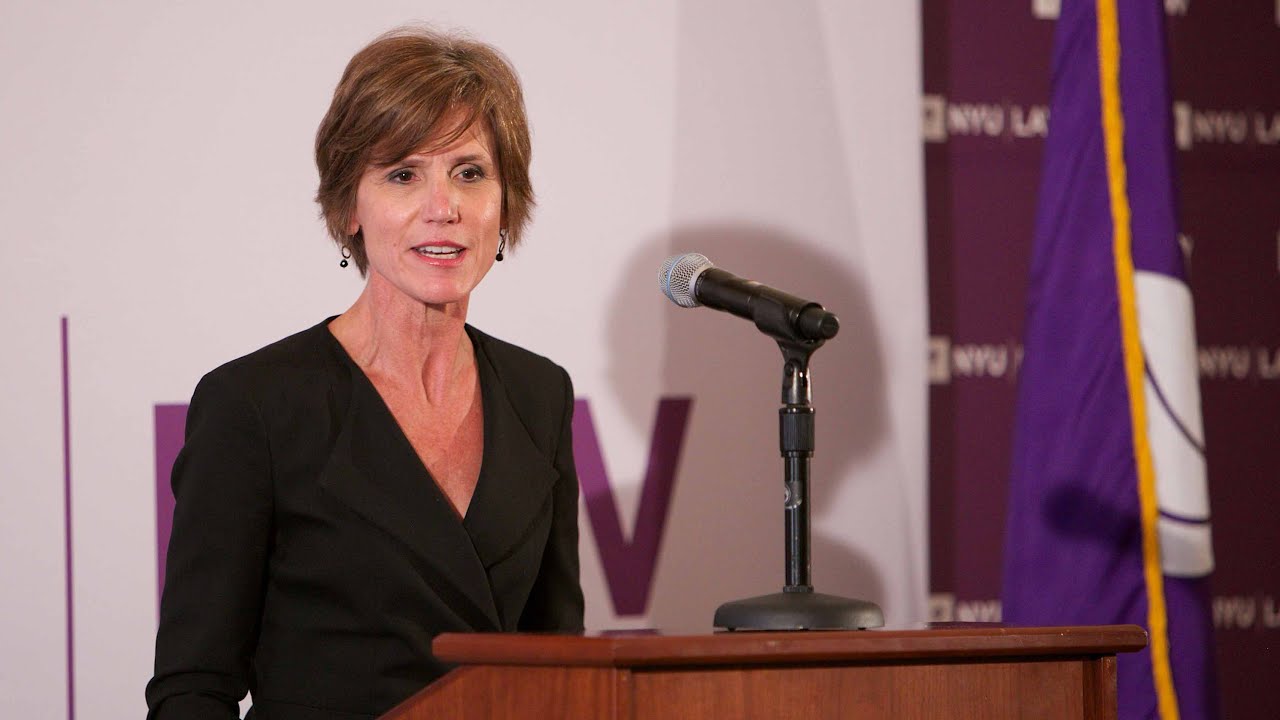
Sally Yates
Flynn was forced to resign that same day—after only 24 days as National Security Adviser.
Officially, the reason given was that he had misled Vice President Mike Pence. But Flynn’s deception had already been known—via the warning to Trump by Yates.
Only after Yates’ warning became known to the media was Flynn forced to resign.
The same Washington Post story reported that, in December, 2015, he had appeared on Russia Today, the news network that American Intelligence agencies consider “the Kremlin’s principal international propaganda outlet.”
He had also received more than $45,000 as a “speaking fee” from the network for a talk on world affairs. At the gala where Flynn received the fee, he sat next to Russian President Vladimir Putin for dinner.
Flynn did not file the required paperwork for the trip. Nor did he report the “fee” to the Pentagon.
On December 1, 2017, Flynn appeared in federal court to formalize a deal with Special Counsel Robert S. Mueller III. He plead guilty to a felony count of “willfully and knowingly” making “false, fictitious and fraudulent statements” to the FBI
EXAMPLE #6: On May 9, 2017, President Trump fired FBI Director James Comey for investigating Russia’s subversion of the 2016 Presidential race.
There were four reasons for this:
- Comey had refused to pledge his personal loyalty to Trump. Trump had made the “request” during a private dinner at the White House in January.
- Comey told Trump that he would always be honest with him. But that didn’t satisfy Trump’s demand that the head of the FBI act as his personal secret police chief—as was the case in the former Soviet Union.
- Trump had tried to coerce Comey into dropping the FBI’s investigation into former National Security Adviser Michael Flynn, for his secret ties to Russia and Turkey. Comey had similarly resisted that demand.
- Comey had recently asked the Justice Department to fund an expanded FBI investigation into well-documented contacts between Trump’s 2016 Presidential campaign and Russian Intelligence agents.The goal of that collaboration: To elect Trump over Hillary Clinton, a longtime foe of Russian President Putin.

James Comey
EXAMPLE #7: On May 10, Trump met with Russian Foreign Minister Sergey Lavrov and Russian Ambassador Sergey Kislyak in the Oval Office—and gave them highly classified Israeli Intelligence about an Islamic State plot to turn laptops into concealable bombs.
Kislyak is reportedly a top recruiter for Russia’s SVR foreign intelligence agency. He has been closely linked with Jeff Sessions, then Attorney General, and fired National Security Adviser Mike Flynn.
“I just fired the head of the FBI,” Trump told the two dignitaries. “He was crazy, a real nut job. I faced great pressure because of Russia. That’s taken off.”
On May 11, Trump, interviewed on NBC News by reporter Lester Holt, said: “And in fact when I decided to just do it, I said to myself, I said ‘you know, this Russia thing with Trump and Russia is a made-up story, it’s an excuse by the Democrats for having lost an election that they should have won.'”
A national firestorm erupted—unprecedented since President Richard M. Nixon had fired Watergate Special Prosecutor Archibald Cox on October 20, 1973.
To squelch it, Deputy Attorney General Rod Rosenstein moved quickly.
On May 17, 2017, he appointed former FBI Director Robert S. Mueller III to serve as Special Counsel for the United States Department of Justice.
Rosenstein charged Mueller to investigate “any links and/or coordination between the Russian government and individuals associated with the campaign of President Donald Trump, and any matters that arose or may arise directly from the investigation.”
EXAMPLE #8: On July 16, 2018, Trump attended a press conference in Helsinki, Finland, with Russian President Vladimir Putin.
There he blamed American Intelligence agencies—such as the FBI, CIA and National Security Agency—instead of Putin for Russia’s subversion of the 2016 Presidential election: “I have President Putin. He just said it’s not Russia. I will say this: I don’t see any reason why it would be.”
But instead of attacking Trump for his treasonous behavior, Republicans in Congress and Right-wing Fox News relentlessly attacked Robert Mueller’s integrity and investigative methods.

2016 PRESIDENTIAL CAMPAIGN, ABC NEWS, ALTERNET, AP, ARCHIBALD COX, BARACK OBAMA, BUZZFEED, CBS NEWS, CIA, CNN, CRAIG UNGER, CROOKS AND LIARS, DAILY KOZ, DEPARTMENT OF HOMELAND SECURITY, DEVIN NUNES, DIANNE FEINSTEIN, DONALD TRUMP, DONALD TRUMP JR., DOUG COLLINS, FACEBOOK, FBI, FOX NEWS, GREG MILLER, HILLARY CLINTON, HOUSE INTELLIGENCE COMMITTEE, HOUSE OF TRUMP HOUSE OF PUTIN (BOOK), ISLAMIC STATE OF IRAQ AND SYRIA (ISIS), ISRAELI INTELLIGENCE, JAMES COMEY, JARED KUSHNER, JEFF SESSIONS, JERROLD NADLER, JOE SCARBOROUGH, LESTER HOLT, LINDSEY GRAHAM, MALCOM NANCE, MALCOM W. NANCE, MICHAEL FLYNN, MICHAEL ISIKOFF, MIKE PENCE, MOTHER JONES, MOVEON, MSNBC, NATALIA VESELNITSKAYA, NATIONAL SECURITY AGENCY, NBC NEWS, NEWSWEEK, NPR, OFFICE OF THE DIRECTOR OF NATIONAL INTELLIGENCE, PAUL MANAFORT, POLITICO, PRINCETON UNIVERSITY, RAW STORY, REPUBLICAN PARTY, REPUBLICANS, REUTERS, REX TILLERSON, RICHARD M. NIXON, ROBERT S. MUELLER 111, ROD ROSENSTEIN, RUSSIA, RUSSIAN ROULETTE (BOOK), SALON, SEATTLE TIMES, SENATE INTELLIGENCE COMMITTEE, SERGEY KISLYAK, SERGEY LAVROV, SLATE, SUPREME COURT, THE APPRENTICE (BOOK), THE ATLANTIC, THE CHICAGO SUN-TIMES, THE CHICAGO TRIBUNE, THE DAILY BEAST, THE GUARDIAN, THE HILL, THE HUFFINGTON POST, THE LOS ANGELES TIMES, THE NATION, THE NEW YORK TIMES, THE PLOT TO DESTROY DEMOCRACY (BOOK), THE WASHINGTON POST, TIME, TREASON, TRUMP TOWER MEETING, TWITTER, U.S. NEWS & WORLD REPORT, UNITED STATES DEPARTMENT OF JUSTICE, UNITED STATES DEPARTMENT OF STATE, UPI, USA TODAY, VLADIMIR PUTIN, WILLIAM BARR
In Bureaucracy, History, Law, Law Enforcement, Military, Politics, Social commentary on July 1, 2019 at 12:07 am
During a photo-op with Russian President Vladimir Putin in Osaka, Japan, President Donald Trump demonstrated how seriously he took American election security.
An NBC News reporter asked: Would you tell Putin not to meddle in the 2020 Presidential election?
“Yes, of course I will,” replied Trump, grinning. “Don’t meddle in the election, please.” And he jokingly wagged his finger at Putin: “Don’t meddle in the election.”
Putin grinned back.
Complaining about “fake news” journalists, Trump advised Putin: “Get rid of them. Fake news is a great term, isn’t it? You don’t have this problem in Russia, but we do.”
“We also have,” Putin assured Trump. “It’s the same.”
It was June 28, 2019. And it was the first meeting between Trump and Putin since the March 22 release of the Mueller Report—which documented Russia’s subversion of the 2016 Presidential election.
Trump has repeatedly claimed that there was “no collusion” between him and members of Russia’s Intelligence community. But Special Counsel Robert Mueller found that the President and his associates embraced the Kremlin’s assistance in the 2016 election and thwarted the inquiries that followed.
From the outset, Trump has acted like a guilty man desperate to stop an investigation before it uncovers the full extent of his criminality.
EXAMPLE #1 On July 9, 2016, high-ranking members of his Presidential campaign met at Trump Tower with at least two lobbyists with ties to Russian dictator Vladimir Putin. The participants included:
- Trump’s son, Donald Trump Jr.;
- His son-in-law, Jared Kushner;
- His then-campaign manager Paul Manafort;
- Natalia Veselnitskaya, a Russian lawyer with ties to Putin; and
- Rinat Akhmetshin, a former Soviet counterintelligence officer suspected of “having ongoing ties to Russian Intelligence.”
The purpose of that meeting: To gain access to any “dirt” Russian Intelligence could supply on Democratic Presidential Nominee Hillary Clinton.
Trump originally claimed that the meeting was “about the adoption of Russian children.” Eventually he admitted that it had been “a meeting to get information on an opponent.”
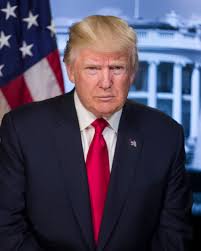
Donald Trump
EXAMPLE #2: On July 22, 2016, during his campaign for President, Trump said at a press conference in Doral, Florida: “Russia, if you are listening, I hope you are able to find the 33,000 emails that are missing [from Democratic Presidential candidate Hillary Clinton’s computer]. I think you will probably be rewarded mightily by our press.”
This was nothing less than treason—calling upon a foreign power, hostile to the United States, to interfere in its Presidential election.
Hours later, the Main Intelligence Directorate in Moscow targeted Clinton’s personal office and hit more than 70 other Clinton campaign accounts.
EXAMPLE #3: Throughout 2016, the CIA, FBI and National Security Agency (NSA) found numerous ties between officials of the Trump Presidential campaign and Russian Intelligence agents.
And many of those he appointed to office had strong ties to the government of Russian President Vladimir Putin.
One of these was Secretary of State Rex Tillerson. In 2013, as the chief executive of ExxonMobil, he was presented with Russia’s Order of Friendship award. He had just signed deals with the state-owned Russian oil company Rosneft. Its chief, Igor Sechin, is a loyal Putin lieutenant.

Rex Tillerson
Another such official was Attorney General Jeff Sessions. During the 2016 campaign, Sessions—then serving as a surrogate for Donald Trump’s campaign—twice spoke with Russian Ambassador Sergey Kislyak.
But during his Senate confirmation hearings, Sessions denied that he had had “communications with the Russians” during the campaign.
The discovery of numerous contacts between Trump campaign officials and Russian Intelligence agents led the FBI to launch an investigation into Russia’s efforts to influence the outcome of the 2016 Presidential election.
EXAMPLE #4: Trump has repeatedly praised Russian President Vladimir Putin.
On December 18, 2015, Trump appeared on MSNBC’s “Morning Joe.” Its host, Joe Scarborough, was upset by Trump’s praise for Putin:
SCARBOROUGH: Well, I mean, [he’s] also a person who kills journalists, political opponents, and invades countries. Obviously that would be a concern, would it not?
TRUMP: He’s running his country, and at least he’s a leader. Unlike what we have in this country.
SCARBOROUGH: But again: He kills journalists that don’t agree with him.
TRUMP: I think our country does plenty of killing, also, Joe, so, you know. There’s a lot of stupidity going on in the world right now, Joe. A lot of killing going on. A lot of stupidity. And that’s the way it is.
On October 7, 2016, the Department of Homeland Security and the Office of the Director of National Intelligence issued a joint statement blaming the Russian government for the hacking of Democratic National Committee emails. Its motive: “To interfere with the US election process.”
Two days later, Trump publicly stated: “But I notice, anytime anything wrong happens, they like to say the Russians are—Maybe there is no hacking. But they always blame Russia.”
On December 16, 2016, FBI Director James B. Comey and Director of National Intelligence James R. Clapper Jr. agreed with a CIA assessment that Russia intervened in the 2016 election in part to help Donald Trump win the White House.

Trump, however, steadfastly denied any such role by Russia: “I think it’s ridiculous,” he told “Fox News Sunday.” “I think it’s just another excuse. I don’t believe it….No, I don’t believe it at all.”
2016 PRESIDENTIAL CAMPAIGN, ABC NEWS, ACCESS HOLLYWOOD, ADRIANNE ZUCKER, ALABAMA SUPREME COURT, ALTERNET, ANDERSON COOPER, AP, ATHEISTS, BARACK OBAMA, BILL CLILNTON, BILLY BUSH, BLACKS, BRETT KAVANAUGH, BUZZFEED, CARL PALADINIO, CBS NEWS, CHARLES MANSON, CHICAGO TRIBUNE, CNN, COREY LEWANDOWSKI, COREY LEWENDOWSKI, CROOKS AND LIARS, DAILY KOZ, DAYS OF OUR LIVES, DONALD TRUMP, E. JEAN CARROLL, FACEBOOK, FOX NEWS, HISPANICS, HOMOSEXUALS, HOUSE OF REPRESENTATIVES, INFIDELITY, IVANA TRUMP, JERRY FALWELL JR., JESSICA LEEDS, JEWS, KEVIN MCCARTHY, LEIGH CORFMAN, LESBIANS, LIBERALS, MARCO RUBIO, MARLA MAPLES TRUMP, MELANIA TRUMP, MICHAEL GERSON, MICHELLE BACHMANN, MINDY MCGILLIVRAY, MINDY MCGILLLIVRAY, MOTHER JONES, MOVEON, NATASHA STOYNOFF, NBC NEWS, NEWSWEEK, NON-CHRISTIANS, NPR, PALM BEACH POST, PEOPLE, PEOPLE MAGAZINE, POLITICO, RALPH REED, RAPE, RAW STORY, RELIGIOUS RIGHT, REPUBLICAN PARTY, REPUBLICANS, REUTERS, ROY MOORE, SALON, SEAN HANNITY, SEATTLE TIMES, SEXUAL HARASSMENT, SEXUALLY TRANSMITTED DISEASES, SLATE, STEVE BANNON, STORMY DANIELS, TED SLOWIK, THE ATLANTIC, THE CHICAGO SUN-TIMES, THE CHICAGO TRIBUNE, THE DAILY BEAST, THE GUARDIAN, THE HILL, THE HUFFINGTON POST, THE LOS ANGELES TIMES, THE NATION, THE NEW YORK TIMES, THE PALM BEACH POST, THE WASHINGTON POST, THOM TILLIS, TIME, TWITTER, U.S. NEWS & WORLD REPORT, UPI, USA TODAY, WOMEN
In Bureaucracy, History, Politics, Social commentary, Uncategorized on June 28, 2019 at 12:03 am
On October 12, 2016, The Palm Beach Post, The New York Times and People all published stories of women claiming they had been sexually assaulted by Donald Trump.
Trump’s reaction: “Every woman lied when they came forward to hurt my campaign. Total fabrication. The events never happened. Never.”
For “proof,” he attacked their physical appearance.
Of one accuser, Natasha Stoynoff, he said: “Take a look. You take a look. Look at her. Look at her words. You tell me what you think. I don’t think so. I don’t think so.”
Of another accuser, Jessica Leeds, Trump said: “Believe me, she would not be my first choice, that I can tell you. Whoever she is, wherever she comes from, the stories are total fiction. They’re 100% made up. They never happened.”
In short: They were too ugly for Trump to consider them worth sexually harassing.
And he threatened: “All of these liars will be sued after the election is over.”
To date, Trump has not filed a single lawsuit for defamation. No doubt he realizes:
- He would have to take the witness stand and testify under oath; and
- There is simply too much evidence stacked against him.
By October 14, 2016, at least 12 women had publicly accused Trump of sexually inappropriate behavior.
Trump—who’s been married three times and often boasted of his sexual prowess—asked why President Barack Obama hadn’t had similar claims leveled against him.
The answer: Because there has never been the slightest hint of scandal about Obama as a faithful husband.
Donald Trump
Many Right-wingers defended Trump’s misogynist comments as mere “frat boy” talk. Said Corey Lewandowski, a former Trump campaign manager and now CNN commentator: “We are electing a leader to the free world. We’re not electing a Sunday school teacher.”
And Fox News host Sean Hannity went Biblical to excuse Trump: “King David had 500 concubines for crying out loud!”
But Washington Post Columnist Micheal Gerson took a darker—and more accurate—view of Trump’s comments.
Appearing on the PBS Newshour on October 7, Gerson said: “Well, I think the problem here is not just bad language, but predatory language, abusive language, demeaning language. That indicates something about someone’s character that is disturbing, frankly, disturbing in a case like this.”
As of April, 2019, the total number of women accusing Trump of making improper advances has risen to 23.
And, in June, yet another woman came forward to accuse Trump of sexual assault: E. Jean Carroll, an advice columnist for Elle magazine.
E. Jean Carroll
Carroll alleges that Trump attacked her in the fall of 1995 or the spring of 1996 at the Bergdorf Goodman department store in New York.
She claims claims that, while gift shopping, Trump pressured her to try on lingerie and grabbed her arm to pull her toward the dressing room.
“The moment the dressing-room door is closed, he lunges at me, pushes me against the wall, hitting my head quite badly, and puts his mouth against my lips.
“I am so shocked I shove him back and start laughing again. He seizes both my arms and pushes me up against the wall a second time, and, as I become aware of how large he is, he holds me against the wall with his shoulder and jams his hand under my coat dress and pulls down my tights.
“The next moment, still wearing correct business attire, shirt, tie, suit jacket, overcoat, he opens the overcoat, unzips his pants, and, forcing his fingers around my private area, thrusts his penis halfway —or completely, I’m not certain—inside me.”
True to form, Trump responded by exonerating himself on the basis of the woman’s appearance: “I’ll say it with great respect: Number one, she’s not my type.”
Then he accused the accuser: “Shame on those who make up false stories of assault to try to get publicity for themselves, or sell a book, or carry out a political agenda….
“It’s just as bad for people to believe it, particularly when there is zero evidence. Worse still for a dying publication to try to prop itself up by peddling fake news—it’s an epidemic.”
Also, predictably, he portrayed himself as the innocent victim of yet another vast conspiracy: “If anyone has information that the Democratic Party is working with Ms. Carroll or New York Magazine, please notify us as soon as possible.”
And, just as predictably, Republicans are rallying around the President.
“Quite honestly, as somebody who had a front-row seat to the Kavanaugh hearings, we’ve seen allegations that were false,” said Sen. Thom Tillis (R-N.C.). “We’ll let the facts go where they are, but I take [Trump’s] statement at face value.”
“Yes, I believe the president.” said House Minority Leader Kevin McCarthy when pressed on whether he believed Trump.
There’s an old saying: “If one person tells you you’re drunk, and you feel fine, ignore him. If ten people tell you you’re drunk, you need to lie down.”
More than a score of women have come forward to say that Donald Trump—the President of the United States—is a sexual predator.
Yet no one in the Republican party is willing to say: “It’s time for him to leave.”
2016 PRESIDENTIAL CAMPAIGN, ABC NEWS, ACCESS HOLLYWOOD, ALTERNET, ANDERSON COOPER, AP, BILL CLILNTON, BILLY BUSH, BRETT KAVANAUGH, BUZZFEED, CBS NEWS, CHICAGO TRIBUNE, CNN, COREY LEWANDOWSKI, CROOKS AND LIARS, DAILY KOZ, DAYS OF OUR LIVES, DONALD TRUMP, E. JEAN CARROLL, FACEBOOK, FOX NEWS, HOUSE OF REPRESENTATIVES, INFIDELITY, IVANA TRUMP, JESSICA LEEDS, KEVIN MCCARTHY, LEIGH CORFMAN, MARCO RUBIO, MARLA MAPLES TRUMP, MELANIA TRUMP, MICHAEL GERSON, MINDY MCGILLIVRAY, MINDY MCGILLLIVRAY, MOTHER JONES, MOVEON, NATASHA STOYNOFF, NBC NEWS, NEWSWEEK, NPR, PALM BEACH POST, PEOPLE, PEOPLE MAGAZINE, POLITICO, RAPE, RAW STORY, REPUBLICAN PARTY, REPUBLICANS, REUTERS, SALON, SEAN HANNITY, SEATTLE TIMES, SEXUAL HARASSMENT, SEXUALLY TRANSMITTED DISEASES, SLATE, STORMY DANIELS, THE ATLANTIC, THE CHICAGO SUN-TIMES, THE CHICAGO TRIBUNE, THE DAILY BEAST, THE GUARDIAN, THE HILL, THE HUFFINGTON POST, THE LOS ANGELES TIMES, THE NATION, THE NEW YORK TIMES, THE PALM BEACH POST, THE WASHINGTON POST, THOM TILLIS, TIME, TWITTER, U.S. NEWS & WORLD REPORT, UPI, USA TODAY, WOMEN
In Bureaucracy, History, Law, Politics, Social commentary on June 27, 2019 at 12:05 am
Donald Trump has a woman problem. Or, to be more accurate, a series of women problems.
First, he’s been married three times—and divorced twice:
- In 1977, Trump married Czech model Ivana Winklmayr. The couple divorced in 1992, following Trump’s notorious affair with actress Marla Maples.
- Maples and Trump were married in December 1993—and divorced in 1999.
- In 1998, Trump met Slovenian model Melania Knauss. They married in 2005.
Ivana Trump and Marla Maples Trump
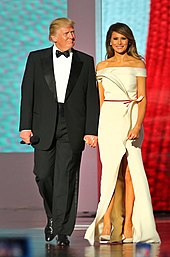
Donald and Melania Trump
And Trump has never been known for marital fidelity:
- He was still married to Ivana when he carried on a highly publicized extramarital affair with Marla Maples.
- Trump was still married to Maples when he entered into an affair with Melania Knauss.
- And only four months after Melania gave birth to their son, Barron, Trump had his now-infamous tryst with porn “actress” Stormy Daniels.
He has often boasted about his sexual prowess:
- When his 2016 Republican rival, Marco Rubio, joked that Trump’s hands were small, Trump said: “Look at those hands, are they small hands? And, [Rubio] referred to my hands—‘if they’re small, something else must be small.’ I guarantee you there’s no problem. I guarantee.”
- Trump equated avoiding STDs during the late 1990s with serving in Vietnam: “I’ve been so lucky in terms of that whole world, it is a dangerous world out there. It’s like Vietnam, sort of. It is my personal Vietnam. I feel like a great and very brave solider,”
Trump’s most infamous “take” on women appeared during the 2016 Presidential race. The remarks happened during a 2005 exchange with Billy Bush, then the host of Access Hollywood.
The two were traveling in an Access Hollywood bus to the set of the soap opera Days of Our Lives, where Trump was to make a cameo appearance. A “hot” microphone caught Trump’s boast of trying to pick up a married woman:
You know and I moved on her actually. You know she was down on Palm Beach. I moved on her and I failed. I’ll admit it. I did try and fuck her. She was married.
No, no, Nancy. No this was—and I moved on her very heavily. In fact, I took her out furniture shopping. She wanted to get some furniture. I said I’ll show you where they have some nice furniture.
I took her out furniture [shopping]. I moved on her like a bitch, but I couldn’t get there, and she was married. Then all of a sudden I see her, she’s now got the big phony tits and everything. She’s totally changed her look….
You know I’m automatically attracted to beautiful—I just start kissing them. It’s like a magnet. Just kiss. I don’t even wait. And when you’re a star they let you do it. You can do anything. Grab them by the pussy. You can do anything.
When the Washington Post broke the story on October 7, 2016, the reaction was immediate—and explosive.
Trump quickly released a statement: “This was locker room banter, a private conversation that took place many years ago. Bill Clinton has said far worse to me on the golf course—not even close. I apologize if anyone was offended.”
During the second Presidential debate on October 9, moderator Anderson Cooper asked Trump: “Have you ever done those things?”
Trump: “And I will tell you—no I have not.”
On October 12, 2016, The Palm Beach Post, The New York Times and People all published stories of women claiming to have been sexually assaulted by Trump.
Among his victims:
- MINDY MCGILLLIVRAY: Told the Post that Trump groped her buttocks when she, then 34, visited Mar-a-Lago in Palm Beach, Florida, in 2013.
Within a week of accusing Trump, she told the Palm Beach Post that she and her family were leaving the United States. The reason: She feared for her family’s safety.
“We feel the backlash of the Trump supporters. It scares us. It intimidates us. We are in fear of our lives.’’
- NATASHA STOYNOFF: A People magazine writer, in December, 2005, she went to Mar-a-Lago to interview Donald and Melania Trump for a first-wedding-anniversary feature story.
During a break in the interview, Trump said he wanted to show Stoynoff a “tremendous” room in the mansion.
Recalled Stoynoff: “We walked into that room alone, and Trump shut the door behind us. I turned around, and within seconds he was pushing me against the wall and forcing his tongue down my throat.”
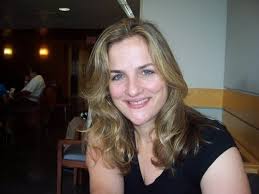
Natasha Stoynoff
Fortunately, Trump’s butler soon entered the room, and Trump acted as though nothing had happened. But as soon as he and Stoynoff were alone again, Trump said: “You know we’re going to have an affair, don’t you?”
Stoynoff asked her editors—and received permission—to be removed from writing any further Trump features.
- JESSICA LEEDS: More than 30 years earlier, Trump had made equally unwelcome advances toward businesswoman Leeds, then 38.
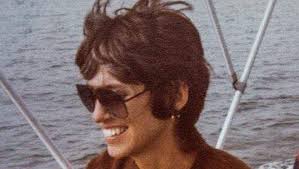
Jessica Leeds
She said she was sitting next to Trump in the first-class cabin of a New York-bound flight when Trump lifted the armrest, grabbed her breasts and tried to put his hand up her skirt. She fled to the back of the plane.
2016 PRESIDENTIAL CAMPAIGN, ABC NEWS, ABC’S THIS WEEK, ADAM SCHIFF, ADOLF HITLER, ALEXANDER HAMILTON, ALTERNET, AP, ATTORNEY GENERAL, BBC, BENITO MUSSOLINI, BENJAMIN FRANKLIN, BUZZFEED, CBS NEWS, CHIEF OF STAFF, CNN, DAILY KOS, DONALD TRUMP, FACEBOOK, HOUSE FINANCIAL SERVICES COMMITTEE, HOUSE INTELLIGENCE COMMITTEE, INSULTS, JAMES COMEY, JAMES MADISON, JEFF SESSIONS, JOHN GOTTI, JOHN KELLY, JOSEPH STALIN, MATT WHITAKER, MAXINE WATERS, MOTHER JONES, MOVEON, NBC NEWS, NEWSWEEK, NICCOLO MACHIAVELLI, NPR, POLITICO, RAW STORY, REINCE PRIEBUS, REUTERS, ROBERT MUELLER, ROD ROSENSTEIN, Ronald Reagan, SALON, SEATTLE TIMES, SLATE, TAX RETURNS, THE ATLANTIC, THE CHICAGO SUN-TIMES, THE CHICAGO TRIBUNE, THE DAILY BEAST, THE DISCOURSES, THE GUARDIAN, THE HILL, THE HUFFINGTON POST, THE LOS ANGELES TIMES, THE NEW YORK TIMES, THE WALL STREET JOURNAL, THE WASHINGTON POST, THOMAS JEFFERSON, TIME, TWITTER, U.S. NEWS & WORLD REPORT, UPI, USA TODAY, VLADIMIR PUTIN
In Bureaucracy, History, Politics, Social commentary on June 26, 2019 at 12:06 am
Niccolo Machiavelli (1469 – 1527) was an Italian Renaissance historian, diplomat and writer. Two of his books continue to profoundly influence modern politics: The Prince and The Discourses on the First Ten Books of Titus Livy.
The Prince has often been damned as a dictator’s guide on how to gain and hold power. Adolf Hitler, Benito Mussolini and John Gotti have effusively praised its teachings.
But The Discourses outlines how citizens in a republic can maintain their liberty.
Machiavelli’s writings on republicanism greatly influenced the political thinking of America’s own Founding Fathers. For example: Benjamin Franklin, James Madison, and Thomas Jefferson feared that Alexander Hamilton was creating an American aristocracy through the Federalist Party. And they moved vigorously to oppose him.
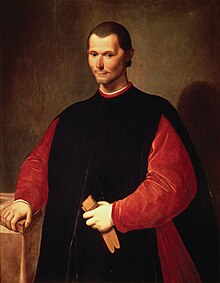
Niccolo Machiavelli
In Chapter 26 of The Discourses, Machiavelli advises:
I hold it to be a proof of great prudence for men to abstain from threats and insulting words towards any one, for neither the one nor the other in any way diminishes the strength of the enemy—but the one makes him more cautious, and the other increases his hatred of you, and makes him more persevering in his efforts to injure you.
If Donald Trump has read Machiavelli, he’s clearly forgotten the Florentine statesman’s advice. Or he decided long ago that it simply didn’t apply to him.
On November 18, 2018, Trump hurled a scatological insult at Rep. Adam Schiff (D-CA), one of his frequent critics.
Trump’s was furious that Schiff had said on ABC’s “This Week” that the President’s appointment of Acting Attorney General Matt Whitaker was “unconstitutional” because he wasn’t confirmed by the Senate.
So, true to form, Trump responded with a tweet: “So funny to see little Adam Schitt (D-CA) talking about the fact that Acting Attorney General Matt Whitaker was not approved by the Senate, but not mentioning the fact that Bob Mueller (who is highly conflicted) was not approved by the Senate!”
Special counsel Robert Mueller was appointed by Deputy Attorney General Rod Rosenstein in May, 2017, after Trump suddenly fired FBI Director James Comey. Mueller didn’t require Senate confirmation for the position.
Schiff was quick to respond on Twitter: “Wow, Mr. President, that’s a good one. Was that like your answers to Mr. Mueller’s questions, or did you write this one yourself?”
What made Trump’s insult not only infantile but self-destructive was that, on November 6, the Democrats had retaken the House of Representatives.
For Trump, this spelled real danger. Even before taking office in 2017, he had been haunted by charges of conspiring with Russian Intelligence agents to subvert the 2016 Presidential election.
And in six weeks, Schiff would become Chairman of the House Intelligence Committee when Democrats returned in January. This would arm him with investigative powers even greater than those possessed by Mueller.

Adam Schiff
Trump similarly relishes tossing insults at another longtime critic—Rep. Maxime Waters (D-CA). On June 25, 2018, he tweeted: “Congresswoman Maxine Waters, an extraordinarily low IQ person, has become, together with Nancy Pelosi, the Face of the Democrat Party.”
This also proved a mistake. After voters returned Democrats to running the House, Waters was slated to become Chairwoman of the House Financial Services Committee.
For Trump, this had to be a nightmare come true. Throughout the 2016 Presidential race, Trump had refused to release his tax returns—which every Presidential candidate has done since Ronald Reagan in 1980.
Trump’s longstanding ties to Russian oligarchs and subservience to Vladimir Putin have fueled speculation that his returns could reveal some truly unscrupulous financial dealings.
Waters would now have the power to subpoena Trump’s tax returns and delve into the long-standing mystery of what he’s hiding.
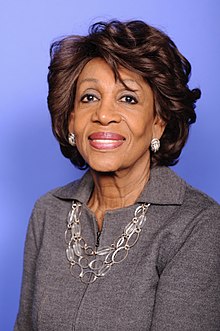
Maxine Waters
As both a Presidential candidate and President, Trump has repeatedly attacked hundreds of real and imagined enemies in politics, journalism, TV and films.
From June 15, 2015, when he launched his Presidential campaign, until October 24, 2016, Trump fired almost 4,000 angry, insulting tweets at 281 people and institutions that had somehow offended him. The New York Times needed two full pages of its print edition to showcase them.
As President, he has bullied and insulted even White House officials and his own handpicked Cabinet officers:
- Trump waged a Twitter-laced feud against Jeff Sessions, his Attorney General. Sessions’ “crime”? Recusing himself from investigations into well-established ties between Russian Intelligence agents and members of Trump’s Presidential campaign. Trump fired him on November 7, 2018, the day after Democrats retook the House of Representatives in the mid-term elections.
- Trump humiliated his Chief of Staff, Reince Priebus—at one point ordering him to kill a fly that was buzzing about. On July 28, 2017, six months after taking the job, Priebus resigned.
- Trump similarly tongue-lashed Priebus’ replacement, former Marine Corps General John Kelly. Trump was angered by Kelly’s efforts to limit the number of advisers who had unrestricted access to him. Kelly told colleagues he had never been spoken to like that during 35 years of military service—and wouldn’t tolerate it again.
With Adam Schiff and Maxine Waters now heading powerful House investigative committees, Trump will undoubtedly come to regret the fury his ill-advised insults have raised up against him.
Which leads to a final warning by Machiavelli: Unwise princes cannot be wisely advised.
2016 PRESIDENTIAL CAMPAIGN, 2020 PRESIDENTIAL CAMPAIGN, ABC NEWS, ADOLF HITLER, ALTERNET, ANCIENT GREECE, ANCIENT ROME, AP, BERNIE SANDERS, BUZZFEED, CATASTROPHE, CBS NEWS, CHINA, CNN, CONSUMER PROTECTION, CORPORATE TAXES, CORRUPTION, CROOKS AND LIARS, DAILY KOZ, DEMOCRATIC PARTY, DONALD TRUMP, EXECUTIVE PAYWATCH, FACEBOOK, FORBES, FUNDRAISING, HILLARY CLINTON, INCOME INEQUALITY, IVAN THE TERRIBLE, JOE BIDEN, JOSEPH STALIN, LEON TROTSKY, MOTHER JONES, MOVEON, MSNBC, NAZI GERMANY, NBC NEWS, NEWSWEEK, NICCOLO MACHIAVELLI, NPR, PBS NEWSHOUR, POLITICO, RAW STORY, REUTERS, ROBERT PAYNE, SALON, SEATTLE TIMES, SLATE, SPARTACUS, THE ATLANTIC, THE CHICAGO SUN-TIMES, THE CHICAGO TRIBUNE, THE CORRUPT SOCIETY (BOOK), THE DAILY BEAST, THE DISCOURSES, THE FRENCH REVOLUTION, THE GREAT LEVELER (BOOK), THE GUARDIAN, THE HILL, THE HUFFINGTON POST, THE LOS ANGELES TIMES, THE NATION, THE NEW YORK TIMES, THE RUSSIAN REVOLUTION, THE WASHINGTON POST, TIME, TWITTER, U.S. NEWS & WORLD REPORT, UPI, USA TODAY, VIOLENCE, Vladimir Lenin, WALL STREET, WALTER SCHEIDEL, WATERGATE, WEALTH GAP, WILLIAM SHAKESPEARE, WINSTON CHURCHILL
In Bureaucracy, Business, History, Law, Politics, Social commentary on June 25, 2019 at 12:15 am
The gap between rich and poor in the United States has never been greater.
A May 1, 2018 article in Forbes—which bills itself as “The Capitalist Tool”—vividly documents this truth.
“In the 1950s, a typical CEO made 20 times the salary of his or her average worker. Last year, [2017] CEO pay at an S&P 500 Index firm soared to an average of 361 times more than the average rank-and-file worker, or pay of $13,940,000 a year, according to an AFL-CIO’s Executive Paywatch news release today.”
The average CEO pay climbed six percent in 2017—while the average production worker earned just $38,613, according to Executive Paywatch.
The average wage—adjusted for inflation—has stagnated for more than 50 years. Meanwhile, CEOs’ average pay since the 1950s has risen by 1000%.
This would not have been news to Niccolo Machiavelli, the father of modern political science. In his masterwork, The Discourses, he observed the human condition as that of constant struggle:
Niccolo Machiavelli
It was a saying of ancient writers, that men afflict themselves in evil, and become weary of the good, and that both these dispositions produce the same effects.
For when men are no longer obliged to fight from necessity, they fight from ambition, which passion is so powerful in the hearts of men that it never leaves them, no matter to what height they may rise.
The reason for this is that nature has created men so that they desire everything, but are unable to attain it. Desire being thus always greater than the faculty of acquiring, discontent with what they have and dissatisfaction with themselves result from it.
This causes the changes in their fortunes—for as some men desire to have more, while others fear to lose what they have, enmities and war are the consequences. And this brings about the ruin of one province and the elevation of another.
Author Walter Scheidel, Dickason Professor in the Humanities, Professor of Classics and History at Stanford University, has also given this subject a great deal of thought. And, like Machiavelli, he has reached some highly disturbing conclusions.

Walter Scheidel
World Economic Forum [CC BY-SA 2.0 (https://creativecommons.org/licenses/by-sa/2.0)%5D
He gave voice to these in his 2017 book, The Great Leveler: Violence and the History of Inequality from the Stone Age to the Twenty-First Century. His thesis: Only violence and catastrophes have consistently reduced inequality throughout history.
According to the book’s jacket blurb: “Are mass violence and catastrophes the only forces that can seriously decrease economic inequality? To judge by thousands of years of history, the answer is yes.
“Tracing the global history of inequality from the Stone Age to today, Walter Scheidel shows that inequality never dies peacefully. Inequality declines when carnage and disaster strike and increases when peace and stability return.
“The Great Leveler is the first book to chart the crucial role of violent shocks in reducing inequality over the full sweep of human history around the world.
“Ever since humans began to farm, herd livestock, and pass on their assets to future generations, economic inequality has been a defining feature of civilization. Over thousands of years, only violent events have significantly lessened inequality.
“The ‘Four Horsemen’ of leveling–mass-mobilization warfare, transformative revolutions, state collapse, and catastrophic plagues—have repeatedly destroyed the fortunes of the rich.
“Scheidel identifies and examines these processes, from the crises of the earliest civilizations to the cataclysmic world wars and communist revolutions of the twentieth century.
“Today, the violence that reduced inequality in the past seems to have diminished, and that is a good thing. But it casts serious doubt on the prospects for a more equal future.”
Revolutionaries have known the truth of Scheidel’s findings from the gladiators’ revolt of Spartacus (73-71 B.C.) to the French Revolution (1789 – 1799) to the overthrow of the Czarist Romanov dynasty (1917).
But American politicians serenely ignore that truth. They depend on the mega-rich for millions of dollars in “campaign contributions”—which pay for self-glorifying ads on TV.
Thus, in 2016, American voters had a “choice” between two “love-the-rich” Presidential candidates: Donald Trump and Hillary Clinton. The result was that millions stayed home or voted in protest for third-party candidates who had no chance of winning.
In his 1975 book, The Corrupt Society: From Ancient Greece to Modern-day America, British historian Robert Payne warned that the predatory rich would not change their behavior: “Nor is there any likelihood that the rich will plow back their money into services to ensure the general good.
“They have rarely demonstrated social responsibility, and they are much more likely to hold on to their wealth at all costs than to renounce any part of it.
“Like the tyrant who lives in a world wholly remote from the world of the people, shielded and protected from all possible influences, the rich are usually the last to observe the social pressures rising from below, and when these social pressures reach flashpoint, it is too late to call in the police or the army.
“The tyrant dies; the police and the army go over to the revolutionaries; and the new government dispossesses the rich by decree. A single authoritative sentence suffices to expunge all private wealth and restore it to the service of the nation.”
2016 PRESIDENTIAL CAMPAIGN, ABC NEWS, ADOLF HITLER, ALTERNET, ANNE FRANK, ANTONIN SCALIA, AP, AUSCHWITZ, BARACK OBAMA, BERGEN-BELSEN, BUZZFEED, CBS NEWS, CNN, CROOKS AND LIARS, DAILY KOZ, DONALD TRUMP, EVA SCHLOSS, FACEBOOK, HOLOCAUST, illegal immigration, ISIS, MEXICO, MOTHER JONES, MOVEON, MSNBC, NAZI GERMANY, NBC NEWS, NEWSWEEK, NPR, PBS NEWSHOUR, POLITICO, POPE FRANCIS, RAW STORY, REUTERS, SALON, SEATTLE TIMES, SLATE, SRI LANKA EASTER BOMBINGS, SUPREME COURT, SYRIAN REFUGEES, TERRORISM, THE ATLANTIC, THE CHICAGO SUN-TIMES, THE CHICAGO TRIBUNE, THE DAILY BEAST, THE GUARDIAN, THE HILL, THE HUFFINGTON POST, THE LOS ANGELES TIMES, THE NATION, THE NEW YORK TIMES, THE WASHINGTON POST, TIME, TWITTER, U.S. NEWS & WORLD REPORT, UPI, USA TODAY, VATICAN
In History, Law, Military, Politics, Social commentary on May 17, 2019 at 12:06 am
Right-wingers, who support many of the same policies of Adolf Hitler, often attack liberals as Nazis.
This was especially true when President Barack Obama held office.
But in 2016 a genuine authority on Fascism came forward to assess the front-runner for the Republican Presidential nomination.
“If Donald Trump become[s] the next president of the United States it would be a complete disaster. I think he is acting like another Hitler by inciting racism.”
So said Eva Schloss, the stepsister of Holocaust victim Anne Frank. As a survivor of Auschwitz, Schloss knows something about Nazis.

Eva Schloss
Then 86, Schloss met Anne in Amsterdam as a fellow refugee. Both their families had taken refuge there after fleeing Nazi Germany.
Anne Frank spent four years hiding in an attic and keeping a diary. But in 1944 she was discovered by the Nazis and sent to the Bergen-Belsen concentration camp.
She was 15 when she died there of typhus in March, 1945. After the war, Eva Schloss’ mother, Fritzi, married Otto Frank, Anne’s father.

Anne Frank
Eva was detained at the same time as Anne and sent to Auschwitz. She survived when the camp was liberated on January 27,1945.
In a January 27, 2016 essay for Newsweek, Schloss warned of dire consequences if Donald Trump became President:
“During his U.S. presidential campaign he has suggested the ‘total and complete shutdown of Muslims entering the United States,’ as well as pledging to build a wall between the U.S. and Mexico to keep illegal immigrants out.”
She was 11 when her family immigrated to Belgium after Hitler forcibly annexed Austria in 1938.
“We were treated as if we had come from the moon. I felt as if I wasn’t wanted and that I was different to everybody. It is even harder for today’s Syrian refugees who have a very different culture….
“I am very upset that today again so many countries are closing their borders,” said Schloss, who lives in London. “Fewer people would have died in the Holocaust if the world had accepted more Jewish refugees.”
And on February 18, 2016, Pope Francis also waded into the 2016 Presidential race with his own assessment of Trump.
During a six-day trip to Mexico, a reporter asked the Pontiff: What did he think of Trump’s campaign pledge to build a wall along the entire length of the U.S.-Mexican border and expel millions of illegal aliens now living in the United States?
“A person who only thinks about building walls, wherever they are, and not in building bridges, is not Christian,” replied the Pope. “This is not the gospel.”
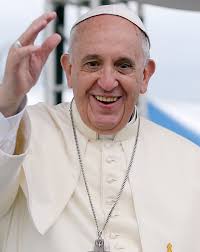
Pope Francis
Francis said he would “give the benefit of the doubt” to Trump because he had not heard Trump’s border plans independently.
But he added: “I say only that this man is not a Christian if he has said things like that.”
Trump, a Presbyterian, responded minutes later: “For a religious leader to question a person’s faith is disgraceful.”
Trump has repeatedly accused President Barack Obama—a self-described Christian—as a secret Muslim.
Donald Trump
On February 21, 2016, for example, he tweeted: “I wonder if President Obama would have attended the funeral of [Supreme Court] Justice [Antonin] Scalia if it were held in a mosque.”
Obama had paid tribute to Scalia at the Supreme Court on the day prior to the funeral. He declined to attend the service because his heavy security detail might disrupt the ceremony.
“I am proud to be a Christian,” added Trump, “and as president I will not allow Christianity to be consistently attacked and weakened.”
Nor did he stop there: “If and when the Vatican is attacked by the ISIS [Islamic State of Iraq and Syria], which as everyone knows is ISIS’s ultimate trophy, I can promise you that the pope would have only wished and prayed that Donald Trump would have been president.
“ISIS would have been eradicated, unlike what is happening now with our all talk, no action politicians.”
Trump thus implied that the Pope’s future security depended on the United States generally—and on Trump in particular.
And he ignored the fact that, since September, 2014, the United States Air Force had been bombing ISIS convoys in Iraq and Syria.
On Easter Sunday, 2019—more than two years into Trump’s Presidency—ISIS bombed a series of churches and hotels in Sri Lanka, killing at least 321 people.
Trump has long been critical of the Pope’s stand on immigration.
As the Pope undertook his trip to Mexico, Trump told Fox Business Network that he didn’t think Francis understood “the danger of the open border we have with Mexico.
“I think Mexico got him to do it because they want to keep the border just the way it is,” he said. “They’re making a fortune, and we’re losing.”
A Vatican spokesman replied: “The pope always talks about migration problems all around the world, of the duties we have to solve these problems in a humane manner, of hosting those who come from other countries in search of a life of dignity and peace.”
For millions of Jews and Christians, the election of 2016 has turned into a referendum: Am I serving the Lord—or Satan?
2016 PRESIDENTIAL CAMPAIGN, ABC NEWS, ALEXANDER SHUSTOROVICH, ALTERNET, ANDREW INTRATER, AP, BARACK OBAMA, BILL CLINTON, BLACKS, BUZZFEED, CBS NEWS, CHUCK GRASSLEY, CIA, CITIZENS UNITED, CNN, COMMUNISM, CROOKS AND LIARS, DAILY KOZ, DEMOCRATIC PARTY, DEPARTMENT OF HOMELAND SECURITY, DONALD TRUMP, DWIGHT D. EISENHOWER, EDWARD R. MURROW, FACEBOOK, FBI, FEDERAL ELECTIONS COMMISSION, FOX NEWS, FRANKLIN D. ROOSEVELT, GEORGE C. MARSHALL, GEORGE H.W. BUSH, GOP, GREAT SOCIETY, H.L. HUNT, HARRY S. TRUMAN, HILLARY CLINTON, HOUSE OF REPRESENTATIVES, HOWARD HUGHES, JAMES COMEY, JOHN BIRCH SOCIETY, JOHN F. KENNEDY, JOHN KASICH, JOHN STEINBECK, JOSEPH R. MCCARTHY, JOSEPH STALIN, KGB, LEN BLAVATNIK, LIBERALS, LINDSEY GRAHAM, LUCILLE BALL, LYNDON B. JOHNSON, MARCO RUBIO, MEDICAL CARE, MITCH MCCONNELL, MITT ROMNEY, MOTHER JONES, MOVEON, NATIONAL SECURITY AGENCY, NBC NEWS, NEWSWEEK, NORTH ATLANTIC TREATY ORGANIZATION (NATO), NPR, OFFICE OF THE DIRECTOR OF NATIONAL INTELLIGENCE, OLIGARCHS, ORRIN HATCH, PAUL RYAN, PETE SEEGER, POLITICAL ACTION COMMITTEES (PACS), POLITICO, PROPAGANDA, RAW STORY, REPUBLICAN PARTY, REPUBLICANS, REUTERS, RICHARD NIXON, ROBERT MUELLER, ROBERT WELCH, ROD ROSENSTEIN, RODNEY KING RIOTS, RUSSIA, SALON, SCAPEGOATING, SCOTT WALKER, SEATTLE TIMES, SENATE LEADERSHIP FUND, SIMON KUKES, SLATE, SOCIALISTS, SOVIET UNION, SUPREME COURT, THE ATLANTIC, THE CHICAGO SUN-TIMES, THE CHICAGO TRIBUNE, THE DAILY BEAST, THE GUARDIAN, THE HILL, THE HUFFINGTON POST, THE LOS ANGELES TIMES, THE NATION, THE NEW YORK TIMES, THE WASHINGTON POST, TIME, TRUMP INAUGURAL COMMITTEE, TWITTER, U.S. NEWS & WORLD REPORT, UNITED STATES SUPREME COURT, UPI, USA TODAY, VLADIMIR PUTIN, WIKILEAKS, WORLD WAR 11
In Bureaucracy, History, Military, Politics, Social commentary on May 13, 2019 at 12:07 am
During the 1970s and 1980s, Republicans continue to accuse Democrats of being acting agents—or at least unwitting pawns—of “the Communist conspiracy.”
As late as 1992, President George H.W. Bush and the Republican establishment charge that Arkansas Governor Bill Clinton might be a KGB plant.
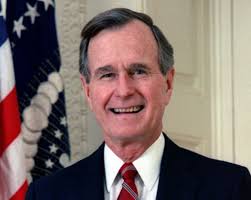
George H.W. Bush
Their “evidence”: During his tenure at Oxford University in 1969-70, Clinton had briefly visited Moscow.
In short: Clinton might have been “programmed” as a real-life “Manchurian candidate” to become, first, Governor of Arkansas—one of America’s poorest states—and then President.
Making this charge even more absurd: The Soviet Union had officially dissolved in December, 1991.
After the Soviet Union’s collapse, Republicans find that accusing Democrats of being “Commies” doesn’t carry the same weight.
So they turn to “domestic enemies” to rail—and run—against: Liberals, blacks, Hispanics, “uppity” women, war protesters, lesbians, gays, and—after 9/11—Muslims.
From 1945 to 1991, it is unthinkable for a Republican Presidential candidate to pay tribute to a Soviet dictator.
But that utterly changes when Donald J. Trump, a “reality TV” host with longstanding financial ties to Russian oligarchs, runs for President of the United States.
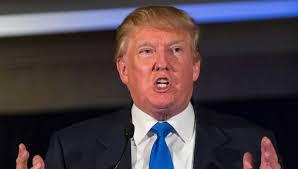
Donald Trump
Trump lavishly praises Russian President Vladimir Putin—and even invites him to directly interfere in the 2016 Presidential race.
The reason for the Trump-Putin bromance is simple: Each has something to offer the other.
Putin wants the United States to ditch the North Atlantic Treaty Organization (NATO) alliance, which has preserved Western Europe from Russian aggression since World War II. And Trump has often attacked America’s funding of NATO as a drain on the American economy.
And Trump wants to be President. For this, Putin can supply monies, Internet trolls to confuse voters with falsified news, and even the hacking of key voting centers.
These Russian monies are officially classified as “campaign contributions”—not bribes.
On July 22, 2016, Wikileaks releases 19,252 emails and 8,034 attachments hacked from computers of the highest-ranking officials of the Democratic National Committee (DNC). Early reports trace the leak to Russian hackers.
“Russia, if you are listening,” Trump says at a press conference in Doral, Florida, “I hope you are able to find the 33,000 emails that are missing [from Democratic Presidential candidate Hillary Clinton’s computer]. I think you will probably be rewarded mightily by our press.”
This is treason—calling upon a foreign power, hostile to the United States, to interfere in its Presidential election.
Hours later, the Main Intelligence Directorate in Moscow targets Clinton’s personal office and hits more than 70 other Clinton campaign accounts.
Nor is Trump the only Republican receiving “help” from Putin. A network of Russian oligarchs—all of them answerable to Putin—has been increasingly contributing to top Republicans.
According to the Federal Election Commission:
One such major contributor is Len Blavatnik, who holds citizenship in both the United States and the United Kingdom. During the 2015-16 election cycle, he proves one of the largest donors to GOP Political Action Committees (PACs).
Blavatnik’s net worth is estimated at $20 billion. Before 2016, he donates to both Democrats and Republicans in meager amounts. But in 2016, he gives $6.35 million to GOP PACs.
Millions of dollars go to top Republican leaders—such as Senators Mitch McConnell, Marco Rubio (Florida) and Lindsey Graham (South Carolina). Specifically, he contributes:
- A total of $1.5 million to PACs associated with Rubio.
- $1 million to Trump’s Inaugural Committee.
- $41,000 to both Republicans and Democrats in 2017.
- $1 million to McConnell’s Senate Leadership Fund.
- $3.5 million to a PAC associated with McConnell.
- $1.1 million to Unintimidated PAC, associated with Wisconsin Governor Scott Walker.
- $200,000 to the Arizona Grassroots Action PAC, associated with Arizona Senator John McCain.
- $250,000 to New Day for America PAC, associated with Ohio Governor John Kasich.
- $800,000 went to the Security is Strength PAC, associated with Senator Lindsey Graham.
Another Russian oligarch, Alexander Shustorovich, contributes $1 million to Trump’s Inaugural Committee.
Altogether, four Russian oligarchs—Blavatnik, Shustorovich, Andrew Intrater and Simon Kukes—–contribute $10.4 million from the start of the 2015-16 election cycle through September 2017. Of this, 99% went to Republicans.
As Senate Majority Leader, Mitch McConnell participates in high-level intelligence briefings in 2016. From agencies such as the FBI, CIA and the code-cracking National Security Agency, he learns that the Russians are trying to subvert the electoral process.
In October, 2016, the Department of Homeland Security (DHS) and the Office of the Director of National Intelligence (DNI) issue a joint statement: The Russian government had directed the effort to subvert the 2016 Presidential election.
Two weeks later, McConnell’s PAC accepts a $1 million donation from Blavatnik.
On March 30, 2017, McConnell’s PAC accepts another $1 million from Blavatnik. This is just 10 days after former FBI Director James Comey testifies before the House Intelligence Committee about Russia’s efforts to subvert the 2016 election.
* * * * * * * * * *
So, what has changed in the Republican Party? Essentially nothing.
Its enemies changed—from Russian Communists to American liberals—but its goal remains the same: The quest for absolute power.
When Americans feared Communism, Republicans depicted themselves as the only ones who could be trusted to protect the United States. Big contributions poured in from Right-wing billionaires like H.L. Hunt and Howard Hughes.
But when Republicans found they could enrich themselves and stay in power via Russian “campaign contributions,” they decided: Better Red than un-elected.
2016 PRESIDENTIAL CAMPAIGN, ABC NEWS, ALEXANDER SHUSTOROVICH, ALTERNET, ANDREW INTRATER, AP, BARACK OBAMA, BILL CLINTON, BLACKS, BUZZFEED, CBS NEWS, CHUCK GRASSLEY, CIA, CITIZENS UNITED, CNN, COMMUNISM, CROOKS AND LIARS, DAILY KOZ, DEMOCRATIC PARTY, DEPARTMENT OF HOMELAND SECURITY, DONALD TRUMP, DWIGHT D. EISENHOWER, EDWARD R. MURROW, FACEBOOK, FBI, FEDERAL ELECTIONS COMMISSION, FOX NEWS, FRANKLIN D. ROOSEVELT, GEORGE C. MARSHALL, GEORGE H.W. BUSH, GOP, GREAT SOCIETY, H.L. HUNT, HARRY S. TRUMAN, HILLARY CLINTON, HOUSE OF REPRESENTATIVES, HOWARD HUGHES, JAMES COMEY, JOHN BIRCH SOCIETY, JOHN F. KENNEDY, JOHN KASICH, JOHN STEINBECK, JOSEPH R. MCCARTHY, JOSEPH STALIN, KGB, LEN BLAVATNIK, LIBERALS, LINDSEY GRAHAM, LUCILLE BALL, LYNDON B. JOHNSON, MARCO RUBIO, MEDICAL CARE, MITCH MCCONNELL, MITT ROMNEY, MOTHER JONES, MOVEON, NATIONAL SECURITY AGENCY, NBC NEWS, NEWSWEEK, NORTH ATLANTIC TREATY ORGANIZATION (NATO), NPR, OFFICE OF THE DIRECTOR OF NATIONAL INTELLIGENCE, OLIGARCHS, ORRIN HATCH, PAUL RYAN, PETE SEEGER, POLITICAL ACTION COMMITTEES (PACS), POLITICO, PROPAGANDA, RAW STORY, REPUBLICAN PARTY, REPUBLICANS, REUTERS, RICHARD NIXON, ROBERT MUELLER, ROBERT WELCH, ROD ROSENSTEIN, RODNEY KING RIOTS, RUSSIA, SALON, SCAPEGOATING, SCOTT WALKER, SEATTLE TIMES, SENATE LEADERSHIP FUND, SIMON KUKES, SLATE, SOCIALISTS, SOVIET UNION, SUPREME COURT, THE ATLANTIC, THE CHICAGO SUN-TIMES, THE CHICAGO TRIBUNE, THE DAILY BEAST, THE GUARDIAN, THE HILL, THE HUFFINGTON POST, THE LOS ANGELES TIMES, THE NATION, THE NEW YORK TIMES, THE WASHINGTON POST, TIME, TRUMP INAUGURAL COMMITTEE, TWITTER, U.S. NEWS & WORLD REPORT, UNITED STATES SUPREME COURT, UPI, USA TODAY, VLADIMIR PUTIN, WIKILEAKS, WORLD WAR 11
In Bureaucracy, History, Military, Politics, Social commentary on May 10, 2019 at 12:07 am
On September 7, 2018, former President Barack Obama asked: “What happened to the Republican Party?”
He did so as a guest speaker at the University of Illinois. And he quickly answered it:
“Its central organizing principle in foreign policy was the fight against communism, and now they’re cozying up to the former head of the KGB. Actively blocking legislation that would defend our elections from Russian attack. What happened?”
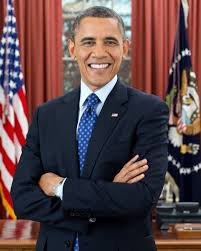
Barack Obama as President
On the surface, it seems the Republican Party has drastically changed. But, in reality, there has been no substantial change at all.
In 1932, Democratic nominee Franklin D. Roosevelt wins election against Republican President Herbert Hoover. So popular is he that he wins an unprecedented four terms—12 years!—in the White House, seeing America through the Great Depression and World War II,
In 1945, Roosevelt suddenly dies in office, leaving Vice President Harry S. Truman in command. He lacks the imperial magnetism and eloquence of FDR, so Republicans assume that 1948 will be a cakewalk for them.
But it isn’t. Instead, Truman wins a second term—and rubs it in by holding up the now-defunct headline, “DEWEY DEFEATS TRUMAN” for reporters to photograph.
By 1952, Republicans have been locked out of the White House for 20 years. They’re desperate to return—and angry enough to do anything to win.
They find attacking the integrity of their fellow Americans a highly effective tactic.
During the 1950s, Wisconsin United States Senator Joseph R. McCarthy rides a wave of paranoia to national prominence—by attacking the patriotism of anyone who disagrees with him.
Elected to the Senate in 1946, he rises to national prominence on February 9, 1950, after giving a fiery speech in Wheeling, West Virginia:
“The State Department is infested with communists. I have here in my hand a list of 205—a list of names that were made known to the Secretary of State as being members of the Communist Party and who nevertheless are still working and shaping policy in the State Department.”
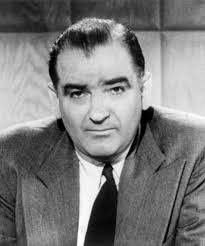
Senator Joseph R. McCarthy
Americans are already growing increasingly fearful of Communism:
- Soviet dictator Joseph Stalin has not withdrawn the Red Army from the countries it has occupied in Eastern Europe during World War II.
- In 1948, the Soviet Union develops—and demonstrates—its own atomic bomb, an achievement U.S. scientists had claimed would not happen for at least a decade.
- In 1949, China falls to the triumphant armies of Mao Tse Tung. Generalissimo Chaing Kai Shek is driven from mainland China to the tiny island of Taiwan.
Anti-communism as a lever to political advancement sharply accelerates following McCarthy’s speech.
Any American can be accused of being a Communist or a Communist sympathizer—”a Comsymp” or “fellow traveler” in the style of the era.
Among those accused:
- Secretary of State George C. Marshall, who had overseen America’s strategy for defeating Nazi Germany and Imperial Japan
- President Harry S. Truman
- Playwrights Lillian Hellman and Arthur Miller
- Actors Charlie Chaplin, Zero Mostel, Lloyd Bridges, Howard Da Silva, Edward G. Robinson and John Garfield
- Composers Arron Copland and Elmer Bernstein
- Physicist J. Robert Oppenheimer, who presided over the creation of America’s atomic bomb
- Actresses Lee Grant, Delores del Rio, Ruth Gordon and Lucille Ball
- Journalists Edward R. Murrow and William L. Shirer, who had chronicled the rise of Nazi Germany
- Folksinger Pete Seeger
- Writers Irwin Shaw, Howard Fast, John Steinbeck and Dashiell Hammett
Even “untouchable” Republicans become targets for such slander.
The most prominent of these is President Dwight D. Eisenhower—labeled ”a conscious, dedicated agent of the Communist Conspiracy” by Robert Welch, founder of the John Birch Society in 1958.
In 1953, McCarthy attacks the leadership of the United States Army as “a hotbed of traitors” and convenes an inquiry through the Senate Permanent Subcommittee on Investigations.
But the hearings backfire, exposing McCarthy as a bullying demagogue. A Senate committee condemns his behavior as acting “contrary to senatorial ethics and tended to bring the Senate into dishonor and disrepute.”
Yet even without McCarthy, Republicans ride the issue of anti-Communism to victory from 1948 to 1992. “Respectable” anti-Communists—like Richard M. Nixon—depict themselves as the only ones who can be trusted to safeguard America.
Republicans hold the White House for eight years under Dwight D. Eisenhower, then lose it in 1960 to John F. Kennedy and again in 1964 to Lyndon B. Johnson.
By 1968, with the nation mired in Vietnam and convulsed by antiwar demonstrations and race riots, Americans turn once more to those who prey upon their fears and hates.
They elect Richard Nixon, who promises to end the Vietnam war and attack “uppity” blacks and antiwar demonstrators—and, above all, “the Communist menace.”
The same strategy re-elects him in 1972.
Jimmy Carter wins the Presidency in 1976 and loses it in 1980 to Ronald Reagan.
Reagan doesn’t want to continue the “stalemate” of “containing” Communism. He intends to roll it back. Tensions rise between the United States and the Soviet Union—the highest since the Cuban Missile Crisis of 1962.
American proxies fight Soviet proxies in Afghanistan and Central America, but the world escapes nuclear holocaust.


.jpg&imgrefurl=https%3A%2F%2Fen.wikipedia.org%2Fwiki%2FPope_Francis'_visit_to_the_Philippines&docid=MrlhHX0IDhYhuM&tbnid=wAeMK3JqWfBmtM%3A&w=1297&h=1638&ved=0ahUKEwjmqo7njIvLAhVL6WMKHf_xBUYQxiAIAg&iact=c&ictx=1)


 Bureaucracybuster's Blog
2016 PRESIDENTIAL CAMPAIGN, ABC NEWS, ALTERNET, AP, ARCHIBALD COX, BARACK OBAMA, BUZZFEED, CBS NEWS, CIA, CNN, CRAIG UNGER, CROOKS AND LIARS, DAILY KOZ, DEPARTMENT OF HOMELAND SECURITY, DEVIN NUNES, DIANNE FEINSTEIN, DONALD TRUMP, DONALD TRUMP JR., DOUG COLLINS, FACEBOOK, FBI, FOX NEWS, GREG MILLER, HILLARY CLINTON, HOUSE INTELLIGENCE COMMITTEE, HOUSE OF TRUMP HOUSE OF PUTIN (BOOK), ISLAMIC STATE OF IRAQ AND SYRIA (ISIS), ISRAELI INTELLIGENCE, JAMES COMEY, JARED KUSHNER, JEFF SESSIONS, JERROLD NADLER, JOE SCARBOROUGH, LESTER HOLT, LINDSEY GRAHAM, MALCOM NANCE, MALCOM W. NANCE, MICHAEL FLYNN, MICHAEL ISIKOFF, MIKE PENCE, MOTHER JONES, MOVEON, MSNBC, NATALIA VESELNITSKAYA, NATIONAL SECURITY AGENCY, NBC NEWS, NEWSWEEK, NPR, OFFICE OF THE DIRECTOR OF NATIONAL INTELLIGENCE, PAUL MANAFORT, POLITICO, PRINCETON UNIVERSITY, RAW STORY, REPUBLICAN PARTY, REPUBLICANS, REUTERS, REX TILLERSON, RICHARD M. NIXON, ROBERT S. MUELLER 111, ROD ROSENSTEIN, RUSSIA, RUSSIAN ROULETTE (BOOK), SALON, SEATTLE TIMES, SENATE INTELLIGENCE COMMITTEE, SERGEY KISLYAK, SERGEY LAVROV, SLATE, SUPREME COURT, THE APPRENTICE (BOOK), THE ATLANTIC, THE CHICAGO SUN-TIMES, THE CHICAGO TRIBUNE, THE DAILY BEAST, THE GUARDIAN, THE HILL, THE HUFFINGTON POST, THE LOS ANGELES TIMES, THE NATION, THE NEW YORK TIMES, THE PLOT TO DESTROY DEMOCRACY (BOOK), THE WASHINGTON POST, TIME, TREASON, TRUMP TOWER MEETING, TWITTER, U.S. NEWS & WORLD REPORT, UNITED STATES DEPARTMENT OF JUSTICE, UNITED STATES DEPARTMENT OF STATE, UPI, USA TODAY, VLADIMIR PUTIN, WILLIAM BARR
THE MANY FACES OF TRUMP’S TREASON: PART THREE (END)
In Bureaucracy, History, Law, Law Enforcement, Military, Politics, Social commentary on July 3, 2019 at 1:06 amThe appointment of Robert S. Mueller as Special Counsel aroused unprecedented hopes and fears.
Foes of President Donald Trump hoped that Mueller would unearth evidence of criminality—if not treason—blatant enough to guarantee his impeachment.
Supporters of Trump—starting with the President—feared that this would be the case. When Attorney General Jeff Sessions told Trump that a Special Counsel had been appointed, the President exclaimed, “Oh my God. This is terrible. This is the end of my Presidency. I’m fucked.”
Yet even before the release of the long-awaited Mueller report, several deeply-researched and well-written books outlined Russia’s efforts to subvert the 2016 Presidential race. And they cast devastating light on Trump’s loyalty to the United States.
Among these:
According to its blurb on Amazon.com, The Apprentice is “based on interviews with hundreds of people in Trump’s inner circle, current and former government officials, individuals with close ties to the White House, members of the law enforcement and intelligence communities, foreign officials, and confidential documents.”
Among the subjects it covers:
Miller is a veteran investigative journalist and twice winner of the Pulitzer Prize. Among his stories: National security adviser Michael Flynn’s discussing U.S. sanctions with Russian officials prior to Trump’s inauguration. The story contributed to Flynn’s ouster.
Then there’s House of Trump, House of Putin, whose jacket blurb describes Trump’s inauguration as “the culmination of Vladimir Putin’s long mission to undermine Western democracy, a mission that he and his hand-selected group of oligarchs and Mafia kingpins had ensnared Trump in, starting more than twenty years ago with the massive bailout of a string of sensational Trump hotel and casino failures in Atlantic City.
“…Craig Unger methodically traces the deep-rooted alliance between the highest echelons of American political operatives and the biggest players in the frightening underworld of the Russian Mafia. He traces Donald Trump’s sordid ascent from foundering real estate tycoon to leader of the free world….
“Without Trump, Russia would have lacked a key component in its attempts to return to imperial greatness. Without Russia, Trump would not be president.”
As an appendix to the book, Unger writes: “Donald Trump has repeatedly said he has nothing to do with Russia. Below are fifty-nine Trump connections to Russia.”
Russian Roulette, according to its dust jacket, “is a story of political skullduggery unprecedented in American history. It weaves together tales of international intrigue, cyber espionage, and superpower rivalry.
“After U.S.-Russia relations soured, as Vladimir Putin moved to reassert Russian strength on the global stage, Moscow trained its best hackers and trolls on U.S. political targets and exploited WikiLeaks to disseminate information that could affect the 2016 election.
“The Russians were wildly successful and the great break-in of 2016 was no ‘third-rate burglary.’ It was far more sophisticated and sinister—a brazen act of political espionage designed to interfere with American democracy. At the end of the day, Trump, the candidate who pursued business deals in Russia, won….
“This story of high-tech spying and multiple political feuds is told against the backdrop of Trump’s strange relationship with Putin and the curious ties between members of his inner circle—including Paul Manafort and Michael Flynn—and Russia.”
Malcom Nance, the author of The Plot to Destroy Democracy, is an Intelligence and foreign policy analyst and media commentator on terrorism, intelligence, insurgency and torture.
In his book, he outlines how “Donald Trump was made President of the United States with the assistance of a foreign power.
“[It is] the dramatic story of how blackmail, espionage, assassination, and psychological warfare were used by Vladimir Putin and his spy agencies to steal the 2016 U.S. election—and attempted to bring about the fall of NATO, the European Union, and western democracy….
“Nance has utilized top secret Russian-sourced political and hybrid warfare strategy documents to demonstrate the master plan to undermine American institutions that has been in effect from the Cold War to the present day.
“Based on original research and countless interviews with espionage experts, Nance examines how Putin’s recent hacking accomplished a crucial first step for destabilizing the West for Russia, and why Putin is just the man to do it.”
These books—combined with the recently released Mueller report—clearly establish the damning conclusion: The man now sitting in the Oval Office is an illegitimate usurper, installed by an unholy alliance of American Fascists and Russian Communists.
Share this: