Archive for the ‘Politics’ Category
BAY OF PIGS, BERLIN WALL, BILL CLINTON, BRUCE GREENWOOD, CARLOS MARCELLO, CIA, CIVIL RIGHTS, CLIFF ROBERTSON, CUBAN MISSILE CRISIS, DAVID HALBERSTAM, FACEBOOK, FBI, FIDEL CASTRO, FRANK SINATRA, ICH BEN EIN BERLINNER SPEECH, INTERNET MOVIE DATABASE, J. EDGAR HOOVER, JAMES MARSDEN, JOHN F. KENNEDY, JOSEPH MCCARTHY, JOSEPH P. KENNEDY, LYNDON B. JOHNSON, MAFIA, MALCOM X, MARTIN LUTHER KING, MARTIN SHEEN, MOVIES, NIKITA KHRUSHCHEV, NUCLEAR TEST BAN TREATY, PT-109, ROBERT F. KENNEDY, ROBERT S. MCNAMARA, SAM GIANCANA, SANTOS TRAFFICANTE, SATURDAY NIGHT LIVE, SOVIET UNION, THE BEST AND THE BRIGHTEST, THE BUTLER, THE MISSILES OF OCTOBER, THE RAT PACK, THIRTEEN DAYS, TWILIGHT ZONE, TWITTER, VIETNAM WAR, WILLIAM DEVANE, WILLIAM PETERSEN
In Bureaucracy, History, Law, Law Enforcement, Military, Politics, Social commentary on November 20, 2013 at 12:05 am
Throughout his life, John F. Kennedy was lucky–both personally and politically.
Part of the secret lay in his physical presence. He was young and handsome, witty and articulate.
He appeared zestful and athletic despite a series of ailments, including Addison’s disease (a malfunction of the adrenal glands) and an injured back that required the use of a brace.
His wit was sophisticated and often self-depcrecating. Addressing an assembly of Nobel Prize winners at the White House, he said: “I think this is the most extraordinary collection of talent, of human knowledge, that has ever been gathered at the White House–with the possible exception of when Thomas Jefferson dined alone.”

JFK making a joke at a press conference
And his sense of humor often defused otherwise ticklish problems. During the 1960 Presidential race, he was sharply criticized for relying on his millionaire father for much of his funding. At a campaign rally, he deflected the charge with humor:
“I just received a telegram from my generous Daddy. It says: ‘Dear Jack: Don’t buy one more vote than necessary. I’ll be damned if I’m going to pay for a landslide.’”
Another controversey emerged when he named his brother, Robert, Attorney General. Critics charged that the appointment smacked of neoptism–and that Robert didn’t have enough legal gravitas to be the nation’s chief law enforcement offer.
“I see nothing wrong in giving Robert a little experience before he goes out to practice law,” he said at a press conference.
His highly-polished rhetoric–produced by wordsmiths such as Theodore Sorensen–dazzled audiences. His Inaugural Address was acclaimed by Democrats and even most Republicans.
Its signature line, “Ask not what your country can do for you, ask what you can do for your country” has become as famous as Abraham Lincoln’s “government of the people, by the people, for the people.”
His speeches often urged Americans to seek a higher cause than mere self-interest. Speaking of the role of the arts in a nation’s life, he said:
“It may be different elsewhere, but [in] democratic society…the highest duty of the writer, the composer, the artist is to remain true to himself and to let the chips fall where they may.”

Memorial at the Arlington gravesite for John F. Kennedy
But he could be blunt and profane in private.
“My father always told me all businessmen were sonsofbitches, but I never believed it till now,” he said in private when the steel companies made an inflationary price increase in 1962.
Like Richard Nixon, Kennedy installed a secret taping system in the White House. And, as with Nixon, this picked up many of his profanities. Unlike Nixon, however, Kennedy died before his secret taping system was discovered.
Kennedy impressed many journalists with his capacity for detail.
“He swallows and digests whole books in minutes. His eye seizes instantly on the crucial point of a long memorandum. He confounds experts with superior knowledge of their field,” wrote Games McGregor Burns in 1961.
Having briefly worked as a journalist (covering the opening of the United Nations Assembly in 1945) JFK understood and catered to the sensitivities of the Washington press corps.
Using charm, wit, candor and selective accessibility, he cultivated his own favored group of reporters. Critics charged that he was manipulating the media–and they were right.
Sometimes the manipulation was heavy-handed. He pressured The New York Times to censor its coverage of actions he intended to take–such as during the Bay of Pigs and the Cuban Missile Crisis.
But he failed to coerce the Times into removing David Halberstam, its Vietnam correspondent, whose highly critical articles cast doubt on the effectiveness of the American military commitment to Vietnam.
A major part of Kennedy’s appeal lay in his glamorous background. He was born–on May 29, 1917–into a large, robust family headed by wealthy and powerful financier Joseph P. Kennedy.
He attended Princeton and Harvard, graduating from the latter with top honors.
During World War II he became a Naval hero in 1943 after a Japanese destroyer sliced his PT boat in half–by towing an injured shipmate to safety. Stranded on a South Pacific island, Kennedy persuaded a native to summon rescue help from the U.S. Navy.
Kennedy had no plans for a postwar political career. That had been assigned to his elder brother, Joseph P. Kennedy, Jr., by their ambitious father, who was determined to seat the first Irish Catholic President.
After learning of his younger brother’s heroism, Joseph volunteered for a dangerous Naval bombing mission. On August 12, 1944, he and a co-pilot flew an explosives-laden plane from England toward France.
While over the English Channel, they were supposed to parachute from the aircraft–after activating a remote control system to send the plane crashing into a German command center.
But the plane mysteriously exploded before the pilots could eject–and before the plane reached its target.
The death of his elder brother ended John F. Kennedy’s plans for a career as a writer. Joseph Kennedy, Sr., insisted that “Jack” assume the political career that the Kennedy patriarch had assigned for his dead brother.
BAY OF PIGS, BERLIN WALL, BILL CLINTON, BRUCE GREENWOOD, CARLOS MARCELLO, CIA, CIVIL RIGHTS, CLIFF ROBERTSON, CUBAN MISSILE CRISIS, DAVID HALBERSTAM, FACEBOOK, FBI, FIDEL CASTRO, FRANK SINATRA, ICH BEN EIN BERLINNER SPEECH, INTERNET MOVIE DATABASE, J. EDGAR HOOVER, JAMES MARSDEN, JOHN F. KENNEDY, JOSEPH MCCARTHY, JOSEPH P. KENNEDY, LYNDON B. JOHNSON, MAFIA, MALCOM X, MARTIN LUTHER KING, MARTIN SHEEN, MOVIES, NIKITA KHRUSHCHEV, NUCLEAR TEST BAN TREATY, PT-109, ROBERT F. KENNEDY, ROBERT S. MCNAMARA, SAM GIANCANA, SANTOS TRAFFICANTE, SATURDAY NIGHT LIVE, SOVIET UNION, THE BEST AND THE BRIGHTEST, THE BUTLER, THE MISSILES OF OCTOBER, THE RAT PACK, THIRTEEN DAYS, TWILIGHT ZONE, TWITTER, VIETNAM WAR, WILLIAM DEVANE, WILLIAM PETERSEN
In Bureaucracy, History, Law, Law Enforcement, Military, Politics, Social commentary on November 19, 2013 at 12:18 am
John F. Kennedy fired the imaginations and captured the hearts of Americans and foreign citizens as no President since the days of Franklin D. Roosevelt.
Millions who voted for him–or against him or didn’t vote at all–still believe that, if only he had lived to be re-elected, America would have entered a truly Golden Age.
Kennedy certainly encouraged such belief. Asked for his definition of happiness, he quoted the ancient Greeks: “The full use of your powers along lines of excellence.”
Almost 50 years after his death on November 22, 1963, he remains frozen in time. Assassinated at age 46, he remains forever young, vigorous and charming.
But even if he had not been assassinated, his Presidency could have ended in disaster.
After his 1953 marriage to Jaqueline Bouvier, he continued to pursue both a married and a bachelor life. Rumors of Kennedy’s extramarital affairs swirled throughout his Senatorial career and followed him into the White House.
His conquests included secretaries, wives of friends, strippers, movie stars (such as Marilyn Monroe and Marlene Dietrich) prostitutes and even a mobster’s mistress.
Various theories have been advanced for his taking such dangerous risks with his political career:
- As a victim of Addison’s Disease (insufficiency of the adrenal glands) he had been told by doctors he might not live beyond 35.
- As a result of the cortisone he took to control his Addison’s, his libido was greatly enhanced.
- After escaping death with the sinking of PT-109, he decided to cram as much excitement into his life as possible.
- His father, Joseph P. Kennedy, Sr., a notorious womanizer, had encouraged him and his three other sons to sleep with as many women as possible.
During the 1960 Presidential campaign, Frank Sinatra–who had become smitten with Kennedy and was determined to see him elected–introduced him to a “good time girl” named Judith Campbell.

Judith Campbell
Whether Kennedy knew it or not, Campbell was also sleeping with Sam Giancana–the most-feared Mafia boss in Chicago. And it wasn’t long before Giancana learned about her trysts with Kennedy.
As a favor to Sinatra, Giancana and his fellow mobsters used their powerful influence to ensure that JFK carried Illinois in 1960.
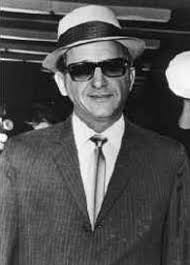
Sam Giancana
In turn, JFK’s father, Joseph P. Kennedy had promised Giancana that the Mob would get a free ride under a Kennedy Presidency.
When JFK appointed his brother, Robert, Attorney General, the latter declared war on organized crime. Giancana and his fellow hoods felt betrayed.
Giancana often raged to Campbell: “If it wasn’t for me, your boyfriend wouldn’t be President.” And having knowledge of her scandalous relationship with JFK, Giancana was in a position to expose Kennedy to what would be a shocked public.
And if Giancana didn’t do it, FBI Director J. Edgar Hoover might.
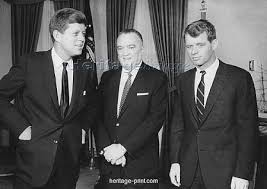
John F. Kennedy, J. Edgar Hoover and Robert F. Kennedy
Hoover, under relentless pressure from Robert Kennedy to crack down on the Mob, had, through illegal electronic surveillance, discovered the Giancana-Campbell-Kennedy connection.
Always fearful that he might be replaced as FBI director, Hoover had quickly alerted the Attorney General to his latest discovery in February, 1962. Neither RFK nor JFK could dare fire Hoover now.
White House telephone logs reveal that, from January, 1961 until February, 1962, Campbell phoned the White House 70 times.
After Hoover informed Robert Kennedy of Campbell’s status with the President, she made only one more call to Kennedy. It was then that the President said the affair was over.
Similarly, the President’s on-and-off affair with Marilyn Monroe put him in an equally dangerous position. Monroe’s behavior, fueled by emotional instability, alcohol and pills, became increasingly erratic. And she grew convinced that Kennedy should divorce Jackie and make her the new First Lady.
Rumors still circulate that the President sent Robert Kennedy–who was by now an old hand at cleaning up JFK’s messes–to tell Monroe their relationship was over.
Whatever secrets Monroe may have been able to reveal about her relationship with Kennedy, she took them to the grave in an overdose of alcohol and sleeping pills on August 5, 1962.
In his 1995 bestseller, The Dark Side of Camelot, investigative reporter Seymour Hersh got several former members of Kennedy’s Secret Service detail to speak about JFK’s extramarital sex life.
They revealed that they had not been allowed to search any of the women Kennedy cavorted with.
Any of these women could have injected the President with a poisonous hypodermic. Or secretly tape recorded their trysts with Kennedy for blackmail purposes.
Kennedy believed he would be re-elected in 1964–especially if his opponent was Barry Goldwater, the Republican Senator from Arizona.
And he almost certainly would have been re-elected; Lyndon Johnson scored a smashing victory over Goldwater that year.
But it’s also possible that Kennedy could have been forced to resign in disgrace over his affairs with Campbell, Monroe or any number of other women.
Such a fate overtook British Secretary of State for War John Profumo in 1962. In 1961, he had begun an affair with Christine Keeler, an attractive model. But Keeler was also bedding Yevgeney Ivanov, the senior naval attaché at the Soviet Embassy in Britain.
When the press learned about the threesome, Profumo was forced to resign, his 22-year political career destroyed.
BAY OF PIGS, BERLIN WALL, BILL CLINTON, BRUCE GREENWOOD, CARLOS MARCELLO, CIA, CIVIL RIGHTS, CLIFF ROBERTSON, CUBAN MISSILE CRISIS, DAVID HALBERSTAM, FACEBOOK, FBI, FIDEL CASTRO, FRANK SINATRA, ICH BEN EIN BERLINNER SPEECH, INTERNET MOVIE DATABASE, J. EDGAR HOOVER, JAMES MARSDEN, JOHN F. KENNEDY, JOSEPH MCCARTHY, JOSEPH P. KENNEDY, LYNDON B. JOHNSON, MAFIA, MALCOM X, MARTIN LUTHER KING, MARTIN SHEEN, MOVIES, NIKITA KHRUSHCHEV, NUCLEAR TEST BAN TREATY, PT-109, ROBERT F. KENNEDY, ROBERT S. MCNAMARA, SAM GIANCANA, SANTOS TRAFFICANTE, SATURDAY NIGHT LIVE, SOVIET UNION, THE BEST AND THE BRIGHTEST, THE BUTLER, THE MISSILES OF OCTOBER, THE RAT PACK, THIRTEEN DAYS, TWILIGHT ZONE, TWITTER, VIETNAM WAR, WILLIAM DEVANE, WILLIAM PETERSEN
In Bureaucracy, History, Law, Law Enforcement, Military, Politics, Social commentary on November 18, 2013 at 12:00 am
President Kennedy’s untimely death has since fueled arguments over how, if he had lived, he would have dealt with Vietnam.
In his memoirs, former Soviet Premier Nikita Khrushchev wrote: “Kennedy would have never let his country get bogged down in Vietnam.”
But David Halberstam, who covered the early years of the war for The New York Times, came to a different conclusion.
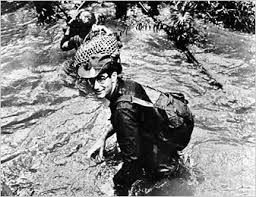
David Halberstam in Vietnam
In his bestselling 1972 book, The Best and the Brightest, he wrote that although Kennedy questioned the wisdom of a combat commitment, he had never shown those doubts in public.
In public, he had expressed doubts only about the Diem regime–whether it held enough support among the Vietnamese to win the war.
His successor had to deal with Kennedy’s public statements, all supportive of the importance of Vietnam.
And it was that successor, newly-elevated President Lyndon B. Johnson, who decided, in 1965, to commit heavy military forces to protecting “freedom-loving” South Vietnam.
In short: Even if Kennedy had intended to withdraw American forces after winning re-election in 1964, he made a fatal mistake: He assumed there would always be time for him to do so.
Historian Thurston Clarke, in his 2013 book JFK’s Last Hundred Days, reached a totally diferent conclusion: That Kennedy planned to quietly remove American military advisors regardless of the military situation.
Like Halberstam, Clarke believes that Kennedy intended to gradually withdraw troops from Vietnam–but felt he could not afford to inflame the Right during an election year.
Essentially, the question, “What would Kennedy have done?”–on Vietnam, civil rights, relations with the Soviet Union–lies at the heart of his continuing fascination among Americans.
For millions, the later turmoil of the 1960s remains such a traumatic memory that they assume: “America would have had to be better-off if Kennedy had lived.”
But much of Kennedy’s proposed legislation–such as his civil rights act–did not become law until President Johnson overcame conservative opposition to it.
Johnson had first been elected to the House of Representatives in 1937, where he gained influence as a protege of its speaker, Sam Rayburn. In 1948, he was elected to the U.S. Senate and eventually became one of its most powerful members–especially after becoming its Majority Leader in 1954.
Johnson knew the strengths and weaknesses of his political colleagues, and he ruthlessly exploited this knowledge to ensure the passage of legislation he supported.
Kennedy had served in the House from 1946 to 1952, and from 1952 to 1961 in the Senate. But he had never been a major leader in either body.
It was as a Senator that he wrote his Pulitzer Prize-winning book, Profiles in Courage. But it was also as a Senator that he refused to vote on whether U.S. Senator Joseph R. McCarthy should be censured by his Senatorial colleagues.
In 1954, the Senate voted to condemn McCarthy, whose slanders of Communist subversion had bullied and frightened Americans for four years. McCarthy’s influence as a political figure died overnight.
Joseph P. Kennedy, the family patriarch, was a strong McCarthy supporters And Robert F. Kennedy had briefly worked for McCarthy’s Red-baiting Senate subcommitee.
JFK’s refusal to say how he would have voted on censuring McCarthy damaged his support among liberals during the 1960 election.
Eleanor Roosevelt famously said that Kennedy should show “more courage and less profile.”
Although Lyndon Johnson’s legislative achievements as Senator and President remain unprecedented, he has become a pariah figure among Democrats.
His 1965 decision to wage all-ou war in Vietnam ignited nationwide protests and elected Richard M. Nixon as President in 1968.
Like a doomed character in George Orwell’s novel, 1984, he has largely become an un-person.
Meanwhile, John F. Kennedy continues to endlessly fascinate Americans. In poll after poll they continue to rate him highly–even though he served less than three years in the White House.
Hundreds of books and thousands of articles have been written about JFK. On the big screen he’s been depicted by actors such as Cliff Robertson (PT 109), Bruce Greenwood (Thirteen Days) and James Marsden (The Butler).
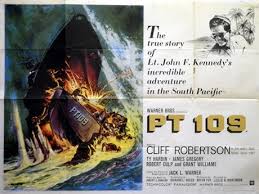
Movie poster for PT-109
On TV, he’s been portrayed by William Devane (The Missiles of October), William Petersen (The Rat Pack), Martin Sheen (Kennedy), James Franciscus (Jaqueline Bouvier Kennedy) and Cliff De Young (Robert Kennedy and His Times).
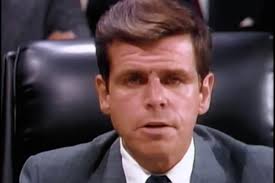
William Devane as John F. Kennedy in The Missiles of October
Kennedy has even appeared on Saturday Night Live (perhaps most famously in a sketch where he chides then-President Clinton for his twadry choices as a womanizer).
He even figured in a 1986 episode of the revised Twilight Zone episode where a history professor travels back in time to prevent the JFK assassination.
The result: JFK is saved but Soviet Premier Nikita Khrushchev is murdered and World War III erupts.
In fact, the Internet Movie Database lists a total of 94 movies, mini-series. TV dramas and even comedies featuring the character of John F. Kennedy.
BAY OF PIGS, BERLIN WALL, BILL CLINTON, BRUCE GREENWOOD, CARLOS MARCELLO, CIA, CIVIL RIGHTS, CLIFF ROBERTSON, CUBAN MISSILE CRISIS, DAVID HALBERSTAM, FACEBOOK, FBI, FIDEL CASTRO, FRANK SINATRA, ICH BEN EIN BERLINNER SPEECH, INTERNET MOVIE DATABASE, J. EDGAR HOOVER, JAMES MARSDEN, JOHN F. KENNEDY, JOSEPH MCCARTHY, JOSEPH P. KENNEDY, LYNDON B. JOHNSON, MAFIA, MALCOM X, MARTIN LUTHER KING, MARTIN SHEEN, MOVIES, NIKITA KHRUSHCHEV, NUCLEAR TEST BAN TREATY, PT-109, ROBERT F. KENNEDY, ROBERT S. MCNAMARA, SAM GIANCANA, SANTOS TRAFFICANTE, SATURDAY NIGHT LIVE, SOVIET UNION, THE BEST AND THE BRIGHTEST, THE BUTLER, THE MISSILES OF OCTOBER, THE RAT PACK, THIRTEEN DAYS, TWILIGHT ZONE, TWITTER, VIETNAM WAR, WILLIAM DEVANE, WILLIAM PETERSEN
In Bureaucracy, History, Law, Law Enforcement, Military, Politics, Social commentary on November 15, 2013 at 12:00 am
The Kennedy administration’s unprecedented attack on organized crime has led some law enforcement experts to believe the Mob engineered President Kennedy’s assassination.
One of these is G. Robert Blakey, father of the Racketeer Influenced Corrupt Organizations Act (RICO). As the former Chief Counsel and Staff Director to the U.S. House Select Committee on Assassinations (1977 – 1979) he oversaw the second official inquiry into the Kennedy assassination.
As a result, he believes the Mob had ample means, motive and opportunity to arrange for a “nut” to kill the President.
In his 1980 book, The Plot to Kill the President, Blakey asserted:
- Lee Harvey Oswald shot and killed President Kennedy.
- An unknown confederate of Oswald’s, firing from the “grassy knoll,” also shot at Kennedy but missed.
- The conspiracy was rooted in organized crime and involved Mafia boss Santos Trafficante of Miami and/or Mafia boss Carlos Marcello of New Orleans.
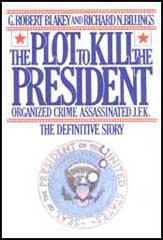
The 1983 drama, “Blood Feud,” clearly implied that the Mob was responsible. At the heart of the mini-series lay the 10-year conflict between Robert F. Kennedy and James R. Hoffa, then president of the International Brotherhood of Teamsters Union.
This was also the plot of American Tabloid, a 1995 novel by James Ellroy.
But investigative reporter Seymour Hersh wrote that during the five years he researched The Dark Side of Camelot, his expose of the hidden life of President Kennedy, he didn’t uncover any evidence of such a plot.
After Robert Kennedy left the Justice Department in 1964 to run for the post of U.S. Senator from New York, the Justice Department slacked off its push against the crime syndicates.
But the war was resurrected during the Nixon administration and has remained a top priority ever since.
Perhaps the most controversial legacy of the Kennedy administration remains the President’s dealings with the South Vietnamese regime of Ngo Dinh Diem.,
In 1954, the French–who had controlled Vietnam for 80 years–were forced to withdraw their military forces from the country. Their army had suffered a humiliating defeat at Dienbenphu and the French citizenry–still recovering from defeat and Nazi occupation during World War II–demanded an end to the disastrous conflict.
Into this political vacumn stepped the victorious North Vietnamese communist Ho Chi Minh.
Kennedy–then U.S. Senator from Massachussets–had visited Vietnam while the French were still trying to hold onto one of their last colonial possessions. And he had urged them to withdraw and allow the Vietnamese to govern themselves.
But President Dwight D. Eisenhower was aware of Ho’s overhwleming popularity throughout Vietnam due to his battles against Japanese and French colonialists. In any nationwide election, Ho was certain to win the presidency.
But Eisenhower felt he couldn’t allow an avowed Communist to rule Vietnam. With the North under firm Communist control, America focused its attention on the South.
earching for an acceptable alternative, Eisenhower found hm in Ngo Dinh Diem–a mandarin in a nation swept by revolution, a Catholic in a nation with an 80% Buddhist population.

Ngo Dinh Diem
In 1954, America began backing Diem. Although his first years were marked by social progress, he later became increasingly oppressive toward the Buddhist majority. Corruption flourished among government and army officials.
In 1960, North Vietnam launched an aggressive campaign of infiltration and assassination across South Vietnam.
In 1961, President Kennedy sent 400 Green Berets and 100 other military advisors to South Vietnam to offer support.
Diem requested American financing of a 100,000-man increase in his army. Kennedy agreed to an increase of 30,000. Meanwhile, the Joint Chiefs of Staff estimated that 40,000 U.S. troops would be needed to “clean up the Vietcong threat.”
Kennedy underestimated the reaction of North Vietnam, whose forces were fighting what they believed was a crusade. As American troop strength increased, the North escalated its own commitment.
From 1961 to 1963, the number of U.S. troops in Vietnam steadily rose from 685 to 16,732. American minesweepers patrolled the coasts while their aircraft engaged in surveillance.
For the first time, Americans became casualties of the war–especially those in helicopter combat-support missions.
Meanwhile, Diem–urged by his influential brother, Nhu, who ran the secret police–cracked down on the Buddhists.
Government troops fired on a peaceful demonstration in May, 1963. In protest, Buddhist monks burned themselves to death before TV cameras.
Nhu’s beautiful and powerful wife led growing world outrage by her ridicule of “monk barbeque shows.”
American efforts to stop Diem’s anti-Budhist campaign failed. On August 21, 1963, Diem’s police shot their way into Buddhist pagodas, killing scores and arresting hundreds.
This finally convinced the Kennedy administration that Diem would never gain the popular support he needed to win the war against the Communist North.
As a result, the administration offered support to South Vietnamese military officers planning a coup against Diem.
On November 1, 1963, South Vietnamese army units stormed the presidential palace. Diem and Nhu fled, but were caught and shot. Madame Nhu, visiting the U.S. at the time, escaped death, accusing Kennedy of supporting the coup.
The administration issued a flat denial.
Diem’s assassination was followed 21 days later by Kennedy’s own.
BAY OF PIGS, BERLIN WALL, BILL CLINTON, BRUCE GREENWOOD, CARLOS MARCELLO, CIA, CIVIL RIGHTS, CLIFF ROBERTSON, CUBAN MISSILE CRISIS, DAVID HALBERSTAM, FACEBOOK, FBI, FIDEL CASTRO, FRANK SINATRA, ICH BEN EIN BERLINNER SPEECH, INTERNET MOVIE DATABASE, J. EDGAR HOOVER, JAMES MARSDEN, JOHN F. KENNEDY, JOSEPH MCCARTHY, JOSEPH P. KENNEDY, LYNDON B. JOHNSON, MAFIA, MALCOM X, MARTIN LUTHER KING, MARTIN SHEEN, MOVIES, NIKITA KHRUSHCHEV, NUCLEAR TEST BAN TREATY, PT-109, ROBERT F. KENNEDY, ROBERT S. MCNAMARA, SAM GIANCANA, SANTOS TRAFFICANTE, SATURDAY NIGHT LIVE, SOVIET UNION, THE BEST AND THE BRIGHTEST, THE BUTLER, THE MISSILES OF OCTOBER, THE RAT PACK, THIRTEEN DAYS, TWILIGHT ZONE, TWITTER, VIETNAM WAR, WILLIAM DEVANE, WILLIAM PETERSEN
In Bureaucracy, History, Military, Politics, Social commentary on November 14, 2013 at 12:05 am
John F. Kennedy became President when civil rights suddenly became a burning issue throughout the Nation.
At Kennedy’s request, dozen of law firms sent lawyers South, so civil rights demonstrators would not lack counsel.
Prominent blacks such as Thurgood Marshall, Robert C. Weaver and George L.L. Weaver were appointed, respectively, to the Supreme Court, the Housing and House Finance Agency and the office of Assistant Secretary of Labor.
But Kennedy was highly reluctant to push for a civil rights bill addressing the overall issues of racial discrimination.
The reason: Most of the chairman of House and Senate committees were deeply conservative racists–whether Republican or Democrat. They decided whether Kennedy’s foreign policy initiatives would be approved or opposed–especialy his bills for increased foreign aid.
Kennedy believed he could not offend such men without jeopardizing the legacy he wanted to achieve in foreign policy.
This timidity, in turn, led many prominent blacks–such as Martin Luther King and Malcom X–to believe they would see no innovative moves on Kennedy’s part.
But events forced Kennedy’s hand.
On September 30, 1962, the President sent deputy U.S. marshals and National Guardsmen into Mississippi to restore order. Rioting had erupted when, by federal court order, James Meredith, a black, was enrolled at the state university.
Kennedy’s problems in winning support for his civil rights program arose in the folkways of the Nation. When laws run counter to a nation’s folkways, the laws lose.
In backing the admission of Meredith, the President chose an incident which would set off shockwaves for black rights.
Kennedy held mixed emotions about the demand for civil rights by blacks. On one hand, as an Irish Catholic, he grew up with stories about longtime discrimination against his ancestors (such as the “No Irish Need Apply” signs posted by numerous employers).
On the other hand, he had been born into a world of power and wealth, and he had to grope his way toward understanding the problems of the oppressed.
Another major confrontation broke out between Kennedy and the forces of segregation on June 11, 1963. Alabama Governor George C. Wallace personally blocked the entrance of two black pupils to the University of Tuscaloosa.
The President, watching on TV, federalized the Alabama National Guard, which Wallace had used to ring the school. Wallace withdrew and the students were admitted and enrolled.
That same day, Kennedy addressed the nation on the need for genuine equality for all Americans: “The question is whether we are going to treat our fellow Americans as we want to be treated.”
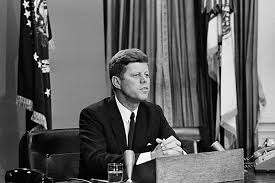
JFK addresses the nation on civil rights
And he called on Congress to pass his civil rights bill, which had been stalled by the legislators.
On August 28, 1963, 200,000 civil rights demonstrators flooded Washington, D.C., for a massive rally.
Fearing that violence would erupt–embarrassing his administration and setting back the cause of civil rights–Kennedy had sought to persuade Dr. Martin Luther King, the march’s chief figure, to cancel the proposed march..
But King and his fellow organizers were determined to go through with it. They had, they said, waited too long for justice to be satisfied with anything less.
The dignity and peacefulness of the rally–and, most especially, King’s soaring “I Have a Dream” speech–won tremendous sympathy throughout the cuntry. Kennedy met with civil rights leaders afterward to offer his support.
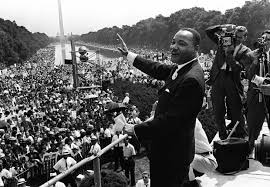
Martin Luther King during the March on Washington
But Kennedy’s civil rights bill remained stalled in Congress until 1964. President Lyndon B. Johnson used the assassinated Kennedy’s new status as a martyr to gain enough support for its passage.
Meanwhile, on yet another front, the Kennedy administration was waging an unprecedented war against organized crime.
This was primarily the work of Attorney General Robert F. Kennedy. As chief counsel for the Senate Permanent Subcommittee on Investigations during the late 1950s, he had interrogated hundreds of mobsters who had been summoned by subpoena.
And he had learned, firsthand, how ineffective the FBI and Justice Department were at bringing such powerful criminals to justice.
Upon taking office as Attorney General, he greatly expanded the number of attorneys assigned to the Justice Department’s Organized Crime Section. And, more important, he used his status as brother to the President to jawbone FBI Director J. Edgar Hoover into attacking the Mob.
The FBI installed illegal microphones in Mob hangouts throughout the country and started building cases against such mobsters as Sam Giancana, Santos Trafficante and Carlos Marcello.
The administration’s attack on the Mob has led some historians to believe the assassination of President Kennedy was Mob-orchestrated.
The reasons:
- Joseph P. Kennedy, the family patriarch, solicited Mob money and influence for his son’s 1960 Presidential campaign.
- Through singer Frank Sinatra, the elder Kennedy assurred Chicago Mafia boss Sam Giancana that the mob would get a free ride if his son were elected President.
- The CIA, seeking any way to topple Fidel Castro, enlisted the Mafia to assassinate him.
- But Robert Kennedy, as Attorney General, ignored the Mob’s “contributions” and pressed his war against the syndicates
- As a result, mobsters felt betrayed and lusted for vengeance.
BAY OF PIGS, BERLIN WALL, BILL CLINTON, BRUCE GREENWOOD, CARLOS MARCELLO, CIA, CIVIL RIGHTS, CLIFF ROBERTSON, CUBAN MISSILE CRISIS, DAVID HALBERSTAM, FACEBOOK, FBI, FIDEL CASTRO, FRANK SINATRA, ICH BEN EIN BERLINNER SPEECH, INTERNET MOVIE DATABASE, J. EDGAR HOOVER, JAMES MARSDEN, JOHN F. KENNEDY, JOSEPH MCCARTHY, JOSEPH P. KENNEDY, LYNDON B. JOHNSON, MAFIA, MALCOM X, MARTIN LUTHER KING, MARTIN SHEEN, MOVIES, NIKITA KHRUSHCHEV, NUCLEAR TEST BAN TREATY, PT-109, ROBERT F. KENNEDY, ROBERT S. MCNAMARA, SAM GIANCANA, SANTOS TRAFFICANTE, SATURDAY NIGHT LIVE, SOVIET UNION, THE BEST AND THE BRIGHTEST, THE BUTLER, THE MISSILES OF OCTOBER, THE RAT PACK, THIRTEEN DAYS, TWILIGHT ZONE, TWITTER, VIETNAM WAR, WILLIAM DEVANE, WILLIAM PETERSEN
In Bureaucracy, History, Law, Law Enforcement, Military, Politics, Social commentary on November 13, 2013 at 12:26 am
By October, 1962, the Soviet Union had sent more than 40,000 soldiers, 1,300 field pieces, 700 anti-aircraft guns, 350 tanks and 150 jets to Cuba to deter another invasion.
Nikita Khrushchev, the premier of the Soviet Union, also began supplying Castro with nuclear-tipped ballistic missiles–whose discovery, in October, 1962, ignited the single most dangerous confrontation of the Cold War.

John F. Kennedy during the Cuban Missile Crisis
On October 16, Kennedy was shown photographs of nuclear missile sites under construction on the island. The pictures had been taken on the previous day by a high-altitude U-2 spy plane.
Suddenly, the two most powerful nuclear countries–the United States and the Soviet Union–found themselves on the brink of nuclear war.
At the time, Kennedy officials claimed they couldn’t understand why Khrushchev had placed nuclear missiles in Cuba. “Maybe Khrushchev’s gone mad” was a typical musing.
None of these officials admitted that JFK had been waging a no-holds-barred campaign to overthrow the Cuban government and assassinate its leader.
After being informed of the missile installations, Kennedy convened a group of his 12 most important advisors, which became known as Ex-Comm, for Executive Committee.
Then followed seven days of guarded and intense debate by Kennedy and his advisors. Some of the participants-–such as Air Force General Curtis LeMay-–urged an all-out air strike against the missile sites.
Robert Kennedy, the Attorney General (and the President’s brother) opposed initial calls for an air strike.
It would be, he said, “a Pearl Harbor in reverse.” And, he added: “I don’t want my brother to go down in history as the Tojo of the 1960s.”
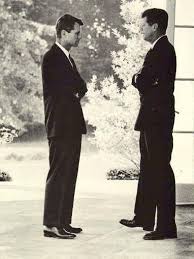
Robert F. and John F. Kennedy
Others-–such as Adlai Stevenson, the United States delegate to the United Nations–urged a reliance on quiet diplomacy.
It was Secretary of Defense Robert S. McNamara who suggested a middle course: A naval blockade–-a “quarantine” in Kennedy’s softened term–around Cuba. This would hopefully prevent the arrival of more Soviet offensive weapons on the island.
The President insisted that the missiles had to go–by peaceful means, if possible, but through the use of military force if necessary.
Kennedy finally settled on a maval blockade of Cuba. This would prevent additional missiles from coming in and give Khrushchev time to negotiate and save face.
On October 22, President Kennedy appeared on nationwide TV to denounce the presence of Russian nuclealr missiles in Cuba.
He demanded their withdrawal, and warned that any missile launched against any nation in the Western hemisphere would be answered with “a full retaliatory response upon the Soviet Union.”
Kennedy ordered American military readiness raised to a level of Defcom-2–the step just short of total war.
The United States had about 27,000 nuclear weapons; the Soviets had about 3,000. In a first salvo of a nuclear exchange, the United States could have launched about 3,000 nuclear weapons and the Soviets about 250.
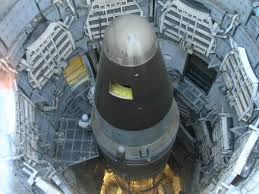
Nuclear missile in silo
On October 28, Khrushchev announced that the missile sites would be destroyed and the missiles crated and shipped back to the Soiet Union.
In return, Kennedy gave his promise–publicly–to lift the blockade and not invade Cuba
Privately, he also promised to remove obsolte Jupiter II nuclear missiles from Turkey, which bordered the Soviet Union. Those missiles were, in effect, the American version of the Russian missiles that had been shipped to Cuba.
The world escaped nuclear disaster by a hair’s-breath.
Khrushchev didn’t know that Kennedy had intended to order a full-scale invasion of Cuba in just another 24 hours if an agreement couldn’t be reached.
And Kennedy and his military advisors didn’t know that Russian soldiers defending Cuba had been armed with tactical nuclear weapons.
If warfare of any type had broken out, the temptation to go nuclear would have been overwhelming.
The Cuban Missile Crisis marked the only time the world came to the brink of nuclear war.
To the Right, it was a sell-out: Kennedy had refused to “take out” Castro when he had the chance, thus allowing Cuba to remain a Communist bastion only 90 miles from Florida.
To the Left, it was a needless confrontation that risked the destruction of humanity.
For Kennedy, forcing the Soviets to remove their misssiles from Cuba re-won the confidence he had lost among so many Americans following the Bay of Pigs fiasco.
It also brought him face-to-face with the brutal truth that a miscalculation during a nuclear crisis could destroy all life on the planet.
He felt he could now move–cautiously–toward better relations between the United States and the Soviet Union.
Ironically, the crisis had the same effects on Khrushchev–who had witnessed the horrors of Germany’s 1941 invasion of the Soviet Union and the subsequent loss of at least 22 million Soviet citizens.
Slowly and carefully, Kennedy and Khrushchev negotiated the details of what would become the Nuclear Test Ban Treaty, which banned nuclear testing in the atmosphere.
Underground tests would continue, but the amounts of deadly strontonium-90 radiation polluting the atmosphere would be vastly reduced.
The treaty was signed between the United States and the Soviet Union on July 25, 1963.
Kennedy considered it his greatest achievement as President, saying in a speech: “According to a Chinese proverb, a jouney of a thousand miles begins with a single step. My fellow Americans, let us take that first step.”
BAY OF PIGS, BERLIN WALL, BILL CLINTON, BRUCE GREENWOOD, CARLOS MARCELLO, CIA, CIVIL RIGHTS, CLIFF ROBERTSON, CUBAN MISSILE CRISIS, DAVID HALBERSTAM, FACEBOOK, FBI, FIDEL CASTRO, FRANK SINATRA, ICH BEN EIN BERLINNER SPEECH, INTERNET MOVIE DATABASE, J. EDGAR HOOVER, JAMES MARSDEN, JOHN F. KENNEDY, JOSEPH MCCARTHY, JOSEPH P. KENNEDY, LYNDON B. JOHNSON, MAFIA, MALCOM X, MARTIN LUTHER KING, MARTIN SHEEN, MOVIES, NIKITA KHRUSHCHEV, NUCLEAR TEST BAN TREATY, PT-109, ROBERT F. KENNEDY, ROBERT S. MCNAMARA, SAM GIANCANA, SANTOS TRAFFICANTE, SATURDAY NIGHT LIVE, SOVIET UNION, THE BEST AND THE BRIGHTEST, THE BUTLER, THE MISSILES OF OCTOBER, THE RAT PACK, THIRTEEN DAYS, TWILIGHT ZONE, TWITTER, VIETNAM WAR, WILLIAM DEVANE, WILLIAM PETERSEN
In Bureaucracy, History, Law, Law Enforcement, Military, Politics, Social commentary on November 12, 2013 at 12:05 am
During the 1960 Presidential campaign, then-Senator John F. Kennedy promised to build a Peace Corps to train people in underdeveloped nations to help themselves.
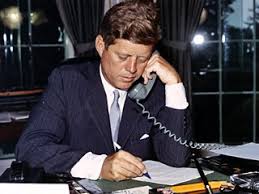
John F. Kennedy
In March, 1961, the program went into effect, with the President’s brother-in-law, Sergent Shriver, as director.
Starvation, illiteracy and disease were the enemies of the Corps. Any nation wanting aid could request it. The first group of volunteers went to the Philippines, the second to Equador and the third to Tanganika.
The problems of the underdeveloped world were too great for any single organization to solve. But the Corps lifted the spirits of many living in those countries. And it captured the imagination of millions of Americans–especially those of thousands of idealistic youths who entered its ranks.
To combat the growing Communist threat to Latin America, Kennedy established the Alliance for Progress. He defined the Alliance’s goal as providing “revolutionary progress through powerful, democratic means.”
Within two years he could report:
“Some 140,000 housing units have been constructed. Slum clearance projects have begun, and 3,000 classrooms have been built. More than 4,000,000 school books have been distributed.
“The Alliance has fired the imagination and kindled the hopes of millions of our good neighbors. Their drive toward modernization is gaining momentum as it unleashes the energies of these millions.
“The United States is becoming increasingly identified in the minds of the people with the goal they move toward: a better life with freedom,” said Kennedy.
Critics of the program, however, charged that the President was trying to “dress up the old policies” of Franklin D. Roosevelt in new rhetoric. Since FDR’s time, the United States has believed in giving economic aid to Latin America.
Much–if not most–of these billions of dollars has wound up in the pockets of various right-wing dictators, such as Anastasio Somoza and Rafael Trujillo.
Meanwhile, Kennedy was urging action on another front–that of outer space.
“This generation does not intend to founder in the backwash of the coming age of space,” declared the President. He committed the United States to putting a man on the moon by the end of the decade.
As indeed it happened less than six years after his death–on July 20, 1969.
Kennedy’s idealistic rhetoric masked his real reason for going to the moon: To score a propaganda victory over the Soviet Union.
Another of his anti-Communist goals: To remove Fidel Castro from power in Cuba at almost any cost.
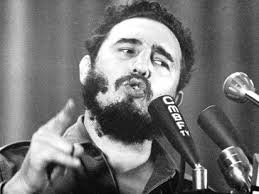
Fidel Castro
Immediately after the failed Bay of Pigs invasion, Kennedy appointed his brother, Robert–who was then the Attorney General–to oversee a CIA program to overthrow Castro.
The CIA and the Mafia entered into an unholy alliance to assassinate Castro–each for its own benefit:
- The CIA wanted to please Kennedy by overthrowing the Communist leader who had nationalized American corporate holdings.
- The Mafia wanted to regain its lucrative casino and brothel holdings that had made Cuba the playground of the rich in pre-Castro times.
The mobsters were authorized to offer $150,000 to anyone who would kill Castro and were promised any support the Agency could yield.
“We were hysterical about Castro at about the time of the Bay of Pigs and thereafter,” then-former Secretary of Defense Robert S. McNamara testified before Congress about these efforts. “And there was pressure from JFK and RFK to do something about Castro.”
Nor was everyone in the CIA enthusiastic about the “get Castro” effort.
“Everyone at CIA was surprised at Kennedy’s obsession with Fidel,” recalled Sam Halpern, who was assigned to the Cuba Project. “They thought it was a waste of time. We all knew [Fidel] couldn’t hurt us. Most of us at CIA initially liked Kennedy, but why go after this little guy?
“One thing is for sure: Kennedy wasn’t doing it out of national security concerns. It was a personal thing. The Kennedy family felt personally burnt by the Bay of Pigs and sought revenge.”
It was all-out war. Among the tactics used:
- Hiring Cuban gangsters to murder Cuban police officials and Soviet technicians.
- Sabotaging mines.
- Paying up to $100,000 per “hit” for the murder or kidnapping of Cuban officials.
- Using biological and chemical warfare against the Cuban sugar industry.
- Planting colorful seashells rigged to explode at a site where Castro liked to go skindiving.
- Trying to arrange for his being presented with a wetsuit impregnated with noxious bacteria and mold spores, or with lethal chemical agents.
- Attempting to infect Castro’s scuba regulator with tuberculous bacilli.
- Trying to douse his handkerchiefs, cigars, tea and coffee with other lethal bacteria.
But all of these efforts failed to assassinate Castro–or overthrow the Cuban Revolution he was heading.
“Bobby (Kennedy) wanted boom and bang all over the island,” recalled Halpern. “It was stupid. The pressure from the White House was very great.”
Americans would rightly label such methods as ”terrorist” if another power used them against the United States today. And the Cuban government saw the situation exactly the same way.
So Castro appealed to Nikita Khrushchev, leader of the Soviet Union, for assistance.
Khrushchev was quick to comply: “We must not allow the communist infant to be strangled in its crib,” he told members of his inncer circle.
BAY OF PIGS, BERLIN WALL, BILL CLINTON, BRUCE GREENWOOD, CARLOS MARCELLO, CIA, CIVIL RIGHTS, CLIFF ROBERTSON, CUBAN MISSILE CRISIS, DAVID HALBERSTAM, FACEBOOK, FBI, FIDEL CASTRO, FRANK SINATRA, ICH BEN EIN BERLINNER SPEECH, INTERNET MOVIE DATABASE, J. EDGAR HOOVER, JAMES MARSDEN, JOHN F. KENNEDY, JOSEPH MCCARTHY, JOSEPH P. KENNEDY, LYNDON B. JOHNSON, MAFIA, MALCOM X, MARTIN LUTHER KING, MARTIN SHEEN, MOVIES, NIKITA KHRUSHCHEV, NUCLEAR TEST BAN TREATY, PT-109, ROBERT F. KENNEDY, ROBERT S. MCNAMARA, SAM GIANCANA, SANTOS TRAFFICANTE, SATURDAY NIGHT LIVE, SOVIET UNION, THE BEST AND THE BRIGHTEST, THE BUTLER, THE MISSILES OF OCTOBER, THE RAT PACK, THIRTEEN DAYS, TWILIGHT ZONE, TWITTER, VIETNAM WAR, WILLIAM DEVANE, WILLIAM PETERSEN
In Bureaucracy, History, Law, Law Enforcement, Military, Politics, Social commentary on November 11, 2013 at 12:05 am
November 22, 2013, will mark the 50th anniversary of the assassination of President John Fitzgerald Kennedy.
It’s one of those infamous dates that its eyewitnesses will never forget, in a class with
- December 7, 1941 (Pearl Harbor),
- April 12, 1945 (the death of President Franklin D. Roosevelt and
- September 11, 2001 (Al Qaeda’s attacks on the Pentagon and World Trade Center).
Some have called the Kennedy adminsitration a golden era in American history.
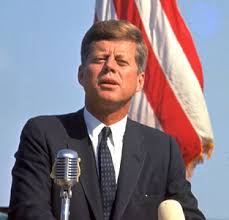
A time when touch football, lively White House parties, stimulus to the arts and the antics of the President’s children became national obsessions.
Others have called the Kennedy Presidency a monument to the unchecked power of wealth and ambition. An administration staffed by young novices playing at statesmen, riddled with nepotism, and whose legacy includes the Bay of Pigs, the Vietnam war and the world’s first nuclear confrontation.
While Americans continue to disagree about the legacy of JFK, there is no disagreement that his Presidency came to a sudden and shocking end just two years, ten months and two days after it had all begun.
The opening days of the Kennedy Presidency raised hopes for a dramatic change in relations between the United States and the Soviet Union.
But detente was not possible then. The Russians had not yet experienced their coming agricultural problems and the setback in Cuba during the Missile Crisis. And the United States had not suffered defeat in Vietnam.
Kennedy’s first brush with international Communism came on April 17, 1961, with the invasion of Cuba at the Bay of Pigs. This operation had been planned and directed by the Central Intelligence Agency during the final months of Dwight D. Eisenhower’s term as President.
The U.S. Navy was to land about 1,400 Cuban exiles on the island to overthrow the Communist government of Fidel Castro. They were supposed to head into the mountains–as Castro himself had done against the dictatorship of Fulgencio Batista in 1956–and raise the cry of revolution.
The invasion would occur after an American air strike had knocked out the Cuban air force. But the airstrike failed and Kennedy, under the pressure of world opinion, called off a second try.
Even so, the invasion went ahead. When the invaders surged onto the beaches, they found Castro’s army waiting for them. Many of the invaders were killed on the spot. Others were captured–to be ransomed by the United States in December, 1962, in return for medical supplies.
It was a major public relations setback for the newly-installed Kennedy administration, which has raised hopes for a change in American-Soviet relations.
Kennedy, trying to abort widespread criticism, publicly took the blame for the setback: “There’s an old saying that victory has a hundred fathers and defeat is an orphan….I’m the responsible officer of the Government.”
The Bay of Pigs convinced Kennedy that he had been misled by the CIA and the Joint Chieifs of Staff. Out of this came his decision to rely heavily on the counsel of his brother, Robert, whom he had installed as Attorney General.
The failed Cuban invasion–unfortunately for Kennedy–convinced Soviet Premier Nikita S. Khrushchev that the President was weak.
Khrushchev told an associate that he could understand if Kennedy had not decided to invade Cuba. But once he did, Kennedy should have gone all the way and wiped out Castro.
Khrushchev attributed this to Kennedy’s youth, inexperience and timidity–and believed he could bully the President.
On June 4, 1961, Kennedy met with Khrushchev in Vienna to discuss world tensions. Khrushchev threatened to go to nuclear war over the American presence in West Berlin–the dividing line between Western Europe, protected by the United States, and Eastern Europe, controlled by the Soviet Union.
Kennedy, who prized rationality above all else, was shaken by Knhrushchev’s unexpected rage. Emerging from the conference, he told an associate: “It’s going to be a cold winter.”
Meanwhile, East Berliners felt the door was about to slam on their access to West Berlin, and a flood of 3,000 refugees daily poured into West Germany.
Khrushchev was clearly embarrassed at this clear showing of the unpopularity of the Communist regime. In August, he orderd that a concrete wall–backed up by barbed wire, searchlights and armed guards–be erected to seal off East Berlin.
That same year, when tensions mounted and a Soviet invasion of West Berlin seemed likely, Kennedy sent additional troops to the city in a massive demonstration of American will.
Two years later, on June 26, 1963, during a 10-day tour of Europe, Kennedy visited Berlin to deliver his “I am a Berlinner” speech to a frenzied crowd of thousands.
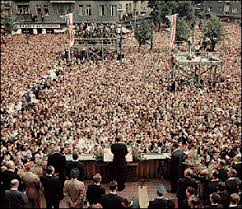
JFK adddresses crowds at the Berlin Wall
“There are many people in the world who really don’t understand, or say they don’t, what is the great issue between the free world and the Communist world,” orated Kennedy. “Let them come to Berlin.”
Standing within gunshot of the Berlin wall, he lashed out at the Soviet Union and praised the citizens of West Berlin for being “on the front lines of freedom” for more than 20 years.
“All free men, wherever they may live,” said Kennedy, “are citizens of Berlin. And therefore, as a free man, I take pride in the words, ‘Ich ben ein Berlinner.'”
2012 PRESIDENTIAL RACE, ABC NEWS, ALEXANDER THE GREAT, ANITA PERRY, ANN ROMNEY, BARACK OBAMA, CBS NEWS, CNN, FACEBOOK, MITT ROMNEY, NBC NEWS, PLUTARCH, RICK PERRY, THE LOS ANGELES TIMES, THE NEW YORK TIMES, THE WASHINGTON POST, TWITTER
In History, Politics on November 8, 2013 at 12:09 am
On September 20, 2012, Ann Romney appeared on Radio Iowa to help her husband, Mitt, carry the state.
Many Republicans feared that Romney had forfeited his chance for victory in November. His videotaped comments to wealthy donors–in which he dismissed “47%” of Americans as non-tax-paying government dependents–had drawn criticism from both Republicans and Democrats.
So when the interviewer asked Ann to respond to Mitt’s Republican critics, she was ready.
“Stop it. This is hard,” she said, in a tone that sounded like an angry mother defending her son’s slipping grades at a PTA meeting.

Mitt and Ann Romney
“You want to try it? Get in the ring. This is hard and, you know, it’s an important thing that we’re doing right now, and it’s an important election.”
Then she aimed her ire at those Americans who hadn’t yet accepted her husband as the Coming Messiah.
“And it is time for all Americans to realize how significant this election is and how lucky we are to have someone with Mitt’s qualifications and experience and know-how to be able to have the opportunity to run this country.”
Click here: Ann Romney defends Mitt – Anderson Cooper 360 – CNN.com Blogs
Maybe Ann simply felt her husband deserved uncritical loyalty from his fellow Republicans. Or maybe she felt mounting dismay at seeing her chances of becoming First Lady going down the toilet.
After all, on April 16, she and Mitt had given a joint interview to ABC News that pulsed with hubris.
Asked if he had anything to say to President Barack Obama, Mitt replied: “Start packing.” As if the most powerful leader of the Western World should snap to attention at Mitt’s command.
And Ann gushed: “I believe it’s Mitt’s time. I believe the country needs the kind of leadership he’s going to offer… So I think it’s our turn now.”
Click here: Mitt Romney Tells President Obama to ‘Start Packing’ | Video – ABC News
So now, after a series of potentially fatal gaffes by her husband, it may be that Ann feared it wasn’t their turn after all.
During a May 17 private fund-raising event, Mitt Romney addressed a roomful of wealthy donors. Toward the end of his remarks he scorned “entitlements” for those Americans who didn’t belong to the privileged class:
“Well, there are 47% of the people who will vote for the president no matter what….
“Who are dependent upon government, who believe that they are victims, who believe that government has a responsibility to care for them, who believe that they’re entitled to healthcare, to food, to housing, to you name it.”
But the Romneys aren’t the only members of the pampered set to feel entitled to holding the most powerful office in the world.
Earlier in 2012, Anita Perry, the wife of Rick Perry–Texas Governor and Presidential candidate–had indulged in her own moment of self-pity.

Rick and Anita Perry
She said she knew what it was like to be unemployed–because her son had resigned from his job at Deutsche Bank to campaign for his father.
“He resigned from his job two weeks ago because he can’t go out and campaign with his father because of SEC regulations,” she said in a Pendleton, S.C. diner on October 14, 2011.
“My son lost his job because of this administration,” she added.
But only a day earlier, Anita Perry had said that her son had eagerly resigned to help his father run for President.
“So, our son Griffin Perry is 28. He loves politics, and he just couldn’t wait. He said ‘Dad, I’m in! I’m in! I’ll do whatever you need me to do. I’ll resign my job. I’ll do what you need me to do,‘” recalled Anita Perry.
There is a difference between voluntarily resigning from a job and being involuntarily terminated from it.
Nor was the voluntary resignation of her son Anita Perry’s only complaint.
“We are being brutalized by our opponents, and our own party,” she had told a South Carolina audience on October 13, 2011. “So much of that is, I think they look at [Rick] because of his faith.
“He is the only true conservative–well, there are some true conservatives. And they’re there for good reasons. And they may feel like God called them, too. But I truly feel like we are here for that purpose.”
Perhaps the final word on the revealed character of these entitled would-be rulers belongs to Plutarch (c. 46 – 120 AD), a Greek historian and biographer. In the foreward to his biography of Alexander the Great, he wrote:
And the most glorious exploits do not always furnish us with the clearest discoveries of virtue or vice in men; sometimes a matter of less moment, an expression or a jest, informs us better of their characters and inclinations, than the most famous sieges, the greatest armaments, or the bloodiest battles whatsoever.
It is well to remember such truths when assessing the characters of our own would-be Alexanders–and those who would be their queens.
ABC NEWS, ABRAHAM LINCOLN, ALAMO, CENSORSHIP, CHRISTIAN RIGHT, CIVIL WAR, CNN, COUNTDOWN, DAVY CROCKETT, EDWARD R. MURROW, FACEBOOK, GEORGE ORWELL, GETTYSBURG ADDRESS, HISPANICS, HISTORY, JEFFERSON DAVIS, JIM BOWIE, JOSEPH STALIN, LAVRENTI BERIA, MARTIN LUTHER KING, MSNBC, RACHEL MADDOW, RELIGION, SCHOOLS, SLAVERY, SOVIET UNION, TEXAS, TEXTBOOKS, THE HUFFINGTON POST, THE NEW YORK TIMES, THE WASHINGTON POST, THOMAS JEFFERSON, TWITTER
In Bureaucracy, History, Politics on November 7, 2013 at 12:16 am
“The problem with writing about history in the Soviet Union,” went the joke, “is that you never know what’s going to happen yesterday.”
The same can now be said about writing history under the new guidelines of the Texas Board of Education.
The changes to the state’s history textbooks were opposed by historians and civil rights leaders. The new curriculum presents history from a right-wing perspective and de-emphasizes the role of blacks, Hispanics and other minority groups.
The board’s decision will affect students living outside Texas because of the state’s major impact on the nation’s textbook publishers.
Because the Texas textbook market is so large, books assigned to the state’s 4.7 million students often become bestsellers, decreasing costs for other school districts and leading them to buy the same materials.
“The books that are altered to fit the standards become the bestselling books, and therefore within the next two years they’ll end up in other classrooms,” said Fritz Fischer, chairman of the National Council for History Education, a group devoted to history teaching at the pre-college level.
“It’s not a partisan issue, it’s a good history issue.”
The new version of history given Texas students will:
- Celebrate the free market;
- Minimize the role of labor movements; and
- Give greater prominence to conservative figures like Phyllis Schlafly.
Additional changes will include:
- Students will now study Confederate President Jefferson Davis’ inaugural address alongside President Abraham Lincoln’s Gettysburg Address.
- Upton Sinclair’s book The Jungle, which documented the horrors of working conditions in the meatpacking industry and led to calls for greater regulation, has been removed from the list of suggested readings.
- The Rev. Martin Luther King Jr.’s “Letter From a Birmingham Jail,” has also been removed.
- Thomas Jefferson’s name has been removed from a list of the country’s great thinkers because he advocated the separation of church and state.
- In a sop to the Christian Right, references have been added to “laws of nature and nature’s God” to a section in U.S. history that requires students to explain major political ideas.
- The word “democratic” has been removed in references to the form of U.S. government, and this will now be described as a “constitutional republic.”
- A reference to the Second Amendment right to bear arms has been added to a section about citizenship in a U.S. government class.
- Economics students will be required to “analyze the decline of the U.S. dollar including abandonment of the gold standard.”
- The names or references to important Hispanics throughout history also were deleted, such as the fact that Tejanos died at the Alamo alongside Davy Crockett and Jim Bowie.
- All references to “capitalism” have been replaced with “free enterprise.”
- U.S. “imperialism” no longer exists; there is only “U.S. expansionism.” Only the Europeans are guilty of “imperialism,” just as only the Soviets committed “aggression.”
- In a rare setback for the radical Right, the slave trade will not be renamed the “Atlantic triangular trade.”
At one time, Americans believed that such wholesale rewriting of history could happen only in the Soviet Union. A classic example of this occurred in 1953, within the Great Soviet Encyclopedia.
Lavrenti Beria had been head of the NKVD, the dreaded secret police, from 1938 to 1953. In 1953, following the death of Joseph Stalin, Beria was arrested and executed on orders of his fellow Communist Party leaders.
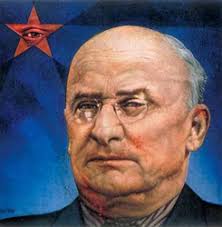
Lavrenti Beria
But the Great Soviet Encyclopedia had just gone to press with a long article singing Beria’s praises.
What to do?
The editors of the Encyclopedia wrote an equally long article about “the Berring Straits,” which was to be pasted over the article about Beria, and sent this off to its subscribers. An unknown number of them decided it was safer to paste accordingly.
In the 1981 film, “Excalibur,” Merlin warns the newly-minted knights of the Round Table: “For it is the doom of men that they forget.”
Forgetting our past is dangerous, but so is “understanding” it incorrectly. Deliberately omitting events and persons from the historical record–such as Thomas Jefferson and Martin Luther King–can be as lethal to the truth as outright lying.
Stalin, for example, ordered the deletion of all references to the major role played by Leon Trotsky, his arch-rival for power, during the Russian Revolution.
Similarly, requiring students to study Confederate President Jefferson Davis’ inaugural address alongside President Lincoln’s Gettysburg Address should be seen for what it is: A thinly-veiled attempt to legitimize the most massive case of treason in United States history.
(The Civil War started on April 12, 1861, when Confederate artillery opened fire on Fort Sumter, a United States fort in Charleston Harbor. Fort Sumter surrendered 34 hours later.
(At least 800,000 Southerners took up arms against the legally elected government of the United States.)
The late broadcast journalist, Edward R. Murrow, would have referred to this as “giving Jesus and Judas equal time.”
All of which simply proves, once again, that the past is never truly dead. It simply waits to be re-interpreted by each new generation–with some interpretations winding up closer to the truth than others.


BAY OF PIGS, BERLIN WALL, BILL CLINTON, BRUCE GREENWOOD, CARLOS MARCELLO, CIA, CIVIL RIGHTS, CLIFF ROBERTSON, CUBAN MISSILE CRISIS, DAVID HALBERSTAM, FACEBOOK, FBI, FIDEL CASTRO, FRANK SINATRA, ICH BEN EIN BERLINNER SPEECH, INTERNET MOVIE DATABASE, J. EDGAR HOOVER, JAMES MARSDEN, JOHN F. KENNEDY, JOSEPH MCCARTHY, JOSEPH P. KENNEDY, LYNDON B. JOHNSON, MAFIA, MALCOM X, MARTIN LUTHER KING, MARTIN SHEEN, MOVIES, NIKITA KHRUSHCHEV, NUCLEAR TEST BAN TREATY, PT-109, ROBERT F. KENNEDY, ROBERT S. MCNAMARA, SAM GIANCANA, SANTOS TRAFFICANTE, SATURDAY NIGHT LIVE, SOVIET UNION, THE BEST AND THE BRIGHTEST, THE BUTLER, THE MISSILES OF OCTOBER, THE RAT PACK, THIRTEEN DAYS, TWILIGHT ZONE, TWITTER, VIETNAM WAR, WILLIAM DEVANE, WILLIAM PETERSEN
JFK’S LEGACY 50 YEARS LATER: PART EIGHT (OF TEN)
In Bureaucracy, History, Law, Law Enforcement, Military, Politics, Social commentary on November 20, 2013 at 12:05 amThroughout his life, John F. Kennedy was lucky–both personally and politically.
Part of the secret lay in his physical presence. He was young and handsome, witty and articulate.
He appeared zestful and athletic despite a series of ailments, including Addison’s disease (a malfunction of the adrenal glands) and an injured back that required the use of a brace.
His wit was sophisticated and often self-depcrecating. Addressing an assembly of Nobel Prize winners at the White House, he said: “I think this is the most extraordinary collection of talent, of human knowledge, that has ever been gathered at the White House–with the possible exception of when Thomas Jefferson dined alone.”
JFK making a joke at a press conference
And his sense of humor often defused otherwise ticklish problems. During the 1960 Presidential race, he was sharply criticized for relying on his millionaire father for much of his funding. At a campaign rally, he deflected the charge with humor:
“I just received a telegram from my generous Daddy. It says: ‘Dear Jack: Don’t buy one more vote than necessary. I’ll be damned if I’m going to pay for a landslide.’”
Another controversey emerged when he named his brother, Robert, Attorney General. Critics charged that the appointment smacked of neoptism–and that Robert didn’t have enough legal gravitas to be the nation’s chief law enforcement offer.
“I see nothing wrong in giving Robert a little experience before he goes out to practice law,” he said at a press conference.
His highly-polished rhetoric–produced by wordsmiths such as Theodore Sorensen–dazzled audiences. His Inaugural Address was acclaimed by Democrats and even most Republicans.
Its signature line, “Ask not what your country can do for you, ask what you can do for your country” has become as famous as Abraham Lincoln’s “government of the people, by the people, for the people.”
His speeches often urged Americans to seek a higher cause than mere self-interest. Speaking of the role of the arts in a nation’s life, he said:
“It may be different elsewhere, but [in] democratic society…the highest duty of the writer, the composer, the artist is to remain true to himself and to let the chips fall where they may.”
Memorial at the Arlington gravesite for John F. Kennedy
But he could be blunt and profane in private.
“My father always told me all businessmen were sonsofbitches, but I never believed it till now,” he said in private when the steel companies made an inflationary price increase in 1962.
Like Richard Nixon, Kennedy installed a secret taping system in the White House. And, as with Nixon, this picked up many of his profanities. Unlike Nixon, however, Kennedy died before his secret taping system was discovered.
Kennedy impressed many journalists with his capacity for detail.
“He swallows and digests whole books in minutes. His eye seizes instantly on the crucial point of a long memorandum. He confounds experts with superior knowledge of their field,” wrote Games McGregor Burns in 1961.
Having briefly worked as a journalist (covering the opening of the United Nations Assembly in 1945) JFK understood and catered to the sensitivities of the Washington press corps.
Using charm, wit, candor and selective accessibility, he cultivated his own favored group of reporters. Critics charged that he was manipulating the media–and they were right.
Sometimes the manipulation was heavy-handed. He pressured The New York Times to censor its coverage of actions he intended to take–such as during the Bay of Pigs and the Cuban Missile Crisis.
But he failed to coerce the Times into removing David Halberstam, its Vietnam correspondent, whose highly critical articles cast doubt on the effectiveness of the American military commitment to Vietnam.
A major part of Kennedy’s appeal lay in his glamorous background. He was born–on May 29, 1917–into a large, robust family headed by wealthy and powerful financier Joseph P. Kennedy.
He attended Princeton and Harvard, graduating from the latter with top honors.
During World War II he became a Naval hero in 1943 after a Japanese destroyer sliced his PT boat in half–by towing an injured shipmate to safety. Stranded on a South Pacific island, Kennedy persuaded a native to summon rescue help from the U.S. Navy.
Kennedy had no plans for a postwar political career. That had been assigned to his elder brother, Joseph P. Kennedy, Jr., by their ambitious father, who was determined to seat the first Irish Catholic President.
After learning of his younger brother’s heroism, Joseph volunteered for a dangerous Naval bombing mission. On August 12, 1944, he and a co-pilot flew an explosives-laden plane from England toward France.
While over the English Channel, they were supposed to parachute from the aircraft–after activating a remote control system to send the plane crashing into a German command center.
But the plane mysteriously exploded before the pilots could eject–and before the plane reached its target.
The death of his elder brother ended John F. Kennedy’s plans for a career as a writer. Joseph Kennedy, Sr., insisted that “Jack” assume the political career that the Kennedy patriarch had assigned for his dead brother.
Share this: