Archive for the ‘Military’ Category
ABC NEWS, ADULTERY, ALTERNET, AMERICABLOG, AP, BABY BOOMER RESISTANCE, BARACK OBAMA, BBC, BIBLE, BILLY GRAHAM, BLOOMBERG NEWS, BUZZFEED, CBS NEWS, CNN, CROOKS AND LIARS, DAILY KOZ, FACEBOOK, FIVETHIRTYEIGHT, FRANKLIN GRAHAM, HARPER’S MAGAZINE, HOMOSEXUALITY, HUFFINGTON POST, I USA TODAY, MEDIA MATTERS, MITT ROMNEY, MOTHER JONES, MOVEON, MSNBC, NBC NEWS, NEW REPUBLIC, NEWSDAY, NEWSWEEK, NEWT GINGRICH, NPR, PBS NEWSHOUR, POLITICO, POLITICUSUSA, RAW STORY, REUTERS, RICK SANTORUM, SALON, SCIENCE, SEATTLE TIMES, SLATE, SLAVERY, SPANISH INQUISITION, TALKING POINTS MEMO, TEA PARTY, THE ATLANTIC, THE CHICAGO SUN-TIMES, THE CHICAGO TRIBUNE, THE DAILY BEAST, THE DAILY BLOG, THE GUARDIAN, THE HILL, THE HUFFINGTON POST, THE INTERCEPT, THE LOS ANGELES TIMES, THE NATION, THE NEW REPUBLIC, THE NEW YORK TIMES, THE NEW YORKER, THE VILLAGE VOICE, THE WASHINGTON POST, THEOLOGY, THINKPROGRESS, TIME, TRUTHDIG, TRUTHOUT, TWITTER, TWO POLITICAL JUNKIES, U.S. NEWS & WORLD REPORT, UP, UPI, USA TODAY, WAR, WOMEN
In Bureaucracy, History, Law, Law Enforcement, Military, Politics, Social commentary on July 11, 2017 at 12:03 am
Franklin Graham, son of Billy Graham, America’s most famous preacher, spends a lot of time deciding who qualifies as a Christian—and who doesn’t.
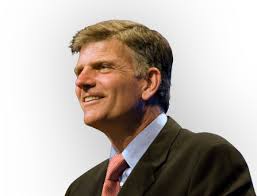
Franklin Graham
He said just that on the February 21, 2012 edition of the MSNBC show, “Morning Joe.”
First, however, he offered his views on the relative Christian dedication of the major contenders for the Presidency in 2012:
President Barack Obama: “Islam sees him as a son of Islam….I can’t say categorically that [Obama is not Muslim] because Islam has gotten a free pass under Obama.”
Former Speaker of the House Newt Gingrich:“Newt’s been married several times… but he could make a good candidate. I think Newt is a Christian. At least he told me he is.”
Former Pennsylvania U.S. Senator Rick Santorum: “His values are so clear on moral issues. No question about it. I think he is, no question, a man of faith.”
Former Massachusetts Governor Mitt Romney: “I’m just saying most Christians would not recognize Mormonism. Of course they believe in Jesus Christ, but they have a lot of other things that they believe in, too, that we don’t accept theologically.”
Thus, Graham had no problem in pronouncing as “saved” a notorious multiple-adulterer like Gingrich, or a rights-denying religious zealot like Santorum.
But he clearly refused to pronounce as “saved” a longtime church-goer like Obama or a Mormon like Romney (whose faith, most evangelicals like Graham believe, is actually a non-Christian cult).
Toward the end of the program, Mike Barnicle, one of the panelists interviewing Graham, said: “You must spend a big part of the day checking out what you conceive to be people’s depth of faith, in terms of measuring.”
“This is my business,” replied Graham. “You guys go through newspapers every day. I look at a person’s political interest, but more importantly I look at their spiritual interests….
“You have to go by what a person says, and how they live their lives…Are they faithful church goers? Or do they just go when the cameras are on them?”
Another man who dedicated his life to judging the religious commitment of others was Bernard Gui, the chief inquisitor at Toulouse from 1308 to 1322.
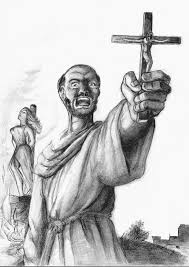
Bernard Gui
His inquisition of those suspected or accused of heresy led to over 900 guilty verdicts. Of those convicted during examination by Gui, 42 were executed—by being burned at the stake.
Gui closely studied the best methods for interrogating “heretics.” He set forth his findings in his most important and famous work, Practica Inquisitionis Heretice Pravitatis. or “Conduct of the Inquisition into Heretical Wickedness.”
In this, he offered a vivid example of how such interrogations might go. The following is taken from that manual:
Interrogator: You call your faith Christian, for you consider ours as false and heretical. But I ask whether you have ever believed as true another faith than that which the Roman Church holds to be true?
Accused Heretic: I believe the true faith which the Roman Church believes, and which you openly preach to us.
Interrogator: Perhaps you have some of your sect at Rome whom you call the Roman Church. I, when I preach, say many things, some of which are common to us both, as that God liveth, and you believe some of what I preach. Nevertheless you may be a heretic in not believing other matters which are to be believed.

“Heretic” being burned at the stake
Accused Heretic: I believe all things that a Christian should believe.
Interrogator: I know your tricks. What the members of your sect believe you hold to be that which a Christian should believe. But we waste time in this fencing. Say simply, Do you believe in one God the Father, and the Son, and the Holy Ghost?
Accused Heretic: I believe.
Interrogator: Do you believe in Christ born of the Virgin, suffered, risen, and ascended to heaven?
Accused Heretic: (Briskly) I believe.
Interrogator: Do you believe the bread and wine in the mass performed by the priests to be changed into the body and blood of Christ by divine virtue?
Accused Heretic: Ought I not to believe this?
Interrogator: I don’t ask if you ought to believe, but if you do believe.
Accused Heretic: I believe whatever you and other good doctors order me to believe.
Inquisitor: Those good doctors are the masters of your sect; if I accord with them you believe with me; if not, not.
Accused Heretic: I willingly believe with you if you teach what is good to me.
Inquisitor: You consider it good to you if I teach what your other masters teach. Say, then, do you believe the body of our Lord, Jesus Christ to be in the altar?
Accused Heretic: (Promptly) I believe that a body is there, and that all bodies are of our Lord.
Interrogator: I ask whether the body there is of the Lord who was born of the Virgin, hung on the cross, arose from the dead, ascended, etc.
Accused Heretic: And you, sir, do you not believe it?
Interrogator: I believe it wholly.
Accused Heretic: I believe likewise.
ABC NEWS, BARACK OBAMA, CBS NEWS, CNN, DICK CHENEY, DONALD TRUMP, DUTY, FACEBOOK, GEORGE W. BUSH, HOUSE INTELLIGENCE COMMITTEE, JOHN BOLTON, JOHN MCCAIN, KGB, KREMLIN RISING, MALAYSIA AIRLINES FLIGHT 17, NBC NEWS, PETER BAKER, REPUBLICAN PARTY, ROBERT M. GATES, RUSSIA, SOVIET UNION, SUSAN GLASSER, THE CHICAGO TRIBUNE, THE CHICAO SUN-TIMES, THE LOS ANGELES TIMES, THE NEW YORK TIMES, THE WASHINGTON POST, TWITTER, UKRAINE, UNITED STATES, USA TODAY, VLADIMIR PUTIN
In Bureaucracy, History, Military, Politics, Social commentary on July 10, 2017 at 12:30 am
Since the late 1940s, Republicans have hurled the charge of “appeasement” at every Democratic President
Harry S. Truman, John F. Kennedy and Lyndon Johnson found themselves accused of “selling out” to the Soviet Union. The motive for this was usually attributed to cowardice—if not outright treason. It didn’t matter to Republicans that:
- Truman began the policy of “containing” the Soviet Union within its World War II borders;
- Kennedy faced down the Russians during the Cuban Missile Crisis; and
- Johnson waged a bloody, budget-busting war against Soviet proxies in Vietnam.
Most recently, it became the turn of President Barack Obama.
On July 17, 2014, Malaysia Airlines Flight 17 MH 17/MAS17 took off from Amsterdam for Kuala Lumpur International Airport.
But as the flight–and its 283 passengers and 15 crew—cruised above Hrabove in Donetsk Oblast, Ukraine, Russian-backed Ukrainian separatists shot it down. A Buk surface-to-air missile slammed into the aircraft, almost instantly killing everyone on board.
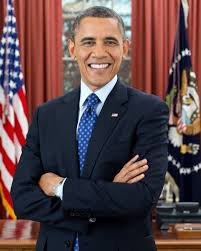
President Barack Obama
“The President is afraid of provoking [Russian President] Vladimir Putin,” United States Senator John McCain told Reuters. “Vladimir Putin is on the move because he has paid no price for his aggression.”
And Texas United State Senator Ted Cruz said: “Putin fears no retribution. [Obama’s] policy has been to alienate and abandon our friends, and to coddle and appease our enemies.”
But now the United States has a Republican President who has cozied up to Putin since he entered the 2016 Presidential race.
In January, the CIA, FBI, NSA and the Office of the Director of National Intelligence concluded that Russian Intelligence agents had meddled in the election via cyber-warfare to secure Donald Trump’s election.
Yet, at the G20 summit, Trump declared it was “an honor” to meet Putin.
After the meeting, Trump tweeted on July 9: “I strongly pressed President Putin twice about Russian meddling in our election. He vehemently denied it. I’ve already given my opinion…..”
Trump’s opinion, as he famously gave it, was: “It could be Russia, but it could also be China. It could also be lots of other people. It also could be somebody sitting on their bed that weighs 400 pounds.”
Even more worrisome to American Intelligence officials was Trump’s accompanying tweet: “Putin & I discussed forming an impenetrable Cyber Security unit so that election hacking, & many other negative things, will be guarded.”
Representative Adam Schiff, the top Democrat on the House Intelligence Committee reacted: “If that’s our best election defense, we might as well just mail our ballot boxes to Moscow.”
Even some Republicans likened the proposal to letting the fox guard the chicken coop. Florida United States Senator Marco Rubio tweeted: “While reality & pragmatism requires that we engage Vladimir Putin, he will never be a trusted ally or a reliable constructive partner.”
Yet America’s frustrations with Russia generally—and Putin in particular—long predate those of Barack Obama.
Nor were relations between the United States and post-Soviet Russia helped by the naivety of President George W. Bush.
In June, 2001, Bush and Putin met in Slovenia. During the meeting a truly startling exchange occurred.

President George W. Bush and Vladimir Putin
Putin, a former KGB Intelligence officer, had clearly done his homework on Bush. When he mentioned that one of the sports Bush had played was rugby, Bush was highly impressed.
“I did play rugby,” gushed Bush. “Very good briefing.”
But more was to come.
BUSH: Let me say something about what caught my attention, Mr. President, was that your mother gave you a cross which you had blessed in Israel, the Holy Land.
PUTIN: It’s true.
BUSH: That amazes me, that here you were a Communist, KGB operative, and yet you were willing to wear a cross. That speaks volumes to me, Mr. President. May I call you Vladimir?
Putin instantly sensed that Bush judged others–even world leaders–through the lens of his own fundamentalist Christian theology.
Falling back on his KGB training, Putin seized on this apparent point of commonality to build a bond. He told Bush that his dacha had once burned to the ground, and the only item that had been saved was that cross.
“Well, that’s the story of the cross as far as I’m concerned,” said Bush, clearly impressed. “Things are meant to be.”
Afterward, Bush and Putin gave an outdoor news conference.
“Is this a man that America can trust?” Associated Press correspondent Ron Foumier asked Bush.
“Yes,” said Bush. “I looked the man in the eye. I found him to be very straightforward and trustworthy. We had a very good dialogue.
“I was able to get a sense of his soul, a man deeply committed to his country and the best interests of his country. I wouldn’t have invited him to my ranch if I didn’t trust him.”
Of course, no one from the Right is now recalling such embarrassing words.
It’s far more politically profitable to pretend that all of America’s tensions with Russia began with the election of Barack Obama.
And to pretend that those tensions have vanished now that another Right-wing President occupies the White House.
ABC NEWS, ADOLF HITLER, ALTERNET, AP, BARACK OBAMA, BBC, BUZZFEED, CBS NEWS, CIA, CNN, CZECHOSLOVAKIA, DAILY KOS, DEBT CEILING, DONALD TRUMP, EDUARD DELADIER, EXTORTION, FACEBOOK, FBI, HOUSE SPEAKER JOHN BOEHNER, JAY PARINI, MOTHER JONES, MOVEON, MUNICH CONFERENCE, NATIONAL SECURITY AGENCY, NBC NEWS, NEGOTIATING, NEVILLE CHAMBERLAIN, NEWSWEEK, NICCOLO MACHIAVELLI, NPR, POLITICO, RAW STORY, REPUBLICAN PARTY, REPUBLICANS, REUTERS, RICO ACT, RUSSIA, SALON, SEATTLE TIMES, SLATE, THE ATLANTIC, THE CHICAGO SUN-TIMES, THE CHICAGO TRIBUNE, THE DAILY BEAST, THE GUARDIAN, THE HILL, THE HUFFINGTON POST, THE LOS ANGELES TIMES, THE NEW YORK TIMES, THE WALL STREET JOURNAL, THE WASHINGTON POST, TIME, TWITTER, U.S. NEWS & WORLD REPORT, UPI, USA PATRIOT ACT, USA TODAY, WINSTON CHURCHILL
In Bureaucracy, History, Law, Law Enforcement, Military, Politics, Social commentary on June 30, 2017 at 12:03 am
During the summer of 2011, Republicans threatened to destroy the Nation’s credit rating unless Democrats agreed to massively cut social programs for the elderly, poor and disabled.
President Barack Obama could have countered this extortion through the Racketeer Influenced Corrupt Organization (RICO) Act.
RICO opens with a series of definitions of “racketeering activity” which can be prosecuted by Justice Department attorneys. Among those crimes: Extortion.
Extortion is defined as “a criminal offense which occurs when a person unlawfully obtains either money, property or services from a person(s), entity, or institution, through coercion.”
The RICO Act defines “a pattern of racketeering activity” as “at least two acts of racketeering activity, one of which occurred after the effective date of this chapter and the last of which occurred within ten years…after the commission of a prior act of racketeering activity.”
And if President Obama had believed that RICO was not sufficient to counter Republicans’ extortion attempts, he could have relied on the USA Patriot Act of 2001, passed in the wake of 9’11.
In Section 802, the Act defines domestic terrorism. Among the behavior so defined: “Activities that…appear to be intended…to influence the policy of a government by intimidation or coercion [and]…occur primarily within the territorial jurisdiction of the United States.”
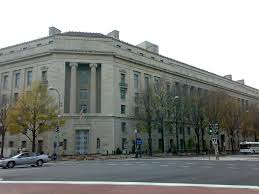
U.S. Department of Justice
The remedies for punishing such criminal behavior were now legally in place. President Obama needed only to direct the Justice Department to apply them.
Criminally investigating and possibly indicting members of Congress would not violate the separation-of-powers principle. Congressmen have in the past been investigated, indicted and convicted for various criminal offenses.
The indictment of large numbers of Republican extortionists would have substantially changed the course of American history while Obama held office.
Instead of raising huge sums of money for re-election battles, those Representatives and Senators would have been forced to raise monies for their legal defense. And while some might have been convicted, others almost certainly would have been.
This would have substantially depleted the ranks of Obama’s sworn enemies—and given him far greater opportunities to enact his legislative agenda.
Such indictments and prosecutions—and especially convictions—would have served notice on current and future members of Congress: The lives and fortunes of American citizens may not be held hostage to gain leverage in a political settlement.
A Cuban Missile Crisis Speech
But Obama could have stood up to Republican extortionists in another way: By urging his fellow Americans to rally to him in a moment of supreme national danger.
President John F. Kennedy did just that—successfully—during the most dangerous crisis of his administration. Addressing the Nation on October 22, 1962, Kennedy shocked his fellow citizens by revealing that the Soviet Union had installed offensive nuclear missiles in Cuba.

John F. Kennedy
Kennedy outlined a series of steps he had taken to end the crisis—most notably, a blockade of Cuba.
Then he sought to reassure and inspire his audience: “The cost of freedom is always high, but Americans have always paid it. And one path we shall never choose, and that is the path of surrender or submission.”
President Obama could have sent that same message to the extortionists of the Republican Party—by explaining to the American people:
- Republicans have adopted the same my-way-or-else “negotiating” stance as Adolf Hitler.
- Like the Nazis, they are determined to gain absolute power—or destroy the Nation they claim to love.
- They raised the debt ceiling seven times during the eight-year Presidency of George W. Bush.
- But now that a Democrat holds the White House, raising the debt ceiling is unacceptable.
- Despite Republican lies, we cannot revitalize the economy by slashing taxes on the wealthy and on cash-hoarding corporations while cutting benefits for millions of average Americans.
- We will need both tax increases and sensible entitlement cuts to regain our economic strength.
And he could have ended his speech with a direct call to action by the American people:

President Barack Obama addressing the Nation
“We stand on the edge of economic disaster. Therefore, I am asking each of you to stand up for America tonight–by demanding the recall of the entire membership of the Republican Party.
“This is the moment when each of us must decide—whether we will survive as a Republic, or allow ruthless political fanatics to destroy what has lasted and thrived for more than 200 years.”
Instead, Obama caved in to Republican extortion demands.
In September, 1939, British Prime Minister Neville Chamberlain and French Prime Minister Edouard Daladier sold out their ally, Czechoslovakia, to Adolf Hitler at the infamous Munich Conference.
As Winston Churchill aptly predicted: “Britain and France had to choose between war and dishonor. They chose dishonor. They will have war.”
To paraphrase Churchill: President Obama had to choose between confrontation and timidity. He chose timidity. He got contempt and obstruction in return.
Five years later, the FBI, CIA and National Security Agency informed Obama that Russian Intelligence agents were actively working to ensure Donald Trump’s election as President.
Obama did not publicly release this information–nor indict Trump campaign staffers who were colluding with those agents.
Thus, Trump won the election–and gained the power to destroy Obama’s Presidential legacy.
ABC NEWS, ADOLF HITLER, ALTERNET, AP, BARACK OBAMA, BBC, BUZZFEED, CBS NEWS, CIA, CNN, CZECHOSLOVAKIA, DAILY KOS, DEBT CEILING, DONALD TRUMP, EDOUARD DELADIER, EXTORTION, FACEBOOK, FBI, HOUSE SPEAKER JOHN BOEHNER, JAY PARINI, MOTHER JONES, MOVEON, MUNICH CONFERENCE, NATIONAL SECURITY AGENCY, NBC NEWS, NEGOTIATING, NEVILLE CHAMBERLAIN, NEWSWEEK, NPR, POLITICO, RAW STORY, REPUBLICAN PARTY, REPUBLICANS, REUTERS, RICO ACT, RUSSIA, SALON, SEATTLE TIMES, SLATE, THE ATLANTIC, THE CHICAGO SUN-TIMES, THE CHICAGO TRIBUNE, THE DAILY BEAST, THE GUARDIAN, THE HILL, THE HUFFINGTON POST, THE LOS ANGELES TIMES, THE NEW YORK TIMES, THE WALL STREET JOURNAL, THE WASHINGTON POST, TIME, TWITTER, U.S. NEWS & WORLD REPORT, UPI, USA PATRIOT ACT, USA TODAY, WINSTON CHURCHILL
In Bureaucracy, History, Law, Law Enforcement, Military, Politics, Social commentary on June 29, 2017 at 11:40 am
“[Barack] Obama needs to find his voice now in ways that, during his time in the Oval Office, he was too often reluctant to do, perhaps fearing the immense power of the bully pulpit.
“But now there is a real bully in the pulpit, and Obama–like the rest of us–has no choice but to speak, and to act.”
So writes noted author and poet Jay Parini in an Op-Ed piece for CNN.
“[President Donald] Trump has, in fact, gone out of his way to attack Obama, as in his recent nonsensical reversal wherein he attacked Obama for his lack of response to Russian meddling in the 2016 election: ‘Obama did NOTHING,’ Trump tweeted. He went on to accuse Obama of colluding with the Russians!”
Parini believes that Obama should have warned the American public that Russia was trying to sway the 2016 election for Trump: “There can be no sound reason for not alerting the people of this country to a major attack on their most cherished right, the right to vote.”
But Obama didn’t issue any such warning. The findings of the FBI, CIA and National Security Agency were kept strictly confidential until after Trump won the campaign.
Parini also believes that Obama should now forcefully respond to Trump’s attacks on him and his signature legislative achievement: The Affordable Care Act, also known as “Obamacare.”
But Obama has long refused to respond forcefully to Republican attacks. As a result, Republicans now dominate both houses of Congress–and the White House.
During the summer of 2011, Republicans threatened to destroy the Nation’s credit rating unless their budgetary demands were met. They refused to raise the debt ceiling unless Democrats agreed to massively cut social programs for the elderly, poor and disabled.

Sign of the Mafia “Black Hand”
If Congress failed to raise the borrowing limit of the federal government by August 2, the date when the U.S. reached the limit of its borrowing abilities, it would have begun defaulting on its loans.
As Warren Buffett, CEO of Berkshire Hathaway, explained the looming economic catastrophe: “If you don’t send out Social Security checks, I would hate to think about the credit meeting at S&P and Moody’s the next morning.
“If you’re not paying millions and millions and millions of people that range in age from 65 on up, money you promised them, you’re not a AAA,” said Buffett.
A triple-A credit rating is the highest possible rating that can be received.
President Obama offered to make historic cuts in the federal government and the social safety net–on which millions of Americans depend for their most basic needs.
But House Speaker John Boehner rejected that offer. He would not agree to the tax increases that Democrats wanted to impose on the wealthiest 1% as part of the bargain.

John Boehner
To raise taxes on the wealthy, Republicans insisted, would be a “jobs-killer.” It would “discourage” corporate CEOs from creating tens of thousands of jobs they allegedly “wanted” to create.
As the calendar moved ever closer to the fateful date of August 2, Republican leaders continued to insist: Any deal that includes taxes “can’t pass the House.”
One senior Republican said talks would go right up to—and maybe beyond—the brink of default.
“I think we’ll be here in August,” said Republican Representative Pete Sessions, of Texas. “We are not going to leave town until a proper deal gets done.”
President Obama had previously insisted on extending the debt ceiling through 2012. But in mid-July, he simply asked congressional leaders to review three options with their members:
- The “Grand Bargain” choice—favored by Obama–would cut deficits by about $4 trillion, including spending cuts and new tax revenues.
- A medium-range plan would aim to reduce the deficit by about $2 trillion.
- The smallest option would cut between $1 trillion and $1.5 trillion, without increased tax revenues or any medicare and Medicaid cuts.
And the Republican response?
Said Rep. Darrell Issa, chairman of the Oversight and Government Reform Committee: “Quite frankly, [Republican] members of Congress are getting tired of what the president won’t do and what the president wants.”
With the United States teetering on the brink of national bankruptcy, President Obama faced three choices:
- Counter Republican extortion attempts via RICO—the Racketeer Influenced Corrupt Organization Act.
- Make a “Cuban Missile Crisis”-style address to the American people, seeking to rally them against a criminal threat to the fiscal security of the Nation.
- Cave in to Republican demands.
Unfortunately for Obama and the Nation, he chose Number Three.
Here is how he could have applied the other two options.
Racketeer Influenced Corrupt Organizations (RICO) Act
In 1970, Congress passed the Racketeer Influenced and Corrupt Organizations (RICO) Act, Title 18, United States Code, Sections 1961-1968.
Congress’ goal was to eliminate the stranglehold of organized crime on the nation’s economy. To put it bluntly, RICO was intended to destroy the Mafia.

But in United States v. Turkette, 452 U.S. 576 (1981), the Supreme Court held that RICO applied as well to legitimate enterprises being operated in a criminal manner.
After Turkette, RICO could also be used against corporations, political protest groups, labor unions and loosely knit-groups of people.
In short, the stage was set to hold even Congressional extortionists accountable.
ABC NEWS, ADOLF HITLER, ALBERT SPEER, ALTERNET, AP, BARACK OBAMA, BBC, BUZZFEED, CBS NEWS, CNN, DAILY KOS, DEPARTMENT OF HOMELAND SECURITY, EXTORTION, FACEBOOK, FASCISM, MITCH MCCONNELL, MOTHER JONES, MOVEON, NAZI GERMANY, NBC NEWS, NEGOTIATING, NEWSWEEK, NPR, POLITICO, RAW STORY, REPUBLICAN PARTY, REPUBLICANS, REUTERS, SALON, SEATTLE TIMES, SLATE, THE ATLANTIC, THE CHICAGO SUN-TIMES, THE CHICAGO TRIBUNE, THE DAILY BEAST, THE GUARDIAN, THE HILL, THE HUFFINGTON POST, THE LOS ANGELES TIMES, THE NEW YORK TIMES, THE WALL STREET JOURNAL, THE WASHINGTON POST, TIME, TRICKLE-DOWN ECONOMICS, TWITTER, U.S. NEWS & WORLD REPORT, UPI, USA TODAY, WORLD WAR 11
In Bureaucracy, History, Law, Law Enforcement, Military, Politics, Social commentary on June 28, 2017 at 9:17 am
On December 13, 2014, the U.S. Senate passed a $1.1 trillion spending bill to fund almost the entire government through the September 30 end of the fiscal year.
But one Federal agency was pointedly exempted from full funding: The Department of Homeland Security (DHS). Its funding would expire on February 27.
With their newfound majorities in both houses of Congress, Republicans intended to hold the security of the United States as a hostage.
Their goal: To force President Barack Obama to rescind the changes he had made in American immigration policy.
With more than 240,000 employees, the DHS is the third largest Cabinet department, after the Departments of Defense and Veterans Affairs.
The Defense Department is charged with military actions abroad.
DHS is responsible for protecting the United States inside and outside its borders. Its goal is to prepare for, prevent and—if prevention fails—respond to man-made accidents, natural disasters and terrorism.

Among the agencies now operating under its mandate:
- U.S. Citizenship and Immigration Services
- U.S. Customs and Border Protection
- U.S. Coast Guard
- Federal Emergency Management Agency (FEMA)
- Federal Law Enforcement Training Center
- U.S. Immigration and Customs Enforcement (ICE)
- Transportation and Safety Administration (TSA)
- U.S. Secret Service
- Science and Technology Directorate
- Domestic Nuclear Detection Office
- Office of Intelligence and Analysis
- Office of Operations Coordination and Planning
Yet each of these agencies has a vital role to play in protecting the nation. A nation whose security Republicans were willing to threaten to get their way on a matter of domestic policy.
Right-wing Republicans argued that even if DHS’s funding were stopped, most of its employees would stay on the job. That’s because they perform work considered necessary to protect human life and property.
But while those employees were safeguarding the country, they wouldn’t be paid until the shutdown ended.
It’s hard to give your full attention to protecting the lives of others when you have to worry about paying a mortgage or feeding your family.
Of course, the Republicans responsible for this shutdown would have continued to receive their hefty paychecks.
Republicans chose to act as Mafia extortionists at a time when the United States appeared to be in the crosshairs of North Korean terrorism.
On November 14, 2014, Sony Pictures came under relentless attack by cyberterrorists, whom the FBI linked to North Korea.
The reason? Sony’s production of “The Interview,” a comedy depicting the assassination of North Korean dictator Kim Jong Un.
Calling themselves “Guardians of Peace,” or GOP, they shut down the company’s computer system and revealed employees’ personal information such as salaries, addresses, and Social Security numbers.
(Ironically, “Guardians of Peace” appropriated the same abbreviation–GOP–used by the Republicans for “Grand Old Party.”)
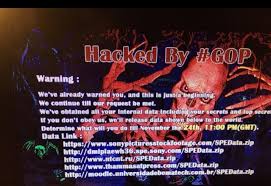
Warning issued by “Guardians of Peace” (GOP)
On December 17, 2014, Sony Pictures cancelled the Christmas Day premier of “The Interview” after the nation’s five largest movie chains refused to show the movie, following a terror threat posted online.
And then on February 5, 2015, Anthem Insurance announced that its database had been hacked–and sensitive medical information on up to 80 million customers and employees accessed.
According to an anonymous source, the hackers used malware that’s been used almost exclusively by Chinese cyberspies.
* * * * *
As the Third Reich came to its fiery end, Adolf Hitler sought to punish the German people for being “unworthy” of his “genius” and losing the war he had started.
His attitude was: “If I can’t rule Germany, then there won’t be a Germany.”
In his infamous “Nero Order,” he decreed the destruction of everything still remaining–industries, ships, harbors, communications, roads, mines, bridges, stores, utility plants, food stuffs.
Fortunately for Germany, one man—Albert Speer, the Minister of Armaments—finally broke ranks with his Fuhrer.
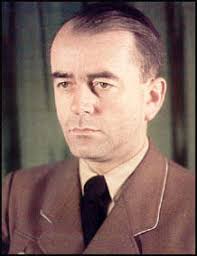
Albert Speer
Risking death, he refused to carry out Hitler’s “scorched earth” order. Even more important, he mounted a successful effort to block such destruction or persuade influential military and civilian leaders to disobey the order as well.
As a result, those targets slated for destruction were spared.
After the election of America’s first black President, Republicans waged a similar “scorched earth” campaign. Their avowed goal—as stated openly by Kentucky’s U.S. Senator Mitch McConnell—was “to make Barack Obama a one-term President.”
Literally during his first Inauguration, Republicans, in a secret meeting, agreed to block every effort he made to repair the economy.
Acting as extortionists, they repeatedly threatened to shut down the government if they didn’t get their way in legislative matters.
And just as repeatedly, they blocked legislation that would have helped the poor, unemployed, women, elderly, disabled or middle-class.
At the center of their fury lay the Affordable Care Act, providing medical care to all citizens.
Even after Congress passed it and the Supreme Court affirmed it, House Republicans shut down the government in October, 2013.
By doing so, they hoped to pressure Obama into killing his signature piece of legislation. The effort failed.
Like Adolf Hitler, their attitude has been: “If I can’t rule America, there won’t be an America.”
It remains to be seen whether a Republican Albert Speer will step forward to save America from the self-destructive excesses of this Nation’s own fanatics.
ABC NEWS, ADOLF HITLER, ALTERNET, AP, BBC, BUZZFEED, CBS NEWS, CNN, DAILY KOS, DAVID BROOKS, DONALD TRUMP, FACEBOOK, FBI, GEORGE C. SCOTT, GEORGE S. PATTON, GESTAPO, HOGAN’S HEROES, JAMES COMEY, JIMMY CARTER, MEL BROOKS, MIKE FLYNN, MOTHER JONES, MOVEON, NAZI GERMANY, NBC NEWS, NEWSWEEK, NPR, PAUL RYAN, PBS NEWSHOUR, POLITICO, RAW STORY, REPUBLICAN PARTY, REUTERS, RICHARD GRUNBERGER, RICHARD NIXON, ROBERT MEULLER, Ronald Reagan, SALON, SEATTLE TIMES, SLATE, SOVIET UNION, THE 12-YEAR REICH, THE ATLANTIC, THE CHICAGO SUN-TIMES, THE CHICAGO TRIBUNE, THE DAILY BEAST, THE GUARDIAN, THE HILL, THE HUFFINGTON POST, THE LOS ANGELES TIMES, THE NEW YORK TIMES, THE WALL STREET JOURNAL, THE WASHINGTON POST, TIME, TWITTER, U.S. NEWS & WORLD REPORT, UPI, USA TODAY, WAFFEN-SS, WEHRMACHT
In Bureaucracy, History, Law, Law Enforcement, Military, Politics, Social commentary on June 20, 2017 at 12:05 am
While the Nazi Party ruled Germany from 1933 to 1945, its influence over all aspects of Germans’ lives was suffocating.
“The persuasive influence of the Nazi regime reached into every corner of everyday life in Germany,” reads the back cover of Richard Grunberger’s classic 1971 book, The 12-Year Reich.
“Censorship prevailed, education was undermined, family life was idealized, but children were encouraged to turn in disloyal parents.
“‘Volk’ festivals, party rallies, awards, uniforms, pageantry all played a part in the massive effort to shape the mind of a nation.”
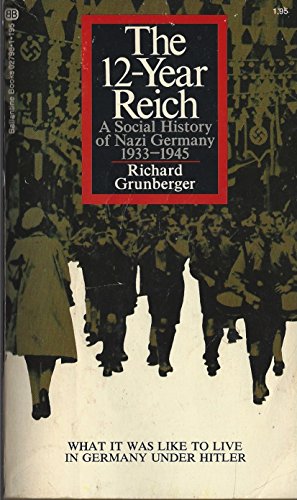
And yet, after the Reich surrendered unconditionally to the Allies on May 8, 1945, a strange thing happened: Virtually no one in Germany admitted to having been a Nazi—or having even known one.
American and British soldiers couldn’t find any German veterans willing to admit they had ever fought against Western, democratic nations. All the once-proud legionaries of the Wehrmacht and Waffen-SS swore they had been fighting “the real enemy”—the Russians—on the Eastern front.
And then there were all the stories of Germans who, at great risk to themselves, had hidden Jews in their attics. Which left unanswered the question: If so many “good Germans” had saved so many Jews, how had six million Jews died horrifically before the Reich fell?
In short: Adolf Hitler had lost the war he started—making him a loser nobody wanted to be identified with.
In the decades since, the “loser” tag has continued to stick with those who once served the Third Reich. Mel Brooks has repeatedly turned German soldiers—once the pride of the battlefield—into idiotic comic foils.
Even the fearsome Gestapo was spoofed for laughs on the long-running TV comedy, “Hogan’s Heroes.”

“Hogan’s Heroes”
“Americans love a winner,” George C. Scott as George S. Patton says at the outset of the classic 1970 movie. “And will not tolerate a loser.”
And that is why Republicans have stuck so closely with President Donald J. Trump.
A typical example of this occurred on June 8 after former FBI director James Comey testified before the United States Senate Select Committee on Intelligence.
Comey revealed that, on February 14, Trump had ordered everyone but Comey to leave a crowded meeting in the Oval Office.
“I want to talk about Mike Flynn,” said Trump.
Flynn had resigned the previous day from his position as National Security Adviser. The FBI was investigating him for his previously undisclosed ties to Russia.
“I hope you can see your way clear to letting this go, to letting Flynn go,” said Trump. “He is a good guy. I hope you can let this go.”
This was clearly an attempt by Trump to obstruct the FBI’s investigation.
Yet Republican House Speaker Paul Ryan rushed to excuse his clearly illegal behavior: “He’s new at government, so therefore I think he’s learning as he goes.”
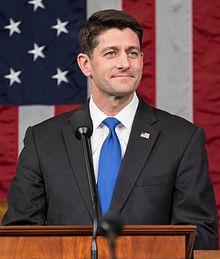
Paul Ryan
David Brooks, the conservative New York Times columnist, offered a more accurate explanation of Trump’s motives. Speaking on The PBS Newshour, Brooks said:
“We are a nation of laws. Donald Trump lives in an entirely different cultural universe. He is more clannist, believing in clan, believing in family, believing in loyalty, not recognizing objective law, not recognizing the procedures that is really how modern government operates….
“It’s not only that he doesn’t know the rules, but at all along and throughout his presidency, he has sort of trampled on the rules almost as a matter of policy, as a matter of character, because he doesn’t believe in that kind of relationships. It’s all personal loyalty, not about laws and norms and standards.”
Republicans don’t fear that Trump will trash the institutions that Americans have cherished for more than 200 years. Institutions like an independent judiciary, a free press, and an incorruptible Justice Department.
He has already attacked all of these—and Republicans have either said nothing or rushed to his defense.
What Republicans truly fear about Donald Trump is that he will finally cross one line too many—like firing Special Counsel Robert Meuller. And that the national outrage following this will force them to launch impeachment proceedings against him.
But it isn’t even Trump they fear will be destroyed.
What they most fear losing is their own hold on nearly absolute power in Congress and the White House.
If Trump is impeached and possibly indicted, he will become a man no one any longer fears. He will be a figure held up to ridicule and condemnation.
Like Adolf Hitler. Like Richard Nixon.
And his Congressional supporters will be branded as losers along with him.
Republicans vividly remember what happened after Nixon was forced to resign on August 9, 1974: Democrats, riding a wave of reform fever, swept Republicans out of the House and Senate—and Jimmy Carter into the White House.
What Ronald Reagan once said about the leadership of the Soviet Union now literally applies to that of the Republican Party:
“They…have openly and publicly declared that the only morality they recognize is what will further their cause, meaning they reserve unto themselves the right to commit any crime, to lie, to cheat, in order to attain that.”
ABC NEWS, ADOLF HITLER, ALTERNET, AP, BBC, BUSINESS LEADERSHIP, BUZZFEED, CBS NEWS, CNN, DAILY KOS, DONALD TRUMP, ENGLAND, ERICH VON MANSTEIN, ERWIN ROMMEL, FACEBOOK, FBI, HEINZ GUDERIAN, HOW HITLER COULD HAVE WON WORLD WAR II, IOWA CAUCUSES, JAMES COMEY, JOSEPH STALIN, MIKE FLYNN, MOTHER JONES, MOVEON, MSNBC, NAZI GERMANY, NBC NEWS, NEWSWEEK, NPR, POLITICO, RAW STORY, REUTERS, RUSSIA INVESTIGATION, SALON, SEATTLE TIMES, SLATE, SOVIET UNION, THE ATLANTIC, THE CHICAGO SUN-TIMES, THE CHICAGO TRIBUNE, THE DAILY BEAST, THE GUARDIAN, THE HILL, THE HUFFINGTON POST, THE LOS ANGELES TIMES, THE NEW YORK TIMES, THE WALL STREET JOURNAL, THE WASHINGTON POST, TIME, TWITTER, U.S. NEWS & WORLD REPORT, U.S. SENATE INTELLIGENCE COMMITTEE, UPI, USA TODAY, VLADIMIR PUTIN, WORLD WAR 11
In Bureaucracy, History, Military, Politics, Social commentary on June 8, 2017 at 1:11 pm
“We will have so much winning if I get elected [President] that you may get bored with winning.”
It was vintage Donald Trump, speaking at a September, 2015 Capitol Hill rally to protest President Barack Obama’s nuclear deal with Iran.
That was before Trump became President–and, since then, has been entangled in multiple investigations into contacts between Russian Intelligence agents and high-level officials of his 2016 Presidential campaign.
That was before he was forced to fire retired General Mike Flynn as his national security adviser. The reason: Flynn’s close ties to Russia and its dictator, Vladimir Putin, had recently come to light in the press.
That was before he fired James Comey, the FBI director who had refused to give him a pledge of personal loyalty.
That was before Comey testified before the United States Senate’s Intelligence Committee and publicly branded Trump a liar on nationwide television.
And that was before an anonymous White House source told CNN: “He now lives within himself, which is a dangerous place for Donald Trump to be. I see him emotionally withdrawing. He’s gained weight. He doesn’t have anybody whom he trusts.”
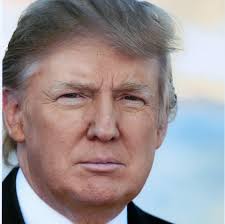
Donald Trump
Trump’s boast reflected he mindset–if not the words–of an earlier CEO whose ego carried him–and his country–to ruin: Adolf Hitler.
Literally thousands of books have been written on Hitler’s six-year stint as a self-appointed field commander. But for an overall view of Hitler’s generalship, an excellent choice is How Hitler Could have Won World War II by Bevin Alexander.

Among the fatal errors that led to the defeat of the defeat of the Third Reich:
- Wasting hundreds of Luftwaffe [air force] pilots, fighters and bombers in a halfhearted attempt to conquer England.
- Ignoring the pleas of generals like Erwin Rommel to conquer Syria, Iraq and Saudi Arabia, thus giving Germany control of most of the world’s oil.
- Attacking his ally, the Soviet Union, while still at war with Great Britain.
- Turning millions of Russians into enemies rather than allies by his brutal and murderous policies.
- Needlessly declaring war on the United States after the Japanese attacked Pearl harbor. (Had he not done so, Americans would have focused all their attention on defeating Japan.)
- Refusing to negotiate a separate peace with Soviet dictator Joseph Stalin–thus granting Germany a large portion of captured Russian territory in exchange for letting Stalin remain in power.
- Insisting on a “not-one-step-back” military “strategy” that led to the needless surrounding, capture and/or deaths of hundreds of thousands of German servicemen.
As the war turned increasingly against him, Hitler became ever more rigid in his thinking.
He demanded absolute control over the smallest details of his forces. This, in turn, led to astonishing and unnecessary losses among their ranks.
One such incident was immortalized in the 1962 movie, The Longest Day, about the Allied invasion of France known as D-Day.
On June 6, 1944, General Erwin Rommel ordered the panzer tanks to drive the Allies from the Normandy beaches. But these could not be released except on direct orders of the Fuehrer.
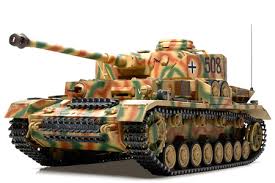
Panzer tank
As Hitler’s chief of staff, General Alfred Jodl, informed Rommel: The Fuehrer was asleep–and was not to be awakened. By the time Hitler awoke and issued the order, it was too late.
Nor could Hitler accept responsibility for the policies that were leading Germany to certain defeat. He blamed his generals, accused them of cowardice, and relieved many of the best ones from command.
Among those sacked was Heinz Guderian, creator of the German Panzer corps–and responsible for the blitzkreig victory against France in 1940.
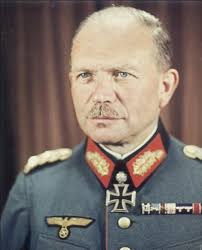
Heinz Guderian
Another was Erich von Manstein, designer of the strategy that defeated France in six weeks–which Germany had failed to do during four years of World War 1.
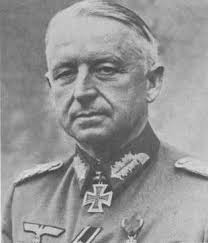
Erich von Manstein
Finally, on April 29, 1945–with the Russians only blocks from his underground Berlin bunker–Hitler dictated his “Last Political Testament.”
Once again, he refused to accept responsibility for unleashing a war that would ultimately consume 50 million lives:
“It is untrue that I or anyone else in Germany wanted war in 1939. It was desired and instigated exclusively by those international statesmen who either were of Jewish origin or worked for Jewish interests.”
Hitler had launched the invasion of Poland–and World War II–with a lie: That Poland had attacked Germany. Fittingly, he closed the war–and his life–with a final lie.
Joachim C. Fest, author of Hitler (1973), writes of the surprise that awaited Allied soldiers occupying Nazi Germany in 1945: “Almost without exception, virtually from one moment to the next, Nazism vanished after the death of Hitler and the surrender.
“It was as if National Socialism had been nothing but the motion, the state of intoxication and the catastrophe it had caused….
“Once again it became plain that National Socialism, like Fascism in general, was dependent to the core on superior force, arrogance, triumph, and by its nature had no resources in the moment of defeat.”
The ancient Greeks believed that “a man’s character is his destiny.” For Adolf Hitler–and the nations he ravaged–that proved fatally true.
It remains to be seen whether the same will prove true for Donald Trump–and the United States.
ABC NEWS, ADOLF HITLER, ALTERNET, AP, BBC, BUZZFEED, CBS NEWS, CNN, DAILY KOS, DIMITRI SHOSTAKOVICH, DONALD TRUMP, FACEBOOK, FBI, GREAT TERROR, JAMES COMEY, JEFF SESSIONS, JOSEPH STALIN, KEITH SCHILLER, MIKE FLYNN, MIKHAIL TUKHACHEVESKY, MOTHER JONES, MOVEON, NAZI GERMANY, NBC NEWS, NEWSWEEK, NICCOLO MACHIAVELLI, NIKITA KHRUSHCHEV, NIKOLAI ZHILAYEV, NPR, POLITICO, RAW STORY, REUTERS, ROBERT MEULLER 111, ROD ROSENSTEIN, RUSSIAN ESPIONAGEky, SALON, SEATTLE TIMES, SENATE INTELLIGENCE COMMITTEE, SERGEY KISLYAK, SERGEY LAVOV, SLATE, SOVIET UNION, THE ATLANTIC, THE CHICAGO SUN-TIMES, THE CHICAGO TRIBUNE, THE DAILY BEAST, THE DISCOURSES, THE GUARDIAN, THE HILL, THE HUFFINGTON POST, THE LOS ANGELES TIMES, THE NEW YORK TIMES, THE WALL STREET JOURNAL, THE WASHINGTON POST, TIME, TWITTER, U.S. NEWS & WORLD REPORT, UPI, USA TODAY, WEHRMACHT, WORLD WAR 11
In Bureaucracy, History, Law, Law Enforcement, Military, Politics, Social commentary, Uncategorized on June 7, 2017 at 12:15 am
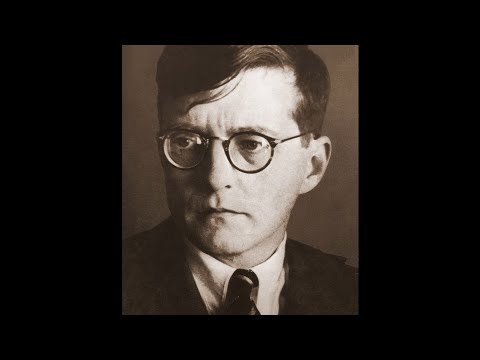
Nikolai Sergeyvich Zhilayev (pronounced Zill-lay-ev) was a Russian musicologist and the teacher of several 20th-century Russian composers.
Among these: Dimitri Shostakovich.
Among his friends–to his ultimate misfortune–was Mikhail Tukhachevsky, the former military hero now falsely condemned and executed as a traitor by Soviet dictator Joseph Stalin.
In 1938, Zhilayev, too, became a casualty of what has become known as The Great Terror.
In his posthumously-published memoirs, Testimony, Shostakovich, his pupil and friend, described how Zhilayev faced his end with a calmness that awed even the NKVD (the predecessor to the KGB) secret police sent to arrest him.
Dimitri Shostakovich
“He had a large picture of Tukhachevsky in his room, and after the announcement that Tukhachevsky had been shot as a traitor to the homeland, Zhilayev did not take the picture down.
“I don’t know if I can explain how heroic a deed that was….As soon as the next poor soul was declared an enemy of the people, everyone destroyed in a panic everything connected with that person.
“If the enemy of the people wrote books, they threw away his books. If they had letters from him, they burned the letters. The mind can’t grasp the number of letters and papers burned in that period…
“And naturally, photographs flew into the fire first, because if someone informed on you, reported that you had a picture of an enemy of the people, it meant certain death.
“Zhilayev wasn’t afraid. When they came for him, Tukhachevsky’s prominently hung portrait amazed even the executioners.”
“What, it’s still up?” one of the secret police asked.
“The time will come,” Zhilayev replied, “when they’ll erect a monument to him.”
As, in fact, has happened.

Mikhail Tukhachevsky appears on a 1963 Soviet Union postage stamp
Third hero–James Brien Comey (December 14, 1960)
Comey served as United States Attorney (federal prosecutor) for the Southern District of New York (2002-2003).
As United States Deputy Attorney General (2003-2005), he opposed the warrantless wiretapping program of the George W. Bush administration. He also argued against the use of water boarding as an interrogation method.
In 2005, he entered the private sector as General Counsel and Senior Vice President for Lockheed Martin, the biggest contractor for the Department of Defense.
On July 29, 2013, the United States Senate voted 93 -1 to confirm Comey as director of the FBI, the seventh in its history.

James B. Comey
He directed the FBI from his appointment in 2013 by President Barack Obama until his firing on May 9 by President Donald Trump.
In a move that Joseph Stalin would have admired, Trump gave no warning of his intentions. Instead, he sent Keith Schiller, his longtime bodyguard, to the FBI with a letter announcing Comey’s dismissal.
Trump had three reasons for firing Comey:
- Comey had refused to pledge his personal loyalty to Trump. Trump had made this “request” during a private dinner at the White House in January. After refusing to make that pledge, Comey told Trump that he would always be honest with him. But that didn’t satisfy Trump’s demand that the head of the FBI act as his personal secret police chief.
- Trump had tried to coerce him into dropping the FBI’s investigation into former National Security Adviser Mike Flynn, for his secret ties to Russia and Turkey. Comey had similarly resisted that demand.
- Comey had recently asked the Justice Department to fund an expanded FBI investigation into contacts between Trump’s 2016 Presidential campaign and Russian Intelligence agents.
As a Presidential candidate and President, Trump has:
- Steadfastly denied those revelations;
- Repeatedly attacked the “fake news” media reporting these revelations. Chief among his targets: CNN, The New York Times and The Washington Post; and
- Attacked the Intelligence agencies responsible for America’s security.
On May 10–the day after firing Comey–Trump met in the Oval Office with Russian Foreign Minister Sergey Lavov and Russian Ambassador Sergey Kislyak.
Kislyak is reportedly a top recruiter for Russia’s SVR foreign intelligence agency. He has been closely linked with Jeff Sessions, now Attorney General, and fired National Security Adviser Mike Flynn.
“I just fired the head of the F.B.I.,” Trump told the two dignitaries. “He was crazy, a real nut job. I faced great pressure because of Russia. That’s taken off.”
During that meeting he gave the Russians sensitive Intelligence on ISIS that had been supplied by Israel.
Two days later, on May 12, Trump tweeted a threat to the fired FBI director: “James Comey better hope that there are no ‘tapes’ of our conversations before he starts leaking to the press.”
But shortly afterward, it appeared Trump was the one who should worry: Reports surfaced that Comey had written memos to himself immediately after his private meetings with Trump.
He had also told close aides that Trump was trying to pressure him into dropping the investigation into close ties between Russian Intelligence agents and Trump campaign staffers.
The firing led directly to a result Trump did not anticipate: Acting Attorney General Rod Rosenstein yielded to demands from Democrats and appointed former FBI Director Robert Meuller III as a special prosecutor to investigate those ties.
And, on June 8, James Comey was scheduled to give his much-anticipated version of events before the United States Senate Intelligence Committee.
ABC NEWS, ADOLF HITLER, ALTERNET, AP, BBC, BUZZFEED, CBS NEWS, CNN, DAILY KOS, DIMITRI SHOSTAKOVICH, DONALD TRUMP, FACEBOOK, FBI, GREAT TERROR, JAMES COMEY, JEFF SESSIONS, JOSEPH STALIN, KEITH SCHILLER, MIKE FLYNN, MIKHAIL TUKHACHEVESKY, MOTHER JONES, MOVEON, NAZI GERMANY, NBC NEWS, NEWSWEEK, NICCOLO MACHIAVELLI, NIKITA KHRUSHCHEV, NIKOLAI ZHILAYEV, NPR, POLITICO, RAW STORY, REUTERS, ROBERT MEULLER 111, ROD ROSENSTEIN, RUSSIAN ESPIONAGEky, SALON, SEATTLE TIMES, SENATE INTELLIGENCE COMMITTEE, SERGEY KISLYAK, SERGEY LAVOV, SLATE, SOVIET UNION, THE ATLANTIC, THE CHICAGO SUN-TIMES, THE CHICAGO TRIBUNE, THE DAILY BEAST, THE DISCOURSES, THE GUARDIAN, THE HILL, THE HUFFINGTON POST, THE LOS ANGELES TIMES, THE NEW YORK TIMES, THE WALL STREET JOURNAL, THE WASHINGTON POST, TIME, TWITTER, U.S. NEWS & WORLD REPORT, UPI, USA TODAY, WEHRMACHT, WORLD WAR 11, WORLD WAR ii
In Bureaucracy, History, Law, Law Enforcement, Military, Politics, Social commentary on June 6, 2017 at 12:02 am
…A truly great man is ever the same under all circumstances. And if his fortune varies, exalting him at one moment and oppressing him at another, he himself never varies, but always preserves a firm courage, which is so closely interwoven with his character that everyone can readily see that the fickleness of fortune has no power over him.
The conduct of weak men is very different. Made vain and intoxicated by good fortune, they attribute their success to merits which they do not possess. And this makes them odious and insupportable to all around them. And when they have afterwards to meet a reverse of fortune, they quickly fall into the other extreme, and become abject and vile.
–Niccolo Machiavelli, The Discourses
Three heroes, two villains.
Two of the heroes are Russian; the third is an American.
The villains: One Russian (actually, Georgian); one American.
First up–in order of disappearance: Mikhail Nikolayevich Tukhachevsky (pronounced too-ka-chev-sky)
Tukhachevsky (February 4, 1893 – June 12, 1937) was a leading Soviet military leader and theoretician from 1918 to 1937.
He commanded the Soviet Western Front during the Russian-Polish War (1920-21) and served as Chief of Staff of the Red Army (1925-1928).
He fought to modernize Soviet armament, as well as develop airborne, aviation and mechanized forces. Almost singlehandedly, he created the theory of deep operations for Soviet forces.

Mikhail Tukhachevsky
All of these innovations would reap huge dividends when the Soviet Union faced the lethal fury of Adolf Hitler’s Wehrmacht.
In 1936, Tukhachevsky warned Soviet dictator Joseph Stalin that Nazi Germany might attack without warning–and ignite a long and murderous war.
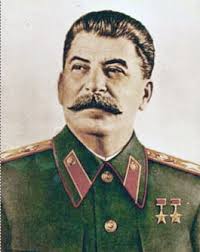
Stalin–the son of a Georgian cobbler–resented Tukhachevsky’s coming from a noble family. A monumental egomaniac, he also hated that Tukhachevesky’s fame rivaled his own.
Warned of the approaching German danger, Stalin shouted: “What are you trying to do–frighten Soviet authority?”
Joseph Stalin
The attack that Tukhachevsky warned against came five years later on June 22, 1941, leaving at least 20 million Russians dead.
But Tukhachevsky wasn’t alive to command a defense.
The 1930s were a frightening and dangerous time to be alive in the Soviet Union. In 1934, Stalin, seeing imaginary enemies everywhere, ordered a series of purges that lasted right up to the German invasion.
In 1937-38, the Red Army fell prey to Stalin’s paranoia.
Its victims included:
- Three of five marshals (five-star generals);
- Thirteen of 15 army commanders (three- and four-star generals);
- Fifty of 57 army corps commanders; and
- One hundred fifty-four out of 186 division commanders.
And heading the list of those marked for death was Marshal Mikhail Tukhachevsky.
Arrested on May 22, 1937, he was interrogated and tortured. As a result, he “confessed” to being a German agent plotting to overthrow Stalin and seize power.
On his confession, which survives in the archives, his bloodstains can clearly be seen.
On June 11, the Soviet Supreme Court convened a special military tribunal to try Tukhachevsky and eight generals for treason.
It was a sham: The accused were denied defense attorneys, and could not appeal the verdict–which was foregone: Death.
In a Russian version of poetic justice, five of the eight generals who served as Tukhachevsky’s judges were themselves later condemned and executed as traitors.
Within hours of the verdict, Tukhachevsky was summoned from his cell and shot once in the back of the head.
From 1937 until 1956, Tukhachevsky was officially declared a traitor and fifth-columnist.
Then, on February 25, 1957, Soviet Premier Nikita Khrushchev delivered his bombshell “Secret Speech” to the 20th Congress of the Communist Party of the Soviet Union.
In this, he denounced Stalin (who had died in 1953) as a ruthless tyrant responsible for the slaughter of millions of innocent men, women and children. He condemned Stalin for creating a “personality cult” around himself, and for so weakening the Red Army that Nazi Germany was able to easily overrun half of the Soviet Union from 1941 to 1943.
On January 31, 1957, Tukhachevsky and his co-defendants were declared innocent of all charges and were “rehabilitated.”
Today, he is once again considered a Russian hero and military genius.
Next hero: Nikolai Sergeyvich Zhilayev (pronounced Zill-lay-ev)
Zhilayev (November 18, 1881 – January 20, 1938) was a Russian musicologist and the teacher of several 20th-century Russian composers. Among these: Dimitri Shostakovich.
Zhilayev, a member of the Russian Academy of Art-Sciences, taught at the Moscow Conservatory. Among his friends–to his ultimate misfortune–was Mikhail Tukhachevsky.
In 1938, he, too, became a casualty of what has become known as The Great Terror.
In his posthumously-published memoirs, Testimony, Shostakovich, his pupil and friend, described how Zhilayev faced his end with a calmness that awed even the NKVD (the predecessor to the KGB) secret police sent to arrest him.
ABC NEWS, ALTERNET, AMERICAN NAZI PARTY, ANTI-SEMITISIM, AP, BARACK OBAMA, BBC, BLACKS, BREITBART NEWS, BUZZFEED, CBS NEWS, CIA, CNN, DAILY KOS, DEMOCRATIC NATIONAL COMMITTEE, DONALD TRUMP, EGOMANIA, ERIC SCHNEIDERMAN, EXTORTION, EXXONMOBIL, FACE THE NATION, FACEBOOK, FOX NEWS SUNDAY, GOLDEN SHOWERS REPORT, HILLARY CLINTON, HOWARD BAKER, IVANKA TRUMP, JAMES R. CLAPPER, KU KLUX KLAN, MEIN KAMPF, MEXICANS, MORNING JOE, MOSCOW RITZ-CARLTON, MOTHER JONES, MOVEON, MUSLIMS, NATIONAL SECURITY AGENCY, NATO, NBC NEWS, NEWSWEEK, NPR, P.O.W.’S, PAM BONDI, PAUL MANAFORT, POLITICO, RAW STORY, REPUBLICAN NATIONAL CONVENTION, REPUBLICAN PARTY, REUTERS, REX TILLERSON, RICHARD NIXON, ROGER AILES, Ronald Reagan, SALON, SEATTLE TIMES, SEXUAL HARASSMENT, SLATE, SOVIET UNION, STEVEN BANNON, TAX RETURNS, THE ATLANTIC, THE CHICAGO SUN-TIMES, THE CHICAGO TRIBUNE, THE DAILY BEAST, THE GUARDIAN, THE HILL, THE HUFFINGTON POST, THE LOS ANGELES TIMES, THE NEW YORK TIMES, THE WALL STREET JOURNAL, THE WASHINGTON POST, THREATS, TIME, TREASON, TRUMP UNIVERSITY, TWITTER, U.S. NEWS & WORLD REPORT, UPI, USA TODAY, USA TODAY ABC NEWS, VLADIMIR PUTIN, WATERGATE
In Bureaucracy, History, Law, Law Enforcement, Military, Politics, Social commentary on June 5, 2017 at 12:01 am
Long before Donald Trump was accused of being sexually compromised by the Russians, Americans knew enough about him to decide: “You are unfit for the Oval Office.”
Almost immediately after entering the Presidential race on June 16, 2015, he began attacking one group of Americans after another:
- Mexicans: “They’re bringing drugs. They’re bringing crime. They’re rapists.” He’s also promised to “build a great, great wall on our southern border and I will have Mexico pay for that wall.”
- Blacks: Trump retweeted an image of a masked, dark-skinned man with a handgun and a series of alleged crime statistics, including: “Blacks killed by whites – 2%”; “Whites killed by blacks – 81%.” The image cites the “Crime Statistics Bureau – San Francisco”–an agency that doesn’t exist.
- POWs: Speaking of Arizona U.S. Senator and Vietnam veteran John McCain: He’s not a war hero because he was captured. I like people who weren’t captured.”

Donald Trump
The number of people, places and things Trump has insulted is so extensive The New York Times compiled a list of 273 of them.
- One of those persons was Tarla Makaeff, who spent more than $60,000 on Trump University classes. In 2010, she filed a fraud lawsuit against (now-defunct) Trump University.
- Trump retaliated by filing a defamation suit against her. The case was dismissed by a judge.
- But Trump continued to attack her during his Presidential candidacy. During a campaign rally he assailed her as a “horrible, horrible witness,” and then posted on Twitter that she was “Disgraceful!”
- Makaeff ultimately persuaded the judge presiding over the Trump University case to let her remove her name as a plaintiff.
As an authoritarian who demands the right to craft his own image. Trump furiously denies others the right to dissent from it via:
- Counter-suits, threats and personal insults against outsiders; and
- Stringent confidentiality agreements against employees, business partners, his former spouses and now his campaign staffers.
- In February, 2016, Trump said that he was “gonna open up our libel laws so when they write purposely negative and horrible and false articles, we can sue them and win lots of money.”
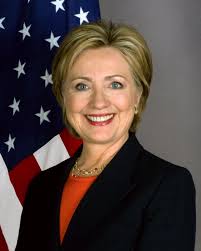
Two of Trump’s most vicious threats were aimed at Democratic Presidential candidate Hillary Clinton.
- The first occurred on October 9, 2016, during their second Presidential debate: “If I win, I am going to instruct my attorney general to get a special prosecutor to look into your situation–there has never been so many lies and so much deception.”
- The second occurred on October 10, three days after The Washington Post leaked a video of Donald Trump making sexually predatory comments about women (“I don’t even wait. Grab them by the pussy. You can do anything”).
- Rather than accept responsibility for his actions, Trump blamed the Clintons–who had nothing to do with the release. Speaking before a rally in Pennsylvania on October 10, Trump threatened: “If they wanna release more tapes saying inappropriate things, we’ll continue to talk about Bill and Hillary Clinton doing inappropriate things. There are so many of them, folks.”
Hillary Clinton
Trump’s rampant egomania is literally stamped on his properties. Of the 515 entities he owns, 268 of them–52%–bear his last name. He often refers to his properties as “the swankiest,” “the most beautiful.”
Among the references he’s made to himself:
- “My fingers are long and beautiful, as, it has been well documented, are various other parts of my body.”
- “I think the only difference between me and the other candidates is that I’m more honest and my women are more beautiful.”
- “My Twitter has become so powerful that I can actually make my enemies tell the truth.”
- “My IQ is one of the highest–and you all know it.”

Trump publicly admitted that his egomania would play a major role in his approach to consulting advisers:
- Asked on MSNBC’s “Morning Joe” who he consults about foreign policy, he replied: “I’m speaking with myself, number one, because I have a very good brain and I’ve said a lot of things.”
Trump has never been charged with incest, but he’s repeatedly made disturbing, sexually inappropriate comments about his daughter, Ivanka:
- When asked how he would react if Ivanka, a former teen model, poised for Playboy, Trump replied: “I don’t think Ivanka would do that, although she does have a very nice figure. I’ve said if Ivanka weren’t my daughter, perhaps I’d be dating her.”
On October 7, The Washington Post leaked a video of Donald Trump making sexually predatory comments about women (“You can grab them by the pussy”).
- Within a week, no fewer than 12 had come forward to accuse him of sexually inappropriate behavior.
- Although he threatened to sue the New York Times if it reported the women’s claims, he has so far refused to do so.
* * * * *
Those Americans who voted for Donald Trump knew the character of the man they were electing. They cannot claim ignorance of who he was and what he intended to do.
They enthusiastically supported him because he gave voice to their hatreds and prejudices. And because they believed he would humiliate and destroy those they wanted to see humiliated and destroyed.
They are as deserving of the contempt of their fellow Americans as Trump is.
The next four years will unveil how many of their wishes are fulfilled.


.jpg)


ABC NEWS, ADULTERY, ALTERNET, AMERICABLOG, AP, BABY BOOMER RESISTANCE, BARACK OBAMA, BBC, BIBLE, BILLY GRAHAM, BLOOMBERG NEWS, BUZZFEED, CBS NEWS, CNN, CROOKS AND LIARS, DAILY KOZ, FACEBOOK, FIVETHIRTYEIGHT, FRANKLIN GRAHAM, HARPER’S MAGAZINE, HOMOSEXUALITY, HUFFINGTON POST, I USA TODAY, MEDIA MATTERS, MITT ROMNEY, MOTHER JONES, MOVEON, MSNBC, NBC NEWS, NEW REPUBLIC, NEWSDAY, NEWSWEEK, NEWT GINGRICH, NPR, PBS NEWSHOUR, POLITICO, POLITICUSUSA, RAW STORY, REUTERS, RICK SANTORUM, SALON, SCIENCE, SEATTLE TIMES, SLATE, SLAVERY, SPANISH INQUISITION, TALKING POINTS MEMO, TEA PARTY, THE ATLANTIC, THE CHICAGO SUN-TIMES, THE CHICAGO TRIBUNE, THE DAILY BEAST, THE DAILY BLOG, THE GUARDIAN, THE HILL, THE HUFFINGTON POST, THE INTERCEPT, THE LOS ANGELES TIMES, THE NATION, THE NEW REPUBLIC, THE NEW YORK TIMES, THE NEW YORKER, THE VILLAGE VOICE, THE WASHINGTON POST, THEOLOGY, THINKPROGRESS, TIME, TRUTHDIG, TRUTHOUT, TWITTER, TWO POLITICAL JUNKIES, U.S. NEWS & WORLD REPORT, UP, UPI, USA TODAY, WAR, WOMEN
AMERICA UNDER BIBLICAL RULE–A DESCENT INTO HELL: PART ONE (OF TWO)
In Bureaucracy, History, Law, Law Enforcement, Military, Politics, Social commentary on July 11, 2017 at 12:03 amFranklin Graham, son of Billy Graham, America’s most famous preacher, spends a lot of time deciding who qualifies as a Christian—and who doesn’t.
Franklin Graham
He said just that on the February 21, 2012 edition of the MSNBC show, “Morning Joe.”
First, however, he offered his views on the relative Christian dedication of the major contenders for the Presidency in 2012:
President Barack Obama: “Islam sees him as a son of Islam….I can’t say categorically that [Obama is not Muslim] because Islam has gotten a free pass under Obama.”
Former Speaker of the House Newt Gingrich:“Newt’s been married several times… but he could make a good candidate. I think Newt is a Christian. At least he told me he is.”
Former Pennsylvania U.S. Senator Rick Santorum: “His values are so clear on moral issues. No question about it. I think he is, no question, a man of faith.”
Former Massachusetts Governor Mitt Romney: “I’m just saying most Christians would not recognize Mormonism. Of course they believe in Jesus Christ, but they have a lot of other things that they believe in, too, that we don’t accept theologically.”
Thus, Graham had no problem in pronouncing as “saved” a notorious multiple-adulterer like Gingrich, or a rights-denying religious zealot like Santorum.
But he clearly refused to pronounce as “saved” a longtime church-goer like Obama or a Mormon like Romney (whose faith, most evangelicals like Graham believe, is actually a non-Christian cult).
Toward the end of the program, Mike Barnicle, one of the panelists interviewing Graham, said: “You must spend a big part of the day checking out what you conceive to be people’s depth of faith, in terms of measuring.”
“This is my business,” replied Graham. “You guys go through newspapers every day. I look at a person’s political interest, but more importantly I look at their spiritual interests….
“You have to go by what a person says, and how they live their lives…Are they faithful church goers? Or do they just go when the cameras are on them?”
Another man who dedicated his life to judging the religious commitment of others was Bernard Gui, the chief inquisitor at Toulouse from 1308 to 1322.
Bernard Gui
His inquisition of those suspected or accused of heresy led to over 900 guilty verdicts. Of those convicted during examination by Gui, 42 were executed—by being burned at the stake.
Gui closely studied the best methods for interrogating “heretics.” He set forth his findings in his most important and famous work, Practica Inquisitionis Heretice Pravitatis. or “Conduct of the Inquisition into Heretical Wickedness.”
In this, he offered a vivid example of how such interrogations might go. The following is taken from that manual:
Interrogator: You call your faith Christian, for you consider ours as false and heretical. But I ask whether you have ever believed as true another faith than that which the Roman Church holds to be true?
Accused Heretic: I believe the true faith which the Roman Church believes, and which you openly preach to us.
Interrogator: Perhaps you have some of your sect at Rome whom you call the Roman Church. I, when I preach, say many things, some of which are common to us both, as that God liveth, and you believe some of what I preach. Nevertheless you may be a heretic in not believing other matters which are to be believed.
“Heretic” being burned at the stake
Accused Heretic: I believe all things that a Christian should believe.
Interrogator: I know your tricks. What the members of your sect believe you hold to be that which a Christian should believe. But we waste time in this fencing. Say simply, Do you believe in one God the Father, and the Son, and the Holy Ghost?
Accused Heretic: I believe.
Interrogator: Do you believe in Christ born of the Virgin, suffered, risen, and ascended to heaven?
Accused Heretic: (Briskly) I believe.
Interrogator: Do you believe the bread and wine in the mass performed by the priests to be changed into the body and blood of Christ by divine virtue?
Accused Heretic: Ought I not to believe this?
Interrogator: I don’t ask if you ought to believe, but if you do believe.
Accused Heretic: I believe whatever you and other good doctors order me to believe.
Inquisitor: Those good doctors are the masters of your sect; if I accord with them you believe with me; if not, not.
Accused Heretic: I willingly believe with you if you teach what is good to me.
Inquisitor: You consider it good to you if I teach what your other masters teach. Say, then, do you believe the body of our Lord, Jesus Christ to be in the altar?
Accused Heretic: (Promptly) I believe that a body is there, and that all bodies are of our Lord.
Interrogator: I ask whether the body there is of the Lord who was born of the Virgin, hung on the cross, arose from the dead, ascended, etc.
Accused Heretic: And you, sir, do you not believe it?
Interrogator: I believe it wholly.
Accused Heretic: I believe likewise.
Share this: