Archive for the ‘Law’ Category
2016 PRESIDENTIAL CAMPAIGN, 9/11, ABC NEWS, ADAM KINZINGER, ALEXANDRIA OCASIO-CORTEZ, ALLEN WEST, ALTERNET, AMERICABLOG, ANN COULTER, AP, BABY BOOMER RESISTANCE, BBC, BILL CLINTON, BLOOMBERG NEWS, BUZZFEED, CAPITOL ATTACK, CBS NEWS, CHRISTOPHER S. MURPHY, CNN, COMMUNISM, CROOKS AND LIARS, DAILY KOZ, DEMOCRATS, DONALD TRUMP, DWIGHT D. EISENHOWER, EGYPT, FACEBOOK, FERGUS CULLEN, FIVETHIRTYEIGHT, GAMAL ABDEL NASSER, GEORGE H.W. BUSH, HARPER’S MAGAZINE, HILLARY CLINTON, HOUSE OVERSIGHT AND REFORM COMMITTEE, HUFFINGTON POST, IMPEACHMENT, ISRAEL, JEB LUND, JIMMY CARTER, JOHN F. KENNEDY, JOHN KASICH, JORDAN, JOSEPH MCCARTHY, LIZ CHENEY, LYNDON B. JOHNSON, MARJORIE TAYLOR GREENE, MEDIA MATTERS, MICHAEL HAYDEN, MICHELLE BACHMANN, MIKE PENCE, MITCH MCCONNELL, MOSHE DAYAN, MOTHER JONES, MOVEON, MSNBC, NANCY PELOSI, NATIONAL SECURITY AGENCY, NATURAL RESOURCES COMMITTEE, NBC NEWS, NEW REPUBLIC, NEWSDAY, NEWSWEEK, NPR, OSAMA BIN LADEN, PAUL GOSAR, PAUL RYAN, PBS NEWSHOUR, PHIL GRAMM, PHILIP KLINE, POLITICO, POLITICUSUSA, RAW STORY, REPUBLICAN NATIONAL CONVENTION, REPUBLICANS, REUTERS, RICHARD NIXON, ROGER STONE, ROLLING STONE, RON KLEIN, SALON, Sarah Palin, SEATTLE TIMES, SLATE, SOVIET UNION, TALKING POINTS MEMO, THE ATLANTIC, THE CHICAGO SUN-TIMES, THE CHICAGO TRIBUNE, THE DAILY BEAST, THE DAILY BLOG, THE GUARDIAN, THE HILL, THE HUFFINGTON POST, THE LOS ANGELES TIMES, THE NATION, THE NEW REPUBLIC, THE NEW YORK TIMES, THE NEW YORKER, THE PENTAGON, THE VILLAGE VOICE, THE WASHINGTON POST, THINKPROGRESS, TIME, TIMOTHY MCVEIGH, TRUTHDIG, TRUTHOUT, TWITTER, TWO POLITICAL JUNKIES, U.S. NEWS & WORLD REPORT, UNITED STATES HOUSE OF REPRESENTATIVES, UNITED STATES SECRET SERVICE, UPI, USA TODAY, VIETNAM WAR, WONKETTE, WORLD TRADE CENTER
In Bureaucracy, History, Law, Law Enforcement, Military, Politics, Social commentary on November 25, 2021 at 12:05 am
With the rise of Donald Trump to Republican standard-bearer in 2015, threats of violence entered the rhetoric—and tactics—of the Republican party.
On March 16, 2016, he warned Republicans that if he didn’t win the GOP nomination in July, his supporters would literally riot:
“I think you’d have riots. I think you would see problems like you’ve never seen before. I think bad things would happen. I really do. I wouldn’t lead it, but I think bad things would happen.”

Donald Trump
Republicans clearly saw this as a threat is undeniable.
Paul Ryan, their Speaker of the House, said on March 17: “Nobody should say such things in my opinion because to even address or hint to violence is unacceptable.”
And Ohio governor and Republican presidential candidate John Kasich chinned in. “Leaders don’t imply violence,” Kasich told “Face the Nation” on March 20. “When he says that there could be riots, that’s inappropriate. I think you understand that, okay? Secondly, while we have our differences and disagreements, we’re Americans. Americans don’t say, ‘Let’s take to the streets and have violence.'”
But threatening his Republican and Democratic opponents with violence played a major role in Donald Trump’s campaign for President.
No other candidate—Republican or Democrat—had ever made such repeated and brutal use of threats of physical assault in pursuing the Presidency.
- Philip Klein, the managing editor of the Washington Examiner, wrote on the eve of the Republican National Convention in July: “Political commentators now routinely talk about the riots that would break out in Cleveland if Trump were denied the nomination, about how his supporters have guns and all hell could break loose, that they would burn everything to the ground. It works to Trump’s advantage to not try too hard to dispel these notions.”
- On August 9, Trump told a rally in Wilmington, North Carolina: “Hillary [Clinton] wants to abolish, essentially abolish, the Second Amendment. If she gets to pick her [Supreme Court] judges, nothing you can do folks. Although the Second Amendment people, maybe there is, I don’t know.”
- “Don’t treat this as a political misstep,” Senator Christopher S. Murphy of Connecticut, who has called for stiffer gun laws, wrote on Twitter. “It’s an assassination threat, seriously upping the possibility of a national tragedy & crisis.”
- “Well, let me say if someone else said that outside of the hall, he’d be in the back of a police wagon now, with the Secret Service questioning him,” said Michael Hayden, former head of the CIA and National Security Agency (NSA).
Threats of this type continued to be made by Trump supporters right up to the day of the election.
- On July 29, Roger Stone, a notorious Right-wing political consultant acting as a Trump strategist, told Breitbart News: “The first thing Trump needs to do is begin talking about [voter fraud] constantly. If there’s voter fraud, this election will be illegitimate, the election of the winner will be illegitimate, we will have a constitutional crisis, widespread civil disobedience, and the government will no longer be the government.”
- At a town hall meeting where Trump’s Vice Presidential nominee Mike Pence appeared, a woman named Rhonda said: “For me personally, if Hillary Clinton gets in, I myself am ready for a revolution.”
- In Cincinnati, a Trump supporter threatened to forcibly remove Clinton from the White House if she won the race: “If she’s in office, I hope we can start a coup. She should be in prison or shot. That’s how I feel about it,”
- Dan Bowman, a 50-year-old contractor, said of Hillary Clinton, the Democratic nominee: “We’re going to have a revolution and take them out of office if that’s what it takes. There’s going to be a lot of bloodshed. But that’s what it’s going to take….I would do whatever I can for my country.”
Even Fergus Cullen, former chairman of the New Hampshire GOP, expressed fear of what might happen if Trump lost the election:

Fergus Cullen
“That’s really scary,” Cullen said, recounting the violence at Trump rallies around the country leading up to the Republican National Convention. “In this country, we’ve always had recriminations after one side loses. But we haven’t had riots. We haven’t had mobs that act out with violence against supporters of the other side.
“There’s no telling what his supporters would be willing to do at the slightest encouragement from their candidate,” he said.
Trump even began encouraging his mostly white supporters to sign up online to be “election observers” to stop “Crooked Hillary from rigging this election.” He urged them to act as poll watchers in “other” [non-white] communities to ensure that things are “on the up and up.”
Many of his supporters promised to do so.
“Trump said to watch your precincts. I’m going to go, for sure,” said Steve Webb, a 61-year-old carpenter from Fairfield, Ohio.
“I’ll look for…well, it’s called racial profiling. Mexicans. Syrians. People who can’t speak American,” he said. “I’m going to go right up behind them. I’ll do everything legally. I want to see if they are accountable. I’m not going to do anything illegal. I’m going to make them a little bit nervous.”
2016 PRESIDENTIAL CAMPAIGN, 9/11, ABC NEWS, ADAM KINZINGER, ALEXANDRIA OCASIO-CORTEZ, ALLEN WEST, ALTERNET, AMERICABLOG, ANN COULTER, AP, BABY BOOMER RESISTANCE, BBC, BILL CLINTON, BLOOMBERG NEWS, BUZZFEED, CAPITOL ATTACK, CBS NEWS, CHRISTOPHER S. MURPHY, CNN, COMMUNISM, CROOKS AND LIARS, DAILY KOZ, DEMOCRATS, DONALD TRUMP, DWIGHT D. EISENHOWER, EGYPT, FACEBOOK, FERGUS CULLEN, FIVETHIRTYEIGHT, GAMAL ABDEL NASSER, GEORGE H.W. BUSH, HARPER’S MAGAZINE, HILLARY CLINTON, HOUSE OVERSIGHT AND REFORM COMMITTEE, HUFFINGTON POST, IMPEACHMENT, ISRAEL, JEB LUND, JIMMY CARTER, JOHN F. KENNEDY, JOHN KASICH, JORDAN, JOSEPH MCCARTHY, LIZ CHENEY, LYNDON B. JOHNSON, MARJORIE TAYLOR GREENE, MEDIA MATTERS, MICHAEL HAYDEN, MICHELLE BACHMANN, MIKE PENCE, MITCH MCCONNELL, MOSHE DAYAN, MOTHER JONES, MOVEON, MSNBC, NANCY PELOSI, NATIONAL SECURITY AGENCY, NATURAL RESOURCES COMMITTEE, NBC NEWS, NEW REPUBLIC, NEWSDAY, NEWSWEEK, NPR, OSAMA BIN LADEN, PAUL GOSAR, PAUL RYAN, PBS NEWSHOUR, PHIL GRAMM, PHILIP KLINE, POLITICO, POLITICUSUSA, RAW STORY, REPUBLICAN NATIONAL CONVENTION, REPUBLICANS, REUTERS, RICHARD NIXON, ROGER STONE, ROLLING STONE, RON KLEIN, SALON, Sarah Palin, SEATTLE TIMES, SLATE, SOVIET UNION, TALKING POINTS MEMO, THE ATLANTIC, THE CHICAGO SUN-TIMES, THE CHICAGO TRIBUNE, THE DAILY BEAST, THE DAILY BLOG, THE GUARDIAN, THE HILL, THE HUFFINGTON POST, THE LOS ANGELES TIMES, THE NATION, THE NEW REPUBLIC, THE NEW YORK TIMES, THE NEW YORKER, THE PENTAGON, THE VILLAGE VOICE, THE WASHINGTON POST, THINKPROGRESS, TIME, TIMOTHY MCVEIGH, TRUTHDIG, TRUTHOUT, TWITTER, TWO POLITICAL JUNKIES, U.S. NEWS & WORLD REPORT, UNITED STATES HOUSE OF REPRESENTATIVES, UNITED STATES SECRET SERVICE, UPI, USA TODAY, VIETNAM WAR, WONKETTE, WORLD TRADE CENTER
In Bureaucracy, History, Law, Law Enforcement, Military, Politics, Social commentary on November 24, 2021 at 12:17 am
Republicans in past decades tried—and often won—elections on the basis of ideology and/or appeals to racism.
During the 1960s and 1970s, the “enemy” was blacks. The key to winning votes of racist whites without appearing racist lay in what Republicans called “the Southern Strategy”—stoking whites’ fears of blacks.
It was this that won Richard Nixon the Presidency in 1968 and 1972 and the White House for George H.W. Bush in 1988.
In a now-infamous 1981 interview, Right-wing political consultant Lee Atwater explained how this worked.
“You start out in 1954 by saying, ‘Nigger, nigger, nigger.’ By 1968 you can’t say ‘nigger’—that hurts you, backfires.
“So you say stuff like, uh, forced busing, states’ rights, and all that stuff, and you’re getting so abstract.
“Now, you’re talking about cutting taxes, and all these things you’re talking about are totally economic things and a byproduct of them is, blacks get hurt worse than whites.…
“’We want to cut this,’ is much more abstract than even the busing thing, uh, and a hell of a lot more abstract than ‘Nigger, nigger.’
“So anyway you look at it, race is coming on the back burner.”

Lee Atwater
Since the end of World War II, Republicans regularly hurled the charge of “treason” against anyone who dared to run against them for office or think other than Republican-approved thoughts.
Republicans had been locked out of the White House from 1933 to 1952, during the administrations of Franklin D. Roosevelt and Harry S. Truman.
Determined to regain the Presidency by any means, they found that attacking the integrity of their fellow Americans a highly effective tactic.
During the 1950s, Wisconsin Senator Joseph R. McCarthy rode a wave of paranoia to national prominence—by attacking the patriotism of anyone who disagreed with him.
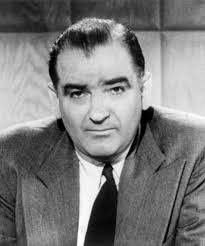
Joseph McCarthy
Elected to the Senate in 1946, he rose to national prominence on February 9, 1950, after giving a fiery speech in Wheeling, West Virginia:
“The State Department is infested with communists. I have here in my hand a list of 205—a list of names that were made known to the Secretary of State as being members of the Communist Party and who nevertheless are still working and shaping policy in the State Department.”
Anti-communism as a lever to political advancement sharply accelerated following McCarthy’s speech.
No American—no matter how prominent—was safe from the accusation of being a Communist or a Communist sympathizer—a “Comsymp” or “fellow traveler” in the style of the era.
Republicans rode the issue of anti-Communism to victory from 1948 to 1992.
After holding the White House for eight years under Dwight D. Eisenhower, they lost it in 1960 to John F. Kennedy and again in 1964 to Lyndon B. Johnson.
By 1968, with the nation mired in Vietnam and convulsed by antiwar demonstrations and race riots, Americans turned once more to those who preyed upon their fears and hates.
They elected Richard Nixon, who promised to end the Vietnam war and crack down on “uppity” blacks and antiwar demonstrators.
The same strategy re-elected him in 1972.
After Jimmy Carter won the Presidency in 1976 and lost it in 1980 to Ronald Reagan, Republicans held the White House until 1992.
During the 1970s and 1980s, they continued to accuse their opponents of being devious agents—or at least unwitting pawns—of “the Communist conspiracy.”
Even as late as 1992, President George H.W. Bush and the Republican establishment charged that Arkansas Governor Bill Clinton might be a KGB plant.
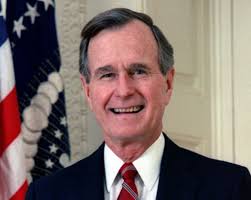
George H.W. Bush
Their “evidence”: During his tenure at Oxford University in 1969-70, Clinton had briefly visited Moscow.
Thus, the Republican charged that he might have been “programmed” as a real-life “Manchurian candidate” to become, first, Governor of Arkansas—one of America’s poorest states—and then President.
What made this charge all the more absurd: The Soviet Union had officially dissolved in December, 1991.
Republicans continued to accuse their opponents of being “Communists” and “traitors.” But these charges no longer carried the weight they had while the Soviet Union existed.
Then, on September 11, 2001, Republicans—-and their right-wing supporters—at last found a suitable replacement for the Red Menace.
Two highjacked jetliners slammed into the World Trade Center in New York and one struck the Pentagon in Washington, D.C.
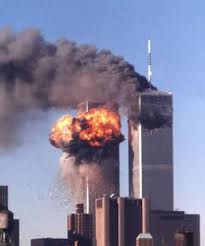
World Trade Center on September 11, 2001
Exit The Red Bogeyman. Enter The Maniacal Muslim.
For several years, fears of Islamic terror carried Republicans to electoral victory—most importantly in 2004, when George W. Bush won re-election as President.
But after the invasion of Iraq in 2003 and the killing of Osama bin Laden in 2011, Americans lost interest in The Maniacal Muslim as a surefire election tactic.
With the rise of Donald Trump to Republican standard-bearer in 2015, threats of violence entered the rhetoric—and tactics—of the Republican party.
For example:
- On March 16, 2016, he warned Republicans that if he didn’t win the GOP nomination in July, his supporters would literally riot: “I think you’d have riots. I think you would see problems like you’ve never seen before. I think bad things would happen. I really do. I wouldn’t lead it, but I think bad things would happen.”
- An NBC reporter summed it up as: “The message to Republicans was clear on [March 16]: ‘Nice convention you got there, shame if something happened to it.'”
2016 PRESIDENTIAL CAMPAIGN, 9/11, ABC NEWS, ADAM KINZINGER, ALEXANDRIA OCASIO-CORTEZ, ALLEN WEST, ALTERNET, AMERICABLOG, ANN COULTER, AP, BABY BOOMER RESISTANCE, BBC, BILL CLINTON, BLOOMBERG NEWS, BUZZFEED, CAPITOL ATTACK, CBS NEWS, CHRISTOPHER S. MURPHY, CNN, COMMUNISM, CROOKS AND LIARS, DAILY KOZ, DEMOCRATS, DONALD TRUMP, DWIGHT D. EISENHOWER, EGYPT, FACEBOOK, FERGUS CULLEN, FIVETHIRTYEIGHT, GAMAL ABDEL NASSER, GEORGE H.W. BUSH, HARPER’S MAGAZINE, HILLARY CLINTON, HOUSE OVERSIGHT AND REFORM COMMITTEE, HUFFINGTON POST, IMPEACHMENT, ISRAEL, JEB LUND, JIMMY CARTER, JOHN F. KENNEDY, JOHN KASICH, JORDAN, JOSEPH MCCARTHY, LIZ CHENEY, LYNDON B. JOHNSON, MARJORIE TAYLOR GREENE, MEDIA MATTERS, MICHAEL HAYDEN, MICHELLE BACHMANN, MIKE PENCE, MITCH MCCONNELL, MOSHE DAYAN, MOTHER JONES, MOVEON, MSNBC, NANCY PELOSI, NATIONAL SECURITY AGENCY, NATURAL RESOURCES COMMITTEE, NBC NEWS, NEW REPUBLIC, NEWSDAY, NEWSWEEK, NPR, OSAMA BIN LADEN, PAUL GOSAR, PAUL RYAN, PBS NEWSHOUR, PHIL GRAMM, PHILIP KLINE, POLITICO, POLITICUSUSA, RAW STORY, REPUBLICAN NATIONAL CONVENTION, REPUBLICANS, REUTERS, RICHARD NIXON, ROGER STONE, ROLLING STONE, RON KLEIN, SALON, Sarah Palin, SEATTLE TIMES, SLATE, SOVIET UNION, TALKING POINTS MEMO, THE ATLANTIC, THE CHICAGO SUN-TIMES, THE CHICAGO TRIBUNE, THE DAILY BEAST, THE DAILY BLOG, THE GUARDIAN, THE HILL, THE HUFFINGTON POST, THE LOS ANGELES TIMES, THE NATION, THE NEW REPUBLIC, THE NEW YORK TIMES, THE NEW YORKER, THE PENTAGON, THE VILLAGE VOICE, THE WASHINGTON POST, THINKPROGRESS, TIME, TIMOTHY MCVEIGH, TRUTHDIG, TRUTHOUT, TWITTER, TWO POLITICAL JUNKIES, U.S. NEWS & WORLD REPORT, UNITED STATES HOUSE OF REPRESENTATIVES, UNITED STATES SECRET SERVICE, UPI, USA TODAY, VIETNAM WAR, WONKETTE, WORLD TRADE CENTER
In Bureaucracy, History, Law, Law Enforcement, Military, Politics, Social commentary on November 23, 2021 at 12:27 am
It was a moment both poignant and prophetic: Representative Alexandria Ocasio-Cortez (D-N.Y.) responding to a brutal virtual attack on her by a fellow member of Congress.
Representative Paul Gosar (R-Ariz.) had tweeted a doctored anime video depicting him killing Ocasio-Cortez and then turning his sword towards President Joseph Biden.

Paul Gosar
As a result, the Democratically-controlled House of Representatives was now meeting to decide if he should be censured over that video.
“What is so hard, what is so hard about saying this is wrong?” asked Ocasio-Cortez. “This is not about me. This is not about Representative Gosar. This is about what we are willing to accept. If you believe that this behavior should not be accepted, then vote yes. It’s really that simple.”

Alexandria Ocasio-Cortez
And the Republican response was equally telling: Of the 213 Republicans serving in the House, only two—Liz Cheney (Wyoming) and Adam Kinzinger (Illinois)—dared to support censure of Gosar.
A censure resolution is the most severe form of punishment in the House, and stripping a member of committee assignments removes a powerful platform to influence legislation and give voice to constituent priorities.
The resolution approved by the House removed Gosar from the House Oversight and Reform Committee, which Ocasio-Cortez also serves on, and the Natural Resources Committee.
“We cannot have a member joking about murdering each other or threatening the President of the United States,” House Speaker Nancy Pelosi said in a floor speech.
“Disguising death threats as a video doesn’t make it less real. It’s a sad day for the House of Representatives, but a necessary day.”

Nancy Pelosi
Before the vote which censured him, Gosar said: “I have said decisively there is no threat in the cartoon other than the threat that immigration poses to our country. And no threat was intended by my staff or me.
“I voluntarily took the cartoon down not because it was itself a threat, but because some thought it was. Out of compassion for those who generally felt offense, I self-censored.”
Yet only minutes after the House voted to censure him, Gosar retweeted the video. He also retweeted Right-wing podcaster Elijah Schaffer’s tweet of the video: “Really well done. We love @DrPaulGosar, don’t we folks?”
This marriage of violence with Right-wing ideology is not new.
Rolling Stone magazine writer Jeb Lund noted in a June 19, 2015 editorial: “The Republican Party has weaponized its supporters, made violence a virtue and, with almost every pronouncement for 50 years, given them an enemy politicized, racialized and indivisible.
“Movement conservatives have fetishized a tendentious and ahistorical reading of the Second Amendment to the point that the Constitution itself somehow paradoxically ‘legitimizes’ an armed insurrection against the government created by it. “
“This is no longer an argument about whether one party’s beliefs are beneficial or harmful, but an attitude that labels leftism so antithetical to the American idea that empowering it on any level is an act of usurpation.”
Increasingly, Republicans have repeatedly aimed violent—-and violence-arousing—-rhetoric at their Democratic opponents. This is not a case of careless language that is simply misinterpreted, with tragic results.
Republicans like Paul Gosar fully understand the constituency they are trying to reach: Those masses of alienated, uneducated Americans who live only for their guns and hardline religious beliefs—and who can be easily manipulated by perceived threats to either.
If a “nutcases” assaults a Democratic politician and misses, then the Republican establishment claims to be shocked—-shocked!—that such a thing could have happened.
And if the attempt proves successful, then Republicans weep crocodile tears for public consumption.
The difference is that, in this case, they rejoice in knowing that Democratic ranks have been thinned and their opponents are even more on the defensive, for fear of the same happening to them.
Consider the following:
- Florida GOP Congressional candidate Allen West, referring to his Democratic opponent, Representative Ron Klein, told Tea Party activists: “You’ve got to make the fellow scared to come out of his house. That’s the only way that you’re going to win. That’s the only way you’re going to get these people’s attention.”
- Representative Michelle Bachmann (R-MINN.) said she wanted her constituents “armed and dangerous” against the Obama administration.
- Former Governor (R-Alaska) Sarah Palin told her supporters: “Get in their face and argue with them. No matter how tough it gets, never retreat, instead RELOAD!”
- Right-wing pundit Ann Coulter: “My only regret with Timothy McVeigh is he did not go to the New York Times building.”
- Senator Phil Gramm (R-TEX.) “We’re going to keep building the party until we’re hunting Democrats with dogs.”
Republicans in past decades tried—and often won—elections on the basis of ideology and/or appeals to racism.
During the 1960s and 1970s, the “enemy” was blacks. The key to winning votes of racist whites without appearing racist lay in what Republicans called “the Southern Strategy”—stoking white fears of blacks.
It was this that won Richard Nixon the Presidency in 1968 and 1972 and the White House for George H.W. Bush in 1988.
In a now-infamous 1981 interview, Right-wing political consultant Lee Atwater explained how this worked.
ABC NEWS, ADOLF HITLER, AFFORDABLE HEALTHCARE ACT, ALTERNET, AMERICABLOG, ANN COULTER, AP, ARIZONA SHOOTINGS, ASSASSINATION, BABY BOOMER RESISTANCE, BARACK OBAMA, BBC, BILL CLINTON, BIRTHERS, BLOOMBERG NEWS, BUZZFEED, CBS NEWS, CHRISTINA-TAYLOR GREEN, CNN, CONFEDERATE FLAG, CROOKS AND LIARS, DAILY KOZ, DEVIN NUNES, DICK ARMEY, DICK MORRIS, DYLANN ROOF, FACEBOOK, FBI, FIVETHIRTYEIGHT, FRANKLIN D. ROOSEVELT, GABRIELLE GIFFORDS, GEORGE H.W. BUSH, GEORGE W. BUSH, GLENN BECK, HARPER’S MAGAZINE, HARRY S. TRUMAN, HATE CRIMES, HEALTHCARE, HUFFINGTON POST, JOSEPH MCCARTHY, MEDIA MATTERS, MEIN KAMPF, MICHAEL SAVAGE, MICHELE BACHMANN, MOTHER JONES, MOVEON, MSNBC, NBC NEWS, NEW REPUBLIC, NEWSDAY, NEWSWEEK, NEWT GINGRICH, NPR, OBAMACARE, PBS NEWSHOUR, PHIL GRAMM, POLITICO, POLITICUSUSA, RAW STORY, REP. GABRIELLE GIFFORDS, REPUBLICAN PARTY, REPUBLICANS, REUTERS, RICHARD NIXON, RICK SANTORUM, RODNEY KING RIOTS, ROLLING STONE MAGAZINE, RUSH LIMBAUGH, SALON, Sarah Palin, SEAN HANNITY, SEATTLE TIMES, SLATE, SOVIET UNION, SPIRO AGNEW, TALKING POINTS MEMO, TEA PARTY, TERRORISM, THE ATLANTIC, THE CHICAGO SUN-TIMES, THE CHICAGO TRIBUNE, THE DAILY BEAST, THE DAILY BLOG, THE GUARDIAN, THE HILL, THE HUFFINGTON POST, THE LOS ANGELES TIMES, THE NATION, THE NEW REPUBLIC, THE NEW YORK TIMES, THE NEW YORKER, THE VILLAGE VOICE, THE WASHINGTON POST, THINKPROGRESS, TIME, TRUTHDIG, TRUTHOUT, TWITTER, TWO POLITICAL JUNKIES, U.S. DISTRICT JUDGE JOHN ROLL, U.S. MARSHALS SERVICE, U.S. NEWS & WORLD REPORT, UPI, USA TODAY, WONKETTE
In Bureaucracy, History, Law, Law Enforcement, Politics, Social commentary on November 19, 2021 at 12:12 am
The electoral success of Senator Joseph McCarthy’s Red-baiting treason slanders proved too alluring for other Republicans to resist.
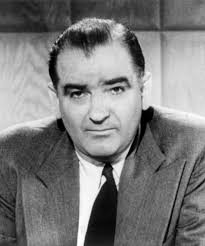
Joseph McCarthy
Among those who have greatly profited from hurling similar charges were:
- President Richard Nixon
- His vice president, Spiro Agnew
- Former Speaker of the House Newt Gingrich
- Former Congressman Dick Armey
- President George W. Bush
- Vice Presidential candidate Sarah Palin
- Congresswoman Michelle Bachmann
- Rush Limbaugh
- Sean Hannity
- Bill O’Reilly.
During the 1992 Presidential campaign, Republicans tried to paint Bill Clinton as a brainwashed “Manchurian candidate” because he had briefly visited the Soviet Union during his college years.
After the Soviet Union collapsed in 1991, Republicans lost their “soft on Communism” slander-line. So they tried to persuade voters that Democrats were “soft on crime.”
When riots flared in 1992 after the acquittal of LAPD officers who had savagely beaten Rodney King, President George H.W. Bush blamed the carnage on the “Great Society” programs of the 1960s.
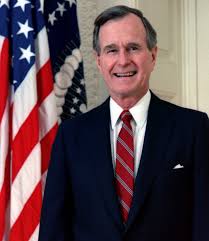
George H.W. Bush
After losing the White House to Clinton at the polls in 1992 and 1996, Republicans tried to oust him another way: By impeaching him over a tryst with a penis-loving intern named Monica Lewinsky.
The Republican-controlled House of Representatives voted to impeach, but the effort was defeated in the Democratically-controlled Senate.
The 2008 election of Barack Obama pushed the Republican “treason chorus” to new heights of infamy.
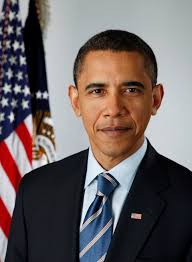
Barack Obama
Almost immediately after Obama took office, he came under attack by an industry of right-wing book authors such as Sean Hannity, Ann Coulter and Rush Limbaugh.
The following titles vividly reveal the hates, fears and ambitions of their authors—and audience:
- Conservative Victory: Defeating Obama’s Radical Agenda by Sean Hannity
- Obama Zombies: How the Liberal Machine Brainwashed My Generation by Jason Mattera
- How Barack Obama is Bankrupting the U.S. Economy by Stephen Moore
- Let Freedom Ring: Winning the War of Liberty over Liberalism by Sean Hannity
- The Manchurian President: Barack Obama’s Ties to Communists,Socialists and Other Anti-American Extremists by Aaron Klein
- The Blueprint: Obama’s Plan to Subvert the Constitution and Build an Imperial Presidency by Ken Blackwell
- Culture of Corruption: Obama and His Team of Tax Cheats, Crooks, and Croniesby Michelle Malkin
- Why Obama’s Government Takeover of Health Care Will Be a Disaster by David Gratzer
- To Save America: Stopping Obama’s Secular-Socialist Machine by Newt Gingrich
- Obama’s Radical Transformation of America: Year One by Joshua Muravchik
- How the Obama Administration Threatens to Undermine Our Elections by John Fund
- Power Grab: How Obama’s Green Policicies Will Steal Your Freedom and Bankrupt America by Christopher C. Horner
- The Bad Science and Bad Policy of Obama’s Global Warning Agenda by Roy W. Spencer
- America’s March to Socialism: Why We’re One Step Closer to Giant Missile Parades by Glenn Beck
- Obama’s Betrayal of Israel by Michael Ledeen
- The Obama Nation: Leftist Politics and the Cult of Personality by Jerome R. Corsi
- The Case Against Barack Obama: The Unlikely Rise and Unexamined Agenda of the Media’s Favorite Candidate by David Freddoso
- Censorship: The Threat to Silence Talk Radio by Brian Jennings
- The War On Success: How the Obama Agenda Is Shattering the American Dream by Tommy Newberry
- Green Hell: How Environmentalists Plan to Control Your Life and What You Can Do to Stop Them by Steven Milloy
- Liberalism is a Mental Disorder: Savage Solutions by Michael Savage
- Treason: Liberal Treachery from the Cold War to the War on Terrorism by Ann Coulter
- How to Talk to a Liberal (If You Must): The World According to Ann Coulter by Ann Coulter
- Slander: Liberal Lies About the American Right by Ann Coulter
- If Democrats Had Any Brains, They’d Be Republicans by Ann Coulter
- Guilty: Liberal “Victims” and Their Assault on America by Ann Coulter
- Catastrophe: How Obama, Congress and the Special Interests Are Transforming…a Slump into a Crash, Freedom Into Socialism and a Disaster into a Catastrophe….And How to Fight Back by Dick Morris
Consider the vocabulary Right-wingers use to describe their political adversaries:
“Liberals,” “radicals, “bankrupting,” “treason,” subversion,” “slander,” “terrorism,” “betrayal,” “catastrophe,” “shattering the American dream,” “leftists,” “Communists,” “government takeover,” “socialism,” “power grab,” “secularism,” “environmentalism.”
And while the Right lusts to constantly compare Democrats and liberals (the two aren’t always the same) to Adolf Hitler, its propaganda campaign draws heavily on the Nazi leader’s own advice.
In Mein Kampf, Hitler laid out his formula for successful propaganda: “All effective propaganda must be confined to a few bare essentials.
“Those must be expressed as far as possible in stereotypical formulas. These slogans should be persistently repeated until the very last individual has come to grasp the idea that has been put forward.”
“[The masses] more readily fall victims to the big lie than the small lie, since they themselves often tell small lies in little matters but would be ashamed to resort to large-scale falsehoods.”
Thus, Republicans spent the eight years of Barack Obama’s Presidency repeating the lie that he was born in Kenya—not Hawaii, as the long-form version of his birth certificate attests.
The reason: To “prove” that he was an illegitimate President, and should be removed from office.
To Republicans’ dismay, their slander campaign didn’t prevent Obama from being elected in 2008—and re-elected in 2012.
ABC NEWS, ADOLF HITLER, AFFORDABLE HEALTHCARE ACT, ALTERNET, AMERICABLOG, ANN COULTER, AP, ARIZONA SHOOTINGS, ASSASSINATION, BABY BOOMER RESISTANCE, BARACK OBAMA, BBC, BILL CLINTON, BIRTHERS, BLOOMBERG NEWS, BUZZFEED, CBS NEWS, CHRISTINA-TAYLOR GREEN, CNN, CONFEDERATE FLAG, CROOKS AND LIARS, DAILY KOZ, DEVIN NUNES, DICK ARMEY, DICK MORRIS, DYLANN ROOF, FACEBOOK, FBI, FIVETHIRTYEIGHT, FRANKLIN D. ROOSEVELT, GABRIELLE GIFFORDS, GEORGE H.W. BUSH, GEORGE W. BUSH, GLENN BECK, HARPER’S MAGAZINE, HARRY S. TRUMAN, HATE CRIMES, HEALTHCARE, HUFFINGTON POST, JOSEPH MCCARTHY, MEDIA MATTERS, MEIN KAMPF, MICHAEL SAVAGE, MICHELE BACHMANN, MOTHER JONES, MOVEON, MSNBC, NBC NEWS, NEW REPUBLIC, NEWSDAY, NEWSWEEK, NEWT GINGRICH, NPR, OBAMACARE, PBS NEWSHOUR, PHIL GRAMM, POLITICO, POLITICUSUSA, RAW STORY, REP. GABRIELLE GIFFORDS, REPUBLICAN PARTY, REPUBLICANS, REUTERS, RICHARD NIXON, RICK SANTORUM, RODNEY KING RIOTS, ROLLING STONE MAGAZINE, RUSH LIMBAUGH, SALON, Sarah Palin, SEAN HANNITY, SEATTLE TIMES, SLATE, SOVIET UNION, SPIRO AGNEW, TALKING POINTS MEMO, TEA PARTY, TERRORISM, THE ATLANTIC, THE CHICAGO SUN-TIMES, THE CHICAGO TRIBUNE, THE DAILY BEAST, THE DAILY BLOG, THE GUARDIAN, THE HILL, THE HUFFINGTON POST, THE LOS ANGELES TIMES, THE NATION, THE NEW REPUBLIC, THE NEW YORK TIMES, THE NEW YORKER, THE VILLAGE VOICE, THE WASHINGTON POST, THINKPROGRESS, TIME, TRUTHDIG, TRUTHOUT, TWITTER, TWO POLITICAL JUNKIES, U.S. DISTRICT JUDGE JOHN ROLL, U.S. MARSHALS SERVICE, U.S. NEWS & WORLD REPORT, UPI, USA TODAY, WONKETTE
In Bureaucracy, History, Law, Law Enforcement, Politics, Social commentary on November 18, 2021 at 12:23 am
“The Republican Party has weaponized its supporters, made violence a virtue and, with almost every pronouncement for 50 years, given them an enemy politicized, radicalized and indivisible.”
So wrote Rolling Stone writer in a blistering June 19, 2015 editorial. The touchstone was the slaughter of nine black worshipers by a white supremacist at a South Carolina black church.
But the proof of Republican culpability in political violence goes back much further.
Consider:
Gabrille Giffords, 40, is a moderate Democrat who narrowly wins re-election in November, 2010, against a Republican Tea Party candidate.
Her support of President Obama’s health care reform law has made her a target for violent rhetoric–-especially from former Alaska Governor Sarah Palin.
In March, 2010, Palin releases a map featuring 20 House Democrats that uses cross-hairs images to show their districts. In case her supporters don’t get the message, she later writes on Twitter: “Don’t Retreat, Instead – RELOAD!”

Sarah Palin
Shemp Howard, Jr. at en.wikipedia, CC BY-SA 3.0 <https://creativecommons.org/licenses/by-sa/3.0>, via Wikimedia Commons
As the campaign continues, Giffords finds her Tucson office vandalized after the House passes the healthcare overhaul in March.
Giffords senses that she has become a target for removal–in more than political terms. In an interview after the vandalizing of her office, she refers to the animosity against her by conservatives.
She specifically cites Palin’s decision to list her seat as one of the top “targets” in the midterm elections.
“For example, we’re on Sarah Palin’s targeted list, but the thing is, that the way that she has it depicted has the cross-hairs of a gun sight over our district. When people do that, they have to realize that there are consequences to that action,” Giffords tells MSNBC.
At one of her rallies, her aides call the police after an attendee drops a gun.
Giffords may have seen the spectre of violence closing in on her. In April, 2010, she supported Rep. Raúl Grijalva after he had to close two offices when he and his staff received threats.
He had called for a boycott of Arizona businesses in opposition to the state’s controversial immigration law.
“I am deeply troubled about reports that Congressman Grijalva and members of his staff have been subjected to death threats,” Giffords said.
“This is not how we, as Americans, express our political differences. Intimidation has no place in our representative democracy. Such acts only make it more difficult for us to resolve our differences.”
But intimidation—-and worse—-does have a place among the tactics used by influential Republicans in the pursuit of absolute power.
Increasingly, Republicans have repeatedly aimed violent—-and violence-arousing—-rhetoric at their Democratic opponents. This is not a case of careless language that is simply misinterpreted, with tragic results.
Republicans like Sarah Palin fully understand the constituency they are trying to reach: Those masses of alienated, uneducated Americans who live only for their guns and hardline religious beliefs—and who can be easily manipulated by perceived threats to either.
If a “nutcases” assaults a Democratic politician and misses, then the Republican establishment claims to be shocked—-shocked!—that such a thing could have happened.
And if the attempt proves successful—as the January 8, 2011 Tucson shootings did—then Republicans weep crocodile tears for public consumption.
The difference is that, in this case, they rejoice in knowing that Democratic ranks have been thinned and their opponents are even more on the defensive, for fear of the same happening to them.
Consider the following:
- Rep. Randy Neugebauer (R-Tex.) yelled “baby killer” at Bart Stupak (D-Mich.) on the House floor.
- Florida GOP Congressional candidate Allen West, referring to his Democratic opponent, Rep. Ron Klein, told Tea Party activists: You’ve got to make the fellow scared to come out of his house. That’s the only way that you’re going to win. That’s the only way you’re going to get these people’s attention.”
- Rep. Devin Nunes (R-CA) said Tea Partiers had “every right” to use racist and homophobic slurs against Democrats, justifying it via Democrats’ “totalitarian tactics.”
- Rep. Michelle Bachmann (R-Minn.) said she wanted her constituents “armed and dangerous” against the Obama administration.
- Sarah Palin told her supporters: “Get in their face and argue with them. No matter how tough it gets, never retreat, instead RELOAD!”
- Right-wing pundit Ann Coulter: “My only regret with Timothy McVeigh is he did not go to the New York Times building.”
- Senator Phil Gramm (R-Tex.) “We’re going to keep building the party until we’re hunting Democrats with dogs.”
- Rep. Louisa M. Slauter (D-NY) received a phone message threatening sniper attacks against lawmakers and their families.
Since the end of World War 11, Republicans have regularly hurled the charge of “treason” against anyone who dared to run against them for office or think other than Republican-sponsored thoughts.
Republicans had been locked out of the White House from 1933 to 1952, during the administrations of Franklin D. Roosevelt and Harry S. Truman.
Determined to regain the Presidency by any means, they found that attacking the integrity of their fellow Americans a highly effective tactic.
During the 1950s, Wisconsin Senator Joseph R. McCarthy rode a wave of paranoia to national prominence–by attacking the patriotism of anyone who disagreed with him.
The fact that McCarthy never uncovered one actual case of treason was conveniently overlooked during his lifetime.
ABC NEWS, ADOLF HITLER, AFFORDABLE HEALTHCARE ACT, ALTERNET, AMERICABLOG, ANN COULTER, AP, ARIZONA SHOOTINGS, ASSASSINATION, BABY BOOMER RESISTANCE, BARACK OBAMA, BBC, BILL CLINTON, BIRTHERS, BLOOMBERG NEWS, BUZZFEED, CBS NEWS, CHRISTINA-TAYLOR GREEN, CNN, CONFEDERATE FLAG, CROOKS AND LIARS, DAILY KOZ, DEVIN NUNES, DICK ARMEY, DICK MORRIS, DYLANN ROOF, FACEBOOK, FBI, FIVETHIRTYEIGHT, FRANKLIN D. ROOSEVELT, GABRIELLE GIFFORDS, GEORGE H.W. BUSH, GEORGE W. BUSH, GLENN BECK, HARPER’S MAGAZINE, HARRY S. TRUMAN, HATE CRIMES, HEALTHCARE, HUFFINGTON POST, JOSEPH MCCARTHY, MEDIA MATTERS, MEIN KAMPF, MICHAEL SAVAGE, MICHELE BACHMANN, MOTHER JONES, MOVEON, MSNBC, NBC NEWS, NEW REPUBLIC, NEWSDAY, NEWSWEEK, NEWT GINGRICH, NPR, OBAMACARE, PBS NEWSHOUR, PHIL GRAMM, POLITICO, POLITICUSUSA, RAW STORY, REP. GABRIELLE GIFFORDS, REPUBLICAN PARTY, REPUBLICANS, REUTERS, RICHARD NIXON, RICK SANTORUM, RODNEY KING RIOTS, ROLLING STONE MAGAZINE, RUSH LIMBAUGH, SALON, Sarah Palin, SEAN HANNITY, SEATTLE TIMES, SLATE, SOVIET UNION, SPIRO AGNEW, TALKING POINTS MEMO, TEA PARTY, TERRORISM, THE ATLANTIC, THE CHICAGO SUN-TIMES, THE CHICAGO TRIBUNE, THE DAILY BEAST, THE DAILY BLOG, THE GUARDIAN, THE HILL, THE HUFFINGTON POST, THE LOS ANGELES TIMES, THE NATION, THE NEW REPUBLIC, THE NEW YORK TIMES, THE NEW YORKER, THE VILLAGE VOICE, THE WASHINGTON POST, THINKPROGRESS, TIME, TRUTHDIG, TRUTHOUT, TWITTER, TWO POLITICAL JUNKIES, U.S. DISTRICT JUDGE JOHN ROLL, U.S. MARSHALS SERVICE, U.S. NEWS & WORLD REPORT, UPI, USA TODAY, WONKETTE
In Bureaucracy, History, Law, Law Enforcement, Politics, Social commentary on November 17, 2021 at 12:06 am
On June 17, 2015, Dylann Roof, a white high school dropout, gunned down three black men and six black women at Emanuel African Methodist Episcopal Church in Charleston, South Carolina.
At 21, Roof was unemployed, dividing his time between playing video games and taking drugs.
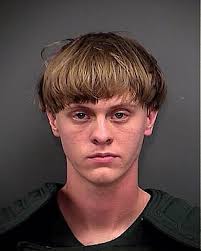
Dylann Roof
The signs of Roof’s malignant racism were evident long before he turned mass murderer:
- He had posed for a photo sitting on the hood of his parents’ car—whose license plate bore a Confederate flag.
- He had posed for pictures wearing a jacket sporting the white supremacist flags of Rhodesia and apartheid South Africa.
- He told a friend that he hoped “to start a civil war” between the black and white races.
- Roof reportedly told friends and neighbors of his plans to kill people.
- In the midst of his massacre of unarmed worshipers, he told one of his victims: “You’ve raped our women, and you are taking over the country.” Then Roof shot him.
The evidence makes clear that Roof’s slaughter was racially motivated. Yet no 2016 Republican Presidential candidate dared acknowledge it:
- Jeb Bush, former governor of Florida: “I don’t know what was on the mind or the heart of the man who committed these atrocious crimes.”
- Rick Santorum, former United States Senator from Pennsylvania: “You talk about the importance of prayer in this time and we’re now seeing assaults on our religious liberty we’ve never seen before. It’s a time for deeper reflection beyond this horrible situation.”
- Bobby Jindal, former governor of Louisiana: “I don’t think we’ll ever know what was going on in his mind.”
But Rolling Stone magazine writer Jeb Lund left no doubt as to what—and who—was ultimately responsible for this crime: Racism and Republicans.
In a June 19, 2015 editorial—published two days after the massacre—Lund noted: “This [crime] is political because American movement conservatism has already made these kinds of killings political.
“The Republican Party has weaponized its supporters, made violence a virtue and, with almost every pronouncement for 50 years, given them an enemy politicized, racialized and indivisible.
“Movement conservatives have fetishized a tendentious and ahistorical reading of the Second Amendment to the point that the Constitution itself somehow paradoxically ‘legitimizes’ an armed insurrection against the government created by it.
“Those leading said insurrection are swaddled by the blanket exculpation of patriotism. At the same time, they have synonymized the Democratic Party with illegitimacy and abuse of the American order.
“This is no longer an argument about whether one party’s beliefs are beneficial or harmful, but an attitude that labels leftism so antithetical to the American idea that empowering it on any level is an act of usurpation.”
Click here: The Charleston Shooter: Racist, Violent, and Yes – Political | Rolling Stone
On December 15, 2016, Dylann Roof was convicted of 33 Federal hate crime charges. On January 11, 2017, he was sentenced to death. He remains on Death Row to this day.
Yet the leadership of the Republican party whose hate-filled rhetoric inspired Root escaped indictment—and even widespread condemnation.
The evidence that Republicans have weaponized hatred—with deadly results—was on display long before Dylann Roof opened fire on “uppity blacks” praying in their own church.
Consider:
On January 8, 2011, Democratic Rep. Gabrielle Giffords was shot in the head while meeting with constituents outside a grocery store in Tucson, Arizona. After a miraculous recovery, she continues to struggle with language and has lost 50% of her vision in both eyes.
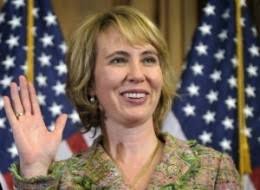
Rep. Gabrielle Giffords
She vowed to return to her former Congressional duties, but was forced to resign for health reasons in 2012.
Giffords was only one victim of a shooting spree that claimed the lives of six people and left 13 others wounded.
Also killed was Arizona’s chief U.S. District judge, John Roll, who had just stopped by to see his friend Giffords after celebrating Mass.
Although the actual shooter, Jared Lee Loughner, was immediately arrested, those who fanned the flames of political violence that consumed 19 people that day have remained unpunished.
Consider the circumstances behind the shootings:
John Roll is Arizona’s chief federal judge. Appointed in 2006, he wins acclaim as a respected jurist and leader who pushes to beef up the court’s strained bench to handle a growing number of border crime-related cases.
In 2009, he becomes a target for threats after allowing a $32 million civil-rights lawsuit by illegal aliens to proceed against a local rancher. The case arouses the fury of local talk radio hosts, who encourage their audiences to threaten Roll’s life.
In one afternoon, Roll logs more than 200 threatening phone calls. Callers threaten the judge and his family. They post personal information about Roll online.
Roll and his wife are placed under fulltime protection by deputy U.S. marshals. Roll finds living under security “unnerving and invasive.”
Authorities identify four men believed responsible for the threats. But Roll declines to press charges on the advice of the Marshals Service.
2020 PRESIDENTIAL ELECTION, ABC NEWS, ALTERNET, AMERICABLOG, AP, BABY BOOMER RESISTANCE, BBC, BLOOMBERG NEWS, BUZZFEED, CBS NEWS, CNN, COVID-19, CROOKS AND LIARS, DAILY KOZ, DONALD TRUMP, FACEBOOK, FIVETHIRTYEIGHT, HARPER’S MAGAZINE, HUFFINGTON POST, JOSEPH BIDEN, MASKS, MEDIA MATTERS, MODERNA VACCINE, MOTHER JONES, MOVEON, MSNBC, NBC NEWS, NEW REPUBLIC, NEWSDAY, NEWSWEEK, NPR, OSAMA BIN LADEN, PBS NEWSHOUR, PFIZER VACCINE, POLITICO, POLITICUSUSA, RAW STORY, REUTERS, SALON, SEATTLE TIMES, SLATE, SOCIAL DISTANCING, TALKING POINTS MEMO, THE ATLANTIC, THE CHICAGO SUN-TIMES, THE CHICAGO TRIBUNE, THE DAILY BEAST, THE DAILY BLOG, THE GUARDIAN, THE HILL, THE HUFFINGTON POST, THE LOS ANGELES TIMES, THE NATION, THE NEW REPUBLIC, THE NEW YORK TIMES, THE NEW YORKER, THE VILLAGE VOICE, THE WASHINGTON POST, THINKPROGRESS, TIME, TRUTHDIG, TRUTHOUT, TWITTER, TWO POLITICAL JUNKIES, U.S. NEWS & WORLD REPORT, UPI, USA TODAY, VACCINATIONS, WONKETTE
In Bureaucracy, History, Law, Law Enforcement, Medical, Politics, Social commentary on November 16, 2021 at 12:12 am
On March 12, in his first primetime address as President, Joseph Biden said he would order states to make all adults eligible for vaccinations by May 1:
“If we do this together, by July 4, there is a good chance you, your family and friends can get together in your backyard or in your neighborhood and have a cookout or a barbecue and celebrate Independence Day.
“After a long, hard year, that will make this Independence Day truly special—where we not only mark our independence as a nation but we begin to mark our independence from this virus.”
For all of his sincerity, Biden has made three major—and possibly fatal—mistakes in his effort to protect his fellow Americans from COVID-19.
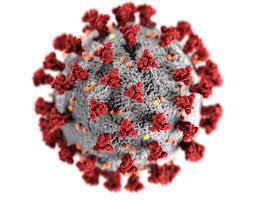
COVID-19 virus
Mistake #1: Setting a July 4 date
Admittedly, Biden hedged his prediction: “”If we do this together, by July 4, there is a good chance….”
Still, there are simply too many variables to any disease or pestilence to guarantee its extinction by a specific date.
(A friend of mine, whose apartment was infested with bedbugs, was stunned when an exterminator promised: “I’ll have them gone in three visits or I’ll change my name.” The exterminator was gone before the bedbugs were.)
But to millions of simplistic, miracle-demanding Americans, Biden’s “July 4, 2021” statement became the date by which they fully expected to see COVID-19 totally eliminated—and the country returned to its state before the plague arrived.
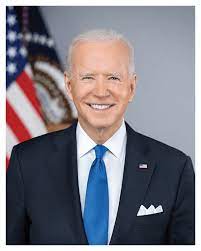
Joseph Biden
So fast-forward to November, 2021, with medical experts predicting a rise in COVID-19 cases.
There are two reasons for this:
First, due to the cold and holidays, more people will be spending more time indoors with friends and relatives in their homes, and with strangers in large shopping centers.
Second, many Americans have never gotten vaccinated. Or they got only the first shot (of the Moderna or Pfizer vaccine) and didn’t bother to get a second. Or they got vaccinated—but neglected to get a booster shot.
So now all those millions of simplistic, science-denying Americans will feel: “Biden lied to me!”
Mistake #2: Refusing to blame the Stormtrumpers
Throughout 2020, President Donald Trump brutally attacked social distancing, wearing face masks and the medical professionals who advocated both.
To demonstrate their loyalty, his millions of Right-wing followers threw caution—and often their own lives—to the COVID-infected winds.
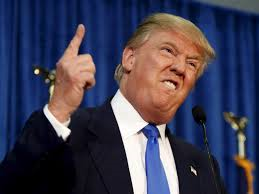
Donald Trump
Even after three COVID-19 vaccines have been developed, millions of Right-wingers refuse to get vaccinated. Although they refuse women the right to abortion, they insist “It’s my body!” when it came to mandatory vaccinations.
As a result, in states won by Trump in the 2020 Presidential election, hospitals surge with unvaccinated COVID-19 patients—and graveyards fill with them.
Every hospital bed taken by an unvaccinated Stormtrumper is a bed denied to a legitimate medical patient—such as a victim of stroke, heart attack, accident or crime.
Yet President Biden has refused to blame those men and women who are directly responsible for this outrage.
Doing so would not only be accurate—it would allow Biden to place blame on his sworn political enemies and thus enhance his own popularity: “We would have achieved freedom from COVID-19—but these people have sabotaged their country’s safety out of sheer selfishness and arrogance!”
Trump viciously attacked the nation’s free press as “the enemy of the American people.” But Biden and his fellow Democrats refuse to blame those most responsible for the nation’s continuing COVID-19 epidemic.
Mistake #3: Failing to put Stormtrumpers’ deaths in perspective
Since the overwhelming numbers of COVID-19 victims are now unvaccinated Stormtrumpers, it’s necessary to view these in a new perspective.
And Biden could—and should—offer that perspective. For example:
“My fellow Americans, tonight I can report to you that the United States is safer today than it has been since 2015. Tens of thousands of men and women, determined to overturn our most basic freedoms, are no longer able to do so.
“They refused to get vaccinated or even wear masks. By denying science and showing utter disregard for their own health and that of their fellow citizens, they chose a path that led directly to their own demise.
“They brought on their own deaths. There is no way to protect people who, through sheer arrogance and/or ignorance, court suicide.
“Moreover, these were people who swore allegiance to a lifelong criminal and would-be dictator who illegally conspired to overturn the verdict of a legitimate election.
“His efforts culminated in an attempted coup against Congressional members counting the electoral votes of the 2020 election.
“Despite this, millions of Fascistic Americans still lust to support their would-be Fuhrer in 2024. Should he once again enter the White House, it’s a certainty he will remain there—as he has so often ‘joked’—as ‘President-for-Life.’
“Just as we don’t grieve for those who supported the foreign terrorism of Osama bin Laden, there is no reason to grieve for those who supported the domestic terrorism of Donald Trump.”
Thus, the self-inflicted removal of Trump supporters can be accurately presented as a victory for democracy.
9/11 ATTACKS, ABC NEWS, AIR MARSHAL PROGRAM, AIR-RAGE, ALTERNET, AMERICABLOG, AP, BABY BOOMER RESISTANCE, BBC, BLOOMBERG NEWS, BUZZFEED, CBS NEWS, CNN, CROOKS AND LIARS, DAILY KOZ, FACEBOOK, FBI, FEDERAL AVIATION ADMINISTRATION (FAA), FIVETHIRTYEIGHT, HARPER’S MAGAZINE, HUFFINGTON POST, JOHN PISTOLE, MASKS, MEDIA MATTERS, MOTHER JONES, MOVEON, MSNBC, NBC NEWS, NEW REPUBLIC, NEWSDAY, NEWSWEEK, NPR, PBS NEWSHOUR, POLITICO, POLITICUSUSA, RAW STORY, REUTERS, SALON, SEATTLE TIMES, SLATE, STEVE DICKSON, TALKING POINTS MEMO, TERRORISM, THE ATLANTIC, THE CHICAGO SUN-TIMES, THE CHICAGO TRIBUNE, THE DAILY BEAST, THE DAILY BLOG, THE GUARDIAN, THE HILL, THE HUFFINGTON POST, THE LOS ANGELES TIMES, THE NATION, THE NEW REPUBLIC, THE NEW YORK TIMES, THE NEW YORKER, THE PENTAGON, THE VILLAGE VOICE, THE WASHINGTON POST, THINKPROGRESS, TIME, TRANSPORTATION SAFETY ADMINISTRATION (TSA), TRUTHDIG, TRUTHOUT, TWITTER, TWO POLITICAL JUNKIES, U.S. DEPARTMENT OF JUSTICE, U.S. NEWS & WORLD REPORT, UNITED FLIGHT 93, UPI, USA PATRIOT ACT, USA TODAY, WONKETTE, WORLD TRADE CENTER
In Bureaucracy, Business, History, Law, Law Enforcement, Medical, Politics, Social commentary on November 15, 2021 at 1:15 am
Of the 4,385 air rage incidents reported by September 24, only one person has been criminally charged.
That is Vyvianna Quinonez, who in May punched a flight attendant in the face on a Southwest flight approaching San Diego. At the time of her arrest, she claimed she was acting in self-defense.
The airlines are under Federal jurisdiction—which means legal violations can be prosecuted by the Department of Justice (DOJ). Criminal penalties can run up to 20 years in prison if convicted of interfering with the operations of an aircraft.
As a civil authority, the FAA cannot charge anyone. The agency can fine violators up to $35,000.

Seal of the Justice Department
There are several reasons for this huge increase in air-rage incidents.
First, coach passengers are cramped into tight places with strangers, where they have little control over what’s happening to them. This can lead to nervousness, negative feelings and anger.
Second, the political polarization that marked the Donald Trump administration has taken to the skies with the imposition of mask mandates.

Surgical mask
Robert Bor, a director at the UK-based Centre for Aviation Psychology, says that most air-rage incidents are about masks.
“Most people are pretty neutral on whether they have Coke or Pepsi, but they will have very strong feelings when it comes to issues relating to health, human rights, access to air and so on; it triggers people to behave in slightly more militant ways.”
By June 29, of the 3,100 air-rage incidents thus far reported, 2,350 involved people refusing to comply with the Federal mask mandate.
Airline crew members are frightened by these attacks—and depressed at the lack of punishment for them.
“We tell them [passengers] that it is a Federal offense to not comply with crew member instructions,” said Sara Nelson, international president of the Association of Flight Attendants. “Then the plane is met by airline supervisors or airport law enforcement and the passenger gets a slap on the wrist and sent on their way.”
FAA Administrator Steve Dickson has his own complaints: “Every week, we see situations in which law enforcement was asked to meet an aircraft at the gate following an unruly passenger incident. Many of these passengers were interviewed by local police and released without criminal charges of any kind.”
Meanwhile, the Transportation Safety Administration (TSA) has had its own serious lapses in judgment.
In March, 2013, TSA Administrator John Pistole unveiled a proposal to allow passengers to bring small knives, baseball bats, golf clubs and other sports equipment onto planes.
He explained that in light of hardened cockpit doors, armed off-duty pilots traveling on planes and other preventive measures, small folding knives could not be used by terrorists to take over a plane.
TSA dropped the proposal in June, thanks to fierce opposition from passengers, Congressional leaders and airline industry officials.
By October, 2021, the TSA had seized nearly 4,500 guns at airport security checkpoints, compared with about 4,400 in all of 2019, before the pandemic caused air travel to plummet in 2020.
About 85% of the weapons caught were loaded. They were found on passengers or in carry-on bags across 248 U.S. airports, largely in Atlanta and Dallas-Fort Worth.
It’s worth remembering that for all the publicity given the TSA’s “Air Marshal” program, it’s been airline passengers—not Federal lawmen—who have repeatedly been the ones to subdue unruly fliers.
Prior to 9/11, commercial airline pilots and passengers were warned: If someone tries to highjack the plane, just stay calm and do what he says.
So many airplanes were directed by highjackers to land in Fidel Castro’s Cuba that these incidents became joke fodder for stand-up comedians.
And, up to 9/11, the advice to cooperate fully with highjackers and land the planes where they wanted worked. No planes and no lives were lost.
But during 9/11, passengers and crew—with one exception—cooperated fully with the highjackers’ demands.
And all of them died horrifically when three of those jetliners were deliberately crashed into the Twin Towers of the World Trade Center and the Pentagon.
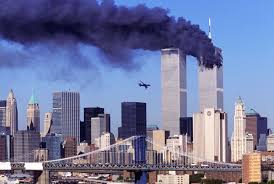
World Trade Center – September 11, 2001
Only on United Flight 93 did the passengers and crew fight back.
In doing so, they accomplished what soldiers, military pilots, the CIA and the FBI could not: They thwarted the terrorists, sacrificing their own lives and preventing the fourth plane from destroying the White House or the Capitol Building.
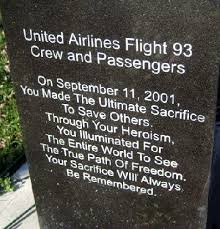
Memorial to the passengers and crew of United Flight 93
As a result, passengers are now ordered to act as their own air marshals when danger threatens.
To put an end to these outrages against public safety:
- Violators should be taken into custody solely by the FBI.
- Bail should be denied for all violators.
- Every air-rage case should be prosecuted to the fullest extent of the law.
- If this puts a strain on Federal detention centers, the accused should be shipped off to Guantanamo and other holding facilities.
- Flight attendants and passengers should be empowered to use deadly force against anyone who poses a danger to the flight. Anyone found to have legally killed an air-rage perpetrator should be granted immunity from prosecution.
- Anyone found illegally bringing a firearm aboard a flight should be arrested, jailed without bond, and tried under the USA Patriot Act, which counters terrorism. If convicted, s/he should spend at least 10 years in prison.
2016 PRESIDENTIAL ELECTION, ABC NEWS, ADOLF HITLER, ALTERNET, AMERICABLOG, AP, BABY BOOMER RESISTANCE, BOB WOODWARD, BUZZFEED, CANADA, CBS NEWS, CNN, CROOKS AND LIARS, DAILY KOZ, DAVID BROOKS, DONALD TRUMP, DRUDGE RETORT, ERIC COHN, FACEBOOK, FBI, FEAR: TRUMP IN THE WHITE HOUSE (BOOK), FIVETHIRTYEIGHT, FRANCE, FRANZ HALDER, FREEDOM OF THE PRESS, GUNTER MEISNER, HARPER’S MAGAZINE, HERMAN WOUK, JAMES COMEY, JEFF SESSIONS, JOHN DOWD, KIM JONG ON, MEDIA MATTERS, MOTHER JONES, MOVEON, MSNBC, NAZI GERMANY, NBC NEWS, NEWSWEEK, NPR, PBS NEWSHOUR, POLITICO, POLITICUSUSA, RAW STORY, REUTERS, ROBERT MUELLER, RUSSIA, SALLY YATES, SALON, SEATTLE TIMES, SLATE, SOUTH KOREA, TALKING POINTS MEMO, THE ATLANTIC, THE CHICAGO SUN-TIMES, THE CHICAGO TRIBUNE, THE DAILY BEAST, THE DAILY BLOG, THE GUARDIAN, THE HILL, THE HUFFINGTON POST, THE LOS ANGELES TIMES, THE NATION, THE NEW REPUBLIC, THE NEW YORK TIMES, THE VILLAGE VOICE, THE WASHINGTON POST, THE WINDS OF WAR, THINKPROGRESS, TIME, TRUTHDIG, TRUTHOUT, TWITTER, TWO POLITICAL JUNKIES, U.S. NEWS & WORLD REPORT, UPI, USA TODAY, VLADIMIR PUTIN, WALTER VON BRAUCHITSCH, WONKETTE, WORLD WAR 11
In Bureaucracy, History, Law, Law Enforcement, Military, Politics, Social commentary on November 12, 2021 at 12:10 am
After Donald Trump won the 2016 election, many people feared he would embark on a radical Right-wing agenda. But others hoped that the Washington bureaucracy would “box him in.”
The same sentiments echoed throughout Germany after Adolf Hitler was appointed Chancellor of Germany on January 30, 1933.
The 1983 TV mini-series, The Winds of War, offered a dramatic example of how honorable men can be overwhelmed by a ruthless dictator.
Based on the bestselling 1971 historical novel by Herman Wouk, the mini-series factually re-created the major historical events of World War II.
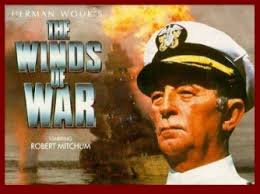
One of those events took place on November 5, 1939.
General Walther von Brauchitsch is summoned to the Chancellery in Berlin to meet with Adolf Hitler. He carries a memorandum signed by all the leaders of the German Wehrmacht asserting that Case Yellow—Hitler’s planned attack against France—is impossible.
Meanwhile, at the German army headquarters at Zossen, in Berlin, the Wehrmacht’s top command wait for word from von Brauchitsch.
ZOSSEN:
Brigadier General Armin von Roon: I must confide in you on a very serious matter. I have been approached by certain army personages of the loftiest rank and prestige with a frightening proposal.
Chief of the General Staff Franz Halder: What did you reply?
Von Roon: That they were talking high treason.
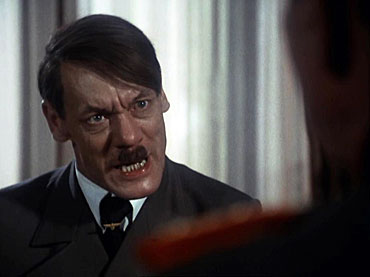
Gunter Meisner as Adolf Hitler in “The Winds of War”
THE WHITE HOUSE:
Fast forward 79 years from Adolf Hitler’s stormy confrontation with Walter von Brauchitsch to September 5, 2018.
On September 5, 2018, The New York Times publishes an anonymous Op-Ed essay by “a senior official in the Trump administration.” This spotlights massive dysfunction within the White House—and put the blame squarely on the President.
Among the revelations:
- “Many of the senior officials in his own administration are working diligently from within to frustrate parts of his agenda and his worst inclinations.”
- “We believe our first duty is to this country, and the president continues to act in a manner that is detrimental to the health of our republic. That is why many Trump appointees have vowed to do what we can to preserve our democratic institutions while thwarting Mr. Trump’s more misguided impulses until he is out of office.”
- “On Russia…the president was reluctant to expel so many of Mr. Putin’s spies as punishment for the poisoning of a former Russian spy in Britain….But his national security team knew better—such actions had to be taken, to hold Moscow accountable.”
- “From the White House to executive branch departments and agencies, senior officials will privately admit their daily disbelief at the commander in chief’s comments and actions. Most are working to insulate their operations from his whims.”
ZOSSEN:
Von Roon: The conspiracy has been going on that long—since Czechoslovakia [1938)?
Halder: If the British had not caved in at Munich [where France and Britain sold out their ally, Czechoslovakia]—perhaps. But they did. And ever then, ever since his big triumph, it has been hopeless. Hopeless.
Von Roon: Empty talk, talk, talk. I am staggered.
Halder: A hundred times I myself could have shot the man. I can still at any time. But what would be the result? Chaos. The people are for him. He has unified the country. We must stick to our posts and save him from making military mistakes.
THE WHITE HOUSE:
On September 11, 2018, legendary investigative reporter Bob Woodward publishes a devastating take on the Trump administration: Fear: Trump in the White House. The text features explosive revelations about the disdain Trump’s staffers have for him:
- Trump was about to sign a letter canceling a free-trade agreement with South Korea. To prevent this, Eric Cohn, his national economic council director, swiped it from Trump’s desk. Trump didn’t notice it missing.
- Secretary of Defense James Mattis said Trump has the understanding of “a fifth or sixth grader.”
- White House Chief of Staff John Kelly called Trump an “idiot” and “unhinged.”
General Walther von Brauchitsch fails to convince Hitler to postpone “Case Yellow”—the invasion of France. Hitler insists that it commence in seven days—on November 12.
And he issues a warning to the entire German General staff: “I will ruthlessly crush everybody up to the rank of a Field Marshal who dares to oppose me. You don’t have to understand. You only have to obey. The German people understand me. I am Germany.”
Due to foul weather, Hitler is forced to postpone the invasion of France until June, 1940. But the German General staff can’t ultimately put off the war that will destroy them—and Germany.
President Donald Trump:
- Fired FBI Director James Comey.
- Attacked the integrity of the American Intelligence community.
- Attacked the free press as “the enemy of the American people.”
- Praised brutal Communist dictators Vladimir Putin and Kim Jong Un.
- Tried to extort Ukraine into smearing former Vice President Joseph Biden, his 2020 rival for the White House.
- Tried to illegally overturn the results of the 2020 Presidential election, which elected Biden.
Like Hitler, he could equally say: I am the destiny of America.
Hitler’s dictatorship ultimately destroyed Germany and reshaped the map of Europe. Trump’s attempted dictatorship almost destroyed democracy in America. History has yet to see if Trump will succeed where Hitler failed.
2012 PRESIDENTIAL RACE, 2016 PRESIDENTIAL RACE, ABC NEWS, ADULTERY, ALTERNET, AMERICABLOG, AP, ATHEISTS, BABY BOOMER RESISTANCE, BARACK OBAMA, BBC, BIBLE, BILL MAHER, BIRTH CONTROL, BLOOMBERG NEWS, BUZZFEED, CATHOLICS, CBS NEWS, CIVIL LIBERTIES, CNN, CROOKS AND LIARS, DAILY KOZ, DONALD TRUMP, ELEANOR ROOSEVELT, FACEBOOK, FIVETHIRTYEIGHT, FRANKLIN GRAHAM, HARPER’S MAGAZINE, HOMOSEXUALITY, HOMOSEXUALS, HUFFINGTON POST, ISLAM, JERRY FALWELL JR., JESUS CHRIST, JEWS, LESBIANS, LIBERALS, MEDIA MATTERS, MIKE PENCE, MITT ROMNEY, MOTHER JONES, MOVEON, MSNBC, MUSLIMS, NBC NEWS, NEW REPUBLIC, NEWSDAY, NEWSWEEK, NEWT GINGRICH, NON-CHRISTIANS, NPR, PBS NEWSHOUR, POLITICO, POLITICUSUSA, RAW STORY, RELIGION, RELIGIOUS FREEDOM RESTORATION ACT, REPUBLICAN PARTY, REUTERS, RICHARD FEYNMAN, RICK SANTORUM, SALON, SAUDI ARABIA, SCIENCE, SEATTLE TIMES, SLATE, SLAVERY, SPANISH INQUISITION, STORMY DANIELS, SUPREME COURT, TALKING POINTS MEMO, TEA PARTY, THE ATLANTIC, THE CHICAGO SUN-TIMES, THE CHICAGO TRIBUNE, THE DAILY BEAST, THE DAILY BLOG, THE GUARDIAN, THE HILL, THE HUFFINGTON POST, THE LOS ANGELES TIMES, THE NATION, THE NEW REPUBLIC, THE NEW YORK TIMES, THE NEW YORKER, THE VILLAGE VOICE, THE WALL STREET JOURNAL, THE WASHINGTON POST, THEOLOGY, THINKPROGRESS, TIME, TOMAS DE TORQUEMADA, TRUTHDIG, TRUTHOUT, TWITTER, TWO POLITICAL JUNKIES, U.S. NEWS & WORLD REPORT, UPI, USA TODAY, WAR, WOMEN, WONKETTE
In Bureaucracy, History, Law, Law Enforcement, Military, Politics, RELIGION, Social commentary on November 11, 2021 at 12:07 am
On February 18, 2012, Republican Presidential candidate Rick Santorum warned about the “phony theology” of President Barack Obama.
“It’s not about you,” Santorum told supporters of the Right-wing Tea Party in Columbus, Ohio. “It’s not about your quality of life. It’s not about your jobs.
“It’s about some phony ideal. Some phony theology. Oh, not a theology based on the Bible. A different theology.”
What would a Bible-based agenda mean for the country?
The death penalty would be vastly expanded to cover such “crimes” as:
- Sabbath-breaking: Because the Lord considers it a holy day, anyone who works on the Sabbath must be put to death. (Exodus 31:12-15)
- Adultery: If a man commits adultery with another man’s wife, both the man and the woman must be put to death. (Leviticus 20:10)
- Fornication: A priest’s daughter who loses her honor by committing fornication and thereby dishonors her father also, shall be burned to death. (Leviticus 21:9)
- Nonbelievers: They entered into a covenant to seek the Lord, the God of their fathers, with all their heart and soul; and everyone who would not seek the Lord, the God of Israel, was to be put to death, whether small or great, whether man or woman. (2 Chronicles 15:12-13)
- Homosexuality: If a man also lies with mankind, as he lies with a woman, both of them have committed an abomination. They shall surely be put to death. Their blood shall be upon them. (Leviticus 20-13)

A modern-day stoning–in Somalia
The Thirteenth Amendment to the Constitution—which forbids slavery—would be repealed.
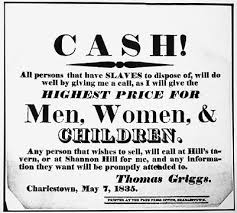
The Bible not only permits slavery but lays out rules for its practice—such as:
- However, you may purchase male or female slaves from among the foreigners who live among you. You may also purchase the children of such resident foreigners, including those who have been born in your land. (Leviticus 25:44-45)
- When a man sells his daughter as a slave, she will not be freed at the end of six years as the men are. (Exodus 21-7)
- Slaves, submit yourselves to your masters with all respect, not only to those who are good and considerate, but also to those who are harsh. (1 Peter 2:18)
Almost all scientific progress would be discarded, since most of its findings conflict with the Bible:
- One generation passes away, and another generation comes: but the earth abides forever. (Ecclesiastes 1:4).
- This claim is totally contradicted by what astronomers now know about the eventual fate of the Earth: In about 7.6 billion years, the sun will exhaust its nuclear fuels. This will vastly increase its heat and gravitational pull, and at least Mercury, Earth and Venus will be vaporized.

The sun
- The Bible speaks of a world where physical laws are often violated by the will of God. Thus, Jesus turns water into wine and raises Lazarus from the dead; Jonah lives inside a fish for three days; Noah dies at 950 years; and demons are exorcised.
- In Biblical times, mental illness was seen as a manifestation of demonic possession. Today we know that mental illness has nothing to do with evil spirits.
Laws guaranteeing equal rights for women would be repealed:
- I do not permit a woman to teach or to have authority over a man; she must be silent. (1 Timothy 12:10)
- Wives, submit to your husbands as to the Lord. (Ephesians 5:22)
- A woman should learn in quietness and full submission. (1 Timothy 2:11)
- But if…and evidence of the girl’s virginity is not found, they shall bring the girl to the entrance of her father’s house and there her townsman shall stone her to death. (Deuteronomy 22:20-21)
Military conflicts would be fought without regard to the Geneva Convention—as the Israelites did:
- “You are my battle-ax and sword,” says the Lord. “With you I will shatter nations and destroy many kingdoms. With you I will shatter armies, destroying the horse and rider, the chariot and charioteer. With you I will shatter men and women, old people and children, young men and maidens. With you I will shatter shepherds and flocks, farmers and oxen, captains and rulers.” (Jeremiah 51:20-23)
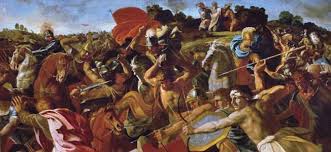
Depiction of the taking of Jericho by the Israelites
- Samuel said to Saul, “This is what the Lord Almighty says: ‘I will punish the Amalekites for what they did to Israel when they waylaid them as they came up from Egypt. Now go, attack the Amalekites and totally destroy everything that belongs to them. Do not spare them; put to death men and women, children and infants, cattle and sheep, camels and donkeys.’” (1 Samuel 15, 1-3)
* * * * *
Yes, a nation governed by “a theology based on the Bible” would be one far different from the United States we know today.
Since a number of Old Testament practices might lend themselves to easy abuse, this is not a matter to be taken lightly.


2016 PRESIDENTIAL CAMPAIGN, 9/11, ABC NEWS, ADAM KINZINGER, ALEXANDRIA OCASIO-CORTEZ, ALLEN WEST, ALTERNET, AMERICABLOG, ANN COULTER, AP, BABY BOOMER RESISTANCE, BBC, BILL CLINTON, BLOOMBERG NEWS, BUZZFEED, CAPITOL ATTACK, CBS NEWS, CHRISTOPHER S. MURPHY, CNN, COMMUNISM, CROOKS AND LIARS, DAILY KOZ, DEMOCRATS, DONALD TRUMP, DWIGHT D. EISENHOWER, EGYPT, FACEBOOK, FERGUS CULLEN, FIVETHIRTYEIGHT, GAMAL ABDEL NASSER, GEORGE H.W. BUSH, HARPER’S MAGAZINE, HILLARY CLINTON, HOUSE OVERSIGHT AND REFORM COMMITTEE, HUFFINGTON POST, IMPEACHMENT, ISRAEL, JEB LUND, JIMMY CARTER, JOHN F. KENNEDY, JOHN KASICH, JORDAN, JOSEPH MCCARTHY, LIZ CHENEY, LYNDON B. JOHNSON, MARJORIE TAYLOR GREENE, MEDIA MATTERS, MICHAEL HAYDEN, MICHELLE BACHMANN, MIKE PENCE, MITCH MCCONNELL, MOSHE DAYAN, MOTHER JONES, MOVEON, MSNBC, NANCY PELOSI, NATIONAL SECURITY AGENCY, NATURAL RESOURCES COMMITTEE, NBC NEWS, NEW REPUBLIC, NEWSDAY, NEWSWEEK, NPR, OSAMA BIN LADEN, PAUL GOSAR, PAUL RYAN, PBS NEWSHOUR, PHIL GRAMM, PHILIP KLINE, POLITICO, POLITICUSUSA, RAW STORY, REPUBLICAN NATIONAL CONVENTION, REPUBLICANS, REUTERS, RICHARD NIXON, ROGER STONE, ROLLING STONE, RON KLEIN, SALON, Sarah Palin, SEATTLE TIMES, SLATE, SOVIET UNION, TALKING POINTS MEMO, THE ATLANTIC, THE CHICAGO SUN-TIMES, THE CHICAGO TRIBUNE, THE DAILY BEAST, THE DAILY BLOG, THE GUARDIAN, THE HILL, THE HUFFINGTON POST, THE LOS ANGELES TIMES, THE NATION, THE NEW REPUBLIC, THE NEW YORK TIMES, THE NEW YORKER, THE PENTAGON, THE VILLAGE VOICE, THE WASHINGTON POST, THINKPROGRESS, TIME, TIMOTHY MCVEIGH, TRUTHDIG, TRUTHOUT, TWITTER, TWO POLITICAL JUNKIES, U.S. NEWS & WORLD REPORT, UNITED STATES HOUSE OF REPRESENTATIVES, UNITED STATES SECRET SERVICE, UPI, USA TODAY, VIETNAM WAR, WONKETTE, WORLD TRADE CENTER
VIOLENCE: IT’S THE REPUBLICAN WAY: PART THREE (OF FOUR)
In Bureaucracy, History, Law, Law Enforcement, Military, Politics, Social commentary on November 25, 2021 at 12:05 amWith the rise of Donald Trump to Republican standard-bearer in 2015, threats of violence entered the rhetoric—and tactics—of the Republican party.
On March 16, 2016, he warned Republicans that if he didn’t win the GOP nomination in July, his supporters would literally riot:
“I think you’d have riots. I think you would see problems like you’ve never seen before. I think bad things would happen. I really do. I wouldn’t lead it, but I think bad things would happen.”
Donald Trump
Republicans clearly saw this as a threat is undeniable.
Paul Ryan, their Speaker of the House, said on March 17: “Nobody should say such things in my opinion because to even address or hint to violence is unacceptable.”
And Ohio governor and Republican presidential candidate John Kasich chinned in. “Leaders don’t imply violence,” Kasich told “Face the Nation” on March 20. “When he says that there could be riots, that’s inappropriate. I think you understand that, okay? Secondly, while we have our differences and disagreements, we’re Americans. Americans don’t say, ‘Let’s take to the streets and have violence.'”
But threatening his Republican and Democratic opponents with violence played a major role in Donald Trump’s campaign for President.
No other candidate—Republican or Democrat—had ever made such repeated and brutal use of threats of physical assault in pursuing the Presidency.
Threats of this type continued to be made by Trump supporters right up to the day of the election.
Even Fergus Cullen, former chairman of the New Hampshire GOP, expressed fear of what might happen if Trump lost the election:
Fergus Cullen
“That’s really scary,” Cullen said, recounting the violence at Trump rallies around the country leading up to the Republican National Convention. “In this country, we’ve always had recriminations after one side loses. But we haven’t had riots. We haven’t had mobs that act out with violence against supporters of the other side.
“There’s no telling what his supporters would be willing to do at the slightest encouragement from their candidate,” he said.
Trump even began encouraging his mostly white supporters to sign up online to be “election observers” to stop “Crooked Hillary from rigging this election.” He urged them to act as poll watchers in “other” [non-white] communities to ensure that things are “on the up and up.”
Many of his supporters promised to do so.
“Trump said to watch your precincts. I’m going to go, for sure,” said Steve Webb, a 61-year-old carpenter from Fairfield, Ohio.
“I’ll look for…well, it’s called racial profiling. Mexicans. Syrians. People who can’t speak American,” he said. “I’m going to go right up behind them. I’ll do everything legally. I want to see if they are accountable. I’m not going to do anything illegal. I’m going to make them a little bit nervous.”
Share this: