Archive for the ‘Law’ Category
ABC NEWS, ALLERGIES, ALTERNET, AMERICABLOG, AP, BABY BOOMER RESISTANCE, BBC, BERNIE SANDERS, BLOOMBERG NEWS, BUZZFEED, CBS NEWS, CHARLES GRASSLEY, CNN, CROOKS AND LIARS, DAILY KOZ, EPINEPHRINE, EPIPEN, EXTORTION, FACEBOOK, FEDERAL TRADE COMMISSION, FIVETHIRTYEIGHT, HARPER’S MAGAZINE, HEATHER BRESCH, HENRY FORD, HUFFINGTON POST, INSTANT CHECKMATE, INTELLIUS, JOHN D. ROCKEFELLER, MEDIA MATTERS, MISSISSIPPI ATTORNEY GENERAL MIKE MOORE, MOTHER JONES, MOVEON, MSNBC, MYLAN PHARMACEUTICALS, NBC NEWS, NERVE GAS, NEW REPUBLIC, NEWSDAY, NEWSWEEK, NICCOLO MACHIAVELLI, NPR, PBS NEWSHOUR, PEOPLE-FINDER WEBSITES, PEOPLE-FINDING SERVICES, PEOPLE-FINDING WEBSITES, POLITICO, POLITICUSUSA, RACKETEER INFUENCED CORRUPT ORGANIZATIONS (RICO) ACT, RAW STORY, REUTERS, SALON, SCHOOL ACCESS TO EMERGENCY EPINEPHRINE ACT AMY KLOBUCHAR, SEATTLE TIMES, SHELDON KAPLAN, SLATE, TALKING POINTS MEMO, THE ATLANTIC, THE CHICAGO SUN-TIMES, THE CHICAGO TRIBUNE, THE DAILY BEAST, THE DAILY BLOG, THE DISCOURSES, THE GUARDIAN, THE HILL, THE HUFFINGTON POST, THE LOS ANGELES TIMES, THE NATION, THE NEW REPUBLIC, THE NEW YORK TIMES, THE NEW YORKER, THE VILLAGE VOICE, THE WASHINGTON POST, THINKPROGRESS, TIME, TOBACCO COMPANY LAWSUITS, TRUTHDIG, TRUTHOUT, TWITTER, TWO POLITICAL JUNKIES, U.S. NEWS & WORLD REPORT, UPI, USA TODAY, VEROMI
In Bureaucracy, Business, History, Law, Law Enforcement, Medical, Politics, Social commentary on August 29, 2016 at 1:04 am
More than 500 years ago, Niccolo Machiavelli, the father of modern politics, delivered this sage advice in his political masterwork, The Discourses:
All those who have written upon civil institutions demonstrate…that whoever desires to found a state and give it laws, must start with assuming that all men are bad and ever ready to display their vicious nature, whenever they may find occasion for it.
If their evil disposition remains concealed for a time, it must be attributed to some unknown reason; and we must assume that it lacked occasion to show itself. But time, which has been said to be the father of all truth, does not fail to bring it to light.

Niccolo Machiavelli
Unfortunately, it’s advice that members of the United States Congress have blissfully chosen to ignore. And, in doing so, they have condemned millions of Americans to suffering and death at the hands of greed-based, predatory corporations.
One of these corporations is Mylan Pharmaceuticals.
In 2007, Mylan acquired the patent for the EpiPen, a lifesaving device for anyone allergic to common foods like peanuts, shellfish and eggs. Millions of people with life-threatening allergies depend on the EpiPen for survival.

During an allergy attack, the EpiPen injects an emergency dosage of epinephrine to the user, preventing a possibly fatal reaction, known as anaphylaxis, from occurring.
Between 2007 and 2015, the wholesale price of an EpiPen skyrocketed from $56.64 to $317.82–an increase of 461%.
According to NBC News, compensation for Mylan CEO Heather Bresch similarly skyrocketed during the same period: From $2,453,456 in 2007 to $18,931,068 in 2015–a 671% raise in eight years.
Bresch wasn’t the only one to profit at the expense of the most vulnerable.
Mylan’s president, Rajiv Malik, got an 11% pay increase to $1 million annually by 2015. And Mylan Chief Commercial Officer Anthony Mauro got a 13.6% raise, amounting to $625,000 per year.
Between 2007 and 2015, Mylan’s stock price tripled, going from $13.29 per share in 2007 to a high of $47.59 in 2016. By late August, 2016, Mylan’s stock is hovering around $45.68 per share on the NASDAQ index.
Bloomberg states that the EpiPen now accounts for about 40% of Mylan’s profits.
Ironically, Sheldon Kaplan, the man who invented the now-famous device, never made a dime off it, and died in obscurity.
After working at NASA, Kaplan worked for Survival Technology, Inc., in Bethesda, Maryland. His assignment: Create a device to quickly inject a victim of anaphylaxis–a potentially fatal allergic reaction–with an emergency dose of epinephrine.
In 1973, when Kaplan was finalizing the design concept for what would ultimately become the EpiPen, the Defense Department asked him to take on a new assignment. The military needed a device that could quickly inject an antidote for nerve gas.
Kaplan’s design perfectly fitted this need: When a victim plunged a needle into his thigh, a spring-loaded mechanism shot a needle containing life-saving medicine into his bloodstream.
Kaplan’s invention became known as the ComboPen, and was initially used by the Pentagon before becoming available for use by the general public several years later as the EpiPen.
Kaplan left Survival Technology shortly after creating the ComboPen to become a biochemical engineer. He didn’t follow the success of his invention–and didn’t reap any of the huge financial rewards that it has produced.
That has certainly not been true for Mylan Pharmaceuticals.
After cornering the patent on the EpiPen in 2007, the company has made billions on the life-saving device.
According to Bloomberg, a package of two EpiPens costs $415 in the United States after insurance discounts. The same package in France–which has price controls under socialized medicine–costs $85.
The chief beneficiary of this legalized price-gouging has been Mylan’s CEO, Heather Bresch.

Heather Bresch
The daughter of U..S. Senator Joseph Manchin (D-WV), she joined Mylan in 1992 and held various positions within the company. Among these: Its chief lobbyist before Congress.
It was in that capacity that she persuaded Congress to enact a bill requiring all public schools to carry EpiPens for students with food allergies. It was signed into law by President Barack Obama in November, 2013.
Over the next three years, schools nationwide bought EpiPens by the truckload. And Mylan jacked up its prices for the EpiPen every other quarter.
On January 1, 2012, Heather Bresch became Mylan’s CEO.
But it wasn’t enough to have a monopoly on a device millions of men, women and children desperately needed. In 2014, true to its “profits-at-any-price” philosophy, Mylan reincorporated in the Netherlands to lower its effective tax rate.
It did so through a corporate accounting trick known as a tax inversion, and thus claiming the status of a foreign-owned corporation although its headquarters remained in Canonsburg, Pennsylvania.
Even her own father, U..S. Senator Joseph Manchin, condemned Mylan’s use of the inversion scheme and said it should be illegal.
But Bresch fiercely defended it in an interview with the New York Times: “You can’t maintain competitiveness by staying at a competitive disadvantage. I mean you just can’t.”
No doubt, with her $18 million-a-year CEO salary and moneyed ties to high-powered attorneys and influential members of Congress, Bresch thinks herself invulnerable.
But all that could quickly change–if even a small number of her victims become angry enough.
ABC NEWS, ALTERNET, AP, BEDBUGS, BUILDING INSPECTION, BUSINESS, BUZZFEED, CBS NEWS, CHRIS MATHEWS, CNN, CROOKS AND LIARS, DAILY KOZ, FACEBOOK, FEDERAL ASSET FORFEITURE STATUTES, KIP MACY, LANDLORDS, MOTHER JONES, MOVEON, MSNBC, NBC NEWS, NEWSWEEK, NICCOLO MACHIAVELLI, NICOLE MACY, NPR, POLITICO, RAW STORY, RENT CONTROL, RENTERS, REUTERS, ROBERT F. KENNEDY, SALON, SAN FRANCISCO, SAN FRANCISCO DEPARTMENT OF BUILDING INSPECTION, SAN FRANCISCO DEPARTMENT OF PUBLIC HEALTH, SEATTLE TIMES, SLATE, SLUMLORDS, THE ATLANTIC, THE CHICAGO SUN-TIMES, THE CHICAGO TRIBUNE, THE DAILY BEAST, THE GUARDIAN, THE HILL, THE HUFFINGTON POST, THE LOS ANGELES TIMES, THE NATION, THE NEW YORK TIMES, THE WALL STREET JOURNAL, THE WASHINGTON POST, TIME, TWITTER, U.S. NEWS & WORLD REPORT, UPI, USA TODAY, WILLIAM TECUMSEH SHERMAN
In Bureaucracy, History, Law, Law Enforcement, Politics, Social commentary on August 25, 2016 at 1:53 am
City agencies need to see landlords for what they truly are–as, at best, potential predators, if not actual ones. And to act on that knowledge.
As Niccolo Machiavelli warned:
“All those who have written upon civil institutions demonstrate…that whoever desires to found a state and give it laws, must start with assuming that all men are bad and ever ready to display their vicious nature, whenever they may find occasion for it.
“If their evil disposition remains concealed for a time, it must be attributed to some unknown reason; and we must assume that it lacked occasion to show itself. But time, which has been said to be the father of all truth, does not fail to bring it to light.”
Niccolo Machiavelli
The power of slumlords calls to mind the scene in 1987’s The Untouchables, where Sean Connery’s veteran cop tells Eliot Ness: “Everybody knows where the liquor is. It’s just a question of: Who wants to cross Capone?”
Many tenants have lived with rotting floors, bedbugs, nonworking toilets, mice/rats, chipping lead-based paint and other outrages for not simply months but years.
This holds true across the United States. But it also holds true in San Francisco–the “renters’ paradise” where the District Attorney’s Office hasn’t prosecuted a slumlord in decades.

Part Two of this series presented a series of badly-needed, long-overdue reforms for the San Francisco Department of Building Inspection (DBI). This is the agency charged to ensuring safe housing conditions for San Francisco residents.
This concluding part will cover the remainder of those needed reforms.
- Landlords should be required to bring all the units in a building up to existing building codes, and not just those in need of immediate repair.
- Landlords should be legally required to hire a certified-expert contractor to perform building repairs. To save money–that they can well afford to spend–many landlords insist on making such repairs despite their not being trained or experienced in doing so. They thereby risk the health and/or safety of their tenants.
- DBI should not view itself as a “mediation” agency between landlords and tenants. Most landlords hate DBI and will always do so. They believe they should be allowed to treat their tenants like serfs, if not slaves, raise extortionate rents anytime they desire, and maintain their buildings in whatever state they wish. And no efforts by DBI to persuade them of its good intentions will ever change their minds.
- Above all, DBI must stop viewing itself as a regulatory agency and start seeing itself as a law enforcement one. The FBI doesn’t ask criminals to comply with the law. It applies whatever amount of pressure is needed to force their compliance. William Tecumseh Sherman, speaking of the rebellious Southern states, said it best: “They cannot be made to love us, but they may be made to fear us.”
- The San Francisco District Attorney’s Office should create a special unit to investigate and prosecute slumlords. Prosecutors should offer rewards to citizens who provide tips on major outrages by the city’s slumlords.

- Install Rent Control protections for tenants on fixed incomes. San Francisco is notorious for having the highest rents in the nation. A one-bedroom apartment runs $3,448 a month. Even those in the vaunted high-tech industry spend most of their income on rent.
- For tenants on fixed incomes–seniors, disabled, students–the predatory greed of landlords amounts to a staged-in eviction notice. Social Security recipients did not get a cost-of-living increase in 2016 because there had not been a rise in the price of gasoline. But the fact that many of them do not own cars doesn’t mean that the price of everything else–such as groceries–hasn’t sharply risen.
- Allowing landlords to jack up rents to the fullest extent possible every year will eventually drive out all tenants who are not multimillionaires. In fact, an unknown portion of this City’s homeless population doubtless stems from the ability of landlords to gradually raise rents above tenants’ ability to afford them.
- In 1979, San Franciscans passed a Rent Control law to protect tenants against predatory rent hikes and unfair evictions. As a result, a landlord can only raise a tenant’s rent a certain percentage every year. This is set by the set by the Rent Stabilization and Arbitration Board, more popularly known as the “Rent Board.”
- But there is a gaping hole in the law: Once a tenant moves out, the landlord can jack up the rent as high as he wants. This is why the average rent in San Francisco is priced beyond most middle-class wage-earners.
- In addition, landlords are allowed to charge tenants yearly fees to maintain the existence of the Rent Board. This is both unfair and insulting, since the Board was created to protect tenants from predatory landlords. Most tenants have far less money to pay such fees than do landlords, who are free to raise rents every year. And landlords–unlike tenants–can and do write off Rent Board fees on their taxes every year. Thus, landlords–not tenants–should be paying the fees.
As Robert F. Kennedy wrote: “Every society gets the kind of criminal it deserves. What is equally true is that every community gets the kind of law enforcement it insists on.”
ABC NEWS, ALTERNET, AP, BEDBUGS, BUILDING INSPECTION, BUSINESS, BUZZFEED, CBS NEWS, CHRIS MATHEWS, CNN, CROOKS AND LIARS, DAILY KOZ, FACEBOOK, FEDERAL ASSET FORFEITURE STATUTES, KIP MACY, LANDLORDS, MOTHER JONES, MOVEON, MSNBC, NBC NEWS, NEWSWEEK, NICCOLO MACHIAVELLI, NICOLE MACY, NPR, POLITICO, RAW STORY, RENT BOARD, RENT CONTROL, RENTERS, REUTERS, ROBERT F. KENNEDY, SALON, SAN FRANCISCO, SAN FRANCISCO DEPARTMENT OF BUILDING INSPECTION, SAN FRANCISCO DEPARTMENT OF PUBLIC HEALTH, SEATTLE TIMES, SLATE, SLUMLORDS, THE ATLANTIC, THE CHICAGO SUN-TIMES, THE CHICAGO TRIBUNE, THE DAILY BEAST, THE GUARDIAN, THE HILL, THE HUFFINGTON POST, THE LOS ANGELES TIMES, THE NATION, THE NEW YORK TIMES, THE WALL STREET JOURNAL, THE WASHINGTON POST, TIME, TWITTER, U.S. NEWS & WORLD REPORT, UPI, USA TODAY, WILLIAM TECUMSEH SHERMAN
In Bureaucracy, History, Law, Law Enforcement, Politics, Social commentary on August 24, 2016 at 12:28 am
The San Francisco Department of Building Inspection (DBI) has long been outmaneuvered by predatory, law-breaking landlords.
And San Francisco renters–many of them elderly, poor and/or disabled–have been the victims of landlord greed, neglect and/or harassment.

Among the reforms that DBI should immediately enact:
- Hit slumlord violators with a fine–payable immediately–for at least $2,000 to $5,000 for each health/safety-code violation.The slumlord would be told he could reclaim 75-80% of the money only if he fully corrected the violation within 30 days. The remaining portion of the levied fine would go into the City coffers, to be shared among DBI and other City agencies.
- This would put the onus on the slumlord, not DBI. Appealing to his greed would ensure his willingness to comply with the ordered actions. As matters now stand, it is DBI who must repeatedly check with the slumlord to find out if its orders have been complied with.
- If the landlord failed to comply with the actions ordered within 30 days, the entire fine would go into the City’s coffers–to be divided among DBI and other agencies charged with protecting San Francisco residents.
- In addition. he would be hit again with a fine at least twice the amount of the first one.
- Inspectors for DBI should be allowed to cite landlords for violations that fall under the jurisdiction of the Department of Public Health (DPH). They could then pass the information to DPH for its own investigation.
- If the DBI inspector later discovered that the landlord had not corrected the DPH violation within a designated time-period, DBI should be allowed to levy its own fine for his failure to do so.
- If DPH objects to this, DBI should propose that DPH’s own inspectors be armed with similar cross-jurisdictional authority. Each agency would thus have increased motivation for spotting and correcting health/safety violations that threaten the lives of San Francisco residents.

- This would instantly turn DBI and DPH into allies, not competitors. And it would mean that whether a citizen called DBI or DPH, s/he could be assured of getting the necessary assistance. As matters now stand, many residents are confused by the conflicting jurisdictions of both agencies.
- DBI should insist that its Inspectors Division be greatly expanded. DBI can attain this by arguing that reducing the number of Inspectors cuts (1) protection for San Francisco renters–and (2) monies that could go to the general City welfare.
- The Inspection Division should operate independently of DBI. Currently, too many high-ranking DBI officials tilt toward landlords because they are landlords themselves.
- DBI should create a Special Research Unit to compile records on the worst slumlord offenders. Thus, a slumlord with a repeat history of defying DBI Notices of Violation could be treated more harshly than a landlord who was a first-time offender.
- Turning DBI into a revenue-producing agency would enable the City to raise desperately-needed revenues–in a highly popular way. Fining delinquent slumlords would be as unpopular as raising taxes on tobacco companies. Only slumlords and their hired lackey allies would object.
- DBI should legally require landlords to rehabilitate a unit every time a new tenant moves in, or have it examined by a DBI inspector every two years. A tenant can occupy a unit for ten or more years, then die or move out, and the landlord immediately rents the unit to the first person who comes along, without making any repairs or upgrades whatsoever.
- Slumlords, unlike drug-dealers, can’t move their buildings from one street or city to another. If they want to make money in San Francisco, they will have to submit to the jurisdiction of landlord-regulating agencies.
- DBI should require landlords to post their Notices of Violation in public areas of their buildings–on pain of serious financial penalties for failing to do so. When DBI orders a slumlord to take corrective action, s/he is the only one who is notified. If that slumlord refuses to comply with that directive, s/he is the only one who knows it. Given the pressing demands on DBI, weeks or months will pass before the agency learns about this violation of its orders. Tenants have a right to know if their landlord is complying with the law–so they can promptly notify inform DBI if a violation is occurring.

- Landlords should be legally required to give each tenant a list of the major city agencies (such as DBI, the Rent Board and the Department of Public Health) that exist to help tenants solve problems with their housing.
- DBI should launch–and maintain–a citywide advertising campaign to alert residents about its services. Everyone knows the FBI pursues bank robbers. But too many San Franciscans don’t even know that DBI exists, let alone what laws it enforces. This should be an in-your-face campaign: “Do you have bedbugs in your apartment? Has your stove stopped working? Are you afraid to ride in your building elevator because it’s always malfunctioning? Have you complained to your landlord and gotten the runaround? Then call DBI at—- Or drop us an email at_____.”
ABC NEWS, ALTERNET, AP, BEDBUGS, BUILDING INSPECTION, BUSINESS, BUZZFEED, CBS NEWS, CHRIS MATHEWS, CNN, CROOKS AND LIARS, DAILY KOZ, FACEBOOK, FEDERAL ASSET FORFEITURE STATUTES, KIP MACY, LANDLORDS, MOTHER JONES, MOVEON, MSNBC, NBC NEWS, NEWSWEEK, NICCOLO MACHIAVELLI, NICOLE MACY, NPR, POLITICO, RAW STORY, RENT BOARD, RENT CONTROL, RENTERS, REUTERS, ROBERT F. KENNEDY, SALON, SAN FRANCISCO, SAN FRANCISCO DEPARTMENT OF BUILDING INSPECTION, SAN FRANCISCO DEPARTMENT OF PUBLIC HEALTH, SEATTLE TIMES, SLATE, SLUMLORDS, THE ATLANTIC, THE CHICAGO SUN-TIMES, THE CHICAGO TRIBUNE, THE DAILY BEAST, THE GUARDIAN, THE HILL, THE HUFFINGTON POST, THE LOS ANGELES TIMES, THE NATION, THE NEW YORK TIMES, THE WALL STREET JOURNAL, THE WASHINGTON POST, TIME, TWITTER, U.S. NEWS & WORLD REPORT, UPI, USA TODAY, WILLIAM TECUMSEH SHERMAN
In Bureaucracy, History, Law, Law Enforcement, Politics, Social commentary on August 23, 2016 at 12:04 am
To hear slumlords tell it, San Francisco is a “renters’ paradise,” where obnoxious, lazy, rent-evading tenants constantly take advantage of hard-working, put-upon landlords.
Don’t believe it.
And in case you’re inclined to anyway, consider the story of Kip and Nicole Macy, two San Francisco slumlords who recently pled guilty to felony charges of residential burglary, stalking and attempted grand theft.

Nicole and Kip Macy
Determined to evict rent control-protected tenants from their apartment building in the South of Market district, they unleashed a reign of terror in 2006:
- Cut holes in the floor of one tenant’s living room with a power saw–while he was inside his unit.
- Cut out sections of the floor joists to make the building collapse.
- Threatened to shoot Ricardo Cartagena, their property manager, after he refused to make the cuts himself.
- Changed the locks to Cartagena’s apartment, removed all of his belongings and destroyed them.
- Created fictitious email accounts to appear as a tenant who had filed a civil suit against the Macys–and used these to fire the tenant’s attorney.
- Cut the tenants’ telephone lines and shut off their electricity, gas and water.
- Changed the locks on all the apartments without warning.
- Mailed death threats.
- Kicked one of their tenants in the ribs.
- Hired workers to board up a tenant’s windows from the outside while he still lived there.
- Falsely reported trespassers in a tenant’s apartment, leading police to hold him and a friend at gunpoint.
- Broke into the units of three tenants and removed all their belongings.
- Again broke into the units of the same three victims and soaked their beds, clothes and electronics with amonia.
The Macys were arrested in April, 2008, posted a combined total of $500,000 bail and then fled the country after being indicted in early 2009.
In May, 2012, Italian police arrested and deported them back to America a year later.
Having pled guilty, they were sentenced in September, 2013, to a prison term of four years and four months.
How could such a campaign of terror go on for two years against law-abiding San Francisco tenants?
Simple.
Even in the city misnamed as a “renter’s paradise,” slumlords are treated like gods by the very agencies that are supposed to protect tenants against their abuses.

The power of slumlords calls to mind the scene in 1987’s The Untouchables, where Sean Connery’s veteran cop tells Eliot Ness: “Everybody knows where the liquor is. It’s just a question of: Who wants to cross Capone?”
Everybody in San Francisco knows who the slumlords are. But the District Attorney’s Office hasn’t criminally prosecuted a slumlord in decades.
Many tenants have lived with rotting floors, bedbugs, nonworking toilets, mice/rats, chipping lead-based paint and other outrages for not simply months but years.
Consider the situation at the San Francisco Department of Building Inspection (DBI), which is charged with ensuring that apartment buildings are in habitable condition.
Under San Francisco law:
- A landlord is automatically given 30 days to correct a health/safety violation. If he drags his feet on the matter, the tenant must live with that problem until it’s resolved.
- If the landlord claims for any reason that he can’t fix the problem within one month, DBI doesn’t demand that he prove this. Instead, it automatically gives him another month.
- A slumlord has to work at being hit with a fine—by letting a problem go uncorrected for three to six months.
- And even then, repeat slumlord offenders often avoid the fine by pleading for leniency.
- That’s because many DBI officials are themselves landlords.
But the situation doesn’t have to remain this way.
How could it be changed?
By learning some valuable lessons from the “war on drugs” and applying them to regulating slumlords.
Consider:
- At least 400,000 rape kits containing critical DNA evidence that could convict rapists sit untested in labs around the country.
- But illegal drug kits are automatically rushed to the had of the line.
It isn’t simply because local/state/Federal lawmen universally believe that illicit drugs pose a deadly threat to the Nation’s security.
It’s because:
- Federal asset forfeiture laws allow the Justice Department to seize properties used to “facilitate” violations of Federal anti-drug laws.
- Local and State law enforcement agencies are allowed to keep some of the proceeds once the property has been sold.
- Thus, financially-strapped police agencies have found that pursuing drug-law crimes is a great way to fill their own coffers.
- Prosecutors and lawmen view the seizing of drug-related properties as crucial to eliminating the financial clout of drug-dealing operations.
It’s long past time for San Francisco agencies to apply the same attitude–and methods–toward slumlords. 
DBI should become not merely a law enforcing agency but a revenue-creating one. And those revenues should come from predatory slumlords who routinely violate the City’s laws protecting tenants.
By doing so, DBI could vastly:
- Enhance its own prestige and authority;
- Improve living conditions for thousands of San Francisco renters; and
- Bring millions of desperately-needed dollars into the City’s cash-strapped coffers.
2001 TERROR ATTACKS, 9/11 ATTACKS, ABC NEWS, AIRPORT SECURITY, CBS NEWS, CNN, DEPARTMENT OF HOMELAND SECURITY, DRIVER'S LICENSES, FACEBOOK, FBI, IDENTIFICATION, JOHN DILLINGER, NATIONAL GUARD, NBC NEWS, OSAMA BIN LADEN, PASSPORTS, REAL ID ACT, SAN FRANCISCO FEDERAL BUILDING, SECURITY THEATER, TERRORISM, THE CHICAGO SUN-TIMES, THE CHICAGO TRIBUNE, THE LOS ANGELES TIMES, THE NEW YORK TIMES, THE WASHINGTON POST, TRANSPORTATION SECURITY ADMINISTRATION, TWITTER, UPI, USA TODAY
In Bureaucracy, History, Law, Law Enforcement, Self-Help, Social commentary on August 19, 2016 at 12:08 am
Starting in 2016, traveling by air in the United States got more complicated. But not necessarily safer.
In 2005, Congress passed the Real ID Act as a counter-terrorism measure. Its goal was to set security standards for government-issued IDs.
The Act started to be introduced in late 2013. Now in the last phase of its implementation, its enforcers have decided that some states haven’t complied with its requirements.
As a result, driver’s licenses from those states will no longer suffice to pass through airport security. And that includes domestic flights as well as international ones.
Those states: New York, New Hampshire, Minnesota, Louisiana and American Samoa.
The reason: Licenses issued by those states don’t contain enough identifying information to pass muster with the Transportation Security Administration (TSA).

So how are residents of these states supposed to cope? The Federal Government is advising them to get a passport.
Your old New York driver’s license may make it harder for you to fly in 2016 | syracuse.com
And this, in turn, carries an illogic all its own. As one soon-to-be affected New York traveler outlined:
“To get a passport I’ll first need to get a certified copy of my birth certificate.
“And to get a copy of my birth certificate I need only to submit a copy of my driver’s license. A copy, no face-to-face, is-that-really you?
“So a New York driver’s license isn’t good enough for flying but it is good enough to get a birth certificate, which gets me a passport, which allows me to fly.”
Got all that?

Sample state ID card that’s acceptable under the Real ID Act
So much of what passes for security is actually security theater. It doesn’t actually make us safer, but it makes us feel safer.
And it makes us feel the government is keeping us safe, even when it isn’t.
For example: In the months after 9/11, National Guard troops were stationed in American airports. They certainly looked impressive.
But passengers would have felt far less reassured had they known the assault rifles they carried had no bullets.
Or take the checking of photo IDs that has become routine to enter State and Federal office buildings.
What exactly does this tell the security guard?
If you’re John Dillinger or Osama bin Laden, it tells him: “This is a very wanted man.”
But if you’re John Q. Public, who’s not notorious as a bank robber or terrorist, showing him your ID tells him nothing.
But people watching the guard performing this ritual assume: “The security guard must know what he’s looking for. So we have to be safer for his checking those IDs.”
In fact, most security guards have little training and even less experience. Many of them don’t carry firearms and lack self-defense skills.
According to Salary.com: The median annual Security Guard salary is $29,204, as of July 29, 2016, with a range usually between $25,857 and $33,522.
Repeated showings of security theater can be seen every weekday at the San Francisco Federal Building, at 450 Golden Gate Avenue.
To enter, you must show a driver’s license or State ID card.
Then you must remove
- Your belt;
- Your shoes;
- Your watch;
- Your wallet;
- All other objects from your pants pockets;
- Any jacket you’re wearing;
- Any cell phone you’re carrying.
All of these must be placed in one or more large plastic containers, which are run through an x-ray scanner.
Finally, assuming you avoid setting off any alarm system, you’re allowed to enter.
Now, suppose you want to report a crime to the San Francisco field office of the Federal Bureau of Investigation (FBI).
You take an elevator to the 13th floor and walk into a large room filled with several comfortable chairs that sit close to the floor. You approach a window such as you find in a bank–made of thick, presumably bulletproof glass.

A secretary on the opposite side greets you, and asks why you’ve come.
You offer your reason for wanting to speak with an agent. Assuming the secretary thinks you have a legitimate reason, she says you must first show her your driver’s license or State ID card.
You slide these through the bottom part of the glass window. Then she makes a xerox of this and hands the card back.
Then, as if that isn’t enough, you have to fill out a single-page form, which requires you to provide your:
- Name;
- Address;
- Phone number;
- Social Security Number;
- The reason you want to speak to an agent.
Of course, you can refuse to fill out the form. But then the secretary will refuse to let you meet with an FBI agent.
The FBI has always encouraged Americans to report anything they consider a threat to national security or a violation of Federal law.
But this demand for so much private information is almost certain to sharply decrease the number of people willing to report knowledge of a crime.
At a time when Federal law enforcement agencies need all the cooperation they can get, this is not a matter to be taken lightly.
2008 PRESIDENTIAL RACE, 9/11, ABC NEWS, ADOLF HITLER, ANDERSON COOPER, ANTI-COMMUNISM, BARACK OBAMA, BILL CLINTON, BIRTHERS, CBS NEWS, CITIZENSHIP, CNN, DONALD TRUMP, FACEBOOK, JOSEPH ARPAIO, LAURENCE TRIBE, MSNBC, MUSLIMS, NAZI GERMANY, NAZI PARTY, NBC NEWS, RAFAEL "TED" CRUZ, REPUBLICAN PARTY, REPUBLICANS, SS, THE BOSTON GLOBE, THE CHICAGO SUN-TIMES, THE CHICAGO TRIBUNE, THE HUFFINGTON POST, THE LOS ANGELES TIMES, THE NEW YORK TIMES, THE WALL STREET JOURNAL, THE WASHINGTON POST, TREASON, TWITTER, UNITED STATES SUPREME COURT, USA TODAY
In Bureaucracy, History, Law, Politics, Social commentary on August 16, 2016 at 12:42 am
“All revolutions,” said Ernst Rohem, leader of Adolf Hitler’s brown-shirted thugs, the S.A., “devour their own children.”
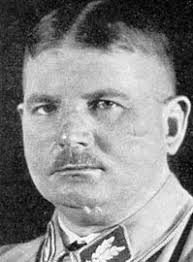
Ernst Rohem
Fittingly, he said this as he sat inside a prison cell awaiting his own execution.
On June 30, 1934, Hitler had ordered a massive purge of his private army, the S.A., or Stormtroopers. The purge was carried out by Hitler’s elite army-within-an-army, the Schutzstaffel, or Protective Squads, better known as the SS.
The S.A. Brownshirts had been instrumental in securing Hitler’s rise to Chancellor of Germany on January 30, 1933. They had intimidated political opponents and organized mass rallies for the Nazi Party.
But after Hitler reached the pinnacle of power, they became a liability.
Ernst Rohem, their commander, urged Hitler to disband the regular German army, the Reichswehr, and replace it with his own legions as the nation’s defense force.
Frightened by Rohem’s ambitions, the generals of the Reichswehr gave Hitler an ultimatum: Get rid of Rohem–or they would get rid of him.
So Rohem died in a hail of SS bullets–as did several hundred of his longtime S.A. cronies.
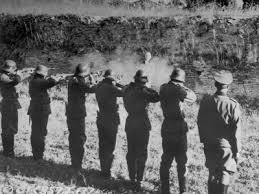
SS firing squad
At least one member of the Republican Party has now learned that an apparently useful weapon can become a liability.
Ever since Barack Obama became a Presidential candidate in 2008, Republicans have accused him of being ineligible to hold office.
Without a political scandal (such as Bill Clinton’s affair with Monica Lewinsky) to fasten on, the Republican Party opted for slander: Obama had been born in Kenya–and thus was not an American citizen.
From this there could be only one conclusion: That he would be an illegitimate President–and should be removed from office if elected.
And this smear campaign continued after he won the election. Right-wingers like real estate billionaire Donald Trump insisted that Obama had been born in Kenya, not Honolulu.
During his first two years in office, Obama tried to ignore the charge.
But polls repeatedly showed that large segments of the country believed it. Finally, even Obama’s closest advisers warned him: You must address this and put it to rest.
So, on April 27, 2011, the President released the long-form of his Hawaii birth certificate.
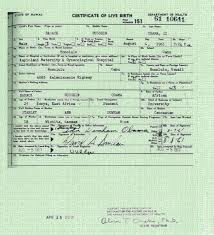
The long-form version of President Obama’s birth certificate
For the vast majority of Americans, this settled the issue. In 2012, they re-elected Obama to a second, four-year term.
Nevertheless, for many Right-wingers, even the release of Obama’s long-form birth certificate meant nothing.
Joseph Arpaio, the Right-wing sheriff of Maricopa County, Arizona, claimed that his “investigators” were certain that Obama’s birth certificate was fraudulent.
Responding to Arpaio’s claims, Joshua A. Wisch, a special assistant to Hawaii’s attorney general, said: “President Obama was born in Honolulu, and his birth certificate is valid. Regarding the latest allegations from a sheriff in Arizona, they are untrue, misinformed and misconstrue Hawaii law.”
Fast forward to 2015.
Donald Trump, who had threatened to run for President in 2012, announced his candidacy on June 16. He quickly became–and remained–the front-runner for Republican voters.
But then Texas’ United States Senator Rafael “Ted” Cruz entered the race. As radical and ruthless as Trump, he quickly became the billionaire’s most dangerous competitor.

Rafael “Ted” Cruz
What to do?
Then Trump–or someone in his campaign–had an inspiration. Why not use against Cruz the same “he’s-not-an-American” charge that had been used against Obama?
Cruz, born in Calgary, Alberta, Canada, was not a natural-born American citizen–and was thus ineligible to be President. His mother was an American, but his father was Cuban.
The U.S. Constitution states specifically that “No person except a natural born Citizen …shall be eligible to the Office of President.”
Cruz argued that because his mother was an American, he became an American citizen at birth.
But courts have never ruled on the issue of what constitutes a “natural-born” citizen.
At first, the issue seemed confined to Republican politicians and those likely to vote for them. But then others outside the Right began investigating it.
Mary McManamon, a constitutional law professor at Widener University’s Delaware Law School, concluded in an Open Editorial for The Washington Post:
“Sen. Ted Cruz (R-Tex.) is not a natural-born citizen and therefore is not eligible to be president or vice president of the United States.”
Cruz got an even bigger slap in the face from Laurence Tribe, the celebrated professor of Constitutional law at Harvard University. He has argued before the United States Supreme Court 36 times.
Writing in The Boston Globe, Tribe stated:
“…The kind of judge Cruz says he admires and would appoint to the Supreme Court is an ‘originalist,’ one who claims to be bound by the narrowly historical meaning of the Constitution’s terms at the time of their adoption.
“To his kind of judge, Cruz ironically wouldn’t be eligible, because the legal principles that prevailed in the 1780s and ’90s required that someone actually be born on US soil to be a “natural born” citizen.” [Italics added.]
So long as Cruz stayed in the race, Trump continued to use the “birther” charge against him. And it continued to dog him, as it did Obama.
Thus, the evil that politicians do lives after them.
ABC NEWS, ADOLF HITLER, ARIZONA SHOOTINGS, ASSASSINATION, BARACK OBAMA, BILL CLINTON, CBS NEWS, CNN, DONALD TRUMP, FACEBOOK, FBI, GABRIELLE GIFFORDS, GABRILLE GIFFORDS, GEORGE H.W. BUSH, HATE CRIMES, HEALTHCARE, HILLARY CLINTON, MEIN KAMPF, NEWT GINGRICH, REP. GABRIELLE GIFFORDS, REPUBLICAN PARTY, REPUBLICANS, RODNEY KING RIOTS, Sarah Palin, Secret Service, TEA PARTY, TERRORISM, THE LOS ANGELES TIMES, THE NEW YORK TIMES, THE WASHINGTON POST, TIM KAINE, TWITTER, U.S. DISTRICT JUDGE JOHN ROLL
In Bureaucracy, History, Law, Law Enforcement, Politics, Social commentary on August 11, 2016 at 1:05 am
Donald Trump’s “dog-whistle” solicitation for the political assassination of Hillary Clinton has been decried as unprecedented. In fact, it is anything but.
Repeatedly, Republicans have aimed violent–and violence-arousing–rhetoric at their Democratic opponents.
This is not a case of careless language that is simply misinterpreted, with tragic results.
Republicans like former Alaska Governor Sarah Palin–and Trump–fully understand the constituency they are trying to reach: Those masses of alienated, uneducated Americans who live only for their guns and hard-line religious beliefs–and who can be easily manipulated by perceived threats to either.

Sarah Palin’s “Crosshairs” Map
If a “nutcase” assaults a Democratic politician and misses, then the Republican establishment claims to be shocked–shocked!–that such a thing could have happened.
And if the attempt proves successful, then Republicans weep crocodile tears for public consumption.
The difference is that, in the latter case, they rejoice in knowing that Democratic ranks have been thinned and their opponents are even more on the defensive, for fear of the same happening to them.
The most important target of these intended assaults has been President Barack Obama.
In August, 2009, about a dozen people carrying guns, including one with a military-style rifle, milled among protesters outside a Phoenix convention center where President Obama was giving a speech.
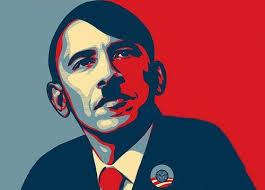
Anti-Obama poster
A week earlier, during Obama’s healthcare town hall in New Hampshire, a man carrying a sign reading “It is time to water the tree of liberty” stood outside with a pistol strapped to his leg.
Fred Solop, a Northern Arizona University political scientist, said the incidents in New Hampshire and Arizona could signal the beginning of a disturbing trend.
“When you start to bring guns to political rallies, it does layer on another level of concern and significance,” Solop said. “It actually becomes quite scary for many people. It creates a chilling effect in the ability of our society to carry on honest communication.”
But now that Hillary Clinton has become the official Democratic Presidential nominee, Republican hatred has moved from Obama to her. Shouts of “Lock her up!” thundered at the Republican National Convention which nominated Donald Trump.
In July, Trump called on Russian President Vladimir Putin to hack into U.S. State Department emails to “find the 30,000 emails that are missing.”
And now Trump has called on literally hair-triggered gun fanatics to remove his political rival.
The way to prevent such tragedies in the future is to hold fully accountable not just the shooters but those who deliberately point them toward their targets and repeatedly scream: “Kill the traitors!”
Americans must shed their naive belief that “America is exempt from the political corruption of other countries.” And they must see the Republicans’ lust for absolute power at any price as the danger it presents to the future of the Republic.
Among the steps that need to be taken:
First, the families and friends of the Tucson massacre victims should file civil lawsuits against Sarah Palin and every other Republican who can be proved to have created the firestorm of hate that consumed 20 people on January 8, 2011.
A legal precedent for such lawsuits emerged 20 years ago, and still remains viable.
On November 13, 1988, in Portland, Oregon, three white supremacist members of East Side White Pride and White Aryan Resistance (WAR) beat to death Mulugeta Seraw, an Ethiopian man who came to the United States to attend college.
Morris Dees and the Southern Poverty Law Center filed a civil suit (Berhanu v. Metzger) against Tom Metzger, founder of WAR. They argued that WAR influenced Seraw’s killers by encouraging their group, East Side White Pride, to commit violence.
At the trial, WAR national vice president Dave Mazzella testified how the Metzgers instructed WAR members to commit violence against minorities.
Tom and John Metzger were found civilly liable under the doctrine of vicarious liability, in which one can be liable for a tort committed by a subordinate or by another person who is taking instructions.
In October 1990, the jury returned the largest civil verdict in Oregon history at the time–$12.5 million–against Metzger and WAR. The Metzgers’ house was seized, and most of WAR’s profits go to paying off the judgment.
Second, the FBI and Justice Department should launch an all-out investigation into not simply right-wing hate groups but those political leaders who openly or secretly encourage and support their activities. Those who are found doing so should be vigorously indicted and prosecuted under the anti-terrorism statutes.
Third, the Secret Service should immediately adopt the policy that no one but sworn law enforcement officers will be allowed to carry firearms within the immediate vicinity of the President. And it should enforce that policy through its elite counter-sniper teams.
Finally, President Obama should do what President Bill Clinton refused to do at the time of the 1995 truck-bombing of the Oklahoma City Federal Building: He should publicly condemn those Republicans who give “aid and comfort” to the right-wing extremists whose support they openly court.
Unless such steps are taken, Right-wing candidates like Donald Trump will continue to solicit the murder of their political opponents. And those outrages will continue until a Republican version of the swastika permanently flies over the capitol dome and the White House.
ABC NEWS, ADOLF HITLER, ARIZONA SHOOTINGS, ASSASSINATION, BARACK OBAMA, BILL CLINTON, CBS NEWS, CNN, DONALD TRUMP, FACEBOOK, FBI, GABRIELLE GIFFORDS, GABRILLE GIFFORDS, GEORGE H.W. BUSH, HATE CRIMES, HEALTHCARE, HILLARY CLINTON, MEIN KAMPF, NEWT GINGRICH, REP. GABRIELLE GIFFORDS, REPUBLICAN PARTY, REPUBLICANS, RODNEY KING RIOTS, Sarah Palin, Secret Service, TEA PARTY, TERRORISM, THE LOS ANGELES TIMES, THE NEW YORK TIMES, THE WASHINGTON POST, TIM KAINE, TWITTER, U.S. DISTRICT JUDGE JOHN ROLL
In Bureaucracy, History, Law, Law Enforcement, Politics, Social commentary on August 10, 2016 at 12:12 am
“Hillary wants to abolish, essentially abolish, the Second Amendment,” Republican Presidential Candidate Donald Trump told a rally in Wilmington, North Carolina.
That in itself was untrue, but what followed was worse.
“If she gets to pick her [Supreme Court] judges,” said Trump, “nothing you can do folks. Although the Second Amendment people, maybe there is, I don’t know.”

Donald Trump
The Clinton camp instantly saw it as a “dog-whistle” solicitation for political assassination.
Virginia U.S. Senator Tim Kaine, Clinton’s vice presidential running mate, said: “Nobody who is seeking a leadership position, especially the presidency, the leadership of the country, should do anything to countenance violence, and that’s what he was saying.”
The Trump campaign, of course, denied that he had meant any such thing.
According to a statement from the Trump campaign: “It’s called the power of unification–2nd Amendment people have amazing spirit and are tremendously unified, which gives them great political power. And this year, they will be voting in record numbers, and it won’t be for Hillary Clinton, it will be for Donald Trump.”
Increasingly, Republicans have repeatedly aimed violent–and violence-arousing–rhetoric at their Democratic opponents. This is not a case of careless language that is simply misinterpreted, with tragic results.
Republicans like former Alaska Governor Sarah Palin fully understand the constituency they are trying to reach: Those masses of alienated, uneducated Americans who live only for their guns and hardline religious beliefs–and who can be easily manipulated by perceived threats to either.

If a “nutcases” assaults a Democratic politician and misses, then the Republican establishment claims to be shocked–shocked!–that such a thing could have happened.
And if the attempt proves successful–as the January 8, 2011 Tucson shootings of Arizona’s Congresswoman Gabrielle Giffords and chief U.S. District judge, John Roll did–then Republicans weep crocodile tears for public consumption.
The difference is that, in the latter case, they rejoice in knowing that Democratic ranks have been thinned and their opponents are even more on the defensive, for fear of the same happening to them.
Consider the following:
- Rep. Randy Neugebauer (R-Tex.) yelled “baby killer” at Bart Stupak (D-Mich.) on the House floor.
- Florida GOP Congressional candidate Allen West, referring to his Democratic opponent, Rep. Ron Klein, told Tea Party activists: You’ve got to make the fellow scared to come out of his house. That’s the only way that you’re going to win. That’s the only way you’re going to get these people’s attention.”
- Rep. Devin Nunes (R-CA) said Tea Partiers had “every right” to use racist and homophobic slurs against Democrats, justifying it via Democrats’ “totalitarian tactics.”
- Rep. Michelle Bachmann (R-Minn.) said she wanted her constituents “armed and dangerous” against the Obama administration.
- Sarah Palin told her supporters: “Get in their face and argue with them. No matter how tough it gets, never retreat, instead RELOAD!”
- Right-wing pundit Ann Coulter: “My only regret with Timothy McVeigh is he did not go to the New York Times building.”
- Senator Phil Gramm (R-Tex.) “We’re going to keep building the party until we’re hunting Democrats with dogs.”
- Rep. Louisa M. Slauter (D-NY) received a phone message threatening sniper attacks against lawmakers and their families.
For more than 50 years, Republicans have vilified government–except when they controlled it. They have sought to convince Americans that Democrats are at least potential traitors, if not actual ones.
Among the slanders Republicans have routinely hurled at Democrats:
- Democrats are plotting to “take away your guns.”
- Democrats are “anti-work” and want to turn America into a welfare-dependent society.
- Democrats are “Godless” and want to force atheism on believing Christians.
- Democrats will allow United Nations “black helicopters” to stage a military takeover of the United States..
During the 1992 Presidential campaign, Republicans tried to paint Bill Clinton as a brainwashed “Manchurian candidate” because he had briefly visited the Soviet Union during his college years.
After the Soviet Union collapsed in 1991, Republicans lost their “soft on Communism” slander-line. So they tried to persuade voters that Democrats were “soft on crime.”
When riots flared in 1992 after the acquittal of LAPD officers who had savagely beaten Rodney King, President George H.W. Bush blamed the carnage on the “Great Society” programs of the 1960s.
When President Barack Obama set out to provide healthcare for all Americans–and not simply the wealthy–Republicans tried to frighten voters with lies.
The most infamous of these was that healthcare reform would lead to wholesale murder by government “death panels,” as Sarah Palin put it.
Republicans have since encouraged right-wing groups to claim that Obama was not born in Hawaii, but in Kenya. The reason: To strip Obama of legitimacy as a leader.
Republicans–brandishing photos of President Obama bearing a Hitler forelock and toothbrush mustache–have claimed he intends to set up concentration camps for those who disagree with him.
Newt Gingrich, the former Republican Speaker of the House, charged that Obama was pursuing a socialist agenda to reform healthcare.
In his book, To Save America: Stopping Obama’s Secular-Socialist Machine, Gingrich claimed that Obama’s policy agenda was as “great a threat to America as Nazi Germany and the Soviet Union.”
ABC NEWS, BILL CLINTON, CBS NEWS, CNN, COLIN POWELL, CONDOLEEZA RICE, DAVID GERGEN, EYEWITNESS TO POWER, FACEBOOK, HILLARY CLINTON, IMPEACHMENT, KENNETH STARR, MONICA LEWINSKY, NBC NEWS, REPUBLICANS, RICHARD NIXON, Ronald Reagan, SECRECY, SOREN KIERKEGAARD, STONEWALLING, THE CHICAGO SUN-TIMES, THE CHICAGO TRIBUNE, THE LOS ANGELES TIMES, THE NEW YORK TIMES, THE WASHINGTON POST, TWITTER, WATERGATE, WHITEWATER
In Bureaucracy, History, Law, Politics on August 9, 2016 at 12:20 am
The Washington Post was angry.
Its reporters and editors believed they had been stonewalled by the 1992 Bill Clinton Presidential campaign.
And now that he had been elected President, they wanted access to a treasury of documents relating to potential irregularities in Whitewater and a gubernatorial campaign.
David Gergen, a conservative adviser to Republican Presidents Richard Nixon, Gerald Ford and Ronald Reagan, had been hired by Clinton in 1993 to provide a counterbalancing perspective to his liberal team members.

Gergen had served in the Nixon White House during Watergate. He knew firsthand the political dangers of stonewalling–or merely appearing to stonewall.
So he advised Clinton: Give the Post the documents. Yes, it will be temporarily embarrassing. But in a little while the bad stories will blow over and you can get on with the job.
If you don’t hand over the documents, you’ll look like you’re hiding something. The press will raise a stink. The Republicans will demand a Special Prosecutor. And there will be no end to it.
Clinton agreed with Gergen. But there was a catch: He didn’t feel he could make the decision alone. Hillary had been a partner in the Whitewater land transactions.
“You’ll have to speak to Hillary and get her agreement,” he told Gergen. “If she agrees, we’ll do it.”
Gergen promised to see her.
Two days later, Gergen called Hillary Clinton’s office and asked for an appointment.
“We’ll get back to you,” her secretary promised.

Hillary Clinton
Hillary never did. Finally, two weeks after the canceled December 10 meeting with the Clintons, Gergen got the news he had been dreading: Bruce Lindsay, Clinton’s trusted adviser, would deliver a one-paragraph letter to the Post, essentially saying; “Screw you.”
Events quickly unfolded exactly as Gergen had predicted:
- The Post’s executive editor, Leonard Downie, called the White House: “Nothing personal, but we’re going to pursue this story relentlessly.”
- The New York Times and Newsweek–among other news outlets–joined the journalistic investigation.
- Coverage of Whitewater intensified.
- Republicans began demanding that Attorney General Janet Reno appoint an independent counsel.
- On January 20, 1994–exactly a year after Clinton took the oath as President–Edward Fiske, a former federal prosecutor, was named independent counsel.
- In August, Fiske was dismissed by a Federal judge who considered him too liberal and replaced with Kenneth Starr, a former solicitor general and federal appeals court judge.
- Starr unearthed Clinton’s salacious affair with White House intern Monica Lewinsky, which culminated in an unsuccessful Republican impeachment attempt in 1998.
- Starr resigned in 1999, and was replaced by Robert W. Ray.
- The investigation continued until 2002, but no criminal charges were ever filed against either Clinton.
In his 2001 book, Eyewitness to Power, Gergen summarizes the meaning of this episode:
If the Clintons had turned over the Whitewater documents to the Washington Post in December 1993, their history–and that of the United States–would have been entirely different.
Disclosure would have brought embarrassing revelations–such as Hillary’s investment in commodity futures.
“But we know today that nothing in those documents constituted a case for criminal prosecution of either one of the Clintons in their Whitewater land dealings…
“Edward Fiske and Kenneth Starr would never have arrived on the scene, we might never have heard of Monica Lewinsky (who had nothing to do with the original Whitewater matter) and there would have been no impeachment.
“The country would have been spared that travail, and the President himself could have had a highly productive second term.”
Gergen blames President Clinton rather than Hillary for refusing to disclose the documents. Voters elected him–not her–to run the government. He–not she–ultimately bears the responsibility.
Still, his comments about Hillary are telling, considering:
- That she is likely to win election to the White House this November; and
- That she continues to reflexively stonewall instead of opt for transparency when facing questions.
As Gergen puts it: “She should have said yes [to disclosure] from the beginning, accepting short-term embarrassment in exchange for long-term protection of both herself and her husband.
“She listened too easily to the lawyers and to her own instincts as a litigator, instincts that told her never to give an inch to the other side. Whitewater was always more a political than a legal problem.”
The same might be said of her lingering credibility problem with the use of a private email server as Secretary of State.
Both of her predecessors, Colin Powell and Condoleeza Rice, used private servers, and neither has been subjected to Republican inquisition.
She could have easily avoided the turmoil that has dogged her for years by simply admitting at the outset: “Yes, I used a private server–just like my two Republican predecessors did. Everyone knows government servers are compromised.”
Instead, she fell back on Nixonian stonewalling tactics–which proved fatal to Richard Nixon and almost fatal to her husband.
This is, in short, a woman who has learned nothing from the past–her own nor that of her husband.
It’s a safe bet that as President Hillary Clinton will continue to stonewall over matters whose disclosure is embarrassing only in the short-term–thus jeopardizing her tenure as Chief Executive.
ABC NEWS, BILL CLINTON, CBS NEWS, CNN, COLIN POWELL, CONDOLEEZA RICE, DAVID GERGEN, EYEWITNESS TO POWER, FACEBOOK, HILLARY CLINTON, IMPEACHMENT, KENNETH STARR, MONICA LEWINSKY, NBC NEWS, REPUBLICANS, RICHARD NIXON, Ronald Reagan, SECRECY, SOREN KIERKEGAARD, STONEWALLING, THE CHICAGO SUN-TIMES, THE CHICAGO TRIBUNE, THE LOS ANGELES TIMES, THE NEW YORK TIMES, THE WASHINGTON POST, TWITTER, WATERGATE, WHITEWATER
In Bureaucracy, History, Law, Politics on August 8, 2016 at 10:30 am
“History can only be understood backwards, but it must be lived forwards.”
So wrote the philosopher Soren Kierkegaard. And with history–in the form of a second Clinton Presidency–about to repeat itself, useful lessons may be found by studying the first one.
Since her debut as a potential First Lady in 1992, Hillary Clinton has aroused strong passions–for and against.
David Gergen is one former staffer who has viewed her up close and yet offers a balanced perspective of her strengths and weaknesses.
He did so in his 2001 book, Eyewitness to Power, in which he chronicled his experiences as an adviser to Republican Presidents Richard Nixon, Gerald Ford, Ronald Reagan–and a Democratic one: Bill Clinton.
In 1993, then a conservative political commentator, Gergen returned to the White House.
The liberal Clinton, sensitive to criticism on the Right, wanted Gergen’s advice on how to defuse it.

David Gergen
In December, 1993, Gergen got a call from Bob Kaiser, the managing editor of the Washington Post: “We’re getting the runaround over there on Whitewater and I want you to know about it.”
“Whitewater” encompassed the Arkansas real estate investments of Bill and Hillary Clinton and their associates, Jim and Susan McDougal in the Whitewater Development Corporation, a failed business venture in the 1970s and 1980s.
A Post reporter had sent a letter to Bruce Lindsay, a trusted Clinton adviser, raising questions about the finances of the Clintons in the years before they came to Washington.
Two weeks had passed, and there had been no reply.
Gergen assured Kaiser that this was the first time he had heard about the letter: “I’ll look into it and get back to you.”
Gergen and Kaiser shared a Watergate past–Gergen had worked in the Nixon White House, Kaiser at the Washington Post, whose reporting had ultimately brought Nixon down.
Both men, Gergen later wrote, “remembered how destructive the stonewalling of those days had been.” And Gergen respected Kaiser, believing him “fair but tough–and, if misled, very tough.”
Gergen immediately consulted with Thomas F. “Mack” McLarty, Clinton’s White House Chief of Staff. He advised McLarty that a trio of White House officials should visit the Post and find out what the reporters wanted.
McLarty agreed.
When the White House officials arrived at the Post, they were met by a chorus of hostile reporters.
They felt they had been stonewalled throughout the 1992 Presidential race. And now they wanted access to a treasury of documents relating to potential irregularities in Whitewater and a gubernatorial campaign.
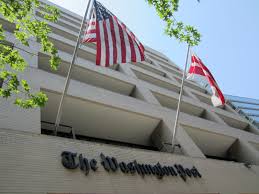
The Washington Post
Gergen and Mark Gearan, the White House director of communications, agreed that the best course was to give the Post all the documents it was requesting.
The next day, Gergen laid out his case to Chief of Staff McLarty:
The Post should be allowed to view the documents and report on them. Then the papers should be made available to the entire White House press corps.
Yes, said Gergen, a lot of negative stories would probably result. But if Watergate had taught any lesson, it was that it was better to admit mistakes and not try to hide them. Stonewalling only brought on criminal investigations–and potential criminal charges.
McLarty agreed to set up a meeting with President Clinton where Gergen and Gearan could make their case.
On December 10, Gergen and Gearan were scheduled to meet with President Clinton, his wife, and possibly their lawyers.
But when the appointed hour arrived, they found that the meeting had been scrubbed.
The Clintons had had their lawyers come in early for a private discussion of the documents, had heard their arguments, and had decided not to discuss anything. They didn’t even want to hear a case for disclosure.
Gergen was furious. He had been hired months earlier with the promise of full access to the President. And now he insisted on it.
McLarty arranged for him to see Clinton the next morning.
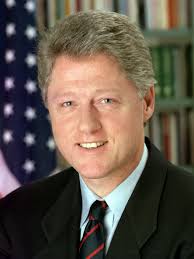
Bill Clinton
Gergen laid out three reasons why the Post should be given the documents it wanted.
First, he believed the paper had tried to be fair in its coverage of the Clintons.
Second, Watergate proved that it was politically lethal to be accused of a cover-up.
And, third, having won international renown with Watergate, the Post would never back down on Whitewater.
Gergen warned that the Post “would sic a big team of investigative reporters on the White House” and that would lead other news organizations to follow.
“I agree with you,” said Clinton. “I think we should turn over all of the documents.”
But there was a catch: He didn’t feel he could make the decision alone. Hillary had been a partner in the Whitewater land transactions.
“You’ll have to speak to Hillary and get her agreement,” he told Gergen. “If she agrees, we’ll do it.”
Gergen promised to see her.
Two days later, Gergen called Hillary Clinton’s office and asked for an appointment.
“We’ll get back to you,” her secretary promised.


ABC NEWS, ALLERGIES, ALTERNET, AMERICABLOG, AP, BABY BOOMER RESISTANCE, BBC, BERNIE SANDERS, BLOOMBERG NEWS, BUZZFEED, CBS NEWS, CHARLES GRASSLEY, CNN, CROOKS AND LIARS, DAILY KOZ, EPINEPHRINE, EPIPEN, EXTORTION, FACEBOOK, FEDERAL TRADE COMMISSION, FIVETHIRTYEIGHT, HARPER’S MAGAZINE, HEATHER BRESCH, HENRY FORD, HUFFINGTON POST, INSTANT CHECKMATE, INTELLIUS, JOHN D. ROCKEFELLER, MEDIA MATTERS, MISSISSIPPI ATTORNEY GENERAL MIKE MOORE, MOTHER JONES, MOVEON, MSNBC, MYLAN PHARMACEUTICALS, NBC NEWS, NERVE GAS, NEW REPUBLIC, NEWSDAY, NEWSWEEK, NICCOLO MACHIAVELLI, NPR, PBS NEWSHOUR, PEOPLE-FINDER WEBSITES, PEOPLE-FINDING SERVICES, PEOPLE-FINDING WEBSITES, POLITICO, POLITICUSUSA, RACKETEER INFUENCED CORRUPT ORGANIZATIONS (RICO) ACT, RAW STORY, REUTERS, SALON, SCHOOL ACCESS TO EMERGENCY EPINEPHRINE ACT AMY KLOBUCHAR, SEATTLE TIMES, SHELDON KAPLAN, SLATE, TALKING POINTS MEMO, THE ATLANTIC, THE CHICAGO SUN-TIMES, THE CHICAGO TRIBUNE, THE DAILY BEAST, THE DAILY BLOG, THE DISCOURSES, THE GUARDIAN, THE HILL, THE HUFFINGTON POST, THE LOS ANGELES TIMES, THE NATION, THE NEW REPUBLIC, THE NEW YORK TIMES, THE NEW YORKER, THE VILLAGE VOICE, THE WASHINGTON POST, THINKPROGRESS, TIME, TOBACCO COMPANY LAWSUITS, TRUTHDIG, TRUTHOUT, TWITTER, TWO POLITICAL JUNKIES, U.S. NEWS & WORLD REPORT, UPI, USA TODAY, VEROMI
BRINGING JUSTICE TO CEOs (CORRUPT EGOTISTICAL OLIGARCHS): PART ONE (OF TWO)
In Bureaucracy, Business, History, Law, Law Enforcement, Medical, Politics, Social commentary on August 29, 2016 at 1:04 amMore than 500 years ago, Niccolo Machiavelli, the father of modern politics, delivered this sage advice in his political masterwork, The Discourses:
All those who have written upon civil institutions demonstrate…that whoever desires to found a state and give it laws, must start with assuming that all men are bad and ever ready to display their vicious nature, whenever they may find occasion for it.
If their evil disposition remains concealed for a time, it must be attributed to some unknown reason; and we must assume that it lacked occasion to show itself. But time, which has been said to be the father of all truth, does not fail to bring it to light.
Niccolo Machiavelli
Unfortunately, it’s advice that members of the United States Congress have blissfully chosen to ignore. And, in doing so, they have condemned millions of Americans to suffering and death at the hands of greed-based, predatory corporations.
One of these corporations is Mylan Pharmaceuticals.
In 2007, Mylan acquired the patent for the EpiPen, a lifesaving device for anyone allergic to common foods like peanuts, shellfish and eggs. Millions of people with life-threatening allergies depend on the EpiPen for survival.
During an allergy attack, the EpiPen injects an emergency dosage of epinephrine to the user, preventing a possibly fatal reaction, known as anaphylaxis, from occurring.
Between 2007 and 2015, the wholesale price of an EpiPen skyrocketed from $56.64 to $317.82–an increase of 461%.
According to NBC News, compensation for Mylan CEO Heather Bresch similarly skyrocketed during the same period: From $2,453,456 in 2007 to $18,931,068 in 2015–a 671% raise in eight years.
Bresch wasn’t the only one to profit at the expense of the most vulnerable.
Mylan’s president, Rajiv Malik, got an 11% pay increase to $1 million annually by 2015. And Mylan Chief Commercial Officer Anthony Mauro got a 13.6% raise, amounting to $625,000 per year.
Between 2007 and 2015, Mylan’s stock price tripled, going from $13.29 per share in 2007 to a high of $47.59 in 2016. By late August, 2016, Mylan’s stock is hovering around $45.68 per share on the NASDAQ index.
Bloomberg states that the EpiPen now accounts for about 40% of Mylan’s profits.
Ironically, Sheldon Kaplan, the man who invented the now-famous device, never made a dime off it, and died in obscurity.
After working at NASA, Kaplan worked for Survival Technology, Inc., in Bethesda, Maryland. His assignment: Create a device to quickly inject a victim of anaphylaxis–a potentially fatal allergic reaction–with an emergency dose of epinephrine.
In 1973, when Kaplan was finalizing the design concept for what would ultimately become the EpiPen, the Defense Department asked him to take on a new assignment. The military needed a device that could quickly inject an antidote for nerve gas.
Kaplan’s design perfectly fitted this need: When a victim plunged a needle into his thigh, a spring-loaded mechanism shot a needle containing life-saving medicine into his bloodstream.
Kaplan’s invention became known as the ComboPen, and was initially used by the Pentagon before becoming available for use by the general public several years later as the EpiPen.
Kaplan left Survival Technology shortly after creating the ComboPen to become a biochemical engineer. He didn’t follow the success of his invention–and didn’t reap any of the huge financial rewards that it has produced.
That has certainly not been true for Mylan Pharmaceuticals.
After cornering the patent on the EpiPen in 2007, the company has made billions on the life-saving device.
According to Bloomberg, a package of two EpiPens costs $415 in the United States after insurance discounts. The same package in France–which has price controls under socialized medicine–costs $85.
The chief beneficiary of this legalized price-gouging has been Mylan’s CEO, Heather Bresch.
Heather Bresch
The daughter of U..S. Senator Joseph Manchin (D-WV), she joined Mylan in 1992 and held various positions within the company. Among these: Its chief lobbyist before Congress.
It was in that capacity that she persuaded Congress to enact a bill requiring all public schools to carry EpiPens for students with food allergies. It was signed into law by President Barack Obama in November, 2013.
Over the next three years, schools nationwide bought EpiPens by the truckload. And Mylan jacked up its prices for the EpiPen every other quarter.
On January 1, 2012, Heather Bresch became Mylan’s CEO.
But it wasn’t enough to have a monopoly on a device millions of men, women and children desperately needed. In 2014, true to its “profits-at-any-price” philosophy, Mylan reincorporated in the Netherlands to lower its effective tax rate.
It did so through a corporate accounting trick known as a tax inversion, and thus claiming the status of a foreign-owned corporation although its headquarters remained in Canonsburg, Pennsylvania.
Even her own father, U..S. Senator Joseph Manchin, condemned Mylan’s use of the inversion scheme and said it should be illegal.
But Bresch fiercely defended it in an interview with the New York Times: “You can’t maintain competitiveness by staying at a competitive disadvantage. I mean you just can’t.”
No doubt, with her $18 million-a-year CEO salary and moneyed ties to high-powered attorneys and influential members of Congress, Bresch thinks herself invulnerable.
But all that could quickly change–if even a small number of her victims become angry enough.
Share this: