Archive for the ‘Law’ Category
ABC NEWS, AFFORDABLE CARE ACT, BARACK OBAMA, CBS NEWS, CNN, CUBAN MISSILE CRISIS, ERIC HOLDER, EXTORTION, FACEBOOK, GOVERNMENT SHUTDOWN, HILLARY CLINTON, HOUSE OF REPRESENTATIVES, JOHN BOEHNER, JON STEWART, JUSTICE DEPARTMENT, NICCOLO MACHIAVELLI, OBAMACARE, RACKETEER INFLUENCED CORRUPT ORGANIZATIONS ACT, REPUBLICANS, RICHARD WOLFFE, TED CRUZ, THE CHICAGO SUN-TIMES, THE CHICAGO TRIBUNE, THE DAILY SHOW, THE NEW YORK TIMES, THE PRINCE, THE WASHINGTON POST, TWITTER, USA PATRIOT ACT
In Bureaucracy, History, Law, Law Enforcement, Politics, Social commentary on July 22, 2016 at 12:05 am
The ancient Greeks believed: “A man’s character is his fate.” It is Barack Obama’s character–and America’s fate–that he is more inclined to conciliation than confrontation.
Richard Wolffe chronicled Obama’s winning of the White House in his book Renegade: The Making of a President. He noted that Obama was always more comfortable when responding to Republican attacks on his character than he was in making attacks of his own.
Rule #4: Be Open to Compromise–Not Capitulation
Obama came into office determined to find common ground with Republicans. But they quickly made it clear to him that they only wanted his political destruction.
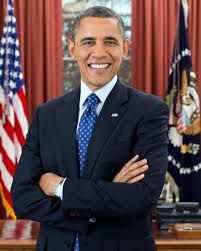
President Barack Obama
At that point, he should have put aside his hopes for a “Kumbaya moment” and applied what Niccolo Machiavelli famously said in The Prince on the matter of love versus fear:
From this arises the question whether it is better to be loved than feared, or feared more than loved. The reply is, that one ought to be both feared and loved, but as it is difficult for the two to go together, it is much safer to be feared than loved.
For it may be said of men in general that they are ungrateful, voluble, dissemblers, anxious to avoid danger and covetous of gain.
As long as you benefit them, they are entirely yours: they offer you their blood, their goods, their life and their children, when the necessity is remote. But when it approaches, they revolt….
And men have less scruple in offending one who makes himself loved than one who makes himself feared; for love is held by a chain of obligations which, men being selfish, is broken whenever it serves their purpose; but fear is maintained by a dread of punishment which never fails.

Niccolo Machiavelli
By refusing to vigorously prosecute acts of Republican extortion, President Obama has encouraged Republicans to intensify their aggression against him.
Their most recent act: Refusing to meet with federal appeals court judge Merrick Garland. Obama’s designated nominee to the Supreme Court after the February 13 death of Justice Antonin Scalia.
Kentucky United States Senator Mitch McConnell has flatly stated: There will be no Supreme Court hearing–not during regular business or a post-election lame-duck session.
Had Obama proceeded with indictments against Republican extortion in 2011 or 2013, McConnell–who supported the extortion attempts of those years–would now be desperately meeting with his lawyers.
Rule #5: First Satisfy Your Citizens, Then Help Them
Obama started off well. Americans had high expectations of him.
This was partly due to his being the first black elected President. And it was partly due to the legacies of needless war and financial catastrophe left by his predecessor, George W. Bush.
Obama entered office intending to reform the American healthcare system, to make medical care available to all citizens, and not just the richest.
But that was not what the vast majority of Americans wanted him to concentrate his energies on. With the loss of 2.6 million jobs in 2008, Americans wanted Obama to find new ways to create jobs.
This was especially true for the 11.1 million unemployed, or those employed only part-time.
Jonathan Alter, who writes sympathetically about the President in The Center Holds: Obama and His Enemies, candidly states this.
But Obama chose to spend most of his first two years as President pushing the Affordable Care Act (ACA)–which soon became known as Obamacare–through Congress.
The results were threefold:
First, those desperately seeking employment felt the President didn’t care about them.
Second, the reform effort became a lightning rod for conservative groups like the Tea Party.
And, third, in 2010, a massive Right-wing turnout cost Democrats the House of Representatives and threatened Democratic control of the Senate.
Rule #6: Be Careful What You Promise
Throughout his campaign to win support for the ACA, Obama had repeatedly promised that, under it: “If you like your health insurance plan, you can keep your plan. Period. If you like your doctor, you can keep your doctor. Period.”
But, hidden in the 906 pages of the law, was a fatal catch for the President’s own credibility.
The law stated that those who already had medical insurance could keep their plans--so long as those plans met the requirements of the new healthcare law.
If their plans didn’t meet those requirements, they would have to obtain new coverage that did.
It soon turned out that a great many Americans wanted to keep their current plan–even if it did not provide the fullest possible coverage.
Suddenly, the President found himself facing a PR nightmare: Charged and ridiculed as a liar.
Even Jon Stewart, who on “The Daily Show” had supported the implementation of “Obamacare,” sarcastically ran footage of Obama’s “you can keep your doctor” promise.

Jon Stewart
The implication: You said we could keep our plan/doctor; since we can’t, you must be a liar.
As a result, the President found his reputation for integrity–long his greatest asset–tarnished.
All of which takes us to yet another warning offered by Machiavelli: Whence it may be seen that hatred is gained as much by good works as by evil….
ABC NEWS, AFFORDABLE CARE ACT, BARACK OBAMA, CBS NEWS, CNN, CUBAN MISSILE CRISIS, ERIC HOLDER, EXTORTION, FACEBOOK, GOVERNMENT SHUTDOWN, HILLARY CLINTON, HOUSE OF REPRESENTATIVES, JOHN BOEHNER, JON STEWART, JUSTICE DEPARTMENT, NICCOLO MACHIAVELLI, OBAMACARE, RACKETEER INFLUENCED CORRUPT ORGANIZATIONS ACT, REPUBLICANS, RICHARD WOLFFE, TED CRUZ, THE CHICAGO SUN-TIMES, THE CHICAGO TRIBUNE, THE DAILY SHOW, THE NEW YORK TIMES, THE PRINCE, THE WASHINGTON POST, TWITTER, USA PATRIOT ACT
In Bureaucracy, History, Law, Law Enforcement, Politics, Social commentary on July 21, 2016 at 12:07 am
If Hillary Clinton succeeds Barack Obama as President, can gain much by learning from his mistakes.
In 2011, Obama could have ended Republican extortion by invoking the law–that of the Racketeer Influenced Corrupt Organizations (RICO) Act and/or the USA Patriot Act.
Or he could have faced down Republican extortionists by urging his fellow Americans to rally to him in a moment of supreme national danger.
Rule #2: Rally Your Citizens Against a Dangerous Enemy
President John F. Kennedy did just that–successfully–during the most dangerous crisis of his administration.
Addressing the Nation on October 22, 1962, Kennedy shocked his fellow citizens by revealing that the Soviet Union had installed offensive nuclear missiles in Cuba.

John F. Kennedy
After outlining a series of steps he had taken to end the crisis, Kennedy sought to reassure and inspire his audience. His words are worth remembering today:
“The path we have chosen for the present is full of hazards, as all paths are, but it is the one most consistent with our character and courage as a nation and our commitments around the world.
“The cost of freedom is always high, but Americans have always paid it. And one path we shall never choose, and that is the path of surrender or submission.”
President Obama could have sent that same message to the extortionists of the Republican Party.
Yet this was another option he failed to exploit. And he and the Nation have continued to pay the price for it.
Rule #3: Timidity Toward Aggressors Only Leads to More Aggression
In September, 2013, Republicans once again threatened to shut down the Federal Government unless the President agreed to defund the Affordable Care Act (ACA), better known as “Obamacare.
They were enraged that millions of uninsured Americans might receive medical care on a par with that given members of the House and Senate.
So on September 20, the House voted on a short-term government funding bill that included a provision to defund Obamacare.
Obama and Senate Democrats rejected that provision. If the House and Senate couldn’t reach a compromise, many functions of the federal government would be shut down indefinitely on October 1.
According to Republicans: They wanted to save the country from bankruptcy–although the Congressional Budget Office stated that the ACA would lower future deficits and Medicare spending.
After passing the House and Senate, the ACA had been signed into law by President Obama on March 23, 2010.
On June 28, 2012, the United States Supreme Court–whose Chief Justice, John Roberts, is a Republican–had upheld the constitutionality of the ACA.
Yet House Republicans still sought a way to stop the law from taking effect. By September, 2013, they had voted 42 times to repeal “Obamacare.”
But their efforts had failed; the Democratic-led Senate made it clear it would never go along with such legislation.
Finally, unable to legally overturn the Act or to legislatively repeal it, House Republicans fell back on something much simpler: Threats and fear.
Threats–of voting to shut down salaries paid to most Federal employees. Most, because they themselves would continue to draw hefty salaries while denying them to FBI agents, air traffic controllers and members of the military, among others.
And fear–that would be generated throughout the Federal government, the United States and America’s international allies.
Republicans claimed it was Obama and Senate Democrats who refused to see reason and negotiate.
But then a Republican accidentally gave away the real reason for the shutdown.
“We’re not going to be disrespected,” Rep. Marlin Stutzman (R-Ind.) told the Washington Examiner. “We have to get something out of this. And I don’t know what that even is.”

Martin Stutzman
In short, Republicans–as admitted by Martlin Stutzman–were out to get “respect.” A member of the Crips or Bloods couldn’t have said it better.
The shutdown began on October 1, 2013–and ended 16 days later with even Republicans admitting it had been a failure.
President Obama, a former attorney, denounced House Republicans as guilty of “extortion” and “blackmail.” If he truly believed them to be so guilty, he could have once again invoked RICO and/or the USA Patriot Act.
Yet he did neither.
Had the President dared to prosecute such criminal conduct, the results would have been:
- Facing lengthy prison terms, those indicted Republicans would have been forced to lawyer-up. That in itself would have been no small thing, since good criminal attorneys cost big bucks.
- Obsessed with their own personal survival, they would have found little time for engaging in the same thuggish behavior that got them indicted. In fact, doing so would have only made their conviction more likely.
- The effect on Right-wing Republicans would have been the same as that of President Ronald Reagan’s firing of striking air traffic controllers: “You cross me and threaten the security of this Nation at your own peril.”

True, some prosecuted Republicans might have beaten the rap. But first they would have been forced to spend huge amounts of time and money on their defense.
And with 75% of Americans voicing disgust with Congress, most of those prosecuted might well have been convicted.
It would have been a long time before Republicans again dared to engage in such behavior.
ABC NEWS, AFFORDABLE CARE ACT, BARACK OBAMA, CBS NEWS, CNN, CUBAN MISSILE CRISIS, ERIC HOLDER, EXTORTION, FACEBOOK, GOVERNMENT SHUTDOWN, HILLARY CLINTON, HOUSE OF REPRESENTATIVES, JOHN BOEHNER, JON STEWART, JUSTICE DEPARTMENT, NICCOLO MACHIAVELLI, OBAMACARE, RACKETEER INFLUENCED CORRUPT ORGANIZATIONS ACT, REPUBLICANS, RICHARD WOLFFE, TED CRUZ, THE CHICAGO SUN-TIMES, THE CHICAGO TRIBUNE, THE DAILY SHOW, THE NEW YORK TIMES, THE PRINCE, THE WASHINGTON POST, TWITTER, USA PATRIOT ACT, WARREN BUFFETT
In Bureaucracy, History, Law, Law Enforcement, Politics, Social commentary on July 20, 2016 at 12:11 am
If Hillary Clinton becomes the nation’s first woman President, that will certainly be as big a historical milestone as Barack Obama’s becoming the first black man to hold that office.
But simply being elected President will not guarantee her success–any more than it guarantees success to any President.
Every President faces challenges that his (up to now) predecessor didn’t. But others can be reasonably anticipated. For Clinton, a totally predictable challenge will be the sheer hatred and ruthless opposition Republicans aimed at Obama.
And unless she determines, early on, to confront and overcome it, she will find her agenda just as blocked and undermined as Obama so often did.
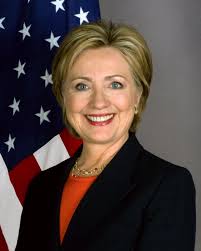
Hillary Clinton
For example:
On July 9, 2011, Republican extortionists threatened the Nation with financial ruin and international disgrace unless their budgetary demands were met.
They refused to raise the debt ceiling unless Democrats agreed to massively cut social programs for the elderly, poor and disabled.
If Congress failed to raise the borrowing limit of the federal government by August 2, the date when the U.S. reached the limit of its borrowing abilities, it would begin defaulting on its loans.
As Warren Buffett, CEO of Berkshire Hathaway, explained the looming economic catastrophe: “If you don’t send out Social Security checks, I would hate to think about the credit meeting at S&P and Moody’s the next morning.
“If you’re not paying millions and millions and millions of people that range in age from 65 on up, money you promised them, you’re not a AAA,” said Buffett.

Warren Buffett
A triple-A credit rating is the highest possible rating that can be received.
And while Republicans demanded that the disadvantaged tighten their belts, they rejected raising taxes on their foremost constituency–the wealthiest 1%.
Raising taxes on the wealthy, they insisted, would be a “jobs-killer.” It would “discourage” corporate CEOs from creating tens of thousands of jobs they “want” to create.
As the calendar moved closer to the fateful date of August 2, Republican leaders continued to insist: Any deal that includes taxes “can’t pass the House.”
One senior Republican said talks would go right up to–and maybe beyond–the brink of default.
“I think we’ll be here in August,” said Republican Rep. Pete Sessions, of Texas. “We are not going to leave town until a proper deal gets done.”
President Obama had previously insisted on extending the debt ceiling through 2012. But in mid-July, he simply asked congressional leaders to review three options with their members:
- The “Grand Bargain” choice–favored by Obama–would cut deficits by about $4 trillion, including spending cuts and new tax revenues.
- A medium-range plan would aim to reduce the deficit by about $2 trillion.
- The smallest option would cut between $1 trillion and $1.5 trillion, without increased tax revenue or any Medicare and Medicaid cuts.
And the Republican response?
Said Rep. Darrell Issa, chairman of the Oversight and Government Reform Committee: “Quite frankly, [Republican] members of Congress are getting tired of what the president won’t do and what the president wants.”
With the United States teetering on the brink of national bankruptcy, President Obama faced three choices:
- Counter Republican extortion attempts via RICO–the Racketeer Influenced Corrupt Organizations Act.
- Make a Cuban Missile Crisis-style address to the American people, seeking to rally them against a criminal threat to the financial security of the Nation.
- Cave in to Republican demands.
Unfortunately for Obama and the Nation, he chose Number Three.
Rule #1 Ruthlessly Prosecute the Acts of Ruthless Criminals
But Obama could have countered that danger via the Racketeer Influenced Corrupt Organizations (RICO) Act.
In 1970, Congress passed RICO, Title 18, United States Code, Sections 1961-1968. Its goal: Destroy the Mafia.
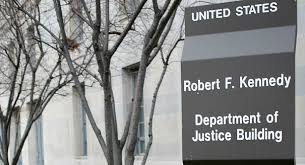
U.S. Department of Justice
RICO opens with a series of definitions of “racketeering activity” which can be prosecuted by Justice Department attorneys. Among those crimes: Extortion.
Extortion is defined as “a criminal offense which occurs when a person unlawfully obtains either money, property or services from a person(s), entity, or institution, through coercion.”
And if President Obama had believed that RICO was insufficient to deal with this crisis, he could have relied on the USA Patriot Act of 2001, passed in the wake of 9/11.

President George W. Bush signs the USA Patriot Act into law – October 26, 2001
In Section 802, the Act defines domestic terrorism. Among the behavior that is defined as criminal:
“Activities that…appear to be intended…to influence the policy of a government by intimidation or coercion [and]…occur primarily within the territorial jurisdiction of the United States.”
The remedies for punishing such criminal behavior were legally in place. President Obama needed only to direct the Justice Department to apply them.
“Activities that…appear to be intended…to influence the policy of a government by intimidation or coercion [and]…occur primarily within the territorial jurisdiction of the United States.”
The remedies for punishing such criminal behavior were legally in place. President Obama needed only to direct the Justice Department to apply them.
Prosecuting members of Congress would not have violated the separation-of-powers principle. Congressmen had been investigated, indicted and convicted for various criminal offenses.
Such prosecutions–and especially convictions–would have served notice on current and future members of Congress that the lives and fortunes of American citizens may not be held hostage as part of a negotiated settlement.
2016 PRESIDENTIAL RACE, 9/11, ABC NEWS, ABORTION, AFFORDABLE CARE ACT, ALTERNET, AMERICABLOG, AP, BABY BOOMER RESISTANCE, BBC, BECKET, BLOOMBERG NEWS, BUZZFEED, CBS NEWS, CHURCH VS. STATE, CNN, CROOKS AND LIARS, DAILY KOS, DISCRIMINATION, DONALD TRUMP, FIRST CHURCH OF CANNABIS, FIVETHIRTYEIGHT, GAYS, HARPER’S MAGAZINE, HOMOSEXUALITY, HUFFINGTON POST, INDIANA, ISLAM, ISLAMICS, LESBIANS, MARIJUANA, MEDIA MATTERS, MIKE PENCE, MOTHER JONES, MOVEON, MOVIES, MSNBC, NBC NEWS, NEW REPUBLIC, NEWSDAY, NEWSWEEK, NPR, PBS NEWSHOUR, PLANNED PARENTHOOD, POLITICO, POLITICUSUSA, PREJUDICE, RAW STORY, RELIGION VS. SCIENCE, RELIGIOUS FREEDOM RESTORATION ACT, REPUBLICAN PARTY, REPUBLICANS, REUTERS, SALON, SEATTLE TIMES, SHARIA LAW, SLATE, TALKING POINTS MEMO, THE ATLANTIC, THE CHICAGO SUN-TIMES, THE CHICAGO TRIBUNE, THE DAILY BEAST, THE DAILY BLOG, THE GUARDIAN, THE HILL, THE HUFFINGTON POST, THE INTERCEPT, THE LOS ANGELES TIMES, THE NATION, THE NEW REPUBLIC, THE NEW YORK TIMES, THE NEW YORKER, THE VILLAGE VOICE, THE WASHINGTON POST, THINKPROGRESS, TIME, TRUTHDIG, TRUTHOUT, TWITTER, U.S. HOUSE OF REPRESENTATIVES, U.S. NEWS & WORLD REPORT, UPI, WOMEN'S RIGHTS
In Bureaucracy, Business, History, Law, Law Enforcement, Politics, Social commentary on July 18, 2016 at 3:48 pm
Michael Richard “Mike” Pence served as a Republican member of the House of Representatives from 2001 to 2013. He also served as Chairman of the House Republican Conference from 2009 to 2012.
In 2012, he ran for Governor of Indiana, won the election, and assumed this office in 2013.
On July 15, 2016, Republican Presidential candidate Donald Trump announced on Twitter that he had selected Pence as his Vice Presidential running mate in the 2016 Presidential election.
As a member of Congress, Pence:
- Voted, in 2007, to defund Planned Parenthood because it provides abortions.
- Opposed, in 2009, giving American citizenship to children born to illegal aliens living within the United States.
- Compared the U.S. Supreme Court’s upholding the Constitutionality of the Affordable Care Act to the September 11, 2001 terrorist attacks.
- Voted to eliminate funding for climate education programs and to prohibit the Environmental Protection Agency from regulating greenhouse gas emissions.
As Governor, Pence:
- Unsuccessfully pushed for a 10% income-tax rate cut.
- Signed legislation in 2015 that repealed an 80-year-old Indiana law requiring construction companies working on publicly funded projects to pay a prevailing wage.
- Successfully lobbied in 2013 to limit reductions in sentences for marijuana offenses.
- Agreed, in 2015, to expand Medicaid in Indiana, in accordance with the Affordable Care Act.
But for all of Pence’s actions as Congressman and Governor, the one which may prove the most far-reaching may be this: His signing into law the Religious Freedom Restoration Act.
As Governor of Indiana, he did this on March 26, 2015. The law allows any individual or corporation to cite its religious beliefs as a defense when sued by a private party.
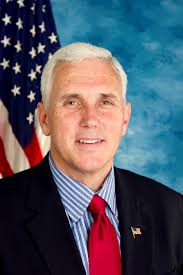
Mike Pence
Officially, its intent is to prevent the government from forcing business owners to act in ways contrary to strongly held religious beliefs. Unofficially, its purpose is to appease the hatred of gays and lesbians by the religious Right, a key constituency of the Republican party.
In short, a bakery that doesn’t want to make a cake to be used at a gay wedding or a restaurant that doesn’t want to serve lesbian patrons will have the legal right to refuse to do so.
The same applies for a hospital that doesn’t want to provide care to a gay or lesbian patient.
The bill was passed overwhelmingly by both chambers of the Republican-controlled state legislature.
“Today I signed the Religious Freedom Restoration Act, because I support the freedom of religion for every Hoosier of every faith,” Pence said in a statement on the day he signed the bill.
“The Constitution of the United States and the Indiana Constitution both provide strong recognition of the freedom of religion but today, many people of faith feel their religious liberty is under attack by government action.”
Bill-signing ceremonies are usually highly public events. Governors–and presidents–normally want their constituents to see them creating new legislation.
Yet for all his praise for the bill, Pence signed it in a ceremony closed to the public and the press. The media were asked to leave even the waiting area of the governor’s office.
It’s almost as if Pence sensed that he was about to push open a door into a danger-filled room. And this may well be the case.
Through that door may soon march the First Church of Cannabis. The day after Pence signed the Act, church founder Bill Levin announced on his Facebook page that he had filed paperwork with the office of the Indiana Secretary of State.
Its registration had been approved–and Levin was ecstatic: “Now we begin to accomplish our goals of Love, Understanding, and Good Health.
“Donate $100 or more and become a GREEN ANGEL. Donate $500 or more and become a GOLD ANGEL. Donate $1000 or more and become a CHURCH POOHBA.”
No doubt many Indiana legislators are furious that their effort to attack gays may have brought legal marijuana to their highly conservative state. But worse may be to come.
Since 9/11, Right-wingers such as Rush Limbaugh and Sean Hannity have warned that Muslims are trying to impose Sharia (Islamic law) on America. And now Indiana’s legislators, in elevating religion above the law, may have laid the legal foundations for making that possible.

Muslims demanding the imposition of Sharia law–on themselves and non-Muslims
Ironically, this may not be so far removed from the goals of the Republican party as many think. Both the party and adherents of Sharia agree:
- Women should have fewer rights than men.
- Abortion should be illegal.
- There should be no separation between church and state.
- Religion should be taught in school.
- Religious doctrine trumps science.
- Government should be based on religious doctrine.
- Homosexuality should be outlawed.
What will happen when:
- Muslims in Indiana claim their right–guaranteed in Islamic religious law–to have as many as four wives?
- Muslims demand a taxpayer-funded “halal” non-pork food shelf at free food pantries for the poor? (Exactly this happened among Somali refugees in Minnesota in 2015.)
- Muslims demand that police departments cancel counter-terrorism courses by claiming that their materials are anti-Muslim? (Exactly this happened to several police departments in Illinois.)
And when they claim that the Religious Freedom Restoration Act protects those rights?
Hang onto your hijabs–it’s going to be a bumpy ride.
ABC NEWS, ANWAR SADAT, ARTHUR BREMER, ASSASSINATION, BLACK LIVES MATTER, CBS NEWS, CHARLES L. COTTON, CIA, CNN, DALLAS POLICE OFFICER SHOOTINGS, DYLANN ROOF, EMANUEL AFRICAN METHODIST CHURCH, FACEBOOK, GEORGE C. WALLACE, GUN CONTROL, HATE CRIMES, MARK RAWLINGS, MICHAH XAVIER JOHNSON, NATIONAL RIFLE ASSOCIATION, NBC NEWS, OPEN CARRY LAWS, RAFAEL CRUZ, REPUBLICAN PARTY, REPUBLICANS, ROBERT F. KENNEDY, Secret Service, THE CHICAGO SUN-TIMES, THE CHICAGO TRIBUNE, THE LOS ANGELES TIMES, THE NEW YORK TIMES, THE SECOND AMENDMENT, THE WASHINGTON POST, TWITTER
In Bureaucracy, History, Law, Law Enforcement, Politics, Social commentary on July 11, 2016 at 12:14 am
On June 17, 2015, Dylann Roof, a white high school dropout, gunned down three black men and six black women at Emanuel African Methodist Episcopal Church in Charleston, South Carolina.
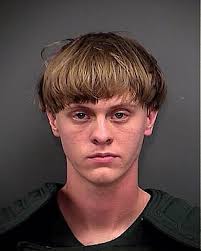
Dylann Roof
On June 18–one day after the church slaughter–Charles L. Cotton took insulting the dead to a whole new level.
Cotton is a National Rifle Association (NRA) board member who also runs TexasCHLForum.com, an online discussion forum about guns and gun owners’ rights in Texas and beyond.
In a discussion thread on the Forum, a board member noted that Clementa C. Pinckney, one of the nine people slain, was a pastor and a state legislator in South Carolina.
Cotton responded: “And he voted against concealed-carry. Eight of his church members who might be alive if he had expressly allowed members to carry handguns in church are dead. Innocent people died because of his position on a political issue.”

That discussion thread was quickly deleted.
During a subsequent phone interview, Cotton emphasized that he had been speaking as a private citizen–and not as an NRA board member:
“It was a discussion we were having about so called gun-free zones. It’s my opinion that there should not be any gun-free zones in schools or churches or anywhere else. If we look at mass shootings that occur, most happen in gun-free zones.”
If private citizens were allowed to carry guns everywhere, Cotton said, there will be fewer mass shootings because “if armed citizens are in there, they have a chance to defend themselves and other citizens.”
Cotton’s position–“there should not be any gun-free zones”–is exactly that of the NRA itself.
Under such circumstances, America will become a nation where anyplace, anytime, can be turned into the O.K. Corral.
Another point that Cotton didn’t mention: Dylann Roof did believe in concealed-carry–and it cost not his life but the lives of nine innocent men and women.
Finally, there is this: Even highly-trained shooters–such as those assigned to the United States Secret Service–don’t always respond as expected.
On May 15, 1972, Alabama Governor George Wallace was campaigning for President in Laurel, Maryland. He gave a speech behind a bulletproof podium at the Laurel Shopping Center. Then he moved from it to mingle with the crowd.
Since the 1968 assassination of Senator Robert F. Kennedy, all those campaigning for President have been assigned Secret Service bodyguards. And Wallace was surrounded by them as he shook hands with his eager supporters.
Suddenly, Arthur Bremer, a fame-seeking failure in life and romance, pushed his way forward, aimed a .38 revolver at Wallace’s abdomen and opened fire. Before the Secret Service could subdue him, he hit Wallace four times, leaving him paralyzed for the rest of his life.

Arthur Bremer shoots George Wallace
Nor was he Bremer’s only victim. Three other people present were wounded unintentionally:
- Alabama State Trooper Captain E C Dothard, Wallace’s personal bodyguard, who was shot in the stomach;
- Dora Thompson, a campaign volunteer, who was shot in the leg; and
- Nick Zarvos, a Secret Service agent, who was shot in the neck, severely impairing his speech.
None of Wallace’s bodyguards got off a shot at Bremer–before or after he pulled the trigger.
On October 6, 1981, Egyptian President Anwar Sadat was reviewing a military parade in Cairo when a truck apparently broke down directly across from where he was seated.
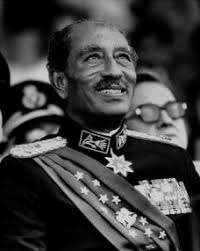
Anwar Sadat, moments before his assassination
Suddenly, soldiers bolted from the rear of the vehicle, throwing hand grenades and firing assault rifles. They rushed straight at Sadat–who died instantly under a hail of bullets.
Meanwhile, Sadat’s bodyguards–who had been trained by the CIA–panicked and fled.
Sadat had been assassinated by army officers who believed he had betrayed Islam by making peace with Israel in 1977.
Most recently, the NRA mantra, “If every citizen went armed…” was put to the test in Dallas, Texas. It flunked.
On July 7, five Dallas police officers were shot and killed by a disgruntled ex-Army Reserve Afghan War veteran named Michah Xavier Johnson. Another seven officers and two civilians were wounded before the carnage ended.
The shootings erupted during a Black Lives Matter protest march in downtown Dallas.
Texas has long been an “open carry” state for those who want to brandish rifles without fear of arrest. And about 20 people wearing “ammo gear and protective equipment [had] rifles slung over their shoulder,” said Dallas Mayor Mike Rawlings.
“When the shooting started, at different angles, [the armed protesters] started running,” Rawlings said, adding that open carry only brings confusion to a shooting scene. “What I would do [if I were a police officer] is look for the people with guns,” he said.
“There were a number of armed demonstrators taking part,” said Max Geron, a Dallas police major. “There was confusion on the radio about the description of the suspects and whether or not one or more was in custody.”
The ultimate test of the NRA’s mantra that “there should not be any gun-free zones…anywhere” will come only when one or more heavily-armed gunmen target an NRA convention.
It will then be interesting to see if the surviving NRA members are as quick to blame themselves for being victims as they are to blame the victims of other mass slaughters.
ABC NEWS, ADOLF HITLER, ALTERNET, ANDREW JACKSON, AP, BUZZFEED, CBS NEWS, CNN, COLLEGE FOOTBALL, CROOKS AND LIARS, DAILY KOZ, DREW PEARSON, DWIGHT EISENHOWER, EDWARD R. MURROW, FACEBOOK, GEORGE C. MARSHALL, HARRY S. TRUMAN, JERRY SANDUSKY, JOE PATERNO, JOSEPH MCCARTHY, JOSEPH STALIN, LOUIS FREEH, MOTHER JONES, MOVEON, NBC NEWS, NEWSWEEK, NIKE, NIKITA KHRUSHCHEV, NPR, PENN STATE UNIVERSITY, POLITICO, RAW STORY, REUTERS, SALON, SEATTLE TIMES, SLATE, SOVIET UNION, THE ATLANTIC, THE CHICAGO SUN-TIMES, THE CHICAGO TRIBUNE, THE DAILY BEAST, THE GUARDIAN, THE HILL, THE HUFFINGTON POST, THE LOS ANGELES TIMES, THE NATION, THE NEW YORK TIMES, THE WASHINGTON POST, THIRD REICH, TIME, TWITTER, U.S. NEWS & WORLD REPORT, UP, UPI, USA TODAY, YEVGENEY YEVTUSHENKO
In Bureaucracy, History, Law, Politics, Social commentary on July 1, 2016 at 12:16 am
“One man with courage,” said frontier general Andrew Jackson, “makes a majority.”
Yet it’s amazing how many “heroes” come out of the woodwork only after the danger is safely past.
Joseph Stalin dominated the Soviet Union from 1928 to 1953. He held absolute power twice as long as Adolf Hitler–whose Third Reich lasted only 12 years.
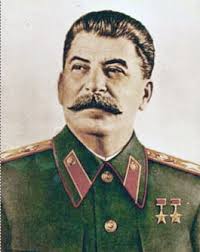
Joseph Stalin
Above all, he was responsible for the deaths of at least 20,000,000 men, women and children:
- At the hands of the executioners of the NKVD (later named the KGB).
- In exile–usually in Siberia–in Soviet penal camps.
- Of man-made starvation brought on by Stalin’s forced “collective-farm” policies.
Then, the unthinkable happened: Stalin finally died on March 5, 1953.
Almost three years later–on February 25, 1956–Stalin’s successor, Nikita Khrushchev, shocked the 20th Party Congress of the Soviet Union with a bombshell announcement:
Stalin–the “Wise Leader and Teacher”–had been a murderous despot.
Among his crimes:
- He had created a regime based on “suspicion, fear and terror.”
- His massive purges of the officer corps had almost destroyed the Red Army–thus inviting Hitler’s 1941 invasion, which killed at least 20 million Soviet citizens.
- He had allied himself with Hitler in 1939 and ignored repeated warnings of the coming Nazi invasion.
Naturally, Khrushchev didn’t advertise the role he had played as one of Stalin’s most trusted and brutal henchmen.
Over the ensuing years, many of the statues and portraits of Stalin that had dotted the Soviet Union like smallpox scars were quietly taken down. The city of Stalingrad–which Stalin had renamed from its original name of Tsaritsyn–became Volgograd.
Then, in 1961, Stalin’s corpse was removed from its prominent spot in the Lenin mausoleum and reburied in a place for lesser heroes of the Russian Revolution.
The young poet, Yevgeney Yevtushenko, noted the occasion in his famous poem, “The Heirs of Stalin.” Its gist: Stalin the tyrant was dead, but his followers still walked the earth–and lusted for a return to power.
Something similar happened in the United States around the same time.
From 1950 to 1954, Wisconsin Republican Senator Joseph R. McCarthy terrorized the nation, accusing anyone who disagreed with him of being a Communist–and leaving ruined lives in his wake.

Joseph R. McCarthy
Among those civilians and government officials he slandered as Communists were:
- President Harry S. Truman
- President Dwight D. Eisenhower
- Broadcast journalist Edward R. Murrow
- Secretary of State George C. Marshall
- Columnist Drew Pearson
Finally, in 1954, McCarthy overreached himself and accused the U.S. Army of being a hotbed of Communist traitors. Joseph Welch, counsel for the Army, destroyed McCarthy’s credibility in a now-famous retort:
“Senator, may we not drop this?….You’ve done enough. Have you no sense of decency, sir? At long last, have you left no sense of decency?”
Later that year, the Senate censured McCarthy, and he rapidly declined in power and health.
Senatorial colleagues who had once courted his support now avoided him.
They left the Senate when he rose to speak. Reporters who had once fawned on him for his latest sensational slander now ignored him.
Eisenhower–who had sought McCarthy’s support during his 1952 race for President–joked that “McCarthyism” was now “McCarthywasm.”
Fast-forward to July 12, 2012–and the release of former FBI Director Louie Freeh’s report on serial pedophile Jerry Sandusky. As the assistant football coach at Penn State University (PSU), he had used the football facilities to sexually attack numerous young boys.

Jerry Sandusky
But Sandusky was regarded as more than a second-banana. He received Assistant Coach of the Year awards in 1986 and 1999, and authored several books about his coaching experiences.
In 1977, Sandusky founded The Second Mile, a non-profit charity serving underprivileged, at-risk youth.
“Our most saddening and sobering finding is the total disregard for the safety and welfare of Sandusky’s child victims by the most senior leaders at Penn State,” Freeh stated.
College football is a $2.6 billion-a-year business. And Penn State is one of its premiere brands, with revenue of $70 million in 2010.
PSU’s seven-month internal investigation, headed by Freeh, revealed:
- Joe Paterno, head coach of the Penn State Nittany Lions, was aware of a 1998 criminal investigation of Sandusky.
- So was president Graham Spanier, athletic director Tim Curley and vice president Gary Schultz.
- In 2001, then-graduate assistant Mike McQueary reported to Paterno that he’d seen Sandusky attacking a boy in the shower.
- Paterno, Spanier, Curley and Schultz then conspired to cover up for Sandusky.
- The rapes of these boys occurred in the Lasch Building–where Paterno had his office.
- A janitor who had witnessed a rape in 2000 said he had feared losing his job if he told anyone about it. “It would be like going against the President of the United States,” Freeh said at a press conference.
In 2011, Sandusky was arrested and charged with sexually abusing young boys over a 15-year period. On June 22, 2012, he was convicted on 45 of the 48 charges. He will likely spend the rest of his life in prison.
On the day the Freeh report was released, Nike–a longtime sponsor for Penn State–announced that it would remove Paterno’s name from the child care center at its world headquarters in Beaverton, Oregon.
ABC NEWS, ANCHOR BABIES, BARACK OBAMA, BARBARA LEE, CBS NEWS, CNN, DEMOCRATIC PARTY, DONALD TRUMP, DREAM ACT, FACEBOOK, HILLARY CLINTON, HISPANICS, illegal immigration, MEXICO, MSNBC, NBC NEWS, NEWT GINGRICH, PAUL RYAN, RACIAL PROFILING, REPUBLICAN PARTY, THE CHICAGO SUN-TIMES, THE CHICAGO TRIBUNE, THE HUFFINGTON POST, THE LOS ANGELES TIMES, THE NEW YORK TIMES, THE WASHINGTON POST, TWITTER, U.S. SUPREME COURT, WAL-MART
In Bureaucracy, Business, History, Law, Law Enforcement, Military, Politics, Social commentary on June 27, 2016 at 12:19 am
If Americans decide they truly want to control access to their own borders, there is a realistic way to accomplish this.
And it doesn’t involve building a wall along the Mexican border–which would prove ridiculously expensive and easily circumvented.

(1) The Justice Department should vigorously attack the “sanctuary movement” that officially thwarts the immigration laws of the United States.
Among the 31 “sanctuary cities” of this country: Washington, D.C.; New York City; Los Angeles; Chicago; San Francisco; Santa Ana; San Diego; Salt Lake City; Phoenix; Dallas; Houston; Austin; Detroit; Jersey City; Minneapolis; Miami; Denver; Baltimore; Seattle; Portland, Oregon; New Haven, Connecticut; and Portland, Maine.
These cities have adopted “sanctuary” ordinances that do not allow municipal funds or resources to be used to enforce federal immigration laws, usually by not allowing police or municipal employees to inquire about one’s immigration status.
(2) The most effective way to combat this movement: Indict the highest-ranking officials of those cities which have actively violated Federal immigration laws.
In San Francisco, for example, former District Attorney Kamala Harris—who is now California’s Attorney General—created a secret program called Back on Track, which provided training for jobs that illegal aliens could not legally hold.
She also prevented Immigration and Customs Enforcement (ICE) from deporting even those illegal aliens convicted of a felony.
(3) Indicting such officials would be comparable to the way that President Andres Jackson dealt with the threat South Carolinians once made to “nullify”–or ignore–any Federal laws they didn’t like.
Jackson quashed that threat by making one of his own: To lead an army into that State and purge all who dared defy the laws of the Federal Government.

(4) Even if some indicted officials escaped conviction, the results would prove worthwhile.
City officials would be forced to spend huge sums of their own money for attorneys and face months or even years of prosecution.
And this, in turn, would send a devastating warning to officials in other “sanctuary cities” that the same fate lies in store for them.
(5) CEOs whose companies–like Wal-Mart–systematically employ illegal aliens should be held directly accountable for the actions of their subordinates.
They should be indicted by the Justice Department under the Racketeer Influenced Corrupt Organizations (RICO) Act, the way Mafia bosses are prosecuted for ordering their own subordinates to commit crimes.
Upon conviction, the CEO should be sentenced to a mandatory prison term of at least twenty years.
This would prove a more effective remedy for combating illegal immigration than stationing tens of thousands of soldiers on the U.S./Mexican border. CEOs forced to account for their subordinates’ actions would take drastic steps to ensure that their companies strictly complied with Federal immigration laws.
Without employers luring illegal aliens at a fraction of the money paid to American workers, the flood of such illegal job-seekers would quickly dry up.

(6) The Government should stop granting automatic citizenship to “anchor babies” born to illegal aliens in the United States.
A comparable practice would be allowing bank robbers who had eluded the FBI to keep their illegally-obtained loot.
A person who violates the bank robbery laws of the United States is legally prosecutable for bank robbery, whether he’s immediately arrested or remains uncaught for years. The same should be true for those born illegally within this country.
If they’re not here legally at the time of birth, they should not be considered citizens and should–like their parents–be subject to deportation.
(7) The United States Government–from the President on down–should stop apologizing for the right to control the country’s national borders.
The Mexican Government doesn’t hesitate to apply strict laws to those immigrating to Mexico. And it feels no need to apologize for this.
Neither should we.
(8) Voting materials and ballots should be published in one language–English.
In Mexico, voting materials are published in one language–Spanish.
Throughout the United States, millions of Mexican illegals refuse to learn English and yet demand that voting materials and ballots be made available to them in Spanish.

(9) Those who are not legal citizens of the United States should not be allowed to vote in its elections.
In Mexico, those who are not Mexican citizens are not allowed to participate in the country’s elections.
The Mexican Government doesn’t consider itself racist for strictly enforcing its immigration laws.
The United States Government should not consider itself racist for insisting on the right to do the same.
(10) The United States should impose economic and even military sanctions against countries–such as China and Mexico–whose citizens make up the bulk of illegal aliens.
Mexico, for example, uses its American border to rid itself of those who might demand major reforms in the country’s political and economic institutions.
Such nations must learn that dumping their unwanteds on the United States now comes at an unaffordably high price. Otherwise those dumpings will continue.
ABC NEWS, ANCHOR BABIES, BARACK OBAMA, BARBARA LEE, CBS NEWS, CNN, DEMOCRATIC PARTY, DONALD TRUMP, DREAM ACT, FACEBOOK, HILLARY CLINTON, HISPANICS, illegal immigration, MEXICO, MSNBC, NBC NEWS, PAUL RYAN, REPUBLICAN PARTY, THE CHICAGO SUN-TIMES, THE CHICAGO TRIBUNE, THE HUFFINGTON POST, THE LOS ANGELES TIMES, THE NEW YORK TIMES, THE WASHINGTON POST, TWITTER, U.S. SUPREME COURT, WAL-MART
In Bureaucracy, Business, History, Law, Law Enforcement, Military, Politics, Social commentary on June 24, 2016 at 1:30 am
In 2014, President Barack Obama issued an executive order, declaring that illegal aliens living in the United States since 2010 could become citizens or lawful residents, thus shielding them from deportation.
Texas challenged that executive order, claiming that Obama had acted unconstitutionally by encroaching on the duties of Congress. Another 25 Republican states joined the lawsuit.
The case went to the Supreme Court–which, on June 23, blocked the implementation of Obama’s executive order.
The Justices deadlocked on the issue 4-4, thus returning the case to the lower court in Texas that ruled against the administration’s carrying out the policy.
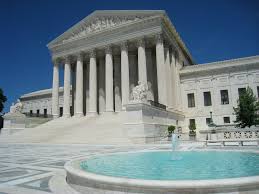
U.S. Supreme Court
In doing so, the Justices denied at least 4 million illegal aliens the right to remain in the country without fear of deportation.
For Republicans, the ruling upheld the separation of powers.
Donald Trump–the presumptive Republican nominee for President–issued a statement: “Today’s 4-4 Supreme Court ruling has blocked one of the most unconstitutional actions ever undertaken by a president.”
And House Speaker Paul Ryan (R-Wis) declared:
“The Supreme Court’s ruling makes the president’s executive action on immigration null and voice. The Constitution is clear: The president is not permitted to write laws—only Congress. This is another major victory in our fight to restore the separation of powers.”
Obama quickly expressed his disappointment, saying that the decision “takes us further from the country that we aspire to be.”
Other Democrats were equally upset by the Court’s decision.
One of these was Rep. Barbara Lee of California, who wrote on Twitter: “Deeply saddened by divided #SCOTUS decision in #USvTexas. We should be keeping families together, not tearing them apart!”
Another was Hillary Clinton–the presumed Democratic Presidential nominee–who used the Court’s decision as a way to troll for Hispanic votes.
“[Donald] Trump has pledged to repeal President Obama’s executive actions on his first day in office,” Clinton said.
“He has called Mexican immigrants ‘rapists’ and ‘murderers.’ He has called for creating a deportation force” to tear 11 million people away from their families and their homes. I believe we are stronger together.”
Both Lee’s and Clinton’s accusations ignored a blunt reality: Families of illegal aliens did not have to break up.
Some members did not have to stay in the United States while others were deported. Instead, they could leave together and live together in the Latin or Central American country of their origin.
Illegal immigration has always been a highly emotional issue for conservatives. But it’s been given added impetus this year.

For years, Republicans and Democrats have clashed over the subject of illegal immigration.
Democrats favor wholesale grants of unearned citizenship to the estimated 11 to 20 million illegal aliens who brazenly violated the law when they sneaked across American borders.
And Republicans favor beefing up security against future waves of such invaders.
But the brutal truth is that neither Democrats nor Republicans truly want to end these invasions. Nor do they want to deport the millions of illegals who have already taken up residence here.
They don’t care that these illegals:
- Flood the United States with millions of poor non-citizens who don’t speak English.
- Overwhelm the public school system with children–who also don’t speak English–who require bilingual education.
- Overwhelm the public healthcare system–especially emergency rooms–with poor illegal aliens. As a result, urgently-needed medical care is often denied to legal American citizens.
Democrats, primarily governed by liberal ideology, believe it’s racist for whites to demand control of their own national borders. They also see illegal aliens as a huge constituency.
And Republicans want them as low-skilled, low-wage fodder for their major campaign contributors–such as corporate-farms and retail outlets like Wal-Mart.
Unlike Democrats, however, Republicans like to feign outrage at the presence of so many illegal aliens within their midst.
It’s the Republican base that’s demanding an end to illegal immigration.
Those masses of alienated and angry whites who find themselves living in a nation that’s increasingly alien from themselves. And who have made Donald Trump their overwhelming choice for President in 2016.
Meanwhile, both Democrats and Republicans ignore a blunt reality: Mexico–America’s largest source of illegal aliens–strictly enforces control of its own borders.
Mexico has a single, streamlined law that ensures that foreign visitors and immigrants are:
- in the country legally;
- have the means to sustain themselves economically;
- not destined to be burdens on society;
- of economic and social benefit to society;
- of good character and have no criminal records; and
- contribute to the general well-being of the nation.
The law also ensures that:
- immigration authorities have a record of each foreign visitor;
- foreign visitors do not violate their visa status;
- foreign visitors are banned from interfering in the country’s internal politics;
- foreign visitors who enter under ralse pretenses are imprisoned or deported;
- foreign visitors violating the terms of their entry are imprisoned are deported;
- those who aid in illegal immigration will be sent to prison.
Meanwhile, Mexico uses its American border to rid itself of those who might otherwise demand major reforms in the country’s political and economic institutions.
ABC NEWS, ABORTION, ADOLF HITLER, ALTERNET, AMERICABLOG, ANN COULTER, AP, ASSASSINATION, BABY BOOMER RESISTANCE, BARACK OBAMA, BBC, BILL CLINTON, BLOOMBERG NEWS, BUZZFEED, CARLY FIORINA, CBS NEWS, CENTER FOR MEDICAL PROGRESS, CNN, CROOKS AND LIARS, DAILY KOZ, DRUDGE REPORT, EDUARDO "TED" CRUZ, FACEBOOK, FBI, FETAL TISSUE, FIVETHIRTYEIGHT, GABRIELLE GIFFORDS, GEORGE H.W. BUSH, HARPER’S MAGAZINE, HATE CRIMES, HEALTHCARE, HUFFINGTON POST, JARROD NADLER, MARCO RUBIO, MARSHA BLACKBURN, MEDIA MATTERS, MEIN KAMPF, MIKE HUCKABEE, MOTHER JONES, MOVEON, MSNBC, NBC NEWS, NEW REPUBLIC, NEWSDAY, NEWSWEEK, NEWT GINGRICH, NPR, PBS NEWSHOUR, PLANNED PARENTHOOD, POLITICO, POLITICUSUSA, RAW STORY, REPUBLICAN PARTY, REPUBLICANS, REUTERS, ROBERT L. DEAR, RODNEY KING RIOTS, RUSH LIMBAUGH, SALON, Sarah Palin, SEAN HANNITY, SEATTLE TIMES, SLATE, TALKING POINTS MEMO, TEA PARTY, TERRORISM, THE ATLANTIC, THE CHICAGO SUN-TIMES, THE CHICAGO TRIBUNE, THE DAILY BEAST, THE DAILY BLOG, THE GUARDIAN, THE HILL, THE HUFFINGTON POST, THE LOS ANGELES TIMES, THE NATION, THE NEW REPUBLIC, THE NEW YORK TIMES, THE NEW YORKER, THE VILLAGE VOICE, THE WASHINGTON POST, THINKPROGRESS, TIME, TRUTHDIG, TRUTHOUT, TWITTER, TWO POLITICAL JUNKIES, U.S. NEWS & WORLD REPORT, UPI, USA TODAY, WONKETTE
In Bureaucracy, History, Law, Politics, Social commentary on June 21, 2016 at 12:01 am
Since the Supreme Court legalized abortion on January 22, 1973, the Republican Party has been committed to saving fetuses.
Even if this puts the lives of adult men and women in jeopardy.
In 2015, the Center for Medical Progress (CMP) released several videos that had been secretly recorded. These purported to show that Planned Parenthood (PP) was engaging in the illegal sale of fetal tissue.
The videos attracted massive media coverage. Congressional Republicans immediately started pushing bills to strip PP of Federal family planning funding.
Officials in Indiana, South Dakota, Kansas, Missouri, Georgia and Massachusetts investigated the charges and found no evidence that Planned Parenthood had broken any state laws concerning the collection of fetal tissues.
On October 8, 2015, Representative Jason Chaffetz (R-Utah), stated that the GOP investigation found no evidence of any wrongdoing.
In fact, all of the videos were found to be altered, according to an analysis by Fusion GPS, a Washington-based research company. Members of CMP have since been indicted by a Texas grand jury on felony charges for tampering with governmental records.
None of this, however, prevented Republican candidates for President from claiming that the videos were, in fact, legitimate.
Carly Fiorina, the former CEO of Hewlett-Packard, falsely claimed in the second GOP Presidential debate that the videos showed “a fully formed fetus on the table…while someone says we have to keep it alive to harvest its brain.”
Although Fiorina claimed to have seen that footage, she never produced any copy of it. Nor has anyone else found evidence to sustain her claim.

Carly Fiorina
Nor was Fiorina the only Republican candidate making this false claim. Others included Texas U.S. Senator Eduardo “Ted” Cruz, former Arkansas governor Mike Huckabee and Florida U.S. Senator Marco Rubio.
On November 27, 2015, Robert L. Dear, armed with a rifle, attacked a Planned Parenthood clinic in Colorado Springs, Colorado. He killed one police officer and two civilians, and wounded five more officers and four civilians.
After a five-hour standoff, SWAT teams crashed an armored vehicle into the lobby and rescued several people trapped inside. At that point, Dear surrendered.
After his arrest, he gave a rambling interview to police. At one point, he said, “No more baby parts”–a direct reference to the false and inflammatory charges made by GOP members.
The latest case of Republican irresponsibility on the abortion issue came in March.
That was when the House Select Investigative Panel on Infant Lives subpoenaed a list of names of doctors and researchers involved in fetal tissue research.
Rep. Marsha Blackburn (R-TN), who chairs the panel, claimed that her investigation had uncovered evidence that StemExpress, a bio-medical company, and three abortion clinics, violated the Health Insurance Portability and Accountability Act (HIPAA).
In early June, Blackburn sent two public letters to the Obama administration.
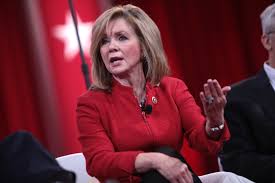
Rep. Marsha Blackburn
These contained the names and contact information of researchers at StemExpress, university and hospital researchers, and Planned Parenthood staffers.
The unredacted letters were also posted on the select panel’s website. In an interview with Rewire, a representative for Blackburn said that the “staff just made a mistake.”
At the panel’s first hearing on March 2, Rep. Jerrod Nadler (D-NY) had warned Blackburn:
“The committee has no rules in place to protect the names of those subpoenaed–raising the possibility of Congress effectively painting targets on the backs of scientists and researchers for no particular reason other than the Republicans’ desire for a culture war.”
In another letter sent to Blackburn, House Democrats charged that Republicans on the panel may be feeding sensitive information to anti-abortion groups who wish to harm members of the reproductive rights community.
They noted that the panel had publicly released the name of a doctor who had previously been threatened by anti-abortion groups, along with the specific information about when he would appear before the panel.
“Assurances that you take seriously individual privacy and security concerns are insufficient,” the letter read.
“You reneged on promises to protect the individual privacy and security of a deposition witness. Just last week, Panel Republicans leaked letters to FOX News and posted documents on your website that contained names, contact information, and other personally identifiable information of doctors and researchers.”
Initially, some schools and organizations blacked out the names of researchers in documents provided to the committee to protect their researchers’ safety. But recent subpoenas issued by the committee didn’t allow for that security measure.
Scientists have warned that targeting fetal tissue research–and the researchers who work in that field–poses national security risks.
Fetal tissue research is invaluable for developing cures to diseases like Alzheimer’s and multiple sclerosis. It could lead to a vaccine for the Zika virus, which poses a serious risk to pregnant women.
Yet it is “desire for a culture war” that takes top priority for Republicans.
And Republicans know exactly what constituency they are arousing: Those masses of alienated, uneducated Americans who can be easily manipulated by inflammatory rhetoric.
Those men and women who stockpile weapons–and believe that God has empowered them to use violence to enforce their religious beliefs on others.
Essentially, Republicans are calling upon this constituency to achieve with bullets what the party hasn’t been able to achieve in court or at the ballot box.
2001 ATTACKS, ABC NEWS, AFGHANISTAN, ALAN KURDI, CBS NEWS, CNN, DRIVER'S LICENSES, FACEBOOK, FBI, IRAQ, ISALM, ISLAMICS, JAMES COMEY, KUWAIT, LIBYA, MUSLIMS, NBC NEWS, PENTAGON, PEW RESEARCH CENTER, QTAR, REAL ID ACT, RELIGION, SAUDI ARABIA, SEPTEMBER 11, SYRIA, TERRORISM, THE CHICAGO SUN-TIMES, THE CHICAGO TRIBUNE, THE LOS ANGELES TIMES, THE NEW YORK TIMES, THE WASHINGTON POST, TRANSPORTATION SAFETY ADMINISTRATION, TWITTER, UNITED ARAB EMIRATES, UPI, USA TODAY, WORLD TRADE CENTER
In Bureaucracy, History, Law, Politics, Social commentary on June 15, 2016 at 12:02 am
Starting in 2016, traveling by air in the United States became more complicated.
In 2005, Congress passed the Real ID Act as a counter-terrorism measure. Its goal was to set security standards for government-issued IDs.
The Act started to be introduced in late 2013. Now in the last phase of its implementation, its enforcers have decided that some states haven’t complied with its requirements.
As a result, driver’s licenses from those states will no longer suffice to pass through airport security. And that includes domestic flights as well as international ones.
Those states: New York, New Hampshire, Minnesota, Louisiana and American Samoa.
The reason: Licenses issued by those states don’t contain enough identifying information to pass muster with the Transportation Safety Administration (TSA).

So how are residents of these states supposed to cope? The Federal Government is advising them to get a passport.
Your old New York driver’s license may make it harder for you to fly in 2016 | syracuse.com
And this, in turn, carries an illogic all its own. As one soon-to-be affected New York traveler outlined:
“To get a passport I’ll first need to get a certified copy of my birth certifcate.
“And to get a copy of my birth certificate I need only to submit a copy of my driver’s license. A copy, no face-to-face, is-that-really you?
“So a New York driver’s license isn’t good enough for flying but it is good enough to get a birth certificate, whch gets me a passport, which allows me to fly.”
Got all that?

Sample state ID card that’s acceptable under the Real ID Act
And while TSA is beefing up security at the back door, the Obama administration is casting aside the front door.
On September 10, 2015, the administration announced that it would accept at least 10,000 displaced Syrians over the next year.
That is in addition to the 2,000 Islamic refugees the United States has already accepted.
According to U.S. Census data, America welcomes about 100,000 Muslim immigrants legally each year. This represents the fastest growing segment of immigrants coming to the United States.
The Pew Research Center estimates there are 2.5 million Islamics in the United States. The Council on American-Islamic Relations (CAIR) puts the figure at seven million.
The Troubling Math of Muslim Migration | National Review Online
And while all this is happening, the FBI is being overwhelmed by the demands of countering Islamic terrorism against the United States.
On July 8, 2015, FBI director James Comey testified before Congress about the increasing burdens his agency faces in combating terrorism.
“We are stopping these things [Islamic terror plots] so far through tremendous hard work, the use of sources, the use of online undercovers.
“But it is incredibly difficult. I cannot see my stopping these indefinitely.”
Consider the math: The FBI has only 35,000 agents and analysts–against seven million potential suspects.
And only a portion of those agents and analysts are charged with investigating terrorism.
How did all of this come to be?
To start at the beginning: On March 15, 2011, protests broke out in Syria, with demonstrators demanding political reforms and the ouster of dictator Bashar al-Assad.
These protests, met with government repression, continued to grow into a wholesale civil war. Since then, more than 470,000 Syrians people have been killed.
Put another way: More than 470,000 potential or actual Islamic terrorists will never again pose a threat to the United States or Western Europe.
But European nations and the United States have chosen to see this truth as a negative, not a positive.
More than a million Islamic migrants and refugees crossed into Europe in 2015.
And all it took to make this happen was a photo that’s been seen the world over: A photo of a three-year old Syrian boy named Alan Kurdi, lying dead on a Turkish beach.

A cartoon parody of this picture showed a group of wealthy Arab rulers looking on indifferently at Kurdi’s body.
It also highlighted a Politically Incorrect truth:
While European nations are being swamped by hundreds of thousands of these uninvited “guests,” the Arab world’s wealthiest nations are doing almost nothing for Syria’s refugees.
According to Amnesty International, the “six Gulf countries–Qatar, United Arab Emirates, Saudi Arabia, Kuwait, Oman and Bahrain–have offered zero resettlement places to Syrian refugees.”
These nations are far closer to Syria than are Europe and the United States. And they contain some of the Arab world’s largest military budgets and its highest standards of living.
Note the contradiction: Democratic, non-Islamic countries are exposing themselves to increasing numbers of potential–if not actual–Islamic terrorists. Meanwhile, the Arab world has closed its own doors to Syrian refugees
The Arab world’s wealthiest nations are doing next to nothing for Syria’s refugees – The Washington Post
* * * * *
During the 1980s, the United States government considered Islamic acts of anti-American terrorism as simply crimes, and not acts of war.
The September 11, 2001 terror attacks on the Pentagon and World Trade Center changed that. For almost 15 years, the United States military has actively fought Islamics in Afghanistan, Iraq, Syria and Libya.
To be admitting huge numbers of a population with which the United States is now waging all-out war is worse than stupid. It is a guarantee of national suicide.


_(cropped).jpg)


ABC NEWS, AFFORDABLE CARE ACT, BARACK OBAMA, CBS NEWS, CNN, CUBAN MISSILE CRISIS, ERIC HOLDER, EXTORTION, FACEBOOK, GOVERNMENT SHUTDOWN, HILLARY CLINTON, HOUSE OF REPRESENTATIVES, JOHN BOEHNER, JON STEWART, JUSTICE DEPARTMENT, NICCOLO MACHIAVELLI, OBAMACARE, RACKETEER INFLUENCED CORRUPT ORGANIZATIONS ACT, REPUBLICANS, RICHARD WOLFFE, TED CRUZ, THE CHICAGO SUN-TIMES, THE CHICAGO TRIBUNE, THE DAILY SHOW, THE NEW YORK TIMES, THE PRINCE, THE WASHINGTON POST, TWITTER, USA PATRIOT ACT
AVOIDING OBAMA’S MISTAKES: PART THREE (END)
In Bureaucracy, History, Law, Law Enforcement, Politics, Social commentary on July 22, 2016 at 12:05 amThe ancient Greeks believed: “A man’s character is his fate.” It is Barack Obama’s character–and America’s fate–that he is more inclined to conciliation than confrontation.
Richard Wolffe chronicled Obama’s winning of the White House in his book Renegade: The Making of a President. He noted that Obama was always more comfortable when responding to Republican attacks on his character than he was in making attacks of his own.
Rule #4: Be Open to Compromise–Not Capitulation
Obama came into office determined to find common ground with Republicans. But they quickly made it clear to him that they only wanted his political destruction.
President Barack Obama
At that point, he should have put aside his hopes for a “Kumbaya moment” and applied what Niccolo Machiavelli famously said in The Prince on the matter of love versus fear:
From this arises the question whether it is better to be loved than feared, or feared more than loved. The reply is, that one ought to be both feared and loved, but as it is difficult for the two to go together, it is much safer to be feared than loved.
For it may be said of men in general that they are ungrateful, voluble, dissemblers, anxious to avoid danger and covetous of gain.
As long as you benefit them, they are entirely yours: they offer you their blood, their goods, their life and their children, when the necessity is remote. But when it approaches, they revolt….
And men have less scruple in offending one who makes himself loved than one who makes himself feared; for love is held by a chain of obligations which, men being selfish, is broken whenever it serves their purpose; but fear is maintained by a dread of punishment which never fails.
Niccolo Machiavelli
By refusing to vigorously prosecute acts of Republican extortion, President Obama has encouraged Republicans to intensify their aggression against him.
Their most recent act: Refusing to meet with federal appeals court judge Merrick Garland. Obama’s designated nominee to the Supreme Court after the February 13 death of Justice Antonin Scalia.
Kentucky United States Senator Mitch McConnell has flatly stated: There will be no Supreme Court hearing–not during regular business or a post-election lame-duck session.
Had Obama proceeded with indictments against Republican extortion in 2011 or 2013, McConnell–who supported the extortion attempts of those years–would now be desperately meeting with his lawyers.
Rule #5: First Satisfy Your Citizens, Then Help Them
Obama started off well. Americans had high expectations of him.
This was partly due to his being the first black elected President. And it was partly due to the legacies of needless war and financial catastrophe left by his predecessor, George W. Bush.
Obama entered office intending to reform the American healthcare system, to make medical care available to all citizens, and not just the richest.
But that was not what the vast majority of Americans wanted him to concentrate his energies on. With the loss of 2.6 million jobs in 2008, Americans wanted Obama to find new ways to create jobs.
This was especially true for the 11.1 million unemployed, or those employed only part-time.
Jonathan Alter, who writes sympathetically about the President in The Center Holds: Obama and His Enemies, candidly states this.
But Obama chose to spend most of his first two years as President pushing the Affordable Care Act (ACA)–which soon became known as Obamacare–through Congress.
The results were threefold:
First, those desperately seeking employment felt the President didn’t care about them.
Second, the reform effort became a lightning rod for conservative groups like the Tea Party.
And, third, in 2010, a massive Right-wing turnout cost Democrats the House of Representatives and threatened Democratic control of the Senate.
Rule #6: Be Careful What You Promise
Throughout his campaign to win support for the ACA, Obama had repeatedly promised that, under it: “If you like your health insurance plan, you can keep your plan. Period. If you like your doctor, you can keep your doctor. Period.”
But, hidden in the 906 pages of the law, was a fatal catch for the President’s own credibility.
The law stated that those who already had medical insurance could keep their plans--so long as those plans met the requirements of the new healthcare law.
If their plans didn’t meet those requirements, they would have to obtain new coverage that did.
It soon turned out that a great many Americans wanted to keep their current plan–even if it did not provide the fullest possible coverage.
Suddenly, the President found himself facing a PR nightmare: Charged and ridiculed as a liar.
Even Jon Stewart, who on “The Daily Show” had supported the implementation of “Obamacare,” sarcastically ran footage of Obama’s “you can keep your doctor” promise.
Jon Stewart
The implication: You said we could keep our plan/doctor; since we can’t, you must be a liar.
As a result, the President found his reputation for integrity–long his greatest asset–tarnished.
All of which takes us to yet another warning offered by Machiavelli: Whence it may be seen that hatred is gained as much by good works as by evil….
Share this: