Posts Tagged ‘USA TODAY’
2016 PRESIDENTIAL CAMPAIGN, ABC NEWS, ACADEMY AWARDS, BEST ACTRESS, BEST SUPPORTING ACTRESS, BULLYING, CBS NEWS, CNN, DISABILITY, DONALD TRUMP, FOX AND FRIENDS, GOLDEN GLOBES, KELLEYANNE CONWAY, KRAMER VS. KRAMER, MERYL STREEP, MOTHER JONES, MOVEON, NBC NEWS, NEEWSWEEK, NPR, POLITICO, SALON, SERGE KOVALESKI, SLATE, SOPHIE'S CHOICE, THE CHICAGO SUN-TIMES, THE CHICAGO TRIBUNE, THE IRON LADY, THE LOS ANGELES TIMES, THE NEW YORK TIMES, THE WASHINGTON POST, TIME, TWITTER, U.S. NEWS & WORLD REPORT, USA TODAY
In Bureaucracy, Entertainment, History, Politics, Social commentary on January 10, 2017 at 12:06 am
Every year, the 93 members of the Hollywood Foreign Press Association (HFPA) bestow Golden Globe awards to recognize excellence in television and film, both inside and outside the United States.
And on Sunday, January 8, the presenters honored actress Meryl Streep with the Cecil B Demille lifetime achievement Award.
Since 1979, she’s been nominated for more Academy Awards than any other actor–15 nominations for Best Actress and four for Best Supporting Actress.
She won Best Supporting Actress in 1980 for Kramer vs. Kramer, Best Actress in 1983 for Sophie’s Choice and again in 2012 for The Iron Lady.
But when Streep appeared to accept her latest award, she had a nomination of her own to present: One for a performance that “broke my heart.”

Meryl Streep at the Golden Globes
It had come in real life, not a movie. And the performer she nominated was Donald Trump, for his mockery of a disabled New York Times reporter in 2015.
The reporter, Serge Kovaleski, suffers from arthrogryposis, a congenital condition that restricts the movement of the muscles in his arms.
Since declaring his Presidential candidacy on June 16, Trump had attacked the patriotism of America’s Islamic population. He claimed that he had seen Muslims in New Jersey celebrating the collapse of the Twin Towers on September 11, 2001.
To prove this, Trump cited a September 18, 2001 article written by Kovaleski when he was a reporter for The Washington Post.
In this, Kovaleski wrote that police “detained and questioned a number of people who were allegedly seen celebrating the attacks and holding tailgate-style parties.”
After Trump mentioned the story, Kovaleski said that the key word in it was “allegedly,” adding that there were no credible reports of such celebrations.
At a South Carolina rally on November 24, 2015, Trump claimed that Kovaleski was backing away from his article.
To mock Kovaleski, he flopped his right arm around with his hand held at an odd angle while imitating the reporter: “Now, the poor guy, you’ve got to see this guy: ‘Uhh, I don’t know what I said. Uhh, I don’t remember,’ he’s going like ‘I don’t remember. Maybe that’s what I said.'”
Click here: Donald Trump mocks disabled New York Times reporter – Donald Trump mocks reporter with disability – YouTube
Attacked for mocking Kovaleski’s disability, Trump claimed: “Serge Kovaleski must think a lot of himself if he thinks I remember him from decades ago–if I ever met him at all, which I doubt I did.”
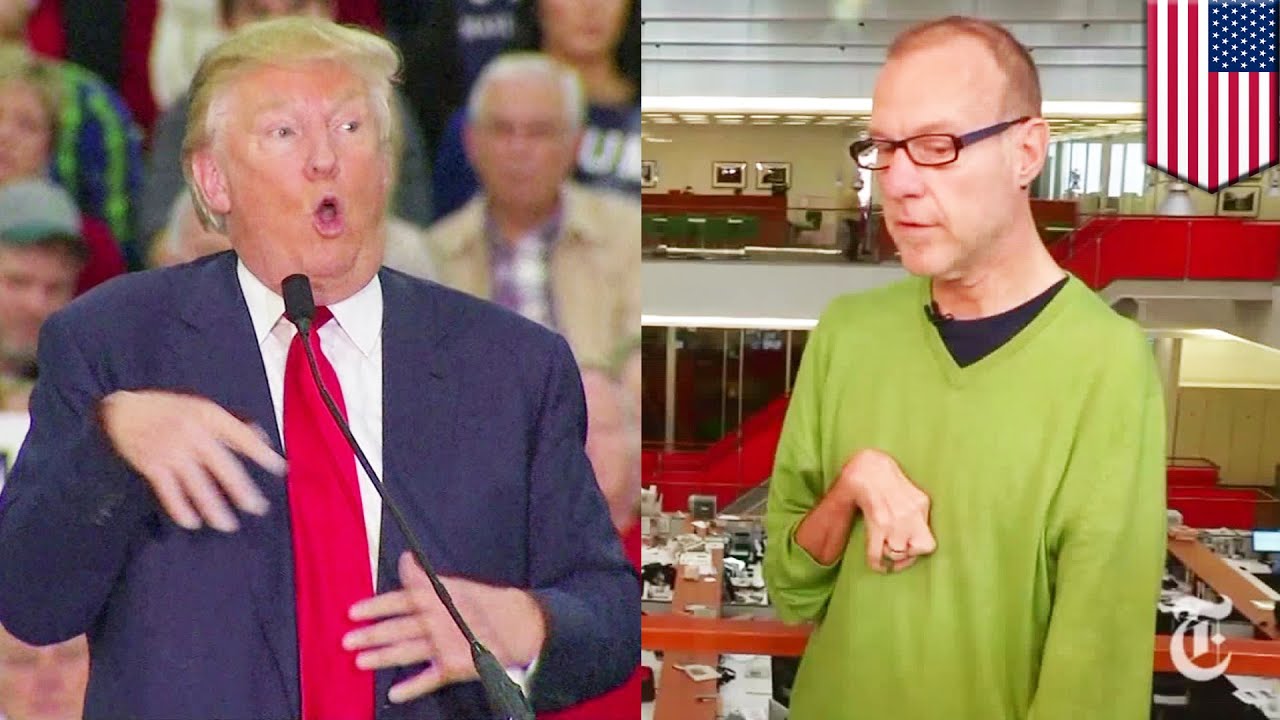
Trump mocking Kovaleski, left; Kovaleski, right
But Kovaleski quickly contradicted Trump: He had covered Trump as a reporter for the New York Daily News and had met him face-to-face on at least a dozen occasions.
So Meryl Streep knew what she was talking about when she said:
“There was one performance this year that stunned me. It sank its hooks in my heart. Not because it was good. There was nothing good about it. But it was effective, and it did its job. It made its intended audience laugh and show their teeth.
“It was that moment when the person asking to sit in the most respected seat in our country imitated a disabled reporter. Someone he outranked in privilege, power and the capacity to fight back. It kind of broke my heart when I saw it. I still can’t get it out of my head because it wasn’t in a movie. It was real life.
“And this instinct to humiliate, when it’s modeled by someone in the public platform, by someone powerful, it filters down into everybody’s life, because it kind of gives permission for other people to do the same thing.
“Disrespect invites disrespect. Violence incites violence. When the powerful use their position to bully others, we all lose.”
Kelleyanne Conway served as Trump’s mouthpiece during the 2016 Presidential campaign. She continues in that rule as he prepares to take office as President on January 20.
And she was thoroughly upset with Streep’s remarks.
Appearing on Right-wing Fox and Friends the next morning, she said: “We have to now form a government, and I’m concerned that somebody with a platform like Meryl Streep is also, I think, inciting people’s worst instincts.
“When she won’t get up there and say, ‘I don’t like it, but let’s try to support him and see where we can find some common ground with him, which [Trump] has actually done from moment one.”
What common ground she didn’t say. Agreeing on mocking the disabled?
Not to be outdone in “inciting people’s worst instincts,” President-elect Trump quickly took to Twitter–his preferred mode of communication.
Since Twitter allows only 140 characters, Trump couldn’t say all he wanted in one tweet. So it took three:
Meryl Streep, one of the most over-rated actresses in Hollywood, doesn’t know me but attacked last night at the Golden Globes. She is a…..
Hillary flunky who lost big. For the 100th time, I never “mocked” a disabled reporter (would never do that) but simply showed him…….
“groveling” when he totally changed a 16 year old story that he had written in order to make me look bad. Just more very dishonest media!
In 2015–before she insulted him–Trump told The Hollywood Reporter: “Julia Roberts is terrific, and many others. Meryl Streep is excellent; she’s a fine person, too.”
ABC NEWS, ALTERNET, AMERICABLOG, AP, BABY BOOMER RESISTANCE, BBC, BLOOMBERG NEWS, BUZZFEED, CBS NEWS, CNN, CROOKS AND LIARS, DAILY KOZ, DRUG-TESTING, EMPLOYERS RESPONSIBILITY ACT, FACEBOOK, FISHER INVESTMENTS, FIVETHIRTYEIGHT, FORBES MAGAZINE, HARPER’S MAGAZINE, HUFFINGTON POST, KENNETH FISHER, MEDIA MATTERS, MEDICAL INSURANCE, MOTHER JONES, MOVEON, MSNBC, NBC NEWS, NEW REPUBLIC, NEWSDAY, NEWSWEEK, NPR, PBS NEWSHOUR, POLITICO, POLITICUSUSA, RAW STORY, REPUBLICANS, REUTERS, SALON, SEATTLE TIMES, SLATE, TALKING POINTS MEMO, THE ATLANTIC, THE CHICAGO SUN-TIMES, THE CHICAGO TRIBUNE, THE DAILY BEAST, THE DAILY BLOG, THE GUARDIAN, THE HILL, THE HUFFINGTON POST, THE LOS ANGELES TIMES, THE NATION, THE NEW REPUBLIC, THE NEW YORK TIMES, THE NEW YORKER, THE VILLAGE VOICE, THE WASHINGTON POST, THINKPROGRESS, TIME, TRUTHDIG, TRUTHOUT, TWITTER, TWO POLITICAL JUNKIES, U.S. NEWS & WORLD REPORT, UNEMPLOYMENT, UPI, USA TODAY, WAL-MART, WEALTH GAP, WONKETTE
In Bureaucracy, History, Law, Law Enforcement, Politics, Social commentary on January 9, 2017 at 12:31 am
America can quickly find employment for willing-to-work job-seekers–by installing a nationwide Employers Responsibility Act. Its last seven provisions would read as follows:
(9) Employers refusing to hire would be required to pay an additional “crime tax.”
Sociologists and criminologists agree that “the best cure for crime is a job.” Thus, employers who refuse to hire contribute to a growing crime rate in this Nation. Such non-hiring employers would be required to pay an additional tax, which would be earmarked for agencies of the criminal justice system at State and Federal levels.
(10) The seeking of “economic incentives” by companies in return for moving to or remaining in cities/states would be strictly forbidden.
Such “economic incentives” usually:
- allow employers to ignore existing laws protecting employees from unsafe working conditions;
- allow employers to ignore existing laws protecting the environment;
- allow employers to pay their employees the lowest acceptable wages, in return for the “privilege” of working at these companies; and/or
- allow employers to pay little or no business taxes, at the expense of communities who are required to make up for lost tax revenues.
(11) Employers who continue to make such overtures would be criminally prosecuted for attempted bribery or extortion:
- Bribery, if they offered to move to a city/state in return for “economic incentives,” or
- Extortion, if they threatened to move their companies from a city/state if they did not receive such “economic incentives.”
This would protect employees against artificially-depressed wages and unsafe working conditions; protect the environment in which these employees live; and protect cities/states from being pitted against one another at the expense of their economic prosperity.
(12) The U.S. Departments of Justice and Labor would regularly monitor the extent of employer compliance with the provisions of this act.
Among these measures: Sending undercover agents, posing as highly-qualified job-seekers, to apply at companies—and then vigorously prosecuting those employers who blatantly refused to hire despite their proven economic ability to do so.
This would be comparable to the long-time and legally-validated practice of using undercover agents to determine compliance with fair-housing laws.
(13) The Justice Department and/or the Labor Department would be required to maintain a publicly-accessible database on those companies that have been cited, sued and/or convicted for such offenses as:
- discrimination,
- harassment,
- health and/or safety violations or
- violating immigration laws.
Employers would be legally required to regularly provide such information to these agencies, so that it would remain accurate and up-to-date.
Such information would arm job applicants with vital information about the employers they were approaching. They could thus decide in advance if an employer is deserving of their skills and dedication.
As matters now stand, employers can legally demand to learn even the most private details of an applicant’s life without having to disclose even the most basic information about themselves and their history of treating employees.
(14) CEOs whose companies employ illegal aliens would be held directly accountable for the actions of their subordinates. Upon conviction, the CEO would be sentenced to a mandatory prison term of at least 10 years.
This would prove a more effective remedy for controlling illegal immigration than stationing tens of thousands of soldiers on the U.S./Mexican border. With CEOs forced to account for their subordinates’ actions, they would take drastic steps to ensure their companies complied with Federal immigration laws.
Without employers eager to hire illegal aliens at a fraction of the money paid to American workers, the invasions of illegal job-seekers would quickly come to an end.
(15) A portion of employers’ existing Federal taxes would be set aside to create a national clearinghouse for placing unemployed but qualified job-seekers.
* * * * *
For thousands of years, otherwise highly intelligent men and women believed that kings ruled by divine right. That kings held absolute power, levied extortionate taxes and sent countless millions of men off to war–all because God wanted it that way.
That lunacy was dealt a deadly blow in 1776 when American Revolutionaries threw off the despotic rule of King George III of England.
But today, millions of Americans remain imprisoned by an equally outrageous and dangerous theory: The Theory of the Divine Right of Employers.

Summing up this employer-as-God attitude, Calvin Coolidge still speaks for the overwhelming majority of employers and their paid shills in government: “The man who builds a factory builds a temple, and the man who works there worships there.”
America can no longer afford such a dangerous fallacy as the Theory of the Divine Right of Employers.
Americans did not win their freedom from Great Britain–-and its enslaving doctrine of “the divine right of kings”-–by begging for their rights.
And Americans will not win their freedom from their corporate masters–-and the equally enslaving doctrine of “the divine right of employers”––by begging for the right to work and support themselves and their families.
Corporations can–and do–spend millions of dollars on TV ads, selling lies–lies such as the “skills gap,” and how if the wealthy are forced to pay their fair share of taxes, jobs will inevitably disappear.
But Americans can choose to reject those lies–and demand that employers behave like patriots instead of predators.
ABC NEWS, ALTERNET, AMERICABLOG, AP, BABY BOOMER RESISTANCE, BBC, BLOOMBERG NEWS, BUZZFEED, CBS NEWS, CNN, CROOKS AND LIARS, DAILY KOZ, DRUG-TESTING, EMPLOYERS RESPONSIBILITY ACT, FACEBOOK, FISHER INVESTMENTS, FIVETHIRTYEIGHT, FORBES MAGAZINE, HARPER’S MAGAZINE, HUFFINGTON POST, KENNETH FISHER, MEDIA MATTERS, MEDICAL INSURANCE, MOTHER JONES, MOVEON, MSNBC, NBC NEWS, NEW REPUBLIC, NEWSDAY, NEWSWEEK, NPR, PBS NEWSHOUR, POLITICO, POLITICUSUSA, RAW STORY, REPUBLICANS, REUTERS, SALON, SEATTLE TIMES, SLATE, TALKING POINTS MEMO, THE ATLANTIC, THE CHICAGO SUN-TIMES, THE CHICAGO TRIBUNE, THE DAILY BEAST, THE DAILY BLOG, THE GUARDIAN, THE HILL, THE HUFFINGTON POST, THE LOS ANGELES TIMES, THE NATION, THE NEW REPUBLIC, THE NEW YORK TIMES, THE NEW YORKER, THE VILLAGE VOICE, THE WASHINGTON POST, THINKPROGRESS, TIME, TRUTHDIG, TRUTHOUT, TWITTER, TWO POLITICAL JUNKIES, U.S. NEWS & WORLD REPORT, UNEMPLOYMENT, UPI, USA TODAY, WAL-MART, WEALTH GAP, WONKETTE
In Bureaucracy, History, Law, Law Enforcement, Politics, Social commentary on January 6, 2017 at 12:10 am
An Employers Responsibility Act (ERA) would simultaneously address the following evils for which employers are directly responsible:
- The loss of jobs within the United States owing to companies’ moving their operations abroad—solely to pay substandard wages to their new employees.
- The mass firings of employees which usually accompany corporate mergers or acquisitions.
- The widespread victimization of part-time employees, who are not legally protected against such threats as racial discrimination, sexual harassment and unsafe working conditions.
- The refusal of many employers to create better than menial, low-wage jobs.
- The widespread employer practice of extorting “economic incentives” from cities or states in return for moving to or remaining in those areas. Such “incentives” usually absolve employers from complying with laws protecting the environment and/or workers’ rights.
- The refusal of many employers to provide medical and pension benefits—nearly always in the case of part-time employees, and, increasingly, for full-time, permanent ones as well.
- Rising crime rates, due to rising unemployment.
Among its provisions:
(1) American companies that close plants in the United States and open others abroad would be forbidden to sell products made in those foreign plants within the United States.
This would protect both American and foreign workers from employers seeking to profit at their expense. American workers would be ensured of continued employment. And foreign laborers would be protected against substandard wages and working conditions.
Companies found violating this provision would be subject to Federal criminal prosecution. Guilty verdicts would result in heavy fines and lengthy imprisonment for their owners and top managers.
(2) Large companies (those employing more than 100 persons) would be required to create entry-level training programs for new, future employees.
These would be modeled on programs now existing for public employees, such as firefighters, police officers and members of the armed services.
Such programs would remove the employer excuse, “I’m sorry, but we can’t hire you because you’ve never had any experience in this line of work.” After all, the Air Force has never rejected an applicant because, “I’m sorry, but you’ve never flown a plane before.”
This Nation has greatly benefited from the humane and professional efforts of the men and women who have graduated from public-sector training programs. There is no reason for the private sector to shun programs that have succeeded so brilliantly for the public sector.
(3) Employers would receive tax credits for creating professional, well-paying, full-time jobs.
This would encourage the creation of better than the menial, dead-end, low-paying and often part-time jobs which exist in the service industry. Employers found using such tax credits for any other purpose would be prosecuted for tax fraud.
(4) A company that acquired another—through a merger or buyout—would be forbidden to fire en masse the career employees of that acquired company.
This would be comparable to the protection existing for career civil service employees. Such a ban would prevent a return to the predatory “corporate raiding” practices of the 1980s, which left so much human and economic wreckage in their wake.
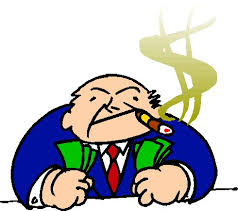
The wholesale firing of employees would trigger the prosecution of the company’s new owners. Employees could still be fired, but only for provable just cause, and only on a case-by-case basis.
(5) Employers would be required to provide full medical and pension benefits for all employees, regardless of their full-time or part-time status.
Increasingly, employers are replacing full-time workers with part-time ones—solely to avoid paying medical and pension benefits.
Requiring employers to act humanely and responsibly toward all their employees would encourage them to provide full-time positions—and hasten the death of this greed-based practice.
(6) Employers of part-time workers would be required to comply with all federal labor laws.
Under current law, part-time employees are not protected against such abuses as discrimination, sexual harassment and unsafe working conditions. Closing this loophole would immediately create two positive results:
- Untold numbers of currently-exploited workers would be protected from the abuses of predatory employers; and
- Even predatorily-inclined employers would be encouraged to offer permanent, fulltime jobs rather than only part-time ones—since a major incentive for offering part-time jobs would now be eliminated.
(7) Employers would be encouraged to hire to their widest possible limits,through a combination of financial incentives and legal sanctions. Among those incentives:
Employers demonstrating a willingness to hire would receive substantial Federal tax credits, based on the number of new, permanent employees hired per year.
Employers claiming eligibility for such credits would be required to make their financial records available to Federal investigators. Employers found making false claims would be prosecuted for perjury and tax fraud, and face heavy fines and imprisonment if convicted.
(8) Among those sanctions: Employers refusing to hire could be required to prove, in court:
- Their economic inability to hire further employees, and/or
- The unfitness of the specific, rejected applicant.
Companies found guilty of unjustifiably refusing to hire would face the same penalties as now applying in cases of discrimination on the basis of age, race, sex and disability.
Two benefits would result from this:
- Employers would thus fund it easier to hire than to refuse to do so; and
- Job-seekers would no longer be prevented from even being considered for employment because of arbitrary and interminable “hiring freeze.”
ABC NEWS, ALTERNET, AMERICABLOG, AP, BABY BOOMER RESISTANCE, BBC, BLOOMBERG NEWS, BUZZFEED, CBS NEWS, CNN, CROOKS AND LIARS, DAILY KOZ, DRUG-TESTING, EMPLOYERS RESPONSIBILITY ACT, FACEBOOK, FISHER INVESTMENTS, FIVETHIRTYEIGHT, FORBES MAGAZINE, HARPER’S MAGAZINE, HUFFINGTON POST, KENNETH FISHER, MEDIA MATTERS, MEDICAL INSURANCE, MOTHER JONES, MOVEON, MSNBC, NBC NEWS, NEW REPUBLIC, NEWSDAY, NEWSWEEK, NPR, PBS NEWSHOUR, POLITICO, POLITICUSUSA, RAW STORY, REPUBLICANS, REUTERS, SALON, SEATTLE TIMES, SLATE, TALKING POINTS MEMO, THE ATLANTIC, THE CHICAGO SUN-TIMES, THE CHICAGO TRIBUNE, THE DAILY BEAST, THE DAILY BLOG, THE GUARDIAN, THE HILL, THE HUFFINGTON POST, THE LOS ANGELES TIMES, THE NATION, THE NEW REPUBLIC, THE NEW YORK TIMES, THE NEW YORKER, THE VILLAGE VOICE, THE WASHINGTON POST, THINKPROGRESS, TIME, TRUTHDIG, TRUTHOUT, TWITTER, TWO POLITICAL JUNKIES, U.S. NEWS & WORLD REPORT, UNEMPLOYMENT, UPI, USA TODAY, WAL-MART, WEALTH GAP, WONKETTE
In Bureaucracy, History, Law, Law Enforcement, Politics, Social commentary on January 5, 2017 at 1:42 pm
According to a new Morning Consult/POLITICO poll, voters know what they want to hear when President-elect Donald Trump gives his Inaugural Address on January 20.
- Seventy-five percent of voters want him to talk about bringing manufacturing jobs back from other countries and keeping manufacturing jobs in the United States; and
- Fifty-two percent percent want to hear Trump discuss his threats of slapping tariffs on imported goods made in China and Mexico.
The poll was conducted December 28-29, surveying 2,000 registered voters. The margin of error is plus or minus 2 percentage points.
During the 2016 Presidential race, Trump attacked American corporations that operate overseas and import their products back here, or that are considering plans to move more jobs overseas.
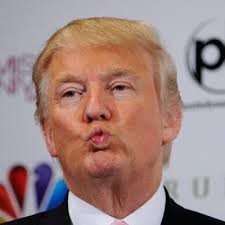
Donald Trump
And he threatened to slap high import duties and tariffs on products made in Mexico, China and other countries that impose similar barriers on American-made goods.
Yet, for decades, American politicians ignored the single greatest cause of unemployment among Americans: The refusal of employers to hire.
Employers like Kenneth Fisher, chief executive officer of Fisher Investments, who said, in 2012: “Believe it or not, I’m for fewer jobs, not more.”
In the Christmas Eve, 2012 issue of Forbes, he asserted: “Job Growth is Overrated.”
“Throughout 2012 we heard politicians and pundits of all stripes yammering endlessly on the need for job growth—that we don’t have enough jobs. It’s pure rubbish.”
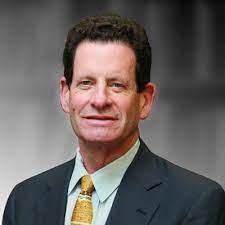
Kenneth Fisher
According to Fisher, jobs are actually signs of weakness in the economy. Fewer employees can produce more products—and that’s good for us all.
For Fisher, the template for future economic success is Walmart, the nation’s largest private employer: “With Walmart you get an awe-inspiring company at 13 times my January 2014 earnings estimate, with a 2.2% dividend yield.”
Of course, it’s easy for Fisher—a billionaire—to take a “What? Me Worry?” attitude about the unemployment problems facing millions of willing-to-work Americans.
And it’s certainly easier for him to identify with his fellow billionaire boys club members, the Waltons, than with the low-paid employees of Walmart.
In December, 2013, Walmart announced that it would deny health insurance to newly-hired employees who work less than 30 hours a week.
Walmart eliminates healthcare coverage for certain workers if their average work-week falls below 30 hours—which regularly happens at the direction of company managers.
Fisher certainly doesn’t have to worry about getting top-notch medical care anytime he thinks he needs it.
Another thing that Fisher clearly admires about Walmart: Its gross profits. In 2016, its sales revenues stood at 482.13 billion.
In 2016, C. Douglas McMillon, president and CEO of Walmart Stores, made $19,404,042 in total compensation. Of this total:
- $1,263,231 came as a salary;
- $3,406,971 was received as a bonus;
- $0 was received in stock options;
- $14,270,786 was awarded as stock; and
- $463,054 came from other types of compensation.
On the other hand: Until April, 2015, only about 6,000 Walmart employees out of more than 1.2 million nationwide were paid the $7.25 an hour federal minimum wage.
In April, 2015, the company’s starting pay became $9 an hour, and the average pay for full-time retail workers there became about $13 an hour.
This raise wasn’t prompted by generosity from Walmart’s owners. It came came from sheer necessity.
For more than 50 years, Walmart paid its employees such depressed wages that many full-time workers couldn’t live on them. The company became notorious for helping its new employees to sign up for state and federal welfare programs.
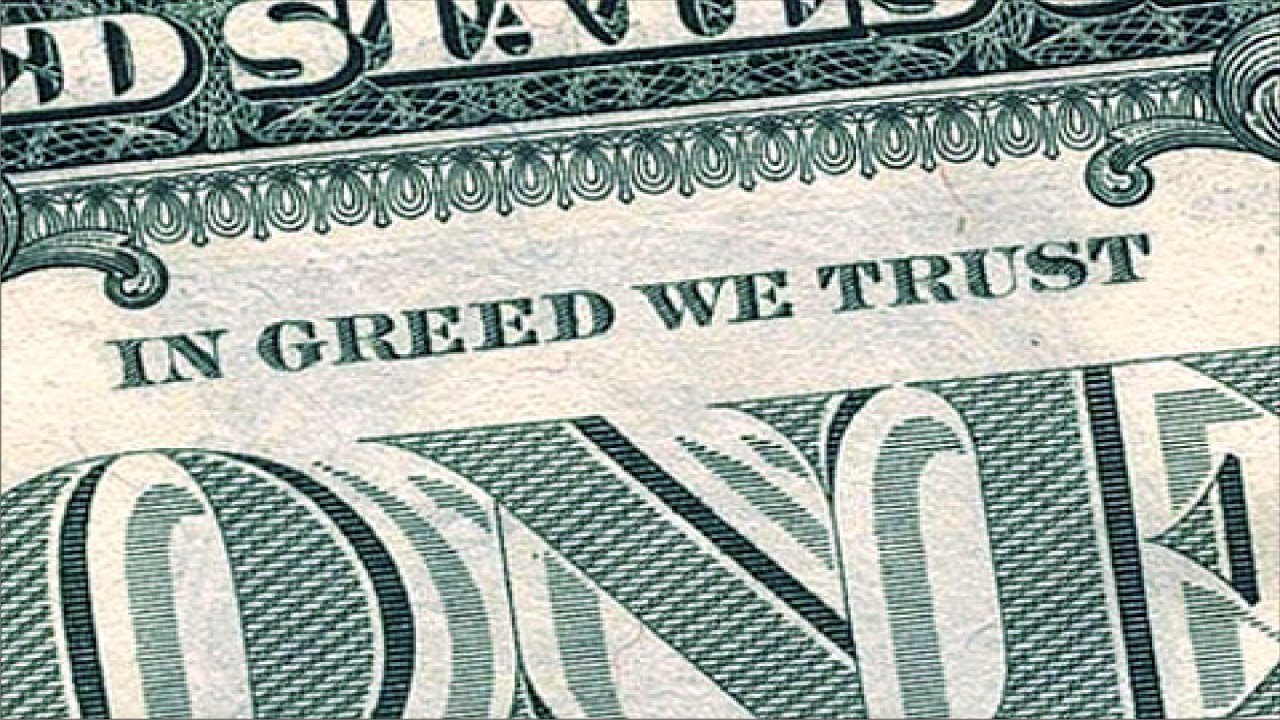
This made Walmart the single largest private-sector beneficiary of public assistance. According to Barry Ritzholtz, of Rithholz Wealth Management, American taxpayers “have been subsidizing the wages of the publicly traded, private-sector company to the tune of $2.66 billion in government largess a year.”
As a result, turnover at Walmart has been correspondingly high–at 44%, as compared with six percent at Costco.
And Fisher conveniently ignores the huge emotional role that being employed plays in the United States.
The majority of Americans–especially men–derive their sense of identity from what they do for a living.
Ask a man, “What do you do?” and he’s almost certain to reply: “I’m a fireman.” Or “I’m a salesman.”
To be unemployed in America is considered by most Americans–including the unemployed–the same as being a bum.
And Republicans are quick to point accusing fingers at those willing-to-work Americans who can’t find willing-to-hire employers.
According to Republicans such as Mitt Romney and Herman Cain: If you can’t find a job, it’s entirely your fault.
And when Republicans are forced–by public pressure or Democratic majorities–to provide benefits to the unemployed, these nearly always come at a price.
Those receiving subsistence monies are, in many states, required to undergo drug-testing, even though there is no evidence of widespread drug-abuse among the unemployed.
But America can put an end to this “I’ve-got-mine-and-the-hell-with-you” job-killing arrogance of people like Kenneth Fisher.
The answer lies in three words: Employers Responsibility Act (ERA).
If passed by Congress and vigorously enforced by the U.S. Departments of Justice and Labor, an ERA would ensure full-time, permanent and productive employment for millions of capable, job-seeking Americans.
And it would achieve this without raising taxes or creating controversial government “make work” programs.
Such legislation would legally require employers to demonstrate as much initiative for hiring as job-seekers are now expected to show in searching for work.
ABC NEWS, ADOLF HITLER, BAVARIA, BEER HALL PUTSCH, BREITBART NEWS, CBS NEWS, CHRISTOPHER S. MURPHY, CIA, CNN, DEMOCRATIC NATIONAL COMMITTEE, DEMOCRATIC PARTY, DONALD TRUMP, EXTORTION, FACE THE NATION, FACEBOOK, FERGUS CULLEN, FOX NEWS SUNDAY, GREG ABBOTT, HACKING, HILLARY CLINTON, HITLER: ASCENT, IRS, JAMES B. COMEY, JAMES R. CLAPPER, JEWS, JOHN KASICH, JUSTICE DEPARTMENT, KEN PAXTON, LEON PANETTA, MEIN KAMPF, MICHAEL ROGERS, MIKE PENCE, MUNICH, NATIONAL SECURITY AGENCY, NAZI PARTY, NBC NEWS, NEW HAMPSHIRE REPUBLICAN PARTY, NEWSWEEK, NPR, PAM BONDI, PAUL RYAN, PHILIP KLEIN, POLITICO, Racketeer Influenced Corrupt Organizations (RICO) Act, REPUBLICAN NATIONAL COMMITTEE, REPUBLICAN NATIONAL CONVENTION, REPUBLICAN PARTY, ROGER STONE, SALON, SOVIET UNION, THE CHICAGO SUN-TIMES, THE CHICAGO TRIBUNE, THE HUFFINGTON POST, THE LOS ANGELES TIMES, THE NEW YORK TIMES, THE WASHINGTON EXAMINER, THE WASHINGTON POST, THREATS, TIME, TREASON, TRUMP UNIVERSITY, TWITTER, U.S. NEWS & WORLD REPORT, U.S. SECRET SERVICE, USA PATRIOT ACT, USA TODAY, VLADIMIR PUTIN, VOLKER ULLRICH, WEIMAR REPUBLIC
In Bureaucracy, History, Law, Law Enforcement, Politics, Social commentary on January 4, 2017 at 12:15 am
Future historians may one day write that it’s what didn’t happen that played at least as great a role in electing Donald Trump President as what actually did.
There were at least four instances where intervention by Federal law enforcement authorities could have utterly changed the outcome of the 2016 election.
Two of these dealt with purely domestic issues—the Trump University scandal and Trump’s repeated threats of violence against Republican and Democratic opponents.
The third and fourth ones dealt with events directly affecting the security of the United States.
It is unprecedented for an American Presidential candidate to repeatedly bestow fulsome praise on the leader of a foreign power hostile to the United States. And to receive equally fawning compliments in return from that leader.
Yet that is precisely what has happened between Donald Trump and Vladimir Putin.
Thus Putin on Trump: “He is a bright personality, a talented person, no doubt about it. It is not up to us to appraise his positive sides, it is up to the U.S. voters. but, as we can see, he is an absolute leader in the presidential race.”
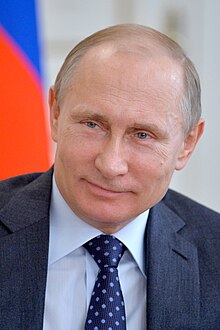
Vladimir Putin
And Trump on Putin: “It is always a great honor to be so nicely complimented by a man so highly respected within his own country and beyond. He’s running his country, and at least he’s a leader. Unlike what we have in this country”—a clear attack on President Barack Obama.
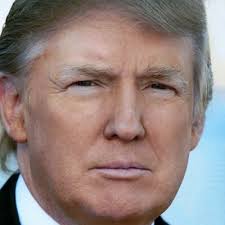
Donald Trump
Case #3: The Justice Department did not invalidate the results of the 2016 election, despite overwhelming evidence that Russia intervened to elect Trump as Vladimir Putin’s chosen candidate.
- Admiral Michael Rogers, director of the National Security Agency (NSA) and US Cyber Command, said in mid-November that Russia made “a conscious effort” to sway the results of the Presidential election by the hacking of 20,000 emails from the Democratic National Committee.
- “There shouldn’t be any doubt in anybody’s mind,” said Rogers. “This was not something that was done casually. This was not something that was done by chance. This was not a target that was selected purely arbitrarily. This was a conscious effort by a nation-state to attempt to achieve a specific effect.”
- The Russians hacked the Democratic committee’s servers–but not those of the Republican National Committee.
- On December 16, FBI Director James B. Comey and Director of National Intelligence James R. Clapper Jr. agreed with a CIA assessment that Russia intervened in the 2016 election in part to help Donald Trump win the White House.

Trump, however, has steadfastly denied any such role by Russia: “I think it’s ridiculous,” he told “Fox News Sunday.” “I think it’s just another excuse. I don’t believe it….No, I don’t believe it at all.”
Case #4: The Justice Department did not prosecute Trump for treason, even though he solicited aid from Russia, a nation hostile to the United States. And no major official of the government—including President Obama—publicly condemned him as a traitor.
At a news conference in Doral, Florida on July 27, Trump publicly invited “Russia”—i.e., Vladimir Putin—to hack Hillary Clinton’s emails: “I will tell you this, Russia: If you’re listening, I hope you’re able to find the 30,000 emails that are missing. I think you will probably be rewarded mightily by our press.”
This was essentially treason—calling on a hostile foreign power to interfere directly in an American Presidential election. And it was seen as such by both Democrats and even Republicans.
- “This has to be the first time that a major presidential candidate has actively encouraged a foreign power to conduct espionage against his political opponent,” Hillary for America policy adviser Jake Sullivan said in a statement. “That’s not hyperbole, those are just the facts. This has gone from being a matter of curiosity, and a matter of politics, to being a national security issue.”
- “I find those kinds of statements to be totally outrageous because you’ve got now a presidential candidate who is, in fact, asking the Russians to engage in American politics,” said former CIA Director Leon Panetta, a Clinton surrogate. “I just think that’s beyond the pale.”
- Brendan Buck, a spokesman for House Speaker Paul Ryan, said: “Russia is a global menace led by a devious thug. Putin should stay out of this election.”
- Even Trump’s Vice Presidential running mate, Mike Pence, said: “If it is Russia and they are interfering in our elections, I can assure you both parties and the United States government will ensure there are serious consequences.”
FBI Director James Comey believed that Hillary Clinton’s emails on a private server were so dangerous to national security that he announced—11 days before the election—that he was re-opening an investigation he had closed.
That announcement erased widespread outrage over Trump’s unintended admissions of predatory behavior toward women—“Grab them by the pussy”—and reversed Clinton’s growing lead in the polls.
Yet the Bureau has not issued any such statements about the continuing reports of close ties between Trump and Putin, and Trump’s possible investments in Russia.
To their shame, the federal agencies charged with safeguarding America failed to take action against these abuses. And, to their shame, the news media, to date, has failed to indict them for their negligence.
ABC NEWS, ADOLF HITLER, BAVARIA, BEER HALL PUTSCH, BREITBART NEWS, CBS NEWS, CHRISTOPHER S. MURPHY, CIA, CNN, DEMOCRATIC NATIONAL COMMITTEE, DEMOCRATIC PARTY, DONALD TRUMP, EXTORTION, FACE THE NATION, FACEBOOK, FERGUS CULLEN, FOX NEWS SUNDAY, GREG ABBOTT, HACKING, HILLARY CLINTON, HITLER: ASCENT, IRS, JAMES B. COMEY, JAMES R. CLAPPER, JEWS, JOHN KASICH, JUSTICE DEPARTMENT, KEN PAXTON, LEON PANETTA, MEIN KAMPF, MICHAEL ROGERS, MIKE PENCE, MUNICH, NATIONAL SECURITY AGENCY, NAZI PARTY, NBC NEWS, NEW HAMPSHIRE REPUBLICAN PARTY, NEWSWEEK, NPR, PAM BONDI, PAUL RYAN, PHILIP KLEIN, POLITICO, Racketeer Influenced Corrupt Organizations (RICO) Act, REPUBLICAN NATIONAL COMMITTEE, REPUBLICAN NATIONAL CONVENTION, REPUBLICAN PARTY, ROGER STONE, SALON, SOVIET UNION, THE CHICAGO SUN-TIMES, THE CHICAGO TRIBUNE, THE HUFFINGTON POST, THE LOS ANGELES TIMES, THE NEW YORK TIMES, THE WASHINGTON EXAMINER, THE WASHINGTON POST, THREATS, TIME, TREASON, TRUMP UNIVERSITY, TWITTER, U.S. NEWS & WORLD REPORT, U.S. SECRET SERVICE, USA PATRIOT ACT, USA TODAY, VLADIMIR PUTIN, VOLKER ULLRICH, WEIMAR REPUBLIC
In Bureaucracy, History, Law, Law Enforcement, Politics, Social commentary on January 3, 2017 at 12:01 am
Threatening his Republican and Democratic opponents with violence played a major role in Donald Trump’s campaign for President.
No other candidate—Republican or Democrat—had ever made such repeated and brutal use of threats of physical assault in pursuing the Presidency.
- Philip Klein, the managing editor of the Washington Examiner, wrote on the eve of the Republican National Convention in July: “Political commentators now routinely talk about the riots that would break out in Cleveland if Trump were denied the nomination, about how his supporters have guns and all hell could break loose, that they would burn everything to the ground. It works to Trump’s advantage to not try too hard to dispel these notions.”
- On August 9, Trump told a rally in Wilmington, North Carolina: “Hillary [Clinton] wants to abolish, essentially abolish, the Second Amendment. If she gets to pick her [Supreme Court] judges, nothing you can do folks. Although the Second Amendment people, maybe there is, I don’t know.”
- “Don’t treat this as a political misstep,” Senator Christopher S. Murphy of Connecticut, who has called for stiffer gun laws, wrote on Twitter. “It’s an assassination threat, seriously upping the possibility of a national tragedy & crisis.”
- “Well, let me say if someone else said that outside of the hall, he’d be in the back of a police wagon now, with the Secret Service questioning him,” said Michael Hayden, former head of the CIA and National Security Agency (NSA).
Making threats against anyone under protection by the U.S. Secret Service is a felony. Yet Donald Trump was never held legally accountable by the Justice Department.
Threats of this type continued to be made by Trump supporters right up to the day of the election.
- On July 29, Roger Stone, a notorious Right-wing political consultant acting as a Trump strategist, told Breitbart News: “The first thing Trump needs to do is begin talking about [voter fraud] constantly. If there’s voter fraud, this election will be illegitimate, the election of the winner will be illegitimate, we will have a constitutional crisis, widespread civil disobedience, and the government will no longer be the government.”
- At a town hall meeting where Trump’s Vice Presidential nominee Mike Pence appeared, a woman named Rhonda said: “For me personally, if Hillary Clinton gets in, I myself am ready for a revolution.”
- In Cincinnati, a Trump supporter threatened to forcibly remove Clinton from the White House if she won the race: “If she’s in office, I hope we can start a coup. She should be in prison or shot. That’s how I feel about it,” Dan Bowman, a 50-year-old contractor, said of Hillary Clinton, the Democratic nominee. “We’re going to have a revolution and take them out of office if that’s what it takes. There’s going to be a lot of bloodshed. But that’s what it’s going to take….I would do whatever I can for my country.”
Even Fergus Cullen, former chairman of the New Hampshire GOP, expressed fear of what might happen if Trump lost the election:
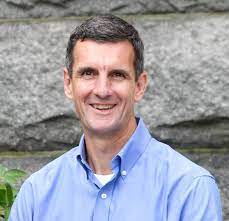

Fergus Cullen
“That’s really scary,” Cullen said, recounting the violence at Trump rallies around the country leading up to the Republican National Convention. “In this country, we’ve always had recriminations after one side loses. But we haven’t had riots. We haven’t had mobs that act out with violence against supporters of the other side.
“There’s no telling what his supporters would be willing to do at the slightest encouragement from their candidate,” he said.
Trump even began encouraging his mostly white supporters to sign up online to be “election observers” to stop “Crooked Hillary from rigging this election.” He urged them to act as poll watchers in “other” [non-white] communities to ensure that things are “on the up and up.”
Many of his supporters promised to do so.
“Trump said to watch your precincts. I’m going to go, for sure,” said Steve Webb, a 61-year-old carpenter from Fairfield, Ohio.
“I’ll look for…well, it’s called racial profiling. Mexicans. Syrians. People who can’t speak American,” he said. “I’m going to go right up behind them. I’ll do everything legally. I want to see if they are accountable. I’m not going to do anything illegal. I’m going to make them a little bit nervous.”
Knowing that large numbers of angry—and possibly armed—Right-wingers planned to descend on polling places could only have had a chilling effect on untold numbers of Democratic voters. And this would have been especially true in heavily conservative states.
Both the USA Patriot Act and the Racketeer Influenced Corrupt Organizations (RICO) Act have statutes dealing with making terrorist threats against government institutions to influence their members.
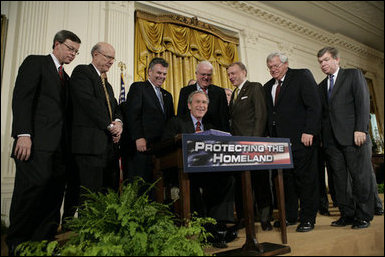
President George W. Bush signing the USA Patriot Reauthorization Act of 2005
If Trump’s remarks did not violate one or both of those laws, certainly remarks made by his surrogates did.
Thus, the Justice Department could have cited the Patriot Act in indicting Trump and/or any number of his followers for “activities that…appear to be intended…to influence the policy of a government by intimidation or coercion [and]…occur primarily within the territorial jurisdiction of the United States.”
The Justice Department could have also demanded that the results of the election be invalidated on the basis that widespread voter and candidate intimidation played a massive role in it.
But of course this did not happen.
ABC NEWS, ADOLF HITLER, BAVARIA, BEER HALL PUTSCH, BREITBART NEWS, CBS NEWS, CHRISTOPHER S. MURPHY, CIA, CNN, DEMOCRATIC NATIONAL COMMITTEE, DEMOCRATIC PARTY, DONALD TRUMP, ERIC SCHNEIDERMAN, EXTORTION, FACE THE NATION, FACEBOOK, FERGUS CULLEN, FOX NEWS SUNDAY, GREG ABBOTT, HACKING, HILLARY CLINTON, HITLER: ASCENT, IRS, JAMES B. COMEY, JAMES R. CLAPPER, JEWS, JOHN KASICH, JUSTICE DEPARTMENT, KEN PAXTON, LEON PANETTA, MEIN KAMPF, MICHAEL ROGERS, MIKE PENCE, MUNICH, NATIONAL SECURITY AGENCY, NAZI PARTY, NBC NEWS, NEW HAMPSHIRE REPUBLICAN PARTY, NEWSWEEK, NPR, PAM BONDI, PAUL RYAN, PHILIP KLEIN, POLITICO, Racketeer Influenced Corrupt Organizations (RICO) Act, REPUBLICAN NATIONAL COMMITTEE, REPUBLICAN NATIONAL CONVENTION, REPUBLICAN PARTY, ROGER STONE, SALON, SOVIET UNION, THE CHICAGO SUN-TIMES, THE CHICAGO TRIBUNE, THE HUFFINGTON POST, THE LOS ANGELES TIMES, THE NEW YORK TIMES, THE WASHINGTON EXAMINER, THE WASHINGTON POST, THREATS, TIME, TREASON, TRUMP UNIVERSITY, TWITTER, U.S. NEWS & WORLD REPORT, U.S. SECRET SERVICE, USA PATRIOT ACT, USA TODAY, VLADIMIR PUTIN, VOLKER ULLRICH, WEIMAR REPUBLIC
In Bureaucracy, History, Law, Law Enforcement, Politics, Social commentary on January 2, 2017 at 12:12 am
On November 9, 1923, Nazi Party Fuhrer Adolf Hitler tried to overthrow the government in Munich, Bavaria.
About 2,000 Nazis marched to the center of Munich, where they confronted heavily-armed police. A shootout erupted, killing 16 Nazis and four policemen.
Hitler was injured during the clash, but managed to escape. Two days later, he was arrested and charged with treason.
Put on trial, he found himself treated as a celebrity by a judge sympathetic to Right-wing groups. He was allowed to brutally cross-examine witnesses and even make inflammatory speeches.
At the end of the trial, he was convicted of treason and sentenced to five years’ imprisonment.
Serving time in Landsberg Prison, in Bavaria. he was given a huge cell, allowed to receive unlimited visitors and gifts, and treated with deference by guards and inmates.
Hitler used his time in prison to write his infamous book, Mein Kampf-–“My Struggle.” Part autobiography, part political treatise, it laid out his future plans—including the extermination of the Jews and the conquest of the Soviet Union.

Adolf Hitler leaving Landsberg Prison, December, 20, 1924
Nine months later, he was released on parole—by authorities loyal to the authoritarian Right instead of the newly-created Weimar Republic.
Hitler immediately began rebuilding the shattered Nazi party—and deciding on a new strategy to gain power. Never again would he resort to armed force. He would win office by election—or intrigue.
Writes historian Volker Ullrich, in his monumental new biography, Hitler: Ascent 1889 – 1939: “Historians have perennially tried to answer the question of whether Hitler’s rise to power could have been halted….
“There were repeated opportunities to end Hitler’s run of triumphs. The most obvious one was after the failed Putsch of November 1923. Had the Munich rabble-rouser been forced to serve his full five-year term of imprisonment in Landsberg, it is extremely unlikely that he would have been able to restart his political career.”


Thus, it isn’t just what happens that can influence the course of history. Often, it’s what doesn’t happen that has at least as great a result.
Future historians—if there are any—may one day write that it’s what didn’t happen that played at least as great a role in electing Donald Trump President as what actually did.
There were at least four instances where intervention by Federal law enforcement authorities could have utterly changed the outcome of the 2016 election.
Donald Trump
Case #1: The Justice Department did not indict Trump and/or the Attorney Generals of Texas and/or Florida for their roles in the Trump University scandal.
- Florida Attorney General Pam Bondi personally solicited a political contribution from Donald Trump around the same time her office deliberated joining an investigation of alleged fraud at Trump University and its affiliates.
- After Bondi dropped the Trump University case against Trump, he wrote her a check $25,000 for her re-election campaign. The money came from the Donald J. Trump Foundation.
- Republican Texas Attorney General Ken Paxton moved to muzzle a former state regulator who says he was ordered in 2010 to drop a fraud investigation into Trump University for political reasons.
- Paxton’s office issued a cease and desist letter to former Deputy Chief of Consumer Protection John Owens after he made public copies of a 14-page internal summary of the state’s case against Donald Trump for scamming millions from students of his now-defunct real estate seminar.
- After the Texas case was dropped, Trump cut a $35,000 check to the gubernatorial campaign of then attorney general and now Texas Governor Greg Abbott.
One attorney general who refused to accept money from Trump was New York’s Eric Schneiderman. His decision to press fraud claims against Trump forced the real estate mogul to settle the case out of court for $25 million.
“Today’s $25 million settlement agreement is a stunning reversal by Donald Trump,” said Schneiderman on November 18, “and a major victory for the over 6,000 victims of his fraudulent university.”
There have been no press reports that the Justice Department investigated these cases to determine if Trump violated the Racketeer Influenced Corrupt Organizations (RICO) Act statutes.
If the Justice Department did not investigate these cases, it should have. And if he did violate the RICO statutes, he should have been indicted, even as a Presidential candidate or President-elect.
Even if an indictment had not produced a conviction, the mere bringing of one would have cast an unprecedented cloud over his candidacy–let alone his being sworn in as President.
Case #2: The Justice Department did not indict Trump for his series of threats that he made—directly and indirectly—against Republicans and Democrats throughout the 2016 campaign.
- On March 16, he warned Republicans that if he didn’t win the GOP nomination in July, his supporters would literally riot: “I think you’d have riots. I think you would see problems like you’ve never seen before. I think bad things would happen. I really do. I wouldn’t lead it, but I think bad things would happen.”
- An NBC reporter summed it up as: “The message to Republicans was clear on [March 16]: ‘Nice convention you got there, shame if something happened to it.'”
- That Republicans clearly saw this as a threat is undeniable. Paul Ryan, their Speaker of the House, said on March 17: “Nobody should say such things in my opinion because to even address or hint to violence is unacceptable.”
- And Ohio governor and Republican presidential candidate John Kasich chinned in. “Leaders don’t imply violence,” Kasich told “Face the Nation” on March 20. “When he says that there could be riots, that’s inappropriate. I think you understand that, okay? Secondly, while we have our differences and disagreements, we’re Americans. Americans don’t say, ‘Let’s take to the streets and have violence.'”
ABC NEWS, ALTERNET, ANCHOR BABIES, BILL DE BLASIO, CBS NEWS, CNN, DONALD TRUMP, FACEBOOK, HISPANICS, ILLEGAL ALIENS, illegal immigration, MEXICAN WALL, MEXICO, MSNBC, NBC NEWS, NPR, POLITICO, SALON, THE CHICAGO SUN-TIMES, THE CHICAGO TRIBUNE, THE HUFFINGTON POST, THE LOS ANGELES TIMES, THE NEW YORK TIMES, THE WASHINGTON POST, TIME, TWITTER, U.S. NEWS & WORLD REPORT, USA TODAY
In Bureaucracy, History, Law, Law Enforcement, Politics, Social commentary on December 30, 2016 at 1:08 am
Donald Trump has promised–or threatened, depending on your viewpoint–to build a wall separating the United States from Mexico.
Its purpose: To stop the oncoming waves of illegal immigration from that country–and other poor, strife-torn nations in Central and Latin America.
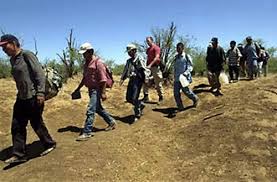
Illegal aliens crossing into the United States
“Building a wall is easy, and it can be done inexpensively,” Trump said in an interview. “It’s not even a difficult project if you know what you’re doing.”
Skeptics have derided the sheer difficulties of building such a wall. Among these:
- The United States/Mexican border stretches for 1,954 miles–and encompasses rivers, deserts and mountains.
- Environmental and engineering problems.
- Squabbles with ranchers who don’t want to give up any of their land.
- Building such a wall would cost untold billions of dollars.
- Drug traffickers and smugglers could easily tunnel under it into the United States–as they are now doing.
But there is another way that, as President, Trump can attack illegal immigration: By attacking the “sanctuary cities” across the nation that illegally shield violators of Federal immigration laws from arrest.
Among the 31 “sanctuary cities” of this country: Washington, D.C.; New York City; Los Angeles; Chicago; San Francisco; Santa Ana; San Diego; Salt Lake City; Phoenix; Dallas; Houston; Austin; Detroit; Jersey City; Minneapolis; Miami; Denver; Baltimore; Seattle; Portland, Oregon; New Haven, Connecticut; and Portland, Maine.
These cities have adopted “sanctuary” ordinances that forbid municipal funds or resources to be used to enforce federal immigration laws, usually by not allowing police or municipal employees to inquire about one’s immigration status.
All Trump has to do is cut off Federal funding to those cities which systematically defy the immigration laws of the United States.
This would prove far cheaper and more effective than building a wall along the entire U.S.-Mexican border.
And that is precisely what he has threatened to do.
“Block funding for sanctuary cities. We block the funding. No more funding,” Trump said in August when he laid out his immigration plans at a rally in Phoenix. “Cities that refuse to cooperate with federal authorities will not receive taxpayer dollars.”
One such city is New York, which could lose up to $10.4 billion in Federal funding. Among the city agencies that receive the biggest share of these monies: The New York City Housing Authority, the Administration for Children’s Services and the Department of Social Services.
New York Mayor Bill de Blasio has openly rejected Trump’s threat: “We’re not going to tear families apart. So we will do everything we know how to do to resist that.”
Mayors from other “sanctuary cities”–such as Chicago, Baltimore and San Francisco–have similarly echoed de Blasio’s sentiments.
Trump has never held public office, and there is much he has to learn about the difficulties of carrying out his programs. But his experience as a businessman has given him a solid feel for the power of greed and selfishness. And he knows well how to exploit both.

Donald Trump takes the oath of office
By blocking monies to “sanctuary cities,” Trump will quickly drive a wedge between ardent liberals such as Bill de Blazio and their constituents who depend on those infusions of Federal monies.
In New York, for example, once Federal monies are cut off:
- Legal United States citizens won’t be able to obtain assistance allowing low- and moderate-income families to rent housing in the private market.
- American children needing care for their mental, emotional or medical needs will be denied it.
- Americans wanting to adopt a child in foster care will be unable to do so, because the monies won’t be there to pay the officials who now staff these agencies.
In short: The beautiful “every-man-is-my-brother” theories of liberal politicians are about to slam head-on into the ugliness of real-world needs and wants.

And when legal citizens can’t obtain the government services they have been used to getting, they will quickly become enraged.
At first, many–perhaps most–of the people living in “sanctuary cities” will rush to support their elected officials in refusing to knuckle under.
But as time passes, public needs will go unmet while Federal monies continue to be blocked.
First they will aim their rage at the local–and elected–officials of these cities responsible for “sanctuary” policies. And then they will focus their anger on the illegal aliens being protected by civic officials.
This will be followed by increasing demands by legal–and law-abiding–American citizens for their elected officials to cooperate with Federal immigration agents.
As tensions rise, so will demands for the election of new mayors and supervisors. And the chief demand of those voters will be: “Turn over the illegal aliens and restore our public services!”
Some citizens will almost certainly take out their anger on anyone who even looks Hispanic, let alone speaks only Spanish.
Those citizens who feel conscience-torn by demanding an end to “sanctuary cities” will console themselves with this literal truth:
Illegal immigration is against the law. And local officials have a sworn duty to obey the law at all levels–including those laws they don’t agree with.
In the end, Trump will almost certainly win his battle on this. And his victory will give him confidence to press on with the rest of his agenda.
ABC NEWS, ADOLF HITLER, AFGHANISTAN, AIRBUS A321, AL QAEDA, ALEPPO, ANDREI KARLOV, BARACK OBAMA, BASHAR AL-ASSAD, CBS NEWS, CNN, FACEBOOK, HAMAS, HARRY S. TRUMAN, HEZBOLLAH, IRAQ, ISLAM, ISLAMIC STATE OF IRAQ AND SYRIA, MUSLIMS, NBC NEWS, NPR, RUSSIA, SLATE, SOVIET UNION, STINGER MISSILES, SYRIA, TERRORISM, THE CHICAGO TIMES, THE CHICAGO TRIBUNE, THE HUFFINGTON POST, THE LOS ANGELES TIMES, THE NEW YORK TIMES, THE WASHINGTON POST, TIME, TURKEY, TWITTER, U.S. NEWS & WORLD REPORT, USA TODAY, VLADIMIR PUTIN
In Bureaucracy, History, Politics, Social commentary on December 20, 2016 at 12:13 am
On September 30, 2015, Russian President Vladimir Putin started launching airstrikes against Syria.
The objective: To bolster the dictatorship of Syrian President Bashar al-Assad, who is now caught up in civil war.
This began on March 15, 2011, triggered by protests demanding political reforms and the ouster of al-Assad. More than 400,000 people have been killed in the fighting.
The Obama administration is worried about Russian intentions in Syria. And Republicans are furious, demanding that American military forces directly confront those of Russia.
Yet despite Democratic and Republican fears, there is no reason for alarm–by Americans.
Putin’s intervention in Syria’s civil war offers three possible outcomes for the United States. And they’re all highly positive.

Vladimir Putin
First, the Russians have killed thousands of America’s sworn enemies.
Russians are well-known for their disregard for human life. During their invasion of Germany in 1945, Russian soldiers literally nailed civilians to barn doors, squashed them under their tanks, and raped countless women of all ages.
In Syria, they have slaughtered everyone who got in their way. Thus, they have killed far more of America’s actual and potential Islamic enemies than even our own military–hamstrung by do-gooder “rules of engagement:–could possibly eliminate.
There is no reason for the United States to intervene or even regret what is happening in Syria. Since 1979, the U.S. State Department has listed Syria as a sponsor of terrorism. Among the terrorist groups it supports are Hezbollah and Hamas.
Second, if Russian planes get shot down or large numbers of Russian soldiers or civilians get killed, Russia will suffer the casualties–not America.
The Soviet Union waged a ruthless war against Afghanistan from 1979 to 1989. Out of that war grew Al-Qaeda. Millions of Islamics still hate Russians for their brutalities.
From 1999 to 2009, Russia fought a brutal war against Islamics in Chechnya. Chechens responded with terrorism across Russia.
Russia’s intervention in Syria has only hardened its image as an enemy of Islam–even as it’s supported one group of Islamics (the Assad regime) against others.
On October 31, 2015, Airbus A321, a Russian airliner, broke up in mid-air, then crashed in Egypt’s Sinai Peninsula, killing all 224 people on board.
The plane was carrying holidaymakers from the Red Sea resort of Sharm el-Sheikh to St. Petersburg when it crashed into a mountainous area of central Sinai.
In Egypt, a militant group affiliated to the Islamic State of Iraq and Syria (ISIS) claimed that it had brought down the plane “in response to Russian airstrikes that killed hundreds of Muslims on Syrian land.”
The crash proved emotionally wrenching for Russians. Flags across Russia flew at half-staff and Russian Orthodox priests conducted services to pray for its victims.
President Putin declared a nationwide day of mourning. In St. Petersburg, home to most of the victims, authorities ordered the mourning to last for three days.
And on December 19, 2016, Andrei Karlov, the Russian ambassador to Turkey, was shot in the back and killed as he gave a speech at an Ankara art gallery.
His killer was Mevlut Mert Aydintas, an off-duty police officer.
Afterward, standing over the fallen diplomat, Aydintas shouted: “Don’t forget Aleppo, don’t forget Syria,” and “Allahu Akbar” (“God is Greatest!” the Islamic battle cry).
After fleeing the scene, the 22-year-old assassin died in a shootout with Turkish police.
For Russia, the chicken Kiev is coming home to roost.
Third, Russia has replaced the United States as “the Great Satan” in the eyes of most Islamics.
The Soviet Union never fully recovered from its losses in Afghanistan–13,310 soldiers killed, 35,478 wounded.
American military officials have told Fox News that it “appears likely/probable” that U.S.-made Stinger missiles have fallen into the hands of ISIS combatants.
The Stinger is a shoulder-fired surface-to-air weapon. During the Soviet Union’s invasion of Afghanistan, the United States supplied huge numbers of these weapons to Afghan forces. They proved devastating against Russian planes and helicopters.
And how might have ISIS fighters acquired such a weapon? From American-supplied army bases they occupied as they steamrolled across Iraq.

Flag of ISIS
If Russia starts taking heavy losses in Syria or at home through terrorism, this could lead to widespread unrest. Even Vladimir Putin could find himself in danger of being replaced.
The same holds true if bombs start exploding across Russia–especially in major cities such as Moscow and St. Petersburg.
The peoples of the Middle East have long memories for those who commit brutalities against them. In their veins, the cult of the blood feud runs deep.
When Russian bombers pulverize civilians in Aleppo, their relatives and friends will thirst for revenge. And some Syrians–or others who sympathize with them–will step forward to take it.
Mevlut Mert Aydintas will almost certainly not be the last one.
No American could instill such hatred in Syrians–or Islamics generally–for Russia. This conflict could easily become the Islamic equivalent of “the Hundred Years’ War” that raged from 1337 to 1453 between England and France.
When Adolf Hitler invaded the Soviet Union in 1941, then-Senator Harry Truman said: “I hope the Russians kill lots of Nazis and vice versa.”
That should be America’s view whenever its sworn enemies start killing each other off.
2016 PRESIDENTIAL CAMPAIGN, ABC NEWS, ALEXANDER THE GREAT, CBS NEWS, CNN, DONALD TRUMP, FACEBOOK, GATES OF FIRE, MERCENARIES, NBC NEWS, NEWSWEEK, NICCOLO MACHIAVELLI, NPR, SPARTA, STEVEN PRESSFIELD, THE CHICAGO SUN-TIMES, THE CHICAGO TRIBUNE, THE HUFFINGTON POST, THE LOS ANGELES TIMES, THE NEW YORK TIMES, THE PROFESSION, THE VIRTUES OF WAR, THE WASHINGTON POST, THERMOPYLAE, TIME, TWITTER, U.S. NEWS & WORLD REPORT, USA TODAY
In Bureaucracy, Business, History, Military, Politics, Social commentary on December 19, 2016 at 12:05 am
On August 17, 2015, Republican Presidential candidate Donald Trump outlined his strategy for defeating the Islamic State of Iraq and Syria (ISIS).
He would order American forces to take over the oil fields that ISIS has seized in Iraq.
Trump outlined his plans for future military operations against ISIS on NBC’s “Meet the Press” with Chuck Todd.
“Now we’re there, and you have ISIS….And ISIS is taking over a lot of the oil in certain areas of Iraq.
“And I said, you take away their wealth. You go and knock the hell out of the oil. Take back the oil. We take over the oil, which we should have done in the first place” during the 2003 invasion of Iraq.
After taking over the Iraqi oil fields, said Trump, “we’re going to have so much money.
“And what I would do with the money that we make, which would be tremendous, I would take care of the soldiers that were killed, the families of the soldiers that were killed, the soldiers, the wounded warriors that are–see, I love them.”
Actually, Trump’s idea forms the plot of The Profession, a 2011 novel by bestselling author Steven Pressfield.

Pressfield made his literary reputation with a series of classic novels about ancient Greece.
In Gates of Fire (1998) he explored the rigors and heroism of Spartan society–and the famous last stand of its 300 picked warriors at Thermopylae.
In The Virtues of War (2004) he entered the mind of Alexander the Great, whose armies swept across the known world, destroying all who dared oppose them.
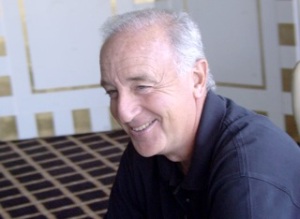
Steven Pressfield
But in The Profession, Pressfield created a plausible world set into the future of 2032. The book’s own dust jacket offers the best summary of its plot-line:
“The third Iran-Iraq war is over. The 11/11 dirty bomb attack on the port of Long Beach, California is receding into memory. Saudi Arabia has recently quelled a coup. Russians and Turks are clashing in the Caspian Basin….
“Everywhere military force is for hire. Oil companies, multi-national corporations and banks employ powerful, cutting-edge mercenary armies to control global chaos and protect their riches.
“Even nation states enlist mercenary forces to suppress internal insurrections, hunt terrorists, and do the black bag jobs necessary to maintain the new New World Order.
“Force Insertion is the world’s merc monopoly. Its leader is the disgraced former United States Marine General James Salter, stripped of his command by the president for nuclear saber-rattling with the Chinese and banished to the Far East.’
Salter appears as a hybrid of World War II General Douglas MacArthur and Iraqi War General Stanley McCrystal.
Douglas MacArthur (left), Stanley McCrystal (right)
Like MacArthur, Salter has butted heads with his President–and paid dearly for it. Now his ambition is no less than to become President himself–by popular acclaim. And like McCrystal, he is a pure warrior who leads from the front and is revered by his men.
Salter seizes Saudi Arabian oil fields, then offers them as a gift to America. By doing so, he makes himself the most popular man in the country–and a guaranteed occupant of the White House.
And in 2032 the United States is a far different nation from the one its Founding Fathers created in 1776.
“The United States is an empire…but the American people lack the imperial temperament. We’re not legionaries, we’re mechanics. In the end the American Dream boils down to what? ‘I’m getting mine and the hell with you.’”
Americans, asserts Salter, have come to like mercenaries: “They’ve had enough of sacrificing their sons and daughters in the name of some illusory world order. They want someone else’s sons and daughters to bear the burden….
“They want their problems to go away. They want me to to make them go away.”
And so Salter will “accept whatever crown, of paper or gold, that my country wants to press upon me.”
Returning to the United States, he is acclaimed as a hero–and the next President.
He is under no delusion that his country is on a downward spiral toward oblivion: “Any time that you have the rise of mercenaries…society has entered a twilight era, a time past the zenith of its arc.”
Nor does he believe that his Presidency will arrest that decline: “But maybe in the short run, it’s better that my hand be on the wheel…rather than some other self-aggrandizing sonofabitch whose motives might not be as well intentioned….”
More than 500 years ago, Niccolo Machiavelli warned of the dangers of relying on mercenaries:
“Mercenaries…are useless and dangerous. And if a prince holds on to his state by means of mercenary armies, he will never be stable or secure; for they are disunited, ambitious, without discipline, disloyal; they are brave among friends; among enemies they are cowards.

Niccolo Machiavelli
“They have neither the fear of God nor fidelity to men, and destruction is deferred only so long as the attack is. For in peace one is robbed by them, and in war by the enemy.”
Centuries ago, Niccolo Machiavelli issued a warning against relying on men whose first love is their own enrichment.
Steven Pressfield, in a work of fiction, has given us a nightmarish vision of a not-so-distant America where “Name your price” has become the byward for an age.
Both warnings are well worth heeding.


2016 PRESIDENTIAL CAMPAIGN, ABC NEWS, ACADEMY AWARDS, BEST ACTRESS, BEST SUPPORTING ACTRESS, BULLYING, CBS NEWS, CNN, DISABILITY, DONALD TRUMP, FOX AND FRIENDS, GOLDEN GLOBES, KELLEYANNE CONWAY, KRAMER VS. KRAMER, MERYL STREEP, MOTHER JONES, MOVEON, NBC NEWS, NEEWSWEEK, NPR, POLITICO, SALON, SERGE KOVALESKI, SLATE, SOPHIE'S CHOICE, THE CHICAGO SUN-TIMES, THE CHICAGO TRIBUNE, THE IRON LADY, THE LOS ANGELES TIMES, THE NEW YORK TIMES, THE WASHINGTON POST, TIME, TWITTER, U.S. NEWS & WORLD REPORT, USA TODAY
FINDING COMMON CAUSE WITH BULLYING
In Bureaucracy, Entertainment, History, Politics, Social commentary on January 10, 2017 at 12:06 amEvery year, the 93 members of the Hollywood Foreign Press Association (HFPA) bestow Golden Globe awards to recognize excellence in television and film, both inside and outside the United States.
And on Sunday, January 8, the presenters honored actress Meryl Streep with the Cecil B Demille lifetime achievement Award.
Since 1979, she’s been nominated for more Academy Awards than any other actor–15 nominations for Best Actress and four for Best Supporting Actress.
She won Best Supporting Actress in 1980 for Kramer vs. Kramer, Best Actress in 1983 for Sophie’s Choice and again in 2012 for The Iron Lady.
But when Streep appeared to accept her latest award, she had a nomination of her own to present: One for a performance that “broke my heart.”
Meryl Streep at the Golden Globes
It had come in real life, not a movie. And the performer she nominated was Donald Trump, for his mockery of a disabled New York Times reporter in 2015.
The reporter, Serge Kovaleski, suffers from arthrogryposis, a congenital condition that restricts the movement of the muscles in his arms.
Since declaring his Presidential candidacy on June 16, Trump had attacked the patriotism of America’s Islamic population. He claimed that he had seen Muslims in New Jersey celebrating the collapse of the Twin Towers on September 11, 2001.
To prove this, Trump cited a September 18, 2001 article written by Kovaleski when he was a reporter for The Washington Post.
In this, Kovaleski wrote that police “detained and questioned a number of people who were allegedly seen celebrating the attacks and holding tailgate-style parties.”
After Trump mentioned the story, Kovaleski said that the key word in it was “allegedly,” adding that there were no credible reports of such celebrations.
At a South Carolina rally on November 24, 2015, Trump claimed that Kovaleski was backing away from his article.
To mock Kovaleski, he flopped his right arm around with his hand held at an odd angle while imitating the reporter: “Now, the poor guy, you’ve got to see this guy: ‘Uhh, I don’t know what I said. Uhh, I don’t remember,’ he’s going like ‘I don’t remember. Maybe that’s what I said.'”
Click here: Donald Trump mocks disabled New York Times reporter – Donald Trump mocks reporter with disability – YouTube
Attacked for mocking Kovaleski’s disability, Trump claimed: “Serge Kovaleski must think a lot of himself if he thinks I remember him from decades ago–if I ever met him at all, which I doubt I did.”
Trump mocking Kovaleski, left; Kovaleski, right
But Kovaleski quickly contradicted Trump: He had covered Trump as a reporter for the New York Daily News and had met him face-to-face on at least a dozen occasions.
So Meryl Streep knew what she was talking about when she said:
“There was one performance this year that stunned me. It sank its hooks in my heart. Not because it was good. There was nothing good about it. But it was effective, and it did its job. It made its intended audience laugh and show their teeth.
“It was that moment when the person asking to sit in the most respected seat in our country imitated a disabled reporter. Someone he outranked in privilege, power and the capacity to fight back. It kind of broke my heart when I saw it. I still can’t get it out of my head because it wasn’t in a movie. It was real life.
“And this instinct to humiliate, when it’s modeled by someone in the public platform, by someone powerful, it filters down into everybody’s life, because it kind of gives permission for other people to do the same thing.
“Disrespect invites disrespect. Violence incites violence. When the powerful use their position to bully others, we all lose.”
Kelleyanne Conway served as Trump’s mouthpiece during the 2016 Presidential campaign. She continues in that rule as he prepares to take office as President on January 20.
And she was thoroughly upset with Streep’s remarks.
Appearing on Right-wing Fox and Friends the next morning, she said: “We have to now form a government, and I’m concerned that somebody with a platform like Meryl Streep is also, I think, inciting people’s worst instincts.
“When she won’t get up there and say, ‘I don’t like it, but let’s try to support him and see where we can find some common ground with him, which [Trump] has actually done from moment one.”
What common ground she didn’t say. Agreeing on mocking the disabled?
Not to be outdone in “inciting people’s worst instincts,” President-elect Trump quickly took to Twitter–his preferred mode of communication.
Since Twitter allows only 140 characters, Trump couldn’t say all he wanted in one tweet. So it took three:
Meryl Streep, one of the most over-rated actresses in Hollywood, doesn’t know me but attacked last night at the Golden Globes. She is a…..
Hillary flunky who lost big. For the 100th time, I never “mocked” a disabled reporter (would never do that) but simply showed him…….
“groveling” when he totally changed a 16 year old story that he had written in order to make me look bad. Just more very dishonest media!
In 2015–before she insulted him–Trump told The Hollywood Reporter: “Julia Roberts is terrific, and many others. Meryl Streep is excellent; she’s a fine person, too.”
Share this: