Posts Tagged ‘USA TODAY’
ABC NEWS, ADOLF HITLER, ALBERT SPEER, ALTERNET, AP, BARACK OBAMA, BBC, BUZZFEED, CBS NEWS, CNN, DAILY KOS, DEPARTMENT OF HOMELAND SECURITY, EXTORTION, FACEBOOK, FASCISM, MITCH MCCONNELL, MOTHER JONES, MOVEON, NAZI GERMANY, NBC NEWS, NEGOTIATING, NEWSWEEK, NPR, POLITICO, RAW STORY, REPUBLICAN PARTY, REPUBLICANS, REUTERS, SALON, SEATTLE TIMES, SLATE, THE ATLANTIC, THE CHICAGO SUN-TIMES, THE CHICAGO TRIBUNE, THE DAILY BEAST, THE GUARDIAN, THE HILL, THE HUFFINGTON POST, THE LOS ANGELES TIMES, THE NEW YORK TIMES, THE WALL STREET JOURNAL, THE WASHINGTON POST, TIME, TRICKLE-DOWN ECONOMICS, TWITTER, U.S. NEWS & WORLD REPORT, UPI, USA TODAY, WORLD WAR 11
In Bureaucracy, History, Law, Law Enforcement, Military, Politics, Social commentary on June 28, 2017 at 9:17 am
On December 13, 2014, the U.S. Senate passed a $1.1 trillion spending bill to fund almost the entire government through the September 30 end of the fiscal year.
But one Federal agency was pointedly exempted from full funding: The Department of Homeland Security (DHS). Its funding would expire on February 27.
With their newfound majorities in both houses of Congress, Republicans intended to hold the security of the United States as a hostage.
Their goal: To force President Barack Obama to rescind the changes he had made in American immigration policy.
With more than 240,000 employees, the DHS is the third largest Cabinet department, after the Departments of Defense and Veterans Affairs.
The Defense Department is charged with military actions abroad.
DHS is responsible for protecting the United States inside and outside its borders. Its goal is to prepare for, prevent and—if prevention fails—respond to man-made accidents, natural disasters and terrorism.

Among the agencies now operating under its mandate:
- U.S. Citizenship and Immigration Services
- U.S. Customs and Border Protection
- U.S. Coast Guard
- Federal Emergency Management Agency (FEMA)
- Federal Law Enforcement Training Center
- U.S. Immigration and Customs Enforcement (ICE)
- Transportation and Safety Administration (TSA)
- U.S. Secret Service
- Science and Technology Directorate
- Domestic Nuclear Detection Office
- Office of Intelligence and Analysis
- Office of Operations Coordination and Planning
Yet each of these agencies has a vital role to play in protecting the nation. A nation whose security Republicans were willing to threaten to get their way on a matter of domestic policy.
Right-wing Republicans argued that even if DHS’s funding were stopped, most of its employees would stay on the job. That’s because they perform work considered necessary to protect human life and property.
But while those employees were safeguarding the country, they wouldn’t be paid until the shutdown ended.
It’s hard to give your full attention to protecting the lives of others when you have to worry about paying a mortgage or feeding your family.
Of course, the Republicans responsible for this shutdown would have continued to receive their hefty paychecks.
Republicans chose to act as Mafia extortionists at a time when the United States appeared to be in the crosshairs of North Korean terrorism.
On November 14, 2014, Sony Pictures came under relentless attack by cyberterrorists, whom the FBI linked to North Korea.
The reason? Sony’s production of “The Interview,” a comedy depicting the assassination of North Korean dictator Kim Jong Un.
Calling themselves “Guardians of Peace,” or GOP, they shut down the company’s computer system and revealed employees’ personal information such as salaries, addresses, and Social Security numbers.
(Ironically, “Guardians of Peace” appropriated the same abbreviation–GOP–used by the Republicans for “Grand Old Party.”)

Warning issued by “Guardians of Peace” (GOP)
On December 17, 2014, Sony Pictures cancelled the Christmas Day premier of “The Interview” after the nation’s five largest movie chains refused to show the movie, following a terror threat posted online.
And then on February 5, 2015, Anthem Insurance announced that its database had been hacked–and sensitive medical information on up to 80 million customers and employees accessed.
According to an anonymous source, the hackers used malware that’s been used almost exclusively by Chinese cyberspies.
* * * * *
As the Third Reich came to its fiery end, Adolf Hitler sought to punish the German people for being “unworthy” of his “genius” and losing the war he had started.
His attitude was: “If I can’t rule Germany, then there won’t be a Germany.”
In his infamous “Nero Order,” he decreed the destruction of everything still remaining–industries, ships, harbors, communications, roads, mines, bridges, stores, utility plants, food stuffs.
Fortunately for Germany, one man—Albert Speer, the Minister of Armaments—finally broke ranks with his Fuhrer.
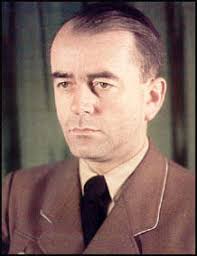
Albert Speer
Risking death, he refused to carry out Hitler’s “scorched earth” order. Even more important, he mounted a successful effort to block such destruction or persuade influential military and civilian leaders to disobey the order as well.
As a result, those targets slated for destruction were spared.
After the election of America’s first black President, Republicans waged a similar “scorched earth” campaign. Their avowed goal—as stated openly by Kentucky’s U.S. Senator Mitch McConnell—was “to make Barack Obama a one-term President.”
Literally during his first Inauguration, Republicans, in a secret meeting, agreed to block every effort he made to repair the economy.
Acting as extortionists, they repeatedly threatened to shut down the government if they didn’t get their way in legislative matters.
And just as repeatedly, they blocked legislation that would have helped the poor, unemployed, women, elderly, disabled or middle-class.
At the center of their fury lay the Affordable Care Act, providing medical care to all citizens.
Even after Congress passed it and the Supreme Court affirmed it, House Republicans shut down the government in October, 2013.
By doing so, they hoped to pressure Obama into killing his signature piece of legislation. The effort failed.
Like Adolf Hitler, their attitude has been: “If I can’t rule America, there won’t be an America.”
It remains to be seen whether a Republican Albert Speer will step forward to save America from the self-destructive excesses of this Nation’s own fanatics.
2016 PRESIDENTIAL RACE, ABC NEWS, ADOLF HITLER, ALTERNET, AP, ASSASSINATION, BBC, BUZZFEED, CBS NEWS, CILLIAN MURPHY, CNN, CZECHOSLOVAKIA, DAILY KOS, DONALD TRUMP, ERIC TRUMP, FACEBOOK, FINAL SOLUTION, FOX NEWS NETWORK, HANNITY, HILLARY CLINTON, JAMIE DORNAN, JEB BUSH, JOHNNY DEPP, LARA TRUMP, MICHAEL HAYDEN, MOTHER JONES, MOVEON, MOVIES, NATIONAL SECURITY AGENCY, NAZI GERMANY, NBC NEWS, NEWSWEEK, NPR, OPERATION ANTHROPOID, POLITICO, RAW STORY, REINHARD HEYDRICH, REUTERS, SALON, SARAH HUCKABEE SANDERS, SEAN HANNITY, SEATTLE TIMES, SLATE, SS, THE ATLANTIC, THE CHICAGO SUN-TIMES, THE CHICAGO TRIBUNE, THE DAILY BEAST, THE GUARDIAN, THE HILL, THE HUFFINGTON POST, THE LOS ANGELES TIMES, THE NEW YORK TIMES, THE WALL STREET JOURNAL, THE WASHINGTON POST, TIME, TWITTER, U.S. NEWS & WORLD REPORT, UPI, USA TODAY, WANNSEE CONFERENCE
In Bureaucracy, History, Law, Law Enforcement, Politics, Social commentary on June 27, 2017 at 9:25 am
Johnny Depp is an acclaimed actor. But his skills as a comic have sparked a backlash.
“When was the last time an actor assassinated the President?” he asked while speaking at the Glatonbury Festival on June 22.
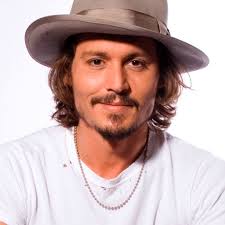
Johnny Depp
The Glastonbury Festival is an annual, five-day celebration of contemporary performing arts that takes place near Pilton, Somerset (England).
Perhaps Depp sensed that he was making himself a target for the Secret Service, for he quickly added that he was not referring to himself: “I want to clarify, I am not an actor. I lie for a living. However, it has been a while and maybe it is time.”
Predictably, Donald Trump’s family did not find the joke funny.
The next day, Lara Trump, wife of the President’s son, Eric, called Depp’s comments “really, really sad—as a family member and as an American.”

Eric and Lara Trump
Max Goldberg from USA, CC BY 2.0 <https://creativecommons.org/licenses/by/2.0>, via Wikimedia Commons
Appearing on Right-wing Fox Network’s “Hannity,” she told its host, Sean Hannity: “It’s happening to Donald Trump because he is Donald Trump. Their candidate failed, because they have nothing else to say. They have no platform; they have no real leader; they have no message.
“So the only thing they can do is pile on the President. Unfortunately it is to the detriment of the country.
“It’s really sick, Sean. The Republican Party is becoming the only party of tolerance here in the United States.”
On Twitter, Donald Trump Jr. called for Disney to dump the star of the “Pirates of the Caribbean” franchise.
“President Trump has condemned violence in all forms, and it’s sad that others like Johnny Depp have not followed his lead,” said deputy White House press secretary Sarah Huckabee Sanders.
Apparently these Trump enthusiasts forgot Trump’s series of threats against his Republican and Democratic opponents throughout the 2016 campaign:
- On March 16, he warned Republicans that if he didn’t win the GOP nomination in July, his supporters would literally riot: “I think you’d have riots. I think you would see problems like you’ve never seen before. I think bad things would happen. I really do. I wouldn’t lead it, but I think bad things would happen.”
- That Republicans clearly saw this as a threat is undeniable. Paul Ryan, their Speaker of the House, said on March 17: “Nobody should say such things in my opinion because to even address or hint to violence is unacceptable.
- On August 9, Trump told a rally in Wilmington, North Carolina: “Hillary [Clinton] wants to abolish, essentially abolish, the Second Amendment. If she gets to pick her [Supreme Court] judges, nothing you can do folks. Although the Second Amendment people–maybe there is, I don’t know.”
Clinton’s camp instantly responded with fury.
“Don’t treat this as a political misstep,” Senator Christopher S. Murphy of Connecticut, who has called for stiffer gun laws, wrote on Twitter. “It’s an assassination threat, seriously upping the possibility of a national tragedy & crisis.”
“Well, let me say if someone else said that outside of the hall, he’d be in the back of a police wagon now, with the Secret Service questioning him,” said Michael Hayden, former head of the CIA and National Security Agency (NSA).
The Trump campaign issued a statement denying that he had meant any such thing.
Three days after Trump’s Hillary remarks, Operation Antrhopoid, a UK-French-Czech historical film, appeared in theaters. Its subject: The 1942 assassination of SS Obergruppenführer (General) Reinhard Heydrich.

A tall, blond-haired formal naval officer, he was both a champion fencer and talented violinist. Heydrich joined the Schutzstaffel, or Protective Squads, better known as the SS, in 1931, and quickly became head of its counterintelligence service.
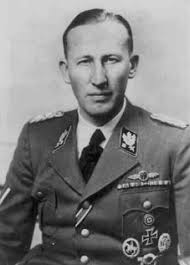
Reinhard Heydrich
In September, 1941, Heydrich was appointed “Reich Protector” of Czechoslovakia, which had fallen prey to Germany in 1938 but whose citizens were growing restless under Nazi rule.
Heydrich immediately ordered a purge, executing 92 people within the first three days of his arrival in Prague. By February, 1942, 4,000-5,000 people had been arrested.
In January, 1942, Heydrich convened a meeting of high-ranking political and military leaders to streamline “the Final Solution to the Jewish Question.”
An estimated six million Jews were thus slaughtered.
Returning to Prague, Heydrich continued a policy of carrot-and-stick with the Czechs—improving the social security system and requisitioning luxury hotels for middle-class workers—alternating with arrests and executions.
The Czech government-in-exile, headquartered in London, feared that Heydrich’s incentives might lead the Czechs to passively accept domination. They decided to assassinate him.
Two British-trained Czech commandos—Jan Kubis and Joseph Gabcik—parachuted into Prague.
On May 27, 1942, the assassins waited at a hairpin turn in the road always taken by Heydrich. When Heydrich’s Mercedes slowed down, Kubis lobbed a hand grenade at the car. The explosion ruptured Heydrich’s diaphragm, spleen and lung.
On June 4, Heydrich died of his injuries.
For Donald Trump, movies and jokes about assassination carry supreme—if unnoticed—irony.
It is Trump who repeatedly raised the issue of using violence and assassination to attain political ends. The last thing he needs are reminders—like Depp and Anthropoid—that Right-wingers can also be targets for death.
ABC NEWS, ALTERNET, AP, BARACK OBAMA, BBC, BP, BUZZFEED, CBS NEWS, CHILDREN'S BOOKS, CNN, DAILY KOS, DEMOCRATIC PARTY, DONALD TRUMP, DR. SEUSS, ENERGY POLICY, ENVIRONMENTAL PROTECTION, ENVIRONMENTAL PROTECTION AGENCY, FACEBOOK, GLOBAL WARMING, LOUISIANA, MOTHER JONES, MOVEON, MSNBC, NBC NEWS, NEWSWEEK, NPR, OIL SPILL, POLITICO, POLLUTION, RAW STORY, REUTERS, SALON, Sarah Palin, SEATTLE TIMES, SLATE, THE ATLANTIC, THE CHICAGO SUN-TIMES, THE CHICAGO TRIBUNE, THE DAILY BEAST, THE GUARDIAN, THE HILL, THE HUFFINGTON POST, THE LOS ANGELES TIMES, THE NEW YORK TIMES, THE WALL STREET JOURNAL, THE WASHINGTON POST, TIME, TWITTER, U.S. NEWS & WORLD REPORT, UPI, USA TODAY
In Bureaucracy, Business, History, Politics, Social commentary on June 26, 2017 at 12:01 am
Dr. Seuss (Theodor Geisel) published over 60 children’s books, which were often filled with imaginative characters and rhyme.
Among his most famous books were Green Eggs and Ham, The Cat in the Hat, and One Fish Two Fish Red Fish Blue Fish.
Honored in his lifetime (1904-1991) for the joy he brought to countless children, Dr. Seuss may well prove one of the unsung prophets of our environmentally-threatened age.
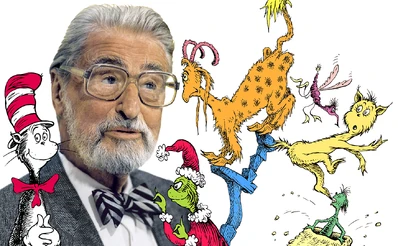
Dr. Seuss
In 1949, he penned Bartholomew and the Oobleck, the story of a young page who must rescue his kingdom from a terrifying, man-made substance called Oobleck.
The story is quickly told:
Derwin, the King of Didd, announces he’s bored with sunshine, rain, fog and snow. He wants a new kind of weather.
So he calls in his black magicians and gives them the order. The magicians assure him they can create it.
“What will you call it?” asks the king.
“We’ll call it Oobleck,” says one of the magicians.
“What will it be like?” asks King Didd.
“We don’t know, Sire,” the magician replies. “We’ve never created Oobleck before.”
The next morning, Oobleck–a greenish, glue-like substance—starts raining.
The king orders Bartholomew, the royal page, to tell the Bell Ringer that today will be a holiday. But the bell doesn’t ring—because it’s filled with Oobleck.

Bartholomew warns the Royal Trumpeter about the Oobleck, but the trumpet gets stopped up with the goo.
The Captain of the Guards thinks the Oobleck is pretty and sees no danger in it—until he eats some. Instantly, his mouth is glued shut.
The Oobleck rain intensifies. The falling blobs—now as big as buckets full of broccoli—now break into the palace, immobilizing the servants and guards.
At the climax of the story, Bartholomew confronts King Derwin for giving such a rash order: “If you can’t do anything else,” says Bartholomew, “at least you can say you’re sorry.”
King Derwin refuses, and Bartholomew says, “If you can look at all the horror you’ve caused and not say you’re sorry, you’re no sort of king at all.”
In real-life, such a king would have instantly ordered Bartholomew’s execution. But this is a children’s story.
So, overcome with guilt, King Derwin utters the magic words: “You’re right, this is all my fault, and I am sorry.”
Suddenly the Oobleck stops raining and the sun melts away the rest.
With life returning to normal, King Derwin mounts the bell tower and rings the bell. He proclaims a holiday dedicated not to Oobleck, but to rain, sun, fog, and snow, the four elements of Nature—of which Man is but a part.
* * * * *
Flash forward to the following Donald Trump tweets:
November 6, 2012: “The concept of global warming was created by and for the Chinese in order to make U.S. manufacturing non-competitive.”
December 6, 2013: “Ice storm rolls from Texas to Tennessee – I’m in Los Angeles and it’s freezing. Global warming is a total, and very expensive, hoax!”
January 1, 2014: “This very expensive GLOBAL WARMING bullshit has got to stop. Our planet is freezing, record low temps, and our GW scientists are stuck in ice.”
On May 5, 2016, as a Presidential candidate, Trump pointed to signs being waved at a rally in Charleston, South Carolina:in the crowd: “I see over here: ‘Trump digs coal,’ That’s true. I do.”

Donald Trump
Upon becoming President, Trump picked Scott Pruitt, a leading climate change denier, as director of the Environmental Protection Agency: “So no, I would not agree that [human activity] it’s a primary contributor to the global warming that we see,”Pruitt said on CNBS’s program, “Squawk Box”
On March 16, 2017, the Trump administration released a budget proposal to eliminate $100 million in funding for the EPA’s climate work, including scientific research.
On March 28, 2017, Trump ordered his administration to rewrite the Clean Power Plan. His objective: To gut former President Barack Obama’s landmark restrictions on power plant emissions.
On June 1, 2017, Trump announced that he would withdraw the United States from the Paris climate-change agreement deal.
There are forces in Nature far more powerful than anything Man and his puny strength can defy—or harness. And we invoke the wrath of those forces at our own peril.”
In the world of children’s stories, it’s possible for a king to undo the terrible damage he’s unleashed by finding the courage to say: “I’m sorry.”
In real-life, tyrants almost never say “I’m sorry,” no matter how enormous their mistakes and/or crimes.
From 1936 to 1938, Soviet dictator Joseph Stalin slaughtered the cream of his own Army and Air Force. When Nazi Germany invaded the Soviet Union in 1941, Stalin blamed his remaining generals for the massive defeats inflicted by the Wehrmacht.
And as Soviet forces finally closed on Berlin in April, 1945, and Adolf Hitler prepared to commit suicide in his underground bunker, he blamed the German people for losing the war he had started.
Saying “I’m sorry” cannot reverse decades of rampant environmental abuse. To believe that it can is as ridiculous as believing that self-righteous tyrants will ever take responsibility for their own crimes and follies.
ABC NEWS, ALTERNET, AP, ARCHIE PARNELL, BBC, BILL CLINTON, BUZZFEED, CBS NEWS, CNN, DAILY KOS, DAVID GERGEN, DONALD TRUMP, ERIN BURNETT OUTFRONT, FACEBOOK, GERALD FORD, HOUSE OF REPRESENTATIVES, JON OSSOFF, Kamala Harris, KAREN HANDEL, MICK MULVANEY, MOTHER JONES, MOVEON, NBC NEWS, NEWSWEEK, NPR, POLITICO, RALPH NORMAN, RAW STORY, REUTERS, RICHARD NIXON, Ronald Reagan, SALON, SEATTLE TIMES, SLATE, THE ATLANTIC, THE CHICAGO SUN-TIMES, THE CHICAGO TRIBUNE, THE DAILY BEAST, THE GUARDIAN, THE HILL, THE HUFFINGTON POST, THE LOS ANGELES TIMES, THE NEW YORK TIMES, THE WALL STREET JOURNAL, THE WASHINGTON POST, TIME, TWITTER, U.S. NEWS & WORLD REPORT, UPI, USA TODAY
In Bureaucracy, History, Politics, Social commentary on June 23, 2017 at 12:26 am
On June 20, a friend of mine named Dave wrote Kamala Harris, his United State Senator from California.
A longtime Democrat, he was concerned that the party had declined to the point of political insignificance.
In 2010, Democrats had lost the House; in 2014, they lost the Senate. Then, in 2016, after Barack Obama had held the White House for eight years, they lost it again to Donald J. Trump.
In 1996, Speaker of the House Newt Gingrich had written a memo entitled: “Language: A Key Mechanism of Control.” It urged Republicans to attack Democrats with such words as “corrupt,” “selfish,” “destructive,” “hypocrisy,” “liberal,” “sick,” and “traitors.”
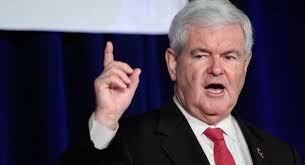
Newt Gingrich
Democrats, for the most part, have failed to craft effective counterattacks on their integrity and ability.
As a veteran writer, Dave wanted to pass on to Harris some specific ways that Democrats could do this.
“Above all,” wrote Dave, “Democrats should not simply borrow but co-opt a page from the Republican playbook and CONSTANTLY brand Republicans as TRAITORS.
“America’s foremost Intelligence agencies have proven, categorically, that Russian Intelligence agents played a major role in securing Trump’s election.
“And Trump’s firing [FBI Director] James Comey to short-circuit the Russia investigation—as he himself admitted in an interview with NBC’s Lester Holt—only proves how much he wants to hide his guilt.”
On June 21, Harris’ office responded as follows:
Dear Mr. —–,
Thank you for reaching out to voice your concerns about the workings of our government and the state of our nation. The importance of civic involvement cannot be overstated, and it is an honor to serve as your United States Senator. I have heard your concerns, and my legislative work will continue to be guided by the needs of constituents like you.
I believe that each and every American has the right to education, public safety, and health care. I have dedicated my time in the Senate to fighting for the most vulnerable among us and defending the inalienable rights guaranteed by our Constitution.
It is for this reason that I introduced the Access to Counsel Act, which guarantees legal counsel for those detained while entering the United States, passed a bipartisan resolution condemning ethnic and religious hate crimes, and introduced the Empowering Federal Employment for Veterans Act, a bipartisan bill to boost federal employment opportunities for the veterans who gave so much to defend our nation.
I am proud of the progress we have made during our time in the Senate. And still, I know our work has just begun.
As a career prosecutor and the former Attorney General of California, I understand that our constitutionally-guaranteed rights must be diligently protected. I will fight to protect these rights, and make sure that our voices not silenced or forgotten.
As your senator, I will spend my time in Congress advocating for every Californian and every American.
Thank you again for reaching out. If you have additional questions or concerns, please do not hesitate to visit my website at —.——.——-.— or call my Washington, D.C. office at (—) — —-.
Sincerely,
Kamala D. Harris
United States Senator
Dave wasted no time in replying to what he considered a thoroughly unresponsive reply:
On June 20 I sent you an email outlining ways that Democrats can successfully mount attacks on Republicans generally and Donald Trump in particular.
Your email says better than anything I can why so many people have given up on the Democratic party.
NOTHING in this email even REMOTELY addresses the issue I raised in mine. It’s boilerplate that could have been sent out to ANY constituent of ANY member of Congress. No doubt I could have told you I was suffering from a poison ivy rash and you would have sent me the same “reply.”
And yours is NOT unique in its “outreach” to constituents. I have seen letters and emails from other Congressional members whom people I know contacted. And those “replies” had NOTHING to do with the subjects those constituents had written about.
Since Trump’s election, Democrats have had FOUR opportunities to upset his agenda via four special elections. The most recent of these occurred on June 20—and, for the fourth time, the Democratic nominee got flushed down the toilet.
So I would think that if someone directly addressed some of the reasons WHY Democrats keep blowing elections, YOU would have had the decency to directly respond to the subject. But of course you did not.
At the end of your email, you (or, more likely, your staffer) wrote: “If you have additional questions or concerns, please do not hesitate to visit my website at ——.——-.— or call my Washington, D.C. office at (—) — —-.”
After getting the completely UNresponsive “response” cited above, I do not see any reason to expect that any further emails or letters to you will garner a direct reply to whatever issue I have addressed.
Prepare yourself for a Trump re-election in 2020. The cowardly, Politically Correct approach Democrats habitually take to campaigning will guarantee it.
The tragedy is that, while your party DESERVES to go into the trashcan of history, those who depend on its members for protection against Republican greed and cruelty deserve far better.
ABC NEWS, ALTERNET, AP, BBC, BILL CLINTON, BUZZFEED, CBS NEWS, CNN, DAILY KOS, DAVID GERGEN, DONALD TRUMP, ERIN BURNETT OUTFRONT, FACEBOOK, GERALD FORD, HOUSE OF REPRESENTATIVES, JON OSSOFF, Kamala Harris, KAREN HANDEL, MICK MULVANEY, MOTHER JONES, MOVEON, NBC NEWS, NEWSWEEK, NPR, POLITICO, RALPH NORMAN, RAW STORY, REUTERS, RICHARD NIXON, Ronald Reagan, SALON, SEATTLE TIMES, SLATE, THE ATLANTIC, THE CHICAGO SUN-TIMES, THE CHICAGO TRIBUNE, THE DAILY BEAST, THE GUARDIAN, THE HILL, THE HUFFINGTON POST, THE LOS ANGELES TIMES, THE NEW YORK TIMES, THE WALL STREET JOURNAL, THE WASHINGTON POST, TIME, TWITTER, U.S. NEWS & WORLD REPORT, UPI, USA TODAY
In Bureaucracy, History, Politics, Social commentary on June 22, 2017 at 11:15 am
David Gergen has served as a White House advisor to four Presidents–three Republican, one Democrat: Richard Nixon, Gerald Ford, Ronald Reagan and Bill Clinton.
He is now a senior political analyst for CNN.
In addition, he is a U.S. Navy veteran, a member of the D.C. Bar and a member of the Council on Foreign Relations. And as if that wasn’t enough, he graduated with honors from Yale and Harvard Law School.
In short, he is a serious man who intimately understands politics from both the Republican and Democratic perspective.

David Gergen
So when he says the Democrats are in trouble, they should listen closely.
In a June 22 analysis for CNN, Gergen warned that President Donald Trump “could be on his way to re-election in 2020.”
To back up his assertion he cites two defeats Republicans handed Democrats in just one week. At stake: Two vacant seats in the Republican-dominated House of Representatives.
On June 20, Ralph Norman defeated Archie Parnell in a special election for South Carolina’s 5th congressional district. The seat had been occupied by Republican Mick Mulvaney, who was chosen by President Trump to become the new director of the Office of Management and Budget.
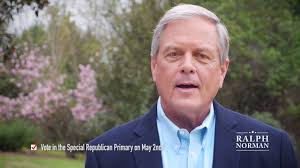
Ralph Norman
And, on the same day, Karen Handel defeated Jon Ossoff in another special election for the 6th District of Atlanta, Georgia. The seat became vacant in January, when its Republican holder, Tom Price, became Secretary of Health and Human Services.

Karen Handel
Since Trump took office on January 20, there have been four special elections to fill vacant Congressional seats. And Republicans have won all of them.
“What’s really important is that Donald Trump has seized the narrative back,” said Gergan during a June 22 appearance on CNN’s Erin Burnett Outfront, “that he’s doing better with the voters than Democrats think he is.
“It should be a wake-up call for Democrats. It is possible that he could actually get re-elected if Democrats aren’t careful.”
Recently, a Democratic friend of mine, whom I’ll call Dave, came to the same conclusion. Admittedly, he has never served any President, let alone four of them.
But an email exchange with Kamala Harris, his own United States Senator from California, left him angry and despairing.

Kamala Harris
First, his email to her—sent on June 20:
Democrats are fatally neglecting a key weapon against the Trump abomination: Effective language.
In 1996, Speaker of the House Newt Gingrich wrote a memo that encouraged Republicans to “speak like Newt.”
Entitled “Language: A Key Mechanism of Control,” it urged Republicans to attack Democrats with such words as “corrupt,” “selfish,” “destructive,” “hypocrisy,” “liberal,” “sick,” and “traitors.”
Such terms have proven highly effective in making Republicans masters of Congress and the White House.
Unfortunately, Democrats have shown themselves indifferent to or incapable of making language work for them.
Consider what conservative New York Times columnist David Brooks said last year about how Donald Trump used language to demolish his political opponents:
“Trump, for all his moral flaws, is a marketing genius. And you look at what he does. He just picks a word and he attaches it to a person. Little Marco [Rubio], Lyin’ Ted [Cruz], Crooked Hillary [Clinton].
“And that’s a word. And that’s how marketing works. It’s a simple, blunt message, but it gets under. It sticks, and it diminishes. And so it has been super effective for him, because he knows how to do that.
“And she [Hillary Clinton] just comes with, ‘Oh, he’s divisive.’ These are words that are not exciting people. And her campaign style has gotten, if anything…a little more stagnant and more flat.”
But there ARE exciting words that Democrats CAN use to quickly destroy Trump’s credibility. It only takes imagination and courage—imagination to create them, and courage to use them.
Let me offer some examples:
Everybody knows that Vladimir Putin is the ONLY politician Trump has refused to attack. In fact, he has formed a Mutual Admiration Society with Putin. Yet Democrats have failed to effectively capitalize on this by fusing the two together.
No longer: “TrumPutin” should be CONSTANTLY on the lips of every Democrat when referring to Trump. It’s easy to remember and say–and it says “traitor” and “dictator” without having to actually use those words.
Republicans should be CONSTANTLY referred to as “RepublicaNazis,” or “Nazi Republicans.” Given Trump’s use of Nuremberg-like rallies, his Nazi-like salutes and demands for personal loyalty from his followers, creating TV ads that drive home this message will be easy.
If you want a more modern term to liken Republicans to dictators, you can use “Republican Guard,” as in: “We are facing a Republican Guard of opposition in the Senate.”
This would establish a subliminal link in the minds of voters between Saddam Hussein’s Republican Guard and Republicans holding sway in Congress….
Above all, Democrats should not simply borrow but co-opt a page from the Republican playbook and CONSTANTLY brand Republicans as TRAITORS.
America’s foremost Intelligence agencies have proven, categorically, that Russian Intelligence agents played a major role in securing the Trump’s election.
And Trump’s firing James Comey to short-circuit the Russia investigation—as he himself admitted in an interview with NBC’s Lester Holt—only proves how much he wants to hide his guilt.
9/11, ABC NEWS, ABORTION, ADOLF HITLER, ALTERNET, ANTISEMITISM, AP, ARIZONA, BBC, BUZZFEED, CBS NEWS, CNN, DAILY KOS, DISCRIMINATION, FACEBOOK, FASCISM, FBI, FIRST RESPONDERS, GAYS, JEWS, KAREN HANDEL, MOTHER JONES, MOVEON, NAZI GERMANY, NBC NEWS, NEWSWEEK, NPR, PLANNED PARENTHOOD, POLITICO, RAW STORY, REPUBLICAN PARTY, REUTERS, SALON, SEATTLE TIMES, SLATE, STALINGRAD, SUSAN G. KOMEN FOUNDATION, THE ATLANTIC, THE CHICAGO SUN-TIMES, THE CHICAGO TRIBUNE, THE DAILY BEAST, THE GUARDIAN, THE HILL, THE HUFFINGTON POST, THE LOS ANGELES TIMES, THE NEW YORK TIMES, THE WALL STREET JOURNAL, THE WASHINGTON POST, THIRD REICH, TIME, TWITTER, U.S. NEWS & WORLD REPORT, UPI, USA TODAY
In Bureaucracy, History, Law, Politics, Social commentary, Uncategorized on June 21, 2017 at 10:18 am
What a difference five years makes.
On June 20, Karen Handel became the next Republican to represent the suburban Atlanta 6th District of Georgia in the House of Representatives.
The seat became vacant in January, when its holder, Tom Price, became Secretary of Health and Human Services.
Handel won the election by more than 10,000 votes against her opponent, Democrat Jon Ossoff.
Both Republicans and Democrats saw the race as a referendum on the increasingly troubled Presidency of Donald J. Trump.
For Handel, the victory had to be sweet. She had sought–unsuccessfully–to represent Georgia as governor in 2010 and then as U.S. Senator in 2014.
But perhaps her most embarrassing moment came in 2012 as vice president of public affairs for Susan G. Komen for the Cure.
A fanatical anti-abortionist, she thought she had worked out a successful strategy for Komen to pull its grant monies from Planned Parenthood (PP).
Karen Handel
She didn’t care that this money went entirely for breast cancer screenings for poor women. What she did care about was that about 3% of all PP revenues went toward providing abortion services.
Since being hired by Komen as vice president of public affairs, in April, 2011, Handel had pushed to drop PP from grants.
And why not?
She had promised to de-fund PP during her failed 2010 campaign for governor of Georgia.
She believed that:
- She could strip PP of future grants from the Komen Foundation, and
- Make the decision look as if it resulted from a legitimate tightening of eligibility criteria.
The official version, as put out by Handel and the top brass of Komen, went: “We’ve halted grants to Planned Parenthood because it’s under investigation by Congress for misuse of funds.”
 Unfortunately for Handel–and Komen–the public instantly saw through the lie.
Any crank in Congress can start an “investigation” into anything.
And PP was “under investigation” by a crank: Rep. Cliff Stearns (R-Fla.), chairman of the Energy and Commerce Subcommittee on Oversight and Investigations.
Stearns claimed he wanted to determine whether PP had spent public money on abortions over the last decade.
But Stearns didn’t hesitate to slander the patriotism of thousands of 9/11 “first responders”—the police, firefighters, construction workers and others who risked their lives to save their fellow Americans.
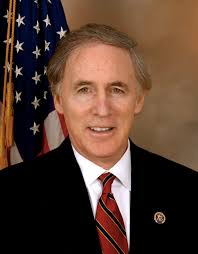
Rep. Cliff Stearns
He did so by demanding that they submit their names, birthplaces, addresses, government ID numbers and other personal data to the FBI to prove they were not terrorists.
Only then could they receive federally-subsidized medical care for injuries caused by exposure to toxic dust and debris at the site.
Not one terrorist was discovered in the resulting investigations.
Public outrage at Komen was immediate and overwhelming:
- More than 50 members of Congress signed letters asking Komen to reverse course.
- New York City Mayor Michael Bloomberg publicly rebuked Komen and pledged $250,000 to PP.
- Approximately 37,000 people from all over the country signed a petition demanding Handel’s resignation.
- PP raised nearly $3 million in contributions.
Reeling before this unexpected onslaught of criticism, Komen issued a statement: “We will continue to fund existing grants, including those of Planned Parenthood, and preserve their eligibility to apply for future grants.”
Having failed in their latest assault on women’s rights, the Right’s would-be predators now portrayed themselves as victims:
- “The last time I checked,” Handel told Right-wing Fox News, “private non-profit organizations have a right and a responsibility to be able to set the highest standards and criteria on their own without interference, let alone the level of vicious attacks and coercion that has occurred by Planned Parenthood. It’s simply outrageous.”
- “Planned Parenthood campaigns to destroy anyone who questions them,” charged Marjorie Dannenfelser, president of the anti-abortion Susan B. Anthony List.“Their attitude is that of an immature teenager with an enormous sense of entitlement. This is just more proof that Planned Parenthood will pulverize anyone who dares to question them.”
- “What Planned Parenthood did to that venerable and honorable organization [Komen Foundation] is nothing less than a Mafia-style shakedown,” said Steven H. Aden, senior counsel for the Alliance Defense Fund. The Fund bitterly opposes abortion, gay marriage, birth control and the separation of church and state.
Many conservatives correctly defended Komen’s right, as a private charitable organization, to give–or withhold–its money as it saw fit.
But these same conservatives refused to grant PP’s outraged supporters the same right: To withhold their own monies from Komen.
National Review’s Daniel Foster called the backlash to Komen “disgusting,” attacking PP and “the Left” for their “gangsterism.
During the battle for Stalingrad, in 1942, a young German soldier named Wilhelm Hoffman was appalled that the Russians refused to surrender. In his diary he wrote:
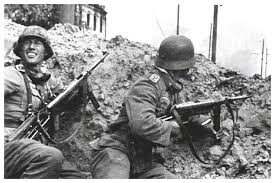
German soldiers at Stalingrad
“September 26. Our regiment is involved in constant heavy fighting. After the elevator was taken the Russians continued to defend themselves just as stubbornly.
“You don’t see them at all, they have established themselves in houses and cellars and are firing on all sides, including our rear. Barbarians–they use gangster methods! Stalingrad is hell….”
What held true for German Fascists holds equally true for those in America: Oppose their efforts to enslave you–and you become a gangster.
And Georgians now have a would-be predator as their representative.
ABC NEWS, ADOLF HITLER, ALTERNET, AP, BBC, BUZZFEED, CBS NEWS, CNN, DAILY KOS, DAVID BROOKS, DONALD TRUMP, FACEBOOK, FBI, GEORGE C. SCOTT, GEORGE S. PATTON, GESTAPO, HOGAN’S HEROES, JAMES COMEY, JIMMY CARTER, MEL BROOKS, MIKE FLYNN, MOTHER JONES, MOVEON, NAZI GERMANY, NBC NEWS, NEWSWEEK, NPR, PAUL RYAN, PBS NEWSHOUR, POLITICO, RAW STORY, REPUBLICAN PARTY, REUTERS, RICHARD GRUNBERGER, RICHARD NIXON, ROBERT MEULLER, Ronald Reagan, SALON, SEATTLE TIMES, SLATE, SOVIET UNION, THE 12-YEAR REICH, THE ATLANTIC, THE CHICAGO SUN-TIMES, THE CHICAGO TRIBUNE, THE DAILY BEAST, THE GUARDIAN, THE HILL, THE HUFFINGTON POST, THE LOS ANGELES TIMES, THE NEW YORK TIMES, THE WALL STREET JOURNAL, THE WASHINGTON POST, TIME, TWITTER, U.S. NEWS & WORLD REPORT, UPI, USA TODAY, WAFFEN-SS, WEHRMACHT
In Bureaucracy, History, Law, Law Enforcement, Military, Politics, Social commentary on June 20, 2017 at 12:05 am
While the Nazi Party ruled Germany from 1933 to 1945, its influence over all aspects of Germans’ lives was suffocating.
“The persuasive influence of the Nazi regime reached into every corner of everyday life in Germany,” reads the back cover of Richard Grunberger’s classic 1971 book, The 12-Year Reich.
“Censorship prevailed, education was undermined, family life was idealized, but children were encouraged to turn in disloyal parents.
“‘Volk’ festivals, party rallies, awards, uniforms, pageantry all played a part in the massive effort to shape the mind of a nation.”

And yet, after the Reich surrendered unconditionally to the Allies on May 8, 1945, a strange thing happened: Virtually no one in Germany admitted to having been a Nazi—or having even known one.
American and British soldiers couldn’t find any German veterans willing to admit they had ever fought against Western, democratic nations. All the once-proud legionaries of the Wehrmacht and Waffen-SS swore they had been fighting “the real enemy”—the Russians—on the Eastern front.
And then there were all the stories of Germans who, at great risk to themselves, had hidden Jews in their attics. Which left unanswered the question: If so many “good Germans” had saved so many Jews, how had six million Jews died horrifically before the Reich fell?
In short: Adolf Hitler had lost the war he started—making him a loser nobody wanted to be identified with.
In the decades since, the “loser” tag has continued to stick with those who once served the Third Reich. Mel Brooks has repeatedly turned German soldiers—once the pride of the battlefield—into idiotic comic foils.
Even the fearsome Gestapo was spoofed for laughs on the long-running TV comedy, “Hogan’s Heroes.”

“Hogan’s Heroes”
“Americans love a winner,” George C. Scott as George S. Patton says at the outset of the classic 1970 movie. “And will not tolerate a loser.”
And that is why Republicans have stuck so closely with President Donald J. Trump.
A typical example of this occurred on June 8 after former FBI director James Comey testified before the United States Senate Select Committee on Intelligence.
Comey revealed that, on February 14, Trump had ordered everyone but Comey to leave a crowded meeting in the Oval Office.
“I want to talk about Mike Flynn,” said Trump.
Flynn had resigned the previous day from his position as National Security Adviser. The FBI was investigating him for his previously undisclosed ties to Russia.
“I hope you can see your way clear to letting this go, to letting Flynn go,” said Trump. “He is a good guy. I hope you can let this go.”
This was clearly an attempt by Trump to obstruct the FBI’s investigation.
Yet Republican House Speaker Paul Ryan rushed to excuse his clearly illegal behavior: “He’s new at government, so therefore I think he’s learning as he goes.”
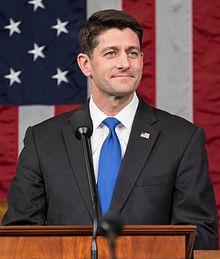
Paul Ryan
David Brooks, the conservative New York Times columnist, offered a more accurate explanation of Trump’s motives. Speaking on The PBS Newshour, Brooks said:
“We are a nation of laws. Donald Trump lives in an entirely different cultural universe. He is more clannist, believing in clan, believing in family, believing in loyalty, not recognizing objective law, not recognizing the procedures that is really how modern government operates….
“It’s not only that he doesn’t know the rules, but at all along and throughout his presidency, he has sort of trampled on the rules almost as a matter of policy, as a matter of character, because he doesn’t believe in that kind of relationships. It’s all personal loyalty, not about laws and norms and standards.”
Republicans don’t fear that Trump will trash the institutions that Americans have cherished for more than 200 years. Institutions like an independent judiciary, a free press, and an incorruptible Justice Department.
He has already attacked all of these—and Republicans have either said nothing or rushed to his defense.
What Republicans truly fear about Donald Trump is that he will finally cross one line too many—like firing Special Counsel Robert Meuller. And that the national outrage following this will force them to launch impeachment proceedings against him.
But it isn’t even Trump they fear will be destroyed.
What they most fear losing is their own hold on nearly absolute power in Congress and the White House.
If Trump is impeached and possibly indicted, he will become a man no one any longer fears. He will be a figure held up to ridicule and condemnation.
Like Adolf Hitler. Like Richard Nixon.
And his Congressional supporters will be branded as losers along with him.
Republicans vividly remember what happened after Nixon was forced to resign on August 9, 1974: Democrats, riding a wave of reform fever, swept Republicans out of the House and Senate—and Jimmy Carter into the White House.
What Ronald Reagan once said about the leadership of the Soviet Union now literally applies to that of the Republican Party:
“They…have openly and publicly declared that the only morality they recognize is what will further their cause, meaning they reserve unto themselves the right to commit any crime, to lie, to cheat, in order to attain that.”
ABC NEWS, ADOLF HITLER, ALTERNET, AP, ARIZONA SHOOTINGS, ASSASSINATION, BARACK OBAMA, BBC, BILL CLINTON, BUZZFEED, CBS NEWS, CHRISTINA-TAYLOR GREEN, CNN, DAILY KOS, FACEBOOK, FBI, GABRIELLE GIFFORDS, GEORGE H.W. BUSH, HATE CRIMES, HEALTHCARE, MEIN KAMPF, MOTHER JONES, MOVEON, NBC NEWS, NEWSWEEK, NEWT GINGRICH, NPR, POLITICO, RAW STORY, REPUBLICAN PARTY, REPUBLICANS, REUTERS, RODNEY KING RIOTS, SALON, Sarah Palin, SEATTLE TIMES, Secret Service, SLATE, TEA PARTY, TERRORISM, THE ATLANTIC, THE CHICAGO SUN-TIMES, THE CHICAGO TRIBUNE, THE DAILY BEAST, THE GUARDIAN, THE HILL, THE HUFFINGTON POST, THE LOS ANGELES TIMES, THE NEW YORK TIMES, THE WALL STREET JOURNAL, THE WASHINGTON POST, TIME, TWITTER, U.S. DISTRICT JUDGE JOHN ROLL, U.S. NEWS & WORLD REPORT, UPI, USA TODAY
In Bureaucracy, History, Law, Law Enforcement, Politics, Social commentary on June 19, 2017 at 1:08 am
On January 8, 2011, Democratic Rep. Gabrielle Giffords was shot in the head while meeting with constituents outside a Tucson, Arizona, grocery store.
After a miraculous recovery, she continues to struggle with language and has lost 50% of her vision in both eyes. Although she returned to her Congressional duties, her injuries forced her to resign in 2012.
The shooting claimed the lives of six people and left 13 others wounded.
One of those killed was Arizona’s chief U.S. District judge, John Roll, who had just stopped by to see his friend Giffords after celebrating Mass.
The youngest victim was nine-year-old Christiana-Taylor Green, whose desire to one day enter politics had led her to attend the scheduled meeting with her Congresswoman, Giffords. Her having been born on September 11, 2001, added a special poignancy to her tragic death.
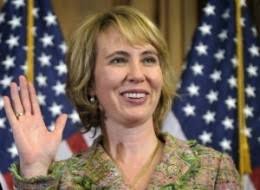
Rep. Gabrielle Giffords
Although the actual shooter, Jared Lee Loughner, was immediately arrested, those who fanned the flames of political violence that consumed 19 people that day have remained unpunished.
Gabrille Giffords, then 40, was a moderate Democrat who narrowly won re-election in November, 2010, against a Republican Tea Party candidate.
Her support of President Barack Obama’s health care reform law made her a target for violent rhetoric–especially from former Alaska Governor Sarah Palin.
In March, 2010, Palin released a map featuring 20 House Democrats that used cross-hairs images to show their districts. In case her supporters didn’t get the message, she later wrote on Twitter: “‘Don’t Retreat, Instead – RELOAD!’”

As the campaign continued, Giffords found her Tucson office vandalized after the House passed the healthcare overhaul on March 21, 2010.
Giffords sensed that she had become a target for assassination. In an interview after the vandalizing of her office, she cited the animosity against her by Right-wingers:
“For example, we’re on Sarah Palin’s targeted list, but the thing is, that the way that she has it depicted has the cross-hairs of a gun sight over our district. When people do that, they have to realize that there are consequences to that action,” Giffords tells MSNBC.
At one of her rallies, her aides called the police after an attendee dropped a gun.
In April, 2010, Giffords supported Rep. Raúl Grijalva after he had to close two offices when he and his staff received threats. He had called for a boycott of Arizona businesses in opposition to the state’s controversial immigration law.
“I am deeply troubled about reports that Congressman Grijalva and members of his staff have been subjected to death threats,” Giffords said.
“This is not how we, as Americans, express our political differences. Intimidation has no place in our representative democracy. Such acts only make it more difficult for us to resolve our differences.”
But intimidation–and worse–does have a place among the tactics used by influential Republicans in the pursuit of absolute power.
Increasingly, Republicans have repeatedly aimed violent–and violence-arousing–rhetoric at their Democratic opponents.
This is not a case of careless language that is simply misinterpreted, with tragic results.
Republicans like Sarah Palin fully understand the constituency they are trying to reach: Those masses of alienated, uneducated Americans who live only for their guns and hardline religious beliefs–and who can be easily manipulated by perceived threats to either.
If a “nutcases” assaults a Democratic politician and misses, then the Republican establishment claims to be shocked–shocked!–that such a thing could have happened.
And if the attempt proves successful–as the Giffords shooting did–then Republicans weep crocodile tears for public consumption.

Consider the following:
- Rep. Randy Neugebauer (R-Tex.) yelled “baby killer” at Bart Stupak (D-Mich.) on the House floor.
- Florida GOP Congressional candidate Allen West, referring to his Democratic opponent, Rep. Ron Klein, told Tea Party activists: You’ve got to make the fellow scared to come out of his house. That’s the only way that you’re going to win. That’s the only way you’re going to get these people’s attention.”
- Rep. Devin Nunes (R-CA) said Tea Partiers had “every right” to use racist and homophobic slurs against Democrats, justifying it via Democrats’ “totalitarian tactics.
- ”Rep. Michelle Bachmann (R-Minn.) said she wanted her constituents “armed and dangerous” against the Obama administration.
- Right-wing pundit Ann Coulter: “My only regret with Timothy McVeigh is he did not go to the New York Times building.”
- Senator Phil Gramm (R-Tex.) “We’re going to keep building the party until we’re hunting Democrats with dogs.”
- Rep. Louisa M. Slauter (D-NY) received a phone message threatening sniper attacks against lawmakers and their families.
For more than 50 years, Republicans have vilified government–except when they controlled it. They convinced millions of Americans that Democrats are potential traitors, if not actual ones.
They have routinely slandered Democrats as:
- Plotting to “take away your guns.”
- Wanting to turn America into a welfare-dependent society.
- Being “Godless” and intending to force atheism on believing Christians.
- Plotting to allow the United Nations to “take over” the United States.
Consciously or not, Republicans have taken their cue from Adolf Hitler, who advised in Mein Kampf: “All effective propaganda must be confined to a few bare essentials.
“Those must be expressed as far as possible in stereotypical formulas. These slogans should be persistently repeated until the very last individual has come to grasp the idea that has been put forward.”
ABC NEWS, ALTERNET, ANWAR SADAT, AP, ARTHUR BREMER, ASSASSINATION, BBC, BLACK LIVES MATTER, BUZZFEED, CBS NEWS, CHARLES L. COTTON, CIA, CNN, DAILY KOS, DALLAS POLICE OFFICER SHOOTINGS, FACEBOOK, GEORGE C. WALLACE, GUN CONTROL, MARK RAWLINGS, MOTHER JONES, MOVEON, NATIONAL RIFLE ASSOCIATION, NBC NEWS, NEWSWEEK, NPR, OPEN CARRY LAWS, POLITICO, RAW STORY, REPUBLICAN PARTY, REPUBLICANS, REUTERS, ROBERT F. KENNEDY, SALON, SEATTLE TIMES, Secret Service, SLATE, THE ATLANTIC, THE CHICAGO SUN-TIMES, THE CHICAGO TRIBUNE, THE DAILY BEAST, THE GUARDIAN, THE HILL, THE HUFFINGTON POST, THE LOS ANGELES TIMES, THE NEW YORK TIMES, THE SECOND AMENDMENT, THE WALL STREET JOURNAL, THE WASHINGTON POST, TIME, TWITTER, U.S. NEWS & WORLD REPORT, UPI, USA TODAY
In Bureaucracy, History, Law, Law Enforcement, Politics, Social commentary on June 16, 2017 at 12:04 am
On June 14, Rep. Steve Scalise (R-LA) was among five people shot during a Republican baseball practice in Alexandria, Virginia.
Scalise, the U.S. House majority whip, was shot in the hip. Other victims included a member of Scalise’s security detail, U.S. Capitol Police officer Crystal Griner; Zack Barth, an aide to Rep. Roger Williams, R-TX; and lobbyist Matt Mika.

Steve Scalise
The suspected gunman, James Hodgkinson, was shot dead by Capitol police.
And now, some GOP lawmakers think they have the answer to foiling any future such attacks: They want to carry guns themselves.
“The ability to protect ourselves individually, rather than having to rely on someone else is something that I cherish,” Rep. Jack Bergman (R-Michigan) told CNN. “I would like the opportunity to be able to protect myself as a congressman.”
Rep. Chris Collins (R-New York) told CNN: “I’ve had a carry permit for 30 years, and I would say off and on in different instances where I have, you know, felt it was appropriate, I would carry the weapon on myself.
“Certainly in the short run I’m going to go a step beyond just having it in the glove box in my car and I will be carrying.”
On the evening of June 14, Kentucky Rep. Thomas Massie wrote on Facebook: “What’s always evident in these situations is: The only thing that stops a bad guy with a gun is a good guy with a gun.”
That, of course, is the standard mantra of the National Rifle Association (NRA).
But it it true?
On July 7, 2016, five Dallas police officers were shot and killed by a disgruntled ex-Army Reserve Afghan War veteran named Michah Xavier Johnson. Another seven officers and two civilians were wounded before the carnage ended.
The shootings erupted during a Black Lives Matter protest march in downtown Dallas.
Texas has long been an “open carry” state for those who want to brandish rifles without fear of arrest. And about 20 people wearing “ammo gear and protective equipment [had] rifles slung over their shoulder,” said Dallas Mayor Mike Rawlings.
“When the shooting started, at different angles, [the armed protesters] started running,” Rawlings said, adding that open carry only brings confusion to a shooting scene. What I would do [if I were a police officer] is look for the people with guns,” he said.
“There were a number of armed demonstrators taking part,” said Max Geron, a Dallas police major. “There was confusion about the description of the suspects and whether or not one or more was in custody.”
A 2012 Mother Jones article on “More Guns, More Mass Shootings–Coincidence?” offered a striking finding. After analyzing 62 mass shootings over a 30-year period, the magazine determined: “In not a single case was the killing stopped by a civilian using a gun.”
So much for the ability of gun-toting, untrained amateurs to “stop a bad guy with a gun.”
But even highly-trained shooters–such as those assigned to the United States Secret Service–don’t always respond as expected.
On May 15, 1972, Alabama Governor George C. Wallace was campaigning for President in Laurel, Maryland. He gave a speech behind a bulletproof podium at the Laurel Shopping Center. Then he moved from it to mingle with the crowd.
Since the 1968 assassination of Senator Robert F. Kennedy, all those campaigning for President have been assigned Secret Service bodyguards. And Wallace was surrounded by them as he shook hands with his eager supporters.
Suddenly, Arthur Bremer, a fame-seeking failure in life and romance, pushed his way forward, aimed a .38 revolver at Wallace’s abdomen and opened fire. Before the Secret Service could subdue him, he hit Wallace four times, leaving him paralyzed for the rest of his life.

Arthur Bremer shoots George Wallace
Nor was he Bremer’s only victim. Three other people present were wounded unintentionally:
- Alabama State Trooper Captain E C Dothard, Wallace’s personal bodyguard, who was shot in the stomach;
- Dora Thompson, a campaign volunteer, who was shot in the leg; and
- Nick Zarvos, a Secret Service agent, who was shot in the neck, severely impairing his speech.
None of Wallace’s bodyguards got off a shot at Bremer–before or after he pulled the trigger.
On October 6, 1981, Egyptian President Anwar Sadat was reviewing a military parade in Cairo when a truck apparently broke down directly across from where he was seated.
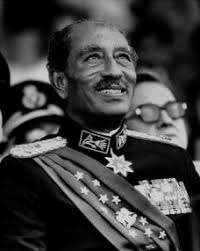
Anwar Sadat, moments before his assassination
Suddenly, soldiers bolted from the rear of the vehicle, throwing hand grenades and firing assault rifles. They rushed straight at Sadat–who died instantly under a hail of bullets.
Meanwhile, Sadat’s bodyguards–who had been trained by the CIA–panicked and fled.
Sadat had been assassinated by army officers who believed he had betrayed Islam by making peace with Israel in 1977.
The ultimate test of the NRA’s mantra that “there should not be any gun-free zones…anywhere” will come only when one or more heavily-armed gunmen target an NRA convention.
It will then be interesting to see if the surviving NRA members are as quick to blame themselves for being victims as they are to blame the victims of other mass slaughters.
ABC NEWS, ALEX ACOSTA, ALTERNET, ANASTAS MIKOYAN, AP, BBC, BUZZFEED, CBS NEWS, CNN, DAILY KOS, DEPARTMENT OF AGRICULTURE, DEPARTMENT OF HEALTH AND HUMAN SERVICES, DEPARTMENT OF JUSTICE, DEPARTMENT OF LABOR, DEPARTMENT OF TRANSPORTATION, DONALD TRUMP, ELAINE CHAO, FACEBOOK, FBI, GEORGI MALENKOV, JAMES COMEY, JEFF SESSIONS, JOSEPH STALIN, KIM JONG ON, KLIMENT VOROSHILOV, LAVRENTI P. BERIA, MICK MULVANEY, MIKE PENCE, MOTHER JONES, MOVEON, NBC NEWS, NEWSWEEK, NIKKI HALEY, NPR, OFFICE OF MANAGEMENT AND BUDGET, POLITICO, RAW STORY, REINCE PRIEBUS, REUTERS, ROBERT PAYNE, SALON, SEATTLE TIMES, SLATE, SONNY PERDUE, SOVIET UNION, THE ATLANTIC, THE CHICAGO SUN-TIMES, THE CHICAGO TRIBUNE, THE DAILY BEAST, THE GUARDIAN, THE HILL, THE HUFFINGTON POST, THE LOS ANGELES TIMES, THE NEW YORK TIMES, THE RISE AND FALL OF STALIN, THE WALL STREET JOURNAL, THE WASHINGTON POST, TIME, TOM PRICE, TWITTER, U.S. NEWS & WORLD REPORT, UNITED NATIONS, UNITED STATES ATTORNEY GENERAL, UPI, USA TODAY, VYACHESLAV MOLOTOV
In Bureaucracy, History, Politics, Social commentary on June 15, 2017 at 12:02 am
On December 21, 1949, Joseph Vissarionovich Djugashvili turned 70. And millions of Russians feverishly competed to out-do one another in singing his praises.
These celebrations weren’t prompted by love–but fear.
For the man being so honored was internationally known by a far different name: Stalin, which in Russian means: “Man of Steel.”
He had lived up to it: For almost 30 years, through purges and starvation caused by enforced collections of farmers’ crops, he had slaughtered 20 to 60 million people.
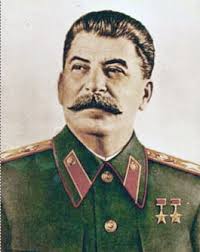
Joseph Stalin
The British historian, Robert Payne, described these rapturous events in his classic 1965 biography, The Rise and Fall of Stalin:
“The guns blazed in salute, the processions marched across the Red Square, and huge balloons bearing the features of a younger Stalin climbed into the wintry sky.
“The official buildings were draped in red, the color of happiness. From all over the country came gifts of embroidered cloth, tapestries and carpets bearing his name or his features.
“Ornamental swords, cutlasses, tankards, cups, everything that might conceivably please him, were sent to the Kremlin, and then displayed in the State Museum of the Revolution….Poets extolled him in verses, He was the sun, the splendor, the lord of creation.
“The novelist Leonid Lenov…foretold the day when all the peoples of the earth would celebrate his birthday; the new calendar would begin with the birth of Stalin rather than with the birth of Christ.”
Lavrenti P. Beria, Stalin’s sinister and feared secret police chief, oozed: “Millions of fighters for peace and democracy in all countries of the world are closing their ranks still firmer around Comrade Stalin.”

Lavrenti P. Beria
“With a feeling of great gratitude, turning their eyes to Stalin,” gushed Central Committee Secretary Georgi Malenkov, “the peoples of the Soviet Union, and hundreds of millions of peoples in all countries of the world, and all progressive mankind, see in Comrade Stalin their beloved leader and teacher….”
“The mighty voice of the Great Stalin, defending the peace of the world, has penetrated into all corners of the globe,” enthused Defense Commissar Kliment Voroshilov.
“Without Comrade Stalin’s special care,” extolled Trade and Supply Minister Anastas Mikoyan, “we would have never have had a network of meat combines equipped with the latest machinery, canneries and sugar refineries, a fishing industry….”
Foreign Minister Vyacheslav Molotov: “The gigantic Soviet army created during [World War II] was under the direct leadership of Comrade Stalin and built on the basis of the principles of Stalinist military science.”
So those Americans with a sense of history were alarmed and disgusted upon watching President Donald J. Trump–also 70–convene his first full Cabinet meeting since taking office on January 20.
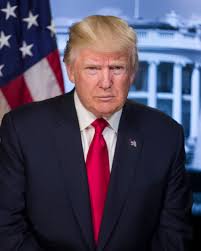
Donald Trump
On June 12, polls showed that only 36% of Americans approved of his conduct. But from his Cabinet members, Trump got praise traditionally lavished on dictators like Stalin and North Korea’s Kim Jong On.
While the Cabinet members sat around a mahogany table in the West Wing of the White House, Trump instructed each one to say a few words about the good work his administration was doing.
“Start with Mike,” ordered Trump, referring to Vice President Mike Pence.
“It is the greatest privilege of my life to serve as the vice president to a president who is keeping his word to the American people,” Pence dutifully said.
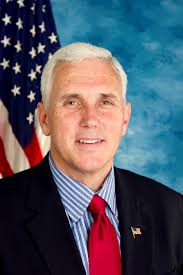
Mike Pence
Then it was the turn of Attorney General Jeff Sessions: “It’s an honor to be able to serve you.”
“My hat’s off to you,” oozed Energy Secretary Rick Perry, referring to Trump’s decision to withdraw from the Paris climate agreement.
Secretary of Agriculture Sonny Perdue: “I just got back from Mississippi. They love you there.”
“What an incredible honor it is to lead the Department of Health and Human Services at this pivotal time under your leadership,” gushed Tom Price. “I can’t thank you enough for the privilege that you’ve given me, and the leadership you’ve shown.”
Secretary of Labor Alex Acosta raved: “I’m deeply honored and I want to thank you for keeping your commitment to the American workers.”
“Thank you for coming over to the Department of Transportation,” eulogized Elaine Chao, its secretary. “I want to thank you for getting this country moving again, and also working again.”
“On behalf of the entire senior staff around you, Mr. President,” said Reince Prebus, Trump’s chief of staff, “we thank you for the opportunity and the blessing you’ve given us to serve your agenda and the American people, and we’re continuing to work very hard every day to accomplish those goals.”
Mick Mulvaney, director of the Office of Management and Budget: “At your direction, we were able to also focus on the forgotten men and women who are paying taxes, so I appreciate your support on pulling that budget together.”
On June 8, former FBI Director James Comey had testified before the Senate Select Committee on Intelligence.
Among the charges he aimed at Trump: The President had demanded a pledge of personal loyalty in return for Comey’s keeping his job.
This would have made Comey his secret police chief.
Comey had refused to give this. And Trump had fired him.
Trump publicly denied this.
Then came the Cabinet meeting–and all the proof anyone needed.


.jpg)


ABC NEWS, ADOLF HITLER, ALBERT SPEER, ALTERNET, AP, BARACK OBAMA, BBC, BUZZFEED, CBS NEWS, CNN, DAILY KOS, DEPARTMENT OF HOMELAND SECURITY, EXTORTION, FACEBOOK, FASCISM, MITCH MCCONNELL, MOTHER JONES, MOVEON, NAZI GERMANY, NBC NEWS, NEGOTIATING, NEWSWEEK, NPR, POLITICO, RAW STORY, REPUBLICAN PARTY, REPUBLICANS, REUTERS, SALON, SEATTLE TIMES, SLATE, THE ATLANTIC, THE CHICAGO SUN-TIMES, THE CHICAGO TRIBUNE, THE DAILY BEAST, THE GUARDIAN, THE HILL, THE HUFFINGTON POST, THE LOS ANGELES TIMES, THE NEW YORK TIMES, THE WALL STREET JOURNAL, THE WASHINGTON POST, TIME, TRICKLE-DOWN ECONOMICS, TWITTER, U.S. NEWS & WORLD REPORT, UPI, USA TODAY, WORLD WAR 11
GOP: “GIVE US AMERICA–OR WE’LL DESTROY IT!”
In Bureaucracy, History, Law, Law Enforcement, Military, Politics, Social commentary on June 28, 2017 at 9:17 amOn December 13, 2014, the U.S. Senate passed a $1.1 trillion spending bill to fund almost the entire government through the September 30 end of the fiscal year.
But one Federal agency was pointedly exempted from full funding: The Department of Homeland Security (DHS). Its funding would expire on February 27.
With their newfound majorities in both houses of Congress, Republicans intended to hold the security of the United States as a hostage.
Their goal: To force President Barack Obama to rescind the changes he had made in American immigration policy.
With more than 240,000 employees, the DHS is the third largest Cabinet department, after the Departments of Defense and Veterans Affairs.
The Defense Department is charged with military actions abroad.
DHS is responsible for protecting the United States inside and outside its borders. Its goal is to prepare for, prevent and—if prevention fails—respond to man-made accidents, natural disasters and terrorism.
Among the agencies now operating under its mandate:
Yet each of these agencies has a vital role to play in protecting the nation. A nation whose security Republicans were willing to threaten to get their way on a matter of domestic policy.
Right-wing Republicans argued that even if DHS’s funding were stopped, most of its employees would stay on the job. That’s because they perform work considered necessary to protect human life and property.
But while those employees were safeguarding the country, they wouldn’t be paid until the shutdown ended.
It’s hard to give your full attention to protecting the lives of others when you have to worry about paying a mortgage or feeding your family.
Of course, the Republicans responsible for this shutdown would have continued to receive their hefty paychecks.
Republicans chose to act as Mafia extortionists at a time when the United States appeared to be in the crosshairs of North Korean terrorism.
On November 14, 2014, Sony Pictures came under relentless attack by cyberterrorists, whom the FBI linked to North Korea.
The reason? Sony’s production of “The Interview,” a comedy depicting the assassination of North Korean dictator Kim Jong Un.
Calling themselves “Guardians of Peace,” or GOP, they shut down the company’s computer system and revealed employees’ personal information such as salaries, addresses, and Social Security numbers.
(Ironically, “Guardians of Peace” appropriated the same abbreviation–GOP–used by the Republicans for “Grand Old Party.”)
Warning issued by “Guardians of Peace” (GOP)
On December 17, 2014, Sony Pictures cancelled the Christmas Day premier of “The Interview” after the nation’s five largest movie chains refused to show the movie, following a terror threat posted online.
And then on February 5, 2015, Anthem Insurance announced that its database had been hacked–and sensitive medical information on up to 80 million customers and employees accessed.
According to an anonymous source, the hackers used malware that’s been used almost exclusively by Chinese cyberspies.
* * * * *
As the Third Reich came to its fiery end, Adolf Hitler sought to punish the German people for being “unworthy” of his “genius” and losing the war he had started.
His attitude was: “If I can’t rule Germany, then there won’t be a Germany.”
In his infamous “Nero Order,” he decreed the destruction of everything still remaining–industries, ships, harbors, communications, roads, mines, bridges, stores, utility plants, food stuffs.
Fortunately for Germany, one man—Albert Speer, the Minister of Armaments—finally broke ranks with his Fuhrer.
Albert Speer
Risking death, he refused to carry out Hitler’s “scorched earth” order. Even more important, he mounted a successful effort to block such destruction or persuade influential military and civilian leaders to disobey the order as well.
As a result, those targets slated for destruction were spared.
After the election of America’s first black President, Republicans waged a similar “scorched earth” campaign. Their avowed goal—as stated openly by Kentucky’s U.S. Senator Mitch McConnell—was “to make Barack Obama a one-term President.”
Literally during his first Inauguration, Republicans, in a secret meeting, agreed to block every effort he made to repair the economy.
Acting as extortionists, they repeatedly threatened to shut down the government if they didn’t get their way in legislative matters.
And just as repeatedly, they blocked legislation that would have helped the poor, unemployed, women, elderly, disabled or middle-class.
At the center of their fury lay the Affordable Care Act, providing medical care to all citizens.
Even after Congress passed it and the Supreme Court affirmed it, House Republicans shut down the government in October, 2013.
By doing so, they hoped to pressure Obama into killing his signature piece of legislation. The effort failed.
Like Adolf Hitler, their attitude has been: “If I can’t rule America, there won’t be an America.”
It remains to be seen whether a Republican Albert Speer will step forward to save America from the self-destructive excesses of this Nation’s own fanatics.
Share this: