Posts Tagged ‘UP’
ABC NEWS, ALTERNET, AP, BARACK OBAMA, BOB CORKER, BUZZFEED, CBS NEWS, CNN, CROOKS AND LIARS, DAILY KOZ, DONALD TRUMP, FACEBOOK, ISIS, MALI, MERCENARIES, MOTHER JONES, MOVEON, NATIONAL FOOTBALL LEAGUE, NBC NEWS, NEWSWEEK, NICCOLO MACHIAVELLI, NIGER, NORTH KOREA, NPR, POLITICO, PUERTO RICO, RAW STORY, REUTERS, SALON, SEATTLE TIMES, SLATE, STALINGRAD, THE ATLANTIC, THE CHICAGO SUN-TIMES, THE CHICAGO TRIBUNE, THE DAILY BEAST, THE GUARDIAN, THE HILL, THE HUFFINGTON POST, THE LOS ANGELES TIMES, THE NATION, THE NEW YORK TIMES, THE WASHINGTON POST, TIME, TWITTER, U.S. NEWS & WORLD REPORT, UP, UPI, USA TODAY
In Bureaucracy, History, Military, Politics, Social commentary on November 7, 2017 at 12:03 am
On October 4, four American Special Forces soldiers were ambushed and gunned down at the border of Niger and Mali.
For 12 days after the tragedy, President Donald Trump said nothing.
Then, during an October 16 press conference in the White House Rose Garden, a reporter asked him about his silence.

Donald Trump
So Trump claimed—falsely—that earlier Presidents—including Barack Obama—had never or rarely called or written family members of soldiers who died on duty.
But it was his call to Myeshia Johnson, the widow of Sergeant La David Johnson, that ignited a firestorm.
According to Florida Democratic Representative Frederica Wilson, Trump’s condolence call was brutally insensitive. Wilson was riding in a limousine with Johnson and heard the conversation on speakerphone.
“He knew what was signing up for, but I guess it hurts anyway,” Wilson quoted Trump as telling the grieving widow.
But maybe Sergeant Johnson didn’t know what he was signing up for.
On October 19, Pentagon officials said that a private contractor airlifted some of the troops from the scene.
Trump had sent a private aviation contractor—instead of the U.S. military—to retrieve the bodies of the four soldiers killed in Niger.
Robyn Mack, an official for U.S. Africa Command, said Texas-based Berry Aviation was “on alert during the incident and conducted casualty evacuation and transport for US and partner forces.”
Sergeant Johnson’s body was left behind when the bodies of his three fellow soldiers were evacuated. His remains were recovered two days after the extraction by Nigerien troops.
Even worse, his corpse had been so corrupted by heat that the Pentagon demanded a closed coffin for his burial service.
Contractor aircraft are typically not armed, though their crews may carry side-arms for personal protection.
It’s possible that lightly-armed private contractors were so eager to leave the danger area they did a slapdash search for bodies—and accidentally left Johnson’s behind.
Berry Aviation has also done Defense Department work in Afghanistan, Central African Republic and Burkina Faso.
Since the end of the Cold War, the American military and Intelligence communities have grown increasingly dependent on private contractors. In the past, such groups were called mercenaries.
In his 2007 bestseller, Legacy of Ashes: The History of the CIA, Tim Weiner writes:
“Patriotism for profit became a $50-billion-a-year business….The [CIA] began contracting out thousands of jobs to fill the perceived void by the budget cuts that began in 1992.
“A CIA officer could file his retirement papers, turn in his blue identification badge, go to work for a much better salary at a military contractor such as Lockheed Martin or Booz Allen Hamilton, then return to the CIA the next day, wearing a green badge….”
Much of the CIA became totally dependent on mercenaries. They appeared to work for the agency, but their loyalty was actually to their private companies. The CIA thus had two workforces-–but the private one was paid far better.
Wrote Weiner: “Legions of CIA veterans quit their posts to sell their services to the agency by writing analyses, creating cover for overseas officers, setting up communications networks, and running clandestine operations.”
One such company was Total Intelligence Solutions, founded in 2007 by Cofer Black, who had been the chief of the CIA’s counter-terrorism center on 9/11.
His partners were Robert Richer, formerly the associate deputy director of operations at the CIA, and Enrique Prado, who had been Black’s chief of counter-terror operations at the agency.
Future CIA hires followed suit: Sign up for five years, win that prized CIA “credential” and sign up for far more money with a private security company.
This situation met with full support from Right-wing “pro-business” members of Congress and Presidents like George W. Bush.
They had long championed the private sector as inherently superior to the public one. And they saw no danger that a man dedicated to enriching himself might put greed ahead of safeguarding his country.
One of Trump’s key military advisers is Erik Prince, the former head of Blackwater. Under President George W. Bush, the now-infamous mercenary company got $1 billion to provide security for American officials and soldiers in Iraq and Afghanistan.
Blackwater was also accused of abusing Iraqis and engaging in torture.
There were, however, others who could have offered a timely warning against this use of mercenaries-–had there been leaders willing to heed it.
One of these, reaching back more than 500 years ago, was the Florentine statesman, Niccolo Machiavelli, who famously warned of the dangers of relying on mercenaries.
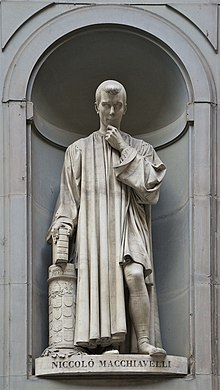
Niccolo Machiavelli
In The Prince, Machiavelli writes:
“Mercenaries…are useless and dangerous. And if a prince holds on to his state by means of mercenary armies, he will never be stable or secure. For they are disunited, ambitious, without discipline, disloyal. They are brave among friends; among enemies they are cowards.
“They have neither the fear of God nor fidelity to man, and destruction is deferred only as the attack is. For in peace one is robbed by them, and in war by the enemy.”
Centuries after Machiavelli’s warning, Americans are realizing the bitter truth of it firsthand.
ABC NEWS, ALTERNET, AP, BUZZFEED, CBS NEWS, CNN, CROOKS AND LIARS, DAILY KOZ, FACEBOOK, FRANCISCO SANCHEZ, ILLEGAL ALIENS, IMMIGRATION AND CUSTOMS ENFORCEMENT (ICE), IMMIGRATION LAWS, KATHRYN STEINLE, MOTHER JONES, MOVEON, NBC NEWS, NEWSWEEK, NPR, POLITICAL CORRECTNESS, POLITICO, RAW STORY, REUTERS, ROBERT F. KENNEDY, SALON, SAN FRANCISCO CHRONICLE, SAN FRANCISCO POLICE COMMISSION, SAN FRANCISCO POLICE DEPARTMENT, sanctuary cities, SEATTLE TIMES, SLATE, THE ATLANTIC, THE CHICAGO SUN-TIMES, THE CHICAGO TRIBUNE, THE DAILY BEAST, THE GUARDIAN, THE HILL, THE HUFFINGTON POST, THE LOS ANGELES TIMES, THE NATION, THE NEW YORK TIMES, THE WASHINGTON POST, TIME, TWITTER, U.S. NEWS & WORLD REPORT, UP, UPI, USA TODAY
In Bureaucracy, History, Law, Law Enforcement, Politics, Social commentary on November 6, 2017 at 12:33 am
On August 7, Hal Gordon (not his real name) a San Francisco resident, double-parked his Toyota Sienna in front of an apartment building, hoping for a parking space to open.
As he sat behind the wheel, a man came up to the driver’s window and started berating him for using his emergency brake lights. The next thing Gordon knew, the stranger was throwing punches at him through the window.
After a passenger in Gordon’s car stepped out of the vehicle, the attacker got back into his own car—a green Jeep—parked behind Gordon’s.
Then—wham!—the Jeep plowed into the back of Gordon’s Toyota Sienna. Luckily for Gordon and his passenger, both were wearing seat belts.
The Jeep then took off, with Gordon giving chase. About a block later, both cars stopped at a red light.
That was when Gordon took out his cell phone, turned on its camera, and took a photo of the license plate of the road-raging Jeep.
And that was when the Jeep suddenly backed up—right into the front of Gordon’s car. Then the Jeep sped off.
Gordon decided to file a police report. So he and his passenger then drove to Central Station of the San Francisco Police Department (SFPD).

At the front desk, they were each given an incident report page to fill out. They agreed on the appearance of the attacker: A white male, 50-60 years old, about 5’6″ tall, with gray, bushy hair.
And both driver and passenger gave separate interviews to the uniformed desk officer.
A subsequent record check on the license plate revealed that the Jeep was registered to a female resident of San Francisco, whose address was given.
That was on August 7.
Almost three months have since passed–and neither Gordon nor his passenger has been contacted by the SFPD. Nor, to their knowledge, has an arrest been made of the road-raging assailant.
For anyone familiar with the workings of this agency, none of this will come as a surprise.
In 2002, the San Francisco Chronicle ran a series on the need for major reforms within the SFPD. Among its findings:
- Violent criminals who preyed on San Francisco’s residents and visitors had a better chance of getting away with their crimes than predators in any other large American city.
- A victim who was shot, treated at a hospital and then released was not guaranteed an investigation—unless he could name his assailant.
- Inspectors often investigated cases from their desks—by phone—rather than leave their offices to interview victims and find evidence.
- Due to budget cuts, violent crime inspectors lacked such basic investigative tools as portable radios, cell phones and even cars.
- No formal performance standards existed in the Inspectors Bureau. Inspectors were required to provide a monthly account of their activities, but were not evaluated on performance.
- Police needed only to make an arrest to claim a crime as solved or cleared, without regard for what happened in court.
- Police also could list a crime as solved for “exceptional” reasons. These included: The suspect was dead or in jail elsewhere, extradition was denied or the victim wouldn’t cooperate.
Most citizens would expect the top priority of the SFPD to be protecting citizens from crime. But in Politically Correct San Francisco, the SFPD Police Commission makes protecting the “rights” of illegal aliens its most important goal.
San Francisco is one of 31 “sanctuary cities” in this country: Washington, D.C.; New York City; Los Angeles; Chicago; Santa Ana; San Diego; Salt Lake City; Phoenix; Dallas; Houston; Austin; Detroit; Jersey City; Minneapolis; Miami; Denver; Baltimore; Seattle; Portland, Oregon; New Haven, Connecticut; and Portland, Maine.
These cities have adopted “sanctuary” ordinances that forbid municipal funds or resources to be used to enforce federal immigration laws, usually by not allowing police or municipal employees to inquire about a suspect’s immigration status.
Anyone who believes that Political Correctness isn’t a killer need only ask the family of Kathryn Steinle.
Kathryn Steinle
Steinle was gunned down on July 2, 2015, while out for an evening stroll with her father along the San Francisco waterfront.
Steinle, 32, had worked for a medical technology company.
And her charged killer?
Francisco Sanchez, 45, has a history of seven felony convictions. He’s been deported to his native Mexico five times, most recently in 2009.

Francisco Sanchez
On March 26, agents of U.S. Immigration and Customs Enforcement (ICE) turned Sanchez over to San Francisco police on an outstanding warrant.
On March 27, a San Francisco Superior Court judge dismissed charges of possession and distribution of marijuana against Sanchez.
Sanchez was released on April 15.
ICE had issued a detainer for Sanchez in March, requesting to be notified if he would be released. But the detainer was not honored.
So Sanchez was released on April 15–-without anyone notifying ICE.
Seventy-eight days later, illegal alien Francisco Sanchez crossed paths with American citizen Kathryn Steinle-–and killed her.
Robert F. Kennedy, during his three-year tenure as Attorney General, said it best: “Every society gets the kind of criminal it deserves. What is equally true is that every community gets the kind of law enforcement it insists on.”
9/11 ATTACKS, ABC NEWS, ALTERNET, AP, ARTHUR M. CUMMINGS, BOSTON GLOBE, BOSTON MARATHON, BOSTON MARATHON BOMBING, BOSTON PATCH, BRUSSELS BOMBINGS, BUZZFEED, CBS NEWS, CNN, CROOKS AND LIARS, DAILY KOZ, DONALD TRUMP, FACEBOOK, FBI, FIRST AMENDMENT, FRANKLIN D. ROOSEVELT, ISIS, ISLAM, ISLAMIC TERRORISM, JIHADIST, MOTHER JONES, MOVEON, NAZI GERMANY, NBC NEWS, NEWSWEEK, NPR, PARIS TERRORIST ATTACKS, POLITICAL CORRECTNESS, POLITICO, RADICAL ISLAM, RAW STORY, REUTERS, SALON, SAMUEL P. HUNTINGTON, SAN BERNARDINO MASSACRE, SEATTLE TIMES, SECURITY, SLATE, STEVEN EMERSON, THE ATLANTIC, THE CHICAGO SUN-TIMES, THE CHICAGO TRIBUNE, THE CLASH OF CIVILIZATIONS AND THE REMAKING OF WORLD ORDER, THE DAILY BEAST, THE GUARDIAN, THE HILL, THE HUFFINGTON POST, THE LOS ANGELES TIMES, THE NATION, THE NEW YORK TIMES, THE WASHINGTON POST, TIME, TWITTER, U.S. NEWS & WORLD REPORT, UP, UPI, US NEWS, USA TODAY, WORLD WAR 11
In Bureaucracy, Entertainment, History, Law, Law Enforcement, Military, Politics, Social commentary on November 3, 2017 at 12:13 am
Islamics are quick to assert that they, too, are Americans. But getting Islamics to point out the terrorists within their ranks is an entirely different matter.
According to author Ronald Kessler, this has caused serious problems for the FBI. In his 2011 book, The Secrets of the FBI, Kessler notes the refusal of the Islamic community to identify known or potential terrorists within its ranks.
Says Arthur M. Cummings, the Bureau’s executive assistant director for national security: “I had this discussion with the director of a very prominent Muslim organization here in [Washington] D.C. And he said, ‘Why are you guys always looking at the Muslim community?’”
“I can name the homegrown cells, all of whom are Muslim, all of whom were seeking to kill Americans,” replied Cummings. “It’s not the Irish, it’s not the French, it’s not the Catholics, it’s not the Protestants. It’s the Muslims.”
Occasionally, Muslims will condemn Al Qaeda. But “rarely do we have them coming to us and saying, ‘There are three guys in the community that we’re very concerned about.’” said Cummings.
“They don’t want anyone to know they have extremists in their community. Well, beautiful. Except do you read the newspapers? Everybody already knows it. The horse has left the barn.
“So there’s a lot of talk about engagement. But, realistically, we’ve got a long, long way to go.”
At one community meeting, an Islamic leader suggested to Cummings that then-FBI director Robert Meuller III should pose for a picture with his group’s members. The reason: To show that Islamics are partners in the “war on terror.”
“When you bring to my attention real extremists who are here to plan and do something, who are here supporting terrorism,” said Cummings, “then I promise you, I will have the director stand up on the stage with you.”
“That could never happen,” replied the Islamic leader. “We would lose our constituency. We could never admit to bringing someone to the FBI.”
Cummings has no use for such Politically Correct terms as “man-caused disasters” to refer to terrorism. Nor does he shy away from terms such as “jihadists” or “Islamists.”
“Of course Islamists dominate the terrorism of today,” he says bluntly.
In May, 2014, Steven Emerson, a nationally recognized expert on terrorism, posted an ad in The New York Times, warning about the dangers of PC-imposed censorship:
“Our nation’s security and its cherished value of free speech has been endangered by the bullying campaigns of radical Islamic groups, masquerading as ‘civil rights’ organizations, to remove any reference to the Islamist motivation behind Islamic terrorist attacks.
“These groups have pressured or otherwise colluded with Hollywood, the news media, museums, book publishers, law enforcement and the Obama Administration in censoring the words ‘Islamist’, ‘Islamic terrorism’, ‘radical Islam’ and ‘jihad’ in discussing or referencing the threat and danger of Islamic terrorism.
“This is the new form of the jihadist threat we face. It’s an attack on one of our most sacred freedoms—free speech—and it endangers our very national security. How can we win the war against radical Islam if we can’t even name the enemy?”
He has a point—and a highly legitimate one.
Imagine the United States fighting World War II—and President Franklin Roosevelt banning the use of “fascist” in referring to Nazi Germany or “imperialist” in describing Imperial Japan.
Imagine CNN-like coverage of the Nazi extermination camps, with their piles of rotting corpses and smoking gas ovens, while a commentator reminds us that “Nazism is an ideology of peace.”
Then try to imagine how the United States could have won that life-and-death struggle under such unrealistic and self-defeating restrictions.
It couldn’t have done so then. And it can’t do so now.
Then consider these Islamic terrorist outrages of our own time:
- The 9/11 attacks on the World Trade Center in New York City and the Pentagon in Washington, D.C., which snuffed out the lives of 3,000 Americans.
- The 2004 bombing of Madrid’s commuter train system.
- The attack on the London subway in 2005. The killing of 13 U.S. Army personnel at Fort Hood, Texas, by a Muslim army major in 2009.
- The bombing of the Boston Marathon in 2013.
- The kidnapping of 300 Nigerian school girls by Boko Haram in 2014.
- The slaughter of 12 people at a Paris satirical magazine that had published cartoons about the Prophet Mohammed in 2015.
- The slaughter of more than 100 people in ISIS attacks across Paris in 2015.
- A series of deadly terrorist attacks in Brussels, killing 31 and injuring 270 in 2016.
- The mashing of eight bicyclists and pedestrians by a truck-driving ISIS supporter in 2017.
In every one of these attacks, the perpetrators openly announced that their actions had been motivated by their Islamic beliefs.
In his groundbreaking book, The Clash of Civilizations (1996) Samuel Huntington, the late political scientist at Harvard University, noted:
“The fundamental problem for the West is not Islamic fundamentalism. It is Islam, a different civilisation whose people are convinced of the superiority of their culture and are obsessed with the inferiority of their power.”
The West may not be at war with Islam—as countless Western politicians repeatedly assert. But Islamics have no qualms about declaring that they are at war with the West.
9/11 ATTACKS, ABC NEWS, ALTERNET, AP, ARTHUR M. CUMMINGS, BOSTON GLOBE, BOSTON MARATHON, BOSTON MARATHON BOMBING, BOSTON PATCH, BRUSSELS BOMBINGS, BUZZFEED, CBS NEWS, CNN, CROOKS AND LIARS, DAILY KOZ, DONALD TRUMP, FACEBOOK, FBI, FIRST AMENDMENT, FRANKLIN D. ROOSEVELT, ISIS, ISLAM, ISLAMIC TERRORISM, JIHADIST, MOTHER JONES, MOVEON, NAZI GERMANY, NBC NEWS, NEWSWEEK, NPR, PARIS TERRORIST ATTACKS, POLITICAL CORRECTNESS, POLITICO, RADICAL ISLAM, RAW STORY, REUTERS, SALON, SAMUEL P. HUNTINGTON, SAN BERNARDINO MASSACRE, SEATTLE TIMES, SECURITY, SLATE, STEVEN EMERSON, THE ATLANTIC, THE CHICAGO SUN-TIMES, THE CHICAGO TRIBUNE, THE CLASH OF CIVILIZATIONS AND THE REMAKING OF WORLD ORDER, THE DAILY BEAST, THE GUARDIAN, THE HILL, THE HUFFINGTON POST, THE LOS ANGELES TIMES, THE NATION, THE NEW YORK TIMES, THE WASHINGTON POST, TIME, TWITTER, U.S. NEWS & WORLD REPORT, UP, UPI, US NEWS, USA TODAY, WORLD WAR 11
In Bureaucracy, Entertainment, History, Law, Law Enforcement, Military, Politics, Social commentary on November 2, 2017 at 12:12 am
The 2016 Boston Marathon was scheduled for April 18, 2016.
And local, State and Federal law enforcement authorities had been planning security for the event since October, 2015.
So it was only natural that these agencies wanted the public to know the Marathon would be as safe as more than 5,000 law enforcement officers could make it.

The Boston Marathon
“‘Leave the worrying to us’: Security Ramped Up for Boston Marathon,” read the headline of the April 16 issue of USA Today.
And it gave the reason for this: Three years earlier, on April 15, 2013, two bombers had wreaked havoc at the finish line of the race.
It also named the bombers—brothers Dzhokhar and Tamerlan Tsarnaev—whose terrorist act killed three people and injured about 264 others.

Tamerlan and Dzhokhar Tsarnaev
It further noted that Tamerlan had died in a shootout with police three days after the marathon–and police had captured Dzhohkar several hours later. (He was convicted by a jury and sentenced to death.)
But the story said nothing about their citing Islam as the reason for their murderous rampage.
Click here: ‘Leave the worrying to us’: Security ramped up for Boston Marathon
The April 16 edition of The Boston Patch carried this headline: “Boston Marathon 2016: Security Changes You Can’t See All Around You.”
The article stated that most of these precautions couldn’t be revealed. Then it added that even though law enforcement officials hadn’t identified a credible threat to this year’s Boston Marathon, “recent events make the world feel less safe today than in 2013.”
But the article said nothing about those “recent events,” such as:
- In 2013, two Muslims butchered and beheaded a British soldier on a busy London street.
- In 2014, an ax-wielding Muslim slashed two New York police officers before being shot by other cops.
- In 2015, Muslims slaughtered 12 people at a Paris satirical magazine for publishing cartoons about the Prophet Mohammed.
- In 2015, more than 100 people were murdered in ISIS attacks across Paris.
- In 2016, a series of Islamic terrorist bombings in Brussels killed 31 and injured more than 300.
Nor did the story say that all of these “recent events” were carried out by followers of the Islamic religion. Or that the perpetrators openly announced that their actions had been motivated by their Islamic beliefs.
Click here: Brussels attacks add urgency to Boston Marathon security | US News
On April 6, 2016, The Boston Globe announced: “Tight Security Planned for Upcoming Boston Marathon.”
The story noted that, in drawing up their security arrangements, “authorities analyzed terrorist attacks in Paris, San Bernardino, Calif., and Brussels in recent months.”
The San Bernardino attack had occurred on December 2, 2015.
The story said that Syed Rizwan Farook and Tashfeen Malik, had slaughtered 14 people and wounded 22 at a Department of Public Health training event and birthday party.
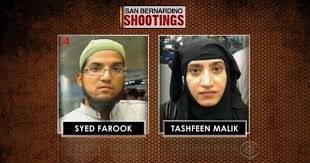
Tashfeen Malik and Syed Rizwan Farook
But the article did not inform readers that Farook and Malik were Muslims acting in the name of Islam.
The story quoted Harold Shaw, special agent in charge of the FBI’s Boston Field Office, as saying: “San Bernardino taught us something very significant. They [the killers] were not on the radar.”
But the article omitted “something very significant”: Farook and Malik had melded perfectly into American society before their outrage.
Thus, the only factor that could have put them “on the radar” as potential terrorists was their being Muslims.
And in an America driven by Political Correctness, noting that would have been verboten.
Click here: Tight security planned for upcoming Boston Marathon – The Boston Globe
NBC News carried a story on “How the Boston Marathon is Using Security Technology.”
The story then described how police used a high-tech partner, Esri, to track, in real-time, the progress of the morning’s race.
“When you look [at] security, there’s three legs to the stool: People, process and technology,” said Arnette Heintze, CEO and co-founder of Hillard Heintze, an investigation and security risk management company.
Click here: How the Boston Marathon is Using Security Technology – NBC News
Yet for all the gushing kudos leveled at the new uses of sophisticated technology for keeping people safe, one thing was conspicuously ignored.
The opening paragraph, “Three years after a deadly bombing at the Boston Marathon….” left unnamed those had made the use of this technology necessary–Tamerlan and Dzhokhar Tsarnaev.
Nor did it mention that Dzhokhar had laid out, in a note, his reason for attacking innocent men and women: “We Muslims are one body, you hurt one you hurt us all.
“Well at least that’s how Muhammed wanted it to be forever. The ummah [Islamic community] is beginning to rise.
“Know you are righting men who look into the barrel of your gun and see heaven, how how can you compete with that. We are promised victory and will surely get it.”
Click here: Text from Dzhokhar Tsarnaev’s note left in Watertown boat – The Boston Globe
Of all the Democratic and Republican Presidential candidates in 2016, only Donald Trump dared to say the politically un-sayable: Islam is at war with us.
And this candor—coupled with repeated Islamic atrocities—gained him both the Republican nomination and the White House.
ABC NEWS, ALTERNET, AMERICA: INSIDE OUT, AMERICABLOG, AP, BABY BOOMER RESISTANCE, BBC, BLOOMBERG NEWS, BUZZFEED, CBS NEWS, CNN, CROOKS AND LIARS, DAILY KOZ, DAVID SHOENBRUN, DONALD TRUMP, DRUG-TESTING, EMPLOYERS RESPONSIBILITY ACT, FACEBOOK, FISHER INVESTMENTS, FIVETHIRTYEIGHT, FORBES MAGAZINE, HARPER’S MAGAZINE, HUFFINGTON POST, KENNETH FISHER, MEDIA MATTERS, MEDICAL INSURANCE, MOTHER JONES, MOVEON, MSNBC, NBC NEWS, NEW REPUBLIC, NEWSDAY, NEWSWEEK, NPR, PBS NEWSHOUR, POLITICO, POLITICUSUSA, RAW STORY, REPUBLICANS, REUTERS, Ronald Reagan, SALON, SEATTLE TIMES, SLATE, TALKING POINTS MEMO, THE ATLANTIC, THE CHICAGO SUN-TIMES, THE CHICAGO TRIBUNE, THE DAILY BEAST, THE DAILY BLOG, THE GUARDIAN, THE HILL, THE HUFFINGTON POST, THE LOS ANGELES TIMES, THE NATION, THE NEW REPUBLIC, THE NEW YORK TIMES, THE NEW YORKER, THE VILLAGE VOICE, THE WASHINGTON POST, THINKPROGRESS, TIME, TRUTHDIG, TRUTHOUT, TWITTER, TWO POLITICAL JUNKIES, U.S. NEWS & WORLD REPORT, UNEMPLOYMENT, UP, UPI, USA TODAY, WAL-MART, WEALTH GAP
In Bureaucracy, History, Law, Law Enforcement, Politics, Social commentary on November 1, 2017 at 12:15 am
America can quickly find employment for willing-to-work job-seekers—by installing a nationwide Employers Responsibility Act. Its last seven provisions would read as follows:
(9) Employers refusing to hire would be required to pay an additional “crime tax.”
Sociologists and criminologists agree that “the best cure for crime is a job.” Thus, employers who refuse to hire contribute to a growing crime rate in this Nation. Such non-hiring employers would be required to pay an additional tax, which would be earmarked for agencies of the criminal justice system at State and Federal levels.
(10) The seeking of “economic incentives” by companies in return for moving to or remaining in cities/states would be strictly forbidden.
Such “economic incentives” usually:
- allow employers to ignore existing laws protecting employees from unsafe working conditions;
- allow employers to ignore existing laws protecting the environment;
- allow employers to pay their employees the lowest acceptable wages, in return for the “privilege” of working at these companies; and/or
- allow employers to pay little or no business taxes, at the expense of communities who are required to make up for lost tax revenues.
(11) Employers who continue to make such overtures would be criminally prosecuted for attempted bribery or extortion:
- Bribery, if they offered to move to a city/state in return for “economic incentives,” or
- Extortion, if they threatened to move their companies from a city/state if they did not receive such “economic incentives.”
This would protect employees against artificially-depressed wages and unsafe working conditions; protect the environment in which these employees live; and protect cities/states from being pitted against one another at the expense of their economic prosperity.
(12) The U.S. Departments of Justice and Labor would regularly monitor the extent of employer compliance with the provisions of this act.
Among these measures: Sending undercover agents, posing as highly-qualified job-seekers, to apply at companies—and then vigorously prosecuting those employers who blatantly refused to hire despite their proven economic ability to do so.
This would be comparable to the long-time and legally-validated practice of using undercover agents to determine compliance with fair-housing laws.
(13) The Justice Department and/or the Labor Department would be required to maintain a publicly-accessible database on those companies that have been cited, sued and/or convicted for such offenses as:
- discrimination,
- harassment,
- health and/or safety violations or
- violating immigration laws.
Employers would be legally required to regularly provide such information to these agencies, so that it would remain accurate and up-to-date.
Such information would arm job applicants with vital information about the employers they were approaching. They could thus decide in advance if an employer is deserving of their skills and dedication.
As matters now stand, employers can legally demand to learn even the most private details of an applicant’s life without having to disclose even the most basic information about themselves and their history of treating employees.
(14) CEOs whose companies employ illegal aliens would be held directly accountable for the actions of their subordinates. Upon conviction, the CEO would be sentenced to a mandatory prison term of at least 10 years.
This would prove a more effective remedy for controlling illegal immigration than stationing tens of thousands of soldiers on the U.S./Mexican border. With CEOs forced to account for their subordinates’ actions, they would take drastic steps to ensure their companies complied with Federal immigration laws.
Without employers eager to hire illegal aliens at a fraction of the money paid to American workers, the invasions of illegal job-seekers would quickly come to an end.
(15) A portion of employers’ existing Federal taxes would be set aside to create a national clearinghouse for placing unemployed but qualified job-seekers.
* * * * *
For thousands of years, otherwise highly intelligent men and women believed that kings ruled by divine right. That kings held absolute power, levied extortionate taxes and sent countless millions of men off to war—all because God wanted it that way.
That lunacy was dealt a deadly blow in 1776 when American Revolutionaries threw off the despotic rule of King George III of England.
But today, millions of Americans remain imprisoned by an equally outrageous and dangerous theory: The Theory of the Divine Right of Employers.

Summing up this employer-as-God attitude, Calvin Coolidge still speaks for the overwhelming majority of employers and their paid shills in government: “The man who builds a factory builds a temple, and the man who works there worships there.”
America can no longer afford such a dangerous fallacy as the Theory of the Divine Right of Employers.
Americans did not win their freedom from Great Britain—and its enslaving doctrine of “the divine right of kings”—-by begging for their rights.
And Americans will not win their freedom from their corporate masters–-and the equally enslaving doctrine of “the divine right of employers”—-by begging for the right to work and support themselves and their families.
Corporations can—and do—spend millions of dollars on TV ads, selling lies—lies such as the “skills gap,” and how if the wealthy are forced to pay their fair share of taxes, jobs will inevitably disappear.
But Americans can choose to reject those lies—and demand that employers behave like patriots instead of predators.
ABC NEWS, ALTERNET, AMERICA: INSIDE OUT, AMERICABLOG, AP, BABY BOOMER RESISTANCE, BBC, BLOOMBERG NEWS, BUZZFEED, CBS NEWS, CNN, CROOKS AND LIARS, DAILY KOZ, DAVID SHOENBRUN, DONALD TRUMP, DRUG-TESTING, EMPLOYERS RESPONSIBILITY ACT, FACEBOOK, FISHER INVESTMENTS, FIVETHIRTYEIGHT, FORBES MAGAZINE, HARPER’S MAGAZINE, HUFFINGTON POST, KENNETH FISHER, MEDIA MATTERS, MEDICAL INSURANCE, MOTHER JONES, MOVEON, MSNBC, NBC NEWS, NEW REPUBLIC, NEWSDAY, NEWSWEEK, NPR, PBS NEWSHOUR, POLITICO, POLITICUSUSA, RAW STORY, REPUBLICANS, REUTERS, Ronald Reagan, SALON, SEATTLE TIMES, SLATE, TALKING POINTS MEMO, THE ATLANTIC, THE CHICAGO SUN-TIMES, THE CHICAGO TRIBUNE, THE DAILY BEAST, THE DAILY BLOG, THE GUARDIAN, THE HILL, THE HUFFINGTON POST, THE LOS ANGELES TIMES, THE NATION, THE NEW REPUBLIC, THE NEW YORK TIMES, THE NEW YORKER, THE VILLAGE VOICE, THE WASHINGTON POST, THINKPROGRESS, TIME, TRUTHDIG, TRUTHOUT, TWITTER, TWO POLITICAL JUNKIES, U.S. NEWS & WORLD REPORT, UNEMPLOYMENT, UP, UPI, USA TODAY, WAL-MART, WEALTH GAP
In Bureaucracy, History, Law, Law Enforcement, Politics, Social commentary on October 31, 2017 at 12:10 am
An Employers Responsibility Act (ERA) would simultaneously address the following evils for which employers are directly responsible:
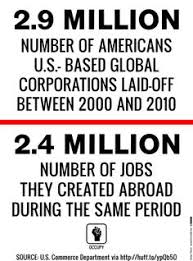
- The loss of jobs within the United States owing to companies’ moving their operations abroad—solely to pay substandard wages to their new employees.
- The mass firings of employees which usually accompany corporate mergers or acquisitions.
- The widespread victimization of part-time employees, who are not legally protected against such threats as racial discrimination, sexual harassment and unsafe working conditions.
- The refusal of many employers to create better than menial, low-wage jobs.
- The widespread employer practice of extorting “economic incentives” from cities or states in return for moving to or remaining in those areas. Such “incentives” usually absolve employers from complying with laws protecting the environment and/or workers’ rights.
- The refusal of many employers to provide medical and pension benefits—nearly always in the case of part-time employees, and, increasingly, for full-time, permanent ones as well.
- Rising crime rates, due to rising unemployment.
Among its provisions:
(1) American companies that close plants in the United States and open others abroad would be forbidden to sell products made in those foreign plants within the United States.
This would protect both American and foreign workers from employers seeking to profit at their expense. American workers would be ensured of continued employment. And foreign laborers would be protected against substandard wages and working conditions.
Companies found violating this provision would be subject to Federal criminal prosecution. Guilty verdicts would result in heavy fines and lengthy imprisonment for their owners and top managers.
(2) Large companies (those employing more than 100 persons) would be required to create entry-level training programs for new, future employees.
These would be modeled on programs now existing for public employees, such as firefighters, police officers and members of the armed services.
Such programs would remove the employer excuse, “I’m sorry, but we can’t hire you because you’ve never had any experience in this line of work.” After all, the Air Force has never rejected an applicant because, “I’m sorry, but you’ve never flown a plane before.”
This Nation has greatly benefited from the humane and professional efforts of the men and women who have graduated from public-sector training programs. There is no reason for the private sector to shun programs that have succeeded so brilliantly for the public sector.
(3) Employers would receive tax credits for creating professional, well-paying, full-time jobs.
This would encourage the creation of better than the menial, dead-end, low-paying and often part-time jobs which exist in the service industry. Employers found using such tax credits for any other purpose would be prosecuted for tax fraud.
(4) A company that acquired another—through a merger or buyout—would be forbidden to fire en masse the career employees of that acquired company.
This would be comparable to the protection existing for career civil service employees. Such a ban would prevent a return to the predatory “corporate raiding” practices of the 1980s, which left so much human and economic wreckage in their wake.
The wholesale firing of employees would trigger the prosecution of the company’s new owners. Employees could still be fired, but only for provable just cause, and only on a case-by-case basis.
(5) Employers would be required to provide full medical and pension benefits for all employees, regardless of their full-time or part-time status.
Increasingly, employers are replacing full-time workers with part-time ones—solely to avoid paying medical and pension benefits.
Requiring employers to act humanely and responsibly toward all their employees would encourage them to provide full-time positions—and hasten the death of this greed-based practice.
(6) Employers of part-time workers would be required to comply with all federal labor laws.
Under current law, part-time employees are not protected against such abuses as discrimination, sexual harassment and unsafe working conditions. Closing this loophole would immediately create two positive results:
- Untold numbers of currently-exploited workers would be protected from the abuses of predatory employers; and
- Even predatorily-inclined employers would be encouraged to offer permanent, fulltime jobs rather than only part-time ones—since a major incentive for offering part-time jobs would now be eliminated.
(7) Employers would be encouraged to hire to their widest possible limits,through a combination of financial incentives and legal sanctions. Among those incentives:
Employers demonstrating a willingness to hire would receive substantial Federal tax credits, based on the number of new, permanent employees hired per year.
Employers claiming eligibility for such credits would be required to make their financial records available to Federal investigators. Employers found making false claims would be prosecuted for perjury and tax fraud, and face heavy fines and imprisonment if convicted.
(8) Among those sanctions: Employers refusing to hire could be required to prove, in court:
- Their economic inability to hire further employees, and/or
- The unfitness of the specific, rejected applicant.
Companies found guilty of unjustifiably refusing to hire would face the same penalties as now applying in cases of discrimination on the basis of age, race, sex and disability.
Two benefits would result from this:
- Employers would thus fund it easier to hire than to refuse to do so; and
- Job-seekers would no longer be prevented from even being considered for employment because of arbitrary and interminable “hiring freeze.”
ABC NEWS, ALTERNET, AMERICA: INSIDE OUT, AMERICABLOG, AP, BABY BOOMER RESISTANCE, BBC, BLOOMBERG NEWS, BUZZFEED, CBS NEWS, CNN, CROOKS AND LIARS, DAILY KOZ, DAVID SHOENBRUN, DONALD TRUMP, DRUG-TESTING, EMPLOYERS RESPONSIBILITY ACT, FACEBOOK, FISHER INVESTMENTS, FIVETHIRTYEIGHT, FORBES MAGAZINE, HARPER’S MAGAZINE, HUFFINGTON POST, KENNETH FISHER, MEDIA MATTERS, MEDICAL INSURANCE, MOTHER JONES, MOVEON, MSNBC, NBC NEWS, NEW REPUBLIC, NEWSDAY, NEWSWEEK, NPR, PBS NEWSHOUR, POLITICO, POLITICUSUSA, RAW STORY, REPUBLICANS, REUTERS, Ronald Reagan, SALON, SEATTLE TIMES, SLATE, TALKING POINTS MEMO, THE ATLANTIC, THE CHICAGO SUN-TIMES, THE CHICAGO TRIBUNE, THE DAILY BEAST, THE DAILY BLOG, THE GUARDIAN, THE HILL, THE HUFFINGTON POST, THE LOS ANGELES TIMES, THE NATION, THE NEW REPUBLIC, THE NEW YORK TIMES, THE NEW YORKER, THE VILLAGE VOICE, THE WASHINGTON POST, THINKPROGRESS, TIME, TRUTHDIG, TRUTHOUT, TWITTER, TWO POLITICAL JUNKIES, U.S. NEWS & WORLD REPORT, UNEMPLOYMENT, UP, UPI, USA TODAY, WAL-MART, WEALTH GAP
In Bureaucracy, History, Law, Law Enforcement, Politics, Social commentary on October 30, 2017 at 12:41 am
President Donald Trump wants huge tax cuts for corporations. He wants to cut the corporate income tax rate from its current 35% to 20%.
He claims that, with this extra income, CEOs will invest in their businesses and create tens of thousands of new jobs.
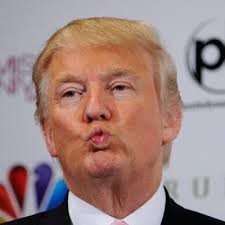
Donald Trump
But that’s not what some of the biggest S&P 500 companies are saying they’ll do. The people they are seeking to please are investors, not workers. And, least of all, those seeking work but unable to find employers willing to hire.
Darius Adamczyk, CEO of Honeywell International Inc., said “tax reform” would “offer greater flexibility for Honeywell.” He added that the corporation would invest more cash in the United States to pay for mergers and acquisitions, share buybacks and paying down debt.
He didn’t say anything about hiring more workers.
According to Moody’s Investors Service, American corporations have stockpiled nearly $1.8 trillion in cash overseas.
Apple has more than $240 billion of that total.
Apple’s CEO Tim Cook says the company wants to bring back offshore cash if tax rates for doing so were lower: “What we would do with it, let’s wait and see exactly what it is, but as I’ve said before we are always looking at acquisitions.”
Apple expects a tax windfall if Trump’s tax-cutting plan passes Congress. And analysts openly expect Apple to use those monies to boost its capital return program via buybacks, dividends and perhaps making a big acquisition.
What analysts don’t expect Apple to do with its tax cut monies is create new American jobs.
Most of the offshore cash brought home by U.S. companies in past tax holidays was used to buy back shares or make acquisitions, not to fund investments in production capacity or jobs.
Corporations were not legally required to use those tax cut savings to hire more workers. And Trump’s tax cut proposal has no such requirement, either.
According to John Divine, staff writer for U.S. News & World Report‘s Money section: “As long as there are no strings attached on how or where companies spend these savings, taxpayers get a raw deal.”
Tax cuts for the wealthy have been a favorite—perhaps the favorite—Republican mantra since 1980, when former California Governor Ronald Reagan ran for and became President.
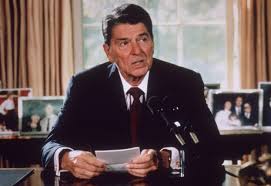
Ronald Reagan
Reagan, like every major Republican Presidential candidate since, promised that giving tax cuts to the wealthy would prove highly beneficial to ordinary workers.
The official name for this policy was “supply side economics.” In reality, it was known—and functioned—as “trickle down economics.”
“A rising tide lifts all boats,” claimed Reagan. A more realistic slogan for the results of his economics policies would have been: “A rising tide lifts some yachts.”
Among those charting Reagan’s economics legacy as President was former CBS Correspondent David Schoenbrun. In his bestselling autobiography, America Inside Out: At Home and Abroad from Roosevelt to Reagan, he noted:
- On January 28, 1981, keeping a pledge to his financial backers in the oil industry, Reagan abolished Federal controls on the price of oil.
- Within a week, Exxon, Texaco and Shell raised gasoline prices and prices of home heating oil.
- Reagan saw it as his duty to put a floor under prices, not a ceiling above them.
- Reagan believed that when government helped business it wasn’t interfering. Loaning money to bail out a financially incompetent Chrysler was “supporting the free enterprise system.”
- But putting a high-profits tax on price-gouging corporations or filing anti-trust suits against them was “Communistic” and therefore intolerable.
- Tax-breaks for wealthy businesses meant helping America become stronger.
- But welfare for the poor or the victims of a predatory marketplace economy weakened America by sapping its morale.
“In short,” wrote Schoenbrun, “welfare for the rich is good for America. But welfare for the poor is bad for America, even for the poor themselves, for it encourages them to be shiftless and lazy.
“Somehow, loans to the inefficient management of American corporations would not similarly encourage them in their inefficient methods.”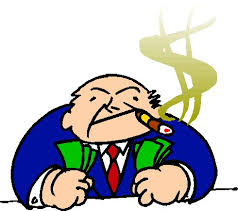
To be unemployed in America is considered by most Americans—including the unemployed—the same as being a bum.
And Republicans are quick to point accusing fingers at those willing-to-work Americans who can’t find willing-to-hire employers.
According to Republicans such as Mitt Romney and Herman Cain: If you can’t find a job, it’s entirely your fault.
And when Republicans are forced—by public pressure or Democratic majorities—to provide benefits to the unemployed, these nearly always come at a price.
Those receiving subsistence monies are, in many states, required to undergo drug-testing, even though there is no evidence of widespread drug-abuse among the unemployed.
But America can put an end to this “I’ve-got-mine-and-the-hell-with-you” job-killing arrogance of people like Kenneth Fisher.
The answer lies in three words: Employers Responsibility Act (ERA).
If passed by Congress and vigorously enforced by the U.S. Departments of Justice and Labor, an ERA would ensure full-time, permanent and productive employment for millions of capable, job-seeking Americans.
And it would achieve this without raising taxes or creating controversial government “make work” programs.
Such legislation would legally require employers to demonstrate as much initiative for hiring as job-seekers are now expected to show in searching for work.
How it would work will be outlined in the next two columns.
ABC NEWS, ADOLF HITLER, ALTERNET, AMERICABLOG, AP, ARAB SHEIKS, “DROOPERS”, BABY BOOMER RESISTANCE, BBC, BLACKS, BLOOMBERG NEWS, BUMS, BUZZFEED, CAITLYN JENNER, CBS NEWS, CNN, COSTUMES, CRAZED KILLERS, CROOKS AND LIARS, DAILY KOS, DAILY KOZ, ESCAPED MENTAL PATIENTS, FACEBOOK, FAT PERSONS, FIVETHIRTYEIGHT, GEISHAS, HALLOWEEN, HARPER’S MAGAZINE, HILLARY CLINTON, HOMOSEXUALS, HUFFINGTON POST, ILLEGAL ALIENS, INDIAN SNAKE CHARMERS, MEDIA MATTERS, MEXICANS, MOTHER JONES, MOVEON, MSNBC, NAUGHTY PRIESTS, NBC NEWS, NEW REPUBLIC, NEWSDAY, NEWSWEEK, NPR, NURSES, PBS NEWSHOUR, PIMPS, POLITICAL CORRECTNESS, POLITICO, POLITICUSUSA, RAW STORY, REUTERS, ROBERT E. LEE, SALON, SAN FRANCISCO CASTRO DISTRICT, SEATTLE TIMES, SEXY CONVICTS, SEXY HAREM SLAVES, SEXY PRISON GUARDS, SLATE, TALKING POINTS MEMO, TERRORISTS, THE ATLANTIC, THE CHICAGO SUN-TIMES, THE CHICAGO TRIBUNE, THE DAILY BEAST, THE DAILY BLOG, THE GUARDIAN, THE HILL, THE HUFFINGTON POST, THE INTERCEPT, THE LOS ANGELES TIMES, THE NATION, THE NEW REPUBLIC, THE NEW YORK TIMES, THE NEW YORKER, THE VILLAGE VOICE, THE WALL, THE WASHINGTON POST, THINKPROGRESS, TIME, TRUTHDIG, TRUTHOUT, TWITTER, U.S. NEWS & WORLD REPORT, UP, UPI, USA TODAY
In Business, History, Politics, Social commentary on October 26, 2017 at 12:58 am
Halloween isn’t just for kids anymore.
In 2017, about 179 million Americans will participate in Halloween, and will spend an estimated $9.1 billion. Yes, that’s with a “b”. That will be up from 2016, when 171 million Americans spent $8.4 billion.
The average American will spend $25 on candy, $30 on Halloween decor, and costumes (men will spend $96 each, women $77).

Those putting out this avalanche of money will, of course, be adults. And a lot of those costumes will be worn by adults at parties across the nation.
This will be especially true in San Francisco.
In 1979, Halloween in its Castro District shifted from being a children’s event to a celebration among homosexuals.
The massive crowds quickly overwhelmed the streets, mass transit and due to the Castro’s location along two major transport corridors, disrupted traffic flow well outside the neighborhood.
In 2002, 500,000 people celebrated Halloween in the Castro and four people were stabbed.
It continued to grow into a massive annual street party until 2006, when a shooting wounded nine people and prompted the city to call off the event.
In 2007, 600 police were deployed in the Castro on Halloween. By 2010, San Francisco had banned the event in the Castro, directing celebrants to various balls and parties elsewhere.
But there’s another force working to suppress Halloween joy among its participants: Political Correctness.
A number of articles highlight a series of costumes it’s now Politically Incorrect to wear on Halloween. As a result, it’s now virtually impossible to enjoy this occasion without fearing that you’ll hurt the Politically Correct sensitivities of almost every group imaginable.
For example:
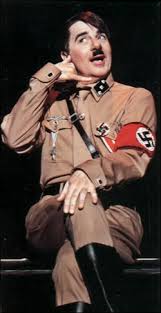
Adolf Hitler: PC types damn it as offensive and upsetting to many people—such as Jews generally and Holocaust survivors in particular. (The same could be said for any actor who portrays Hitler in a movie, such as Downfall or The Bunker.)
Homeless Persons: Such costumes will hurt the feelings of bums who won’t be attending Halloween parties anyway.

Illegal Alien: It’s not nice to spotlight people who constantly violate the immigration laws of the United States.
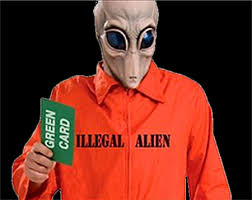
Terrorist: You might upset Islamics, who make up the vast majority of the world’s terrorists.

Others on the list of groups that uber-liberals believes it’s Politically Incorrect to dress up as include:
- Blacks (if you’re white).
- Naughty priests: It’s offensive to mock religious hypocrites who violate the bodies of children.
- Caitlyn Jenner: It’s cruel to make fun of a man who, as a man, won gold medals as an Olympic athlete—and then had sophisticated surgery to make himself look like a woman.
- Mexicans (such as a woman wearing a mariachi outfit or a man sporting a sombrero, serape and drooping moustache).
- Pimp: It’s offensive to blacks—especially those who make their living through the sale of women’s bodies.
- Sexy nurse: Because nursing is a serious profession—and everybody knows that nurses never enter into romances with doctors.
- Fat costumes: It will hurt the feelings of people who can barely fit into an airplane seat—many of them because they simply eat too much.
- Crazed Killer: Because it’s not fair to make fun of psychopathic murderers who prey on innocent men, women and children.
- Sexy Convict/Prison Guard: You could be accused of “trivializing” the United States prison system.
- The Wall: Wearing an imitation brick wall reminds people that millions of Hispanics have illegally violated America’s immigration laws—and millions more intend to.
- Arab Sheik: It’s not nice to dress like an OPEC board member in a long flowing robe and headdress.
- Sexy Harem Slave: Consider this the flip side of “Arab Sheik.” It’s uncool to remind people that women throughout the Islamic world are treated like chattel.
- “Droopers”: An obvious parody of the “Hooters” outfit, this features a fake pair of drooping breasts, thus winning it dual charges of “ageism” and “sexism.”
- Geisha: You could be accused of “cultural appropriation.”
- Hillary in Prison: Depicting a woman who often skirted the law as paying the price for it is anti-feminist.
- Robert E. Lee: Once a Southern icon of the Civil War, he is now damned as a racist defender of slavery.
- Escaped Mental Patient: Wearing an imitation straitjacket makes fun of real-life whackjobs who need to be restrained—for their own safety and that of others.
- Indian Snake Charmer: This costume supposedly appropriates Middle Eastern culture and has “disturbing sexual undertones”—if you equate snakes with penises.
If you follow the guidelines of these articles, you might as well skip Halloween altogether.
Yet no one objects to children—or adults—dressing up as pirates like Blackbeard, who once terrorized the oceans as modern-day terrorists menace the world.
No one objects to those who dress up like skeletons—when almost everyone has lost a friend or family member to death.
No one objects to those who dress up as witches, who have been associated with evil for hundreds of years.
No one objects to those who dress up as Satan—the literal personification of evil for millions of Christians, Jews and Muslims.
The whole idea of Halloween is to momentarily step into a character that’s utterly different from you.
So if you are a terrorist, try dressing up at Halloween as Dr. Albert Schweitzer or Florence Nightingale.
ABC NEWS, ALTERNET, AMERICAN TABLOID, ANTI-CASTRO CUBANS, AP, ASSASSINATION, BAY OF PIGS, BUZZFEED, CBS NEWS, CIA, CLAY SHAW, CNN, COMMUNISM, CROOKS AND LIARS, CUBA, CUBAN MISSILE CRISIS, DAILY KOZ, DONALD TRUMP, FACEBOOK, FBI, FIDEL CASTRO, FLORIDA, GUS RUSSO, JACK RUBY, JFK (FILM), JFK ASSASSINATION RECORDS COLLECTION ACT, JIM GARRISON, JOHN F. KENNEDY, JOINT CHIEFS OF STAFF, KEVIN COSTNER, LEE HARVEY OSWALD, LIVE BY THE SWORD, LYNDON B. JOHNSON, MAFIA, MOTHER JONES, MOVEON, NBC NEWS, NEWSWEEK, NPR, OLIVER STONE, POLITICO, RAW STORY, REUTERS, ROBERT F. KENNEDY, SALON, SEATTLE TIMES, SLATE, THE ATLANTIC, THE CHICAGO SUN-TIMES, THE CHICAGO TRIBUNE, THE DAILY BEAST, THE GUARDIAN, THE HILL, THE HUFFINGTON POST, THE LOS ANGELES TIMES, THE NATION, THE NEW YORK TIMES, THE WASHINGTON POST, TIME, TWITTER, U.S. NEWS & WORLD REPORT, UP, UPI, USA TODAY, WARREN COMMISSION
In Bureaucracy, History, Law, Military, Politics, Social commentary on October 23, 2017 at 11:58 am
In 1991, director Oliver Stone ignited renewed controversy about the assassination of President John F. Kennedy on November 22, 1963.
His film, “JFK,” presented the murder as the result of a conspiracy involving almost everyone. It starred Kevin Costner as idealistic New Orleans District Attorney Jim Garrison.
By contrast, the real Garrison was reputedly linked to the Mafia. In 1973, Garrison was tried and found not guilty for accepting bribes to protect illegal pinball machine operations.
Garrison’s “search for the truth” targeted a businessman named Clay Shaw. On March 1, 1969, Shaw was unanimously acquitted less than one hour after the case went to the jury
To gauge historical accuracy of “JFK”: Stone gave Garrison an eloquent final speech to the jury—a speech he never delivered.
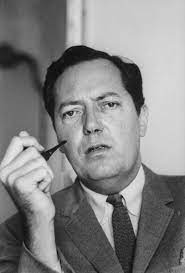
Jim Garrison
But the public hysteria triggered by the film led Congress to pass the JFK Assassination Records Collection Act in 1992. As a result, millions of pages of documents related to the assassination were made public in the 1990s—but not all.
About 3,100 never-before-seen documents—and the full text of more than 30,000 files previously released only in part—have been unavailable until now. Most of those documents were created inside the CIA, the FBI and the Justice Department. Under the law they must be released, in full, by October 26 unless President Donald Trump decides otherwise.
But for investigative reporter Gus Russo, the secrets behind Kennedy’s murder are no mystery.
Russo is the author of Live By the Sword: The Secret War Against Castro and the Death of JFK. Published in 1998, it is almost certainly the definitive account of the Kennedy assassination.
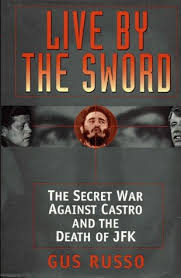
Russo reaches some startling—but highly documented—conclusions. Among these:
- “John and Robert Kennedy knew what they were doing. They waged a vicious war against Fidel Castro–a war someone had to lose.”
- The loser turned out to be John F. Kennedy.
- Their war began immediately after taking office on January 20, 1961.
- On April 17, 1961, more than 1,400 Cuban invaders–backed by American air power—landed JOINT at the Bay of Pigs. They were quickly overwhelmed, with hundreds of the men taken prisoner.
- Although it’s commonly believed that the Cuban Missile Crisis ended America’s efforts to overthrow Fidel Castro, this was not true.
- While continuing the campaign of sabotage throughout Cuba, the Kennedys were preparing a fullscale American invasion of the island—just one month before the November, 1964 Presidential election.
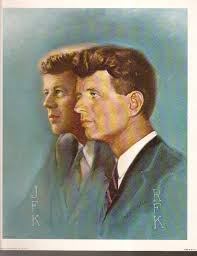
John F. and Robert F. Kennedy
- On October 4, 1963, the Joint Chiefs of Staff submitted its latest version of the invasion plan, known as OPLAN 380-63. Its timetable went:
- (1) January, 1964: Infiltration into Cuba by Cuban exiles. (2) July 15, 1964: U.S. conventional forces join the fray. (3) August 3, 1964: All-out U.S. air strikes on Cuba. (4) October 1, 1964: Full-scale invasion to install “a government friendly to the U.S.”
- Oswald, a former Marine, was a committed Marxist–whose hero was Castro.
- The CIA’s ongoing campaign to overthrow and/or assassinate Castro was an open secret throughout the Gulf.
- Oswald visited New Orleans in the spring of 1963.
- There he learned that Castro was in the crosshairs of the CIA.
- For this, he blamed John F. Kennedy.
- Oswald told his Russian-born wife, Marina: “Fidel Castro needs defenders. I’m going to join his army of volunteers.”
- Lee Harvey Oswald assassinated Kennedy.
- He did it alone.
- Jack Ruby, a Dallas nightclub owner, murdered Oswald because he was distraught over Kennedy’s death.
- Ruby was not part of a Mafia conspiracy to silence Oswald.
- Skeptics of the Warren Commission–which concluded that Oswald had acted alone–asked the wrong question: “Who killed Kennedy?”
- According to Gus Russo, they should have asked: “Why was he killed?”
- And his answer: “The Kennedys’ relentless pursuit of Castro and Cuba backfired in tragedy on that terrible day in November, 1963.”
- Following the JFK assassination, there was a cover-up.
- Its purpose: To protect the reputation of the United States Government—and that of its newly-martyred President.
- The CIA and FBI concealed the CIA-Mafia assassination plots against Castro from the Warren Commission assigned to investigate Kennedy’s murder.
- Other government officials participating in the cover-up included Attorney General Robert F. Kennedy and President Lyndon B. Johnson.
- Ironically, this secrecy ignited the widespread–and false–belief that the President had died at the hands of a government conspiracy.
- Robert Kennedy feared that his relentless pursuit of Castro might have led Castro to “take out” JFK first.
- Robert Kennedy’s fears and guilt were compounded by the fact that, while waging war on Castro, he had waged an equally ruthless crusade against organized crime.
- He knew that some of the mobsters he had tried to send to prison had played a major role in the CIA’s efforts to “hit” Castro. Had the Mafia–believing itself the victim of a double-cross–put out a “contract” on JFK instead?
- It was a question that haunted RFK until the day he died.
- Fearing his own assassination if he continued Kennedy’s efforts to murder Castro, President Johnson ordered the CIA to halt its campaign to overthrow and/or assassinate the Cuban leader.
Other legacies of America’s twisted obsession with Cuba
- The huge Cuban community throughout Florida–and especially Miami–continues to exert a blackmailing influence on American politics.
- Unwilling to risk their own lives, they hope that a Right-wing President will order the military to overthrow the Castro regime.
ABC NEWS, ADOLF HITLER, ALTERNET, AP, BARACK OBAMA, BOB CORKER, BUZZFEED, CBS NEWS, CIA, CNN, CROOKS AND LIARS, DAILY KOZ, DONALD TRUMP, FACEBOOK, FREDERICA WILSON, FRIEDRICH PAULUS, ISIS, JOHN MCCAIN, MALI, MOTHER JONES, MOVEON, NATIONAL FOOTBALL LEAGUE, NBC NEWS, NEWSWEEK, NIGER, NORTH KOREA, NPR, POLITICO, PUERTO RICO, RAW STORY, REUTERS, SALON, SEATTLE TIMES, SLATE, STALINGRAD, THE ATLANTIC, THE CHICAGO SUN-TIMES, THE CHICAGO TRIBUNE, THE DAILY BEAST, THE GUARDIAN, THE HILL, THE HUFFINGTON POST, THE LOS ANGELES TIMES, THE NATION, THE NEW YORK TIMES, THE WASHINGTON POST, TIME, TWITTER, U.S. NEWS & WORLD REPORT, UP, UPI, USA TODAY, WORLD WAR ii
In Bureaucracy, History, Military, Politics, Social commentary on October 19, 2017 at 12:21 pm
On October 4, four American Special Forces soldiers were ambushed and slain on the border of Niger and Mali. Their killers were members of an ISIS-affiliated guerrilla group.
The next day, President Donald Trump attacked one of his favorite targets—the free press—as “fake news.”
Over the weekend of October 7-8, Trump went golfing. Then he took to Twitter and let his venom flow. His victims included:
- The National Football League;
- Puerto Rico;
- North Korea;
- Bob Corker, Republican United States Senator from Tennessee and the chairman of the Senate Foreign Relations Committee.
For 12 days after the tragedy, Trump said nothing.
Then, during an October 16 press conference in the White House Rose Garden, a reporter asked him about his silence.
So Trump claimed—falsely—that earlier Presidents—including Barack Obama—had never or rarely called or written family members of soldiers who died on duty.
.jpg/220px-Donald_Trump_August_19,_2015_(cropped).jpg)
Donald Trump
But it was his call to Myeshia Johnson, the widow of Sergeant La David Johnson, that ignited a firestorm.
According to Florida Democratic Representative Frederica Wilson, Trump’s condolence call was brutally insensitive. Wilson was riding in a limousine with Johnson and heard the conversation on speakerphone.
“He knew what was signing up for, but I guess it hurts anyway,” Wilson quoted Trump as telling the grieving widow.
Cowanda Jones-Johnson, a family member who raised Johnson, told CNN that Wilson’s account of the call was “very accurate.”
Veterans such as Arizona United States Senator John McCain have expressed their outrage at Trump’s callousness. But this shouldn’t have come as a surprise to anyone.
On January 21, Donald Trump—on his first full day as President—visited CIA headquarters in Langley, Virginia.
Officially, he was there to pay tribute to the men and women who dedicate their lives to discovering when and where America’s enemies are planning to strike. And to countering those threats.
And now Trump was appearing before what, to CIA employees, was the agency’s most sacred site: The star-studded memorial wall honoring the 117 CIA officers who had fallen in the line of duty.
So Trump spent much of his time talking about himself.
Among the worst examples:
- Somebody said, are you young? I said, I think I’m young. You know, I was stopping—when we were in the final months of that campaign, four stops, five stops, seven stops. Speeches, speeches, in front of 25,000, 30,000 people, 15,000, 19,000 from stop to stop. I feel young….
- And I was explaining about the numbers. We did a thing yesterday at the speech. Did everybody like the speech? I’ve been given good reviews. But we had a massive field of people. You saw them. Packed. I get up this morning, I turn on one of the networks, and they show an empty field….
- And they said, Donald Trump did not draw well. I said, it was almost raining, the rain should have scared them away, but God looked down and he said, we’re not going to let it rain on your speech…..
- So a reporter for Time magazine—and I have been on their cover, like, 14 or 15 times. I think we have the all-time record in the history of Time magazine.
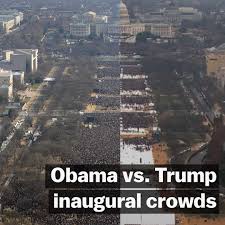
Crowds at Trump and Obama Inaugurals
In February, Trump approved and ordered a Special Forces raid in Yemen on an Al-Qaeda stronghold.
The assault resulted in the death of Navy SEAL Chief Petty Officer William “Ryan” Owens.
Disavowing any responsibility for the failure, Trump said:
“This was a mission that was started before I got here. This was something they wanted to do. They came to me, they explained what they wanted to do—the generals—who are very respected, my generals are the most respected that we’ve had in many decades, I believe. And they lost Ryan.”
* * * * *
Seventy-four years before Donald Trump took office as President of the United States, Adolf Hitler suffered a blow from which he never recovered: The surrender of his once-powerful Sixth Army at Stalingrad.
For five months, 330,000 of the German army’s finest troops had fought to capture that city on the Volga River. Then they had been surrounded by even larger Russian armies and became the besieged.
Finally, on February 2, 1943, their commanding general, Friedrich Paulus, surrendered.
Adolf Hitler flew into a rage.
- Not at the loss of 150,000 Germans who had been killed.
- Not at the agonies of the tens of thousands of others wounded.
- Not at the suffering of the 91,000 men taken prisoner.
No, what infuriated Hitler was the refusal of General Friedrich Paulus to commit suicide rather than surrender.
Knowing that no German field marshal had ever allowed himself to be taken prisoner, Hitler had, by wireless, promoted Paulus—shortly before he chose to do so.
“When the nerves break down, there is nothing left but to admit that one can’t handle the situation and to shoot oneself,” screamed Hitler.
“This hurts me so much because the heroism of so many soldiers is nullified by one single characterless weakling.”
In April, 1945, with Russian troops about to capture Berlin, Hitler, 50 feet below ground in a fortified bunker, blamed his defeat on the Germans who had given him their unconditional loyalty for 12 years.
For egomaniacal tyrants, blame always falls on others.


 Bureaucracybuster's Blog
ABC NEWS, ALTERNET, AP, BARACK OBAMA, BOB CORKER, BUZZFEED, CBS NEWS, CNN, CROOKS AND LIARS, DAILY KOZ, DONALD TRUMP, FACEBOOK, ISIS, MALI, MERCENARIES, MOTHER JONES, MOVEON, NATIONAL FOOTBALL LEAGUE, NBC NEWS, NEWSWEEK, NICCOLO MACHIAVELLI, NIGER, NORTH KOREA, NPR, POLITICO, PUERTO RICO, RAW STORY, REUTERS, SALON, SEATTLE TIMES, SLATE, STALINGRAD, THE ATLANTIC, THE CHICAGO SUN-TIMES, THE CHICAGO TRIBUNE, THE DAILY BEAST, THE GUARDIAN, THE HILL, THE HUFFINGTON POST, THE LOS ANGELES TIMES, THE NATION, THE NEW YORK TIMES, THE WASHINGTON POST, TIME, TWITTER, U.S. NEWS & WORLD REPORT, UP, UPI, USA TODAY
MERCENARIES: NO FEAR OF GOD, NO LOYALTY TO MAN
In Bureaucracy, History, Military, Politics, Social commentary on November 7, 2017 at 12:03 amOn October 4, four American Special Forces soldiers were ambushed and gunned down at the border of Niger and Mali.
For 12 days after the tragedy, President Donald Trump said nothing.
Then, during an October 16 press conference in the White House Rose Garden, a reporter asked him about his silence.
Donald Trump
So Trump claimed—falsely—that earlier Presidents—including Barack Obama—had never or rarely called or written family members of soldiers who died on duty.
But it was his call to Myeshia Johnson, the widow of Sergeant La David Johnson, that ignited a firestorm.
According to Florida Democratic Representative Frederica Wilson, Trump’s condolence call was brutally insensitive. Wilson was riding in a limousine with Johnson and heard the conversation on speakerphone.
“He knew what was signing up for, but I guess it hurts anyway,” Wilson quoted Trump as telling the grieving widow.
But maybe Sergeant Johnson didn’t know what he was signing up for.
On October 19, Pentagon officials said that a private contractor airlifted some of the troops from the scene.
Trump had sent a private aviation contractor—instead of the U.S. military—to retrieve the bodies of the four soldiers killed in Niger.
Robyn Mack, an official for U.S. Africa Command, said Texas-based Berry Aviation was “on alert during the incident and conducted casualty evacuation and transport for US and partner forces.”
Sergeant Johnson’s body was left behind when the bodies of his three fellow soldiers were evacuated. His remains were recovered two days after the extraction by Nigerien troops.
Even worse, his corpse had been so corrupted by heat that the Pentagon demanded a closed coffin for his burial service.
Contractor aircraft are typically not armed, though their crews may carry side-arms for personal protection.
It’s possible that lightly-armed private contractors were so eager to leave the danger area they did a slapdash search for bodies—and accidentally left Johnson’s behind.
Berry Aviation has also done Defense Department work in Afghanistan, Central African Republic and Burkina Faso.
Since the end of the Cold War, the American military and Intelligence communities have grown increasingly dependent on private contractors. In the past, such groups were called mercenaries.
In his 2007 bestseller, Legacy of Ashes: The History of the CIA, Tim Weiner writes:
“Patriotism for profit became a $50-billion-a-year business….The [CIA] began contracting out thousands of jobs to fill the perceived void by the budget cuts that began in 1992.
“A CIA officer could file his retirement papers, turn in his blue identification badge, go to work for a much better salary at a military contractor such as Lockheed Martin or Booz Allen Hamilton, then return to the CIA the next day, wearing a green badge….”
Much of the CIA became totally dependent on mercenaries. They appeared to work for the agency, but their loyalty was actually to their private companies. The CIA thus had two workforces-–but the private one was paid far better.
Wrote Weiner: “Legions of CIA veterans quit their posts to sell their services to the agency by writing analyses, creating cover for overseas officers, setting up communications networks, and running clandestine operations.”
One such company was Total Intelligence Solutions, founded in 2007 by Cofer Black, who had been the chief of the CIA’s counter-terrorism center on 9/11.
His partners were Robert Richer, formerly the associate deputy director of operations at the CIA, and Enrique Prado, who had been Black’s chief of counter-terror operations at the agency.
Future CIA hires followed suit: Sign up for five years, win that prized CIA “credential” and sign up for far more money with a private security company.
This situation met with full support from Right-wing “pro-business” members of Congress and Presidents like George W. Bush.
They had long championed the private sector as inherently superior to the public one. And they saw no danger that a man dedicated to enriching himself might put greed ahead of safeguarding his country.
One of Trump’s key military advisers is Erik Prince, the former head of Blackwater. Under President George W. Bush, the now-infamous mercenary company got $1 billion to provide security for American officials and soldiers in Iraq and Afghanistan.
Blackwater was also accused of abusing Iraqis and engaging in torture.
There were, however, others who could have offered a timely warning against this use of mercenaries-–had there been leaders willing to heed it.
One of these, reaching back more than 500 years ago, was the Florentine statesman, Niccolo Machiavelli, who famously warned of the dangers of relying on mercenaries.
Niccolo Machiavelli
In The Prince, Machiavelli writes:
“Mercenaries…are useless and dangerous. And if a prince holds on to his state by means of mercenary armies, he will never be stable or secure. For they are disunited, ambitious, without discipline, disloyal. They are brave among friends; among enemies they are cowards.
“They have neither the fear of God nor fidelity to man, and destruction is deferred only as the attack is. For in peace one is robbed by them, and in war by the enemy.”
Centuries after Machiavelli’s warning, Americans are realizing the bitter truth of it firsthand.
Share this: