Posts Tagged ‘UNITED STATES HOUSE OF REPRESENTATIVES’
2020 PRESIDENTIAL ELECTION, 9/11 COMMISSION, ABC NEWS, ALTERNET, AMERICABLOG, ANDREW CLYDE, AP, ARIZONA, ATTORNEYS GENERAL, BABY BOOMER RESISTANCE, BEN SASSE, BLOOMBERG, BRAD RAFFENSPERGER, BRIAN KEMP, BRIAN SICKNICK, BUZZFEED, CBS NEWS, CHRIS MURPHY, CIA, CNN, CROOKS AND LIARS, DAILY KOZ, DAVID BROOKS, DEMOCRATS, DONALD TRUMP, ELECTORAL COLLEGE, FACEBOOK, FBI, FIVETHIRTYEIGHT, FOX NEWS, GEORGIA, HARPER’S MAGAZINE, HUFFINGTON POST, JODY HICE, JOSEPH BIDEN, jOSH HAWLEY, JUSTICE DEPARTMENT, KASIE HUNT, KEN PAXTON, KEVIN MCCARTHY, LIZ CHENEY, MANU RAJU, MEDIA MATTERS, MENNESOTA, METROPOLITAN POLICE DEPARTMENT, MICHAAL FANONE, MICHIGAN, MIKE PENCE, MITT ROMNEY, MOTHER JONES, MOVEON, MSNBC, NANCY PELOSI, NBC NEWS, NEVADA, NEWSWEEK, NPR, OSAMA BIN LADEN, PAUL GOSAR, PBS NEWSHOUR, PENNSYLVANIA, POLITICO, POLITICUSUSA, RAW STORY, REPUBLICANS, REUTERS, ROBERT CONTEE, RON JOHNSON, SALON, SEATTLE TIMES, SEPTEMBER 11 2001 ATTACKS, SLATE, SUPREME COURT, TALKING POINTS MEMO, TEXAS, THE ATLANTIC, THE CHICAGO SUN-TIMES, THE CHICAGO TRIBUNE, THE DAILY BEAST, THE DAILY BLOG, THE GUARDIAN, THE HILL, THE HUFFINGTON POST, THE LOS ANGELES TIMES, THE NATION, THE NEW REPUBLIC, THE NEW YORK TIMES, THE PENTAGON, THE VILLAGE VOICE, THE WASHINGTON POST, THINKPROGRESS, TIME, TRUTHDIG, TRUTHOUT, TWITTER, TWO POLITICAL JUNKIES, U.S. NEWS & WORLD REPORT, UNITED STATES CAPITOL BUILDING, UNITED STATES HOUSE OF REPRESENTATIVES, UNITED STATES SENATE, UPI, USA TODAY, VOTER FRAUD, WASHINGTON WEEK, WISCONSIN, WONKETTE, WORLD TRADE CENTER, YAMICHE ALCINDOR
In Bureaucracy, History, Law, Law Enforcement, Politics, Social commentary on May 17, 2021 at 12:53 am
On the May 14 edition of The PBS Newshour, New York Times conservative columnist David Brooks pointed out the dilemma now facing the Republican party:
“If you look at the latest Gallup poll, Trump’s approval rating dropped 10% over the last little while, so he’s down to 39%.
“We learned, in the course of the whole Cheney thing [the ousting of Republican Wyoming Representative Liz Cheney as conference chair] that the Republican party officials were hiding from their members poll data showing how much Trump was dragging them down in certain battleground districts.
“So they are chained to a person who is fading and is dropping in popularity, and—but they can’t criticize him. So that’s called being in a pickle.”
Which brings us to why Republicans are refusing to participate in a bipartisan investigation of the January 6 attack on the United States Capitol Building.
First, some necessary background:
On November 3, 2020, 81,255,933 Democratic voters elected former Vice President Joseph Biden the 46th President of the United States.
President Donald J. Trump, running for a second term, got 74,196,153 votes.
Yet for more than two months, Trump refused to concede, insisting that he won—and repeatedly claiming falsely that he was the victim of massive vote fraud.
Immediately after the election, Trump ordered his attorneys to file lawsuits to overturn the election results, charging electoral fraud.
From November 3 to December 14, Trump and his allies lost 59 times in court, either withdrawing cases or having them dismissed by Federal and state judges.
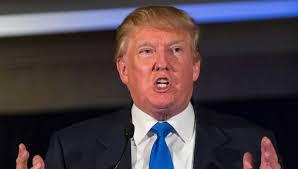
Donald Trump
On November 19, losing in the courts, Trump invited two Republican legislative leaders from Michigan to the White House. The reason: To persuade them to stop the state from certifying the vote.
The Michigan legislators said they would follow the law.
On December 5, Trump called Georgia Governor Brian Kemp and asked him to call a special legislative session and convince state legislators to select their own electors that would support him, thus overturning Biden’s win.
Kemp refused, saying he lacked the authority to do so.

Brian Kemp
Representative Mike Kelly (R-PA), a Trump ally, argued that Pennsylvania’s 2.5 million mail-in were unconstitutional.
On December 8, the Supreme Court refused to hear Kelly’s bid to reverse Pennsylvania’s certification of Biden’s victory.
Although Trump had appointed three of the Court’s Justices, not one of them dissented.
On December 10, the Supreme Court refused to let a Texas lawsuit overturn the results in four battleground states: Georgia, Michigan, Pennsylvania and Wisconsin.
“Texas has not demonstrated a judicially cognizable interest in the manner in which another state conducts its elections,” the court said without further comment. It dismissed all other related claims as moot.
The request for their overturning came in a lawsuit brought by Texas Attorney General Ken Paxton. A Trump ally, Paxton has been indicted on felony securities fraud charges.
Seventeen Republican state Attorney Generals—and 126 Republican members of Congress—supported the lawsuit. They feared Trump’s fanatical base would “primary” them if they didn’t publicly declare their loyalty—to a man they knew was slated to leave office within two months.

The Supreme Court
Then, on December 30, Missouri Republican Senator Josh Hawley announced that, on January 6, 2021, he would object to the certification of some states’ Electoral College results. As many as 140 House Republicans and 25 from the Senate stood to join him.
This would have forced Republicans to:
- Vote to reject Trump’s unsubstantiated claims of massive voter fraud; or
- Disenfranchise millions of voters who had voted for Biden.
“Josh Hawley and anyone who supports his effort are engaged in the attempted overthrow of democracy,” Democratic Connecticut Senator Chris Murphy said.
“There is no evidence that there was any fraud. Senator Hawley apparently believes that if a Democrat wins the presidential race, it must be illegitimate by definition, even absent any actual evidence of misbehavior.”
Nebraska Republican Senator Ben Sasse bluntly offered the reason for this effort: ‘”We have a bunch of ambitious politicians who think there’s a quick way to tap into the president’s populist base without doing any real, long-term damage. But they’re wrong—and this issue is bigger than anyone’s personal ambitions.”
Having lost in 59 court cases to overturn the election results, Trump opted for some old-fashioned arm-twisting.
On January 2, 2021, he called the office of Georgia Secretary of State Brad Raffensperger. The reason: To pressure him to “find” enough votes to overturn former Vice President Joe Biden’s win in the state’s presidential election.
“All I want to do is this. I just want to find 11,780 votes, which is one more than we have, because we won the state,” Trump lied.
He even threatened Raffensperger with criminal prosecuted if he did not change the vote count in Trump’s favor: “That’s a criminal offense. And you can’t let that happen.”
Raffensperger insisted there hadn’t been any voter fraud—and refused to change the official results.
By January 6, 2021, Trump had almost run out of options for illegally staying in power for the next four years.
That day, the United States Senate, with Vice President Mike Pence presiding, would certify states’ Electoral College results of that election.
That morning, Trump urged Pence to flip the results of the election to give him a win.
2016 PRESIDENTIAL CAMPAIGN, ABC NEWS, ADOLF HITLER, ALTERNET, AMERICABLOG, AP, BABY BOOMER RESISTANCE, BARACK OBAMA, BBC, BERNIE SANDERS, BLOOMBERG NEWS, BUZZFEED, CALLISTA BISEK, CBS NEWS, CNN, CROOKS AND LIARS, DAILY KOZ, DAVID BROOKS, DAVID HALBERSTAM, DEMOCRATIC PARTY, DONALD TRUMP, ELIZABETH WARREN, FACEBOOK, FAMILY VALUES, FIVETHIRTYEIGHT, HARPER’S MAGAZINE, HELEN GAHAGEN DOUGLAS, HILLARY CLINTON, HUFFINGTON POST, JEB BUSH, JOHN KASICH, JOHN KING, JOSEPH R. MCCARTHY, LIBERALS, MARCO RUBIO, MARIANNE GINGRICH, MARK SHIELDS, MEDIA MATTERS, MOTHER JONES, MOVEON, MSNBC, NATIONAL PUBLIC RATIO, NBC NEWS, NEW REPUBLIC, NEWSDAY, NEWSWEEK, NEWT GINGRICH, PBS NEWSHOUR, POLITICO, POLITICUSUSA, RAFAEL "TED" CRUZ, RAW STORY, REPUBLICAN PARTY, REPUBLICANS, REUTERS, RICHARD NIXON, RICK PERRY, SALON, SEATTLE TIMES, SLANDER, SLATE, SOUTH CAROLINA REPUBLICAN PRIMARY, STEPHEN COLBERT, TALKING POINTS MEMO, TAMERA KEITH, THE ATLANTIC, THE BEATLES, THE CHICAGO SUN-TIMES, THE CHICAGO TRIBUNE, THE DAILY BEAST, THE DAILY BLOG, THE GUARDIAN, THE HILL, THE HUFFINGTON POST, THE LOS ANGELES TIMES, THE NATION, THE NEW REPUBLIC, THE NEW YORK TIMES, THE NEW YORKER, THE VILLAGE VOICE, THE WASHINGTON POST, THINKPROGRESS, TIME, TREVOR NOAH, TRUTHDIG, TRUTHOUT, TWITTER, TWO POLITICAL JUNKIES, U.S. NEWS & WORLD REPORT, UNITED STATES HOUSE OF REPRESENTATIVES, UPI, USA TODAY, VLADIMIR PUTIN, WONKETTE
In Bureaucracy, History, Politics, Social commentary on May 12, 2021 at 12:22 am
On the May 27, 2016, edition of The PBS Newshour, conservative New York Times columnist David Brooks analyzed the use of insults by Republican Presidential front-runner Donald Trump.
“Trump, for all his moral flaws, is a marketing genius. And you look at what he does. He just picks a word and he attaches it to a person. Little Marco [Rubio], Lyin’ Ted [Cruz], Crooked Hillary [Clinton].
“And that’s a word. And that’s how marketing works. It’s a simple, blunt message, but it gets under.
“It sticks, and it diminishes. And so it has been super effective for him, because he knows how to do that. And she [Hillary Clinton] just comes with, ‘Oh, he’s divisive.’”
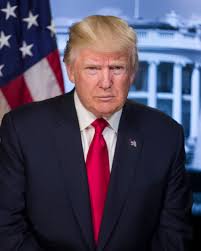
Donald Trump
Hillary Clinton wasn’t the only Presidential candidate who proved unable to cope with Trump’s gift for insult. His targets—and insults—included:
- Former Texas Governor Rick Perry: “Wears glasses to seem smart.”
- Former Florida Governor Jeb Bush: “Low Energy Jeb.”
- Vermont U.S. Senator Bernie Sanders: “Crazy Bernie.”
- Ohio Governor John Kasich: “Mathematically dead and totally desperate.”
Only one candidate has shown the ability to rattle Trump: Massachusetts Senator Elizabeth Warren.
As liberal syndicated columnist Mark Shields noted on The PBS Newshour.
“Elizabeth Warren gets under Donald Trunp’s skin. And I think she’s been the most effective adversary. I think she’s done more to unite the Democratic party than either Hillary Clinton or Bernie Sanders.”
Added David Brooks: “And so the tactics…is either you do what Elizabeth Warren has done, like full-bore negativity, that kind of [get] under the skin, or try to ridicule him and use humor.”
Words are weapons—or can be, if used properly.
Republicans learned this truth after World War II.
- Richard Nixon became a United States Senator by attacking Helen Gahagen Douglas as “the Pink Lady.”
- Senator Joseph R. McCarthy and other Red-baiting Republicans essentially paralyzed the Democratic party through such slanderous terms as “Comsymps,” “fellow-travelers” and “Fifth Amendment Communists.”
As a whole, Democrats have shown themselves indifferent to or ignorant of the power of effective language.
Many of them—such as former President Barack Obama—believe: “I’m not going to get into the gutter like my opponents.”
Thus, they take the “high ground” while their sworn Republican enemies undermine them via “smear and fear” tactics.
As far back as the early 1950s, slander-hurling Wisconsin U.S. Senator Joseph R. McCarthy demonstrated the effectiveness of such tactics. Wrote Pulitzer-Prize winning author David Halberstam, in his monumental study of the origins of the Vietnam War, The Best and the Brightest:
“But if they did not actually stick, and they did not, [McCarthy’s] charges had an equally damaging effect: They poisoned. Where there was smoke, there must be fire. He wouldn’t be saying these things [voters reasoned] unless there was something to it.”
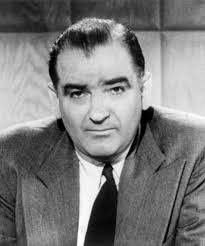
Joseph McCarthy
President Donald J. Trump:
- Solicited aid from Russian Communists to win the Presidency in 2016;
- Solicited aid from Chinese Communists to retain it in 2020′
- Attacked countless Americans and world leaders—including those who preside over America’s NATO alliance.
Yet he has never dared criticize Russian dictator Vladimir Putin.
As a result, Democrats could legitimately refer to him as
- “TrumPutin”
- “Commissar-in-Chief”
- “Putin’s Poodle”
- “Red Donald”
- “Putin’s Puppet”
- “Trumpy Traitor.”
The Kremlin
But Trump got a free pass on treason from Democrats and news media alike.
Tyrants are conspicuously vulnerable to ridicule. Yet here, too, Democrats have proven unable or unwilling to make use of this powerful weapon.
In this YouTube-obsessed age, Democrats could effectively assail Trump with a series of ridiculing videos. For example, Trump’s well-established “bromance” with Putin could be turned into a parody of the famous Beatles’ song, “With a Little Help From My Friends”:
What do I do when the bank calls me in?
(Does it worry you to be in debt?)
How do I feel when I need rubles fast?
(Do you worry Vlad might say “Nyet”?)
No, I get by with a little help from my Vlad.
Mm, I can lie with a little help from my Vlad.
Mm, you’re gonna fry with a little help from my Vlad.

Many of Trump’s fiercest defenders in the House and Senate have taken “campaign contributions” (i.e., bribes) from Russian oligarchs. They could be pointedly attacked by turning the Muppet song, “The Rainbow Connection,” into “The Russian Connection.”
And Right-wingers taking bribes?
For traitors with something to hide.
And some choose to believe it.
It’s clear as the old KGB.
The bribers, the traitors–you’ll see.
Trump has repeatedly shown that he doesn’t take well to ridicule. Admittedly, late-night comedians like Stephen Colbert and Trevor Noah have inflicted huge comic damage on Trump’s image and ego.
But it’s one thing for a professional comedian to serve up such barbs—and another for a major political party to do so through a series of blistering TV ads.
Humorists could easily provide the material. But it will take courage by the Democrats to use it.
2016 PRESIDENTIAL CAMPAIGN, ABC NEWS, ADOLF HITLER, ALTERNET, AMERICABLOG, AP, BABY BOOMER RESISTANCE, BARACK OBAMA, BBC, BERNIE SANDERS, BLOOMBERG NEWS, BUZZFEED, CALLISTA BISEK, CBS NEWS, CNN, CROOKS AND LIARS, DAILY KOZ, DAVID BROOKS, DAVID HALBERSTAM, DEMOCRATIC PARTY, DONALD TRUMP, ELIZABETH WARREN, FACEBOOK, FAMILY VALUES, FIVETHIRTYEIGHT, HARPER’S MAGAZINE, HELEN GAHAGEN DOUGLAS, HILLARY CLINTON, HUFFINGTON POST, JEB BUSH, JOHN KASICH, JOHN KING, JOSEPH R. MCCARTHY, LIBERALS, MARCO RUBIO, MARIANNE GINGRICH, MARK SHIELDS, MEDIA MATTERS, MOTHER JONES, MOVEON, MSNBC, NATIONAL PUBLIC RATIO, NBC NEWS, NEW REPUBLIC, NEWSDAY, NEWSWEEK, NEWT GINGRICH, PBS NEWSHOUR, POLITICO, POLITICUSUSA, RAFAEL "TED" CRUZ, RAW STORY, REPUBLICAN PARTY, REPUBLICANS, REUTERS, RICHARD NIXON, RICK PERRY, SALON, SEATTLE TIMES, SLANDER, SLATE, SOUTH CAROLINA REPUBLICAN PRIMARY, STEPHEN COLBERT, TALKING POINTS MEMO, TAMERA KEITH, THE ATLANTIC, THE BEATLES, THE CHICAGO SUN-TIMES, THE CHICAGO TRIBUNE, THE DAILY BEAST, THE DAILY BLOG, THE GUARDIAN, THE HILL, THE HUFFINGTON POST, THE LOS ANGELES TIMES, THE NATION, THE NEW REPUBLIC, THE NEW YORK TIMES, THE NEW YORKER, THE VILLAGE VOICE, THE WASHINGTON POST, THINKPROGRESS, TIME, TREVOR NOAH, TRUTHDIG, TRUTHOUT, TWITTER, TWO POLITICAL JUNKIES, U.S. NEWS & WORLD REPORT, UNITED STATES HOUSE OF REPRESENTATIVES, UPI, USA TODAY, VLADIMIR PUTIN, WONKETTE
In Bureaucracy, History, Politics, Social commentary on May 11, 2021 at 12:13 am
On January 19, 2012, moderator John King opened CNN’s South Carolina Republican debate by asking candidate Newt Gingrich:
“Your ex-wife gave an interview to ABC News and another interview at The Washington Post and this story has now gone viral on the internet.
“In it, she says that you came to her in 1999 at a time you were having an affair. She says you asked her, sir, to enter into an open marriage. Would you like to take some time to respond to that?”
Gingrich, who as House Speaker had loudly championed “family values” as his personal cause while Bill Clinton was President, angrily replied:
“No, but I will. I think — I think the destructive, vicious, negative nature of much of the news media makes it harder to govern this country, harder to attract decent people to run for public office.
“And I am appalled that you would begin a presidential debate on a topic like that. The story is false. Every personal friend who I had during that period said it was false. We offered several to ABC to prove it was false. They weren’t interested because they would like to attack any Republican.”
During that interview, Marianne, Gingrich’s second ex-wife had said Newt had told her he wanted an open marriage.
“I found out during our conversations that it was occurring in my bedroom in our apartment in Washington and he always called me at night. He would always end with I love you while she was there listening. In my home.”
In August 2000, Gingrich married Callista Bisek four months after his divorce from Marianne was finalized.
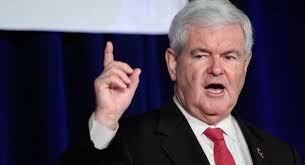
Newt Gingrich
During his tirade to CNN moderator John King, Gingrich said: “Every person in here knows personal pain. Every person here has had someone who’s gone through personal things.
“To take an ex-wife and two days before the primary [raise] a significant question in the presidential campaign is as close to despicable as anything I can imagine….I am frankly astounded that CNN would take trash like that and open the debate.”
One person who was not moved by Gingrich’s sympathy-inciting rant was National Public Radio reporter Tamara Keith:
“That someone else [whom Gingrich was having an affair with] was Callista Bisek, a congressional staffer two decades younger than Gingrich. They had an affair for six years.
“Callista Gingrich is now his third wife, and stands by his side at campaign events nodding adoringly. Their affair in the 1990s spans the period when Gingrich led the impeachment of President Clinton, giving speeches about morality along the way.”
In 1996, Newt Gingrich, then Republican Speaker of the House of Representatives, wrote a memo that encouraged Republicans to “speak like Newt.”
Entitled “Language: A Key Mechanism of Control,” it urged Republicans to attack Democrats with such words as “corrupt,” “selfish,” “destructive,” “hypocrisy,” “liberal,” “sick,” and “traitors.”
Even worse, Gingrich encouraged the news media to disseminate such accusations. Among his suggestions:
- “Fights make news.”
- Create a “shield issue” to deflect criticism: “A shield issue is, just, you know, your opponent is going to attack you as lacking compassion. You better…show up in the local paper holding a baby in the neonatal center.”

In the memo, Gingrich advised:
“….In the video “We are a Majority,” Language is listed as a key mechanism of control used by a majority party, along with Agenda, Rules, Attitude and Learning.
“As the tapes have been used in training sessions across the country and mailed to candidates we have heard a plaintive plea: ‘I wish I could speak like Newt.’
“That takes years of practice. But, we believe that you could have a significant impact on your campaign and the way you communicate if we help a little. That is why we have created this list of words and phrases….
“This list is prepared so that you might have a directory of words to use in writing literature and mail, in preparing speeches, and in producing electronic media.
“The words and phrases are powerful. Read them. Memorize as many as possible. And remember that like any tool, these words will not help if they are not used.”
Here is the list of words Gingrich urged his followers to use in describing “the opponent, their record, proposals and their party”:
- abuse of power
- anti- (issue): flag, family, child, jobs
- betray
- bizarre
- bosses
- bureaucracy
- cheat
- coercion
- “compassion” is not enough
- collapse(ing)
- consequences
- corrupt
- corruption
- criminal rights
- crisis
- cynicism
- decay
- deeper
- destroy
- destructive
- devour
- disgrace
- endanger
- excuses
- failure (fail)
- greed
- hypocrisy
- ideological
- impose
- incompetent
- insecure
- insensitive
|
- intolerant
- liberal
- lie
- limit(s)
- machine
- mandate(s)
- obsolete
- pathetic
- patronage
- permissive attitude
- pessimistic
- punish (poor …)
- radical
- red tape
- self-serving
- selfish
- sensationalists
- shallow
- shame
- sick
- spend(ing)
- stagnation
- status quo
- steal
- taxes
- they/them
- threaten
- traitors
- unionized
- urgent (cy)
- waste
- welfare
|
Yes, speaking like Newt—or Adolf Hitler or Joseph R. McCarthy—“takes years of practice.”
And to the dismay of both Republicans and Democrats, Donald Trump learned that lesson well.
2016 PRESIDENTIAL ELECTION, 2020 PRESIDENTIAL ELECTION, 60 MINUTES, ABC NEWS, ALTERNET, AMERICABLOG, AP, BABY BOOMER RESISTANCE, BALLOTS, BBC, BLOOMBERG NEWS, BUZZFEED, CBS NEWS, CHRIS KREBS, CIA, CNN, CRIMINALITY, CROOKS AND LIARS, CYBERSECURITY INFRASTRUCTURE SECURITY AGENCY (CISA), DAILY KOZ, DEPARTMENT OF DEFENSE CYBER COMMAND, DEPARTMENT OF HOMELAND SECURITY (DHS), DONALD TRUMP, DRUDGE REPORT, ELECTION ASSISTANCE COMMISSION, ELECTION SECURITY, ELECTORAL COLLEGE, FACEBOOK, FBI, FIVETHIRTYEIGHT, HACKING, HARPER’S MAGAZINE, HILLARY CLINTON, HUFFINGTON POST, JOE BIDEN, Kamala Harris, MEDIA MATTERS, MICROSOFT, MIKE PENCE, MOTHER JONES, MOVEON, MSNBC, NATIONAL SECURITY AGENCY, NBC NEWS, NEW REPUBLIC, NEWSDAY, NEWSWEEK, NPR, PBS NEWSHOUR, POLITICO, POLITICUSUSA, POPULAR VOTE, PROPAGANDA, RAW STORY, REUTERS, RUSSIA, SALON, SCOTT PELLEY, SEATTLE TIMES, Secret Service, SLATE, TALKING POINTS MEMO, THE ATLANTIC, THE CHICAGO SUN-TIMES, THE CHICAGO TRIBUNE, THE DAILY BEAST, THE DAILY BLOG, THE GUARDIAN, THE HILL, THE HUFFINGTON POST, THE LOS ANGELES TIMES, THE NATION, THE NEW REPUBLIC, THE NEW YORK TIMES, THE NEW YORKER, THE VILLAGE VOICE, THE WASHINGTON POST, THINKPROGRESS, TIME, TIME MAGAZINE, TIME MAGAZINIE’S PERSON OF THE YEAR, TREASON, TRUTHDIG, TRUTHOUT, TWITTER, TWO POLITICAL JUNKIES, U.S. NEWS & WORLD REPORT, UNITED STATES HOUSE OF REPRESENTATIVES, UNITED STATES SENATE, UPI, USA TODAY, VLADIMIR PUTIN, WONKETTE
In Bureaucracy, History, Law, Law Enforcement, Politics, Social commentary on April 27, 2021 at 12:19 am
As a result of the vast increase in election security, President Donald Trump failed to get the help he expected from Russian dictator Vladimir Putin.
The result: He lost the 2020 Presidential election.
Thus, Joe Biden won the popular vote by 81,268,924 to 74,216,154 for Trump—and the Electoral College by 306 to 232.
Two days later, Trump claimed: “And this is a case where they’re trying to steal an election, they’re trying to rig an election.”
Chris Krebs was the director of the Cybersecurity and Infrastructure Security Agency (CISA) run by the Department of Homeland Security (DHS). And the man most responsible for ensuring election security.
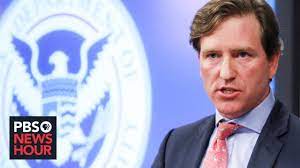
Chris Krebs
On November 12, to counter the growing chorus of lies from Trump and his Right-wing allies, he put out the following statement:
“The November 3rd election was the most secure in American history. There is no evidence that any voting system deleted or lost votes, changed votes, or was in any way compromised.”
On November 17, Trump fired Chris Krebs.
Too cowardly to confront Krebs, Trump fired him by tweet—and accompanied the outrage with yet another lie:
“The recent statement by Chris Krebs on the security of the 2020 election was highly inaccurate, in that there were massive improprieties and fraud, including dead people voting, poll watchers not allowed into polling locations, glitches in the voting machines which changed votes from Trump to Biden, late voting, and many more.
“Therefore, effective immediately, Chris Krebs has been terminated as director of the Cybersecurity and Infrastructure Security Agency.”
Donald Trump
Asked by “60 Minutes'” Scott Pelley if he was surprised to be fired, Krebs replied: “I don’t know if I was necessarily surprised. It’s not how I wanted to go out. The thing that upsets me the most about that is I didn’t get a chance to say goodbye to my team.
“And I’d worked with them for three and a half years, in the trenches. Building an agency, putting CISA on the national stage. And I love that team. And I didn’t get a chance to say goodbye, so that’s what I’m most upset about.”
Krebs was no dyed-in-the-wool Democrat but a life-long Republican. He gave up a lucrative job as Microsoft’s head of cybersecurity policy to join the Trump administration. He wanted to serve his country by creating a dedicated cybersecurity agency for the first time.
Still, he had his reservations about taking the job. As he told the Financial Times: “The flaws of this man [Trump] were obvious to everybody that was willing to pay attention. [But] to do your job, you have to be able to compartmentalize. I was willing to do that.
“Over time, it eats away at you. It eats away at you, the other parts of the department that were doing stuff that just seemed so inhumane. I was never involved in any of those policy conversations.”
By January 6, 2021, Trump had exhausted his legal efforts to overturn the results of the 2020 election.
From November 3 to December 14, Trump and his allies lost 59 times in court, either withdrawing cases or having them dismissed by Federal and state judges.
Of these attempts to challenge the results of the 2020 election, Krebs told Pelley:
“It was upsetting because what I saw was an apparent attempt to undermine confidence in the election, to confuse people, to scare people. It’s not me, it’s not just CISA. It’s the tens of thousands of election workers out there that had been working nonstop, 18-hour days, for months.
“They’re getting death threats for trying to carry out one of our core democratic institutions, an election. And that was, again, to me, a press conference that I just– it didn’t make sense. What it was actively doing was undermining democracy. And that’s dangerous.”
On January 6, the United States Senate, with Vice President Mike Pence presiding, met to certify states’ Electoral College results of the 2020 election.
That morning, Trump urged Pence to flip the results of the election to give him a win.
Pence replied that he lacked the power to overturn those results.
At noon, Trump appeared at the Ellipse, a 52-acre park south of the White House fence. A stage had been set up for him to address tens of thousands of his supporters, who eagerly awaited him.
Trump ordered them to march on the Capitol building to express their anger at his loss—and thus intimidate Congressional officials to reject the results.
The Stormtrumpers marched to the United States Capitol—and quickly brushed aside Capitol Police, who made little effort to arrest or shoot them.
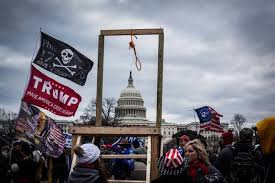
The “Jolly Roger” meets Donald Trump
Three hours passed before the mob was dispersed and order was restored.
Yet for all the terrible drama of that day, the true hero of the moment went unrecognized.
By depriving Trump of Russian help, Chris Krebs had ensured a victory for democracy.
On the evening of January 6, the House and Senate met again to count the Electoral Votes.
And as expected, the two bodies pronounced Joseph Biden the winner—bringing an end to Donald Trump’s reign of criminality and treason.
2016 PRESIDENTIAL ELECTION, 2020 PRESIDENTIAL ELECTION, 60 MINUTES, ABC NEWS, ALTERNET, AMERICABLOG, AP, BABY BOOMER RESISTANCE, BALLOTS, BBC, BLOOMBERG NEWS, BUZZFEED, CBS NEWS, CHRIS KREBS, CIA, CNN, CRIMINALITY, CROOKS AND LIARS, CYBERSECURITY INFRASTRUCTURE SECURITY AGENCY (CISA), DAILY KOZ, DEPARTMENT OF DEFENSE CYBER COMMAND, DEPARTMENT OF HOMELAND SECURITY (DHS), DONALD TRUMP, DRUDGE REPORT, ELECTION ASSISTANCE COMMISSION, ELECTION SECURITY, ELECTORAL COLLEGE, FACEBOOK, FBI, FIVETHIRTYEIGHT, HACKING, HARPER’S MAGAZINE, HILLARY CLINTON, HUFFINGTON POST, JOE BIDEN, Kamala Harris, MEDIA MATTERS, MICROSOFT, MIKE PENCE, MOTHER JONES, MOVEON, MSNBC, NATIONAL SECURITY AGENCY, NBC NEWS, NEW REPUBLIC, NEWSDAY, NEWSWEEK, NPR, PBS NEWSHOUR, POLITICO, POLITICUSUSA, POPULAR VOTE, PROPAGANDA, RAW STORY, REUTERS, RUSSIA, SALON, SCOTT PELLEY, SEATTLE TIMES, Secret Service, SLATE, TALKING POINTS MEMO, THE ATLANTIC, THE CHICAGO SUN-TIMES, THE CHICAGO TRIBUNE, THE DAILY BEAST, THE DAILY BLOG, THE GUARDIAN, THE HILL, THE HUFFINGTON POST, THE LOS ANGELES TIMES, THE NATION, THE NEW REPUBLIC, THE NEW YORK TIMES, THE NEW YORKER, THE VILLAGE VOICE, THE WASHINGTON POST, THINKPROGRESS, TIME, TIME MAGAZINE, TIME MAGAZINIE’S PERSON OF THE YEAR, TREASON, TRUTHDIG, TRUTHOUT, TWITTER, TWO POLITICAL JUNKIES, U.S. NEWS & WORLD REPORT, UNITED STATES HOUSE OF REPRESENTATIVES, UNITED STATES SENATE, UPI, USA TODAY, VLADIMIR PUTIN, WONKETTE
In Bureaucracy, History, Law Enforcement, Politics, Social commentary on April 26, 2021 at 12:28 am
“TIME’s Person of the Year over the course of nearly a century has been a measuring stick for where the world is and where it’s going. But how to make sense of 2020, a year without measure? A year marked by multiple crises, all at once, all over the world: A once-in-a-century plague. Brutal racial injustice. Glaring inequality. Apocalyptic wildfires. Democracy under fire.”
Thus opens the web page advertising TIME magazine’s “Person of the Year” choice of Joe Biden and Kamala Harris.
On the surface, choosing Biden and Harris makes sense: “Joe Biden was elected President of the United States in the midst of an existential debate over what reality we inhabit. Perhaps the only thing Americans agree on right now is that the future of the country is at stake, even as they fiercely disagree about why.”
As for the shared legacy of Biden and Harris: “If Donald Trump was a force for disruption and division over the past four years, Biden and Harris show where the nation is heading: a blend of ethnicities, lived experiences and worldviews that must find a way forward together if the American experiment is to survive.”

Yet a lesser-known but far more consequential choice for “Person of the Year” would have been Chris Krebs.
Because, without Chris Krebs, there would not now be a Biden Presidency.
During the 2016 Presidential race, Russian propaganda had played a major role in convincing millions of Americans to vote for Donald Trump. Social media platforms—especially Facebook and Twitter—were flooded with genuinely fake news to sow discord among Americans and create a pathway for Trump’s election.
And where Internet trolls left off, Russian computer hackers took over.
Hillary Clinton won the popular vote—65,853,514 to 62,984,828 for Trump. But in the United States, what counts in Presidential elections is the Electoral College vote. And there Trump won: 304 to 227.
What put him over the top in the Electoral College was the help he got from Russian dictator Vladimir Putin.
So notorious was the role played by Russian trolls and hackers in winning Trump the 2016 election that the Department of Homeland Security (DHS) was determined to prevent a repetition in 2020.
And the point man for this was Chris Krebs, the director of the Cybersecurity and Infrastructure Security Agency (CISA) run by DHS.
Born in Atlanta, Georgia, in 1977, Krebs had received a B.A. in environmental sciences from the University of Virginia in 1999, and a J.D. from the George Mason University School of Law in 2007.
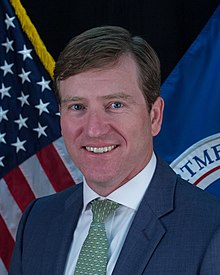
Chris Krebs
Krebs had served as Senior Advisor to the Assistant Secretary of Homeland Security for Infrastructure Protection, and later worked in the private sector as Director for Cybersecurity Policy for Microsoft.
In preparation for the 2020 Presidential election, Krebs launched a massive effort to counter lies spread by Russians—and Americans—on social media platforms. As he explained to Scott Pelley during a “60 Minutes” interview aired on November 29, 2020:
“So we spent something on the order of three and a half years of gaming out every possible scenario for how a foreign actor could interfere with an election. Countless, countless scenarios.”
Krebs’ to-do list included paper ballots:
“Paper ballots give you the ability to audit, to go back and check the tape and make sure that you got the count right. And that’s really one of the keys to success for a secure 2020 election. Ninety-five percent of the ballots cast in the 2020 election had a paper record associated with it. Compared to 2016, about 82%.
“That gives you the ability to prove that there was no malicious algorithm or hacked software that adjusted the tally of the vote, and just look at what happened in Georgia. Georgia has machines that tabulate the vote. They then held a hand recount and the outcome was consistent with the machine vote.”
Krebs’ duties included:
- Sharing intelligence from agencies such as the CIA and National Security Agency with local officials about foreign efforts at election interference.
- Ensuring that domestic voting equipment was secure.
- Attacking domestic misinformation head-on.
At his command lay the resources of a series of powerful Federal investigative agencies:
“We had the Department of Defense Cyber Command. We had the National Security Agency. We had the FBI. We had the Secret Service. We also had representatives from the Election Assistance Commission, which is the federal independent agency that supports the actual administration of elections.
“We had representatives from some of the election equipment vendors. And they’re critical because they’re the ones out there that know what’s going on on the ground if there’s any sort of issue with some of their systems. And we had representatives from state and local governments.”
Misinformation led CISA to create a new “Rumor Control” website ahead of the 2020 election. Its main goal was to debunk rumors surrounding the 2020 election that had been spreading throughout the country.
As a result, Krebs was widely praised for revamping the department’s cybersecurity efforts and increasing coordination with state and local governments.
By all accounts—except Donald Trump’s—the November 3, 2020 election went very smoothly.
2016 PRESIDENTIAL ELECTION, 2020 PRESIDENTIAL ELECTION, ABC NEWS, ADOLF HITLER, ALEXANDER KERENSKY, ALTERNET, AMERICABLOG, AP, BABY BOOMER RESISTANCE, BEER HALL PUTSCH, BEN SASSE, BLOOMBERG, BRAD RAFFENSPERGER, BRIAN KEMP, BUZZFEED, CAPITOL POLICE, CBS NEWS, CHINA, CHRIS KREBS, CHRIS MURPHY, CIA, CNN, CROOKS AND LIARS, CYBERSECURITY, DAILY KOZ, DEMOCRATS, DEPARTMENT OF HOMELAND SECURITY, DONALD TRUMP, DRUDGE REPORT, ELECTORAL COLLEGE, FACEBOOK, FBI, FIVETHIRTYEIGHT, HARPER’S MAGAZINE, HITLER: ASCENT: 1889 – 1939 (BOOK), HUFFINGTON POST, ISLAMIC STATE, JAMES COMEY, JOSEPH BIDEN, jOSH HAWLEY, JOSH SHAPIRO, KAITLAN COLLINS, KEN PAXTON, KEVIN MCCARTHY, KIM JONG ON, MEDIA MATTERS, MEIN KAMPF (BOOK), MIKE KELLY, MIKE PENCE, MITCH MCCONNELL, MOTHER JONES, MOVEON, MSNBC, NANCY PELOSI, NATIONAL GUARD, NATIONAL SECURITY AGENCY, NBC NEWS, NEWSWEEK, NORTH KOREA, NPR, PAT A. CIPOLLONE, PAUL LEBLANC, PBS NEWSHOUR, POLITICO, POLITICUSUSA, RAW STORY, REPUBLICANS, REUTERS, ROD SERLING, ROY BLUNT, RUSSIA, RUSSIAN REVOLUTION, SALON, SEATTLE TIMES, SERGEI KISLYAK, SERGI LAVROV, SLATE, SUPREME COURT, TALKING POINTS MEMO, THE ATLANTIC, THE CHICAGO SUN-TIMES, THE CHICAGO TRIBUNE, THE DAILY BEAST, THE DAILY BLOG, THE GUARDIAN, THE HILL, THE HUFFINGTON POST, THE LOS ANGELES TIMES, THE NATION, THE NEW REPUBLIC, THE NEW YORK TIMES, THE TWILIGHT ZONE, THE VILLAGE VOICE, THE WASHINGTON POST, THINKPROGRESS, TIME, TRUTHDIG, TRUTHOUT, TWILIGHT ZONE EPISODE “DEATH’S HEAD REVISITED”, TWITTER, TWO POLITICAL JUNKIES, U.S. NEWS & WORLD REPORT, ULYSSES S. GRANT, UNITED STATES CAPITOL BUILDING, UNITED STATES HOUSE OF REPRESENTATIVES, UNITED STATES SECRET SERVICE, UNITED STATES SENATE, UPI, USA TODAY, VLACIMIR PUTIN, VOLKER ULLRICH, XI JINPING
In Bureaucracy, History, Law, Law Enforcement, Politics, Social commentary on February 18, 2021 at 12:07 am
“U.S. democracy wasn’t set up to deal with a president openly behaving like a James Bond villain while being protected by a political party behaving more like a mafia than a civic institution.”
—The Washington Monthly
TRUMP’S ULTIMATE TREASON
On January 6, the United States Senate, with Vice President Mike Pence presiding, would certify states’ Electoral College results of the 2020 election.
That morning, President Donald Trump urged Pence to flip the results of the election to give him a win.
Pence replied that he was not authorized by the Constitution to overturn those results.
But as Pence went off to the Capitol Building housing the Senate and House of Representatives, Trump had one last card to play.
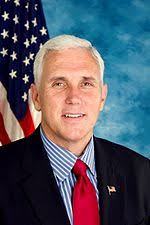
Mike Pence
For weeks, Trump had ordered his legions of Right-wing Stormtrumpers to descend on Washington, D.C. on January 6.
On December 20, he had tweeted: “Statistically impossible to have lost the 2020 Election. Big protest in DC on January 6th. Be there, will be wild!”
In tweets, he promoted the rally again on December 27 and 30, and January 1.
On January 6, Trump appeared at the Ellipse, a 52-acre park south of the White House fence and north of Constitution Avenue and the National Mall in Washington, D.C.
A stage had been set up for him to address tens of thousands of his supporters, who eagerly awaited him.
Trump ordered them to march on the Capitol building to express their anger at the voting process and to intimidate their elected officials to reject the results.
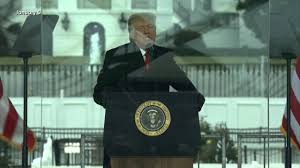
Donald Trump addresses his Stormtrumpers
“Our country has had enough. We will not take it anymore, and that is what this is all about. And to use a favorite term that all of you people really came up with, we will stop the steal….
“Republicans are constantly fighting like a boxer with his hands tied behind his back….And we’re going to have to fight much harder….
“And after this, we’re going to walk down and I’ll be there with you. We’re going to walk down to the Capitol. And we’re going to cheer on our brave Senators and Congressmen and women and we’re probably not going to be cheering so much for some of them.
“Because you’ll never take back our country with weakness. You have to show strength and you have to be strong. We have come to demand that Congress do the right thing and only count the electors who have been lawfully slated.”
The Stormtrumpers marched to the United States Capitol—and quickly brushed aside Capitol Police, who made little effort to arrest or shoot them.
The “Jolly Roger” meets Donald Trump
- Members of the mob attacked police with chemical agents, metal poles and lead pipes.
- Injuries suffered by almost 140 officers included concussions, broken ribs, smashed spinal discs, a lost eye.
- Several rioters carried plastic handcuffs, possibly intending to take hostages. Others carried walkie-talkies.
- Senators ran down a flight of stairs and along a hallway as police held off rioters.

Stormtrumpers scaling Capitol Building walls
- Many of the lawmakers’ offices were occupied and vandalized—including that of House Speaker Nancy Pelosi, a favorite Right-wing target.
- Insurrectionists shouted “Hang Pence!” for his refusal to block certification of Biden’s victory.
- Others yelled, “Where are you, Nancy [Pelosi]?”
- Lawmakers huddled under desks and behind locked doors, expecting to die any minute.
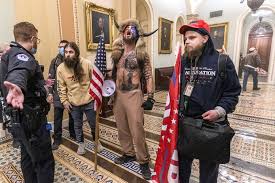
Stormtrumpers inside the Capitol Building
More than three hours passed before police—using riot gear, shields and batons—retook control of the Capitol.
And Trump? After giving his inflammatory speech, he returned to the White House—to watch his handiwork on television. He initially rebuffed requests to mobilize the National Guard.
This required intervention by Pat A. Cipollone, the White House Counsel, among other officials.
Told that Secret Service agents had spirited Pence off the floor of the Senate following the attack, Trump tweeted: “Mike Pence didn’t have the courage to do what should have been done.”
House Minority Leader Kevin McCarthy (R-CA) frantically called Trump, begging him to call off the rioters.
“Well, Kevin, I guess these people are more upset about the election than you are,” replied Trump.
While the rioting was still erupting, Trump posted a video on Twitter: “I know you’re hurt. We had an election that was stolen from us….But you have to go home now. We have to have peace. We have to have law and order….So go home. We love you. You’re very special.”
THE TREASONOUS LEGACY OF THE REPUBLICAN PARTY
The conscience of Rod Serling still speaks to us.
And we need only watch his “Twilight Zone” episode, “Death’s Head Revisited,” to fully understand how Republicans react when they are confronted with overwhelming evidence of their evil.
In that episode, a former Nazi concentration camp captain returns to Dachau, to savor the torments he once inflicted on helpless men and women. To his horror, he’s greeted by the ghosts of those victims.
To one of them—Becker—he says: “That was such a long time ago. Let’s forget about all that–unpleasantness—and move on.”
That is how Republicans have reacted when confronted with overwhelming evidence that President Donald J. Trump, having lost the 2020 Presidential election, incited violence against the Government of the United States.
And just as most of the Original Nazis were forced to confront their past “unpleasantness”—and punished for it—so, too, must Republicans be forced to confront—and punished for—their own.
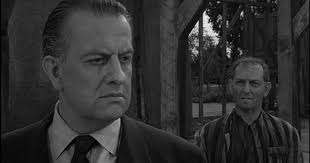
A former tormentor—and his former tormented victim—confront each other in “Death’s Head Revisited”
2016 PRESIDENTIAL ELECTION, 2020 PRESIDENTIAL ELECTION, ABC NEWS, ADOLF HITLER, ALEXANDER KERENSKY, ALTERNET, AMERICABLOG, AP, BABY BOOMER RESISTANCE, BEER HALL PUTSCH, BEN SASSE, BLOOMBERG, BRAD RAFFENSPERGER, BRIAN KEMP, BUZZFEED, CAPITOL POLICE, CBS NEWS, CHINA, CHRIS KREBS, CHRIS MURPHY, CIA, CNN, CROOKS AND LIARS, CYBERSECURITY, DAILY KOZ, DEMOCRATS, DEPARTMENT OF HOMELAND SECURITY, DONALD TRUMP, DRUDGE REPORT, ELECTORAL COLLEGE, FACEBOOK, FBI, FIVETHIRTYEIGHT, HARPER’S MAGAZINE, HITLER: ASCENT: 1889 – 1939 (BOOK), HUFFINGTON POST, ISLAMIC STATE, JAMES COMEY, JOSEPH BIDEN, jOSH HAWLEY, JOSH SHAPIRO, KAITLAN COLLINS, KEN PAXTON, KEVIN MCCARTHY, KIM JONG ON, MEDIA MATTERS, MEIN KAMPF (BOOK), MIKE KELLY, MIKE PENCE, MITCH MCCONNELL, MOTHER JONES, MOVEON, MSNBC, NANCY PELOSI, NATIONAL GUARD, NATIONAL SECURITY AGENCY, NBC NEWS, NEWSWEEK, NORTH KOREA, NPR, PAT A. CIPOLLONE, PAUL LEBLANC, PBS NEWSHOUR, POLITICO, POLITICUSUSA, RAW STORY, REPUBLICANS, REUTERS, ROD SERLING, ROY BLUNT, RUSSIA, RUSSIAN REVOLUTION, SALON, SEATTLE TIMES, SERGEI KISLYAK, SERGI LAVROV, SLATE, SUPREME COURT, TALKING POINTS MEMO, THE ATLANTIC, THE CHICAGO SUN-TIMES, THE CHICAGO TRIBUNE, THE DAILY BEAST, THE DAILY BLOG, THE GUARDIAN, THE HILL, THE HUFFINGTON POST, THE LOS ANGELES TIMES, THE NATION, THE NEW REPUBLIC, THE NEW YORK TIMES, THE TWILIGHT ZONE, THE VILLAGE VOICE, THE WASHINGTON POST, THINKPROGRESS, TIME, TRUTHDIG, TRUTHOUT, TWILIGHT ZONE EPISODE “DEATH’S HEAD REVISITED”, TWITTER, TWO POLITICAL JUNKIES, U.S. NEWS & WORLD REPORT, ULYSSES S. GRANT, UNITED STATES CAPITOL BUILDING, UNITED STATES HOUSE OF REPRESENTATIVES, UNITED STATES SECRET SERVICE, UNITED STATES SENATE, UPI, USA TODAY, VLACIMIR PUTIN, VOLKER ULLRICH, XI JINPING
In Bureaucracy, History, Law, Law Enforcement, Politics, Social commentary on February 17, 2021 at 12:05 am
TRUMP’S FINAL SCHEMES TO REMAIN IN POWER
Throughout November and December, 2020, cases were filed in Wisconsin, Arizona, Nevada, Michigan, Minnesota and Georgia challenging the election results. None were supported by evidence of fraud—as even Trump’s lawyers admitted when questioned by judges.
In Michigan, Trump’s attorneys dropped their federal suit to block the certification of Detroit-area ballots.
By November 21, more than 30 cases were withdrawn by Trump’s attorneys or dismissed by Federal judges—some of them appointed by Trump himself.
Ultimately, from November 3 to December 14, Trump and his allies lost 59 times in court, either withdrawing cases or having them dismissed by Federal and state judges.
Donald Trump
On November 19, losing in the courts, Trump invited two Republican legislative leaders from Michigan to the White House. The reason: To persuade them to stop the state from certifying the vote.
The Michigan legislators said they would follow the law.
On December 5, Trump called Georgia Governor Brian Kemp and asked him to call a special legislative session and convince state legislators to select their own electors that would support him, thus overturning Biden’s win.
Kemp refused, saying he lacked the authority to do so.
On December 8, the Supreme Court refused to hear Trump’s bid to reverse Pennsylvania’s certification of Biden’s victory. Representative Mike Kelly (R-PA), a Trump ally, argued that the state’s 2.5 million mail-in votes were unconstitutional.
The Court’s order read, “The application for injunctive relief presented to Justice [Samuel] Alito and by him referred to the Court is denied.”
Although Trump had appointed three of the Court’s Justices, not one of them dissented.
On December 10, the Supreme Court refused to let a Texas lawsuit overturn the results in four battleground states: Georgia, Michigan, Pennsylvania and Wisconsin.
The majority of their votes—cast for Biden—were critical to Trump’s defeat.
“Texas has not demonstrated a judicially cognizable interest in the manner in which another state conducts its elections,” the court said without further comment. It dismissed all other related claims as moot.
The request for their overturning came in a lawsuit brought by Texas Attorney General Ken Paxton. A Trump ally, Paxton has been indicted on felony securities fraud charges. He have been seeking a Presidential pardon as reward for his effort.
Seventeen Republican state Attorney Generals—and 126 Republican members of Congress—supported the lawsuit. They feared Trump’s fanatical base would “primary” them if they didn’t publicly declare their loyalty—to a man they knew was slated to leave office within two months.
Had the Court acted on Paxton’s request, the results for democracy would have been catastrophic.
“Texas seeks to invalidate elections in four states for yielding results with which it disagrees,” Pennsylvania Attorney General Josh Shapiro told the justices in legal papers. “Its request for this court to exercise its original jurisdiction and then anoint Texas’s preferred candidate for president is legally indefensible and is an affront to principles of constitutional democracy.”
Meanwhile, top Republicans—such as Vice President Mike Pence, Missouri United States Senator Roy Blunt and Senate Majority Leader Mitch McConnell—refused to congratulate Biden as the winner.

Mitch McConnell
In fact, the vast majority of House and Senate Republicans refused to publicly acknowledge Biden as President-Elect of the United States. The reason: They were still in thrall to Trump’s fanatical base.
They feared that if they broke with the soon-to-be-ex-President, they would be voted out of office at the next election—and lose their cozy positions and the power and perks that come with them.
Then, on December 30, Missouri Republican Senator Josh Hawley announced that, on January 6, 2021, he would object to the certification of some states’ Electoral College results. As many as 140 House Republicans and 25 from the Senate were expected to join him.
This would have forced Republicans to:
- Vote to reject Trump’s unsubstantiated claims of massive voter fraud; or
- Disenfranchise millions of voters who had voted for Biden.
“Josh Hawley and anyone who supports his effort are engaged in the attempted overthrow of democracy,” Democratic Connecticut Senator Chris Murphy said.
“There is no evidence that there was any fraud. Senator Hawley apparently believes that if a Democrat wins the presidential race, it must be illegitimate by definition, even absent any actual evidence of misbehavior.”
Nebraska Republican Senator Ben Sasse bluntly offered the reason for this effort: ‘”We have a bunch of ambitious politicians who think there’s a quick way to tap into the president’s populist base without doing any real, long-term damage. But they’re wrong—and this issue is bigger than anyone’s personal ambitions.”
Having lost in 59 court cases to overturn the election results, Trump opted for some old-fashioned arm-twisting.
On January 2, 2021, Trump called the office of Georgia Secretary of State Brad Raffensperger. The reason: To pressure him to “find” enough votes to overturn former Vice President Joe Biden’s win in the state’s presidential election.
“All I want to do is this. I just want to find 11,780 votes, which is one more than we have, because we won the state,” Trump lied.
He even threatened Raffensperger with criminal prosecution if he did not change the vote count in Trump’s favor: “That’s a criminal offense. And you can’t let that happen.”
2016 PRESIDENTIAL ELECTION, 2020 PRESIDENTIAL ELECTION, ABC NEWS, ADOLF HITLER, ALEXANDER KERENSKY, ALTERNET, AMERICABLOG, AP, BABY BOOMER RESISTANCE, BEER HALL PUTSCH, BEN SASSE, BLOOMBERG, BRAD RAFFENSPERGER, BRIAN KEMP, BUZZFEED, CAPITOL POLICE, CBS NEWS, CHINA, CHRIS KREBS, CHRIS MURPHY, CIA, CNN, CROOKS AND LIARS, CYBERSECURITY, DAILY KOZ, DEMOCRATS, DEPARTMENT OF HOMELAND SECURITY, DONALD TRUMP, DRUDGE REPORT, ELECTORAL COLLEGE, FACEBOOK, FBI, FIVETHIRTYEIGHT, HARPER’S MAGAZINE, HITLER: ASCENT: 1889 – 1939 (BOOK), HUFFINGTON POST, ISLAMIC STATE, JAMES COMEY, JOSEPH BIDEN, jOSH HAWLEY, JOSH SHAPIRO, KAITLAN COLLINS, KEN PAXTON, KEVIN MCCARTHY, KIM JONG ON, MEDIA MATTERS, MEIN KAMPF (BOOK), MIKE KELLY, MIKE PENCE, MITCH MCCONNELL, MOTHER JONES, MOVEON, MSNBC, NANCY PELOSI, NATIONAL GUARD, NATIONAL SECURITY AGENCY, NBC NEWS, NEWSWEEK, NORTH KOREA, NPR, PAT A. CIPOLLONE, PAUL LEBLANC, PBS NEWSHOUR, POLITICO, POLITICUSUSA, RAW STORY, REPUBLICANS, REUTERS, ROD SERLING, ROY BLUNT, RUSSIA, RUSSIAN REVOLUTION, SALON, SEATTLE TIMES, SERGEI KISLYAK, SERGI LAVROV, SLATE, SUPREME COURT, TALKING POINTS MEMO, THE ATLANTIC, THE CHICAGO SUN-TIMES, THE CHICAGO TRIBUNE, THE DAILY BEAST, THE DAILY BLOG, THE GUARDIAN, THE HILL, THE HUFFINGTON POST, THE LOS ANGELES TIMES, THE NATION, THE NEW REPUBLIC, THE NEW YORK TIMES, THE TWILIGHT ZONE, THE VILLAGE VOICE, THE WASHINGTON POST, THINKPROGRESS, TIME, TRUTHDIG, TRUTHOUT, TWILIGHT ZONE EPISODE “DEATH’S HEAD REVISITED”, TWITTER, TWO POLITICAL JUNKIES, U.S. NEWS & WORLD REPORT, ULYSSES S. GRANT, UNITED STATES CAPITOL BUILDING, UNITED STATES HOUSE OF REPRESENTATIVES, UNITED STATES SECRET SERVICE, UNITED STATES SENATE, UPI, USA TODAY, VLACIMIR PUTIN, VOLKER ULLRICH, XI JINPING
In Bureaucracy, History, Law, Law Enforcement, Politics, Social commentary on February 16, 2021 at 12:23 am
PREVENTING TREASON IN 2020
Donald Trump didn’t win a majority of the popular vote in 2016—but he got enough help from Russian dictator Vladimir Putin to put him over the top in the Electoral College.
And Trump gladly reciprocated.
On July 16, 2018, Trump attended a press conference in Helsinki, Finland, with Putin.
There he blamed American Intelligence agencies—such as the FBI, CIA and National Security Agency—instead of Putin for Russia’s subversion of the 2016 Presidential election: “I have President Putin. He just said it’s not Russia. I will say this: I don’t see any reason why it would be.”
In early 2020, SEAL Team Six raided a Taliban outpost and recovered $500,000 in American cash. The CIA believed that Putin had offered money to Taliban militants to kill American soldiers in Afghanistan. Trump—who received Intelligence from a wide range of military and civilian agencies—claimed he wasn’t told.
So notorious was the role played by Russian trolls and hackers in winning Trump the 2016 election that the Department of Homeland Security (DHS) was determined to prevent a repetition in 2020.
The man ultimately tasked with this mission was Chris Krebs, the director of the Cybersecurity and Infrastructure Security Agency run by DHS.
Chris Krebs
Krebs launched a massive effort to counter lies spread by Russians—and Americans—on social media platforms. Among his duties:
- Sharing Intelligence from agencies such as the CIA and National Security Agency with local officials about foreign efforts at election interference.
- Ensuring that domestic voting equipment was secure.
- Attacking domestic misinformation head-on.
As a result, Krebs was widely praised for revamping the department’s cybersecurity efforts and increasing coordination with state and local governments.
By all accounts—except Trump’s—the 2020 election went very smoothly.
As a result of the vast increase in election security, Trump not only failed to win the popular vote again but couldn’t get the help he expected from Putin.
On November 17, Trump fired Chris Krebs.
The reason: Krebs had not only countered Russian propaganda lies—he had dared to counter Trump’s as well. For example: He rejected Trump’s claims of widespread voter fraud: There “is no evidence that any voting system deleted or lost votes, changed votes, or was in any way compromised.”
Too cowardly to confront Krebs, Trump fired him by tweet—and accompanied the outrage with yet another lie:
“The recent statement by Chris Krebs on the security of the 2020 election was highly inaccurate, in that there were massive improprieties and fraud, including dead people voting, poll watchers not allowed into polling locations, glitches in the voting machines which changed votes from Trump to Biden, late voting, and many more. Therefore, effective immediately, Chris Krebs has been terminated as director of the Cybersecurity and Infrastructure Security Agency.”
In a November 17 story on the CNN website, CNN reporters Kaitlan Collins and Paul LeBlanc bluntly concluded:
“[Krebs’] dismissal underscores the lengths Trump is willing to go to punish those who don’t adopt his conspiratorial view of the election.
“Since CNN and other outlets called the race for President-elect Joe Biden, Trump has refused to accept the results, instead pushing baseless conspiracies that his second term is being stolen.
“This includes falsely claiming during an election night address that he had already won reelection, that he had won states that were actually still up in the air at the time and that his opponents were perpetrating a fraud.”
TRUMP’S FINAL SCHEMES TO REMAIN IN POWER
On November 3, Joseph Biden became President-elect of the United States by winning 81,283,495 votes, or 51.4% of the vote, compared to 74,223,755 votes, or 46.9% of the vote cast for Trump.
In the Electoral College—which actually determines the winner—the results were even more stunning: 306 votes for Biden, compared with 232 for Trump. It takes 270 votes to be declared the victor.
From the moment Biden was declared the winner, Trump set out to overturn that verdict.
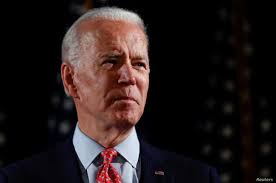
Joseph Biden
Trump refused to accept that verdict.
Speaking from the White House in the early hours of November 4, Trump sounded like a petulant child whose planned outing has been suddenly called off:
“We were getting ready for a big celebration, we were winning everything and all of a sudden it was just called off. The results tonight have been phenomenal…I mean literally we were just all set to get outside and just celebrate something that was so beautiful, so good, such a vote such a success.”
For the first time in American history, a President demanded a halt to the counting of votes while the outcome of an election hung in doubt.
States ignored his demand and kept counting.
Next, Trump ordered his attorneys to file lawsuits to overturn the election results, charging electoral fraud. Specifically:
- Illegal aliens had been allowed to vote.
- Trump ballots were systematically destroyed.
- A sinister computer program turned Trump votes into Biden ones.
Throughout November and December, cases were filed in Wisconsin, Arizona, Nevada, Michigan, Minnesota and Georgia challenging the election results. None were supported by evidence of fraud—as even Trump’s lawyers admitted when questioned by judges.
On November 13, nine cases meant to attack President-Elect Joseph Biden’s win in key states were denied or dropped. A law firm challenging the vote count in Pennsylvania withdrew from the effort.
2016 PRESIDENTIAL ELECTION, 2020 PRESIDENTIAL ELECTION, ABC NEWS, ADOLF HITLER, ALEXANDER KERENSKY, ALTERNET, AMERICABLOG, AP, BABY BOOMER RESISTANCE, BEER HALL PUTSCH, BEN SASSE, BLOOMBERG, BRAD RAFFENSPERGER, BRIAN KEMP, BUZZFEED, CAPITOL POLICE, CBS NEWS, CHINA, CHRIS KREBS, CHRIS MURPHY, CIA, CNN, CROOKS AND LIARS, CYBERSECURITY, DAILY KOZ, DEMOCRATS, DEPARTMENT OF HOMELAND SECURITY, DONALD TRUMP, DRUDGE REPORT, ELECTORAL COLLEGE, FACEBOOK, FBI, FIVETHIRTYEIGHT, HARPER’S MAGAZINE, HITLER: ASCENT: 1889 – 1939 (BOOK), HUFFINGTON POST, ISLAMIC STATE, JAMES COMEY, JOSEPH BIDEN, jOSH HAWLEY, JOSH SHAPIRO, KAITLAN COLLINS, KEN PAXTON, KEVIN MCCARTHY, KIM JONG ON, MEDIA MATTERS, MEIN KAMPF (BOOK), MIKE KELLY, MIKE PENCE, MITCH MCCONNELL, MOTHER JONES, MOVEON, MSNBC, NANCY PELOSI, NATIONAL GUARD, NATIONAL SECURITY AGENCY, NBC NEWS, NEWSWEEK, NORTH KOREA, NPR, PAT A. CIPOLLONE, PAUL LEBLANC, PBS NEWSHOUR, POLITICO, POLITICUSUSA, RAW STORY, REPUBLICANS, REUTERS, ROD SERLING, ROY BLUNT, RUSSIA, RUSSIAN REVOLUTION, SALON, SEATTLE TIMES, SERGEI KISLYAK, SERGI LAVROV, SLATE, SUPREME COURT, TALKING POINTS MEMO, THE ATLANTIC, THE CHICAGO SUN-TIMES, THE CHICAGO TRIBUNE, THE DAILY BEAST, THE DAILY BLOG, THE GUARDIAN, THE HILL, THE HUFFINGTON POST, THE LOS ANGELES TIMES, THE NATION, THE NEW REPUBLIC, THE NEW YORK TIMES, THE TWILIGHT ZONE, THE VILLAGE VOICE, THE WASHINGTON POST, THINKPROGRESS, TIME, TRUTHDIG, TRUTHOUT, TWILIGHT ZONE EPISODE “DEATH’S HEAD REVISITED”, TWITTER, TWO POLITICAL JUNKIES, U.S. NEWS & WORLD REPORT, ULYSSES S. GRANT, UNITED STATES CAPITOL BUILDING, UNITED STATES HOUSE OF REPRESENTATIVES, UNITED STATES SECRET SERVICE, UNITED STATES SENATE, UPI, USA TODAY, VLACIMIR PUTIN, VOLKER ULLRICH, XI JINPING
In Bureaucracy, History, Law, Law Enforcement, Politics, Social commentary on February 15, 2021 at 12:25 am
HISTORY’S LESSON ON TREASON
Whatever may have been my political opinions before, I have one sentiment now: That is, we have a government, and laws, and a flag, and they must all be sustained. There are but two parties now, traitors and patriots, and I want hereafter to be ranked with the latter and, I trust, the stronger party.
—Ulysses S. Grant
History teaches us that republics that tolerate treason soon become former republics.
Example: #1: In February, 1917, Alexander Kerensky became president of the Russian Provisional Government after the fall of Tsar Nicholas II.
Warned that Bolshevik leaders were plotting his overthrow, he refused to order their arrests: “In Russia, it’s always been too easy to arrest people who disagree with you.”
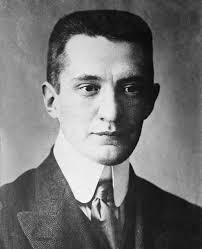
Alexander Kerensky
On November 7, 1917, he found himself overthrown and fleeing the country for his life. A Communist government, presided over by Vladimir Lenin, assumed absolute power—and held onto it for the next 74 years
Example #2: On November 9, 1923, Nazi Party Fuhrer Adolf Hitler tried to overthrow the government in Munich, Bavaria.
About 2,000 Nazis marched to the center of Munich, where they confronted heavily-armed police. A shootout erupted, killing 16 Nazis and four policemen.
Hitler was injured during the clash, but managed to escape. Two days later, he was arrested and charged with treason.
Put on trial, he found himself treated as a celebrity by a judge sympathetic to Right-wing groups. He was allowed to brutally cross-examine witnesses and even make inflammatory speeches.
At the end of the trial, he was convicted of treason and sentenced to five years’ imprisonment.
Serving time in Landsberg Prison, in Bavaria. he was given a huge cell, allowed to receive unlimited visitors and gifts, and treated with deference by guards and inmates.
Hitler used his time in prison to write his infamous book, Mein Kampf-–“My Struggle.” Part autobiography, part political treatise, it laid out his future plans—including the extermination of the Jews and the conquest of the Soviet Union.

Adolf Hitler leaving Landsberg Prison, December, 20, 1924
Nine months later, he was released on parole—by authorities loyal to the authoritarian Right instead of the newly-created Weimar Republic.
Hitler immediately began rebuilding the shattered Nazi party—and deciding on a new strategy to gain power. Never again would he resort to armed force. He would win office by election—or intrigue.
On January 30, 1933, those intrigues made him Chancellor of Germany.
Writes historian Volker Ullrich, in his monumental 2016 biography, Hitler: Ascent 1889 – 1939: “Historians have perennially tried to answer the question of whether Hitler’s rise to power could have been halted….
“There were repeated opportunities to end Hitler’s run of triumphs. The most obvious one was after the failed Putsch of November 1923. Had the Munich rabble-rouser been forced to serve his full five-year term of imprisonment in Landsberg, it is extremely unlikely that he would have been able to restart his political career.”
THE DIFFERENCE BETWEEN THE ELECTIONS OF 2016 AND 2020
During the 2016 Presidential race, Russian propaganda played a major role in convincing millions of Americans to vote for Donald Trump. Social media platforms—especially Facebook and Twitter—were flooded with genuinely fake news to sow discord among Americans and create a pathway for Trump’s election.
And where Internet trolls left off, Russian computer hackers took over.
Russian President Vladimir Putin, a former KGB officer, had quickly assessed Trump as an egotistical narcissist. By appealing to Trump’s vanity, Putin expected to sharply reduce the military and political threat the United States represented to a resurgent Russia.
Donald Trump didn’t win a majority of the popular vote in 2016—but he got enough help from Putin to put him over the top in the Electoral College.
And Trump gladly reciprocated.
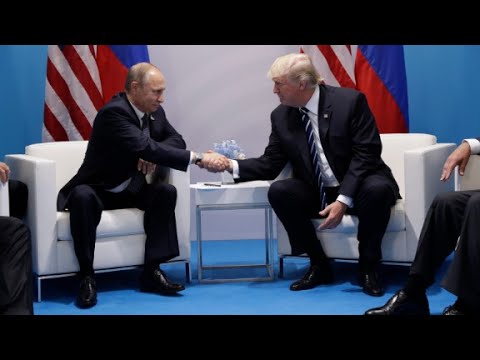
Vladimir Putin and Donald Trump
From his first day in office, he sided with brutal dictators (Putin, North Korea’s Kim Jong-On, China’s Xi Jinping) and declared war on America’s oldest and most reliable allies (Canada, Britain, France).
When he spoke with Putin face-to-face, he afterward demanded that the lone translator surrender his notes, so there would be no record of what he had agreed to with Putin.
On May 10, 2017, Trump met with Russian Foreign Minister Sergey Lavrov and Russian Ambassador Sergey Kislyak in the Oval Office—and gave them highly classified CIA Intelligence about an Islamic State plot to turn laptops into concealable bombs.
Not only did this occur in the Oval Office, but it happened on the day after he fired FBI Director James Comey for refusing to become Trump’s version of a KGB chief.
“I just fired the head of the FBI,” Trump told the two dignitaries. “He was crazy, a real nut job. I faced great pressure because of Russia. That’s taken off.”
On numerous occasions Donald Trump fiercely denied any Russian connections. On January 11, 2017, he tweeted: “Russia has never tried to use leverage over me. I HAVE NOTHING TO DO WITH RUSSIA – NO DEALS, NO LOANS, NO NOTHING!”
But Trump’s son, Eric, bragged in 2014: “Well, we don’t rely on American banks. We have all the funding we need out of Russia. We’ve got some guys that really, really love golf, and they’re really invested in our programs. We just go there all the time.”
2020 PRESIDENTIAL CAMPAIGN, ABC NEWS, ADAM SCHIFF, ALTERNET, AMERICABLOG, AP, ARTICLES OF IMPEACHMENT, BABY BOOMER RESISTANCE, BUZZFEED, CBS NEWS, CIA, CNN, CONVERSATION WITH AN AMERICAN WRITER (POEM), CROOKS AND LIARS, DAILY KOZ, DEMOCRATS, DONALD TRUMP, DRUDGE RETORT, EXTORTION, FACEBOOK, FIVETHIRTYEIGHT, GOVERNMENT ACCOUNTABILITY OFFICE, HARPER’S MAGAZINE, HOUSE FOREIGN AFFAIRS COMMITTEE, HOUSE INTELLIGENCE COMMITTEE, HOUSE OVERSIGHT AND REFORM COMMITTEE, HUNTER BIDEN, IMPEACHMENT, IMPOUNDMENT CONTROL ACT, JOHN ROBERTS, JOSEPH BIDEN, Kamala Harris, MEDIA MATTERS, MICK MULVANEY, MIKE PENCE, MOTHER JONES, MOVEON, MSNBC, NANCY PELOSI, NBC NEWS, NEWSWEEK, NPR, PATRICK LEAHY, PBS NEWSHOUR, POLITICO, POLITICUSUSA, RAND PAUL, RAW STORY, REPUBLICANS, REUTERS, ROBERT PAYNE, RUSSIA, SALON, SEATTLE TIMES, SLATE, TALKING POINTS MEMO, THE ATLANTIC, THE CHICAGO SUN-TIMES, THE CHICAGO TRIBUNE, THE DAILY BEAST, THE DAILY BLOG, THE GUARDIAN, THE HILL, THE HUFFINGTON POST, THE JUDICIARY, THE LIFE AND DEATH OF ADOLF HITLER (BOOK), THE LOS ANGELES TIMES, THE NATION, THE NEW REPUBLIC, THE NEW YORK TIMES, THE PRESS, THE VILLAGE VOICE, THE WASHINGTON POST, THINKPROGRESS, TIME, TREASON, TRUTHDIG, TRUTHOUT, TWITTER, TWO POLITICAL JUNKIES, U.S. NEWS & WORLD REPORT, UKRAINE, UNITED STATES HOUSE OF REPRESENTATIVES, UNITED STATES SENATE, UPI, USA TODAY, VLADIMIR PUTIN, VOLODYMYR ZELENSKY, WHISTLEBLOWER, WHITE HOUSE BUDGET OFFICE, WONKETTE, YEVGENEY YEVTUSHENKO
In Bureaucracy, History, Law, Law Enforcement, Politics, Social commentary on January 29, 2021 at 12:06 am
On November 3, 2020, 81,255,933 Democratic voters elected former Vice President Joseph Biden the 46th President of the United States. Donald Trump, running for a second term, got 74,196,153 votes.
On January 6, 2021, Trump ordered thousands of his Stormtrumper followers to “stop the steal”—by stopping the count of Electoral College votes that would make Biden President.
Tens of thousands of Stormtrumpers attacked and breached the United States Capitol. Many of the lawmakers’ offices were occupied and vandalized. One Capitol police officer was killed and more than 50 others were injured. Meanwhile, terrified legislators huddled behind locked doors.
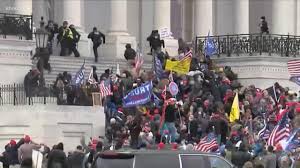
Stormtrumpers attacking the Capitol
On February 8, 2021, Trump—although no longer President—will be impeached for a second time.
And, once again, Republican United States Senators are refusing to act on evidence that almost engulfed them—that of the January 6 mob that Trump sent to attack the United States Capitol.
A January 22 story in The Hill reports: “Only five or six Republican senators at the most seem likely to vote for impeachment, far fewer than the number needed, GOP sources say.”
And Senator Rand Paul (R-Kentucky) claims that 45 Senate Republicans doubt the constitutionality of Trump’s impeachment trial.
A two-thirds majority vote would be necessary for a conviction, requiring at least 17 GOP votes if every Democrat votes to convict Trump.
Among the GO’s excuses for this:
- Trump didn’t pardon any of the insurrectionists. Said one anonymous GOP Senator: “If he pardoned people who had been part of this invasion of the Capitol…that would have said, ‘These are my guys,’”
- “He’s out of office and impeachment is a remedy to remove somebody from office,” said another Republican Senator.
- If Supreme Court Chief Justice John Roberts refuses to preside, and the chair is instead occupied by Vice President Kamala Harris or Senate President Pro Tempore Patrick Leahy (D-Vermont.), the process will appear like a partisan exercise.
- “It’s freedom of speech!” Said Senator Rand Paul: “Are we going to put every politician in jail—are we going to impeach every politician who has used the words ‘fight’ figuratively in a speech? Shame!”
![Image]Never let fear conquer you : GetMotivated](https://encrypted-tbn0.gstatic.com/images?q=tbn:ANd9GcSP5lnqsMt8F3Zq6hlDEaN5uqYT2c2mUezksA&usqp=CAU)
In answer to these excuses:
- It doesn’t matter that Trump didn’t pardon any of the seditionists. His lying tweets brought them to Washington, and his fiery, lie-studded rhetoric launched the attack.
- If a retired Senator or Supreme Court Justice was found to have violated the law, s/he could still be tried—so long as the statute hadn’t expired. The President should not be held above the law.
- Supreme Court Justice John Roberts has said he doesn’t want to preside over Trump’s second impeachment trial. So what? The Constitution dictates: “When the President of the United States is tried, the Chief Justice shall preside.” He should be required to live up to his assigned duty—or resign his position.
- The “freedom of speech” defense ignores a fundamental truth: Even the First Amendment doesn’t allow speech that incites deadly violence. When Trump proclaimed “Because you’ll never take back our country with weakness. You have to show strength and you have to be strong” his supporters—many of whom had come with firearms, scaling devices and twist-ties for taking hostages—knew exactly what he wanted them to do.
* * * * * * * * * *
So why have Republicans almost unanimously stood by Donald Trump despite his having sent a mob to attack the Capitol—and threaten their own safety?
During the six-hour siege, they feared for their lives. But now they fear they will lose their powerful positions—and the privileges that go with them—to Trump’s angry supporters at the next election.
For them, that counts far more than protecting the country from a ruthless tyrant who nearly destroyed America’s most cherished democratic institutions:
- A free press.
- An apolitical Justice Department.
- The peaceful transfer of power from one administration to another.
In his bestselling 1973 biography, The Life and Death of Adolf Hitler, British historian Robert Payne harshly condemned the German people for the rise of the Nazi dictator:
“[They] allowed themselves to be seduced by him and came to enjoy the experience….[They] followed him with joy and enthusiasm because he gave them license to pillage and murder to their hearts’ content. They were his servile accomplices, his willing victims. Germany will rule the world, our enemies will be our slaves….”

Like Hitler, Trump offered his Republican voters and Congressional allies intoxicating dreams: “I will enrich all of you. And I will humiliate and destroy those Americans you most hate.”
And, again like Hitler, his audience had always possessed those desires. Trump offered them nothing new. But as a lifelong opportunist, he realized that he could use those desires to catapult himself into a position of supreme power.
He despised his followers—both as voters and Congressional allies—for they were merely the instruments of his will.
In 1960, the Russian poet, Yevgeney Yevtushenko, published “Conversation With an American Writer”—a stinging indictment of the cowardly opportunists who had supported the brutal tyranny of Joseph Stalin:
I was never courageous.
I simply felt it unbecoming to stoop to the cowardice of my colleagues.
Too many Republicans know all-too-well how it feels to stoop to the cowardice of their colleagues for a transitory goal.


 Bureaucracybuster's Blog
2020 PRESIDENTIAL ELECTION, 9/11 COMMISSION, ABC NEWS, ALTERNET, AMERICABLOG, ANDREW CLYDE, AP, ARIZONA, ATTORNEYS GENERAL, BABY BOOMER RESISTANCE, BEN SASSE, BLOOMBERG, BRAD RAFFENSPERGER, BRIAN KEMP, BRIAN SICKNICK, BUZZFEED, CBS NEWS, CHRIS MURPHY, CIA, CNN, CROOKS AND LIARS, DAILY KOZ, DAVID BROOKS, DEMOCRATS, DONALD TRUMP, ELECTORAL COLLEGE, FACEBOOK, FBI, FIVETHIRTYEIGHT, FOX NEWS, GEORGIA, HARPER’S MAGAZINE, HUFFINGTON POST, JODY HICE, JOSEPH BIDEN, jOSH HAWLEY, JUSTICE DEPARTMENT, KASIE HUNT, KEN PAXTON, KEVIN MCCARTHY, LIZ CHENEY, MANU RAJU, MEDIA MATTERS, MENNESOTA, METROPOLITAN POLICE DEPARTMENT, MICHAAL FANONE, MICHIGAN, MIKE PENCE, MITT ROMNEY, MOTHER JONES, MOVEON, MSNBC, NANCY PELOSI, NBC NEWS, NEVADA, NEWSWEEK, NPR, OSAMA BIN LADEN, PAUL GOSAR, PBS NEWSHOUR, PENNSYLVANIA, POLITICO, POLITICUSUSA, RAW STORY, REPUBLICANS, REUTERS, ROBERT CONTEE, RON JOHNSON, SALON, SEATTLE TIMES, SEPTEMBER 11 2001 ATTACKS, SLATE, SUPREME COURT, TALKING POINTS MEMO, TEXAS, THE ATLANTIC, THE CHICAGO SUN-TIMES, THE CHICAGO TRIBUNE, THE DAILY BEAST, THE DAILY BLOG, THE GUARDIAN, THE HILL, THE HUFFINGTON POST, THE LOS ANGELES TIMES, THE NATION, THE NEW REPUBLIC, THE NEW YORK TIMES, THE PENTAGON, THE VILLAGE VOICE, THE WASHINGTON POST, THINKPROGRESS, TIME, TRUTHDIG, TRUTHOUT, TWITTER, TWO POLITICAL JUNKIES, U.S. NEWS & WORLD REPORT, UNITED STATES CAPITOL BUILDING, UNITED STATES HOUSE OF REPRESENTATIVES, UNITED STATES SENATE, UPI, USA TODAY, VOTER FRAUD, WASHINGTON WEEK, WISCONSIN, WONKETTE, WORLD TRADE CENTER, YAMICHE ALCINDOR
REPUBLICANS: 9/11 COMMISSION, YES; CAPITOL TREASON COMMISSION, NO: PART ONE (OF FOUR)
In Bureaucracy, History, Law, Law Enforcement, Politics, Social commentary on May 17, 2021 at 12:53 amOn the May 14 edition of The PBS Newshour, New York Times conservative columnist David Brooks pointed out the dilemma now facing the Republican party:
“If you look at the latest Gallup poll, Trump’s approval rating dropped 10% over the last little while, so he’s down to 39%.
“We learned, in the course of the whole Cheney thing [the ousting of Republican Wyoming Representative Liz Cheney as conference chair] that the Republican party officials were hiding from their members poll data showing how much Trump was dragging them down in certain battleground districts.
“So they are chained to a person who is fading and is dropping in popularity, and—but they can’t criticize him. So that’s called being in a pickle.”
Which brings us to why Republicans are refusing to participate in a bipartisan investigation of the January 6 attack on the United States Capitol Building.
First, some necessary background:
On November 3, 2020, 81,255,933 Democratic voters elected former Vice President Joseph Biden the 46th President of the United States.
President Donald J. Trump, running for a second term, got 74,196,153 votes.
Yet for more than two months, Trump refused to concede, insisting that he won—and repeatedly claiming falsely that he was the victim of massive vote fraud.
Immediately after the election, Trump ordered his attorneys to file lawsuits to overturn the election results, charging electoral fraud.
From November 3 to December 14, Trump and his allies lost 59 times in court, either withdrawing cases or having them dismissed by Federal and state judges.
Donald Trump
On November 19, losing in the courts, Trump invited two Republican legislative leaders from Michigan to the White House. The reason: To persuade them to stop the state from certifying the vote.
The Michigan legislators said they would follow the law.
On December 5, Trump called Georgia Governor Brian Kemp and asked him to call a special legislative session and convince state legislators to select their own electors that would support him, thus overturning Biden’s win.
Kemp refused, saying he lacked the authority to do so.
Brian Kemp
Representative Mike Kelly (R-PA), a Trump ally, argued that Pennsylvania’s 2.5 million mail-in were unconstitutional.
On December 8, the Supreme Court refused to hear Kelly’s bid to reverse Pennsylvania’s certification of Biden’s victory.
Although Trump had appointed three of the Court’s Justices, not one of them dissented.
On December 10, the Supreme Court refused to let a Texas lawsuit overturn the results in four battleground states: Georgia, Michigan, Pennsylvania and Wisconsin.
“Texas has not demonstrated a judicially cognizable interest in the manner in which another state conducts its elections,” the court said without further comment. It dismissed all other related claims as moot.
The request for their overturning came in a lawsuit brought by Texas Attorney General Ken Paxton. A Trump ally, Paxton has been indicted on felony securities fraud charges.
Seventeen Republican state Attorney Generals—and 126 Republican members of Congress—supported the lawsuit. They feared Trump’s fanatical base would “primary” them if they didn’t publicly declare their loyalty—to a man they knew was slated to leave office within two months.
The Supreme Court
Then, on December 30, Missouri Republican Senator Josh Hawley announced that, on January 6, 2021, he would object to the certification of some states’ Electoral College results. As many as 140 House Republicans and 25 from the Senate stood to join him.
This would have forced Republicans to:
“Josh Hawley and anyone who supports his effort are engaged in the attempted overthrow of democracy,” Democratic Connecticut Senator Chris Murphy said.
“There is no evidence that there was any fraud. Senator Hawley apparently believes that if a Democrat wins the presidential race, it must be illegitimate by definition, even absent any actual evidence of misbehavior.”
Nebraska Republican Senator Ben Sasse bluntly offered the reason for this effort: ‘”We have a bunch of ambitious politicians who think there’s a quick way to tap into the president’s populist base without doing any real, long-term damage. But they’re wrong—and this issue is bigger than anyone’s personal ambitions.”
Having lost in 59 court cases to overturn the election results, Trump opted for some old-fashioned arm-twisting.
On January 2, 2021, he called the office of Georgia Secretary of State Brad Raffensperger. The reason: To pressure him to “find” enough votes to overturn former Vice President Joe Biden’s win in the state’s presidential election.
“All I want to do is this. I just want to find 11,780 votes, which is one more than we have, because we won the state,” Trump lied.
He even threatened Raffensperger with criminal prosecuted if he did not change the vote count in Trump’s favor: “That’s a criminal offense. And you can’t let that happen.”
Raffensperger insisted there hadn’t been any voter fraud—and refused to change the official results.
By January 6, 2021, Trump had almost run out of options for illegally staying in power for the next four years.
That day, the United States Senate, with Vice President Mike Pence presiding, would certify states’ Electoral College results of that election.
That morning, Trump urged Pence to flip the results of the election to give him a win.
Share this: