Posts Tagged ‘TWITTER’
ABC NEWS, ABORTION, ALTERNET, AMERICABLOG, AP, BABY BOOMER RESISTANCE, BBC, BLOOMBERG NEWS, BUZZFEED, CBS NEWS, CELL PHONES ABORTION PILLS, CNN, CROOKS AND LIARS, DAILY KOS, DIGITAL PERIOD TRACKING APPS, FIVETHIRTYEIGHT, GPU, HARPER’S MAGAZINE, HUFFINGTON POST, INFORMERS, JOSEPH STALIN, KGB, MARY ELIZABETH COLEMAN, MEDIA MATTERS, MISSOURI, MOTHER JONES, MOVEON, MSNBC, NBC NEWS, NEW REPUBLIC, NEWSDAY, NEWSWEEK, NPR, PAVLIK MOROZOV, PBS NEWSHOUR, POLITICO, POLITICUSUSA, RAW STORY, REUTERS, ROE V. WADE, SALON, SEATTLE TIMES, SLATE, SOVIET UNION, TALKING POINTS MEMO, TELEMEDICINE, TEXAS, THE ATLANTIC, THE CHICAGO SUN-TIMES, THE CHICAGO TRIBUNE, THE DAILY BEAST, THE DAILY BLOG, THE GUARDIAN, THE HILL, THE HUFFINGTON POST, THE INTERCEPT, THE LOS ANGELES TIMES, THE NATION, THE NEW REPUBLIC, THE NEW YORK TIMES, THE NEW YORKER, THE VILLAGE VOICE, THE WASHINGTON POST, THINKPROGRESS, TIME, TRUTHDIG, TRUTHOUT, TWITTER, TWO POLITICAL JUNKIES, U.S. NEWS & WORLD REPORT, UNITED STATES SUPREME COURT, UPI, USA TODAY, WONKETTE
In Bureaucracy, History, Law, Law Enforcement, Medical, Politics, Social commentary on April 8, 2024 at 12:09 am
You can’t understand what’s happening in Texas—and other states where abortion is now banned as a crime—without knowing the story of Pavlik Morozov.
Pavel Trofimovich Morozov—better known by the diminutive Pavlik—was born on November 14, 1918. Until his 13th birthday, he did nothing to win the status of a Hero of the Soviet Union.
Then his chance came—in 1932, at the height of Soviet dictator Joseph Stalin’s campaign to confiscate the grain of millions of Soviet peasants.
Stalin intended to convert the backward Soviet Union into a major industrial power within a decade. Central to this: Turning land privately farmed by peasants into collective farms which would be “great factories of grain.”
Morozov was a dedicated Communist who led the Young Pioneers at his school and supported Stalin’s forced collections policies.
In 1932, at the age of 13, Morozov reported his father, Trofim, to the political police, the GPU—the forerunner to the KGB.
According to one account,, Trofim, the chairman of the Gerasimovka Village Soviet, had been “forging documents and selling them to the bandits and enemies of the Soviet State” (as the sentence read).
Another account charges him with hoarding grain.

Pavlik Morozov
Trofim Morozov was sentenced to 10 years in a labor camp. There his sentence was changed to execution, which was carried out.
On September 3, 1932, Pavlik’s infuriated uncle, grandfather, grandmother and a cousin murdered him, along with his younger brother.
Only the uncle escaped arrest by the GPU’s sentence to “the highest measure of social defense”—execution by a firing squad.
Soviet authorities quickly turned Pavlik Morozov into a Communist martyr. He became a subject for readings, plays, songs, a symphonic poem, a full-length opera and no fewer than six biographies.
The goal of these efforts: To encourage other Soviet children to inform on their parents.
Which brings us, appropriately enough, to 2024 America—and the June 24, 2022 Supreme Court decision overturning Roe v. Wade, the Court’s historic decision legalizing abortion in 1973.
For Right-wing states dominated by Republican governors and/or legislatures, it isn’t enough to forbid women in their states to get abortions. They insist on preventing them from terminating their pregnancies (even in cases of rape and/or incest) in states where abortion is legal.
And key to making this a reality is turning America into a nation of Pavlik Morozovs.
Even before the Supreme Court handed down its infamous decision, Missouri gave the nation a foretaste of what was to come.
A first-of-its-kind proposal from Missouri lawmakers allowed private citizens to sue anyone who helped a Missouri resident obtain an abortion.
This included the out-of-state physician who performed the procedure to whoever helped transport a person across state lines to a clinic.
Republican state Rep. Mary Elizabeth Coleman admitted that her measure specifically targeted a Planned Parenthood clinic in Illinois just across the river from St. Louis that opened in 2019 with the stated goal of serving Missouri patients.

Mary Elizabeth Coleman
“If you believe as I do that every person deserves dignity and respect and protection whether they’re born or unborn, then of course you want to protect your citizens, no matter where they are,” Coleman told POLITICO.
“If a Missouri resident is hurt, even in Illinois, by a product that they bought in Illinois, there is still jurisdiction for them to sue in a Missouri court because that’s home for them … and this is extending that same kind of thought to abortion jurisprudence.”
This totally ignores the huge difference between unknowingly buying a defective product that causes harm and knowingly seeking a medical procedure.
Abortion pills—now the most popular method of terminating a pregnancy in the United States—are also a target of Republican-dominated legislatures.
Several states—including Texas—have moved to ban prescribing the drugs via telemedicine and sending them by mail to people’s homes. Many others are looking to implement similar bans in the wake of the Biden administration’s move to loosen restrictions on the pills.
Anti-abortion-rights activists claim they can’t eliminate all abortions without deterring travel across state lines. They blame pro-choice advocates who are raising money to help people terminate a pregnancy in another state.
“You have a very aggressive industry working on helping people circumvent pro-life laws,” said Kristi Hamrick with Students for Life of America, which has chapters lobbying for restrictions in all 50 states. “So the conversation in Missouri and other locations is in direct response to that.”
In post-Roe America, a woman’s cell phone can also become her legal undoing.

Digital period tracking apps could be used against them. As a result, many experts advise removing them from cell phones.
More than 100 million women use period tracking applications. They help predict the date of the next period, the ovulation period, and track the signs of premenstrual syndrome. Dozens of applications are available.
And if you want to talk about abortion online in Texas, remember: Doing so on Facebook or Twitter could hurt you.
Texas residents could find themselves in legal hot water for sharing a Facebook or Twitter post on how to get an abortion or holding an online fundraiser for someone seeking one.
Thus Texans, who have long prided themselves on their independence from authority, have become a state filled with informers hoping to get rich quick by informing on their fellow citizens.
1984 (NOVEL), 2020 PRESIDENTIAL ELECTION, ABC NEWS, ADOLF HITLER, AFFORDABLE HEALTHCARE ACT, ALTERNET, ALVIN BRAGG, AMERICABLOG, ANDREW CLYDE, ANN COULTER, AP, ARIZONA SHOOTINGS, ASHLI BABBITT, ASSASSINATION, BABY BOOMER RESISTANCE, BARACK OBAMA, BARRON TRUMP, BBC, BILL CLINTON, BIRTHERS, BLOOMBERG NEWS, BUZZFEED, CBS NEWS, CHRISTINA-TAYLOR GREEN, CLASSIFIED DOCUMENTS, CNN, CONFEDERATE FLAG, CROOKS AND LIARS, CVS, DAILY KOS, DAILY KOZ, DEMOCRATS, DEVIN NUNES, DICK ARMEY, DICK MORRIS, DONALD TRUMP, DYLANN ROOF, FANNI WILLIS, FBI, FIVETHIRTYEIGHT, FRANKLIN D. ROOSEVELT, GABRIELLE GIFFORDS, GEORGE H.W. BUSH, GEORGE ORWELL, GEORGE W. BUSH, GLENN BECK, HARPER’S MAGAZINE, HARRY S. TRUMAN, HATE CRIMES, HEALTHCARE, HOUSE OVERSIGHT COMMITTEE, HUFFINGTON POST, JACK SMITH, JANUARY 6 COUP ATTEMPT, JIM JORDAN, JOSEPH MCCARTHY, JOSEPH R. BIDEN, JOSEPH STALIN, LAUREN BOEBERT, MARJORIE TAYLOR GREEN, MATT GAETZ, MEDIA MATTERS, MEIN KAMPF, MELANIA TRUMP, MICHAEL COHEN, MICHAEL SAVAGE, MICHELE BACHMANN, MIKE PENCE, MOTHER JONES, MOVEON, MSNBC, NBC NEWS, NEW REPUBLIC, NEWSDAY, NEWSWEEK, NEWT GINGRICH, NPR, ORACLE, PBS NEWSHOUR, PHIL GRAMM, POLITICO, POLITICUSUSA, RAW STORY, REP. GABRIELLE GIFFORDS, REPUBLICAN PARTY, REPUBLICANS, REUTERS, RICHARD NIXON, RICK SANTORUM, RODNEY KING RIOTS, ROLLING STONE MAGAZINE, RUSH LIMBAUGH, SALON, Sarah Palin, SEAN HANNITY, SEATTLE TIMES, SLATE, SOVIET UNION, SPIRO AGNEW, STORMY DANIELS, TALKING POINTS MEMO, TEA PARTY, TERRORISM, THE ATLANTIC, THE CHICAGO SUN-TIMES, THE CHICAGO TRIBUNE, THE DAILY BEAST, THE DAILY BLOG, THE GUARDIAN, THE HILL, THE HUFFINGTON POST, THE INTERCEPT, THE LOS ANGELES TIMES, THE NATION, THE NEW REPUBLIC, THE NEW YORK TIMES, THE NEW YORKER, THE VILLAGE VOICE, THE WASHINGTON POST, THINKPROGRESS, TIME, TRUTHDIG, TRUTHOUT, TWITTER, U.S. DISTRICT JUDGE JOHN ROLL, U.S. MARSHALS SERVICE, U.S. NEWS & WORLD REPORT, UPI, USA TODAY
In Bureaucracy, History, Law, Law Enforcement, Medical, Politics, Social commentary on April 5, 2024 at 12:13 am
To understand Republicans’ behavior, you need to understand the word “projection.”
As defined by psychologists, “projection” means unconsciously taking unwanted emotions or traits you don’t like about yourself and attributing them to someone else.
Except that, with Republicans, there is nothing unconscious about attributing their own evil intentions and/or actions to those they hate.
To cite a current example: “Weaponizing” is a word now in vogue among Republicans. As in: “By appointing a Special Counsel to investigate former President Donald Trump, the Department of Justice (DOJ) proves that Democrats have weaponized Federal law enforcement.”
Republicans conveniently refuse to say why the Justice Department appointed former DOJ official Jack Smith to that position: Because, before leaving the White House, Trump shipped more than 300 highly classified documents in 15 boxes to his estate in Mar-a-Lago.
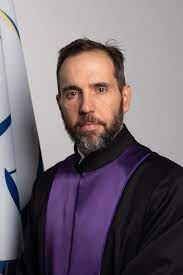
Jack Smith
As an ex-President, he had no right to possess any of these documents.
Moreover, he not only illegally took these documents, he lied to government investigators that he had done so. It took an August 8, 2022 FBI raid on Mar-a-Lago to retrieve them.
Then there’s the matter of the January 6, 2021 defendants.
They are so named because, on that date, Trump incited his followers to violently attack the United States Capitol Building. Their goal: To prevent Republicans and Democrats from counting the Electoral Votes cast in the 2020 Presidential election.
Trump fully understood that an accurate count of those votes would reveal his loss to former Vice President Joe Biden: 306 votes for Biden, compared with 232 for Trump.
The Stormtrumpers marched to the United States Capitol—and quickly brushed aside Capitol Police, who made little effort to arrest or shoot them.

Capitol Police facing off with Stormtrumpers
- Approximately 140 police officers were assaulted.
- A gallows was erected in front of the Capitol.
- Members of the mob attacked police with chemical agents or lead pipes.
- Improvised explosive devices were found in several locations in Washington, D.C.
- A Capitol Hill police officer was knocked off his feet, dragged into the mob surging toward the building, and beaten with the pole of an American flag.
- Several rioters carried plastic handcuffs, possibly intending to take hostages.
- Others carried treasonous Confederate flags.
- Blue-and-white TRUMP flags floated above the crowd.
- Shouts of “Hang [Vice President Mike Pence!” often rang out.
- Many of the lawmakers’ office buildings were occupied and vandalized—including that of House Speaker Nancy Pelosi, a favorite Right-wing target.
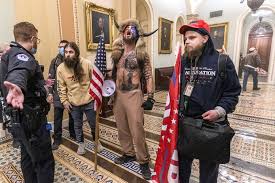
Stormtrumpers inside the Capitol Building
More than three hours passed before police—using riot gear, shields and batons—retook control of the Capitol.
By December, 2023, 728 participants in the coup attempt had pleaded guilty. Another 166 defendants had been convicted at trial; a total of 745 defendants have been sentenced.
Yet Republicans—most notably Rep. Marjorie Taylor Greene (R-GA)—have depicted these coup supporters as persecuted martyrs.
On March 24, 2022, members of the Republicans’ House Oversight Committee toured a Washington, D.C. jail where some of these defendants were held.
“Their due process rights are being violated. And they have been mistreated and treated as political prisoners,” Greene told reporters after the tour.

Marjorie Taylor Greene
Rep. Lauren Boebert (R-CO), another member of the tour, exchanged hugs with with Micki Witthoeft, the mother of Ashli Babbitt. Babbitt had been shot by police as she forced her way into the House Chamber where members of Congress were sheltering in place.
Republicans‘ fixation on “weaponization” centers on the Trump’s facing 91 criminal offenses in four criminal cases.
These relate to Trump’s
- Attempts to overturn the results of the 2020 election
- Election interference in Georgia
- Falsifying business records in New York, and
- Mishandling classified records after leaving the presidency.
Donald Trump is the first former president in American history to be criminally indicted.
For Republicans, prosecutors’ daring to hold Trump accountable for his litany of crimes amounts to “election interference.” As if winning office through the efforts of Russian dictator Vladimir Putin has conferred “untouchable” status upon him.
As a result, Republicans have made unprecedented efforts to undermine these prosecutions.
Rep. Andrew Clyde, R-Ga., a Trump ally who sits on the Appropriations Committee, introduced two amendments to eliminate federal funding for all three of Trump’s prosecutors—Special Counsel Jack Smith, Fulton County District Attorney Fani Willis and Manhattan District Attorney Alvin Bragg.
Rep. Matt Gaetz, R-Fla., is also trying to cut off funding for Smith’s office.
Republicans have in the past championed “states’ rights” against “federal overreach.” But now that their former President finds himself facing the consequences of his own criminality, they are eager to abort state-level prosecutions.
At the same time, they slander President Joseph Biden as “weaponizing” the Justice Department against his political rival.
In George Orwell’s classic novel, 1984, the dictatorship ruling Oceania offers the following slogan for its citizens:
WAR IS PEACE
FREEDOM IS SLAVERY
IGNORANCE IS STRENGTH
Republicans would have Americans believe
- The attempted overturning of a legitimate Presidential election was an act of patriotism;
- An ex-President taking classified materials to which he had no right was entirely justified; and
- Donald Trump has an absolute right to commit any crime he desires.
1984 (NOVEL), 2020 PRESIDENTIAL ELECTION, ABC NEWS, ADOLF HITLER, AFFORDABLE HEALTHCARE ACT, ALCOHOLISM, ALTERNET, ALVIN BRAGG, AMERICABLOG, ANDREW CLYDE, ANN COULTER, AP, ARIZONA SHOOTINGS, ASHLI BABBITT, ASSASSINATION, BABY BOOMER RESISTANCE, BARACK OBAMA, BARRON TRUMP, BBC, BILL CLINTON, BIRTHERS, BLOOMBERG NEWS, BUZZFEED, CBS NEWS, CHRISTINA-TAYLOR GREEN, CLASSIFIED DOCUMENTS, CNN, CONFEDERATE FLAG, COVID-19, CROOKS AND LIARS, CVS, DAILY KOS, DAILY KOZ, DEMOCRATS, DEVIN NUNES, DICK ARMEY, DICK MORRIS, DONALD TRUMP, DYLANN ROOF, FACEBOOK, FANNI WILLIS, FBI, FIVETHIRTYEIGHT, FRANKLIN D. ROOSEVELT, GABRIELLE GIFFORDS, GEORGE H.W. BUSH, GEORGE ORWELL, GEORGE W. BUSH, GLENN BECK, HARPER’S MAGAZINE, HARRY S. TRUMAN, HATE CRIMES, HEALTHCARE, HOUSE OVERSIGHT COMMITTEE, HUFFINGTON POST, JACK SMITH, JANUARY 6 COUP ATTEMPT, JIM JORDAN, JOSEPH MCCARTHY, JOSEPH R. BIDEN, JOSEPH STALIN, LAUREN BOEBERT, LOS ANGELES, MARJORIE TAYLOR GREEN, MATT GAETZ, MEDIA MATTERS, MEIN KAMPF, MELANIA TRUMP, MICHAEL COHEN, MICHAEL SAVAGE, MICHELE BACHMANN, MIKE PENCE, MOTHER JONES, MOVEON, MSNBC, NBC NEWS, NEW REPUBLIC, NEWSDAY, NEWSWEEK, NEWT GINGRICH, NPR, OBAMACARE, ORACLE, PBS NEWSHOUR, PHIL GRAMM, POLITICO, POLITICUSUSA, PORTLAND, RAW STORY, REP. GABRIELLE GIFFORDS, REPUBLICAN PARTY, REPUBLICANS, REUTERS, RICHARD NIXON, RICK SANTORUM, RODNEY KING RIOTS, ROLLING STONE MAGAZINE, RUSH LIMBAUGH, SALON, Sarah Palin, SEAN HANNITY, SEATTLE TIMES, SLATE, SOVIET UNION, SPIRO AGNEW, STORMY DANIELS, TALKING POINTS MEMO, TEA PARTY, TERRORISM, THE ATLANTIC, THE CHICAGO SUN-TIMES, THE CHICAGO TRIBUNE, THE DAILY BEAST, THE DAILY BLOG, THE GUARDIAN, THE HILL, THE HUFFINGTON POST, THE INTERCEPT, THE LOS ANGELES TIMES, THE NATION, THE NEW REPUBLIC, THE NEW YORK TIMES, THE NEW YORKER, THE VILLAGE VOICE, THE WASHINGTON POST, THINKPROGRESS, TIME, TRUTHDIG, TRUTHOUT, TWITTER, U.S. DISTRICT JUDGE JOHN ROLL, U.S. MARSHALS SERVICE, U.S. NEWS & WORLD REPORT, UPI, USA TODAY
In Bureaucracy, History, Law, Law Enforcement, Politics, Social commentary on April 4, 2024 at 12:14 am
The electoral success of Senator Joseph McCarthy’s Red-baiting treason slanders proved too alluring for other Republicans to resist.
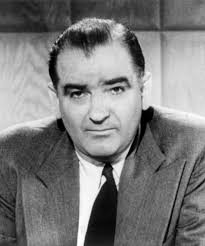
Joseph McCarthy
Among those who have greatly profited from hurling similar charges are:
- President Richard Nixon
- His vice president, Spiro Agnew
- Former Speaker of the House Newt Gingrich
- Former Congressman Dick Armey
- President George W. Bush
- Vice Presidential candidate Sarah Palin
- Congresswoman Michelle Bachmann
- Rush Limbaugh
- Sean Hannity
- Bill O’Reilly.
During the 1992 Presidential campaign, Republicans tried to paint Bill Clinton as a brainwashed “Manchurian candidate” because he had briefly visited the Soviet Union during his college years.
After the Soviet Union collapsed in 1991, Republicans lost their “soft on Communism” slander-line. So they tried to persuade voters that Democrats were “soft on crime.”
When riots flared in 1992 after the acquittal of LAPD officers who had savagely beaten Rodney King, President George H.W. Bush blamed the carnage on the “Great Society” programs of the 1960s.
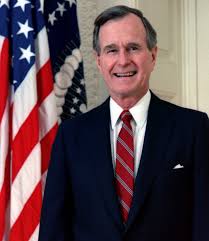
George H.W. Bush
After losing the White House to Clinton at the polls in 1992 and 1996, Republicans tried to oust him another way: By impeaching him over a tryst with a penis-loving intern named Monica Lewinsky.
The Republican-controlled House of Representatives voted to impeach, but the effort was defeated in the Democratically-controlled Senate.
The 2008 election of Barack Obama pushed the Republican “treason chorus” to new heights of infamy.
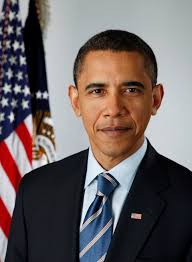
Barack Obama
Almost immediately after Obama took office, he came under attack by an industry of right-wing book authors such as Sean Hannity, Ann Coulter and Rush Limbaugh.
The following titles vividly reveal the hates, fears and ambitions of their authors—and audience:
- Conservative Victory: Defeating Obama’s Radical Agenda by Sean Hannity
- Obama Zombies: How the Liberal Machine Brainwashed My Generation by Jason Mattera
- How Barack Obama is Bankrupting the U.S. Economy by Stephen Moore
- Let Freedom Ring: Winning the War of Liberty over Liberalism by Sean Hannity
- The Manchurian President: Barack Obama’s Ties to Communists,Socialists and Other Anti-American Extremists by Aaron Klein
- The Blueprint: Obama’s Plan to Subvert the Constitution and Build an Imperial Presidency by Ken Blackwell
- Culture of Corruption: Obama and His Team of Tax Cheats, Crooks, and Croniesby Michelle Malkin
- Why Obama’s Government Takeover of Health Care Will Be a Disaster by David Gratzer
- To Save America: Stopping Obama’s Secular-Socialist Machine by Newt Gingrich
- Obama’s Radical Transformation of America: Year One by Joshua Muravchik
- How the Obama Administration Threatens to Undermine Our Elections by John Fund
- Power Grab: How Obama’s Green Policicies Will Steal Your Freedom and Bankrupt America by Christopher C. Horner
- The Bad Science and Bad Policy of Obama’s Global Warning Agenda by Roy W. Spencer
- America’s March to Socialism: Why We’re One Step Closer to Giant Missile Parades by Glenn Beck
- Obama’s Betrayal of Israel by Michael Ledeen
- The Obama Nation: Leftist Politics and the Cult of Personality by Jerome R. Corsi
- The Case Against Barack Obama: The Unlikely Rise and Unexamined Agenda of the Media’s Favorite Candidate by David Freddoso
- Censorship: The Threat to Silence Talk Radio by Brian Jennings
- The War On Success: How the Obama Agenda Is Shattering the American Dream by Tommy Newberry
- Green Hell: How Environmentalists Plan to Control Your Life and What You Can Do to Stop Them by Steven Milloy
- Liberalism is a Mental Disorder: Savage Solutions by Michael Savage
- Treason: Liberal Treachery from the Cold War to the War on Terrorism by Ann Coulter
- How to Talk to a Liberal (If You Must): The World According to Ann Coulter by Ann Coulter
- Slander: Liberal Lies About the American Right by Ann Coulter
- If Democrats Had Any Brains, They’d Be Republicans by Ann Coulter
- Guilty: Liberal “Victims” and Their Assault on America by Ann Coulter
- Catastrophe: How Obama, Congress and the Special Interests Are Transforming…a Slump into a Crash, Freedom Into Socialism and a Disaster into a Catastrophe….And How to Fight Back by Dick Morris
Consider the vocabulary Right-wingers use to describe their political adversaries:
“Liberals,” “radicals, “bankrupting,” “treason,” subversion,” “slander,” “terrorism,” “betrayal,” “catastrophe,” “shattering the American dream,” “leftists,” “Communists,” “government takeover,” “socialism,” “power grab,” “secularism,” “environmentalism.”
And while the Right lusts to constantly compare Democrats and liberals (the two aren’t always the same) to Adolf Hitler, its propaganda campaign draws heavily on the Nazi leader’s own advice.
In Mein Kampf, Hitler laid out his formula for successful propaganda: “All effective propaganda must be confined to a few bare essentials.
“Those must be expressed as far as possible in stereotypical formulas. These slogans should be persistently repeated until the very last individual has come to grasp the idea that has been put forward.”
“[The masses] more readily fall victims to the big lie than the small lie, since they themselves often tell small lies in little matters but would be ashamed to resort to large-scale falsehoods.”
Thus, Republicans spent the eight years of Barack Obama’s Presidency repeating the lie that he was born in Kenya—not Hawaii, as the long-form version of his birth certificate attests.
The reason: To “prove” that he was an illegitimate President, and should be removed from office.
To Republicans’ dismay, their slander campaign didn’t prevent Obama from being elected in 2008—and re-elected in 2012.
1984 (NOVEL), 2020 PRESIDENTIAL ELECTION, ABC NEWS, ADOLF HITLER, AFFORDABLE HEALTHCARE ACT, ALTERNET, ALVIN BRAGG, AMERICABLOG, ANDREW CLYDE, ANN COULTER, AP, ARIZONA SHOOTINGS, ASHLI BABBITT, ASSASSINATION, BABY BOOMER RESISTANCE, BARACK OBAMA, BARRON TRUMP, BBC, BILL CLINTON, BIRTHERS, BLOOMBERG NEWS, BUZZFEED, CBS NEWS, CHRISTINA-TAYLOR GREEN, CLASSIFIED DOCUMENTS, CNN, CONFEDERATE FLAG, CROOKS AND LIARS, CVS, DAILY KOS, DAILY KOZ, DEMOCRATS, DEVIN NUNES, DICK ARMEY, DICK MORRIS, DONALD TRUMP, DYLANN ROOF, FANNI WILLIS, FBI, FIVETHIRTYEIGHT, FRANKLIN D. ROOSEVELT, GABRIELLE GIFFORDS, GEORGE H.W. BUSH, GEORGE ORWELL, GEORGE W. BUSH, GLENN BECK, HARPER’S MAGAZINE, HARRY S. TRUMAN, HATE CRIMES, HEALTHCARE, HOUSE OVERSIGHT COMMITTEE, HUFFINGTON POST, JACK SMITH, JANUARY 6 COUP ATTEMPT, JIM JORDAN, JOSEPH MCCARTHY, JOSEPH R. BIDEN, JOSEPH STALIN, LAUREN BOEBERT, LOS ANGELES, MARJORIE TAYLOR GREEN, MATT GAETZ, MEDIA MATTERS, MEIN KAMPF, MELANIA TRUMP, MICHAEL COHEN, MICHAEL SAVAGE, MICHELE BACHMANN, MIKE PENCE, MOTHER JONES, MOVEON, MSNBC, NBC NEWS, NEW REPUBLIC, NEWSDAY, NEWSWEEK, NEWT GINGRICH, NPR, OBAMACARE, ORACLE, PBS NEWSHOUR, PHIL GRAMM, POLITICO, POLITICUSUSA, RAW STORY, REP. GABRIELLE GIFFORDS, REPUBLICAN PARTY, REPUBLICANS, REUTERS, RICHARD NIXON, RICK SANTORUM, RODNEY KING RIOTS, ROLLING STONE MAGAZINE, RUSH LIMBAUGH, SALON, Sarah Palin, SEAN HANNITY, SEATTLE TIMES, SLATE, SOVIET UNION, SPIRO AGNEW, STORMY DANIELS, TALKING POINTS MEMO, TEA PARTY, TERRORISM, THE ATLANTIC, THE CHICAGO SUN-TIMES, THE CHICAGO TRIBUNE, THE DAILY BEAST, THE DAILY BLOG, THE GUARDIAN, THE HILL, THE HUFFINGTON POST, THE INTERCEPT, THE LOS ANGELES TIMES, THE NATION, THE NEW REPUBLIC, THE NEW YORK TIMES, THE NEW YORKER, THE VILLAGE VOICE, THE WASHINGTON POST, THINKPROGRESS, TIME, TRUTHDIG, TRUTHOUT, TWITTER, U.S. DISTRICT JUDGE JOHN ROLL, U.S. MARSHALS SERVICE, U.S. NEWS & WORLD REPORT, UPI, USA TODAY
In Bureaucracy, History, Law, Law Enforcement, Politics, Social commentary on April 3, 2024 at 12:16 am
“The Republican Party has weaponized its supporters, made violence a virtue and, with almost every pronouncement for 50 years, given them an enemy politicized, radicalized and indivisible.”
So wrote Rolling Stone writer in a blistering June 19, 2015 editorial. The touchstone was the slaughter of nine black worshipers by a white supremacist at a South Carolina black church.
But the proof of Republican culpability in political violence goes back much further.
Consider:
Gabrille Giffords, 40, is a moderate Democrat who narrowly wins re-election in November, 2010, against a Republican Tea Party candidate.
Her support of President Barack Obama’s health care reform law has made her a target for violent rhetoric–-especially from former Alaska Governor Sarah Palin.
In March, 2010, Palin releases a map featuring 20 House Democrats that uses cross-hairs images to show their districts. In case her supporters don’t get the message, she later writes on Twitter: “Don’t Retreat, Instead – RELOAD!”

Sarah Palin’s “Crosshairs” Map
As the campaign continues, Giffords finds her Tucson office vandalized after the House passes the healthcare overhaul in March.
Giffords senses that she has become a target for removal—in more than political terms. In an interview after the vandalizing of her office, she refers to the animosity against her by conservatives.
She specifically cites Palin’s decision to list her seat as one of the top “targets” in the midterm elections.
“For example, we’re on Sarah Palin’s targeted list, but the thing is, that the way that she has it depicted has the cross-hairs of a gun sight over our district. When people do that, they have to realize that there are consequences to that action,” Giffords tells MSNBC.
At one of her rallies, her aides call the police after an attendee drops a gun.
Giffords may have seen the spectre of violence closing in on her. In April, 2010, she supported Rep. Raúl Grijalva after he had to close two offices when he and his staff received threats.
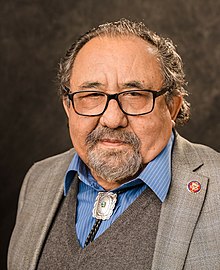
Raúl Grijalva
He had called for a boycott of Arizona businesses in opposition to the state’s controversial immigration law.
“I am deeply troubled about reports that Congressman Grijalva and members of his staff have been subjected to death threats,” Giffords said.
“This is not how we, as Americans, express our political differences. Intimidation has no place in our representative democracy. Such acts only make it more difficult for us to resolve our differences.”
But intimidation—-and worse—-does have a place among the tactics used by influential Republicans in the pursuit of absolute power.
Increasingly, Republicans have repeatedly aimed violent—-and violence-arousing—-rhetoric at their Democratic opponents. This is not a case of careless language that is simply misinterpreted, with tragic results.
Republicans like Sarah Palin fully understand the constituency they are trying to reach: Those masses of alienated, uneducated Americans who live only for their guns and hardline religious beliefs—and who can be easily manipulated by perceived threats to either.

Sarah Palin
Gage Skidmore from Surprise, AZ, United States of America, CC BY-SA 2.0 <https://creativecommons.org/licenses/by-sa/2.0>, via Wikimedia Commons
If a “nutcases” assaults a Democratic politician and misses, then the Republican establishment claims to be shocked—-shocked!—that such a thing could have happened.
And if the attempt proves successful—as the January 8, 2011 Tucson shootings did—then Republicans weep crocodile tears for public consumption.
The difference is that, in this case, they rejoice in knowing that Democratic ranks have been thinned and their opponents are even more on the defensive, for fear of the same happening to them.
Consider the following:
- Rep. Randy Neugebauer (R-Tex.) yelled “baby killer” at Bart Stupak (D-Mich.) on the House floor.
- Florida GOP Congressional candidate Allen West, referring to his Democratic opponent, Rep. Ron Klein, told Tea Party activists: You’ve got to make the fellow scared to come out of his house. That’s the only way that you’re going to win. That’s the only way you’re going to get these people’s attention.”
- Rep. Devin Nunes (R-CA) said Tea Partiers had “every right” to use racist and homophobic slurs against Democrats, justifying it via Democrats’ “totalitarian tactics.”
- Rep. Michelle Bachmann (R-Minn.) said she wanted her constituents “armed and dangerous” against the Obama administration.
- Sarah Palin told her supporters: “Get in their face and argue with them. No matter how tough it gets, never retreat, instead RELOAD!”
- Right-wing pundit Ann Coulter: “My only regret with Timothy McVeigh is he did not go to the New York Times building.”
- Senator Phil Gramm (R-Tex.) “We’re going to keep building the party until we’re hunting Democrats with dogs.”
- Rep. Louisa M. Slauter (D-NY) received a phone message threatening sniper attacks against lawmakers and their families.
Since the end of World War 11, Republicans have regularly hurled the charge of “treason” against anyone who dared to run against them for office or think other than Republican-sponsored thoughts.
Republicans had been locked out of the White House from 1933 to 1952, during the administrations of Franklin D. Roosevelt and Harry S. Truman.
Determined to regain the Presidency by any means, they found that attacking the integrity of their fellow Americans a highly effective tactic.
During the 1950s, Wisconsin Senator Joseph R. McCarthy rode a wave of paranoia to national prominence–by attacking the patriotism of anyone who disagreed with him.
The fact that McCarthy never uncovered one actual case of treason was conveniently overlooked during his lifetime.
1984 (NOVEL), 2020 PRESIDENTIAL ELECTION, ABC NEWS, ADOLF HITLER, AFFORDABLE HEALTHCARE ACT, ALTERNET, ALVIN BRAGG, AMERICABLOG, ANDREW CLYDE, ANN COULTER, AP, ARIZONA SHOOTINGS, ASHLI BABBITT, ASSASSINATION, BABY BOOMER RESISTANCE, BARACK OBAMA, BARRON TRUMP, BBC, BILL CLINTON, BIRTHERS, BLOOMBERG NEWS, BUZZFEED, CBS NEWS, CHRISTINA-TAYLOR GREEN, CLASSIFIED DOCUMENTS, CNN, CONFEDERATE FLAG, CROOKS AND LIARS, CVS, DAILY KOS, DAILY KOZ, DEMOCRATS, DEVIN NUNES, DICK ARMEY, DICK MORRIS, DONALD TRUMP, DYLANN ROOF, FANNI WILLIS, FBI, FIVETHIRTYEIGHT, FRANKLIN D. ROOSEVELT, GABRIELLE GIFFORDS, GEORGE H.W. BUSH, GEORGE ORWELL, GEORGE W. BUSH, GLENN BECK, HARPER’S MAGAZINE, HARRY S. TRUMAN, HATE CRIMES, HEALTHCARE, HOUSE OVERSIGHT COMMITTEE, HUFFINGTON POST, JACK SMITH, JANUARY 6 COUP ATTEMPT, JIM JORDAN, JOSEPH MCCARTHY, JOSEPH R. BIDEN, JOSEPH STALIN, LAUREN BOEBERT, MARJORIE TAYLOR GREEN, MATT GAETZ, MEDIA MATTERS, MEIN KAMPF, MELANIA TRUMP, MICHAEL COHEN, MICHAEL SAVAGE, MICHELE BACHMANN, MIKE PENCE, MOTHER JONES, MOVEON, MSNBC, NBC NEWS, NEW REPUBLIC, NEWSDAY, NEWSWEEK, NEWT GINGRICH, NPR, ORACLE, PBS NEWSHOUR, PHIL GRAMM, POLITICO, POLITICUSUSA, RAW STORY, REP. GABRIELLE GIFFORDS, REPUBLICAN PARTY, REPUBLICANS, REUTERS, RICHARD NIXON, RICK SANTORUM, RODNEY KING RIOTS, ROLLING STONE MAGAZINE, RUSH LIMBAUGH, SALON, Sarah Palin, SEAN HANNITY, SEATTLE TIMES, SLATE, SOVIET UNION, SPIRO AGNEW, STORMY DANIELS, TALKING POINTS MEMO, TEA PARTY, TERRORISM, THE ATLANTIC, THE CHICAGO SUN-TIMES, THE CHICAGO TRIBUNE, THE DAILY BEAST, THE DAILY BLOG, THE GUARDIAN, THE HILL, THE HUFFINGTON POST, THE INTERCEPT, THE LOS ANGELES TIMES, THE NATION, THE NEW REPUBLIC, THE NEW YORK TIMES, THE NEW YORKER, THE VILLAGE VOICE, THE WASHINGTON POST, THINKPROGRESS, TIME, TRUTHDIG, TRUTHOUT, TWITTER, U.S. DISTRICT JUDGE JOHN ROLL, U.S. MARSHALS SERVICE, U.S. NEWS & WORLD REPORT, UPI, USA TODAY
In Bureaucracy, History, Law, Law Enforcement, Politics, Social commentary on April 2, 2024 at 12:10 am
On June 17, 2015, Dylann Roof, a white high school dropout, gunned down three black men and six black women at Emanuel African Methodist Episcopal Church in Charleston, South Carolina.
At 21, Roof was unemployed, dividing his time between playing video games and taking drugs.

Dylann Roof
The signs of Roof’s malignant racism were evident long before he turned mass murderer:
- He had posed for a photo sitting on the hood of his parents’ car—whose license plate bore a Confederate flag.
- He had posed for pictures wearing a jacket sporting the white supremacist flags of Rhodesia and apartheid South Africa.
- He told a friend that he hoped “to start a civil war” between the black and white races.
- Roof reportedly told friends and neighbors of his plans to kill people.
- In the midst of his massacre of unarmed worshipers, he told one of his victims: “You’ve raped our women, and you are taking over the country.” Then Roof shot him.
The evidence made clear that Roof’s slaughter was racially motivated. Yet no 2016 Republican Presidential candidate dared acknowledge it:
- Jeb Bush, former governor of Florida: “I don’t know what was on the mind or the heart of the man who committed these atrocious crimes.”
- Rick Santorum, former United States Senator from Pennsylvania: “You talk about the importance of prayer in this time and we’re now seeing assaults on our religious liberty we’ve never seen before. It’s a time for deeper reflection beyond this horrible situation.”
- Bobby Jindal, former governor of Louisiana: “I don’t think we’ll ever know what was going on in his mind.”
But Rolling Stone magazine writer Jeb Lund left no doubt as to what—and who—was ultimately responsible for this crime: Racism and Republicans.
In a June 19, 2015 editorial—published two days after the massacre—Lund noted: “This [crime] is political because American movement conservatism has already made these kinds of killings political.
“The Republican Party has weaponized its supporters, made violence a virtue and, with almost every pronouncement for 50 years, given them an enemy politicized, racialized and indivisible.
“Movement conservatives have fetishized a tendentious and ahistorical reading of the Second Amendment to the point that the Constitution itself somehow paradoxically ‘legitimizes’ an armed insurrection against the government created by it.
“Those leading said insurrection are swaddled by the blanket exculpation of patriotism. At the same time, they have synonymized the Democratic Party with illegitimacy and abuse of the American order.
“This is no longer an argument about whether one party’s beliefs are beneficial or harmful, but an attitude that labels leftism so antithetical to the American idea that empowering it on any level is an act of usurpation.”
On December 15, 2016, Dylann Roof was convicted of 33 Federal hate crime charges. On January 11, 2017, he was sentenced to death. He remains on Death Row to this day.
Yet the leadership of the Republican party whose hate-filled rhetoric inspired Root escaped indictment—and even widespread condemnation.
The evidence that Republicans have weaponized hatred—with deadly results—was on display long before Dylann Roof opened fire on “uppity blacks” praying in their own church.
Consider:
On January 8, 2011, Democratic Rep. Gabrielle Giffords was shot in the head while meeting with constituents outside a grocery store in Tucson, Arizona. After a miraculous recovery, she continues to struggle with language and has lost 50% of her vision in both eyes.
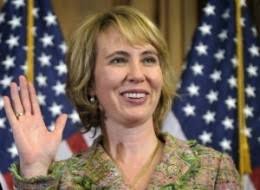
Rep. Gabrielle Giffords
She vowed to return to her former Congressional duties, but was forced to resign for health reasons in 2012.
Giffords was only one victim of a shooting spree that claimed the lives of six people and left 13 others wounded.
Also killed was Arizona’s chief U.S. District judge, John Roll, who had just stopped by to see his friend Giffords after celebrating Mass.
Although the actual shooter, Jared Lee Loughner, was immediately arrested, those who fanned the flames of political violence that consumed 19 people that day have remained unpunished.
Consider the circumstances behind the shootings:
John Roll is Arizona’s chief federal judge. Appointed in 2006, he wins acclaim as a respected jurist and leader who pushes to beef up the court’s strained bench to handle a growing number of border crime-related cases.
In 2009, he becomes a target for threats after allowing a $32 million civil-rights lawsuit by illegal aliens to proceed against a local rancher. The case arouses the fury of local talk radio hosts, who encourage their audiences to threaten Roll’s life.
In one afternoon, Roll logs more than 200 threatening phone calls. Callers threaten the judge and his family. They post personal information about Roll online.
Roll and his wife are placed under fulltime protection by deputy U.S. marshals. Roll finds living under security “unnerving and invasive.”
Authorities identify four men believed responsible for the threats. But Roll declines to press charges on the advice of the Marshals Service.
2016 PRESIDENTIAL ELECTION, 2020 PRESIDENTIAL ELECTION, ABC NEWS, ADOLF HITLER, ALTERNET, AP, BUZZFEED, CBS NEWS, CIA, CNN, COVID-19, CROOKS AND LIARS, DAILY KOS, DONALD TRUMP, FBI, FRANCE, GUNTER MEISNER, HERMAN WOUK, JAMES COMEY, JANUARY 6 COUP ATTEMPT, JOE BIDEN, KIM JONG-UN, MOTHER JONES, MOVEON, NAZI GERMANY, NBC NEWS, NEWSWEEK, NPR, POLITICO, RAW STORY, REUTERS, SALLY YATES, SALON, SEATTLE TIMES, SERGEY KISLYAK, SERGY LAVROV, SLATE, THE ATLANTIC, THE CHICAGO SUN-TIMES, THE CHICAGO TRIBUNE, THE DAILY BEAST, THE GUARDIAN, THE HILL, THE HUFFINGTON POST, THE LOS ANGELES TIMES, THE NATION, THE NEW YORK TIMES, THE PRESS, THE WASHINGTON POST, THE WINDS OF WAR, TIME, TWITTER, U.S. NEWS & WORLD REPORT, UPI, USA TODAY, VLADIMIR PUTIN, VOLODYMYR ZELENSKY, WALTER VON BRAUCHITSCH, WOLFGANG PREISS, WORLD WAR 11
In Bureaucracy, History, Military, Politics, Social commentary on April 1, 2024 at 12:10 am
After Donald Trump won the 2016 election, many people feared he would embark on a radical Right-wing agenda. But others hoped that the Washington bureaucracy would “box him in.”
The same sentiments echoed throughout Germany after Adolf Hitler was appointed Chancellor of Germany on January 30, 1933.
The 1983 TV mini-series, The Winds of War, offered a dramatic example of how honorable men can be overwhelmed by a ruthless dictator.
Based on the bestselling 1971 historical novel by Herman Wouk, the mini-series factually re-created the major historical events of World War II.

One of those events took place on November 5, 1939.
General Walther von Brauchitsch is summoned to the Chancellery in Berlin to meet with Adolf Hitler. He carries a memorandum signed by all the leaders of the German Wehrmacht asserting that Case Yellow—Hitler’s planned attack against France—is impossible.
Meanwhile, at the German army headquarters at Zossen, in Berlin, the Wehrmacht’s top command wait for word from von Brauchitsch.
CHANCELLERY:
Von Brauchitsch hands the memorandum to Hitler, who reads it.
Adolf Hitler (slamming down the memorandum): So—what is new in all this?
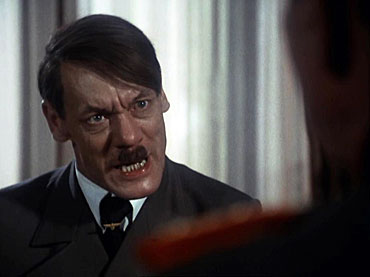
Gunter Meisner as Adolf Hitler in “The Winds of War”
Walther Von Brauchitsch: Fuhrer, it is the army’s final position that Case Yellow cannot proceed.
Hitler: Why not?
Von Brauchitsch: Because of the military fundamentals as stated. The meteorologists predict continuous soaking rains for weeks.
Hitler: It rains on the enemy, too.
ZOSSEN:
Brigadier General Armin Von Roon: The conspiracy has been going on that long—since Czechoslovakia [1938)?
Chief of the General Staff Franz Halder: If the British had not caved in at Munich [where France and Britain sold out their ally, Czechoslovakia]—perhaps. But they did. And ever then, ever since his big triumph, it has been hopeless. Hopeless.
Von Roon: Empty talk, talk, talk. I am staggered.
Halder: A hundred times I myself could have shot the man. I can still at any time. But what would be the result? Chaos. The people are for him. He has unified the country. We must stick to our posts and save him from making military mistakes.
CHANCELLERY:
Von Brauchitsch: Fuhrer, even the supply of artillery shells is totally inadequate.
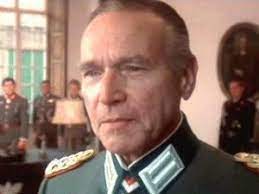
Wolfgang Preiss as Walter von Brauchitsch in “The Winds of War”
Hitler: Do you know how many artillery shells of all calibers we have in the staging areas—right this minute?
Von Brauchitsch: No.
Hitler: How many we have in the reserve dumps in the West? What the monthly annual production of shells is? What the projected rise in production of the next six months is, month by month?
Von Brauchitsch: Who keeps such figures in his head?
Hitler: I do! The supply is adequate. I tell you so. And I’m a field soldier who depended on artillery for four years to protect his life. [He hands von Brauchitsch a sheaf of armaments figures.] Check with your staff. if one of those figures is wrong, you can postpone Case Yellow. Otherwise—you march! And next time you come to see me, know what you’re talking about!
Von Brauchitsch: The morale of the army was low, even in the Polish campaign.
Hitler: Back up this monstrous assertion! In what units was morale low? What action was taken? How many death sentences were handed out for cowardice? Speak up! I’ll fly to the front and pass the death sentences myself. Name one specific instance.
Von Brauchitsch: It was common knowledge—
Hitler: Common knowledge? What is common knowledge is that army headquarters at Zossen crawls with cowards. You opposed me in rearming the Rhineland. You opposed me on the [union] with Austria. You opposed me on Czechoslovakia, until the British came crawling to me. You dirtied in your trousers, you heroes at Zossen, at the idea of marching into Poland. Well, have I once been wrong? Have you once been right? Answer me!
Von Brauchitsch: Mein Fuhrer—
Hitler: Tell everyone who signed this insubordinate Zossen rubbish to beware! I will ruthlessly crush everybody up to the rank of a Field Marshal who dares to oppose me. You don’t have to understand. You only have to obey. The German people understand me. I am Germany.
Fast forward 79 years from Adolf Hitler’s stormy confrontation with Walter von Brauchitsch to January 6, 2021.
President Donald Trump:
- Fired FBI Director James Comey for investigating Russia’s subversion of the 2016 Presidential election.
- Gave Russian Foreign Minister Sergey Lavrov and Russian Ambassador Sergey Kislyak highly classified CIA Intelligence.
- Attacked the integrity of the American Intelligence community.
- Attacked the free press as “the enemy of the American people.”
- Praised brutal Communist dictators Vladimir Putin and Kim Jong Un.
- Tried to coerce Ukrainian President Volodymyr Zelensky to smear former Vice President Joe Biden, his presumed Democratic opponent in the 2020 Presidential election.
- Repeatedly lied about the dangers posed by the COVID-19 virus, thus enabling it to ravage the country and kill 400,000 by the time Trump left office.
- Incited his followers to violently attack the United States Capitol Building to overturn the results of the 2020 Presidential election and prevent Joe Biden, the winner, from taking office.
Like Adolf Hitler, Donald Trump could truthfully say: I am America.
ABC NEWS, ADOLF HITLER, ALTERNET, AMERICABLOG, ANDREI VYSHINKSY, AP, BABY BOOMER RESISTANCE, BBC, BLOOMBERG NEWS, BUZZFEED, CBS NEWS, CNN, CROOKS AND LIARS, DAILY KOZ, FIVETHIRTYEIGHT, GREG ABBOTT, HARPER’S MAGAZINE, HUFFINGTON POST, KEN PAXTON, MEDIA MATTERS, MOTHER JONES, MOVEON, MSNBC, NAZI GERMANY, NBC NEWS, NEW REPUBLIC, NEWSDAY, NEWSWEEK, NPR, PBS NEWSHOUR, POLITICO, POLITICUSUSA, RAW STORY, REUTERS, ROBB ELEMENTARY SCHOOL, ROBERT FRANCIS “BETO” O’ROURKE, ROLAND FREISLER, SALON, SALVATOR RAMOS, SEATTLE TIMES, SLATE, TALKING POINTS MEMO, TED CRUZ, TEXS, THE ATLANTIC, THE CHICAGO SUN-TIMES, THE CHICAGO TRIBUNE, THE DAILY BEAST, THE DAILY BLOG, THE GUARDIAN, THE HILL, THE HUFFINGTON POST, THE INTERCEPT, THE LOS ANGELES TIMES, THE NATION, THE NEW REPUBLIC, THE NEW YORK TIMES, THE NEW YORKER, THE VILLAGE VOICE, THE WASHINGTON POST, THINKPROGRESS, TIME, TRUTHDIG, TRUTHOUT, TWITTER, TWO POLITICAL JUNKIES, U.S. NEWS & WORLD REPORT, UPI, USA TODAY, UVALDE, WONKETTE, WORLD WAR 11
In Bureaucracy, History, Law, Law Enforcement, Politics, Social commentary on March 29, 2024 at 12:15 am
You can’t appreciate the ordeal—and the heroism—of Robert Francis “Beto” O’Rourke on May 25, 2022 if you know nothing about Roland Freisler.
Not that O’Rourke and Freisler have anything in common.
O’Rourke, 49, represented the Texas 16th Congressional district from 2013 to 2019. A Democrat, he ran for the United States Senate in 2018 and for the Democratic presidential nomination in 2020. He is now the Democratic nominee for the 2022 Texas governorship.
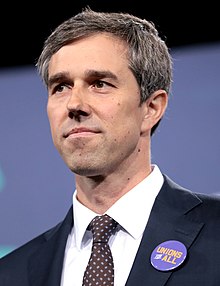
Robert “Beto” O’Rourke
Gage Skidmore, CC BY-SA 2.0 <https://creativecommons.org/licenses/by-sa/2.0>, via Wikimedia Commons
Freisler (October 30, 1893 – February 3, 1945) was a German Nazi jurist, judge and politician who served as the State Secretary of the Reich Ministry of Justice from 1934 to 1942 and President of the People’s Court from 1942 to 1945.
His mastery of legal texts, verbal force and fanatical commitment to Nazi ideology made him the most-feared judge in Nazi Germany. He was an admirer of Andrei Vyshinsky, the chief prosecutor of the Stalinist purge trials, and reportedly copied his demeanor.
Friesler demanded strict penalties against “race defilement”—sexual relations between “Aryans” and “inferior races”—designating this as “racial treason.”
Between 1942 and 1945, Freisler ordered 5,000 people executed. These included approximately 200 people hanged for alleged involvement in the July 20, 1944, plot to assassinate Adolf Hitler. Ninety per cent of all cases brought before him resulted in death or life imprisonment.
Freisler’s treatment of these defendants was especially brutal and humiliating. During the trial of Erwin von Witzleben, the former field marshal tried to hold up his trousers because he had been given oversized and beltless clothing. Freisler yelled at him: “You dirty old man, why do you keep fiddling with your trousers?”
On February 3, 1945, an American bombing raid on Berlin forced Freisler to adjourn proceedings and order the prisoners before him be taken to an air raid shelter. But he stayed behind to gather files before leaving.
A bomb struck the court building, and while Freisler hurriedly gathered his documents, a masonry column crushed him. He died instantly, and his flattened remains were found beneath the rubble.

Roland Freisler
Bundesarchiv, Bild 183-J03238 / CC-BY-SA 3.0, CC BY-SA 3.0 DE <https://creativecommons.org/licenses/by-sa/3.0/de/deed.en>, via Wikimedia Commons
Among the files he clutched was that of Fabian von Schlabrendorff, a member of the July 20 plot who faced execution. Because Freisler died, Schlabrendorff, survived the war.
When Freisler was brought to Lützow Hospital, a worker commented: “It is God’s verdict.”
Now, fast forward 77 years to a different country—but the same Fascistic mentality.
On May 24, 2022, 18-year-old Salvador Ramos, armed with an AR-15 assault rifle, entered Robb Elementary School in Uvalde, Texas. He shut himself inside two adjoining classrooms and fatally shot 19 students and two teachers and wounded 17 other people.
He remained in the school for more than an hour before members of the United States Border Patrol Tactical Unit fatally shot him.
The next day, Republican Texas Governor Greg Abbott staged a press conference in Uvalde. Joining him were Lieutenant Governor Dan Patrick, House Speaker Dade Phelan, Texas Attorney General Ken Paxton and Texas United States Senators John Cormyn and Ted Cruz.
As always happens after a gun massacre, the assembled Republicans blamed it on everything but the ready availability of military-style firearms to virtually anyone—including criminals, terrorists and the mentally ill.
“Inevitably when there’s a murder of this kind, you see politicians try to politicize it, you see Democrats and a lot of folks in the media whose immediate solution is to try to restrict the constitutional rights of law-abiding citizens,” Ted Cruz told reporters. “That doesn’t work. It’s not effective. It doesn’t prevent crime.”
Paxton similarly rejected any effort at gun control: “I’d much rather have law-abiding citizens armed and trained so that they can respond when something like this happens because it’s not going to be the last time.”
This totally ignored the fact that armed Texas police, knowing they were facing a man armed with an AR-15 assault rifle, waited more than an hour to enter the school.
O’Rourke was having none of it. He had become outraged about gun violence after a 2019 mass shooting in his hometown, El Paso, killed 23 people.
About 15 minutes after Abbott began speaking to the media and fellow Republicans onstage, O’Rourke moved to the third row of the Uvalde High School auditorium. When Abbott concluded his comments and introduced Patrick, O’Rourke rose and walked to the stage and spoke directly to Abbott.
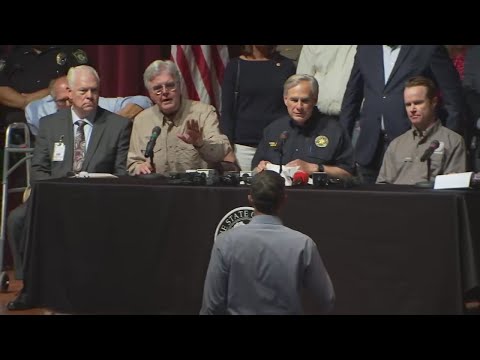
“The time to stop the next shooting is right now, and you are doing nothing,” O’Rourke said. “You are offering up nothing. You said this was not predictable. This was totally predictable when you choose not to do anything.”
Republicans onstage furiously reacted.
Cruz: “Sit down and don’t play this stunt.”
Patrick: “You’re out of line and an embarrassment.”
Uvalde Mayor Don McLaughlin: “I can’t believe that you’re a sick son of a bitch that would come to a deal like this to make a political issue.”
Police escorted O’Rourke out of the room. Just as some defendants had dared to warn Freisler he would face trial for war crimes, O’Rourke had a similar warning for Abbott:
“This is on you until you choose to do something different,” O’Rourke said, as he was escorted out of the room.
“This will continue to happen. Somebody needs to stand up for the children of this state or they will be continue to be killed just like they were killed in Uvalde yesterday.”
It remains to be seen whether history will hold Greg Abbott as accountable for mass deaths as it has Roland Freisler.
2020 PRESIDENTIAL ELECTION, ABC NEWS, ALTERNET, AMERICABLOG, AP, BABY BOOMER RESISTANCE, BBC, BLOOMBERG NEWS, BUZZFEED, CBS NEWS, CNN, CROOKS AND LIARS, DAILY KOZ, DEMOCRATIC NATIONAL COMMITTEE, DEMOCRATS, DONALD TRUMP, ELECTORAL COLLEGE, ELISE STEFANIK, FBI, FIVETHIRTYEIGHT, HARPER’S MAGAZINE, HUFFINGTON POST, JANUARY 6 COUP ATTEMPT, JOSEPH BIDEN, jOSH HAWLEY, KEVIN MCCARTHY, MAR-A-LAGO, MEDIA MATTERS, MERRICK GARLAND, MOTHER JONES, MOVEON, MSNBC, NATIONAL ARCHIVES, NBC NEWS, NEW REPUBLIC, NEWSDAY, NEWSWEEK, NPR, PBS NEWSHOUR, POLITICO, POLITICUSUSA, RAW STORY, REPUBLICANS, REUTERS, RICHARD M. NIXON, SALON, SEATTLE TIMES, SLATE, TALKING POINTS MEMO, THE ATLANTIC, THE CHICAGO SUN-TIMES, THE CHICAGO TRIBUNE, THE DAILY BEAST, THE DAILY BLOG, THE GUARDIAN, THE HILL, THE HUFFINGTON POST, THE INTERCEPT, THE LOS ANGELES TIMES, THE NATION, THE NEW REPUBLIC, THE NEW YORK TIMES, THE NEW YORKER, THE VILLAGE VOICE, THE WASHINGTON POST, THINKPROGRESS, TIME, TRUMP FOUNDATION, TRUMP UNIVERSITY, TRUTHDIG, TRUTHOUT, TWITTER, TWO POLITICAL JUNKIES, U.S. NEWS & WORLD REPORT, UNITED STATES DEPARTMENT OF JUSTICE, UPI, USA TODAY, VOTER FRAUD, WATERGATE, WONKETTE
In Bureaucracy, History, Law, Law Enforcement, Politics, Social commentary on March 28, 2024 at 12:13 am
On Thursday, August 8, 1974, Richard M. Nixon resigned as the 37th President of the United States.
On Monday, August 8, 2022, for the first time in American history, Donald Trump became the first former President to be the subject of an FBI raid.
The raid came without warning on Trump’s residence at Mar-a-Lago in Palm Beach, Florida. FBI agents, armed with a search warrant, scoured the premises—for documents Trump illegally took before he left the White House on January 20, 2021.
In January, 2022, the National Archives had retrieved 15 boxes of records from Mar-a-Lago, including materials that had been identified as classified.
“I really don’t believe that the department would have taken such a significant step as pursuing a search warrant for the president’s residence about information they already had back,” said Andrew McCabe, a former FBI deputy director on CNN “Newsroom.”
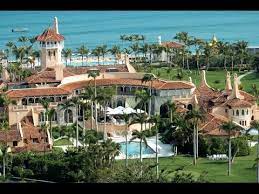
Mar-a-Lago
“There had to be a suspicion, a concern and indeed specific information that led them to believe that there were additional materials that were not turned over.”
Both the FBI and the Justice Department refused to comment on any aspect of the raid.
But Donald Trump rushed to do so.
“These are dark times for our Nation, as my beautiful home, Mar-A-Lago in Palm Beach, Florida, is currently under siege, raided and occupied by a large group of FBI agents. Nothing like this has ever happened to a President of the United States before.
“After working and cooperating with the relevant government agencies, this unannounced raid on my home was not necessary or appropriate.
“What is the difference between this and Watergate, where operatives broke into the Democratic National Committee? Here, in reverse, Democrats broke into the home of the 45th President of the United States.”

Donald Trump
There are several differences between Watergate and the FBI raid on Trump’s residence—that is, for anyone who cares about enforcing the law.
First, the burglary at the Watergate hotel—on June 17, 1972—was completely illegal, carried out by a group of men working for President Richard M. Nixon. They had installed illegal bugging equipment in the suite used by the Democratic National Committee—but that had malfunctioned.
So they made a second entry to repair it.
It was during that second burglary that the burglars were arrested.
Second, the raid on Trump’s home was fully authorized by the Justice Department.
To get judicial approval for the search, investigators had to present to a judge a detailed affidavit that established probable cause that a crime had been committed and that evidence of that crime existed at the property where the search was sought.
But before prosecutors asked a magistrate judge to approve the warrant, investigators had to obtain the approval from the highest levels of the Justice Department. Too much historical and political significance was at stake.
“Not only would the investigators have to suggest it, not only would a line prosecutor have to agree with it, but multiple layers of management would have had to approved of it—all the way up to the Attorney General,” Daren Firestone, a former DOJ attorney, told CNN.
Third, Donald Trump—before and during his Presidency—had amassed a solid record of criminality.
In 2018, Trump was forced to pay more than $2 million in court-ordered damages to eight different charities for illegally misusing charitable funds for political purposes at his Trump Foundation. The Foundation was shut down under court-supervised dissolution in 2019.
And his Trump University scammed its students, promising to teach them “the secrets of success” in the real estate industry—then delivered nothing. In 2016, a federal court approved a $25 million settlement with many of those students.

Trump’s record of criminality during his four years in the White House is too lengthy to catalog here. To cite just two of his greatest crimes:
- Refusing to accept the outcome of the 2020 Presidential election, and claiming that he was “cheated” by widespread voter fraud; and
- Inciting the January 6, 2021 attack on the United States Capitol where Electoral College votes were being counted to determine the winner of that election.
Almost four years after the 2020 election, no evidence of widespread voter fraud has emerged—even though Trump continues to spread “The Big Lie.”
Meanwhile, “law-and-order” Republicans have rushed to Trump’s defense.
“The Department of Justice has reached an intolerable state of weaponized politicization,” said then-House Minority Leader Kevin McCarthy.
“There must be an immediate investigation and accountability into Joe Biden and his Administration’s weaponizing this department against their political opponents—the likely 2024 Republican candidate for President of the United States,” said New York Rep. Elise Stefanik, a member of House GOP leadership.
Missouri GOP Senator Josh Hawley—a major instigator of the January 6 attack on Congress—said that President Joseph Biden “has taken our republic into dangerous waters.” He demanded that Attorney General Merrick Garland resign or be impeached.
John Adams, America’s second President, coined the phrase “a government of laws, not of men.”
Republicans scurrying for Trump’s favor now support the opposite.
ABC NEWS, ALTERNET, AMERICABLOG, AP, APACHES, BABY BOOMER RESISTANCE, BBC, BLOOMBERG NEWS, BROCK PETERS, BUZZFEED, CBS NEWS, CHARLTON HESTON, CIVIL WAR, CNN, CROOKS AND LIARS, DAILY KOS, FIVETHIRTYEIGHT, HARPER’S MAGAZINE, HUFFINGTON POST, INDIAN WARS, INDIANS, JAMES COBURN, JIM HUTTON, MAJOR DUNDEE, MEDIA MATTERS, MEXICO, MICHAEL ANDERSON JR., MOTHER JONES, MOVEON, MOVIES, MSNBC, NBC NEWS, NEW REPUBLIC, NEWSDAY, NEWSWEEK, NPR, PBS NEWSHOUR, POLITICO, POLITICUSUSA, RAW STORY, REUTERS, RICHARD HARRIS, SALON, SAM PECKINPAH, SAVING PRIVATE RYAN, SEATTLE TIMES, SLATE, SPANISH-AMERICAN WAR, STEVEN SPIELBERG, TALKING POINTS MEMO, THE ATLANTIC, THE CHICAGO SUN-TIMES, THE CHICAGO TRIBUNE, THE DAILY BEAST, THE DAILY BLOG, THE GUARDIAN, THE HILL, THE HUFFINGTON POST, THE INTERCEPT, THE LOS ANGELES TIMES, THE NATION, THE NEW REPUBLIC, THE NEW YORK TIMES, THE NEW YORKER, THE VILLAGE VOICE, THE WASHIGNTON POST, THE WASHINGTON POST, THE WILD BUNCH, THINKPROGRESS, TIME, TOM HANKS, TRUTHDIG, TRUTHOUT, TWITTER, TWO POLITICAL JUNKIES, U.S. NEWS & WORLD REPORT, UPI, USA TODAY, WESTERNS, WORLD WAR 1, WORLD WAR 11
In Entertainment, History, Military, Politics, Social commentary on March 25, 2024 at 12:10 am
Major Dundee is a 1965 Sam Peckinpah Western focusing on a Union cavalry officer (Charlton Heston) who leads a motley troop of soldiers into Mexico to rescue three children kidnapped by Apaches.
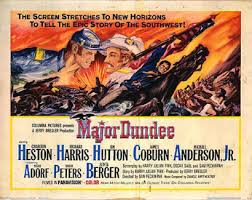
Along the way they liberate Mexican villagers and clash with French lancers trying to establish Mexico as a French colony under would-be emperor Archduke Maximilian 1.
The Wild Bunch is universally recognized as Peckinpah’s greatest achievement. It has certainly had a far greater impact on audiences and critics than Major Dundee. According to Heston, this was really the movie Peckinpah wanted to make while making Dundee, but he couldn’t quite get his mind around it.
As a result, Dundee’s virtues have been tragically overlooked. It has a larger cast of major characters than Bunch, and these are men an audience can truly like and identify with:
- The charm of Benjamin Tyreen (Richard Harris), a Confederate lieutenant forced into Union service;
- The steady courage of Sergeant Gomez (Mario Adorf);
- The quiet dignity of Aesop (Brock Peters), a black soldier;
- The quest for maturity in young, untried bugler Tim Ryan (Michael Anderson, Jr.);
- The on-the-job training experience of impetuous Lt. Graham (Jim Hutton); and
- The stoic endurance of Indian scout Sam Potts (James Coburn).
These men are charged with a dangerous and dirty mission, and do it as well as they can, but you wouldn’t fear inviting them to meet your family.

Major Dundee (Charlton Heston)
That was definitely not the case with The Wild Bunch, four hardened killers prepared to rip off anyone, anytime, and leave a trail of bodies in their wake. The only place where you would have felt safe seeing them, in real-life, was behind prison bars.
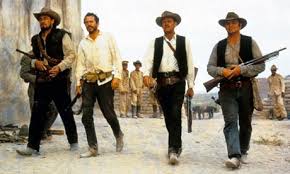
The Wild Bunch
Dundee is an odyssey movie, in the same vein as Saving Private Ryan. Both films start with a battle, followed by the disappearance of characters who need to be searched for and brought back to safety.
Just as Dundee assembles a small force to go into Mexico, so, too, does Captain John Miller (Tom Hanks) do the same, with his hunting ground being France.
Dundee’s men retrieve the kidnapped children and survive a near-fatal battle with Indians. Miller’s men twice clash with the Germans before finding their quarry, James Ryan.
Before Dundee can return to the United States, he must face and defeat a corps of French soldiers. Before Miller can haul Ryan back to safety, he must repulse a German assault.
Both groups of soldiers—Dundee’s and Miller’s—are transformed by their experiences in ways neither group could possibly articulate. (Miller, being a highly literate schoolteacher, would surely do a better job of this than the tight-jawed Dundee.)
Dundee’s soldiers return to a United States that’s just ended its Civil War with a Union victory—and the death of slavery. Miller’s soldiers return to a nation that is now a global superpower.
Of course, Ryan was fortunate in having Steven Spielberg as its director. With his clout, there was no question that Ryan would emerge as the film he wanted.
Peckinpah lacked such clout. And he fought with everyone, including the producer, Jerry Bressler, who ultimately held the power to destroy his film. This guaranteed that his movie would emerge far differently than he had envisioned.
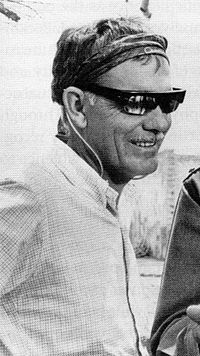
Sam Peckinpah
In 2005, an extended version of Dundee was released, featuring 12 minutes of restored footage. (Much of the original footage was lost after severe cuts to the movie.)
In this new version, we fully see how unsympathetic a character the martinet Dundee really is. Owing to Heston’s career of playing heroes—such as Moses and El Cid—it’s easy to overlook Dundee’s arrogance and lethal fanaticism and automatically view him as a hero.
If he is indeed that, he is a hero with serious flaws.
And his self-imposed mission poses questions for us today:
- Where is the line between professional duty and personal fanaticism?
- How do we balance the success of a mission against its potential costs—especially if they prove appalling?
- At what point—if any—does personal conscience override professional obligations?
Whether intentionally or not, in Major Dundee, Peckinpah laid out a microcosm of the American history that would immediately follow the Civil War.
Former Confederates and Unionists would forego their regional animosities and fight against a recognized mutual enemy—the Indians. This would prove a dirty and drawn-out war, stripped of the glory and (later) treasured memories of the Civil War.
Just as Dundee’s final battle with French lancers ended with an American victory won at great cost, so, too, would America’s forays into the Spanish-American War and World Wars 1 and 11 prove the same.
Ben Tyreen’s commentary on the barbarism of French troops (“Never underestimate the value of a European education”) would be echoed by twentieth-century Americans uncovering the horrors of Dachau and Buchenwald.
And America would learn to project its formidable military power at great cost. Toward the end of the movie, Teresa Santiago (Senta Berger), the ex-patriot Austrian widow, would ask Dundee: “But who do you answer to?”
It is a question that still vividly expresses the view of the international community as this superpower colossus hurtles from one often-disastrous conflict to the next.
ABC NEWS, ADOLF HITLER, ALAMO, ALTERNET, AMERICABLOG, ANDREW CUOMO, ANTHONY FAUCI, ANTONIO LOPEZ DE SANTA ANNA, AP, BABY BOOMER RESISTANCE, BLOOMBERG, BUZZFEED, CALIFORNIA, CBS NEWS, CLOROX, CNN, CORONAVIRUS, COVID-19, CROOKS AND LIARS, DAILY KOZ, DAVID CROCKETT, DONALD TRUMP, DRUDGE RETORT, FEDERAL EMERGENCY MANAGEMENT AGENCY (FEMA), FIVETHIRTYEIGHT, GAVIN NEWSOM, HARPER’S MAGAZINE, JAMES BOWIE, MANUEL CASTILLON, MASKS, MEDIA MATTERS, MICHIGAN, MINNESOTA, MOTHER JONES, MOVEON, MSNBC, NBC NEWS, NEW YORK, NEWSWEEK, NPR, NUREMBERG RALLIES, PBS NEWSHOUR, PERSONAL PROTECTIVE EQUIPMENT (PPE), POLITICO, POLITICUSUSA, RAW STORY, REUTERS, SALON, SEATTLE TIMES, SLATE, SOCIAL DISTANCING, TALKING POINTS MEMO, THE ATLANTIC, THE CHICAGO SUN-TIMES, THE CHICAGO TRIBUNE, THE DAILY BEAST, THE DAILY BLOG, THE GUARDIAN, THE HILL, THE HUFFINGTON POST, THE LOS ANGELES TIMES, THE NATION, THE NEW REPUBLIC, THE NEW YORK TIMES, THE VILLAGE VOICE, THE WASHINGTON POST, THINKPROGRESS, TIME, TRUTHDIG, TRUTHOUT, TWITTER, TWO POLITICAL JUNKIES, U.S. NEWS & WORLD REPORT, UPI, USA TODAY, UV LIGHT, VIRGINIA, WONKETTE
In Bureaucracy, History, Medical, Politics, Social commentary on March 22, 2024 at 1:17 am
It was the night of March 5, 1836. For the roughly 200 men inside the surrounded Alamo, death lay only hours away.
Inside a house in San Antonio, Texas, Mexican dictator Antonio Lopez de Santa Anna was holding a council of war with his generals.
For 12 days, his army had bombarded the old mission. Still, the Texians—whose numbers included the legendary bear hunter and Congressman David Crockett and knife fighter James Bowie—held out.
Now Santa Anna was in a hurry to take the makeshift fortress. Once its defenders were dead, he could march on to sweep all American settlers from Texas.
One of his generals, Manuel Castrillón, urged Santa Anna to wait just a few more days. By then, far bigger cannon would be available. When the Alamo’s three-feet-thick walls had been knocked down, the defenders would be forced to surrender.
The lives of countless Mexican soldiers would thus be spared.
Santa Anna was eating a late-night chicken dinner. He held up a chicken leg and said: “What are the lives of soldiers but those of so many chickens?”
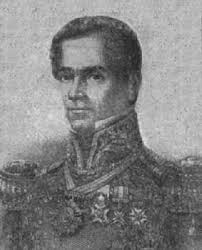
Antonio Lopez de Santa Anna
Santa Anna ordered his generals to prepare an all-out attack on the Alamo, to be launched the next morning—March 6, 1836—at 5 a.m.
Hours later, the attack went forward. Within 90 minutes, every Alamo defender was dead—and so were at least 600 Mexican soldiers.
“What are the lives of Americans but those of so many chickens?”
That could well be the slogan of President Donald Trump in his approach to COVID-19.
The United States has become the country worst-affected by Coronavirus—with more than 8.38 million diagnosed cases and more than 222,000 deaths.

Coronavirus
Americans are living through their tenth month with the virus, and still the Trump administration cannot—or will not—design a coordinated plan to combat it.
Trump started out 2020 by dismissing COVID-19 as a threat. On January 22 he said: “We have it totally under control. It’s one person coming in from China.”
By February 28, he had termed the disease the Democrats’ “new hoax.”
By March, he was making it clear that each state was responsible for securing its needed supply of Personal Protective Equipment (PPEs) for its doctors and nurses aiding Coronavirus patients.
This resulted in a dog-eat-dog atmosphere of cutthroat competition and scarcity, with Americans not only fighting the virus but each other.
Even worse: Trump didn’t simply refuse to provide states with vitally-needed medical supplies—he ordered the Federal Emergency Management Agency (FEMA) to illegally seize those supplies that states had ordered.

Donald Trump
When states’ governors issued stay-at-home orders, Trump was forced to cancel his campaign rallies. Starting Easter weekend, he held almost 50 daily press briefings at the White House.
Their official purpose: To update the country on the administration’s ongoing response to the Coronavirus pandemic.
Their real purpose: To serve as a substitute for Trump’s hate-filled political rallies, which have been likened to those staged by Germany’s Fuhrer, Adolf Hitler, at Nuremberg.
Eager to return to his mass rallies and reignite his support from Right-wingers, he began furiously campaigning to end social distancing and the wearing of masks. Both of these had been mandated by such governors as California’s Gavin Newsom and New York’s Andrew Cuomo.
He also demanded the reopening of businesses across the nation—although no vaccine nor even adequate testing and contact-tracing facilities existed. This led many states—especially in the South and Midwest—to reopen prematurely, with a resulting rise in COVID infections and deaths.
He urged his Right-wing supporters to flood into the capitols of such states as Michigan, Minnesota and Virginia—whose governors were Democrats—and demand an end to mask-wearing and social distancing. This was in direct defiance of the laws legally in force in those states.
And they did as he ordered—massing shoulder-to-shoulder, most of them not wearing masks, and with many of them carrying automatic rifles.
On April 23, at a White House press briefing, he suggested that UV light and disinfectant—such as Clorox—might prove an effective preventative or cure for Coronavirus. This prompted alarm from medical professionals—even as some Americans believed him and swallowed disinfectant to prevent COVID-19.
Unable—or unwilling—to effectively attack the virus, Trump chose to attack the medical professionals desperately trying to save lives. He accused them of hoarding scarce medical supplies and lying about the number of COVID cases they were treating.
As fall approached, Trump demanded that Americans risk the lives of their children by sending them back to school. This would allow their parents to return to work. Then Trump could claim that he had “saved” the American economy—and be re-elected.
His chief target: Dr. Anthony Fauci, director of the U.S. National Institute of Allergy and Infectious Diseases. There were two reasons for this:
- Fauci repeatedly warned about the dangers of the virus—and criticized the failures of the Federal Government to effectively combat it; and
- His warnings repeatedly proved correct—while Trump’s rosy predictions proved wrong.
Finally, Trump wanted Americans to simply ignore the virus—and re-elect him.
Like Santa Anna, Trump could have easily said: “What are the lives of Americans but those of so many chickens?”


ABC NEWS, ABORTION, ALTERNET, AMERICABLOG, AP, BABY BOOMER RESISTANCE, BBC, BLOOMBERG NEWS, BUZZFEED, CBS NEWS, CELL PHONES ABORTION PILLS, CNN, CROOKS AND LIARS, DAILY KOS, DIGITAL PERIOD TRACKING APPS, FIVETHIRTYEIGHT, GPU, HARPER’S MAGAZINE, HUFFINGTON POST, INFORMERS, JOSEPH STALIN, KGB, MARY ELIZABETH COLEMAN, MEDIA MATTERS, MISSOURI, MOTHER JONES, MOVEON, MSNBC, NBC NEWS, NEW REPUBLIC, NEWSDAY, NEWSWEEK, NPR, PAVLIK MOROZOV, PBS NEWSHOUR, POLITICO, POLITICUSUSA, RAW STORY, REUTERS, ROE V. WADE, SALON, SEATTLE TIMES, SLATE, SOVIET UNION, TALKING POINTS MEMO, TELEMEDICINE, TEXAS, THE ATLANTIC, THE CHICAGO SUN-TIMES, THE CHICAGO TRIBUNE, THE DAILY BEAST, THE DAILY BLOG, THE GUARDIAN, THE HILL, THE HUFFINGTON POST, THE INTERCEPT, THE LOS ANGELES TIMES, THE NATION, THE NEW REPUBLIC, THE NEW YORK TIMES, THE NEW YORKER, THE VILLAGE VOICE, THE WASHINGTON POST, THINKPROGRESS, TIME, TRUTHDIG, TRUTHOUT, TWITTER, TWO POLITICAL JUNKIES, U.S. NEWS & WORLD REPORT, UNITED STATES SUPREME COURT, UPI, USA TODAY, WONKETTE
TEXAS REPUBLICANS: BECOME A HERO–BE A SNITCH
In Bureaucracy, History, Law, Law Enforcement, Medical, Politics, Social commentary on April 8, 2024 at 12:09 amYou can’t understand what’s happening in Texas—and other states where abortion is now banned as a crime—without knowing the story of Pavlik Morozov.
Pavel Trofimovich Morozov—better known by the diminutive Pavlik—was born on November 14, 1918. Until his 13th birthday, he did nothing to win the status of a Hero of the Soviet Union.
Then his chance came—in 1932, at the height of Soviet dictator Joseph Stalin’s campaign to confiscate the grain of millions of Soviet peasants.
Stalin intended to convert the backward Soviet Union into a major industrial power within a decade. Central to this: Turning land privately farmed by peasants into collective farms which would be “great factories of grain.”
Morozov was a dedicated Communist who led the Young Pioneers at his school and supported Stalin’s forced collections policies.
In 1932, at the age of 13, Morozov reported his father, Trofim, to the political police, the GPU—the forerunner to the KGB.
According to one account,, Trofim, the chairman of the Gerasimovka Village Soviet, had been “forging documents and selling them to the bandits and enemies of the Soviet State” (as the sentence read).
Another account charges him with hoarding grain.
Pavlik Morozov
Trofim Morozov was sentenced to 10 years in a labor camp. There his sentence was changed to execution, which was carried out.
On September 3, 1932, Pavlik’s infuriated uncle, grandfather, grandmother and a cousin murdered him, along with his younger brother.
Only the uncle escaped arrest by the GPU’s sentence to “the highest measure of social defense”—execution by a firing squad.
Soviet authorities quickly turned Pavlik Morozov into a Communist martyr. He became a subject for readings, plays, songs, a symphonic poem, a full-length opera and no fewer than six biographies.
The goal of these efforts: To encourage other Soviet children to inform on their parents.
Which brings us, appropriately enough, to 2024 America—and the June 24, 2022 Supreme Court decision overturning Roe v. Wade, the Court’s historic decision legalizing abortion in 1973.
For Right-wing states dominated by Republican governors and/or legislatures, it isn’t enough to forbid women in their states to get abortions. They insist on preventing them from terminating their pregnancies (even in cases of rape and/or incest) in states where abortion is legal.
And key to making this a reality is turning America into a nation of Pavlik Morozovs.
Even before the Supreme Court handed down its infamous decision, Missouri gave the nation a foretaste of what was to come.
A first-of-its-kind proposal from Missouri lawmakers allowed private citizens to sue anyone who helped a Missouri resident obtain an abortion.
This included the out-of-state physician who performed the procedure to whoever helped transport a person across state lines to a clinic.
Republican state Rep. Mary Elizabeth Coleman admitted that her measure specifically targeted a Planned Parenthood clinic in Illinois just across the river from St. Louis that opened in 2019 with the stated goal of serving Missouri patients.
Mary Elizabeth Coleman
“If you believe as I do that every person deserves dignity and respect and protection whether they’re born or unborn, then of course you want to protect your citizens, no matter where they are,” Coleman told POLITICO.
“If a Missouri resident is hurt, even in Illinois, by a product that they bought in Illinois, there is still jurisdiction for them to sue in a Missouri court because that’s home for them … and this is extending that same kind of thought to abortion jurisprudence.”
This totally ignores the huge difference between unknowingly buying a defective product that causes harm and knowingly seeking a medical procedure.
Abortion pills—now the most popular method of terminating a pregnancy in the United States—are also a target of Republican-dominated legislatures.
Several states—including Texas—have moved to ban prescribing the drugs via telemedicine and sending them by mail to people’s homes. Many others are looking to implement similar bans in the wake of the Biden administration’s move to loosen restrictions on the pills.
Anti-abortion-rights activists claim they can’t eliminate all abortions without deterring travel across state lines. They blame pro-choice advocates who are raising money to help people terminate a pregnancy in another state.
“You have a very aggressive industry working on helping people circumvent pro-life laws,” said Kristi Hamrick with Students for Life of America, which has chapters lobbying for restrictions in all 50 states. “So the conversation in Missouri and other locations is in direct response to that.”
In post-Roe America, a woman’s cell phone can also become her legal undoing.
Digital period tracking apps could be used against them. As a result, many experts advise removing them from cell phones.
More than 100 million women use period tracking applications. They help predict the date of the next period, the ovulation period, and track the signs of premenstrual syndrome. Dozens of applications are available.
And if you want to talk about abortion online in Texas, remember: Doing so on Facebook or Twitter could hurt you.
Texas residents could find themselves in legal hot water for sharing a Facebook or Twitter post on how to get an abortion or holding an online fundraiser for someone seeking one.
Thus Texans, who have long prided themselves on their independence from authority, have become a state filled with informers hoping to get rich quick by informing on their fellow citizens.
Share this: