Posts Tagged ‘THE HUFFINGTON POST’
ABC NEWS, ANCHOR BABIES, BARACK OBAMA, BARBARA LEE, CBS NEWS, CNN, DEMOCRATIC PARTY, DONALD TRUMP, DREAM ACT, FACEBOOK, HILLARY CLINTON, HISPANICS, illegal immigration, MEXICO, MSNBC, NBC NEWS, NEWT GINGRICH, PAUL RYAN, RACIAL PROFILING, REPUBLICAN PARTY, THE CHICAGO SUN-TIMES, THE CHICAGO TRIBUNE, THE HUFFINGTON POST, THE LOS ANGELES TIMES, THE NEW YORK TIMES, THE WASHINGTON POST, TWITTER, U.S. SUPREME COURT, WAL-MART
In Bureaucracy, Business, History, Law, Law Enforcement, Military, Politics, Social commentary on June 27, 2016 at 12:19 am
If Americans decide they truly want to control access to their own borders, there is a realistic way to accomplish this.
And it doesn’t involve building a wall along the Mexican border–which would prove ridiculously expensive and easily circumvented.

(1) The Justice Department should vigorously attack the “sanctuary movement” that officially thwarts the immigration laws of the United States.
Among the 31 “sanctuary cities” of this country: Washington, D.C.; New York City; Los Angeles; Chicago; San Francisco; Santa Ana; San Diego; Salt Lake City; Phoenix; Dallas; Houston; Austin; Detroit; Jersey City; Minneapolis; Miami; Denver; Baltimore; Seattle; Portland, Oregon; New Haven, Connecticut; and Portland, Maine.
These cities have adopted “sanctuary” ordinances that do not allow municipal funds or resources to be used to enforce federal immigration laws, usually by not allowing police or municipal employees to inquire about one’s immigration status.
(2) The most effective way to combat this movement: Indict the highest-ranking officials of those cities which have actively violated Federal immigration laws.
In San Francisco, for example, former District Attorney Kamala Harris—who is now California’s Attorney General—created a secret program called Back on Track, which provided training for jobs that illegal aliens could not legally hold.
She also prevented Immigration and Customs Enforcement (ICE) from deporting even those illegal aliens convicted of a felony.
(3) Indicting such officials would be comparable to the way that President Andres Jackson dealt with the threat South Carolinians once made to “nullify”–or ignore–any Federal laws they didn’t like.
Jackson quashed that threat by making one of his own: To lead an army into that State and purge all who dared defy the laws of the Federal Government.

(4) Even if some indicted officials escaped conviction, the results would prove worthwhile.
City officials would be forced to spend huge sums of their own money for attorneys and face months or even years of prosecution.
And this, in turn, would send a devastating warning to officials in other “sanctuary cities” that the same fate lies in store for them.
(5) CEOs whose companies–like Wal-Mart–systematically employ illegal aliens should be held directly accountable for the actions of their subordinates.
They should be indicted by the Justice Department under the Racketeer Influenced Corrupt Organizations (RICO) Act, the way Mafia bosses are prosecuted for ordering their own subordinates to commit crimes.
Upon conviction, the CEO should be sentenced to a mandatory prison term of at least twenty years.
This would prove a more effective remedy for combating illegal immigration than stationing tens of thousands of soldiers on the U.S./Mexican border. CEOs forced to account for their subordinates’ actions would take drastic steps to ensure that their companies strictly complied with Federal immigration laws.
Without employers luring illegal aliens at a fraction of the money paid to American workers, the flood of such illegal job-seekers would quickly dry up.

(6) The Government should stop granting automatic citizenship to “anchor babies” born to illegal aliens in the United States.
A comparable practice would be allowing bank robbers who had eluded the FBI to keep their illegally-obtained loot.
A person who violates the bank robbery laws of the United States is legally prosecutable for bank robbery, whether he’s immediately arrested or remains uncaught for years. The same should be true for those born illegally within this country.
If they’re not here legally at the time of birth, they should not be considered citizens and should–like their parents–be subject to deportation.
(7) The United States Government–from the President on down–should stop apologizing for the right to control the country’s national borders.
The Mexican Government doesn’t hesitate to apply strict laws to those immigrating to Mexico. And it feels no need to apologize for this.
Neither should we.
(8) Voting materials and ballots should be published in one language–English.
In Mexico, voting materials are published in one language–Spanish.
Throughout the United States, millions of Mexican illegals refuse to learn English and yet demand that voting materials and ballots be made available to them in Spanish.

(9) Those who are not legal citizens of the United States should not be allowed to vote in its elections.
In Mexico, those who are not Mexican citizens are not allowed to participate in the country’s elections.
The Mexican Government doesn’t consider itself racist for strictly enforcing its immigration laws.
The United States Government should not consider itself racist for insisting on the right to do the same.
(10) The United States should impose economic and even military sanctions against countries–such as China and Mexico–whose citizens make up the bulk of illegal aliens.
Mexico, for example, uses its American border to rid itself of those who might demand major reforms in the country’s political and economic institutions.
Such nations must learn that dumping their unwanteds on the United States now comes at an unaffordably high price. Otherwise those dumpings will continue.
ABC NEWS, ANCHOR BABIES, BARACK OBAMA, BARBARA LEE, CBS NEWS, CNN, DEMOCRATIC PARTY, DONALD TRUMP, DREAM ACT, FACEBOOK, HILLARY CLINTON, HISPANICS, illegal immigration, MEXICO, MSNBC, NBC NEWS, PAUL RYAN, REPUBLICAN PARTY, THE CHICAGO SUN-TIMES, THE CHICAGO TRIBUNE, THE HUFFINGTON POST, THE LOS ANGELES TIMES, THE NEW YORK TIMES, THE WASHINGTON POST, TWITTER, U.S. SUPREME COURT, WAL-MART
In Bureaucracy, Business, History, Law, Law Enforcement, Military, Politics, Social commentary on June 24, 2016 at 1:30 am
In 2014, President Barack Obama issued an executive order, declaring that illegal aliens living in the United States since 2010 could become citizens or lawful residents, thus shielding them from deportation.
Texas challenged that executive order, claiming that Obama had acted unconstitutionally by encroaching on the duties of Congress. Another 25 Republican states joined the lawsuit.
The case went to the Supreme Court–which, on June 23, blocked the implementation of Obama’s executive order.
The Justices deadlocked on the issue 4-4, thus returning the case to the lower court in Texas that ruled against the administration’s carrying out the policy.
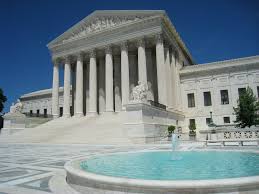
U.S. Supreme Court
In doing so, the Justices denied at least 4 million illegal aliens the right to remain in the country without fear of deportation.
For Republicans, the ruling upheld the separation of powers.
Donald Trump–the presumptive Republican nominee for President–issued a statement: “Today’s 4-4 Supreme Court ruling has blocked one of the most unconstitutional actions ever undertaken by a president.”
And House Speaker Paul Ryan (R-Wis) declared:
“The Supreme Court’s ruling makes the president’s executive action on immigration null and voice. The Constitution is clear: The president is not permitted to write laws—only Congress. This is another major victory in our fight to restore the separation of powers.”
Obama quickly expressed his disappointment, saying that the decision “takes us further from the country that we aspire to be.”
Other Democrats were equally upset by the Court’s decision.
One of these was Rep. Barbara Lee of California, who wrote on Twitter: “Deeply saddened by divided #SCOTUS decision in #USvTexas. We should be keeping families together, not tearing them apart!”
Another was Hillary Clinton–the presumed Democratic Presidential nominee–who used the Court’s decision as a way to troll for Hispanic votes.
“[Donald] Trump has pledged to repeal President Obama’s executive actions on his first day in office,” Clinton said.
“He has called Mexican immigrants ‘rapists’ and ‘murderers.’ He has called for creating a deportation force” to tear 11 million people away from their families and their homes. I believe we are stronger together.”
Both Lee’s and Clinton’s accusations ignored a blunt reality: Families of illegal aliens did not have to break up.
Some members did not have to stay in the United States while others were deported. Instead, they could leave together and live together in the Latin or Central American country of their origin.
Illegal immigration has always been a highly emotional issue for conservatives. But it’s been given added impetus this year.

For years, Republicans and Democrats have clashed over the subject of illegal immigration.
Democrats favor wholesale grants of unearned citizenship to the estimated 11 to 20 million illegal aliens who brazenly violated the law when they sneaked across American borders.
And Republicans favor beefing up security against future waves of such invaders.
But the brutal truth is that neither Democrats nor Republicans truly want to end these invasions. Nor do they want to deport the millions of illegals who have already taken up residence here.
They don’t care that these illegals:
- Flood the United States with millions of poor non-citizens who don’t speak English.
- Overwhelm the public school system with children–who also don’t speak English–who require bilingual education.
- Overwhelm the public healthcare system–especially emergency rooms–with poor illegal aliens. As a result, urgently-needed medical care is often denied to legal American citizens.
Democrats, primarily governed by liberal ideology, believe it’s racist for whites to demand control of their own national borders. They also see illegal aliens as a huge constituency.
And Republicans want them as low-skilled, low-wage fodder for their major campaign contributors–such as corporate-farms and retail outlets like Wal-Mart.
Unlike Democrats, however, Republicans like to feign outrage at the presence of so many illegal aliens within their midst.
It’s the Republican base that’s demanding an end to illegal immigration.
Those masses of alienated and angry whites who find themselves living in a nation that’s increasingly alien from themselves. And who have made Donald Trump their overwhelming choice for President in 2016.
Meanwhile, both Democrats and Republicans ignore a blunt reality: Mexico–America’s largest source of illegal aliens–strictly enforces control of its own borders.
Mexico has a single, streamlined law that ensures that foreign visitors and immigrants are:
- in the country legally;
- have the means to sustain themselves economically;
- not destined to be burdens on society;
- of economic and social benefit to society;
- of good character and have no criminal records; and
- contribute to the general well-being of the nation.
The law also ensures that:
- immigration authorities have a record of each foreign visitor;
- foreign visitors do not violate their visa status;
- foreign visitors are banned from interfering in the country’s internal politics;
- foreign visitors who enter under ralse pretenses are imprisoned or deported;
- foreign visitors violating the terms of their entry are imprisoned are deported;
- those who aid in illegal immigration will be sent to prison.
Meanwhile, Mexico uses its American border to rid itself of those who might otherwise demand major reforms in the country’s political and economic institutions.
ABC NEWS, ABORTION, ADOLF HITLER, ALTERNET, AMERICABLOG, ANN COULTER, AP, ASSASSINATION, BABY BOOMER RESISTANCE, BARACK OBAMA, BBC, BILL CLINTON, BLOOMBERG NEWS, BUZZFEED, CARLY FIORINA, CBS NEWS, CENTER FOR MEDICAL PROGRESS, CNN, CROOKS AND LIARS, DAILY KOZ, DRUDGE REPORT, EDUARDO "TED" CRUZ, FACEBOOK, FBI, FETAL TISSUE, FIVETHIRTYEIGHT, GABRIELLE GIFFORDS, GEORGE H.W. BUSH, HARPER’S MAGAZINE, HATE CRIMES, HEALTHCARE, HUFFINGTON POST, JARROD NADLER, MARCO RUBIO, MARSHA BLACKBURN, MEDIA MATTERS, MEIN KAMPF, MIKE HUCKABEE, MOTHER JONES, MOVEON, MSNBC, NBC NEWS, NEW REPUBLIC, NEWSDAY, NEWSWEEK, NEWT GINGRICH, NPR, PBS NEWSHOUR, PLANNED PARENTHOOD, POLITICO, POLITICUSUSA, RAW STORY, REPUBLICAN PARTY, REPUBLICANS, REUTERS, ROBERT L. DEAR, RODNEY KING RIOTS, RUSH LIMBAUGH, SALON, Sarah Palin, SEAN HANNITY, SEATTLE TIMES, SLATE, TALKING POINTS MEMO, TEA PARTY, TERRORISM, THE ATLANTIC, THE CHICAGO SUN-TIMES, THE CHICAGO TRIBUNE, THE DAILY BEAST, THE DAILY BLOG, THE GUARDIAN, THE HILL, THE HUFFINGTON POST, THE LOS ANGELES TIMES, THE NATION, THE NEW REPUBLIC, THE NEW YORK TIMES, THE NEW YORKER, THE VILLAGE VOICE, THE WASHINGTON POST, THINKPROGRESS, TIME, TRUTHDIG, TRUTHOUT, TWITTER, TWO POLITICAL JUNKIES, U.S. NEWS & WORLD REPORT, UPI, USA TODAY, WONKETTE
In Bureaucracy, History, Law, Politics, Social commentary on June 21, 2016 at 12:01 am
Since the Supreme Court legalized abortion on January 22, 1973, the Republican Party has been committed to saving fetuses.
Even if this puts the lives of adult men and women in jeopardy.
In 2015, the Center for Medical Progress (CMP) released several videos that had been secretly recorded. These purported to show that Planned Parenthood (PP) was engaging in the illegal sale of fetal tissue.
The videos attracted massive media coverage. Congressional Republicans immediately started pushing bills to strip PP of Federal family planning funding.
Officials in Indiana, South Dakota, Kansas, Missouri, Georgia and Massachusetts investigated the charges and found no evidence that Planned Parenthood had broken any state laws concerning the collection of fetal tissues.
On October 8, 2015, Representative Jason Chaffetz (R-Utah), stated that the GOP investigation found no evidence of any wrongdoing.
In fact, all of the videos were found to be altered, according to an analysis by Fusion GPS, a Washington-based research company. Members of CMP have since been indicted by a Texas grand jury on felony charges for tampering with governmental records.
None of this, however, prevented Republican candidates for President from claiming that the videos were, in fact, legitimate.
Carly Fiorina, the former CEO of Hewlett-Packard, falsely claimed in the second GOP Presidential debate that the videos showed “a fully formed fetus on the table…while someone says we have to keep it alive to harvest its brain.”
Although Fiorina claimed to have seen that footage, she never produced any copy of it. Nor has anyone else found evidence to sustain her claim.

Carly Fiorina
Nor was Fiorina the only Republican candidate making this false claim. Others included Texas U.S. Senator Eduardo “Ted” Cruz, former Arkansas governor Mike Huckabee and Florida U.S. Senator Marco Rubio.
On November 27, 2015, Robert L. Dear, armed with a rifle, attacked a Planned Parenthood clinic in Colorado Springs, Colorado. He killed one police officer and two civilians, and wounded five more officers and four civilians.
After a five-hour standoff, SWAT teams crashed an armored vehicle into the lobby and rescued several people trapped inside. At that point, Dear surrendered.
After his arrest, he gave a rambling interview to police. At one point, he said, “No more baby parts”–a direct reference to the false and inflammatory charges made by GOP members.
The latest case of Republican irresponsibility on the abortion issue came in March.
That was when the House Select Investigative Panel on Infant Lives subpoenaed a list of names of doctors and researchers involved in fetal tissue research.
Rep. Marsha Blackburn (R-TN), who chairs the panel, claimed that her investigation had uncovered evidence that StemExpress, a bio-medical company, and three abortion clinics, violated the Health Insurance Portability and Accountability Act (HIPAA).
In early June, Blackburn sent two public letters to the Obama administration.

Rep. Marsha Blackburn
These contained the names and contact information of researchers at StemExpress, university and hospital researchers, and Planned Parenthood staffers.
The unredacted letters were also posted on the select panel’s website. In an interview with Rewire, a representative for Blackburn said that the “staff just made a mistake.”
At the panel’s first hearing on March 2, Rep. Jerrod Nadler (D-NY) had warned Blackburn:
“The committee has no rules in place to protect the names of those subpoenaed–raising the possibility of Congress effectively painting targets on the backs of scientists and researchers for no particular reason other than the Republicans’ desire for a culture war.”
In another letter sent to Blackburn, House Democrats charged that Republicans on the panel may be feeding sensitive information to anti-abortion groups who wish to harm members of the reproductive rights community.
They noted that the panel had publicly released the name of a doctor who had previously been threatened by anti-abortion groups, along with the specific information about when he would appear before the panel.
“Assurances that you take seriously individual privacy and security concerns are insufficient,” the letter read.
“You reneged on promises to protect the individual privacy and security of a deposition witness. Just last week, Panel Republicans leaked letters to FOX News and posted documents on your website that contained names, contact information, and other personally identifiable information of doctors and researchers.”
Initially, some schools and organizations blacked out the names of researchers in documents provided to the committee to protect their researchers’ safety. But recent subpoenas issued by the committee didn’t allow for that security measure.
Scientists have warned that targeting fetal tissue research–and the researchers who work in that field–poses national security risks.
Fetal tissue research is invaluable for developing cures to diseases like Alzheimer’s and multiple sclerosis. It could lead to a vaccine for the Zika virus, which poses a serious risk to pregnant women.
Yet it is “desire for a culture war” that takes top priority for Republicans.
And Republicans know exactly what constituency they are arousing: Those masses of alienated, uneducated Americans who can be easily manipulated by inflammatory rhetoric.
Those men and women who stockpile weapons–and believe that God has empowered them to use violence to enforce their religious beliefs on others.
Essentially, Republicans are calling upon this constituency to achieve with bullets what the party hasn’t been able to achieve in court or at the ballot box.
ABC NEWS, ABORTION, ADOLF HITLER, ALTERNET, AMERICABLOG, ANN COULTER, AP, ASSASSINATION, BABY BOOMER RESISTANCE, BARACK OBAMA, BBC, BILL CLINTON, BLOOMBERG NEWS, BUZZFEED, CARLY FIORINA, CBS NEWS, CENTER FOR MEDICAL PROGRESS, CNN, CROOKS AND LIARS, DAILY KOZ, DRUDGE REPORT, EDUARDO "TED" CRUZ, FACEBOOK, FBI, FETAL TISSUE, FIVETHIRTYEIGHT, GABRIELLE GIFFORDS, GEORGE H.W. BUSH, HARPER’S MAGAZINE, HATE CRIMES, HEALTHCARE, HUFFINGTON POST, JARROD NADLER, MARCO RUBIO, MARSHA BLACKBURN, MEDIA MATTERS, MEIN KAMPF, MIKE HUCKABEE, MOTHER JONES, MOVEON, MSNBC, NBC NEWS, NEW REPUBLIC, NEWSDAY, NEWSWEEK, NEWT GINGRICH, NPR, PBS NEWSHOUR, PLANNED PARENTHOOD, POLITICO, POLITICUSUSA, RAW STORY, REPUBLICAN PARTY, REPUBLICANS, REUTERS, ROBERT L. DEAR, RODNEY KING RIOTS, RUSH LIMBAUGH, SALON, Sarah Palin, SEAN HANNITY, SEATTLE TIMES, SLATE, TALKING POINTS MEMO, TEA PARTY, TERRORISM, THE ATLANTIC, THE CHICAGO SUN-TIMES, THE CHICAGO TRIBUNE, THE DAILY BEAST, THE DAILY BLOG, THE GUARDIAN, THE HILL, THE HUFFINGTON POST, THE LOS ANGELES TIMES, THE NATION, THE NEW REPUBLIC, THE NEW YORK TIMES, THE NEW YORKER, THE VILLAGE VOICE, THE WASHINGTON POST, THINKPROGRESS, TIME, TRUTHDIG, TRUTHOUT, TWITTER, TWO POLITICAL JUNKIES, U.S. NEWS & WORLD REPORT, UPI, USA TODAY
In Bureaucracy, History, Law Enforcement, Politics, Social commentary on June 20, 2016 at 1:00 am
Intimidation–physical as well as political–has increasingly become the weapon of choice for influential Republicans in the pursuit of absolute power.
This consists of aiming violent–and violence-arousing–rhetoric at their Democratic opponents. This is not a case of careless language that is simply misinterpreted, with tragic results.
Hate-mongers like Sarah Palin and Ann Coulter fully understand the constituency they are trying to reach: Those masses of alienated, uneducated Americans who live only for their guns and hardline religious beliefs–and who can be easily manipulated by perceived threats to either.

If a “nutcase” assaults a Democratic politician and misses, then the Republican establishment claims to be shocked–shocked!–that such a thing could have happened.
And if the attempt proves successful–as in the January 8, 2011 Tucson shooting of Rep. Gabrille Giffords–then Republicans weep crocodile tears for public consumption.
The difference is that, in this case, they rejoice in knowing that Democratic ranks have been thinned and their opponents are even more on the defensive, for fear of the same happening to them.
Consider the following:
- Rep. Randy Neugebauer (R-Texas) yelled “baby killer” at Bart Stupak (D-Mich.) on the House Floor.
- Florida GOP Congressional candidate Allen West, referring to his Democratic opponent, Rep. Ron Klein, told Tea Party activists: “You’ve got to make the fellow scared to come out of his house. That’s the only way you’re going to win. That’s the only way you’re going to get these people’s attention.”
- Rep. Devin Nuines (R-CA) said Tea Partiers had “every right” to use racist and homophobic slurs against Democrats, justifying it via Democrats’ “totalitarian tactics.”
- Rep. Michelle Bachmann (R-Minn.) said she wanted her constituents “armed and dangerous” against the Obama administration.
- Right-wing pundit Ann Coulter: “My only regret with Timothy McVeigh is that he did not go to the New York Times building.”
- Senator Phil Gramm (R-Tex.): “We’re going to keep building the party until we’re hunting Democrats with dogs.”
- Rep. Louisa M. Slauter (D-NY) received a phone message threatening sniper attacks against lawmakers and their families.
- In 2010 former Alaska Governor Sarah Palin posted a “crosshairs map” targeting Democratic members of Congress who had voted for President Barack Obama’s healthcare bill. Sarah Palin told her supporters: “Get in their face and argue with them. No matter how tough it gets, never retreat, instead RELOAD!”

Sarah Palin’s “Crosshairs Map”
For more than 50 years, Republicans have vilified government–except when they controlled it. They have sought to convince Americans that Democrats are at least potential traitors, if not actual ones.
Among the slanders Republicans have routinely hurled at Democrats:
- Democrats are plotting to “take away your guns.”
- Democrats are “anti-work” and want to turn America into a welfare-dependent society.
- Democrats are “Godless” and want to force atheism on believing Christians.
- Democrats will allow United Nations “black helicopters” to stage a military takeover of the United States.
During the 1992 Presidential campaign, Republicans slandered Bill Clinton as a brainwashed “Manchurian candidate” because he had briefly visited the Soviet Union during his college years.
After the Soviet Union collapsed in 1991, Republicans lost their “soft on Communism” slander-line. So they tried to persuade voters that Democrats were “soft on crime.”
When riots flared in 1992 after the acquittal of LAPD officers who had savagely beaten Rodney King, President George H.W. Bush blamed the carnage on the “Great Society” programs of the 1960s.
When President Barack Obama set out to provide healthcare for all Americans–and not simply the wealthy–Republicans tried to frighten voters with lies. The most infamous of these was that healthcare reform would lead to wholesale murder by government “death panels,” as Sarah Palin put it.
That insurance companies had functioned for decades as “death panels” in denying healthcare to patients was totally ignored.
Republicans have since encouraged right-wing groups to claim that Obama was not born in Hawaii, but in Kenya. The reason for this is to strip Obama of legitimacy as a leader.
Republicans–brandishing photos of President Obama bearing a Hitler forelock and toothbrush mustache–have claimed he intends to set up concentration camps for those who disagree with him.
Newt Gingrich, the former Republican Speaker of the House, charged that Obama was pursuing a socialist agenda to reform healthcare.

Newt Gingrich
In his book, To Save America: Stopping Obama’s Secular-Socialist Machine, Gingrich claimed that Obama’s policy agenda was as “great a threat to America as Nazi Germany and the Soviet Union.”
Almost immediately after Obama took office, he came under attack by an industry of right-wing book authors such as Sean Hannity, Ann Coulter and Rush Limbaugh.
Among the terms they have used to demonize Obama:
- radical
- Socialist
- anti-American
- extremist
- subversive
- imperial
As Adolf Hitler, the master of 20th century propaganda advised in Mein Kampf: “All effective propaganda must be confined to a few bare essentials.
“Those must be expressed as far as possible in stereotypical formulas. These slogans should be persistently repeated until the very last individual has come to grasp the idea that has been put forward.”
Nowhere has Republican fanaticism proven greater than on the issue of abortion.
Since the Supreme Court legalized abortion on January 22, 1973, the Republican Party has been committed to saving fetuses.
Even if this puts the lives of adult men and women in jeopardy.
2016 PRESIDENTIAL CAMPAIGN, ABC NEWS, ADOLF HITLER, ALTERNET, AMERICABLOG, AP, BABY BOOMER RESISTANCE, BARACK OBAMA, BBC, BERNIE SANDERS, BLOOMBERG NEWS, BUZZFEED, CBS NEWS, CNN, CROOKS AND LIARS, D-DAY, DAILY KOZ, DAVID BROOKS, DEMOCRATIC PARTY, DONALD TRUMP, ELIZABETH WARREN, FACEBOOK, FIVETHIRTYEIGHT, GEORGE S. PATTON, HARPER’S MAGAZINE, HEINZ GUERIAN, HILLARY CLINTON, HUFFINGTON POST, JOSEPH MCCARTHY, LIBERALS, MARCO RUBIO, MARK SHIELDS, MEDIA MATTERS, MOTHER JONES, MOVEON, MSNBC, NAZI GERMANY, NBC NEWS, NEW REPUBLIC, NEWSDAY, NEWSWEEK, NEWT GINGRICH, NOCCOLO MACHIAVELLI, NPR, PBS NEWSHOUR, POLITICO, POLITICUSUSA, RAW STORY, REPUBLICAN PARTY, REPUBLICANS, REUTERS, SALON, SEATTLE TIMES, SLANDER, SLATE, STALINGRAD, TALKING POINTS MEMO, TED CRUZ, THE ATLANTIC, THE CHICAGO SUN-TIMES, THE CHICAGO TRIBUNE, THE DAILY BEAST, THE DAILY BLOG, THE GUARDIAN, THE HILL, THE HUFFINGTON POST, THE LOS ANGELES TIMES, THE NATION, THE NEW REPUBLIC, THE NEW YORK TIMES, THE NEW YORKER, THE PRINCE, THE VILLAGE VOICE, THE WASHINGTON POST, THINKPROGRESS, TIME, TRUTHDIG, TRUTHOUT, TWITTER, TWO POLITICAL JUNKIES, U.S. NEWS & WORLD REPORT, UPI, USA TODAY, WAFFEN-SS
In Bureaucracy, History, Politics, Social commentary on June 2, 2016 at 12:13 am
Massachusetts U.S. Senator Elizabeth Warren seems to know something that most of her fellow Democrats don’t–or choose to ignore.
Nazi Germany wasn’t defeated because “we were the Good Guys and they were the Bad Guys.”
On the contrary: It was defeated because the Allies waged war as brutally as the Germans.
For example:
- From D-Day to the fall of Berlin, captured Waffen-SS soldiers were often shot out of hand.
- When American troops came under fire in the German city of Aachen, Lt. Col. Derrill Daniel brought in a self-propelled 155mm artillery piece and opened up on a theater housing German soldiers. After the city surrendered, a German colonel labeled the use of the 155 “barbarous” and demanded that it be outlawed.

German soldiers at Stalingrad
- The United States and Great Britain carpet-bombed about 150 German cities by day and night, killing 305,000 to 600,000 civilians.
- During the battle of Stalingrad in 1942, Wilhelm Hoffman, a young German soldier and diarist, was appalled that the Russians refused to surrender. He wrote: “You don’t see them at all, they have established themselves in houses and cellars and are firing on all sides, including from our rear! Barbarians! They use gangster methods….”
In short: The Allies won because they dared to meet the brutality of a Heinz Guderian with that of a George S. Patton.
This is a lesson that has been totally lost on the liberals of the Democratic Party. Which explains why they lost most of the Presidential elections of the 20th century.
To Republicans, “lawfully elected” applies only to Republican Presidents. A Democrat who runs against a Republican is automatically considered a traitor.
And a Democrat who defeats a Republican is automatically considered a usurper, and thus deserves to be slandered and obstructed, if not impeached.
Unable to defeat Bill Clinton in 1992 and 1996, Republicans tried in 1998 to impeach him for getting oral sex in the White House.
Similarly, 2012 Presidential candidate Herman Cain, asked in a conference call with bloggers why Republicans couldn’t just impeach President Barack Obama, replied:
“That’s a great question and it is a great–it would be a great thing to do but because the Senate is controlled by Democrats we would never be able to get the Senate first to take up that action.”
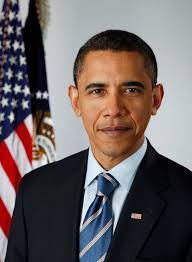
Barack Obama
In Renegade: The Making of a President, Richard Wolffe chronicled Obama’s successful 2008 bid for the White House. Among his revelations:
Obama, a believer in rationality and decency, felt more comfortable in responding to attacks on his character than in making them on the character of his enemies.
A graduate of Columbia University and Harvard Law School, Obama is easily one of the most academically gifted Presidents in United States history.
But for all this, he failed–from the onset of his Presidency–to grasp and apply this fundamental lesson taught by Niccolo Machiavelli, the father of modern political science.

Niccolo Machiavelli
In The Prince, Machiavelli warns:
From this arises the question whether it is better to be more loved than feared, or feared more than loved.
The reply is, that one ought to be both feared and loved, but as it is difficult for the two to go together, it is much safer to be feared than loved….
And men have less scruple in offending one who makes himself loved than one who makes himself feared; for love is held by a chain of obligations which, men being selfish, is broken whenever it serves their purpose; but fear is maintained by a dread of punishment which never fails.
Just as they have blithely disregarded the lessons of history, liberals have ignored the Realpolitik of Machiavelli–with catastrophic results.
On Facebook and Twitter, liberals are already celebrating the “certain” Presidency of Vermont U.S. Senator Bernie Sanders or former First Lady Hillary Clinton in 2017.
They forget–or ignore–that liberals couldn’t believe America would elect, respectively, Richard Nixon (1968 and 1972), Ronald Reagan (1980 and 1984), George H.W. Bush (1988) and George W. Bush (2000 and 2004).
But Elizabeth Warren clearly hasn’t forgotten those Republican victories. Nor does she take for granted that Republican Presidential nominee Donald Trump is certain to lose in November.

Elizabeth Warren
Instead, Warren has dared to do what no other Democrat–or Republican–has: Attack Trump head-on, with the kind of blunt, insulting language he has lavished on his opponents.
On March 31, she appeared on The Late Show, with Stephen Colbert. Her take on the egotistical billionaire:
“Donald Trump is looking out for exactly one guy, and that guy’s name is Donald Trump. He smells that there’s change in the air and what he wants to do is make sure that that change works really, really well for Donald Trump.
“The truth is, he inherited a fortune from his father, he kept it going by cheating and defrauding people, and then he takes his creditors through Chapter 11.”
When Colbert said that Trump had never broken the law, Warren replied that he had never broken the law “and been caught.”
For Democrats to win elective victories and enact their agenda, they must find their own George Patton to take on the Waffen-SS generals among Republican ranks.
Only Elizabeth Warren has so far grasped this truth. And only she seems determined to act on it.
2016 PRESIDENTIAL CAMPAIGN, ABC NEWS, ADOLF HITLER, ALTERNET, AMERICABLOG, AP, BABY BOOMER RESISTANCE, BARACK OBAMA, BBC, BERNIE SANDERS, BLOOMBERG NEWS, BUZZFEED, CBS NEWS, CNN, CROOKS AND LIARS, D-DAY, DAILY KOZ, DAVID BROOKS, DEMOCRATIC PARTY, DONALD TRUMP, ELIZABETH WARREN, FACEBOOK, FIVETHIRTYEIGHT, GEORGE S. PATTON, HARPER’S MAGAZINE, HEINZ GUERIAN, HILLARY CLINTON, HUFFINGTON POST, JOSEPH MCCARTHY, LIBERALS, MARCO RUBIO, MARK SHIELDS, MEDIA MATTERS, MOTHER JONES, MOVEON, MSNBC, NAZI GERMANY, NBC NEWS, NEW REPUBLIC, NEWSDAY, NEWSWEEK, NEWT GINGRICH, NOCCOLO MACHIAVELLI, NPR, PBS NEWSHOUR, POLITICO, POLITICUSUSA, RAND PAUL, RAW STORY, REPUBLICAN PARTY, REPUBLICANS, REUTERS, SALON, SEATTLE TIMES, SLANDER, SLATE, STALINGRAD, TALKING POINTS MEMO, TED CRUZ, THE ATLANTIC, THE CHICAGO SUN-TIMES, THE CHICAGO TRIBUNE, THE DAILY BEAST, THE DAILY BLOG, THE GUARDIAN, THE HILL, THE HUFFINGTON POST, THE LOS ANGELES TIMES, THE NATION, THE NEW REPUBLIC, THE NEW YORK TIMES, THE NEW YORKER, THE PRINCE, THE VILLAGE VOICE, THE WASHINGTON POST, THINKPROGRESS, TIME, TRUTHDIG, TRUTHOUT, TWITTER, TWO POLITICAL JUNKIES, U.S. NEWS & WORLD REPORT, UPI, USA TODAY, WAFFEN-SS
In Bureaucracy, History, Politics, Social commentary on June 1, 2016 at 12:04 am
Donald Trump, “for all his moral flaws, is a marketing genius.”
So stated New York Times columnist David Brooks on the May 27 edition of the PBS Newshour.
“And you look at what he does. He just picks a word and he attaches it to a person. Little Marco {Rubio], Lyin’ Ted [Cruz], Crooked Hillary [Clinton].

Donald Trump
“And that’s a word. And that’s how marketing works. It’s a simple, blunt message, but it gets under. It sticks, and it diminishes. And so it has been super effective for him, because he knows how to do that. And [Hillary] just comes with ‘Oh, he’s divisive.’
“These are words that are not exciting people. And her campaign style has gotten, if anything…a little more stagnant and more flat.”
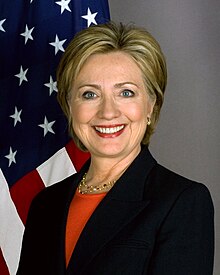
Hillary Clinton
Hillary Clinton isn’t the only Presidential candidate who has proven unable to cope with Trump’s gifts for insult. His targets–and insults–have included:
-
Former Texas Governor Rick Perry: “Wears glasses to seem smart.”
-
Former Florida Governor Jeb Bush: “Low Energy Jeb.”
-
Vermont U.S. Senator Bernie Sanders: “Crazy Bernie.”
-
Ohio Governor John Kasich: “Mathematically dead and totally desperate.”
So far, only one opponent has managed to stand up to Trump: Massachusetts U.S. Senator Elizabeth Warren, whom Trump has called “goofy.”
Florida U.S. Senator Marco Rubio tried to out-insult Trump at the Republican Presidential candidates’ debate on March 3.
“I call him Little Marco. Little Marco. Hello, Marco,” said Trump.
And so Rubio retaliated with “Big Donald.” Since Americans generally believe that “bigger is better,” this was a poor choice of insult.
On the May 27 edition of the PBS Newshour, syndicated columnist Mark Shields noted the ability of Elizabeth Warren to rattle Trump:
“Elizabeth Warren gets under Donald Trunp’s skin. And I think she’s been the most effective adversary. I think she’s done more to unite the Democratic party than either Hillary Clinton or Bernie Sanders.
“I mean, she obviously–he can’t stay away from her. He is tweeting about her.”

Elizabeth Warren
JUDY WOODRUFF (moderator): “But whether it’s Elizabeth Warren or not, doesn’t Hillary Clinton need to come up with some approach that works, that is as effective comeback?”
DAVID BROOKS: “Yes. Well, I think she does, not that anybody else has managed to do this….
“And so the tactics…is either you do what Elizabeth Warren has done, like full-bore negativity, that kind of [get] under the skin, or try to ridicule him and use humor. Humor is not Hillary Clinton’s strongest point.”
But sharp-edged humor clearly works for Warren.
A May 12 story on CNN–“Elizabeth Warren Gives Trump a Dose of His Own Medicine on Twitter”–notes:
“In the past week the Massachusetts Democrat has refined an aggressive anti-Trump message through a series of so-called tweetstorms.
“Whenever Trump criticizes her, Warren fires right back at him, sometimes twice as hard.”
Warren’s tweets, according to the article, appear to have two goals:
- Challenge Trump on social media, which he has so far dominated; and
- Use attention-catching words like “bully” and “loser.”
Among her tweets:
- “But here’s the thing. You can beat a bully–not by tucking tail and running, but by holding your ground.”
- When Trump boasted “I’m driving her nuts” Warren tweeted: “No, @realDonaldTrump – your racism, sexism & xenophobia doesn’t drive me nuts. It makes me sick. And I’m not alone.”
- “You care so much about struggling American workers, @realDonaldTrump, that you want to abolish the federal minimum wage?”
- “@realDonaldTrump: Your policies are dangerous. Your words are reckless. Your record is embarrassing. And your free ride is over.”
Nor has Warren restricted herself to battling Trump on Twitter.
On May 24, Warren unleashed perhaps her most devastating attack on Trump at an event hosted by the Center for Popular Democracy:
“Just yesterday, it came out that Donald Trump had said back in 2007 that he was ‘excited’ for the real estate market to crash because, quote, ‘I’ve always made more money in bad markets than in good markets.’
“That’s right. The rest of us were horrified by the 2008 financial crisis, by what happened to the millions of families…that were forced out of their homes.
“But Donald Trump was drooling over the idea of a housing meltdown–because it meant he could buy up a bunch more property on the cheap.
“What kind of a man does that? Root for people to get thrown out on the street? Root for people to lose their jobs? Root for people to lose their pensions?
“What kind of a man does that? I’ll tell you exactly what kind—a man who cares about no one but himself. A small, insecure moneygrubber who doesn’t care who gets hurt, so long as he makes some money off it….
“Sometimes Trump claims he is tough on Wall Street–tough on the guys who cheated people….. But now he’s singing a very different song.
“Last week, he said that the new Dodd-Frank financial regulations have…’made it impossible for bankers to function’ and he will put out a new plan soon that ‘will be close to dismantling Dodd-Frank.’
“Donald Trump is worried about helping poor little Wall Street? Let me find the world’s smallest violin to play a sad, sad song.”
2016 PRESIDENTIAL CAMPAIGN, ABC NEWS, ADOLF HITLER, ALTERNET, AMERICABLOG, AP, BABY BOOMER RESISTANCE, BARACK OBAMA, BBC, BERNIE SANDERS, BLOOMBERG NEWS, BUZZFEED, CBS NEWS, CNN, CROOKS AND LIARS, D-DAY, DAILY KOZ, DAVID BROOKS, DEMOCRATIC PARTY, DONALD TRUMP, ELIZABETH WARREN, FACEBOOK, FIVETHIRTYEIGHT, GEORGE S. PATTON, HARPER’S MAGAZINE, HEINZ GUERIAN, HILLARY CLINTON, HUFFINGTON POST, JOSEPH MCCARTHY, LIBERALS, MARCO RUBIO, MARK SHIELDS, MEDIA MATTERS, MOTHER JONES, MOVEON, MSNBC, NAZI GERMANY, NBC NEWS, NEW REPUBLIC, NEWSDAY, NEWSWEEK, NEWT GINGRICH, NOCCOLO MACHIAVELLI, NPR, PBS NEWSHOUR, POLITICO, POLITICUSUSA, RAND PAUL, RAW STORY, REPUBLICAN PARTY, REPUBLICANS, REUTERS, SALON, SEATTLE TIMES, SLANDER, SLATE, STALINGRAD, TALKING POINTS MEMO, TED CRUZ, THE ATLANTIC, THE CHICAGO SUN-TIMES, THE CHICAGO TRIBUNE, THE DAILY BEAST, THE DAILY BLOG, THE GUARDIAN, THE HILL, THE HUFFINGTON POST, THE LOS ANGELES TIMES, THE NATION, THE NEW REPUBLIC, THE NEW YORK TIMES, THE NEW YORKER, THE PRINCE, THE VILLAGE VOICE, THE WASHINGTON POST, THINKPROGRESS, TIME, TRUTHDIG, TRUTHOUT, TWITTER, TWO POLITICAL JUNKIES, U.S. NEWS & WORLD REPORT, UPI, USA TODAY, WAFFEN-SS
In Bureaucracy, History, Politics, Social commentary on May 31, 2016 at 12:05 am
Syndicated columnist Mark Shields and New York Times columnist David Brooks appear every Friday on the PBS Newshour to review the week’s major political events.
On May 27, Shields–a liberal, and Brooks, a conservative–came to some disturbingly similar conclusions about the character of Republican Presidential front-runner Donald Trump.
With the business magnate having won the 2016 Republican Presidential nomination, both columnists appeared increasingly dismayed.
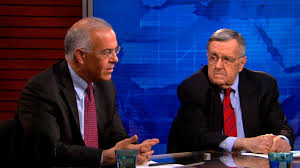
David Brooks and Mark Shields
MARK SHIELDS: “Donald Trump gratuitously slandered Ted Cruz’s wife. He libeled Ted Cruz’s father for being potentially part of Lee Harvey Oswald’s assassination of the president of the United States, suggesting that he was somehow a fellow traveler in that.
“This is a libel. You don’t get over it….
“I cannot figure out any possible advantage to Donald Trump when he’s got a problem with Latinos and with women to go into New Mexico, where the nation’s only Latina woman Republican governor sits, who has not said anything negative about him, who endorsed one of his opponents, but has not been an attack dog on Donald Trump, and absolutely goes after her and is abusive to her.
“And I’m just saying to myself, what is the advantage to this?
“…I think this man may be addicted to the roar of the grease paint and the sound of the crowd, or however it goes, smell of the crowd.
“And those rallies bring out something in him, and he just feels that he has to–and it’s all personal….I mean, it’s not a philosophical difference. It’s not a political difference. It’s all personal.”
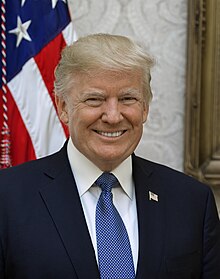
Donald Trump
Ironically, Rand Paul, Republican U.S. Senator from Kentucky, has reached a similar conclusion about Trump:
“I think there is a sophomore quality that is entertaining with Mr. Trump, but I am worried. I’m very concerned of having him in charge of his nuclear weapons because his visceral response to attack people on their appearance–short, tall, fat, ugly–my goodness that happened in junior high.”
DAVID BROOKS: “Trump, for all his moral flaws, is a marketing genius. And you look at what he does. He just picks a word and he attaches it to a person. Little Marco [Rubio], Lyin’ Ted [Cruz], Crooked Hillary [Clinton].
“And that’s a word. And that’s how marketing works. It’s a simple, blunt message, but it gets under.
“It sticks, and it diminishes. And so it has been super effective for him, because he knows how to do that. And she [Hillary Clinton] just comes with, ‘Oh, he’s divisive.’
“These are words that are not exciting people. And her campaign style has gotten, if anything…a little more stagnant and more flat.”
How did American politics reach this state of affairs?
In 1996, Newt Gingrich, then Republican Speaker of the House of Representatives, wrote a memo that encouraged Republicans to “speak like Newt.”
Entitled “Language: A Key Mechanism of Control,” it urged Republicans to attack Democrats with such words as “corrupt,” “selfish,” “destructive,” “hypocrisy,” “liberal,” “sick,” and “traitors.”
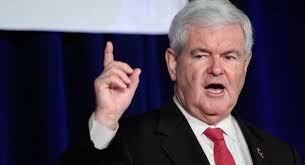
Newt Gingrich
Even worse, Gingrich encouraged the news media to disseminate such accusations. Among his suggestions:
- “Fights make news.”
- Create a “shield issue” to deflect criticism: “A shield issue is, just, you know, your opponent is going to attack you as lacking compassion. You better…show up in the local paper holding a baby in the neonatal center.”
In the memo, Gingrich advised:
“….In the video “We are a Majority,” Language is listed as a key mechanism of control used by a majority party, along with Agenda, Rules, Attitude and Learning.
As the tapes have been used in training sessions across the country and mailed to candidates we have heard a plaintive plea: ‘I wish I could speak like Newt.’
“That takes years of practice. But, we believe that you could have a significant impact on your campaign and the way you communicate if we help a little. That is why we have created this list of words and phrases….
“This list is prepared so that you might have a directory of words to use in writing literature and mail, in preparing speeches, and in producing electronic media.
“The words and phrases are powerful. Read them. Memorize as many as possible. And remember that like any tool, these words will not help if they are not used.”
Here is the list of words Gingrich urged his followers to use in describing “the opponent, their record, proposals and their party”:
- abuse of power
- anti- (issue): flag, family, child, jobs
- betray
- bizarre
- bosses
- bureaucracy
- cheat
- coercion
- “compassion” is not enough
- collapse(ing)
- consequences
- corrupt
- corruption
- criminal rights
- crisis
- cynicism
- decay
- deeper
- destroy
- destructive
- devour
- disgrace
- endanger
- excuses
- failure (fail)
- greed
- hypocrisy
- ideological
- impose
- incompetent
- insecure
- insensitive
|
- intolerant
- liberal
- lie
- limit(s)
- machine
- mandate(s)
- obsolete
- pathetic
- patronage
- permissive attitude
- pessimistic
- punish (poor …)
- radical
- red tape
- self-serving
- selfish
- sensationalists
- shallow
- shame
- sick
- spend(ing)
- stagnation
- status quo
- steal
- taxes
- they/them
- threaten
- traitors
- unionized
- urgent (cy)
- waste
- welfare
|
Yes, speaking like Newt–or Adolf Hitler or Joseph McCarthy–“takes years of practice.”
And to the dismay of both Republicans and Democrats, Donald Trump has learned his lessons well.
1992 REPUBLICAN CONVENTION, ABC NEWS, ABORTION, ADULTERY, ALTERNET, AMERICABLOG, AP, BABY BOOMER RESISTANCE, BBC, BILL CLINTON, BLOOMBERG NEWS, BOB LIVINGSTON, BUZZFEED, CBS NEWS, CNN, CROOKS AND LIARS, DAILY KOS, DEFENSE OF MARRIAGE ACT (DOMA), DEFICITS, DENNIS HASTERT, ECONOMY, EDWIN MEESE, FAMILY VALUES, FIVETHIRTYEIGHT, GEORGE H.W. BUSH, HARPER’S MAGAZINE, HOMOSEXUALITY, HUFFINGTON POST, JERRY FALWELL, MEDIA MATTERS, MIA FARROW, MONICA LEWINSKY, MORAL MAJORITY, MOTHER JONES, MOVEON, MSNBC, NBC NEWS, NEW REPUBLIC, NEWSDAY, NEWSWEEK, NEWT GINGRICH, NPR, PBS NEWSHOUR, POLITICO, POLITICUSUSA, PORNOGRAPHY, RAW STORY, REPUBLICANS, REUTERS, Ronald Reagan, SALON, SEATTLE TIMES, SLATE, TALKING POINTS MEMO, TARGET CORPORATION, THE ATLANTIC, THE CHICAGO SUN-TIMES, THE CHICAGO TRIBUNE, THE DAILY BEAST, THE DAILY BLOG, THE GUARDIAN, THE HILL, THE HUFFINGTON POST, THE INTERCEPT, THE LOS ANGELES TIMES, THE NATION, THE NEW REPUBLIC, THE NEW YORK TIMES, THE NEW YORKER, THE VILLAGE VOICE, THE WASHINGTON POST, THINKPROGRESS, TIME, TRANSGENDERS, TRUTHDIG, TRUTHOUT, TWITTER, U.S. NEWS & WORLD REPORT, UPI, USA TODAY, WOODY ALLEN, WORLD WAR 11
In Bureaucracy, Business, History, Law, Law Enforcement, Politics, Social commentary on May 26, 2016 at 12:33 am
In 1992, Republicans wanted to re-elect President George H.W. Bush, who had succeeded Ronald Reagan in 1989.
But they had a problem: Whipping up voter enthusiasm for him.
Bush wasn’t charismatic like Reagan, so he didn’t inspire the intense loyalty Reagan had. He was seen as drab, even wimpy.

George H.W. Bush
Ironically, Bush had performed heroically during World War II.
On August 1, 1944, Bush piloted one of four aircraft that attacked the Japanese installations on Chichijima.
Bush’s aircraft was hit by flak and his engine caught on fire. Despite this, Bush completed his attack and released bombs over his target, scoring several damaging hits.
Reagan, by contrast, spent World War II on a Hollywood sound stage as part of the First Motion Picture Unit, turning out propaganda films to boost civilian morale.
Yet he was seen by millions as a genuine war hero.
Then there was the stalled economy.
Early in his term, Bush faced leftover deficits spawned by the Reagan years. Reagan had given tax-cuts to the rich, bloated the military budget and cut government programs to aid the poor and middle class.
As a result, the deficit had grown by 1990 to $220 billion, three times its size since 1980.

In 1991, many corporations, claiming the need to reorganize, laid off hundreds of thousands of workers, who had believed that their jobs were secure.
By mid-year, the unemployment rate reached 7.8%, the highest since 1984. In September 1992, the Census Bureau reported that 14.2% of all Americans lived in poverty.
Bush’s Democratic challenger in 1992 was Bill Clinton, who had been the Governor of Arkansas from 1979 to 1981 and 1983 to 1992. At 45, Clinton was young, vigorous, and for many evoked memories of an equally young and vigorous John F. Kennedy.
To overcome these disadvantages, Republicans needed a way to generate enthusiasm among their base.
The answer: “Family values.”
Supposedly this meant support for values traditionally learned or reinforced within a family, such as those of high moral standards and discipline.
In reality, it was a Right-wing excuse for the failed economic policies of the Reagan-Bush years.
By citing “a decline in family values,” Bush’s re-election team could blame jobless Americans for their own misery: “If only you had lived up to the high standards set by your Republican superiors, you wouldn’t now be in this position.”
“Family values” carried a sexual subtext as well. Since abortion had became legal in 1973, Republicans had appropriated re-criminalizing it as their pet sex-related issue.
During the Reagan years, Attorney General Edwin Meese had launched a crackdown on pornography. And much of Reagan’s support had come from sexually-obsessed Christian Right evangelists such as Jerry Falwell of the “Moral Majority.”
Thus, a Bush supporter held up a sign reading, “Woody Allen is Clinton’s Adviser on Family Values,” at the 1992 Republican Presidential convention. Allen had recently become notorious for an affair with the adopted stepdaughter of his lover, actress Mia Farrow.
The slogan wasn’t enough to get Bush re-elected. Bill Clinton was elected President.
But “family values” lived on for decades as Republican code language for: “Only Republicans are sexually upright.”
Throughout the eight-year Clinton Presidency, Republicans focused on his longtime reputation as a sex-crazed Rasputin. When the news broke that Clinton had been diddling a White House intern named Monica Lewinsky, Republicans demanded his resignation.
When Clinton refused to resign, they unsuccessfully tried to impeach him. Meanwhile, they ignored the extramarital affairs of their own members—such as then-House Speaker Newt Gingrich.
Gingrich had been boffing a mistress while demanding Clinton’s impeachment for similar adultery. After Gingrich resigned from the House of Representatives in 1999, his would-be successor, Bob Livingston, was forced to resign from Congress. He had been outed by Hustler publisher Larry Flynt as a serial philanderer.
In 1996, Republicans pushed through Congress the Defense of Marriage Act (DOMA) which defined marriage for federal purposes as the union of one man and one woman. It allowed states to refuse to recognize same-sex marriages allowed in other states.
DOMA was advertised as a necessary defense against “predatory homosexuals” who, like vampires, were thought to be preying on innocent heterosexuals.
A major backer of anti-gay legislation was Dennis Hastert, Republican Speaker of the House from 1999 to 1007.

Dennis Hastert
In 2006, Hastert spearheaded a bill to toughen punishments for sex crimes against children.
“We’ve all seen the disturbing headlines about sex offenders and crimes against children,” said Hastert. “Protecting our children from Internet predators and child exploitation enterprises are just as high a priority as securing our border from terrorists.”
On April 29, 2016, a federal judge repeatedly damned Hastert as a “serial child molester” for sexually abusing several boys he coached on the Yorkville High School wrestling team in the 1960s and 1970s.
Having targeted the poor, blacks, Hispanics, women and gays, Republicans are now training their sights on transgenders.
And Target Corporation’s April 19 announcement that its customers could pick the bathroom that “matched their gender identity” gave Republicans a new venue for their attacks on sex-related issues.
There is no known epidemic of transgender attacks on heterosexuals in bathrooms. But Republicans will ride this issue so long as there are citizens willing to believe it.
ABC NEWS, ABORTION, ADOLF HITLER, ALTERNET, AMERICABLOG, AP, BABY BOOMER RESISTANCE, BBC, BLOOMBERG NEWS, BUZZFEED, CBS NEWS, CNN, CROOKS AND LIARS, DAILY KOS, DAILY KOZ, FACEBOOK, FIVETHIRTYEIGHT, GAYS, HARPER’S MAGAZINE, HOMOSEXUALITY, HUFFINGTON POST, INDIANA, ISLAM, JOSEPH STALIN, MEDIA MATTERS, MIKE PENCE, MOTHER JONES, MOVEON, MSNBC, NAZI-SOVIET NON-AGGRESSION PACT, NBC NEWS, NEW REPUBLIC, NEWSDAY, NEWSWEEK, NPR, PBS NEWSHOUR, POLITICO, POLITICUSUSA, RAW STORY, RELIGION, RELIGIOUS FREEDOM RESTORATION ACT, REPUBLICAN PARTY, REUTERS, SALON, SCIENCE, SEATTLE TIMES, SHARIA, SLATE, SOVIET UNION, TALKING POINTS MEMO, THE ATLANTIC, THE CHICAGO SUN-TIMES, THE CHICAGO TRIBUNE, THE DAILY BEAST, THE DAILY BLOG, THE GUARDIAN, THE HILL, THE HUFFINGTON POST, THE INTERCEPT, THE LOS ANGELES TIMES, THE NATION, THE NEW REPUBLIC, THE NEW YORK TIMES, THE NEW YORKER, THE SS, THE VILLAGE VOICE, THE WASHINGTON POST, THINKPROGRESS, THIRD REICH, TIME, TRUTHDIG, TRUTHOUT, TWITTER, U.S. NEWS & WORLD REPORT, UKRAINE, UPI, USA TODAY, VLADIMIR PUTIN, VOLODYMYR ZELENSKY, WEHRMACHT, WOMEN'S RIGHTS, WORLD WAR 11
In Bureaucracy, History, Law, Politics, Social commentary on May 24, 2016 at 3:08 am
Adolf Hitler had a warning for the Indiana legislators who passed the Religious Freedom Restoration Act.
A warning they should have heeded–but didn’t.
It all started on June 22, 1941.
On that date, Hitler ordered his powerful Wehrmacht to invade the Soviet Union.
Less than two years earlier, in August, 1939, he had signed a “non-aggression” pact with his longtime arch-enemy, Joseph Stalin.
Since then, his army had conquered Poland, Norway, Denmark, Holland, Belgium and France.

Adolf Hitler with his generals
Now, he believed, it was time to “settle accounts” with the Soviet Union.
Only there could Germany obtain the “living space” it “needed” for its expanding population.
So at 3 a.m. on June 22, 1941, Hitler once again launched an invasion.
At first, Hitler–no doubt like the Indiana legislators–felt giddy with excitement.
Turning to Alfred Jodl, his chief of operations of the Wehrmacht, he said: “We have only to kick in the door and the whole rotten structure will come crashing down.”

German soldiers marching through Russia
But soon afterward–almost as if he had just looked into the future and seen that he had none–he told an aide: “At the beginning of each campaign, one pushes a door into a dark, unseen room. One can never know what is hiding inside.”
That certainly proved true for Hitler.
Within four years, he was dead and the Red Army occupied Berlin.
And now the law of unintended consequences may be coming true for Indiana.
On March 26, 2015, its governor, Mike Pence, signed into law the Religious Freedom Restoration Act.
This will allow any individual or corporation to cite its religious beliefs as a defense when sued by a private party.
Officially, its intent is to prevent the government from forcing business owners to act in ways contrary to strongly held religious beliefs.
Unofficially, its intent is to appease the hatred of gays and lesbians by the religious Right, a key constituency of the Republican party.
In short, a bakery that doesn’t want to make a cake to be used at a gay wedding or a restaurant that doesn’t want to serve lesbian patrons can legally refuse to do so.
The bill was passed overwhelmingly by both chambers of the Republican-controlled state legislature. And signed into law by a Republican governor.
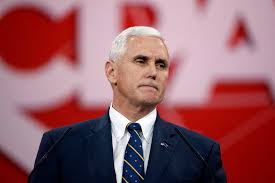
Indiana Governor Mike Pence
“Today I signed the Religious Freedom Restoration Act, because I support the freedom of religion for every Hoosier of every faith,” Mike Pence said in a statement on the day he signed the bill.
“The Constitution of the United States and the Indiana Constitution both provide strong recognition of the freedom of religion but today, many people of faith feel their religious liberty is under attack by government action.”
Bill-signing ceremonies are usually highly public events. Governors–and presidents–normally want their constituents to see them creating new legislation.
Yet for all his praise for the bill, Pence signed it in a ceremony closed to the public and the press. The media were asked to leave even the waiting area of the governor’s office.
It’s almost as if Pence sensed–like Hitler–that he was about to push open “a door into a dark, unseen room.” And this may well be the case.
Through that door may soon march the First Church of Cannabis.
The day after Pence signed the Act, church founder Bill Levin announced on his Facebook page that he had filed paperwork with the office of the Indiana Secretary of State.
Its registration had been approved–and Levin was ecstatic: “Now we begin to accomplish our goals of Love, Understanding, and Good Health.
“Donate $100 or more and become a GREEN ANGEL.
“Donate $500 or more and become a GOLD ANGEL.
“Donate $1000 or more and become a CHURCH POOHBA.”
Click here: Whoops: Indiana’s Anti-Gay ‘Religious Freedom’ Act Opens the Door For the First Church of Cannabis | Alternet
And Levin had a personal comment for the governor who had made it all possible:
“Dear Mikey Pence…
“DUDE!.. keep crapping all over the state.. and I will plant a seed of LOVE, UNDERSTANDING and COMPASSION in each pile you leave.. and it will grow into a big skunky cannabis tree. Crap away Mikey.. Crap Away…”
No doubt many Indiana legislators are furious that their effort to attack gays may have brought legal marijuana to their highly conservative state.
But worse may yet come.
Since 9/11, Right-wingers such as Rush Limbaugh and Sean Hannity have warned that Muslims are trying to impose Sharia (Islamic law) on America.
And now Indiana’s legislators, in elevating religion above the law, may have pushed upon that door “into a dark, unseen room.”
What will happen when:
- Muslims in Indiana claim their right–guaranteed in Islamic religious law–to have as many as four wives?
- Muslims demand a taxpayer-funded “halal” non-pork food shelf at free food pantries for the poor? (Exactly this happened among Somali refugees in Minnesota in 2015.)
- Muslims demand that police departments cancel counter-terrorism courses by claiming that their materials are anti-Muslim? (Exactly this happened to several police departments in Illinois.)
And when they cite the Religious Freedom Restoration Act as the basis for their demands?
Fasten your seatbelts. It’s going to be a bumpy nightmare.
ABC NEWS, ALTERNET, AMERICABLOG, AP, ATOMIC BOMB, BABY BOOMER RESISTANCE, BARACK OBAMA, BBC, BEIRUT BOMBING, BILL CLINTON, BLOOMBERG, BUZZFEED, CBS NEWS, CHRIS MATTHEWS, CNN, COMMUNISM, CROOKS AND LIARS, CULTS, DAILY KOS, DAILY KOZ, ECONOMICS, FIVETHIRTYEIGHT, GEORGE H.W. BUSH, HARDBALL, HARPER’S MAGAZINE, HUFFINGTON POST, IRAN, IRAN-CONTRA AFFAIR, JOHN F. KENNEDY, JOSEPH STALIN, MEDIA MATTERS, MEET THE PRESS, MOTHER JONES, MOVEON, MSNBC, NBC NEWS, NEW REPUBLIC, NEWSDAY, NEWSWEEK, NPR, PBS NEWSHOUR, POLITICO, POLITICUSUSA, POLLUTION, RAW STORY, REPUBLICAN PARTY, REUTERS, Ronald Reagan, SALON, SEATTLE TIMES, Secret Service, SLATE, SOVIET NUCLEAR PHYSICS, SOVIET UNION, TALKING POINTS MEMO, TAX CUTS, TERRORISM, THE ATLANTIC, THE CHICAGO SUN-TIMES, THE CHICAGO TRIBUNE, THE DAILY BEAST, THE DAILY BLOG, THE GUARDIAN, THE HILL, THE HUFFINGTON POST, THE INTERCEPT, THE LOS ANGELES TIMES, THE NATION, THE NEW REPUBLIC, THE NEW YORK TIMES, THE NEW YORKER, THE VILLAGE VOICE, THE WASHINGTON POST, THINKPROGRESS, THIS WEEK, TIME, TRUTHDIG, TRUTHOUT, TWO POLITICAL JUNKIES, U.S. NEWS & WORLD REPORT, UPI, USA TODAY, Vladimir Lenin, X
In Bureaucracy, Business, History, Military, Politics, Social commentary on May 11, 2016 at 12:01 am
On February 6, 2011, Ronald Reagan, if he had been alive, would have been 100 years old.
Publishers rushed to put out worshipful tributes to his eight years as President. Network political programs such as “This Week” and “Meet the Press” assembled surviving members of his administration to re-live the “glory days” of Reagan’s—and their—time in power.
This is where it all started going wrong for America—a Right-wing legacy of huge Federal deficits, tax-cuts for the rich, bloated military budgets and cutbacks in government programs to aid the poor and middle-class.
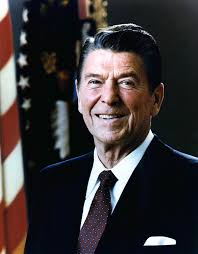
Ronald Reagan
The Republican party, of course, has done the most to create and promote this “cult of Reagan.” And it has done so for the same reason the Communist party of the Soviet Union created and fostered the “cult of Lenin.”
No two men could have been more different than Vladimir Lenin and Ronald Reagan. Lenin created the Soviet Union in 1917 and became its first in a series of absolute dictators. Reagan spent his life fighting Communism, most notably as President.
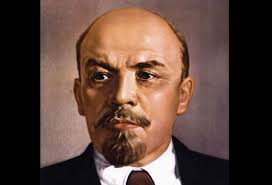
Vladimir Lenin
So it’s ironic that both men, in death, got essentially the same funeral—and for the same reason: To sanctify and legitimize their respective organizations—and the authority of their potential successors.
Lenin died in 1924 and was immediately succeeded by Joseph Stalin. Stalin knew that, despite Communism’s official atheistic stance, most Russians remained loyal to the Russian Orthodox Church.
So in giving Lenin’s funeral oration, Stalin used the language of religion to confer sainthood upon a militant atheist–and upon his successor, Stalin himself.
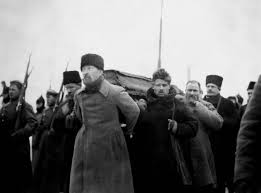
Funeral for Vladimir Lenin
Stalin and his fellow Communists immediately launched the “cult of Lenin,” depicting him as a fatherly, all-wise leader whose genius could only be bestowed upon his closest disciples.
Lenin’s extensive political writings were treated as divine writ, and were used to justify everything Stalin and his own successors wanted to do.
A classic example: Although Lenin died 20 years before the American creation of the atomic bomb, Lenin was hailed by the Soviets as the “father” of “Soviet nuclear physics.”
Similarly, the Republican party wasted no time turning its own former leader, Ronald Reagan, into a modern-day saint of mythical proportions.
They have done so for the same reason that Stalin deliberately forged a cult around the dead Lenin—to create a “holy” figure of whom other Republicans can claim to be true disciples.

Funeral for Ronald Reagan
These deliberate fictions conveniently ignore a series of ugly truths:
- Reagan was only one of a series of Presidents who held the line against the Soviet Union.
- His budgets were just as stained with red ink as those of all previous Presidents.
- Far from standing up to Iranian terrorists, Reagan sold them our most sophisticated missiles in a weak-kneed exchange for American hostages. Then he went on television and brazenly lied that any such “arms for hostages” deal had ever happened.
- By the end of his term, 138 Reagan administration officials had been investigated, indicted or convicted for official misconduct and/or criminal violations.
- His “trickle-down” Reganomics brought prosperity to only the wealthiest 1% of Americans, proving that “a rising tide lifted some yachts.”
- By drastically shrinking the tax-base, bloating the defense budget and destroying programs to benefit the poor and middle-class, Reagan produced a $1 trillion deficit—which only the Clinton Administration eliminated.
- Reagan believed that government should not help the impoverished. Those who lacked wealth to buy such necessities as housing and medical insurance were written off as unimportant.
- John F. Kennedy had praised government service as an honor. Reagan repeatedly said that “the best and the brightest” could be found only in business.
- This denigration of government service continues among Republicans to this day–defaming the very institutions they lust to control.
- Although he often berated the poor for their “laziness,” Reagan adhered to a “banker’s hours” schedule: During his working hours in the Oval Office, he often had blocks of free time–two to three hours. He would call for his fan mail and answer it.
- Reagan saw no need to protect America’s fragile environment against corporate polluters, eager to enrich themselves at its expense: “Approximately 80% of our air pollution stems from hydrocarbons released by vegetation, so let’s not go overboard in setting and enforcing tough emission standards from man-made sources.”
Reagan famously attacked “welfare queens” and sought to deny government benefits for the poor. But he didn’t hesitate to enrich himself at public expense.
- Before his Presidency ended, 18 wealthy Californians contributed $156,000 apiece to buy him a 7,200 square-foot mansion overlooking Beverly Hills.
- Reagan signed a multi-million dollar deal to write his Presidential memoirs and publish a collection of his speeches.
- He signed an exclusive contract with a Washington lecture bureau, which paid him $50,000 per speech given in the United States and $100,000 overseas. This made him the highest-paid speaker in the country.
- These monies came in addition to his Presidential pension of $99,500 a year for life and his $30,000 annual pension as a former governor of California.
- At a cost to the government of $10 million annually, Reagan—a millionaire who could afford private security—continued to receive lifetime Secret Service protection from 40 fulltime agents.
The “cult of Lenin” died when the Soviet Union collapsed in 1991. The “cult of Reagan” continues to flourish, and will do so for as long as the Republican party finds voters willing to believe in it.

_(cropped).jpg)


ABC NEWS, ANCHOR BABIES, BARACK OBAMA, BARBARA LEE, CBS NEWS, CNN, DEMOCRATIC PARTY, DONALD TRUMP, DREAM ACT, FACEBOOK, HILLARY CLINTON, HISPANICS, illegal immigration, MEXICO, MSNBC, NBC NEWS, NEWT GINGRICH, PAUL RYAN, RACIAL PROFILING, REPUBLICAN PARTY, THE CHICAGO SUN-TIMES, THE CHICAGO TRIBUNE, THE HUFFINGTON POST, THE LOS ANGELES TIMES, THE NEW YORK TIMES, THE WASHINGTON POST, TWITTER, U.S. SUPREME COURT, WAL-MART
TAKING BACK OUR BORDERS: PART TWO (END)
In Bureaucracy, Business, History, Law, Law Enforcement, Military, Politics, Social commentary on June 27, 2016 at 12:19 amIf Americans decide they truly want to control access to their own borders, there is a realistic way to accomplish this.
And it doesn’t involve building a wall along the Mexican border–which would prove ridiculously expensive and easily circumvented.
(1) The Justice Department should vigorously attack the “sanctuary movement” that officially thwarts the immigration laws of the United States.
Among the 31 “sanctuary cities” of this country: Washington, D.C.; New York City; Los Angeles; Chicago; San Francisco; Santa Ana; San Diego; Salt Lake City; Phoenix; Dallas; Houston; Austin; Detroit; Jersey City; Minneapolis; Miami; Denver; Baltimore; Seattle; Portland, Oregon; New Haven, Connecticut; and Portland, Maine.
These cities have adopted “sanctuary” ordinances that do not allow municipal funds or resources to be used to enforce federal immigration laws, usually by not allowing police or municipal employees to inquire about one’s immigration status.
(2) The most effective way to combat this movement: Indict the highest-ranking officials of those cities which have actively violated Federal immigration laws.
In San Francisco, for example, former District Attorney Kamala Harris—who is now California’s Attorney General—created a secret program called Back on Track, which provided training for jobs that illegal aliens could not legally hold.
She also prevented Immigration and Customs Enforcement (ICE) from deporting even those illegal aliens convicted of a felony.
(3) Indicting such officials would be comparable to the way that President Andres Jackson dealt with the threat South Carolinians once made to “nullify”–or ignore–any Federal laws they didn’t like.
Jackson quashed that threat by making one of his own: To lead an army into that State and purge all who dared defy the laws of the Federal Government.
(4) Even if some indicted officials escaped conviction, the results would prove worthwhile.
City officials would be forced to spend huge sums of their own money for attorneys and face months or even years of prosecution.
And this, in turn, would send a devastating warning to officials in other “sanctuary cities” that the same fate lies in store for them.
(5) CEOs whose companies–like Wal-Mart–systematically employ illegal aliens should be held directly accountable for the actions of their subordinates.
They should be indicted by the Justice Department under the Racketeer Influenced Corrupt Organizations (RICO) Act, the way Mafia bosses are prosecuted for ordering their own subordinates to commit crimes.
Upon conviction, the CEO should be sentenced to a mandatory prison term of at least twenty years.
This would prove a more effective remedy for combating illegal immigration than stationing tens of thousands of soldiers on the U.S./Mexican border. CEOs forced to account for their subordinates’ actions would take drastic steps to ensure that their companies strictly complied with Federal immigration laws.
Without employers luring illegal aliens at a fraction of the money paid to American workers, the flood of such illegal job-seekers would quickly dry up.
(6) The Government should stop granting automatic citizenship to “anchor babies” born to illegal aliens in the United States.
A comparable practice would be allowing bank robbers who had eluded the FBI to keep their illegally-obtained loot.
A person who violates the bank robbery laws of the United States is legally prosecutable for bank robbery, whether he’s immediately arrested or remains uncaught for years. The same should be true for those born illegally within this country.
If they’re not here legally at the time of birth, they should not be considered citizens and should–like their parents–be subject to deportation.
(7) The United States Government–from the President on down–should stop apologizing for the right to control the country’s national borders.
The Mexican Government doesn’t hesitate to apply strict laws to those immigrating to Mexico. And it feels no need to apologize for this.
Neither should we.
(8) Voting materials and ballots should be published in one language–English.
In Mexico, voting materials are published in one language–Spanish.
Throughout the United States, millions of Mexican illegals refuse to learn English and yet demand that voting materials and ballots be made available to them in Spanish.
(9) Those who are not legal citizens of the United States should not be allowed to vote in its elections.
In Mexico, those who are not Mexican citizens are not allowed to participate in the country’s elections.
The Mexican Government doesn’t consider itself racist for strictly enforcing its immigration laws.
The United States Government should not consider itself racist for insisting on the right to do the same.
(10) The United States should impose economic and even military sanctions against countries–such as China and Mexico–whose citizens make up the bulk of illegal aliens.
Mexico, for example, uses its American border to rid itself of those who might demand major reforms in the country’s political and economic institutions.
Such nations must learn that dumping their unwanteds on the United States now comes at an unaffordably high price. Otherwise those dumpings will continue.
Share this: