Posts Tagged ‘SOVIET UNION’
ABC NEWS, ADOLF HITLER, AFFORDABLE HEALTHCARE ACT, ALTERNET, ANN COULTER, AP, AR-15 ASSAULT RIFLE, ARIZONA SHOOTINGS, ASSASSINATION, BARACK OBAMA, BBC, BILL CLINTON, BILL O'REILLY, BIRTHERS, BOBBY JINDAL, BUZZFEED, CBS NEWS, CESAR SAYOC, CIA, CNN, CONFEDERATE FLAG, CROOKS AND LIARS, DAILY KOS, DAILY KOZ, DEBBIE WASSERMAN-SCHULTZ, DICK ARMEY, DONALD TRUMP, DYLANN ROOF, EMANUAL AFRICAN METHODIST EPISCOPAL CHURCH, ERIC HOLDER, FACEBOOK, FBI, FRANKLIN D. ROOSEVELT, GABRIELLE GIFFORDS, GEORGE H.W. BUSH, GEORGE SOROS, GEORGE W. BUSH, GLENN BECK, GREG GIANFORTE, GUN CONTROL, HARRY S. TRUMAN, HATE CRIMES, HEALTHCARE, HILLARY CLINTON, JEB BUSH, JEFF LUND, JILL STEIN, JOE BIDEN, JOHN BRENNAN, JOHN ROLL, JOSEPH MCCARTHY, KELLEYANNE CONWAY, MAXIME WATERS, MEIN KAMPF, MICHAEL MOORE, MICHAEL SAVAGE, MICHELLE BACHMANN, MIKE PENCE, MONICA LEWINSKY, MOTHER JONES, MOVEON, MSNBC, NBC NEWS, NEWSWEEK, NEWT GINGRICH, NPR, OBAMACARE, POLITICO, RAUL GRIJALVA, RAW STORY, REP. GABRIELLE GIFFORDS, REPUBLICAN PARTY, REPUBLICANS, REUTERS, RICHARD NIXON, RICK SANTORUM, ROBERT BOWERS, ROBERT DE NIRO, RODNEY KING RIOTS, ROLLING STONE, ROLLING STONE MAGAZINE, RUSH LIMBAUGH, SALON, Sarah Palin, SEAN HANNITY, SEATTLE TIMES, SLATE, SOVIET UNION, SPIRO AGNEW, TARA PALMERI, TEA PARTY, TERRORISM, THE ATLANTIC, THE CHICAGO SUN-TIMES, THE CHICAGO TRIBUNE, THE DAILY BEAST, THE GUARDIAN, THE HILL, THE HUFFINGTON POST, THE LOS ANGELES TIMES, THE NATION, THE NEW YORK TIMES, THE WALL STREET JOURNAL, THE WASHINGTON POST, TIME, TREE OF LIFE SYNAGOGUE, TWITTER, U.S. DISTRICT JUDGE JOHN ROLL, U.S. MARSHALS SERVICE, U.S. NEWS & WORLD REPORT, UPI, USA TODAY
In Bureaucracy, History, Law Enforcement, Politics, Social commentary on October 30, 2018 at 12:08 am
On October 24, 2018, a would-be killer mailed pipe bombs to:
- Former President Barack Obama
- Former President Bill Clinton
- Former First Lady and United States Senator Hillary Clinton
- Former Attorney General Eric Holder
- Congresswoman Maxine Waters
- Billionaire George Soros
- Former Vice President Joe Biden
- Actor Robert De Niro
- Former CIA Director John Brennan
- Former Chairwoman of the Democratic National Committee Debbie Wasserman Schultz
All of these intended victims had one thing in common: All of them had been brutally and repeatedly attacked by President Donald Trump.
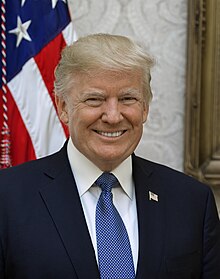
Donald Trump
On October 26, Federal law enforcement agents arrested 56-year-old Cesar Sayoc, a bodybuilder and former male dancer.
The FBI also impounded his white van—which was plastered with pro-Donald Trump/Mike Pence images and American flags.
More ominously, it was covered with stickers of Barack Obama, Hillary Clinton, liberal film maker Michael Moore and Green Party activist Jill Stein—all in crosshairs. There was also a “CNN Sucks” sticker and American flags.
From Aventura, Florida, Sayoc enthusiastically attended Trump rallies, at one of them holding up a sign reading “CNN sucks.”
And who did President Donald Trump blame for the bombings? Not the man arrested for sending pipe-bombs to Trump’s opponents.
On October 25, he tweeted: “A very big part of the Anger we see today in our society is caused by the purposely false and inaccurate reporting of the Mainstream Media that I refer to as Fake News. It has gotten so bad and hateful that it is beyond description. Mainstream Media must clean up its act, FAST!”
Nor was Trump the only one to exonerate himself. His sycophantic Vice President, Mike Pence, quickly chinned in:
“Look, the reality is the people responsible are the people responsible. And what the President and I stand for, and I think every American stands for, is that threats or acts of political violence from anyone, anywhere, for any reason should not be allowed.”
ABC White House Correspondent Tara Palmeri asked Pence if Trump’s past use of violent rhetoric towards reporters and news outlets could be part of the problem. For example: On October 18, at a Montana campaign rally, Trump had praised Republican congressional candidate Greg Gianforte for body slamming a reporter in 2017.
“Well, I mean, clearly the President was joking in Montana,” claimed Pence.
Then, on October 27, 11 people were killed and six injured in a shooting at the Tree of Life synagogue in Pittsburgh, Pennsylvania.
The killer used an AR-15 assault rifle—the go-to firearm for heavy-duty massacres. It can fire 150 rounds in 15 seconds and about 600 rounds per minute.
Robert Bowers, 46, of suburban Baldwin, faces 29 charges in connection to the rampage. He was charged with 11 counts of using a firearm to commit murder. And he faces multiple counts of two hate crimes. He could face the death penalty.
And who did White House Counselor Kelleyanne Conway blame for the massacre?
“The anti-religiosity in this country that is somehow in vogue and funny to make fun of anybody of faith, to constantly be making fun of people that express religion—the late-night comedians, the unfunny people on TV shows—it’s always anti-religious.
“These people were gunned down in their place of worship, as were the people in South Carolina several years ago. And they were there because they’re people of faith, and it’s that faith that needs to bring us together.
“This is no time to be driving God out of the public square.”
Three years earlier, Republicans had faced a similar dilemma.
On June 17, 2015, Dylann Roof, a white high school dropout, gunned down three black men and six black women at Emanuel African Methodist Episcopal Church in Charleston, South Carolina.
At 21, Roof was unemployed, dividing his time between playing video games and taking drugs.
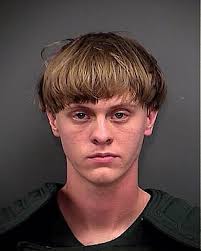
Dylann Roof
The signs of Roof’s malignant racism were evident long before he turned mass murderer:
- He had posed for a photo sitting on the hood of his parents’ car—whose license plate bore a Confederate flag.
- He had posed for pictures wearing a jacket sporting the white supremacist flags of Rhodesia and apartheid South Africa.
- He told a friend that he hoped “to start a civil war” between the black and white races.
- In the midst of his massacre of unarmed worshipers, he told one of his victims: “You’ve raped our women, and you are taking over the country.” Then Roof shot him.
The evidence made clear that Roof’s slaughter was racially motivated. Yet no 2016 Republican Presidential candidate dared acknowledge it:
- Jeb Bush, former governor of Florida: “I don’t know what was on the mind or the heart of the man who committed these atrocious crimes.”
- Rick Santorum, former United States Senator from Pennsylvania: “You talk about the importance of prayer in this time and we’re now seeing assaults on our religious liberty we’ve never seen before. It’s a time for deeper reflection beyond this horrible situation.”
- Bobby Jindal, former governor of Louisiana: “I don’t think we’ll ever know what was going on in his mind.”
But Rolling Stone magazine writer Jeb Lund left no doubt as to what—and who—was ultimately responsible for this crime: Racism and Republicans.
9/11 ATTACKS, ABC NEWS, ALTERNATIVE ENERGY SOURCES, ALTERNET, AP, ARAB OIL EMBARGO, BBC, BUZZFEED, CBS NEWS, CHRISTIAN RIGHT, CNN, COLD WAR, CROOKS AND LIARS, DAILY KOS, DAILY KOZ, DONALD TRUMP, EGYPT, FACEBOOK, FOSSIL FUELS, GLOBAL WARMING, IRAN, IRAQ, ISLAM, ISRAEL, JAMAL KHASHOGGI, MECCA, MEDINA, MIDDLE EAST, MOHAMMED BIN SALMAN, MOTHER JONES, MOVEON, MSNBC, NAZI GERMANY, NBC NEWS, NEWSWEEK, NPR, Oil, OSAMA BIN LADEN, PBS NEWSHOUR, POLITICO, RAW STORY, REPUBLICANS, REUTERS, SALON, SAND CURTAIN, SAUDI ARABIA, SEATTLE TIMES, SECOND COMING, SHAH OF IRAN, SHIITE MUSLIMS, SLATE, SOVIET UNION, SUNNI MUSLIMS, TERRORISM, THE ATLANTIC, THE CHICAGO SUN-TIMES, THE CHICAGO TRIBUNE, THE DAILY BEAST, THE GUARDIAN, THE HILL, THE HUFFINGTON POST, THE LOS ANGELES TIMES, THE NATION, THE NEW YORK TIMES, THE WALL STREET JOURNAL, THE WASHINGTON POST, TIME, TRUMP WORLD TOWER, TURKEY, TWITTER, U.S. NEWS & WORLD REPORT, UNITED STATES, UPI, USA TODAY, VENEZUELA, WAHHABISM, WORLD WAR ii
In Bureaucracy, History, Military, Politics, Social commentary on October 23, 2018 at 1:09 am
This is an ideal time for the United States to pull the plug on its devil’s bargain relationship with Saudi Arabia.
Reason #1: The political assassination of Saudi dissident journalist Jamal Khashoggi, a key critic of Saudi King Mohammed bin Salman.
On October 2, Khashoggi walked into the Saudi Consulate in Istanbul to pick up a document allowing him to marry a Turkish woman. Video footage shows Khashoggi walking into the consulate; there is none of him leaving it.
He has not been seen since.
According to Turkish government officials:
- Fifteen Saudi agents flew into Istanbul.
- They waited for Khashoggi inside the consulate and murdered him within two hours of his arrival.
- The assassins used a bone saw to dismember Khashoggi’s corpse.

Jamal Khashoggi
[GFDL (http://www.gnu.org/copyleft/fdl.html)%5D, via Wikimedia Commons
Reason #2: Saudi Arabia is a weak ally.
Trump claims America needs Saudi Arabia as a counter-weight to the growing regional influence of Iran. But Saudi Arabia was unable to defend itself against Saddam Hussein’s Iraq in 1990, after the invasion and takeover of Kuwait.
This was, in fact, why Saudi-born Osama bin Laden decided to declare war on the United States.
He petitioned Saudi King Fahd bin Abdulazis al-Saud to let Saudis oppose any invasion by Iraq. He argued that “infidel” American soldiers stationed in the Kingdom would “pollute” Islam’s two great holy sites: Mecca and Medina.
Having fought against the Soviet Union in Afghanistan during the 1980s, bin Laden offered to help defend Saudi Arabia with his Arab legion.
The king refused—because he knew that, despite all the sophisticated military hardware he had bought from the United States, the Saudis were too militarily weak to resist an invasion.
Bin Laden left the country to wage fulltime war against the United States.
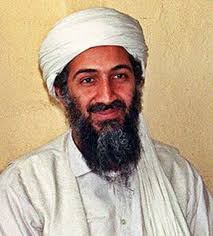
Osama bin Laden
Reason #3: Saudi Arabia is filled with Islamics who hate the United States as “the Great Satan.”
Fifteen of the 19 September 11, 2001 highjackers came from Saudi Arabia.
And Saudi Arabia is the birthplace of Wahhabism, a radical brand of Islam dedicated to “purifying” the world of “unbelievers.”
Reason #4: The only reason the United States cares about Saudi Arabia is that it’s the second-largest oil-producing country (after Venezuela) n the world.
Yet oil consumption threatens the future of the world through global warming. And it keeps America tethered to a regime that is fundamentally unstable and hostile to the West.
Reason #5: The United States can end its dependence on Saudi oil by embarking on a crash program to develop alternatives to oil.
Had this happened during the 1973 Arab oil embargo, the United States would now be energy-independent. America has the technology to do so; it lacks only the will.
Reason #6: Once the United States no longer needs fossil fuels, it can quit financing Middle East dictatorships.
This will end spending billions of dollars every year to prop up dictatorial regimes like those in Saudi Arabia, Iraq and Egypt. America will no longer supply big-ticket military hardware (like fighter planes and missiles) to potentially hostile Islamic regimes.
Reason #7: By withdrawing from the Middle East, the United States can free itself of the burden of acting as Israel’s permanent bodyguard.
Millions of Americans believe they are morally obligated to defend Israel owing to the barbarism of the Holocaust. But America was never a party to this, and has nothing to atone for.
Yet, for decades, the United States has been repeatedly dragged into the never-ending religious conflicts between Israelis and Islamics. Since both sides believe they are doing “God’s will,” there can be no substantial compromise by either.
Reason #8: The United States and its European allies can defend themselves against Islamic terrorism by erecting a “Sand Curtain” around the Middle East.
For 44 years—1947 to 1991—the United States and the Soviet Union were locked in a Cold War. Essentially, the United States drew a ring around the Soviet Union—including those nations its armies had seized following the defeat of Nazi Germany in 1945.
The United States said, in effect: “We can’t liberate the countries you’re now occupying”—because that would have triggered a nuclear World War III. “But we won’t allow you to occupy and enslave any other countries. And if you try to do so, it will mean total war.”
America could withdraw all of its forces from the Middle East—but keep a good portion stationed in Europe.

It could then publicly announce: “From now on, you are the masters of your own destinies—so long as what you do affects only the Middle East.
“We recognize that barbarism and violence have always been a part of life in the Middle East. And we don’t expect this to change.
“We realize you will destroy as many of your own citizens as you can—because they’re Jewish or Christians, or because Sunni Muslims and Shiite Muslims hate each other.
“Just don’t threaten citizens living outside your territories. In short: Europe and the United States are strictly off-limits to you.
“And if you aim your aggression at either, we will consider this an act of war and use all the weapons at our disposal—including nuclear ones—to wipe you from the face of the Earth.“
ABC NEWS, ALTERNET, ANCHOR BABIES, AP, BARACK OBAMA, BERLIN AIRLIFT, BUZZFEED, CBS NEWS, CNN, CROOKS AND LIARS, DAILY KOZ, DEMOCRATIC PARTY, DEPARTMENT OF HOMELAND SECURITY, DONALD TRUMP, EGYPT, EL SALVADOR, FACEBOOK, FAMILY SEPARATION POLICY, GUATEMALA, HONDURAS, ILLEGAL ALIENS, illegal immigration, IMMIGRATION AND CUSTOMS ENFORCEMENT, ISRAEL, JEFF SESSIONS, MEXICO, MOTHER JONES, MOVEON, MSNBC, NBC NEWS, NEWSWEEK, NPR, OPERATION NICKEL GRASS, POLITICO, RACIAL PROFILING, RAW STORY, REPUBLICAN PARTY, REUTERS, RICHARD NIXON, SALON, SEATTLE TIMES, SLATE, SOVIET UNION, SYRIA, THE ATLANTIC, THE CHICAGO SUN-TIMES, THE CHICAGO TRIBUNE, THE DAILY BEAST, THE GUARDIAN, THE HILL, THE HUFFINGTON POST, THE LOS ANGELES TIMES, THE NATION, THE NEW YORK TIMES, THE WASHINGTON POST, TIME, TWITTER, U.S. NEWS & WORLD REPORT, UNITED STATES AIR FORCE, UPI, USA TODAY, YOM KIPPUR WAR
In Bureaucracy, History, Military, Politics, Social commentary on October 19, 2018 at 12:18 am
On May 7, 2018, United States Attorney General Jeff Sessions announced a “zero-tolerance” policy for illegal entry into the United States:
“If you smuggle illegal aliens across our border, then we will prosecute you. If you are smuggling a child, then we will prosecute you and that child will be separated from you as required by law.”
In the past, those arrested while illegally entering the country were held in immigration detention and sent before an immigration judge. The judge decided if they would be deported as unauthorized immigrants.
Most first-time offenders didn’t serve time in prison. If they pleaded guilty, they were sentenced, within minutes, to time served—and deported.
But illegal aliens referred for criminal prosecution were sent to a Federal jail. Several weeks later, a Federal judge determined if they would be imprisoned. And those in Federal jail cannot be kept with their children.
With the change in policy, all arrested illegal aliens would face criminal prosecution.
On June 15, Homeland Security officials confirmed to reporters that, from April 19 to May 31, 1,995 children were separated from 1,940 adults at the U.S.-Mexico border. These adults were referred for prosecution after illegally crossing the border.
Video images showed illegal alien children held behind chain-link cages. Children crying. An audio recording made secretly captured children calling for their mothers and fathers.
A national uproar followed.

Illegal alien families held in cages
Democrats almost unanimously attacked the family-separation policy, while Republicans were divided over it.
On June 20, the family-separation policy was indefinitely suspended by a Presidential executive order.
Still, illegal aliens from Latin and Central America keep pouring into the country—or getting caught while trying to.
The U.S. Border Patrol arrested more than 16,500 family members in September, marking an 80% increase from July—and a new one-month record. The Department of Homeland Security states that agents took 107,212 members of “family units” into custody during fiscal 2018.
And, even now, a caravan of 3,000-4,000 migrants from El Salvador, Honduras and Guatemala is heading toward “El Norte.” Its members claim they are fleeing poverty and violence—and assert that the United States has a moral duty to take them in.
President Donald Trump has threatened to cut all aid payments to the three countries if they don’t prevent their citizens from crossing into the United States. And he has also threatened to use military force to completely close the US-Mexico border.
For Trump, halting illegal immigration is a make-or-break issue. His base—which is the only group of Americans he cares about—has made it clear: Stop the illegals—or be a one-term President.
So it’s possible he could take an even more drastic step his all-out war on illegal immigration.
Rather than deport them to countries in Central America—from which they would easily sneak back into the United States—the Federal Government could ship them off to more distant lands.
Like Afghanistan. Or Iraq. Or Syria.
Such a policy change would:
- Close the Mexican revolving door, which keeps illegal immigration flowing; and
- Send an unmistakably blunt message to other would-be illegals: “The same fate awaits you.”
Although this might seem a far-fetched proposal, it could be easily carried out by the United States Air Force.
According to its website: “The C-5 Galaxy is one of the largest aircraft in the world and the largest airlifter in the Air Force inventory.
“The C-5 has a greater capacity than any other airlifter. It [can] carry 36 standard pallets and 81 troops simultaneously.

C-5 transport plane
“[It can also carry] any of the Army’s air-transportable combat equipment, including such bulky items as the 74-ton mobile scissors bridge.”
The C-5 Galaxy’s maximum cargo weight: 281,001 pounds
Click here: C-5 A/B/C Galaxy and C-5M Super Galaxy > U.S. Air Force > Fact Sheet Display
Instead of being stuffed with cargo, these planes could be stuffed wall-to-wall with illegal aliens.
The United States Air Force has a proud history of successfully providing America’s soldiers—and allies—with the supplies they need.
From June 24, 1948 to May 12, 1949, only the Berlin Airlift stood between German citizens and starvation.
The Soviet Union had blocked the railway, road, and canal access to the Berlin sectors under allied control. Their goal: Force the western powers to allow the Soviet zone to supply Berlin with food, fuel, and aid.
This would have given the Soviets control over the entire city.
Air forces from the United States, England, Canada, Australia, New Zealand and South Africa flew over 200,000 flights in one year, dropping more than 4,700 tons of necessities daily to the besieged Berliners.
The success of the Berlin Airlift raised American prestige and embarrassed the Soviets, who lifted the blockade.

The Berlin Airlift
A similar triumph came during the Yom Kippur War after Egypt and Syria attacked Israel without warning on October 6, 1973.
A Watergate-embattled President Richard Nixon ordered “Operation Nickel Grass” to deliver urgently-needed weapons and supplies to Israel.
For 32 days, the Air Force shipped 22,325 tons of ammunition, artillery, tanks and other supplies. These proved invaluable in saving Israel from destruction.
So the mass deportation of millions of illegal aliens lies within America’s technological capability.
The only uncertainty: Is Trump willing to give that order?
ABC NEWS, ADOLF HITLER, ALBERT SPEER, ALTERNET, AP, BUZZFEED, CBS NEWS, CNN, COREY LEWANDOWSKI, CROOKS AND LIARS, DAILY KOZ, DAVID IRVING, DONALD TRUMP, FACEBOOK, FAITH & FREEDOM COALITION, FRANK BRANDENBURG, HANS BAUR, HEINRICH HIMMLER, HITLER’S WAR (BOOK), HOLOCAUST (TV SERIES), INSIDE THE THIRD REICH (BOOK), JERRY FALWELL JR., KARL WOLFF, KAY IVEY, LIBERTY UNIVERSITY, LINA HEYDRICH, MOTHER JONES, MOVEON, MSNBC, NBC NEWS, NEWSWEEK, NPR, OTTO REMER, PBS NEWSHOUR, POLITICO, QUEST: SEARCHING FOR GERMANY'S NAZI PAST, RALPH REED, RAW STORY, REINHARD HEYDRICH, REPUBLICAN PARTY, REUTERS, ROY MOORE, RUDOLF HESS, SALON, SEATTLE TIMES, SLATE, SOVIET UNION, THE ATLANTIC, THE CHICAGO SUN-TIMES, THE CHICAGO TRIBUNE, THE DAILY BEAST, THE GUARDIAN, THE HILL, THE HUFFINGTON POST, THE LOS ANGELES TIMES, THE NATION, THE NEW YORK TIMES, THE WASHINGTON POST, TIME, TWITTER, U.S. NEWS & WORLD REPORT, UPI, USA TODAY, WEST GERMANY
In Bureaucracy, History, Military, Politics, Social commentary on October 4, 2018 at 12:05 am
Frank Brandenburg had just turned 16 in 1979 when he saw the NBC mini-series Holocaust, depicting the Third Reich’s extermination of six million Jewish men, women and children.
He was stunned. Had such atrocities really taken place?
His parents, friends and teachers refused to talk about Adolf Hitler and his Nazi party that had tyrannically ruled Germany for 12 years.
“No one wants to talk today about that! Let the past sleep,” he was repeatedly told.
Frank Brandenburg had a deeply personal reason for pursuing the truth. He was a citizen of West Germany, growing up in a country that was still divided in two for having lost World War II—a war Hitler had started.
He started reading such books about the Holocaust as:
- Inside the Third Reich, by former Reichminister for Armaments Albert Speer, stated that it had happened.
- David Irving’s Hitler’s War, on the other hand, seemed inconclusive on the subject.
- The Auschwitz Lie, by Thies Chrostophersen, flatly asserted that the victorious Allies had concocted this slander to blacken the good name of Germany.
So Brandenburg did something no other teenager had dared attempt: He set out to meet and interview as many former members of the Third Reich as possible.
Among those he interviewed:
- Lina Heydrich, the widow of Reinhard Heydrich, the #2 man in the Schutzstaffel, or SS.
- Otto Remer, who put down the July 20, 1944 generals’ plot against Hitler.
- SS General Karl Wolff, a close confidant of SS Reichsfuhrer Heinrich Himmler.
- The widow and sons of Deputy Fuhrer Rudolf Hess.
- Hans Baur, Hitler’s personal pilot.
These interviews ultimately became a 1990 book: Quest: Searching for Nazi Germany’s Past, co-authored by Brandenburg and Ib Melchior. It is a book that can never be duplicated, because those interviewed by Brandenburg are now dead.

Of his encounters with so many former Nazis, Brandenburg reflected:
“Today I know that in some cases…I was confronted with defensive statements, evasion, self-exoneration and prejudiced portrayals of the facts.
“But when I began my project, at the age of 16, I—naively—had no conception that this might be the case. Not one of the people I talked to expressed any kind of guilt or remorse. Not one of them had regrets or concern for their victims.
“Yet, it is easier for me to understand that. Who, in his old age, wants to admit having committed such misdeeds? To admit that everything one had believed in, worked for and lived for, had been corrupt?”
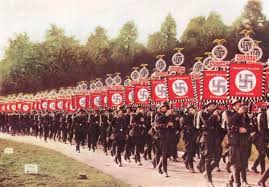
Nazi SS soldiers marching
Which helps explain the reaction historians will receive when, in the future, they interview supporters of Donald Trump.
The Original Nazis were guided by Hitler’s belief that the world was polluted by corruption and ugliness—and their mission was to remove that ugliness and corruption.
This meant removing those peoples they deemed inferior—Jews, Slavs (Poles, Serbs, Russians), Communists, liberals, gypsies, the physically and mentally handicapped.
Today’s Republicans believe themselves to be the only legitimate political party. And so do their supporters.
No sin—or even crime—is intolerable if it’s committed by a Republican.
On October 7, 2916, The Washington Post leaked a video of Republican Presidential nominee Donald Trump making sexually predatory comments about women:
You know I’m automatically attracted to beautiful—I just start kissing them. It’s like a magnet. Just kiss. I don’t even wait. And when you’re a star they let you do it. You can do anything.
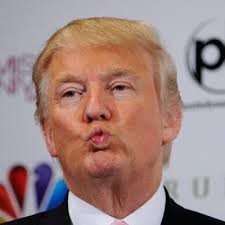
Donald Trump
Right-wingers rushed to excuse Trump’s misogynist comments as mere “frat boy” talk.
- Corey Lewandowski, a former Trump campaign manager and now CNN commentator: “We are electing a leader to the free world. We’re not electing a Sunday school teacher.”
- Jerry Falwell, Jr., president of Liberty University: “When they ask [if Trump’s personal life is relevant] I always talk about the story of the woman at the well who had had five husbands and she was living with somebody she wasn’t married to, and they wanted to stone her. And Jesus said he’s–he who is without sin cast the first stone. I just see how Donald Trump treats other people, and I’m impressed by that.”
- Ralph Reed, founder and chairman of the Faith & Freedom Coalition: “People of faith are voting on issues like who will protect unborn life, defend religious freedom, grow the economy, appoint conservative judges and oppose the Iran nuclear deal.”
In 2017, Roy Moore, the twice-ousted former chief justice of the Alabama Supreme Court, ran for the state’s U.S. Senator.
Four women, in a Washington Post story, accused Moore of seeking romantic relationships with teenage girls while he was in his 30s, and even trolling malls for such dates.
Kay Ivey, the state’s Governor, offered the real reason why Republicans supported Moore:
“I believe in the Republican party, what we stand for, and, most important, we need to have a Republican in the United States Senate to vote on things like the Supreme Court justices, other appointments the Senate has to confirm and make major decisions. So that’s what I plan to do, vote for Republican nominee Roy Moore.”
In short: The mission of the Republican party is to attain absolute power over the lives of American citizens. Compared to that, electing even accused sexual predators shrinks to insignificance.
2016 PRESIDENTIAL CAMPAIGN, ABC NEWS, ALEXANDER SHUSTOROVICH, ALTERNET, ANDREW INTRATER, AP, BARACK OBAMA, BILL CLINTON, BLACKS, BUZZFEED, CBS NEWS, CHUCK GRASSLEY, CIA, CITIZENS UNITED, CNN, COMMUNISM, CROOKS AND LIARS, DAILY KOZ, DEMOCRATIC PARTY, DEPARTMENT OF HOMELAND SECURITY, DONALD TRUMP, DWIGHT D. EISENHOWER, EDWARD R. MURROW, FACEBOOK, FBI, FEDERAL ELECTIONS COMMISSION, FOX NEWS, FRANKLIN D. ROOSEVELT, GEORGE C. MARSHALL, GEORGE H.W. BUSH, GOP, GREAT SOCIETY, H.L. HUNT, HARRY S. TRUMAN, HILLARY CLINTON, HOUSE OF REPRESENTATIVES, HOWARD HUGHES, JAMES COMEY, JOHN BIRCH SOCIETY, JOHN F. KENNEDY, JOHN KASICH, JOHN STEINBECK, JOSEPH R. MCCARTHY, JOSEPH STALIN, KGB, LEN BLAVATNIK, LIBERALS, LINDSEY GRAHAM, LUCILLE BALL, LYNDON B. JOHNSON, MARCO RUBIO, MEDICAL CARE, MITCH MCCONNELL, MITT ROMNEY, MOTHER JONES, MOVEON, NATIONAL SECURITY AGENCY, NBC NEWS, NEWSWEEK, NORTH ATLANTIC TREATY ORGANIZATION (NATO), NPR, OFFICE OF THE DIRECTOR OF NATIONAL INTELLIGENCE, OLIGARCHS, ORRIN HATCH, PAUL RYAN, PETE SEEGER, POLITICAL ACTION COMMITTEES (PACS), POLITICO, PROPAGANDA, RAW STORY, REPUBLICAN PARTY, REPUBLICANS, REUTERS, RICHARD NIXON, ROBERT MUELLER, ROBERT WELCH, ROD ROSENSTEIN, RODNEY KING RIOTS, RUSSIA, SALON, SCAPEGOATING, SCOTT WALKER, SEATTLE TIMES, SENATE LEADERSHIP FUND, SIMON KUKES, SLATE, SOCIALISTS, SOVIET UNION, SUPREME COURT, THE ATLANTIC, THE CHICAGO SUN-TIMES, THE CHICAGO TRIBUNE, THE DAILY BEAST, THE GUARDIAN, THE HILL, THE HUFFINGTON POST, THE LOS ANGELES TIMES, THE NATION, THE NEW YORK TIMES, THE WASHINGTON POST, TIME, TRUMP INAUGURAL COMMITTEE, TWITTER, U.S. NEWS & WORLD REPORT, UNITED STATES SUPREME COURT, UPI, USA TODAY, VLADIMIR PUTIN, WIKILEAKS, WORLD WAR 11
In Bureaucracy, History, Military, Politics, Social commentary on October 3, 2018 at 4:00 pm
During the 1970s and 1980s, Republicans continue to accuse Democrats of being devious agents—or at least unwitting pawns—of “the Communist conspiracy.”
As late as 1992, President George H.W. Bush and the Republican establishment charge that Arkansas Governor Bill Clinton might be a KGB plant.
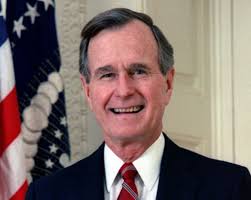
George H.W. Bush
Their “evidence”: During his tenure at Oxford University in 1969-70, Clinton had briefly visited Moscow.
In short: Clinton might have been “programmed” as a real-life “Manchurian candidate” to become, first, Governor of Arkansas—one of America’s poorest states—and then President.
Making this charge even more absurd: The Soviet Union had officially dissolved in December, 1991.
After the Soviet Union’s collapse, Republicans find that accusing Democrats of being “Commies” doesn’t carry the same weight.
So they turn to “domestic enemies” to rail—and run—against: Liberals, blacks, Hispanics, “uppity” women, war protesters, lesbians, gays, and—after 9/11—Muslims.
From 1945 to 1991, it is unthinkable for a Republican Presidential candidate to pay tribute to a Soviet dictator.
But that utterly changes when Donald J. Trump, a “reality TV” host with longstanding financial ties to Russian oligarchs, runs for President of the United States.
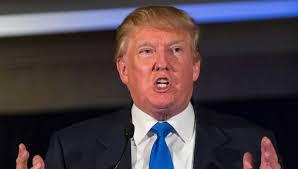
Donald Trump
Trump lavishly praises Russian President Vladimir Putin—and even invites him to directly interfere in the 2016 Presidential race.
The reason for the Trump-Putin bromance is simple: Each has something to offer the other.
Putin wants the United States to ditch the North Atlantic Treaty Organization (NATO) alliance, which has preserved Western Europe from Russian aggression since World War II. And Trump has often attacked America’s funding of NATO as a drain on the American economy.
And Trump wants to be President. For this, Putin can supply monies, Internet trolls to confuse voters with falsified news, and even the hacking of key voting centers.
These Russian monies are officially classified as “campaign contributions,” not bribes.
On July 22, 2016, Wikileaks releases 19,252 emails and 8,034 attachments hacked from computers of the highest-ranking officials of the Democratic National Committee (DNC). Early reports trace the leak to Russian hackers.
“Russia, if you are listening,” Trump says at a press conference in Doral, Florida, “I hope you are able to find the 33,000 emails that are missing [from Democratic Presidential candidate Hillary Clinton’s computer]. I think you will probably be rewarded mightily by our press.”
This is treason—calling upon a foreign power, hostile to the United States, to interfere in its Presidential election.
Hours later, the Main Intelligence Directorate in Moscow targets Clinton’s personal office and hits more than 70 other Clinton campaign accounts.
Nor is Trump the only Republican receiving “help” from Putin. A network of Russian oligarchs—all of them answerable to Putin—has been increasingly contributing to top Republicans.
According to the Federal Election Commission:
One such major contributor is Len Blavatnik, who holds citizenship in both the United States and the United Kingdom. During the 2015-16 election cycle, he proves one of the largest donors to GOP Political Action Committees (PACs).
Blavatnik’s net worth is estimated at $20 billion. Before 2016, he donates to both Democrats and Republicans in meager amounts. But in 2016, he gives $6.35 million to GOP PACs.
Millions of dollars go to top Republican leaders—such as Senators Mitch McConnell, Marco Rubio (Florida) and Lindsey Graham (South Carolina). Specifically, he contributes:
- A total of $1.5 million to PACs associated with Rubio.
- $1 million to Trump’s Inaugural Committee.
- $41,000 to both Republicans and Democrats in 2017.
- $1 million to McConnell’s Senate Leadership Fund.
- $3.5 million to a PAC associated with McConnell.
- $1.1 million to Unintimidated PAC, associated with Wisconsin Governor Scott Walker.
- $200,000 to the Arizona Grassroots Action PAC, associated with Arizona Senator John McCain.
- $250,000 to New Day for America PAC, associated with Ohio Governor John Kasich.
- $800,000 went to the Security is Strength PAC, associated with Senator Lindsey Graham.
Another Russian oligarch, Alexander Shustorovich, contributes $1 million to Trump’s Inaugural Committee.
Altogether, four Russian oligarchs—Blavatnik, Shustorovich, Andrew Intrater and Simon Kukes—–contribute $10.4 million from the start of the 2015-16 election cycle through September 2017. Of this, 99% went to Republicans.
As Senate Majority Leader, Mitch McConnell participated in high-level intelligence briefings in 2016. From agencies such as the FBI, CIA and the code-cracking National Security Agency, he learned that the Russians were trying to subvert the electoral process.

In October, 2016, the Department of Homeland Security (DHS) and the Office of the Director of National Intelligence (DNI) issue a joint statement: The Russian government had directed the effort to subvert the 2016 Presidential election.
Two weeks later, McConnell’s PAC accepted a $1 million donation from Blavatnik.
On March 30, 2017, McConnell’s PAC accepted another $1 million from Blavatnik. This is just 10 days after former FBI Director James Comey testifies before the House Intelligence Committee about Russia’s efforts to subvert the 2016 election.
So, what has changed in the Republican Party? Essentially nothing.
Its enemies changed—from Russian Communists to American liberals—but its goal remains the same: The quest for absolute power.
When Americans feared Communism, Republicans depicted themselves as the only ones who could be trusted to protect the United States. Big contributions poured in from Right-wing billionaires like H.L. Hunt and Howard Hughes.
But when Republicans found they could enrich themselves and stay in power via Russian “campaign contributions,” they decided: Better Red than un-elected.
2016 PRESIDENTIAL CAMPAIGN, ABC NEWS, ALEXANDER SHUSTOROVICH, ALTERNET, ANDREW INTRATER, AP, BARACK OBAMA, BILL CLINTON, BLACKS, BUZZFEED, CBS NEWS, CHUCK GRASSLEY, CIA, CITIZENS UNITED, CNN, COMMUNISM, CROOKS AND LIARS, DAILY KOZ, DEMOCRATIC PARTY, DEPARTMENT OF HOMELAND SECURITY, DONALD TRUMP, DWIGHT D. EISENHOWER, EDWARD R. MURROW, FACEBOOK, FBI, FEDERAL ELECTIONS COMMISSION, FOX NEWS, FRANKLIN D. ROOSEVELT, GEORGE C. MARSHALL, GEORGE H.W. BUSH, GOP, GREAT SOCIETY, H.L. HUNT, HARRY S. TRUMAN, HILLARY CLINTON, HOUSE OF REPRESENTATIVES, HOWARD HUGHES, JAMES COMEY, JOHN BIRCH SOCIETY, JOHN F. KENNEDY, JOHN KASICH, JOHN STEINBECK, JOSEPH R. MCCARTHY, JOSEPH STALIN, KGB, LEN BLAVATNIK, LIBERALS, LINDSEY GRAHAM, LUCILLE BALL, LYNDON B. JOHNSON, MARCO RUBIO, MEDICAL CARE, MITCH MCCONNELL, MITT ROMNEY, MOTHER JONES, MOVEON, NATIONAL SECURITY AGENCY, NBC NEWS, NEWSWEEK, NORTH ATLANTIC TREATY ORGANIZATION (NATO), NPR, OFFICE OF THE DIRECTOR OF NATIONAL INTELLIGENCE, OLIGARCHS, ORRIN HATCH, PAUL RYAN, PETE SEEGER, POLITICAL ACTION COMMITTEES (PACS), POLITICO, PROPAGANDA, RAW STORY, REPUBLICAN PARTY, REPUBLICANS, REUTERS, RICHARD NIXON, ROBERT MUELLER, ROBERT WELCH, ROD ROSENSTEIN, RODNEY KING RIOTS, RUSSIA, SALON, SCAPEGOATING, SCOTT WALKER, SEATTLE TIMES, SENATE LEADERSHIP FUND, SIMON KUKES, SLATE, SOCIALISTS, SOVIET UNION, SUPREME COURT, THE ATLANTIC, THE CHICAGO SUN-TIMES, THE CHICAGO TRIBUNE, THE DAILY BEAST, THE GUARDIAN, THE HILL, THE HUFFINGTON POST, THE LOS ANGELES TIMES, THE NATION, THE NEW YORK TIMES, THE WASHINGTON POST, TIME, TRUMP INAUGURAL COMMITTEE, TWITTER, U.S. NEWS & WORLD REPORT, UNITED STATES SUPREME COURT, UPI, USA TODAY, VLADIMIR PUTIN, WIKILEAKS, WORLD WAR 11
In Bureaucracy, History, Military, Politics, Social commentary on October 2, 2018 at 12:27 am
A CNN headline says it all: “Obama asked question everyone’s been wondering about GOP”
“What happened to the Republican Party?”
That’s the question former President Barack Obama asked at the University of Illinois on September 7. And he quickly answered it:
“Its central organizing principle in foreign policy was the fight against communism, and now they’re cozying up to the former head of the KGB. Actively blocking legislation that would defend our elections from Russian attack. What happened?”
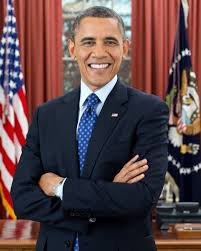
Barack Obama as President
On the surface, it seems the Republican Party has drastically changed. But, in reality, there has been no substantial change at all.
Let’s start at the beginning—in this case, 1932.
Democratic nominee Franklin D. Roosevelt wins election against Republican President Herbert Hoover. So popular is he that he wins an unprecedented four terms—12 years!—in the White House, seeing America through the Great Depression and World War II,
In 1945, Roosevelt suddenly dies in office, leaving Vice President Harry S. Truman in command. He lacks the imperial magnetism and eloquence of FDR, so Republicans assume that 1948 will be a cakewalk for them.
But it isn’t. Instead, Truman wins a second term—and rubs it in by holding up the now-defunct headline, “DEWEY DEFEATS TRUMAN” for reporters to photograph.
By 1952, Republicans have been locked out of the White House for 20 years. They’re desperate to return—and angry enough to do anything to win.
They find attacking the integrity of their fellow Americans a highly effective tactic.
During the 1950s, Wisconsin United States Senator Joseph R. McCarthy rides a wave of paranoia to national prominence—by attacking the patriotism of anyone who disagrees with him.
Elected to the Senate in 1946, he rises to national prominence on February 9, 1950, after giving a fiery speech in Wheeling, West Virginia:
“The State Department is infested with communists. I have here in my hand a list of 205—a list of names that were made known to the Secretary of State as being members of the Communist Party and who nevertheless are still working and shaping policy in the State Department.”
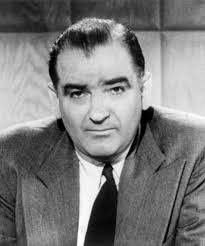
Senator Joseph R. McCarthy
Americans are already growing increasingly fearful of Communism:
- Soviet dictator Joseph Stalin has not withdrawn the Red Army from the countries it has occupied in Eastern Europe during World War II.
- In 1948, the Soviet Union develops—and demonstrates—its own atomic bomb, an achievement U.S. scientists had claimed would not happen for at least a decade.
- In 1949, China falls to the triumphant armies of Mao Tse Tung. Generalissimo Chaing Kai Shek is driven from mainland China to the tiny island of Taiwan.
Anti-communism as a lever to political advancement sharply accelerates following McCarthy’s speech.
Any American can be accused of being a Communist or a Communist sympathizer—”a Comsymp” or “fellow traveler” in the style of the era.
Among those accused:
- Secretary of State George C. Marshall, who had overseen America’s strategy for defeating Nazi Germany and Imperial Japan
- President Harry S. Truman
- Playwrights Lillian Hellman and Arthur Miller
- Actors Charlie Chaplin, Zero Mostel, Lloyd Bridges, Howard Da Silva, Edward G. Robinson and John Garfield
- Composers Arron Copland and Elmer Bernstein
- Physicist J. Robert Oppenheimer, who presided over the creation of America’s atomic bomb
- Actresses Lee Grant, Delores del Rio, Ruth Gordon and Lucille Ball
- Journalists Edward R. Murrow and William L. Shirer, who had chronicled the rise of Nazi Germany
- Folksinger Pete Seeger
- Writers Irwin Shaw, Howard Fast, John Steinbeck and Dashiell Hammett
Even “untouchable” Republicans become targets for such slander.
The most prominent of these is President Dwight D. Eisenhower—labeled ”a conscious, dedicated agent of the Communist Conspiracy” by Robert Welch, founder of the John Birch Society in 1958.
In 1953, McCarthy attacks the leadership of the United States Army as “a hotbed of traitors” and convenes an inquiry through the Senate Permanent Subcommittee on Investigations.
But the hearings backfire, exposing McCarthy as a bullying demagogue. A Senate committee condemns his behavior as acting “contrary to senatorial ethics and tended to bring the Senate into dishonor and disrepute.”
Yet even without McCarthy, Republicans ride the issue of anti-Communism to victory from 1948 to 1992. “Respectable” anti-Communists—like Richard M. Nixon—depict themselves as the only ones who can be trusted to safeguard America.
Republicans hold the White House for eight years under Dwight D. Eisenhower, then lose it in 1960 to John F. Kennedy and again in 1964 to Lyndon B. Johnson.
By 1968, with the nation mired in Vietnam and convulsed by antiwar demonstrations and race riots, Americans turn once more to those who prey upon their fears and hates.
They elect Richard Nixon, who promises to end the Vietnam war and attack “uppity” blacks and antiwar demonstrators—and, above all, “the Communist menace.”
The same strategy re-elects him in 1972.
Jimmy Carter wins the Presidency in 1976 and loses it in 1980 to Ronald Reagan. Republicans hold the White House until 1992.
Reagan doesn’t want to continue the “stalemate” of “containing” Communism. He intends to roll it back. Tensions rise between the United States and the Soviet Union—the highest since the Cuban Missile Crisis of 1962.
American proxies fight Soviet proxies in Afghanistan and Central America, but the world escapes nuclear holocaust.
2016 PRESIDENTIAL ELECTION, ABC NEWS, ADOLF HITLER, ALTERNET, ANTI-COMMUNISM, AP, BILL MITCHELL, BUZZFEED, CBS NEWS, CNN, COMMUNISM, CROOKS AND LIARS, DAILY KOZ, DEMOCRATIC NATIONAL COMMITTEE, DIRECTOR OF NATIONAL INTELLIGENCE, DONALD TRUMP, FACEBOOK, FBI, HOUSE INTELLIGENCE COMMITTEE, JAMES COMEY, JAMES R. CLAPPER, JOSEPH R. MCCARTHY, JOSEPH STALIN, MOTHER JONES, MOVEON, NAZI GERMANY, NBC NEWS, NEWSWEEK, NORTH ATLANTIC TREATY ORGANIZATION, NPR, POLAND, POLITICO, RAW STORY, REPUBLICANS, REUTERS, RICHARD M. NIXON, ROBERT MUELLER, RUSSIAN BOTS, SALON, SEATTLE TIMES, SENATE INTELLIGENCE COMMITTEE, SLATE, SOVIET UNION, THE ATLANTIC, THE CHICAGO SUN-TIMES, THE CHICAGO TRIBUNE, THE DAILY BEAST, THE GUARDIAN, THE HILL, THE HUFFINGTON POST, THE LOS ANGELES TIMES, THE NATION, THE NEW YORK TIMES, THE WASHINGTON POST, TIME, TREASON, TWITTER, U.S. NEWS & WORLD REPORT, UPI, USA TODAY, VLADIMIR PUTIN, WIKILEAKS, WORLD WAR 11
In Bureaucracy, History, Military, Politics, Social commentary on September 7, 2018 at 12:02 am
There was a time when Republicans saw—and portrayed themselves—as America’s foremost defenders against Communism.
This was particularly true during the early 1950s. Case in point: Wisconsin United States Senator Joseph R. McCarthy.
Elected to the Senate in 1946, he rose to national prominence on February 9, 1950, after giving a fiery speech in Wheeling, West Virginia:
“The State Department is infested with communists. I have here in my hand a list of 205—a list of names that were made known to the Secretary of State as being members of the Communist Party and who nevertheless are still working and shaping policy in the State Department.”
Joseph McCarthy
No American—no matter how prominent—was safe from the accusation of being a Communist or a Communist sympathizer—”a Comsymp” or “fellow traveler” in the style of the era.
So Red-baiting Republicans like McCarthy and then-Vice President Richard M. Nixon would feel dumbfounded at the following news:
On February 20, a purge of Russian “bots” by Twitter sparked outrage by—yes!—Right-wingers.
Bots are fake accounts used to spread propaganda or advertising campaigns. Investigations by the House and Senate Intelligence Committees have uncovered massive efforts by Russia to throw the 2016 Presidential election to Donald Trump.
Their weapon of choice: Swamping “social media” sites like Facebook, Google and Twitter with genuinely fake news.
The Twitter purge came a week after Special Counsel Robert Mueller indicted 13 Russians and three Russian companies for interfering in that election. The indictments detailed an elaborate plot to wage “information warfare” against the United States.
Right-wingers suddenly found thousands of their Russian bot followers had disappeared—and accused Twitter of secretly deleting “like-minded accounts.”
Like-minded, that is, if you like treason.
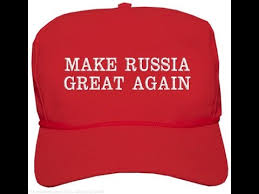
“Twitter is currently purging the followers on conservative accounts only. I just lost 3000 followers in one minute,” tweeted Candace Owens, director of urban engagement for Turning Point USA. This is a student organization promoting limited government and free markets.
Bill Mitchell, a Right-winger known for his controversial tweets defending President Donald Trump, claimed that he lost roughly 4,000 followers overnight.
“This is a damn joke,” tweeted Mike Zollo. “Twitter is absolutely censoring conservative and right wing speech for no damn reason other than their disagreement with it. But, liberals can write vile comments and threaten us with no punishment.”
From the end of World War II to the collapse of the Soviet Union in 1991, it would have been unthinkable for a Republican Presidential candidate to find common cause with a Soviet dictator.
But that utterly changed when Donald Trump won, first, the Republican Presidential nomination and, then, the White House. Trump lavishly praised Russian President Vladimir Putin—and even called on him to directly interfere in the 2016 Presidential race.
On July 22, 2016, Wikileaks released 19,252 emails and 8,034 attachments hacked from computers of the highest-ranking officials of the Democratic National Committee (DNC). Early reports traced the leak to Russian hackers.
“Russia, if you are listening,” Trump said at a press conference in Doral, Florida, “I hope you are able to find the 33,000 emails that are missing—I think you will probably be rewarded mightily by our press.”
This was nothing less than treason—calling upon a foreign power, hostile to the United States, to interfere in its Presidential election.
On December 16, 2016, then-FBI Director James B. Comey and Director of National Intelligence James R. Clapper Jr. agreed with a CIA assessment that Russia intervened in the 2016 election in part to help Donald Trump win the White House.
Trump, however, has steadfastly denied any such role by Russia: “I think it’s ridiculous,” he told “Fox News Sunday.” “I think it’s just another excuse. I don’t believe it….No, I don’t believe it at all.”
The last time dictator-worshiping Fascists found common cause with dictator-worshiping Communists was in August, 1939.
Germany’s Fuhrer Adolf Hitler and the Soviet Union’s General Secretary Joseph Stalin agreed to end—at least temporarily—their years of violent rivalry and personal slander.
The reason: Hitler planned to invade Poland, and feared he would have to fight its allies, France and England, if he did. He didn’t want to have to fight the Soviet Union, too.
And Stalin saw Hitler’s warlike ambitions as useful to his own dreams of conquest: He wanted—and got—the eastern half of Poland, while Hitler’s legions occupied the western half.
So why would Donald Trump—the arch capitalist—find common cause with Vladimir Putin, the arch Communist?
Simple: Each had something the other wanted.
First, Putin: He wanted a President who would withdraw the United States from the North Atlantic Treaty Organization (NATO)—which would instantly render that alliance kaput. And give Russia a free hand to attack Europe.
And Trump had repeatedly said the United States was paying an unfairly large portion of the monies needed to maintain that alliance.
Then, Trump: He wanted to be President—to enrich himself and his family, to become the center of the world’s attention, and to destroy anyone who dared confront or contradict him.
It’s useful to remember that the Hitler-Stalin “bromance” ended badly: Russia lost 25 million of its citizens and East Germany was ruled by Russia for the next 50 years.
ABC NEWS, ADOLF HITLER, ALTERNET, AP, BUZZFEED, CANADA, CBS NEWS, CNN, CROOKS AND LIARS, DAILY KOZ, DONALD J. TRUMP, ECONOMY, EMPLOYMENT, FACEBOOK, FBI, FRED TRUMP, GESTAPO, JEWS, MEDIA, MOTHER JONES, MOVEON, MSNBC, NAZI ATROCITIES, NBC NEWS, NEWSWEEK, NPR, PAM BONDI, POLITICO, RAW STORY, REPUBLICANS, REUTERS, SALON, SARAH HUCKABEE SANDERS, SEATTLE TIMES, SLATE, SOVIET UNION, THE ATLANTIC, THE CHICAGO SUN-TIMES, THE CHICAGO TRIBUNE, THE DAILY BEAST, THE GUARDIAN, THE HILL, THE HUFFINGTON POST, THE LOS ANGELES TIMES, THE NATION, THE NEW YORK TIMES, THE WASHINGTON POST, TIME, TRUMP UNIVERSITY SCANDAL, TWITTER, U.S. NEWS & WORLD REPORT, UNEMPLOYMENT, UPI, USA TODAY, WEHRMACHT
In Bureaucracy, Business, History, Law, Law Enforcement, Military, Politics, Social commentary on August 29, 2018 at 12:04 am
On February 26, 2016, Republican Presidential Candidate Donald J. Trump made an astonishing admission: “I’m not like other people.”
He did so while revealing that, as President, he would “open up those libel laws” so that when the New York Times or the Washington Post “write a hit piece, we can sue them and win money instead of having no chance of winning because they’re totally protected.
“With me, they’re not protected, because I’m not like other people, but I’m not taking money, I’m not taking their money.”
On August 23, 2018, Trump, as President, offered additional evidence that he’s “not like other people.” He did so by giving an unprecedented reason why he shouldn’t be impeached.
Appearing on “Fox and Friends,” he said:
- “I don’t know how you can impeach somebody who’s done a great job.”
- “I tell you what, if I ever got impeached, I think the market would crash, I think everybody would be very poor.”
- Pointing to his head, he said: “Because without this thinking, you would see numbers that you wouldn’t believe in reverse.”
He didn’t say: “I shouldn’t be impeached because I’m innocent. I didn’t collude with Russian Intelligence to subvert the 2016 Presidential election.”

Instead, he appealed to the greed and fear of his voting base—and no doubt hoped to reach beyond it: “Keep me in power or you’ll all suffer for it.”
An official White House statement entitled “American Greatness,” issued on June 4 stated:
“Nearly 3 million jobs have been created since President Trump took office. The unemployment rate has dropped to 3.8, the lowest rate since April 2000, and job openings have reached 6.6 million, the highest level recorded. President Trump has restored confidence in the American economy, with confidence among both consumers and businesses reaching historic highs.”
Much of this jobs growth, however, was already underway during the closing years of the Obama administration. But that hasn’t stopped Trump from taking credit for it.
White House Press Secretary Sarah Huckabee Sanders doubtless spoke for millions of Trump supporters when she said, on June 4:
“Since taking office, the President has strengthened American leadership, security, prosperity, and accountability. And as we saw from Friday’s jobs report, our economy is stronger, Americans are optimistic, and business is booming.
“The American people do not believe this strong economy is fantasy or unrealistic.”
Many Congressional Republicans have echoed this: The American people care only about the economy—and how well-off they are.
For eight years, Nazi Germany underwent such an epoch. Germans called it “The Happy Time.”
It began on January 30, 1933, when Adolf Hitler became Chancellor—and lasted until June 22, 1941. Germans knew about the Nazis’ cruelty to the Jews, the mass arrests and concentration camps. They didn’t care.
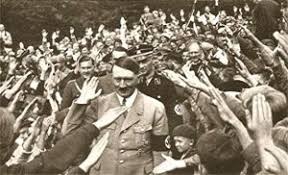
Frenzied Germans greet Adolf Hitler
The Gestapo didn’t have to watch everyone: German “patriots” gladly reported their fellow citizens—especially Jews—to the secret police.
As far as everyday Germans were concerned:
- The streets were clean and peaceful.
- Employment was high.
- The trouble-making unions were gone.
- Germany was once again “taking its rightful place” among ruling nations, after its catastrophic defeat in World War 1.
The height of “The Happy Time” came in June, 1940. In just six weeks, the Wehrmacht accomplished what the German army hadn’t in four years during World War 1: The total defeat of its longtime enemy, France.
Suddenly, French clothes, perfumes, delicacies, paintings and other “fortunes of war” came pouring into the Fatherland. (Reichsmarshall Herman Goring, head of the Luftwaffe—air force—amassed his own private air collection from French museums.)
Most Germans believed der Krieg—“the war”—was over, and only good times lay ahead.
Then, on June 22, 1941, three million Wehrmacht soldiers slashed their way into the Soviet Union. The Third Reich was now locked in a death-struggle with a nation even more powerful than itself.

German soldiers in the Soviet Union
And then, on December 11, 1941—four days after Germany’s ally, Japan, attacked Pearl Harbor—Hitler declared war on the United States.
“The Happy Time” for Germans was over. Only prolonged disaster lay ahead.
Donald Trump has spent his life appealing to the greed or fear of those around him. For example:
- Florida Attorney General Pam Bondi personally solicited a political contribution from Donald Trump around the same time her office deliberated joining an investigation of alleged fraud at Trump University and its affiliates.
- After Bondi dropped the Trump University case against Trump, he wrote her a $25,000 check for her re-election campaign.
- In 1999, Fred Trump, Donald’s father died. His deceased brother’s family sued Donald, arguing they were originally in the will, but Donald took advantage of his father’s dementia to cut them out of it. He withdrew medical benefits critical to his nephew’s infant son: “I was angry because they sued,” Trump later said in an interview.
The Germans made a devil’s-bargain with Adolf Hitler—and paid dearly for it.
Millions of greedy Americans have embraced Donald Trump, another would-be tyrant, as America’s economic savior.
By supporting Trump—or at least not opposing him—they have made a devil’s-bargain.
And such bargains always end with the devil winning.
2016 PRESIDENTIAL ELECTION, ABC NEWS, ALTERNET, AP, BLACK LIVES MATTER, BUZZFEED, CBS NEWS, CELEBRITY APPRENTICE, CNN, COMMUNISM, CONGRESSIONAL BLACK CAUCUS, CROOKS AND LIARS, DAILY KOZ, DONALD TRUMP, ED GORDON, FACEBOOK, FOX BUSINESS SHOW, GOOD MORNING AMERICA, HILLARY CLINTON, IVANKA TRUMP, JET MAGAZINE, JOHN KELLY, JOSEPH STALIN, MARIA BARTIROMO, MOTHER JONES, MOVEON, MSNBC, NATIONAL ASSOCIATION OF BLACK JOURNALISTS, NAZI GERMANY, NAZISM, NBC NEWS, NEWSWEEK, NPR, OMAROSA MANIGAULT, POLITICO, RAW STORY, REUTERS, SALON, SEATTLE TIMES, SLATE, SOVIET UNION, TAMARA HOLDER, THE APPRENTICE, THE ATLANTIC, THE CHICAGO SUN-TIMES, THE CHICAGO TRIBUNE, THE DAILY BEAST, THE GUARDIAN, THE HILL, THE HUFFINGTON POST, THE LOS ANGELES TIMES, THE NATION, THE NEW YORK TIMES, THE WASHINGTON POST, TIME, TV GUIDE, TWITTER, U.S. NEWS & WORLD REPORT, UPI, USA TODAY, USA TODAY ADOLF HITLER
In Bureaucracy, Entertainment, History, Politics, Social commentary on August 14, 2018 at 12:09 am
Just as opposites can attract, so, too can similarities repel.
Take Joseph Stalin and Adolf Hitler, for example.
Both:
- Admired strength and despised weakness.
- Built their careers by appealing to hatred—Hitler of Jews, Stalin of non-Communists.
- Were colossal egotists—insisting that they be referred to as geniuses and saviors and ordering that their portraits and statues be displayed everywhere.
- Ruled by terror—exterminating millions and imprisoning other millions in a network of concentration camps.
- Signed a non-aggression treaty, partly because each feared the other, and partly to gain half of Poland.
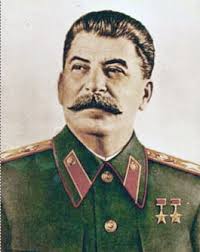
Joseph Stalin
Yet for all their similarities Hitler and Stalin inevitably became deadly enemies.
Hitler hated Communism and coveted “living space” for Germans within the Soviet Union. And Stalin hated Fascism and saw “Hitlerite” Germany as his most dangerous enemy.
On June 22, 1941, Hitler ordered the invasion of the Soviet Union. Only after suffering at least 25 million casualties did Stalin see his armies repel the Nazi invaders and conquer Germany.
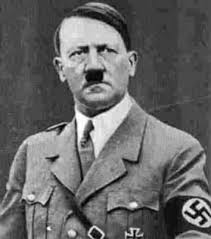
Adolf Hitler
Fast forward 73 years since the end of World War II in 1945.
Stalin and Hitler are dead—and so is the death-struggle they shared. In its place stands the conflict between President Donald Trump and his former White House assistant, Omarosa Manigault-Newman.
The relationship between these two dates to 2004, when she became a participant in the first season of The Apprentice, NBC’s “reality” TV series. Her rudeness and ruthlessness toward other contestants quickly made her “the woman America loved to hate,” according to Jet magazine.
She returned in the seventh season of The Apprentice as well.
TV Guide included her in its 2013 list of “The 60 Nastiest TV Villains of All Time.”
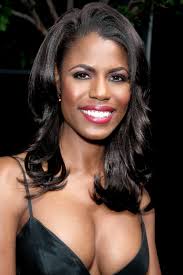
Omarosa Manigault-Newman
(By Photography by Glenn Francis of PacificProDigital.com)
In 2008, she appeared on Celebrity Apprentice—where she was again fired after failing to sell more artwork than a rival team.
During the 2016 Presidential race, she served as Trump’s Director of African-American Outreach, although she had absolutely no credible ties to the black community.
In February, 2016, she appeared on a segment on Maria Bartiromo’s Fox Business show. Fox panelist Tamara Holder said that she would like Trump more if he expressed support for Black Lives Matter or put forward a plan to improve inner cities.
Manigault argued that the topic of the discussion should be limited to Trump’s criticism of the Iraq war. In doing so, she mispronounced Holder’s first name.
Holder: “It’s Tamara.”
Manigault: “It’s the same difference, boo. You want to come on with big boobs, then you deal with the pronunciation of your name.”
“Wait a second,” Bartiromo interrupted. “Why are you bringing up Tamara’s boobs?”
Manigault: “Because she started going back talking about, ‘Oh, you were a Democrat and you supported Hillary Clinton.’ If you want to get personal, we can get personal.”
Manigault wasn’t bothered that blacks regarded Trump so poorly in polls: “My reality is that I’m surrounded by people who want to see Donald Trump as the next president of the United States who are African-American.”
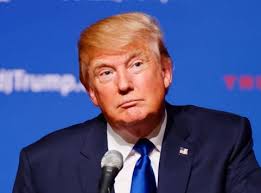
Donald Trump
And, in September, 2016, she famously predicted: “Every critic, every detractor will have to bow down to President Trump. It’s everyone who’s ever doubted Donald, who ever disagreed, who ever challenged him. It is the ultimate revenge to become the most powerful man in the universe.”
Just as Hitler—for all the similarities he shared with Stalin—inevitably turned on him, so did Manigault turn on Trump.
When Trump moved into the White House on January 20, 2017, Manigault moved in with him as his director of communications for the Office of Public Liaison.
In June, 2017, she invited the Congressional Black Caucus (CBC) to visit the White House. And she signed the invitation: “The Honorable Omarosa Manigault.”
This is not a title given to political aides. And it’s not used by those referring to themselves.
The arrogance offended some members of the Caucus, which declined the invitation.
In August, Manigault appeared at the National Association of Black Journalists convention in New Orleans. She was a panelist on a discussion about losing loved ones to violence.
When the moderator, Ed Gordon, asked her about Trump’s policies and not her personal history with losing family members through violence, Manigault got into a shouting match with him.
On December 13, she was told that she would be leaving the White House on January 20, 2018—one year from the day she had arrived there. She reportedly asked Ivanka Trump to intervene on her behalf, but the request was denied.
Deciding to go right to the top, she headed for the Trump’s private quarters. There she tripped an alarm—which brought guards and White House Chief of Staff John Kelly to the scene.
An enraged Kelly ordered her ejected from the White House. Multiple sources report that she was physically restrained and escorted—cursing and screaming—from the Executive Mansion.
Next day—December 14—Manigault appeared on “Good Morning America.”
The woman who had been Trump’s ambassador to blacks now sang a different tune: “I have seen things that made me uncomfortable, that have upset me, that have affected me deeply and emotionally, that has affected my community and my people. And when I can tell my story, it is a profound story that I know the world will want to hear.”
2016 PRESIDENTIAL CAMPAIGN, ABC NEWS, ALEXANDER SHUSTOROVICH, ALTERNET, ANDREW INTRATER, AP, BBC, BUZZFEED, CBS NEWS, CIA, CITIZENS UNITED, CNN, CROOKS AND LIARS, DAILY KOS, DAILY KOZ, DONALD TRUMP, FACEBOOK, FBI, FOX NEWS, JOHN MCCAIN, LEN BLAVATNIK, LINDSEY GRAHAM, MARCO RUBIO, MITCH MCCONNELL, MOTHER JONES, MOVEON, NATIONAL SECURITY AGENCY, NBC NEWS, NEWSWEEK, NPR, OLIGARCHS, POLITICAL ACTION COMMITTEES (PACS), POLITICO, RAW STORY, REPUBLICAN PARTY, REPUBLICANS, REUTERS, RICHARD NIXON, ROBERT MUELLER, ROD ROSENSTEIN, Ronald Reagan, RUSSIA, SALON, SEATTLE TIMES, SIMON KUKES, SLATE, SOVIET UNION, SUPREME COURT, THE ATLANTIC, THE CHICAGO SUN-TIMES, THE CHICAGO TRIBUNE, THE DAILY BEAST, THE GUARDIAN, THE HILL, THE HUFFINGTON POST, THE LOS ANGELES TIMES, THE NATION, THE NEW YORK TIMES, THE WALL STREET JOURNAL, THE WASHINGTON POST, TIME, TWITTER, U.S. NEWS & WORLD REPORT, UPI, USA TODAY, VLADIMIR PUTIN
In Bureaucracy, History, Law, Law Enforcement, Military, Politics, Social commentary on July 24, 2018 at 12:06 am
A Pew Research Center survey released on August 29, 2017, found that 36% of Americans approved of President Donald Trump. Most other polling rated his approval between 35 and 40%.
About Republicans, the survey found:
- Just over two-thirds agreed with his positions;
- 19% didn’t like his conduct;
- 46% said they had mixed feelings;
- 34% liked the way he behaved as President.
When asked what they liked most about Trump’s Presidency, those who approved of his performance cited his personality and conduct four times more often than his policies.
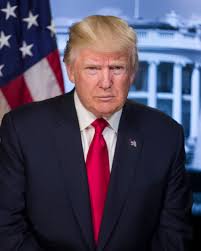
Donald Trump
On August 30, 2017, an article in Salon tackled this group head-on: “Most Americans Strongly Dislike Trump, But the Angry Minority That Adores Him Controls Our Politics.”
It described these voters as representing about one-third of the Republican party:
“These are older and more conservative white people, for the most part, who believe he should not listen to other Republicans and should follow his own instincts….
“They like Trump’s coarse personality, and approve of the fact that he treats women like his personal playthings. They enjoy it when he expresses sympathy for neo-Nazis and neo-Confederate white supremacists.
“They cheer when he declares his love for torture, tells the police to rough up suspects and vows to mandate the death penalty for certain crimes. (Which of course the president cannot do.)
“…This cohort of the Republican party didn’t vote for Trump because of his supposed policies on trade or his threat to withdraw from NATO. They voted for him because he said out loud what they were thinking. A petty, sophomoric, crude bully is apparently what they want as a leader.”

Supporters giving the Nazi “Sieg Heil” salute to Trump
According to the Pew survey, they only comprise 16% of the population. That leaves 65% of Republicans who are revolted by Trump’s personality and behavior. But they are being advised by GOP political consultants to vigorously support him.
“Your heart tells you that he’s bad for the country,” one anonymous consultant told the Salon reporter. “Your head looks at polling data among Republican primary voters and sees how popular he is.”
It’s precisely these hard-core Fascists who come out in mid-term elections—and they’re scaring the remaining 65% who make up the GOP establishment.
That’s one reason why the vast majority of Republicans continue to fanatically support Trump: They fear he will turn his hate-filled base on them.
But there’s a second reason why Republicans back Trump—especially against Special Counsel Robert S. Mueller’s probe of Russia’s subversion of the 2016 election.
Many House and Senate Republicans have received millions of dollars in “campaign contributions” from Russian oligarchs who are answerable to Russian dictator Vladimir Putin.
In 2017, for example, Russian oligarch Len Blavatnik gave millions of dollars to top Republican leaders—such as Senators Mitch McConnell, Marco Rubio and Lindsey Graham.
Altogether, four Russian oligarchs—Blavatnik, Alexander Shustorovich, Andrew Intrater and Simon Kukes––contributed $10.4 million from the start of the 2015-16 election cycle through September 2017.
Of this, 99% went to Republicans—including Senator John McCain and Governors John Kasich and Scott Walker.
And, thanks to the Supreme Court’s 2010 Citizens United decision, the donations are entirely legal.
Republicans don’t fear that Trump will destroy the institutions that Americans have long cherished—such as:
- An independent judiciary
- A free press
- An incorruptible Justice Department
- Intelligence agencies (such as the FBI and CIA) charged with protecting the country against subversion.
Trump has furiously attacked all of these—and Republicans have either said nothing or rushed to his defense.
Republicans don’t fear that he has all but destroyed decades of solid relations between the United States and longtime allies, such as Canada and Great Britain.
Republicans don’t even fear that he will sell out the Nation to Russian president Vladimir Putin.
The American Intelligence community—the FBI, CIA and National Security Agency—has unanimously determined that Russia subverted the 2016 Presidential election. But Trump—who has repeatedly praised Putin—has repeatedly denied it.
What Republicans fear is that Trump will finally cross one line too many—like firing Special Counsel Robert Mueller.
And that the national outrage following this will force them to launch impeachment proceedings against him.
But it isn’t even Trump they most fear will be destroyed.
What they most fear losing is their own hold on nearly absolute power in Congress and the White House.
If Trump is impeached and possibly indicted, he will become a man no one any longer fears. He will be a figure held up to ridicule and condemnation—like Richard Nixon.
And his Congressional supporters will be branded as losers along with him.
Republicans vividly remember what happened after Nixon was forced to resign in disgrace on August 9, 1974: Democrats, riding a wave of reform fever, swept Republicans out of the House and Senate—and Jimmy Carter into the White House.
If Republicans are conflicted about supporting Trump, their dilemma boils down to this:
- Can I hold onto my power—and all the privileges that go with it—by supporting Trump? Or:
- Can I hold onto my power—and privileges—by deserting him?
This is how Republicans define morality today.


ABC NEWS, ADOLF HITLER, AFFORDABLE HEALTHCARE ACT, ALTERNET, ANN COULTER, AP, AR-15 ASSAULT RIFLE, ARIZONA SHOOTINGS, ASSASSINATION, BARACK OBAMA, BBC, BILL CLINTON, BILL O'REILLY, BIRTHERS, BOBBY JINDAL, BUZZFEED, CBS NEWS, CESAR SAYOC, CIA, CNN, CONFEDERATE FLAG, CROOKS AND LIARS, DAILY KOS, DAILY KOZ, DEBBIE WASSERMAN-SCHULTZ, DICK ARMEY, DONALD TRUMP, DYLANN ROOF, EMANUAL AFRICAN METHODIST EPISCOPAL CHURCH, ERIC HOLDER, FACEBOOK, FBI, FRANKLIN D. ROOSEVELT, GABRIELLE GIFFORDS, GEORGE H.W. BUSH, GEORGE SOROS, GEORGE W. BUSH, GLENN BECK, GREG GIANFORTE, GUN CONTROL, HARRY S. TRUMAN, HATE CRIMES, HEALTHCARE, HILLARY CLINTON, JEB BUSH, JEFF LUND, JILL STEIN, JOE BIDEN, JOHN BRENNAN, JOHN ROLL, JOSEPH MCCARTHY, KELLEYANNE CONWAY, MAXIME WATERS, MEIN KAMPF, MICHAEL MOORE, MICHAEL SAVAGE, MICHELLE BACHMANN, MIKE PENCE, MONICA LEWINSKY, MOTHER JONES, MOVEON, MSNBC, NBC NEWS, NEWSWEEK, NEWT GINGRICH, NPR, OBAMACARE, POLITICO, RAUL GRIJALVA, RAW STORY, REP. GABRIELLE GIFFORDS, REPUBLICAN PARTY, REPUBLICANS, REUTERS, RICHARD NIXON, RICK SANTORUM, ROBERT BOWERS, ROBERT DE NIRO, RODNEY KING RIOTS, ROLLING STONE, ROLLING STONE MAGAZINE, RUSH LIMBAUGH, SALON, Sarah Palin, SEAN HANNITY, SEATTLE TIMES, SLATE, SOVIET UNION, SPIRO AGNEW, TARA PALMERI, TEA PARTY, TERRORISM, THE ATLANTIC, THE CHICAGO SUN-TIMES, THE CHICAGO TRIBUNE, THE DAILY BEAST, THE GUARDIAN, THE HILL, THE HUFFINGTON POST, THE LOS ANGELES TIMES, THE NATION, THE NEW YORK TIMES, THE WALL STREET JOURNAL, THE WASHINGTON POST, TIME, TREE OF LIFE SYNAGOGUE, TWITTER, U.S. DISTRICT JUDGE JOHN ROLL, U.S. MARSHALS SERVICE, U.S. NEWS & WORLD REPORT, UPI, USA TODAY
REPUBLICANS: WEPONIZING MURDER, EVADING RESPONSIBILITY: PART ONE (OF THREE
In Bureaucracy, History, Law Enforcement, Politics, Social commentary on October 30, 2018 at 12:08 amOn October 24, 2018, a would-be killer mailed pipe bombs to:
All of these intended victims had one thing in common: All of them had been brutally and repeatedly attacked by President Donald Trump.
Donald Trump
On October 26, Federal law enforcement agents arrested 56-year-old Cesar Sayoc, a bodybuilder and former male dancer.
The FBI also impounded his white van—which was plastered with pro-Donald Trump/Mike Pence images and American flags.
More ominously, it was covered with stickers of Barack Obama, Hillary Clinton, liberal film maker Michael Moore and Green Party activist Jill Stein—all in crosshairs. There was also a “CNN Sucks” sticker and American flags.
From Aventura, Florida, Sayoc enthusiastically attended Trump rallies, at one of them holding up a sign reading “CNN sucks.”
And who did President Donald Trump blame for the bombings? Not the man arrested for sending pipe-bombs to Trump’s opponents.
On October 25, he tweeted: “A very big part of the Anger we see today in our society is caused by the purposely false and inaccurate reporting of the Mainstream Media that I refer to as Fake News. It has gotten so bad and hateful that it is beyond description. Mainstream Media must clean up its act, FAST!”
Nor was Trump the only one to exonerate himself. His sycophantic Vice President, Mike Pence, quickly chinned in:
“Look, the reality is the people responsible are the people responsible. And what the President and I stand for, and I think every American stands for, is that threats or acts of political violence from anyone, anywhere, for any reason should not be allowed.”
ABC White House Correspondent Tara Palmeri asked Pence if Trump’s past use of violent rhetoric towards reporters and news outlets could be part of the problem. For example: On October 18, at a Montana campaign rally, Trump had praised Republican congressional candidate Greg Gianforte for body slamming a reporter in 2017.
“Well, I mean, clearly the President was joking in Montana,” claimed Pence.
Then, on October 27, 11 people were killed and six injured in a shooting at the Tree of Life synagogue in Pittsburgh, Pennsylvania.
The killer used an AR-15 assault rifle—the go-to firearm for heavy-duty massacres. It can fire 150 rounds in 15 seconds and about 600 rounds per minute.
Robert Bowers, 46, of suburban Baldwin, faces 29 charges in connection to the rampage. He was charged with 11 counts of using a firearm to commit murder. And he faces multiple counts of two hate crimes. He could face the death penalty.
And who did White House Counselor Kelleyanne Conway blame for the massacre?
“The anti-religiosity in this country that is somehow in vogue and funny to make fun of anybody of faith, to constantly be making fun of people that express religion—the late-night comedians, the unfunny people on TV shows—it’s always anti-religious.
“These people were gunned down in their place of worship, as were the people in South Carolina several years ago. And they were there because they’re people of faith, and it’s that faith that needs to bring us together.
“This is no time to be driving God out of the public square.”
Three years earlier, Republicans had faced a similar dilemma.
On June 17, 2015, Dylann Roof, a white high school dropout, gunned down three black men and six black women at Emanuel African Methodist Episcopal Church in Charleston, South Carolina.
At 21, Roof was unemployed, dividing his time between playing video games and taking drugs.
Dylann Roof
The signs of Roof’s malignant racism were evident long before he turned mass murderer:
The evidence made clear that Roof’s slaughter was racially motivated. Yet no 2016 Republican Presidential candidate dared acknowledge it:
But Rolling Stone magazine writer Jeb Lund left no doubt as to what—and who—was ultimately responsible for this crime: Racism and Republicans.
Share this: