Posts Tagged ‘Ronald Reagan’
ABC NEWS, AFFORDABLE CARE ACT, AIR TRAFFIC CONTROLLERS STRIKE, BARACK OBAMA, BERNIE SANDERS, CBS NEWS, CNN, COLUMBIA UNIVERSITY, DIXIE CHICKS, EXTORTION, FACEBOOK, FBI, GEORGE W. BUSH, HARVARD LAW SCHOOL, HENRY J. KAISER FOUNDATION, HILLARY CLINTON, IRAQ WAR, JOHN BOEHNER, JOHN SCHNATTER, JON STEWART, JONATHAN ALTER, JUSTICE DEPARTMENT, KOCH BROTHERS, MEDICAL CARE, NBC NEWS, NICCOLO MACHIAVELLI, OBAMACARE, PAPA JOHN'S PIZZA, PATRIOT ACT, public relations, RACKETEER INFLUENCED CORRUPT ORGANIZATIONS ACT, REFORM, REPUBLICAN PARTY, RICHARD WOLFFE, Ronald Reagan, TEA PARTY, TERRORISM, THE DAILY SHOW, THE LOS ANGELES TIMES, THE NEW YORK TIMES, THE PRINCE, THE WASHINGTON POST, TWITTER, UNEMPLOYMENT
In Bureaucracy, Business, History, Law, Law Enforcement, Medical, Politics, Social commentary on February 4, 2016 at 12:10 am
One of the major differences between Bernie Sanders and Hillary Clinton lies in their views about what should be the future of “Obamacare.”
Sanders, the longtime independent Senator from Vermont, wants to scrap The Affordable Care Act (ACA) and replace it with a single-payer plan.
Clinton, the former Secretary of State, wants to make “incremental” changes in the Act.
The Sanders plan promises greater simplicity and comprehensiveness in providing benefits to those millions of Americans who previously could not obtain medical insurance.
The Clinton approach promises to keep the best features of “Obamacare” and improve those that need changing.
But neither Sanders nor Clinton has directly addressed certain unpalatable truths about the ACA.
These stem not from any intended evil on the part of its chief sponsor, President Barack Obama. Instead, they spring from his idealistic belief that reasonable men could always reach a compromise.
As a result, much of the Act remains seriously flawed. Here are the six reasons why.
Barack Obama is easily one of the most highly educated Presidents in United States history. He is a graduate of Columbia University (B.A. in political science in 1983).
In 1988, he entered Harvard Law School, graduating magna cum laude–“with great honor”–in 1991.
He was selected as an editor of the Harvard Law Review at the end of his first year, and president of the journal in his second year.
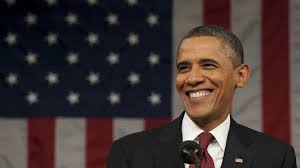
President Barack Obama
He then taught Constitutional law at the University of Chicago Law School for 12 years–as a Lecturer from 1992 to 1996, and as a Senior Lecturer from 1996 to 2004.
So where did he go wrong? Several ways:
Obama Mistake No. 1: Putting off what people wanted while concentrating on what they didn’t.
Obama started off well when he took office. Americans had high expectations of him. This was partly due to his being the first black to be elected President.
And it was partly due to the disastrous legacies of needless war and financial catastrophe left by his predecessor, George W. Bush.
Obama entered office intending to reform the American healthcare system, to make medical care available to all citizens, and not just the richest. But that was not what the vast majority of Americans wanted him to concentrate his energies on.
With the lost of 2.6 million jobs in 2008, Americans wanted Obama to find new ways to create jobs. This was especially true for the 11.1 million unemployed, or those employed only part-time.
Jonathan Alter, who writes sympathetically about the President in The Center Holds: Obama and His Enemies, candidly states this.
But Obama chose to spend most of his first year as President pushing the Affordable Care Act (ACA)–which would soon become known as Obamacare–through Congress.
The results were:
- Those desperately seeking employment felt the President didn’t care about them.
- The reform effort became a lightning rod for Right-wing groups like the Koch-brothers-financed Tea Party.
- In 2010, a massive Rightist turnout cost the Democrats the House of Representatives, and threatened Democratic control of the Senate.
Obama Mistake No. 2: He underestimated the amount of opposition he would face to the ACA.
For all of Obama’s academic brilliance and supposed ruthlessness as a “Chicago politician,” he displayed an incredible naivety in dealing with his political opposition.
Niccolo Machiavelli (1469-1527), the Florentine statesman and father of modern politics, could have warned him of the consequences of this–through the pages of The Prince, his infamous treatise on the realities of politics.

Niccolo Machiavelli
And either Obama skipped those chapters or ignored their timeless advice for political leaders.
He should have started with Chapter Six: “Of New Dominions Which Have Been Acquired By One’s Own Arms and Ability”:
…There is nothing more difficult to carry out, nor more doubtful of success, nor more dangerous to handle than to initiate a new order of things.
For the reformer has enemies in all those who profit by the old order, and only lukewarm defenders in all those who would profit by the new order, this lukewarmness arising partly from fear of their adversaries, who have the laws in their favor, and partly from the incredulity of mankind, who do not truly believe in anything new until they have had actual experience of it.
This proved exactly the case with the proposed Affordable Care Act.
Its supporters–even when they comprised a majority of the Congress–have always shown far less fervor than its opponents.
This was true before the Act became effective on March 23, 2010. And it has remained true since, with House Republicans voting more than 60 times to repeal, delay or revise the law.
So before President Obama launched his signature effort to reform the American medical system, he should have taken this truism into account.
Obama Mistake No. 3: Failing to consider–and punish–the venom of his political enemies.
The ancient Greeks used to say: “A man’s character is his fate.” It is Obama’s character–and America’s fate–that he is by nature a man of conciliation, not conflict.
Richard Wolffe chronicled Obama’s winning of the White House in his 2009 book, Renegade: The Making of a President. He noted that Obama was always more comfortable when responding to Republican attacks on his character than he was in making attacks on his enemies.
ABC NEWS, AFFORDABLE CARE ACT, BARACK OBAMA, CBS NEWS, CIA, CNN, FACEBOOK, FRANKLIN D. ROOSEVELT, MITT ROMNEY, MSNBC, NBC NEWS, NEW DEAL, OBAMACARE, PAPA JOHN'S PIZZA, REPUBLICAN PARTY, Ronald Reagan, THE CHICAGO SUN-TIMES, THE CHICAGO TRIBUNE, THE LOS ANGELES TIMES, THE WALL STREET JOURNAL, USA TODAY, WILLIAM J. CASEY
In Bureaucracy, Business, Law, Politics on January 22, 2016 at 12:18 am
When William J. Casey was a young attorney during the Great Depression, he learned an important lesson.
Jobs were hard to come by, so Casey thought himself lucky to land one at the Tax Research Institute of America in New York.
His task was to closely read New Deal legislation and write reports explaining it to corporate chieftains.
At first, he thought they wanted detailed legal commentary on the meaning of the new legislation.
But the he quickly learned a blunt truth: Businessmen neither understood nor welcomed President Franklin D. Roosevelt’s efforts at reforming American capitalism. And they didn’t want legal commentary.
Instead, they wanted to know: “What is the minimum we have to do to achieve compliance with the law?”
In short: How do we get by FDR’s new programs?
Fifty years later, Casey would bring the same mindset to his duties as director of the Central Intelligence Agency (CIA) for President Ronald Reagan.

William J. Casey
He was presiding over the CIA when it deliberately violated Congress’ ban on funding the “Contras,” the Right-wing death squads of Nicaragua.
Casey gave lip service to the demands of Congress. But privately, with the help of Marine Lieutenant Colonel Oliver North, he set up an “off-the-shelf” operation to provide arms to overthrow the leftist government of Daniel Ortega.
It was what President Ronald Reagan wanted. So Casey felt he had a duty to get it done, and Congress be damned.
When news of Casey’s–and Reagan’s–illegal behavior leaked, in November, 1986, it almost destroyed the Reagan administration.
Especially damning: Much of the funding directed to the “Contras” had come from Iran, America’s mortal enemy.
To ransom a handful of American hostages who had been kidnapped in Lebanon, Reagan sold them our most sophisticated missiles in a weak-kneed exchange for American hostages.
Then he went on television and brazenly denied that any such “arms for hostages” trade had ever happened.
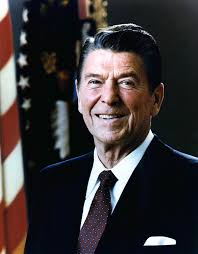
Ronald Reagan
But the “Casey Doctrine” of minimum compliance with the law didn’t die with Casey (who expired of a brain tumor in 1987).
It was very much alive within the American business community as President Barack Obama sought to bring medical coverage to all Americans, and not simply the ultra-wealthy.
The single most important provision of the Affordable Care Act (ACA)–better-known as Obamacare–requires large businesses to provide insurance to fulltime employees who work more than 30 hours a week.
For part-time employees, who work fewer than 30 hours, a company isn’t penalized for failing to provide health insurance coverage.
Obama’s enemies have long slandered him as a ruthless practitioner of Chicago politics.” So it’s easy to assume that he took “the Casey Doctrine” into account when he shepherded the ACA through Congress.
But he didn’t.
The result was predictable. And its consequences are daily becoming more clear.
Employers feel motivated to move fulltime workers into part-time positions, and thus avoid
- providing their employees with medical insurance;
- and a fine for non-compliance with the law.
Some employers have openly shown their contempt for President Obama–and the idea that employers actually have any obligation to those who make their profits a reality. 
John Schnatter, CEO of Papa John’s Pizza, has been quoted as saying:
- The price of his pizzas will go up–by 11 to 14 cents per pizza, of 15 to 20 cents per order; and
- He will pass along these costs to his customers.
“If Obamacare is in fact not repealed,” Schnatter told Politico, “we will find tactics to shallow out any Obamacare costs and core strategies to pass that cost onto consumers in order to protect our shareholders’ best interests.”
After all, why should a multimillion dollar company show any concern for those who make its profits a reality?
Consider:
- Papa John’s is the third-largest pizza takeout and delivery chain in the United States.
- Its 2014 revenues were $1.60 billion, an increase of 11.1% over 2013 revenues of $1.44 billion.
- Its 2014 net income was $73.3 million, compared to 2013 net income of $69.5 million.
In May, 2012, Schnatter hosted a fundraising event for Republican Presidential candidate Mitt Romney at his own Louisville, Kentucky, mansion.
“What a home this is,” gushed Romney. “What grounds these are, the pool, the golf course.
“You know, if a Democrat were here he’d look around and say no one should live like this. Republicans come here and say everyone should live like this.”
Of course, Romney conveniently ignored a brutally ugly fact:
For the vast majority of Papa John’s minimum-wage-earning employees-–many of them working only part-time-–the odds of their owning a comparable estate are non-existent.
Had Obama been the serious student of Realpolitick that his enemies claim he is, he would have predicted that most businesses would seek to avoid compliance with his law.
To counter that, he need only have required employers to provide insurance coverage for all of their employees–regardless of their fulltime or part-time status.
This, in turn, would have produced two substantial benefits:
- All employees would have been able to obtain medical coverage; and
- Employers would have been encouraged to provide fulltime positions rather than part-time ones, since they would feel, “I’m paying for fulltime insurance coverage, so I should be getting fulltime work in return.”
The “Casey Doctrine” needs to be kept constantly in mind when reformers try to protect Americans from predatory employers.
ABC NEWS, ALTERNET, AP, ATTORNEYS, BUZZFEED, CBS NEWS, CNN, CROOKS AND LIARS, CROSS-EXAMINATION, DAILY KOZ, EWS, FACEBOOK, FOX NEWS, HILLARY CLINTON, HOUSE OF REPRESENTATIVES, JOHN BOEHNER, KEVIN MCCARTHY, MOTHER JONES, MOVEON, NBC NEWS, NEWSWEEK, NPR, POLITICO, RAW STORY, REPUBLICAN PARTY, REUTERS, Ronald Reagan, SALON, SEAN HANNITY, SEATTLE TIMES, SLATE, SOVIET UNION, SPEAKER OF THE, SPEAKER OF THE HOUSE, THE ATLANTIC, THE CHICAGO SUN-TIMES, THE CHICAGO TRIBUNE, THE DAILY BEAST, THE GUARDIAN, THE HILL, THE HUFFINGTON POST, THE LOS ANGELES TIMES, THE NATION, THE NEW YORK TIMES, THE WASHINGTON POST, TIME, TWITTER, U.S. NEWS & WORLD REPORT, UPI, USA TODAY
In Bureaucracy, History, Politics, Social commentary on October 12, 2015 at 10:56 am
In politics, sometimes your best friends turn out to be your worst enemies.
Take the case of Kevin McCarthy in his September 30 appearance on Fox News.
McCarthy, the Republican member of the House of Representatives from Bakersfield, California, was undoubtedly feeling relaxed.
After all, he wasn’t being interviewed by such “enemies” of the Right as The New York Times or MSNBC political commentator Rachel Maddow.
He was being interviewed by Sean Hannity, a Right-wing political commentator whose books include Conservative Victory: Defeating Obama’s Radical Agenda and Deliver Us From Evil: Defeating Terrorism, Despotism, and Liberalism
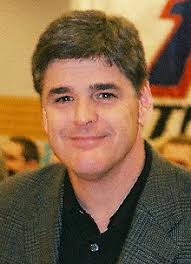
The topic under discussion: Who would be the next Republican Speaker of the House, now that John Boehner had announced his decision to leave not only the Speakership but the House itself in November.
Now Hannity wanted to know what would happen when the next Republican Speaker took office. And McCarthy–who was in the running for the position–was eager to tell him:
“What you’re going to see is a conservative Speaker, that takes a conservative Congress, that puts a strategy to fight and win. And let me give you one example. Everybody thought Hillary Clinton was unbeatable, right?
“But we put together a Benghazi special committee. A select committee. What are her [poll] numbers today? Her numbers are dropping. Why? Because she’s untrustable. But no one would have known that any of that had happened had we not fought to make that happen.”
Kevin McCarthy
In 51 words, McCarthy revealed that:
-
- The House Select Committee on Benghazi was not a legitimate investigative body;
- Its true purpose was not to investigate the 2012 deaths of four American diplomats during a terrorist attack in Benghazi, Libya;
- Its real purpose all along had been to destroy the Presidential candidacy of Hillary Clinton;
- To accomplish this, its members had spent 17 months and wasted more than $4.5 million of American taxpayers’ funds.
On October 8, Republicans were expected to choose their nominee for Speaker. On that same date, McCarthy announced that he was withdrawing his name from consideration:
“Over the last week it has become clear to me that our Conference is deeply divided and needs to unite behind one leader. I have always put this Conference ahead of myself. Therefore I am withdrawing my candidacy for Speaker of the House.”
When reporters asked McCarthy if his revelation was the reason he withdrew, he replied, “Well, that wasn’t helpful.”
But then he quickly replayed the official Republican version: “But this Benghazi committee was only created for one purpose: to find the truth on behalf of the families for the four dead Americans.”
Democrats and Republicans were united in their anger that the real reason for the Benghazi “investigation” had been revealed.
Democrats were furious that McCarthy, in an unguarded moment, had revealed that their major Presidential candidate had been the victim of a Republican smear campaign disguised as a legitimate inquiry.
And Republicans were furious that McCarthy, in an unguarded moment, had revealed that the “legitimate inquiry” had been nothing more than a Republican smear campaign.
For McCarthy, the Benghazi Committee had legitimately served the nation–not by uncovering relevant details about a terrorist act but by causing Hillary Clinton’s poll numbers to drop.
In 1981, President Ronald Reagan had attacked the leaders of the Soviet Union thusly: “They reserve unto themselves the right to commit any crime, to lie, to cheat.”
McCarthy’s comments demonstrated that the Republican Party had adopted the same mindset and tactics as the dictators of the former Soviet Union.
They also proved that the best way to obtain the truth is often the “kill them with kindness” approach.
Veteran attorneys have long taken this approach when cross-examining witnesses.
Witnesses always expect the opposing counsel to immediately start screaming at them. But that only causes the witness to stay alert and say as little as possible.
So the smart attorney comes on as courteous, friendly, even sympathetic.
In one such case: A laborer claimed to have permanently injured his shoulder in a railway accident, leaving him unable to work. He claimed he could no longer raise his arm above a point parallel with his shoulder.
The railway’s attorney asked him a few sympathetic questions about his injuries. And the witness quickly volunteered that he was in constant pain and a near-invalid.
“And, as a result of the accident, how high can you raise your arm?” asked the attorney.
The witness slowly raised his arm parallel with his shoulder.
“Oh, that’s terrible,” said the attorney. Then: “How high could you get it up before the accident?”
Unthinkingly, the witness extended his arm to its full height above his head–to the laughter of the judge, jury and spectators.
In light of Kevin McCarthy’s unintended revelation, no one is laughing now.
ABC NEWS, ALEXANDRA, ASTROLOGY, BIBLICAL PROPHECIES, CBS NEWS, CNN, CZAR NICHOLAS II, CZARINA ALEXANDRA, FACEBOOK, GEORGE W. BUSH, GOG AND MAGOG, GRIGORI RASPUTIN, HENRY KISSINGER, IRAQ WAR, JOAN QUIGLEY, JODIE FOSTER, JOHN HINCKLEY, MERV GRIFFIN, MIDDLE EAST, MIKHAIL GORBACHEV, NANCY REAGAN, NBC NEWS, NICHOLASS II, Ronald Reagan, RUSSIA, SOVIET UNION, STAR WARS, THE CHICAGO SUN-TIMES, THE CHICAGO TRIBUNE, THE LOS ANGELES TIMES, THE NEW YORK TIMES, THE WASHINGTON POST, TWITTER, USA TODAY
In Bureaucracy, History, Military, Politics, Social commentary on September 16, 2015 at 12:05 am
Americans like to believe they choose rational men and women for their political leaders.
This is especially true when it comes to deciding who will govern the country for the next four years as President of the United States.
But this has not always been the case.
One such irrational President was Richard M. Nixon, elected in 1968 and re-elected in 1972.
In 1970, while deciding whether to widen the Vietnam war by bombing Cambodia, he repeatedly watched the movie “Patton.” Then he ordered the bombing to begin.
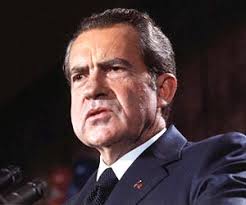
Richard Nixon
In 1974, as Justice Department investigations of Watergate increasingly threatened his Presidency, his behavior grew increasingly erratic.
He drank heavily, took pills by the handful, and, on at least one occasion, was seen talking to pictures of Presidents that adorned the walls of the White House.
In the final weeks of his administration, as impeachment for his Watergate abuses seemed increasingly certain, Nixon inspired fears of a military coup in his Secretary of Defense.
James Schlesinger warned all military commands to ignore any direct orders from the White House–or any other source–without the counter-signature of the SecDef himself.
On his last night in the White House–August 8, 1974–Nixon summoned Secretary of State Henry Kissinger to the Oval Office.
Half-rambling, half-crying, Nixon asked Kissinger to kneel with him on the White House rug and pray for God’s forgiveness. Kissinger, though Jewish, had never shown any interest in religion. Neverheless, he reluctantly did so.
Later that night, Nixon called Kissinger and pleaded with him to never tell anyone “that I cried, and I was not strong.” Kissinger promised to keep his secret–and then promptly leaked it.
Nixon, however, was not the only President whose irrationality played havoc with history.
In June, 2001, George W. Bush met with Russian President Vladimir Putin in Slovenia. Bush judged others–even world leaders–through the lens of his own fundamentalist Christian theology.
And Putin was quick to take advantage of it.
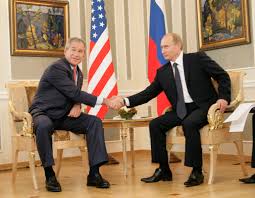
George W. Bush and Vladimir Putin
BUSH: Let me say something about what caught my attention, Mr. President, was that your mother gave you a cross which you had blessed in Israel, the Holy Land.
PUTIN: It’s true.
BUSH: That amazes me, that here you were a Communist, KGB operative, and yet you were willing to wear a cross. That speaks volumes to me, Mr. President. May I call you Vladimir?
Falling back on his KGB training, Putin seized on this apparent point of commonality to build a bond. He told Bush that his dacha had once burned to the ground, and the only item that had been saved was that cross.
BUSH: Well, that’s the story of the cross as far as I’m concerned. Things are meant to be.
Afterward, Bush and Putin gave an outdoor news conference.
“Is this a man that Americans can trust?” Associated Press correspondent Ron Fournier asked Bush.
“Yes,” said Bush. “I was able to get a sense of his soul, a man deeply committed to his country and the best interests of his country. I wouldn’t have invited him to my ranch if I didn’t trust him.”
In early 2003, Bush telephoned French President Jaques Chirac, hoping to enlist his support–and troops–for his long-planned invasion of Iraq.
Failing to convince Chirac that overthrowing Saddam Hussein was politically advantageous, Bush took a different tack.
BUSH: Jaques, you and I share a common faith. You’re Roman Catholic, I’m Methodist, but we’re both Christians committed to the teachings of the Bible. We share one common Lord.
Gog and Magog are at work in the Middle East. Biblical prophecies are being fulfilled.
This confrontation is willed by God, who wants to use this conflict to erase His people’s enemies before a new age begins.
When the call ended, Chirac asked his advisors: “Gog and Magog–do any of you know what he’s talking about?”
When no one did, Chirac ordered: Find out.
The answer came from Thomas Roemer, a professor of theology at the University of Lausanne.
Romer explained that the Old Testament book of Ezekiel contains two chapters (38 and 39) in which God rages against Gog and Magog, sinister and mysterious forces menacing Israel.
Jehovah vows to slaughter them ruthlessly. In the New Testament book of Revelation (20:8) Gog and Magog are depicted as gathering nations for battle: “And fire came down from God out of Heaven, and devoured them.”
Chirac decided to oppose joining the upcoming invasion of Iraq. France, he said, would not fight a war based on an American Presient’s interpretation of the Bible.
Click here: 500 Days: Secrets and Lies in the Terror Wars: Kurt Eichenwald
Bush’s war cost the lives of 4,486 Americans–and an estimated 655,000 Iraqis.
Bush, however, was not the first President to invoke Gog and Magog.
Ronald Reagan predicted that this Biblical confrontation would pit the United States against the Soviet Union–which had abandoned God at the time of the Russian Revolution.
Evangelical Christians twice elected Ronald Reagan and George W. Bush to the Presidency.
In light of this, voters should think carefully before choosing candidates who accept superstitious beliefs over rational inquiry.
ABC NEWS, ASTROLOGY, BIBLICAL PROPHECIES, CBS NEWS, CNN, CZAR NICHOLAS II, CZARINA ALEXANDRA, FACEBOOK, GEORGE W. BUSH, GOG AND MAGOG, GRIGORI RASPUTIN, HENRY KISSINGER, IRAQ WAR, JOAN QUIGLEY, JODIE FOSTER, JOHN HINCKLEY, MERV GRIFFIN, MIDDLE EAST, MIKHAIL GORBACHEV, NANCY REAGAN, NBC NEWS, Ronald Reagan, SOVIET UNION, STAR WARS, THE CHICAGO SUN-TIMES, THE CHICAGO TRIBUNE, THE LOS ANGELES TIMES, THE NEW YORK TIMES, THE WASHINGTON POST, TWITTER, USA TODAY
In Bureaucracy, History, Military, Politics, Social commentary on September 15, 2015 at 12:30 am
Americans like to believe they choose rational men and women for their political leaders.
This is especially true when it comes to deciding who will govern the country for the next four years as President of the United States.
And those voters like to believe that, once elected, the new President will base his or her decisions on a firm foundation of rationality and careful consideration.
And in an age when a Presidential decision can, in a matter of minutes, hurl nuclear bombers and missiles to lay waste entire nations, it’s essential for Americans to choose such leaders.
Unfortunately, Presidential leadership hasn’t always been based on rationality.
A classic example of this was Ronald Reagan, the 40th President of the United States from 1981 to 1989.
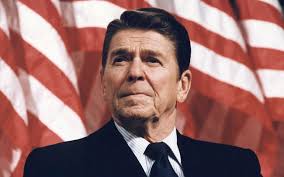
Ronald Reagan
His wife, Nancy, resembled the last Empress of Russia in her quest for answers from “the other side.”
In the case of Czarina Alexandra, wife of Nicholas II, the last “Czar of all the Russias,” those “answers” came from Grigori Rasputin, the “mad monk” from Siberia.
Rasputin claimed the ability to work miracles on behalf of Alexandra’s hemophilic son, Alexei, heir to the Russian throne.
Similarly, Nancy Reagan had her own Rasputin–an astrologer named Joan Quigley. The two met on “The Merv Griffin Show” in 1973.
Quigley supposedly gave Nancy–and through her, Reagan himself–astrological advice during the latter’s campaign for the Republican Presidential nomination in 1976.
That effort failed to unseat President Gerald Ford–who was defeated that November by Jimmy Carter.
Four years later, in 1980, Reagan defeated Carter to become the 40th President of the United States.
On March 30, 1981, a mentally-disturbed loner named John W. Hinckley shot and critically wounded Reagan. Hinckley’s motive: Fixiated on actress Jodie Foster, he believed that by shooting the President he could gain her affection.
For Nancy, the assassination attempt proved a watershed.
Shortly after the shooting, Merv Griffin told her that Quigley had told him: If Nancy had called her on that fateful day, she–Quigley–could have warned that the President’s astrological charts had foretold a bad day.
From that moment on, Nancy made sure to regularly consult Quigley on virtually everything that she and the President intended to do.
Click here: The President’s Astrologers – Joan Quigley, Nancy Reagan, Politicians and Their Families, Ronald Reagan : People.c
Many–if not most–of these calls from the White House to Quigley’s office in San Francisco were made on non-secure phone lines.

Joan Quigley
This meant that foreign powers–most notably the Soviet Union and Communist China–could have been privy to Reagan’s intentions.
Nancy passed on Quigley’s suggestions in the form of commands to Donald Regan, chief of the White House staff.
As a result, Regan kept a color-coded calendar on his desk to remember when the astrological signs were good for the President to speak, travel, or negotiate with foreign leaders.
Green ink was used to highlight “good” days, red for “bad” days, and yellow for “iffy” days.
Forget relying on Intelligence supplied by the CIA, the National Security Agency or the Pentagon. Statecraft-by-astrologer was now the norm.
A list provided by Quigley to Nancy made the following recommendations–which Nancy, in turn, made into commands:
Late Dec thru March bad
Jan 16 – 23 very bad
Jan 20 nothing outside WH–possible attempt
Feb 20 – 26 be careful
March 7 – 14 bad period
March 10 – 14 no outside activity!
March 16 very bad
March 21 no
March 27 no
March 12 – 19 no trips exposure
March 19 – 25 no public exposure
April 3 careful
April 11 careful
April 17 careful
April 21 – 28 stay home
Donald Regan, no fan of Nancy’s, chafed under such restrictions: “Obviously, this list of dangerous or forbidden dates left very little lattitude for scheduling,” he later wrote.
Forced out of the White House in 1987 by Nancy, Regan struck back in a 1988 tell-all memoir: For the Record: From Wall Street to Washington.
The book revealed, for the first time, how Ronald Reagan actually made his Presidential decisions.
All–including decisions to risk nuclear war with the Soviet Union–were based on a court astrologer’s horoscopes. Rationality and the best military intelligence available played a lesser, secondary role–at best.
In 1990, Quigley confirmed the allegations an autobiography, What Does Joan Say?: My Seven Years As White House Astrologer to Nancy and Ronald Reagan.
Click here: What Does Joan Say?: My Seven Years As White House Astrologer to Nancy and Ronald Reagan: Joan Quigley
The title came from the question that Ronald Reagan asked Nancy before making important decisions–including those that could risk the destruction of the United States.
Among the success Quigley took credit for:
- Strategies for winning the Presidential elections of 1980 and 1984;
- Visiting a graveyard for SS soldiers in Bitburg, Germany;
- Pursuing “Star Wars” as a major part of his strategy against the Soviet Union;
- The Intermediate-Range Nuclear Forces Treaty; and
- Moving from seeing the Soviet Union as the “Evil Empire” to accepting Mikhail Gorbachev as a peace-seeking leader.
Thirty-four years after he became President, Ronald Reagan remains the most popular figure among Republicans.
His name is constantly invoked by Right-wing candidates, while his deliberately-crafted myth is held up as the example of Presidential greatness.
Conveniently left out: The small latter of his government-by-astrologer.
Ronald Reagan, BARACK OBAMA, CIA, MITT ROMNEY, ABC NEWS, CNN, THE NEW YORK TIMES, THE WASHINGTON POST, NBC NEWS, CBS NEWS, THE LOS ANGELES TIMES, FACEBOOK, TWITTER, FRANKLIN D. ROOSEVELT, 2012 PRESIDENTIAL RACE, OBAMACARE, PAPA JOHN'S PIZZA, AFFORDABLE CARE ACT, FUNDRAISING, THE CHICAGO TRIBUNE, WILLIAM J. CASEY, NEW DEAL, WHITE CASTLE HAMBURGER CHAIN, NICARAGUA, OLIVER NORTH, USA TODAY, THE CHICAGO SUN-TIMES, CONTRAS, IRAN-CONTRA SCANDAL
In Politics, Bureaucracy, History, Social commentary, Law Enforcement, Law, Business on July 24, 2015 at 12:24 pm
When William J. Casey was a young attorney during the Great Depression, he learned an important lesson.
Jobs were hard to come by, so Casey thought himself lucky to land one at the Tax Research Institute of America in New York.
His task was to closely read New Deal legislation and write reports explaining it to corporate chieftains.
At first, he thought they wanted detailed legal commentary on the meaning of the new legislation.
But then he quickly learned a blunt truth: Businessmen neither understood nor welcomed Franklin D. Roosevelt’s efforts to reform American capitalism. And they didn’t want legal commentary.
Instead, they wanted to know: “What must we do to achieve minimum compliance with the law?”
In short: How do we get by FDR’s new programs?
Fifty years later, Casey would bring a similar mindset to his duties as director of the Central Intelligence Agency for President Ronald Reagan.
William J. Casey
Congress had banned the Reagan administration from funding the “Contras,” the Right-wing death squads of Nicaragua.
Casey gave lip service to the demands of Congress. But privately, he and Marine Lieutenant Colonel Oliver North set up an “off-the-shelf” operation to overthrow the leftist government of Daniel Ortega.
For three years the operation stayed secret. Then it blew up in November, 1986, as the Iran-Contra scandal.
But the “Casey Doctrine” of minimum compliance didn’t die with Casey (who expired of a brain tumor in 1987).
It’s very much alive among the American business community as President Barack Obama seeks to give medical coverage to all Americans, and not simply the ultra-wealthy.
The single most important provision of the Affordable Care Act (ACA)–-better known as Obamacare–-requires large businesses to provide insurance to full-time employees who work more than 30 hours a week.
For part-time employees, who work fewer than 30 hours, a company isn’t penalized for failing to provide health insurance coverage.
Obama prides himself on being a tough-minded practitioner of “Chicago politics.” So it’s easy to assume that he took the “Casey Doctrine” into account when he shepherded the ACA through Congress.
But he didn’t.
The result was predictable. And its consequences are daily becoming more clear.
Employers feel motivated to move fulltime workers into part-time positions–-and thus avoid
- providing their employees with medical insurance and
- a fine for non-compliance with the law.
Some employers have openly shown their contempt for President Obama–-and the idea that employers actually have an obligation to those who make their profits a reality.
The White Castle hamburger chain is considering hiring only part-time workers in the future to escape its obligations under Obamacare.
No less than Jamie Richardson, its vice president, admitted this in an interview.
“If we were to keep our health insurance program exactly like it is with no changes, every forecast we’ve looked at has indicated our costs will go up 24%.”
Richardson claimed the profit per employee in restaurants is only $750 per year. So, as he sees it, giving health insurance to all employees who work over 30 hours isn’t feasible.
Nor is Richardson the only corporate executive determined to shirk his responsibility to his employees.
John Schnatter, CEO of Papa John’s Pizza, has been quoted as saying:
- The prices of his pizzas will go up–by 11 to 14 cents per pizza, or 15 to 20 cents per order; and
- He will pass along these costs to his customers.
“If Obamacare is in fact not repealed,” Schnatter told Politico, “we will find tactics to shallow out any Obamacare costs and core strategies to pass that cost onto consumers in order to protect our shareholders’ best interests.”
Consider:
- Papa John’s is the third-largest pizza takeout and delivery chain in the United States.
- Its 2012 revenues were $318.6 million, an 8.5 percent increase from 2011 revenues of $293.5 million.
- Its 2012 net income was $14.8 million, compared to its 2012 net income of $12.1 million.
Had Obama been the serious student of Realpolitick that he claims to be, he would have predicted that most businesses would seek to avoid compliance with his law.
To counter that, he need only have required all employers to provide insurance coverage for all of their employees—regardless of their fulltime or part-time status.
This, in turn, would have produced two substantial benefits:
- All employees would have been able to obtain medical coverage; and
- Employers would have been encouraged to provide fulltime positions rather than part-time ones; they would feel: “Since I’m paying for fulltime insurance coverage, I should be getting fulltime work in return.”
The “Casey Doctrine” needs to be kept constantly in mind when reformers try to protect Americans from predatory employers.
9/11, ABC NEWS, ADOLF HITLER, AMERICANS FOR TAX REFORM, ANDERSON COOPER, ANTI-COMMUNISM, ARTHUR MILLER, BILL CLINTON, CBS NEWS, CENTER FOR SECURITY POLICY, CHINA, CHRIS MATTHEWS, CNN, DICK CHENEY, DWIGHT D. EISENHOWER, EDWARD R. MURROW, FACEBOOK, GEORGE H.W. BUSH, HARRY S. TRUMAN, HEINRICH HIMMLER, HERMAN CAIN, HERMAN GORING, HILLARY CLINTON, HUMA ABEDIN, JEWS, JIMMY CARTER, JOHN BIRCH SOCIETY, JOHN F. KENNEDY, JOHN STEINBECK, JOSEPH GOEBBELS, JOSEPH MCCARTHY, JOSEPH STALIN, KGB, LIZ CHENEY, LUCILLE BALL, LYNDON B. JOHNSON, MARY CHENEY, MICHELLE BACHMANN, MIKE HUCKABEE, MITT ROMNEY, MSNBC, MUSLIM BROTHERHOOD, MUSLIMS, NAZI GERMANY, NAZI PARTY, NBC NEWS, NEWT GINGRICH, PETE SEEGER, RED SCARE, REINHARD HEYDRICH, REPUBLICAN PARTY, RICHARD NIXON, RICK SANTORUM, Ronald Reagan, SAME-SEX MARRIAGE, SENATOR MIKE ENZI, SOVIET UNION, SS, THE AMERICAN CENTER FOR SECURITY POLICY, THE CHICAGO SUN-TIMES, THE CHICAGO TRIBUNE, THE HUFFINGTON POST, THE LOS ANGELES TIMES, THE NEW YORK TIMES, THE WALL STREET JOURNAL, THE WASHINGTON POST, TWITTER, USA TODAY, WYOMING
In Bureaucracy, History, Law, Politics, Social commentary on February 6, 2015 at 12:15 am
With the Soviet Union collapsed in 1991, the Republican Party went into a tailspin of dismay.
For almost 50 years, Republicans had conjured up The Red Bogeyman to scare voters into sending them to Congress and the White House.
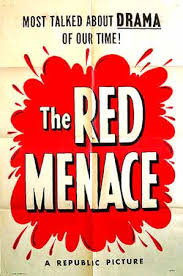
But now that the “workers’ paradise” had disappeared, Americans seemed to lose interest in the Communist Menace.
True, the People’s Republic of China remained, and its increasing economic clout would challenge the United States well into the 21st century. But Americans didn’t seem to fear the Red Chinese as they had the Red Russians.
What was the Republican Party to do to lure voters?
On September 11, 2001, the answer arrived–in two highjacked jetliners that crashed into the World Trade Center in New York and one that struck the Pentagon in Washington, D.C.
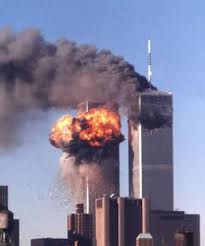
Exit The Red Bogeyman. Enter The Maniacal Muslim.
Consider:
- Mike Huckabee – “If the purpose of a church is to push forward the gospel of Jesus Christ, and then you have a Muslim group that says that Jesus Christ and all the people that follow him are a bunch of infidels who should be essentially obliterated, I have a hard time understanding that.”
- Herman Cain – ”I would not” appoint a Muslim in his administration.
- Newt Gingrich – “I am convinced that if we do not decisively win the struggle over the nature of America, by the time they [his grandchildren] are my age they will be in a secular atheist country, potentially one dominated by radical Islamists. …”
- Rick Santorum – On supporting the racial profiling of Muslims: “Obviously, Muslims would be someone you look at, absolutely.”
- Mitt Romney – “Based on the numbers of American Muslims in our population, I cannot see that a Cabinet position [for a Muslim] would be justified.”
And on July 13, Rep. Michelle Bachmann (R-Minn.) sent letters to the Inspectors General of the Departments of
- Defense;
- State;
- Justice; and
- Homeland Security.
“The purpose of these letters,” wrote Bachmann, was to “request a multi-department investigation into potential Muslim Brotherhood infiltration into the United States Government.”

Michelle Bachmann
Bachmann further asserted in her letter to the State Department that Huma Abedin, deputy chief of staff to Secretary of State Hillary Clinton, had ties to the Muslim Brotherhood.
And the evidence for this?
The Center for Security Policy’s claim that Abedin’s father (who died when she was a teenager), mother and brother are “connected” to the organization.
And what is the Center of Security Policy? A private organization subsidized by donors to neo-conservative causes.
In a separate letter, Bachmann demanded to know how Abedin received her security clearance.
Among the co-signers of Bachmann’s letter to the Inspectors General were:
- Rep. Trent Franks of Arizona, who has said abortion has done more harm to blacks than slavery;
- Rep. Lynn Westmoreland of Georgia, who called presidential candidate Barack Obama and his wife, Michelle, ”uppity”; and
- Rep. Louie Gohmert of Texas, who claims that terrorist organizations send pregnant women into the U.S. so that their children will be American citizens–who can enter and leave the country at will as they are trained to be terrorists abroad.
When pressed for their evidence of “a vast Muslim conspiracy,” right-wing accusers usually refuse to provide any.
An example of this occurred during an August 13, 2010 interview between Gohmert and CNN’s Anderson Cooper:
COOPER: What research? Can you tell us about the research?
GOHMERT: You are attacking the messenger, Anderson, you are better than this. You used to be good. You used to find that there was a problem and you would go after it.
COOPER: Sir, I am asking you for evidence of something that you said on the floor of the House.
GOHMERT: I did, and you listen, this is a problem. If you would spend as much time looking into the problem as you would have been trying to come after me and belittle me this week –
COOPER: Sir, do you want to offer any evidence? I’m giving you an opportunity to say what research and evidence you have. You’ve offered none, other than yelling.
Nor did Gohmert offer any evidence that evening.
Of course, the ultimate Republican Muslim slander is that President Barack Obama–a longtime Christian–is himself a Muslim.
No doubt Republicans feel totally safe in making these attacks, since Muslims comprise only 1% of the American population.
This has long been a hallmark of right-wing attacks–to go after a minority that cannot effectively defend itself.
Thus, Adolf Hitler attacked the Jews of Germany.
And Republicans have successively attacked blacks, Hispanics and gays–until each group became politically influential enough to defeat Republican candidates.
Today, most right-wing politicians at least grudgingly court all of these groups.
When Muslims become a significant political force in their own right, the Right will court them, too. And then move on to yet another helpless scapegoat to blame for America’s troubles.
9/11, ABC NEWS, ADOLF HITLER, AMERICANS FOR TAX REFORM, ANDERSON COOPER, ANTI-COMMUNISM, ARTHUR MILLER, BILL CLINTON, CBS NEWS, CENTER FOR SECURITY POLICY, CHINA, CHRIS MATTHEWS, CNN, DICK CHENEY, DWIGHT D. EISENHOWER, EDWARD R. MURROW, FACEBOOK, GEORGE H.W. BUSH, HARRY S. TRUMAN, HEINRICH HIMMLER, HERMAN CAIN, HERMAN GORING, HILLARY CLINTON, HUMA ABEDIN, JEWS, JIMMY CARTER, JOHN BIRCH SOCIETY, JOHN F. KENNEDY, JOHN STEINBECK, JOSEPH GOEBBELS, JOSEPH MCCARTHY, JOSEPH STALIN, KGB, LIZ CHENEY, LUCILLE BALL, LYNDON B. JOHNSON, MARY CHENEY, MICHELLE BACHMANN, MIKE HUCKABEE, MITT ROMNEY, MSNBC, MUSLIM BROTHERHOOD, MUSLIMS, NAZI GERMANY, NAZI PARTY, NBC NEWS, NEWT GINGRICH, PETE SEEGER, RED SCARE, REINHARD HEYDRICH, REPUBLICAN PARTY, RICHARD NIXON, RICK SANTORUM, Ronald Reagan, SAME-SEX MARRIAGE, SENATOR MIKE ENZI, SOVIET UNION, SS, THE AMERICAN CENTER FOR SECURITY POLICY, THE CHICAGO SUN-TIMES, THE CHICAGO TRIBUNE, THE HUFFINGTON POST, THE LOS ANGELES TIMES, THE NEW YORK TIMES, THE WALL STREET JOURNAL, THE WASHINGTON POST, TWITTER, USA TODAY, WYOMING
In Bureaucracy, History, Law, Politics, Social commentary on February 5, 2015 at 12:08 am
“Judge not, that you not be judged. For with what judgment you judged, you shall be judged, and with what measure you mete, it shall be measured to you again.”
So warns the Gospel of St. Matthew, 7:1-2. It’s advice that Right-wingers Joseph McCarthy, Robert Welch and George H.W. Bush would have done well to heed.
Joseph McCarthy, Wisconsin’s gift to the United States Senate, became infamous as the demagogue whose Red-baiting accusations terrified America from 1950 to 1954.
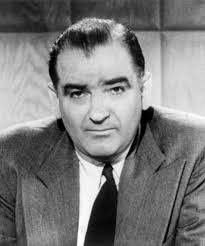
Joseph McCarthy
Elected to the Senate in 1946, he rose to national prominence on February 9, 1950, after giving a fiery speech in Wheeling, West Virginia:
“The State Department is infested with communists. I have here in my hand a list of 205—a list of names that were made known to the Secretary of State as being members of the Communist Party and who nevertheless are still working and shaping policy in the State Department.”
Americans were already growing increasingly fearful of Communism:
- Soviet dictator Joseph Stalin had not withdrawn the Red Army from the countries it had occupied in Eastern Europe during World War II.
- In 1948, the Soviet Union developed–and demonstrated–its own atomic bomb, an achievement U.S. scientists had claimed would not happen for at least a decade.
- In 1949, China fell to the triumphant armies of Mao Tse Tung.
But anti-communism as a lever to political advancement sharply accelerated following McCarthy’s speech. Republicans–resentful at being denied the White House since 1932–seized upon anti-communism as their passport to power.
No American–no matter how prominent–was safe from the accusation of being a Communist or a Communist sympathizer–”a Comsymp” or “fellow traveler” in the style of the era.
Among those accused:
- Secretary of State George C. Marshall, who had overseen America’s strategy for defeating Nazi Germany and Imperial Japan
- President Harry S. Truman
- Playwright Lillian Hellman and Arthur Miller
- Actors Charlie Chaplin, Zero Mostel, Lloyd Bridges, Howard Da Silva, Edward G. Robinson and John Garfield
- Composers Arron Copland and Elmer Bernstein
- Physicist J. Robert Oppenheimer, who presided over the creation of America’s atomic bomb
- Actressses Lee Grant, Delores del Rio, Ruth Gordon and Lucille Ball
- Journalists Edward R. Murrow and William L. Shirer, who had chronicled the rise of Nazi Germany
- Folksinger Pete Seeger
- Writers Irwin Shaw, Howard Fast, John Steinbeck and Dashiell Hammett
Even “untouchable” Republicans became targets for such slander.
The most prominent of these was President Dwight D. Eisenhower–labeled ”a conscious, dedicated agent of the Communist Conspiracy” by Robert Welch, who founded the John Birth Society in 1958.

Robert Welch
Welch, an independently wealthy businessman, used his money to publicize the Society and its views. Welch saw even hardline anti-Communists like Vice President Richard Nixon and actor Ronald Reagan as dangerously liberal.
Meanwhile, McCarthy finally overstepped himself. In 1953, he attacked the leadership of the United States Army as “a hotbed of traitors” and convened an inquiry through the Senate Permanent Subcommittee on Investigations.
But the hearings backfired, exposing McCarthy as the bullying demagogue he was. A Senate committee voted to condemn his behavior, charging that he had “acted contrary to senatorial ethics and tended to bring the Senate into dishonor and disrepute.”
Although McCarthy remained in the Senate another two and a half years, his political influence had ended.
Journalists who had raced to cover his latest slander now avoided him. So did his Republican colleagues–many of whom had once sought his help at election time.
Yet even without McCarthy, Republicans rode the issue of anti-Communism to victory from 1948 to 1960.
After holding the White House for eight years under Eisenhower, they lost it in 1960 to John F. Kennedy and again in 1964 to Lyndon Johnson.
By 1968, with the nation mired in Vietnam and convulsed by antiwar demonstrations, Americans turned once more to those who preyed upon their fears and hates. They elected Richard Nison–and re-elected him in 1972.
After Jimmy Carter won the Presidency in 1976 and lost it in 1980, Republicans held the White House until 1992. Throughout that time, they continued to accuse their opponents of being devious agents–or at least unwitting pawns–of “the Communist conspiracy.”
Even as late as 1992, President George H.W. Bush and the Republican establishment charged that Arkansas Governor Bill Clinton might be a KGB plant.
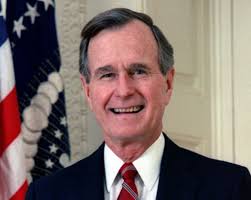
George H.W. Bush
Their evidence: During his tenure at Oxford University in 1969-70, Clinton had briefly visited Moscow.
Thus, the Republican charged that he might have been “programmed” as a real-life “Manchrian candidate” to become, first, Governor of Arkansas–one of America’s poorest states–and then President.
What made this charge all the more absurd: The Soviet Union had officially dissolved in December, 1991.
Although Republicans continued to hurl “Communist!” and “treason!” at their opponents, these charges no longer carried the weight they had while the Soviet Union existed.
Right-wingers had to settle for attacking their opponents as “liberals” and “soft on crime.”
Then, on September 11, 2001, Republicans–and their right-wing supporters–at last found a suitable replacement for the Red Menace.
9/11, ABC NEWS, ADOLF HITLER, AMERICANS FOR TAX REFORM, ANDERSON COOPER, ANTI-COMMUNISM, ARTHUR MILLER, BILL CLINTON, CBS NEWS, CENTER FOR SECURITY POLICY, CHINA, CHRIS MATTHEWS, CNN, DICK CHENEY, DWIGHT D. EISENHOWER, EDWARD R. MURROW, FACEBOOK, GEORGE H.W. BUSH, HARRY S. TRUMAN, HEINRICH HIMMLER, HERMAN CAIN, HERMAN GORING, HILLARY CLINTON, HUMA ABEDIN, JEWS, JIMMY CARTER, JOHN BIRCH SOCIETY, JOHN F. KENNEDY, JOHN STEINBECK, JOSEPH GOEBBELS, JOSEPH MCCARTHY, JOSEPH STALIN, KGB, LIZ CHENEY, LUCILLE BALL, LYNDON B. JOHNSON, MARY CHENEY, MICHELLE BACHMANN, MIKE HUCKABEE, MITT ROMNEY, MSNBC, MUSLIM BROTHERHOOD, MUSLIMS, NAZI GERMANY, NAZI PARTY, NBC NEWS, NEWT GINGRICH, PETE SEEGER, RED SCARE, REINHARD HEYDRICH, REPUBLICAN PARTY, RICHARD NIXON, RICK SANTORUM, Ronald Reagan, SAME-SEX MARRIAGE, SENATOR MIKE ENZI, SOVIET UNION, SS, THE AMERICAN CENTER FOR SECURITY POLICY, THE CHICAGO SUN-TIMES, THE CHICAGO TRIBUNE, THE HUFFINGTON POST, THE LOS ANGELES TIMES, THE NEW YORK TIMES, THE WALL STREET JOURNAL, THE WASHINGTON POST, TWITTER, USA TODAY, WYOMING
In Bureaucracy, History, Law, Politics, Social commentary on February 4, 2015 at 12:02 am
All revolutions,” said Ernst Rohem, leader of Adolf Hitler’s brown-shirted thugs, the S.A., “devour their own children.”
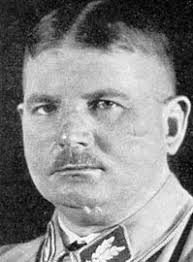
Ernst Rohem
Fittingly, he said this as he sat inside a prison cell awaiting his own execution.
On June 30, 1934, Hitler had ordered a massive purge of his private army, the S.A., or Stormtroopers. The purge was carried out by Hitler’s elite army-within-an-army, the Schutzstaffel, or Protective Squads, better known as the SS.
The S.A. Brownshirts had been instrumental in securing Hitler’s rise to Chancellor of Germany on January 30, 1933. They had intimidated political opponents and organized mass rallies for the Nazi Party.
But after Hitler reached the pinnacle of power, they became a liability.
Ernst Rohem, their commander, urged Hitler to disband the regular German army, theReichswehr, and replace it with his own legions as the nation’s defense force.
Frightened by Rohem’s ambitions, the generals of the Reichswehr gave Hitler an ultimatum: Get rid of Rohem–or they would get rid of him.
So Rohem died in a hail of SS bullets–as did several hundred of his longtime S.A. cronies.
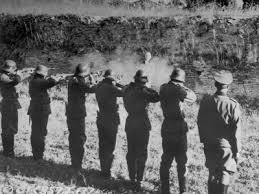
SS firing squad
Among the SS commanders supervising those executions was Reinhard Heydrich–a tall, blond-haired formal naval officer who was both a champion fencer and talented violinist.
Ultimately, he would become the personification of the Nazi ideal–”the man with the iron heart,” as Hitler eulogized at Heydrich’s funeral just eight years later.
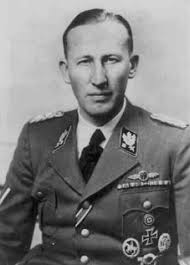
Reinhard Heydrich
Even so, Heydrich had a problem: He could never escape vicious rumors that his family tree contained a Jewish ancestor.
His paternal grandmother had married Reinhold Heydrich, and then Gustav Robert Suss. For unknown reasons, she decided to call herself Suss-Heydrich.
Since “Suss” was widely believed in Germany to indicate Jewish origin, the “stigma” of Jewish heritage attached itself to the Heydrich family.
Heydrich joined the SS in 1931 and quickly became head of its counterintelligence service. But his arrogance and overweening ambition created a great many enemies.
Only a year later, he became the target of an urgent investigation by the SS itself. The charge: That he was part-Jewish, the ultimate sin in Hitler’s “racially pure” Nazi Germany.
The investigation cleared Heydrich, but the rumor of his “tainted” origins persisted, clearly tormenting the second most powerful man in the SS. Even his superior, Heinrich Himmler, the Reichsfuhrer-SS, believed it.
When Heydrich was assassinated in 1942 by Czech assassins in Prague, Himmler attended his funeral. He paid tribute to his former subordinate at the service: ”You, Reinhard Heydrich, were a truly good SS-man.”
But he could not resist saying in private: “He was an unhappy man, completely divided against himself, as often happened with those of mixed race.”
Those who dare to harshly judge others usually find themselves assailed just as harshly.
A modern-day example is Liz Cheney, daughter of former Vice President Dick Cheney and a 2014 candidate for U.S. Senator from Wyoming.
Liz tried to position herself as far more right-wing than her opponent, Republican U.S. Senator Michael Bradley “Mike” Enzi. She found her work cut out for her: In March, 2007, Enzi was ranked by National Journal as the sixth-most conservative U.S. Senator. Among his legislative priorities:
- Supporting partial privatization of Social Security
- Consistently voting against expanding Medicare.
- Voting against enrolling more children or the poor in public healthcare.

Mike Enzi
And Liz had a problem Enzi did not: Her sister, Mary, was not only a lesbian but legally married to another woman: Heather Poe. This led many Wyoming voters to wonder if Liz Cheney was far-Right enough to merit their support.
So Liz went all-out to assure them that even though her sister led a degenerate lifestyle, she, Liz, stood foursquare against legalizing gay marriage: “I do believe it’s an issue that’s got to be left up to states. I do believe in the traditional definition of marriage.”

Liz Cheney
And, in another statement: “I am strongly pro-life and I am not pro-gay marriage.
“I believe the issue of marriage must be decided by the states, and by the people in the states, not by judges and not even by legislators, but by the people themselves.”
This stance led to a heated rift between her and Mary. “For the record, I love my sister, but she is dead wrong on the issue of marriage,” Mary Cheney wrote in a Facebook post in September, 2013.
“Freedom means freedom for everyone,” she continued. “That means that all families–regardless of how they look or how they are made–all families are entitled to the same rights, privileges and protections as every other.”
Adding to the complications: Their father, Dick Cheney—often ridiculed as “Darth Vader” for his own extreme Right-wing views—endorsed same-sex marriage in 2009.
(After a brief run, Cheney, on January 6, 2014, Cheney withdrew from the race.)
But, as was true for officials in Nazi Germany, so is it true for Right-wing Republicans: It’s impossible to be too radical a Right-winger.
In the 1930s and 40s, it was politically—and personally—dangerous to be labeled “pro-Jewish” or “pro-Communist” in Hitler’s Germany.
And today it is equally dangerous—at least politically—to be labeled “pro-liberal” or “pro-gay” in the Republican Party.
ABC NEWS, ALEXANDRA, ASTROLOGY, CBS NEWS, CHICAGO SUN-TIMES, CHICAGO TRIBUNE, CNN, FACEBOOK, GERALD FORD, GRIGORI RASPUTIN, IRAQ WAR, JIMMY CARTER, JOAN QUIGLEY, JODIE FOSTER, JOHN HINCKLEY, MERV GRIFFIN, MIKHAIL GORBACHEV, NANCY REAGAN, NBC NEWS, NICHOLAS 11, Ronald Reagan, SOVIET UNION, STAR WARS, THE LOS ANGELES TIMES, THE NEW YORK TIMES, THE WALL STREET JOURNAL, THE WASHINGTON POST, TWITTER, USA TODAY
In Bureaucracy, History, Politics, Social commentary on December 2, 2014 at 12:00 am
The Presidency of Ronald W. Reagan consumed eight years of American history: 1981 – 1989. But its greed-fueled legacies continue to haunt us.
On October 21, the woman responsible for one of those legacies–government by astrologer–passed away at age 87.
Yes, Joan Quigley is dead.
For those unfamiliar with that name: Quigley was the court astrologer to Ronald and Nancy Reagan.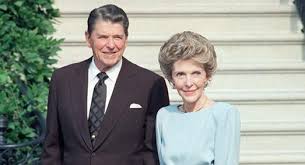
Ronald and Nancy Reagan in the White House
Nancy Reagan met Quigley on “The Merv Griffin Show” in 1973.
Quigley gave Nancy–and through her, Reagan himself–astrological advice during the latter’s campaign for the Republican Presidential nomination in 1976.
That effort failed to unseat President Gerald Ford–who was defeated that November by Jimmy Carter.
Four years later, in 1980, Reagan defeated Carter to become the 40th President of the United States.
On March 30, 1981, a mentally-disturbed loner named John W. Hinckley shot and critically wounded Reagan. Fixiated on actress Jodie Foster, he believed that by shooting the President he could gain her affection.
For Nancy, the assassination attempt proved a watershed.
Shortly after the shooting, Merv Griffin told her that Quigley had told him: If Nancy had called her on that fateful day, she–Quigley–could have warned that the President’s astrological charts had foretold a bad day.
From that moment on, Nancy made sure to regularly consult Quigley on virtually everything that she and the President intended to do.
When Reagan learned of Nancy’s consultations with Quigley, he warned her: Be careful, because it might look odd if it came out.
Click here: The President’s Astrologers – Joan Quigley, Nancy Reagan, Politicians and Their Families, Ronald Reagan : People.c
Many–if not most–of these calls from the White House to Quigley’s office in San Francisco were made on non-secure phone lines.
Joan Quigley
This meant that foreign powers–most notably the Soviet Union and Communist China–could have been privy to Reagan’s most secret intentions.
Nancy passed on Quigley’s suggestions as commands to Donald Regan, chief of the White House staff.
As a result, Regan kept a color-coded calendar on his desk to remember when the astrological signs were good for the President to speak, travel, or negotiate with foreign leaders.
Green ink highlighted “good” days; red ink “bad” days; yellow ink “iffy” days.
A list provided by Quigley to Nancy made the following recommendations–which Nancy, in turn, made into commands:
Late Dec thru March bad
Jan 16 – 23 very bad
Jan 20 nothing outside WH–possible attempt
Feb 20 – 26 be careful
March 7 – 14 bad period
March 10 – 14 no outside activity!
March 16 very bad
March 21 no
March 27 no
March 12 – 19 no trips exposure
March 19 – 25 no public exposure
April 3 careful
April 11 careful
April 17 careful
April 21 – 28 stay home
Donald Regan, no fan of Nancy’s, chafed under such restrictions: “Obviously, this list of dangerous or forbidden dates left very little lattitude for scheduling,” he later wrote.
Forced out of the White House in 1987 by Nancy, Regan struck back in a 1988 tell-all memoir: For the Record: From Wall Street to Washington.
In 1988, after her secret role in the Reagan White House was revealed, Quigley told the Associated Press that she was a “serious, scientific astrologer.”
The book revealed, for the first time, how Ronald Reagan had actually made his Presidential decisions.
All–including decisions to risk nuclear war with the Soviet Union–were based on a court astrologer’s horoscopes. Rationality and the best military intelligence available played a lesser, secondary role.
The last time major world leader to turn to the supernatural for advice had been Russian Czar Nicholas 11. His advisor had been Grigori Rasputin, a Siberian peasant whom Empress Alexandra believed was the only man who could save her hemophilic son–and heir to the throne.
In 1990, Quigley confirmed the allegations an autobiography, What Does Joan Say?: My Seven Years As White House Astrologer to Nancy and Ronald Reagan.
Click here: What Does Joan Say?: My Seven Years As White House Astrologer to Nancy and Ronald Reagan: Joan Quigley
The title came from the question that Ronald Reagan asked Nancy before making important decisions–including those that could risk the destruction of the United States.
Among the success Quigley took credit for:
- Strategies for winning the Presidential elections of 1980 and 1984;
- Helping Nancy Reagan overhaul her image as a spoiled rich girl;
- Defusing the controversey over Reagan’s visiting a graveyard for SS soldiers in Bitburg, Germany;
- Pursuing “Star Wars” as a major part of his strategy against the Soviet Union;
- The Intermediate-Range Nuclear Forces Treaty;
- Protecting Reagan from would-be assassins through timely warnings to Nancy; and
- Moving Reagan from seeing the Soviet Union as the “Evil Empire” to accepting Mikhail Gorbachev as a peace-seeking leader.
Thirty-three years after he became President, Ronald Reagan remains the most popular figure among Republicans.
His name is constantly invoked by Right-wing candidates, while his deliberately-crafted myth is held up as the example of Presidential greatness.
A number of precedents of the Reagan administration–like government by astrologer–might lend themselves to easy abuse. Thus, voters should consider this carefully before elevating “another Reagan” to the Presidency.


 Bureaucracybuster's Blog
ABC NEWS, AFFORDABLE CARE ACT, AIR TRAFFIC CONTROLLERS STRIKE, BARACK OBAMA, BERNIE SANDERS, CBS NEWS, CNN, COLUMBIA UNIVERSITY, DIXIE CHICKS, EXTORTION, FACEBOOK, FBI, GEORGE W. BUSH, HARVARD LAW SCHOOL, HENRY J. KAISER FOUNDATION, HILLARY CLINTON, IRAQ WAR, JOHN BOEHNER, JOHN SCHNATTER, JON STEWART, JONATHAN ALTER, JUSTICE DEPARTMENT, KOCH BROTHERS, MEDICAL CARE, NBC NEWS, NICCOLO MACHIAVELLI, OBAMACARE, PAPA JOHN'S PIZZA, PATRIOT ACT, public relations, RACKETEER INFLUENCED CORRUPT ORGANIZATIONS ACT, REFORM, REPUBLICAN PARTY, RICHARD WOLFFE, Ronald Reagan, TEA PARTY, TERRORISM, THE DAILY SHOW, THE LOS ANGELES TIMES, THE NEW YORK TIMES, THE PRINCE, THE WASHINGTON POST, TWITTER, UNEMPLOYMENT
REVISING–OR SCRAPPING–OBAMACARE: PART ONE (OF FOUR)
In Bureaucracy, Business, History, Law, Law Enforcement, Medical, Politics, Social commentary on February 4, 2016 at 12:10 amOne of the major differences between Bernie Sanders and Hillary Clinton lies in their views about what should be the future of “Obamacare.”
Sanders, the longtime independent Senator from Vermont, wants to scrap The Affordable Care Act (ACA) and replace it with a single-payer plan.
Clinton, the former Secretary of State, wants to make “incremental” changes in the Act.
The Sanders plan promises greater simplicity and comprehensiveness in providing benefits to those millions of Americans who previously could not obtain medical insurance.
The Clinton approach promises to keep the best features of “Obamacare” and improve those that need changing.
But neither Sanders nor Clinton has directly addressed certain unpalatable truths about the ACA.
These stem not from any intended evil on the part of its chief sponsor, President Barack Obama. Instead, they spring from his idealistic belief that reasonable men could always reach a compromise.
As a result, much of the Act remains seriously flawed. Here are the six reasons why.
Barack Obama is easily one of the most highly educated Presidents in United States history. He is a graduate of Columbia University (B.A. in political science in 1983).
In 1988, he entered Harvard Law School, graduating magna cum laude–“with great honor”–in 1991.
He was selected as an editor of the Harvard Law Review at the end of his first year, and president of the journal in his second year.
President Barack Obama
He then taught Constitutional law at the University of Chicago Law School for 12 years–as a Lecturer from 1992 to 1996, and as a Senior Lecturer from 1996 to 2004.
So where did he go wrong? Several ways:
Obama Mistake No. 1: Putting off what people wanted while concentrating on what they didn’t.
Obama started off well when he took office. Americans had high expectations of him. This was partly due to his being the first black to be elected President.
And it was partly due to the disastrous legacies of needless war and financial catastrophe left by his predecessor, George W. Bush.
Obama entered office intending to reform the American healthcare system, to make medical care available to all citizens, and not just the richest. But that was not what the vast majority of Americans wanted him to concentrate his energies on.
With the lost of 2.6 million jobs in 2008, Americans wanted Obama to find new ways to create jobs. This was especially true for the 11.1 million unemployed, or those employed only part-time.
Jonathan Alter, who writes sympathetically about the President in The Center Holds: Obama and His Enemies, candidly states this.
But Obama chose to spend most of his first year as President pushing the Affordable Care Act (ACA)–which would soon become known as Obamacare–through Congress.
The results were:
Obama Mistake No. 2: He underestimated the amount of opposition he would face to the ACA.
For all of Obama’s academic brilliance and supposed ruthlessness as a “Chicago politician,” he displayed an incredible naivety in dealing with his political opposition.
Niccolo Machiavelli (1469-1527), the Florentine statesman and father of modern politics, could have warned him of the consequences of this–through the pages of The Prince, his infamous treatise on the realities of politics.
Niccolo Machiavelli
And either Obama skipped those chapters or ignored their timeless advice for political leaders.
He should have started with Chapter Six: “Of New Dominions Which Have Been Acquired By One’s Own Arms and Ability”:
…There is nothing more difficult to carry out, nor more doubtful of success, nor more dangerous to handle than to initiate a new order of things.
For the reformer has enemies in all those who profit by the old order, and only lukewarm defenders in all those who would profit by the new order, this lukewarmness arising partly from fear of their adversaries, who have the laws in their favor, and partly from the incredulity of mankind, who do not truly believe in anything new until they have had actual experience of it.
This proved exactly the case with the proposed Affordable Care Act.
Its supporters–even when they comprised a majority of the Congress–have always shown far less fervor than its opponents.
This was true before the Act became effective on March 23, 2010. And it has remained true since, with House Republicans voting more than 60 times to repeal, delay or revise the law.
So before President Obama launched his signature effort to reform the American medical system, he should have taken this truism into account.
Obama Mistake No. 3: Failing to consider–and punish–the venom of his political enemies.
The ancient Greeks used to say: “A man’s character is his fate.” It is Obama’s character–and America’s fate–that he is by nature a man of conciliation, not conflict.
Richard Wolffe chronicled Obama’s winning of the White House in his 2009 book, Renegade: The Making of a President. He noted that Obama was always more comfortable when responding to Republican attacks on his character than he was in making attacks on his enemies.
Share this: