Posts Tagged ‘ROBERT F. KENNEDY’
ABC NEWS, ALTERNET, AP, BEDBUGS, BUILDING INSPECTION, BUSINESS, BUZZFEED, CBS NEWS, CHRIS MATHEWS, CNN, CROOKS AND LIARS, DAILY KOZ, FACEBOOK, FEDERAL ASSET FORFEITURE STATUTES, KIP MACY, LANDLORDS, MOTHER JONES, MOVEON, MSNBC, NBC NEWS, NEWSWEEK, NICCOLO MACHIAVELLI, NICOLE MACY, NPR, POLITICO, RAW STORY, RENT BOARD, RENT CONTROL, RENTERS, REUTERS, ROBERT F. KENNEDY, SALON, SAN FRANCISCO, SAN FRANCISCO DEPARTMENT OF BUILDING INSPECTION, SAN FRANCISCO DEPARTMENT OF PUBLIC HEALTH, SEATTLE TIMES, SLATE, SLUMLORDS, THE ATLANTIC, THE CHICAGO SUN-TIMES, THE CHICAGO TRIBUNE, THE DAILY BEAST, THE GUARDIAN, THE HILL, THE HUFFINGTON POST, THE LOS ANGELES TIMES, THE NATION, THE NEW YORK TIMES, THE WALL STREET JOURNAL, THE WASHINGTON POST, TIME, TWITTER, U.S. NEWS & WORLD REPORT, UPI, USA TODAY, WILLIAM TECUMSEH SHERMAN
In Bureaucracy, History, Law, Law Enforcement, Politics, Social commentary on August 24, 2016 at 12:28 am
The San Francisco Department of Building Inspection (DBI) has long been outmaneuvered by predatory, law-breaking landlords.
And San Francisco renters–many of them elderly, poor and/or disabled–have been the victims of landlord greed, neglect and/or harassment.

Among the reforms that DBI should immediately enact:
- Hit slumlord violators with a fine–payable immediately–for at least $2,000 to $5,000 for each health/safety-code violation.The slumlord would be told he could reclaim 75-80% of the money only if he fully corrected the violation within 30 days. The remaining portion of the levied fine would go into the City coffers, to be shared among DBI and other City agencies.
- This would put the onus on the slumlord, not DBI. Appealing to his greed would ensure his willingness to comply with the ordered actions. As matters now stand, it is DBI who must repeatedly check with the slumlord to find out if its orders have been complied with.
- If the landlord failed to comply with the actions ordered within 30 days, the entire fine would go into the City’s coffers–to be divided among DBI and other agencies charged with protecting San Francisco residents.
- In addition. he would be hit again with a fine at least twice the amount of the first one.
- Inspectors for DBI should be allowed to cite landlords for violations that fall under the jurisdiction of the Department of Public Health (DPH). They could then pass the information to DPH for its own investigation.
- If the DBI inspector later discovered that the landlord had not corrected the DPH violation within a designated time-period, DBI should be allowed to levy its own fine for his failure to do so.
- If DPH objects to this, DBI should propose that DPH’s own inspectors be armed with similar cross-jurisdictional authority. Each agency would thus have increased motivation for spotting and correcting health/safety violations that threaten the lives of San Francisco residents.
- This would instantly turn DBI and DPH into allies, not competitors. And it would mean that whether a citizen called DBI or DPH, s/he could be assured of getting the necessary assistance. As matters now stand, many residents are confused by the conflicting jurisdictions of both agencies.
- DBI should insist that its Inspectors Division be greatly expanded. DBI can attain this by arguing that reducing the number of Inspectors cuts (1) protection for San Francisco renters–and (2) monies that could go to the general City welfare.
- The Inspection Division should operate independently of DBI. Currently, too many high-ranking DBI officials tilt toward landlords because they are landlords themselves.
- DBI should create a Special Research Unit to compile records on the worst slumlord offenders. Thus, a slumlord with a repeat history of defying DBI Notices of Violation could be treated more harshly than a landlord who was a first-time offender.
- Turning DBI into a revenue-producing agency would enable the City to raise desperately-needed revenues–in a highly popular way. Fining delinquent slumlords would be as unpopular as raising taxes on tobacco companies. Only slumlords and their hired lackey allies would object.
- DBI should legally require landlords to rehabilitate a unit every time a new tenant moves in, or have it examined by a DBI inspector every two years. A tenant can occupy a unit for ten or more years, then die or move out, and the landlord immediately rents the unit to the first person who comes along, without making any repairs or upgrades whatsoever.
- Slumlords, unlike drug-dealers, can’t move their buildings from one street or city to another. If they want to make money in San Francisco, they will have to submit to the jurisdiction of landlord-regulating agencies.
- DBI should require landlords to post their Notices of Violation in public areas of their buildings–on pain of serious financial penalties for failing to do so. When DBI orders a slumlord to take corrective action, s/he is the only one who is notified. If that slumlord refuses to comply with that directive, s/he is the only one who knows it. Given the pressing demands on DBI, weeks or months will pass before the agency learns about this violation of its orders. Tenants have a right to know if their landlord is complying with the law–so they can promptly notify inform DBI if a violation is occurring.

- Landlords should be legally required to give each tenant a list of the major city agencies (such as DBI, the Rent Board and the Department of Public Health) that exist to help tenants solve problems with their housing.
- DBI should launch–and maintain–a citywide advertising campaign to alert residents about its services. Everyone knows the FBI pursues bank robbers. But too many San Franciscans don’t even know that DBI exists, let alone what laws it enforces. This should be an in-your-face campaign: “Do you have bedbugs in your apartment? Has your stove stopped working? Are you afraid to ride in your building elevator because it’s always malfunctioning? Have you complained to your landlord and gotten the runaround? Then call DBI at—- Or drop us an email at_____.”
ABC NEWS, ALTERNET, AP, BEDBUGS, BUILDING INSPECTION, BUSINESS, BUZZFEED, CBS NEWS, CHRIS MATHEWS, CNN, CROOKS AND LIARS, DAILY KOZ, FACEBOOK, FEDERAL ASSET FORFEITURE STATUTES, KIP MACY, LANDLORDS, MOTHER JONES, MOVEON, MSNBC, NBC NEWS, NEWSWEEK, NICCOLO MACHIAVELLI, NICOLE MACY, NPR, POLITICO, RAW STORY, RENT BOARD, RENT CONTROL, RENTERS, REUTERS, ROBERT F. KENNEDY, SALON, SAN FRANCISCO, SAN FRANCISCO DEPARTMENT OF BUILDING INSPECTION, SAN FRANCISCO DEPARTMENT OF PUBLIC HEALTH, SEATTLE TIMES, SLATE, SLUMLORDS, THE ATLANTIC, THE CHICAGO SUN-TIMES, THE CHICAGO TRIBUNE, THE DAILY BEAST, THE GUARDIAN, THE HILL, THE HUFFINGTON POST, THE LOS ANGELES TIMES, THE NATION, THE NEW YORK TIMES, THE WALL STREET JOURNAL, THE WASHINGTON POST, TIME, TWITTER, U.S. NEWS & WORLD REPORT, UPI, USA TODAY, WILLIAM TECUMSEH SHERMAN
In Bureaucracy, History, Law, Law Enforcement, Politics, Social commentary on August 23, 2016 at 12:04 am
To hear slumlords tell it, San Francisco is a “renters’ paradise,” where obnoxious, lazy, rent-evading tenants constantly take advantage of hard-working, put-upon landlords.
Don’t believe it.
And in case you’re inclined to anyway, consider the story of Kip and Nicole Macy, two San Francisco slumlords who recently pled guilty to felony charges of residential burglary, stalking and attempted grand theft.
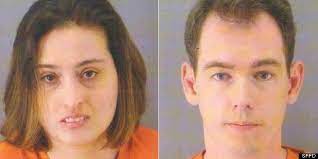
Nicole and Kip Macy
Determined to evict rent control-protected tenants from their apartment building in the South of Market district, they unleashed a reign of terror in 2006:
- Cut holes in the floor of one tenant’s living room with a power saw–while he was inside his unit.
- Cut out sections of the floor joists to make the building collapse.
- Threatened to shoot Ricardo Cartagena, their property manager, after he refused to make the cuts himself.
- Changed the locks to Cartagena’s apartment, removed all of his belongings and destroyed them.
- Created fictitious email accounts to appear as a tenant who had filed a civil suit against the Macys–and used these to fire the tenant’s attorney.
- Cut the tenants’ telephone lines and shut off their electricity, gas and water.
- Changed the locks on all the apartments without warning.
- Mailed death threats.
- Kicked one of their tenants in the ribs.
- Hired workers to board up a tenant’s windows from the outside while he still lived there.
- Falsely reported trespassers in a tenant’s apartment, leading police to hold him and a friend at gunpoint.
- Broke into the units of three tenants and removed all their belongings.
- Again broke into the units of the same three victims and soaked their beds, clothes and electronics with amonia.
The Macys were arrested in April, 2008, posted a combined total of $500,000 bail and then fled the country after being indicted in early 2009.
In May, 2012, Italian police arrested and deported them back to America a year later.
Having pled guilty, they were sentenced in September, 2013, to a prison term of four years and four months.
How could such a campaign of terror go on for two years against law-abiding San Francisco tenants?
Simple.
Even in the city misnamed as a “renter’s paradise,” slumlords are treated like gods by the very agencies that are supposed to protect tenants against their abuses.

The power of slumlords calls to mind the scene in 1987’s The Untouchables, where Sean Connery’s veteran cop tells Eliot Ness: “Everybody knows where the liquor is. It’s just a question of: Who wants to cross Capone?”
Everybody in San Francisco knows who the slumlords are. But the District Attorney’s Office hasn’t criminally prosecuted a slumlord in decades.
Many tenants have lived with rotting floors, bedbugs, nonworking toilets, mice/rats, chipping lead-based paint and other outrages for not simply months but years.
Consider the situation at the San Francisco Department of Building Inspection (DBI), which is charged with ensuring that apartment buildings are in habitable condition.
Under San Francisco law:
- A landlord is automatically given 30 days to correct a health/safety violation. If he drags his feet on the matter, the tenant must live with that problem until it’s resolved.
- If the landlord claims for any reason that he can’t fix the problem within one month, DBI doesn’t demand that he prove this. Instead, it automatically gives him another month.
- A slumlord has to work at being hit with a fine—by letting a problem go uncorrected for three to six months.
- And even then, repeat slumlord offenders often avoid the fine by pleading for leniency.
- That’s because many DBI officials are themselves landlords.
But the situation doesn’t have to remain this way.
How could it be changed?
By learning some valuable lessons from the “war on drugs” and applying them to regulating slumlords.
Consider:
- At least 400,000 rape kits containing critical DNA evidence that could convict rapists sit untested in labs around the country.
- But illegal drug kits are automatically rushed to the had of the line.
It isn’t simply because local/state/Federal lawmen universally believe that illicit drugs pose a deadly threat to the Nation’s security.
It’s because:
- Federal asset forfeiture laws allow the Justice Department to seize properties used to “facilitate” violations of Federal anti-drug laws.
- Local and State law enforcement agencies are allowed to keep some of the proceeds once the property has been sold.
- Thus, financially-strapped police agencies have found that pursuing drug-law crimes is a great way to fill their own coffers.
- Prosecutors and lawmen view the seizing of drug-related properties as crucial to eliminating the financial clout of drug-dealing operations.
It’s long past time for San Francisco agencies to apply the same attitude–and methods–toward slumlords. 
DBI should become not merely a law enforcing agency but a revenue-creating one. And those revenues should come from predatory slumlords who routinely violate the City’s laws protecting tenants.
By doing so, DBI could vastly:
- Enhance its own prestige and authority;
- Improve living conditions for thousands of San Francisco renters; and
- Bring millions of desperately-needed dollars into the City’s cash-strapped coffers.
ABC NEWS, ANWAR SADAT, ARTHUR BREMER, ASSASSINATION, BLACK LIVES MATTER, CBS NEWS, CHARLES L. COTTON, CIA, CNN, DALLAS POLICE OFFICER SHOOTINGS, DYLANN ROOF, EMANUEL AFRICAN METHODIST CHURCH, FACEBOOK, GEORGE C. WALLACE, GUN CONTROL, HATE CRIMES, MARK RAWLINGS, MICHAH XAVIER JOHNSON, NATIONAL RIFLE ASSOCIATION, NBC NEWS, OPEN CARRY LAWS, RAFAEL CRUZ, REPUBLICAN PARTY, REPUBLICANS, ROBERT F. KENNEDY, Secret Service, THE CHICAGO SUN-TIMES, THE CHICAGO TRIBUNE, THE LOS ANGELES TIMES, THE NEW YORK TIMES, THE SECOND AMENDMENT, THE WASHINGTON POST, TWITTER
In Bureaucracy, History, Law, Law Enforcement, Politics, Social commentary on July 11, 2016 at 12:14 am
On June 17, 2015, Dylann Roof, a white high school dropout, gunned down three black men and six black women at Emanuel African Methodist Episcopal Church in Charleston, South Carolina.
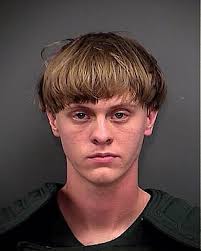
Dylann Roof
On June 18–one day after the church slaughter–Charles L. Cotton took insulting the dead to a whole new level.
Cotton is a National Rifle Association (NRA) board member who also runs TexasCHLForum.com, an online discussion forum about guns and gun owners’ rights in Texas and beyond.
In a discussion thread on the Forum, a board member noted that Clementa C. Pinckney, one of the nine people slain, was a pastor and a state legislator in South Carolina.
Cotton responded: “And he voted against concealed-carry. Eight of his church members who might be alive if he had expressly allowed members to carry handguns in church are dead. Innocent people died because of his position on a political issue.”

That discussion thread was quickly deleted.
During a subsequent phone interview, Cotton emphasized that he had been speaking as a private citizen–and not as an NRA board member:
“It was a discussion we were having about so called gun-free zones. It’s my opinion that there should not be any gun-free zones in schools or churches or anywhere else. If we look at mass shootings that occur, most happen in gun-free zones.”
If private citizens were allowed to carry guns everywhere, Cotton said, there will be fewer mass shootings because “if armed citizens are in there, they have a chance to defend themselves and other citizens.”
Cotton’s position–“there should not be any gun-free zones”–is exactly that of the NRA itself.
Under such circumstances, America will become a nation where anyplace, anytime, can be turned into the O.K. Corral.
Another point that Cotton didn’t mention: Dylann Roof did believe in concealed-carry–and it cost not his life but the lives of nine innocent men and women.
Finally, there is this: Even highly-trained shooters–such as those assigned to the United States Secret Service–don’t always respond as expected.
On May 15, 1972, Alabama Governor George Wallace was campaigning for President in Laurel, Maryland. He gave a speech behind a bulletproof podium at the Laurel Shopping Center. Then he moved from it to mingle with the crowd.
Since the 1968 assassination of Senator Robert F. Kennedy, all those campaigning for President have been assigned Secret Service bodyguards. And Wallace was surrounded by them as he shook hands with his eager supporters.
Suddenly, Arthur Bremer, a fame-seeking failure in life and romance, pushed his way forward, aimed a .38 revolver at Wallace’s abdomen and opened fire. Before the Secret Service could subdue him, he hit Wallace four times, leaving him paralyzed for the rest of his life.

Arthur Bremer shoots George Wallace
Nor was he Bremer’s only victim. Three other people present were wounded unintentionally:
- Alabama State Trooper Captain E C Dothard, Wallace’s personal bodyguard, who was shot in the stomach;
- Dora Thompson, a campaign volunteer, who was shot in the leg; and
- Nick Zarvos, a Secret Service agent, who was shot in the neck, severely impairing his speech.
None of Wallace’s bodyguards got off a shot at Bremer–before or after he pulled the trigger.
On October 6, 1981, Egyptian President Anwar Sadat was reviewing a military parade in Cairo when a truck apparently broke down directly across from where he was seated.
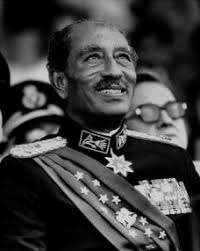
Anwar Sadat, moments before his assassination
Suddenly, soldiers bolted from the rear of the vehicle, throwing hand grenades and firing assault rifles. They rushed straight at Sadat–who died instantly under a hail of bullets.
Meanwhile, Sadat’s bodyguards–who had been trained by the CIA–panicked and fled.
Sadat had been assassinated by army officers who believed he had betrayed Islam by making peace with Israel in 1977.
Most recently, the NRA mantra, “If every citizen went armed…” was put to the test in Dallas, Texas. It flunked.
On July 7, five Dallas police officers were shot and killed by a disgruntled ex-Army Reserve Afghan War veteran named Michah Xavier Johnson. Another seven officers and two civilians were wounded before the carnage ended.
The shootings erupted during a Black Lives Matter protest march in downtown Dallas.
Texas has long been an “open carry” state for those who want to brandish rifles without fear of arrest. And about 20 people wearing “ammo gear and protective equipment [had] rifles slung over their shoulder,” said Dallas Mayor Mike Rawlings.
“When the shooting started, at different angles, [the armed protesters] started running,” Rawlings said, adding that open carry only brings confusion to a shooting scene. “What I would do [if I were a police officer] is look for the people with guns,” he said.
“There were a number of armed demonstrators taking part,” said Max Geron, a Dallas police major. “There was confusion on the radio about the description of the suspects and whether or not one or more was in custody.”
The ultimate test of the NRA’s mantra that “there should not be any gun-free zones…anywhere” will come only when one or more heavily-armed gunmen target an NRA convention.
It will then be interesting to see if the surviving NRA members are as quick to blame themselves for being victims as they are to blame the victims of other mass slaughters.
"MISSION: IMPOSSIBLE", "THE FBI" SERIES, ABC NEWS, ALBERT ANASTASIA, ALBERT RUDDY, CARLO GAMBINO, CBS NEWS, CNN, COSA NOSTRA, ELLIOT NESS, FACEBOOK, FBI, FORD MOTOR COMPANY, ISLAMIC STATE OF IRAQ AND SYRIA (ISIS), ISLAMIC TERRORISM, ITALIAN-AMERICAN CIVIL RIGHTS LEAGUE, J. EDGAR HOOVER, JOHN N. MITCHELL, JOSEPH "CRAZY JOE" GALLO, JOSEPH BONANNO, JOSEPH COLUMBO, JUSTICE DEPARTMENT, MAFIA, NBC NEWS, NELSON ROCKEFELLER, NYPD, OMAR MATEEN, POLITICAL CORRECTNESS, ROBERT F. KENNEDY, THE CHICAGO SUN-TIMES, THE CHICAGO TRIBUNE, THE GODFATHER, THE GODTATHER PART II, THE LOS ANGELES TIMES, THE NEW YORK TIMES, THE UNTOUCHABLES, THE WASHINGTON POST, TWITTER, VITO GENOVESE
In Bureaucracy, History, Law Enforcement, Politics, Social commentary, Uncategorized on July 5, 2016 at 12:07 am
In 1970, New York Mafia boss Joseph Columbo declared war on the FBI.
The Bureau had arrested his son, Joseph Columbo, Jr., for melting silver coins down into silver ingots. So Columbo, Sr., created the Italian-American Civil Rights League to “combat prejudice against Italian-Americans.”
Columbo appeared at fundraisers and speaking engagements for the League, and gave interviews on talk-shows–such as the one hosted by Dick Cavett.
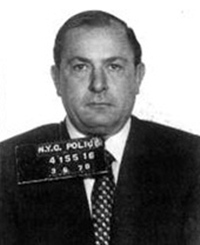
Joseph Columbo
His message: There was no Mafia–only an FBI slander against decent, hard-working Italian-Americans.
And he sent hundreds of members of the League to picket the East Side offices of the FBI.
His actions generated a massive response from many law-abiding Italian-Americans who felt themselves the victims of prejudice.
During the 1950s and early 1960s Congress had held hearings on the Mafia, making Italian and Sicilian criminals like Vito Genovese and Albert Anastasia household words.
Even more enraging had been the depiction of Italians as the villains on the popular ABC TV series, “The Untouchables.” Each week, Eliot Ness and his squad of Treasury agents wiped out a new batch of Prohibition gangsters–who had Italian names like Al Capone and Frank Nitti.
On June 29, 1970, 150,000 people attended an Italian-American Unity Day rally in Columbus Circle in New York City. Several prominent entertainers and five members of the House of Representatives attended.
Under Colombo’s guidance, the League grew quickly and achieved national attention, establishing chapters in 17 states with over 50,000 members.
Shortly after the Columbus Circle rally, then-U.S. Attorney General John N. Mitchell banned the words “Mafia” and “Cosa Nostra” (“Our Thing”) from FBI and Justice Department press releases.
“There is nothing to be gained by using these terms,” said Mitchell, “except to give gratuitous offense to many good Americans of Italian-American descent.”
Seal of the Justice Department
In Albany, New York, then-Governor Nelson Rockefeller instructed the state police to likewise ban such terms.
And the Ford Motor Company, which sponsored the popular ABC-TV series, “The FBI,” also fell into line. While the Bureau’s real-life agents fought the Mafia, its fictionalized agents couldn’t say “Mafia” on TV.
In the spring of 1971, Paramount Pictures began started filming The Godfather, which was to become the most influential movie ever made about the Mafia.
Facing the threat of strikes and violence from the League, the film’s producer, Albert Ruddy, met with Columbo. Ruddy promised that “Mafia” and “Cosa Nostra” would not appear in a film in which almost every major character was a member of the Mafia.

TV’s “Mission: Impossible”–having moved from deposing overseas despots to stateside criminals–similarly referred to organized criminals as “The Syndicate.”
But Columbo was now facing increasing pressure from two sets of enemies.
The first was the FBI–whose agents seethed as they strode through League picket lines near their headquarters at Third Avenue and 69th Street. They were waging war on gangsters, and they resented being called liars and racists.
The second was the Mafia itself. Its older leaders knew there was an all-out Federal drive to destroy the organization. And they feared that Columbo’s in-your-face tactics were goading the FBI and other law enforcement agencies into greater efforts against them.
Of those older leaders, Carlo Gambino, boss of the largest and most powerful Mafia family in New York and the country, was the most important.
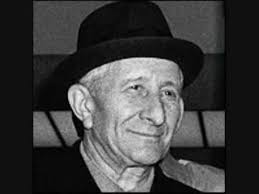
Carlo Gambino
Gambino had set Columbo up in his own family in 1964. This after Columbo had raced to Gambino with the news that his own boss, Joseph Bonanno, planned to “whack” Don Carlo and the other four New York Mafia bosses and become the “boss of all bosses” himself.
Bonnano was thus deposed and sent into exile in Arizona, and Columbo found himself a new boss.
Gambino had always lived in the shadows. As Columbo built up the League, Gambino feared that the publicity and attacks on the FBI would rebound against himself and his brethren.
As the date–June 28, 1971–for the second Italian-American Unity Day rally approached, Gambino quietly put out the word: Stay away.
On that morning Columbo posed for photographers at the rally. Suddenly one of them–a black man–exchanged his camera for an automatic pistol and shot Columbo three times in the head and neck.

Joseph Columbo, after being shot
Seconds later, the shooter was covered by an avalanche of men–one of whom pumped three bullets into him.
The shooter was Jerome Johnson, an ex-con who was linked to mobster Joseph “Crazy Joe” Gallo. The NYPD and FBI believed that Gambino had given Gallo permission to whack Columbo. And that Gallo had used a black man as the ultimate insult to a man he had long hated.
Columbo remained in a vegetative state until May 22, 1978, when he died of cardiac arrest.
There was no third Italian-American Unity Day rally. And the Italian-American Civil Rights League died with Columbo.
Eventually, the Justice Department and FBI went back to using “Mafia” and “La Cosa Nostra.”
And when Francis Ford Coppola made The Godfather, Part II, in 1974, he inserted both words into a scene where Mafia boss Michael Corleone is interrogated by a Senate committee.
For the Mafia, at least, the era of Political Correctness was over.
"MISSION: IMPOSSIBLE", "THE FBI" SERIES, ABC NEWS, AL RUDDY, ALBERT ANASTASIA, ALBERT RUDDY, CARLO GAMBINO, CBS NEWS, CNN, COSA NOSTRA, ELLIOT NESS, FACEBOOK, FBI, FORD MOTOR COMPANY, ISLAMIC STATE OF IRAQ AND SYRIA (ISIS), ISLAMIC TERRORISM, ITALIAN-AMERICAN CIVIL RIGHTS LEAGUE, J. EDGAR HOOVER, JOHN N. MITCHELL, JOSEPH "CRAZY JOE" GALLO, JOSEPH BONANNO, JOSEPH COLUMBO, JUSTICE DEPARTMENT, MAFIA, NBC NEWS, NELSON ROCKEFELLER, NYPD, OMAR MATEEN, POLITICAL CORRECTNESS, ROBERT F. KENNEDY, THE CHICAGO SUN-TIMES, THE CHICAGO TRIBUNE, THE GODFATHER, THE GODTATHER PART II, THE LOS ANGELES TIMES, THE NEW YORK TIMES, THE UNTOUCHABLES, THE WASHINGTON POST, TWITTER, VITO GENOVESE
In Bureaucracy, History, Law Enforcement, Politics, Social commentary on July 4, 2016 at 12:52 am
On June 12, Omar Mateen, a 29-year-old former security guard, slaughtered 49 men and women and injured 53 more inside Pulse, a gay nightclub in Orlando, Florida.
Mateen was then shot to death by Orlando police after a three-hour standoff.
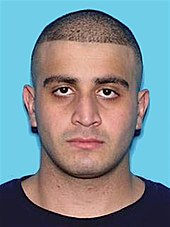
Omar Mateen
It was the deadliest mass shooting by a single gunman in American history–and the deadliest terrorist attack in the United States since the Al Qaeda attacks of September 11, 2001.
The massacre was widely decried as an act of Islamic terrorism. But many others insisted it was simply a hate crime.
Among those opting for the latter: Officials at the Department of Justice (DOJ) and the Federal Bureau of Investigation (FBI).
During his three-hour slaughterfest, Mateen made a call to 9-1-1, pledging his allegiance to the Islamic State of Iraq and Syria (ISIS) and its leader, Abu Bakr al-Baghdadi.
On June 20, the FBI released an edited version of the transcript of that call. All references to ISIS were removed.
The Justice Department claimed that it was withholding some details to avoid putting the victims through any more pain–and to not further the propaganda efforts of ISIS.
A firestorm of protest erupted from Republican Congressional leaders, most notably Speaker of the House Paul Ryan. Since Mateen’s pledge to ISIS had become widely known, they demanded, what was the point of censoring it in the transcript of his phone call?
An additional reason for the fury aimed at the Justice Department: On June 12, ISIS had, through its news agency, Amag, claimed responsibility for the massacre:
“The armed attack that targeted a gay night club in the city of Orlando in the American state of Florida which left over 100 people dead or injured was carried out by an Islamic State fighter.”
Finally, buckling to pressure, on the afternoon of June 20, the FBI released the full, uncensored transcript of Mateen’s call to 9-1-1.
This was definitely not the finest hour of an organization whose motto is: “Fidelity, Bravery, Integrity.”
Seal of the FBI
It was not, however, the first time the Bureau caved in to the demands of Political Correctness.
This occurred almost 50 years earlier–in 1970.
And the man who was responsible for this was not a member of ISIS. Instead, he belonged to another, equally deadly organization: The Mafia.
Joseph Anthony (“Joe”) Columbo was the boss of the Columbo crime family, one of the “Five Families” of the Cosa Nostra in New York.
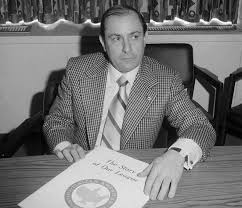
Joseph Columbo
At 45, Columbo was one of the youngest Mafia bosses in the United States. He was also the first American-born boss of a New York crime family.
But, unlike his fellow bosses, he didn’t hesitate to court publicity–or confront law enforcement.
Summoned for questioning about the murder of one of his “soldiers,” Columbo appeared–without a lawyer–at the office of NYPD detective Albert Seedman.
“I am an American citizen, first class,” he blasted Seedman. “I don’t have a badge that makes me an official good guy like you. But I work just as honest for a living.”
Naturally, Columbo denied having anything to do with the death of his subordinate.
In the spring of 1970, Columbo decided to raise his sights. He moved from attacking the NYPD to taking on the FBI.
Throughout most of the tenure of its director, J. Edgar Hoover, the FBI had avoided tackling the Mafia. From the 1920s until the 1950s, mobsters had operated virtually untouched by the most powerful Federal law enforcement agency.
To this day, Hoover’s reasons for avoiding mob enforcement remain unknown. Theories for this include:
- He feared his agents would be corrupted by Mafia bribes.
- He preferred flashy, easily-solved cases like bank-robbery and stolen car rings.
- The Mob blackmailed him with compromising photos of a homosexual relationship with Clyde Tolson, his second-in-command at the FBI.
Then, in 1961, Robert F. Kennedy became Attorney General. As former chief counsel for the Senate Labor Rackets Committee (1957-59) Kennedy had investigated the Mafia’s infiltration of the nation’s labor unions. He had focused especially on its ownership of the International Brotherhood of Teamsters.
Unlike Hoover–who denied the Mafia existed–Kennedy was convinced that it did.
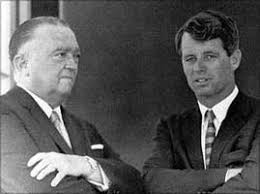
J. Edgar Hoover and Robert F. Kennedy
And as the brother to President John F. Kennedy, RFK had the power to needed to force Hoover to attack the crime syndicates.
Throughout the country, the Mafia felt a new heat as FBI agents planted illegal electronic microphones (“bugs”) in their innermost sanctums. Agents openly tailed mobsters–and sent them to prison in large numbers.
Most old-time Mafia bosses decided to take a low profile to avoid the new Federal pressure. They remembered how Al Capone had flaunted his wealth and power–and had fallen victim to the IRS for it.
In April, 1970, Columbo’s son, Joseph Jr., was arrested by the FBI for melting down coins for resale as silver ingots. The Mafia boss decided to retaliate.
He publicly declared there was no such thing as the Mafia. This was a fiction created by FBI agents taking out their prejudice on law-abiding Italian-Americans.
Then he sent members of his newly-formed organization–the Italian-American Civil Rights League–to picket the East Side offices of the FBI.
ABC NEWS, ACADEMY AWARDS, BARACK OBAMA, BEN-HUR, CBS NEWS, CHARLTON HESTON, CNN, EL CID, FACEBOOK, FOX NEWS, GUN CONTROL, JIM CARREY, JOHN F. KENNEDY, KHARTOUM, MAJOR DUNDEE, MOSES, MOVIES, NATIONAL RIFLE ASSOCIATION, NBC NEWS, PLANET OF THE APES, RICHARD M. NIXON, ROBERT F. KENNEDY, SCREEN ACTORS GUILD, THE CHICAGO SUN-TIMES, THE CHICAGO TRIBUNE, THE LOS ANGELES TIMES, THE NEW YORK TIMES, THE TEN COMMANDMENTS, THE WAR LORD, THE WASHINGTONPOST, TWITTER
In Bureaucracy, Entertainment, History, Politics on June 17, 2016 at 12:05 am
In March, 2013, the National Rifle Association (NRA) and its Right-wing allies declared war on comedian Jim Carrey.
The reason: His music parody video: “Cold Dead Hand,” which mocked gun fanatics and the late Charlton Heston, former president of the NRA.
Click here: Jim Carrey’s Pro-Gun Control Stance Angers Conservatives
Among its lyrics:
Charlton Heston movies are no longer in demand
And his immortal soul may lay forever in the sand.
The angels wouldn’t take him up to heaven like he’d planned.
’Cause they couldn’t pry that gun from his cold, dead hand.
The phrase, “cold dead hand,” originated with Heston himself.
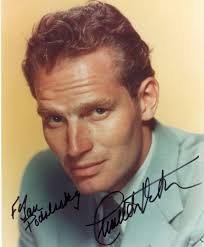
Charlton Heston in his prime
On May 20, 2000, the actor and then-president of the NRA addressed the organization at its 129th convention in Charlotte, North Carolina.
He warned that then-Vice President and Democratic Presidential candidade Al Gore “is going to smear you as the enemy,” and concluded:
“So, as we set out this year to defeat the divisive forces that would take freedom away, I want to say those fighting words for everyone within the sound of my voice to hear and to heed, and especially for you, Mr. Gore: ‘From my cold, dead hands!’”
Carrey’s stance on gun control couldn’t have been more opposite.
In in February, 2013, he outraged Right-wingers by tweeting: “Any1 who would run out to buy an assault rifle after the Newton massacre has very little left in their body or soul worth protecting.”
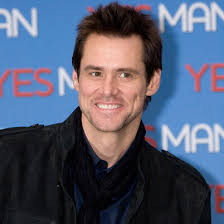
Jim Carrey
Fox Nation referred to the tweet as “nasty.”
Red Alert Politics writer Erin Brown dismissed it as “a careless remark …rooted in the shallow, parroted talking points so commonly espoused by liberal elites.”
But that was nothing compared to the rage that has greeted “Cold Dead Hand.” Reason TV’s Remy offered a parody rebuttal to Carrey’s song. Its lyrics included:
It takes a talking ass
to oppose a vaccination
when your PhD is in
making funny faces.
None of which bothered Carrey. In fact, he exulted in Right-wing outrage, tweeting: “Cold Dead Hand’ is abt u heartless motherf%ckers unwilling 2 bend 4 the safety of our kids. Sorry if you’re offended…”
Among its lyrics:
It takes a cold, dead hand to decide to pull the trigger.
Takes a cold, dead heart and as near as I can figger.
With your cold, dead aim you’re tryin’ to prove your dick is bigger …..
Many psychologists have long theorized that a fascination with firearms can compensate for inadequate sexual performance.
But it’s one thing for an unknown psychologist to write this in an obscure medical journal and another for a famous comedian to splash it across the Internet.
Carrey is especially ruthless in attacking those who–like the NRA–make a lucrative living off gun sales:
Imagine if the Lord were here…
And on the ones
Who sell the guns
He’d sic the vultures and coyotes
Only the devil’s true devotees
Could profiteer
From pain and fear.
Many Rightists attacked Carrey for parodying a man–Heston–who died in 2008 and could not defend himself. But Heston had appeared several times on “Saturday Night Live” to spoof his granite-hard image.
In his video, Carrey dares to attack not simply the masculinity of the Rightist NRA crowd, but even its courage:
You don’t want to get caught
With your trousers down
When the psycho killer
Comes around
So you make your home
Like a Thunderdome
And you’re always packin’
Everywhere you roam.
Perhaps that’s what most outraged the Right–the accusation that its members live in fear and do their best to generate needless fear in others.
Fear that can supposedly be abated by turning America into a society where everyone packs a weapon and every moment holds a potential High Noon.
Carrey was not shy in responding to his Rightist critics. On March 29, 2013, he issued this statement:
“Since I released my “Cold Dead Hand” video on Funny or Die this week, I have watched Fux News rant, rave, bare its fangs and viciously slander me because of my stand against large magazines and assault rifles.
“I would take them to task legally if I felt they were worth my time or that anyone with a brain in their head could actually fall for such irresponsible buffoonery. That would gain them far too much attention which is all they really care about.
“I’ll just say this: in my opinion Fux News is a last resort for kinda-sorta-almost-journalists whose options have been severely limited by their extreme and intolerant views; a media colostomy bag that has begun to burst at the seams and should be emptied before it becomes a public health issue.”
The NRA has spent decades bribing and intimidating its way through Congress. Those members who subscribe to its “guns for everyone” agenda get legalized bribes (i.e., “campaign contributions”).
Those who refuse to do so face the threat–if not the reality–of being ousted.
Bullies are conspicuously vulnerable to ridicule. Their only “defense” is to smash anyone who dares to mock their folly, brutality or pretense to omnipotence.
Or, as Ernest Hemingway once put it: “Fascism is a lie told by bullies.”
ABC NEWS, ACADEMY AWARDS, BARACK OBAMA, BEN-HUR, CBS NEWS, CHARLTON HESTON, CNN, EL CID, FACEBOOK, FOX NEWS, GUN CONTROL, JIM CARREY, JOHN F. KENNEDY, KHARTOUM, MAJOR DUNDEE, MOSES, MOVIES, NATIONAL RIFLE ASSOCIATION, NBC NEWS, PLANET OF THE APES, RICHARD M. NIXON, ROBERT F. KENNEDY, SCREEN ACTORS GUILD, THE CHICAGO SUN-TIMES, THE CHICAGO TRIBUNE, THE LOS ANGELES TIMES, THE NEW YORK TIMES, THE TEN COMMANDMENTS, THE WAR LORD, THE WASHINGTONPOST, TWITTER
In Entertainment, History, Politics, Social commentary on June 16, 2016 at 12:06 am
Bullies do not like to be mocked.
Anyone who doubts this need only examine the Right’s reaction to actor Jim Carrey’s March, 2013 “Cold Dead Hand” music video.
In this, Carrey–a strong advocate of gun control–mocked the National Rifle Association (NRA) and its right-wing allies.
These included rural America and (for the video’s purposes) the late actor Charlton Heston, who served as the NRA’s five-term president (1998-2003).

Jim Carrey as Charlton Heston
The video featured Carrey and alt-rock band Eels as “Lonesome Earl And The Clutterbusters,” a country band on a TV set modeled after the 1960s variety show, “Hee Haw.” Carrey also portrayed Heston as a dim-witted, teeth-clenching champion of the NRA.
“I find the gun problem frustrating,” Carrey said in a press release, “and ‘Cold Dead Hand’ is my fun little way of expressing that frustration.”
Carrey’s frustration triggered NRA outrage.
Click here: Jim Carrey’s Pro-Gun Control Stance Angers Conservatives
Fox News personality Greg Gutfeld ranted: “He is probably the most pathetic tool on the face of the earth and I hope his career is dead and I hope he ends up sleeping in a car.
“This video made me want to go out and buy a gun. He thinks this is biting satire going after rural America and a dead man… He’s a dirty, stinking coward… He’s such a pathetic, sad, little freak. He’s a gibbering mess. He’s a modern bigot.”
Columnist Larry Elder spared no venom in attacking Carrey: “Let’s be charitable–call Carrey ignorant, not stupid.”
Click here: Jim Carrey: Not ‘Dumb & Dumber,’ Just Ignorant
Much of his March 29 column centered on defending Heston, who died at 84 in 2008.
A lyric in Carrey’s song says “Charlton Heston’s movies are no longer in demand.” This prompted Elder to defend the continuing popularity of Heston’s 1956 movie, “The Ten Commandments,” where he played Moses.
Elder felt compelled to defend Heston’s off-screen persona as well, citing his 64-year marriage to his college sweetheart, Lydia.
On the other hand, writes Elder, Carrey, “followed the well-worn Hollywood path: Get famous; get rich; dump the first wife/mother of your kid(s), who stood by you during the tough times; and act out your social life in the tabs to the embarrassment of your kid(s).”
Clearly, Carrey’s video struck a nerve with Right-wing gun fanatics. But why?
Start with Gutfield’s accusation that Carry was “going after rural America.”
Rural America–home of the most superstitious, ignorant and knee-jerk Fascist elements in American society–boastfully refers to itself as “The Heartland.”
In short: a prime NRA and Rightist constituency.
It was rural America to which Senator Barack Obama referred–accurately–during his 2008 Presidential campaign:
“They get bitter, they cling to guns or religion or antipathy to people who aren’t like them or anti-immigrant sentiment or anti-trade sentiment as a way to explain their frustrations.”
Second, there’s Elder’s outrage that Carrey should dare to say that Heston’s movies “are no longer in demand.”
Among these movies: “Major Dundee,” “El Cid,” “Khartoum,” “The War Lord.” And even the hammiest film for which he is best-known: “The Ten Commandments.”
In a film career spanning 62 years, Heston vividly portrayed such historical characters as:
- Rodrigo Diaz de Bivar in “El Cid’:
- Mark Anthony in “Julius Caesar”;
- John the Baptist in “The Greatest Story Ever Told”;
- Andrew Jackson in “The President’s Lady” and “The Buccaneer”;
- Michaelangelo in “The Agony and the Ecstasy”;
- General Charles Gordon in “Khartoun.”
And he played fictitious characters, too:
- Civil War officers (“Major Dundee”);
- Norman knights (“The War Lord”);
- ranchers (“Three Violent People”;
- explorers (“The Naked Jungle”).
- Judah Ben-Hur (“Ben-Hur”);
- astronauts (“Planet of the Apes”)’
Heston was a widely respected actor who won the Academy Award for Best Actor in 1959 for “Ben Hur” and servecd as the president of the Screen Actors Guild from 1965 to 1971.
But it was not Heston’s film career that Carrey focused on–but his role as president of the NRA.
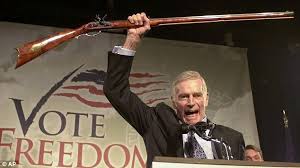
Charlton Heston at the NRA convention
Ironically, Heston had identified himself with liberal causes long before he became the face and voice of the gun lobby.
In 1961, he campaigned for Senator John F. Kennedy for President. In 1963, he took part in Martin Luther King’s March on Washington.
In 1968, after the assassination of Senator Robert F. Kennedy, he joined actors Kirk Douglas, James Stewart and Gregory Peck in issuing a statement supporting President Lyndon Johnson’s Gun Control Act of 1968.
But over the coming decades, Heston became increasingly conservative:
- Reportedly voting for Richard Nixon in 1972;
- Supporting gun rights; and
- Campaigning for Republican Presidential candidates Ronald Reagan, George H.W. Bush and George W. Bush.
When asked why he changed political alliances, Heston replied: “I didn’t change. The Democratic party changed.”
ABC NEWS, ANWAR SADAT, ARTHUR BREMER, ASSASSINATION, CBS NEWS, CHARLES L. COTTON, CIA, CNN, DYLANN ROOF, EMANUEL AFRICAN METHODIST CHURCH, FACEBOOK, GEORGE C. WALLACE, GUN CONTROL, HATE CRIMES, NATIONAL RIFLE ASSOCIATION, NBC NEWS, RAFAEL CRUZ, REPUBLICAN PARTY, REPUBLICANS, ROBERT F. KENNEDY, Secret Service, THE CHICAGO SUN-TIMES, THE CHICAGO TRIBUNE, THE LOS ANGELES TIMES, THE NEW YORK TIMES, THE SECOND AMENDMENT, THE WASHINGTON POST, TWITTER
In History, Law Enforcement, Politics, Social commentary on June 14, 2016 at 12:06 am
“You know the great thing about the state of Iowa is, I’m pretty sure you all define gun control the same way we do in Texas–hitting what you aim at.
“My wife, Heidi, who is a petite, 5’2 California blonde, she was standing at the tripod unloading the full machine gun with a pink baseball cap that said ‘armed and fabulous.’”
Yes, it was United States Senator Rafael Cruz (R-Texas) on the prowl for laughs–and votes–at a town hall meeting in Iowa. Normally, Cruz would do his vote-hunting in Texas.
But now Cruz had a bigger prize on his mind than simply being re-elected a United States Senator. Cruz wanted to be President in 2016.
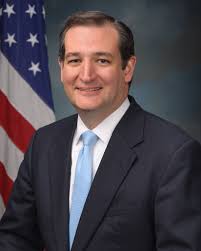
U.S. Senator Rafael Cruz
Cruz’ jokes about gun control came on June 19, 2015, only two days after Dylann Roof, a white high school dropout, gunned down three black men and six black women at Emanuel African Methodist Episcopal Church in Charleston, South Carolina.
Dylann Roof
Following his remarks, Cruz headed to a shooting range, where he fired off rounds on a semiautomatic .223-caliber Smith and Wesson M&P 15.
Cruz’ remarks no doubt appeared insensitive to the latest victims of gun violence and those who now mourned for them. But the comments of Charles L. Cotton took insulting the dead to a whole new level.
Cotton is a National Rifle Association (NRA) board member who also runs TexasCHLForum.com, an online discussion forum about guns and gun owners’ rights in Texas and beyond.
In a discussion thread on June 18, 2015–one day after the church slaughter–a board member noted that Clementa C. Pinckney, one of the nine people slain, was a pastor and a state legislator in South Carolina.
Cotton responded: “And he voted against concealed-carry. Eight of his church members who might be alive if he had expressly allowed members to carry handguns in church are dead. Innocent people died because of his position on a political issue.”
That discussion thread was quickly deleted.
During a subsequent phone interview, Cotton emphasized that he had been speaking as a private citizen–and not as an NRA board member:
“It was a discussion we were having about so called gun-free zones. It’s my opinion that there should not be any gun-free zones in schools or churches or anywhere else. If we look at mass shootings that occur, most happen in gun-free zones.”
If private citizens were allowed to carry guns everywhere, Cotton said, there will be fewer mass shootings because “if armed citizens are in there, they have a chance to defend themselves and other citizens.”
Cotton’s position–“there should not be any gun-free zones”–is exactly that of the NRA itself.
Under such circumstances, America will become a nation where anyplace, anytime, can be turned into the O.K. Corral.
Another point that Cotton didn’t mention: Dylann Roof did believe in concealed-carry–and it cost not his life but the lives of nine innocent men and women.
Finally, there is this: Even highly-trained shooters–such as those assigned to the United States Secret Service–don’t always respond as expected.
On May 15, 1972, Alabama Governor George Wallace was campaigning for President in Laurel, Maryland. He gave a speech behind a bulletproof podium at the Laurel Shopping Center. Then he moved from it to mingle with the crowd.
Since the 1968 assassination of Senator Robert F. Kennedy, all those campaigning for President have been assigned Secret Service bodyguards. And Wallace was surrounded by them as he shook hands with his eager supporters.
Suddenly, Arthur Bremer, a fame-seeking failure in life and romance, pushed his way forward, aimed a .38 revolver at Wallace’s abdomen and opened fire. Before the Secret Service could subdue him, he hit Wallace four times, leaving him paralyzed for the rest of his life.
Arthur Bremer shoots George Wallace
Nor was he Bremer’s only victim. Three other people present were wounded unintentionally:
- Alabama State Trooper Captain E C Dothard, Wallace’s personal bodyguard, who was shot in the stomach;
- Dora Thompson, a campaign volunteer, who was shot in the leg; and
- Nick Zarvos, a Secret Service agent, who was shot in the neck, severely impairing his speech.
None of Wallace’s bodyguards got off a shot at Bremer–before or after he pulled the trigger.
On October 6, 1981, Egyptian President Anwar Sadat was reviewing a military parade in Cairo when a truck apparently broke down directly across from where he was seated.
Anwar Sadat, moments before his assassination
Suddenly, soldiers bolted from the rear of the vehicle, throwing hand grenades and firing assault rifles. They rushed straight at Sadat–who died instantly under a hail of bullets.
Meanwhile, Sadat’s bodyguards–who had been trained by the CIA–panicked and fled.
Sadat had been assassinated by army officers who believed he had betrayed Islam by making peace with Israel in 1977.
The ultimate test of the NRA’s mantra that “there should not be any gun-free zones…anywhere” will come only when one or more heavily-armed gunmen target an NRA convention.
It will then be interesting to see if the surviving NRA members are as quick to blame themselves for being victims as they are the victims of other mass slaughters.
ABC NEWS, CBS NEWS, CNN, CRIME, ELLIOT ROGER, FACEBOOK, GAYS, GUN CONTROL, MARTIN LUTHER KING, MENTAL ILLNESS, NATIONAL RIFLE ASSOCIATION, NBC NEWS, PULSE NIGHTCLUB, ROBERT F. KENNEDY, SECOND AMENDMENT, SELF-DEFENSE, STAND-YOUR-GROUND LAWS, THE CHICAGO SUN-TIMES, THE CHICAGO TRIBUNE, THE LOS ANGELES TIMES, THE NEW YORK TIMES, THE WASHINGTON POST, TOBACCO INDUSTRY, TWITTER, U.S. CONSTITUTION, WRONGFUL-DEATH LAWSUITS
In History, Law, Law Enforcement, Politics, Social commentary on June 13, 2016 at 12:02 am
The victims of the violence are black and white, rich and poor, young and old, famous and unknown. They are, most important of all, human beings whom other human beings loved and needed. No one – no matter where he lives or what he does – can be certain who will suffer from some senseless act of bloodshed. And yet it goes on and on.
–Robert F. Kennedy, April 4, 1968

Senator Robert F. Kennedy announcing the murder of Dr. Martin Luther King, Jr.
What should the surviving victims of the Pulse nightclub massacre in Orlando, Florida, do to seek redress?
And how can the relatives and friends of those who didn’t survive seek justice for those they loved?
First, don’t count on politicians to support a ban on assault weapons.
Politicians–with rare exceptions–have only two goals:
- Get elected to office, and
- Stay in office.
And most of them fear the economic and voting clout of the National Rifle Association (NRA) to risk its wrath. Those that don’t greedily accept its bribes–i.e., “campaign contributions.”
Second, don’t expect the mental health profession to prevent such future tragedies.
There is simply no definitive way to predict who is likely to commit mass murder.
And even if such a method were developed, it would likely be ruled unconstitutional. A person can’t be jailed or hospitalized for fear of what he might do.
Third, those who survived the Pulse nightclub rampage–and the relatives and friends of those who didn’t–should file wrongful death, class-action lawsuits against the NRA.
There is sound, legal precedent for this.
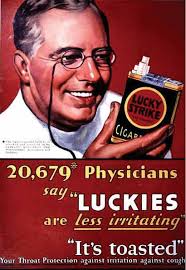
For decades, the American tobacco industry peddled death and disability to millions and reaped billions of dollars in profits.
- The industry vigorously claimed there was no evidence that smoking caused cancer, heart disease, emphysema or any other ailment.
- Tobacco companies spent billions on slick advertising campaigns to win new smokers and attack medical warnings about the dangers of smoking.
- Tobacco companies spent millions to elect compliant politicians and block anti-smoking legislation.
- From 1954 to 1994, over 800 private lawsuits were filed against tobacco companies in state courts. But only two plaintiffs prevailed, and both of those decisions were reversed on appeal.
- In 1994, amidst great pessimism, Mississippi Attorney General Mike Moore filed a lawsuit against the tobacco industry. But other states soon followed, ultimately growing to 46.
- Their goal: To seek monetary, equitable and injunctive relief under various consumer-protection and anti-trust laws.
- The theory underlying these lawsuits was: Cigarettes produced by the tobacco industry created health problems among the population, which badly strained the states’ public healthcare systems.
- In 1998, the states settled their Medicaid lawsuits against the tobacco industry for recovery of their tobacco-related, health-care costs. In return, they exempted the companies from private lawsuits for tobacco-related injuries.
- The companies agreed to curtail or cease certain marketing practices. They also agreed to pay, forever, annual payments to the states to compensate some of the medical costs for patients with smoking-related illnesses.
The parallels with the NRA are obvious:
- For decades, the NRA has peddled deadly weapons to millions, reaped billions of dollars in profits and refused to admit the carnage those weapons have produced: “Guns don’t kill people. People kill people.” With guns.
- The NRA has steadfastly defended the right to own Teflon-coated “cop killer” bullets,” whose only purpose is to penetrate bullet-resistant vests worn by law enforcement officers.
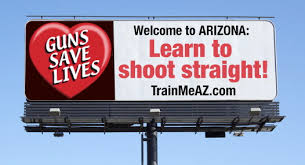
- The NRA has bitterly fought background checks on gun-buyers, in effect granting even criminals and the mentally ill the right to own arsenals of death-dealing weaponry.
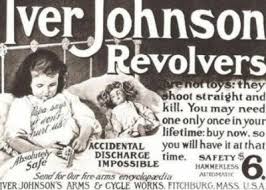
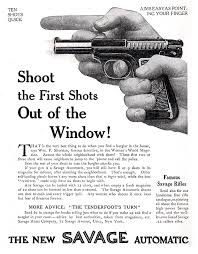
- The NRA has spent millions on slick advertising campaigns to win new members and frighten them into buying guns.
- The NRA has spent millions on political contributions to block gun-control legislation.
- The NRA has spent millions attacking political candidates and elected officials who warned about the dangers of unrestricted access to assault and/or concealed weapons.

- The NRA has spent millions pushing “Stand Your Ground” laws in more than half the states, which potentially give every citizen a “license to kill.”
- The NRA receives millions of dollars from online sales of ammunition, high-capacity ammunition magazines, and other accessories through its point-of-sale Round-Up Program–thus directly profiting by selling a product that kills about 30,288 people a year.
- Firearms made indiscriminately available through NRA lobbying have filled hospitals–such as those in Orlando–with casualties, and have thus badly strained the states’ public healthcare systems.
It will take a series of highly expensive and well-publicized lawsuits to significantly weaken the NRA, financially and politically.
The first ones will have to be brought by the surviving victims of gun violence–and by the friends and families of those who did not survive it. Only they will have the courage and motivation to take such a risk.
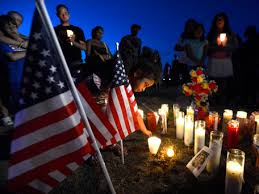
As with the cases first brought against tobacco companies, there will be losses. And the NRA will rejoice with each one.
But, in time, state Attorneys General will see the clear parallels between lawsuits filed against those who peddle death by cigarette and those who peddle death by armor-piercing bullet.
And then the NRA–like the tobacco industry–will face an adversary wealthy enough to stand up for the rights of the gun industry’s own victims.
Only then will those politicians supporting reasonable gun controls dare to stand up for the victims of such needless tragedies as the one in Orlando, Florida.
2016 PRESIDENTIAL RACE, ABC NEWS, BLACKS, BOEING, CBS NEWS, CNN, DONALD TRUMP, FACEBOOK, GEORGE C. WALLACE, HILLARY CLINTON, JOHN F. KENNEDY, JOHN MCCAIN, JUSTICE DEPARTMENT, MAFIA, MEXICANS, NBC NEWS, PRISONERS OF WAR, ROBERT F. KENNEDY, SAUDI ARABIA, STATE DEPARTMENT, THE CHICAGO SUN-TIMES, THE CHICAGO TRIBUNE, THE KENNEDYS, THE LOS ANGELES TIMES, THE NEW YORK TIMES, THE WALL STREET JOURNAL, THE WASHINGTON POST, TWITTER, WOMEN
In History, Law Enforcement, Politics, Social commentary, Uncategorized on June 6, 2016 at 12:01 am
Today, America has two major candidates running for President: Donald Trump and Hillary Clinton.
Trump is a billionaire businessman. Clinton is a former First Lady, U.S. Senator and Secretary of State.
Despite the great differences in their backgrounds, they both share one thing in common: Extremely high negatives among voters.
Trump’s hate-filled rhetoric has deliberately or unintentionally offended almost every major American voting group, including:
- Mexicans: “They’re bringing drugs.They’re bringing crime. They’re rapists.” He’s also promised to “build a great, great wall on our southern border and I will have Mexico pay for that wall.”
- Prisoners-of-War: Speaking of Arizona U.S. Senator John McCain, a Vietnam POW for seven years: “He’s not a war hero. He’s a war hero because he was captured. I like people that weren’t captured.”
- Women: “If Hillary Clinton can’t satisfy her husband, what makes her think she can satisfy America?”
These insults delight his white, uneducated followers. But they have alienated millions of other Americans who might have voted for him.
As for Clinton: She continues to be dogged by charges that she used her position as Secretary of State (2009-2013) to enrich herself.
Countries that made large contributions to the Clinton Foundation got an increase in State Department-approved arms sales.
For example: In 2011, the State Department green-lighted a $29 billion arms deal to Saudi Arabia, despite its dismal record on human rights.
Years before Clinton became Secretary of State, Saudi Arabia donated $10 million to the Clinton Foundation. And Boeing, the biggest defense contractor involved, donated $900,000 to the Clinton Foundation just two months before the deal was finalized.
But 48 years ago, Senator Robert Francis Kennedy aroused passions of an altogether different sort.
Kennedy had been a United States Attorney General (1961-1964) and Senator (1964-1968). But it was his connection to his beloved and assassinated brother, President John F. Kennedy, for which he was best known.

Robert F. Kennedy campaigning for President
Millions saw RFK as the only candidate who could make life better for America’s impoverished–while standing firmly against those who threatened the Nation’s safety.
As television correspondent Charles Quinn observed: “I talked to a girl in Hawaii who was for [George] Wallace [the segregationist governor of Alabama]. And I said ‘Really?’ [She said] ‘Yeah, but my real candidate is dead.’
“You know what I think it was? All these whites, all these blue collar people who supported Kennedy…all of these people felt that Kennedy would really do what he thought best for the black people, but, at the same time, would not tolerate lawlessness and violence.
“They were willing to gamble…because they knew in their hearts that the country was not right. They were willing to gamble on this man who would try to keep things within reasonable order; and at the same time do some of the things they knew really should be done.”
Campaigning for the Presidency in 1968, RFK had just won the crucial California primary on June 4–when he was shot in the back of the head. His killer: Sirhan Sirhan, a young Palestinian furious at Kennedy’s support for Israel. He died at 1:44 a.m. on June 6.
On June 8, 1,200 men and women boarded a specially-reserved passenger train at New York’s Pennsylvania Station. They were accompanying Kennedy’s body to its final resting place at Arlington National Cemetery.
As the train slowly moved along 225 miles of track, throngs of men, women and children lined the rails to pay their final respects to a man they considered a genuine hero.
Little Leaguers clutched their baseball caps across their chests. Uniformed firemen and policemen saluted. Burly men in shirtsleeves held hardhats over their hearts. Black men in overalls waved small American flags. Women from all levels of society stood and cried.

A nation says goodbye to Robert Kennedy
Commenting on RFK’s legacy, historian William L. O’Neil wrote in Coming Apart: An Informal History of America in the 1960′s:
“…He aimed so high that he must be judged for what he meant to do, and, through error and tragic accident, failed at….He will also be remembered as an extraordinary human being who, though hated by some, was perhaps more deeply loved by his countrymen than any man of his time.
“That too must be entered into the final account, and it is no small thing. With his death something precious disappeared from public life.”
The Kennedy family never again roused the same passions among voters as it did during RFK’s short-lived run for the Presidency.
And America has never again since seen a Presidential candidate who combined toughness on crime and compassion for the poor.
Republican candidates have waged war on crime–and the poor. And Democratic candidates have moved to the Right in eliminating anti-poverty programs.
RFK had the courage to fight the Mafia–and the compassion to fight poverty. At a time of rising rates of income inequality and corporate crime, his kind of politics are sorely missed.


ABC NEWS, ALTERNET, AP, BEDBUGS, BUILDING INSPECTION, BUSINESS, BUZZFEED, CBS NEWS, CHRIS MATHEWS, CNN, CROOKS AND LIARS, DAILY KOZ, FACEBOOK, FEDERAL ASSET FORFEITURE STATUTES, KIP MACY, LANDLORDS, MOTHER JONES, MOVEON, MSNBC, NBC NEWS, NEWSWEEK, NICCOLO MACHIAVELLI, NICOLE MACY, NPR, POLITICO, RAW STORY, RENT BOARD, RENT CONTROL, RENTERS, REUTERS, ROBERT F. KENNEDY, SALON, SAN FRANCISCO, SAN FRANCISCO DEPARTMENT OF BUILDING INSPECTION, SAN FRANCISCO DEPARTMENT OF PUBLIC HEALTH, SEATTLE TIMES, SLATE, SLUMLORDS, THE ATLANTIC, THE CHICAGO SUN-TIMES, THE CHICAGO TRIBUNE, THE DAILY BEAST, THE GUARDIAN, THE HILL, THE HUFFINGTON POST, THE LOS ANGELES TIMES, THE NATION, THE NEW YORK TIMES, THE WALL STREET JOURNAL, THE WASHINGTON POST, TIME, TWITTER, U.S. NEWS & WORLD REPORT, UPI, USA TODAY, WILLIAM TECUMSEH SHERMAN
COMBATING SLUMLORDS: PART TWO (OF THREE)
In Bureaucracy, History, Law, Law Enforcement, Politics, Social commentary on August 24, 2016 at 12:28 amThe San Francisco Department of Building Inspection (DBI) has long been outmaneuvered by predatory, law-breaking landlords.
And San Francisco renters–many of them elderly, poor and/or disabled–have been the victims of landlord greed, neglect and/or harassment.
Among the reforms that DBI should immediately enact:
Share this: