Posts Tagged ‘RICK PERRY’
2012 PRESIDENTIAL RACE, ALTERNET, AP, BARACK OBAMA, BAY OF PIGS, BBC, BERLIN WALL, BILL CLINTON, BRUCE GREENWOOD, BUZZFEED, CARLOS MARCELLO, CBS NEWS, CIA, CIVIL RIGHTS, CLIFF ROBERTSON, CNN, CUBAN MISSILE CRISIS, DAILY KOS, DAVID HALBERSTAM, DONALD J. TRUMP, FACEBOOK, FBI, FIDEL CASTRO, FRANK SINATRA, HERMAN CAIN, ICH BEN EIN BERLINNER SPEECH, INTERNET MOVIE DATABASE, J. EDGAR HOOVER, JAMES MARSDEN, JOHN F. KENNEDY, JOSEPH MCCARTHY, JOSEPH P. KENNEDY, LYNDON B. JOHNSON, MAFIA, MALCOM X, MARTIN LUTHER KING, MARTIN SHEEN, MOTHER JONES, MOVEON, MOVIES, NBC NEWS, NEWSWEEK, NEWT GINGRICH, NIKITA KHRUSHCHEV, NPR, NUCLEAR TEST BAN TREATY, POLITICO, PT-109, RAW STORY, REUTERS, RICK PERRY, ROBERT F. KENNEDY, ROBERT S. MCNAMARA, SALON, SAM GIANCANA, SANTOS TRAFFICANTE, Sarah Palin, SATURDAY NIGHT LIVE, SEATTLE TIMES, SLATE, SOVIET UNION, THE ATLANTIC, THE BEST AND THE BRIGHTEST, THE BUTLER, THE CHICAGO SUN-TIMES, THE CHICAGO TRIBUNE, THE DAILY BEAST, THE GUARDIAN, THE HILL, THE HUFFINGTON POST, THE LOS ANGELES TIMES, THE MISSILES OF OCTOBER, THE NEW YORK TIMES, THE RAT PACK, THE WALL STREET JOURNAL, THE WASHINGTON POST, THIRTEEN DAYS, TIME, TWILIGHT ZONE, TWITTER, U.S. NEWS & WORLD REPORT, UPI, USA TODAY, VIETNAM WAR, WILLIAM DEVANE, WILLIAM PETERSON
In Bureaucracy, Business, History, Law, Law Enforcement, Military, Politics, Social commentary on July 7, 2022 at 9:24 am
John F. Kennedy became President when civil rights suddenly became a burning issue throughout the Nation.
At Kennedy’s request, dozen of law firms sent lawyers South, so civil rights demonstrators would not lack counsel.
Prominent blacks such as Thurgood Marshall, Robert C. Weaver and George L.L. Weaver were appointed, respectively, to the Supreme Court, the Housing and House Finance Agency and the office of Assistant Secretary of Labor.
But Kennedy was highly reluctant to push for a civil rights bill addressing the overall issues of racial discrimination.
The reason: Most of the chairman of House and Senate committees were deeply conservative Southern racists–whether Republican or Democrat. They decided whether Kennedy’s foreign policy initiatives would be approved or opposed–especially his bills for increased foreign aid.
Kennedy believed he could not offend such men without jeopardizing the legacy he wanted to achieve in foreign policy.
This timidity, in turn, led many prominent blacks—such as Martin Luther King and Malcom X—to believe they would see no innovative moves on Kennedy’s part.
But events forced Kennedy’s hand.
On September 30, 1962, the President sent deputy U.S. marshals and National Guardsmen into Mississippi to restore order. Rioting had erupted when, by federal court order, James Meredith, a black, was enrolled at the state university.
Kennedy’s problems in winning support for his civil rights program arose in the folkways of the Nation. When laws run counter to a nation’s folkways, the laws lose.
In backing the admission of Meredith, the President chose an incident which would set off shockwaves for black rights.
Kennedy held mixed emotions about the demand for civil rights by blacks. On one hand, as an Irish Catholic, he grew up with stories about longtime discrimination against his ancestors (such as the “No Irish Need Apply” signs posted by numerous employers).
On the other hand, he had been born into a world of power and wealth, and he had to grope his way toward understanding the problems of the oppressed.
Another major confrontation broke out between Kennedy and the forces of segregation on June 11, 1963. Alabama Governor George C. Wallace personally blocked the entrance of two black pupils to the University of Tuscaloosa.
The President, watching on TV, federalized the Alabama National Guard, which Wallace had used to ring the school. Wallace withdrew and the students were admitted and enrolled.
That same day, Kennedy addressed the nation on the need for genuine equality for all Americans: “The question is whether we are going to treat our fellow Americans as we want to be treated.”
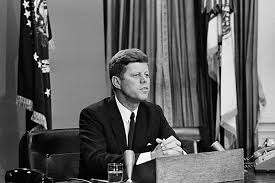
JFK addresses the nation on civil rights
And he called on Congress to pass his civil rights bill, which had been stalled by the legislators.
On August 28, 1963, 200,000 civil rights demonstrators flooded Washington, D.C., for a massive rally.
Fearing that violence would erupt—embarrassing his administration and setting back the cause of civil rights—Kennedy had sought to persuade Dr. Martin Luther King, the march’s chief figure, to cancel the proposed march.
But King and his fellow organizers were determined to go through with it. They had, they said, waited too long for justice to be satisfied with anything less.
The dignity and peacefulness of the rally–and, most especially, King’s soaring “I Have a Dream” speech–won tremendous sympathy throughout the country. Kennedy met with civil rights leaders afterward to offer his support.
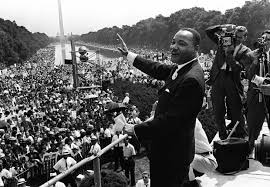
Martin Luther King during the March on Washington
But Kennedy’s civil rights bill remained stalled in Congress until 1964. President Lyndon B. Johnson used the assassinated Kennedy’s new status as a martyr to gain enough support for its passage.
Meanwhile, on yet another front, the Kennedy administration was waging an unprecedented war against organized crime.
This was primarily the work of Attorney General Robert F. Kennedy. As chief counsel for the Senate Permanent Subcommittee on Investigations (1957–59), he had interrogated about 800 mobsters who had been summoned by subpoena.
And he had learned, firsthand, how ineffective the FBI and Justice Department were at bringing such powerful criminals to justice. The FBI had long steered clear of organized crime investigations, largely because its director, J. Edgar Hoover, feared corruption of his agents.
Upon taking office as Attorney General, he greatly expanded the number of attorneys assigned to the Justice Department’s Organized Crime Section. And, more important, he used his status as brother to the President to jawbone FBI Director J. Edgar Hoover into attacking the Mob.
The FBI installed illegal microphones in Mob hangouts throughout the country and started building cases against such mobsters as Sam Giancana, Santos Trafficante and Carlos Marcello.
The administration’s attack on the Mob has led some historians to believe the assassination of President Kennedy was Mob-orchestrated.
The reasons:
- Joseph P. Kennedy, the family patriarch, solicited Mob money and influence for his son’s 1960 Presidential campaign.
- Through singer Frank Sinatra, the elder Kennedy assured Chicago Mafia boss Sam Giancana that the mob would get a free ride if his son were elected President.
- The CIA, seeking any way to topple Fidel Castro, enlisted the Mafia to assassinate him.
- But Robert Kennedy, as Attorney General, ignored the Mob’s “contributions” and pressed his war against the syndicates
- As a result, mobsters felt betrayed and lusted for vengeance.
2012 PRESIDENTIAL RACE, ALTERNET, AP, BARACK OBAMA, BAY OF PIGS, BBC, BERLIN WALL, BILL CLINTON, BRUCE GREENWOOD, BUZZFEED, CARLOS MARCELLO, CBS NEWS, CIA, CIVIL RIGHTS, CLIFF ROBERTSON, CNN, CUBAN MISSILE CRISIS, DAILY KOS, DAVID HALBERSTAM, DONALD J. TRUMP, FACEBOOK, FBI, FIDEL CASTRO, FRANK SINATRA, HERMAN CAIN, ICH BEN EIN BERLINNER SPEECH, INTERNET MOVIE DATABASE, J. EDGAR HOOVER, JAMES MARSDEN, JOHN F. KENNEDY, JOSEPH MCCARTHY, JOSEPH P. KENNEDY, LYNDON B. JOHNSON, MAFIA, MALCOM X, MARTIN LUTHER KING, MARTIN SHEEN, MOTHER JONES, MOVEON, MOVIES, NBC NEWS, NEWSWEEK, NEWT GINGRICH, NIKITA KHRUSHCHEV, NPR, NUCLEAR TEST BAN TREATY, POLITICO, PT-109, RAW STORY, REUTERS, RICK PERRY, ROBERT F. KENNEDY, ROBERT S. MCNAMARA, SALON, SAM GIANCANA, SANTOS TRAFFICANTE, Sarah Palin, SATURDAY NIGHT LIVE, SEATTLE TIMES, SLATE, SOVIET UNION, THE ATLANTIC, THE BEST AND THE BRIGHTEST, THE BUTLER, THE CHICAGO SUN-TIMES, THE CHICAGO TRIBUNE, THE DAILY BEAST, THE GUARDIAN, THE HILL, THE HUFFINGTON POST, THE LOS ANGELES TIMES, THE MISSILES OF OCTOBER, THE NEW YORK TIMES, THE RAT PACK, THE WALL STREET JOURNAL, THE WASHINGTON POST, THIRTEEN DAYS, TIME, TWILIGHT ZONE, TWITTER, U.S. NEWS & WORLD REPORT, UPI, USA TODAY, VIETNAM WAR, WILLIAM DEVANE, WILLIAM PETERSON
In Bureaucracy, Business, History, Law, Law Enforcement, Military, Politics, Social commentary on July 6, 2022 at 10:46 am
By October, 1962, Nikita Khrushchev, premier of the Soviet Union, had supplied Cuba with more than 40,000 soldiers, 1,300 field pieces, 700 anti-aircraft guns, 350 tanks and 150 jets.
The motive: To deter another invasion.
Khrushchev also began supplying Castro with nuclear-tipped ballistic missiles.
Their discovery, in October, 1962, ignited the single most dangerous confrontation of the Cold War.
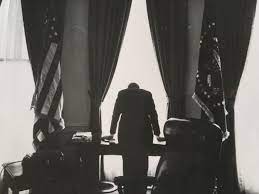

John F. Kennedy during the Cuban Missile Crisis
On October 16, Kennedy was shown photographs of nuclear missile sites under construction on the island. The pictures had been taken on the previous day by a high-altitude U-2 spy plane.
Suddenly, the two most powerful nuclear countries—the United States and the Soviet Union—appeared on the brink of nuclear war.
Kennedy officials claimed they couldn’t understand why Khrushchev had placed nuclear missiles in Cuba. “Maybe Khrushchev’s gone mad” was a typical musing.
The Kennedy administration never admitted that JFK had been waging a no-holds-barred campaign to overthrow the Cuban government and assassinate its leader.
Kennedy convened a group of his 12 most important advisers, which became known as Ex-Comm, for Executive Committee.
For seven days, Kennedy and his advisers intensely and privately debated their options. Some of the participants—such as Air Force General Curtis LeMay—urged an all-out air strike against the missile sites.
Robert Kennedy, the Attorney General (and the President’s brother) opposed initial calls for an air strike.
It would be, he said, “a Pearl Harbor in reverse.” And, he added: “I don’t want my brother to go down in history as the Tojo of the 1960s.”
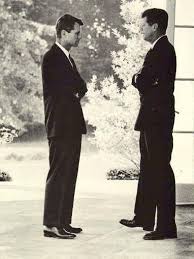
Robert F. and John F. Kennedy
Others—such as Adlai Stevenson, the United States delegate to the United Nations—urged a reliance on quiet diplomacy.
It was Secretary of Defense Robert S. McNamara who suggested a middle course: A naval blockade—a “quarantine” in Kennedy’s softened term—around Cuba. This would hopefully prevent the arrival of more Soviet offensive weapons on the island.
The President insisted that the missiles had to go—by peaceful means, if possible, but by the use of military force if necessary.
Kennedy finally settled on a naval blockade of Cuba. This would prevent additional missiles from coming in and give Khrushchev time to negotiate and save face.
On October 22, President Kennedy appeared on nationwide TV to denounce the presence of Russian nuclear missiles in Cuba.
He demanded their withdrawal, and warned that any missile launched against any nation in the Western hemisphere would be answered with “a full retaliatory response upon the Soviet Union.”
Kennedy ordered American military readiness raised to a level of Defcom-2—the step just short of total war.
The United States had about 27,000 nuclear weapons; the Soviets had about 3,000. In a first nuclear exchange, the United States could have launched about 3,000 nuclear weapons and the Soviets about 250.
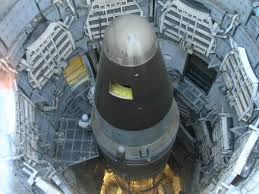
Nuclear missile in silo
On October 28, Khrushchev announced that the missile sites would be destroyed and the missiles crated and shipped back to the Soviet Union.
In return, Kennedy gave his promise—publicly—to lift the blockade and not invade Cuba
Privately, he also promised to remove obsolete Jupiter II nuclear missiles from Turkey, which bordered the Soviet Union. Those missiles were, in effect, the American version of the Russian missiles that had been shipped to Cuba.
The world escaped nuclear disaster by a hair’s-breath.
Khrushchev didn’t know that Kennedy had intended to order a full-scale invasion of Cuba in just another 24 hours if an agreement couldn’t be reached.
And Kennedy and his military advisors didn’t know that Russian soldiers defending Cuba had been armed with tactical nuclear weapons.
If warfare of any type had broken out, the temptation to go nuclear would have been overwhelming.
The Cuban Missile Crisis marked the only time the world came to the brink of nuclear war.
The Right attacked Kennedy for refusing to destroy Castro, thus allowing Cuba to remain a Communist bastion only 90 miles from Florida.
The Left believed it was a needless confrontation that risked the destruction of humanity.
For Kennedy, forcing the Soviets to remove their missiles from Cuba re-won the confidence he had lost among so many Americans following the Bay of Pigs fiasco.
It also made him face the brutal truth that a miscalculation during a nuclear crisis could destroy all life on Earth.
He felt he could now move—cautiously—toward better relations between the United States and the Soviet Union.
Ironically, the crisis had the same effects on Khrushchev—who had witnessed the horrors of Germany’s 1941 invasion of the Soviet Union and the subsequent loss of at least 22 million Soviet citizens.
Slowly and carefully, Kennedy and Khrushchev negotiated the details of what would become the Nuclear Test Ban Treaty, which banned nuclear testing in the atmosphere.
Underground tests would continue, but the amounts of deadly strontium-90 radiation polluting the atmosphere would be vastly reduced.
The treaty was signed between the United States and the Soviet Union on July 25, 1963.
Kennedy considered it his greatest achievement as President, saying in a speech: “According to a Chinese proverb, a journey of a thousand miles begins with a single step. My fellow Americans, let us take that first step.”
2012 PRESIDENTIAL RACE, ALTERNET, AP, BARACK OBAMA, BAY OF PIGS, BBC, BERLIN WALL, BILL CLINTON, BRUCE GREENWOOD, BUZZFEED, CARLOS MARCELLO, CBS NEWS, CIA, CIVIL RIGHTS, CLIFF ROBERTSON, CNN, CUBAN MISSILE CRISIS, DAILY KOS, DAVID HALBERSTAM, DONALD J. TRUMP, FACEBOOK, FBI, FIDEL CASTRO, FRANK SINATRA, HERMAN CAIN, ICH BEN EIN BERLINNER SPEECH, INTERNET MOVIE DATABASE, J. EDGAR HOOVER, JAMES MARSDEN, JOHN F. KENNEDY, JOSEPH MCCARTHY, JOSEPH P. KENNEDY, LYNDON B. JOHNSON, MAFIA, MALCOM X, MARTIN LUTHER KING, MARTIN SHEEN, MOTHER JONES, MOVEON, MOVIES, NBC NEWS, NEWSWEEK, NEWT GINGRICH, NIKITA KHRUSHCHEV, NPR, NUCLEAR TEST BAN TREATY, POLITICO, PT-109, RAW STORY, REUTERS, RICK PERRY, ROBERT F. KENNEDY, ROBERT S. MCNAMARA, SALON, SAM GIANCANA, SANTOS TRAFFICANTE, Sarah Palin, SATURDAY NIGHT LIVE, SEATTLE TIMES, SLATE, SOVIET UNION, THE ATLANTIC, THE BEST AND THE BRIGHTEST, THE BUTLER, THE CHICAGO SUN-TIMES, THE CHICAGO TRIBUNE, THE DAILY BEAST, THE GUARDIAN, THE HILL, THE HUFFINGTON POST, THE LOS ANGELES TIMES, THE MISSILES OF OCTOBER, THE NEW YORK TIMES, THE RAT PACK, THE WALL STREET JOURNAL, THE WASHINGTON POST, THIRTEEN DAYS, TIME, TWILIGHT ZONE, TWITTER, U.S. NEWS & WORLD REPORT, UPI, USA TODAY, VIETNAM WAR, WILLIAM DEVANE, WILLIAM PETERSON
In Bureaucracy, Business, History, Law, Law Enforcement, Military, Politics, Social commentary on July 5, 2022 at 9:31 am
During the 1960 Presidential campaign, then-Senator John F. Kennedy promised to build a Peace Corps to train people in underdeveloped nations to help themselves.
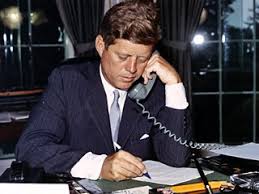
John F. Kennedy
In March, 1961, the program went into effect, with the President’s brother-in-law, Sergent Shriver, as director.
Starvation, illiteracy and disease were the enemies of the Corps. Any nation wanting aid could request it. The first group of volunteers went to the Philippines, the second to Ecuador and the third to Tanganyika.
The problems of the underdeveloped world were too great for any single organization to solve. But the Corps lifted the spirits of many living in those countries. And it captured the imagination of millions of Americans—especially those of thousands of idealistic youths who entered its ranks.
To combat the growing Communist threat to Latin America, Kennedy established the Alliance for Progress. He defined the Alliance’s goal as providing “revolutionary progress through powerful, democratic means.”
Within two years he could report:
“Some 140,000 housing units have been constructed. Slum clearance projects have begun, and 3,000 classrooms have been built. More than 4,000,000 school books have been distributed.
“The Alliance has fired the imagination and kindled the hopes of millions of our good neighbors. Their drive toward modernization is gaining momentum as it unleashes the energies of these millions.
“The United States is becoming increasingly identified in the minds of the people with the goal they move toward: a better life with freedom,” said Kennedy.
Critics of the program, however, charged that the President was trying to “dress up the old policies” of Franklin D. Roosevelt in new rhetoric. Since FDR’s time, the United States has believed in giving economic aid to Latin America.
Much—if not most—of these billions of dollars has wound up in the pockets of various right-wing dictators, such as Anastasio Somoza and Rafael Trujillo.
Meanwhile, Kennedy was urging action on another front—that of outer space.
“This generation does not intend to founder in the backwash of the coming age of space,” declared the President. He committed the United States to putting a man on the moon by the end of the decade.
As indeed it happened less than six years after his death—on July 20, 1969.
Kennedy’s idealistic rhetoric masked his real reason for going to the moon: To score a propaganda victory over the Soviet Union.
Another of his anti-Communist goals: To remove Fidel Castro from power in Cuba at almost any cost.
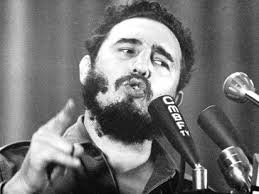
Fidel Castro
Immediately after the failed Bay of Pigs invasion, Kennedy appointed his brother, Robert–who was then the Attorney General—to oversee a CIA program to overthrow Castro.
The CIA and the Mafia entered into an unholy alliance to assassinate Castro—each for its own benefit:
- The CIA wanted to please Kennedy by overthrowing the Communist leader who had nationalized American corporate holdings.
- The Mafia wanted to regain its lucrative casino and brothel holdings that had made Cuba the playground of the rich in pre-Castro times.
The mobsters were authorized to offer $150,000 to anyone who would kill Castro and were promised any support the Agency could yield.
“We were hysterical about Castro at about the time of the Bay of Pigs and thereafter,” then-former Secretary of Defense Robert S. McNamara testified before Congress about these efforts. “And there was pressure from JFK and RFK to do something about Castro.”
Nor was everyone in the CIA enthusiastic about the “get Castro” effort.
“Everyone at CIA was surprised at Kennedy’s obsession with Fidel,” recalled Sam Halpern, who was assigned to the Cuba Project. “They thought it was a waste of time. We all knew [Fidel] couldn’t hurt us. Most of us at CIA initially liked Kennedy, but why go after this little guy?
“One thing is for sure: Kennedy wasn’t doing it out of national security concerns. It was a personal thing. The Kennedy family felt personally burnt by the Bay of Pigs and sought revenge.”
It was all-out war. Among the tactics used:
- Hiring Cuban gangsters to murder Cuban police officials and Soviet technicians.
- Sabotaging mines.
- Paying up to $100,000 per “hit” for the murder or kidnapping of Cuban officials.
- Using biological and chemical warfare against the Cuban sugar industry.
- Planting colorful seashells rigged to explode at a site where Castro liked to go skindiving.
- Trying to arrange for his being presented with a wetsuit impregnated with noxious bacteria and mold spores, or with lethal chemical agents.
- Attempting to infect Castro’s scuba regulator with tuberculous bacilli.
- Trying to douse his handkerchiefs, cigars, tea and coffee with other lethal bacteria.
But all of these efforts failed to assassinate Castro–or overthrow the Cuban Revolution he was heading.
“Bobby (Kennedy) wanted boom and bang all over the island,” recalled Halpern. “It was stupid. The pressure from the White House was very great.”
Americans would rightly label such methods as ”terrorist” if another power used them against the United States today. And the Cuban government saw the situation exactly the same way.
So Castro appealed to Nikita Khrushchev, leader of the Soviet Union, for assistance.
Khrushchev was quick to comply: “We must not allow the Communist infant to be strangled in its crib,” he told members of his inner circle.
2012 PRESIDENTIAL RACE, ALTERNET, AP, BARACK OBAMA, BAY OF PIGS, BBC, BERLIN WALL, BILL CLINTON, BRUCE GREENWOOD, BUZZFEED, CARLOS MARCELLO, CBS NEWS, CIA, CIVIL RIGHTS, CLIFF ROBERTSON, CNN, CUBAN MISSILE CRISIS, DAILY KOS, DAVID HALBERSTAM, DONALD J. TRUMP, FACEBOOK, FBI, FIDEL CASTRO, FRANK SINATRA, ICH BEN EIN BERLINNER SPEECH, INTERNET MOVIE DATABASE, J. EDGAR HOOVER, JAMES MARSDEN, JOHN F. KENNEDY, JOSEPH MCCARTHY, JOSEPH P. KENNEDY, LYNDON B. JOHNSON, MAFIA, MALCOM X, MARTIN LUTHER KING, MARTIN SHEEN, MOTHER JONES, MOVEON, MOVIES, NBC NEWS, NEWSWEEK, NEWT GINGRICH, NIKITA KHRUSHCHEV, NPR, NUCLEAR TEST BAN TREATY, POLITICO, PT-109, RAW STORY, REUTERS, RICK PERRY, ROBERT F. KENNEDY, ROBERT S. MCNAMARA, SALON, SAM GIANCANA, SANTOS TRAFFICANTE, Sarah Palin, SATURDAY NIGHT LIVE, SEATTLE TIMES, SLATE, SOVIET UNION, THE ATLANTIC, THE BEST AND THE BRIGHTEST, THE BUTLER, THE CHICAGO SUN-TIMES, THE CHICAGO TRIBUNE, THE DAILY BEAST, THE GUARDIAN, THE HILL, THE HUFFINGTON POST, THE LOS ANGELES TIMES, THE MISSILES OF OCTOBER, THE NEW YORK TIMES, THE RAT PACK, THE WALL STREET JOURNAL, THE WASHINGTON POST, THIRTEEN DAYS, TIME, TWILIGHT ZONE, TWITTER, U.S. NEWS & WORLD REPORT, UPI, USA TODAY, VIETNAM WAR, WILLIAM DEVANE, WILLIAM PETERSON
In Bureaucracy, Business, History, Law, Law Enforcement, Military, Politics, Social commentary on July 4, 2022 at 11:55 am
This October 16 – 28 will mark 60 years since the world hovered on the brink of nuclear oblivion.
It was the most dangerous moment of the Cold War. And it was the supreme test of John F. Kennedy’s leadership as the 35th President of the United States.
He served as President for only two years, ten months and two days.
Yet today—-61 years since he took office, and 59 years since his assassination—millions of Americans still remember Kennedy with reverence, even awe. This despite decades of highly embarrassing revelations about his scandalous private life.
Some have called the Kennedy administration a golden era in American history. A time when touch football, lively White House parties, stimulus to the arts and the antics of the President’s children became national obsessions.
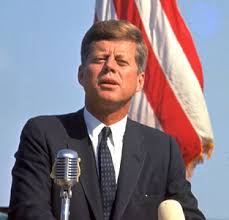
John F. Kennedy
Others have called the Kennedy Presidency a monument to the unchecked power of wealth and ambition. An administration staffed by young novices playing at statesmen, riddled with nepotism, and whose legacy includes the Bay of Pigs, the Vietnam war and the world’s first nuclear confrontation.
The opening days of the Kennedy Presidency raised hopes for a dramatic change in relations between the United States and the Soviet Union.
But detente was not possible then. The Russians had not yet experienced their coming agricultural problems and the setback in Cuba during the Missile Crisis. And the United States had not suffered defeat in Vietnam.
Kennedy’s first brush with international Communism came on April 17, 1961, with the invasion of Cuba at the Bay of Pigs. This operation had been planned and directed by the Central Intelligence Agency during the final months of Dwight D. Eisenhower’s term as President.
The U.S. Navy was to land about 1,400 Cuban exiles on the island to overthrow the Communist government of Fidel Castro. They were supposed to head into the mountains—as Castro himself had done against the dictatorship of Fulgencio Batista in 1956—and raise the cry of revolution.
The invasion would occur after an American air strike had knocked out the Cuban air force. But the airstrike failed and Kennedy, under the pressure of world opinion, called off a second try.
Even so, the invasion went ahead. When the invaders surged onto the beaches, they found Castro’s army waiting for them. Many of the invaders were killed on the spot. Others were captured—to be ransomed by the United States in December, 1962, in return for medical supplies.
It was a major public relations setback for the newly-installed Kennedy administration, which had raised hopes for a change in American-Soviet relations.
Kennedy, trying to abort widespread criticism, publicly took the blame for the setback: “There’s an old saying that victory has a hundred fathers and defeat is an orphan….I’m the responsible officer of the Government.”
The Bay of Pigs convinced Kennedy that he had been misled by the CIA and the Joint Chiefs of Staff. Out of this came his decision to rely heavily on the counsel of his brother, Robert, whom he had installed as Attorney General.
The failed Cuban invasion—unfortunately for Kennedy—convinced Soviet Premier Nikita S. Khrushchev that the President was weak.
Khrushchev told an associate that he could understand if Kennedy had not decided to invade Cuba. But once he did, Kennedy should have pressed on and wiped out Castro.
Khrushchev attributed this to Kennedy’s youth, inexperience and timidity—and believed he could bully the President.
On June 4, 1961, Kennedy met with Khrushchev in Vienna to discuss world tensions. Khrushchev threatened to go to nuclear war over the American presence in West Berlin—the dividing line between Western Europe, protected by the United States, and Eastern Europe, controlled by the Soviet Union.
Kennedy, who prized rationality, was shaken by Khrushchev’s unexpected rage. After the conference, he told an associate: “It’s going to be a cold winter.”
Meanwhile, East Berliners felt they were about to be denied access to West Berlin. A flood of 3,000 refugees daily poured into West Germany.
Khrushchev was embarrassed at this clear showing of the unpopularity of the Communist regime. In August, he ordered that a concrete wall—backed up by barbed wire, searchlights and armed guards—be erected to seal off East Berlin.
As tensions mounted and a Soviet invasion of West Berlin seemed likely, Kennedy sent additional troops to the city in a massive demonstration of American will.
Two years later, on June 26, 1963, during a 10-day tour of Europe, Kennedy visited Berlin to deliver his “I am a Berliner” speech to a frenzied crowd of thousands.
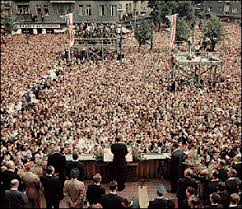
JFK addresses crowds at the Berlin Wall
“There are many people in the world who really don’t understand, or say they don’t, what is the great issue between the free world and the Communist world,” orated Kennedy. “Let them come to Berlin.”
Standing within gunshot of the Berlin wall, he lashed out at the Soviet Union and praised the citizens of West Berlin for being “on the front lines of freedom” for more than 20 years.
“All free men, wherever they may live,” said Kennedy, “are citizens of Berlin. And therefore, as a free man, I take pride in the words, ‘Ich ben ein Berliner.’”
1984 NOVEL, ABC NEWS, ADOLF HITLER, ALTERNET, AMERICABLOG, AP, ” 9/11, BABY BOOMER RESISTANCE, BARACK OBAMA, BBC, BILL CLINTON, BIRTH CONTROL, BLACKS, BLOOMBERG NEWS, BUZZFEED, CBS NEWS, CHILD MOLESTING, CNN, COMMUNISM, CROOKS AND LIARS, DAILY KOZ, DENNIS HASTERT, DISABLED, DISCRIMINATION, DWIGHT D. EISENHOWER, EDWARD R. MURROW, ENVIRONMENTALISTS, FACEBOOK, FAMILY RESEARCH COUNCIL, FIVETHIRTYEIGHT, FRANKLIN D. ROOSEVELT, GAYS, GEORGE C. MARSHALL, GEORGE H.W. BUSH, GEORGE ORWELL, GOP, GREAT SOCIETY, HARPER’S MAGAZINE, HARRY S. TRUMAN, HISPANICS, HIV MEDICATION, HOUSE OF REPRESENTATIVES, HUFFINGTON POST, J. ROBERT OPPENHEIMER, JAN BREWER, JEB BUSH, JOHN BIRCH SOCIETY, JOHN F. KENNEDY, JOHN STEINBECK, JOSEPH R. MCCARTHY, JOSEPH STALIN, JOSH DUGGAR, KGB, LEE ATWATER, LEON TROTSKY, LESBIANS, LIBERALS, LUCILLE BALL, LYNDON B. JOHNSON, MEDIA MATTERS, MEDICAL CARE, MEIN KAMPF, MICHAEL DUKAKIS, MICHELLE BACHMANN, MIKE HUCKABEE, MITT ROMNEY, MOTHER JONES, MOVEON, MSNBC, MUSLIMS, NBC NEWS, NEW REPUBLIC, NEWSDAY, NEWSWEEK, NPR, PBS NEWSHOUR, PETE SEEGER, POLITICO, POLITICUSUSA, PROPAGANDA, RAFAEL "TED" CRUZ, RAW STORY, RELIGION, REPUBLICANS, REUTERS, RICHARD NIXON, RICK PERRY, RICK SANTORUM, ROBERT WELCH, RODNEY KING RIOTS, SALON, SCAPEGOATING, SEATTLE TIMES, SHARIA LAW, SLATE, SOCIALISTS, SOVIET UNION, TALKING POINTS MEMO, THE ATLANTIC, THE CHICAGO SUN-TIMES, THE CHICAGO TRIBUNE, THE DAILY BEAST, THE DAILY BLOG, THE GUARDIAN, THE HILL, THE HUFFINGTON POST, THE INTERCEPT, THE LOS ANGELES TIMES, THE NATION, THE NEW REPUBLIC, THE NEW YORK TIMES, THE NEW YORKER, THE RELIGIOUS FREEDOM RESTORATION ACT, THE VILLAGE VOICE, THE WASHINGTON POST, THINKPROGRESS, TIME, TRANSGENDERS, TRUTHDIG, TRUTHOUT, TWITTER, TWO POLITICAL JUNKIES, U.S. NEWS & WORLD REPORT, UPI, USA TODAY, WILLIAM L. SHIRER, WOMEN, WONKETTE, WORLD WAR ii
In Bureaucracy, History, Law, Law Enforcement, Politics, Social commentary on April 14, 2022 at 12:12 am
Republicans and their Rightist allies have repeatedly compared President Barack Obama and other Democrats to Adolf Hitler. But their propaganda campaign draws heavily on the Nazi leader’s own advice.
In Mein Kampf, Hitler laid out his formula for successful propaganda: “All effective propaganda must be confined to a few bare essentials.
“Those must be expressed as far as possible in stereotypical formulas. These slogans should be persistently repeated until the very last individual has come to grasp the idea that has been put forward.”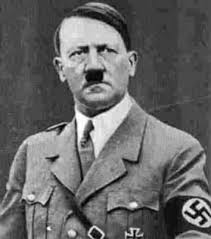
Adolf Hitler
Among the slanders Right-wingers hurl at Democrats:
“Liberals,” “radicals, “bankrupting,” “treason,” subversion,” “slander,” “terrorism,” “betrayal,” “catastrophe,” “shattering the American dream,” “leftists,” “Communists,” “government takeover,” “socialism,” “power grab,” “secularism,” “environmentalism.”
In recent years, the GOP has targeted gays and lesbians as America’s subversive enemies.
These attacks have come as thinly disguised as efforts to “restore religious freedom.”.
On March 26, 2015, Indiana Governor Mike Pence signed into law the Religious Freedom Restoration Act.
This allows any individual or corporation to cite its religious beliefs as a defense when sued by a private party.
Thus, a bakery that doesn’t want to make a cake to be used at a gay wedding or a restaurant that doesn’t want to serve lesbian patrons can legally refuse to do so.
The bill seems modeled on a proposed law that the Republican House and Senate in Arizona sent to Governor Jan Brewer in 2014.
Under threat of a nationwide boycott of Arizona if the bill became law, Brewer vetoed it.
Republicans have introduced similar “right-to-discriminate” legislation in other states as well:
- In Kansas, lawmakers voted to exempt individuals from providing any service that was “contrary to their sincerely held religious beliefs.”
- That bill passed the state’s House chamber on February 11, 2014, triggering national backlash. It stalled in the Senate and didn’t advance beyond that body.
- In January, 2014, South Dakota Republicans introduced a bill to let businesses refuse to serve same-sex couples on the grounds that “businesses are private and that their views on sexual orientation are protected to the same extent as the views of private citizens.”
- The South Dakota bill—which was killed in February, 2014—would have made it illegal for a gay person to file a lawsuit charging discrimination.
Republicans claim they want to “get the government off the backs of the people.” But their fixation on regulating the sexual lives of Americans ensures government intrusions of the most intimate kind.
Since 9/11, Republicans have warned that Muslims are trying to impose Sharia (Islamic law) on America.
Ironically, Right-wing legislators, in elevating religion above the secular law, may have laid the legal foundations for making that possible.
What will happen when some Muslims claim their right–guaranteed in Islamic religious law–to have as many as four wives?
And when they claim that the “religious freedom” laws protect that right?
Republicans have defended such legislation by equating gays with child predators.
In fact, the Child Molestation Research & Prevention Institute states that 90% of child molesters target children in their network of family and friends, and the majority are men married to women.
Yet Republicans and their Rightist allies have refused to condemn such heterosexual—and Right-wing—child molesters as Dennis Hastert and Josh Duggar.
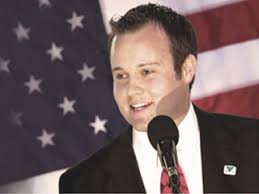
Josh Duggar, the “all-American” child molester
On May 21, 2015, responding to press leaks, Duggar resigned as director of the Family Research Council, a Right-wing organization dedicated to fighting sexually-oriented issues such as same-sex marriage, abortion and pornography.
In 2002-3, as a 14-15 year-old, Duggar had fondled the breasts and vaginas of five underage girls—four of whom were his own sisters.
Before Duggar was forced to admit his scandalous depravities, he had hobnobbed with many influential Right-wingers, including:
- Senator Rafael “Ted” Cruz;
- Former Florida Governor Jeb Bush;
- Former Arkansas Governor Mike Huckabee;
- Texas Governor Rick Perry.
On December 8, 2021, a federal jury found Duggar guilty of receipt of child pornography and possession of child pornography. He faces up to 20 years of imprisonment and fines up to $250,000 on each count.
And on October 28, 2015, Hastert—Speaker of the House of Representatives from 1999 to 2007—pleaded guilty to structuring money transactions in a way to avoid requirements to report where the money was going.

Dennis Hastert
The reason: To conceal the truth about his past as a child molester. Hastert had abused four young boys when he was their high school wrestling coach. One was only 14 years old.
Despite such setbacks, the politics of “smear and fear” have been good to Republicans—and their Right-wing allies.
The Republican “base” refuses to learn that those who portray themselves as morally superior are:
- Hypocrites, who are in effect saying: “Do as I say, not as I do,” or
- Fanatics, who intend to force their version of morality on others.
So long as millions of hate-filled Right-wingers support the endless succession of “two minute hates,” Republicans will continue to target an endless series of victims.
The good news: As blacks, Hispanics, women, gays and others become a significant political force, Republicans will stop attacking them and court them for votes.
The bad news: Republicans will move on to find other still-helpless scapegoats for America’s troubles.
1984 NOVEL, ABC NEWS, ADOLF HITLER, ALTERNET, AMERICABLOG, AP, ” 9/11, BABY BOOMER RESISTANCE, BARACK OBAMA, BBC, BILL CLINTON, BIRTH CONTROL, BLACKS, BLOOMBERG NEWS, BUZZFEED, CBS NEWS, CHILD MOLESTING, CNN, COMMUNISM, CROOKS AND LIARS, DAILY KOZ, DENNIS HASTERT, DISABLED, DISCRIMINATION, DWIGHT D. EISENHOWER, EDWARD R. MURROW, ENVIRONMENTALISTS, FACEBOOK, FAMILY RESEARCH COUNCIL, FIVETHIRTYEIGHT, FRANKLIN D. ROOSEVELT, GAYS, GEORGE C. MARSHALL, GEORGE H.W. BUSH, GEORGE ORWELL, GOP, GREAT SOCIETY, HARPER’S MAGAZINE, HARRY S. TRUMAN, HISPANICS, HIV MEDICATION, HOUSE OF REPRESENTATIVES, HUFFINGTON POST, J. ROBERT OPPENHEIMER, JAN BREWER, JEB BUSH, JOHN BIRCH SOCIETY, JOHN F. KENNEDY, JOHN STEINBECK, JOSEPH R. MCCARTHY, JOSEPH STALIN, JOSH DUGGAR, KGB, LEE ATWATER, LEON TROTSKY, LESBIANS, LIBERALS, LUCILLE BALL, LYNDON B. JOHNSON, MEDIA MATTERS, MEDICAL CARE, MEIN KAMPF, MICHAEL DUKAKIS, MICHELLE BACHMANN, MIKE HUCKABEE, MITT ROMNEY, MOTHER JONES, MOVEON, MSNBC, MUSLIMS, NBC NEWS, NEW REPUBLIC, NEWSDAY, NEWSWEEK, NPR, PBS NEWSHOUR, PETE SEEGER, POLITICO, POLITICUSUSA, PROPAGANDA, RAFAEL "TED" CRUZ, RAW STORY, RELIGION, REPUBLICANS, REUTERS, RICHARD NIXON, RICK PERRY, RICK SANTORUM, ROBERT WELCH, RODNEY KING RIOTS, SALON, SCAPEGOATING, SEATTLE TIMES, SHARIA LAW, SLATE, SOCIALISTS, SOVIET UNION, TALKING POINTS MEMO, THE ATLANTIC, THE CHICAGO SUN-TIMES, THE CHICAGO TRIBUNE, THE DAILY BEAST, THE DAILY BLOG, THE GUARDIAN, THE HILL, THE HUFFINGTON POST, THE INTERCEPT, THE LOS ANGELES TIMES, THE NATION, THE NEW REPUBLIC, THE NEW YORK TIMES, THE NEW YORKER, THE RELIGIOUS FREEDOM RESTORATION ACT, THE VILLAGE VOICE, THE WASHINGTON POST, THINKPROGRESS, TIME, TRANSGENDERS, TRUTHDIG, TRUTHOUT, TWITTER, TWO POLITICAL JUNKIES, U.S. NEWS & WORLD REPORT, UP, UPI, USA TODAY, WILLIAM L. SHIRER, WOMEN, WONKETTE, WORLD WAR ii
In Bureaucracy, History, Law, Law Enforcement, Politics, Social commentary, Uncategorized on April 13, 2022 at 12:10 am
In 1953, Red-baiting Wisconsin United States Senator Joseph R. McCarthy finally overstepped himself.
He attacked the leadership of the United States Army as “a hotbed of traitors” and convened an inquiry through the Senate Permanent Subcommittee on Investigations.
But the hearings backfired, exposing McCarthy as the bullying demagogue he was. A Senate committee voted to condemn his behavior, charging that he had “acted contrary to senatorial ethics and tended to bring the Senate into dishonor and disrepute.”
Although McCarthy remained in the Senate another two and a half years, his political influence had ended.
Yet even without McCarthy, Republicans rode the issue of anti-Communism to victory from 1948 to 1992.
After holding the White House for eight years under Dwight D. Eisenhower, they lost it in 1960 to John F. Kennedy and again in 1964 to Lyndon B. Johnson.
By 1968, with the nation mired in Vietnam and convulsed by antiwar demonstrations and race riots, Americans turned once more to those who preyed upon their fears and hates.
They elected Richard Nixon, who promised to end the Vietnam war and crack down on “uppity” blacks and antiwar demonstrators.
The same strategy re-elected him in 1972.
After Jimmy Carter won the Presidency in 1976 and lost it in 1980 to Ronald Reagan, Republicans held the White House until 1992.
During the 1970s and 1980s, they continued to accuse their opponents of being devious agents—or at least unwitting pawns—of “the Communist conspiracy.”
Even as late as 1992, President George H.W. Bush and the Republican establishment charged that Arkansas Governor Bill Clinton might be a KGB plant.
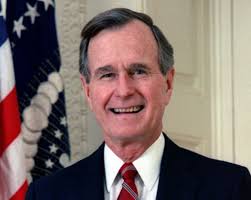
George H.W. Bush
Their evidence: During his tenure at Oxford University in 1969-70, Clinton had briefly visited Moscow.
Thus, the Republican charged that he might have been “programmed” as a real-life “Manchurian candidate” to become, first, Governor of Arkansas—one of America’s poorest states—and then President.
What made this charge all the more absurd: The Soviet Union had officially dissolved in December, 1991.
Republicans continued to accuse their opponents of being “Communists” and “traitors.” But these charges no longer carried the weight they had while the Soviet Union existed.
Right-wingers had to settle for attacking their opponents as “liberals” and “soft on crime.”
When riots flared in 1992 after the acquittal of LAPD officers who had savagely beaten Rodney King, President George H.W. Bush blamed the carnage on the “Great Society” programs of the 1960s.
Then, on September 11, 2001, Republicans—and their right-wing supporters—at last found a suitable replacement for the Red Menace.
Two highjacked jetliners slammed into the World Trade Center in New York and one struck the Pentagon in Washington, D.C.
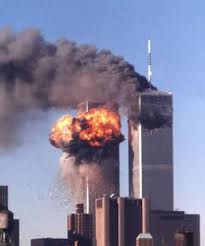
World Trade Center on September 11, 2001
Exit The Red Bogeyman. Enter The Maniacal Muslim.
Consider:
- Rep. Michelle Bachman (R-Minn.): On July 13, 2012, she sent letters to the Inspectors General of the Departments of Defense; State; Justice; and Homeland Security, demanding a “a multi-department investigation into potential Muslim Brotherhood infiltration into the United States Government.”
- Rick Santorum: On supporting the racial profiling of Muslims: “Obviously, Muslims would be someone you look at, absolutely.”
- Mitt Romney: “Based on the numbers of American Muslims in our population, I cannot see that a Cabinet position [for a Muslim] would be justified.”
The 2008 election of Barack Obama pushed the Republican “treason chorus” to new heights of infamy.
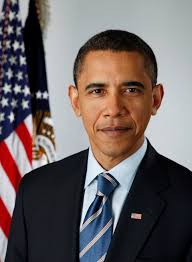
Barack Obama
Almost immediately after Obama took office, he came under attack by an industry of right-wing book authors such as Sean Hannity, Ann Coulter and Rush Limbaugh.
The following titles vividly reveal the hates, fears and ambitions of their authors–and audience:
- Conservative Victory: Defeating Obama’s Radical Agenda by Sean Hannity
- How Barack Obama is Bankrupting the U.S. Economy by Stephen Moore
- The Manchurian President: Barack Obama’s Ties to Communists, Socialists and Other Anti-American Extremists by Aaron Klein
- The Blueprint: Obama’s Plan to Subvert the Constitution and Build an Imperial Presidency by Ken Blackwell
- Culture of Corruption: Obama and His Team of Tax Cheats, Crooks, and Cronies by Michelle Malkin
- Why Obama’s Government Takeover of Health Care Will Be a Disaster by David Gratzer
- Power Grab: How Obama’s Green Policicies Will Steal Your Freedom and Bankrupt America by Christopher C. Horner
- America’s March to Socialism: Why We’re One Step Closer to Giant Missile Parades by Glenn Beck
- The War On Success: How the Obama Agenda Is Shattering the American Dream by Tommy Newberry
- Liberalism is a Mental Disorder: Savage Solutions by Michael Savage
- Treason: Liberal Treachery from the Cold War to the War on Terrorism by Ann Coulter
Yet despite Right-wingers’ slanderous and fear-mongering claims, the United States actually prospered during the Obama years.
- Thanks to government loans from President Obama, American capitalism was saved from its own excesses during the George W. Bush administration.
- Employment went up. CEOs did extremely well.
- In contrast to the corruption that had plagued the administration of Ronald Reagan—whom Republicans idolize—no such scandals haunted the Obama Presidency.
- There had been no major-scale terrorist attacks on American soil–as had occurred on 9/11 under President George W. Bush.
- Millions of Americans who had been unable to obtain healthcare did so under Obama’s Affordable Care Act.
- Obama actually stood up to Russian President Vladimir Putin—as opposed to his successor, Donald Trump, who constantly praised him.
1984 NOVEL, ABC NEWS, ADOLF HITLER, ALTERNET, AMERICABLOG, AP, ” 9/11, BABY BOOMER RESISTANCE, BARACK OBAMA, BBC, BILL CLINTON, BIRTH CONTROL, BLACKS, BLOOMBERG NEWS, BUZZFEED, CBS NEWS, CHILD MOLESTING, CNN, COMMUNISM, CROOKS AND LIARS, DAILY KOZ, DENNIS HASTERT, DISABLED, DISCRIMINATION, DWIGHT D. EISENHOWER, EDWARD R. MURROW, ENVIRONMENTALISTS, FACEBOOK, FAMILY RESEARCH COUNCIL, FIVETHIRTYEIGHT, FRANKLIN D. ROOSEVELT, GAYS, GEORGE C. MARSHALL, GEORGE H.W. BUSH, GEORGE ORWELL, GOP, GREAT SOCIETY, HARPER’S MAGAZINE, HARRY S. TRUMAN, HISPANICS, HIV MEDICATION, HOUSE OF REPRESENTATIVES, HUFFINGTON POST, J. ROBERT OPPENHEIMER, JAN BREWER, JEB BUSH, JOHN BIRCH SOCIETY, JOHN F. KENNEDY, JOHN STEINBECK, JOSEPH R. MCCARTHY, JOSEPH STALIN, JOSH DUGGAR, KGB, LEE ATWATER, LEON TROTSKY, LESBIANS, LIBERALS, LUCILLE BALL, LYNDON B. JOHNSON, MEDIA MATTERS, MEDICAL CARE, MEIN KAMPF, MICHAEL DUKAKIS, MICHELLE BACHMANN, MIKE HUCKABEE, MITT ROMNEY, MOTHER JONES, MOVEON, MSNBC, MUSLIMS, NBC NEWS, NEW REPUBLIC, NEWSDAY, NEWSWEEK, NPR, PBS NEWSHOUR, PETE SEEGER, POLITICO, POLITICUSUSA, PROPAGANDA, RAFAEL "TED" CRUZ, RAW STORY, RELIGION, REPUBLICANS, REUTERS, RICHARD NIXON, RICK PERRY, RICK SANTORUM, ROBERT WELCH, RODNEY KING RIOTS, SALON, SCAPEGOATING, SEATTLE TIMES, SHARIA LAW, SLATE, SOCIALISTS, SOVIET UNION, TALKING POINTS MEMO, THE ATLANTIC, THE CHICAGO SUN-TIMES, THE CHICAGO TRIBUNE, THE DAILY BEAST, THE DAILY BLOG, THE GUARDIAN, THE HILL, THE HUFFINGTON POST, THE INTERCEPT, THE LOS ANGELES TIMES, THE NATION, THE NEW REPUBLIC, THE NEW YORK TIMES, THE NEW YORKER, THE RELIGIOUS FREEDOM RESTORATION ACT, THE VILLAGE VOICE, THE WASHINGTON POST, THINKPROGRESS, TIME, TRANSGENDERS, TRUTHDIG, TRUTHOUT, TWITTER, TWO POLITICAL JUNKIES, U.S. NEWS & WORLD REPORT, UPI, USA TODAY, WILLIAM L. SHIRER, WOMEN, WONKETTE, WORLD WAR 11
In Bureaucracy, History, Law, Law Enforcement, Politics, Social commentary on April 12, 2022 at 12:12 am
The Right’s fixation on transgender “dangers” is only the latest in a long string of “enemies” painted by the Republican party.
During the 1960s and 1970s, the “enemy” was blacks. The key to winning votes of racist whites without appearing racist lay in what Republicans called “the Southern Strategy.”
It was this that won Richard Nixon the Presidency in 1968 and 1972 and the White House for George H.W. Bush in 1988.
In a now-infamous 1981 interview, Right-wing political consultant Lee Atwater explained how this worked:
“You start out in 1954 by saying, ‘Nigger, nigger, nigger.’ By 1968 you can’t say ‘nigger’—that hurts you, backfires.
“So you say stuff like, uh, forced busing, states’ rights, and all that stuff, and you’re getting so abstract.
“Now, you’re talking about cutting taxes, and all these things you’re talking about are totally economic things and a byproduct of them is, blacks get hurt worse than whites….
“‘We want to cut this,’ is much more abstract than even the busing thing, uh, and a hell of a lot more abstract than ‘Nigger, nigger.’
“So anyway you look at it, race is coming on the back burner.”

Lee Atwater
At the end of his life, Atwater recognized the monster he had helped unleash.
Like Reinhard Heydrich—the designer of the “Final Solution” who, on his deathbed, begged forgiveness for his crimes—Atwater, in a 1991 article for Life, apologized to former Democratic Presidential nominee Michael Dukakis for the “naked cruelty” of the 1988 campaign.
But blacks have by no means been the only targets—and victims—of Republican hate campaigns. A partial list of these would include:
- Liberals
- Women
- Socialists
- Secularists
- Disabled
- Environmentalists
- Hispanics
- Gays
- Lesbians
And now transgenders.
George Orwell’s classic 1949 novel, 1984, serves as a better guide to Republican electioneering than any official statement of the GOP.

1984 is set in a futuristic dictatorship called Oceania, whose constantly alternating mortal enemies are Eurasia and Eastasia.
A daily fixture of life in Oceania is the “Two Minutes Hate.” During this, Party members must watch a film depicting the Party’s enemies and express their hatred for them in exactly two minutes.
Chief among these is Emmanuel Goldstein, who is obviously based on Leon Trotsky, the longtime antagonist of Joseph Stalin, dictator of the Soviet Union for almost 30 years.
The “Two Minutes Hate” serves as a form of brainwashing, whose purpose is to whip ordinary citizens into a frenzy of hatred and loathing for whoever the Party designates as it—and their—-mortal enemies.
Since the end of World War II, Republicans have regularly hurled the charge of “treason” against anyone who dared to run against them for office or think other than Republican-approved thoughts.
Republicans had been locked out of the White House from 1933 to 1952, during the administrations of Franklin D. Roosevelt and Harry S. Truman.
Determined to regain the Presidency by any means, they found that attacking the integrity of their fellow Americans a highly effective tactic.
During the 1950s, Wisconsin Senator Joseph R. McCarthy rode a wave of paranoia to national prominence–by attacking the patriotism of anyone who disagreed with him.
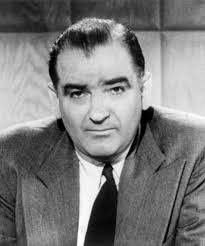
Joseph McCarthy
Elected to the Senate in 1946, he rose to national prominence on February 9, 1950, after giving a fiery speech in Wheeling, West Virginia:
“The State Department is infested with communists. I have here in my hand a list of 205—a list of names that were made known to the Secretary of State as being members of the Communist Party and who nevertheless are still working and shaping policy in the State Department.”
Americans were already growing increasingly fearful of Communism:
- Soviet dictator Joseph Stalin had not withdrawn the Red Army from the countries it had occupied in Eastern Europe during World War II.
- In 1948, the Soviet Union developed—and demonstrated—its own atomic bomb, an achievement U.S. scientists had claimed would not happen for at least a decade.
- In 1949, China fell to the triumphant armies of Mao Tse Tung.
But anti-communism as a lever to political advancement sharply accelerated following McCarthy’s speech. Republicans—resentful at being denied the White House since 1932—seized upon anti-communism as their passport to power.
No American—no matter how prominent—was safe from the accusation of being a Communist or a Communist sympathizer—”a Comsymp” or “fellow traveler” in the style of the era.
Among those accused:
- Secretary of State George C. Marshall, who had overseen America’s strategy for defeating Nazi Germany and Imperial Japan
- President Harry S. Truman
- Playwrights Lillian Hellman and Arthur Miller
- Actors Charlie Chaplin, Zero Mostel, Lloyd Bridges, Howard Da Silva, Edward G. Robinson and John Garfield
- Composers Arron Copland and Elmer Bernstein
- Physicist J. Robert Oppenheimer, who presided over the creation of America’s atomic bomb
- Actresses Lee Grant, Delores del Rio, Ruth Gordon and Lucille Ball
- Journalists Edward R. Murrow and William L. Shirer, who had chronicled the rise of Nazi Germany
- Folksinger Pete Seeger
- Writers Irwin Shaw, Howard Fast, John Steinbeck and Dashiell Hammett
Even “untouchable” Republicans became targets for such slander.
The most prominent of these was President Dwight D. Eisenhower–labeled ”a conscious, dedicated agent of the Communist Conspiracy” by Robert Welch, who founded the John Birch Society in 1958.
2012 PRESIDENTIAL RACE, 2016 PRESIDENTIAL RACE, ABC NEWS, ALTERNET, AMERICABLOG, AP, APOLLO MOON LANDING, BABY BOOMER RESISTANCE, BARACK OBAMA, BBC, BLOOMBERG NEWS, BUZZFEED, CBS NEWS, CNN, CROOKS AND LIARS, CUBAN MISSILE CRISIS, DAILY KOS, DAILY KOZ, DONALD J. TRUMP, DONALD TRUMP, FACEBOOK, FBI, FIVETHIRTYEIGHT, HARPER’S MAGAZINE, HERMAN CAIN, HUFFINGTON POST, JOHN F. KENNEDY, LYNDON B. JOHNSON, MARTIN LUTHER KING, MARTIN SHEEN, MEDIA MATTERS, MOTHER JONES, MOVEON, MSNBC, NBC NEWS, NEW REPUBLIC, NEWSDAY, NEWSWEEK, NIKITA KHRUSHCHEV, NPR, NUCLEAR TEST BAN TREATY, PAUL REVERE, PBS NEWSHOUR, POLITICO, POLITICUSUSA, PT-109, RAW STORY, REUTERS, RICK PERRY, ROBERT F. KENNEDY, ROBERT S. MCNAMARA, SALON, Sarah Palin, SEATTLE TIMES, SLATE, SOVIET UNION, TALKING POINTS MEMO, THE ATLANTIC, THE CHICAGO SUN-TIMES, THE CHICAGO TRIBUNE, THE DAILY BEAST, THE DAILY BLOG, THE GUARDIAN, THE HILL, THE HUFFINGTON POST, THE LOS ANGELES TIMES, THE NATION, THE NEW REPUBLIC, THE NEW YORK TIMES, THE NEW YORKER, THE VILLAGE VOICE, THE WALL STREET JOURNAL, THE WASHINGTON POST, THINKPROGRESS, TIME, TRUTHDIG, TRUTHOUT, TWITTER, TWO POLITICAL JUNKIES, U.S. NEWS & WORLD REPORT, UPI, USA TODAY, VIETNAM WAR, WONKETTE
In Bureaucracy, History, Military, Politics, Social commentary on November 22, 2021 at 12:07 am
Fifty-eight years ago this coming November 22, two bullets slammed into the neck and head of President John Fitzgerald Kennedy.
For most Americans, 1963 was over—and their lives would never be the same.
It has been said that JFK left his country with three great legacies:
- The Nuclear Test Ban Treaty;
- The Apollo moon landing; and
- The Vietnam war.
Of these, the following can be said with certainty:
- The Test Ban Treaty has prevented atmospheric testing—and poisoning—by almost all the world’s nuclear powers.
- After reaching the moon—in 1969—Americans quickly lost interest in space and have today largely abandoned plans for manned exploration. For America, as for JFK, beating the Russians to the moon was the end-goal.
- By the time JFK died, 16,000 Americans were serving in Vietnam, with more than 70 casualties.
- Under Presidents Lyndon Johnson and Richard Nixon, 58,000 Americans died in Vietnam; 153,303 were wounded; and billions of dollars were squandered in a hopeless effort to intervene in what was essentially a Vietnamese civil war. From 1965 to 1972, the war angrily divided Americas as had no event since the Civil War.
But there was a fourth legacy—and perhaps the most important of all: The belief that mankind could overcome its greatest challenges through rationality and perseverance.
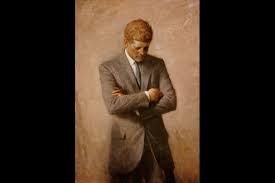
White House painting of JFK
At American University on June 10, 1963, Kennedy asked his fellow Americans to re-examine the events and attitudes that had led to the Cold War. And he declared that the search for peace was by no means hopeless:
“Our problems are man-made; therefore, they can be solved by man. And man can be as big as he wants. No problem of human destiny is beyond human beings.
“Man’s reason and spirit have often solved the seemingly unsolvable, and we believe they can do it again.”
Today, Democrats and Republicans cannot agree on solutions to even the most vital national problems.
On November 21, 2011, the 12 members of the “Super-Committee” of Congress, tasked with finding $1.2 trillion in cuts in government spending, couldn’t reach agreement.
President Kennedy insisted on being well-informed. He speed-read several newspapers every morning and nourished personal relationships with the press—but not for altruistic reasons. These journalistic contacts gave Kennedy additional sources of information and perspectives on national and international issues.
During the 2012 Presidential campaign, Republican candidates celebrated their ignorance of both.
- Former Godfather’s Pizza CEO Herman Cain famously said, “We need a leader, not a reader”—thus excusing his ignorance for why President Barack Obama had intervened in Libya.
- Texas Governor Rick Perry (and Secretary of Energy under Donald Trump) didn’t know there are nine judges on the United States Supreme Court: “Well, obviously, I know there are nine Supreme Court judges. I don’t know how eight came out my mouth. But the, uh, the fact is, I can tell you—I don’t have memorized all of those Supreme Court judges. And, uh, ah—-
- “Here’s what I do know. That when I put an individual on the Supreme Court, just like I done in Texas, ah, we got nine Supreme Court justices in Texas, ah, they will be strict constructionists….”
- In short, it’s the media’s fault if your answer reveals your ignorance, stupidity and/or criminality.
- Sarah Palin rewrote history via “The Midnight Ride of Paul Revere”: “He warned the British that they weren’t going to be taking away our arms by ringing those bells and, um, making sure as he’s riding his horse through town to send those warning shots and bells that, uh, we were going to be secure and we were going to be free.”
- In fact, Revere wasn’t warning the British about anything. Instead, he was warning his fellow Americans about an impending British attack—as his celebrated catchphrase “The British are coming!” made clear.
During the height of the Cuban Missile Crisis, Kennedy spoke with aides about a book he had just finished: Barbara Tuchman’s The Guns of August, about the events leading to World War 1.
He said that the book’s most important revelation was how European leaders had blindly rushed into war, without thought to the possible consequences. Kennedy told his aides he did not intend to make the same mistake—that, having read his history, he was determined to learn from it.
Republicans attacked President Obama for his Harvard education and articulate use of language. Among their taunts: “Hitler also gave good speeches.”
And they resented his having earned most of his income as a writer of two books: Dreams From My Father and The Audacity of Hope. As if being a writer is somehow subversive.
Donald Trump has publicly celebrated ignorance. After winning the Nevada Republican primary in 2016, he declared: “We won with poorly educated. I love the poorly educated.”
Similarly, 58% of Republicans and Right-wingers believe that higher education has a negative effect on the country.
In retrospect, the funeral for President Kennedy marked the death of Americans’ pride in choosing reasoning and educated citizens for their leaders. And in seeking a reasoning and educated future for their children.
When knowledge and literacy are attacked as “highfalutin’” arrogance, and ignorance and incoherence are embraced as sincerity, national decline lies just around the corner.
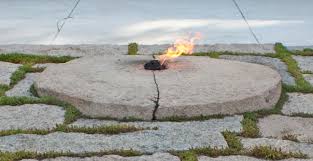
The Eternal Flame at the grave of President John F. Kennedy
2016 PRESIDENTIAL CAMPAIGN, ABC NEWS, ADOLF HITLER, ALTERNET, AMERICABLOG, AP, BABY BOOMER RESISTANCE, BARACK OBAMA, BBC, BERNIE SANDERS, BLOOMBERG NEWS, BUZZFEED, CALLISTA BISEK, CBS NEWS, CNN, CROOKS AND LIARS, DAILY KOZ, DAVID BROOKS, DAVID HALBERSTAM, DEMOCRATIC PARTY, DONALD TRUMP, ELIZABETH WARREN, FACEBOOK, FAMILY VALUES, FIVETHIRTYEIGHT, HARPER’S MAGAZINE, HELEN GAHAGEN DOUGLAS, HILLARY CLINTON, HUFFINGTON POST, JEB BUSH, JOHN KASICH, JOHN KING, JOSEPH R. MCCARTHY, LIBERALS, MARCO RUBIO, MARIANNE GINGRICH, MARK SHIELDS, MEDIA MATTERS, MOTHER JONES, MOVEON, MSNBC, NATIONAL PUBLIC RATIO, NBC NEWS, NEW REPUBLIC, NEWSDAY, NEWSWEEK, NEWT GINGRICH, PBS NEWSHOUR, POLITICO, POLITICUSUSA, RAFAEL "TED" CRUZ, RAW STORY, REPUBLICAN PARTY, REPUBLICANS, REUTERS, RICHARD NIXON, RICK PERRY, SALON, SEATTLE TIMES, SLANDER, SLATE, SOUTH CAROLINA REPUBLICAN PRIMARY, STEPHEN COLBERT, TALKING POINTS MEMO, TAMERA KEITH, THE ATLANTIC, THE BEATLES, THE CHICAGO SUN-TIMES, THE CHICAGO TRIBUNE, THE DAILY BEAST, THE DAILY BLOG, THE GUARDIAN, THE HILL, THE HUFFINGTON POST, THE LOS ANGELES TIMES, THE NATION, THE NEW REPUBLIC, THE NEW YORK TIMES, THE NEW YORKER, THE VILLAGE VOICE, THE WASHINGTON POST, THINKPROGRESS, TIME, TREVOR NOAH, TRUTHDIG, TRUTHOUT, TWITTER, TWO POLITICAL JUNKIES, U.S. NEWS & WORLD REPORT, UNITED STATES HOUSE OF REPRESENTATIVES, UPI, USA TODAY, VLADIMIR PUTIN, WONKETTE
In Bureaucracy, History, Politics, Social commentary on May 12, 2021 at 12:22 am
On the May 27, 2016, edition of The PBS Newshour, conservative New York Times columnist David Brooks analyzed the use of insults by Republican Presidential front-runner Donald Trump.
“Trump, for all his moral flaws, is a marketing genius. And you look at what he does. He just picks a word and he attaches it to a person. Little Marco [Rubio], Lyin’ Ted [Cruz], Crooked Hillary [Clinton].
“And that’s a word. And that’s how marketing works. It’s a simple, blunt message, but it gets under.
“It sticks, and it diminishes. And so it has been super effective for him, because he knows how to do that. And she [Hillary Clinton] just comes with, ‘Oh, he’s divisive.’”
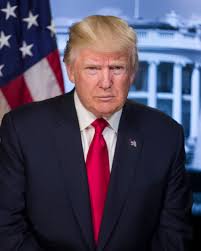
Donald Trump
Hillary Clinton wasn’t the only Presidential candidate who proved unable to cope with Trump’s gift for insult. His targets—and insults—included:
- Former Texas Governor Rick Perry: “Wears glasses to seem smart.”
- Former Florida Governor Jeb Bush: “Low Energy Jeb.”
- Vermont U.S. Senator Bernie Sanders: “Crazy Bernie.”
- Ohio Governor John Kasich: “Mathematically dead and totally desperate.”
Only one candidate has shown the ability to rattle Trump: Massachusetts Senator Elizabeth Warren.
As liberal syndicated columnist Mark Shields noted on The PBS Newshour.
“Elizabeth Warren gets under Donald Trunp’s skin. And I think she’s been the most effective adversary. I think she’s done more to unite the Democratic party than either Hillary Clinton or Bernie Sanders.”
Added David Brooks: “And so the tactics…is either you do what Elizabeth Warren has done, like full-bore negativity, that kind of [get] under the skin, or try to ridicule him and use humor.”
Words are weapons—or can be, if used properly.
Republicans learned this truth after World War II.
- Richard Nixon became a United States Senator by attacking Helen Gahagen Douglas as “the Pink Lady.”
- Senator Joseph R. McCarthy and other Red-baiting Republicans essentially paralyzed the Democratic party through such slanderous terms as “Comsymps,” “fellow-travelers” and “Fifth Amendment Communists.”
As a whole, Democrats have shown themselves indifferent to or ignorant of the power of effective language.
Many of them—such as former President Barack Obama—believe: “I’m not going to get into the gutter like my opponents.”
Thus, they take the “high ground” while their sworn Republican enemies undermine them via “smear and fear” tactics.
As far back as the early 1950s, slander-hurling Wisconsin U.S. Senator Joseph R. McCarthy demonstrated the effectiveness of such tactics. Wrote Pulitzer-Prize winning author David Halberstam, in his monumental study of the origins of the Vietnam War, The Best and the Brightest:
“But if they did not actually stick, and they did not, [McCarthy’s] charges had an equally damaging effect: They poisoned. Where there was smoke, there must be fire. He wouldn’t be saying these things [voters reasoned] unless there was something to it.”
Joseph McCarthy
President Donald J. Trump:
- Solicited aid from Russian Communists to win the Presidency in 2016;
- Solicited aid from Chinese Communists to retain it in 2020′
- Attacked countless Americans and world leaders—including those who preside over America’s NATO alliance.
Yet he has never dared criticize Russian dictator Vladimir Putin.
As a result, Democrats could legitimately refer to him as
- “TrumPutin”
- “Commissar-in-Chief”
- “Putin’s Poodle”
- “Red Donald”
- “Putin’s Puppet”
- “Trumpy Traitor.”
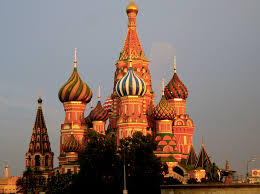
The Kremlin
But Trump got a free pass on treason from Democrats and news media alike.
Tyrants are conspicuously vulnerable to ridicule. Yet here, too, Democrats have proven unable or unwilling to make use of this powerful weapon.
In this YouTube-obsessed age, Democrats could effectively assail Trump with a series of ridiculing videos. For example, Trump’s well-established “bromance” with Putin could be turned into a parody of the famous Beatles’ song, “With a Little Help From My Friends”:
What do I do when the bank calls me in?
(Does it worry you to be in debt?)
How do I feel when I need rubles fast?
(Do you worry Vlad might say “Nyet”?)
No, I get by with a little help from my Vlad.
Mm, I can lie with a little help from my Vlad.
Mm, you’re gonna fry with a little help from my Vlad.

Many of Trump’s fiercest defenders in the House and Senate have taken “campaign contributions” (i.e., bribes) from Russian oligarchs. They could be pointedly attacked by turning the Muppet song, “The Rainbow Connection,” into “The Russian Connection.”
And Right-wingers taking bribes?
For traitors with something to hide.
And some choose to believe it.
It’s clear as the old KGB.
The bribers, the traitors–you’ll see.
Trump has repeatedly shown that he doesn’t take well to ridicule. Admittedly, late-night comedians like Stephen Colbert and Trevor Noah have inflicted huge comic damage on Trump’s image and ego.
But it’s one thing for a professional comedian to serve up such barbs—and another for a major political party to do so through a series of blistering TV ads.
Humorists could easily provide the material. But it will take courage by the Democrats to use it.
2016 PRESIDENTIAL CAMPAIGN, ABC NEWS, ADOLF HITLER, ALTERNET, AMERICABLOG, AP, BABY BOOMER RESISTANCE, BARACK OBAMA, BBC, BERNIE SANDERS, BLOOMBERG NEWS, BUZZFEED, CALLISTA BISEK, CBS NEWS, CNN, CROOKS AND LIARS, DAILY KOZ, DAVID BROOKS, DAVID HALBERSTAM, DEMOCRATIC PARTY, DONALD TRUMP, ELIZABETH WARREN, FACEBOOK, FAMILY VALUES, FIVETHIRTYEIGHT, HARPER’S MAGAZINE, HELEN GAHAGEN DOUGLAS, HILLARY CLINTON, HUFFINGTON POST, JEB BUSH, JOHN KASICH, JOHN KING, JOSEPH R. MCCARTHY, LIBERALS, MARCO RUBIO, MARIANNE GINGRICH, MARK SHIELDS, MEDIA MATTERS, MOTHER JONES, MOVEON, MSNBC, NATIONAL PUBLIC RATIO, NBC NEWS, NEW REPUBLIC, NEWSDAY, NEWSWEEK, NEWT GINGRICH, PBS NEWSHOUR, POLITICO, POLITICUSUSA, RAFAEL "TED" CRUZ, RAW STORY, REPUBLICAN PARTY, REPUBLICANS, REUTERS, RICHARD NIXON, RICK PERRY, SALON, SEATTLE TIMES, SLANDER, SLATE, SOUTH CAROLINA REPUBLICAN PRIMARY, STEPHEN COLBERT, TALKING POINTS MEMO, TAMERA KEITH, THE ATLANTIC, THE BEATLES, THE CHICAGO SUN-TIMES, THE CHICAGO TRIBUNE, THE DAILY BEAST, THE DAILY BLOG, THE GUARDIAN, THE HILL, THE HUFFINGTON POST, THE LOS ANGELES TIMES, THE NATION, THE NEW REPUBLIC, THE NEW YORK TIMES, THE NEW YORKER, THE VILLAGE VOICE, THE WASHINGTON POST, THINKPROGRESS, TIME, TREVOR NOAH, TRUTHDIG, TRUTHOUT, TWITTER, TWO POLITICAL JUNKIES, U.S. NEWS & WORLD REPORT, UNITED STATES HOUSE OF REPRESENTATIVES, UPI, USA TODAY, VLADIMIR PUTIN, WONKETTE
In Bureaucracy, History, Politics, Social commentary on May 11, 2021 at 12:13 am
On January 19, 2012, moderator John King opened CNN’s South Carolina Republican debate by asking candidate Newt Gingrich:
“Your ex-wife gave an interview to ABC News and another interview at The Washington Post and this story has now gone viral on the internet.
“In it, she says that you came to her in 1999 at a time you were having an affair. She says you asked her, sir, to enter into an open marriage. Would you like to take some time to respond to that?”
Gingrich, who as House Speaker had loudly championed “family values” as his personal cause while Bill Clinton was President, angrily replied:
“No, but I will. I think — I think the destructive, vicious, negative nature of much of the news media makes it harder to govern this country, harder to attract decent people to run for public office.
“And I am appalled that you would begin a presidential debate on a topic like that. The story is false. Every personal friend who I had during that period said it was false. We offered several to ABC to prove it was false. They weren’t interested because they would like to attack any Republican.”
During that interview, Marianne, Gingrich’s second ex-wife had said Newt had told her he wanted an open marriage.
“I found out during our conversations that it was occurring in my bedroom in our apartment in Washington and he always called me at night. He would always end with I love you while she was there listening. In my home.”
In August 2000, Gingrich married Callista Bisek four months after his divorce from Marianne was finalized.
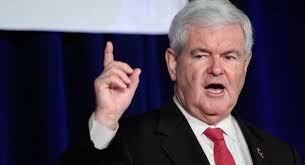
Newt Gingrich
During his tirade to CNN moderator John King, Gingrich said: “Every person in here knows personal pain. Every person here has had someone who’s gone through personal things.
“To take an ex-wife and two days before the primary [raise] a significant question in the presidential campaign is as close to despicable as anything I can imagine….I am frankly astounded that CNN would take trash like that and open the debate.”
One person who was not moved by Gingrich’s sympathy-inciting rant was National Public Radio reporter Tamara Keith:
“That someone else [whom Gingrich was having an affair with] was Callista Bisek, a congressional staffer two decades younger than Gingrich. They had an affair for six years.
“Callista Gingrich is now his third wife, and stands by his side at campaign events nodding adoringly. Their affair in the 1990s spans the period when Gingrich led the impeachment of President Clinton, giving speeches about morality along the way.”
In 1996, Newt Gingrich, then Republican Speaker of the House of Representatives, wrote a memo that encouraged Republicans to “speak like Newt.”
Entitled “Language: A Key Mechanism of Control,” it urged Republicans to attack Democrats with such words as “corrupt,” “selfish,” “destructive,” “hypocrisy,” “liberal,” “sick,” and “traitors.”
Even worse, Gingrich encouraged the news media to disseminate such accusations. Among his suggestions:
- “Fights make news.”
- Create a “shield issue” to deflect criticism: “A shield issue is, just, you know, your opponent is going to attack you as lacking compassion. You better…show up in the local paper holding a baby in the neonatal center.”

In the memo, Gingrich advised:
“….In the video “We are a Majority,” Language is listed as a key mechanism of control used by a majority party, along with Agenda, Rules, Attitude and Learning.
“As the tapes have been used in training sessions across the country and mailed to candidates we have heard a plaintive plea: ‘I wish I could speak like Newt.’
“That takes years of practice. But, we believe that you could have a significant impact on your campaign and the way you communicate if we help a little. That is why we have created this list of words and phrases….
“This list is prepared so that you might have a directory of words to use in writing literature and mail, in preparing speeches, and in producing electronic media.
“The words and phrases are powerful. Read them. Memorize as many as possible. And remember that like any tool, these words will not help if they are not used.”
Here is the list of words Gingrich urged his followers to use in describing “the opponent, their record, proposals and their party”:
- abuse of power
- anti- (issue): flag, family, child, jobs
- betray
- bizarre
- bosses
- bureaucracy
- cheat
- coercion
- “compassion” is not enough
- collapse(ing)
- consequences
- corrupt
- corruption
- criminal rights
- crisis
- cynicism
- decay
- deeper
- destroy
- destructive
- devour
- disgrace
- endanger
- excuses
- failure (fail)
- greed
- hypocrisy
- ideological
- impose
- incompetent
- insecure
- insensitive
|
- intolerant
- liberal
- lie
- limit(s)
- machine
- mandate(s)
- obsolete
- pathetic
- patronage
- permissive attitude
- pessimistic
- punish (poor …)
- radical
- red tape
- self-serving
- selfish
- sensationalists
- shallow
- shame
- sick
- spend(ing)
- stagnation
- status quo
- steal
- taxes
- they/them
- threaten
- traitors
- unionized
- urgent (cy)
- waste
- welfare
|
Yes, speaking like Newt—or Adolf Hitler or Joseph R. McCarthy—“takes years of practice.”
And to the dismay of both Republicans and Democrats, Donald Trump learned that lesson well.


 Bureaucracybuster's Blog
2012 PRESIDENTIAL RACE, ALTERNET, AP, BARACK OBAMA, BAY OF PIGS, BBC, BERLIN WALL, BILL CLINTON, BRUCE GREENWOOD, BUZZFEED, CARLOS MARCELLO, CBS NEWS, CIA, CIVIL RIGHTS, CLIFF ROBERTSON, CNN, CUBAN MISSILE CRISIS, DAILY KOS, DAVID HALBERSTAM, DONALD J. TRUMP, FACEBOOK, FBI, FIDEL CASTRO, FRANK SINATRA, HERMAN CAIN, ICH BEN EIN BERLINNER SPEECH, INTERNET MOVIE DATABASE, J. EDGAR HOOVER, JAMES MARSDEN, JOHN F. KENNEDY, JOSEPH MCCARTHY, JOSEPH P. KENNEDY, LYNDON B. JOHNSON, MAFIA, MALCOM X, MARTIN LUTHER KING, MARTIN SHEEN, MOTHER JONES, MOVEON, MOVIES, NBC NEWS, NEWSWEEK, NEWT GINGRICH, NIKITA KHRUSHCHEV, NPR, NUCLEAR TEST BAN TREATY, POLITICO, PT-109, RAW STORY, REUTERS, RICK PERRY, ROBERT F. KENNEDY, ROBERT S. MCNAMARA, SALON, SAM GIANCANA, SANTOS TRAFFICANTE, Sarah Palin, SATURDAY NIGHT LIVE, SEATTLE TIMES, SLATE, SOVIET UNION, THE ATLANTIC, THE BEST AND THE BRIGHTEST, THE BUTLER, THE CHICAGO SUN-TIMES, THE CHICAGO TRIBUNE, THE DAILY BEAST, THE GUARDIAN, THE HILL, THE HUFFINGTON POST, THE LOS ANGELES TIMES, THE MISSILES OF OCTOBER, THE NEW YORK TIMES, THE RAT PACK, THE WALL STREET JOURNAL, THE WASHINGTON POST, THIRTEEN DAYS, TIME, TWILIGHT ZONE, TWITTER, U.S. NEWS & WORLD REPORT, UPI, USA TODAY, VIETNAM WAR, WILLIAM DEVANE, WILLIAM PETERSON
JFK: ONE HUNDRED YEARS LATER: PART FOUR (OF TEN)
In Bureaucracy, Business, History, Law, Law Enforcement, Military, Politics, Social commentary on July 7, 2022 at 9:24 amJohn F. Kennedy became President when civil rights suddenly became a burning issue throughout the Nation.
At Kennedy’s request, dozen of law firms sent lawyers South, so civil rights demonstrators would not lack counsel.
Prominent blacks such as Thurgood Marshall, Robert C. Weaver and George L.L. Weaver were appointed, respectively, to the Supreme Court, the Housing and House Finance Agency and the office of Assistant Secretary of Labor.
But Kennedy was highly reluctant to push for a civil rights bill addressing the overall issues of racial discrimination.
The reason: Most of the chairman of House and Senate committees were deeply conservative Southern racists–whether Republican or Democrat. They decided whether Kennedy’s foreign policy initiatives would be approved or opposed–especially his bills for increased foreign aid.
Kennedy believed he could not offend such men without jeopardizing the legacy he wanted to achieve in foreign policy.
This timidity, in turn, led many prominent blacks—such as Martin Luther King and Malcom X—to believe they would see no innovative moves on Kennedy’s part.
But events forced Kennedy’s hand.
On September 30, 1962, the President sent deputy U.S. marshals and National Guardsmen into Mississippi to restore order. Rioting had erupted when, by federal court order, James Meredith, a black, was enrolled at the state university.
Kennedy’s problems in winning support for his civil rights program arose in the folkways of the Nation. When laws run counter to a nation’s folkways, the laws lose.
In backing the admission of Meredith, the President chose an incident which would set off shockwaves for black rights.
Kennedy held mixed emotions about the demand for civil rights by blacks. On one hand, as an Irish Catholic, he grew up with stories about longtime discrimination against his ancestors (such as the “No Irish Need Apply” signs posted by numerous employers).
On the other hand, he had been born into a world of power and wealth, and he had to grope his way toward understanding the problems of the oppressed.
Another major confrontation broke out between Kennedy and the forces of segregation on June 11, 1963. Alabama Governor George C. Wallace personally blocked the entrance of two black pupils to the University of Tuscaloosa.
The President, watching on TV, federalized the Alabama National Guard, which Wallace had used to ring the school. Wallace withdrew and the students were admitted and enrolled.
That same day, Kennedy addressed the nation on the need for genuine equality for all Americans: “The question is whether we are going to treat our fellow Americans as we want to be treated.”
JFK addresses the nation on civil rights
And he called on Congress to pass his civil rights bill, which had been stalled by the legislators.
On August 28, 1963, 200,000 civil rights demonstrators flooded Washington, D.C., for a massive rally.
Fearing that violence would erupt—embarrassing his administration and setting back the cause of civil rights—Kennedy had sought to persuade Dr. Martin Luther King, the march’s chief figure, to cancel the proposed march.
But King and his fellow organizers were determined to go through with it. They had, they said, waited too long for justice to be satisfied with anything less.
The dignity and peacefulness of the rally–and, most especially, King’s soaring “I Have a Dream” speech–won tremendous sympathy throughout the country. Kennedy met with civil rights leaders afterward to offer his support.
Martin Luther King during the March on Washington
But Kennedy’s civil rights bill remained stalled in Congress until 1964. President Lyndon B. Johnson used the assassinated Kennedy’s new status as a martyr to gain enough support for its passage.
Meanwhile, on yet another front, the Kennedy administration was waging an unprecedented war against organized crime.
This was primarily the work of Attorney General Robert F. Kennedy. As chief counsel for the Senate Permanent Subcommittee on Investigations (1957–59), he had interrogated about 800 mobsters who had been summoned by subpoena.
And he had learned, firsthand, how ineffective the FBI and Justice Department were at bringing such powerful criminals to justice. The FBI had long steered clear of organized crime investigations, largely because its director, J. Edgar Hoover, feared corruption of his agents.
Upon taking office as Attorney General, he greatly expanded the number of attorneys assigned to the Justice Department’s Organized Crime Section. And, more important, he used his status as brother to the President to jawbone FBI Director J. Edgar Hoover into attacking the Mob.
The FBI installed illegal microphones in Mob hangouts throughout the country and started building cases against such mobsters as Sam Giancana, Santos Trafficante and Carlos Marcello.
The administration’s attack on the Mob has led some historians to believe the assassination of President Kennedy was Mob-orchestrated.
The reasons:
Share this: