Posts Tagged ‘REPUBLICAN PARTY’
2016 PRESIDENTIAL RACE, 9/11, 9/11 TERROR ATTACKS, ABC NEWS, ABORTION, AFFORDABLE CARE ACT, AIDS PREVENTION, ALTERNET, AMERICABLOG, AP, BABY BOOMER RESISTANCE, BUZZFEED, CBS NEWS, CENTERS FOR DISEASE CONTROL, CHURCH VS. STATE, CLIMATE CHANGE, CNN, CONDOMS, CORONAVIRUS, CROOKS AND LIARS, DAILY KOZ, DISCRIMINATION, DONALD TRUMP, DRUDGE RETORT, ENVIRONMENTAL PROTECTION AGENCY, FACEBOOK, FIRST CHURCH OF CANNABIS, FIVETHIRTYEIGHT, FOOD AND DRUG ADMINISTRATION, GAYS, HARPER’S MAGAZINE, HIV, HOMOSEXUALITY, ILLEGAL ALIENS, INDIANA, ISLAM, ISLAMICS, LESBIANS, MARIJUANA, MEDIA MATTERS, MIKE PENCE, MOTHER JONES, MOVEON, MOVIES, MSNBC, NBC NEWS, NEEDLE EXCHANGES, NEWSWEEK, NPR, PBS NEWSHOUR, PLANNED PARENTHOOD, POLITICO, POLITICUSUSA, PREJUDICE, RAW STORY, RELIGIOUS FREEDOM RESTORATION ACT, REPUBLICAN PARTY, REPUBLICANS, REUTERS, SALON, SEATTLE TIMES, SHARIA LAW, SLATE, SMOKING, SUPREME COURT, TALKING POINTS MEMO, THE ATLANTIC, THE CHICAGO SUN-TIMES, THE CHICAGO TRIBUNE, THE DAILY BEAST, THE DAILY BLOG, THE GUARDIAN, THE HILL, THE HUFFINGTON POST, THE LOS ANGELES TIMES, THE NATION, THE NEW REPUBLIC, THE NEW YORK TIMES, THE VILLAGE VOICE, THE WASHINGTON POST, THINKPROGRESS, TIME, TRUTHDIG, TRUTHOUT, TWITTER, TWO POLITICAL JUNKIES, U.S. HOUSE OF REPRESENTATIVES, U.S. NEWS & WORLD REPORT, UPI, USA TODAY, WONKETTE
In Bureaucracy, Business, History, Politics, Social commentary on March 16, 2020 at 12:09 am
On February 26, President Donald Trump appointed Vice President Mike Pence to lead a task force to combat the spread of the Coronavirus.
In doing so, he rejected calls to appoint an outside medical expert.
This put the Federal medical establishment under a trusted sycophant—and gave Trump a convenient scapegoat if something went wrong.
So here’s what America is getting as its medical savior.
Michael Richard “Mike” Pence served as a Republican member of the House of Representatives from 2001 to 2013. He also served as Chairman of the House Republican Conference from 2009 to 2012. His record included:
- Voted, in 2007, to defund Planned Parenthood because it provides abortions.
- Opposed, in 2009, giving American citizenship to children born to illegal aliens living within the United States.
- Compared the U.S. Supreme Court’s upholding the Constitutionality of the Affordable Care Act to the September 11, 2001 terrorist attacks.
- Voted to eliminate funding for climate education programs and to prohibit the Environmental Protection Agency from regulating greenhouse gas emissions.
In 2012, he ran for Governor of Indiana, won the election, and assumed this office in 2013.
As Governor, Pence:
- Signed legislation in 2015 that repealed an 80-year-old Indiana law requiring construction companies working on publicly funded projects to pay a prevailing wage.
- Successfully lobbied in 2013 to limit reductions in sentences for marijuana offenses.
On July 15, 2016, Republican Presidential candidate Donald Trump announced on Twitter that he had selected Pence as his Vice Presidential running mate in the 2016 Presidential election.
But for all of Pence’s actions as Congressman and Governor, the one which may prove the most far-reaching may be this: His signing into law the Religious Freedom Restoration Act.
As Governor of Indiana, he did this on March 26, 2015. The law allows any individual or corporation to cite its religious beliefs as a defense when sued by a private party.
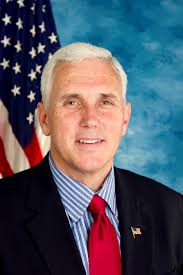
Mike Pence
Officially, its intent is to prevent the government from forcing business owners to act in ways contrary to strongly held religious beliefs. Unofficially, its purpose is to appease the hatred of gays and lesbians by the religious Right, a key constituency of the Republican party.
Thus, a bakery can legally refuse to make a cake for a gay wedding or a restaurant can refuse to serve lesbian patrons.
And a hospital can refuse to provide care to a gay or lesbian patient.
The bill was passed overwhelmingly by both chambers of the Republican-controlled state legislature.
“Today I signed the Religious Freedom Restoration Act, because I support the freedom of religion for every Hoosier of every faith,” Pence said in a statement on the day he signed the bill.
“The Constitution of the United States and the Indiana Constitution both provide strong recognition of the freedom of religion but today, many people of faith feel their religious liberty is under attack by government action.”
Yet for all his praise for the bill, Pence signed it in a ceremony closed to the public and the press. The media were asked to leave even the waiting area of the governor’s office.
At least one unintended consequence of that legislation has already surfaced: The First Church of Cannabis.
The day after Pence signed the Act, church founder Bill Levin announced on his Facebook page that he had filed paperwork with the office of the Indiana Secretary of State.
Its registration had been approved—and Levin was ecstatic: “Now we begin to accomplish our goals of Love, Understanding, and Good Health.
“Donate $100 or more and become a GREEN ANGEL. Donate $500 or more and become a GOLD ANGEL. Donate $1000 or more and become a CHURCH POOHBA.”
This legislation has not only brought legal marijuana to Indiana. It may bring Sharia law as well.
Since 9/11, Right-wingers such as Rush Limbaugh and Sean Hannity have warned that Muslims are trying to impose Sharia (Islamic law) on America. And now Indiana’s legislators, in elevating religion above the law, may have laid the legal foundations for making that possible.
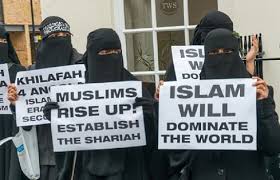
Muslims demanding the imposition of Sharia law–on themselves and non-Muslims
What will happen when:
- Muslims in Indiana claim their right—guaranteed in Islamic religious law—to have as many as four wives?
- Muslims demand a taxpayer-funded “halal” non-pork food shelf at free food pantries for the poor? (Exactly this happened among Somali refugees in Minnesota in 2015.)
- Muslims demand that police departments cancel counter-terrorism courses by claiming that their materials are anti-Muslim? (Exactly this happened to several police departments in Illinois.)
And when they claim that the Religious Freedom Restoration Act protects those rights?
Now that Pence is Coronizavirus Czar, it’s essential to remember:
- In 2001, when he ran for Congress, he posted on his campaign website: “Despite the hysteria from the political class and the media, smoking doesn’t kill.”
- As a Congressman, Pence voted against legislation allowing the Food and Drug Administration to regulate the tobacco industry.
- During a CNN panel in 2002 about abstinence education, Pence said: “Frankly, condoms are a very, very poor protection against sexually transmitted diseases.”
- In 2015, Indiana had an unprecedented HIV outbreak. Although the Centers for Disease Control recommended clean needle exchanges, Pence, as governor, opposed this.
As the Coronavirus threatens to overwhelm the United States as it has Italy, the appointment of Mike Pence as America’s Dr. Marcus Welby is not an event to celebrate.
ABC NEWS, ABOUT FACE: THE ODYSSEY OF AN AMERICAN WARRIOR, ADAM SCHIFF, ALAMO, ALTERNET, AMERICABLOG, AP, ARTICLES OF IMPEACHMENT, BABY BOOMER RESISTANCE, BUZZFEED, CBS NEWS, CNN, CROOKS AND LIARS, DACHAU CONCENTRATION CAMP, DAILY KOZ, DAVID HACKWORTH, DEMOCRATIC PARTY, DONALD TRUMP, DRUDGE RETORT, FACEBOOK, FBI, FIVETHIRTYEIGHT, HARPER’S MAGAZINE, HOUSE INTELLIGENCE COMMITTEE, IMPEACHMENT, MEDIA MATTERS, MOTHER JONES, MOVEON, MSNBC, NAZI GERMANY, NBC NEWS, NEWSWEEK, NPR, PBS NEWSHOUR, POLITICO, POLITICUSUSA, RAW STORY, REPUBLICAN PARTY, REUTERS, SALON, SARAH JONES, SEATTLE TIMES, SLATE, TALKING POINTS MEMO, THE ATLANTIC, THE CHICAGO SUN-TIMES, THE CHICAGO TRIBUNE, THE DAILY BEAST, THE DAILY BLOG, THE GUARDIAN, THE HILL, THE HUFFINGTON POST, THE LOS ANGELES TIMES, THE NATION, THE NEW REPUBLIC, THE NEW YORK TIMES, THE VILLAGE VOICE, THE WASHINGTON POST, THERMOPYLAE, THINKPROGRESS, TIME, TRUMP TOWER MEETING, TRUTHDIG, TRUTHOUT, TWITTER, TWO POLITICAL JUNKIES, U.S. NEWS & WORLD REPORT, UNITED STATES CONSTITUTION, UNITED STATES HOUSE OF REPRESENTATIVES, UNITED STATES SENATE, UPI, USA TODAY, WONKETTE
In Bureaucracy, History, Law, Law Enforcement, Military, Politics, Social commentary on February 5, 2020 at 12:13 am
On December 10, 2019, Sarah Jones, editor-in-chief of PoliticusUSA, did what Senate Republicans fear to do: She openly declared Donald J. Trump to be an illegitimate President whose removal is entirely justified.
She did so in an editorial titled, “Adam Schiff Tells Trump That He Won’t Be Allowed To Cheat In 2020.”
“On Tuesday as House Democrats made the formal announcement of articles of impeachment against President Trump, House Intelligence Committee Chairman Adam Schiff gave a perfectly accurate rebuttal to the plea that Democrats should ‘just wait’ on impeachment, saying that those who argue ‘just wait’ are actually arguing ‘just let him cheat in one more election’ and ‘let him have foreign help just one more time,’” wrote Jones. [Italics added]
To underscore her point, Jones concluded: “Trump’s cheating is finally being acknowledged and punished.
“This matters because after three years of pretending that Trump is the rightful president, it is finally being acknowledged that not only is he trying to cheat in 2020, but it is again, because he cheated in 2016.
“For three years this nation has endured the abuses of this pretender and his entire party of lock step enablers, save for Rep. Amash of Michigan.
“For three long years those who suggested Trump was not a legitimate president were shamed and silenced, even after the Mueller report made it clear that the Trump campaign sought illegal help and took illegal help from Russia in the 2016 election.
“Now that Trump is again seeking foreign help to undermine our elections and in so doing, attacking our national security and core values — and only due to the bravery of whistleblowers got caught red-handed — the entitled, privileged, faux-wealthy con artist poorly playing president has finally been called what he is: A cheat.
“A cheating cheater.
“A loser.
“A man who can’t win an election and did not win an election of the people fairly.
“Donald Trump can’t win an election without cheating. He knows that, and that’s why it upsets him so much to be called out for his illegal actions.
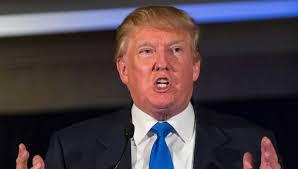
Donald Trump
“Trump is used to getting away with his criminal entitlements, but today, even if just for a moment before Republicans in the Senate betray their country again by letting Trump off as he attacks the United States, justice has been spoken and served.” [Italics added]
Before Republicans in the Senate betray their country again by letting Trump off….
Jones clearly has no patience for those who insist on playing a game of “Let’s Pretend.” As in: “Let’s pretend that Republicans care more about the Constitution and the security of the nation than about attaining dictatorial power.”
In September, 2019, the House Intelligence Committee began investigating Trump’s attempt to coerce Ukraine to smear a 2020 political rival for the White House—former Vice President Joseph Biden.
And every day of its hearings, Republicans loudly and brutally defended that extortion.
- They didn’t offer any evidence that Trump didn’t try to extort an ally.
- They simply attacked the witnesses who dared to come forward and testify to their own knowledge of it.
- They attacked Schiff, who heads that committee, demanding self-righteously that he resign.
And they continued to do so throughout the Senate “trial”—where they banned witnesses from testifying about Trump’s impeachable behavior.
It’s a certainty that the Republican-dominated Senate (53 to 47 Democrats) will once again serve as Trump’s “party of lock step enablers.”
But there is a way to put the impeachment effort into historical perspective.
In 1960, David Hackworth was a young Army captain stationed in West Germany. The end of World War II had revealed the horror of Nazi death camps and the extermination of millions. To everyone, that is, but the Germans.

David Hackworth
Dale Cruse. (Flickr profile.) / CC BY-SA (http://creativecommons.org/licenses/by-sa/3.0/)
One winter’s day, Hackworth took his wife, Patty, to Dachau, the infamous concentration camp. In his 1989 memoir, About Face: The Odyssey of an American Warrior, he describes that experience:
“The horror of Hitler’s vision was alive and well in this grim death camp: the barracks, the ovens, the electrified barbed wire fences, remained intact. A mound here held the bones of 10,000 Jews; one over there held the bones of 12,000 more.
“The place was a monument to the darkest side of man, and yet—despite the smoke and ash that rained down on their homes from camp incinerators, despite the sickly smell of burning flesh and hair….the villagers claimed they hadn’t known. I couldn’t square it….”
Nor could Hackworth accept that “not one of the laughing, backslapping, congenial comrades I met…had fought the Americans in the West. All assured me they’d been on the Eastern Front, fighting ‘the real enemy,’ the Russians….
“In 15 years the Germans had come a long way in their rewrite of history. But at least there’s Dachau, I thought to myself, to remind them of the truth.”
So, too, will the impeachment of Donald Trump stand as a monument to the sheer evil and infamy of himself and the Republican party.
And it will remind future generations that there were decent Americans who dared to confront that evil in a stand as hopeless and glorious as that at Thermopylae and the Alamo.
2016 PRESIDENTIAL ELECTION, ABC NEWS, ALEXANDER SHUSTOROVICH, ALTERNET, ANDREW INTRATER, ANTI-COMMUNISM, AP, BUZZFEED, CBS NEWS, CIA, CINDY HYDE-SMITH, CNN, CROOKS AND LIARS, DAILY KOZ, DONALD TRUMP, DONALD TRUMP’S INAUGURAL COMMITTEE, FACEBOOK, FBI, FEDERAL ELECTION COMMISSION, HILLARY CLINTON, HOUSE JUDICIARY COMMITTEE, INTERNET RESEARCH AGENCY, JAMES COMEY, LEN BLAVATNIK, LINDSEY GRAHAM, MAIN INTELLIGENCE DIRECTORATE, MARCO RUBIO, MITCH MCCONNELL, MITCH MCCONNELL’S SENATE LEADERSHIP FUN, MOTHER JONES, MOVEON, MSNBC, NATIONAL SECURITY AGENCY, NAZI GERMANY, NBC NEWS, NEWSWEEK, NORTH ATLANTIC TREATY ORGANIZATION (NATO), NPR, OFFICE OF THE DIRECTOR OF NATIONAL INTELLIGENCE, PBS NEWSHOUR, POLITICO, RAW STORY, REPUBLICAN PARTY, REUTERS, ROBERT MUELLER, SALON, SCOTT WALKER, SEATTLE TIMES, SIMON KUKES, SLATE, SOVIET UNION, THE ATLANTIC, THE CHICAGO SUN-TIMES, THE CHICAGO TRIBUNE, THE DAILY BEAST, THE GUARDIAN, THE HILL, THE HUFFINGTON POST, THE LOS ANGELES TIMES, THE NATION, THE NEW YORK TIMES, THE WASHINGTON POST, TIME, TWITTER, U.S. NEWS & WORLD REPORT, UNITED STATES HOUSE OF REPRESNTATIVES, UNITED STATES SENATE, UPI, USA TODAY, VLADIMIR PUTIN, WIKILEAKS
In Bureaucracy, History, Law, Politics, Social commentary on January 31, 2020 at 12:05 am
On July 24, 2019, former Special Counsel Robert S. Mueller III finally addressed Congress on Russia’s subversion of the 2016 Presidential election.
Mueller had spent almost two years uncovering links between Russian Intelligence agents and members of Donald Trump’s Presidential campaign.
In his report, Mueller documented years of meddling in American politics by the Internet Research Agency, which runs the Kremlin’s online disinformation efforts from its headquarters in St. Petersburg.
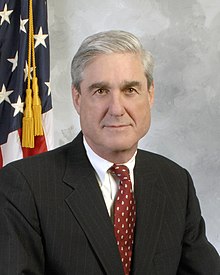
Robert Mueller
During the 2016 Presidential campaign, the Agency reached 126 million Americans through fake accounts on Facebook.
Hours later that same day, Senator Cindy Hyde-Smith (R-Mississippi) blocked the passage of three bills designed to tighten election security at the federal level. She claimed that Congress had already responded to election security needs for the 2020 Presidential election.
Senate Majority Leader Mitch McConnell (R-Kentucky) came to the Senate floor the next day to personally object to House-passed legislation backed by Democrats.
From 1945 to 2015, it was unthinkable for a Republican Presidential candidate to pay tribute to a Soviet dictator.
But that utterly changed when Donald J. Trump, a “reality TV” host with longstanding financial ties to Russian oligarchs, ran for President of the United States.
Donald Trump
Trump lavishly praised Russian President Vladimir Putin—and even invited him to directly interfere in the 2016 Presidential race.
The reason for the Trump-Putin bromance: Each had something to offer the other.
Putin wanted the United States to ditch the North Atlantic Treaty Organization (NATO) alliance, which had preserved Western Europe from Russian aggression since World War II. And Trump had often attacked America’s funding of NATO as a drain on the American economy.
And Trump wanted to be President. For this, Putin could supply Internet trolls to confuse voters with falsified news—and even the hacking of key voting centers.
And monies. These Russian monies were officially classified as “campaign contributions,” not bribes.
On July 22, 2016, Wikileaks released 19,252 emails and 8,034 attachments hacked from computers of the highest-ranking officials of the Democratic National Committee (DNC). Early reports traced the leak to Russian hackers.
On July 27, Trump said at a press conference in Doral, Florida: “Russia, if you are listening, I hope you are able to find the 33,000 emails that are missing [from Democratic Presidential candidate Hillary Clinton’s computer]. I think you will probably be rewarded mightily by our press.”
Hours later, the Main Intelligence Directorate in Moscow targeted Clinton’s personal office and hit more than 70 other Clinton campaign accounts.
This is treason—calling upon a foreign power, hostile to the United States, to interfere in its Presidential election.
Nor is Trump the only Republican receiving “help” from Putin. A network of Russian oligarchs—all of them answerable to Putin—has been increasingly contributing to top Republicans.
According to the Federal Election Commission:
One such major contributor is Len Blavatnik, who holds citizenship in both the United States and the United Kingdom. During the 2015-16 election cycle, he proved one of the largest donors to GOP Political Action Committees (PACs).
Blavatnik’s net worth is estimated at $20 billion. Before 2016, he donated to both Democrats and Republicans in meager amounts. But in 2016, he gave $6.35 million to GOP PACs.
Millions of dollars went to top Republican leaders—such as Senators Mitch McConnell (Kentucky), Marco Rubio (Florida) and Lindsey Graham (South Carolina).
Specifically, he contributed:
- A total of $1.5 million to PACs associated with Rubio.
- $1 million to Trump’s Inaugural Committee.
- $41,000 to both Republicans and Democrats in 2017.
- $1 million to McConnell’s Senate Leadership Fund.
- $3.5 million to a PAC associated with McConnell.
- $1.1 million to Unintimidated PAC, associated with Wisconsin Governor Scott Walker.
- $200,000 to the Arizona Grassroots Action PAC, associated with the late Arizona Senator John McCain.
- $250,000 to New Day for America PAC, associated with Ohio Governor John Kasich.
- $800,000 to the Security is Strength PAC, associated with Senator Lindsey Graham.
![]()
![]() Another Russian oligarch, Alexander Shustorovich, contributed $1 million to Trump’s Inaugural Committee.
Another Russian oligarch, Alexander Shustorovich, contributed $1 million to Trump’s Inaugural Committee.
Altogether, four Russian oligarchs—Blavatnik, Shustorovich, Andrew Intrater and Simon Kukes—contributed $10.4 million from the start of the 2015-16 election cycle through September 2017. Of this, 99% went to Republicans.
As Senate Majority Leader, Mitch McConnell participated in high-level intelligence briefings in 2016. From agencies such as the FBI, CIA and the code-cracking National Security Agency, he learned that the Russians were trying to subvert the electoral process.

In October, 2016, the Department of Homeland Security (DHS) and the Office of the Director of National Intelligence (DNI) issued a joint statement: The Russian government had directed the effort to subvert the 2016 Presidential election.
Two weeks later, McConnell’s PAC accepted a $1 million donation from Blavatnik.
On March 30, 2017, McConnell’s PAC accepted another $1 million from Blavatnik.
This is just 10 days after former FBI Director James Comey testified before the House Intelligence Committee about Russia’s efforts to subvert the 2016 election.
So, what has changed in the Republican Party? Essentially nothing.
Its enemies changed—from Russian Communists to American liberals—but its goal remains the same: The quest for absolute power.
When Americans feared Communism, Republicans depicted themselves as the only ones who could be trusted to protect the United States. Big contributions poured in from Right-wing billionaires like H.L. Hunt and Howard Hughes.
But when Republicans found they could enrich themselves and stay in power via Russian “campaign contributions,” they decided: Better Red than un-elected.
ABC NEWS, AL QAEDA, ALTERNET, AMERICABLOG, AP, BABY BOOMER RESISTANCE, BASHIR AL-ASSAD, BUZZFEED, CBS NEWS, CHARLES GEORGE GORDON, CHARLTON HESTON, CNN, CROOKS AND LIARS, DAILY KOZ, DRUDGE RETORT, FACEBOOK, FIVETHIRTYEIGHT, GEORGE W. BUSH, GREAT BRITAIN, HARPER’S MAGAZINE, HIZBOLLAH, IRAQ, ISLAM, KHARTOUM, KHARTOUM (MOVIE), LAURENCE OLIVER, MEDIA MATTERS, MOTHER JONES, MOVEON, MSNBC, NBC NEWS, NEOCONS, NEWSWEEK, NPR, PBS NEWSHOUR, POLITICO, POLITICUSUSA, PRESIDENT BARACK OBAMA, RAW STORY, REPUBLICAN PARTY, REUTERS, SALON, SEATTLE TIMES, SHIITE MUSLIMS, SLATE, SUDAN, SUNNI MUSLIMS, SYRIA, TALKING POINTS MEMO, THE ATLANTIC, THE CHICAGO SUN-TIMES, THE CHICAGO TRIBUNE, THE DAILY BEAST, THE DAILY BLOG, THE GUARDIAN, THE HILL, THE HUFFINGTON POST, THE LOS ANGELES TIMES, THE MADHI, THE NATION, THE NEW REPUBLIC, THE NEW YORK TIMES, THE VILLAGE VOICE, THE WALL STREET JOURNAL, THE WASHINGTON POST, THINKPROGRESS, TIME, TRUTHDIG, TRUTHOUT, TWITTER, TWO POLITICAL JUNKIES, U.S. NEWS & WORLD REPORT, UPI, USA TODAY, WILLIAM GLADSTONE, WONKETTE
In Bureaucracy, History, Military, Politics, Social commentary on January 27, 2020 at 12:04 am
January 26, 2020, marked the 135th anniversary of the fall of Khartoum, the Sudanese city that sits on the banks of the White and Blue Nile Rivers.
The siege and fall of Khartoum is one of the truly epic stories of military history.
From March 18, 1884, to January 26, 1885, the charisma and military genius of one man—British General Charles George Gordon—held at bay an army of thousands of fanatical Islamics intent on slaughtering everyone in the city. 

Khartoum in 1888—four years after the siege
At stake were the lives of Khartoum’s 30,000 residents.
By comparison: The defenders of the Alamo—a far better-known battle, in 1836—numbered no more than 250. And the siege of the San Antonio mission lasted only 13 days against an army of about 2,000 Mexicans.
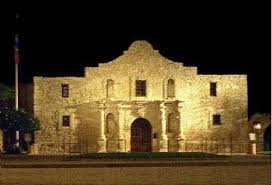
The Alamo
Gordon’s story may seem antiquated. But it resembles the efforts Republicans made to pressure the Obama administration to commit ground forces to “freeing” Syria of its longtime dictator, “President” Bashir al-Assad.
The neocons of the George W. Bush Administration plunged the United States into an unprovoked war against Iraq in 2003. After Baghdad quickly fell, Americans cheered, thinking the war was over and the troops would soon return home.
Suddenly, American soldiers found themselves waging a two-front war in the same country: Fighting an Iraqi insurgency to throw them out, while trying to suppress growing sectarian warfare between Sunni and Shia Muslims.
And then, with Syria, Americans were being urged to plunge headfirst into a conflict they knew nothing about—and in which they had absolutely no stake.
On one side was the Ba’ath regime of Bashir al-Assad, supported by Russia, Iran, Hizbollah and elements in the Iraqi government. Hizbollah is comprised of Shiite Muslims, who form a minority of Islamics.
A sworn enemy of Israel, it has kidnapped scores of Americans suicidal enough to visit Lebanon and truck-bombed the Marine barracks in Beirut in 1983, killing 299 Americans.

Flag of Hizbollah
Al-Qaeda, on the other hand, is made up of Sunni Muslims, who form the majority of that religion.
It is intolerant of non-Sunni Muslims and has instigated violence against them. It denounces them as “takfirs”–heretics—and thus worthy of extermination.

Flag of Al-Qaeda
In short, it’s a Muslim-vs.Muslim “holy war.
It’s all very reminiscent of events in the 1966 epic film, Khartoum, starring Charlton Heston as British General Charles George Gordon.
In 1884, the British government sends Gordon, a real-life hero of the Victorian era, to evacuate the Sudanese city of Khartoum.
Mohammed Achmed, a previously anonymous Sudanese, has proclaimed himself “The Madhi” (“The Expected One”) and raised the cry of jihad.
The Madhi (played by Lawrence Olivier) intends to drive all foreigners (of which the English are the largest group) out of Sudan and exterminate all those Muslims who do not practice his “pure” version of Islam.


Charlton Heston as Gordon (left); Laurence Oliver as the Madhi (right)
Gordon arrives in Khartoum to find he’s not fighting a rag-tag army of peasants. Instead, the Madhi is a highly intelligent military strategist.
And Gordon, an evangelical Christian, also finds he has underestimated the Madhi’s religious fanaticism: “I seem to have suffered from the delusion that I had a monopoly on God.”
A surprised Gordon finds himself and 30,000 Sudanese trapped in Khartoum when the Madhi’s forces suddenly appear. He sends off messengers and telegrams to the British Government, begging for a military relief force.
But the British Government wants nothing to do with the Sudan. It has sent Gordon there as a sop to British public opinion that “something” had to be done to quell the Madhist uprising.
The siege continues and tightens.
In Britain, the public hails Gordon as a Christian hero and demands that the Government send a relief expedition to save him.
Prime Minister William Gladstone finally sends a token force—which arrives in Khartoum two days after the city has fallen to the Madhi’s forces.
Gordon, standing at the top of a staircase and coolly facing down his dervish enemies, is speared to death.
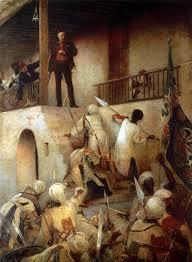
George W. Joy’s famous—and romanticized—painting of “The Death of Gordon”
(Actually, the best historical evidence indicates that Gordon fought to the last with pistol and sword before being overwhelmed by his dervish enemies.)
When the news reaches England, Britons mourn—and then demand vengeance for the death of their hero.
The Government, which had sought to wash its hands of the poor, military unimportant Sudan, suddenly has to send an army to avenge Gordon.
As the narrator of Khartoum intones at the close of the film: “For 15 years the British paid the price with shame and war.”
There is a blunt lesson for Americans to learn from this episode—and from the 1966 movie Khartoum itself.
Americans have been fighting in the Middle East since 2001—first in Afghanistan to destroy Al-Qaeda, and then in Iraq, to pursue George W. Bush’s vendetta against Saddam Hussein.
The United States faces a crumbling infrastructure, millions living in poverty and trillions of dollars in debt.
It’s time for Americans to clean up their own house before worrying about the messes in other nations—especially those wholly alien to American values.
9/11, ABC NEWS, ABRAHAM LINCOLN, AL QAEDA, ALTERNET, AMERICABLOG, AP, BABY BOOMER RESISTANCE, BARACK OBAMA, BUZZFEED, CBS NEWS, CNN, CROOKS AND LIARS, CUBAN MISSILE CRISIS, DAILY KOZ, DONALD TRUMP, DRUDGE RETORT, EMANCIPATION PROCLAMATION, FACEBOOK, FBI, FIVETHIRTYEIGHT, FORD'S THEATER, FRANKLIN D. ROOSEVELT, FURLOUGHS, GOVERNMENT SHUTDOWN, HARPER’S MAGAZINE, JOHN F. KENNEDY, MEDIA MATTERS, MOTHER JONES, MOVEON, MSNBC, MSNBC'S "HARDBALL", NATIONAL PARK SERVICE, NBC NEWS, NEWSWEEK, NPR, PBS NEWSHOUR, POLITICO, POLITICUSUSA, RAW STORY, REPUBLICAN PARTY, REPUBLICANS, REUTERS, RICHARD NIXON, SALON, SEATTLE TIMES, Secret Service, SLATE, SOVIET UNION, STEPHEN TYRONE JONES, TALKING POINTS MEMO, TERRORISM, THE ATLANTIC, THE CHICAGO SUN-TIMES, THE CHICAGO TRIBUNE, THE DAILY BEAST, THE DAILY BLOG, THE GUARDIAN, THE HILL, THE HUFFINGTON POST, THE LOS ANGELES TIMES, THE NATION, THE NEW REPUBLIC, THE NEW YORK TIMES, THE VILLAGE VOICE, THE WASHINGTON POST, THINKPROGRESS, TIME, TRUTHDIG, TRUTHOUT, TWITTER, TWO POLITICAL JUNKIES, U.S. NEWS & WORLD REPORT, UNITED STATES HOLOCAUST MEMORIAL, UPI, USA TODAY, VIETNAM WAR MEMORIAL, WHITE HOUSE, WONKETTE, WORLD WAR 11
In Bureaucracy, History, Law Enforcement, Politics, Social commentary on December 26, 2019 at 1:21 am
Republicans constantly revile the very government they lust to control.
But there are others—living or working in Washington, D.C.—who perform their jobs with quiet dedication.
One of these unsung heroes was Stephen Tyrone Johns, a security guard at the United States Holocaust Memorial Museum.
On June 10, 2009, Johns, 39, was shot and killed by James Wenneker von Brunn, a white supremist and Holocaust denier. Brunn was himself shot and wounded by two other security guards who returned fire.
United States Holocaust Museum
At 88, von Brunn died in jail awaiting trial.
Washington, D.C. ranks—with New York City—at the top of Al Qaeda’s list of targets.
Prior to 9/11, Americans assumed that visiting the White House was their birthright.
Today, if you want to tour the Executive Mansion, you quickly learn there are only two ways to get in:
- Through a special pass provided by your Congressman; or
- By someone connected with the incumbent administration.
Congressmen, however, have a limited number of passes to give out. And most of these go to people who have put serious money into the Congressman’s re-election campaigns.
And the odds that you’ll know someone who works in the White House—and who’s willing to offer you an invitation—are even smaller than those of knowing a Congressman.
But even then you’ll have to undergo a Secret Service background check. And that means submitting the following information in advance of your visit:
- Name
- Date of birth
- Birthplace
- Social Security Number

Secret Service agents protecting President Barack Obama
You’ll have to leave many items at home. Among these:
- Cameras or video recorders
- Handbags, book bags, backpacks or purses
- Food or beverages
- Tobacco products
- Strollers
- Cell phones
- Knives
- Electric stun guns
- Mace
After showing a government-issued ID—such as a driver’s license—visitors enter the White House from the south side of East Executive Avenue.
After passing through the security screening room, they walk upstairs to the first door and through the East, Green, Blue, Red and State Dining rooms.
Secret Service agents quietly stand post in every room—unless they’re tasked with explaining the illustrious history of each section of the White House.
Like everyone else who lives/works there, the Secret Service fully appreciates the incredible sense of history that radiates throughout the building.
This is where
- Abraham Lincoln signed the Emancipation Proclamation;
- Franklin Roosevelt directed the United States to victory in World War II;
- John F. Kennedy stared down the Soviets during the Cuban Missile Crisis.
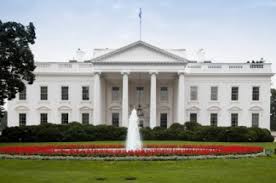
The White House
But even the generally unsmiling Secret Service agents have their human side.
While touring the East Wing of the White House, I asked an agent: “Is the East Room where President Nixon gave his farewell speech?” on August 9, 1974.
“I haven’t been programmed for that information,” the agent joked, inviting me to ask a question he could answer.
Another guest asked the same agent if he enjoyed being a Secret Serviceman. The agent replied that this was simply what he did for a living. His real passion, he said, was counseling youths.
“If you love something,” he advised, “get a job where you can do it. And if you can’t get a job you’re passionate about, get a job so you can pursue your passion.”
On December 22, 2018, President Donald J. Trump shut down the government. The reason: A Democratic House refused to fund his “border wall” between the United States and Mexico.
An estimated 380,000 government employees were furloughed and another 420,000 were ordered to work without pay.
Trump’s fanatical base believed that a wall across the U.S.-Mexico border would stop all illegal immigration. Trump knew it wouldn’t. But he also knew that if he didn’t build it, they wouldn’t re-elect him.
Donald Trump
The effects of the shutdown quickly became evident:
- For weeks, hundreds of thousands of government workers missed paychecks.
- Increasing numbers of employees of the Transportation Safety Administration (TSA)—which provides security against airline terrorism—began refusing to come to work, claiming to be sick.
- At the Federal Aviation Administration (FAA) many air traffic controllers called in “sick.” Those who showed up to work without pay grew increasingly frazzled as they feared being evicted for being unable to make rent or house payments.
- Many Federal employees—such as FBI agents—were forced to rely on soup kitchens to feed their families.
- Many workers tried to bring in money by babysitting or driving for Uber,
Trump told Congressional leaders the shutdown could last months or even years.
But by January 25, 2019, the 35th day of the shutdown, Trump’s popularity had fallen to a historic low of 37%. On that day, he caved and re-opened the government.
The men and women who work in Washington, D.C., aren’t faceless “bureaucrats,” as Right-wingers falsely claim.
They are husbands and wives, fathers and mothers. They have deadlines to meet and bills to pay, just like everyone else.
Many of them, such as agents of the FBI and Secret Service, have taken an oath to defend the United States Constitution—with their lives if necessary.
They deserve a better break—and the respect of their fellow Americans.
ABC NEWS, ABRAHAM LINCOLN, AL QAEDA, ALTERNET, AMERICABLOG, AP, ” 9/11, BABY BOOMER RESISTANCE, BUZZFEED, CBS NEWS, CNN, CROOKS AND LIARS, CUBAN MISSILE CRISIS, DAILY KOZ, DONALD TRUMP, DRUDGE RETORT, EMANCIPATION PROCLAMATION, FACEBOOK, FBI, FIVETHIRTYEIGHT, FORD'S THEATER, FRANKLIN D. ROOSEVELT, FURLOUGHS, GOVERNMENT SHUTDOWN, HARPER’S MAGAZINE, JOHN F. KENNEDY, MAFIA, MEDIA MATTERS, MOTHER JONES, MOVEON, MSNBC, MSNBC'S "HARDBALL", NATIONAL PARK SERVICE, NBC NEWS, NEWSWEEK, NPR, PBS NEWSHOUR, POLITICO, POLITICUSUSA, RAW STORY, REPUBLICAN PARTY, REPUBLICANS, REUTERS, RICHARD NIXON, SALON, SEATTLE TIMES, Secret Service, SLATE, SOVIET UNION, STEPHEN TYRONE JONES, TALKING POINTS MEMO, TERRORISM, THE ATLANTIC, THE CHICAGO SUN-TIMES, THE CHICAGO TRIBUNE, THE DAILY BEAST, THE DAILY BLOG, THE GUARDIAN, THE HILL, THE HUFFINGTON POST, THE LOS ANGELES TIMES, THE NATION, THE NEW REPUBLIC, THE NEW YORK TIMES, THE VILLAGE VOICE, THE WASHINGTON POST, THINKPROGRESS, TIME, TRUTHDIG, TRUTHOUT, TWITTER, TWO POLITICAL JUNKIES, U.S. NEWS & WORLD REPORT, UNITED STATES HOLOCAUST MEMORIAL, UPI, USA TODAY, VIETNAM WAR MEMORIAL, WHITE HOUSE, WONKETTE, WORLD WAR 11
In Bureaucracy, History, Law Enforcement, Politics, Social commentary on December 25, 2019 at 12:27 am
To hear Right-wingers tell it, you might believe that Washington, D.C. is:
- The capitol of an enemy nation;
- A cesspool of corrupt, power-hungry men and women slavering to gain dictatorial control over the life of every American;
- A center of lethal contagion which, like ancient Carthage, should be burned to the ground and its inhabitants destroyed or scattered.
According to Republicans, they are all that prevents “Washington” from gaining absolute power over a defenseless citizenry.
This does not stop Republicans from lusting to rule it—and enable a Constitution-violating Donald Trump to serve as “President-for-Life.”
But others who live or work in Washington, D.C. take a far different view of their city and the duties they perform.
These men and women will never call a press conference or rake in millions in “political contributions” (i.e., legalized bribes) for promising special privileges to special interests.
Many of them work for the National Park Service. Every national monument—and Washington is speckled with monuments—has several of these employees assigned to it. Their duties are to protect the monuments and offer historical commentary to the public.
One such employee regularly addresses visitors to Ford’s Theater—known worldwide as the scene of President Abraham Lincoln’s assassination.
George (a pseudonym) opens his lecture by raising the question every member of the audience wants answered: How much of Ford’s Theater remains intact from the night of Lincoln’s murder—April 14, 1865?
And the answer is: Only the exterior of the building.
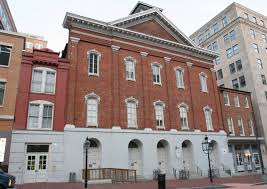
Ford’s Theater
After Lincoln’s assassination, enraged Union soldiers converted the interior of the building into a military command center. That meant ripping out all the seats for spectators and the stage for actors.
The stage and seats—even the “Presidential Box” where Lincoln sat—have all been reproduced for a modern audience.
As George talks, you can tell that, for him, this is no typical day job. He realizes that, renovated or not, Ford’s Theater remains saturated with history. And he clearly feels privileged to share that history with others.
George explains that Presidential assassin John Wilkes Booth did not sneak into the theater. He didn’t have to—as a celebrity actor, he received the sort of favored treatment now accorded Brad Pitt.
Another monument where you will find Park Ranger guides is the Vietnam Veterans Memorial.
Completed in 1982, it receives about three million visitors a year. Adorning the Wall, in columns that seem to reach endlessly to the sky, are the names of the 58,195 soldiers who gave their lives during the Vietnam War.
That struggle—from 1961 to 1975—proved the most divisive American conflict since the Civil War.
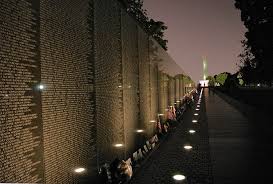
Vietnam Veterans Memorial Wall
On the day I visited the memorial, groups of elementary schoolchildren passed by. They were jabbering loudly, seemingly oblivious to the terrible sacrifice the Wall was meant to commemorate.
But their adult chaperones realized its significance, and ordered the children to quiet down. I asked a nearby Park Ranger: “Do you feel people now respond differently to the Wall, as we get further away from the Vietnam war?”
“No,” he answered. He felt that today’s visitors showed the same reverence for the monument and for the losses it had been created to honor as those who had first come in the early 1980s.
And it may well be true: I saw many tiny American flags and wreaths of flowers left at various points along the Wall, which stretches across 250 feet of land on the Mall.
When thinking about “Washington,” it’s essential to remember that this city—along with New York City—remains at the top of Al Qaeda’s target list. Those who choose to live and/or work here do so in the potential shadow of violent death.
Anytime you enter a Federal building, be prepared to undergo a security check.
In most agencies—such as the Department of Agriculture—you simply place your bags or purses into an X-ray machine similar to those found at airports, and walk through a magnetometer. If no alarms sound, you collect your valuables and pass on through.
Such machines are, of course, mammed by armed security guards. And they stand sentinel at every conceivable Federal building—such as the Supreme Court, the Department of Justice, the Smithsonian Museum, the Pentagon and the U.S. Holocaust Memorial Museum.
These men and women must daily inspect the bodies and handbags of the 15 million people who visit Washington, D.C. annually, generating $5.24 billion dollar in revenues.
This means repeating the same screening gestures countless times—looking through X-ray machines at bags or coats, and running an electronic “wand” up and down those people whose clothing gives off signs of metallic objects.
It also means knowing that any one of these ordinary looking visitors could be the next terrorist intent on killing as many people as possible.
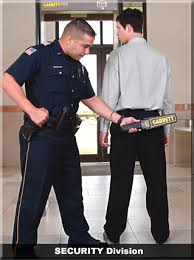
It also means projecting a smiling, friendly demeanor towards those same people—many of whom are in a rush and/or resent being electronically sniffed over.
And every security guard knows this: It’s only a matter of time before the next terrorist shows up.
On June 10, 2009, just that happened at the United States Holocaust Memorial.
2016 PRESIDENTIAL RACE, ABC NEWS, ADRIANNE ZUCKER, ALTERNET, ANTHONY SALARNO, ANTHONY SALERNO, AP, BILLY BUSH, BUZZFEED, CBS NEWS, CHARLES SCHUMER, CNN, CROOKS AND LIARS, DAILY KOZ, DAYS OF OUR LIVES, DONALD TRUMP, FACEBOOK, GAIUS CALIGULA, GAIUS SUETONIUS TRANQUILLUS, GOVERNMENT SHUTDOWN, HILLARY CLINTON, IVANKA TRUMP, MAFIA, MEXICO BORDER WALL, MICHELE BACHMANN, MOTHER JONES, MOVEON, NANCY PELOSI, NBC NEWS, NEWSWEEK, NPR, PAUL CASTELLANO, POLITICO, RAW STORY, REPUBLICAN PARTY, REUTERS, ROBERT LEUCI, ROMAN EMPIRE, SALON, SEATTLE TIMES, Secret Service, SEXUAL HARASSMENT, SLATE, THE ATLANTIC, THE CHICAGO SUN-TIMES, THE CHICAGO TRIBUNE, THE DAILY BEAST, THE GUARDIAN, THE HILL, THE HUFFINGTON POST, THE LOS ANGELES TIMES, THE NATION, THE NEW YORK TIMES, THE TWELVE CAESARS, THE WALL STREET JOURNAL, THE WASHINGTON POST, TIME, TODAY, TWITTER, U.S. NEWS & WORLD REPORT, UPI, USA TODAY
In Bureaucracy, History, Law, Law Enforcement, Military, Politics, Social commentary on December 9, 2019 at 12:06 am
Unlike Gaius Caligula, Donald Trump hasn’t yet been charged with murder. But he has often boasted: “Get even with people. If they screw you, screw them back 10 times as hard. I really believe that.”
And during his rise as a business mogul, he hired mobbed-up firms to erect Trump Tower and his Trump Plaza apartment building in Manhattan. Among his business associates: Mafia bosses Anthony “Fat Tony” Salerno and Paul Castellano.
If Trump hasn’t ordered rub-outs, there’s no question that many of the mobsters he’s dealt with have.
And during his second Presidential debate with Democratic nominee Hillary Clinton, he previewed the dangers of a Trump Justice Department: “If I win I am going to instruct my attorney general to get a special prosecutor to look into your situation.”
Reports have since emerged that he tried to pressure Acting Attorney General Rod Rosenstein into prosecuting Clinton—even though there was no evidence that she had committed a crime.
As emperor of Rome, Caligula’s egomania soon reached psychotic heights.
- He gave himself several surnames: “Pious,” “Child of the Camp,” “Father of the Armies,” and “Greatest and Best of Caesars.”
- Flattered that he had risen higher than princes and kings, he began to believe himself a god.
- He appeared at the temple of Castor and Pollux to be worshiped as Jupiter Latiaris.
- He also set up a special temple to his own godhead.

Gaius Caligula
Trump’s egomania is literally stamped on his properties. Of the 515 entities he owns, 268 of them—52%—bear his last name. He often refers to his properties as “the swankiest,” “the most beautiful.”
Among the references he’s made to himself:
- “My fingers are long and beautiful, as, it has been well documented, are various other parts of my body.”
- “I think the only difference between me and the other candidates is that I’m more honest and my women are more beautiful.”
- “My Twitter has become so powerful that I can actually make my enemies tell the truth.”
- “My IQ is one of the highest—and you all know it.”
When Caligula wasn’t ordering wholesale Stalin-like purges—ranging from Roman aristocrats to slaves—he was setting new records for debauchery.
According to the Roman historian Gaius Suetonius Tranquillus: “He lived in habitual incest with all his [three] sisters, and at a large banquet he placed each of them in turn below him, while his wife reclined above. Of these he is believed to have violated Drusilla when he was still a minor.”
Trump has never been charged with incest, but he’s repeatedly made sexually inappropriate comments about his daughter, Ivanka:
- “Yeah, she’s really something, and what a beauty, that one. If I weren’t happily married and, ya know, her father …”
- When Trump appeared on the Dr. Oz Show, he was joined on stage by Ivanka. After they kissed, Dr. Oz said: “It’s nice to see a dad kiss his daughter.” Trump: “I kiss her every chance I get.” The remark was edited before the show aired.
- When asked how he would react if Ivanka, a former teen model, posed forPlayboy, Trump replied: “I don’t think Ivanka would do that, although she does have a very nice figure. I’ve said if Ivanka weren’t my daughter, perhaps I’d be dating her.”
I
Ivanka Trump
For all his cruelty and egomania, the trait that finally destroyed Caligula was his joy in humiliating others.
His fatal mistake was to taunt Cassius Chaerea, a member of his own bodyguard. Caligula considered Chaerea effeminate because of a weak voice and mocked him with names like “Priapus” and “Venus.”
On January 22 41 A.D. Chaerea and several other bodyguards hacked Caligula to death with swords before other guards could save him.
Like Caligula, Trump may find that his joy in inflicting suffering on others may ultimately destroy him.
By December 28, 2018, the New York Times estimated that Trump had insulted 551 people, places and institutions since declaring his candidacy for President in 2015.
Before taking office as President, Trump added to this list the United States Secret Service. He did so by keeping his longtime private security force, and combining its members with those of the elite federal agency.
Marginalizing the Secret Service sent a clear and insulting message: “You’re not good enough, and I don’t trust you.”
Among the agencies directly affected by the Trump-ordered government shutdown, now into its 18th day: The Department of Homeland Security (DHS)—whose employees include the Secret Service agents who protect Trump.
In short: The men and women guarding Trump are facing financial ruin—along with their families—because Trump didn’t get his way on “The Wall.”
In the 1981 movie, Prince of the City—based on the real-life career of NYPD Detective Robert Leuci—a Mafia killer warns a cop who will soon testify against police corruption: “Anybody can be hit. You know that. All those guards have to do is look the wrong way for a second.”
Secret Service agents now face a choice: To take a bullet for a tyrant masquerading as President—or for their families threatened with ruin.
It remains to be seen if Trump suffers the same fate of Caligula.
2016 PRESIDENTIAL RACE, ABC NEWS, ADRIANNE ZUCKER, ALTERNET, ANTHONY SALERNO, AP, BILLY BUSH, BUZZFEED, CBS NEWS, CHARLES SCHUMER, CNN, CROOKS AND LIARS, DAILY KOZ, DAYS OF OUR LIVES, DONALD TRUMP, FACEBOOK, GAIUS CALIGULA, GAIUS SUETONIUS TRANQUILLUS, GOVERNMENT SHUTDOWN, HILLARY CLINTON, IVANKA TRUMP, MAFIA, MEXICO BORDER WALL, MICHELE BACHMANN, MOTHER JONES, MOVEON, NANCY PELOSI, NBC NEWS, NEWSWEEK, NPR, PAUL CASTELLANO, POLITICO, RAW STORY, REPUBLICAN PARTY, REUTERS, ROBERT LEUCI, ROMAN EMPIRE, SALON, SEATTLE TIMES, Secret Service, SEXUAL HARASSMENT, SLATE, THE ATLANTIC, THE CHICAGO SUN-TIMES, THE CHICAGO TRIBUNE, THE DAILY BEAST, THE GUARDIAN, THE HILL, THE HUFFINGTON POST, THE LOS ANGELES TIMES, THE NATION, THE NEW YORK TIMES, THE TWELVE CAESARS, THE WALL STREET JOURNAL, THE WASHINGTON POST, TIME, TODAY, TWITTER, U.S. NEWS & WORLD REPORT, UPI, USA TODAY
In Bureaucracy, History, Law, Law Enforcement, Military, Politics, Social commentary on December 6, 2019 at 12:09 am
Like Gaius Caligula, the “mad emperor” of ancient Rome, Donald Trump can truly say: “Let them hate me, so long as they fear me.”
In fact, he said exactly that to Bob Woodward, the legendary Washington Post investigative reporter: “Real power is—I don’t even want to use the word—fear.”
Similarities between Trump and Caligula emerged well before Trump entered the White House.
On October 7, 2016, The Washington Post leaked a video of Donald Trump making sexually predatory comments about women.
The remarks came during a 2005 exchange with Billy Bush, then the host of Access Hollywood (and now host of Today).

Billy Bush
Daniel S.-L. [CC BY-SA 4.0 (https://creativecommons.org/licenses/by-sa/4.0)%5D, from Wikimedia Commons
The two were traveling in an Access Hollywood bus to the set of the soap opera Days of Our Lives, where Trump was to make a cameo appearance.
Neither Trump nor Bush could be seen during the exchange–the video focuses entirely on the bus. But the audio came in clearly–and, for Trump, damningly:
Donald Trump:You know and I moved on her actually. You know she was down on Palm Beach. I moved on her and I failed. I’ll admit it. I did try and fuck her. She was married.
Unknown: That’s huge news.
Trump:No, no, Nancy. No this was—and I moved on her very heavily, in fact, I took her out furniture shopping. She wanted to get some furniture. I said I’ll show you where they have some nice furniture.
I took her out furniture. I moved on her like a bitch, but I couldn’t get there, and she was married. Then all of a sudden I see her, she’s now got the big phony tits and everything. She’s totally changed her look.
[At that point, they spot Arianne Zucker, the starring actress in Days in Our Lives.]

Arianne Zucker
Greg Hernandez from California, CA, USA [CC BY 2.0 (https://creativecommons.org/licenses/by/2.0)%5D, via Wikimedia Commons
Bush: Sheesh, your girl’s hot as shit. In the purple. Yes! The Donald has scored. Whoa, my man!
Trump: Look at you. You are a pussy. Maybe it’s a different one.
Bush: It better not be the publicist. No, it’s her. It’s—
Trump: Yeah, that’s her. With the gold. I better use some Tic Tacs just in case I start kissing her. You know I’m automatically attracted to beautiful—I just start kissing them. It’s like a magnet. Just kiss. I don’t even wait. And when you’re a star they let you do it. You can do anything.
Bush: Whatever you want.
Trump: Grab them by the pussy. You can do anything.
Gaius Caligula—who lived in open incest with his three sisters—couldn’t have said it better.
When the Washington Post broke the story on October 7, the reaction was immediate—and explosive.
Caligula’s life spanned August 31, 12 A.D. to January 24, 41 A.D. His chief biographer was Gaius Suetonius Tranquillus.

Gaius Caligula
Trump was born on June 14, 1946.
Caligula became Emperor in 37 A.D. after succeeding the Emperor Tiberius, his uncle who had adopted him as a son after his father died.
Trump was elected President on November 8, 2016, after winning 304 electoral votes to 227 for his Democratic opponent, Hillary Clinton.
Trump began his real estate career at his father’s real estate and construction company. He rose to wealth and fame after his father, Fred, gave him control of the business in 1971.
Caligula’s reign began well—and popularly. He gave Tiberius a magnificent funeral—then recalled to Rome all those whom Tiberius had banished, and ignored all charges that Tiberius had leveled against them.
He gave bonuses to the military and destroyed lists of those Tiberius had declared traitors. He allowed the magistrates unrestricted jurisdiction, without appeal to himself.
Similarly, soon after acquiring the family business, Trump set out to build his own empire—hotels, golf courses, casinos, skyscrapers across North and South America, Europe and Asia. He named many of them after himself.
He appeared at the Miss USA pageants, which he owned from 1996 to 2015. He hosted and co-produced The Apprentice, an NBC reality television series from 2004 to 2015.
The ancient historians describe Caligula as a noble and enlightened ruler during the first six months of his reign. But in October 37 A.D. he fell seriously ill or perhaps was poisoned.
Caligula soon recovered but emerged a changed man. He began laying claim to divine majesty, and killing or exiling anyone he saw as a threat.
Among his litany of crimes, according to his biographer, Gaius Suetonius Tranquillus:
“He forced parents to attend the executions of their sons, sending a litter for one man who pleaded ill health, and inviting another to dinner immediately after witnessing the death, and trying to rouse him to gaiety and jesting by a great show of affability.”
He favorite method of execution was to have a victim tortured with many slight wounds. His infamous order for this: “Strike so that he may feel that he is dying.”
Similarly, Trump delights in personal cruelties. During his campaign he encouraged Right-wing thugs to attack dissenters, even claiming he would pay their legal expenses.
He mocked Christine Blasey Ford, the psychology professor who accused his Supreme Court nominee, Brett Kavanaugh, of trying to rape her when she was a teenager.
And he delights in belittling his own Cabinet members: “He’s like a little rat. He just scurries around,” he said of Reince Priebus, his chief of staff.
2016 PRESIDENTIAL CAMPAIGN, ABC NEWS, ADOLF HITLER, ALTERNET, AMERICABLOG, AP, BABY BOOMER RESISTANCE, BARACK OBAMA, BERNIE SANDERS, BUZZFEED, CBS NEWS, CNN, CROOKS AND LIARS, DAILY KOZ, DAVID BROOKS, DEMOCRATIC PARTY, DONALD TRUMP, ELIZABETH WARREN, FACEBOOK, FIVETHIRTYEIGHT, HILLARY CLINTON, JEB BUSH, JOHN KASICH, JOSEPH MCCARTHY, LIBERALS, MARCO RUBIO, MARK SHIELDS, MITCH MCCONNELL, MOTHER JONES, MOVEON, MSNBC, NBC NEWS, NEWSWEEK, NEWT GINGRICH, NOCCOLO MACHIAVELLI, NPR, OBAMA GIRL VIDEO, PBS NEWSHOUR, POLITICO, POLITICUSUSA, RAND PAUL, RAW STORY, REPUBLICAN PARTY, REPUBLICANS, REUTERS, RICK PERRY, SALON, SEATTLE TIMES, SLANDER, SLATE, STEPHEN COLBERT, STORMY DANIELS, TALKING POINTS MEMO, TED CRUZ, THE ATLANTIC, THE CHICAGO SUN-TIMES, THE CHICAGO TRIBUNE, THE DAILY BEAST, THE DAILY BLOG, THE GUARDIAN, THE HILL, THE HUFFINGTON POST, THE LOS ANGELES TIMES, THE NATION, THE NEW YORK TIMES, THE PRINCE, THE WASHINGTON POST, THINKPROGRESS, TIME, TREVOR NOAH, TRUTHDIG, TWITTER, U.S. NEWS & WORLD REPORT, UPI, USA TODAY, VLADIMIR PUTIN
In Bureaucracy, History, Humor, Politics, Social commentary on December 5, 2019 at 12:02 am
Words are weapons—or can be, if used properly.
Republicans learned this truth after World War II.
- Richard Nixon became a United States Senator by attacking Helen Gahagen Douglas as “the Pink Lady.”
- Senator Joseph R. McCarthy and other Red-baiting Republicans essentially paralyzed the Democratic party through such slanderous terms as “Comsymps,” “fellow-travelers” and “Fifth Amendment Communists.”
Since 1945, Republicans have won the majority of Presidential elections: In 1952, 1956, 1968, 1972, 1980, 1984, 1988, 2000, 2004, 2016.
As a whole, Democrats have shown themselves indifferent to or ignorant of the power of effective language.
Many of them—such as former President Barack Obama—take the view: “I’m not going to get into the gutter like my opponents.” Thus, they take the “high ground” while their sworn Republican enemies undermine them via “smear and fear” tactics.
As far back as the early 1950s, slander-hurling Wisconsin U.S. Senator Joseph R. McCarthy demonstrated the effectiveness of such tactics. Wrote Pulitzer-Prize winning author David Halberstam, in his monumental study of the origins of the Vietnam War, The Best and the Brightest:
“But if they did not actually stick, and they did not, [McCarthy’s] charges had an equally damaging effect: They poisoned. Where there was smoke, there must be fire. He wouldn’t be saying these things [voters reasoned] unless there was something to it.”
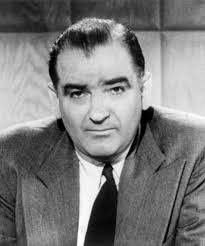
Joseph McCarthy
President Donald J. Trump solicited aid from Russian Communists to win the Presidency in 2016. He solicited aid from Chinese Communists to retain it in 2020. He has attacked countless Americans and world leaders—including those who preside over America’s NATO alliance. Yet the one man he has never even criticized is Russian dictator Vladimir Putin.
Yet faced with such clear-cut evidence, Democrats have refused to directly accuse him of treason.
For example, Democrats could routinely refer to him ad ads as
- “TrumPutin”
- “Commissar-in-Chief”
- “Putin’s Poodle”
- “Red Donald”
- “Putin’s Puppet”
- “Trumpy Traitor.”
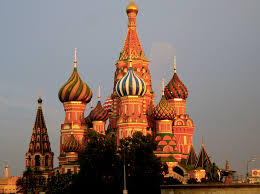
The Kremlin
Opponents of Trump-apologist U.S. Senator Mitch McConnell (R-KY) have effectively dubbed him “Moscow Mitch”—in large part for his accepting at least $4.5 million from a Russian oligarch linked to Putin.
But Trump has gotten a free pass on treason from politicians and news media alike.
Similarly, upon taking office, Trump has acted far more like a dictatorial Henry VIII than a democratically-elected President. Yet here, too, Democrats have failed to capitalize on this obvious truth. They could easily do so through terms like:
- “Carrot Caligula”
- “Fake President”
- “El Dunce.”
Tyrants are conspicuously vulnerable to ridicule. Yet here, too, Democrats have proven unable or unwilling to make use of this powerful weapon.
In this YouTube-obsessed age, Democrats could effectively assail Trump with a series of ridiculing videos. For example, Trump’s well-established “bromance” with Putin could be turned into a parody of the famous Beatles’ song, “With a Little Help From My Friends”:
What do I do when the bank calls me in?
(Does it worry you to be in debt?)
How do I feel when I need rubles fast?
(Do you worry Vlad might say “Nyet”?)
No, I get by with a little help from my Vlad.
Mm, I can lie with a little help from my Vlad.
Mm, you’re gonna fry with a little help from my Vlad.

Many of Trump’s fiercest defenders in the House and Senate have taken “campaign contributions” (i.e., bribes) from Russian oligarchs. They could be pointedly attacked by turning the Muppet song, “The Rainbow Connection,” into “The Russian Connection.”
And Right-wingers taking bribes?
For traitors with something to hide.
And some choose to believe it.
It’s clear as the old KGB.
The bribers, the traitors–you’ll see.
The 2008, “Obama Girl” video was not an attack video. Yet this generated huge interest in his candidacy—especially among young voters. It was funny and offered a catchy tune that, once heard, was impossible to forget.
An equally catchy tune could prove the same for Trump—in a totally different way.
The clash between Trump and porn “star” Stormy Daniels has been replaced by even more salacious scandals. But it could easily be revised through a parody of the Frank Sinatra classic, “Love and Marriage”:
What a couple–they’re so dumb and wormy.
They are, I tell you, brother
A filth that really suits each other.
When his wife’s away, Trump thinks, “Why worry?
And they don’t mind I’m really stinky.”
Trump has repeatedly shown that he does not take well to ridicule. Pouring on enough of it could lead him to a blunder so outrageous that even Republicans might feel obliged to break ranks with him.
Admittedly, late-night comedians like Stephen Colbert and Trevor Noah have inflicted huge comic damage on Trump’s image and ego.
But it’s one thing for a professional comedian to serve up such barbs—and another for a major political party to do so through a series of blistering TV ads.
Humorists could easily provide the material. But it will take Democrats the courage to use it.
2016 PRESIDENTIAL CAMPAIGN, 2016 PRESIDENTIAL ELECTION, 2020 PRESIDENTIAL ELECTION, ABC NEWS, ADOLF HITLER, ALTERNET, AMERICABLOG, AP, BABY BOOMER RESISTANCE, BARACK OBAMA, BERNIE SANDERS, BUZZFEED, CBS NEWS, CNN, COMMUNISM, CROOKS AND LIARS, DAILY KOZ, DAVID BROOKS, DAVID HALBERSTAM, DEMOCRATIC PARTY, DEMOCRATS, DONALD TRUMP, ELIZABETH WARREN, FACEBOOK, FIVETHIRTYEIGHT, HELEN GAHAGAN DOUGLAS, HILLARY CLINTON, HITLER, JEB BUSH, JOHN KASICH, JOSEPH MCCARTHY, JOSEPH R. MCCARTHY, LANGUAGE, LIBERALS, MARCO RUBIO, MARK SHIELDS, MITCH MCCONNELL, MOTHER JONES, MOVEON, MSNBC, NATO, NBC NEWS, NEWSWEEK, NEWT GINGRICH, NOCCOLO MACHIAVELLI, NPR, OBAMA GIRL VIDEO, PBS NEWSHOUR, POLITICO, POLITICUSUSA, RAND PAUL, RAW STORY, REPUBLICAN PARTY, REPUBLICANS, REUTERS, RICHARD NIXON, RICK PERRY, RUSSIA, SALON, SATIRE, SEATTLE TIMES, SLANDER, SLATE, STEPHEN COLBERT, STORMY DANIELS, TALKING POINTS MEMO, TED CRUZ, THE ATLANTIC, THE CHICAGO SUN-TIMES, THE CHICAGO TRIBUNE, THE DAILY BEAST, THE DAILY BLOG, THE GUARDIAN, THE HILL, THE HUFFINGTON POST, THE LOS ANGELES TIMES, THE NATION, THE NEW YORK TIMES, THE PRINCE, THE WASHINGTON POST, THINKPROGRESS, TIME, TREVOR NOAH, TRUTHDIG, TWITTER, U.S. NEWS & WORLD REPORT, UPI, USA TODAY, VLADIMIR PUTIN
In Bureaucracy, History, Politics, Social commentary on December 4, 2019 at 12:42 am
In 1996, Newt Gingrich, then Republican Speaker of the House of Representatives, wrote a memo that encouraged Republicans to “speak like Newt.”
Entitled “Language: A Key Mechanism of Control,” it urged Republicans to attack Democrats with such words as “corrupt,” “selfish,” “destructive,” “hypocrisy,” “liberal,” “sick,” and “traitors.”
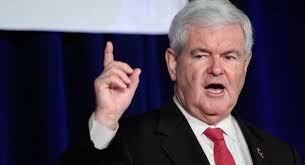
Newt Gingrich
Even worse, Gingrich encouraged the news media to disseminate such accusations. Among his suggestions:
- “Fights make news.”
- Create a “shield issue” to deflect criticism: “A shield issue is, just, you know, your opponent is going to attack you as lacking compassion. You better…show up in the local paper holding a baby in the neonatal center.”
In the memo, Gingrich advised:
“….In the video “We are a Majority,” Language is listed as a key mechanism of control used by a majority party, along with Agenda, Rules, Attitude and Learning.
“As the tapes have been used in training sessions across the country and mailed to candidates we have heard a plaintive plea: ‘I wish I could speak like Newt.’
“That takes years of practice. But, we believe that you could have a significant impact on your campaign and the way you communicate if we help a little. That is why we have created this list of words and phrases….
“This list is prepared so that you might have a directory of words to use in writing literature and mail, in preparing speeches, and in producing electronic media.
“The words and phrases are powerful. Read them. Memorize as many as possible. And remember that like any tool, these words will not help if they are not used.”
Here is the list of words Gingrich urged his followers to use in describing “the opponent, their record, proposals and their party”:
- abuse of power
- anti- (issue): flag, family, child, jobs
- betray
- bizarre
- bosses
- bureaucracy
- cheat
- coercion
- “compassion” is not enough
- collapse(ing)
- consequences
- corrupt
- corruption
- criminal rights
- crisis
- cynicism
- decay
- deeper
- destroy
- destructive
- devour
- disgrace
- endanger
- excuses
- failure (fail)
- greed
- hypocrisy
- ideological
- impose
- incompetent
- insecure
- insensitive
|
- intolerant
- liberal
- lie
- limit(s)
- machine
- mandate(s)
- obsolete
- pathetic
- patronage
- permissive attitude
- pessimistic
- punish (poor …)
- radical
- red tape
- self-serving
- selfish
- sensationalists
- shallow
- shame
- sick
- spend(ing)
- stagnation
- status quo
- steal
- taxes
- they/them
- threaten
- traitors
- unionized
- urgent (cy)
- waste
- welfare
|
Yes, speaking like Newt—or Adolf Hitler or Joseph R. McCarthy—“takes years of practice.”
And to the dismay of both Republicans and Democrats, Donald Trump has learned his lessons well.
On May 27, 2016, conservative New York Times columnist David Brooks analyzed the use of insults by Republican Presidential front-runner Donald Trump. He did so with his counterpart, liberal syndicated columnist, Mark Shields, on The PBS Newshour.
“Trump, for all his moral flaws, is a marketing genius. And you look at what he does. He just picks a word and he attaches it to a person. Little Marco [Rubio], Lyin’ Ted [Cruz], Crooked Hillary [Clinton].
“And that’s a word. And that’s how marketing works. It’s a simple, blunt message, but it gets under.
“It sticks, and it diminishes. And so it has been super effective for him, because he knows how to do that. And she [Hillary Clinton] just comes with, ‘Oh, he’s divisive.’
“These are words that are not exciting people. And her campaign style has gotten, if anything…a little more stagnant and more flat.”
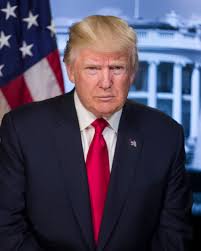
Donald Trump
MARK SHIELDS: “Donald Trump gratuitously slandered Ted Cruz’s wife. He libeled Ted Cruz’s father for being potentially part of Lee Harvey Oswald’s assassination of the president of the United States, suggesting that he was somehow a fellow traveler in that.
“This is a libel. You don’t get over it….”
Hillary Clinton wasn’t the only Presidential candidate who proved unable to cope with Trump’s gift for insult. His targets—and insults—included:
- Former Texas Governor Rick Perry: “Wears glasses to seem smart.”
- Former Florida Governor Jeb Bush: “Low Energy Jeb.”
- Vermont U.S. Senator Bernie Sanders: “Crazy Bernie.”
- Ohio Governor John Kasich: “Mathematically dead and totally desperate.”
Trump has reserved his most insulting words for women. For example:
- Carly Fiorina, his Republican primary competitor: “Look at that face. Would anyone vote for that?”
- Megyn Kelly, Fox News reporter: “You could see there was blood coming out of her eyes. Blood coming out of her wherever.”
- California Rep. Maxine Waters: “An extremely low IQ person.”
- Speaker of the House Nancy Pelosi: “MS-13 Lover Nancy Pelosi.”
Only one candidate has shown the ability to rattle Trump: Massachusetts Senator Elizabeth Warren.
As Mark Shields noted on The PBS Newshour.
“Elizabeth Warren gets under Donald Trunp’s skin. And I think she’s been the most effective adversary. I think she’s done more to unite the Democratic party than either Hillary Clinton or Bernie Sanders.
“I mean, she obviously—he can’t stay away from her. He is tweeting about her.”
And David Brooks offered: “And so the tactics…is either you do what Elizabeth Warren has done, like full-bore negativity, that kind of [get] under the skin, or try to ridicule him and use humor.”
A May 12, 2016 story on CNN—“Elizabeth Warren Gives Trump a Dose of His Own Medicine on Twitter”—noted: “Whenever Trump criticizes her, Warren fires right back at him, sometimes twice as hard.”


_b_617.jpg)


2016 PRESIDENTIAL RACE, 9/11, 9/11 TERROR ATTACKS, ABC NEWS, ABORTION, AFFORDABLE CARE ACT, AIDS PREVENTION, ALTERNET, AMERICABLOG, AP, BABY BOOMER RESISTANCE, BUZZFEED, CBS NEWS, CENTERS FOR DISEASE CONTROL, CHURCH VS. STATE, CLIMATE CHANGE, CNN, CONDOMS, CORONAVIRUS, CROOKS AND LIARS, DAILY KOZ, DISCRIMINATION, DONALD TRUMP, DRUDGE RETORT, ENVIRONMENTAL PROTECTION AGENCY, FACEBOOK, FIRST CHURCH OF CANNABIS, FIVETHIRTYEIGHT, FOOD AND DRUG ADMINISTRATION, GAYS, HARPER’S MAGAZINE, HIV, HOMOSEXUALITY, ILLEGAL ALIENS, INDIANA, ISLAM, ISLAMICS, LESBIANS, MARIJUANA, MEDIA MATTERS, MIKE PENCE, MOTHER JONES, MOVEON, MOVIES, MSNBC, NBC NEWS, NEEDLE EXCHANGES, NEWSWEEK, NPR, PBS NEWSHOUR, PLANNED PARENTHOOD, POLITICO, POLITICUSUSA, PREJUDICE, RAW STORY, RELIGIOUS FREEDOM RESTORATION ACT, REPUBLICAN PARTY, REPUBLICANS, REUTERS, SALON, SEATTLE TIMES, SHARIA LAW, SLATE, SMOKING, SUPREME COURT, TALKING POINTS MEMO, THE ATLANTIC, THE CHICAGO SUN-TIMES, THE CHICAGO TRIBUNE, THE DAILY BEAST, THE DAILY BLOG, THE GUARDIAN, THE HILL, THE HUFFINGTON POST, THE LOS ANGELES TIMES, THE NATION, THE NEW REPUBLIC, THE NEW YORK TIMES, THE VILLAGE VOICE, THE WASHINGTON POST, THINKPROGRESS, TIME, TRUTHDIG, TRUTHOUT, TWITTER, TWO POLITICAL JUNKIES, U.S. HOUSE OF REPRESENTATIVES, U.S. NEWS & WORLD REPORT, UPI, USA TODAY, WONKETTE
YOUR CORONAVIRUS CZAR
In Bureaucracy, Business, History, Politics, Social commentary on March 16, 2020 at 12:09 amOn February 26, President Donald Trump appointed Vice President Mike Pence to lead a task force to combat the spread of the Coronavirus.
In doing so, he rejected calls to appoint an outside medical expert.
This put the Federal medical establishment under a trusted sycophant—and gave Trump a convenient scapegoat if something went wrong.
So here’s what America is getting as its medical savior.
Michael Richard “Mike” Pence served as a Republican member of the House of Representatives from 2001 to 2013. He also served as Chairman of the House Republican Conference from 2009 to 2012. His record included:
In 2012, he ran for Governor of Indiana, won the election, and assumed this office in 2013.
As Governor, Pence:
On July 15, 2016, Republican Presidential candidate Donald Trump announced on Twitter that he had selected Pence as his Vice Presidential running mate in the 2016 Presidential election.
But for all of Pence’s actions as Congressman and Governor, the one which may prove the most far-reaching may be this: His signing into law the Religious Freedom Restoration Act.
As Governor of Indiana, he did this on March 26, 2015. The law allows any individual or corporation to cite its religious beliefs as a defense when sued by a private party.
Mike Pence
Officially, its intent is to prevent the government from forcing business owners to act in ways contrary to strongly held religious beliefs. Unofficially, its purpose is to appease the hatred of gays and lesbians by the religious Right, a key constituency of the Republican party.
Thus, a bakery can legally refuse to make a cake for a gay wedding or a restaurant can refuse to serve lesbian patrons.
And a hospital can refuse to provide care to a gay or lesbian patient.
The bill was passed overwhelmingly by both chambers of the Republican-controlled state legislature.
“Today I signed the Religious Freedom Restoration Act, because I support the freedom of religion for every Hoosier of every faith,” Pence said in a statement on the day he signed the bill.
“The Constitution of the United States and the Indiana Constitution both provide strong recognition of the freedom of religion but today, many people of faith feel their religious liberty is under attack by government action.”
Yet for all his praise for the bill, Pence signed it in a ceremony closed to the public and the press. The media were asked to leave even the waiting area of the governor’s office.
At least one unintended consequence of that legislation has already surfaced: The First Church of Cannabis.
The day after Pence signed the Act, church founder Bill Levin announced on his Facebook page that he had filed paperwork with the office of the Indiana Secretary of State.
Its registration had been approved—and Levin was ecstatic: “Now we begin to accomplish our goals of Love, Understanding, and Good Health.
“Donate $100 or more and become a GREEN ANGEL. Donate $500 or more and become a GOLD ANGEL. Donate $1000 or more and become a CHURCH POOHBA.”
This legislation has not only brought legal marijuana to Indiana. It may bring Sharia law as well.
Since 9/11, Right-wingers such as Rush Limbaugh and Sean Hannity have warned that Muslims are trying to impose Sharia (Islamic law) on America. And now Indiana’s legislators, in elevating religion above the law, may have laid the legal foundations for making that possible.
Muslims demanding the imposition of Sharia law–on themselves and non-Muslims
What will happen when:
And when they claim that the Religious Freedom Restoration Act protects those rights?
Now that Pence is Coronizavirus Czar, it’s essential to remember:
As the Coronavirus threatens to overwhelm the United States as it has Italy, the appointment of Mike Pence as America’s Dr. Marcus Welby is not an event to celebrate.
Share this: