Posts Tagged ‘PROPAGANDA’
1984 NOVEL, 2020 PRESIDENTIAL ELECTION, ABC NEWS, ADOLF HITLER, AFFORDABLE HEALTHCARE ACT, ALTERNET, ALVIN BRAGG, AMERICABLOG, ANDREW CLYDE, ANN COULTER, AP, ARIZONA, ARIZONA SHOOTINGS, ASHLI BABBITT, ASSASSINATION, BABY BOOMER RESISTANCE, BARACK OBAMA, BARRON TRUMP, BBC, BILL CLINTON, BIRTHERS, BLACKS, BLOOMBERG NEWS, BUZZFEED, CBS NEWS, CHILD MOLESTERS, CHRISTINA-TAYLOR GREEN, CLASSIFIED DOCUMENTS, CNN, CONFEDERATE FLAG, CROOKS AND LIARS, CVS, DAILY KOS, DEMOCRATIC PARTY, DEMOCRATS, DENNIS HASTERT, DEVIN NUNES, DICK ARMEY, DICK MORRIS, DONALD TRUMP, FAMILY RESEARCH COUNCIL, FANNI WILLIS, FBI, FIVETHIRTYEIGHT, FRANKLIN D. ROOSEVELT, GABRIELLE GIFFORDS, GAYS, GEORGE H.W. BUSH, GEORGE ORWELL, GEORGE W. BUSH, GLENN BECK, HARPER’S MAGAZINE, HARRY S. TRUMAN, HATE CRIMES, HEALTHCARE, HISPANICS, HOUSE OVERSIGHT COMMITTEE, HUFFINGTON POST, JACK SMITH, JAN BREWER, JANUARY 6 COUP ATTEMPT, JGB BUSH, JIM JORDAN, JOSEPH MCCARTHY, JOSEPH R. BIDEN, JOSEPH STALIN, JOSH DUGGAR, KANSAS, LAUREN BOEBERT, LESBIANS, LOS ANGELES, MARJORIE TAYLOR GREEN, MATT GAETZ, MEDIA MATTERS, MEIN KAMPF, MELANIA TRUMP, MICHAEL COHEN, MICHAEL SAVAGE, MICHELE BACHMANN, MIKE HUCKABEE, MIKE PENCE, MOTHER JONES, MOVEON, MSNBC, MUSLIMS, NBC NEWS, NEW REPUBLIC, NEWSDAY, NEWSWEEK, NEWT GINGRICH, NPR, OBAMACARE, ORACLE, PBS NEWSHOUR, PHIL GRAMM, POLITICO, POLITICUSUSA, PROPAGANDA, RAFAEL "TED" CRUZ, RAW STORY, RELIGIOUS FREEDOM RESTORATION ACT, REP. GABRIELLE GIFFORDS, REPUBLICAN PARTY, REPUBLICANS, REUTERS, RICHARD NIXON, RICK PERRY, RODNEY KING RIOTS, ROLLING STONE MAGAZINE, RUSH LIMBAUGH, SALON, Sarah Palin, SEAN HANNITY, SEATTLE TIMES, SHARIA LAW, SLATE, SOUTH DAKOTA, SOVIET UNION, SPIRO AGNEW, STEVE BANNON, STORMY DANIELS, TALKING POINTS MEMO, TEA PARTY, TERRORISM, THE ATLANTIC, THE CHICAGO SUN-TIMES, THE CHICAGO TRIBUNE, THE DAILY BEAST, THE DAILY BLOG, THE GUARDIAN, THE HILL, THE HUFFINGTON POST, THE INTERCEPT, THE LOS ANGELES TIMES, THE NATION, THE NEW REPUBLIC, THE NEW YORK TIMES, THE NEW YORKER, THE VILLAGE VOICE, THE WASHINGTON POST, THINKPROGRESS, TIME, TRUTHDIG, TRUTHOUT, U.S. DISTRICT JUDGE JOHN ROLL, U.S. MARSHALS SERVICE, U.S. NEWS & WORLD REPORT, UNITED STATES HOUSE OF REPRESENTATIVES, UNITED STATES SENATE, UPI, USA TODAY, WOMEN, WORLD WAR 11, X
In Bureaucracy, History, Law, Law Enforcement, Politics, Social commentary on July 16, 2024 at 12:14 am
“The Republican Party has weaponized its supporters, made violence a virtue and, with almost every pronouncement for 50 years, given them an enemy politicized, radicalized and indivisible.”
So wrote Rolling Stone writer Jeb Lund in a blistering June 19, 2015 editorial.
But the proof of Republican culpability in political violence goes back much further.
Consider:
Gabrille Giffords, 40, is a moderate Democrat who narrowly wins re-election in November, 2010, against a Republican Tea Party candidate.
Her support of President Barack Obama’s health care reform law has made her a target for violent rhetoric–-especially from former Alaska Republican Governor Sarah Palin.
In March, 2010, Palin releases a map featuring 20 House Democrats that uses cross-hairs images to show their districts. In case her supporters don’t get the message, she later writes on Twitter: “Don’t Retreat, Instead – RELOAD!”

Sarah Palin’s “Crosshairs” Map
As the campaign continues, Giffords finds her Tucson office vandalized after the House passes the healthcare overhaul in March.
Giffords senses that she has become a target for removal—in more than political terms. In an interview after the vandalizing of her office, she refers to the animosity against her by conservatives.
She specifically cites Palin’s decision to list her seat as one of the top “targets” in the midterm elections.
“For example, we’re on Sarah Palin’s targeted list, but the thing is, that the way that she has it depicted has the cross-hairs of a gun sight over our district. When people do that, they have to realize that there are consequences to that action,” Giffords tells MSNBC.
At one of her rallies, her aides call the police after an attendee drops a gun.
Giffords may have seen the spectre of violence closing in on her. In April, 2010, she supported Rep. Raúl Grijalva after he had to close two offices when he and his staff received threats.
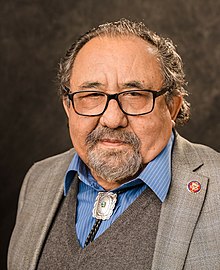
Raúl Grijalva
He had called for a boycott of Arizona businesses in opposition to the state’s controversial immigration law.
“I am deeply troubled about reports that Congressman Grijalva and members of his staff have been subjected to death threats,” Giffords said.
“This is not how we, as Americans, express our political differences. Intimidation has no place in our representative democracy. Such acts only make it more difficult for us to resolve our differences.”
But intimidation—-and worse—-does have a place among the tactics used by influential Republicans in the pursuit of absolute power.
Increasingly, Republicans have repeatedly aimed violent—-and violence-arousing—-rhetoric at their Democratic opponents. This is not a case of careless language that is simply misinterpreted, with tragic results.
Republicans like Sarah Palin fully understand the constituency they are trying to reach: Those masses of alienated, uneducated Americans who live only for their guns and hardline religious beliefs—and who can be easily manipulated by perceived threats to either.

Sarah Palin
Gage Skidmore from Surprise, AZ, United States of America, CC BY-SA 2.0 <https://creativecommons.org/licenses/by-sa/2.0>, via Wikimedia Commons
If a “nutcase” assaults a Democratic politician and misses, then the Republican establishment claims to be shocked—-shocked!—that such a thing could have happened.
And if the attempt proves successful—as the January 8, 2011 Tucson shootings did—then Republicans weep crocodile tears for public consumption.
The difference is that, in this case, they rejoice in knowing that Democratic ranks have been thinned and their opponents are even more on the defensive, for fear of the same happening to them.
Consider the following:
- Rep. Randy Neugebauer (R-Tex.) yelled “baby killer” at Bart Stupak (D-Mich.) on the House floor.
- Florida GOP Congressional candidate Allen West, referring to his Democratic opponent, Rep. Ron Klein, told Tea Party activists: “You’ve got to make the fellow scared to come out of his house. That’s the only way that you’re going to win. That’s the only way you’re going to get these people’s attention.”
- Rep. Devin Nunes (R-CA) said Tea Partiers had “every right” to use racist and homophobic slurs against Democrats, justifying it via Democrats’ “totalitarian tactics.”
- Rep. Michelle Bachmann (R-Minn.) said she wanted her constituents “armed and dangerous” against the Obama administration.
- Sarah Palin told her supporters: “Get in their face and argue with them. No matter how tough it gets, never retreat, instead RELOAD!”
- Right-wing pundit Ann Coulter: “My only regret with Timothy McVeigh is he did not go to the New York Times building.”
- Senator Phil Gramm (R-Tex.) “We’re going to keep building the party until we’re hunting Democrats with dogs.”
- Rep. Louisa M. Slauter (D-NY) received a phone message threatening sniper attacks against lawmakers and their families.
Since the end of World War 11, Republicans have regularly hurled the charge of “treason” against anyone who dared to run against them for office or think other than Republican-sponsored thoughts.
Republicans had been locked out of the White House from 1933 to 1952, during the administrations of Franklin D. Roosevelt and Harry S. Truman.
Determined to regain the Presidency by any means, they found that attacking the integrity of their fellow Americans a highly effective tactic.
During the 1950s, Wisconsin Senator Joseph R. McCarthy rode a wave of paranoia to national prominence—by attacking the patriotism of anyone who disagreed with him.
The fact that McCarthy never uncovered one actual case of treason was conveniently overlooked during his lifetime.
1984 NOVEL, 2020 PRESIDENTIAL ELECTION, ABC NEWS, ADOLF HITLER, AFFORDABLE HEALTHCARE ACT, ALTERNET, ALVIN BRAGG, AMERICABLOG, ANDREW CLYDE, ANN COULTER, AP, ARIZONA, ARIZONA SHOOTINGS, ASHLI BABBITT, ASSASSINATION, BABY BOOMER RESISTANCE, BARACK OBAMA, BARRON TRUMP, BBC, BILL CLINTON, BIRTHERS, BLACKS, BLOOMBERG NEWS, BUZZFEED, CBS NEWS, CHILD MOLESTERS, CHRISTINA-TAYLOR GREEN, CLASSIFIED DOCUMENTS, CNN, CONFEDERATE FLAG, CROOKS AND LIARS, CVS, DAILY KOS, DEMOCRATIC PARTY, DEMOCRATS, DENNIS HASTERT, DEVIN NUNES, DICK ARMEY, DICK MORRIS, DONALD TRUMP, FAMILY RESEARCH COUNCIL, FANNI WILLIS, FBI, FIVETHIRTYEIGHT, FRANKLIN D. ROOSEVELT, GABRIELLE GIFFORDS, GAYS, GEORGE H.W. BUSH, GEORGE ORWELL, GEORGE W. BUSH, GLENN BECK, HARPER’S MAGAZINE, HARRY S. TRUMAN, HATE CRIMES, HEALTHCARE, HISPANICS, HOUSE OVERSIGHT COMMITTEE, HUFFINGTON POST, JACK SMITH, JAN BREWER, JANUARY 6 COUP ATTEMPT, JGB BUSH, JIM JORDAN, JOSEPH MCCARTHY, JOSEPH R. BIDEN, JOSEPH STALIN, JOSH DUGGAR, KANSAS, LAUREN BOEBERT, LESBIANS, MARJORIE TAYLOR GREEN, MATT GAETZ, MEDIA MATTERS, MEIN KAMPF, MELANIA TRUMP, MICHAEL COHEN, MICHAEL SAVAGE, MICHELE BACHMANN, MIKE HUCKABEE, MIKE PENCE, MOTHER JONES, MOVEON, MSNBC, MUSLIMS, NBC NEWS, NEW REPUBLIC, NEWSDAY, NEWSWEEK, NEWT GINGRICH, NPR, ORACLE, PBS NEWSHOUR, PHIL GRAMM, POLITICO, POLITICUSUSA, PROPAGANDA, RAFAEL "TED" CRUZ, RAW STORY, RELIGIOUS FREEDOM RESTORATION ACT, REP. GABRIELLE GIFFORDS, REPUBLICAN PARTY, REPUBLICANS, REUTERS, RICHARD NIXON, RICK PERRY, RODNEY KING RIOTS, ROLLING STONE MAGAZINE, RUSH LIMBAUGH, SALON, Sarah Palin, SEAN HANNITY, SEATTLE TIMES, SHARIA LAW, SLATE, SOUTH DAKOTA, SOVIET UNION, SPIRO AGNEW, STEVE BANNON, STORMY DANIELS, TALKING POINTS MEMO, TEA PARTY, TERRORISM, THE ATLANTIC, THE CHICAGO SUN-TIMES, THE CHICAGO TRIBUNE, THE DAILY BEAST, THE DAILY BLOG, THE GUARDIAN, THE HILL, THE HUFFINGTON POST, THE INTERCEPT, THE LOS ANGELES TIMES, THE NATION, THE NEW REPUBLIC, THE NEW YORK TIMES, THE NEW YORKER, THE VILLAGE VOICE, THE WASHINGTON POST, THINKPROGRESS, TIME, TRUTHDIG, TRUTHOUT, U.S. DISTRICT JUDGE JOHN ROLL, U.S. MARSHALS SERVICE, U.S. NEWS & WORLD REPORT, UNITED STATES HOUSE OF REPRESENTATIVES, UNITED STATES SENATE, UPI, USA TODAY, WOMEN, WORLD WAR 11, X
In Bureaucracy, History, Law, Law Enforcement, Politics, Social commentary on July 15, 2024 at 12:22 am
“We mock you. We mock your fear. We want your fear. It’s going to be accountability. We are taking apart the administrative state. We’re going to destroy the deep state, and we’re going to hold everybody responsible that put this republic in the situation its in today.
“Accountability, responsibility. And that will come with authority. The authority of Donald J. Trump as the 47th president of the United States.”
The speaker was Steve Bannon, former Trump campaign manager and White House advisor. And he was issuing a warning to everyone who didn’t enthusiastically accept Donald Trump as his Once and Future Fuhrer.
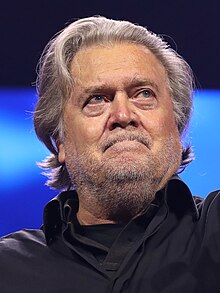
Steve Rannon
Gage Skidmore, CC BY-SA 2.0 <https://creativecommons.org/licenses/by-sa/2.0>, via Wikimedia Commons
Threats of violence have become common among Republicans since 2015, when Trump first ran for President. And they continue to cast a shadow over the 2024 Presidential campaign.
On March 16, 2016, Trump warned Republicans that if he didn’t win the GOP nomination in July, his supporters would literally riot: “I think you’d have riots. I think you would see problems like you’ve never seen before. I think bad things would happen. I really do. I wouldn’t lead it, but I think bad things would happen.”
An NBC reporter summed it up as: “The message to Republicans was clear: ‘Nice convention you got there, shame if something happened to it.’”
Eight years later, on March 16, 2024, Trump made a similar threat: “Now if I don’t get elected, it’s going to be a bloodbath for the whole—that’s gonna be the least of it….If this election isn’t won, I’m not sure that you’ll ever have another election in this country.”
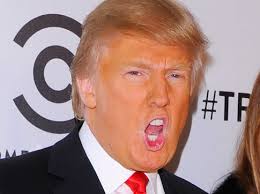
Donald Trump
On August 9, 2016, Trump told a rally in Wilmington, North Carolina: “Hillary [Clinton] wants to abolish, essentially abolish, the Second Amendment. If she gets to pick her [Supreme Court] judges, nothing you can do folks. Although the Second Amendment people, maybe there is, I don’t know.”
This was Trump’s “dog-whistle” attempt to incite the assassination of Hillary Clinton—and it was so seen by responsible authorities: “Well, let me say if someone else said that outside of the hall, he’d be in the back of a police wagon now, with the Secret Service questioning him,” said Michael Hayden, former head of the CIA and National Security Agency (NSA).
In Cincinnati, a Trump supporter threatened to forcibly remove Clinton from the White House if she won the race: “If she’s in office, I hope we can start a coup. She should be in prison or shot. That’s how I feel about it,”
Dan Bowman, a 50-year-old contractor, said of Hillary Clinton, the Democratic nominee. “We’re going to have a revolution and take them out of office if that’s what it takes. There’s going to be a lot of bloodshed. But that’s what it’s going to take….I would do whatever I can for my country.”
In a June 19, 2015 editorial, Rolling Stone writer Jeb Lund had noted:
“The Republican Party has weaponized its supporters, made violence a virtue and, with almost every pronouncement for 50 years, given them an enemy politicized, racialized and indivisible.
“Movement conservatives have fetishized a tendentious and ahistorical reading of the Second Amendment to the point that the Constitution itself somehow paradoxically ‘legitimizes’ an armed insurrection against the government created by it.
“This is no longer an argument about whether one party’s beliefs are beneficial or harmful, but an attitude that labels leftism so antithetical to the American idea that empowering it on any level is an act of usurpation.”
Consider:
On January 8, 2011, Democratic Rep. Gabrielle Giffords was shot in the head while meeting with constituents outside a grocery store in Tucson, Arizona. After a miraculous recovery, she continues to struggle with language and has lost 50% of her vision in both eyes.
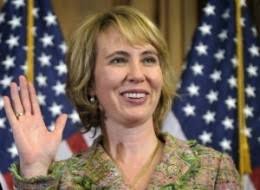
Rep. Gabrielle Giffords
She vowed to return to her former Congressional duties, but was forced to resign for health reasons in 2012.
Giffords was only one victim of a shooting spree that claimed the lives of six people and left 13 others wounded.
Also killed was Arizona’s chief U.S. District judge, John Roll, who had just stopped by to see his friend Giffords after celebrating Mass.
Although the actual shooter, Jared Lee Loughner, was immediately arrested, those who fanned the flames of political violence that consumed 19 people that day have remained unpunished.
Consider the circumstances behind the shootings:
John Roll is Arizona’s chief federal judge. Appointed in 2006, he wins acclaim as a respected jurist and leader who pushes to beef up the court’s strained bench to handle a growing number of border crime-related cases.
In 2009, he becomes a target for threats after allowing a $32 million civil-rights lawsuit by illegal aliens to proceed against a local rancher. The case arouses the fury of local talk radio hosts, who encourage their audiences to threaten Roll’s life.
In one afternoon, Roll logs more than 200 threatening phone calls. Callers threaten the judge and his family. They post personal information about Roll online.
Roll and his wife are placed under fulltime protection by deputy U.S. marshals. Roll finds living under security “unnerving and invasive.”
Authorities identify four men believed responsible for the threats. But Roll declines to press charges on the advice of the Marshals Service.
ABC NEWS, ALEXI KOSYGIN, ALTERNET, AMERICABLOG, AP, BABY BOOMER RESISTANCE, BBC, BLOOMBERG NEWS, BORIS YELTSIN, BUZZFEED, CATHERINE THE GREAT, CBS NEWS, CENSORSHIP, CNN, COMMUNISM, CROOKS AND LIARS, CZARS, CZECHOSLOVAKIA, DAILY KOZ, DONALD TRUMP, FIVETHIRTYEIGHT, HARPER’S MAGAZINE, HUFFINGTON POST, JOSEPH STALIN, LEONID BREZHNIEV, MEDIA MATTERS, MIKHAIL TUKHACHEVSKY, MOTHER JONES, MOVEON, MSNBC, NBC NEWS, NEW REPUBLIC, NEWSDAY, NEWSWEEK, NIKOLAI ZHILAYEV, NPR, OLGA MISIK, PBS NEWSHOUR, POLITICO, POLITICUSUSA, PROPAGANDA, RAW STORY, REUTERS, RUSSIA, SALON, SEATTLE TIMES, SLATE, TALKING POINTS MEMO, THE ATLANTIC, THE CHICAGO SUN-TIMES, THE CHICAGO TRIBUNE, THE DAILY BEAST, THE DAILY BLOG, THE GUARDIAN, THE HILL, THE HUFFINGTON POST, THE INTERCEPT, THE LOS ANGELES TIMES, THE NATION, THE NEW REPUBLIC, THE NEW YORK TIMES, THE NEW YORKER, THE VILLAGE VOICE, THE WASHINGTON POST, THINKPROGRESS, TIME, TRUTHDIG, TRUTHOUT, TWO POLITICAL JUNKIES, U.S. NEWS & WORLD REPORT, UKRAINE, UPI, USA TODAY, VLADIMIR PUTIN, VOLODYMYR ZELENSKY, WONKETTE, YEMELYAN PUGACHEF, YEVGENEY YEVTUSHENKO
In Bureaucracy, History, Law, Law Enforcement, Military, Politics, Social commentary on December 22, 2023 at 12:20 am
In Vladimir Putin’s Russia, conscience comes with a price. It can range anywhere from house arrest to years of imprisonment in the Gulag—to being shot or poisoned by the FSB, the secret police successor to the infamous KGB.
It has always been so.
Mikhail Nikolayevich Tukhachevsky was a major Soviet military leader and theoretician from 1918 to 1937. He fought to modernize Soviet armament, as well as develop airborne, aviation and mechanized forces. Almost singlehandedly, he created the theory of deep operations for Soviet forces.
But he fell victim to the paranoia of Soviet dictator Joseph Stalin.

Mikhail Nikolayevich Tukhachevsky
Arrested on May 22, 1937, he was interrogated and tortured. As a result, he “confessed” to being a German agent plotting to overthrow Stalin and seize power.
On June 11, 1937, the Soviet Supreme Court quickly sentenced Tukhachevsky for treason. Hours later, he was executed.
Among his friends had been Nikolai Sergeyvich Zhilayev. a Russian musicologist and the teacher of several 20th-century Russian composers. Knowing that he was a marked man, Zhilayev did something truly extraordinary.
He had a large portrait of Tukhachevsky in his room, and after the announcement that Tukhachevsky had been shot as a traitor to the homeland, Zhilayev did not take the picture down. If discovered, it meant instant arrest—and almost certain execution.
When the secret police came for him, even they were awed: ”“What, it’s still up?”
“The time will come,” Zhilayev replied, “when they’ll erect a monument to him.”
As, in fact, has happened.
Standing before a Russian judge, accused of vandalism for participating in a demonstration against Putin’s suppression of human rights, 19-year-old Olga Misik dared to speak truths most Russians fear to even whisper.
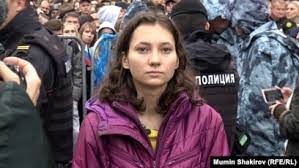
Olga Misik
From her statement to the court on May 11, 2021:
The prosecution is putting all its efforts into proving that I am implicated in the incident. I’m not going to spend much time showing that they can’t even do that professionally: They are using falsified fingerprint analysis, and, as you saw when you were examining the evidence, there was no trace of paint on my clothes….
But what does that matter when no law was broken? What difference does it make whether I was there or not when no crime was committed?….There is a crime, and it was committed by the police and the prosecutors. And I very much hope, Comrade Judge, that you will not become an accomplice to this crime.
This is precisely why I demand a complete and unconditional acquittal. I am not accepting any half measures, like settling for a fine. I am sure of my innocence and am prepared to uncompromisingly defend it to the end….
The past nine months have been very difficult, you know, and I wouldn’t like to repeat them. I kept thinking to myself, What could have happened if, and, Everything could have gone differently. But I was lying to myself, because nothing could have gone differently.
From the moment I picked up the constitution, my fate was set in stone, and I accepted it with pride. I made the right choice, and making the right choice in a totalitarian state will always have horrifying consequences. I always knew I’d end up behind bars—it was only a matter of when.
My lawyer brought up Sophie Scholl [a German student and anti-Nazi political activist] today. Her story is shockingly similar to mine. She was put on trial for flyers and graffiti; I’m being tried for posters and paint.
Like she was, I am essentially on trial for thought crimes. My trial is very similar to Sophie’s, and today’s Russia really resembles Nazi Germany.
Right up to the guillotine, Sophie did not stray from her beliefs. Her story inspired me not to agree to charges being dropped. Sophie Scholl is the embodiment of youth, individuality, and freedom. I would like to believe that to be another thing that makes us similar.
The Nazi regime eventually crumbled, as will the fascist regime in Russia. I don’t know when it will happen, be it a week, a year, or decade, but I know that someday we will be victorious, because love and youth always prevail….
Sophie Scholl’s last words before her execution were, “The sun still shines.” Indeed, the sun still shines. I couldn’t see it out the window of the detention center, but I always knew it was there. And if now, in such dark times, we can turn to the light, then maybe victory isn’t so far after all.
In his 1960 poem, “Conversation With an American Writer,” the Russian poet, Yevgeney Yevtushenko spoke for those Russians who had maintained their integrity in the face of Stalinist terror:
“You have courage,” they tell me.
It’s not true. I was never courageous.
I simply felt it unbecoming
to stoop to the cowardice of my colleagues.
Demonstrating his own moral courage, on August 22, 1968—the day after the Soviet Union invaded Czechoslovakia—Yevtushenko sent a telegram protesting the invasion to Communist Party Boss Leonid Brezhnev and Premier Aleksei Kosygin:
In Russia—under Czars or Commissars—acting on moral courage is no small thing.
A revered poet demonstrated it in 1968. And a teenage girl demonstrated it in 2021.
ABC NEWS, ALEXI KOSYGIN, ALTERNET, AMERICABLOG, AP, BABY BOOMER RESISTANCE, BBC, BLOOMBERG NEWS, BORIS YELTSIN, BUZZFEED, CATHERINE THE GREAT, CBS NEWS, CENSORSHIP, CNN, COMMUNISM, CROOKS AND LIARS, CZARS, CZECHOSLOVAKIA, DAILY KOZ, DONALD TRUMP, FIVETHIRTYEIGHT, HARPER’S MAGAZINE, HUFFINGTON POST, JOSEPH STALIN, LEONID BREZHNIEV, MEDIA MATTERS, MIKHAIL TUKHACHEVSKY, MOTHER JONES, MOVEON, MSNBC, NBC NEWS, NEW REPUBLIC, NEWSDAY, NEWSWEEK, NIKOLAI ZHILAYEV, NPR, OLGA MISIK, PBS NEWSHOUR, POLITICO, POLITICUSUSA, PROPAGANDA, RAW STORY, REUTERS, RUSSIA, SALON, SEATTLE TIMES, SLATE, TALKING POINTS MEMO, THE ATLANTIC, THE CHICAGO SUN-TIMES, THE CHICAGO TRIBUNE, THE DAILY BEAST, THE DAILY BLOG, THE GUARDIAN, THE HILL, THE HUFFINGTON POST, THE INTERCEPT, THE LOS ANGELES TIMES, THE NATION, THE NEW REPUBLIC, THE NEW YORK TIMES, THE NEW YORKER, THE VILLAGE VOICE, THE WASHINGTON POST, THINKPROGRESS, TIME, TRUTHDIG, TRUTHOUT, TWO POLITICAL JUNKIES, U.S. NEWS & WORLD REPORT, UKRAINE, UPI, USA TODAY, VLADIMIR PUTIN, VOLODYMYR ZELENSKY, WONKETTE, X, YEMELYAN PUGACHEF, YEVGENEY YEVTUSHENKO
In Bureaucracy, History, Law, Law Enforcement, Military, Politics, Social commentary on December 21, 2023 at 12:40 am
For 300 years, Russians feared the wrath of their czars, who ruthlessly decreed what their subjects could read, write and say.
Protests were brutally punished, even by so-called “enlightened” Czars. Catherine the Great had Cossack rebel Yemelyan Ivanovich Pugachev beheaded, then drawn and quartered.

Catherine the Great
Czarist rule ended in 1917, when the installation of a democratic Provisional Government. But just nine months later, the Bolsheviks seized power—and starvation, mass executions, forced exiles and repression of religion, speech and press followed until Communism collapsed in 1991.
Then came the wholesale corruption and ineptness of Boris Yeltsin’s brief reign. When Yeltsin picked Vladimir Putin, a former member of the KGB, as his successor, many Russians welcomed his arrival.
Unlike the fat, alcoholic Yeltsin, Putin appeared to be a sober man’s man who plunged into icy rivers, slammed opponents to the floor in judo matches, and—shirtless—hunted tigers and bears.
He promised that so long as ordinary Russians stayed out of politics, they would enjoy a level of personal independence totally absent during the 74-year Communist regime.
But, gradually, that promise was revealed as a lie.
At no time has that been more true than following his brutal invasion of Ukraine on February 24, 2022. Most Russians can’t imagine waging war against a “brotherly nation.”
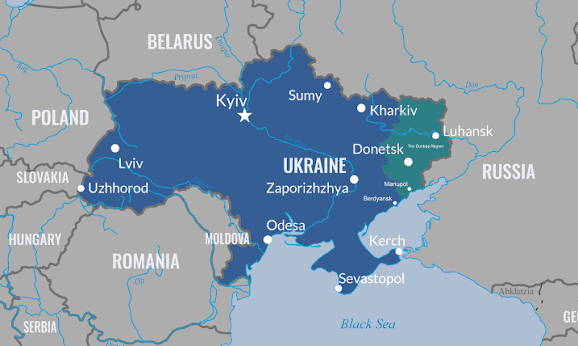
Russia vs. Ukraine
Putin’s government unleashed a massive propaganda campaign to convince Russians that Russia was battling Fascists and taking big casualties. And many have believed it.
(Volodymyr Zelensky, Ukraine’s president, is Jewish, and Western Intelligence agencies estimate that 7,000 to 15,000 Russian soldiers have died.)
Nevertheless, thousands flocked to streets and squares throughout Russia despite government threats of prosecution for high treason.
More than 6,500 demonstrators were arrested over a five-day period. Several Russian and Ukrainian news outlets were blocked for covering the invasion.
One of those who repeatedly demonstrated against Putini’s repressive regime is Olga Misik, a former journalism student at the University of Moscow.
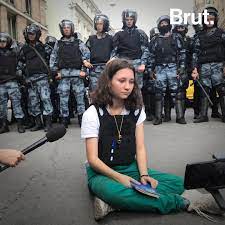
Olga Misik
Accused of vandalism, standing before a judge who could sentence her to literally any punishment he wished, 19-year-old Olga Misik dared to speak forbidden truths about life in Vladimir Putin’s Russia.
On May 11, 2021, she did so again in a Moscow district court.
Below follows relevant portions of her statement to the court:
And maybe I was scared on the way to the protest after all, but I knew I had no other choice. I understood that anything else would be wrong. That if I stayed silent this time, I would never be able to forgive myself….
Of course I was at that protest. I don’t regret it and more so am proud of my actions. In reality, I had no choice. I had to do everything in my power, thus I have no right to regret it. And if I had the option to go back in time, I would do it again.
If I was being threatened with execution, I would do it again. I would do it time and time again, until it finally started to make some change. They say that doing the same thing over and over expecting a different result is the definition of insanity.
I guess hope is insanity. But not doing something you believe in, just because everyone around you thinks it’s pointless, that is learned hopelessness. And better to be insane in your eyes than hopeless in my own….
Denying my participation in the protest would not only be unprincipled, it would erase all of the fear and agony, all we have achieved, all of my pain and rage. I can’t afford such dishonor with which our interrogator and prosecutor live their days….
A fascist government never seems fascist from the inside. It seems like just some minuscule, inconsequential censorship and some targeted repression that will never reach you. I’m not the one on trial today. Today, you are deciding not my fate but yours, and you still have a chance to do the right thing.
You can’t keep lying to yourselves. You know what goes on here. You know what it’s called. You know that there is good and evil, freedom and fascism, love and hatred, and denying that there are sides to take would be a colossal lie.
Those who chose evil have preordered their tickets to the defense table. The Hague awaits all who had a hand in this chaos. I am not promising victory tomorrow, the day after, in a year, or 10. But someday we will win, because love and youth always win. I can’t promise to make it there alive, but I really hope you live to see it.
You’re lying to yourselves if you maintain that I am here because of the protest at the office of the prosecutor general….You know why I’m here….You know what I’m actually being tried for.
For reading the constitution. For my political positions. For being named person of the year. For my principles. For my actions.
I might even be flattered by being singled out for a political trial, if only I really were singled out—when in fact the state is repressing anyone who has an opinion.
ABC NEWS, ALEXI KOSYGIN, ALTERNET, AMERICABLOG, AP, BABY BOOMER RESISTANCE, BBC, BLOOMBERG NEWS, BORIS YELTSIN, BUZZFEED, CATHERINE THE GREAT, CBS NEWS, CENSORSHIP, CNN, COMMUNISM, CROOKS AND LIARS, CZARS, CZECHOSLOVAKIA, DAILY KOZ, DONALD TRUMP, FIVETHIRTYEIGHT, HARPER’S MAGAZINE, HUFFINGTON POST, JOSEPH STALIN, LEONID BREZHNIEV, MEDIA MATTERS, MIKHAIL TUKHACHEVSKY, MOTHER JONES, MOVEON, MSNBC, NBC NEWS, NEW REPUBLIC, NEWSDAY, NEWSWEEK, NIKOLAI ZHILAYEV, NPR, OLGA MISIK, PBS NEWSHOUR, POLITICO, POLITICUSUSA, PROPAGANDA, RAW STORY, REUTERS, RUSSIA, SALON, SEATTLE TIMES, SLATE, TALKING POINTS MEMO, THE ATLANTIC, THE CHICAGO SUN-TIMES, THE CHICAGO TRIBUNE, THE DAILY BEAST, THE DAILY BLOG, THE GUARDIAN, THE HILL, THE HUFFINGTON POST, THE INTERCEPT, THE LOS ANGELES TIMES, THE NATION, THE NEW REPUBLIC, THE NEW YORK TIMES, THE NEW YORKER, THE VILLAGE VOICE, THE WASHINGTON POST, THINKPROGRESS, TIME, TRUTHDIG, TRUTHOUT, TWO POLITICAL JUNKIES, U.S. NEWS & WORLD REPORT, UKRAINE, UPI, USA TODAY, VLADIMIR PUTIN, VOLODYMYR ZELENSKY, WONKETTE, X, YEMELYAN PUGACHEF, YEVGENEY YEVTUSHENKO
In Bureaucracy, History, Law, Law Enforcement, Politics, Social commentary on December 20, 2023 at 12:37 am
“I just read her final speech. And you know what? I felt ashamed,” Andrei Chvanov, from Tatarstan, wrote on Facebook.
He was referring to Olga MisIk, a 17-year-old activist in the Russia of President Vladimir Putin.
“Because my threshold of fear is much lower….She holds strong, jokes, writes, and is 100 percent sure that she is right. And she is right. She sees the truth. And she is not afraid. Not many people in our country have such a gift.”
On July 27, 2019, Olga was among thousands of people attending an unauthorized protest in Moscow against the bar on opposition activists competing for seats in the Duma (parliament) election against Putin’s lackeys.
Heavily-armed riot police—wielding shields, batons and helmets—stood behind her. As if oblivious to their presence, Olga sat cross-legged in the middle of the street.
She pulled out her copy of Russia’s 1993 constitution and began reading from it.
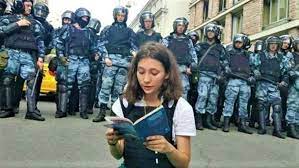
Olga Misik
“I read four sections,” she said in a later interview “An article talking about the right to peacefully protest, an article saying that everyone can take part in elections, has the right to freedom of speech and that the people’s will and power are the most important thing for the country.”
Olga left the scene after the reading, but was later arrested on her way to a metro station. She was among more than 1,000 protesters arrested as a result of the rally. She had been detained four times in the past three months. She says she was peacefully protesting each time.
Misik was released after the protest in 2019, but she later found herself facing charges related to a protest in 2020.
According to the Moscow Times, Olga and two friends were accused of vandalism after police said they hung a banner supporting Putin arch-foe Alexi Navalny and other political prisoners on a government building.
In addition, said the indictment, they “splashed red paint on a security booth outside the Prosecutor General’s Office building in August 2020.”
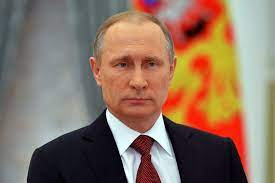
Vladimir Putin
Misik wrote on social media that she was dragged out of her home by police after the 2020 protest.
Olga was sentenced on May 11, 2021, for vandalism. She received two years and two months of “restricted liberty,” which amounted to home confinement, including a curfew that required her to be inside her house from 10 p.m. and 6 a.m. Her two friends received similar sentences.
Prior to her sentencing, Misik read a prepared statement to the court. At a time when millions of Right-wing Americans lust to replace democracy with the dictatorship of Donald Trump, this statement speaks volumes to Americans who would oppose this.
Here are its most moving passages:
People often asked, “Aren’t I scared?” More commonly outside the country than in Russia, because they don’t get the reality of life in Russia. They don’t understand the knock on the door in the middle of the night, the arrests and imprisonment without reason or cause.
They don’t realize that the feeling of despair is passed on to us through our mothers’ milk. And that that feeling of despair causes any semblance of fear to atrophy, infecting us with learned hopelessness. What use is fear if you have no say in your future?
I have never been afraid. I have felt despair, hopelessness, helplessness, disorientation, anxiety, frustration, burnout, but neither politics nor activism ever struck fear in me.
I wasn’t scared when armed thugs stormed my home in the night, threatening me with prison. They wanted to scare me, but I wasn’t afraid. I made jokes and laughed, knowing that the moment I stopped smiling, I would have lost.
I wasn’t scared when they put me in the detention center….My own fate was the last thing on my mind. It is very strange, maybe some sort of coping mechanism, but in those days I wasn’t afraid once….
I was worried and stressed about how things would play out, but unafraid. The night was beautiful. I was aware that it could be my last one in freedom, and yet that did not scare me.
However, after the search, for the past nine months, I have been scared constantly. Ever since the night in the detention center, I haven’t been able to get a good night’s sleep once.
Every night I wake from the smallest of sounds. I keep imagining footsteps in the hallway. Panic washes over me from the sound of the gravel crunching under the wheels of cars outside my window.
I feel like all of the fear accumulated over the past nine months is most concentrated in this exact moment, in my final statement, because public speaking scares me more than the sentencing. My heart is racing at 151 beats per minute, and it feels as though it could explode any second now….
Someone said, “It’s impossible to be afraid if you know you’re right.” But Russia teaches us to always be afraid. A country that attempts to kill us every day, and if you’re not part of the system, you might as well be dead already.
2016 PRESIDENTIAL ELECTION, 2020 PRESIDENTIAL ELECTION, 60 MINUTES, ABC NEWS, ALTERNET, AMERICABLOG, AP, BABY BOOMER RESISTANCE, BALLOTS, BBC, BLOOMBERG NEWS, BUZZFEED, CBS NEWS, CHRIS KREBS, CIA, CNN, CRIMINALITY, CROOKS AND LIARS, CYBERSECURITY INFRASTRUCTURE SECURITY AGENCY (CISA), DAILY KOZ, DEPARTMENT OF DEFENSE CYBER COMMAND, DEPARTMENT OF HOMELAND SECURITY (DHS), DONALD TRUMP, DRUDGE REPORT, ELECTION ASSISTANCE COMMISSION, ELECTION SECURITY, ELECTORAL COLLEGE, FACEBOOK, FBI, FIVETHIRTYEIGHT, HACKING, HARPER’S MAGAZINE, HILLARY CLINTON, HUFFINGTON POST, JOE BIDEN, Kamala Harris, MEDIA MATTERS, MICROSOFT, MIKE PENCE, MOTHER JONES, MOVEON, MSNBC, NATIONAL SECURITY AGENCY, NBC NEWS, NEW REPUBLIC, NEWSDAY, NEWSWEEK, NPR, PBS NEWSHOUR, POLITICO, POLITICUSUSA, POPULAR VOTE, PROPAGANDA, RAW STORY, REUTERS, RUSSIA, SALON, SCOTT PELLEY, SEATTLE TIMES, Secret Service, SLATE, TALKING POINTS MEMO, THE ATLANTIC, THE CHICAGO SUN-TIMES, THE CHICAGO TRIBUNE, THE DAILY BEAST, THE DAILY BLOG, THE GUARDIAN, THE HILL, THE HUFFINGTON POST, THE LOS ANGELES TIMES, THE NATION, THE NEW REPUBLIC, THE NEW YORK TIMES, THE NEW YORKER, THE VILLAGE VOICE, THE WASHINGTON POST, THINKPROGRESS, TIME, TIME MAGAZINE, TIME MAGAZINIE’S PERSON OF THE YEAR, TREASON, TRUTHDIG, TRUTHOUT, TWITTER, TWO POLITICAL JUNKIES, U.S. NEWS & WORLD REPORT, UNITED STATES HOUSE OF REPRESENTATIVES, UNITED STATES SENATE, UPI, USA TODAY, VLADIMIR PUTIN, WONKETTE
In Bureaucracy, History, Law, Law Enforcement, Politics, Social commentary on November 18, 2022 at 12:13 am
As a result of the vast increase in election security, President Donald Trump failed to get the help he expected from Russian dictator Vladimir Putin.
The result: He lost the 2020 Presidential election.
Thus, Joe Biden won the popular vote by 81,268,924 to 74,216,154 for Trump—and the Electoral College by 306 to 232.
Two days later, Trump claimed: “And this is a case where they’re trying to steal an election, they’re trying to rig an election.”
Chris Krebs was the director of the Cybersecurity and Infrastructure Security Agency (CISA) run by the Department of Homeland Security (DHS). And the man most responsible for ensuring election security.
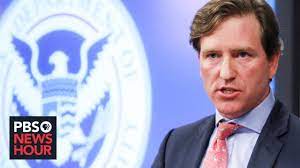
Chris Krebs
On November 12, to counter the growing chorus of lies from Trump and his Right-wing allies, he put out the following statement:
“The November 3rd election was the most secure in American history. There is no evidence that any voting system deleted or lost votes, changed votes, or was in any way compromised.”
On November 17, Trump fired Chris Krebs.
Too cowardly to confront Krebs, Trump fired him by tweet—and accompanied the outrage with yet another lie:
“The recent statement by Chris Krebs on the security of the 2020 election was highly inaccurate, in that there were massive improprieties and fraud, including dead people voting, poll watchers not allowed into polling locations, glitches in the voting machines which changed votes from Trump to Biden, late voting, and many more.
“Therefore, effective immediately, Chris Krebs has been terminated as director of the Cybersecurity and Infrastructure Security Agency.”
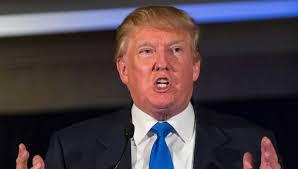
Donald Trump
Asked by “60 Minutes'” Scott Pelley if he was surprised to be fired, Krebs replied: “I don’t know if I was necessarily surprised. It’s not how I wanted to go out. The thing that upsets me the most about that is I didn’t get a chance to say goodbye to my team.
“And I’d worked with them for three and a half years, in the trenches. Building an agency, putting CISA on the national stage. And I love that team. And I didn’t get a chance to say goodbye, so that’s what I’m most upset about.”
Krebs was no dyed-in-the-wool Democrat but a life-long Republican. He gave up a lucrative job as Microsoft’s head of cybersecurity policy to join the Trump administration. He wanted to serve his country by creating a dedicated cybersecurity agency for the first time.
Still, he had his reservations about taking the job. As he told the Financial Times: “The flaws of this man [Trump] were obvious to everybody that was willing to pay attention. [But] to do your job, you have to be able to compartmentalize. I was willing to do that.
“Over time, it eats away at you. It eats away at you, the other parts of the department that were doing stuff that just seemed so inhumane. I was never involved in any of those policy conversations.”
By January 6, 2021, Trump had exhausted his legal efforts to overturn the results of the 2020 election.
From November 3 to December 14, Trump and his allies lost 59 times in court, either withdrawing cases or having them dismissed by Federal and state judges.
Of these attempts to challenge the results of the 2020 election, Krebs told Pelley:
“It was upsetting because what I saw was an apparent attempt to undermine confidence in the election, to confuse people, to scare people. It’s not me, it’s not just CISA. It’s the tens of thousands of election workers out there that had been working nonstop, 18-hour days, for months.
“They’re getting death threats for trying to carry out one of our core democratic institutions, an election. And that was, again, to me, a press conference that I just– it didn’t make sense. What it was actively doing was undermining democracy. And that’s dangerous.”
On January 6, the United States Senate, with Vice President Mike Pence presiding, met to certify states’ Electoral College results of the 2020 election.
That morning, Trump urged Pence to flip the results of the election to give him a win.
Pence replied that he lacked the power to overturn those results.
At noon, Trump appeared at the Ellipse, a 52-acre park south of the White House fence. A stage had been set up for him to address tens of thousands of his supporters, who eagerly awaited him.
Trump ordered them to march on the Capitol building to express their anger at his loss—and thus intimidate Congressional officials to reject the results.
The Stormtrumpers marched to the United States Capitol—and quickly brushed aside Capitol Police, who made little effort to arrest or shoot them.
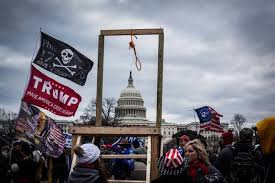
The “Jolly Roger” meets Donald Trump
Three hours passed before the mob was dispersed and order was restored.
Yet for all the terrible drama of that day, the true hero of the moment went unrecognized.
By depriving Trump of Russian help, Chris Krebs had ensured a victory for democracy.
On the evening of January 6, the House and Senate met again to count the Electoral Votes.
And as expected, the two bodies pronounced Joseph Biden the winner—bringing an end to Donald Trump’s reign of criminality and treason.
2016 PRESIDENTIAL ELECTION, 2020 PRESIDENTIAL ELECTION, 60 MINUTES, ABC NEWS, ALTERNET, AMERICABLOG, AP, BABY BOOMER RESISTANCE, BALLOTS, BBC, BLOOMBERG NEWS, BUZZFEED, CBS NEWS, CHRIS KREBS, CIA, CNN, CRIMINALITY, CROOKS AND LIARS, CYBERSECURITY INFRASTRUCTURE SECURITY AGENCY (CISA), DAILY KOZ, DEPARTMENT OF DEFENSE CYBER COMMAND, DEPARTMENT OF HOMELAND SECURITY (DHS), DONALD TRUMP, DRUDGE REPORT, ELECTION ASSISTANCE COMMISSION, ELECTION SECURITY, ELECTORAL COLLEGE, FACEBOOK, FBI, FIVETHIRTYEIGHT, HACKING, HARPER’S MAGAZINE, HILLARY CLINTON, HUFFINGTON POST, JOE BIDEN, Kamala Harris, MEDIA MATTERS, MICROSOFT, MIKE PENCE, MOTHER JONES, MOVEON, MSNBC, NATIONAL SECURITY AGENCY, NBC NEWS, NEW REPUBLIC, NEWSDAY, NEWSWEEK, NPR, PBS NEWSHOUR, POLITICO, POLITICUSUSA, POPULAR VOTE, PROPAGANDA, RAW STORY, REUTERS, RUSSIA, SALON, SCOTT PELLEY, SEATTLE TIMES, Secret Service, SLATE, TALKING POINTS MEMO, THE ATLANTIC, THE CHICAGO SUN-TIMES, THE CHICAGO TRIBUNE, THE DAILY BEAST, THE DAILY BLOG, THE GUARDIAN, THE HILL, THE HUFFINGTON POST, THE LOS ANGELES TIMES, THE NATION, THE NEW REPUBLIC, THE NEW YORK TIMES, THE NEW YORKER, THE VILLAGE VOICE, THE WASHINGTON POST, THINKPROGRESS, TIME, TIME MAGAZINE, TIME MAGAZINIE’S PERSON OF THE YEAR, TREASON, TRUTHDIG, TRUTHOUT, TWITTER, TWO POLITICAL JUNKIES, U.S. NEWS & WORLD REPORT, UNITED STATES HOUSE OF REPRESENTATIVES, UNITED STATES SENATE, UPI, USA TODAY, VLADIMIR PUTIN, WONKETTE
In Bureaucracy, History, Law Enforcement, Politics, Social commentary on November 17, 2022 at 12:10 am
TIME’s Person of the Year for 2020 proved to be two people: Joe Biden and Kamala Harris.
On the surface, choosing Biden and Harris made sense: “Joe Biden was elected President of the United States in the midst of an existential debate over what reality we inhabit. Perhaps the only thing Americans agree on right now is that the future of the country is at stake, even as they fiercely disagree about why.”
As for the shared legacy of Biden and Harris: “If Donald Trump was a force for disruption and division over the past four years, Biden and Harris show where the nation is heading: a blend of ethnicities, lived experiences and worldviews that must find a way forward together if the American experiment is to survive.”

Yet a lesser-known but far more consequential choice for “Person of the Year” would have been Chris Krebs.
Because, without Chris Krebs, there would not now be a Biden Presidency.
During the 2016 Presidential race, Russian propaganda played a major role in convincing millions of Americans to vote for Donald Trump. Social media platforms—especially Facebook and Twitter—were flooded with genuinely fake news to sow discord among Americans and create a pathway for Trump’s election.
And where Internet trolls left off, Russian computer hackers took over.
Hillary Clinton won the popular vote—65,853,514 to 62,984,828 for Trump. But in the United States, what counts in Presidential elections is the Electoral College vote.
And there Trump won: 304 to 227.
What put him over the top in the Electoral College was the help he got from Russian dictator Vladimir Putin.
Putin had good reason to assist Trump: Putin wanted the United States to ditch the North Atlantic Treaty Organization (NATO) alliance, which has preserved Western Europe from Russian aggression since World War II. And Trump had often attacked America’s funding of NATO as a drain on the American economy.
As for Trump, he wanted something from Putin: He wanted to be President. For this, Putin could supply monies, Internet trolls to confuse voters with falsified news, and even the hacking of key voting centers.
So notorious was the role played by Russian trolls and hackers in winning Trump the 2016 election that the Department of Homeland Security (DHS) was determined to prevent a repetition in 2020.
And the point man for this was Chris Krebs, the director of the Cybersecurity and Infrastructure Security Agency (CISA) run by DHS.
Born in Atlanta, Georgia, in 1977, Krebs had received a B.A. in environmental sciences from the University of Virginia in 1999, and a J.D. from the George Mason University School of Law in 2007.
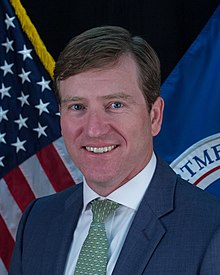
Chris Krebs
Krebs had served as Senior Advisor to the Assistant Secretary of Homeland Security for Infrastructure Protection, and later worked in the private sector as Director for Cybersecurity Policy for Microsoft.
In preparation for the 2020 Presidential election, Krebs launched a massive effort to counter lies spread by Russians—and Americans—on social media platforms. As he explained to Scott Pelley during a “60 Minutes” interview aired on November 29, 2020:
“So we spent something on the order of three and a half years of gaming out every possible scenario for how a foreign actor could interfere with an election. Countless, countless scenarios.”
Krebs’ to-do list included paper ballots:
“Paper ballots give you the ability to audit, to go back and check the tape and make sure that you got the count right. And that’s really one of the keys to success for a secure 2020 election. Ninety-five percent of the ballots cast in the 2020 election had a paper record associated with it. Compared to 2016, about 82%.
“That gives you the ability to prove that there was no malicious algorithm or hacked software that adjusted the tally of the vote, and just look at what happened in Georgia. Georgia has machines that tabulate the vote. They then held a hand recount and the outcome was consistent with the machine vote.”
Krebs’ duties included:
- Sharing intelligence from agencies such as the CIA and National Security Agency with local officials about foreign efforts at election interference.
- Ensuring that domestic voting equipment was secure.
- Attacking domestic misinformation head-on.
At his command lay the resources of a series of powerful Federal investigative agencies:
“We had the Department of Defense Cyber Command. We had the National Security Agency. We had the FBI. We had the Secret Service. We also had representatives from the Election Assistance Commission, which is the federal independent agency that supports the actual administration of elections.
“We had representatives from some of the election equipment vendors. And they’re critical because they’re the ones out there that know what’s going on on the ground if there’s any sort of issue with some of their systems. And we had representatives from state and local governments.”
Misinformation led CISA to create a new “Rumor Control” website ahead of the 2020 election. Its main goal was to debunk rumors surrounding the 2020 election that had been spreading throughout the country.
As a result, Krebs was widely praised for revamping the department’s cybersecurity efforts and increasing coordination with state and local governments.
By all accounts—except Donald Trump’s—the November 3, 2020 election went very smoothly.
1776 (PLAY), ABC NEWS, ALTERNET, AMERICABLOG, AP, “SOUTHERN STRAGEGY”, BABY BOOMER RESISTANCE, BARACK OBAMA, BLOOMBERG, BUZZFEED, CBS NEWS, CEOS, CHRIS MATHEWS, CIVIL RIGHTS ACT OF 1964, CIVIL WAR, CNN, CROOKS AND LIARS, DAILY KOZ, DECLARATION OF INDEPENDENCE, DONALD TRUMP, DRUDGE REPORT, FACEBOOK, FIVETHIRTYEIGHT, FOOD STAMPS, FRED TRUMP, HARPER’S MAGAZINE, HOWARD STERN, HUFFINGTON POST, JOHN DICKINSON, JOHN HANCOCK, MEDIA MATTERS, MEDICARE, MOTHER JONES, MOVEON, MSNBC, NBC NEWS, NEWSWEEK, NPR, PBS NEWSHOUR, PEW FOUNDATION, POLITICO, POLITICUSUSA, PROPAGANDA, RAW STORY, REPUBLICAN PARTY, REPUBLICANS, REUTERS, Ronald Reagan, SALON, SEATTLE TIMES, SLATE, SLAVERY, SOCIAL SECURITY, TALKING POINTS MEMO, THE ATLANTIC, THE CHICAGO SUN-TIMES, THE CHICAGO TRIBUNE, THE DAILY BEAST, THE DAILY BLOG, THE GUARDIAN, THE HILL, THE HUFFINGTON POST, THE LOS ANGELES TIMES, THE NATION, THE NEW REPUBLIC, THE NEW YORK TIMES, THE SOUL OF BATTLE (BOOK), THE VILLAGE VOICE, THE WALL STREET JOURNAL, THE WASHINGTON POST, THINKPROGRESS, TIME, TIME MAGAZINE, TRUTHDIG, TRUTHOUT, TWITTER, TWO POLITICAL JUNKIES, U.S. NEWS & WORLD REPORT, UPI, USA TODAY, VICTOR DAVIS HANSON, VIETNAM WAR, VOTING RIGHTS ACT OF 1965, WILLIAM TECUMSEH SHERMAN, WONKETTE
In Bureaucracy, History, Politics, Social commentary on July 27, 2022 at 12:12 am
Republicans have long tried to prevent or eliminate programs that aid the poor and middle-class, including:
- Social Security (since it began in 1935)
- Medicare
- National health insurance
- Food stamps
- WIC (Women, Infants, Children).
So why are so many poor Americans now flocking to this party’s banner?
Two reasons: Racism and greed. There are historical parallels for both.
First, race:
In 1999, historian Victor Davis Hanson noted the huge gap in wealth between the aristocratic, slave-owning minority of the pre-Civil War South and the vast majority of poor white Southerners.
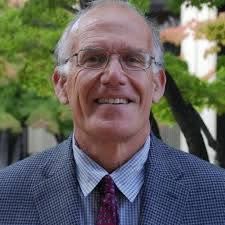
Victor Davis Hanson
“Before the war in the counties [Union General William Tecumseh] Sherman would later ruin, the top 10% of the landowners controlled 40% of the assessed wealth.”
In contrast, “more than half of those who were lucky enough to own any property at all still possessed less than 15% of the area’s valuation.”
So Hanson asked: “Why did the millions of poor whites of the Confederacy fight at all?”
He supplied the answer in his brilliant work on military history, The Soul of Battle: From Ancient Times to the Present Day, How Three Great Liberators Vanquished Tyranny.
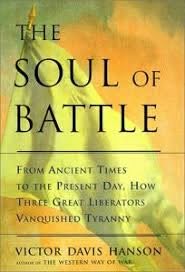
One of those liberators was General William Tecumseh Sherman, who led 62,000 Union troops in a victorious “March to the Sea” through the Confederacy in 1864.
So why did so many poor Southern whites literally lay down their lives for the wealthy planter class, which despised them?
According to Hanson: “Behind the entire social fabric of the South lay slavery.
“If slavery eroded the economic position of the poor free citizens, if slavery encouraged a society of haves and have-nots…then it alone offered one promise to the free white man–poor, ignorant and dispirited–that he was at least not black and not a slave.”
And the planter class and its allies in government easily fobbed off their poor white countrymen with cheap flattery. Said Georgia Governor Joseph Brown:
“Among us the poor white laborer is respected as an equal. His family is treated with kindness, consideration, and respect. He does not belong to the menial class. The negro is in no sense his equal. He belongs to the only true aristocracy, the race of white men.”

Arlington House and plantation, former home of Robert E. Lee
Similarly, poor whites now flock to the Republican Party–which holds them in equal contempt– in large part to protest the 2008 election of the first black President of the United States.
According to a Pew Research Center study released on July 22, 2011: “Notably, the GOP gains have occurred only among white voters; a 2-point Republican edge among whites in 2008 (46% to 44%) has widened to a 13-point lead today (52% to 39%).”
Since the 1960s, Republicans have pursued a campaign policy of “divide and rule”–divide the nation along racial lines and reap the benefits at election time.
- Republicans opposed the Civil Rights Act of 1964.
- Republicans opposed the Voting Rights Act of 1965.
- Republicans, with Richard Nixon as their Presidential candidate in 1968 and 1972, pursued what they called a “Southern strategy”: Use “code language” to stoke fear and hatred of blacks among whites.
- Republicans have falsely identified welfare programs exclusively with non-whites. (Of the six million Americans receiving food stamps, about 42% are white, 32% are black, and 22% are Latino–with the growth fastest among whites during the recession.)
Thus, in voting Republican, many of these poor whites believe they are “striking a blow for the white race.”
And they can do so in a more socially acceptable way than joining a certified hate group such as the American Nazi Party or Ku Klux Klan.
Since 2015, openly racist groups such as the Klan and the American Nazi Party have flocked to the banner of Presidential candidate Donald Trump. By enthusiastically courting their support, the real estate mogul has made it possible for Republican candidates to openly display their own racism.
Now greed:
In the hit play, 1776, on the creation and signing of the Declaration of Independence, there is a telling exchange between John Dickinson and John Hancock. It comes during the song, “Cool, Cool, Considerate Men.”
Dickinson, the delegate from Pennsylvania, urges Hancock, president of the Second Continental Congress, “to join us in our minuet.” By “us” he means his fellow conservatives who fear losing their property and exalted status by supporting American independence from Great Britain.
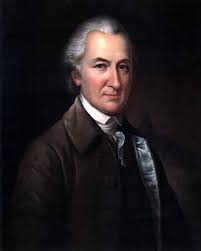
John Dickinson
Hancock declines, saying: “Fortunately, there are not enough men of property in America to dictate policy.”
To which Dickinson replies: “Perhaps not. But don’t forget that most men with nothing would rather protect the possibility of becoming rich than face the reality of being poor. And that is why they will follow us.”
Today, poor whites generally identify with the CEOs of powerful corporations. They believe the Republican gospel that they can attain such wealth–if only the government will “get out of my way.”
They forget—or ignore—the truth that government, for all its imperfections, is sometimes all that stands between them and a wide range of predators.
In return, the CEOs despise them as the privileged have always despised their social and economic “inferiors.”
Unless the Democratic Party can find ways to directly address these bitter, Politically Incorrect truths, it will continue its decline into insignificance.
1776 (PLAY), ABC NEWS, ALTERNET, AMERICABLOG, AP, “SOUTHERN STRAGEGY”, BABY BOOMER RESISTANCE, BARACK OBAMA, BLOOMBERG, BUZZFEED, CBS NEWS, CEOS, CHRIS MATHEWS, CIVIL RIGHTS ACT OF 1964, CIVIL WAR, CNN, CROOKS AND LIARS, DAILY KOZ, DECLARATION OF INDEPENDENCE, DONALD TRUMP, DRUDGE REPORT, FACEBOOK, FIVETHIRTYEIGHT, FOOD STAMPS, FRED TRUMP, HARPER’S MAGAZINE, HOWARD STERN, HUFFINGTON POST, JOHN DICKINSON, JOHN HANCOCK, MEDIA MATTERS, MEDICARE, MOTHER JONES, MOVEON, MSNBC, NBC NEWS, NEWSWEEK, NPR, PBS NEWSHOUR, PEW FOUNDATION, POLITICO, POLITICUSUSA, PROPAGANDA, RAW STORY, REPUBLICAN PARTY, REPUBLICANS, REUTERS, Ronald Reagan, SALON, SEATTLE TIMES, SLATE, SLAVERY, SOCIAL SECURITY, TALKING POINTS MEMO, THE ATLANTIC, THE CHICAGO SUN-TIMES, THE CHICAGO TRIBUNE, THE DAILY BEAST, THE DAILY BLOG, THE GUARDIAN, THE HILL, THE HUFFINGTON POST, THE LOS ANGELES TIMES, THE NATION, THE NEW REPUBLIC, THE NEW YORK TIMES, THE SOUL OF BATTLE (BOOK), THE VILLAGE VOICE, THE WALL STREET JOURNAL, THE WASHINGTON POST, THINKPROGRESS, TIME, TIME MAGAZINE, TRUTHDIG, TRUTHOUT, TWITTER, TWO POLITICAL JUNKIES, U.S. NEWS & WORLD REPORT, UPI, USA TODAY, VICTOR DAVIS HANSON, VIETNAM WAR, VOTING RIGHTS ACT OF 1965, WILLIAM TECUMSEH SHERMAN, WONKETTE
In Bureaucracy, Business, History, Politics, Social commentary on July 26, 2022 at 12:16 am
On July 22, 2011, ABC News carried the following story:
The Pew Foundation, analyzing voter identification, found “the electorate’s partisan affiliations have shifted significantly” since Barack Obama won office in 2008.
The GOP had gained strength among white voters, most specifically “the young and poor.”

A seven-point Democratic advantage among whites under age 30 three years ago had turned into an 11-point GOP advantage. And a 15-point Democratic advantage among whites earning less than $30,000 annually had swung to a slim four-point Republican edge by 2011.
In addition:
- The GOP gains had occurred only among white voters.
- Republicans had made sizable gains among white voters since 2008. Fifty-two percent of white voters called themselves Republicans or leaned to the GOP, compared with 39% who affiliated with the Democratic Party or leaned Democratic.
- Democrats had lost their edge among lower income white voters.
- In 2008, Democrats had a 15 point lead among white voters with family incomes less than $30,000. By 2011, Republicans had a four-point edge among this group.
- The GOP’s lead among middle income white voters had grown since 2008, and Republicans held a substantial advantage with higher income white voters.
- Republicans have made gains among whites with a high school education or less. The GOP’s advantage over Democrats had grown from one point in 2008 to 17 points in 2011 among less educated whites.
- Republicans had made smaller gains among white voters who had college degrees.
Five years later, in 2016, these masses of disaffected white men would overwhelmingly vote for Donald Trump, a real estate mogul-turned-celebrity-TV-host of “The Apprentice.”
Trump had been born into a life of luxury. He began his real estate career at his father’s real estate and construction company. He rose to wealth and fame after his father, Fred, gave him control of the business in 1971.
Similarly, soon after acquiring the family business, Trump set out to build his own empire—hotels, golf courses, casinos and skyscrapers across North and South America, Europe and Asia. Of the 515 entities he owns, 268 of them—52%—bear his last name. He often refers to his properties as “the swankiest,” “the most beautiful.”
During the Vietnam war, his father reportedly paid a doctor to claim that Trump suffered from “bone spurs” in his foot—thus enabling him to escape the draft.
Donald Trump
In short, Trump has literally nothing in common with the masses of poor whites who worship him.
Howard Stern, the notorious radio host, has known Trump many years. Commenting on the appeal Trump has for his followers, Stern says: “The oddity of all this is the people Trump despises most, love him the most.
“The people who are voting for Trump for the most part …he wouldn’t even let them in his fucking hotel. He’d be disgusted by them. Go to Mar-a-Lago. See if there’s any people who look like you. I’m talking to you in the audience.”
Yet, while the poor worship Trump and Republicans generally, there is a disconnect between them: Since 1980, Republicans have pursued a policy of gutting programs aimed at helping the poor—while repeatedly creating tax-breaks for the wealthiest 1% of the population.
For Republicans, the patron saint of this “love-the-rich-screw-the-poor” ideology remains Ronald Reagan—two-time governor of California and twice-elected President of the United States (1981-1989)
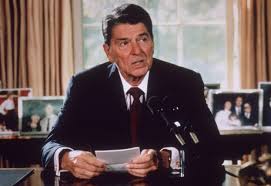
Ronald Reagan, who taught Americans to worship the wealthy
Among those charting Reagan’s legacy as President was former CBS Correspondent David Shoenbrum.
In his bestselling autobiography, America Inside Out: At Home and Abroad from Roosevelt to Reagan, he noted:
- On January 28, 1981, keeping a pledge to his financial backers in the oil industry, Reagan abolished Federal controls on the price of oil.
- Within a week, Exxon, Texaco and Shell raised gasoline prices and prices of home heating oil.
- Reagan saw it as his duty to put a floor under prices, not a ceiling above them.
- Reagan believed that when government helped business it wasn’t interfering. Loaning money to bail out a financially incompetent Chrysler was “supporting the free enterprise system.”
- But putting a high-profits tax on price-gouging corporations or filing anti-trust suits against them was “Communistic” and therefore intolerable.
- Tax-breaks for wealthy businesses meant helping America become stronger.
- But welfare for the poor or the victims of a predatory marketplace economy weakened America by sapping its morale.
“In short, welfare for the rich is good for America. But welfare for the poor is bad for America, even for the poor themselves, for it encourages them to be shiftless and lazy.
“Somehow, loans to the inefficient management of American corporations would not similarly encourage them in their inefficient methods,” wrote Shoenbrun.
Republicans have sought to dismantle Social Security ever since that program began in 1935. And Republicans have furiously opposed other programs aiding the poor and middle-class—such as Medicare, food stamps and WIC (Women, Infants, Children).
In short, this is not a political party with a history of rushing to the defense of those most in need.
So the question remains: Why are so many poor Americans flocking to its banner?
The answer lies in the history of the American South—and slavery.
ABC NEWS, ALEXI KOSYGIN, ALTERNET, AMERICABLOG, AP, BABY BOOMER RESISTANCE, BBC, BLOOMBERG NEWS, BORIS YELTSIN, BUZZFEED, CATHERINE THE GREAT, CBS NEWS, CENSORSHIP, CNN, COMMUNISM, CROOKS AND LIARS, CZARS, CZECHOSLOVAKIA, DAILY KOZ, DONALD TRUMP, FACEBOOK, FIVETHIRTYEIGHT, HARPER’S MAGAZINE, HUFFINGTON POST, JOSEPH STALIN, LEONID BREZHNIEV, MEDIA MATTERS, MIKHAIL TUKHACHEVSKY, MOTHER JONES, MOVEON, MSNBC, NBC NEWS, NEW REPUBLIC, NEWSDAY, NEWSWEEK, NIKOLAI ZHILAYEV, NPR, OLGA MISIK, PBS NEWSHOUR, POLITICO, POLITICUSUSA, PROPAGANDA, RAW STORY, REUTERS, RUSSIA, SALON, SEATTLE TIMES, SLATE, TALKING POINTS MEMO, THE ATLANTIC, THE CHICAGO SUN-TIMES, THE CHICAGO TRIBUNE, THE DAILY BEAST, THE DAILY BLOG, THE GUARDIAN, THE HILL, THE HUFFINGTON POST, THE INTERCEPT, THE LOS ANGELES TIMES, THE NATION, THE NEW REPUBLIC, THE NEW YORK TIMES, THE NEW YORKER, THE VILLAGE VOICE, THE WASHINGTON POST, THINKPROGRESS, TIME, TRUTHDIG, TRUTHOUT, TWITTER, TWO POLITICAL JUNKIES, U.S. NEWS & WORLD REPORT, UKRAINE, UPI, USA TODAY, VLADIMIR PUTIN, VOLODYMYR ZELENSKY, WONKETTE, YEMELYAN PUGACHEF, YEVGENEY YEVTUSHENKO
In Bureaucracy, History, Law, Law Enforcement, Military, Politics, Social commentary on June 8, 2022 at 12:11 am
In Vladimir Putin’s Russia, conscience comes with a price. It can range anywhere from house arrest to years of imprisonment in the Gulag—to being shot or poisoned by the FSB, the secret police successor to the infamous KGB.
It has always been so.
Mikhail Nikolayevich Tukhachevsky was a major Soviet military leader and theoretician from 1918 to 1937. He fought to modernize Soviet armament, as well as develop airborne, aviation and mechanized forces. Almost singlehandedly, he created the theory of deep operations for Soviet forces.
But he fell victim to the paranoia of Soviet dictator Joseph Stalin.

Mikhail Nikolayevich Tukhachevsky
Arrested on May 22, 1937, he was interrogated and tortured. As a result, he “confessed” to being a German agent plotting to overthrow Stalin and seize power.
On June 11, 1937, the Soviet Supreme Court quickly sentenced Tukhachevsky for treason. Hours later, he was executed.
Among his friends had been Nikolai Sergeyvich Zhilayev. a Russian musicologist and the teacher of several 20th-century Russian composers. Knowing that he was a marked man, Zhilayev did something truly extraordinary.
He had a large portrait of Tukhachevsky in his room, and after the announcement that Tukhachevsky had been shot as a traitor to the homeland, Zhilayev did not take the picture down. If discovered, it meant instant arrest—and almost certain execution.
When the secret police came for him, even they were awed: ”“What, it’s still up?”
“The time will come,” Zhilayev replied, “when they’ll erect a monument to him.”
As, in fact, has happened.
Standing before a Russian judge, accused of vandalism for participating in a demonstration against Putin’s suppression of human rights, 19-year-old Olga Misik dared to speak truths most Russians fear to even whisper.
Olga Misik
From her statement to the court on May 11, 2021:
The prosecution is putting all its efforts into proving that I am implicated in the incident. I’m not going to spend much time showing that they can’t even do that professionally: They are using falsified fingerprint analysis, and, as you saw when you were examining the evidence, there was no trace of paint on my clothes….
But what does that matter when no law was broken? What difference does it make whether I was there or not when no crime was committed?….There is a crime, and it was committed by the police and the prosecutors. And I very much hope, Comrade Judge, that you will not become an accomplice to this crime.
This is precisely why I demand a complete and unconditional acquittal. I am not accepting any half measures, like settling for a fine. I am sure of my innocence and am prepared to uncompromisingly defend it to the end….
The past nine months have been very difficult, you know, and I wouldn’t like to repeat them. I kept thinking to myself, What could have happened if, and, Everything could have gone differently. But I was lying to myself, because nothing could have gone differently.
From the moment I picked up the constitution, my fate was set in stone, and I accepted it with pride. I made the right choice, and making the right choice in a totalitarian state will always have horrifying consequences. I always knew I’d end up behind bars—it was only a matter of when.
My lawyer brought up Sophie Scholl [a German student and anti-Nazi political activist] today. Her story is shockingly similar to mine. She was put on trial for flyers and graffiti; I’m being tried for posters and paint.
Like she was, I am essentially on trial for thought crimes. My trial is very similar to Sophie’s, and today’s Russia really resembles Nazi Germany.
Right up to the guillotine, Sophie did not stray from her beliefs. Her story inspired me not to agree to charges being dropped. Sophie Scholl is the embodiment of youth, individuality, and freedom. I would like to believe that to be another thing that makes us similar.
The Nazi regime eventually crumbled, as will the fascist regime in Russia. I don’t know when it will happen, be it a week, a year, or decade, but I know that someday we will be victorious, because love and youth always prevail….
Sophie Scholl’s last words before her execution were, “The sun still shines.” Indeed, the sun still shines. I couldn’t see it out the window of the detention center, but I always knew it was there. And if now, in such dark times, we can turn to the light, then maybe victory isn’t so far after all.
In his 1960 poem, “Conversation With an American Writer,” the Russian poet, Yevgeney Yevtushenko spoke for those Russians who had maintained their integrity in the face of Stalinist terror:
“You have courage,” they tell me.
It’s not true. I was never courageous.
I simply felt it unbecoming
to stoop to the cowardice of my colleagues.
Demonstrating his own moral courage, on August 22, 1968—the day after the Soviet Union invaded Czechoslovakia—Yevtushenko sent a telegram protesting the invasion to Communist Party Boss Leonid Brezhnev and Premier Aleksei Kosygin:
In Russia—under Czars or Commissars—acting on moral courage is no small thing.
A revered poet demonstrated it in 1968. And a teenage girl demonstrated it in 2021.


1984 NOVEL, 2020 PRESIDENTIAL ELECTION, ABC NEWS, ADOLF HITLER, AFFORDABLE HEALTHCARE ACT, ALTERNET, ALVIN BRAGG, AMERICABLOG, ANDREW CLYDE, ANN COULTER, AP, ARIZONA, ARIZONA SHOOTINGS, ASHLI BABBITT, ASSASSINATION, BABY BOOMER RESISTANCE, BARACK OBAMA, BARRON TRUMP, BBC, BILL CLINTON, BIRTHERS, BLACKS, BLOOMBERG NEWS, BUZZFEED, CBS NEWS, CHILD MOLESTERS, CHRISTINA-TAYLOR GREEN, CLASSIFIED DOCUMENTS, CNN, CONFEDERATE FLAG, CROOKS AND LIARS, CVS, DAILY KOS, DEMOCRATIC PARTY, DEMOCRATS, DENNIS HASTERT, DEVIN NUNES, DICK ARMEY, DICK MORRIS, DONALD TRUMP, FAMILY RESEARCH COUNCIL, FANNI WILLIS, FBI, FIVETHIRTYEIGHT, FRANKLIN D. ROOSEVELT, GABRIELLE GIFFORDS, GAYS, GEORGE H.W. BUSH, GEORGE ORWELL, GEORGE W. BUSH, GLENN BECK, HARPER’S MAGAZINE, HARRY S. TRUMAN, HATE CRIMES, HEALTHCARE, HISPANICS, HOUSE OVERSIGHT COMMITTEE, HUFFINGTON POST, JACK SMITH, JAN BREWER, JANUARY 6 COUP ATTEMPT, JGB BUSH, JIM JORDAN, JOSEPH MCCARTHY, JOSEPH R. BIDEN, JOSEPH STALIN, JOSH DUGGAR, KANSAS, LAUREN BOEBERT, LESBIANS, LOS ANGELES, MARJORIE TAYLOR GREEN, MATT GAETZ, MEDIA MATTERS, MEIN KAMPF, MELANIA TRUMP, MICHAEL COHEN, MICHAEL SAVAGE, MICHELE BACHMANN, MIKE HUCKABEE, MIKE PENCE, MOTHER JONES, MOVEON, MSNBC, MUSLIMS, NBC NEWS, NEW REPUBLIC, NEWSDAY, NEWSWEEK, NEWT GINGRICH, NPR, OBAMACARE, ORACLE, PBS NEWSHOUR, PHIL GRAMM, POLITICO, POLITICUSUSA, PROPAGANDA, RAFAEL "TED" CRUZ, RAW STORY, RELIGIOUS FREEDOM RESTORATION ACT, REP. GABRIELLE GIFFORDS, REPUBLICAN PARTY, REPUBLICANS, REUTERS, RICHARD NIXON, RICK PERRY, RODNEY KING RIOTS, ROLLING STONE MAGAZINE, RUSH LIMBAUGH, SALON, Sarah Palin, SEAN HANNITY, SEATTLE TIMES, SHARIA LAW, SLATE, SOUTH DAKOTA, SOVIET UNION, SPIRO AGNEW, STEVE BANNON, STORMY DANIELS, TALKING POINTS MEMO, TEA PARTY, TERRORISM, THE ATLANTIC, THE CHICAGO SUN-TIMES, THE CHICAGO TRIBUNE, THE DAILY BEAST, THE DAILY BLOG, THE GUARDIAN, THE HILL, THE HUFFINGTON POST, THE INTERCEPT, THE LOS ANGELES TIMES, THE NATION, THE NEW REPUBLIC, THE NEW YORK TIMES, THE NEW YORKER, THE VILLAGE VOICE, THE WASHINGTON POST, THINKPROGRESS, TIME, TRUTHDIG, TRUTHOUT, U.S. DISTRICT JUDGE JOHN ROLL, U.S. MARSHALS SERVICE, U.S. NEWS & WORLD REPORT, UNITED STATES HOUSE OF REPRESENTATIVES, UNITED STATES SENATE, UPI, USA TODAY, WOMEN, WORLD WAR 11, X
REPUBLICANS: PREDATORS, NOT PACIFISTS: PART TWO (OF FIVE)
In Bureaucracy, History, Law, Law Enforcement, Politics, Social commentary on July 16, 2024 at 12:14 am“The Republican Party has weaponized its supporters, made violence a virtue and, with almost every pronouncement for 50 years, given them an enemy politicized, radicalized and indivisible.”
So wrote Rolling Stone writer Jeb Lund in a blistering June 19, 2015 editorial.
But the proof of Republican culpability in political violence goes back much further.
Consider:
Gabrille Giffords, 40, is a moderate Democrat who narrowly wins re-election in November, 2010, against a Republican Tea Party candidate.
Her support of President Barack Obama’s health care reform law has made her a target for violent rhetoric–-especially from former Alaska Republican Governor Sarah Palin.
In March, 2010, Palin releases a map featuring 20 House Democrats that uses cross-hairs images to show their districts. In case her supporters don’t get the message, she later writes on Twitter: “Don’t Retreat, Instead – RELOAD!”
Sarah Palin’s “Crosshairs” Map
As the campaign continues, Giffords finds her Tucson office vandalized after the House passes the healthcare overhaul in March.
Giffords senses that she has become a target for removal—in more than political terms. In an interview after the vandalizing of her office, she refers to the animosity against her by conservatives.
She specifically cites Palin’s decision to list her seat as one of the top “targets” in the midterm elections.
“For example, we’re on Sarah Palin’s targeted list, but the thing is, that the way that she has it depicted has the cross-hairs of a gun sight over our district. When people do that, they have to realize that there are consequences to that action,” Giffords tells MSNBC.
At one of her rallies, her aides call the police after an attendee drops a gun.
Giffords may have seen the spectre of violence closing in on her. In April, 2010, she supported Rep. Raúl Grijalva after he had to close two offices when he and his staff received threats.
Raúl Grijalva
He had called for a boycott of Arizona businesses in opposition to the state’s controversial immigration law.
“I am deeply troubled about reports that Congressman Grijalva and members of his staff have been subjected to death threats,” Giffords said.
“This is not how we, as Americans, express our political differences. Intimidation has no place in our representative democracy. Such acts only make it more difficult for us to resolve our differences.”
But intimidation—-and worse—-does have a place among the tactics used by influential Republicans in the pursuit of absolute power.
Increasingly, Republicans have repeatedly aimed violent—-and violence-arousing—-rhetoric at their Democratic opponents. This is not a case of careless language that is simply misinterpreted, with tragic results.
Republicans like Sarah Palin fully understand the constituency they are trying to reach: Those masses of alienated, uneducated Americans who live only for their guns and hardline religious beliefs—and who can be easily manipulated by perceived threats to either.
Sarah Palin
Gage Skidmore from Surprise, AZ, United States of America, CC BY-SA 2.0 <https://creativecommons.org/licenses/by-sa/2.0>, via Wikimedia Commons
If a “nutcase” assaults a Democratic politician and misses, then the Republican establishment claims to be shocked—-shocked!—that such a thing could have happened.
And if the attempt proves successful—as the January 8, 2011 Tucson shootings did—then Republicans weep crocodile tears for public consumption.
The difference is that, in this case, they rejoice in knowing that Democratic ranks have been thinned and their opponents are even more on the defensive, for fear of the same happening to them.
Consider the following:
Since the end of World War 11, Republicans have regularly hurled the charge of “treason” against anyone who dared to run against them for office or think other than Republican-sponsored thoughts.
Republicans had been locked out of the White House from 1933 to 1952, during the administrations of Franklin D. Roosevelt and Harry S. Truman.
Determined to regain the Presidency by any means, they found that attacking the integrity of their fellow Americans a highly effective tactic.
During the 1950s, Wisconsin Senator Joseph R. McCarthy rode a wave of paranoia to national prominence—by attacking the patriotism of anyone who disagreed with him.
The fact that McCarthy never uncovered one actual case of treason was conveniently overlooked during his lifetime.
Share this: