Posts Tagged ‘NIKITA KHRUSHCHEV’
9/11 ATTACKS, ABC NEWS, AFGHANISTAN, AL QAEDA, ALTERNET, AMERICABLOG, AP, BABY BOOMER RESISTANCE, BARACK OBAMA, BLOOMBERG, BOLIVIA, BUZZFEED, CBS NEWS, CIA, CNN, COMMUNISM, CROOKS AND LIARS, CUBA, CUBAN MISSILE CRISIS, DAILY KOZ, DRUDGE REPORT, ERNESTO "CHE" GUEVARA, FACEBOOK, FIDEL CASTRO, FIVETHIRTYEIGHT, GEORGE W. BUSH, GREEN BERETS, HARPER’S MAGAZINE, HUFFINGTON POST, IRAQ, ISLAM, JOHN F. KENNEDY, MEDIA MATTERS, MOTHER JONES, MOVEON, MSNBC, NAVY SEALS, NBC NEWS, NEWSWEEK, NIKITA KHRUSHCHEV, NPR, OSAMA BIN LADEN, PAKISTAN, PBS NEWSHOUR, POLITICO, POLITICUSUSA, RAW STORY, REUTERS, SALON, SEATTLE TIMES, SLATE, SOVIET UNION, TALIBAN, TALKING POINTS MEMO, THE ATLANTIC, THE CHICAGO SUN-TIMES, THE CHICAGO TRIBUNE, THE DAILY BEAST, THE DAILY BLOG, THE GUARDIAN, THE HILL, THE HUFFINGTON POST, THE LOS ANGELES TIMES, THE NATION, THE NEW REPUBLIC, THE NEW YORK TIMES, THE VILLAGE VOICE, THE WASHINGTON POST, THINKPROGRESS, TIME, TRUTHDIG, TRUTHOUT, TWITTER, TWO POLITICAL JUNKIES, U.S. NEWS & WORLD REPORT, UPI, USA TODAY, WONKETTE
In Bureaucracy, History, Military, Politics on February 16, 2016 at 12:10 am
When Osama bin Laden died, two weapons were within easy reach–an AK-47 assault rifle and a Russian-made nine-millimeter Makarov pistol.
But according to his wife, Amal, he was shot by Navy SEALS before he could reach either one.
A SEAL flashed coded news of bin Laden’s death to the Pentagon and the White House Situation Room, where President Barack Obama and the topmost officials of his administration anxiously followed events via a closed-circuit television.
“Geronimo E-KIA” read the message: “Geronimo [bin Laden] E-KIA [Enemy Killed in Action].”
The entire raid–including Intelligence sweeps of the compound–was over in less than 40 minutes. The SEALS moved quickly because they rightly feared that the Pakistani army would intervene to protect bin Laden.
Bin Laden had been living undisturbed at a large compound in Abbottabad for at least five years, just a short distance from Pakistan’s version of West Point.
Furthermore, the ISI–Pakistan’s Intelligence agency–had long been riddled with Al-Qaeda sympathizers, if not agents.
Within 24 hours of his death, Bin Laden’s body was transported to the aircraft carrier USS Carl Vinson for final rites and burial at sea.
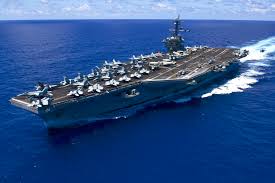
U.S.S. Carl Vinson
President Obama and other U.S. officials feared that his grave site would become a memorial for members of Al-Qaeda and other Islamic terrorist organizations.
In the late evening of May 1, 2011, the White House surprised major television networks by informing them that the President had a major announcement to make.
At 11:35 P.M. Eastern Standard Time, the President appeared at a podium in the East Room of the White House.
“Good evening. Tonight I can report to the American people and to the world that the United States had conducted an operation that killed Osama bin Laden, the leader of Al-Qaeda, and a terrorist who’s responsible for the murder of thousands of innocent men, women and children….
“For over two decades, bin Laden has been Al-Qaeda’s leader and symbol, and has continued to plot attacks against our country and our friends and allies. The death of bin Laden marks the most significant achievement to date in our nation’s efforts to defeat Al-Qaeda.”
He added that “no Americans were harmed” in the raid and that the SEALS had taken care to avoid civilian casualties.

President Barack Obama announcing Osama bin Laden’s death
Like Ernesto “Che” Guevara, bin Laden had become a pale, largely irrelevant figure by the time of his death.
Knowing he was the world’s most wanted man, he imprisoned himself within a fortified compound–which he never left.
Afraid to use a phone or the Internet, he relayed orders–which were often ignored–via the cumbersome use of couriers. All trash generated by the inhabitants of the compound was burned within its walls.
Ironically, the lack of Internet and phone lines to the compound–and the burning of its trash–had led CIA officials to suspect that Osama bin Laden might be hiding there.
Pakistan was outraged. Officially an American ally, its territory had been secretly invaded by American military forces. Even more embarrassing: For years, Pakistani Intelligence had denied knowing bin Laden’s whereabouts.
Meanwhile, leaders of Islamic expansionist groups rallied to praise the dead bin Laden. Among these was his son, Omar, who denounced his father’s killing as a “criminal” act, and his burial at sea as demeaning to the Islamic faith.
In a letter published on the website of Islamic ideologue Abu Walid al-Masri, the younger bin Laden said the former Al-Qaeda leader’s children reserved the right to take legal action in the United States and internationally to “determine the true fate of our vanished father.”
Bin Laden’s death drew protests from hundreds of people in the city of Quetta, in southwestern Pakistan, who burned American flags and paid homage to the late terrorist leader.
On May 13, a pair of Taliban suicide bombers attacked paramilitary police recruits eagerly heading home for a break after months of training, killing 80 people. It was the first act of retaliation for the killing of bin Laden.
Americans reacted differently.
Almost as Obama was addressing the nation, cheering crowds gathered outside the White House and in New York City’s Times Square. Many of them shouted “USA! USA! USA!” and waved American flags in celebration.
Celebration also broke out at the site of the former World Trade Center, the primary victim of the September 11 attacks.
For the next two weeks, Americans continued to rejoice. Much of their feelings were best expressed in grisly humor on websites and late night comedy shows such as “Tonight” and “Late Night With David Letterman.”
Killing Osama bin Laden removed Al-Qaeda’s most important member. But its treasury of secret materials–such as computer hard-drives, DVDs, notebooks, diaries–proved even more important to American military and Intelligence officials.
During the late 1960s and early 1970s, many Vietnam protesters marched carrying blown-up photos of Ernesto “Che” Guevara or tacked them to the walls of their dormitory rooms.
Most of these college students were members of the middle-class which Guevara had so despised.
Going on five years since the death of bin Laden, his poster has been noticeably absent from American college campuses–and everywhere else in the United States.
It remains to be seen whether, decades from now, Osama bin Laden will attain the iconic status of Ernesto “Che” Guevara.
9/11 ATTACKS, ABC NEWS, AFGHANISTAN, AL QAEDA, ALTERNET, AMERICABLOG, AP, BABY BOOMER RESISTANCE, BARACK OBAMA, BLOOMBERG, BOLIVIA, BUZZFEED, CBS NEWS, CIA, CNN, COMMUNISM, CROOKS AND LIARS, CUBA, CUBAN MISSILE CRISIS, DAILY KOZ, DRUDGE REPORT, ERNESTO "CHE" GUEVARA, FACEBOOK, FIDEL CASTRO, FIVETHIRTYEIGHT, GEORGE W. BUSH, GREEN BERETS, HARPER’S MAGAZINE, HUFFINGTON POST, IRAQ, ISLAM, JOHN F. KENNEDY, MEDIA MATTERS, MOTHER JONES, MOVEON, MSNBC, NAVY SEALS, NBC NEWS, NEWSWEEK, NIKITA KHRUSHCHEV, NPR, OSAMA BIN LADEN, PAKISTAN, PBS NEWSHOUR, POLITICO, POLITICUSUSA, RAW STORY, REUTERS, SALON, SEATTLE TIMES, SLATE, SOVIET UNION, TALIBAN, TALKING POINTS MEMO, THE ATLANTIC, THE CHICAGO SUN-TIMES, THE CHICAGO TRIBUNE, THE DAILY BEAST, THE DAILY BLOG, THE GUARDIAN, THE HILL, THE HUFFINGTON POST, THE LOS ANGELES TIMES, THE NATION, THE NEW REPUBLIC, THE NEW YORK TIMES, THE VILLAGE VOICE, THE WASHINGTON POST, THINKPROGRESS, TIME, TRUTHDIG, TRUTHOUT, TWITTER, TWO POLITICAL JUNKIES, U.S. NEWS & WORLD REPORT, UPI, USA TODAY, WONKETTE
In Bureaucracy, History, Military, Politics on February 15, 2016 at 12:00 am
Ernesto “Che” Guevara was dead. But that wasn’t enough for the Bolivian government that had authorized his execution. His corpse was disappear from the face of the earth.
On October 10, 1967, Guavara’s body was flown to nearby Vallegrande, where photographs were taken of him lying on a concrete slab in the laundry room of the Nuestra Senora de Malta.

Che Guevara in death
Several witnesses were called in to confirm that it was indeed Guevara. As hundreds of local residents filed past the corpse, men of them felt Guevara resembled images of a bearded, long-haired Jesus Christ. Some of them even surreptitiously clipped locks of his hair as divine relics.
After a military doctor amputated his hands, Bolivian army officers transferred Guevara’s body to an undisclosed location. The government refused to say whether his remains had been buried or cremated.
Che’s hands were preserved in formaldehyde and sent to Buenos Aires, Argentina, for fingerprint identification. (His prints were on file with the Argentine police)
On October 15, Fidel Castro acknowledged that Guevara was dead and proclaimed three days of public mourning throughout Cuba.
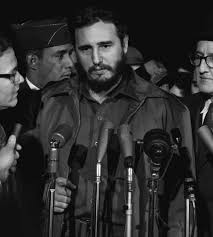
Fidel Castro
Che, in one sense, was lucky to die as he did–and when he did. He was only 39, but he was already running to fat and increasingly troubled by his lifelong asthma.
His Don Quixote-like venture into Bolivia proved a failure from first to last. Peasants didn’t flock to his banner; in fact, some of them betrayed his movements to the Bolivian army.
And 24 years after Guevara’s execution, Communism, his secular religion, died a violent death in its birthplace–the Soviet Union. It wasn’t killed off by invading capitalist forces, but thrown off by the Russian people themselves.
Nor would Che be pleased with the course of “revolutionary” events in Cuba. Until the death of the Soviet Union, the island remained dependent on what amounted to Soviet welfare.
Since then, Cubans have supported themselves by turning their island into a privileged playground for the rich–especially rich Americans.
On October 17, 1997–30 years after their deaths–Guevara and six of his fellow combatants were buried with full military honors in a specially built mausoleum in Santa Clara, Cuba. It was there in 1958 that he had commanded the decisive military victory of the Cuban Revolution.
Having described, in Part One, how Ernesto “Che” Guevara met his end, it’s time to examine how Osama bin Laden earned his 72 willing virgins.
After the September 11, 2001 attacks on the Pentagon and the World Trade Center, the United States quickly established that bin laden had plotted them.
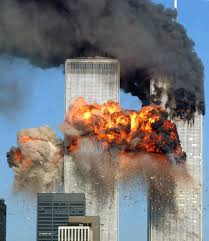
World Trade Center on 9/11/01
But bin Laden was then living in Afghanistan and protected by its Islamic rulers, the Taliban. President George W. Bush gave the Taliban an ultimatum: Surrender bin Laden–or else.
The Taliban refused.
On October 7, 2001, the United States’ new allies, the Northern Alliance, supported by American airstrikes, began a ground campaign against the Taliban.
Taliban resistance quickly vanished. Bin Laden retreated to Tora Bora, a series of bunkers in a mountainous region near the Pakistani border. With the mountains literally shaking under a rain of “bunker-busting” bombs, bin Laden decided to move on.
Suddenly, in December, 2001, he seemed to vanish from the earth.
Reports circulated that he was living in a cave in the no-man’s-land lying between Afghanistan and Pakistan.
Strangely, the Bush administration lost interest in locating him. Increasing numbers of American troops were quietly transferred from Afghanistan to staging areas near Iraq–for Bush’s long-planned overthrow of its dictator, Saddam Hussein.
Only when Barack Obama took office as President in 2009 was the CIA ordered to make finding bin Laden its top priority. Over the next two years, CIA agents sifted through a conflicting series of reports about bin Laden’s possible whereabouts.
Finally, the agency tracked a courier linked to bin Laden to a large, high-walled compound in Abbottabad, Pakistan.
On April 28, 2011, President Obama authorized a U.S. military raid on the compound, dubbed “Operation Neptune Spear.” On May 1, 2011, two teams of 12 U.S. Navy SEALS, working with the CIA, traveled in two helicopters to the compound.
The helicopters were specially outfitted to emit little noise. But an accident resulted when the tail rotor of one helicopter grazed the compound’s stone wall.
The damaged aircraft was “hard-landed” and then destroyed on-site to protect its technological secrets. Back-up forces were immediately available, and another helicopter was brought in to retrieve the commandos and relevant contents.
All combined, a total of 79 commandos and a dog (believed to have explosive-detection training) were involved in the raid.
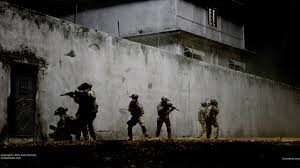
SEALS attacking bin Laden’s compound in the 2012 movie, “Zero Dark Thirty”
Abu Ahmed al-Kuwaiti, bin Laden’s courier, opened fire on the SEALS from the guesthouse with an AK-47 assault rifle. He and his wife were killed by return fire.
A male relative of the courier was shot and killed by the SEALS before he could reach a weapon lying nearby.
Bin Laden’s 22-year-old son rushed toward the SEALS on the staircase of the main house. SEAL gunfire instantly killed him.
Osama bin Laden, standing at the top of a staircase, retreated into his room–where SEALS followed and shot him in the head and chest.
9/11 ATTACKS, ABC NEWS, AFGHANISTAN, AL QAEDA, ALTERNET, AMERICABLOG, AP, BABY BOOMER RESISTANCE, BARACK OBAMA, BLOOMBERG, BOLIVIA, BUZZFEED, CBS NEWS, CIA, CNN, COMMUNISM, CROOKS AND LIARS, CUBA, CUBAN MISSILE CRISIS, DAILY KOZ, DRUDGE REPORT, ERNESTO "CHE" GUEVARA, FACEBOOK, FIDEL CASTRO, FIVETHIRTYEIGHT, GEORGE W. BUSH, GREEN BERETS, HARPER’S MAGAZINE, HUFFINGTON POST, IRAQ, ISLAM, JOHN F. KENNEDY, MEDIA MATTERS, MOTHER JONES, MOVEON, MSNBC, NAVY SEALS, NBC NEWS, NEWSWEEK, NIKITA KHRUSHCHEV, NPR, OSAMA BIN LADEN, PAKISTAN, PBS NEWSHOUR, POLITICO, POLITICUSUSA, RAW STORY, REUTERS, SALON, SEATTLE TIMES, SLATE, SOVIET UNION, TALIBAN, TALKING POINTS MEMO, THE ATLANTIC, THE CHICAGO SUN-TIMES, THE CHICAGO TRIBUNE, THE DAILY BEAST, THE DAILY BLOG, THE GUARDIAN, THE HILL, THE HUFFINGTON POST, THE LOS ANGELES TIMES, THE NATION, THE NEW REPUBLIC, THE NEW YORK TIMES, THE VILLAGE VOICE, THE WASHINGTON POST, THINKPROGRESS, TIME, TRUTHDIG, TRUTHOUT, TWITTER, TWO POLITICAL JUNKIES, U.S. NEWS & WORLD REPORT, UPI, USA TODAY, WONKETTE
In Bureaucracy, History, Military, Politics, Social commentary on February 12, 2016 at 12:12 am
They both had beards. They both saw military action. They both passionately hated the United States.
And they both died in a hail of bullets.
And immediately after their deaths, both seemed to disappear from the face of the earth.
Ernesto “Che” Guevara and Osama bin Laden.
Two men who inspired widespread admiration among their supporters–and fear among their enemies.
Guevara, an Argentinian doctor-turned-Cuban revolutionary, sought to destroy the United States’ power to fight Communism. Bin Laden sought to destroy its power to intervene in the Middle East.
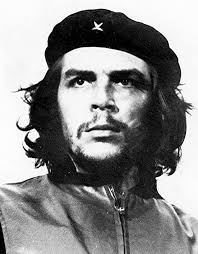
Ernesto “Che” Guevara
Guevara’s most optimistic hope was that Americans would eventually see the error of their capitalistic ways and convert to Communism. His last words were: “Tell Fidel [Castro] that he will soon see a triumphant revolution in America.”
But he was prepared to fight to the death–as indeed he did–to force revolutionary change upon the United States.
For Bin Laden, the cause was Islam, not Communism. His most optimistic hope was that Christian and Jewish Americans would eventually convert to Islam.
But if that didn’t happen, he, too, was prepared to attack Americans anywhere and in any way he could–as his private diary and documents have revealed.
Guevara died on October 9, 1967, at the hands of a CIA-directed operation run by the Bolivian army.
Bin Laden, creator of the Al-Qaeda (“The Base” terrorist network, met his end on May 1, 2011, during a raid by U.S. Navy SEALS on his compound in Pakistan.
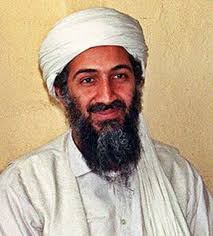
Osama bin Laden
One man–Guevara–has since attained secular sainthood in the eyes of millions of Communists and their sympathizers.
The other–bin Laden–has attained instant “martyr” status in the eyes of untold numbers of Islamic terrorists and their sympathizers.
Both men plotted constantly against the United States and eagerly sought its destruction.
In November, 1962, during an interview with the Communist newspaper, the London Daily Worker, Guevara raged against the Soviet Union’s recent withdrawal of nuclear missiles from Cuba.
Those “thirteen days” of the Cuban Missile Crisis that October had brought the world to the brink of nuclear destruction.
“If the missiles had remained, we would have used them against the very heart of the United States, including New York,” said Guevara.
“We must never establish peaceful coexistence. We must walk the path of victory even if it costs millions of atomic victims.”
Similarly, until the end of his life, bin Laden demanded more attacks like the one on September 11, 2001, that snuffed out the lives of 3,000 Americans.
This brought him into conflict with other Al-Qaeda members who wanted to launch assaults on more vulnerable targets outside the United States.
Guevara died as he had lived–violently.
In late October, 1966, he slipped out of Cuba. On November 3, he secretly arrived in La Paz, Bolivia, intent on re-staging the Cuban revolution among the Bolivian peasantry.

But the peasants showed no interest in his aims and in fact reported his movements to the Bolivian army.
The army, in turn, was being advised by United States Green Berets under the direction of the CIA.
On October 7, 1967, an informant tipped off the Bolivian Special Forces to the location of Guevara’s guerrilla camp in the Yuro ravine.
On October 8, they encircled the area with 1,800 soldiers. In the shootout that followed, Guevara was wounded and taken prisoner while leading a detachment.
His rifle broken by a lucky shot, a twice-wounded Guevara shouted: “Do not shoot! I am Che Guevara and worth more to you alive than dead.”
Quickly informed of Guevara’s capture, the Bolivian government debated his fate: Should he be immediately executed or placed on trial?
On the morning of October 9, Bolivian President Rene Barrientos ordered that Guevara be executed. Barrientos feared that placing him on trial would create an international media circus and/or render Bolivia vulnerable to efforts to free him.
The Bolivian government planned to declare that Guevara had been killed in action during a clash with the nation’s armed forces. Special instructions were thus issued.
These came from Felix Rodrieguez, a CIA agent acting as advisor to the Bolivians.
The executioner would be Mario Teran, a Bolivian army sergeant who had lost three of his friends in an earlier firefight with Guevara’s band of guerrillas.
Rodriguez ordered Teran to aim carefully to make it appear that Guevara had been killed in action.
To his surprise, Rodriguez found himself highly impressed with Guevara’s courage. When informed of his imminent execution, Guevara blanched, then quickly got control of himself.

Felix Rodriguez, left, Che, center
“It is better like this,” he said. “I should never have been captured alive.”
Rodriguez asked if he had any messages for his family. Guevara replied: “Tell Fidel [Castro, the president/dictator of Cuba] that he will soon see a triumphant revolution in America.
“And tell my wife to remarry and try to be happy.”
When Sergeant Teran entered the hut, Guevara told his executioner: “I know you’ve come to kill me. Shoot, coward! You are only going to kill a man!”
Teran hesitated, then opened fire with his semiautomatic rifle, hitting Guevara in his arms and legs.
Guevara writhed on the ground, apparently biting one of his wrists to avoid crying out. Teran then fired several more times, finally killing him with a shot in the chest.
9/11, ABC NEWS, AFGHANISTAN, BARACK OBAMA, CBS NEWS, CNN, COMMUNIST CHINA, CONFRONT AND CONCEAL, FACEBOOK, GEORGE H.W. BUSH, GEORGE W. BUSH, IRAQ, JOSEPH STALIN, NBC NEWS, NIKITA KHRUSHCHEV, THE LOS ANGELES TIMES, THE NEW YORK TIMES, THE PENTAGON, THE WASHINGTON POST, TWITTER, WALL STREET, WORLD TRADE CENTER
In Bureaucracy, History, Military, Politics, Social commentary on June 11, 2015 at 12:02 am
Psssst! The Republicans and Chinese Communists (“Chi-Coms”) have something in common.
They both much preferred the foreign policy of George W. Bush to that of Barack Obama.
It’s one of the many fascinating revelations offered in Confront and Conceal: Obama’s Secret Wars and Surprising Uses of American Power.

The author is David E. Sanger, the chief Washington correspondent for The New York Times.
Early in 2011, Sanger had lunch at the Central Party School outside Beijing. This is where the party’s leadership debates questions that are thought too controversial to air in public.
A retired general in the People’s Liberation Army sat down next to Sanger and, in a relaxed moment of candor, said:
“I sat through many meetings of the People’s Liberation Army in the 80s and 90s where we tried to imagine what your military forces would look like in 10 to 20 years.
“But frankly, we never thought that you would spend trillions of dollars and so much time tied down in Afghanistan and the Middle East. We never imagined that as a choice you would make.”

Chinese military parade
And, writes Sanger: “Not so secretly, the Chinese were delighted by the Bush-era wars. The longer the United States was bogged down trying to build democracies in foreign lands, the less capable it was of competing in China’s backyard.
“But now that America was emerging from a lost decade in the Middle East, the Chinese began to ask: How should China respond? With cooperation, confrontation, or something in-between?”
And the Chinese were equally thrilled that the United States had squandered so much of its treasury during the eight-year Bush Presidency.
In the decade following 9/11, the Pentagon went on an unprecedented spending binge. The defense budget grew by 67%, to levels 50% higher than it had been per average year during the Cold War.
According to Sanger: “An estimate [the New York Times] put together for the tenth anniversary of the [9/11] attacks suggested that the United States had spent at least $3.3 trillion.”
These monies had gone on
- securing the country;
- invading and trying to rebuild Afghanistan and Iraq; and
- caring for wounded American soldiers.
“Put another way,” writes Sanger, “for every dollar al-Qaeda spent destroying the World Trade Center and attacking the Pentagon, America had spent $6.6 million in response.
“The annual Pentagon budget of $700 billion was equivalent to the combined spending of the next twenty largest military powers….
“The world had come to expect that America would underwrite global security, regardless of the cost. Obama was determined to change that mind-set.”
In short, America became financially and militarily vulnerable during the Presidency of George W. Bush.
And this flatly contradicts the standard Republican line: Obama is a weak President–and is betraying us to the (pick one or both) Muslims/Communists.
It also speaks volumes that the two most important members of the George W. Bush administration declined to attend the 2012 Republican National Convention.
That, of course, meant former President Bush and Vice President Dick Cheney.
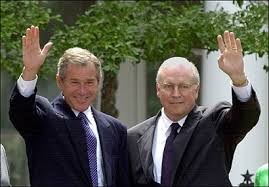
George W. Bush and Dick Cheney
And why was that? Perhaps it’s because polls show that a majority of Americans continue
- To blame Bush for lying the country into a needless, bloody and expensive war with Iraq.
- To blame him for presiding over the 2008 Wall Street meltdown.
- To see Dick Cheney as the Dr. Strangelovian manipulator of George W. Bush.
Even former President George H.W. Bush said he wouldn’t attend the convention.
It’s possible that Bush, Sr., didn’t want to serve as a reminder that his son left the White House with the lowest popularity rating of any modern President.
And that was just fine with those planning to attend the convention–especially its nominee-to-be, Mitt Romney.
They wanted to do with George W. Bush what Nikita Khrushchev and his fellow Communists did with the embarrassing Joseph Stalin: Bury him far from public view.
He didn’t want the viewing audience to be reminded that the United States sharply declined in wealth and prestige during the eight-year reign of George W. Bush and a Republican Congress.
Romney and his fellow conventioneers also didn’t want to remind the country of something else: That Obama has spent most of his own Presidency trying to undo the harm his predecessor did, in both foreign and domestic policy.
Thus, now approaching the 2016 election, the Republican party finds itself torn.
On one hand, its leaders want to claim that Barack Obama is the worst President in the history of the Republic.
On the other hand, they know that most Americans continue to view the last Republican President in just that way.
ABC NEWS, CBS NEWS, CNN, FACEBOOK, JOSEPH STALIN, KIM JONG-UN, LAVRENTI BERIA, NBC NEWS, NICCOLO MACHIAVELLI, NIKITA KHRUSHCHEV, NORTH KOREA, ROBERT PAYNE, SOVIET UNION, THE CHICAGO SUN-TIMES, THE CHICAGO TRIBUNE, THE NEW YORK TIMES, THE PRINCE, THE RISE AND FALL OF STALIN, THE WASHINGTON POST, TWITTER, USA TODAY, WARFARIN
In Bureaucracy, Entertainment, History, Military, Politics on December 30, 2014 at 12:02 am
According to an October 29 story on National Public Radio, at least 10 North Korean officials have been executed for watching South Korean soap operas.
If true, this brings to 50 the number of people murdered by North Korean dictator Kim Jong-Un for committing this “crime”.

Kim Jong-Un and his generals
Kim inherited control of the country after his father, Kim Jong-Il, died in 2011. Since then, he has ruthlessly eliminated all possible opposition.
“Kim Jong-Un is trying to establish absolute power and strengthen his regime with public punishments,” Yang Moo Jin, a professor at the University of North Korean Studies in Seoul, told Bloomberg News. “However, frequent purges can create side effects.”
Niccolo Machiavelli, the father of political science, couldn’t have said it better.
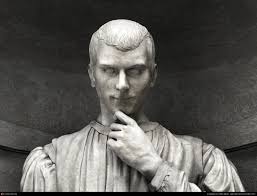
Niccolo Machiavelli
In fact, Machiavelli did say it–in Chapter Eight of The Prince, his famous work on the realities of politics, he warned:
“…In taking a state, the conqueror must arrange to commit all his cruelties at once, so as not to have to recur to them very day, and so as to be able, by not making fresh changes, to reassure people and win them over by benefiting them.
“Whoever acts otherwise, either through timidity or bad counsels, is always obliged to stand with knife in hand, and can never depend on his subjects, because they, owing to continually fresh injuries, are unable to depend upon him.”
Another Communist dictator–Joseph Stalin–may have paid the price for violating this counsel.
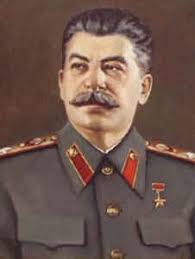
Joseph Stalin
Throughout his 30-year reign over the Soviet Union, Stalin was responsible for the deaths of at least 20 million men, women and children.
These deaths resulted from executions, a man-made famine through the forced collectivation of harvests, deportations and imprisonment in Gulag camps.
Robert Payne, the British historian, vividly portrayed the crimes of this murderous tyrant in his brilliant 1965 biography, The Rise and Fall of Stalin.
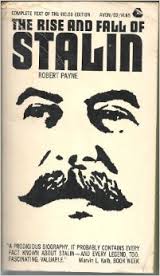
According to Payne, Stalin–who died on March 5, 1953–was planning yet another purge during the last weeks of his life. This would be “a holocaust greater than any he had planned before.
“The chistka [purge] had become a ritual like a ceremonial cleansing of a temple performed every three or four years according to ancient laws.
“The first chistka had taken place during the early months of the [Russian] revolution. It had proved so salutory that periodical bloodbaths were incorporated in the unwritten laws of the state.
“This time there would be a chistka to end all chistkas, a purging of the entire body of the state from top to bottom. No one, not even the highest officials, was to be spared.
“…The men who had been his closest companions and most willing executioners, would be the first to fall, followed by the leaders of the second rank, then of the third and fourth…until there was no one in the entire country who had not felt the touch of the healing knife.”
Then, on January 13, 1953, the Soviet Union’s two government-controlled newspapers–Pravda (“Truth”) and Izvestiya (“News”)–announced that a sinister plot by Jewish doctors had been uncovered.
Its alleged object: No less than the murder of Joseph Stalin himself.
Nine doctors, said Pravda, had so far been arrested.
Stalin’s closest associates–veteran observers of past purges–quickly realized that another was about to descend. And there could be no doubt who its chief victims would be.
Yet Stalin did nothing to calm their fears. He often summoned his “comrades” to the Kremlin for late-night drinking bouts, where he freely humiliated them.
“What would you do without Stalin?” he asked one night. “You’d be like blind kittens.”
Then, on March 4, 1953, Moscow Radio announced “the misfortune which has overtaken our Party and the people–the serious illness of Comrade J.V. Stalin.
“During the night of March 1-2, while in his Moscow apartment, Comrade Stalin suffered a cerebral hemorrhage affecting vital areas of the brain.”
Death came to Stalin on March 5.
Officially, the cause was ruled a cerebral hemorrhage. Stalin was 73 and in poor health from a lifetime of smoking and little exercise.
So it’s possible he died of natural causes. But it’s equally possible that he died of unnatural ones.
In the 2004 book, Stalin’s Last Crime, Vladimir P. Naumov, a Russian historian, and Jonathan Brent, a Yale University Soviet scholar, assert that he might have been poisoned.
If this happened, the occasion was during a final dinner with four members of the Politburo:
- Lavrenti P. Beria, chief of the secret police, then known as the MGB (Ministry for State Security);
- Georgi M. Malenkov, Stalin’s immediate successor;
- Nikita S. Khrushchev, who eventually rose to the top spot;
- and Nikolai Bulganin, then Minister of Defense.
The authors believe that, if Stalin was poisoned, the most likely suspect was Beria. And the method: Slipping warfarin, a tasteless and colorless blood thinner also used as a rat killer, into his glass of wine.
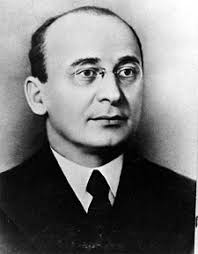
Lavrenti P. Peria
In Khrushchev’s 1970 memoirs, he quotes Beria as telling Vyacheslav M. Molotov, another Polituro member, two months after Stalin’s death: “I did him in! I saved all of you.”
Kim Jong-Un had better hope that Communist history doesn’t repeat itself.
2012 PRESIDENTIAL RACE, ABC NEWS, BARACK OBAMA, BAY OF PIGS, CBS NEWS, CIA, CNN, COLD WAR, COMMUNISM, CUBA, FACEBOOK, FLORIDA, JOHN F. KENNEDY, JOHNNY ROSELLI, MAFIA, MARCO RUBIO, MITT ROMNEY, NBC NEWS, NEWT GINGRICH, NIKITA KHRUSHCHEV, RICK SANTORUM, ROBERT F. KENNEDY, RON PAUL, SAM GIANCANA, THE CHICAGO SUN-TIMES, THE CHICAGO TRIBUNE, THE LOS ANGELES TIMES, THE NEW YORK TIMES, THE WALL STREET JOURNAL, TWITTER, USA TODAY
In Bureaucracy, History, Military, Politics, Social commentary on December 29, 2014 at 11:07 am
“John and Robert Kennedy knew what they were doing. They waged a vicious war against Fidel Castro–a war someone had to lose.”
So writes Gus Russo in Live By the Sword: The Secret War Against Castro and the Death of JFK, published in 1998.
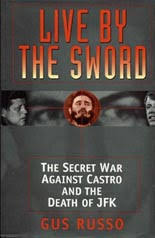
In what is almost certainly the definitive account of the assassination of President John F. Kennedy, Russo reaches some startling–but highly documented–conclusions:
- Lee Harvey Oswald assassinated Kennedy.
- He did it alone.
- Oswald, a former Marine, was a committed Marxist–whose hero was Castro.
- The CIA’s ongoing campaign to overthrow and/or assassinate Castro was an open secret throughout the Gulf.
- Oswald visited New Orleans in the spring of 1963.
- There he learned that Castro was in the crosshairs of the CIA.
- Oswald told his Russian-born wife, Marina: “Fidel Castro needs defenders. I’m going to join his army of volunteers.”
- Jack Ruby, a Dallas nightclub owner, murdered Oswald because he was distraught over Kennedy’s death.
- Ruby was not part of a Mafia conspiracy to silence Oswald.
- Skeptics of the Warren Commission–which concluded that Oswald had acted alone–asked the wrong question: “Who killed Kennedy?”
- They should have asked: “Why was he killed?”
- The answer–according to Russo: “The Kennedys’ relentless pursuit of Castro and Cuba backfired in tragedy on that terrible day in November, 1963.”
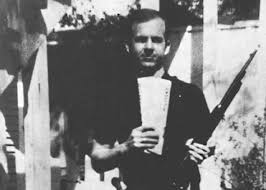
Lee Harvey Oswald
Another book well worth reading about America’s Cuban obsession during the early 1960s is American Tabloid, by James Ellroy.

Although a novel, it vividly captures the atmosphere of intrigue, danger and sleaziness that permeated that era in a way that dry, historical documents never can.
“The 50s are finished,” reads its paperback dust jacket. “Zealous young lawyer Robert Kennedy has a red-hot jones to nail Jimmy Hoffa. JFK has his eyes on the Oval Office.
“J. Edgar Hoover is swooping down on the Red Menace. Howard Hughes is dodging subpoenas and digging up Kennedy dirt. And Castro is mopping up the bloody aftermath of his new Communist nation….
“Mob bosses, politicos, snitches, psychos, fall guys and femmes fatale. They’re mixing up a Molotov cocktail guaranteed to end the country’s innocence with a bang.”
Among the legacies of America’s twisted romance with anti-Castro Cubans:
- Following the JFK assassination, there was a coverup.
- Its purpose was to safeguard the reputation of the United States government–and that of its newly-martyred President.
- To that end, the CIA and FBI concealed the anti-Castro assassination plots from the Warren Commission investigating Kennedy’s assassination.
- Other participating officials included Attorney General Robert F. Kennedy and President Lyndon B. Johnson.
- This secrecy ignited the widespread–and false–belief that the President had died at the hands of a government conspiracy.
- Robert Kennedy feared that his relentless pursuit of Castro might have backfired against JFK, leading Castro to “take out” the President first.
- Fearing his own assassination if he continued Kennedy’s efforts to murder Castro, President Johnson ordered the CIA to halt its campaign to overthrow and/or assassinate the Cuban leader.
- The huge Cuban community throughout Florida–and especially Miami–continues to exert a blackmail influence on American politics.
- Right-wing politicians from Richard Nixon to Newt Gingrich have reaped electoral rewards by catering to the demands of this hate-obsessed voting block.
- As a result, the United States still refuses to open diplomatic relations with Cuba–even though it has done so with such former enemies as the Soviet Union, China and Vietnam.
- The most fervent hope of these Cuban ex-patriots is that the United States will launch a full-scale military invasion of the island to remove Castro.
- At the same time, they fear to risk their own lives by returning to Cuba and launching an uprising against him. (Castro had done just that–successfully–from 1956 to 1958 against Fulgencio Batista, the dictator who had preceded him.)
The United States is fast approaching the 50th anniversay of the most dangerous moment of the Cold War: The Cuban Missile Crisis, when the world stood only minutes away from nuclear Armageddon.
That crisis stemmed from our twisted obsession with Cuba, an obsession that continues today.
Ron Paul is correct:
It’s time to end the half-century contamination of American politics by those Cubans who live for their hatred of Castro and those political candidates who live to exploit it.
(For example: Marco Rubio got himself elected U.S. Senator from Florida in 2010 by claiming that his parents had been forced to leave Cuba in 1959, after Fidel Castro came to power. In fact, they had left Cuba in 1956–three years earlier–during the Batista dictatorship.)
It’s long past time to end this wag-the-dog relationship. A population of about 1,700,000 Cubans should not be allowed to shape the domestic and foreign policy of a nation of 300 million.
Those who continue to hate–or love–Castro should be left to their own private feud. But that is a feud they should settle on their own island, and not from the shores of the United States.
2012 PRESIDENTIAL RACE, ABC NEWS, BARACK OBAMA, BAY OF PIGS, CBS NEWS, CIA, CNN, COLD WAR, COMMUNISM, CUBA, FACEBOOK, FLORIDA, JOHN F. KENNEDY, JOHNNY ROSELLI, MAFIA, MARCO RUBIO, MITT ROMNEY, NBC NEWS, NEWT GINGRICH, NIKITA KHRUSHCHEV, RICK SANTORUM, ROBERT F. KENNEDY, RON PAUL, SAM GIANCANA, THE CHICAGO SUN-TIMES, THE CHICAGO TRIBUNE, THE LOS ANGELES TIMES, THE NEW YORK TIMES, THE WALL STREET JOURNAL, TWITTER, USA TODAY
In Bureaucracy, History, Military, Politics, Social commentary on December 27, 2014 at 5:20 pm
Following the disastrous Bay of Pigs invasion, President John F. Kennedy and his brother, Robert–then Attorney General–created their own covert operation to depose Fidel Castro.
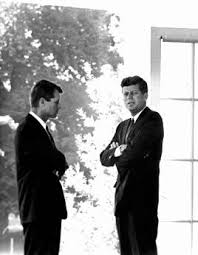
Robert F. and John F. Kennedy conferring in the White House Rose Garden
Known as the Special Group, and overseen by Robert Kennedy, it launched a secret war against the Castro regime, code-named Operation Mongoose.
“We were hysterical about Castro at about the time of the Bay of Pigs and thereafter,” Secretary of Defense Robert S. McNamara later testified before Congress about these efforts. “And there was pressure from JFK and RFK to do something about Castro.”

Robert S. McNamara
Nor was everyone in the CIA enthusiastic about the “get Castro” effort.
“Everyone at CIA was surprised at Kennedy’s obsession with Fidel,” recalled Sam Halpern, who was assigned to the Cuba Project. “They thought it was a waste of time. We all knew [Fidel] couldn’t hurt us. Most of us at CIA initially liked Kennedy, but why go after this little guy?
“One thing is for sure: Kennedy wasn’t doing it out of national security concerns. It was a personal thing. The Kennedy family felt personally burnt by the Bay of Pigs and sought revenge.”
It was all-out war. Among the tactics used:
- Hiring Cuban gangsters to murder Cuban police officials and Soviet technicians.
- Sabotaging mines.
- Paying up to $100,000 per “hit” for the murder or kidnapping of Cuban officials.
- Using biological and chemical warfare against the Cuban sugar industry.
“Bobby (Kennedy) wanted boom and bang all over the island,” recalled Halpern. “It was stupid. The pressure from the White House was very great.”
Among that “boom and bang” were a series of assassination plots against Castro, in which the Mafia was to be a key player.
Chicago Mobster Johnny Rosselli proposed a simple plan: through its underworld connections in Cuba, the Mafia would recruit a Cuban in Castro’s entourage, such as a waiter or bodyguard, who would poison him.
The CIA’s Technical Services division produced a botulinus toxin which was then injected into Castro’s favorite brand of cigars. The CIA also produced simpler botulinus toxin pills that could be dissolved in his food or drink.
But the deputized Mafia contacts failed to deliver any of the poisons to Castro.
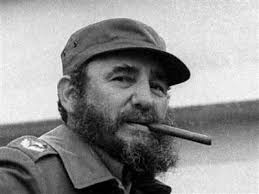
Fidel Castro
As Rosselli explained to the CIA, the first poisoner had been discharged from Castro’s employ before he could kill him, while a back-up agent got “cold feet.”
Other proposals or attempts included:
- Planting colorful seashells rigged to explode at a site where Castro liked to go skindiving.
- Trying to arrange for his being presented with a wetsuit impregnated with noxious bacteria and mould spores, or with lethal chemical agents.
- Attempting to infect Castro’s scuba regulator with tuberculous bacilli.
- Trying to douse his handkerchiefs, tea and coffee with other lethal bacteria.
Americans would rightly label such methods as “terrorist” if another power used them against the United States today. And the Cuban government saw the situation exactly the same way.
So Castro appealed to Nikita Khrushchev, leader of the Soviet Union, for assistance.

Nikita Khrushchev
Khrushchev was quick to comply: “We must not allow the communist infant to be strangled in its crib,” he told members of his inncer circle.
By October, 1962, the Soviet Union had sent more than 40,000 soldiers, 1,300 field pieces, 700 anti-airctaft guns, 350 tanks and 150 jets to Cuba to deter another invasion.
Khrushchev also began supplying Castro with nuclear-tipped ballistic missiles–whose discovery, on October 15, 1962, ignited the single most dangerous confrontation of the Cold War.
Suddenly, the two most powerful nuclear countries–the United States and the Soviet Union–found themselves on the brink of nuclear war.
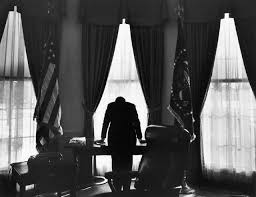
John F. Kennedy in the Oval Office
At the time, Kennedy officials claimed they couldn’t understand why Khrushchev had placed nuclear missiles in Cuba. “Maybe Khrushchev’s gone mad” was a typical musing.
None of these officials admitted that JFK had been waging a no-holds-barred campaign to overthrow the Cuban government and assassinate its leader.
The crisis ended when, after 13 harrowing days, Khrushchev agreed to remove the missiles from Cuba. Behind its resolution lay a promise by the Kennedy administration to not invade Cuba.
But President Kennedy was not finished with Castro. While continuing the campaign of sabotage throughout Cuba, the Kennedys were preparing something far bigger: A fullscale American invasion of the island.
On October 4, 1963, the Joint Chiefs of Staff submitted its latest version of the invasion plan, known as OPLAN 380-63. Its timetable went:
- January, 1964: Infiltration into Cuba by Cuban exiles.
- July 15, 1964: U.S. conventional forces join the fray.
- August 3, 1964: All-out U.S. air strikes on Cuba.
- October 1, 1964: Full-scale invasion to install “a government friendly to the U.S.”
During the Cuban Missile Crisis, Robert Kennedy–referring to the 1941 Japanese attack on Pearl Harbor–had resisted demands for a “sneak attack” on Cuba by saying: “I don’t want my brother to be the Tojo of the 1960s.”
Now the Kennedys planned such an attack on Cuba just one month before the November, 1964 Presidential election.
But then fate–in the otherwise unimpressive form of Lee Harvey Oswald–suddenly intervened.
ABC NEWS, ADOLF HITLER, ANDREW JACKSON, CBS NEWS, CNN, COLLEGE FOOTBALL, DREW PEARSON, DWIGHT EISENHOWER, EDWARD R. MURROW, FACEBOOK, GEORGE C. MARSHALL, HARRY S. TRUMAN, JERRY SANDUSKY, JOE PATERNO, JOSEPH MCCARTHY, JOSEPH STALIN, LOUIS FREEH, NBC NEWS, NIKE, NIKITA KHRUSHCHEV, PENN STATE UNIVERSITY, SOVIET UNION, THE LOS ANGELES TIMES, THE NEW YORK TIMES, THE WASHINGTON POST, THIRD REICH, TWITTER, YEVGENEY YEVTUSHENKO
In Bureaucracy, History, Politics, Social commentary on October 31, 2014 at 1:10 am
“One man with courage,” said frontier general Andrew Jackson, “makes a majority.”
Yet it’s amazing how many “heroes” come out of the woodwork once the danger is safely past.
Joseph Stalin dominated the Soviet Union from 1928 to 1953. He held absolute power twice as long as Adolf Hitler–whose Third Reich lasted only 12 years.
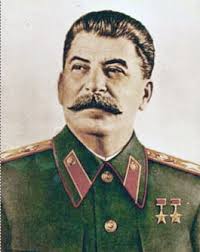
Joseph Stalin
Above all, he was responsible for the deaths of at least 20,000,000 men, women and children:
- At the hands of the executioners of the NKVD (later named the KGB).
- In exile–usually in Siberia–in Soviet penal camps.
- Of man-made starvation brought on by Stalin’s forced “collective-farm” policies.
Then, the unthinkable happened–Stalin finally died on March 5, 1953.
Almost three years later–on February 25, 1956–Stalin’s successor, Nikita Khrushchev, shocked the 20th Party Congress of the Soviet Union with a bombshell announcement: Stalin–the “Wise Leader and Teacher”–had been a murderous despot.
Among his crimes:
- He had created a regime based on “suspicion, fear and terror.”
- His massive purges of the officer corps had almost destroyed the Red Army–thus inviting Hitler’s 1941 invasion, which killed at least 20 million Soviet citizens.
- He had allied himself with Hitler in 1939 and ignored repeated warnings of the coming Nazi invasion.
Naturally, Khrushchev didn’t advertise the role he had played as one of Stalin’s most trusted and brutal henchmen.
Over the ensuing years, many of the statues and portraits of Stalin that had dotted the Soviet Union like smallpox scars were quietly taken down. The city of Stalingrad–which Stalin had renamed from its original name of Tsaritsyn–became Volgograd.
Then, in 1961, Stalin’s corpse was removed from its prominent spot in the Lenin mausoleum and reburied in a place for lesser heroes of the Russian Revolution.
The young poet, Yevgeney Yevtushenko, noted the occasion in his famous poem, “The Heirs of Stalin.” Its gist: Stalin the tyrant was dead, but his followers still walked the earth–and lusted for a return to power.
Something similar happened in the United States around the same time.
From 1950 to 1954, Wisconsin Senator Joseph R. McCarthy terrorized the nation, hurling unfounded accusations and leaving ruined careers in his wake.

Joseph McCarthy
Among those civilians and government officials he slandered as Communists were:
- President Harry S. Truman
- President Dwight D. Eisenhower
- Broadcast journalist Edward R. Murrow
- Secretary of State George C. Marshall
- Columnist Drew Pearson
Finally, in 1954, McCarthy overreached himself and accused the U.S. Army of being a hotbed of Communist traitors. Joseph Welch, counsel for the Army, destroyed McCarthy’s credability in a now-famous exchange.
Later that year, the Senate censured McCarthy, and he rapidly declined in power and health.
Senatorial colleagues who had once courted his support now avoided him; they left the Senate when he rose to speak. Reporters who had once fawned on him for his latest sensational slander now ignored him.
Eisenhower–who had sought McCarthy’s support during his 1952 race for President–joked that “McCarthyism” was now “McCarthywasm.”
Fast-forward to July 12, 2012–and the release of former FBI Director Louie Freeh’s report on serial pedophile Jerry Sandusky. As the assistant football coach at Penn State University (PSU), he had used the football facilities to sexually attack numerous young boys.

Jerry Sandusky
But Sandusky was regarded as more than a second-banana. He received Assistant Coach of the Year awards in 1986 and 1999, and authored several books about his coaching experiences.
In 1977, Sandusky founded The Second Mile, a non-profit charity serving underprivileged, at-risk youth.
“Our most saddening and sobering finding is the total disregard for the safety and welfare of Sandusky’s child victims by the most senior leaders at Penn State,” Freeh stated.
College football is a $2.6 billion-a-year business. And Penn State is one of its premiere brands, with revenue of $70 million in 2010.
PSU’s seven-month internal investigation, headed by Freeh, revealed:
- Joe Paterno, head coach of the Penn State Nittany Lions, was aware of a 1998 criminal investigation of Sandusky.
- So was president Graham Spanier, athletic director Tim Curley and vice president Gary Schultz.
- In 2001, then-graduate assistant Mike McQueary reported to Paterno that he’d seen Sandusky attacking a boy in the shower.
- Paterno, Spanier, Curley and Schultz then conspired to cover up for Sandusky.
- The rapes of these boys occurred in the Lasch Building–where Paterno had his office.
- A janitor who had witnessed a rape in 2000 said he had feared losing his job if he told anyone about it. “It would be like going against the President of the United States,” Freeh said at a press conference.
In 2011, Sandusky was arrested and charged with sexually abusing young boys over a 15-year period. On June 22, 2012, he was convicted on 45 of the 48 charges. He will likely spend the rest of his life in prison.
On the day the Freeh report was released, Nike–a longtime sponsor for Penn State–announced that it would remove Paterno’s name from the child care center at its world headquarters in Beaverton, Oregon.
ABC NEWS, CBS NEWS, CNN, JOSEPH STALIN, KIM JONG-UN, LAVRENTI BERIA, NBC NEWS, NICCOLO MACHIAVELLI, NIKITA KHRUSHCHEV, NORTH KOREA, ROBERT PAYNE, SOVIET UNION, THE CHICAGO SUN-TIMES, THE CHICAGO TRIBUNE, THE NEW YORK TIMES, THE PRINCE, THE RISE AND FALL OF STALIN, THE WASHINGTON POST, USA TODAY, WARFARIN
In Bureaucracy, History, Politics on October 30, 2014 at 3:18 pm
According to an October 29 story on National Public Radio, at least 10 North Korean officials have been executed for watching South Korean soap operas.
If true, this brings to 50 the number of people murdered by North Korean dictator Kim Jong-Un for committing this “crime”.
Kim Jong-Un and his generals
Sources for Bloomberg News speculated they were likely purged for having close ties to his uncle, Jang Song Thae, who was executed in 2013.
Kim inherited control of the country after his father, Kim Jong-Il, died in 2011. Since then, he has ruthlessly eliminated all possible opposition.
“Kim Jong Un is trying to establish absolute power and strengthen his regime with public punishments,” Yang Moo Jin, a professor at the University of North Korean Studies in Seoul, told Bloomberg. “However, frequent purges can create side effects.”
Niccolo Machiavelli, the father of political science, couldn’t have said it better.
Niccolo Machiavelli
In fact, Machiavelli did say it–in Chapter Eight of The Prince, his famous work on the realities of politics, he tackled the subject: “Of Those Who Have Attained the Position of Prince by Villany.”
“…In taking a state, the conqueror must arrange to commit all his cruelties at once, so as not to have to recur to them very day, and so as to be able, by not making fresh changes, to reassure people and win them over by benefiting them.
“Whoever acts otherwise, either through timidity or bad counsels, is always obliged to stand with knife in hand, and can never depend on his subjects, because they, owing to continually fresh injuries, are unable to depend upon him.”
Another Communist dictator–Joseph Stalin–may have paid the price for violating this counsel.
Joseph Stalin
Throughout his 30-year reign over the Soviet Union, Stalin was responsible for the deaths of at least 20 million men, women and children.
These deaths resulted from executions, a man-made famine through the forced collectivation of harvests, deportations and imprisonment in Gulag camps.
Robert Payne, the British historian, vividly portrayed the crimes of this murderous tyrant in his brilliant 1965 biography, The Rise and Fall of Stalin.
According to Payne, Stalin–who died on March 5, 1953–was planning yet another purge during the last weeks of his life. This would be “a holocaust greater than any he had planned before.
“The chistka [purge] had become a ritual like a ceremonial cleansing of a temple performed every three or four years according to ancient laws.
“The first chistka had taken place during the early months of the [Russian] revolution. It had proved so salutory that periodical bloodbaths were incorporated in the unwritten laws of the state.
“This time there would be a chistka to end all chistkas, a purging of the entire body of the state from top to bottom. No one, not even the highest officials, was to be spared.
“…The men who had been his closest companions and most willing executioners, would be the first to fall, followed by the leaders of the second rank, then of the third and fourth…until there was no one in the entire country who had not felt the touch of the healing knife.”
Then, on January 13, 1953, the Soviet Union’s two government-controlled newspapers–Pravda (“Truth”) and Izvestiya (“News”)–announced that a siniser plot by Jewish doctors had been uncovered.
Its alleged object: No less than the murder of Joseph Stalin himself.
Nine doctors, said Pravda, had so far been arrested.
Stalin’s closest associates–veteran observers of past purges–quickly realized that another was about to descend. And there could be no doubt who its chief victims would be.
Yet Stalin did nothing to calm their fears. He often summoned his “comrades” to the Kremlin for late-night drinking bouts, where he freely humiliated them.
“What would you do without Stalin?” he asked one night. “You’d be like blind kittens.”
Then, on March 4, 1953, Moscow Radio announced “the misfortune which has overtaken our Party and the people–the serious illness of Comrade J.V. Stalin.
“During the night of March 1-2, while in his Moscow apartment, Comrade Stalin suffered a cerebral hemorrhage affecting vital areas of the brain.”
Death came to Stalin on March 5. Officially, the cause was ruled a cerebral hemorrhage. Stalin was 73 and in poor health from a lifetime of smoking and little exercise.
So it’s possible he died of natural causes.
But it’s equally possible that he died of unnatural ones.
In the 2004 book, Stalin’s Last Crime, Vladimir P. Naumov, a Russian historian, and Jonathan Brent, a Yale University Soviet scholar, assert that he might have been poisoned.
If this happened, the occasion was during a final dinner with four members of the Politburo: Lavrenti P. Beria, chief of the secret police; Georgi M. Malenkov, Stalin’s immediate successor; Nikita S. Khrushchev, who eventually rose to the top spot; and Nikolai Bulganin.
The authors believe that, if Stalin was poisoned, the most likely suspect was Beria. And the method: Slipping warfarin, a tasteless and colorless blood thinner also used as a rat killer, into his glass of wine.
Lavrenti P. Peria
In Khrushchev’s 1970 memoirs, he quotes Beria as telling Vyacheslav M. Molotov, another Polituro member, two months after Stalin’s death: “I did him in! I saved all of you.”
Kim Jong Un had better hope that Communist history doesn’t repeat itself.
2012 PRESIDENTIAL RACE, BAY OF PIGS, BERLIN WALL, CIA, CIVIL RIGHTS, CUBAN MISSILE CRISIS, FACEBOOK, FBI, FIDEL CASTRO, J. EDGAR HOOVER, JOHN F. KENNEDY, LYNDON B. JOHNSON, NIKITA KHRUSHCHEV, NUCLEAR TEST BAN TREATY, RICK PERRY, ROBERT F. KENNEDY, ROBERT S. MCNAMARA, Sarah Palin, SOVIET UNION, TWITTER, VIETNAM WAR
In Bureaucracy, History, Military, Politics, Social commentary on October 20, 2014 at 10:19 am
Fifty years ago this November, John Fitzgerald Kennedy would have almost certainly won re-election as President of the United States.
But one year earlier, Lee Harvey Oswald–an embittered ex-Marine and fervent Communist who idolized Fidel Castro–picked up a sniper’s rifle and changed the course of history.
It has been said that Kennedy left his country with three great legacies:
- The Nuclear Test Ban Treaty;
- The Apollo moon landing; and
- The Vietnam war.
Of these, the following can be said with certainty:
- The Test Ban Treaty has prevented atmosphereic testing–and poisoning–by almost all the world’s nuclear powers.
- After reaching the moon–in 1969–Americans quickly lost interest in space and have today largely abandoned plans for manned exploration.
- Under Presidents Lyndon Johnson and Richard Nixon, 58,000 Americans died in Vietnam; 153,303 were wounded; and billions of dollars were squandered in a hopeless effort to intervene in what was essentially a Vietnamese civil war.
- From 1965 to 1972, the war angrily divided Americas as had no event since the Civil War.
But there was an additional legacy–and perhaps the most important of all: The belief that mankind could overcome its greatest challenges through rationality and perseverance.
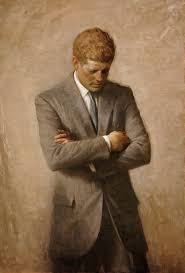
White House painting of JFK
At American University on June 10, 1963, Kennedy called upon his fellow Americans to re-examine the events and attitudes that had led to the Cold War.
And he declared that the search for peace was by no means absurd:
“Our problems are man-made; therefore, they can be solved by man. And man can be as big as he wants. No problem of human destiny is beyond human beings.
“Man’s reason and spirit have often solved the seemingly unsolvable, and we believe they can do it again.”
Today, politicians from both parties cannot agree on solutions to even the most vital national problems.
On November 21, 2011, the 12 members of the “Super-Committee” of Congress, tasked with finding $1.2 trillion in cuts in government spending, threw up their hands in defeat.
President Kennedy speed-read several newspapers every morning. He nourished personal relationships with the press-–and not for entirely altruistic reasons.
These journalistic relationships gave Kennedy additional sources of information and perspectives on national and international issues.
In 2012, Republican Presidential candidates celebrated their ignorance of both.
Former Godfather’s Pizza CEO Herman Cain famously said, “We need a leader, not a reader.” Thus he excused his ignorance of the reasons for President Barack Obama’s intervention in Libya.
Texas Governor Rick Perry showed similar pride in not knowing there are nine judges on the United States Supreme Court:
“Well, obviously, I know there are nine Supreme Court judges. I don’t know how eight came out my mouth. But the, uh, the fact is, I can tell you–I don’t have memorized all of those Supreme Ccourt judges. And, uh, ah–
“Here’s what I do know. That when I put an individual on the Supreme Court, just like I done in Texas, ah, we got nine Supreme Court justices in Texas, ah, they will be strict constructionists….”
In short, it’s the media’s fault if they ask you a question and your answer reveals your own ignorance, stupidity or criminality.
During the height of the Cuban Missile Crisis, Kennedy spoke with aides about a book he had just finished: Barbara Tuchman’s The Guns of August, on the events leading to World War 1.
He said that the book’s most important revelation was how European leaders had blindly rushed into war, without thought to the possible consequences.
Kennedy told his aides he did not intend to make the same mistake-–that, having read his history, he was determined to learn from it.
Contrast that with today’s woeful historical ignorance among Republican Presidential candidates-–and those who aspire to be.
Consider Sarah Palin’s rewriting of history via “The Midnight Ride of Paul Revere”:
“He warned the British that they weren’t going to be taking away our arms by ringing those bells and, um, making sure as he’s riding his horse through town to send those warning shots and bells that, uh, we were going to be secure and we were going to be free.”
In fact, Revere wasn’t warning the British about anything. Instead, he was warning his fellow Americans about an impending British attack–as his celebrated catchphrase “The British are coming!” made clear.
Republicans have attacked President Obama for his Harvard education and articulate use of language. Among their taunts: “Hitler also gave good speeches.”
And they resent his having earned most of his income as a writer of two books: Dreams From My Father and The Audacity of Hope. As if being a writer is somehow subversive.
When knowledge and literacy are attacked as “highfalutin’” arrogance, and ignorance and incoherence are embraced as sincerity, national decline lies just around the corner.
In retrospect, the funeral for President Kennedy marked the death of more than a rational and optimistic human being. It marked the death of Americans’ pride in choosing reasoning and educated citizens for their leaders.
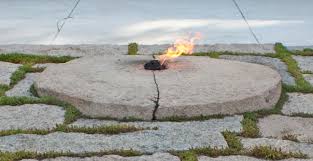
The Eternal Flame at the grave of President John F. Kennedy
_underway_in_the_Pacific_Ocean_on_31_May_2015.JPG&imgrefurl=https%3A%2F%2Fen.wikipedia.org%2Fwiki%2FUSS_Carl_Vinson&docid=_CVahKI_7obrGM&tbnid=5YNeIda1dVcZQM%3A&w=3451&h=2301&ved=0ahUKEwid67qv7PvKAhVL7WMKHUoVBEUQxiAIAg&iact=c&ictx=1)


 Bureaucracybuster's Blog
9/11 ATTACKS, ABC NEWS, AFGHANISTAN, AL QAEDA, ALTERNET, AMERICABLOG, AP, BABY BOOMER RESISTANCE, BARACK OBAMA, BLOOMBERG, BOLIVIA, BUZZFEED, CBS NEWS, CIA, CNN, COMMUNISM, CROOKS AND LIARS, CUBA, CUBAN MISSILE CRISIS, DAILY KOZ, DRUDGE REPORT, ERNESTO "CHE" GUEVARA, FACEBOOK, FIDEL CASTRO, FIVETHIRTYEIGHT, GEORGE W. BUSH, GREEN BERETS, HARPER’S MAGAZINE, HUFFINGTON POST, IRAQ, ISLAM, JOHN F. KENNEDY, MEDIA MATTERS, MOTHER JONES, MOVEON, MSNBC, NAVY SEALS, NBC NEWS, NEWSWEEK, NIKITA KHRUSHCHEV, NPR, OSAMA BIN LADEN, PAKISTAN, PBS NEWSHOUR, POLITICO, POLITICUSUSA, RAW STORY, REUTERS, SALON, SEATTLE TIMES, SLATE, SOVIET UNION, TALIBAN, TALKING POINTS MEMO, THE ATLANTIC, THE CHICAGO SUN-TIMES, THE CHICAGO TRIBUNE, THE DAILY BEAST, THE DAILY BLOG, THE GUARDIAN, THE HILL, THE HUFFINGTON POST, THE LOS ANGELES TIMES, THE NATION, THE NEW REPUBLIC, THE NEW YORK TIMES, THE VILLAGE VOICE, THE WASHINGTON POST, THINKPROGRESS, TIME, TRUTHDIG, TRUTHOUT, TWITTER, TWO POLITICAL JUNKIES, U.S. NEWS & WORLD REPORT, UPI, USA TODAY, WONKETTE
A TALE OF TWO KILLINGS: PART ONE (OF THREE)
In Bureaucracy, History, Military, Politics, Social commentary on February 12, 2016 at 12:12 amThey both had beards. They both saw military action. They both passionately hated the United States.
And they both died in a hail of bullets.
And immediately after their deaths, both seemed to disappear from the face of the earth.
Ernesto “Che” Guevara and Osama bin Laden.
Two men who inspired widespread admiration among their supporters–and fear among their enemies.
Guevara, an Argentinian doctor-turned-Cuban revolutionary, sought to destroy the United States’ power to fight Communism. Bin Laden sought to destroy its power to intervene in the Middle East.
Ernesto “Che” Guevara
Guevara’s most optimistic hope was that Americans would eventually see the error of their capitalistic ways and convert to Communism. His last words were: “Tell Fidel [Castro] that he will soon see a triumphant revolution in America.”
But he was prepared to fight to the death–as indeed he did–to force revolutionary change upon the United States.
For Bin Laden, the cause was Islam, not Communism. His most optimistic hope was that Christian and Jewish Americans would eventually convert to Islam.
But if that didn’t happen, he, too, was prepared to attack Americans anywhere and in any way he could–as his private diary and documents have revealed.
Guevara died on October 9, 1967, at the hands of a CIA-directed operation run by the Bolivian army.
Bin Laden, creator of the Al-Qaeda (“The Base” terrorist network, met his end on May 1, 2011, during a raid by U.S. Navy SEALS on his compound in Pakistan.
Osama bin Laden
One man–Guevara–has since attained secular sainthood in the eyes of millions of Communists and their sympathizers.
The other–bin Laden–has attained instant “martyr” status in the eyes of untold numbers of Islamic terrorists and their sympathizers.
Both men plotted constantly against the United States and eagerly sought its destruction.
In November, 1962, during an interview with the Communist newspaper, the London Daily Worker, Guevara raged against the Soviet Union’s recent withdrawal of nuclear missiles from Cuba.
Those “thirteen days” of the Cuban Missile Crisis that October had brought the world to the brink of nuclear destruction.
“If the missiles had remained, we would have used them against the very heart of the United States, including New York,” said Guevara.
“We must never establish peaceful coexistence. We must walk the path of victory even if it costs millions of atomic victims.”
Similarly, until the end of his life, bin Laden demanded more attacks like the one on September 11, 2001, that snuffed out the lives of 3,000 Americans.
This brought him into conflict with other Al-Qaeda members who wanted to launch assaults on more vulnerable targets outside the United States.
Guevara died as he had lived–violently.
In late October, 1966, he slipped out of Cuba. On November 3, he secretly arrived in La Paz, Bolivia, intent on re-staging the Cuban revolution among the Bolivian peasantry.
But the peasants showed no interest in his aims and in fact reported his movements to the Bolivian army.
The army, in turn, was being advised by United States Green Berets under the direction of the CIA.
On October 7, 1967, an informant tipped off the Bolivian Special Forces to the location of Guevara’s guerrilla camp in the Yuro ravine.
On October 8, they encircled the area with 1,800 soldiers. In the shootout that followed, Guevara was wounded and taken prisoner while leading a detachment.
His rifle broken by a lucky shot, a twice-wounded Guevara shouted: “Do not shoot! I am Che Guevara and worth more to you alive than dead.”
Quickly informed of Guevara’s capture, the Bolivian government debated his fate: Should he be immediately executed or placed on trial?
On the morning of October 9, Bolivian President Rene Barrientos ordered that Guevara be executed. Barrientos feared that placing him on trial would create an international media circus and/or render Bolivia vulnerable to efforts to free him.
The Bolivian government planned to declare that Guevara had been killed in action during a clash with the nation’s armed forces. Special instructions were thus issued.
These came from Felix Rodrieguez, a CIA agent acting as advisor to the Bolivians.
The executioner would be Mario Teran, a Bolivian army sergeant who had lost three of his friends in an earlier firefight with Guevara’s band of guerrillas.
Rodriguez ordered Teran to aim carefully to make it appear that Guevara had been killed in action.
To his surprise, Rodriguez found himself highly impressed with Guevara’s courage. When informed of his imminent execution, Guevara blanched, then quickly got control of himself.
Felix Rodriguez, left, Che, center
“It is better like this,” he said. “I should never have been captured alive.”
Rodriguez asked if he had any messages for his family. Guevara replied: “Tell Fidel [Castro, the president/dictator of Cuba] that he will soon see a triumphant revolution in America.
“And tell my wife to remarry and try to be happy.”
When Sergeant Teran entered the hut, Guevara told his executioner: “I know you’ve come to kill me. Shoot, coward! You are only going to kill a man!”
Teran hesitated, then opened fire with his semiautomatic rifle, hitting Guevara in his arms and legs.
Guevara writhed on the ground, apparently biting one of his wrists to avoid crying out. Teran then fired several more times, finally killing him with a shot in the chest.
Share this: