bureaucracybusters

Posts Tagged ‘NICCOLO MACHIAVELLI’

NEGOTIATING NAZI-REPUBLICAN STYLE: PART TWO (OF SIX)

In Bureaucracy, History, Law, Law Enforcement, Politics on July 2, 2014 at 12:52 pm

Robert Payne, author of the bestselling biography, The Life and Death of Adolf Hitler (1973), described Hitler’s “negotiating” style thusly:

“Although Hitler prized his own talents as a negotiator, a man always capable of striking a good bargain, he was totally lacking in finesse. 

“He was incapable of bargaining.  He was like a man who goes up to a fruit peddler and threatens to blow his brains out if he does not sell his applies at the lowest possible price.”

By studying Hitler’s mindset and “negotiating” methods, we can learn much about the mindset and “negotiating” style of today’s Republican party.

A classic example of Hitler’s “bargaining style” came in 1938, when he invited Austrian Chancellor Kurt von Schuschnigg to his mountaintop retreat in Obersalzberg, Germany.  Hitler, an Austrian by birth, intended to annex his native land to Germany.

 Kurt von Schuschnigg

Schuschnigg was aware of Hitler’s desire, but nevertheless felt secure in accepting the invitation.  He had been assured that the question of Austrian sovereignty would not arise.

The meeting occurred on February 12, 1938.

Shuschnigg opened the discussion with a friendly compliment.  Walking over to a large window, he admired the breathtaking view of the mountains.

HITLER: We haven’t come here to talk about the lovely view or the weather!

Austria has anyway never done anything which was of help to the German Reich….I am resolutely determined to make an end to all this business.  The German Reich is a great power.  Nobody can and nobody will interfere if it restores order on its frontiers.

SCHUSCHNIGG: I am aware of your attitude toward the Austrian question and toward Austrian history….As we Austrians see it, the whole of our history is a very essential and valuable part of German history….And Austria’s contribution is a considerable one.

HITLER: It is absolutely zero—that I can assure you!  Every national impulse has been trampled underfoot by Austria….

I could call myself an Austrian with just the same right—indeed with even more right—than you, Herr Schuschnigg. Why don’t you once try a plebiscite in Austria in which you and I run against each other? Then you would see!

SCHUSCHNIGG: Well, yes, if that were possible. But your know yourself, Herr Reich Chancellor, that it just isn’t possible. We simply have to go on living alongside one another, the little state next to the big one. We have no other choice.

And that is why I ask you to tell me what your concrete complaints are. We will do all in our power to sort things out and establish a friendly relationship, as far as it is possible to do so.

HITLER: That’s what you say, Herr Schuschnigg. And I am telling you that I intend to clear up the whole of the so-called Austrian question–one way or another. Do you think I don’t know that you are fortifying Austria’s border with the Reich?

SCHUSCHNIGG: There can be no suggestion at all of that—

HITLER: Ridiculous explosive chambers are being built under bridges and roads—

This was a lie, and Hitler knew it was a lie. But no matter. It gave him an excuse to threaten to destroy Austria—as he was to destroy so many other nations during the next seven years.

HITLER: I have only to give one command and all this comic stuff on the border will be blown to pieces overnight. You don’t seriously think you could hold me up, even for half an hour, do you?

Who knows—perhaps you will find me one morning in Vienna like a spring storm. Then you will go through something!  I’d like to spare the Austrians that.

The S.A. [Hitler’s private army of Stormtroopers] and the [Condor] Legion [which had bombed much of Spain into rubble during the three-year Spanish Civil War] would come in after the troops and nobody–not even I–could stop them from wreaking vengeance.

* * * * *

Schnuschigg made a cardinal mistake in dealing with Hitler: He showed fear.  And this was precisely what the Nazi dictator looked for in an opponent.

Contrary to popular belief, Hitler did not constantly rage at everyone.  On the contrary: he could, when he desired, be charming, especially to women.  He used rage as a weapon, knowing that most people feel intimidated by it.

In the case of Schuschnigg, he opened with insults and threats at the outset of their discussion.  Then there was a period of calm, to convince the Austrian chancellor the worst was over.

Finally, he once again attacked–this time with so much fury that Schuschnigg was terrified into submission.

With one stroke of a pen, Austria became a vassal-state to Nazi Germany.

Republicans used precisely the same “negotiating” style during the summer of 2011 to threaten the United States with financial ruin unless they got their way in budget negotiations.

And they threatened to do the same again that fall.

NEGOTIATING NAZI-REPUBLICAN STYLE: PART ONE (OF SIX)

In Bureaucracy, History, Law, Law Enforcement, Politics on July 1, 2014 at 11:19 am

Adolf Hitler, Germany Fuehrer for 12 years, had a favorite phrase: “So oder so.”

It meant: “One way or the other.”

That might sound harmless.  But, in Hitler’s case, it carried a sinister tone–as did almost everything else about the dictator who ruled Germany from 1933 to 1945.

When Hitler faced what he considered a problem, he said he would solve it “one way or the other.”   Which meant that if he couldn’t get his way, he would apply whatever means it took until he did.

Adolf Hitler

John Boehner, Speaker of the Republican-dominated House of Representatives, seems to be channeling the spirit of the late Nazi dictator.

He has threatened to sue President Barack Obama for issuing executive orders to implement policies whose legislation could not pass the Republican-controlled House.

On June 25, Boehner said he would introduce legislation to authorize the House general counsel to sue the Obama administration.  He claimed that Obama has “not faithfully executed the laws” by issuing executive orders.

“We elected a president, Americans note.  We didn’t elect a monarch or a king,” Boehner wrote in a memo to his colleagues.  But Boehner did not state which specific actions by Obama have been illegal.

Such a lawsuit would be a precursor to a Republican effort to impeach Obama.  This would allow the Right to gain through coercion what it could not win at the polls: His removal as President.

John Boehner

And President Obama’s response: “They don’t do anything except block me and call me names.  If you’re mad at me for helping people on my own, why don’t you join me and we’ll do it together.

“You’re going to squawk if I try to fix some parts of it administratively that are within my authority while you’re not doing anything?

“I’m not going to apologize for trying to do something while they’re doing nothing.

“What I’ve told Speaker Boehner directly is, ‘If you’re really concerned about me taking too many executive orders, why don’t you try getting something done through Congress?'”

Barack Obama

Obama has actually issued fewer executve orders than his predecessors–about one every 11 days, according to the Brookings Institute.

Contrast this with the records of such Presidents as:

  • George W. Bush, who issued an executive order on average every 10 days over eight years;
  • Ronald Reagan, who issued such orders about once every seven days during eight years; and
  • Jimmy Carter, who issued more than one order every five days during four years.

Of course, Bush and Reagan were Republicans–and white.  And Carter was turned out of office after only four years by Reagan, whom Republicans still idolize.

But Obama is a Democrat–and black.  Moreover, he has committed the ultimate crime of twice defeating Republican candidates for the Presidency.

On June 30, President Obama addressed a press conference in the White House Rose Garden.

During this, he outlined the pattern of Republican obstruction he has faced in winning passage of his immigration reform program.

“One year ago this month, Senators of both parties–with support from the business community, labor, law enforcement, faith communities–came together to pass a commonsense immigration bill.

“Independent experts said the bill would strengthen our borders, grow our economy, shrink our deficits.

“As we speak, there are enough Republicans and Democrats in the House to pass an immigration bill today.  I would sign it into law today, and Washington would solve a problem in a bipartisan way.

“But for more than a year, Republicans in the House of Representatives have refused to allow an up-or-down vote on that Senate bill or any legislation to fix our broken immigration system.

“And I held off on pressuring them for a long time to give Speaker [John] Boehner the space he needed to get his fellow Republicans on board….

“I believe Speaker Boehner when he says he wants to pass an immigration bill.  I think he genuinely wants to get something done.

“But last week, he informed the Republicans will continue to block a vote on immigration reform at least for the remainder of this year.

“Some of the House Republican caucus are using the situation with unaccompanied children as their newest excuse to do nothing.  Now I want everybody to think about that.

“Their argument seems to be that because the system’s broken, we shouldn’t make an effort to fix it.  It makes no sense.  It’s not on the level.  It’s just politics, plain and simple.

“Now thare are others in the Republican caucus in the House who are arguing that they can’t act because they’re mad at me about using my executive authority too broadly.  This also makes no sense.

“I don’t prfer taking administrative action.  I’d rather see permanent fixes to the issue we face.”

But since taking office as President on January 20, 2009, Obama has faced a torrent of Republican contempt and obstruction.

MERCS FOR HIRE: PART TWO (END)

In Bureaucracy, Business, History, Military, Politics, Social commentary on May 15, 2014 at 12:33 am

The 1960 Kirk Douglas epic, Spartacus, may soon prove to be more than great entertainment. It may also turn out to be a prophecy of the end of the American Republic.

Throughout the movie, wealthy Romans assume they can buy anything–or anyone.  When seeking a favor, Marcus Licinius Crassus (Laurence Oliver) says bluntly: “Name your price.”

Today, “Name your price” has become the password for entry into America’s Intelligence community.

Althugh not portrayed in Spartacus, one of the reasons for the fall of the Roman empire lay in its reliance on foreign mercenaries.

Roman citizens, who had for centuries manned their city’s legions, decided to outsource these hardships and dangers to hired soldiers from Germany and Gaul (now France).

Although Germans and Gauls had proven capable fighters when defending their own countries, they proved highly unrelible as paid mercenaries.

Niccolo Machiavelli, the father of political science, drew heavily on ancient history for his examples of how liberty could best be preserved within a republic.

Niccolo Machiavelli

Fully aware of the Romans’ disastrous experience with mercenaries, Machiavelli believed that a nation’s army should be driven by patriotism, not greed.  Speaking of mercenaries, he warned:

“Mercenaries…are useless and dangerous. And if a prince holds on to his state by means of mercenary armies, he will never be stable or secure; for they are disunited, ambitious, without discipline, disloyal; they are brave among friends, among enemies they are cowards.”

Americans–generally disdainful of history–have blatantly ignored both the examples of history and the counsel of Machiavelli.  To their own peril.

Mark Mazzetti, author of the bestselling The Way of the Knife, chronicles how the CIA has been transformed from a primarily fact-finding agency into a terrorist-killing one.

Along with this transformation has come a dangerous dependency on private contractors to supply information that government agents used to dig up for themselves.

America’s defense and Intelligence industries, writes Mazzetti, once spread across the country, have relocated to the Washington area.

They want to be close to “the customer”: The National Security Agency, the Pentagon, the CIA and an array of other Intelligence agencies.

The U.S. Navy SEALS raid that killed Osama bin Laden has been the subject of books, documentaries and even an Oscar-nominated movie: “Zero Dark Thirty.”

Almost unknown by comparison is a program the CIA developed with Blackwater, a private security company, to locate and assassinate Islamic terrorists.

“We were building a unilateral, unattributable capability,” Erik Prince, CEO of Blackwater, said in an interview.  “If it went bad, we weren’t expecting the [CIA] chief of station, the ambassador or anyone to bail us out.”

But the program never got past the planning stage.  Senior CIA officials feared the agency would not be able to  permanently hide its own role in the effort.

“The more you outsource an operation,” said a CIA official, “the more deniable it becomes.  But you’re also giving up control of the operation.  And if that guy screws up, it’s still your fault.”

Increased reliance on “outsourcing” has created a “brain-drain” within the Intelligence community. Jobs with private security companies usually pay 50% more than government jobs.

Many employees at the CIA, NSA and other Intelligence agencies leave government service–and then return to it as private contractors earning far higher salaries.

Many within the Intelligence community fear that too much Intelligence work has been outsourced and the government has effectively lost control of its own information channels.

And, as always with the hiring of mercenaries, there is an even more basic fear: How fully can they be trusted?

“There’s an inevitable tension as to where the contractor’s loyalties lie,” said Jeffrey Smith, a former general counsel for the CIA.  “Do they lie with the flag?  Or do they lie with the bottom line?”

Yet another concern: How much can Intelligence agencies count on private contractors to effectively screen the people they hire?

Edward Snowden, it should be remembered, was an employee of Booz Allen Hamilton, a consulting/security firm.  It was through this company that Snowden gained access to a treasury of NSA secrets.

In March 2007, the Bush administration revealed that it paid 70% of its intelligence budget to private security contractors.  That remains the case today–and the Intelligence budget for 2012 was $75.4 billion.

A 2010 investigative series by the Washington Post found that “1,931 private companies work on programs related to counterterrorism, homeland security and intelligence in about 10,000 locations across the country.”

Jesus never served as a spy or soldier.  But he clearly understood a truth too many officials within the American Intelligence community have forgotten:

“For where your treasure is, there will your heart be also.”

MERCS FOR HIRE: PART ONE (OF TWO)

In Bureaucracy, Business, History, Military, Politics, Social commentary on May 14, 2014 at 1:49 am

A movie critic, reviewing John Wayne’s 1968 gung-ho film, The Green Berets, said that Wayne had reduced the complex issues behind the Vietnam war to the simplicity of a barroom brawl.

In the same vein, the American news media displays a genius for ignoring the complexities of a major news story and focusing on just a single, sensationalistic aspect of it.

Take the Paula Deen scandal.  The media universally focused on Deen’s admitted use of the “N-word”–and utterly ignored far more important aspects of the story.

According to the complaint filed in the lawsuit, employees at the restaurant were routinely subjected to violent behavior, racial and sexual harassment, assault, bettery and sexual discrimination in pay.

Similarly, in covering the odyssey of Edward Snowden, the former National Security Agency (NSA) employee turned mass secret leaker, the media have followed the same path.

Edward Snowden

Following Snowden’s disappearance from the United States, the media focused their attention on charting the almost daily whereabouts of Snowden.

Would Snowden receive amnesty in Hong Kong?  In Russia?  In Cuba?  China?  Venezuela?  Nicaragua?

For the moment, he has settled on Russia, whose president, Vladimir Putin, is keeping a protective eye on him.

Yet even though he has momentarily obtained asylum, there’s no guarantee it will last.

Ilich Ramírez Sánchez, the international terrorist better known as “Carlos the Jackal,” can attest to that.

By 1994, he had spent almost 20 years on the run from the French Intellilgence agents.  They were seeking him for a series of terrorist attacks across France–and for the 1975 murders of two counter-intellilgence agents and their informant.

Carlos “The jackal”

After living in a series of countries that had no extradition treaty with France–such as Syria, Iraq and Jordan–he settled down in the Sudanese city of Khartoum.

He felt utterly safe, since he had been accorded official protection by the Sudanese government.  But he had misjudged his protectors.

French and American Intelligence agencies offered a number of deals to the Sudanese authorities. In 1994, Carlos was scheduled to undergo a minor testicular operation in a Sudanese hospital.

Two days after the operation, Sudanese officials warned him of an assassination plot–and moved him to a villa for protection.  They also provided him with bodyguards.

One night later, the bodyguards entered his room while he slept, tranquilized and tied him up–and slipped him into the custody of his longtime pursuers.

On August 14, 1994, Sudan transferred him to French Intelligence agents, who flew him to Paris for trial.  He is now serving two sentences of life imprisonment.

There is no guarantee that any nation that guarantees the security of Edward Snowden today won’t decide, in the future, to betray him.

And, eventually he will run out of secrets to spill.  That’s assuming that Russian and/or Chinese Intelligence agents haven’t already helped themselves to the secrets on his laptop.

As Mr. Spock once famously said during an episode of Star Trek: “Military secrets are the most fleeting of all.”

So where does the significance of the Snowden story lie?

In the fact that Americans have become too lazy or fearful to do most of their own spying.

Yes, that’s right–60 to 70% of America’s Intelligence budget doesn’t go to the CIA or the National Security Agency (NSA) or the Defense Intelligence Agency (DIA).

Instead, it goes to private contractors who supply secrets or “soldiers of fortune.”

One such contractor is Booz Allen Hamilton–which employed Snowden and gave him access to the super-secret NSA.

The outsourcing of government intelligence work to private contractors took off after 9/11.

This was especially true after the United States invaded Iraq in 2003–and found its Intelligence and armed services stretched to their furtherest limits.

The DIA estimates that, from the mid-1990s to 2005, the number of private contracts awarded by Intelligence agencies rose by 38%.

During that same period, government spending on “spies/guns for hire” doubled, from about $18 billion in 1995 to about $42 billion in 2005.

Many tasks and services once performed only by government employees are being “outsourced” to civilian contractors:

  • Analyzing Intelligence collected by drones and satellites;
  • Writing reports;
  • Creating and maintaining software programs to manipulate data for tracking terrorist suspects;
  • Staffing overseas CIA stations;
  • Serving as bodyguards to government officials stationed overseas;
  • Providing disguises used by agents working undercover.

More than 500 years ago, Niccolo Machiavelli, the Florentine statesman, warned of the dangers of relying on mercenaries:

“There are two types of armies that a prince may use to defend his state: armies made up of his own people or mercenaries….

“Mercenaries…are useless and dangerous. And if a prince holds on to his state by means of mercenary armies, he will never be stable or secure; for they are disunited, ambitious, without discipline, disloyal.

“They are brave among friends, among enemies they are cowards.

“They have neither the fear of God nor fidelity to men, and destruction is deferred only so long as the attack is. For in peace one is robbed by them, and in war by the enemy.”

Machiavelli, on meeting Edward Snowden, would no doubt find his judgment confirmed.

THE DANGERS OF TIMIDITY

In Bureaucracy, History, Law, Law Enforcement, Politics, Social commentary on April 23, 2014 at 1:00 am

President Barack Obama–or at least Neil Kornze, the director of the Federal Bureau of Land Management (BLM)–has some serious lessons to learn about the uses of power.

For more than 20 years, Cliven Bundy, a Nevada cattle rancher, has refused to pay fees for grazing cattle on public lands, some 80 miles north of Las Vegas.

BLM says Bundy now owes close to $1 million. He says his family has used the land since the 1870s and doesn’t recognize the federal government’s jurisdiction.

In 2013, a federal judge ordered Bundy to remove his livestock. He ignored the order, and in early April, 2014, BLM agents rounded up more than 400 of his cattle.

Over the weekend of April 12-13, armed militia members and states’ right protesters showed up to challenge the move.

US Bureau of Land Management (BLM) | Tethys

Bureau of Land Management logo 

Rather than risk violence, the BLM did an about-face and released the cattle.

Right-wing bloggers and commentators have portrayed the incident as a victory over Federal tyranny.

According to Alex Jones’ Infowars.com: “Historic!  Feds Forced to Surrender to American Citizens.”

Right-wingers have depicted Bundy as a put-upon Everyman being “squeeaed” by the dictatorial Federal government.

They have deliberately ignored a number of inconvenient truths–such as:

  • He claims that his grazing rights were established in 1880 when his ancestors settled the land where his ranch sits.
  • But the Nevada constitution–adopted in 1864 as a condition of statehood–contradicts Bundy’s right to operate as a law unto himself.
  • The constitution says: “The people inhabiting said territory do agree and declare, that they forever disclaim all right and title to the unappropriated public lands lying within said territory, and that the same shall be and remain at the sole and entire disposition of the United States.”
  • In 1934,  the Taylor Grazing Act gave existing ranchers permits allowing them to run their herds on federal land.
  • In turn, ranchers paid user fees, which were lower than what most private landowners would have charged.
  • In 1993, the Federal government launched an effort to protect the endangered desert tortoise.
  • Certain grasslands were placed off-limits for grazing, and the government bought out the permits of some ranchers.
  • Among others, Bundy refused to sell and kept grazing his cattle on restricted federal land without a permit.
  • Amidst mounting fees and fines, Bundy repeatedly slugged it out in court against government lawyers.  He lost.
  • In 1998, a federal judge permanently barred him from letting his cattle graze on protected federal land.
  • In early April, 2014, BLM agents–charged with overseeing grazing rights–began rounding up Bundy’s cattle to remove them from federal property.

Bundy’s family and other ranchers–backed up by a motley assortment of self-declared militiamen armed with rifles and pistols–confronted the agents.

Fearing another Waco–regarded by Right-wing Americans as a second Alamo–the BLM agents backed down and released Bundy’s cattle.  And then retreated.

While Right-wingers hail this as a victory for “states’ rights,” the truth is considerably different.

Bundy’s refusal to recognize the federal government’s jurisdiction amounts to: “I will recognize–and obey–only those laws that I happen to agree with.”

And the BLM’s performance offers a texbook lesson on how not to promote respect for the law–or for those who enforce it.

As Niccolo Machiavelli, the father of modern political science warned more than 500 years ago in The Prince:

[A ruler] is rendered despicable by being thought changeable, frivolous, effeminate, timid and irresolute—which [he] must guard against as a rock of danger…. 

[He] must contrive that his actions show grandeur, spirit, gravity and fortitude. 

As to the government of his subjects, let his sentence be irrevocable, and let him adhere to his decisions so that no one may think of deceiving or cozening him.

Niccolo Machiavelli

In his master-work, The Discouorses, he outlines the consequences of allowing lawbreakers to go unpunished:

...Having established rewards for good actions and penalties for evil ones, and having rewarded a citizen for conduct who afterwards commits a wrong, he should be chastised for that without regard to his previous merits….

For if a citizen who has rendered some eminent service to the state should add to the reputation and influence which he has thereby acquired the confident audacity of being able to commit any wrong without fear of punishment, he will in a little while become so insolent and overbearing as to put an end to all power of the law.

The conduct of the agents of BLM has violated that sage counsel on all counts.

BLM agents should have expected trouble from Right-wing militia groups–and come fully prepared to deal with it.

The FBI and the U.S. Marshals Service, for example, have created SWAT teams to deal with those who threaten  violence against the Federal Government.

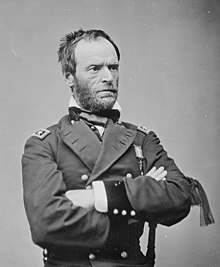
Civil War General William Tecumseh Sherman had a formula for dealing with domestic terrorists of his own time.

Writing to his commander, Ulysses S. Grant, about the best way to treat Confederate guerrillas, he advised:

Black-and-white photograph of Sherman in uniform with his arms folded in front of him

General Willilam Tecumseh Sherman

“They cannot be made to love us, but they may be made to fear us.  We cannot change the hearts of those people of the South.

“But we can make war so terrible that they will realize the fact that . . . they are still mortal and should exhaust all peaceful remedies before they fly to war.”

WHAT’S AT STAKE FOR PISTORIUS–AND SOUTH AFRICA

In Entertainment, History, Law, Law Enforcement, Social commentary on March 6, 2014 at 12:25 am

He’s the O.J. Simpson of South Africa–a gifted athlete charged with cold-blooded murder.

For Oscar Pistorius, life began as a struggle, on November 22, 1986.  Born with fibular hemimelia (congenital absence of the fibula) in both legs, at 11 months old, he was forced to undergo the amputation of both legs below the knee.

But still he persisted to lead an active–even an extraordinary–life.  As a child and teenager, he played rugby union, water polo and tennis, and took part in Olympic wrestling.

After a serious rugby knee injury, Pistorius was introduced to running in January, 2004, while undergoing rehabilitation at the University of Pretoria’s High Performance Centre.

Fitted with racing blades, he has been dubbed “Blade Runner” and “the fastest man with no legs.”   He took part in the 2004 Summer Paralympics in Athens and came in third in the 100-metere event.

In summer, 2012, he became the first double leg amputee to participate in the Olympics, winning  gold medals in the men’s 400-metre race and the 4 X 100 metres relay.

Oscar Pistorius

And then, having achieved so much against so much adversity, he found himself facing trial for a ghastly crime:

The February 14, 2013 murder of his 29-year-old girlfriend, model and paralegal Reeva Steenkamp, whom he shot three times through a locked bathroom door.

Reeva Steenkamp

Pistorius claims he thought Steenkamp was a nighttime intruder. The state alleges that he and his girlfriend  argued before her death and he intentionally killed her.

His trial opened on March 3 in Pretoria, South Africa.  A conviction on the murder charge in South Africa would carry a mandatory life sentence.

Throughout South Africa, women believe the odds are high that Pistorius will escape justice for murder owing to his sports celebrity status.  And they may well turn out to be right.

Consider:

  • According to one study, South Africa has “the highest rate [of violence against women] ever reported in research anywhere in the world.”
  • Statistically, a woman gets raped in South Africa every four minutes. Only 66,196 incidents were reported to police in 2012 and their investigations led to only 4,500 convictions.
  • The murder of Pistorius’ girlfriend happened one day before she planned to wear black in a “Black Friday” protest against the country’s disgracefully high number of rapes.
  • “If data for all violent assaults, rapes and other sexual assaults against women are taken into account, then approximately 200,000 adult women are reported as being attacked in South Africa every year,” said Lerato Moloi of the South African Institute for Race Relations.
  • The real figure is considerably higher, she said, since most cases never are reported.

The rate of murders of women in South Africa is equally appalling:

  • A woman is killed by an intimate partner every eight hours in South Africa.
  • No perpetrator is identified in 20 percent of killings, according to a study published by the South African Medical Research Council.
  • That is double the rate of such murders in the United States.

In assessing what’s at stake in the Pistorius trial, Niccolo Machiavelli sounds a warning:

Niccolo Machiavelli

In The Discourses, his seminal work on how to preserve freedom within a republic, Machiavelli warns: “Well-ordered republics establish punishments and rewards for their citizens, but never set off one against the other.”

The soldier, Horatious, he writes, had saved ancient Rome from the Curatti.  But when he murdered his sister, he was put on trial for his life.

While Rome might seem guilty of ingratitude, writes Machiavelli, “the people were to blame rather for the acquittal of Horatius than for having him tried.

“And the reason for this is, that no well-ordered republic should ever cancel the crimes of its citizens by their merits….

“Having established rewards for good actions and penalties for evil ones, and having rewarded a citizen for good conduct who afterwards commits a wrong, he should be chastised for that without regard to his previous merits.”

A state that adheres to this principle will retain its liberty; a state that doesn’t will quickly be destroyed.

For if a citizen who has rendered eminent service to the nation becomes convinced that he can commit any wrong without fear of punishment, “he will in a little while become so insolent and overbearing as to put an end to all power of the law,” writes Machiavelli.

Americans learned the truth of this after the 1995 acquittal of O.J. Simpson for the slasher-murders of his ex-wife, Nicole Brown, and a waiter-eyewitness, Ronald Goldman.

In September, 2007, he led a group of men into a hotel room at the Palace Station casino in Las Vegas, Nevada, and, at gunpoint, seized sports memorabilia which he claimed had been stolen from him.

He was arrested and eventually convicted for criminal conspiracy, armed robbery, kidnapping and assault with a deadly weapon.

On December 5, 2008, Simpson was sentenced to 33 years in prison with the chance of parole in  nine years, in 2017.

KGB AIRWAYS: PART EIGHT (END)

In Bureaucracy, Business, Law, Self-Help on December 16, 2013 at 12:18 am

So you’ve decided to sue the airline you believe wronged you.

One option is to do so in small claims court.

A plus is you don’t need an attorney. In fact, you’re barred from bringing in an attorney. You represent yourself, which means you don’t have to pay an attorney–either up-front or at the end of the case.

Another plus: It will cost you far less to represent yourself than it will cost the airline to send a representative.

If you file in California and the airline is headquartered in New York, it will be expensive for them to send a rep to attend the proceedings. If the airline fails to send someone as its representative–which is highly unlikely–it loses by default.

A minus is that you may not be the confrontational type.  You may also feel intimidated by the legal process–and afraid of looking like an idiot if you lose.

Another minus is that each state sets a different amount you can win in damages.

To learn about the rules applying to small claims courts in your state, consult the following link: Click here: 50 State Overview of Small Claims Rules | Nolo.com.

A second option is to take your case to civil court.

A plus is that the dollar-amount you can obtain at this level is far higher than in small-claims court.

A minus is that you’ll definitely want to retain an attorney.

True, you can legally represent yourself.  But aviation law is complex.  The airline will definitely have an attorney, so if you don’t, you’re bringing a knife to a gunfight.

If you can find an attorney willing to represent you on a contingency fee basis, you don’t have to pay him unless you win.  His fee will then come out of your settlement amount.

Another minus: If you can’t find an attorney willing to take your case on this basis, you’ll have to pay him by the hour, after first putting up a retainer fee, which can be quite large.

A third minus is that the courts are clogged with cases, and it can take months or even years before yours will be heard.

And remember: The vast majority of cases–civil and criminal–are settled outside of court.  In civil cases especially, judges strongly urge both sides to reach a compromise rather than duke it out in court.

And both sides are usually willing to do this, since there’s no telling how a jury might rule.

Finally, there’s the option of filing a class-action lawsuit.

A plus to this is that you’re not alone in your charge against the airline.  Other passengers who have been similarly wronged are seeking damages, and so the spotlight is not on any one plaintiff.

A minus is that such cases are extremely complex and must be handled by experienced attorneys.

Typically, federal courts are thought to be more favorable for defendants, and state courts more favorable for plaintiffs. Many class actions are filed initially in state court. The defendant will frequently try to remove the case to federal court.

Another minus: If your side prevails, the amount of money each plaintiff receives will be far smaller than if the award were to be divided between a single plaintiff and his attorney(s).

Finally, even if you win, you can be certain the airline will appeal the verdict.  Such appeals can go on for literally years.

On a more far-reaching basis, you can demand that your Congressional representatives support passenger rights through legislation.

Protections are especially needed when a single airline official–such as a steward–kicks a passenger off an airplane for reasons that have nothing to do with security.

(Examples:

  • Two women kissing;
  • a steward demanding whether a woman is wearing underwear;
  • another steward taking offense at a passenger’s request for help.)

During the administration of President George H.W. Bush, Congress overrode only one of his 44 vetoes.  In that case, Congress put a cap on the rates cable TV companies could charge.

They did so because their constituents had made clear their rage about high-priced fees.

Members of the Senate and House of Representatives will respond to constituent demands:

  1. If enough voters make their specific demands known; and
  2. If those voters make clear that ignoring their demands will guarantee defeat at the next election.

There are consumer rights organizations now pressing for vitally-needed passenger protections.  These organizations need support–both in terms of members and money.

Only then can they counter the legalized bribes (known as “campaign contributions) the airlines offer to members of Congress.

An example is Flyers Rights, which can be reached at: FlyersRights.ORG – Largest Non-Profit Airline Consumer Organization.

Above all, remember: Airlines are run by corporations.

Their foremost concern is not your comfort or even safety as a passenger.  It’s with further enriching their key executives.

You must be willing to stand up for your own rights–because the airline couldn’t care less about them.

KGB AIRWAYS: PART SEVEN (OF EIGHT)

In Bureaucracy, Business, Self-Help, Social commentary on December 13, 2013 at 12:31 am

You can’t get the airline to take your complaint seriously but you don’t want to file a lawsuit.

So now what do you do?

You could file a complaint with one or more consumer complaint websites.  Just remember:

  • What you say online can hurt you.
  • Accuse someone of criminal or shameful behavior, and you can be sued for libel.
  • Threaten someone with exposure or financial ruin aunless he pays you money and you can be privately sued and/or criminally prosecuted for extortion.
  • And once you click on the “Send” button, there’s no recalling your email.

Review the guidelines offered in Part Six of this series on how to safely craft your letter/email.

Below is a partial list of consumer complaint websites.  No endorsement is implied by this listing.  It’s offered simply to illustrate the variety of such websites available.

http://www.pissedconsumer.com/ Pissed Consumer (complaints only)

http://www.measuredup.com/ Measured Up (“Customers Review / Businesses Reply / Everybody Wins”)

http://www.complaints.com/ Complaints (post and research consumer complaints)

http://www.thesqueakywheel.com/ The Squeaky Wheel (submits your complaint to google)

http://www.consumercomplaintagency.org/ Consumer Complaint Agency (“Take [unspecified] action on your behalf”)

https://www.ftccomplaintassistant.gov/ Federal Trade Commission (does not resolve individual consumer complaints)

http://www.complaintnow.com/ Complaint Now (complaints only)

http://hissingkitty.com/ Hissing Kitty (posts your complaint on Google, Yahoo, and Bing)

http://www.airlinecomplaints.org/ Airline Complaints (complaints only)

http://airconsumer.ost.dot.gov/problems.htm Aviation Consumer Protection and Enforcement (U.S. Department of Transportation) (complaints)

http://www.airsafe.com/complain/complain.htm Air Safe (“critical information for the traveling public”)

http://www.consumeraffairs.com/travel/airlines.html Consumer Affairs (complaints only)

Your first impulse will probably be to immediately file your complaint with a website like one of these.

Don’t do it.

Instead, try to resolve your problem (assuming it can be resolved) with the airline.

Why?  Two reasons:

  1. You may be able to obtain what you want at that level, without having to do anything more.
  2. If you don’t give the airline the chance to address your grievance, you will be accused of pursuing a vendetta.  This will be especially true if you later sue the airline.

Use websites like these as a fallback option–in case you’re unable to can’t resolve your problem with the airlines.

And, frankly, there’s a good chance you won’t.

In its September 3, 2009 issue, Time magazine warned that calling the airlines’ customer complaint lines would likely prove a waste of time.

The major carriers have, quietly, made it steadily more difficult for customers to reach a person with their complaints. “The airlines don’t want to talk to their  customers,” says John Tschohl, a consultant to businesses on customer service.

Even the few airlines that still have customer-service numbers bury them deep within their websites.  Finding them is often as much a matter of luck as persistence.

So as advised in Part Five of this series: Don’t waste your time with the Customer Service line.  Go directly to the topmost official(s) of the airline and make it clear why it’s in their best interests to resolve your problem. 

Then, if you can’t find a workable solution, file your complaint with as many consumer-protection websites as possible.

You can also file complaints with one or more federal agencies that hold jurisdiction over the airlines.

If your complaint is safety related, address it to the Federal Aviation Administration (FAA) at:

Assistant Administrator for System Safety ASY-100
Federal Aviation Administration
800 Independence Ave., S.W.
Washington, D.C. 20591

1-866-835-5322

Click here: Contact the Aviation Safety Hotline

If your complaint involves security, direct it to the Transportation Security Administration (TSA).  You can reach this by phone at 866-289-9673 or by e-mail at tsa-contactcenter@dhs.gov.

A final option is to sue the airline.

For most people, bringing in a lawyer is like bringing up the heavy artillery.  When should you do so?

Christopher Elliott, author, consumer advocate and journalist, outlines “five times when you should consider skipping the complaints process and going straight to court:

  1. When they’re playing games.
  2. When they’ve broken a contract.
  3. When they’re being dishonest.
  4. When they’re ignoring you.
  5. When they aren’t listening to reason.

Elliott’s webpage contains a wealth of practical advice for those who’ve had their fill of airline arrogance.  It can be accessed thus: Click here: See you in court: 5 times when you should just sue ‘em.

Yet another must-read for those wondering if they should file suit: Click here: Lies the Airlines Tell Us – ABC News

Assuming you decide to sue, there are three ways to do this:

  1. In small claims court.
  2. In regular civil court as an individual claimant.
  3. As part of a class-action lawsuit.

Each approach has its own series of pluses and minuses.  I’ll explore these in my next column.

KGB AIRWAYS: PART SIX (OF EIGHT)

In Bureaucracy, Business, Law, Self-Help on December 12, 2013 at 12:09 am

For your complaint to be addressed, it must first be put in writing–whether in a letter and/or an email.  Most likely, several letters and/or emails.

Even in our video-oriented society, the written word still carries far greater weight than the spoken one.  A document can be used as evidence in a civil lawsuit.

If you cringe at writing it yourself, you can ask someone else to write it for you.  But if s/he lacks excellent judgment and literary skills, you’ll be no better-off.

At best, the letter will prove ineffective and be ignored.  At worst, it could open you to charges of libel and/or extortion.

And even if the person can write an effective letter on your behalf, chances are you’ll have to pay for that service.

If you decide to write the letter yourself, you’ll find highly effective advice in Shocked, Appalled, and Dismayed: How to Write Letters of Complaint That Get Results, by Ellen Phillips.

Product Details

Click here: Amazon.com: Shocked, Appalled, and Dismayed! How to Write Letters of Complaint That Get Results (9780375701207): E

Among the subjects she covers–in detail–are:

  • Who to write to, what to say, what to ask for.
  • The names and addresses of over 600 major companies.
  • How to draft personal petitions covering everything from tenant-landlord disputes to workman’s compensation.
  • What steps to take to avoid litigation.

My own tips for writing a successful complaint letter are:

  • Remove any vulgar or profane words. 
  • Don’t make sweeping accusations: “Your agency is a waste.” 
  • Stick to facts you know can be proved: The who, what, when, where, how and why of reporting.
  • Don’t attribute motives to people you’ve had problems with.  You don’t know why someone did what he did.
  • Cite the names and titles of any airline employees who (1) witnessed the reason for your complaint, or (2) were witnesses to it.
  • Show how the failure of the official to address your problem reflects badly on the company: “This is not the level of service your ads would lead potential customers to expect.”
  • If there is a specific action the airline can take to redress your complaint, be sure to mention it.  (You can be so angry when making a complaint that you forget to say what you want the company to do to resolve it.)
  • Be reasonable and realistic in what you ask for. 
  • If you want reimbursement for expenses you had to make (such as hotel lodgings) owing to the airline’s fault, then provide copies of receipts.
  • Emphasize your desire to resolve the complaint amicably and privately within the company.
  • If necessary, note any regulatory agencies that can make life rough for the company if your complaint isn’t resolved. 
  • Cite the applicable law(s) under which it can be sued: “According to the Passenger Bill of Rights….”
  • Make certain the airline knows you expect a reply within a certain length of time: “I would appreciate your response within the next 10 business days.”

Of course, your overture(s) may be ignored.  Or you might feel the airline has not made a good-faith effort to compensate you.

In either case, you have two more courses of action to pursue.

  1. Threatening the airlines with bad publicity; and
  2. Threatening the airlines with a private lawsuit.

Thanks to the Internet, it’s far easier to spread the word about companies that mistreat their customers.

“Fly the Friendly Skies” is no longer n advertising slogan (even at United Airlines, which popularized it).  But airlines spend millions of dollars a year on selling just that image of themselves.

So anything that threatens to throw mud on that image is guaranteed to set off alarm-bells at corporate headquarters.  Especially if that mud is well-deserved.

An easy way to avenge airline mistreatment is to make full use of a wide array of consumer-opinion websites.

It’s important to check out each website carefully to increase your chances of having your complaint resolved.

  • Most websites simply offer a forum to vent your spleen.
  • Others promise to take various forms of action on your behalf–such as directing your complaint to the airline or a government agency.
  • Others offer to refer your complaint to an attorney.
  • Many of these are free.
  • Others charge a nominal fee (such as $5) for posting your complaint.
  • Some complaint websites are run by the Federal Government–such as those of the Transportation Safety Administration (TSA), the Federal Aviation Association (FAA) and the Federal Trade Commission (FTC).
  • Some are run by individual states–such as the Office of the California Attorney General.
  • The major airlines provide “file a complaint” pages on their websites.

WARNING: What you say online can hurt youAccuse someone of criminal or shameful behavior, and you can be sued for libel. Threaten someone with exposure or financial ruin and you can be privately sued and/or criminally prosecuted for extortion.

And once you click on the “Send” button, there’s no recalling your email.

KGB AIRWAYS: PART FIVE (OF EIGHT)

In Bureaucracy, Business, Law, Self-Help on December 11, 2013 at 12:40 am

Have a complaint against an airline–but don’t want to waste your time with low-level Customer Service reps?

Good.  You’ve just learned what is probably the single most important lesson in bureaucracy-busting: If you want action, seek out those who are empowered to make it happen.

So take your complaint to someone who has the authority to resolve it. This means, preferably, the CEO of the airline, or at least one of his executive colleagues.

But who are these people? And how do you track them down?

You start by realizing that every major airline has a website. And that website can usually be counted on to list the top honchos of the company.

Even if it doesn’t, you can usually obtain this information on the Internet. Go to “google” and type: “[Name of airline] board of directors.”

This should arm you with

  • the name of the CEO;
  • the company’s mailing address;
  • its phone number for reaching its top executives; and
  • its website and/or email address.

Below are listed

  • the names of the CEOs of the major United States airlines
  • their mailing addresses
  • their corporate phone numbers and (where given)
  • their email addresses.

But the corporate world is filled with men (and a few women) who are highly skilled at moving up–by moving others out.  So keep in mind that the names provided below will not be permanent.

Check out the appropriate websites to obtain the latest information before writing that letter and/or making that call.

Send out a letter addressed “To Whom It May Concern” and you’ll instantly be branded as a lightweight.   This only shows that you were too lazy/stupid to find out who holds power in the organization.

Whereas a well-written letter addressed to the key decision maker will instantly warn top executives: “Take this person seriously.”

Now, the airlines:

DELTA AIRLINES

Richard H. Anderson – Chief Executive Officer of Delta since September 1, 2007.

Edward H. Bastian – President of Delta since September 1, 2007.

Email:  Email us
Phone: (404) 715-2600
Mail:
Delta Air Lines, Inc.
P.O. Box 20706
Atlanta, Georgia 30320-6001

Click here: Delta Airlines Board of Directors

AMERICAN AIRLINES

Thomas W. Horton – Chairman, President and Chief Executive Officer, AMR Corporation / American Airlines, Inc., Fort Worth, Texas.

John W. Bachmann – Senior Partner, Edward Jones, St. Louis, Missouri.

Mail:
P.O. Box 619616
DFW Airport, TX   75261-9616

Phone: (817) 963-1234

Click here: American Airlines Board of Directors

UNITED AIRLINES

Glenn F. Tilton – non-executive chairman of the board of directors of United Continental Holdings, Inc.

Jeffery A. Smisek – President and Chief Executive Officer, United Continental Holdings, Inc.

Oscar Munoz – Executive Vice President and Chief Financial Officer, CSX Corporation

Shareholders and other interested parties may contact the United Continental Holdings, Inc. Board of Directors as a whole, or any individual member, by one of the following means:

  1. writing to the Board of Directors, United Continental Holdings, Inc., c/o the Corporate Secretary’s Office, HDQLD, 77 W. Wacker Drive, Chicago, IL 60601; or
  2. by emailing the Board of Directors at UALBoard@united.com

If neither of these methods seems to work, try these:

Mail:
P.O. Box 66100
Chicago, IL 60666

Phone (general): (800) (800) 864-8331

Phone Investor Relations: (312) 997-8610

United Continental Holdings, Inc. – Investor Relations – Board of Directors

JETBLUE AIRWAYS

Joel C. Peterson – Independent Chairman of the Board of Jetblue Airways Corporation.

David Barger – President, Chief Executive Officer, Director of JetBlue Airways Corporation.

Mark D. Powers – Chief Financial Officer, Executive Vice President, Treasurer of JetBlue Airways Corporation.

JetBlue Airways Corporation Corporate Office | Headquarters
118-29 Queens Blvd.
Forest Hills, NY 11375
Phone:  (718) 286-7900
Toll Free: 800) 538-2583

http://www.jetblue.com

AIRTRAN

AirTran Airways is a wholly-owned subsidiary of Southwest Airlines.  Thus, complaints against Airtran should be directed to the top executives of Southwest.

SOUTHWEST AIRLINES

David W. Biegler – Chairman and CEO

Douglas H. Brooks – Chairman of the Board, President and Chief Executive Officer
Southwest Airlines Corporate Headquarters
Physical Address:
2702 Love Field Drive Dallas, Texas 75235
Mailing Address:
P.O. Box 36611 Dallas, Texas 75235
Telephone: (214) 792-4000 (Main Switchboard)

Click here: Southwest Airlines Investor Relations – Board of Directors

US AIRWAYS

W. Douglas Parker – Chairman of the Board, CEO

Bruce Lakefield – Vice Chairman of the Board, President, CEO

Derek Kerr – Chief Financial Officer, Executive Vice President

Corporate Contact Information:

Mailing address: US Airways 4000 E. Sky Harbor Blvd. Phoenix, AZ 85034 Corporate headquarters: 111 W. Rio Salado Parkway Tempe, AZ 85281 Phone: (480) 693-0800 7 AM – 5 PM Monday – Friday

Daniel E. Cravens
Director
Investor Relations
US Airways
111 West Rio Salado Parkway
Tempe, AZ 85281

Phone: 480.693.1227

E-mail: Click here: US Airways | Compliments/complaints

Click here: US Airways | Investor relations

Click here: US AIRWAYS GROUP INC (LCC:New York): Board of Directors – Businessweek

ALASKA AIRLINES

William S. Ayer – Chairman

Bradley D. Tilden – President and CEO

Brandon Pederson – Chief Financial Officer

Corporate Offices:

P.O. Box 68900
Seattle, WA   98168

Phone: (206-433-3200

Click here: Executive Leadership – Alaska Airlines

CONTINENTAL AIRLINES

In 2010, Continental Airlines merged with United Airlines.  Direct all inquiries and complaints to United Airlines, whose corporate information is given above.