Posts Tagged ‘NEWT GINGRICH’
9/11, ABC NEWS, ADOLF HITLER, ALTERNET, AMERICANS FOR TAX REFORM, ANDERSON COOPER, ANTI-COMMUNISM, AP, ARTHUR MILLER, BILL CLINTON, BUZZFEED, CBS NEWS, CENTER FOR SECURITY POLICY, CHINA, CHRIS MATTHEWS, CNN, CROOKS AND LIARS, DAILY KOZ, DICK CHENEY, DWIGHT D. EISENHOWER, EDWARD R. MURROW, FACEBOOK, GEORGE H.W. BUSH, HARRY S. TRUMAN, HEINRICH HIMMLER, HERMAN CAIN, HERMAN GORING, HILLARY CLINTON, HUMA ABEDIN, JEWS, JIMMY CARTER, JOHN BIRCH SOCIETY, JOHN BOENER, JOHN F. KENNEDY, JOHN MCCAIN, JOHN STEINBECK, JOSEPH GOEBBELS, JOSEPH MCCARTHY, JOSEPH STALIN, KGB, LIZ CHENEY, LUCILLE BALL, LYNDON B. JOHNSON, MARY CHENEY, MICHELLE BACHMANN, MIKE HUCKABEE, MITT ROMNEY, MOTHER JONES, MOVEON, MSNBC, MUSLIM BROTHERHOOD, MUSLIMS, NAZI GERMANY, NAZI PARTY, NBC NEWS, NEWSWEEK, NEWT GINGRICH, NPR, PETE SEEGER, POLITICO, RAW STORY, RED SCARE, REINHARD HEYDRICH, REPUBLICAN PARTY, REUTERS, RICHARD NIXON, RICK SANTORUM, Ronald Reagan, SALON, SAME-SEX MARRIAGE, SEATTLE TIMES, SENATOR MIKE ENZI, SLATE, SOVIET UNION, SS, THE AMERICAN CENTER FOR SECURITY POLICY, THE ATLANTIC, THE CHICAGO SUN-TIMES, THE CHICAGO TRIBUNE, THE DAILY BEAST, THE GUARDIAN, THE HILL, THE HUFFINGTON POST, THE LOS ANGELES TIMES, THE NATION, THE NEW YORK TIMES, THE WALL STREET JOURNAL, THE WASHINGTON POST, TIME, TWITTER, U.S. NEWS & WORLD REPORT, UP, UPI, USA TODAY, WYOMING
In Bureaucracy, History, Politics, Social commentary on August 22, 2017 at 12:02 am
“All revolutions,” said Ernst Rohem, leader of Adolf Hitler’s brown-shirted thugs, the S.A., “devour their own children.”
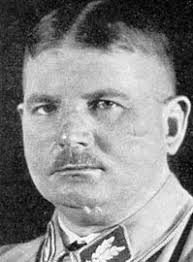
Ernst Rohem
Fittingly, he said this as he sat inside a prison cell awaiting his own execution.
On June 30, 1934, Hitler had ordered a massive purge of his private army, the S.A., or Stormtroopers. The purge was carried out by Hitler’s elite army-within-an-army, the black-uniformed Schutzstaffel, or Protective Squads, better known as the SS.
The S.A. Brownshirts had been instrumental in securing Hitler’s rise to Chancellor of Germany on January 30, 1933. They had intimidated political opponents and organized mass rallies for the Nazi Party.
But after Hitler reached the pinnacle of power, they became a liability.
Ernst Rohem, their commander, urged Hitler to disband the regular German army, the Reichswehr, and replace it with his own legions as the nation’s defense force.
Frightened by Rohem’s ambitions, the generals of the Reichswehr gave Hitler an ultimatum: Get rid of Rohem–-or they would get rid of the Fuhrer.
So Rohem died in a hail of SS bullets-–as did several hundred of his longtime S.A. cronies.
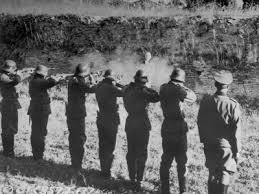
SS firing squad
Among the SS commanders supervising those executions was Reinhard Heydrich—a tall, blond-haired formal naval officer who was both a champion fencer and talented violinist.
Ultimately, he would become the personification of the Nazi ideal—”the man with the iron heart,” as Hitler eulogized at Heydrich’s funeral just eight years later.
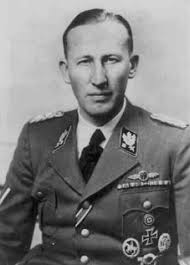
Reinhard Heydrich
Even so, Heydrich had a problem: He could never escape vicious rumors that his family tree held a Jewish ancestor.
His paternal grandmother had married Reinhold Heydrich, and then Gustav Robert Suss. For unknown reasons, she decided to call herself Suss-Heydrich.
Since “Suss” was widely believed in Germany to indicate Jewish origin, the “stigma” of Jewish heritage attached itself to the Heydrich family.
Heydrich joined the SS in 1931 and quickly became head of its counterintelligence service. But his arrogance and overweening ambition created a great many enemies.
Only a year later, he became the target of an urgent investigation by the SS itself. The charge: That he was part-Jewish, the ultimate sin in Hitler’s “racially pure” Nazi Germany.
The investigation cleared Heydrich, but the rumor of his “tainted” origins persisted, clearly tormenting the second most powerful man in the SS. Even his superior, Heinrich Himmler, the Reichsfuhrer-SS, believed it.
When Heydrich was assassinated in 1942 by Czech assassins in Prague, Himmler attended his funeral. He paid tribute to his former subordinate at the service: ”You, Reinhard Heydrich, were a truly good SS-man.”
But he could not resist saying in private: “He was an unhappy man, completely divided against himself, as often happened with those of mixed race.”
Those who dare to harshly judge others usually find themselves assailed just as harshly.
A modern-day example is Liz Cheney, daughter of former Vice President Dick Cheney and a 2014 candidate for U.S. Senator from Wyoming.
Liz tried to position herself as far more right-wing than her opponent, Republican U.S. Senator Michael Bradley “Mike” Enzi.
She found her work cut out for her: In March, 2007, Enzi was ranked by National Journal as the sixth-most conservative U.S. Senator. Among his legislative priorities:
- Supporting partial privatization of Social Security
- Consistently voting against expanding Medicare.
- Voting against enrolling more children or the poor in public healthcare.

Mike Enzi
And Liz had a problem Enzi did not: Her sister, Mary, was not only a lesbian but legally married to another woman: Heather Poe. This led many Wyoming voters to wonder if Liz Cheney was far-Right enough to merit their support.
So Liz went all-out to assure them that even though her sister led a degenerate lifestyle, she, Liz, stood foursquare against legalizing gay marriage: “I do believe it’s an issue that’s got to be left up to states. I do believe in the traditional definition of marriage.”

Liz Cheney
And, in another statement: “I am strongly pro-life and I am not pro-gay marriage.
“I believe the issue of marriage must be decided by the states, and by the people in the states, not by judges and not even by legislators, but by the people themselves.”
This stance led to a heated rift between her and Mary. “For the record, I love my sister, but she is dead wrong on the issue of marriage,” Mary Cheney wrote in a Facebook post in September, 2013.
“Freedom means freedom for everyone,” she continued. “That means that all families—regardless of how they look or how they are made—all families are entitled to the same rights, privileges and protections as every other.”
Adding to the complications: Their father, Dick Cheney—often ridiculed as “Darth Vader” for his own extreme Right-wing views—endorsed same-sex marriage in 2009.
(After a brief run, Cheney, on January 6, 2014, Cheney withdrew from the race.)
But, as was true for officials in Nazi Germany, so is it true for Right-wing Republicans: It’s impossible to be too radical a Right-winger.
In the 1930s and 40s, it was politically—and personally—dangerous to be labeled “pro-Jewish” or “pro-Communist” in Hitler’s Germany.
And today it is equally dangerous—at least politically—to be labeled “pro-liberal” or “pro-gay” in the Republican Party.
ABC NEWS, ALTERNET, AMERICAN TABLOID, AP, ASSASSINATION, BUZZFEED, CBS NEWS, CIA, CNN, COMMUNISM, CROOKS AND LIARS, CUBA, CUBAN MISSILE CRISIS, DAILY KOZ, DONALD TRUMP, DWIGHT D. EISENHOWER, FACEBOOK, FBI, FIDEL CASTRO, FLORIDA, FULGENCIO BATISTA, GUAM, GUS RUSSO, JAMES ELLROY, JOHN F. KENNEDY, JOHNNY ROSELLI, KIM JONG ON, LEE HARVEY OSWALD, LIVE BY THE SWORD, LYNDON B. JOHNSON, MAFIA, MOTHER JONES, MOVEON, NBC NEWS, NEWSWEEK, NEWT GINGRICH, NIKITA KHRUSHCHEV, NORTH KOREA, NPR, NUCLEAR WAR, POLITICO, RAW STORY, REUTERS, ROBERT F. KENNEDY, SALON, SAM GIANCANA, SEATTLE TIMES, SLATE, THE ATLANTIC, THE CHICAGO SUN-TIMES, THE CHICAGO TRIBUNE, THE DAILY BEAST, THE GUARDIAN, THE HILL, THE HUFFINGTON POST, THE LOS ANGELES TIMES, THE NATION, THE NEW YORK TIMES, THE WASHINGTON POST, TIME, TWITTER, U.S. NEWS & WORLD REPORT, UP, UPI, USA TODAY, WARREN COMMISSION
In Bureaucracy, History, Law, Law Enforcement, Military, Politics, Social commentary on August 16, 2017 at 12:05 am
“John and Robert Kennedy knew what they were doing. They waged a vicious war against Fidel Castro–a war someone had to lose.”
And the loser turned out to be John F. Kennedy.
So writes investigative reporter Gus Russo in Live By the Sword: The Secret War Against Castro and the Death of JFK, published in 1998.
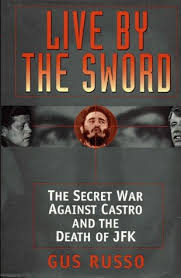
In what is almost certainly the definitive account of the assassination of President John F. Kennedy, Russo reaches some startling–but highly documented–conclusions:
- Lee Harvey Oswald assassinated Kennedy.
- He did it alone.
- Oswald, a former Marine, was a committed Marxist–whose hero was Castro.
- The CIA’s ongoing campaign to overthrow and/or assassinate Castro was an open secret throughout the Gulf.
- Oswald visited New Orleans in the spring of 1963.
- There he learned that Castro was in the crosshairs of the CIA.
- Oswald told his Russian-born wife, Marina: “Fidel Castro needs defenders. I’m going to join his army of volunteers.”
- Jack Ruby, a Dallas nightclub owner, murdered Oswald because he was distraught over Kennedy’s death.
- Ruby was not part of a Mafia conspiracy to silence Oswald.
- Skeptics of the Warren Commission–which concluded that Oswald had acted alone–asked the wrong question: “Who killed Kennedy?”
- They should have asked: “Why was he killed?”
- The answer–according to Russo: “The Kennedys’ relentless pursuit of Castro and Cuba backfired in tragedy on that terrible day in November, 1963.”
Another book well worth reading about America’s Cuban obsession during the early 1960s is American Tabloid, by James Ellroy.
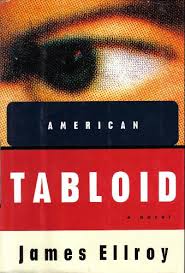
Although a novel, it vividly captures the atmosphere of intrigue, danger and sleaziness that permeated that era in a way that dry, historical documents never can.
“The 50’s are finished,” reads its paperback dust jacket. “Zealous young lawyer Robert Kennedy has a red-hot jones to nail Jimmy Hoffa. JFK has his eyes on the Oval Office.
“J. Edgar Hoover is swooping down on the Red Menace. Howard Hughes is dodging subpoenas and digging up Kennedy dirt. And Castro is mopping up the bloody aftermath of his new Communist nation….
“Mob bosses, politicos, snitches, psychos, fall guys and femmes fatale. They’re mixing up a Molotov cocktail guaranteed to end the country’s innocence with a bang.”
Among the legacies of America’s twisted romance with anti-Castro Cubans:
- Following the JFK assassination, there was a coverup.
- Its purposes: To protect the reputation of the United States government–and that of its newly-martyred President.
- Thus, the CIA and FBI concealed the CIA-Mafia assassination plots from the Warren Commission assigned to investigate Kennedy’s murder.
- Other government officials participating in the coverup included Attorney General Robert F. Kennedy and President Lyndon B. Johnson.
- Ironically, this secrecy ignited the widespread–and false–belief that the President had died at the hands of a government conspiracy.
- Robert Kennedy feared that his relentless pursuit of Castro might have led Castro to “take out” JFK first.
- Fearing his own assassination if he continued Kennedy’s efforts to murder Castro, President Johnson ordered the CIA to halt its campaign to overthrow and/or assassinate the Cuban leader.
- The huge Cuban community throughout Florida–and especially Miami–continues to exert a blackmailing influence on American politics.
- Right-wing politicians from Richard Nixon to Newt Gingrich have reaped electoral rewards by catering to the demands of this hate-obsessed voting block.
- As a result, the United States still refuses to open diplomatic relations with Cuba–even though it has done so with such former enemies as the Soviet Union, China and Vietnam.
- These Cuban ex-patriots hope that the United States will launch a full-scale military invasion of the island to remove Castro.
- Having grown rich and soft in the United States, they fear to risk their own lives by returning to Cuba to loverthrow Castro–as he did against Fulgencio Batista.
The Cuban Missile Crisis was the deadliest moment of the Cold War, when the world stood only minutes away from nuclear Armageddon.
That crisis stemmed from America’s twisted obsession with Cuba, an obsession that continues today.
So what are the lessons to be learned from that obsession?
- It is long past time to demand major changes in our foreign policy toward Cuba.
- It’s time to end the half-century contamination of American politics by those Cubans who live only for their hatred of Castro–and those political candidates who live to exploit it.
- A population of about 1,700,000 Cuban exiles should not be allowed to shape the domestic and foreign policy of a nation of 300 million.
- Those who continue to hate–or love–Castro should be left to their own private feud. But that is a feud they should settle on their own island, and not from the shores of the United States.
President Donald Trump and North Korean dictator Kim Jong On have traded salvos of insults and threats, like two demented schoolchildren.
Once again, the world wonders: Is nuclear war about to erupt?
Thus, two lessons of the Cuban Missile Crisis–above all others–should vividly remembered–before disaster erupts:
First, the highly provocative actions of the Kennedy Administration led directly to the installation of Soviet missiles in Cuba; and
Second, only the restraint exercised by John F. Kennedy and Nikita Khrushchev averted a nuclear holocaust.
No American can restrain the actions of the North Korean dictator. But there are Americans who can remove the dangers posed by a clearly unstable President.
ABC NEWS, ALTERNET, AMERICAN TABLOID, AP, ASSASSINATION, BUZZFEED, CBS NEWS, CIA, CNN, COMMUNISM, CROOKS AND LIARS, CUBA, CUBAN MISSILE CRISIS, DAILY KOZ, DONALD TRUMP, DWIGHT D. EISENHOWER, FACEBOOK, FBI, FIDEL CASTRO, FLORIDA, FULGENCIO BATISTA, GUAM, GUS RUSSO, JAMES ELLROY, JOHN F. KENNEDY, JOHNNY ROSELLI, KIM JONG ON, LEE HARVEY OSWALD, LIVE BY THE SWORD, LYNDON B. JOHNSON, MAFIA, MOTHER JONES, MOVEON, NBC NEWS, NEWSWEEK, NEWT GINGRICH, NIKITA KHRUSHCHEV, NORTH KOREA, NPR, NUCLEAR WAR, POLITICO, RAW STORY, REUTERS, ROBERT F. KENNEDY, SALON, SAM GIANCANA, SEATTLE TIMES, SLATE, THE ATLANTIC, THE CHICAGO SUN-TIMES, THE CHICAGO TRIBUNE, THE DAILY BEAST, THE GUARDIAN, THE HILL, THE HUFFINGTON POST, THE LOS ANGELES TIMES, THE NATION, THE NEW YORK TIMES, THE WASHINGTON POST, TIME, TWITTER, U.S. NEWS & WORLD REPORT, UP, UPI, USA TODAY, WARREN COMMISSION
In Bureaucracy, History, Law, Law Enforcement, Military, Politics, Social commentary on August 15, 2017 at 12:13 am
On October 22, 1962, President John F. Kennedy went on nationwide TV to announce the discovery of the missiles and his blockade of Cuba.
He warned that any nuclear missile launched from Cuba against any nation would be regarded as an attack on the United States by the Soviet Union—and would trigger “a full retaliatory response” upon the U.S.S.R.
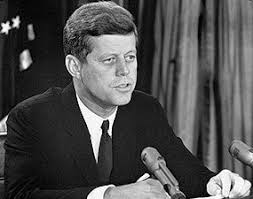
John F. Kennedy address the nation
And he demanded that the Soviets remove all of their offensive weapons from Cuba: “The cost of freedom is always high, but Americans have always paid it. And one path we shall never choose, and that is the path of surrender or submission.”
On October 26, the United States raised the readiness level of SAC forces to DEFCON 2—the step just short of war. For the only time in U.S. history, B-52 bombers were dispersed to various locations and made ready to take off, fully equipped, on 15 minutes’ notice.
Other measures taken included:
- One-eighth of America’s 1,436 bombers were on airborne alert.
- About 145 intercontinental ballistic missiles stood on ready alert.
- Air Defense Command redeployed 161 nuclear-armed interceptors to 16 dispersal fields within nine hours with one-third maintaining 15-minute alert status.
- Twenty-three nuclear-armed B-52 were sent to orbit points within striking distance of the Soviet Union.
An invasion date was set for October 29. But the Kennedy Administration—and the American military—didn’t know that the Russian soldiers guarding the missiles had been armed with tactical nuclear weapons.
Had the Marines gone in, those mini-nukes would have been used. And a fullscale nuclear exchange between the United States and the Soviet Union would have almost certainly followed.
At the height of the crisis, Attorney General Robert F. Kennedy offered a solution.
Khrushchev had sent two teletypes to Kennedy. The first had agreed to remove the missiles, but the second had demanded that the United States remove its own missiles from Turkey, which bordered the Soviet Union.
Robert Kennedy’s solution: The administration should ignore the second message—and announce that it had accepted Khrushchev’s offer to remove the missiles.
After this announcement was made, President Kennedy said to his advisors: “It can go either way now.”
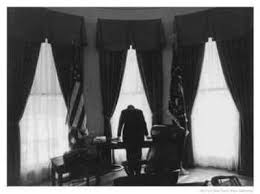
John F. Kennedy
The crisis ended on October 28. Under enormous pressure, Khrushchev agreed to remove the missiles from Cuba.
Behind his decision lay a secret promise by the Kennedy administration to remove its obsolete nuclear missiles from Turkey. And a public pledge to not invade Cuba.
On the night the crisis ended, there occurred a prophetic exchange between the two Kennedy brothers.
JFK: “Maybe this is the night I should go to the theater”—a reference to Abraham Lincoln’s fatal attendance of Ford’s Theater at the end of the Civil War.
RFK: “If you go, I want to go with you.”
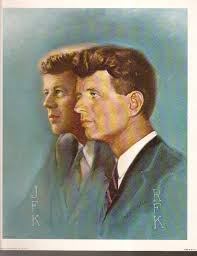
John F. and Robert F. Kennedy
But President Kennedy was not finished with Castro. While continuing the campaign of sabotage throughout Cuba, the Kennedys were preparing something far bigger: A fullscale American invasion of the island.
On October 4, 1963, the Joint Chiefs of Staff submitted its latest version of the invasion plan, known as OPLAN 380-63. Its timetable went:
- January, 1964: Infiltration into Cuba by Cuban exiles.
- July 15, 1964: U.S. conventional forces join the fray.
- August 3, 1964: All-out U.S. air strikes on Cuba.
- October 1, 1964: Full-scale invasion to install “a government friendly to the U.S.”
During the Cuban Missile Crisis, Robert Kennedy—referring to the 1941 Japanese attack on Pearl Harbor—had resisted demands for a “sneak attack” on Cuba by saying: “I don’t want my brother to be the Tojo of the 1960s.”
Now the Kennedys planned such an attack on Cuba just one month before the November, 1964 Presidential election.
Then fate—in the unlikely figure of Lee Harvey Oswald—intervened.
On November 22, 1963, while the President rode through Dallas in an open-air automobile, a rifle-wielding assassin opened fire. He scored two hits on Kennedy—in the back of the neck and head. The second wound proved instantly fatal.
The nation and the world were shocked—and plunged into deep mourning.
But for some of those who had waged a secret, lethal war against Fidel Castro for the previous two years, Kennedy’s death—at least in retrospect—didn’t come as a surprise.
Robert Kennedy, in particular, spent the remaining years of his life agonizing over the possibility that his highly personal war against Castro had backfired.
That Castro, fed up with the CIA’s assassination plots against him, had retaliated with one of his own.
Robert Kennedy’s fears and guilt were compounded by the fact that, while waging war on Castro, he had waged an equally ruthless crusade against organized crime.
And some of the mobsters he had done his best to put into prison had played a major role in the CIA’s efforts to “hit” Castro. Had the Mafia—believing itself the victim of a double-cross—put out a “contract” on JFK instead?
“John and Robert Kennedy knew what they were doing. They waged a vicious war against Fidel Castro—a war someone had to lose.”
And the loser turned out to be John F. Kennedy.
So writes investigative reporter Gus Russo in Live By the Sword: The Secret War Against Castro and the Death of JFK, published in 1998.
ABC NEWS, ALTERNET, AMERICAN TABLOID, AP, ASSASSINATION, BUZZFEED, CBS NEWS, CIA, CNN, COMMUNISM, CROOKS AND LIARS, CUBA, CUBAN MISSILE CRISIS, DAILY KOZ, DONALD TRUMP, DWIGHT D. EISENHOWER, FACEBOOK, FBI, FIDEL CASTRO, FLORIDA, FULGENCIO BATISTA, GUAM, GUS RUSSO, JAMES ELLROY, JOHN F. KENNEDY, JOHNNY ROSELLI, KIM JONG ON, LEE HARVEY OSWALD, LIVE BY THE SWORD, LYNDON B. JOHNSON, MAFIA, MOTHER JONES, MOVEON, NBC NEWS, NEWSWEEK, NEWT GINGRICH, NIKITA KHRUSHCHEV, NORTH KOREA, NPR, NUCLEAR WAR, POLITICO, RAW STORY, REUTERS, ROBERT F. KENNEDY, SALON, SAM GIANCANA, SEATTLE TIMES, SLATE, THE ATLANTIC, THE CHICAGO SUN-TIMES, THE CHICAGO TRIBUNE, THE DAILY BEAST, THE GUARDIAN, THE HILL, THE HUFFINGTON POST, THE LOS ANGELES TIMES, THE NATION, THE NEW YORK TIMES, THE WASHINGTON POST, TIME, TWITTER, U.S. NEWS & WORLD REPORT, UP, UPI, USA TODAY, WARREN COMMISSION
In Bureaucracy, History, Law, Law Enforcement, Military, Politics, Social commentary on August 14, 2017 at 12:10 am
In April, 1961, the CIA tried to overthrow the Communist regime of Cuba’s “Maximum Leader,” Fidel Castro, at the Bay of Pigs.
When that failed, President John F. Kennedy ordered Castro’s removal through a campaign of sabotage and assassination.
These covert operatives became known within the CIA as the Special Group, and were ultimately supervised by Robert F. Kennedy, the President’s brother and Attorney General.
The war against Castro became known within the CIA as Operation Mongoose.
But not everyone in the CIA was enthusiastic about the “get Castro” effort.
“Everyone at CIA was surprised at Kennedy’s obsession with Fidel,” recalled Sam Halpern, who was assigned to the Cuba Project. “They thought it was a waste of time. We all knew [Fidel] couldn’t hurt us. Most of us at CIA initially liked Kennedy, but why go after this little guy?

“One thing is for sure: Kennedy wasn’t doing it out of national security concerns. It was a personal thing. The Kennedy family felt personally burnt by the Bay of Pigs and sought revenge.”
It was all-out war. Among the tactics used:
- Hiring Cuban gangsters to murder Cuban police officials and Soviet technicians.
- Sabotaging mines.
- Paying up to $100,000 per “hit” for the murder or kidnapping of Cuban officials.
- Using biological and chemical warfare against the Cuban sugar industry.
“Bobby (Kennedy) wanted boom and bang all over the island,” recalled Halpern. “It was stupid. The pressure from the White House was very great.”
Among that “boom and bang” were a series of assassination plots against Castro, in which the Mafia was to be a key player.
Chicago Mobster Johnny Rosselli proposed a simple plan: Through its underworld connections in Cuba, the Mafia would recruit a Cuban in Castro’s entourage, such as a waiter or bodyguard, who would poison him.
The CIA’s Technical Services division produced a botulinus toxin which was then injected into Castro’s favorite brand of cigars. The CIA also produced simpler botulinus toxin pills that could be dissolved in his food or drink.
But the deputized Mafia contacts failed to deliver any of the poisons to Castro.
Rosselli told the CIA that the first poisoner had been discharged from Castro’s employ before he could kill him, and the back-up agent got “cold feet.”
Other proposals or attempts included:
- Planting colorful seashells rigged to explode at a site where Castro liked to go skindiving.
- Trying to arrange for his being presented with a wetsuit impregnated with noxious bacteria and mold spores, or with lethal chemical agents.
- Attempting to infect Castro’s scuba regulator with tuberculous bacilli.
- Trying to douse his handkerchiefs, tea and coffee with other lethal bacteria.
Americans would rightly label such methods as ”terrorist” if another power used them against the United States today. And that was how the Cuban government saw the situation.
So Castro appealed to Nikita Khrushchev, leader of the Soviet Union, for assistance.

Fidel Castro

Nikita Khrushchev
Khrushchev was quick to comply: “We must not allow the communist infant to be strangled in its crib,” he told members of his inner circle.
By October, 1962, the Soviet Union had sent more than
- 40,000 soldiers,
- 1,300 field pieces,
- 700 anti-aircraft guns,
- 350 tanks and
- 150 jets
to Cuba to deter another invasion.
Most importantly, Khrushchev began supplying Castro with nuclear-tipped ballistic missiles.
Their discovery, on October 15, 1962, ignited the single most dangerous confrontation of the 50-year Cold War.
Suddenly, the United States and the Soviet Union—bristling with nuclear weapons—found themselves on the brink of nuclear war.
At the time, Kennedy officials claimed they couldn’t understand why Khrushchev had placed nuclear missiles in Cuba. “Maybe Khrushchev’s gone mad” was a typical public musing.
None of these officials admitted that JFK had been waging a no-holds-barred campaign to overthrow the Cuban government and assassinate its leader.
On October 16, the next day, President Kennedy was informed of the missile installations. He immediately convened a group of his 12 most important advisors, which became known as Ex-Comm, for Executive Committee.
Then followed seven days of guarded and intense debate by Kennedy and his advisors. Some of the participants—such as Air Force General Curtis LeMay—urged an all-out air strike against the missile sites.
Others—such as Adlai Stevenson, the United States delegate to the United Nations—urged a reliance on quiet diplomacy.
It was Secretary of Defense Robert S. McNamara who suggested a middle course: A naval blockade—a “quarantine” in Kennedy’s softened term—around Cuba. This would hopefully prevent the arrival of more Soviet offensive weapons on the island.
Finally, the President decided to to impose a naval blockade.
On October 22, Kennedy went on nationwide TV to announce the discovery of the missiles and his blockade of Cuba.
He warned that any nuclear missile launched from Cuba against any nation would be regarded as an attack on the United States by the Soviet Union—and would trigger “a full retaliatory response” upon the U.S.S.R.
John F. Kennedy address the nation
And he demanded that the Soviets remove all of their offensive weapons from Cuba:
“The path we have chosen for the present is full of hazards, as all paths are, but it is the one most consistent with our character and courage as a nation and our commitments around the world.”
ABC NEWS, ALTERNET, AMERICAN TABLOID, AP, ASSASSINATION, BUZZFEED, CBS NEWS, CIA, CNN, COMMUNISM, CROOKS AND LIARS, CUBA, CUBAN MISSILE CRISIS, DAILY KOZ, DONALD TRUMP, DWIGHT D. EISENHOWER, FACEBOOK, FBI, FIDEL CASTRO, FLORIDA, FULGENCIO BATISTA, GUAM, GUS RUSSO, JAMES ELLROY, JOHN F. KENNEDY, JOHNNY ROSELLI, KIM JONG-UN, LEE HARVEY OSWALD, LIVE BY THE SWORD, LYNDON B. JOHNSON, MAFIA, MOTHER JONES, MOVEON, NBC NEWS, NEWSWEEK, NEWT GINGRICH, NIKITA KHRUSHCHEV, NORTH KOREA, NPR, NUCLEAR WAR, POLITICO, RAW STORY, REUTERS, ROBERT F. KENNEDY, SALON, SAM GIANCANA, SEATTLE TIMES, SLATE, THE ATLANTIC, THE CHICAGO SUN-TIMES, THE CHICAGO TRIBUNE, THE DAILY BEAST, THE GUARDIAN, THE HILL, THE HUFFINGTON POST, THE LOS ANGELES TIMES, THE NATION, THE NEW YORK TIMES, THE WASHINGTON POST, TIME, TWITTER, U.S. NEWS & WORLD REPORT, UP, UPI, USA TODAY, WARREN COMMISSION
In Bureaucracy, History, Law, Law Enforcement, Military, Politics, Social commentary on August 11, 2017 at 12:10 am
North Korean dictator Kim Jong-Un has threatened to launch possibly nuclear-tipped missiles at Guam, an unincorporated United States territory in the Western Pacific Ocean.
And President Donald Trump has responded with a threat to bring “fire and fury” to North Korea if it does.
Will their exchange of threats lead to all-out nuclear war?
The last time that Americans faced such a threat came 55 years ago, during the Presidency of John F. Kennedy.
On January 1, 1959, Fidel Castro swept triumphantly into Havana after a two-year guerrilla campaign against Cuban dictator Fulgencio Batista.
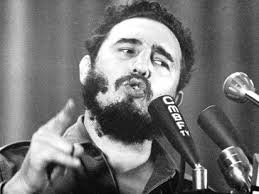
Fidel Castro
Almost immediately, hundreds of thousands of Cubans began fleeing to America. The first émigrés were more than 215,000 Batista followers. The exodus escalated, peaking at approximately 78,000 in 1962.
In October, 1962, Castro stopped regularly scheduled travel between the two countries, and asylum seekers began sailing from Cuba to Florida.
Between 1962 and 1979, hundreds of thousands of Cubans entered the United States under the Attorney General’s parole authority.
By 2008, more than 1.24 million Cubans were living in the United States, mostly in South Florida, where the population of Miami was about one-third Cuban. Their sheer numbers transformed the state’s political, economic and cultural life. And not entirely for the better.
Many of these Cubans viewed themselves as political exiles, rather than immigrants, hoping to eventually return to Cuba after its Communist regime fell from power.
The large number of Cubans in South Florida, particularly in Miami’s “Little Havana,” allowed them to preserve their culture and customs to a degree rare for immigrant groups.
With so many discontented immigrants concentrated in Florida, they became a potential force for politicians to court.
And the issue guaranteed to sway their votes was unrelenting hostility to Castro. Unsurprisingly, most of their votes went to right-wing Republicans.
John F. Kennedy was the first President to face this dilemma.
During the closing months of the administration of President Dwight D. Eisenhower, the CIA had begun training Cuban exiles for an invasion of their former homeland.
The exiles’ goal: To do what Castro had done—seek refuge in the mountains and launch a successful anti-Castro revolution.
But word of the coming invasion quickly leaked: The exiles were terrible secret-keepers. (A joke at the CIA went: “A Cuban thinks a secret is something you tell to only 300 people.”)
Kennedy insisted the invasion must appear to be an entirely Cuban enterprise. He refused to commit U.S. Marines and Air Force bombers.
The invaders landed on April 17, 1961 at the Bay of Pigs—and were quickly overwhelmed, with hundreds of the men taken prisoner.
Kennedy publicly took the blame for its failure: “Victory has a hundred fathers but defeat is an orphan.” But privately he seethed, and ordered the CIA to redouble its efforts to remove Castro at all costs.
To make certain his order was carried out, he appointed his brother, Robert—then Attorney General—to oversee the CIA’s “Castro removal” program.
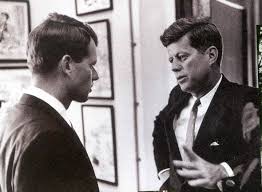
Robert F. Kennedy and John F. Kennedy
It’s here that America’s obsession with Cuba entered its darkest and most disgraceful period.
The CIA and the Mafia entered into an unholy alliance to assassinate Castro—each for its own benefit:
The CIA wanted to please Kennedy.
The mobsters wanted to regain its casino and brothel holdings that had made Cuba their private playground in pre-Castro times. They also hoped to use their pose as patriots to win immunity from future prosecution.
The CIA supplied poisons and explosives to various members of the Mafia. It was then up to the mobsters to assassinate Castro.
The CIA asked Johnny Roselli, a mobster linked to the Chicago syndicate, to go to Florida in 1961 and 1962 to organize assassination teams of Cuban exiles. They were to infiltrate their homeland and assassinate Castro.
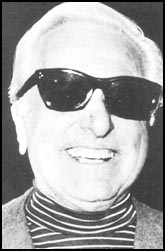
Johnny Roselli
Rosselli called upon two other crime figures: Chicago Mafia boss Sam Giancana and Santos Trafficante, the Costra Nostra chieftain for Tampa, for assistance.
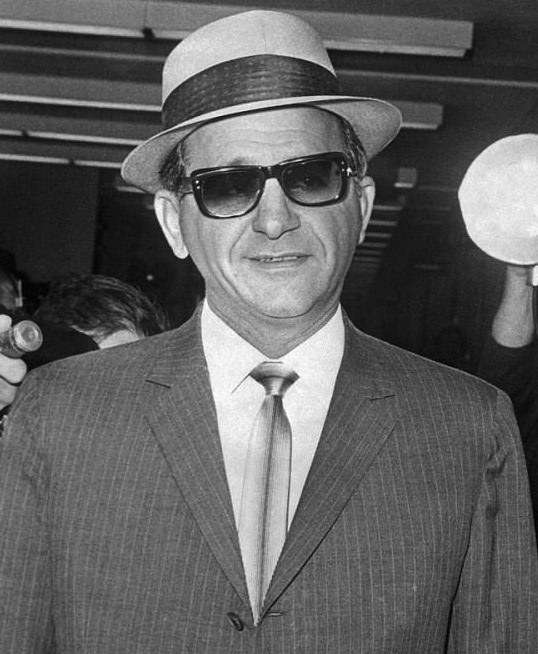
Sam Giancana
Giancana, using the name “Sam Gold” in his dealings with the CIA, was meanwhile being hounded by the FBI on direct orders of Attorney General Robert Kennedy.
The mobsters were authorized to offer $150,000 to anyone who would kill Castro and were promised any support the Agency could yield.
Giancana was to locate someone who was close enough to Castro to be able to drop pills into his food. Trafficante would serve as courier to Cuba, helping to make arrangements for the murder on the island.
Rosselli was to be the main link between all of the participants in the plot.
The available sources disagree on what actually happened. Some believe that the Mob made a genuine effort to “whack” Fidel.
Others are convinced the mobsters simply ran a scam on the government. They would pretend to carry out their “patriotic duty” while in fact making no effort at all to penetrate Castro’s security.
The CIA’s war against Castro was known as Operation Mongoose–the mongoose being a traditional enemy of the cobra. And those entrusted with this assignment were known as the Special Group.
“We were hysterical about Castro at about the time of the Bay of Pigs and thereafter,” Secretary of Defense Robert S. McNamara later testified before Congress about these efforts. “And there was pressure from JFK and RFK to do something about Castro.”
ABC NEWS, ALTERNET, AMERICABLOG, AP, BABY BOOMER RESISTANCE, BBC, BILL CLINTON, BLOOMBERG NEWS, BOB LIVINGSTON, BUZZFEED, CBS NEWS, CNN, CROOKS AND LIARS, DAILY KOZ, DEFENSE OF MARRIAGE ACT, DEMOCRATIC PARTY, DENNIS HASTERT, EMPLOYMENT NON-DISCRIMINATION ACT, FACEBOOK, FAMILY RESEARCH COUNCIL, FBI, FIVETHIRTYEIGHT, HARPER’S MAGAZINE, HOMOSEXUALITY, HUFFINGTON POST, HUSTLER, LARRY FLYNT, MEDIA MATTERS, MONICA LEWINSKY, MOTHER JONES, MOVEON, MSNBC, NBC NEWS, NEW REPUBLIC, NEWSDAY, NEWSWEEK, NEWT GINGRICH, NPR, PBS NEWSHOUR, POLITICO, POLITICUSUSA, RAW STORY, REPUBLICAN PARTY, REUTERS, SALON, SAME-SEX MARRIAGE, SEATTLE TIMES, SLATE, TALKING POINTS MEMO, THE ATLANTIC, THE CHICAGO SUN-TIMES, THE CHICAGO TRIBUNE, THE CHRISTIAN COALITION, THE DAILY BEAST, THE DAILY BLOG, THE GUARDIAN, THE HILL, THE HUFFINGTON POST, THE INTERCEPT, THE LOS ANGELES TIMES, THE NATION, THE NATIONAL RIFLE ASSOCIATION, THE NATIONAL RIGHT TO LIFE COMMITTEE, THE NEW REPUBLIC, THE NEW YORK TIMES, THE NEW YORKER, THE VILLAGE VOICE, THE WASHINGTON POST, THINKPROGRESS, TIME, TRUTHDIG, TRUTHOUT, TWITTER, TWO POLITICAL JUNKIES, U.S. NEWS & WORLD REPORT, UP, UPI, USA TODAY
In Bureaucracy, History, Law, Law Enforcement, Military, Politics, Social commentary on July 19, 2017 at 12:10 am
Dennis Hastert, the former Republican Speaker of the House of Representatives, was released from Federal prison today–July 18.
He had served 13 months of a 15-month sentence.
Hastert was the Republican Speaker of the House of Representatives from 1999 to 2007. He had been indicted on May 28, 2015, for violating federal banking laws and lying to the FBI.
He had tried to conceal $3.5 million he had paid since 2010 to a man he had molested as a high school student.
The student had been on the wrestling team that Hastert had coached as a teacher at Yorkville High School in Yorkfille, Ill.
“I felt a special bond with our wrestlers,” Hastert wrote in his 2004 memoirs, Speaker: Lessons From Forty Years of Coaching and Politics. “And I think they felt one with me.”
Apparently that “special bond” extended to activities outside the ring. In the pre-sentence report, Justice Department prosecutors charged that Hastert had abused four young boys when he was their wrestling coach. One was only 14 years old.
Hastert had claimed that a coach should never strip away another person’s dignity. But, said federal prosecutors, “that is exactly what defendant did to his victims. He made them feel alone, ashamed, guilty, and devoid of dignity.”
Later, in 1981, Hastert entered Congress.

Dennis Hastert
Hastert was not indicted for having had a sexual relationship with an underage student. The statute of limitations had long ago run out on that offense.
He was indicted for trying to evade federal banking laws and lying to the FBI.
The Bureau had wanted to know if Hastert was using the cash for criminal purposes or if he was the victim of a criminal extortion.
And Hastert had claimed he was storing cash because he didn’t feel safe with the banking system: “Yeah, I kept the cash. That’s what I’m doing.”

J. Edgar Hoover FBI Building
On October 28, 2015, Hastert pleaded guilty to structuring money transactions in a way to avoid requirements to report where the money was going.
Although he escaped going to prison as a child molester, he did not escape the stigma of being labeled one.
“The defendant is a serial child molester,” pronounced Judge Thomas M. Durkin at Hastert’s sentencing. “Some actions can obliterate a lifetime of good works. Nothing is more stunning than having ‘serial child molester’ and ‘Speaker of the House’ in the same sentence.”
During his tenure as Speaker of the House, Hastert had waged all-out war on homosexual rights. This included:
- Pushing the anti-homosexual Defense of Marriage Act (DOMA) through the House. This “forbids requiring any state or any other political subdivision of the United States to credit as a marriage a same-sex relationship treated as marriage in another state or equivalent government.”
- Proposing a Constitutional amendment to “establish that marriage shall consist of one man and one woman.”
- Voting against the Employment Non-Discrimination Act, which banned companies from discriminating against employees “on the basis of sexual orientation.”
Owing to Hastert’s “deeply conservative” voting record, in 1998, he received perfect scores of 100 from
- The National Rifle Association;
- The Christian Coalition;
- The National Right to Life Committee; and
- The Chamber of Commerce.
Hastert, who concealed his past as a sexual predator while claiming to be a man of virtue, wrote in his autobiography: “I was never a very good liar. Maybe I wasn’t smart enough. I could never get away with it, so I made up my mind as a kid to tell the truth and pay the consequences.”
It would take decades before the revealing of the truth forced him to pay the consequences.
Hastert makes the third Republican “family values” Speaker of the House to become ensnared in an ethics scandal.
- Newt Gingrich was the first Speaker (1985-1999) in the history of the House to be reprimanded and punished for ethics violations. His offense: Claiming tax-exempt status for a college course run for political purposes.
- His successor, Bob Livingston, a supposedly happily married man and Gingrich’s presumed successor, was forced to resign when Hustler publisher Larry Flynt revealed his sexual infidelities. He had self-righteously demanded that President Bill Clinton, who had had an extramarital affair with White House intern Monica Lewinsky, resign his office.
- Dennis Hastert’s conduct involved neither money nor women—but a series of male high school students.
Of course, Democrats have had their sex scandals as well. But Democrats usually don’t suffer as badly from them.
The reason: Republicans portray themselves as moral examples for the nation. So for them, being caught literally with their pants down proves a double-whammy.
They are condemned for their specific illegal/immoral acts—and for the sheer hypocrisy of their false claims of sainthood.
Ironically, Right-wingers like Hastert would fare better when caught in homosexual or extramarital affairs if they simply admitted their sexual tastes and registered as Democrats.
But in heavily Right-wing states like Texas and Oklahoma, they wouldn’t stand a chance of being elected as a Democrat. And Red-state voters, feeling themselves moral arbiters of the nation, wouldn’t elect anyone they thought was “unnatural.”
So Right-wingers will continue pretending to be moral paragons—and will continue paying the price when they’re exposed as fallible humans.
2016 PRESIDENTIAL CAMPAIGN, ABC NEWS, ADOLF HITLER, ALTERNET, AMERICABLOG, AP, BABY BOOMER RESISTANCE, BARACK OBAMA, BBC, BERNIE SANDERS, BLOOMBERG NEWS, BUZZFEED, CBS NEWS, CNN, CROOKS AND LIARS, D-DAY, DAILY KOZ, DAVID BROOKS, DEMOCRATIC PARTY, DONALD TRUMP, ELIZABETH WARREN, FACEBOOK, FIVETHIRTYEIGHT, HARPER’S MAGAZINE, HILLARY CLINTON, HUFFINGTON POST, JOSEPH MCCARTHY, LIBERALS, MARCO RUBIO, MARK SHIELDS, MEDIA MATTERS, MOTHER JONES, MOVEON, MSNBC, NBC NEWS, NEW REPUBLIC, NEWSDAY, NEWSWEEK, NEWT GINGRICH, NOCCOLO MACHIAVELLI, NPR, PBS NEWSHOUR, POLITICO, POLITICUSUSA, RAND PAUL, RAW STORY, REPUBLICAN PARTY, REPUBLICANS, REUTERS, SALON, SEATTLE TIMES, SLANDER, SLATE, STALINGRAD, TALKING POINTS MEMO, TED CRUZ, THE ATLANTIC, THE CHICAGO SUN-TIMES, THE CHICAGO TRIBUNE, THE DAILY BEAST, THE DAILY BLOG, THE GUARDIAN, THE HILL, THE HUFFINGTON POST, THE LOS ANGELES TIMES, THE NATION, THE NEW REPUBLIC, THE NEW YORK TIMES, THE NEW YORKER, THE PRINCE, THE VILLAGE VOICE, THE WASHINGTON POST, THINKPROGRESS, TIME, TRUTHDIG, TRUTHOUT, TWITTER, TWO POLITICAL JUNKIES, U.S. NEWS & WORLD REPORT, UP, UPI, USA TODAY
In Bureaucracy, History, Politics, Social commentary on July 18, 2017 at 12:22 am
On the May 27, 2016 edition of the PBS Newshour, syndicated columnist Mark Shields noted the ability of Elizabeth Warren to rattle Republican Presidential candidate Donald Trump:
“Elizabeth Warren gets under Donald Trunp’s skin. And I think she’s been the most effective adversary. I think she’s done more to unite the Democratic party than either Hillary Clinton or Bernie Sanders.
“I mean, she obviously–he can’t stay away from her. He is tweeting about her.”

Donald Trump
And syndicated New York Times Columnist David Brooks said on the same program the Democrats faced two choices in combating Trump:
“And so the tactics…is either you do what Elizabeth Warren has done, like full-bore negativity, that kind of [get] under the skin, or try to ridicule him and use humor. Humor is not Hillary Clinton’s strongest point.”
But sharp-edged humor clearly works for Warren.
A May 12, 2016 story on CNN—“Elizabeth Warren Gives Trump a Dose of His Own Medicine on Twitter”—notes:
“In the past week the Massachusetts Democrat has refined an aggressive anti-Trump message through a series of so-called tweetstorms.
“Whenever Trump criticizes her, Warren fires right back at him, sometimes twice as hard.”
Warren’s tweets, according to the article, appeared to have two goals:
- Challenge Trump on social media, which he had so far dominated; and
- Use attention-catching words like “bully” and “loser.”
Among her tweets:
- “But here’s the thing. You can beat a bully—not by tucking tail and running, but by holding your ground.”
- “You care so much about struggling American workers, @realDonaldTrump, that you want to abolish the federal minimum wage?”
- “@realDonaldTrump: Your policies are dangerous. Your words are reckless. Your record is embarrassing. And your free ride is over.”
Nor did Warren restrict herself to battling Trump on Twitter.
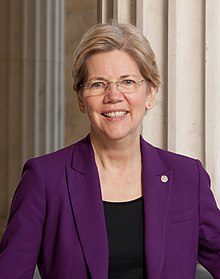
Elizabeth Warren
On May 24, 2016, Warren unleashed perhaps her most devastating attack on Trump at an event hosted by the Center for Popular Democracy:
“Just yesterday, it came out that Donald Trump had said back in 2007 that he was ‘excited’ for the real estate market to crash because, quote, ‘I’ve always made more money in bad markets than in good markets.’
“That’s right. The rest of us were horrified by the 2008 financial crisis, by what happened to the millions of families…that were forced out of their homes.
“But Donald Trump was drooling over the idea of a housing meltdown—because it meant he could buy up a bunch more property on the cheap….
“What kind of a man does that? I’ll tell you exactly what kind—a man who cares about no one but himself. A small, insecure moneygrubber who doesn’t care who gets hurt, so long as he makes some money off it….”
As a whole, Democrats have shown themselves indifferent to or ignorant of the power of effective language.
Many of them—such as former President Barack Obama—take the view: “I’m not going to get into the gutter like my opponents.” Thus, they take the “high ground” while their sworn Republican enemies undermine them via “smear and fear” tactics.
As far back as the early 1950s, slander-hurling Wisconsin U.S. Senator Joseph R. McCarthy demonstrated the effectiveness of such tactics. Wrote Pulitzer-Prize winning author David Halberstam, in his monumental study of the origins of the Vietnam War, The Best and the Brightest:
“But if they did not actually stick, and they did not, [McCarthy’s] charges had an equally damaging effect: They poisoned. Where there was smoke, there must be fire. He wouldn’t be saying these things [voters reasoned] unless there was something to it.”
Tyrants are conspicuously vulnerable to ridicule, yet, here, too, Democrats have proven unable or unwilling to make use of this powerful weapon.
Donald Trump, for example, has labeled established news media as “fake news.” Yet despite his repeated assaults on the press, judiciary and Intelligence agencies such as the CIA and FBI, not one Democrat has dared to label him a “fake President.”
Similarly, while he has branded Hillary Clinton “Crooked Hillary,” no Democrat—despite Trump’s well-established admiration for Russian dictator Vladimir Putin—has dared to call him “Red Donald,” “Putin’s Poodle” or “Commissar-in-Chief.”
Nor to charge him with using dictatorial methods via the damning barb: “TrumPutin.”
Nor, in this YouTube-obsessed age, have Democrats assailed Trump with a ridiculing video. In the hands of a creative writer, “Springtime for Hitler,” the signature tune of the hit play and movie, The Producers, could become “Springtime for Trumpland.”
And Democrats could attack the Trump administration’s secretive ties with Russian oligarchs and Intelligence agents by turning the Muppet Song, “The Rainbow Connection,” into “The Russian Connection.”
A possible stanza could go:
Abraham Lincoln is watching and asking:
“How much more slime must there be?”
What’s so amazing is we just sit gazing
While traitors destroy liberty.
Someday we’ll find it
The Russian Connection—
The bribers, the traitors, you’ll see.
If Democrats continue to fight Waffen-SS tactics with those of a Shirley Temple, they will continue to decline in influence as a political party. Their only hope lies in combating the Heinz Guderians of the Republican Party with the full-force tactics of a George S. Patton.
2016 PRESIDENTIAL CAMPAIGN, ABC NEWS, ADOLF HITLER, ALTERNET, AMERICABLOG, AP, BABY BOOMER RESISTANCE, BARACK OBAMA, BBC, BERNIE SANDERS, BLOOMBERG NEWS, BUZZFEED, CBS NEWS, CNN, CROOKS AND LIARS, D-DAY, DAILY KOZ, DAVID BROOKS, DEMOCRATIC PARTY, DONALD TRUMP, ELIZABETH WARREN, FACEBOOK, FIVETHIRTYEIGHT, HARPER’S MAGAZINE, HILLARY CLINTON, HUFFINGTON POST, JOSEPH MCCARTHY, LIBERALS, MARCO RUBIO, MARK SHIELDS, MEDIA MATTERS, MOTHER JONES, MOVEON, MSNBC, NBC NEWS, NEW REPUBLIC, NEWSDAY, NEWSWEEK, NEWT GINGRICH, NOCCOLO MACHIAVELLI, NPR, PBS NEWSHOUR, POLITICO, POLITICUSUSA, RAND PAUL, RAW STORY, REPUBLICAN PARTY, REPUBLICANS, REUTERS, SALON, SEATTLE TIMES, SLANDER, SLATE, STALINGRAD, TALKING POINTS MEMO, TED CRUZ, THE ATLANTIC, THE CHICAGO SUN-TIMES, THE CHICAGO TRIBUNE, THE DAILY BEAST, THE DAILY BLOG, THE GUARDIAN, THE HILL, THE HUFFINGTON POST, THE LOS ANGELES TIMES, THE NATION, THE NEW REPUBLIC, THE NEW YORK TIMES, THE NEW YORKER, THE PRINCE, THE VILLAGE VOICE, THE WASHINGTON POST, THINKPROGRESS, TIME, TRUTHDIG, TRUTHOUT, TWITTER, TWO POLITICAL JUNKIES, U.S. NEWS & WORLD REPORT, UP, UPI, USA TODAY
In Bureaucracy, History, Politics, Social commentary on July 17, 2017 at 12:41 am
Syndicated columnist Mark Shields and New York Times columnist David Brooks appear every Friday on the PBS Newshour to review the week’s major political events.
On May 27, 2016, Shields—a liberal, and Brooks, a conservative—came to some disturbingly similar conclusions about the character of Republican Presidential front-runner Donald Trump.
With the business magnate having won the 2016 Republican Presidential nomination, both columnists appeared increasingly dismayed.

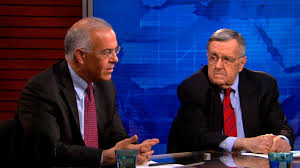
David Brooks and Mark Shields
MARK SHIELDS: “Donald Trump gratuitously slandered Ted Cruz’s wife. He libeled Ted Cruz’s father for being potentially part of Lee Harvey Oswald’s assassination of the president of the United States, suggesting that he was somehow a fellow traveler in that.
“This is a libel. You don’t get over it….
“…I think this man may be addicted to the roar of the grease paint and the sound of the crowd, or however it goes, smell of the crowd.”
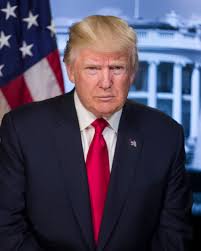
Donald Trump
Ironically, Rand Paul, Republican U.S. Senator from Kentucky, had reached a similar conclusion about Trump:
“I think there is a sophomore quality that is entertaining with Mr. Trump, but I am worried. I’m very concerned of having him in charge of his nuclear weapons because his visceral response to attack people on their appearance—short, tall, fat, ugly—my goodness that happened in junior high.”
DAVID BROOKS: “Trump, for all his moral flaws, is a marketing genius. And you look at what he does. He just picks a word and he attaches it to a person. Little Marco [Rubio], Lyin’ Ted [Cruz], Crooked Hillary [Clinton].
“And that’s a word. And that’s how marketing works. It’s a simple, blunt message, but it gets under.
“It sticks, and it diminishes. And so it has been super effective for him, because he knows how to do that. And she [Hillary Clinton] just comes with, ‘Oh, he’s divisive.’
“These are words that are not exciting people. And her campaign style has gotten, if anything…a little more stagnant and more flat.”
Hillary Clinton wasn’t the only Presidential candidate who proved unable to cope with Trump’s gift for insult. His targets—and insults—included:
- Former Texas Governor Rick Perry: “Wears glasses to seem smart.”
- Former Florida Governor Jeb Bush: “Low Energy Jeb.”
- Vermont U.S. Senator Bernie Sanders: “Crazy Bernie.”
- Ohio Governor John Kasich: “Mathematically dead and totally desperate.”
How did American politics reach this state of affairs?
In 1996, Newt Gingrich, then Republican Speaker of the House of Representatives, wrote a memo that encouraged Republicans to “speak like Newt.”
Entitled “Language: A Key Mechanism of Control,” it urged Republicans to attack Democrats with such words as “corrupt,” “selfish,” “destructive,” “hypocrisy,” “liberal,” “sick,” and “traitors.”
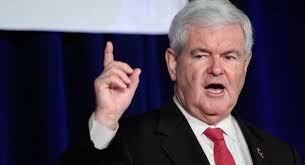
Newt Gingrich
Even worse, Gingrich encouraged the news media to disseminate such accusations. Among his suggestions:
- “Fights make news.”
- Create a “shield issue” to deflect criticism: “A shield issue is, just, you know, your opponent is going to attack you as lacking compassion. You better…show up in the local paper holding a baby in the neonatal center.”
In the memo, Gingrich advised:
“….In the video “We are a Majority,” Language is listed as a key mechanism of control used by a majority party, along with Agenda, Rules, Attitude and Learning.
“As the tapes have been used in training sessions across the country and mailed to candidates we have heard a plaintive plea: ‘I wish I could speak like Newt.’
“That takes years of practice. But, we believe that you could have a significant impact on your campaign and the way you communicate if we help a little. That is why we have created this list of words and phrases….
“This list is prepared so that you might have a directory of words to use in writing literature and mail, in preparing speeches, and in producing electronic media.
“The words and phrases are powerful. Read them. Memorize as many as possible. And remember that like any tool, these words will not help if they are not used.”
Here is the list of words Gingrich urged his followers to use in describing “the opponent, their record, proposals and their party”:
- abuse of power
- anti- (issue): flag, family, child, jobs
- betray
- bizarre
- bosses
- bureaucracy
- cheat
- coercion
- “compassion” is not enough
- collapse(ing)
- consequences
- corrupt
- corruption
- criminal rights
- crisis
- cynicism
- decay
- deeper
- destroy
- destructive
- devour
- disgrace
- endanger
- excuses
- failure (fail)
- greed
- hypocrisy
- ideological
- impose
- incompetent
- insecure
- insensitive
|
- intolerant
- liberal
- lie
- limit(s)
- machine
- mandate(s)
- obsolete
- pathetic
- patronage
- permissive attitude
- pessimistic
- punish (poor …)
- radical
- red tape
- self-serving
- selfish
- sensationalists
- shallow
- shame
- sick
- spend(ing)
- stagnation
- status quo
- steal
- taxes
- they/them
- threaten
- traitors
- unionized
- urgent (cy)
- waste
- welfare
|
Yes, speaking like Newt—or Adolf Hitler or Joseph McCarthy—“takes years of practice.”
And to the dismay of both Republicans and Democrats, Donald Trump has learned his lessons well.
Only one opponent—who was not a Presidential candidate—managed to stand up to Trump: Massachusetts U.S. Senator Elizabeth Warren.
On the May 27, 2016 edition of the PBS Newshour, syndicated columnist Mark Shields noted the ability of Elizabeth Warren to rattle Trump:
“Elizabeth Warren gets under Donald Trump’s skin. And I think she’s been the most effective adversary. I think she’s done more to unite the Democratic party than either Hillary Clinton or Bernie Sanders.”
ABC NEWS, ADULTERY, ALTERNET, AMERICABLOG, AP, BABY BOOMER RESISTANCE, BARACK OBAMA, BBC, BIBLE, BILLY GRAHAM, BLOOMBERG NEWS, BUZZFEED, CBS NEWS, CNN, CROOKS AND LIARS, DAILY KOZ, FACEBOOK, FIVETHIRTYEIGHT, FRANKLIN GRAHAM, HARPER’S MAGAZINE, HOMOSEXUALITY, HUFFINGTON POST, I USA TODAY, MEDIA MATTERS, MITT ROMNEY, MOTHER JONES, MOVEON, MSNBC, NBC NEWS, NEW REPUBLIC, NEWSDAY, NEWSWEEK, NEWT GINGRICH, NPR, PBS NEWSHOUR, POLITICO, POLITICUSUSA, RAW STORY, REUTERS, RICK SANTORUM, SALON, SCIENCE, SEATTLE TIMES, SLATE, SLAVERY, SPANISH INQUISITION, TALKING POINTS MEMO, TEA PARTY, THE ATLANTIC, THE CHICAGO SUN-TIMES, THE CHICAGO TRIBUNE, THE DAILY BEAST, THE DAILY BLOG, THE GUARDIAN, THE HILL, THE HUFFINGTON POST, THE INTERCEPT, THE LOS ANGELES TIMES, THE NATION, THE NEW REPUBLIC, THE NEW YORK TIMES, THE NEW YORKER, THE VILLAGE VOICE, THE WASHINGTON POST, THEOLOGY, THINKPROGRESS, TIME, TRUTHDIG, TRUTHOUT, TWITTER, TWO POLITICAL JUNKIES, U.S. NEWS & WORLD REPORT, UP, UPI, USA TODAY, WAR, WOMEN
In Bureaucracy, History, Law, Law Enforcement, Military, Politics, Social commentary on July 12, 2017 at 12:04 am
On February 18, 2012, GOP Presidential candidate Rick Santorum warned about the “phony theology” of President Barack Obama.
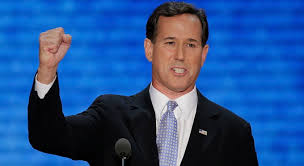
Rick Santorum
“It’s not about you,” Santorum told supporters of the right-wing Tea Party in Columbus, Ohio. “It’s not about your quality of life.
“It’s not about your jobs. It’s about some phony ideal. Some phony theology. Oh, not a theology based on the Bible. A different theology.”
Which raises an interesting question: What would a Bible-based agenda mean for the country?
The death penalty would be vastly expanded to cover such “crimes” as:
- Sabbath-breaking: Because the Lord considers it a holy day, anyone who works on the Sabbath must be put to death. (Exodus 31:12-15)
- Adultery: If a man commits adultery with another man’s wife, both the man and the woman must be put to death. (Leviticus 20:10)
- Fornication: A priest’s daughter who loses her honor by committing fornication and thereby dishonors her father also, shall be burned to death. (Leviticus 21:9)
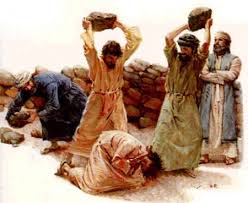
A Biblical-era stoning
- Nonbelievers: They entered into a covenant to seek the Lord, the God of their fathers, with all their heart and soul; and everyone who would not seek the Lord, the God of Israel, was to be put to death, whether small or great, whether man or woman. (2 Chronicles 15:12-13)
- Homosexuality: If a man also lies with mankind, as he lies with a woman, both of them have committed an abomination. They shall surely be put to death. Their blood shall be upon them. (Leviticus 20-13)
- Taking the Lord’s name in vain: Anyone who blasphemes the name of the Lord is to be put to death. The entire assembly must stone them. (Leviticus 24:16)
The Thirteenth Amendment to the Constitution—which forbids slavery—would be repealed. The Bible not only permits slavery but lays out rules for its practice—such as:
Almost all scientific progress would be discarded, since most of its findings conflict with the Bible:
- One generation passes away, and another generation comes: but the earth abides forever. (Ecclesiastes 1:4). This claim is totally contradicted by what astronomers now know about the eventual fate of the Earth: In about 7.6 billion years, the sun will exhaust its nuclear fuels. This will vastly increase its heat and gravitational pull, and at least Mercury, Earth and Venus will be vaporized.
- The Bible speaks of a world where physical laws are often violated by the will of God. Thus, Jesus turns water into wine and raises Lazarus from the dead; Jonah lives inside a fish for three days; Noah dies at 950 years; and demons are exorcised.
- In Biblical times, mental illness was seen as a manifestation of demonic possession. Today we know that mental illness has nothing to do with evil spirits.
Laws guaranteeing equal rights for women would be repealed:
- I do not permit a woman to teach or to have authority over a man; she must be silent. (1 Timothy 12:10)
- Wives, submit to your husbands as to the Lord. (Ephesians 5:22)
- A woman should learn in quietness and full submission. (1 Timothy 2:11)
- But if…evidence of the girl’s virginity is not found, they shall bring the girl to the entrance of her father’s house and there her townsman shall stone her to death. (Deuteronomy 22:20-21)
Military conflicts would be fought without regard to the Geneva Convention–as the Israelites did:
- “You are my battle-ax and sword,” says the Lord. “With you I will shatter nations and destroy many kingdoms….With you I will shatter men and women, old people and children, young men and maidens. With you I will shatter shepherds and flocks, farmers and oxen, captains and rulers.” (Jeremiah 51:20-23)
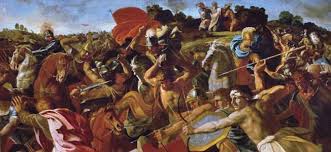
Depiction of the taking of Jericho by the Israelites
- Samuel said to Saul, “This is what the Lord Almighty says: ‘I will punish the Amalekites for what they did to Israel when they waylaid them as they came up from Egypt. Now go, attack the Amalekites and totally destroy everything that belongs to them. Do not spare them; put to death men and women, children and infants, cattle and sheep, camels and donkeys.’” (1 Samuel 15, 1-3)
Yes, a nation governed by “a theology based on the Bible” would be one far different from the United States we know today.
Since a number of Old Testament practices might lend themselves to easy abuse, this is not a matter to be taken lightly.
ABC NEWS, ADULTERY, ALTERNET, AMERICABLOG, AP, BABY BOOMER RESISTANCE, BARACK OBAMA, BBC, BIBLE, BILLY GRAHAM, BLOOMBERG NEWS, BUZZFEED, CBS NEWS, CNN, CROOKS AND LIARS, DAILY KOZ, FACEBOOK, FIVETHIRTYEIGHT, FRANKLIN GRAHAM, HARPER’S MAGAZINE, HOMOSEXUALITY, HUFFINGTON POST, I USA TODAY, MEDIA MATTERS, MITT ROMNEY, MOTHER JONES, MOVEON, MSNBC, NBC NEWS, NEW REPUBLIC, NEWSDAY, NEWSWEEK, NEWT GINGRICH, NPR, PBS NEWSHOUR, POLITICO, POLITICUSUSA, RAW STORY, REUTERS, RICK SANTORUM, SALON, SCIENCE, SEATTLE TIMES, SLATE, SLAVERY, SPANISH INQUISITION, TALKING POINTS MEMO, TEA PARTY, THE ATLANTIC, THE CHICAGO SUN-TIMES, THE CHICAGO TRIBUNE, THE DAILY BEAST, THE DAILY BLOG, THE GUARDIAN, THE HILL, THE HUFFINGTON POST, THE INTERCEPT, THE LOS ANGELES TIMES, THE NATION, THE NEW REPUBLIC, THE NEW YORK TIMES, THE NEW YORKER, THE VILLAGE VOICE, THE WASHINGTON POST, THEOLOGY, THINKPROGRESS, TIME, TRUTHDIG, TRUTHOUT, TWITTER, TWO POLITICAL JUNKIES, U.S. NEWS & WORLD REPORT, UP, UPI, USA TODAY, WAR, WOMEN
In Bureaucracy, History, Law, Law Enforcement, Military, Politics, Social commentary on July 11, 2017 at 12:03 am
Franklin Graham, son of Billy Graham, America’s most famous preacher, spends a lot of time deciding who qualifies as a Christian—and who doesn’t.
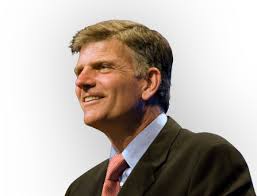
Franklin Graham
He said just that on the February 21, 2012 edition of the MSNBC show, “Morning Joe.”
First, however, he offered his views on the relative Christian dedication of the major contenders for the Presidency in 2012:
President Barack Obama: “Islam sees him as a son of Islam….I can’t say categorically that [Obama is not Muslim] because Islam has gotten a free pass under Obama.”
Former Speaker of the House Newt Gingrich:“Newt’s been married several times… but he could make a good candidate. I think Newt is a Christian. At least he told me he is.”
Former Pennsylvania U.S. Senator Rick Santorum: “His values are so clear on moral issues. No question about it. I think he is, no question, a man of faith.”
Former Massachusetts Governor Mitt Romney: “I’m just saying most Christians would not recognize Mormonism. Of course they believe in Jesus Christ, but they have a lot of other things that they believe in, too, that we don’t accept theologically.”
Thus, Graham had no problem in pronouncing as “saved” a notorious multiple-adulterer like Gingrich, or a rights-denying religious zealot like Santorum.
But he clearly refused to pronounce as “saved” a longtime church-goer like Obama or a Mormon like Romney (whose faith, most evangelicals like Graham believe, is actually a non-Christian cult).
Toward the end of the program, Mike Barnicle, one of the panelists interviewing Graham, said: “You must spend a big part of the day checking out what you conceive to be people’s depth of faith, in terms of measuring.”
“This is my business,” replied Graham. “You guys go through newspapers every day. I look at a person’s political interest, but more importantly I look at their spiritual interests….
“You have to go by what a person says, and how they live their lives…Are they faithful church goers? Or do they just go when the cameras are on them?”
Another man who dedicated his life to judging the religious commitment of others was Bernard Gui, the chief inquisitor at Toulouse from 1308 to 1322.
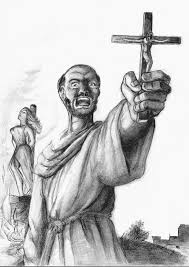
Bernard Gui
His inquisition of those suspected or accused of heresy led to over 900 guilty verdicts. Of those convicted during examination by Gui, 42 were executed—by being burned at the stake.
Gui closely studied the best methods for interrogating “heretics.” He set forth his findings in his most important and famous work, Practica Inquisitionis Heretice Pravitatis. or “Conduct of the Inquisition into Heretical Wickedness.”
In this, he offered a vivid example of how such interrogations might go. The following is taken from that manual:
Interrogator: You call your faith Christian, for you consider ours as false and heretical. But I ask whether you have ever believed as true another faith than that which the Roman Church holds to be true?
Accused Heretic: I believe the true faith which the Roman Church believes, and which you openly preach to us.
Interrogator: Perhaps you have some of your sect at Rome whom you call the Roman Church. I, when I preach, say many things, some of which are common to us both, as that God liveth, and you believe some of what I preach. Nevertheless you may be a heretic in not believing other matters which are to be believed.

“Heretic” being burned at the stake
Accused Heretic: I believe all things that a Christian should believe.
Interrogator: I know your tricks. What the members of your sect believe you hold to be that which a Christian should believe. But we waste time in this fencing. Say simply, Do you believe in one God the Father, and the Son, and the Holy Ghost?
Accused Heretic: I believe.
Interrogator: Do you believe in Christ born of the Virgin, suffered, risen, and ascended to heaven?
Accused Heretic: (Briskly) I believe.
Interrogator: Do you believe the bread and wine in the mass performed by the priests to be changed into the body and blood of Christ by divine virtue?
Accused Heretic: Ought I not to believe this?
Interrogator: I don’t ask if you ought to believe, but if you do believe.
Accused Heretic: I believe whatever you and other good doctors order me to believe.
Inquisitor: Those good doctors are the masters of your sect; if I accord with them you believe with me; if not, not.
Accused Heretic: I willingly believe with you if you teach what is good to me.
Inquisitor: You consider it good to you if I teach what your other masters teach. Say, then, do you believe the body of our Lord, Jesus Christ to be in the altar?
Accused Heretic: (Promptly) I believe that a body is there, and that all bodies are of our Lord.
Interrogator: I ask whether the body there is of the Lord who was born of the Virgin, hung on the cross, arose from the dead, ascended, etc.
Accused Heretic: And you, sir, do you not believe it?
Interrogator: I believe it wholly.
Accused Heretic: I believe likewise.


 Bureaucracybuster's Blog
9/11, ABC NEWS, ADOLF HITLER, ALTERNET, AMERICANS FOR TAX REFORM, ANDERSON COOPER, ANTI-COMMUNISM, AP, ARTHUR MILLER, BILL CLINTON, BUZZFEED, CBS NEWS, CENTER FOR SECURITY POLICY, CHINA, CHRIS MATTHEWS, CNN, CROOKS AND LIARS, DAILY KOZ, DICK CHENEY, DWIGHT D. EISENHOWER, EDWARD R. MURROW, FACEBOOK, GEORGE H.W. BUSH, HARRY S. TRUMAN, HEINRICH HIMMLER, HERMAN CAIN, HERMAN GORING, HILLARY CLINTON, HUMA ABEDIN, JEWS, JIMMY CARTER, JOHN BIRCH SOCIETY, JOHN BOENER, JOHN F. KENNEDY, JOHN MCCAIN, JOHN STEINBECK, JOSEPH GOEBBELS, JOSEPH MCCARTHY, JOSEPH STALIN, KGB, LIZ CHENEY, LUCILLE BALL, LYNDON B. JOHNSON, MARY CHENEY, MICHELLE BACHMANN, MIKE HUCKABEE, MITT ROMNEY, MOTHER JONES, MOVEON, MSNBC, MUSLIM BROTHERHOOD, MUSLIMS, NAZI GERMANY, NAZI PARTY, NBC NEWS, NEWSWEEK, NEWT GINGRICH, NPR, PETE SEEGER, POLITICO, RAW STORY, RED SCARE, REINHARD HEYDRICH, REPUBLICAN PARTY, REUTERS, RICHARD NIXON, RICK SANTORUM, Ronald Reagan, SALON, SAME-SEX MARRIAGE, SEATTLE TIMES, SENATOR MIKE ENZI, SLATE, SOVIET UNION, SS, THE AMERICAN CENTER FOR SECURITY POLICY, THE ATLANTIC, THE CHICAGO SUN-TIMES, THE CHICAGO TRIBUNE, THE DAILY BEAST, THE GUARDIAN, THE HILL, THE HUFFINGTON POST, THE LOS ANGELES TIMES, THE NATION, THE NEW YORK TIMES, THE WALL STREET JOURNAL, THE WASHINGTON POST, TIME, TWITTER, U.S. NEWS & WORLD REPORT, UP, UPI, USA TODAY, WYOMING
FASCISTIC HATRED THEN–AND NOW: PART ONE (OF THREE)
In Bureaucracy, History, Politics, Social commentary on August 22, 2017 at 12:02 am“All revolutions,” said Ernst Rohem, leader of Adolf Hitler’s brown-shirted thugs, the S.A., “devour their own children.”
Ernst Rohem
Fittingly, he said this as he sat inside a prison cell awaiting his own execution.
On June 30, 1934, Hitler had ordered a massive purge of his private army, the S.A., or Stormtroopers. The purge was carried out by Hitler’s elite army-within-an-army, the black-uniformed Schutzstaffel, or Protective Squads, better known as the SS.
The S.A. Brownshirts had been instrumental in securing Hitler’s rise to Chancellor of Germany on January 30, 1933. They had intimidated political opponents and organized mass rallies for the Nazi Party.
But after Hitler reached the pinnacle of power, they became a liability.
Ernst Rohem, their commander, urged Hitler to disband the regular German army, the Reichswehr, and replace it with his own legions as the nation’s defense force.
Frightened by Rohem’s ambitions, the generals of the Reichswehr gave Hitler an ultimatum: Get rid of Rohem–-or they would get rid of the Fuhrer.
So Rohem died in a hail of SS bullets-–as did several hundred of his longtime S.A. cronies.
SS firing squad
Among the SS commanders supervising those executions was Reinhard Heydrich—a tall, blond-haired formal naval officer who was both a champion fencer and talented violinist.
Ultimately, he would become the personification of the Nazi ideal—”the man with the iron heart,” as Hitler eulogized at Heydrich’s funeral just eight years later.
Reinhard Heydrich
Even so, Heydrich had a problem: He could never escape vicious rumors that his family tree held a Jewish ancestor.
His paternal grandmother had married Reinhold Heydrich, and then Gustav Robert Suss. For unknown reasons, she decided to call herself Suss-Heydrich.
Since “Suss” was widely believed in Germany to indicate Jewish origin, the “stigma” of Jewish heritage attached itself to the Heydrich family.
Heydrich joined the SS in 1931 and quickly became head of its counterintelligence service. But his arrogance and overweening ambition created a great many enemies.
Only a year later, he became the target of an urgent investigation by the SS itself. The charge: That he was part-Jewish, the ultimate sin in Hitler’s “racially pure” Nazi Germany.
The investigation cleared Heydrich, but the rumor of his “tainted” origins persisted, clearly tormenting the second most powerful man in the SS. Even his superior, Heinrich Himmler, the Reichsfuhrer-SS, believed it.
When Heydrich was assassinated in 1942 by Czech assassins in Prague, Himmler attended his funeral. He paid tribute to his former subordinate at the service: ”You, Reinhard Heydrich, were a truly good SS-man.”
But he could not resist saying in private: “He was an unhappy man, completely divided against himself, as often happened with those of mixed race.”
Those who dare to harshly judge others usually find themselves assailed just as harshly.
A modern-day example is Liz Cheney, daughter of former Vice President Dick Cheney and a 2014 candidate for U.S. Senator from Wyoming.
Liz tried to position herself as far more right-wing than her opponent, Republican U.S. Senator Michael Bradley “Mike” Enzi.
She found her work cut out for her: In March, 2007, Enzi was ranked by National Journal as the sixth-most conservative U.S. Senator. Among his legislative priorities:
Mike Enzi
And Liz had a problem Enzi did not: Her sister, Mary, was not only a lesbian but legally married to another woman: Heather Poe. This led many Wyoming voters to wonder if Liz Cheney was far-Right enough to merit their support.
So Liz went all-out to assure them that even though her sister led a degenerate lifestyle, she, Liz, stood foursquare against legalizing gay marriage: “I do believe it’s an issue that’s got to be left up to states. I do believe in the traditional definition of marriage.”
Liz Cheney
And, in another statement: “I am strongly pro-life and I am not pro-gay marriage.
“I believe the issue of marriage must be decided by the states, and by the people in the states, not by judges and not even by legislators, but by the people themselves.”
This stance led to a heated rift between her and Mary. “For the record, I love my sister, but she is dead wrong on the issue of marriage,” Mary Cheney wrote in a Facebook post in September, 2013.
“Freedom means freedom for everyone,” she continued. “That means that all families—regardless of how they look or how they are made—all families are entitled to the same rights, privileges and protections as every other.”
Adding to the complications: Their father, Dick Cheney—often ridiculed as “Darth Vader” for his own extreme Right-wing views—endorsed same-sex marriage in 2009.
(After a brief run, Cheney, on January 6, 2014, Cheney withdrew from the race.)
But, as was true for officials in Nazi Germany, so is it true for Right-wing Republicans: It’s impossible to be too radical a Right-winger.
In the 1930s and 40s, it was politically—and personally—dangerous to be labeled “pro-Jewish” or “pro-Communist” in Hitler’s Germany.
And today it is equally dangerous—at least politically—to be labeled “pro-liberal” or “pro-gay” in the Republican Party.
Share this: