Posts Tagged ‘NBC NEWS’
"LOUIS", "PETER PAN", "THE PRINCESS AND THE FROG", "TICK TOCK", ABC NEWS, ALLIGATORS, ALTERNET, AMERICABLOG, AP, BABY BOOMER RESISTANCE, BBC, BLOOMBERG NEWS, BUZZFEED, CBS NEWS, CNN, CROOKS AND LIARS, DAILY KOZ, DISNEY JUNGLE CRUISE, FACEBOOK, FIVETHIRTYEIGHT, FLORIDA, FLORIDA FISH AND WILDLIFE CONSERVATION COMMISSION, GRAND FLORIDIAN HOTEL AT WALT DISNEY WORLD, HARPER’S MAGAZINE, HUFFINGTON POST, KILIMANJARO SAFARI RIDE, LANE GRAVES, MEDIA MATTERS, MOTHER JONES, MOVEON, MSNBC, NBC NEWS, NEW REPUBLIC, NEWSDAY, NEWSWEEK, NPR, ORANGE COUNTY SHERIFF'S OFFICE, ORLANDO SENTINEL, PBS NEWSHOUR, POLITICO, POLITICUSUSA, POLYNESIAN RESORT VILLAGE, RAW STORY, REUTERS, SALON, SEATTLE TIMES, SLATE, TALKING POINTS MEMO, THE ATLANTIC, THE CHICAGO SUN-TIMES, THE CHICAGO TRIBUNE, THE DAILY BEAST, THE DAILY BLOG, THE GUARDIAN, THE HILL, THE HUFFINGTON POST, THE HYATT REGENCY GRAND CYPRESS HOTEL, THE LOS ANGELES TIMES, THE NATION, THE NEW REPUBLIC, THE NEW YORK TIMES, THE NEW YORKER, THE VILLAGE VOICE, THE WASHINGTON POST, THINKPROGRESS, TIME, TRUTHDIG, TRUTHOUT, TWITTER, TWO POLITICAL JUNKIES, U.S. NEWS & WORLD REPORT, UPI, USA TODAY, WRONGFUL-DEATH LAWSUITS
In Bureaucracy, Business, Self-Help, Social commentary on July 6, 2016 at 12:17 am
NO SWIMMING
BEWARE
PLEASE BE AWARE OF ALLIGATORS IN THE LAKE.
So warns a sign at the Hyatt Regency Grand Cypress Hotel, in Bay Lake, Fla. To drive home the message, it features an eye-catching symbol: A green alligator, its jaws open wide.
Just minutes away lies the Grand Floridian Hotel at Walt Disney World Resort, where, on June 14, a sign read:
STEEP DROP-OFF
DEEP WATER
NO SWIMMING
It’s likely that the parents of two-year-old Lane Graves wish they had chosen the Hyatt Regency Grand Cypress Hotel for their vacation spot.
Had they done so, their son might well be alive today.
On June 14, an alligator, estimated at seven feet, snatched Lane as he waded in less than six inches of water at nightfall.

Lane Graves
His father, Matt, rushed into the water to save Lane. But he was attacked by a second alligator as he fought for his son. He suffered several bites before the two alligators disappeared into the lagoon.
The next day, an Orange County Sheriff’s dive team found Lane’s intact body.
The Graves family, natives of landlocked Omaha, Nebraska, were overwhelmed with grief.
“We are devastated and ask for privacy during this extremely difficult time,” said a statement released by a family friend on June 16.
The Graves family were not the only ones shocked by the lack of an alligator warning at Disney.
Several tourists interviewed at the nearby Hyatt shared similar outrage.
“We didn’t know there weren’t any signs like they have here, ‘Beware of Alligators,'” Hyatt guest Chloe Giles, 21, told PEOPLE. “We thought they had a big sign like they have here: ‘Beware of Alligators.’ “
Three weeks before the fatal snatching of Lane Graves, Dani Saunders, Christopher Spackman and their two young daughters, Charlie and Laila, visited Disney in Orlando, Fla. They stayed at the Caribbean Beach Resort, but one night they went to a beach on Bay Lake to watch fireworks.

Grand Floridian Hotel at Walt Disney World Resort
“It’s the same area that the lagoon goes into,” Saunders said. “And we went at the same time– at 9:30 as the other people were there.”
In a state where the alligator population numbers at more than one million, Florida residents know the dangers and keep small children away from ponds and lakes. But many out-of-state visitors aren’t aware of threat posed by the reptiles.
An official at the Florida Fish and Wildlife Conservation Commission stated that May and June are typically mating season for alligators.
The Commission’s executive director, Nick Wiley, announced that his agency had taken and killed five alligators who were suspected of the attack.
Even more damning for Disney, the Orlando Sentinel reported that Disney staff at a nearby resort knew about guests feeding alligators, and had ignored requests to put up a protective fence around the lagoon.
Mike Hamilton, a custodian at the Polynesian Resort Village–a short distance from the Grand Floridian resort–warned his employer that gators were swimming too close to guests and that a protective fence should be erected to keep them at bay.
“The entire property is interconnected via canals so it is difficult to keep [alligators} out of the lakes. Gators are on all of the golf courses. The team attempts to relocate the gators to the uninhabited natural areas as best they can, but the gators don’t understand the boundaries,” former Disney executive Duncan Dickson told the Sentinel.
According to The Wrap, guests at the Polynesian Resort Village–which charges $2,000 and $3,000 per night for a room–commonly feed the alligators.
“Disney has known about the problem of guests feeding the alligators well prior to the opening of the bungalows,” a source told The Wrap.
The day after divers found the body of Lane, Disney announced that it was reviewing its policies about warning signs.
“We are conducting a swift and thorough review of all our processes and protocols,” Walt Disney World Vice President Jacquee Wahler said in a statement on June 16. “This includes the number, placement and working of our signage and warnings.”
Among the changes:
- “Tick Tock,” the Croc from “Peter Pan,” has been removed from the park’s Festival of Fantasy parade.
- So has “Louis,” the trumpet-playing alligator from “The Princess and the Frog,” who was supposed to be part of the Friendship Faire castle show.
- The Jungle Cruise tour guides will no longer joke about crocodiles eating children as they narrate a boat tour through the world’s rivers.
- The Kilimanjaro Safari ride has dropped references to a crocodile pit.
This is typically how an incompetent bureaucracy operates:
- Ignore repeated warnings about a problem that poses a threat to its customers. The reason: To avoid spending money–most of which will otherwise go to the top officials of the company.
- When the predicted disaster occurs, the company issues a public apology–and makes “security theater” gestures to reassure the public.
There is no word as yet whether the Graves family intends to file a wrongful death lawsuit against Walt Disney World. But only such a lawsuit–and a huge financial loss–will convince this corporation to make a genuine effort to protect its guests.
"MISSION: IMPOSSIBLE", "THE FBI" SERIES, ABC NEWS, ALBERT ANASTASIA, ALBERT RUDDY, CARLO GAMBINO, CBS NEWS, CNN, COSA NOSTRA, ELLIOT NESS, FACEBOOK, FBI, FORD MOTOR COMPANY, ISLAMIC STATE OF IRAQ AND SYRIA (ISIS), ISLAMIC TERRORISM, ITALIAN-AMERICAN CIVIL RIGHTS LEAGUE, J. EDGAR HOOVER, JOHN N. MITCHELL, JOSEPH "CRAZY JOE" GALLO, JOSEPH BONANNO, JOSEPH COLUMBO, JUSTICE DEPARTMENT, MAFIA, NBC NEWS, NELSON ROCKEFELLER, NYPD, OMAR MATEEN, POLITICAL CORRECTNESS, ROBERT F. KENNEDY, THE CHICAGO SUN-TIMES, THE CHICAGO TRIBUNE, THE GODFATHER, THE GODTATHER PART II, THE LOS ANGELES TIMES, THE NEW YORK TIMES, THE UNTOUCHABLES, THE WASHINGTON POST, TWITTER, VITO GENOVESE
In Bureaucracy, History, Law Enforcement, Politics, Social commentary, Uncategorized on July 5, 2016 at 12:07 am
In 1970, New York Mafia boss Joseph Columbo declared war on the FBI.
The Bureau had arrested his son, Joseph Columbo, Jr., for melting silver coins down into silver ingots. So Columbo, Sr., created the Italian-American Civil Rights League to “combat prejudice against Italian-Americans.”
Columbo appeared at fundraisers and speaking engagements for the League, and gave interviews on talk-shows–such as the one hosted by Dick Cavett.
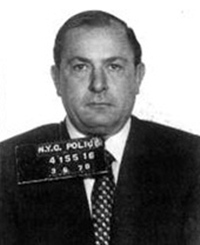
Joseph Columbo
His message: There was no Mafia–only an FBI slander against decent, hard-working Italian-Americans.
And he sent hundreds of members of the League to picket the East Side offices of the FBI.
His actions generated a massive response from many law-abiding Italian-Americans who felt themselves the victims of prejudice.
During the 1950s and early 1960s Congress had held hearings on the Mafia, making Italian and Sicilian criminals like Vito Genovese and Albert Anastasia household words.
Even more enraging had been the depiction of Italians as the villains on the popular ABC TV series, “The Untouchables.” Each week, Eliot Ness and his squad of Treasury agents wiped out a new batch of Prohibition gangsters–who had Italian names like Al Capone and Frank Nitti.
On June 29, 1970, 150,000 people attended an Italian-American Unity Day rally in Columbus Circle in New York City. Several prominent entertainers and five members of the House of Representatives attended.
Under Colombo’s guidance, the League grew quickly and achieved national attention, establishing chapters in 17 states with over 50,000 members.
Shortly after the Columbus Circle rally, then-U.S. Attorney General John N. Mitchell banned the words “Mafia” and “Cosa Nostra” (“Our Thing”) from FBI and Justice Department press releases.
“There is nothing to be gained by using these terms,” said Mitchell, “except to give gratuitous offense to many good Americans of Italian-American descent.”
Seal of the Justice Department
In Albany, New York, then-Governor Nelson Rockefeller instructed the state police to likewise ban such terms.
And the Ford Motor Company, which sponsored the popular ABC-TV series, “The FBI,” also fell into line. While the Bureau’s real-life agents fought the Mafia, its fictionalized agents couldn’t say “Mafia” on TV.
In the spring of 1971, Paramount Pictures began started filming The Godfather, which was to become the most influential movie ever made about the Mafia.
Facing the threat of strikes and violence from the League, the film’s producer, Albert Ruddy, met with Columbo. Ruddy promised that “Mafia” and “Cosa Nostra” would not appear in a film in which almost every major character was a member of the Mafia.

TV’s “Mission: Impossible”–having moved from deposing overseas despots to stateside criminals–similarly referred to organized criminals as “The Syndicate.”
But Columbo was now facing increasing pressure from two sets of enemies.
The first was the FBI–whose agents seethed as they strode through League picket lines near their headquarters at Third Avenue and 69th Street. They were waging war on gangsters, and they resented being called liars and racists.
The second was the Mafia itself. Its older leaders knew there was an all-out Federal drive to destroy the organization. And they feared that Columbo’s in-your-face tactics were goading the FBI and other law enforcement agencies into greater efforts against them.
Of those older leaders, Carlo Gambino, boss of the largest and most powerful Mafia family in New York and the country, was the most important.
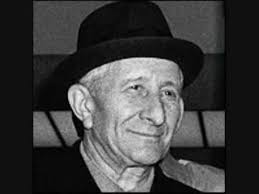
Carlo Gambino
Gambino had set Columbo up in his own family in 1964. This after Columbo had raced to Gambino with the news that his own boss, Joseph Bonanno, planned to “whack” Don Carlo and the other four New York Mafia bosses and become the “boss of all bosses” himself.
Bonnano was thus deposed and sent into exile in Arizona, and Columbo found himself a new boss.
Gambino had always lived in the shadows. As Columbo built up the League, Gambino feared that the publicity and attacks on the FBI would rebound against himself and his brethren.
As the date–June 28, 1971–for the second Italian-American Unity Day rally approached, Gambino quietly put out the word: Stay away.
On that morning Columbo posed for photographers at the rally. Suddenly one of them–a black man–exchanged his camera for an automatic pistol and shot Columbo three times in the head and neck.

Joseph Columbo, after being shot
Seconds later, the shooter was covered by an avalanche of men–one of whom pumped three bullets into him.
The shooter was Jerome Johnson, an ex-con who was linked to mobster Joseph “Crazy Joe” Gallo. The NYPD and FBI believed that Gambino had given Gallo permission to whack Columbo. And that Gallo had used a black man as the ultimate insult to a man he had long hated.
Columbo remained in a vegetative state until May 22, 1978, when he died of cardiac arrest.
There was no third Italian-American Unity Day rally. And the Italian-American Civil Rights League died with Columbo.
Eventually, the Justice Department and FBI went back to using “Mafia” and “La Cosa Nostra.”
And when Francis Ford Coppola made The Godfather, Part II, in 1974, he inserted both words into a scene where Mafia boss Michael Corleone is interrogated by a Senate committee.
For the Mafia, at least, the era of Political Correctness was over.
"MISSION: IMPOSSIBLE", "THE FBI" SERIES, ABC NEWS, AL RUDDY, ALBERT ANASTASIA, ALBERT RUDDY, CARLO GAMBINO, CBS NEWS, CNN, COSA NOSTRA, ELLIOT NESS, FACEBOOK, FBI, FORD MOTOR COMPANY, ISLAMIC STATE OF IRAQ AND SYRIA (ISIS), ISLAMIC TERRORISM, ITALIAN-AMERICAN CIVIL RIGHTS LEAGUE, J. EDGAR HOOVER, JOHN N. MITCHELL, JOSEPH "CRAZY JOE" GALLO, JOSEPH BONANNO, JOSEPH COLUMBO, JUSTICE DEPARTMENT, MAFIA, NBC NEWS, NELSON ROCKEFELLER, NYPD, OMAR MATEEN, POLITICAL CORRECTNESS, ROBERT F. KENNEDY, THE CHICAGO SUN-TIMES, THE CHICAGO TRIBUNE, THE GODFATHER, THE GODTATHER PART II, THE LOS ANGELES TIMES, THE NEW YORK TIMES, THE UNTOUCHABLES, THE WASHINGTON POST, TWITTER, VITO GENOVESE
In Bureaucracy, History, Law Enforcement, Politics, Social commentary on July 4, 2016 at 12:52 am
On June 12, Omar Mateen, a 29-year-old former security guard, slaughtered 49 men and women and injured 53 more inside Pulse, a gay nightclub in Orlando, Florida.
Mateen was then shot to death by Orlando police after a three-hour standoff.
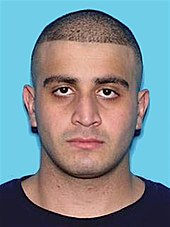
Omar Mateen
It was the deadliest mass shooting by a single gunman in American history–and the deadliest terrorist attack in the United States since the Al Qaeda attacks of September 11, 2001.
The massacre was widely decried as an act of Islamic terrorism. But many others insisted it was simply a hate crime.
Among those opting for the latter: Officials at the Department of Justice (DOJ) and the Federal Bureau of Investigation (FBI).
During his three-hour slaughterfest, Mateen made a call to 9-1-1, pledging his allegiance to the Islamic State of Iraq and Syria (ISIS) and its leader, Abu Bakr al-Baghdadi.
On June 20, the FBI released an edited version of the transcript of that call. All references to ISIS were removed.
The Justice Department claimed that it was withholding some details to avoid putting the victims through any more pain–and to not further the propaganda efforts of ISIS.
A firestorm of protest erupted from Republican Congressional leaders, most notably Speaker of the House Paul Ryan. Since Mateen’s pledge to ISIS had become widely known, they demanded, what was the point of censoring it in the transcript of his phone call?
An additional reason for the fury aimed at the Justice Department: On June 12, ISIS had, through its news agency, Amag, claimed responsibility for the massacre:
“The armed attack that targeted a gay night club in the city of Orlando in the American state of Florida which left over 100 people dead or injured was carried out by an Islamic State fighter.”
Finally, buckling to pressure, on the afternoon of June 20, the FBI released the full, uncensored transcript of Mateen’s call to 9-1-1.
This was definitely not the finest hour of an organization whose motto is: “Fidelity, Bravery, Integrity.”
Seal of the FBI
It was not, however, the first time the Bureau caved in to the demands of Political Correctness.
This occurred almost 50 years earlier–in 1970.
And the man who was responsible for this was not a member of ISIS. Instead, he belonged to another, equally deadly organization: The Mafia.
Joseph Anthony (“Joe”) Columbo was the boss of the Columbo crime family, one of the “Five Families” of the Cosa Nostra in New York.
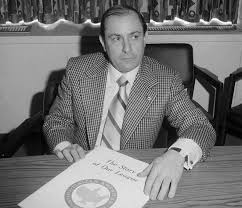
Joseph Columbo
At 45, Columbo was one of the youngest Mafia bosses in the United States. He was also the first American-born boss of a New York crime family.
But, unlike his fellow bosses, he didn’t hesitate to court publicity–or confront law enforcement.
Summoned for questioning about the murder of one of his “soldiers,” Columbo appeared–without a lawyer–at the office of NYPD detective Albert Seedman.
“I am an American citizen, first class,” he blasted Seedman. “I don’t have a badge that makes me an official good guy like you. But I work just as honest for a living.”
Naturally, Columbo denied having anything to do with the death of his subordinate.
In the spring of 1970, Columbo decided to raise his sights. He moved from attacking the NYPD to taking on the FBI.
Throughout most of the tenure of its director, J. Edgar Hoover, the FBI had avoided tackling the Mafia. From the 1920s until the 1950s, mobsters had operated virtually untouched by the most powerful Federal law enforcement agency.
To this day, Hoover’s reasons for avoiding mob enforcement remain unknown. Theories for this include:
- He feared his agents would be corrupted by Mafia bribes.
- He preferred flashy, easily-solved cases like bank-robbery and stolen car rings.
- The Mob blackmailed him with compromising photos of a homosexual relationship with Clyde Tolson, his second-in-command at the FBI.
Then, in 1961, Robert F. Kennedy became Attorney General. As former chief counsel for the Senate Labor Rackets Committee (1957-59) Kennedy had investigated the Mafia’s infiltration of the nation’s labor unions. He had focused especially on its ownership of the International Brotherhood of Teamsters.
Unlike Hoover–who denied the Mafia existed–Kennedy was convinced that it did.
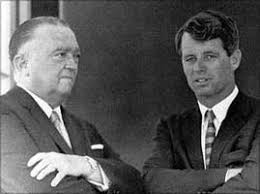
J. Edgar Hoover and Robert F. Kennedy
And as the brother to President John F. Kennedy, RFK had the power to needed to force Hoover to attack the crime syndicates.
Throughout the country, the Mafia felt a new heat as FBI agents planted illegal electronic microphones (“bugs”) in their innermost sanctums. Agents openly tailed mobsters–and sent them to prison in large numbers.
Most old-time Mafia bosses decided to take a low profile to avoid the new Federal pressure. They remembered how Al Capone had flaunted his wealth and power–and had fallen victim to the IRS for it.
In April, 1970, Columbo’s son, Joseph Jr., was arrested by the FBI for melting down coins for resale as silver ingots. The Mafia boss decided to retaliate.
He publicly declared there was no such thing as the Mafia. This was a fiction created by FBI agents taking out their prejudice on law-abiding Italian-Americans.
Then he sent members of his newly-formed organization–the Italian-American Civil Rights League–to picket the East Side offices of the FBI.
ABC NEWS, ADOLF HITLER, ALTERNET, ANDREW JACKSON, AP, BUZZFEED, CBS NEWS, CNN, COLLEGE FOOTBALL, CROOKS AND LIARS, DAILY KOZ, DREW PEARSON, DWIGHT EISENHOWER, EDWARD R. MURROW, FACEBOOK, GEORGE C. MARSHALL, HARRY S. TRUMAN, JERRY SANDUSKY, JOE PATERNO, JOSEPH MCCARTHY, JOSEPH STALIN, LOUIS FREEH, MOTHER JONES, MOVEON, NBC NEWS, NEWSWEEK, NIKE, NIKITA KHRUSHCHEV, NPR, PENN STATE UNIVERSITY, POLITICO, RAW STORY, REUTERS, SALON, SEATTLE TIMES, SLATE, SOVIET UNION, THE ATLANTIC, THE CHICAGO SUN-TIMES, THE CHICAGO TRIBUNE, THE DAILY BEAST, THE GUARDIAN, THE HILL, THE HUFFINGTON POST, THE LOS ANGELES TIMES, THE NATION, THE NEW YORK TIMES, THE WASHINGTON POST, THIRD REICH, TIME, TWITTER, U.S. NEWS & WORLD REPORT, UP, UPI, USA TODAY, YEVGENEY YEVTUSHENKO
In Bureaucracy, History, Law, Politics, Social commentary on July 1, 2016 at 12:16 am
“One man with courage,” said frontier general Andrew Jackson, “makes a majority.”
Yet it’s amazing how many “heroes” come out of the woodwork only after the danger is safely past.
Joseph Stalin dominated the Soviet Union from 1928 to 1953. He held absolute power twice as long as Adolf Hitler–whose Third Reich lasted only 12 years.
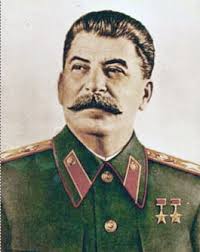
Joseph Stalin
Above all, he was responsible for the deaths of at least 20,000,000 men, women and children:
- At the hands of the executioners of the NKVD (later named the KGB).
- In exile–usually in Siberia–in Soviet penal camps.
- Of man-made starvation brought on by Stalin’s forced “collective-farm” policies.
Then, the unthinkable happened: Stalin finally died on March 5, 1953.
Almost three years later–on February 25, 1956–Stalin’s successor, Nikita Khrushchev, shocked the 20th Party Congress of the Soviet Union with a bombshell announcement:
Stalin–the “Wise Leader and Teacher”–had been a murderous despot.
Among his crimes:
- He had created a regime based on “suspicion, fear and terror.”
- His massive purges of the officer corps had almost destroyed the Red Army–thus inviting Hitler’s 1941 invasion, which killed at least 20 million Soviet citizens.
- He had allied himself with Hitler in 1939 and ignored repeated warnings of the coming Nazi invasion.
Naturally, Khrushchev didn’t advertise the role he had played as one of Stalin’s most trusted and brutal henchmen.
Over the ensuing years, many of the statues and portraits of Stalin that had dotted the Soviet Union like smallpox scars were quietly taken down. The city of Stalingrad–which Stalin had renamed from its original name of Tsaritsyn–became Volgograd.
Then, in 1961, Stalin’s corpse was removed from its prominent spot in the Lenin mausoleum and reburied in a place for lesser heroes of the Russian Revolution.
The young poet, Yevgeney Yevtushenko, noted the occasion in his famous poem, “The Heirs of Stalin.” Its gist: Stalin the tyrant was dead, but his followers still walked the earth–and lusted for a return to power.
Something similar happened in the United States around the same time.
From 1950 to 1954, Wisconsin Republican Senator Joseph R. McCarthy terrorized the nation, accusing anyone who disagreed with him of being a Communist–and leaving ruined lives in his wake.

Joseph R. McCarthy
Among those civilians and government officials he slandered as Communists were:
- President Harry S. Truman
- President Dwight D. Eisenhower
- Broadcast journalist Edward R. Murrow
- Secretary of State George C. Marshall
- Columnist Drew Pearson
Finally, in 1954, McCarthy overreached himself and accused the U.S. Army of being a hotbed of Communist traitors. Joseph Welch, counsel for the Army, destroyed McCarthy’s credibility in a now-famous retort:
“Senator, may we not drop this?….You’ve done enough. Have you no sense of decency, sir? At long last, have you left no sense of decency?”
Later that year, the Senate censured McCarthy, and he rapidly declined in power and health.
Senatorial colleagues who had once courted his support now avoided him.
They left the Senate when he rose to speak. Reporters who had once fawned on him for his latest sensational slander now ignored him.
Eisenhower–who had sought McCarthy’s support during his 1952 race for President–joked that “McCarthyism” was now “McCarthywasm.”
Fast-forward to July 12, 2012–and the release of former FBI Director Louie Freeh’s report on serial pedophile Jerry Sandusky. As the assistant football coach at Penn State University (PSU), he had used the football facilities to sexually attack numerous young boys.

Jerry Sandusky
But Sandusky was regarded as more than a second-banana. He received Assistant Coach of the Year awards in 1986 and 1999, and authored several books about his coaching experiences.
In 1977, Sandusky founded The Second Mile, a non-profit charity serving underprivileged, at-risk youth.
“Our most saddening and sobering finding is the total disregard for the safety and welfare of Sandusky’s child victims by the most senior leaders at Penn State,” Freeh stated.
College football is a $2.6 billion-a-year business. And Penn State is one of its premiere brands, with revenue of $70 million in 2010.
PSU’s seven-month internal investigation, headed by Freeh, revealed:
- Joe Paterno, head coach of the Penn State Nittany Lions, was aware of a 1998 criminal investigation of Sandusky.
- So was president Graham Spanier, athletic director Tim Curley and vice president Gary Schultz.
- In 2001, then-graduate assistant Mike McQueary reported to Paterno that he’d seen Sandusky attacking a boy in the shower.
- Paterno, Spanier, Curley and Schultz then conspired to cover up for Sandusky.
- The rapes of these boys occurred in the Lasch Building–where Paterno had his office.
- A janitor who had witnessed a rape in 2000 said he had feared losing his job if he told anyone about it. “It would be like going against the President of the United States,” Freeh said at a press conference.
In 2011, Sandusky was arrested and charged with sexually abusing young boys over a 15-year period. On June 22, 2012, he was convicted on 45 of the 48 charges. He will likely spend the rest of his life in prison.
On the day the Freeh report was released, Nike–a longtime sponsor for Penn State–announced that it would remove Paterno’s name from the child care center at its world headquarters in Beaverton, Oregon.
ABC NEWS, AFRIKA KORPS, ALTERNET, AMERICABLOG, AP, BABY BOOMER RESISTANCE, BARACK OBAMA, BASHAR AL-ASAD, BBC, BERNARD MONTGOMERY, BILL KRISTOL, BLOOMBERG NEWS, BUZZFEED, CBS NEWS, CNN, CONDOLEEZA RICE, CROOKS AND LIARS, DAILY KOZ, FACEBOOK, FIVETHIRTYEIGHT, FOOD STAMPS, GEORGE C. SCOTT, GEORGE S. PATTON, HARPER’S MAGAZINE, HUFFINGTON POST, IRAN, IRAQ, IRAQ WAR, JOHN MCCAIN, LINDSEY GRAHAM, MEDIA MATTERS, MOTHER JONES, MOVEON, MSNBC, NBC NEWS, NEW REPUBLIC, NEWSDAY, NEWSWEEK, NPR, OSAMA BIN LADEN, PATTON (MOVIE), PBS NEWSHOUR, PENTAGON, POLITICO, POLITICUSUSA, RAW STORY, REPUBLICANS, REUTERS, SALON, SEATTLE TIMES, SLATE, SYRIA, TALKING POINTS MEMO, THE ATLANTIC, THE CHICAGO SUN-TIMES, THE CHICAGO TRIBUNE, THE DAILY BEAST, THE DAILY BLOG, THE GUARDIAN, THE HILL, THE HUFFINGTON POST, THE LOS ANGELES TIMES, THE NATION, THE NEW REPUBLIC, THE NEW YORK TIMES, THE NEW YORKER, THE VILLAGE VOICE, THE WASHINGTON POST, THINKPROGRESS, TIME, TOMAHAWK CRUISE MISSILES, TRUTHDIG, TRUTHOUT, TWITTER, TWO POLITICAL JUNKIES, U.S. NEWS & WORLD REPORT, UPI, USA TODAY, WORLD WAR ii
In Bureaucracy, History, Military, Politics, Social commentary on June 30, 2016 at 12:17 am
In the 1970 film, Patton, General George S. Patton is a man driven by his obsession to be the best field commander in the war–and to be recognized for it.
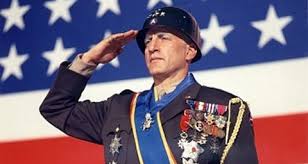
George C. Scott as George S. Patton
And he sees British General Bernard Montgomery–his equally egotistical rival–as a potential obstacle to that latter ambition.
So, in Algeria, he conjures up a plan that will sideline “Monty” while he, Patton, defeats the Germans–and bags the glory.
The trick lies in throwing a sumptuous dinner–in the middle of the African desert–for a visiting British general: Harold Alexander.
As Patton (George C. Scott, in an Oscar-winning performance) tells his aide: “I want to give a dinner for General Alexander. I want to get to him before Montgomery does. I want the finest food and the best wine available. Everything.”
The aide pulls off the dinner–where, indeed, “the finest food and the best wine” are on full display, along with attentive waiters and a candelabra.
So think about it:
- In the middle of the desert
- while American and British forces are forced to subsist on C-rations
- and are under repeated air attack by the Luftwaffe
- and tank attack by the Afrika Korps
a handful of ultra-pampered American and British military officers find the time–and luxuries–to throw themselves a fine party.
Now, fast-forward from Algeria in 1943 to Washington, D.C. in 2016.
Returning to Congress after their traditional summer recess, House Republicans planned to cut $23 billion in food stamps for the poor. This would include include ending waivers that allow some adults to get temporary assistance, while they are in school or training for a job.
The cuts could include drug tests of applicants and tougher work rules. As Republicans see it: There’s no point in “helping” the poor if you can’t humiliate them.

The food stamp program, now called the Supplemental Nutrition Assistance Program, or SNAP, served more than 46 million Americans and cost $74 billion in 2015.
A single person is eligible for food stamps if his total monthly income is under $1,265 ($15,180 per year). A family of four is eligible if their total income is less than $2,584 per month ($31,008 per year).
Republicans claim the program is unbearably expensive at $74.1 billion a year.
Meanwhile, Republicans are eager to spend billions of dollars for another project: An unnecessary war with Syria.
One of these right-wingers is Bill Kristol, editor of the Weekly Standard–and one of the leading instigators of the 2003 war with Iraq.
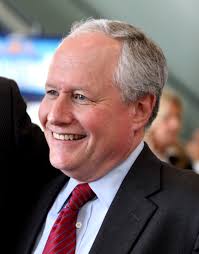
Bill Kristol
He–like senior officials on the George W. Bush administration–falsely claimed that Iraqi dictator Saddam Hussein had weapons of mass destruction and planned to use them against the United States.
Another Kristol lie: Hussein planned 9/11 with Osama bin Laden.
He has never apologized for either lie–or the resulting war that killed 4,487 American soldiers and wounded another 32,226.
In a September, 2013 column, Kristol called for a return to slaughter–not only in Syria but Iran as well:
“…Soon after voting to authorize the use of force against the Assad regime, Republicans might consider moving an authorization for the use of force against the Iranian nuclear weapons program.
“They can explain that Obama’s dithering in the case of Syria shows the utility of unequivocally giving him the authority to act early with respect to Iran.”
Former Secretary of State Condoleeza Rice–who also helped lie the nation into the needless 2003 Iraq war–is another big promoter of “give war a chance:”
“My fellow Americans, we do not have a choice. We cannot be reluctant to lead–and one cannot lead from behind.”
Among Republican U.S. Senators calling for war are John McCain (Arizona) and Lindsey Graman (South Carolina), who issued a joint statement:
“Using stand-off weapons, without boots on the ground, and at minimal risk to our men and women in uniform, we can significantly degrade Assad’s air power and ballistic missile capabilities and help to establish and defend safe areas on the ground.
“In addition, we must begin a large-scale effort to train and equip moderate, vetted elements of the Syrian opposition with the game-changing weapons they need to shift the military balance against [Syrian dictator Bashar] Assad’s forces.”
Except that there are no “moderate, vetted elements” of the Syrian opposition. The opposition is just as murderous as the Assad regime–and eager to replace one dictator with another.
In addition: A major weapon for “degrading Assad’s air power” would be Tomahawk Cruise missiles. A single one of these costs $1,410,000.

Firing of a Tomahawk Cruise missile
A protracted missile strike would rain literally billions of dollars’ worth of American missiles on Syria.
Meanwhile, the Pentagon is spending about $27 million a week to maintain the increased U.S. Navy presence in the Mediterranean Sea and Middle East region to keep watch over Syria and be prepared to strike.
Navy officials say it costs about $25 million a week for the carrier group and $2 million a week for each destroyer.
Is there a lesson to be learned from all this?
Yes.
Powerful people–whether generals, politicians or the wealthy–will always find abundant money and resources available for projects they consider important.
It’s only when it comes to projects that other people actually need that the powerful will claim there is, unfortunately, a cash shortage.
9/11 ATTACKS, ABC NEWS, ADOLF HITLER, AFGHANISTAN, AL QAEDA, ARTHUR M. CUMMINGS, BARACK OBAMA, BOKO HARAM, BOSTON MARATHON BOMBING, CANADA, CBS NEWS, CENSORSHIP, CNN, DAVID CAMERON, DEPARTMENT OF JUSTICE, DONALD TRUMP, FACEBOOK, FBI, GEORGE W. BUSH, HATE CRIMES, IRAQ, ISLAM, ISLAMIC STATE OF IRAQ AND SYRIA, ISLAMIC STATE OF IRAQ AND SYRIA (ISIS), ISLAMIC TERRORISM, LORETTA LYNCH, MOHAMMED, NAZI GERMANY, NBC NEWS, OMAR MATEEN, ORLANDO SHOOTINGS, PAUL RYAN, POLITICAL CORRECTNESS, PULSE, RELIGION, REPUBLICAN PARTY, RONALD KESSLER, SAMUEL HUNTINGTON, STEVEN EMERSON, SYRIA, TALIBAN, TERRORISM, THE CLASH OF CIVILIZATIONS, THE INVESTIGATIVE PROJECT ON TERRORISM, THE LOS ANGELES TIMES, THE NEW YORK TIMES, THE SECRETS OF THE FBI, THE WALL STREET JOURNAL, THE WASHINGTON POST, TWITTER, WORLD TRADE CENTER, WORLD WAR ii
In Bureaucracy, History, Law Enforcement, Military, Politics, Social commentary on June 29, 2016 at 12:01 am
Even at the height of World War II, citizens of the United States could take comfort in the following:
- Nazi Germany had a capitol–Berlin–and a single, all-powerful leader–Adolf Hitler. Once Berlin was occupied and Hitler dead or captured, the war would be over.
- And, for all their ferocity, German soldiers were easy to recognize: They wore gray uniforms, spoke German and waved flags emblazoned with swastikas or imperial eagles.
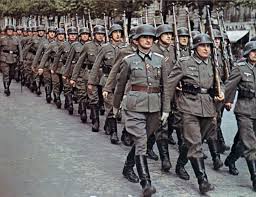
Wehrmacht soldiers marching through conquered France
Today, Western nations under attack by Islamic “holy warriors” face none of those advantages. Islam has no single capitol city–or leader.
Nor do Islam’s jihadist legions wear uniforms. Many of them don’t speak Arabic or wear clothing associated with Arabs, such as flowing robes and headdresses.
More ominously, millions of Islam’s potential “warriors” live within the very Western nations they despise. They can get all the instruction and inspiration they need to wreck havoc simply by going to the Internet.
Or, if they have the money, by traveling overseas to such terrorist-recruiting centers as Syria or Afghanistan.
And yet, faced with an unprecedented threat to their security, many Western leaders refuse to publicly acknowledge this fundamental truth:
Even if the West isn’t at war with Islam, Islam is at war with the West.
Leaders like President Barack Obama, who insisted, at a White House Summit on Countering Violent Extremism in February, 2015: “We are not at war with Islam. We are at war with people who have perverted Islam.”

David Cameron
And leaders like British Prime Minister David Cameron, who said on August 29, 2014: “Islam is a religion observed peacefully by over a billion people. Islamist extremism is a poisonous ideology observed by a minority.”
On June 20, the Federal Bureau of Investigation (FBI) issued a censored version of gunman Omar Mateen’s call to a 9-1-1 operator. While taking a break from slaughtering 49 defenseless men and women and wounding another 53, Mateen pledged his loyalty to ISIS.
Fortunately for the United States, the Bureau hasn’t always been so craven.
Ronald Kessler, author of the 2011 book, The Secrets of the FBI, quotes Arthur M. Cummings, the Bureau’s then-executive assistant director for national security:
“I had this discussion with the director of a very prominent Muslim organization here in [Washington] D.C. And he said, ‘Why are you guys always looking at the Muslim community?’”
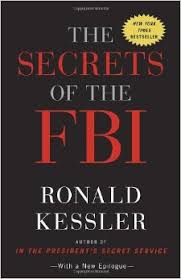
“I can name the homegrown cells, all of whom are Muslim, all of whom were seeking to kill Americans,” replied Cummings. “It’s not the Irish, it’s not the French, it’s not the Catholics, it’s not the Protestants. It’s the Muslims.”
Occasionally, Muslims will condemn Al Qaeda. But “rarely do we have them coming to us and saying, ‘There are three guys in the community that we’re very concerned about,’” said Cummings.
“They don’t want anyone to know they have extremists in their community. Well, beautiful. Except do you read the newspapers? Everybody already knows it. The horse has left the barn.”
Cummings has no use for such Politically Correct terms as “man-caused disasters” to refer to terrorism. Nor does he shy away from terms such as “jihadists” or “Islamists.”
“Of course Islamists dominate the terrorism of today,” he says bluntly.
In May, 2014, Steven Emerson, a nationally recognized expert on terrorism, posted an ad in The New York Times, warning about the dangers of PC-imposed censorship. And he posed the question: “How can we win the war against radical Islam if we can’t even name the enemy?”
He has a point–and a highly legitimate one.
Imagine the United States fighting World War II–and President Franklin Roosevelt banning the use of “fascist” in referring to Nazi Germany or “imperialist” in describing Imperial Japan.
Imagine CNN-like coverage of the Nazi extermination camps, with their piles of rotting corpses and smoking gas ovens, while a commentator reminds us that “Nazism is an ideology of peace.”
Then consider these Islamic terrorist outrages of our own time:
- The 9/11 attacks on the World Trade Center in New York City and the Pentagon in Washington, D.C., which snuffed out the lives of 3,000 Americans.
- The 2004 bombing of Madrid’s commuter train system.
- The attack on the London subway in 2005.
- The killing of 13 U.S. Army personnel at Fort Hood, Texas, by a Muslim army major in 2009.
- The bombing of the Boston Marathon in 2013.
- The kidnapping of 300 Nigerian schoolgirls by Boko Haram in 2014.
- The slaughter of 12 people at a Paris satirical magazine that had published cartoons about the Prophet Mohammed in 2015.
- The murders of more than 100 people in ISIS attacks across Paris in 2015.
- A series of deadly terrorist attacks in Brussels, killing 31 and injuring 270 in 2016.
In every one of these attacks, the perpetrators openly announced that their actions had been motivated by their Islamic beliefs.
In his groundbreaking book, The Clash of Civilizations (1996) Samuel Huntington, the noted political scientist at Harvard University, noted:
“The fundamental problem for the West is not Islamic fundamentalism. It is Islam, a different civilisation whose people are convinced of the superiority of their culture and are obsessed with the inferiority of their power.”
The West may not be at war with Islam–as countless Western politicians repeatedly assert. But Islamics have no qualms about declaring that they are at war with the West.
9/11 ATTACKS, ABC NEWS, ADOLF HITLER, AFGHANISTAN, AL QAEDA, ARTHUR M. CUMMINGS, BARACK OBAMA, BOKO HARAM, BOSTON MARATHON BOMBING, CANADA, CBS NEWS, CENSORSHIP, CNN, DAVID CAMERON, DEPARTMENT OF JUSTICE, DONALD TRUMP, FACEBOOK, FBI, GEORGE W. BUSH, HATE CRIMES, IRAQ, ISLAM, ISLAMIC STATE OF IRAQ AND SYRIA, ISLAMIC STATE OF IRAQ AND SYRIA (ISIS), ISLAMIC TERRORISM, LORETTA LYNCH, MOHAMMED, NAZI GERMANY, NBC NEWS, OMAR MATEEN, ORLANDO SHOOTINGS, PAUL RYAN, POLITICAL CORRECTNESS, PULSE, RELIGION, REPUBLICAN PARTY, RONALD KESSLER, SAMUEL HUNTINGTON, STEVEN EMERSON, SYRIA, TALIBAN, TERRORISM, THE CLASH OF CIVILIZATIONS, THE INVESTIGATIVE PROJECT ON TERRORISM, THE LOS ANGELES TIMES, THE NEW YORK TIMES, THE SECRETS OF THE FBI, THE WALL STREET JOURNAL, THE WASHINGTON POST, TWITTER, WORLD TRADE CENTER, WORLD WAR ii
In Bureaucracy, History, Law Enforcement, Military, Politics, Social commentary on June 28, 2016 at 12:06 am
On June 12, Omar Mateen, a 29-year-old former security guard, slaughtered 49 men and women and injured 53 more inside Pulse, a gay nightclub in Orlando, Florida.
Mateen was then shot to death by Orlando police after a three-hour standoff.
Omar Mateen
It was the deadliest mass shooting by a single gunman in American history–and the deadliest terrorist attack in the United States since the Al Qaeda attacks of September 11, 2001.
The massacre was widely decried as an act of Islamic terrorism. But many others insisted it was simply a hate crime.
Among those opting for the latter: Officials at the Department of Justice (DOJ) and the Federal Bureau of Investigation (FBI).
This despite the fact that:
- Mateen, born in New York in 1986 to Afghan parents, praised the highjackers who carried out the September 11, 2001 attacks that slaughtered 3,000 Americans. At the time, he was attending an alternative high school for problem students.
- He also said that Osama bin Laden was his uncle who had taught him how to shoot an AK-47–this while it was not known that bin Laden had masterminded the attacks.
- During the night of the Orlando massacre, Mateen stopped killing long enough to call 9-1-1, take responsibility for the attack and pledge his allegiance to the Islamic State of Iraq and Syria (ISIS) and its leader, Abu Bakr al-Baghdadi.
In releasing a transcript of the 9-1-1 call, the Justice Department claimed that it would withhold some details to avoid putting the victims through any more pain–and to not further the propaganda efforts of ISIS.

The Robert F. Kennedy Department of Justice
“What we’re not going to do is further proclaim this man’s pledges of allegiance to terrorist groups and further his propaganda,” Attorney General Loretta Lynch told moderator Chuck Todd on the June 19 edition of Meet the Press.
“We will hear him talk about some of these things, but we are not going to hear him make his assertions of allegiance.”
On the morning of June 20, the FBI released the following edited version of the transcript:
MATEEN: Praise be to God, and prayers as well as peace be upon the prophet of God [in Arabic]. I let you know, I’m in Orlando and I did the shootings.
OPERATOR: What’s your name?
MATEEN: My name is I pledge of allegiance to [omitted].
OPERATOR: OK, what’s your name?
MATEEN: I pledge allegiance to [omitted] may God protect him [in Arabic], on behalf of [omitted].
A firestorm of protest erupted from Republican Congressional leaders, most notably Speaker of the House Paul Ryan. Since Mateen’s pledge to ISIS had become widely known, they demanded, what was the point of censoring it in the transcript of his phone call?
“We know the shooter was a radical Islamist extremist inspired by ISIS,” Ryan said in a statement. “We also know he intentionally targeted the LGBT community. The administration should release the full, unredacted transcript so the public is clear-eyed about who did this, and why.”
An additional reason for the fury aimed at the Justice Department: On June 12, ISIS had claimed responsibility for the massacre:
“The armed attack that targeted a gay night club in the city of Orlando in the American state of Florida which left over 100 people dead or injured was carried out by an Islamic State fighter.”
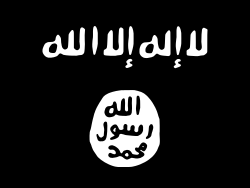
Flag of ISIS
Finally, buckling to pressure, on the afternoon of June 20, the FBI released the full, uncensored transcript of Mateen’s call to 9-1-1:
OPERATOR: Emergency 911, this is being recorded.
MATEEN: In the name of God the Merciful, the beneficent [Arabic]
OPERATOR: What?
MATEEN: Praise be to God, and prayers as well as peace be upon the prophet of God [Arabic]. I wanna let you know, I’m in Orlando and I did the shootings.
OPERATOR: What’s your name?
MATEEN: My name is I pledge of allegiance to Abu Bakr al-Baghdadi of the Islamic State.
OPERATOR: OK, what’s your name?
MATEEN: I pledge allegiance to Abu Bakr al-Baghdadi may God protect him [Arabic], on behalf of the Islamic State.
OPERATOR: Alright, where are you at?
MATEEN: In Orlando.
OPERATOR: Where in Orlando?
[End of call]

J. Edgar Hoover FBI Building
Neither the FBI nor the Justice Department apologized for having censored the transcript.
“Unfortunately, the unreleased portions of the transcript that named the terrorist organizations and leaders have caused an unnecessary distraction from the hard work that the FBI and our law enforcement partners have been doing to investigate this heinous crime,” both the DOJ and FBI said in a statement.
Since September 11, 2001, Americans have been actively at war with Islamic nations such as Afghanistan, Iraq and Syria.
Yet high-ranking officials in the administrations of George W. Bush and Barack Obama have repeatedly and loudly denied that America is at war with Islam.
Even if this is true, a large portion of the Islamic world is at war with the United States.
Only Donald Trump–alone of the 2016 Presidential candidates–has dared to say what the vast majority of Americans know: America is at war with Islamics who openly proclaim that their actions are motivated by their Islamic religious beliefs.
And it’s a major reason why Trump is about to receive the Republican nomination for President.
ABC NEWS, ANCHOR BABIES, BARACK OBAMA, BARBARA LEE, CBS NEWS, CNN, DEMOCRATIC PARTY, DONALD TRUMP, DREAM ACT, FACEBOOK, HILLARY CLINTON, HISPANICS, illegal immigration, MEXICO, MSNBC, NBC NEWS, NEWT GINGRICH, PAUL RYAN, RACIAL PROFILING, REPUBLICAN PARTY, THE CHICAGO SUN-TIMES, THE CHICAGO TRIBUNE, THE HUFFINGTON POST, THE LOS ANGELES TIMES, THE NEW YORK TIMES, THE WASHINGTON POST, TWITTER, U.S. SUPREME COURT, WAL-MART
In Bureaucracy, Business, History, Law, Law Enforcement, Military, Politics, Social commentary on June 27, 2016 at 12:19 am
If Americans decide they truly want to control access to their own borders, there is a realistic way to accomplish this.
And it doesn’t involve building a wall along the Mexican border–which would prove ridiculously expensive and easily circumvented.

(1) The Justice Department should vigorously attack the “sanctuary movement” that officially thwarts the immigration laws of the United States.
Among the 31 “sanctuary cities” of this country: Washington, D.C.; New York City; Los Angeles; Chicago; San Francisco; Santa Ana; San Diego; Salt Lake City; Phoenix; Dallas; Houston; Austin; Detroit; Jersey City; Minneapolis; Miami; Denver; Baltimore; Seattle; Portland, Oregon; New Haven, Connecticut; and Portland, Maine.
These cities have adopted “sanctuary” ordinances that do not allow municipal funds or resources to be used to enforce federal immigration laws, usually by not allowing police or municipal employees to inquire about one’s immigration status.
(2) The most effective way to combat this movement: Indict the highest-ranking officials of those cities which have actively violated Federal immigration laws.
In San Francisco, for example, former District Attorney Kamala Harris—who is now California’s Attorney General—created a secret program called Back on Track, which provided training for jobs that illegal aliens could not legally hold.
She also prevented Immigration and Customs Enforcement (ICE) from deporting even those illegal aliens convicted of a felony.
(3) Indicting such officials would be comparable to the way that President Andres Jackson dealt with the threat South Carolinians once made to “nullify”–or ignore–any Federal laws they didn’t like.
Jackson quashed that threat by making one of his own: To lead an army into that State and purge all who dared defy the laws of the Federal Government.

(4) Even if some indicted officials escaped conviction, the results would prove worthwhile.
City officials would be forced to spend huge sums of their own money for attorneys and face months or even years of prosecution.
And this, in turn, would send a devastating warning to officials in other “sanctuary cities” that the same fate lies in store for them.
(5) CEOs whose companies–like Wal-Mart–systematically employ illegal aliens should be held directly accountable for the actions of their subordinates.
They should be indicted by the Justice Department under the Racketeer Influenced Corrupt Organizations (RICO) Act, the way Mafia bosses are prosecuted for ordering their own subordinates to commit crimes.
Upon conviction, the CEO should be sentenced to a mandatory prison term of at least twenty years.
This would prove a more effective remedy for combating illegal immigration than stationing tens of thousands of soldiers on the U.S./Mexican border. CEOs forced to account for their subordinates’ actions would take drastic steps to ensure that their companies strictly complied with Federal immigration laws.
Without employers luring illegal aliens at a fraction of the money paid to American workers, the flood of such illegal job-seekers would quickly dry up.

(6) The Government should stop granting automatic citizenship to “anchor babies” born to illegal aliens in the United States.
A comparable practice would be allowing bank robbers who had eluded the FBI to keep their illegally-obtained loot.
A person who violates the bank robbery laws of the United States is legally prosecutable for bank robbery, whether he’s immediately arrested or remains uncaught for years. The same should be true for those born illegally within this country.
If they’re not here legally at the time of birth, they should not be considered citizens and should–like their parents–be subject to deportation.
(7) The United States Government–from the President on down–should stop apologizing for the right to control the country’s national borders.
The Mexican Government doesn’t hesitate to apply strict laws to those immigrating to Mexico. And it feels no need to apologize for this.
Neither should we.
(8) Voting materials and ballots should be published in one language–English.
In Mexico, voting materials are published in one language–Spanish.
Throughout the United States, millions of Mexican illegals refuse to learn English and yet demand that voting materials and ballots be made available to them in Spanish.

(9) Those who are not legal citizens of the United States should not be allowed to vote in its elections.
In Mexico, those who are not Mexican citizens are not allowed to participate in the country’s elections.
The Mexican Government doesn’t consider itself racist for strictly enforcing its immigration laws.
The United States Government should not consider itself racist for insisting on the right to do the same.
(10) The United States should impose economic and even military sanctions against countries–such as China and Mexico–whose citizens make up the bulk of illegal aliens.
Mexico, for example, uses its American border to rid itself of those who might demand major reforms in the country’s political and economic institutions.
Such nations must learn that dumping their unwanteds on the United States now comes at an unaffordably high price. Otherwise those dumpings will continue.
ABC NEWS, ANCHOR BABIES, BARACK OBAMA, BARBARA LEE, CBS NEWS, CNN, DEMOCRATIC PARTY, DONALD TRUMP, DREAM ACT, FACEBOOK, HILLARY CLINTON, HISPANICS, illegal immigration, MEXICO, MSNBC, NBC NEWS, PAUL RYAN, REPUBLICAN PARTY, THE CHICAGO SUN-TIMES, THE CHICAGO TRIBUNE, THE HUFFINGTON POST, THE LOS ANGELES TIMES, THE NEW YORK TIMES, THE WASHINGTON POST, TWITTER, U.S. SUPREME COURT, WAL-MART
In Bureaucracy, Business, History, Law, Law Enforcement, Military, Politics, Social commentary on June 24, 2016 at 1:30 am
In 2014, President Barack Obama issued an executive order, declaring that illegal aliens living in the United States since 2010 could become citizens or lawful residents, thus shielding them from deportation.
Texas challenged that executive order, claiming that Obama had acted unconstitutionally by encroaching on the duties of Congress. Another 25 Republican states joined the lawsuit.
The case went to the Supreme Court–which, on June 23, blocked the implementation of Obama’s executive order.
The Justices deadlocked on the issue 4-4, thus returning the case to the lower court in Texas that ruled against the administration’s carrying out the policy.
U.S. Supreme Court
In doing so, the Justices denied at least 4 million illegal aliens the right to remain in the country without fear of deportation.
For Republicans, the ruling upheld the separation of powers.
Donald Trump–the presumptive Republican nominee for President–issued a statement: “Today’s 4-4 Supreme Court ruling has blocked one of the most unconstitutional actions ever undertaken by a president.”
And House Speaker Paul Ryan (R-Wis) declared:
“The Supreme Court’s ruling makes the president’s executive action on immigration null and voice. The Constitution is clear: The president is not permitted to write laws—only Congress. This is another major victory in our fight to restore the separation of powers.”
Obama quickly expressed his disappointment, saying that the decision “takes us further from the country that we aspire to be.”
Other Democrats were equally upset by the Court’s decision.
One of these was Rep. Barbara Lee of California, who wrote on Twitter: “Deeply saddened by divided #SCOTUS decision in #USvTexas. We should be keeping families together, not tearing them apart!”
Another was Hillary Clinton–the presumed Democratic Presidential nominee–who used the Court’s decision as a way to troll for Hispanic votes.
“[Donald] Trump has pledged to repeal President Obama’s executive actions on his first day in office,” Clinton said.
“He has called Mexican immigrants ‘rapists’ and ‘murderers.’ He has called for creating a deportation force” to tear 11 million people away from their families and their homes. I believe we are stronger together.”
Both Lee’s and Clinton’s accusations ignored a blunt reality: Families of illegal aliens did not have to break up.
Some members did not have to stay in the United States while others were deported. Instead, they could leave together and live together in the Latin or Central American country of their origin.
Illegal immigration has always been a highly emotional issue for conservatives. But it’s been given added impetus this year.

For years, Republicans and Democrats have clashed over the subject of illegal immigration.
Democrats favor wholesale grants of unearned citizenship to the estimated 11 to 20 million illegal aliens who brazenly violated the law when they sneaked across American borders.
And Republicans favor beefing up security against future waves of such invaders.
But the brutal truth is that neither Democrats nor Republicans truly want to end these invasions. Nor do they want to deport the millions of illegals who have already taken up residence here.
They don’t care that these illegals:
- Flood the United States with millions of poor non-citizens who don’t speak English.
- Overwhelm the public school system with children–who also don’t speak English–who require bilingual education.
- Overwhelm the public healthcare system–especially emergency rooms–with poor illegal aliens. As a result, urgently-needed medical care is often denied to legal American citizens.
Democrats, primarily governed by liberal ideology, believe it’s racist for whites to demand control of their own national borders. They also see illegal aliens as a huge constituency.
And Republicans want them as low-skilled, low-wage fodder for their major campaign contributors–such as corporate-farms and retail outlets like Wal-Mart.
Unlike Democrats, however, Republicans like to feign outrage at the presence of so many illegal aliens within their midst.
It’s the Republican base that’s demanding an end to illegal immigration.
Those masses of alienated and angry whites who find themselves living in a nation that’s increasingly alien from themselves. And who have made Donald Trump their overwhelming choice for President in 2016.
Meanwhile, both Democrats and Republicans ignore a blunt reality: Mexico–America’s largest source of illegal aliens–strictly enforces control of its own borders.
Mexico has a single, streamlined law that ensures that foreign visitors and immigrants are:
- in the country legally;
- have the means to sustain themselves economically;
- not destined to be burdens on society;
- of economic and social benefit to society;
- of good character and have no criminal records; and
- contribute to the general well-being of the nation.
The law also ensures that:
- immigration authorities have a record of each foreign visitor;
- foreign visitors do not violate their visa status;
- foreign visitors are banned from interfering in the country’s internal politics;
- foreign visitors who enter under ralse pretenses are imprisoned or deported;
- foreign visitors violating the terms of their entry are imprisoned are deported;
- those who aid in illegal immigration will be sent to prison.
Meanwhile, Mexico uses its American border to rid itself of those who might otherwise demand major reforms in the country’s political and economic institutions.
ABC NEWS, ADVICE, BAY OF PIGS, CBS NEWS, CNN, CORPORATIONS, CUBA, FACEBOOK, FIDEL CASTRO, JOHN F. KENNEDY, NBC NEWS, NICCOLO MACHIAVELLI, POLITICS, THE CHICAGO SUN-TIMES, THE CHICAGO TRIBUNE, THE DISCOURSES, THE LOS ANGELES TIMES, THE NEW YORK TIMES, THE PRINCE, THE WASHINGTON POST, TWITTER
In Bureaucracy, Business, History, Military, Politics on June 23, 2016 at 1:14 am
On the rare occasion when most people think of Niccolo Machiavelli, the image of the devil comes to mind.

Niccolo Machiavelli
In fact, “The Old Nick” became an English term used to describe Satan and slander Machiavelli at the same time.
The truth, however, is more complex. Machiavelli was a passionate Republican, who spent most of his adult life in the service of his beloved city-state, Florence.
The years he spent as a diplomat were tumultuous ones for Italy–with men like Pope Julius II and Caesare Borgia vying for power and plunging Italy into one bloodbath after another.
Machiavelli is best-known for his writing of The Prince, a pamphlet on the arts of gaining and holding power. Its admirers have included Benito Mussolini and Joseph Stalin.

But his longer and more thoughtful work is The Discourses, in which he offers advice on how to maintain liberty within a republic. Among its admirers were many of the men who framed the Constitution of the United States.

Also contrary to what most people believe about Machiavelli, he did not advocate evil for its own sake. Rather, he recognized that sometimes there is no perfect–or perfectly good–solution to a problem.
Sometimes it’s necessary to take stern–even brutal–action to stop an evil (such as a riot) before it becomes widespread.
His counsel remains as relevant today as it did during his lifetime (1469 – 1527)–especially for politicians.
But plenty of ordinary citizens can also benefit from the advice he has to offer–such as those who are asked to give advice to more powerful superiors.
Machiavelli warns there is danger in urging rulers to take a particular course of action:
“For men only judge of matters by the result, all the blame of failure is charged upon him who first advised it, while in case of success he receives commendations. But the reward never equals the punishment.”
This puts would-be counselors in a difficult position: “If they do not advise what seems to them for the good of the republic or the prince, regardless of the consequences to themselves, then they fail to do their duty.
“And if they do advise it, then it is at the risk of their position and their lives, for all men are blind in thus, that they judge of good or evil counsels only by the results.”
Thus, Machiavelli warns that an adviser should “take things moderately, and not to undertake to advocate any enterprise with too much zeal, but to give one’s advice calmly and modestly.”
The person who asked for the advice may follow it, or not, as of his own choice, and not because he was led or forced into it by the adviser.
Above all, the adviser must avoid the danger of urging a course of action that runs “contrary to the wishes of the many.
“For the danger arises when your advice has caused the many to be contravened. In that case, when the result is unfortunate, they all concur in your destruction.”
Or, as President John F. Kennedy famously said after the disastrous invasion of Cuba at the Bay of Pigs in April, 1961: “Victory has a hundred fathers and defeat is an orphan.”

John F. Kennedy
By “not advocating any enterprise with too much zeal,” the adviser gains two advantages:
“The first is, you avoid all danger.
“And the second consists in the great credit which you will have if, after having modestly advised a certain course, your counsel is rejected, and the adoption of a different course results unfortunately.”
Finally, the time to give advice is before a catastrophe occurs, not after. Machiavelli gives a vivid example of what can happen if this rule is ignored.
King Perseus of Macedon had gone to war with Paulus Aemilius–and suffered a humiliating defeat. Fleeing the battlefield with a handful of his men, he later bewailed the disaster that had overtaken him.
Suddenly, one of his lieutenants began to lecture Perseus on the many errors he had committed, which had led to his ruin.
“Traitor,” raged the king, turning upon him, “you have waited until now to tell me all this, when there is no longer any time to remedy it–” And Perseus slew him with his own hands.
Niccolo Machiavelli sums up the lesson as this:
“Thus was this man punished for having been silent when he should have spoken, and for having spoken when he should have been silent.”
Be careful that you don’t make the same mistake.


"LOUIS", "PETER PAN", "THE PRINCESS AND THE FROG", "TICK TOCK", ABC NEWS, ALLIGATORS, ALTERNET, AMERICABLOG, AP, BABY BOOMER RESISTANCE, BBC, BLOOMBERG NEWS, BUZZFEED, CBS NEWS, CNN, CROOKS AND LIARS, DAILY KOZ, DISNEY JUNGLE CRUISE, FACEBOOK, FIVETHIRTYEIGHT, FLORIDA, FLORIDA FISH AND WILDLIFE CONSERVATION COMMISSION, GRAND FLORIDIAN HOTEL AT WALT DISNEY WORLD, HARPER’S MAGAZINE, HUFFINGTON POST, KILIMANJARO SAFARI RIDE, LANE GRAVES, MEDIA MATTERS, MOTHER JONES, MOVEON, MSNBC, NBC NEWS, NEW REPUBLIC, NEWSDAY, NEWSWEEK, NPR, ORANGE COUNTY SHERIFF'S OFFICE, ORLANDO SENTINEL, PBS NEWSHOUR, POLITICO, POLITICUSUSA, POLYNESIAN RESORT VILLAGE, RAW STORY, REUTERS, SALON, SEATTLE TIMES, SLATE, TALKING POINTS MEMO, THE ATLANTIC, THE CHICAGO SUN-TIMES, THE CHICAGO TRIBUNE, THE DAILY BEAST, THE DAILY BLOG, THE GUARDIAN, THE HILL, THE HUFFINGTON POST, THE HYATT REGENCY GRAND CYPRESS HOTEL, THE LOS ANGELES TIMES, THE NATION, THE NEW REPUBLIC, THE NEW YORK TIMES, THE NEW YORKER, THE VILLAGE VOICE, THE WASHINGTON POST, THINKPROGRESS, TIME, TRUTHDIG, TRUTHOUT, TWITTER, TWO POLITICAL JUNKIES, U.S. NEWS & WORLD REPORT, UPI, USA TODAY, WRONGFUL-DEATH LAWSUITS
WALT DISNEY WORLD: “ALLIGATORS R US”
In Bureaucracy, Business, Self-Help, Social commentary on July 6, 2016 at 12:17 amNO SWIMMING
BEWARE
PLEASE BE AWARE OF ALLIGATORS IN THE LAKE.
So warns a sign at the Hyatt Regency Grand Cypress Hotel, in Bay Lake, Fla. To drive home the message, it features an eye-catching symbol: A green alligator, its jaws open wide.
Just minutes away lies the Grand Floridian Hotel at Walt Disney World Resort, where, on June 14, a sign read:
STEEP DROP-OFF
DEEP WATER
NO SWIMMING
It’s likely that the parents of two-year-old Lane Graves wish they had chosen the Hyatt Regency Grand Cypress Hotel for their vacation spot.
Had they done so, their son might well be alive today.
On June 14, an alligator, estimated at seven feet, snatched Lane as he waded in less than six inches of water at nightfall.
Lane Graves
His father, Matt, rushed into the water to save Lane. But he was attacked by a second alligator as he fought for his son. He suffered several bites before the two alligators disappeared into the lagoon.
The next day, an Orange County Sheriff’s dive team found Lane’s intact body.
The Graves family, natives of landlocked Omaha, Nebraska, were overwhelmed with grief.
“We are devastated and ask for privacy during this extremely difficult time,” said a statement released by a family friend on June 16.
The Graves family were not the only ones shocked by the lack of an alligator warning at Disney.
Several tourists interviewed at the nearby Hyatt shared similar outrage.
“We didn’t know there weren’t any signs like they have here, ‘Beware of Alligators,'” Hyatt guest Chloe Giles, 21, told PEOPLE. “We thought they had a big sign like they have here: ‘Beware of Alligators.’ “
Three weeks before the fatal snatching of Lane Graves, Dani Saunders, Christopher Spackman and their two young daughters, Charlie and Laila, visited Disney in Orlando, Fla. They stayed at the Caribbean Beach Resort, but one night they went to a beach on Bay Lake to watch fireworks.
Grand Floridian Hotel at Walt Disney World Resort
“It’s the same area that the lagoon goes into,” Saunders said. “And we went at the same time– at 9:30 as the other people were there.”
In a state where the alligator population numbers at more than one million, Florida residents know the dangers and keep small children away from ponds and lakes. But many out-of-state visitors aren’t aware of threat posed by the reptiles.
An official at the Florida Fish and Wildlife Conservation Commission stated that May and June are typically mating season for alligators.
The Commission’s executive director, Nick Wiley, announced that his agency had taken and killed five alligators who were suspected of the attack.
Even more damning for Disney, the Orlando Sentinel reported that Disney staff at a nearby resort knew about guests feeding alligators, and had ignored requests to put up a protective fence around the lagoon.
Mike Hamilton, a custodian at the Polynesian Resort Village–a short distance from the Grand Floridian resort–warned his employer that gators were swimming too close to guests and that a protective fence should be erected to keep them at bay.
“The entire property is interconnected via canals so it is difficult to keep [alligators} out of the lakes. Gators are on all of the golf courses. The team attempts to relocate the gators to the uninhabited natural areas as best they can, but the gators don’t understand the boundaries,” former Disney executive Duncan Dickson told the Sentinel.
According to The Wrap, guests at the Polynesian Resort Village–which charges $2,000 and $3,000 per night for a room–commonly feed the alligators.
“Disney has known about the problem of guests feeding the alligators well prior to the opening of the bungalows,” a source told The Wrap.
The day after divers found the body of Lane, Disney announced that it was reviewing its policies about warning signs.
“We are conducting a swift and thorough review of all our processes and protocols,” Walt Disney World Vice President Jacquee Wahler said in a statement on June 16. “This includes the number, placement and working of our signage and warnings.”
Among the changes:
This is typically how an incompetent bureaucracy operates:
There is no word as yet whether the Graves family intends to file a wrongful death lawsuit against Walt Disney World. But only such a lawsuit–and a huge financial loss–will convince this corporation to make a genuine effort to protect its guests.
Share this: