Posts Tagged ‘MSNBC’
ABC NEWS, ADDITIVES, ALTERNET, AMERICABLOG, ANNALS OF INTERNAL MEDICINE, AP, BABY BOOMER RESISTANCE, BUZZFEED, CBS NEWS, CENTERS FOR DISEASE CONTROL AND PREVENTION (CDC), CHEMICALS, CNN, COALATION FOR REASONABLE VAPING REGULATION, CROOKS AND LIARS, DAILY KOZ, DANA MEANEY-DELMAN, DENNIS HERRERA, E-CIGARETTES, FACEBOOK, FIVETHIRTYEIGHT, FLAVORANTS, FOOD AND DRUG ADMINISTRATION, GAYS, JUUL LABS, LEAD, LESBIANS, MOTHER JONES, MOVEON, MSNBC, NBC NEWS, NEWSWEEK, NICKEL, NPR, PBS NEWSHOUR, POLITICO, POLITICUSUSA, PROPOSITION C, PULMONARY DISEASE, RAW STORY, REUTERS, SALON, SAN FRANCISCO, SAN FRANCISCO BOARD OF SUPERVISORS, SEATTLE TIMES, SHAMMAN WALTON, SLATE, TALKING POINTS MEMO, THE ATLANTIC, THE CHICAGO SUN-TIMES, THE CHICAGO TRIBUNE, THE DAILY BEAST, THE DAILY BLOG, THE GUARDIAN, THE HILL, THE HUFFINGTON POST, THE LOS ANGELES TIMES, THE NATION, THE NEW YORK TIMES, THE WASHINGTON POST, THINKPROGRESS, TIME, TIN, TOBACCO, TRUTHDIG, TWITTER, U.S. NEWS & WORLD REPORT, UPI, USA TODAY
In Bureaucracy, Business, History, Law, Law Enforcement, Politics, Social commentary on September 12, 2019 at 12:07 am
Earlier this year, San Francisco City Attorney Dennis Herrera and Supervisor Shamann Walton co-authored a measure to ban the sale of e-cigarettes in the city until their safety had been reviewed by the Food and Drug Administration.
No e-cigarettes on the market have gone through such a review.
The San Francisco Board of Supervisors passed the measure in June—making San Francisco the first city in the country to prohibit the sale of e-cigarettes.
It’s slated to go into effect in January, 2020.
Now vaping company Juul Labs, Inc., is sponsoring Proposition C to overturn the ban.
This would allow e-cigarettes to be sold in San Francisco with new regulations, which would
- Cap the number of e-cigarette devices and nicotine cartridges a customer could buy in a single transaction; and
- Require online sellers that ship to San Francisco residents to apply for a new permit.
The measure was written by The Coalition for Reasonable Vaping Regulation—which is financed by Juul.
So far, Juul has spent $4.3 million to promote the measure—more than has been spent on any other ballot measure this year.
Flyers promoting “Yes on C” have been plastered on apartment doors and taped to telephone poles. The airwaves are filled with similar ads promoting vaping as a “healthier alternative” to tobacco.

Alexander Russy [CC BY 2.0 (https://creativecommons.org/licenses/by/2.0)%5D
In San Francisco, 15.4% of its inhabitants identify as LGBT. So Juul is promoting vaping as a healthier alternative for a population with higher-than-average smoking rates.
The company’s website boasts: “JUUL Labs was founded by former smokers, James and Adam, with the goal of improving the lives of the world’s one billion adult smokers by eliminating cigarettes.
“We envision a world where fewer people use cigarettes, and where people who smoke cigarettes have the tools to reduce or eliminate their consumption entirely, should they so desire.”
According to the Campaign for Tobacco-Free Kids:
- Introduced in 2015, Juul e-cigarettes have skyrocketed in popularity among youth across the United States.
- Public health officials have labeled their use “a youth e-cigarette epidemic.”
- In 2018, e-cigarette use among high school students rose by 78%.
- More than 3.6 million middle and high school students used e-cigarettes—an increase of 1.5 million students in one year.
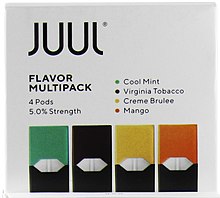
VaporVanity.com [CC BY 2.0 (https://creativecommons.org/licenses/by/2.0)%5D
According to the Campaign for Tobacco-Free Kids, the reasons for the popularity of Juul’s e-cigarettes include:
- They’re “sleek, high tech and easy to hide.”
- They look like USB flash drives and can be charged in the USB port of a computer.
- They come in flavors that appeal to youth—such as fruit, creme, mint, mango, menthol and cucumber.
- They deliver nicotine more effectively and at higher doses than other e-cigarettes.
- Although Juul claims that each “pod” (cartridge of nicotine liquid) contains as much nicotine as a pack of cigarettes, many teens don’t know they’re using a tobacco product.
Juul sales have grown dramatically and now comprise over 70% of the U.S. e-cigarette market.
But Juul faces a potentially devastating crisis: The Centers for Disease Control (CDC) and Prevention warned on September 6 that Americans should not smoke e-cigarettes.
The reason: Hundreds of people have become sick and at least six people have died from lung disease related to vaping.

According to a news story on the September 6 edition of the PBS Newshour:
“As many as 450 people, including 215 cases formally reported to the CDC, in 33 states have reported possible pulmonary disease after using e-cigarette devices, liquids, refill pods and cartridges.”
“Symptoms of this pulmonary disease include shortness of breath, fatigue, fever and nausea or vomiting.”
“While this investigation is ongoing, people should not use e-cigarette products,” said Dana Meaney-Delman, who oversees the CDC investigation.
The Annals of Internal Medicine report that at least 10.8 million adults are estimated to use e-cigarette products in the United States.
Of those, 15% said they had never smoked cigarettes.
Many chemicals and additives are present in e-cigarettes. And medical professionals don’t know what chemicals, or combinations of chemicals, could lead people to sicken and/or die.
The office of the U.S. Surgeon General warns: Besides nicotine, e-cigarettes can contain such harmful ingredients as:
- Ultrafine particles that can be inhaled deep into the lungs;
- Volatile organic compounds;
- Heavy metals, such as nickel, tin and lead;
- Flavorants such as diacetyl, a chemical linked to serious lung disease.
And while Juul touts its product as a safe alternative for those who want to quit smoking, the advice offered by the CDC is totally different: “Adult smokers who are attempting to quit should use evidence-based smoking cessation treatments, including counseling and FDA-approved medications.”
Many critics of the San Francisco moratorium have argued: “Even if people can’t get e-cigarettes legally, they’ll get them illegally. Or they’ll buy them in bay Area cities that don’t ban them.”
And that is true.
As with any banned product for which there is big demand, legions of suppliers—legal or illegal—will happily keep them supplied.
At best, cities, states and the Federal Government will pass laws regulating where e-cigarettes can be smoked.
Meanwhile, those who want to risk their health inhaling—and exhaling—poisonous vapors will do so. They cannot be stopped—except when their bodies give out.
Which, for legions of e-cigarette smokers, is now starting to happen.
ABC NEWS, ALTERNET, AMERICABLOG, AMERICAN EMPIRE, AP, BABY BOOMER RESISTANCE, BILL CLINTON, BUREAUCRACY, BUZZFEED, CBS NEWS, CHRIS MATHEWS, CNN, CROOKS AND LIARS, DAILY KOZ, DONALD TRUMP, DWIGHT EISENHOWER, FACEBOOK, FBI, FIVETHIRTYEIGHT, FRANKLIN D. ROOSEVELT, GEORGE H.W. BUSH, GEORGE W. BUSH, GERALD R. FORD, HARRY S. TRUMAN, JEB BUSH, JIMMY CARTER, JOHN F. KENNEDY, LYNDON B. JOHNSON, MOTHER JONES, MOVEON, MSNBC, NBC NEWS, NEWSWEEK, NIGEL HAMILTON, NPR, PBS NEWSHOUR, POLITICO, POLITICUSUSA, RAW STORY, REPUBLICAN PARTY, REUTERS, SALON, SEATTLE TIMES, SLATE, SUETONIUS, SYRIAN CIVIL WAR, SYRIAN REFUGEES, TALKING POINTS MEMO, TERRORISM, THE ATLANTIC, THE CHICAGO SUN-TIMES, THE CHICAGO TRIBUNE, THE DAILY BEAST, THE DAILY BLOG, THE GUARDIAN, THE HILL, THE HUFFINGTON POST, THE LOS ANGELES TIMES, THE NATION, THE NEW YORK TIMES, THE TWELVE CAESARS, THE WASHINGTON POST, THINKPROGRESS, TIME, TRUTHDIG, TWITTER, U.S. NEWS & WORLD REPORT, UPI, USA TODAY
In Bureaucracy, History, Law Enforcement, Military, Politics, Social commentary on September 11, 2019 at 12:03 am
On October 16, 2015, then-Republican Presidential candidate Donald Trump told a brutal truth to take down his opponent, Jeb Bush, former governor of Florida.
Interviewed on Bloomberg TV, Trump said what—to Republicans—had been the unsayable about former President George W. Bush: “I mean, say what you want, the World Trade Center came down during his time.”
“Hold on,” said correspondent Stephanie Ruhle, “you can’t blame George Bush for that.”
“He was President, okay? Blame him or don’t blame him, but he was President,” Trump said. “The World Trade Center came down during his reign.”
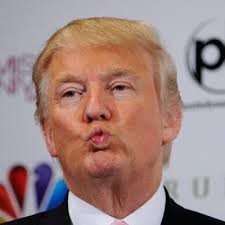
Donald Trump
Immediately after Trump’s remarks, the Right exploded.
Representative Peter King (R-NY) said that no one saw the 9/11 attacks coming and that blaming the former president was a cheap shot.
Speaking on Right-wing Fox Radio, King added: “I think Donald Trump is totally wrong there. That sounds like a Michael Moore talking point.”
And Jeb Bush rushed to his brother’s defense on Twitter: “How pathetic for @realdonaldtrump to criticize the president for 9/11. We were attacked & my brother kept us safe.”
Of course, “my brother” didn’t keep safe those 3,000 Americans who died on 9/11.
Nor did Jeb mention that, during his first eight months in office before September 11, “my brother” was on vacation 42% of the time.
But holding Bush accountable for the September 11, 2001 terror attacks on the Pentagon and World Trade Center is taboo for Right-wing Republicans.
Conversely, Republicans spent four years blaming President Barack Obama for the deaths of four Americans killed in an American consulate in Benghazi, Libya, in 2012.
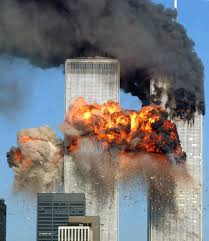
The World Trade Center on September 11, 2001
Fortunately, British historian Nigel Hamilton has brutally laid bare the facts of this needless tragedy.
Hamilton is the author of several acclaimed political biographies, including JFK: Reckless Youth and Bill Clinton: Mastering the Presidency.
His book: American Caesars: The Lives of the Presidents from Franklin D. Roosevelt to George W. Bush, appeared in 2010.
It was inspired by a classic work of ancient biography: The Twelve Caesars, by Gaius Suetonius Tranquillus—known as Suetonius.
Suetonius, a Roman citizen and historian, had chronicled the lives of the first 12 Caesars of Imperial Rome: Julius Caesar, Augustus, Tiberius, Caligula, Claudius, Nero, Galba, Otho, Vitellius, Vespasian, Titus and Domitian.
Hamilton wanted to examine post-World War II United States history as Suetonius had examined that of ancient Rome: Through the lives of the 12 “emperors” who had held the power of life and death over their fellow citizens—and those of other nations.

For Hamilton, the “greatest of American emperors, the Caesar Augustus of his time,” was Franklin D. Roosevelt, who led his country through the Great Depression and World War II.
His “”great successors” were Harry S. Truman, Dwight D. Eisenhower and John F. Kennedy—who, in turn, contained the Soviet Union abroad and presided over sustained economic prosperity at home.
By contrast, “arguably the worst of all the American Caesars” was “George W. Bush, and his deputy, Dick Cheney, who willfully and recklessly destroyed so much of the moral basis of American leadership in the modern world.”
Among the most lethal of Bush’s offenses: The appointing of officials who refused to take seriously the threat posed by Al-Qaeda.
These included:
- Paul Wolfowitz, the deputy Secretary of Defense: “I don’t understand why we are beginning by talking about this one man, bin Laden.”
- National Security Adviser Condoleeza Rice initially refused to hold a cabinet-level meeting on the subject. Then she insisted the matter be handled only by a more junior Deputy Principals meeting in April, 2001.
- Vice President Dick Cheney focused his attention on fomenting a war against Iraq.
- Secretary of Defense Donald Rumsfeld repeatedly ignored American Intelligence warnings that Al-Qaeda was planning a major attack on the American mainland.
The only major administration official who did take Al-Qaeda seriously was Richard Clarke, the chief counter-terrorism adviser on the National Security Council. But Clarke’s position didn’t give him Cabinet-level rank.
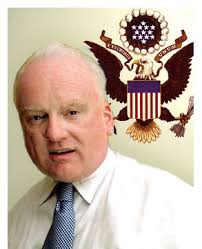
Richard Clarke
This put him at a severe disadvantage when dealing with higher-ranking Bush officials—such as Cheney, Rumsfeld, Wolfowitz and Rice.
Clarke alerted Federal Intelligence agencies that “Al-Qaeda is planning a major attack on us.” He asked the FBI and CIA to report to his office all they could learn about suspicious persons or activities at home and abroad.
Finally, at a meeting with Rice on September 4, 2001, Clarke challenged her to “picture yourself at a moment when in the very near future Al-Qaeda has killed hundreds of Americans, and imagine asking yourself what you wish then that you had already done.”
Seven days later, Al-Qaeda struck, and 3,000 Americans died horrifically—and needlessly.
Neither Bush, Cheney, Rice, Rumsfeld nor Wolfowitz ever apologized for their negligence. Nor has any of them ever been held accountable.
After 9/11, they wrapped themselves in the flag and posed as America’s saviors.
Only Richard Clarke—who had vainly argued for stepped-up security precautions and taking the fight to Al-Qaeda—gave that apology.
On March 24, 2004, Clarke testified at the public 9/11 Commission hearings. Addressing relatives of victims in the audience, he said: “Your government failed you, those entrusted with protecting you failed you, and I failed you.”
2008 PRESIDENTIAL CAMPAIGN, 2016 PRESIDENTIAL CAMPAIGN, ABC NEWS, AFFORDABLE CARE ACT, ALTERNET, AMERICABLOG, ANDREW SHAFFER, AP, BABY BOOMER RESISTANCE, BARACK OBAMA, BORDER WALL, BUZZFEED, CBS NEWS, CNN, CROOKS AND LIARS, DAILY KOZ, DON WINSLOW, DONALD TRUMP, DRUG ENFORCEMENT ADMINISTRATION, DRUG TRAFFICKING, FACEBOOK, FIVETHIRTYEIGHT, GOODREADS, HEROIN, HOPE NEVER DIES (BOOK), JOE BIDEN, JOHN F. KENNEDY, LOS ANGELES TIMES, MEXICO, MOTHER JONES, MOVEON, MSNBC, NBC NEWS, NEWSWEEK, NPR, PBS NEWSHOUR, POLITICO, POLITICUSUSA, RAW STORY, REUTERS, RICHARD M. NIXON, ROLLING STONE, SALON, SEATTLE TIMES, SINALOA CARTEL, SLATE, TALKING POINTS MEMO, THE ATLANTIC, THE BORDER (BOOK), THE CHICAGO SUN-TIMES, THE CHICAGO TRIBUNE, THE DAILY BEAST, THE DAILY BLOG, THE GUARDIAN, THE HILL, THE HUFFINGTON POST, THE LOS ANGELES TIMES, THE NATION, THE NEW YORK TIMES, THE WASHINGTON POST, THINKPROGRESS, TIME, TRUTHDIG, TWITTER, U.S. NEWS & WORLD REPORT, UPI, USA TODAY, WAR ON DRUGS
In Bureaucracy, History, Law, Law Enforcement, Politics, Social commentary on September 10, 2019 at 12:08 am
Presidential legacies live on in unexpected ways.
Right now, the legacies of Barack Obama and Donald Trump are vying for the attention of—fiction readers.
In Hope Never Dies: An Obama-Biden Mystery, author Andrew Shaffer has fashioned a novel that is half-mystery, half-bromance.
Vice President Joe Biden has just left the Obama White House and doesn’t know what he wants to do with the rest of his life. Then Finn Donnelly, his favorite railroad conductor, dies in a suspicious accident, leaving behind an ailing wife and a trail of clues.
To unravel the mystery, “Amtrak Joe” calls on the skills of his former boss: The 44th President of the United States. Together they scour biker bars, cheap motels and other memorable haunts throughout Delaware.![]()
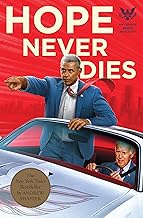
Then Biden unearths a disturbing truth about his longtime—and now dead—friend. This, in turn, leads Biden and Obama to uncover the sinister forces behind America’s opioid epidemic.
The book is pure fantasy fun, as evidenced from this review by Alexandra Alter in The New York Times:
“[Hope Never Dies is] a roughly 300-page work of political fanfiction, an escapist fantasy that will likely appeal to liberals pining for the previous administration, longing for the Obama-Biden team to emerge from political retirement as action heroes. But it’s also at times a surprisingly earnest story about estranged friends who are reunited under strange circumstances.”
A reader named Casey, reviewing the novel for Goodreads, writes: “While Shaffer could have leaned into nostalgia alone, he’s written a solid mystery with the characters fleshed out as more than just cliches.
“The reader really feels Biden’s longing to be helpful and his anguish over seeing 44’s legacy undone so quickly by an individual who shall remain nameless. (The presidential zings in this book are incredible, truly.)
“The tension between the two rings as true as it did when they were in office….By all means, this book shouldn’t work as well as it does. For a few hours, I got to enjoy the company of politicians who behaved like adults (mostly). It sure was nice.”
Contrasting with the relatively lighthearted fictional image of Barack Obama is the immensely darker one of Donald Trump.
Don Winslow offers Trump an extended cameo appearance in The Border, his massive, 736-page novel about America’s war on drugs—and the horrific violence it has spawned in Mexico. It’s the third of a trilogy of novels vividly portraying the violent costs of an unwinnable conflict.
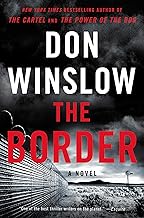
Art Keller is a dedicated agent of the Federal Drug Enforcement Administration (DEA). For over 40 years, he has waged all-out war on Adán Barrera, the godfather of the powerful Sinaloa Cartel.
Appointed director of the DEA, Keller now faces a series of deadly enemies:
- A heroin epidemic surging across America;
- Hitmen who want to kill him;
- Politicians who want to sabotage his agenda; and
- An incoming administration that’s allied with the very drug traffickers he’s trying to destroy.
And heading this administration is John Dennison—Donald Trump in all but name—who:
- Gratuitously insults people on Twitter;
- Fires a Special Counsel;
- Gets blackmailed by a woman he once bedded; and
- Colludes with drug traffickers for a multi-million dollar loan to finance his Presidential campaign.
Whereas the reviews for Hope Never Dies were as upbeat as the book itself, those of The Border reflect the novel’s mercilessly grim take on a war that can’t be won.
Los Angeles Times: “The Border is intricate, mean and swift, a sprawling canvass of characters including narco kingpins, a Guatemalan stowaway, a Staten Island heroin addict, a kinky hit woman, a barely veiled Donald Trump and DEA agent Art Keller, who….has been noble and merciless, a conflicted wanderer who makes America face the transgressions committed in its name.”
Rolling Stone: “Clocking in at over 700 pages, it is his most overtly political installment yet. He takes on the Trump administration directly, creating a fictional candidate, then president, who stokes racist fears of Mexicans, campaigns on ‘building the wall’ and, along with his venal son-in-law, gets caught up in a shady real estate deal involving Cartel money.”
NPR: “The Border becomes a book for our times. Like Shakespeare, it makes a three-act drama of our modern moment. Like Shakespeare’s plays, it shows us a world that is our own, a history that is our own, a burden that is our own, rendered out into the rhythm of scenes and arcs, chapters and parts.”
The signature slogan of Obama’s 2008 Presidential campaign was: “Yes, We Can!” The slogan of Trump’s 2016 effort could have been: “No, You Can’t.”
Obama concentrated the full force of his attention on reforming American healthcare—by making it available to millions whose insurance refused to provide coverage.
Trump’s top priority is to separate the United States from Mexico with an impenetrable wall—and he has even diverted $3.6 billion from Pentagon funding to pay for it.
Like John F. Kennedy, Barack Obama will likely be positively remembered as much for what he tried to do as what he succeeded at doing.
Like Richard M. Nixon, Donald Trump will likely be remembered as a menacing stain on American history.
2016 PRESIDENTIAL CAMPAIGN, 2020 PRESIDENTIAL CAMPAIGN, ABC NEWS, ADOLF HITLER, ALTERNET, AMERICABLOG, ANDREW JACKSON, AP, BABY BOOMER RESISTANCE, BASKET OF DEPLORABLES SPEECH, BUZZFEED, CBS NEWS, CNN, CROOKS AND LIARS, DAILY KOZ, DEMOCRATS, DONALD TRUMP, FACEBOOK, FIVETHIRTYEIGHT, HILLARY CLINTON, Kamala Harris, MOTHER JONES, MOVEON, MSNBC, MUNICH CONFERENCE, NBC NEWS, NEVILLE CHAMBERLAIN, NEWSWEEK, NPR, NYLE DIMARCO, PBS NEWSHOUR, POLITICO, POLITICUSUSA, RACISM, RAW STORY, REPUBLICANS, RETARDED (WORD), REUTERS, SALON, SEATTLE TIMES, SEXISM, SLATE, TALKING POINTS MEMO, THE ATLANTIC, THE CHICAGO SUN-TIMES, THE CHICAGO TRIBUNE, THE DAILY BEAST, THE DAILY BLOG, THE GUARDIAN, THE HILL, THE HUFFINGTON POST, THE LOS ANGELES TIMES, THE NATION, THE NEW YORK TIMES, THE WASHINGTON POST, THINKPROGRESS, TIME, TRUTHDIG, TWITTER, U.S. NEWS & WORLD REPORT, UPI, USA TODAY, XENOPHOBIA
In Bureaucracy, History, Politics, Social commentary on September 9, 2019 at 12:46 am
Frontier general and President Andrew Jackson once said: “One man with courage makes a majority.”
Today, that is a sentiment sadly lacking among Democrats.
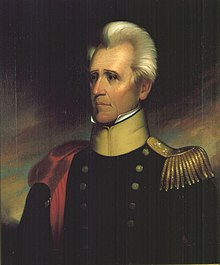
Andrew Jackson
Consider these two examples—each by a prominent Democratic candidate for President.
On September 9, 2016, Democratic Presidential Nominee Hillary Clinton delivered a speech at a New York fundraiser. It was the only Clinton speech during the campaign to be widely quoted by Democrats and Republicans.
Running against Republican Presidential Nominee Donald Trump, she divided his supporters into two groups.
The first group were the “deplorables,” for whom she showed open contempt:
“You know, to just be grossly generalistic, you could put half of Trump’s supporters into what I call the basket of deplorables. Right? The racist, sexist, homophobic, xenophobic, Islamaphobic–you name it. And unfortunately there are people like that. And he has lifted them up.
“He has given voice to their websites that used to only have 11,000 people–now 11 million. He tweets and retweets their offensive hateful mean-spirited rhetoric. Now, some of those folks—they are irredeemable, but thankfully they are not America.”
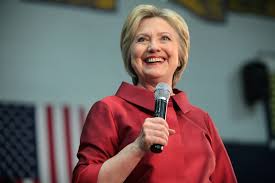
Hillary Clinton (Gage Skidmore photo)
But the second group, she said, consisted of poor, alienated Americans who rightly felt abandoned by their employers and their government:
“But….that other basket of people are people who feel that the government has let them down, the economy has let them down, nobody cares about them, nobody worries about what happens to their lives and their futures, and they’re just desperate for change. It doesn’t really even matter where it comes from.
“They don’t buy everything [Trump] says, but he seems to hold out some hope that their lives will be different. They won’t wake up and see their jobs disappear, lose a kid to heroin, feel like they’re in a dead-end. Those are people we have to understand and empathize with as well.”
Then, the day after making the speech, she apologized for it: “Last night I was ‘grossly generalistic,’ and that’s never a good idea. I regret saying ‘half–that was wrong.”
Many of Trump’s followers were racists, sexists and xenophobes–who deserved condemnation, not apologies.
Having eloquently reached out to many of the men and women who were a prime constituency for Trump, she then failed to offer an economic package to quickly and effectively address their vital needs for jobs and medical care.
The reason: She had refused to put one together long ago.
So now all she had to offer were platitudes, such as: “Education is the answer.”
Worst of all, she was running against Donald Trump—a man who never apologized for anything he said or did. As a result, she looked weak, indecisive, even cowardly.
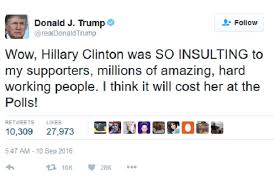
Trump, on the other hand, looked strong and unwavering. He turned her speech against her, tweeting: “Wow, Hillary Clinton was SO INSULTING to my supporters, millions of amazing, hard working people. I think it will cost her at the Polls!”
It did.
Now, fast-forward almost three years to the day of Clinton’s “basket of deplorables” speech.
On September 6, 2019, Democratic Presidential Candidate Kamala Harris chaired a Londonderry, New Hampshire, town hall meeting.
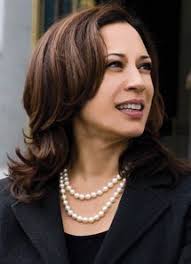
United States Senator Kamala Harris
A member of the audience asked her: “Somehow a racist bigot gets into the White House and then he says if you’re not my color you need to go back to your own country. So I am scared for this country. I am scared for the people of color in this country.
“So what are you going to do in the next one year, to diminish the mentally retarded action of this guy?”
Kamala Harris Laughs, Says Description of Trump as “Mentally Retarded” by Rally Attendee “Well Said” https://www.youtube.com/watch?v=U0Sx57OYT_M
The question triggered laughter and applause from the audience—and laughter and a “Well said, well said” response from Harris.
She then thanked the questioner for “having the courage to stand up and say it is that there are a lot of people living with extreme fear right now in our country, extreme fear.”
But then video of the exchange reached Twitter, Suddenly, Harris found herself attacked not for what she had said but for what someone she didn’t even know had said.
“I hate amplifying content I know the right will seize on and twist for their own hypocritical gain, but this hurts my heart. #CripTheVote,” tweeted Kendally Brown.
Deaf actor and activist Nyle DiMarco tweeted: “1)R-word is unacceptable. It is a slur, an insult. 2) Kamala should have handled this better. An apology is needed.”
Having laughed and applauded the speaker’s remark, Harris then claimed to CBS News that she hadn’t heard him say “retarded.”
And to NBC News said: “I would never condone anyone using that word in any way, shape or form, even including the guy — against the guy I’m running against.”
She should have deflected the criticism with a line like: “You’ll have to speak to the man who used it”—and moved on to another topic.
When British Prime Minister Neville Chamberlain caved to Adolf Hitler’s demand for control of Czechoslovakia, he both disheartened democracy’s supporters and emboldened a murderous tyrant.
Almost 81 years after the infamous Munich Conference, Democrats have not learned the truth taught by Andrew Jackson.
2016 PRESIDENTIAL ELECTION, A BRONX TALE, ABC NEWS, ADOLF HITLER, ALTERNET, AMERICABLOG, AP, BABY BOOMER RESISTANCE, BILL CLINTON, BUZZFEED, CBS NEWS, CHAZZ PALMINTERI, CNN, CROOKS AND LIARS, DAILY KOZ, DONALD TRUMP, FACEBOOK, FBI, FIVETHIRTYEIGHT, H.R. MCMASTER, HILLARY CLINTON, IRS, J. EDGAR HOOVER, JEFF SESSIONS, JOHN F. KENNEDY, JOHN KELLY, LYNDON B. JOHNSON, MOTHER JONES, MOVEON, MSNBC, NBC NEWS, NEWSWEEK, NICCOLO MACHIAVELLI, NPR, PBS NEWSHOUR, POLITICO, POLITICUSUSA, RAW STORY, REINCE PREBIUS, REPUBLICAN PARTY, REUTERS, RICHARD M. NIXON, ROBERT DE NIRO, ROBERT F. KENNEDY, Ronald Reagan, SALON, SEATTLE TIMES, SERGEI KISLYAK, SLATE, TALKING POINTS MEMO, THE ATLANTIC, THE CHICAGO SUN-TIMES, THE CHICAGO TRIBUNE, THE DAILY BEAST, THE DAILY BLOG, THE GUARDIAN, THE HILL, THE HUFFINGTON POST, THE LOS ANGELES TIMES, THE NATION, THE NEW YORK TIMES, THE PRINCE, THE WASHINGTON POST, THINKPROGRESS, TIME, TRUTHDIG, TWITTER, U.S. NEWS & WORLD REPORT, UP, UPI, USA TODAY, WILLIAM RALPH INGE
In Bureaucracy, History, Law Enforcement, Politics, Social commentary on September 6, 2019 at 12:04 am
American Presidents—like politicians everywhere—strive to be loved. There are two reasons for this.
First, even the vilest dictators want to believe they are good people—and thus rewarded by the love of their subjects.
Second, a beloved leader has greater clout than one who isn’t. A Presidential candidate who wins by a landslide has a mandate to pursue his agenda—at least, for the first two years of his administration.
But Presidents—like Barack Obama—who strive to avoid conflict often get treated with contempt and hostility by their adversaries.

Barack Obama
In Renegade: The Making of a President, Richard Wolffe chronicled Obama’s successful 2008 bid for the White House. Among his revelations:
Obama, believing in rationality and decency, preferred to responding to attacks on his character rather than attacking the character of his enemies.
A graduate of Columbia University and Harvard Law School, Obama was one of the most academically gifted Presidents in United States history.
Yet he failed to apply this fundamental lesson taught by Niccolo Machiavelli, the father of modern political science:
A man who wishes to make a profession of goodness in everything must inevitably come to grief among so many who are not good. And therefore it is necessary for a prince, who wishes to maintain himself, to learn how not to be good, and to use this knowledge and not use it, according to the necessity of the case.
Thus, Obama found most of his legislative agenda stymied by Republicans.
For example: In 2014, Senator Rand Paul (R-Ky.) sought to block David Barron, Obama’s nominee to the First Circuit Court of Appeals.
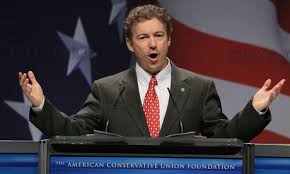
Rand Paul
Paul objected to Barron’s authoring memos that justified the killing of an American citizen by a drone in Yemen on September 30, 2011.
Anwar al-Awlaki had been a radical Muslim cleric notorious on the Internet for encouraging Muslims to attack the United States.
Paul demanded that the Justice Department release the memos Barron crafted justifying the drone policy.
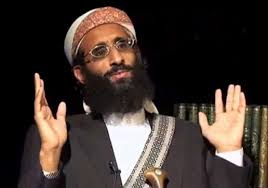
Anwar al-Awlaki
Imagine how Republicans would depict Paul—or any Democratic Senator—who did the same with a Republican President: “Rand Paul: A traitor who supports terrorists. He sides with America’s sworn enemies against its own lawfully elected President.”
But Obama did nothing of the kind.
(On May 22, 2014, the Senate voted 53–45 to confirm Barron to the First Circuit Court of Appeals.)
But Presidents who seek to rule primarily by fear can encounter their own limitations. Which immediately brings to mind Donald Trump.
As both a Presidential candidate and President, Trump has repeatedly used Twitter to attack hundreds of real and imagined enemies in politics, journalism, TV and films.
From June 15, 2015, when he launched his Presidential campaign, until October 24, 2016, Trump fired almost 4,000 angry, insulting tweets at 281 people and institutions that had somehow offended him.
The New York Times needed two full pages of its print edition to showcase them.
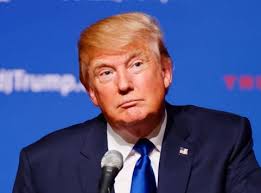
Donald Trump
As a Presidential candidate and President, Trump has shown outright hatred for President Obama. For five years, he slandered Obama as a Kenyan-born alien who had no right to hold the Presidency.
Then, on March 4, 2017, in a series of unhinged tweets, Trump falsely accused Obama of committing an impeachable offense: Tapping his Trump Tower phones prior to the election.
As President, Trump has refused to reach beyond the narrow base of white, racist, ignorant, hate-filled, largely rural voters who elected him.
And he has bullied and insulted even White House officials and his own handpicked Cabinet officers:
- Trump waged a Twitter-laced feud against Jeff Sessions, his Attorney General. Sessions’ “crime”? Recusing himself from investigations into well-established ties between Russian Intelligence agents and members of Trump’s Presidential campaign. Trump fired him on November 7, 2018, the day after Democrats retook the House of Representatives in the mid-term elections.
- Trump repeatedly humiliated Chief of Staff, Reince Priebus—at one point ordering him to kill a fly that was buzzing about. On July 28, 2017, six months after taking the job, Priebus resigned.
- Trump similarly tongue-lashed Priebus’ replacement, former Marine Corps General John Kelly. Trump was angered by Kelly’s efforts to limit the number of advisers who had unrestricted access to him. Kelly told colleagues he had never been spoken to like that during 35 years of military service—and wouldn’t tolerate it again.
- After Trump gave sensitive Israeli intelligence to Russian ambassador Sergey Kislyak, his national security advisor, H.R. McMaster, denied this had happened. Trump then contradicted McMaster in a tweet: “As president, I wanted to share with Russia (at an openly scheduled WH meeting) which I have the absolute right to do, facts pertaining to terrorism and airline flight safety.”
If Trump ever read Niccolo Machiavelli’s The Prince, he’s clearly forgotten this passage:
Cruelties ill committed are those which, although at first few, increase rather than diminish with time….Whoever acts otherwise….is always obliged to stand with knife in hand, and can never depend on his subjects, because they, owing to continually fresh injuries, are unable to depend upon him….
Or, as Cambridge Professor of Divinity William Ralph Inge put it: “A man may build himself a throne of bayonets, but he can’t sit on it.”
2016 PRESIDENTIAL ELECTION, A BRONX TALE, ABC NEWS, ADOLF HITLER, ALTERNET, AMERICABLOG, AP, BABY BOOMER RESISTANCE, BILL CLINTON, BUZZFEED, CBS NEWS, CHAZZ PALMINTERI, CNN, CROOKS AND LIARS, DAILY KOZ, DONALD TRUMP, FACEBOOK, FBI, FIVETHIRTYEIGHT, H.R. MCMASTER, HILLARY CLINTON, IRS, J. EDGAR HOOVER, JEFF SESSIONS, JOHN F. KENNEDY, JOHN KELLY, LYNDON B. JOHNSON, MOTHER JONES, MOVEON, MSNBC, NBC NEWS, NEWSWEEK, NICCOLO MACHIAVELLI, NPR, PBS NEWSHOUR, POLITICO, POLITICUSUSA, RAW STORY, REINCE PREBIUS, REPUBLICAN PARTY, REUTERS, RICHARD M. NIXON, ROBERT DE NIRO, ROBERT F. KENNEDY, Ronald Reagan, SALON, SEATTLE TIMES, SERGEI KISLYAK, SLATE, TALKING POINTS MEMO, THE ATLANTIC, THE CHICAGO SUN-TIMES, THE CHICAGO TRIBUNE, THE DAILY BEAST, THE DAILY BLOG, THE GUARDIAN, THE HILL, THE HUFFINGTON POST, THE LOS ANGELES TIMES, THE NATION, THE NEW YORK TIMES, THE PRINCE, THE WASHINGTON POST, THINKPROGRESS, TIME, TRUTHDIG, TWITTER, U.S. NEWS & WORLD REPORT, UP, UPI, USA TODAY, WILLIAM RALPH INGE
In Bureaucracy, History, Law Enforcement, Politics, Social commentary on September 5, 2019 at 12:14 am
Is it better to be loved or feared?
That was the question Florentine statesman Niccolo Machiavelli raised more than 500 years ago.
Presidents have struggled to answer this question—and have come to different conclusions.
LOVE ME, FEAR MY BROTHER
Most people felt irresistibly drawn to John F. Kennedy—even his political foes. Henry Luce, the conservative publisher of Time, once said, “He makes me feel like a whore.”
But JFK could afford to bask in the love of others—because his younger brother, Robert, was the one who inspired fear.
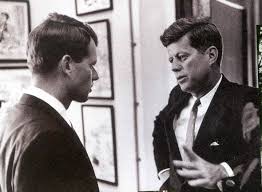
Robert F. Kennedy and John F. Kennedy
He had done so as Chief Counsel for the Senate Rackets Committee (1957-59), grilling Mafia bosses and corrupt union officials—notably Teamsters President James Hoffa.
Appointed Attorney General by JFK, he unleashed the FBI on the Mafia. When the steel companies colluded in an inflationary rise in the price of steel in 1962, Bobby sicced the FBI on them.
In 1963, JFK’s cavorting with Ellen Rometsh threatened to destroy his Presidency. Rometsch, a Washington, D.C. call girl, was suspected by the FBI of being an East German spy.
With Republican Senators preparing to investigate the rumors, Bobby ordered Rometsch deported immediately (to which, as a German citizen, she was subject).
He also ordered FBI Director J. Edgar Hoover to deliver a warning to the Majority and Minority leaders of the Senate: The Bureau was fully aware of the extramarital trysts of most of their own members. And an investigation into the President’s sex life could easily lead into revelations of Senatorial sleaze.
Plans for a Senatorial investigation were shelved.
BEING LOVED AND FEARED
In the 1993 movie, A Bronx Tale, 17-year-old Calogero (Lillo Brancato) asks his idol, the local Mafia capo, Sonny (Chazz Palminteri): “Is it better to be loved or feared?”
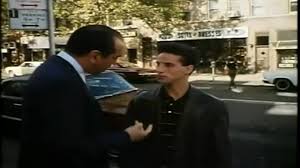
Sonny gives advice to his adopted son, Calogero
Sonny says if he had to choose, he would rather be feared. But he adds a warning straight out of Machiavelli: “The trick is not being hated. That’s why I treat my men good, but not too good.
“I give too much, then they don’t need me. I give them just enough where they need me, but they don’t hate me.”
Machiavelli, writing in The Prince, went further:
“Still a Prince should make himself feared in such a way that if he does not gain love, he at any rate avoids hatred, for fear and the absence of hatred may well go together….”
Many who quote Machiavelli in defense of being feared overlook this vital point: It’s essential to avoid becoming hated.
To establish a fearful reputation, a leader must act decisively and ruthlessly when the interests of the organization are threatened. Punitive action must be taken promptly and confidently.
One or two harsh actions of this kind can make a leader more feared than a reign of terror.
In fact, it’s actually dangerous to constantly employ cruelties or punishments. Whoever does so, warns Machiavelli, “is always obliged to stand with knife in hand, and can never depend on his subjects, because they, owing to continually fresh injuries, are unable to depend upon him.”
The 20th century President who came closest to realizing Machiavelli’s “loved and feared” prince in himself was Ronald Reagan.
Always smiling, quick with a one-liner (especially at press conferences), seemingly unflappable, he projected a constantly optimistic view of his country and its citizens.
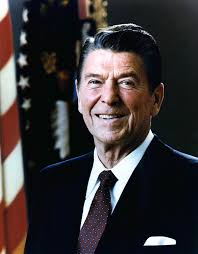
Ronald Reagan
In his acceptance speech at the 1980 Republican National Convention he declared: “[The Democrats] say that the United States has had its days in the sun, that our nation has passed its zenith.… My fellow citizens, I utterly reject that view.”
And Americans enthusiastically responded to that view, twice electing him President (1980 and 1984).
But there was a steely, ruthless side to Reagan that appeared when he felt crossed.
On August 3, 1981, nearly 13,000 air traffic controllers walked out after contract talks with the Federal Aviation Administration collapsed. As a result, some 7,000 flights across the country were canceled on that day at the peak of the summer travel season.
Reagan branded the strike illegal. He threatened to fire any controller who failed to return to work within 48 hours.
On August 5, Reagan fired more than 11,000 air traffic controllers who hadn’t returned to work. The mass firing slowed commercial air travel, but it did not cripple the system as the strikers had forecast.
Reagan’s action stunned the American labor movement. Reagan was the only American President to have belonged to a union, the Screen Actors Guild. He had even been president of this—from 1947 to 1954.
There were no more strikes by Federal workers during Reagan’s tenure in office.
Similarly, Libya’s dictator, Moammar Kadaffi, learned that Reagan was not a man to cross.
On April 5, 1986, Libyan agents bombed a nightclub in West Berlin, killing three people, one a U.S. serviceman. The United States quickly learned that Libyan agents in East Germany were behind the attack.
On April 15, acting on Reagan’s orders, U.S. Air Force, Navy and Marine Corps bombers struck at several sites in Tripoli and Benghazi. Reportedly, Kaddafi himself narrowly missed becoming a casualty.
There were no more acts of Libyan terrorism against Americans for the rest of Reagan’s term.
2016 PRESIDENTIAL ELECTION, A BRONX TALE, ABC NEWS, ADOLF HITLER, ALTERNET, AMERICABLOG, AP, BABY BOOMER RESISTANCE, BILL CLINTON, BUZZFEED, CBS NEWS, CHAZZ PALMINTERI, CNN, CROOKS AND LIARS, DAILY KOZ, DONALD TRUMP, FACEBOOK, FBI, FIVETHIRTYEIGHT, H.R. MCMASTER, HILLARY CLINTON, IRS, J. EDGAR HOOVER, JEFF SESSIONS, JOHN F. KENNEDY, JOHN KELLY, LYNDON B. JOHNSON, MOTHER JONES, MOVEON, MSNBC, NBC NEWS, NEWSWEEK, NICCOLO MACHIAVELLI, NPR, PBS NEWSHOUR, POLITICO, POLITICUSUSA, RAW STORY, REINCE PREBIUS, REPUBLICAN PARTY, REUTERS, RICHARD M. NIXON, ROBERT DE NIRO, ROBERT F. KENNEDY, Ronald Reagan, SALON, SEATTLE TIMES, SERGEI KISLYAK, SLATE, TALKING POINTS MEMO, THE ATLANTIC, THE CHICAGO SUN-TIMES, THE CHICAGO TRIBUNE, THE DAILY BEAST, THE DAILY BLOG, THE GUARDIAN, THE HILL, THE HUFFINGTON POST, THE LOS ANGELES TIMES, THE NATION, THE NEW YORK TIMES, THE PRINCE, THE WASHINGTON POST, THINKPROGRESS, TIME, TRUTHDIG, TWITTER, U.S. NEWS & WORLD REPORT, UP, UPI, USA TODAY, WILLIAM RALPH INGE
In Bureaucracy, History, Law Enforcement, Politics, Social commentary on September 4, 2019 at 12:14 am
It’s probably the most-quoted passage of Niccolo Machiavelli’s infamous book, The Prince:
“From this arises the question whether it is better to be loved than feared, or feared more than loved. The reply is, that one ought to be both feared and loved, but as it is difficult for the two to go together, it is much safer to be feared than loved.
“For it may be said of men in general that they are ungrateful, voluble, dissemblers, anxious to avoid danger and covetous of gain. As long as you benefit them, they are entirely yours: they offer you their blood, their goods, their life and their children, when the necessity is remote, but when it approaches, they revolt.
“And the prince who has relied solely on their words, without making other preparations, is ruined. For the friendship which is gained by purchase and not through grandeur and nobility of spirit is bought but not secured, and at a pinch is not to be expended in your service.
“And men have less scruple in offending one who makes himself loved than one who makes himself feared. For love is held by a chain of obligations which, men being selfish, is broken whenever it serves their purpose. But fear is maintained by a dread of punishment which never fails.”
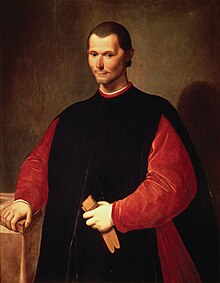
Niccolo Machiavelli
So—which is better: To be feared or loved?
In the 1993 film, A Bronx Tale, 17-year-old Calogero (Lillo Brancato) poses that question to his idol, the local Mafia capo, Sonny (Chazz Palminteri).
“That’s a good question,” Sonny replies. “It’s nice to be both, but it’s very difficult. But if I had my choice, I would rather be feared.
“Fear lasts longer than love. Friendships that are bought with money mean nothing. You see how it is around here. I make a joke, everybody laughs. I know I’m funny, but I’m not that funny. It’s fear that keeps them loyal to me.”
Presidents face the same dilemma as Mafia capos—and resolve it in their own ways.
LOVE ME BECAUSE I NEED TO BE LOVED
Bill Clinton believed that he could win over his self-appointed Republican enemies through his sheer charm.
Part of this lay in self-confidence: He had won the 1992 and 1996 elections by convincing voters that “I feel your pain.”
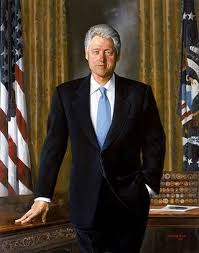
Bill Clinton
And part of it lay in his need to be loved. He once said that if he were in a room with 100 people and 99 of them liked him but one didn’t, he would spend all his time with that one person, trying to win him over.
But while he could charm voters, he could not bring himself to retaliate against his sworn Republican enemies.
On April 19, 1995, Right-wing terrorist Timothy McVeigh drove a truck–packed with 5,000 pounds of ammonium nitrate and nitromethane–to the front of the Alfred P. Murrah Federal Building in Oklahoma City.
The explosion killed 168 people, including 19 children in the day care center on the second floor, and injured 684 others.
Suddenly, Republicans were frightened. Since the end of World War II, they had vilified the very Federal Government they belonged to. They had deliberately courted the Right-wing militia groups responsible for the bombing.
So Republicans feared Clinton would now turn their decades of hate against them.
They need not have worried. On April 23, Clinton presided over a memorial service for the victims of the bombing. He gave a moving eulogy—without condemning the hate-filled Republican rhetoric that had at least indirectly led to the slaughter.
Clinton further sought to endear himself to Republicans by:
- Adopting NAFTA—the Republican-sponsored North American Free Trade Act, which later proved so devastating to American workers;
- Siding with Republicans against poor Americans on welfare; and
- Championing the gutting of the Depression-era Glass-Steagall law, which barred investment banks from commercial banking activities.
The result: Republicans believed Clinton was weak–and could be rolled.
In 1998, House Republicans moved to impeach him over a sex scandal with White House intern Monica Lewinsky. But his Presidency survived when the Senate refused to convict.
LOVE ME BECAUSE I’LL HURT YOU IF YOU DON’T
Lyndon Johnson wanted desperately to be loved.
Once, he complained to Dean Acheson, the former Secretary of State under Harry S. Truman, about the ingratitude of American voters. He had passed far more legislation than his predecessor, John F. Kennedy, and yet Kennedy remained beloved, while he, Johnson, was not.
Why was that? Johnson demanded.
“You are not a very likable man,” said Acheson truthfully.
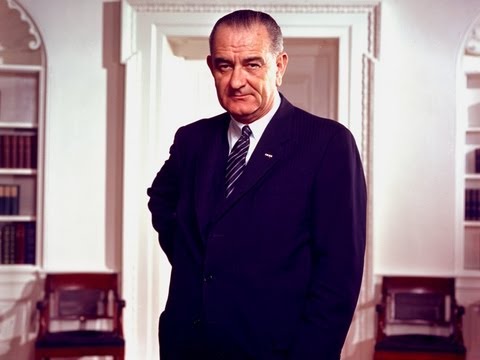
Lyndon B. Johnson
Johnson tried to make his subordinates love him. He would humiliate a man, then give him an expensive gift—such a Cadillac. It was his way of binding the man to him.
He was on a first-name basis with J. Edgar Hoover, the longtime director of the FBI. He didn’t hesitate to request—and get—raw FBI files on his political opponents.
On at least one occasion, he told members of his Cabinet: No one would dare walk out on his administration—because if they did, two men would follow their ass to the end of the earth: Mr. J. Edgar Hoover and the head of the Internal Revenue Service.
ABC NEWS, ALCOHOLISM, ALTERNET, AMERICABLOG, AP, BABY BOOMER RESISTANCE, BBC, BEGGING, BIRDS, BUZZFEED, CBS NEWS, CNN, CROOKS AND LIARS, DAILY KOS, DAILY KOZ, DRUG ADDICTION, FACEBOOK, FIVETHIRTYEIGHT, HOMELESS, HOMELESSNESS, JULIE ANDREWS, MARY POPPINS, MENTAL ILLNESS, MOTHER JONES, MOVEON, MSNBC, NBC NEWS, NEWSWEEK, NPR, PBS NEWSHOUR, PIGEONS, POLITICO, POLITICUSUSA, PUBLIC HEALTH, RAW STORY, REUTERS, SALON, SAN FRANCISCO, SAN FRANCISCO DEPARTMENT OF PUBLIC WORKS, SEATTLE TIMES, SLATE, TALKING POINTS MEMO, THE ATLANTIC, THE CHICAGO SUN-TIMES, THE CHICAGO TRIBUNE, THE DAILY BEAST, THE DAILY BLOG, THE GUARDIAN, THE HILL, THE HUFFINGTON POST, THE LOS ANGELES TIMES, THE NATION, THE NEW YORK TIMES, THE WALL STREET JOURNAL, THE WASHINGTON POST, THINKPROGRESS, TIME, TRUTHDIG, TWITTER, U.S. NEWS & WORLD REPORT, UPI, USA TODAY, WILLIE BROWN
In Bureaucracy, History, Law, Law Enforcement, Politics, Social commentary on September 3, 2019 at 12:04 am
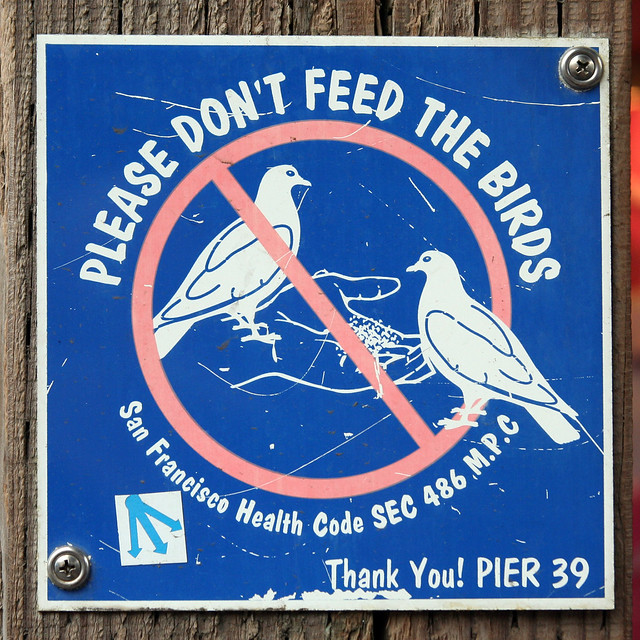
If you visit San Francisco, forget what Julie Andrews told you in Mary Poppins: Don’t “Feed the Birds.”
Getting caught doing so can net you a fine from $25 to $1,000.
City officials launched the campaign in 2004, fining people who fed pigeons in the Tenderloin area.
Within a month, they extended the crackdown to Fisherman’s Wharf, Chinatown and the cable car turnaround in downtown.
Feeding birds “damages property, and it’s not good for the bird population,” said Christine Falvey, a spokeswoman for the Public Works Department at the time of the ban.
“We have a whole education campaign letting people know it’s against the law,” said Falvey.
This includes posters erected by the Department of Public Works, which read:
“Please do not feed the pigeons. There are dozens of reasons why, but mainly: Feeding pigeons harms our neighborhoods and also harms the birds.
“Large population of pigeons is a health hazard. Our huge feral pigeon population is a health hazard and creates many problems in the city.
“Pigeon droppings dirty public spaces, do costly damage to buildings, and can spread life-threatening diseases, especially to the elderly and immune-deficient. Their nesting materials block drains and harbor parasites like bird mites. Pigeon food makes a mess and attracts rats.
“Feeding pigeons promotes over-breeding. Pigeon feeding produces over-breeding.
“Pigeons normally breed two or three times a year, producing two eggs per brood. Overfed city pigeons can breed up to eight times a year.
“Pigeons are harmed when fed. When you feed pigeons, you are not doing them a favor. They lose their natural ability to scavenge and survive on their own.
“Pigeon over population leads to overcrowded, unsanitary conditions and produces sick and injured birds. A smaller flock is healthier and does less damage.
“It is illegal. It’s against the law to feed pigeons on the streets or sidewalks of San Francisco (Sec. 486. M.P.C). Violators may be cited and fined.
“You can help keep your neighborhood safe and clean and the pigeon population under control by not feeding pigeons. Keep edible garbage away from pigeons by discarding it in a securely covered garbage can.
“And don’t feed pets outside. You may report pigeon feeders to the San Francisco Police Department at 415-553-0123, or by calling 3-1-1.
“Please join in on the efforts to keep San Francisco clean and beautiful by NOT feeding the pigeons.”

* * * * *
At the same time that city officials are telling residents, “Please don’t feed the pigeons,” they aren’t telling them, “Please don’t feed the bums.”
Because of its mild climate and social programs that give cash payments to just-arrived vagrants, San Francisco is often considered the homelessness capital of the United States.
Former San Francisco Mayor Willie Brown (1996–2004) actually proposed that the city create electronic cards for transients that residents could swipe with their credit cards, thus transferring money from their accounts to that of the recipient.
Brown dropped the idea when faced with the brutal truth that not many citizens—especially women—would be willing to whip out their credit card when confronted by a smelly, unshaved and possibly psychotic transient.
San Francisco spends spends more than $40,000 per homeless person each year. In 2018, the city spent $305 million on what are now euphemistically called “the homeless.” That’s because city officials don’t want to use words that accurately describe who makes up the overwhelming majority of this population:
- Druggies
- Drunks
- Mental cases
- Bums
Eight city departments oversee at least 400 contracts to 76 private organizations, most of them nonprofits, that are charged with eliminating this pestilence.
Estimates of this population range from 7,000 to 10,000 people, of which approximately 3,000 to 5,000 refuse shelter.
A similar public crackdown on “bum-feeders” could go like this:
“Please do not feed the bums. There are dozens of reasons why, but mainly: Feeding bums harms our neighborhoods and also harms the bums.
“Our huge feral bum population is a health hazard and creates many problems in the city. Bum droppings dirty public spaces, do costly damage to buildings, and can spread life-threatening diseases, especially to the elderly and immune-deficient.

“Their stolen shopping carts and filthy possessions block sidewalks and harbor parasites like bedbugs and lice. Bum food makes a mess and attracts rats.
“Feeding bums promotes overbreeding. Bums normally travel alone, foraging for drugs and/or alcohol. Pampered city bums flock to liquor stores and drug dens where they can indulge their vices, thus taxing city medical services to the limit.

“When you feed bums, you are not doing them a favor. They lose their natural ability to find work and support themselves and their families.
“Bum over population leads to overcrowded, unsanitary conditions and produces sick and injured bums. A smaller horde is healthier and does less damage.
“It’s against the law to feed bums on the streets or sidewalks of San Francisco. Violators may be cited and fined.
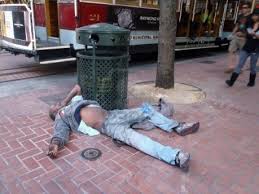
“You can help keep your neighborhood safe and clean and the bum population under control by not feeding bums.
“Keep edible garbage away from bums by discarding it in a securely covered garbage can. And don’t feed bums outside.
“It is Illegal. You may report bum feeders to the San Francisco Police Department at 415-553-0123, or by calling 3-1-1.
“Please join in on the efforts to keep San Francisco clean and beautiful by NOT feeding the bums.”
ABC NEWS, ALTERNET, AMERICABLOG, AP, BABY BOOMER RESISTANCE, BUZZFEED, CBS NEWS, CLASS WARFARE, CNN, CROOKS AND LIARS, DAILY KOZ, DANA CARVEY, DICK CHENEY, ECONOMIC DISPARITY, FACEBOOK, FIVETHIRTYEIGHT, FRANK CAPRA, GEORGE BAILEY, HENRY F. POTTER, IT'S A WONDERFUL LIFE, JAMES STEWART, LIONEL BARRYMORE, MOTHER JONES, MOVEON, MOVIES, MSNBC, NBC NEWS, NEWSWEEK, NPR, PBS NEWSHOUR, POLITICO, POLITICUSUSA, RAW STORY, REUTERS, SALON, SATURDAY NIGHT LIVE, SEATTLE TIMES, SLATE, TALKING POINTS MEMO, THE ATLANTIC, THE CHICAGO SUN-TIMES, THE CHICAGO TRIBUNE, THE DAILY BEAST, THE DAILY BLOG, THE GUARDIAN, THE HILL, THE HUFFINGTON POST, THE LOS ANGELES TIMES, THE NATION, THE NEW Y ORK TIMES, THE NEW YORK TIMES, THE WASHINGTON POST, THINKPROGRESS, TIME, TRUTHDIG, TWITTER, U.S. NEWS & WORLD REPORT, UNEMPLOYMENT, UPI, USA TODAY
In Business, History, Law, Law Enforcement, Politics, Social commentary on September 2, 2019 at 12:13 am
Every Christmas, TV audiences find comfort and triumph in the rerunning of a black-and-white 1946 movie: It’s a Wonderful Life.
But in its depiction of the endless struggle between management and labor, it could just as well be shown on Labor Day.
It’s the story of George Bailey (James Stewart), a decent husband and father who hovers on the brink of suicide—until his guardian angel, Clarence, suddenly intervenes.

Clarence reveals to George what his home town, Bedford Falls, New York, would be like if he had never been born. George finds himself shocked to learn:
- With no counterweight to the schemes of rapacious slumlord Henry F. Potter, Bedford Falls becomes Potterville, filled with pawn shops and sleazy nightclubs.
- With no George Bailey to save his younger brother, Harry, from drowning in a frozen pond, Harry drowns.
- With no Harry to live to become a Naval fighter pilot in World War II, he’s not on hand to shoot down two Japanese planes targeting an American troopship.
- As a result, the troopship and its crew are destroyed.
George is forced to face the significant role he has played in the lives of so many others.
Armed with this new knowledge, he once again embraces life, running through the snow-covered streets of Bedford Falls and shouting “Merry Christmas!” to everyone he meets.
Audiences have hailed George Bailey as an Everyman hero—and the film as a life-affirming testament to the unique importance of each individual.
But there is another aspect of this movie that has not been so closely studied: The legacy of its villain, Henry F. Potter, who, as played by Lionel Barrymore, bears a striking resemblance to former Vice President Dick Cheney.

Henry F. Potter
It is Potter—the richest man in Bedford Falls—whose insatiable greed threatens to destroy it. And it is Potter whose criminality drives George Bailey to the brink of suicide.
George dreams of leaving Bedford Falls and building skyscrapers. Meanwhile, he works at the Bailey Building and Loan Association, which plays a vital role in the life of the community.
Potter, a member of the Building and Loan Association board, tries to persuade the board of directors to dissolve the firm. He objects to their providing home loans for the working poor.
George persuades them to reject Potter’s proposal, but they agree only on condition that George run the Building and Loan. Reluctantly, George agrees.
Potter tries to lure George away from the Building and Loan, offering him a $20,000 salary and the chance to visit Europe. George is briefly tempted.
But then he realizes that Potter intends to close down the Building and Loan and deny financial help to those who most need it. Angrily, he turns down Potter’s offer: “In the whole vast configuration of things, I’d say you were nothing but a scurvy little spider.”
Momentarily defeated, Potter bides his time for revenge.
On Christmas Eve morning, the town prepares a hero’s welcome for George’s brother, Harry. George’s scatter-brained Uncle Billy visits Potter’s bank to deposit $8,000 of the Building and Loan’s cash funds.
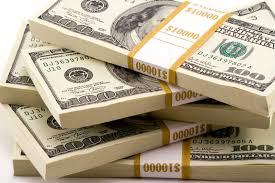
He taunts Potter by reading the newspaper headlines announcing the coming tribute. Potter snatches the paper, and Billy unthinkingly allows the money to be snatched with it.
When Billy leaves, Potter opens the paper and sees the money. He keeps it, knowing that misplacement of bank money will bankrupt the Building and Loan and bring criminal charges against George.
It’s at this point that George almost commits suicide—only to be saved by Clarence, his guardian angel.
Then, word of George’s plight suddenly reaches his wide range of grateful friends. A flood of townspeople arrive with more than enough donations to save George and the Building and Loan.
The movie ends on a triumphant note, with George basking in the glow of love from his family and friends.
But no critic seems to have noticed that Henry Potter’s theft has gone unnoticed. (Uncle Billy can’t recall how he lost the money.) Potter is richer by $8,000. And ready to go on taking advantage of others.
Perhaps it’s time to see Potter’s actions in a new light—that of America’s richest 1%, ever ready to prey upon the weaknesses of others.
Justice never catches up with Potter in the movie. But the joke-writers at Saturday Night Live later conjured up a satisfactory punishment for his avarice.
In this version, Uncle Billy suddenly remembers that he left the money with Potter. Enraged, George Bailey (Dana Carvey) leads his crowd of avenging friends to Potter’s office.
Potter realizes the jig is up and offers to return the money. But George wants more than that—and he and his friends proceed to stomp and beat Potter to death.
The skit ends with with George and his friends singing “Auld Lang Syne”—as they do in the movie—as they finish off Potter with clubs.
America is rapidly a divided nation—one where the richest 1% lord it over an increasingly impoverished 99%.
The time may be coming when many Americans are ready to embrace the SNL approach to economic justice.
ABC NEWS, ADAM SCHIFF, AFFORDABLE CARE ACT, ALEXANDER THE GREAT, ALTERNET, AMERICABLOG, ANCIENT ROME, AP, BABY BOOMER RESISTANCE, BANDY X. LEE, BANGLADESH, BARACK OBAMA, BUZZFEED, CALIGULA: THE MAD EMPEROR OF ROME (BOOK), CBS NEWS, CHINA, CIA, CNN, CONSERVATIVE POLITICAL ACTION CONFERENCE (C-PAC), CRAIG MALKIN, CROOKS AND LIARS, DAILY KOZ, DEMOCRATS, DONALD TRUMP, DR. OZ, FACEBOOK, FBI, FIRST AMENDMENT, FIVETHIRTYEIGHT, FREEDOM OF THE PRESS, GAIUS CALIGULA, GAVIN NEWSOM, GAYLORD NATIONAL RESORT & CONVENTION CENTER, GERMANY, GOVERNMENT SHUTDOWN, H.R. MCMASTER, HARVARD MEDICAL SCHOOL, HILLARY CLINTON, HOUSE OF REPRESENTATIVES, INDONESIA, ISLAMIC STATE OF IRAQ AND SYRIA (ISIS), ISRAEL, IVANKA TRUMP, JEFF SESSIONS, JOHN D. GARTNER, JOHN KELLY, JOHNS HOPKINS UNIVERSITY, JOSEPH STALIN, JUDITH LEWISH HERMAN, JUSTICE DEPARTMENT, KIM JONG-UN, LANCE DODES, LIBEL, MALIGNANT NARCISSISM, MARCO RUBIO, MARK ANTONY’S HEROES (BOOK), MENTAL ILLNESS, MEXICO, MICHAEL COHEN, MOTHER JONES, MOVEON, MSNBC, NATIONAL DEBT, NATIONAL GUARD, NATIONAL SECURITY AGENCY, NBC NEWS, NEWSWEEK, NICCOLO MACHIAELLI, NON-DISCLOSURE AGREEMENTS, NORTH KOREA, NPR, PBS NEWSHOUR, POLITICO, POLITICUSUSA, RAW STORY, REINCE PREIBUS, REUTERS, RUSSIA, SALON, SEATTLE TIMES, Secret Service, SERGEI KISLYAK, SLANDER, SLATE, SLOVENIA, STEPHEN DANDO-COLLINS, TALKING POINTS MEMO, THE ATLANTIC, THE CHICAGO SUN-TIMES, THE CHICAGO TRIBUNE, THE DAILY BEAST, THE DAILY BLOG, THE DANGEROUS CASE OF DONALD TRUMP (BOOK), THE DISCOURSES, THE GUARDIAN, THE HILL, THE HUFFINGTON POST, THE IDES: CAESAR’S MURDER AND THE WAR FOR ROME (BOOK), THE LOS ANGELES TIMES, THE NATION, THE NETHERLANDS, THE NEW YORK TIMES, THE WASHINGTON POST, THINKPROGRESS, TIME, TOM MCCARTHY, TREASON, TRUTHDIG, TWITTER, U.S. NEWS & WORLD REPORT, UNIVERSITY OF MASSACHUSSETTS, UPI, USA TODAY, VLADIMIR PUTIN, WIRETAPPING, YALE SCHOOL OF MEDICINE
In Bureaucracy, History, Law, Law Enforcement, Military, Politics, Social commentary on August 30, 2019 at 12:08 am
“Drawing Present-Day Lessons: Is Donald Trump the Modern Caligula?”
That’s the question raised in the last chapter of the new biography: Caligula: The Mad Emperor of Rome, by Stephen Dando-Collins
Dando-Collins is the award-winning author of 43 books—nine of which focus on ancient Rome. Among these: Mark Antony’s Heroes and The Ides: Caesar’s Murder and the War for Rome.
Among the similarities he finds between Caligula and Trump:
- Caligula ruled the largest military and economic power of his age.
- Trump rules the largest military/economic power of the 21st century.
- Caligula emptied the Roman treasury through extravagant spending.
- Trump’s combination of massive tax cuts for the rich and equally massive Federal spending has ballooned the national debt to $22.5 trillion.
- Neither Caligula nor Trump served in the military.
- Neither Caligula nor Trump had governing experience before ascending to power.
- Both had multiple wives—Caligula had four; Trump has three.
- Once in power, Caligula rid himself of advisers who tried to restrain his worst impulses or refused to act on them.
- So has Trump.

Gaius Caligula
- After an unsuccessful attempt to conquer Britain, Caligula declared war on Neptune, the god of the sea. He ordered his soldiers to whip the waves and gather seashells to bring home as “spoils.” He then sent messengers to Rome claiming victory.
- Trump has multiple times seriously suggested using nuclear bombs to stop hurricanes from hitting the United States,
- Caligula boasted: “Bear in mind that I can treat anyone exactly as I please.”
- Trump has similarly boasted that he could shoot someone on Fifth Avenue and get away with it.
- Caligula thought himself a military genius—stealing the breastplate from the corpse of Alexander the Great and wearing it.
- Trump has boasted: “I know more about ISIS than the generals do, believe me.”
- Caligula delighted in humiliating adversaries. According to his biographer, Gaius Suetonius Tranquillus: “He forced parents to attend the executions of their sons, sending a litter for one man who pleaded ill health, and inviting another to dinner immediately after witnessing the death, and trying to rouse him to gaiety and jesting by a great show of affability.”
- Trump similarly relishes humiliating both adversaries and former allies in press conferences and on Twitter, giving them derogatory nicknames such as “Crooked Hillary” Clinton, “Little Adam Schitt” (Schiff), “Little Marco” Rubio, “Rocket Man” Kim Jong-Un.
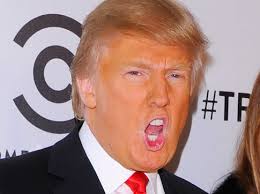
Donald Trump
- Caligula never forgot a slight and relished exacting vengeance, even years afterward. His infamous order for torturing victims: “Strike so that he may feel that he is dying.”
- Trump has famously said: “Get even with people. If they screw you, screw them back 10 times as hard. I really believe it.”
- Caligula reveled in self-worship, calling himself: “Pious,” “Child of the Camp,” “Father of the Armies,” and “Greatest and Best of Caesars.”
- Trump has similarly declared himself “so great looking and smart, a true Stable Genius!”
- Flattered by sycophants, Caligula began to believe himself a god. He appeared at the temple of Castor and Pollux to be worshiped as Jupiter Latiaris. He also set up a special temple to his own godhead.
- Similarly, during a press conference, Trump reached heavenward for legitimacy. Defending his potentially disastrous trade war with China, he proclaimed: “Somebody had to do it. I am the Chosen One.”
- He also quoted Right-wing conspiracist Wayne Allyn Root as saying: “The Jewish people in Israel love him [Trump] like he’s the King of Israel. They love him like he is the second coming of God.”
- Caligula lived in incest with his three sisters. He violated Drusilla when he was still a minor.
- Trump has boasted: “I’ve said if Ivanka weren’t my daughter, perhaps I’d be dating her.”
The trait that finally destroyed Caligula was his joy in humiliating others.
His fatally taunted Cassius Chaerea, a member of his own bodyguard. Caligula considered Chaerea effeminate because of a weak voice and mocked him with nicknames like “Priapus” and “Venus.”
On January 22 41 A.D. Chaerea and several other bodyguards hacked Caligula to death with swords before other guards could save him.
Trump has repeatedly outraged members of the American Intelligence community—such as the FBI, CIA and National Security Agency—by siding with Vladimir Putin against them. He has in effect accused them of lying about Russian subversion of the 2016 Presidential election.
On December 22, 2018, Trump shut down the Federal Government, forcing Secret Service agents to work for more than a month without pay because Democrats refused to fund his senseless “wall” against Mexico.
Now Trump—through the US Citizenship and Immigration Services—has decreed that children born to American military members outside the United States will no longer be automatically considered citizens.
Many members of all of these agencies—FBI, CIA, National Security Agency, Secret Service, Army, Navy, Air Force, Marines—come in contact with him almost daily. And many of them are armed. (Secret Service agents are always armed.)
As Niccolo Machiavelli warns in The Discourses: “When a prince becomes universally hated, it is likely that he’s harmed some individuals—who thus seek revenge. This desire is increased by seeing that the prince is widely loathed.”


 Bureaucracybuster's Blog
ABC NEWS, ADDITIVES, ALTERNET, AMERICABLOG, ANNALS OF INTERNAL MEDICINE, AP, BABY BOOMER RESISTANCE, BUZZFEED, CBS NEWS, CENTERS FOR DISEASE CONTROL AND PREVENTION (CDC), CHEMICALS, CNN, COALATION FOR REASONABLE VAPING REGULATION, CROOKS AND LIARS, DAILY KOZ, DANA MEANEY-DELMAN, DENNIS HERRERA, E-CIGARETTES, FACEBOOK, FIVETHIRTYEIGHT, FLAVORANTS, FOOD AND DRUG ADMINISTRATION, GAYS, JUUL LABS, LEAD, LESBIANS, MOTHER JONES, MOVEON, MSNBC, NBC NEWS, NEWSWEEK, NICKEL, NPR, PBS NEWSHOUR, POLITICO, POLITICUSUSA, PROPOSITION C, PULMONARY DISEASE, RAW STORY, REUTERS, SALON, SAN FRANCISCO, SAN FRANCISCO BOARD OF SUPERVISORS, SEATTLE TIMES, SHAMMAN WALTON, SLATE, TALKING POINTS MEMO, THE ATLANTIC, THE CHICAGO SUN-TIMES, THE CHICAGO TRIBUNE, THE DAILY BEAST, THE DAILY BLOG, THE GUARDIAN, THE HILL, THE HUFFINGTON POST, THE LOS ANGELES TIMES, THE NATION, THE NEW YORK TIMES, THE WASHINGTON POST, THINKPROGRESS, TIME, TIN, TOBACCO, TRUTHDIG, TWITTER, U.S. NEWS & WORLD REPORT, UPI, USA TODAY
UP IN SMOKE: YOUR HEALTH
In Bureaucracy, Business, History, Law, Law Enforcement, Politics, Social commentary on September 12, 2019 at 12:07 amEarlier this year, San Francisco City Attorney Dennis Herrera and Supervisor Shamann Walton co-authored a measure to ban the sale of e-cigarettes in the city until their safety had been reviewed by the Food and Drug Administration.
No e-cigarettes on the market have gone through such a review.
The San Francisco Board of Supervisors passed the measure in June—making San Francisco the first city in the country to prohibit the sale of e-cigarettes.
It’s slated to go into effect in January, 2020.
Now vaping company Juul Labs, Inc., is sponsoring Proposition C to overturn the ban.
This would allow e-cigarettes to be sold in San Francisco with new regulations, which would
The measure was written by The Coalition for Reasonable Vaping Regulation—which is financed by Juul.
So far, Juul has spent $4.3 million to promote the measure—more than has been spent on any other ballot measure this year.
Flyers promoting “Yes on C” have been plastered on apartment doors and taped to telephone poles. The airwaves are filled with similar ads promoting vaping as a “healthier alternative” to tobacco.
Alexander Russy [CC BY 2.0 (https://creativecommons.org/licenses/by/2.0)%5D
In San Francisco, 15.4% of its inhabitants identify as LGBT. So Juul is promoting vaping as a healthier alternative for a population with higher-than-average smoking rates.
The company’s website boasts: “JUUL Labs was founded by former smokers, James and Adam, with the goal of improving the lives of the world’s one billion adult smokers by eliminating cigarettes.
“We envision a world where fewer people use cigarettes, and where people who smoke cigarettes have the tools to reduce or eliminate their consumption entirely, should they so desire.”
According to the Campaign for Tobacco-Free Kids:
VaporVanity.com [CC BY 2.0 (https://creativecommons.org/licenses/by/2.0)%5D
According to the Campaign for Tobacco-Free Kids, the reasons for the popularity of Juul’s e-cigarettes include:
Juul sales have grown dramatically and now comprise over 70% of the U.S. e-cigarette market.
But Juul faces a potentially devastating crisis: The Centers for Disease Control (CDC) and Prevention warned on September 6 that Americans should not smoke e-cigarettes.
The reason: Hundreds of people have become sick and at least six people have died from lung disease related to vaping.
According to a news story on the September 6 edition of the PBS Newshour:
“As many as 450 people, including 215 cases formally reported to the CDC, in 33 states have reported possible pulmonary disease after using e-cigarette devices, liquids, refill pods and cartridges.”
“Symptoms of this pulmonary disease include shortness of breath, fatigue, fever and nausea or vomiting.”
“While this investigation is ongoing, people should not use e-cigarette products,” said Dana Meaney-Delman, who oversees the CDC investigation.
The Annals of Internal Medicine report that at least 10.8 million adults are estimated to use e-cigarette products in the United States.
Of those, 15% said they had never smoked cigarettes.
Many chemicals and additives are present in e-cigarettes. And medical professionals don’t know what chemicals, or combinations of chemicals, could lead people to sicken and/or die.
The office of the U.S. Surgeon General warns: Besides nicotine, e-cigarettes can contain such harmful ingredients as:
And while Juul touts its product as a safe alternative for those who want to quit smoking, the advice offered by the CDC is totally different: “Adult smokers who are attempting to quit should use evidence-based smoking cessation treatments, including counseling and FDA-approved medications.”
Many critics of the San Francisco moratorium have argued: “Even if people can’t get e-cigarettes legally, they’ll get them illegally. Or they’ll buy them in bay Area cities that don’t ban them.”
And that is true.
As with any banned product for which there is big demand, legions of suppliers—legal or illegal—will happily keep them supplied.
At best, cities, states and the Federal Government will pass laws regulating where e-cigarettes can be smoked.
Meanwhile, those who want to risk their health inhaling—and exhaling—poisonous vapors will do so. They cannot be stopped—except when their bodies give out.
Which, for legions of e-cigarette smokers, is now starting to happen.
Share this: