Posts Tagged ‘MSNBC’
2016 PRESIDENTIAL CAMPAIGN, ABC NEWS, ALTERNET, AP, ARCHIBALD COX, BARACK OBAMA, BUZZFEED, CBS NEWS, CIA, CNN, CRAIG UNGER, CROOKS AND LIARS, DAILY KOZ, DEPARTMENT OF HOMELAND SECURITY, DEVIN NUNES, DIANNE FEINSTEIN, DONALD TRUMP, DONALD TRUMP JR., DOUG COLLINS, FACEBOOK, FBI, FOX NEWS, GREG MILLER, HILLARY CLINTON, HOUSE INTELLIGENCE COMMITTEE, HOUSE OF TRUMP HOUSE OF PUTIN (BOOK), ISLAMIC STATE OF IRAQ AND SYRIA (ISIS), ISRAELI INTELLIGENCE, JAMES COMEY, JARED KUSHNER, JEFF SESSIONS, JERROLD NADLER, JOE SCARBOROUGH, LESTER HOLT, LINDSEY GRAHAM, MALCOM NANCE, MALCOM W. NANCE, MICHAEL FLYNN, MICHAEL ISIKOFF, MIKE PENCE, MOTHER JONES, MOVEON, MSNBC, NATALIA VESELNITSKAYA, NATIONAL SECURITY AGENCY, NBC NEWS, NEWSWEEK, NPR, OFFICE OF THE DIRECTOR OF NATIONAL INTELLIGENCE, PAUL MANAFORT, POLITICO, PRINCETON UNIVERSITY, RAW STORY, REPUBLICAN PARTY, REPUBLICANS, REUTERS, REX TILLERSON, RICHARD M. NIXON, ROBERT S. MUELLER 111, ROD ROSENSTEIN, RUSSIA, RUSSIAN ROULETTE (BOOK), SALON, SEATTLE TIMES, SENATE INTELLIGENCE COMMITTEE, SERGEY KISLYAK, SERGEY LAVROV, SLATE, SUPREME COURT, THE APPRENTICE (BOOK), THE ATLANTIC, THE CHICAGO SUN-TIMES, THE CHICAGO TRIBUNE, THE DAILY BEAST, THE GUARDIAN, THE HILL, THE HUFFINGTON POST, THE LOS ANGELES TIMES, THE NATION, THE NEW YORK TIMES, THE PLOT TO DESTROY DEMOCRACY (BOOK), THE WASHINGTON POST, TIME, TREASON, TRUMP TOWER MEETING, TWITTER, U.S. NEWS & WORLD REPORT, UNITED STATES DEPARTMENT OF JUSTICE, UNITED STATES DEPARTMENT OF STATE, UPI, USA TODAY, VLADIMIR PUTIN, WILLIAM BARR
In Bureaucracy, History, Law, Law Enforcement, Military, Politics, Social commentary on July 2, 2019 at 12:09 am
In the first installment of this series, four examples were listed of Donald Trump’s treason against the United States. Here are four more:
EXAMPLE #5: On January 20, 2017—the day Donald J. Trump became the 45th President of the United States—Michael Flynn took office as the nation’s 25th National Security Adviser.
Flynn, a former United States Army lieutenant general and director of the Defense Intelligence Agency, seemed the perfect choice for safeguarding the country’s security.
Two days later, The Wall Street Journal reported that Flynn was under investigation by U.S. counterintelligence agents for his secret communications with Russian officials.
On February 8, Flynn denied having spoken to Russian ambassador Sergey Kislyak in December, 2016, about removing the sanctions placed on Russia by the outgoing Obama administration.
The sanctions had been placed in retaliation for Russia’s efforts to manipulate the 2016 Presidential election.
On February 13, The Washington Post reported that Acting Attorney General Sally Yates had warned Trump in late January that Flynn had lied about his contacts with Kislyak—and that he could be blackmailed by Russian Intelligence.
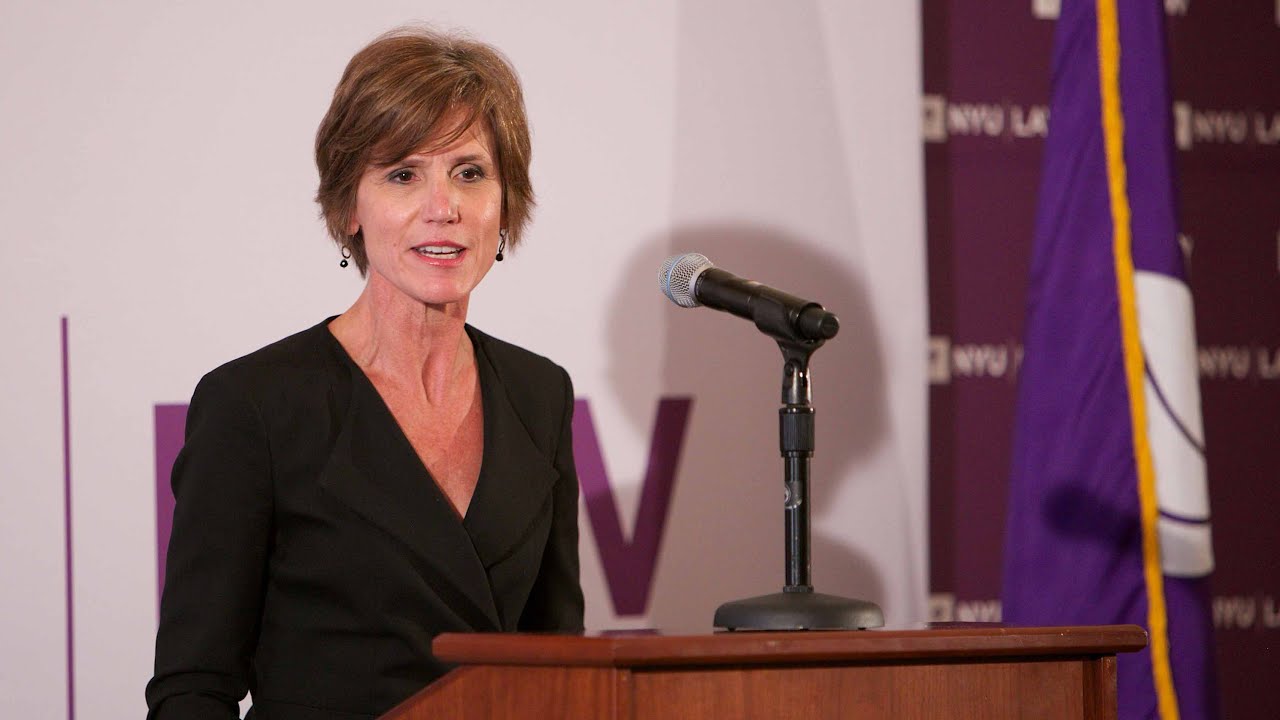
Sally Yates
Flynn was forced to resign that same day—after only 24 days as National Security Adviser.
Officially, the reason given was that he had misled Vice President Mike Pence. But Flynn’s deception had already been known—via the warning to Trump by Yates.
Only after Yates’ warning became known to the media was Flynn forced to resign.
The same Washington Post story reported that, in December, 2015, he had appeared on Russia Today, the news network that American Intelligence agencies consider “the Kremlin’s principal international propaganda outlet.”
He had also received more than $45,000 as a “speaking fee” from the network for a talk on world affairs. At the gala where Flynn received the fee, he sat next to Russian President Vladimir Putin for dinner.
Flynn did not file the required paperwork for the trip. Nor did he report the “fee” to the Pentagon.
On December 1, 2017, Flynn appeared in federal court to formalize a deal with Special Counsel Robert S. Mueller III. He plead guilty to a felony count of “willfully and knowingly” making “false, fictitious and fraudulent statements” to the FBI
EXAMPLE #6: On May 9, 2017, President Trump fired FBI Director James Comey for investigating Russia’s subversion of the 2016 Presidential race.
There were four reasons for this:
- Comey had refused to pledge his personal loyalty to Trump. Trump had made the “request” during a private dinner at the White House in January.
- Comey told Trump that he would always be honest with him. But that didn’t satisfy Trump’s demand that the head of the FBI act as his personal secret police chief—as was the case in the former Soviet Union.
- Trump had tried to coerce Comey into dropping the FBI’s investigation into former National Security Adviser Michael Flynn, for his secret ties to Russia and Turkey. Comey had similarly resisted that demand.
- Comey had recently asked the Justice Department to fund an expanded FBI investigation into well-documented contacts between Trump’s 2016 Presidential campaign and Russian Intelligence agents.The goal of that collaboration: To elect Trump over Hillary Clinton, a longtime foe of Russian President Putin.

James Comey
EXAMPLE #7: On May 10, Trump met with Russian Foreign Minister Sergey Lavrov and Russian Ambassador Sergey Kislyak in the Oval Office—and gave them highly classified Israeli Intelligence about an Islamic State plot to turn laptops into concealable bombs.
Kislyak is reportedly a top recruiter for Russia’s SVR foreign intelligence agency. He has been closely linked with Jeff Sessions, then Attorney General, and fired National Security Adviser Mike Flynn.
“I just fired the head of the FBI,” Trump told the two dignitaries. “He was crazy, a real nut job. I faced great pressure because of Russia. That’s taken off.”
On May 11, Trump, interviewed on NBC News by reporter Lester Holt, said: “And in fact when I decided to just do it, I said to myself, I said ‘you know, this Russia thing with Trump and Russia is a made-up story, it’s an excuse by the Democrats for having lost an election that they should have won.'”
A national firestorm erupted—unprecedented since President Richard M. Nixon had fired Watergate Special Prosecutor Archibald Cox on October 20, 1973.
To squelch it, Deputy Attorney General Rod Rosenstein moved quickly.
On May 17, 2017, he appointed former FBI Director Robert S. Mueller III to serve as Special Counsel for the United States Department of Justice.
Rosenstein charged Mueller to investigate “any links and/or coordination between the Russian government and individuals associated with the campaign of President Donald Trump, and any matters that arose or may arise directly from the investigation.”
EXAMPLE #8: On July 16, 2018, Trump attended a press conference in Helsinki, Finland, with Russian President Vladimir Putin.
There he blamed American Intelligence agencies—such as the FBI, CIA and National Security Agency—instead of Putin for Russia’s subversion of the 2016 Presidential election: “I have President Putin. He just said it’s not Russia. I will say this: I don’t see any reason why it would be.”
But instead of attacking Trump for his treasonous behavior, Republicans in Congress and Right-wing Fox News relentlessly attacked Robert Mueller’s integrity and investigative methods.
2016 PRESIDENTIAL CAMPAIGN, ABC NEWS, ALTERNET, AP, ARCHIBALD COX, BARACK OBAMA, BUZZFEED, CBS NEWS, CIA, CNN, CRAIG UNGER, CROOKS AND LIARS, DAILY KOZ, DEPARTMENT OF HOMELAND SECURITY, DEVIN NUNES, DIANNE FEINSTEIN, DONALD TRUMP, DONALD TRUMP JR., DOUG COLLINS, FACEBOOK, FBI, FOX NEWS, GREG MILLER, HILLARY CLINTON, HOUSE INTELLIGENCE COMMITTEE, HOUSE OF TRUMP HOUSE OF PUTIN (BOOK), ISLAMIC STATE OF IRAQ AND SYRIA (ISIS), ISRAELI INTELLIGENCE, JAMES COMEY, JARED KUSHNER, JEFF SESSIONS, JERROLD NADLER, JOE SCARBOROUGH, LESTER HOLT, LINDSEY GRAHAM, MALCOM NANCE, MALCOM W. NANCE, MICHAEL FLYNN, MICHAEL ISIKOFF, MIKE PENCE, MOTHER JONES, MOVEON, MSNBC, NATALIA VESELNITSKAYA, NATIONAL SECURITY AGENCY, NBC NEWS, NEWSWEEK, NPR, OFFICE OF THE DIRECTOR OF NATIONAL INTELLIGENCE, PAUL MANAFORT, POLITICO, PRINCETON UNIVERSITY, RAW STORY, REPUBLICAN PARTY, REPUBLICANS, REUTERS, REX TILLERSON, RICHARD M. NIXON, ROBERT S. MUELLER 111, ROD ROSENSTEIN, RUSSIA, RUSSIAN ROULETTE (BOOK), SALON, SEATTLE TIMES, SENATE INTELLIGENCE COMMITTEE, SERGEY KISLYAK, SERGEY LAVROV, SLATE, SUPREME COURT, THE APPRENTICE (BOOK), THE ATLANTIC, THE CHICAGO SUN-TIMES, THE CHICAGO TRIBUNE, THE DAILY BEAST, THE GUARDIAN, THE HILL, THE HUFFINGTON POST, THE LOS ANGELES TIMES, THE NATION, THE NEW YORK TIMES, THE PLOT TO DESTROY DEMOCRACY (BOOK), THE WASHINGTON POST, TIME, TREASON, TRUMP TOWER MEETING, TWITTER, U.S. NEWS & WORLD REPORT, UNITED STATES DEPARTMENT OF JUSTICE, UNITED STATES DEPARTMENT OF STATE, UPI, USA TODAY, VLADIMIR PUTIN, WILLIAM BARR
In Bureaucracy, History, Law, Law Enforcement, Military, Politics, Social commentary on July 1, 2019 at 12:07 am
During a photo-op with Russian President Vladimir Putin in Osaka, Japan, President Donald Trump demonstrated how seriously he took American election security.
An NBC News reporter asked: Would you tell Putin not to meddle in the 2020 Presidential election?
“Yes, of course I will,” replied Trump, grinning. “Don’t meddle in the election, please.” And he jokingly wagged his finger at Putin: “Don’t meddle in the election.”
Putin grinned back.
Complaining about “fake news” journalists, Trump advised Putin: “Get rid of them. Fake news is a great term, isn’t it? You don’t have this problem in Russia, but we do.”
“We also have,” Putin assured Trump. “It’s the same.”
It was June 28, 2019. And it was the first meeting between Trump and Putin since the March 22 release of the Mueller Report—which documented Russia’s subversion of the 2016 Presidential election.
Trump has repeatedly claimed that there was “no collusion” between him and members of Russia’s Intelligence community. But Special Counsel Robert Mueller found that the President and his associates embraced the Kremlin’s assistance in the 2016 election and thwarted the inquiries that followed.
From the outset, Trump has acted like a guilty man desperate to stop an investigation before it uncovers the full extent of his criminality.
EXAMPLE #1 On July 9, 2016, high-ranking members of his Presidential campaign met at Trump Tower with at least two lobbyists with ties to Russian dictator Vladimir Putin. The participants included:
- Trump’s son, Donald Trump Jr.;
- His son-in-law, Jared Kushner;
- His then-campaign manager Paul Manafort;
- Natalia Veselnitskaya, a Russian lawyer with ties to Putin; and
- Rinat Akhmetshin, a former Soviet counterintelligence officer suspected of “having ongoing ties to Russian Intelligence.”
The purpose of that meeting: To gain access to any “dirt” Russian Intelligence could supply on Democratic Presidential Nominee Hillary Clinton.
Trump originally claimed that the meeting was “about the adoption of Russian children.” Eventually he admitted that it had been “a meeting to get information on an opponent.”
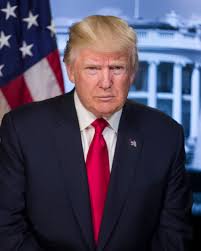
Donald Trump
EXAMPLE #2: On July 22, 2016, during his campaign for President, Trump said at a press conference in Doral, Florida: “Russia, if you are listening, I hope you are able to find the 33,000 emails that are missing [from Democratic Presidential candidate Hillary Clinton’s computer]. I think you will probably be rewarded mightily by our press.”
This was nothing less than treason—calling upon a foreign power, hostile to the United States, to interfere in its Presidential election.
Hours later, the Main Intelligence Directorate in Moscow targeted Clinton’s personal office and hit more than 70 other Clinton campaign accounts.
EXAMPLE #3: Throughout 2016, the CIA, FBI and National Security Agency (NSA) found numerous ties between officials of the Trump Presidential campaign and Russian Intelligence agents.
And many of those he appointed to office had strong ties to the government of Russian President Vladimir Putin.
One of these was Secretary of State Rex Tillerson. In 2013, as the chief executive of ExxonMobil, he was presented with Russia’s Order of Friendship award. He had just signed deals with the state-owned Russian oil company Rosneft. Its chief, Igor Sechin, is a loyal Putin lieutenant.

Rex Tillerson
Another such official was Attorney General Jeff Sessions. During the 2016 campaign, Sessions—then serving as a surrogate for Donald Trump’s campaign—twice spoke with Russian Ambassador Sergey Kislyak.
But during his Senate confirmation hearings, Sessions denied that he had had “communications with the Russians” during the campaign.
The discovery of numerous contacts between Trump campaign officials and Russian Intelligence agents led the FBI to launch an investigation into Russia’s efforts to influence the outcome of the 2016 Presidential election.
EXAMPLE #4: Trump has repeatedly praised Russian President Vladimir Putin.
On December 18, 2015, Trump appeared on MSNBC’s “Morning Joe.” Its host, Joe Scarborough, was upset by Trump’s praise for Putin:
SCARBOROUGH: Well, I mean, [he’s] also a person who kills journalists, political opponents, and invades countries. Obviously that would be a concern, would it not?
TRUMP: He’s running his country, and at least he’s a leader. Unlike what we have in this country.
SCARBOROUGH: But again: He kills journalists that don’t agree with him.
TRUMP: I think our country does plenty of killing, also, Joe, so, you know. There’s a lot of stupidity going on in the world right now, Joe. A lot of killing going on. A lot of stupidity. And that’s the way it is.
On October 7, 2016, the Department of Homeland Security and the Office of the Director of National Intelligence issued a joint statement blaming the Russian government for the hacking of Democratic National Committee emails. Its motive: “To interfere with the US election process.”
Two days later, Trump publicly stated: “But I notice, anytime anything wrong happens, they like to say the Russians are—Maybe there is no hacking. But they always blame Russia.”
On December 16, 2016, FBI Director James B. Comey and Director of National Intelligence James R. Clapper Jr. agreed with a CIA assessment that Russia intervened in the 2016 election in part to help Donald Trump win the White House.

Trump, however, steadfastly denied any such role by Russia: “I think it’s ridiculous,” he told “Fox News Sunday.” “I think it’s just another excuse. I don’t believe it….No, I don’t believe it at all.”
2016 PRESIDENTIAL CAMPAIGN, 2020 PRESIDENTIAL CAMPAIGN, ABC NEWS, ADOLF HITLER, ALTERNET, ANCIENT GREECE, ANCIENT ROME, AP, BERNIE SANDERS, BUZZFEED, CATASTROPHE, CBS NEWS, CHINA, CNN, CONSUMER PROTECTION, CORPORATE TAXES, CORRUPTION, CROOKS AND LIARS, DAILY KOZ, DEMOCRATIC PARTY, DONALD TRUMP, EXECUTIVE PAYWATCH, FACEBOOK, FORBES, FUNDRAISING, HILLARY CLINTON, INCOME INEQUALITY, IVAN THE TERRIBLE, JOE BIDEN, JOSEPH STALIN, LEON TROTSKY, MOTHER JONES, MOVEON, MSNBC, NAZI GERMANY, NBC NEWS, NEWSWEEK, NICCOLO MACHIAVELLI, NPR, PBS NEWSHOUR, POLITICO, RAW STORY, REUTERS, ROBERT PAYNE, SALON, SEATTLE TIMES, SLATE, SPARTACUS, THE ATLANTIC, THE CHICAGO SUN-TIMES, THE CHICAGO TRIBUNE, THE CORRUPT SOCIETY (BOOK), THE DAILY BEAST, THE DISCOURSES, THE FRENCH REVOLUTION, THE GREAT LEVELER (BOOK), THE GUARDIAN, THE HILL, THE HUFFINGTON POST, THE LOS ANGELES TIMES, THE NATION, THE NEW YORK TIMES, THE RUSSIAN REVOLUTION, THE WASHINGTON POST, TIME, TWITTER, U.S. NEWS & WORLD REPORT, UPI, USA TODAY, VIOLENCE, Vladimir Lenin, WALL STREET, WALTER SCHEIDEL, WATERGATE, WEALTH GAP, WILLIAM SHAKESPEARE, WINSTON CHURCHILL
In Bureaucracy, Business, History, Law, Politics, Social commentary on June 25, 2019 at 12:15 am
The gap between rich and poor in the United States has never been greater.
A May 1, 2018 article in Forbes—which bills itself as “The Capitalist Tool”—vividly documents this truth.
“In the 1950s, a typical CEO made 20 times the salary of his or her average worker. Last year, [2017] CEO pay at an S&P 500 Index firm soared to an average of 361 times more than the average rank-and-file worker, or pay of $13,940,000 a year, according to an AFL-CIO’s Executive Paywatch news release today.”
The average CEO pay climbed six percent in 2017—while the average production worker earned just $38,613, according to Executive Paywatch.
The average wage—adjusted for inflation—has stagnated for more than 50 years. Meanwhile, CEOs’ average pay since the 1950s has risen by 1000%.
This would not have been news to Niccolo Machiavelli, the father of modern political science. In his masterwork, The Discourses, he observed the human condition as that of constant struggle:
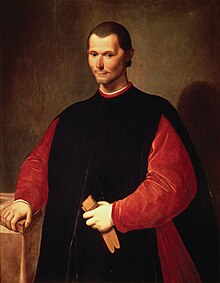
Niccolo Machiavelli
It was a saying of ancient writers, that men afflict themselves in evil, and become weary of the good, and that both these dispositions produce the same effects.
For when men are no longer obliged to fight from necessity, they fight from ambition, which passion is so powerful in the hearts of men that it never leaves them, no matter to what height they may rise.
The reason for this is that nature has created men so that they desire everything, but are unable to attain it. Desire being thus always greater than the faculty of acquiring, discontent with what they have and dissatisfaction with themselves result from it.
This causes the changes in their fortunes—for as some men desire to have more, while others fear to lose what they have, enmities and war are the consequences. And this brings about the ruin of one province and the elevation of another.
Author Walter Scheidel, Dickason Professor in the Humanities, Professor of Classics and History at Stanford University, has also given this subject a great deal of thought. And, like Machiavelli, he has reached some highly disturbing conclusions.

Walter Scheidel
World Economic Forum [CC BY-SA 2.0 (https://creativecommons.org/licenses/by-sa/2.0)%5D
He gave voice to these in his 2017 book, The Great Leveler: Violence and the History of Inequality from the Stone Age to the Twenty-First Century. His thesis: Only violence and catastrophes have consistently reduced inequality throughout history.
According to the book’s jacket blurb: “Are mass violence and catastrophes the only forces that can seriously decrease economic inequality? To judge by thousands of years of history, the answer is yes.
“Tracing the global history of inequality from the Stone Age to today, Walter Scheidel shows that inequality never dies peacefully. Inequality declines when carnage and disaster strike and increases when peace and stability return.
“The Great Leveler is the first book to chart the crucial role of violent shocks in reducing inequality over the full sweep of human history around the world.
“Ever since humans began to farm, herd livestock, and pass on their assets to future generations, economic inequality has been a defining feature of civilization. Over thousands of years, only violent events have significantly lessened inequality.
“The ‘Four Horsemen’ of leveling–mass-mobilization warfare, transformative revolutions, state collapse, and catastrophic plagues—have repeatedly destroyed the fortunes of the rich.
“Scheidel identifies and examines these processes, from the crises of the earliest civilizations to the cataclysmic world wars and communist revolutions of the twentieth century.
“Today, the violence that reduced inequality in the past seems to have diminished, and that is a good thing. But it casts serious doubt on the prospects for a more equal future.”
Revolutionaries have known the truth of Scheidel’s findings from the gladiators’ revolt of Spartacus (73-71 B.C.) to the French Revolution (1789 – 1799) to the overthrow of the Czarist Romanov dynasty (1917).
But American politicians serenely ignore that truth. They depend on the mega-rich for millions of dollars in “campaign contributions”—which pay for self-glorifying ads on TV.
Thus, in 2016, American voters had a “choice” between two “love-the-rich” Presidential candidates: Donald Trump and Hillary Clinton. The result was that millions stayed home or voted in protest for third-party candidates who had no chance of winning.
In his 1975 book, The Corrupt Society: From Ancient Greece to Modern-day America, British historian Robert Payne warned that the predatory rich would not change their behavior: “Nor is there any likelihood that the rich will plow back their money into services to ensure the general good.
“They have rarely demonstrated social responsibility, and they are much more likely to hold on to their wealth at all costs than to renounce any part of it.
“Like the tyrant who lives in a world wholly remote from the world of the people, shielded and protected from all possible influences, the rich are usually the last to observe the social pressures rising from below, and when these social pressures reach flashpoint, it is too late to call in the police or the army.
“The tyrant dies; the police and the army go over to the revolutionaries; and the new government dispossesses the rich by decree. A single authoritative sentence suffices to expunge all private wealth and restore it to the service of the nation.”
2020 PRESIDENTIAL CAMPAIGN, ABC NEWS, ADOLF HITLER, ALTERNET, ANCIENT GREECE, ANCIENT ROME, AP, BERNIE SANDERS, BUZZFEED, CBS NEWS, CHINA, CNN, CONSUMER PROTECTION, CORPORATE TAXES, CORRUPTION, CROOKS AND LIARS, DAILY KOZ, DEMOCRATIC PARTY, FACEBOOK, FUNDRAISING, INCOME INEQUALITY, IVAN THE TERRIBLE, JOE BIDEN, JOSEPH STALIN, LEON TROTSKY, MOTHER JONES, MOVEON, MSNBC, NAZI GERMANY, NBC NEWS, NEWSWEEK, NICCOLO MACHIAVELLI, NPR, PBS NEWSHOUR, POLITICO, RAW STORY, REUTERS, ROBERT PAYNE, SALON, SEATTLE TIMES, SLATE, THE ATLANTIC, THE CHICAGO SUN-TIMES, THE CHICAGO TRIBUNE, THE DAILY BEAST, THE DISCOURSES, THE GREAT LEVELER, THE GUARDIAN, THE HILL, THE HUFFINGTON POST, THE LOS ANGELES TIMES, THE NATION, THE NEW YORK TIMES, THE WASHINGTON POST, TIME, TWITTER, U.S. NEWS & WORLD REPORT, UPI, USA TODAY, Vladimir Lenin, WALL STREET, WALTER SCHEIDEL, WATERGATE, WEALTH GAP, WILLIAM SHAKESPEARE, WINSTON CHURCHILL
In Bureaucracy, Business, History, Law, Politics, Social commentary on June 24, 2019 at 1:21 am
Americans are used to Presidential candidates telling lies (euphemistically known as “campaign promises”) to get elected.
But when a candidate actually (and usually accidentally) tells the truth, the results can be electrifying. A pointed example:
On June 18, Democratic Presidential candidate (and momentary front-runner) Joe Biden addressed a roomful of donors in New York. Money is, after all, the lifeblood of all political campaigns, and Biden wanted to guarantee he got more of it than any of his 23 Democratic rivals.
So the former vice president had a message he felt sure would appeal to his well-heeled audience of billionaires: Don’t worry, if I’m elected, your standard of living won’t change.
Addressing the 100 or so guests at a fundraiser at the Carlyle Hotel in New York City, Biden said that he had taken heat from “some of the people on my team, on the Democratic side” because he had said that rich people were “just as patriotic as poor people.

Joe Biden
“The truth of the matter is, you all, you all know, you all know in your gut what has to be done. We can disagree in the margins but the truth of the matter is it’s all within our wheelhouse and nobody has to be punished. No one’s standard of living will change, nothing would fundamentally change,” he said.
And he added: “I mean, we may not want to demonize anybody who has made money.
“When we have income inequality as large as we have in the United States today, it brews and ferments political discord and basic revolution. Not a joke. Not a joke … It allows demagogues to step in and say the reason where we are is because of the ‘other’….
“You’re not the other. I need you very badly. I hope if I win this nomination, I won’t let you down. I promise you. I have a bad reputation, I always say what I mean. The problem is I sometimes say all that I mean.”
Biden has talked about decreasing income inequality and promoting workers’ rights. But he’s taken a moderate stance when it comes to taxation.
Vermont United States Senator Bernie Sanders, on the other hand, has attacked the ultra-rich as responsible for the ever-widening gap between themselves and the poor.
“I love Bernie, but I’m not Bernie Sanders. I don’t think 500 billionaires are the reason why we’re in trouble,” Biden said in March.
Instead, he proposes expanding tax credits for the poor and middle class, and making the tax code less friendly to rich investors.
Robert Payne, the distinguished British historian, had a different—and darker—view of the rich.
Payne authored more than 110 books. Among his subjects were Adolf Hitler, Ivan the Terrible, Winston Churchill, Joseph Stalin, Vladimir Lenin, William Shakespeare and Leon Trotsky.
In 1975, he published The Corrupt Society: From Ancient Greece to Present-Day America. It proved a summary of many of his previous works.
Among the epochs it covered were the civilizations of ancient Greece, Rome and China; Nazi Germany; the Soviet Union; and Watergate-era America. And the massive corruption each of those epochs had spawned.
In his chapter, “A View of the Uncorrupted Society,” Payne warned: Power and wealth are the main sources of corruption.
“The rich, simply by being rich, are infected with corruption. Their overwhelming desire is to grow richer, but they can do this only at the expense of those who are poorer than themselves.
”Their interests conflict with those of the overall society. They live sheltered from the constant anxieties of the poor, and thus cannot understand them. Nor do they try to.
They see the poor as alien from themselves, and thus come to fear and despise them. And their wealth and influence enables them to buy politicians—who, in turn, write legislation that protects the rich from the poor.
But Payne foresaw an even greater danger from the rich and powerful than their mere isolation from the rest of society: “The mere presence of the rich is corrupting. Their habits, their moral codes, their delight in conspicuous consumption are permanent affronts to the rest of humanity. Vast inequalities of wealth are intolerable in any decent society.”
Writing in 1975, Payne noted that a third of the private wealth was possessed by less than five percent of the population—while about a fifth of the populace lived at the poverty level. By 2000, he predicted, about five percent of the population would possess two-thirds of America’s wealth. And more than half the population would be near or below the starvation level.
The result could only be catastrophe. The only way to halt this this increasing concentration of wealth by fewer people would be through law or violent revolution.
Payne has proven to be an uncanny prophet.
On December 8, 2017, the Seattle Times noted that the wealthiest one percent of Americans owned 40% of the country’s wealth. They owned more wealth than the bottom 90% combined.
From 2013, the share of wealth owned by the one percent increased by nearly three percentage points. Wealth owned by the bottom 90%, meanwhile, fell over the same period.
But this situation need not remain permanent.
ABC NEWS, ADOLF HITLER, ALTERNET, AP, BBC, BUSINESS LEADERSHIP, BUZZFEED, CBS NEWS, CNN, DAILY KOS, DONALD TRUMP, ENGLAND, ERICH VON MANSTEIN, ERWIN ROMMEL, FACEBOOK, FBI, HEINZ GUDERIAN, HITLER (BOOK), IOWA CAUCUSES, JOACHIM C. FEST, JOSEPH STALIN, MOTHER JONES, MOVEON, MSNBC, NAZI GERMANY, NBC NEWS, NEWSWEEK, NPR, POLITICO, RAW STORY, REUTERS, SALON, SEATTLE TIMES, SLATE, SOVIET UNION, THE ATLANTIC, THE CHICAGO SUN-TIMES, THE CHICAGO TRIBUNE, THE DAILY BEAST, THE GUARDIAN, THE HILL, THE HUFFINGTON POST, THE LOS ANGELES TIMES, THE NEW YORK TIMES, THE WALL STREET JOURNAL, THE WASHINGTON POST, TIME, TWITTER, U.S. NEWS & WORLD REPORT, UPI, USA TODAY, WORLD WAR 11
In Bureaucracy, History, Military, Politics, Social commentary on June 21, 2019 at 12:02 am
“We will have so much winning if I get elected [President] that you may get bored with winning.”
So boasted Donald Trump at a September, 2015 Capitol Hill rally to protest President Barack Obama’s nuclear deal with Iran.
But as the 2020 Presidential race nears, President Trump is looking ever more like a loser.
Among the victims of Trump’s “winning” streak: Several pollsters whose internal polling numbers showed him lagging behind Democratic Presidential candidates in key states.
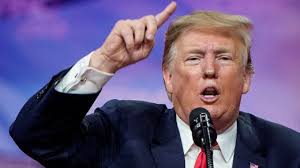
Donald Trump
When matched against Democratic contender and former Vice President Joe Biden, Trump’s numbers came to:
Trump Biden
VIRGINIA: 38% 53%
MAINE 38% 55%
MINNESOTA 40% 54%
MICHIGAN 40% 53%
In Wisconsin, Pennsylvania, Florida and Michigan, Trump trails Biden by double-digits. These were states Trump won against Democratic nominee Hillary Clinton.
Biden leads Trump by seven points in Iowa, by eight points in North Carolina, by 17 points in Virginia, by 14 points in Minnesota, and by 15 points in Maine.
Even worse for Trump, who cannot admit error or weakness: Some of his own pollsters dared to leak the bad news.
As a result, his Presidential campaign is cutting ties with several of his pollsters.
Predictably, Trump claimed he was doing just fine. He said his campaign had “great internal polling” and the numbers reported were from “fake polls.”
“We are winning in every single state that we’ve polled. We’re winning in Texas very big. We’re winning in Ohio very big. We’re winning in Florida very big,” he said.
Trump’s 2015 boast reflected he mindset, if not the words, of an earlier CEO whose ego carried him—and his country—to ruin: Adolf Hitler.
Among the fatal errors that led to the defeat of the Third Reich:
- Wasting hundreds of Luftwaffe [air force] pilots, fighters and bombers in a halfhearted attempt to conquer England.
- Ignoring the pleas of generals like Erwin Rommel to conquer Syria, Iraq and Saudi Arabia, which would have given Germany control of most of the world’s oil.
- Attacking his ally, the Soviet Union, while still at war with Great Britain.
- Turning millions of Russians into enemies rather than allies by his brutal and murderous policies.
- Needlessly declaring war on the United States after the Japanese attacked Pearl harbor. (Had he not done so, Americans would have focused all their attention on defeating Japan.)
- Refusing to negotiate a separate peace with Soviet dictator Joseph Stalin—thus granting Germany a large portion of captured Russian territory in exchange for letting Stalin remain in power.
- Insisting on a “not-one-step-back” military “strategy” that led to the needless surrounding, capture and/or deaths of hundreds of thousands of German servicemen.
As the war turned increasingly against him, Hitler became ever more rigid in his thinking.
He demanded absolute control over the smallest details of his forces. This, in turn, led to astonishing and unnecessary losses among their ranks.
On June 6, 1944, General Erwin Rommel ordered the Panzer tanks to drive the Allies from the Normandy beaches. But these could not be released except on direct orders of the Fuehrer.
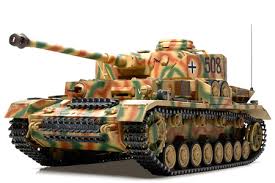
Panzer tank
Hitler’s chief of staff, General Alfred Jodl, informed Rommel: The Fuhrer was asleep-–and was not to be awakened. By the time Hitler awoke and issued the order, it was too late.
Nor could Hitler accept responsibility for the policies that were leading Germany to certain defeat. He blamed his generals, accused them of cowardice, and relieved many of the best ones from command.
Among those sacked was Heinz Guderian, creator of the German Panzer corps—and responsible for the blitzkreig victory against France in 1940.
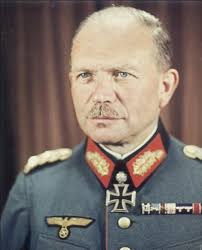
Heinz Guderian
Another was Erich von Manstein, designer of the strategy that defeated France in six weeks—which Germany had failed to do during four years of World War 1.
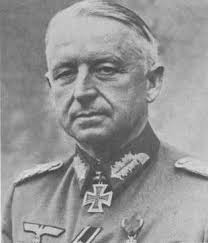
Erich von Manstein
Finally, on April 29, 1945—with the Russians only blocks from his underground Berlin bunker—Hitler dictated his “Last Political Testament.”
Once again, he refused to accept responsibility for unleashing a war that would ultimately consume 50 million lives:
“It is untrue that I or anyone else in Germany wanted war in 1939. It was desired and instigated exclusively by those international statesmen who either were of Jewish origin or worked for Jewish interests.”
Hitler had launched the invasion of Poland–and World War II—with a lie: That Poland had attacked Germany.
Fittingly, he closed the war—and his life—with a final lie.
Joachim C. Fest, author of Hitler (1973), writes of the surprise that awaited Allied soldiers occupying Nazi Germany in 1945: “Almost without exception, virtually from one moment to the next, Nazism vanished after the death of Hitler and the surrender.
“It was as if National Socialism had been nothing but the motion, the state of intoxication and the catastrophe it had caused….
“Once again it became plain that National Socialism, like Fascism in general, was dependent to the core on superior force, arrogance, triumph, and by its nature had no resources in the moment of defeat.”
The ancient Greeks believed that “a man’s character is his destiny.” For Adolf Hitler—and the nations he ravaged—that proved fatally true.
It remains to be seen whether the same will prove true for Donald Trump—and the United States.
ABC NEWS, ALTERNET, AMERICAN TABLOID, ANTI-CASTRO CUBANS, AP, ASSASSINATION, BUZZFEED, CBS NEWS, CIA, CNN, COMMUNISM, CROOKS AND LIARS, CUBA, CUBA TRAVEL BAN, CUBAN MISSILE CRISIS, DAILY KOZ, DONALD TRUMP, DWIGHT D. EISENHOWER, FACEBOOK, FBI, FIDEL CASTRO, FLORIDA, FULGENCIO BATISTA, GUS RUSSO, JACK RUBY, JAMES ELLROY, JOHN F. KENNEDY, JOHNNY ROSELLI, LEE HARVEY OSWALD, LIVE BY THE SWORD, LYNDON B. JOHNSON, MAFIA, MARCO RUBIO, MOTHER JONES, MOVEON, MSNBC, NBC NEWS, NEWSWEEK, NIKITA KHRUSHCHEV, NPR, PBS NEWSHOUR, POLITICO, RAW STORY, REUTERS, ROBERT F. KENNEDY, SALON, SAM GIANCANA, SEATTLE TIMES, SLATE, THE ATLANTIC, THE CHICAGO SUN-TIMES, THE CHICAGO TRIBUNE, THE DAILY BEAST, THE GUARDIAN, THE HILL, THE HUFFINGTON POST, THE LOS ANGELES TIMES, THE NATION, THE NEW YORK TIMES, THE WASHINGTON POST, TIME, TWITTER, U.S. NEWS & WORLD REPORT, UPI, USA TODAY, WARREN COMMISSION
In Bureaucracy, History, Law Enforcement, Military, Politics, Social commentary on June 20, 2019 at 12:05 am
“John and Robert Kennedy knew what they were doing. They waged a vicious war against Fidel Castro—a war someone had to lose.”
And the loser turned out to be John F. Kennedy.
So writes investigative reporter Gus Russo in Live By the Sword: The Secret War Against Castro and the Death of JFK, published in 1998.
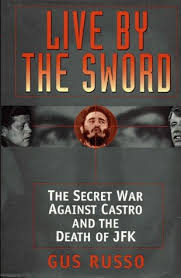
In what is may be the definitive account of the assassination of President John F. Kennedy, Russo reaches some startling—but highly documented—conclusions:
- Lee Harvey Oswald assassinated Kennedy.
- He did it alone.
- Oswald, a former Marine, was a committed Marxist—whose hero was Castro.
- The CIA’s ongoing campaign to overthrow and/or assassinate Castro was an open secret throughout the Gulf.
- Oswald visited New Orleans in the spring of 1963.
- There he learned that Castro was in the crosshairs of the CIA.
- For this, he blamed John F. Kennedy.
- Oswald told his Russian-born wife, Marina: “Fidel Castro needs defenders. I’m going to join his army of volunteers.”
- Jack Ruby, a Dallas nightclub owner, murdered Oswald because he was distraught over Kennedy’s death.
- Ruby was not part of a Mafia conspiracy to silence Oswald.
- Skeptics of the Warren Commission—which concluded that Oswald had acted alone—asked the wrong question: “Who killed Kennedy?”
- They should have asked: “Why was he killed?”
- The answer—according to Russo: “The Kennedys’ relentless pursuit of Castro and Cuba backfired in tragedy on that terrible day in November, 1963.”
Another book well worth reading about America’s Cuban obsession during the early 1960s is American Tabloid, by James Ellroy.
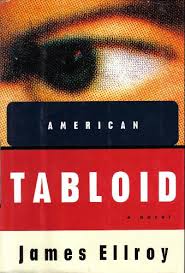
Although a novel, it vividly captures the intrigue, danger and sleaziness that permeated that era as no dry, historical documents can.
“The 50’s are finished,” reads its paperback dust jacket. “Zealous young lawyer Robert Kennedy has a red-hot jones to nail Jimmy Hoffa. JFK has his eyes on the Oval Office.
“J. Edgar Hoover is swooping down on the Red Menace. Howard Hughes is dodging subpoenas and digging up Kennedy dirt. And Castro is mopping up the bloody aftermath of his new Communist nation….
“Mob bosses, politicos, snitches, psychos, fall guys and femmes fatale. They’re mixing up a Molotov cocktail guaranteed to end the country’s innocence with a bang.”
Among the legacies of America’s twisted romance with anti-Castro Cubans:
- Following the JFK assassination, there was a cover-up.
- Its purpose: To protect the reputation of the United States Government—and that of its newly-martyred President.
- The CIA and FBI concealed the CIA-Mafia assassination plots from the Warren Commission assigned to investigate Kennedy’s murder.
- Other government officials participating in the cover-up included Attorney General Robert F. Kennedy and President Lyndon B. Johnson.
- Ironically, this secrecy ignited the widespread—and false—belief that the President had died at the hands of a government conspiracy.
- Robert Kennedy feared that his relentless pursuit of Castro might have led Castro to “take out” JFK first.
- Fearing his own assassination if he continued Kennedy’s efforts to murder Castro, President Johnson ordered the CIA to halt its campaign to overthrow and/or assassinate the Cuban leader.
- The huge Cuban community throughout Florida—and especially Miami—continues to exert a blackmailing influence on American politics.
- Right-wing politicians from Richard Nixon to Donald Trump have reaped electoral rewards by catering to the demands of this hate-obsessed voting block.
- These Cuban expatriots hope that the United States will launch a full-scale military invasion of the island to remove Fidel’s surviving brother, Raul.
- Having grown rich and soft in the United States, they fear to risk their own lives by returning to Cuba to overthrow the Castro regime–as Fidel had overthrown Fulgencio Batista.
- Only President Barack Obama had the political courage to re-establish diplomatic relations with Cuba—in 2015.
- This occurred long after the United States had re-established ties with such former enemies as the Soviet Union, China and Vietnam.
- On June 4, 2019, President Donald Trump once again banned educational and recreational travel to Cuba.
The Cuban Missile Crisis remains the single most dangerous moment of the 50-year Cold War, when the world stood only minutes away from nuclear Armageddon.
That crisis stemmed from the American Right’s twisted obsession with Cuba.
So what are the lessons to be learned from that obsession?
- It is long past time to demand major changes in our foreign policy toward Cuba.
- It’s time to end the half-century contamination of American politics by those Cubans who live only for their hatred of Castro–-and those political candidates who live to exploit it.
- (For example: Marco Rubio got elected U.S. Senator from Florida in 2010 by claiming that his parents had been forced to leave Cuba in 1959, after Fidel Castro took power. In fact, they had left Cuba in 1956—during the Batista dictatorship.)
- It’s time to end this wag-the-dog relationship. A population of about 1,700,000 Cuban exiles living in Florida should not be allowed to shape the domestic and foreign policy of a nation of 300 million.
- Those who continue to hate—or love—Fidel Castro should be left to their own private feud. But that is a feud they should settle on their own island, and not from the shores of the United States.
ABC NEWS, ALTERNET, AMERICAN TABLOID, ANTI-CASTRO CUBANS, AP, ASSASSINATION, BUZZFEED, CBS NEWS, CIA, CNN, COMMUNISM, CROOKS AND LIARS, CUBA, CUBA TRAVEL BAN, CUBAN MISSILE CRISIS, DAILY KOZ, DONALD TRUMP, DWIGHT D. EISENHOWER, FACEBOOK, FBI, FIDEL CASTRO, FLORIDA, FULGENCIO BATISTA, GUS RUSSO, JACK RUBY, JAMES ELLROY, JOHN F. KENNEDY, JOHNNY ROSELLI, LEE HARVEY OSWALD, LIVE BY THE SWORD, LYNDON B. JOHNSON, MAFIA, MARCO RUBIO, MOTHER JONES, MOVEON, MSNBC, NBC NEWS, NEWSWEEK, NIKITA KHRUSHCHEV, NPR, PBS NEWSHOUR, POLITICO, RAW STORY, REUTERS, ROBERT F. KENNEDY, SALON, SAM GIANCANA, SEATTLE TIMES, SLATE, THE ATLANTIC, THE CHICAGO SUN-TIMES, THE CHICAGO TRIBUNE, THE DAILY BEAST, THE GUARDIAN, THE HILL, THE HUFFINGTON POST, THE LOS ANGELES TIMES, THE NATION, THE NEW YORK TIMES, THE WASHINGTON POST, TIME, TWITTER, U.S. NEWS & WORLD REPORT, UPI, USA TODAY, WARREN COMMISSION
In Bureaucracy, History, Law Enforcement, Military, Politics, Social commentary on June 19, 2019 at 12:22 am
On October 22, 1962, President John F. Kennedy went on nationwide TV to announce that Russian nuclear missiles had been installed in Cuba—and his blockade of that island.
He warned that any nuclear missile launched from Cuba against any nation would be regarded as an attack on the United States by the Soviet Union—and would trigger “a full retaliatory response” upon the U.S.S.R.
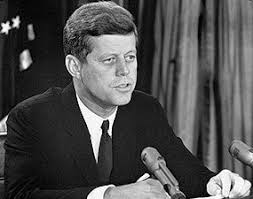
President John F. Kennedy addresses the nation
And he demanded that the Soviets remove all of their offensive weapons from Cuba:
“The path we have chosen for the present is full of hazards, as all paths are, but it is the one most consistent with our character and courage as a nation and our commitments around the world.
“The cost of freedom is always high, but Americans have always paid it. And one path we shall never choose, and that is the path of surrender or submission.”
On October 26, the United States raised the readiness level of SAC forces to DEFCON 2—the step just short of war. For the only time in U.S. history, B-52 bombers were dispersed to various locations and made ready to take off, fully equipped, on 15 minutes’ notice.
Other measures taken included:
- One-eighth of America’s 1,436 bombers were on airborne alert.
- About 145 intercontinental ballistic missiles stood on ready alert.
- Air Defense Command redeployed 161 nuclear-armed interceptors to 16 dispersal fields within nine hours with one-third maintaining 15-minute alert status.
- Twenty-three nuclear-armed B-52s were sent to orbit points within striking distance of the Soviet Union.
An invasion date of Cuba was set for October 29. But the Kennedy Administration—and the American military—didn’t know that Russian soldiers guarding the missiles had been armed with tactical nuclear weapons.
Had the Marines gone in, those mini-nukes would have been used. And a fullscale nuclear exchange between the United States and the Soviet Union would have almost certainly followed.
At the height of the crisis, Attorney General Robert F. Kennedy offered a solution.
Khrushchev had sent two teletypes to Kennedy. The first had agreed to remove the missiles, but the second had demanded that the United States remove its own nuclear missiles from Turkey, which bordered the Soviet Union.
Robert Kennedy’s solution: Ignore the second message—and announce that President Kennedy had accepted Khrushchev’s offer to remove the missiles.
After this announcement was made, President Kennedy said: “It can go either way now.”
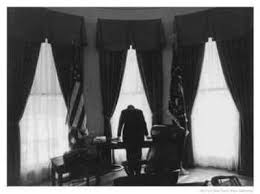
John F. Kennedy in the Oval Office
The crisis ended on October 28. Under enormous pressure, Khrushchev agreed to remove the missiles from Cuba.
Behind his decision lay a secret promise by the Kennedy administration to remove its obsolete nuclear missiles from Turkey, which bordered the Soviet Union. And a public pledge to not invade Cuba.
On the night the crisis ended, there occurred a prophetic exchange between the two Kennedy brothers.
JFK: “Maybe this is the night I should go to the theater”–a reference to Abraham Lincoln’s fatal attendance of Ford’s Theater at the end of the Civil War.
RFK: “If you go, I want to go with you.”
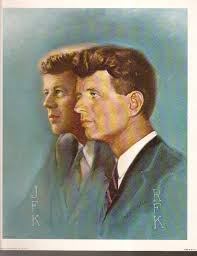
John F. and Robert F. Kennedy
But the Kennedys continued their campaign of sabotage throughout Cuba. And they were preparing something far bigger: A fullscale American invasion of the island.
On October 4, 1963, the Joint Chiefs of Staff submitted its latest version of the invasion plan, known as OPLAN 380-63. Its timetable went:
- January, 1964: Infiltration into Cuba by Cuban exiles.
- July 15, 1964: U.S. conventional forces join the fray.
- August 3, 1964: All-out U.S. air strikes on Cuba.
- October 1, 1964: Full-scale invasion to install “a government friendly to the U.S.”
During the Cuban Missile Crisis, Robert Kennedy—referring to the 1941 Japanese attack on Pearl Harbor—had resisted demands for a “sneak attack” on Cuba by saying: “I don’t want my brother to be the Tojo of the 1960s.”
Now the Kennedys planned such an attack on Cuba just one month before the November, 1964 Presidential election.
Then fate—in the unlikely figure of Lee Harvey Oswald—intervened.
On November 22, 1963, while the President rode through Dallas in an open-air automobile, a rifle-wielding assassin opened fire. He scored two hits on Kennedy—in the back of the neck and head. The second wound proved instantly fatal.
The nation and the world were shocked—and plunged into deep mourning.
But for some of those who had waged a secret, lethal war against Fidel Castro for the previous two years, Kennedy’s death—at least in retrospect—didn’t come as a surprise.
Robert Kennedy, in particular, spent the remaining years of his life agonizing over the possibility that his highly personal war against Castro had backfired.
That Castro, fed up with the CIA’s assassination plots against him, had retaliated with one of his own.
Robert Kennedy’s fears and guilt were compounded by the fact that, while waging war on Castro, he had waged an equally ruthless crusade against organized crime.
He knew that some of the mobsters he had tried to send to prison had played a major role in the CIA’s efforts to “hit” Castro. Had the Mafia—believing itself the victim of a double-cross—put out a “contract” on JFK instead?
It was a question that haunted him until the day he died.
ABC NEWS, ALTERNET, AMERICAN TABLOID, ANTI-CASTRO CUBANS, AP, ASSASSINATION, BUZZFEED, CBS NEWS, CIA, CNN, COMMUNISM, CROOKS AND LIARS, CUBA, CUBA TRAVEL BAN, CUBAN MISSILE CRISIS, DAILY KOZ, DONALD TRUMP, DWIGHT D. EISENHOWER, FACEBOOK, FBI, FIDEL CASTRO, FLORIDA, FULGENCIO BATISTA, GUS RUSSO, JACK RUBY, JAMES ELLROY, JOHN F. KENNEDY, JOHNNY ROSELLI, LEE HARVEY OSWALD, LIVE BY THE SWORD, LYNDON B. JOHNSON, MAFIA, MARCO RUBIO, MOTHER JONES, MOVEON, MSNBC, NBC NEWS, NEWSWEEK, NIKITA KHRUSHCHEV, NPR, PBS NEWSHOUR, POLITICO, RAW STORY, REUTERS, ROBERT F. KENNEDY, SALON, SAM GIANCANA, SEATTLE TIMES, SLATE, THE ATLANTIC, THE CHICAGO SUN-TIMES, THE CHICAGO TRIBUNE, THE DAILY BEAST, THE GUARDIAN, THE HILL, THE HUFFINGTON POST, THE LOS ANGELES TIMES, THE NATION, THE NEW YORK TIMES, THE WASHINGTON POST, TIME, TWITTER, U.S. NEWS & WORLD REPORT, UPI, USA TODAY, WARREN COMMISSION
In Bureaucracy, History, Law Enforcement, Military, Politics, Social commentary on June 18, 2019 at 12:20 am
The war that John and Robert Kennedy waged against Fidel Castro became known within the CIA as Operation Mongoose.
But not everyone in the CIA was enthusiastic about the “get Castro” effort.
“Everyone at CIA was surprised at Kennedy’s obsession with Fidel,” recalled Sam Halpern, who was assigned to the Cuba Project. “They thought it was a waste of time. We all knew [Fidel] couldn’t hurt us. Most of us at CIA initially liked Kennedy, but why go after this little guy?
“One thing is for sure: Kennedy wasn’t doing it out of national security concerns. It was a personal thing. The Kennedy family felt personally burnt by the Bay of Pigs and sought revenge.”
It was all-out war. Among the tactics used:
- Hiring Cuban gangsters to murder Cuban police officials and Soviet technicians.
- Sabotaging mines.
- Paying up to $100,000 per “hit” for the murder or kidnapping of Cuban officials.
- Using biological and chemical warfare against the Cuban sugar industry.
“Bobby (Kennedy) wanted boom and bang all over the island,” recalled Halpern. “It was stupid. The pressure from the White House was very great.”
Attorney General Robert Kennedy
Attorney General Robert Kennedy had been appointed to supervise the CIA’s “get Castro” effort.
Among that “boom and bang” were a series of assassination plots against Castro, in which the Mafia was to be a key player.
Chicago Mobster Johnny Rosselli proposed a simple plan: Through its underworld connections in Cuba, the Mafia would recruit a Cuban in Castro’s entourage, such as a waiter or bodyguard, who would poison him.
The CIA’s Technical Services division produced a botulinus toxin which was then injected into Castro’s favorite brand of cigars. The CIA also produced simpler botulinus toxin pills that could be dissolved in his food or drink.
But the deputized Mafia contacts failed to deliver any of the poisons to Castro.
Rosselli told the CIA that the first poisoner had been discharged from Castro’s employ before he could kill him, and the back-up agent got “cold feet.”
Other proposals or attempts included:
- Planting colorful seashells rigged to explode at a site where Castro liked to go skindiving.
- Trying to arrange for his being presented with a wetsuit impregnated with noxious bacteria and mold spores, or with lethal chemical agents.
- Attempting to infect Castro’s scuba regulator with tuberculous bacilli.
- Trying to douse his handkerchiefs, tea and coffee with other lethal bacteria.
Former members of the Kennedy Administration later insisted that neither John nor Robert Kennedy knew or approved of these assassination plots. But the sheer weight of available evidence indicates otherwise.
Bobby, in particular, was constantly pressing the CIA to “do something” about Castro. In the world of covert action, words like “Kill Castro” aren’t committed to paper. Or even spoken.
Castro, rightly seeing his life and regime threatened, appealed to Nikita Khrushchev, leader of the Soviet Union, for assistance.
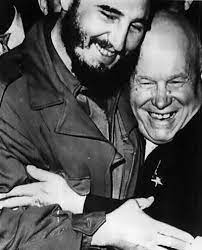
Fidel Castro and Nikita Khrushchev
Keizers [CC BY-SA 3.0 (https://creativecommons.org/licenses/by-sa/3.0)%5D
Khrushchev was quick to comply: “We must not allow the communist infant to be strangled in its crib,” he told members of his inner circle.
By October, 1962, the Soviet Union had sent more than
- 40,000 soldiers,
- 1,300 field pieces,
- 700 anti-aircraft guns,
- 350 tanks and
- 150 jets
to Cuba to deter another invasion.
Most importantly, Khrushchev began supplying Castro with nuclear-tipped ballistic missiles.
Their discovery, on October 15, 1962, ignited the single most dangerous confrontation of the 50-year Cold War.
Suddenly, the United States and the Soviet Union—both bristling with nuclear weapons—found themselves on the brink of nuclear war.
At the time, Kennedy officials claimed they couldn’t understand why Khrushchev had placed nuclear missiles in Cuba. “Maybe Khrushchev’s gone mad” was a typical public musing.
This remained the official American view for years afterward—as depicted in Robert Kennedy’s memoir, Thirteen Days: A Memoir of the Cuban Missile Crisis, published in 1969, the year after his death.
No admission was made that JFK had been waging a no-holds-barred campaign to overthrow the Cuban government and assassinate its leader.
The same proved true for the 1974 doc-u-drama, The Missiles of October, starring William Devane as John F. Kennedy and Martin Sheen as Robert Kennedy.
On October 16, President Kennedy was informed of the missile installations. He immediately convened a group of his 12 most important advisers, which became known as Ex-Comm, for Executive Committee.
Then followed seven days of guarded and intense debate by Kennedy and his advisers. Some of the participants—such as Air Force General Curtis LeMay—urged an all-out air strike against the missile sites.
Others—such as Adlai Stevenson, the United States delegate to the United Nations—urged a reliance on quiet diplomacy.
It was Secretary of Defense Robert S. McNamara who suggested a middle course: A naval blockade—a “quarantine” in Kennedy’s softened term—around Cuba. This would hopefully prevent the arrival of more Soviet offensive weapons on the island.
Finally, the President decided to to impose a naval blockade.
On October 22, Kennedy went on nationwide TV to announce the discovery of the missiles and his decision to blockade Cuba.
ABC NEWS, ALTERNET, AMERICAN TABLOID, ANTI-CASTRO CUBANS, AP, ASSASSINATION, BUZZFEED, CBS NEWS, CIA, CNN, COMMUNISM, CROOKS AND LIARS, CUBA, CUBAN MISSILE CRISIS, DAILY KOZ, DONALD TRUMP, DWIGHT D. EISENHOWER, FACEBOOK, FBI, FIDEL CASTRO, FLORIDA, FULGENCIO BATISTA, GUS RUSSO, JACK RUBY, JAMES ELLROY, JOHN F. KENNEDY, JOHNNY ROSELLI, LEE HARVEY OSWALD, LIVE BY THE SWORD, LYNDON B. JOHNSON, MAFIA, MARCO RUBIO, MOTHER JONES, MOVEON, MSNBC, NBC NEWS, NEWSWEEK, NIKITA KHRUSHCHEV, NPR, PBS NEWSHOUR, POLITICO, RAW STORY, REUTERS, ROBERT F. KENNEDY, SALON, SAM GIANCANA, SEATTLE TIMES, SLATE, THE ATLANTIC, THE CHICAGO SUN-TIMES, THE CHICAGO TRIBUNE, THE DAILY BEAST, THE GUARDIAN, THE HILL, THE HUFFINGTON POST, THE LOS ANGELES TIMES, THE NATION, THE NEW YORK TIMES, THE WASHINGTON POST, TIME, TWITTER, U.S. NEWS & WORLD REPORT, UPI, USA TODAY, WARREN COMMISSION
In Bureaucracy, History, Law Enforcement, Military, Politics, Social commentary on June 17, 2019 at 12:11 am
On June 5, President Donald Trump banned cruise ships from the United States to visit Cuba and “people-to-people” educational travel there for Americans.
Officially, the reason was to keep American dollars “out of the hands” of the communist government.
Unofficially, the reason was to curry electoral favor with the huge Cuban exile community living in Florida, especially in Miami.
That community owes its existence to Fidel Castro (1926-2016).
To his supporters he was a tireless champion of the poor and a foe of American imperialism. To his enemies he was a ruthless dictator who drove his country to economic ruin in the name of a failed ideology—communism.
His reign began on January 1, 1959, when he swept triumphantly into Havana after a two-year guerrilla campaign against Cuban dictator Fulgencio Batista.
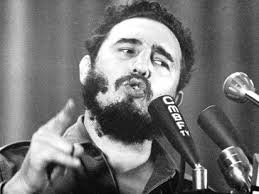
Fidel Castro
Almost immediately, hundreds of thousands of Cubans began fleeing to America. The first émigrés were more than 215,000 Batista followers. The exodus increased, peaking at approximately 78,000 in 1962.
In October, 1962, Castro stopped regularly scheduled travel between the two countries, and asylum seekers began sailing from Cuba to Florida.
Between 1962 and 1979, hundreds of thousands of Cubans entered the United States under the Attorney General’s parole authority.
By 2008, more than 1.24 million Cubans were living in the United States, mostly in South Florida, where the population of Miami was about one-third Cuban. Their sheer numbers transformed the state’s political, economic and cultural life. And not entirely for the better.
Many of these Cubans viewed themselves as political exiles, rather than immigrants, hoping to eventually return to Cuba after its Communist regime fell from power.
The large number of Cubans in South Florida, particularly in Miami’s “Little Havana,” allowed them to preserve their culture and customs to a degree rare for immigrant groups.
With so many discontented immigrants concentrated in Florida, they became a potential force for politicians to court.
And the issue guaranteed to sway their votes was unrelenting hostility to Castro. Unsurprisingly, most of their votes went to Right-wing Republicans.
John F. Kennedy was the first President to face this dilemma.
During the closing months of the administration of President Dwight D. Eisenhower, the CIA had begun training Cuban exiles for an invasion of their former homeland.
The exiles’ goal: To do what Castro had done—seek refuge in the mountains and launch a successful anti-Castro revolution.
But word of the coming invasion quickly leaked: The exiles were terrible secret-keepers. (A joke at the CIA went: “A Cuban thinks a secret is something you tell to only 300 people.”)
Kennedy insisted the invasion must appear to be an entirely Cuban enterprise. He refused to commit U.S. Marines and Air Force bombers.
More than 1,400 invaders landed on April 17, 1961 at the Bay of Pigs—and were quickly overwhelmed, with hundreds of the men taken prisoner.
Kennedy publicly took the blame for its failure: “Victory has a hundred fathers but defeat is an orphan.” Privately he seethed, and ordered the CIA to redouble its efforts to remove Castro at all costs.
To guarantee success, he appointed his brother, Robert—then Attorney General—to oversee the CIA’s “Castro removal” program.
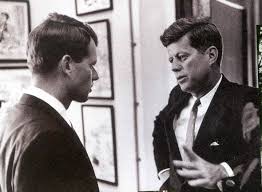
Robert F. Kennedy and John F. Kennedy
It’s here that America’s obsession with Cuba entered its darkest and most disgraceful period.
The CIA and the Mafia entered into an unholy alliance to assassinate Castro—each for its own benefit:
- The CIA wanted to please Kennedy.
- The mobsters wanted to regain their casino and brothel holdings that had made Cuba their private playground in pre-Castro times. They also hoped to use their pose as patriots to win immunity from future prosecution.
The CIA supplied poisons and explosives to various members of the Mafia. It was then up to the mobsters to assassinate Castro.
The CIA asked Johnny Roselli, a mobster linked to the Chicago syndicate, to go to Florida in 1961 and 1962 to organize assassination teams of Cuban exiles. They were to infiltrate their homeland and assassinate Castro.
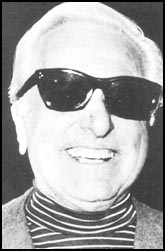
Johnny Roselli
Rosselli called upon two other crime figures: Chicago Mafia boss Sam Giancana and Santos Trafficante, the Costra Nostra chieftain for Tampa, for assistance.

Sam Giancana
Giancana, using the name “Sam Gold” in his dealings with the CIA, was meanwhile being hounded by the FBI on direct orders of Attorney General Robert Kennedy.
The mobsters were authorized to offer $150,000 to anyone who would kill Castro and were promised any support the Agency could yield.
Giancana was to locate someone who was close enough to Castro to be able to drop pills into his food. Trafficante would serve as courier to Cuba, helping to make arrangements for the murder on the island.
Rosselli was to be the main link between all of the participants in the plot.
Some historians believe that the Mob made a genuine effort to “whack” Fidel.
Others are convinced the mobsters simply ran a scam on the government. They pretended to carry out their “patriotic duty” while in fact making no effort at all to penetrate Castro’s security.
The CIA’s war against Castro was known as Operation Mongoose—the mongoose being a traditional enemy of the cobra. And those entrusted with this assignment were known as the Special Group.
ABC NEWS, ALTERNET, AP, BUZZFEED, CBS NEWS, CNN, CROOKS AND LIARS, D-DAY, D-DAY ANNIVERSARY CEREMONY, DAILY KOZ, DONALD TRUMP, EMMANUEL MACRON, ERWIN ROMMEL, FACEBOOK, FOX NEWS NETWORK, FRANKLIN D. ROOSEVELT, illegal immigration, JOHN F. KENNEDY, JUDY WOODRUFF, LAURA INGRAHAM, MARK SHIELDS, MEXICO, MOTHER JONES, MOVEON, MSNBC, NANCY PELOSI, NAZI GERMANY, NBC NEWS, NEWSWEEK, NORMAN COTA, NPR, PBS NEWSHOUR, PETER WEHNER, POLITICO, QUEEN ELIZABETH 11, RAW STORY, REUTERS, ROBERT MUELLER, SALON, SEATTLE TIMES, SLATE, TARIFFS, THE ATLANTIC, THE CHICAGO SUN-TIMES, THE CHICAGO TRIBUNE, THE DAILY BEAST, THE GUARDIAN, THE HILL, THE HUFFINGTON POST, THE LOS ANGELES TIMES, THE NATION, THE NEW YORK TIMES, THE WASHINGTON POST, TIME, TWITTER, U.S. NEWS & WORLD REPORT, UPI, USA TODAY, WORLD WAR 11
In Bureaucracy, History, Military, Politics, Social commentary on June 13, 2019 at 12:27 am
For most Americans, June 6th marked the 75th anniversary of D-Day. A time to remember and celebrate the more than 160,000 troops—73,000 of them Americans—who liberated France from Nazi slavery.
But for President Donald Trump, D-Day was simply another opportunity to slander men and women he considered “enemies of the people.”
On that day, President Donald Trump was to join European leaders—such as England’s Queen Elizabeth II and France’s President Emmanuel Macron—in celebratory observance.
But for Trump, honoring the dead—and a handful of D-Day survivors present at the ceremony—was a distant priority.

Normandy American Cemetery and Memorial
First must come a soft-ball “interview” with Right-wing Fox News Network—even if it meant postponing the opening of D-Day ceremonies until he deigned to show up.
And conducting that interview was Right-wing Fox News host Laura Ingraham—who gave a stiff-armed Nazi salute at the 2016 Republican National Convention that nominated Trump for President.
Laura Ingraham: What could you do to unite the country at a time of great polarization, what else could you do?
Donald Trump: So, I think success should unite the country but I will tell you the more successful we’ve come the more angry people like Nancy Pelosi, who don’t have what it takes, if they don’t know what’s going on they get angry. They should — an example is Mexico, I said we’re going to put tariffs on because we want you to help us because they won’t pass any legislation in Congress and I have Senators and others and Pelosi coming out saying how horrible.
What they’re doing is they’re hurting a deal, they should be saying we’re with the President, we’ll do whatever he wants to do and Mexico would fold like an umbrella. Now, I have these people and I’m saying there’s some republicans too,
[NOTE: Since becoming President, Trump has repeatedly tried—and failed—to curb illegal immigration from Central and South America. In May, he threatened to slap tariffs on goods from Mexico unless its government imposed strict controls over would-be immigrants traveling through its borders.]
On June 7, 2019, syndicated columnist Mark Shields and New York Times columnist Peter Wehners appeared on the PBS Newshour to review the week’s major political events.
Shields—a liberal, and Wehner, a conservative—reached disturbingly similar conclusions about the behavior of President Donald Trump on the 75th anniversary celebration of the D-Day landings.
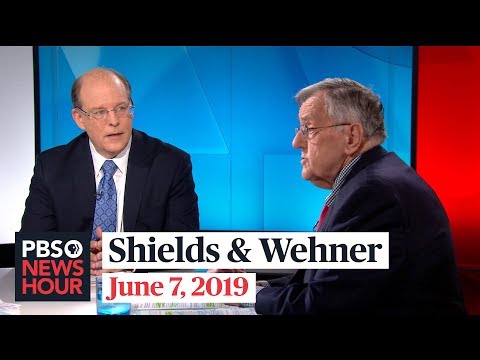
Peter Wehner and Mark Shields
Peter Wehner: in terms of watching it, it reminded me of why it was the Greatest Generation. It’s been called the Greatest Generation.The more you find out about what happened 75 years ago on Normandy Beach, the more extraordinary is, the courage and the valor and selflessness…
But, for me, what was, well, frankly, sickening was this interview that Donald Trump did with Laura Ingraham on Fox News, not just what he said, but where he said it. He had thousands and thousands of gravestones behind him, these people who had been cut down in the prime of their life. And he was attacking Nancy Pelosi and Robert Mueller, who himself was a—was a war hero, in petty terms.
And to have done it then was, in my mind, a desecration at a sacred place. And it was another window into the bonfire of anger and resentments and grievances that is Donald Trump.
Mark Shields: I would just add this….that the 9,388 Americans, husbands, fathers, sons, brothers, sweethearts are buried there who either died at Normandy or in the liberation of France. And it was a time in this country, it was a we generation, not a me generation.
I mean, we had 20 million victory gardens that civilians built that provided 40 percent of the vegetables for the whole country. We rationed everything from gasoline, to liquor, to cigarettes, to butter, to meat….
And all Americans were part of the collective effort, the collective sacrifice, and it was led by those at the top….The president of the United States had four sons. Every one of them served in combat. Every one of them was awarded in combat. You take the…sickly son of a multimillionaire, who asked his father to use his contacts to get him into combat, John Kennedy, rather than stay out….
One out of four American males served in World War II. And now we have one-third—one-percent of Americans serving. And they are serving over and over and over again.
Judy Woodruff (moderator): It’s been 75 years, Peter Wehner. What remains in the American psyche from that?
Wehner: Well, we’re an angry country, a more divided country, and a more tribalistic country than we were then. It’s important to say that, in many ways, we’re a better country too, if you’re a minority or a woman, all sorts of things where we have made progress….
The thing is that the American capacity for self-renewal can be great. And sometimes, when virtues are taken from the life of the nation and an individual, you remember why they matter to begin with. And, hopefully, commemorations like this can—can remind us that there are things that are worth fighting for and worth living for.


 Bureaucracybuster's Blog
2016 PRESIDENTIAL CAMPAIGN, ABC NEWS, ALTERNET, AP, ARCHIBALD COX, BARACK OBAMA, BUZZFEED, CBS NEWS, CIA, CNN, CRAIG UNGER, CROOKS AND LIARS, DAILY KOZ, DEPARTMENT OF HOMELAND SECURITY, DEVIN NUNES, DIANNE FEINSTEIN, DONALD TRUMP, DONALD TRUMP JR., DOUG COLLINS, FACEBOOK, FBI, FOX NEWS, GREG MILLER, HILLARY CLINTON, HOUSE INTELLIGENCE COMMITTEE, HOUSE OF TRUMP HOUSE OF PUTIN (BOOK), ISLAMIC STATE OF IRAQ AND SYRIA (ISIS), ISRAELI INTELLIGENCE, JAMES COMEY, JARED KUSHNER, JEFF SESSIONS, JERROLD NADLER, JOE SCARBOROUGH, LESTER HOLT, LINDSEY GRAHAM, MALCOM NANCE, MALCOM W. NANCE, MICHAEL FLYNN, MICHAEL ISIKOFF, MIKE PENCE, MOTHER JONES, MOVEON, MSNBC, NATALIA VESELNITSKAYA, NATIONAL SECURITY AGENCY, NBC NEWS, NEWSWEEK, NPR, OFFICE OF THE DIRECTOR OF NATIONAL INTELLIGENCE, PAUL MANAFORT, POLITICO, PRINCETON UNIVERSITY, RAW STORY, REPUBLICAN PARTY, REPUBLICANS, REUTERS, REX TILLERSON, RICHARD M. NIXON, ROBERT S. MUELLER 111, ROD ROSENSTEIN, RUSSIA, RUSSIAN ROULETTE (BOOK), SALON, SEATTLE TIMES, SENATE INTELLIGENCE COMMITTEE, SERGEY KISLYAK, SERGEY LAVROV, SLATE, SUPREME COURT, THE APPRENTICE (BOOK), THE ATLANTIC, THE CHICAGO SUN-TIMES, THE CHICAGO TRIBUNE, THE DAILY BEAST, THE GUARDIAN, THE HILL, THE HUFFINGTON POST, THE LOS ANGELES TIMES, THE NATION, THE NEW YORK TIMES, THE PLOT TO DESTROY DEMOCRACY (BOOK), THE WASHINGTON POST, TIME, TREASON, TRUMP TOWER MEETING, TWITTER, U.S. NEWS & WORLD REPORT, UNITED STATES DEPARTMENT OF JUSTICE, UNITED STATES DEPARTMENT OF STATE, UPI, USA TODAY, VLADIMIR PUTIN, WILLIAM BARR
THE MANY FACES OF TRUMP’S TREASON: PART TWO (OF THREE)
In Bureaucracy, History, Law, Law Enforcement, Military, Politics, Social commentary on July 2, 2019 at 12:09 amIn the first installment of this series, four examples were listed of Donald Trump’s treason against the United States. Here are four more:
EXAMPLE #5: On January 20, 2017—the day Donald J. Trump became the 45th President of the United States—Michael Flynn took office as the nation’s 25th National Security Adviser.
Flynn, a former United States Army lieutenant general and director of the Defense Intelligence Agency, seemed the perfect choice for safeguarding the country’s security.
Two days later, The Wall Street Journal reported that Flynn was under investigation by U.S. counterintelligence agents for his secret communications with Russian officials.
On February 8, Flynn denied having spoken to Russian ambassador Sergey Kislyak in December, 2016, about removing the sanctions placed on Russia by the outgoing Obama administration.
The sanctions had been placed in retaliation for Russia’s efforts to manipulate the 2016 Presidential election.
On February 13, The Washington Post reported that Acting Attorney General Sally Yates had warned Trump in late January that Flynn had lied about his contacts with Kislyak—and that he could be blackmailed by Russian Intelligence.
Sally Yates
Flynn was forced to resign that same day—after only 24 days as National Security Adviser.
Officially, the reason given was that he had misled Vice President Mike Pence. But Flynn’s deception had already been known—via the warning to Trump by Yates.
Only after Yates’ warning became known to the media was Flynn forced to resign.
The same Washington Post story reported that, in December, 2015, he had appeared on Russia Today, the news network that American Intelligence agencies consider “the Kremlin’s principal international propaganda outlet.”
He had also received more than $45,000 as a “speaking fee” from the network for a talk on world affairs. At the gala where Flynn received the fee, he sat next to Russian President Vladimir Putin for dinner.
Flynn did not file the required paperwork for the trip. Nor did he report the “fee” to the Pentagon.
On December 1, 2017, Flynn appeared in federal court to formalize a deal with Special Counsel Robert S. Mueller III. He plead guilty to a felony count of “willfully and knowingly” making “false, fictitious and fraudulent statements” to the FBI
EXAMPLE #6: On May 9, 2017, President Trump fired FBI Director James Comey for investigating Russia’s subversion of the 2016 Presidential race.
There were four reasons for this:
James Comey
EXAMPLE #7: On May 10, Trump met with Russian Foreign Minister Sergey Lavrov and Russian Ambassador Sergey Kislyak in the Oval Office—and gave them highly classified Israeli Intelligence about an Islamic State plot to turn laptops into concealable bombs.
Kislyak is reportedly a top recruiter for Russia’s SVR foreign intelligence agency. He has been closely linked with Jeff Sessions, then Attorney General, and fired National Security Adviser Mike Flynn.
“I just fired the head of the FBI,” Trump told the two dignitaries. “He was crazy, a real nut job. I faced great pressure because of Russia. That’s taken off.”
On May 11, Trump, interviewed on NBC News by reporter Lester Holt, said: “And in fact when I decided to just do it, I said to myself, I said ‘you know, this Russia thing with Trump and Russia is a made-up story, it’s an excuse by the Democrats for having lost an election that they should have won.'”
A national firestorm erupted—unprecedented since President Richard M. Nixon had fired Watergate Special Prosecutor Archibald Cox on October 20, 1973.
To squelch it, Deputy Attorney General Rod Rosenstein moved quickly.
On May 17, 2017, he appointed former FBI Director Robert S. Mueller III to serve as Special Counsel for the United States Department of Justice.
Rosenstein charged Mueller to investigate “any links and/or coordination between the Russian government and individuals associated with the campaign of President Donald Trump, and any matters that arose or may arise directly from the investigation.”
EXAMPLE #8: On July 16, 2018, Trump attended a press conference in Helsinki, Finland, with Russian President Vladimir Putin.
There he blamed American Intelligence agencies—such as the FBI, CIA and National Security Agency—instead of Putin for Russia’s subversion of the 2016 Presidential election: “I have President Putin. He just said it’s not Russia. I will say this: I don’t see any reason why it would be.”
But instead of attacking Trump for his treasonous behavior, Republicans in Congress and Right-wing Fox News relentlessly attacked Robert Mueller’s integrity and investigative methods.
Share this: