Posts Tagged ‘JOSEPH STALIN’
2016 PRESIDENTIAL ELECTION, 2020 PRESIDENTIAL ELECTION, ABC NEWS, ACAM SCHIFF, ADOLF HITLER, ALTERNET, AMERICABLOG, AP, BABY BOOMER RESISTANCE, BBC, BLOOMBERG NEWS, BRETT CROZIER, BUZZFEED, CBS NEWS, CHARLES PIERCE, CHRIS KREBS, CNN, CONVERSATION WITH AN AMERICAN WRITER (POEM), CORONAVIRUS, CROOKS AND LIARS, CYBERSECURITY AND INFRASTRUCTURE SECURITY AGENCY, DAILY KOS, DAILY KOZ, DEPARTMENT OF HOMELAND SECURITY, DEPARTMENT OF STATE, DIMITRI SHOSTAKOVICH, DONALD TRUMP, DRUDGE REPORT, ESQUIRE MAGAZINE, FACEBOOK, FBI, FIVETHIRTYEIGHT, FOX NEWS NETWORK, GREAT TERROR, HARPER’S MAGAZINE, HOUSE INTELLIGENCE COMMITTEE, HOUSE OF REPRESENTATIVES, HUFFINGTON POST, JOSEPH BIDEN, JOSEPH STALIN, MARIA YOVANOVICH, MEDIA MATTERS, MICROSOFT, MIKHAIL TUKHACHEVESKY, MOTHER JONES, MOVEON, MSNBC, NAZI GERMANY, NBC NEWS, NEW REPUBLIC, NEWSDAY, NEWSWEEK, NICCOLO MACHIAVELLI, NIKOLAI ZHILAYEV, NPR, PBS NEWSHOUR, POLITICO, POLITICUSUSA, RAW STORY, REUTERS, RUDY GIULIANI, SALON, SEATTLE TIMES, SLATE, SOVIET UNION, TALKING POINTS MEMO, THE ATLANTIC, THE CHICAGO SUN-TIMES, THE CHICAGO TRIBUNE, THE DAILY BEAST, THE DAILY BLOG, THE DISCOURSES, THE GUARDIAN, THE HILL, THE HUFFINGTON POST, THE LOS ANGELES TIMES, THE NATION, THE NEW REPUBLIC, THE NEW YORK TIMES, THE NEW YORKER, THE VILLAGE VOICE, THE WALL STREET JOURNAL, THE WASHINGTON POST, THINKPROGRESS, THOMAS MODLY, TIME, TRUTHDIG, TRUTHOUT, TWITTER, TWO POLITICAL JUNKIES, U.S. NEWS & WORLD REPORT, UKRAINE, UPI, USA TODAY, WEHRMACHT, WONKETTE, WORLD WAR ii, YEVGENEY YEVTUSHENKO
In Bureaucracy, History, Law, Law Enforcement, Military, Politics, Social commentary on February 24, 2021 at 12:11 am
Next up: Nikolai Sergeyvich Zhilayev (pronounced Zill-lay-ev) was a Russian musicologist and the teacher of several 20th-century Russian composers.
Among these: Dimitri Shostakovich (September 25, 1906 – August 9, 1975)
Among his friends—to his ultimate misfortune—was Mikhail Nikolayevich Tukhachevsky, the former military hero now falsely condemned and executed as a traitor by Soviet dictator Joseph Stalin.
In 1938, Zhilayev (November 18, 1881 – January 20, 1938) also became a casualty of what has become known as The Great Terror.
In his posthumously-published memoirs, Testimony, Shostakovich, his pupil and friend, described how Zhilayev faced his end with a calmness that awed even the NKVD (the predecessor to the KGB) secret police sent to arrest him.
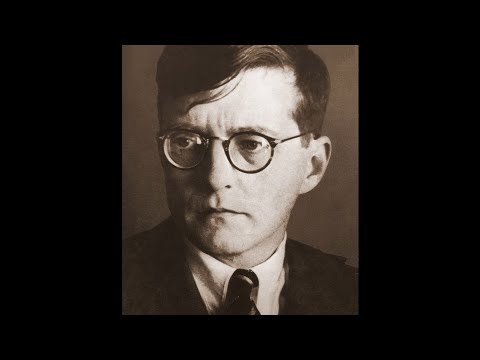
Dimitri Shostakovich
“He had a large picture of Tukhachevsky in his room, and after the announcement that Tukhachevsky had been shot as a traitor to the homeland, Zhilayev did not take the picture down.
“I don’t know if I can explain how heroic a deed that was….As soon as the next poor soul was declared an enemy of the people, everyone destroyed in a panic everything connected with that person….
“And naturally, photographs flew into the fire first, because if someone informed on you, reported that you had a picture of an enemy of the people, it meant certain death.
“Zhilayev wasn’t afraid. When they came for him, Tukhachevsky’s prominently hung portrait amazed even the executioners.”
“What, it’s still up?” one of the secret police asked.
“The time will come,” Zhilayev replied, “when they’ll erect a monument to him.”
As, in fact, has happened.
Meanwhile, Stalin has been universally condemned as one of history’s greatest tyrants.
Third hero—Brett Crozier, the former commanding officer of the aircraft carrier USS Theodore Roosevelt.
Graduating from the United States Naval Academy at Annapolis in 1992, he received his Master’s Degree in National Security and Strategic Studies from the Naval War College in 2007.
From 2017 to 2018 he commanded the USS Blue Ridge. In November, 2019, he was given command of the nuclear aircraft carrier USS Theodore Roosevelt.
On March 24, 2020, reports circulated that three members of the crew had tested positive for COVID-19. The next day the number of stricken sailors increased to eight. A few days later, it was “dozens.” The sailors reportedly became ill at sea, two weeks after a port call at Danang, Vietnam.
The initial cases were airlifted to a military hospital. The Roosevelt was ordered to Guam. After the ship docked on March 27, 2020, all 5,000 aboard were ordered to be tested for the virus. But only about 100 stricken sailors were allowed to leave the ship. The rest remained on board.
On March 30, Crozier emailed a four-page internal letter to multiple Naval officials, pleading to have the majority of the crew evacuated and quarantined on shore. Given the crowded sleeping quarters and narrow passageways of the vessel, Crozier wrote that it was impossible to follow social distancing and quarantine procedures:
“This will require a political solution but it is the right thing to do. We are not at war. Sailors do not need to die. If we do not act now, we are failing to properly take care of our most trusted asset—our Sailors….
“This is a necessary risk. Keeping over 4,000 young men and women on board the TR is an unnecessary risk and breaks faith with those Sailors entrusted to our care.”
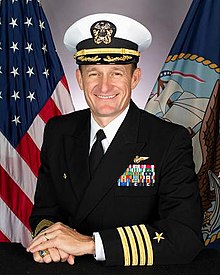
Brett Crozier
Crozier sent his letter via a non-secure, unclassified email to 20 to 30 recipients, as well as the captain’s immediate chain of command. He reportedly believed that his immediate supervisor would not allow him to send it.
And his superior later confirmed that he would not have allowed Crozier to send it.
On March 31, someone leaked the letter to the San Francisco Chronicle, which published it.
On April 1, the Navy ordered the aircraft carrier evacuated. A skeleton crew of 400 remained aboard to maintain the nuclear reactor, the fire-fighting equipment, and the ship’s galley.
On April 2, Crozier was relieved of command by acting United States Secretary of the Navy Thomas Modly.
By that time, about 114 crew members—out of a total of around 4,000—reportedly tested positive for COVID-19.
As Crozier disembarked, sailors loudly saluted him with a standing ovation: “Cap-tain Cro-zier!”
Modly claimed that Crozier’s letter “raised alarm bells unnecessarily. It undermines our efforts and the chain of command’s efforts to address this problem, and creates a panic and this perception that the Navy’s not on the job, that the government’s not on the job, and it’s just not true.”
Actually, the Trump administration had frittered away January and February, with President Donald Trump giving multiple—and misleading—press conferences. In these, he played down the dangers of COVID-19, saying that “we’re on top of it”—even as the virus spread across the country.
“It was a betrayal. And I can tell you one other thing: because he did that he put it in the public’s forum and it is now a big controversy in Washington, DC,” continued Modly. [Italics added]
This was the United States Navy under Donald Trump—who threw “betrayal” and “treason” at anyone who dared reveal the truth about institutional crimes and failures.
2016 PRESIDENTIAL ELECTION, 2020 PRESIDENTIAL ELECTION, ABC NEWS, ACAM SCHIFF, ADOLF HITLER, ALTERNET, AMERICABLOG, AP, BABY BOOMER RESISTANCE, BBC, BLOOMBERG NEWS, BRETT CROZIER, BUZZFEED, CBS NEWS, CHARLES PIERCE, CHRIS KREBS, CNN, CONVERSATION WITH AN AMERICAN WRITER (POEM), CORONAVIRUS, CROOKS AND LIARS, CYBERSECURITY AND INFRASTRUCTURE SECURITY AGENCY, DAILY KOS, DAILY KOZ, DEPARTMENT OF HOMELAND SECURITY, DEPARTMENT OF STATE, DIMITRI SHOSTAKOVICH, DONALD TRUMP, DRUDGE REPORT, ESQUIRE MAGAZINE, FACEBOOK, FBI, FIVETHIRTYEIGHT, FOX NEWS NETWORK, GREAT TERROR, HARPER’S MAGAZINE, HOUSE INTELLIGENCE COMMITTEE, HOUSE OF REPRESENTATIVES, HUFFINGTON POST, JOSEPH BIDEN, JOSEPH STALIN, MARIA YOVANOVICH, MEDIA MATTERS, MICROSOFT, MIKHAIL TUKHACHEVESKY, MOTHER JONES, MOVEON, MSNBC, NAZI GERMANY, NBC NEWS, NEW REPUBLIC, NEWSDAY, NEWSWEEK, NICCOLO MACHIAVELLI, NIKOLAI ZHILAYEV, NPR, PBS NEWSHOUR, POLITICO, POLITICUSUSA, RAW STORY, REUTERS, RUDY GIULIANI, SALON, SEATTLE TIMES, SLATE, SOVIET UNION, TALKING POINTS MEMO, THE ATLANTIC, THE CHICAGO SUN-TIMES, THE CHICAGO TRIBUNE, THE DAILY BEAST, THE DAILY BLOG, THE DISCOURSES, THE GUARDIAN, THE HILL, THE HUFFINGTON POST, THE LOS ANGELES TIMES, THE NATION, THE NEW REPUBLIC, THE NEW YORK TIMES, THE NEW YORKER, THE VILLAGE VOICE, THE WALL STREET JOURNAL, THE WASHINGTON POST, THINKPROGRESS, THOMAS MODLY, TIME, TRUTHDIG, TRUTHOUT, TWITTER, TWO POLITICAL JUNKIES, U.S. NEWS & WORLD REPORT, UKRAINE, UPI, USA TODAY, WEHRMACHT, WONKETTE, WORLD WAR ii, YEVGENEY YEVTUSHENKO
In Bureaucracy, History, Military, Politics, Social commentary on February 23, 2021 at 12:18 am
…A truly great man is ever the same under all circumstances. And if his fortune varies, exalting him at one moment and oppressing him at another, he himself never varies, but always preserves a firm courage, which is so closely interwoven with his character that everyone can readily see that the fickleness of fortune has no power over him.
The conduct of weak men is very different. Made vain and intoxicated by good fortune, they attribute their success to merits which they do not possess. And this makes them odious and insupportable to all around them. And when they have afterwards to meet a reverse of fortune, they quickly fall into the other extreme, and become abject and vile.
—Niccolo Machiavelli, The Discourses
Four heroes, three villains.
Two of the heroes are Russians; three are Americans.
The villains: One Russian (actually, Georgian); two American.
First up—in order of disappearance: Mikhail Nikolayevich Tukhachevsky (pronounced too-ka-chev-sky).
Tukhachevsky (February 4, 1893 – June 12, 1937) was a major Soviet military leader and theoretician from 1918 to 1937.
He commanded the Soviet Western Front during the Russian-Polish War (1920-21) and served as Chief of Staff of the Red Army (1925-1928).
He fought to modernize Soviet armament, as well as develop airborne, aviation and mechanized forces. Almost singlehandedly, he created the theory of deep operations for Soviet forces.

Mikhail Tukhachevsky
All of these innovations would reap huge dividends when the Soviet Union faced the lethal fury of Adolf Hitler’s Wehrmacht.
In 1936, Tukhachevsky warned Soviet dictator Joseph Stalin that Nazi Germany might attack without warning—and ignite a long and murderous war.
Stalin—the son of a Georgian cobbler—resented Tukhachevsky’s coming from a noble family. A monumental egomaniac, he also hated that Tukhachevesky’s fame rivaled his own.
Warned of the approaching German danger, Stalin shouted: “What are you trying to do—frighten Soviet authority?”
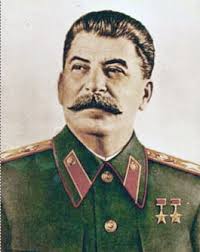
Joseph Stalin
The attack that Tukhachevsky warned against came five years later—on June 22, 1941, leaving at least 26 million Russians dead.
But Tukhachevsky wasn’t alive to command a defense.
The 1930s were a frightening and dangerous time to be alive in the Soviet Union. In 1934, Stalin, seeing imaginary enemies everywhere, ordered a series of purges that lasted right up to the German invasion.
An example of Stalin’s paranoia occurred one day while the dictator walked through the Kremlin corridors with Admiral Ivan Isakov. Officers of the NKVD (the predecessor to the KGB) stood guard at every corner.
“Every time I walk down the corridors,” said Stalin, “I think: Which one of them is it? If it’s this one, he will shoot me in the back. But if I turn the corner, the next one can shoot me in the face.”
In 1937-38, the Red Army fell prey to Stalin’s paranoia.
Its victims included:
- Three of five marshals (five-star generals);
- Thirteen of 15 army commanders (three- and four-star generals);
- Fifty of 57 army corps commanders; and
- One hundred fifty-four out of 186 division commanders.
And heading the list of those marked for death was Marshal Mikhail Tukhachevsky.
Arrested on May 22, 1937, he was interrogated and tortured. As a result, he “confessed” to being a German agent plotting to overthrow Stalin and seize power.
On his confession, which survives in the archives, his bloodstains can clearly be seen.
On June 11, 1937, the Soviet Supreme Court convened a special military tribunal to try Tukhachevsky and eight generals for treason.
It was a sham: The accused were denied defense attorneys, and could not appeal the verdict—-which was foregone: Death.
In a Russian version of poetic justice, five of the eight generals who served as Tukhachevsky’s judges were themselves later condemned and executed as traitors.
Within hours of the verdict, Tukhachevsky was summoned from his cell and shot once in the back of the head.
From 1937 until 1956, Tukhachevsky was officially declared a traitor and fifth-columnist.
Then, on February 25, 1957, Soviet Premier Nikita Khrushchev delivered his bombshell “Secret Speech” to the 20th Congress of the Communist Party of the Soviet Union.
In this, he denounced Stalin (who had died in 1953) as a ruthless tyrant responsible for the slaughter of millions of innocent men, women and children. He condemned Stalin for creating a “personality cult” around himself, and for so weakening the Red Army that Nazi Germany was able to easily overrun half of the Soviet Union from 1941 to 1943.
On January 31, 1957, Tukhachevsky and his co-defendants were declared innocent of all charges and were “rehabilitated.”
Today, he is once again—rightly—considered a Russian hero and military genius. And Stalin is universally—and rightly—seen as a blood-stained tyrant.
Next hero: Nikolai Sergeyvich Zhilayev (pronounced Zill-lay-ev)
Zhilayev (November 18, 1881 – January 20, 1938) was a Russian musicologist and the teacher of several 20th-century Russian composers. Among these: Dimitri Shostakovich.
Zhilayev, a member of the Russian Academy of Art-Sciences, taught at the Moscow Conservatory. Among his friends—to his ultimate misfortune—was Mikhail Tukhachevsky.
In 1938, he, too, became a casualty of what has become known as The Great Terror.
In his posthumously-published memoirs, Testimony, Shostakovich, his pupil and friend, described how Zhilayev faced his end with a calmness that awed even the NKVD secret police sent to arrest him.
ABC NEWS, ADAM SCHIFF, ALTERNET, AMERICABLOG, AP, ARTICLES OF IMPEACHMENT, BABY BOOMER RESISTANCE, BETSY DEVOS, BLOOMBERG, BUZZFEED, CAPITOL BUILDING ATTACK, CAPITOL POLICE, CBS NEWS, CHAD WOLF, CNN, CROOKS AND LIARS, DAILY KOZ, DEPARTMENT OF EDUCATION, DEPARTMENT OF HOMELAND SECURITY, DEPARTMENT OF TRANSPORTATION, DEUTSCHE BANK, DONALD TRUMP, DRUDGE REPORT, ELAINE CHAO, ELECTORAL COLLEGE, FACEBOOK, FIVETHIRTYEIGHT, HARPER’S MAGAZINE, HERODOTUS, HOUSE JUDICIARY COMMITTEE, HUFFINGTON POST, IMPEACHMENT, JERRY NADLER, JOSEPH BIDEN, JOSEPH STALIN, KHRUSHCHEV’S SECRET SPEECH, MEDIA MATTERS, MIKE PENCE, MOTHER JONES, MOVEON, MSNBC, NBC NEWS, NEWSWEEK, NIKITA KHRUSHCHEV, NPR, PBS NEWSHOUR, PGA OF AMERICA, POLITICO, POLITICUSUSA, RAW STORY, REUTERS, ROBERT PAYNE, SALON, SEATTLE TIMES, SLATE, SOVIET UNION, TALKING POINTS MEMO, THE ATLANTIC, THE CHICAGO SUN-TIMES, THE CHICAGO TRIBUNE, THE DAILY BEAST, THE DAILY BLOG, THE GUARDIAN, THE HILL, THE HUFFINGTON POST, THE LOS ANGELES TIMES, THE NATION, THE NEW REPUBLIC, THE NEW YORK TIMES, THE RISE AND FALL OF STALIN (BOOK), THE VILLAGE VOICE, THE WASHINGTON POST, THINKPROGRESS, TIME, TRUTHDIG, TRUTHOUT, TWENTY-FIFTH AMENDMENT, TWITTER, TWO POLITICAL JUNKIES, U.S. NEWS & WORLD REPORT, UNITED STATES HOUSE OF REPRESENTATIVES, UNITED STATES SENATE, UPI, USA TODAY, WONKETTE
In Bureaucracy, History, Law, Law Enforcement, Politics, Social commentary on January 15, 2021 at 12:10 am
Fifty-nine years ago, a Russian congress came face-to-face with the legacy of a ruthless dictator.
For almost 30 years, from 1924 to 1953, Joseph Vissarionovich Djugashvili—better known as Stalin—had ruled as absolute dictator over the Soviet Union. Hallmarks of his legacy included mass arrests, repeated purges, forced mass starvation and the imprisonment of millions. As many as 20 million men, women and children died as his victims.
His reign of terror ended only with his death, of a cerebral hemorrhage, on March 5, 1953, at age 74.
As historian Robert Payne wrote in his monumental 1965 biography The Rise and Fall of Stalin: “The son of an obscure cobbler, he had become during the last years of his life the most powerful man on earth. No emperor had ever enjoyed the power he possessed.
“He had taken the world by the throat, and forced it to do his will. He was one of the world-shakers, and when he died in 1953 it was thought proper that his remains should be exhibited as an object of reverence and worship in the Lenin mausoleum, the holy of holies of the Soviet empire.”
On February 25, 1956, his successor, Nikita Khrushchev, revealed Stalin’s litany of crimes to the 20th Congress of the Communist Party of the Soviet Union.
The speech was the opening shot in Khrushchev’s “de-Stalinization” campaign. He intended to destroy the image of the late dictator as an infallible leader and rein in the infamous KGB secret police.
The speech gave rise to a period of liberalization known as the “Khrushchev thaw” (1956-1964). During this, censorship policy was relaxed, and for the first time books and articles appeared about the huge network of forced labor camps set up by Vladimir Lenin and reaching its peak under Stalin.

Nikita Khrushchev
Creative Commons Attribution-Share Alike 4.0 International license.
Thousands of political prisoners were released, and thousands more who had perished during Stalin’s reign were officially “rehabilitated.”
By 1961, Khrushchev and those seeking to reform the Soviet political system decided to condemn the horrors of the Stalinist decades in a forceful symbolic act.
On October 31, 1961, the body of Joseph Stalin was removed from its honored resting place in the Lenin mausoleum in Red Square. A new grave was dug for him—among the minor heroes of the Russian Revolution. The re-internment took place secretly—at night—without ceremonies. And his name was removed from the mausoleum.
Historian Robert Payne described that event—and its significance: “A dead god was being transformed into a dead man, a dead emperor was being dethroned, a dead criminal was being executed….

“But more than a ritual murder was at stake. The Supreme Soviet and the Central Committee, which decreed the punishment now being inflicted on the corpse of Stalin, were now attempting to absolve themselves from responsibility for his crimes.
“They were saying: ‘We are not responsible, we are casting him away, he is not one of us! He committed such terrible crimes that we will have none of him.’
“For nearly thirty years Stalin had ruled tyrannically over Russia. History, too, was being consigned to oblivion.”
A series of similar events has erupted within the United States since January 6.
On that day, thousands of Right-wing supporters of President Donald Trump—ignited by his fiery, lie-riddled rhetoric—overwhelmed police guarding the United States Capitol and occupied the building.
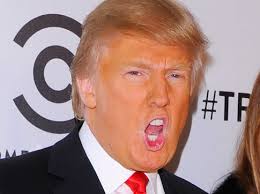
Donald Trump
Their intention: To halt the counting of Electoral College votes that would certify former Vice President Joseph Biden as the next President of the United States.
Americans who held that site sacred as the cradle of democracy were horrified to see rioters:
- Breaking windows and battering down doors;
- Beating police with fire extinguishers and an American flag pole;
- Carrying treasonous Confederate flags in the Capitol;
- Stealing treasures (such as the podium used by House Speaker Nancy Pelosi) and
- Forcing members of Congress to crouch under chairs as police fought off rioters.
Since then, Trump’s fortunes have sharply declined:
- Twitter—whose platform he had used during his Presidency to ruthlessly attack hundreds of people—finally cut off his account.
- A series of Cabinet officials hurriedly resigned from his administration. Among these: Secretary of Education Betsy DeVos and Acting Secretary of Homeland Security Chad Wolf.
- Deutsche Bank, his business lender since the 1990s, announced that it would not continue to do business with him.
- The PGA of America cut ties with Trump by canceling plans to hold the PGA Championship at his New Jersey golf course in 2022.
- And on January 13—one week to the day after his Stormtrumpers attacked the Capitol Building—the House of Representatives voted to impeach Trump for the second time during his Presidency. No other President has ever suffered such a humiliation.
- Adding to this humiliation: Ten Republican House members voted to impeach him.
Herodotus, the Greek historian who chronicled the Greek-Persian wars, offers a still-timely explanation of such reverses of fortune—and a warning for those who dare to ignore history:
“Look to the end, no matter what it is you are considering. Often enough God gives a man a glimpse of happiness, and then utterly ruins him.”
ABC NEWS, ADAM SCHIFF, ALTERNET, AMERICABLOG, AP, ARTICLES OF IMPEACHMENT, BABY BOOMER RESISTANCE, BETSY DEVOS, BLOOMBERG, BUZZFEED, CAPITOL BUILDING ATTACK, CAPITOL POLICE, CBS NEWS, CHAD WOLF, CNN, CROOKS AND LIARS, DAILY KOZ, DEPARTMENT OF EDUCATION, DEPARTMENT OF HOMELAND SECURITY, DEPARTMENT OF TRANSPORTATION, DEUTSCHE BANK, DONALD TRUMP, DRUDGE REPORT, ELAINE CHAO, ELECTORAL COLLEGE, FACEBOOK, FIVETHIRTYEIGHT, HARPER’S MAGAZINE, HERODOTUS, HOUSE JUDICIARY COMMITTEE, HUFFINGTON POST, IMPEACHMENT, JERRY NADLER, JOSEPH BIDEN, JOSEPH STALIN, KHRUSHCHEV’S SECRET SPEECH, MEDIA MATTERS, MIKE PENCE, MOTHER JONES, MOVEON, MSNBC, NBC NEWS, NEWSWEEK, NIKITA KHRUSHCHEV, NPR, PBS NEWSHOUR, PGA OF AMERICA, POLITICO, POLITICUSUSA, RAW STORY, REUTERS, ROBERT PAYNE, SALON, SEATTLE TIMES, SLATE, SOVIET UNION, TALKING POINTS MEMO, THE ATLANTIC, THE CHICAGO SUN-TIMES, THE CHICAGO TRIBUNE, THE DAILY BEAST, THE DAILY BLOG, THE GUARDIAN, THE HILL, THE HUFFINGTON POST, THE LOS ANGELES TIMES, THE NATION, THE NEW REPUBLIC, THE NEW YORK TIMES, THE RISE AND FALL OF STALIN (BOOK), THE VILLAGE VOICE, THE WASHINGTON POST, THINKPROGRESS, TIME, TRUTHDIG, TRUTHOUT, TWENTY-FIFTH AMENDMENT, TWITTER, TWO POLITICAL JUNKIES, U.S. NEWS & WORLD REPORT, UNITED STATES HOUSE OF REPRESENTATIVES, UNITED STATES SENATE, UPI, USA TODAY, WONKETTE
In Bureaucracy, History, Law, Law Enforcement, Politics, Social commentary on January 14, 2021 at 12:08 am
On January 13, for the first time in its history, the United States House of Representatives voted to impeach a President—for the second time during his tenure.
On December 10, 2019, Democratic leaders in the House voted to send two Articles of Impeachment to the House Judiciary Committee.
Their purpose: To remove Donald J. Trump from office as the 45th President of the United States.
House Judiciary Committee Chairman Jerry Nadler read the charges:
Article 1: Abuse of Power: For pressuring Ukraine to assist him in his re-election campaign by damaging former Vice President Joseph Biden, his possible Democratic rival.
Article 2: Obstruction of Congress: For obstructing Congress by blocking testimony and refusing to provide documents in response to House subpoenas in the impeachment inquiry.
On January 23, 2020, House Intelligence Committee Chairman and Lead Impeachment Manager Adam Schiff (D-CA) tweeted a prophecy—and a warning: “Donald Trump must be convicted and removed from office. Because he will always choose his own personal interest over our national interest. Because in America, right matters. Truth matters. If not, no Constitution can protect us. If not, we are lost.”

Adam Schiff
On February 5, 2020, the Republican-dominated Senate—ignoring the overwhelming evidence against him—acquitted Donald Trump on both impeachment articles: Obstruction of Congress and abuse of power.
Schiff’s prophecy came true on January 6, 2021. On that day, Trump unleashed thousands of Right-wing terrorists on the United States Capitol.
Inside, members of Congress were tabulating the Electoral College votes cast in the 2020 Presidential election.
The winner had been former Vice President Joseph Biden. Trump, seeking a second term, had lost, getting 74,196,153 votes.to 81,255,933 for Biden.
Trump had made repeated—and false—claims of electoral fraud. Yet despite filing 60 court cases seeking to overturn the election’s results, his lawyers had failed to produce any proof of it.
Trump had often “joked” about how great it would be for the United States to have a “President-for-Life”—like China. Now his only hope of remaining in power lay in intimidating Congress into ignoring the election results.
Inspired by Trump’s violence-charged rhetoric, the Stormtrumpers marched to the United States Capitol—and quickly brushed aside outnumbered Capitol Police.
- Members of the mob attacked police with chemical agents or lead pipes.
- A Capitol Hill police officer was knocked off his feet, dragged into the mob surging toward the building, and beaten with the pole of an American flag.
- Several rioters carried plastic handcuffs, possibly intending to take hostages. Others carried treasonous Confederate flags.

Stormtrumpers scaling Capitol Building walls
- Shouts of “Hang Pence!” often rang out.
- Improvised explosive devices were found in several locations in Washington, D.C.
- Members of the House and Senate huddled anxiously behind locked doors barricaded with furniture as seditionists tried to break in.
- Many of the lawmakers’ office buildings were occupied and vandalized—including that of House Speaker Nancy Pelosi, a favorite Right-wing target.
More than three hours passed before police—using riot gear, shields and batons—retook control of the Capitol.
Meeting again that evening, members of the Senate and House resumed their vote-counting. In the end, Joseph Biden and Kamala Harris were named, respectively, the President-Elect and Vice-President Elect of the United States.
By the next day, members of the House—especially Democrats—were furious at their near-brush with death. And they were ready to seek retribution on the man responsible.
Their initial hope was that Vice President Mike Pence and a majority of Trump’s cabinet would invoke the 25th Amendment. But hopes for this quickly faded.
A growing number of Cabinet officials began resigning:
- Education Secretary Betsy DeVos
- Transportation Secretary Elaine Chao
- Acting Secretary of Homeland Security Chad Wolf
There was a very real danger there wouldn’t be enough Cabinet members left to invoke the Amendment.
But making the use of the Amendment even more unlikely was the obvious unwillingness of Vice President Pence to invoke it.

Mike Pence
This despite the fact that he could have been hanged as a “traitor” by the Stormtrumpers only days ago.
(He had likely been spared this fate by his Secret Service detail, whisking him out of the Senate—and leaving other government officials to their own fates.)
On January 11, Democrats introduced a single impeachment article charging Trump with “incitement of insurrection” in urging his supporters to march on the U.S. Capitol on January 6.
They also introduced a resolution that called on Pence to invoke the 25th Amendment to the Constitution to remove him from office before January 20.
On January 13, the House met to debate a single article of impeachment: “Incitement of Insurrection.” Its gist:
“Thus incited by President Trump, members of the crowd he had addressed, in an attempt to, among other objectives, interfere with the Joint Session’s solemn constitutional duty to certify the results of the 2020 Presidential election, unlawfully breached and vandalized the Capitol, injured and killed law enforcement personnel, menaced Members of Congress, the Vice President, and Congressional personnel, and engaged in other violent, deadly, destructive, and seditious acts.”
Thus, the House sought to remove a President who intended to rule as a dictator.
Fifty-nine years earlier, a Russian congress had come face-to-face with the despotism of another tyrant.
2016 PRESIDENTIAL ELECTION, 2020 PRESIDENTIAL ELECTION, ABC NEWS, ADOLF HITLER, ALTERNET, AMERICABLOG, AP, BABY BOOMER RESISTANCE, BARACK OBAMA, BEER HALL PUTSCH, BLOOMBERG, BREITBART NEWS, BUZZFEED, CBS NEWS, CHRIS KREBS, CHRISTOPHER S. MURPHY, CIA, CNN, COVID-19, CROOKS AND LIARS, CYBERSECURITY AND INFRASTRUCTURE SECURITY AGENCY, DAILY KOZ, DEMOCRATIC NATIONAL COMMITTEE, DEMOCRATIC PARTY, DEMOCRATS, DEPARTMENT OF HOMELAND SECURITY, DIRECTOR OF NATIONAL INTELLIGENCE, DONALD J. TRUMP FOUNDATION, DONALD TRUMP, DONALD TRUMP JUNIOR, DRUDGE REPORT, EMOLUMENTS CLAUSE, ERIC SCHNEIDERMAN, EXTORTION, FACE THE NATION, FACEBOOK, FBI, FERGUS CULLEN, FIVETHIRTYEIGHT, FOX NEWS SUNDAY, GREG ABBOTT, GRETCHEN WHITMER, HACKING, HARPER’S MAGAZINE, HILLARY CLINTON, HITLER: ASCENT (BOOK), HUFFINGTON POST, IRS, ISLAMIC STATE, JAMES B. COMEY, JAMES R. CLAPPER, JARED KUSHNER, JEFF SESSIONS, JOE BIDEN, JOHN KASICH, JOSEPH STALIN, JR., JUSTICE DEPARTMENT, KEN PAXTON, KIM JONG ON, KU KLUX KLAN, LANDSBERG PRISON, LEON PANETTA, MAIN INTELLIGENCE DIRECTORATE, MARK LEVIN, MEDIA MATTERS, MEIN KAMPF (BOOK), MICHAEL FLYNN, MICHAEL HAYDEN, MICHAEL ROGERS, MIKE PENCE, MOTHER JONES, MOVEON, MSNBC, NATIONAL SECURITY AGENCY, NAZI PARTY, NAZIS, NBC NEWS, NEW HAMPSHIRE REPUBLICAN PARTY, NEWSWEEK, NPR, PAM BONDI, PAUL MANAFORT, PAUL RYAN, PBS NEWSHOUR, PHILIP KLEIN, POLITICO, POLITICUSUSA, RACKETEER INFLUENCED CORRUPT ORGANIZATIONS ACT (RICO), RAW STORY, RECEP TAYYIP ERDOGAN, REPUBLICAN NATIONAL COMMITTEE, REPUBLICAN NATIONAL CONVENTION, REPUBLICAN PARTY, REPUBLICANS, REUTERS, REX TILLERSON, ROGER STONE, SALON, SEATTLE TIMES, SERGEY KISLYAK, SERGEY LAVROV, SLATE, SOVIET UNION, TALKING POINTS MEMO, THE ATLANTIC, THE CHICAGO SUN-TIMES, THE CHICAGO TRIBUNE, THE DAILY BEAST, THE DAILY BLOG, THE GUARDIAN, THE HILL, THE HUFFINGTON POST, THE LOS ANGELES TIMES, THE NATION, THE NEW REPUBLIC, THE NEW YORK TIMES, THE PRESS, THE VILLAGE VOICE, THE WASHINGTON EXAMINER, THE WASHINGTON POST, THINKPROGRESS, THREATS, TIME, TREASON, TRUMP TOWER MEETING, TRUMP UNIVERSITY, TRUMP-RUSSIA TIES, TRUTHDIG, TRUTHOUT, TWITTER, TWO POLITICAL JUNKIES, U.S. NEWS & WORLD REPORT, UNITED STATES CONSTITUTION, UNITED STATES SECRET SERVICE, UPI, USA TODAY, VLADIMIR PUTIN, VOLKER ULLRICH, VOTER INTIMIDATION, WEIMAR REPUBLIC, WIKILEAKS, WIRETAPPING, WONKETTE, XI JINPING
In Bureaucracy, History, Law, Law Enforcement, Politics, Social commentary on December 3, 2020 at 1:23 am
The election of Donald Trump—and the subsequent dictatorial, vindictive and even treasonous behavior that followed—was not inevitable.
There were at least six instances where the Justice Department of President Barack Obama could have utterly changed the outcome of the 2016 election. Yet, for reasons still unknown, it chose to do nothing.
The first instances has been highlighted in Parts One through Three of this series. These consisted of:
Case #1: The Obama Justice Department did not indict Trump and/or the Attorney Generals of Texas and/or Florida for bribery in the Trump University scandal.
Case #2: The Justice Department did not indict Trump for the series of threats that he made—directly and indirectly—against Republicans and Democrats throughout the 2016 campaign.
Case #3: The Justice Department could have indicted Trump and/or his followers for voter intimidation.
Case #4 Making threats against anyone under protection by the U.S. Secret Service is a felony. Yet Donald Trump was never held legally accountable by the Justice Department for his “dog whistle” threat against Hillary Clinton.
Case #5 The Justice Department did not invalidate the results of the 2016 election, despite overwhelming evidence that Russia intervened to elect Donald Trump as Vladimir Putin’s chosen candidate.
And now the final—and fatal—miscarriage of justice:
Case #6: The Justice Department did not prosecute Donald Trump for treason, even though he solicited aid from Russia, a nation hostile to the United States. And no major official of the government—including President Barack Obama—publicly condemned him as a traitor.
At a news conference in Doral, Florida on July 27, 2016. Trump publicly invited “Russia”—i.e., Vladimir Putin—to hack Hillary Clinton’s emails: “I will tell you this, Russia: If you’re listening, I hope you’re able to find the 30,000 emails that are missing. I think you will probably be rewarded mightily by our press.”
Even Trump’s Trump’s Vice Presidential running mate, Mike Pence, said: “If it is Russia and they are interfering in our elections, I can assure you both parties and the United States government will ensure there are serious consequences.”
Throughout 2016, the CIA, FBI and National Security Agency (NSA) found numerous ties between officials of the Trump Presidential campaign and Russian Intelligence agents. Among these:
- Future Secretary of State Rex Tillerson
- Future National Security Adviser Michael Flynn and
- Future Attorney General Jeff Sessions.
The discovery of such contacts between Trump campaign officials and Russian Intelligence agents led the FBI to launch an investigation into Russia’s efforts to influence the outcome of the 2016 Presidential election.
It was that investigation—totally justified by law and common sense—that Trump later claimed had been a “deep state” coup to prevent him from reaching the White House.
To their shame, the federal agencies charged with safeguarding America failed to take action against these abuses. And, to their shame, the news media, to date, has failed to indict them for their negligence.
Future historians may well indict President Barack Obama for his failure to decisively act, and whose negligence led to the rise and destructive reign of Donald Trump.
Ninety-three years earlier, a similar series of circumstances led to the rise and reign of an even more destructive tyrant.
On November 9, 1923, Nazi Party Fuhrer Adolf Hitler tried to overthrow the government in Munich, Bavaria.
About 2,000 Nazis marched to the center of Munich, where they confronted heavily-armed police. A shootout erupted, killing 16 Nazis and four policemen.
Hitler was injured during the clash, but managed to escape. Two days later, he was arrested and charged with treason.
Put on trial, he found himself treated as a celebrity by a judge sympathetic to Right-wing groups. He was allowed to brutally cross-examine witnesses and even make inflammatory speeches.
At the end of the trial, he was convicted of treason and sentenced to five years’ imprisonment.
Serving time in Landsberg Prison, in Bavaria. he was given a huge cell, allowed to receive unlimited visitors and gifts, and treated with deference by guards and inmates.
Hitler used his time in prison to write his infamous book, Mein Kampf-–“My Struggle.” Part autobiography, part political treatise, it laid out his future plans—including the extermination of the Jews and the conquest of the Soviet Union.

Adolf Hitler leaving Landsberg Prison, December, 20, 1924
Nine months later, he was released on parole—by authorities loyal to the authoritarian Right instead of the newly-created Weimar Republic.
Hitler immediately began rebuilding the shattered Nazi party—and deciding on a new strategy to gain power. Never again would he resort to armed force. He would win office by election—or intrigue.
Writes historian Volker Ullrich, in his monumental new biography, Hitler: Ascent 1889 – 1939: “Historians have perennially tried to answer the question of whether Hitler’s rise to power could have been halted….
“There were repeated opportunities to end Hitler’s run of triumphs. The most obvious one was after the failed Putsch of November 1923. Had the Munich rabble-rouser been forced to serve his full five-year term of imprisonment in Landsberg, it is extremely unlikely that he would have been able to restart his political career.” [Italics added]

Thus, it isn’t just what happens that can influence the course of history. Often, it’s what doesn’t happen that has at least as great a result.
2016 PRESIDENTIAL ELECTION, 2020 PRESIDENTIAL ELECTION, ABC NEWS, ADOLF HITLER, ALTERNET, AMERICABLOG, AP, BABY BOOMER RESISTANCE, BARACK OBAMA, BEER HALL PUTSCH, BLOOMBERG, BREITBART NEWS, BUZZFEED, CBS NEWS, CHRIS KREBS, CHRISTOPHER S. MURPHY, CIA, CNN, COVID-19, CROOKS AND LIARS, CYBERSECURITY AND INFRASTRUCTURE SECURITY AGENCY, DAILY KOZ, DEMOCRATIC NATIONAL COMMITTEE, DEMOCRATIC PARTY, DEMOCRATS, DEPARTMENT OF HOMELAND SECURITY, DIRECTOR OF NATIONAL INTELLIGENCE, DONALD J. TRUMP FOUNDATION, DONALD TRUMP, DONALD TRUMP JUNIOR, DRUDGE REPORT, EMOLUMENTS CLAUSE, ERIC SCHNEIDERMAN, EXTORTION, FACE THE NATION, FACEBOOK, FBI, FERGUS CULLEN, FIVETHIRTYEIGHT, FOX NEWS SUNDAY, GREG ABBOTT, GRETCHEN WHITMER, HACKING, HARPER’S MAGAZINE, HILLARY CLINTON, HITLER: ASCENT (BOOK), HUFFINGTON POST, IRS, ISLAMIC STATE, JAMES B. COMEY, JAMES R. CLAPPER, JARED KUSHNER, JEFF SESSIONS, JOE BIDEN, JOHN KASICH, JOSEPH STALIN, JR., JUSTICE DEPARTMENT, KEN PAXTON, KIM JONG ON, KU KLUX KLAN, LANDSBERG PRISON, LEON PANETTA, MAIN INTELLIGENCE DIRECTORATE, MARK LEVIN, MEDIA MATTERS, MEIN KAMPF (BOOK), MICHAEL FLYNN, MICHAEL HAYDEN, MICHAEL ROGERS, MIKE PENCE, MOTHER JONES, MOVEON, MSNBC, NATIONAL SECURITY AGENCY, NAZI PARTY, NAZIS, NBC NEWS, NEW HAMPSHIRE REPUBLICAN PARTY, NEWSWEEK, NPR, PAM BONDI, PAUL MANAFORT, PAUL RYAN, PBS NEWSHOUR, PHILIP KLEIN, POLITICO, POLITICUSUSA, RACKETEER INFLUENCED CORRUPT ORGANIZATIONS ACT (RICO), RAW STORY, RECEP TAYYIP ERDOGAN, REPUBLICAN NATIONAL COMMITTEE, REPUBLICAN NATIONAL CONVENTION, REPUBLICAN PARTY, REPUBLICANS, REUTERS, REX TILLERSON, ROGER STONE, SALON, SEATTLE TIMES, SERGEY KISLYAK, SERGEY LAVROV, SLATE, SOVIET UNION, TALKING POINTS MEMO, THE ATLANTIC, THE CHICAGO SUN-TIMES, THE CHICAGO TRIBUNE, THE DAILY BEAST, THE DAILY BLOG, THE GUARDIAN, THE HILL, THE HUFFINGTON POST, THE LOS ANGELES TIMES, THE NATION, THE NEW REPUBLIC, THE NEW YORK TIMES, THE PRESS, THE VILLAGE VOICE, THE WASHINGTON EXAMINER, THE WASHINGTON POST, THINKPROGRESS, THREATS, TIME, TREASON, TRUMP TOWER MEETING, TRUMP UNIVERSITY, TRUMP-RUSSIA TIES, TRUTHDIG, TRUTHOUT, TWITTER, TWO POLITICAL JUNKIES, U.S. NEWS & WORLD REPORT, UNITED STATES CONSTITUTION, UNITED STATES SECRET SERVICE, UPI, USA TODAY, VLADIMIR PUTIN, VOLKER ULLRICH, VOTER INTIMIDATION, WEIMAR REPUBLIC, WIKILEAKS, WIRETAPPING, WONKETTE, XI JINPING
In Bureaucracy, History, Law, Law Enforcement, Politics, Social commentary on December 2, 2020 at 12:05 am
The election of Donald Trump—and the subsequent dictatorial, vindictive and even treasonous behavior that followed—was not inevitable.
There were at least six instances where the Justice Department of President Barack Obama could have utterly changed the outcome of the 2016 election. Yet, for reasons still unknown, it chose to do nothing.
Two of these have already been described:
Case #1: The Obama Justice Department did not indict Trump and/or the Attorney Generals of Texas and/or Florida for their roles in the Trump University scandal.
Case #2: The Justice Department did not indict Trump for the series of threats that he made—directly and indirectly—against Republicans and Democrats throughout the 2016 campaign.
Case #3: The Justice Department could have indicted Trump and/or his followers for voter intimidation.
Now for the next ones:
Case #4 Making threats against anyone under protection by the U.S. Secret Service is a felony. Yet Donald Trump was never held legally accountable by the Justice Department.
- On August 9, 2016, Trump told a rally in Wilmington, North Carolina: “Hillary [Clinton] wants to abolish, essentially abolish, the Second Amendment. If she gets to pick her [Supreme Court] judges, nothing you can do folks. Although the Second Amendment people, maybe there is, I don’t know.”
- Reacting to Trump’s “dog-whistle” threat against Clinton, Michael Hayden, former head of the CIA and National Security Agency (NSA) said: “Well, let me say if someone else said that outside of the hall, he’d be in the back of a police wagon now, with the Secret Service questioning him.”
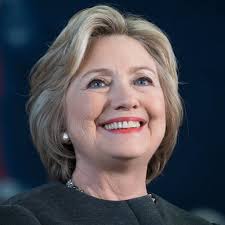
Hillary Clinton
Case #5: The Justice Department did not invalidate the results of the 2016 election, despite overwhelming evidence that Russia intervened to elect Trump as Vladimir Putin’s chosen candidate.
In July, 2016, the Russians hacked the Democratic committee’s servers—but not those of the Republican National Committee.
Admiral Michael Rogers, director of the National Security Agency (NSA) and US Cyber Command, said in mid-November, 2016, that Russia made “a conscious effort” to sway the results of the Presidential election by the hacking of 20,000 emails from the Democratic National Committee.
“There shouldn’t be any doubt in anybody’s mind,” said Rogers. “This was not something that was done casually. This was not something that was done by chance. This was not a target that was selected purely arbitrarily. This was a conscious effort by a nation-state to attempt to achieve a specific effect.”

In October, 2016, the Department of Homeland Security (DHS) and the Office of the Director of National Intelligence (DNI) issued a joint statement: The Russian government had directed the effort to subvert the 2016 Presidential election.
On December 16, 2016, FBI Director James B. Comey and Director of National Intelligence James R. Clapper Jr. agreed with a CIA assessment that Russia intervened in the 2016 election in part to help Donald Trump win the White House.
Trump, however, has steadfastly denied any such role by Russia: “I think it’s ridiculous,” he told “Fox News Sunday.” “I think it’s just another excuse. I don’t believe it….No, I don’t believe it at all.”
These were solid grounds for the Obama Justice Department to indict Donald Trump or invalidate the results of the 2016 election. Yet no action was taken.
Case #6: The Justice Department did not prosecute Donald Trump for treason, even though he solicited aid from Russia, a nation hostile to the United States. And no major official of the government—including President Obama—publicly condemned him as a traitor.
On July 9, 2016, high-ranking members of his Presidential campaign met at Trump Tower with at least two lobbyists with ties to Russian dictator Vladimir Putin. The participants included:
- Trump’s son, Donald Trump Jr.;
- His son-in-law, Jared Kushner;
- His then-campaign manager, Paul Manafort;
- Natalia Veselnitskaya, a Russian lawyer with ties to Putin; and
- Rinat Akhmetshin, a former Soviet counterintelligence officer suspected of “having ongoing ties to Russian Intelligence.”
The purpose of that meeting: To gain access to any “dirt” Russian Intelligence could supply on Democratic Presidential Nominee Hillary Clinton.
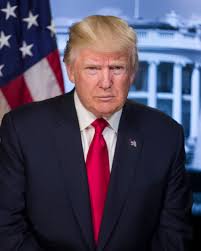
Donald Trump
On July 22, 2016, Wikileaks released 19,252 emails and 8,034 attachments hacked from computers of the highest-ranking officials of the Democratic National Committee (DNC). Early reports traced the leak to Russian hackers.
At a news conference in Doral, Florida on July 27, 2016, Trump publicly invited “Russia”—i.e., Vladimir Putin—to hack Hillary Clinton’s emails: “I will tell you this, Russia: If you’re listening, I hope you’re able to find the 30,000 emails that are missing. I think you will probably be rewarded mightily by our press.”
Hours later, the Main Intelligence Directorate in Moscow targeted Clinton’s personal office and hit more than 70 other Clinton campaign accounts.
This was essentially treason—calling on a hostile foreign power to interfere directly in an American Presidential election. And it was seen as such by both Democrats and even Republicans:
“This has to be the first time that a major presidential candidate has actively encouraged a foreign power to conduct espionage against his political opponent,” Hillary for America policy adviser Jake Sullivan said in a statement. “That’s not hyperbole, those are just the facts. This has gone from being a matter of curiosity, and a matter of politics, to being a national security issue.”
Brendon Buck, a spokesman for House Speaker Paul Ryan, said: “Russia is a global menace led by a devious thug. Putin should stay out of this election.”
2016 PRESIDENTIAL ELECTION, 2020 PRESIDENTIAL ELECTION, ABC NEWS, ADOLF HITLER, ALTERNET, AMERICABLOG, AP, BABY BOOMER RESISTANCE, BARACK OBAMA, BEER HALL PUTSCH, BLOOMBERG, BREITBART NEWS, BUZZFEED, CBS NEWS, CHRIS KREBS, CHRISTOPHER S. MURPHY, CIA, CNN, COVID-19, CROOKS AND LIARS, CYBERSECURITY AND INFRASTRUCTURE SECURITY AGENCY, DAILY KOZ, DEMOCRATIC NATIONAL COMMITTEE, DEMOCRATIC PARTY, DEMOCRATS, DEPARTMENT OF HOMELAND SECURITY, DIRECTOR OF NATIONAL INTELLIGENCE, DONALD J. TRUMP FOUNDATION, DONALD TRUMP, DONALD TRUMP JUNIOR, DRUDGE REPORT, EMOLUMENTS CLAUSE, ERIC SCHNEIDERMAN, EXTORTION, FACE THE NATION, FACEBOOK, FBI, FERGUS CULLEN, FIVETHIRTYEIGHT, FOX NEWS SUNDAY, GREG ABBOTT, GRETCHEN WHITMER, HACKING, HARPER’S MAGAZINE, HILLARY CLINTON, HITLER: ASCENT (BOOK), HUFFINGTON POST, IRS, ISLAMIC STATE, JAMES B. COMEY, JAMES R. CLAPPER, JARED KUSHNER, JEFF SESSIONS, JOE BIDEN, JOHN KASICH, JOSEPH STALIN, JR., JUSTICE DEPARTMENT, KEN PAXTON, KIM JONG ON, KU KLUX KLAN, LANDSBERG PRISON, LEON PANETTA, MAIN INTELLIGENCE DIRECTORATE, MARK LEVIN, MEDIA MATTERS, MEIN KAMPF (BOOK), MICHAEL FLYNN, MICHAEL HAYDEN, MICHAEL ROGERS, MIKE PENCE, MOTHER JONES, MOVEON, MSNBC, NATIONAL SECURITY AGENCY, NAZI PARTY, NAZIS, NBC NEWS, NEW HAMPSHIRE REPUBLICAN PARTY, NEWSWEEK, NPR, PAM BONDI, PAUL MANAFORT, PAUL RYAN, PBS NEWSHOUR, PHILIP KLEIN, POLITICO, POLITICUSUSA, RACKETEER INFLUENCED CORRUPT ORGANIZATIONS ACT (RICO), RAW STORY, RECEP TAYYIP ERDOGAN, REPUBLICAN NATIONAL COMMITTEE, REPUBLICAN NATIONAL CONVENTION, REPUBLICAN PARTY, REPUBLICANS, REUTERS, REX TILLERSON, ROGER STONE, SALON, SEATTLE TIMES, SERGEY KISLYAK, SERGEY LAVROV, SLATE, SOVIET UNION, TALKING POINTS MEMO, THE ATLANTIC, THE CHICAGO SUN-TIMES, THE CHICAGO TRIBUNE, THE DAILY BEAST, THE DAILY BLOG, THE GUARDIAN, THE HILL, THE HUFFINGTON POST, THE LOS ANGELES TIMES, THE NATION, THE NEW REPUBLIC, THE NEW YORK TIMES, THE PRESS, THE VILLAGE VOICE, THE WASHINGTON EXAMINER, THE WASHINGTON POST, THINKPROGRESS, THREATS, TIME, TREASON, TRUMP TOWER MEETING, TRUMP UNIVERSITY, TRUMP-RUSSIA TIES, TRUTHDIG, TRUTHOUT, TWITTER, TWO POLITICAL JUNKIES, U.S. NEWS & WORLD REPORT, UNITED STATES CONSTITUTION, UNITED STATES SECRET SERVICE, UPI, USA TODAY, VLADIMIR PUTIN, VOLKER ULLRICH, VOTER INTIMIDATION, WEIMAR REPUBLIC, WIKILEAKS, WIRETAPPING, WONKETTE, XI JINPING
In Bureaucracy, History, Law, Law Enforcement, Politics, Social commentary on December 1, 2020 at 12:11 am
The election of Donald Trump—and his subsequent dictatorial, vindictive and even treasonous behavior that followed—was not inevitable.
There were at least six instances where the Justice Department of President Barack Obama could have utterly changed the outcome of the 2016 election. Yet, for reasons still unknown, it chose to do nothing.
The first instance has been highlighted in Part One of this series: Case #1: The Obama Justice Department did not indict Trump and/or the Attorney Generals of Texas and/or Florida for their roles in the Trump University scandal.
Here is the next one:
Case #2: The Justice Department did not indict Trump for the series of threats that he made—directly and indirectly—against Republicans and Democrats throughout the 2016 campaign.
Threatening political opponents with violence is a crime under Federal law. Yet making threats against his Republican and Democratic opponents played a major role in Trump’s Presidential campaign.

Seal of the Justice Department
- On March 16, 2016, Trump warned Republicans that if he didn’t win the GOP nomination in July, his supporters would literally riot: “I think you’d have riots. I think you would see problems like you’ve never seen before. I think bad things would happen. I really do. I wouldn’t lead it, but I think bad things would happen.”
- An NBC reporter summed it up as: “The message to Republicans was clear on [March 16]: ‘Nice convention you got there, shame if something happened to it.’”
- That Republicans clearly saw this as a threat is undeniable. Paul Ryan, their Speaker of the House, said on March 17: “Nobody should say such things in my opinion because to even address or hint to violence is unacceptable.”
- Philip Klein, the managing editor of the Washington Examiner, wrote on the eve of the Republican National Convention in July: “Political commentators now routinely talk about the riots that would break out in Cleveland if Trump were denied the nomination, about how his supporters have guns and all hell could break loose, that they would burn everything to the ground. It works to Trump’s advantage to not try too hard to dispel these notions.”
- On July 29, 2016, Roger Stone, a notorious Right-wing political consultant acting as a Trump strategist, told Breitbart News: “The first thing Trump needs to do is begin talking about [voter fraud] constantly. If there’s voter fraud, this election will be illegitimate, the election of the winner will be illegitimate, we will have a constitutional crisis, widespread civil disobedience, and the government will no longer be the government.”
- At a town hall meeting where Trump’s Vice Presidential nominee Mike Pence appeared, a woman named Rhonda said: “For me personally, if Hillary Clinton gets in, I myself am ready for a revolution.”
- In Cincinnati, a Trump supporter threatened to forcibly remove Hillary Clinton, the Democratic nominee, from the White House if she won the race: “If she’s in office, I hope we can start a coup. She should be in prison or shot. That’s how I feel about it,” said Dan Bowman, a 50-year-old contractor. “We’re going to have a revolution and take them out of office if that’s what it takes. There’s going to be a lot of bloodshed. But that’s what it’s going to take….”

Fergus Cullen
Even Fergus Cullen, former chairman of the New Hampshire GOP, expressed fear of what might happen if Trump lost the election:
“That’s really scary,” Cullen said, recounting the violence at Trump rallies around the country leading up to the Republican National Convention. “In this country, we’ve always had recriminations after one side loses. But we haven’t had riots. We haven’t had mobs that act out with violence against supporters of the other side.
“There’s no telling what his supporters would be willing to do at the slightest encouragement from their candidate,” he said.
Case #3: The Justice Department could have indicted Trump and/or his followers for voter intimidation.
18 U.S. Code Section 594 states: “Whoever intimidates, threatens, coerces, or attempts to intimidate, threaten, or coerce, any other person for the purpose of interfering with the right of such other person to vote or to vote as he may choose…shall be fined under this title or imprisoned not more than one year, or both.”
Trump even began encouraging his mostly white supporters to sign up online to be “election observers” to stop “Crooked Hillary from rigging this election.” He urged them to act as poll watchers in “other” [non-white] communities to ensure that things are “on the up and up.”
Many of his supporters promised to do so.
“Trump said to watch your precincts. I’m going to go, for sure,” said Steve Webb, a 61-year-old carpenter from Fairfield, Ohio.
“I’ll look for…well, it’s called racial profiling. Mexicans. Syrians. People who can’t speak American,” he said. “I’m going to go right up behind them. I’ll do everything legally. I want to see if they are accountable. I’m not going to do anything illegal. I’m going to make them a little bit nervous.”
Knowing that large numbers of angry—and possibly armed—Right-wingers planned to descend on polling places could only have had a chilling effect on untold numbers of Democratic voters. And this would have been especially true in heavily conservative states.
But the Justice Department refused to act.
2016 PRESIDENTIAL ELECTION, 2020 PRESIDENTIAL ELECTION, ABC NEWS, ADOLF HITLER, ALTERNET, AMERICABLOG, AP, BABY BOOMER RESISTANCE, BARACK OBAMA, BEER HALL PUTSCH, BLOOMBERG, BREITBART NEWS, BUZZFEED, CBS NEWS, CHRIS KREBS, CHRISTOPHER S. MURPHY, CIA, CNN, COVID-19, CROOKS AND LIARS, CYBERSECURITY AND INFRASTRUCTURE SECURITY AGENCY, DAILY KOZ, DEMOCRATIC NATIONAL COMMITTEE, DEMOCRATIC PARTY, DEMOCRATS, DEPARTMENT OF HOMELAND SECURITY, DIRECTOR OF NATIONAL INTELLIGENCE, DONALD J. TRUMP FOUNDATION, DONALD TRUMP, DONALD TRUMP JUNIOR, DRUDGE REPORT, EMOLUMENTS CLAUSE, ERIC SCHNEIDERMAN, EXTORTION, FACE THE NATION, FACEBOOK, FBI, FERGUS CULLEN, FIVETHIRTYEIGHT, FOX NEWS SUNDAY, GREG ABBOTT, GRETCHEN WHITMER, HACKING, HARPER’S MAGAZINE, HILLARY CLINTON, HITLER: ASCENT (BOOK), HUFFINGTON POST, IRS, ISLAMIC STATE, JAMES B. COMEY, JAMES R. CLAPPER, JARED KUSHNER, JEFF SESSIONS, JOE BIDEN, JOHN KASICH, JOSEPH STALIN, JR., JUSTICE DEPARTMENT, KEN PAXTON, KIM JONG ON, KU KLUX KLAN, LANDSBERG PRISON, LEON PANETTA, MAIN INTELLIGENCE DIRECTORATE, MARK LEVIN, MEDIA MATTERS, MEIN KAMPF (BOOK), MICHAEL FLYNN, MICHAEL HAYDEN, MICHAEL ROGERS, MIKE PENCE, MOTHER JONES, MOVEON, MSNBC, NATIONAL SECURITY AGENCY, NAZI PARTY, NAZIS, NBC NEWS, NEW HAMPSHIRE REPUBLICAN PARTY, NEWSWEEK, NPR, PAM BONDI, PAUL MANAFORT, PAUL RYAN, PBS NEWSHOUR, PHILIP KLEIN, POLITICO, POLITICUSUSA, RACKETEER INFLUENCED CORRUPT ORGANIZATIONS ACT (RICO), RAW STORY, RECEP TAYYIP ERDOGAN, REPUBLICAN NATIONAL COMMITTEE, REPUBLICAN NATIONAL CONVENTION, REPUBLICAN PARTY, REPUBLICANS, REUTERS, REX TILLERSON, ROGER STONE, SALON, SEATTLE TIMES, SERGEY KISLYAK, SERGEY LAVROV, SLATE, SOVIET UNION, TALKING POINTS MEMO, THE ATLANTIC, THE CHICAGO SUN-TIMES, THE CHICAGO TRIBUNE, THE DAILY BEAST, THE DAILY BLOG, THE GUARDIAN, THE HILL, THE HUFFINGTON POST, THE LOS ANGELES TIMES, THE NATION, THE NEW REPUBLIC, THE NEW YORK TIMES, THE PRESS, THE VILLAGE VOICE, THE WASHINGTON EXAMINER, THE WASHINGTON POST, THINKPROGRESS, THREATS, TIME, TREASON, TRUMP TOWER MEETING, TRUMP UNIVERSITY, TRUMP-RUSSIA TIES, TRUTHDIG, TRUTHOUT, TWITTER, TWO POLITICAL JUNKIES, U.S. NEWS & WORLD REPORT, UNITED STATES CONSTITUTION, UNITED STATES SECRET SERVICE, UPI, USA TODAY, VLADIMIR PUTIN, VOLKER ULLRICH, VOTER INTIMIDATION, WEIMAR REPUBLIC, WIKILEAKS, WIRETAPPING, WONKETTE, XI JINPING
In Bureaucracy, History, Law, Law Enforcement, Politics, Social commentary on November 30, 2020 at 12:05 am
“The only thing necessary for the triumph of evil is for good men to do nothing.”
So wrote Edmund Burke (1729-1797) the Irish statesman, author, orator, political theorist and philosopher. And history has repeatedly proved him right.
That may well prove to be the epitaph of the Donald Trump Presidency.
That Presidency has made the United States a polarized country.
But it’s not the polarization between Republicans and Democrats, or between conservatives and liberals.
It’s the polarization between:
- Those intent on enslaving everyone who doesn’t subscribe to their Fascistic beliefs and agenda—and those who resist being enslaved.
- Those who believe in reason and science—and those who worship an “infallible strong man” who rejects both.
- Those who cherish education—and those who celebrate ignorance.
- Those who believe in the rule of law—and those who believe in their right to act as a law unto themselves.
- Those who believe in treating others (especially the less fortunate) with decency—and those who believe in the triumph of intimidation and force.
Since Trump became President, he has:
- Allowed the deadly COVID-19 virus to ravage the country, infecting (to date) 13.4 million Americans and killing 267,000.
- Attacked medical experts and governors who urged Americans to wear masks and socially distance to protect themselves from COVID-19.
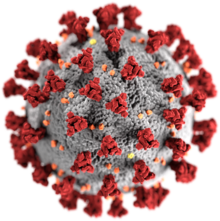
COVID-19.
- Fired FBI Director James B. Comey for investigating Russia’s subversion of the 2016 Presidential election.
- Fired John Sessions, his own handpicked Attorney General, for recusing himself from matters involving the 2016 Presidential election owing to his own conflicts-of-interest.
- Repeatedly sided with Russian dictator Vladimir Putin against the FBI, CIA and National Security Agency.
- Gave highly classified CIA Intelligence to Russian Foreign Minister Sergey Lavrov and Russian Ambassador Sergey Kislyak. Specifically: How Islamic State terrorists planned to turn laptops into concealable bombs.
- Attacked and alienated America’s oldest allies, such as Canada and Great Britain.
- Identified with and coddled such ruthless dictator as North Korea’s Kim Jong-On, China’s Xi Jinping and Turkey’s Recep Tayyip Erdoğan.
- Praised Nazis and Ku Klux Klansmen.
- Shut down the United States Government for more than a month—imperiling the lives of 800,000 Federal employees—to extort money from Congress for a worthless wall on the U.S.-Mexico border.
- “Joked” that the United States—like China—should have a “President-for-Life.”
- Repeatedly attacked Michigan Democratic Governor Gretchen Whitmer—after she had been targeted for kidnapping and execution by Trump’s Right-wing followers.
- Attacked the free press as “the enemy of the people”—a phrase popularized by Soviet dictator Joseph Stalin—for revealing his crimes and blunders.
- Used his position as President to further enrich himself, in violation of the Emoluments Clause of the Constitution.
- Urged his followers to illegally vote twice for him in the 2020 Presidential election.
- Fired Chris Krebs, the director of the Cybersecurity and Infrastructure Security Agency, for rejecting Trump’s false claims of widespread voter fraud in the 2020 Presidential election.
- Refused to accept the will of 80,117,438 voters who have made former Vice President Joe Biden President-elect of the United States
Future historians may one day write that what didn’t happen played at least as great a role in electing Donald Trump President as what actually did.
There were at least six instances where the Justice Department of President Barack Obama could have utterly changed the outcome of the 2016 election. Yet, for reasons still unknown, it chose to do nothing.
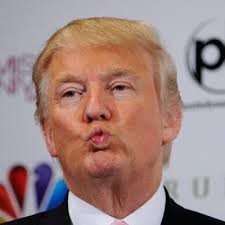
Donald Trump
Case #1: The Obama Justice Department did not indict Trump and/or the Attorney Generals of Texas and Florida for their roles in the Trump University scandal.
- Florida Attorney General Pam Bondi personally solicited a political contribution from Donald Trump around the same time her office deliberated joining an investigation of alleged fraud at Trump University and its affiliates.
- After Bondi dropped the Trump University case against Trump, he wrote her a $25,000 check for her re-election campaign. The money came from the Donald J. Trump Foundation.
- Republican Texas Attorney General Ken Paxton moved to muzzle a former state regulator who says he was ordered in 2010 to drop a fraud investigation into Trump University for political reasons.
- Paxton’s office issued a cease and desist letter to former Deputy Chief of Consumer Protection John Owens after he made public copies of a 14-page internal summary of the state’s case against Donald Trump for scamming millions from students of his now-defunct real estate seminar.
- After the Texas case was dropped, Trump cut a $35,000 check to the gubernatorial campaign of then-attorney general and now Texas Governor Greg Abbott.
But New York’s Attorney General, Eric Schneiderman, pressed fraud claims against Trump—and forced the real estate mogul to settle the case out of court for $25 million on November 18, 2016.
There have been no press reports that the Justice Department investigated these cases to determine if Trump violated the Racketeer Influenced Corrupt Organizations (RICO) Act statutes against bribery.
If the Justice Department did not investigate these cases, it should have. And if he did violate the RICO statutes, he should have been indicted, even as a Presidential candidate or President-elect.
Even if an indictment had not produced a conviction, the mere bringing of one would have cast an unprecedented cloud over his candidacy—let alone his being sworn in as President.
9/11 ATTACKS, ABC NEWS, ADOLF HITLER, ALABAMA, ALABAMA SUPREME COURT, ALTERNET, AMERICABLOG, AP, BABY BOOMER RESISTANCE, BLOOMBERG, BUZZFEED, CBS NEWS, CHARLES SCHUMER, CNN, CONSTITUTIONAL AMENDMENTS, CROOKS AND LIARS, DAILY KOZ, DONALD TRUMP, DOUG JONES, DRUDGE REPORT, FACEBOOK, FIVETHIRTYEIGHT, HARPER’S MAGAZINE, HUFFINGTON POST, IVANKA TRUMP, JOSEPH STALIN, LEON TROTSKY, LUTHER STRANGE, MEDIA MATTERS, MOTHER JONES, MOVEON, MSNBC, NANCY PELOSI, NAZI GERMANY, NAZI-SOVIET "NON-AGGRESSION PACT", NBC NEWS, NEWSWEEK, NIKITA KHRUSHCHEV, NPR, PBS NEWSHOUR, POLAND, POLITICO, POLITICUSUSA, RAW STORY, RED ARMY, REUTERS, ROBOCALLS, ROY MOORE, RUSSIAN REVOLUTION, SALON, SEATTLE TIMES, SEXUAL PREDATION, SLATE, SOVIET PURGES, TALKING POINTS MEMO, THE ATLANTIC, THE CHICAGO SUN-TIMES, THE CHICAGO TRIBUNE, THE DAILY BEAST, THE DAILY BLOG, THE GUARDIAN, THE HILL, THE HUFFINGTON POST, THE LOS ANGELES TIMES, THE NATION, THE NEW REPUBLIC, THE NEW YORK TIMES, THE VILLAGE VOICE, THE WASHINGTON POST, THINKPROGRESS, TIME, TRUTHDIG, TRUTHOUT, TWITTER, TWO POLITICAL JUNKIES, U.S. NEWS & WORLD REPORT, UPI, USA TODAY, WONKETTE, WORLD WAR 11
In Bureaucracy, History, Military, Politics, Social commentary on September 7, 2020 at 11:22 am
During the 1917 Russian Revolution, Leon Trotsky acted as a key lieutenant to Vladimir Lenin. Trotsky organized the Red Army and successfully resisted all attempts to overthrow the fledgling Communist government.
One of Trotsky’s bitterest enemies was Joseph Stalin, another intimate of Lenin’s. When Lenin died in 1924, Stalin outmaneuvered Trotsky for leadership of the Soviet Union.
Long before he ordered Trotsky’s assassination in 1940, Stalin turned his former rival into an official non-person. Trotsky was:
- Airbrushed from photos showing him sitting or standing close to Lenin.
- Written out of Soviet history textbooks.
- Depicted, in print and documentary films, as seeking to overturn the Revolution—and assassinate Stalin.
Stalin made certain his image in Soviet history was entirely different.
- In the 1930s, he was portrayed as the modest, all-wise, energetic builder of a new Communist world.
- After 1945, he was depicted as the architect of the Soviet victory over Nazi Germany during World War II.
No “historian” dared mention that:
- For almost 30 years, through purges and starvation caused by enforced collections of farmers’ crops, he had slaughtered 20 to 60 million people.
- His wholesale purges of the Red Army in the 1930s had made the country vulnerable to the German attack in 1941.
- His 1939 “nonaggression” pact with Germany had almost destroyed Russia. In this he and Adolf Hitler secretly divided Poland between them. The subsequent German invasion of Poland, on September 1, 1939, directly triggered World War II.
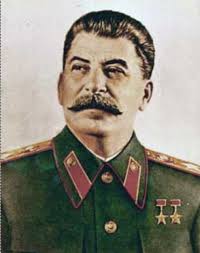
Joseph Stalin
After Stalin died on March 5, 1953, his status in Soviet history suddenly changed.
- Thousands of his portraits—displayed on streets and in buildings throughout the Soviet Union—suddenly came down.
- In 1956, his successor, Nikita Khrushchev, secretly denounced him as a psychotic butcher and bungler who had almost wrecked the country.
So those Americans with a sense of history were undoubtedly stunned at President Donald J. Trump’s reaction to the defeat of Alabama Republican Senatorial candidate Roy Moore on December 12, 2017.
Donald Trump
Unfortunately for Trump, Moore carried heavy political baggage:
- He had twice been removed as a Justice from the Alabama Supreme Court.
- He had blamed 9/11 not on Islamic terrorists but on “America’s turning away from God.”
- He had said the United States should eliminate all but the first 10 Constitutional amendments. This would remove those amendments forbidding slavery and guaranteeing civil rights for blacks and women.
Worst of all, Moore was haunted by allegations that, as a prosecutor during his 30s, he had made sexual advances toward at least eight teenage girls.
Many Republicans openly urged Moore to withdraw. They saw him as a nightmarish embarrassment to their party should he win the election.
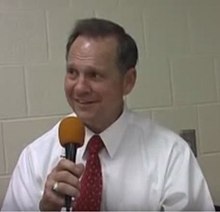
Roy Moore
Even the President’s favorite daughter, Ivanka Trump, said: “There is a special place in hell for people who prey on children.”
But that didn’t stop Trump supporting Moore full-tilt against his Democratic opponent, former United States Attorney Doug Jones. Jones had convicted Ku Klux Klan members for bombing a black church in 1963.
On December 4, 2017, Trump tweeted:
“Democrats refusal to give even one vote for massive Tax Cuts is why we need Republican Roy Moore to win in Alabama. We need his vote on stopping crime, illegal immigration, Border Wall, Military, Pro Life, V.A., Judges 2nd Amendment and more. No to Jones, a Pelosi/Schumer Puppet!”
During a December 8 campaign rally in Pensacola, Florida, near the state line with Alabama, Trump said:
- “Get out and vote for Roy Moore. Do it. Do it. We cannot afford, the future of this country cannot afford to lose the seat.”
- “We need somebody in that Senate seat who will vote for our Make America Great Again agenda, which involves tough on crime, strong on borders, strong on immigration.”
On December 8, Trump tweeted:
“LAST thing the Make America Great Again Agenda needs is a Liberal Democrat in Senate where we have so little margin for victory already. The Pelosi/Schumer Puppet Jones would vote against us 100% of the time. He’s bad on Crime, Life, Border, Vets, Guns & Military. VOTE ROY MOORE!”
As the December 12 election drew close, Trump made a robocall on Moore’s behalf:
“Hi, this is President Donald Trump and I need Alabama to go vote for Roy Moore. It is so important. We’re already making America great again.”
Then—for Trump—the unthinkable happened: Moore lost. Jones received 49.9% of the vote; Moore got 48.4%.
Suddenly, Trump was rewriting history.
During the Republican Senatorial primary in August, Trump had backed Moore’s opponent, Luther Strange. Now he tweeted:
“The reason I originally endorsed Luther Strange (and his numbers went up mightily), is that I said Roy Moore will not be able to win the General Election. I was right! Roy worked hard but the deck was stacked against him!”
And, in another tweet, he stated: “Congratulations to Doug Jones on a hard fought victory. The write-in votes played a very big factor, but a win is a win. The people of Alabama are great, and the Republicans will have another shot at this seat in a very short period of time. It never ends!”
A joke Russians once shared now applies to Donald Trump: “The trouble with writing history in the Soviet Union is you never know what’s going to happen yesterday.”
2016 PRESIDENTIAL CAMPAIGN, ABC NEWS, ADOLF HITLER, ALTERNET, AMERICABLOG, AP, ARMED SERVICES, ARTICLES OF IMPEACHMENT, BABY BOOMER RESISTANCE, BARACK OBAMA, BLOOMBERG, BUZZFEED, CBS NEWS, CHILE, CIA, CLAUS VON STAUFFENBERG, CNN, COLD WAR, CROOKS AND LIARS, CUBAN MISSILE CRISIS, DAILY KOZ, DONALD TRUMP, DRUDGE RETORT, EMOLUMENTS CLAUSE, FACEBOOK, FBI, FIVETHIRTYEIGHT, GEORGE FLOYD, GESTAPO, GUATEMALA, HARPER’S MAGAZINE, HUEY LONG, IMPEACHMENT, IRAN, JACOBO ARBENZ, JAMES B. COMEY, JAMES ROBART, JAMES SCHLESINGER, JAMES W. DOUGLASS, JEFF SESSIONS, JFK AND THE UNSPEAKABLE (BOOK), JOHN F. KENNEDY, JOHN KASICH, JOSEPH STALIN, JUSTICE DEPARTMENT, MARTIN NIEMOELLER, MEDIA MATTERS, MIKE PENCE, MOHAMMED MOSADDEGH, MOTHER JONES, MOVEON, MSNBC, MUSLIMS, NATIONAL SECURITY AGENCY, NAZI GERMANY, NBC NEWS, NEWSWEEK, NPR, PBS NEWSHOUR, POLITICO, POLITICUSUSA, RAW STORY, REPUBLICANS, REUTERS, RICHARD M. NIXON, SALON, SALVADOR ALLENDE, SEATTLE TIMES, SLATE, SOVIET UNION, TALKING POINTS MEMO, THE ATLANTIC, THE CHICAGO SUN-TIMES, THE CHICAGO TRIBUNE, THE DAILY BEAST, THE DAILY BLOG, THE GUARDIAN, THE HILL, THE HOLOCAUST, THE HUFFINGTON POST, THE JUDICIARY, THE LOS ANGELES TIMES, THE NATION, THE NEW REPUBLIC, THE NEW YORK TIMES, THE PRESS, THE SS, THE TWILIGHT ZONE, THE VILLAGE VOICE, THE WASHINGTON POST, THINKPROGRESS, THIRD REICH, TIME, TRUTHDIG, TRUTHOUT, TWILIGHT ZONE, TWITTER, TWO POLITICAL JUNKIES, U.S. NEWS & WORLD REPORT, UPI, USA TODAY, VLADIM PUTIN, WEST BERLIN, WEST GERMANY, WILLIAM BARR, WONKETTE, WORLD WAR 11
In Bureaucracy, History, Military, Politics, Social commentary on June 29, 2020 at 1:19 am
On July 20, 1944, members of the Wehrmacht high command failed to assassinate Adolf Hitler with a bomb hidden in a briefcase.
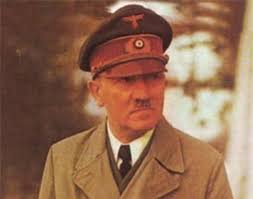
Adolf Hitler
Mass arrests quickly followed.
Among the first victims discovered and executed was the conspiracy’s leader, Colonel Claus von Stauffenberg. Standing before a makeshift firing squad at midnight, he cried: “Long live our sacred Germany!”
At least 7,000 persons were arrested by the Gestapo. According to records of the Fuehrer Conferences on Naval Affairs, 4,980 were executed.
Had the conspiracy succeeded, history would have turned out differently:
Thus, history can be altered by the appearance—or disappearance—of a single individual.
Which brings us back to Donald Trump.
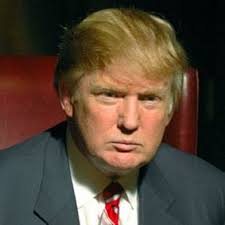
Donald Trump
Since becoming President on January 20, 2017, Trump has attacked or undermined one public or private institution after another, including:
- The Justice Department: Repeatedly attacked his Attorney General, Jeff Sessions, for not “protecting” him from the FBI’s investigating ties between the Trump 2016 Presidential campaign and Russian Intelligence agents. In 2018, Trump fired him.
- Ordered 46 Obama-era prosecutors to resign and fired the Inspectors General of five cabinet departments.
- Appointed William Barr as Attorney General in 2019 to protect him against investigations of his rampant criminality—both before and after he became President.
- The CIA: Refused to accept its findings—and those of the FBI and National Security Agency—that Russian Intelligence agents had intervened in the 2016 election to ensure his victory. Repeatedly defended Russian dictator Vladimir Putin’s denials of this.
- The FBI: Fired FBI Director James B. Comey for refusing to serve as Trump’s private secret police chief.
- Repeatedly violated the Emoluments Clause of the Constitution by using his position as President to further enrich himself.
- The military: Threatened to order the U.S. Armed Forces to violate the rights of Americans protesting police brutality and the killing of George Floyd.
- The press: Tweeted: “The FAKE NEWS media (failing @nytimes, @NBCNews, @ABC, @CBS, @CNN) is not my enemy, it is the enemy of the American People!” (“Enemy of the people” was a favorite charge made by Soviet dictator Joseph Stalin.)
- The judiciary: Repeatedly attacked Seattle U.S. District Judge James Robart, who halted Trump’s first Muslim travel ban.
On February 5, 2020, the Republican-dominated Senate—ignoring the overwhelming evidence against him—acquitted Donald Trump on two impeachment articles:
- Article 1: Abuse of Power: For pressuring Ukraine to assist him in his re-election campaign by smearing former Vice President Joseph Biden, his possible Democratic rival; and
- Article 2: Obstruction of Congress: For blocking testimony of subpoenaed witnesses and refusing to provide documents in response to House subpoenas in the impeachment inquiry.
With Republicans solidly backing Trump, that left only two other institutions capable of ending his reign of criminality and treason: The military and the Intelligence community.
Both have access to vast amounts of secret—and highly embarrassing—-information. And both are expert in leaking choice bits of this to favored members of the media.
If the military refused to carry out Trump’s orders, that would prove a genuine Constitutional crisis. But there would be a historical precedent for this.
In 1974, Secretary of Defense James Schlesinger feared that a Watergate-embattled President Richard M. Nixon might order the military to prevent his removal by impeachment. Schlesinger ordered all Armed Services branches to not accept any order from the White House unless countersigned by Schlesinger himself.
As for the CIA: This agency has been overthrowing heads of state for decades.
In 1953, its coup removed Mohammad Mosaddegh, the prime minister of Iran. In 1954, another coup did the same for Guatemalan president Jacobo Árbenz.
In 1970, Chile’s president, Salvador Allende, fell victim to a CIA-instigated plot.
Millions of Americans believe the CIA engineered the 1963 assassination of President John F. Kennedy. James W. Douglass’ 2008 book, JFK and the Unspeakable, charges that the CIA murdered Kennedy because he wanted to end the Cold War after the Cuban Missile Crisis.
* * * * *
Had Senate Republicans chosen patriotism over partisanship and convicted President Donald J. Trump for high crimes and misdemeanors—or had the military and/or the Intelligence community forced him out of office—history would have turned out differently:
- Trump’s vicious attacks on the press, judiciary and Intelligence community would have ended immediately.
- His efforts to subvert the Justice Department and Armed Services would have stopped.
- He would have faced vigorous prosecution for his litany of crimes—before and during his Presidency.
- Vladimir Putin would have lost his strongest ally in the United States.
- Vice President Mike Pence would have become President—but, burdened by his reputation as Trump’s #1 sycophant, might have been unable to win election in November, 2020; and
- Tarnished by their subservience to a discredited Trump, Republicans would have almost certainly lost the White House and the Senate.


 Bureaucracybuster's Blog
2016 PRESIDENTIAL ELECTION, 2020 PRESIDENTIAL ELECTION, ABC NEWS, ACAM SCHIFF, ADOLF HITLER, ALTERNET, AMERICABLOG, AP, BABY BOOMER RESISTANCE, BBC, BLOOMBERG NEWS, BRETT CROZIER, BUZZFEED, CBS NEWS, CHARLES PIERCE, CHRIS KREBS, CNN, CONVERSATION WITH AN AMERICAN WRITER (POEM), CORONAVIRUS, CROOKS AND LIARS, CYBERSECURITY AND INFRASTRUCTURE SECURITY AGENCY, DAILY KOS, DAILY KOZ, DEPARTMENT OF HOMELAND SECURITY, DEPARTMENT OF STATE, DIMITRI SHOSTAKOVICH, DONALD TRUMP, DRUDGE REPORT, ESQUIRE MAGAZINE, FACEBOOK, FBI, FIVETHIRTYEIGHT, FOX NEWS NETWORK, GREAT TERROR, HARPER’S MAGAZINE, HOUSE INTELLIGENCE COMMITTEE, HOUSE OF REPRESENTATIVES, HUFFINGTON POST, JOSEPH BIDEN, JOSEPH STALIN, MARIA YOVANOVICH, MEDIA MATTERS, MICROSOFT, MIKHAIL TUKHACHEVESKY, MOTHER JONES, MOVEON, MSNBC, NAZI GERMANY, NBC NEWS, NEW REPUBLIC, NEWSDAY, NEWSWEEK, NICCOLO MACHIAVELLI, NIKOLAI ZHILAYEV, NPR, PBS NEWSHOUR, POLITICO, POLITICUSUSA, RAW STORY, REUTERS, RUDY GIULIANI, SALON, SEATTLE TIMES, SLATE, SOVIET UNION, TALKING POINTS MEMO, THE ATLANTIC, THE CHICAGO SUN-TIMES, THE CHICAGO TRIBUNE, THE DAILY BEAST, THE DAILY BLOG, THE DISCOURSES, THE GUARDIAN, THE HILL, THE HUFFINGTON POST, THE LOS ANGELES TIMES, THE NATION, THE NEW REPUBLIC, THE NEW YORK TIMES, THE NEW YORKER, THE VILLAGE VOICE, THE WALL STREET JOURNAL, THE WASHINGTON POST, THINKPROGRESS, THOMAS MODLY, TIME, TRUTHDIG, TRUTHOUT, TWITTER, TWO POLITICAL JUNKIES, U.S. NEWS & WORLD REPORT, UKRAINE, UPI, USA TODAY, WEHRMACHT, WONKETTE, WORLD WAR ii, YEVGENEY YEVTUSHENKO
HEROES AND VILLAINS: PART TWO (OF THREE)
In Bureaucracy, History, Law, Law Enforcement, Military, Politics, Social commentary on February 24, 2021 at 12:11 amNext up: Nikolai Sergeyvich Zhilayev (pronounced Zill-lay-ev) was a Russian musicologist and the teacher of several 20th-century Russian composers.
Among these: Dimitri Shostakovich (September 25, 1906 – August 9, 1975)
Among his friends—to his ultimate misfortune—was Mikhail Nikolayevich Tukhachevsky, the former military hero now falsely condemned and executed as a traitor by Soviet dictator Joseph Stalin.
In 1938, Zhilayev (November 18, 1881 – January 20, 1938) also became a casualty of what has become known as The Great Terror.
In his posthumously-published memoirs, Testimony, Shostakovich, his pupil and friend, described how Zhilayev faced his end with a calmness that awed even the NKVD (the predecessor to the KGB) secret police sent to arrest him.
Dimitri Shostakovich
“He had a large picture of Tukhachevsky in his room, and after the announcement that Tukhachevsky had been shot as a traitor to the homeland, Zhilayev did not take the picture down.
“I don’t know if I can explain how heroic a deed that was….As soon as the next poor soul was declared an enemy of the people, everyone destroyed in a panic everything connected with that person….
“And naturally, photographs flew into the fire first, because if someone informed on you, reported that you had a picture of an enemy of the people, it meant certain death.
“Zhilayev wasn’t afraid. When they came for him, Tukhachevsky’s prominently hung portrait amazed even the executioners.”
“What, it’s still up?” one of the secret police asked.
“The time will come,” Zhilayev replied, “when they’ll erect a monument to him.”
As, in fact, has happened.
Meanwhile, Stalin has been universally condemned as one of history’s greatest tyrants.
Third hero—Brett Crozier, the former commanding officer of the aircraft carrier USS Theodore Roosevelt.
Graduating from the United States Naval Academy at Annapolis in 1992, he received his Master’s Degree in National Security and Strategic Studies from the Naval War College in 2007.
From 2017 to 2018 he commanded the USS Blue Ridge. In November, 2019, he was given command of the nuclear aircraft carrier USS Theodore Roosevelt.
On March 24, 2020, reports circulated that three members of the crew had tested positive for COVID-19. The next day the number of stricken sailors increased to eight. A few days later, it was “dozens.” The sailors reportedly became ill at sea, two weeks after a port call at Danang, Vietnam.
The initial cases were airlifted to a military hospital. The Roosevelt was ordered to Guam. After the ship docked on March 27, 2020, all 5,000 aboard were ordered to be tested for the virus. But only about 100 stricken sailors were allowed to leave the ship. The rest remained on board.
On March 30, Crozier emailed a four-page internal letter to multiple Naval officials, pleading to have the majority of the crew evacuated and quarantined on shore. Given the crowded sleeping quarters and narrow passageways of the vessel, Crozier wrote that it was impossible to follow social distancing and quarantine procedures:
“This will require a political solution but it is the right thing to do. We are not at war. Sailors do not need to die. If we do not act now, we are failing to properly take care of our most trusted asset—our Sailors….
“This is a necessary risk. Keeping over 4,000 young men and women on board the TR is an unnecessary risk and breaks faith with those Sailors entrusted to our care.”
Brett Crozier
Crozier sent his letter via a non-secure, unclassified email to 20 to 30 recipients, as well as the captain’s immediate chain of command. He reportedly believed that his immediate supervisor would not allow him to send it.
And his superior later confirmed that he would not have allowed Crozier to send it.
On March 31, someone leaked the letter to the San Francisco Chronicle, which published it.
On April 1, the Navy ordered the aircraft carrier evacuated. A skeleton crew of 400 remained aboard to maintain the nuclear reactor, the fire-fighting equipment, and the ship’s galley.
On April 2, Crozier was relieved of command by acting United States Secretary of the Navy Thomas Modly.
By that time, about 114 crew members—out of a total of around 4,000—reportedly tested positive for COVID-19.
As Crozier disembarked, sailors loudly saluted him with a standing ovation: “Cap-tain Cro-zier!”
Modly claimed that Crozier’s letter “raised alarm bells unnecessarily. It undermines our efforts and the chain of command’s efforts to address this problem, and creates a panic and this perception that the Navy’s not on the job, that the government’s not on the job, and it’s just not true.”
Actually, the Trump administration had frittered away January and February, with President Donald Trump giving multiple—and misleading—press conferences. In these, he played down the dangers of COVID-19, saying that “we’re on top of it”—even as the virus spread across the country.
“It was a betrayal. And I can tell you one other thing: because he did that he put it in the public’s forum and it is now a big controversy in Washington, DC,” continued Modly. [Italics added]
This was the United States Navy under Donald Trump—who threw “betrayal” and “treason” at anyone who dared reveal the truth about institutional crimes and failures.
Share this: