Posts Tagged ‘HEINRICH HIMMLER’
ABC NEWS, ADMIRAL IVAN ISAKOV, ADOLF HITLER, ALBERT SPEER, ALTERNET, AMERICABLOG, ANDREW MCCABE, AP, BABY BOOMER RESISTANCE, BBC, BC NEWS, BLOOMBERG, BLUESKY, BOB WOODWARD, BUZZFEED, CBS NEWS, CHEKA, CIA, CNN, COUNTER-SURVEILLANCE, CROOKS AND LIARS, DAILY KOS, DAILY KOZ, DEMOCRATIC PARTY, DONALD TRUMP, FBI, FIVETHIRTYEIGHT, FSB, GENRIKH YAGODA, HARPER’S MAGAZINE, HEINRICH HIMMLER, HERMANN GOERING, HOUSE OF REPRESENTATIVES, HUFFINGTON POST, JAMES COMEY, JEFF SESSIONS, JOSEPH STALIN, KGB, KRISJEN NIELSEN, LAVRENTY BERIA, MEDIA MATTERS, MOTHER JONES, MOVEON, MSNBC, NBC NEWS, NEW REPUBLIC, NEWSDAY, NEWSWEEK, NICCOLO MACHIAVELLI, NIKOLAI YEZHOV, NKVD, NPR, PBS NEWSHOUR, POLITICO, POLITICUSUSA, RACHEL BRAND, RANDOLPF “TEX” ALLES, RAW STORY, REPUBLICAN PARTY, REUTERS, SALLY YATES, SALON, SEATTLE TIMES, SLATE, SOVIET UNION, SS, STORMY DANIELS, SURVEILLANCE, TALKING POINTS MEMO, THE APPRENTICE, THE ATLANTIC, THE CHICAGO SUN-TIMES, THE CHICAGO TRIBUNE, THE DAILY BEAST, THE DAILY BLOG, THE GUARDIAN, THE HILL, THE HUFFINGTON POST, THE INTERCEPT, THE LOS ANGELES TIMES, THE NATION, THE NEW REPUBLIC, THE NEW YORK TIMES, THE NEW YORKER, THE PRINCE, THE VILLAGE VOICE, THE WASHINGTON POST, THINKPROGRESS, TIME, TRUTHDIG, TRUTHOUT, TWITTER, TWO POLITICAL JUNKIES, U.S. NEWS & WORLD REPORT, UPI, USA TODAY, X
In Bureaucracy, History, Law, Law Enforcement, Military, Politics, Social commentary on June 12, 2025 at 12:20 am
Donald Trump has often been compared to Adolf Hitler. But his reign bears far more resemblance to that of Joseph Stalin.
Germany’s Fuhrer, for all his brutality, maintained a relatively stable government by keeping the same men in office—from the day he took power on January 30, 1933, to the day he blew out his brains on April 30, 1945.
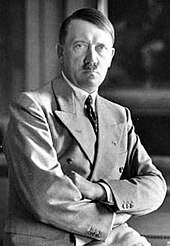
Adolf Hitler
Bundesarchiv, Bild 146-1990-048-29A / CC-BY-SA 3.0 [CC BY-SA 3.0 de (https://creativecommons.org/licenses/by-sa/3.0/de/deed.en)%5D
Heinrich Himmler, a former chicken farmer, remained head of the dreaded, black-uniformed Schutzstaffel, or Protection Squads, known as the SS, from 1929 until his suicide in 1945.
In April, 1934, Himmler was appointed assistant chief of the Gestapo (Secret State Police) in Prussia, and from that position he extended his control over the police forces of the whole Reich.
Hermann Goering, an ace fighter pilot in World War 1, served as Reich commissioner for aviation and head of the newly developed Luftwaffe, the German air force, from 1935 to 1945.
And Albert Speer, Hitler’s favorite architect, held that position from 1933 until 1942, when Hitler appointed him Reich Minister of Armaments and War Production. He held that position until the Third Reich collapsed in April, 1945.
Soviet Premier Joseph Stalin, by contrast, purged his ministers constantly. For example: From 1934 to 1953, Stalin had no fewer than three chiefs of his secret police, then named the NKVD:
- Genrikh Yagoda – (July 10, 1934 – September 26, 1936)
- Nikolai Yezhov (September 26, 1936 – November 25, 1938) and
- Lavrenty Beria (November, 1938 – March, 1953).
Stalin purged Yagoda and Yezhov, with both men executed after their arrest.
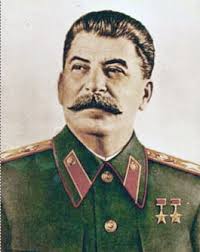
Joseph Stalin
He reportedly wanted to purge Beria, too, but the latter may have acted first. There has been speculation that Beria slipped warfarin, a blood-thinner often used to kill rats, into Stalin’s drink, causing him to die of a cerebral hemorrhage.
Stalin’s record for slaughter far eclipses that of Hitler.
For almost 30 years, through purges and starvation caused by enforced collections of farmers’ crops, Stalin slaughtered 20 to 60 million people.
The 1930s were a frightening and dangerous time to be alive in the Soviet Union. In 1934, Stalin, seeing imaginary enemies everywhere, ordered a series of purges that lasted right up to the German invasion in 1941.
An example of Stalin’s paranoia occurred one day while the dictator walked through the Kremlin corridors with Admiral Ivan Isakov. Officers of the NKVD (the predecessor to the KGB) stood guard at every corner.
“Every time I walk down the corridors,” said Stalin, “I think: Which one of them is it? If it’s this one, he will shoot me in the back. But if I turn the corner, the next one can shoot me in the face.”
Another Russian-installed tyrant who has sought to rule by fear: President Donald J. Trump.
In fact, he admitted as much to journalist Bob Woodward during the 2016 Presidential race: “Real power is—I don’t even want to use the word—fear.”
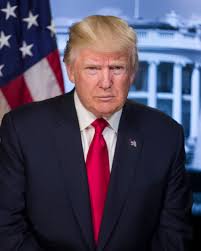
Donald Trump
As a Presidential candidate, Trump repeatedly used Twitter to attack hundreds of real and imagined enemies in politics, journalism, TV and films.
As President, he continued to insult virtually everyone, verbally and on Twitter. His targets included Democrats, Republicans, the media, foreign leaders and even members of his Cabinet.
In Russian, the word for “purge” is “chistka,” for “cleansing.” Among the victims of Trump’s recurring chistkas:
- Sally Yates – Assistant United States Attorney General
- James Comey – FBI Director
- Andrew McCabe – FBI Deputy Director
- Jeff Sessions – United States Attorney General
- Rachel Brand – Associate United States Attorney General
- Randolph “Tex” Alles – Director of the United States Secret Service
- Krisjen Nielsen – Secretary of the Department of Homeland Security
In his infamous political treatise, The Prince, Niccolo Machiavelli, the Florentine statesman, asked: “Is it is better to be loved or feared?”
And he answered it thus:
“The reply is, that one ought to be both feared and loved, but as it is difficult for the two to go together, it is much safer to be feared than loved.
“For it may be said of men in general that they are ungrateful, voluble, dissemblers, anxious to avoid danger and covetous of gain; as long as you benefit them, they are entirely yours….
“And the prince who has relied solely on their words, without making other preparations, is ruined….
“And men have less scruple in offending one who makes himself loved than one who makes himself feared; for love is held by a chain of obligations which, men being selfish, is broken whenever it serves their purpose; but fear is maintained by a dread of punishment which never fails.”
But Machiavelli warned about relying primarily on fear: “Still, a prince should make himself feared in such a way that if he does not gain love, he at any rate avoids hatred, for fear and the absence of hatred may well go together.”
**********
Donald Trump has violated that counsel throughout his life. He not only makes enemies, he revels in doing so—and in the fury he has aroused.
Filled with a poisonous hatred that encompasses almost everyone, Trump, as Presidential candidate and President, repeatedly played to the hatreds of his Right-wing base.
As first-mate Starbuck said of Captain Ahab in Herman Melville’s classic novel, Moby Dick: “He is a champion of darkness.”
9/11 ATTACKS, ABC NEWS, ADOLF EICHMANN, ADOLF HITLER, ALTERNET, AMERICABLOG, AMERICAN CIVIL LIBERTIES UNION, AP, BABY BOOMER RESISTANCE, BBC, BLOOMBERG, BUZZFEED, CBS NEWS, CNN, CROOKS AND LIARS, DAILY KOS, DEPARTMENT OF HOMELAND SECURITY, DONALD TRUMP, EGYPT, EXECUTIVE ORDER, FACEBOOK, FIVETHIRTYEIGHT, HARPER’S MAGAZINE, HEINRICH HIMMLER, HERMAN GORING, HITLER 1889-1936: HUBRIS, HITLER 1936-1945: NEMESIS, HITLER: ASCENT: 1889-1939, HUFFINGTON POST, IAN KERSHAW, IRAN, IRQA, JOSEPH GOEBBELS, LYBIA, MEDIA MATTERS, MOTHER JONES, MOVEON, MSNBC, MUSLIM REFUGEES, NAZI GERMANY, NBC NEWS, NEW REPUBLIC, NEWSDAY, NEWSWEEK, NPR, OSAMA BIN LADEN, PBS NEWSHOUR, PENTAGON, POLITICO, POLITICUSUSA, RAW STORY, REUTERS, ROBERT PAYNE, SALON, SAUDI ARABIA, SEATTLE TIMES, SLATE, SOMALIA, STALINGRAD (MOVIE), SUDAN, SYRIA, TALKING POINTS MEMO, THE ATLANTIC, THE CHICAGO SUN-TIMES, THE CHICAGO TRIBUNE, THE DAILY BEAST, THE DAILY BLOG, THE GUARDIAN, THE HILL, THE HUFFINGTON POST, THE INTERCEPT, THE LIFE AND DEATH OF ADOLF HITLER, THE LOS ANGELES TIMES, THE NATION, THE NEW REPUBLIC, THE NEW YORK TIMES, THE NEW YORKER, THE VILLAGE VOICE, THE WASHINGTON POST, THINKPROGRESS, THIRD REICH, TIME, TRUTHDIG, TRUTHOUT, TURKEY, TWO POLITICAL JUNKIES, U.S. NEWS & WORLD REPORT, UNITED ARAB EMIRATES, UPI, USA TODAY, VOLKER ULRICH, WALTER SHAUB, WORLD TRADE CENTER, X, YEMEN
In Bureaucracy, Business, History, Law, Law Enforcement, Politics, Social commentary on April 25, 2025 at 12:19 am
In Stalingrad, a 1993 German-made war movie, a platoon of German Army soldiers leaves behind the beaches and beauties of Italy and find themselves fighting desperately to stay alive in Russia.
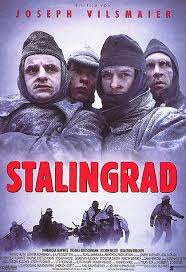
Early in the film, there is an exchange that has its real-life counterpart almost 75 years later.
A young, idealistic German lieutenant, newly transferred to the Russian front, is horrified when he sees a fellow soldier from another unit sadistically beat a Russian prisoner to death.
He seeks out the man’s superior, a captain, and says: “Captain, I must protest about the behavior of your men.”
“You want to protest?” asks the captain, grinning sardonically. “Tell the Fuhrer.”
Fast forward to January 28, 2017, the day after President Donald J. Trump signed into law an executive order which:
- Suspended entry of all refugees to the United States for 120 days;
- Barred Syrian refugees indefinitely;, and
- Blocked entry into the United States for 90 days for citizens from Iran, Iraq, Libya, Somalia, Sudan, Syria and Yemen.
The new rules—and the efforts of security personnel at major international airports to enforce them—triggered a tsunami of chaos and fear among travelers.
“We’ve gotten reports of people being detained all over the country,” said Becca Heller, the director of the International Refugee Assistance Project. “They’re literally pouring in by the minute.”
Refugees on flights when the order was signed on January 27 were detained upon arrival.
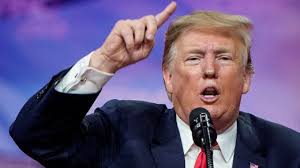
Donald Trump
Many students attending American universities were blocked from returning to the United States from visits abroad.
According to Homeland Security officials, 109 people who were already in transit to the United States when the order was signed were denied access; 173 were stopped before boarding planes heading to America. Eighty-one people who were stopped were eventually given waivers to enter the United States.
Internationally, travelers were seized by panic when they were not allowed to board flights to the United States. In Dubai and Istanbul, airport and immigration officials turned passengers away at boarding gates. At least one family was removed from a flight it had boarded.
Earlier on January 28, Trump, isolated in the White House from all the chaos he had unleashed in airports across the nation and throughout the world, said:
“It’s not a Muslim ban, but we were totally prepared. It’s working out very nicely. You see it at the airports, you see it all over.”
Then the American Civil Liberties Union intervened.

Two Iraqi immigrants, defended by the ACLU, accused Trump of legal and constitutional overreach.
The Iraqis had been detained at John F. Kennedy International Airport in New York City. One had served as an interpreter for American forces in Iraq for a decade. The other was en route to reunite with his wife and son in Texas.
The interpreter, Hameed Khalid Darweesh, was released after nearly 19 hours of detention. So was the other traveler, Haider Sameer Abdulkhaleq Alshawi.
Before the two men were released, one of their lawyers, Mark Doss, a supervising attorney at the International Refugee Assistance Project, asked an official, “Who is the person we need to talk to?”
“Call Mr. Trump,” said the official, who refused to identify himself.
He might just as well have said: “You want to protest? Tell the Fuhrer.”
The ACLU action secured at least a temporary blocking of part of Trump’s order. A Brooklyn judge barred the government from deporting some arrivals who found themselves ensnared by the Presidential order.
Judge Ann M. Donnelly of the Federal District Court in Brooklyn, ruled that sending the travelers home could cause them “irreparable harm.” She said the government was “enjoined and restrained from, in any manner and by any means, removing individuals” who had arrived in the United States with valid visas or refugee status.
But she did not force the administration to let in people otherwise blocked by the executive order who have not yet traveled to the United States. Nor did she issue a broader ruling on the constitutionality of the order.
* * * * *
On November 5, 75 million ignorant, hate-filled, Right-wing Americans re-elected Donald Trump—a man reflecting their own hate and ignorance—to the Presidency.
Summing up Trump’s character in a March 25, 2016 broadcast of The PBS Newshour, conservative political columnist David Brooks warned: “The odd thing about [Trump’s] whole career and his whole language, his whole world view is there is no room for love in it. You get a sense of a man who received no love, can give no love….
“And so you really are seeing someone who just has an odd psychology unleavened by kindness and charity, but where it’s all winners and losers, beating and being beat. And that’s part of the authoritarian personality.”
There were countless warning signs available for Trump’s supporters to see—if they had wanted to see them:
- His facing 91 criminal counts in four cases;
- His threats against his political opponents and Justice Department prosecutors;
- His conviction for raping columnist E. Jean Carroll;
- His continued lying about winning the 2020 Presidential election;
- His conviction on 34 counts of falsifying business records;
- His unjustified attacks the integrity of the FBI—causing previously “law and order” Republicans to demand its defunding.
Those who voted for Trump will now learn the meaning of the Nazi slogan: “The Fuhrer proposes and disposes for all.” Those who voted against him knew this already.
2020 PRESIDENTIL ELECTION, 9/11 ATTACKS, ABC NEWS, ADOLF EICHMANN, ADOLF HITLER, ALTERNET, AMERICABLOG, AMERICAN CIVIL LIBERTIES UNION, AMERICAN CIVIL LIBERTIES UNION (ACLU), AP, AUGUST FLENTJE, BABY BOOMER RESISTANCE, BBC, BLOOMBERG, BUZZFEED, CBS NEWS, CNN, CROOKS AND LIARS, DAILY KOS, DEPARTMENT OF HOMELAND SECURITY, DEPARTMENT OF JUSTICE, DONALD TRUMP, DUBAI, E. JEAN CARROLL, EGYPT, EL SALVADOR, EREZ REUVENI, EXECUTIVE ORDER, FACEBOOK, FALSIFYING BUSINESS RECORDS, FBI, FIVETHIRTYEIGHT, HARPER’S MAGAZINE, HEINRICH HIMMLER, HERMAN GORING, HITLER 1889 – 1936: HUBRIS (BOOK), HITLER 1889-1936: HUBRIS, HITLER 1936 – 1945 NEMESIS (BOOK), HITLER 1936-1945: NEMESIS, HITLER: ASCENT: 1889 – 1939 (BOOK), HITLER: ASCENT: 1889-1939, HUFFINGTON POST, IAN KERSHAW, ILLEGAL ALIENS, IMMIGRATION AND CUSTOMS ENFORCEMENT (ICE), INTERNATIONAL REFUGEE ASSISTANCE PROJECT, IRAN, IRAQ, ISTANBUL, JOSEPH GOEBBELS, KILMAR ABREGO GARCIA, LIBYA, LYBIA, MEDIA MATTERS, MOTHER JONES, MOVEON, MS-13 GANG, MSNBC, MUSLIM REFUGEES, MUSLIMS, NAZI GERMANY, NBC NEWS, NEW REPUBLIC, NEWSDAY, NEWSWEEK, NPR, OSAMA BIN LADEN, PAM BONDI, PAULA XINIS, PBS NEWSHOUR, PENTAGON, POLITICO, POLITICUSUSA, RAW STORY, REUTERS, ROBERT PAYNE, SALON, SAUDI ARABIA, SEATTLE TIMES, SLATE, SOMALIA, STALINGRAD (MOVIE), SUDAN, SYRIA, TALKING POINTS MEMO, THE ATLANTIC, THE CHICAGO SUN-TIMES, THE CHICAGO TRIBUNE, THE DAILY BEAST, THE DAILY BLOG, THE GUARDIAN, THE HILL, THE HUFFINGTON POST, THE INTERCEPT, THE LIFE AND DEATH OF ADOLF HITLER, THE LOS ANGELES TIMES, THE NATION, THE NEW REPUBLIC, THE NEW YORK TIMES, THE NEW YORKER, THE VILLAGE VOICE, THE WASHINGTON POST, THINKPROGRESS, THIRD REICH, TIME, TODD BLANCHE, TRUTHDIG, TRUTHOUT, TURKEY, TWO POLITICAL JUNKIES, U.S. NEWS & WORLD REPORT, UNITED ARAB EMIRATES, UPI, USA TODAY, VOLKER ULRICH, WALTER SHAUB, WERNER WILLIKENS, WORLD TRADE CENTER, X, YEMEN
In Bureaucracy, Business, History, Law, Law Enforcement, Politics, Social commentary on April 24, 2025 at 12:06 am
When historians—-and ordinary citizens—think about the Third Reich, the name of Werner Willikens doesn’t immediately spring to mind.
Adolf Hitler, Herman Goring, Joseph Goebbels, Heinrich Himmler, Adolf Eichmann—yes.
But why Werner Willikens?
British historian and author Ian Kershaw has unearthed the reason.
He has written extensively about the Third Reich. He is best-known for his monumental, two-volume biography, Hitler 1889–1936: Hubris (1998) and Hitler 1936–1945: Nemesis (2000).

Ian Kershaw
Willikens, State Secretary in the Ministry of Food, gave a speech on February 21, 1934 that casts new light on how Hitler came to exercise vast authority over Nazi Germany:
“Everyone who has the opportunity to observe it knows that the Fuhrer can hardly dictate from above everything he intends to realize sooner or later.
“On the contrary, up till now everyone with a post in the new Germany has worked best when he has, so to speak, worked towards the Fuhrer….
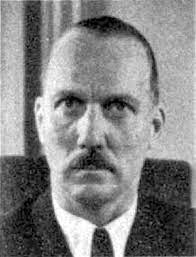
Werner Willikens
“In fact, it is the duty of everybody to try to work towards the Fuhrer along the lines he would wish. Anyone who makes mistakes will notice it soon enough.
“But anyone who really works towards the Fuhrer along his lines and towards his goal will certainly both now and in the future one day have the finest reward in the form of the sudden legal confirmation of his work.”
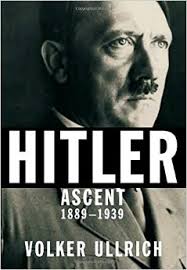
Volker Ullrich, bestselling author of Hitler: Ascent 1889 – 1939, summed up the results of this interplay between Hitler and his subjects:
“Kershaw tried to show that in many instances Hitler didn’t need to do very much at all since German society–everyone from the underlings surrounding him to ordinary people on the street—-were increasingly inclined to anticipate and fulfill the Fuhrer’s every wish, ‘working towards him.’
“…Kershaw…. illustrate[d] that without the readiness of many people to work for the man in charge, there would have been no way he could have achieved his murderous aims.
“Kershaw’s main thesis was that the dynamics of the Nazi regime arose from the interplay of Hitler’s intentions with activism emanating from subordinate individuals and institutions. The results were ever more radical ‘solutions.'”
On April 30, 1945, Adolf Hitler simultaneously bit on a cyanide capsule and fired a pistol shot into his right temple.
The concept of “working towards the Fuhrer” seemed to have come to a literally fiery end.
Fast forward almost 80 years later–to January 20, 2025.
Donald J. Trump, upon resuming the office of President, has declared all-out war on illegal aliens within the United States. He has given Immigration and Customs Enforcement (ICE) full powers to seize and deport anyone fitting that description.
Even if that person is a legal resident who has lived in the United States legally with a work permit since 2011 and is protected from deportation by a 2019 court order.
Such was the case with Kilmar Abrego Garcia, a Salvadoran citizen living in Maryland. He illegally entered the United States at age 18 to escape being drafted into the 18th Street Gang.
In 2019 he was arrested in Maryland and detained by federal immigration authorities. An immigration judge granted Garcia protection from deportation because he might risk violence from local gangs in El Salvador.
On March 12, 2025, Garcia was stopped and detained by immigration agents and questioned about his alleged affiliation with the MS-13 gang. MS-13 was originally formed by Salvadoran immigrants fleeing civil war in their homeland and is now involved in myriad illegal enterprises,
ICE deported him to El Salvador, alongside hundreds of other men accused of being gang members.
There was just one problem: Garcia was deported due to a clerical error.
U.S. District Judge Paula Xinis ordered that Garcia be returned to Maryland: “His detention appears wholly lawless.”
In turn, the Justice Department claimed that it could not return him from a sovereign nation.
On April 5, Erez Reuveni, the acting deputy director of the department’s immigration litigation division, struggled to answer questions from the judge about the circumstances of Garcia’s deportation.
Asked why the U.S. couldn’t ask for his return, Reuveni said: “The first thing I did when I got this case on my desk is ask my clients the same question. Our only arguments are jurisdictional. He should not have been sent to El Salvador.
“My answer to a lot of these questions is going to be frustrating, and I am frustrated. The government made a choice here to produce no evidence.”
Attorney General Pam Bondi took issue with how Reuveni handled the case in court. The next day, she ordered him put on administrative leave by Deputy U.S. Attorney Todd Blanche. He is no longer working on the Abrego Garcia case or in the Justice Department in general.
August Flentje, Reuveni’s supervisor, was also placed on administrative leave. Flentje was told he had failed to supervise a subordinate.
In a statement to CNN, Bondi said: “At my direction, every Department of Justice attorney is required to zealously advocate on behalf of the United States. Any attorney who fails to abide by this direction will face consequences.”
Reuveni had been praised as a “top-notched” prosecutor by his superiors in an email announcing his promotion two weeks ago. His crime lay in his failure to “work toward the Fuhrer.“
ABC NEWS, ADOLF HITLER, ALTERNET, AMERICABLOG, AP, ASSASSINATION, BABY BOOMER RESISTANCE, BBC, BLOOMBERG NEWS, BRETT KAVANAUGH, BUZZFEED, CBS NEWS, CLARENCE THOMAS, CNN, CROOKS AND LIARS, CZECHOSLOVAKIA, DAILY KOS, DONALD TRUMP, DRUDGE REPORT, FINAL SOLUTION, FIVETHIRTYEIGHT, HARPER’S MAGAZINE, HEINRICH HIMMLER, HERMANN GOERING, HUFFINGTON POST, JANUARY 6 INSURRECTION, MARCO RUBIO, MEDIA MATTERS, MEDICAID, MITCH MCCONNEL, MOTHER JONES, MOVEON, MSNBC, NATIONAL RIFLE ASSOCIATION, NAZI GERMANY, NBC NEWS, NEW REPUBLIC, NEWSDAY, NEWSWEEK, NPR, PBS NEWSHOUR, POLITICO, POLITICUSUSA, RAND PAUL, RAW STORY, REINHARD HEYDRICH, REUTERS, ROLAND FREISLER, RON DESANTIS, RUDOLF HESS, SALON, SAMUEL ALITO, SEATTLE TIMES, SLATE, SS, STEVE BANNON, SUPPLEMENTAL NUTRITION ASSISTANCE PROGRAM (SNAP), TALKING POINTS MEMO, TED CRUZ, THE ATLANTIC, THE CHICAGO SUN-TIMES, THE CHICAGO TRIBUNE, THE DAILY BEAST, THE DAILY BLOG, THE GUARDIAN, THE HILL, THE HUFFINGTON POST, THE LOS ANGELES TIMES, THE NATION, THE NEW REPUBLIC, THE NEW YORK TIMES, THE NEW YORKER, THE SUPREME COURT, THE VILLAGE VOICE, THE WASHINGTON POST, THINKPROGRESS, TIME, TRUTHDIG, TRUTHOUT, TWO POLITICAL JUNKIES, U.S. NEWS & WORLD REPORT, UPI, USA TODAY, WANNSEE CONFERENCE, X
In Bureaucracy, Entertainment, History, Politics, Social commentary on February 28, 2025 at 3:05 am
“We mock you. We mock your fear. We want your fear. It’s going to be accountability. We are taking apart the administrative state. We’re going to destroy the deep state, and we’re going to hold everybody responsible that put this republic in the situation its in today.
“Accountability, responsibility. And that will come with authority. The authority of Donald J. Trump as the 47th president of the United States.”
The speaker was Steve Bannon, former Trump campaign manager and White House advisor. And he was issuing a warning to everyone who didn’t enthusiastically accept Donald Trump as his Once and Future Fuhrer.
Threats of violence have become common among Republicans since 2015, when Trump first ran for President. And they continue to cast a shadow over the 2024 Presidential campaign.
On March 16, 2016, Trump warned Republicans that if he didn’t win the GOP nomination in July, his supporters would literally riot: “I think you’d have riots. I think you would see problems like you’ve never seen before. I think bad things would happen. I really do. I wouldn’t lead it, but I think bad things would happen.”
Almost five years later, on January 6, 2021, Trump incited a deadly riot against the United States Capitol to stop Congress from certifying the electoral victory of Joe Biden in the 2020 presidential election.
Upon taking office again as President on January 20, 2025, Trump issued a blanket pardon to about 1,500 of his supporters who carried out the attack. This sent a clear message to his future opponents: “I will similarly pardon anyone who assaults you.”
The Third Reich similarly relied on violence—or the threat of it—to preserve its dictatorial control over Germany.
A key representative of that violence was Reinhard Tristan Eugen Heydrich.
A tall, blond-haired former naval officer, Heydrich was both a champion fencer and talented violinist. Heydrich joined the Schutzstaffel, or Protective Squads, better known as the SS, in 1931, and quickly became head of its counterintelligence service.
In 1934, he oversaw the “Night of the Long Knives” purge of Hitler’s brown-shirted S.A., or Stormtroopers.
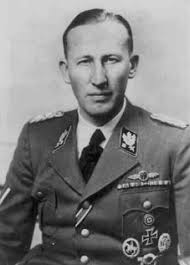
Reinhard Heycrich
In September, 1941, Heydrich was appointed “Reich Protector” of Czechoslovakia, which had fallen prey to Germany in 1938 but whose citizens were growing restless under Nazi rule.
Heydrich immediately ordered a purge, executing 92 people within the first three days of his arrival in Prague. By February, 1942, 4,000-5,000 people had been arrested.
In January, 1942, Heydrich convened a meeting of high-ranking political and military leaders in Wannsee, Germany, to streamline “the Final Solution to the Jewish Question.”
An estimated six million Jews were thus slaughtered.
Returning to Prague, Heydrich continued his policy of carrot-and-stick with the Czechs—improving the social security system and requisitioning luxury hotels for middle-class workers, alternating with arrests and executions.
Two British-trained Czech commandos—Jan Kubis and Joseph Gabcik—parachuted into Prague.
On May 27, 1942, they waited at a hairpin turn in the road always taken by Heydrich. When Heydrich’s Mercedes slowed down, Gabcik raised his machinegun—which jammed.
Rising in his seat, Heydrich aimed his revolver at Gabcik—as Kubis lobbed a hand grenade at the car. The explosion drove steel and leather fragments of the car’s upholstery into Heydrich’s diaphragm, spleen and lung.

Scene of Reinhard Heydrich’s assassination
Hitler dispatched doctors from Berlin to save the Reich Protector. But infection set in, and on June 4, Heydrich died at age 38.
The assassination sent shockwaves through the upper echelons of the Third Reich. No one had dared assault—much less assassinate—a high-ranking Nazi official.
Nazis had slaughtered tens of thousands without hesitation—or fear that the same might happen to them.
Suddenly they realized that the fury they had aroused could be turned against themselves.
Which brings us to the leaders of America’s own Right-wing.
The names of infamous Nazis were widely known:
- Reichsmarshall Hermann Goering;
- Propaganda Minister Paul Joseph Goebbels;
- Deputy Fuhrer Rudolf Hess;
- SS-Reichsfuhrer Heinrich Himmler;
- “Hanging Judge” Roland Freisler;
- SS Obergruoppenfuhrer Reinhard Heydrich; and
- Fuhrer Adolf Hitler.
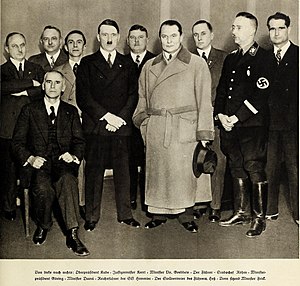
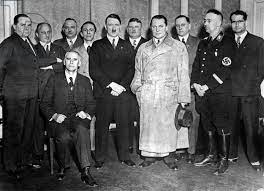
Members of the Nazi government
And so are the names of the infamous leaders of the American Right:
- Texas Senator Ted Cruz;
- Supreme Court Justice Clarence Thomas;
- Evangelist Franklin Graham;
- Georgia Congressman Marjorie Taylor Greene;
- Supreme Court Justice Samuel Alito;
- Florida Governor Ron DeSantis;
- President Donald Trump.
The difference between these two infamous groups is this:
In Nazi Germany, ordinary Germans could not learn about the personal lives of their dictators—including their home addresses—and to conspire against them.
In the United States, ordinary citizens have an array of means to do this. They can turn to newspapers, TV and magazines. And if that isn’t enough, “people finder” websites, for a modest price, provide addresses and names of relatives of potential targets.
In Nazi Germany, firearms were tightly controlled.
In the United States, the Right’s National Rifle Association has successfully lobbied to put lethal firepower into the hands of virtually anyone who wants it.
Eighty-three years ago, Reinhard Heydrich believed himself invulnerable from the hatred of the enemies he had made. That arrogance cost him his life.
The day may soon come when America’s own Right-wingers start learning that same lesson.
9/11 ATTACKS, ABC NEWS, ADOLF EICHMANN, ADOLF HITLER, ALTERNET, AMERICABLOG, AMERICAN CIVIL LIBERTIES UNION, AP, BABY BOOMER RESISTANCE, BBC, BLOOMBERG, BUZZFEED, CBS NEWS, CNN, CROOKS AND LIARS, DAILY KOS, DEPARTMENT OF HOMELAND SECURITY, DONALD TRUMP, EGYPT, EXECUTIVE ORDER, FACEBOOK, FIVETHIRTYEIGHT, HARPER’S MAGAZINE, HEINRICH HIMMLER, HERMAN GORING, HITLER 1889-1936: HUBRIS, HITLER 1936-1945: NEMESIS, HITLER: ASCENT: 1889-1939, HUFFINGTON POST, IAN KERSHAW, IRAN, IRQA, JOSEPH GOEBBELS, LYBIA, MEDIA MATTERS, MOTHER JONES, MOVEON, MSNBC, MUSLIM REFUGEES, NAZI GERMANY, NBC NEWS, NEW REPUBLIC, NEWSDAY, NEWSWEEK, NPR, OSAMA BIN LADEN, PBS NEWSHOUR, PENTAGON, POLITICO, POLITICUSUSA, RAW STORY, REUTERS, ROBERT PAYNE, SALON, SAUDI ARABIA, SEATTLE TIMES, SLATE, SOMALIA, STALINGRAD (MOVIE), SUDAN, SYRIA, TALKING POINTS MEMO, THE ATLANTIC, THE CHICAGO SUN-TIMES, THE CHICAGO TRIBUNE, THE DAILY BEAST, THE DAILY BLOG, THE GUARDIAN, THE HILL, THE HUFFINGTON POST, THE INTERCEPT, THE LIFE AND DEATH OF ADOLF HITLER, THE LOS ANGELES TIMES, THE NATION, THE NEW REPUBLIC, THE NEW YORK TIMES, THE NEW YORKER, THE VILLAGE VOICE, THE WASHINGTON POST, THINKPROGRESS, THIRD REICH, TIME, TRUTHDIG, TRUTHOUT, TURKEY, TWO POLITICAL JUNKIES, U.S. NEWS & WORLD REPORT, UNITED ARAB EMIRATES, UPI, USA TODAY, VOLKER ULRICH, WALTER SHAUB, WORLD TRADE CENTER, X, YEMEN
In Bureaucracy, Business, History, Law, Law Enforcement, Politics, Social commentary on December 6, 2024 at 12:10 am
In Stalingrad, a 1993 German-made war movie, a platoon of German Army soldiers leaves behind the beaches and beauties of Italy and find themselves fighting desperately to stay alive in Russia.
Early in the film, there is an exchange that has its real-life counterpart almost 75 years later.
A young, idealistic German lieutenant, newly transferred to the Russian front, is horrified when he sees a fellow soldier from another unit sadistically beat a Russian prisoner to death.
He seeks out the man’s superior, a captain, and says: “Captain, I must protest about the behavior of your men.”
“You want to protest?” asks the captain, grinning sardonically. “Tell the Fuhrer.”
Fast forward to January 28, 2017, the day after President Donald J. Trump signed into law an executive order which:
- Suspended entry of all refugees to the United States for 120 days;
- Barred Syrian refugees indefinitely;, and
- Blocked entry into the United States for 90 days for citizens from Iran, Iraq, Libya, Somalia, Sudan, Syria and Yemen.
The new rules—and the efforts of security personnel at major international airports to enforce them—triggered a tsunami of chaos and fear among travelers.
“We’ve gotten reports of people being detained all over the country,” said Becca Heller, the director of the International Refugee Assistance Project. “They’re literally pouring in by the minute.”
Refugees on flights when the order was signed on January 27 were detained upon arrival.
Donald Trump
Many students attending American universities were blocked from returning to the United States from visits abroad.
According to Homeland Security officials, 109 people who were already in transit to the United States when the order was signed were denied access; 173 were stopped before boarding planes heading to America. Eighty-one people who were stopped were eventually given waivers to enter the United States.
Internationally, travelers were seized by panic when they were not allowed to board flights to the United States. In Dubai and Istanbul, airport and immigration officials turned passengers away at boarding gates. At least one family was removed from a flight it had boarded.
Earlier on January 28, Trump, isolated in the White House from all the chaos he had unleashed in airports across the nation and throughout the world, said:
“It’s not a Muslim ban, but we were totally prepared. It’s working out very nicely. You see it at the airports, you see it all over.”
Then the American Civil Liberties Union intervened.
Two Iraqi immigrants, defended by the ACLU, accused Trump of legal and constitutional overreach.
The Iraqis had been detained at John F. Kennedy International Airport in New York City. One had served as an interpreter for American forces in Iraq for a decade. The other was en route to reunite with his wife and son in Texas.
The interpreter, Hameed Khalid Darweesh, was released after nearly 19 hours of detention. So was the other traveler, Haider Sameer Abdulkhaleq Alshawi.
Before the two men were released, one of their lawyers, Mark Doss, a supervising attorney at the International Refugee Assistance Project, asked an official, “Who is the person we need to talk to?”
“Call Mr. Trump,” said the official, who refused to identify himself.
He might just as well have said: “You want to protest? Tell the Fuhrer.”
The ACLU action secured at least a temporary blocking of part of Trump’s order. A Brooklyn judge barred the government from deporting some arrivals who found themselves ensnared by the Presidential order.
Judge Ann M. Donnelly of the Federal District Court in Brooklyn, ruled that sending the travelers home could cause them “irreparable harm.” She said the government was “enjoined and restrained from, in any manner and by any means, removing individuals” who had arrived in the United States with valid visas or refugee status.
But she did not force the administration to let in people otherwise blocked by the executive order who have not yet traveled to the United States. Nor did she issue a broader ruling on the constitutionality of the order.
* * * * *
On November 5, 75 million ignorant, hate-filled, Right-wing Americans re-elected Donald Trump—a man reflecting their own hate and ignorance—to the Presidency.
Summing up Trump’s character in a March 25, 2016 broadcast of The PBS Newshour, conservative political columnist David Brooks warned: “The odd thing about [Trump’s] whole career and his whole language, his whole world view is there is no room for love in it. You get a sense of a man who received no love, can give no love….
“And so you really are seeing someone who just has an odd psychology unleavened by kindness and charity, but where it’s all winners and losers, beating and being beat. And that’s part of the authoritarian personality.”
There were countless warning signs available for Trump’s supporters to see—if they had wanted to see them:
- His facing 91 criminal counts in four cases;
- His threats against his political opponents and Justice Department prosecutors;
- His conviction for raping columnist E. Jean Carroll;
- His continued lying about winning the 2020 Presidential election;
- His conviction on 34 counts of falsifying business records;
- His unjustified attacks the integrity of the FBI—causing previously “law and order” Republicans to demand its defunding.
Those who voted for Trump will now learn the meaning of the Nazi slogan: “The Fuhrer proposes and disposes for all.” Those who voted against him knew this already.
9/11 ATTACKS, ABC NEWS, ADOLF EICHMANN, ADOLF HITLER, ALTERNET, AMERICABLOG, AMERICAN CIVIL LIBERTIES UNION, AP, BABY BOOMER RESISTANCE, BBC, BLOOMBERG, BUZZFEED, CBS NEWS, CNN, CROOKS AND LIARS, DAILY KOS, DEPARTMENT OF HOMELAND SECURITY, DONALD TRUMP, EGYPT, EXECUTIVE ORDER, FACEBOOK, FIVETHIRTYEIGHT, HARPER’S MAGAZINE, HEINRICH HIMMLER, HERMAN GORING, HITLER 1889-1936: HUBRIS, HITLER 1936-1945: NEMESIS, HITLER: ASCENT: 1889-1939, HUFFINGTON POST, IAN KERSHAW, IRAN, IRQA, JOSEPH GOEBBELS, LYBIA, MEDIA MATTERS, MOTHER JONES, MOVEON, MSNBC, MUSLIM REFUGEES, NAZI GERMANY, NBC NEWS, NEW REPUBLIC, NEWSDAY, NEWSWEEK, NPR, OSAMA BIN LADEN, PBS NEWSHOUR, PENTAGON, POLITICO, POLITICUSUSA, RAW STORY, REUTERS, ROBERT PAYNE, SALON, SAUDI ARABIA, SEATTLE TIMES, SLATE, SOMALIA, STALINGRAD (MOVIE), SUDAN, SYRIA, TALKING POINTS MEMO, THE ATLANTIC, THE CHICAGO SUN-TIMES, THE CHICAGO TRIBUNE, THE DAILY BEAST, THE DAILY BLOG, THE GUARDIAN, THE HILL, THE HUFFINGTON POST, THE INTERCEPT, THE LIFE AND DEATH OF ADOLF HITLER, THE LOS ANGELES TIMES, THE NATION, THE NEW REPUBLIC, THE NEW YORK TIMES, THE NEW YORKER, THE VILLAGE VOICE, THE WASHINGTON POST, THINKPROGRESS, THIRD REICH, TIME, TRUTHDIG, TRUTHOUT, TURKEY, TWO POLITICAL JUNKIES, U.S. NEWS & WORLD REPORT, UNITED ARAB EMIRATES, UPI, USA TODAY, VOLKER ULRICH, WALTER SHAUB, WORLD TRADE CENTER, X, YEMEN
In Bureaucracy, Business, History, Law, Law Enforcement, Politics, Social commentary on December 5, 2024 at 12:32 am
When historians—-and ordinary citizens—think about the Third Reich, the name of Werner Willikens doesn’t immediately spring to mind.
Adolf Hitler, Herman Goring, Joseph Goebbels, Heinrich Himmler, Adolf Eichmann—yes.
But Werner Willikens? Why him?
Ian Kershaw has unearthed the reason.
Ian Kershaw is a British historian and author who has written extensively about the Third Reich. He is best-known for his monumental, two-volume biography, Hitler 1889–1936: Hubris (1998) and Hitler 1936–1945: Nemesis (2000).
Ian Kershaw
Willikens, State Secretary in the Ministry of Food, gave a speech on February 21, 1934 that casts new light on how Hitler came to exercise vast authority over Nazi Germany:
“Everyone who has the opportunity to observe it knows that the Fuhrer can hardly dictate from above everything he intends to realize sooner or later.
“On the contrary, up till now everyone with a post in the new Germany has worked best when he has, so to speak, worked towards the Fuhrer….
“In fact, it is the duty of everybody to try to work towards the Fuhrer along the lines he would wish. Anyone who makes mistakes will notice it soon enough.
“But anyone who really works towards the Fuhrer along his lines and towards his goal will certainly both now and in the future one day have the finest reward in the form of the sudden legal confirmation of his work.”
Volker Ullrich, bestselling author of Hitler: Ascent 1889 – 1939, summed up the results of this interplay between Hitler and his subjects:
“Kershaw tried to show that in many instances Hitler didn’t need to do very much at all since German society–everyone from the underlings surrounding him to ordinary people on the street—-were increasingly inclined to anticipate and fulfill the Fuhrer’s every wish, ‘working towards him.’
“…Kershaw did not minimize the historical role played by Hitler and his insane, ideological fixations, but he did illustrate that without the readiness of many people to work for the man in charge, there would have been no way he could have achieved his murderous aims.
“Kershaw’s main thesis was that the dynamics of the Nazi regime arose from the interplay of Hitler’s intentions with activism emanating from subordinate individuals and institutions. The results were ever more radical ‘solutions.'”
With the Third Reich dying in the flames of Berlin, at about 3:30 p.m. on April 30, 1945, Adolf Hitler simultaneously bit on a cyanide capsule and fired a pistol shot into his right temple.
The concept of “working towards the Fuhrer” seemed to have come to a literally fiery end.
Fast forward almost 72 years later–to 4:42 p.m. on January 27, 2017.
Newly inaugurated President Donald J. Trump signed into law an executive order that:
- Suspended entry of all refugees to the United States for 120 days;
- Barred Syrian refugees indefinitely; and
- Blocked entry into the United States for 90 days for citizens of Iran, Iraq, Libya, Somalia, Sudan, Syria and Yemen.
Trump’s executive order read as follows: “In order to protect Americans, the United States must ensure that those admitted to this country do not bear hostile attitudes toward it and its founding principles.
“The United States cannot, and should not, admit those who do not support the Constitution, or those who would place violent ideologies over American law.”
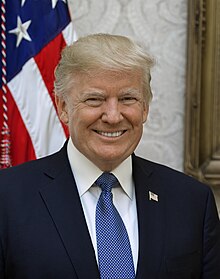
President Donald Trump
But that statement excluded three extremely troubling facts.
First: Over the previous four decades, there had been no fatal attacks within the United States by immigrants from any of those seven banned countries.
Second, approximately 3,000 Americans had been killed by immigrants from Saudi Arabia, the United Arab Emirates, Egypt, and Turkey. Most of those victims died during the attacks on the Pentagon and World Trade Center on September 11, 2001.
In fact, 15 of the 19 highjackers who took part in those attacks came from Saudi Arabia. Osama bin Laden, the mastermind of the attacks, was himself a Saudi from a wealthy family with strong ties to the Saudi Royal Family.
Third, Saudi Arabia, the United Arab Emirates, Egypt, and Turkey were all countries where Trump had close business ties. His properties included two luxury towers in Turkey and golf courses in the United Arab Emirates.
Trump listed companies on his FEC filing possibly related to a development project in Jeddah, Saudi Arabia’s second-biggest city, located outside Mecca: DT Jeddah Technical Services Manager LLC, DT Jeddah Technical Services Manager Member Corp., THC Jeddah Hotel Manager LLC and THC Jeddah Hotel Manager Member Corp.
Trump listed two companies on his FEC filing possibly related to business in Egypt: Trump Marks Egypt and Trump Marks Egypt LLC.
The full dimensions of Trump’s holdings throughout the Middle East aren’t known because he has refused to release his tax returns.
On January 11, 2017, Trump said that:
- He would resign from his positions at the Trump Organization but that he would not divest his ownership.
- The organization would be managed by his sons Eric and Don Jr. and chief financial officer Allen Weisselberg.
- The organization would terminate pending deals and not seek new international business.
Walter Shaub, director of the Office of Government Ethics, said that these measures did not resolve the President’s conflict-of-interest problems and called them “meaningless.”
It was after Trump signed his executive order that the true consequences of “working towards the Fuhrer”—or President—were fully revealed.
2024 PRESIDENTIAL CAMPAIGN, ABC NEWS, ADOLF HITLER, ALTERNET, AMERICABLOG, AP, ATTORNEY GENERAL OF THE UNITED STATES, BABY BOOMER RESISTANCE, BBC, BLOOMBERG, BUZZFEED, CBS NEWS, CNN, CROOKS AND LIARS, DAILY KOS, DONALD TRUMP, ELON MUSK, ERNST ROHM, FBI, FIVETHIRTYEIGHT, HARPER’S MAGAZINE, HEINRICH HIMMLER, HUFFINGTON POST, Kamala Harris, MATT GAETZ, MEDIA MATTERS, MICHAEL COHEN, MOTHER JONES, MOVEON, MSNBC, NATIONAL LABOR RELATIONS BOARD (NLRB), NBC NEWS, NEW REPUBLIC, NEWSDAY, NEWSWEEK, NPR, PAM BONDI, PBS NEWSHOUR, POLITICO, POLITICUSUSA, RAW STORY, REUTERS, SALON, SEATTLE TIMES, SLATE, SPACE X, STORM TROOPERS, TALKING POINTS MEMO, TESLA, THE ATLANTIC, THE CHICAGO SUN-TIMES, THE CHICAGO TRIBUNE, THE DAILY BEAST, THE DAILY BLOG, THE GUARDIAN, THE HILL, THE HUFFINGTON POST, THE INTERCEPT, THE LOS ANGELES TIMES, THE NATION, THE NEW REPUBLIC, THE NEW YORK TIMES, THE NEW YORKER, THE S.A., THE SS, THE VILLAGE VOICE, THE WASHINGTON POST, THINKPROGRESS, THIRD REICH, TIME, TRUTHDIG, TRUTHOUT, TWO POLITICAL JUNKIES, U.S. NEWS & WORLD REPORT, UNITED STATES ATTORNEY’S OFFICE, UNITED STATES DEPARTMENT OF JUSTICE, UPI, USA TODAY, X
In Bureaucracy, Business, History, Law, Law Enforcement, Politics, Social commentary on November 27, 2024 at 12:11 am
Elon Musk is currently riding high.
He is—famously—the world’s richest man, with an estimated net worth of $314 billion as of November 2024, according to the Bloomberg Billionaires Index. He owns Tesla, Inc. X (formerly Twitter), Space X and xAI, an artificial intelligence startup that he founded in 2023.
And he’s used to getting his way: In a notorious video exchange with Donald Trump, the two men discussed firing striking workers.

Elon Musk
The Royal Society, CC BY-SA 3.0 <https://creativecommons.org/licenses/by-sa/3.0>, via Wikimedia Commons
Trump praised Musk for firing workers who went on strike. “You’re the greatest cutter. I look at what you do. You walk in and say, ‘You want to quit?’ I won’t mention the name of the company but they go on strike and you say, ’That’s OK. You’re all gone.’”
Musk said, “Yeah,” and laughed while Trump was talking.
In 2021, the National Labor Relations Board ruled that Musk, in a 2018 Twitter tweet, had unlawfully threatened Tesla employees with the loss of stock options if they voted to unionize.
But in October, 2024, the full 5th Circuit later threw out that decision and voted to hear the matter again.

Tesla headquarters
Larry D. Moore, CC BY 4.0 <https://creativecommons.org/licenses/by/4.0>, via Wikimedia Commons
And now, having successfully backed Trump for the Presidency against Vice President Kamala Harris, Musk feels he has achieved the ultimate in success—in business and politics.
But NBC News delivered a warning on November 13: “Elon Musk may already be overstaying his welcome in Trump’s orbit.”
Two sources involved with the Trump transition team said that Musk has been a near-constant presence at Mar-a-Lago in the week since Election Day.
And he’s begun to annoy people in Trump’s inner circle who believe he’s overstepping his role in the transition.
“‘He’s behaving as if he’s a co-president and making sure everyone knows it,” one source said. “And he’s sure taking lots of credit for the President’s victory. Bragging about America PAC and X to anyone who will listen. He’s trying to make President Trump feel indebted to him. And the President is indebted to no one.”

Donald Trump
Yet another source said: “He wants to be seen as having a say in everything (even if he doesn’t).”
The second source said Musk appeared to be pushing his own agenda, instead of focusing on Trump’s: “Appointing people because they are loyal to Elon doesn’t work.”
Trump is an alpha male who enjoys dominating others. Musk operates his companies in a similar way, Dan McAdams, a psychology professor at Northwestern University, told Newsweek.
“Two alphas can probably get along well enough as long as they don’t interfere with each other’s respective domain.
“The big thing that might come between them would be if Musk threatens Trump’s monopoly on American attention. Trump needs to be the center of everybody’s consciousness—and he has pretty much succeeded in accomplishing that extraordinary feat over the past eight years.
“Musk is certainly a narcissist but his self-worth is caught up in what he achieves. He really cares about building electric cars, sending people into space, and so on.
“Trump does not care about anything except himself. His entire self worth depends on others adoring him and fearing him,” McAdams said.
In an October 23 meeting with House Republicans, Trump praised Musk for his time and dedication to the campaign. Trump said Musk set aside his own business interests for the campaign and didn’t ask for anything in return.
Then, in what could have ominous implications for the future, Trump said: “Elon won’t go home. I can’t get rid of him. Until I don’t like him.”
The lawmaker sources insisted that Trump was joking.
So “Rocket Man” Musk, now basking in his “co-President” relationship with Trump, no doubt believes he has every reason to feel confident.
But Trump’s choice for Attorney General—Matt Gaetz—should have sent off alarm bells to Musk.
Gaetz made it clear he would do absolutely anything Trump wants. As Attorney General, he would have had the power to investigate and indict anyone Trump dislikes.
Then Gaetz withdrew his name from nomination following increased scrutiny over allegations of sexual misconduct.
And Pam Bondi, Trump’s replacement for Attorney General after Gaetz withdrew, has proven her own reliability. As Florida Attorney General, she solicited a political contribution from Donald Trump while her office deliberated investigating alleged fraud at Trump University and its affiliates.
After Bondi dropped the Trump University case, Trump wrote her a check $25,000 for her re-election campaign. The money came from the Donald J. Trump Foundation.
Musk has received billions of dollars in Federal contracts—among them $733.5 million for the Space Development Agency (SDA) and two for the National Reconnaissance Office (NRO).
Any of these is vulnerable to an accusation of corruption—warranted or unwarranted. At the very least, many—if not all—of those contracts could be cancelled. At the worst, Musk could find himself locked in combat with Federal prosecutors for the length of Trump’s term.
Ernst Rohm felt invulnerable at the start of 1934. As January 20, 2025, rapidly approaches, so does Elon Musk.
Like Rohm, Musk may live to regret the devotion he’s lavished on his choice for Fuhrer.
2024 PRESIDENTIAL CAMPAIGN, ABC NEWS, ADOLF HITLER, ALTERNET, AMERICABLOG, AP, ATTORNEY GENERAL OF THE UNITED STATES, BABY BOOMER RESISTANCE, BBC, BLOOMBERG, BUZZFEED, CBS NEWS, CNN, CROOKS AND LIARS, DAILY KOS, DONALD TRUMP, ELON MUSK, ERNST ROHM, FBI, FIVETHIRTYEIGHT, HARPER’S MAGAZINE, HEINRICH HIMMLER, HUFFINGTON POST, Kamala Harris, MATT GAETZ, MEDIA MATTERS, MICHAEL COHEN, MOTHER JONES, MOVEON, MSNBC, NATIONAL LABOR RELATIONS BOARD (NLRB), NBC NEWS, NEW REPUBLIC, NEWSDAY, NEWSWEEK, NPR, PAM BONDI, PBS NEWSHOUR, POLITICO, POLITICUSUSA, RAW STORY, REUTERS, SALON, SEATTLE TIMES, SLATE, SPACE X, STORM TROOPERS, TALKING POINTS MEMO, TESLA, THE ATLANTIC, THE CHICAGO SUN-TIMES, THE CHICAGO TRIBUNE, THE DAILY BEAST, THE DAILY BLOG, THE GUARDIAN, THE HILL, THE HUFFINGTON POST, THE INTERCEPT, THE LOS ANGELES TIMES, THE NATION, THE NEW REPUBLIC, THE NEW YORK TIMES, THE NEW YORKER, THE S.A., THE SS, THE VILLAGE VOICE, THE WASHINGTON POST, THINKPROGRESS, THIRD REICH, TIME, TRUTHDIG, TRUTHOUT, TWO POLITICAL JUNKIES, U.S. NEWS & WORLD REPORT, UNITED STATES ATTORNEY’S OFFICE, UNITED STATES DEPARTMENT OF JUSTICE, UPI, USA TODAY, X
In Bureaucracy, Business, History, Law, Law Enforcement, Politics, Social commentary on November 26, 2024 at 12:33 am
On June 30, 1934, German Chancellor Adolf Hitler ordered a massive purge of his private army, the S.A., (Sturmabteilungor). It was carried out by Hitler’s elite army-within-an-army, the Schutzstaffel, or Protective Squads, better known as the SS.
The Brownshirts (also known as “Storm Troopers”) had been instrumental in securing Hitler’s rise to Chancellor of Germany on January 30, 1933. They had violently intimidated political opponents (especially Communists) and organized mass rallies for the Nazi Party.
But after Hitler reached the pinnacle of power, they became a liability.
Ernst Rohm, their commander, had served as a tough army officer during World War 1. He was one of the few men allowed to use “du,” the personal form of “you” in German, when addressing Hitler.
Rohm urged Hitler to disband the regular German army, the Reichswehr, and replace it with his own undisciplined paramilitary legions as the nation’s defense force.
By 1934, the Storm Troopers numbered approximately three million. By contrast, about 100,000 soldiers served in the Reichswehr, owing to restrictions imposed by the 1919 Versailles Treaty which ended World War 1.
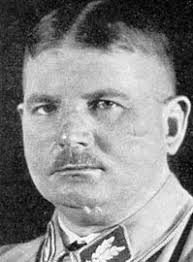
Ernst Rohm
Frightened by Rohm’s ambitions, the generals of the Reichswehr gave Hitler an ultimatum: Get rid of Rohm—or they would get rid of him.
Hitler didn’t hesitate. Backed by armed thugs, he stormed into Rohm’s apartment, catching him in bed with a young S.A. Storm Trooper.
Accusing his onetime friend of treasonously plotting to overthrow him, Hitler screamed: “You’re going to be shot!”
Rohm was not plotting a coup. But the generals had the whip hand—and, for Hitler, that was enough to literally sign Rohm’s death warrant.
Hours later, sitting in a prison cell, Rohm was offered a pistol with a single bullet.
“Adolf himself should do the dirty work,” said Rohm, adding: “All revolutions devour their own children.”
One hour later, Rohm died in a hail of SS bullets.
Earlier throughout that day, so had several hundred of his longtime S.A. cronies. Many of them yelled “Heil Hitler!” as they stood against barracks walls waiting to be shot.

SS troops on parade
Thirteen days later, addressing the Reichstag, Germany’s parliament, Hitler justified his purge in a nationally broadcast speech:
“If anyone reproaches me and asks why I did not resort to the regular courts of justice, then all I can say is this: In this hour I was responsible for the fate of the German people, and thereby I became the Supreme Judge of the German people!
“I gave the order to shoot the ringleaders in this treason, and I further gave the order to cauterize down to the raw flesh the ulcers of this poisoning of the wells in our domestic life.
“Let the nation know that its existence—which depends on its internal order and security—cannot be threatened with impunity by anyone! And let it be known for all time to come that if anyone raises his hand to strike the State, then certain death is his lot.”

Adolf Hitler addressing parliament
Ninety-one years after Adolf Hitler declared himself “the Supreme Judge of the German people,” the United States faces the same fate under re-elected President Donald J. Trump.
And his Number One victim may turn out to be Elon Musk, the man who played a pivotal role in sending him to the White House.
Musk, the leader of Space X Tesla and X (formerly Twitter), has donated tens of millions of dollars to pro-Trump super PACs, jumped around the stage behind Trump during campaign rallies, and turned X into a Right-wing cheering squad for Trump.
Trump has said he will make Musk the head of a new “government efficiency commission” aimed at eliminating inefficiency and waste within the federal bureaucracy.
But some—like former Trump lawyer Michael Cohen—have a warning for Musk: “Donald Trump is loyal to one person and one person only…himself.
“The moment Elon steps an inch out of Trump’s line, despite all he might have done for him, Donald will cut him off, disparage and denigrate him. Elon is no different than me or anyone else similarly situated. It’s just a matter of when.”
Cohen speaks from bitter personal experience.
A longtime executive of the Trump Organization, Cohen told ABC news in 2011: “If somebody does something Mr. Trump doesn’t like, I do everything in my power to resolve it to Mr. Trump’s benefit.”
In April 2018, the United States Attorney for the Southern District of New York began investigating Cohen. Charges reportedly included bank fraud, wire fraud and violations of campaign finance law.

Michael Cohen
By IowaPolitics.com (Trump executive Michael Cohen 012) [CC BY-SA 2.0 (https://creativecommons.org/licenses/by-sa/2.0)%5D, via Wikimedia Commons
On April 9, 2018, the FBI, executing a federal search warrant, raided Cohen’s office at the law firm of Squire Patton Boggs, as well as at his home and his hotel room in the Loews Regency Hotel in New York City.
Agents seized emails, tax and business records and recordings of phone conversations that Cohen had made.
Trump’s response: “Michael Cohen only handled a tiny, tiny fraction of my legal work.”
Thus Trump undermined the argument of Cohen’s lawyers that he was the President’s personal attorney—and therefore everything Cohen did was protected by attorney-client privilege.
2016 PRESIDENTIAL ELECTION, 2020 PRESIDENTIAL ELECTION, ABC NEWS, ABUSE OF POWER, ADOLF HITLER, ALTERNET, AMERICABLOG, AP, BABY BOOMER RESISTANCE, BORDER WALL, BUZZFEED, CBS NEWS, CIA, CNN, COVID-19, CROOKS AND LIARS, DAILY KOS, DEMOCRATS, DONALD TRUMP, E. JEAN CARROLL, EMOLUMENTS CLAUSE OF THE UNITED STATES CONSTITUTION, FBI, FEDERAL GOVERNMENT SHUTDOWN, FIVETHIRTYEIGHT, HARPER’S MAGAZINE, HEINRICH HIMMLER, J.D. VANCE, JAMES COMEY, JANUARY 6 COUP ATTEMPT, JEWS, KEVIN MCCARTHY, KIM JONG-UN, MEDIA MATTERS, MITCH MCCONNELL, MOTHER JONES, MOVEON, MSNBC, NATIONAL SECURITY AGENCY, NBC NEWS, NEWSWEEK, NPR, PBS NEWSHOUR, POLITICO, POLITICUSUSA, RAW STORY, REPUBLICAN NATIONAL CONVENTION, REPUBLICANS, REUTERS, SALON, SCHUTZSTAFFEL, SEATTLE TIMES, SLATE, SS, TALKING POINTS MEMO, THE ATLANTIC, THE CHICAGO SUN-TIMES, THE CHICAGO TRIBUNE, THE DAILY BEAST, THE DAILY BLOG, THE GUARDIAN, THE HILL, THE HOLOCAUST, THE HUFFINGTON POST, THE LOS ANGELES TIMES, THE NATION, THE NEW REPUBLIC, THE NEW YORK TIMES, THE VILLAGE VOICE, THE WASHINGTON POST, THINKPROGRESS, TIME, TRUTHDIG, TRUTHOUT, TWO POLITICAL JUNKIES, U.S. NEWS & WORLD REPORT, UPI, USA TODAY, VLADIMIR PUTIN, WHERMACHT, WONKETTE, XI JINPING
In Bureaucracy, History, Law, Law Enforcement, Politics, Social commentary on July 25, 2024 at 12:11 am
On October 4, 1943, SS-Reichsfuhrer Heinrich Himmler addressed SS officers stationed in Posen, Poland, about the ongoing campaign to exterminate the Jews of Europe.
He gave a similar speech two days later to an audience of Reichsleiters (national leaders) and Gauleiters (governors), as well as other government representatives.
Himmler intended to alert Reich officials of the extermination campaign the Schutzstaffel (“Protective Squads”)-–otherwise known as the SS—and Wehrmacht (German army) had been waging since June, 1941.
The purpose: To make his listeners accessories to his monumental crimes—and to warn them there was no turning back.

Heinrich Himmler
Either Nazi Germany won the war that its Fuhrer, Adolf Hitler, had unintentionally unleashed on September 1, 1939—or its topmost officials would themselves face extinction as war criminals.
Said Himmler:
“I want to also mention a very difficult subject before you, with complete candor. It should be discussed amongst us, yet nevertheless, we will never speak about it in public. I am talking about the evacuation of the Jews, the extermination of the Jewish people.
“It is one of those things that is easily said: ‘The Jewish people is being exterminated.’…Most of you will know what it means when 100 bodies lie together, when 500 are there or when there are 1000. And to have seen this through and—with the exception of human weakness—to have remained decent, has made us hard and is a page of glory never mentioned and never to be mentioned….
“But altogether we can say: We have carried out this most difficult task for the love of our people. And we have suffered no defect within us, in our soul, in our character.”
Fast forward 81 years—to July, 2024.
On July 15, 2024, the Republican National Convention met in Milwaukee, Wisconsin to nominate former President Donald Trump for President of the United States and Ohio Senator J.D. Vance for Vice President.
Most of the attendees of Himmler’s speech at Posen hadn’t known the full details of the systematic extermination of the Jews. But everyone at the Republican convention knew Trump’s history:
- Publicly siding with Russian dictator Vladimir Putin against American Intelligence agencies—such as the FBI, CIA and National Security Agency—which unanimously agreed that Russia had interfered with the 2016 Presidential election.
- Using his position as President to further enrich himself, in violation of the Emoluments Clause of the Constitution.
- Praising brutal Communist dictators Putin, Xi Jinping and Kim Jong-Un.
- Firing FBI Director James Comey for refusing to pledge his personal loyalty to Trump—and continuing to investigate Russian subversion of the 2016 election.
- Openly lusting for his daughter, Ivanka.
- Shutting down the Federal Government on December 22, 2018, because Democrats refused to fund his useless “border wall” between the United States and Mexico. About 380,000 government employees were furloughed and another 420,000 were forced to work without pay for 35 days.
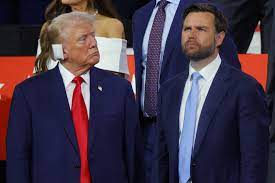
Donald Trump and J.D. Vance
- Allowing the deadly COVID-19 virus to ravage the country, killing 400,000 Americans by the time he left office.
- Attacking medical experts and governors who urged Americans to wear masks and socially distance to protect themselves against the deadly COVID-19 virus.
- Repeatedly lying—while still in office and afterward—that the 2020 election had been “stolen” from him by massive voter fraud.
- Illegally trying to pressure state legislatures and governors to stop the certification of the vote that had made Joe Biden the President-elect.
- Inciting his followers on January 6, 2021, to attack the Capitol Building where Senators and Representatives were counting the Electoral Votes won by himself and Joe Biden. His objective: Stop the count, which he knew would prove him the loser.

At the time of the January 6, 2021 coup attempt, even Republicans admitted Trump’s responsibility for it.
House Minority Leader Kevin McCarthy frantically phoned Trump, insisting that the rioters—who were breaking into his office through the windows—were the President’s supporters. He begged Trump to call them off.
“Well, Kevin, I guess these people are more upset about the election than you are,” Trump said.
But on January 28, “My Kevin” groveled before Trump at his Mar-a-Lago estate in Palm Beach, Florida, while they discussed how to win a House majority in the 2022 midterm elections
And Senate Majority Leader Mitch McConnell said on January 12: “The mob was fed lies. They were provoked by the president and other powerful people.”
But when the Senate met to try Trump for inciting an insurrection, McConnell voted to acquit him—and successfully urged his fellow Republicans to do the same.
At the 2024 Republican convention, House Speaker Mike Johnson declared: “We in the Republican Party are the law and order team.”
But he ignored Trump’s past conviction for raping advice columnist E. Jean Carroll and his 34 felony convictions for scheming to illegally influence the 2016 election by paying hush money to a porn “star” after the two had sex.
Heinrich Himmler diabolically entangled his fellow Nazis in his own crimes.
Attendees at the Republican convention cannot plead ignorance of Trump’s crimes. They are knowingly, enthusiastically championing a proven criminal for the highest office in the nation.
History has brutally condemned those Germans who, knowing the full extent of Adolf Hitler’s crimes, nevertheless signed on to perpetuate them.
History will render the same damning verdict against those Republicans who have provided similar support for Donald Trump.
ABC NEWS, ADOLF HITLER, ALBERT SPEER, ALTERNET, AMERICABLOG, AP, BABY BOOMER RESISTANCE, BBC, BLOOMBERG NEWS, BUZZFEED, CBS NEWS, CNN, COREY LEWANDOWSKI, CROOKS AND LIARS, DAILY KOZ, DAVID IRVING, DONALD TRUMP, DRUDGE REPORT, FAITH & FREEDOM COALITION, FIVETHIRTYEIGHT, FRANK BRANDENBURG, HANS BAUR, HARPER’S MAGAZINE, HEINRICH HIMMLER, HITLER’S WAR (BOOK), HOLOCAUST (TV SERIES), HUFFINGTON POST, INSIDE THE THIRD REICH (BOOK), JERRY FALWELL JR., KARL WOLFF, KAY IVEY, LIBERTY UNIVERSITY, LINA HEYDRICH, MEDIA MATTERS, MOTHER JONES, MOVEON, MSNBC, NBC NEWS, NEW REPUBLIC, NEWSDAY, NEWSWEEK, NPR, OTTO REMER, PBS NEWSHOUR, POLITICO, POLITICUSUSA, QUEST: SEARCHING FOR GERMANY'S NAZI PAST (BOOK), RALPH REED, RAW STORY, REINHARD HEYDRICH, REPUBLICAN PARTY, REUTERS, ROY MOORE, RUDOLF HESS, SALON, SEATTLE TIMES, SLATE, SOVIET UNION, TALKING POINTS MEMO, THE ATLANTIC, THE CHICAGO SUN-TIMES, THE CHICAGO TRIBUNE, THE DAILY BEAST, THE DAILY BLOG, THE GUARDIAN, THE HILL, THE HUFFINGTON POST, THE LOS ANGELES TIMES, THE NATION, THE NEW REPUBLIC, THE NEW YORK TIMES, THE NEW YORKER, THE VILLAGE VOICE, THE WASHINGTON POST, THINKPROGRESS, TIME, TRUTHDIG, TRUTHOUT, TWO POLITICAL JUNKIES, U.S. NEWS & WORLD REPORT, UPI, USA TODAY, WEST GERMANY, WONKETTE, X
In Bureaucracy, History, Military, Politics, Social commentary on June 10, 2024 at 12:18 am
Frank Brandenburg had just turned 16 in 1979 when he saw the NBC mini-series Holocaust, depicting the Third Reich’s extermination of six million Jewish men, women and children.
He was stunned. Had such atrocities really taken place?
His parents, friends and teachers refused to talk about Adolf Hitler and his Nazi party that had tyrannically ruled Germany for 12 years.
“No one wants to talk today about that! Let the past sleep,” he was repeatedly told.
Frank Brandenburg had a deeply personal reason for pursuing the truth. He was a citizen of West Germany, growing up in a country that was still divided in two for having lost World War II—a war Hitler had started.
He started reading such books about the Holocaust as:
- Inside the Third Reich, by former Reichminister for Armaments Albert Speer, stated that it had happened.
- David Irving’s Hitler’s War, on the other hand, seemed inconclusive on the subject.
- The Auschwitz Lie, by Thies Chrostophersen, flatly asserted that the victorious Allies had concocted this slander to blacken the good name of Germany.
So Brandenburg did something no other teenager had dared attempt: He set out to meet and interview as many former members of the Third Reich as possible.
Among those he interviewed:
- Lina Heydrich, the widow of Reinhard Heydrich, the #2 man in the Schutzstaffel, or SS.
- Otto Remer, who put down the July 20, 1944 generals’ plot against Hitler.
- SS General Karl Wolff, a close confidant of SS Reichsfuhrer Heinrich Himmler.
- The widow and sons of Deputy Fuhrer Rudolf Hess.
- Hans Baur, Hitler’s personal pilot.
These interviews ultimately became a 1990 book: Quest: Searching for Nazi Germany’s Past, co-authored by Brandenburg and Ib Melchior. It is a book that can never be duplicated, because those interviewed by Brandenburg are now dead.
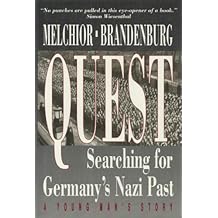
Of his encounters with so many former Nazis, Brandenburg reflected:
“Today I know that in some cases…I was confronted with defensive statements, evasion, self-exoneration and prejudiced portrayals of the facts.
“But when I began my project, at the age of 16, I—naively—had no conception that this might be the case. Not one of the people I talked to expressed any kind of guilt or remorse. Not one of them had regrets or concern for their victims.
“Yet, it is easier for me to understand that. Who, in his old age, wants to admit having committed such misdeeds? To admit that everything one had believed in, worked for and lived for, had been corrupt?”
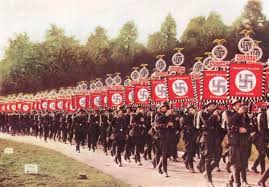
Nazi SS soldiers marching
Which helps explain the reaction historians will receive when, in the future, they interview supporters of Donald Trump.
The Original Nazis were guided by Hitler’s belief that the world was polluted by corruption and ugliness—and their mission was to remove that ugliness and corruption.
This meant removing those peoples they deemed inferior—Jews, Slavs (Poles, Serbs, Russians), Communists, liberals, gypsies, the physically and mentally handicapped.
Today’s Republicans believe themselves to be the only legitimate political party. And so do their supporters.
No sin—or even crime—is intolerable if it’s committed by a Republican.
On October 7, 2916, The Washington Post leaked a video of Republican Presidential nominee Donald Trump making sexually predatory comments about women:
“You know I’m automatically attracted to beautiful—I just start kissing them. It’s like a magnet. Just kiss. I don’t even wait. And when you’re a star they let you do it. You can do anything.

Donald Trump
Right-wingers rushed to excuse Trump’s misogynist comments as mere “frat boy” talk.
- Corey Lewandowski, a former Trump campaign manager and now CNN commentator: “We are electing a leader to the free world. We’re not electing a Sunday school teacher.”
- Jerry Falwell, Jr., president of Liberty University: “When they ask [if Trump’s personal life is relevant] I always talk about the story of the woman at the well who had had five husbands and she was living with somebody she wasn’t married to, and they wanted to stone her. And Jesus said he’s–he who is without sin cast the first stone. I just see how Donald Trump treats other people, and I’m impressed by that.”
- Ralph Reed, founder and chairman of the Faith & Freedom Coalition: “People of faith are voting on issues like who will protect unborn life, defend religious freedom, grow the economy, appoint conservative judges and oppose the Iran nuclear deal.”
In 2017, Roy Moore, the twice-ousted former chief justice of the Alabama Supreme Court, ran for the state’s U.S. Senator.
Four women, in a Washington Post story, accused Moore of seeking romantic relationships with teenage girls while he was in his 30s, and even trolling malls for such dates.
Kay Ivey, the state’s Governor, offered the real reason why Republicans supported Moore:
“I believe in the Republican party, what we stand for, and, most important, we need to have a Republican in the United States Senate to vote on things like the Supreme Court justices, other appointments the Senate has to confirm and make major decisions. So that’s what I plan to do, vote for Republican nominee Roy Moore.”
In short: The Republican party—like the Nazi party—intends to attain absolute power over the lives of American citizens.
Compared to that, electing even accused sexual predators shrinks to insignificance.
&docid=yt8OxrbTDh591M&tbnid=ik44Wblm3ZvX6M%3A&vet=1&w=325&h=475&bih=469&biw=819&ved=0ahUKEwjC-_Ka0enRAhVJKGMKHV61ApUQMwghKAAwAA&iact=c&ictx=1)


 Bureaucracybuster's Blog
ABC NEWS, ADMIRAL IVAN ISAKOV, ADOLF HITLER, ALBERT SPEER, ALTERNET, AMERICABLOG, ANDREW MCCABE, AP, BABY BOOMER RESISTANCE, BBC, BC NEWS, BLOOMBERG, BLUESKY, BOB WOODWARD, BUZZFEED, CBS NEWS, CHEKA, CIA, CNN, COUNTER-SURVEILLANCE, CROOKS AND LIARS, DAILY KOS, DAILY KOZ, DEMOCRATIC PARTY, DONALD TRUMP, FBI, FIVETHIRTYEIGHT, FSB, GENRIKH YAGODA, HARPER’S MAGAZINE, HEINRICH HIMMLER, HERMANN GOERING, HOUSE OF REPRESENTATIVES, HUFFINGTON POST, JAMES COMEY, JEFF SESSIONS, JOSEPH STALIN, KGB, KRISJEN NIELSEN, LAVRENTY BERIA, MEDIA MATTERS, MOTHER JONES, MOVEON, MSNBC, NBC NEWS, NEW REPUBLIC, NEWSDAY, NEWSWEEK, NICCOLO MACHIAVELLI, NIKOLAI YEZHOV, NKVD, NPR, PBS NEWSHOUR, POLITICO, POLITICUSUSA, RACHEL BRAND, RANDOLPF “TEX” ALLES, RAW STORY, REPUBLICAN PARTY, REUTERS, SALLY YATES, SALON, SEATTLE TIMES, SLATE, SOVIET UNION, SS, STORMY DANIELS, SURVEILLANCE, TALKING POINTS MEMO, THE APPRENTICE, THE ATLANTIC, THE CHICAGO SUN-TIMES, THE CHICAGO TRIBUNE, THE DAILY BEAST, THE DAILY BLOG, THE GUARDIAN, THE HILL, THE HUFFINGTON POST, THE INTERCEPT, THE LOS ANGELES TIMES, THE NATION, THE NEW REPUBLIC, THE NEW YORK TIMES, THE NEW YORKER, THE PRINCE, THE VILLAGE VOICE, THE WASHINGTON POST, THINKPROGRESS, TIME, TRUTHDIG, TRUTHOUT, TWITTER, TWO POLITICAL JUNKIES, U.S. NEWS & WORLD REPORT, UPI, USA TODAY, X
PRESIDENTS RULE BY CONSENT, DICTATORS RULE BY FEAR: PART ONE (OF TWO)
In Bureaucracy, History, Law, Law Enforcement, Military, Politics, Social commentary on June 12, 2025 at 12:20 amDonald Trump has often been compared to Adolf Hitler. But his reign bears far more resemblance to that of Joseph Stalin.
Germany’s Fuhrer, for all his brutality, maintained a relatively stable government by keeping the same men in office—from the day he took power on January 30, 1933, to the day he blew out his brains on April 30, 1945.
Adolf Hitler
Bundesarchiv, Bild 146-1990-048-29A / CC-BY-SA 3.0 [CC BY-SA 3.0 de (https://creativecommons.org/licenses/by-sa/3.0/de/deed.en)%5D
Heinrich Himmler, a former chicken farmer, remained head of the dreaded, black-uniformed Schutzstaffel, or Protection Squads, known as the SS, from 1929 until his suicide in 1945.
In April, 1934, Himmler was appointed assistant chief of the Gestapo (Secret State Police) in Prussia, and from that position he extended his control over the police forces of the whole Reich.
Hermann Goering, an ace fighter pilot in World War 1, served as Reich commissioner for aviation and head of the newly developed Luftwaffe, the German air force, from 1935 to 1945.
And Albert Speer, Hitler’s favorite architect, held that position from 1933 until 1942, when Hitler appointed him Reich Minister of Armaments and War Production. He held that position until the Third Reich collapsed in April, 1945.
Soviet Premier Joseph Stalin, by contrast, purged his ministers constantly. For example: From 1934 to 1953, Stalin had no fewer than three chiefs of his secret police, then named the NKVD:
Stalin purged Yagoda and Yezhov, with both men executed after their arrest.
Joseph Stalin
He reportedly wanted to purge Beria, too, but the latter may have acted first. There has been speculation that Beria slipped warfarin, a blood-thinner often used to kill rats, into Stalin’s drink, causing him to die of a cerebral hemorrhage.
Stalin’s record for slaughter far eclipses that of Hitler.
For almost 30 years, through purges and starvation caused by enforced collections of farmers’ crops, Stalin slaughtered 20 to 60 million people.
The 1930s were a frightening and dangerous time to be alive in the Soviet Union. In 1934, Stalin, seeing imaginary enemies everywhere, ordered a series of purges that lasted right up to the German invasion in 1941.
An example of Stalin’s paranoia occurred one day while the dictator walked through the Kremlin corridors with Admiral Ivan Isakov. Officers of the NKVD (the predecessor to the KGB) stood guard at every corner.
“Every time I walk down the corridors,” said Stalin, “I think: Which one of them is it? If it’s this one, he will shoot me in the back. But if I turn the corner, the next one can shoot me in the face.”
Another Russian-installed tyrant who has sought to rule by fear: President Donald J. Trump.
In fact, he admitted as much to journalist Bob Woodward during the 2016 Presidential race: “Real power is—I don’t even want to use the word—fear.”
Donald Trump
As a Presidential candidate, Trump repeatedly used Twitter to attack hundreds of real and imagined enemies in politics, journalism, TV and films.
As President, he continued to insult virtually everyone, verbally and on Twitter. His targets included Democrats, Republicans, the media, foreign leaders and even members of his Cabinet.
In Russian, the word for “purge” is “chistka,” for “cleansing.” Among the victims of Trump’s recurring chistkas:
In his infamous political treatise, The Prince, Niccolo Machiavelli, the Florentine statesman, asked: “Is it is better to be loved or feared?”
And he answered it thus:
“The reply is, that one ought to be both feared and loved, but as it is difficult for the two to go together, it is much safer to be feared than loved.
“For it may be said of men in general that they are ungrateful, voluble, dissemblers, anxious to avoid danger and covetous of gain; as long as you benefit them, they are entirely yours….
“And the prince who has relied solely on their words, without making other preparations, is ruined….
“And men have less scruple in offending one who makes himself loved than one who makes himself feared; for love is held by a chain of obligations which, men being selfish, is broken whenever it serves their purpose; but fear is maintained by a dread of punishment which never fails.”
But Machiavelli warned about relying primarily on fear: “Still, a prince should make himself feared in such a way that if he does not gain love, he at any rate avoids hatred, for fear and the absence of hatred may well go together.”
**********
Donald Trump has violated that counsel throughout his life. He not only makes enemies, he revels in doing so—and in the fury he has aroused.
Filled with a poisonous hatred that encompasses almost everyone, Trump, as Presidential candidate and President, repeatedly played to the hatreds of his Right-wing base.
As first-mate Starbuck said of Captain Ahab in Herman Melville’s classic novel, Moby Dick: “He is a champion of darkness.”
Share this: