Posts Tagged ‘HARPER’S MAGAZINE’
ABC NEWS, ADOLF HITLER, ALTERNET, AMERICABLOG, ANDREW CUOMO, AP, ARMY CORPS OF ENGINEERS, BABY BOOMER RESISTANCE, BARACK OBAMA, BLOOMBERG, BRENDA FITZGERALD, BUZZFEED, CBS NEWS, CENTERS FOR DISEASE CONTROL AND PREVEITON (CDC), CENTERS FOR DISEASE CONTROL AND PREVENTION (CDC), CHINA, CNN, CORONAVIRUS, COVID-19, CROOKS AND LIARS, DAILY KOZ, DEPARTMENT OF HEALTH AND HUMAN SERVICES, DEPARTMENT OF HOMELAND SECURITY (DHS), DOCTORS, DONALD TRUMP, DRUDGE RETORT, EBOLA, FACEBOOK, FEDERAL EMERGENCY MANAGEMENT AGENCY (FEMA), FIVETHIRTYEIGHT, FORBES MAGAZINE, FOX BUSINESS NETWORK, FOX NEWS, FOX NEWS NETWORK, FRANKLIN D. ROOSEVELT, GEORGE W. BUSH, GRETCHEN WHITMER, GROVER NORQUIST, HARPER’S MAGAZINE, IMPEACHMENT, JAY INSLEE, JOE BIDEN, JOHN BOLTON, LARRY HOGAN, LOUIS X1V, MALARIA, MASKS, MEDIA MATTERS, MICK MULVANEY, MIKE PENCE, MOTHER JONES, MOVEON, MSNBC, N95 RESPIRATORS, NATIONAL SECURITY COUNSIL (NSC), NBC NEWS, NEWSWEEK, NPR, NURSES, PBS NEWSHOUR, PERSONAL PROTECTIVE EQUIPMENT (PPES), POLICE, POLITICO, POLITICUSUSA, RAW STORY, REPUBLICANS, REUTERS, ROBERT RAY REDFIELD, ROLLING STONE MAGAZINE, RUDY GIULIANI, SALON, SEAN HANNITY SHOW, SEATTLE TIMES, SLATE, SPANISH INFLUENZA, STOCK MARKET, TALKING POINTS MEMO, THE ATLANTIC, THE CHICAGO SUN-TIMES, THE CHICAGO TRIBUNE, THE DAILY BEAST, THE DAILY BLOG, THE GUARDIAN, THE HILL, THE HUFFINGTON POST, THE LOS ANGELES TIMES, THE NATION, THE NATIONAL SECURITY COUNCIL, THE NEW REPUBLIC, THE NEW YORK TIMES, THE VILLAGE VOICE, THE WASHINGTON POST, THE WHITE HOUSE PANDEMIC OFFICE, THINKPROGRESS, THIRD REICH, TIM ZIEMER, TIME, TOLUSE OLORUNNIPA, TOM BOSSERT, TOM FRIEDMAN, TRISH REGAN, TRISH REGAN PRIMETIME, TRUTHDIG, TRUTHOUT, TWITTER, TWO POLITICAL JUNKIES, U.S. NEWS & WORLD REPORT, UNITED STATES, UPI, USA TODAY, VENDORS, VENTILATORS, WASHINGTON MONTHLY MAGAZINE, WHITE HOUSE PANDEMIC OFFICE, WONKETTE
In Bureaucracy, History, Medical, Politics, Social commentary on May 18, 2020 at 12:24 am
On March 9, Trish Regan, host of Trish Regan Primetime on the Fox Business Network, attacked not the virus but those who do not share her fervent embrace of Donald Trump.
“This is yet another attempt to impeach the President. And sadly, it seems the left cares little for any of the destruction they leave in their wake, including losses in the stock market. This, unfortunately, is all just part of the political casualties for them.”
To make certain no one in the television audience missed the point, an electronically generated caption read: “Coronavirus Impeachment Scam.”
Actually, with the virus spreading quickly throughout at least 33 states, the risk was not low to the average American. It was not the news that was fake, but the lies and ignorance Trump and Fox were spewing.
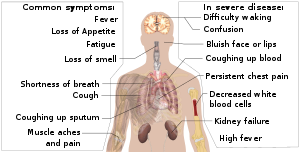 Symptoms of COVID-19
Then—for the Fox Network—the unexpected happened: On March 14, Fox Business Network announced that Regan’s program would be on “hiatus” until further notice.
The reason: Using one of the favorite words of the Right, her comments had “triggered” an avalanche of criticism. Some of this came from Coronavirus victims. Some came from those related to those victims. And some came simply from people who didn’t appreciate being so blatantly lied to.
On March 13, perhaps warned of her coming suspension, Regan took a more conciliatory tone: “Our path forward right now is together, the left and the right united to fight this crisis. We’re all in this together, and we need to stay safe.”
Trying to put the best spin on her humiliating suspension, she tweeted that same evening: “I want to let everyone know that Trish Regan Primetime is now on hiatus. FBN [Fox Business Network] has taken prudent steps to limit staffing levels and is prioritizing its coverage during market hours. I fully support this decision — we all must to do our part to keep our colleagues safe.”
Thus—at least according to Regan—her leaving the air was not an act of punishment but a “prudent step” to “limit staffing levels” at the station.
During the vital months of January and February, Republicans refused to challenge Trump’s refusal to take the virus seriously—before it gained a foothold in the United States.
The reason: They had utterly tied themselves to him since the 2018 mid-term elections, where many moderate Republicans lost their seats.
According to Toluse Olorunnipa, White House reporter for The Washington Post: “They have realized that if they’re going to keep their seats, if they’re going to be able to have any future in the party, they have to be completely tied to President Trump and really wait for his call in terms of what exactly they’re going to do.”
So much for the lies. Now for the chaos.
Like Adolf Hitler, Trump likes to pit individuals and organizations against each other. Hitler, for example, would assign several agencies to tackle the same problem: “That way, the stronger one gets the job done,” he told his architect, Albert Speer.
Adolf Hitler
This creates needless duplication of efforts and wasted resources. But it ensures that Trump—like Hitler—remains the final voice of authority, since so many others are competing for his favor and direction.
This has not, however, worked out well for the 50 states that make up the United States of America.
During the Great Depression, President Franklin D. Roosevelt intervened powerfully to ensure that all Americans received the help they needed.
Trump has made it clear that each state is responsible for securing its needed supply of Personal Protective Equipment (PPEs) for its doctors and nurses aiding Coronavirus patients. This has resulted in a dog-eat-dog atmosphere of cutthroat competition and scarcity, with Americans not only fighting the virus but each other.
Donald Trump
Even worse: Trump and Republicans are using a deadly plague as a weapon against those Americans they hate.
On March 26, during an interview on Fox News, Trump blamed the failures of his administration’s response to Coronavirus on Democratic state governors like Andrew Cuomo (NY), Jay Inslee (WA), and Gretchen Whitmer (MI).
On March 27, during his press briefing, Trump said he told Vice President Mike Pence—who’s officially in charge of the White House’s response effort—to not call Inslee and Whitmer because they weren’t “appreciative” enough of his efforts.
Trump said this even as hospitals in each of their states were being overwhelmed with Coronavirus patients:
“I tell him—I mean I’m a different type of person—I say, ‘Mike, don’t call the governor in Washington, you’re wasting your time with him. Don’t call the woman in Michigan. If they don’t treat you right, I don’t call.”
Trump said that when people criticized him, they were criticizing the federal government: “When they’re not appreciative to me, they’re not appreciative to the Army Corps [of Engineers], they’re not appreciative to FEMA [Federal Emergency Management Agency]. It’s not right.”
Trump also attacked Whitmer on Right-wing Fox News’ “Sean Hannity Show”: “I don’t know if she knows what’s going on, but all she does is sit there and blame the Federal Government.”
ABC NEWS, ADOLF HITLER, ALTERNET, AMERICABLOG, ANDREW CUOMO, AP, ARMY CORPS OF ENGINEERS, BABY BOOMER RESISTANCE, BARACK OBAMA, BLOOMBERG, BRENDA FITZGERALD, BUZZFEED, CBS NEWS, CENTERS FOR DISEASE CONTROL AND PREVEITON (CDC), CENTERS FOR DISEASE CONTROL AND PREVENTION (CDC), CHINA, CNN, CORONAVIRUS, COVID-19, CROOKS AND LIARS, DAILY KOZ, DEPARTMENT OF HEALTH AND HUMAN SERVICES, DEPARTMENT OF HOMELAND SECURITY (DHS), DOCTORS, DONALD TRUMP, DRUDGE RETORT, EBOLA, FACEBOOK, FEDERAL EMERGENCY MANAGEMENT AGENCY (FEMA), FIVETHIRTYEIGHT, FORBES MAGAZINE, FOX BUSINESS NETWORK, FOX NEWS, FOX NEWS NETWORK, FRANKLIN D. ROOSEVELT, GEORGE W. BUSH, GRETCHEN WHITMER, GROVER NORQUIST, HARPER’S MAGAZINE, IMPEACHMENT, JAY INSLEE, JOE BIDEN, JOHN BOLTON, LARRY HOGAN, LOUIS X1V, MALARIA, MASKS, MEDIA MATTERS, MICK MULVANEY, MIKE PENCE, MOTHER JONES, MOVEON, MSNBC, N95 RESPIRATORS, NATIONAL SECURITY COUNSIL (NSC), NBC NEWS, NEWSWEEK, NPR, NURSES, PBS NEWSHOUR, PERSONAL PROTECTIVE EQUIPMENT (PPES), POLICE, POLITICO, POLITICUSUSA, RAW STORY, REPUBLICANS, REUTERS, ROBERT RAY REDFIELD, ROLLING STONE MAGAZINE, RUDY GIULIANI, SALON, SEAN HANNITY SHOW, SEATTLE TIMES, SLATE, SPANISH INFLUENZA, STOCK MARKET, TALKING POINTS MEMO, THE ATLANTIC, THE CHICAGO SUN-TIMES, THE CHICAGO TRIBUNE, THE DAILY BEAST, THE DAILY BLOG, THE GUARDIAN, THE HILL, THE HUFFINGTON POST, THE LOS ANGELES TIMES, THE NATION, THE NATIONAL SECURITY COUNCIL, THE NEW REPUBLIC, THE NEW YORK TIMES, THE VILLAGE VOICE, THE WASHINGTON POST, THE WHITE HOUSE PANDEMIC OFFICE, THINKPROGRESS, THIRD REICH, TIM ZIEMER, TIME, TOLUSE OLORUNNIPA, TOM BOSSERT, TOM FRIEDMAN, TRISH REGAN, TRISH REGAN PRIMETIME, TRUTHDIG, TRUTHOUT, TWITTER, TWO POLITICAL JUNKIES, U.S. NEWS & WORLD REPORT, UNITED STATES, UPI, USA TODAY, VENDORS, VENTILATORS, WASHINGTON MONTHLY MAGAZINE, WHITE HOUSE PANDEMIC OFFICE, WONKETTE
In Bureaucracy, History, Medical, Politics, Social commentary on May 15, 2020 at 12:07 am
“O happy posterity, who will look upon our testimony as a fable. Will posterity believe that there was a time when, with no deluge from heaven, no worldwide conflagration, no wars….but almost the whole earth was depopulated? Was such a disaster ever seen, even heard of?”
—Francesco Petrach, poet and witness to The Black Death
On January 19, the first Coronavirus case appeared in the United States.
On January 27, then-acting chief of staff Mick Mulvaney tried to get President Donald Trump to act. But officials told the Washington Post that Trump dismissed early briefings “because he did not believe that the virus had spread widely throughout the United States.”
Compounding that outrage: From January to early March, 2020, Trump and his allies within the Republican party and Fox News Network repeatedly assured Americans they had nothing to fear.
Donald Trump
Barnstorming the country in a series of hate-filled political rallies, Trump told his supporters:
- January 22: “We have it totally under control. It’s one person coming in from China.”
- February 2: “We pretty much shut it down coming in from China. It’s going to be fine.”
- February 24: “The Coronavirus is very much under control in the USA.”
- February 25: “CDC & my administration are doing a GREAT job of handling Coronavirus.”
- February 25: “I think that’s a problem that’s going to go away. They have studied it. They know very much. In fact, we’re very close to a vaccine.”
- February 26: “The 15 cases within a couple of days is going to be down to close to zero.”
- February 26: “We’re going very substantially down, not up.”
- February 27: “One day it’s like a miracle, it will disappear.”
- February 28: “We’re ordering a lot of supplies. We’re ordering a lot of, uh, elements that frankly we wouldn’t be ordering unless it was something like this. But we’re ordering a lot of different elements of medical.”
- February 28: “Now the Democrats are politicizing the Coronavirus….We did one of the great jobs….One of my people came up to me and said, ‘Mr. President, they tried to beat you on Russia, Russia, Russia’….They couldn’t do it. They tried the impeachment hoax….It’s all turning, they lost….And this is their new hoax.”
- March 4: “If we have thousands of people that get better just by, you know, sitting around and even going to work—some of them go to work, but they get better.”
- March 6: “I think we’re doing a really good job in this country of keeping it down. A tremendous job of keeping it down.”
- March 6: “Anybody right now, and yesterday, anybody that needs a test gets a test. And the tests are beautiful.”
- March 6: “I like this stuff. I really get it. People are surprised that I understand it. Every one of these doctors said, ‘How do you know so much about this?’ Maybe I have a natural ability. Maybe I should have done that instead of running for President.”
- March 8: “We have a perfectly coordinated and fine tuned plan at the White House for our attack on Coronavirus.”
- March 9: “The Fake News Media and their new partner, the Democratic Party, is doing everything within its semi-considerable power to inflame the Coronavirus situation.”
- March 10: “It will go away. Just stay calm. It will go away.”
Acting as Trump’s propaganda arm has been Fox News Network.

As late as March 9, Trish Regan, host of Trish Regan Primetime on the Fox Business Network, attacked not the virus but those who do not share her fervent embrace of Donald Trump.
“We’ve reached a tipping point,” said Regan. “The hate is boiling. Many in the liberal media are using Coronavirus in an attempt to demonize and destroy the President, despite the virus originating halfway around the world.
“This is yet another attempt to impeach the President. And sadly, it seems the left cares little for any of the destruction they leave in their wake, including losses in the stock market. This, unfortunately, is all just part of the political casualties for them.
“This is impeachment all over again. And like with the Mueller investigation, like with Ukraine-gate, they don’t care who they hurt. Whether it be their need to create mass hysteria to encourage a market sell-off unlike anything we’ve seen recently, or whether it be to create mass hysteria to stop our economy dead in its tracks, don’t kid yourself. They told us how much they crave a recession as a way to get rid of Donald Trump.”

Trish Regan
TrishRegan, CC BY-SA 4.0 <https://creativecommons.org/licenses/by-sa/4.0>, via Wikimedia Commons
To make certain no one in the television audience missed the point, an electronically generated caption read: “Coronavirus Impeachment Scam.”
On the same day that Regan accused Trump’s critics of being haters, Trump himself was directing hate through his weapon of choice: Twitter:
“The Fake News Media and their partner, the Democrat Party, is doing everything within its semi-considerable power (it used to be greater!) to inflame the CoronaVirus situation, far beyond what the facts would warrant. Surgeon General, The risk is low to the average American.”
Actually, with the virus spreading quickly throughout at least 33 states, the risk was not low to the average American. It was not the news that was fake—but the lies and ignorance that Trump and Fox were spewing.
ABC NEWS, ADOLF HITLER, ALTERNET, AMERICABLOG, ANDREW CUOMO, AP, ARMY CORPS OF ENGINEERS, BABY BOOMER RESISTANCE, BARACK OBAMA, BLOOMBERG, BRENDA FITZGERALD, BUZZFEED, CBS NEWS, CENTERS FOR DISEASE CONTROL AND PREVEITON (CDC), CENTERS FOR DISEASE CONTROL AND PREVENTION (CDC), CHINA, CNN, CORONAVIRUS, COVID-19, CROOKS AND LIARS, DAILY KOZ, DEPARTMENT OF HEALTH AND HUMAN SERVICES, DEPARTMENT OF HOMELAND SECURITY (DHS), DOCTORS, DONALD TRUMP, DRUDGE RETORT, EBOLA, FACEBOOK, FEDERAL EMERGENCY MANAGEMENT AGENCY (FEMA), FIVETHIRTYEIGHT, FORBES MAGAZINE, FOX BUSINESS NETWORK, FOX NEWS, FOX NEWS NETWORK, FRANKLIN D. ROOSEVELT, GEORGE W. BUSH, GRETCHEN WHITMER, GROVER NORQUIST, HARPER’S MAGAZINE, IMPEACHMENT, JAY INSLEE, JOE BIDEN, JOHN BOLTON, LARRY HOGAN, LOUIS X1V, MALARIA, MASKS, MEDIA MATTERS, MICK MULVANEY, MIKE PENCE, MOTHER JONES, MOVEON, MSNBC, N95 RESPIRATORS, NATIONAL SECURITY COUNSIL (NSC), NBC NEWS, NEWSWEEK, NPR, NURSES, PBS NEWSHOUR, PERSONAL PROTECTIVE EQUIPMENT (PPES), POLICE, POLITICO, POLITICUSUSA, RAW STORY, REPUBLICANS, REUTERS, ROBERT RAY REDFIELD, ROLLING STONE MAGAZINE, RUDY GIULIANI, SALON, SEAN HANNITY SHOW, SEATTLE TIMES, SLATE, SPANISH INFLUENZA, STOCK MARKET, TALKING POINTS MEMO, THE ATLANTIC, THE CHICAGO SUN-TIMES, THE CHICAGO TRIBUNE, THE DAILY BEAST, THE DAILY BLOG, THE GUARDIAN, THE HILL, THE HUFFINGTON POST, THE LOS ANGELES TIMES, THE NATION, THE NATIONAL SECURITY COUNCIL, THE NEW REPUBLIC, THE NEW YORK TIMES, THE VILLAGE VOICE, THE WASHINGTON POST, THE WHITE HOUSE PANDEMIC OFFICE, THINKPROGRESS, THIRD REICH, TIM ZIEMER, TIME, TOLUSE OLORUNNIPA, TOM BOSSERT, TOM FRIEDMAN, TRISH REGAN, TRISH REGAN PRIMETIME, TRUTHDIG, TRUTHOUT, TWITTER, TWO POLITICAL JUNKIES, U.S. NEWS & WORLD REPORT, UNITED STATES, UPI, USA TODAY, VENDORS, VENTILATORS, WASHINGTON MONTHLY MAGAZINE, WHITE HOUSE PANDEMIC OFFICE, WONKETTE
In Bureaucracy, History, Medical, Politics, Social commentary on May 14, 2020 at 12:12 am
COVID-19 has so far infected 1.42 million Americans and killed 84,763 others.
And President Donald Trump’s “strategy” for fighting it has boiled down to three tactics: Lies, chaos and thefts.
Upon taking office in 2017, Trump gutted the permanent epidemic monitoring and command groups set up inside the White House: The National Security Council (NSC) and the Department of Homeland Security (DHS).
In 2014, following the Ebola outbreak in West Africa, President Barack Obama had created the White House Pandemic Office, run by the White House’s National Security Council (NSC).
Heading it was Rear Admiral Tim Ziemer. Under President George W. Bush, he had successfully fought malaria overseas. His topflight team of infectious disease and public health experts was creating a national bio-defense strategy. Their goal: Coordinate agencies to make the United States more resilient to the threat of epidemics and biological warfare.
Rear Admiral Timothy Ziemer, who headed the unit, was reassigned.
Neither the NSC nor the DHS epidemic team has been replaced.
The global health section of the CDC was decimated, and had to reduce the number of countries it was monitoring from 49 to 10.
So why did Trump gut these organizations?
Pathologically jealous of President Barack Obama, Trump—a lifelong racist—has tried to destroy every vestige of Obama’s legacy as the first black President of the United States.

Barack Obama
Worsening the situation even more: In 2017—the year Trump assumed office—nearly 700 positions remained vacant at the Centers for Disease Control and Prevention (CDC) because Trump imposed a hiring freeze. This affected programs supporting local and state public health emergency readiness, infectious disease control and chronic disease prevention.
Making the situation worse: The CDC’s director, Tom Friedman, stepped down in January, 2017, and it wasn’t until July that the agency got another one: Brenda Fitzgerald. But she served only until January, 2018. She was succeeded—two months later—by Robert Ray Redfield, Jr. He has been the director since then.
The post of director of the CDC is considered one of the most crucial public health positions in the government. The CDC is charged with tracking and preventing infectious disease outbreaks in the United States and worldwide.

CDC headquarters in Atlanta, Georgia
Nor was that all. In the spring of 2018, Trump pushed Congress to cut $15 billion from national health spending—and cutting the global disease-fighting budgets of the Centers for Disease Control, National Security Council, Department of Homeland Security and the Department of Health and Human Services.
In April, 2018, then-National Security Adviser John Bolton forced Tom Bossert, director of the infectious disease unit at DHS, to resign—along with his entire team.
It’s popular to assume that Trump did all of this out of mere ignorance—and there’s plenty of proof of his ignorance in many areas (such as attributing windmills to causing cancer). But far more is at work here.
The vast majority of those who voted for Trump believe that the Federal Government is evil and its agencies that regulate business should be eliminated.
An example of this constituency is Grover Norquist, founder and president of Americans for Tax Reform, which opposes all tax increases and has forced most Republicans to publicly pledge they will as well, under any circumstances.
His most famous quote: “I’m not in favor of abolishing the government. I just want to shrink it down to the size where we can drown it in the bathtub.”
Under Trump, the epidemic-fighting arm of the Federal Government has become so shrunk that America itself may be the one to drown—in an epidemic of Coronavirus.
The virus first appeared in Wuhan, China, in December, 2019. Its first reported victim became ill on December 1.
By December 31, the outbreak was traced to a novel strain of Coronavirus.
Coronaviruses are a group of viruses that affect birds and mammals. In humans, Coronaviruses can cause pneumonia and may cause bronchitis.
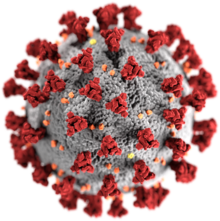
Coronavirus
On February 29, the first American died of Coronavirus.
According to the March 21 edition of Rolling Stone magazine: “The United States intelligence community has been warning the president since January and February about the dire consequences that would occur when coronavirus reached America, but the president seemed determined to play down the threat, leaving the country largely unaware and unprepared.”
An anonymous Intelligence official cited by the Washington Post said: “Donald Trump may not have been expecting this, but a lot of other people in the government were—they just couldn’t get him to do anything about it. The system was blinking red.”
Trump first learned of the virus on January 3, 2020. This did not prevent him from playing golf on January 4, 5, 18 and 19.
On January 19, the first Coronavirus case appeared in the United States.
On January 27, then-acting chief of staff Mick Mulvaney tried to get the President to act. But, according to officials who spoke with the Washington Post, Trump was “dismissive” of early briefings “because he did not believe that the virus had spread widely throughout the United States.”
Trump fired Mulvaney one month later.
Then, for Trump, it was back to the golf course—on February 1, 2 and 15.
9/11 TERRORIST ATTACKS, ABC NEWS, ADOLF HITLER, ALTERNET, AMERICABLOG, ANTIBOTICS, AP, BABY BOOMER RESISTANCE, BENGHAZI EMBASSY ATTACK, BLOOMBERG, BUZZFEED, CBS NEWS, CHINA, CNN, CORONAVIRUS, CROOKS AND LIARS, DAILY KOZ, DEMOCRATS, DONALD TRUMP, DRUDGE RETORT, EBOLA, FACEBOOK, FINAL SOLUTION, FIVETHIRTYEIGHT, FOX NEWS NETWORK, HARPER’S MAGAZINE, HURRICANE KATRINA, HURRICANE MARIA, JOACHIM VON RIBBONTROP, LINDSEY GRAHAM, MEDIA MATTERS, MEIN KAMPF, MOTHER JONES, MOVEON, MSNBC, NAZI GERMANY, NBC NEWS, NEWSWEEK, NPR, NUREMBERG WAR CRIMES TRIALS, PBS NEWSHOUR, POLITICO, POLITICUSUSA, RAW STORY, REPUBLICANS, REUTERS, RICHARD 111, ROBERT H. JACKSON, SALON, SEAN HANNITY, SEATTLE TIMES, SLATE, TALKING POINTS MEMO, THE ATLANTIC, THE CHICAGO SUN-TIMES, THE CHICAGO TRIBUNE, THE DAILY BEAST, THE DAILY BLOG, THE GUARDIAN, THE HILL, THE HUFFINGTON POST, THE LOS ANGELES TIMES, THE NATION, THE NEW REPUBLIC, THE NEW YORK TIMES, THE VILLAGE VOICE, THE WASHINGTON POST, THINKPROGRESS, THIRD REICH, TIME, TRUTHDIG, TRUTHOUT, TWITTER, TWO POLITICAL JUNKIES, U.S. NEWS & WORLD REPORT, UPI, USA TODAY, WILLIAM SHAKESPEARE, WONKETTE
In Bureaucracy, History, Medical, Politics, Social commentary on May 13, 2020 at 12:08 am
President Donald Trump frittered away two vital months—January and February—by refusing to take Coronavirus seriously. Even worse, he repeatedly downplayed the virus in a series of public appearances.
Consider:
- January 22: “We have it totally under control. It’s one person coming in from China.”
- February 2: “We pretty much shut it down coming in from China. It’s going to be fine.”
- February 24: “The Coronavirus is very much under control in the USA.”
- February 25: “I think that’s a problem that’s going to go away. They have studied it. They know very much. In fact, we’re very close to a vaccine.”
- February 26: “The 15 cases within a couple of days is going to be down to close to zero.”
- February 27: “One day it’s like a miracle, it will disappear.”
- February 28: “We’re ordering a lot of supplies. We’re ordering a lot of, uh, elements that frankly we wouldn’t be ordering unless it was something like this. But we’re ordering a lot of different elements of medical.”
- February 28: “Now the Democrats are politicizing the Coronavirus….We did one of the great jobs….One of my people came up to me and said, ‘Mr. President, they tried to beat you on Russia, Russia, Russia’….They couldn’t do it. They tried the impeachment hoax….It’s all turning, they lost….And this is their new hoax.”
- March 6: “Anybody right now, and yesterday, anybody that needs a test gets a test. And the tests are beautiful.”
- March 8: “We have a perfectly coordinated and fine tuned plan at the White House for our attack on Coronavirus.”
- March 9: “The Fake News Media and their new partner, the Democratic Party, is doing everything within its semi-considerable power to inflame the Coronavirus situation.”
- March 10: “It will go away. Just stay calm. It will go away.”

Today, the United States has more than 1.4 million confirmed at least cases of Coronavirus—and more than 83,019 Americans dead.
So Trump’s fanatical defenders are desperate to rewrite history.
One of these defenders is Republican South Carolina Senator Lindsey Graham.
On April 9, appearing on the Fox News network’s “Sean Hannity” show, Graham said: “The first thing I want to do is get the United States Senate on the record where we don’t blame Trump. We blame China.
“The Chinese government is responsible for 16,000 American deaths and 17 million Americans being unemployed. It’s the Chinese government and the way they behave that led to this pandemic. This is the third one to come out of China.
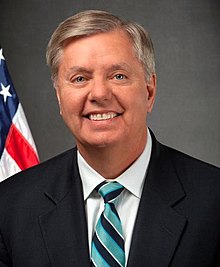
Lindsey Graham
“I want to make our response to this so overwhelming that China will change its behavior. I want to get the medical supply chain back into the United States, and I want to stop cancelling some debt that we owe to China because they should be paying us, not us paying China.”
Graham said that the “wet markets” in China should be shut down, because they have been the source of three pandemics that originated in China.
“So, I think you’re going to see a bipartisan push back against China to punish them so severely to deter them in the future.”
Seventy-three years earlier, Chief United States Counsel Robert H. Jackson had been assigned to prosecute the major Nazi defendants for war crimes at Nuremberg.
On July 26, 1946, Jackson delivered his closing remarks to the court. He could have been speaking about Donald Trump and his cheerleading—and misleading—chorus on Coronavirus:
“Lying has always been a highly approved Nazi technique. [Adolf] Hitler, in Mein Kampf, advocated mendacity as a policy. {Foreign Minister Joachim] Von Ribbentrop admits the use of the ‘diplomatic lie.’
“….Nor is the lie direct the only means of falsehood. They all speak with a Nazi double talk with which to deceive the unwary….’Final solution’ of the Jewish problem was a phrase which meant extermination. ‘Special treatment’ of prisoners of war meant killing. ‘Protective custody’ meant concentration camp.

Robert H. Jackson
“This was the philosophy of the National Socialists. When for years they have deceived the world, and masked falsehood with plausibilities, can anyone be surprised that they continue their habits of a lifetime in this dock?
“It is against such a background that these defendants now ask this Tribunal to say that they are not guilty of planning, executing, or conspiring to commit this long list of crimes and wrongs.”
Citing William Shakespeare’s play about the murderous Richard III, Jackson concluded:
“They stand before the record of this trial as bloodstained Gloucester stood by the body of his slain king. He begged of the widow, as they beg of you: ‘Say I slew them not.’ And the Queen replied, ‘Then say they were not slain. But dead they are…’
“If you were to say of these men that they are not guilty, it would be as true to say that there has been no war, there are no slain, there has been no crime.”
If Americans find Donald Trump blameless for refusing to take decisive action against the Coronavirus threat, it will be as true to say there has been no plague, there are no thousands of dead Americans, there has been no dereliction of Presidential responsibility.
9/11 ATTACKS, ABC NEWS, ALTERNET, AMERICABLOG, AP, BABY BOOMER RESISTANCE, BATTLE OF BRITAIN, BILL KRISTOL, BLOOMBERG, BUZZFEED, CBS NEWS, CNN, CROOKS AND LIARS, DAILY KOZ, DRUDGE RETORT, FACEBOOK, FIVETHIRTYEIGHT, FOREIGN POLICY MAGAZINE, HARPER’S MAGAZINE, HERMANN GORING, MEDIA MATTERS, MICHAEL CUTRONE, MIKE PENCE, MOTHER JONES, MOVEON, MSNBC, NBC NEWS, NEWSWEEK, NPR, OSAMA BIN LADEN, PAUL VON HINDENBURG, PBS NEWSHOUR, PENTAGON, POLITICO, POLITICUSUSA, RAW STORY, REPUBLICANS, REUTERS, SALON, SEATTLE TIMES, SLATE, SYRIA, TALKING POINTS MEMO, THE ATLANTIC, THE CHICAGO SUN-TIMES, THE CHICAGO TRIBUNE, THE DAILY BEAST, THE DAILY BLOG, THE GUARDIAN, THE HILL, THE HUFFINGTON POST, THE LOS ANGELES TIMES, THE NATION, THE NEW REPUBLIC, THE NEW YORK TIMES, THE VILLAGE VOICE, THE WASHINGTON POST, THINKPROGRESS, TIME, TRUTHDIG, TRUTHOUT, TWITTER, TWO POLITICAL JUNKIES, U.S. NEWS & WORLD REPORT, UPI, USA TODAY, WEEKLY STANDARD, WONKETTE
In Bureaucracy, History, Military, Politics, Social commentary on May 12, 2020 at 12:10 am
On August 2, 1934, German President Paul von Hindenburg died. Adolf Hitler was then serving as Reich Chancellor—the equivalent of attorney general. Within hours, the Nazi Reichstag [parliament] announced the following law, back-dated to August 1st:
“The office of Reich President will be combined with that of Reich Chancellor. The existing authority of the Reich President will consequently be transferred to the Führer and Reich Chancellor, Adolf Hitler.”
Immediately following the announcement of the new Führer law, the German officer corps and every individual soldier in the German Army was made to swear a new oath of allegiance:
“I swear by God this holy oath, that I will render to Adolf Hitler, Führer of the German Reich and People, Supreme Commander of the Armed Forces, unconditional obedience, and that I am ready, as a brave soldier, to risk my life at any time for this oath.”
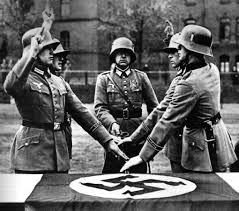
Soldiers swearing the Fuhrer Oath
For Germans—especially officers of the Wehrmacht—taking an oath was a holy act. Previously they had sworn obedience to the German state. Now they swore personal allegiance to Adolf Hitler.
On September 1,1939, Hitler ordered the invasion of Poland—and unintentionally ignited World War II. By 1943, the war had gone increasingly badly for Nazi Germany. And growing numbers of military officers felt torn between the oath they had taken to Hitler and the obligation they felt to save their Fatherland from total destruction.
Now President Donald Trump wants to resurrect “the German experiment.”
On May 6, Foreign Policy magazine carried an alarming story under the headline: “Trump Taps Point Man to Remove Pentagon Officials Seen as Disloyal.”
Specifically: “Michael Cutrone, who has been detailed as Vice President Mike Pence’s top national security aide for South Asia, is set to arrive at the Pentagon to serve in a behind-the-scenes role vetting Defense Department officials for loyalty to the president, according to two current administration officials.”
An anonymous Defense official said of Cutroone: “He is pushing to replace and remove civilians in OSD [Office of the Secretary of Defense] that are not aligned with the White House. [Secretary of Defense Mark] Esper has no say in who the key people are going into senior positions.”
Cutrone is reportedly now serving as a CIA analyst.
Veteran Pentagon officials fear that the few remaining professional appointees who can resist illegal or irrational policy ideas will be removed from their posts or undermined. This will ensure far tighter White House control than had been the case under Defense Secretary James Mattis,
In February, Republicans refused to hold Trump accountable via impeachment for abuse of power and obstruction of Congress. Since then, the President has purged independent officials throughout government—and appointed political loyalists in their places.
One such ousted official was Michael Atkinson, the Intelligence community’s top oversight official. Atkinson had enraged Trump by telling Congress the truth: That a whistleblower had filed a complaint about Trump’s attempted extortion of the president of Ukraine in return for his smearing former Vice President Joe Biden, a Democratic Presidential rival in the 2020 election.
In 1935, Adolf Hitler appointed his crony, Hermann Goring, as Reichsmarshall of the Luftwaffe, the German air force. In December, 1941, he promoted himself Commander-in-Chief of the Wehrmacht, the German army.
Adolf Hitler
Both appointments proved disastrous.
Goring, a World War 1 fighter pilot, lost more than 1,700 planes in his attempt to conquer England in the battle of Britain (August – October, 1940). Many of the 2,662 casualties were experienced pilots, and the Luftwaffe never fully recovered.
Similarly, Hitler, a corporal during World War 1, presided over a succession of German defeats that ultimately led to the Red Army storming Berlin in 1945.
William Kristol—a Right-wing political analyst—has been dubbed “the godfather of neoconservatism.” And with good reason.
Immediately following the 9/11 attacks, Kristol, the editor of the Weekly Standard, was one of the leading instigators of the 2003 war with Iraq.
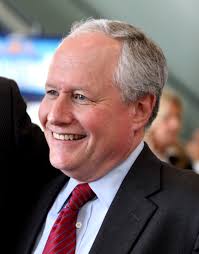
Bill Kristol
But on February 15, 2019, Kristol posted on Twitter:
“Members of Congress take this oath of office (see Title 5, Section 3331 of the United States Code): ‘I do solemnly swear (or affirm) that I will support and defend the Constitution of the United States against all enemies, foreign and domestic; that I will bear true faith and allegiance to the same; that I take this obligation freely, without any mental reservation or purpose of evasion, and that I will well and faithfully discharge the duties of the office on which I am about to enter. So help me God.'”
On May 7, in a blistering attack on his fellow Republicans, he posted “the new GOP Congressional oath”:
“I do solemnly swear that I will support and defend Donald Trump against all oversight; that I will bear true faith and allegiance to him; that I take this obligation despite mental reservation and in the spirit of evasion of duty. So help me God.”
No doubt Kristol, who considers himself a dyed-in-the-wool conservative, remembers all too well the fate of those who took a similar oath to Adolf Hitler.
The lucky ones were sent to concentration camps. The unlucky ones wound up on meat hooks.
ABC NEWS, ADOLF HITLER, ALTERNET, AMERICABLOG, AP, BABY BOOMER RESISTANCE, BEN DORR, BETSY DEVOS, BLACKWATER, BLOOMBERG, BUZZFEED, CBS NEWS, CENTERS FOR DISDEASE CONTROL AND PREVENTION (CDC), CNN, CORONAVIRUS, COVID-19, CROOKS AND LIARS, DAILY KOZ, DONALD TRUMP, DRUDGE RETORT, ERIK PRINCE, FACEBOOK, FIVETHIRTYEIGHT, GRETCHEN WHITMER, HARPER’S MAGAZINE, HUNTINGTON BEACH, LUNG CANCER, MEDIA MATTERS, MICHIGAN CONSERVATIVE COALITION, MOTHER JONES, MOVEON, MSNBC, NBC NEWS, NEWSWEEK, NPR, NUREMBERG RALLIES, PBS NEWSHOUR, POLITICO, POLITICUSUSA, RAW STORY, REUTERS, RUSH LIMBAUGH, SALON, SEATTLE TIMES, SLATE, STAY-AT-HOME ORDERS, TALKING POINTS MEMO, THE ATLANTIC, THE CHICAGO SUN-TIMES, THE CHICAGO TRIBUNE, THE DAILY BEAST, THE DAILY BLOG, THE GUARDIAN, THE HILL, THE HUFFINGTON POST, THE LOS ANGELES TIMES, THE NATION, THE NEW REPUBLIC, THE NEW YORK TIMES, THE VILLAGE VOICE, THE WASHINGTON POST, THINKPROGRESS, TIME, TRUTHDIG, TRUTHOUT, TWITTER, TWO POLITICAL JUNKIES, U.S. NEWS & WORLD REPORT, UPI, USA TODAY, WISCONSONITES AGAINST EXCESSIVE QUARANTINE, WONKETTE
In Bureaucracy, History, Medical, Politics, Social commentary on May 11, 2020 at 12:06 am
On April 17, more than 100 protesters converged on Huntington Beach, California, in a demonstration against the state’s Coronavirus stay-at-home order.
It was part of a series of national demonstrations organized by Right-wing groups.
Many of the protesters carried Trump banners and American flags. Most were not wearing masks or practicing social distancing—keeping themselves at least six feet apart from others. And they defied scientific findings and medical experts’ warnings, as if daring the virus to “come and get me.”
“I don’t think there’s any reason for us to be on lockdown now,” said 62-year-old Paula Doyle. “We didn’t have any dangers; we have no danger in our hospitals now of overflowing.”
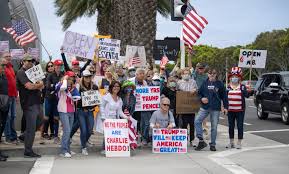
That’s because California’s quick closure of businesses and its order that residents stay home has prevented Coronavirus from reaching epic proportions in the state. Many hospitals have been left largely empty, waiting for a surge that has yet to come.
On April 18, when more than 31,000 Americans lay dead of the Coronavirus, and more than 90% of the country was under stay-at-home orders. demonstrations erupted across the United States.
An estimated 400 people gathered in Concord, New Hampshire. A rally outside Maryland’s statehouse in Annapolis drew about 200 protesters.
More than 250 people showed up at Austin, Texas. Other protests occurred at the capitols of Minnesota, Michigan and Virginia.
President Donald Trump has been the primary instigator of such protests. He says he favors a quick return to normal practices and the reopening of businesses across the country.
But what he favors most of all is a return to his Nuremberg-like political rallies, where he can bask in the worship of his fanatical base and hurl slanders at virtually everyone he dislikes. And he can’t do that so long as mass demonstrations are banned—and people must stand at least six feet apart.
There are two factors to these protests that are truly astounding.
First, many of the protesters attack the governors who have issued stay-at-home orders as fascists. This is a hallmark of Right-wing politics—accusing their opponents of being what they are themselves.
One protester at the Huntington Beach demonstration carried a sign that read: “Defy Fascist Lockdown.”
And Michigan Democratic Governor Gretchen Whitmer, who has defied the Republican legislature by extending her stay-at-home order, has been denounced as a Nazi, with protesters displaying signs like “Heil Whtmer.”
Second, the protesters have utterly rejected the rising death-toll caused by the virus. At present, this stands at 80,574. It’s a certainty to reach 100,000 before the end of May.
Medical experts universally say that stopping the chain of transmission to avoid overwhelming medical systems is the only way to buy time while treatments and vaccines are developed.
Yet for these protesters, it’s as if the rising body count isn’t happening.
Some of the rallies are being pushed by Republican-allied groups in battleground states with Democratic governors. The April 30 protest at the Michigan Capitol Building featured treasonous Confederate flags and hangman’s nooses. Some signs displayed swastikas. Many of the demonstrators were armed with AK-47s.
That protest was organized by the Michigan Conservative Coalition, a group co-founded by a GOP state representative and his wife, who is on the advisory board for an official Trump campaign group called Women for Trump and is also the co-founder of Michigan Trump Republicans.
Another of the event’s promoters, Greg McNeilly, is a longtime political adviser to the wealthy DeVos family, which includes Secretary of Education Betsy DeVos and her brother, Erik Prince, founder of the notorious Blackwater mercenary group.
On May 1, President Trump tweeted in support of the Michigan demonstrators. Just as German Fuhrer Adolf Hitler blamed his opponents for the violence he stoked, so did Trump: “These are very good people, but they are angry. They want their lives back again, safely! See them, talk to them, make a deal.”
Wisconsinites Against Excessive Quarantine was created by Ben Dorr. He leads Minnesota Gun Rights. He has promoted Facebook groups protesting the guidelines.
Republicans’ disdain for education in general—and science in particular—has led to the following: In March, an NBC News poll found that only 30% of Republicans said that they would actually listen to the advice of doctors to stay away from large, crowded areas to avoid Coronavirus.
These are the same people who get their version of reality from Right-wing sources like Fox News Network and Rush Limbaugh.
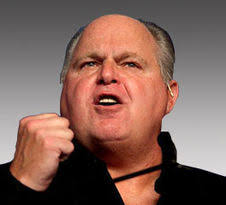
Rush Limbaugh
On his March 27 show, Limbaugh dismissed Coronavirus as “the common cold,” then added: “We didn’t elect a president to defer to a bunch of health experts that we don’t know.
“And how do we know they’re even health experts? Well, they wear white lab coats, and they’ve been in the job for a while, and they’re at the CDC [Centers for Disease Control and Prevention] and they’re at the NIH [National Institutes of Health] and they’re up, well—yeah, they’ve been there, and they are there.”
In 2015, Limbaugh said: “Firsthand smoke takes 50 years to kill people, if it does. Not everybody that smokes gets cancer. Now, it’s true that everybody who smokes dies, but so does everyone who eats carrots.”
Five years later, in February, 2020, Limbaugh—a longtime and heavy cigar smoker—announced that he had Stage Four lung cancer.
2016 PRESIDENTIAL CAMPAIGN, ABC NEWS, AFFORDABLE CARE ACT, ALTERNET, AMERICABLOG, AP, ARNOLD SCHWARTNEGGER, BABY BOOMER RESISTANCE, BANDY X. LEE, BARACK OBAMA, BLOOMBERG, BUZZFEED, CBS NEWS, CIA, CNN, CONSERVATIVE POLITICLA ACTION CONFERENCE (CPAC), CRAIG MALKIN, CROOKS AND LIARS, DAILY KOZ, DEMOCRATS, DONALD TRUMP, DRUDGE RETORT, FACEBOOK, FBI, FIRST AMENDMENT, FIVETHIRTYEIGHT, FLETCHER KNEBEL, GAVIN NEWSOM, HARPER’S MAGAZINE, HARVARD MEDICAL SCHOOL, HILLARY CLINTON, HOUSE OF REPRESENTATIVES, IMMIGRATION AND CUSTOMS ENFORCEMENT (ICE), IVANKA TRUMP, JOHN T. GARNER, JOSEPH STALIN, KIM JONG-UN, LANCE DODES, LIBEL, MEDIA MATTERS, MERYL STREEP, MICHAEL COHEN, MOTHER JONES, MOVEON, MSNBC, NARCISSISM, NBC NEWS, NEIL YOUNG, NEWSWEEK, NIGHT AT CAMP DAVID, NPR, NUCLEAR WEAPONS, OBAMACARE, PARANOIA, PBS NEWSHOUR, POLITICO, POLITICUSUSA, PSYCHOSIS, RAW STORY, REPUBLICANS, REUTERS, ROBERT S. MUELLER, ROD ROSENSTEIN, RUSSIA, SALON, SEATTLE TIMES, SLATE, SOCIOPATHY, TALKING POINTS MEMO, THE ATLANTIC, THE CHICAGO SUN-TIMES, THE CHICAGO TRIBUNE, THE DAILY BEAST, THE DAILY BLOG, THE DANGEROUS CASE OF DONALD TRUMP (BOOK), THE GUARDIAN, THE HILL, THE HUFFINGTON POST, THE LOS ANGELES TIMES, THE MEDIA, THE NATION, THE NEW REPUBLIC, THE NEW YORK TIMES, THE VILLAGE VOICE, THE WASHINGTON POST, THINKPROGRESS, TIME, TRUTHDIG, TRUTHOUT, TWITTER, TWO POLITICAL JUNKIES, U.S. NEWS & WORLD REPORT, UPI, USA TODAY, VIETNAM, VLADIMIR PUTIN, WIRETAPPING, WONKETTE
In Bureaucracy, History, Medical, Politics, Social commentary on May 8, 2020 at 12:09 am
Donald Trump’s appearance at the Conservative Political Action Conference on March 2, 2019 was an occasion for rejoicing among his supporters.
But for those who prize rationality and decency in a President, it was a dismaying and frightening experience.
For two hours, Trump gave free reign to his anger and egomania.
Among his unhinged commentaries:
“We have people in Congress that hate our country.”
If you don’t agree 100% with Trump on everything, you’re a traitor.
“He called me up. He said, ‘You’re a great President. You’re doing a great job.’ He said, ‘I just want to tell you you’re a great President and you’re one of the smartest people I’ve ever met.'”
Trump attributed these remarks to California’s liberal governor, Gavin Newsom. On February 11, 2019, Newsom had announced he was withdrawing several hundred National Guardsmen from the state’s southern border with Mexico—defying Trump’s request for support from border states.
Donald Trump at CPAC
“You know if you remember my first major speech—you know the dishonest media they’ll say, ‘He didn’t get a standing ovation.’ You know why? Because everybody stood and nobody sat. They are the worst. They leave that out.”
Once again, he’s the persecuted victim of an unfair and totally unappreciative news media.
“And I love the First Amendment; nobody loves it better than me. Nobody. I mean, who use its more than I do? But the First Amendment gives all of us—it gives it to me, it gives it to you, it gives it to all Americans, the right to speak our minds freely. It gives you the right and me the right to criticize fake news and criticize it strongly.”
Trump has repeatedly called the nation’s free press “the enemy of the people”—a slander popularized by Soviet dictator Joseph Stalin. And while Trump brags about his usage of the First Amendment, he’s used Non-Disclosure agreements and threats of lawsuits to deny that right to others.

“For too long, we’ve traded away our jobs to other countries. So terrible.”
While this remark got rousing applause, he failed to mention that his own products are made overseas:
- Ties: Made in China
- Suits: Made in Indonesia
- Trump Vodka: Made in the Netherlands, and later in Germany
- Crystal glasses, decanters: Made in Slovenia
- And the clothing and accessories line of his daughter, Ivanka, is produced entirely in factories in Bangladesh, Indonesia and China.
“By the way, you folks are in here—this place is packed, there are lines that go back six blocks and I tell you that because you won’t read about it, OK.”
He’s obsessed with fear that the media won’t make him look popular.
“So we’re all part of this very historic movement, a movement the likes of which, actually, the world has never seen before. There’s never been anything like this. There’s been some movements, but there’s never been anything like this.”
Trump sees himself as the single greatest figure in history. So anything he’s involved with must be unprecedented.
“But I always say, Obamacare doesn’t work. And these same people two years ago and a year ago were complaining about Obamacare.”
In 2010, 48 million Americans lacked health insurance. By 2016, that number had been reduced to 28.6 million. So 20 million Americans now have access to medical care they previously couldn’t get.
“But we’re taking a firm, bold and decisive measure, we have to, to turn things around [with North Korea]. The era of empty talk is over, it’s over.”
- Trump has boasted that he and North Korean dictator Kim Jong-Un “fell in love.” Then he met with Kim in Vietnam—and got stiffed on a deal for North Korea to give up its nuclear weapons.
- On July 16, 2018, Trump attended a press conference in Helsinki, Finland, with Russian President Vladimir Putin. There he blamed American Intelligence agencies—such as the FBI, CIA—instead of Putin for Russia’s subversion of the 2016 Presidential election.

“I’ll tell you what they [agents of Immigration and Customs Enforcement] do, they came and endorsed me, ICE came and endorsed me. They never endorsed a presidential candidate before, they might not even be allowed to.”
Trump can’t stop boasting about how popular he is.
“These are hard-working, great, great Americans. These are unbelievable people who have not been treated fairly. Hillary called them deplorable. They’re not deplorable.”
On the contrary: “Deplorable” is exactly the word for those who vote their racism, ignorance, superstition and hatred of their fellow citizens.
A FINAL NOTE: Trump held himself up for adoration just three days after Michael Cohen, his longtime fixer:
- Damned him as a racist, a conman and a cheat.
- Revealed that Trump had cheated on his taxes and bought the silence of a porn “star” to prevent her revealing a 2006 tryst before the 2016 election.
- Estimated he had stiffed, on Trump’s behalf, hundreds of workers Trump owed money to.
And, only two days earlier, Trump had returned from a much-ballyhooed meeting in Vietnam with North Korean dictator Kim Jong-Un. Trump hoped to get a Nobel Peace Prize by persuading Kim to give up his nuclear arsenal.
Instead, Trump got stiffed—and returned empty-handed.
2016 PRESIDENTIAL CAMPAIGN, ABC NEWS, AFFORDABLE CARE ACT, ALTERNET, AMERICABLOG, AP, ARNOLD SCHWARTNEGGER, BABY BOOMER RESISTANCE, BANDY X. LEE, BARACK OBAMA, BLOOMBERG, BUZZFEED, CBS NEWS, CIA, CNN, CONSERVATIVE POLITICLA ACTION CONFERENCE (CPAC), CRAIG MALKIN, CROOKS AND LIARS, DAILY KOZ, DEMOCRATS, DONALD TRUMP, DRUDGE RETORT, FACEBOOK, FBI, FIRST AMENDMENT, FIVETHIRTYEIGHT, FLETCHER KNEBEL, GAVIN NEWSOM, HARPER’S MAGAZINE, HARVARD MEDICAL SCHOOL, HILLARY CLINTON, HOUSE OF REPRESENTATIVES, IMMIGRATION AND CUSTOMS ENFORCEMENT (ICE), IVANKA TRUMP, JOHN T. GARNER, JOSEPH STALIN, KIM JONG-UN, LANCE DODES, LIBEL, MEDIA MATTERS, MERYL STREEP, MICHAEL COHEN, MOTHER JONES, MOVEON, MSNBC, NARCISSISM, NBC NEWS, NEIL YOUNG, NEWSWEEK, NIGHT AT CAMP DAVID, NPR, NUCLEAR WEAPONS, OBAMACARE, PARANOIA, PBS NEWSHOUR, POLITICO, POLITICUSUSA, PSYCHOSIS, RAW STORY, REPUBLICANS, REUTERS, ROBERT S. MUELLER, ROD ROSENSTEIN, RUSSIA, SALON, SEATTLE TIMES, SLATE, SOCIOPATHY, TALKING POINTS MEMO, THE ATLANTIC, THE CHICAGO SUN-TIMES, THE CHICAGO TRIBUNE, THE DAILY BEAST, THE DAILY BLOG, THE DANGEROUS CASE OF DONALD TRUMP (BOOK), THE GUARDIAN, THE HILL, THE HUFFINGTON POST, THE LOS ANGELES TIMES, THE MEDIA, THE NATION, THE NEW REPUBLIC, THE NEW YORK TIMES, THE VILLAGE VOICE, THE WASHINGTON POST, THINKPROGRESS, TIME, TRUTHDIG, TRUTHOUT, TWITTER, TWO POLITICAL JUNKIES, U.S. NEWS & WORLD REPORT, UPI, USA TODAY, VIETNAM, VLADIMIR PUTIN, WIRETAPPING, WONKETTE
In Bureaucracy, History, Medical, Politics, Social commentary on May 7, 2020 at 12:17 am
“Is this man simply crazy, or is he crazy like a fox?”
That was the question that Bandy X. Lee, an assistant clinical psychiatry professor at the Yale School of Medicine, wanted to answer.
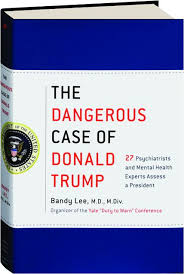
And she tried to do so as the editor of The Dangerous Case of Donald Trump: 27 Psychiatrists and Mental Health Experts Assess a President.
“It doesn’t take a psychiatrist to notice that our president is mentally compromised,” she and colleague Judith Lewis Herman asserted in the book’s prologue.
According to Dr. Craig Malkin, a Lecturer in Psychology for Harvard Medical School and a licensed psychologist, Trump is a pathological narcissist:
“Pathological narcissism begins,” Malkin writes, “when people become so addicted to feeling special that, just like with any drug, they’ll do anything to get their ‘high,’ including lie, steal, cheat, betray and even hurt those closest to them.
“When they can’t let go of their need to be admired or recognized, they have to bend or invent a reality in which they remain special despite all messages to the contrary. In point of fact, they become dangerously psychotic. It’s just not always obvious until it’s too late.”
Lance Dodes, a retired psychiatry professor at Harvard Medical School, believes that Trump is a sociopath: “The failure of normal empathy is central to sociopathy, which is marked by an absence of guilt, intentional manipulation and controlling or even sadistically harming others for personal power or gratification.”
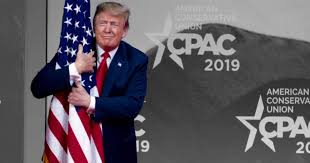
But an observer didn’t need to be a psychiatrist to feel frightened by Trump’s behavior at the Conservative Political Action Conference (CPAC) on March 2, 2019.
For two hours, in National Harbor, Maryland, Trump delivered the longest address (so far) of his Presidency—and of any American President.
“You know, I’m totally off script right now,” Trump said early on. “This is how I got elected, by being off script.”
And from the moment he embraced an American flag as though he wanted to hump it, it was clear: He was “totally off script.”
“How many times did you hear, for months and months, ‘There is no way to 270?’ You know what that means, right? ‘There is no way to 270.'”
Once again, Trump reveals his obsession with his win in 2016—as if no one else had ever been elected President.
“If you tell a joke, if you’re sarcastic, if you’re having fun with the audience, if you’re on live television with millions of people and 25,000 people in an arena, and if you say something like, ‘Russia, please, if you can, get us Hillary Clinton’s emails. Please, Russia, please.'”
Here he’s trying to “spin” his infamous invitation to hackers in Vladimir Putin’s Russia to intervene in an American Presidential election by obtaining the emails of his campaign rival. Which they did that same day.
“So now we’re waiting for a report, and we’ll find out whether or not, and who we’re dealing with. We’re waiting for a report by people that weren’t elected.”
It doesn’t matter to Trump that America’s foremost enemy—Russia—tried to influence a Presidential election. What matters to him is that the report might end his Presidency.
“Those red hats—and white ones. The key is in the color. The key is what it says. ‘Make America Great Again’ is what it says. Right? Right?”
Color matters. Words, ideas don’t.
“Now, Robert Mueller never received a vote, and neither did the person that appointed him. And as you know, the attorney general says, ‘I’m going to recuse myself.'”
Special Counsel Robert S. Mueller and Assistant Attorney General Rod Rosenstein were career Justice Department officials. They weren’t voted into office.
“Number one, I’m in love, and you’re in love. We’re all in love together. There’s so much love in this room, it’s easy to talk. You can talk your heart out. You really could. There’s love in this room. You can talk your heart out. It’s easy. It’s easy. It’s easy.”
Trump apparently finds it easy to fall in love—with Right-wing audiences and Communist dictators such as Kim Jong-Un.
“And from the day we came down the escalator, I really don’t believe we’ve had an empty seat at any arena, at any stadium. They did the same thing at our big inauguration speech. You take a look at those crowds.”
Once again, he must brag about how popular he is and how many people want to listen to him.
“A few days ago I called the fake news the enemy of the people. And they are. They are the enemy of the people. Because they have no sources, they just make ’em up when there are none.”
By January 20, 2020, The Washington Post found that Trump had made “16,241 ‘false or misleading claims” in his first three years in office. He is in no position to talk about integrity.
“But we’re going to have regulation. It’s going to be really strong and really good and we’re going to protect our environment and we’re going to protect the safety of our people and our workers, OK?”
To “protect our environment,” Trump appointed Andrew R. Wheeler, a former coal company lobbyist, to head the Environmental Protection Agency.
2016 PRESIDENTIAL CAMPAIGN, ABC NEWS, AFFORDABLE CARE ACT, ALTERNET, AMERICABLOG, AP, ARNOLD SCHWARTNEGGER, BABY BOOMER RESISTANCE, BANDY X. LEE, BARACK OBAMA, BLOOMBERG, BUZZFEED, CBS NEWS, CIA, CNN, CONSERVATIVE POLITICLA ACTION CONFERENCE (CPAC), CRAIG MALKIN, CROOKS AND LIARS, DAILY KOZ, DEMOCRATS, DONALD TRUMP, DRUDGE RETORT, FACEBOOK, FBI, FIRST AMENDMENT, FIVETHIRTYEIGHT, FLETCHER KNEBEL, GAVIN NEWSOM, HARPER’S MAGAZINE, HARVARD MEDICAL SCHOOL, HILLARY CLINTON, HOUSE OF REPRESENTATIVES, IMMIGRATION AND CUSTOMS ENFORCEMENT (ICE), IVANKA TRUMP, JOHN T. GARNER, JOSEPH STALIN, KIM JONG-UN, LANCE DODES, LIBEL, MEDIA MATTERS, MERYL STREEP, MICHAEL COHEN, MOTHER JONES, MOVEON, MSNBC, NARCISSISM, NBC NEWS, NEIL YOUNG, NEWSWEEK, NIGHT AT CAMP DAVID, NPR, NUCLEAR WEAPONS, OBAMACARE, PARANOIA, PBS NEWSHOUR, POLITICO, POLITICUSUSA, PSYCHOSIS, RAW STORY, REPUBLICANS, REUTERS, ROBERT S. MUELLER, ROD ROSENSTEIN, RUSSIA, SALON, SEATTLE TIMES, SLATE, SOCIOPATHY, TALKING POINTS MEMO, THE ATLANTIC, THE CHICAGO SUN-TIMES, THE CHICAGO TRIBUNE, THE DAILY BEAST, THE DAILY BLOG, THE DANGEROUS CASE OF DONALD TRUMP (BOOK), THE GUARDIAN, THE HILL, THE HUFFINGTON POST, THE LOS ANGELES TIMES, THE MEDIA, THE NATION, THE NEW REPUBLIC, THE NEW YORK TIMES, THE VILLAGE VOICE, THE WASHINGTON POST, THINKPROGRESS, TIME, TRUTHDIG, TRUTHOUT, TWITTER, TWO POLITICAL JUNKIES, U.S. NEWS & WORLD REPORT, UPI, USA TODAY, VIETNAM, VLADIMIR PUTIN, WIRETAPPING, WONKETTE
In Bureaucracy, History, Medical, Politics, Social commentary on May 6, 2020 at 11:13 am
“One man in the free world has the power to launch a nuclear war that might destroy civilization: the President of the United States. What if that man were mentally unbalanced?”
That is the premise of the 1965 novel, Night at Camp David, by Fletcher Knebel.
At the time of its release, its plot was considered so over-the-top as to be worthy of science fiction:
Iowa Democratic Senator Jim MacVeagh is summoned to Camp David, the Presidential retreat, by President Mark Hollenbach. MacVeagh is expected to become Hollenbach’s next Vice President. But he becomes alarmed that Hollenbach is clearly suffering from intense paranoia.
He wants to develop a closer relationship between the United States and Russia—while cutting ties with American allies in Europe. Moreover, Hollenbach believes the American news media are conspiring against him with his political enemies.
Only one person possesses evidence that Hollenbach is losing his grip on sanity—his mistress, Rita. Desperate to retain his power, Hollenbach orders the FBI to investigate both MacVeagh and Rita.
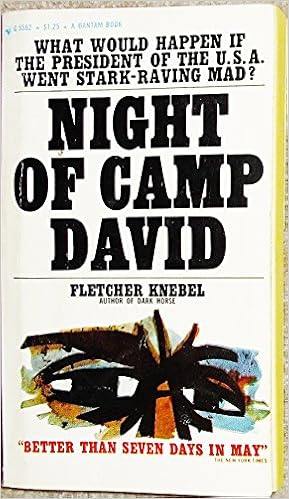
So why was a 53-year-old novel released in 2018? The answer lies in two words: Donald Trump.
In a November 30, 2018 review of Night at Camp David, Tom McCarthy, national affairs correspondent for the British newspaper, The Guardian, writes:
“The current president has seen crowds where none exist, deployed troops to answer no threat, attacked national institutions – the military, the justice department, the judiciary, the vote, the rule of law, the press – tried to prosecute his political enemies, elevated bigots, oppressed minorities, praised despots while insulting global allies and wreaked diplomatic havoc from North Korea to Canada.
“He stays up half the night watching TV and tweeting about it, then wakes up early to tweet some more, in what must be the most remarkable public diary of insecurity, petty vindictiveness, duplicity and scattershot focus by a major head of state in history.”
From the beginning of his Presidency, Trump aroused fear—based not only of what he might do, but that he might be mentally unbalanced. Consider:
On March 4, 2017, in a series of unhinged tweets, he accused former President Barack Obama of tapping his Trump Tower phones prior to the election:
“Terrible! Just found out that Obama had my ‘wires tapped’ in Trump Tower just before the victory. Nothing found. This is McCarthyism!”
“Is it legal for a sitting President to be ‘wire tapping’ a race for president prior to an election? Turned down by court earlier. A NEW LOW!”
“I’d bet a good lawyer could make a great case out of the fact that President Obama was tapping my phones in October, just prior to Election!”
“How low has President Obama gone to tapp my phones during the very sacred election process. This is Nixon/Watergate. Bad (or sick) guy!”
A subsequent investigation by the Justice Department turned up no evidence to substantiate Trump’s foray into Presidential libel.
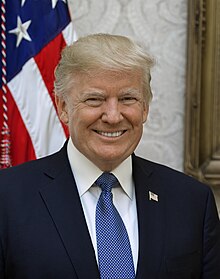
Donald Trump
Trump’s shoot-first-and-never-mind-the-consequences approach to life has been thoroughly documented.
From June 15, 2015, when he launched his Presidential campaign, until October 24, 2016, he fired nearly 4,000 angry, insulting tweets at 281 people and institutions. The New York Times needed two full pages of its print edition to showcase them.
Among these targets were:
- His Democratic rival, Hillary Clinton
- His fellow Republican Presidential candidates
- Actress Meryl Streep
- News organizations
- President Barack Obama
- Comedian John Oliver
- The Affordable Care Act (Obamacare)
- Singer Neil Young
- The state of New Jersey
- Actor Arnold Schwarzenegger.
And during his first two weeks as President, Trump attacked 22 people, places and things on his @realDonaldTrump Twitter account.
Trump’s vindictiveness, his narcissism, his compulsive aggression, his complaints that his “enemies” in government and the press are trying to destroy him, have caused many to ask: Could the President of the United States be suffering from mental illness?
One who has dared to answer this question is John D. Gartner, a practicing psychotherapist.
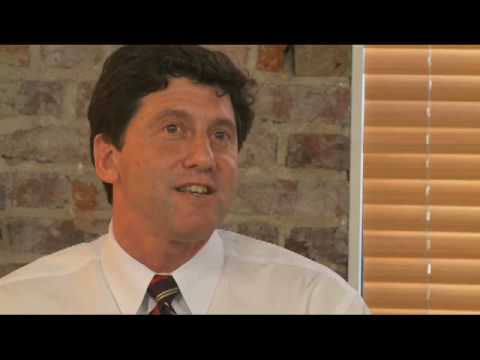
John D. Gartner
Gartner graduated magna cum laude from Princeton University, received his Ph.D in clinical psychology from the University of Massachusetts, and served as a part-time assistant professor of psychiatry at Johns Hopkins University Medical School for 28 years.
During an interview by U.S. News & World Report (published on January 27, 2017), Gartner said: “Donald Trump is dangerously mentally ill and temperamentally incapable of being president.”
Gartner said that Trump suffers from “malignant narcissism,” whose symptoms include:
- anti-social behavior
- sadism
- aggressiveness
- paranoia
- and grandiosity.
“We’ve seen enough public behavior by Donald Trump now that we can make this diagnosis indisputably,” says Gartner, who admits he has not personally examined Trump.
More of that behavior was on full display on March 2, 2019 at the annual Conservative Political Action Conference (CPAC), held at the Gaylord National Resort & Convention Center, National Harbor, Maryland.
For more than two hours, Trump delivered the longest speech (so far) of his Presidency to his fanatically Right-wing audience.
Facing a hostile Democratic House of Representatives and a potentially explosive report by Special Counsel Robert Mueller, Trump threw down the gauntlet.
ABC NEWS, ALTERNET, AMERICABLOG, ANTI STAY-AT-HOME DEMONSTRATIONS, AP, BABY BOOMER RESISTANCE, BENITO MUSSOLINI, BLOOMBERG, BUZZFEED, CAESARE BORGIA, CBS NEWS, CNN, CORONAVIRUS, COVID-19, CROOKS AND LIARS, DAILY KOZ, DONALD TRUMP, DRUDGE RETORT, FACEBOOK, FIVETHIRTYEIGHT, FLORENCE, HARPER’S MAGAZINE, JOSEPH STALIN, LEMMINGS, MEDIA MATTERS, MOTHER JONES, MOVEON, MSNBC, NBC NEWS, NEWSWEEK, NICCOLO MACHIAVELLI, NORMAN MCNICKLE, NPR, OKLAHOMA, PBS NEWSHOUR, POLITICO, POLITICS, POLITICUSUSA, POPE JULIUS 11, RAW STORY, REUTERS, SALON, SEATTLE TIMES, SLATE, TALKING POINTS MEMO, THE ATLANTIC, THE CHICAGO SUN-TIMES, THE CHICAGO TRIBUNE, THE DAILY BEAST, THE DAILY BLOG, THE GUARDIAN, THE HILL, THE HUFFINGTON POST, THE LOS ANGELES TIMES, THE NATION, THE NEW REPUBLIC, THE NEW YORK TIMES, THE PRINCE, THE VILLAGE VOICE, THE WASHINGTON POST, THINKPROGRESS, TIME, TRUTHDIG, TRUTHOUT, TWITTER, TWO POLITICAL JUNKIES, U.S. NEWS & WORLD REPORT, UPI, USA TODAY, WILL JOYCE, WONKETTE
In Bureaucracy, History, Law Enforcement, Politics, Social commentary on May 5, 2020 at 12:05 am
Ask the average person, “What do you think of Niccolo Machiavelli?” and he’s likely to say: “The devil.”
In fact, “The Old Nick” became an English term used to describe Satan and slander Machiavelli at the same time.
The truth, however, is more complex. Machiavelli was a passionate Republican, who spent most of his adult life in the service of his beloved city-state, Florence.
Florence, for all its wealth, lacked a strong army, and thus lay at the mercy of powerful enemies, such as Cesare Borgia. Machiavelli often had to use his wits to keep them at bay.
Machiavelli (1469 – 1527) is best-known for his writing of The Prince, a pamphlet on the arts of gaining and holding power. Its admirers have included Benito Mussolini and Joseph Stalin.

Niccolo Machiavelli
Contrary to popular belief, Machiavelli did not advocate evil for its own sake. Rather, he recognized that sometimes there is no perfect—or perfectly good—solution to a problem.
Sometimes it’s necessary to take stern—even brutal—action to stop an evil (such as a riot) before it becomes widespread:
In Chapter 19 of The Prince, he outlines: “That We Must Avoid Being Despised and Hated.” According to Machiavelli:
He is rendered despicable by being thought changeable, frivolous, effeminate, timid and irresolute—which a prince must guard against as a rock of danger….
[He] must contrive that his actions show grandeur, spirit, gravity and fortitude. As to the government of his subjects, let his sentence be irrevocable, and let him adhere to his decisions so that no one may think of deceiving or cozening him.
And in Chapter 17, he advises rulers to not fear taking decisive—even brutal—action when public order is threatened:
…A prince, therefore, must not mind incurring the charge of cruelty for the purpose of keeping his subjects united and faithful. For, with a very few examples, he will be more merciful than those who, from excess of tenderness, allow disorders to arise, from whence spring blood and rapine. For these as a rule injure the whole community, while the executions carried out by the prince injure only individuals.

The mayor of Stillwater, Oklahoma, would have done well to remember that.
On April 30, Mayor Will Joyce issued an emergency proclamation, requiring the use of face masks in stores and restaurants by both customers and employees.
With more than 60,000 Americans dead of the Coronavirus pandemic, this no doubt seemed like a prudent course of action.
But common sense is not a quality characteristic of the radical Right—particularly among the followers of President Donald Trump.
For weeks, demonstrations have erupted across the country against stay-at-home orders issued by mayors and governors in a desperate effort to halt the spread of COVID-19.
While those protesting have claimed they’re “fighting for my Constitutional rights,” the real reasons come down to: Ignorance and egotism.
Less than 24 hours after issuing the emergency declaration, the mayor backed down.
“In the short time beginning on May 1, 2020, that face coverings have been required for entry into stores/restaurants, store employees have been threatened with physical violence and showered with verbal abuse,” City Manager Norman McNickle said in a statement. “In addition, there has been one threat of violence using a firearm.
“This has occurred in three short hours and in the face of clear medical evidence that face coverings helps contain the spread of Covid-19.”
In a series of tweets, Mayor Joyce wrote: “I hate that our businesses and their employees had to deal with abuse today, and I apologize for putting them in that position.
“I am not the kind of person who backs down from bullies, but I also will not send someone else to fight the battle for me,”
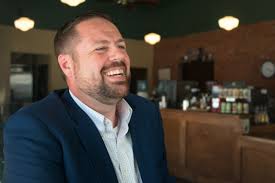
Will Joyce
The proclamation issued on April 30 required businesses to require patrons to cover their faces to protect others from possible spread of COVID-19.
Joyce’s amended emergency declaration now encourages, not requires, face coverings for customers. Face masks are still required for store employees and are now “strongly recommended” for customers.
Oklahoma statute § 21-1378 states that it is unlawful to attempt or threaten an act of violence that is intended to cause severe bodily harm or death to another person. Such an act is a felony. A threat to kill or harm someone is a misdemeanor.
But laws are useless without the capacity for enforcement. And clearly Joyce was unwilling to order police to arrest and jail the threat-makers.
Instead, Joyce resorted to Twitter to “strike back” at those who posed a clear and present threat to public safety:
“To the people who resort to threats and intimidation when asked to take a simple step to protect your community: shame on you. Our freedom as Americans comes with responsibilities, too.”
In a similar gesture of official impotence, City manager Norman McNickle said:”The wearing of face coverings is little inconvenience to protect both the wearer and anyone with whom they have contact. It is unfortunate and distressing that those who refuse and threaten violence are so self-absorbed as to not follow what is a simple show of respect and kindness to others.”


ABC NEWS, ADOLF HITLER, ALTERNET, AMERICABLOG, ANDREW CUOMO, AP, ARMY CORPS OF ENGINEERS, BABY BOOMER RESISTANCE, BARACK OBAMA, BLOOMBERG, BRENDA FITZGERALD, BUZZFEED, CBS NEWS, CENTERS FOR DISEASE CONTROL AND PREVEITON (CDC), CENTERS FOR DISEASE CONTROL AND PREVENTION (CDC), CHINA, CNN, CORONAVIRUS, COVID-19, CROOKS AND LIARS, DAILY KOZ, DEPARTMENT OF HEALTH AND HUMAN SERVICES, DEPARTMENT OF HOMELAND SECURITY (DHS), DOCTORS, DONALD TRUMP, DRUDGE RETORT, EBOLA, FACEBOOK, FEDERAL EMERGENCY MANAGEMENT AGENCY (FEMA), FIVETHIRTYEIGHT, FORBES MAGAZINE, FOX BUSINESS NETWORK, FOX NEWS, FOX NEWS NETWORK, FRANKLIN D. ROOSEVELT, GEORGE W. BUSH, GRETCHEN WHITMER, GROVER NORQUIST, HARPER’S MAGAZINE, IMPEACHMENT, JAY INSLEE, JOE BIDEN, JOHN BOLTON, LARRY HOGAN, LOUIS X1V, MALARIA, MASKS, MEDIA MATTERS, MICK MULVANEY, MIKE PENCE, MOTHER JONES, MOVEON, MSNBC, N95 RESPIRATORS, NATIONAL SECURITY COUNSIL (NSC), NBC NEWS, NEWSWEEK, NPR, NURSES, PBS NEWSHOUR, PERSONAL PROTECTIVE EQUIPMENT (PPES), POLICE, POLITICO, POLITICUSUSA, RAW STORY, REPUBLICANS, REUTERS, ROBERT RAY REDFIELD, ROLLING STONE MAGAZINE, RUDY GIULIANI, SALON, SEAN HANNITY SHOW, SEATTLE TIMES, SLATE, SPANISH INFLUENZA, STOCK MARKET, TALKING POINTS MEMO, THE ATLANTIC, THE CHICAGO SUN-TIMES, THE CHICAGO TRIBUNE, THE DAILY BEAST, THE DAILY BLOG, THE GUARDIAN, THE HILL, THE HUFFINGTON POST, THE LOS ANGELES TIMES, THE NATION, THE NATIONAL SECURITY COUNCIL, THE NEW REPUBLIC, THE NEW YORK TIMES, THE VILLAGE VOICE, THE WASHINGTON POST, THE WHITE HOUSE PANDEMIC OFFICE, THINKPROGRESS, THIRD REICH, TIM ZIEMER, TIME, TOLUSE OLORUNNIPA, TOM BOSSERT, TOM FRIEDMAN, TRISH REGAN, TRISH REGAN PRIMETIME, TRUTHDIG, TRUTHOUT, TWITTER, TWO POLITICAL JUNKIES, U.S. NEWS & WORLD REPORT, UNITED STATES, UPI, USA TODAY, VENDORS, VENTILATORS, WASHINGTON MONTHLY MAGAZINE, WHITE HOUSE PANDEMIC OFFICE, WONKETTE
TRUMP’S PLAN TO DEFEAT COVID-19: LIES, CHAOS AND THEFTS–PART THREE (OF FOUR)
In Bureaucracy, History, Medical, Politics, Social commentary on May 18, 2020 at 12:24 amOn March 9, Trish Regan, host of Trish Regan Primetime on the Fox Business Network, attacked not the virus but those who do not share her fervent embrace of Donald Trump.
“This is yet another attempt to impeach the President. And sadly, it seems the left cares little for any of the destruction they leave in their wake, including losses in the stock market. This, unfortunately, is all just part of the political casualties for them.”
To make certain no one in the television audience missed the point, an electronically generated caption read: “Coronavirus Impeachment Scam.”
Actually, with the virus spreading quickly throughout at least 33 states, the risk was not low to the average American. It was not the news that was fake, but the lies and ignorance Trump and Fox were spewing.
Then—for the Fox Network—the unexpected happened: On March 14, Fox Business Network announced that Regan’s program would be on “hiatus” until further notice.
The reason: Using one of the favorite words of the Right, her comments had “triggered” an avalanche of criticism. Some of this came from Coronavirus victims. Some came from those related to those victims. And some came simply from people who didn’t appreciate being so blatantly lied to.
On March 13, perhaps warned of her coming suspension, Regan took a more conciliatory tone: “Our path forward right now is together, the left and the right united to fight this crisis. We’re all in this together, and we need to stay safe.”
Trying to put the best spin on her humiliating suspension, she tweeted that same evening: “I want to let everyone know that Trish Regan Primetime is now on hiatus. FBN [Fox Business Network] has taken prudent steps to limit staffing levels and is prioritizing its coverage during market hours. I fully support this decision — we all must to do our part to keep our colleagues safe.”
Thus—at least according to Regan—her leaving the air was not an act of punishment but a “prudent step” to “limit staffing levels” at the station.
During the vital months of January and February, Republicans refused to challenge Trump’s refusal to take the virus seriously—before it gained a foothold in the United States.
The reason: They had utterly tied themselves to him since the 2018 mid-term elections, where many moderate Republicans lost their seats.
According to Toluse Olorunnipa, White House reporter for The Washington Post: “They have realized that if they’re going to keep their seats, if they’re going to be able to have any future in the party, they have to be completely tied to President Trump and really wait for his call in terms of what exactly they’re going to do.”
So much for the lies. Now for the chaos.
Like Adolf Hitler, Trump likes to pit individuals and organizations against each other. Hitler, for example, would assign several agencies to tackle the same problem: “That way, the stronger one gets the job done,” he told his architect, Albert Speer.
Adolf Hitler
This creates needless duplication of efforts and wasted resources. But it ensures that Trump—like Hitler—remains the final voice of authority, since so many others are competing for his favor and direction.
This has not, however, worked out well for the 50 states that make up the United States of America.
During the Great Depression, President Franklin D. Roosevelt intervened powerfully to ensure that all Americans received the help they needed.
Trump has made it clear that each state is responsible for securing its needed supply of Personal Protective Equipment (PPEs) for its doctors and nurses aiding Coronavirus patients. This has resulted in a dog-eat-dog atmosphere of cutthroat competition and scarcity, with Americans not only fighting the virus but each other.
Donald Trump
Even worse: Trump and Republicans are using a deadly plague as a weapon against those Americans they hate.
On March 26, during an interview on Fox News, Trump blamed the failures of his administration’s response to Coronavirus on Democratic state governors like Andrew Cuomo (NY), Jay Inslee (WA), and Gretchen Whitmer (MI).
On March 27, during his press briefing, Trump said he told Vice President Mike Pence—who’s officially in charge of the White House’s response effort—to not call Inslee and Whitmer because they weren’t “appreciative” enough of his efforts.
Trump said this even as hospitals in each of their states were being overwhelmed with Coronavirus patients:
“I tell him—I mean I’m a different type of person—I say, ‘Mike, don’t call the governor in Washington, you’re wasting your time with him. Don’t call the woman in Michigan. If they don’t treat you right, I don’t call.”
Trump said that when people criticized him, they were criticizing the federal government: “When they’re not appreciative to me, they’re not appreciative to the Army Corps [of Engineers], they’re not appreciative to FEMA [Federal Emergency Management Agency]. It’s not right.”
Trump also attacked Whitmer on Right-wing Fox News’ “Sean Hannity Show”: “I don’t know if she knows what’s going on, but all she does is sit there and blame the Federal Government.”
Share this: