Posts Tagged ‘GEORGE H.W. BUSH’
2003 IRAQ WAR, 401(KS), 9/11 TERRORIST ATTACKS, ABC NEWS, ALTERNET, AMERICABLOG, AP, BABY BOOMER RESISTANCE, BARACK OBAMA, BILL CLINTON, BLACKS, BUZZFEED, CBS NEWS, CNN, COLD WAR, CORONAVIRUS, CROOKS AND LIARS, DAILY KOZ, DEMOCRATS, DONALD TRUMP, DRUDGE RETORT, ECONOMY, FACEBOOK, FIVETHIRTYEIGHT, FUNDAMENTALIST RELIGION, GEORGE H.W. BUSH, HARPER’S MAGAZINE, HILLARY CLINTON, ISLAM, ISRAELIS, MEDIA MATTERS, MOTHER JONES, MOVEON, MSNBC, MUSLIMS, NBC NEWS, NEIL YOUNG, NEWSWEEK, NPR, PBS NEWSHOUR, POLITICO, POLITICUSUSA, RAW STORY, REPUBLICANS, REUTERS, SALON, SARAH HUCKABEE SANDERS, SEATTLE TIMES, SLATE, SOVIET UNION, SUICIDE BOMBERS, TALKING POINTS MEMO, THE ATLANTIC, THE CHICAGO SUN-TIMES, THE CHICAGO TRIBUNE, THE DAILY BEAST, THE DAILY BLOG, THE DISABLED, THE GUARDIAN, THE HILL, THE HUFFINGTON POST, THE LOS ANGELES TIMES, THE NATION, THE NEW REPUBLIC, THE NEW YORK TIMES, THE VILLAGE VOICE, THE WASHINGTON POST, THINKPROGRESS, TIME, TRUTHDIG, TRUTHOUT, TWITTER, TWO POLITICAL JUNKIES, U.S. NEWS & WORLD REPORT, UPI, USA TODAY, WONKETTE, WORLD WAR ii
In Bureaucracy, History, Politics, Social commentary on August 28, 2020 at 1:47 am
Throughout 2016, Facebook posters were certain: Hillary Clinton would be the next American President! Democrats would retake the House—maybe even the Senate!
Then reality intruded.
Why do Republicans win so many elections—especially at the Presidential level?
Republicans learned long ago that most voters aren’t moved by appeals to their rationality. Instead, what counts with them is emotions.
And long ago they became experts at appealing to these—especially the baser ones.
For Republicans, the Big Three are:
Hatred
Greed
Fear
Hatred: There can be no better example of a politician who has played successfully on the hatred of American voters than Donald Trump. If Barack Obama was the 2008 candidate of “Hope and Change,” then Trump was the 2016 candidate of “Hate and Fear.”
From June 15, 2015, when he launched his Presidential campaign, until October 24, 2016, Trump fired almost 4,000 angry, insulting tweets at 281 people and institutions that had somehow offended him.
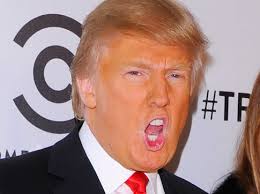
Donald Trump
The New York Times needed two full pages of its print edition to showcase them.
The message of Donald Trump’s campaign was one of hatred toward everyone who was not an avid Trump supporter.
Whites comprised the overwhelming majority of the audiences at Trump rallies. Not all were racists, but many of those who were advertised it on T-shirts: “MAKE AMERICA WHITE AGAIN.”
They resented that a black man had twice been elected President of the United States. And they were determined to put a white man back in the White House. And Hillary Clinton’s being an “uppity women’s libber” brought their hatred to a boiling point.
Greed: On August 23, 2018, Trump gave an unprecedented reason why he shouldn’t be impeached: “I tell you what, if I ever got impeached, I think the market would crash, I think everybody would be very poor.”
White House Press Secretary Sarah Huckabee Sanders doubtless spoke for millions of Trump supporters when she said, on June 4, 2018:
“Since taking office, the President has strengthened American leadership, security, prosperity, and accountability. And as we saw from Friday’s jobs report, our economy is stronger, Americans are optimistic, and business is booming.”
Susan Page, Washington Bureau Chief for USA TODAY, summed up the popularity of the “Greed Appeal” to voters on the March 13 edition of “Washington Week in Review”:
“USA Today has conducted a poll about the economic concerns that are out there….And Congress—you’re seeing fear in this country about the economy.
“In fact, when we did this poll this week about how Americans’ lives have been affected by the Coronavirus, people expressed more concern about the economic and financial effect than they did about the health effect. And you know, that goes to why this matters so much to President Trump.
“How many voters have you talked to who said, you know, I don’t really like President Trump’s tweets, but I like what I see happening in my 401(k)? And when they look at their 401(k) this week, it may not look quite as bright as it did before.”
Fear: From the end of World War II in 1945 to the collapse of the Soviet Union in 1991, the Enemy of Choice for Republicans was the Communists.
Millions of Americans were so pathologically frightened by “The Red Menace” that any Democratic politician libeled as a “Communist,” “Comsymp,” “fellow traveler” was considered at least a potential traitor, if not an actual one.
Among the Republican politicians who rode to victory on a wave of Red hysteria: Richard Nixon and Joseph McCarthy
Even as late as 1992, President George H.W. Bush and the Republican establishment charged that Arkansas Governor Bill Clinton might be a KGB plant. Their evidence: During his tenure at Oxford University in 1969-70, Clinton had briefly visited Moscow—and thus might have been turned into a “Manchurian Candidate.”
After the collapse of the Soviet Union, Right-wingers had to settle for attacking their opponents as “liberals” and “soft on crime.” But these charges didn’t carry the same weight as “Communists” and “traitors.”
Then, on September 11, 2001, Republicans—and their Right-wing supporters—at last found a suitable replacement for the Red Menace: The Maniacal Muslim.
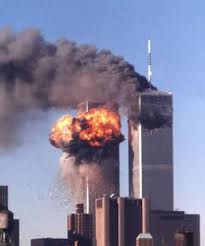
World Trade Center on September 11, 2001
Led by President George W. Bush, Republicans used fear of Muslims to con and bully the nation into a needless, bloody, budget-busting war on Iraq. Seventeen years later, that war continues.
So how can Democrats counter such appeals? By making equally ruthless use of them.
For example—Fear: Republicans rely heavily on support from rural America—where fundamentalist religious beliefs hold sway. Instead of ridiculing those beliefs, Democrats—even those who are atheists—should make use of them.
How?
- By recognizing that fundamentalists believe that widespread plague is a sign of God’s displeasure; and
- Repeatedly proclaiming that the Coronavirus is God’s judgment on a sinful nation for electing Donald Trump President.
Democrats must closely study the beliefs of their sworn enemies and make skillful use of them—as the Israelis have done.
Suicide bombers’ attacks in Israel sharply decreased after Israelis started patrolling with bomb-sniffing dogs.
Why?
Islamics believe that dogs are defiling creatures—and that if the blood of suicide bombers mingles with that of a dog, they won’t go to Heaven to claim those 72 willing virgins.
To defeat your enemy, you must learn his weaknesses—and ruthlessly attack them.
2016 PRESIDENTIAL CAMPAIGN, 9/11 ATTACKS, ABC NEWS, ADOLF HITLER, AFGHANISTAH, ALTERNET, AMERICABLOG, ANDREW CUOMO, AP, ARMY CORPS OF ENGINEERS, BABY BOOMER RESISTANCE, BARACK OBAMA, BILL CLINTON, BLOOMBERG, BUSES, BUZZFEED, CBS NEWS, CENTERS FOR DISEASE CONTROL AND PREVENTION (CDC), CNN, CORONAVIRUS, COVID-19, CROOKS AND LIARS, DAILY KOZ, DAVID BROOKS, DELTA FORCE, DOCTORS, DONALD RUMSFELD, DONALD TRUMP, DRUDGE RETORT, EBOLA, ELDERLY, FACEBOOK, FEAR, FEDERAL EMERGENCY MANAGEMENT AGENCY, FEEDING AMERICA, FIREFIGHTERS, FIVETHIRTYEIGHT, FOOD BANKS, FOX NEWS NETWORK, FRANKLIN D. ROOSEVELT, GARBAGE MEN, GEORGE H.W. BUSH, GEORGE W. BUSH, GREEN BERETS, GRETCHEN WHITMER, GROCERY SHOPPING, HARPER’S MAGAZINE, IRAQ, JAY INSLEE, LAUREN SAUER, MASKS, MEDIA MATTERS, MIKE PENCE, MOTHER JONES, MOVEON, MSNBC, MUSLIMS, NATIONAL SECURITY COUNCIL, NBC NEWS, NEWSWEEK, NPR, NURSES, NURSING HOMES, OSBMA BIN LADEN, PANIC SHOPPING, PBS NEWSHOUR, PERSONAL PROTECTIVE EQUIPMENT (PPES), POLICE, POLITICO, POLITICUSUSA, RAW STORY, REUTERS, RUDY GIULIANI, SADDAM HUSSEIN, SALON, SAN ANTONIO FOOD BANK, SCHOOLS, SEAN HANNITY, SEAN HANNITY SHOW, SEATTLE TIMES, SLATE, SOCIAL DISTANCING, SPANISH INFLUENZA, STEVEN PRESSFIELD, TALKING POINTS MEMO, TAXIS, THE ATLANTIC, THE CHICAGO SUN-TIMES, THE CHICAGO TRIBUNE, THE DAILY BEAST, THE DAILY BLOG, THE GUARDIAN, THE HILL, THE HUFFINGTON POST, THE LOS ANGELES TIMES, THE NATION, THE NEW REPUBLIC, THE NEW YORK TIMES, THE PENTAGON, THE VILLAGE VOICE, THE WASHINGTON POST, THINKPROGRESS, TIM ZIEMER, TIME, TRUTHDIG, TRUTHOUT, TWITTER, TWO POLITICAL JUNKIES, U.S. NAVY SEALS, U.S. NEWS & WORLD REPORT, UPI, USA TODAY, WASHINGTON MONTHLY, WHITE HOUSE PANDEMIC OFFICE, WILHELM 1, WONKETTE, WORLD TRADE CENTER, YAMICHE ALCINDOR
In Bureaucracy, History, Medical, Military, Politics, Social commentary on April 23, 2020 at 2:00 am
The Centers for Disease Control and Prevention (CDC) has urged Americans to keep at least six feet from their fellows. And most of the nation’s governors have issued stay-at-home orders that ban large gatherings—including visits to parks and beaches.
Yet President Donald Trump has openly encouraged defiance of those orders. On April 17 he issued a series of tweets to his supporters:
“LIBERATE MINNESOTA!”
“LIBERATE MICHIGAN!”
“LIBERATE VIRGINIA, and save your great 2nd Amendment. It is under siege!”
All these states have Democratic governors. Their residents are being urged to stay indoors, wear masks when they venture outside and keep a six-feet distance between themselves and others.
These states have been targeted for Right-wing protests—featuring large numbers of men and women standing close together, with most of them not wearing masks. They claim their “freedoms” are being infringed upon.

Writer Steven Pressfield summed up the immorality of these protests: “Why are we asked to wear surgical or face masks in public, to practice social distancing and to observe self-quarantining? Because these practices are not for the individual alone but for the protection of the whole [community].”
Washington Governor Jay Inslee tweeted: “The president’s statements this morning encourage illegal and dangerous acts. He is putting millions of people in danger of contracting COVID-19.
“His unhinged rantings and calls for people to ‘liberate’ states could also lead to violence. We’ve seen it before.”
After the September 11, 2001 terrorist attacks on New York and Washington, D.C. President George W. Bush publicly denounced harassment of American Muslims: “Muslim Americans make an incredibly valuable contribution to our country. They need to be treated with respect.”
But Trump has openly called for public—and illegal—defiance of the nation’s governors and the health experts of his own administration. Meanwhile, the United States has 855,255 Coronavirus cases—and 47,973 deaths.
During Trump’s 2016 Presidential campaign, he did—for Republicans—the unthinkable: He openly blamed Bush for 9/11.
“He was president, okay?” Trump said on Bloomberg Television. “Blame him or don’t blame him, but he was president. The World Trade Center came down during his reign.”
But now Trump holds the Presidency, with more than 47,000 Americans dead of the virus—after he spent two months dismissing as a threat.
On March 13, PBS NewsHour’s reporter Yamiche Alcindor bluntly asked Trump if he bore any responsibility for the surge in cases. Even more embarrassing for Trump, she noted that he had gutted the White House’s Pandemic Office set up by his predecessor, Barack Obama.
Trump’s reply: “I don’t take any responsibility at all.”

So much for the public side of COVID-19. Now for the personal.
At first, it was thought that only the elderly—those 65 and older—were the targets of the virus. Nursing homes started filling with corpses. By April 18, 6,900 nursing home occupants had died across the nation.
But then its victims started including those in their 20s to 40s—and even teenagers. An Illinois infant became the nation’s youngest casualty.
Schools closed across the country. Parents found themselves living with their children fulltime. Schools quickly moved to provide online learning via the Internet. In Colorado, computers were provided for children whose families could not afford them. But many students in other states were not so lucky.
People who must “fort up” carry a huge emotional burden—especially children, who by nature are highly sociable. They miss their friends and fear that their lives will never be normal again.
But even adults feel similar fears—especially those who have lost their jobs because their companies have shut down. Will an administration dedicated to bailing out wealthy organizations—like cruise ship companies and luxury hotels—care about providing them with life-saving subsidies?
At greatest risk are those whose jobs demand extensive contact with the public—firefighters, janitors, garbage men, police, store clerks (especially in high-volume stores).
At the top of the list are nurses and doctors who treat COVID-19 patients. Many of them do so without Personal Protective Equipment (PPEs)—thanks to Trump’s “you’re-on-your-own” attitude and feuding with governors he feels don’t appreciate him enough.
Each person who leaves home must deal with fear in his or her own way. Some, taking “the stiff upper lip” approach refuse to openly admit the fear that constantly gnaws at them. Others are entirely willing to confess it and refuse to leave home except when forced to. And there are those who seem to dare the virus to take them.
Each person knows there are countless ways to become accidentally exposed to the virus. You can:
- Put on your face mask wrong;
- Be forced by sheer numbers of people to violate the “six-feet-apart” rule;
- Take off your mask when you’re home and, before thoroughly washing your hands, involuntarily touch your face;
- Touch, with virus-contaminated hands, doorknobs, light switches, dishware when you return home.
The last time the United States faced a pandemics was 100 years ago—the Spanish influenza. Raging from January, 1918 to December, 1920, it infected 500 million people worldwide. Estimates of those killed range from 17 to 100 million. Of these, 675,000 were Americans.
With a vaccine for COVID-19 at least a year away, Americans—and the rest of the world—can only take the best precautions they can.
2016 PRESIDENTIAL CAMPAIGN, 9/11 ATTACKS, ABC NEWS, ADOLF HITLER, AFGHANISTAH, ALTERNET, AMERICABLOG, ANDREW CUOMO, AP, ARMY CORPS OF ENGINEERS, BABY BOOMER RESISTANCE, BARACK OBAMA, BILL CLINTON, BLOOMBERG, BUSES, BUZZFEED, CBS NEWS, CENTERS FOR DISEASE CONTROL AND PREVENTION (CDC), CNN, CORONAVIRUS, COVID-19, CROOKS AND LIARS, DAILY KOZ, DAVID BROOKS, DELTA FORCE, DOCTORS, DONALD RUMSFELD, DONALD TRUMP, DRUDGE RETORT, EBOLA, ELDERLY, FACEBOOK, FEAR, FEDERAL EMERGENCY MANAGEMENT AGENCY, FEEDING AMERICA, FIREFIGHTERS, FIVETHIRTYEIGHT, FOOD BANKS, FOX NEWS NETWORK, FRANKLIN D. ROOSEVELT, GARBAGE MEN, GEORGE H.W. BUSH, GEORGE W. BUSH, GREEN BERETS, GRETCHEN WHITMER, GROCERY SHOPPING, HARPER’S MAGAZINE, IRAQ, JAY INSLEE, LAUREN SAUER, MASKS, MEDIA MATTERS, MIKE PENCE, MOTHER JONES, MOVEON, MSNBC, MUSLIMS, NATIONAL SECURITY COUNCIL, NBC NEWS, NEWSWEEK, NPR, NURSES, NURSING HOMES, OSBMA BIN LADEN, PANIC SHOPPING, PBS NEWSHOUR, PERSONAL PROTECTIVE EQUIPMENT (PPES), POLICE, POLITICO, POLITICUSUSA, RAW STORY, REUTERS, RUDY GIULIANI, SADDAM HUSSEIN, SALON, SAN ANTONIO FOOD BANK, SCHOOLS, SEAN HANNITY, SEAN HANNITY SHOW, SEATTLE TIMES, SLATE, SOCIAL DISTANCING, SPANISH INFLUENZA, STEVEN PRESSFIELD, TALKING POINTS MEMO, TAXIS, THE ATLANTIC, THE CHICAGO SUN-TIMES, THE CHICAGO TRIBUNE, THE DAILY BEAST, THE DAILY BLOG, THE GUARDIAN, THE HILL, THE HUFFINGTON POST, THE LOS ANGELES TIMES, THE NATION, THE NEW REPUBLIC, THE NEW YORK TIMES, THE PENTAGON, THE VILLAGE VOICE, THE WASHINGTON POST, THINKPROGRESS, TIM ZIEMER, TIME, TRUTHDIG, TRUTHOUT, TWITTER, TWO POLITICAL JUNKIES, U.S. NAVY SEALS, U.S. NEWS & WORLD REPORT, UPI, USA TODAY, WASHINGTON MONTHLY, WHITE HOUSE PANDEMIC OFFICE, WILHELM 1, WONKETTE, WORLD TRADE CENTER, YAMICHE ALCINDOR
In Bureaucracy, History, Medical, Military, Politics, Social commentary on April 22, 2020 at 12:27 am
Before the COVID-19 pandemic, going to the supermarket was a routine matter.
You assumed—usually correctly—that those items you wanted would be in stock. Then you would find and load them into your car.
But post-COVID-19 shoppers face a totally different world. Much of the time store shelves are completely bare, as if a marauding army has cleaned them out.
In this case, that “army” consists of your fellow Americans. And their insatiable, fear-driven buying frenzy snapped up the following products as quickly as store clerks could restock shelves:
Week 1: Hand sanitizers, soaps and disinfectants.
Week 2: Toilet paper and paper towels.
Weeks 3 and 4: Spiral hams and baking yeast.
Week 5: Hair clippers and hair dye.
Those who could afford to shop at grocery stores—and find what they needed—were the lucky ones.
Increasingly, tens of thousands of Americans were forced to turn to food banks to keep their families alive.
On April 9, the San Antonio Food Bank aided about 10,000 households in a record-setting giveaway at a South Side flea market. Its drive-thru was the fourth such event for the Food Bank since March 31.
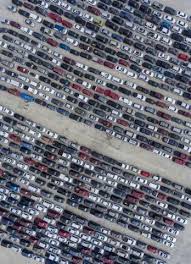
Motorists lined up to receive help from food bank
About 6,000 households preregistered for the food distribution on the Food Bank’s website. But thousands more showed up, hoping to put something on their tables.
Similar scenes occurred at food banks across the United States.
According to Feeding America, a national network of food banks, one in seven Americans relies on a local food bank to eat. Statistics from the U.S. Department of Agriculture reveal that 11.8 percent of Americans are food insecure.
But those who don’t need food banks face a serious question: “Is it better to order groceries or go to the store?”
A March 27 article in TIME addresses this and several other issues.
According to “Is It Safe to Go to the Grocery Store?”: “If you can afford to, it’s best to order food online, experts say. Delivery services dramatically reduce your contact with other people: you pay online, it’s packaged elsewhere and the food is left outside your door.”
A Centers for Disease Control and Prevention (CDC) spokesperson told TIME that “[currently] there is no evidence to support transmission of COVID-19 associated with food or food packaging.”

Centers for Disease Control and Prevention
But Jared Baeten, the vice dean of the School of Public Health and professor of global health, medicine and epidemiology at the University of Washington, advises that “for complete risk reduction, you might want to clean off your groceries,” while making sure to not get hazardous chemicals on what you eat.
Dr. Lauren Sauer, an assistant professor of emergency medicine at Johns Hopkins University School of Medicine, says your primary concern while shopping should be the risk of contracting the virus from other people, not surfaces. She also warns that “not everyone is going to be respectful of that six feet” of social distancing recommended by the CDC. If you see a crowded aisle, skip it or wait for people to leave.
A major casualty of COVID-19 has been the restaurant industry.
Forget about dining out at leisure: Restaurants have been closed across the country. Many of them still offer take-out—provided you can get there to pick up your order. But some that would have never dreamed of delivering their fare have hired platoons of drivers.
Another business that’s suffering badly is taxi services.
Fewer people are out on the streets. There are two reasons for this:
- Many people simply fear leaving their homes; and
- Stay-at-home orders by governors are restricting travel except for the most urgent needs.
So taxi drivers are hurting, making only a pittance of what they formerly made.
But there are risks for those who take cabs or buses.
Some cab drivers are reportedly sick with COVID-19 but, desperate for money, continue to haul passengers in extremely close confinement.
And while the CDC has urged Americans to keep at least six feet from their fellows, it’s impossible to do this on a crowded bus. Moreover, you can’t be certain that the seat you’re occupying hasn’t been sneezed or coughed on by a COVID-19 carrying passenger.
The White House and all prominent public health officials have urged people across the country to stay at home as much as possible to prevent the spread of the Coronavirus.
But as late as March 25, governors of five states—Arkansas, Iowa, Nebraska, North Dakota and South Dakota—had refused to issue lockdown orders for their residents. Three states issued only partial measures.
And the Right—headed by President Donald Trump—has erupted in outrage at being expected to show concern for their fellow Americans.
On April 15, Trump issued a series of tweets, calling on his supporters to “LIBERATE” Minnesota, Michigan and Virginia.
It’s no coincidence that all these states are headed by Democratic governors.And have been the targets of public protests by Right-wingers against stay-at-home orders.
Asked whether those states should lift their stay-at-home orders, Trump said, “No, but elements of what they’ve done are too much. …It’s too tough.”
2016 PRESIDENTIAL CAMPAIGN, 9/11 ATTACKS, ABC NEWS, ADOLF HITLER, AFGHANISTAH, ALTERNET, AMERICABLOG, ANDREW CUOMO, AP, ARMY CORPS OF ENGINEERS, BABY BOOMER RESISTANCE, BARACK OBAMA, BILL CLINTON, BLOOMBERG, BUSES, BUZZFEED, CBS NEWS, CENTERS FOR DISEASE CONTROL AND PREVENTION (CDC), CNN, CORONAVIRUS, COVID-19, CROOKS AND LIARS, DAILY KOZ, DAVID BROOKS, DELTA FORCE, DOCTORS, DONALD RUMSFELD, DONALD TRUMP, DRUDGE RETORT, EBOLA, ELDERLY, FACEBOOK, FEAR, FEDERAL EMERGENCY MANAGEMENT AGENCY, FEEDING AMERICA, FIREFIGHTERS, FIVETHIRTYEIGHT, FOOD BANKS, FOX NEWS NETWORK, FRANKLIN D. ROOSEVELT, GARBAGE MEN, GEORGE H.W. BUSH, GEORGE W. BUSH, GREEN BERETS, GRETCHEN WHITMER, GROCERY SHOPPING, HARPER’S MAGAZINE, IRAQ, JAY INSLEE, LAUREN SAUER, MASKS, MEDIA MATTERS, MIKE PENCE, MOTHER JONES, MOVEON, MSNBC, MUSLIMS, NATIONAL SECURITY COUNCIL, NBC NEWS, NEWSWEEK, NPR, NURSES, NURSING HOMES, OSBMA BIN LADEN, PANIC SHOPPING, PBS NEWSHOUR, PERSONAL PROTECTIVE EQUIPMENT (PPES), POLICE, POLITICO, POLITICUSUSA, RAW STORY, REUTERS, RUDY GIULIANI, SADDAM HUSSEIN, SALON, SAN ANTONIO FOOD BANK, SCHOOLS, SEAN HANNITY, SEAN HANNITY SHOW, SEATTLE TIMES, SLATE, SOCIAL DISTANCING, SPANISH INFLUENZA, STEVEN PRESSFIELD, TALKING POINTS MEMO, TAXIS, THE ATLANTIC, THE CHICAGO SUN-TIMES, THE CHICAGO TRIBUNE, THE DAILY BEAST, THE DAILY BLOG, THE GUARDIAN, THE HILL, THE HUFFINGTON POST, THE LOS ANGELES TIMES, THE NATION, THE NEW REPUBLIC, THE NEW YORK TIMES, THE PENTAGON, THE VILLAGE VOICE, THE WASHINGTON POST, THINKPROGRESS, TIM ZIEMER, TIME, TRUTHDIG, TRUTHOUT, TWITTER, TWO POLITICAL JUNKIES, U.S. NAVY SEALS, U.S. NEWS & WORLD REPORT, UPI, USA TODAY, WASHINGTON MONTHLY, WHITE HOUSE PANDEMIC OFFICE, WILHELM 1, WONKETTE, WORLD TRADE CENTER, YAMICHE ALCINDOR
In Bureaucracy, History, Medical, Military, Politics, Social commentary on April 21, 2020 at 12:11 am
One of the biggest differences between the September 11, 2001 terrorist attacks and the COVID-19 pandemic is this:
After 9/11, Americans drew strength from each other. During Coronavirus, Americans remain isolated and forced to rely on their own resources.
This has its origins at the top—with President Donald Trump.
Like Adolf Hitler, Trump likes to pit individuals and organizations against each other. Hitler, for example, would assign several agencies to tackle the same problem: “That way, the stronger one gets the job done,” he told his architect, Albert Speer.
This creates needless duplication of efforts and wasted resources. But it ensures that Trump—like Hitler—remains the final voice of authority, since so many others are competing for his favor and direction.
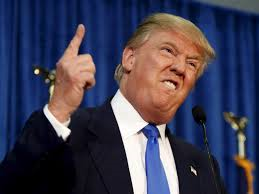
Donald Trump
This has not, however, worked out well for the 50 states that make up the United States of America.
During the Great Depression, President Franklin D. Roosevelt intervened powerfully to ensure that all Americans received the help they needed.
Trump has made it clear that each state is responsible for securing its needed supply of Personal Protective Equipment (PPEs) for its doctors and nurses aiding Coronavirus patients. This has resulted in a dog-eat-dog atmosphere of cutthroat competition and scarcity, with Americans not only fighting the virus but each other.
Even worse: Trump and Republicans are using a deadly plague as a weapon against those Americans they hate.
On March 26, during an interview on Fox News, Trump blamed the failures of his administration’s response to Coronavirus on Democratic state governors like Andrew Cuomo (NY), Jay Inslee (WA), and Gretchen Whitmer (MI).
On March 27, during his press briefing, Trump said he told Vice President Mike Pence—who’s officially in charge of the White House’s response effort—to not call Inslee and Whitmer because they weren’t “appreciative” enough of his efforts.
Trump said this even as hospitals in each of their states were being overwhelmed with Coronavirus patients.
“I tell him—I mean I’m a different type of person— I say, ‘Mike, don’t call the governor in Washington, you’re wasting your time with him. Don’t call the woman in Michigan,’” Trump said. “If they don’t treat you right, I don’t call.”
Trump said that when people criticized him, they were criticizing the federal government: “When they’re not appreciative to me, they’re not appreciative to the Army Corps, they’re not appreciative to FEMA [Federal Emergency Management Agency]. It’s not right.”
Trump also attacked Whitmer on Right-wing Fox News’ “Sean Hannity Show”: “I don’t know if she knows what’s going on, but all she does is sit there and blame the federal government.”
That same day—March 27—Whitmer told a Michigan radio station: “What I’ve gotten back is that vendors with whom we’ve procured contracts—they’re being told not to send stuff to Michigan. It’s really concerning. I reached out to the White House last night and asked for a phone call with the president, ironically at the time this stuff was going on.”
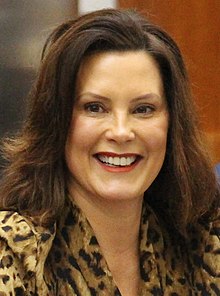
Gretchen Whitmer
A March 29 story in the Washington Monthly sheds light on what lay behind Whitmer’s inability to secure desperately-needed ventilators from her longtime vendors. Its headline ran: “What If Trump Decides to Save Republicans But Not Democrats?”
A sub-headline read: “He’s providing vital resources to red states and ignoring blue states.”

The Black Hand
Florida submitted a request to FEMA on March 11 for 430,000 surgical masks, 180,000 N95 respirators, 82,000 face shields and 238,000 gloves—and received a shipment with everything three days later.
On Fox News, Rudy Giuliani, Trump’s personal lawyer, bluntly told governors: “Take the blame when you have to. When you play with your boss, sometimes it’s better when you don’t win the golf game. He’s the boss, he’s got all the resources.”
The mentality of the Black Hand has come to the Oval Office.
The Washington Monthly story concludes ominously: “What if the White House simply gives all the masks and ventilators to red states and counties, leaving blue ones to struggle? What mechanisms of accountability are left?
“U.S. democracy wasn’t set up to deal with a president openly behaving like a James Bond villain while being protected by a political party behaving more like a mafia than a civic institution.”
But while corpses pile up and Trump wages repeated feuds with state governors, ordinary citizens daily face never-before-imagined fears and dangers.
Coronavirus has forced people to be apart, with each one forced to face his / her own fears of something that can’t be seen and can strike anywhere, anytime, at anyone.
Smart Americans no longer venture outdoors without wearing a mask—a medically-approved N95 one if possible, but at least a homemade one. It’s not unusual to see people wearing blue rubber gloves as well. 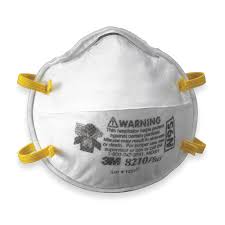
N95 mask
Before COVID-19, a masked man entering a bank meant: “This is a robbery!” Today, tellers aren’t surprised when they see a customer wearing a surgical mask.
Going to the supermarket used to be a routine matter: You would assume—usually correctly—that those items you wanted would be in stock. Then you would find and load them into your car.
No longer.
2016 PRESIDENTIAL CAMPAIGN, 9/11 ATTACKS, ABC NEWS, ADOLF HITLER, AFGHANISTAH, ALTERNET, AMERICABLOG, ANDREW CUOMO, AP, ARMY CORPS OF ENGINEERS, BABY BOOMER RESISTANCE, BARACK OBAMA, BILL CLINTON, BLOOMBERG, BUSES, BUZZFEED, CBS NEWS, CENTERS FOR DISEASE CONTROL AND PREVENTION (CDC), CNN, CORONAVIRUS, COVID-19, CROOKS AND LIARS, DAILY KOZ, DAVID BROOKS, DELTA FORCE, DOCTORS, DONALD RUMSFELD, DONALD TRUMP, DRUDGE RETORT, EBOLA, ELDERLY, FACEBOOK, FEAR, FEDERAL EMERGENCY MANAGEMENT AGENCY, FEEDING AMERICA, FIREFIGHTERS, FIVETHIRTYEIGHT, FOOD BANKS, FOX NEWS NETWORK, FRANKLIN D. ROOSEVELT, GARBAGE MEN, GEORGE H.W. BUSH, GEORGE W. BUSH, GREEN BERETS, GRETCHEN WHITMER, GROCERY SHOPPING, HARPER’S MAGAZINE, IRAQ, JAY INSLEE, LAUREN SAUER, MASKS, MEDIA MATTERS, MIKE PENCE, MOTHER JONES, MOVEON, MSNBC, MUSLIMS, NATIONAL SECURITY COUNCIL, NBC NEWS, NEWSWEEK, NPR, NURSES, NURSING HOMES, OSBMA BIN LADEN, PANIC SHOPPING, PBS NEWSHOUR, PERSONAL PROTECTIVE EQUIPMENT (PPES), POLICE, POLITICO, POLITICUSUSA, RAW STORY, REUTERS, RUDY GIULIANI, SADDAM HUSSEIN, SALON, SAN ANTONIO FOOD BANK, SCHOOLS, SEAN HANNITY, SEAN HANNITY SHOW, SEATTLE TIMES, SLATE, SOCIAL DISTANCING, SPANISH INFLUENZA, STEVEN PRESSFIELD, TALKING POINTS MEMO, TAXIS, THE ATLANTIC, THE CHICAGO SUN-TIMES, THE CHICAGO TRIBUNE, THE DAILY BEAST, THE DAILY BLOG, THE GUARDIAN, THE HILL, THE HUFFINGTON POST, THE LOS ANGELES TIMES, THE NATION, THE NEW REPUBLIC, THE NEW YORK TIMES, THE PENTAGON, THE VILLAGE VOICE, THE WASHINGTON POST, THINKPROGRESS, TIM ZIEMER, TIME, TRUTHDIG, TRUTHOUT, TWITTER, TWO POLITICAL JUNKIES, U.S. NAVY SEALS, U.S. NEWS & WORLD REPORT, UPI, USA TODAY, WASHINGTON MONTHLY, WHITE HOUSE PANDEMIC OFFICE, WILHELM 1, WONKETTE, WORLD TRADE CENTER, YAMICHE ALCINDOR
In Bureaucracy, History, Medical, Military, Politics, Social commentary on April 20, 2020 at 1:01 am
COVID-19 may well change our lives more fundamentally than even 9/11.
Yes, the terrorist attacks on the Twin Towers and the Pentagon were horrific—and costly in lives. Almost 3,000 Americans died that day.
After decades of ignoring Islamic terrorist attacks on American lives and property throughout the Middle East and the rest of the world, America shook off its complacency.
First came a much-anticipated invasion of Afghanistan–the “nation” which had given shelter to 9/11 mastermind Osama bin Laden. Starting on October 7, 2001, by December American planes and ground forces swept bin Laden’s hosts, the Taliban, from power.
Bin Laden disappeared into Pakistan, but was shot to death by United States Navy SEALs on May 1, 2011.
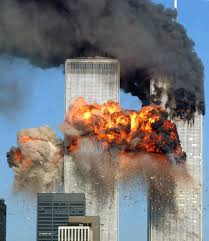
World Trade Center – September 11, 2001
The 9/11 attacks also resulted in unforeseen events. President George W. bush used them as an excuse to invade Iraq in 2003 and topple its dictator, Saddam Hussein, from power.
Bush had long blamed Hussein for not folding after the President’s father, George H.W. Bush, attacked Iraq in 1991 after its invasion of Kuwait. Hussein’s failure to fall from power, believed Bush Junior, had resulted in his father’s losing a second White House term in 1992 to Bill Clinton.
But once the United States invaded Afghanistan and Iraq, it got stuck there—and remains so to this day. What started as a purely military mission became a “nation-building” one.
Yet another result of the 9/11 attacks was a complete restructuring of the United States military. In the past, Americans had excelled in set-piece battles and wars.
Americans have never forgotten their overwhelming victories over the Germany of Kaiser Wilhelm II in 1918 and Fuhrer Adolf Hitler in 1945. But when it came to fighting enemies where guerrilla warfare negated overwhelming military power, the United States had done poorly—first in Korea (1950-1953) and then in Vietnam (1960-1975).
As a result, Secretary of Defense Donald Rumsfield reorganized the Pentagon’s bureaucracy, assigning highest priority to building unconventional military units such as the Army’s Green Berets and Delta Force, and the Navy’s SEALs.
These were all major changes resulting from the 9/11 attacks. They cost billions of dollars and got huge publicity. But they didn’t affect the lives of everyday Americans as intimately as has the advent of COVID-19, also known as Coronavirus.
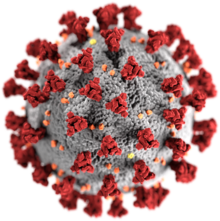
Coronavirus
First, COVID-19 has killed far more Americans than 9/11. As before mentioned, 9/11 snuffed out the lives of almost 3,000 Americans. But as of April 20, more than 41,114 Americans have died of COVID-19. And the plague has not finished its murderous work.
Second, while 9/11 affected two American cities—New York and Washington, D.C.—COVID-19 has spread throughout the country. As epicenters like New York City, Los Angeles and Chicago gain national attention, the virus continues to seep into rural centers—especially in the South and Midwest.
Third, the combination of evil and incompetence of the Trump administration has shaken Americans’ faith in the ability—and even the willingness—of the Federal Government to protect them.
Conservative New York Times columnist David Brooks attacked President Donald Trump in terms usually reserved for serial killers. On the March 13 edition of The PBS Newshour, he said:
“This is what happens when you elect a sociopath as president, who doesn’t care, who has treated this whole thing for the past month as if it’s about him. ‘How do people like me?’ Minimizing the risks. ‘Does the stock market reflect well on me?’ And he hasn’t done the things a normal human being would do, which was to, let’s take precautions….
“And he’s incapable of that. And he’s even created an information distortion field around him.”
In 2014, following the Ebola outbreak in West Africa, President Barack Obama created the White House Pandemic Office, run by the White House’s National Security Council (NSC).

Barack Obama
Heading it was Rear Admiral Tim Ziemer. Under President George W. Bush, he had successfully fought malaria overseas. His topflight team of infectious disease and public health experts was creating a national bio-defense strategy. Their goal: Coordinate agencies to make the United States more resilient to the threat of epidemics and biological warfare.
In May, 2018, Trump ordered the NSC’s global health security unit shut down. The reason: Trump’s pathological jealousy of and hatred for Obama.
Compounding that outrage: From January to early March, 2020, Trump and his allies within the Republican party and Fox News Network repeatedly assured Americans they had nothing to fear.
Barnstorming the country in a series of hate-filled political rallies, Trump told his supporters:
- January 22: “We have it totally under control. It’s one person coming in from China.”
- February 24: “The Coronavirus is very much under control in the USA.”
- February 26: “The 15 cases within a couple of days is going to be down to close to zero.”
- February 27: “One day it’s like a miracle, it will disappear.”
- February 28: “Now the Democrats are politicizing the Coronavirus….We did one of the great jobs….One of my people came up to me and said, ‘Mr. President, they tried to beat you on Russia, Russia, Russia’….They couldn’t do it. They tried the impeachment hoax….It’s all turning, they lost….And this is their new hoax.”
- March 6: “I think we’re doing a really good job in this country of keeping it down. A tremendous job of keeping it down.”
2003 IRAQ WAR, 401(KS), 9/11 TERRORIST ATTACKS, ABC NEWS, ALTERNET, AMERICABLOG, AP, ARNOLD SCHWARTZNEGGER, ASIANS, BABY BOOMER RESISTANCE, BARACK OBAMA, BILL CLINTON, BLACKS, BUZZFEED, CBS NEWS, CNN, COLD WAR, CORONAVIRUS, CROOKS AND LIARS, DAILY KOZ, DEMOCRATS, DONALD TRUMP, DRUDGE RETORT, ECONOMY, FACEBOOK, FIVETHIRTYEIGHT, FUNDAMENTALIST RELIGION, GEORGE H.W. BUSH, HARPER’S MAGAZINE, HILLARY CLINTON, HISPANICS, ISLAM, ISRAELIS, JOHN OLIVER, MEDIA MATTERS, MERYL STREEP, MOTHER JONES, MOVEON, MSNBC, MUSLIMS, NBC NEWS, NEIL YOUNG, NEWSWEEK, NPR, PBS NEWSHOUR, POLITICO, POLITICUSUSA, PRISONERS-OF-WAR, RAW STORY, REPUBLICANS, REUTERS, SALON, SARAH HUCKABEE SANDERS, SEATTLE TIMES, SLATE, SOVIET UNION, SUICIDE BOMBERS, SUSAN PAGE, TALKING POINTS MEMO, THE ATLANTIC, THE CHICAGO SUN-TIMES, THE CHICAGO TRIBUNE, THE DAILY BEAST, THE DAILY BLOG, THE DISABLED, THE GUARDIAN, THE HILL, THE HUFFINGTON POST, THE LOS ANGELES TIMES, THE NATION, THE NEW REPUBLIC, THE NEW YORK TIMES, THE VILLAGE VOICE, THE WASHINGTON POST, THINKPROGRESS, TIME, TRUTHDIG, TRUTHOUT, TWITTER, TWO POLITICAL JUNKIES, U.S. NEWS & WORLD REPORT, UPI, USA TODAY, WOMEN, WONKETTE, WORLD WAR ii
In Bureaucracy, History, Military, Politics, Social commentary on March 19, 2020 at 12:07 am
There’s a reason why Republicans win so many elections—especially at the Presidential level.
Republicans learned long ago that most voters aren’t moved by appeals to their rationality. Instead, what counts with them is emotions.
And Republicans long ago became experts at appealing to these—especially the baser ones.
For Republicans, the Big Three are:
Hatred
Greed
Fear
Hatred: There can be no better example of a politician who has played successfully on the hatred of American voters than Donald Trump. If Barack Obama was the 2008 candidate of “Hope and Change,” then Trump was the 2016 candidate of “Hate and Fear.”
From June 15, 2015, when he launched his Presidential campaign, until October 24, 2016, Trump fired almost 4,000 angry, insulting tweets at 281 people and institutions that had somehow offended him.
Donald Trump
The New York Times needed two full pages of its print edition to showcase them.
Among his targets:
- Hillary Clinton
- The New York Times
- President Barack Obama
- CNN
- Actress Meryl Streep
- The Washington Post
- Singer Neil Young
- Democrats
- Actor Arnold Schwarzenegger
- Republicans
- Comedian John Oliver
- The State of New Jersey
- Beauty pageant contestants
Others he clearly delighted in insulting during the campaign included:
- Women
- Blacks
- Hispanics
- Asians
- Muslims
- The disabled
- Prisoners-of-war
Greed: On August 23, 2018, Trump, as President, offered additional evidence that he’s “not like other people.” He did so by giving an unprecedented reason why he shouldn’t be impeached: “I tell you what, if I ever got impeached, I think the market would crash, I think everybody would be very poor.”
White House Press Secretary Sarah Huckabee Sanders doubtless spoke for millions of Trump supporters when she said, on June 4, 2018:
“Since taking office, the President has strengthened American leadership, security, prosperity, and accountability. And as we saw from Friday’s jobs report, our economy is stronger, Americans are optimistic, and business is booming.”
Susan Page, Washington Bureau Chief for USA TODAY, summed up the popularity of the “Greed Appeal” to voters on the March 13 edition of “Washington Week in Review”:
“USA Today has conducted a poll about the economic concerns that are out there….And Congress—you’re seeing fear in this country about the economy.
“In fact, when we did this poll this week about how Americans’ lives have been affected by the Coronavirus, people expressed more concern about the economic and financial effect than they did about the health effect. And you know, that goes to why this matters so much to President Trump.
“How many voters have you talked to who said, you know, I don’t really like President Trump’s tweets, but I like what I see happening in my 401(k)? And when they look at their 401(k) this week, it may not look quite as bright as it did before.”
Fear: From the end of World War II in 1945 to the collapse of the Soviet Union in 1991, the Enemy of Choice for Republicans was the Communists.
Millions of Americans were so pathologically frightened by “The Red Menace” that any Democratic politician libeled as a “Communist,” “Comsymp,” “fellow traveler” was considered at least a potential traitor, if not an actual one.
Among the Republican politicians who rode to victory on a wave of Red hysteria: Richard Nixon and Joseph McCarthy
Even as late as 1992, President George H.W. Bush and the Republican establishment charged that Arkansas Governor Bill Clinton might be a KGB plant. Their evidence: During his tenure at Oxford University in 1969-70, Clinton had briefly visited Moscow—and thus might have been turned into a “Manchurian Candidate.”
After the collapse of the Soviet Union, Right-wingers had to settle for attacking their opponents as “liberals” and “soft on crime.” But these charges didn’t carry the same weight as “Communists” and “traitors.”
Then, on September 11, 2001, Republicans—and their Right-wing supporters—at last found a suitable replacement for the Red Menace: The Maniacal Muslim.
World Trade Center on September 11, 2001
Led by President George W. Bush, Republicans used fear of Muslims to con and bully the nation into a needless, bloody, budget-busting war on Iraq. Seventeen years later, that war continues.
So how can Democrats counter such appeals? By making equally ruthless use of them.
For example—Fear: Republicans rely heavily on support from rural America—where fundamentalist religious beliefs hold sway. Instead of ridiculing those beliefs, Democrats—even those who are atheists—should make use of them.
How?
- By recognizing that fundamentalists believe that widespread plague is a sign of God’s displeasure; and
- Repeatedly proclaiming that the Coronavirus is God’s judgment on a sinful nation for electing Donald Trump President.
Democrats must closely study the beliefs of their sworn enemies and make skillful use of them—as the Israelis have done.
Suicide bombers’ attacks in Israel sharply decreased after Israelis started patrolling with bomb-sniffing dogs.
Why?
Islamics believe that dogs are defiling creatures—and that if their blood is mingled with that of a dog, they won’t go to Heaven to claim those 72 willing virgins.
To defeat your enemy, you must learn his weaknesses—and ruthlessly attack them.
2016 PRESIDENTIAL ELECTION, 2020 PRESIDENTIAL ELECTION, 9/11 ATTACKS, AARON COPELAND, ABC NEWS, AFGHANISTAN, ALEXANDER SHUSTOROVICH, ALTERNET, ANDREW INTRATER, ANTI-COMMUNISM, ANTIWAR DEMONSTRATIONS, AP, ARMY-MCCARTHY HEARINGS, ARTHUR MILLER, ATOMIC BOMB, BILL CLINTON, BUZZFEED, CBS NEWS, CENTRAL AMERICA, CHAING KAI-SHEK, CHARLIE CHAPLIN, CIA, CINDY HYDE-SMITH, CNN, CROOKS AND LIARS, CUBAN MISSILE CRISIS, DAILY KOZ, DASHIELL HAMMETT, DELORES DEL RIO, DEPARTMENT OF HOMELAND SECURITY, DONALD TRUMP, DONALD TRUMP’S INAUGURAL COMMITTEE, DWIGHT D. EISENHOWER, EDWARD G. ROBINSON, EDWARD R. MURROW, ELMER BERNSTEIN, FACEBOOK, FBI, FEDERAL ELECTION COMMISSION, GEORGE C. MARSHALL, GEORGE H.W. BUSH, H.L. HUNT, HARRY S. TRUMAN, HILLARY CLINTON, HOUSE JUDICIARY COMMITTEE, HOWARD DA SILVA, HOWARD FAST, HOWARD HUGHES, INTERNET RESEARCH AGENCY, IRWIN SHAW, J. ROBERT OPPENHEIMER, JAMES COMEY, JIMMY CARTER, JOHN BIRCH SOCIETY, JOHN F. KENNEDY, JOHN GARFIELD, JOHN KASICH, JOHN MCCAIN, JOHN STEINBECK, JOSEPH R. MCCARTHY, JOSEPH STALIN, LEE GRANT, LEN BLAVATNIK, LILLIAN HELLMAN, LINDSEY GRAHAM, LLOYD BRIDGES, LUCILLE BALL, LYNDON B. JOHNSON, MAIN INTELLIGENCE DIRECTORATE, MAO TSE-TUNG, MARCO RUBIO, MITCH MCCONNELL, MITCH MCCONNELL’S SENATE LEADERSHIP FUN, MOTHER JONES, MOVEON, MSNBC, MUSLIMS, NATIONAL SECURITY AGENCY, NAZI GERMANY, NBC NEWS, NEWSWEEK, NORTH ATLANTIC TREATY ORGANIZATION (NATO), NPR, OFFICE OF THE DIRECTOR OF NATIONAL INTELLIGENCE, PBS NEWSHOUR, PETE SEEGER, POLITICO, RAW STORY, REPUBLICAN PARTY, REUTERS, RICHARD M. NIXON, ROBERT MUELLER, Ronald Reagan, RUTH GORDON, SALON, SCOTT WALKER, SEATTLE TIMES, SIMON KUKES, SLATE, SOVIET UNION, THE ATLANTIC, THE CHICAGO SUN-TIMES, THE CHICAGO TRIBUNE, THE DAILY BEAST, THE GUARDIAN, THE HILL, THE HUFFINGTON POST, THE LOS ANGELES TIMES, THE NATION, THE NEW YORK TIMES, THE WASHINGTON POST, TIME, TWITTER, U.S. NEWS & WORLD REPORT, UNITED STATES HOUSE OF REPRESNTATIVES, UNITED STATES SENATE, UPI, USA TODAY, VIETNAM WAR, VLADIMIR PUTIN, WIKILEAKS, WILLIAM L. SHIRER, WORLD WAR 11, WORLD WAR ii, ZERO MOSTEL
In Bureaucracy, History, Military, Politics, Social commentary on November 5, 2019 at 12:10 am
From 1945 to 2015, it was unthinkable for a Republican Presidential candidate to pay tribute to a Soviet dictator.
But that utterly changed when Donald J. Trump, a “reality TV” host with longstanding financial ties to Russian oligarchs, ran for President of the United States.
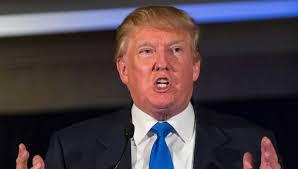
Donald Trump
The reason for the Trump-Putin bromance: Each had something to offer the other.
Putin wanted the United States to ditch the North Atlantic Treaty Organization (NATO) alliance, which had preserved Western Europe from Russian aggression since World War II. And Trump had often attacked America’s funding of NATO as a drain on the American economy.
And Trump wanted to be President. For this, Putin could supply Internet trolls to confuse voters with falsified news—and even the hacking of key voting centers.
And monies. These Russian monies were officially classified as “campaign contributions,” not bribes.
Special Counsel Robert S. Mueller III Mueller spent almost two years uncovering links between Russian Intelligence agents and members of Donald Trump’s Presidential campaign.
On July 24, he addressed Congress on Russia’s subversion of the 2016 Presidential election.
“Over the course of my career, I’ve seen a number of challenges to our democracy,” Mueller declared to members of the House Judiciary Committee.
“The Russian government’s effort to interfere in our election is among the most serious. As I said on May 29, this deserves the attention of every American.
“It wasn’t a single attempt. They’re doing it as we sit here. And they expect to do it during the next campaign.”
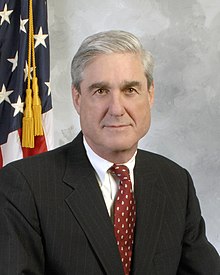
Robert Mueller
In his report, Mueller documented years of meddling in American politics by the Internet Research Agency, which runs the Kremlin’s online disinformation efforts from its headquarters in St. Petersburg.
The Agency reached 126 million Americans through fake accounts on Facebook. Its messages communicated with unaware members of the Trump campaign, and even prompted real-life rallies that mobilized crowds of unwitting voters.
Hours later that same day, Senator Cindy Hyde-Smith (R-Mississippi) blocked the passage of three bills designed to tighten election security at the federal level. She claimed that Congress had already responded to election security needs for the 2020 Presidential election.
Senate Majority Leader Mitch McConnell (R-Kentucky) came to the Senate floor the next day to personally object to House-passed legislation backed by Democrats.
Nor is Trump the only Republican receiving “help” from Putin. A network of Russian oligarchs—all of them answerable to Putin—has been increasingly contributing to top Republicans.
These Russian monies are officially classified as “campaign contributions,” not bribes—which, in fact, they are.
According to the Federal Election Commission:
One such major contributor is Len Blavatnik, who holds citizenship in both the United States and the United Kingdom. During the 2015-16 election cycle, he proved one of the largest donors to GOP Political Action Committees (PACs).
Blavatnik’s net worth is estimated at $20 billion. Before 2016, he donated to both Democrats and Republicans in meager amounts. But in 2016, he gave $6.35 million to GOP PACs.
Millions of dollars went to top Republican leaders—such as Senators Mitch McConnell (Kentucky), Marco Rubio (Florida) and Lindsey Graham (South Carolina).
Specifically, he contributed:
- A total of $1.5 million to PACs associated with Rubio.
- $1 million to Trump’s Inaugural Committee.
- $41,000 to both Republicans and Democrats in 2017.
- $1 million to McConnell’s Senate Leadership Fund.
- $3.5 million to a PAC associated with McConnell.
- $1.1 million to Unintimidated PAC, associated with Wisconsin Governor Scott Walker.
- $200,000 to the Arizona Grassroots Action PAC, associated with the late Arizona Senator John McCain.
- $250,000 to New Day for America PAC, associated with Ohio Governor John Kasich.
- $800,000 to the Security is Strength PAC, associated with Senator Lindsey Graham.
![]()
![]() Another Russian oligarch, Alexander Shustorovich, contributed $1 million to Trump’s Inaugural Committee.
Another Russian oligarch, Alexander Shustorovich, contributed $1 million to Trump’s Inaugural Committee.
Altogether, four Russian oligarchs—Blavatnik, Shustorovich, Andrew Intrater and Simon Kukes—contributed $10.4 million from the start of the 2015-16 election cycle through September 2017. Of this, 99% went to Republicans.
As Senate Majority Leader, Mitch McConnell participated in high-level intelligence briefings in 2016. From agencies such as the FBI, CIA and the code-cracking National Security Agency, he learned that the Russians were trying to subvert the electoral process.

In October, 2016, the Department of Homeland Security (DHS) and the Office of the Director of National Intelligence (DNI) issued a joint statement: The Russian government had directed the effort to subvert the 2016 Presidential election.
Two weeks later, McConnell’s PAC accepted a $1 million donation from Blavatnik.
On March 30, 2017, McConnell’s PAC accepted another $1 million from Blavatnik.
This is just 10 days after former FBI Director James Comey testified before the House Intelligence Committee about Russia’s efforts to subvert the 2016 election.
So, what has changed in the Republican Party? Essentially nothing.
Its enemies changed—from Russian Communists to American liberals. But its goal remains the same: The quest for absolute power.
When Americans feared Communism, Republicans depicted themselves as the only ones who could be trusted to protect the United States. Big contributions poured in from Right-wing billionaires like H.L. Hunt and Howard Hughes.
But then Republicans found they could enrich themselves and stay in power via Russian “campaign contributions.” So long as they did Putin’s bidding, the rubles would roll in.
So for a party of power-drunk would-be dictators, the decision was simple: Better Red than un-elected.
2016 PRESIDENTIAL ELECTION, 2020 PRESIDENTIAL ELECTION, 9/11 ATTACKS, AARON COPELAND, ABC NEWS, AFGHANISTAN, ALEXANDER SHUSTOROVICH, ALTERNET, ANDREW INTRATER, ANTI-COMMUNISM, ANTIWAR DEMONSTRATIONS, AP, ARMY-MCCARTHY HEARINGS, ARTHUR MILLER, ATOMIC BOMB, BILL CLINTON, BUZZFEED, CBS NEWS, CENTRAL AMERICA, CHAING KAI-SHEK, CHARLIE CHAPLIN, CIA, CINDY HYDE-SMITH, CNN, CROOKS AND LIARS, CUBAN MISSILE CRISIS, DAILY KOZ, DASHIELL HAMMETT, DELORES DEL RIO, DEPARTMENT OF HOMELAND SECURITY, DONALD TRUMP, DONALD TRUMP’S INAUGURAL COMMITTEE, DWIGHT D. EISENHOWER, EDWARD G. ROBINSON, EDWARD R. MURROW, ELMER BERNSTEIN, FACEBOOK, FBI, FEDERAL ELECTION COMMISSION, GEORGE C. MARSHALL, GEORGE H.W. BUSH, H.L. HUNT, HARRY S. TRUMAN, HILLARY CLINTON, HOUSE JUDICIARY COMMITTEE, HOWARD DA SILVA, HOWARD FAST, HOWARD HUGHES, INTERNET RESEARCH AGENCY, IRWIN SHAW, J. ROBERT OPPENHEIMER, JAMES COMEY, JIMMY CARTER, JOHN BIRCH SOCIETY, JOHN F. KENNEDY, JOHN GARFIELD, JOHN KASICH, JOHN MCCAIN, JOHN STEINBECK, JOSEPH R. MCCARTHY, JOSEPH STALIN, LEE GRANT, LEN BLAVATNIK, LILLIAN HELLMAN, LINDSEY GRAHAM, LLOYD BRIDGES, LUCILLE BALL, LYNDON B. JOHNSON, MAIN INTELLIGENCE DIRECTORATE, MAO TSE-TUNG, MARCO RUBIO, MITCH MCCONNELL, MITCH MCCONNELL’S SENATE LEADERSHIP FUN, MOTHER JONES, MOVEON, MSNBC, MUSLIMS, NATIONAL SECURITY AGENCY, NAZI GERMANY, NBC NEWS, NEWSWEEK, NORTH ATLANTIC TREATY ORGANIZATION (NATO), NPR, OFFICE OF THE DIRECTOR OF NATIONAL INTELLIGENCE, PBS NEWSHOUR, PETE SEEGER, POLITICO, RAW STORY, REPUBLICAN PARTY, REUTERS, RICHARD M. NIXON, ROBERT MUELLER, Ronald Reagan, RUTH GORDON, SALON, SCOTT WALKER, SEATTLE TIMES, SIMON KUKES, SLATE, SOVIET UNION, THE ATLANTIC, THE CHICAGO SUN-TIMES, THE CHICAGO TRIBUNE, THE DAILY BEAST, THE GUARDIAN, THE HILL, THE HUFFINGTON POST, THE LOS ANGELES TIMES, THE NATION, THE NEW YORK TIMES, THE WASHINGTON POST, TIME, TWITTER, U.S. NEWS & WORLD REPORT, UNITED STATES HOUSE OF REPRESNTATIVES, UNITED STATES SENATE, UPI, USA TODAY, VIETNAM WAR, VLADIMIR PUTIN, WIKILEAKS, WILLIAM L. SHIRER, WORLD WAR ii, ZERO MOSTEL
In Bureaucracy, History, Military, Politics, Social commentary on November 4, 2019 at 12:15 am
There was a time when Republicans saw—and portrayed—themselves as America’s foremost defenders against Communism.
This was particularly true during the early 1950s. Case in point: Wisconsin United States Senator Joseph R. McCarthy.
Elected to the Senate in 1946, he rose to national prominence on February 9, 1950, after giving a fiery speech in Wheeling, West Virginia:
“The State Department is infested with communists. I have here in my hand a list of 205—a list of names that were made known to the Secretary of State as being members of the Communist Party and who nevertheless are still working and shaping policy in the State Department.”
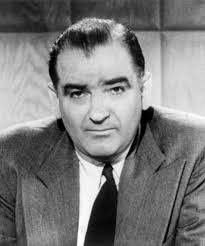
Joseph McCarthy
Americans were already growing increasingly fearful of Communism:
- Soviet dictator Joseph Stalin had not withdrawn the Red Army from the countries it had occupied in Eastern Europe during World War II.
- In 1948, the Soviet Union developed—and demonstrated—its own atomic bomb, an achievement U.S. scientists had claimed would not happen for at least a decade.
- In 1949, China fell to the triumphant armies of Mao Tse Tung. Generalissimo Chaing Kai Shek was driven from mainland China to the tiny island of Taiwan.
Anti-communism as a lever to political advancement sharply accelerated following McCarthy’s speech.
No American—no matter how prominent—was safe from the accusation of being a Communist or a Communist sympathizer—”a Comsymp” or “fellow traveler” in the language of the era.
Among those accused:
- Secretary of State George C. Marshall, who had overseen America’s strategy for defeating Nazi Germany and Imperial Japan.
- President Harry S. Truman.
- Playwrights Lillian Hellman and Arthur Miller.
- Folksinger Pete Seeger.
- Actors Charlie Chaplin, Zero Mostel, Lloyd Bridges, Howard Da Silva, Edward G. Robinson and John Garfield.
- Composers Arron Copland and Elmer Bernstein.
- Physicist J. Robert Oppenheimer, who presided over the creation of America’s atomic bomb, thus forcing Japan to surrender.
- Actresses Lee Grant, Delores del Rio, Ruth Gordon and Lucille Ball.
- Journalists Edward R. Murrow and William L. Shirer, who had chronicled the rise of Nazi Germany.
- Writers Irwin Shaw, Howard Fast, John Steinbeck and Dashiell Hammett
Even prominent Republicans became targets for slanderous attacks on their patriotism. The most prominent of these: President Dwight D. Eisenhower—was labeled ”a conscious, dedicated agent of the Communist Conspiracy” by Robert Welch, founder of the John Birch Society in 1958.
In 1953, McCarthy attacked the leadership of the United States Army as “a hotbed of traitors” and convened an inquiry through the Senate Permanent Subcommittee on Investigations.
But the hearings exposed McCarthy as a bullying demagogue. A Senate committee condemned his behavior for “bring[ing] the Senate into dishonor and disrepute.” Shunned in disgrace by his onetime colleagues, McCarthy drowned his sorrows in alcohol, dying in 1957.
But even without McCarthy, Republicans rode the issue of anti-Communism to victory from 1948 to 1992. “Respectable” anti-Communists—like Richard M. Nixon—depicted themselves as the only ones who could be trusted to safeguard America.
Republicans held the White House for eight years under Dwight D. Eisenhower, then lost it in 1960 to John F. Kennedy and again in 1964 to Lyndon B. Johnson.
By 1968, with the nation mired in Vietnam and convulsed by antiwar demonstrations and race riots, Americans elected Richard Nixon, who preyed upon their fears and hates of blacks and “the Communist menace.”
The same strategy re-elected him in 1972.
Jimmy Carter won the Presidency in 1976 and lost it in 1980 to Ronald Reagan. And Republicans held the White House until 1992.
Upon taking office as President in 1981, Ronald Reagan decided to end the “stalemate” of “containing” Communism. He intended to “roll it back.”
American proxies fought Soviet proxies in Afghanistan and Central America, but the world escaped nuclear holocaust.
During the 1980s and 1990s, Republicans continued to accuse Democrats of being devious agents—or at least unwitting pawns—of “the Communist conspiracy.”
In 1992, President George H.W. Bush and the Republican establishment charged that Arkansas Governor Bill Clinton might be a KGB plant.
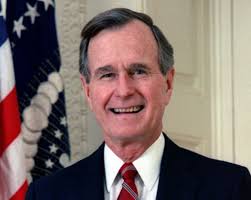
George H.W. Bush
Their “evidence”: During his tenure at Oxford University in 1969-70, Clinton had briefly visited Moscow.
After the Soviet Union’s collapse in 1991, Republicans found that accusing Democrats of being “Commies” didn’t carry the same weight.
So they turned to “domestic enemies” to rail—and run—against: Liberals, blacks, Hispanics, “uppity” women, war protesters, lesbians, gays, and—after 9/11—Muslims.
From 1945 to 2015, it was unthinkable for a Republican Presidential candidate to pay tribute to a Soviet dictator.
But that utterly changed when Donald J. Trump, a “reality TV” host with longstanding financial ties to Russian oligarchs, ran for President of the United States.
Donald Trump
Trump lavishly praised Russian President Vladimir Putin—and even invited him to directly interfere in the 2016 Presidential race.
The reason for the Trump-Putin bromance: Each had something to offer the other.
Putin wanted the United States to ditch the North Atlantic Treaty Organization (NATO) alliance, which had preserved Western Europe from Russian aggression since World War II. And Trump had often attacked America’s funding of NATO as a drain on the American economy.
And Trump wanted to be President. For this, Putin could supply monies, Internet trolls to confuse voters with falsified news—and even the hacking of key voting centers.
ABC NEWS, ALTERNET, AMERICABLOG, AMERICAN EMPIRE, AP, BABY BOOMER RESISTANCE, BILL CLINTON, BUREAUCRACY, BUZZFEED, CBS NEWS, CHRIS MATHEWS, CNN, CROOKS AND LIARS, DAILY KOZ, DONALD TRUMP, DWIGHT EISENHOWER, FACEBOOK, FBI, FIVETHIRTYEIGHT, FRANKLIN D. ROOSEVELT, GEORGE H.W. BUSH, GEORGE W. BUSH, GERALD R. FORD, HARRY S. TRUMAN, JEB BUSH, JIMMY CARTER, JOHN F. KENNEDY, LYNDON B. JOHNSON, MOTHER JONES, MOVEON, MSNBC, NBC NEWS, NEWSWEEK, NIGEL HAMILTON, NPR, PBS NEWSHOUR, POLITICO, POLITICUSUSA, RAW STORY, REPUBLICAN PARTY, REUTERS, SALON, SEATTLE TIMES, SLATE, SUETONIUS, SYRIAN CIVIL WAR, SYRIAN REFUGEES, TALKING POINTS MEMO, TERRORISM, THE ATLANTIC, THE CHICAGO SUN-TIMES, THE CHICAGO TRIBUNE, THE DAILY BEAST, THE DAILY BLOG, THE GUARDIAN, THE HILL, THE HUFFINGTON POST, THE LOS ANGELES TIMES, THE NATION, THE NEW YORK TIMES, THE TWELVE CAESARS, THE WASHINGTON POST, THINKPROGRESS, TIME, TRUTHDIG, TWITTER, U.S. NEWS & WORLD REPORT, UPI, USA TODAY
In Bureaucracy, History, Law Enforcement, Military, Politics, Social commentary on September 11, 2019 at 12:03 am
On October 16, 2015, then-Republican Presidential candidate Donald Trump told a brutal truth to take down his opponent, Jeb Bush, former governor of Florida.
Interviewed on Bloomberg TV, Trump said what—to Republicans—had been the unsayable about former President George W. Bush: “I mean, say what you want, the World Trade Center came down during his time.”
“Hold on,” said correspondent Stephanie Ruhle, “you can’t blame George Bush for that.”
“He was President, okay? Blame him or don’t blame him, but he was President,” Trump said. “The World Trade Center came down during his reign.”
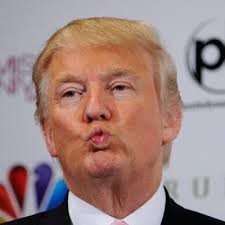
Donald Trump
Immediately after Trump’s remarks, the Right exploded.
Representative Peter King (R-NY) said that no one saw the 9/11 attacks coming and that blaming the former president was a cheap shot.
Speaking on Right-wing Fox Radio, King added: “I think Donald Trump is totally wrong there. That sounds like a Michael Moore talking point.”
And Jeb Bush rushed to his brother’s defense on Twitter: “How pathetic for @realdonaldtrump to criticize the president for 9/11. We were attacked & my brother kept us safe.”
Of course, “my brother” didn’t keep safe those 3,000 Americans who died on 9/11.
Nor did Jeb mention that, during his first eight months in office before September 11, “my brother” was on vacation 42% of the time.
But holding Bush accountable for the September 11, 2001 terror attacks on the Pentagon and World Trade Center is taboo for Right-wing Republicans.
Conversely, Republicans spent four years blaming President Barack Obama for the deaths of four Americans killed in an American consulate in Benghazi, Libya, in 2012.
The World Trade Center on September 11, 2001
Fortunately, British historian Nigel Hamilton has brutally laid bare the facts of this needless tragedy.
Hamilton is the author of several acclaimed political biographies, including JFK: Reckless Youth and Bill Clinton: Mastering the Presidency.
His book: American Caesars: The Lives of the Presidents from Franklin D. Roosevelt to George W. Bush, appeared in 2010.
It was inspired by a classic work of ancient biography: The Twelve Caesars, by Gaius Suetonius Tranquillus—known as Suetonius.
Suetonius, a Roman citizen and historian, had chronicled the lives of the first 12 Caesars of Imperial Rome: Julius Caesar, Augustus, Tiberius, Caligula, Claudius, Nero, Galba, Otho, Vitellius, Vespasian, Titus and Domitian.
Hamilton wanted to examine post-World War II United States history as Suetonius had examined that of ancient Rome: Through the lives of the 12 “emperors” who had held the power of life and death over their fellow citizens—and those of other nations.

For Hamilton, the “greatest of American emperors, the Caesar Augustus of his time,” was Franklin D. Roosevelt, who led his country through the Great Depression and World War II.
His “”great successors” were Harry S. Truman, Dwight D. Eisenhower and John F. Kennedy—who, in turn, contained the Soviet Union abroad and presided over sustained economic prosperity at home.
By contrast, “arguably the worst of all the American Caesars” was “George W. Bush, and his deputy, Dick Cheney, who willfully and recklessly destroyed so much of the moral basis of American leadership in the modern world.”
Among the most lethal of Bush’s offenses: The appointing of officials who refused to take seriously the threat posed by Al-Qaeda.
These included:
- Paul Wolfowitz, the deputy Secretary of Defense: “I don’t understand why we are beginning by talking about this one man, bin Laden.”
- National Security Adviser Condoleeza Rice initially refused to hold a cabinet-level meeting on the subject. Then she insisted the matter be handled only by a more junior Deputy Principals meeting in April, 2001.
- Vice President Dick Cheney focused his attention on fomenting a war against Iraq.
- Secretary of Defense Donald Rumsfeld repeatedly ignored American Intelligence warnings that Al-Qaeda was planning a major attack on the American mainland.
The only major administration official who did take Al-Qaeda seriously was Richard Clarke, the chief counter-terrorism adviser on the National Security Council. But Clarke’s position didn’t give him Cabinet-level rank.
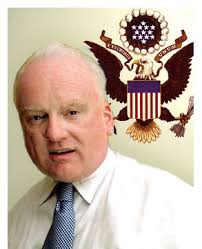
Richard Clarke
This put him at a severe disadvantage when dealing with higher-ranking Bush officials—such as Cheney, Rumsfeld, Wolfowitz and Rice.
Clarke alerted Federal Intelligence agencies that “Al-Qaeda is planning a major attack on us.” He asked the FBI and CIA to report to his office all they could learn about suspicious persons or activities at home and abroad.
Finally, at a meeting with Rice on September 4, 2001, Clarke challenged her to “picture yourself at a moment when in the very near future Al-Qaeda has killed hundreds of Americans, and imagine asking yourself what you wish then that you had already done.”
Seven days later, Al-Qaeda struck, and 3,000 Americans died horrifically—and needlessly.
Neither Bush, Cheney, Rice, Rumsfeld nor Wolfowitz ever apologized for their negligence. Nor has any of them ever been held accountable.
After 9/11, they wrapped themselves in the flag and posed as America’s saviors.
Only Richard Clarke—who had vainly argued for stepped-up security precautions and taking the fight to Al-Qaeda—gave that apology.
On March 24, 2004, Clarke testified at the public 9/11 Commission hearings. Addressing relatives of victims in the audience, he said: “Your government failed you, those entrusted with protecting you failed you, and I failed you.”
2016 PRESIDENTIAL ELECTION, 2020 PRESIDENTIAL ELECTION, 9/11 ATTACKS, AARON COPELAND, ABC NEWS, AFGHANISTAN, ALEXANDER SHUSTOROVICH, ALTERNET, ANDREW INTRATER, ANTI-COMMUNISM, ANTIWAR DEMONSTRATIONS, AP, ARMY-MCCARTHY HEARINGS, ARTHUR MILLER, ATOMIC BOMB, BILL CLINTON, BUZZFEED, CBS NEWS, CENTRAL AMERICA, CHAING KAI-SHEK, CHARLIE CHAPLIN, CIA, CINDY HYDE-SMITH, CNN, CROOKS AND LIARS, CUBAN MISSILE CRISIS, DAILY KOZ, DASHIELL HAMMETT, DELORES DEL RIO, DEPARTMENT OF HOMELAND SECURITY, DONALD TRUMP, DONALD TRUMP’S INAUGURAL COMMITTEE, DWIGHT D. EISENHOWER, EDWARD G. ROBINSON, EDWARD R. MURROW, ELMER BERNSTEIN, FACEBOOK, FBI, FEDERAL ELECTION COMMISSION, GEORGE C. MARSHALL, GEORGE H.W. BUSH, H.L. HUNT, HARRY S. TRUMAN, HILLARY CLINTON, HOUSE JUDICIARY COMMITTEE, HOWARD DA SILVA, HOWARD FAST, HOWARD HUGHES, INTERNET RESEARCH AGENCY, IRWIN SHAW, J. ROBERT OPPENHEIMER, JAMES COMEY, JIMMY CARTER, JOHN BIRCH SOCIETY, JOHN F. KENNEDY, JOHN GARFIELD, JOHN KASICH, JOHN MCCAIN, JOHN STEINBECK, JOSEPH R. MCCARTHY, JOSEPH STALIN, LEE GRANT, LEN BLAVATNIK, LILLIAN HELLMAN, LINDSEY GRAHAM, LLOYD BRIDGES, LUCILLE BALL, LYNDON B. JOHNSON, MAIN INTELLIGENCE DIRECTORATE, MAO TSE-TUNG, MARCO RUBIO, MITCH MCCONNELL, MITCH MCCONNELL’S SENATE LEADERSHIP FUN, MOTHER JONES, MOVEON, MSNBC, MUSLIMS, NATIONAL SECURITY AGENCY, NAZI GERMANY, NBC NEWS, NEWSWEEK, NORTH ATLANTIC TREATY ORGANIZATION (NATO), NPR, OFFICE OF THE DIRECTOR OF NATIONAL INTELLIGENCE, PBS NEWSHOUR, PETE SEEGER, POLITICO, RAW STORY, REPUBLICAN PARTY, REUTERS, RICHARD M. NIXON, ROBERT MUELLER, Ronald Reagan, RUTH GORDON, SALON, SCOTT WALKER, SEATTLE TIMES, SIMON KUKES, SLATE, SOVIET UNION, THE ATLANTIC, THE CHICAGO SUN-TIMES, THE CHICAGO TRIBUNE, THE DAILY BEAST, THE GUARDIAN, THE HILL, THE HUFFINGTON POST, THE LOS ANGELES TIMES, THE NATION, THE NEW YORK TIMES, THE WASHINGTON POST, TIME, TWITTER, U.S. NEWS & WORLD REPORT, UNITED STATES HOUSE OF REPRESNTATIVES, UNITED STATES SENATE, UPI, USA TODAY, VIETNAM WAR, VLADIMIR PUTIN, WIKILEAKS, WILLIAM L. SHIRER, WORLD WAR ii, ZERO MOSTEL
In Bureaucracy, Entertainment, History, Military, Politics, Social commentary on July 31, 2019 at 12:25 am
Upon taking office as President in 1981, Ronald Reagan decided to end the “stalemate” of “containing” Communism. He intended to “roll it back.”
American proxies fought Soviet proxies in Afghanistan and Central America, but the world escaped nuclear holocaust.
During the 1980s and 1990s, Republicans continued to accuse Democrats of being devious agents—or at least unwitting pawns—of “the Communist conspiracy.”
In 1992, President George H.W. Bush and the Republican establishment charged that Arkansas Governor Bill Clinton might be a KGB plant.
George H.W. Bush
Their “evidence”: During his tenure at Oxford University in 1969-70, Clinton had briefly visited Moscow.
After the Soviet Union’s collapse in 1991, Republicans found that accusing Democrats of being “Commies” didn’t carry the same weight.
So they turned to “domestic enemies” to rail—and run—against: Liberals, blacks, Hispanics, “uppity” women, war protesters, lesbians, gays, and—after 9/11—Muslims.
From 1945 to 2015, it was unthinkable for a Republican Presidential candidate to pay tribute to a Soviet dictator.
But that utterly changed when Donald J. Trump, a “reality TV” host with longstanding financial ties to Russian oligarchs, ran for President of the United States.
Donald Trump
Trump lavishly praised Russian President Vladimir Putin—and even invited him to directly interfere in the 2016 Presidential race.
The reason for the Trump-Putin bromance: Each had something to offer the other.
Putin wanted the United States to ditch the North Atlantic Treaty Organization (NATO) alliance, which had preserved Western Europe from Russian aggression since World War II. And Trump had often attacked America’s funding of NATO as a drain on the American economy.
And Trump wanted to be President. For this, Putin could supply Internet trolls to confuse voters with falsified news—and even the hacking of key voting centers.
And monies. These Russian monies were officially classified as “campaign contributions,” not bribes.
On July 22, 2016, Wikileaks released 19,252 emails and 8,034 attachments hacked from computers of the highest-ranking officials of the Democratic National Committee (DNC). Early reports traced the leak to Russian hackers.
On July 27, Trump said at a press conference in Doral, Florida: “Russia, if you are listening, I hope you are able to find the 33,000 emails that are missing [from Democratic Presidential candidate Hillary Clinton’s computer]. I think you will probably be rewarded mightily by our press.”
Hours later, the Main Intelligence Directorate in Moscow targeted Clinton’s personal office and hit more than 70 other Clinton campaign accounts.
This is treason—calling upon a foreign power, hostile to the United States, to interfere in its Presidential election.
Nor is Trump the only Republican receiving “help” from Putin. A network of Russian oligarchs—all of them answerable to Putin—has been increasingly contributing to top Republicans.
According to the Federal Election Commission:
One such major contributor is Len Blavatnik, who holds citizenship in both the United States and the United Kingdom. During the 2015-16 election cycle, he proved one of the largest donors to GOP Political Action Committees (PACs).
Blavatnik’s net worth is estimated at $20 billion. Before 2016, he donated to both Democrats and Republicans in meager amounts. But in 2016, he gave $6.35 million to GOP PACs.
Millions of dollars went to top Republican leaders—such as Senators Mitch McConnell (Kentucky), Marco Rubio (Florida) and Lindsey Graham (South Carolina).
Specifically, he contributed:
- A total of $1.5 million to PACs associated with Rubio.
- $1 million to Trump’s Inaugural Committee.
- $41,000 to both Republicans and Democrats in 2017.
- $1 million to McConnell’s Senate Leadership Fund.
- $3.5 million to a PAC associated with McConnell.
- $1.1 million to Unintimidated PAC, associated with Wisconsin Governor Scott Walker.
- $200,000 to the Arizona Grassroots Action PAC, associated with the late Arizona Senator John McCain.
- $250,000 to New Day for America PAC, associated with Ohio Governor John Kasich.
- $800,000 to the Security is Strength PAC, associated with Senator Lindsey Graham.
![]()
![]() Another Russian oligarch, Alexander Shustorovich, contributed $1 million to Trump’s Inaugural Committee.
Another Russian oligarch, Alexander Shustorovich, contributed $1 million to Trump’s Inaugural Committee.
Altogether, four Russian oligarchs—Blavatnik, Shustorovich, Andrew Intrater and Simon Kukes—contributed $10.4 million from the start of the 2015-16 election cycle through September 2017. Of this, 99% went to Republicans.
As Senate Majority Leader, Mitch McConnell participated in high-level intelligence briefings in 2016. From agencies such as the FBI, CIA and the code-cracking National Security Agency, he learned that the Russians were trying to subvert the electoral process.
In October, 2016, the Department of Homeland Security (DHS) and the Office of the Director of National Intelligence (DNI) issued a joint statement: The Russian government had directed the effort to subvert the 2016 Presidential election.
Two weeks later, McConnell’s PAC accepted a $1 million donation from Blavatnik.
On March 30, 2017, McConnell’s PAC accepted another $1 million from Blavatnik.
This is just 10 days after former FBI Director James Comey testified before the House Intelligence Committee about Russia’s efforts to subvert the 2016 election.
So, what has changed in the Republican Party? Essentially nothing.
Its enemies changed—from Russian Communists to American liberals—but its goal remains the same: The quest for absolute power.
When Americans feared Communism, Republicans depicted themselves as the only ones who could be trusted to protect the United States. Big contributions poured in from Right-wing billionaires like H.L. Hunt and Howard Hughes.
But when Republicans found they could enrich themselves and stay in power via Russian “campaign contributions,” they decided: Better Red than un-elected.


2003 IRAQ WAR, 401(KS), 9/11 TERRORIST ATTACKS, ABC NEWS, ALTERNET, AMERICABLOG, AP, BABY BOOMER RESISTANCE, BARACK OBAMA, BILL CLINTON, BLACKS, BUZZFEED, CBS NEWS, CNN, COLD WAR, CORONAVIRUS, CROOKS AND LIARS, DAILY KOZ, DEMOCRATS, DONALD TRUMP, DRUDGE RETORT, ECONOMY, FACEBOOK, FIVETHIRTYEIGHT, FUNDAMENTALIST RELIGION, GEORGE H.W. BUSH, HARPER’S MAGAZINE, HILLARY CLINTON, ISLAM, ISRAELIS, MEDIA MATTERS, MOTHER JONES, MOVEON, MSNBC, MUSLIMS, NBC NEWS, NEIL YOUNG, NEWSWEEK, NPR, PBS NEWSHOUR, POLITICO, POLITICUSUSA, RAW STORY, REPUBLICANS, REUTERS, SALON, SARAH HUCKABEE SANDERS, SEATTLE TIMES, SLATE, SOVIET UNION, SUICIDE BOMBERS, TALKING POINTS MEMO, THE ATLANTIC, THE CHICAGO SUN-TIMES, THE CHICAGO TRIBUNE, THE DAILY BEAST, THE DAILY BLOG, THE DISABLED, THE GUARDIAN, THE HILL, THE HUFFINGTON POST, THE LOS ANGELES TIMES, THE NATION, THE NEW REPUBLIC, THE NEW YORK TIMES, THE VILLAGE VOICE, THE WASHINGTON POST, THINKPROGRESS, TIME, TRUTHDIG, TRUTHOUT, TWITTER, TWO POLITICAL JUNKIES, U.S. NEWS & WORLD REPORT, UPI, USA TODAY, WONKETTE, WORLD WAR ii
WHY DEMOCRATS LOSE ELECTIONS
In Bureaucracy, History, Politics, Social commentary on August 28, 2020 at 1:47 amThroughout 2016, Facebook posters were certain: Hillary Clinton would be the next American President! Democrats would retake the House—maybe even the Senate!
Then reality intruded.
Why do Republicans win so many elections—especially at the Presidential level?
Republicans learned long ago that most voters aren’t moved by appeals to their rationality. Instead, what counts with them is emotions.
And long ago they became experts at appealing to these—especially the baser ones.
For Republicans, the Big Three are:
Hatred
Greed
Fear
Hatred: There can be no better example of a politician who has played successfully on the hatred of American voters than Donald Trump. If Barack Obama was the 2008 candidate of “Hope and Change,” then Trump was the 2016 candidate of “Hate and Fear.”
From June 15, 2015, when he launched his Presidential campaign, until October 24, 2016, Trump fired almost 4,000 angry, insulting tweets at 281 people and institutions that had somehow offended him.
Donald Trump
The New York Times needed two full pages of its print edition to showcase them.
The message of Donald Trump’s campaign was one of hatred toward everyone who was not an avid Trump supporter.
Whites comprised the overwhelming majority of the audiences at Trump rallies. Not all were racists, but many of those who were advertised it on T-shirts: “MAKE AMERICA WHITE AGAIN.”
They resented that a black man had twice been elected President of the United States. And they were determined to put a white man back in the White House. And Hillary Clinton’s being an “uppity women’s libber” brought their hatred to a boiling point.
Greed: On August 23, 2018, Trump gave an unprecedented reason why he shouldn’t be impeached: “I tell you what, if I ever got impeached, I think the market would crash, I think everybody would be very poor.”
White House Press Secretary Sarah Huckabee Sanders doubtless spoke for millions of Trump supporters when she said, on June 4, 2018:
“Since taking office, the President has strengthened American leadership, security, prosperity, and accountability. And as we saw from Friday’s jobs report, our economy is stronger, Americans are optimistic, and business is booming.”
Susan Page, Washington Bureau Chief for USA TODAY, summed up the popularity of the “Greed Appeal” to voters on the March 13 edition of “Washington Week in Review”:
“USA Today has conducted a poll about the economic concerns that are out there….And Congress—you’re seeing fear in this country about the economy.
“In fact, when we did this poll this week about how Americans’ lives have been affected by the Coronavirus, people expressed more concern about the economic and financial effect than they did about the health effect. And you know, that goes to why this matters so much to President Trump.
“How many voters have you talked to who said, you know, I don’t really like President Trump’s tweets, but I like what I see happening in my 401(k)? And when they look at their 401(k) this week, it may not look quite as bright as it did before.”
Fear: From the end of World War II in 1945 to the collapse of the Soviet Union in 1991, the Enemy of Choice for Republicans was the Communists.
Millions of Americans were so pathologically frightened by “The Red Menace” that any Democratic politician libeled as a “Communist,” “Comsymp,” “fellow traveler” was considered at least a potential traitor, if not an actual one.
Among the Republican politicians who rode to victory on a wave of Red hysteria: Richard Nixon and Joseph McCarthy
Even as late as 1992, President George H.W. Bush and the Republican establishment charged that Arkansas Governor Bill Clinton might be a KGB plant. Their evidence: During his tenure at Oxford University in 1969-70, Clinton had briefly visited Moscow—and thus might have been turned into a “Manchurian Candidate.”
After the collapse of the Soviet Union, Right-wingers had to settle for attacking their opponents as “liberals” and “soft on crime.” But these charges didn’t carry the same weight as “Communists” and “traitors.”
Then, on September 11, 2001, Republicans—and their Right-wing supporters—at last found a suitable replacement for the Red Menace: The Maniacal Muslim.
World Trade Center on September 11, 2001
Led by President George W. Bush, Republicans used fear of Muslims to con and bully the nation into a needless, bloody, budget-busting war on Iraq. Seventeen years later, that war continues.
So how can Democrats counter such appeals? By making equally ruthless use of them.
For example—Fear: Republicans rely heavily on support from rural America—where fundamentalist religious beliefs hold sway. Instead of ridiculing those beliefs, Democrats—even those who are atheists—should make use of them.
How?
Democrats must closely study the beliefs of their sworn enemies and make skillful use of them—as the Israelis have done.
Suicide bombers’ attacks in Israel sharply decreased after Israelis started patrolling with bomb-sniffing dogs.
Why?
Islamics believe that dogs are defiling creatures—and that if the blood of suicide bombers mingles with that of a dog, they won’t go to Heaven to claim those 72 willing virgins.
To defeat your enemy, you must learn his weaknesses—and ruthlessly attack them.
Share this: