Posts Tagged ‘FRANCE’
2016 PRESIDENTIAL CAMPAIGN, ABC NEWS, ADOLF HITLER, ALTERNET, ANN COULTER, AP, AUSTRIA, BARACK OBAMA, BILL CLINTON, BORDER WALL, BUZZFEED, CBS NEWS, CHARLES SCHUMER, CHRIS CILLIZZA, CNN, CONTRACTORS, COUNCIL OF ECONOMIC ADVISERS, CROOKS AND LIARS, CZECHOSLOVAKIA, DAILY KOZ, DAVID BROOKS, DEMOCRATS, DEPARTMENT OF COMMERCE, DEPARTMENT OF HOMELAND SECURITY, DICK CHENEY, DONALD TRUMP, EDOUARD DELADIER, FACEBOOK, FBI, FEDERAL AVIATION ADMINISTRATION (FAA), FOX NEWS, FRANCE, GEORGE W. BUSH, GOVERNMENT SHUTDOWN, HOUSE OF REPRESENTATIVES, JAPAN, JEDEDIAH BILA, JOSE ANDRES, JULIAN ZELITZER, KEVIN HASSETT, KURT VON SCHUSCHNIGG, MARIE ANTOINETTE, MARK SHIELDS, MIKE PENCE, MITCH MECONNELL, MOTHER JONES, MOVEON, MSNBC, MUNICH CONFERENCE, NANCY PELOSI, NAZI GERMANY, NBC NEWS, NEVILLE CHAMBERLAIN, NEWSWEEK, NICCOLO MACHIAVELLI, NPR, PBS NEWSHOUR, POLAND, POLITICO, RAW STORY, REPUBLICANS, REUTERS, ROBERT PAYNE, RUSH LIMBAUGH, SALON, SEATTLE TIMES, SLATE, SOUP KITCHENS, STATE OF THE UNION ADDRESS, SUPER BOWL, THE ATLANTIC, THE CHICAGO SUN-TIMES, THE CHICAGO TRIBUNE, THE DAILY BEAST, THE GUARDIAN, THE HILL, THE HUFFINGTON POST, THE LIFE AND DEATH OF ADOLF HITLER, THE LOS ANGELES TIMES, THE NATION, THE NEW YORK TIMES, THE PRINCE, THE WALL STREET JOURNAL, THE WASHINGTON POST, TIME, TRANSPORTATION SAFETY ADMINISTRATION (TSA), TWITTER, U.S. NEWS & WORLD REPORT, UBER, UNITED STATES HOUSE OF REPRESENTATIVES, UNITED STATES SECRET SERVICE, UNITED STATES SENATE, UPI, USA TODAY, WILBUR ROSS, WINSTON CHURCHILL, WORLD WAR 11
In Bureaucracy, History, Military, Politics, Social commentary on January 29, 2019 at 12:51 am
After selling out Czechoslovakia, Prime Minister Neville Chamberlain returned to England a hero. Holding aloft a copy of the worthless agreement he had signed with Germany’s dictator, Adolf Hitler, he told cheering crowds in London: “I believe it is peace for our time.”
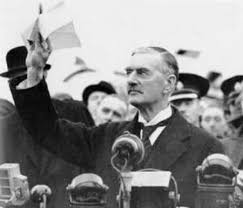
Neville Chamberlain
Winston Churchill knew better, predicting: “Britain and France had to choose between war and dishonor. They chose dishonor. They will have war.”
Hitler—still planning more conquests—also knew better. Speaking of the British and French leaders he had intimidated at Munich, he later asserted: “Our enemies are little worms. I saw them at Munich.”
In March, 1939, the German army occupied the rest of Czechoslovakia.
Chamberlain would soon be seen as a naive weakling—even before bombs started falling on London.
Hitler next turned his attention—and demands—to Poland. But, this time, France and Britain refused to be intimidated—and pledged to go to war if Hitler invaded Poland.
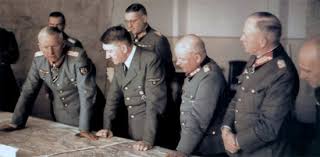
Adolf Hitler and his generals
Hitler ordered the invasion of Poland on September 1, 1939—unintentionally triggering World War II.
In time, historians and statesmen would regard Munich as an object lesson in the futility—and danger—in appeasing evil and aggression.
But for the postwar Republican party, Hitler’s my-way-or-else “negotiating” methods would become standard operating procedure.
President Donald J. Trump used precisely the same “negotiating” style during his December 11, 2018 Oval Office meeting with then-House Minority Leader Nancy Pelosi (D-CA) and Senate Minority Leader Charles Schumer (D-NY).
And, true to his love of publicity, Trump made sure the meeting was televised live.

Nancy Pelosi
Trump opened with on a positive note: “We’ve actually worked very hard on a couple of things that are happening. Criminal justice reform…[Republican Kentucky U.S. Senator] Mitch McConnell and the group, we’re going to be putting it up for a vote. We have great Democrat support, great Republican support.”
But he soon moved to the matter he truly cared about: Demanding $5.6 billion to create a wall along the U.S.-Mexican border: “And one way or the other, it’s going to get built. I’d like not to see a government closing, a shutdown. We will see what happens over the next short period of time.”
“One way or the other”—“so doer so”—was a favorite phrase of Adolf Hitler’s, meaning: If he couldn’t bully his opponents into surrendering, he would use violence.
PELOSI: “I think the American people recognize that we must keep government open, that a shutdown is not worth anything, and that you should not have a Trump shutdown. You have the Senate. You have the House of Representatives. You have the votes. You should pass it right now.”
Trump claimed he could get “Wall” legislation passed in the House but admitted he didn’t have the 60 votes he needed in the Senate.
PELOSI: “Well, the fact is you can get it started that way.”
Trump then contradicted himself: “The House we can get passed very easily, and we do.”
PELOSI: “Okay, then do it.”
Trump kept insisting that “the House would give me the vote if I wanted it.”
PELOSI: “Well, let’s take the vote and we’ll find out.”
SCHUMER: “We do not want to shut down the government. You have called 20 times to shut down the government….We want to come to an agreement. If we can’t come to an agreement, we have solutions that will pass the House and Senate right now, and will not shut down the government. And that’s what we’re urging you to do. Not threaten to shut down the government because you can’t get your way.”

Charles Schumer
TRUMP: “We need border security. And I think we all agree that we need border security.”
SCHUMER: “Yes, we do.”
TRUMP: “The wall is a part of border security. You can’t have very good border security without the wall.”
PELOSI: “That’s simply not true. That is a political promise. Border security is a way to effectively honor our responsibilities.”
By “political promise,” Pelosi meant this is was an appeal Trump had made to his hardcore base. which he expected to re-elect him.
SCHUMER: “And the experts say you can do border security without a wall, which is wasteful and doesn’t solve the problem.”
TRUMP: “It totally solves the problem.”
Schumer then goaded Trump into taking responsibility for closing down the government if he didn’t get funding for his border wall.
TRUMP: “I’ll take it. You know what I’ll say: Yes, if we don’t get what we want, one way or the other…I will shut down the government. Absolutely.”
Thus, Schumer guaranteed that any government shutdown during the Christmas season would be blamed on Trump.
But Republican leaders in Congress didn’t want to be blamed for shutting down the government. They seemed to persuade him to back away from his threat. The Senate passed a short-term funding measure without Trump’s wall money.
Vice President Mike Pence told lawmakers that Trump was open to approving it
Then the Fox News Network stepped in.
2016 PRESIDENTIAL CAMPAIGN, ABC NEWS, ADOLF HITLER, ALTERNET, ANN COULTER, AP, AUSTRIA, BARACK OBAMA, BILL CLINTON, BORDER WALL, BUZZFEED, CBS NEWS, CHARLES SCHUMER, CHRIS CILLIZZA, CNN, CONTRACTORS, COUNCIL OF ECONOMIC ADVISERS, CROOKS AND LIARS, CZECHOSLOVAKIA, DAILY KOZ, DAVID BROOKS, DEMOCRATS, DEPARTMENT OF COMMERCE, DEPARTMENT OF HOMELAND SECURITY, DICK CHENEY, DONALD TRUMP, EDOUARD DELADIER, FACEBOOK, FBI, FEDERAL AVIATION ADMINISTRATION (FAA), FOX NEWS, FRANCE, GEORGE W. BUSH, GOVERNMENT SHUTDOWN, HOUSE OF REPRESENTATIVES, JAPAN, JEDEDIAH BILA, JOSE ANDRES, JULIAN ZELITZER, KEVIN HASSETT, KURT VON SCHUSCHNIGG, MARIE ANTOINETTE, MARK SHIELDS, MIKE PENCE, MITCH MECONNELL, MOTHER JONES, MOVEON, MSNBC, MUNICH CONFERENCE, NANCY PELOSI, NAZI GERMANY, NBC NEWS, NEVILLE CHAMBERLAIN, NEWSWEEK, NICCOLO MACHIAVELLI, NPR, PBS NEWSHOUR, POLAND, POLITICO, RAW STORY, REPUBLICANS, REUTERS, ROBERT PAYNE, RUSH LIMBAUGH, SALON, SEATTLE TIMES, SLATE, SOUP KITCHENS, STATE OF THE UNION ADDRESS, SUPER BOWL, THE ATLANTIC, THE CHICAGO SUN-TIMES, THE CHICAGO TRIBUNE, THE DAILY BEAST, THE GUARDIAN, THE HILL, THE HUFFINGTON POST, THE LIFE AND DEATH OF ADOLF HITLER, THE LOS ANGELES TIMES, THE NATION, THE NEW YORK TIMES, THE PRINCE, THE WALL STREET JOURNAL, THE WASHINGTON POST, TIME, TRANSPORTATION SAFETY ADMINISTRATION (TSA), TWITTER, U.S. NEWS & WORLD REPORT, UBER, UNITED STATES HOUSE OF REPRESENTATIVES, UNITED STATES SECRET SERVICE, UNITED STATES SENATE, UPI, USA TODAY, WILBUR ROSS, WINSTON CHURCHILL, WORLD WAR 11
In Bureaucracy, History, Military, Politics, Social commentary on January 28, 2019 at 1:03 am
Robert Payne, author of the bestselling biography, The Life and Death of Adolf Hitler (1973), described Hitler’s “negotiating” style thus:
“Although Hitler prized his own talents as a negotiator, a man always capable of striking a good bargain, he was totally lacking in finesse.
“He was incapable of bargaining. He was like a man who goes up to a fruit peddler and threatens to blow his brains out if he does not sell his applies at the lowest possible price.”
By studying Hitler’s mindset and “negotiating” methods, we can learn much about the mindset and “negotiating” style of today’s Republican party.
A classic example of Hitler’s “negotiating style” came in September, 1938, when he focused his rage and aggression on Czechoslovakia.
Seven months earlier, he had absorbed Austria. He had done so by inviting its Chancellor, Kurt Shuschnigg, to Berlin. Then Hitler threatened Austria with invasion if Shuschnigg did not immediately agree to make his country a vassal-state of Germany.
This time, his threats were aimed at Neville Chamberlain, the prime minister of Great Britain, and Eduoard Deladier, the prime minister of France. Both countries had pledged to support Czechoslovakia against Hitler’s aggression.
Once again, he opened “negotiations” with a lie: The Czechoslovak government was trying to exterminate 3.5 million Germans living in the “Sudetenland.”
This consisted of the northern, southwest and western regions of Czechoslovakia, inhabited mostly by ethnic Germans.
Then he followed this up with the threat of war: Germany would protect its citizens and halt such “oppression.”
For British Prime Minister Neville Chamberlain, the thought of another European war erupting less than 20 years after the end of World War I was simply unthinkable.

The Cenotaph, in London, honoring the unknown British dead of World War 1
Something had to be done to prevent it. And he believed himself to be just the man to do it.
He quickly sent Hitler a telegram, offering to help resolve the crisis: “I could come to you by air and am ready to leave tomorrow. Please inform me of earliest time you can receive me, and tell me the place of the meeting. I should be grateful for a very early reply.”
Once again, another head-of-state was prepared to meet Hitler on his home ground. Again, Hitler took this concession as a sign of weakness. And Chamberlain’s use of such words as “please” and “grateful” only further convinced Hitler of another impending triumph.
Chamberlain was determined to grant his every demand—so long as this meant avoiding a second world war.
The two European leaders met in Berchtesgaden, Germany, on September 15, 1938.
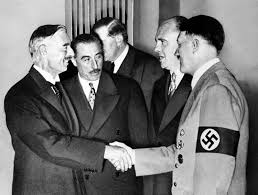
Neville Chamberlain and Adolf Hitler
During their talks, Chamberlain said he had come to discuss German grievances. But, he added, it was necessary in all circumstances to exclude the use of force.
Hitler appeared to be shocked that he could be accused of such intentions: “Force? Who speaks of force?“
Then, without warning, he switched to an aggressive mode. He accused the Czechs of having mobilized their army in May. They had mobilized—in response to the mobilization of the German army.
“I shall not put up with this any longer,” shouted Hitler. “I shall settle this question in one way or another. I shall take matters in my own hands!”
Suddenly, Chamberlain seemed alarmed—and possibly angry: “If I understood you right, you are determined to proceed against Czechoslovakia in any case. If this is so, why did you let me come to Berchtesgaden?
“In the circumstances, it is best for me to return at once. Anything else now seems pointless.”
Hitler was taken aback by the unexpected show of defiance. He realized he was about to lose his chance to bully the British into accepting his latest demands.
So he softened his tone and said they should consider the Sudetenland according to the principle of self-determination.
Chamberlain said he must immediately return to England to consult with his colleagues.
Hitler appeared uneasy. But then the German translator finished the sentence: “…and then meet you again.”
Hitler realized he still had a chance to attain victory without going to war.
Chamberlain agreed to the cession of the Sudetenland. Three days later, French Prime Minister Edouard Daladier did the same. No Czechoslovak representative was invited to these discussions.
Chamberlain met Hitler again in Godesberg, Germany, on September 22 to confirm the agreements. But Hitler aimed to use the crisis as a pretext for war.
He now demanded not only the annexation of the Sudetenland but the immediate military occupation of the territories. This would give the Czechoslovak army no time to adapt their defense measures to the new borders.
To achieve a solution, Italian dictator Benito Mussolini suggested a conference of the major powers in Munich.
On September 29, Hitler, Daladier and Chamberlain met and agreed to Mussolini’s proposal. They signed the Munich Agreement, which accepted the immediate occupation of the Sudetenland.
The Czechoslovak government had not been a party to the talks. Nevertheless, it promised to abide by the agreement on September 30.
It actually had no choice. It faced the threat of an immediate German invasion after being deserted by its pledged allies: Britain, France and the Soviet Union.
2016 PRESIDENTIAL ELECTION, ABC NEWS, AISNE-MARNE AMERICAN CEMETARY AND MEMORIAL, ALTERNET, AP, BILL MAULDIN, BUZZFEED, CBS NEWS, CIA, CNN, CROOKS AND LIARS, DAILY KOZ, DAVID FRUN, DONALD TRUMP, DRAFT DODGING, FACEBOOK, FBI, FRANCE, GENERAL LUCIAN K. TRUSCOTT, GEORGE W. BUSH, JOE DUNFORD, JOHN KELLY, MEMORIAL DAY, MOTHER JONES, MOVEON, MSNBC, NBC NEWS, NEWSWEEK, NICHOLAS SOAMES, NPR, OLD GLORY, POLITICO, RAW STORY, REUTERS, RUSSIA, SALON, SAVING PRIVATE RYAN, SEATTLE TIMES, SLATE, STEVEN SPIELBERG, THE ATLANTIC, THE CHICAGO SUN-TIMES, THE CHICAGO TRIBUNE, THE DAILY BEAST, THE GUARDIAN, THE HILL, THE HUFFINGTON POST, THE LOS ANGELES TIMES, THE NATION, THE NEW YORK TIMES, THE WASHINGTON POST, TIME, TWITTER, U.S. NEWS & WORLD REPORT, UPI, USA TODAY, VIETNAM WAR, VLADIMIR PUTIN, WINSTON CHURCHILL, WORLD WAR 1, WORLD WAR 11
In Bureaucracy, History, Military, Politics, Social commentary on November 13, 2018 at 12:23 am
Saving Private Ryan, Steven Spielberg’s 1998 World War II epic, opens with a scene of an American flag snapping in the wind.
Except that the brilliant colors of Old Glory have been washed out, leaving only black-and-white stripes and black stars.
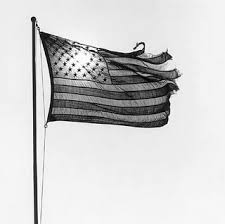
And then the movie opens—not during World war II but the present day.
Did Spielberg know something that his audience could only sense? Such as that the United States, for all its military power, has become a pale shadow of its former glory?
May 30, 1945, marked the first Memorial Day after World War II ended in Europe. On that day, the Sicily-Rome American Cemetery, near the town of Nettuno, held about 20,000 graves.
Most were soldiers who died in Sicily, at Salerno, or at Anzio. One of the speakers at the ceremony was Lieutenant General Lucian K. Truscott, Jr., the U.S. Fifth Army Commander.
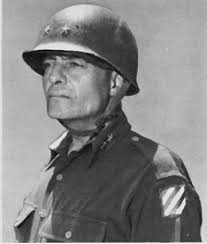
Lieutenant General Lucian K. Truscott, Jr.
Unlike many other generals, Truscott had shared in the dangers of combat, pouring over maps on the hood of his jeep with company commanders as bullets or shells whizzed about him.
When it came his turn to speak, Truscott moved to the podium. Then he turned his back on the assembled visitors—which included several Congressmen.
The audience he now faced were the graves of his fellow soldiers.
Among those who heard Truscott’s speech was Bill Mauldin, the famous cartoonist for the Army newspaper, Stars and Stripes. Mauldin had created Willie and Joe, the unshaved, slovenly-looking “dogfaces” who came to symbolize the GI.
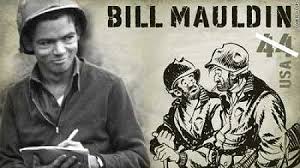
Bill Mauldin and “Willie and Joe,” the characters he made famous
It’s from Mauldin that we have the fullest account of Truscott’s speech that day.
“He apologized to the dead men for their presence there. He said that everybody tells leaders that it is not their fault that men get killed in war, but that every leader knows in his heart that this is not altogether true.
“He said he hoped anybody here through any mistake of his would forgive him, but he realized that he was asking a hell of a lot under the circumstances….
“Truscott said he would not speak of the ‘glorious’ dead because he didn’t see much glory in getting killed in your teens or early twenties.
“He promised that if in the future he ran into anybody, especially old men, who thought death in battle was glorious, he would straighten them out. He said he thought it was the least he could do.”
Then Truscott walked away, without acknowledging his audience of celebrities.
Fast forward 73 years later—to November 10, 2018.
President Donald J.Trump flies to Paris to commemorate the 100th anniversary of the end of WWI—November 11, 1918.
Upon arriving, he tweets: “I am in Paris getting ready to celebrate the end of World War One. Is there anything better to celebrate than the end of a war, in particular that one, which was one of the bloodiest and worst of all time?”
A scheduled event of his trip is a visit to the Aisne-Marne American Cemetery and Memorial, 50 miles outside Paris.
Nearly 2,300 war dead are buried there. And many of them perished in the same area during the summer of 1918.
Trump is scheduled to take his Marine 1 helicopter to the memorial site.
But, suddenly, he refuses to go.
The White House claims it’s “due to scheduling and logistical difficulties caused by the weather.”
The real reason: The appearance of gray skies and drizzle.
Canadian Prime Minister Justin Trudeau, German Chancellor Angela Merkel and French President Emmanuel Macron don’t allow rain to intimidate them.
Trump’s critics are quick to respond.
“They died with their face to the foe and that pathetic inadequate Donald Trump couldn’t even defy the weather to pay his respects to The Fallen,” says Nicholas Soames, Winston Churchill’s grandson and a member of the British Parliament.
And David Frun, a former speechwriter for President George W. Bush, tweets:
“It’s incredible that a president would travel to France for this significant anniversary – and then remain in his hotel room watching TV rather than pay in person his respects to the Americans who gave their lives in France for the victory gained 100 years ago tomorrow.”
Despite the rain, an American delegation led by Chief of Staff General John Kelly and Chairman of the Joint Chiefs of Staff General Joe Dunford still attend the event.
This marks only the latest in a series of embarrassing outrages committed by President Donald J. Trump, who has:
- Claimed that “bone spurs” made it impossible for him to serve his country during the Vietnam war.
- Equated his reckless sex life during the 1970s with the risks American soldiers faced in Vietnam.
- Relentlessly defended Russian dictator Vladimir Putin against all criticism, even as he’s slandered literally hundreds of his fellow citizens on Twitter.
- Rejected the findings by the FBI and CIA that Russia intervened in the 2016 election to help him win the White House.
- “Joked” that it would be “great” if the United States had a “President-for-Life”—like China.
Small wonder then, that, for many people, Old Glory has taken on a darker, washed-out appearance—in real-life as in film.
2016 PRESIDENTIAL ELECTION, ABC NEWS, ADOLF HITLER, ALTERNET, AP, BOB WOODWARD, BUZZFEED, CANADA, CBS NEWS, CNN, CROOKS AND LIARS, DAILY KOZ, DAVID BROOKS, DONALD TRUMP, ERIC COHN, FACEBOOK, FBI, FEAR: TRUMP IN THE WHITE HOUSE (BOOK), FRANCE, FRANZ HALDER, FREEDOM OF THE PRESS, GUNTER MEISNER, HERMAN WOUK, JAMES COMEY, JEFF SESSIONS, JOHN DOWD, KIM JONG ON, MOTHER JONES, MOVEON, NAZI GERMANY, NBC NEWS, NEWSWEEK, NPR, PBS NEWSHOUR, POLITICO, RAW STORY, REUTERS, ROBERT MUELLER, RUSSIA, SALLY YATES, SALON, SEATTLE TIMES, SLATE, SOUTH KOREA, THE ATLANTIC, THE CHICAGO SUN-TIMES, THE CHICAGO TRIBUNE, THE DAILY BEAST, THE GUARDIAN, THE HILL, THE HUFFINGTON POST, THE LOS ANGELES TIMES, THE NATION, THE NEW YORK TIMES, THE WASHINGTON POST, THE WINDS OF WAR, TIME, TWITTER, U.S. NEWS & WORLD REPORT, UPI, USA TODAY, VLADIMIR PUTIN, WALTER VON BRAUCHITSCH, WORLD WAR 11
In Bureaucracy, History, Military, Politics, Social commentary on September 12, 2018 at 12:10 am
After Donald Trump won the 2016 election, many people feared he would embark on a radical Right-wing agenda. But others hoped that the Washington bureaucracy would “box him in.”
The same sentiments echoed throughout Germany after Adolf Hitler was appointed Chancellor of Germany on January 30, 1933.
The 1983 TV mini-series, The Winds of War, offered a dramatic example of how honorable men can be overwhelmed by a ruthless dictator.
Based on the bestselling 1971 historical novel by Herman Wouk, the mini-series factually re-created the major historical events of World War II.
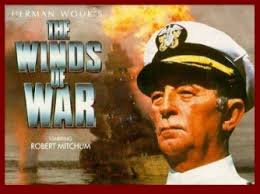
One of those events took place on November 5, 1939.
General Walther von Brauchitsch is summoned to the Chancellery in Berlin to meet with Adolf Hitler. He carries a memorandum signed by all the leaders of the German Wehrmacht asserting that Case Yellow—Hitler’s planned attack against France—is impossible.
Meanwhile, at the German army headquarters at Zossen, in Berlin, the Wehrmacht’s top command wait for word from von Brauchitsch.
ZOSSEN:
Brigadier General Armin von Roon: I must confide in you on a very serious matter. I have been approached by certain army personages of the loftiest rank and prestige with a frightening proposal.
Chief of the General Staff Franz Halder: What did you reply?
Von Roon: That they were talking high treason.
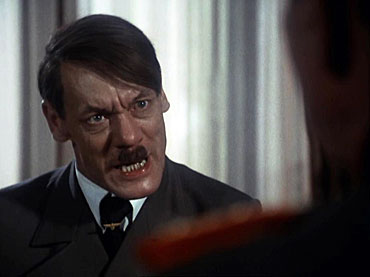
Gunter Meisner as Adolf Hitler in “The Winds of War”
THE WHITE HOUSE:
Fast forward 79 years from Adolf Hitler’s stormy confrontation with Walter von Brauchitsch to September 5, 2018.
On September 5, 2018, The New York Times publishes an anonymous Op-Ed essay by “a senior official in the Trump administration.” This spotlights massiver dysfunction within the White House—and put the blame squarely on the President.
Among the revelations:
- “Many of the senior officials in his own administration are working diligently from within to frustrate parts of his agenda and his worst inclinations.”
- “We believe our first duty is to this country, and the president continues to act in a manner that is detrimental to the health of our republic. That is why many Trump appointees have vowed to do what we can to preserve our democratic institutions while thwarting Mr. Trump’s more misguided impulses until he is out of office.”
- “On Russia…the president was reluctant to expel so many of Mr. Putin’s spies as punishment for the poisoning of a former Russian spy in Britain….But his national security team knew better—such actions had to be taken, to hold Moscow accountable.”
- “From the White House to executive branch departments and agencies, senior officials will privately admit their daily disbelief at the commander in chief’s comments and actions. Most are working to insulate their operations from his whims.”
ZOSSEN:
Von Roon: The conspiracy has been going on that long—since Czechoslovakia [1938)?
Halder: If the British had not caved in at Munich [where France and Britain sold out their ally, Czechoslovakia]—perhaps. But they did. And ever then, ever since his big triumph, it has been hopeless. Hopeless.
Von Roon: Empty talk, talk, talk. I am staggered.
Halder: A hundred times I myself could have shot the man. I can still at any time. But what would be the result? Chaos. The people are for him. He has unified the country. We must stick to our posts and save him from making military mistakes.
THE WHITE HOUSE:
On September 11, 2018, legendary investigative reporter Bob Woodward publishes a devastating take on the Trump administration: Fear: Trump in the White House. The text features explosive revelations about the President’s ignorance and mistreatment of staffers:
- Trump was about to sign a letter canceling a free-trade agreement with South Korea. To prevent this, Eric Cohn, his national economic council director, swiped it from Trump’s desk. Trump didn’t notice it missing.
- Trump’s lawyer, John Dowd, failed to convince the President that he shouldn’t testify to Special Counsel Robert Mueller. The reason: He would commit perjury—and end up in “an orange jumpsuit.”
- Trump referred to Alabaman Jeff Sessions, his attorney general, as “a dumb southerner” and “mentally retarded.”
General Walther von Brauchitsch fails to convince Hitler to postpone “Case Yellow”—the invasion of France. Hitler insists that it commence in seven days—on November 12.
And he issues a warning to the entire German General staff: “I will ruthlessly crush everybody up to the rank of a Field Marshal who dares to oppose me. You don’t have to understand. You only have to obey. The German people understand me. I am Germany.”
Due to foul weather, Hitler is forced to postpone the invasion of France until June, 1940. But the German General staff can’t ultimately put off the war that will destroy them—and Germany.
President Donald Trump has:
- Fired FBI Director James Comey.
- Tried to fire Independent Counsel Robert Mueller.
- Attacked the integrity of the American Intelligence community.
- Attacked the free press as “the enemy of the American people.”
- Branded America’s longtime ally, Canada, as “a national security threat.”
- Praised brutal Communist dictators Vladimir Putin and Kim Jong Un.
Like Hitler, he can equally say: I am the destiny of America.
History has yet to record if Trump’s subordinates will prove more successful than Hitler’s at preserving “our democratic institutions while thwarting Mr. Trump’s more misguided impulses until he is out of office.”
2016 PRESIDENTIAL ELECTION, ABC NEWS, ADOLF HITLER, ALTERNET, AP, BUZZFEED, CBS NEWS, CNN, CROOKS AND LIARS, DAILY KOZ, DAVID BROOKS, DONALD TRUMP, ENABLING ACT, FACEBOOK, FBI, FRANCE, FRANZ HALDER, FRANZ VON PAPEN, GUNTER MEISNER, HERMAN GORING, HERMAN WOUK, JAMES COMEY, MOTHER JONES, MOVEON, NAZI GERMANY, NBC NEWS, NEWSWEEK, NPR, PAUL VON HINDENBURG, PBS NEWSHOUR, POLITICO, RAW STORY, REICHSTAG, REUTERS, ROBERT MUELLER, SALLY YATES, SALON, SEATTLE TIMES, SLATE, THE ATLANTIC, THE CHICAGO SUN-TIMES, THE CHICAGO TRIBUNE, THE DAILY BEAST, THE GUARDIAN, THE HILL, THE HUFFINGTON POST, THE LOS ANGELES TIMES, THE NATION, THE NEW YORK TIMES, THE WASHINGTON POST, THE WINDS OF WAR, TIME, TWITTER, U.S. NEWS & WORLD REPORT, UPI, USA TODAY, VLADIMIR PUTIN, WALTER VON BRAUCHITSCH, WOLFGANG PREISS, WORLD WAR 11
In Bureaucracy, History, Military, Politics, Social commentary on June 18, 2018 at 12:08 am
After Donald Trump won the 2016 election, many people feared he would embark on a radical Right-wing agenda. But others hoped that the Washington bureaucracy would “box him in.”
The same sentiments echoed throughout Germany after Adolf Hitler was appointed Chancellor of Germany on January 30, 1933.
The 1983 TV mini-series, The Winds of War, offered a dramatic example of how honorable men can be overwhelmed by a ruthless dictator.
Based on the bestselling 1971 historical novel by Herman Wouk, the mini-series factually re-created the major historical events of World War II.
One of those events took place on November 5, 1939.
General Walther von Brauchitsch is summoned to the Chancellery in Berlin to meet with Adolf Hitler. He carries a memorandum signed by all the leaders of the German Wehrmacht asserting that Case Yellow—Hitler’s planned attack against France—is impossible.
Meanwhile, at the German army headquarters at Zossen, in Berlin, the Wehrmacht’s top command wait for word from von Brauchitsch.
CHANCELLERY:
Von Brauchitsch hands the memorandum to Hitler, who reads it.
ZOSSEN:
Brigadier General Armin von Roon: I must confide in you on a very serious matter. I have been approached by certain army personages of the loftiest rank and prestige with a frightening proposal.
Chief of the General Staff Franz Halder: What did you reply?
Von Roon: That they were talking high treason.
CHANCELLERY:
Adolf Hitler (slamming down the memorandum): So—what is new in all this?
Gunter Meisner as Adolf Hitler in “The Winds of War”
Walther Von Brauchitsch: Fuhrer, it is the army’s final position that Case Yellow cannot proceed.
Hitler: Why not?
Von Brauchitsch: Because of the military fundamentals as stated. The meteorologists predict continuous soaking rains for weeks.
Hitler: It rains on the enemy, too.
ZOSSEN:
Von Roon: The conspiracy has been going on that long—since Czechoslovakia [1938)?
Halder: If the British had not caved in at Munich [where France and Britain sold out their ally, Czechoslovakia]—perhaps. But they did. And ever then, ever since his big triumph, it has been hopeless. Hopeless.
Von Roon: Empty talk, talk, talk. I am staggered.
Halder: A hundred times I myself could have shot the man. I can still at any time. But what would be the result? Chaos. The people are for him. He has unified the country. We must stick to our posts and save him from making military mistakes.
CHANCELLERY:
Von Brauchitsch: Fuhrer, even the supply of artillery shells is totally inadequate.
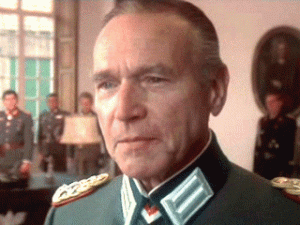
Wolfgang Preiss as Walter von Brauchitsch in “The Winds of War”
Hitler: Who says so?
Von Brauchitsch: General Thomas, my chief of economics and armament.
Hitler: Do you know how many artillery shells of all calibers we have in the staging areas—right this minute?
Von Brauchitsch: No.
Hitler: How many we have in the reserve dumps in the West? What the monthly annual production of shells is? What the projected rise in production of the next six months is, month by month?
Von Brauchitsch: Who keeps such figures in his head?
Hitler: I do! The supply is adequate. I tell you so. And I’m a field soldier who depended on artillery for four years to protect his life. [He hands von Brauchitsch a sheaf of armaments figures.] Check with your staff. if one of those figures is wrong, you can postpone Case Yellow. Otherwise—you march! And next time you come to see me, know what you’re talking about!
Von Brauchitsch: The morale of the army was low, even in the Polish campaign.
Hitler: You question to me—to me—the courage of the German soldier?
Von Brauchitsch: I’m talking facts!
Hitler: What facts? Back up this monstrous assertion! In what units was morale low? What action was taken? How many death sentences were handed out for cowardice? Speak up! I’ll fly to the front and pass the death sentences myself. One specific instance.
Von Brauchitsch: It was common knowledge—
Hitler: Common knowledge? What is common knowledge is that army headquarters at Zossen crawls with cowards. You opposed me in rearming the Rhineland. You opposed me on the [union] with Austria. You opposed me on Czechoslovakia, until the British came crawling to me. You dirtied in your trousers, you heroes at Zossen, at the idea of marching into Poland. Well, have I once been wrong? Have you once been right? Answer me!
Von Brauchitsch: Mein Fuhrer—
Hitler: Tell everyone who signed this insubordinate Zossen rubbish to beware! I will ruthlessly crush everybody up to the rank of a Field Marshal who dares to oppose me. You don’t have to understand. You only have to obey. The German people understand me. I am Germany.
Fast forward 79 years from Adolf Hitler’s stormy confrontation with Walter von Brauchitsch to June 13, 2018.
President Donald Trump has
- Fired FBI Director James Comey
- Tried to fire Independent Counsel Robert Mueller
- Attacked the integrity of the American Intelligence community
- Attacked the free press as “the enemy of the American people”
- Branded America’s longtime ally, Canada, as “a national security threat”
- Praised brutal Communist dictators Vladimir Putin and Kim Jong Un
Like Hitler, he can equally say: I am the destiny of America.
ABC NEWS, ALTERNET, AMERICAN CAESAR, AP, ARNOLD SCHWARZENEGGER, ASIANS, BARACK OBAMA, BLACKS, BUZZFEED, CANADA, CBS NEWS, CNN, CRIMEA, CROOKS AND LIARS, DAILY KOZ, DISABLED, DOUGLAS MACARTHUR, EUROPEAN UNION, FACEBOOK, FRANCE, G7 CONFERENCE, GERMANY, HILLARY CLINTON, HISPANICS, ITALY, JAPAN, JOHN OLIVER, JUSTIN TRUDEAU, KIM JONG ON, LARRY KUDLOW, MERYL STREEP, MEXICO, MOTHER JONES, MOVEON, MSNBC, NBC NEWS, NEIL YOUNG, NEWSWEEK, NORTH KOREA, NPR, PETER NAVARRO, POLITICO, PRISONERS OF WAR, RAW STORY, REUTERS, RUSSIA, SALON, SEATTLE TIMES, SINGAPORE, SLATE, TARIFFS, THE ATLANTIC, THE CHICAGO SUN-TIMES, THE CHICAGO TRIBUNE, THE DAILY BEAST, THE GUARDIAN, THE HILL, THE HUFFINGTON POST, THE LOS ANGELES TIMES, THE NATION, THE NEW YORK TIMES, THE WASHINGTON POST, TIME, TWITTER, U.S. NEWS & WORLD REPORT, UNITED KINGDOM, UNITED STATES, UPI, USA TODAY, USA TODAY DONALD TRUMP, VLADIMIR PUTIN, WILLIAM MANCHESTER, WOMEN
In Business, History, Military, Politics, Social commentary, Uncategorized on June 13, 2018 at 1:24 am
“He appeared to need enemies the way other men need friends, and his conduct assured that he would always have plenty of them.”
So wrote William Manchester about General Douglas MacArthur in his monumental 1978 biography, American Caesar. But he could have written this just as accurately about Donald Trump, both as Republican Presidential candidate and President.
As a Presidential candidate, Trump repeatedly used Twitter to attack hundreds of real and imagined enemies in politics, journalism, TV and films.
From June 15, 2015, when he launched his Presidential campaign, until October 24, 2016, Trump fired almost 4,000 angry, insulting tweets at 281 people and institutions that had somehow offended him.
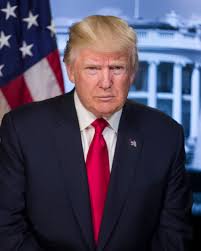
Donald Trump
The New York Times needed two full pages of its print edition to showcase them. Among his targets:
- Hillary Clinton
- President Barack Obama
- Actress Meryl Streep
- Comedian John Oliver
- Singer Neil Young
- Actor Arnold Schwarzenegger
- News organizations
- Beauty pageant contestants
Others he clearly delighted in insulting during the campaign included:
- Women
- Blacks
- Hispanics
- Asians
- The disabled
- Prisoners-of-war
As President, he has continued to insult virtually everyone, verbally and on Twitter. His targets have included Democrats, Republicans, the media, foreign leaders (most notably North Korea’s “Little Rocket Man” Kim Jong On) and even members of his Cabinet.
The one major figure that Trump has never attacked is Russian President Vladimir Putin.
But Trump has no such hesitation about insulting leaders of nations which have been America’s traditional allies—such as Canada.
On June 10, Larry Kudlow, Trump’s chief economic adviser, accused Canadian Prime Minister Justin Trudeau of undermining the US and its allies with comments he made at the G7 economic summit in Quebec.
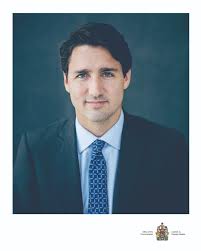
Justin Trudeau
The G7 is comprised of France, Canada, the United Kingdom, Germany, Japan, the United States and Italy.
“It was a betrayal,” Kudlow accused Trudeau on CNN’s “State of the Union.” “He really kind of stabbed us in the back.”
Kudlow said the allies should have been more supportive of Trump because of his scheduled June 12 meeting in Singapore with North Korean dictator Kim Jong On.
“They should have said to him, ‘God speed, you are negotiating with the crazy nuclear tyrant in North Korea, and we are behind you.'”
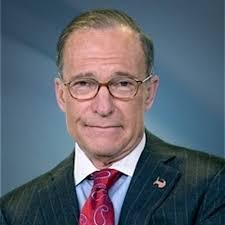
Larry Kudlow
On June 9, the prime minister had said in a press conference that Canada would “move forward with retaliatory measures” on July 1.
The reason for this: Trump’s decision to impose tariffs on steel and aluminum imports from Canada, the European Union and Mexico.
“I have made it very clear to the President that it is not something we relish doing, but it something that we absolutely will do,” Trudeau said. “Canadians, we’re polite, we’re reasonable, but we also will not be pushed around.”
And Peter Navarro, Trump’s trade adviser, went further: “There’s a special place in hell for any foreign leader that engages in bad faith diplomacy with President Donald J. Trump and then tries to stab him in the back on the way out the door.
“And that’s what bad faith Justin Trudeau did with that stunt press conference. That’s what weak, dishonest Justin Trudeau did, and that comes right from Air Force One.”
Given the sheer brutality of the language, there’s no reason to doubt that Navarro was absolutely reflecting Trump’s own venomous anger.
“He [Trump[ did him [Trudeau] a favor,” Navarro said. “He was even willing to sign that socialist communique.”
On June 10, Trump tweeted: “Based on Justin’s false statements at his news conference, and the fact that Canada is charging massive Tariffs to our U.S. farmers, workers and companies, I have instructed our U.S. Reps not to endorse the Communique as we look at Tariffs on automobiles flooding the U.S. Market!,”
But while Trump has made clear his detestation of socialism, he has no qualms about rewarding the aggression of a hardcore Communist like Vladimir Putin. On June 9, he called for Russia to be readmitted to the G7.
“I think it would be an asset to have Russia back in,” he said during an impromptu press conference at the summit.
“I think it would be good for the world. I think it would be good for Russia. I think it would be good for the United States. I think it would be good for all of the countries of the current G7. I think the G8 would be better.”
Russia was ousted from the group in 2014 after Putin annexed Crimea—the first violation of a European country’s borders since World War II.
“Today crystallizes precisely why Putin was so eager to see Trump elected,” said former Obama National Security Council spokesman Ned Price.
“For Putin, this is return on his investment, and it’s safe to say that his investment has paid off beyond even his wildest dreams,” he said in a statement to CNN.
And, in a turn of events that some might call poetic justice, moments after he arrived in Singapore for his meeting with Kim Jong On, Trump tweeted: “Our Great Larry Kudlow, who has been working so hard on trade and the economy, has just suffered a heart attack. He is now in Walter Reed Medical Center.”
ABC NEWS, ALTERNET, AMERICABLOG, AP, BABY BOOMER RESISTANCE, BUZZFEED, CANDICE BERGIN, CBS NEWS, CNN, CROOKS AND LIARS, DAILY KOZ, DRUDGE RETORT, ENGLAND, FACEBOOK, FIVETHIRTYEIGHT, FRANCE, GERMANY, HARPER’S MAGAZINE, ISRAEL, JAPAN, JOHN MILIUS, MEDIA MATTERS, MOROCCO, MOTHER JONES, MOVEON, MOVIES, MSNBC, NBC NEWS, NEWSWEEK, NPR, PBS NEWSHOUR, POLITICO, POLITICUSUSA, RAW STORY, REUTERS, SALON, SEAN CONNERY, SEATTLE TIMES, SLATE, TALKING POINTS MEMO, THE ATLANTIC, THE CHICAGO SUN-TIMES, THE CHICAGO TRIBUNE, THE DAILY BEAST, THE DAILY BLOG, THE GUARDIAN, THE HILL, THE HUFFINGTON POST, THE LOS ANGELES TIMES, THE NATION, THE NEW REPUBLIC, THE NEW YORK TIMES, THE VILLAGE VOICE, THE WALL STREET JOURNAL, THE WASHINGTON POST, THE WIND AND THE LION, THEODORE ROOSEVELT, THINKPROGRESS, TIME, TRUTHDIG, TRUTHOUT, TWITTER, TWO POLITICAL JUNKIES, U.S. NEWS & WORLD REPORT, UPI, USA TODAY, USA TODAY ABC NEWS, WONKETTE, WORLD WAR ii, WORLD WAR l, YELLOWSTONE NATIONAL PARK
In Entertainment, History, Military, Politics, Social commentary on May 18, 2018 at 1:12 am
There is a poignant scene in the middle of John Milius’ classic 1975 adventure film, The Wind and the Lion, that Americans would do well to remember.
The movie is set in 1904 America and Morocco. An American woman, Eden Pedicaris (Candice Bergen) and her two children have been kidnapped while vacationing in Tangier.
The kidnapper is a Berber brigand named Mulai Ahmed el Raisuli (Sean Connery—then successfully trying to shed his recent James Bond image).
To Raisuli, the Sultan and his uncle, the Pasha of Tangier, are corrupt and beholden to the European powers struggling to control Morocco.
Raisuli issues an outrageous ransom demand to provoke an international incident, embarrass the Sultan and start a civil war.
In the United States, President Theodore Roosevelt (Brian Keith) is running for re-election. He sees the crisis as a way to win votes and demonstrate America’s military strength as a new power.
So he issues a demand of his own: “Pedicarus alive—or Raisuli dead!”
While events rapidly spiral out of control in the Middle East, Roosevelt decides to vacation in Yellowstone National Park.
One night, a grizzly bear attacks the camp and is shot by Roosevelt and several other campers. The next morning, Roosevelt holds an imprumptu press conference for the reporters who have accompanied him.

Brian Keith (left) as Theodore Roosevelt
REPORTER: Did you take part in killing the grizzly, Mr. President?
ROOSEVELT: Yes, unfortunately.
REPORTER: Why do you say, ‘unfortunately,’ Mr. President?
ROOSEVELT: The American grizzly is a symbol of the American character: strength, intelligence, ferocity. Maybe a little blind and reckless at times, but courageous beyond all doubt. And one other trait that goes with all previous.
REPORTER: And that, Mr. President?
ROOSEVELT: Loneliness. The American grizzly lives out his life alone. Indomitable, unconquered—but always alone. He has no real allies, only enemies, but none of them as great as he.
REPORTER: And you feel this might be an American trait?
ROOSEVELT: Certainly. The world will never love us. They respect us—they might even grow to fear us. But they will never love us, for we have too much audacity! And, we’re a bit blind and reckless at times, too.
REPORTER: Are you perhaps referring to the situation in Morocco and the Panama Canal.
ROOSEVELT: If you say so. The American grizzly embodies the spirit of America. He should be our symbol! Not that ridiculous eagle—he’s nothing more than a dandified vulture.
When the Pasha of Tangier refuses to negotiate with Raisuli to secure the return of Pedecaris, the American Consul to Tangier, Samuel Gummere, decides on action. He confers with Admiral Chadwick, commanding the South Atlantic Squadron, and a Marine captain named Jerome.
Gummere then orders a company of Marines, supported by a small detachment of sailors, to seize the Pasha. But then he admits to the riskiness of the decision:
GUMMERE: You realize, of course, that if we fail in even the slightest way, we’ll all be killed.
CHADWICK: Yes, and the whole world will probably go to war.
JEROME: Gentlemen, if we fail and are killed, I certainly hope the world does go to war.
CHADWICK: A world ar war!
GUMMERE: A world war. Now that would be something to go out on.
In just ten years, they will get their hearts’ desire when World War 1 erupts.
The Marines quickly overwhelm the Pasha’s palace guard, take the Pasha hostage and force him to negotiate.
During the hostage exchange, Raisuli is betrayed and captured by German and Moroccan troops. His friend, the Sherif of Wazan, organizes the Berber tribe for an attack on the Europeans and their Moroccan lackeys.
Eden Pedecaris, who has grown to admire Raisuli, convinces a Marine captain and his men to rescue the Berber chieftain. She argues that President Roosevelt had promised that Raisuli would be unharmed if the Pedecarises were returned safely.
The Berbers and Marines team up to defeat the Germans and their Moroccan allies, rescuing Raisuli in the process.
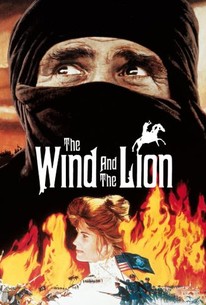
Thirteen years later—in 1917—the United States will officially take on the Germans in World War 1. And in another 37 years—in 1941—America will again declare war on Germany.
The film ends with a confident Theodore Roosevelt expecting (accurately) to be re-elected—and telling reporters that “the fate of Morocco will be decided tomorrow by me.”
The Wind and the Lion is set in an era when
- Nuclear weapons did not exist;
- Russia and China were militarily insignificant nations;
- England was the world’s superpower;
- America, Germany and Japan were on the rise;
- Israel was still a distant dream in the eyes of European Jews;
- The “Great Powers”—Germany, France and Great Britain—were struggling to carve up the Middle East to exploit its massive oil reserves; and
- Americans did not feel threatened by Islamic radicals.
As complex and dangerous as that era often seemed to those living more than 100 years ago, it has been succeeded by one even more complex and dangerous.
In this new and even more lethal era, it is well to remember Theodore Roosevelt’s warning that “we’re a bit blind and reckless at times, too.”
2016 PRESIDENTIAL ELECTION, ABC NEWS, ADOLF HITLER, ALTERNET, AP, ARTICLE 48, BARACK OBAMA, BUZZFEED, CBS NEWS, CNN, CROOKS AND LIARS, DAILY KOZ, DAVID BROOKS, DONALD TRUMP, ENABLING ACT, FACEBOOK, FBI, FRANCE, FRANZ HALDER, FRANZ VON PAPEN, GUNTER MEISNER, HERMAN GORING, HERMAN WOUK, JAMES COMEY, MARK SHIELDS, MICHAEL FLYNN, MOTHER JONES, MOVEON, NAZI GERMANY, NBC NEWS, NEWSWEEK, NPR, PAUL VON HINDENBURG, PBS NEWSHOUR, POLITICO, PRUSSIA, RAW STORY, REICHSTAG, REUTERS, ROBERT MUELLER, RUSSIA, SALLY YATES, SALON, SEATTLE TIMES, SHIELDS AND BROOKS, SLATE, THE ATLANTIC, THE CHICAGO SUN-TIMES, THE CHICAGO TRIBUNE, THE DAILY BEAST, THE GUARDIAN, THE HILL, THE HUFFINGTON POST, THE LOS ANGELES TIMES, THE NATION, THE NEW YORK TIMES, THE WASHINGTON POST, THE WINDS OF WAR, TIME, TWITTER, U.S. NEWS & WORLD REPORT, UPI, USA TODAY, USA TODAY ADOLF HITLERR, VLADIMIR PUTIN, WALTER VON BRAUCHITSCH, WOLFGANG PREISS, WORLD WAR 11
In Bureaucracy, History, Law, Law Enforcement, Politics, Social commentary on February 1, 2018 at 12:03 am
When German President Paul von Hindenburg appointed Adolf Hitler Chancellor of Germany on January 30, 1933, not all Germans rejoiced.
Millions of them, in fact, hoped that the radical Fascist would be “boxed in” by “the establishment.”
President Hindenburg was known to despise Hitler. And a Hindenburg ally, Franz von Papen, was Vice Chancellor.
Yet it was Von Papen who was largely responsible for Hitler’s coming to power.
He believed that the longtime agitator could be controlled once he was in the government. The cabinet, after all, was not under Nazi domination. And so he convinced Hindenburg to appoint Hitler as Chancellor.
Almost immediately, Hitler began to outmaneuver those who sought to restrain him.
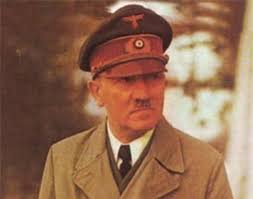
Adolf Hitler
As part of his deal with Papan, Hitler appointed his longtime supporter, Herman Goring, interior minister of Prussia—thus arming the Nazis with the largest police force in Germany.
On February 1, 1933, Hitler presented Article 48 to the cabinet. This allowed the police to take people into “protective custody” without charges. Hindenburg signed it into law on February 4 as the “Decree for the Protection of the German People.”
In March, the Reichstag (parliament) passed the Enabling Act, which allowed Hitler to rule by decree without interference from legislators. Germany, it was claimed, needed “an iron hand” because it was supposedly threatened by a Communist revolution.
The Enabling Act was authorized to last only four years. But it was renewed in 1937 and, in 1941, extended for the rest of Hitler’s lifetime.
On August 2, the aged Hindenburg died. Hitler immediately consolidated the positions of President and Chancellor—and ordered the German Armed Forces to swear an oath of personal loyalty to him.
Hitler’s mastery of Germany was now complete.
Fast forward 84 years from Adolf Hitler’s gaining total power in Germany to January 30, 2018.
President Donald Trump can say—as truthfully as Adolf Hitler: I am the destiny of America.
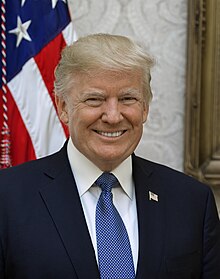
Donald Trump
Among his tumultuous actions during his first year as President, Trump:
- Fired Acting Attorney General Sally Yates after she notified him that National-Security Adviser Michael Flynn had misled the FBI.
- Fired FBI Director James Comey for investigating the Trump Presidential campaign’s links to the Kremlin.
- Attacked the integrity of the American Intelligence community—while praising Russian President Vladimir Putin.
- Falsely claimed that former President Barack Obama had illegally wiretapped him during the 2016 Presidential campaign.
- Tried to fire Independent Counsel Robert Mueller, but was talked out of it.
Syndicated columnist Mark Shields and New York Times columnist David Brooks appear every Friday on the PBS Newshour to review the week’s major political events.
On January 26, Brooks—a conservative, and Shields, a liberal—reached similar conclusions about the recent news that President Trump had tried to fire Independent Counsel Robert Mueller during the summer of 2017.
After Comey’s firing, Mueller had been assigned to oversee the previously-confirmed FBI investigation of Russian government efforts to influence the 2016 presidential election.
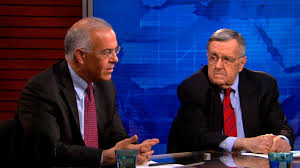
David Brooks and Mark Shields
DAVID BROOKS: “First, it should be pointed out that White House staff has repeatedly said there was no effort to fire Mueller, when they clearly have been lying for months about that….
“I was in Dayton, Ohio, this morning. And a friend said, in this presidency, I’m just stunned every day. I’m stunned every hour. And at some point, you get out of stunned. There’s no more stun.
“And I found this when I saw our story. If I had seen that story seven or eight months ago, I would have been, ‘Oh, I can’t believe this is happening.’ Now I’m inured. I’m used to it. I have been numbed.
“And I came to think, even if he fired Mueller, maybe we’re all just—we’re like, we have been numbed to the things that happen and nobody gets upset anymore. I think people would get upset if he actually did try to fire Mueller, but we have defined deviancy down and gotten used to a set of behavior that would have been shocking to us a year ago.”
MARK SHIELDS: “I think there would be a firestorm at this point [if Trump fired Mueller]….
“How long and how intense, I don’t know, because I remain just perplexed at the limit of the finite limits of our outrage, or our sense of outrage….
“But I think it really comes down to, who’s going to stand with [Mueller]? And I look at the Republicans on the Hill and, you know, the lack, the tower of Jell-O that is the speaker of the House….”
JUDY WOODRUFF: “…Could this campaign…by some Republicans in the House and with support from the White House to undermine the FBI…have a long-lasting effect on the Justice Department in the end?”
DAVID BROOKS: “Yes, I think so.
“And the FBI is filled with honest brokers….There are a lot of agencies that are filled with honest brokers, and the idea that everybody in this city is a politician is just not true.
“It’s always amazing to me that a lot of people in government, they are not actually that political. They believe in the public service and they try to do their jobs, but they’re not sort of super political people.”
2016 PRESIDENTIAL ELECTION, ABC NEWS, ADOLF HITLER, ALTERNET, AP, ARTICLE 48, BARACK OBAMA, BUZZFEED, CBS NEWS, CNN, CROOKS AND LIARS, DAILY KOZ, DAVID BROOKS, DONALD TRUMP, ENABLING ACT, FACEBOOK, FBI, FRANCE, FRANZ HALDER, FRANZ VON PAPEN, GUNTER MEISNER, HERMAN GORING, HERMAN WOUK, JAMES COMEY, MARK SHIELDS, MICHAEL FLYNN, MOTHER JONES, MOVEON, NAZI GERMANY, NBC NEWS, NEWSWEEK, NPR, PAUL VON HINDENBURG, PBS NEWSHOUR, POLITICO, PRUSSIA, RAW STORY, REICHSTAG, REUTERS, ROBERT MUELLER, RUSSIA, SALLY YATES, SALON, SEATTLE TIMES, SHIELDS AND BROOKS, SLATE, THE ATLANTIC, THE CHICAGO SUN-TIMES, THE CHICAGO TRIBUNE, THE DAILY BEAST, THE GUARDIAN, THE HILL, THE HUFFINGTON POST, THE LOS ANGELES TIMES, THE NATION, THE NEW YORK TIMES, THE WASHINGTON POST, THE WINDS OF WAR, TIME, TWITTER, U.S. NEWS & WORLD REPORT, UPI, USA TODAY, USA TODAY ADOLF HITLERR, VLADIMIR PUTIN, WALTER VON BRAUCHITSCH, WOLFGANG PREISS, WORLD WAR 11, WORLD WAR ii
In Bureaucracy, History, Law, Law Enforcement, Military, Politics, Social commentary on January 31, 2018 at 12:06 am
After Donald Trump won the 2016 election, many people feared he would embark on a radical Right-wing agenda. But others hoped that the Washington bureaucracy would “box him in.”
The same sentiments echoed throughout Germany after Adolf Hitler was appointed Chancellor of Germany on January 30, 1933.
The 1983 TV mini-series, The Winds of War, offered a dramatic example of how honorable men can be overwhelmed by a ruthless dictator.
Based on the bestselling 1971 historical novel by Herman Wouk, the mini-series factually re-created the major historical events of World War II.
One of those events took place on November 5, 1939.
General Walther von Brauchitsch is summoned to the Chancellery in Berlin to meet with Adolf Hitler. He carries a memorandum signed by all the leaders of the German Wehrmacht asserting that Case Yellow—Hitler’s planned attack against France—is impossible.
Meanwhile, at the German army headquarters at Zossen, in Berlin, the Wehrmacht’s top command wait for word from von Brauchitsch.
CHANCELLERY:
Von Brauchitsch hands the memorandum to Hitler, who reads it.
ZOSSEN:
Brigadier General Armin von Roon: I must confide in you on a very serious matter. I have been approached by certain army personages of the loftiest rank and prestige with a frightening proposal.
Chief of the General Staff Franz Halder: What did you reply?
Von Roon: That they were talking high treason.
CHANCELLERY:
Adolf Hitler (slamming down the memorandum): So—what is new in all this?
Gunter Meisner as Adolf Hitler in “The Winds of War”
Walther Von Brauchitsch: Fuhrer, it is the army’s final position that Case Yellow cannot proceed.
Hitler: Why not?
Von Brauchitsch: Because of the military fundamentals as stated.
Hitler: Such as?
Von Brauchitsch: The meteorologists predict continuous soaking rains for weeks.
Hitler: It rains on the enemy, too.
ZOSSEN:
Von Roon: The conspiracy has been going on that long—since Czechoslovakia [1938)?
Halder: If the British had not caved in at Munich [where France and Britain sold out their ally, Czechoslovakia]—perhaps. But they did. And ever then, ever since his big triumph, it has been hopeless. Hopeless.
Von Roon: Empty talk, talk, talk. I am staggered.
Halder: A hundred times I myself could have shot the man. I can still at any time. But what would be the result? Chaos. The people are for him. He has unified the country. We must stick to our posts and save him from making military mistakes.
Halder: But we really cannot proceed with Case Yellow.
Von Roon: Brauchitsch will get a postponement.
Halder: And if he does not?
CHANCELLERY:
Von Brauchitsch: Fuhrer, even the supply of artillery shells is totally inadequate.
Wolfgang Preiss as Walter von Brauchitsch in “The Winds of War”
Hitler: Who says so?
Von Brauchitsch: General Thomas, my chief of economics and armament.
Hitler: Do you know how many artillery shells of all calibers we have in the staging areas—right this minute?
Von Brauchitsch: No.
Hitler: How many we have in the reserve dumps in the West?
Von Brauchitsch: No, it’s up to my staff—
Hitler: What the monthly annual production of shells is? What the projected rise in production of the next six months is, month by month?
Von Brauchitsch: Who keeps such figures in his head?
Hitler: I do! The supply is adequate. I tell you so. And I’m a field soldier who depended on artillery for four years to protect his life. [He hands von Brauchitsch a sheaf of armaments figures.] Check with your staff. if one of those figures is wrong, you can postpone Case Yellow. Otherwise—you march! And next time you come to see me, know what you’re talking about!
Von Brauchitsch: If we march unprepared as we are, defeatism will run rampant. It will destroy the Wehrmacht and the Fatherland. The morale of the army was low, even in the Polish campaign.
Hitler: You question to me—to me—the courage of the German soldier?
Von Brauchitsch: I’m talking facts!
Hitler: What facts? Back up this monstrous assertion! In what units was morale low? What action was taken? How many death sentences were handed out for cowardice? Speak up! I’ll fly to the front and pass the death sentences myself. One specific instance.
Von Brauchitsch: It was common knowledge—
Hitler: Common knowledge? What is common knowledge is that army headquarters at Zossen crawls with cowards. You opposed me in rearming the Rhineland. You opposed me on the [union] with Austria. You opposed me on Czechoslovakia, until the British came crawling to me. You dirtied in your trousers, you heroes at Zossen, at the idea of marching into Poland. Well, have I once been wrong? Have you once been right? Answer me!
Von Brauchitsch: Mein Fuhrer—
Hitler: Tell everyone who signed this insubordinate Zossen rubbish to beware! I will ruthlessly crush everybody up to the rank of a Field Marshal who dares to oppose me. You don’t have to understand. You only have to obey. The German people understand me. I am Germany.
Fast forward 79 years from Adolf Hitler’s stormy confrontation with Walter von Brauchitsch to January 26, 2018.
President Donald Trump—having fired FBI Director James Comey, attacked the integrity of the American Intelligence community and tried to fire Independent Counsel Robert Mueller—can equally say: I am the destiny of America.
ABC NEWS, ADOLF HITLER, ALBANIA, ALTERNET, ANDREI CHERNY, AP, BERLIN AIRLIFT, BULGARIA, BUZZFEED, CAMILLUS, CBS NEWS, CNN, CONTAINMENT, CROOKS AND LIARS, CZECHOSLOVAKIA, DAILY KOZ, EAST GERMANY, FACEBOOK, FALISCIA, FRANCE, FRANKLIN D. ROOSEVELT, GAIL “HAL” HALVORSEN, GREAT BRITAIN, HARRY S. TRUMAN, HUNGARY, IRON CURTAIN, JOSEPH STALIN, MOTHER JONES, MOVEON, NAZI GERMANY, NBC NEWS, NEWSWEEK, NICCOLO MACHIAVELLI, NPR, POLAND, POLITICO, RAW STORY, REUTERS, ROMANIA, ROME, SALON, SEATTLE TIMES, SLATE, SOVIET UNION, THE ATLANTIC, THE CANDY BOMBERS, THE CHICAGO SUN-TIMES, THE CHICAGO TRIBUNE, THE DAILY BEAST, THE DISCOURSES, THE GUARDIAN, THE HILL, THE HUFFINGTON POST, THE LOS ANGELES TIMES, THE NATION, THE NEW YORK TIMES, THE WASHINGTON POST, TIME, TWITTER, U.S. NEWS & WORLD REPORT, UNITED STATES, UPI, USA TODAY, WEST BERLIN, WILLIE "THE WHIP" TUNNER, WORLD WAR 11, YUGOSLAVIA
In Bureaucracy, History, Military, Politics, Social commentary on December 21, 2017 at 3:12 am
In June, 1948, Soviet dictator Joseph Stalin was determined to drive the Western occupying powers out of Berlin—and of West Germany.
On June 19, the Soviet Union blocked the Western Allies’ railway, road, and canal access to the sectors of Berlin under Western control.
At that time, West Berlin had only 36 days’ worth of food and 45 days’ worth of coal. And the United States had only 8,973 Americans stationed in Berlin. British forces totaled 7,606, and French forces 6,100.
Russian forces in Berlin and East Germany outnumbered them 62 to 1.
The United States seemed to face a choice between all-out war with the Soviet Union—or appeasing its growing aggression in Eastern Europe.
Fortunately, a third choice was found. It became known as the Berlin Airlift.
This was carried out primarily by the United States and Great Britain. Other Western powers taking part in this operation included France, Australia, Canada, New Zealand and South Africa.
Starting on June 24, 1948, the Berlin Airlift aimed to supply the city’s two and a half million residents with food and energy supplies.
There was no guarantee that such an operation could succeed–at least, not in the long run. Since 1903, airplanes had been used to carry out surveillance, engage in dogfights or bomb cities. But airlifts—flying supplies to stranded people—had proven dismal failures.
At first, the Berlin Airlift worked haphazardly. Pilots flew themselves to exhaustion to meet the needs of those they had relentlessly bombed just three years ago.
Then Major General William “Willie the Whip” Tunner took charge—and brought a totally mechanized approach to the drops:
- Pilots must fly strictly by instruments, even when visibility was excellent.
- Planes could no longer circle over Berlin. Each plane would have only one chance to land in Berlin—or must return to its base if it missed its approach.
- Every 90 seconds, a plane was to take off or land.
Just keeping Berliners alive demanded 4,000 tons of supplies each day. Each plane was thus overloaded by 10 tons. Pilots flew literally round the clock. When fog rolled in that winter, visibility was reduced to zero. Twenty-eight Americans died in crashes.
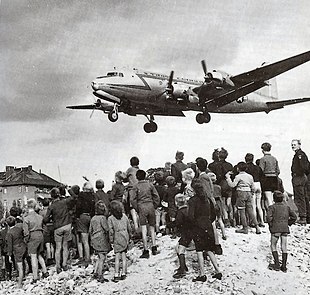
A Douglas C-54 Skymaster lands at Berlin’s Templehof Airport
Germans were impressed with American efficiency, but knew that, in the eyes of most of their American occupiers, they were pariahs. They had waged an aggressive war and exterminated millions of helpless men, women and children in concentration camps.
They were glad the Allies were keeping them alive, but felt they were pawns in a global chess game between the United States and the Soviet Union.
Then fate took a hand.
An Army Air Force pilot named Gail “Hal” Halvorsen impulsively decided to drop a series of small, hand-made parachutes of candies to Berlin’s children.
When General Tunner learned of this, he instantly realized its worth as a morale booster to Berliners. He ordered Halvorsen to continue the drops.

Gail “Hal” Halvorsen
Other pilots followed Halvorsen’s example. Soon Berlin’s children were lining up by the thousands, hoping to grab one of the candy-filled parachutes made from handkerchiefs or strips of clothing.
When the press learned of the drops, the story became a worldwide sensation. Back in the United States, Americans mailed literally tons of candy to Germany for distribution to Berlin’s children.
“The candy bombers” became the most beloved Americans in Berlin. And Halvorsen became the most beloved of them all. On October 3, 1948, when his plane landed in Berlin during a pouring storm, 700 children greeted him on the tarmac for “Lieutenant Gail Halvorsen Day.”
Among the letters he received from Berlin’s children:
Dear Uncle Wiggly Wings,
When yesterday I came from school, I had the happiness to get one of your sweet gifts….You cannot think how big the joy was….My brother and parents stood about me when I opened the strings and fetched out all the chocolate.
Dear Candy Bomber,
…How lucky I was last Sunday. I played at a ruin with some friends of mine opposite our house. Suddenly we saw about ten white parachutes coming out of the sky! One of them set down on the roof of our house. There were three stripes chocolate in the parachute….I want to thank you for your love to the German kids….
From 10-year-old Helma Lurch came this tribute:
Take care of yourself, and remember us children and we will remember you our whole life.
Adults as well as children responded emotionally to the candy drops—and “the candy bombers” responsible for them. When a plane crashed, killing two American lieutenants, residents of the neighborhood memorialized them with a plaque: “Once we were enemies yet you now gave your lives for us. We are doubly in your debt.”
The Airlift ended on May 12, 1949, when Stalin finally accepted defeat and ended the blockade.
“As [Halvorsen] came to represent the Airlift and America to the Berliners,” writes Andrei Cherney in his definitive book, The Candy Bombers, “through him America became a country that cared enough about the defeated Germans to…deliver candy to children, an act without any…ulterior motive, a gift of plain compassion.”
In 1948, that act forged a solid bond—which still exists—between Germany and the United States.


 Bureaucracybuster's Blog
2016 PRESIDENTIAL CAMPAIGN, ABC NEWS, ADOLF HITLER, ALTERNET, ANN COULTER, AP, AUSTRIA, BARACK OBAMA, BILL CLINTON, BORDER WALL, BUZZFEED, CBS NEWS, CHARLES SCHUMER, CHRIS CILLIZZA, CNN, CONTRACTORS, COUNCIL OF ECONOMIC ADVISERS, CROOKS AND LIARS, CZECHOSLOVAKIA, DAILY KOZ, DAVID BROOKS, DEMOCRATS, DEPARTMENT OF COMMERCE, DEPARTMENT OF HOMELAND SECURITY, DICK CHENEY, DONALD TRUMP, EDOUARD DELADIER, FACEBOOK, FBI, FEDERAL AVIATION ADMINISTRATION (FAA), FOX NEWS, FRANCE, GEORGE W. BUSH, GOVERNMENT SHUTDOWN, HOUSE OF REPRESENTATIVES, JAPAN, JEDEDIAH BILA, JOSE ANDRES, JULIAN ZELITZER, KEVIN HASSETT, KURT VON SCHUSCHNIGG, MARIE ANTOINETTE, MARK SHIELDS, MIKE PENCE, MITCH MECONNELL, MOTHER JONES, MOVEON, MSNBC, MUNICH CONFERENCE, NANCY PELOSI, NAZI GERMANY, NBC NEWS, NEVILLE CHAMBERLAIN, NEWSWEEK, NICCOLO MACHIAVELLI, NPR, PBS NEWSHOUR, POLAND, POLITICO, RAW STORY, REPUBLICANS, REUTERS, ROBERT PAYNE, RUSH LIMBAUGH, SALON, SEATTLE TIMES, SLATE, SOUP KITCHENS, STATE OF THE UNION ADDRESS, SUPER BOWL, THE ATLANTIC, THE CHICAGO SUN-TIMES, THE CHICAGO TRIBUNE, THE DAILY BEAST, THE GUARDIAN, THE HILL, THE HUFFINGTON POST, THE LIFE AND DEATH OF ADOLF HITLER, THE LOS ANGELES TIMES, THE NATION, THE NEW YORK TIMES, THE PRINCE, THE WALL STREET JOURNAL, THE WASHINGTON POST, TIME, TRANSPORTATION SAFETY ADMINISTRATION (TSA), TWITTER, U.S. NEWS & WORLD REPORT, UBER, UNITED STATES HOUSE OF REPRESENTATIVES, UNITED STATES SECRET SERVICE, UNITED STATES SENATE, UPI, USA TODAY, WILBUR ROSS, WINSTON CHURCHILL, WORLD WAR 11
LEARNING FROM THE MUNICH DISASTER: PART TWO (OF FIVE)
In Bureaucracy, History, Military, Politics, Social commentary on January 29, 2019 at 12:51 amAfter selling out Czechoslovakia, Prime Minister Neville Chamberlain returned to England a hero. Holding aloft a copy of the worthless agreement he had signed with Germany’s dictator, Adolf Hitler, he told cheering crowds in London: “I believe it is peace for our time.”
Neville Chamberlain
Winston Churchill knew better, predicting: “Britain and France had to choose between war and dishonor. They chose dishonor. They will have war.”
Hitler—still planning more conquests—also knew better. Speaking of the British and French leaders he had intimidated at Munich, he later asserted: “Our enemies are little worms. I saw them at Munich.”
In March, 1939, the German army occupied the rest of Czechoslovakia.
Chamberlain would soon be seen as a naive weakling—even before bombs started falling on London.
Hitler next turned his attention—and demands—to Poland. But, this time, France and Britain refused to be intimidated—and pledged to go to war if Hitler invaded Poland.
Adolf Hitler and his generals
Hitler ordered the invasion of Poland on September 1, 1939—unintentionally triggering World War II.
In time, historians and statesmen would regard Munich as an object lesson in the futility—and danger—in appeasing evil and aggression.
But for the postwar Republican party, Hitler’s my-way-or-else “negotiating” methods would become standard operating procedure.
President Donald J. Trump used precisely the same “negotiating” style during his December 11, 2018 Oval Office meeting with then-House Minority Leader Nancy Pelosi (D-CA) and Senate Minority Leader Charles Schumer (D-NY).
And, true to his love of publicity, Trump made sure the meeting was televised live.
Nancy Pelosi
Trump opened with on a positive note: “We’ve actually worked very hard on a couple of things that are happening. Criminal justice reform…[Republican Kentucky U.S. Senator] Mitch McConnell and the group, we’re going to be putting it up for a vote. We have great Democrat support, great Republican support.”
But he soon moved to the matter he truly cared about: Demanding $5.6 billion to create a wall along the U.S.-Mexican border: “And one way or the other, it’s going to get built. I’d like not to see a government closing, a shutdown. We will see what happens over the next short period of time.”
“One way or the other”—“so doer so”—was a favorite phrase of Adolf Hitler’s, meaning: If he couldn’t bully his opponents into surrendering, he would use violence.
PELOSI: “I think the American people recognize that we must keep government open, that a shutdown is not worth anything, and that you should not have a Trump shutdown. You have the Senate. You have the House of Representatives. You have the votes. You should pass it right now.”
Trump claimed he could get “Wall” legislation passed in the House but admitted he didn’t have the 60 votes he needed in the Senate.
PELOSI: “Well, the fact is you can get it started that way.”
Trump then contradicted himself: “The House we can get passed very easily, and we do.”
PELOSI: “Okay, then do it.”
Trump kept insisting that “the House would give me the vote if I wanted it.”
PELOSI: “Well, let’s take the vote and we’ll find out.”
SCHUMER: “We do not want to shut down the government. You have called 20 times to shut down the government….We want to come to an agreement. If we can’t come to an agreement, we have solutions that will pass the House and Senate right now, and will not shut down the government. And that’s what we’re urging you to do. Not threaten to shut down the government because you can’t get your way.”
Charles Schumer
TRUMP: “We need border security. And I think we all agree that we need border security.”
SCHUMER: “Yes, we do.”
TRUMP: “The wall is a part of border security. You can’t have very good border security without the wall.”
PELOSI: “That’s simply not true. That is a political promise. Border security is a way to effectively honor our responsibilities.”
By “political promise,” Pelosi meant this is was an appeal Trump had made to his hardcore base. which he expected to re-elect him.
SCHUMER: “And the experts say you can do border security without a wall, which is wasteful and doesn’t solve the problem.”
TRUMP: “It totally solves the problem.”
Schumer then goaded Trump into taking responsibility for closing down the government if he didn’t get funding for his border wall.
TRUMP: “I’ll take it. You know what I’ll say: Yes, if we don’t get what we want, one way or the other…I will shut down the government. Absolutely.”
Thus, Schumer guaranteed that any government shutdown during the Christmas season would be blamed on Trump.
But Republican leaders in Congress didn’t want to be blamed for shutting down the government. They seemed to persuade him to back away from his threat. The Senate passed a short-term funding measure without Trump’s wall money.
Vice President Mike Pence told lawmakers that Trump was open to approving it
Then the Fox News Network stepped in.
Share this: