Posts Tagged ‘FACEBOOK’
2020 PRESIDENTIAL ELECTION, ABC NEWS, ABUSE OF POWER, ADAM SCHIFF, ADOLF HITLER, ALAN DERSHOWITZ, ALTERNET, AMERICABLOG, AP, ARTICLES OF IMPEACHMENT, BABY BOOMER RESISTANCE, BILL TAYLOR, BUZZFEED, CBS NEWS, CNN, CROOKS AND LIARS, DAILY KOZ, DEMOCRATS, DONALD TRUMP, DRUDGE RETORT, FACEBOOK, FIONA HILL, FIVETHIRTYEIGHT, HARPER’S MAGAZINE, HEINRICH HIMMLER, HUNTER BIDEN, JEWS, JOE BIDEN, JOHN BOLTON, JOHN ROBERTS, JOSEPH BIDEN, LAURA COOPER, MARIE YOVANOVICH, MEDIA MATTERS, MOTHER JONES, MOVEON, MSNBC, NBC NEWS, NEWSWEEK, NPR, OBSTRUCTION OF CONGRESS, PBS NEWSHOUR, POLITICO, POLITICUSUSA, RAND PAUL, RAW STORY, REPUBLICANS, REUTERS, SALON, SCHUTZSTAFFEL, SEATTLE TIMES, SLATE, TALKING POINTS MEMO, THE ATLANTIC, THE CHICAGO SUN-TIMES, THE CHICAGO TRIBUNE, THE DAILY BEAST, THE DAILY BLOG, THE GUARDIAN, THE HILL, THE HOLOCAUST, THE HUFFINGTON POST, THE LOS ANGELES TIMES, THE NATION, THE NEW REPUBLIC, THE NEW YORK TIMES, THE PENTAGON, THE VILLAGE VOICE, THE WASHINGTON POST, THINKPROGRESS, TIME, TRUTHDIG, TRUTHOUT, TWO POLITICAL JUNKIES, U.S. NEWS & WORLD REPORT, UKRAINE, UNITED STATES HOUSE OF REPRESENTATIVES, UNITED STATES SENATE, UPI, USA TODAY, VOLODYMYR ZELENSKY, WHERMACHT, WITNESSES, WONKETTE, X
In Bureaucracy, History, Law, Law Enforcement, Military, Politics, Social commentary on June 25, 2025 at 12:15 am
On October 4, 1943, SS Reichsfuhrer Heinrich Himmler addressed SS officers stationed in Posen, Poland, about the ongoing campaign to exterminate the Jews of Europe.
He gave a similar speech two days later to an audience of Reichsleiters (national leaders) and Gauleiters (governors), as well as other government representatives.
Himmler intended to alert Reich officials of the extermination campaign the Schutzstaffel (“Protective Squads”)—otherwise known as the SS—and Wehrmacht (German army) had been waging since June, 1941.
The purpose: To make his listeners accessories to his monumental crimes—and to warn them there was no turning back.

Heinrich Himmler
Either Nazi Germany won the war that its Fuhrer, Adolf Hitler, had unintentionally unleashed on September 1, 1939—or its topmost officials would themselves face extinction as war criminals.
Said Himmler:
“I want to also mention a very difficult subject before you, with complete candor. It should be discussed amongst us, yet nevertheless, we will never speak about it in public. I am talking about the evacuation of the Jews, the extermination of the Jewish people.
“It is one of those things that is easily said: ‘The Jewish people is being exterminated.’…Most of you will know what it means when 100 bodies lie together, when 500 are there or when there are 1,000. And to have seen this through and—with the exception of human weakness—to have remained decent, has made us hard and is a page of glory never mentioned and never to be mentioned….
“But altogether we can say: We have carried out this most difficult task for the love of our people. And we have suffered no defect within us, in our soul, in our character.”
Fast forward 76 years—to January, 2020.
On December 18, 2019, the Democratic-controlled House of Representatives approved two Articles of Impeachment against President Donald Trump:
Article 1: Abuse of Power: For pressuring Ukraine to assist him in his re-election campaign by damaging former Vice President Joseph Biden, his possible 2020 Democratic rival; and
Article 2: Obstruction of Congress: For obstructing Congress by blocking testimony of subpoenaed witnesses and refusing to provide documents in response to House subpoenas in the impeachment inquiry.
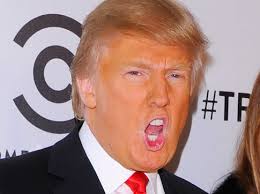
Donald Trump
Trump’s defense in the House had consisted of:
- Refusing to testify himself;
- Refusing to produce witnesses on his behalf;
- Refusing to turn over requested documents;
- Claiming that Democrats were preventing him from testifying or producing witnesses;
- Ordering administration officials to not testify before the six House impeachment committees investigating his behavior.
Those government employees who testified did so voluntarily—and at risk of retaliation. Among these were:
- Ukraine ambassador Bill Taylor;
- Laura Cooper, the top Pentagon official overseeing Ukraine-related U.S. policy;
- Former White House official Fiona Hill; and
- Former U.S. Ambassador to Ukraine Marie Yovanovitch.
They offered damning testimony against Trump.
When the trial began in the United States Senate on January 16, 2020, Trump’s legal team:
- Did not call any witnesses;
- Did not deny that Trump had sought to coerce Ukrainian President Volodymyr Zelensky into interfering with the 2020 election;
- Attacked Joseph and Hunter Biden as if they were on trial;
- Kentucky Republican Senator Rand Paul submitted a written question to presiding Chief Justice John Roberts that included the name of the alleged whistleblower to Trump’s coercion. Roberts refused to read it aloud;
- Paul raced outside the Senate and gave a press conference, where he named the alleged whistleblower—whose identity is protected by law.

Rand Paul
Perhaps even more frightening: One of Trump’s attorneys, Alan Dershowitz—once a liberal icon— offered Trump and all future Presidents a blanket of immunity worthy of a king:
“If a president does something which he believes will help him get elected in the public interest, that cannot be the kind of quid pro quo that results in impeachment. Every public official that I know believes that his election is of the public interest.”
Responding to that argument, House Manager Adam Schiff (D-CA) said: “It’s been a remarkable evolution of the presidential defense. It began with, ‘none of that stuff happened here.’ It began with ‘nothing to see here.’ It migrated to, ‘OK, they did seek investigations of the president’s political rival.’ And then it became OK.”
Meanwhile, the Senate majority of 53 Republicans vigorously supported Trump’s demand that no witnesses to his crimes be allowed to testify.
Among these witnesses: Former National Security Adviser John Bolton.
On December 29, 2019, The New York Times broke a sensational story:
In a forthcoming book, Bolton had written that Trump had told him, in August 2019, that he wanted to continue freezing aid to Ukraine until its officials began investigating the Bidens.
Despite—or because of—this bombshell report, Senate Republicans absolutely refused to admit the testimony of witnesses.
By following the same strategy as Heinrich Himmler, Trump entangled Republicans in his own crimes.
His infamy is now theirs.
History has brutally condemned those Germans who, knowing the full extent of Adolf Hitler’s crimes, nevertheless signed on to perpetuate and conceal them.
History will render the same damning verdict against House and Senate Republicans who provided similar cover for Donald Trump.
2020 PRESIDENTIAL ELECTION, ABC NEWS, ABRAHAM LINCOLN, ADAM SCHIFF, ALEXANDER VINDMAN, ALTERNET, AMERICABLOG, AP, BABY BOOMER RESISTANCE, BLOOMBERG, BUZZFEED, CBS NEWS, CNN, CROOKS AND LIARS, DAILY KOZ, DAVID BROOKS, DEMOCRATS, DONALD TRUMP, DRUDGE RETORT, FACEBOOK, FIVETHIRTYEIGHT, FOX NEWS NETWORK, GERRYMANDERING, HARPER’S MAGAZINE, HOUSE INTELLIGENCE COMMITTEE, HOWARD BAKER, HUNTER BIDEN, JOE BIDEN, JOEL MATHIS, LYNDON JOHNSON, MARIA YOVANOVICH, MARK SHIELDS, MEDIA MATTERS, MEDICAID, MICK MULVANEY, MOTHER JONES, MOVEON, MSNBC, NATIONAL SECURITY COUNCIL, NBC NEWS, NEWSWEEK, NPR, PBS NEWSHOUR, POLITICO, POLITICUSUSA, RAW STORY, REPUBLICANS, REUTERS, RICHARD NIXON, RUDI GIULIANI, RUSSIA, SALON, SEATTLE TIMES, SLATE, TALKING POINTS MEMO, THE ATLANTIC, THE CHICAGO SUN-TIMES, THE CHICAGO TRIBUNE, THE DAILY BEAST, THE DAILY BLOG, THE GUARDIAN, THE HILL, THE HUFFINGTON POST, THE LOS ANGELES TIMES, THE NATION, THE NEW REPUBLIC, THE NEW YORK TIMES, THE VILLAGE VOICE, THE WASHINGTON POST, THINKPROGRESS, TIME, TRUTHDIG, TRUTHOUT, TWO POLITICAL JUNKIES, U.S. NEWS & WORLD REPORT, UKRAINE, UPI, USA TODAY, VOLODYMYR ZELENSKY, VOTER ID LAWS, WATERGATE, WONKETTE, X
In Bureaucracy, History, Law, Law Enforcement, Military, Politics, Social commentary on June 24, 2025 at 12:16 am
On November 14, 2019, the CNN website showcased an opinion piece by Jane Carr and Laura Juncadella entitled: “Fractured States of America.”
And it opened:
“Some worry that it’s already too late, that we’ve crossed a threshold of polarization from which there is no return. Others look toward a future where more moderate voices are heeded and heard, and Americans can find better ways to relate to each other. Still others look back to history for a guide—perhaps for what not to do, or at the very least for proof that while it’s been bad before, progress is still possible.”
A series of sub-headlines summed up many of the comments reported.
- “I was starting to hate people that I have loved for years.”
- “Voting for Trump cost me my friends.”
- “I feel like I’m living in hostile territory.”
- “Our children are watching this bloodsport.”
- “A student’s Nazi-style salute reflects the mate.”
- “Our leaders reflect the worst of us.”
- “I truly believe I will be assaulted over a bumper sticker.”
- “It already feels like a cold war.”
It’s natural to regret that the United States has become so self-destructively polarized. And to wish that its citizens could somehow reach across the chasm that divides them and find common cause with one another.
But that is to ignore the brutal truth that America now faces a choice:
- To submit to the tyrannical aggression of a ruthless political party convinced that they are entitled to power to manipulate and undermine the country’s democratic processes; or
- To fiercely resist that aggression and the destruction of those democratic processes.

In a November 14, 2019 column, “Republicans Can’t Abandon Trump Now Because They’re All Guilty,” freelance journalist Joel Mathis warned: “Trump’s abuses of power mirror those of the GOP as a whole. Republicans can’t turn on him, because doing so would be to indict their party’s entire approach to politics.”
For example:
- At the state level, GOP legislatures have passed numerous voter ID laws over the last decade. Officially, the reason has been to prevent non-citizens from voting. In reality, the motive is to depress turnout among Democratic constituencies.
- When Democrats have won elections, Republicans have tried to block them from carrying out their policies. In Utah, voters approved Medicaid expansion at the ballot box—but Republicans nullified this.
- In North Carolina, Republican legislators prevented voters from choosing their representatives. Instead, Republican representatives chose voters through partisan sorting. In August, 2018, the state’s Supreme Court ruled the legislative gerrymandered district map unconstitutional.
The upshot of all this: “The president and his party are united in the belief that their entitlement to power allows them to manipulate and undermine the country’s democratic processes….”


At the time of the January 6, 2021 coup attempt, even Republicans admitted Donald Trump’s responsibility for it.
House Minority Leader Kevin McCarthy frantically phoned Trump, insisting that the rioters—who were breaking into his office through the windows—were the President’s supporters. He begged Trump to call them off.
“Well, Kevin, I guess these people are more upset about the election than you are,” Trump said.
But on January 28, 2021, “My Kevin” groveled before Trump at his Mar-a-Lago estate in Palm Beach, Florida, while they discussed how to win a House majority in the 2022 midterm elections
And Senate Majority Leader Mitch McConnell said on January 12: “The mob was fed lies. They were provoked by the president and other powerful people.”
But when the Senate met to try Trump for inciting an insurrection, McConnell voted to acquit him—and successfully urged his fellow Republicans to do the same.
* * * * *
The United States has indeed become a polarized country. But it’s not the polarization between Republicans and Democrats, or between conservatives and liberals.
It’s the polarization between
- Those intent on enslaving everyone who doesn’t subscribe to their Fascistic beliefs and agenda—and those who resist being enslaved.
- Those who believe in reason and science—and those who believe in an infallible “strong man” who rejects both.
- Those who cherish education—and those who celebrate ignorance.
- Those who believe in the rule of law—and those who believe in their right to act as a law unto themselves.
- Those who believe in treating others (especially the less fortunate) with decency—and those who believe in the triumph of intimidation and force.
Those who hoped that Republicans would choose patriotism over partisanship got their answer on February 5, 2020. That was when the Republican-dominated Senate—ignoring the overwhelming evidence against him—acquitted Donald Trump on impeachment articles: Obstruction of Congress and Abuse of Power.
And they got their answer again on February 13, 2021, when Senate Republicans voted to acquit him of Incitement of Insurrection.
It’s natural to regret that the United States has become a sharply divided nation. But those who lament this should realize there is only one choice:
Either non-Fascist Americans will destroy the Republican party and its voters that threaten to enslave them—or they will be enslaved by Republicans and their voters who believe they are entitled to manipulate and undermine the country’s democratic processes.
There is no middle ground.
ABC NEWS, ALTERNET, AMERICABLOG, AP, BABY BOOMER RESISTANCE, BBC, BC NEWS, BILL CLINTON, BLOOMBERG, BLUESKY, BUZZFEED, CALIFORNIA ENERGY CRISIS, CBS NEWS, CNN, COVID-19, CROOKS AND LIARS, DAILY KOS, DE-REGULATION, DEMOCRATS, DONALD TRUMP, ENRON, FACEBOOK, FBI, FEDERAL COMMUNICATIONS COMMISSION, FEDERAL TRADE COMMISSION, FIVETHIRTYEIGHT, GEORGIA RACKETEER INFLUENCED CORRUPT ORGANIZATIONS (RICO) ACT, GRAY DAVIS, HARPER’S MAGAZINE, HEINRICH HIMMLER, HOLOCAUST, HUFFINGTON POST, MAFIA, MEDIA MATTERS, MOTHER JONES, MOVEON, MSNBC, NBC NEWS, NEW REPUBLIC, NEWSDAY, NEWSWEEK, NICCOLO MACHIAVELLI, NPR, PACIFIC GAS AND ELECTRIC, PBS NEWSHOUR, PETE WILSON, POLITICO, POLITICUSUSA, RAW STORY, REPUBLICANS, REUTERS, RICO ACT, SALON, SEATTLE TIMES, SLATE, SS, TALKING POINTS MEMO, THE ATLANTIC, THE CHICAGO SUN-TIMES, THE CHICAGO TRIBUNE, THE DAILY BEAST, THE DAILY BLOG, THE GUARDIAN, THE HILL, THE HUFFINGTON POST, THE INTERCEPT, THE LOS ANGELES TIMES, THE NATION, THE NEW REPUBLIC, THE NEW YORK TIMES, THE NEW YORKER, THE SS, THE VILLAGE VOICE, THE WALL STREET JOURNAL, THE WASHINGTON POST, THINKPROGRESS, TIME, TRUTHDIG, TRUTHOUT, TWO POLITICAL JUNKIES, U.S. NEWS & WORLD REPORT, UNITED STATES DEPARTMENT OF JUSTICE, UPI, USA TODAY, X
In Bureaucracy, History, Law, Law Enforcement, Politics, Social commentary on June 20, 2025 at 12:12 am
This December 2 will mark the 24th anniversary of the collapse of Enron Corporation.
Based in Houston, Texas, Enron had employed 22,000 staffers and was one of the world’s leading electricity, natural gas, communications and paper companies.
In 2000, it claimed revenues of nearly $101 billion. Fortune had named Enron “America’s Most Innovative Company” for six consecutive years.
But then the truth emerged in 2001: Enron’s reported profitability was based not on brilliance and innovation but on systematic and creative accounting fraud.
And, on December 2, 2001, Enron filed for bankruptcy under Chapter 11 of the United States Bankruptcy Code.
Enron’s $63.4 billion in assets made it the largest corporate bankruptcy in U.S. history—until WorldCom’s bankruptcy in 2002.
The California electricity crisis (2000-2001) was caused by market manipulations and illegal shutdowns of pipelines by Texas energy companies.
The state suffered from multiple large-scale blackouts. Pacific Gas & Electric, one of the state’s largest energy companies, collapsed, and the economic fall-out greatly harmed Governor Gray Davis’ standing.
The crisis was made possible by Governor Pete Wilson, who had forced the passage of partial de-regulation legislation in 1996.
Enron seized its opportunity to inflate prices and manipulate energy output in California’s spot markets. The crisis cost the state $40 to $45 billion.
The true scandal of Enron was not that it was eventually destroyed by its own greed.
The true scandal was that its leaders were never Federally prosecuted for almost driving California—and the entire Western United States—into bankruptcy.
And the crisis occurred during the “liberal” administration of President Bill Clinton.
Once the news broke that Enron had filed for bankruptcy, commentators almost universally oozed compassion for its thousands of employees who would lose their salaries and pensions.
No one, however, condemned the “profits at any cost” dedication of those same employees for pushing California to the brink of ruin.
To put this in historical perspective:
- Imagine a historian writing about the destruction of Hitler’s Schutzstaffel (Guard Detachment), or SS, as a human interest tragedy.
- Imagine its Reichsfuhrer, Heinrich Himmler, being blamed for failing to prevent its collapse—as CEO Kenneth Lay was blamed for Enron’s demise.
- Imagine that same historian completely ignoring the horrific role the SS had played throughout Nazi-occupied countries—and its primary role in slaughtering six million Jews during the Holocaust.
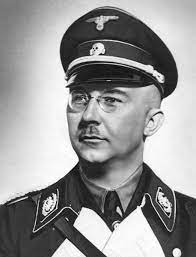
Heinrich Himmler
Nor did the media urge the United States Department of Justice to end the extortion via RICO—the Federal Racketeer Influenced Corrupt Organizations Act.
Passed by Congress in 1970, this was originally aimed at the kingpins of the Mafia. Since the mid-1980s, however, RICO has been successfully applied against both terrorist groups and legitimate businesses engaged in criminal activity.
Under RICO, people financially injured by a pattern of criminal activity can bring a claim in State or Federal court, and obtain damages at three times the amount of their actual claim, plus reimbursement for their attorneys’ fees and costs.
Such prosecutions would have pitted energy-extortionists against the full investigative might of the FBI and the sweeping legal authority of the Justice Department.

Consider this selection from the opening of the Act:
(1) “racketeering activity” means (A) any act or threat involving…extortion; (B) any act which is indictable under any of the following provisions of title 18, United States Code: sections 891-894 (relating to extortionate credit transactions), section 1343 (relating to wire fraud)Section 1344 (relating to financial institution fraud), section 1951 (relating to interference with commerce, robbery, or extortion), section 1952 (relating to racketeering)….
Today, two powerful social media companies—Facebook and X—play pivotal and potentially dangerous roles in the lives of millions of men, women and children.
Facebook has invaded its users’ privacy (such as via the Cambridge Analytica data scandal), manipulated elections (such as the 2016 Presidential one) and subjected its users to mass surveillance.
X has allowed trolls to abuse its followers and spread dangerous lies to millions. For five years, its chief troll was Donald Trump, who libeled hundreds while falsely claiming that COVID-19 was a hoax and that he won re-election in 2020 but was cheated by fraud.
Such lies resulted in the deaths of tens of thousands of Americans from COVID—and poisoned the American electoral system for future races.
Yet in both cases, the Federal Government has stood by and allowed such abuses to continue unpunished. Yet it commands a wide range of agencies capable of addressing such abuses—such as the Federal Trade Commission, the Federal Communications Commission and—not least importantly, the Justice Department.
Powerful, life-altering companies require powerful oversight—through the prism of the warning given by Niccolo Machiavelli more than 500 years ago:
All those who have written upon civil institutions demonstrate…that whoever desires to found a state and give it laws, must start with assuming that all men are bad and ever ready to display their vicious nature, whenever they may find occasion for it.
If their evil disposition remains concealed for a time, it must be attributed to some unknown reason; and we must assume that it lacked occasion to show itself. But time, which has been said to be the father of all truth, does not fail to bring it to light.
60 MINUTES, ABC NEWS, ALTERNET, AMERICABLOG, AP, BABY BOOMER RESISTANCE, BARACK OBAMA, BLOOMBERG, BUZZFEED, CARL MUELLER, CBS NEWS, CIA, CNN, CROOKS AND LIARS, DAILY KOS, DAILY KOZ, DRUDGE RETORT, FACEBOK, FACEBOOK, FIVETHIRTYEIGHT, HARPER’S MAGAZINE, IMPERIAL HUBRIS, ISLAM, ISLAMIC STATE OF IRAQ AND THE LEVANT, KAYLA MUELLER, MARCHING TOWARD HELL, MEDIA MATTERS, MICHAEL SCHEUER, MOTHER JONES, MOVEON, MSNBC, MUSLIMS, NBC NEWS, NEWSWEEK, NPR, OSAMA BIN LADEN, PBS NEWSHOUR, POLITICO, POLITICUSUSA, RAW STORY, REUTERS, SALON, SEATTLE TIMES, SLATE, SYRIA, TALKING POINTS MEMO, THE ATLANTIC, THE CHICAGO SUN-TIMES, THE CHICAGO TRIBUNE, THE DAILY BEAST, THE DAILY BLOG, THE GUARDIAN, THE HILL, THE HUFFINGTON POST, THE LOS ANGELES TIMES, THE NATION, THE NEW REPUBLIC, THE NEW YORK TIMES, THE VILLAGE VOICE, THE WALL STREET JOURNAL, THE WASHINGTON POST, THINKPROGRESS, TIME, TRUTHDIG, TRUTHOUT, TWO POLITICAL JUNKIES, U.S. NEWS & WORLD REPORT, UPI, USA TODAY, VIETNAM WAR, WONKETTE, X
In Bureaucracy, History, Military, Politics, Social commentary on May 30, 2025 at 12:11 am
“When trouble comes up anywhere in the world, they don’t call Beijing. They don’t call Moscow. They call us.”
So spoke President Barack Obama on the September 28, 2014 edition of 60 Minutes.
And, according to former CIA agent Michael Scheuer, that’s the problem: America can’t learn to mind its own business.
Scheuer is a 20-year CIA veteran—as well as an author, historian, foreign policy critic and political analyst.
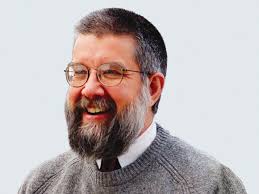
Michael Scheuer
From 1996 to 1999 he headed Alec Station, the CIA’s unit assigned to track Osama bin Laden at the agency’s Counterterrorism Center.
He has served as an adjunct professor at Georgetown University’s Center for Peace and Security Studies.
He is best-known as the author of two seminal works on America’s fight against terrorism: Imperial Hubris: Why the West is Losing the War on Terror (2003) and Marching Toward Hell: America and Islam after Iraq (2008).
Scheuer says that Islamics don’t hate Americans because of “our way of life”—with its freedoms of speech and worship and its highly secular, commercialized culture.
Instead, Islamic hatred toward the United States stems from America’s six longstanding policies in the Middle East:
- U.S. support for apostate, corrupt, and tyrannical Muslim governments
- U.S. and other Western troops on the Arabian Peninsula
- U.S. support for Israel that keeps Palestinians in the Israelis’ thrall
- U.S. pressure on Arab energy producers to keep oil prices low
- U.S. invasion of Iraq and Afghanistan
- U.S. support for Russia, India, and China against their Muslim militants
Scheuer contends that no amount of American propaganda will win “the hearts and minds” of Islamics who can “see, hear, experience, and hate” these policies firsthand.
But there is another danger facing America, says Scheuer, one that threatens “the core of our social and civil institutions.”
And in Marching Toward Hell he bluntly indicts that threat: The “profound and willful ignorance” of America’s “bipartisan governing elite.”
Scheuer defines this elite as “the inbred set of individuals who have influenced…drafted and conducted U.S. foreign policy” since 1973.
Within that group are:
- politicians
- journalists
- academics
- preachers
- civil servants
- military officers
- philanthropists
“Some are Republicans, others Democrats; some are evangelicals, others atheists; some are militarists, others pacifists; some are purveyors of Western civilization, others are multiculturalists,” writes Scheuer.
But for all their political and/or philosophical differences, the members of this governing elite share one belief in common.
According to Scheuer, that belief is “an unquenchable ardor to have the United States intervene in all places, situations and times.”
And he warns that this “bipartisan governing elite” must radically change its policies—such as unconditional support for Israel and corrupt, tyrannical Muslim governments.
Otherwise, Americans will be locked in an endless “hot war” with the Islamic world.
During his September 28, 2014 appearance on 60 Minutes, President Obama admitted that the mostly Sunni-Muslim Iraqi army had refused to combat the Sunni army of ISIS.
Then followed this exchange:
Steve Kroft: What happens if the Iraqis don’t fight or can’t fight?
President Obama: Well….
Steve Kroft: What’s the end game?
President Obama: I’m not going to speculate on failure at the moment. We’re just getting started. Let’s see how they do.
It was precisely such a mindset that led the United States, step by step, into the Vietnam quagmire.
In the Middle East, as in Vietnam, the United States lacked:
- Real or worthwhile allies in Iraq or Syria;
- A working knowledge of the peoples it wants to influence in either country;
- Clearly-defined goals that it seeks to accomplish in that region.
America rushed to disaster in Vietnam because its foreign policy elite felt it had to “do something” to fight Communism anywhere in the world.
Now Americans—in and out of government—feel they must “do something” to stop the routine carnage that is life throughout the Middle East.
In December, 2012, Kayla Mueller, an idealistic 24-year-old American woman, arrived in Syria to assist Syrians caught up in their own civil war. And on August 4, 2013, she was kidnapped by ISIS (Islamic State of Iraq and Syria) and held for ransom.
In 2015, she was killed—whether by her terrorist kidnappers or Jordanian airstrikes remains unclear.
On February 23, 2015, Carl Mueller appeared on the “Today” show, to protest the refusal of the United States Government to pay ransom demands to his daughter’s terrorist kidnappers.
“How many mistakes have we all made in life that were naïve and didn’t get caught at? Kayla was just in a place that was more dangerous than most. And she couldn’t help herself. She had to go in there and had to help.”
But did she?
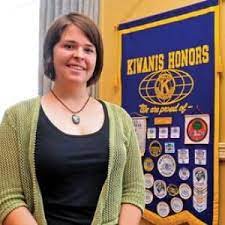

Kayla Mueller
There were thousands of communities within the United States desperate for the help of a caring social activist. And thousands of organizations—such as Volunteers in Service to America (VISTA), Habitat for Humanity and Catholic Relief Services—that would have been thrilled to enlist her services.
And she could have made lives better without constantly facing the dangers of kidnapping by Islamics determined to humiliate and slaughter Americans.
Michael Sheuer is right: The United States should learn to mind its own business and quit intervening in the affairs of Middle Eastern governments and peoples.
Kayla Mueller is proof of the rightness of that assertion.
1776 (PLAY), ABC NEWS, ALTERNET, AMERICABLOG, AP, “SOUTHERN STRAGEGY”, BABY BOOMER RESISTANCE, BARACK OBAMA, BLOOMBERG, BUZZFEED, CBS NEWS, CEOS, CHRIS MATHEWS, CIVIL RIGHTS ACT OF 1964, CIVIL WAR, CNN, CROOKS AND LIARS, DAILY KOZ, DECLARATION OF INDEPENDENCE, DONALD TRUMP, DRUDGE REPORT, FACEBOOK, FIVETHIRTYEIGHT, FOOD STAMPS, FRED TRUMP, HARPER’S MAGAZINE, HOWARD STERN, HUFFINGTON POST, JOHN DICKINSON, JOHN HANCOCK, MEDIA MATTERS, MEDICARE, MOTHER JONES, MOVEON, MSNBC, NBC NEWS, NEWSWEEK, NPR, PBS NEWSHOUR, PEW FOUNDATION, POLITICO, POLITICUSUSA, PROPAGANDA, RAW STORY, REPUBLICAN PARTY, REPUBLICANS, REUTERS, Ronald Reagan, SALON, SEATTLE TIMES, SLATE, SLAVERY, SOCIAL SECURITY, TALKING POINTS MEMO, THE ATLANTIC, THE CHICAGO SUN-TIMES, THE CHICAGO TRIBUNE, THE DAILY BEAST, THE DAILY BLOG, THE GUARDIAN, THE HILL, THE HUFFINGTON POST, THE LOS ANGELES TIMES, THE NATION, THE NEW REPUBLIC, THE NEW YORK TIMES, THE SOUL OF BATTLE (BOOK), THE VILLAGE VOICE, THE WALL STREET JOURNAL, THE WASHINGTON POST, THINKPROGRESS, TIME, TIME MAGAZINE, TRUTHDIG, TRUTHOUT, TWO POLITICAL JUNKIES, U.S. NEWS & WORLD REPORT, UPI, USA TODAY, VICTOR DAVIS HANSON, VIETNAM WAR, VOTING RIGHTS ACT OF 1965, WILLIAM TECUMSEH SHERMAN, WONKETTE, X
In Bureaucracy, Business, History, Politics, Social commentary on May 23, 2025 at 12:13 am
Republicans have long tried to prevent or eliminate programs that aid the poor and middle-class, including:
- Social Security (since it began in 1935)
- Medicare (started 1965)
- Medicaid (started 1985)
- Food stamps (started 1939)
- WIC (Women, Infants, Children–started 1972).
So why are so many poor Americans flocking to this party’s banner?
Two reasons: Racism and greed. There are historical parallels for both.
First, race:
In 1999, historian Victor Davis Hanson noted the huge gap in wealth between the aristocratic, slave-owning minority of the pre-Civil War South and the vast majority of poor white Southerners.
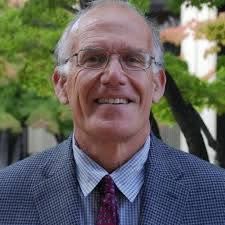
Victor Davis Hanson
“Before the war in the counties [Union General William Tecumseh] Sherman would later ruin, the top 10% of the landowners controlled 40% of the assessed wealth.”
In contrast, “more than half of those who were lucky enough to own any property at all still possessed less than 15% of the area’s valuation.”
So Hanson asked: “Why did the millions of poor whites of the Confederacy fight at all?”
He supplied the answer in his brilliant work on military history, The Soul of Battle: From Ancient Times to the Present Day, How Three Great Liberators Vanquished Tyranny.
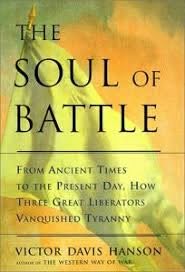
One of those liberators was General William Tecumseh Sherman, who led 62,000 Union troops in a victorious “March to the Sea” through the Confederacy in 1864.
So why did so many poor Southern whites literally lay down their lives for the wealthy planter class, which despised them?
According to Hanson: “Behind the entire social fabric of the South lay slavery.
“If slavery eroded the economic position of the poor free citizens, if slavery encouraged a society of haves and have-nots…then it alone offered one promise to the free white man—poor, ignorant and dispirited—that he was at least not black and not a slave.”
And the planter class and its allies in government easily fobbed off their poor white countrymen with cheap flattery. Said Georgia Governor Joseph Brown:
“Among us the poor white laborer is respected as an equal. His family is treated with kindness, consideration, and respect. He does not belong to the menial class. The negro is in no sense his equal. He belongs to the only true aristocracy, the race of white men.”

Arlington House and plantation, former home of Robert E. Lee
Similarly, poor whites now flock to the Republican Party—which holds them in equal contempt—in large part to protest the 2008 election of the first black President of the United States.
According to a Pew Research Center study released on July 22, 2011: “Notably, the GOP gains have occurred only among white voters; a 2-point Republican edge among whites in 2008 (46% to 44%) has widened to a 13-point lead today (52% to 39%).”
Since the 1960s, Republicans have pursued a campaign policy of “divide and rule”—divide the nation along racial lines and reap the benefits at election time.
- Republicans opposed the Civil Rights Act of 1964.
- Republicans opposed the Voting Rights Act of 1965.
- Republicans, with Richard Nixon as their Presidential candidate in 1968 and 1972, pursued what they called a “Southern strategy”: Use “code language” to stoke fear and hatred of blacks among whites.
- Republicans have falsely identified welfare programs exclusively with nonwhites. (Of the six million Americans receiving food stamps, about 42% are white, 32% are black, and 22% are Latino—with the growth fastest among whites during the recession.)
Thus, in voting Republican, many of these poor whites believe they are “striking a blow for the white race.”
And they can do so in a more socially acceptable way than joining a certified hate group such as the American Nazi Party or Ku Klux Klan.
Since 2015, openly racist groups such as the Klan and the American Nazi Party have flocked to the banner of Presidential candidate and President Donald Trump. By enthusiastically courting their support, the real estate mogul has made it possible for Republican candidates to openly display their own racism.
Now greed:
In the hit play, 1776, on the creation and signing of the Declaration of Independence, there is a telling exchange between John Dickinson and John Hancock. It comes during the song, “Cool, Cool, Considerate Men.”
Dickinson, the delegate from Pennsylvania, urges Hancock, president of the Second Continental Congress, “to join us in our minuet.” By “us” he means his fellow conservatives who fear losing their property and exalted status by supporting American independence from Great Britain.
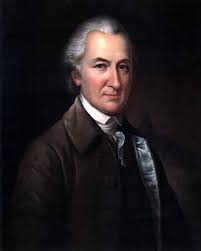
John Dickinson
Hancock declines, saying: “Fortunately, there are not enough men of property in America to dictate policy.”
To which Dickinson replies: “Perhaps not. But don’t forget that most men with nothing would rather protect the possibility of becoming rich than face the reality of being poor. And that is why they will follow us.”
Today, poor whites generally identify with the CEOs of powerful corporations. They believe the Republican gospel that they can attain such wealth—if only the government will “get out of my way.”
They forget—or ignore—the truth that government, for all its imperfections, is sometimes all that stands between them and a wide range of predators.
In return, the CEOs despise them as the privileged have always despised their social and economic “inferiors.”
Unless the Democratic Party can find ways to directly address these bitter, Politically Incorrect truths, it will continue its decline into insignificance.
1776 (PLAY), ABC NEWS, ALTERNET, AMERICABLOG, AP, “SOUTHERN STRAGEGY”, BABY BOOMER RESISTANCE, BARACK OBAMA, BLOOMBERG, BUZZFEED, CBS NEWS, CEOS, CHRIS MATHEWS, CIVIL RIGHTS ACT OF 1964, CIVIL WAR, CNN, CROOKS AND LIARS, DAILY KOZ, DECLARATION OF INDEPENDENCE, DONALD TRUMP, DRUDGE REPORT, FACEBOOK, FIVETHIRTYEIGHT, FOOD STAMPS, FRED TRUMP, HARPER’S MAGAZINE, HOWARD STERN, HUFFINGTON POST, JOHN DICKINSON, JOHN HANCOCK, MEDIA MATTERS, MEDICARE, MOTHER JONES, MOVEON, MSNBC, NBC NEWS, NEWSWEEK, NPR, PBS NEWSHOUR, PEW FOUNDATION, POLITICO, POLITICUSUSA, PROPAGANDA, RAW STORY, REPUBLICAN PARTY, REPUBLICANS, REUTERS, Ronald Reagan, SALON, SEATTLE TIMES, SLATE, SLAVERY, SOCIAL SECURITY, TALKING POINTS MEMO, THE ATLANTIC, THE CHICAGO SUN-TIMES, THE CHICAGO TRIBUNE, THE DAILY BEAST, THE DAILY BLOG, THE GUARDIAN, THE HILL, THE HUFFINGTON POST, THE LOS ANGELES TIMES, THE NATION, THE NEW REPUBLIC, THE NEW YORK TIMES, THE SOUL OF BATTLE (BOOK), THE VILLAGE VOICE, THE WALL STREET JOURNAL, THE WASHINGTON POST, THINKPROGRESS, TIME, TIME MAGAZINE, TRUTHDIG, TRUTHOUT, TWO POLITICAL JUNKIES, U.S. NEWS & WORLD REPORT, UPI, USA TODAY, VICTOR DAVIS HANSON, VIETNAM WAR, VOTING RIGHTS ACT OF 1965, WILLIAM TECUMSEH SHERMAN, WONKETTE, X
In Bureaucracy, Business, History, Politics, Social commentary on May 22, 2025 at 12:20 am
On July 22, 2011, ABC News carried the following story:
The Pew Foundation, analyzing voter identification, found “the electorate’s partisan affiliations have shifted significantly” since Barack Obama won office in 2008.
The GOP had gained strength among white voters, most specifically “the young and poor.”

A seven-point Democratic advantage among whites under age 30 three years earlier had turned into an 11-point GOP advantage. And a 15-point Democratic advantage among whites earning less than $30,000 annually had swung to a slim four-point Republican edge by 2011.
In addition:
- The GOP gains had occurred only among white voters.
- Republicans had made sizable gains among white voters since 2008. Fifty-two percent of white voters called themselves Republicans or leaned to the GOP, compared with 39% who affiliated with the Democratic Party or leaned Democratic.
- Democrats had lost their edge among lower income white voters.
- In 2008, Democrats had a 15 point lead among white voters with family incomes less than $30,000. By 2011, Republicans had a four-point edge among this group.
- The GOP’s lead among middle income white voters had grown since 2008, and Republicans held a substantial advantage with higher income white voters.
- Republicans made gains among whites with a high school education or less. The GOP’s advantage over Democrats had grown from one point in 2008 to 17 points in 2011 among less educated whites.
- Republicans had made smaller gains among white voters who had college degrees.
Five years later, in 2016, these masses of disaffected white men would overwhelmingly vote for Donald Trump, a real estate mogul-turned-celebrity-TV-host of “The Apprentice.”
Trump had been born into a life of luxury. He began his real estate career at his father’s real estate and construction company. He rose to wealth and fame after his father, Fred, gave him control of the business in 1971.
Similarly, soon after acquiring the family business, Trump set out to build his own empire—hotels, golf courses, casinos and skyscrapers across North and South America, Europe and Asia. Of the 515 entities he owns, 268 of them—52%—bear his last name. He often refers to his properties as “the swankiest,” “the most beautiful.”
During the Vietnam war, his father reportedly paid a doctor to claim that Trump suffered from “bone spurs” in his foot—thus enabling him to escape the draft.
Donald Trump
In short, Trump has literally nothing in common with the masses of poor whites who worship him.
Howard Stern, the notorious radio host, has known Trump many years. Commenting on the appeal Trump has for his followers, Stern says: “The oddity of all this is the people Trump despises most, love him the most.
“The people who are voting for Trump for the most part …he wouldn’t even let them in his fucking hotel. He’d be disgusted by them. Go to Mar-a-Lago. See if there’s any people who look like you. I’m talking to you in the audience.”
Yet, while the poor worship Trump and Republicans generally, there is a disconnect between them: Since 1980, Republicans have pursued a policy of gutting programs aimed at helping the poor—while repeatedly creating tax-breaks for the wealthiest 1% of the population.
For Republicans, the patron saint of this “love-the-rich-screw-the-poor” ideology remains Ronald Reagan—two-time governor of California and twice-elected President of the United States (1981-1989)
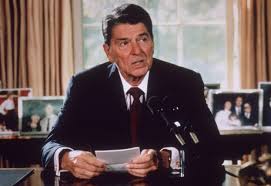
Ronald Reagan, who taught Americans to worship the wealthy
Among those charting Reagan’s legacy as President was former CBS Correspondent David Shoenbrum.
In his bestselling autobiography, America Inside Out: At Home and Abroad from Roosevelt to Reagan, he noted:
- On January 28, 1981, keeping a pledge to his financial backers in the oil industry, Reagan abolished Federal controls on the price of oil.
- Within a week, Exxon, Texaco and Shell raised gasoline prices and prices of home heating oil.
- Reagan saw it as his duty to put a floor under prices, not a ceiling above them.
- Reagan believed that when government helped business it wasn’t interfering. Loaning money to bail out a financially incompetent Chrysler was “supporting the free enterprise system.”
- But putting a high-profits tax on price-gouging corporations or filing anti-trust suits against them was “Communistic” and therefore intolerable.
- Tax-breaks for wealthy businesses meant helping America become stronger.
- But welfare for the poor or the victims of a predatory marketplace economy weakened America by sapping its morale.
“In short, welfare for the rich is good for America. But welfare for the poor is bad for America, even for the poor themselves, for it encourages them to be shiftless and lazy.
“Somehow, loans to the inefficient management of American corporations would not similarly encourage them in their inefficient methods,” wrote Shoenbrun.
Republicans have sought to dismantle Social Security ever since that program began in 1935. And Republicans have furiously opposed other programs aiding the poor and middle-class—such as Medicare, food stamps and WIC (Women, Infants, Children).
In short, this is not a political party with a history of rushing to the defense of those most in need.
So the question remains: Why are so many poor Americans flocking to its banner?
The answer lies in the history of the American South—and slavery.
ABC NEWS, ALTERNET, AMERICABLOG, AP, BABY BOOMER RESISTANCE, BBC, BIG BEAR LAKE, BLOOMBERG, BLUESKY, BUZZFEED, CARLOS THE JACKAL, CBS NEWS, CHARLES DE GAULLE, CHRISTOPHER DORNER, CNN, CROOKS AND LIARS, DAILY KOS, DAILY KOZ, DAY OF THE JACKAL, FACEBOOK, FBI, FIVETHIRTYEIGHT, FREDERICK FORSYTH, HARPER’S MAGAZINE, HAWAII FIVE-O, HUFFINGTON POST, JACK LORD, LOS ANGELES POLICE DEPARTMENT, MEDIA MATTERS, MILITARY DRONES, MOTHER JONES, MOVEON, MSNBC, NBC NEWS, NEW REPUBLIC, NEWSDAY, NEWSWEEK, NPR, PBS NEWSHOUR, POLITICO, POLITICUSUSA, RAW STORY, REUTERS, SALON, SEATTLE TIMES, SLATE, SWAT TEAMS, TALKING POINTS MEMO, THE ATLANTIC, THE CHICAGO SUN-TIMES, THE CHICAGO TRIBUNE, THE DAILY BEAST, THE DAILY BLOG, THE GUARDIAN, THE HILL, THE HUFFINGTON POST, THE INTERCEPT, THE LOS ANGELES TIMES, THE NATION, THE NEW REPUBLIC, THE NEW YORK TIMES, THE NEW YORKER, THE VILLAGE VOICE, THE WASHINGTON POST, THINKPROGRESS, TIME, TRUTHDIG, TRUTHOUT, TWO POLITICAL JUNKIES, U.S. MARSHALS SERVICE, U.S. NEWS & WORLD REPORT, UPI, USA TODAY, X
In Bureaucracy, History, Law Enforcement, Politics, Social commentary on May 19, 2025 at 12:05 am
The unprecedented manhunt for cop-killer Christopher Dorner has important—and brutal—lessons to teach.
First, above everyone else, police look out for each other.
Robert Daley bluntly revealed this truth in his 1971 bestseller, Target Blue: An Insider’s View of the N.Y.P.D. A police reporter for the New York Times, he served for one year as a deputy police commissioner.
“The murderers of all patrolmen almost invariably were identified at once and caught soon after,” wrote Daley. “Organized crime was too smart to get involved in the type of investigation that followed a cop killing.
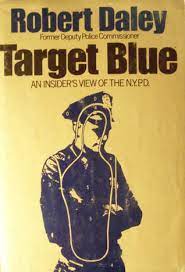
“A great many solvable crimes in the city were never solved, because not enough men were assigned to the case, or because those assigned were lazy or hardly cared or got sidetracked.
“But when a cop got killed, no other cop got sidetracked. Detectives worked on the case night and day….Cops were all ears as far as murdered patrolmen were concerned; they heard details all over the city…and fed all this into the detectives who had the case.
“In effect, the citizen who murdered his wife’s lover was sought by a team of detectives, two men. But he who killed a cop was sought by 32,000.”
Second, don’t expect the police to do for you what they’ll do for one another.
The LAPD assigned security and surveillance details to at least 50 threatened officers and their families. A typical detail consists of two to five or more guards. And those guards must be changed every eight to 12 hours.
And those details stayed in place long after Dorner was killed in a firefight on February 12, 2013.
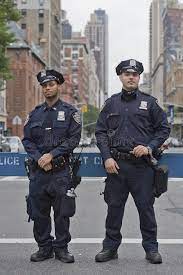
But if your bullying neighbor threatens to kill you, don’t expect the police to send a guard detail over. They’ll claim: “We can’t do anything until he does something. If he does, give us a call.”
And if your loved one is murdered, don’t expect the mayor’s office to offer a $1 million reward or the military to deploy drones to find the killer.
Third, the more status and wealth you command, the more likely the police are to address your complaint or solve your case.
Police claim to enforce the law impartially, “without fear or favor.” But that happens only in TV crime shows.
If you’re rich, your complaint will likely get top priority and the best service the agency can provide.
But if you’re poor or even middle-class without high-level political or police connections, your case will almost certainly wind up in “the round file” (a wastebasket).
And it works the other way, too. Anthony Bouza, former chief of the Minneapolis Police Department, notes in his 1990 book, The Police Mystique: “When cops deal with the poor (blacks, Hispanics, the homeless and the street people) the rubber of power meets the road of abuse.”
Fourth, don’t expect your police department to operate with the vigor or efficiency of TV police agencies.
“I want this rock [Hawaii] sealed off,” Steve McGarrett (Jack Lord) routinely ordered when pursuing criminals on “Hawaii Five-O.”
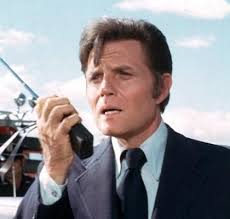
Jack Lord as Steve McGarrett
But in San Jose—a city close to bankruputpsy—residents can’t get police to respond to break-ins because the police department is dangerously understaffed.
And neighbors in Oakland, fed up with a slow police response—or none at all—are banding together to protect their properties by hiring private security officers.
In San Francisco, if you’re assaulted and can’t give police “a named suspect,” they won’t assign the case. As far as they’re concerned, the solvability rate is too low.
Fifth, the result of all this can only be increased disrespect for law enforcement from a deservedly—and increasingly—cynical public.
Surveys reveal that those who don’t need to call the police have a higher opinion of their integrity and efficiency than those who are the victims of crime. Among those reasons:
- Many police departments lack state-of-the-art crime labs to analyze evidence.
- Files often get lost or accidentally destroyed.
- Some officers are lazy, indifferent, incompetent—or corrupt.
- Police are notoriously competitive, generally refusing to share information with other officers or other police departments—and thus making it easier for criminals to run amok.
- Even when police “solve” a crime, that simply means making an arrest. The perpetrator may cop to a lesser offense and serve only a token sentence—or none at all. Or he might be found not guilty by a judge or jury.
But it is the witnessing of blatant inequities and hypocrisies such as those displayed in the Christopher Dorner manhunt that most damages public support for police at all levels.
When citizens believe police care only about themselves, and lack the ability—or even the willingness—to protect them or avenge their victimization by arresting the perpetrators, that is a deadly blow to law enforcement.
Police depend on citizens for more than crime tips. They depend upon them to support hiring more cops and buying state-of-the-art police equipment. When public support vanishes, so does much of that public funding.
The result can only be a return to the days of the lawless West, where citizens looked only to themselves for protection.
ABC NEWS, ALTERNET, AMERICABLOG, AP, BABY BOOMER RESISTANCE, BBC, BIG BEAR LAKE, BLOOMBERG, BLUESKY, BUZZFEED, CARLOS THE JACKAL, CBS NEWS, CHARLES DE GAULLE, CHRISTOPHER DORNER, CNN, CROOKS AND LIARS, DAILY KOS, DAILY KOZ, DAY OF THE JACKAL, FACEBOOK, FBI, FIVETHIRTYEIGHT, FREDERICK FORSYTH, HARPER’S MAGAZINE, HAWAII FIVE-O, HUFFINGTON POST, JACK LORD, LOS ANGELES POLICE DEPARTMENT, MEDIA MATTERS, MILITARY DRONES, MOTHER JONES, MOVEON, MSNBC, NBC NEWS, NEW REPUBLIC, NEWSDAY, NEWSWEEK, NPR, PBS NEWSHOUR, POLITICO, POLITICUSUSA, RAW STORY, REUTERS, SALON, SEATTLE TIMES, SLATE, SWAT TEAMS, TALKING POINTS MEMO, THE ATLANTIC, THE CHICAGO SUN-TIMES, THE CHICAGO TRIBUNE, THE DAILY BEAST, THE DAILY BLOG, THE GUARDIAN, THE HILL, THE HUFFINGTON POST, THE INTERCEPT, THE LOS ANGELES TIMES, THE NATION, THE NEW REPUBLIC, THE NEW YORK TIMES, THE NEW YORKER, THE VILLAGE VOICE, THE WASHINGTON POST, THINKPROGRESS, TIME, TRUTHDIG, TRUTHOUT, TWO POLITICAL JUNKIES, U.S. MARSHALS SERVICE, U.S. NEWS & WORLD REPORT, UPI, USA TODAY, X
In Bureaucracy, History, Law Enforcement, Politics, Social commentary on May 16, 2025 at 12:13 am
Christopher Dorner—33, black, powerfully-built, standing six feet and weighing 270 pounds—seemed to have vanished from the face of the earth.
This despite an unprecedented manhunt by local and Federal law enforcement agencies and the lure of a $1 million reward for information leading to his arrest.
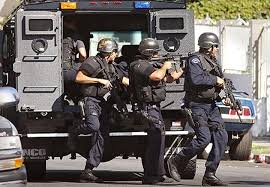
LAPD SWAT team
But Dorner made several major errors in his one-man crusade for vengeance against the agency he blamed for ending his “dream job” police career.
First, shortly before or after he began his murderous rampage, Dorner posted an 11-page “manifesto” of his intentions on his Facebook page.
In this, he spewed contempt for the LAPD and declared his intention to wage war against it.
I will bring unconventional and asymmetrical warfare to those in LAPD uniform whether on or off duty….You will now live the life of the prey….You have misjudged a sleeping giant.
Dorner’s online rant forewarned police that he intended to put them literally in the cross-hairs of his anger. As a result, his intended targets remained on hair-trigger alert for his attacks.
Second, in that “manifesto,” he specifically named many of the officers he intended to kill.
This allowed the LAPD to rush bodyguards to the homes of those he had threatened. The LAPD would have been at a great disadvantage if it hadn’t known where he might strike next.
Third, Dorner boasted of the weaponry he had available.
In my cache you will find several small arms. In the cache, Bushmaster firearms, Remington precision rifles, and AAC Suppressors (silencers)….As you know I also own Barrett .50′s so your APC are defunct and futile.
A Barrett .50 is a sniper’s rifle whose five-inch bullets can penetrate bulletproof vests, steel and concrete. An APC is military shorthand for Armored Personnel Carrier.

Christopher Dorner
Dorner should have kept this information to himself—and allowed the LAPD to discover the truth only in a firefight. By bragging about it, he allowed his enemies to design strategies and deploy resources (such as unmanned drones) to neutralize his powerful weapons.
Fourth, he posted not simply his biography but his psychology for his enemies to exploit.
He sees himself as all-powerful:
I am here to change and make policy…I am here to correct and calibrate your morale compasses to true north….
I know your TTP’s, (techniques, tactics, and procedures). Any threat assessments you generate will be useless…. I will mitigate any of your attempts at preservation.
He clearly has a high opinion of himself:
I lived a good life and though not a religious man I always stuck to my own personal code of ethics, ethos and always stuck to my shoreline and true North. I didn’t need the US Navy to instill Honor, Courage, and Commitment in me but I thank them for re-enforcing it. It’s in my DNA.
And he reveals a clear history of anger at what he considers racial animosity directed against him, citing incidents as far back as high school.
No doubt psychologists who design behavioral profiles thoroughly analyzed Dorner’s self-portrait and advised police on the best ways to counter his threats.
Fifth, Dorner, sought refuge in a mountainous, snow-covered tourist resort in the San Bernardino Mountains.
This made it impossible for him—a black—to blend in against an almost totally white population.
And once his truck broke down, he was at a severe disadvantage. He was temporarily stranded and forced to abandon many of the high-powered weapons and other supplies he had brought. This gave him less firepower to use in his war on police.
He would have blended in with the majority black population had he fled to South Central Los Angeles. And he might well have found allies there to supply him with tips or equipment.
More importantly, police would have been hard-pressed during a firefight with him in a congested urban setting: They would have had to worry about civilian casualties.
Sixth, Dorner set fire to his Nissan Titan truck when it broke down near snow-covered Big Bear Lake, California, on February 7.
This quickly attracted the attention of an army of lawmen who were searching for any clue to his whereabouts.
There was no need to burn the vehicle. If Dorner had covered the truck with snow it might well have stayed concealed for days or longer. This would have given him more time to evacuate the area.
Seventh, he took refuge in a cabin when police closed in.
San Bernardino County sheriff’s deputies, acting on a tip, surrounded the cabin.
Dorner, of all people, should have known how “barricaded suspect” sieges always end: With the death or surrender of the besieged.
His best bet for at least temporary safety was to stay in the open and on the move.
If his skills as a marksman had kept police at a distance long enough, the coming of night could have allowed him to escape their dragnet—at least for the moment.
* * * * *
When police surrounded the cabin, Dorner opened fire, hitting two officers—one fatally.
Police lobbed tear gas cannisters into the cabin, setting it on fire.
Rather than let himself be arrested, Dorner shot himself once in the head.
ABC NEWS, ALTERNET, AMERICABLOG, AP, BABY BOOMER RESISTANCE, BBC, BIG BEAR LAKE, BLOOMBERG, BLUESKY, BUZZFEED, CARLOS THE JACKAL, CBS NEWS, CHARLES DE GAULLE, CHRISTOPHER DORNER, CNN, CROOKS AND LIARS, DAILY KOS, DAILY KOZ, DAY OF THE JACKAL, FACEBOOK, FBI, FIVETHIRTYEIGHT, FREDERICK FORSYTH, HARPER’S MAGAZINE, HAWAII FIVE-O, HUFFINGTON POST, JACK LORD, LOS ANGELES POLICE DEPARTMENT, MEDIA MATTERS, MILITARY DRONES, MOTHER JONES, MOVEON, MSNBC, NBC NEWS, NEW REPUBLIC, NEWSDAY, NEWSWEEK, NPR, PBS NEWSHOUR, POLITICO, POLITICUSUSA, RAW STORY, REUTERS, SALON, SEATTLE TIMES, SLATE, SWAT TEAMS, TALKING POINTS MEMO, THE ATLANTIC, THE CHICAGO SUN-TIMES, THE CHICAGO TRIBUNE, THE DAILY BEAST, THE DAILY BLOG, THE GUARDIAN, THE HILL, THE HUFFINGTON POST, THE INTERCEPT, THE LOS ANGELES TIMES, THE NATION, THE NEW REPUBLIC, THE NEW YORK TIMES, THE NEW YORKER, THE VILLAGE VOICE, THE WASHINGTON POST, THINKPROGRESS, TIME, TRUTHDIG, TRUTHOUT, TWO POLITICAL JUNKIES, U.S. MARSHALS SERVICE, U.S. NEWS & WORLD REPORT, UPI, USA TODAY, X
In Bureaucracy, History, Law Enforcement, Politics, Social commentary on May 15, 2025 at 12:12 am
The LAPD’s leadership were terrified after they read Christopher Dorner’s 11-page “manifesto” published on his Facebook page.
Clearly, he intended to take revenge on the agency he blamed for the 2008 termination of his police career.
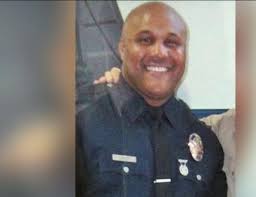
Christopher Dorner
As a result, the LAPD rushed to provide security and surveillance details to more than 50 endangered police officers and their families.
The agency also declared a “tactical alert,” forcing officers to remain on their shifts as long as needed.
Shortly after 1 a.m. on February 7, in Corona, California, Dorner fired at Los Angeles police officers who had been assigned to protect someone connected to threats he had posted in an online “manifesto.”
One officer was grazed in the head, but the wound was not life-threatening. The officers returned fire, and Dorner fled.
Then, at about 1:35 a.m., Dorner struck again, shooting two Riverside police officers who had stopped at a red light during a routine patrol. One officer was killed and the other wounded. The injured officer was taken to a hospital and was reported to be in stable condition.
Word instantly spread through the police grapevine about the shootings. And officers decided it was better to shoot first and ask questions later.
At 5:30 a.m. on February 7, LAPD officers were patrolling a Torrance neighborhood to guard yet another target named in Dorner’s manifesto.
They spotted a car they thought was Dorner’s and opened fire, injuring two women. One suffered a minor bullet wound, and the other was shot twice. Taken to a hospital, the latter was reported to be in stable condition.
Sometime after the Torrance shooting, a passer-by found a wallet with an LAPD badge and a picture ID of Dorner on a street near San Diego International Airport.
This was only a short distance from the naval base motel where he had reportedly checked in on February 7—but had never checked out.
Amid frantic TV news reports that Dorner was barricaded inside, police swarmed the hotel. But they soon learned that he hadn’t been there after all.
The FBI and U.S. Marshals Service, meanwhile, were seeking the public’s help in providing information about Dorner or his whereabouts.
At about noon on February 7, a burning truck was located in the snow-covered woods near Big Bear Lake, 80 miles east of Los Angeles.
The San Bernardino Sheriff’s Department later confirmed that the vehicle was Dorner’s Nissan Titan. No one was in the truck.
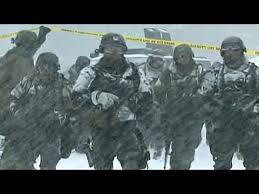
SWAT teams from the LAPD, San Bernardino Sheriff’s deputies, FBI agents and deputy U.S. marshals flooded the area. All were heavily armed, carrying assault rifles or machine guns.
 A SWAT team
Dorner, in his manifesto, had boasted of owning assault rifles and even a Barrett .50 caliber sniper rifle whose bullets can pierce bulletproof vests and even tanks, airplanes and concrete. A marksman with a Barrett could easily hit a target from a mile away.
Police initially searched 400 homes in the area, but found no trace of Dorner.
The manhunt was slowed down by a heavy snowfall, but police, determined to find Dorner, pressed on.
Meanwhile, FBI SWAT teams and local police served a search warrant at a Las Vegas home belonging to Dorner. The lawmen carried out boxes of his possessions. No weapons were found.
After issuing a search warrant, Irvine police combed through the La Pama house belonging to Christopher Dorner’s mother. Investigators removed from the home seven grocery bags of evidence and several electronic items.
On February 9, at a late afternoon press conference, authorities announced the creation of a joint task force to search for Dorner. The task force comprised the Los Angeles, Irvine and Riverside police departments, the FBI and U.S. Marshals, and other affiliated law enforcement agencies.
“We will look under every rock, around every corner, we will search mountain tops for him,” said Riverside Police Assistant Chief Chris Vicino at the press conference.
Underscoring this point, LAPD Chief Charlie Beck said: “This is an act—and make no mistake about it—of domestic terrorism. This is a man who has targeted those that we entrust to protect the public. His actions cannot go unanswered.”
Besides manpower and technology, police employed psychology. That same day, the LAPD announced that it would reopen the investigation into Dorner’s firing.
“I do this not to appease a murderer,” LAPD Chief Beck said in a statement. “I do it to reassure the public that their police department is transparent and fair in all the things we do.”
Clearly police hoped this would lead Dorner to back off or even surrender.
On February 10, at 11:46 a.m., Los Angeles County Supervisors Michael D. Antonovich and Mark Ridley-Thomas announced they were offering a $100,000 reward for information leading to the arrest of Dorner.
Later that day, at 1 p.m., a joint task force offered a $1 million reward for information leading to Dorner’s arrest.
Federal authorities were also relentlessly hunting Dorner—and not only through the FBI and U.S. Marshals Service. The Bureau of Customs and Border Protection deployed unmanned drone aircrafts to find him.
As in The Day of the Jackal, despite a widespread dragnet and all-out search, law enforcement’s Number One fugitive had vanished.
ABC NEWS, ALTERNET, AMERICABLOG, AP, BABY BOOMER RESISTANCE, BBC, BIG BEAR LAKE, BLOOMBERG, BLUESKY, BUZZFEED, CARLOS THE JACKAL, CBS NEWS, CHARLES DE GAULLE, CHRISTOPHER DORNER, CNN, CROOKS AND LIARS, DAILY KOS, DAILY KOZ, DAY OF THE JACKAL, FACEBOOK, FBI, FIVETHIRTYEIGHT, FREDERICK FORSYTH, HARPER’S MAGAZINE, HAWAII FIVE-O, HUFFINGTON POST, JACK LORD, LOS ANGELES POLICE DEPARTMENT, MEDIA MATTERS, MILITARY DRONES, MOTHER JONES, MOVEON, MSNBC, NBC NEWS, NEW REPUBLIC, NEWSDAY, NEWSWEEK, NPR, PBS NEWSHOUR, POLITICO, POLITICUSUSA, RAW STORY, REUTERS, SALON, SEATTLE TIMES, SLATE, SWAT TEAMS, TALKING POINTS MEMO, THE ATLANTIC, THE CHICAGO SUN-TIMES, THE CHICAGO TRIBUNE, THE DAILY BEAST, THE DAILY BLOG, THE GUARDIAN, THE HILL, THE HUFFINGTON POST, THE INTERCEPT, THE LOS ANGELES TIMES, THE NATION, THE NEW REPUBLIC, THE NEW YORK TIMES, THE NEW YORKER, THE VILLAGE VOICE, THE WASHINGTON POST, THINKPROGRESS, TIME, TRUTHDIG, TRUTHOUT, TWO POLITICAL JUNKIES, U.S. MARSHALS SERVICE, U.S. NEWS & WORLD REPORT, UPI, USA TODAY, X
In Bureaucracy, History, Law Enforcement, Politics, Social commentary on May 14, 2025 at 12:13 am
The Day of the Jackal is a 1971 thriller by the English writer Frederick Forsyth. Its intricate plot centers on the efforts of a professional assassin to kill Charles de Gaulle, the President of France.
His motive: A reward of $500,000, paid by the OAS, a right-wing French paramilitary organization determined to that France should retain its Algerian colony.
The actual name of the assassin is never revealed. He is simply known by his code name: The Jackal.
But a great deal else about him is revealed before the novel reaches its shattering climax:
He is calculating, a crack shot, skilled in unarmed combat, quick-witted in emergencies and utterly ruthless in pursuing his goal of eliminating his chosen targets.
In 1973, director Fred Zinnemann (“High Noon”) brought Jackal to the big screen. Edward Fox starred as the assassin, and Michael Lonsdale played Claude Lebel, the police inspector who leads the hunt for him.


The book and movie proved commercial successes.
Then fate lifted the fictional Jackal into the world of real-life international terrorism.
In 1975, Ilich Ramírez Sánchez, the international terrorist now known as “Carlos,” gained notoriety by shooting two French detectives and an informer in Paris.
Barry Woodhams, an Englishman whose girlfriend had once dated Carlos, found a bag of weapons belonging to the terrorist in their London apartment. Not trusting the police, he called The Guardian newspaper, whose reporter Peter Niesewand quickly showed up.
Rummaging through the apartment, Niesewand found a copy of The Day Of The Jackal on a bookshelf, and assumed that Carlos had read it. The next day, in its front-page world scoop, the Guardian dubbed Carlos: “The Jackal.”
Only one thing was wrong: The book didn’t belong to Carlos at all; it belonged to Woodhams. “Carlos The Jackal” had probably never even read the book he was named after.
Nevertheless, the nickname stuck.
(In 1994, the government of Sudan betrayed Carlos—then seeking refuge there—to French Intelligence agents. He was flown to France, tried for murder, and given a life sentence.)
But The Jackal was far from dead. In 2013, he took up residence in Los Angeles.
This time his name was known: Christopher Jordan Dorner.
And his target wasn’t the President of France or the leader of any other country. It was the officers of the Los Angeles Police Department (LAPD).
It’s an organization Dorner knew well, since he had belonged to it from 2005 to 2008.
In July, 2007, he reported excessive force by a fellow police officer against a handcuffed prisoner.
The LAPD charged that he had slandered the accused policewoman in a falsified report and relieved him of his duties.
Dorner claimed he was the victim of police retaliation for breaking the “code of silence.”
Dorner tried to reclaim his job in 2008, but LAPD’s Board of Rights rejected his appeal. He took the case to court, but a judge ruled against his appeal in October, 2011.

Christopher Jordan Dorner
That seemed to be the end of Dorner’s association with the LAPD.
Then, on February 3, 2013, Dorner’s long-suppressed rage exploded.
Monica Quan, 27, and her fiancee, Keith Lawrence, were shot dead in Irvine, California, while sitting in their white Kia in the parking lot of their new apartment building.
Quan was the daughter of former LAPD officer Randal Quan, who had represented Dorner at his termination appeal.
At the time, there seemed to be no motive for the murders. But on February 6, police named Dorner a suspect in the case.
He had posted an 11-page “manifesto” on his Facebook page, implicating himself in the slayings. He accused Randal Quan of bungling his termination appeal.
And he repeatedly complained about his treatment in the LAPD.
I lost my position as a Commanding Officer of a Naval Security Forces reserve unit at NAS Fallon because of the LAPD, wrote Dorner.
I’ve lost a relationship with my mother and sister because of the LAPD. I’ve lost a relationship with close friends because of the LAPD.
In essence, I’ve lost everything because the LAPD took my name and new [sic] I was INNOCENT!!!
And he vowed vengeance on those he believed had wronged him:
I will conduct DA operations to destroy, exploit and seize designated targets. If unsuccessful or unable to meet objectives in these initial small scale offensive actions, I will reassess my BDA and re-attack until objectives are met.
I have nothing to lose. My personal casualty means nothing….You can not prevail against an enemy combatant who has no fear of death.
An enemy who embraces death is a lose, lose situation for their enemy combatants.
It wasn’t enough for Dorner to attack police officers. He would target their families as well:
I know your significant others routine, your children’s best friends and recess. I know Your Sancha’s gym hours and routine.
For police generally, it was their worst nightmare come true.
A cop-killer was on the loose. Worse, he had once been one of their own.
He knew their tactics, and now threatened to use that knowledge to murder not only cops but even their families.
For the LAPD, it was a declaration of war. And the department responded accordingly.


 Bureaucracybuster's Blog
2020 PRESIDENTIAL ELECTION, ABC NEWS, ABUSE OF POWER, ADAM SCHIFF, ADOLF HITLER, ALAN DERSHOWITZ, ALTERNET, AMERICABLOG, AP, ARTICLES OF IMPEACHMENT, BABY BOOMER RESISTANCE, BILL TAYLOR, BUZZFEED, CBS NEWS, CNN, CROOKS AND LIARS, DAILY KOZ, DEMOCRATS, DONALD TRUMP, DRUDGE RETORT, FACEBOOK, FIONA HILL, FIVETHIRTYEIGHT, HARPER’S MAGAZINE, HEINRICH HIMMLER, HUNTER BIDEN, JEWS, JOE BIDEN, JOHN BOLTON, JOHN ROBERTS, JOSEPH BIDEN, LAURA COOPER, MARIE YOVANOVICH, MEDIA MATTERS, MOTHER JONES, MOVEON, MSNBC, NBC NEWS, NEWSWEEK, NPR, OBSTRUCTION OF CONGRESS, PBS NEWSHOUR, POLITICO, POLITICUSUSA, RAND PAUL, RAW STORY, REPUBLICANS, REUTERS, SALON, SCHUTZSTAFFEL, SEATTLE TIMES, SLATE, TALKING POINTS MEMO, THE ATLANTIC, THE CHICAGO SUN-TIMES, THE CHICAGO TRIBUNE, THE DAILY BEAST, THE DAILY BLOG, THE GUARDIAN, THE HILL, THE HOLOCAUST, THE HUFFINGTON POST, THE LOS ANGELES TIMES, THE NATION, THE NEW REPUBLIC, THE NEW YORK TIMES, THE PENTAGON, THE VILLAGE VOICE, THE WASHINGTON POST, THINKPROGRESS, TIME, TRUTHDIG, TRUTHOUT, TWO POLITICAL JUNKIES, U.S. NEWS & WORLD REPORT, UKRAINE, UNITED STATES HOUSE OF REPRESENTATIVES, UNITED STATES SENATE, UPI, USA TODAY, VOLODYMYR ZELENSKY, WHERMACHT, WITNESSES, WONKETTE, X
HIMMLER/TRUMP: “MY CRIMES ARE NOW YOUR CRIMES”
In Bureaucracy, History, Law, Law Enforcement, Military, Politics, Social commentary on June 25, 2025 at 12:15 amOn October 4, 1943, SS Reichsfuhrer Heinrich Himmler addressed SS officers stationed in Posen, Poland, about the ongoing campaign to exterminate the Jews of Europe.
He gave a similar speech two days later to an audience of Reichsleiters (national leaders) and Gauleiters (governors), as well as other government representatives.
Himmler intended to alert Reich officials of the extermination campaign the Schutzstaffel (“Protective Squads”)—otherwise known as the SS—and Wehrmacht (German army) had been waging since June, 1941.
The purpose: To make his listeners accessories to his monumental crimes—and to warn them there was no turning back.
Heinrich Himmler
Either Nazi Germany won the war that its Fuhrer, Adolf Hitler, had unintentionally unleashed on September 1, 1939—or its topmost officials would themselves face extinction as war criminals.
Said Himmler:
“I want to also mention a very difficult subject before you, with complete candor. It should be discussed amongst us, yet nevertheless, we will never speak about it in public. I am talking about the evacuation of the Jews, the extermination of the Jewish people.
“It is one of those things that is easily said: ‘The Jewish people is being exterminated.’…Most of you will know what it means when 100 bodies lie together, when 500 are there or when there are 1,000. And to have seen this through and—with the exception of human weakness—to have remained decent, has made us hard and is a page of glory never mentioned and never to be mentioned….
“But altogether we can say: We have carried out this most difficult task for the love of our people. And we have suffered no defect within us, in our soul, in our character.”
Fast forward 76 years—to January, 2020.
On December 18, 2019, the Democratic-controlled House of Representatives approved two Articles of Impeachment against President Donald Trump:
Article 1: Abuse of Power: For pressuring Ukraine to assist him in his re-election campaign by damaging former Vice President Joseph Biden, his possible 2020 Democratic rival; and
Article 2: Obstruction of Congress: For obstructing Congress by blocking testimony of subpoenaed witnesses and refusing to provide documents in response to House subpoenas in the impeachment inquiry.
Donald Trump
Trump’s defense in the House had consisted of:
Those government employees who testified did so voluntarily—and at risk of retaliation. Among these were:
They offered damning testimony against Trump.
When the trial began in the United States Senate on January 16, 2020, Trump’s legal team:
Rand Paul
Perhaps even more frightening: One of Trump’s attorneys, Alan Dershowitz—once a liberal icon— offered Trump and all future Presidents a blanket of immunity worthy of a king:
“If a president does something which he believes will help him get elected in the public interest, that cannot be the kind of quid pro quo that results in impeachment. Every public official that I know believes that his election is of the public interest.”
Responding to that argument, House Manager Adam Schiff (D-CA) said: “It’s been a remarkable evolution of the presidential defense. It began with, ‘none of that stuff happened here.’ It began with ‘nothing to see here.’ It migrated to, ‘OK, they did seek investigations of the president’s political rival.’ And then it became OK.”
Meanwhile, the Senate majority of 53 Republicans vigorously supported Trump’s demand that no witnesses to his crimes be allowed to testify.
Among these witnesses: Former National Security Adviser John Bolton.
On December 29, 2019, The New York Times broke a sensational story:
In a forthcoming book, Bolton had written that Trump had told him, in August 2019, that he wanted to continue freezing aid to Ukraine until its officials began investigating the Bidens.
Despite—or because of—this bombshell report, Senate Republicans absolutely refused to admit the testimony of witnesses.
By following the same strategy as Heinrich Himmler, Trump entangled Republicans in his own crimes.
His infamy is now theirs.
History has brutally condemned those Germans who, knowing the full extent of Adolf Hitler’s crimes, nevertheless signed on to perpetuate and conceal them.
History will render the same damning verdict against House and Senate Republicans who provided similar cover for Donald Trump.
Share this: