Posts Tagged ‘DRUDGE REPORT’
2016 PRESIDENTIAL ELECTION, 2020 PRESIDENTIAL ELECTION, ABC NEWS, ADOLF HITLER, ALEXANDER KERENSKY, ALTERNET, AMERICABLOG, AP, BABY BOOMER RESISTANCE, BEER HALL PUTSCH, BEN SASSE, BLOOMBERG, BRAD RAFFENSPERGER, BRIAN KEMP, BUZZFEED, CAPITOL POLICE, CBS NEWS, CHINA, CHRIS KREBS, CHRIS MURPHY, CIA, CNN, CROOKS AND LIARS, CYBERSECURITY, DAILY KOZ, DEMOCRATS, DEPARTMENT OF HOMELAND SECURITY, DONALD TRUMP, DRUDGE REPORT, ELECTORAL COLLEGE, FACEBOOK, FBI, FIVETHIRTYEIGHT, HARPER’S MAGAZINE, HITLER: ASCENT: 1889 – 1939 (BOOK), HUFFINGTON POST, ISLAMIC STATE, JAMES COMEY, JOSEPH BIDEN, jOSH HAWLEY, JOSH SHAPIRO, KAITLAN COLLINS, KEN PAXTON, KEVIN MCCARTHY, KIM JONG ON, MEDIA MATTERS, MEIN KAMPF (BOOK), MIKE KELLY, MIKE PENCE, MITCH MCCONNELL, MOTHER JONES, MOVEON, MSNBC, NANCY PELOSI, NATIONAL GUARD, NATIONAL SECURITY AGENCY, NBC NEWS, NEWSWEEK, NORTH KOREA, NPR, PAT A. CIPOLLONE, PAUL LEBLANC, PBS NEWSHOUR, POLITICO, POLITICUSUSA, RAW STORY, REPUBLICANS, REUTERS, ROD SERLING, ROY BLUNT, RUSSIA, RUSSIAN REVOLUTION, SALON, SEATTLE TIMES, SERGEI KISLYAK, SERGI LAVROV, SLATE, SUPREME COURT, TALKING POINTS MEMO, THE ATLANTIC, THE CHICAGO SUN-TIMES, THE CHICAGO TRIBUNE, THE DAILY BEAST, THE DAILY BLOG, THE GUARDIAN, THE HILL, THE HUFFINGTON POST, THE LOS ANGELES TIMES, THE NATION, THE NEW REPUBLIC, THE NEW YORK TIMES, THE TWILIGHT ZONE, THE VILLAGE VOICE, THE WASHINGTON POST, THINKPROGRESS, TIME, TRUTHDIG, TRUTHOUT, TWILIGHT ZONE EPISODE “DEATH’S HEAD REVISITED”, TWITTER, TWO POLITICAL JUNKIES, U.S. NEWS & WORLD REPORT, ULYSSES S. GRANT, UNITED STATES CAPITOL BUILDING, UNITED STATES HOUSE OF REPRESENTATIVES, UNITED STATES SECRET SERVICE, UNITED STATES SENATE, UPI, USA TODAY, VLACIMIR PUTIN, VOLKER ULLRICH, XI JINPING
In Bureaucracy, History, Law, Law Enforcement, Politics, Social commentary on February 15, 2021 at 12:25 am
HISTORY’S LESSON ON TREASON
Whatever may have been my political opinions before, I have one sentiment now: That is, we have a government, and laws, and a flag, and they must all be sustained. There are but two parties now, traitors and patriots, and I want hereafter to be ranked with the latter and, I trust, the stronger party.
—Ulysses S. Grant
History teaches us that republics that tolerate treason soon become former republics.
Example: #1: In February, 1917, Alexander Kerensky became president of the Russian Provisional Government after the fall of Tsar Nicholas II.
Warned that Bolshevik leaders were plotting his overthrow, he refused to order their arrests: “In Russia, it’s always been too easy to arrest people who disagree with you.”
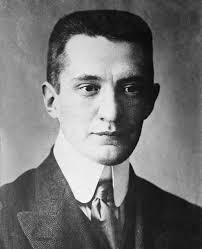
Alexander Kerensky
On November 7, 1917, he found himself overthrown and fleeing the country for his life. A Communist government, presided over by Vladimir Lenin, assumed absolute power—and held onto it for the next 74 years
Example #2: On November 9, 1923, Nazi Party Fuhrer Adolf Hitler tried to overthrow the government in Munich, Bavaria.
About 2,000 Nazis marched to the center of Munich, where they confronted heavily-armed police. A shootout erupted, killing 16 Nazis and four policemen.
Hitler was injured during the clash, but managed to escape. Two days later, he was arrested and charged with treason.
Put on trial, he found himself treated as a celebrity by a judge sympathetic to Right-wing groups. He was allowed to brutally cross-examine witnesses and even make inflammatory speeches.
At the end of the trial, he was convicted of treason and sentenced to five years’ imprisonment.
Serving time in Landsberg Prison, in Bavaria. he was given a huge cell, allowed to receive unlimited visitors and gifts, and treated with deference by guards and inmates.
Hitler used his time in prison to write his infamous book, Mein Kampf-–“My Struggle.” Part autobiography, part political treatise, it laid out his future plans—including the extermination of the Jews and the conquest of the Soviet Union.

Adolf Hitler leaving Landsberg Prison, December, 20, 1924
Nine months later, he was released on parole—by authorities loyal to the authoritarian Right instead of the newly-created Weimar Republic.
Hitler immediately began rebuilding the shattered Nazi party—and deciding on a new strategy to gain power. Never again would he resort to armed force. He would win office by election—or intrigue.
On January 30, 1933, those intrigues made him Chancellor of Germany.
Writes historian Volker Ullrich, in his monumental 2016 biography, Hitler: Ascent 1889 – 1939: “Historians have perennially tried to answer the question of whether Hitler’s rise to power could have been halted….
“There were repeated opportunities to end Hitler’s run of triumphs. The most obvious one was after the failed Putsch of November 1923. Had the Munich rabble-rouser been forced to serve his full five-year term of imprisonment in Landsberg, it is extremely unlikely that he would have been able to restart his political career.”
THE DIFFERENCE BETWEEN THE ELECTIONS OF 2016 AND 2020
During the 2016 Presidential race, Russian propaganda played a major role in convincing millions of Americans to vote for Donald Trump. Social media platforms—especially Facebook and Twitter—were flooded with genuinely fake news to sow discord among Americans and create a pathway for Trump’s election.
And where Internet trolls left off, Russian computer hackers took over.
Russian President Vladimir Putin, a former KGB officer, had quickly assessed Trump as an egotistical narcissist. By appealing to Trump’s vanity, Putin expected to sharply reduce the military and political threat the United States represented to a resurgent Russia.
Donald Trump didn’t win a majority of the popular vote in 2016—but he got enough help from Putin to put him over the top in the Electoral College.
And Trump gladly reciprocated.
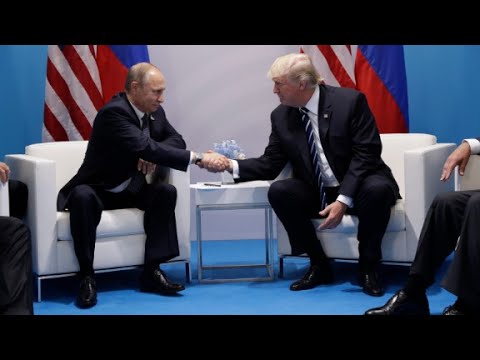
Vladimir Putin and Donald Trump
From his first day in office, he sided with brutal dictators (Putin, North Korea’s Kim Jong-On, China’s Xi Jinping) and declared war on America’s oldest and most reliable allies (Canada, Britain, France).
When he spoke with Putin face-to-face, he afterward demanded that the lone translator surrender his notes, so there would be no record of what he had agreed to with Putin.
On May 10, 2017, Trump met with Russian Foreign Minister Sergey Lavrov and Russian Ambassador Sergey Kislyak in the Oval Office—and gave them highly classified CIA Intelligence about an Islamic State plot to turn laptops into concealable bombs.
Not only did this occur in the Oval Office, but it happened on the day after he fired FBI Director James Comey for refusing to become Trump’s version of a KGB chief.
“I just fired the head of the FBI,” Trump told the two dignitaries. “He was crazy, a real nut job. I faced great pressure because of Russia. That’s taken off.”
On numerous occasions Donald Trump fiercely denied any Russian connections. On January 11, 2017, he tweeted: “Russia has never tried to use leverage over me. I HAVE NOTHING TO DO WITH RUSSIA – NO DEALS, NO LOANS, NO NOTHING!”
But Trump’s son, Eric, bragged in 2014: “Well, we don’t rely on American banks. We have all the funding we need out of Russia. We’ve got some guys that really, really love golf, and they’re really invested in our programs. We just go there all the time.”
ABC NEWS, ALTERNET, AMERICABLOG, ANTHONY FAUCI, AP, BABY BOOMER RESISTANCE, BLOOMBERG, BUZZFEED, CBS NEWS, CENTERS FOR DISEASE CONTROL AND PREVENTION (CDC), CHRISTMAS, CNN, CORONAVIRUS, COVID-19, CROOKS AND LIARS, DAILY KOZ, DEMOCRATS, DONALD TRUMP, DRUDGE REPORT, FACEBOOK, FIVETHIRTYEIGHT, FLORIDA, FOX NEWS NETWORK, GRETCHEN WHITMER, HANUKKAH, HARPER’S MAGAZINE, HUFFINGTON POST, JANE CASTOR, KANSAS CITY CHIEFS, KRISTI NOEM, MASKS, MAY DAY, MEDIA MATTERS, MICHIGAN, MINNESOTA, MOTHER JONES, MOVEON, MSNBC, NBC NEWS, NEW YEAR'S DAY, NEWSWEEK, NPR, PBS NEWSHOUR, POLITICO, POLITICUSUSA, RAW STORY, REPUBLICANS, REUTERS, SALON, SEATTLE TIMES, SLATE, SOCIAL DISTANCING, SOUTH DAKOTA, STAY-AT-HOME ORDERS, SUPER BOWL, TALKING POINTS MEMO, TAMPA, TAMPA BAY BUCCANEERS, TAMPA BAY TIMES, TAMPA POLICE DEPARTMENT, TEXAS, THANKSGIVING, THE ATLANTIC, THE CHICAGO SUN-TIMES, THE CHICAGO TRIBUNE, THE DAILY BEAST, THE DAILY BLOG, THE GUARDIAN, THE HILL, THE HUFFINGTON POST, THE LOS ANGELES TIMES, THE NATION, THE NEW REPUBLIC, THE NEW YORK TIMES, THE VILLAGE VOICE, THE WASHINGTON POST, THINKPROGRESS, TIME, TRUTHDIG, TRUTHOUT, TULSA, TWITTER, TWO POLITICAL JUNKIES, U.S. NEWS & WORLD REPORT, UPI, USA TODAY, VIRGUINA, WONKETTE, WUHAN
In Bureaucracy, History, Law, Law Enforcement, Medical, Politics, Social commentary on February 11, 2021 at 12:15 am
In the midst of the COVID-19 pandemic, President Donald Trump scheduled his first 2020 re-election rally in Tulsa, Oklahoma on June 20.
The Tulsa event was followed by another indoor rally in Phoenix on June 23. “Students for Trump” featured a packed crowd, with almost no one wearing masks.
Then, to celebrate Independence Day, Trump scheduled yet another rally at Mount Rushmore, in Keystone, South Dakota, on July 3.
Although health experts expressed fears about a large gathering during the Coronavirus pandemic, South Dakota’s Republican Governor Kristi Noem said people would “not be social distancing” during the celebration:
“In South Dakota, we’ve told people to focus on personal responsibility….Those who want to come and join us, we’ll be giving out free face masks, if they choose to wear one. But we won’t be social distancing.”
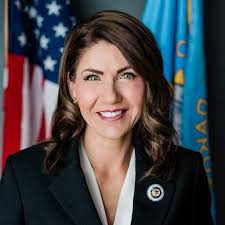
Kristi Noem
Meanwhile, more than 135,000 Americans had died of the virus.
And on June 30, Dr. Anthony Fauci, director of the U.S. National Institute of Allergy and Infectious Diseases, testified before the U.S. Senate: “We are now having 40-plus thousand new cases a day. I would not be surprised if we go up to 100,000 a day if this does not turn around.”
Fauci warned that the infection surge across the South and West “puts the entire country at risk.” Much of that increase was being fueled by young adults testing positive for COVID-19.
With the end of summer came fall.
Normally this would have meant the return of millions of children to school. But COVID-19 had already closed most of the nation’s schools—at elementary, junior high and high school levels.
Having their children constantly underfoot for most of the year no doubt grated on the nerves of many parents. But the closure of schools also prevented many infections—to students, teachers and the families of both.
That advantage, however, was quickly offset by the succession of holidays that come with the fall—Labor Day, Halloween, Veterans Day, Christmas/Hanukkah, New Year’s Day.
A December 19 story in Business Insider carried the attention-catching headline: “The Thanksgiving Surge in Coronavirus Deaths is Here. It’s ‘Horrifically Awful,’ a Hospital Chaplain Said.”
To sum up its contents:
- More than 47,000 Americans had died from COVID-19 since Thanksgiving.
- COVID-19 was now the country’s leading cause of death.
- It was just the beginning of the effects of Thanksgiving travel and gatherings.
The Centers for Disease Control and Prevention (CDC) begged Americans to forego traveling for Thanksgiving. But at least 55 million Americans ignored that warning. Their selfish, egotistical mantra—“I want to be with my family!”—overrode their supposed concern for the lives of their relatives.
As a result, untold numbers of those families would not again be sharing Thanksgiving—or anything else.
And Dr. Fauci warned: The Christmas season would pose an even greater threat.
People would gather not just for Christmas Eve or Christmas Day, but for New Year’s Eve and New Year’s Day—not to mention any parties held in-between those dates.
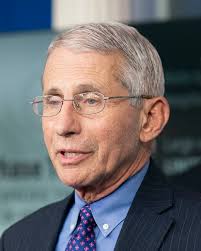
Anthony Fauci
The virus spreads faster indoors, where large numbers of people don’t wear masks, pack closely together, and talk or laugh loudly, thus spreading the droplets across a room.
December brought the United States over 77,400 COVID-19 deaths.
Within a year, by January 1, 2021, the virus had killed more than 350,000 Americans.
And then, to top it off, came the Super Bowl on February 7.
Once again, Fauci advised people to avoid crowds and parties: Enjoy the Super Bowl only with members of your immediate family.
And Tampa Mayor Jane Castor ordered people to wear masks in popular outdoor areas during Super Bowl week.
She estimated that tens of thousands of people crowded the streets of Ybor City after midnight, early Sunday morning. People were packed shoulder-to-shoulder in the middle of the street.
Seventh Avenue has drawn crowds since the outbreak of the pandemic nearly a year ago, reaching a crescendo on New Year’s Eve. But Super Bowl eve trumped that, said Tampa Bay Times photographer Luis Santana. And, once again, masses of Americans—especially in Tampa, Florida—behaved as if Coronavirus never existed.
Bars and restaurants were crammed with revelers celebrating the victory of the Tampa Bay Buccaneers over the Kansas City Chiefs. Many of them wore masks—but many others didn’t.
There was plenty of drinking—which causes people to lower their guard against deadly enemies like COVID-19. And with this came plenty of loud talk and cheering—which hurtle COVID-19 droplets across a room.
When Mayor Castor announced her “mask-up” order, she said that police might issue fines of up to $450 for repeat offenders.
Police chief Brian Dugan said he didn’t want his officers to become “mask police,” adding, “We’re hoping people will just kind of work with us when it comes to the mask compliance.”
The police department expressed its disappointment with the behavior of Tampa citizens.
One year after the coming of Coronavirus, masks and hand sanitizers are now widely available. Vaccines are finally becoming available.
But without the full cooperation of millions, eradicating COVID-19 will take far longer—and take a great many more thousands of lives.
ABC NEWS, ALTERNET, AMERICABLOG, ANTHONY FAUCI, AP, BABY BOOMER RESISTANCE, BLOOMBERG, BUZZFEED, CBS NEWS, CENTERS FOR DISEASE CONTROL AND PREVENTION (CDC), CHRISTMAS, CNN, CORONAVIRUS, COVID-19, CROOKS AND LIARS, DAILY KOZ, DEMOCRATS, DONALD TRUMP, DRUDGE REPORT, FACEBOOK, FIVETHIRTYEIGHT, FLORIDA, FOX NEWS NETWORK, GRETCHEN WHITMER, HANUKKAH, HARPER’S MAGAZINE, HUFFINGTON POST, JANE CASTOR, KANSAS CITY CHIEFS, KRISTI NOEM, MASKS, MAY DAY, MEDIA MATTERS, MICHIGAN, MINNESOTA, MOTHER JONES, MOVEON, MSNBC, NBC NEWS, NEW YEAR'S DAY, NEWSWEEK, NPR, PBS NEWSHOUR, POLITICO, POLITICUSUSA, RAW STORY, REPUBLICANS, REUTERS, SALON, SEATTLE TIMES, SLATE, SOCIAL DISTANCING, SOUTH DAKOTA, STAY-AT-HOME ORDERS, SUPER BOWL, TALKING POINTS MEMO, TAMPA, TAMPA BAY BUCCANEERS, TAMPA BAY TIMES, TAMPA POLICE DEPARTMENT, TEXAS, THANKSGIVING, THE ATLANTIC, THE CHICAGO SUN-TIMES, THE CHICAGO TRIBUNE, THE DAILY BEAST, THE DAILY BLOG, THE GUARDIAN, THE HILL, THE HUFFINGTON POST, THE LOS ANGELES TIMES, THE NATION, THE NEW REPUBLIC, THE NEW YORK TIMES, THE VILLAGE VOICE, THE WASHINGTON POST, THINKPROGRESS, TIME, TRUTHDIG, TRUTHOUT, TULSA, TWITTER, TWO POLITICAL JUNKIES, U.S. NEWS & WORLD REPORT, UPI, USA TODAY, VIRGUINA, WONKETTE, WUHAN
In Bureaucracy, History, Law, Law Enforcement, Medical, Politics, Social commentary on February 10, 2021 at 12:08 am
Snatching Defeat From the Jaws of Victory could well serve as the title for a future book on Coronavirus—and the incredibly self-destructive ways Americans have responded to it.
The virus first appeared in Wuhan, China, in December, 2019. Its first reported victim became ill on December 1.
By December 31, the outbreak was traced to a novel strain of Coronavirus.
Coronaviruses are a group of viruses that affect birds and mammals. In humans, Coronaviruses can cause pneumonia and may cause bronchitis.
On January 19, 2020, the first Coronavirus case appeared in the United States.

Coronavirus
On February 29, the first American died of Coronavirus.
From January to early March, 2020, President Donald J. Trump and his allies within the Republican party and Fox News Network repeatedly assured Americans they had nothing to fear.
Typical of these false reassurances was Trump’s statement on March 10: “It will go away. Just stay calm. It will go away.”
But the virus didn’t.
With the Federal Government refusing to take action, states began doing so.
From March 1 to May 31, 42 states and territories issued mandatory stay-at-home orders. Those citizens who were forced to venture out were advised to wear face masks and keep a distance of six feet between themselves and others.
On April 3, the Centers for Disease Control and Prevention (CDC) recommended that people wear non-medical face masks in public to reduce transmission of COVID-19.
Yet President Trump saw the stay-at-home orders as a two-fold threat to himself—and openly encouraged defiance of those orders.
- He couldn’t return to his hate-filled rallies until these were lifted; and
- The stock market wouldn’t start soaring again so long as the country was “locked down.”
Without his Nuremberg-style rallies and a roaring stock market, Trump faced the danger of being a one-term President.
On April 17, he issued a series of tweets to his supporters, encouraging them to defy the law:
“LIBERATE MINNESOTA!”
“LIBERATE MICHIGAN!”
“LIBERATE VIRGINIA, and save your great 2nd Amendment. It is under siege!”
Michigan, Minnesota and Virginia all had Democratic governors. They had urged their residents to stay indoors, wear masks when they ventured outside, and keep a six-feet distance between themselves and others.
As a result, those governors—especially Michigan’s Gretchen Whitmer—were being targeted for abuse and even death threats. And their states were facing disruptive protests by large numbers of Right-wingers standing close together, with few of them wearing masks. The protesters claimed their rights were being infringed upon.
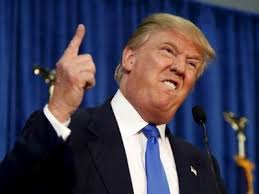
Donald Trump
As a result of the shutdowns and the increased emphasis on social distancing and mask-wearing, COVID-19 rates dropped by mid-May.
According to a May 17 story in U.S. News & World Report:
“According to The New York Times, in New York state the figure has dropped over the last month, and case counts have also plunged in hard-hit Massachusetts and Rhode Island. Some states, including Vermont, Hawaii and Alaska, are seeing hardly any new cases at all, the newspaper said.”
Then came May Day—and after that, the start of summer.
On July 2, Vox published a story headlined: “A likely culprit in Covid-19 surges: People hell-bent on ignoring social distancing orders.”
“For months,” it opened, “it’s been clear that the world has separated into two camps: the rule followers, observant of social distancing and hopeful of quashing the pandemic; and the risk takers, who have been storming the nation’s beaches, bars, and burger joints in spite of the coronavirus—and public health efforts to curtail its spread.
“Some states, such as New York, have contained new cases, but others, including Texas and Arizona, brazenly reopened even as cases continued to rise, unleashing a torrent of pent-up partiers. Now, even as an illusion of normalcy has slowly returned, rates of infection are reaching new records, with cases surging in dozens of states….
“’They’re conducting themselves like it’s pre-Covid, and that’s not going to work anymore,’ Bruce Dart, director of the Tulsa Health Department, told the Washington Post. Younger people, he said, are ‘not social distancing, not wearing masks or paying attention to hand-washing.’ In one stunning case shortly after Memorial Day, a group of 16 friends all tested positive for the virus after visiting a newly reopened bar in Florida.”
As if this wasn’t bad enough, Trump scheduled his first 2020 re-election rally in Tulsa, Oklahoma.
It was held on June 20 at the BOK Center. Scientists had learned that Coronavirus is more likely to be transmitted indoors than outdoors, when masses of people are packed together, and when people are loudly talking—or, worse, shouting.
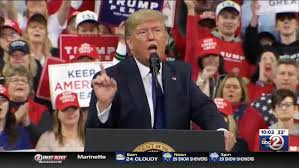
A Trump rally
Masks were available for those who wanted them, but Trump made it clear that his supporters shouldn’t wear masks, as a sign of support for him. Men and women were densely packed together, with none of them wearing masks.
The Trump campaign boasted that 100,000 people would turn up. To its embarrassment, fewer than 6,200 did. Even worse: At least eight event staff members, including two who were at the rally, later tested positive for COVID-19.
The Tulsa event was followed by another indoor rally in Phoenix on June 23. “Students for Trump” featured a packed crowd, with almost no one wearing masks.
ABC NEWS, ALAMO, ALIEN-SMUGGLING RINGS, ALTERNET, AMERICABLOG, AMNEXTY INTERNATIONAL, ANTONIO LOPEZ DE SANTA ANNA, AP, ARIZONA, BABY BOOMER RESISTANCE, BLOOMBERG, BUZZFEED, CALIFORNIA, CBS NEWS, CNN, COLORADO, CROOKS AND LIARS, DAILY KOZ, DAVID CROCKETT, DONALD TRUMP, DRUDGE REPORT, FACEBOOK, FIVETHIRTYEIGHT, GOLIAD MASSACRE, HARPER’S MAGAZINE, HUFFINGTON POST, illegal immigration, IMMIGRATIONS AND CUSTOMS ENFORCEMENT (ICE), JAMES BOWIE, JEFF SESSIONS, MEDIA MATTERS, MEXICAN WAR, MEXICO CITY, MOSES AUSTIN, MOTHER JONES, MOVEON, MSNBC, NBC NEWS, NEVADA, NEW MEXICO, NEWSWEEK, NPR, PBS NEWSHOUR, POLITICO, POLITICUSUSA, RAW STORY, REUTERS, SALON, SAM HOUSTON, SAN JACINTO, SEATTLE TIMES, SLATE, SLAVERY, STEPHEN AUSTIN, TALKING POINTS MEMO, TEXAS, THE ATLANTIC, THE CHICAGO SUN-TIMES, THE CHICAGO TRIBUNE, THE DAILY BEAST, THE DAILY BLOG, THE GUARDIAN, THE HILL, THE HUFFINGTON POST, THE LOS ANGELES TIMES, THE NATION, THE NEW REPUBLIC, THE NEW YORK TIMES, THE VILLAGE VOICE, THE WASHINGTON POST, THINKPROGRESS, THOMAS HOMAN, TIME, TRUTHDIG, TRUTHOUT, TWITTER, TWO POLITICAL JUNKIES, U.S. NEWS & WORLD REPORT, UNITED STATES DEPARTMENT OF JUSTICE, UNITED STATES HEALTH AND HUMAN SERVICES DEPARTMENT, UPI, USA TODAY, USA TODAY MEXICO, UTAH, WONKETTE
In Bureaucracy, History, Law, Law Enforcement, Military, Politics, Social commentary on February 9, 2021 at 12:04 am
On May 8, 2018, one year after Donald Trump became President, United States Attorney General Jeff Sessions announced that a “zero-tolerance” policy toward people illegally entering the United States might separate families while parents are prosecuted.
“We don’t want to separate families, but we don’t want families to come to the border illegally and attempt to enter into this country improperly,” Sessions said. “The parents are subject to prosecution while children may not be. So, if we do our duty and prosecute those cases, then children inevitably for a period of time might be in different conditions.”
Actually, the policy of family separations began a year before its public announcement.
Children who are separated from their parents would be put under supervision of the U.S. Health and Human Services Department, Sessions said.
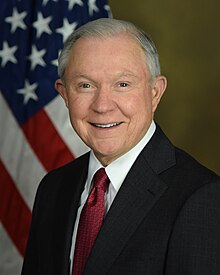
Jeff Sessions
Thomas Homan, U.S. Immigration and Customs Enforcement’s acting director, backed up Sessions’ “get tough” policy change: “Every law enforcement agency in this country separates parents from children when they’re arrested for a crime. There is no new policy. This has always been the policy.”
So that policy went into effect. And it has generated widespread outrage from:
- Civil liberties organizations; and
- Those who believe the United States should not have—or enforce—its immigration laws.
“Criminalizing and stigmatizing parents who are only trying to keep their children from harm and give them a safe upbringing will cause untold damage to thousands of traumatized families who have already given up everything to flee terrible circumstances in their home countries,” said Erika Guevara-Rosas, Amnesty International’s Americas director.
In fact, alien-smugglers have increasingly used children as a wedge against American immigration laws. Their strategy: “Surely, Americans won’t arrest innocent children—or the adults who bring children with them.“
The Trump administration proved them wrong.
This is typical behavior for law enforcement agencies: When criminals devise new ways to defeat existing police measures, the police devise new ways to counter those methods.
Meanwhile, those who believe the United States should throw open its doors to everyone who wants to enter are missing—or ignoring—a vital historical lesson learned by Mexico.
Mexico knows even better than the United States the perils of unchecked illegal immigration.
In 1821, Moses Austin sought a grant from Mexico to settle Texas. After he died in 1821, his son, Stephen, won recognition of the grant by Mexico.
The Mexican government had been unable to persuade large numbers of its own citizens to move to Texas, owing largely to raiding by such fierce Indian tribes as the Comanches.
The government saw the Anglo settlement of Texas as its best hope to tame an otherwise untamable frontier.

Stephen Austin
Austin convinced numerous American settlers to move to Texas, and by 1825 he had brought the first 300 American families into the territory.
Throughout the 1820s, Austin helped ensure the introduction of slavery into Texas, even though, under Mexican law, this was illegal. Tensions developed between unchecked numbers of Anglo settlers flooding into Texas and the Mexican authorities in charge there.
(“GTT”—“Gone to Texas”—was often carved on cabin doors by debt-ridden settlers who decided to seek their fortune in Texas. And some of the most notorious criminals on the frontier—such as land swindler and knife-fighter James Bowie—joined them.)

James Bowie
Eventually, the irresistible force of unlimited Anglo illegal immigration rebelled against the immovable object of Mexican legal/military authority.
The result:
- The battle of the Alamo: From February 23 to March 6, 1836, about 200 rebellious Texans withstood a 13-day siege in a former San Antonio mission, only to be slaughtered to the last man by an army of 2,000 Mexican soldiers commanded by President (actually, dictator) Antonio Lopez de Santa Anna. Among the victims: James Bowie and former Congressman David Crockett.
- The massacre at Goliad: On March 27, 1836, 425-445 Texans captured after the battle of Coleto were shot en masse by Mexican soldiers.
- The battle of San Jacinto: On April 21, 1836, Texans led by General Sam Houston won a surprise Texas victory over Mexican forces who were caught in a mid-afternoon siesta. Santa Anna—who had fled—was captured the next day.
Mexico was forced to give up all rights to Texas—which, 10 years after winning its independence, became a state.
But ongoing conflicts between Mexico and the United States over Texas led to the Mexican war in 1846.
This, in turn, led to a series of devastating American victories over the Mexican army, and the capture of Mexico City itself.
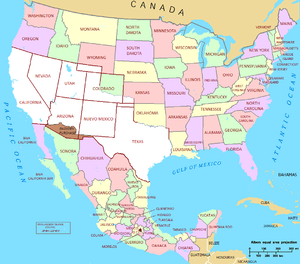
Territory (in white) that Mexico lost after the Mexican War
Mexico suffered the humiliation of both military defeat and the loss of its land holdings within the American Southwest—which, up to 1848, it had controlled.
This territory later became the states of California, New Mexico, Utah, Nevada, Arizona, Texas, and western Colorado.
And the United States finally spread “from sea to shining sea.”
So Mexico knows what it’s doing when it unloads millions of its own citizens—and those of other Latin and Central American countries—on the United States.
Mexico, in short, is a textbook case of what happens to a country that is unable to enforce its own immigration laws.
2016 PRESIDENTIAL CAMPAIGN, 2020 PRESIDENTIAL CAMPAIGN, ABC NEWS, ALTERNET, AMERICABLOG, AP, BABY BOOMER RESISTANCE, BENGHAZI, BENGHAZI COMMITTEE, BLOOMBERG, BUZZFEED, CBS NEWS, CNN, COMMUNIST PARTY, CROOKS AND LIARS, DAILY KOZ, DEMOCRATIC PARTY, DONALD TRUMP, DRUDGE REPORT, EL PASSO SHOOTINGS, ELECTION SECURITY, FACEBOOK, FEDERAL ELECTIONS COMMISSION, FIVETHIRTYEIGHT, FOX NEWS NETWORK, HARPER’S MAGAZINE, HILLARY CLINTON, HISPANICS, HUFFINGTON POST, JOAQUIN CASTRO, JULIAN CASTRO, KEVIN MCCARTHY, LATINOS, LIBYA, MEDIA MATTERS, MICHELLE OBAMA, MOTHER JONES, MOVEON, MSNBC, NBC NEWS, NEWSWEEK, NPR, PATRICK WOOD CRUSIUS, PBS NEWSHOUR, POLITICO, POLITICUSUSA, RAW STORY, REPUBLICAN PARTY, REUTERS, RUSSIAN HACKING, RUSSIAN TROLLS, SALON, SAN ANTONIO, SEAN HANNITY, SEATTLE TIMES, SLATE, TALKING POINTS MEMO, THE ATLANTIC, THE CHICAGO SUN-TIMES, THE CHICAGO TRIBUNE, THE DAILY BEAST, THE DAILY BLOG, THE GUARDIAN, THE HILL, THE HUFFINGTON POST, THE LOS ANGELES TIMES, THE NATION, THE NEW REPUBLIC, THE NEW YORK TIMES, THE VILLAGE VOICE, THE WASHINGTON POST, THINKPROGRESS, TIME, TRUTHDIG, TRUTHOUT, TWITTER, TWO POLITICAL JUNKIES, U.S. NEWS & WORLD REPORT, UPI, USA TODAY, WONKETTE
In Bureaucracy, History, Politics, Social commentary, Uncategorized on February 8, 2021 at 12:45 am
On September 30, 2015, during an appearance on Fox News Network, Kevin McCarthy proved that your best friends can sometimes be your worst enemies.
McCarthy, the Republican member of the House of Representatives from Bakersfield, California, was feeling relaxed. He was, after all, not being grilled by such “enemies” of the Right as The New York Times or MSNBC’s Rachel Maddow.
Instead, he was being interviewed by Sean Hannity—a Right-wing political commentator and the author of such books as Conservative Victory: Defeating Obama’s Radical Agenda and Deliver Us From Evil: Defeating Terrorism, Despotism, and Liberalism.
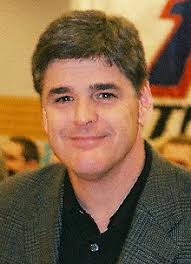
Sean Hannity
John Boehner had recently announced he would resign as Republican Speaker of the House and leave Congress in November. So Hannity asked: What would happen when the next Republican Speaker took office?
And McCarthy—who was in the running for the position—replied: “What you’re going to see is a conservative Speaker, that takes a conservative Congress, that puts a strategy to fight and win.
“And let me give you one example. Everybody thought Hillary Clinton was unbeatable, right?
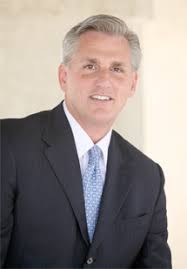
Kevin McCarthy
“But we put together a Benghazi special committee. A select committee. What are her [poll] numbers today? Her numbers are dropping. Why? Because she’s untrustable. But no one would have known that any of that had happened had we not fought to make that happen.”
In 51 words, McCarthy revealed that:
- The House Select Committee on Benghazi was not a legitimate investigative body.
- Its purpose was not to investigate the 2012 deaths of four American diplomats during a terrorist attack in Benghazi, Libya.
- Its real purpose was to destroy the Presidential candidacy of former Secretary of State Hillary Clinton.
- To accomplish this, its members spent 17 months and wasted more than $4.5 million of American taxpayers’ funds.
But in August, 2019, McCarthy sang a different tune.
On August 5, Rep. Joaquin Castro (D-TX) tweeted out a list of 44 San Antonio donors to President Donald Trump’s 2020 campaign for re-election: “Sad to see so many San Antonians as of 2019 maximum donors to Donald Trump. Their contributions are fueling a campaign of hate that labels Hispanic immigrants as ‘invaders.’”
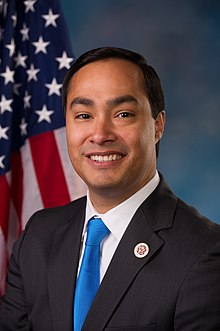
Joaquin Castro
On the morning of August 3, 2019, a lone gunman had killed 22 people and injured 24 others in El Paso, Texas. The killer—Patrick Wood Crusius—reportedly targeted Latinos.
Just 27 minutes before the massacre, Crusius had posted an online manifesto warning about a “Hispanic invasion.” Its language was similar to that used by President Trump.
It was the third-deadliest mass shooting in Texas history and the seventh deadliest in modern United States history.
According to ABC News, when police arrested Crusius, he said that he wanted to shoot as many Mexicans as possible.
That was when Rep. Joaquin Castro—whose brother, Julián, was running for President—decided to fight fire with fire.
He decided to “out” 44 San Antonio donors who had contributed the maximum amount under federal law to Trump in 2019.
Trump had aggressively tried to shame his critics. Castro obviously sought to do the same with Trump’s supporters.
Predictably, Republicans were outraged. They claimed it spotlighted Trump donors and potentially endangered them by publicizing their names and professions.
One of these critics was House Minority Leader Kevin McCarthy, who blamed the shooting on video games.
“Targeting and harassing Americans because of their political beliefs is shameful and dangerous.” tweeted McCarthy. “What happened to ‘When they go low, we go high?’ Or does that no longer matter when your brother is polling at 1%? Americans deserve better.”
But Castro refused to back down. He pointed out that his information came from publicly-available records at the Federal Election Commission.
“No one was targeted or harassed in my post. You know that,” Castro tweeted to McCarthy. “All that info is routinely published.”
“What happened to ‘When they go low, we go high?’” must rank among the all-time statements of political hypocrisy.
After all, McCarthy was the man who unintentionally admitted the real purpose of the “Benghazi Committee.”
From the late 1940s to the mid-1950s, Republicans unhesitatingly hauled prominent and ordinary citizens before House and Senate subcommittees. The purpose: To force them to confess to past membership in the Communist Party or inform on those they knew to have been or be members.
And as a Presidential candidate and President, Trump had repeatedly used Twitter to personally attack hundreds of Americans—especially blacks, Hispanics, women and members of the media.
Perhaps Castro remembered what happened the last time Democrats—in the words of Michelle Obama—waged a “when they go low, we go high” campaign.
Democratic Presidential nominee Hillary Clinton proved no match for
- Russian Internet trolls and
- The hacking of state election offices and American voting machine makers by Russian military Intelligence.
And since Trump took office in 2017, he and his Republican Congressional allies had fiercely resisted all Democratic efforts to tighten election security.
Even during the 2020 Presidential campaign, many Democrats still refused to “get into the gutter” with Trump by using his own tactics against him.
But some—like Joaquin Castro—have clearly decided that when your opponent is aiming below the belt, you only lose by sticking to Marquis of Queensberry.
2020 PRESIDENTIAL ELECTION, 9/11 TERRORIST ATTACKS, ABC NEWS, AL-QAEDA, ALFRED P. MURRAH FEDERAL BUILDING, ALTERNET, AMERICABLOG, ANTI-TERRORISM LAWS, AP, BABY BOOMER RESISTANCE, BARACK OBAMA, BILL CLINTON, BLOOMBERG, BOB WOODWARD, BROWN V. BOARD OF EDUCATION, BUGGING, BUZZFEED, CAPITOL BUILDING, CBS NEWS, CIA, CNN, CROOKS AND LIARS, DAILY KOZ, DONALD TRUMP, DRONES, DRUDGE REPORT, ELECTORAL VOTES, FACEBOOK, FBI, FEDERAL COMMUNICATIONS COMMISSION, FIVETHIRTYEIGHT, FOX NEWS NETWORK, GEORGE FLOYD PROTESTS, GEORGE MICHAEL, HARPER’S MAGAZINE, HUFFINGTON POST, INFORMANTS, ISLAMIC TERRORIST GROUPS, JOSEPH BIDEN, KHALID SHEIKH MOHAMMED, KU KLUX KLAN, MARJORIE TAYLOR GREENE, MEDIA MATTERS, MOTHER JONES, MOVEON, MSNBC, NATIONAL GUARD, NAVY SEALS, NBC NEWS, NEWSWEEK, NPR, OSAMA BIN LADEN, PBS NEWSHOUR, POLITICO, POLITICUSUSA, PREDATOR DRONES, RAMZI YOUSEF, RAW STORY, REUTERS, SALON, SEATTLE TIMES, SLATE, SWAT TEAMS, TALIBAN, TALKING POINTS MEMO, TERRORIST FINANCE TRACKING PROGRAM, THE ATLANTIC, THE CHICAGO SUN-TIMES, THE CHICAGO TRIBUNE, THE DAILY BEAST, THE DAILY BLOG, THE GUARDIAN, THE HILL, THE HUFFINGTON POST, THE LOS ANGELES TIMES, THE NATION, THE NEW REPUBLIC, THE NEW YORK TIMES, THE PENTAGON, THE VILLAGE VOICE, THE WASHINGTON POST, THINKPROGRESS, TIME, TIMOTHY MCVEIGH, TRUTHDIG, TRUTHOUT, TWITTER, TWO POLITICAL JUNKIES, U.S. NEWS & WORLD REPORT, U.S. PARK POLICE, UNITE THE RIGHT RALLY, UNITED STATES DEPARTMENT OF JUSTICE, UNITED STATES SUPREME COURT, UPI, USA TODAY, WIRETAPPING, WONKETTE, WORLD TRADE CENTER, WORLD TRADE CENTER ATTACK (1993)
In Bureaucracy, History, Law, Law Enforcement, Military, Politics, Social commentary on February 4, 2021 at 12:08 am
According to American political scientist George Michael: “Right-wing terrorism and violence has a long history in America.”
The Supreme Court’s decision, in Brown v. Board of Education (1954), striking down segregated facilities, unleashed a wave of Ku Klux Klan violence against blacks, civil rights activists and Jews. Between 1956 and 1963, an estimated 130 bombings ravaged the South.

Ku Klux Klan flag
During the 1980s, more than 75 Right-wing extremists were prosecuted in the United States for acts of terrorism, carrying out six attacks.
The April 19, 1995 attack on the Alfred P. Murrah Federal Building in Oklahoma by Timothy McVeigh and Terry Nichols killed 168 people. It was the deadliest act of domestic terrorism in the history of the United States until 9/11.
By 2020, Right-wing terrorism accounted for the majority of terrorist attacks and plots in the United States. A 2017 Government Accountability Office report stated that Right-wing extremist groups were responsible for 73% of violent extremist incidents resulting in deaths since September 12, 2001.
Right-wing violence rose sharply during the Barack Obama administration and especially during the Presidency of Donald Trump. His remark after the 2017 Unite the Right rally in Charlottesville, Virginia, that there were “some very fine people on both sides” convinced white supremacists that he favored their goals, if not their methods.
On January 6, 2021, thousands of Right-wing Trump supporters—many of them armed—stormed the Capitol Building in Washington, D.C.
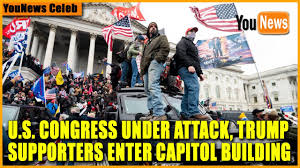
Their goal: To stop members of Congress from counting Electoral Votes cast in the 2020 Presidential election, from which former Vice President Joseph R. Biden was expected to emerge the winner.
After overwhelming the Capitol Police force, they damaged and occupied parts of the building for several hours. Legislators huddled fearfully while National Guard units from several states finally evicted the insurrectionists.
The Capitol attack marked the first time in American history when a defeated Presidential candidate violently sought to remain in office.
It may also mark a desperately-needed change in the priorities of American law enforcement, which has traditionally focused on Left-wingers—and especially blacks—as the country’s mortal enemies.
Numerous commentators have noted the contrast between the tepid police response to the Capitol attack by white Right-wingers and the brutal crackdown on peaceful liberal blacks protesting the murder of George Floyd in Washington D.C. on June 1, 2020.
U.S. Park Police and National Guard troops used tear gas, rubber bullets, flash-bang grenades, horses, shields and batons to clear protesters from Lafayette Square—so Trump could stage a photo-op at St. John’s Episcopal Church.
After 9/11, American law enforcement and Intelligence agencies initiated major reforms to focus on Islamic terrorism.
A similar reform effort, focusing on Right-wing terrorism, could include the following:
- The FBI’s designating Right-wing political and terrorist groups as the Nation’s #1 enemy.
- Turning the Bureau’s powerful arsenal—bugs, wiretaps, informants, SWAT teams—on them.
- Prosecuting militia groups for violating Federal firearms laws.
- Using Federal anti-terrorist laws to arrest, prosecute and imprison Right-wingers who openly carry firearms and threaten violence, even if states allow such display of firearms.

FBI SWAT member
- Creating tip hotlines for reporting illegal Right-wing activities—and offering rewards for information that leads to arrests.
- Treating calls for the murder of members of Congress—as Georgia Representative Marjorie Taylor Greene has done—as felonies punishable by lengthy imprisonment.
- Prosecuting Right-wing leaders involved in the treasonous attempt to overthrow the United States in the Capitol Building attack.
- Prosecuting as “accessories to treason” all those Republican members of Congress who stoked Right-wing anger by lying that the 2020 Presidential election had been stolen from Donald Trump, although every objective news source proved he had lost.
- Directing the Treasury Department’s Terrorist Finance Tracking Program (TFTP) at fundamentalist Christian churches that finance Right-wing terrorism—just as it halts the financing of Islamic terrorist groups by Islamic organizations.
- Using drones, planes and/or helicopters to provide security against similar Right-wing terror demonstrations—especially in Washington, D.C.
- Using the Federal Communications Commission to ban Fox News—the Nation’s #1 Right-wing propaganda network—from representing itself as a legitimate news network, and requiring that its stories carry labels warning viewers: “This is Right-wing propaganda, NOT news.”
- Encouraging victims of Right-wing hate-speech—such as the parents of murdered children at Sandy Hook Elementary School—to file libel/slander lawsuits against their abusers.
- Seizing the assets of individuals and organizations found guilty of Right-wing terrorism offenses.
Such an overhaul would almost certainly include the Justice Department indicting and prosecuting Donald Trump for inciting the treasonous attack on the Capitol Building on January 6.
The 75,000,000 Americans who voted to give him a second term still look to him for leadership. As do the majority of Republicans in the House and Senate.
It is a certainty that Senate Republicans will refuse to convict him in his second impeachment trial—just as they refused in the first. They have already offered their excuse: “It’s unconstitutional to impeach a former President.”
But as a former President, he can still be prosecuted for crimes he committed while in office—just as a former Senator or Supreme Court Justice can.
Whatever the outcome, this would send an unmistakable message to Right-wing terrorists: Your days of immunity are over—and you will be held accountable for your terrorist acts, just as Islamic terrorist groups are.
2020 PRESIDENTIAL ELECTION, 9/11 TERRORIST ATTACKS, ABC NEWS, AL-QAEDA, ALFRED P. MURRAH FEDERAL BUILDING, ALTERNET, AMERICABLOG, ANTI-TERRORISM LAWS, AP, BABY BOOMER RESISTANCE, BARACK OBAMA, BILL CLINTON, BLOOMBERG, BOB WOODWARD, BROWN V. BOARD OF EDUCATION, BUGGING, BUZZFEED, CAPITOL BUILDING, CBS NEWS, CIA, CNN, CROOKS AND LIARS, DAILY KOZ, DONALD TRUMP, DRONES, DRUDGE REPORT, ELECTORAL VOTES, FACEBOOK, FBI, FIVETHIRTYEIGHT, FOX NEWS NETWORK, GEORGE FLOYD PROTESTS, GEORGE MICHAEL, HARPER’S MAGAZINE, HUFFINGTON POST, INFORMANTS, ISLAMIC TERRORIST GROUPS, JOSEPH BIDEN, KHALID SHEIKH MOHAMMED, KU KLUX KLAN, MARJORIE TAYLOR GREENE, MEDIA MATTERS, MOTHER JONES, MOVEON, MSNBC, NATIONAL GUARD, NAVY SEALS, NBC NEWS, NEWSWEEK, NPR, OSAMA BIN LADEN, PBS NEWSHOUR, POLITICO, POLITICUSUSA, PREDATOR DRONES, RAMZI YOUSEF, RAW STORY, REUTERS, SALON, SEATTLE TIMES, SLATE, SWAT TEAMS, TALIBAN, TALKING POINTS MEMO, TERRORIST FINANCE TRACKING PROGRAM, THE ATLANTIC, THE CHICAGO SUN-TIMES, THE CHICAGO TRIBUNE, THE DAILY BEAST, THE DAILY BLOG, THE GUARDIAN, THE HILL, THE HUFFINGTON POST, THE LOS ANGELES TIMES, THE NATION, THE NEW REPUBLIC, THE NEW YORK TIMES, THE PENTAGON, THE VILLAGE VOICE, THE WASHINGTON POST, THINKPROGRESS, TIME, TIMOTHY MCVEIGH, TRUTHDIG, TRUTHOUT, TWITTER, TWO POLITICAL JUNKIES, U.S. NEWS & WORLD REPORT, U.S. PARK POLICE, UNITE THE RIGHT RALLY, UNITED STATES DEPARTMENT OF JUSTICE, UNITED STATES SUPREME COURT, UPI, USA TODAY, WIRETAPPING, WONKETTE, WORLD TRADE CENTER, WORLD TRADE CENTER ATTACK (1993)
In Bureaucracy, History, Law, Law Enforcement, Military, Politics, Social commentary on February 3, 2021 at 12:10 am
Before 9/11, the United States did not attack Islamic terrorism in a coordinated basis.
In the October 4, 2001 episode of the PBS investigative series, “Frontline,” legendary journalist Bob Woodward described the results that followed:
“These terrorist incidents—they used the tools that were available, but it was never in a coherent way. I know from talking to those people at the time, it was always, ‘Oh, we’ve got this crisis. We’re dealing with the Achille Lauro now,’ or ‘We’re dealing with Quaddafi,’ or ‘We’re dealing with Libyan hit squads,’ or ‘We’re dealing with Beirut.’
“And it never—they never got in a position where they said, ‘You know, this is a real serious threat,’ not just episodically, but it’s going to be a threat to this country throughout the administration, future administrations.
“We need to organize to fight it. It can’t be a back-bench operation for the FBI and the CIA. It’s got to be somebody’s issue, so it’s on their desk every day. What do we know? What’s being planned? What are the threats out there?”
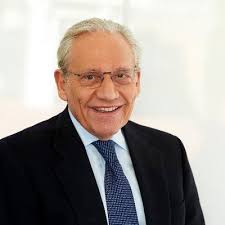
Bob Woodward
The 1993 attack on the World Trade Center well illustrates what Woodward was talking about.
On February 26, 1993, a truck bomb detonated below the North Tower of the World Trade Center in New York City. The 1,336 pound urea nitrate-hydrogen device was supposed to topple the North Tower into the South Tower, bringing down both towers and killing tens of thousands of people.
It failed to do so, but killed six people, and injured over 1,000.
The attack was planned by a group of Islamic terrorists including Ramzi Yousef, Mohammed Salameh, Abdul Rachman Yasin, Mahmud Abouhalima, Ahmed Ajaj and Nidal A. Ayyad.
They received financing from Khalid Sheikh Mohammed, who later became the principal financier of the 9/11 attacks.
Instead of treating this as a declaration of Islamic war upon the United States, the newly-installed Bill Clinton administration chose to consider it a purely criminal matter.
In March 1994, four men were convicted of carrying out the bombing: Abouhalima, Ajaj, Ayyad, and Salameh. The charges included conspiracy, explosive destruction of property, and interstate transportation of explosives.
In November 1997, two more were convicted: Yousef, the organizer behind the bombings, and Eyad Ismoil, who drove the truck carrying the bomb.
On September 11, 2001, 19 Islamic terrorists snuffed out the lives of 3,000 Americans in New York, Washington, D.C. and Pennsylvania.
They did so by turning four commercial jetliners into fuel-bombs—and crashing them into, respectively, the Twin Towers of the World Trade Center in New York City; the Pentagon, in Washington, D.C.; and—unintentionally—a field in Somerset County, Pennsylvania.
(The fourth airliner had been aimed at the White House or the Capitol Building. But its passengers, alerted by radio broadcasts of the doom awaiting them, resolved to take over the plane instead. The hijackers slammed the jet into the ground to avoid capture.)
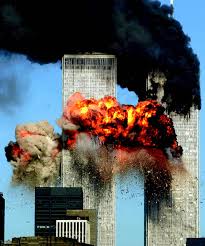
World Trade Center – September 11, 2001
But within less than a month, American warplanes began carpet-bombing Afghanistan, whose rogue Islamic “government” refused to surrender Osama bin Laden, the had of Al-Qaeda who had masterminded the attacks.
By December, 2001, the power of the Taliban was broken—and bin Laden was driven into hiding in Pakistan.
For more than 16 years, the United States—through its global military and espionage networks—relentlessly hunted down most of those responsible for that September carnage.
On May 1, 2011, U.S. Navy SEALS invaded bin Laden’s fortified mansion in Abbottabad, Pakistan—and shot him dead.
And today—almost 20 years after the 9/11 attacks, the United States continues to wage war against Islamic terrorists.
One by one, the leading figures of Taliban, Haqqani and Al-Qaeda have been identified, located with help from coerced or paid-off informants, and targeted for drone strikes. Taking a leadership position in any of these—or other—Islamic terrorist groups has become virtually a death-sentence.

A Predator drone
Nor is the Pentagon the only agency targeting Islamic terrorism. After 9/11, the Treasury Department initiated the Terrorist Finance Tracking Program (TFTP) to identify, track, and pursue terrorists and their networks.
The program tracks terrorist money flows, assists in uncovering terrorist cells and mapping terrorist networks within the United States and abroad.
Yet another result of 9/11 was increased cooperation between the FBI and the CIA.
The CIA’s mandate, prior to the September 11 attacks, had been to target foreign enemies. The FBI’s mandate had been to target domestic ones.
This often brought the two agencies into bureaucratic conflict when confronting foreign-based or -financed terrorists. Neither agency was certain where its jurisdiction ended and the other one’s began.
The 9/11 attacks forced the FBI and CIA—and, even more importantly, Congress—to recognize the need for sharing information.
Almost 20 years after the devastating attacks of September 11, no Islamic terrorist group has mounted a similar one in the United States.
But on January 6, thousands of Right-wing supporters of President Donald J. Trump—many of them armed—stormed the Capitol Building in Washington, D.C.
Inside, members of Congress were counting Electoral Votes cast in the 2020 Presidential election. Former Vice President Joseph R. Biden was expected to emerge the winner.
For Trump—who had often “joked” about becoming “President-for-Life”—this was intolerable. And it must be prevented by any means—legal or otherwise.
ABC NEWS, ADOLF HITLER, ALTERNET, AMERICABLOG, AP, BABY BOOMER RESISTANCE, BAVARIA, BEER HALL PUTSCH, BLOOMBERG, BUZZFEED, CAPITOL ATTACK, CBS NEWS, CNN, CROOKS AND LIARS, DAILY KOZ, DAILY MAIL, DEMOCRATIC PARTY, DONALD TRUMP, DRUDGE REPORT, EXTORTION, FACEBOOK, FBI, FIVETHIRTYEIGHT, HARPER’S MAGAZINE, HITLERR: ASCENT (BOOK), HUFFINGTON POST, IMPEACHMENT, JEWS, JUSTICE DEPARTMENT, MEDIA MATTERS, MEIN KAMPF, MOTHER JONES, MOVEON, MSNBC, MUNICH, NAZI PARTY, NBC NEWS, NEWSWEEK, NICCOLO MACHIAVELLI, NPR, PBS NEWSHOUR, POLITICO, POLITICUSUSA, RAW STORY, REPUBLICAN PARTY, REUTERS, SALON, SEATTLE TIMES, SLATE, SOVIET UNION, TALKING POINTS MEMO, THE ATLANTIC, THE CHICAGO SUN-TIMES, THE CHICAGO TRIBUNE, THE DAILY BEAST, THE DAILY BLOG, THE GUARDIAN, THE HILL, THE HUFFINGTON POST, THE LOS ANGELES TIMES, THE NATION, THE NEW REPUBLIC, THE NEW YORK TIMES, THE VILLAGE VOICE, THE WASHINGTON EXAMINER, THE WASHINGTON POST, THINKPROGRESS, THREATS, TIME, TREASON, TRUTHDIG, TRUTHOUT, TWITTER, TWO POLITICAL JUNKIES, U.S. NEWS & WORLD REPORT, U.S. SECRET SERVICE, UPI, USA PATRIOT ACT, USA TODAY, VOLKER ULLRICH, WEIMAR REPUBLIC, WONKETTE
In Bureaucracy, History, Law, Law Enforcement, Politics, Social commentary on January 26, 2021 at 12:09 am
On November 9, 1923, Nazi Party Fuhrer Adolf Hitler tried to overthrow the government in Munich, Bavaria.
About 2,000 Nazis marched to the center of Munich, where they confronted heavily-armed police. A shootout erupted, killing 16 Nazis and four policemen.
Hitler was injured during the clash, but managed to escape. Two days later, he was arrested and charged with treason.
Put on trial, he found himself treated as a celebrity by a judge sympathetic to Right-wing groups. He was allowed to brutally cross-examine witnesses and even make inflammatory speeches.
At the end of the trial, he was convicted of treason and sentenced to five years’ imprisonment.
Serving time in Landsberg Prison, in Bavaria. he was given a huge cell, allowed to receive unlimited visitors and gifts, and treated with deference by guards and inmates.
Hitler used his time in prison to write his infamous book, Mein Kampf-–“My Struggle.” Part autobiography, part political treatise, it laid out his future plans—including the extermination of the Jews and the conquest of the Soviet Union.
Adolf Hitler leaving Landsberg Prison, December, 20, 1924
Nine months later, he was released on parole—by authorities loyal to the authoritarian Right instead of the newly-created Weimar Republic.
Hitler immediately began rebuilding the shattered Nazi party—and deciding on a new strategy to gain power. Never again would he resort to armed force. He would win office by election—or intrigue.
On January 30, 1933, those intrigues made him Chancellor of Germany.
Writes historian Volker Ullrich, in his monumental 2016 biography, Hitler: Ascent 1889 – 1939: “Historians have perennially tried to answer the question of whether Hitler’s rise to power could have been halted….
“There were repeated opportunities to end Hitler’s run of triumphs. The most obvious one was after the failed Putsch of November 1923. Had the Munich rabble-rouser been forced to serve his full five-year term of imprisonment in Landsberg, it is extremely unlikely that he would have been able to restart his political career.”

The United States Senate—and Justice Department—now face the same dilemma faced by the judges of the Weimar Republic.
On January 6, thousands of Donald Trump’s supporters—incited by the then-President—attacked the United States Capitol. Stormtrumpers ransacked the building while legislators—protected by only a small cadre of police—huddled fearfully. Five people—including a Capitol Hill policeman—were killed.
The Stormtrumpers’ goal: To illegally overturn Trump’s defeat in the November 3 Presidential election.

The storming of the United States Capitol
TapTheForwardAssist, CC BY-SA 4.0 <https://creativecommons.org/licenses/by-sa/4.0>, via Wikimedia Commons
On January 23, the Daily Mail carried a story under the headline: “Justice Department Debate NOT Charging Up to 800 MAGA Rioters at Capitol”:
“The FBI and prosecutors at the Justice Department are debating whether to decline to charge some of the MAGA rioters who stormed the United States Capitol on January 6 in an attempt to derail President Joe Biden’s certification.
“There is concern among DOJ officials that bringing charges against all of the estimated 800 rioters who ransacked the Capitol building could flood the local federal courthouse in Washington, DC, with cases.
“There have been internal discussions about forgoing charges against those who were not involved in any violence or vandalism but were simply trespassing or ‘going along with the crowd,’ The Washington Post reported.”
Meanwhile, many Republicans are strongly opposing Trump’s second impeachment trial—which is set to open on February 8.
Some claim that the only way to “heal” the country after four divisive years of Trump is to forgive his every crime.
This amounts to Right-wing hypocrisy, since Trump himself wanted his Attorney General to “lock up” those who had not broken the law—former FBI Director James Comey, former President Barack Obama and former First Lady and Senator Hillary Clinton.
Other Republicans are asserting that since Trump has left office, his crimes cannot be prosecuted.
Yet no other United States official has ever been granted such immunity. If an ex-Senator is found to have taken bribes, he can be tried for bribery—so long as the statute hasn’t expired
More than 500 years ago, the father of political science, Niccolo Machiavelli, examined the issue of rewards and punishments. He concluded:
“…No well-ordered republic should ever cancel the crimes of its citizens by their merits. But having established rewards for good actions and penalties for evil ones, and having rewarded a citizen for conduct who afterwards commits a wrong, he should be chastised for that without regard to his previous merits. And a state that properly observes this principle will long enjoy its liberty, but if otherwise, it will speedily come to ruin.
“For if a citizen who has rendered some eminent service to the state should add to the reputation and influence which he has thereby acquired the confident audacity of being able to commit any wrong without fear of punishment, he will in a little while become so insolent and overbearing as to put an end to all power of the law.”
For those who require more contemporary advice, the example of the Weimar Republic offers a continuing warning.
Right-wing judges and police, sympathizing with men like Adolf Hitler—who had publicly sworn to destroy the fledging Republic—ultimately made that a reality.
They must not be allowed to do the same to the American Republic.
ABC NEWS, ABRAHAM LINCOLN, ALTERNET, AMERICABLOG, AP, BABY BOOMER RESISTANCE, BLOOMBERG, BUZZFEED, CBS NEWS, CIVIL WAR, CLARK GABLE, CNN, CONFEDERATE FLAG, CROOKS AND LIARS, DAILY KOZ, DANIEL DAY-LEWIS, DRUDGE REPORT, FACEBOOK, FIVETHIRTYEIGHT, GONE WITH THE WIND, HARPER’S MAGAZINE, HATTIE MCDANIEL, HUFFINGTON POST, MARGARET MITCHELL, MEDIA MATTERS, MOTHER JONES, MOVEON, MSNBC, NAZI GERMANY, NBC NEWS, NEWSWEEK, NPR, PBS NEWSHOUR, POLITICO, POLITICUSUSA, RACISM, RAW STORY, REUTERS, SALON, SEATTLE TIMES, SLATE, SLAVERY, STEVEN SPIELBERG, TALKING POINTS MEMO, THE ATLANTIC, THE CHICAGO SUN-TIMES, THE CHICAGO TRIBUNE, THE DAILY BEAST, THE DAILY BLOG, THE GUARDIAN, THE HILL, THE HUFFINGTON POST, THE LOS ANGELES TIMES, THE NATION, THE NEW REPUBLIC, THE NEW YORK TIMES, THE VILLAGE VOICE, THE WASHINGTON POST, THINKPROGRESS, THIRTEENTH AMENDMENT, TIME, TRUTHDIG, TRUTHOUT, TWITTER, TWO POLITICAL JUNKIES, U.S. NEWS & WORLD REPORT, UPI, USA TODAY, WONKETTE
In Bureaucracy, History, Law, Military, Politics, Social commentary on January 25, 2021 at 12:05 am
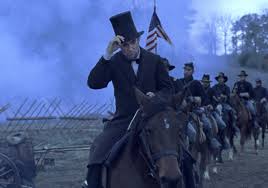
Steven Spielberg’s Lincoln serves up a timely reminder that has long been obscured by past and current Southern lies that the Civil War was not about slavery.
From first to last, the cause of the Civil War was slavery.
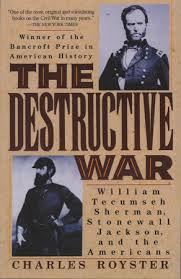
According to The Destructive War, by Charles Royster, arguments over “states’ rights” or economic conflict between North and South didn’t lead 13 Southern states to withdraw from the Union in 1860-61. It was their demand for “respect” of their “peculiar institution”—i.e., slavery.
“The respect Southerners demanded did not consist simply of the states’ sovereignty or of the equal rights of Northern and Southern citizens, including slaveholders’ right to take their chattels into Northern territory.
“It entailed, too, respect for their assertion of the moral superiority of slaveholding society over free society,” writes Royster.
“It was not enough for Southerners to claim equal standing with Northerners; Northerners must acknowledge it. But this was something that the North was increasingly unwilling to do.”
Finally, its citizens dared to elect Abraham Lincoln as President in 1860. Lincoln and his new Republican party damned slavery—and slaveholders—as morally evil, obsolete and ultimately doomed. And they were determined to prevent slavery from spreading any further throughout the country.
Southerners found all of this intolerable.
The British author, Anthony Trollope, explained to his readers:
“It is no light thing to be told daily, by our fellow citizens…that you are guilty of the one damning sin that cannot be forgiven. All this [Southerners] could partly moderate, partly rebuke and partly bear as long as political power remained in their hands.”
It is to Spielberg’s credit that he forces his audience to look directly at the real cause of the bloodiest conflict on the North American continent.
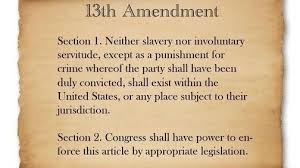
At the heart of Spielberg’s film: Abraham Lincoln (Daniel Day-Lewis) wants to win ratification of what will be the Thirteenth Amendment to the United States Constitution. An amendment that will forever ban slavery.
But, almost four years into the war, slavery still has powerful friends—-in both the North and South.
Many of those friends belong to the House of Representatives, which must ratify the amendment for it to become law. Some are hostile to Lincoln personally. One of them dubs him a dictator: “Abraham Africanus.” Another accuses him of shifting his positions for the sake of expediency.
Other members—white men all—are hostile to the idea of “equality between the races.
”To them, ending slavery means opening the door to interracial marriage—especially marriage between black men and white women. Perhaps even worse, it means possibly giving blacks—or women—the right to vote.
Members of Lincoln’s own Cabinet—such as Secretary of State William Seward—warn him: You can negotiate the end of the war immediately—if you’ll just let Southerners keep their slaves.
After the amendment wins ratification, Lincoln agrees to meet with a “peace delegation” from the Confederate States of America.
At the top of their list of concerns: If they persuade the seceded states to return to the Union, will those states be allowed to nullify the amendment?
No, says Lincoln. He’s willing to make peace with the South, and on highly generous terms. But not at the cost of allowing slavery to live on.
Too many men—North and South—have died in a conflict whose root cause is slavery. Those lives must count for more than simply reuniting the Union.
The South has lost thousands of men (260,000 is the generally accepted figure for its total casualties) and the war is clearly lost. But for its die-hard leaders, parting with slavery is simply unthinkable.
Like Nazi Germany 80 years into the future, the high command of the South won’t surrender until their armies are too beaten down to fight any more.
The major difference between the defeated South of 1865 and the defeated Germany of 1945, is this: The South was allowed to build a beautiful myth of a glorious “Lost Cause,” epitomized by the Margaret Mitchell novel, Gone With the Wind.
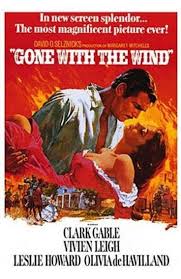
In that telling, dutiful slaves were well-treated by kindly masters. Southern aristocrats wore white suits and their slender-waisted ladies wore long dresses, carried parasols and said “fiddle-dee-dee” to young, handsome suitors.
One million people attended the premier of the movie version in Atlanta on December 15, 1939. The celebration featured stars from the film, receptions, thousands of Confederate flags, false antebellum fronts on stores and homes, and a costume ball.
In keeping with Southern racial tradition, Hattie McDaniel and the other black actors from the film were barred from attending the premiere. Upon learning this, Clark Gable threatened to boycott the event. McDaniel convinced him to attend.
When today’s Southerners fly Confederate flags and speak of “preserving our traditions,” they are actually celebrating their long-banned “peculiar institution.”
By contrast, post-World War II Germany outlawed symbols from the Nazi-era, such as the swastika and the “Heil Hitler” salute, and made Holocaust denial punishable by imprisonment.
America has refused to confront its own shameful past so directly. But Americans can be grateful that Steven Spielberg has had the courage to serve up a long-overdue and much needed lesson in past–and still current–history.
2012 PRESIDENTIAL CAMPAIGN, ABC NEWS, ABRAHAM LINCOLN, ALTERNET, AMERICABLOG, AP, BABY BOOMER RESISTANCE, BARACK OBAMA, BLOOMBERG, BUZZFEED, CBS NEWS, CIVIL RIGHTS ACT OF 1964, CIVIL WAR, CNN, CROOKS AND LIARS, DAILY KOZ, DANIEL DAY-LEWIS, DRUDGE REPORT, EMANCIPATION PROCLAMATION, FACEBOOK, FIVETHIRTYEIGHT, HARPER’S MAGAZINE, HUFFINGTON POST, LYNDON B. JOHNSON, MEDIA MATTERS, MITT ROMNEY, MOTHER JONES, MOVEON, MOVIES, MSNBC, NBC NEWS, NEWSWEEK, NPR, PBS NEWSHOUR, POLITICO, POLITICUSUSA, RAW STORY, REUTERS, SALON, SEATTLE TIMES, SLATE, SLAVERY, STEVEN SPIELBERG, TALKING POINTS MEMO, THE ATLANTIC, THE CHICAGO SUN-TIMES, THE CHICAGO TRIBUNE, THE DAILY BEAST, THE DAILY BLOG, THE GUARDIAN, THE HILL, THE HUFFINGTON POST, THE LOS ANGELES TIMES, THE NATION, THE NEW REPUBLIC, THE NEW YORK TIMES, THE VILLAGE VOICE, THE WASHINGTON POST, THINKPROGRESS, THIRTEENTH AMENDMENT, TIME, TRUTHDIG, TRUTHOUT, TWITTER, TWO POLITICAL JUNKIES, U.S. NEWS & WORLD REPORT, UPI, USA TODAY, VOTER ID LAWS, VOTING RIGHTS ACT OF 1965, WONKETTE
In Bureaucracy, History, Law, Law Enforcement, Military, Politics, Social commentary on January 22, 2021 at 12:10 am
Steven Spielberg’s Lincoln is more than a mesmerizing history lesson. It’s a timely reminder that racism and repression are not confined to any one period or political party.
At the heart of the film: Abraham Lincoln (Daniel Day-Lewis) wants to win ratification of what will be the Thirteenth Amendment to the United States Constitution. An amendment that will forever ban slavery.
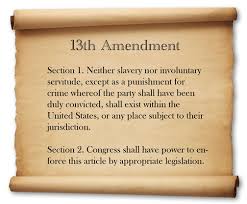
True, Lincoln, in 1862, had issued the Emancipation Proclamation. This—in theory—freed slaves held in the Confederate states that had seceded from the Union in 1861.
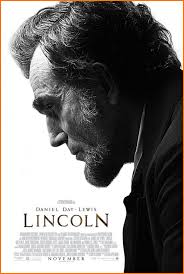
But Lincoln regards this as a temporary wartime measure. He fears that once the war is over, the Supreme Court may rule the Proclamation unconstitutional. This might allow Southerners to continue practicing slavery, even after losing the war.
To prevent this, Congress must pass an anti-slavery amendment. But winning Congressional passage of such an amendment won’t be easy.
The Senate had ratified its passage in 1864. But the amendment must secure approval from the House of Representatives to become law.
And the House is filled with men—there are no women members during the 19th century—who seethe with hostility.
Some are hostile to Lincoln personally. One of them dubs him a dictator—“Abraham Africanus.” Another accuses him of shifting his positions for the sake of expediency.
Other members—white men all—are hostile to the idea of “equality between the races.” To them, ending slavery means opening the door to interracial marriage—especially marriage between black men and white women.
Perhaps even worse, it means possibly giving blacks—or women—the the right to vote.
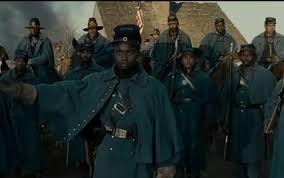
In fact, the possibility that blacks might win voting rights arises early in the movie. Lincoln is speaking to a couple of black Union soldiers, and one of them is unafraid to voice his discontent. He’s upset that black soldiers are paid less than white ones—and that they’re led only by white officers.
He says that, in time, maybe this will change. Maybe, in 100 years, he guesses, blacks will get the right to vote.
(To the shame of all Americans, that’s how long it will eventually take. Not until the passage of the Voting Rights Act of 1965 will blacks be guaranteed legal protection against discriminatory voting practices.)
To understand the Congressional debate over the Thirteenth Amendment, it’s necessary to remember this: In Lincoln’s time, the Republicans were the party of progressives.
The party was founded on an anti-slavery platform. Its members were thus reviled as “Black Republicans.” And until the 1960s, the South was solidly Democratic.
Democrats were the ones defending the status quo—slavery—and opposing freed blacks in the South of Reconstruction and long afterward.
In short, in the 18th century, Democrats in the South acted as Republicans do now. The South went Republican only after a Democratic President—Lyndon B. Johnson—rammed the Civil Rights Act of 1964 through Congress.
Thus, the re-enactment of the 1865 debate in Lincoln casts an embarrassing light on the racial conflicts of our own time. The same mentalities are at work:
-
Those (in this case, slave-owners) who already have a great deal want to gain even more at the expense of others.
-
Those (slaves and freed blacks) who have little strive to gain more or at least hang onto what they have.
-
Those who defend the privileged wealthy refuse to allow their “social inferiors” to enjoy similar privileges (such as the right to vote).
During the 2012 Presidential race, Republicans tried to bar those likely to vote for President Barack Obama from getting into the voting booth. But their bogus “voter ID” restrictions were struck down in courts across the nation.
Listening to those opposing the amendment, one is reminded of Mitt Romney’s infamous comments about the “47%”:
“Well, there are 47% of the people who will vote for the president no matter what….
“Who are dependent upon government, who believe that—that they are victims, who believe that government has a responsibility to care for them, who believe that they’re entitled to healthcare, to food, to housing, to you name it. But that’s—it’s an entitlement. And the government should give it to them.”
Put another way: “Who says people have a right to obtain medical care, food and housing? If they can’t inherit unearned wealth the way I did, screw them.”
In the end, it’s Abraham Lincoln who has the final word—and leaves his nation the better for it. Through diplomacy and backroom dealings (trading political offices for votes) he wins passage of the anti-slavery amendment.
The ownership of human chattel is finally an ugly memory of the American past.
The movie closes with a historically-correct tribute to Lincoln’s generosity toward those who opposed him—in Congress and on the battlefield. It occurs during Lincoln’s Second Inaugural Address:
“With malice toward none, with charity for all….To bind up the nation’s wounds. To care for him who shall have bourne the battle, and for his widow and his orphan….”
This ending presents a vivid philosophical contrast with the increasingly mean-spirited rhetoric and policies of today’s Republican Presidential candidates—and Presidents.
Watching Lincoln, you realize how incredibly lucky America was as a nation to have had such leadership when it was most urgently needed.


 Bureaucracybuster's Blog
2016 PRESIDENTIAL ELECTION, 2020 PRESIDENTIAL ELECTION, ABC NEWS, ADOLF HITLER, ALEXANDER KERENSKY, ALTERNET, AMERICABLOG, AP, BABY BOOMER RESISTANCE, BEER HALL PUTSCH, BEN SASSE, BLOOMBERG, BRAD RAFFENSPERGER, BRIAN KEMP, BUZZFEED, CAPITOL POLICE, CBS NEWS, CHINA, CHRIS KREBS, CHRIS MURPHY, CIA, CNN, CROOKS AND LIARS, CYBERSECURITY, DAILY KOZ, DEMOCRATS, DEPARTMENT OF HOMELAND SECURITY, DONALD TRUMP, DRUDGE REPORT, ELECTORAL COLLEGE, FACEBOOK, FBI, FIVETHIRTYEIGHT, HARPER’S MAGAZINE, HITLER: ASCENT: 1889 – 1939 (BOOK), HUFFINGTON POST, ISLAMIC STATE, JAMES COMEY, JOSEPH BIDEN, jOSH HAWLEY, JOSH SHAPIRO, KAITLAN COLLINS, KEN PAXTON, KEVIN MCCARTHY, KIM JONG ON, MEDIA MATTERS, MEIN KAMPF (BOOK), MIKE KELLY, MIKE PENCE, MITCH MCCONNELL, MOTHER JONES, MOVEON, MSNBC, NANCY PELOSI, NATIONAL GUARD, NATIONAL SECURITY AGENCY, NBC NEWS, NEWSWEEK, NORTH KOREA, NPR, PAT A. CIPOLLONE, PAUL LEBLANC, PBS NEWSHOUR, POLITICO, POLITICUSUSA, RAW STORY, REPUBLICANS, REUTERS, ROD SERLING, ROY BLUNT, RUSSIA, RUSSIAN REVOLUTION, SALON, SEATTLE TIMES, SERGEI KISLYAK, SERGI LAVROV, SLATE, SUPREME COURT, TALKING POINTS MEMO, THE ATLANTIC, THE CHICAGO SUN-TIMES, THE CHICAGO TRIBUNE, THE DAILY BEAST, THE DAILY BLOG, THE GUARDIAN, THE HILL, THE HUFFINGTON POST, THE LOS ANGELES TIMES, THE NATION, THE NEW REPUBLIC, THE NEW YORK TIMES, THE TWILIGHT ZONE, THE VILLAGE VOICE, THE WASHINGTON POST, THINKPROGRESS, TIME, TRUTHDIG, TRUTHOUT, TWILIGHT ZONE EPISODE “DEATH’S HEAD REVISITED”, TWITTER, TWO POLITICAL JUNKIES, U.S. NEWS & WORLD REPORT, ULYSSES S. GRANT, UNITED STATES CAPITOL BUILDING, UNITED STATES HOUSE OF REPRESENTATIVES, UNITED STATES SECRET SERVICE, UNITED STATES SENATE, UPI, USA TODAY, VLACIMIR PUTIN, VOLKER ULLRICH, XI JINPING
TREASON’S GREETINGS: PART ONE (OF FOUR)
In Bureaucracy, History, Law, Law Enforcement, Politics, Social commentary on February 15, 2021 at 12:25 amHISTORY’S LESSON ON TREASON
Whatever may have been my political opinions before, I have one sentiment now: That is, we have a government, and laws, and a flag, and they must all be sustained. There are but two parties now, traitors and patriots, and I want hereafter to be ranked with the latter and, I trust, the stronger party.
—Ulysses S. Grant
History teaches us that republics that tolerate treason soon become former republics.
Example: #1: In February, 1917, Alexander Kerensky became president of the Russian Provisional Government after the fall of Tsar Nicholas II.
Warned that Bolshevik leaders were plotting his overthrow, he refused to order their arrests: “In Russia, it’s always been too easy to arrest people who disagree with you.”
Alexander Kerensky
On November 7, 1917, he found himself overthrown and fleeing the country for his life. A Communist government, presided over by Vladimir Lenin, assumed absolute power—and held onto it for the next 74 years
Example #2: On November 9, 1923, Nazi Party Fuhrer Adolf Hitler tried to overthrow the government in Munich, Bavaria.
About 2,000 Nazis marched to the center of Munich, where they confronted heavily-armed police. A shootout erupted, killing 16 Nazis and four policemen.
Hitler was injured during the clash, but managed to escape. Two days later, he was arrested and charged with treason.
Put on trial, he found himself treated as a celebrity by a judge sympathetic to Right-wing groups. He was allowed to brutally cross-examine witnesses and even make inflammatory speeches.
At the end of the trial, he was convicted of treason and sentenced to five years’ imprisonment.
Serving time in Landsberg Prison, in Bavaria. he was given a huge cell, allowed to receive unlimited visitors and gifts, and treated with deference by guards and inmates.
Hitler used his time in prison to write his infamous book, Mein Kampf-–“My Struggle.” Part autobiography, part political treatise, it laid out his future plans—including the extermination of the Jews and the conquest of the Soviet Union.
Adolf Hitler leaving Landsberg Prison, December, 20, 1924
Nine months later, he was released on parole—by authorities loyal to the authoritarian Right instead of the newly-created Weimar Republic.
Hitler immediately began rebuilding the shattered Nazi party—and deciding on a new strategy to gain power. Never again would he resort to armed force. He would win office by election—or intrigue.
On January 30, 1933, those intrigues made him Chancellor of Germany.
Writes historian Volker Ullrich, in his monumental 2016 biography, Hitler: Ascent 1889 – 1939: “Historians have perennially tried to answer the question of whether Hitler’s rise to power could have been halted….
“There were repeated opportunities to end Hitler’s run of triumphs. The most obvious one was after the failed Putsch of November 1923. Had the Munich rabble-rouser been forced to serve his full five-year term of imprisonment in Landsberg, it is extremely unlikely that he would have been able to restart his political career.”
THE DIFFERENCE BETWEEN THE ELECTIONS OF 2016 AND 2020
During the 2016 Presidential race, Russian propaganda played a major role in convincing millions of Americans to vote for Donald Trump. Social media platforms—especially Facebook and Twitter—were flooded with genuinely fake news to sow discord among Americans and create a pathway for Trump’s election.
And where Internet trolls left off, Russian computer hackers took over.
Russian President Vladimir Putin, a former KGB officer, had quickly assessed Trump as an egotistical narcissist. By appealing to Trump’s vanity, Putin expected to sharply reduce the military and political threat the United States represented to a resurgent Russia.
Donald Trump didn’t win a majority of the popular vote in 2016—but he got enough help from Putin to put him over the top in the Electoral College.
And Trump gladly reciprocated.
Vladimir Putin and Donald Trump
From his first day in office, he sided with brutal dictators (Putin, North Korea’s Kim Jong-On, China’s Xi Jinping) and declared war on America’s oldest and most reliable allies (Canada, Britain, France).
When he spoke with Putin face-to-face, he afterward demanded that the lone translator surrender his notes, so there would be no record of what he had agreed to with Putin.
On May 10, 2017, Trump met with Russian Foreign Minister Sergey Lavrov and Russian Ambassador Sergey Kislyak in the Oval Office—and gave them highly classified CIA Intelligence about an Islamic State plot to turn laptops into concealable bombs.
Not only did this occur in the Oval Office, but it happened on the day after he fired FBI Director James Comey for refusing to become Trump’s version of a KGB chief.
“I just fired the head of the FBI,” Trump told the two dignitaries. “He was crazy, a real nut job. I faced great pressure because of Russia. That’s taken off.”
On numerous occasions Donald Trump fiercely denied any Russian connections. On January 11, 2017, he tweeted: “Russia has never tried to use leverage over me. I HAVE NOTHING TO DO WITH RUSSIA – NO DEALS, NO LOANS, NO NOTHING!”
But Trump’s son, Eric, bragged in 2014: “Well, we don’t rely on American banks. We have all the funding we need out of Russia. We’ve got some guys that really, really love golf, and they’re really invested in our programs. We just go there all the time.”
Share this: