Posts Tagged ‘DONALD TRUMP’
2016 PRESIDENTIAL ELECTION, ABC NEWS, ALTERNET, AMERICABLOG, AMERICAN CAESAR, AP, ASIANS, BABY BOOMER RESISTANCE, BBC, BLACKS, BLOOMBERG NEWS, BUZZFEED, CBS NEWS, CNN, CROOKS AND LIARS, DAILY KOS, DEMOCRATIC NATIONAL CONVENTION, DONALD TRUMP, DOUGLAS MACARTHUR, FACEBOOK, FIVETHIRTYEIGHT, GEORGE STEPHANOPOULOS, HARPER’S MAGAZINE, HILLARY CLINTON, HUFFINGTON POST, HUMAYUN KHAN, INSULTS, JOHN MCCAIN, KHIZR KHAN, LATINOS, MEDIA MATTERS, MOTHER JONES, MOVEON, MSNBC, MUSLIMS, NBC NEWS, NEW REPUBLIC, NEWSDAY, NEWSWEEK, NICCOLO MACHIAVELLI, NPR, PBS NEWSHOUR, POLITICO, POLITICUSUSA, PRISONERS OF WAR, RAW STORY, REUTERS, SALON, SEATTLE TIMES, SLATE, STATE OF THE UNION, TALKING POINTS MEMO, THE ATLANTIC, THE CHICAGO SUN-TIMES, THE CHICAGO TRIBUNE, THE DAILY BEAST, THE DAILY BLOG, THE GUARDIAN, THE HILL, THE HUFFINGTON POST, THE INTERCEPT, THE LAST WORD, THE LOS ANGELES TIMES, THE NATION, THE NEW REPUBLIC, THE NEW YORK TIMES, THE NEW YORKER, THE PRINCE, THE VILLAGE VOICE, THE WASHINGTON POST, THINKPROGRESS, TIME, TODAY SHOW, TRUTHDIG, TRUTHOUT, TWITTER, TWO POLITICAL JUNKIES, U.S. NEWS & WORLD REPORT, UPI, USA TODAY, VETERANS OF FOREIGN WARS, WILLIAM MANCHESTER, WOMEN, WONKETTE
In Bureaucracy, History, Military, Politics, Social commentary on September 16, 2022 at 12:18 am
As a Republican Presidential nominee. Donald Trump attacked the integrity of the parents of an Army captain who died heroically in Iraq in 2004.
For this, he took heavy fire from Democrats, veterans organizations and even his fellow Republicans.
But an even more damning assessment comes from Niccolo Machiavelli, the 16th-century Florentine statesman whose two great works on politics—The Prince and The Discourses—remain textbooks for successful politicians more than 500 years later.


Niccolo Machiavelli
Consider Trump’s notoriety for hurling insults at virtually everyone, including:
- Latinos
- Asians
- Muslims
- Blacks
- The Disabled
- Women
- Prisoners-of-War
These insults delight his white, under-educated followers. But they have alienated millions of other Americans who might have voted for him.
Machiavelli, on the other hand, advises leaders to refrain from gratuitous insults:
- “I hold it to be a proof of great prudence for men to abstain from threats and insulting words towards any one.
- “For neither the one nor the other in any way diminishes the strength of the enemy–but the one makes him more cautious, and the other increases his hatred of you, and makes him more persevering in his efforts to injure you.”
And Trump’s reaction to the criticism he’s received?
“I can be Presidential, but if I was Presidential I would only have–about 20% of you would be here because it would be boring as hell, I will say,” Trump told supporters at a rally in Superior, Wisconsin.
For those who expected Trump to shed his propensity for constantly picking fights, Machiavelli had a stern warning:
- “…If it happens that time and circumstances are favorable to one who acts with caution and prudence he will be successful. But if time and circumstances change he will be ruined, because he does not change the mode of his procedure.
- “No man can be found so prudent as to be able to adopt himself to this, either because he cannot deviate from that to which his nature disposes him, or else because, having always prospered by walking in one path, he cannot persuade himself that it is well to leave it…
- “For if one could change one’s nature with time and circumstances, fortune would never change.”
Then there was Trump’s approach to consulting advisers:
Asked on MSNBC’s “Morning Joe” who he consults about foreign policy, Trump replied;
“I’m speaking with myself, number one, because I have a very good brain and I’ve said a lot of things.”
This totally contrasted with the advice given by Machiavelli:
- “A prudent prince must [choose] for his counsel wise men, and [give] them alone full liberty to speak the truth to him, but only of those things that he asks and of nothing else.
- “But he must be a great asker about everything and hear their opinions, and afterwards deliberate by himself in his own way, and in these counsels…comport himself so that every one may see that the more freely he speaks, the more he will be acceptable.”
And Machiavelli offered a related warning on the advising of rulers: Unwise princes cannot be wisely advised.
During the fifth GOP debate in the Presidential sweepstakes, host Hugh Hewitt asked Trump this question:
“Mr. Trump, Dr. [Ben] Carson just referenced the single most important job of the president, the command and the care of our nuclear forces. And he mentioned the triad.
“The B-52s are older than I am. The missiles are old. The submarines are aging out. It’s an executive order. It’s a commander-in-chief decision.
“What’s your priority among our nuclear triad?”
[The triad refers to America’s land-, sea- and air-based systems for delivering nuclear missiles and bombs.]
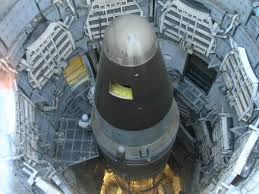
Nuclear missile in silo
Trump’s reply: “Well, first of all, I think we need somebody absolutely that we can trust, who is totally responsible, who really knows what he or she is doing. That is so powerful and so important.”
He then digressed to his having called the Iraq invasion a mistake in 2003 and 2004. Finally he came back on topic:
“But we have to be extremely vigilant and extremely careful when it comes to nuclear. Nuclear changes the whole ballgame.
“The biggest problem we have today is nuclear–nuclear proliferation and having some maniac, having some madman go out and get a nuclear weapon. I think to me, nuclear, is just the power, the devastation is very important to me.”
Which brings us back to Machiavelli:
- “…Some think that a prince who gains the reputation of being prudent [owes this to] the good counselors he has about him; they are undoubtedly deceived.
- “It is an infallible rule that a prince who is not wise himself cannot be well advised, unless by chance he leaves himself entirely in the hands of one man who rules him in everything, and happens to be a very prudent man. In this case, he may doubtless be well governed, but it would not last long, for the governor would in a short time deprive him of the state.”
All of which would lead Niccolo Machiavelli to warn, if he could witness American politics today: “This bodes ill for your Republic.”
2016 PRESIDENTIAL ELECTION, ABC NEWS, ALTERNET, AMERICABLOG, AMERICAN CAESAR, AP, ASIANS, BABY BOOMER RESISTANCE, BBC, BLACKS, BLOOMBERG NEWS, BUZZFEED, CBS NEWS, CNN, CROOKS AND LIARS, DAILY KOS, DEMOCRATIC NATIONAL CONVENTION, DONALD TRUMP, DOUGLAS MACARTHUR, FACEBOOK, FIVETHIRTYEIGHT, GEORGE STEPHANOPOULOS, HARPER’S MAGAZINE, HILLARY CLINTON, HUFFINGTON POST, HUMAYUN KHAN, INSULTS, JOHN MCCAIN, KHIZR KHAN, LATINOS, MEDIA MATTERS, MOTHER JONES, MOVEON, MSNBC, MUSLIMS, NBC NEWS, NEW REPUBLIC, NEWSDAY, NEWSWEEK, NICCOLO MACHIAVELLI, NPR, PBS NEWSHOUR, POLITICO, POLITICUSUSA, PRISONERS OF WAR, RAW STORY, REUTERS, SALON, SEATTLE TIMES, SLATE, STATE OF THE UNION, TALKING POINTS MEMO, THE ATLANTIC, THE CHICAGO SUN-TIMES, THE CHICAGO TRIBUNE, THE DAILY BEAST, THE DAILY BLOG, THE GUARDIAN, THE HILL, THE HUFFINGTON POST, THE INTERCEPT, THE LAST WORD, THE LOS ANGELES TIMES, THE NATION, THE NEW REPUBLIC, THE NEW YORK TIMES, THE NEW YORKER, THE PRINCE, THE VILLAGE VOICE, THE WASHINGTON POST, THINKPROGRESS, TIME, TODAY SHOW, TRUTHDIG, TRUTHOUT, TWITTER, TWO POLITICAL JUNKIES, U.S. NEWS & WORLD REPORT, UPI, USA TODAY, VETERANS OF FOREIGN WARS, WILLIAM MANCHESTER, WOMEN, WONKETTE
In Bureaucracy, History, Military, Politics, Social commentary on September 15, 2022 at 12:11 am
“He appeared to need enemies the way other men need friends, and his conduct assured that he would always have plenty of them.”
So wrote William Manchester about General Douglas MacArthur in his monumental 1978 biography, American Caesar.
But this applies just as accurately to Donald Trump, the man Americans elected President in 2016.
On July 28, 2016, Trump found himself embroiled in a no-win war-of-words with the parents of an American Army captain killed in Iraq in 2004. And the battle shows no signs of ending anytime soon.
Humayun Khan served as a captain in the U.S. Army. On June 8, 2004, a vehicle packed with explosives approached his compound in Iraq.
Khan ordered his men to seek cover as he ran toward it. Suddenly, the car exploded, killing Khan instantly. He was awarded the Bronze Star posthumously.
On July 28, 2016, his father, Khizr, was a featured speaker at the Democratic National Convention. With his wife, Ghazala, standing at his side, he made a blistering attack on Trump:
“We are honored to stand here as the parents of Captain Humayun Khan, and as patriotic American Muslims with undivided loyalty to our country.
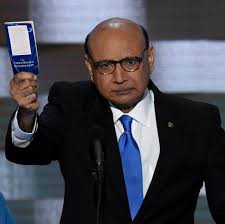
Khizr Khan
“If it was up to Donald Trump, [Humayun] never would have been in America,” Khan said. “Donald Trump consistently smears the character of Muslims. He disrespects other minorities, women, judges, even his own party leadership. He vows to build walls and ban us from this country.
“Donald Trump, you are asking Americans to trust you with our future. Let me ask you: Have you even read the U.S. Constitution? I will gladly lend you my copy.”
Pulling a copy of the Constitution from his pocket he said: “In this document, look for the words ‘liberty’ and ‘equal protection of law.’
“You have sacrificed nothing and no one.”
On July 29, the Khans appeared in an interview on MSNBC’s The Last Word. Khan appealed to Senate Majority Leader Mitch McConnell (R-Kentucky) and House Speaker Paul Ryan (R-Wisconsin) to “repudiate Trump.”
Trump predictably responded during a July 30 interview with ABC News’ George Stephanopoulos.
“Who wrote that?” he demanded of Khan’s speech. “Did Hillary’s script writers write it?”
(According to Politico, Khan declined the use of a speechwriter.)
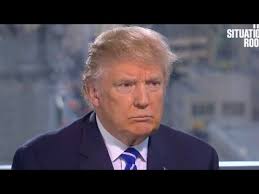
Donald Trump
“I think I’ve made a lot of sacrifices,” said Trump. “I work very, very hard. I’ve created thousands and thousands of jobs, tens of thousands of jobs.”
“Those are sacrifices?” Stephanopoulos asked.
“Sure. I think they’re sacrifices. I think when I can employ thousands and thousands of people, take care of their education, take care of so many things.”
Trump implied that Khan’s wife may not have been allowed to speak because of her religion.
Ghazala Khan subsequently retorted in an interview that she had been invited to speak but was too upset to do so.
On July 31, Khizr Khan said on CNN’s State of the Union that Trump had a “black soul.”
That same day, Trump took to Twitter:
“Captain Khan, killed 12 years ago, was a hero, but this is about RADICAL ISLAMIC TERROR and the weakness of our ‘leaders’ to eradicate it!”
And: “I was viciously attacked by Mr. Khan at the Democratic Convention. Am I not allowed to respond? Hillary voted for the Iraq war, not me!”
On August 1, Khan appeared on NBC’s Today Show: “This candidate amazes me. His ignorance—he can get up and malign the entire nation, the religions, the communities, the minorities, the judges and yet a private citizen in this political process. … I cannot say what I feel?”
The same day, Trump responded on Twitter:
“Mr. Khan, who does not know me, viciously attacked me from the stage of the DNC and is now all over T.V. doing the same – Nice!”
And again: “This story is not about Mr. Khan, who is all over the place doing interviews, but rather RADICAL ISLAMIC TERRORISM and the U.S. Get smart!”
The exchange didn’t hurt the Khans. But it inflicted heavy damage on Trump.
Arizona U.S. Senator John McCain—himself a seven-year prisoner of North Vietnam during the Vietnam war—said:
“In recent days, Donald Trump disparaged a fallen soldier’s parents. He has suggested that the likes of their son should not be allowed in the United States—to say nothing of entering its service.
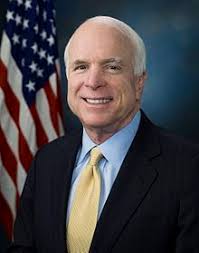
John McCain
“I cannot emphasize enough how deeply I disagree with Mr. Trump’s statement. I hope Americans understand that the remarks do not represent the views of our Republican Party, its officers, or candidates.”
The Veterans of Foreign Wars (VFW), one of the largest and oldest veterans organizations in the country, released its own statement:
“Election year or not, the VFW will not tolerate anyone berating a Gold Star family member for exercising his or her right of speech or expression. There are certain sacrosanct subjects that no amount of wordsmithing can repair once crossed.
“Giving one’s life to nation is the greatest sacrifice, followed closely by Gold Star families, who have a right to make their voices heard.”
ABC NEWS, AL QAEDA, ALTERNET, AMERICABLOG, AMERICAN CAESARS: THE LIVES OF THE PRESIDENTS FROM FRANKLIN D. ROOSEVELT TO GEORGE W. BUSH, AMERICAN EMPIRE, AP, ” 9/11, BABY BOOMER RESISTANCE, BASHAR AL-ASSAD, BBC, BILL CLINTON, BLOOMBERG, BLOOMBERG NEWS, BUREAUCRACY, BUZZFEED, CBS NEWS, CHRIS MATHEWS, CNN, CONDOLEEZA RICE, CROOKS AND LIARS, DAILY KOS, DAILY KOZ, DONALD TRUMP, DRUDGE REPORT, DWIGHT EISENHOWER, FACEBOOK, FBI, FIVETHIRTYEIGHT, FRANKLIN D. ROOSEVELT, GEORGE H.W. BUSH, GEORGE W. BUSH, GERALD R. FORD, HARPER’S MAGAZINE, HARRY S. TRUMAN, HUFFINGTON POST, JIMMY CARTER, JOHN F. KENNEDY, LYNDON B. JOHNSON, MEDIA MATTERS, MOTHER JONES, MOVEON, MSNBC, NBC NEWS, NEW REPUBLIC, NEWSDAY, NEWSWEEK, NIGEL HAMILTON, NPR, OSAMA BIN LADEN, PBS NEWSHOUR, POLITICO, POLITICUSUSA, RAW STORY, REPUBLICAN PARTY, REUTERS, RICHARD CLARKE, RICHARD NIXON, ROMAN EMPIRE, SALON, SEATTLE TIMES, SEPTEMBER 11, SLATE, SUETONIUS, SYRIA, TALKING POINTS MEMO, TERRORISM, THE ATLANTIC, THE CHICAGO SUN-TIMES, THE CHICAGO TRIBUNE, THE DAILY BEAST, THE DAILY BLOG, THE GUARDIAN, THE HILL, THE HUFFINGTON POST, THE INTERCEPT, THE LOS ANGELES TIMES, THE NATION, THE NEW REPUBLIC, THE NEW YORK TIMES, THE NEW YORKER, THE TWELVE CAESARS, THE VILLAGE VOICE, THE WASHINGTON POST, THINKPROGRESS, TIME, TRUTHDIG, TRUTHOUT, TWITTER, TWO POLITICAL JUNKIES, U.S. NEWS & WORLD REPORT, UPI, USA TODAY
In Bureaucracy, History, Military, Politics, Social commentary on September 14, 2022 at 12:11 am
“Naturally, the common people don’t want war. neither in Russia nor in England nor in America, nor for that matter in Germany. That is understood. But the people can always be brought to the bidding of the leaders. That is easy. All you have to do is tell them they are being attacked, and denounce the pacifists for lack of patriotism and exposing the country to danger. It works the same way in every country.”
—Hermann Goering
On September 12, 2001, President George W. Bush attended a meeting of the National Security Council.
“Why shouldn’t we go against Iraq, not just Al-Qaeda?” demanded Donald Rumsfeld, the Secretary of Defense.
Vice President Dick Cheney enthusiastically agreed.
Secretary of State Colin Powell then pointed out there was absolutely no evidence that Iraq had had anything to do with 9/11 or Al-Qaeda. And he added: “The American people want us to do something about Al-Qaeda”—not Iraq.
On November 21, 2001, only 10 weeks after 9/11, Bush told Rumsfeld: It’s time to turn to Iraq.
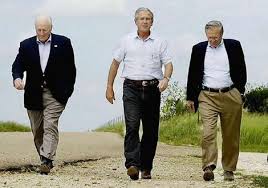
Liars Club: Dick Cheney, George Bush, Donald Rumsfeld
Bush and his war-hungry Cabinet officials knew that Americans demanded vengeance on Al-Qaeda’s mastermind, Osama bin Laden, and not Iraqi dictator Saddam Hussein. So they repeatedly fabricated “links” between the two:
- Saddam had worked hand-in-glove with Bin Laden to plan 9/11.
- Saddam was harboring and supporting Al-Qaeda throughout Iraq.
- Saddam, with help from Al-Qaeda, was scheming to build a nuclear bomb.
Yet as early as September 22, 2001, Bush had received a classified President’s Daily Brief intelligence report, which stated that there was no evidence linking Saddam Hussein to 9/11.
The report added that there was scant credible evidence that Iraq had any significant collaborative ties with Al-Qaeda.
Even more important: Saddam had tried to monitor Al Qaeda through his intelligence service–because he saw Al-Qaeda and other theocratic radical Islamist organizations as a potential threat to his secular regime.
Bush administration officials repeatedly claimed that Iraq possessed huge quantities of chemical and biological weapons, in violation of UN resolutions. And they further claimed that US intelligence agencies had determined:
- The precise locations where these weapons were stored;
- The identities of those involved in their production; and
- The military orders issued by Saddam Hussein for their use in the event of war.
Among other lies issued by members of the Bush administration:
- Iraq had sought uranium from Niger, in west Africa.
- Thousands of aluminum tubes imported by Iraq could be used in centrifuges to create enriched uranium.
- Iraq had up to 20 long-range Scud missiles, prohibited under UN sanctions.
- Iraq had massive stockpiles of chemical and biological agents, including nerve gas, anthrax and botulinum toxin.
- Saddam Hussein had issued chemical weapons to front-line troops who would use them when US forces crossed into Iraq.
Consider the following:
August 26, 2002: Vice President Dick Cheney told the Veterans of Foreign Wars, “There is no doubt that Saddam Hussein now has weapons of mass destruction. There is no doubt he is amassing them to use against our friends, against our allies and against us.”
September 8, 2002: National Security Advisor Condoleeza Rice said on CNN: ”There is certainly evidence that Al-Qaeda people have been in Iraq. There is certainly evidence that Saddam Hussein cavorts with terrorists.”
September 18, 2002: Secretary of Defense Donald Rumsfeld told the House Armed Services Committee, “We do know that the Iraqi regime has chemical and biological weapons. His regime has amassed large, clandestine stockpiles of chemical weapons–including VX, sarin, cyclosarin and mustard gas.”
October 7, 2002: President George W. Bush declared in a nationally televised speech in Cincinnati that Iraq “possesses and produces chemical and biological weapons. It is seeking nuclear weapons.”
March 16, 2003: Cheney declared on NBC’s “Meet the Press”: “We believe [Saddam Hussein] has, in fact, reconstituted nuclear weapons.”
March 30, 2003: On ABC’s “This Week” program, 10 days into the war, Rumsfeld said: “We know where they [weapons of mass destruction] are.”
Bush never regretted his decision to invade Iraq, which occurred on March 20, 2003.
Even as American occupying forces repeatedly failed to turn up any evidence of “weapons of mass destruction” (WMDs), Bush and his minions claimed the invasion a good thing.
In fact, Bush—who hid out the Vietnam war in the Texas Air National Guard—even joked publicly about the absence of WMDs.
He did so at a White House Correspondents dinner on March 24, 2004—one year after he had started the war.
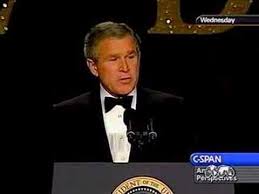
George W. Bush at the 2004 White House Correspondents’ dinner
To Bush, the non-existent WMDs were nothing more than the butt of a joke that night. While an overhead projector displayed photos of a puzzled-looking Bush searching around the Oval Office, Bush recited a comedy routine.
“Those weapons of mass destruction have gotta be somewhere,” Bush laughed, while a photo showed him poking around the corners in the Oval Office.
“Nope—no weapons over there! Maybe they’re under here,” he said, as a photo showed him looking under a desk.
Meanwhile, an assembly of wealthy, pampered men and women—the elite of America’s media and political classes—laughed heartily during Bush’s performance. It was a scene worthy of the court of the ancient Caesars, complete with royal flunkies.
Ultimately, the war that Bush had deliberately provoked
- Took the lives of 4,484 Americans.
- Cost the United States Treasury at least $2 trillion.
- Created a Middle East power vacuum.
- Allowed Iran—Iraq’s arch enemy—to eagerly fill it.
- Killed at least 655,000 Iraqis.
- Bush retired from office with a lavish pension and full Secret Service protection.
- He wrote his memoirs and was paid $7 for the first 1.5 million copies.
- Cheney, Rumsfeld and Rice retired to private business, wrote their own memoirs, and lived in comfort as respected elder statesmen.
ABC NEWS, AL QAEDA, ALTERNET, AMERICABLOG, AMERICAN CAESARS: THE LIVES OF THE PRESIDENTS FROM FRANKLIN D. ROOSEVELT TO GEORGE W. BUSH, AMERICAN EMPIRE, AP, ” 9/11, BABY BOOMER RESISTANCE, BASHAR AL-ASSAD, BBC, BILL CLINTON, BLOOMBERG, BLOOMBERG NEWS, BUREAUCRACY, BUZZFEED, CBS NEWS, CHRIS MATHEWS, CNN, CONDOLEEZA RICE, CROOKS AND LIARS, DAILY KOS, DAILY KOZ, DONALD TRUMP, DRUDGE REPORT, DWIGHT EISENHOWER, FACEBOOK, FBI, FIVETHIRTYEIGHT, FRANKLIN D. ROOSEVELT, GEORGE H.W. BUSH, GEORGE W. BUSH, GERALD R. FORD, HARPER’S MAGAZINE, HARRY S. TRUMAN, HUFFINGTON POST, JIMMY CARTER, JOHN F. KENNEDY, LYNDON B. JOHNSON, MEDIA MATTERS, MOTHER JONES, MOVEON, MSNBC, NBC NEWS, NEW REPUBLIC, NEWSDAY, NEWSWEEK, NIGEL HAMILTON, NPR, OSAMA BIN LADEN, PBS NEWSHOUR, POLITICO, POLITICUSUSA, RAW STORY, REPUBLICAN PARTY, REUTERS, RICHARD CLARKE, RICHARD NIXON, ROMAN EMPIRE, SALON, SEATTLE TIMES, SEPTEMBER 11, SLATE, SUETONIUS, SYRIA, TALKING POINTS MEMO, TERRORISM, THE ATLANTIC, THE CHICAGO SUN-TIMES, THE CHICAGO TRIBUNE, THE DAILY BEAST, THE DAILY BLOG, THE GUARDIAN, THE HILL, THE HUFFINGTON POST, THE INTERCEPT, THE LOS ANGELES TIMES, THE NATION, THE NEW REPUBLIC, THE NEW YORK TIMES, THE NEW YORKER, THE TWELVE CAESARS, THE VILLAGE VOICE, THE WASHINGTON POST, THINKPROGRESS, TIME, TRUTHDIG, TRUTHOUT, TWITTER, TWO POLITICAL JUNKIES, U.S. NEWS & WORLD REPORT, UPI, USA TODAY
In Bureaucracy, History, Military, Politics, Social commentary on September 13, 2022 at 12:20 am
Colonel Brandt: “I wonder what we’ll do after we lose the war.”
Captain Kiesel: “Prepare for the next one.”
–-“The Cross of Iron,” film by Sam Peckinpah
September 11, 2022, marks the 21ist anniversary of the worst terrorist attack on United States soil. Inevitably, this is a time to remember all those whose lives were so cruelly snuffed out.
But it should also be a time to remember those who made this atrocity inevitable—by refusing to acknowledge and address the impending threat from Al-Qaeda.
British historian Nigel Hamilton has chronicled their arrogance and indifference in his 2010 biography: American Caesars: Lives of the Presidents from Franklin D. Roosevelt to George W. Bush.
Hamilton noted that Richard Clarke, the national security advisor on terrorism, was certain that Osama bin Laden had arranged the [USS.]Colebombing in Aden on October 12, 2000.
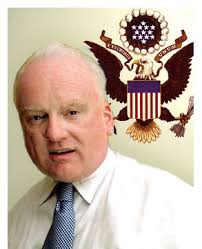
Richard Clarke
For months, Clarke tried to convince others in the Bush Administration that Bin Laden was plotting another attack against the United States—either abroad or at home.
But Clarke could not prevail against the know-it-all arrogance of such higher-ranking Bush officials as Vice President Dick Cheney; Secretary of Defense Donald Rumsfeld; Rumsfeld’s deputy, Paul Wolfowitz; and National Security Advisor Condoleeza Rice.
Rice initially refused to hold a cabinet-level meeting on the subject. Then she “insisted the matter be handled only by a more junior Deputy Principals meeting” in April, 2001, writes Hamilton.
Wolfowitz, the number-two man at the Department of Defense, said: “I don’t understand why we are beginning by talking about this one man, bin Laden.”
Even after Clarke outlined the threat posed by Al-Qaeda, Wolfowitz–whose real target was Saddam Hussein–said: “You give bin Laden too much credit.”
Wolfowitz insisted that bin Laden couldn’t carry out his terrorist acts without the aid of a state sponsor—namely, Iraq.
Wolfowitz, in fact, blamed Iraq for the 1993 bombing of the World Trade Center.
Clarke was stunned, since there was absolutely no evidence of Iraqi involvement in this.
“Al-Qaeda plans major acts of terrorism against the United States,” Clarke warned his colleagues. He pointed out that, like Adolf Hitler, bin Laden had actually published his plans for future destruction.
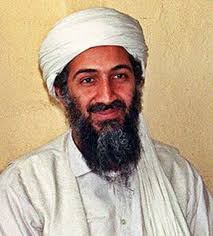
Osama bin Laden
And he added: “Sometimes, as with Hitler in Mein Kampf, you have to believe that these people will actually do what they say they will do.”
Wolfowitz heatedly traded on his Jewish heritage to bring Clarke’s unwelcome arguments to a halt: “I resent any comparison between the Holocaust and this little terrorist in Afghanistan.”
Writing in outraged fury, Hamilton sums up Clarke’s agonizing frustrations:
- Bush’s senior advisors treated their colleagues who had served in the Clinton administration with contempt.
- President Bush, Vice President Dick Cheney, National Security Advisor Condoleeza Rice, Secretary of Defense Donald Rumsfeld and Deputy Defense Secretary Paul Wolfowitz seemed content to ignore the danger signals of an impending al-Qaeda attack.
- This left only Secretary of State Colin Powell, his deputy Richard Armitage, Richard Clarke and a skeptical Treasury Secretary, Paul O’Neill, to wage “a lonely battle to waken a seemingly deranged new administration.”
Clarke alerted Federal Intelligence agencies that “Al-Qaeda is planning a major attack on us.” He asked the FBI and CIA to report to his office all they could learn about suspicious persons or activities at home and abroad.
Finally, at a meeting with Rice on September 4, 2001, Clarke challenged her to “picture yourself at a moment when in the very near future Al-Qaeda has killed hundreds of Americans, and imagine asking yourself what you wish then that you had already done.”
Seven days later, Al-Qaeda struck, and 3,000 Americans died horrifically—and needlessly.
Neither Bush, Cheney, Rice, Rumsfeld nor Wolfowitz ever admitted their negligence. Nor would any of them be brought to account.
Disgustingly, these were the same officials who, afterward, posed as the Nation’s saviors–and branded anyone who disagreed with them as a traitor, practices the Right continues to exploit to this day.
Only Richard Clarke–who had vainly argued for stepped-up security precautions and taking the fight to Al-Qaeda–gave that apology.
On March 24, 2004, Clarke testified at the public 9/11 Commission hearings. Addressing relatives of victims in the audience, he said: “Your government failed you, those entrusted with protecting you failed you, and I failed you.”
Yet even worse was to come.
On the evening after the September 11 attacks, Bush took Clarke aside during a meeting in the White House Situation Room:
“I want you, as soon as you can, to go back over everything, everything. See if Saddam [Hussein, the dictator of Iraq] did this. See if he’s linked in any way.”
Clarke was stunned: “But, Mr. President, Al-Qaeda did this.”
“I know, I know,” said Bush. “But see if Saddam was involved. I want to know.”
Hussein had not plotted the attack–and there was no evidence proving that he did. But the attack gave “W” the excuse he wanted to remove the man he blamed for the 1992 defeat of his father, President George H.W. Bush.
Bush believed that his father would have been re-elected if he had “gone all the way” into Baghdad during the 1991 Gulf War.
He would finish the job that his father had started but failed to compete.
On September 12, 2001, Bush attended a meeting of the National Security Council.
“Why shouldn’t we go against Iraq, not just Al-Qaeda?” demanded Donald Rumsfeld, the Secretary of Defense.
Vice President Dick Cheney enthusiastically agreed.
ABC NEWS, AL QAEDA, ALTERNET, AMERICABLOG, AMERICAN CAESARS: THE LIVES OF THE PRESIDENTS FROM FRANKLIN D. ROOSEVELT TO GEORGE W. BUSH, AMERICAN EMPIRE, AP, ” 9/11, BABY BOOMER RESISTANCE, BASHAR AL-ASSAD, BBC, BILL CLINTON, BLOOMBERG, BLOOMBERG NEWS, BUREAUCRACY, BUZZFEED, CBS NEWS, CHRIS MATHEWS, CNN, CONDOLEEZA RICE, CROOKS AND LIARS, DAILY KOS, DAILY KOZ, DONALD TRUMP, DRUDGE REPORT, DWIGHT EISENHOWER, FACEBOOK, FBI, FIVETHIRTYEIGHT, FRANKLIN D. ROOSEVELT, GEORGE H.W. BUSH, GEORGE W. BUSH, GERALD R. FORD, HARPER’S MAGAZINE, HARRY S. TRUMAN, HUFFINGTON POST, JIMMY CARTER, JOHN F. KENNEDY, LYNDON B. JOHNSON, MEDIA MATTERS, MOTHER JONES, MOVEON, MSNBC, NBC NEWS, NEW REPUBLIC, NEWSDAY, NEWSWEEK, NIGEL HAMILTON, NPR, OSAMA BIN LADEN, PBS NEWSHOUR, POLITICO, POLITICUSUSA, RAW STORY, REPUBLICAN PARTY, REUTERS, RICHARD CLARKE, RICHARD NIXON, ROMAN EMPIRE, SALON, SEATTLE TIMES, SEPTEMBER 11, SLATE, SUETONIUS, SYRIA, TALKING POINTS MEMO, TERRORISM, THE ATLANTIC, THE CHICAGO SUN-TIMES, THE CHICAGO TRIBUNE, THE DAILY BEAST, THE DAILY BLOG, THE GUARDIAN, THE HILL, THE HUFFINGTON POST, THE INTERCEPT, THE LOS ANGELES TIMES, THE NATION, THE NEW REPUBLIC, THE NEW YORK TIMES, THE NEW YORKER, THE TWELVE CAESARS, THE VILLAGE VOICE, THE WASHINGTON POST, THINKPROGRESS, TIME, TRUTHDIG, TRUTHOUT, TWITTER, TWO POLITICAL JUNKIES, U.S. NEWS & WORLD REPORT, UPI, USA TODAY
In Bureaucracy, History, Military, Politics, Social commentary on September 12, 2022 at 2:18 am
It’s that time of year again—yet another anniversary celebration of September 11, 2001.
The day when Islamic terrorists slammed two jetliners into the World Trade Center and a third into the Pentagon.
They would have crashed a fourth jetliner into the White House or Capitol Building—except for the heroic resistance of passengers aboard United Airlines Flight 93.
In the years immediately following 9/11, politicians of both parties used this anniversary to wave flags and make self-serving patriotic speeches.
This was especially true for officials of the administration of President George W. Bush—which, even as the rubble was being cleared at the Pentagon and World Trade Center, was preparing to use the attack as an excuse to topple Iraqi dictator Saddam Hussein.
Hussein had not plotted 9/11, and there was no evidence that he did. But that didn’t matter to Bush and those planning the invasion and conquest of Iraq.
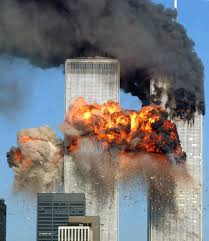
World Trade Center on September 11, 2001
So here it is, 21 years later, and, like Pearl Harbor, 9/11 has become a distant memory of terror and loss.
At that time, Americans feared Islamic terrorism above all else. Today, millions of Americans fear terror from another source: A Republican party intent on imposing dictatorship through voter suppression and intimidation.
Its likely Presidential nominee in 2024: Ex-President Donald Trump, who has repeatedly admitted he wants to become “President-for-Life.”
As on past commemorations of 9/11, those who died will be remembered by friends and relatives of those who knew and loved them.
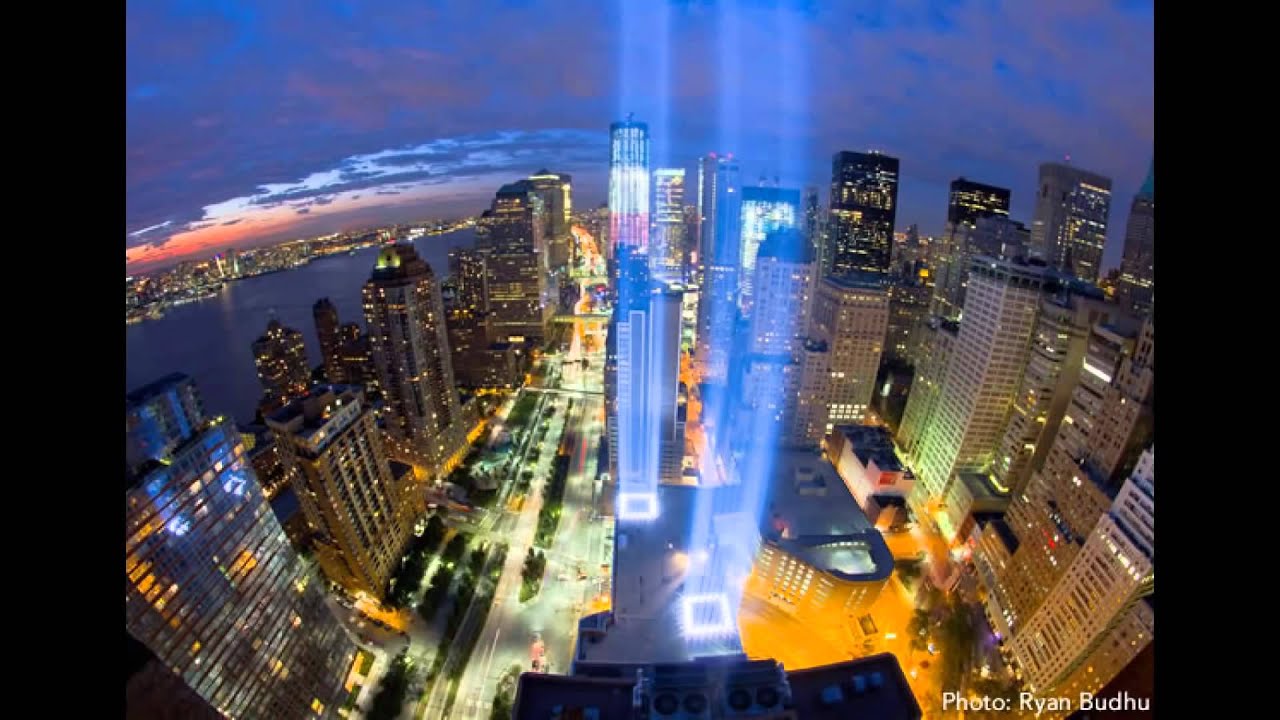
Tribute to 9/11 World Trade Center Victims
It is in fact appropriate to remember the innocents who died on that day—and the heroism of the police and firefighters who died trying to save them.
But it’s equally important to remember those who made 9/11 not simply possible but inevitable.
And that does not mean only the 19 highjackers who turned those planes into fuel-bombs. It means the officials at the highest levels of the administration of President George W. Bush.
Officials who, to this day, have never been held accountable in any way for the resulting death and destruction.
And who have been allowed to blatantly lie that they “kept us safe” from terrorism.
Obviously, such an indictment is not going to be presented by TV commentators today—not even on such liberal networks as CNN and MSNBC. And most definitely not on the right-wing Fox network.
Fortunately, British historian Nigel Hamilton has dared to lay bare the facts of this disgrace. Hamilton is the author of several acclaimed political biographies, including JFK: Reckless Youth and Bill Clinton: Mastering the Presidency.

Nigel Hamilton
CC BY-SA 3.0 <http://creativecommons.org/licenses/by-sa/3.0/>, via Wikimedia Commons
In 2007, he began research on his latest book: American Caesars: The Lives of the Presidents From Franklin D. Roosevelt to George W. Bush.
The inspiration for this came from a classic work of ancient biography: The Twelve Caesars, by Gaius Suetonius Tranquillus–known as Suetonius.
Suetonius, a Roman citizen and historian, had chronicled the lives of the first twelve Caesars of imperial Rome: Julius Caesar, Augustus, Tiberius, Caligula, Claudius, Nero, Galba, Otho, Vitellius, Vespasian, Titus and Domitian.
Hamilton wanted to examine post-World War II United States history as Suetonius had examined that of ancient Rome: Through the lives of the 12 “emperors” who had held the power of life and death over their fellow citizens–and those of other nations.
For Hamilton, the “greatest of American emperors, the Caesar Augustus of his time,” was Franklin D. Roosevelt, who led his country through the Great Depression and World War II.
His “”great successors” were Harry S. Truman, Dwight D. Eisenhower and John F. Kennedy—who, in turn, contained the Soviet Union abroad and presided over sustained economic prosperity at home.
By contrast, “arguably the worst of all the American Caesars” was “George W. Bush, and his deputy, Dick Cheney, who willfully and recklessly destroyed so much of the moral basis of American leadership in the modern world.”
Among the most lethal of Bush’s offenses: The appointing of officials who refused to take seriously the threat posed by Al-Qaeda.
And this arrogance and indifference continued–right up to September 11, 2001, when the World Trade Center and Pentagon became targets for destruction.
Among the few administration officials who did take Al-Qaeda seriously was Richard Clarke, the chief counter-terrorism adviser on the National Security Council.
Clarke had been thus appointed in 1998 by President Bill Clinton. He continued in the same role under President Bush–but the position was no longer given cabinet-level access.
This put him at a severe disadvantage when dealing with other, higher-ranking Bush officials—such as Vice President Dick Cheney, Secretary of Defense Donald Rumsfeld, Rumsfeld’s deputy, Paul Wolfowitz and National Security Advisor Condoleeza Rice.
These turned out to be the very officials who refused to believe that Al-Qaeda posed a lethal threat to the United States.
“Indeed,” writes Hamilton, “in the entire first eight months of the Bush Presidency, Clarke was not permitted to brief President Bush a single time, despite mounting evidence of plans for a new al-Qaeda outrage.” [Italics added]
Nor did it help that, during his first eight months in office before September 11, Bush was on vacation, according to the Washington Post, 42% of the time.
ABC NEWS, ALTERNET, AMERICABLOG, AP, BABY BOOMER RESISTANCE, BARACK OBAMA, BAY OF PIGS, BUZZFEED, CBS NEWS, CNN, CORONAVIRUS, CROOKS AND LIARS, CUBA, DAILY KOZ, DAVID BROOKS, DONALD TRUMP, DRUDGE RETORT, DWIGHT D. EISENHOWER, EBOLA, FACEBOOK, FIDEL CASTRO, FIVETHIRTYEIGHT, FULGENCIO BATISTA, GALLUP POLL, GEORGE W. BUSH, HARPER’S MAGAZINE, JOHN F. KENNEDY, MEDIA MATTERS, MOTHER JONES, MOVEON, MSNBC, NBC NEWS, NEWSWEEK, NPR, PBS NEWSHOUR, POLITICO, POLITICUSUSA, RAW STORY, REUTERS, SALON, SEATTLE TIMES, SLATE, TALKING POINTS MEMO, THE ATLANTIC, THE CHICAGO SUN-TIMES, THE CHICAGO TRIBUNE, THE DAILY BEAST, THE DAILY BLOG, THE GUARDIAN, THE HILL, THE HUFFINGTON POST, THE LOS ANGELES TIMES, THE NATION, THE NEW REPUBLIC, THE NEW YORK TIMES, THE VILLAGE VOICE, THE WASHINGTON POST, THINKPROGRESS, TIM ZIEMER, TIME, TOLUSE OLORUNNIPA, TRUTHDIG, TRUTHOUT, TWITTER, TWO POLITICAL JUNKIES, U.S. NEWS & WORLD REPORT, UPI, USA TODAY, WASHINGTON WEEK IN REVIEW, WHITE HOUSE PANDEMIC OFFICE, WONKETTE, YAMICHE ALCINDOR
In Bureaucracy, History, Medical, Politics, Social commentary on September 8, 2022 at 12:53 am
On March 13, 2020, then-President Donald Trump addressed a subject he clearly resented being asked: His gutting of an early-warning medical system set up to confront pandemics.
In 2014, following the Ebola outbreak in West Africa, President Barack Obama created the White House Pandemic Office, run by the White House’s National Security Council (NSC).
Heading it was Rear Admiral Tim Ziemer. Under President George W. Bush, he had successfully fought malaria overseas. His topflight team of infectious disease and public health experts was creating a national bio-defense strategy.
Their goal: Coordinate agencies to make the United States more resilient to the threat of epidemics and biological warfare.
In May, 2018, Trump ordered the NSC’s global health security unit shut down. The reason: Trump’s pathological jealousy of and hatred for Obama.
On March 13, 2020, at a White House press conference, Yamiche Alcindor, the PBS Newshour’s White House Correspondent, dared to ask Trump:
“My first question is: You said that you don’t take responsibility, but you did disband the White House Pandemic Office and the officials that were working in that office left this administration abruptly. So, what responsibility do you take to that?
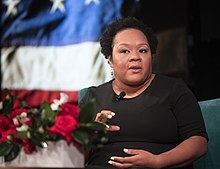
Yamiche Alcindor
“And the officials that worked in that office said that you—that the White House—lost valuable time because that office was disbanded. What do you make of that?”
Then followed this exchange:
TRUMP: Well, I just think it’s a nasty question, because what we’ve done is—and Tony had said numerous times that we saved thousands of lives because of the quick closing. And when you say me, I didn’t do it. We have a group of people.
ALCINDOR: It’s your administration.
TRUMP: I could ask, perhaps—my administration, but I could perhaps ask Tony about that, because I don’t know anything about it. I mean, you say we did that. I don’t know anything about it.
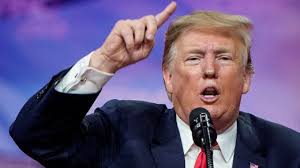
Donald Trump
ALCINDOR: You don’t know about the—
TRUMP: We’re spending—
ALCINDOR: — About the reorganization that happened in the National Security Council?
TRUMP: No, I don’t know. It’s the—it’s the administration, perhaps they do that. You know, people let people go. You know, you used to be with a different newspaper than you are now. You know, things like that happen.
Trump’s refusal to accept responsibility for the greatest crisis of his tenure as President flagrantly contrasts with how President John F. Kennedy responded to a similar crisis.
On April 17, 1961, the U.S. Navy landed 1,400 CIA-trained Cuban exiles on Cuba to overthrow the Communist government of Fidel Castro. Landing at the Bay of Pigs, they were supposed to head into the mountains—as Castro himself had done against the dictatorship of Fulgencio Batista in 1956—and raise the cry of revolution.
When the invaders surged onto the beaches, they found Castro’s army waiting for them. Many of the invaders were killed on the spot. Others were captured.
It was a major public relations setback for the newly-installed Kennedy administration, which had raised hopes for a change in American-Soviet relations.
Kennedy, trying to abort widespread criticism, publicly took the blame for the setback: “There’s an old saying that victory has a hundred fathers and defeat is an orphan….I’m the responsible officer of the Government.”
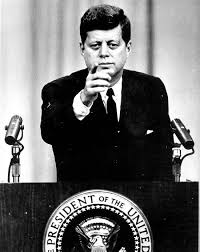
John F. Kennedy press conference
Ironically, the crisis—and his taking responsibility for it—hugely increased Kennedy’s popularity. The national Gallup Poll reported that 83 percent of Americans approved of the job he was doing as President.
To a White House aide, Kennedy half-joked: “It’s just like Eisenhower—the worse I do, the more popular I get.”
By contrast, Trump’s “handling” of the Coronavirus plague brought him the worst reviews of his Presidency.
Conservative New York Times columnist David Brooks attacked Trump in terms usually reserved for serial killers. On the March 13, 2020 edition of The PBS Newshour, he said:
“This is what happens when you elect a sociopath as president, who doesn’t care, who has treated this whole thing for the past month as if it’s about him. ‘How do people like me?’ Minimizing the risks. ‘Does the stock market reflect well on me?’ And he hasn’t done the things a normal human being would do, which was to, let’s take precautions….
“And he’s incapable of that. And he’s even created an information distortion field around him.”
And Toluse Olorunnipa, White House reporter for The Washington Post, said: “He likes having powerful people around him to praise what he’s done. He tried to get them all up to the podium to talk about how great of a response he has provided, and I think that’s—trying to get that co-signed from CEOs and powerful people is a key part of his presidency.”
Kimberly Atkins, senior Washington news correspondent for WBUR, Boston’s NPR News Station: “We have seen the president not only be all over the place but his instinct was to try to downplay it [Coronavirus] because he saw it as a political threat—to say that people would get better….
“Even today he’s saying, ‘We have everything under control. We have this website that people can go to and find out where they can get tested.’ The website isn’t even done yet.”
2016 PRESIDENTIAL CAMPAIGN, 2020 PRESIDENTIAL CAMPAIGN, ABC NEWS, ALTERNET, AMERICABLOG, ANCIENT ROME, ANTONIN SCALIA, AP, BABY BOOMER RESISTANCE, BERNIE SANDERS, BUZZFEED, CAMPAIGN CONTRIBUTIONS, CBS NEWS, CITIZENS UNITED, CLEOPATRA, CNN, CROOKS AND LIARS, DAILY KOZ, DONALD TRUMP, ELIZABETH WARREN, FACEBOOK, FIVETHIRTYEIGHT, FORECLOSURES, GLADIATORS, JOE BIDEN, JULIUS CAESAR, KIRK DOUGLAS, LAURENCE OLIVER, MARCUS CRASSUS, MICHAEL BLOOMBERG, MITT ROMNEY, MOTHER JONES, MOVEON, MSNBC, NBC NEWS, NEWSWEEK, NEWT GINGRICH, NPR, PBS NEWSHOUR, PETE BUTTIGIEG, POLITICO, POLITICUSUSA, RAW STORY, REUTERS, SALON, SEATTLE TIMES, SHELDON ADELSON, SLATE, SPARTACUS, SUPREME COURT, TALKING POINTS MEMO, THE ATLANTIC, THE CHICAGO SUN-TIMES, THE CHICAGO TRIBUNE, THE DAILY BEAST, THE DAILY BLOG, THE GUARDIAN, THE HILL, THE HUFFINGTON POST, THE LOS ANGELES TIMES, THE NATION, THE NEW YORK TIMES, THE WASHINGTON POST, THINKPROGRESS, TIME, TOM STEYER, TRUTHDIG, TWITTER, U.S. NEWS & WORLD REPORT, UPI, USA TODAY
In Bureaucracy, Business, History, Military, Politics, Social commentary on September 5, 2022 at 12:10 am
The 1960 Kirk Douglas epic, Spartacus, has proven to be more than great entertainment. It has turned out to be a prophecy of the end of the American Republic.
In the movie, Spartacus (Douglas), a Roman slave, entertains Marcus Crassus (Laurence Oliver) the richest man in Rome. He does so by fighting to the death as a gladiator.

Poster for Spartacus
While Spartacus and his fellow gladiator/friend, Draba (Woody Strode), slash and stab at each other in the arena, Crassus idly chats with his crony, Marcus Glabrus (Jon Dall).
Crassus has just secured Glabrus’ appointment as commander of the garrison of Rome. Glabrus is grateful, but curious as to how he did it.
After all, Gaius Gracchus (Charles Laughton), the leader of the Roman Senate, hates Crassus, and vigorously opposes his every move.
“I fought fire with oil,” says Crassus. “I purchased the Senate behind his back.”
Just as Crassus bought the Roman Senate in Spartacus, billionaires similarly bought the 2016 Presidential election.
In 2016, Newt Gingrich, former Speaker of the House of Representatives, ran as the pet candidate of casino billionaire Sheldon G. Adelson.
Since 2007, Adelson had spent millions in support of Gingrich and his causes.
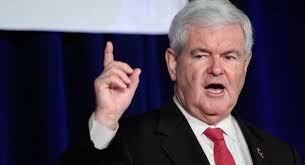
Newt Gingrich
Adelson put up seed money and, ultimately, $7.7 million between 2006 and 2010 for a nonprofit group that served as a precursor to Gingrich’s presidential campaign.
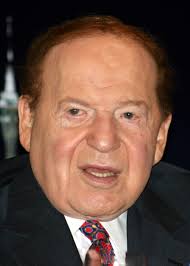
Sheldon Adelson
Such a contribution is beyond the means of the average American. But Adelson is listed by Forbes as the eighth-wealthiest American, with a net worth of $21.5 billion.
Adelson denied any selfish motives for giving millions to a candidate for the most powerful office in the world:
“My motivation for helping Newt is simple and should not be mistaken for anything other than the fact that my wife Miriam and I hold our friendship with him very dear and are doing what we can as private citizens to support his candidacy.”
Former Massachusetts Governor Mitt Romney also relied heavily on a small group of millionaires and billionaires for support.
By February, 2012, a quarter of the money amassed by Romney’s campaign came from just 41 people. Each contributor gave more than $100,000, according to a Washington Post analysis of disclosure data. Nearly a dozen of the donors had contributed $1 million or more.
Some of Romney’s biggest supporters included executives at Bain Capital, his former firm; bankers at Goldman Sachs; and a hedge fund mogul who made billions betting on the housing crash.
Four years later, in May, 2016, Adelson met privately with Republican Presidential nominee-in-waiting Donald Trump.
Adelson promised to contribute more to secure Trump’s election than he had contributed to any previous campaign—up to and exceeding $100 million.
Meanwhile, Trump bragged that he was “not beholden” to any “special interests” because “I’m really rich.” This falsehood proved a main reason for his popularity as a candidate.
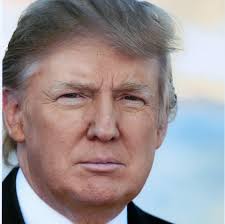
Donald Trump
Fast forward another three years—and a December 4, 2019 story in Fortune: “2020 Presidential Campaign Fundraising (and Spending) Are on Track to Smash Records.”
By then, Trump had raised $165.3 million.
But Democrats altogether had outstripped him with $475.6 million raised.
Among the largest Democratic money-raisers (in millions):
- Bernie Sanders: $74.5
- Elizabeth Warren: $60.3
- Pete Buttigieg: $51.5
- Tom Steyer: $49.6
- Joe Biden: $37.8
Former New York Mayor Michael Bloomberg entered the race on November 24, 2019. Within a week he paid $57 million for TV ads.
His fellow billionaire Tom Steyer spent over $60 million since July, 2019.
The 2020 Presidential election proved the most expensive in American history—so far.
Joe Biden raised $1.06 billion. Donald Trump raised $0.80 billion.
All of this can be directly traced to the 2010 “Citizens United” decision by the U.S. Supreme Court that ended limits in corporate contributions to political campaigns. The decision is so named for the group that successfully sued over federal campaign finance laws.
The 5-4 decision led to the rise of Super PACs—outside groups affiliated with candidates that can take in unlimited contributions as long as they don’t directly coordinate with the candidate. The overwhelming majority of this money goes for negative ads—that slander opponents without saying anything about what a candidate proposes to do.
Former U.S. Supreme Court Justice Antonin Scalia brushed aside criticism of the corrupting role money played in politics: Change the channel or turn off the TV.
“I don’t care who is doing the speech—the more the merrier,” Scalia said. “People are not stupid. If they don’t like it, they’ll shut it off.”
On the contrary: A fundamental principle of propaganda holds that most people are stupid—or can be made to behave stupidly. If they are ceaselessly bombarded with mind-numbing lies, they will eventually substitute these for reality.
During the early 1960s a series of movies about the Roman Empire—like Spartacus and Cleopatra—hit the big screen. In these, rich criminals like Marcus Crassus openly bought the favors of ambitious politicians like Julius Caesar.
No doubt millions of moviegoers thought, “Boy, I’m glad that couldn’t happen here.”
But it has happened here—and it’s happening right now.
2003 IRAQ WAR, 401(KS), 9/11 TERRORIST ATTACKS, ABC NEWS, ALTERNET, AMERICABLOG, AP, ARNOLD SCHWARTZNEGGER, ASIANS, BABY BOOMER RESISTANCE, BARACK OBAMA, BILL CLINTON, BLACKS, BUZZFEED, CBS NEWS, CNN, COLD WAR, CORONAVIRUS, CROOKS AND LIARS, DAILY KOZ, DEMOCRATS, DONALD TRUMP, DRUDGE RETORT, ECONOMY, FACEBOOK, FIVETHIRTYEIGHT, FUNDAMENTALIST RELIGION, GEORGE H.W. BUSH, HARPER’S MAGAZINE, HILLARY CLINTON, HISPANICS, ISLAM, ISRAELIS, JOHN OLIVER, MEDIA MATTERS, MERYL STREEP, MOTHER JONES, MOVEON, MSNBC, MUSLIMS, NBC NEWS, NEIL YOUNG, NEWSWEEK, NPR, PBS NEWSHOUR, POLITICO, POLITICUSUSA, PRISONERS OF WAR, RAW STORY, REPUBLICANS, REUTERS, SALON, SARAH HUCKABEE SANDERS, SEATTLE TIMES, SLATE, SOVIET UNION, SUICIDE BOMBERS, SUSAN PAGE, TALKING POINTS MEMO, THE ATLANTIC, THE CHICAGO SUN-TIMES, THE CHICAGO TRIBUNE, THE DAILY BEAST, THE DAILY BLOG, THE DISABLED, THE GUARDIAN, THE HILL, THE HUFFINGTON POST, THE LOS ANGELES TIMES, THE NATION, THE NEW REPUBLIC, THE NEW YORK TIMES, THE VILLAGE VOICE, THE WASHINGTON POST, THINKPROGRESS, TIME, TRUTHDIG, TRUTHOUT, TWITTER, TWO POLITICAL JUNKIES, U.S. NEWS & WORLD REPORT, UPI, USA TODAY, WOMEN, WONKETTE, WORLD WAR ii
In Bureaucracy, History, Military, Politics, Social commentary on September 1, 2022 at 12:10 am
There’s a reason why Republicans win so many elections—especially at the Presidential level.
Republicans learned long ago that most voters aren’t moved by appeals to their rationality. Instead, what counts with them is emotions.
And Republicans long ago became experts at appealing to these—especially the baser ones.
For Republicans, the Big Three are:
Hatred
Greed
Fear
Hatred: There can be no better example of a politician who has played successfully on the hatred of American voters than Donald Trump. If Barack Obama was the 2008 candidate of “Hope and Change,” then Trump was the 2016 candidate of “Hate and Fear.”
From June 15, 2015, when he launched his Presidential campaign, until October 24, 2016, Trump fired almost 4,000 angry, insulting tweets at 281 people and institutions that had somehow offended him.
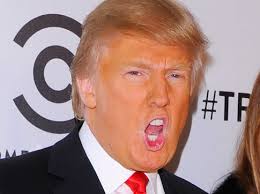
Donald Trump
The New York Times needed two full pages of its print edition to showcase them.
Among his targets:
- Hillary Clinton
- The New York Times
- President Barack Obama
- CNN
- Actress Meryl Streep
- The Washington Post
- Singer Neil Young
- Democrats
- Actor Arnold Schwarzenegger
- Republicans
- Comedian John Oliver
- The State of New Jersey
- Beauty pageant contestants
Others he clearly delighted in insulting during the campaign included:
- Women
- Blacks
- Hispanics
- Asians
- Muslims
- The disabled
- Prisoners-of-war
Greed: On August 23, 2018, Trump, as President, offered additional evidence that he’s “not like other people.” He did so by giving an unprecedented reason why he shouldn’t be impeached: “I tell you what, if I ever got impeached, I think the market would crash, I think everybody would be very poor.”
White House Press Secretary Sarah Huckabee Sanders doubtless spoke for millions of Trump supporters when she said, on June 4, 2018:
“Since taking office, the President has strengthened American leadership, security, prosperity, and accountability. And as we saw from Friday’s jobs report, our economy is stronger, Americans are optimistic, and business is booming.”
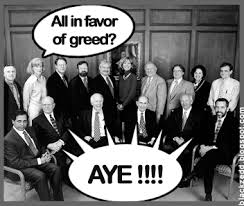
Susan Page, Washington Bureau Chief for USA TODAY, summed up the popularity of the “Greed Appeal” to voters on the March 13 edition of “Washington Week in Review”:
“USA Today has conducted a poll about the economic concerns that are out there….And Congress—you’re seeing fear in this country about the economy.
“In fact, when we did this poll this week about how Americans’ lives have been affected by the Coronavirus, people expressed more concern about the economic and financial effect than they did about the health effect. And you know, that goes to why this matters so much to President Trump.
“How many voters have you talked to who said, you know, I don’t really like President Trump’s tweets, but I like what I see happening in my 401(k)? And when they look at their 401(k) this week, it may not look quite as bright as it did before.”
Fear: From the end of World War II in 1945 to the collapse of the Soviet Union in 1991, the Enemy of Choice for Republicans was the Communists.
Millions of Americans were so pathologically frightened by “The Red Menace” that any Democratic politician libeled as a “Communist,” “Comsymp,” “fellow traveler” was considered at least a potential traitor, if not an actual one.
Among the Republican politicians who rode to victory on a wave of Red hysteria: Richard Nixon and Joseph McCarthy
Even as late as 1992, President George H.W. Bush and the Republican establishment charged that Arkansas Governor Bill Clinton might be a KGB plant. Their evidence: During his tenure at Oxford University in 1969-70, Clinton had briefly visited Moscow—and thus might have been turned into a “Manchurian Candidate.”
After the collapse of the Soviet Union, Right-wingers had to settle for attacking their opponents as “liberals” and “soft on crime.” But these charges didn’t carry the same weight as “Communists” and “traitors.”
Then, on September 11, 2001, Republicans—and their Right-wing supporters—at last found a suitable replacement for the Red Menace: The Maniacal Muslim.
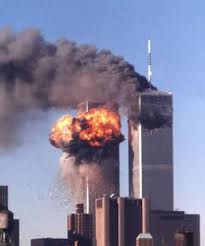
World Trade Center on September 11, 2001
Led by President George W. Bush, Republicans used fear of Muslims to con and bully the nation into a needless, bloody, budget-busting war on Iraq. Seventeen years later, that war continues.
So how can Democrats counter such appeals? By making equally ruthless use of them.
For example—Fear: Republicans rely heavily on support from rural America—where fundamentalist religious beliefs hold sway. Instead of ridiculing those beliefs, Democrats—even those who are atheists—should make use of them.
How?
- By recognizing that fundamentalists believe that widespread plague is a sign of God’s displeasure; and
- Repeatedly proclaiming that the Coronavirus is God’s judgment on a sinful nation for electing Donald Trump President.
Democrats must closely study the beliefs of their sworn enemies and make skillful use of them—as the Israelis have done.
Suicide bombers’ attacks in Israel sharply decreased after Israelis started patrolling with bomb-sniffing dogs.
Why?
Islamics believe that dogs are defiling creatures—and that if their blood is mingled with that of a dog, they won’t go to Heaven to claim those 72 willing virgins.
To defeat your enemy, you must learn his weaknesses—and ruthlessly attack them.
2016 PRESIDENTIAL RACE, ABC NEWS, ALL THE KING’S MEN, ALL THE KINIG’S MEN (BOOK), ALTERNET, AMERICABLOG, ANDREW GOODMAN, ANGELO BRUNO, AP, BABY BOOMER RESISTANCE, BBC, BLOOMBERG NEWS, BLUE BLOODS, BUZZFEED, CAPITOL ATTACK, CARLO GAMBINO, CBS, CBS NEWS, CIVIL WAR, CNN, COINTELPRO, COUPS, CROOKS AND LIARS, DAILY KOS, DAILY KOZ, DEMOCRATS, DEPARTMENT OF HOMELAND SECURITY, DONALD TRUMP, ELECTORAL COLLEGE, ERIC SCHNEIDERMAN, FACEBOOK, FBI, FIVETHIRTYEIGHT, FRANK REAGAN, GAMBINO FAMILY, HARPER’S MAGAZINE, HUFFINGTON POST, INDEPENDENT COUNSEL, INSIDE HOOVER'S FBI (BOOK), J. EDGAR HOOVER, JAMES CHANEY, JAMES COMEY, JEFF SESSIONS, JOSEPH BIDEN, jOSH HAWLEY, JUSTICE DEPARTMENT, KU KLUX KLAN, LYNDON B. JOHNSON, MAFIA, MARJORIE TAYLOR GREENE, MEDIA MATTERS, MERRICK GARLAND, MICHAEL SCHWERNER, MILITIA GROUPS, MO BROOKS, MOTHER JONES, MOVEON, MSNBC, NBC NEWS, NEIL J. WELCH, NEW REPUBLIC, NEW YORK POLICE DEPARTMENT, NEWSDAY, NEWSWEEK, NPR, OBSTRUCTING CONGRESSIONAL PROCEEDINGS, PBS NEWSHOUR, POLITICO, POLITICUSUSA, RAW STORY, REPUBLICANS, REUTERS, RIGHT-WING TERRORISM, ROBERT MUELLER, ROBERT PENN WARREN, RUSSIA, SALON, SEATTLE TIMES, SERGEI KISLYAK, SEXUAL ASSAULT, SLANDER, SLATE, SWAT TEAMS, TALKING POINTS MEMO, TERRORISM, TERRORIST FINANCE TRACKING PROJECT, THE ATLANTIC, THE CHICAGO SUN-TIMES, THE CHICAGO TRIBUNE, THE DAILY BEAST, THE DAILY BLOG, THE GUARDIAN, THE HILL, THE HUFFINGTON POST, THE LOS ANGELES TIMES, THE NATION, THE NEW REPUBLIC, THE NEW YORK TIMES, THE NEW YORKER, THE VILLAGE VOICE, THE WASHINGTON POST, THINKPROGRESS, TIM WEINER, TIME, TOM SELLECK, TREASON, TRUMP UNIVERSITY, TRUTHDIG, TRUTHOUT, TWITTER, TWO POLITICAL JUNKIES, U.S. NEWS & WORLD REPORT, UNITED STATES DEPARTMENT OF JUSTICE, UNITED STATES DEPARTMENT OF THE TREASURY, UNITED STATES HOUSE OF REPRESENTATIVES, UNITED STATES PARK POLICE, UNITED STATES SECRET SERVICE, UNITED STATES SENATE, UNITED STATES SUPREME COURT, UPI, USA PATRIOT ACT, USA TODAY, USA TODAY DONALD TRUMP, VLADIMIR PUTIN, WILLIAM C. SULLIVAN, WILLIE STARK, WONKETTE
In Bureaucracy, History, Law, Law Enforcement, Politics, Social commentary on August 31, 2022 at 12:12 am
On September 2, 1964, the FBI launched a full-blown counterintelligence program against the Ku Klux Klan—COINTELPRO—WHITE HATE in FBI-speak.
Tim Weiner, author of Enemies: A History of the FBI, chronicles the methods used by the Bureau:
“WHITE-HATE intensified in the fall of 1964. It involved all the techniques in the FBI’s long-running attack on the Left. Once a week….FBI agents interrogated all known members of the White Knights of the KKK, blaming other Klansmen for being snitches and naming names, sowing deep suspicion among Klan members. Few knew who was an informer and who was not.

A Ku Klux Klan meeting
“The FBI dangled small fortunes before potential Klan informers, offered outright bribes to Klansmen who could serve as double agents inside state and local police forces, planted bugs and wiretaps in Klaverns, carried out black bag jobs to steal membership lists….”
Other tactics included:
- Contacting the news media to publicize arrests and identify Klan leaders;
- Informing the employers of known Klansmen of their employees’ criminal activity, resulting in the firing of untold numbers of them;
- Breaking up the marriages of Klansmen by circulating rumors of their infidelity among their wives.
“When the Klan reached 14,000 in the mid-sixties, I asked to take over the investigation of the Klan,” recalled William C. Sullivan, who headed the FBI’s Domestic Intelligence Division in the 1960s. “When I left the Bureau in 1971, the Klan was down to a completely disorganized 4,300. It was broken.”

William C. Sullivan
According to Neil J. Welch, the retired Special Agent in Charge (SAC) of the FBI’s Buffalo, New York office:
“A Klan Bureau of Investigation (KBI) was created to counter the FBI, and its members placed the wives and children of agents under surveillance, harassing them with taunts and anonymous phone calls,” wrote Welch in his memoir, Inside Hoover’s FBI.
“It was a serious miscalculation. The most dangerous members of the KBI were systematically identified and assigned to agents selected solely because they were comparatively dangerous. The agents had full discretion.
“During the next few months, a number of men previously involved in Klan violence around the state seemed, by remarkable coincidence, to experience misfortune. Some disappeared from the area. Some were forced to leave Mississippi for health reasons. A few took unplanned trips to places like Mexico and seemed to lose all interest in the Klan upon their return.”
A similar effort, focusing on Right-wing terrorism, could include the following:
- The FBI’s designating Right-wing political and terrorist groups as the Nation’s #1 enemy.
- Reviving the FBI’s legendary COINTELPRO (“Counterintelligence Program”) that destroyed the Ku Klux Klan in the late 1960s. Among the methods that can be used:
- Turning the Bureau’s powerful arsenal—bugs, wiretaps, informants, SWAT teams—on them.
- Buying the cooperation of informants within Right-wing organizations.
- Conducting “black bag jobs” to steal membership lists of of Right-wing organizations.
- Breaking up the marriages of prominent Right-wingers by circulating rumors of their infidelity among their wives.
- Informing the employers of known Right-wing terrorists of their employees’ criminal activity, resulting in the firing of untold numbers of them.
- Contacting the news media to publicize the arrests of prominent Right-wing leaders.
- When Right-wing terrorists target Federal law enforcement agents and/or their families for harassment or worse, they can be targeted for similar intimidation or removal.

FBI SWAT member
A revised COINTELPRO could be supplemented by the following:
- Creating tip hotlines for reporting illegal Right-wing activities—and offering rewards for information that leads to arrests.
- Prosecuting militia groups for violating Federal firearms laws.
- Treating calls for the murder of members of Congress—as Georgia Representative Marjorie Taylor Greene has done-–as felonies punishable by lengthy imprisonment.
- Prosecuting Right-wing leaders involved in the treasonous assault on the United States Capitol Building.
- Prosecuting as “accessories to treason” all those Republican members of Congress who stoked Right-wing anger by lying that the 2020 Presidential election had been stolen from Donald Trump, although every objective news source proved he had lost.
- Directing the Treasury Department’s Terrorist Finance Tracking Program (TFTP) at fundamentalist Christian churches that finance Right-wing terrorism—just as it halts the financing of Islamic terrorist groups by Islamic organizations.
- Using drones, planes and/or helicopters to provide security against similar Right-wing terror demonstrations—especially in Washington, D.C.
- Using the Federal Communications Commission to ban Fox News—the Nation’s #1 Right-wing propaganda network—from representing itself as a legitimate news network, and requiring that its stories carry labels warning viewers: “This is Right-wing propaganda, NOT news.”
- Encouraging victims of Right-wing hate-speech to file libel/slander lawsuits against their abusers—such as the parents of murdered children at Sandy Hook Elementary School successfully did against Alex Jones.
- Using Federal anti-terrorist laws to arrest, prosecute and imprison Right-wingers who openly carry firearms and threaten violence, even if states allow such display of firearms.
- Seizing the assets of individuals and organizations found guilty of Right-wing terrorism offenses.
When you are constantly looking over your shoulder, your enemies are winning. When your enemies are constantly looking over their shoulder, you are winning.
2016 PRESIDENTIAL RACE, ABC NEWS, ALL THE KING’S MEN, ALL THE KINIG’S MEN (BOOK), ALTERNET, AMERICABLOG, ANDREW GOODMAN, ANGELO BRUNO, AP, BABY BOOMER RESISTANCE, BARACK OBAMA, BBC, BLOOMBERG NEWS, BLUE BLOODS, BUZZFEED, CAPITOL ATTACK, CARLO GAMBINO, CBS, CBS NEWS, CIVIL WAR, CNN, COINTELPRO, COUPS, CROOKS AND LIARS, DAILY KOS, DEMOCRATS, DEPARTMENT OF HOMELAND SECURITY, DONALD TRUMP, ELECTORAL COLLEGE, ERIC SCHNEIDERMAN, FACEBOOK, FBI, FIVETHIRTYEIGHT, FRANK REAGAN, GAMBINO FAMILY, HARPER’S MAGAZINE, HUFFINGTON POST, INDEPENDENT COUNSEL, INSIDE HOOVER'S FBI (BOOK), J. EDGAR HOOVER, JAMES CHANEY, JAMES COMEY, JEFF SESSIONS, JOSEPH BIDEN, jOSH HAWLEY, JUSTICE DEPARTMENT, KU KLUX KLAN, LYNDON B. JOHNSON, MAFIA, MARJORIE TAYLOR GREENE, MEDIA MATTERS, MERRICK GARLAND, MICHAEL SCHWERNER, MILITIA GROUPS, MO BROOKS, MOTHER JONES, MOVEON, MSNBC, NBC NEWS, NEIL J. WELCH, NEW REPUBLIC, NEW YORK POLICE DEPARTMENT, NEWSDAY, NEWSWEEK, NPR, OBSTRUCTING CONGRESSIONAL PROCEEDINGS, PBS NEWSHOUR, POLITICO, POLITICUSUSA, RAW STORY, REPUBLICANS, REUTERS, RIGHT-WING TERRORISM, ROBERT MUELLER, ROBERT PENN WARREN, RUSSIA, SALON, SEATTLE TIMES, SERGEI KISLYAK, SEXUAL ASSAULT, SLANDER, SLATE, SWAT TEAMS, TALKING POINTS MEMO, TERRORISM, TERRORIST FINANCE TRACKING PROJECT, THE ATLANTIC, THE CHICAGO SUN-TIMES, THE CHICAGO TRIBUNE, THE DAILY BEAST, THE DAILY BLOG, THE GUARDIAN, THE HILL, THE HUFFINGTON POST, THE LOS ANGELES TIMES, THE NATION, THE NEW REPUBLIC, THE NEW YORK TIMES, THE NEW YORKER, THE VILLAGE VOICE, THE WASHINGTON POST, THINKPROGRESS, TIM WEINER, TIME, TOM SELLECK, TREASON, TRUMP UNIVERSITY, TRUTHDIG, TRUTHOUT, TWITTER, TWO POLITICAL JUNKIES, U.S. NEWS & WORLD REPORT, UNITED STATES DEPARTMENT OF JUSTICE, UNITED STATES DEPARTMENT OF THE TREASURY, UNITED STATES HOUSE OF REPRESENTATIVES, UNITED STATES PARK POLICE, UNITED STATES SECRET SERVICE, UNITED STATES SENATE, UNITED STATES SUPREME COURT, UPI, USA PATRIOT ACT, USA TODAY, USA TODAY DONALD TRUMP, VLADIMIR PUTIN, WILLIAM C. SULLIVAN, WILLIE STARK, WONKETTE
In Bureaucracy, History, Law, Law Enforcement, Politics, Social commentary on August 30, 2022 at 12:10 am
Donald Trump’s followers are doing what even the Mafia has never dared: Threatening the lives of FBI agents and openly challenging the authority of the Justice Department.
On August 8, the FBI, under a search warrant issued by the Justice Department, seized 11 sets of classified documents from the former President’s home at Mar-a-Lago. These included four sets that were classified as “top secret,” according to the unsealed search warrant.
Since then, Trump’s legions of fanatical Right-wing followers have vented their fury at a wide range of their self-declared enemies: President Joe Biden, Democrats, Attorney General Merrick Garland, the Justice Department—-and especially the FBI.
On August 12, the FBI and Department of Homeland Security [DHS] issued a joint Intelligence bulletin warning of the increased threats aimed at federal law enforcement agencies.
FBI seal
“Since 8 August 2022, the FBI and DHS have identified multiple articulated threats and calls for the targeted killing of judicial, law enforcement, and government officials associated with the Palm Beach search, including the federal judge who approved the Palm Beach search warrant.
“The FBI and DHS have also observed the personal identifying information of possible targets of violence, such as home addresses and identification of family members, disseminated online as additional targets.”
“These threats are occurring primarily online and across multiple platforms, including social media sites, web forums, video sharing platforms, and image boards. The FBI and DHS would like to ensure that law enforcement, court, and government personnel are aware of the range of threats and criminal and violent incidents.
“The FBI and DHS have observed an increase in violent threats posted on social media against federal officials and facilities, including a threat to place a so-called dirty bomb in front of FBI Headquarters and issuing general calls for ‘civil war’ and ‘armed rebellion.'”
Even the Mafia—with one or two exceptions—has never threatened the lives of FBI agents. And when individual mobsters did, they found the consequences frightening.
In April, 1963, four New York mobsters knocked FBI agent John Foley to the ground, and then severely beat and kicked him. Foley had been conducting surveillance at the Brooklyn funeral of Carmine “The Doctor” Lombardozzi, a capo in the Gambino Mafia Family.
The FBI retaliated by launching an all-out war against the Gambinos. Agents leaned on the cartel’s boss, underboss, counselor and lieutenants. The Bureau also intensified the use of illegal electronic surveillance (wiretaps and hidden microphones) against the mobsters.

Map of Mafia families
Angelo Bruno, the boss of the Philadelphia crime syndicate, unwittingly informed a hidden microphone about how the FBI brutally drove home the message to “boss of all bosses” Carlo Gambino:
BRUNO: “They [the FBI] went to Carlo and named all his capos [lieutenants] to him. The FBI asked him: “Did you change the laws in your family, that you could hit FBI men, punch and kick them? Well, this is the test—that if you change the laws, and now you are going to hit FBI men, every time we pick up one of your people we are going to break their heads for them.’
“And, really, they picked up our guy, they almost killed him, the FBI. They don’t do that, you know. But they picked up one of his fellows and crippled him. They said, ‘This is an example. Now, the next time anyone lays a hand on an FBI man, that’s just a warning. There’s nothing else we have got to tell you.'”
Word traveled quickly through the nationwide organized crime network—and its leaders decreed there should be no further assaults on FBI agents.
The FBI may be gearing up to declare war on the radical Right. And it could be done the same way the FBI destroyed the Ku Klux Klan in the mid-1960s.
Klansmen had shot, lynched and bombed their way across the Deep South, especially in Alabama and Mississippi. Many Southern sheriffs and police chiefs were Klan sympathizers, if not outright members and accomplices.
On June 21, 1964, three civil rights workers disappeared in Philadelphia, Mississippi.
President Lyndon B. Johnson called J. Edgar Hoover, the legendary director of the FBI, and ordered an all-out investigation: “I want you to have the same kind of Intelligence [on the Klan] that you have on the communists.”
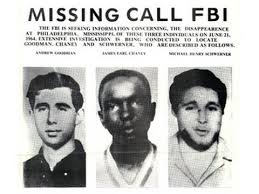
Poster for missing civil rights workers
For decades, Hoover had refused to tackle white hate groups. And, in truth, no President had been willing to give him the order to do so. But now a President had given him such an order.
In August, the FBI uncovered the bodies of the three missing civil rights activists—Michael Schwerner, Andrew Goodman and James Chaney.
On September 2, 1964, the Bureau launched a full-blown counterintelligence program against the Klan—COINTELPRO—WHITE HATE in FBI-speak.
Tim Weiner, author of Enemies: A History of the FBI, chronicles the methods used by the Bureau:
“WHITE-HATE intensified in the fall of 1964. It involved all the techniques in the FBI’s long-running attack on the Left. Once a week….FBI agents interrogated all known members of the White Knights of the KKK, blaming other Klansmen for being snitches and naming names, sowing deep suspicion among Klan members. Few knew who was an informer and who was not.”


2016 PRESIDENTIAL ELECTION, ABC NEWS, ALTERNET, AMERICABLOG, AMERICAN CAESAR, AP, ASIANS, BABY BOOMER RESISTANCE, BBC, BLACKS, BLOOMBERG NEWS, BUZZFEED, CBS NEWS, CNN, CROOKS AND LIARS, DAILY KOS, DEMOCRATIC NATIONAL CONVENTION, DONALD TRUMP, DOUGLAS MACARTHUR, FACEBOOK, FIVETHIRTYEIGHT, GEORGE STEPHANOPOULOS, HARPER’S MAGAZINE, HILLARY CLINTON, HUFFINGTON POST, HUMAYUN KHAN, INSULTS, JOHN MCCAIN, KHIZR KHAN, LATINOS, MEDIA MATTERS, MOTHER JONES, MOVEON, MSNBC, MUSLIMS, NBC NEWS, NEW REPUBLIC, NEWSDAY, NEWSWEEK, NICCOLO MACHIAVELLI, NPR, PBS NEWSHOUR, POLITICO, POLITICUSUSA, PRISONERS OF WAR, RAW STORY, REUTERS, SALON, SEATTLE TIMES, SLATE, STATE OF THE UNION, TALKING POINTS MEMO, THE ATLANTIC, THE CHICAGO SUN-TIMES, THE CHICAGO TRIBUNE, THE DAILY BEAST, THE DAILY BLOG, THE GUARDIAN, THE HILL, THE HUFFINGTON POST, THE INTERCEPT, THE LAST WORD, THE LOS ANGELES TIMES, THE NATION, THE NEW REPUBLIC, THE NEW YORK TIMES, THE NEW YORKER, THE PRINCE, THE VILLAGE VOICE, THE WASHINGTON POST, THINKPROGRESS, TIME, TODAY SHOW, TRUTHDIG, TRUTHOUT, TWITTER, TWO POLITICAL JUNKIES, U.S. NEWS & WORLD REPORT, UPI, USA TODAY, VETERANS OF FOREIGN WARS, WILLIAM MANCHESTER, WOMEN, WONKETTE
CHARACTER AND DESTINY: PART TWO (END)
In Bureaucracy, History, Military, Politics, Social commentary on September 16, 2022 at 12:18 amAs a Republican Presidential nominee. Donald Trump attacked the integrity of the parents of an Army captain who died heroically in Iraq in 2004.
For this, he took heavy fire from Democrats, veterans organizations and even his fellow Republicans.
But an even more damning assessment comes from Niccolo Machiavelli, the 16th-century Florentine statesman whose two great works on politics—The Prince and The Discourses—remain textbooks for successful politicians more than 500 years later.
Niccolo Machiavelli
Consider Trump’s notoriety for hurling insults at virtually everyone, including:
These insults delight his white, under-educated followers. But they have alienated millions of other Americans who might have voted for him.
Machiavelli, on the other hand, advises leaders to refrain from gratuitous insults:
And Trump’s reaction to the criticism he’s received?
“I can be Presidential, but if I was Presidential I would only have–about 20% of you would be here because it would be boring as hell, I will say,” Trump told supporters at a rally in Superior, Wisconsin.
For those who expected Trump to shed his propensity for constantly picking fights, Machiavelli had a stern warning:
Then there was Trump’s approach to consulting advisers:
Asked on MSNBC’s “Morning Joe” who he consults about foreign policy, Trump replied;
“I’m speaking with myself, number one, because I have a very good brain and I’ve said a lot of things.”
This totally contrasted with the advice given by Machiavelli:
And Machiavelli offered a related warning on the advising of rulers: Unwise princes cannot be wisely advised.
During the fifth GOP debate in the Presidential sweepstakes, host Hugh Hewitt asked Trump this question:
“Mr. Trump, Dr. [Ben] Carson just referenced the single most important job of the president, the command and the care of our nuclear forces. And he mentioned the triad.
“The B-52s are older than I am. The missiles are old. The submarines are aging out. It’s an executive order. It’s a commander-in-chief decision.
“What’s your priority among our nuclear triad?”
[The triad refers to America’s land-, sea- and air-based systems for delivering nuclear missiles and bombs.]
Nuclear missile in silo
Trump’s reply: “Well, first of all, I think we need somebody absolutely that we can trust, who is totally responsible, who really knows what he or she is doing. That is so powerful and so important.”
He then digressed to his having called the Iraq invasion a mistake in 2003 and 2004. Finally he came back on topic:
“But we have to be extremely vigilant and extremely careful when it comes to nuclear. Nuclear changes the whole ballgame.
“The biggest problem we have today is nuclear–nuclear proliferation and having some maniac, having some madman go out and get a nuclear weapon. I think to me, nuclear, is just the power, the devastation is very important to me.”
Which brings us back to Machiavelli:
All of which would lead Niccolo Machiavelli to warn, if he could witness American politics today: “This bodes ill for your Republic.”
Share this: