Posts Tagged ‘DONALD TRUMP’
2016 PRESIDENTIAL CAMPAIGN, 2016 PRESIDENTIAL DEBATES, ABC NEWS, ALICIA MACHADO, AMERICAN CAESAR, BARACK OBAMA, BIRTHERISM, BLACKS, CBS NEWS, CNN, DEMOCRATS, DONALD TRUMP, DOUGLAS MACARTHUR, FACEBOOK, FBI, FOX NEWS, HILLARY CLINTON, HISPANICS, LEBRON JAMES, LESTER HOLT, MARCO RUBIO, MISS UNIVERSE, NBC NEWS, POLITICO, RAFAEL "TED" CRUZ, SEAN HANNITY, TAXPAYERS, THE ARIZONA REPUBLIC, THE CHICAGO SUN-TIMES, THE CHICAGO TRIBUNE, THE HUFFINGTON POST, THE LOS ANGELES TIMES, THE NEW YORK TIMES, THE O'REILLY FACTOR, THE WALL STREET JOURNAL, THE WASHINGTON POST, TWITTER, USA TODAY, WILLIAM MANCHESTER, WOMEN
In History, Law, Law Enforcement, Politics, Social commentary on October 6, 2016 at 12:09 am
“He appeared to need enemies the way other men need friends, and his conduct assured that he would always have plenty of them.”
So wrote William Manchester about General Douglas MacArthur in his monumental 1978 biography, American Caesar. But he could have written just as accurately about Donald Trump, the businessman-turned-Republican-Presidential-nominee.
Donald Trump
What some pundits have called “the worst week in Presidential campaigning history” started–for Trump–on September 26. That was when he finally squared off against Democratic Presidential nominee Hillary Clinton in the first of three debates.
Through a series of bare-knuckled debates, Trump had bullied his way to the Republican nomination. He had mocked his opponents (“Little Marco” Rubio, “Lyin Ted” Cruz) and attacked former Texas Governor Jeb Bush as the brother of the President he blamed for 9/11.
So it was widely expected that he would run over Clinton like a tank going over a rabbit.
Events proved otherwise.
Moderator Lester Holt–who anchors the weekday edition of NBC Nightly News–gave Trump more airtime than Clinton. But Clinton showed a greater command of foreign and domestic issues.
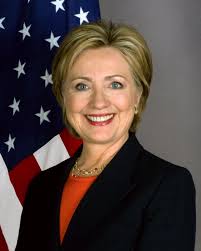
Hillary Clinton
Trump repeatedly sniffled throughout the debate, causing some viewers to wonder if he had a cocaine problem. And he often reached for his water glass, causing other viewers to mock him on Twitter (“Does anyone remember how badly Trump made fun of Marco Rubio for drinking water? Hmm..”).
For Trump–who had attacked Clinton’s health after she fainted on September 11 at a New York 9/11 commemoration ceremony–it was a disaster. Clinton seemed to be in better shape than he was.
When Clinton charged that he paid “nothing in Federal taxes,” Trump in effect admitted it: “That makes me smart.”
Clinton then cornered him on his claim that he had opposed the 2003 Iraq war. Trump replied that he had told Fox News host Sean Hannity that he opposed it. He asked the media to contact Hannity.
Clinton then attacked Trump as “a man who has called women pigs, slobs, and dogs, and someone who has said pregnancy is an inconvenience to employers.”
From there she segued into his attacks on former Miss Universe Alicia Machado: “And he called this woman Miss Piggy. Then he called her Miss Housekeeping because she was Latina.”
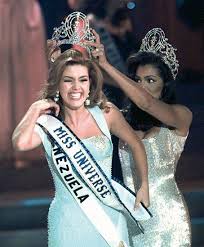
Alicia Machado as Miss Universe
This may have proved the worst part of the debate for Trump, because he later felt he had to respond to it–on TV and Twitter.
By the end of the debate, 62% of CNN viewers voted Clinton as the winner, with only 27% voting it was Trump.
The next day–September 27–Trump felt the need to renew his attack on Machado, courtesy of a telephone interview he gave to Fox News: “She was the worst [Miss Universe contestant] we ever had. The absolute worst. She was impossible….
“She was the winner and she gained a massive amount of weight, and we had a real problem. Not only that, her attitude, and we had a real problem with her.”
On September 28, Trump appeared on Fox News‘ “The O’Reilly Factor.” There he continued his attack on Machado: “It is a beauty contest. They know what they are getting into.”
He claimed that “I saved her job” because the pageant wanted “to fire her” for gaining so much weight.
On September 29, Trump added one more enemy to the list: The FBI.
Addressing a crowd in Bedford, New Hampshire, Trump falsely accused the agency of giving “immunity” to Hillary Clinton:
“They [the FBI] gave so much immunity there was nobody left to talk to. There was nobody left–except Hillary. They probably gave her immunity, too. Do you think Hillary got immunity? Yeah, she had the immunity.”
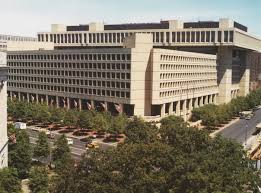
FBI headquarters
Also on September 29, Trump once again attacked a longtime target: President Barack Obama.
Thirteen days earlier, Trump had renounced “birtherism”–the slander that Obama was not an American citizen. It was a slander that Trump himself had created and vigorously promoted since 2011.
The reason for his renouncing it: His dismal standing among blacks in political polls.
At a press conference on September 16 to promote his new upscale hotel in Washington, D.C., Trump said: “Now, not to mention her in the same breath, but Hillary Clinton and her campaign of 2008 started the birther controversy.
“I finished it. I finished it. You know what I mean.
“President Barack Obama was born in the United States, period. Now we all want to get back to making America strong and great again.”
After falsely blaming Clinton for starting the birther lie, Trump seemed content to finally drop the slander campaign.
But on September 29–a mere 13 days later–Trump told a New Hampshire reporter that he was “very proud” of his “birther” campaign:
“I’m the one who got him to put up his birth certificate”–which clearly proved that Obama had been born in Hawaii, not Kenya, as Trump had claimed.
“[Hillary Clinton] tried [to get Obama to release his birth certificate] and she was unable to do it and I tried and I was able to do it so I’m very proud of that.”
Thus, the goodwill of black voters he sought on September 16 he cast aside on the 29th.
9/11 ATTACKS, ABC NEWS, ASSOCIATED PRESS, BARACK OBAMA, BIRTHERS, CBS NEWS, CENSORSHIP, CNN, CREDIBILITY GAP, DAVID BROOKS, DAVID HALBERSTAM, DONALD TRUMP, FACEBOOK, FRANK STANTON, FULL METAL JACKET, GEORGE MCGOVERN, HILLARY CLINTON, JOHN F. KENNEDY, LYNDON B. JOHNSON, MARK SHIELDS, MORLEY SAFER, NAVY SEALS, NBC NEWS, OSAMA BIN LADEN, PBS NEWSHOUR, PETER ARNETT, RICHARD NIXON, RONALD ZIEGLER, STANLEY KUBRICK, THE CHICAGO SUN-TIMES, THE CHICAGO TRIBUNE, THE HUFFINGTON POST, THE LOS ANGELES TIMES, THE NEW YORK TIMES, THE WALL STREET JOURNAL, THE WASHINGTON POST, TWITTER, VIETNAM WAR, WATERGATE
In Bureaucracy, History, Law, Law Enforcement, Military, Politics, Social commentary on September 30, 2016 at 1:31 am
For five years, Donald Trump, more than anyone else, popularized the slander that President Barack Obama was born in Kenya–and was therefore not an American citizen.
In April, 2011, Obama released the long-form version of his Hawaiian birth certificate. Still, Trump questioned its–and Obama’s–legitimacy.
For more than a year during his 2016 Presidential campaign, Trump continued doing so.
Meanwhile, Trump’s popularity steadily fell among blacks. In June, 2016, a Quinnipiac poll revealed that Trump had 1% of support from black voters–while 91% of black voters backed Hillary Clinton.
Even the managers of Trump’s campaign urged him to put the “birther” issue behind him.
And so, on September 16, 2016–10 days before his scheduled first debate with Democratic Presidential nominee Hillary Clinton–Trump made his version of a reversal.
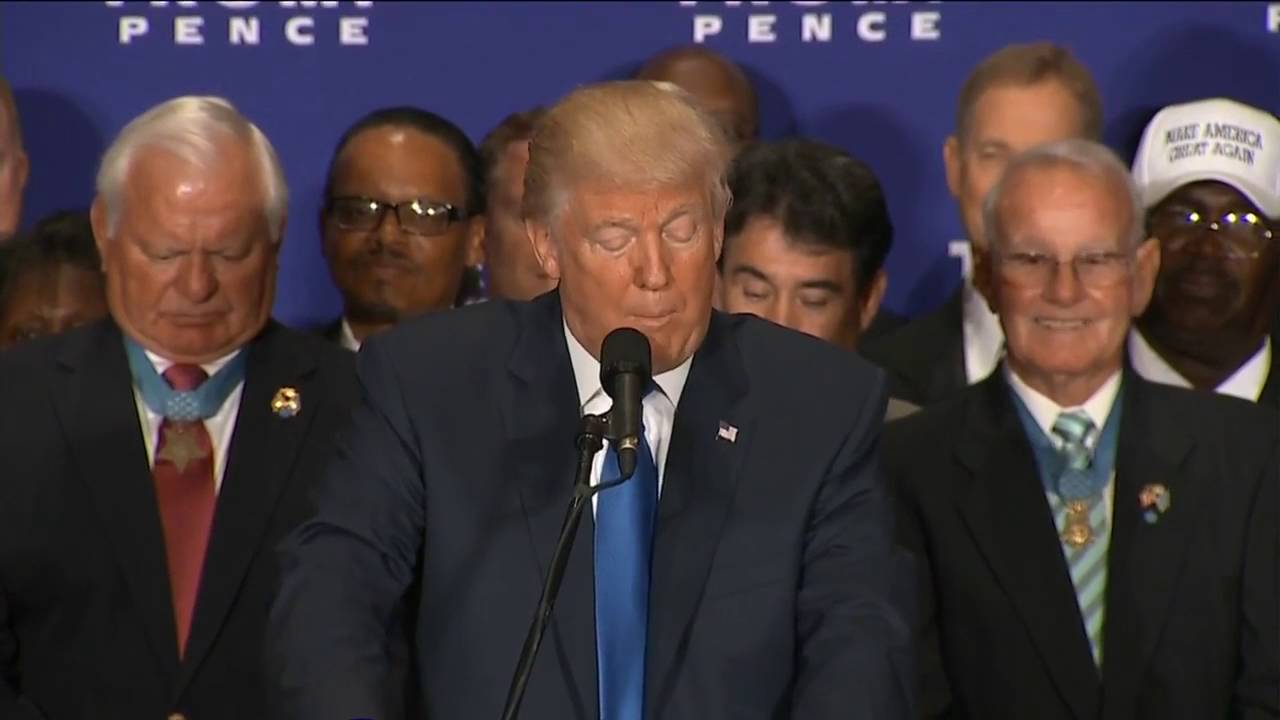
Donald Trump: “President Barack Obama was born in the United States.”
He did so in about seven seconds and 40 words–after spending a half hour paying tribute to the military and promoting his new upscale hotel in Washington, D.C.:
“Now, not to mention her in the same breath, but Hillary Clinton and her campaign of 2008 started the birther controversy.
“I finished it. I finished it. You know what I mean.
“President Barack Obama was born in the United States, period. Now we all want to get back to making America strong and great again.”
His tone made it clear that he felt uneasy making that statement–and wanted to get it over with as fast as possible.
He refused to take questions from reporters covering the event. Nor did he apologize for his five-year campaign of slander.
On the evening of September 16, Hillary Clinton strongly responded to Trump’s comments:
“For five years, he has led the birther movement to delegitimize our first black president. His campaign was founded on this outrageous lie. There is no erasing it in history.”
And First Lady Michelle Obama slammed Trump for his “birther” claims:
“Then, of course, there were those who questioned, and who continue to question for the past eight years, and up to this very day, whether my husband was even born in this country.
“Well, during his time in office, I think Barack has answered those questions with the examples he set, by going high when they go low. And he’s answered these questions with the progress we’ve achieved together.”
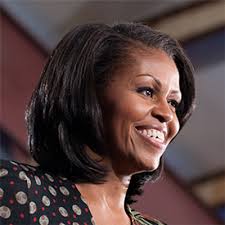
Michelle Obama
But perhaps the best perspective on this event was provided by syndicated columnist Mark Shields and New York Times columnist David Brooks. Each Friday they appear on the PBS Newshour to review the week’s major political events.
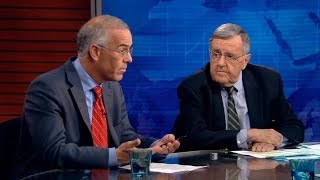
David Brooks and Mark Shields
On September 16, Shields (a liberal) and Brooks (a conservative) addressed Trump’s about-face on birtherism.
MARK SHIELDS: “I think it’s important to establish right at the outset that [Trump] wasn’t only the loudest and the highest-profile and the most persistent and the most well-publicized birther, he, Donald Trump. He lied. He lied consistently and persistently.
“And, today, without explanation or excuse, he just changed his position and tried to absolutely falsely shift the blame onto Hillary Clinton.
“And this was an appeal to–he debased democracy. He debased the national debate. He appealed to that which is most ignoble or least noble in all of us.”
DAVID BROOKS: “Usually, there’s some tangential relationship to the truth, but a corroding relationship to the truth, frankly, as politics has gone on over the years.
“But now we’re in a reverse, Orwellian inversion of the truth with this. And so we have a team of staffers and then the candidate himself who have taken the normal spin and smashed all the rules.
“And so we are really in Orwell land. We are in 1984. And it’s interesting that an authoritarian personality type comes in at the same time with a complete disrespect for even tangential relationship to the truth that words are unmoored.
“And so I do think this statement sort of shocked me with the purification of a lot of terrible trends that have been happening. And so what’s white is black, and what is up is down, what is down is up. And that really is something new in politics.
“And the fact that there is no penalty for it, apparently–he’s doing fantastic in the last two weeks in the polls–is just somehow where we have gotten.”
* * * * *
Americans were slow to recognize the dangers of their government’s committing armed forces to South Vietnam. But when the record of government lies reached critical mass, Americans demanded an end to the war.
Similarly, Americans were reluctant to brand Richard Nixon, their newly-re-elected President, a criminal worthy of impeachment. But when the evidence of his criminality steadily mounted, they demanded his ouster.
Today, Americans are flooded with overwhelming evidence of Donald Trump’s unfitness to become President. His narcissism, vindictiveness, ignorance and hair-trigger temper have been on public display for more than a year.
Yet millions of ignorant, hate-filled, Right-wing Americans plan to catapult this man–who “debased democracy, debased the national debate, appealed to that which is most ignoble or least noble in all of us”–to the Presidency.
If that happens, future historians–if there are any–may similarly condemn those Americans who stood by like “good Germans” and allowed their country to fall into the hands of a ruthless tyrant.
9/11 ATTACKS, ABC NEWS, ASSOCIATED PRESS, BARACK OBAMA, BIRTHERS, CBS NEWS, CENSORSHIP, CNN, CREDIBILITY GAP, DAVID BROOKS, DAVID HALBERSTAM, DONALD TRUMP, FACEBOOK, FRANK STANTON, FULL METAL JACKET, GEORGE MCGOVERN, HILLARY CLINTON, JOHN F. KENNEDY, LYNDON B. JOHNSON, MARK SHIELDS, MORLEY SAFER, NAVY SEALS, NBC NEWS, OSAMA BIN LADEN, PBS NEWSHOUR, PETER ARNETT, RICHARD NIXON, RONALD ZIEGLER, STANLEY KUBRICK, THE CHICAGO SUN-TIMES, THE CHICAGO TRIBUNE, THE HUFFINGTON POST, THE LOS ANGELES TIMES, THE NEW YORK TIMES, THE WALL STREET JOURNAL, THE WASHINGTON POST, TWITTER, VIETNAM WAR, WATERGATE
In Bureaucracy, History, Law, Law Enforcement, Military, Politics, Social commentary on September 29, 2016 at 12:01 am
In 2011, Donald Trump, host of NBC’s “The Apprentice,” was thinking of running for President against Barack Obama.
Seeking to gain popularity among America’s Right-wing, Trump almost singlehandedly created the popular fiction that the President was born in Kenya–and was not an American citizen.
His motive: To convince Americans that Obama was an illegitimate President.
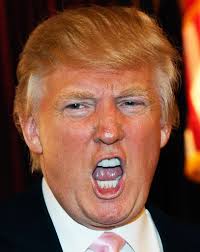
Donald Trump
Among the statements Trump made:
February 10, 2011: “Our current president came out of nowhere. Came out of nowhere. In fact, I’ll go a step further: The people that went to school with him, they never saw him, they don’t know who he is. It’s crazy.”
March 23, 2011: “I want him to show his birth certificate. I want him to show his birth certificate. … There’s something on that birth certificate that he doesn’t like.”
March 28, 2011: “I am really concerned” [that Obama wasn’t born in the United States]. He said that the birth announcement for Obama in a Hawaii newspaper could have been planted “for whatever reason.”
March 30, 2011: “If you are going to be president of the United States you have to be born in this country. And there is a doubt as to whether or not he was. … He doesn’t have a birth certificate. He may have one, but there’s something on that, maybe religion, maybe it says he is a Muslim. I don’t know. Maybe he doesn’t want that. Or he may not have one. But I will tell you this. If he wasn’t born in this country, it’s one of the great scams of all time.”
April 7, 2011: “I have people that have been studying it, and they cannot believe what they’re finding. You are not allowed to be a president if you’re not born in this country. Right now I have real doubts.”
April 25, 2011: “I’ve been told very recently…that the birth certificate is missing. I’ve been told that it’s not there or it doesn’t exist. And if that’s the case, it’s a big problem.”
On April 27, President Obama released his original, long-form Hawiian birth certificate.
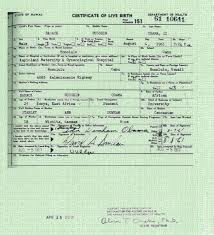
The long-form version of President Obama’s birth certificate
“We do not have time for this kind of silliness,” said Obama at a press conference, speaking as a father might to a roomful of spiteful children. “We have better stuff to do. I have got better stuff to do. We have got big problems to solve.
“We are not going to be able to do it if we are distracted, we are not going to be able to do it if we spend time vilifying each other…if we just make stuff up and pretend that facts are not facts, we are not going to be able to solve our problems if we get distracted by side shows and carnival barkers.”
And on May 1, he announced the solving of one of those “big problems”: Osama bin Laden, mastermind of the September 11, 2001 terrorist attacks, had been tracked down and shot dead by elite U.S. Navy SEALS in Pakistan.
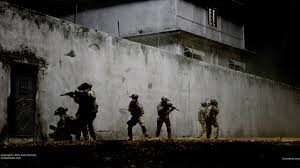
SEALS attacking bin Laden’s compound in the 2012 movie, “Zero Dark Thirty”
And how did Trump respond? With the following series of Tweets on Twitter:
May 18, 2012: “Let’s take a closer look at that birth certificate.@BarackObama was described in 2003 as being “born in Kenya.” http://bit.ly/Klc9Uu
August 6, 2012: “An ‘extremely credible source’ has called my office and told me that @BarackObama‘s birth certificate is a fraud.”
August 27, 2012: “Why do the Republicans keep apologizing on the so called “birther” issue? No more apologies–take the offensive!”
September 13, 2012: “Wake Up America! See article: “Israeli Science: Obama Birth Certificate is a Fake”
June 30, 2013: “@davidrhythmguit: @realDonaldTrump @Chuffman48 Mark Cuban accepts the fact that the President of the United States was born here. Doubt it”
August 22, 2013: “Why are people upset w/ me over Pres Obama’s birth certificate? I got him to release it, or whatever it was, when nobody else could!”
December 12, 2013: “How amazing, the State Health Director who verified copies of Obama’s “birth certificate” died in plane crash today. All others lived”
November 23, 2014: “@futureicon: @pinksugar61 Obama also fabricated his own birth certificate after being pressured to produce one by @realDonaldTrump“
Even after declaring his candidacy for President on June 16, 2015, Trump continued to insist that Barack Obama was an illegitimate President.
Meanwhile, Trump’s popularity among blacks had steadily fallen. In June, 2016, a Quinnipiac poll revealed that Trump had 1% of support from black voters. By comparison, 91% of black voters backed Hillary Clinton.
Among the reasons for this:
- His enthusiastic support by racist white supremacist organizations such as the Ku Klux Klan and the American Nazi Party.
- His “birther” attacks on President Obama as a non-citizen from Kenya–and thus ineligible to hold the Presidency.
- His attacks on the Black Lives Matter movement and calling on his supporters at rallies to rough up minority protesters.
Even the managers of Trump’s campaign urged him to put the “birther” issue behind him.
And so, on September 16–10 days before his scheduled first debate with Democratic Presidential nominee Hillary Clinton–Trump made his version of a reversal.
9/11 ATTACKS, ABC NEWS, ASSOCIATED PRESS, BARACK OBAMA, BIRTHERS, CBS NEWS, CENSORSHIP, CNN, CREDIBILITY GAP, DAVID BROOKS, DAVID HALBERSTAM, DONALD TRUMP, FACEBOOK, FRANK STANTON, FULL METAL JACKET, GEORGE MCGOVERN, HILLARY CLINTON, JOHN F. KENNEDY, LYNDON B. JOHNSON, MARK SHIELDS, MORLEY SAFER, NAVY SEALS, NBC NEWS, OSAMA BIN LADEN, PBS NEWSHOUR, PETER ARNETT, RICHARD NIXON, RONALD ZIEGLER, STANLEY KUBRICK, THE CHICAGO SUN-TIMES, THE CHICAGO TRIBUNE, THE HUFFINGTON POST, THE LOS ANGELES TIMES, THE NEW YORK TIMES, THE WALL STREET JOURNAL, THE WASHINGTON POST, TWITTER, VIETNAM WAR, WATERGATE
In Bureaucracy, History, Law, Law Enforcement, Military, Politics, Social commentary on September 28, 2016 at 12:09 am
“Credibility gap” is a term that came into use during the mid-1960s to describe public and journalistic distrust of President Lyndon B. Johnson. In particular, the term was applied to his administration’s conduct of the Vietnam war.
It was, in short, a euphemism for accusing government officials of outright lying.
An example of the credibility gap in full swing appeared in Stanley Kubrick’s classic 1987 Vietnam war movie, Full Metal Jacket.
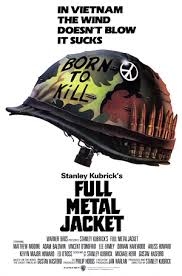
Vietnam was a war where military and political officials spewed a gung-ho version of constant American progress against a tough enemy.
And where civilian reporters like David Halberstam and Walter Cronkite saw–and labeled–the war as a brutal, wasteful and ultimately doomed effort.
Midway through the film, there’s an editorial meeting of The Sea Tiger, the official Marine newspaper.
Lieutenant Lockhart is presiding–and he is determined to give his superiors an endless stream of “all-systems-go” propaganda reports. He reads a series of stories that have been published:
Story #1: DIPLOMATS IN DUNGAREES–MARINE ENGINEERS LEND A HELPING HAND REBUILDING DONG PHUC VILLAGES.
LOCKHART: “Chili, “if we move Vietnamese, they are evacuees. If they come to us to be evacuated, they are refugees.”
Story #2: N.V.A. SOLDIER DESERTS AFTER READING PAMPHLETS.
LOCKHART: “A young North Vietnamese Army regular, who realized his side could not win the war, deserted from his unit after reading Open Arms program pamphlets.”
Story #3: NOT WHILE WE’RE EATING: N.V.A. LEARN MARINES ON A SEARCH AND DESTROY MISSION DON’T LIKE TO BE INTERRUPTED WHILE EATING CHOW.
LOCKHART: “‘Search and destroy.’ Uh, we have a new directive on this. In the future, in place of ‘search and destroy,’ substitute the phrase ‘sweep and clear.’ Got it?”
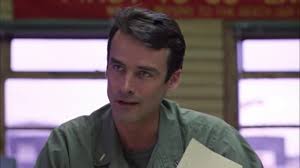
Lt. Lockhart, editor of The Sea Tiger
LOCKHART: “And, Joker–where’s the weenie?”
JOKER: “Sir?”
LOCKHART “The Kill, Joker. I mean, all that fire, the grunts must’ve hit something.”
JOKER: “Didn’t see ’em.”
LOCKHART: “Joker, I’ve told you, we run two basic stories here: Grunts who give half their pay to buy gooks toothbrushes and deodorants–winning of hearts and Minds–okay? And combat action that results in a kill–Winning the War. Now you must have seen blood trails … drag marks?”
JOKER: “It was raining, sir.”
LOCKHART: “Well, that’s why God passed the law of probability. Now rewrite it and give it a happy ending–say, uh, one kill. Make it a sapper or an officer. Grunts like reading about dead officers.”
JOKER: “Okay, an officer. How about a general?”
LOCKHART: “Joker, maybe you’d like our guys to read the paper and feel bad. I mean, in case you didn’t know it, this is not a particularly popular war. Now, it is our job to report the news that these why-are-we-here civilian newsmen ignore.”
So great became the divide between truth and lies during military “press briefings” that reporters started calling them “The Five O’clock Follies.” And even some soldiers took to wearing buttons that said: “Ambushed at Credibility Gap.”
Reporters who dared to write truthfully about the military’s crimes and failures–like David Halberstam of the New York Times and Peter Arnett of the Associated Press–were regarded as traitors by military and political officials.
In 1963, President John F. Kennedy became enraged by Halberstam’s reporting on the corruption of the South Vietnamese government. He pressured New York Times publisher Arthur Ochs Sulzberger to transfer Halberstam to another locale. Sulzberger politely refused–and then extended Halberstam’s stay in Vietnam another six months.
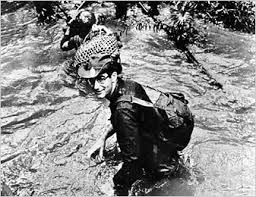
David Halberstam
In 1965, when CBS Correspondent Morley Safer filmed Marines setting fire to the village of Cam Ne with Zippo lighters, President Lyndon B. Johnson was similarly outraged.
He placed an early-morning call to CBS News President Frank Stanton and shouted: “Your boys shat on the American flag!”
The trail of deceit and attempted censorship continued right up to the end of the war–in April, 1975. That was when North Vietnamese forces invaded the South and quickly overwhelmed the incompetent defenses arrayed against them.
And while America was still bogged down in Vietnam, the Watergate scandal erupted on June 17, 1972.
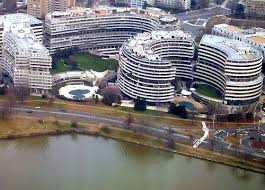
Watergate Hotel
Members of the Nixon administration’s secret “Plumbers Unit” burglarized the offices of the Democratic National Committee at the Watergate Hotel.
Obsessed with re-electing Richard Nixon, they sought incriminating information to discredit U.S. Senator George McGovern, the Democrats’ nominee for President.
When the burglars were caught, President Richard M. Nixon and his topmost officials lied and stonewalled both reporters and investigators seeking the truth.
Nixon’s press secretary, Ronald Ziegler, repeatedly slandered the integrity of The Washington Post for its coverage of the mushrooming Watergate scandal. He called the Watergate break-in “a third-rate burglary” and attacked the Post for “shabby journalism.”
Finally, on April 17, 1973, Ziegler, announced at a press conference: “This is the operative statement. The others are inoperative.”
In short: We’ve been lying to you for the last 10 months. But now we’re telling the truth.
Like Vietnam, the Watergate scandal destroyed the reputations of many of its chief architects. Forty government officials were indicted or jailed.
Vietnam and Watergate were seminal events for Americans coming of age in the late 1960s and early 1970s. They taught an entire generation: Don’t trust the government. Its officials routinely lie, and their lies can be deadly.
9/11 ATTACKS, ABC NEWS, ASSOCIATED PRESS, BARACK OBAMA, BIRTHERS, CBS NEWS, CENSORSHIP, CNN, CREDIBILITY GAP, DAVID BROOKS, DAVID HALBERSTAM, DONALD TRUMP, FACEBOOK, FRANK STANTON, FULL METAL JACKET, GEORGE MCGOVERN, HILLARY CLINTON, JOHN F. KENNEDY, LYNDON B. JOHNSON, MARK SHIELDS, MORLEY SAFER, NAVY SEALS, NBC NEWS, OSAMA BIN LADEN, PBS NEWSHOUR, PETER ARNETT, RICHARD NIXON, RONALD ZIEGLER, STANLEY KUBRICK, THE CHICAGO SUN-TIMES, THE CHICAGO TRIBUNE, THE HUFFINGTON POST, THE LOS ANGELES TIMES, THE NEW YORK TIMES, THE WALL STREET JOURNAL, THE WASHINGTON POST, TWITTER, VIETNAM WAR, WATERGATE
In Bureaucracy, History, Law, Law Enforcement, Military, Politics, Social commentary on September 26, 2016 at 3:03 pm
For five years, Donald Trump, more than anyone else, popularized the slander that President Barack Obama was born in Kenya–and was therefore not an American citizen.
In April, 2011, Obama released the long-form version of his Hawaiian birth certificate. Still, Trump questioned its–and Obama’s–legitimacy.
For more than a year during his 2016 Presidential campaign, Trump continued doing so.
Meanwhile, Trump’s popularity steadily fell among blacks. In June, 2016, a Quinnipiac poll revealed that Trump had 1% of support from black voters–while 91% of black voters backed Hillary Clinton.
Even the managers of Trump’s campaign urged him to put the “birther” issue behind him.
And so, on September 16, 2016–10 days before his scheduled first debate with Democratic Presidential nominee Hillary Clinton–Trump made his version of a reversal.
Donald Trump: “President Barack Obama was born in the United States.”
He did so in about seven seconds and 40 words–after spending a half hour paying tribute to the military and promoting his new upscale hotel in Washington, D.C.:
“Now, not to mention her in the same breath, but Hillary Clinton and her campaign of 2008 started the birther controversy.
“I finished it. I finished it. You know what I mean.
“President Barack Obama was born in the United States, period. Now we all want to get back to making America strong and great again.”
His tone made it clear that he felt uneasy making that statement–and wanted to get it over with as fast as possible.
He refused to take questions from reporters covering the event. Nor did he apologize for his five-year campaign of slander.
On the evening of September 16, Hillary Clinton strongly responded to Trump’s comments:
“For five years, he has led the birther movement to delegitimize our first black president. His campaign was founded on this outrageous lie. There is no erasing it in history.”
And First Lady Michelle Obama slammed Trump for his “birther” claims:
“Then, of course, there were those who questioned, and who continue to question for the past eight years, and up to this very day, whether my husband was even born in this country.
“Well, during his time in office, I think Barack has answered those questions with the examples he set, by going high when they go low. And he’s answered these questions with the progress we’ve achieved together.”
Michelle Obama
But perhaps the best perspective on this event was provided by syndicated columnist Mark Shields and New York Times columnist David Brooks. Each Friday they appear on the PBS Newshour to review the week’s major political events.
David Brooks and Mark Shields
On September 16, Shields (a liberal) and Brooks (a conservative) addressed Trump’s about-face on birtherism.
MARK SHIELDS: “I think it’s important to establish right at the outset that [Trump] wasn’t only the loudest and the highest-profile and the most persistent and the most well-publicized birther, he, Donald Trump. He lied. He lied consistently and persistently.
“And, today, without explanation or excuse, he just changed his position and tried to absolutely falsely shift the blame onto Hillary Clinton.
“And this was an appeal to–he debased democracy. He debased the national debate. He appealed to that which is most ignoble or least noble in all of us.”
DAVID BROOKS: “Usually, there’s some tangential relationship to the truth, but a corroding relationship to the truth, frankly, as politics has gone on over the years.
“But now we’re in a reverse, Orwellian inversion of the truth with this. And so we have a team of staffers and then the candidate himself who have taken the normal spin and smashed all the rules.
“And so we are really in Orwell land. We are in 1984. And it’s interesting that an authoritarian personality type comes in at the same time with a complete disrespect for even tangential relationship to the truth that words are unmoored.
“And so I do think this statement sort of shocked me with the purification of a lot of terrible trends that have been happening. And so what’s white is black, and what is up is down, what is down is up. And that really is something new in politics.
“And the fact that there is no penalty for it, apparently–he’s doing fantastic in the last two weeks in the polls–is just somehow where we have gotten.”
* * * * *
Americans were slow to recognize the dangers of their government’s committing armed forces to South Vietnam. But when the record of government lies reached critical mass, Americans demanded an end to the war.
Similarly, Americans were reluctant to brand Richard Nixon, their newly-re-elected President, a criminal worthy of impeachment. But when the evidence of his criminality steadily mounted, they demanded his ouster.
Today, Americans are flooded with overwhelming evidence of Donald Trump’s unfitness to become President. His narcissism, vindictiveness, ignorance and hair-trigger temper have been on public display for more than a year.
Yet millions of ignorant, hate-filled, Right-wing Americans plan to catapult this man–who “debased democracy, debased the national debate, appealed to that which is most ignoble or least noble in all of us”–to the Presidency.
If that happens, future historians–if there are any–may similarly condemn those Americans who stood by like “good Germans” and allowed their country to fall into the hands of a ruthless tyrant.
ABC NEWS, ALTERNET, AMERICABLOG, AMERICAN NZAI PARTY, AP, BABY BOOMER RESISTANCE, BARACK OBAMA, BBC, BLOOMBERG NEWS, BUZZFEED, CBS NEWS, CHRIS MATHEWS, CIVIL WAR, CNN, CROOKS AND LIARS, DAILY KOZ, DONALD TRUMP, FACEBOOK, FIVETHIRTYEIGHT, FOOD STAMPS, HARPER’S MAGAZINE, HUFFINGTON POST, KU KLUX KLAN, MEDIA MATTERS, MEDICARE, MOTHER JONES, MOVEON, MSNBC, NBC NEWS, NEW REPUBLIC, NEWSDAY, NEWSWEEK, NPR, PBS NEWSHOUR, POLITICO, POLITICUSUSA, PROPAGANDA, RACISM, RAW STORY, REPUBLICAN PARTY, REPUBLICANS, REUTERS, Ronald Reagan, SALON, SEATTLE TIMES, SLATE, SOCIAL SECURITY, TALKING POINTS MEMO, THE ATLANTIC, THE CHICAGO SUN-TIMES, THE CHICAGO TRIBUNE, THE DAILY BEAST, THE DAILY BLOG, THE GUARDIAN, THE HILL, THE HUFFINGTON POST, THE INTERCEPT, THE LOS ANGELES TIMES, THE NATION, THE NEW REPUBLIC, THE NEW YORK TIMES, THE NEW YORKER, THE VILLAGE VOICE, THE WALL STREET JOURNAL, THE WASHINGTON POST, THINKPROGRESS, TIME, TIME MAGAZINE, TRUTHDIG, TRUTHOUT, TWITTER, TWO POLITICAL JUNKIES, U.S. NEWS & WORLD REPORT, UPI, USA TODAY, WILLIAM TECUMSEH SHERMAN
In Bureaucracy, History, Politics, Social commentary on September 26, 2016 at 12:10 am
Republicans have long tried to prevent or eliminate programs that aid the poor and middle-class, including:
- Social Security (since it began in 1935)
- Medicare
- National health insurance
- Food stamps
- WIC (Women, Infants, Children).
So why are so many poor Americans now flocking to this party’s banner?
Two reasons: Racism and greed. There are historical parallels for both.
First, race:
In 1999, historian Victor Davis Hanson noted the huge gap in wealth between the aristocratic, slave-owning minority of the pre-Civil War South and the vast majority of poor white Southerners.
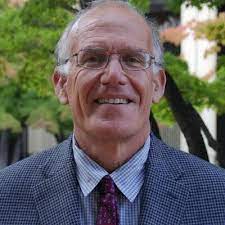
Victor Davis Hanson
“Before the war in the counties Sherman would later ruin, the top 10% of the landowners controlled 40% of the assessed wealth.”
In contrast, “more than half of those who were lucky enough to own any property at all still possessed less than 15% of the area’s valuation.”
So Hanson asked: “Why did the millions of poor whites of the Confederacy fight at all?”
He supplied the answer in his brilliant work on military history, The Soul of Battle: From Ancient Times to the Present Day, How Three Great Liberators Vanquished Tyranny.
One of those liberators was General William Tecumseh Sherman, who led 62,000 Union troops in a victorious “March to the Sea” through the Confederacy in 1864.
So why did so many poor Southern whites literally lay down their lives for the wealthy planter class, which despised them?
According to Hanson: “Behind the entire social fabric of the South lay slavery.
“If slavery eroded the economic position of the poor free citizens, if slavery encouraged a society of haves and have-nots…then it alone offered one promise to the free white man—poor, ignorant and dispirited—that he was at least not black and not a slave.”
And the planter class and its allies in government easily fobbed off their poor white countrymen with cheap flattery. Said Georgia Governor Joseph Brown:
“Among us the poor white laborer is respected as an equal. His family is treated with kindness, consideration, and respect. He does not belong to the menial class. The negro is in no sense his equal. He belongs to the only true aristocracy, the race of white men.”
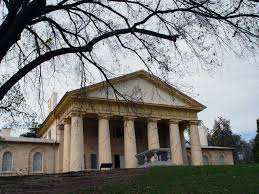
Arlington House and plantation, former home of Robert E. Lee
Similarly, poor whites now flock to the Republican Party—which holds them in equal contempt—in large part to protest the 2008 election of the first black President of the United States.
According to a Pew Research Center study released on July 22, 2011: “Notably, the GOP gains have occurred only among white voters; a 2-point Republican edge among whites in 2008 (46% to 44%) has widened to a 13-point lead today (52% to 39%).”
Since the 1960s, Republicans have pursued a campaign policy of “divide and rule”—divide the nation along racial lines and reap the benefits at election time.
- Republicans opposed the Civil Rights Act of 1964.
- Republicans opposed the Voting Rights Act of 1965.
- Republicans, with Richard Nixon as their Presidential candidate in 1968 and 1972, pursued what they called a “Southern strategy”: Use “code language” to stoke fear and hatred of blacks among whites.
- Republicans have falsely identified welfare programs exclusively with non-whites. (Of the six million Americans receiving food stamps, about 42% are white, 32% are black, and 22% are Latino–with the growth fastest among whites during the recession.)
Thus, in voting Republican, many of these poor whites believe they are “striking a blow for the white race.”
And they can do so in a more socially acceptable way than joining a certified hate group such as the American Nazi Party or Ku Klux Klan.
Since 2015, openly racist groups such as the Klan and the American Nazi Party have flocked to the banner of Presidential candidate mogul Donald Trump. By enthusiastically courting their support, the real estate mogul has made it possible for Republican candidates to openly display their own racism.
Now greed:
In the hit play, 1776, on the creation and signing of the Declaration of Independence, there is a telling exchange between John Dickinson and John Hancock. It comes during the song, “Cool, Cool, Considerate Men.”
Dickinson, the delegate from Pennsylvania, urges Hancock, president of the Second Continental Congress, “to join us in our minuet.”
By “us” he means his fellow conservatives who fear losing their property and exalted status by supporting American independence from Great Britain.
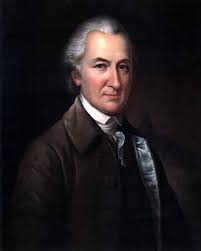
John Dickinson
Hancock declines, saying: “Fortunately, there are not enough men of property in America to dictate policy.”
To which Dickinson replies: “Perhaps not. But don’t forget that most men with nothing would rather protect the possibility of becoming rich than face the reality of being poor. And that is why they will follow us.”
Today, poor whites generally identify with the CEOs of powerful corporations. They believe the Republican gospel that they can attain such wealth—if only the government will “get out of my way.”
They forget—or ignore–the truth that government, for all its imperfections, is sometimes all that stands between them and a wide range of predators.
In return, the CEOs despise them as the privileged have always despised their social and economic “inferiors.”
Unless the Democratic Party can find ways to directly address these bitter, Politically Incorrect truths, it will continue its decline into insignificance.
2016 PRESIDENTIAL RACE, 9/11 ATTACKS, ABC NEWS, ALEKSANDR LITVINENKO, ASSASSINATION, BARACK OBAMA, BENNET IFEAKANDU OMALU, BERNIE SANDERS, BORIS NEMTSOV, BRAIN CANCER, CBS NEWS, CHRONIC TRAUMATIC ENCEPHALOPATHY (CTE), CNN, CONCUSSON, DONALD TRUMP, FACEBOOK, FOOTBALL, FOX & FRIENDS, FOX AND FRIENDS, FOX NEWS, HANNITY, HILLARY CLINTON, ILLNESS, INFOWARS, KGB, MULTIPLE SCLEROSIS, NATIONAL ENQUIRER, NATIONAL FOOTBALL LEAGUE, NATO, NBC NEWS, NFL, NORTH ATLANTIC TREATY ORGANIZATION (NATO), PARKINSON’S DISEASE, PAUL MANAFORT, PENTAGON, POISONING, POST-CONCUSSION SYNDROME, REPUBLICAN PARTY, Ronald Reagan, RUSSIA, SEAN HANNITY, STROKE, THE CHICAGO SUN-TIMES, THE CHICAGO TRIBUNE, THE LOS ANGELES TIMES, THE NATIONAL ENQUIRER, THE NEW YORK TIMES, THE SOVIET UNION, THE WASHINGTON POST, TIM KAINE, TWITTER, UKRAINE, VICTOR YUSHCHENKO, VLADIMIR PUTIN, WORLD TRADE CENTER
In Bureaucracy, History, Law Enforcement, Military, Politics on September 15, 2016 at 12:10 am
Right-wing websites and networks are gleefully buzzing with theories about the state of Hillary Clinton’s health.
The former First Lady, New York U.S. Senator and Secretary of State collapsed after briefly attending a memorial ceremony on the 15th anniversary of the 9/11 attacks.
The unsubstantiated theories include stroke, brain damage, Multiple sclerosis and Parkinson’s disease.
But there’s one theory Right-wingers scrupulously refuse to offer: That Clinton might be a victim of poisoning by Donald Trump’s well-known admirer, Vladimir Putin.
It’s a theory that has been offered by no less than Bennet Ifeakandu Omalu, the Nigerian-American physician, forensic pathologist and neuropathologist who was the first to discover and publish findings of chronic traumatic encephalopathy (CTE) in American football players.

Bennet Ifeakandu Omalu
His struggle to alert the National Football League to that danger met with hostility and derision. Finally, amid growing scrutiny from Congress, the NFL was forced to take the concussion issue more seriously.
NFL owners banned players from striking opponents with the crowns of their helmets. Meanwhile, the NFL is facing concussion lawsuits from nearly 4,000 former players.
On September 11, a Clinton rep stated that she was suffering from pneumonia–and Omalu warned on Twitter: “I must advice the Clinton campaign to perform toxicologic analysis of Mrs. Clinton’s blood. It is possible she is being poisoned.”
And he followed this up with a second tweet: “I do not trust Mr. Putin and Mr. Trump. With those two all things are possible.”
At this point, there is no evidence that Hillary Clinton is the victim of KGB “wet” methods. And it would take lengthy, sophisticated toxicology tests to hopefully learn the truth.
But there is plenty of evidence that Vladimir Putin has used murder–especially poison–to eliminate his opponents.
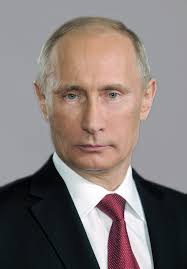
Vladimir Putin
Putin came to power in 2000. Since then, at least 34 journalists have been murdered in Russia, according to the Moscow-based Glasnost Defense Foundation. Many of the suspected killers are military officials, government officials or political groups.
Being a political opponent of Vladimir Putin can also be dangerous. Among the casualties:
Viktor Yushchenko: In 2004, he was running for president of the Ukraine against Putin’s chosen candidate, Victor Yanukovych.
As the campaign neared its climax, Yushchenko suddenly fell ill–with dioxin poisoning. Flown to Vienna’s Rudolfinerhaus clinic for treatment, he survived, but his face was left greatly disfigured. He went on to win the election, serving as Ukraine’s president from 2005 to 2010.
Aleksandr Litvinenko: A former KGB officer, he had accused Putin of wholesale corruption. Even worse, he charged that–as a pretext for a second war with Chechnya–Putin ordered the bombings of Moscow apartment buildings, resulting in the deaths of hundreds of people.

Aleksandr Litvinenko
Litvinenko died on November 23, 2006 in London from a dose of Polonium-210 in his tea. At the time, he was meeting with two Moscow agents, one of whom is now a member of the State Duma.
Boris Nemtsov: An official with a liberal opposition group, he had been arrested several times for speaking against Putin’s government.
Nemtsov had been scheduled to lead an opposition rally in Moscow. But on February 27, 2015, two days before the event, he was shot dead as he walked home from dinner. The killing happened a short distance from the Kremlin.
If Hillary Clinton proved to have a serious medical condition such as Parkinson’s or Multiple sclerosis, the results would be tragic but strictly national.
Mounting pressure within and outside the Democratic party would force her to drop out of the race.
There would be a brief, furious struggle within the Democratic party for the nomination–most likely between Vermont U.S. Senator Bernie Sanders and Tim Kaine, Clinton’s choice for Vice President. The winner would face Donald Trump in the coming debates and fall election.
And the Clintons–a force in American politics since 1992–would finally leave the national stage.
But if Hillary is a victim of a KGB assassination attempt, as Dr. Bennet Omalu suspects, then the consequences would be national and international.
Hillary Clinton
Nationally, such a discovery would almost certainly generate huge sympathy for Clinton–a woman singularly unable to arouse sympathy among voters. That alone could ensure her election as President.
And even Americans who hate Clinton would never forgive Russia for daring to interfere with an American Presidential election. They would demand severe retaliation–even all-out war.
For Trump, it would prove a nightmare. He’s made too many admiring statements about Putin to disavow them now and be believed.
National outrage followed in July when Trump invited Putin to “find the 30,000 emails that are missing” on the private server that Clinton used as Secretary of State.
If Clinton died–or was simply injured–because of a KGB plot, few would believe Trump wasn’t a party to it.
And several of Trump’s closest associates have had ties to Putin, such as his former campaign manager Paul Manafort.
Even many Republicans have already declared they can’t support Trump in abandoning NATO–much less his clear admiration for Putin, a dictator who got his start as a KGB agent.
At his first press conference upon becoming President, Ronald Reagan harshly denounced Soviet leaders: “They reserve unto themselves the right to commit any crime, to lie, to cheat.”
A KGB plot against Hillary Clinton would convince many Americans that Republican leaders have become as corrupt as those in the Kremlin.
2016 PRESIDENTIAL RACE, 9/11 ATTACKS, ABC NEWS, ALEKSANDR LITVINENKO, ASSASSINATION, BARACK OBAMA, BENNET IFEAKANDU OMALU, BERNIE SANDERS, BORIS NEMTSOV, BRAIN CANCER, CBS NEWS, CHRONIC TRAUMATIC ENCEPHALOPATHY (CTE), CNN, CONCUSSON, DONALD TRUMP, FACEBOOK, FOOTBALL, FOX & FRIENDS, FOX AND FRIENDS, FOX NEWS, HANNITY, HILLARY CLINTON, ILLNESS, INFOWARS, KGB, MULTIPLE SCLEROSIS, NATIONAL ENQUIRER, NATIONAL FOOTBALL LEAGUE, NATO, NBC NEWS, NFL, NORTH ATLANTIC TREATY ORGANIZATION (NATO), PARKINSON’S DISEASE, PAUL MANAFORT, PENTAGON, POISONING, POST-CONCUSSION SYNDROME, REPUBLICAN PARTY, Ronald Reagan, RUSSIA, SEAN HANNITY, STROKE, THE CHICAGO SUN-TIMES, THE CHICAGO TRIBUNE, THE LOS ANGELES TIMES, THE NATIONAL ENQUIRER, THE NEW YORK TIMES, THE SOVIET UNION, THE WASHINGTON POST, TIM KAINE, TWITTER, UKRAINE, VICTOR YUSHCHENKO, VLADIMIR PUTIN, WORLD TRADE CENTER
In Bureaucracy, History, Law Enforcement, Military, Politics on September 14, 2016 at 12:09 am
September 11 marked the 15th anniversary of the worst terrorist attack in American history.
The date when, in 2001, two highjacked, fuel-laden jetliners slammed into the “twin towers” of the World Trade Center in New York City and a third crashed into the Pentagon in Washington, D.C.
A fourth, intended for the White House or Capitol Building, was prevented from doing so by the heroic resistance of its passengers. The highjackers crashed it into a field in Pennsylvania.
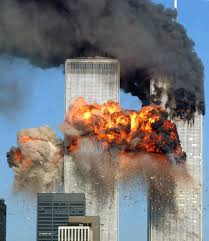
World Trade Center on September 11, 2001
For Hillary Clinton, former First Lady and Secretary of State, and now the Democratic party’s Presidential nominee, this was to be a day of memorial events.
Instead, it turned out to be her worst nightmare as a Presidential candidate.
Scheduled to attend a 9/11 ceremony in New York City, she cut short her appearance around 9:30 a.m. because she felt “overheated,” according to campaign spokesman Nick Merrill.
Amateur video captured Clinton struggling to stand and needing help to enter her Secret Service van. A woman held Clinton’s left arm as the van approached. Then two men grabbed both of her arms as her knees buckled.
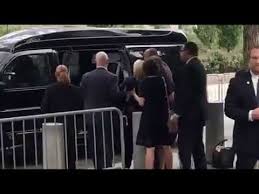
Hillary Clinton being helped into her van
Shortly before noon, Clinton left the apartment of her daughter, Chelsea. Wearing sunglasses, she waved to diners at a nearby restaurant.
“I’m feeling great, it’s a beautiful day in New York,” she said. Then she headed to her home in Chappaqua.
The official statement given by her campaign went:
“Secretary Clinton attended the September 11th Commemoration Ceremony for just an hour and thirty minutes this morning to pay her respects and greet some of the families of the fallen. During the ceremony, she felt overheated so departed to go to her daughter’s apartment, and is feeling much better.”
Several hours later, her doctor announced that Clinton was suffering from pneumonia.
Throughout the campaign, Republican Presidential nominee Donald Trump has attacked her mental and physical and fitness to be President.
Donald Trump
The 9/11 incident has hugely amplified those questions–and concerns. She not only abruptly left the ceremony, but nobody in her campaign told reporters traveling with her about her condition or whereabouts for 90 minutes after she left the ceremony.
In 2015, Clinton, then 67, released a two-page letter from her doctor stating that she was in good health despite a blood clot and a 2012 concussion.
But that hasn’t prevented conspiracy theorists from flooding the Internet that she is stricken with a vast array of unsubstantiated ailments, such as:
-
Multiple sclerosis
-
Parkinson’s disease
-
Brain damage
-
Stroke
-
Brain cancer
-
Post-Concussion Syndrome
The Right has salivated over the prospect of its longtime rival being yanked off the political stage, as it were, by a shepherd’s crook of deteriorating health.
Among these celebrations:
The National Enquirer: “Failing health and a deadly thirst for power are driving Hillary Clinton to an early grave.” The article–dated September 30, 2015–claimed she would be dead in six months.
Fox & Friends: Hosts Brian Kilmeade and Steve Doocy claimed that Clinton’s glasses proved “a sign of brain damage and other things.”
InfoWars: “Coughing can be a symptom of so many different illnesses…it is interesting to note that it happens to be one of the symptoms of Parkinson’s Disease.”
Hannity: Fox News Medical Correspondent Dr. Marc Siegel said that a video showing Clinton laughing with reporters suggested that she might be having a “mini-seizure.” Siegel added that Clinton might still suffer from “post-concussion syndrome”–after a 2012 concussion–which could affect balance, impair memory and cause dizziness.
Yet there is one conspiracy theory that is conspicuously absent from Right-wing websites and networks.
And this is because it points to a connection that Republicans–and especially Donald Trump–want to ignore.
The ties between Trump and Russian dictator Vladimir Putin.
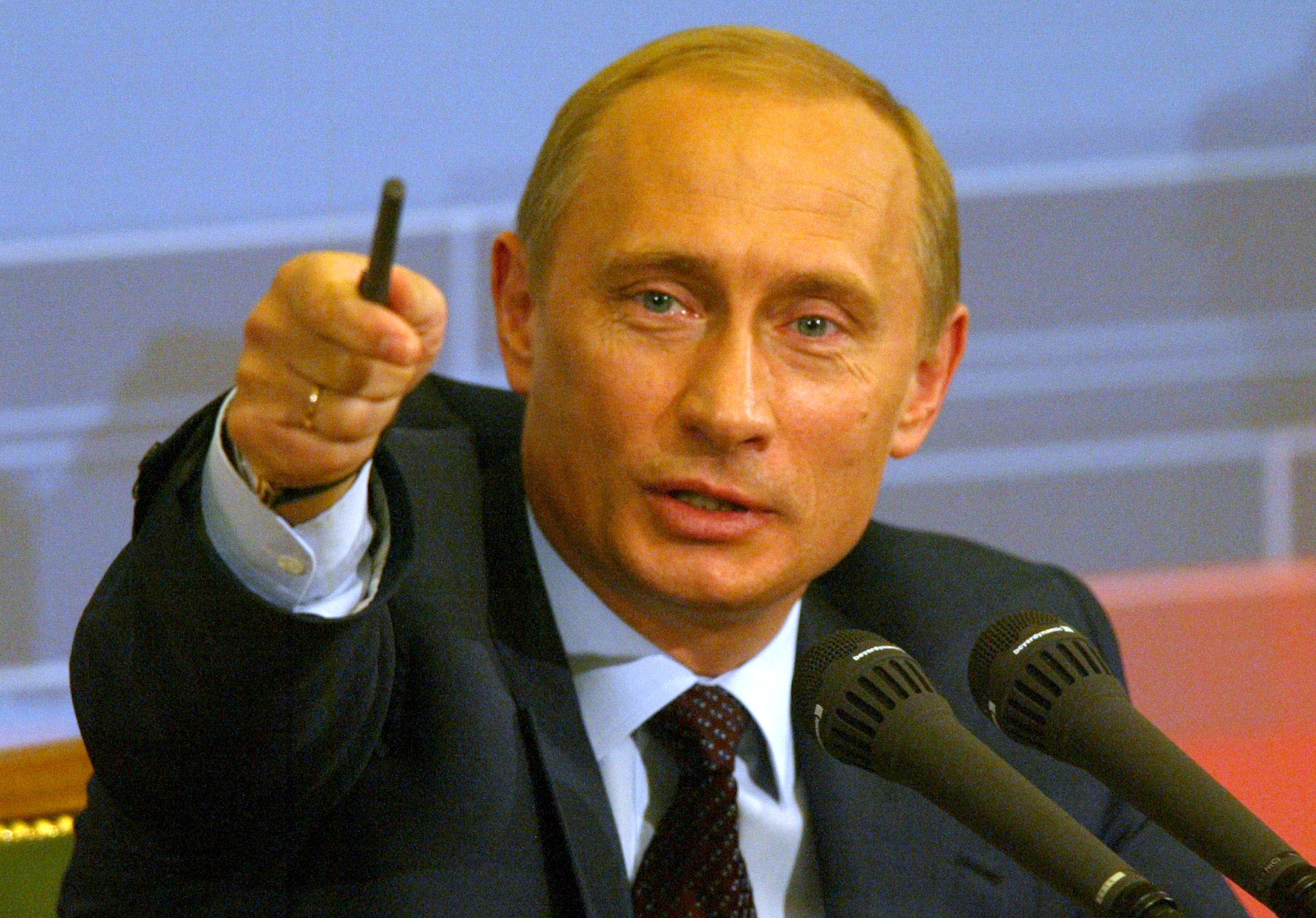
Vladimir Putin
Putin’s admiration for Trump is no secret.
“He is a bright personality, a talented person, no doubt about it. It is not up to us to appraise his positive sides, it is up to the U.S. voters. but, as we can see, he is an absolute leader in the presidential race.
“He is saying that he wants to move to a different level of relations with Russia, to a closer, deeper one. How can we not welcome that? Of course, we welcome that.”
Nor is Trump’s admiration for Putin.
“It is always a great honor to be so nicely complimented by a man so highly respected within his own country and beyond.”
Appearing on the December 18, 2015 edition of MSNBC’s “Morning Joe,” Trump said of Putin: “He’s running his country, and at least he’s a leader. Unlike what we have in this country.”
When Trump praised Putin as a leader–“unlike what we have in this country”–he meant President Barack Obama.
But Putin may have serious reasons for flattering Trump.
Trump believes the United States is paying too much of the money needed to maintain the North Atlantic Treaty Organization (NATO) alliance. He wants other members to contribute far more. He has said that, unless they do, under a Trump Presidency, they would be on their own if attacked by Russia.
The withdrawal of the United States from NATO would instantly render that alliance kaput.
For Putin, this clearly signals a reason to prefer Trump to Clinton.
9/11, ABC NEWS, AL QAEDA, ALTERNET, AMERICABLOG, AMERICAN CAESARS: THE LIVES OF THE PRESIDENTS FROM FRANKLIN D. ROOSEVELT TO GEORGE W. BUSH, AMERICAN EMPIRE, AP, BABY BOOMER RESISTANCE, BASHAR AL-ASSAD, BILL CLINTON, BLOOMBERG, BUREAUCRACY, BUZZFEED, CBS NEWS, CHRIS MATHEWS, CNN, CONDOLEEZA RICE, CROOKS AND LIARS, DAILY KOZ, DONALD TRUMP, DRUDGE REPORT, DWIGHT EISENHOWER, FACEBOOK, FBI, FIVETHIRTYEIGHT, FRANKLIN D. ROOSEVELT, GEORGE H.W. BUSH, GEORGE W. BUSH, GERALD R. FORD, HARPER’S MAGAZINE, HARRY S. TRUMAN, HUFFINGTON POST, JIMMY CARTER, JOHN F. KENNEDY, LYNDON B. JOHNSON, MEDIA MATTERS, MOTHER JONES, MOVEON, MSNBC, NBC NEWS, NEWSWEEK, NIGEL HAMILTON, NPR, OSAMA BIN LADEN, PBS NEWSHOUR, POLITICO, POLITICUSUSA, RAW STORY, REPUBLICAN PARTY, REUTERS, RICHARD CLARKE, RICHARD NIXON, ROMAN EMPIRE, SALON, SEATTLE TIMES, SEPTEMBER 11, SLATE, SUETONIUS, SYRIA, TALKING POINTS MEMO, TERRORISM, THE ATLANTIC, THE CHICAGO SUN-TIMES, THE CHICAGO TRIBUNE, THE DAILY BEAST, THE DAILY BLOG, THE GUARDIAN, THE HILL, THE HUFFINGTON POST, THE LOS ANGELES TIMES, THE NATION, THE NEW REPUBLIC, THE NEW YORK TIMES, THE TWELVE CAESARS, THE VILLAGE VOICE, THE WASHINGTON POST, THINKPROGRESS, TIME, TRUTHDIG, TRUTHOUT, TWITTER, TWO POLITICAL JUNKIES, U.S. NEWS & WORLD REPORT, UPI, USA TODAY
In Bureaucracy, History, Military, Politics, Social commentary on September 13, 2016 at 12:30 am
Colonel Brandt: “I wonder what we’ll do after we lose the war.”
Captain Kiesel: “Prepare for the next one.”
–-“The Cross of Iron,” film by Sam Peckinpah
On September 12, 2001, President George W. Bush attended a meeting of the National Security Council.
“Why shouldn’t we go against Iraq, not just Al-Qaeda?” demanded Donald Rumsfeld, the Secretary of Defense.
Vice President Dick Cheney enthusiastically agreed.
Secretary of State Colin Powell then pointed out there was absolutely no evidence that Iraq had had anything to do with 9/11 or Al-Qaeda. And he added: “The American people want us to do something about Al-Qaeda”–not Iraq.
On November 21, 2001, only 10 weeks after 9/11, Bush told Rumsfeld: It’s time to turn to Iraq.
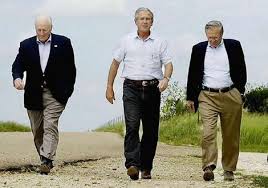
Liars Club: Condoleeza Rice, Dick Cheney, George Bush, Donald Rumsfeld
Bush and his war-hungry Cabinet officials knew that Americans demanded vengeance on AlQaeda’s mastermind, Osama bin Laden, and not Iraqi dictator Saddam Hussein. So they repeatedly fabricated “links” between the two:
- Saddam had worked hand-in-glove with Bin Laden to plan 9/11.
- Saddam was harboring and supporting Al-Qaeda throughout Iraq.
- Saddam, with help from Al-Qaeda, was scheming to build a nuclear bomb.
Yet as early as September 22, 2001, Bush had received a classified President’s Daily Brief intelligence report, which stated that there was no evidence linking Saddam Hussein to 9/11.
The report added that there was scant credible evidence that Iraq had any significant collaborative ties with Al-Qaeda.
Even more important: Saddam had tried to monitor Al Qaeda through his intelligence service–because he saw Al-Qaeda and other theocratic radical Islamist organizations as a potential threat to his secular regime.
Bush administration officials repeatedly claimed that Iraq possessed huge quantities of chemical and biological weapons, in violation of UN resolutions. And they further claimed that US intelligence agencies had determined:
- the precise locations where these weapons were stored;
- the identities of those involved in their production; and
- the military orders issued by Saddam Hussein for their use in the event of war.
Among other lies stated as fact by members of the Bush administration:
- Iraq had sought uranium from Niger, in west Africa.
- Thousands of aluminum tubes imported by Iraq could be used in centrifuges to create enriched uranium.
- Iraq had up to 20 long-range Scud missiles, prohibited under UN sanctions.
- Iraq had massive stockpiles of chemical and biological agents, including nerve gas, anthrax and botulinum toxin.
- Saddam Hussein had issued chemical weapons to front-line troops who would use them when US forces crossed into Iraq.
Consider the following:
August 26, 2002: Cheney told the Veterans of Foreign Wars, “There is no doubt that Saddam Hussein now has weapons of mass destruction. There is no doubt he is amassing them to use against our friends, against our allies and against us.”
September 8, 2002: National Security Advisor Condoleeza Rice said on CNN: ”There is certainly evidence that Al-Qaeda people have been in Iraq. There is certainly evidence that Saddam Hussein cavorts with terrorists.”
September 18, 2002: Rumsfeld told the House Armed Services Committee, “We do know that the Iraqi regime has chemical and biological weapons. His regime has amassed large, clandestine stockpiles of chemical weapons–including VX, sarin, cyclosarin and mustard gas.”
October 7, 2002: Bush declared in a nationally televised speech in Cincinnati that Iraq “possesses and produces chemical and biological weapons. It is seeking nuclear weapons.”
March 16, 2003: Cheney declared on NBC’s “Meet the Press”: “We believe [Saddam Hussein] has, in fact, reconstituted nuclear weapons.”
March 30, 2003: On ABC’s “This Week” program, 10 days into the war, Rumsfeld said: “We know where they [weapons of mass destruction] are.”
Bush never regretted his decision to invade Iraq, which occurred on March 20, 2003.
Even as American occupying forces repeatedly failed to turn up any evidence of “weapons of mass destruction” (WMDs), Bush and his minions claimed the invasion a good thing.
In fact, Bush–who hid out the Vietnam war in the Texas Air National Guard–even joked publicly about the absence of WMDs.
He did so at a White House Correspondents dinner on March 24, 2004–one year after he had started the war.
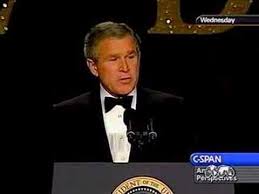
George W. Bush at the 2004 White House Correspondents’ dinner
To Bush, the non-existent WMDs were nothing more than the butt of a joke that night. While an overhead projector displayed photos of a puzzled-looking Bush searching around the Oval Office, Bush recited a comedy routine.
Click here: Bush laughs at no WMD in Iraq – YouTube
“Those weapons of mass destruction have gotta be somewhere,” Bush laughed, while a photo showed him poking around the corners in the Oval Office.
“Nope–no weapons over there! Maybe they’re under here,” he said, as a photo showed him looking under a desk.
Meanwhile, an assembly of wealthy, pampered men and women–the elite of America’s media and political classes–laughed heartily during Bush’s performance. It was a scene worthy of the court of the ancient Caesars, complete with royal flunkies.
Ultimately, the war that Bush had deliberately provoked
- Took the lives of 4,484 Americans.
- Cost the United States Treasury at least $2 trillion.
- Created a Middle East power vacumn.
- Allowed Iran–Iraq’s arch enemy–to eagerly fill it.
- Killed at least 655,000 Iraqis.
- Bush retired from office with a lavish pension and full Secret Service protection.
- He wrote his memoirs and was paid $7 for the first 1.5 million copies.
- Cheney, Rumsfeld, Rice retired to private business, wrote their own memoirs, and lived in comfort as respected elder statesmen.
9/11, ABC NEWS, AL QAEDA, ALTERNET, AMERICABLOG, AMERICAN CAESARS: THE LIVES OF THE PRESIDENTS FROM FRANKLIN D. ROOSEVELT TO GEORGE W. BUSH, AMERICAN EMPIRE, AP, BABY BOOMER RESISTANCE, BASHAR AL-ASSAD, BILL CLINTON, BLOOMBERG, BUREAUCRACY, BUZZFEED, CBS NEWS, CHRIS MATHEWS, CNN, CONDOLEEZA RICE, CROOKS AND LIARS, DAILY KOZ, DONALD TRUMP, DRUDGE REPORT, DWIGHT EISENHOWER, FACEBOOK, FBI, FIVETHIRTYEIGHT, FRANKLIN D. ROOSEVELT, GEORGE H.W. BUSH, GEORGE W. BUSH, GERALD R. FORD, HARPER’S MAGAZINE, HARRY S. TRUMAN, HUFFINGTON POST, JIMMY CARTER, JOHN F. KENNEDY, LYNDON B. JOHNSON, MEDIA MATTERS, MOTHER JONES, MOVEON, MSNBC, NBC NEWS, NEWSWEEK, NIGEL HAMILTON, NPR, OSAMA BIN LADEN, PBS NEWSHOUR, POLITICO, POLITICUSUSA, RAW STORY, REPUBLICAN PARTY, REUTERS, RICHARD CLARKE, RICHARD NIXON, ROMAN EMPIRE, SALON, SEATTLE TIMES, SEPTEMBER 11, SLATE, SUETONIUS, SYRIA, TALKING POINTS MEMO, TERRORISM, THE ATLANTIC, THE CHICAGO SUN-TIMES, THE CHICAGO TRIBUNE, THE DAILY BEAST, THE DAILY BLOG, THE GUARDIAN, THE HILL, THE HUFFINGTON POST, THE LOS ANGELES TIMES, THE NATION, THE NEW REPUBLIC, THE NEW YORK TIMES, THE TWELVE CAESARS, THE VILLAGE VOICE, THE WASHINGTON POST, THINKPROGRESS, TIME, TRUTHDIG, TRUTHOUT, TWITTER, TWO POLITICAL JUNKIES, U.S. NEWS & WORLD REPORT, UPI, USA TODAY
In Bureaucracy, History, Military, Politics, Social commentary on September 12, 2016 at 12:23 am
September 11, 2016, marks the 15th anniversary of the worst terrorist attack on United States soil. Inevitably, this is a time to remember all those whose lives were so cruelly snuffed out.
But it should also be a time to remember those who made this atrocity inevitable–by refusing to acknowledge and address the impending threat from Al-Qaeda.
British historian Nigel Hamilton has chronicled their arrogance and indifference in his 2010 biography: American Caesars: Lives of the Presidents from Franklin D. Roosevelt to George W. Bush.
Hamilton noted that Richard Clarke, the national security advisor on terrorism, was certain that Osama bin Laden had arranged the [USS.] Cole bombing in Aden on October 12, 2000.
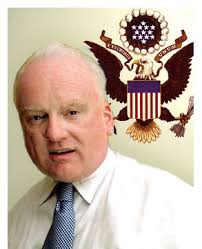
Richard Clarke
For months, Clarke tried to convince others in the Bush Administration that Bin Laden was plotting another attack against the United States–either abroad or at home.
But Clarke could not prevail against the know-it-all arrogance of such higher-ranking Bush officials as Vice President Dick Cheney; Secretary of Defense Donald Rumsfeld; Rumsfeld’s deputy, Paul Wolfowitz; and National Security Advisor Condoleeza Rice.
Rice initially refused to hold a cabinet-level meeting on the subject. Then she “insisted the matter be handled only by a more junior Deputy Principals meeting” in April, 2001, writes Hamilton.
Wolfowitz, the number-two man at the Department of Defense, said: “I don’t understand why we are beginning by talking about this one man, bin Laden.”
Even after Clarke outlined the threat posed by Al-Qaeda, Wolfowitz–whose real target was Saddam Hussein–said: “You give bin Laden too much credit.”
Wolfowitz insisted that bin Laden couldn’t carry out his terrorist acts without the aid of a state sponsor–namely, Iraq.
Wolfowitz, in fact, blamed Iraq for the 1993 bombing of the World Trade Center. Clarke was stunned, since there was absolutely no evidence of Iraqi involvement in this.
“Al-Qaeda plans major acts of terrorism against the United States,” Clarke warned his colleagues. He pointed out that, like Adolf Hitler, bin Laden had actually published his plans for future destruction.
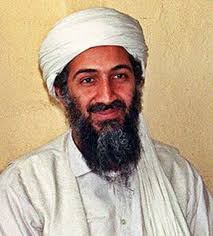
Osama bin Laden
And he added: “Sometimes, as with Hitler in Mein Kampf, you have to believe that these people will actually do what they say they will do.”
Wolfowitz heatedly traded on his Jewish heritage to bring Clarke’s unwelcome arguments to a halt: “I resent any comparison between the Holocaust and this little terrorist in Afghanistan.”
Writing in outraged fury, Hamilton sums up Clarke’s agonizing frustrations:
- Bush’s senior advisors treated their colleagues who had served in the Clinton administration with contempt.
- President Bush, Vice President Dick Cheney, National Security Advisor Condoleeza Rice, Secretary of Defense Donald Rumsfeld and Deputy Defense Secretary Paul Wolfowitz seemed content to ignore the danger signals of an impending al-Qaeda attack.
- This left only Secretary of State Colin Powell, his deputy Richard Armitage, Richard Clarke and a skeptical Treasury Secretary, Paul O’Neill, to wage “a lonely battle to waken a seemingly deranged new administration.”
Clarke alerted Federal Intelligence agencies that “Al-Qaeda is planning a major attack on us.” He asked the FBI and CIA to report to his office all they could learn about suspicious persons or activities at home and abroad.
Finally, at a meeting with Rice on September 4, 2001, Clarke challenged her to “picture yourself at a moment when in the very near future Al-Qaeda has killed hundreds of Americans, and imagine asking yourself what you wish then that you had already done.”
Seven days later, Al-Qaeda struck, and 3,000 Americans died horrifically–and needlessly.
Neither Bush, Cheney, Rice, Rumsfeld nor Wolowitz ever admitted their negligence. Nor would any of them be brought to account.
Disgustingly, these were the same officials who, afterward, posed as the Nation’s saviors–and branded anyone who disagreed with them as a traitor, practices the Right continues to exploit to this day.
Only Richard Clarke–who had vainly argued for stepped-up security precautions and taking the fight to Al-Qaeda–gave that apology.
On March 24, 2004, Clarke testified at the public 9/11 Commission hearings. Addressing relatives of victims in the audience, he said: “Your government failed you, those entrusted with protecting you failed you, and I failed you.”
Yet even worse was to come.
On the evening after the September 11 attacks, Bush took Clarke aside during a meeting in the White House Situation Room:
“I want you, as soon as you can, to go back over everything, everything. See if Saddam [Hussein, the dictator of Iraq] did this. See if he’s linked in any way.”
Clarke was stunned: “But, Mr. President, Al-Qaeda did this.”
“I know, I know,” said Bush. “But see if Saddam was involved. I want to know.”
Hussein had not plotted the attack–and there was no evidence proving that he did. But the attack gave “W” the excuse he wanted to remove the man he blamed for the 1992 defeat of his father, President George H.W. Bush.
Bush believed that his father would have been re-elected if he had “gone all the way” into Baghdad during the 1991 Gulf War.
He would finish the job that his father had started but failed to compete.
On September 12, 2001, Bush attended a meeting of the National Security Council.
“Why shouldn’t we go against Iraq, not just Al-Qaeda?” demanded Donald Rumsfeld, the Secretary of Defense.
Vice President Dick Cheney enthusiastically agreed.


2016 PRESIDENTIAL CAMPAIGN, 2016 PRESIDENTIAL DEBATES, ABC NEWS, ALICIA MACHADO, AMERICAN CAESAR, BARACK OBAMA, BIRTHERISM, BLACKS, CBS NEWS, CNN, DEMOCRATS, DONALD TRUMP, DOUGLAS MACARTHUR, FACEBOOK, FBI, FOX NEWS, HILLARY CLINTON, HISPANICS, LEBRON JAMES, LESTER HOLT, MARCO RUBIO, MISS UNIVERSE, NBC NEWS, POLITICO, RAFAEL "TED" CRUZ, SEAN HANNITY, TAXPAYERS, THE ARIZONA REPUBLIC, THE CHICAGO SUN-TIMES, THE CHICAGO TRIBUNE, THE HUFFINGTON POST, THE LOS ANGELES TIMES, THE NEW YORK TIMES, THE O'REILLY FACTOR, THE WALL STREET JOURNAL, THE WASHINGTON POST, TWITTER, USA TODAY, WILLIAM MANCHESTER, WOMEN
TRUMP: NEEDING ENEMIES LIKE OTHERS NEED FRIENDS: PART ONE (OF TWO)
In History, Law, Law Enforcement, Politics, Social commentary on October 6, 2016 at 12:09 am“He appeared to need enemies the way other men need friends, and his conduct assured that he would always have plenty of them.”
So wrote William Manchester about General Douglas MacArthur in his monumental 1978 biography, American Caesar. But he could have written just as accurately about Donald Trump, the businessman-turned-Republican-Presidential-nominee.
Donald Trump
What some pundits have called “the worst week in Presidential campaigning history” started–for Trump–on September 26. That was when he finally squared off against Democratic Presidential nominee Hillary Clinton in the first of three debates.
Through a series of bare-knuckled debates, Trump had bullied his way to the Republican nomination. He had mocked his opponents (“Little Marco” Rubio, “Lyin Ted” Cruz) and attacked former Texas Governor Jeb Bush as the brother of the President he blamed for 9/11.
So it was widely expected that he would run over Clinton like a tank going over a rabbit.
Events proved otherwise.
Moderator Lester Holt–who anchors the weekday edition of NBC Nightly News–gave Trump more airtime than Clinton. But Clinton showed a greater command of foreign and domestic issues.
Hillary Clinton
Trump repeatedly sniffled throughout the debate, causing some viewers to wonder if he had a cocaine problem. And he often reached for his water glass, causing other viewers to mock him on Twitter (“Does anyone remember how badly Trump made fun of Marco Rubio for drinking water? Hmm..”).
For Trump–who had attacked Clinton’s health after she fainted on September 11 at a New York 9/11 commemoration ceremony–it was a disaster. Clinton seemed to be in better shape than he was.
When Clinton charged that he paid “nothing in Federal taxes,” Trump in effect admitted it: “That makes me smart.”
Clinton then cornered him on his claim that he had opposed the 2003 Iraq war. Trump replied that he had told Fox News host Sean Hannity that he opposed it. He asked the media to contact Hannity.
Clinton then attacked Trump as “a man who has called women pigs, slobs, and dogs, and someone who has said pregnancy is an inconvenience to employers.”
From there she segued into his attacks on former Miss Universe Alicia Machado: “And he called this woman Miss Piggy. Then he called her Miss Housekeeping because she was Latina.”
Alicia Machado as Miss Universe
This may have proved the worst part of the debate for Trump, because he later felt he had to respond to it–on TV and Twitter.
By the end of the debate, 62% of CNN viewers voted Clinton as the winner, with only 27% voting it was Trump.
The next day–September 27–Trump felt the need to renew his attack on Machado, courtesy of a telephone interview he gave to Fox News: “She was the worst [Miss Universe contestant] we ever had. The absolute worst. She was impossible….
“She was the winner and she gained a massive amount of weight, and we had a real problem. Not only that, her attitude, and we had a real problem with her.”
On September 28, Trump appeared on Fox News‘ “The O’Reilly Factor.” There he continued his attack on Machado: “It is a beauty contest. They know what they are getting into.”
He claimed that “I saved her job” because the pageant wanted “to fire her” for gaining so much weight.
On September 29, Trump added one more enemy to the list: The FBI.
Addressing a crowd in Bedford, New Hampshire, Trump falsely accused the agency of giving “immunity” to Hillary Clinton:
“They [the FBI] gave so much immunity there was nobody left to talk to. There was nobody left–except Hillary. They probably gave her immunity, too. Do you think Hillary got immunity? Yeah, she had the immunity.”
FBI headquarters
Also on September 29, Trump once again attacked a longtime target: President Barack Obama.
Thirteen days earlier, Trump had renounced “birtherism”–the slander that Obama was not an American citizen. It was a slander that Trump himself had created and vigorously promoted since 2011.
The reason for his renouncing it: His dismal standing among blacks in political polls.
At a press conference on September 16 to promote his new upscale hotel in Washington, D.C., Trump said: “Now, not to mention her in the same breath, but Hillary Clinton and her campaign of 2008 started the birther controversy.
“I finished it. I finished it. You know what I mean.
“President Barack Obama was born in the United States, period. Now we all want to get back to making America strong and great again.”
After falsely blaming Clinton for starting the birther lie, Trump seemed content to finally drop the slander campaign.
But on September 29–a mere 13 days later–Trump told a New Hampshire reporter that he was “very proud” of his “birther” campaign:
“I’m the one who got him to put up his birth certificate”–which clearly proved that Obama had been born in Hawaii, not Kenya, as Trump had claimed.
“[Hillary Clinton] tried [to get Obama to release his birth certificate] and she was unable to do it and I tried and I was able to do it so I’m very proud of that.”
Thus, the goodwill of black voters he sought on September 16 he cast aside on the 29th.
Share this: