Posts Tagged ‘CIVIL WAR’
2016 ELECTION, ABC NEWS, ABRAHAM LINCOLN, BARACK OBAMA, BLACKS, BULLYING, CBS NEWS, CIVIL WAR, CNN, CONFEDERATE STATES OF AMERICA, DONALD TRUMP, FACEBOOK, FORD'S THEATER, FRANKLIN D. ROOSEVELT, HILLARY CLINTON, HISPANICS, JEWS, JOACHIM C. FEST, JOHN WILKES BOOTH, MICHELLE OBAMA, MUSLIMS, NBC NEWS, NICCOLO MACHIAVELLI, REPUBLICAN PARTY, ROBERT E. LEE, SLAVERY, THE CHICAGO SUN-TIMES, THE CHICAGO TRIBUNE, THE HUFFINGTON POST, THE LOS ANGELES TIMES, THE NEW YORK TIMES, THE WASHINGTON POST, THEODORE ROOSEVELT, TRUMP EFFECT, TWITTER, ULYSSES S. GRANT, UNITED STATES SENATE
In Bureaucracy, History, Law, Military, Politics, Social commentary on November 22, 2016 at 12:01 am
A truly great man is ever the same under all circumstances. And if his fortune varies, exalting him at one moment and oppressing him at another, he himself never varies, but always preserves a firm courage, which is so closely interwoven with his character that everyone can readily see that the fickleness of fortune has no power over him.
–Niccolo Machiavelli, The Discourses
For President Barack Obama, the last two months of his eight-year Presidency will be an agony.
Perhaps only his wife, Michelle, truly knows the torments he will so stoically endure.
For stoicism–enduring pain or hardship without complaint or showing emotions–has long been central to Obama’s character.
In 2011, two years into his Presidency, he faced an accusation never before leveled against an American President: That he was not an American citizen–and thus not entitled to hold the office he held.
His accuser-in-chief: Donald Trump, an egomaniacal, thrice-married “reality-TV” host and real estate mogul who had filed for corporate bankruptcy four times.
At first Obama ignored the accusation, assuming it was so ridiculous no one could believe it. But, promoted by Right-wing Fox News and Republican leaders, millions of Fascistic Americans thought it actually might be true.
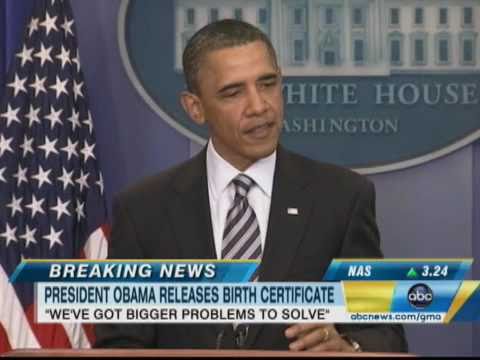
So, on April 27, 2011, the President called a press conference–where he released the long-form version of his Hawaii birth certificate.
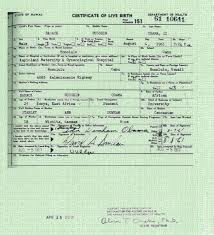
President Obama’s birth certificate
“We do not have time for this kind of silliness,” said Obama, speaking as a father might to a roomful of spiteful children. “We have better stuff to do. I have got better stuff to do. We have got big problems to solve.
“We are not going to be able to do it if we are distracted, if we spend time vilifying each other, if we just make stuff up and pretend that facts are not facts.”
And on May 1, the President announced the solving of one of those “big problems”: Osama bin Laden, mastermind of the September 11, 2001 terrorist attacks, had been tracked down and shot dead by elite U.S. Navy SEALS in Pakistan.
To understand Obama’s agony as he ends his term, imagine the following alternate history:
On April 14, 1865, the slavery-sympathizing actor John Wilkes Booth enters Ford’s Theater in Washington, D.C.
His mission: Assassinate President Abraham Lincoln.
Armed with a knife and Derringer, he reaches the unguarded Presidential box. But just as he’s about to push open the door to his–and Lincoln’s–destiny, he halts.
He’s just thought of a more monstrous fate for the President.
Silently, he leaves the theater–and the world never learns how close Lincoln came to death at the hands of an assassin.
Instead, Booth waits out the next four years–until the election of 1868, when Lincoln’s second term is up.
Lincoln has chosen Andrew Johnson, his Vice President, to succeed him.
For the outgoing President, it’s more than a matter of politics. A Johnson victory will secure the legacies Lincoln has created during the last eight years:
- The Thirteenth Amendment, which bans slavery.
- The stationing of Union troops in the South, to ensure that blacks are not re-enslaved.
- The granting of the vote to blacks.
But Johnson is a lackluster candidate, and, after eight years of war and Reconstruction, Americans are eager for “change.”
Suddenly, an unexpected challenger steps forward: The celebrated Shakespearean actor John Wilkes Booth!
Booth promises that, if elected, he will overturn everything Lincoln has done–most especially the Thirteenth Amendment.
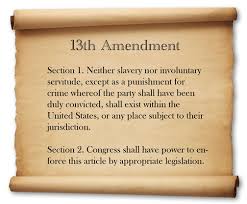
He’ll tear up the surrender treaty that officially ended the Civil War and let the Southern states restore the Confederacy.
His campaign slogan: “Let America Enslave Again.”
He calls the President an ape, a buffoon, a dictator with the blood of countless Americans on his hands.
Newspaper reporters covering Johnson often fall asleep during his speeches. Booth whips up his audiences without even trying.
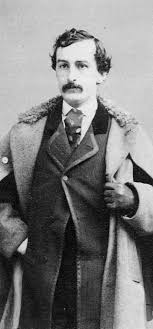
John Wilkes Booth
On November 4, 1868, John Wilkes Booth becomes the seventeenth President of the United States.
It won’t be until 1933 that Presidents begin taking the Oath of Office on January 20. So Abraham Lincoln will remain President until March 4, 1869.
Meanwhile, John Wilkes Booth has never held public office. He needs to pick a cabinet and learn the basics of what it means to be President.
And only one man is qualified to teach him–the man who now holds that office.
Lincoln knows that, in only a matter of months, everything he has worked for will be ruthlessly overturned. Like a beautiful garment pulled apart, thread by thread, until nothing is left but a pile of rubbish on the floor.
But he is a patriot, and a believer in destiny. Fate–or God–has thrust him into the Presidency. And he will carry out the duties that go with that role, however tormenting they now are, right to the end.
He hopes that Divine Providence will bestow a bright future on his beloved country, however bleak its present now looks.
* * * * *
When Barack Obama entered the White House in 2009, he couldn’t imagine spending his last two months in office tutoring the man who had reviled him throughout his Presidency.
It will be his last gift as President to a nation that has often proved ungrateful for his dedicated service.
2016 ELECTION, ABC NEWS, ABRAHAM LINCOLN, ALTERNATE HISTORY, BARACK OBAMA, BLACKS, BULLYING, CBS NEWS, CIVIL WAR, CNN, CONFEDERATE STATES OF AMERICA, DONALD TRUMP, FACEBOOK, FORD'S THEATER, FRANKLIN D. ROOSEVELT, HILLARY CLINTON, HISPANICS, JEWS, JOACHIM C. FEST, JOHN WILKES BOOTH, MICHELLE OBAMA, MUSLIMS, NBC NEWS, NICCOLO MACHIAVELLI, REPUBLICAN PARTY, ROBERT E. LEE, SLAVERY, THE CHICAGO SUN-TIMES, THE CHICAGO TRIBUNE, THE HUFFINGTON POST, THE LOS ANGELES TIMES, THE NEW YORK TIMES, THE WASHINGTON POST, THEODORE ROOSEVELT, TRUMP EFFECT, TWITTER, ULYSSES S. GRANT, UNITED STATES SENATE
In Bureaucracy, History, Law, Military, Politics, Social commentary on November 21, 2016 at 12:01 am
Barack Obama has known ecstasy such as few other men have known it.
In 1989, he met the love of his life, Michelle Robinson, an attorney at the Chicago law firm of Sidley Austin.
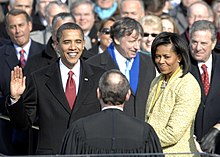
Barack and Michelle Obama
Although she declined his initial requests to date, she finally yielded to his persuasive charm. They were married on October 3, 1992, and have since had two daughters, Malia Ann and Natasha.
On November 2, 2004, Obama joined one of the most exclusive clubs in the world: The United States Senate. With 70% of the vote, he was elected United States Senator from Illinois. He served from 2005 to November 16, 2008, when an even greater event forced him to resign.
That event was his election as the 44th–and first black–President of the United States. On November 4, 2008, he received 52.9% of the votes. He delivered his victory speech before hundreds of thousands of supporters in Chicago’s Grant Park.
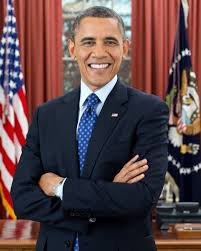
President Barack Obama
Then, on November 6, 2012, Obama was re-elected to a second four-year term, becoming the first Democratic President since Franklin D. Roosevelt to twice win the majority of the popular vote.
But now those eight years are rapidly coming to an end. And just as they opened with the euphoria of joy, they are closing with an agony more horrific for the President than anyone can imagine.
The agony of serving as tutor to Donald Trump, the man who will succeed him. Trump has personally reviled him throughout his Presidency–and intends to destroy as much of Obama’s legacy as possible.
For more than a year, Trump has boasted that he would make a far better President than Obama. But now that he’s won the 2016 election, it turns out he has at best a schoolboy’s knowledge of how government works.
Imagine a similar fate befalling another President whom Barack Obama deeply admires.
Imagine, in an alternate history universe, it’s April 14, 1865.
The four years of carnage known as the Civil War are finally over.
Five days ago, on April 9, Confederate General Robert E. Lee surrendered the Army of Northern Virginia to Union General of the Armies Ulysses S. Grant at Appomattox Court House.
Across the nation, 620,000 Americans lie dead–of wounds or disease. Untold thousands more are coming home as invalids, uncertain how they will care for themselves without limbs or eyes or the ability to walk.
For Abraham Lincoln, sixteenth President of the United States, it is time to ponder the work of rebuilding a shattered nation. He wants a just peace, not vengeance: “Let ’em up easy,” is the way he puts it.

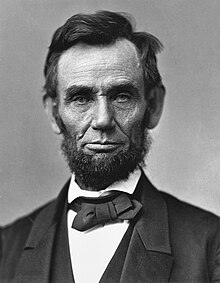
Abraham Lincoln
But, tonight, he needs to put aside his cares and seek a much-deserved respite at Ford’s Theater for a performance of the comedy, Our American Cousin.
At the theater, unknown to Lincoln, the Southern-sympathizing actor, John Wilkes Booth, awaits. For months he’s planned to kidnap Lincoln and hold him for ransom, to force the increasingly victorious Union armies to withdraw from the South.
But now there’s no point in that.
The Confederacy and slavery are dead. Lincoln has even spoken about giving the accursed blacks the right to vote.
Booth has never picked up a rifle to fight for the South, never faced death on a battlefield. Yet he will prove to the South that he is its greatest champion–by killing Lincoln.
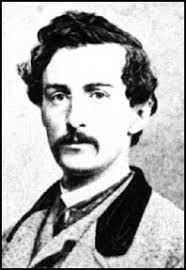
John Wilkes Booth
He has already made his preparations.
At around noon that day–April 14–he had visited Ford’s Theater, where he had a permanent mailbox. There he learned from the brother of John Ford, the owner, that the President and General Grant would be attending the theater to see Our American Cousin.
He knows the theater well–he’s performed there as an actor. And there’s no doubt he’ll have access to it tonight–he’s a celebrity.
That evening, Abraham Lincoln arrives at Ford’s Theater with his wife, Mary. They are accompanied by Union Major Henry Rathbone and his fiancee, Clara Harris. The four settle into the Presidential Box, which overlooks the stage.
Unlike 21st century Presidents, there are no Secret Service bodyguards for Lincoln. Presidents won’t be assigned such protection until 1901, when Theodore Roosevelt takes office.
Tonight, only one man has been assigned to guard Lincoln–a policeman named John Frederick Parker. And during the intermission, Parker decides he needs a drink.
So he slips off to a nearby tavern with Lincoln’s footman and coachman.
Booth arrives at the theater at about 10:25 p.m. Under his coat he’s armed with a knife and an eight-ounce, single-shot Derringer.
Booth walks up the staircase leading to the first of two doors to the President’s box. At the first door he finds Lincoln’s valet, Charles Forbes.
They chat briefly, and then Booth passes through the first door and closes it behind him.
Booth looks through the tiny peep-hole he had carved in the second door (which grants entry to the Presidential Box) earlier that day.
All he has to do is push open the door, aim at the back of Lincoln’s head, and fire. And that’s exactly what he intends to do.
Then–suddenly–he changes his mind.
He has an even more monstrous fate in store for the President.
ABC NEWS, ABRAHAM LINCOLN, ALTERNET, ANDREW JACKSON, AP, BARACK OBAMA, BREITBART NEWS, BUZZFEED, CBS NEWS, CIVIL WAR, CNN, CROOKS AND LIARS, DAILY KOZ, DONALD TRUMP, FACEBOOK, HILLARY CLINTON, HUFFINGTON POST, JOHN C. CALHOUN, MARCHING THROUGH GEORGIA, MIKE PENCE, MOTHER JONES, MOVEON, MSNBC, NBC NEWS, NEWSWEEK, NPR, POLITICO, RAW STORY, REPUBLICAN PARTY, REUTERS, ROBERT E. LEE, ROBERT HAYNE, ROGER STONE, SALON, SEATTLE TIMES, SECCESSION, SLATE, THE ATLANTIC, THE CHICAGO SUN-TIMES, THE CHICAGO TRIBUNE, THE DAILY BEAST, THE GUARDIAN, THE HILL, THE HUFFINGTON POST, THE LOS ANGELES TIMES, THE NATION, THE NEW YORK TIMES, THE WALL STREET JOURNAL, THE WASHINGTON POST, THOMAS HART BENTON, TIME, TREASON, TWITTER, U.S. NEWS & WORLD REPORT, UP, UPI, USA TODAY, WILLIAM TECUMSEH SHERMAN
In Bureaucracy, History, Law, Law Enforcement, Military, Politics, Social commentary on October 27, 2016 at 12:09 am
When Andrew Jackson, seventh President of the United States from 1829 to 1837, was close to death, he asked his doctor: “What act of my administration will be most severely condemned by future Americans?”
“Perhaps the removal of the bank deposits,” said the doctor–referring to Jackson’s withdrawal of U.S. Government monies from the first Bank of the United States.
That act had destroyed the bank, which Jackson had believed was a source of political corruption.
“Oh, no!” said Jackson.
“Then maybe the specie circular,” said the doctor. He was referring to an 1836 executive order Jackson had issued, requiring payment for government land to be in gold and silver.
“Not at all!” said Jackson.
Then, his eyes blazing, Jackson raged: “I can tell you. Posterity will condemn me more because I was persuaded not to hang John C. Calhoun as a traitor than for any other act in my life!”
John C. Calhoun had once been Vice President under Jackson and later a United States Senator from South Carolina. His fiery rhetoric and radical theories of “nullification” played a major part in bringing on the Civil War (1861-1865).
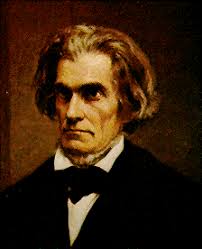
John C. Calhoun
Calhoun was an outspoken proponent of slavery, which he declared to be a “positive good” rather than a “necessary evil.” He supported states’ rights and nullification–by which states could declare null and void federal laws they deemed unconstitutional.
Historians have not condemned Jackson for failing to hang the senator. But perhaps he was right–and perhaps he should have hanged Calhoun.
It might have prevented the Civil War–or at least delayed its coming.
Over time, Southern states’ threats of “nullification” turned to threats of “secession” from the Union.
Jackson died in 1845–16 years before the Civil War erupted.
The resulting carnage slaughtered as many as 620,000 lives. More Americans died in that war than have been killed in all the major wars fought by the United States since.
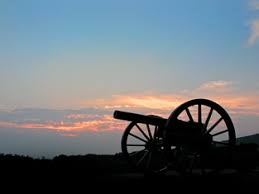
When it ended, America was reinvented as a new, unified nation–and one where slavery was now banned by the 13th Amendment to the United States Constitution.
Equally important, the Federal Government had now set a precedent for using overwhelming military power to force states to remain in the Union.
But in 2012, within days of Barack Obama’s decisive winning of another four years as President, residents across the country raised the call of treason.
They did done so by filing secession petitions to the Obama administration’s “We the People” program, which is featured on the White House website.
States whose residents filed secession petitions included:
Alabama, Alaska, Arizona, Arkansas, California, Colorado, Connecticut, Delaware, Florida, Georgia, Hawaii, Idaho, Illinois, Indiana, Iowa, Kansas, Kentucky, Louisiana, Maine, Maryland, Massachusetts, Michigan, Minnesota, Mississippi, Missouri, Montana, Nebraska, New Hampshire, New Jersey, New Mexico, New York, Nevada, North Carolina, North Dakota, Ohio, Oklahoma, Oregon, Pennsylvania, Rhode Island, South Carolina, South Dakota, Tennessee, Texas, Utah, Virginia, Washington (state), West Virginia, Wisconsin and Wyoming.
The reason: Thousands–if not millions–of Americans couldn’t abide a moderately-liberal black man winning a second term as President.
Abraham Lincoln dedicated his Presidency–and sacrificed his life–to ensure the preservation of a truly United States.
And Robert E. Lee–the defeated South’s greatest general–spent the last five years of his life trying to put the Civil War behind him and persuade his fellow Southerners to accept their place in the Union.
But today avowed racists, Fascists and other champions of treason are working hard to destroy that union–and unleash a second Civil War.
Yet no official in Washington, D.C.–from President Obama on down–has so far dared to openly confront this menace. This failure to do so has only emboldened Trump’s Fascistic supporters and dismayed those who would oppose them.
President Obama should follow Andrew Jackson’s example–before treasonous talk becomes treasonous action.
He should make clear that if treasonous violence erupts during his last two months in office, he will act decisively to crush it, using whatever level of force is necessary.
President Obama should warn these 21st-century would-be traitors that the FBI and U.S. Marshals Service are prepared to combat any threats to national security.
And if these agencies aren’t sufficient, the United States Army, Navy, Air Force and Marines stand ready to send modern-day counterparts of Union General William Tecumseh Sherman to wherever they are needed.
In 1864, Sherman’s 62,000 soldiers marched more than 650 miles in less than 100 days, ravaged Georgia, burned Atlanta to the ground–and ended the Civil War.
President Obama’s attitude should be: “Let them hate me, so long as they fear me.”
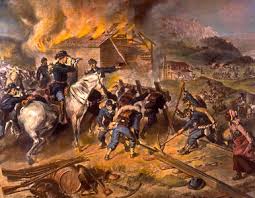
Sherman’s March through Georgia
Similarly, Hillary Clinton–if she is elected–should issue a similar statement: That her coming administration will not tolerate the outbreak of widespread violence from any section of the population, whatever the excuse.
And she should bluntly warn that “Marching Through Georgia” is a song that can be played wherever treason dares to show its face:
So we made a thoroughfare for freedom and her train
Sixty miles of latitude, three hundred to the main.
Treason fled before us, for resistance was in vain
While we were marching through Georgia.
ABC NEWS, ABRAHAM LINCOLN, ALTERNET, ANDREW JACKSON, AP, BARACK OBAMA, BREITBART NEWS, BUZZFEED, CBS NEWS, CIVIL WAR, CNN, CROOKS AND LIARS, DAILY KOZ, DONALD TRUMP, FACEBOOK, HILLARY CLINTON, HUFFINGTON POST, JOHN C. CALHOUN, MARCHING THROUGH GEORGIA, MIKE PENCE, MOTHER JONES, MOVEON, MSNBC, NBC NEWS, NEWSWEEK, NPR, POLITICO, RAW STORY, REPUBLICAN PARTY, REUTERS, ROBERT E. LEE, ROBERT HAYNE, ROGER STONE, SALON, SEATTLE TIMES, SECCESSION, SLATE, THE ATLANTIC, THE CHICAGO SUN-TIMES, THE CHICAGO TRIBUNE, THE DAILY BEAST, THE GUARDIAN, THE HILL, THE HUFFINGTON POST, THE LOS ANGELES TIMES, THE NATION, THE NEW YORK TIMES, THE WALL STREET JOURNAL, THE WASHINGTON POST, THOMAS HART BENTON, TIME, TREASON, TWITTER, U.S. NEWS & WORLD REPORT, UP, UPI, USA TODAY, WILLIAM TECUMSEH SHERMAN
In Bureaucracy, History, Law, Law Enforcement, Military, Politics, Social commentary on October 26, 2016 at 12:19 am
They cannot be made to love us, but they may be made to fear us.
–William Tecumseh Sherman speaking of the Southern Confederacy
If Hillary Clinton is elected President, she may soon face the same crisis that confronted Abraham Lincoln more than a century ago: Mass treason.
Americans haven’t even voted yet. But, already, hard-core supporters of Republican Presidential nominee Donald Trump believe a sinister international cabal has “rigged” the 2016 election for Clinton.
There is absolutely no evidence for this–other than what Trump himself has loudly and repeatedly told them: That there is a massive conspiracy to take him down.
At one town hall meeting where his Vice Presidential running mate, Mike Pence, appeared, a woman named Rhonda stood up and announced: “One of the things that I can tell you that a lot of us are scared of is this voter fraud.
“There’s a lot of out here saying that when we vote, we’re going to wear red. Our lives depend on this election. Our kids’ futures depend on this election.
“For me personally, if Hillary Clinton gets in, I myself am ready for a revolution.”
In Cincinnati, a Trump supporter threatened to forcibly remove Clinton from the White House if she won the Presidential race: “I feel like Hillary needs to be taken out if she gets in the government. I’ll do everything in my power to take her out of power–which, if I have to be a patriot, I will.”
When asked if he was physically threatening Clinton, Dan Bowman, 50, told CNN: “I don’t know, is it?”

Officially, the Trump campaign claimed: “We reject violence in any form and will not allow it to be a part of our campaign.”
But on August 9, Trump told a rally in Wilmington, North Carolina that Clinton intended to abolish the Second Amendment: “If she gets to pick her judges, there’s nothing you can do, folks. Although the Second Amendment people–maybe there is, I don’t know.”
The Clinton camp instantly saw it as a “dog-whistle” solicitation for political assassination. The Trump campaign issued a statement denying that he had meant any such thing.
On July 19, Trump clinched the Republican Presidential nomination. By early August, Roger Stone, a longtime Right-wing political consultant and now Trump strategist, was already predicting “widespread voter fraud” in the coming election.
This despite the fact that a 2014 Washington Post analysis of 14 years of voter fraud found 31 possible incidents of in-person voter fraud, comprised of approximately 241 fraudulent ballots.
In an interview with the Right-wing Breitbart News website, Stone said:
“The first thing that Trump needs to do is begin talking about [voter fraud] constantly. If there’s voter fraud, this election will be illegitimate, the election of the winner will be illegitimate, we will have a constitutional crisis, widespread civil disobedience, and the government will no longer be the government.”
_(cropped).jpg)
Roger Stone
Stone added that Trump should keep drumming up his supporters against the “rigged” system, and promise that the government would be shut down if Clinton was pronounced the victor in November.
“I think he’s gotta put them on notice that their inauguration will be a rhetorical, and when I mean civil disobedience, not violence, but it will be a bloodbath… We will not stand for it.”
Yet no official in Washington, D.C.–from President Barack Obama on down–has so far dared to openly acknowledge–let alone confront–this menace.
If Hillary Clinton is elected President, she would do well to review how Andrew Jackson, America’s seventh President from 1829 to 1837, reacted to threats of secession.

Andrew Jackson
In 1830, South Carolina was threatening to secede from the Union. A South Carolina Congressman who was returning home visited Jackson and asked: “Do you have a message you want me to give to your friends in the state?”
Jackson questioned him about the recent mass meetings in Charleston.
The friend warned him that South Carolina’s fire-eaters believed “the Army and Navy aren’t big enough to collect a penny” of Federal taxes.
“Do they realize what their words mean?” asked Jackson.
“I’m afraid they do, General.”
“Then tell them from me that they can talk and write resolutions and print threats to their hearts’ content.
“But if one drop of blood is shed there in opposition to the laws of the United States, I will hang the first man I can lay my hands on engaged in such treasonable conduct, from the first tree I can reach.”
News of Jackson’s threat quickly spread throughout Washington, D.C.
Senator Robert Hayne of South Carolina told his fellow Senator, Thomas Hart Benton, of Missouri, that he couldn’t believe that Jackson would send an army to invade a sovereign state.
Benton replied: “I tell you, Hayne, when Jackson starts talking about hanging, they can begin to look for the ropes.”
Jackson later issued a proclamation to the people of South Carolina and threatened to hang Hayne’s successor, Senator John C. Calhoun. He also warned that he would himself lead an army into the state to enforce Federal law.
The treasonous rumblings stopped–for the moment.
ABC NEWS, ALTERNET, AMERICABLOG, AMERICAN NZAI PARTY, AP, BABY BOOMER RESISTANCE, BARACK OBAMA, BBC, BLOOMBERG NEWS, BUZZFEED, CBS NEWS, CHRIS MATHEWS, CIVIL WAR, CNN, CROOKS AND LIARS, DAILY KOZ, DONALD TRUMP, FACEBOOK, FIVETHIRTYEIGHT, FOOD STAMPS, HARPER’S MAGAZINE, HUFFINGTON POST, KU KLUX KLAN, MEDIA MATTERS, MEDICARE, MOTHER JONES, MOVEON, MSNBC, NBC NEWS, NEW REPUBLIC, NEWSDAY, NEWSWEEK, NPR, PBS NEWSHOUR, POLITICO, POLITICUSUSA, PROPAGANDA, RACISM, RAW STORY, REPUBLICAN PARTY, REPUBLICANS, REUTERS, Ronald Reagan, SALON, SEATTLE TIMES, SLATE, SOCIAL SECURITY, TALKING POINTS MEMO, THE ATLANTIC, THE CHICAGO SUN-TIMES, THE CHICAGO TRIBUNE, THE DAILY BEAST, THE DAILY BLOG, THE GUARDIAN, THE HILL, THE HUFFINGTON POST, THE INTERCEPT, THE LOS ANGELES TIMES, THE NATION, THE NEW REPUBLIC, THE NEW YORK TIMES, THE NEW YORKER, THE VILLAGE VOICE, THE WALL STREET JOURNAL, THE WASHINGTON POST, THINKPROGRESS, TIME, TIME MAGAZINE, TRUTHDIG, TRUTHOUT, TWITTER, TWO POLITICAL JUNKIES, U.S. NEWS & WORLD REPORT, UPI, USA TODAY, WILLIAM TECUMSEH SHERMAN
In Bureaucracy, History, Politics, Social commentary on September 26, 2016 at 12:10 am
Republicans have long tried to prevent or eliminate programs that aid the poor and middle-class, including:
- Social Security (since it began in 1935)
- Medicare
- National health insurance
- Food stamps
- WIC (Women, Infants, Children).
So why are so many poor Americans now flocking to this party’s banner?
Two reasons: Racism and greed. There are historical parallels for both.
First, race:
In 1999, historian Victor Davis Hanson noted the huge gap in wealth between the aristocratic, slave-owning minority of the pre-Civil War South and the vast majority of poor white Southerners.
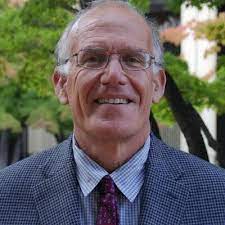
Victor Davis Hanson
“Before the war in the counties Sherman would later ruin, the top 10% of the landowners controlled 40% of the assessed wealth.”
In contrast, “more than half of those who were lucky enough to own any property at all still possessed less than 15% of the area’s valuation.”
So Hanson asked: “Why did the millions of poor whites of the Confederacy fight at all?”
He supplied the answer in his brilliant work on military history, The Soul of Battle: From Ancient Times to the Present Day, How Three Great Liberators Vanquished Tyranny.
One of those liberators was General William Tecumseh Sherman, who led 62,000 Union troops in a victorious “March to the Sea” through the Confederacy in 1864.
So why did so many poor Southern whites literally lay down their lives for the wealthy planter class, which despised them?
According to Hanson: “Behind the entire social fabric of the South lay slavery.
“If slavery eroded the economic position of the poor free citizens, if slavery encouraged a society of haves and have-nots…then it alone offered one promise to the free white man–poor, ignorant and dispirited–that he was at least not black and not a slave.”
And the planter class and its allies in government easily fobbed off their poor white countrymen with cheap flattery. Said Georgia Governor Joseph Brown:
“Among us the poor white laborer is respected as an equal. His family is treated with kindness, consideration, and respect. He does not belong to the menial class. The negro is in no sense his equal. He belongs to the only true aristocracy, the race of white men.”
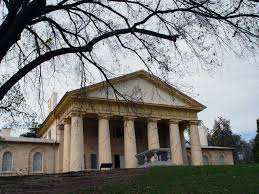
Arlington House and plantation, former home of Robert E. Lee
Similarly, poor whites now flock to the Republican Party–which holds them in equal contempt– in large part to protest the 2008 election of the first black President of the United States.
According to a Pew Research Center study released on July 22, 2011: “Notably, the GOP gains have occurred only among white voters; a 2-point Republican edge among whites in 2008 (46% to 44%) has widened to a 13-point lead today (52% to 39%).”
Since the 1960s, Republicans have pursued a campaign policy of “divide and rule”–divide the nation along racial lines and reap the benefits at election time.
- Republicans opposed the Civil Rights Act of 1964.
- Republicans opposed the Voting Rights Act of 1965.
- Republicans, with Richard Nixon as their Presidential candidate in 1968 and 1972, pursued what they called a “Southern strategy”: Use “code language” to stoke fear and hatred of blacks among whites.
- Republicans have falsely identified welfare programs exclusively with non-whites. (Of the six million Americans receiving food stamps, about 42% are white, 32% are black, and 22% are Latino–with the growth fastest among whites during the recession.)
Thus, in voting Republican, many of these poor whites believe they are “striking a blow for the white race.”
And they can do so in a more socially acceptable way than joining a certified hate group such as the American Nazi Party or Ku Klux Klan.
Since 2015, openly racist groups such as the Klan and the American Nazi Party have flocked to the banner of Presidential candidate mogul Donald Trump. By enthusiastically courting their support, the real estate mogul has made it possible for Republican candidates to openly display their own racism.
Now greed:
In the hit play, 1776, on the creation and signing of the Declaration of Independence, there is a telling exchange between John Dickinson and John Hancock. It comes during the song, “Cool, Cool, Considerate Men.”
Dickinson, the delegate from Pennsylvania, urges Hancock, president of the Second Continental Congress, “to join us in our minuet.”
By “us” he means his fellow conservatives who fear losing their property and exalted status by supporting American independence from Great Britain.
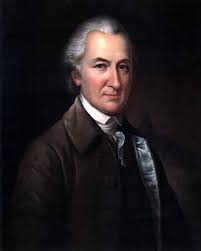
John Dickinson
Hancock declines, saying: “Fortunately, there are not enough men of property in America to dictate policy.”
To which Dickinson replies: “Perhaps not. But don’t forget that most men with nothing would rather protect the possibility of becoming rich than face the reality of being poor. And that is why they will follow us.”
Today, poor whites generally identify with the CEOs of powerful corporations. They believe the Republican gospel that they can attain such wealth–if only the government will “get out of my way.”
They forget–or ignore–the truth that government, for all its imperfections, is sometimes all that stands between them and a wide range of predators.
In return, the CEOs despise them as the privileged have always despised their social and economic “inferiors.”
Unless the Democratic Party can find ways to directly address these bitter, Politically Incorrect truths, it will continue its decline into insignificance.
ABC NEWS, ALTERNET, AMERICABLOG, AP, BABY BOOMER RESISTANCE, BARACK OBAMA, BBC, BLOOMBERG NEWS, BUZZFEED, CBS NEWS, CHRIS MATHEWS, CIVIL WAR, CNN, CROOKS AND LIARS, DAILY KOZ, FACEBOOK, FIVETHIRTYEIGHT, FOOD STAMPS, HARPER’S MAGAZINE, HUFFINGTON POST, MEDIA MATTERS, MEDICARE, MOTHER JONES, MOVEON, MSNBC, NBC NEWS, NEW REPUBLIC, NEWSDAY, NEWSWEEK, NPR, PBS NEWSHOUR, POLITICO, POLITICUSUSA, PROPAGANDA, RAW STORY, REPUBLICAN PARTY, REPUBLICANS, REUTERS, Ronald Reagan, SALON, SEATTLE TIMES, SLATE, SOCIAL SECURITY, TALKING POINTS MEMO, THE ATLANTIC, THE CHICAGO SUN-TIMES, THE CHICAGO TRIBUNE, THE DAILY BEAST, THE DAILY BLOG, THE GUARDIAN, THE HILL, THE HUFFINGTON POST, THE INTERCEPT, THE LOS ANGELES TIMES, THE NATION, THE NEW REPUBLIC, THE NEW YORK TIMES, THE NEW YORKER, THE VILLAGE VOICE, THE WALL STREET JOURNAL, THE WASHINGTON POST, THINKPROGRESS, TIME, TIME MAGAZINE, TRUTHDIG, TRUTHOUT, TWITTER, TWO POLITICAL JUNKIES, U.S. NEWS & WORLD REPORT, UPI, USA TODAY, WILLIAM TECUMSEH SHERMAN
In Bureaucracy, History, Politics, Social commentary on September 23, 2016 at 8:12 am
On July 22, 2011, ABC News carried the following story:
The Pew Foundation, analyzing voter identification, found “the electorate’s partisan affiliations have shifted significantly” since Barack Obama won office in 2008.
The GOP had gained strength among white voters, most specifically “the young and poor.”
A seven-point Democratic advantage among whites under age 30 three years ago had turned into an 11-point GOP advantage. And a 15-point Democratic advantage among whites earning less than $30,000 annually had swung to a slim four-point Republican edge by 2011.

In addition:
- The GOP gains had occurred only among white voters.
- Republicans had made sizable gains among white voters since 2008. Fifty-two percent of white voters called themselves Republicans or leaned to the GOP, compared with 39% who affiliated with the Democratic Party or leaned Democratic.
- Democrats had lost their edge among lower income white voters.
- In 2008, Democrats had a 15 point lead among white voters with family incomes less than $30,000. By 2011, Republicans had a four-point edge among this group.
- The GOP’s lead among middle income white voters had grown since 2008, and Republicans held a substantial advantage with higher income white voters.
- Republicans have made gains among whites with a high school education or less. The GOP’s advantage over Democrats had grown from one point in 2008 to 17 points in 2011 among less educated whites.
- Republicans had made smaller gains among whites voters who had college degrees.
What is fascinating about these findings is this: The Republicans have, since 1980, pursued a policy of gutting programs aimed at helping the poor–while repeatedly creating tax-breaks for the wealthiest 1% of the population.
For Republicans, the patron saint of this “love-the-rich-screw-the-poor” ideology remains Ronald Reagan–two-time governor of California and twice-elected President of the United States (1981-1989)
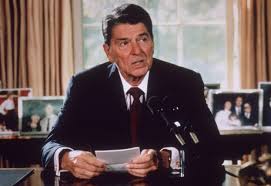
Ronald Reagan, who taught Americans to worship the wealthy
Among those charting Reagan’s legacy as President was former CBS Correspondent David Shoenbrum.
In his bestselling autobiography, America Inside Out: At Home and Abroad from Roosevelt to Reagan, he noted:

- On January 28, 1981, keeping a pledge to his financial backers in the oil industry, Reagan abolished Federal controls on the price of oil.
- Within a week, Exxon, Texaco and Shell raised gasoline prices and prices of home heating oil.
- Reagan saw it as his duty to put a floor under prices, not a ceiling above them.

- Reagan believed that when government helped business it wasn’t interfering. Loaning money to bail out a financially incompetent Chrysler was “supporting the free enterprise system.”
- But putting a high-profits tax on price-gouging corporations or filing anti-trust suits against them was “Communistic” and therefore intolerable.
- Tax-breaks for wealthy businesses meant helping America become stronger.
- But welfare for the poor or the victims of a predatory marketplace economy weakened America by sapping its morale.
“In short, welfare for the rich is good for America. But welfare for the poor is bad for America, even for the poor themselves, for it encourages them to be shiftless and lazy.
“Somehow, loans to the inefficient management of American corporations would not similarly encourage them in their inefficient methods,” wrote Shoenbrun.
Republicans have sought to dismantle Social Security ever since that program began in 1935. And Republicans have furiously opposed other programs aiding the poor and middle-class—such as Medicare, food stamps and WIC (Women, Infants, Children).
In short, this is not a political party with a history of rushing to the defense of those most in need.
So the question remains: Why are so many poor Americans flocking to its banner?
The answer lies in the history of the American South–and slavery.
ABC NEWS, ADOLF HITLER, BARACK OBAMA, BILL OF RIGHTS, CBS NEWS, CENSORSHIP, CIVIL RIGHTS MOVEMENT, CIVIL WAR, CNN, DECLARATION OF INDEPENDENCE, EMPLOYEES' RIGHTS, FACEBOOK, FIRST AMENDMENT, FRYEBURG ACADEMY, GEORGE ORWELL, ISLAM, JOSEPH MCCARTHY, LACROSSE, MALCOM X, MARTIN LUTHER KING, MUSLIMS, NATION OF ISLAM, NBC NEWS, PILGRIMS, SHARIA LAW, SLAVERY, THE CHICAGO SUN-TIMES, THE CHICAGO TRIBUNE, THE LOS ANGELES TIMES, THE NEW YORK TIMES, THE WASHINGTON POST, TWITTER, UNITED STATES CONSTITUTION, WOMEN'S RIGHTS
In Bureaucracy, Business, History, Law, Politics, Social commentary on April 29, 2016 at 12:08 am
WARNING: Believing that the First Amendment gives you the legal right to express your opinion may be hazardous to your career.
The First Amendment to the United States Constitution states:
“Congress shall make no law respecting an establishment of religion, or prohibiting the free exercise thereof; or abridging the freedom of speech, or of the press; or the right of the people peaceably to assemble, and to petition the Government for a redress of grievances.”
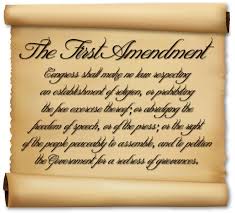
The First Amendment
Of course, that refers only to Congress.
It says nothing about employers–and and especially those self-appointed pseudo-gods who set themselves up as judges of virtue and infallibility.
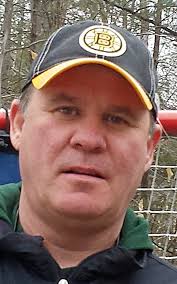
If you doubt it, just ask Scott Lees, who until March had worked for four years as boys head lacrosse coach at Fryeburg Academy.
Scott Lees
His crime? Posting to his personal Facebook page an open letter to President Barack Obama that one of his friends had emailed him.
Lees posted the letter on March 17. Two days later, he was ordered to resign from his four-year position as the academy’s lacrosse coach.
The letter had been written in response to a speech Obama gave in Cairo in 2009. In this, Obama said, “I know, too, that Islam has always been a part of America’s history.”
Among the issues the letter raised:
“Were those Muslims that were in America when the Pilgrims first landed? Funny, I thought they were Native American Indians.”
“Were those Muslims that celebrated the first Thanksgiving day? Sorry again, those were Pilgrims and Native American Indians.
“Can you show me one Muslim signature on the United States Constitution? Declaration of Independence? Bill of Rights? Didn’t think so.
“Did Muslims fight for this country’s freedom from England? No. Did Muslims fight during the Civil War to free the slaves of America. No, they did not, in fact, Muslims to this day are still the largest traffickers in human slavery.
“Your own half-brother, a devout Muslim, still advocates slavery himself, even though Muslims of Arabic descent refer to black Muslims as ‘pug nosed slaves.’ Says a lot of what the Muslim world really thinks of your family’s “rich Islamic heritage,” doesn’t it Mr. Obama?
“Where were Muslims during the Civil Rights era of this country? No present. There are no pictures or media accounts of Muslims walking side by side with Martin Luther King, Jr., or helping to advance the cause of Civil Rights.”
(The most prominent Muslim group in America at the time of the civil rights movement was the Nation of Islam. Its onetime spokesman, Malcom X, preached a gospel of separation of the races–and condemned whites as “blue-eyed devils.”)
“Where were Muslims during this country’s Woman’s Suffrage era? Again, not present. In fact, devout Muslims demand that women are subservient to men in the Islamic culture.
“So much so, that often they are beaten for not wearing the ‘hajib’ or for talking to a man who is not a direct family member or their husband. Yep, the Muslims are all for women’s rights, aren’t they?
Click here: Women’s Rights Under Sharia
“Where were Muslims during World War II? They were aligned with Adolf Hitler. The Muslim grand mufti himself met with Adolf Hitler, reviewed the troops and accepted support from the Nazis in killing Jews.”
Click here: Amazon.com: Icon of Evil: Hitler’s Mufti and the Rise of Radical Islam (9781400066537): David G. Dalin, John F. Ro
“Finally, Mr. Obama, where were Muslims on Sept. 11th, 2001? If they weren’t flying planes into the World Trade Center, the Pentagon or a field in Pennsylvania killing nearly 3,000 people on our own soil, they were rejoicing in the Middle East….
“And THAT, Mr. Obama, is the ‘rich heritage’ Muslims have here in America….”
Interviewed by Top Right News, Lees, 48, said he had never before been fired and had been coaching since 1992.
Fryeburg Academy is a private school in Fryeburg, Maine.

Fryeburg Academy
Lees said that he was supposed to meet with Head of Schools Erin Mayo and Dean Charlie Tryder on March 19. But Athletic Director Sue Thurston told him a decision to fire him had already been made.
Mayo told Top Right News that “Scott Lees did post a message on Facebook regarding Muslim people last week that was negative and, of course, public in nature.”
Mayo was right on two counts about the Facebook post: It was negative and public.
What she didn’t say was: It was also entirely historically accurate. It did not urge its readers to violate the law. It did not defame anyone (unless telling the truth about a group’s documented activities counts as defamation).
This is similar to the policies–and atmosphere–of the Joseph McCarthy “smear and fear” era of the 1950s. You didn’t have to actually be proven an actual Communist, or even a Communist sympathizer.
All that was needed to condemn you to permanent unemployment was to become “controversial.” That way, the employer didn’t have to actually prove the employee’s unfitness.
An employee’s right to out-of-work speech should be fully protected unless it crosses the legal line–such as committing libel or urging others to violate the law.
And employers who fire him for embracing his First Amendment right should be criminally prosecuted.
Until this happens, the workplace will continue to resemble George Orwell’s vision of 1984–a world where anyone can become a “non-person” for the most trivial of reasons.
2016 PRESIDENTIAL RACE, ABC NEWS, ABRAHAM LINCOLN, ALTERNET, AMERICABLOG, AP, BABY BOOMER RESISTANCE, BARACK OBAMA, BBC, BLOOMBERG NEWS, BUZZFEED, CBS NEWS, CIVIL RIGHTS ACT OF 1964, CIVIL WAR, CNN, CROOKS AND LIARS, DAILY KOS, DANIEL DAY-LEWIS, DONALD TRUMP, EMANCIPATION PROCLAMATION, FACEBOOK, FIVETHIRTYEIGHT, HARPER’S MAGAZINE, HUFFINGTON POST, LYNDON B. JOHNSON, MEDIA MATTERS, MITT ROMNEY, MOTHER JONES, MOVEON, MOVIES, MSNBC, NBC NEWS, NEW REPUBLIC, NEWSDAY, NEWSWEEK, NPR, PBS NEWSHOUR, POLITICO, POLITICUSUSA, RAW STORY, REUTERS, SALON, SEATTLE TIMES, SLATE, SLAVERY, STEVEN SPIELBERG, TALKING POINTS MEMO, THE ATLANTIC, THE CHICAGO SUN-TIMES, THE CHICAGO TRIBUNE, THE DAILY BEAST, THE DAILY BLOG, THE GUARDIAN, THE HILL, THE HUFFINGTON POST, THE INTERCEPT, THE LOS ANGELES TIMES, THE NATION, THE NEW REPUBLIC, THE NEW YORK TIMES, THE NEW YORKER, THE VILLAGE VOICE, THE WASHINGTON POST, THINKPROGRESS, THIRTEENTH AMENDMENT, TIME, TRUTHDIG, TRUTHOUT, TWITTER, U.S. NEWS & WORLD REPORT, UPI, VOTER ID LAWS, VOTING RIGHTS ACT OF 1965
In Bureaucracy, Entertainment, History, Law, Military, Politics, Social commentary on March 17, 2016 at 12:36 pm
Steven Spielberg’s Lincoln is more than a mesmerizing history lesson.
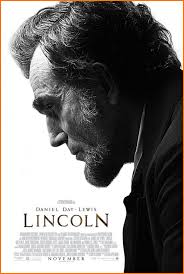
It’s a timely reminder that racism and repression are not confined to any one period or political party.
At the heart of the film: Abraham Lincoln (Daniel Day-Lewis) wants to win ratification of what will be the Thirteenth Amendment to the United States Constitution. An amendment that will forever ban slavery.
True, Lincoln, in 1862, had issued the Emancipation Proclamation. This—in theory—freed slaves held in the Confederate states that had seceded from the Union in 1861.
But Lincoln regards this as a temporary wartime measure. He fears that once the war ends, the Supreme Court may rule the Proclamation unconstitutional. This might allow Southerners to continue practicing slavery, even after losing the war.
To prevent this, Congress must pass an anti-slavery amendment.
But winning Congressional passage of such an amendment won’t be easy.
The Senate had ratified its passage in 1864. But the amendment must secure approval from the House of Representatives to become law.
And the House is filled with men–there are no women menmbers during the 19th century–who seethe with hostility.
Some are hostile to Lincoln personally. One of them dubs him a dictator–Abraham Africanus.” Another accuses him of shifting his positions for the sake of expediency.
Other members–white men all–are hostile to the idea of “equality between the races.” To them, ending slavery means opening the door to interracial marriage–especially marriage between black men and white women.
Perhaps even worse, it means possibly giving blacks–or women–the the right to vote.
In fact, the possibility that blacks might win voting rights arises early in the movie. Lincoln is speaking to a couple of black Union soldiers, and one of them is unafraid to voice his discontent. He’s upset that black soldiers are paid less than white ones–and that they’re led only by white officers.
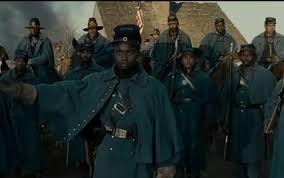
He says that, in time, maybe this will change. Maybe, in 100 years, he guesses, blacks will get the right to vote.
(To the shame of all Americans, that’s how long it will eventually take. Not until the passage of the Voting Rights Act of 1965 will blacks be guaranteed legal protection against discriminatory voting practices.)
To understand the Congressional debate over the Thirteenth Amendment, it’s necessary to remember this: In Lincoln’s time, the Republicans were the party of progressives.
The party was founded on an anti-slavery platform. Its members were thus reviled as “Black Republicans.” And until the 1960s, the South was solidly Democratic.
Democrats were the ones defending the status quo–slavery–and opposing freed blacks in the South of Reconstruction and long afterward.
In short, in the 18th century, Democrats in the South acted as Republicans do now. The South went Republican only after a Democratic President–Lyndon B. Johnson–rammed the Civil Rights Act of 1964 through Congress.
Watching this re-enactment of the 1865 debate in Lincoln is like watching the current Presidential campaign. The same mentalities are at work:
-
Those (in this case, slave-owners) who already have a great deal want to gain even more at the expense of others.
-
Those (slaves and freed blacks) who have little strive to gain more or at least hang onto what they have.
-
Those who defend the privileged wealthy refuse to allow their “social inferiors” to enjoy similar privileges (such as the right to vote).
During the 2012 Presidential race, Republicans tried to bar those likely to vote for President Barack Obama from getting into the voting booth. But their bogus “voter ID” restrictions were struck down in courts across the nation.
Listening to those opposing the amendment, one is reminded of Mitt Romney’s infamous comments about the “47%”:
“Well, there are 47% of the people who will vote for the president no matter what….
“Who are dependent upon government, who believe that–that they are victims, who believe that government has a responsibility to care for them, who believe that they’re entitled to healthcare, to food, to housing, to you name it. But that’s–it’s an entitlement. And the government should give it to them.”
Put another way: “Who says people have a right to obtain medical care, food and housing? If they can’t inherit unearned wealth the way I did, screw them.”
In the end, it’s Abraham Lincoln who has the final word–and leaves his nation the better for it. Through diplomacy and backroom dealings (trading political offices for votes) he wins passage of the anti-slavery amendment.
The ownership of human chattel is finally an ugly memory of the American past.
The movie closes with a historically-correct tribute to Lincoln’s generosity toward those who opposed him–in Congress and on the battlefield. It occurs during Lincoln’s Second Inaugural Address:
“With malice toward none, with charity for all….To bind up the nation’s wounds. To care for him who shall have bourne the battle, and for his widow and his orphan….”
This ending presents a vivid philosophical contrast with the increasingly mean-spirited rhetoric and policies of 2016’s Republican candidates for President–especially those of Donald Trump.
Watching Lincoln, you realize how incredibly lucky America was as a nation to have had such leadership when it was most urgently needed.
.
ABC NEWS, ABRAHAM LINCOLN, ACADEMY AWARDS, ARGO, CBS NEWS, CIVIL WAR, CLARK GABLE, CNN, CONFEDERATE FLAG, DANIEL DAY-LEWIS, FACEBOOK, GONE WITH THE WIND, HATTIE MCDANIEL, MARGARET MITCHELL, MOVIES, NAZI GERMANY, NBC NEWS, OSCARS, RACISM, SAVING PRIVATE RYAN, SHAKESPEARE IN LOVE, SLAVERY, STEVEN SPIELBERG, THE LOS ANGELES TIMES, THE NEW YORK TIMES, THE WASHINGTON POST, THIRTEENTH AMENDMENT, TWITTER
In Bureaucracy, History, Law, Politics, Social commentary on October 22, 2015 at 12:04 am
Argo was selected as Best Picture at the 2013 Academy Awards. But it is Steven Spielberg’s Lincoln that will be cherished far longer.
Among the reasons for this:
- Daniel Day-Lewis’ brilliant portrayal as Abraham Lincoln; and
- Its timely depiction of a truth that has long been obscured by past and current Southern lies.
And that truth: From first to last, the cause of the Civil War was slavery.
According to The Destructive War, by Charles Royster, arguments over “states’ rights” or economic conflict between North and South didn’t lead 13 Southern states to withdraw from the Union in 1860-61.
It was their demand for “respect” of their “peculiar institution”–i.e., slavery.
“The respect Southerners demanded did not consist simply of the states’ sovereignty or of the equal rights of Northern and Southern citizens, including slaveholders’ right to take their chattels into Northern territory.
“It entailed, too, respect for their assertion of the moral superiority of slaveholding society over free society,” writes Royster.
It was not enough for Southerners to claim equal standing with Northerners; Northerners must acknowledge it.
But this was something that the North was increasingly unwilling to do. Finally, its citizens dared to elect Abraham Lincoln as President in 1860.
Lincoln and his new Republican party damned slavery-–and slaveholders-–as morally evil, obsolete and ultimately doomed. And they were determined to prevent slavery from spreading any further throughout the country.
Southerners found all of this intolerable.
The British author, Anthony Trollope, explained to his readers:
“It is no light thing to be told daily, by our fellow citizens…that you are guilty of the one damning sin that cannot be forgiven.
“All this [Southerners] could partly moderate, partly rebuke and partly bear as long as political power remained in their hands.” [Italics added]
It is to Spielberg’s credit that he forces his audience to look directly at the real cause of the bloodiest conflict on the North American continent.
At the heart of Spielberg’s film: Abraham Lincoln (Daniel Day-Lewis) wants to win ratification of what will be the Thirteenth Amendment to the United States Constitution. An amendment that will forever ban slavery.
But, almost four years into the war, slavery still has powerful friends–in both the North and South.
Many of those friends belong to the House of Representatives, which must ratify the amendment for it to become law.
Other members–white men all–are hostile to the idea of “equality between the races.”
To them, ending slavery means opening the door to interracial marriage–especially marriage between black men and white women. Perhaps even worse, it means possibly giving blacks–or women–the right to vote.
After the amendment wins ratification, Lincoln agrees to meet with a “peace delegation” from the Confederate States of America.
At the top of their list of concerns: If they persuade the seceded states to return to the Union, will those states be allowed to nullify the amendment?
No, says Lincoln. He’s willing to make peace with the South, and on highly generous terms. But not at the cost of allowing slavery to live on.
Too many men–North and South–have died in a conflict whose root cause is slavery. Those lives must count for more than simply reuniting the Union.
For the Southern “peace commissioners,” this is totally unacceptable.
The South has lost thousands of men (260,000 is the generally accepted figure for its total casualties) and the war is clearly lost. But for its die-hard leaders, parting with slavery is simply unthinkable.
Like Nazi Germany 80 years into the future, the high command of the South won’t surrender until their armies are too beaten down to fight any more.
The major difference between the defeated South of 1865 and the defeated Germany of 1945 is this: The South was allowed to build a beautiful myth of a glorious “Lost Cause,” epitomized by the Margaret Mitchell novel, Gone With the Wind.
In that telling, dutiful slaves are well-treated by kindly masters. Southern aristocrats wear white suits and their slender-waisted ladies wear long dresses, carry parisols and say “fiddle-dee-dee” to young, handsome suitors.
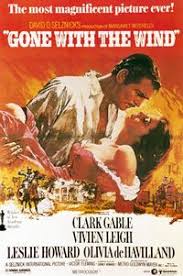
One million people attended the premier of the movie version in Atlanta on December 15, 1939.
The celebration featured stars from the film, receptions, thousands of Confederate flags, false antebellum fronts on stores and homes, and a costume ball.
In keeping with Southern racial tradition, Hattie McDaniel and the other black actors from the film were barred from attending the premiere. Upon learning this, Clark Gable threatened to boycott the event. McDaniel convinced him to attend.
When today’s Southerners fly Confederate flags and speak of “preserving our traditions,” they are actually celebrating their long-banned peculiar” institution.”
By contrast, post-World War II Germany outlawed symbols from the Nazi-era, such as the swastika and the “Heil Hitler” salute, and made Holocaust denial punishable by imprisonment.
America has refused to confront its own shameful past so directly. But Americans can be grateful that Steven Spielberg has had the courage to serve up a long-overdue and much needed lesson in past–and still current–history.
ABC NEWS, ABRAHAM LINCOLN, ACADEMY AWARDS, ARGO, CBS NEWS, CIVIL WAR, CLARK GABLE, CNN, CONFEDERATE FLAG, DANIEL DAY-LEWIS, FACEBOOK, GONE WITH THE WIND, HATTIE MCDANIEL, MARGARET MITCHELL, MOVIES, NAZI GERMANY, NBC NEWS, OSCARS, RACISM, SAVING PRIVATE RYAN, SHAKESPEARE IN LOVE, SLAVERY, STEVEN SPIELBERG, THE LOS ANGELES TIMES, THE NEW YORK TIMES, THE WASHINGTON POST, THIRTEENTH AMENDMENT, TWITTER
In Bureaucracy, History, Law, Politics, Social commentary on October 21, 2015 at 1:12 am
Argo won for Best Picture at the 2013 Academy Awards ceremony. But, in the long run, it will be Lincoln who is deservingly remembered–and loved.
Argo focuses on a humiliating episode that most Americans would like to forget. On November 4, 1979, at the climax of the Iranian revolution, militants stormed the U.S. embassy in Tehran, taking 52 Americans hostage.
But, in the midst of the chaos, six Americans managed to slip away and find refuge in the home of the Canadian ambassador. Knowing it was only a matter of time before the six were found and likely killed, a CIA “exfiltration” specialist offered a risky–and ultimately successful–plan to smuggle them out of the country.
While Argo wrings cheers from American audiences for the winning of this small victory, it cannot erase the blunt truth of the Iranian hostage crisis: For more than 14 months, American diplomats waited helplessly for release–while America proved unable to effect it.
By contrast, Steven Spielberg’s Lincoln celebrates a far greater victory: the final defeat of human slavery in the United States.
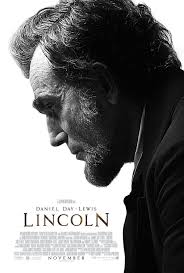
And it teaches lessons about the past that remain equally valide today–such as that racism and repression are not confined to any one period or political party.
At the heart of the film: Abraham Lincoln (Daniel Day-Lewis) wants to win ratification of what will be the Thirteenth Amendment to the United States Constitution. An amendment that will forever ban slavery.
True, Lincoln, in 1862, had issued the Emancipation Proclamation. This-–in theory-–freed slaves held in the Confederate states that were in rebellion against the United States Government.
But Lincoln regards this as a temporary wartime measure.
He fears that, once the war is over, the Supreme Court may rule the Proclamation unconstitutional. This might allow Southerners to continue practicing slavery, even after losing the war.
To prevent this, Congress must pass an anti-slavery amendment.
But winning Congressional passage of such an amendment won’t be easy.
The Senate had ratified its passage in 1864. But the amendment must secure approval from the House of Representatives to become law.
And the House is filled with men-–there are no women members during the 19th century-–who seethe with hostility.
Some are hostile to Lincoln personally. One of them dubs him a dictator-–”Abraham Africanus.” Another accuses him of shifting his positions for the sake of expediency.
Other members–-white men all-–are hostile to the idea of “equality between the races.”
To them, ending slavery means opening the door to interracial marriage–especially marriage between black men and white women. Perhaps even worse, it means possibly giving blacks-–or women–-the right to vote.
Black soldiers in the Union Army
To understand the Congressional debate over the Thirteenth Amendment, it’s necessary to remember this: In Lincoln’s time, the Republicans were the party of progressives.
The party was founded on an anti-slavery platform. Its members were thus reviled as “Black Republicans.”
And until the 1960s, the South was solidly Democratic. Democrats were the ones defending the status quo–slavery–and opposing freed blacks in the South of Reconstruction and long afterward.
In short, in the 18th century, Democrats in the South acted as Republicans do now.
The South went Republican only after a Democratic President–Lyndon B. Johnson–rammed the Civil Rights Act of 1964 through Congress.
Watching this re-enactment of the 1865 debate in Lincoln is like watching a rerun of the 2012 Presidential campaign. The same mentalities are at work:
- Those (in this case, slave-owners) who already have a great deal want to gain even more at the expense of others.
- Those (slaves and freed blacks) who have little strive to gain more or at least hang onto what they still have.
- Those who defend the privileged wealthy refuse to allow their “social inferiors” to enjoy similar privileges (such as the right to vote).
During the 2012 Presidential race, the Republicans tried to bar those likely to vote for President Barack Obama from getting into the voting booth. But their bogus “voter ID” restrictions were struck down in courts across the nation.
In the end, however, it is Abraham Lincoln who has the final word. Through diplomacy and backroom dealings (trading political offices for votes) he wins passage of the anti-slavery amendment.
The movie closes with a historically-correct tribute to Lincoln’s generosity toward those who opposed him–in Congress and on the battlefield.
It occurs during Lincoln’s Second Inaugural Address: “With malice toward none, with charity for all….To bind up the nation’s wounds. To care for him who shall have bourne the battle, and for his widow and his orphan….”
Listening to those words, one is reminded of Mitt Romney’s infamous comments about the “47%: “
Well, there are 47% of the people who…are dependent upon government, who believe that–-that they are victims, who believe that government has a responsibility to care for them, who believe that they’re entitled to healthcare, to food, to housing, to you name it.”
Watching Lincoln, you realize how incredibly lucky we were as a nation to have had such leadership when it was most needed.


 Bureaucracybuster's Blog
2016 ELECTION, ABC NEWS, ABRAHAM LINCOLN, BARACK OBAMA, BLACKS, BULLYING, CBS NEWS, CIVIL WAR, CNN, CONFEDERATE STATES OF AMERICA, DONALD TRUMP, FACEBOOK, FORD'S THEATER, FRANKLIN D. ROOSEVELT, HILLARY CLINTON, HISPANICS, JEWS, JOACHIM C. FEST, JOHN WILKES BOOTH, MICHELLE OBAMA, MUSLIMS, NBC NEWS, NICCOLO MACHIAVELLI, REPUBLICAN PARTY, ROBERT E. LEE, SLAVERY, THE CHICAGO SUN-TIMES, THE CHICAGO TRIBUNE, THE HUFFINGTON POST, THE LOS ANGELES TIMES, THE NEW YORK TIMES, THE WASHINGTON POST, THEODORE ROOSEVELT, TRUMP EFFECT, TWITTER, ULYSSES S. GRANT, UNITED STATES SENATE
OBAMA’S AGONY: PART TWO (END)
In Bureaucracy, History, Law, Military, Politics, Social commentary on November 22, 2016 at 12:01 amA truly great man is ever the same under all circumstances. And if his fortune varies, exalting him at one moment and oppressing him at another, he himself never varies, but always preserves a firm courage, which is so closely interwoven with his character that everyone can readily see that the fickleness of fortune has no power over him.
–Niccolo Machiavelli, The Discourses
For President Barack Obama, the last two months of his eight-year Presidency will be an agony.
Perhaps only his wife, Michelle, truly knows the torments he will so stoically endure.
For stoicism–enduring pain or hardship without complaint or showing emotions–has long been central to Obama’s character.
In 2011, two years into his Presidency, he faced an accusation never before leveled against an American President: That he was not an American citizen–and thus not entitled to hold the office he held.
His accuser-in-chief: Donald Trump, an egomaniacal, thrice-married “reality-TV” host and real estate mogul who had filed for corporate bankruptcy four times.
At first Obama ignored the accusation, assuming it was so ridiculous no one could believe it. But, promoted by Right-wing Fox News and Republican leaders, millions of Fascistic Americans thought it actually might be true.
So, on April 27, 2011, the President called a press conference–where he released the long-form version of his Hawaii birth certificate.
President Obama’s birth certificate
“We do not have time for this kind of silliness,” said Obama, speaking as a father might to a roomful of spiteful children. “We have better stuff to do. I have got better stuff to do. We have got big problems to solve.
“We are not going to be able to do it if we are distracted, if we spend time vilifying each other, if we just make stuff up and pretend that facts are not facts.”
And on May 1, the President announced the solving of one of those “big problems”: Osama bin Laden, mastermind of the September 11, 2001 terrorist attacks, had been tracked down and shot dead by elite U.S. Navy SEALS in Pakistan.
To understand Obama’s agony as he ends his term, imagine the following alternate history:
On April 14, 1865, the slavery-sympathizing actor John Wilkes Booth enters Ford’s Theater in Washington, D.C.
His mission: Assassinate President Abraham Lincoln.
Armed with a knife and Derringer, he reaches the unguarded Presidential box. But just as he’s about to push open the door to his–and Lincoln’s–destiny, he halts.
He’s just thought of a more monstrous fate for the President.
Silently, he leaves the theater–and the world never learns how close Lincoln came to death at the hands of an assassin.
Instead, Booth waits out the next four years–until the election of 1868, when Lincoln’s second term is up.
Lincoln has chosen Andrew Johnson, his Vice President, to succeed him.
For the outgoing President, it’s more than a matter of politics. A Johnson victory will secure the legacies Lincoln has created during the last eight years:
But Johnson is a lackluster candidate, and, after eight years of war and Reconstruction, Americans are eager for “change.”
Suddenly, an unexpected challenger steps forward: The celebrated Shakespearean actor John Wilkes Booth!
Booth promises that, if elected, he will overturn everything Lincoln has done–most especially the Thirteenth Amendment.
He’ll tear up the surrender treaty that officially ended the Civil War and let the Southern states restore the Confederacy.
His campaign slogan: “Let America Enslave Again.”
He calls the President an ape, a buffoon, a dictator with the blood of countless Americans on his hands.
Newspaper reporters covering Johnson often fall asleep during his speeches. Booth whips up his audiences without even trying.
John Wilkes Booth
On November 4, 1868, John Wilkes Booth becomes the seventeenth President of the United States.
It won’t be until 1933 that Presidents begin taking the Oath of Office on January 20. So Abraham Lincoln will remain President until March 4, 1869.
Meanwhile, John Wilkes Booth has never held public office. He needs to pick a cabinet and learn the basics of what it means to be President.
And only one man is qualified to teach him–the man who now holds that office.
Lincoln knows that, in only a matter of months, everything he has worked for will be ruthlessly overturned. Like a beautiful garment pulled apart, thread by thread, until nothing is left but a pile of rubbish on the floor.
But he is a patriot, and a believer in destiny. Fate–or God–has thrust him into the Presidency. And he will carry out the duties that go with that role, however tormenting they now are, right to the end.
He hopes that Divine Providence will bestow a bright future on his beloved country, however bleak its present now looks.
* * * * *
When Barack Obama entered the White House in 2009, he couldn’t imagine spending his last two months in office tutoring the man who had reviled him throughout his Presidency.
It will be his last gift as President to a nation that has often proved ungrateful for his dedicated service.
Share this: